'Liberamente' is now available for the first time on cassette. Dawn Chorus and the Infallible Sea create soft-textured and slowly unfolding sonic landscapes, somewhere between guitar-oriented drone music and modern classical. Liberamente is the kind of album that demands attention and patience from the listener, yet it's ultimately a very rewarding one. Stylistically Dawn Chorus and the Infallible Sea sums up several decades of American soundscape and drone music, taking threads from Windy & Carl, Auburn Lull, and Stars of the Lid then weaves them into a contemporary, and sonically adventurous whole. On the surface it suggests simplicity, but dig deeper and the seven pieces on Liberamente reveals a rare compositional dexterity. This is minimalism at its finest.
Suche:lüüp
Classic RootsReggae is the definitive influence on the music of Vibronics .. so it has been a true labour of love to bring together the powerful voice of Jospeh Lalibela, the intricate playing of the Mafia & Fluxy Band and the deep production skills of Vibronics to make this homage to classic Jamaican Roots Dub Reggae music.
This 7” is the first release .. soon to be followed but the full album ‘Ancient Breeze’
Vibronics is one of the most established names in UK Dub/Reggae music achieving millions of views on YouTube, millions of Spotify streams and many tens of thousands of vinyl record sales. Collaborators include Michael prophet, Macka B, Iration Steppas, Soom T, Aba-Shanti and more.
Joseph Lalibela is a Birmingham born UK vocalist who found fame through his work with OBF & King Earthquake
Mafia & Fluxy are the UK’s leading Reggae riddim section and recording artists working with Eek-A-Mouse, Jah Shaka, Luciano and the cream of worldwide Reggae artists.
This new 12" on US label Season Limited brings together two of deep house's most accomplished and tasteful names in French legend Franck Roger plus Arnold Jarvis who he last collaborated with in 2007, while UK mainstay and Freerange label boss Jimpster remixes. It is one the label has been cooking up for a while but proves more than worth the wait. 'Living My Life' is the one original collab and is smooth, buttery deep house with lush vocal tones. Jimpster brings a little more bounce and a fat bassline on one mix, then dubs things out to prefect for the second. A timeless set of grooves that will level-up any collection.
CLEAR VINYL[25,17 €]
Ben Lukas Boysens neues Album, Alta Ripa, bedeutet eine seismische Verschiebung in seiner künstlerischen Reise. Es greift die grundlegenden Impulse seiner Jugend auf, die inmitten der ruhigen Schönheit des ländlichen Deutschlands geprägt wurden - eine bukolische Kulisse, in der seine kreative Palette aufblühte. Doch erst sein Umzug nach Berlin in den frühen 2000er Jahren elektrisierte seinen Sound und ließ ihn mit der pulsierenden Energie der Stadt und den vielfältigen kulturellen Einflüssen verschmelzen. Alta Ripa fängt diese transformative Erfahrung ein, indem es die introspektiven Melodien seiner ländlichen Anfänge mit den kühnen, experimentellen Klängen der pulsierenden elektronischen Musikszene Berlins vermischt. Dieses Album ist ein Zeugnis von Boysens Entwicklung und zeigt, wie geografische Verschiebungen den künstlerischen Ausdruck tiefgreifend prägen können.
- A1: Joy Of Life
- A2: New Kid In Town
- A3: Trusting You
- A4: Never Die
- A5: Still Here
- B1: The Haze (Interlude)
- B2: Can You Hear Me
- B3: Together
- B4: Light It Up
- B5: Disconnect
- B6: Trusting You ( Acoustic)
Mehr als zwanzig Jahre ist es her, dass das Hamburger Trio
SONO mit dem Clubhit „Keep Control“ die nationalen und
internationalen Charts enterte und so seinen Weg in die
Dance- und Popwelt ebnete. Zwei Dekaden, die der Band
um Lennart A. Salomon, Florian Sikorski und Martin Weiland Zeit gaben, ihren ganz eigenen Stil zu erfinden: eine
Mischung aus clubtauglichen Beats und lupenreinen Popsongs. Eine Hommage an eben diese Clubs ist nun der neue,
neunte SONO Longplayer „In The Haze“. Für „In The Haze“
haben sich SONO mit angesagten Größen der Club-Szene
zusammengetan, wie beispielsweise dem Hamburger Techno-Produzenten André Winter, dem italienischen DJ Rafael
Cerato und der Hamburger Drum ’n’ Bass Größe Phace.
— Das Album erzählt von dem, was in den undurchsichtigen, vielschichtigen Schwaden der Nebelmaschinen
eben so passiert: Liebe, Tanz, Trennung, Verunsicherung
— Ein emotionales Album, das genauso zum Tanzen wie
auch zum Zuhören und Mitsingen einlädt
- A1: Pills (4 03)
- A2: Lines (3 44)
- A3: The Empty Bottle (5 44)
- A4: Remove (7 14)
- A5: Come On Get High (4 21)
- B1: Thought Conditioning (3 41)
- B2: The Feeling Of Losing Everything (4 14)
- B3: Blood In Numbers (3 18)
- B4: To The End (3 42)
- B5: Pictures (3 50)
- B6: Lunar Bender (3 13)
Erstmals auf Vinyl! Das 2009er Album 'Controlling Crowds (IV)'.
In Todmorden, the oddly-named market border town in West Yorkshire with a habit for embracing the weird and wonderful, a burst of sunshine is a precious thing. Through the thick of Winter, through every season in fact, the town’s folk are used to the wind and rain, fog and mist. As much a part of the town as the trademark deep valley it sits in, here the lay of the land invites the weather in, just as it does the many musicians, artists, and unique characters that have come to call the place home over the centuries.
Bridget Hayden is one such soul who found a home among these hills. The experimental musician, who invites the ghosts in for the classic folk songs that make up her stunning new album, knows only too well about such weather, how rare and treasured the breaks from it are. Her favourite thing to do in the valley, she says, is “to make the most of every tiny minute of sunshine.”
Such aspirations nearly derailed the recording of Cold Blows the Rain, her new eight-song collection released via the Todmorden- based label Basin Rock. Having hired the town’s Oddfellow’s Hall to record these new songs in the late summer of 2022, Hayden says the weather was so good she ended up basking in every second of it, only moving inside to begin recording when the sun was setting, working deep into the night to make up the time.
There’s a good chance, however, that it had to be this way. The songs that make up Cold Blows the Rain are not made for the sunlight. They come, instead, wrapped in mist and coated with drizzle, those elements shaping the album as much as the voice and the instruments held within, as real but ambiguous as the ghosts that linger in the shadows. The sound of the dark valley floor.
Mostly centred around meditative and experimental improvisation, Bridget’s work to-date has seen her spend more than two decades recording and performing on the underground music scene. She’s also toured internationally both as a solo artist and as part of bands such as Schisms and The Telescopes, while working on various side-projects with the likes of Folklore Tapes.
For all of this sonic exploration, so much of her work has been formed around elements of traditional folk aesthetics and, over time, she began to piece together a collection of reinterpreted traditional songs that she absorbed as a child from her mother: through The Dubliners and Muddy Waters, to Bessie Smith and The Leadbelly Songbook. Harvesting her love for Nina Simone, Karen Dalton, Margaret Barry, and more, Bridget takes these traditional songs and transforms them into something uniquely evocative
"It goes back to the womb,” Bridget says of that connection. “I would not call it a memory as it is so deep within my blood and bones. My mum was the source, she sang all the time, as part of life. So it was a very lulling and natural introduction. It seemed common to hear her singing – unbeknownst to her – in time with a raindrop dripping at the window,” Bridget continues. “I’ve always wanted to do a folk record as I love these songs so much. It comes much more naturally to me to sing other people’s words, especially when they’re as beautiful as these old verses.”
Underpinned by waves of analogue reverb, and led by Bridget’s stirring and weather-beaten voice, the songs on Cold Blows the Rain drift and crawl like low heavy clouds on flat-top hills, shaped by the land. The backdrop is equally as arresting, all subtle gloom cast in shadow, a gentle but pronounced swirling of textures, crafted from harmonium and violin courtesy of The Apparitions (Sam Mcloughlin and Dan Bridgewood-Hill).
“The weather speaks the most eloquently about human loss,” Bridget says, articulating such sentiments. “It’s good to feel enveloped by something so much vaster than ourselves. The rain and the tears all become one.”
- La La La
- Cruz
- Lost Angel
- Taquero
- Dream Suite
- The Mystery Of Miss Mari Jane
- Cha Cha Cha
- Sea Changes
- Cinema Lover
- Die Again, Yesterday
- Hollywood Ten
As Jess Sylvester finished his Hardly Art debut as Marinero in the fall of 2020, he realized it was time for a change. Sylvester grew up in Marin County, on the doorstep of San Francisco. It was a nurturing community for a high-school punk with a pompadour and, later, for a sober songwriter with a proclivity for moody psychedelia. But he wanted to be challenged and inspired by a new setting and scenario around strangers who prompted him to approach his music in unexpected ways. So in September 2020, as the world continued to reel in lockdown, Sylvester headed several hours south to Los Angeles, a city that, despite the relative proximity, the film buff knew largely from classic and cult films situated there. When he arrived, he kept digging into that cinematic past-Robert Altman's The Long Goodbye, with John Williams' classic theme, or classic 90s movies about East LA, many featuring Edward James Olmos. They shaped his understanding of his new town just as it began to open. This is one pillar of the multivalent and endlessly lush La La La, Marinero's new album about sobriety, identity, and fantasy that is playfully named both for the city that helped shape it and the sophisticated pop it contains. Sylvester wrote about characters outside of himself, whether considering the heroine reckoning with her own version of keeping clean or the screenwriters whose work was deemed communist simply as a political convenience. He linked those songs with motivational anthems about self-acceptance and playful numbers about flirting through food, shaping a 12-song set rich with humor, empathy, and encouragement. Sure, La La La is a continuation of the slippery genre play Sylvester started with 2021's Hella Love, 2019's Trópico de Cáncer, or even before that. But it also feels like a fresh beginning for Marinero, as Sylvester realizes how boundless this project can be. He began to think about the music of his childhood, how his mother is from San Francisco with Mexican roots, and how he'd heard so much salsa growing up as an impetuous teenager. So he wrote "Taquero," a red-hot salsa tune that uses tacos and their trappings as a source of endless metaphors for come-ons. And then there was the Ray Barreto or Santana-inspired "Pocha Pachanga," with organ gliding and percussion pulsing beneath his yearning vocals, warped as if by desert winds. In Los Angeles, he found a wealth of players who spoke this music like language itself (including Chicano Batman's Eduardo Arenas), all ready to play with and push these familiar forms. Sylvester has also been sober for 21 years, since a cross-country sojourn to attend college in Boston ended in a chemical haze. Today, he sees friends facing the same decisions he made two decades ago, and he brings bits of that experience to bear in songs that feel like self-help anthems. Recorded with a musical hero (and labelmate) of his, Chris Cohen, "Sea Changes" feels like sunshine breaking through dark clouds, as Sylvester acknowledges the newfound confidence and clarity in a friend who has stepped away from destructive habits. In the past, Sylvester has been intractably linked to his identity as a Mexican-American, born to parents from Mexico and Irish- American descent who settled in San Francisco. That can be limiting, of course, tying him to notions of sound and style that aren't always correct. On La La La, he simultaneously steps into and out of those preconceptions, singing tracks above salsa in joyous Spanish or pondering the dynamics of the Hollywood Ten and blacklists above mysterious lap steel and teasing trumpet. His identity, then, should now be clear: He is a Californian, making music shaped by the diversity of encounters and experiences that are a central part of that state's fabric. Never before has he presented himself so fully and unabashedly on tape as with La La La, an album Sylvester built with new inspirations to deliver new charms.
"Langt Fra Jorden" ("Lejos De La Tierra", in Spanish, for the book) is the result of the dialogue between the Spanish photographer and artist Irene Zottola and the Danish musician and artist øjeRum initiated by IIKKI, between June 2024 and November 2024.
øjeRum is Copenhagen based musician and collage artist Paw Grabowski. In his øjeRum guise, he plucks and strums his treated acoustic instruments, sounding at times like church bells, at times like angelic harp, at time like drones, and suspends the listener in the magic of his melodies.
With a deep back-catalogue of releases since 2014 - spanning labels such as eilean rec., Room40, Line, Opal Tapes and many more - he continues exploring his minimal, textural and deeply personal style of ambient music.
Irene Zottola is a Spanish photographer and artist who explores the limits of analog photography to generate a world of dreamlike and poetic character, often accompanying her images with text.
She has been self-taught in Madrid in the laboratory of the Slow Photo collective since 2016. In 2017 she is a finalist in the Rfotofolio Grant.
Her work has been exhibited in Spain, Italy and Morocco. She has published with editorials such as La Bella Varsovia and Lumen (Spain) and magazines such as She shoots film (Australia), Fisheyemagazine (France) and Vostmagazine (Korea).
In 2021 she received one of the Grants to Creation granted by VEGAP with which she began a new project in Paris and was part of the artistic residence ART(e)gileak of the BBK with a participatory photography project. She is one of the 33 authors of the Mission Region project organized by the Community of Madrid and is part of the platform of the National Image Centre in Spain. Winner in 2020 of the V Edition of the Photochannel Contest, she has published with Ediciones Anómalas her first photobook, "Icarus", which has been a finalist in PhotoEspaña and in Les Photobook Awards of Les Rencontres d'Arles 2022.
"Lejos De La Tierra’’ is her second book.
Fine Art Book, Ltd. to 500 copies:
Hardcover book printed on Munken Print Cream 115g/m2 // 80 pages, 17cm x 23cm, 42 photos // Logo and slot embossed // Hot gold stamping // Visible seam and cutting cover pages // Hand-numbered, hand-stamped.
- A1: 3 Horas Da Manha (Ivan Lins, Waldemar Correia)
- A2: Samba Do Aviao (Antonio Carlos Jobim)
- A3: Tema Medieval (Agustin Pereyra Lucena)
- A4: Despues De Las Seis (Agustin Pereyra Lucena, Guillermo Reuter)
- A5: Tema Barroco (Guillermo Reuter)
- A6: La Rana (João Donato)
- B1: Pra Que Chorar (Baden Powell)
- B2: Encuentro De Sombras (Agustin Pereyra Lucena)
Far Out Recordings proudly presents Argentinian guitarist Agustín Pereyra Lucena’s 1980 album La Rana. Recorded in Oslo, La Rana features Agustín’s stunning takes on compositions by Ivan Lins, Antonio Carlos Jobim and Agustín’s friend and musical hero Baden Powell. In addition to these, and a number of Agustín’s own compositions including the fifteen-minute masterpiece “Encuentro De Sombras”, the album’s title track is an idiosyncratic version of Joao Donato’s “A Rã” (Eng: The Frog/ Esp: La Rana) from his 1973 album Quem É Quem.
Forming the rest of the quartet are two fellow Argentinians who were also Agustin’s bandmates from the group Candeias: bassist and multi-instrumentalist Guillermo Reuter and flautist Ruben Izarrualde; with Norweigan drummer Finn Sletten on drums and percussion.
Throughout La Rana we hear not only Agustín’s fabled guitar playing, which ascended him to share stages with the likes of Vinicius de Moraes, Dorival Cayymi, Toquinho, Maria Bethania, Chico Buarque and Quarteto Em Cy, but also his talent as a vocalist. He also provided the heartening illustration for the cover art, which perfectly fits the cordial, inviting tone of the music. Inspired in equal measure by South American rhythms and Norweigan glaciers, mountains and waterfalls, La Rana is filled with the warmth, humility and sincerity of a man seizing a joyful moment in life through music.
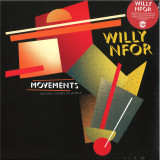
This compilation is more than a selection of songs from Willy Nfor’s solo career in Nigeria—it’s the story of a man’s determination to live his dreams. Known as Willy Ngeh Nfor, he was a founding member of the Mighty Flames. One morning, Willy and his bandmates packed their instruments, grabbed a few clothes, and headed from Cameroon to Nigeria. Crossing the border on foot, they made their way to Onitsha.
“We left Cameroon with no contacts in Nigeria—it was an adventure. We’d heard about the FESTAC Arts Festival and felt we had to be part of it. Our first band in Nigeria was Pentagon Funk Band, sponsored by the 5th Brigade in Port Harcourt. Later, we moved to Onitsha and signed with Right Time Stores, recording Sweet Love (RTLPS 011) as The Mighty Flames. The sessions were at Decca Studios in Lagos, with a 16-track analog system. It was intense—no room for mistakes. We rehearsed endlessly before recording each take.” (Vincent Ekedi, Drummer, Mighty Flames)
Willy’s journey was shaped by his resilience and talent. Losing his mother early and facing family struggles, music became his escape. Inspired by funk and jazz-rock greats like Bootsy Collins, Jaco Pastorius, and Stanley Clarke, he honed his skills on bass and composition, playing with local bands alongside musicians like Vincent Ekedi. Together, they refined their grooves, dreaming of brighter futures.
After his time in Nigeria, Willy moved to Paris, becoming a session bassist for legends such as Manu Dibango, Mory Kanté, Tony Allen, Akendengue, Ray Lema, Jean-Luc Ponty, and Kanté Manfila. Touring extensively, he lived the “Star Life” (Star Life, Cornerstone Records, Feel So Fine, 1981), playing funk grooves with giants in grand venues, fulfilling his dream of the spotlight.
Clone Jack For Daze on a roll with Tom Carruthers up next. Tom delivering trax that will make you jack all night long! The 4 track EP reflects a keen ear for detail and a deep appreciation for retro-futuristic influences that made the genre. No nonsense classic bleepy techno with lush strings and contrasting metalic basslines fierce enough to keep the energy flowing till sunrise.
- A1: Progetto Tribale - The Sweep
- A2: Onirico - Echo Giomini
- A3: Open Spaces - Artist In Wonderland
- B1: Alex Neri – The Wizard (Hot Funky Version)
- B2: M C.j. Feat. Sima - To Yourself Be Free - Instrumental Mix Energy Prod
- B3: Mato Grosso - Titanic Expande
- C1: Dreamatic - I Can Feel It (Part 1)
- C2: Carol Bailey - Understand Me Free Your Mind (Dream Piano Remix)
- C3: The True Underground Sound Of Rome - Secret Doctrine
- D1: Don Carlos - Boy
- D2: Lazy Bird – Jazzy Doll (Odyssey Dub)
Vol 2[28,99 €]
Volume 1 of this expertly curated project of 90s Italian House - put together by Don Carlos.
If Paradise was half as nice… by Fabio De Luca.
Googling “paradise house”, the first results to pop up are an endless list of European b&b’s with whitewashed lime façades, all of them promising “…an unmatched travel experience a few steps from the sea”. Next, a little further down, are the institutional websites of a few select semi-luxury retirement homes (no photos shown, but lots of stock images of smiling nurses with reassuring looks). To find the “paradise house” we’re after, we have to scroll even further down. Much further down.
It feels like yesterday, and at the same time it seems like a million years ago. The Eighties had just ended, and it was still unclear what to expect from the Nineties. Mobile phones that were not the size of a briefcase and did not cost as much as a car? A frightening economic crisis? The guitar-rock revival?! Certainly, the best place to observe that moment of transition was the dancefloor. Truly epochal transformations were happening there. From America, within a short distance one from the other, two revolutionary new musical styles had arrived: the first one sounded a bit like an “on a budget” version of the best Seventies disco-music – Philly sound made with a set of piano-bar keyboards! – the other was even more sparse, futuristic and extraterrestrial. It was a music with a quite distinct “physical” component, which at the same time, to be fully grasped, seemed to call for the knotty theories of certain French post-modern philosophers: Gilles Deleuze, Félix Guattari, Paul Virilio... Both those genres – we would learn shortly after – were born in the black communities of Chicago and Detroit, although listening to those vinyl 12” (often wrapped in generic white covers, and with little indication in the label) you could not easily guess whether behind them there was a black boy from somewhere in the Usa, or a girl from Berlin, or a pale kid from a Cornish coastal town.
Quickly, similar sounds began to show up from all corners of Europe. A thousand variations of the same intuition: leaner, less lean, happier, slightly less intoxicated, more broken, slower, faster, much faster... Boom! From the dancefloors – the London ones at least, whose chronicles we eagerly read every month in the pages of The Face and i-D – came tales of a new generation of clubbers who had completely stopped “dressing up” to go dancing; of hot tempered hooligans bursting into tears and hugging everyone under the strobe lights as the notes of Strings of Life rose up through the fumes of dry ice (certain “smiling” pills were also involved, sure). At this point, however, we must move on to Switzerland.
In Switzerland, in the quiet and diligent town of Lugano, between the 1980s and 1990s there was a club called “Morandi”. Its hot night was on Wednesdays, when the audience also came from Milan, Como, Varese and Zurich. Legend goes that, one night, none less than Prince and Sheila E were spotted hiding among the sofas, on a day-off of the Italian dates of the Nude Tour… The Wednesday resident and superstar was an Italian dj with an exotic name: Don Carlos. The soundtrack he devised was a mixture of Chicago, Detroit, the most progressive R&B and certain forgotten classics of old disco music: practically, what the Paradise Garage in New York might have sounded like had it not closed in 1987. In between, Don Carlos also managed to squeeze in some tracks he had worked on in his studio on Lago Maggiore. One in particular: a track that was rather slow compared to the BPM in fashion at the time, but which was a perfect bridge between house and R&B. The title was Alone: Don Carlos would explain years later that it had to be intended both in the English meaning of “by itself” and like the Italian word meaning “halo”. That wasn’t the only double entendre about the song, anyway. Its own very deep nature was, indeed, double. On the one hand, Alone was built around an angelic keyboard pattern and a romantic piano riff that took you straight to heaven; on the other, it showcased enough electronic squelches (plus a sax part that sounded like it had been dissolved by acid rain) to pigeonhole the tune into the “junk modernity” section, aka the hallmark of all the most innovative sounds of the time: music that sounded like it was hand-crafted from the scraps of glittering overground pop.
No one knows who was the first to call it “paradise house”, nor when it happened. Alternative definitions on the same topic one happened to hear included “ambient house”, “dream house”, “Mediterranean progressive”… but of course none were as good (and alluring) as “paradise house”. What is certain is that such inclination for sounds that were in equal measure angelic and neurotic, romantic and unaffective, quickly became the trademark of the second generation of Italian house. Music that seemed shyly equidistant from all the rhythmic and electronic revolutions that had happened up to that moment (“Music perfectly adept at going nowhere slowly” as noted by English journalist Craig McLean in a legendary field report for Blah Blah Blah magazine). Music that to a inattentive ear might have sounded as anonymous as a snapshot of a random group of passers-by at 10AM in the centre of any major city, but perfectly described the (slow) awakening in the real world after the universal love binge of the so-called Second Summer of Love.
For a brief but unforgettable season, in Italy “paradise house” was the official soundtrack of interminable weekends spent inside the car, darting from one club to another, cutting the peninsula from North to centre, from East to West coast in pursuit of the latest after-hours disco, trading kilometres per hour with beats per minute: practically, a new New Year’s Eve every Friday and Saturday night. This too was no small transformation, as well as a shock for an adult Italy that was encountering for the first time – thanks to its sons and daughters – the wild side of industrial modernity. The clubbers of the so-called “fuoriorario” scene were the balls gone mad in the pinball machine most feared by newspapers, magazines and TV pundits. What they did each and every weekend, apart from going crazy to the sound of the current white labels, was linking distant geographical points and non-places (thank you Marc Augé!) – old dance halls, farmhouses and business centres – transformed for one night into house music heaven. As Marco D’Eramo wrote in his 1995 essay on Chicago, Il maiale e il grattacielo: “Four-wheeled capitalism distorts our age-old image of the city, it allows the suburbs to be connected to each other, whereas before they were connected only by the centre (…) It makes possible a metropolitan area without a metropolis, without a city centre, without downtown. The periphery is no longer a periphery of any centre, but is self-centred”.
“Paradise house” perfectly understood all of this and turned it into a sort of cyber-blues that didn’t even need words, and unexpectedly brought back a drop of melancholic (post?)-humanity within a world that by then – as we would wholly realise in the decades to come – was fully inhuman and heartless. A world where we were all alone, and surrounded by a sinister yellowish halo, like a neon at the end of its life cycle. But, for one night at least, happy.
- A1: Louis Philippso - Memories Of The Moldau (After "Vltava", Jb 1:112/2; T.111) 3:03
- A2: Louis Philippso - Paulette 2:23
- A3: Louis Philippso - Dragon's Lullaby 3:44
- A4: Louis Philippso - Kiki's Delivery Service: A Town With An Ocean View (Arr. For Piano By Jan-Peter Klöpfel) 3:59
- A5: Louis Philippso - Genshin Impact: Lover's Oath (Arr. For Piano By Pascal Hahn) 1:22
- A6: Louis Philippso - Shostakovich Jazz Waltz Variation (After Jazz Suite No. 2, Arr. For Piano By Jan-Peter Klöpfel) 1:57
- A7: Louis Philippso - Supernova 3:02
- A8: Esther Abrami & Louis Philippso - Andante Festivo (Arr. For Violin & Piano By Jan-Peter Klöpfel) 1:44
- A9: Louis Philippson & Michael Bosch - O Mio Babbino Caro (From Gianni Schicchi, Sc 88, Arr. For Piano And Cello By E. M. Fard) 3:16
- B1: Louis Philippso - Demon Slayer: Nezuko Theme 3:52
- B2: Louis Philippso - Bach: Prelude Piano Variation (After Cello Suite No. 1, Bwv 1007, Arr. For Piano By Tim Allhoff) 1:59
- B3: Louis Philippso - C'est Toi 2:47
- B4: Louis Philippso - Omg 1:32
- B5: Louis Philippso - Mahler: Symphony Of A Thousand Piano Variation (After Symphony No. 8, Arr. For Piano By Tim Allhoff) 2:22
- B6: Louis Philippso - Alla Turca Jazz Fantasie (After Piano Sonata No. 11 In A Major, K. 331, Arr. By Fazil Say) 1:34
- B7: Louis Philippso - Mozart Allegretto Variation (After Piano Sonata No. 13 In B-Flat Major, K. 333, Arr. By Philip Calisto) 3:00
- B8: Louis Philippson & Michael Bosch - In Trutina (From Carmina Burana, Arr. For Piano And Cello By Tim Allhoff) 2:21
- B9: Louis Philippso - Tchaikovsky Piano Concerto No. 1 Variation (After Piano Concerto No. 1, Op. 23, Arr. For Piano By Jan-Peter Klöpfel) 2:53
Der Pianist Louis Philippson begeistert seine Generation mit emotionalen und virtuosen Videos auf Social Media für die klassische Musik. Für sein Debütalbum "Exposition" verfolgt er die gleiche Idee und verbindet eigene Kompositionen mit neuen Arrangements bekannter Melodien klassischer Werke, sowie von Anime- und Pop-Songs. Selbstgeschriebene, epische Stücke wie "Supernova" und das groß-orchestrierte "C'est toi" stellt er seinen reduzierten Klavierminiaturen wie "Paulette", "Memories of Moldau" und "Dragon's Lullaby" gegenüber. Seine Eigenkompositionen ergänzt Louis Philippson durch frische, farbenfrohe Arrangements von Melodien aus verschiedenen Genres. Nach dem Motto von Duke Ellington, dass es "nur gute oder schlechte Musik" gibt, vereint er eine poetische Klavierversionen von "OMG" der K-Pop-Band NewJeans mit einer dynamischen Bearbeitung von Tschaikowskys Klavierkonzert, kreiert elegische Klavierversionen über Melodien aus Mahlers Symphonie der Tausend oder "In Trutina" aus Carl Orffs Carmina Burana, und spielt Puccinis "O mio babbino caro" begleitet von einem Cello. Auch Anime-Klassiker wie "A Town with an Ocean View" und "Lover's Oath" spielt er am Konzertflügel.Über sein Debüt-Album sagt Philippson: "Die Entstehung von 'Exposition' war eine unglaubliche Reise. Ich wollte ein Album schaffen, in dem ich alle Genres verbinden kann, die mich inspirieren. Es gibt so viele großartige Melodien, die man neu auf dem Klavier entdecken kann. Mein Ziel ist es meine Generation für die Schönheit der Klaviermusik auf neue Weise zu begeistern."Lange vor seiner TikTok-Karriere wurde Louis Philippson im Alter von sieben Jahren auf YouTube von seinem zukünftigen Klavierlehrer entdeckt, einem Professor an der Robert Schumann Hochschule in Düsseldorf. Dort wurde er später Jungstudent und nahm an zahlreichen nationalen und internationalen Klavierwettbewerben teil, darunter der prestigeträchtige Bach-Wettbewerb, den er gewann. Während der Pandemie im Jahr 2022 startete Louis Philippson seinen TikTok-Kanal und begeistert seitdem die Gen Z mit Vlogs, Humor und eindrucksvollen Klavierdarbietungen. Seine Posts haben inzwischen über 750.000 Follower erreicht. Philippson hat bereits mit einer Vielzahl von Künstlern aus unterschiedlichen Genres zusammengearbeitet. Unter anderen dem Konzertpianisten Martin Stadtfeld, der Geigerin und Influencerin Esther Abrami sowie dem italienischen TikTok-Pianisten Gabriele Bagnati. Ein besonderes Highlight seiner Kooperationen war die Zusammenarbeit mit der Sängerin Teya Dora für eine akustische Version ihres weltweiten Top-50-Hits "Dzanum".
Als sich die wahrlich einmalige Band PSYCHOTIC WALTZ 1997 auflöste, klaffte eine Lücke, die erst mit der Gründung von DEADSOUL TRIBE im Jahr 2001 wieder geschlossen werden konnte. Sänger, Flötist und Aushängeschild Devon Graves, auch als Buddy Lackey bekannt, war in der Zwischenzeit wegen einer Beziehung nach Wien gezogen, wo er dann auch geeignete Musiker für DEADSOUL TRIBE fand. Auf dem Debüt „Deadsoul Tribe“ spielte Davon Graves noch einige Instrumente selbst, aber man war bereits eine Band mit vier Mitgliedern.
Auch wenn sich der Stil in manchen Punkten von PSYCHOTIC WALTZ unterscheiden mag, ist die Zielgruppe automatisch definiert. Und sogar etwas erweitert, denn neben Metal und Prog kann man auch Einflüsse von Tool heraushören. Das sehr organisch klingende Album bekam sehr gute Kritiken und wurde von den Fans ohne Umwege angenommen. Im Anschluss spielte man auf dem Prog Power Europe Festival in Holland. Es ist erstaunlich, dass die Alben von DEADSOUL TRIBE bisher noch nicht als Vinyl veröffentlicht wurden, zumal der Katalog von PSYCHOTIC WALTZ 2024 eine neue Aufarbeitung bekommen hat (Inside Out/Sony Music). Golden Core schließen diese Lücke nun mit den ersten beiden Alben, natürlich gemastert für Vinyl und mit bedrucktem Einleger. Die LPs sind auf 300 Stück limitiert, die sicherlich schnell ausverkauft sein werden.
Recorded in 1997, Mountain Top features the commanding vocals of Tony Roots, backed by the legendary Firehouse Crew and produced by the visionary Fada Waz (Clifton Carnegie). This record’s release was driven by the people, evidenced and encouraged by the countless wheel-ups and sing-alongs during King Original’s international tour dates over the last three years whenever this seminal recording was dropped in the set.
Tony Roots, known for his cultural and spiritual themes, delivers a powerful vocal performance, reminding us that life’s most important journey is overcoming obstacles to find ‘Jah Love on the Mountain Top.’ This message is as relevant in today’s fast-paced, easy-come-easy-go consumer culture as it was when recorded three decades ago.
The Firehouse Crew renowned for their work with iconic acts like Luciano and Sizzla—shine brightly on this riddim, with the MPC drum machine-centered sound of 90s Jamaican roots reggae. An up-tempo 4/4 steppers beat layered with rich analogue textures and soulful instrumentation defines this timeless recording.
The first of many collaborations between Studio 55, Before Zero Records, and Footsie, the King Original legacy continues into the future, honouring the enduring contributions of Fada Waz and his collaborators.
Clifton Carnegie aka Ras Wazair aka Fada Waz - Clifton Carnegie, known as Ras Wazair, founded King Original Sound System in 1973, establishing it as East London’s foremost reggae sound. Operating under his Studio 55 moniker, he collaborated with legends like Johnny Osbourne, Barry Brown, Michael Prophet, Cornell Campbell, and Frankie Paul through imprints such as Original Sounds, Studio 55, and Original International. A mentor to many of the UK’s top sound systems and a key figure in London’s RasTafari community, Ras Wazair’s connections with prominent Jamaican artists, bands, and producers like Fattis Burrell ensured that Jamaican music remained an influential force in the UK sound system scene.
King Original
Founded in 1973 by Fada Waz, King Original Sound System shaped East London’s reggae scene for over two decades. Fada Waz and his son Footsie—a UK Grime pioneer who in later years expanded the legacy through his KO LP series and sold-out King Original mixed-genre events at London’s top venues—worked together until Footsie assumed full control following Fada Waz’s passing in 2021. Having worked with artists such as Dizzee Rascal, Arctic Monkeys, The Prodigy, D-Double E, Wiley, and Skepta, Footsie’s dedication to King Original has reinvigorated the legacy that underpins all UK bass music—the reggae sound system. Joining Footsie is his brother, Wazair’s last born Ras D also Jah Model, and long-time collaborator Sir Spyro, producer of two UK number-one hits with Stormzy and son of UK reggae stalwart Nerious Joseph. Armed with cutting-edge QSS sound system technology, King Original continues to set trends, shaping the future of UK bass music.
Tony Roots
Hailing from Manchester, Jamaica, in the 1980s, Tony Roots emerged alongside iconic figures like Garnet Silk and Tony Rebel. While his peers remained in Jamaica, Tony moved to the UK, where he went on to release ten albums and numerous singles, including hits like Grow Your Natty Dread Locks and Hola Zion. A steadfast champion of Rastafari, Tony has collaborated with legends such as the Firehouse Crew, earning worldwide respect and a devoted following within both the reggae community and the UK sound system scene.
The Firehouse Crew
Formed in 1986, The Firehouse Crew became a cornerstone of the 1990s roots-reggae revival. Initially associated with King Tubby’s Firehouse label before establishing their own, the band rose to prominence through collaborations with producer Philip “Fattis” Burrell at Xterminator Records. Their contributions to timeless albums like Luciano’s Where There is Life highlight their extraordinary musicianship. Over the years, The Firehouse Crew has backed iconic artists such as Sizzla, Buju Banton, and Beres Hammond, cementing their legacy as masters of roots reggae.
- Alte Zeiten
- Sterne
- Zeit Bleib Stehen
- Loius De Funes
- Vergangenheit
- Genug Zu Tun
- Cafe Au Lait
- Durst Wie'n Fisch
- A 40:
- Dreck Und Lügen
- Hör Gar Nicht Hin
- Ein Problemchen
- Religion
Im Rahmen der limitierten Emscherkurve 77-Vinyl Collectors Reissue-Serie, jetzt erstmals überhaupt auf LP erhältlich: "Zweite Wahl" beinhaltet gesuchte Songs von teils längst vergriffenen Releases wie bspw. "Religion" vom beschlagnahmten "Tribute to Slime"-Sampler, die Dritte Wahl Cover-Version "Zeit bleib stehen" und unveröffentlichte Demo-Versionen und Outtakes, die oftmals punkig-rauher eingespielt wurden ("Dreck und Lügen"), einen ganz anderen Charme wie die "finished Version" haben ("Vergangenheit") oder nie erschienen sind wie "Sterne". Die gewohnt sich nicht in den Vordergrund drängenden Gentlemen aus dem Ruhrpott nennen das ganz bescheiden "Demos und anderer Kram". Wir nennen das eine der besten Zusammenstellungen von inoffiziellen Aufnahmen und alles andere als "Auschussware", die oftmals lieblos von Bands unters Volk geschmissen werden, 13 Songs aus der "Dat soll Punkrock sein?!" und "Buch des Lebens"-Ära, inkl einer fetten Live-Aufnahme von "Genug zu tun" in Paderborn mitgeschnitten! Vinyl kommt wie alle Teile der Serie limitiert auf je 77 Stück in verschiedenen Farben.