- 1: Wonder (2:26)
- 2: Three Hammers (0:43)
- 3: Unformed And Void (:4)
- 4: By A White Lace (3:57)
- 5: Beggar's Bowl (2:08)
- 6: Rising Sun (4:42)
- 7: Try Me (3:30)
- 8: The Crown Of Creation (4:21)
- 9: Moments (3:30)
- 10: Bethanian Theme (4:14)
- 11: Burning Beautiful Flowers (1:16)
- 12: Cabris Sans Cornes (4:22)
- 13: When The Phoenix Flies (3:20)
- 14: Into The Blue (3:25)
- 15: Three Hammers Plus (1:00)
quête:lucifer was
- A1: Design - Premonition
- A2: Vision - Lucifer’s Friend
- A3: Richard Bone - Alien Girl
- A4: John Howard - I Tune Into You
- A5: Ian North - We’re Not Lonely
- A6: Selwin Image - The Unknown
- B1: Harry Kakoulli - I’m On A Rocket
- B2: Rich Wilde - The Lady Wants To Be Alone
- B3: Billy London - Woman
- B4: Alan Burnham - Science Fiction
- B5: The Microbes - Computer
- B6: The Goo-Q - I’m A Computer
- C1: Gerry & The Holograms - Gerry & The Holograms
- C2: The Warlord - The Ultimate Warlord
- C3: Die Marinas - Fred From Jupiter
- C4: Dee Jay Bert & Eagle - I Am Your Master
- C5: Peta Lily & Michael Process - I Am A Time Bomb
- C6: Sole Sister - It’s Not What You Are But How
- D1: Alasdair Riddell - Do You Read Me?
- D2: Karel Fialka - Armband (The Mystery Song)
- D3: John Springate - My Life
- D4: Idncandescent Luminaire - Famous Names
- D5: Disco Volante - No Motion
- D6: Dream Unit - A Drop In The Ocean
2025 REPRESS ON TRANSPARENT GREEN VINYL
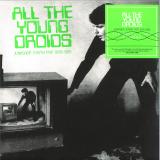
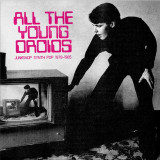
Compiled by Philip King “And then came the rise of synth pop : blokes with dodgy haircuts hunched over keyboard-operated machines stuffed with wires and do-it-yourself tone oscillators making sounds like a brood of geese passing gas in a wind tunnel. Whoopee! This is the way the ‘70s ended : not with a blood-curdling bang bang but with a cheap, synthesized, emasculating whimper.” NICK KENT, NME. All The Young Droids: Junkshop Synth Pop 1978-1985 is a new compilation that charts the underbelly of the epoch-defining sound of the synthesiser in 80s popular music. Compiled by Philip King (previously seen compiling All The Young Droogs, Glitterbest and Boobs - The Junkshop Glam Discotheque), the music here connects the dots between DIY synth enthusiasts grappling with new, cheap synthesisers at the tail-end of punk and wannabe, jobbing songwriters enthral to the new music pioneered by Gary Numan, Depeche Mode and Daniel Miller’s Mute Records. Featuring rare tracks of auto-didactic progressive pop music, proto-techno punk, shoot-for-the-stars-land-in-the-gutter chart flops and heralded, underground synth classics, School Daze paints a picture of beautiful failure. Complete with extensive sleeve notes written by King and never before seen imagery, all 24 tracks were remastered by RPM in-house engineer Simon Murphy, many from vinyl copies due to lost master tapes. The story told on All The Young Droids is one of the dawning opportunity presented by both the emergence to the market of cheaper analog synthesisers and the distribution networks plus indie labels that exploded with the advent of punk music in 1976. While the music that sprouted out all over the globe in the wake of these factors was decried as fake, plastic, a refutation of punk’s guitar-led revolution, it’s telling that much of the music on All The Young Droids.. was created in bedrooms, ramshackle studios and home-made set ups with often borrowed equipment. In the era of record labels jumping to capitalise on the success of The Sex Pistols, The Clash (both on major labels, of course) these artists struggled to stand out from a new gold-rush with next to no budget or PR team. With radio and labels desperate for the new Yazoo, what resulted was a testament to necessity being the mother of invention. At the time, the synthesiser was the music of the future, a shiny new machine that could paint like an orchestra with a single finger and a 4-track. In the hands of Manchester avant-pranksters Gerry & The Holograms it’s a pulsing, sardonic weapon.. the only instrument on the Messthetics classic lampooning of New Wave fashion. In Hamburg, a 16 year old Andreas Dorau used it to write and record (with his female classmates on vocals) a global smash in Fred Vom Jupiter (later licensed to Mute Records). The hard-to-find English version (Fred From Jupiter, natch) is included here. Many artists with alreadystoried careers caught the bug and recorded synthesiser-fuelled peons to space, computers, the future and, of course, love-interests. Harry Kakoulli, late of Squeeze, recorded a solo album in 1979 that included the incredible power-synth-pop smash-that-never-smashed I’m On A Rocket. Similarly, Ian North of Neo and American Power Pop stalwarts Milk ’n’ Cookies bought a Korg MS20 and used a tape machine to record We’re Not Lonely, an absolute lost-classic of minimal synth pop. We’re Not Lonely also features on the Junkshop Synth Pop sampler 7” twinned with John Howard unreleased track You Will See, released April 12th 2025. There are plenty of compilation debuts in evidence. Sole Sister were a mysterious trio who were featured on the Scaling Triangles compilation of female-fronted, queer-adjacent post-punk / underground music that also featured The Petticoats. Selwin Image were from San Francisco and featured members of the recently defunct power pop/punk group The Pushups. Their stupidly catchy The Unknown fizzes with New Wave energy - think XTC to Sparks but remains unreleased until now. Dream Unit’s A Drop In The Ocean is an early synth wave cut, positively teaming with Joy Division instrumentation, previously only released on a long-forgotten and super rare, self-released EP. Incandescent Luminaire’s Famous Names belies an archetypal struggle of a small-town trying to make it in a cruel industry but is a thrilling New Romantic-Synth Wave cross over with a OMD gloominess that’s a joy to hear. Feminist Minimal Wave track I Am A Time Bomb by performance artist Peta Lilly and Michael Chance is a revelation destined for new found cult status. It was released on 7” and lost until now. The flipside to the subterranean, never-made-it synth pop mentioned above are the ambitious, even fruity attempts at success that have a perennial elegance to their confidence. New Jersey-ite Billy London (real name Ed Barth) tried to cash in on the synth boom with Woman, released by a major label, a lurching new wave track built on the Louie Louie rhythm and a wonderfully camp Lou Reedstyle sleazy vocal before exploding in the synthesised chorus. The song bombed but with a chorus like this, you have to wonder why? Ex-Glitter Band member John Springate’s My Life is truly epic, with doomed chord progressions and massive sounding drums turning into at least 3 different songs in the course of the track. Before you wonder what’s going on the song resolves with a glorious return to the main refrain. The dry-ice-dressed dance floor is well catered for too. Design’s Premonition and Vision’s Lucifer’s Friend are stone-cold minimal synth bangers, well loved but given a new lease of life here. The Warlord’s The Ultimate Warlord was released in 1978, a homespun proto Hi NRG banger that was later re-recorded by The Immortals in Canada who had a club hit with it. One-man- band Disco Volante’s No Motion was re-issued by Synth wave label Medical in 2012 but makes its first vinyl compilation appearance here. Close your eyes and you can imagine what Lawrence of Felt would have sounded like with some cheap Korgs a little earlier in his career. Gibraltar-based trio The Microbes imagined a computer programming people to dance - how prescient - and ended up with a propulsive, robo-funk track with splendid rubbery bass playing over a tectonic drum machine. Previously picked up by Belgian label Stroom TV, Dee Jay Bert & Eagle’s heavily Euro-accented I Am Your Master demands the listener to “come to paradise!” In a frankly terrifying manner. All The Young Droids is the first compilation to peel away from the narrative that dour, Minimal Synth and Cold Wave were the only musical children of the first rush of synth pop. Philip King and School Daze Records describe a much more complicated world: along with the austere, Brutalist children of Daniel Miller (who produced Alan Burnham’s Bowie-Low-influenced Science Fiction here) was a plethora of desperate cash-ins, accidental mainstream hits, ambitious pop dramas and major label punts that went nowhere. Crucially, the compilation blurs the line between junk and treasure. What if the two things are interchangeable. What if it’s all science fiction?
- A1: Hurts And Noises
- A2: Wake Up
- A3: I Don't Wanna Be A Rich
- A4: Terrorist Bad Heart
- A5: Provocate
- A6: Lucifer Sam (Pink Floyd)
- B1: Happy!?
- B2: So Lazy
- B3: I Feel Down
- B4: Stupido
- B5: Guilty
- B6: Caroline Says (Loo Reed)
UILTY RAZORS, BONA FIDE PUNKS.
Writings on the topic that go off in all directions, mind-numbing lectures given by academics, and testimonies, most of them heavily doctored, from those who “lived through that era”: so many people today fantasize about the early days of punk in our country… This blessed moment when no one had yet thought of flaunting a ridiculous green mohawk, taking Sid Vicious as a hero, or – even worse – making the so-called alternative scene both festive and boorish. There was no such thing in 1976 or 1977, when it wasn’t easy to get hold of the first 45s by the Pistols or the Clash. Few people were aware of what was happening on the fringes of the fringes at the time. Malcolm McLaren was virtually unknown, and having short hair made you seem strange. Who knew then that rock music, which had taken a very bad turn since the early 1970s, would once again become an essential element of liberation? That, thanks to short and fast songs, it would once again rediscover that primitive, social side that was so hated by older generations? Who knew that, besides a few loners who read the music press (it was even better if they read it in English) and frequented the right record stores? Many of these formed bands, because it was impossible to do otherwise. We quickly went from listening to the Velvet Underground to trying to play the Stooges’ intros. It’s a somewhat collective story, even though there weren’t many people to start it.
The Guilty Razors were among those who took part in this initial upheaval in Paris. They were far from being the worst. They had something special and even released a single that was well above the national average. They also had enough songs to fill an album, the one you’re holding. In everyone’s opinion, they were definitely not among the punk impostors that followed in their wake. They were, at least, genuine and credible.
Guilty Razors, Parisian punk band (1975-1978). To understand something about their somewhat linear but very energetic sound, we might need to talk about the context in which it was born and, more broadly, recall the boredom (a theme that would become capital in punk songs) coupled with the desire to blow everything off, which were the basis for the formation of bands playing a rejuvenated rock music ; about the passion for a few records by the Kinks or the early Who, by the Stooges, by the Velvet mostly, which set you apart from the crowd.
And of course, we should remember this new wave, which was promoted by a few articles in the specialized press and some cutting-edge record stores, coming from New York or London, whose small but powerful influence could be felt in Paris and in a handful of isolated places in the provinces, lulled to sleep by so many appalling things, from Tangerine Dream to President Giscard d’Estaing...
In 1975-76, French music was, as almost always, in a sorry state ; it was still dominated by Johnny Hallyday and Sylvie Vartan. Local rock music was also rather bleak, apart from Bijou and Little Bob who tried to revive this small scene with poorly sound-engineered gigs played to almost no one.
In the working class suburbs at the time, it was mainly hard rock music played to 11 that helped people forget about their gruelling shifts at the factory. Here and there, on the outskirts of major cities, you still could find a few rockers with sideburns wearing black armbands since the death of Gene Vincent, but it wasn’t a proper mass movement, just a source of real danger to anyone they came across who wasn't like them. In August 1976, a festival unlike any other took place in Mont-de-Marsan – the First European Punk Festival as the poster said – with almost as many people on stage as in the audience. Yet, on that day, a quasi historical event happened, when, under the blazing afternoon sun, a band of unknowns called The Damned made an unprecedented noise in the arena, reminiscent of the chaotic Stooges in their early adolescence. They were the first genuine punk band to perform in our country: from then on, anything was possible, almost anything seemed permissible.
It makes sense that the four+1 members of Guilty Razors, who initially amplified acoustic guitars with crappy tape recorder microphones, would adopt punk music (pronounced paink in French) naturally and instinctively, since it combines liberating noise with speed of execution and – crucially – a very healthy sense of rebellion (the protesters of May 1968 proclaimed, and it was even a slogan, that they weren’t against old people, but against what had made them grow old. In the mid-1970s, it seemed normal and obvious that old people should now ALSO be targeted!!!).
At the time, the desire to fight back, and break down authority and apathy, was either red or black, often taking the form of leafleting, tumultuous general assemblies in the schoolyard, and massive or shabby demonstrations, most of the time overflowing with an exciting vitality that sometimes turned into fights with the riot police. Indeed, soon after the end of the Vietnam War and following Pinochet’s coup in Chile, all over France, Trotskyist and anarcho-libertarian fervour was firmly entrenched among parts of the educated youth population, who were equally rebellious and troublemakers whenever they had the chance. It should also be noted that when the single "Anarchy in the UK" was first heard, even though not many of us had access to it, both the title and its explosive sound immediately resonated with some of those troublemakers crying out for ANARCHY!!! Meanwhile, the left-wing majority still equated punks with reckless young neo-Nazis. Of course, the widely circulated photos in the mainstream press of Siouxsie Sioux with her swastikas didn’t necessarily help to win over the theorists of the Great Revolution. It took Joe Strummer to introduce The Clash as an anti-racist, anti-fascist and anti-ignorance band for the rejection of old-school revolutionaries to fade a little.
The Lycée Jean-Baptiste Say at Porte d’Auteuil, despite being located in the very posh and very exclusive 16th arrondissement of Paris, didn’t escape these "committed" upheavals, which doubled as the perfect outlet for the less timid members of this generation.
“Back then, politics were fun,” says Tristam Nada, who studied there and went on to become Guilty Razors’ frontman. “Jean-Baptiste was the leftist high-school in the neighbourhood. When the far right guys from the GUD came down there, the Communist League guys from elsewhere helped us fight them off.”
Anything that could challenge authority was fair game and of course, strikes for just about any reason would lead to increasingly frequent truancy (with a definitive farewell to education that would soon follow). Tristam Nada spent his 10th and 11th unfinished grades with José Perez, who had come from Spain, where his father, a janitor, had been sentenced to death by Franco. “José steered my tastes towards solid acts such as The Who. Like most teenagers, I had previously absorbed just about everything that came my way, from Yes to Led Zeppelin to Genesis. I was exploring… And then one day, he told me that he and his brother Carlos wanted to start a rock band.” The Perez brothers already played guitar. “Of course, they were Spanish!”, jokes their singer. “Then, somewhat reluctantly, José took up the bass and we were soon joined by Jano – who called himself Jano Homicid – who took up the rhythm guitar.” Several drummers would later join this core of not easily intimidated young guys who didn’t let adversity get the better of them.
The first rehearsals of the newly named Guilty Razors took place in the bedroom of a Perez aunt. There, the three rookies tried to cover a few standards, songs that often were an integral part of their lives. During a first, short gig, in front of a bewildered audience of tough old-school rockers, they launched into a clunky version of the Velvet Underground's “Heroin”. Challenge or recklessness? A bit of both, probably… And then, step by step, their limited repertoire expanded as they decided to write their own songs, sung in a not always very accurate or academic English, but who cared about proper grammar or the right vocabulary, since what truly mattered was to make the words sound as good as possible while playing very, very fast music? And spitting out those words in a language that left no doubt as to what it conveyed mattered as well.
Trying their hand a the kind of rock music disliked by most of the neighbourhood, making noise, being fiercely provocative: they still belonged to a tiny clique who, at this very moment, had chosen to impose this difference. And there were very few places in France or elsewhere, where one could witness the first stirrings of something that wasn’t a trend yet, let alone a movement.
In the provinces, in late 1976 or early 1977, there couldn’t be more than thirty record stores that were a bit more discerning than average, where you could hear this new kind of short-haired rock music called “punk”. The old clientele, who previously had no problem coming in to buy the latest McCartney or Aerosmith LP, now felt a little less comfortable there…
In Paris, these enlightened places were quite rare and often located nex to what would become the Forum des Halles, a big shopping mall. Between three aging sex workers, a couple of second-hand clothes shops, sellers of hippie paraphernalia and small fashion designers, the good word was loudly spread in two pioneering places – propagators of what was still only a new underground movement. Historically, the first one was the Open Market, a kind of poorly, but tastefully stocked cave. Speakers blasted out the sound of sixties garage bands from the Nuggets compilation (a crucial reference for José Perez) or the badly dressed English kids of Eddie and the Hot Rods. This black-painted den was opened a few years earlier by Marc Zermati, a character who wasn’t always in a sunny disposition, but always quite radical in his (good) choices and his opinions. He founded the independent label Skydog and was one of the promoters of the Mont-de-Marsan punk festivals. Not far from there was Harry Cover, another store more in tune with the new New York scene, which was amply covered in the house fanzine, Rock News (even though it was in it that the photos of the Sex Pistols were first published in France).
It was a favorite hang-out of the Perez brothers and Tristam Nada, as the latter explained. “It’s at Harry Cover’s that we first heard the Pistols and Clash’s 45s, and after that, we decided to start writing our first songs. If they could do it, so could we!”
The sonic shocks that were “Anarchy in the UK”, “White Riot” or the Buzzcocks’s EP, “Spiral Scratch” – which Guilty Razors' sound is reminiscent of – were soon to be amplified by an unparalleled visual shock. In April 1977, right after the release of their first LP, The Clash performed at the Palais des Glaces in Paris, during a punk night organised by Marc Zermati. For many who were there, it was the gig of a lifetime…
Of course, Guilty Razors and Tristam were in the audience: “That concert was fabulous… We Parisian punks were almost all dressed in black and white, with white shirts, skinny leather ties, bikers jackets or light jackets, etc. The Clash, on the other hand, wore colourful clothes. Well, the next day, at the Gibus, you’d spot everyone who had been at this concert, but they weren’t wearing anything black, they were all wearing colours.”
It makes sense to mention the Gibus club, as Guilty Razors often played there (sometimes in front of a hostile audience). It was also the only place in Paris that regularly scheduled new Parisian or Anglo-Saxon acts, such as Generation X, Siouxsie and the Banshees, the Slits, and Johnny Thunders who would become a kind of messed-up mascot for the venue. A little later, in 1978, the Rose Bonbon – formerly the Nashville – also attracted nightly owls in search of electric thrills… In 1977, the iconic but not necessarily excellent Asphalt Jungle often played at the Gibus, sometimes sharing the bill with Metal Urbain, the only band whose aura would later transcend the French borders (“I saw them as the French Sex Pistols,” said Geoff Travis, head of their British label Rough Trade). Already established in this small scene, Metal Urbain helped the young and restless Guilty Razors who had just arrived. Guitarist for Metal Urbain Hermann Schwartz remembers it: “They were younger than us, we were a bit like their mentors even if it’s too strong a word… At least they were credible. We thought they were good, and they had good songs which reminded of the Buzzcocks that I liked a lot. But at some point, they started hanging out with the Hells Angels. That’s when we stopped following them.”
The break-up was mutual, since, Guilty Razors, for their part, were shocked when they saw a fringe element of the audience at Metal Urbain concerts who repeatedly shouted “Sieg Heil” and gave Nazi salutes. These provocations, even still minor (the bulk of the skinhead crowd would later make their presence felt during concerts), weren’t really to the liking of the Perez brothers, whose anti-fascist convictions were firmly rooted. Some things are non-negotiable.
A few months earlier (in July 1978), Guilty Razors had nevertheless opened very successfully for Metal Urbain at the Bus Palladium, a more traditonally old-school rock night-club. But, as was sometimes the case back then, the night turned into a mass brawl when suburban rockers came to “beat up punks”.
Back then, Parisian nights weren’t always sweet and serene.
So, after opening as best as they could for The Jam (their sound having been ruined by the PA system), our local heroes were – once again – met outside by a horde of greasers out to get them. “Thankfully,” says Tristam, “we were with our roadies, motorless bikers who acted as a protective barrier. We were chased in the neighbouring streets and the whole thing ended in front of a bar, with the owner coming out with a rifle…”
Although Tristam and the Perez brothers narrowly escaped various, potentially bloody, incidents, they weren’t completely innocent of wrongdoing either. They still find amusing their mugging of two strangers in the street for example (“We were broke and we simply wanted to buy tickets for the Heartbreakers concert that night,” says Tristam). It so happened that their victims were two key figures in the rock business at the time: radio presenter Alain Manneval and music publisher Philippe Constantin. They filed a complaint and sought monetary compensation, but somehow the band’s manager, the skilful but very controversial Alexis, managed to get the complaint withdrawn and Guilty Razors ended up signing with Constantin with a substantial advance.
They also signed with Polydor and the label released in 1978 their only three-track 45, featuring “I Don't Wanna be A Rich”, “Hurts and Noises” and “Provocate” (songs that exuded perpetual rebellion and an unquenchable desire for “class” confrontation). It was a very good record, but due to a lack of promotion (radio stations didn’t play French artists singing in English), it didn’t sell very well. Only 800 copies were allegedly sold and the rest of the stock was pulped… Initially, the three tracks were to be included on a LP that never came to be, since they were dropped by Polydor (“Let’s say we sometimes caused a ruckus in their offices!” laughs Tristam.) In order to perfect the long-awaited LP, the band recorded demos of other tracks. There was a cover of Pink Floyd's “Lucifer Sam” from the Syd Barrett era – proof of an enduring love for the sixties’ greats –, “Wake Up” a hangover tale and “Bad Heart” about the Baader-Meinhof gang, whose actions had a profound impact on the era and on a generation seeking extreme dissent... On the album you’re now discovering, you can also hear five previously unreleased tracks recorded a bit later during an extended and freezing stay in Madrid, in a makeshift studio with the invaluable help of a drummer also acting as sound engineer. He was both an enthusiastic old hippie and a proper whizz at sound engineering. Here too, certain influences from the fifties and sixties (Link Wray, the Troggs) are more than obvious in the band’s music.
Shortly after a final stormy and rather barbaric (on the audience’s side) “Punk night” at the Olympia in June 1978, Tristam left the band ; his bandmates continued without him for a short while.
But like most pioneering punk bands of the era, Guilty Razors eventually split up for good after three years (besides once in Spain, they’d only played in Paris). The reason for ceasing business activities were more or less the same for everyone: there were no venues outside one’s small circuit to play this kind of rock music, which was still frightening, unknown, or of little interest to most people. The chances of recording an LP were virtually null, since major labels were only signing unoriginal but reassuring sub-Téléphone clones, and the smaller ones were only interested in progressive rock or French chanson for youth clubs. And what about self-production? No one in our small safety-pinned world had thought about it yet. There wasn’t enough money to embark on that sort of venture anyway.
So yes, the early days of punk in France were truly No Future!
- A1: Design - Premonition
- A2: Vision - Lucifer’s Friend
- A3: Richard Bone - Alien Girl
- A4: John Howard - I Tune Into You
- A5: Ian North - We’re Not Lonely
- A6: Selwin Image - The Unknown
- B1: Harry Kakoulli - I’m On A Rocket
- B2: Rich Wilde - The Lady Wants To Be Alone
- B3: Billy London - Woman
- B4: Alan Burnham - Science Fiction
- B5: The Microbes - Computer
- B6: The Goo-Q - I’m A Computer
- C1: Gerry & The Holograms - Gerry & The Holograms
- C2: The Warlord - The Ultimate Warlord
- C3: Die Marinas - Fred From Jupiter
- C4: Dee Jay Bert & Eagle - I Am Your Master
- C5: Peta Lily & Michael Process - I Am A Time Bomb
- C6: Sole Sister - It’s Not What You Are But How
- D1: Alasdair Riddell - Do You Read Me?
- D2: Karel Fialka - Armband (The Mystery Song)
- D3: John Springate - My Life
- D4: Incandescent Luminaire - Famous Names
- D5: Disco Volante - No Motion
- D6: Dream Unit - A Drop In The Ocean
MB Crystal Vinyl[32,73 €]
LTD Trans Pink Vinyl[32,82 €]
LTD Trans Pink Vinyl[27,69 €]
Compiled by Philip King
“And then came the rise of synth pop : blokes with dodgy haircuts hunched over keyboard-operated
machines stuffed with wires and do-it-yourself tone oscillators making sounds like a brood of geese
passing gas in a wind tunnel. Whoopee! This is the way the ‘70s ended : not with a blood-curdling bang
bang but with a cheap, synthesized, emasculating whimper.”
NICK KENT, NME.
All The Young Droids: Junkshop Synth Pop 1978-1985 is a new compilation that charts the
underbelly of the epoch-defining sound of the synthesiser in 80s popular music. Compiled by Philip
King (previously seen compiling All The Young Droogs, Glitterbest and Boobs - The Junkshop
Glam Discotheque), the music here connects the dots between DIY synth enthusiasts grappling with
new, cheap synthesisers at the tail-end of punk and wannabe, jobbing songwriters enthral to the new
music pioneered by Gary Numan, Depeche Mode and Daniel Miller’s Mute Records. Featuring rare
tracks of auto-didactic progressive pop music, proto-techno punk, shoot-for-the-stars-land-in-the-gutter
chart flops and heralded, underground synth classics, School Daze paints a picture of beautiful failure.
Complete with extensive sleeve notes written by King and never before seen imagery, all 24 tracks
were remastered by RPM in-house engineer Simon Murphy, many from vinyl copies due to lost master
tapes. The story told on All The Young Droids is one of the dawning opportunity presented by both the
emergence to the market of cheaper analog synthesisers and the distribution networks plus indie labels
that exploded with the advent of punk music in 1976. While the music that sprouted out all over the
globe in the wake of these factors was decried as fake, plastic, a refutation of punk’s guitar-led
revolution, it’s telling that much of the music on All The Young Droids.. was created in bedrooms,
ramshackle studios and home-made set ups with often borrowed equipment. In the era of record labels
jumping to capitalise on the success of The Sex Pistols, The Clash (both on major labels, of course)
these artists struggled to stand out from a new gold-rush with next to no budget or PR team. With radio
and labels desperate for the new Yazoo, what resulted was a testament to necessity being the mother
of invention.
At the time, the synthesiser was the music of the future, a shiny new machine that could paint like an
orchestra with a single finger and a 4-track. In the hands of Manchester avant-pranksters Gerry & The
Holograms it’s a pulsing, sardonic weapon.. the only instrument on the Messthetics classic lampooning
of New Wave fashion. In Hamburg, a 16 year old Andreas Dorau used it to write and record (with his
female classmates on vocals) a global smash in Fred Vom Jupiter (later licensed to Mute Records).
The hard-to-find English version (Fred From Jupiter, natch) is included here. Many artists with alreadystoried careers caught the bug and recorded synthesiser-fuelled peons to space, computers, the future
and, of course, love-interests. Harry Kakoulli, late of Squeeze, recorded a solo album in 1979 that
included the incredible power-synth-pop smash-that-never-smashed I’m On A Rocket. Similarly, Ian
North of Neo and American Power Pop stalwarts Milk ’n’ Cookies bought a Korg MS20 and used a
tape machine to record We’re Not Lonely, an absolute lost-classic of minimal synth pop. We’re Not
Lonely also features on the Junkshop Synth Pop sampler 7” twinned with John Howard unreleased
track You Will See, released April 12th 2025.
There are plenty of compilation debuts in evidence. Sole Sister were a mysterious trio who were
featured on the Scaling Triangles compilation of female-fronted, queer-adjacent post-punk /
underground music that also featured The Petticoats. Selwin Image were from San Francisco and
featured members of the recently defunct power pop/punk group The Pushups. Their stupidly catchy
The Unknown fizzes with New Wave energy - think XTC to Sparks but remains unreleased until now.
Dream Unit’s A Drop In The Ocean is an early synth wave cut, positively teaming with Joy Division
instrumentation, previously only released on a long-forgotten and super rare, self-released EP.
Incandescent Luminaire’s Famous Names belies an archetypal struggle of a small-town trying to
make it in a cruel industry but is a thrilling New Romantic-Synth Wave cross over with a OMD
gloominess that’s a joy to hear. Feminist Minimal Wave track I Am A Time Bomb by performance artist
Peta Lilly and Michael Chance is a revelation destined for new found cult status. It was released on 7”
and lost until now.
The flipside to the subterranean, never-made-it synth pop mentioned above are the ambitious, even
fruity attempts at success that have a perennial elegance to their confidence. New Jersey-ite Billy
London (real name Ed Barth) tried to cash in on the synth boom with Woman, released by a major
label, a lurching new wave track built on the Louie Louie rhythm and a wonderfully camp Lou Reedstyle sleazy vocal before exploding in the synthesised chorus. The song bombed but with a chorus like
this, you have to wonder why? Ex-Glitter Band member John Springate’s My Life is truly epic, with
doomed chord progressions and massive sounding drums turning into at least 3 different songs in the
course of the track. Before you wonder what’s going on the song resolves with a glorious return to the
main refrain.
The dry-ice-dressed dance floor is well catered for too. Design’s Premonition and Vision’s Lucifer’s
Friend are stone-cold minimal synth bangers, well loved but given a new lease of life here. The
Warlord’s The Ultimate Warlord was released in 1978, a homespun proto Hi NRG banger that was
later re-recorded by The Immortals in Canada who had a club hit with it. One-man- band Disco
Volante’s No Motion was re-issued by Synth wave label Medical in 2012 but makes its first vinyl
compilation appearance here. Close your eyes and you can imagine what Lawrence of Felt would have
sounded like with some cheap Korgs a little earlier in his career. Gibraltar-based trio The Microbes
imagined a computer programming people to dance - how prescient - and ended up with a propulsive,
robo-funk track with splendid rubbery bass playing over a tectonic drum machine. Previously picked up
by Belgian label Stroom TV, Dee Jay Bert & Eagle’s heavily Euro-accented I Am Your Master
demands the listener to “come to paradise!” In a frankly terrifying manner.
All The Young Droids is the first compilation to peel away from the narrative that dour, Minimal Synth
and Cold Wave were the only musical children of the first rush of synth pop. Philip King and School
Daze Records describe a much more complicated world: along with the austere, Brutalist children of
Daniel Miller (who produced Alan Burnham’s Bowie-Low-influenced Science Fiction here) was a
plethora of desperate cash-ins, accidental mainstream hits, ambitious pop dramas and major label
punts that went nowhere. Crucially, the compilation blurs the line between junk and treasure. What if the
two things are interchangeable. What if it’s all science fiction?
- Economist - Never Bite The Hand That Feeds
- Economist - Innocently Introverted
- Economist - Flowing Thoughts
- Economist - Improving Yourself
- Economist - Aircastles Decay
- Economist - Final Way
- Scrollkeeper - Your Blood First
- Scrollkeeper - Wetiko
- Scrollkeeper - Misery
- Viron - Liberator
- Viron - On The Run
- Viron - The Isle Of Man
- Viron - Sniper
- Viron - Dreams Of Eschaton
- Viron - Lucifer Arise (Drumcheck Mix)
- Viron - Sander
- Viron - Blow The Fuse
- Viron - Viron
- Viron - Doomsday
- Viron - Prelude - Run For Tomorrow
- Viron - The Witch (Demo)
-Boxset mit vier Alben featuring Drummer Neudi (u.a. Manilla Road, Trance, Griffin, Savage Grace…)
- Limited Edition mit handsignierter Autogrammkarte
Schon mit 8 Jahren entdeckte Andreas Neuderth, der seit Mitte der Achtziger nur noch den Spitzname NEUDI benutzt, sein Talent für das Schlagzeug. Sogar bereits schon etwas früher wurde er zum Fan harter
Rockklänge, die üblichen Verdächtigen wie Kiss, Status Quo und Rush. Mit 15 Jahren, im Jahr 1986, taucht sein Drumming erstmals auf einem Tape der Band SUDDEN DARKNESS auf, was 2026 zu einem Jubiläumsjahr für
den heute in Rheinhessen lebenden Musiker darstellt. Seine bekanntesten Stationen sind neben MANILLA ROAD (2011 bis zum Tod von Mark Shelton im Jahr 2018) und SAVAGE GRACE (2009/2010) aktuell TRANCE,
ROXXCALIBUR, ANGEL OF DAMNATION, IRONSWORD, JAMESON RAID und die Manilla Road-Nachfolgeband SENTRY. Das 1994er ECONOMIST Album „New Built Ghetto Status“ bezeichnet Neudi trotz all diesen genannten Namen als „eines der drei besten Alben, auf denen ich zu hören bin“. In der Tat darf man getrost sagen, dass es den Stil von ECONOMIST wohl nur einmal gibt. 1995 wurde die CD von Massacre/Intercord lizensiert, doch
mit dem progressiven Stil war man seiner Zeit einfach zu weit voraus.
Als Reissue, erstmals als Doppel LP mit dem unveröffentlichten zweiten Album „Mind Movies“ erschienen, erntete man nun endlich die verdient euphorischen Kritiken. VIRON (2004/2006 und 2008) war nach einer Zeit
der Experimente Neudis Rückkehr zum traditionellen Metal, den er als Fan auch zuvor nie verlassen hat. Die zwei hochgelobten Alben waren indirekt der Vorgänger der erfolgreicheren Band ROXXCALIBUR. SCROLLKEEPER
ist eine Band aus Texas, die für ihre EP „Wetico“ als Manilla Road-Fans mit Neudi zusammenarbeiten wollten. Neudi ist bekannt für sein „busy drumming“. Beeinflusst von Neil Peart (Rush), Randy Foxe (Manilla Road) oder Ian Paice (Deep Purple) bietet er nicht nur die genreübliche Rhythmusarbeit „im Hintergrund“, sondern bringt das Instrument teils auffällig in den Vordergrund. (Infotext von Michael Gresner, Januar 2026)
- こびと
- ハレルヤ:左?
- 孤独のハープ弾き
- パラダイス:真昼
- Black Hole
- 紫の夕べ
- 目の前の天使達
- Another Lonely Harpist
- They’ve Gone, They Will Come
- パラダイス
- 童話
- Spirit In My Hair
World Of Echo announces the reissue of two remastered albums by Japanese guitarist and songwriter Naoki Zushi, 1988’s Paradise, and 2005’s III. Two classics of Japanese psychedelia, both Paradise and III were originally released on Org Records, the imprint of Shinji Shibayama of acid-folk group Nagisa Ni Te, with whom Zushi has guested on second guitar for decades. Both intimate and expansive, rich with revelatory songwriting and blasted, sky-scouring guitar, these reissues return these albums to print for the first time since the 2000s. It’s the first time III has been officially released on vinyl, with an extra, previously unreleased track, “Under The June Moonlight.”
Recorded in Kyoto’s Townhouse Studios in mid 1987 and released in limited-to-500 vinyl pressing in 1988, Paradise emerged from a scene in Kansai, Japan that was embracing the idiosyncracies of 1970s singer-songwriters, the soaring solos of early seventies psychedelia, and the DIY impulse of 1980s post-punk. While Zushi’s musical history stretched back to the early eighties – he was a founding member of Jojo Hiroshige’s noise outfit Hijokaidan – he found his feet with groups like Hallelujahs, whose dream-pop collection Niku O Kuraite Chikai Wo Tateyo was recently reissued by Black Editions, and Idiot O’Clock.
Paradise appeared two years after that Hallelujahs album and share much the same membership – Zushi’s backing band on several of the songs includes Shibayama on drums and Ken-Ichi Takayama (aka Idiot) on electric guitar, though just as often, Zushi plays all the instruments himself. The coordinates here are wide-reaching – you can hear the volume and intensity of Neil Young & Crazy Horse (on “Hallelujah: Left Side” and “Paradise: Midday”), the slow-motion magic of Galaxie 500, the idiosyncratic spirit of The Only Ones, all mixed up with tender guitar miniatures and stumbling garage-psych-pop moves.
Seven years later, after the transitional album Phenomenal Luciferin, Zushi released III. Perhaps his masterpiece, it’s already been bootlegged on vinyl, but this reissue is the real deal. The album was recorded at Studio Nemu over seven years, and sees Zushi backed by Shibayama (bass) and Masako Takeda (drums), his erstwhile bandmates in Nagisa Ni Te. By this stage, Zushi had started to really stretch out, and many of the songs on III swoon languorously, taking their sweet time to say what they need to say. It’s rich with lovely, melancholy songs, in a similar realm to bandmates Nagisa Ni Te, of course, but you can also hear traces of everything from Syd Barrett’s The Madcap Laughs, through seventies private press loner folk, to the slow-burn meanderings of the likes of early Low or Damon & Naomi.
When interviewed by Shibayama in the mid-nineties, Zushi said of Paradise, “it was a sort of collection of songs that had meant something to me up to that point… it was my paradise. I wanted to create paradise.” That’s something Zushi achieves on both of these albums – visionary Japanese psychedelia, en route to paradise. - Jon Dale
Blisterhead ist eine der verstecktesten Perlen der europäischen Punkrock-Szene. Die Band wurde 1999 in den kleinen Städten Falköping und Skövde in Schweden gegründet. Im Laufe der Jahre hat sich die Band einen Ruf für Beständigkeit und Leidenschaft aufgebaut und fünf Alben sowie drei EPs über renommierte Indie-Labels wie Kob Records, Mad Butcher Records, Laketown Records und Alleycat Records veröffentlicht. Mit Tourneen durch mehr als 15 Länder in ganz Europa hat Blisterhead die Bühne mit legendären Acts wie Millencolin, Toy Dolls, Mad Sin, GBH und Bombshell Rocks geteilt. Bekannt für ihre energiegeladenen und messerscharfen Live-Auftritte, gelten sie oft als eine der zuverlässigsten und fesselndsten Live-Bands der europäischen Punkszene. Musikalisch liefert Blisterhead eine einzigartige Mischung aus Punkrock und rohem Rock'n'Roll, angetrieben von unglaublich starken Refrains und mitreißenden Melodien, die dem Zuhörer noch lange nach dem Ende der Songs im Gedächtnis bleiben. Blisterhead kehren nun mit ihrem sechsten Album "Where We Belong" auf Sunny Bastards Records zurück und destillieren alles, was die Band ausmacht: große, hymnische Refrains, einen wilden Cocktail aus Punkrock und Rock'n'Roll und eine live aufgenommene Energie, die Ehrlichkeit, Schweiß und Adrenalin direkt aus den Lautsprechern strömen lässt. Mit jedem Hören entfalten sich neue Hooks und Melodien, die zeigen, wie viel Tiefe unter der rohen Kraft steckt. Dieses Mal ließ sich die Band stark von Legenden wie US Bombs, The Humpers und Rancid inspirieren und verband den rohen amerikanischen Punk-Angriff mit der Härte und Melodie des klassischen englischen Punks der 80er Jahre. Das Ergebnis ist ein Sound, der sowohl zeitlos als auch eindringlich wirkt, den Wurzeln des Punk treu bleibt und gleichzeitig mit voller Geschwindigkeit vorwärtsprescht
- Where We Belong
- Not The Living Not The Dead
- Holy Moly
- The Wild One
- El Diablo
- Wake Up
- Red Light
- Cheerio To The World
- Up The Cross
- Trainwreck
- The Holy Alliance
- Fighting For Lucifer
GREEN W/ DUSTY BLACK SPLATTER VINYL[21,43 €]
LTD PINK/WHITE/BLACK SWIRL VINYL[21,43 €]
Blisterhead ist eine der verstecktesten Perlen der europäischen Punkrock-Szene. Die Band wurde 1999 in den kleinen Städten Falköping und Skövde in Schweden gegründet. Im Laufe der Jahre hat sich die Band einen Ruf für Beständigkeit und Leidenschaft aufgebaut und fünf Alben sowie drei EPs über renommierte Indie-Labels wie Kob Records, Mad Butcher Records, Laketown Records und Alleycat Records veröffentlicht. Mit Tourneen durch mehr als 15 Länder in ganz Europa hat Blisterhead die Bühne mit legendären Acts wie Millencolin, Toy Dolls, Mad Sin, GBH und Bombshell Rocks geteilt. Bekannt für ihre energiegeladenen und messerscharfen Live-Auftritte, gelten sie oft als eine der zuverlässigsten und fesselndsten Live-Bands der europäischen Punkszene. Musikalisch liefert Blisterhead eine einzigartige Mischung aus Punkrock und rohem Rock'n'Roll, angetrieben von unglaublich starken Refrains und mitreißenden Melodien, die dem Zuhörer noch lange nach dem Ende der Songs im Gedächtnis bleiben. Blisterhead kehren nun mit ihrem sechsten Album "Where We Belong" auf Sunny Bastards Records zurück und destillieren alles, was die Band ausmacht: große, hymnische Refrains, einen wilden Cocktail aus Punkrock und Rock'n'Roll und eine live aufgenommene Energie, die Ehrlichkeit, Schweiß und Adrenalin direkt aus den Lautsprechern strömen lässt. Mit jedem Hören entfalten sich neue Hooks und Melodien, die zeigen, wie viel Tiefe unter der rohen Kraft steckt. Dieses Mal ließ sich die Band stark von Legenden wie US Bombs, The Humpers und Rancid inspirieren und verband den rohen amerikanischen Punk-Angriff mit der Härte und Melodie des klassischen englischen Punks der 80er Jahre. Das Ergebnis ist ein Sound, der sowohl zeitlos als auch eindringlich wirkt, den Wurzeln des Punk treu bleibt und gleichzeitig mit voller Geschwindigkeit vorwärtsprescht
- 1: And In 02:50
- 2: Pouring Elixir 08:0
- 3: Imbrication 04:41
- 4: Skin Contact 08:21
- 5: Unwitches 09:42
- 6: Everything I Never Asked Him Ft. Nikita Gill 08:29
- 7: Incandescent Strings 0:00
- 8: Icarus And Lucifer 03:31
- 9: Matthias' Wajd 04:55
- 10: Circles 05:12
- 11: Soaring Above The Nave 06:45
- 12: And Out 01:50
FRQNCY LDN, the new project from Alex Lavery and James Ford (producer du jour and one half of Simian Mobile Disco), are releasing their debut album ‘The White Edition’ on 5 September via PRAH Recordings. Alongside the news of their debut album, the duo are sharing the first taste in ‘Matthias’ Wajd’, which they describe as “a rousing, instrumental piece from the middle of the set where the whole ensemble became balanced providing moments where Raven played violin with haunting yet uplifting melodies within the cavernous reverb of the church. Interestingly, at this moment, most of the audience who had been laying down rose to watch the performance like a gig, like an awakening.”
Initially conceived as a live project with earlier performances at churches in London and at Glastonbury, FRQNCY LDN’s music is a mix of strings, gongs, oscillators, FX, and spoken word, and the result is a musical experience unlike any other. Now that immersive magic has been captured on their debut release through Prah Recordings.
The music that FRQNCY LDN are releasing as their debut album is from an extraordinary live take from a performance at St Matthias Church in Stoke Newington last year, and thanks in no small part to the serendipitous bunch of musicians they assembled: composer and violinist Raven Bush, clarinettist Arun Ghosh, cellist Satin Beige Chousmer, and harpist Chloe Chousmer-Kerr. Alongside Lavery and Ford and assisted by engineer Animesh Ravel, they were able to capture the music to a world class level.
FRQNCY LDN has its roots in a supermoon that occurred three summers ago, after the hottest day of the year. Two of Lavery’s friends gave a sound bath that evening. “I’m not overly into astronomy or anything but the experience was nuts,” he says. “I had to find out what had just happened. What felt like forty minutes was actually two and a half hours. We were all out. It was so profound that I was hooked.”
He immediately signed up for a sound therapy course where he learned about what he calls a “brain hack” to meditation. “The thing about sound therapy is there’s a lot that’s meditation-based, and I find meditation really difficult. I’ve got a very busy brain. What was alluring about this process of sound immersion, a sound bath, whatever you want to call it, is it’s basically a hack to making your brain get into a meditative state.”
FRQNCY LDN’s early shows crystallised their ideas into a project, and Lavery brought poet Nikita Gill on board as a vocalist. “One of the first poems she gave to me, ‘Unwitches’ was in response to me explaining that I’d love this project to be perceived as something anyone could access. It’s not just for the sound meditation or the yoga, or the mushroom crowd. No one should be turned off by connotations from where the music comes from, I love music but I’d never be into that because it’s too woo-woo. Nikita said she’d had this poem for a long time but she’d never found the right home for it.”
And in an increasingly busy and fraught world, the need to tune out for an hour or so, and maybe tune in to something more profound, is only going to get bigger.
I was obsessed, am obsessed, by The Groundhogs, so gave C93 a chance to cover their perfect “Sad-Go-Round” from their perfect Solid album. I also loved Black Sabbath, but had listened to them so much that I never wanted to hear them again. So Michael Cashmore’s Perfect Playing of their intro to “Paranoid” was Perfect Way To Wave GoodBye to them, and slip into my visions of LUCIFER Over LONDON, May G+D DAMN him AGAIN. “The Seven Seals…” I wrote whilst sitting at my desk in my Then House in Aubrey Road, London E17 and drinking bottle after bottle of white wine till I collapsed. My cats then were Mao, Rao, and Yao — and Mao had left up for G+D. Even writing this, their names now makes my heart break and my eyes fill up. So I will stop writing them. We all meet again.Remastered from the original tapes by The Bricoleur at Bladud Flies!, and with the original artwork refreshed and reborn by Rob Hopeye, this 12” vinyl picture-disc comes in a full-colour die-cut sleeve, which is printed on both the outside and inside.
This is one of the second group of 4 reissues of the entire back catalogue of C93 on picture-disc and standard vinyl, in the lead-up to the publication of my autobiography at the end of 2026, whilst I also work on many other recording, publishing, and painting projects, and Watch And Pray! Each release in the picture-disc vinyl reissues series is limited to 1,000 copies, and the titles will not be repressed as picture-discs once they have sold out.
- Honey From A Knife
- Elemental Light
- The Wolf
- Life > Death
- For The Animals
- Amnesia
- Wilderness Now
- Lucifer
- A Pale Horse
- This Night In The City Forever
- Every Man And Woman Is A Star
- Embers
- Until The Light Takes Us
- Siberia
"“Their best album in years – probably decades.” – Record Collector
Pressed on Limited Edition colour-in-colour effect vinyl: LP1 red & black, LP2 purple & black in a Gatefold Sleeve.
Originally released in 2012, Choice of Weapon was hailed as The Cult’s most vital work since their ’80s heyday – a powerful, mature record that proved Ian Astbury and Billy Duffy still had fire to burn. Recorded in the California desert with Chris Goss at the helm and finished by long-time collaborator Bob Rock, the album channels the lush guitar layers, earworm melodies, and gothic swagger fans love, while venturing into fresh territory – from the blues of A Pale Horse to the stomping drama of Honey From a Knife.
Driven by the lead single For the Animals, Choice of Weapon earned iTunes’ Rock Album of the Year in 2012 and debuted at #1 on the UK Rock Chart. Out of print since the original pressing, it has become one of The Cult’s most sought-after modern releases."
- Honey From A Knife
- Elemental Light
- The Wolf
- Life > Death
- For The Animals
- Amnesia
- Wilderness Now
- Lucifer
- A Pale Horse
- This Night In The City Forever
- Every Man And Woman Is A Star
- Embers
- Until The Light Takes Us
- Siberia
Originally released in 2012, "Choice of Weapon" was recorded in the California desert with Chris Goss at the helm and finished by long-time collaborator Bob Rock. Driven by the lead single For the Animals, "Choice of Weapon" earned iTunes" Rock Album of the Year in 2012 and debuted at #1 on the UK Rock Chart. Out of print since the original pressing, it has become one of The Cult"s most sought-after modern releases. Pressed on Limited Edition colour-in-colour effect vinyl: LP1 red & black, LP2 purple & black. Gatefold Sleeve.
World Of Echo announces the reissue of two remastered albums by Japanese guitarist and songwriter Naoki Zushi, 1988’s Paradise, and 2005’s III. Two classics of Japanese psychedelia, both Paradise and III were originally released on Org Records, the imprint of Shinji Shibayama of acid-folk group Nagisa Ni Te, with whom Zushi has guested on second guitar for decades. Both intimate and expansive, rich with revelatory songwriting and blasted, sky-scouring guitar, these reissues return these albums to print for the first time since the 2000s. It’s the first time III has been officially released on vinyl, with an extra, previously unreleased track, “Under The June Moonlight.”
Recorded in Kyoto’s Townhouse Studios in mid 1987 and released in limited-to-500 vinyl pressing in 1988, Paradise emerged from a scene in Kansai, Japan that was embracing the idiosyncracies of 1970s singer-songwriters, the soaring solos of early seventies psychedelia, and the DIY impulse of 1980s post-punk. While Zushi’s musical history stretched back to the early eighties – he was a founding member of Jojo Hiroshige’s noise outfit Hijokaidan – he found his feet with groups like Hallelujahs, whose dream-pop collection Niku O Kuraite Chikai Wo Tateyo was recently reissued by Black Editions, and Idiot O’Clock.
Paradise appeared two years after that Hallelujahs album and share much the same membership – Zushi’s backing band on several of the songs includes Shibayama on drums and Ken-Ichi Takayama (aka Idiot) on electric guitar, though just as often, Zushi plays all the instruments himself. The coordinates here are wide-reaching – you can hear the volume and intensity of Neil Young & Crazy Horse (on “Hallelujah: Left Side” and “Paradise: Midday”), the slow-motion magic of Galaxie 500, the idiosyncratic spirit of The Only Ones, all mixed up with tender guitar miniatures and stumbling garage-psych-pop moves.
Seven years later, after the transitional album Phenomenal Luciferin, Zushi released III. Perhaps his masterpiece, it’s already been bootlegged on vinyl, but this reissue is the real deal. The album was recorded at Studio Nemu over seven years, and sees Zushi backed by Shibayama (bass) and Masako Takeda (drums), his erstwhile bandmates in Nagisa Ni Te. By this stage, Zushi had started to really stretch out, and many of the songs on III swoon languorously, taking their sweet time to say what they need to say. It’s rich with lovely, melancholy songs, in a similar realm to bandmates Nagisa Ni Te, of course, but you can also hear traces of everything from Syd Barrett’s The Madcap Laughs, through seventies private press loner folk, to the slow-burn meanderings of the likes of early Low or Damon & Naomi.
When interviewed by Shibayama in the mid-nineties, Zushi said of Paradise, “it was a sort of collection of songs that had meant something to me up to that point… it was my paradise. I wanted to create paradise.” That’s something Zushi achieves on both of these albums – visionary Japanese psychedelia, en route to paradise. - Jon Dale
g Under The June Moonlight vinyl only bonus track
- A1: Design - Premonition
- A2: Vision - Lucifer’s Friend
- A3: Richard Bone - Alien Girl
- A4: John Howard - I Tune Into You
- A5: Ian North - We’re Not Lonely
- A6: Selwin Image - The Unknown
- B1: Harry Kakoulli - I’m On A Rocket
- B2: Rich Wilde - The Lady Wants To Be Alone
- B3: Billy London - Woman
- B4: Alan Burnham - Science Fiction
- B5: The Microbes - Computer
- B6: The Goo-Q - I’m A Computer
- C1: Gerry & The Holograms - Gerry & The Holograms
- C2: The Warlord - The Ultimate Warlord
- C3: Die Marinas - Fred From Jupiter
- C4: Dee Jay Bert & Eagle - I Am Your Master
- C5: Peta Lily & Michael Process - I Am A Time Bomb
- C6: Sole Sister - It’s Not What You Are But How
- D1: Alasdair Riddell - Do You Read Me?
- D2: Karel Fialka - Armband (The Mystery Song)
- D3: John Springate - My Life
- D4: Idncandescent Luminaire - Famous Names
- D5: Disco Volante - No Motion
- D6: Dream Unit - A Drop In The Ocean
Compiled by Philip King
“And then came the rise of synth pop : blokes with dodgy haircuts hunched over keyboard-operated
machines stuffed with wires and do-it-yourself tone oscillators making sounds like a brood of geese
passing gas in a wind tunnel. Whoopee! This is the way the ‘70s ended : not with a blood-curdling bang
bang but with a cheap, synthesized, emasculating whimper.”
NICK KENT, NME.
All The Young Droids: Junkshop Synth Pop 1978-1985 is a new compilation that charts the
underbelly of the epoch-defining sound of the synthesiser in 80s popular music. Compiled by Philip
King (previously seen compiling All The Young Droogs, Glitterbest and Boobs - The Junkshop
Glam Discotheque), the music here connects the dots between DIY synth enthusiasts grappling with
new, cheap synthesisers at the tail-end of punk and wannabe, jobbing songwriters enthral to the new
music pioneered by Gary Numan, Depeche Mode and Daniel Miller’s Mute Records. Featuring rare
tracks of auto-didactic progressive pop music, proto-techno punk, shoot-for-the-stars-land-in-the-gutter
chart flops and heralded, underground synth classics, School Daze paints a picture of beautiful failure.
Complete with extensive sleeve notes written by King and never before seen imagery, all 24 tracks
were remastered by RPM in-house engineer Simon Murphy, many from vinyl copies due to lost master
tapes. The story told on All The Young Droids is one of the dawning opportunity presented by both the
emergence to the market of cheaper analog synthesisers and the distribution networks plus indie labels
that exploded with the advent of punk music in 1976. While the music that sprouted out all over the
globe in the wake of these factors was decried as fake, plastic, a refutation of punk’s guitar-led
revolution, it’s telling that much of the music on All The Young Droids.. was created in bedrooms,
ramshackle studios and home-made set ups with often borrowed equipment. In the era of record labels
jumping to capitalise on the success of The Sex Pistols, The Clash (both on major labels, of course)
these artists struggled to stand out from a new gold-rush with next to no budget or PR team. With radio
and labels desperate for the new Yazoo, what resulted was a testament to necessity being the mother
of invention.
At the time, the synthesiser was the music of the future, a shiny new machine that could paint like an
orchestra with a single finger and a 4-track. In the hands of Manchester avant-pranksters Gerry & The
Holograms it’s a pulsing, sardonic weapon.. the only instrument on the Messthetics classic lampooning
of New Wave fashion. In Hamburg, a 16 year old Andreas Dorau used it to write and record (with his
female classmates on vocals) a global smash in Fred Vom Jupiter (later licensed to Mute Records).
The hard-to-find English version (Fred From Jupiter, natch) is included here. Many artists with alreadystoried careers caught the bug and recorded synthesiser-fuelled peons to space, computers, the future
and, of course, love-interests. Harry Kakoulli, late of Squeeze, recorded a solo album in 1979 that
included the incredible power-synth-pop smash-that-never-smashed I’m On A Rocket. Similarly, Ian
North of Neo and American Power Pop stalwarts Milk ’n’ Cookies bought a Korg MS20 and used a
tape machine to record We’re Not Lonely, an absolute lost-classic of minimal synth pop. We’re Not
Lonely also features on the Junkshop Synth Pop sampler 7” twinned with John Howard unreleased
track You Will See, released April 12th 2025.
There are plenty of compilation debuts in evidence. Sole Sister were a mysterious trio who were
featured on the Scaling Triangles compilation of female-fronted, queer-adjacent post-punk /
underground music that also featured The Petticoats. Selwin Image were from San Francisco and
featured members of the recently defunct power pop/punk group The Pushups. Their stupidly catchy
The Unknown fizzes with New Wave energy - think XTC to Sparks but remains unreleased until now.
Dream Unit’s A Drop In The Ocean is an early synth wave cut, positively teaming with Joy Division
instrumentation, previously only released on a long-forgotten and super rare, self-released EP.
Incandescent Luminaire’s Famous Names belies an archetypal struggle of a small-town trying to
make it in a cruel industry but is a thrilling New Romantic-Synth Wave cross over with a OMD
gloominess that’s a joy to hear. Feminist Minimal Wave track I Am A Time Bomb by performance artist
Peta Lilly and Michael Chance is a revelation destined for new found cult status. It was released on 7”
and lost until now.
The flipside to the subterranean, never-made-it synth pop mentioned above are the ambitious, even
fruity attempts at success that have a perennial elegance to their confidence. New Jersey-ite Billy
London (real name Ed Barth) tried to cash in on the synth boom with Woman, released by a major
label, a lurching new wave track built on the Louie Louie rhythm and a wonderfully camp Lou Reedstyle sleazy vocal before exploding in the synthesised chorus. The song bombed but with a chorus like
this, you have to wonder why? Ex-Glitter Band member John Springate’s My Life is truly epic, with
doomed chord progressions and massive sounding drums turning into at least 3 different songs in the
course of the track. Before you wonder what’s going on the song resolves with a glorious return to the
main refrain.
The dry-ice-dressed dance floor is well catered for too. Design’s Premonition and Vision’s Lucifer’s
Friend are stone-cold minimal synth bangers, well loved but given a new lease of life here. The
Warlord’s The Ultimate Warlord was released in 1978, a homespun proto Hi NRG banger that was
later re-recorded by The Immortals in Canada who had a club hit with it. One-man- band Disco
Volante’s No Motion was re-issued by Synth wave label Medical in 2012 but makes its first vinyl
compilation appearance here. Close your eyes and you can imagine what Lawrence of Felt would have
sounded like with some cheap Korgs a little earlier in his career. Gibraltar-based trio The Microbes
imagined a computer programming people to dance - how prescient - and ended up with a propulsive,
robo-funk track with splendid rubbery bass playing over a tectonic drum machine. Previously picked up
by Belgian label Stroom TV, Dee Jay Bert & Eagle’s heavily Euro-accented I Am Your Master
demands the listener to “come to paradise!” In a frankly terrifying manner.
All The Young Droids is the first compilation to peel away from the narrative that dour, Minimal Synth
and Cold Wave were the only musical children of the first rush of synth pop. Philip King and School
Daze Records describe a much more complicated world: along with the austere, Brutalist children of
Daniel Miller (who produced Alan Burnham’s Bowie-Low-influenced Science Fiction here) was a
plethora of desperate cash-ins, accidental mainstream hits, ambitious pop dramas and major label
punts that went nowhere. Crucially, the compilation blurs the line between junk and treasure. What if the
two things are interchangeable. What if it’s all science fiction?
- A1: Design - Premonition
- A2: Vision - Lucifer’s Friend
- A3: Richard Bone - Alien Girl
- A4: John Howard - I Tune Into You
- A5: Ian North - We’re Not Lonely
- A6: Selwin | Image - The Unknown
- B1: Harry Kakoulli - I’m On A Rocket
- B2: Rich Wilde - The Lady Wants To Be Alone
- B3: Billy London - Woman
- B4: Alan Burnham - Science Fiction
- B5: The Microbes - Computer
- B6: The Goo-Q - I’m A Computer
- C1: Gerry & The Holograms - Gerry & The Holograms
- C2: The Warlord - The Ultimate Warlord
- C3: Die Marinas - Fred From Jupiter
- C4: Dee Jay Bert & Eagle - I Am Your Master
- C5: Peta Lily & Michael Process - I Am A Time Bomb
- C6: Sole Sister - It’s Not What You Are But How
- D1: Alasdair Riddell - Do You Read Me?
- D2: Karel Fialka - Armband (The Mystery Song)
- D3: John Springate - My Life
- D4: Incandescent Luminaire - Famous Names
- D5: Disco Volante - No Motion
- D6: Dream Unit - A Drop In The Ocean
Compiled by Philip King
“And then came the rise of synth pop : blokes with dodgy haircuts hunched over keyboard-operated
machines stuffed with wires and do-it-yourself tone oscillators making sounds like a brood of geese
passing gas in a wind tunnel. Whoopee! This is the way the ‘70s ended : not with a blood-curdling bang
bang but with a cheap, synthesized, emasculating whimper.”
NICK KENT, NME.
All The Young Droids: Junkshop Synth Pop 1978-1985 is a new compilation that charts the
underbelly of the epoch-defining sound of the synthesiser in 80s popular music. Compiled by Philip
King (previously seen compiling All The Young Droogs, Glitterbest and Boobs - The Junkshop
Glam Discotheque), the music here connects the dots between DIY synth enthusiasts grappling with
new, cheap synthesisers at the tail-end of punk and wannabe, jobbing songwriters enthral to the new
music pioneered by Gary Numan, Depeche Mode and Daniel Miller’s Mute Records. Featuring rare
tracks of auto-didactic progressive pop music, proto-techno punk, shoot-for-the-stars-land-in-the-gutter
chart flops and heralded, underground synth classics, School Daze paints a picture of beautiful failure.
Complete with extensive sleeve notes written by King and never before seen imagery, all 24 tracks
were remastered by RPM in-house engineer Simon Murphy, many from vinyl copies due to lost master
tapes. The story told on All The Young Droids is one of the dawning opportunity presented by both the
emergence to the market of cheaper analog synthesisers and the distribution networks plus indie labels
that exploded with the advent of punk music in 1976. While the music that sprouted out all over the
globe in the wake of these factors was decried as fake, plastic, a refutation of punk’s guitar-led
revolution, it’s telling that much of the music on All The Young Droids.. was created in bedrooms,
ramshackle studios and home-made set ups with often borrowed equipment. In the era of record labels
jumping to capitalise on the success of The Sex Pistols, The Clash (both on major labels, of course)
these artists struggled to stand out from a new gold-rush with next to no budget or PR team. With radio
and labels desperate for the new Yazoo, what resulted was a testament to necessity being the mother
of invention.
At the time, the synthesiser was the music of the future, a shiny new machine that could paint like an
orchestra with a single finger and a 4-track. In the hands of Manchester avant-pranksters Gerry & The
Holograms it’s a pulsing, sardonic weapon.. the only instrument on the Messthetics classic lampooning
of New Wave fashion. In Hamburg, a 16 year old Andreas Dorau used it to write and record (with his
female classmates on vocals) a global smash in Fred Vom Jupiter (later licensed to Mute Records).
The hard-to-find English version (Fred From Jupiter, natch) is included here. Many artists with alreadystoried careers caught the bug and recorded synthesiser-fuelled peons to space, computers, the future
and, of course, love-interests. Harry Kakoulli, late of Squeeze, recorded a solo album in 1979 that
included the incredible power-synth-pop smash-that-never-smashed I’m On A Rocket. Similarly, Ian
North of Neo and American Power Pop stalwarts Milk ’n’ Cookies bought a Korg MS20 and used a
tape machine to record We’re Not Lonely, an absolute lost-classic of minimal synth pop. We’re Not
Lonely also features on the Junkshop Synth Pop sampler 7” twinned with John Howard unreleased
track You Will See, released April 12th 2025.
There are plenty of compilation debuts in evidence. Sole Sister were a mysterious trio who were
featured on the Scaling Triangles compilation of female-fronted, queer-adjacent post-punk /
underground music that also featured The Petticoats. Selwin Image were from San Francisco and
featured members of the recently defunct power pop/punk group The Pushups. Their stupidly catchy
The Unknown fizzes with New Wave energy - think XTC to Sparks but remains unreleased until now.
Dream Unit’s A Drop In The Ocean is an early synth wave cut, positively teaming with Joy Division
instrumentation, previously only released on a long-forgotten and super rare, self-released EP.
Incandescent Luminaire’s Famous Names belies an archetypal struggle of a small-town trying to
make it in a cruel industry but is a thrilling New Romantic-Synth Wave cross over with a OMD
gloominess that’s a joy to hear. Feminist Minimal Wave track I Am A Time Bomb by performance artist
Peta Lilly and Michael Chance is a revelation destined for new found cult status. It was released on 7”
and lost until now.
The flipside to the subterranean, never-made-it synth pop mentioned above are the ambitious, even
fruity attempts at success that have a perennial elegance to their confidence. New Jersey-ite Billy
London (real name Ed Barth) tried to cash in on the synth boom with Woman, released by a major
label, a lurching new wave track built on the Louie Louie rhythm and a wonderfully camp Lou Reedstyle sleazy vocal before exploding in the synthesised chorus. The song bombed but with a chorus like
this, you have to wonder why? Ex-Glitter Band member John Springate’s My Life is truly epic, with
doomed chord progressions and massive sounding drums turning into at least 3 different songs in the
course of the track. Before you wonder what’s going on the song resolves with a glorious return to the
main refrain.
The dry-ice-dressed dance floor is well catered for too. Design’s Premonition and Vision’s Lucifer’s
Friend are stone-cold minimal synth bangers, well loved but given a new lease of life here. The
Warlord’s The Ultimate Warlord was released in 1978, a homespun proto Hi NRG banger that was
later re-recorded by The Immortals in Canada who had a club hit with it. One-man- band Disco
Volante’s No Motion was re-issued by Synth wave label Medical in 2012 but makes its first vinyl
compilation appearance here. Close your eyes and you can imagine what Lawrence of Felt would have
sounded like with some cheap Korgs a little earlier in his career. Gibraltar-based trio The Microbes
imagined a computer programming people to dance - how prescient - and ended up with a propulsive,
robo-funk track with splendid rubbery bass playing over a tectonic drum machine. Previously picked up
by Belgian label Stroom TV, Dee Jay Bert & Eagle’s heavily Euro-accented I Am Your Master
demands the listener to “come to paradise!” In a frankly terrifying manner.
All The Young Droids is the first compilation to peel away from the narrative that dour, Minimal Synth
and Cold Wave were the only musical children of the first rush of synth pop. Philip King and School
Daze Records describe a much more complicated world: along with the austere, Brutalist children of
Daniel Miller (who produced Alan Burnham’s Bowie-Low-influenced Science Fiction here) was a
plethora of desperate cash-ins, accidental mainstream hits, ambitious pop dramas and major label
punts that went nowhere. Crucially, the compilation blurs the line between junk and treasure. What if the
two things are interchangeable. What if it’s all science fiction?
- A1: Riddles Of The Sphinx Sequence 1
- A2: Riddles Of The Sphinx Sequence 2
- A3: Riddles Of The Sphinx Sequence 3
- A4: Riddles Of The Sphinx Sequence 4
- B1: Riddles Of The Sphinx Sequence 5
- B2: Riddles Of The Sphinx Sequence 6
- B3: Riddles Of The Sphinx Sequence 7
- B4: Riddles Of The Sphinx Sequence 8
- B5: Riddles Of The Sphinx Sequence 9
- B6: Riddles Of The Sphinx Sequence 10
REPRESSED !!
Exhumed '77 OST frond 'Riddles Of The Sphinx'...magick Mike Ratledge unfurls coils of ARP, Moog &VCS-AKS via Denys 'Lucifer' Irving's hacked Z-80 sequencer...these post-Soft Machine plumes spiralin stasis to the frame pans and lockdown Maddox's
& Mulvey's dialogue like SE17 dunes...the concentric riddle of the missing original master tapes...film reel audio prised from the BFI vaults & transferred straight to zeros & ones by hieroglyphic
happenstance...this acrobatic dredge has revealed more than enough mercury to further protract the riddles within..."You've got my number if you need anything"...IBM 'The film's ground-breaking electronic score, by The Soft Machine's Mike Ratledge, was composed on synthesisers which were developed in collaboration
with Denys Irving (the man behind the mysterious and controversial 1970s band Lucifer).'Film extract (Official BFI Trailer: http://youtu.be/UlBaUd5Y58M)
Please note: The digital will be available to
download from Monday 28th of October. The
vinyl will start shipping from Friday 8th of
November....
An F-bomb saturated hip-hop call & response club cut...from Sun Ra?!
While the most renown track in this omniversal opus is the atomic expletive-filled repartee “Nuclear War,” there is so much more to this dark mysterious journey through the mind of Sun Ra. The sprawling, suite-like 20-minute title track sustains a lyrical edge in spite of an open framework and textures, which encourage sonorities to surface and emerge from the band as if there was no human intention behind them. In opposition to “Nuclear War,” Ra's organ playing here was built less on bombast and sonic terror than it is on whispers, stutters, shivers, and swells. Fireside Chat offers a wide stylistic array, as was the artist’s intent, reflecting his eclectic, seemingly irreconcilable approach to compositional extremes. With Sun Ra you get everything... except predictability. Pressed on lime green vinyl!
- Love Is A Distraction (Feat. J Mahon)
- Unstoppable (Feat. Emma Noble)
- Save (Feat. Gerry Love)
- Going Going Gone (Feat. J Mahon)
- Death Of A Hypocrite
- Heartbreak (In A Really Good Way)
- Caught In Your Web (Feat. Nicke Andersson)
- Swinging Party (Feat. J Mahon)
- Ride
- Maggot Brain (Feat. J Mahon)
- Common Stranger (Feat. Audrey Olleson)
Combines Northern Soul, Psychedelia, 90s Indie Rock and an orchestral soundtrack feel into a homogenous, convincing work that looks promising and feels damn good in a not so rosy time.
The fourth album by the Frank Popp Ensemble, will be released on Unique Records. Written. recorded and produced in Spain in 2024. As with the predecessor ,Shifting", various guest singers can be heard on the lI brand new tracks.
Gerry Love, once the lead singer of the legendary Teenage Fanclub, who, according to Popp, wrote and sang almost al of the Glasgow cult band's favorite songs. lends his captivating voice to an orchestral, soulful version of "Save", a rather unknown but brilliant piece that Love wrote for the Scots in 2004. Gerard Love already contributed a cover of Frank Popp's "The World Is Waiting" to the "Under Covers" compilation and has now done another wonderful job on Waves.
Another hero from Popp's record collection is Nicke Andersson. Formerly a drummer with the death &rollers Entombed. then singer of the incomparable Hellacopters and mastermind behind other top bands such as The Solution, Imperial State Electric, Lucifer, etc., can be heard on "Caught In AWeb". A Northern Soul stomper in classic "Magic Touch" mania.
Emma Noble, an up-and-coming soul singer from London sings on the girl-groupish soul anthem "Unstoppable". The second single from the album has what it takes to be the next UK floor filler and was already played and praised on Craig Charles' Soul Show on BBC a t the end of 2024.
An absolutely exceptional artist is J Mahon, who can be heard on 5 tracks on the album and contributed significantly to the album. His sweet voice works on his songs as well as on "Going Going Gone", which is the first single release and is reminiscent of certain young Motown artists in the early 70s with its catchy brass hooks and j's androgynous soul vocals.
Audrey Ollesen from Cologne, an old buddy from the Rhineland mod scene, joined by chance after Popp became aware of her singing skills through private recordings. On "Common Stranger" Audrey can be heard on a recording for the first time.
On "Waves" Frank Popp combines Northern Soul, Psychedelia, 90s Indie Rock and an orchestral soundtrack feel into a homogenous, convincing work that looks promising and feels damn good in a not so rosy time. We are all excited...
f Heartbreak (In A Really Good Way) [feat. J Mahon]
[f] Heartbreak (In A Really Good Way) [feat. J Mahon]
- A1: Love Is A Distraction Feat. J Mahon
- A2: Unstoppable Feat. Emma Noble
- A3: Save Feat. Gerry Love
- A4: Going Going Gone Feat. J Mahon
- A5: Death Of A Hypocrite
- A6: Heartbreak (In A Really Good Way) Feat. J Mahon
- B1: Caught In Your Web Feat. Nicke Andersson
- B2: Swingin Party Feat. J Mahon
- B3: Ride
- B4: Maggot Brain Feat. J Mahon
- B5: Common Stranger Feat. Audrey Ollesen
Pink Vinyl[22,31 €]
Das vierte Album des Frank Popp Ensemble auf Unique Records. Geschrieben. aufgenommen und produziert 2024 in Spanien. Wie beim Vorgänger sind diverse Gastsänger auf den il brandneuen Stücken zu hören.
Gerry Love, einst Leadsänger der legendären Teenage Fanclub, der laut Popp fast alle Lieblingsstücke der Glasgower Kult-Band geschrieben und gesungen hat. verleiht hier seine hinreißende Stimme einer orchestralisch-souligen Version von „Save", ein eher unbekanntes aber geniales Stück, welches Love 2004 für die Schotten schrieb. Gerard Love trug bereits mit einem Cover von Frank Popp's "The World Is Waiting" zur Under Covers' Compilation bei und hat nun auf Waves ein weiteres Mal wundervolle Arbeit geleistet.
Ein weiterer Held aus Popp's Plattensammlung ist Nicke Andersson. Früher Schlagzeuger bei den Death&Rollern Entombed, dann bis heute Sänger der unvergleichlichen Hellacopters und Mastermind hinter weiteren top Bands wie The Solution, Imperial State Electric, Lucifer, etc., ist auf „Caught In AWeb" zu hören. Ein Northern Soul Stomper in klassischer Magic Touch* Manie.
Emma Noble, eine aufstrebende Soul-Sängerin aus London singt auf dem girl-groupigen Soul-Anthem Unstoppable*. Die zweite Single-Auskopplung vom Album hat das Zeug zum nächsten UK-Floorfiller und wurde bereits Ende 2024 in Craig Charles Soul Show auf BBC gespielt und angepriesen.
Ein absoluter Ausnahme-Künstler ist J Mahon, der auf 5 Stücken des Albums zu hören ist und erheblich zum Album beigetragen hat. Seine zuckersüße Stimme funktioniert sowohl auf seinen Stücken, als auch bei _Going Going Gone". welches die erste Single-Auskopplung ist und durch die eingängigen Bläser-Hooks und J's androgyne Soul-Vocals an gewisse junge Motown-Künstler in den frühen 70s erinnern.
Audrey Ollesen aus Köln, eine alte Bekannte aus der rheinischen Mod-Szene. kam durch Zufall hinzu. nachdem Popp durch private Aufnahmen auf ihre Gesangs-Skills aufmerksam wurde. Auf .C|om|mon Stranger* ist Audrey zum ersten Mal auf einem Tonträger zu hören.
Auf "Waves" vereint Frank Popp Northern Soul. Psychedelia, 90s Indierock und orchestralischen Soundtrack-Feel zu einem homogenen, überzeugenden Werk, was vielversprechend wirkt und sich verdammt gut anfühlt in einer nicht so rosigen Zeit. Wir sind alle gespannt...
- A1: Love Is A Distraction Feat J Mahon
- A2: Unstoppable Feat Emma Noble
- A3: Save Feat Gerry Love
- A4: Going Going Gone Feat J Mahon
- A5: Death Of A Hypocrite
- A6: Heartbreak (In A Really Good Way) Feat J Mahon
- B1: Caught In Your Web Feat Nicke Andersson
- B2: Swingin Party Feat J Mahon
- B3: Ride
- B4: Maggot Brain Feat J Mahon
- B5: Common Stranger Feat Audrey Ollesen
Black Vinyl[20,13 €]
Das vierte Album des Frank Popp Ensemble auf Unique Records. Geschrieben. aufgenommen und produziert 2024 in Spanien. Wie beim Vorgänger sind diverse Gastsänger auf den il brandneuen Stücken zu hören.
Gerry Love, einst Leadsänger der legendären Teenage Fanclub, der laut Popp fast alle Lieblingsstücke der Glasgower Kult-Band geschrieben und gesungen hat. verleiht hier seine hinreißende Stimme einer orchestralisch-souligen Version von „Save", ein eher unbekanntes aber geniales Stück, welches Love 2004 für die Schotten schrieb. Gerard Love trug bereits mit einem Cover von Frank Popp's "The World Is Waiting" zur Under Covers' Compilation bei und hat nun auf Waves ein weiteres Mal wundervolle Arbeit geleistet.
Ein weiterer Held aus Popp's Plattensammlung ist Nicke Andersson. Früher Schlagzeuger bei den Death&Rollern Entombed, dann bis heute Sänger der unvergleichlichen Hellacopters und Mastermind hinter weiteren top Bands wie The Solution, Imperial State Electric, Lucifer, etc., ist auf „Caught In AWeb" zu hören. Ein Northern Soul Stomper in klassischer Magic Touch* Manie.
Emma Noble, eine aufstrebende Soul-Sängerin aus London singt auf dem girl-groupigen Soul-Anthem Unstoppable*. Die zweite Single-Auskopplung vom Album hat das Zeug zum nächsten UK-Floorfiller und wurde bereits Ende 2024 in Craig Charles Soul Show auf BBC gespielt und angepriesen.
Ein absoluter Ausnahme-Künstler ist J Mahon, der auf 5 Stücken des Albums zu hören ist und erheblich zum Album beigetragen hat. Seine zuckersüße Stimme funktioniert sowohl auf seinen Stücken, als auch bei _Going Going Gone". welches die erste Single-Auskopplung ist und durch die eingängigen Bläser-Hooks und J's androgyne Soul-Vocals an gewisse junge Motown-Künstler in den frühen 70s erinnern.
Audrey Ollesen aus Köln, eine alte Bekannte aus der rheinischen Mod-Szene. kam durch Zufall hinzu. nachdem Popp durch private Aufnahmen auf ihre Gesangs-Skills aufmerksam wurde. Auf .Co|mm|on Stranger* ist Audrey zum ersten Mal auf einem Tonträger zu hören.
Auf "Waves" vereint Frank Popp Northern Soul. Psychedelia, 90s Indierock und orchestralischen Soundtrack-Feel zu einem homogenen, überzeugenden Werk, was vielversprechend wirkt und sich verdammt gut anfühlt in einer nicht so rosigen Zeit. Wir sind alle gespannt...
- 1: Lucifer, Bringer Of Light
- 2: Laird Of Heimly
- 3: Stanley (Tonight's The Night)
- 4: The Comeback
- 5: Kip Satie
- 6: Balthazaar
- 7: Bed Of Roses
- 8: Neotzar (The Second Coming)
- 9: Core Memory Corrupt
- 10: Three Frightened Monkeys
- 11: Dead Of Winter
After two pandemically conditioned ‘reaction’ albums - Yay! (2023) and Neigh!! (2024) - a few non-album singles and a compilation album, a downsized and sleek Motorpsycho is back where we all know and love them, with an epic, sprawling double album, filled to the brim with inventive, organic and ecstatic rock-based music. Rejoyce Psychonaut! This eponymously titled, 11 song work, has exactly as much variety & diversity, accord and discord, as one expects from a band that has released a few albums before, and that these days must be regarded as an institution in European rock. From concise 3min-something pop-rockers, to 20mins plus progressive epics, via acoustic intimacies and psychedelic wig-outs, this is concentrated Motorpsychosis: commenced Rebis, countdown initiated. Ever closer. Ever sharper... Since the traditional 3 or 4 piece rock band seems to be a dying breed these days, and MP always was a band in flux anyway, a new pragmatic era has begun in the Psychoverse. The band has, in what one might call alchemical terms, been ‘dissolved and purified’, and is by now again reduced to the core two founding members HMR & BS. This is nothing new, it has happened a few times before, but these days they are also the owners and creators of the record company NFGS, which is now the hub of all recorded band activity, and Motorpsycho marks the final severance of existing ties to other labels for the first time in 35 years. If ‘freedom is free of the need to be free’, this is it. Yikes! The minimalist title of the album is then not just easy to remember, it’s also a statement: a new era has begun in the Psychoverse, a state of affairs reflected in execution and details as well as title, if not perhaps, in ambition or size: “Senex psittacus negligit ferulam” *. This is a time of new beginnings for a band that has spent two years consolidating and reseting before charging ahead anew on a new path, trumpets blaring (...and trumpets don’t come much more blaring in the Psychoverse than with this grandiloquent hyperbole. Good fun! ). New day rising indeed. The core band was adroitly helped by a gaggle of greats from all over the Scandinavian musical landscape on these recordings: drummers Ingvald Vassbø and Olaf Olsen, string arranger/violinist Mari Persen, vocalist Thea Grant, and - as usual - honorary psycho, brother Reine Fiske, were all fellow travellers on this musical journey. Motorpsycho was co-produced by the band and Deathprod, and mixed by Andrew Scheps. Motorpsycho are not the best at what they do, they’re the only ones that do what they do. NFGS2025 *: “Senex psittacus negligit ferulam,” or “An old parrot doesn’t mind the stick.”
Naoki Zushi. Perhaps best known for his stellar guitar contributions to psych folk group, Nagisa Ni Te, Zushi has had a parallel career, for several decades, slowly releasing solo albums that spotlight his exultant guitar playing. Originally released to CD only by Shinji Shibayama of Nagisa Ni Te’s Org imprint in 2018, IV has Zushi playing and writing at a peak, its six songs slowly unfurling with a kind of paradoxical understated grandeur. This is psychedelic guitar music at its most paced and considered, yet given to flights of inspiration, and in this respect, Zushi sits within a lineage of guitarists who’ve used their instrument both as textural anchor and improvisatory tool – think of figures like Phil Manzanera and Robert Fripp, but also Roy Montgomery, Liz Harris of Grouper, even Tom Verlaine on his instrumental solo albums. Like those artists, Zushi locates moments of deep emotional resonance amidst luxuriant textural and melodic exploration. Zushi’s history stretches back to the mid 1970s. While for many, he first appeared on the scene as a founding member of noise legends Hijokaidan, alongside Jojo Hiroshige, his musical contributions predate that encounter. He started out playing progressive rock and improvised music, making home recordings of when he was in high school. He was a member of Rasenkaidan (Spiral Staircase) alongside Hiroshige and Idiot (Kenichi Takayama), the group that soon mutated into Hijokaidan (Emergency Staircase). Zushi and Takayama would soon form Idiot O’Clock, in 1982; Zushi also led his own Naoki Zushi Unit, starting in 1983. But for many, Zushi’s first significant appearance on record was as a member of Shinji Shibayama’s mid-eighties psych-pop group, Hallelujahs, whose sole album was recently reissued on vinyl. That group mutated into Nagisa Ni Te, and Zushi has played a significant role as their lead guitarist for several decades. His own solo music has appeared sporadically – Paradise (1987), Phenomenal Luciferin (1998), III (2005) and IV, with a few recent, meditative offerings, For My Friends’ Sleep (2021) and Nocturnes (2022). With IV, though, Zushi achieved something remarkable, a kind of extended exploration of the time-altering properties of echoplexed, hypnotically spiralling guitar interplay. The opening ‘Mirror’, “a song about the mirror inside me,” Zushi explains, starts out as a lush psych-folk song, slow and gentle, but soon takes to the skies with a cat’s cradle of Fripp-esque guitars, before thick, droning chords sweep the song to a drowsy coda. ‘Nocturne’ weaves silver skeins of guitar melody around a cyclical chord pattern; it gathers energy and quiet intensity through insistent repetition. The rest of the album explores the nuance Zushi can draw out of simple elements, building on what ‘Mirror’ and ‘Nocturne’ offer – the profundity of a chord change; the melancholy of a few quietly sighed words; the exhilaration of a guitar solo bursting out of the speakers; the subtle shifts in emotional register offered by tone and touch. Throughout, there’s something quiet, yet ineffable, shading the contours of the songs, such that it makes perfect sense when Zushi says, “What I want to express through music may be ‘sense of mystery’.” A few of the songs had their basic parts recorded at LM Studio and Studio Nemu with Shibayama and Masako Takeda joining on bass and drums, respectively; much of the album, however, was tracked at Zushi’s home studio. That seems appropriate for a collection of songs that are expansive in their intimacy. Asked what drove the sessions, Zushi answers, “I thought I’d make IV an album that particularly focuses on the guitar play.” And focus it does, as Zushi’s sky-scraping, soaring, elemental tone is front and centre throughout. But these are no guitar heroics; rather, Zushi uses the guitar as conduit and diviner, a tool for spirit location, and IV is his most eloquent expression yet of such singular magic.
Throughout the 1960s, Canadian composer Bruce Haack was as ubiquitous on children’s and variety shows as were exotic animals from the San Diego Zoo. But he wasn’t there to perform so much as demonstrate. In his formative compositions for theatre and ballet, he had experimented with tape loops and musique concrète techniques; by the early ’60s, he wasn’t just playing around with electronic sounds, but also making the very gizmos that generated them. By day, Haack would eke out a living as a composer for commercials and a series of instructive, interactive children’s records made with collaborator Esther Nelson.
But by night, Haack was making music that was decidedly adults-only.
Originally released in 1970, The Electric Lucifer was Haack’s first work pitched to a contemporary rock audience, released by Columbia Records in the dying days of a post-hippie moment when bizarro outsider-psych could still find a home on a major label. If it was not the first rock record to feature electronics, it was certainly among the first to give them a starring role—both musically and conceptually.
- A1: Dr. Jekyll And Sisterhyde
- B1: Ave Adonai - Possession
Italy’s cult heavy rock band DEATH SS will release their new studio album “The En” early next year. The concept album was
produced by mastermind and onan Steve Sylvester along with the English Grammy winner producer Tom Dalge (Rammstein,
Ghost, The Cult, a.o.).
The rst single ‘Dr. Jekyll & Sister Hyde’ is a powerful dark metal song in pure DEATH SS sle, which ironically quotes the 1971
Hammer Producon lm of the same name. As in the lm and the song's amusing promoonal video clip, the story is set in late 1
century London, where Dr. Jekyll, the famous character om Gothic con created by the writer Robert Louis Stevenson, gives life to his
evil alter-ego Hyde, who however in this case is a woman.
The 12’ Limited Deluxe edion will feature a special shaped cover with transparent red smoke-eect vinyl and will contain
the rst of the four-part booklet with the full story behind the concept “The En” along with o other tracks on Side
B, ‘Ave Adonai’ and ’Possession', included on the new album as well.
Das klassische Debütalbum von Trouble aus dem Jahr 1984 mit originalgetreu restauriertem Ton repräsentiert alles, was Doom Metal sein sollte! 40th
anniversary Picture-LP edition includes an A2 poster! Das Frühwerk von Trouble und insbesondere "Psalm 9" repräsentiert alles, was Doom Metal sein
sollte (aber so oft nicht ist). Man bedenke, dass es sich hier um eine Band handelt, die wirklich sehr vielfältig ist, was Tempo, Arrangements und
Stimmung angeht, und die sich nicht scheut, mit dem zu brechen, was von einer Doom-Band üblicherweise erwartet wird. Für 1984 ist dies eine
unglaublich zeitgemäße Platte; sie ist Doom durch und durch, aber auch thrashig und mit einigen, für die damalige Zeit, modernen Heavy
Metal-Anleihen versehen. Im Grunde gibt es nichts Rückschrittliches oder Abgedroschenes an dieser Platte. Ehrlich gesagt, es ist zum Lachen, wenn so
etwas als traditioneller Doom Metal" bezeichnet wird; was ist daran traditionell? Bands wie Trouble und Candlemass bewegten sich nicht in einer
etablierten Tradition, sondern schmiedeten ihren eigenen Sound.Zu oft hört man Doom-Bands, die den Metal aus dem Doom herausnehmen. Doom
scheint heutzutage oft ein Synonym für "spiel langsam, minimiere deine metallischen Anleihen" zu sein. Natürlich erhört "Psalm 9" die Gebete, denn
es gibt Leadgitarren und schnelle Parts in Hülle und Fülle. Der Kontrast ist der Schlüssel zum Erfolg, und jedes stampfende, niedergeschlagene Riff
wird durch einen schnellen Break ausgeglichen. Trouble lieben es, langsam zu spielen, aber verdammt, sie werden dir auch das Gesicht abreißen!
- 1: The Three ‘O’ Clock - Jet Fighter
- 2: The Rain Parade - Don’t Feel Bad
- 3: True West - Lucifer Sam
- 4: Bangles - Going Down To Liverpool
- 5: Thin White Rope - Down In The Desert
- 6: Game Theory - 24
- 7: The Dream Syndicate - Definitely Clean
- 8: The Long Ryders - Too Close To The Light
- 9: Green On Red - Illustrated Crawling
- 10: 28Th Day - Pages Turn
- 11: The Dream Syndicate - That’s What You Always Say
- 12: The Pandoras - In And Out Of My Life (In A Day)
- 13: The Long Ryders - Ivory Tower
- 14: The Three ‘O’ Clock - With A Cantaloupe Girlfriend
- 15: Bangles - All About You
- 16: The Rain Parade - Talking In My Sleep
- 17: The Three ‘O’ Clock - Her Heads Revolving
- 18: True West - Shot You Down
- 19: Wednesday Week - If Only
- 20: Thin White Rope - Exploring The Axis
- 21: The Rain Parade - Mystic Green
- 22: Green On Red - Lost World
Futurismo proudly present a celebration of the Paisley Underground scene with TWISTED DREAM MACHINE The Paisley Underground / California’s Psychedelic Renaissance: 1982-1986, the next volume in their Altered Vision compilation series.
This collection draws from the neo psychedelic movement that took hold in California during the early to mid 80’s, one that melded the psychedelia, country, garage rock, avant-garde and pop of the 60’s with the DIY ethos of the then burgeoning punk scene, a hypnotic amalgamation of sound that came in staunch contrast to the blown out sonic excesses of the time.
Twisted Dream Machine takes you on a trip from the city to the desert, as the kaleidoscope of noise drifts from the The Dream Syndicate’s Velvet Underground inspired take on Crazy Horse and The Three O’Clock’s chiming baroque powerpop, to Rain Parade’s dreamy Beatlesesque melodies and the Bangles hook-laden Love inspired pop. Also featured are the wondrous sounds of Green On Red, The Long Ryder’s, Game Theory, True West, Thin White Rope and others highly worth your attention. If you are not familiar with some of the bands here, you will surely question how that is possible. The Paisley Underground, if anything, encapsulated a certain musical mindset, an outlook where the past and the future would collide in the moment. This thread would bond the bands, yet each honed it’s own sound in a twisted incarnation of the seeds planted two decades earlier. Whilst the ‘scene’ did remain contained, its influence did in fact spread throughout mainstream culture as the Bangles stuck a chord into the heart of MTV, whilst Prince took inspiration from the movement in his own songwriting and the naming of Paisley Park, as well as signing The Three O’Clock to his label and writing one of the Bangles biggest hits.
As you listen to the tracks on Twisted Dream Machine you will be reminded that there is still music left to discover and inspire, this compilation is aimed to hopefully delight longtime fans, as well as ignite a passion for those new to the bands. The Paisley Underground was the sound of neo psychedelic rock, it was subterranean pop...in
the classic sense, it was alternative rock before the term existed, a distillation of the fundamentals present at the dawn of rock ‘n’ roll, with a twist. The bands of the Paisley Underground may have been writing out of their own time, but as you listen to them in today’s context these songs should be heard as landmarks, rather than throwbacks. After all, nothing this good should stay underground. This 2xLP comes on limited edition coloured vinyl, it is housed in a gloss laminated outer sleeve with colour inner sleeves and contains a large fold-out poster with unseen photos and liner notes by Lisa Fancher of Frontier. Also available on CD with Gloss laminated Sleeve and Fold Out Poster.
- Through The Horned Gate
- Night Marauders
- The Goatriders Horde
- Trial Of Champions
- God Of The Cold White Silence
- Forest King
- Demon S Blade
- The Great Hall Of Feasting
- Infinite Legions
- Assassins Of The Light
- Black Spire
- The Hydra S Teeth
- Rejoice In The Fires Of Man S Demise
- Nocturnal Command
- In The Time Of Job When Mammon Was A Yippie
- Key To Oblivion
How could Canadian heavy metal band 3 Inches of Blood dial up the intensity even more after their 2004 masterpiece Advance and Vanquish? Well, by bringing in Slipknot drummer Jordy Jordison to produce their next record, and adding a new instrumental line-up of former Allfather lead guitarist Justin Hagberg and former Walls of Jericho drummer Alexei Rodriguez to the band’s unique dual vocalist assault of Cam Pipes on “clean” vocals and Jamie Hooper on “scream” vocals. The result was 2007’s Fire Up the Blades, which, as Hooper put it, was “a faster, more intense version of us.” Which means that albums don’t get any faster and more intense than this one; that the epic lyrics are good enough to have been penned by George R.R. Martin of Game of Thrones fame is just a bonus. Speaking of bonus, for the vinyl debut of Fire Up the Blades (and after consulting the band) we’ve upped the stakes with a 2-LP release featuring an entire side of extra tracks that were released right around the time the album was, including their cover of the Lucifer’s Friend song “In the Time of Job When Mammon Was a Yippie.” All pressed in “Crimson Fire” vinyl housed inside a gatefold jacket with lyrics…limited to 1250 ferocious copies!
Two years in the making, 25-year-old Angelica Garcia's album Cha Cha Palace is the result of an artist's need to SAY SOMETHING. The second song on the record, "Jícama" might only be a minute and 25 seconds in its entirety, but the message spans generations and is one that resonates deeply for Garcia with her Mexican and Salvadoran roots. Singing/shouting, "I see you, but you don't see me Jímaca, Jímaca, Guava Tree_I've been trying to tell ya, but you just don't see, like you I was born in this country," Garcia tells the reality for millions of Americans unapologetically and with passion.That feeling of being between places is something Garcia knows well having been raised between multigenerational, multicultural, homes with step-parents and half-siblings. Additionally, she made the journey from the West Coast to the East Coast and back again multiple times before finally settling down in Richmond, Virginia.She fondly recalls Mexican ranchera music always playing throughout her childhood. Ranchera was ingrained within the maternal side of her family with her Mother, Grandmother, Uncle & Aunt constantly singing the traditional music throughout the home of her Grandparents.Like Mitski, Lorde, Billie Eilish, and Rosalía, Garcia isn't afraid to tear pages out of her diary and express emotions that might be difficult and oftentimes daunting to share given today's social and political environment. Like her peers, she joins a new chapter of musicians who are connecting with their audiences on a level that lives outside the reaches of technology, trends, and social media, the daily experience of feeling torn between saying something and doing something, for being a voice and speaking with your voice, of being Latina while being American. And it's humanity and honesty that audiences are looking for and will find in spades throughout each note of Cha Cha Palace.
- A1: Samba 00 04:58
- A2: Panorama 00 04:39
- A3: Golfo Mistico 00 04:34
- A4: Open Sky With Tears Of Blue 00 04:56
- A5: Contemporary Lullaby 00 03:05
- A6: Requiem 00 02:55
- B1: Whispers 00 04:19
- B2: Modular Clouds In Rome 00 03:21
- B3: Piano Bells 00 03:30
- B4: Space Call From Mars 00 03:01
- B5: Tuning The Orchestra With Tears Of Blue 00 03:22
With Lucifer, Kompakt presents an album of rare beauty from two masters of modern music. A family affair, it’s a collaboration between the Italian father-and-son duo of Luciano Michelini and Lorenzo Dada, whose combined histories bring to Lucifer a depth of experience alongside clarity of vision and a finely tuned, neatly developed combined compositional voice. A lovely, beguiling suite of music that combines the electronic and the acoustic, the urban and the pastoral, its gorgeous night-eye vision and tender melancholy sits neatly within the Kompakt universe, while offering the curious listener some rich new perspectives.
There is already plenty to know both artists by. Lorenzo Dada creates across multiple fields – a techno producer and DJ who has already worked with the likes of Jay Haze, Fete, Leo Benassi, and Der, he’s released a small clutch of stylish, smartly designed EPs, and a solo album, Second Life (2018). His complementary background in classical music and composition informs his ensemble project, Tears Of Blue (who appear on Lucifer), where Dada paints with neo-classical tones for a quartet of violin, viola, cello and grand piano, supplemented by electronics for live performance.
Luciano Michelini’s history is yet richer. He may be best known, to many, for his piece “Frolic”, the theme to Larry David’s Curb Your Enthusiasm series; it was also sampled by Snoop Dogg for 2022’s “Crip Ya Enthusiasm”. But there’s much more to Michelini’s story. A successful soundtrack composer, Michelini both studied and taught at the Conservatoro di Santa Cecilia, and worked for RCA from the sixties to the eighties; his soundtracks from this period are gorgeous examples of the form, particularly his work for Il Decamerone Nero (1972), L’Isola Degli Uomini Pesce (1979), and the devastatingly gorgeous Dimensione Donna (1977).
In the eighties, Michelini and his wife Anna Gutling founded the Electronic Music Division studio and academy in Rome, which is where the majority of Lucifer was recorded. Dada reflects on the experience: “We never worked together before, so it was all new for both of us,” with Michelini adding, “I truly love this experience with my son. He’s a talented pianist and composer. I am not very familiar with electronic music nowadays, but we did it fluently.” There’s certainly a familial energy at play through Lucifer, and you can hear how Dada and Michelini, through exploration and experiment, find a shared language, balancing Dada’s tendency toward minimalism, and Michelini’s composerly voice.
Lucifer flows as a suite that interweaves electronic music with acoustic instruments: the lonely sigh of saxophone; Michelini’s lush, verdant piano; the weeping strings of Tears Of Blue (recorded at the studio of Michelini’s friend, the late Maestro, Ennio Morricone). These multiple voices are located within the electronic sighs and swarms from Dada’s kit; there are moments of propulsion, and passages of lambent drift, where the album revels in its tonal sweetness. If it flows so effortlessly, that’s because Lucifer was designed that way, as a suite or a sonata of sorts.
And the title? Dada reflects, “Lucifer was an angel who decided not to be one anymore. The miracle of life is that we can decide what we want to be, even if we are born as angels or vice versa.” This feels somehow apposite: there’s certainly something of the transformative, and the transportive, in Lucifer, a unique family collaboration of rare poetry and sensitivity, where two generations meet in the modern crucible that is the electronic music studio.
"The late 60"s in Brasil produced an explosion of creativity that is still reverberating throughout the workd... and Os Mutantes (The Mutants) were the most outrageous band of that period. Their creative cannibalism produced psychedelic gems unlike anything else, and they sound as relevant today as anything happening anywhere. They were exactly what their name implies- a mutant genetic recombination of John Cage, The Beatles, and bossa nova. A creature that was too strange and beautiful to live for very long, but too strong to ever fade away. It lives again. Be prepared." - David Byrne
- 1: Freda Payne - Band Of Gold (Single Mix)
- 2: Chairmen Of The Board - Give Me Just A Little More Time
- 3: Flaming Ember - Westbound #9
- 4: Silent Majority - Frightened Girl
- 5: Chairmen Of The Board - You've Got Me Dangling On A String
- 6: Honey Cone - Girls It Ain't Easy
- 7: Chairmen Of The Board - Pay To The Piper
- 1: Chairmen Of The Board - Everything's Tuesday
- 2: Freda Payne - Unhooked Generation
- 3: Glass House - Crumbs Off The Table
- 4: Chairmen Of The Board - All We Need Is Understanding
- 5: Freda Payne - Deeper And Deeper
- 6: 100 Proof Aged In Soul - Somebody's Been Sleeping
- 7: Honey Cone - Want Ads
- 1: Freda Payne - Bring The Boys Home
- 2: Barrino Brothers - I Shall Not Be Moved
- 3: 8Th Day - You've Got To Crawl (Before You Walk)
- 4: Lucifer - Don't You (Think The Times A-Comin')
- 5: Honey Cone - Sunday Morning People
- 6: Glass House – I Surrendered
- 1: Freda Payne - You Brought The Joy
- 2: General Johnson - I'm In Love Darling
- 3: Chairmen Of The Board - Working On A Building Of Love
- 4: Honey Cone - Stick Up
- 7: 8Th Day – Eeny-Meeny-Miny Mo
- 1: Holland-Dozier Featuring Lamont Dozier - Why Can't We Be Lovers
- 2: Chairmen Of The Board - Elmo James
- 3: Silent Majority - Something New About You
- 4: Barrino Brothers - Try It, You'll Like It
- 5: Danny Woods - Let Me Ride
- 6: Glass House - Thanks I Needed That
- 7: Laura Lee - Crumbs Off The Table
- 1: Warlock - You've Been My Rock
- 2: Laura Lee - Woman's Love Rights
- 3: Holland-Dozier Ft Brain Holland - Don't Leave Me Starvin’ For Your Love
- 4: The Politicians - Free Your Mind
- 5: Harrison Kennedy - Sunday Morning People
- 6: Satisfaction Unlimited - Let's Change The Subject
- 7: 100 Proof Aged In Soul - Nothing Sweeter Than Love
- 1: Eloise Laws - Love Factory
- 2: Freda Payne - We've Got To Find A Way Back To Love
- 3: Brian Holland - I'm So Glad Pt.1
- 4: Honey Cone - If I Can’t Fly
- 5: Tyrone Edwards - Can't Get Enough Of You
- 6: Chairmen Of The Board - Skin I'm In
- 7: New York Port Authority - I Got It Pt. 1
- 1: Chairmen Of The Board - Finders Keepers
- 2: Hi-Lites - That’s Love
- 3: Freda Payne - Two Wrongs Don't Make A Right
- 4: Holland-Dozier Featuring Lamont Dozier - New Breed Kinda Woman
- 5: 8Th Day - She's Not Just Another Woman (Single Mix)
- 5: Eloise Laws - Put A Little Love Into It (When You Do It)
- 6: Melvin Davis - You Made Me Over
- 7: Honey Cone Featuring Sharon Cash – Somebody Is Always Messing Up A Good Thing
- 6: Flaming Ember - Gotta Get Away
Holland, Dozier and Holland are arguably the greatest songwriters ever. More prolific than Lennon and McCartney, they shaped “the Sound of Young America” and propelled the Motown sound in the mid-1960s into a creative stratosphere unmatched by any other independent music label. Their trademark catchy teenage love songs were delivered energetically by previously unknown Detroit groups like The Supremes, the Four Tops, Martha & the Vandellas & Marvin Gaye. Although synonymous with Berry Gordy’s Motown, it was their departure from Motown after a stand-off strike in 1967 and a brutal legal battle that led them to run their own group of labels, Invictus, Hot Wax and Music Merchant. This compilation is a definitive look at this period in history, exploring how H-D-H, under a new guise ‘The Creative Corporation’, drove the next generation of soul music in a myriad of different ways, towards funk, underground disco and jazz. Featuring 55 tracks, this collection documents HDH’s creativity and growth over this seminal 8 year period. During this time the trio developed new artists to rival Motown’s success such as Chairman Of The Board, Freda Payne, Honey Cone, Glass House, Flaming Ember, 8th Day, Laura Lee & Eloise Laws. The collection is complete with a detailed depiction of this period in history by award winning author Stuart Cosgrove who wrote the Soul Trilogy, a series of books on soul music and social change - Detroit 67: the Year That Changed Soul, Memphis 68: The Tragedy of Southern Soul which won the Penderyn Prize, as Music Book of the Year in 2018, and Harlem 69: the Future of Soul. Stuart’s notes detail the relationship with Motown in the final days, the immediate fall out after the trio left Motown and the creation of the new labels Hot Wax, Invictus & Music Merchant
Black Vinyl[23,11 €]
Finnish heavy-hitting psych machine Craneium returns with "Point Of No Return". The band's fourth album is their most ambitious one yet, washing over you through a constant ebb and flow of fuzzy heaviness, complemented by melodies and atmospheric passages. With the songwriting expanding upon the Craneium sound with atmospheric guitar leads and heavy riffing, the dynamics have become more polished and clean. Conceptually, "Point Of No Return" deal with the climate catastrophe and the responsibility of mankind for planet Earth.
For fans of Lowrider, Skraeckoedlan, Lucifer, Mars Red Sky, Demonic Death Judge, and Alice In Chains.
"Point Of No Return" by Craneium includes the following tracks: "A Distant Shore", "Things Have Changed" and more.
Limited Translucent Orange Vinyl[25,00 €]
Finnish heavy-hitting psych machine Craneium returns with "Point Of No Return". The band's fourth album is their most ambitious one yet, washing over you through a constant ebb and flow of fuzzy heaviness, complemented by melodies and atmospheric passages. With the songwriting expanding upon the Craneium sound with atmospheric guitar leads and heavy riffing, the dynamics have become more polished and clean. Conceptually, "Point Of No Return" deal with the climate catastrophe and the responsibility of mankind for planet Earth.
For fans of Lowrider, Skraeckoedlan, Lucifer, Mars Red Sky, Demonic Death Judge, and Alice In Chains.
"Point Of No Return" by Craneium includes the following tracks: "A Distant Shore", "Things Have Changed" and more.
An F-bomb saturated hip-hop call & response club cut...from Sun Ra?! While the most renown track in this omniversal opus is the atomic expletive-filled repartee 'Nuclear War,' there is so much more to this dark mysterious journey through the mind of Sun Ra. The sprawling, suite-like 20-minute title track sustains a lyrical edge in spite of an open framework and textures, which encourage sonorities to surface and emerge from the band as if there was no human intention behind them. In opposition to 'Nuclear War,' Ra's organ playing here was built less on bombast and sonic terror than it is on whispers, stutters, shivers, and swells. Fireside Chat offers a wide stylistic array, as was the artist's intent, reflecting his eclectic, seemingly irreconcilable approach to compositional extremes. With Sun Ra you get everything... except predictability. First ever reissue of this iconic album!
A Fireside Chat With Lucifer by Sun Ra, released 2 February 2024, includes the following tracks: "Makeup" and more.
This version of A Fireside Chat With Lucifer comes as a 1xLP.
The vinyl is pressed as a yellow disc.
“I wrote these six new pieces with simple French words that a student learning French can understand. It is always intended for fanciful dances and musical fantasies” - Bernard Fevre
Legendary Parisian disco pioneer and producer, Black Devil Disco Club is back and has announced the release of a new album via UK independent imprint Lo Recordings on the 1st December.
‘Etincelles’, which translates as ‘sparks’ in English, is the follow up to 2020’s ‘Lucifer Is A Flower’ and will be digitally available and released on limited edition coloured vinyl wrapped in screen printed sleeves with lazer cut triangles designed by the award winning Non Format team. A truly future perfect and infectious collection of electronic sounds and beats, the new album features six brand new tracks including the lead single ‘L Mer Sur L’enfer’ which was inspired by Salvador Dali and will be available from the 3rd of November.
With a story as deep and strange as the music itself, Black Devil is the alter ego of Bernard Fevre, a French composer of electronic library music with a highly sought after back catalogue that includes the magnificent ‘Strange World Of Bernard Fevre’.
Having grown up and worked in Paris, it was the African clubs and rhythms in the city that inspired him to make his celebrated debut album ‘Black Devil Disco Club’ with only a small arsenal of electronic keyboards, a vocoder and looped conga drums. One of the most enigmatic electronic masterpieces ever made, the record was so ahead of it’s time that no one could believe it was made in 1977 on it’s release in ‘78. When it was re- issued in 2004 on the Rephlex label many thought it was a hoax and that the music was made by Aphex Twin or Luke Vibert but when Lo Recordings put out the ‘28 After’ album in 2006, the truth was finally revealed.
Red Vinyl[35,25 €]
The long-anticipated debut album "Infernal Fractality", set for a late 2023 release, unleashes a relentless onslaught of sonic brutality that has consumed over half a decade of tireless devotion from the band's enigmatic founder, Ødemark (known for his work with 3rd Attempt, Ovate, and Necrocave). Ødemark, an artist driven by both the fiery passion of psychedelics and a relentless pursuit of extreme metal's uncharted territories, has woven these elements into an epic, violent, and boundary-defying soundscape that delves deep into the realms of the Luciferian ideals, non-duality pointers, and the mystic principles found in his own psychedelic experiences.
THE LAST EON was formed to push the boundaries of the established but dormant industrial black metal sound pioneered by bands such Thorns and Mysticum and to its maximum exponential, with the vision of "creating the most intense music in history", objective that took 6 years of obsession, a couple burnouts, and a whole galaxy of multi-colored uppers, downers, screamers and outers, to map the depths of the psychedelic experience that would be distilled into "Infernal Fractality". With the help of drummer Jarle Byberg, Ødemark created this whole beast by himself.
After years of pushing every conceivable boundary, and breaking every possible rule and standard in composition, production and sound design, the masterpiece was ready for the crucible of Zardonic's mastering process, who consolidated the behemoth of a more than 300 track project into a time-space shattering soundscape of cosmic proportions.
Mainman Ødemark states: “I wanted to push the limits of what extreme metal can be, and materialize a vision for the future of electronic black metal that required me to rebel against every single rule in my mind of what black metal is, to create what black metal can be. This included also the theme and lyrics, spreading awareness of the mind expanding psychedelic experiences and self exploration within the black metal culture.”
Black Vinyl[35,25 €]
The long-anticipated debut album "Infernal Fractality", set for a late 2023 release, unleashes a relentless onslaught of sonic brutality that has consumed over half a decade of tireless devotion from the band's enigmatic founder, Ødemark (known for his work with 3rd Attempt, Ovate, and Necrocave). Ødemark, an artist driven by both the fiery passion of psychedelics and a relentless pursuit of extreme metal's uncharted territories, has woven these elements into an epic, violent, and boundary-defying soundscape that delves deep into the realms of the Luciferian ideals, non-duality pointers, and the mystic principles found in his own psychedelic experiences.
THE LAST EON was formed to push the boundaries of the established but dormant industrial black metal sound pioneered by bands such Thorns and Mysticum and to its maximum exponential, with the vision of "creating the most intense music in history", objective that took 6 years of obsession, a couple burnouts, and a whole galaxy of multi-colored uppers, downers, screamers and outers, to map the depths of the psychedelic experience that would be distilled into "Infernal Fractality". With the help of drummer Jarle Byberg, Ødemark created this whole beast by himself.
After years of pushing every conceivable boundary, and breaking every possible rule and standard in composition, production and sound design, the masterpiece was ready for the crucible of Zardonic's mastering process, who consolidated the behemoth of a more than 300 track project into a time-space shattering soundscape of cosmic proportions.
Mainman Ødemark states: “I wanted to push the limits of what extreme metal can be, and materialize a vision for the future of electronic black metal that required me to rebel against every single rule in my mind of what black metal is, to create what black metal can be. This included also the theme and lyrics, spreading awareness of the mind expanding psychedelic experiences and self exploration within the black metal culture.”
NITE stammen aus einer langen und geschichtsträchtigen Linie des Heavy Metal. Die Bay Area hat Thrash-Titanen wie Metallica hervorgebracht, und obwohl es nicht das ist, was sich die meisten Metalheads vorstellen, wenn sie an ihren glücklichen Ort gehen, hat das sonnige Klima Nordkaliforniens Death dazu inspiriert, sich dem Death Metal zuzuwenden.
Diese San Franciscans tragen diese Fackel mit Stolz. Alle fünf Mitglieder haben in anderen Bands gespielt, die von Küste zu Küste reichen, aber sie kamen 2018 in Nordkalifornien zusammen. Es hat auch nicht lange gedauert, bis NITE ihre Präsenz bekannt gemacht haben. Ihr Debütalbum spricht alte Metalheads und Nu-Comers gleichermaßen an.
Man höre sich nur "Genesis" an, das "Darkness Silence Mirror Flame" mit Duell-Leads eröffnet, die mit den hellen, arena-rockenden Melodien der NWOBHM schmettern. Aber NITE sind nicht daran interessiert, vergangenen Ruhm wieder aufleben zu lassen. Van Labrakis' düsteres Knurren verleiht diesen leckeren, altmodischen Riffs einen schönen, geschwärzten Charme.
Darkness Silence Mirror Flame" ist jetzt zum ersten Mal über Season of Mist erhältlich.
Nicht nur in der aktuellen Hardrock/Metal-Szene beziehen sich immer mehr junge Bands, darunter auch viele deutsche Acts (als Beispiel seien Wucan genannt), auf die heute wesentlich mehr gewürdigten Jahre des Krautrock. Natürlich handelt es sich bei dem Begriff nicht direkt um einen Stil, denn von Hardrock bis Jazz/Fusion wurde einst fast alles in diesen Topf geworfen.
Neben Elektronikpionieren wie Can, Tangerine Dream oder Kraftwerk gab es eben auch die Gruppen, die man im Rock verorten kann: Jane, Birth Control oder Lucifer´s Friend sind nur drei Beispiele. Auf „German Rock“ findet man in der Tat auch eine der frühen Bands: Floh De Cologne, die schon Anfang der Siebziger Rock mit deutscher Sprache geboten haben. Die Hardrocker Mass aus Regensburg, lieferten ihr Debütalbum, welches auf „German Rock“ ebenso gewürdigt wird, im Jahr 1977 ab.
Der Rest der ungewöhnlichen Compilation, welche es nur auf Vinyl gibt, befasst sich mit späten Gruppen, die Anfang der 80er noch einen Sound geliefert haben, der durchaus ein paar Jahre früher seinen Ursprung hätte haben können. Und in der Tat wurden auch mindestens zwei Songs nach Ende der 70er geschrieben, allerdings kam der Plattenvertrag oder das Kapital für eine Eigenpressung „zu spät“. Viele dieser spannenden Bands wie Iris, Cannock oder Sphinx waren bei Erscheinen nicht mehr dem Zeitgeist entsprechend, so dass
sie nur wenige, oder nur lokale Chancen hatten. Heute suchen Fans und Neugierige eben nach solchen unbekannten Acts, die eine vergangene Zeit neu zum Leben erwecken. Handgemachte Musik, und das nicht nur live, sondern eben auch noch im Tonstudio. Das Material der Frühachtziger-Gruppen auf dieser Compilation erinnert den einen oder anderen vielleicht auch an die regionalen Helden, wie man sie in den 80ern noch in lokalen Sporthallen erleben konnte…
Nostalgie ist aber nicht das Hauptanliegen dieser LP, sondern der Erhalt wertvoller Musik, die damals nicht bei den großen Majorlabels
erschienen ist.
Not only in the current hard rock/metal scene more and more young bands, among them also many German acts (as an example Wucan may be mentioned), refer to the nowadays much more appreciated years of Krautrock. Of course, the term is not directly a style, because from hard rock to jazz / fusion was once almost assigned to this style.
Besides electronic pioneers like Can, Tangerine Dream or Kraftwerk, there were also the groups that can be categorized as rock: Jane, Birth Control or Lucifer‘s Friend are just three examples.
On „German Rock“ you can indeed also find one of the early bands: Floh De Cologne, who already offered rock with German language at the beginning of the seventies. The hard rockers Mass from Regensburg delivered their debut album, which is also honored on „German Rock“, in 1977.
The rest of the unusual compilation, which is only available on vinyl, deals with late groups that still delivered a sound in the early eighties that could well have originated a few years earlier. And indeed, at least two songs were written in the late seventies, but the record deal or the capital for a selfpressing came „too late“. Many of these exciting bands like Iris, Cannock or Sphinx were no longer in line with the zeitgeist when they appeared, so they had few or only local chances.
Today, dedicated fans and the curious are looking for just such unknown acts that bring a bygone era back to life. Handmade music, and not only live, but also in the recording studio.
The stuff of the early eighties groups on this compilation may remind some of the regional heroes, as you could still experience them in the eighties in local gyms... Nostalgia is not the main concern of this LP, but the preservation of valuable music, which was not released by the big major labels at that time.