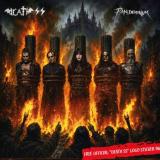
The album "THE ENTITY" is an esoteric-horror concept composed of 12 tracks (plus one bonus track) dedicated to The
Entity, the central figure of the DEATH SS project. Its literary inspirations range from Aleister Crowley—who sought to
free mankind by awakening its artistic genius—to characters by Hogg and Stevenson, who delve into the dark side of
human nature. It features figures such as Jack the Ripper, Walter Sickert, Cimiteria, and others, all deeply connected to
the band’s mythology. Produced by Tom Dalgety, renowned for his work with Ghost, The Cult, Rammstein, and more.
Buscar:lucifer
- A1: Baptized In Black Goat Blood
- A2: Crush The Jewish Prophet
- A3: Under The Black Inverted Pentagram
- A4: Of Blood And Darkness We Are Born
- A5: Dark Mutilation Rites
- A6: Magnificent Glorification Of Lucifer
- A7: Impaled By The Cryptic Horns Of Baphomet
- A8: We Summon The Winds Of Fire (For The Burning Of All Holiness)
- A9: Eternal Loyalty To Our Lord Satan 10. Outro
- A10: Outro
I was obsessed, am obsessed, by The Groundhogs, so gave C93 a chance to cover their perfect “Sad-Go-Round” from their perfect Solid album. I also loved Black Sabbath, but had listened to them so much that I never wanted to hear them again. So Michael Cashmore’s Perfect Playing of their intro to “Paranoid” was Perfect Way To Wave GoodBye to them, and slip into my visions of LUCIFER Over LONDON, May G+D DAMN him AGAIN. “The Seven Seals…” I wrote whilst sitting at my desk in my Then House in Aubrey Road, London E17 and drinking bottle after bottle of white wine till I collapsed. My cats then were Mao, Rao, and Yao — and Mao had left up for G+D. Even writing this, their names now makes my heart break and my eyes fill up. So I will stop writing them. We all meet again.Remastered from the original tapes by The Bricoleur at Bladud Flies!, and with the original artwork refreshed and reborn by Rob Hopeye, this 12” vinyl picture-disc comes in a full-colour die-cut sleeve, which is printed on both the outside and inside.
This is one of the second group of 4 reissues of the entire back catalogue of C93 on picture-disc and standard vinyl, in the lead-up to the publication of my autobiography at the end of 2026, whilst I also work on many other recording, publishing, and painting projects, and Watch And Pray! Each release in the picture-disc vinyl reissues series is limited to 1,000 copies, and the titles will not be repressed as picture-discs once they have sold out.
- A1: Necronomicon
- B1: The Call Of Cthulhu
An F-bomb saturated hip-hop call & response club cut...from Sun Ra?!
While the most renown track in this omniversal opus is the atomic expletive-filled repartee “Nuclear War,” there is so much more to this dark mysterious journey through the mind of Sun Ra. The sprawling, suite-like 20-minute title track sustains a lyrical edge in spite of an open framework and textures, which encourage sonorities to surface and emerge from the band as if there was no human intention behind them. In opposition to “Nuclear War,” Ra's organ playing here was built less on bombast and sonic terror than it is on whispers, stutters, shivers, and swells. Fireside Chat offers a wide stylistic array, as was the artist’s intent, reflecting his eclectic, seemingly irreconcilable approach to compositional extremes. With Sun Ra you get everything... except predictability. Pressed on lime green vinyl!
- A1: Love Until Death
- B1: Cimiteria
- B2: Eveil Never Dies
- A1: The Whitechapel Wolf Justified Sinner
- B1: The Evil Painter
“JUSTIFIED SINNER” WILL BE OUT ON FRIDAY JANUARY 24TH, THIS IS THE THIRD OF THE FOUR 12” VINYLS THAT ANTICIPATE THE
RELEASE OF THE NEW DEATH SS CONCEPT ALBUM “THE ENTITY”, PRODUCED BY STEVE SYLVESTER WITH TOM DALGETY. TOM IS A
GRAMMY-WINNING ENGLISH PRODUCER, ALREADY AT WORKS WITH RAMMSTEIN, GHOST, THE CULT AND OTHERS.
JUSTIFIED SINNER” IS A POWERFUL AND ANTHEMIC SONG WITH A DARK '80S ATMOSPHERE. LYRICALLY IT IS INSPIRED BY THE 1824
NOVEL “THE PRIVATE MEMOIRS AND CONFESSIONS OF A JUSTIFIED SINNER”, BY THE SCOTTISH WRITER JAMES HOGG, CONSIDERED THE
PRECURSOR TO STEVENSON'S NOVEL “THE STRANGE CASE OF DR. JEKYLL & MR. HYDE”. HERE THE PROTAGONIST, CONVINCED THAT HE
IS CHOSEN BY GOD AND UNDER THE INFLUENCE OF HIS DIABOLICAL DOPPELGANGER, COMMITS ALL SORTS OF EXCESSES AND CRIMES
AGAINST SINNERS, THINKING HE IS JUSTIFIED BY THEM.
THE 12” IS OUT TODAY IN LIMITED DELUXE PHYSICAL FORMAT ON TRANSPARENT ORANGE VINYL WITH A SPECIAL SHAPED COVER AND
CONTAINS THE THIRD PART OF THE BOOKLET WITH THE ENTIRE STORY BEHIND THE CONCEPT ALBUM, ALONG WITH TWO OTHER SONGS
TAKEN FROM THE ALBUM: “THE EVIL PAINTER” AND “THE WHITECHAPEL WOLF”, AVAILABLE ONLY IN THE PHYSICAL VERSION.
- A1: Out To Get Me
- B1: Two Souls - Hell Is Revealed
The second of four 12" vinyls will be released on December 6th, anticipating the release of the new Death SS concept album: "The Entity
produced by Steve Sylvester with the magic touch of Tom Dalgety, a Grammy-winning english producer, already at work with Rammstein,
Ghost , Cult and others.
The second single “Out To Get Me” is a dark and orchestral ballad that underlines the moment of the concept of the work in which the main
character Jekyll becomes aware of the evil that his alter-ego has caused. After that he feel the reaction of people surronding him. Tormented
by doubts and remorse, his mental health degenerates and he become to feel himself persecuted by infernal creatures, that are actually the real
monsters of his conscience coming to life.
“Limited Deluxe” edition on transparent blue vinyl with a special shaped cover. The product contains the second part of the booklet with the
entire story behind the concept album together with two other songs taken from the album: “TWO SOULS and HELL IS REVEALED”,
available only in physical format.
Die skandinavischen Death-Metal-Meister Konkhra werden mit „Sad Plight of Lucifer“ alle umhauen! Das neue Album „Sad Plight of Lucifer“ von
Konkhra liefert ihren klassischen skandinavischen Death Metal-Sound mit neuer Intensität. Das von Tue Madsen abgemischte Album markiert die
Rückkehr der Band zu ihren Wurzeln und bietet eine kraftvolle Fortsetzung ihres Vermächtnisses.Schwierigkeiten beim Touren und ein instabiles
Lineup führten dazu, dass sich die Band erneut in der klassischen Besetzung für eine Tour mit Behemoth in Südafrika, eine einmalige Show mit
Volbeat vor 37000 Menschen und eine Show im Copenhell vor dem Album Alpha and the Omega im Jahr 2019 in Zusammenarbeit mit Hammerheart
reformierte. Dieses Album schaffte es in Meral Hammers „Top Ten dänischer Bands“ neben Volbeat, Mercyful Fate und anderen. In der Zwischenzeit
beschuldigte eine christliche Sekte die Band, 500.000 Dollar von einem YouTube-Konto gestohlen zu haben! Die Tourneen beinhalteten eine Reihe
von Headlinershows sowie Touren mit Batushka und Malevolent Creation.
Throughout the 1960s, Canadian composer Bruce Haack was as ubiquitous on children’s and variety shows as were exotic animals from the San Diego Zoo. But he wasn’t there to perform so much as demonstrate. In his formative compositions for theatre and ballet, he had experimented with tape loops and musique concrète techniques; by the early ’60s, he wasn’t just playing around with electronic sounds, but also making the very gizmos that generated them. By day, Haack would eke out a living as a composer for commercials and a series of instructive, interactive children’s records made with collaborator Esther Nelson.
But by night, Haack was making music that was decidedly adults-only.
Originally released in 1970, The Electric Lucifer was Haack’s first work pitched to a contemporary rock audience, released by Columbia Records in the dying days of a post-hippie moment when bizarro outsider-psych could still find a home on a major label. If it was not the first rock record to feature electronics, it was certainly among the first to give them a starring role—both musically and conceptually.
- A1: Dr. Jekyll And Sisterhyde
- B1: Ave Adonai - Possession
Italy’s cult heavy rock band DEATH SS will release their new studio album “The En” early next year. The concept album was
produced by mastermind and onan Steve Sylvester along with the English Grammy winner producer Tom Dalge (Rammstein,
Ghost, The Cult, a.o.).
The rst single ‘Dr. Jekyll & Sister Hyde’ is a powerful dark metal song in pure DEATH SS sle, which ironically quotes the 1971
Hammer Producon lm of the same name. As in the lm and the song's amusing promoonal video clip, the story is set in late 1
century London, where Dr. Jekyll, the famous character om Gothic con created by the writer Robert Louis Stevenson, gives life to his
evil alter-ego Hyde, who however in this case is a woman.
The 12’ Limited Deluxe edion will feature a special shaped cover with transparent red smoke-eect vinyl and will contain
the rst of the four-part booklet with the full story behind the concept “The En” along with o other tracks on Side
B, ‘Ave Adonai’ and ’Possession', included on the new album as well.
- A1: Samba 00 04:58
- A2: Panorama 00 04:39
- A3: Golfo Mistico 00 04:34
- A4: Open Sky With Tears Of Blue 00 04:56
- A5: Contemporary Lullaby 00 03:05
- A6: Requiem 00 02:55
- B1: Whispers 00 04:19
- B2: Modular Clouds In Rome 00 03:21
- B3: Piano Bells 00 03:30
- B4: Space Call From Mars 00 03:01
- B5: Tuning The Orchestra With Tears Of Blue 00 03:22
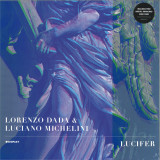
With Lucifer, Kompakt presents an album of rare beauty from two masters of modern music. A family affair, it’s a collaboration between the Italian father-and-son duo of Luciano Michelini and Lorenzo Dada, whose combined histories bring to Lucifer a depth of experience alongside clarity of vision and a finely tuned, neatly developed combined compositional voice. A lovely, beguiling suite of music that combines the electronic and the acoustic, the urban and the pastoral, its gorgeous night-eye vision and tender melancholy sits neatly within the Kompakt universe, while offering the curious listener some rich new perspectives.
There is already plenty to know both artists by. Lorenzo Dada creates across multiple fields – a techno producer and DJ who has already worked with the likes of Jay Haze, Fete, Leo Benassi, and Der, he’s released a small clutch of stylish, smartly designed EPs, and a solo album, Second Life (2018). His complementary background in classical music and composition informs his ensemble project, Tears Of Blue (who appear on Lucifer), where Dada paints with neo-classical tones for a quartet of violin, viola, cello and grand piano, supplemented by electronics for live performance.
Luciano Michelini’s history is yet richer. He may be best known, to many, for his piece “Frolic”, the theme to Larry David’s Curb Your Enthusiasm series; it was also sampled by Snoop Dogg for 2022’s “Crip Ya Enthusiasm”. But there’s much more to Michelini’s story. A successful soundtrack composer, Michelini both studied and taught at the Conservatoro di Santa Cecilia, and worked for RCA from the sixties to the eighties; his soundtracks from this period are gorgeous examples of the form, particularly his work for Il Decamerone Nero (1972), L’Isola Degli Uomini Pesce (1979), and the devastatingly gorgeous Dimensione Donna (1977).
In the eighties, Michelini and his wife Anna Gutling founded the Electronic Music Division studio and academy in Rome, which is where the majority of Lucifer was recorded. Dada reflects on the experience: “We never worked together before, so it was all new for both of us,” with Michelini adding, “I truly love this experience with my son. He’s a talented pianist and composer. I am not very familiar with electronic music nowadays, but we did it fluently.” There’s certainly a familial energy at play through Lucifer, and you can hear how Dada and Michelini, through exploration and experiment, find a shared language, balancing Dada’s tendency toward minimalism, and Michelini’s composerly voice.
Lucifer flows as a suite that interweaves electronic music with acoustic instruments: the lonely sigh of saxophone; Michelini’s lush, verdant piano; the weeping strings of Tears Of Blue (recorded at the studio of Michelini’s friend, the late Maestro, Ennio Morricone). These multiple voices are located within the electronic sighs and swarms from Dada’s kit; there are moments of propulsion, and passages of lambent drift, where the album revels in its tonal sweetness. If it flows so effortlessly, that’s because Lucifer was designed that way, as a suite or a sonata of sorts.
And the title? Dada reflects, “Lucifer was an angel who decided not to be one anymore. The miracle of life is that we can decide what we want to be, even if we are born as angels or vice versa.” This feels somehow apposite: there’s certainly something of the transformative, and the transportive, in Lucifer, a unique family collaboration of rare poetry and sensitivity, where two generations meet in the modern crucible that is the electronic music studio.
An F-bomb saturated hip-hop call & response club cut...from Sun Ra?! While the most renown track in this omniversal opus is the atomic expletive-filled repartee 'Nuclear War,' there is so much more to this dark mysterious journey through the mind of Sun Ra. The sprawling, suite-like 20-minute title track sustains a lyrical edge in spite of an open framework and textures, which encourage sonorities to surface and emerge from the band as if there was no human intention behind them. In opposition to 'Nuclear War,' Ra's organ playing here was built less on bombast and sonic terror than it is on whispers, stutters, shivers, and swells. Fireside Chat offers a wide stylistic array, as was the artist's intent, reflecting his eclectic, seemingly irreconcilable approach to compositional extremes. With Sun Ra you get everything... except predictability. First ever reissue of this iconic album!
A Fireside Chat With Lucifer by Sun Ra, released 2 February 2024, includes the following tracks: "Makeup" and more.
This version of A Fireside Chat With Lucifer comes as a 1xLP.
The vinyl is pressed as a yellow disc.
- 1: Wonder (2:26)
- 2: Three Hammers (0:43)
- 3: Unformed And Void (:4)
- 4: By A White Lace (3:57)
- 5: Beggar's Bowl (2:08)
- 6: Rising Sun (4:42)
- 7: Try Me (3:30)
- 8: The Crown Of Creation (4:21)
- 9: Moments (3:30)
- 10: Bethanian Theme (4:14)
- 11: Burning Beautiful Flowers (1:16)
- 12: Cabris Sans Cornes (4:22)
- 13: When The Phoenix Flies (3:20)
- 14: Into The Blue (3:25)
- 15: Three Hammers Plus (1:00)
One of the masterworks of 20th century electronic music, "The Electric Lucifer" by Bruce Haack. Originally recorded in 1968 and 1969 (and released in 1970) it is an album both unique in conception and superb in realization. Your your gateway to the profound yet playful universe of Bruce Haack, a "far-out" place where flower-power and inner-space electronics collide!
Das neue Spoon Remix-Album "Lucifer on the Moon" ist das schwerkraftlose Pendant zu "Lucifer on the Sofa". Das zehnte Album der Band aus Austin wurde von Grund auf überarbeitet und von On-U Sound-Gründer und UK-Dub-Ikone Adrian Sherwood neu interpretiert. "Lucifer on the Moon" nahm zunächst in Form von ein paar Remixen für die Singles des aktuellen Spoon-Albums Gestalt an. Frontmann Britt Daniel gab Sherwood zwei Empfehlungen: "Vermeide Dinge, die auf Band nicht möglich wären" und "Füge hinzu, was immer du möchtest, je weniger modern, desto besser." Die Zusammenarbeit sollte nicht überraschen: Die Dub-inspirierte Produktion zieht sich durch Spoons klassische Tracks, von "Finer Feelings" bis "Inside Out". Sherwood ist ein bewährter Kollaborateur, der bereits mit Lebenslauf Partnerschaften mit bedeutenden Künstlern wie The Fall, Jah Wobble und Mark Stewart enthält. Die ersten Ergebnisse gefielen beiden Parteien und Sherwood wurde beauftragt, an weiteren Songs zu arbeiten - und dann an noch ein paar mehr. "Ich fand Gefallen an der Melodie und den Gedanken, die sie in mir auslöste", erklärt der Produzent. "Es hat sich einfach weiterentwickelt und wir hatten schließlich ein ganzes Album." "Lucifer on the Moon" stellt die Rhythmusspuren des Originals auf den Kopf und baut sie oft komplett neu um. Sherwood lieferte eine umfangreiche zusätzliche Instrumentierung über die erweiterte Familie der On-U-Session-Spieler, einschließlich des Bassisten Doug Wimbish und des Schlagzeugers Keith LeBlanc (beide spielten in den frühen 80er Jahren in der Studioband von Sugarhill Records). Er grub sich tief in die Multitracks des Albums ein und förderte vergessene Details und Elemente zutage, die in den endgültigen Album-Mixen nicht enthalten waren. Das Ergebnis hebt Spoons Signature-Sound in ein fremdes Terrain, vollgepackt mit Echos und grollenden Bässen. "Es war nicht nur eine Sache, bei der man dies und jenes auseinandernimmt, auf dem Raster bleibt und ein Delay hinzufügt", erklärt Daniel. "Er fügte den Tracks so viel mehr an Instrumenten hinzu, dass sie zu komplett anderen Versionen der Songs wurden. Nicht nur Remixe, sondern ergänzende Stücke - quasi ein Spin-Off des Albums." "Lucifer on the Sofa" wurde im Februar 2022 veröffentlicht und ist Spoons bisher rockigstes Album.
Over the course of the last two decades, of Montreal’s creative force, Kevin Barnes, has been wowing fans with their vast catalog of endlessly fascinating pop and mesmerizing live shows. Barnes’ songwriting and production aesthetic has since become iconic in the industry and has garnered massive critical acclaim in publications such as Rolling Stone, The New York Times, NPR, and Pitchfork, who described the band’s album, Hissing Fauna, Are You The Destroyer? as “ceaselessly fascinating and inexhaustibly replayable,” as well as ranking it as the #5 album of the year. Barnes’ influence on pop music is undeniable, with multiple late night TV appearances, including The Late Show With David Letterman and Late Night with Jimmy Fallon, as well as brilliant collaborations with the likes of Solange, Janelle Monáe, Jon Brion, and others. The band has also performed across the globe, with festival appearances at Coachella, Sasquatch!, Pitchfork Music Festival and others, as well as hundreds of millions of streams worldwide.
On of Montreal’s latest album, Freewave Lucifer f ck, Barnes continues to push the boundaries of what pop music can be. On songs like “Marijuana’s A Working Woman,” Barnes revisits themes of psychedelia using pulsating synths
Spoon’s tenth album, ‘Lucifer On The Sofa’, is the
band’s purest rock ’n’ roll record to date. Texasmade, it is the first set of songs that the quintet has
put to tape in its hometown of Austin in more than
a decade.
Written and recorded over the last two years - both
in and out of lockdown - these songs mark a shift
toward something louder, wilder and more fullcolour.
From the detuned guitars anchoring ‘The Hardest
Cut’ to the urgency of ‘Wild’, to the band’s blownout cover of the Smog classic ‘Held’, ‘Lucifer On
The Sofa’ bottles the physical thrill of a band
tearing up a packed room.
‘Lucifer On The Sofa’ is an album of intensity and
intimacy, where the music’s harshest edges feel as
vivid as the directions quietly murmured into the
mic on the first-take. According to frontman Britt
Daniel, “It’s the sound of classic rock as written by
a guy who never did get Eric Clapton.”
- 1: Cold As A Tombstone
- 2: Archangel Of Death
- 3: Wild Hearses
- 4: Louise
- 5: Nightmare
- 6: Crucifix (I Burn For You)
- 7: Orion
- 8: Bring Me His Head
- 9: Phobos
- 10: Mausoleum
- 11: The Funeral Pyre
- 1: Archangel Of Death
- 2: Wild Hearses
- 3: Crucifix (I Burn For You)
- 4: Bring Me His Head
- 5: Mausoleum
- 6: The Funeral Pyre
- 7: Cold As A Tombstone
- 8: Louise
- 9: Nightmare
- 10: Orion
- 11: Phobos
Founded in 2014 in Berlin by The Oath front woman Johanna Sadonis, the group first consisted of Cathedral, Angel Witch and Ladytron members. The debut album “Lucifer I”, penned by Johanna and Cathedra’s Garry Jennings and released by British label Rise Above Records, brought LUCIFER international recognition. With a shift of constellation within the band in 2016 and Johanna Sadonis’ move from Berlin to Stockholm, LUCIFER were ready for chapter two. In Nicke Andersson, notable for his groups The Hellacopters, Entombed, Imperial State Electric, Death Breath among others, Johanna found a new renowned writing partner. Relentless touring and recording have turned LUCIFER into an explosive live beast and a reliable source of timeless rock and roll.
LUCIFER wasted no time and used the pandemic to record yet another long player that rings in a new chapter and dives even further into the grande realms of colossal old fashioned rock, with a severe morbid twist. For this opus they entered guitarist Linus Björklund’s Studio Ryssviken for an even more heart pounding drum sound while continuing their work at The Honk Palace. They expanded their song writing partnership within the band and Johanna has not only penned the new material with Nicke but also with guitarist Linus, as well as guitarist Martin Nordin contributing. With “Lucifer IV” the group is proving furthermore to be steadily building their very own pillar of rock history, brick by brick. The first single to give you a glimpse of what’s to come is “Wild Hearses” - buckle up for a deliciously morbid sweet and heavy ride past tombs and churches!
“Lucifer IV” is available as Ltd. 180g Gatefold LP + CD (in deluxe hardcover gatefold sleeve), Ltd. CD Digipak and Digital Album
1st solo album in 5 years, recorded, produced and written by Richard H. Kirk, founding member of Cabaret Voltaire, the album was constructed at Western Works, Sheffield, over a three-year period. Work began with recording on midi and analogue synthesisers before guitar and vocals (Kirk's first use of vocals in 10 years) were added. Kirk explains, A lot of time was spent on post-production, editing and then living with the material and I think it benefited from stepping back and then revisiting after doing other things.'
Although not an overtly political album, it's hard not to hear a reaction to recent years' world events in the overwhelming urgency of 'Nuclear Cloud' or '20 Block Lockdown' or in 'New Lucifer / The Truth Is Bad'. When questioned Kirk admits, It's not really a political album, but over recent years - during the recording - all manner of horrorshow events have cropped up and now we seem to be in a rerun of the Cold War with Russia back as the Bogeyman.' The album's title, Dasein (a German word meaning being there' or presence', often translated into English as existence'), is a fundamental concept in existentialism. Kirk explains culture succumbs to nostalgia in much the same way that an individual looks back wistfully to adolescence or childhood - the nostalgia is partly for a time when he or she wasn't nostalgic, just lived purely IN THE NOW.' In 2014, during the recording period, Kirk began work on Cabaret Voltaire live and so the two projects coexisted in tandem. Although Kirk's varied projects have always existed separate to one another, says Kirk, in the past some solo works served as a blueprint for what I did later with Cabaret Voltaire'. Billed as a performance consisting solely of machines, multi-screen projections and Richard H. Kirk, Cabaret Voltaire recently announced the first UK performance in over 20 years at the Devil's Arse Cave (aka Peak Cavern) in Castleton, Derbyshire on Saturday 29 April. Kirk will perform entirely new material for a performance relevant to the 21st Century with no nostalgia. RECENT PRAISE FOR RICHARD H. KIRK One of the UK's pioneering electronic agitators' - Electronic Sound In five decades of key-bashing and knob-twisting, Richard H. Kirk has remained at the vanguard of electronic music' - FACT ...decades of electronic innovation, forged in Sheffield' - Uncut
Kirk was toying with distorted realities from 1970s onwards' - Record Collector
- A1: Abayomy - Obatala (Pd)
- A2: Zebrabeat_Zebrabeat Afro - Amazônia Orquestra (Zebrabeat)
- A3: Burro Morto - Lúcifer Colômbia (Daniel Jesi/Burro Morto)
- A4: Ive Seixas - Cervejas Populares (Ive Seixas)
- B1: Iconili - O Rei De Tupanga (Iconili)
- B2: Zulumbi - Zulumbi (Rodrigo Brandão / Lúcio Maia / Pg / Dengue)
- B3: Passo Torto - Faria Lima Pra Cá (Kiko Dinucci / Rodrigo Campos)
- B4: André Sampaio E Os Afromandinga - Ecos De Niafunke (André Sampaio)
- B5: Fabrício - Feito Tamborim, Pará Céu (Fabrício.)
Over the past few decades, there has been a seismic shift in Brazil's musical landscape. A plethora of varying musical undergrounds has developed across the nation. While Rio and São Paulo have been overwhelmed with networks of talented musicians for a long time, creative life is now bursting all over the country. Amplificador exists to document and propagate the wonderfully diverse music currently blossoming from Brazil's vivacious and geographically varied musical undergrounds. Presenting an up-to date insight into Brazilian music, this compilation draws together some of the components of 'Novíssima Música Brasileira' (brand new Brazilian music), ranging from afro-grooves to rock, to modern samba and MPB. The music reaches back across Brazil's incredibly rich musical and cultural traditions, while also taking in influence from other movements around the globe.
Having begun life in 2012 as a Brazilian music blog run by Marcelo Monteiro, Eduardo Rodrigues, Mateus Campos, and Ricardo Calazans, the aim of Amplificador is to document and propel to wider audiences, Brazilian music of the '00s and '10s generation. This is a task made more significant by obvious changes in the way music is consumed. 'People are no longer obliged to listen to what the radio and TV are presenting. There is a whole new generation that wants to listen to new bands and new sounds and we try to connect those bands with other bands, producers, fans and even the mainstream.' These changes in technology and the way music is discovered and shared have developed parallel to the proliferation of these emerging scenes. The ostensible decentralization of the music industry means the promoting and filtering work of journalists and blogs, like Amplificador, have become increasingly important, as people try to keep up with the tsunami of new music and media flooding the country on a daily basis.
Marcelo uses the example of the Mangue Beat movement to explain a trend in contemporary Brazilian music that looks both inwards, to Brazil's own musical traditions and outwards, to movements around the world to create a novel, localised identity: 'The 90's Pernambuco art-social movement was inspired by Coco, Maracatu and Forró all mixed with modern riffs and grooves. The mythical
revolutionary Chico Science, his Nação Zumbi, Mundo Livre, Siba, and many others do this blend perfectly. There are also the references to the older generations and masters - Gil, Caetano, Luiz Gonzaga, João Gilberto, Tim Maia, Jorge Benjor - as a constant inspiration for all bands.' This is very much the case for the Brazilian artists of today.
Music is unquestionably informed by place. Brazil has always been famed for its regional differences in this sense. Indeed there are still pronounced variations between the scenes of Rio, Sao Paulo, Natal, Goiânia, Belo Horizonte and Belém for example, there are also great divergences within cities and while technology has brought changes to the way musical influences are shared, there are cultural differences, rooted in folkloric traditions, that aren't going away. Expressing his appreciation for this fact, while highlighting the potential of Brazil's spread of musical flavours, Marcelo explains that 'what we have now is new ingredients to make an even better mixture.'
This compilation heavily features music from a scene in Brazil's current musical make-up, which draws inspiration from African music, particularly Afro-beat music. Abayomy Afrobeat Orchestra from Rio formed because of their shared love of the music of Fela Kuti, uniting initially in 2009 for a jam session in his honour. But what sets Abayomy apart from other groups of a similar nature, is the fact that their sound also brings with it the songs and rhythms of candomblé. In this sense, Abayomy was the first band of its kind. The thirteen members of the orchestra have a palpable current of Rio's musical heritage - its rhythms and culture - running through them. So while their sound is distinctly African, it is also inherently Brazilian. Similarly, Zebrabeat Afro-Amazônia Orquestra draw upon traditional guitarradas and carimbos from the state of Pará and fuse these with the poly-rhythms of Afrobeat to create another regional hybrid, which stays true to both its Amazonian and African roots, yet which results in a very fresh, Brazilian sound. From Belo Horizonte (capital of Minas Gerais), Iconilli are another key band on Brazil's Afro-groove scene. With influences as varied as funk, jazz and psychedelic rock, congado, mining harmonies, maracatu, coco, ijexá, carimbó, Iconilli somehow manage to balance all of these sounds in such a way that makes it impossible to pin them down. From the Northeastern city of Joao Pessao, Parayba, Burro Morto's pshychadelic afro sound leans more towards rock and funk influences, with hint of regional Brazilian rhythms such as frevo and forro. They add another flavour to the Brazilian afro-groove scene: just one of the many exciting facets of Novíssima Música Brasileira.
While African-inspired music features heavily on the compilation, it is just one of the many styles within. Ive Seixas has a fresh approach to MPB, based on traditional rhythms and instrumentation, punctuated by a pop sensibility, coupled with a powerful female vocal. As an artist she is a product of a 'Do It Yourself' outlook to creativity, taken from her love of rock growing up. In 2013 she embarked on a project of street performance: wandering, like a lonely troubadour with just her guitar. Ive and her project began to gain notoriety and shortly after, her first EP was recorded, featuring some important names of South Rio's underground scene. 'Cervejas Populares' taken from the EP, is a beautiful, sombre piece of modern Brazilian pop, with a traditional samba rhythm. Another artist of the new MPB scene is Fabricio, from the city of Vitoria, who's 'Feito Tamborim' melds rock and funk and is also clearly reminiscent of the old Brazilian masters. It's an appreciation for the national musical heritage, alongside a keen ear for melody and an acceptance of foreign influences that results in these promising new sounds of Brazilian MPB.
Sao Paulo's super group of the underground 'Passo Torto' have been at the helm of an emerging scene in the city: an innovative approach to samba which draws in and experiments with afro grooves, jazz melodies and rock structures. Their sound is naturally very Brazilian, but the nylon twang of Faira Lima Pra Ca, interspersed with ominous strings and light rolling percussion, seems reminiscent of Captain Beefheart or Tom Waits, as the band lament their frustrations with their native city through their music.
The Future of Novíssima Música Brasileira looks very bright. The main challenge (and purpose of this album) is to get the music beyond Brazil's underground and into view of international audiences. In the last 10 years this goal has become somewhat more attainable, as the Brazilian government has begun to see the internationalisation of the nation's culture as a strategic objective, with public projects gaining increased investment and backing. The continuing project of Amplificador is to reinforce this international bridge by writing, filtering and promoting the scene as a whole. There is a wealth of great music currently blooming in Brazil and using new media tools, Marcelo and the team, alongside many others, will passionately continue to get the voices of Brazil's underground heard.
Factory Benelux presents a new studio album by cult Manchester postpunk group Crispy Ambulance, issued in a
limited edition of 500 vinyl copies to mark Record Store Day 2015.
In many respects Compulsion is the second album Crispy Ambulance might have recorded in 1982 after the release of
The Plateau Phase, with six of the eight tracks written and performed live at that time. To these are now added Rain
Without Clouds, an outtake from The Plateau Phase newly restored from the original multitrack masters, and WMTP.2
with added synth lines by producer-cum fifth member Graham Massey, of 808 State and Biting Tongues.
Almost uniquely, Crispy Ambulance has retained the same line-up since the group was originally founded in 1978: Alan
Hempsall (vocals, keyboards), Gary Madeley (drums), Robert Davenport (guitars), Keith Darbyshire (bass).
'There's a sense of feeling compelled by irresistible forces,' explains Alan Hempsall. 'Compulsion is an apt way to
describe our constant urge to go back and make music with people we've known since childhood. While the world may
have changed, our music continues to be the product of the same influences - the passing of time, the changing of the
seasons, the content of our sleeping dreams, and the existence of space.'
Cover art by Peter Staessens. The package also features a free digital download of the album.
Praise for The Plateau Phase: "One of the best albums Britain's second city has unleashed" (Q, 03/2006); 'Perfect,
wonderful and with a compelling gravitational pull' (Record Collector, 03/2013); "17 years on The Plateau Phase
sounds like what it probably always was: urgent, postmodernist psychedelia with less debt to Joy Division's music than to
the universal abstract existential tension that comes with being young" (Uncut, 12/1999); "Cold and ferocious, but with
enough inventive melody to lighten the black abyss of the overall mood" (Les Inrockuptibles, 02/2012); "An enthralling
glimpse at a moment in musical history when the DIY ethos of punk gradually gave way to experiments with electronics
and song structures" (NME, 01/2000); "Mixes driving rock, gritty new wave and odd atmospheric stuff" (Option, 1990)
- A1: You Bliss
- A2: On Purpose
- A3: Flippin’ Eck
- A4: Positive Touch
- B1: On The Seven Seas Dub
- B2: Looking At You Dub
- B3: Sweeter Still
- B4: Nyabinghi Dub
Ein inspirierendes Zusammentreffen musikalischer Köpfe. Zum 20-jährigen Jubiläum von "In A Space Outta Sound" übergab George Evelyn alias DJ E.A.S.E. die Bänder an Dub-Meister Adrian Sherwood, der acht Tracks des Originalalbums in neuem Gewand präsentiert – ganz im Geiste der Reggae- und Sound-System-Wurzeln, die das Original prägten. Das Ergebnis ist eine frische Interpretation eines beliebten Klassikers, der sich in die Reihe von Alben wie Massive Attacks "No Protection" und Spoons "Lucifer On The Moon" einreiht. Mit dabei sind kühne Neuinterpretationen ikonischer Tracks wie "You Wish" (hier als "You Bliss" zu hören) und "Flip Ya Lid" (verändert zu "Flippin Eck"). Neben seinem unverkennbaren Können am Mischpult holte Sherwood auch einige der Kernmitglieder von On-U Sound ins Boot, um zusätzliche Instrumente beizusteuern und diese Kollaboration zu etwas zu machen, das weit mehr ist als die Summe seiner Teile.
Big Science Records is proud to unveil a brand-new split 12” EP — crafted equally for peak-time energy and post-rave reflection — from the label’s co-foun-ders, NVST and Warzou.It’s been a minute since our last vinyl release — the Leo James edition — and we’re excited to be back with an ultra-limited, hand-stamped pressing. Four tracks total: two from each of these kindred artists, the duo behind Big Science.We’re constantly making, exchanging, and living through music — daily, weekly, endlessly. “Nothing is real, nothing exists,” says NVST. And yet, this release feels like a moment where the invisible becomes tangible — the private tracks we’ve shared and cherished with each other now find their place in the world. They’re here. They’re real.
- A1: Design - Premonition
- A2: Vision - Lucifer’s Friend
- A3: Richard Bone - Alien Girl
- A4: John Howard - I Tune Into You
- A5: Ian North - We’re Not Lonely
- A6: Selwin Image - The Unknown
- B1: Harry Kakoulli - I’m On A Rocket
- B2: Rich Wilde - The Lady Wants To Be Alone
- B3: Billy London - Woman
- B4: Alan Burnham - Science Fiction
- B5: The Microbes - Computer
- B6: The Goo-Q - I’m A Computer
- C1: Gerry & The Holograms - Gerry & The Holograms
- C2: The Warlord - The Ultimate Warlord
- C3: Die Marinas - Fred From Jupiter
- C4: Dee Jay Bert & Eagle - I Am Your Master
- C5: Peta Lily & Michael Process - I Am A Time Bomb
- C6: Sole Sister - It’s Not What You Are But How
- D1: Alasdair Riddell - Do You Read Me?
- D2: Karel Fialka - Armband (The Mystery Song)
- D3: John Springate - My Life
- D4: Idncandescent Luminaire - Famous Names
- D5: Disco Volante - No Motion
- D6: Dream Unit - A Drop In The Ocean
2025 REPRESS ON TRANSPARENT GREEN VINYL
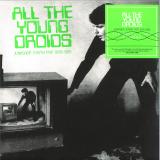
Compiled by Philip King “And then came the rise of synth pop : blokes with dodgy haircuts hunched over keyboard-operated machines stuffed with wires and do-it-yourself tone oscillators making sounds like a brood of geese passing gas in a wind tunnel. Whoopee! This is the way the ‘70s ended : not with a blood-curdling bang bang but with a cheap, synthesized, emasculating whimper.” NICK KENT, NME. All The Young Droids: Junkshop Synth Pop 1978-1985 is a new compilation that charts the underbelly of the epoch-defining sound of the synthesiser in 80s popular music. Compiled by Philip King (previously seen compiling All The Young Droogs, Glitterbest and Boobs - The Junkshop Glam Discotheque), the music here connects the dots between DIY synth enthusiasts grappling with new, cheap synthesisers at the tail-end of punk and wannabe, jobbing songwriters enthral to the new music pioneered by Gary Numan, Depeche Mode and Daniel Miller’s Mute Records. Featuring rare tracks of auto-didactic progressive pop music, proto-techno punk, shoot-for-the-stars-land-in-the-gutter chart flops and heralded, underground synth classics, School Daze paints a picture of beautiful failure. Complete with extensive sleeve notes written by King and never before seen imagery, all 24 tracks were remastered by RPM in-house engineer Simon Murphy, many from vinyl copies due to lost master tapes. The story told on All The Young Droids is one of the dawning opportunity presented by both the emergence to the market of cheaper analog synthesisers and the distribution networks plus indie labels that exploded with the advent of punk music in 1976. While the music that sprouted out all over the globe in the wake of these factors was decried as fake, plastic, a refutation of punk’s guitar-led revolution, it’s telling that much of the music on All The Young Droids.. was created in bedrooms, ramshackle studios and home-made set ups with often borrowed equipment. In the era of record labels jumping to capitalise on the success of The Sex Pistols, The Clash (both on major labels, of course) these artists struggled to stand out from a new gold-rush with next to no budget or PR team. With radio and labels desperate for the new Yazoo, what resulted was a testament to necessity being the mother of invention. At the time, the synthesiser was the music of the future, a shiny new machine that could paint like an orchestra with a single finger and a 4-track. In the hands of Manchester avant-pranksters Gerry & The Holograms it’s a pulsing, sardonic weapon.. the only instrument on the Messthetics classic lampooning of New Wave fashion. In Hamburg, a 16 year old Andreas Dorau used it to write and record (with his female classmates on vocals) a global smash in Fred Vom Jupiter (later licensed to Mute Records). The hard-to-find English version (Fred From Jupiter, natch) is included here. Many artists with alreadystoried careers caught the bug and recorded synthesiser-fuelled peons to space, computers, the future and, of course, love-interests. Harry Kakoulli, late of Squeeze, recorded a solo album in 1979 that included the incredible power-synth-pop smash-that-never-smashed I’m On A Rocket. Similarly, Ian North of Neo and American Power Pop stalwarts Milk ’n’ Cookies bought a Korg MS20 and used a tape machine to record We’re Not Lonely, an absolute lost-classic of minimal synth pop. We’re Not Lonely also features on the Junkshop Synth Pop sampler 7” twinned with John Howard unreleased track You Will See, released April 12th 2025. There are plenty of compilation debuts in evidence. Sole Sister were a mysterious trio who were featured on the Scaling Triangles compilation of female-fronted, queer-adjacent post-punk / underground music that also featured The Petticoats. Selwin Image were from San Francisco and featured members of the recently defunct power pop/punk group The Pushups. Their stupidly catchy The Unknown fizzes with New Wave energy - think XTC to Sparks but remains unreleased until now. Dream Unit’s A Drop In The Ocean is an early synth wave cut, positively teaming with Joy Division instrumentation, previously only released on a long-forgotten and super rare, self-released EP. Incandescent Luminaire’s Famous Names belies an archetypal struggle of a small-town trying to make it in a cruel industry but is a thrilling New Romantic-Synth Wave cross over with a OMD gloominess that’s a joy to hear. Feminist Minimal Wave track I Am A Time Bomb by performance artist Peta Lilly and Michael Chance is a revelation destined for new found cult status. It was released on 7” and lost until now. The flipside to the subterranean, never-made-it synth pop mentioned above are the ambitious, even fruity attempts at success that have a perennial elegance to their confidence. New Jersey-ite Billy London (real name Ed Barth) tried to cash in on the synth boom with Woman, released by a major label, a lurching new wave track built on the Louie Louie rhythm and a wonderfully camp Lou Reedstyle sleazy vocal before exploding in the synthesised chorus. The song bombed but with a chorus like this, you have to wonder why? Ex-Glitter Band member John Springate’s My Life is truly epic, with doomed chord progressions and massive sounding drums turning into at least 3 different songs in the course of the track. Before you wonder what’s going on the song resolves with a glorious return to the main refrain. The dry-ice-dressed dance floor is well catered for too. Design’s Premonition and Vision’s Lucifer’s Friend are stone-cold minimal synth bangers, well loved but given a new lease of life here. The Warlord’s The Ultimate Warlord was released in 1978, a homespun proto Hi NRG banger that was later re-recorded by The Immortals in Canada who had a club hit with it. One-man- band Disco Volante’s No Motion was re-issued by Synth wave label Medical in 2012 but makes its first vinyl compilation appearance here. Close your eyes and you can imagine what Lawrence of Felt would have sounded like with some cheap Korgs a little earlier in his career. Gibraltar-based trio The Microbes imagined a computer programming people to dance - how prescient - and ended up with a propulsive, robo-funk track with splendid rubbery bass playing over a tectonic drum machine. Previously picked up by Belgian label Stroom TV, Dee Jay Bert & Eagle’s heavily Euro-accented I Am Your Master demands the listener to “come to paradise!” In a frankly terrifying manner. All The Young Droids is the first compilation to peel away from the narrative that dour, Minimal Synth and Cold Wave were the only musical children of the first rush of synth pop. Philip King and School Daze Records describe a much more complicated world: along with the austere, Brutalist children of Daniel Miller (who produced Alan Burnham’s Bowie-Low-influenced Science Fiction here) was a plethora of desperate cash-ins, accidental mainstream hits, ambitious pop dramas and major label punts that went nowhere. Crucially, the compilation blurs the line between junk and treasure. What if the two things are interchangeable. What if it’s all science fiction?
- A1: Hurts And Noises
- A2: Wake Up
- A3: I Don't Wanna Be A Rich
- A4: Terrorist Bad Heart
- A5: Provocate
- A6: Lucifer Sam (Pink Floyd)
- B1: Happy!?
- B2: So Lazy
- B3: I Feel Down
- B4: Stupido
- B5: Guilty
- B6: Caroline Says (Loo Reed)
UILTY RAZORS, BONA FIDE PUNKS.
Writings on the topic that go off in all directions, mind-numbing lectures given by academics, and testimonies, most of them heavily doctored, from those who “lived through that era”: so many people today fantasize about the early days of punk in our country… This blessed moment when no one had yet thought of flaunting a ridiculous green mohawk, taking Sid Vicious as a hero, or – even worse – making the so-called alternative scene both festive and boorish. There was no such thing in 1976 or 1977, when it wasn’t easy to get hold of the first 45s by the Pistols or the Clash. Few people were aware of what was happening on the fringes of the fringes at the time. Malcolm McLaren was virtually unknown, and having short hair made you seem strange. Who knew then that rock music, which had taken a very bad turn since the early 1970s, would once again become an essential element of liberation? That, thanks to short and fast songs, it would once again rediscover that primitive, social side that was so hated by older generations? Who knew that, besides a few loners who read the music press (it was even better if they read it in English) and frequented the right record stores? Many of these formed bands, because it was impossible to do otherwise. We quickly went from listening to the Velvet Underground to trying to play the Stooges’ intros. It’s a somewhat collective story, even though there weren’t many people to start it.
The Guilty Razors were among those who took part in this initial upheaval in Paris. They were far from being the worst. They had something special and even released a single that was well above the national average. They also had enough songs to fill an album, the one you’re holding. In everyone’s opinion, they were definitely not among the punk impostors that followed in their wake. They were, at least, genuine and credible.
Guilty Razors, Parisian punk band (1975-1978). To understand something about their somewhat linear but very energetic sound, we might need to talk about the context in which it was born and, more broadly, recall the boredom (a theme that would become capital in punk songs) coupled with the desire to blow everything off, which were the basis for the formation of bands playing a rejuvenated rock music ; about the passion for a few records by the Kinks or the early Who, by the Stooges, by the Velvet mostly, which set you apart from the crowd.
And of course, we should remember this new wave, which was promoted by a few articles in the specialized press and some cutting-edge record stores, coming from New York or London, whose small but powerful influence could be felt in Paris and in a handful of isolated places in the provinces, lulled to sleep by so many appalling things, from Tangerine Dream to President Giscard d’Estaing...
In 1975-76, French music was, as almost always, in a sorry state ; it was still dominated by Johnny Hallyday and Sylvie Vartan. Local rock music was also rather bleak, apart from Bijou and Little Bob who tried to revive this small scene with poorly sound-engineered gigs played to almost no one.
In the working class suburbs at the time, it was mainly hard rock music played to 11 that helped people forget about their gruelling shifts at the factory. Here and there, on the outskirts of major cities, you still could find a few rockers with sideburns wearing black armbands since the death of Gene Vincent, but it wasn’t a proper mass movement, just a source of real danger to anyone they came across who wasn't like them. In August 1976, a festival unlike any other took place in Mont-de-Marsan – the First European Punk Festival as the poster said – with almost as many people on stage as in the audience. Yet, on that day, a quasi historical event happened, when, under the blazing afternoon sun, a band of unknowns called The Damned made an unprecedented noise in the arena, reminiscent of the chaotic Stooges in their early adolescence. They were the first genuine punk band to perform in our country: from then on, anything was possible, almost anything seemed permissible.
It makes sense that the four+1 members of Guilty Razors, who initially amplified acoustic guitars with crappy tape recorder microphones, would adopt punk music (pronounced paink in French) naturally and instinctively, since it combines liberating noise with speed of execution and – crucially – a very healthy sense of rebellion (the protesters of May 1968 proclaimed, and it was even a slogan, that they weren’t against old people, but against what had made them grow old. In the mid-1970s, it seemed normal and obvious that old people should now ALSO be targeted!!!).
At the time, the desire to fight back, and break down authority and apathy, was either red or black, often taking the form of leafleting, tumultuous general assemblies in the schoolyard, and massive or shabby demonstrations, most of the time overflowing with an exciting vitality that sometimes turned into fights with the riot police. Indeed, soon after the end of the Vietnam War and following Pinochet’s coup in Chile, all over France, Trotskyist and anarcho-libertarian fervour was firmly entrenched among parts of the educated youth population, who were equally rebellious and troublemakers whenever they had the chance. It should also be noted that when the single "Anarchy in the UK" was first heard, even though not many of us had access to it, both the title and its explosive sound immediately resonated with some of those troublemakers crying out for ANARCHY!!! Meanwhile, the left-wing majority still equated punks with reckless young neo-Nazis. Of course, the widely circulated photos in the mainstream press of Siouxsie Sioux with her swastikas didn’t necessarily help to win over the theorists of the Great Revolution. It took Joe Strummer to introduce The Clash as an anti-racist, anti-fascist and anti-ignorance band for the rejection of old-school revolutionaries to fade a little.
The Lycée Jean-Baptiste Say at Porte d’Auteuil, despite being located in the very posh and very exclusive 16th arrondissement of Paris, didn’t escape these "committed" upheavals, which doubled as the perfect outlet for the less timid members of this generation.
“Back then, politics were fun,” says Tristam Nada, who studied there and went on to become Guilty Razors’ frontman. “Jean-Baptiste was the leftist high-school in the neighbourhood. When the far right guys from the GUD came down there, the Communist League guys from elsewhere helped us fight them off.”
Anything that could challenge authority was fair game and of course, strikes for just about any reason would lead to increasingly frequent truancy (with a definitive farewell to education that would soon follow). Tristam Nada spent his 10th and 11th unfinished grades with José Perez, who had come from Spain, where his father, a janitor, had been sentenced to death by Franco. “José steered my tastes towards solid acts such as The Who. Like most teenagers, I had previously absorbed just about everything that came my way, from Yes to Led Zeppelin to Genesis. I was exploring… And then one day, he told me that he and his brother Carlos wanted to start a rock band.” The Perez brothers already played guitar. “Of course, they were Spanish!”, jokes their singer. “Then, somewhat reluctantly, José took up the bass and we were soon joined by Jano – who called himself Jano Homicid – who took up the rhythm guitar.” Several drummers would later join this core of not easily intimidated young guys who didn’t let adversity get the better of them.
The first rehearsals of the newly named Guilty Razors took place in the bedroom of a Perez aunt. There, the three rookies tried to cover a few standards, songs that often were an integral part of their lives. During a first, short gig, in front of a bewildered audience of tough old-school rockers, they launched into a clunky version of the Velvet Underground's “Heroin”. Challenge or recklessness? A bit of both, probably… And then, step by step, their limited repertoire expanded as they decided to write their own songs, sung in a not always very accurate or academic English, but who cared about proper grammar or the right vocabulary, since what truly mattered was to make the words sound as good as possible while playing very, very fast music? And spitting out those words in a language that left no doubt as to what it conveyed mattered as well.
Trying their hand a the kind of rock music disliked by most of the neighbourhood, making noise, being fiercely provocative: they still belonged to a tiny clique who, at this very moment, had chosen to impose this difference. And there were very few places in France or elsewhere, where one could witness the first stirrings of something that wasn’t a trend yet, let alone a movement.
In the provinces, in late 1976 or early 1977, there couldn’t be more than thirty record stores that were a bit more discerning than average, where you could hear this new kind of short-haired rock music called “punk”. The old clientele, who previously had no problem coming in to buy the latest McCartney or Aerosmith LP, now felt a little less comfortable there…
In Paris, these enlightened places were quite rare and often located nex to what would become the Forum des Halles, a big shopping mall. Between three aging sex workers, a couple of second-hand clothes shops, sellers of hippie paraphernalia and small fashion designers, the good word was loudly spread in two pioneering places – propagators of what was still only a new underground movement. Historically, the first one was the Open Market, a kind of poorly, but tastefully stocked cave. Speakers blasted out the sound of sixties garage bands from the Nuggets compilation (a crucial reference for José Perez) or the badly dressed English kids of Eddie and the Hot Rods. This black-painted den was opened a few years earlier by Marc Zermati, a character who wasn’t always in a sunny disposition, but always quite radical in his (good) choices and his opinions. He founded the independent label Skydog and was one of the promoters of the Mont-de-Marsan punk festivals. Not far from there was Harry Cover, another store more in tune with the new New York scene, which was amply covered in the house fanzine, Rock News (even though it was in it that the photos of the Sex Pistols were first published in France).
It was a favorite hang-out of the Perez brothers and Tristam Nada, as the latter explained. “It’s at Harry Cover’s that we first heard the Pistols and Clash’s 45s, and after that, we decided to start writing our first songs. If they could do it, so could we!”
The sonic shocks that were “Anarchy in the UK”, “White Riot” or the Buzzcocks’s EP, “Spiral Scratch” – which Guilty Razors' sound is reminiscent of – were soon to be amplified by an unparalleled visual shock. In April 1977, right after the release of their first LP, The Clash performed at the Palais des Glaces in Paris, during a punk night organised by Marc Zermati. For many who were there, it was the gig of a lifetime…
Of course, Guilty Razors and Tristam were in the audience: “That concert was fabulous… We Parisian punks were almost all dressed in black and white, with white shirts, skinny leather ties, bikers jackets or light jackets, etc. The Clash, on the other hand, wore colourful clothes. Well, the next day, at the Gibus, you’d spot everyone who had been at this concert, but they weren’t wearing anything black, they were all wearing colours.”
It makes sense to mention the Gibus club, as Guilty Razors often played there (sometimes in front of a hostile audience). It was also the only place in Paris that regularly scheduled new Parisian or Anglo-Saxon acts, such as Generation X, Siouxsie and the Banshees, the Slits, and Johnny Thunders who would become a kind of messed-up mascot for the venue. A little later, in 1978, the Rose Bonbon – formerly the Nashville – also attracted nightly owls in search of electric thrills… In 1977, the iconic but not necessarily excellent Asphalt Jungle often played at the Gibus, sometimes sharing the bill with Metal Urbain, the only band whose aura would later transcend the French borders (“I saw them as the French Sex Pistols,” said Geoff Travis, head of their British label Rough Trade). Already established in this small scene, Metal Urbain helped the young and restless Guilty Razors who had just arrived. Guitarist for Metal Urbain Hermann Schwartz remembers it: “They were younger than us, we were a bit like their mentors even if it’s too strong a word… At least they were credible. We thought they were good, and they had good songs which reminded of the Buzzcocks that I liked a lot. But at some point, they started hanging out with the Hells Angels. That’s when we stopped following them.”
The break-up was mutual, since, Guilty Razors, for their part, were shocked when they saw a fringe element of the audience at Metal Urbain concerts who repeatedly shouted “Sieg Heil” and gave Nazi salutes. These provocations, even still minor (the bulk of the skinhead crowd would later make their presence felt during concerts), weren’t really to the liking of the Perez brothers, whose anti-fascist convictions were firmly rooted. Some things are non-negotiable.
A few months earlier (in July 1978), Guilty Razors had nevertheless opened very successfully for Metal Urbain at the Bus Palladium, a more traditonally old-school rock night-club. But, as was sometimes the case back then, the night turned into a mass brawl when suburban rockers came to “beat up punks”.
Back then, Parisian nights weren’t always sweet and serene.
So, after opening as best as they could for The Jam (their sound having been ruined by the PA system), our local heroes were – once again – met outside by a horde of greasers out to get them. “Thankfully,” says Tristam, “we were with our roadies, motorless bikers who acted as a protective barrier. We were chased in the neighbouring streets and the whole thing ended in front of a bar, with the owner coming out with a rifle…”
Although Tristam and the Perez brothers narrowly escaped various, potentially bloody, incidents, they weren’t completely innocent of wrongdoing either. They still find amusing their mugging of two strangers in the street for example (“We were broke and we simply wanted to buy tickets for the Heartbreakers concert that night,” says Tristam). It so happened that their victims were two key figures in the rock business at the time: radio presenter Alain Manneval and music publisher Philippe Constantin. They filed a complaint and sought monetary compensation, but somehow the band’s manager, the skilful but very controversial Alexis, managed to get the complaint withdrawn and Guilty Razors ended up signing with Constantin with a substantial advance.
They also signed with Polydor and the label released in 1978 their only three-track 45, featuring “I Don't Wanna be A Rich”, “Hurts and Noises” and “Provocate” (songs that exuded perpetual rebellion and an unquenchable desire for “class” confrontation). It was a very good record, but due to a lack of promotion (radio stations didn’t play French artists singing in English), it didn’t sell very well. Only 800 copies were allegedly sold and the rest of the stock was pulped… Initially, the three tracks were to be included on a LP that never came to be, since they were dropped by Polydor (“Let’s say we sometimes caused a ruckus in their offices!” laughs Tristam.) In order to perfect the long-awaited LP, the band recorded demos of other tracks. There was a cover of Pink Floyd's “Lucifer Sam” from the Syd Barrett era – proof of an enduring love for the sixties’ greats –, “Wake Up” a hangover tale and “Bad Heart” about the Baader-Meinhof gang, whose actions had a profound impact on the era and on a generation seeking extreme dissent... On the album you’re now discovering, you can also hear five previously unreleased tracks recorded a bit later during an extended and freezing stay in Madrid, in a makeshift studio with the invaluable help of a drummer also acting as sound engineer. He was both an enthusiastic old hippie and a proper whizz at sound engineering. Here too, certain influences from the fifties and sixties (Link Wray, the Troggs) are more than obvious in the band’s music.
Shortly after a final stormy and rather barbaric (on the audience’s side) “Punk night” at the Olympia in June 1978, Tristam left the band ; his bandmates continued without him for a short while.
But like most pioneering punk bands of the era, Guilty Razors eventually split up for good after three years (besides once in Spain, they’d only played in Paris). The reason for ceasing business activities were more or less the same for everyone: there were no venues outside one’s small circuit to play this kind of rock music, which was still frightening, unknown, or of little interest to most people. The chances of recording an LP were virtually null, since major labels were only signing unoriginal but reassuring sub-Téléphone clones, and the smaller ones were only interested in progressive rock or French chanson for youth clubs. And what about self-production? No one in our small safety-pinned world had thought about it yet. There wasn’t enough money to embark on that sort of venture anyway.
So yes, the early days of punk in France were truly No Future!
Panthera is back at the Bordello with his most energy-packed release to date. Synthsizer Hits III is forged in the heat of Hi-NRG, the romance of italo and the daring synthesizer hooks of 1980s Europe. A thick rasping beat pounds above a juddering arpeggiator line before hedonistic surges ignite “Fumare”, an achingly addictive opener. Vocals are toyed with, used to increase the potency of the chosen machines and sounds. A circling chant infects “Lucifera” as a joyous melody takes hold of this modern Summer anthem, euphoric notes ushering in the dawn while speakers and strobe throb. There is a palpable power that permeates the 12”. “The Magic Touch” sends strings sailing skyward as rich percussive textures take root below. From this fertile ground, a sensational ode to the synthesizer flowers. Vocoder lyrics, pulsating rhythms and keys that are truly fantastical. “Toccata” finishes this analogue celebration. Slow burning with disco inflections, this finale soon shows its true colours. Daring counter melodies frolic, from the elegant and refined to the brash and broad, in this mirrorball inspired last dance.