Mit gerade mal 17 Jahren releaste Joey Bada$$ sein erstes Mixtape "1999" welches den Sound der goldenen Hiphop-Ära der 90er Jahre adaptierte, so authentisch und selbstverständlich als sei er mit dabei gewesen.
Die Kritiker überschlugen sich in ihren begeisterten Rezensionen und es folgten Features mit Asap Rocky, Kendrick Lamar, Mac Miller & Action Bronson. Der junge Brooklynite ist schon längst mehr als nur ein Geheimtipp. Die ersten audiovisuellen Kostproben gab es in den vergangenen Monaten in Form von "Big Dusty" und "Christ Conscious". Am 20. Januar erscheint nun sein Debütalbum, das den Titel "B4.DA.A$$" trägt.
Lady Jane Beach land on Slacker 85 with their lo-slung label debut, ‘Binman’. A short, sharp shot of minimal rhythm and rhyme, ‘Binman’ is the sound of the enigmatic London-based trio soundtracking their trips around the capital’s outer ringroads seeking adventure, trouble and corrupted drum machines. Blessed with loose, confident production and verses like glue, Slacker boss Seth Troxler doubles down on his support with a beefed-up, roadtested club edit.
An undisputed trailblazer of UK rave, Zed Bias fires up his studio for two contrasting takes on ‘Binman’, each capturing split sides of the soundsystem culture he helped define. Zed’s ‘Weighty Dub’ goes unapologetically raw, transitioning between skippy beats, heavy bass drops and a fusebox melody out of the darkness. From the basement straight through to the beach club, the ‘Nostalgia Mix’ makes good on its promise of misty-eyed reverie, recalling the first-wave of UKG domination with lush strings and steppin’ drums that still sound like a bright future.
From one generation to the next, fast-rising DJ and producer HalfPint is already familiar to dancers of Circoloco's famed Terrace and Garden. His take on ‘Binman’ finds a fresh frequency, converting the rhymes of the original into a precision-tooled tech house groove, primed for the summer season.
May 2026 marks the arrival of TYGAPAW (aka Dion McKenzie)’s first full-length album on Tresor Records, entitled Together You Gather All Power Applied Worldwide. An acronym of its creator’s name, TYGAPAW’s third studio album is a deeply personal collection of music building worlds where Black queer and trans siblings can thrive, while unifying dancefloors worldwide. A proposition that collective wisdom liberates us from the matrix of domination we live within. The album unfolds as the latest chapter in TYGAPAW’s ongoing techno opera opus, continuing to center the voices of Black women, which surface as layered incantations rather than lyrics - powerful, haunting, sensual, activating.
With the process of creating the album starting in 2023, as TYGAPAW (Dion McKenzie) was in the first year of their transition, the music reflects the intensity of that period, where they were experiencing deplatforming as a response to the shift in their physical appearance: Tracks like ‘M32 Riddim’ and ‘Helicopter hovers over my Crown Heights Apartment’ feature high-paced rhythms intersecting with intense siren-like synths to form demanding compositions echoing a heightened sense of alert. Yet throughout the album, relief comes in the form of TYGAPAW’s vocal features, co-conspirators, and chosen family, whose voices are treated with reverb and echo, a sonic fingerprint that leads back to the pioneers in the legendary studios of TYGAPAW’s native land, Jamaica, an important reminder that the past will always inform the future. It is an album for dancers first and foremost, where joy, defiance, and integration with the natural body coexist, and every drop feels less like a climax than a transformation. Expect a bass that permeates your soul and melodic synthesized sequenced phrases echoing the dancehall eras of TYGAPAW’s youth, reshaped into hypnotic melodies that glow over industrial kicks designed to command attention, reasserting Jamaica's pioneering yet often overlooked contribution to electronic music.
In the opening track, ‘Can I Live’, Precious Okoyomon’s words feel like the beginning of a ritual; setting the intentions for the rest of the proceedings. As McKenzie puts it, their “work is about regeneration, resetting, getting integrated into nature, and about rebirth. That’s the tone I wanted to set at the outset of the album.” Ms Carrie Stacks continues this thread of support in ‘Don’t Panic’ with heavily processed vocals on top of a beat that takes inspiration from another important ingredient in the antidote to the oppression of isolation: Ballroom culture. “ I feel like I found my queerness in Ballroom, that’s why this track is very important to me.”
Echoes of NYC Black queer nightlife scene also permeate in the energetic drums of ‘Exorcise the Language of Domination’, in which Julianna Huxtable’s spoken performance complements the various movements and tones of the music. “My producer brain thought this was the one that Juliana’s vocals would be best suited for. I hinted: ‘what do you think of this one?’ She just went into her notes and picked some passages to go with the first section of the track. From there, it was a year-long process of development. It required time and space for this thing to evolve, but I think it’s one of the most powerful tracks on the album.” London’s SUUTOO contributes the album’s only musical collaboration on ‘B2B’, a track that emerged from sessions in McKenzie’s New York studio where the real objective was to connect and have fun; a time out from the demands of life outside.
The album closes out with a double hit of emotion in the form of ‘Effects of Resistance and Black Trans Masculine Experience’. The former features South African scholar Khanyisile Mbongwa drawing connections that exist between Africa and the Black diaspora, whilst looking to the future and calling for a shared sense of community.
The latter piece, an instrumental version of the piece which featured on the IMMIGRANT E.P. of 2025 is a gentle and deeply affecting end to the record, a place of peace and acceptance. This end-of-cycle tone is mirrored in the sleeve photography, which also ties back to IMMIGRANT by finally revealing what was hidden: a portrait of the artist fully self-actualized; a step towards true inner liberation. TYGAPAW is sonically defiant across this album; bass frequencies feel tactile — less heard than inhabited — infectious lead synth melodies remain with you long after the track ends. An overall sound that leaves asserting an urgent need for connection. From Detroit to New York to Berlin to Jamaica, despite geographic distance, this album reminds us that we remain in solidarity, recognising that meaningful world-building requires collective input and action, both personal and communal, if we are to move toward liberation.
Passages in Time, the third album from Kasper Bjørke Quartet, traces the contours of a blend of spiritual jazz reverence and the calming grandeur of '80s ambient. Inspired by Christopher Nolan's observation that "time is the most fundamental part of our human experience," the compositions are approached as fragments of time and memory. Meditations on the elusive nature of time form the heart of the work, merging freeform jazz improvisations with cyclical synthesizer patterns that mirror its quiet undulations.
Dreamy synths intertwine with guitar, harp, trumpet, flugelhorn, saxophone, and flute, creating a spacious environment for contemplation. The music invites reflection on the choices that shape our lives and the lives of those closest to us, and on the quiet weight of our priorities within the brief span we call life on this planet. Each passage unfolds as a fleeting moment suspended in time. The subtitles hint at fragments from someone's diary, tender observations of love, parenthood, and connection. Together, the passages form a musical memoir of sorts, where memory and emotion are gently woven into the compositions.
Passages in Time does not impose structure or meaning, it reflects them, offering an open space as the instruments drift in and out of focus, tracing time's subtle rhythms and inviting the listener to infuse their own memories and meaning into these passages.
The album also marks a transformation for the Quartet project itself. Langstrakt (Claus Noreen), part of the original ensemble, continues to operate the synthesizers alongside Bjørke, while the wider constellation of contributing musicians has evolved. Strings and piano give way to flute and saxophone by Oilly Wallace, guitars by Danish ambient composer Anna Roemer, trumpet and flugelhorn by Malthe Kaptain, and cascading orchestral harp by Katie Buckley, principal harpist with the Icelandic Symphony Orchestra.
The cover painting is by American artist Marcus Leslie Singleton, courtesy of V1 Gallery, and reflects the meditative and timeless atmosphere of the music.
Passages in Time is released on Bjørke's own imprint, Sensitive Records, following the two previous Quartet albums released on Kompakt Records: The Fifty Eleven Project (2018), a debut that introduced Bjørke's ambient and neoclassical explorations, and Mother (2022), which expanded the ensemble's sound with emotive choir compositions and guest appearance by Sofie Birch (Unsound / Stroom). Together, these three albums trace a journey of artistic growth, from introspective experimentation to a fully realized, contemplative expression of time, memory, and human connection.
Ein aufmerksamer Zuhörer der Welt zu sein, bedeutet, von Sprache umgeben zu sein. Sprache hallt durch fast jeden Raum, in dem sich Menschen aufhalten, ob unerwünscht oder erwünscht, banal oder tiefgründig. Worte stehen auf der Seite und klingen im Ohr nach, vermehren sich endlos. Diese Überfülle fasziniert den Komponisten und Musiker Ben Vida schon lange, aber in den letzten Jahren hat sie zu einer neuen Art des Musikmachens geführt, die die Vorrangstellung der Sprache in unserer Klang- und Kulturwelt gleichzeitig hervorhebt und hinterfragt. Sanft und spielerisch bricht Vida die Hierarchie von Bedeutung und Klang der Sprache auf, bis sie in egalitärer Harmonie existieren. Oblivion Seekers ist Vidas neuestes Album in diesem Kompositionsstil, nach der Zusammenarbeit mit dem New-Music-Ensemble Yarn/Wire The Beat My Head Hit aus dem Jahr 2023. Wie bei seinem Vorgänger liegt der Fokus der Musik auf koordinierten Duetten aus gesprochenem Wort in neutralem Ton, wobei die variablen Rhythmen der bewegten Worte komplexe interne rhythmische Strukturen schaffen. Er wird von den Stimmen von Nina Dante, Christina Vantzou, John Also Bennett und Félicia Atkinson, die einen einzigartigen Klang erzeugen, der weder ihrer noch seiner ist und in seiner Geschlechtsdarstellung, seinem Akzent und seiner Aussprache fließend ist. Die instrumentalen Kompositionen, die den Hintergrund des Albums bilden, haben den ungezwungenen Fluss eines Dialogs, gesprächig, aber zurückhaltend, selten als Motor der Veränderung. Es herrscht eine ruhige, konzentrierte Stimmung, die durch den zurückhaltenden Rhythmus der Stimmen noch verstärkt wird, sodass man das Gefühl hat, die Musik sei ein langes Mantra, das nie ganz zu seinem Ausgangspunkt zurückkehrt. Der Effekt ist bezaubernd, gleichermaßen einschläfernd und fesselnd, und suggeriert Wiederholung, ohne sich jemals genau gleich zu bewegen. Die Instrumentierung der vier Stücke des Albums variiert; ,Be Yr Own Abyss" wird durch den wellenartigen Kontrapunkt der Saxophone geprägt, während der mehrdeutige Klang des Vibraphons über ,Oblivion Seekers" schwebt und Frasers anschwellender Bass den einzigen dramatischen Auftritt des Albums liefert. Die Musik verändert sich im Ohr, während der Text die Form und Bewegung der Komposition ständig neu definiert und in einen neuen Kontext stellt, auch wenn sie in ihrem jenseitigen Glanz konsistent bleibt. Der Text besteht oft aus Sprachfetzen, denen Vida während seines Lebens beim Komponieren begegnet ist: zufällig mitgehörtes Gemurmel in der Schlange im Supermarkt, eindrucksvolle Sätze aus einem Roman, den er gerade las, Eindrücke von Musik, die er immer wieder auf seinem Plattenspieler hörte. Kleine, ansonsten unbedeutende Details sammeln sich an, nicht um eine Erzählung zu bilden, sondern um einen Eindruck vom komplexen Prozess der Bedeutungsfindung zu vermitteln, der im täglichen Leben stattfindet. Charaktere und Szenen tauchen im Bild auf und verschwinden wieder, und Sätze, die nach einer Erklärung verlangen, dürfen einfach vorbeiziehen. Vidas Liebe zu Robert Ashley ist gut dokumentiert, aber vielleicht noch bedeutender sind Mark E. Smith und The Fall, Neil Tennant und die gesprochenen Verse der Pet Shop Boys, die gesamte Geschichte des Hip-Hop und Meredith Monk. Die Art und Weise, wie die Worte dargeboten werden, ist genauso wichtig wie die Worte selbst und offenbart eine Intentionalität und Direktheit, die Vida mit den abstrakten Konstruktionsmustern des Textes hervorhebt und untergräbt. Auf Oblivion Seekers ist der omnidirektionale Lärm der Marmor, den Vida abträgt, um zu beleuchten, wie wir die unermessliche Fremdheit der Welt verarbeiten. Der Triumph des Albums besteht darin, dass wir nichts von dem schönen Geheimnis verlieren, wie diese Zeichen unsere äußere und innere Welt miteinander verbinden.
Repress 2026
Inox Traxx joins Somov, drifting between deep melancholy and moments of peak-time reflection with her signature sound. Label head Ignez closes the release with a reinterpretation of Circle.
Smallville is happy to welcome Axel Fischer aka El Kazed to the family, proudly presenting his very own SXB Deep Tales, hitting the stores worldwide in May 2026 as Part 1 & 2. El Kazed is a DJ & producer from Strasbourg, France. Together with a group of like-minded friends, he is running Ordinaire Records– a vinyl imprint fully dedicated to House music. The collective is throwing parties and a festival, building an underground house community in the heart of the Alsace Region.
Next to releases on his own imprint, El Kazed also appeared on Chez Damiers' „House Of Chez“ label, contributing a track to catalogue number 01, as well as releasing on Brawther's Interweaved label. On SXB Deep Tales, he delivers 8 amazing tracks, stretched onto two 12“ parts, containing all the quintessentials of house music, driving cuts next to deepest shades, solo work as well as collaborations with friends- the result is magical.
Full cover artwork from Stefan Marx – don't miss Part 2 of the series.
Gap Mangione's monumentally influential Diana In The Autumn Wind. AKA BEWITH200LP. And, without question, Be With's White Whale.
They said it could never be done. And with good reason.
We've spent the past 12 years trying to license this legendary 1968 recording from Gap and, after much work, it's finally here. Remarkably, this is the first ever vinyl reissue of Gap Mangione's Diana In The Autumn Wind, produced with the full and extensive participation of Gap. An exceedingly rare album, it's been coveted by funk, soul, jazz and hip-hop sample fiends for decades.
It's unarguably *the* most sought after album for J Dilla / Madlib sample collectors. It has also been brilliantly sampled by A Tribe Called Quest, Large Professor, Ghostface Killah, Kendrick Lamar and Talib Kweli.
But this record is so much more than a sample-spotters curio. It's solid gold throughout. Bursting with killer funky-jazz grooves and tracks adorned with warm electric piano, the release is notable for featuring some extremely significant players at the very outset of their careers; Tony Levin, at 21, whose superb playing on both acoustic and electric bass was the harmonic mainstay of the trio and Steve Gadd, at 23, one of the greatest drummers of his generation.
With acceptable copies of this holy grail changing hands for $400, to call this reissue "much-needed" underplays just how vital it is. Gap's story is told in his words alongside rare photos across a sumptuously designed 2-page insert and, to augment this deluxe edition further, its all wrapped up in a beautiful, no-expense-spared luxury tip-on sleeve, as per the original hens-teeth release. And, while we're talking packaging, just take a look at that cover - a work of art in and of itself.
The tracks are short but complex, with that extraordinary rhythm section backing the beautiful piano, organ and electric piano work of Gap. It's like the best ever library funk breaks record you never heard - but all your favourite golden age rap producers were all over it, long ago. It's a stunning blend of the vibrant, driving music of the Gap Mangione Trio coupled with the sensitive composition and superb orchestration of Gap's legendary brother, Chuck Mangione, who helmed an amalgam of seemingly disparate elements – rock, big band jazz, solo improvisation and "classical" music - into a spectacularly cohesive whole that has aged wonderfully well. As Gap himself notes in the liners, "with this group I was able to explore and add new and exciting elements from rock, Brazilian and then-current pop music."
Opener "Boy With Toys" triumphantly swaggers out the gate, all big band horns, flutes and dextrous organ work. The synthesis of everything going on is nothing short of stunning. When one wise YouTube commentator called this tune "old school superhero music", Gap agreed. Rap luminaries did, too, amongst them Talib Kweli, who rapped over DJ Scratch's chopped up intro for "Shock Body" on his Quality album back in 2002.
You've barely recovered from that incredibly affecting opener when you get hit over the head with the exquisite title-track. And now you see how two of the greatest beats of all time emerged from one single track produced nearly 50 years earlier. Unforgettably utilised by Dilla for Slum Village's heartbreakingly good "Fall In Love" and then Madlib for his "Official" beat for Dilla to rap over, on the Jaylib record. Regardless of the records it went on to spawn, this is just a staggering tune in its own right. Be beguiled by the flutes and the flutter tonguing, the counter-melody from the trombones, the soprano sax solo. All of it. Simply beautiful.
The questing organ and horn workout "Long Hair Soulful" deserves a lot more attention, overshadowed somewhat by the opening two monsters but no less fantastic. It swings, it grooves and Gadd and Levin truly cook. Up next, Gap's wonderfully percussive, mellifluously piano-heavy cover of "Yesterday" by some fellas called The Beatles. It's a subtly arresting gem. "The XIth Commandment" is damn fine, with thick, gorgeous electric piano and snappy drum work underpinning chaotic soundtracky horns. To close out the side, "St. Thomas" showcases the "fourth" member of the Gap Mangione Trio, conga drummer Dhui Mandingo. Having performed with the Trio since 1965, Dhui‘s African-based and jazz-latin-influenced style amazed listeners and its way to hear why.
Opening the B-Side, standard "You're Nobody Till Somebody Loves You" breezes along in the late-night jazz club fashion before things get super deep with the outstanding and - up to now - un-sampled "Pond With Swans". It's simply heavenly, and how its moody, melancholic intro has yet to be pilfered is anybody's guess. It oscillates between gentle, sombre movements and bombastic grooves, equally hypnotic and joyous. The rendition of "You Are My Sunshine" is yet another showcase for Gap's virtuoso playing and Gadd's mastery of the pocket. Indeed Gadd's drumming on "Free Again" is nothing short of neck-SNAPPING! Ghostface took it for not one but two "Iron's Theme" tracks across his seminal Supreme Clientele. It's got that Galt MacDermot "Coffee Cold" feel. Suuuuuper cool. The frantic "Dream On Little Dreamer" hurtles along and must've surely had the whole room absolutely swinging from the chandeliers back in Rochester in the late 60s. The album closes with the magnificent Graduate Medley, featuring memorable renditions of "Scarborough Fair", "The Sounds of Silence" and "Mrs. Robinson". The warm electric piano lines of the former were sampled by The Ummah (Dilla again!) for Tribe's "Pad & Pen" from their reappraised final album, The Love Movement, as well as by Large Professor on his much-loved "The LP (For My People)".
Under the watchful eye - and extremely attentive ears - of Gap Mangione himself, the audio for Diana In The Autumn Wind has been carefully remastered by Be With regular Simon Francis, with a few much needed tweaks here and there, according to the artist's wishes. At the prestigious Abbey Road Studios, Cicely Balston's expert skills have made sure nothing is lost in the cut whilst the records have been pressed to the highest possible standard at the always stellar Record Industry in Holland. The artwork restoration has taken place here at Be With HQ and has that drop-dead gorgeous cover artwork popping like new. Buy on sight!
Following his acclaimed debut album Whateverism, Italian producer Turbojazz returns with Memorabilia, a heartfelt tribute to the roots of dance music culture and a personal journey through memory, community, and sound.
The album delivers a rich and diverse palette of house and soulful grooves, music to dance with both your feet and your ears, and features a heavyweight lineup of collaborators including Robert Owens, Rona Ray, Javonntte, Cor.Ece, Bad Colours, Doni Nicole, alongside longtime allies Veezo and Broke One.
Crafted with reverence and a forward-thinking spirit, Memorabilia is more than an album. It is a message to the dance music world that culture lives on through those who carry it forward.
A new 12” on Studio Barnhus from Sexy Lazer and Kaktus Einarsson, carrying dis4nguished Icelandic bloodlines into decidedly humid club territory. Across two tracks, the pair favor reduc4on over spectacle: taut beats, disciplined arrangements, and a strong sense of space, with the kind of detail that makes simple ideas hit with pure geyser force. While one side draws on 4ghtly coiled rhythms and freaky nocturnal tension, the flip sees the formula in its straightest, driest and most relentless form. Both sides moving with the calm confidence of a track that knows its DJ is expertly handling their task.
How do losers dance? According to Helmut, almost weightlessly, with soft feet, warm gestures, sometimes alone, sometimes together. Content Creatures, Helmut's fourth album, evokes the pop archetype of the "beautiful loser", who had almost disappeared from view in so-called late capitalism. In a present in which even suffering is often similarly instrumentalised and tailored to clicks like a competitive sport, this album sets a counterpoint: those who listen to it suddenly want to be enchanting losers again, useless and joyfully messing up, losing something beloved, having their hearts broken, giving up a dream, sinking into beauty.
You don't sink alone. Comforting harmonies envelop you, the voices of friends appear, accompany you for a while and then disappear again. Warm grooves, floating synths and delicate guitar lines characterise an indie sound that remains open and breathes.
Self-produced for the first time in his home studio in Neukölln, 'Content Creatures' sounds thoughtful and light at the same time. The album will be released digitally and on vinyl on 10 April 2026 on Berlin-based label St.Vladimir. There are four songs on one side and four songs on the other. The cover is adorned with an exceptionally pretty guinea pig. Helmut shows the special in the seemingly ordinary: a child's pet, the most ordinary of all, is his cover star and headstrong protagonist.
Wie tanzen Verlierer? Wenn man nach Helmut geht, dann fast schwerelos, mit weichen Füßen, warmen Gesten, manchmal allein, manchmal gemeinsam. Content Creatures, Helmuts viertes Album, evoziert den Pop-Archetypus des "beautiful loser", der im sogenannten Spätkapitalismus fast aus dem Blick geraten war. In einer Gegenwart, in der sogar das Leid oft ähnlich durchinstrumentalisiert und auf Klicks getrimmt ist wie ein Leistungssport, setzt dieses Album einen Kontrapunkt: Wer es hört, möchte auf einmal gern wieder ein bezaubernder Verlierer sein, nutzlos und freudvoll abkacken, etwas Geliebtes verlieren, das Herz gebrochen bekommen, einen Traum aufgeben, in Schönheit versinken.
Man versinkt nicht allein. Tröstende Harmonien legen sich um einen, die Stimmen von Freundinnen tauchen auf, begleiten einen ein Stück weit und verschwinden wieder. Warme Grooves, schwebende Synths und feine Gitarrenlinien prägen einen Indie-Sound, der offen bleibt, atmet. Erstmals in seinem Neuköllner Homestudio selbst produziert, klingt "Content Creatures" bedacht und leicht zugleich.
Das Album erscheint digital und auf Vinyl am 10.04.2026 auf dem Berliner Label St.Vladimir. Es hat vier Songs auf der einen und vier Songs auf der anderen Seite. Das Cover ziert ein außergewöhnlich hübsches Meerschweinchen. Helmut zeigt das Besondere im scheinbar Gewöhnlichen: Ein Kinderhaustier, das normalste von allen, ist bei ihm Coverstar und eigensinnige Protagonistin.
For the first time, several tracks from Machomover's second album 'Bare, Deep & Long' from 2006 are being released on vinyl.
Originally released as a double CD, the album was considered groundbreaking for German deep house at the time. The first four tracks from this album selection are now being released on Flaneurecordings. The two Berlin DJs and producers Oliver Marquardt, alias DJ Jauche, and Björn Brando combine warm grooves with precise drums, atmospheric basslines, warm pads, strings and the unmistakable depth of their house sound. For music lovers who appreciate deep house with substance, this release clearly bridges the gap between the original underground character of the album and its timeless range. Anyone who wants to understand the origins of modern German deep house productions will find a tangible snapshot here, stylishly remastered and presented on a 12-inch that is definitely worth listening to.
AO (Trascendental Amor Organization) appears with a five-track EP for Modern Obscure Music's Trip-Vapor-Club Focus Series, released as a vinyl-only edition. The record aligns with the series' ongoing interest in club music as an experimental framework, following releases by Pedro Vian and Actress.
Drawing from techno and electro without committing to their functional codes, the EP explores rhythm as texture and acidic repetition as inquiry. Pulses are skeletal, surfaces are unstable, and melodic fragments emerge only to dissolve back into noise and space. The tracks suggest movement without instruction, privileging sensation over utility.
Minimal in format yet dense in implication, the EP positions the dancefloor as a speculative zone-sound designed as much for close listening as for physical immersion.
LYAM welcomes duo M1NT and STRNGE with 'Spheres', a breathtaking EP that embodies late night star gazing, all encompassing introspection and deep immersion in feeling.
M1NT and STRNGE, known as NRMNT, have built a compelling foundation for their sound, which speaks broadly with a deft, organic approach and enables intimacy, emotion and mood. They combine their production knowledge with M1NT's trumpet playing, a cornerstone of their unique sound, and move effortlessly through the realms of dance music, drawing inspiration from soft undulations, tonal waves and euphoric melodic frequencies, with strong emphasis on musical evolution.
'Spheres' encapsulates their musicianship, giving the music room to grow and morph as the EP unravels. 'New Horizons' has a hopeful gleam, with synths hinting at sun kissed skies and optimism, while M1NT's trumpet offers graceful cameos and expressive chordal lines over soft yet purposeful drums.
The title track leans into its dream-like synth intro before highly energised drums take hold, and its polyrhythmic keys and tight groove create spiritual release.
'Let Go' leans into the emotive power of melodics, with angelic touches that create a divine atmosphere, sparkling in softly spoken intensity as its wave-like approach washes over the ears.
Edmondson's remix of 'New Horizons' picks up the core motifs, softens the drums and shifts the mix, allowing new features to surface and creating a playful interchange between the trumpet and a creative vocal sample, offering a tour de force that homages the original.
A1: Martin Stadtfeld - Neue Clavier-Übung I, Partie V in G Major Prelude 01:43:00
A2: Martin Stadtfeld - Neue Clavier-Übung I, Partie V in G Major Gigue 01:04:00
A3: Martin Stadtfeld - L'art de toucher le clavecin Prelude No 7 in B-Flat Major 01:28:00
A4: Martin Stadtfeld - Pièces de clavecin, Sixième ordre No 5 in B-Flat Major, "Les Baricades Misterieuses" 02:35:00
A5: Martin Stadtfeld - Sonata in D Minor, BWV 964 III Andante 02:37:00
A6: Martin Stadtfeld - Sonata in F Minor, K 466 03 16:00
A7: Martin Stadtfeld - Sonata in A Minor, K 54 01 57:00
A8: Martin Stadtfeld - Suite in B-Flat Major, HWV 434 / I Prelude 01 26:00
A9: Martin Stadtfeld - Suite in B-Flat Major, HWV 434 / II Allegro (Sonata) 01 23:00
A10: Martin Stadtfeld - Suite in B-Flat Major, HWV 434 / III Aria con Variazioni 02 34:00
A11: Martin Stadtfeld - Suite in E Minor, RCT 2 IV Gigue en rondeau II 01:40:00
A12: Martin Stadtfeld - Suite in E Minor, RCT 2 VIII Tambourin 01:11:00
B1: Martin Stadtfeld - Passatempo al cembalo, Sonata No 3 in C Minor / I. Allegro moderato 02 10:00
B2: Martin Stadtfeld - Passatempo al cembalo, Sonata No 3 in C Minor / II. Allegro 01 41:00
B3: Martin Stadtfeld - Sonata No 21 in C-Sharp Minor, R.21 02 25:00
B4: Martin Stadtfeld - Pièces de clavecin XIV Le Marche des Scythes 05:21:00
B5: Martin Stadtfeld - The Well-Tempered Clavier, Book II Prelude and Fugue in E-Flat Major, BWV 876 / I Praeludium 03:01:00
B6: Martin Stadtfeld - The Well-Tempered Clavier, Book II Prelude and Fugue in E-Flat Major, BWV 876 / II Fuga 03:20:00
B7: Martin Stadtfeld - & Lilian Akopova The Well-Tempered Clavier, Book I Prelude No 1 in C Major, BWV 846 (Arr. for Piano four hands by Martin Stadtfeld -) 01:44:00
B8: Martin Stadtfeld - / Lilian Akopova Armide, LWV 71, Act V Passacaglia (Arr for Piano four hands by Martin Stadtfeld -) 03:45:00
C1: Martin Stadtfeld - / Lilian Akopova Canon, P 37 (Arr. for Piano four hands by Martin Stadtfeld -) 03 34:00
C2: Martin Stadtfeld - The Fairy Queen, Z 629, Act II Hush, no more, be silent (Arr. for Piano by Martin Stadtfeld -) 02:32:00
C3: Martin Stadtfeld - The Fairy Queen, Z 629, Act V Chaconne (Arr. for Piano by Martin Stadtfeld -) 02:28:00
C4: Martin Stadtfeld - Four Seasons Summer Variation (After Violin Concerto in G Minor, Op 8, No. 2, RV 315 III. Presto) 02:44:00
C5: Martin Stadtfeld - Four Seasons Winter Variation (After Violin Concerto in F Minor, Op 8, No. 4, RV 297, III. Allegro-Lento) 01 43:00
C6: Martin Stadtfeld - Trumpet Concerto in D Major, TWV 51 D7: IV Allegro (Arr. for Piano by Martin Stadtfeld -) 01:40:00
C7: Martin Stadtfeld - Canarios (Arr for Piano by Martin Stadtfeld -) 01 30:00
C8: Martin Stadtfeld - Praise (After Israel in Egypt, HWV 54 Dank sei Dir, Herr) 02:13:00
C9: Martin Stadtfeld - Piano Improvisation 1 (After Prelude from Neue Clavier-Übung I, Partie V) 01 06:00
C10: Martin Stadtfeld - Piano Improvisation 2 (After Prelude from Neue Clavier-Übung I, Partie V) 01 16:00
D1: Martin Stadtfeld - Minuet Piano Meditation 1 (After Minuet in D Minor, BWV Anh 132 from Notebook for Anna Magdalena Bach) 01 03:00
D2: Martin Stadtfeld - Minuet Piano Meditation 2 (After Minuet in D Minor, BWV Anh 132 from Notebook for Anna Magdalena Bach) 01 23:00
D3: Martin Stadtfeld - Air Piano Meditation (After Air from Orchestral Suite No 3, BWV 1068) 01 53:00
D4: Martin Stadtfeld - Fugue Piano Meditation (After Fugue for Organ in G Minor, BWV 578) 01 47:00
D5: Martin Stadtfeld - Chaconne Piano Meditation (After Chaconne in G Major, HWV 435) 01 44:00
D6: Martin Stadtfeld - Sarabande Piano Meditation (After Sarabande from Suite in D Minor, HWV 437) 01 11:00
D7: Martin Stadtfeld - Aria Piano Meditation (After "Eternal Source of Light Divine" from Ode for the Birthday of Queen Anne, HWV 74) 01 53:00
D8: Martin Stadtfeld - Folia Piano Variation 1 (After Violin Sonata in D Minor, Op 5, No. 12) 00 47:00
D9: Martin Stadtfeld - Folia Piano Variation 2 (After Violin Sonata in D Minor, Op 5, No. 12) 00 58:00
D10: Martin Stadtfeld - Prelude Piano Variation (After Prelude from Violin Sonata in F Major, Op 5, No. 10) 01 51:00d11 Martin Stadtfeld - Piano Improvisation 1 (After "Ach bleib mit deiner Gnade") 02:21:00
D12: Martin Stadtfeld - Piano Improvisation 2 (After "Ach bleib mit deiner Gnade") 02 19:00
D13: Martin Stadtfeld - Piano Improvisation 3 (After "Ach bleib mit deiner Gnade") 00 58:00
D14: Martin Stadtfeld - Piano Improvisation 4 (After "Ach bleib mit deiner Gnade") 02 50:00
Mit seinem neuen Doppel-Album "Baroque Colours" präsentiert Martin Stadtfeld eine einzigartige Palette farbenreicher Werke des Barocks. Und das in einer ganz besonderen Form: Für den ersten Teil wählte er 19 wunderbare kleine Originalstücke aus, u.a. von Bach, Rameau oder Händel, aber auch von weniger bekannten Komponisten wie Johann Kuhnau oder Joseph-Nicolas-Pancrace Royer. Für den zweiten Teil hat Stadtfeld einige seiner Lieblingstücke des Barocks ausgewählt und für Klavier neu bearbeitet. So gibt es aus Vivaldis berühmten "Vier Jahreszeiten" die mitreißenden Melodien aus dem "Sommer" und dem "Winter" neu zu erleben - als kurze, wunderbar klingende Piano-Stücke. Oder den berühmten "Kanon" von Johann Pachelbel in einer neuen Fassung für Klavier zu vier Händen, die Martin Stadtfeld mit der Pianistin Lilian Akopova eingespielt hat. Diese ist auch seine Partnerin bei den vierhändigen Fassungen des ersten Präludiums von Bach sowie der "Passacaglia" aus Lullys Oper "Armida". Ein Erlebnis sind auch die Klavierfassungen von Purcells Musik aus der Oper "Fairy Queen". Nahezu meditativ klingen Stadtfelds Improvisationen über Themen von Bach (u.a. das berühmte "Air" und "Menuett"), über Werke von Arcangelo Corelli sowie über das Kirchenlied "Ach bleib mit Deiner Gnade". Aufgenommen wurden die insgesamt 45 Stücke mit einem modernen Steinway mit einem sehr nahen und warmen Klangbild, so dass sich die Farbenpracht und Intensität unmittelbar auf den Hörer überträgt. Es ist, als ob man vor einem farbenreichen barocken Gemälde stehen würde und dabei immer neue Farben entdeckt.
Ian Pooley brings back his timeless classic "Higgledy Piggledy!" with a fresh reissue on his own label, PooledMusic. Following this year's re-release of his landmark 2000 album "Since Then.", it marks the beginning of a dedicated series revisiting key moments from his catalogue. A true collector's item and dancefloor weapon, freshly pressed for a new generation of house lovers.
Nitai Hershkovits and Daniel Dor return with Found & Found, their second collaborative album and a natural continuation of the musical dialogue initiated with The Garden Suite.
Born out of pure curiosity - "there was more to say, more to explore," explains Dor - the album expands the duo's sonic language beyond the synth-only framework of their previous work. While the Moog remains central, Found & Found introduces clarinet and acoustic guitar, gently dissolving the boundaries between electronic and acoustic sound.
Each composition unfolds through interlocking, mantra-like patterns. Repetition becomes a space for transformation: melodies circle, textures shift, and subtle harmonic movements invite the listener inward. The music is structured with care, yet it feels open and fluid. intimate, spacious and quietly immersive. If their previous record explored orchestral depth through synthesizers, this new chapter embraces air and clarity. Acoustic gestures emerge within electronic landscapes, creating a sound world that is both grounded and weightless.
Nitai Hershkovits brings with his fellow partner Daniel Dor a refined harmonic sensitivity shaped by both jazz and classical traditions. Together they continue to refine a shared language that moves between structure and freedom, precision and emotion.
Fresh Hold Releases presents Helen Ripley-Marshall's mysterious Australian ambient electronic album "Green Chaos", reissued for the first time on vinyl LP. Originally released in 1988 on Sydney based private press label Freefall, "Green Chaos" marks the sole release from Ripley-Marshall.
In the late 80's Ripley-Marshall lived a Bohemian lifestyle in inner city Sydney; "surrounded by musicians, actors and artists, there was an amazing creative experimental vibe going on". While playing in new wave/art rock band "D Face" she began Green Chaos as a personal project to counteract the creative friction sometimes experienced within a group dynamic, heavily inspired by Arnold Frolows' "Ambience" radio show on Australia's Triple J and particularly the music of Tangerine Dream, Harold Budd and Brian Eno.
Initially a solitary endeavour, once she decided to record in a studio Green Chaos morphed into a somewhat collaborative, improvisational project with other musicians invited into the studio to improvise and add their own interpretations and ideas, additional layers and dimensions, resulting in a work that combines a clear influence from the electronic repetition of the Berlin school with a meandering, futuristic lyricism. Although influenced by the long form sonic journeys of artists like Tangerine Dream, Ripley-Marshall's background in art rock and new wave brings a more concise approach, each song a self-contained universe that says only what is necessary in the arrangement.
After completing a sound engineering course Ripley-Marshall recorded the album at Sydney's Exeter House Studio over several months alongside studio engineer Andrew Knight, met through a fellow member of D Face. Knight ran Freefall, a private press recording label releasing folk and bluegrass music, which had Green Chaos as its sole ambient release. Ripley-Marshall self distributed the album to local inner city record stores and dropped a copy to Triple J, where it became a regular staple of Arnold Frolows' show.
These days Ripley-Marshall has moved away from music and is predominantly focused on visual art. "Green Chaos" stands as the only released product of her musical years, both a personal window into the vibrant experimental art scene of late 1980s Sydney and a deep, timeless anomaly of Australian electronic music.
Scissor and Thread presents Tailored Cuts, Vol. 06, a four-track selection that accompanies the digital compilation album. All four tracks appear on vinyl for the first time. Opening the A-side is a brand new and exclusive dub mix of Soela & Module One’s Drowning, reworked by Matthias Reiling (one half of Session Victim). Originally taken from Soela’s Dark Portrait album, the track is reshaped here into a spacious and hypnotic dub that emphasizes texture, atmosphere and patient groove. "I have been a fan of both Soela's and Module One's music for quite a while now," says Reiling, "so getting the chance to remix their collaboration from Soela's beautiful Dark Portrait album is a huge honor. I tried to keep the elegant and somewhat tender synth work close to it's original spirit and combine it with simple drumkit samples, acoustic guitar, electric bass and a dash of space echo. The process put me in a slightly eerie, yet romantic mood, which, so I hope, translates a little when listening to the result."
Also on the A-side, Black Light Smoke’s Love Triangle appears in ZG’s remix, a lush and understated reimagining that balances warmth with rhythmic precision. On the B-side, Hidden Spheres remix of Francis Harris’ Earth Moves feat. Eliana Glass appears alongside DaRand Land’s Passion Motion from his album Wander Being, "a more upbeat ride, with melodic overtones that drive the “passion”. Personally, it’s my interpretation of some of the sounds from mid-90’s Chicago." says DaRand Land.
KUATO makes their STAR CREATURE debut with a pair of funk covers that pay homage to 2 funk greats with a creative new spin. The duo pulls off a great cover of INGRAM's D.J.S DELIGHT and follow it up with a FATBACK BAND banger TIM TUCKER joins with perfect vocals on both sides.
Laurie Torres is a Canadian musician and composer raised in Montréal, Québec by Haitian parents. Since 2008, she has been a trusted stage and studio performer for Julia Jacklin, Pomme, and Land of Talk, as well as being a founding member of Folly & The Hunter, with whom she recorded four studio albums and toured Canada, Europe and the UK.
In 2023, Laurie shifted focus to work on her own creations, a process of making time - the will and the need becoming omnipresent. Drawing creative inspiration from contemporary artists like Tirzah, Gia Margaret, Valentina Magaletti, Tara Clerkin Trio and ML Buch, 'Après coup' finds Torres intersecting at a pivotal moment where artists whose marginalized identities are at the forefront in creating a beautiful array of "other options".
"Being othered and tokenized as a woman who plays music, as well as a queer and black person, takes a toll, while also positively feeding a strong urge to push and be seen."
Centering around piano, drums and synthesizer with interweaving field recordings, 'Après coup' follows the precursor ep 'Correspondances' in the form of a sprawling 11-track album. Translating directly from French - afterwards, after the event - its title subliminally points at something deeper between the lines. Recorded in 2023 between tours in a small window of time where 'normal' life hadn't quite recommenced, Torres meticulously crafted her debut solo material in view of surrounding nature, all providing the perfect nourishment for long streams of improvisation. Built right up to the edge of a lake, Studio Wild in St-Zénon, Québec offered an unparalleled location and set up for her freeform creativity.
Instrumental music seemed like a natural response and evolution for Torres who had long basked in the world of "pop music" as she elaborates: "I had an urge to use creativity as a sort of resting place, a place where things can unfold slowly and take time to reveal themselves. In other worlds words, I felt the need to make something slower, more elusive"
The immediacy of Torres' recorded takes doubled with minimal overdubs create a fiercely direct, intimate and unpolished lo-fi beauty. 'Après coup' then is self-reflective, open and inclusive with Torres allowing herself to be fully seen. An album to be felt at close distance with unrivalled authenticity. This album stands as a testament to Laurie's artistic evolution and serves as a beacon, inspiring her to continue nurturing her own creative pursuits and finding exhilarating freedom.
Francisco Foo gives us a beautifully pensive 4-track chillage EP as his vinyl debut. Europe After The Rain perfectly captures the ideas of healing, regeneration, and rebuilding.
Cititrax release Sand Clock, the new full-length album by Men With Secrets, the Italian trio of Donato Dozzy, Lino Monaco, and Nicola Buono (Retina.it). Originally emerging from a shared background in experimental techno under the name Le Officine Di Efesto, the three musicians turned toward classic post-punk, minimal wave, and synth-driven pop with the formation of Men With Secrets. Their debut album Psycho Romance (2020), released on Bunker Records, introduced a meticulously produced body of work that felt like a rediscovered European darkwave recording from the early 1980s—yet was entirely contemporary in its construction.
With Sand Clock, the trio deepen this language. The album leans more directly into the melodic clarity and romantic tension of late-80s and early-90s darkwave and synthpop while maintaining the stark restraint that defines the project. Icy synthesizers, shuddering basslines, and precise drum machine programming frame baritone vocals that are intimate, emotionally exposed, and quietly apocalyptic.
Balancing pop structure with gothic atmosphere, Sand Clock moves between shadowed dance floor momentum and solitary headphone introspection. It is not an exercise in revivalism, but a continuation—an acknowledgment that the emotional architecture of that era remains unresolved and still relevant. Written and produced by Donato Dozzy, Lino Monaco, and Nicola Buono and recorded in Rome and Pompeii.
The vinyl edition is pressed on clear 160-gram vinyl, limited to 500 copies worldwide. Each record is housed in a heavy printed jacket with a printed inner sleeve.
Newly remastered version of Oren Ambarchi’s long out-of-print classic Hubris originally released on Editions Mego in 2016. Expertly remastered by audio wizard Joe Talia who worked with the original mixes, highlighting the myriad details of the audio with forensic precision, previously unheard up until now.
From the 2016 press release:
Hubris continues the exploration of relentless, driving rhythms heard on Ambarchi’s Sagittarian Domain (2012) and Quixotism (2014). Where those records looked to Krautrock and techno for their starting points, the sidelong opening track here begins from the perhaps unlikely inspirations of disco and new wave, drawing particularly from Ambarchi’s love of Wang Chung’s soundtrack to William Friedkin’s To Live and Die in L.A. Leaving behind the song-forms of these reference points, Ambarchi weaves a sustained and pulsating web of layered palm-muted guitars from which individual voices rise up and recede, eventually setting the stage for some lush guitar synth from Jim O’Rourke. Arnold Dreyblatt collaborator Konrad Sprenger contributes overtone-rich motorized guitar, pushing the piece into a satisfying intersection of shimmering minimalism and rhythmic drive that smoothly builds up until the entrance of Mark Fell’s electronic percussion in its final section.
After a short second part, in which Ambarchi, O’Rourke and crys cole pay tribute to the skewed harmonic sense of Albert Marcoeur with a track built from layered guitar figures and abstracted speech, the long final piece pushes the concept of the first side into darker and denser areas. Joined by electronics from Ricardo Villalobos and the twin drums of Will Guthrie and Joe Talia, the layered guitars of the first piece are transformed into a raw and tumbling fusion-funk groove that calls to mind early Weather Report or even the first Golden Palominos LP. As this stellar rhythm section rides a single repeated chord change into oblivion, a series of spectacular events emerge in the foreground: first, aleatoric synthesizer burbles from Keith Fullerton Whitman, then slashing skronk guitar from Arto Lindsay, until finally Ambarchi’s own fuzzed-out harmonics take center stage as the piece builds to an ecstatic frenzy. Few artists could hope to include such an incredible variety of collaborators on one record and still hope for it to have a unique identity, but Ambarchi manages to do just that, crafting three pieces that emerge directly out of his previous work while also pushing ahead into new dimensions.
Players: Oren Ambarchi, crys cole, Mark Fell, Will Guthrie,
Arto Lindsay, Jim O’Rourke, Konrad Sprenger, Joe Talia, Ricardo Villalobos, Keith Fullerton Whitman.
London based composer, multi-instrumentalist and producer Akusmi announces 'Lines', an exhilarating new collection of works born from the desire to take where the acclaimed debut album 'Fleeting Future' left off - in search of new forms.
" 'Secant', I must have listened to this tune 3 times in a row, this one soundtracked my night drive through the winding roads" - Benji B, BBC Radio 1
'Lines' is presented as a Limited edition clear vinyl (500 copies only worldwide), printed in heavy-weight reverse board sleeve with a hand-numbered edition sticker. The vinyl edition also features 'Oblique' (A2), an exclusive version for the vinyl format, plus the now revered 'Longing for Tomorrow' - (Brandt Brauer Frick Remix), previously unreleased physically and now pressed on vinyl format, ending side B. The cover artwork features another collaboration with Dutch visual artist Sigrid Calon and design by label founder Adam Heron.
Formed with a sense of urgency and a reductive approach 'Lines' is almost entirely comprised of alto saxophone, clarinet and piano with embellishments of ambience and minimal percussive elements. Recorded in full at his home studio in London, Pascal Bideau speaks about the process:
"I wanted to go a bit more a bit more horizontal and ambient, work with layers of lines, might they be dotted or straight, and leave them to unfold and see where they would take me."
Akusmi uniquely finds the spaces in between experimental jazz, crossover classical and ambient music.
The beautifully crafted twelve-track opus is out now via Stil vor Talent.
Berlin-based artist, DJ, producer and Stil vor Talent co-founder Oliver Koletzki today releases his twelfth studio album, “12” — a deeply considered, emotionally rich long-player that marks the next chapter in a career spanning more than two decades at the forefront of electronic music. The album is out now on Stil vor Talent in digital formats and as a 2x12” gatefold vinyl.
Serving as both a milestone and a manifesto, “12” distils Koletzki’s evolving sound into its most refined form yet. Across twelve tracks, the album explores atmosphere, restraint and emotional clarity, balancing slow-burning club energy with introspective storytelling. It’s a record shaped by experience, patience and an unwavering attention to detail; qualities that have long defined Koletzki’s output as both an artist and a label curator.
The journey begins with album opener “Petrichor”, a quietly powerful introduction built around wistful organ chords that gradually unfold into a warm, hypnotic groove. Acting as the album’s emotional threshold, the track sets the tone for what follows: music that rewards immersion, thrives on nuance and unfolds with deliberate pace. From there, 12 moves seamlessly between introspective moments and more direct dance floor statements, always guided by Koletzki’s unmistakable melodic sensibility.
Singles released in the lead-up to the album offered carefully sequenced glimpses into its breadth. December’s “Trip With Me”, a collaboration with Frida Darko, brought playful energy and sharp modern club dynamics, while January’s “I Don’t Need Your Love” delivered a confident, emotionally charged statement rooted in Koletzki’s introspective yet club-ready DNA. February’s “Petrichor” revealed the album’s cinematic depth, followed by “Schnapsidee” in March — a track that leans into groove, character and subtle eccentricity.
Elsewhere on the album, tracks like “Logic”, “It’s All Gone” and “Tick Tick” showcase Koletzki’s ability to create tension and release through finely balanced arrangements, while “La Hora de Mosquitos” and “Calle Sur” hint at the global influences that continue to shape his sound. The closing stretch — from “About the Fox and a Tiger” through “What Remains” to “Voice or Noise” (with Frida Darko) — brings the album to a reflective, yet characteristically playful conclusion.
As a whole, “12” feels purposeful and cohesive, guided by a clear narrative arc rather than fleeting trends. It reflects the maturity of an artist with nothing left to prove, yet still driven by curiosity and a desire to evolve. Much like Koletzki’s previous albums, “12” stands as a self-contained world, inviting listeners to step inside and stay.
Released on Stil vor Talent, the album also reinforces the label’s ethos of artistic freedom, quality and long-term vision. Now over 20 years strong, the imprint continues to shape contemporary electronic music while remaining deeply rooted in underground culture: a balance Koletzki himself has embodied throughout his career.
Xerrox Vol. 2 is the sixth studio album, released in 2009 by German electronic artist Alva Noto. It is the second installment of the Xerrox penthalogy, based on the concept of digital replication of source material.
As with the first Xerrox album, the starting point is a set of samples culled from external sources. This time, snippets and recordings from Sunn O))) collaborator Stephen O'Malley and composer Michael Nyman are featured, as is an excerpt from the 2004 Insen tour with Ryuichi Sakamoto.
While Alva Noto's oeuvre is predominantly affiliated with pristine sound design, the Xerrox series holds more intimate gestures and emotional sensibility. This volume moves further from the conceptualism and orderliness of prior musical outputs, ranging from heart-warming elegies to mind-bending sci-fi projections in extrasolar territories.
This remastered version will be reissued on NOTON in 2026
Tracklisting
---------------------------------------------------------
Medium: 1 // Side: A // Track: 1
Artist: Alva Noto
Title: Xerrox Phaser Acat 1
Playtime: 00:12:11
Explicit Lyrics: No
ISRC: DE1N62500015
(P): 2025 NOTON
Country: Germany
Xerrox Vol. 1 is the third studio album by German electronic artist Alva Noto. It was released in 2007 as part of the ongoing Xerrox pentalogy, based on the concept of digital replication of source material.
Using the process of copying as a basis, the Xerrox series deals with the manipulation of data through endless reproduction. Due to the inherent fallacy of making copies from other copies, everyday sounds become so altered that they are hardly associated with their source material. As a result, entirely new sounds are created: copies of originals become originals themselves.
Together with Christoph Brünggel, Nicolai designed a "sample transformer" that takes audio fragments and manipulates them beyond recognition. In this process of taking something familiar and defamiliarizing it, samples from obvious sources-advertising jingles, airport tones, telephone hold music, and film soundtracks-were used and altered, resulting in sounds totally unlike their original source. The result is a series of haunting, intricately realised pieces that recontextualise Nicolai's "glitches and bass" sound into extended, cinematic, organic, and almost orchestral works.
Xerrox Vol. 1 was followed by Xerrox Vol. 2 (2009), Xerrox Vol. 3 (2015), Xerrox Vol. 4 (2020), Xerrox Vol. 5 (2024). This remastered version will be reissued on NOTON in 2026
---------------------------------------------------------
Medium: 1 // Side: A // Track: 1
Artist: Alva Noto
Title: 10-22-38 Astoria
Playtime: 00:00:19
Explicit Lyrics: No
ISRC: DE1N62500001
(P):
---------------------------------------------------------
Medium: 1 // Side: A // Track: 2
Artist: Alva Noto
Title: Haloid Xerrox Copy 4
Playtime: 00:03:53
Explicit Lyrics: No
ISRC: DE1N62500002
(P):
---------------------------------------------------------
Medium: 1 // Side: A // Track: 3
Artist: Alva Noto
Title: 03-10-06 Astoria
Playtime: 00:00:38
Explicit Lyrics: No
ISRC: DE1N62500003
(P): 2007 2007
Country: Germany
it „Symphonica“ schlägt Dark Tenor alias Billy Andrews ein neues Kapitel auf. Das 13 Tracks umfassende Rock-meets-Klassik-Album erscheint am 16. April 2027 und verbindet die monumentale Kraft großer klassischer Kompositionen aus unterschiedlichen Epochen mit der unmittelbaren Energie zeitgenössischer Rockmusik.
Dabei entwickelt Dark Tenor sein musikalisches und visuelles Konzept konsequent weiter: Während er klassische Werke erneut aufgreift und zu eigenständigen Songs formt, erhält jede Single
auch filmisch ihre ganz eigene Epoche. Die dazugehörigen Musikvideos entführen das Publikum in unterschiedliche Zeiten und Stilwelten.
Das persönlichste Album von Dark Tenor
„Symphonica“ entstand in enger Zusammenarbeit mit Billys Produzenten Eric in Helsinki. Für jeweils zwei intensive Wochen trafen sich die beiden in einem Studio der finnischen Hauptstadt, um gemeinsam neue Songs zu schreiben, Ideen weiterzuentwickeln und den besonderen Klang des Albums zu formen.
Fernab des Alltags entstand ein Raum für Offenheit und musikalische Freiheit. In den neuen Songs verarbeitet Billy viele Höhen und Tiefen seines Lebens: persönliche Erfahrungen, prägende Begegnungen, schmerzhafte Momente und entscheidende Wendepunkte.
Dabei richtet sich der Blick immer nach vorn. Trotz aller Nachdenklichkeit ist „Symphonica“ ein Album voller Zuversicht, innerer Stärke und Hoffnung.
Was ist Klassik heute?
„Symphonica“ ist mehr als Musik. Das Album eröffnet einen mutigen Dialog mit der Frage: Was ist Klassik eigentlich heute?
Billy Andrews verbindet die Werke ikonischer Komponisten wie Mozart, Wagner und Beethoven mit modernen Sounds. Rockgitarren, epische Drums und das 3D-gedruckte Cello „Cellini“ treffen auf fein gearbeitete Orchesterpassagen und eindrucksvolle Chöre.
Seine klassischen Wurzeln als ehemaliger Sänger des Dresdner Kreuzchors und später an der Semperoper Dresden verleihen jedem Ton Tiefe und Authentizität.
Münchenbuchsee, a suburb of Bern, Switzerland. Stephan Eicher is the youngest of three children. His father, a radio and TV repairman, is also a jazz violinist and a sound tinkerer in his spare time. In the family home's converted fallout shelter turned studio, Mr. Eicher experiments with homemade sequencers, tortures handcrafted drum machines, and abuses reel-to-reel tape recorders—all under the fascinated gaze of young Stephan.
The boy quickly develops a musical curiosity, exploring sound through various experiments and wanderings. Alongside his younger brother Martin, Stephan crafts audio plays on a homemade multi-track recorder (essentially several cassette decks hooked together!), which they write, record, add sound effects to, and perform for family and friends. Just a couple of nice kids, really...
Then comes 1972, and Lou Reed's Transformer album changes everything for the Eicher kids. For 13-year-old Stephan, it's a revelation—especially "Vicious", the opening track, which he plays on repeat for months. He convinces his father to buy him an electric guitar. Not stopping there, his father also builds him a tube amp using an old radio.
Then comes adolescence. A rough one. Stephan leaves home at 16 and moves to Zurich. With obvious artistic talent, he persuades his art teacher to help him get into F+F, a radical, alternative art school—despite his young age. Accepted, he starts learning video techniques, determined to become a filmmaker.
At F+F, Stephan organizes Dada-style happenings and concerts with a group of friends known as the Noise Boys. Among them: one of his teachers on bass, Veit Stauffer on drums (who would later found ReR/Recommended Records), his girlfriend Sacha on vocals, and Stephan on guitar. In one of their early performances, they release a remote-controlled mouse covered in dull razor blades into the audience to create panic and chaos. Keeping with this aggressive, confrontational spirit, they once played a concert while wearing headphones blasting Tristan and Isolde, trying to perform their own songs simultaneously—to maximize the cacophony. The goal was always the same: clear the room.
Their “songs,” if you can call them that, followed suit. Take "Hungeriges Afrika", for instance—performed entirely with power drills and some drum feedback.
To make ends meet, Stephan returns to Bern on weekends to work as a waiter at the Spex Club, the city’s main punk venue. On September 16, 1980, during a show by proto-electro group Starter, the police raid the club and arrest everyone. Stephan, who manages to avoid arrest, seizes the opportunity to “borrow” Starter’s gear left behind. He suddenly finds himself in possession of a Roland Promars synth, a Korg MS20, and a gorgeous CR78 drum machine, which he runs through a Big Muff distortion pedal to get that perfect gritty sound.
He then sets out to reinterpret some Noise Boys tracks, reworking them during impromptu sessions recorded on a dictaphone (yes, a dictaphone—now the lo-fi sound makes more sense, doesn’t it?). He ironically titles the resulting cassette "Stephan Eicher spielt Noise Boys" ("Stephan Eicher plays Noise Boys"). This gem features seven tracks, which are the ones reissued here.
Back in Zurich, he visits his friends Andrew Moore and Robert Vogel, who have a DIY cassette duplication setup. They make 25 copies of Stephan Eicher spielt Noise Boys for Stephan and his friends. Robert encourages him to visit Urs Steiger of Off Course Records and play him the tape.
Without much hope, Stephan shows up at Urs’s office. But Urs is instantly hooked and suggests releasing a 7” single. Due to space constraints, they reluctantly drop two of the seven tracks ("Hungeriges Afrika" and "One Second"). As for the musical score featured on the cover—it was randomly chosen and remains a mystery to this day. Calling all music theory nerds!
The 7-inch is pressed in 750 copies and released in the first week of December 1980—a date Stephan remembers well, as it’s the same week John Lennon was killed. Smartly, Urs sends a promo copy to François Murner, Switzerland’s answer to John Peel, who hosts a show on alternative station Sounds. Murner falls in love with the record and starts giving it airtime. To Stephan’s surprise, sales follow—and people actually seem interested in his music.
Even this modest underground success scares Stephan a bit. He stops making music for a year and moves to Bologna, where he works as a programmer at Radio Città, a feminist radio station.
Meanwhile, Stephan’s younger brother Martin, who’s also involved in the punk scene, joins the band Glueams as a singer and guitarist. Glueams, named after the fanzine run by two of its members (drummer Marco Repetto and bassist GT), eventually rebrands as Grauzone. Stephan is invited to their shows to project hacked Super 8 visuals live on stage.
Urs Steiger, now working on a compilation titled Swiss Wave – The Album, asks Grauzone to contribute alongside bands like Liliput, Jack and the Rippers, The Sick, and Ladyshave (Fall 1980).
For the album, Martin tasks Stephan with producing their recording sessions. Under Stephan's artistic direction, two tracks emerge: "Raum" and "Eisbär". During "Eisbär", Martin plays a minimalist bass line borrowed from post-punk band The Feelies (just an open string). Drummer Marco Repetto struggles to keep time. Later that evening, unhappy with the takes, Stephan builds a four-bar drum loop from a ¼-inch tape and uses it instead of the flawed original. He then adds bleepy synths and wind sounds to complete the track’s icy vibe before handing it over to Urs.
The Swiss Wave – The Album compilation is released quietly at first, but things snowball thanks to "Eisbär", which eventually becomes a smash hit—selling over 600,000 singles.
Meanwhile, Stephan plays in a rockabilly band called SMUV (named after Switzerland’s social security agency) and begins producing artists, including the debut album of Starter (1981), which includes a more pop-oriented version of "Minijupe".
By early 1982, Stephan starts spending time with the post-punk girl band Liliput (formerly Kleenex). They’re older than him, and he happily drives them around in his Renault Major, acting as their roadie.
By 1983, Grauzone—signed to the major label EMI, which turned out to be a misstep—is falling apart. Stephan begins to pivot toward a more mainstream pop sound with his debut solo album Les Chansons Bleues.
OTON releases limited edition vinyl and CD box set of Alva Noto's Xerrox series.
Pioneering in his approach to digital sound and its materiality, Alva Noto (Carsten Nicolai) began his ongoing exploration of sampling, degradation and recontextualisation with the Xerrox series in 2007. Over the years, the project has evolved into one of the most distinctive bodies of work in contemporary electronic music, situated between minimalism, experimental sound art and digital abstraction.
Across five albums, Xerrox Vol.1 (2007), Xerrox Vol.2 (2009), Xerrox Vol.3 (2015), Xerrox Vol.4 (2020), and Xerrox Vol.5 (2024), Nicolai's method evolves from sample-based work toward original composition as he deconstructs and reassembles source material into precise, sculpted sound worlds that are at once minimal and emotive.
Remastered in collaboration with Bo Kondren of Calyx Mastering, the Xerrox recordings of Volumes 1, 2, and 3 are made available alongside Volumes 4 and 5 on vinyl and CD under the title 'reMASTER', presented in a beautifully designed box featuring original artwork by Carsten Nicolai.
Entering the abandoned warehouse full of haze and blinded by the strobe lights, you feel the rush when the bass kicks in. You have no idea if the year is 1996 or 2026, but it doesn't matter as long as you are alive.
Indeed, another batch of forgotten and previously unreleased radioactive acid techno has surfaced on the anonymous, vinyl-only Kilotoni imprint — possibly their strongest release so far.
A1 The peak of acid techno is perhaps found in its most stripped-down form. As the bass line throbs your breath out, you try to chase the kick drum in a game of hide-and-seek until complete exhaustion. It's something you play after the copies of Betty Ford and Sync In start to melt during a nuclear reactor accident.
A2 A ravey or hard-techno-oriented approach is applied to the acid techno formula here. The squelching, pulse-width-modulated synth makes for an eerie yet irresistible call to the dance floor. The snare rolls might just be your guilty pleasure.
B1 The flip side opens with funkier techno that the Voyager probes could bump to in outer space a million years from now. A wild acid line is accompanied by playful chords and beats. Detroit influences meet Nordic melancholy.
B2 The kick drum keeps pounding its way through while a lonely TB-303 is traveling in its own space and time. Influenced perhaps by the Midwest acid techno style, this could be a mid-90s DAT-tape lost inside the transatlantic postal system on its way to the Analog Records USA headquarters.
Akusmi is the project moniker of French-born, London based composer, multi-instrumentalist and producer Pascal Bideau, who signs to the new Tonal Union imprint for the release of his album 'Fleeting Future.' With its hallucinatory, genre-defying blend of minimalism, cosmic jazz and Fourth World influences, and in its quest for optimism in the face of unknown and limitless possibility. 'Fleeting Future' stands apart as an inventive and inspirational debut.
The creation of the album's richly colourful and multi-layered sound world was originally inspired by Bideau's journey to Indonesia, where he immersed himself in traditional Gamelan and gong music. Many of the themes, motifs and melodies on 'Fleeting Future' seed from the 'Slendro' scale, one of the essential tuning systems used in Gamelan. However it is not musical scales, but scales as in the size or extent of things that most fascinates Bideau, specifically he explains; "the compelling way things dramatically change when you shift from any given scale to another."
The album connects directly to nature and the wider world in its evocation of perceptive shifts and transitions from microscopic to macro scale, as evidenced by the opening title track 'Fleeting Future', on which a simple dotted saxophone line morphs and billows into synths, brass and strings, indicating the musical voyage that lies ahead. Like the start of a journey or adventure it is full of anticipation, its arborescent growth conveying the optimism of the unknown and of limitless possibility. The album centrepiece 'Neo Tokyo' is a vibrating, ebullient mass of colliding elements which feels like zooming in to the electron level, as it teeters on the edge of chaos. The title is a reference to Katsuhiro Otomo's Akira, a dizzying work of art set in a sprawling futuristic metropolis.
'Yurikamome', meanwhile, is an imaginary soundtrack inspired by Bideau's yearning to visit Japan which he fuels by watching Youtube videos of drives and rides through Japanese landscapes and cities. "It's amazing" he adds, "that we have the ability to access almost anywhere in the world and see what it's like, that people document it and upload it. It's never going to be any replacement for the real thing, but with places that really touch you, it works." The track is named after a Japanese monorail train line which rides from Shinbashi to Toyosu, a last journey that feels like a new beginning.
'Fleeting Future' was composed and recorded by Bideau between 2017 and 2019 in his North London studio and features additional contributions recorded in Berlin by Florian Juncker (trombone), Ruth Velten (saxophone) and regular collaborator Daniel Brandt of Brandt Brauer Frick (drums / electronic percussion). Having been living through uncertain times, one thing that keeps spiralling into the unknown is the future, about which Bideau leaves us with a final thought:
"The future is fascinating: It is constantly readjusting to new events. I feel we left a linear approach to the future to enter an arborescent one where all the data and information we have about what could happen is exponentially ever-growing. Following a branch might allow you to glimpse into what it may become, but the evolution of the whole picture might very well render the prediction totally obsolete, and even meaningless. In that sense, there is not one future but innumerable ones all cancelling each other. That's what makes it fleeting."
Auf ,Reflections Vol. 3: Water Poems" bringen Félicia Atkinson und Christina Vantzou ihre Freundschaft und ihre atmosphärische Kunstfertigkeit in einem feierlichen Fokus zusammen. Gesprochene Worte und orchestrale Fantasie fließen wie Nebenflüsse in einen einheitlichen Strom und ergeben eine Sammlung traumhafter Lieder und Klanglandschaften, die im Meer, im Himmel und in den Steinen verankert sind. Mit elektroakustischen Instrumenten, Gesang und Umgebungsgeräuschen lädt Water Poems die Zuhörer in einen unbewussten Raum ein, irgendwo zwischen alltäglicher Intimität und dem Geheimnis des Ozeans, aus dem alles Leben entsteht. Atkinson und Vantzou haben sich 2009 kennengelernt und seitdem immer mal wieder zusammengearbeitet, aber ein Konzert 2019 in der Philharmonie in Paris hat dieses Projekt richtig in Gang gebracht. Da beide jetzt an der Küste leben (Félicia am Ärmelkanal, Christina am Mittelmeer), wurde das Meer natürlich zu ihrer Muse. ,Das Meer wurde nicht als monolithische Postkarte betrachtet", erklärt Atkinson, ,sondern eher als eine Person an sich; eine Energie, ein Geheimnis, ein komplexer Charakter, dem wir als Menschen, die am Meer leben, jeden Tag begegnen." Im Dialog mit dem Land und der Küste nahmen ihre Sprache und ihre Klänge einen sakramentalen Charakter an. ,Ein feierliches Gefühl, ein Gefühl des Dienens, zieht sich tief durch dieses Album", bemerkt Vantzou, ,ich habe das schon einmal gespürt, aber hier, in der Zusammenarbeit mit Félicia, ist es stärker." Stimme, Atem und wässrige Texturen prägen den Ton des maritimen Mysteriums von Water Poems. Neu in Vantzous Praxis und seit langem ein prägendes Merkmal von Atkinsons Werk, gewinnen ihre gesprochenen Worte hier an relationaler Intimität, indem sie sich gegenseitig und die Uferpromenade ansprechen. Die Texte wurden über zwei Jahre hinweg gemeinsam zusammengestellt. Mit radikaler Unschuld lenken sie das Bewusstsein auf die verborgene Auftriebskraft und die unbewussten Strömungen, die durch das Leben fließen: ,Wie kann ein Boot schwimmen? Wie kann ein Flugzeug fliegen? Wie kann ein Körper schwimmen? Wie kann ein Mensch träumen?" Was mit nah aufgenommenen Stimmen und Feldaufnahmen begann, wurde um Synthesizer, Gongs und Metallophone, Klavier, Vibraphon, Rhodes, Gitarren und Mellotron erweitert. Das Gezeitenklavier des Eröffnungstracks ,Film Still / The Sea" zieht uns in die unbewussten Gewässer des Albums. Enthalten sind Feldaufnahmen, die Vantzou in Delphi in der Nähe des legendären Orakels von Pythia aufgenommen hat - ihr griechisches Erbe verleiht diesem Ort der Vorfahren eine zusätzliche Dimension. Dieser Track und ,Water Poems" als Ganzes sind Ausdruck unseres geologischen Erbes und rufen zum Schutz der Küsten und zu einer Vertiefung unserer Beziehung zu unseren Küsten auf. Ein Teil der Einnahmen aus dem Album geht an Arion, ein gemeinnütziges Naturschutzprogramm für das griechische Mittelmeer. Der langjährige Freund und Mitstreiter John Also Bennett hat bei ,Scorpio Purple Skies", dem kosmischen Finale des Albums, mit E-Gitarre, Lap-Steel-Gitarre und Gesang mitgewirkt. Diese üppige Instrumentierung passt super zu den Science-Fiction-Visionen und der feierlichen Atmosphäre des Albums. Water Poems wurde in The Old Carpet Factory, einem Herrenhaus aus dem 18. Jahrhundert auf der griechischen Insel Hydra, in der Villa Medici aus dem 16. Jahrhundert in Rom und in Les Dunes, Atkinsons Heimstudio in der Normandie, aufgenommen. Mehr als das historische Prestige dieser Orte war es die spürbare Geschichte ihrer Landschaft, die die Musik geprägt hat. Atkinson sagt, dass sie sich zu ,Orten mit seltsamer Anziehungskraft" hingezogen fühlten. In der Villa Medici ,haben Steine und Mineralien das gesprochene Wort beeinflusst", bemerkt sie. ,Wir beide legen Wert auf Gefühl, Atmosphäre und Klang", fügt Vantzou hinzu, ,was er hervorruft und was er bewirkt. In unserem Fall konzentrieren wir uns auf die grundlegenden Elemente: Wasser, Luft, Fels, Kosmos - allesamt lebenswichtig.» Von der Insel Kreta aus arbeitete Vantzou den finalen Mix fertig und tauschte dabei Dateien mit Atkinson aus. Immer noch mit der Küste verbunden, verlief der Mixing-Prozess geduldig und wurde von wichtigen Pausen geprägt. Water Poems spiegelt wider, was die Meeresbiologin Rachel Carson uns in Erinnerung ruft: ,Am Rande des Meeres zu stehen bedeutet, Wissen über Dinge zu haben, die so nahezu ewig sind, wie es das irdische Leben nur sein kann." Es zelebriert rituell dieses ozeanische Gefühl als wichtige Quelle der Gelassenheit und Intelligenz. In einer Welt, die von hitzigen Meinungen und ökologischer Vernachlässigung geprägt ist, lenkt Water Poems unsere Aufmerksamkeit auf ,die Quellen der Quellen". Damit schafft es Raum, um uns wieder mit unseren elementaren, animalischen Instinkten zu verbinden und uns auf tiefere Strömungen einzustimmen. Water Poems von Félicia Atkinson und Christina Vantzou ist der dritte Band von Reflections, einer Reihe zeitgenössischer Kollaborationen von RVNG Intl..
WRWTFWW Records is pleased to announce its fifth collaboration with NY-LA ambient / jazz / downtempo musician Danny Scott Lane with the first ever vinyl release of his 2022 full-length album Holy Goodnight, available on limited edition LP (500 copies worldwide) housed in a heavyweight sleeve.
After Home Decor, Shower, Caput, and Songs For Sex, here’s another Danny Scott Lane classic. On Holy Goodnight, he handles synths, keyboards, bass, guitar, percussion, and field recordings for a smooth nightride through city pop, contemplative jazz, vaporwave, slow funk, cozy ambient, library music vibes, and relaxed moods.
Holy Goodnight feels like cruising through a half-asleep city with the windows down and the radio low—lush harmonies and soft grooves guiding the way. It’s warm and hazy music for late hours and early mornings, introspective, comforting, cinematic, intimate…
Following the release of chillout staples on WRWTFWW, Danny Scott Lane further cements his unmistakable sonic universe. Complete the collection and sink deeper into the night.
Points of interest
For fans of ambient jazz, city pop, downtempo, smooth funk, vaporwave, library music, night drives, neon lights, quiet introspection, cozy late hours, and peaceful goodnights.
Super limited edition vinyl (500 copies worldwide) of Danny Scott Lane’s Holy Goodnight, available on vinyl for the first time ever.
WRWTFWW Records is very happy to announce the release of Nighthawks, the new collaborative album from composer Azumi Okamura and musician / sound designer Andrea Esperti, available on limited edition LP (300 copies worldwide!) cut at 45rpm, and housed in a heavyweight sleeve with inside-out print.
A sublime convergence of Japanese piano poetry and Swiss sonic craftsmanship, Nighthawks brings together Azumi Okamura's intimate, emotionally resonant compositions with Andrea Esperti's refined approach to sound design. Esperti is known for his work alongside ambient legend Takashi Kokubo, and here he extends that sensibility into an intimate and immersive space.
Echoes of dreams from an imaginary world drift through the album: forgotten memories rising gently, only to fade again. The music unfolds like a series of inner scenes - reflective, rich with atmosphere - where minimal piano motifs meet organic textures and subtle electronic detail.
Rooted in the emotional solitude of Edward Hopper's urban landscapes, Nighthawks balances stillness and warmth. Gentle, simple melodies glow softly, wrapped in environmental music that evokes autumn air and walks by the beach.
Resisting excess and spectacle, the record embraces poetic minimalism and emotional clarity. Each piece feels suspended in time, offering quiet moments that linger long after the sound has faded...a drifting, cinematic journey shaped by sensitivity and restraint.
Xerrox Vol. 3 is the eighth solo studio album by German electronic artist Alva Noto, released in 2015 as part of the ongoing Xerrox penthalogy, which began with Xerrox Vol. 1 (2007) and Xerrox Vol. 2 (2009).
Inspired by formative influences such as Andrei Tarkovsky's 1971 film Solaris, La Isla Misteriosa y el Capitán Nemo by Juan Antonio Bardem, and Henri Colpi, Carsten Nicolai exchanges austerity for cinematographic lushness in the remarkably widescreen third volume of his Xerrox series.
In line with the series' focus on "using the process of copying as a basis," the eleven compositions of this volume can be heard as copies of memories, exploring emotional data patterns that are reflected as melodic vectors and noise.
This remastered version will be reissued on NOTON in 2026
Tracklisting
---------------------------------------------------------
Medium: 1 // Side: A // Track: 1
Artist: Alva Noto
Title: Xerrox Atmosphere
Playtime: 00:01:22
Explicit Lyrics: No
ISRC: DE1N62500026
(P): 2025 NOTON
Country: Germany
We are excited to continue our work with Art P / Art Programming by finally offering the first full-length work from this Bremen-based electronic group. Originally released only on cassette in 1983, the self-titled album has now been fully restored and remastered, complete with bonus tracks and unreleased mixes unearthed from a rare demo.
The LP opens with "Wesen vom anderen Stern" ("Beings from Another Planet"), a downtempo, 808-driven electro synth wave track with German lyrics telling a story of aliens capturing earth, becoming the new "Herren" (lords), while humans are reduced to mere "objects." Art Programming founding member Jens-Markus Wegener notes that this track has always been a favorite during live performances, and it's easy to imagine how the futuristic sounds would have blown people away at the time.
Next is the electro/proto-techno title track "Art Programming," which we previously issued on a limited 12" in its full-length form. With its straightforward Roland 808 rhythms, catchy synth lines, and vocoder vocals, it's a classic example of German electro, and one of the earliest proto-techno tracks - long before Cybotron claimed the techno mantle. Its extensive break and electronic twist make it an early precursor to the genre. Wegener recalls that this track was created exclusively by him and Grotelüschen, with Grotelüschen contributing most of the melodic elements, while Wegener focused on drum machine programming and vocoder vocals.
On "That's Me," the album welcomes back singer Claudia Roebke. Although it's an electronic composition, Roebke adds a rock-infused, almost psychedelic vibe to the song. The lyrics, written by Wegener, depict a person obsessed with their appearance, using irony to critique societal beauty norms, questioning the obsession with perfection and attraction.
The album continues with a series of uptempo electro tracks: "Videoscreen," "La Gare," and "Genscher Pull 'N' Push." The first two feature slightly different mixes from an earlier demo that we personally prefered over the versions that were available on the final cassette release. "Videoscreen" expands on the theme of social isolation, with lyrics reflecting on a world obsessed with watching video all day - a topic that resonates strongly with today's culture of doom scrolling and social media addiction.
Next up, "Genscher Pull 'N' Push" is an incredible electro/wave/proto-techno track recorded in October 1982 with a political edge. Originally omitted from the album, it was only available on the demo cassette we mentioned earlier. The song takes aim at German politics, with lyrics that shout "bitte geh nach links / bitte geh nach rechts" ("please go to the left" and "please go to the right"), referencing the shifting political allegiances during the 1982 coalition change, when Genscher's party, the FDP, left the Helmut Schmidt cabinet to join the CDU/CSU opposition. The track was never released as the political topic had become outdated just a few months later.
The album closes with "Light and Fire," which originally served as the album's opening track. Its quirky, upbeat vibe now makes for a fitting outro.
The gear used on this album reads like a dream list for early 80s electronic music production: Roland Jupiter 4, TR 808, TB 303, System 100, SVC 350, Korg Mono/Poly, Moog Prodigy, FRICKE-Sequenzer, Roland CSQ-100 Sequenzer, Coron DS-8, MM 12/2, Sony TC 399, TEAC-244 Portastudio, Ibanez DM 1000, EH-Electric Mistress, EV-Micro. This unique lineup of equipment sets the album apart from NDW releases of the era, lending it a distinct sound with heavy proto-techno leanings and that straightforward electro vibe we all love.
The album is being released as a very limited edition of 300 copies on transparent red vinyl, complete with a full picture sleeve and lyrics inlay. This is yet another rediscovered and restored 80s gem on our label that you definitely don't want to miss!
‘Soul Psychédélique’, released on Two-Piers, takes you on a journey into the world of Psychedelic Soul & Funk, from its early beginnings in the 1960s and 1970s to the current crop of artists championing the more Psychedelic, Trippy end of the Soul sound today.
‘Soul Psychédélique’ brings together legends of the Soul Psych scene, such as Curtis Mayfield, The Chambers Brothers, Marlena Shaw, The Temptations, and the brilliant ‘Sugar Man’ by Rodriguez. Place alongside Soul Titans like Isaac Hayes, Bobby Womack, Chairman of the Board, Terry Callier all delivering stunning Psychedelic Nuggets for your Listening pleasure. Throw in some covers like ‘Dear Prudence’ by The Five Stairsteps, ‘Hard to Handle’ by Patti Drew and ‘California Dreamin’’ Bobby Womack and finish with some brilliant modern-day exponents of the scene like Khruangbin, Gabriels and Michael Kiwanuka. The result is a crazy ride through the world of Psychedelic Soul and Funk. If you ain’t dancing and smiling by the end - what the hell is wrong with you!
‘Soul Psychédélique (The Best of Lounge & Exotica 1954-2022)’ is the fourth instalment in the ‘Psychédélique’ Compilation series on Two-Piers, following the critically acclaimed ‘Pop Psychédélique (The Best of French Psychedelic Pop 1964-2019)’, ‘Garage Psychédélique (The Best of Garage Psych and Pzyk Rock 1965-2019)’ and ‘Lounge Psychédélique (The Best of Lounge & Exotica 1954-2022)’ and is available on 2LP Coloured Vinyl
pdqb is an entity without a fixed form, moving through multiple timelines at once, performing in all of them simultaneously.
Every tone on this record was sampled somewhere else: in collapsed futures, unfinished pasts, and inside stress loops that never resolved. The tracks are not composed - they are retrieved, stitched together from moments that already happened and moments that haven't happened yet.
The music is unstable, dependent on who listens, and in which dimension, the tracks re-arrange themselves, revealing different harmonics, different fears, different exits. No two listeners hear the same, even if they play it at the same time.
The überskilled Detroit remixers provide a solution for Earthbound listeners - those unable to time-travel or shapeshift: By filtering pdqb's multidimensional signal through machine discipline, they force a temporary alignment - a version of a track that sounds the same to most listeners. Only then does collective rhythm become possible, a shared timeline where bodies on a dancefloor move to the same future at once.
---
Dr. Paul Dominic Quentin Bernard defines Future Traumatic Stress Disorder as a cognitive condition marked by a reversal of mnemonic orientation. Memory, in this model, no longer operates retrospectively but functions prospectively, encoding anticipated survival outcomes rather than past experience. Affected subjects do not recall what has been lived through; instead, they retain anticipatory memory structures of what will be survived. Bernard notes that this temporal inversion produces sustained psychological stress and warrants further empirical investigation.
WRWTFWW Records is extremely excited to announce Hot-N-Ready Remixes Delivered by Pizza Hotline In 20 Minutes or Less, the brand new remix album from Pizza Hotline, landing hot and fast on a limited edition Neon Arcade Arctic Pearl Colored Vinyl Double LP, cut at 45rpm and housed in a heavyweight sleeve with artwork by Equip Studio.
From the high-octane mind of PIZZA HOTLINE - the man behind cult classics that helped redefine liquid drum & bass through a Y2K, console-era lens - comes a full-throttle remix album that feels like a secret bonus disc unlocked after beating the game, a portal into a parallel universe of rave-powered nostalgia and pixel-perfect bliss. Warp-speed liquid DNB, atmospheric jungle, and dancefloor-crushing remixes of legendary tracks extracted from the greatest video games ever made collide in a sensory overload of pure arcade euphoria. Soaring pads, breakbeats that ricochet like laser fire, deep-space subs, and rhythms that feel like drifting through a cyber-city at 3AM with only a CRT glow to guide you.
The album plays like a late-night arcade run fueled by muscle memory and emotion: PlayStation futurism meets WipeEout velocities, Donkey Kong adventure grit, GoldenEye stealth tension, and Sega Saturn dream-logic. It's fast, melodic, immersive, and deeply cinematic - a love letter to video game soundtracks, club culture, and the spaces where the two collide.
This release marks the fifth Pizza Hotline collaboration with WRWTFWW, following the ultra-classic Level Select, its brilliant follow-up Polygon Island, the collaborative smash Anti Gravity Tournament with Mitch Murder, and the Low Poly Breaks cassette series.
A concentrated four track showcase extending the warm glow of last summer’s album “Cruise Control” into the spring of 2026. Satin Jackets lines up a heavyweight cast and delivers an EP that moves effortlessly between sunlit elegance and late night force.
A1) Satin Jackets & Kimchii – “Bring On Up Our Love” (Flashbaxx Remix)
Flashbaxx transforms the Satin Jackets and Kimchii track into a driving disco house floor weapon with bright chords and classic dancefloor swagger. Guaranteed to get everyone grooving.
A2) Satin Jackets & Erobique & Thunder – “You Get Me So High”
A radiant meeting of Satin Jackets, Erobique and Thunder that sails between disco, Westcoast soul and soft focus glamour. Built around the 2025 vocal, the trio turn it into a warm and irresistibly smooth homage to timeless Yacht Rock.
B1) Satin Jackets & Nazzereene – “Know Me” (Johannes Albert Remix)
The Berlin producer dives deep into Chicago house aesthetics and delivers a crisp, rolling late night tool that lights up any club at peak time.
B2) Satin Jackets feat. Seint Monet – “Control” (Ceci Remix)
Ceci closes the EP with a dreamy, slow burning rework that wraps Seint Monet’s vocal in hazy pads and gentle after hours warmth.
Extra Mile EP is the kind of twelve inch you do not pass on. A tight, potent combination of artists who elevate each other with ease.
Rising star Storm Mollison lands her debut on Heist with an ep blending House & R 'n B and we're completely hooked.
The future is looking bright for Storm Mollison - Heist's newest. Marked as artist to look out for by Shazam on their fast forward 2026 list, Storm's got a bright and busy year ahead, after an already big 2025. Last year alone, she featured on Kiki's hit 'Getting ready for the party', featured on a Mixmag London event and a Raw Cuts X Heist ADE party, had her first cover feature on Spotify, multiple radio 1 appearances, released several singles, a full EP on Noir Fever and a Luuk van Dijk remix.
If that's not enough to get you excited, we suggest you just listen to her 'Act like that' EP on Heist. In Storm's own words: "it's the most exciting music I've made so far" and we couldn't agree more. Her EP is a perfect blend of her love for house music and soulful R 'n B with its 4 tracks smothered in deep chords, smooth vocals and crunchy textures.
EP opener 'Doing Sumthin'' has been a staple in Dam Swindle's sets ever since receiving Storm's first demo and has never failed to make the crowd bounce from left to right with its quirky and equally cool vocal courtesy of Aaron Pfeiffer. Sometimes, you just need someone to tell you which way to move and before you know it, the whole club is doing it. The beat is chunky, and the sax lick is a nice wink to the old school house that has influences Storm's sound so much.
Act Like That - the EP's title track -, is a modern R' n B song that could have easily been on Rochelle Jordan's latest album. The lyrics are perfectly delivered by Storm herself and celebrate women who stand up to unreliable men. It could well be the badass soundtrack of womanhood for 2026 delivered in a silky-smooth package that'll live rent-free in your head for the foreseeable future.
On the flipside is "Gotta Go', an undercover dancefloor burner with lush keys and a lean-back groove. The track relies on crisp textures and little frizzles all throughout the track, with a big breakdown for ultimate release.
Ep closer 'Workin' takes us back into R 'n B territory, this time in a very danceable form. Storm's soft vocals lie on top of a steady beat with deep chords and a bassline so sexy It'll make you get down no matter where you're hearing this.
It's hard to speak about a breakthrough for an artist that has already seen such a rise in the scene, but if we're talking about her music, this will be the record that people come back to after years and say, "remember when she releases ALT!?"
With Le Tact, Joseph Schiano di Lombo delivers a work of rare finesse, conceived as a posthumous conversation with photographer Henri Cartier-Bresson. Through seven meditative pieces - whose evocative titles echo the photographer's words when describing the art of creating an image - this album explores the instinctive and delicate relationship that connects music and photography to our everyday lives.
Presented for the first time on stage during the 20th anniversary of the Henri Cartier-Bresson Foundation, Le Tact draws its inspiration from the photographer’s art: a sensitive and respectful approach, capturing the essence of things without altering them. This spirit of discretion and precision is distilled by Joseph into his music, blending composition and improvisation with intuitive elegance. While Joseph composed and performed the piano, organ, synthesizer, clarinet, and guitar himself, he opened his arrangements for the first time to other musicians. Agnes Wasniewska (oboe), Barbara Misiewicz (cello), and Tomasz Baye Zietek (trumpet) bring their sonic textures, enriching this work, which is both intimate and collaborative. The album was recorded between Paris and Sopot (Poland) during a residency organized by the CNM.
The album’s title perfectly encapsulates its essence: Le Tact. This simple word, evoking both the sense of touch and artistic intuition, reflects the way Joseph composes—with respect, humility, and attention to detail. Each note seems to float lightly, as if to preserve the serenity of the moment. Le Tact transcends genre boundaries. Between ambient music and contemporary art, this album invites listeners to slow down and truly listen. It is a tribute to the beauty of the world, captured with the subtlety of a photographer and the sensitivity of a musician.
For Oath's latest release presents Vault with Holes, the first record from French duo C.ling. Formed by lifelong friends Paul Brunet and Alexandre Maillet, now based between Paris and Brussels, the pair draw from a wide European electronic music network and a classical background.
Combining hyper-kinetic sound design, delicate instrumentation and fluid, polyrhythmic layering, C.ling's sound is immersive and genre-less at times, rooted in remembrance and shifting emotional spaces. Vault with Holes unfolds like chapters, where thresholds between tracks feel like breaks in a narrative, reflective, tactile and quietly expansive.
Fresh off heavy-hitting releases on SlothBoogie and Refuge, Glasgow's very own Tiptoes finally makes his way to Footjob. Renowned for his uncompromising MPC-driven workflow, the Scotsman delivers a four-track EP that stays true to his reputation: raw, sample-heavy house bangers built for pure dancefloor energy. With Shuffle Service, Tiptoes serves up a masterclass in groove. Whether it's dusty breaks or filter-heavy workouts, every cut is engineered to keep the feet moving.
‘Distracted’ is Thundercat’s fifth studio album, featuring contributions from an incredible cast of friends including A$AP Rocky, WILLOW, Tame Impala, Lil Yachty, Channel Tres, and a long awaited collaboration with the dearly departed Mac Miller. The record was primarily created in close collaboration with a new creative partner – the super-producer Greg Kurstin – plus Flying Lotus, Kenny Beats (Kenneth Blume) and The Lemon Twigs. In the six years since his GRAMMY-winning album ‘It Is What It Is’, Thundercat’s star has risen: playing stadiums worldwide with Red Hot Chilli Peppers with Flea naming Thundercat “the best bass player on the planet”; performing live with A$AP Rocky, Steve Lacy, Tame Impala, Gorillaz, Silk Sonic, Erykah Badu, Spinal Tap, Yo Gabba Gabba; collaborating with Haim, Smino, Kaytranada, Kamasi Washington and Justice. He also branched out into acting with a role in Star Wars: The Book of Boba Fett. His warm, playful presence is never too far away, and life’s all the more enlivened by it.
Chris Liebing's first full solo techno LP, 'Evolver' is released on 27th March 2026, via his own CLR imprint. The German techno don's LP features a host of collaborators across music, images, and artwork. Luke Slater, Charlotte De Witte, Speedy J, The Advent, Terence Fixmer, Pascal Gabriel, Daniel Miller contribute to the music, while long-time collaborators Studio Bergfors deliver design, and legendary photographer Anton Corbijn shot Liebing for the project.
The Evolver LP is the sum total of Chris Liebing's three decades at the beating heart of techno. It's the record only someone whose first break as a techno DJ was playing five hours at Sven Väth's infamous Omen in Frankfurt - and who has ridden out every twist and turn of life and subcultures since, while remaining rooted in the true school, dark, sweaty techno sweat pits of the world - could have made. It's the result of deep introspection, but it's about utter immediacy. It's the sound of someone previously driven along by compulsion and happenstance at last finding the confidence to be utterly intentional about their practice, allowing them to take the most classic, familiar, proven elements from the past and render them completely new.
Evolver is also Liebing's first completely solo album. There are collaborations, yes: with old friends from the OG techno generation, Luke Slater, Speedy J, and The Advent, all on uncompromising form, and with new generation figurehead Charlotte De Witte, who provides a thrilling narration of total surrender to the moment on acid clarion call "Symphonie des Seins". But unlike all Liebing's albums to date, there's no co-pilot. Every structure, every mixdown, every choice serves his singular vision of how his untold immersion in the surging currents of the world's greatest clubs should sound. The elements are all those forged in the white heat of Omen and Tresor in the mid 90s - brutal repetition, titanium kick drums, industrial atmospherics, but also dark rave euphoria, ever present surging acid lines just on the cusp of trance, and just enough human voices to remind you of bodies on the dance floor - but rendered with all the extraordinary accumulated skill and technological developments since then.
It's Chris's vision entirely, his musings on sound, technology, and life birthing tracks like "Roy Batty." Inspired by thoughts of AI becoming sentient and hungering for more life like Rutger Hauer's titular Blade Runner character, it was one of the first tracks to emerge and a foundation stone for the album. And in pursuit of that vision, it's built like a "proper album". The anticipation and menace of intro "Unfold" tip over into the glowing hot high drama psychedelia of "Symphonie…" then the breathless headlong rush of The Advent collab and on through an unfolding narrative that goes deep, goes dark, opens out into grand vistas, takes strange turns before finally landing on the alien landscape of… well… "Endtrack".
Not everything is pummelling on Evolver - the dazzling title track feels like you've been welcomed into the courtly dance of a higher dimension civilisation, and the audacious Speedy J collab "Shaping Frequencies" is a beatless flow that tests the boundaries between signal and noise. But for all its complexity, conceptualism, and stylistic branching out, every last part unmistakably powered by that dark techno-cavern energy above all else. All of it positively radiates the qualities of Liebing's greatest work and sets to date - but somehow even more so than before. Whether you're listening for aesthetic inspiration, cerebral stimulation or just that raw physical power, this album will sweep you up into its momentum and won't let go of you until it's done.
Four-time GRAMMY Award-nominated global superstar RAYE, is releasing her highly anticipated sophomore album THIS MUSIC MAY CONTAIN HOPE. The album, set in 4 “seasons” with each side of the vinyl being a different season, takes listeners on a sonic journey that begins with darkness and ends with light.
“Music is medicine. I’ve always said that, and I guess I’m in the process of making medicine for myself that I can share with the world. I want us all to say to ourselves that it’s going to be all right, and I’m going to have faith in the seeds that I’ve planted beneath the snow. I wanted to create something that is a hug or bed or soft place for that person who needs it.”
RAYE recently kicked off her massive 51-date sold-out arena tour THIS TOUR MAY CONTAIN NEW MUSIC includes arena dates across Europe and the UK — including six sold-out nights at The O2 — before heading to North America with stops at iconic venues such as Radio City Music Hall (April 15 and 16th) and the Greek Theatre (May 12 and 13th). Additionally, RAYE will be a special guest on Bruno Mars’ The Romantic Tour for 27 stadium shows across the US this summer.
The Vibracid network reaches its fourth phase — the moment of awakening.
What was once hidden beneath layers of programming now resurfaces: the total recall of collective memory.
Encrypted memories from multiple worlds are decoded through sequences of electro-bass, acid warfare, and cinematic techno tension.
Six sound engineers from the Galactic Confederation synchronize their signals to reassemble what was erased — transmitting across psychic fields, dancefloors, and forgotten neural corridors.
Calagad 13 opens the operation with Mad Flava, pure raw energy — the ignition spark that reactivates the buried code.
5ZYL follows with To Your Knees, a dark and heavy descent into pressure and distortion.
Saigg brings the direct, high-voltage electro of Procesos Continuos, channeling precision and drive.
On the B-side, Lups Digga delivers Just Dance, a floor-oriented electro-bass detonator built for propulsion.
Roi expands the field with Despoiled — cinematic, tense and electrified, balancing techno discipline with emotional depth.
Finally, Cliff Dalton closes with Snowbirds, an introspective and elegant comedown: the calm after total awakening.
Mastered and crafted with precision for a strictly limited edition of 150 copies on purple vinyl.
WRWTFWW Records is very happy to announce the release of Renga, the new collaborative album from Gak Sato and Tadahiko Yokogawa - available on limited edition LP (300 copies worldwide !) housed in a heavyweight sleeve with inside out print of a beautiful artwork by Aoi Huber Kono.
Renga (??, linked poem) is a genre of Japanese collaborative poetry in which alternating stanzas, or ku (?), of 5-7-5 and 7-7 morae (sound units or syllables per line) are linked in succession by multiple poets.
Inspired by the traditional Japanese poetic form of linked verses, Renga unfolds as a fluid 10-track journey spanning ambient, jazz, breakbeats, electronica, environmental music, techno, cinematic, library music, and musique concrète. Much like its literary namesake, the album is built on intuition and shared momentum, each piece emerging from what came before while opening new paths forward. Beats appear, disappear, then reassemble, while textures shift between organic warmth and electronic abstraction. The result is music that resists fixed categorization, existing somewhere between known subgenres and free-form exploration.
The album's visual counterpart, created by Aoi Huber Kono, mirrors the sensibility of the music. It's elegant, modern, and quietly expressive, extending the idea of linked forms from sound into image.
Points of interest
- For fans of ambient, experimental electronic music, jazz-inflected compositions, breakbeats, techno, cinematic soundtracks, library music, musique concrète, genre-blurring sonic exploration, linked verses, and dark blue.
- A unique collaboration between Gak Sato and Tadahiko Yokogawa, inspired by the Japanese poetic form of linked verses.
- Presented on limited edition LP housed in a heavyweight sleeve, edition of 300 copies.
- Artwork by acclaimed visual artist Aoi Huber Kono, extending the album's concept of interconnection across disciplines.
Analog Fingerprints Vol. 0 is a compilation bringing together the early 2000s works of Marco Passarani under his Analog Fingerprints alias, collecting key tracks originally released on Rome’s Plasmek and Pigna labels.
For Numbers, the story starts long before the label itself. In their formative years, digging in Glasgow’s Rubadub, Passarani’s records felt like dispatches from a future city. Releases on his own Nature Records and on labels such as Generator and Interr-Ference Communications were mind blowing: rooted in Detroit techno, Chicago house and electro, yet pushing somewhere new. Much like fellow travellers Autechre, who would remix him in 2001, Passarani’s music balanced machine funk with restless experimentation.
Information was scarce, and you would hear these records first on the dancefloor or at listening stations in shops like Rubadub. Print fanzines like Ear and early web outposts such as Forcefield offered only fragments. But there was a palpable axis forming between Detroit techno and a new European wave of record labels including Skam, Rephlex, Clone, Viewlexx and Nature itself. It was the sound that defined Saturday nights at Rubadub’s ‘69’ parties in Paisley, just outside of Glasgow.
Passarani’s records, in particular, were instrumental in bringing together the future Numbers co-founders. Richard had already booked him pre-Numbers; meanwhile Calum (Spencer) and Jack (Jackmaster), then 16/17 year olds working alternate Saturdays in Rubadub, were so enamoured with the Roman sound that they travelled to Rome for the Bitz Festival in 2003 to seek out Passarani and Lory D at their source.
The first Analog Fingerprints release landed as a 12” on Plasmek in 2001, following the fractured, IDM-leaning 6 Katun material. For Passarani, the project marked a recalibration. A DJ first and foremost, he had moved into production via early computer setups, from a Commodore Amiga through primitive PC audio, Cubase and Logic, later experimenting with Ableton. The IDM scene had offered a playground for trial and error, but there was always a tension between abstraction and the dancefloor. Analog Fingerprints became the bridge: still intelligent, but with more dance than distance. After years of broken beats and complex arrangements, he wanted directness without surrendering identity.
Working closely with Francesco de Bellis and Mario Pierro in the Pigneto district, the trio formed Pigna as a vehicle for reclaiming a more accessible dance sound, deliberately steering away from the minimal wave beginning to dominate Europe. Sessions were fast, instinctive, often stretching late into the night with friends dropping by. It was a studio as social space, production as collective energy.
“In that constant search for balance, Analog Fingerprints was my way of expressing something closer to the classic dance floor. The track 'Tribute' - a tribute to my favourite early Detroit techno track of all time, 'First Bass' by Separate Minds - came after I realised I had almost lost my connection with the dance floor. The simplest step was to take inspiration from early Chicago and Detroit and twist it in our Roman ‘Pigna’ way. My goal was to create more accessible dancefloor tracks by mixing my unconscious Italo roots with my teenage love for that early US sound, ensuring the result was as far as possible from the minimal sound that was starting to dominate everywhere.” - Marco Passarani
Technically, the Analog Fingerprints tracks span a transitional era: Roland TR-909, SH-101 and Alpha Juno hardware met early software experiments. A Novation Drumstation rack stood in for the unattainable TR-808, syncing with TB-303 and TR-606. Yet the true secret weapon was Jeskola Buzz, a tracker-style modular environment that allowed step-by-step parameter control and strange melodic constructions, later exported into the audio sequencer. Even the lead on ‘Tribute’ came from an early PPG Wave-style plugin. It was hybrid thinking at a moment when digital tools still felt unstable but full of possibility for technologists like Passarani.
Behind the music sat Finalfrontier, a loose Roman collective orbiting Nature and Plasmek. Distribution and production were intertwined; importing obscure records into Italy built connections with like-minded outsiders across Europe and the US. Expensive phone bills and fax machines forged an “electronix network” that linked Rome to Clone, Viewlexx, Skam, Rephlex, Rubadub and Detroit’s Underground Resistance. There was a shared sense of survival and resistance, of operating against commercial systems.
Passarani recalls “The first time I found a sheet of paper inside an Underground Resistance 12” with info about upcoming releases... and a huge picture of Spock on the back. Imagine that: you love the music, you love Star Trek, and there’s someone on the other side of the ocean sharing those same values and sounds. It was the perfect match. We even gave our original company the suffix ‘Finalfrontier’: that says it all.”
Feedback in that era arrived physically: distributor faxes, conversations with visiting DJs, the experience of playing abroad and meeting kids who had connected with the records. Glasgow became a key node in a scattered outlier network. Passarani personally brought the first two Nature releases to Fat Cat in London, playing them in-store. Shortly after, a fax arrived from Rubadub in Glasgow requesting copies.
“I still remember that phone buzz and the fax paper slowly sliding out, with someone I didn’t know saying they wanted 75 copies of Nature 001. Or like the time we got a fax from the Rephlex crew just saying, “Hello Nature Records, Keep up the good work.” That was how we knew the message was getting through. It was a fantastic feeling; just one piece of thermal fax paper as an analog notification - the mood for the entire week would change.” - Passarani
The connection to Glasgow has since stretched across generations. As Passarani reflects, links often fracture as scenes renew themselves, but in Glasgow something different happened. New and old mixed seamlessly. There was a visible trust in what came before, and a willingness to carry it forward rather than discard it. Observed from Rome, it was deeply encouraging.
Analog Fingerprints Vol. 0 captures that moment of exchange: Rome to Glasgow, Detroit to Europe, experiment to dancefloor. It documents an artist recalibrating his sound and a network of scenes discovering one another in real time, connected by vinyl, faxes and shared intent.
Following their contribution to the ‘Florilegia’ series, Thessaloniki-based duo Momery returns to the chambers of ICONYC with their first, fully-fledged EP, ‘Still Love You’.
Comprised of three blistering cuts, Charis Giachanos & George Papadopoulos’ new record offers a chromed, holographic picture brimming with an irrepressible sense of the modern underground at every turn.
Aspecto Humano presents a new, eerie 12” —Murder is Meat— featuring four raw tracks by Orlok 101, a vampiric figure shrouded in mystery, shadows, and penumbra.
Amsterdam-based producer Retromigration makes his debut on the launch of a new Oathcreations imprint "KARAMÜRSELL?" with 'Can't Go', a hyper-kinetic and rapturous piece of dance music sure to ensnare any dancefloor.
Inspired by soul, funk, jazz, and hip-hop, his auditory identity is one of profound melodic effusion and expert percussive sequences, absorbed within life-affirming atmospheres.
'Can't Go' feels like yet another landmark, tuning itself into the pulsating energies of the club, drawing lines between bass music, footwork, garage and jungle.
The EP is completed with 'Distant', featuring fuller harmonies, a tear-jerking chordal line and a spiritual sax solo.
"HOPES AND DREAMS - Rare & Unreleased Psych-Soul Nuggets from the 1970s" marks the beginning of a new journey of discovery through the music history of the 1970s, which we hope will be just as successful as its predecessor, PRAISE POEMS. Curated by label headman & DJ Tobias Kirmayer.
Mean Field Mutation is a thermodynamic phenomenon occurring just below the vaporization point of voracious growth. It relies on the debris of false and almost forgotten narratives. Astral residue of consumer angst, echoes of obsolete newspeak and oscillations of promotional imbecilities collide with free floating particles hovering under the radar of the megamachine. In steady intervals, this results in a meltdown producing random waves of reconfigurations driven by cryptic but sanguine naivety.
Released on Lustpoderosa, Mean Field Mutation is the first musical output by Des Coda. Written and produced by Piero Scherer during the pandemic winter of 2021 in his bedroom studio in Zurich. Moving between playful
serenity and feral distortion, it was produced by layering sounds from field recordings, radio and TV clips, as wellas sequences from drum machines and analogue synthesizers. Taking a stance against commercial copyright, all stems of this production are available for download free of charge and ready to be reappropriated.
Des Coda is an open field for collaborative, cultural experiments beyond the conventional understanding of authorship and representation. It engages with an artistic position that defines the creative process as an interplay between context and concept. The resulting work is not a rigid product of authoritarian ingenuity, but a sensitive, living organism guided by the tensions between society and individual. Des Coda is the zestful curiosity rummaging through the rubble of the present in search of future aesthetics.
On this album the former "Chasing Clouds" have accumilated into the eponymous "Black Sky"; these drifting soundclouds have swallowed a bulk of Sepalot´s sunny nature; his trademark relaxed attitude gave way to instrumental melancholy and pugnacity. "Before I started recording I listened to lots of The Doors songs. I found the suicidal aspect in their music very exciting. I totally inhaled it." Sepalot reports. "The breakage, the grid, the dirt - that was my inspiration. I was thirsty for the energy of pureness." In order to capture this roughness Sepalots first production steps were drafting soundsketches - often more than 100 in a row. This is then is followed by a sorting procees with many drafts going immediately into the trashcan. The survivors create the first basic draft.
There is something waiting in the wings. Don´t fear the storm, come outside with us... "Black Sky" is here.
Clemens Brentano: "These sounds are a wonderfull living breath of darkness"
Todh Teri returns with a brand new record, and this time the spotlight falls on Hari Heart. The Return of Hari Heart marks the eighth release on Masala Movement Records and launches a fresh vinyl-only series that brings the mythical characters of Deep In India back to life in a bold new form. Todh Teri further expands his conceptual universe by focusing on deeper sonics & music explorations. Hari Heart guides the release with a delicious blend of nostalgia, analog warmth and a club-ready intentions - built for curious DJs (and listeners alike).
On the A side you will find Smriti (Remembrance) - a reimagined classic flipped into a peak-time driver - disco spirit, acid bite, and pure dancefloor release. Limited, loud, and made to move bodies. On the flipside we have ??a (Debt) - a deep, dubby slow-burn built around an evergreen melody which grows patiently - finally rewarding you with a sweet earworm.
The final tune on the record is Prem (Love) - a reinterpretation of a ’70s indie rock n roll gem. Unmistakably retrospective (if you know your history). Play it a bit longer into the dead wax, and you will catch a hidden acid sequence locked groove.
Art by Soju Aduckathil with creative direction from Masala Movement’s Manoj Kurian. This is the label’s eighth release, a vinyl-only exclusive, with more coming in 2026.
PAT LOK & MEGAN VICE make their vinyl debut with "SPECTRUM" on Brooklyn's T TOUCAN SOUNDS. Blending R&B, house, and hip-hop, the EP celebrates strength and self-expression, winning support FROM MARTIN GARRIX, JAMIE JONES, CLAPTONE, SAM DIVINE, and more.
Wolfgang Haffner is one of Europe's most respected jazz drummers, known for his impeccable sense of timing, groove, and atmosphere. Though rooted in jazz, his musical language transcends genre boundaries, guided by pulse and subtle nuance rather than tradition alone. For Cocoon Recordings, he now enters an entirely new dialogue, offering warm, organic reinterpretations that honor the spirit of the source material while opening a fresh sonic horizon. The result is a meeting of two artistic worlds where Sven Väth's timeless energy and Haffner's refined touch flow naturally into a new musical form, an encounter between two artistic universes, merging into something both unexpected and deeply musical.
Fusion is a groove driven piece built around a clear, flowing melody, allowing Haffner to reinterpret it acoustically through a jazz lens. Its straight, driving pulse lets him explore the track's rhythmic and melodic interplay with clarity and nuance.
L'Esperanza, originally a dreamy, trance like track, envelops listeners in strings, filtered downbeats, and a playful synth melody, a perfect canvas for Haffner's warm, organic touch. Its ethereal layers and subtle tension allow him to explore the track's emotional depth while preserving its entrancing charm.
Barbarella, emblematic of Sven Väth's early 90s vision, carries the energy and innovation of a club classic. Haffner's reinterpretation transforms it into a rich, acoustic exploration that honors its hypnotic essence. By emphasizing the track's iconic motifs and underlying drive, and by drawing out the track's essential elements, he bridges its electronic origins with a new, organic perspective.
Together, these three reinterpretations form a cohesive journey that celebrates the timeless essence of Sven Väth's music while revealing a new dimension through Haffner's masterful touch, a release that invites listeners to experience familiar classics in a completely new light.
140g vinyl, remastered, double LP with the original LP along with a second record of 14 rare tracks
Sweet And Nice is the vital debut album from Jamaica’s undisputed first lady of song Marica Griffiths. It’s reggae at its most soulful. Slinking through a tight ten tracks of R&B and pop-sourced material, it became an instant best seller. 45 years after its initial release the LP is available again on vinyl, now as a double LP, with an extra record collecting 14 rare tracks.
Sweet And Nice has appeared over the years with a revised running order and under different titles. But the original’s opening sequence of loping soul is legendary, even beyond reggae circles. These songs are now returned to how they were presented on that first Jamaican release, and under their intended album title. Be With doesn’t mess with magic.
Marcia’s version of “Here I Am (Come and Take Me)” has long been lusted after, played by genre-hopping selectors to snapping necks for decades now. It’s followed by the sophisticated, rollicking wah-wah funk of “Everything I Own” and the slice of smooth lovers soul par excellence that is “Green Grasshopper” and her ace, lilting Neil Diamond cover “Play Me”.
The thundering, humid funk of “Children At Play” “sounds uncannily like a precursor of Massive Attack”, as FACT Mag astutely noted when they put Sweet And Nice at number 16 in their list of the 100 best albums of the 1970s. Otherworldly, moody and essential.
Side two keeps the fire burning. “Sweet, Bitter Love” should leave you swooning, and is also one of the album’s alternate titles. Curtis Mayfield’s already-eternal “Gypsy Man” is up next, recast as proto-lovers rock.
“There’s No Me Without You” is elevated to canonical status by the majestic, forlorn horns of the Federal Soul Givers and Marcia’s heartbreaking delivery. And if this doesn’t get you then surely the next track will: arguably the definitive version of Ewan MacColl’s “The First Time Ever I Saw Your Face”. Yes, seriously.
“I Just Don’t Want To Be Lonely” re-takes its rightful place at the end of the LP’s second side… but we couldn’t leave it at that. So we added an entire second record of rare material recorded around the same time as Sweet And Nice, much of it unavailable since it was originally released. Some of these songs have only ever been found on now unattainable 7" singles and no, rarity doesn’t always correspond with quality, but in this case we’re talking about some seriously jaw-dropping music.
Amongst 14 extra tracks you’ll find the exquisite late-60s singles “Melody Life” and “Mark My Word” which, along with the sumptuous reading of “Band Of Gold”, are now £100 records, if you can find them! Just sayin’. There‘s also a fantastic version of “The First Cut Is the Deepest” and an alternate take of “Play Me” with producer Lloyd Charmers adding his own vocals.
Everything’s been remastered of course, including the original LP, so Sweet And Nice now sounds even sweeter, and even nicer.
A landmark release for both the label and its founder as Kasra releases his debut solo EP. The Ski Mask EP features 4 tracks of rolling low end and marks the start of a new phase for him to make his mark as an artist as well as DJ.
Kasra says, "After 16 years of running the label I thought it was time I released a body of work of my own. It's quite daunting after all the incredible music the artists have given me to be doing this for the first time. I hope you enjoy it for what it is: raw, honest drum and bass."
London-based sonic champion Shy One releases her long-awaited second album Mali on Errol and Alex Rita"s Touching Bass. So-called after her given name, Mali is a confident, future-facing ode to Black British electronic music and diasporic lineage. Informed by the full spectrum of London sound that she was raised on - with a vital cast of Black British collaborators including George Riley, Steve Spacek, James Massiah and Private Joy.
-- Including A4 insert with release text by Jeff Mills --
"If we're lucky, sometimes we can hear something that goes a bit beyond the boundaries of what we expect. And when this happens, we should be grateful for these experiences. The more "unexpected" we're gifted, the more magical life seems.
These works by Dimi Angelis are a bit more than what they seem. More than music or something to dance to, the sense they give me is that they are sonic pulses or a type of language we've yet to realize."
Southern Italy's disco jack-of-all-trades and STAR CREATURE regular GIOVANNI DAMICO returns with "THE PAYBACK EP" 12". DAMICO's ever-evolving sound swerves through bright moments of gospel house, afro-boogie and punky funk, each track having its own fresh flair.
Ten years after the cult debut, Phil Kieran returns under his Le Carousel alias with a dazzling follow-up. The Humans Will Destroy Us blends shoegaze-inspired electronics, lush analogue textures, and dreamy synthscapes into a rich, cinematic journey. A colourful evolution of the underground classic - emotional, timeless, and deeply human.
With Hyperbola, Laima Adelaide frames speed as a condition of softness rather than impact. The fan- tasy of flying through the air with effortless move- ment forms its emotional core, as tracks move fast, yet nothing collides: rhythms skim the surface, tex- tures hover, and motion unfolds through glide inste- ad of strike. Energy is continuous and diffused, pro- ducing propulsion without aggression, momentum without weight.
The hyperbola operates as both image and method. Sounds trace curved trajectories, drawing close only to diverge again, suspended in a state of gentle tension. Elements never resolve into force, they re- main airborne, elastic, and permeable, as if shaped by an invisible geometry. Across the EP, velocity becomes a tool for lightness, revealing an ethereal space where motion is elegant, friction dissolves, and intensity is carried through grace rather than pressure.
Credits:
Mastering by HWA
Artwork and Graphic Design by Enrico Caldini
Distributed by One Eye Witness
The label suggests these sounds are something akin to if Tim Hecker met Hudson Mohawke "in a 16-bit video arcade," and we're not going to disagree. Dead Fader is now based in Berlin, but his sound remains out of this world with vapourware trails, glossy synth textures and skeletal rhythms all drenched in trippy colours and low-key melancholy. Ambient, minimal and suspensory synthscapes all drift by with far-sighted reverie encouraged before more weighty rhythms like 'Clowning' and 'fade Out' driving things with extra momentum.













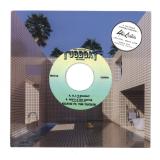









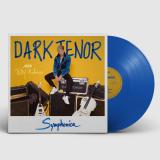

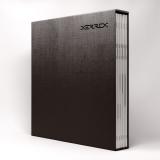










![Pizza Hotline - Hot-N-Ready Remixes Delivered by Pizza Hotline [In 20 Minutes or Less] (LP 2x12")](https://www.deejay.de/images/l/2/2/1215122.jpg)