The multi-media project Kraftwerk was started in Düsseldorf, Germany 1970 by Ralf Hütter and Florian Schneider. They set up their electronic Kling Klang Studio where they conceived and produced all Kraftwerk albums.
Kraftwerk created the soundtrack for the digital age of the 21st century. AUTOBAHN 1974, RADIO-ACTIVITY 1975, TRANS EUROPE EXPRESS 1977, THE MAN-MACHINE 1978, COMPUTER WORLD 1981, TECHNO POP 1986, THE MIX 1991, TOUR DE FRANCE 2003. Their compositions, using innovative techniques, electronic sounds and synthetic voices combined with computerised rhythms, had a major musical influence on Electro, Hip Hop, Techno and Synth-Pop.
quête:m b ant
180 G. BLACK VINYL WITH LINER NOTES IN CREOLE, FRENCH, ENGLISH
Originally released in 1979, "Spiritual Sound" lives up to its name, a soaring, triumphant album, six tracks of spirit magic from Guadeloupe.
Telluric, intense, terribly alive, the gwoka drums of Guadeloupe carry the identity of a painful and fervent island. Marked forever by the crime of slavery, Guadeloupe's créolité cherishes the ka drums and their natural environment: the low-pitched boula drum with male goatskin, the high-pitched soloist makè drum with female goatskin, the chacha, ti bwa, triangle, calabash and other percussion instruments that surround them, and the voices - the fiery, proud, timbred, urgent voices of the gwoka.
This album is also a legend for its voices: in his then dazzling youth, singer Lukuber Séjor was one of the first gwoka artists to largely feminize the chorus of répondè, who converse with his text delivered in a straight and powerful voice.
And everything here sets new standards. In 1979, Mizik Filamonik - Spiritual Sound proclaimed a spiritual patriotism of ferocious intensity. The album by Lukuber Séjor - whose spelling alone is a battle - sets out to give Guadeloupe the intangible weapons of self-respect and self-knowledge, through a singular practice of traditional music.
The genesis of gwoka music is less straightforward than one might imagine... The drums performed the servile task of accompanying the work of slaves in the fields and during the “corvées” imposed by the administration, before being freely practiced by the common people after the abolition of 1848. At the heart of the conviviality of the Guadeloupeans furthest from the cities - geographically and socially - the gwoka drums come out for carnival, funeral wakes and neighborhood celebrations, but also during strikes, fits of anger and armed vigils of the riots and revolts that have punctuated the island's history. For generations, governors of the colony and then the prefects of the overseas department of Guadeloupe have been viewing the gwoka as a potential for turbulence and a threat to public order.
But as the Beatlesmania, “chanson engagée” and rock revolutions unfolded in Europe, young people turned to the drums of mizik a vié nèg (“bad negro music”, in Creole), which Guadeloupeans had learned to despise by following the “assimilation” process advocated by the school system and most of the political class. At the end of the sixties, in a Guadeloupe mourning the deadly repression of the May 1967 social movement, they played traditional music, refusing to wrap it up in tourist prettiness and madras folk costumes. Instinctively, they played a rough and contemporary gwoka, led by the incendiary Guy Konkèt. This was the era of decisive 45 rpm records such as Robert Loyson's Kann a la richès, which brought to light the fieriest words of union rallies.
At his home in Sainte-Anne, Lukuber Séjor played with flautist Olivier Vamur and his brother Claude Vamur, who cobbled together a drum kit from tin crockery and became, a few years later, the most influential drummer in Kassav'.
These were the years of the Bumidom program, when young Guadeloupeans were encouraged to emigrate to mainland France. At the age of twenty, Lukuber Séjor embarked on the liner Irpinia, disembarking at Le Havre and taking the train to the Gare Saint-Lazare - the route taken by thousands of young West Indians who went on to study or looked for work, all the while trying to maintain a link with their homeland. In this case, it's at the Antony university residence, where Lukuber played the drum and participated in a thousand gwoka updates and aggiornamentos, while exile reinforced the need for a spiritual link with the native land.
In 1978, Guy Konkèt played at the Salle Wagram, a historic event for West Indian music. After serving as répondè - i.e. backing vocalist - on one of his home-recorded albums, Lukuber joined his live band. Little by little, he became one of the key artists on a circuit parallel to French show business. At a student party in Caen, he met a young woman from Martinique who, at the time, was more motivated by her ambitions as a visual artist than by her vocation as a musician. Her name was Jocelyne Béroard and, a few years before she plunged into the Kassav' adventure and became the greatest West Indian singer of her generation, she designed the cover of Lukuber Séjor's LP.
This ambition was obvious and imposed its will. A more or less regular band was formed, with Roger Raspail, Rudy Mompière and Éric Danquin on ka drums, Claude Vamur on ti bwa, Olivier Vamur and Françoise Lancréot on flutes and Annick Noël on keyboards. Lukuber Séjor is set on wanting to extend the gwoka palette to other instruments, as the jazz-rock revolution opens a thousand new doors. Annick Noël will play a wide range of timbres and textures on electric piano and synthesizer. Another novelty: the répondè are two men and two women, Roger Raspail, Olivier Vamur, Françoise Lancréot and Maryann Mathéus ...
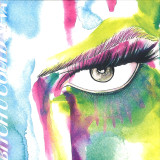
Mizik Filamonik - Spiritual Sound is a self-production in which the singer and leader sank all his savings, allowing him no more than a single day in the studio. The first side is more of a musical manifesto, with the first two tracks, Éritage and Penn é plézi, being instrumentals. The third, Son, forcefully celebrates the need for Guadeloupeans to connect with the gwoka. In fact, Jocelyne Béroard's cover shows a tambouyé in the shadow of a cloudy sky, against which a radiant sun is rising and whose light will soon flood the entire landscape. The silhouette and face of this man strongly evoke the immense Vélo, master of the ka, rejected at the time on the fringes of society.
The second side of the LP is surprising. Formally, three tracks are explicitly linked like the three parts of a triptych. Primyé voyaj evokes the appalling tribulation of Africans deported as slaves to Guadeloupe; dézyèm voyaj speaks of the Bumidom program and the economic, political and social forces driving young Guadeloupeans towards the mirage of prosperity in France; twazyèm voyaj closes the cycle with the emigrants' return from Europe after years away from their island...
This gwoka, obsessed with the need to save Guadeloupe spiritually, appeals far beyond the politicized audience. Mizik Filamonik - Spiritual Sound instantly became a classic, although Lukuber Séjor never really made a career for himself as a musician.
After all, the album was released in 1980, with no promotional resources in France or Guadeloupe - and therefore no concerts. The thirty-two-year-old author, composer and performer made his own third trip back to Guadeloupe. He set up a small woodworking business, which he lost in Hurricane Hugo in 1989. His other activity, teaching in a medical-educational institute, became the core of his professional life. He continued to be an active campaigner - a campaigner for the Creole language, a campaigner for the reawakening of identity, a campaigner for special education, a campaigner for a thousand causes that he ignited with his generous and perceptive enthusiasm, such as the defense of breadfruit fries...
The echoes of his 1979 album have not died down. Of course, the use of Penn é plézi as the theme tune for Radio Guadeloupe's funeral notices from 1980 to 1992 kept him in the collective memory, but he continues to sing and compose sporadically, as with his all-female
vocal group Vwapoulouéka... Still convinced that music is a means of liberating the spirit, he continues the journey of a young man eager to deploy the power of Creole music and language.
Bertrand Dicale
Prick up your ears everybody: Uluru number 3 is ready to take off!
This time Little Beat More's sub-label Uluru, featuring highly acclaimed remix/mash up series, sees the participation of living legend Jstar.
The west London reggae hero delivered a smoothly bouncing rework of the classic “Eye of the tiger” by the Survivor, that originally gained fame through being the anthem of Rocky III.
The flip sees the debut of an Italian duo called “The Dynamates” (The Rebel and Dibba). They put their hands on another precious song that made history, namely “You got to love” from Candi Staton.
Pull up guaranteed!
Pressed on high quality black and yellow lime vinyl (48 gr.)
Edition of 350, coming with “hand stamped” vintage yellow paper sleeve.
ULURU 2020
“Mind Control, Modern Slavery”
- A1: Everything Is Real
- A2: Antibodies
- A3: She's On The Radio
- A4: Life In A New Motion
- A5: Tropical Suite São Paulo
- B1: Pretty Tall Girls
- B2: Budapest
- B3: Down On Serpent Street - Alternate
- B4: The Paper Bride
- C1: The Wild
- C2: I Shall Take It Anyway
- C3: The Bird Is On Fire
- C4: Jesus Told Me Too
- D1: Country Leather
- D2: Carrie Ann
- D3: The Word
- D4: The Music Never Dies
Poni Hoax, a French band born in the early 2000s under the impulse of Laurent Bardainne, immediately emerged as the union of converging forces: on one side, the precision of a composer and instrumentalist breaking away from jazz conservatory traditions; on the other, the magnetic presence of Nicolas Ker, a terminal new wave crooner with a sepulchral voice. Surrounded by Arnaud Roulin on keyboards, Vincent Taeger on drums, and Nicolas Villebrun on guitar, they made an instant mark with Budapest—dark and haunting—followed by the unstoppable She’s on the Radio, crafting a unique identity that blended the venomous elegance of Roxy Music, the tension of New Order, and the fervor of Larry Levan. With Images of Sigrid, Poni Hoax achieved the miracle of an instant classic before continuing their journey with A State of War and Tropical Suite, sonic odysseys haunted by memory and distant horizons. On stage, it was either an apocalypse or a revelation—a Formula 1 driven by a gang of Gremlins, a blazing energy leaving only burning embers in its wake. The adventure came to a tragic end with the passing of Nicolas Ker in 2021, as the notes of Laurent Bardainne’s saxophone rose into the gray skies of Père-Lachaise, the final echo of a dazzling odyssey.In 2025, Poni Hoax celebrates its 20th anniversary with the release of Greatest Hits: Everything is Real.
Repress!
Emotional Rescue and Utopia Originals join forces to release the pop, new wave, funk of Obscure Desire, a one-off project and EP from effervescent 80s Auckland, New Zealand that saw three friends come together to make a perfect piece of club pop history.
Revolving around the musical talent of Andrew Waldergrave, a trained pianist, music degree drop-out, who moved to the island’s cultural centre of Auckland and emersed himself in the arts and nightlife scene the city had to offer.
Working at Obscure Desire, a Fashion Boutique meets Salon, he became friends with Grant Mitchell and Giselle Trezevant, together forming not a band, but as they saw it, a project to make a record for their scene and beyond.
Coming from outside of the established band route of endless rehearsals, local gigs, growing a fan base and home recordings, they fell did not have the support network of indigenous New Zealand labels. As so often the case in unearthing these lost reissue gems, the artists took matters into their own hands, seeking to write, record and release themselves.
After meeting Trevor Reekie, head of the local Pagan Records label, he took on production duties. Collating the necessary musicians, the project grew from the one song to become a full EP, recording between a home 16 track studio and a full 24 track desk at Harlequin Studios.
Centred around the title song, it is a perfect pop moment. Waldergrave’s piano leads into an infectious groove of slap bass, gated drums, Reekie’s acoustic guitar and cut vocals, before Trezevant’s vocals propel the song to an 80s swing out vibrations. Coming in Extended, Harlequin and Instrumental (digital only) mixes, this was an overload of White Funk.
Here reduced to the best two versions, more room is given to let the other recordings breathe, first the gloriously anthemic instrumental Bullet. Intricate programming and production, lead into the pop sensibility of I Wonder, some kind of wonderful antipodean reimagining of Chris & Cosey finest pop moments, an optimistic paene that permeates the whole EP. Closing 4A, espouses the Jazz Funk, with Trezevant’s simple French lyrics telling of dreams of a lover’s image.
Released in 1986 with no local support from radio and TV, it became something of a “hit” record in New Zealand’s more discerning clubs, however the members soon moved to London and the project remained a one-off moment. Over time the EP has gained cult status to become globally desired that sees copies of the original 12” selling for $000s. Now at last available for a global reach, while remaining a personal, uplifting moment of time.
Tuskegee returns with serious intent and a fresh club weapon from a recognised statesman of house music, Junior Sanchez. Having written and collaborated with artists including Daft Punk, Armand Van Helden, Todd Terry, and Roger Sanchez, ‘Bitch U Could Neva’ pairs Sanchez with vocalist and songwriter Dave Giles II, riding high himself following link-ups with Honey Dijon, Mike Dunn, and a producer on Beyonce’s anthemic ‘Cozy’.
‘Bitch U Could Neva’ is a powerful, instantaneous trip back into the underground style and attitude shared between both artists, reflecting the vibe of Sanchez’s rise to success in the halcyon days of New York nineties clubbing, alongside Giles II’s own youth in the Chicago creative scene. Living up to the attitude of its title, ‘Bitch U Could Neva’ bumps with peak-time energy, jackhammer drums and chopped-up vocals never undermining its fundamental sensuality, an increasingly rare link between true, authentic dancefloors past and present.
The pair then look to London for a confident, stripped-back take from prestigious record collector and curator GIDEON. The founder of dance music institutions Adonis and Glastonbury’s infamous Block 9 goes deep to find the track’s potential as a minimal, vogue-adjacent house workout, scattered with telephone dial tones and an upfront disclosure; “Bitch, I’m serving.”
Back across the Atlantic, Physical Therapy and Michael Mangan team up under their Fatherhood project to give ‘Bitch U Could Neva’ a seriously bouncy redress, winding tight drums atop a rubbery bassline and paying their own Twilo and Tunnel-era tributes with cut-up vocals and an ecstatic onslaught of rave stabs.
The Situation collective headed up by Mr Mulatto and Frank Situation return with their much-anticipated new album ‘Audio Proxemics’. Across nine sumptuous tracks it explores a warm array of sounds from jazz-flecked deep house to soulful nu-disco with guests like Javonntte, Faze Action's Robin Lee and more. Situation is a collective of DJs, producers, editors, and musicians who hail from the five valleys of Stroud in the UK. Between them they have deep roots in electronic music and have been entrenched in the scene on many levels from hosting their own events, organising free parties, releasing everything from deep house to tech under several aliases and, since 2014, have established Situationism Records with cultured sounds from the likes of Ashley Beedle, Greg Wilson, Dr. Packer, and more.
This accomplished new album has been two years in the making and began with three tracks recorded by South African vocalist Venessa Jackson while she was on tour in the UK. As well as Venessa’s sweet tones, vocalists from across the globe contribute alongside some core Situation members: James Payne, Phil aka Dr Keys and Jon Gray aka BitterSuite who take care of bass, arrangement, production, and guitar.
It’s a timeless record that spans everything from jazz to funk with real musicality and standout instrumental skills lighting up each track. Underground favourite Javonntte adds deep and smoky tones to the flute laced and sunny house sounds of 'Bullit' while 'Never Taken A Weekend Off' is a lush broken beat sound with radiant synth leads and vocal hooks that echo classic Brit funk. 'Mrs Donovan' is a more club-ready sound with dazzling keys dancing over dusty house drums and 'Fairy Godmother' is a gorgeous slice of disco house with vibrant strings from Faze Action's Robin Lee and an effortlessly cool acid jazz vocal. Add in 'Over & Over', a lovely jumble of chords, organic percussion and life-affirming horns, and the hip-swinging drums and expressive interplay of sax and synth on the uplifting 'Rodborough Groove' and you have an album perfectly suited to bright days and hot summer nights.
To speak to Luca Daniel Schwarz aka LDS about his music is to be enthusiastically guided into a complex world of his own creation: clean and powerful techno which pulses with life from the textured patterns and drum sequences that have fills and accents that would make anyone who’s picked up a set of drumsticks envious. Yet this ecosystem of noise is deceptive; Schwarz’s process for making music is very different to how a live drummer would create the same subtlety of performance. Forever researching new technology, Luca got deeply interested in different programming languages, and created a series of probability-based music tools for manoeuvring sounds and sequencing.
Manipulating those probabilities takes a skilful alchemy, needing understanding of both musical structure and how the tools he devised work. To return to the drummer analogy, if the drummer is focussed and intentional in the moment of playing, then the method used in LDS tracks is almost diametrically opposed, with all of the intention coming in the assembly of the instruments, potential paths, and gateways; once play is pressed the music flows, following all the rules that were set in advance, not unlike a domino run or Rube Goldberg machine. And like a domino run, the results are fascinating and, ultimately, fun: staccato vocals pop in and out in ‘zipp prompt’; laser-like synths pulse; background noises sweep across the aural plane of the dub techno of ‘diff, blockmix’ and ‘pow’ adding texture that brings vitality all-too-easily missed out when complex mathematical
processes become entwined with music creation. The high sensitivity to texture and rhythmic detail in Stadion Progg is multiplied further on Jean Redondo's remix - whose track, Hypersonic, was the backbone of 2023’s ‘yet’ compilation on Tresor.
The balance between technology and a sense of fun might also come from the maker; it’s not easy to overstate Schwarz’s passion for what is now his favourite way to make music, “it never gets boring. There’s always a moment of anticipation to see what actually emerges.” And the true “power of 2” comes into play when the resulting music can be fed back through the system again and again, potentiating the music in exponential ways.
Introducing Griffith’s debut release, "Nineteen EP" by Romanian artist Mihai Pol. Known for his instinctive approach to groove and atmosphere, Mihai crafts music that feels organic and immersive, drawing subtle influence from the world around him.
At the heart of the release is "Nineteen", a long-awaited gem produced in 2020. Defined by a hypnotic groove and a striking synth that almost sings like a human voice, the track has become one of Mihai’s most anticipated cuts, impossible to forget once heard. Alongside it, three equally refined productions complete the EP, each carrying his signature rolling energy and deep, immersive flow.
A great first step for Griffith, with plenty more to come.
Anneleen Boehme is a prominent figure in the Belgian jazz scene, known for her work as a double bassist across various projects.
Her virtuosity on the double bass was already evident in LABtrio, and her skill as both a composer and bandleader was showcased in Grand Picture Palace. Now, in her solo work, we experience Anneleen's genuine vulnerability, as she explores the deep connection with her ever-present companion: the double bass. Her music is a balm for the soul, and her playing is deeply moving, leaving no listener unaffected.
In this solo project, Anneleen Boehme pushes the boundaries of the double bass, striving to transcend them in all their forms. She places particular emphasis on the instrument's acoustic sound, subtly highlighting its rich, resonant voice. The music that warms her heart is at the core of this exploration: both her original compositions written specifically for the double bass, as well as solo arrangements of existing works and improvisations. Her passion for both jazz and classical music is beautifully expressed throughout. This is an embrace of the double bass, its deep tones, and pure musicality.
Eunoia is Anneleen Boehme's debut solo album, set for release on April 18th, 2025, and it is a dedication to herself.
"I wrote a story about who I am, about the path I've walked so far. About how the mind can drive you mad and how, amidst it all, you can find peace. I hope it will offer you the same. Sadness, joy, and comfort for your soul."
The double bass has the unique ability to convey our most melancholic emotions, and this album is no exception. Yet, its warm tones also offer a sense of healing and comfort. In most tracks, the double bass stands alone in its simple elegance, but in Fuga Ante Proelium, Anneleen's voice joins her instrument, adding a new layer to the musical experience.
Hot Natured's last single 'Forward Motion' was the seductive summer anthem of 2011. Since then the founding members of Hot Natured, Jamie Jones and Lee Foss, have been joined by Ali Love and Luca C (from the duo Infinity Ink). The quartet has been locked away in writing sessions in Los Angeles, London and Ibiza, with an album planned for spring 2013.
Antoni Maiovvi is an artist like few others. “Knights of New Haven” summarises his unique ability and unparalleled range. This return to the Bordello reflects the influence of the West Coast Sound of the Netherlands as well as that machine music of his adopted home of the U.S. “Later Not Lately” bends bars above a throbbing kick, hi-hats ruffling the clean arcs of string. Echoes of Chicago and Detroit penetrate the EP. Melting melodies fold and oscillate under the crashing cymbals of “Slack Blabbath”, staggered synthlines jolted by tight percussion patterns. A brother-in-arms opens the flip, Danny Wolfers drafted in under his Legowelt moniker to turn his magic to “Later Not Lately”. Undulating undertones are sliced by serrated snares before a sordid TB303 is unsheathed, Wolfers’ soulful and squalid retelling of the original. “The Madness in the Method” closes. Fizzing static blurs drum patterns, a taut note piercing the dense bass fog. Teetering between the profound and the profane, Maiovvi pivots his horror disco trademark sound with driving house drums and devil-may-care grandeur. An EP of epic proportions.
The needle drops, and with it, a fresh chapter in the world of re-edits comes to life. This electrifying
new EP offers four masterfully crafted tracks, each one a gateway into a distinct musical world.
From epic anthems to intimate grooves, these cuts promise to leave a lasting imprint on the dancefloor.
Vinyl-only, limited edition—this is not one to miss.
A1 - Rewind The Drill Step back in time with an epic late 80’s anthem that channels the power and
raw energy of a golden era. With thunderous beats and soaring melodies, "Rewind The Drill" is an
instant classic that bridges past and present with finesse and force.
A2 - Pizzichella An ode to Tokyo’s iconic 90’s Shibuya Kei movement, "Pizzichella" is a vibrant
tribute to a beloved scene. Melding playful nostalgia with modern production, it’s a kaleidoscope of
sound that’s as colorful as the streets of Shibuya themselves. A must-listen for fans of cross-cultural sonic adventures.
B1 - Jara Sevo Immerse yourself in the haunting beauty of "Jara Sevo." With a Balkan-inspired feel, this melodramatic anthem evokes the chill of a winter’s night and the warmth of love’s glow.
Poignant strings and cinematic swells make it a standout moment of emotional resonance.
B2 - Come Vanno i Grøøvöni Closing out the EP is "Come Vanno i Grøøvöni," a sweet, romantic
groovy house cut that’s as gentle as it is infectious. Smooth, soulful, and effortlessly cool, it’s the
sound of a perfect night in motion. With lush pads and subtle swing, it’s the kind of groove that’s
impossible to resist.
Limited Edition, Vinyl Only As always, exclusivity is key. This EP is a one-time pressing, and once
it’s gone, it’s gone for good.
Collectors and DJs, take note: this is a sonic treasure you’ll want in your arsenal.
Stay tuned for release details and grab your copy before it’s too late. Four tracks, four journeys—and one unforgettable record.
- A1: Manatane & Mr Fab – Cryptomania
- A2: Manatane & Mr Fab – Cryptomania (Gregor Size Remix)
- A3: The Jack Foundation – Puff, Puff, Jack
- A4: Dj Kamikaze – Keep A Party Rockin
- A5: Dimitri Cooman – Twisted Smile
- B1: Manatane – Cøeur Nøir
- B2: Manatane Ft Frank Antenucci - Black Acid Clubing Heart
- B3: Dj Kamikaze – Not For Me
- B4: Manatane & Mr Fab – Cryptomania (Asylum Bros Remix)
- B5: Manatane & Mr Fab – Cryptomania (Franck Antenucci Remix)
- B6: Manatane & Mr Fab – Cryptomania (Mazniak Remix)
Joe Smooth’s 1987 house anthem 'Promised Land' is arguably one of the most recognizable records of its time. While touring in Europe with Farley 'Jackmaster' Funk, Joe Smooth noticed the growing popularity of house music across the continent. Inspired by his love for Motown records, he wrote a track that expresses themes of positivity and inclusion, resonating with ravers worldwide. This record is an essential addition for ravers and music lovers alike—it's a significant piece of history now available once again on LP, and also includes the previously unreleased and forgotten gem from '87, 'Inside My Mind', which has now been dug from the vaults and remastered for this new pressing. This version is only available for RSD, on 'dove white' vinyl, in celebration of the title track and house anthem, Promised land.
Hard Times proudly welcomes a new release from an artist deeply connected to the label’s storied past. Alex Arnout presents BLACK LOGIC with their debut EP, ‘Pull Up’, a project born from passion, collaboration, and a return to House music's soulful roots
Hailing from West Yorkshire, Arnout spent his formative years on the Hard Times dancefloors, absorbing the beats and vibes that would later shape his own productions. His journey with the label reignited when he was invited to remix Michael Watford’s classic 'Love Change Over' and Steve Silk Hurley’s fresh hit 'All I Need'. Now, he returns with something truly special
“Black Logic was born out of the pandemic,” says Arnout. “I wanted to move away from drum machines and synths, getting back to sampling jazz and the deep house sounds of the ‘90s - taking inspiration from artists like Bugs in the Attic, Jazzanova, and Ernest Saint Laurent.
What began as a solo project soon evolved into a collective effort. Bassist and guitarist Alan Riggs, a former member of Delta 5, joined the sessions, bringing warmth and groove to the productions. Vocalists Tempo O’Neil, Anthony Beckford, Mariana Orsho, and Sophie Barker added their distinct voices, completing the vision.
The ‘Pull Up’ EP is the first of a debut double-header from Black Logic, delivering five stunning tracks that blend jazzy keys, deep grooves, and rich, soulful vocals. From the warm basslines to the celestial closing moments, this EP is a statement of intent - a wonderfully fresh, yet nostalgic take on deep house from a collective of masterful musicians.
PART 2/2[17,86 €]
"Petrol", one of Manu Kenton's most iconic tracks, makes its highly anticipated return in a limited edition that will appeal to both collectors and techno enthusiasts. This special version features not only the original track, but also exclusive remixes that reinterpret the piece from different angles, offering a diverse and exciting sonic palette.
Manu Kenton, staying true to his creative genius, revisits his own track by adding an energetic and catchy vocal, bringing a fresh new dynamic to the already electrifying atmosphere of the original.
The Gregor Size remix is a true powerhouse: dynamic, industrial, and powerful, it transforms "Petrol" into a heavy, punchy piece, with dark textures and irresistible rhythms that leave a lasting impression.
Greg Denbosa, on the other hand, delivers a progressive techno remix, with a dynamic and repetitive beat that builds tension, creating a hypnotic experience perfectly suited for the dancefloor.
Finally, Bestien offers a nervous, straight, and punchy version, ideal for the peak moments of a night. His explosive remix ramps up the intensity on the dancefloors, with raw energy and power that demands attention.
Visually, this vinyl stands out with its "Yolk" effect, a unique blend of white and white with luminous accents, creating a striking and modern design that will enhance any collection.
Français
"Petrol", l'un des morceaux les plus emblématiques de Manu Kenton, fait son grand retour dans une édition limitée qui séduira aussi bien les collectionneurs que les passionnés de techno. Cette version spéciale inclut non seulement la version originale du titre, mais aussi des remixes inédits qui réinterprètent le morceau sous des angles différents, offrant ainsi une palette sonore variée et excitante.
Manu Kenton, fidèle à son génie créatif, revisite son propre morceau en y ajoutant un vocal énergique et entraînant, donnant une nouvelle dynamique à l'atmosphère déjà électrisante de l'original.
Le remix de Gregor Size est un véritable tour de force : très dynamique, industriel et puissant, il transforme "Petrol" en une œuvre lourde et percutante, avec des textures sombres et des rythmes irrésistibles qui marquent les esprits.
Greg Denbosa, quant à lui, propose un remix techno progressif, avec un beat dynamique et répétitif qui crée une tension croissante, offrant une expérience hypnotique et parfaitement calibrée pour les sets dansants.
Enfin, Bestien livre une version nerveuse, droite et percutante, idéale pour les moments intenses d'une soirée. Son remix explosif fait monter l’intensité sur les dancefloors, avec une énergie brute et une puissance qui ne laisse personne indifférent.
Visuellement, ce vinyle se distingue par un effet "Yolk", un mélange unique de blanc et de rouge lumineux, créant un visuel frappant et moderne qui enrichira toute collection.
"The ironically titled Crime Pays was a comment on the success of Colón’s carefully cultivated bad guy image that he sustained until the mid-1970s. The anthology compiles nine key cuts from his first four albums. First time the album is available on vinyl in decades, pressed on 180G black vinyl. All tracks showcase the genius of the Colon/Lavoe partnership in a variety of genres. "
Announcing the debut album from one of London’s most electrifying acts, New Regency Orchestra. An 18-piece Afro-Cuban big band, inspired by the musical melting pot of NYC in the 1950s, but with the punch and power of a whole host of London’s best Latin and jazz musicians. Blowing new life into these compositions, the album is a reimagining of some of the finest music from that golden era. From early 1950s René Hernandez and Tito Puente, through to the 1970s salsa of Rafael Labasta and Orlando Marin, produced and performed with fresh fire.
NRO is the brainchild of its artistic director, and the man behind Total Refreshment Centre and Church of Sound, Lex Blondin. Through a long-held passion for jazz, Lex discovered the explosive Afro-Cuban rhythms of mid-1940s NYC via the godfather of Afro-Cuban jazz, Mario Bauzá. A time when two musical worlds collided in a fusion of creativity and energy, jazz luminaries like Dizzy Gillespie and Charlie Parker joining forces with Cuban greats like Machito and Chano Pozo. This vibrant sound was music to dance to and found a home at The New York Palladium, a formative space of freedom and expression that was key to the scene’s development.
Although dance-focussed in their makeup, those early recordings are not often heard in modern club environments and Lex dreamt of retelling their story with a contemporary dynamism. A slice of serendipity followed, as a slot at a new festival opened up and Lex jumped at the chance to make this idea a reality, an 18-piece big band breathing new life into these beloved songs.
Enlisting the expertise of some of the capital’s finest talent, Lex and co-captain Andy Wood, of Como No fame, put together a world-class line-up of talent. Bringing in Eliane Correa as musical director and bandleader, a fluid and interchanging 18-piece band was formed.
The album itself is a hand-picked selection of timeless Afro-Cuban jazz classics, reimagined with NRO’s unbridled energy. It contains ten incredible instrumental tracks including 'Pregon' with its anthemic horn stabs and the addictive head nod bounce of 'Mambo Rama', alongside two scorching vocal numbers in 'Papa Boco' and 'Labasta Llego'. Coupling a heavyweight rhythm section with a wall of horns, they provide a fresh spin on songs from Tito Puente and Chico O'Farrill, René Hernandez through to Rafael Labasta.
“Some of the tunes like Tito Puente’s ‘Mambo Rama’ and ‘Scarlet Mambo’ might sound like they went to a gym as extra drums and bass synth were added to them whilst the tune ‘Sahib & Tito’ is a mix of Tito’s ‘Mambo Buda’ and Sahib Shihab’s ‘Nus’. Our intention is to be both respectful to the innovators and inventors of this incredible music and to pay our dues, but also to add something special from London where the city’s new jazz scene connects with its Latin American musicians and the musical influences around us.”
This pure collective joy, shared experience and music you can’t help but move to.