
Cerca:m black

3
Khalab's 'Album of The Year' has been re-worked!
Ahead of a full remix LP (Summer 2019) On the Corner have opened the vault on 2019 hitters.
This 12' scorches the terrain built by 'Black Noise 2084'.
Hieroglyphic Being dominates the dancefloor with his 10 min sweater.
Afrikan Sciences launch off from Khalab's afrocentric soundscapes into a futuristic cosmos.
Blood, Wine or Honey strip it back, break it down and leave bassments trembling with the
weighty jungle blows.
After a stellar year for Khalab and On the Corner these three remixes bring knock-out blows
for 2019 dancefloors.
Hieroglyphic Being's 10 min sledgehammer shakes the floor as the mythical producer runs a
profound groove with three 808s pummelling the spine of Khalab's track.
On the B side, Afrikan Sciences uses the Afrocentric theme of the original to strip it back and
propel it into the cosmos.
Khalab's 'Black Noise 2084' has already racked up 'Album of the Year' status and we're giving
you a first glimpse of this earth scorching, dance destroyer that will prepare an onslaught for
2019.
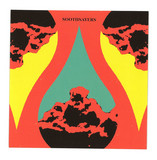
For The Best Part Of Two Decades Now, South London Afro-dub Dons Soothsayers Have Been Preaching Their Politically Charged Good Vibrations To A Growing And Loyal Fan Base. Their Live Shows Are Legendary And Vary From Off-the-cuff Community Friendly Gigs In Brixton, To Festival Headline Slots And Tours Across Europe And Beyond. Having Recently Filled London's Jazz Caf To Much Acclaim, And In Anticipation Of Their New Album, Tradition, Out On Wah Wah 45s In June, Soothsayers Unleash The Second Single To Be Taken From It. It's A Double Header Of Sorts That Shows The Band's Knack Of Reinterpreting A Cover Version Or Two For The Dance Floor.
Sleepwalking Is A Take On Fela Kuti's 1971 Classic Black Man's Cry. It's A Chant Of Frustration Aimed At Disenfranchisement From The Process And Features Afrobeat Ambassador Dele Sosimi On Guest Vocal Duties.
It Questions If We Are Sleepwalking Into The Abyss, And Is A Revolutionary Song About Taking Power Back Into Our Own Hands! Although It's Challenging To Do Justice To A Bob Marley Cover, On Natural Mystic Soothsayers Cradle The Spirit Of The Originator And Turn It Upside Down, Transforming The Familiar Into A Journey Back To Africa Via Their Trademark Groove.
Spiritual Jazz Flutes And Percussion Combine With The Floating Vocals Of The Mighty Cornel Campbell, While The Song's Main Melody Is Emphatically Reproduced By Soothsayers Horn Section To Stunning Effect.


- A1: If God Were Alive (& He Is) You Could Reach Him By Telephone
- A2: R4T
- A3: Et Tu, Klaatu
- B1: Eenie Meenie Chillie Beenie
- B2: Novena
- B3: Mind Power
- B4: Yellow Yankee
- C1: Want You
- C2: Vocal Variety
- C3: Kokole
- C4: Cincinnati 1830-1850
- D1: Edison's Piano
- D2: The Lecture Of Comrade Stalin At The Extraordinary 8Th Plenary Congress
13
Paul DeMarinis is a key figure in the history of electronic music since the 1970s. Collaborator with the likes of Robert Ashley, David Behrman, and David Tudor, DeMarinis is a pioneer in the development of gallery sound installation and digital music technologies. Black Truffle is thrilled to announce the release of a double-LP collection, selected in collaboration with the artist, focussing on DeMarinis's exploration of synthesized voice and the digital analysis and manipulation of speech sounds. Drawing together tracks dispersed on compilations along with a number of pieces previously unheard in any form, Songs Without Throats offers a revelatory look into DeMarinis's alternately accessible and uncompromising production between 1978 and 1995. Opening with a mesmerizing piece from 1978 pairing the voice and tamboura playing of Anne Klingensmith with strings of letters spat out by a Speak n' Spell to the accompaniment of the randomised melodic patterns of DeMarinis's homebuilt electronic instrument 'The Pygmy Gamelan', the record then dispenses with the live human voice in favour of its recorded and synthetic doubles. We follow DeMarinis's restless probing of the possibilities of new technologies, from the hacked Speak n' Spell (which gives us the austere 'Et Tu, Klaatu' 1979, another duet with Klingensmith, this time on bowed psaltery, in which the toy's synthetic voice is stretched into an alien song) through to the use of digital audio samples manipulated with home computer technology in the early 1990s (including a remarkable dream-like collage piece that weaves a rare recording of Stalin's voice and bird-like electronic twittering derived from its formant-glides into a rich tapestry of samples reflective of the dictator's musical life). In between we get a rich sampling of DeMarinis's signature work with speech melodies - usually unnoticed melodic inflections that lie within speech patterns - which he analyses and translates into synthesized musical accompaniment. These pieces draw on a wide variety of textual and vocal sources, which range from the hilarious to the menacing ('Cincinatti (1830-1850)' sets a detailed description of butchering techniques, for example) and an equally broad range of musical conceptions, combining elements as seemingly unlikely as Beethoven's Opus 31 pianos sonatas and the sounds of 80s synth pop. The results are an extraordinary combination of the alien and the familiar. As DeMarinis himself characterises his work with vocal synthesis, this is 'a kind of signal that simultaneously carried and obscured meaning and ideation, even as it created a sound world totally alien in esthetic'. Presented in a deluxe gatefold sleeve with archival images and liner notes by Paul DeMarinis. Design by Stephen O'Malley. Mastered and cut by Rashad Becker at D&M, Berlin


2
disponibile anche
Smoke Vinly[16,77 €]
Released on CD by Aurora Borealis back in 2010, we're overjoyed to finally see this on vinyl.
- limited edition of 300 copies - 180g black vinyl - reverse board heavyweight sleeve - includes download code and printed insert - mastered for vinyl by James Plotkin - cut at The Carvery, London
An ode to the Lovecraftian lore of Shub Niggurath, 'Black Goat of the Woods' was conceived as "the soundtrack from some lost low budget horror movie, rediscovered on an old and faded VHS cassette found mouldering in a deserted house in the depths of the woods".
The one man project of J.R Moore, Black Mountain Transmitter has released several albums, all to great critical acclaim, and the quality of his work speaks volumes. The original AB 'Black Goat of The Woods' CD version was the first official release and a reissue of the long sold out and much sought after limited CDr.
On describing the recording, Moore said: "The music was certainly very much influenced by that certain breed of 70s horror films. Things like the soundtrack to the original "Texas Chainsaw Massacre", Giuliano Sorgini's atmospheres in "Living Dead At The Manchester Morgue"; Carl Zittrer's soundscapes in "Deranged", "Children Shouldn't Play With Dead Things" and "Dead Of Night", and of course people like Fabio Frizzi in Italian horror and the BBCs Radiophonic Workshop's electronic sounds in something like "The Stone Tape" and countless creepy old TV productions..."
An excellent, macabre and psychedelic release that spans electronica, soundtracks and experimental genres in its 40 minute playing time, 'Black Goat of the Woods' pays perfect homage to the dark denizen of the nocturnal glades, and is a true paean to backwoods horror.

- A1: Ohne Titel
- A2: Ländliches Kouzert
- A3: Vier Brüder Auf Der Bank
- A4: Blaue Dominante, Öl Auf Kupfer
- A5: Susanna Im Bade
- A6: Marktfrau Mit Gemüse
- B1: Halbakt Im Gegenlicht
- B2: Aargauische Kleinlandschaft
- B3: Van Der Rande, Massstäblich
- B4: Goffersberg Mit Traktor
- B5: Selbstbildnis Mit Frau Und Söhnen
- B6: Ohne Titel
12
Black Truffle is excited to announce the release of the first-ever vinyl reissue of Ruedi Häusermann's Galerie Randolph, a masterpiece of solo multi-tracking originally released on CD by Unit Records in 1995. Born in 1948 and residing in the medieval Swiss town of Lenzburg, and virtually unknown outside of the German-speaking world, Häusermann is a multi-instrumentalist and enormously prolific composer who works primarily in the medium of absurdist music-theatre. A virtuoso wind player and free improviser who also composes for traditional classical instrumentation, his work is characterised by subtly surreal humour and the unlikely combination of extended technique and simple, at times almost child-like, melodic ideas. Named after his rehearsal room in Lenzburg, Galerie Randolph uses an enormous array of instruments to craft a work of singular compositional vision. Each of the twelve pieces begins from the same two elements: a woozy, sliding scatter of tones played on a home-made contraption stretching two guitar strings between the top of Häusermann's alto saxophone and an amplified cup, and a series of uneasy block chords sounded on accordion and reeds. On each piece these two elements (whose pitch gradually raises throughout the record) are complemented by entirely different material, all of it played by Häusermann. Ranging from layered flutes to one-finger piano melodies to unintelligible vocals to musique concrete interjections to free jazz saxophone explosions, these additional layers combine with the endlessly returning idée fixe of the foundational elements to create a truly dream-like listening experience, a gently deranged realm in which we lose all sense of linear time. Calling up the most unlikely combinations of possible predecessors - Erik Satie, Gerry Mulligan, and Helmut Lachenmann perhaps -Galerie Randolph ultimately defies comparison. Almost unknown except to a select group of cognoscenti such as Jim O'Rourke, yet destined to become a cult classic, Galerie Randolph is an instance of that most rare thing: music the likes of which you have never heard before.
Presented in a deluxe gatefold sleeve with gorgeous archival images by the composer. Design by Stephen O'Malley. Mastered and cut by Rashad Becker at D&M, Berlin
Key selling points: - Black Truffle is excited to announce the release of the first-ever vinyl reissue of Ruedi Häusermann's Galerie Randolph, a masterpiece of solo multi-tracking originally released in 1995, the album utilises an enormous array of instruments to craft a work of singular compositional vision.
- Calling up the most unlikely combinations of possible predecessors - Erik Satie, Gerry Mulligan, and Helmut Lachenmann perhaps -Galerie Randolph ultimately defies comparison.
- Each of the twelve pieces begins from the same two elements: a woozy, sliding scatter of tones and a series of uneasy block chords sounded on accordion and reeds. On each piece these two elements are complemented by entirely different material, ranging from layered flutes to one-finger piano melodies to unintelligible vocals to musique concrete interjections to free jazz saxophone explosions, these additional layers combine with the endlessly returning idée fixe of the foundational elements to create a truly dream-like listening experience, a gently deranged realm in which we lose all sense of linear time.
- Almost unknown except to a select group of cognoscenti such as Jim O'Rourke, yet destined to become a cult classic, Galerie Randolph is an instance of that most rare thing: music the likes of which you have never heard before.
- Galerie Randolph is presented in a deluxe gatefold sleeve with gorgeous archival images by the composer with design by Stephen O'Malley. Mastered and cut by Rashad Becker at D&M, Berlin

4
Black Rain returns with Computer Soul: the final part of a sequence of Blackest Ever Black releases that began with 2011's Now I'm Just A Number: Soundtracks 1994-95, and a first glimpse of the project's richly imagined future. For this outing Stuart Argabright (Ike Yard, Dominatrix, Death Comet Crew) is joined by BR founder member Shinichi Shimokawa as well as more recent recruit Soren Roi and Zanias (vocalist on 2015's Dark Pool) - making for the most most group-oriented iteration of Black Rain since its earliest days. Sonically too, there is a sense of evolution but also of coming full circle: the cyberpunk techno of Argabright's celebrated William Gibson soundtracks (compiled on Now I'm Just A Number) and extrapolations of Dark Pool's neuromantic yearning cut with glimpses of the thrash and industrial rock energies that animated Black Rain's incendiary live shows - and sought-after tapes for Kombinat and TPOS - in the early 90s. More than ever, Black Rain is propelled by a powerful science fiction impulse, whether responding to the themes and characters of Gibson's Sprawl or the Blade Runner universe (particularly K.W. Jeter's spin-off/continuation novels which extended its mythology, and timeline, further). It's not news that many of these works' most powerful predictions and prophesies have come to pass - the replicants are already living among us - so Computer Soul projects further into several possible unforeseen futures, its events 'set' in the second half of the current century, fifty or so years after those of Dark Pool. The hyperpopulated metropolises of Dark Pool are no more; the apartments are empty, haunted by ghosts of AC current, devices and machines running lonely without their owners...a melancholy internet of things. Where has everyone got to Gone but perhaps not gone. Oblivion beckons - always does - but on the other side of that, something else... another time, another place, a river....and a new way of living.

Malfunctioning speakers, & digital dreamscapes, SQUIRRELS ON FILM's 4th release explores the outer reaches of techno with impolite, reckless abandon.
Psychedelic sound explorer Its Own infinite Flower, who was
responsible, along with head squirrels Solar & C.l.a.w.s., for San
Francisco underground punk rave/happening Hostile Ambient
Takeover, unleashes his first official release, The Plumes of Love (ARE BLACK!). After contributing a track to 2017's Spacetime Continuum/ Juju & Jordash curated Air Texture V compilation, this four track EP of abstract tech-noise brings the sounds Its Own Infinite Flower refined in the basements & warehouses of the Bay Area's underground music scene to the wider world, whether it's ready or not.
'Drone, Drugs 'n' Dissonance' creeps into life as a thunderstorm of
white noise, out of which a cold-rave pulse somehow metastasizes into something resembling techno, although this is a deformed, uncivilized, unwanted mutation, separated at birth & raised in a toxic wilderness. It builds slowly before turning up in a rage of digital distortion, a black metal dub party held at the edge of a melting glacier. 'Oh, Empire of Roses' is a Dada Phycho Jazz Electro number. Dissonant synth chords snake around each other in a playful ouroboros of manic future funk, never knowing if it's starting or stopping, coming or going. Relentless bass throbs through the track, which almost threatens to bubble into classic acid electro before fizzling out. On side two there is 'Devotion to a Peacock Angel,' an angular breakdance groove for the characters in the bar scene in Star Wars. Electro dub rhythms keep stay grounded as everything else rips apart in all directions over the course of the track. On 'Misfortunes of El Dorado' a soundsystem bangs in the next room, only the deepest bass escaping, shaking reality until it's torn apart in waves of distortion, a classic techno synth string wandering over the top of everything in a full blown Techno Jazz Odyssey.
SQUIRRELS ON FILM continues its adventure at the edges of techno
with the mind bending stylings of Its Own Infinite Flower's debut EP,
fitted with another beautiful hand-drawn, full color sleeve by New York artist Bert Bergen. The Plumes of Love (ARE BLACK!).

George Thompson also known as Black Merlin has finally come to forgather with the prophetic spheres of Die Orakel. His three-track EP called 'Kode' comes with simple yet intriguing and hypnotic modular textures in loopy arrangements.


4
Black Label Series 03 on Banoffee Pies Records welcomes new additions to the fold with another low slung collection of minimal house and breaks. Opening with patient mystery the label debut from Monotronique delivers 118 bpm sample heavy 'Baggage With A Secret'. Nicely warmed, the A2 turns for the floor with Freerotation resident Tom Ellis in control on 'Third Morning', a groovy roller with glitched vocal loops. The curveball of this release comes on the B1 with a garage inspired high tempo d&b track, '23 Ghettobee' from Filip Szostak - One to cool or shake the dance. The B2 invites Lyssna Records own Flord King with another micro gem for the head bopping late nights on 'Shanti'. Together the four tracks investigating different moods with a similar style. BP X

12
Limited Lenticular 10y Anniversary Edition w/ heavyweight vinyl, printed inner sleeve + digital companion album of unreleased demoes and outtakes from the album
Late of the Pier announce a special 10th anniversary edition of their cult debut album Fantasy Black Channel, produced by Erol Alkan and released in 2008 to great acclaim. Fittingly, the reissue - released on a limited lenticular sleeve, pressed on to heavyweight vinyl and accompanied by a digital companion album of unreleased demoes and outtakes from the album recording sessions. It's set for release through Alkan's Phantasy Sound label, landing in stores on January 18th, 2019.
LOTP (Sam Eastgate, Andrew Faley, Ross Dawson and Sam Potter) were a band of inter-dimensional musicians who landed in the late noughts, whose wild journey took them from the quiet North West Leicestershire countryside to the stages of Coachella, Tokyo and beyond, touring with the likes of Soulwax and Justice. Their music was a mutant take on pop that described the chaos of being a teenager by looking forwards and backwards over and over again until the present moment started to make sense. Following the release of Fantasy Black Channel they put out singles 'Blueberry' and 'Best In The Class' in 2010, picking up fans from Mike Skinner to Dave Grohl along the way. Talking in a 2014 interview, Grohl exclaimed, 'They blew my fucking mind. They're called Late of the Pier. They made one record and disappeared. They use crazy computers and then they rock and it sounds like dubstep for one minute, then it's a crazy prog thing, and it's like, 'Wow'.'

14
Jac Berrocal, David Fenech and Vincent Epplay return with Ice Exposure, their second album for Blackest Ever Black. A sequel and companion piece of sorts to 2015's Antigravity, its title couldn't be more apt: sonically it is both colder, and more exposed - in the sense of rawer, more volatile, more vulnerable - than its predecessor, capturing the combustible energy and barely suppressed violence of the trio's celebrated live performances with aspects of noir jazz, musique concrète, no wave art-rock, sound poetry and spectral electronics all interpenetrating in unpredictable and exhilarating ways. While there are moments of great sensitivity and even a cautious romanticism, the prevailing mood is one of anxiety, paranoia, and mounting psychodrama: close your eyes and Ice Exposure feels like a dissociative Hörspiel broadcasting from the seedy backstreets of your own troubled mind. Before he picks up an instrument or opens his mouth, Berrocal's unique and compelling presence can be felt: a combination of studied, glacial cool and anarchic, in-the-moment intensity that has served him well over a long and storied career. It was honed during his time as a theatre and film actor, and in the 70s Paris improv scene, it powered his influential Catalogue group in the 1970s, numerous seminal, sui generis solo sides, and far-sighted collaborations with the likes of Nurse With Wound, Lol Coxhill, Pascal Comelade and James Chance which have seen him come to be valorised by two generations of avant-garde agitators and eccentrics. Now in his eighth decade, it comes with an added gravitas, perhaps, but no less energy or vitality. On Ice Exposure, his lyrical, instantly recognisable trumpet playing is a key feature - see especially the ghostly, dubwise take on Ornette's 'Lonely Woman', the dissolute exotica of 'Salta Girls', and the sublime echo-chamber soliloquy 'Opportunity'. But more often it's his voice that commands centre-stage, whether casually discharging surreal poetic monologues or moaning in animal despair - a vocal tour de force that transcends language and culminates in the Dionysian frenzy of 'Why', Berrocal's half-spoken, half-howled exclamations jostling with David Fenech's slashes of dissonant guitar, over Badalamenti-ish, panther-stalk drums. Fenech's origins are in the mail-art scene of the early '90s, when he led the Peu Importe collective in Grenoble, and since then, in addition to his own recordings he has worked as a software developer at IRCAM and played with Jad Fair, Rhys Chatham and many others. Together with Vincent Epplay he is responsible for Ice Exposure's inspired arrangements and vivid, vertiginous sound design. Epplay is a visual artist and composer with particular interest in aleatory composition, concrete, and the reappropriation of vintage sound and film material. He and Fenech fashion a remarkable mise-en-scene for Berrocal to inhabit, one that embraces cutting-edge electronics while also paying homage to the best traditions of outlaw jazz and libidinous rock'n'roll ('Soundcheck' invokes the brutish spirit of Berrocal's hero Vince 'Rock N Roll Station' Taylor). On 'Blanche de Blanc', Berrocal's voice is framed by a groaning, ghoulish orchestra of industrial drones, while 'Equivoque' evokes the most humid and hostile Fourth World landscapes and 'Panic In Surabaya' lives up to its name, a hectic, pulse-quickening concrète collage that leaves you gasping for air. This is a searching and singular trio operating at the absolute peak of their powers, with an interplay that transcends studio and stage and occurs at an almost telepathic level. Ice Exposure is a triumph of that group mind, an underworld dérive as life-affirming as it is unnerving and psychologically precarious.
Panic In Surabaya

Born in the city of madness Berlin, the multimedia artist and DJ Black Lotus steps up from being a secret hint for extatic and rough DJ sets in the local scene and enters the world of recorded music.
After playing many Berlin underground clubs like Griessmühle, KitKat or Suicide Circus she finally makes her debut release on FLASH Recordings with three tripping, parahypnotic and clearly floor oriented Techno tracks as well as a hard hitting remix by the label-head Florian Meindl.
all tracks written and produced by black lotus in berlin 2018. Additional Remix work by Florian Meindl.

4


12
Bremen finds two luminaries of the Swedish punk underground, Jonas Tiljander (Brainbombs) and Lanchy Orre (Totalitär, Brainbombs, Teenage Graves, etc), coming together to explore the dark side of kraut and progressive rock, early electronic and drone music, whilst also invoking the fathomlessly bleak interior landscapes conjured by Nico/Cale on The Marble Index and Desertshore.
'Following a trio of sprawling, planet-gargling double-LPs, 2013's self-titled LP on Skrammel, and Second Launch (2015) and Eclipsed (2017) on Blackest Ever Black, Bremen - J. Tiljander and Lanchy, previously best known for their contributions to Brainbombs' long rapsheet of genius-and- brutality, but latterly exponents of a rarefied cosmic melancholy - return with Enter Silence, their most concise, and powerful, album to date. Once again the Uppsala multi-instrumentalists combine elements of trogged-out psychedelic rock with a deadly serious Arctic minimalism and weeping modal improvisations that owe more to the outer limits of jazz and burnt-out free music from Japan. It's connoisseur's space music, grown-up and grievously honed; outwardly inclined towards the epic but studded with details that reward attention and introspection. There's always been a strong undercurrent of sadness animating Bremen's work, and that existential burden is present and correct on Enter Silence, culminating in the all-out cosmic anguish of 'Palladium'. Even 'The Middle Section', whose ragged chords are nothing if not the sound of optimism and defiance, sounds like it's navigating some kind of unsayable trauma. But this band has always allowed plenty of room for bonehead slash-and-burn as well: see here especially the Stoogeian/39 Clocks-ish rock'n'roll of 'Aimless Cruising' and the pulpy quasi-cinematic tension of 'Sinister', or the brilliant 'Too Cold For Your Eyes', a blast of voidal motorik that sounds like a cranked-up Clean. It's a cold, cold world out there'
