The summer starts beating to our doors and now that the nightmare of the pandemic (looks like) is coming to an end, mysterious dj and producer Hal Incandenza has taken over the control of MM Discos in order to get the things warmer and rock the dance-floors and festivals around the world.
Besides his amazing skills as producer, Henry Saiz the man behind the project of Hal Incandenza, has also made his path in music as songwriter, musician, graphic designer and dj.
This time introduces us to "Incivitas", a killer track that oscillates between House and Nu-Disco ready to dinamite the peak time of the most selected clubs. Hypnotic, selvatic and very wild.
Things turn even wilder with "Ceremony", highly influenced by the legacy of Daft Punk while Marvin & Guy closes the EP with an epic italo-dance version of "Invicitas", if you wonder why the duo from Parma are one of the fitter guys when it comes to burn down the house, just have a listen.
Bomba EP!!
out of Stock
Last delivered 3 years ago available to reorder, subject to availability
THE LONG AWAITED AND CONSTANTLY DELAYED LP VERSIONS ARE FINALLY AVAILABLE-
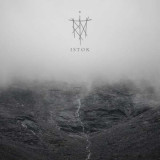
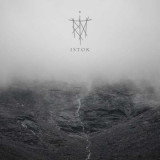
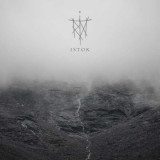
want to take you on a journey. Not to their Russian homeland, but beyond that, to a place not on any map where the trio’s dreamy “celestial blackgaze” can properly get beneath your skin and into your mind. With their fourth album, Istok, their first for Candlelight Records, they’re pushing even further into the unknown. The band formed in 2013 in Saint Petersburg, following the breakup of similarly blissful-minded outfit, Princ Persii. Though not wanting to limit themselves to a genre, the “celestial blackgaze” fit so well that it stuck – descriptive enough to catch their vibe, loose enough to have no walls. Available across 5 physical formats: CD / double transparent grey vinyl / double metallic ice vinyl / double baby blue vinyl / double black vinyl.
THE LONG AWAITED AND CONSTANTLY DELAYED LP VERSIONS ARE FINALLY AVAILABLE-
want to take you on a journey. Not to their Russian homeland, but beyond that, to a place not on any map where the trio’s dreamy “celestial blackgaze” can properly get beneath your skin and into your mind. With their fourth album, Istok, their first for Candlelight Records, they’re pushing even further into the unknown. The band formed in 2013 in Saint Petersburg, following the breakup of similarly blissful-minded outfit, Princ Persii. Though not wanting to limit themselves to a genre, the “celestial blackgaze” fit so well that it stuck – descriptive enough to catch their vibe, loose enough to have no walls. Available across 5 physical formats: CD / double transparent grey vinyl / double metallic ice vinyl / double baby blue vinyl / double black vinyl.
THE LONG AWAITED AND CONSTANTLY DELAYED LP VERSIONS ARE FINALLY AVAILABLE-
want to take you on a journey. Not to their Russian homeland, but beyond that, to a place not on any map where the trio’s dreamy “celestial blackgaze” can properly get beneath your skin and into your mind. With their fourth album, Istok, their first for Candlelight Records, they’re pushing even further into the unknown. The band formed in 2013 in Saint Petersburg, following the breakup of similarly blissful-minded outfit, Princ Persii. Though not wanting to limit themselves to a genre, the “celestial blackgaze” fit so well that it stuck – descriptive enough to catch their vibe, loose enough to have no walls. Available across 5 physical formats: CD / double transparent grey vinyl / double metallic ice vinyl / double baby blue vinyl / double black vinyl.
Mt Joy's climb into the musical stratosphere owes a great deal to their
highly energetic and passionate live performances
They've sold out room after room across the country, have toured with arena acts
like The Lumineers, among many others, and fans the world over flock to their
shows. So when the coronavirus pandemic sidelined the touring industry, Mt. Joy
felt the effects in a significant way. Fast forward to May 22, 2021: artists and fans
alike are finally emerging, and Mt. Joy steps on the stage at Red Rocks
Amphitheatre, playing the biggest show on record since live music began to open
back up. Live At Red Rocks showcases the band's spirited performance in front of
the sold- out Colorado crowd, and the energy felt from the audience's thrill of
experiencing live music again is unmistakable, even through the air waves
A turning point for the band: Savatage's 1989 studio album exploring the
more progressive sound.
Even the album's regal front cover demonstrated the band's continued
musical evolution.To quote producer Paul O'Neill: "Savatage was
graduating from being a heavy metal band to becoming more than a
heavy metal band
On Mountain King, we had toyed with a little bit of more symphonic, progressive
side, but we hadn't taken it as deep as we did on Gutter."
Mastered for vinyl and reissued with the original cover design, enhanced artwork
including a 12pages LP booklet with extensive liner notes by Clay Marshall, the
album will become available as a 180g Black Vinyl Gatefold Edition and as a
Strictly Limited Heavyweight Collector's LP Edition on Silver Vinyl which includes
an exclusive '89 poster replica and an exclusive 10" Vinyl Single featuring the
songs "Thorazine Shuffle" (Side A) and a 1990 live version of "When The Crowds
Are Gone" (Side B).
"It's a very versatile album. It shows all sides of the band, and where we were
going with our songwriting. Working with Paul there were no limitations, we were
no longer just a heavy metal band, we now were a band ready to explore and
grow, as the follow up album "Streets" clearly shows. "Gutter Ballet" remains in
my top 3 favorite Savatage LP's." (Jon Oliva)
A turning point for the band: Savatage's 1989 studio album exploring the
more progressive sound.
Even the album's regal front cover demonstrated the band's continued
musical evolution.To quote producer Paul O'Neill: "Savatage was
graduating from being a heavy metal band to becoming more than a
heavy metal band
On Mountain King, we had toyed with a little bit of more symphonic, progressive
side, but we hadn't taken it as deep as we did on Gutter."
Mastered for vinyl and reissued with the original cover design, enhanced artwork
including a 12pages LP booklet with extensive liner notes by Clay Marshall, the
album will become available as a 180g Black Vinyl Gatefold Edition and as a
Strictly Limited Heavyweight Collector's LP Edition on Silver Vinyl which includes
an exclusive '89 poster replica and an exclusive 10" Vinyl Single featuring the
songs "Thorazine Shuffle" (Side A) and a 1990 live version of "When The Crowds
Are Gone" (Side B).
"It's a very versatile album. It shows all sides of the band, and where we were
going with our songwriting. Working with Paul there were no limitations, we were
no longer just a heavy metal band, we now were a band ready to explore and
grow, as the follow up album "Streets" clearly shows. "Gutter Ballet" remains in
my top 3 favorite Savatage LP's." (Jon Oliva)
Most known for his role as songwriter and lead singer of punk rock band
Pennywise, JIM LINDBERG has been making inspiring, thought-provoking
music since the 1990's
Musically, he is influenced by an array of genres from punk and folk music to old
school country and americana. Lyrically, Jim takes inspiration anywhere from
transcendental philosophers to real life events; seeking always to tell a story or
find the answers to life's big questions.
This acoustic solo project is the first from JIM LINDBERG. Produced and mixed
by Tedd Hutt (Gaslight Anthem, Lucero, Dropkick Murphys) it's full of heartfelt
songs, some rousing some sentimental, that are a departure for Jim but will
appeal to diehard Pennywise fans and fans of folky punk singers like Chuck
Regan and Frank Turner
RIYL: Guided by Voices, Pavement, The Clean, XTC, Flying Nun. The title of The Stroppies' newest LP, Levity, serves as a creative statement of intent and an acknowledgment of the dichotomy between the music they have made and the conditions in which they were produced. For a group that started over an initial idea to "create open ended music, quickly and haphazardly”, the logistical challenges of creating their second album in the midst of a pandemic, in a city that endured the longest lockdown in the world, created a need to redefine process. Levity, The Stroppies strongest creative statement to date, is the result of this new approach to creative process. Playful yet focused, but broader in scope and experimentation than previous efforts, the ten songs that comprise Levity continue the band's exploration of the pop song as both foil for experimentation and conduit for personal reflection. Whereas the group's debut LP Whoosh! demonstrated their ability to craft clean, concise jangle pop, Levity takes a different route by utilizing a darker pallet of sounds to create its impressionistic whole. Fuzz and distortion are employed to add weight to songs built on tape loops and Motorik drum patterns. Warbling synthesisers and modulated keys add new moods and dimensions to The Stroppies unique brand of pop classicism. Thematically, the band continues their exploration of the personal refracted through the lens of the absurd, though this time around the music feels a few shades darker, a somewhat inevitable consequence of the collective trauma of the past 24 months. While the narrative around the 'lockdown record' is increasingly commonplace, there are unavoidable realities involved in making creative decisions under such circumstances that can't be overlooked, especially for a band that thrives on collaboration. "The restrictions around COVID really informed the way we made the record', says Angus Lord, the band's co-founder and guitarist. "It meant that there was a lot less opportunity to meet and build ideas collaboratively, which is how we’ve worked in the past. Instead, ideas were developed in isolation, then shared digitally, developing slowly over correspondence and only bearing fruit when we were able to be in a room together. I think this had a big effect on the songwriting and execution.” This process even extended to the studio, where The Stroppies found a kindred spirit in John Lee of Phaedra Studios, who mixed the record in isolation, somehow managing to synthesise the band's pop sensibilities with their penchant for studio experimentation. Furthermore, the addition of new member Zoe Monk, known for playing in a diverse array of Melbourne acts (Eggy, Thibault, The Opals) contributed both synthesiser experimentation and rock solid rhythm guitar, a huge addition to the band's developing sound, an infectious combination of the off-kilter 90s US underground, British artpunk ala Wire and a more than generous love of classic Pop songwriting. The Stroppies have managed to craft a record of weight and substance. Through Levity the Stroppies have, at least temporarily, found their feet amongst the chaos
The second album from the transatlantic duo Wilma Vritra is richly orchestrated, replete with references to faith, mythology, and the cosmos, its 11 tracks grapple with themes of self-preservation and refuge from the world, even as they edge their way to a sort of redemption. Grotto is the work of two musicians separated by an ocean but undoubtedly operating on a shared wavelength. One is Will Archer, a Newcastle-born but London-based multi-instrumentalist and composer who today records as Wilma Archer, but who you might also know for his writing and production for artists like Celeste, Nilufer Yanya and Jessie Ware. Wilma Archer’s debut solo album A Western Circular, featured guest spots from the late MF DOOM, Future Islands’ Samuel T Herring, Sudan Archives and Laura Grove. The other is Hal Donell Williams Jr, aka VRITRA - a Los Angeles-based rapper whose tales of graft and grind are often couched in spiritual or cosmic terms. VRITRA has previously collaborated with Matt Martians via The Jet Age of Tomorrow, Pink Siifu and YUNGMORPHEUS. Grotto’s striking cover image is by Swampy, an enigmatic Californian street artist whose itinerant lifestyle – tales of squatting and train-hopping across North America – have made him a demi-mythical figure. A playful image, but it communicates the album’s themes – of a voyage through darkness, and the promise of light at the end of the tunnel.
Limited 300 180g white vinyl LPs with printed inner Discobag and digital download.
500 CDs in gatefold digifile sleeve.
Each drum controls a virtual musical instrument (synthesizers, samplers, arpeggiators, etc.) within Ableton Live music software that, in combination with a custom step sequencer developed with MaxforLive app, allows Davide to perform real melodies/electronic orchestration without the use of any backing track. 100% live. In addition to that, he also uses a microphone set up in the middle of the drumkit to capture the dynamics of the acoustic drums and translate them through an 'envelope follower' into electronic parts in several ways. About ‘Perceive Reality’: Opener Belief bursts the record into life, as skittering arpeggios spin across a vast open plain of pad synths, before the ground splits beneath it with thrashing drums. On Conceived, Davide creates a simultaneously dark and euphoric wall of crystallised sound, a cacophony of pounding drum hits and icy electronic stabs, with an intensity that continues into Collide. With its shuddering, cut-out reverbed synth pads split in two by crashing cymbals and snares, the song spins itself into a transformative cycling trance, before slowly fading and washing away into silence, only to be broken by Conjectures’ sudden cymbal slams and transfixed toms that roll like thunder into a frenzy, before their final lightning strike. On Subjective, arpeggios twist around beating kick drums and toms, quickly scaling to a furious yet tightly wound sequence that envelops the listener, before Relief, where the album finally takes the shape of a huge wave of calm, glimmering hope and reflection. About the concept behind this latest album, Davide says, “Perceive Reality is a vivid exhortation to deepen the relationship with reality, avoiding simple and often illusory visions. In a historical context that fosters the proliferation of dual information and visions, individuals are increasingly exposed to the danger of perceiving less the complexity of events, thus losing the training to express complex and articulated opinions, the result of a reflection, whether individual or collective. Without having the presumption of resolving epochal issues, the project alerts to the fact that univocal answers do not exist and that only by developing a path of knowledge and giving ourselves the opportunity to examine things in depth, can we enter into the relationship with the existing.” Press highlights so far: Video premiere on Rumore.IT (Italy).
Towards The SeaVery Limited new pressing on Orange/White Galaxy vinyl. This is for Indies only. Chelsea Wolfe's sound is best described with broad strokes: elemental, intense, radiant, ancient yet modern, intimate yet expansive, dark and sparkling. Hues of black metal and deep blues inform her ever-evolving electric folk—a warm force that wraps itself around the listener, encouraging uplift, seeking triumph. Her voice similarly haunts and soothes, with words that illuminate life's darker corners in order to reveal the unlikely truth and beauty hidden within. Originally hailing from Northern California, Wolfe's formative years were spent tinkering in her country musician father's home studio, however, she long lacked the confidence to share her work. Then, in 2009, an overseas excursion as part of a nomadic performance troupe ignited her passion for performing and initiated a renewed interest in writing and recording. After performing in cathedrals, basements and old nuclear plants to whoever would listen, she returned home with a new drive. She began toting around an 8-track and recording as the mood hit, eventually editing her findings into a breathtaking debut album, 2010's The Grime & the Glow. Marrying the gentle intimacy of folk, the atmospheric voodoo of death rock, and the bleak, sullen nihilism of black metal, Wolfe's sound effectively cast a genre all her own: a cavernous rumble, marked by stuttering drums, ethereal synths, and a wash of guitar, all very much in the service of one of the most hypnotic, celestial voices in modern music. Described as both healing and harrowing, enchanting and narcotic, the album established Wolfe as a force on the rise. Inspired, Wolfe then relocated to Los Angeles and recorded her second album, 2011's Apokalypsis, which found her in an actual studio with her live band. The songs captured therein maintained the strikingly visceral elements of her debut, further showcase Wolfe’s unique songwriting ability, while adding a serious heaviness of sound that balanced eloquently with her transcendent voice. Its release was subsequently met with critical adoration, and rightly landed on numerous best of 2011 lists.
RIYL: Velvet Underground, Lou Reed, Nick Cave, Patti Smith, Leonard Cohen, Iggy Pop, Radiohead & Tom Waits. "If you have never heard the Doctors of Madness, you should. Musically they are the Velvet Underground, New York Dolls with shades of glam, hippie, prog and punk all rolled into one, yet are still totally original. Vastly underrated, they should have been huge. Pure genius" Vic Reeves…. The DOM are “the missing link between David Bowie & The Sex Pistols” (The Guardian May 2017). Exploding onto the music scene in 1975 with their theatrical, William Burroughs-inspired Sci-fi nightmare, they were misunderstood by many, but those who knew understood the importance of the band’s dangerous, uncompromising approach to lyrics, to music and to performance. Among the many fans of the band were acts as diverse as The Damned, Vic Reeves, Joe Elliott of Def Leppard, Spiritualized, Julian Cope, The Adverts, The Skids and Simple Minds. The Sex Pistols supported them, so did The Jam & Joy Division. They were the first to combine the avant-garde approach of The Velvet Underground with a distinctly European aesthetic. The blue hair, exotic stage-names, the lyrical themes of urban decay, political propaganda, mind control and madness were all taken up by the punk bands who followed in their wake. The DOM were trailblazers, pioneers, adventurers…pushing the boundaries of rock music and theatre to see how far it would go before it bust. What happened after them was due, in no small part, to what they achieved in 3 short years. They may not have been Jesus Christ, but they were, arguably, John the Baptist!!! Now, 40 years after they imploded, they are back…with an album seething with lyrical anger and passion. It is the most potent and incisive musical dissection of modern life and contemporary politics released the decade. With tracks titles like “So Many ways To Hurt You”, “Sour Hour”, “Make It Stop!” and the ground-breaking sonic assault of the title track “Dark Times”, Richard “Kid” Strange proves once again that he has his finger firmly on the pulse of our times, just as he had when he founded the band in 1974. Produced by John Leckie (Radiohead, Stone Roses, Pink Floyd), the new album, Dark Times, features contributions from Joe Elliott (Def Leppard), Sarah Jane Morris (Communards), Terry Edwards (PJ Harvey, Nick Cave etc), Steve ‘Boltz’ Bolton (The Who, Scott Walker) and the young protest singer Lily Bud, alongside the current thrilling and thunderous DOM rhythm section of Susumu Ukei (bass guitar) & Mackii Ukei (drums) of the Japanese extreme glam-metal band Sister Paul, and Dylan O Bates (violin and keyboards). Julian Cope, another rock star who, like Strange, found the confines of music too tight for his ambition, his energy and his imagination, was blown away when he first heard the songs, declaring, “These Dark Times are enormously informing: the RULES OF THE FUTURE are indeed being forged right now”. Top producer Martyn Ware (Human League/Heaven 17) said the album “…reminds me of Iggy Pop’s Kill City album – love it.” and Biba Kopf (The Wire) declared, “Still listening to new DOM album with immense interest and pleasure”. The first single, Make It Stop!, is an impassioned howl against the global drift to right wing extremism and persecution of minorities, and is already a live showstopper for the band. It features the thrilling cross-generational combination of Def Leppard’s Joe Elliott and Lily Bud on backing vocals. In the period since the last DOM gig in 1978, Richard has written a memoir, collaborated on a cantata with internationally celebrated composer Gavin Bryars, worked as an actor on films with Tim Burton, Martin Scorsese, Harmony Korine & Jack Nicholson, toured the world in a Russian version of Hamlet with James Nesbitt as his grave-digging co-star, played Glastonbury, sung baritone in the British premiere of Frank Zappa’s200 Motels at the Royal Festival Hall, directed a multi-media evening celebrating the life and work of William Burroughs, won Best Art Film Prize at the Portobello Film Festival last year, had his own live talk show, worked with Tom Waits and Marianne Faithfull on the William Burroughs/Robert Wilson stage play The Black Rider, curated events for the Tate Gallery, and sung Walt Disney songs with Jarvis Cocker.
Classic 1987 album is one of the band’s most beloved releases. Includes a cover of Crime’s “Hot Wire My Heart”. “Let’s get something straight. There is no album in the entire corpus of indie rock not Loveless, not Surfer Rosa, not Psychocandy that reaches the heights of invention, joy, and magic of Sonic Youth’s sublime fifth album.... The haunted reveries of Sister remain with you for years, even if you only hear them once” Stereogum // 1987’s Sister was another notch in the band's move away from No Wave, yet still maintained their experimental approach. Gordon, Moore, Ranaldo and Shelley were coming into their own at this point, combining elements of noise, punk and pop. They had also become better songwriters since their previous album, providing better context for their noisier elements and incorporating the dissonance of their earlier releases into more traditional song structures. To quote Stereogum once again, “Sister is the sonic manifestation of refracted light. It’s a record that changes you.”
"I wrote the album in a tiny apartment, at a time when everything felt big and overwhelming," says poet and songwriter Jenny Berkel about her new album, "These Are the Sounds Left From Leaving"
She was living in a brownstone walk-up full of radiant light and the ever-present soundscape of a leaky bath faucet. It was a sudden move at the time - a spontaneous departure from touring, bustling city life, being many things to many people'that landed Jenny in a space of self- imposed stillness. "The songs themselves are a study of proximity, bringing big fears into small spaces," says Jenny, reflecting on the album. "They're intimate examinations of a world that often overwhelms." The album features contributions from critically acclaimed folk duo Kacy & Clayton, and string arrangements by Colin Nealis (Andy Shauf) - the record was co- produced by Jenny alongside Dan Edmonds and Ryan Boldt (The Deep Dark Woods). Warm and dark, soft with stabs of madness, "These Are the Sounds Left From Leaving" is a cohesive collection of spare songs that bloom
lushly with detail. Whether you're reading Jenny's poetry or listening to her songs, you'll experience her drawing layers of far- reaching concern into particular moments, like concentric waves rippling inward toward a lone cast stone. "These Are the Sounds Left From Leaving" showcases the perspective of a unique storytelling artist, with an evocative practice that hinges powerful narratives on the intricacies of a multifaceted musicality. A songwriter immersed in poetry, a poet immersed in music'her work in all its forms is an invitation into a world of relatable introspection, in which even absences can be sculpted into vividly memorable verse.
In the tsunami of American bands formed after the Beatles' appearance on The Ed Sullivan Show in 1964, many made records, some had hits, and some even had sustained success like their idols - But there were just as many who carved out a niche in their local scenes, yet never made it to vinyl and faded into memory
Such was the case with Violent River ' until now.Packaging: 7" Vinyl Gold vinyl
RIYL: Guided by Voices, Pavement, The Clean, XTC, Flying Nun. The title of The Stroppies' newest LP, Levity, serves as a creative statement of intent and an acknowledgment of the dichotomy between the music they have made and the conditions in which they were produced. Levity, The Stroppies strongest creative statement to date, is the result of this new approach to creative process. Playful yet focused, but broader in scope and experimentation than previous efforts, the ten songs that comprise Levity continue the band's exploration of the pop song as both foil for experimentation and conduit for personal reflection. Whereas the group's debut LP Whoosh! demonstrated their ability to craft clean, concise jangle pop, Levity takes a different route by utilizing a darker pallet of sounds to create its impressionistic whole. Fuzz and distortion are employed to add weight to songs built on tape loops and Motorik drum patterns. Warbling synthesisers and modulated keys add new moods and dimensions to The Stroppies unique brand of pop classicism. Thematically, the band continues their exploration of the personal refracted through the lens of the absurd, though this time around the music feels a few shades darker, a somewhat inevitable consequence of the collective trauma of the past 24 months. While the narrative around the 'lockdown record' is increasingly commonplace, there are unavoidable realities involved in making creative decisions under such circumstances that can't be overlooked, especially for a band that thrives on collaboration. "The restrictions around COVID really informed the way we made the record', says Angus Lord, the band's co-founder and guitarist. "It meant that there was a lot less opportunity to meet and build ideas collaboratively, which is how we've worked in the past. Instead, ideas were developed in isolation, then shared digitally, developing slowly over correspondence and only bearing fruit when we were able to be in a room together. I think this had a big effect on the songwriting and execution." This process even extended to the studio, where The Stroppies found a kindred spirit in John Lee of Phaedra Studios, who mixed the record in isolation, somehow managing to synthesise the band's pop sensibilities with their penchant for studio experimentation. Furthermore, the addition of new member Zoe Monk, known for playing in a diverse array of Melbourne acts (Eggy, Thibault, The Opals) contributed both synthesiser experimentation and rock solid rhythm guitar, a huge addition to the band's developing sound, an infectious combination of the off-kilter 90s US underground, British artpunk ala Wire and a more than generous love of classic Pop songwriting. The Stroppies have managed to craft a record of weight and substance. Through Levity the Stroppies have, at least temporarily, found their feet amongst the chaos.
28. Januar 2022 – Gut drei Jahre nach seinem letzten Album erfreut Michael Bublé seine weltweite Fangemeinde mit der Ankündigung eines neuen Werkes: „HIGHER“ wird am 25. März 2022 über Warner Records / Reprise Records erscheinen und ist das insgesamt 11. Studioalbum des mehrfachen Grammy-Gewinners, vielfachen Juno-Preisträgers und weltweiten Multiplatin-Superstars. Die erste Single „I’ll Never Not Love You“ erscheint bereits heute und zeigt den Kanadier stimmlich und kreativ in Bestform. Der neue Track wurde von Greg Wells und Bob Rock zusammen mit Allen Chang, Jason „Spicy G“ Goldman und Sir Paul McCartney produziert.
Zu den Highlights des Albums gehören ein magisches Duett mit Willie Nelson für dessen Song „Crazy“, Bublés gefühlvoll gesungene Interpretation von Sir Paul McCartneys Song „My Valentine“ (produziert von McCartney) und der Bob-Dylan-Klassiker „Make You Feel My Love“, außerdem die drei von Bublé neu geschriebenen Titel, zu denen auch die erste Single „I'll Never Not Love You“ zählt. Absolut gelungen sind auch Bublés Interpretation des Sam-Cooke-Klassikers „Bring It On Home To Me”, „You're The First, The Last, My Everything” und das beschwingte „A Nightingale Sang in Berkeley Square". Den Abschluss des Albums bildet eine dramatische und atemberaubende Version von „Smile“, bei der Bublé von einem Gospelchor begleitet wird.
Bublé kommentiert: „Ich habe mich diesmal komplett geöffnet, um neue Dinge auszuprobieren. Ich wühlte mich tief in die Materie ein, umgeben von einigen der großartigsten musikalischen Vordenker, die wir auf diesem Planeten haben – Menschen mit einer gigantischen Vorstellungskraft. Ob ich mich mit Ryan Tedder und Greg Wells für Songwriting-Sessions zusammensetzte, mit meinem Kumpel Bob Rock drei Songs an einem Tag aufnahm – zusammen mit 40 fantastischen Studiomusikern, die seit 15 Monaten nicht mehr musiziert hatten –, oder einfach nur in Unterwäsche lachend und weinend durch mein Homestudio tanzte, weil ein Song genau richtig klang – jeder Moment fühlte sich magisch an. Als hätte sich das Universum verbündet, um mich nach 20 erstaunlichen Jahren genau an diesen Punkt zu bringen. Ich war noch nie so aus dem Häuschen, nachdem ich ein Album fertiggestellt hatte.“
„Michael Bublé ist ein großartiger Tanzpartner“, kommentiert Greg Wells. „Er zollt mir viel Anerkennung, doch der wahre Respekt gebührt ihm – dafür, dass er das Vertrauen hatte, mit einem neuen Team zu arbeiten. Er ist ein phänomenaler Hitmaker.“
Bublés langjähriger Produzent Bob Rock sagt: „Ich habe Michael noch nie so fokussiert und inspiriert erlebt. Er hatte eine ganz bestimmte Vorstellung von dem Album, das er machen wollte, eine klar umrissene Vision. Als wir uns ans Werk machten, hängte er sich bei jedem Song so lange rein, bis er so klang, wie er ihn in seinem Kopf hörte.“
Vor vielen Jahren entdeckte ein damals vierjähriger Michael Bublé im heimischen Elternhaus in Burnaby, Kanada seine Liebe zum Singen – und ließ sie seitdem nie mehr los. Sein selbstbetiteltes Debütalbum bei Reprise Records erschien 2005, gefolgt von einer Serie an Multiplatin- und #1-Erfolgen, darunter „Call Me Irresponsible“, „Crazy Love“, „To Be Loved“ und „Christmas“. Sein letztes Album „Love“ (2018) erreichte u.a. Platz 1 in den USA und UK und Platz 6 in Deutschland. Im Laufe seiner erstaunlichen Karriere hat Bublé über 75 Millionen Alben verkauft, sein Weihnachtsalbum wird auch zehn Jahre nach der ursprünglichen Veröffentlichung weiterhin millionenfach gekauft und gestreamt und seine Stimme ist der Inbegriff von Weihnachtszeit. Auch live hat Bublé in den letzten Jahrzehnten herausragende Erfolge gefeiert und ausverkaufte Shows in über 30 Ländern gespielt. Seine jüngste Tournee „An Evening With Michael Bublé“ (2019 bis 2022) wurde von über einer Million Fans auf der ganzen Welt besucht. Michael liebt Eishockey, Fantasy Football, TikTok und – na klar – Singen. Er ist der stolze Vater von Noah, Eli und Vida.
Very limited vinyl pressing, 500 copies in a gatefold sleeve, a printed inner housing white and marbling effect vinyl with full download included. CD in a 4 panel digipack with a 4 page booklet. New Heavy Sounds is very proud to bring you Moongazer, the 2nd album by the 4 piece stoner rock powerhouse from Italy, TENEBRA. The band had already made waves on the scene with their debut album ‘Gen Nero’ before delivering ‘What We Do is Sacred’ their debut EP for New Heavy Sounds last year, 3 killer tracks that were but a taster of things to come. Moongazer takes the story a stage further with 9 slabs of crushing fuzzed up grooves, fuelled by 70’s proto metal, hard rock, punk, psych-blues and noise, loaded with great riffs and melody and topped off by gutsy soulful vocals. Musically, you could say that TENEBRA occupy similar musical terrain to bands such as Graveyard, Witchcraft, Kadaver and other bands of that ilk, but TENEBRA are very much their own beast. They have all the chops of course, but are musically less slavish, often adding a twist that keeps the songs fresh and now. There’s also very little reliance on Sabbath-isms (apart from one cheeky nod) and though occult rock is also part of the vibe, the music steers well clear of the cliches. In fact the band bring a clutch of left field influences into their melting pot as well, from June of 44 and Love Battery to the Misfits and the psych grunge of Screaming Trees. Of the 4 members, Claudio (bass), Emilio (guitar) and Mesca (drums) came from the hardcore and post-hardcore squat scene that gathered around Bologna, whereas their formidable vocalist Silvia (the youngest of the crew) is immersed in the underground rock of the '60s and' 70s. When you hear her sing you’ll know where she’s coming from as she has one helluva rock voice, laced with whiskey, smoke, grit, late nights and a whole lotta soul. Think Maggie Bell meets Betty Davis with a smattering of Gillan, and you'll be in the right ballpark. So what you get with ‘Moongazer’ is a band revelling in the spirit of 70’s rock rather than recreating it. ‘Heavy Crusher’ lulls you with its dreamy intro, but it’s not long before the riffs hit with Silvia in full effect. This pretty much sets the tone for the record, coiling proto metal riffs, executed with gusto and joie de vivre. And as with every track on this album, Silvia belts it out like she absolutely means it man. ‘Cracked Path’ continues the journey and ups the heavy fuzz a notch or 2. First heard on ‘What We Do Is Sacred’ (full length album version). ‘Black Lace’ is a brooding beast, epic and melodic, almost a ballad, with a heap of soul lurking within, courtesy of Silvia’s mighty voice. ‘Carry My Load’ keeps the brooding vibe going till the loping off kilter killer riffs kick in. This is definitely Silvia at her most Gillan-esque. ‘Winds Of Change’ does just that, dial things down to bluesy, almost psych feel, with dreamy solos and a hooky guitar break. ‘Stranded’ is a full on stoner rocker as is ‘Space Child’ with its short homage to the dark lords, there’s even a a sax solo. Never one’s to just play it straight these guys. ‘Dark And Distant Sky’ is pure proto metal, a la Bloodrock or Grand Funk, it truly rips, and once again, it’s construction veers it away from anything approaching what you’d expect. ‘Moon Maiden’ is the album’s closer, featuring Gary Lee Conner (no less) of the aforementioned grunge legends Screaming Trees, guesting on guitar. It’s a fitting and epic closer, by turns hard ‘n’ heavy, psychedelic and chock full of great ideas. MOONGAZER is without doubt an accomplished sophomore release that deserves to be heard and appreciated, purely because, though it may appear to reside in the world of stoner, it is so much more.
Giacomo D’Attorre – lead singer of Clever Square – has been through a lot of late. With his band. In his personal life. Even just with the state of the world. This fire has fuelled Clever Square’s new record Secret Alliance, eleven tracks that explore feelings of frustration, disillusionment, and disconnection, and chronicle what it’s like to be swept along by a world that “gets noisier everyday”. The record was inspired by a creeping realisation; of coming change, and a sense that D’Attorre was “losing contact with who I was before, for the good and the bad.” New needs and desires surfaced; old ones disappeared. Thus he began writing around ideas of rethinking yourself, and “acquiring a new conscience of mutation”. The darker realms of science fiction informed much of D’Attorre’s thinking here; Philip K Dick, Ray Bradbury – ‘Mr. & Mrs. K’ was inspired by The Martian Chronicles – and Flannery O’Connor, whose The Violent Bear It Away proved particularly inspiring. All of this is perfectly framed by Clever Square’s shuffling, quirky indie, and cute melodies. Soft and worn around the edges, like the perfect flannel shirt, there’s a gentle, shambling quality to the music; “blue collar”, D’Attorre calls it. Guitar lines gently bloom, Fender Rhodes organ is sprinkled throughout, and the acoustic strumming sounds easy and unhurried. From the relaxed bustle and acoustic picking of ‘Hail The Proper Karl’, to the joyous, bouncy ‘Little Flaws’; from the stripped back melancholy of ‘Obsolete Epsilons’ to the arena-ready vibes of indie classic ‘Golden Wires’, D’Attorre has crafted a spell-binding, mesmerizing set of songs that delight on first listen and reward deeper inspection. “It’s a hymn to privacy, to the joys of secrecy, and solitude,” he says of Secret Alliance. That he wraps such heartfelt, profound topics in gloriously laid-back indie adds to the charm, and cements Clever Square’s status as one of Italy’s finest contemporary bands. The world might seem increasingly complex and be spinning ever faster, but Secret Alliance slows it down just enough to savour the scenery and think about charting a path back to something a little more manageable.
Heist welcomes, late 80’s DMC World DJ Championship contender, Techno veteran, and house royalty Orlando Voorn to the label
with his ‘Heist Mastercuts’ EP.
Orlando Voorn is a man who needs little introduction. He’s played a pivotal role in the development of the electronic music scene in the Netherlands, as well as in the USA where he now lives. With countless aliases, he has released everything from old school hiphop to sample heavy breaks, to banging Detroit techno to soulful house music. His recent outings as ‘Frequency’ on Clone, as well as his latest EP on our sublabel Transient Nature, are proof that even after 30+ years, the man is still very much on top of his game.
The Heist Mastercuts EP sees Orlando dig deep in his archive for some of his undercover hits from the nineties that have been remastered for
this EP. On top of that, he delivers a new track in the form of soulful house bomb “Be with you.”
“Be with you” starts off with a hazy groove and distant pads. The steady beat and funky electronic chops set a steady foundation for a rush-inducing string sample that works together with looping diva vocals for maximum dancefloor excitement. No heavy drumrolls, FX or other tools necessary here: It’s clever sampling and Orlando’s soulful touch that make this track tick.
Next up is the vinyl only track “Love Feelings” – originally released in ’96 on Urban Sounds of Amsterdam-. Think 130+ BPM vintage house grooves with hazy pads and you’ll get an idea of what’s coming. Love Feelings is an up-tempo dreamhouse track that, even though it’s almost 25 years old, still ticks all the boxes of a contemporary festival groover.
On the B-side you’ll find 2 versions of “Tenderness”: The original mix and the Late nite dub, both originally released on Clubstitute records back in ’95. The original has a 90’s garage groove with male vocal chops, old school house keys and strings. The late night dub is exactly that: a dreamy ethereal deephouse groove with warm synth hits, introverted percussion some very on point sax loops.
The Heist Mastercuts EP is the first EP of Orlando Voorn on Heist Recordings but considering the connection we’ve built with him over the last year and having heard the music he’s shared with us, we’re sure you’ll see much more of him on Heist in the future.
Yours sincerely,
Maarten & Lars
out of Stock
Last delivered 5 months ago available to reorder, subject to availability
South London based producer and multi-instrumentalist Neue Grafik announces his new EP 'Foulden Road Part II' from his Neue Grafik Ensemble band, released 25th March on Total Refreshment Centre. The sequel to their impressive 2019 release 'Foulden Road', Neue Grafik continues to incorporate 100% live takes with the ensemble, as well as solo productions that reflect Neue Grafik's past work with both the Rhythm Section and 22a labels.
Neue Grafik explains, "This EP is a reflection of the social context which surrounds me" – created in a year of much social isolation as well as political unrest, 'Foulden Road II' explores the complex feelings that he found himself battling. He adds "In 2019, we released 'Foulden Road Part I', which was a transitional album, exploring a new culture and navigating between two worlds: Paris and London. 'Part II' is a bit darker, closer to realness with a sprinkle of hope. I couldn't have predicted that I'd finish it encased in my flat, between four walls, in December 2020 after a year of lockdown, Brexit, George Floyd protests, and without London's brilliant culture mesmerising my mind. Everything was sad and closed. Hills were difficult to climb. But it also gave me the time to work hard and deliver this second part of Foulden Road, pushing it forward".
Combining an array of influences — from London, to Paris via New York, Nigeria and Cameroon — with well-measured confidence, ' Foulden Road II' allows you to reflect on the complexities of the last year, whilst braced with energy and hope to move forward positively. Heavy horns and hypnotic poetry form the backbone record, which will ignite any room. 'Foulden Road II' begins with the grounding poetry of MA.MOYO on 'Black Bodies'. The EP is dedicated to Adama Traoré, a black man who died in police custody in Paris. Neue Grafik explains "His name is not well known outside of France. I was shocked, devastated even, to learn that his story didn't cross the Channel". 'Queen Assa' is a heavily percussive dancefloor-hitter which honours French activist Assa Traoré, (Adama's sister) her family, and her struggle to support all families hurt by police brutality. Broken beat elements flow through the horn accompanied 'Officer, Let Me Go To School', while West London rapper Lord Apex offers an unapologetic and poignantly personal perspective on 'Step To It'.
Released on the Total Refreshment Centre label, based out of Stoke Newington's Foulden Road, the EP is a testament to his versatility as an ever-shifting figurehead. Engineered by Capitol K, recorded at Total Refreshment Centre, mixed by Marcus Linon at Greasy Records and mastered by Guy Davie at Electric Mastering – a significant pillar in Neue Grafik's musical career. Having played a DJ set there in 2017, he was convinced by TRC founder Lex Blondin to start a band after he was heard playing some compositions on the communal piano. After spending a couple of sleepless nights on the living room couch, his first gig was booked in the venue space downstairs a week later. The ensemble was established and he has remained in London ever since.
Neue Grafik Ensemble's musicians include; Matt Gedrych, Benjamin 'The Chief' Appiah, Jack Banjo Courtney, Chelsea Carmichael, Dougal Taylor, Yahael Camara-Onono, Xvngo, Rebekah Reid, Dan-Iulian Drutac, Jamie-lee Glinsman and Zara Hudson-Kozdój.
Neue Grafik hosts The Orii Jam Sessions, an energising weekly jam night at Hackney Wick's Colour Factory, which has become a pivotal weekly gathering, inspired by the likes of Unit 31 and Steam Down.
out of Stock
Last delivered 3 years ago available to reorder, subject to availability
A 303 release is like an anniversary release :)
Yellow coloured vinyls, printed gategold sleeves, evolutive constructions from sweet Techno to hard Acidcore... This is a superb production... Shadowing the things even more.
ENJOY !
out of Stock
Last delivered 2 years ago available to reorder, subject to availability
Ferocious JP / US free jazz bomb. A rare meeting between the NYC free jazz scene and the Japanese free music scene. Old-style Gatefold LP, with rare photographs & liner notes by Alan Cummings.
Following hot on the heels of the first, mid-sixties generation of Japanese free jazz players like Kaoru Abe, Masayuki Takayanagi, Yōsuke Yamashita, Motoharu Yoshizawa, etc., an exciting second wave of younger players began to emerge in the seventies. Two of its leading members were the saxophonist Kazutoki Umezu and multi-instrumentalist Yoriyuki Harada. Both were post-war babies and immigrants to the city, Umezu from Sendai in the north and Harada from Shimane in the west. They first met as students in the clarinet department at the Kunitachi College of Music, a well-known conservatory in western Tokyo. Harada was already securing sideman gigs on bass with professional jazz groups and was active in student politics, making good use of his connections to set up jazz concerts on campus. It was around this time that the two began to play together in an improvised duo, with Umezu on clarinet and bass clarinet and Harada on piano. They also experimented with graphic scores and prepared piano.
These experiments eventually led to the creation of a trio, with a high-school student called Tetsuya Morimura on drums, that they decided to name Seikatsu Kōjyō Iinkai (Lifestyle Improvement Committee) in joking reference to the Marxist discourse of the student radicals of the time. Around 1973, Umezu and Harada decided to call it a day and go their separate ways. Umezu began playing with the Toshinori Kondo Unit and Harada with the Tadashi Yoshida Quintet. In 1974 Harada formed his own trio and began to play at jazz coffeehouses across Japan.
Then, in September 1974 Umezu travelled alone to New York, where he set about building connections with the loft jazz scene in the city. It was a fortuitous moment to arrive in New York. Rents were cheap in the Lower East Side, possibilities for squatting existed, so many musicians and artists had moved to the area. Umezu soon became known on the scene as Kappo and he started to make connections with some of the young musicians like David Murray, Arthur Blythe, and Oliver Lake. He recalls making the rounds of the lofts every evening, checking out the performances, and getting the chance to sit in with many groups including Juma Sultan’s Aboriginal Music Society and trumpeter Ted Daniel’s orchestra.
Things were going so well that Umezu wrote to Harada and invited him to come to New York. He accepted and arrived in the city in July 1975. Harada and Umezu took the opportunity to resume their artistic collaboration. Their first concert together in over two years took place on July 20th at another loft, Sunrise Studios at 122 2nd Avenue. Umezu remembers Sunrise as an unusually sunny loft with the rarest of things, a grand piano. He invited along Ahmed Abdullah, a trumpeter he had got to know while playing with Ted Daniel. Abdullah led his own group and was a long-term Sun Ra sideman. William Parker, one of the key figures in the loft jazz scene of the period, was on bass. Abdullah also brought along Rashid Sinan on drums. Sinan drummed in Abdullah’s units throughout the seventies, but he had also played on Frank Lowe’s immortal Black Beings album and collaborated with Arthur Doyle, playing on Doyle’s Alabama Feeling album. By all accounts the evening was a huge success, with speed and dynamism of Harada’s piano playing gaining him lots of support.
Since they had managed to save some money from their day jobs, Umezu and Harada decided to set up a recording session with the same line-up on August 11 at Studio We, where there was a well-equipped studio on the third floor. Umezu recalls the session as follows, Of course, we recorded our performances in one take, with zero retakes as far as I remember. On all the tracks we recorded, we moved as one unit, sharp and fast. That was the nature of Lifestyle Improvement Committee, New York Branch.
Umezu and Harada would later become known for the elements of parody and entertainment that they brought to their music, a freewheeling blend of pastiche, humour and on-stage performativity that paralleled the approaches of the Art Ensemble, Sun Ra, and Holland’s ICP. But here, on their first recordings, the humour element is not yet present. Instead, there is a febrile sense of joy in creation and connection. On the Umezu-penned “Kim”, for example, Harada opens the piece with a speedy exploration of the full-range of the keyboard, hitting hard on the bass keys to create a rhythmic bed out of which patterns begin to emerge. Umezu enters at a much slower pace, longer held notes that at first float weightlessly over the urgency of the piano before they begin in splinter and accelerate. When Parker and Sinan kick in, it’s a rollicking tempo with Parker plucking deep and hard and the left-handed Sinan skittering hard across the topside of his kit. Abdullah kicks in a glorious solo twelve minutes in, bright and breathy at once. The piece slows and grows more spacious towards the end, giving Parker a chance to showcase some arco work that shades beautifully into the air against Abdullah’s trumpet.
At Now-Again, we avoid hyperbole, yet we believe that this album is one of record collecting’s ultimate
finds: the missing entry in jazz pianist/composer/psychiatrist Denny Zeitlin’s discography, a wonderful
and weird fusion of avant-classical, jazz, funk, rock and electronic music.
The Name Of This Terrain was recorded and pressed in a scant, custom run as a demo in 1969 –and it
so defied its own existence that, even after its producer died and his copies were discovered, Zeitlin
steadfastly resisted its release for almost 20 years, destroying his remaining demos so no...
The Tribe co-founder’s debut, remixed from the original mutli-track master
tapes under the direction of its creator and lacquered by Bernie Grundman.
Now-Again presents the de nitive Tribe Records reissues.
Deep, Spiritual Jazz of the highest order.
The Tribe label, one of the brightest lights of America’s 1970s jazz underground, receives the Now-Again
reissue treatment. This is your chance to indulge in the music and story of one of the most meaningful, local
movements of the 20th Century Black American experience, one that expanded outwards towards the cosmos.
Leyla McCalla finds inspiration from her past and present. Whether it is her Haitian heritage or her adopted home of New Orleans, she - a bilingual multi-instrumentalist and alumna of Grammy award-winning African-American string band, the Carolina Chocolate Drops - has risen to produce a distinctive sound that reflects the union of her roots and experience.McCalla has produced a multi-disciplinary music, dance and theatre work, Breaking the Thermometer to Hide the Fever, which follows her personal journey as she uncovers the history of Radio Haiti, the first radio station in Haiti to report news in Haitian Kreyol - the voice of the people. Through this juxtaposition of voices - the personal and political, the anecdotal and the journalistic - McCalla gives expression to the enduring spirit of Haiti's marginalized poor in the face of several centuries of political oppression. Performances of the theatre work are currently scheduled in New Orleans and Philadelphia with more to be announced in soon.The process of creating Breaking the Thermometer to Hide the Fever included listening to countless archival recordings of interviews by Radio Haiti's journalists, and McCalla specifically wrote "Fort Dimanche" after listening to a testimonial interview that Michele Montas - the prominent former journalist and station director at Radio Haiti - had conducted with a survivor of Duvalier's political prison. In the interview, the man outlined his living conditions, the daily terror and torture that these political prisoners were subjected to and the events that led to his arrest.This album is a soundtrack of sorts to the theatre piece, featuring the songs that Leyla McCalla wrote and performs in this work.
"This area of the throat," says Chelsea Jade, resting three fingers roughly where her neck meets her chest. "It's particularly soft, and it's connected ... it's halfway between the heart and the mouth. And that's an interesting place of vulnerability." Soft Spot, the Los Angeles-based New Zealand artist's second album, dwells somewhere between feeling and expression, certainty and doubt. It ventures beyond the exploration of delusions of grandeur that formed the focus of the critically acclaimed Personal Best (2018), and simultaneously promotes and undermines romance, specifically, in a more solemn way. "Less glib," offers Jade, who has opened for Lorde and Cat Power among others. Still deliciously glib in places: "Give your worst my best," she sings on the wryly antagonizing, bass-heavy "Tantrum in Duet." Soft Spot's big pop tracks go hard on the interpersonal, physical and amorous, inviting the listener to entertain flirtation, lust, sex, even the experience, rare during its recording in 2020, of being in a room with more than three other people.
Famed free jazz concert registration of an early New Direction for the Art performance. Recorded in 1971. Old-style Gatefold LP, with rare photographs & extensive liner notes by Alan Cummings.
The performance by Takayanagi Masayuki New Direction for the Art at the Gen’yasai festival on August 14, 1971 was an intense, bruising collision between the radical, anti-establishment politics of the period in Japan and the febrile avant-garde music that had begun to emerge a few years before. The ferocious performance that you can hear here was received with outright hostility by the audience, who responded first with catcalls and later with showers of debris that were hurled at the performers. Takayanagi though described the group’s performance to jazz magazine Swing Journal as a success, “an authentic and realistic depiction of the situation”.
In 1962, Takayanagi, bassist Kanai Hideto and painter Kageyama Isamu went on to form an AACM-style musicians’ collective called the New Century Music Research Institute. Every Friday, members gathered at Gin-Paris, a chanson bar in the fashionable Ginza district of Tokyo, to push the outer limits of jazz creativity.
But the pivotal moment for his music was the creation a new trio version of his New Directions group in August 1969, with the free bassist Yoshizawa Motoharu and a young drummer Toyozumi (Sabu) Yoshisaburō. Experiments eventually led to the creation of two basic frameworks for improvisation that Takayagi referred to as Mass Projection and Gradually Projection.
“La Grima” (tears), the piece that was played at the Gen’yasai festival, is a mass projection and listening to it, you can get a clear sense of what Takayanagi was aiming at. Mass projection involves a dense, speedy and chaotic colouring in of space that destroys the listener’s perception of time, and thus of musical development.
The ferocity of the performance of “La Grima” at the Gen’yasai Festival in Sanrizuka on August 14, 1971 was consciously grounded by Takayanagi in a particular historical moment, ripe with conflict and violence. A month after the festival, on September 16, three policemen would die during struggles at the site. This was the context that the three-day Gen’yasai Festival existed within. The line-up reflected the radical politics of the movement, with leading free jazz musicians like Takayanagi, Abe Kaoru, and Takagi Mototeru appearing alongside radical ur-punkers Zuno Keisatsu, heavy electric blues bands like Blues Creation, and Haino Keiji’s scream-jazz unit Lost Aaraaff.
New Direction for the Arts trio topped the bill on the opening day, playing an aggressive, uncompromising “mass projection” set of polyphonic improvisation. Alongside drummer Hiroshi Yamazaki and saxophonist Kenji Mori, Takayanagi soloed hard and continuously for forty minutes. This was performance as precisely calibrated metaphor: three musicians responding to the demands of the moment with instinctive force and fury, untethered by rules, leaderless yet not rudderless (the direction part of the group’s name was no accident). The piece was entitled La Grima – tears - and the fusion between the palpable anger of the performance and hopeless sadness of its title were also perfectly apt for the situation. This was a fight that the state was always going to win. Yet, by all accounts, the band’s set went down like a fart at a funeral. The band were showered with catcalls and debris throughout, and by chants of “go home” when the music finally came to an end.
However, looking back at the event in the year-end issue of Japan’s leading jazz magazine, Swing Journal, Takayanagi was surprisingly upbeat: New Directions brought a solid political consciousness to our performance and succeeded in an authentic and realistic depiction of the situation. But journalism revealed its superficiality in its inability to penetrate the core of the music. I don’t know much about anyone else, but we at least left behind a competent record.
It’s a fascinating statement in many ways. Perhaps on one-hand it can be read as stubborn, solipsistic and self-justifying, yet in conjunction with his statement in 1971 there are points that guide us towards an understanding of just what Takayanagi intended with his performance at the festival. As Kitazato Yoshiyuki has argued, it becomes an almost religious act, directed at the earth deities of the land. A union of anger, sorrow and malevolence that can be placed nowhere effective, all it can do is find expression and channeling. The forcible land seizures at Narita, the eviction of farmers from land that had been in families for generations, the destruction of communities: none of this can be prevented, not least by an artistic action. All that can be done is an attempt to mark the land itself, to soak it with the combined force of emotions and the volume of the performances, to bury something there that cannot be drowned out, even by the coming roar of jet engines.
Tibor Szemző's new LP features two composition, »The Other Shore« & »CUBA«. As the album title implies, »Snap #2« can be considered a sequel to his cult album »Snapshot from the Island« (released in 1987). Back then the island was a metaphor for isolation, while »Snap #2« offers Szemző’s reflections of his visits to real islands, Cuba (1988-1990) and Japan (1992-1994). As usual, Tibor Szemző processed the themes both visually and musically and has presented them many times live as cinematographic performances.
A previous version of »The Other Shore« was released in 1999 on CD. On this album, the original recording from 1997 is used; it has been recomposed, remixed and remastered and some additional recordings have been included. The core of Szemző’s Gordian Knot ensemble of the mid-nineties (Tibor Szemző on bass flute, Péter Magyar on drums and Tamás Tóth on bass guitar) has been enlarged by a string section and additional percussionists. The Other Shore composition has a multilayered texture; it starts with strings and is followed by prerecorded voices reciting the Sutra of the Lotus Flower of the Wonderful Law (Myôhô-Renge-Kyô in Japanese), the most important sutra of Mahayana Buddhism. Then percussion introduces the basic beat of the piece and the voice of the 102 year-old Buddhist priest Ônishi Ryôkei giving a lecture on Kannon sutra is heard. The following uneven entries of drums and bass guitar are like paint brush strokes in Zen calligraphy. The long tones of Szemző’s bass flute enters the piece as the last element suggesting itself as a connecting thread through all previous layers.
When Tibor Szemző first visited Cuba in 1988, he had just started shooting film on 8mm, something of a personal diary. When he met Jonas Mekas in Budapest a few years later, he realized that this footage could be screened publicly and also be an integral part of live performances. »CUBA« is the recording from 2000 of one such performance and was remixed by the author in 2021. It is as similar to and yet different from »The Other Shore«. The Gordian Knot band seemingly structures the piece in the same way, but the resulting sound is much heavier especially thanks to drummer Péter Magyar. Nevertheless, the contributions of Szemző on bass flute, Mihály Huszár on electric bass and T. Bali on prepared electric guitar also inject the proper rock sting. Incorporated Havanna street sounds and local radio broadcasts recorded by the author provide even more steamy roughness to the sound of Szemző’s »CUBA«.
The cover design of the »Snap #2« with photo reproductions from Szemző’s films reflects the aesthetics of the Snapshot from the Island album. This vinyl LP runs at 45 RPM for better sound quality.
T. Gowdy has kept up a productive albeit mostly virtual pace since the release of Therapy With Colour (his third full-length album and first for Constellation) which dropped just as things were locking down back in spring 2020: performances at numerous festivals including MUTEK Montréal, Node Festival and NEW NOW; audiovisual pieces exhibited at various European galleries and events; a track and video for Constellation's Corona Borealis Longplay Singles Series; sound design for the documentary Atalaya by filmmaker Emma Roufs. Gowdy now returns with Miracles, his second full-length for Constellation, which draws on source materials originally performed in 2018 for an unreleased audio/visual project based around surveillance footage_a precursor to videocapped, monitor-based horizons that soon took on new meanings. Re-immersing himself in those recordings, Gowdy disassembles and deploys them as raw source material for new experiments with vactrols, noise gates and analog-to-digital triggering and aliasing, the original recordings juxtaposed anew amidst their successive textural and rhythmic treatments. Gowdy keeps this re-composition process stripped down, elemental and purposive, guided by an ascetic Aufhebung: synthesis as sublation_subjecting a temporal material/theme to analysis and transformation, reintegrating to form a whole that overcomes what it preserves without erasure, reshaping and intrinsically carrying its origins forward. Where Therapy With Colour was strictly and rigorously a set of stereo live performances, Miracles fuses iterative_though still spartan_layers of performance. "Therapy With Colour was about healing through self-hypnosis; Miracles is about forging a future with memory through subjection to trigger mechanisms" notes Gowdy. The result is a captivating collection of minimal IDM and oscillated electronics from the Montréal/Berlin producer, working primarily in a 120-140 BPM zone of tonal percussion and corrugated pulse. Gowdy's sensibility and sound palette gets deeper and dirtier, summoning new pathways of alluvial flicker and abraded euphoria. As the album progresses, low-pass gate vactrols coalesce into a clear and vital theme, conveying immanence through woody timbres at times reminiscent of the Shinrin-yoku aesthetic (Japanese `forest bathing'), though always with a grainy transcendence rather than invoking any clean pure sheen. Gowdy consistently heats and heightens the presence of each component in the mix, balancing different elements in democratic compression/distortion, attaining an unornamental and earnest form of mantric-industrial majesty. Miracles is live, corporeal, activated electronic music of the highest caliber, deployed with monastic and meditative focus.
Storming into 2022 with a flurry of high-octane remixed from a stellar array of artists, Anfisa Letyago continues to solidify her position as one of techno's most talked about names. An intrepid selector with a positive attitude regarding all things art and dancefloor related, she's been making seismic waves within the industry for a few years. Letyago launched her own imprint - N:S:DA last year, originally a celebration of her own dark-brooding style of techno, the label has entered a metamorphosis of sorts, welcoming in a host of established producers to remix the labels first two remix EP's.
Kompakt head-honcho and German techno extraordinaire Michael Mayer opens up the floodgates of this remix project with an alluring interpretation of "Nisida". Decades of industry experience have finely tuned Mayer's taste making to an impeccable standard, his extensive knowledge of dancefloors and deep cuts serves as an excellent explanation for his undeniable ability in the studio. Ethereal vocal snapshots from the original mix are weaved intricately amongst the machine-orchestra of arpeggiated synths and stalwart drum loops. "My aim for this remix was to crystallize this yearning sentiment in Anfisa's whispers by adding more warmth and drama to the track" adds Michael.
The Italian-born, multi-faceted DJ Tennis steps into the arena with his unique take on the original mix of "Nisida". Elegant pads flourish through the mix, carrying listeners weightlessly into warping basslines and razor-sharp drum work. The droning synths seem to induce hypnosis, circling and swaying around the driving kick and scattered hi-hats. A production powerhouse since the early nineties, DJ Tennis continues to juggle event promotion, running a label and booking agency. A hugely talented all-rounder.
1979 draws the EP to a close with a swirling techno edit of "Orizzonte", tastefully minimal and precisely crafted with compelling sound design from the analog synth wizard. Classically trained with a deep penchant for attending illegal raves in his youth, 1979 has been making waves with a flurry of breakout hits in recent years. The arrangement climbs through cycles of high-pitched tones and rolling mid-range bass, taking listeners on a sonic journey steeped in warmth with classic drum machine hits. "'Orizzonte' caught me in many ways, and I decided to use the beautiful space-arpeggios and the shoegaze pads made by Anfisa to create my own version of the track" he adds. The perfect track for highway driving and rocking dancefloors.
out of Stock
Last delivered 3 years ago available to reorder, subject to availability
New album from South London producer, multi-instrumentalist and vocalist Wu-Lu.
Leader of the punk-rap awakening, Wu-Lu pulls inspiration from personal hardship and the underrepresented on his latest for Warp entitled 'LOGGERHEAD'. Miles Romans-Hopcraft based his artistic moniker on the Amharic word for water, “wu-ha”. True to his fluid sound and nature, he decided to change it to something that felt more liquid. He ended up with Wu-Lu, a name he has been using since 2015. His first record GINGA opened the floodgates to a career that would take him to various places, people, and genres. From breaking bones at skateparks as a teenager, to DJing as one of the original members of Touching Bass, and eventually getting signed to Warp in 2021.
As an artist, Wu-Lu seems concerned with feeling and communicating the full spectrum of human emotion. Throughout his varied discography, he touches on disparate themes and sounds, straddling a divide between blissed-out beats and grungy guitar dirges, and often mixing both into one amorphous, unclassifiable sound of his own.
On ‘'LOGGERHEAD'’, Wu-Lu hones his unique sound. On ‘Take Stage’, a despondent spoken word intro opens with sombre strings and underlying bows dragged delicately across them. Then the lights flicker to life on ‘Night Pill’, and the mosh pit with them - the bassline approaches like a hungry shark and the guitars snarl with a homemade 90s grunge energy. This grunge drawl and punk spirit is peppered with dry old-school drum sounds of classic hip-hop, with laid-back beat-oriented tracks are spread amongst those with intermittent growls, scratches, and shrieks. Sonic elements are constantly rearranged and juxtaposed throughout the album, like on ‘South’ where the fluctuating pitch of squealing guitars and screaming vocals is contrasted with the steady flow of Lex Amor.
Listening through the album you are constantly greeted with about-turns, and through the element of surprise and deft use of contrast 'LOGGERHEAD' sits at an exciting point in Wu-Lu’s genre-defying artistry.
Limited to 750 copies.
Pressed on Red Vinyl.
Includes postcard and poster.
Article 58, named after the Soviet classification for counter-revolutionaries, were formed in Scotland by Gerri McLaughlin (vocals), Douglas MacIntyre (guitars) and Ewan MacLennan (bass), with Stephen Lironi (drums) on these recordings. The group existed for a short period of time, burning brightly before burning out.
A single, ‘Event To Come’, was produced by Postcard Records’ Alan Horne and Malcolm Ross and released on Josef K manager Allan Campbell’s Rational label.
Article 58 were the opening group on many bills in Scotland, including support slots circa 1981 with A Certain Ratio, Scars, Josef K, Delmontes, Bauhaus, Restricted Code, among others.
Josef K invited Article 58 to support them on some dates in England to promote their only album, ’The Only Fun In Town’, after which Article 58 recorded tracks for an as-yet unreleased album. One track, ‘Reflection’, did surface on a cassette/ zine product (‘Irrational’) released by Rational Records. However the teenage tension and strain of all that accompanies being in a group proved too much and Article 58 split up at the end of 1981.
‘Event To Come’ was to be the only single released by Article 58. The B side, ‘Icon’, is a previously unreleased recording. Both tracks are presented in a brand new sleeve designed by The Creeping Bent Organisation for release on the Optic Nerve label.
out of Stock
Last delivered 4 years ago available to reorder, subject to availability
Toma Kami returns to Livity Sound for a third EP of provocative, experimental club gear. At the helm of his own Man Band label the French producer continues to explore a hybridised style which favours fractured beats, playful samples and occasional psychedelic flourishes.
Compared to the busier sound of previous releases, minimalism informs Toma’s approach on LIVITY053 as he sits his crunchy drums and weighty low-end in a tangibly spacious mix on ‘Amapicante’. Even within a stripped-down context, his unique approach shines through as ‘Later To The Bone’ progressively ramps up in scratched and scuffed sonic interference and ‘Mzecal’ trips over its own fragmented found-sound drum formations.
Livity Sound is a label set up by Peverelist in 2011 as a vehicle for a raw and exploratory strain of UK techno, rooted in the heritage of UK dance music and sound system culture. It has since become one of the UK's foremost protagonists for cutting edge underground electronic music.
out of Stock
Last delivered 3 years ago available to reorder, subject to availability
Two years and one pandemic after his previous release, the Italian, London-based solo project M!R!M is back with a new full- length album.
Inspired by the synth pop classics, as well as from cold and dark waves, multi-instrumentalist Jack Milwaukee has been releasing material on labels such as Fabrika and Manic Depression until his first record on Avant! ”The Visionary” back in 2020.
On April 22 his fourth LP ”Time Traitor” will be released and we’re excited to say this is Milwaukee’s most personal job to date.
If you are familiar with his work, you know the DIY/lo-fi approach of his first recordings was already gone with his previous LP but these new ten recordings dig even deeper, drawing the outlines of a fantasy world lost within the foggy memories of a collective childhood.
Possibly locked in his bedroom for the necessary time, Milwaukee has been able to recreate an imaginative realm of 80’s FM suggestions, scattering a number of acoustic clues from different parts of this parallel, yet so familiar dimension. It’s almost like M!R!M is sending us a message in a bottle with each of these new tracks and each message tells a different story.
Post Fight has a punchy pop-punk riff drove by solid synthwave beats, Faultless Pitch hosts a mellow, funky bass line over a solemn drum gate, Desert Love screams italo like nothing else and it was indeed composed four-handed with fellow artists Nuovo Testamento, Say Nothing features SDH singer Andrea Pérez’s backing vocals to invoke a dream-like scenario.
There is even a Turquoise Days’ Grey Skies cover that is just one more perfect example of Milwaukee’s ability to take a single item from the suitcase of the past and make it extremely current in a handful of minutes.
All this is adorned by semi-instrumental postcards with suggestive names such as Moody Moon, Peninsula and Goodnight Galaxie that will guide you through this journey across M!R!M sound-&-memory experience.
out of Stock
Last delivered 5 months ago available to reorder, subject to availability
From the mind of Caserta comes a brand-new imprint. God Hour picks up where Bridge Boots left off putting Caserta right back to work doing what he’s come to be best known for; turning old school joints, usually not meant for the dance floor, into modern day heaters.
'Playa' takes a '70s ballad about the one who got away and makes it a little less heart wrenching and a lot more danceable! The A side features the full vocal surrounded by the driving bass, drums and horns any good disco record should have. With lush Rhodes, strings and synths to warm things up and make you wonder where things went awry even while you’re 2 stepping the night away.
For those of you who cant come to grips with the fact that that special someone is gone or just plain hate lyrics then flip-er on over for a classic Caserta Dub.
out of Stock
Last delivered 21 months ago available to reorder, subject to availability
Re-mastering by: Ray Staff at Air Mastering, Lyndhurst Hall, London
Charles Tolliver / Music Inc ‘Live In Tokyo 1973’ 180g Vinyl (Pure Pleasure) 5/5
It’s incredible to witness this resurgence of Strata-East’s recordings over the last few years – an appreciation for the label’s ground-breaking approach to music-making, backed by a phenomenal catalogue, continues to attract listeners both new as well as its devoted faithful once again giving rise to its revered and cult-like status. The label’s return to prominence and its subsequent reintroduction to new audiences has been aided, in no small part, by reissues like these – Pure Pleasure as a prime example of a label that lovingly curates these treasured releases, repackaging them for vinyl enthusiasts the world over.
There’s certainly a keen eye that goes into the joyous task of plunging through the Strata-East vaults and although Charles Tolliver and Music Inc’s ‘Live in Tokyo 1973’ isn’t as forgotten a treasure as previous Pure Pleasure reissues of projects like Stanley Cowell’s ‘Such Great Friends’ may be, it’s no less of an incredible project to revisit in this way.
Recorded 7th December 1973, the fifth album by trumpeter Charles Tolliver and his quartet of musicians comprising Music Inc performed a 50-minute set in Tokyo’s Yubinchokin Hall. The performance was initially released through Strata-East the following year and would even be revisited a further time by Mosaic Records in 2005 as part of a three-disc box set – all of this a true testament to the masters of the craft gracing the stage on this night.
Despite the slew of releases with Music Inc, Tolliver boasts an incredible resume that has seen him perform alongside luminaries including Horace Silver, Andrew Hill, Roy Ayers, Gary Bartz amongst others. Born in Jacksonville, Florida, and raised in New York from the age of 10 years old, Tolliver’s inspired contributions to jazz couldn’t be celebrated enough – from his innumerable successes as a musician in his own right to his achievements as co-founder of Strata along with Stanley Cowell. Despite neither having any formal or business training, Tolliver and Cowell’s pioneering efforts positioned them as beacons for being an independent, black-owned success story.
With the Music Inc quartet comprised of bassist Clint Houston, drummer Clifford Barbaro and Stanley Cowell on piano, Tolliver and company present a set of five compositions including tracks from the pen of the trumpeter himself (‘Drought’ and ‘Stretch’) as well as a heralded rendition of ‘Round Midnight’ initially composed by Thelonious Monk. Kicking the project off with the exquisite slow build of ‘Drought’ which starts with Tolliver’s trumpet holding court on centre stage while the glorious crescendo builds around him. ‘Stretch’ eschews in another high-energy number before making way to the sublime lament of ‘Truth’.
‘Live in Tokyo 1973’ is certainly a project that has been afforded its due reverence over the years but once again, an exceptional performance from Charles Tolliver and Music Inc benefits from an unrivalled presentation at the hands of Pure Pleasure. By Imran Mirza/ukvibe.org - est.1993
The long-awaited reissue of this rare Eastern and psychedelic Jazz LP by the famous Hungarian guitarist, originally
released in 1968. For the first time and as extended Edition with four bonus tracks: radio version from 1968/69 7”
singles 7”. Deluxe 6-sided Digipak CD with 20 page booklet and Gatefold Vinyl comes with long, exclusively written
inner notes by the famous researcher and biographer Douglas Payne.
“The performances on this LP have a restrained, introspective quality. Szabo’s work is lyrical, rather economical, and
somewhat angular, and his tone is warm and glowing.” – Harvey Pekar, DownBeat
“Gabor Szabo is at the musical zenith of his career. This album could rank as his best to date.” - Billboard
“But for sheer lyrical beauty, few players are in Szabo’s class. His startling use of dissonance is a delight, too, and
time and again he will alter a final phrase just slightly, totally reorienting a familiar tune.” – Alan Heineman, DownBeat
“This is definitely one of my ‘go to’ Gabor albums.” Mike Stax, Ugly Things
"Gabor Szabo’s Bacchanal documents one of the earliest and finest examples of what was then known as “jazz rock.”
Years before this new jazz style evolved – or devolved, according to some – into “fusion,” jazz rock was mostly
fashioned by younger jazz players whose ears were open to the emerging sounds coming out of rock and roll,
especially those of the Beatles and, later, Jimi Hendrix. " - Douglas Payne
After recording four albums for Impulse in 1967, the distinctive guitarist Gabor Szabo cut three strongest records for
the Skye label in 1968-1969: "1969", "Dreams" and "Bacchanal" all of them became a legendary classic. This time
EBALUNGA!!! are rediscovers "Bacchanal". Szabo's regular group of the era is heard on record for the last time:
guitarist Jimmy Stewart, bassist Louis Kabok, drummer Jim Keltner and percussionist Hal Gordon. With the exception
of two Szabo originals, the material is comprised of current pop tunes including two songs by Donovan, "Love Is Blue,"
"The Look of Love" and "Theme from the Valley of the Dolls."
Gabor Szabo was one of the most original guitarists to emerge in the 1960s, mixing his Hungarian folk music heritage
with a deep love of jazz and creating a distinctive, largely self-taught sound.
Born in Budapest, on March 8, 1936, Szabo was inspired by a Roy Rogers cowboy movie to begin playing guitar when
he was 14 and often played in dinner clubs and covert jam sessions while still living in his hometown. He escaped
from his country at age 20 on the eve of the Communist uprising and eventually made his way to America, settling
with his family in California.
He attended Berklee College (1958-1960) and in 1961 joined Chico Hamilton's innovative quintet featuring Charles
Lloyd. Urged by Hamilton, Szabo crafted a most distinctive sound; as agile on intricate, nearly-free runs as he was
able to sound inspired during melodic passages. Szabo left the Hamilton group in 1965 to leave his mark on the popjazz of the Gary McFarland quintet and the energy music of Charles Lloyd's fiery and underrated quartet featuring Ron
Carter and Tony Williams.Szabo initiated a solo career in 1966, recording the exceptional album, Spellbinder, which yielded many inspired
moments and "Gypsy Queen," the song Santana turned into a huge hit in 1970. Szabo formed an innovative quintet
(1967-1969) featuring the brilliant, classically trained guitarist Jimmy Stewart and recorded many notable albums
during the late '60s. The emergence of rock music (especially George Harrison, Eric Clapton, and Jimi Hendrix) found
Szabo experimenting with feedback and more commercially oriented forms of jazz.
During the '70s, Szabo regularly performed along the West Coast, hypnotizing audiences with his enchanting,
spellbinding style. From 1970, he locked into a commercial groove, even though records like Mizrab occasionally
revealed his seamless jazz, pop, Gypsy, Indian, and Asian fusions. Szabo had revisited his homeland several times
during the '70s, finding opportunities to perform brilliantly with native talents. He was hospitalized during his final visit
and died in 1982, just short of his 46th birthday.
What would you do if a never before released jazz funk album from 70s Yugoslavia had dropped suddenly into your arms? An album which sounds like a crate diggers holy grail!? Album full of heavy drum breaks, repetitive bass grooves, superb sax solos and world class jazz arrangements finely intertwined with Yugoslavian folk music elements?! - “PRESS IT!” ~ That’s what we said always striving to present the future of unheard sound of Yugoslavia! With the help from Mr. Cosmic himself (Željko Kerleta), Jovan Maljoković and his wife Nevenka and, of course, Radio Belgrade who provided the recordings buried deep in their library, here we present Jovan’s first vinyl release since 1989 and his album nr. zero. If this LP was released in 1976, sounding this clear and impressive as it sounds today, it would be up on the pedestal with cult Yugo jazz-funk releases such as Sećanja by Miša Blam (also released on Everland) – and believe me – it would burn a whole through your wallet. Don’t allow me to get started on the Jovan’s ensemble personnel here, represening the crème de la crème of jazz and funk instrumentalists of Yugoslavian Jazz (Goce Dimitrovski, Miloš Krstić, Kire Mitrev, Miodrag Maljoković, Aleksandar Sanja Ilić, Miša Blam, Uroš Šećerov...). The raw execution, top recording and compositions resembling but not imitating the greatest contemporary western jazz-funk ides of the time, that sound like something that could have been easily released on Mainstream, Columbia, MPS or even be an authentic Kudu hit record if it had been released at the time by Creed Taylor. Just listen to the track A1 Ponor Naviše with a whirlwind of big band arrangement turnovers or track B1- Uspomena (hint: Sećanje...) where Jovan takes on the ‘Lame donkey’ in a strong downbeat rearrangement released just two years after Volker Kriegel published it on his album Lift! (MPS/BASF 1973.). You’ll be blown away by the instrumental prowess of the ensemble and Jovan’s ideas! ~ Dr. Smeđi Šećer