Four Flies Records continues its 7" line-up with anotherde rigueur repechagethat will have your dancefloor jump frantically up and down. Two freaky afro- flavoured tracks, written by Giuliano Sorgini and his partner in musical delices Alessandro Alessandroni. Recorded during a non-specified session which may be traced back to the recording of Sorgini'sUnder Pompelmoand Pawnshop's first 7". The sound and the ideas behind the music are exactly the same, even though there's more rhythmic and percussive emphasis on both tracks. Two little precious gems, unreleased to this day, brought back to light and finally available for DJs and fans all over the world.Afrodelic breaks for your pleasure!
The world has barely recovered from the previous sting of the Scorpio Man, when he lands in another dose. "Cold Turkey Time" from Ernie Hawks' debut album gets a single treatment here arriving back to back with the 45 only track "Tracking Down". The latter should make the b-boys move even if heard in the relaxing steams of a Turkish bath, where its breezy melodies eventually point at.
"Cold Turkey Time" is a serious slab of jazzy funk that shares many of the exotica qualities of its partnering side. It might sound nice, while driving a fine European sports mobile down on a spiraling mountain road, preferably in a 60's dandy state of mind. The eerie wordless vocals at the end tie the package together so nicely that Dario Argento could have made a scene out of it.
The continental vibes emanating from this vinyl single are bound to appeal to rare groove fanatics and secret agents alike. Ernie Hawks and his merry bunch of professionals are on a mean streak here, so keep listening.
In ancient LDDLM times, BLDDLM even, Belgium could well have been the freaky house and ecstasy center of the world. If only we could remember all the lost hours... But after all, as the Brussel saying goes: 'it's Friday, tomorrow is Tuesday'.
At LDDLM, we try not to reminisce, that was just setting the mood.We are very happy to welcome ARTHUR JOHNSON in our non-fold, a young producer from Liege via Marseille and La Dame Noir. AJ is amongst those ever mutating artists, his u-turns slowly composing a real personality, and one fitting our contrarian attitude. In a way PERFECT STRANGER reminds us of a good 90's Farley/Heller remix, not so much camp Fire Island than almost sweaty late night trancer. We love those tracks that do not fit our ethos a priori but that we can't stop playing. COSMO VITELLI is a long time family friend and he beams up this stranger through the axis into some kind of romantic italo-german anthem.
BALLADA and SECRETARY DISCORDIA show a different side of AJ, a dub march echoing Dif Juz and a percussive machine funk number. We sincerely hope AJ keeps on straying for the best, his way being our way.
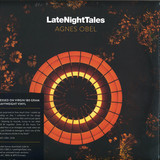
to Me, Sounds Have Always Been More Interesting Than Words,' Says Agnes Obel. i Love It When The Voice Becomes An Instrument And You Almost Forget It's A Human Voice.' Never Is This More Apt Than On This Beautifully Programmed And Bewitching Selection Of Music.
Agnes' 2010 Debut Album Philharmonics Went Platinum In France And Belgium And, Unsurprisingly, Quintuple Platinum In Her Native Denmark, Where She Also Won Five Danish Music Awards (equivalent To The Brits) In 2011. The Follow-up Aventine, Released In Late 2013, Was Imbued With The Same Measured Calmness As Her Debut. It Went Platinum In Belgium And Gold In Denmark And France.
For The Mix You Have In Your Hands It Feels Almost As If Agnes Has Scoured The World Looking For Kindred Spirits - Or Kindred Songs. There's A Quietude About It All, The Antithesis Of A Rush Hour, Like A Frozen Lake On A Sunday Morning. This Is Aided By A Veritable Cornucopia Of New Obel Material, Including A Haunting Reading Of Danish Song 'glemmer Du', Inger Christensen's 'poem About Death' Set To Original Music, And An Agnes Original, 'bee Dance'.
Among Them, There's The Enigmatic Jamaican Singer Nora Dean Who Weighs In With The Hypnotic And Slinky Duke Reid Production, 'ay Ay Ay Ay (angie-lala)' And The Sparse, Sardonic 'party Girl' By Michelle Gurevich, So Good It Inspired The Eponymous French Movie. There Are The Plangent Voices, The Bulgarian Folklore Choir, Nina Simone, Ray Davies And Agnes Herself, Ringing True. Somehow, Ms Obel Makes Even Makes The Electronic Tracks Bow To Her Needs As With Yello Whose 'great Mission' Is More Martin Denny Than Underworld And Cult Greek Composer Lena Platonos' 'bloody Shadows From A Distance' Pulses Gently Rather Than Throbs And Can's Recently Rediscovered 'obscura Primavera', Unusually Hushed.
"i Was Surprised At How Much Time I Ended Up Spending On This. I Collected All The Songs Together With My Partner Alex And We Just Spent Time Listening To Records, Trying To See What Would Fit Together. Some Of The Music I've Included Here Is On Mixtapes We Made When We Were Just Friends As Teenagers. Each One Of The Tracks Produces Stories In My Head." - Agnes Obel, February 2018
out of Stock
Last delivered 2 years ago available to reorder, subject to availability
Uncanny Valley EP sonically explores the uneasy, obscure but familiar relationships between human and machine in contemporary life. This is the debut release on RESIST, the record label launched by experimental club/art hybrid event from Belfast, Northern Ireland. This debut release is by RESIST event and label founder, Koichi. Remix comes from electronic music innovator and Eotrax label owner, Eomac in an anxiety driven, frenzied remix of the title track.
Jagged and angular sonics, and warm organic artefacts are the defining sound of this release, which imitates the theme behind the music. Machines are being engineered to have a place in intimate and personal areas of human life. What does it mean to be human in this increasingly digital world Are we anything more than complicated robots made of flesh Where does humanity stop and the uncanny begin
Koichi returns with a new sound, signalling a departure away from his previous aesthetic and into a new direction breaking free from the boundaries and categories of restrictive genre definitions. His music continues to contain a heavy techno aspect, and also draws on raw industrial and experimental influences.
Koichi is an electronic musician, music researcher, and event curator who explores resisting exclusionary identities and disrupting discourses of power and prejudice through music and live digital art.
Way back in 1967, an animated superhero cartoon was released into the world. It was created by Grantray-Lawrence Animation and was based on a web-spinning, crime fighting blue and red dressed character that had originated in1962, in Marvel Comics by Stan Lee and Steve Ditko. This amazing series (that we're not allowed to mention the name of for legal reasons) ran on ABC TV in the USA, then Canada, then a few years later started to spread its web further, running here in the UK throughout summer holidays, after school and possibly early mornings at weekends in the late 1970s. The series then got released on VHS video (and probably Betamax too) in the mid 1980s and still continues to spin its animated magic around the world through further broadcasts, YouTube and DVDs.
The series was notoriously low budget, with animated errors everywhere and numerous scenes, sequences and backgrounds being re-used all the time, often across the same episode. Even a certain spider logo on a costume would appear with six legs, then eight legs later on, then back to six again in the same show.
Series One opened with a newly written spider theme, a classic, hooky song all about doing whatever spiders can, and had, as Big George (RIP) once pointed out to me, a set of session singers falling slightly out of time with the backing track after the first verse. Series One also featured background music by jobbing composers Bob Harris and Ray Ellis but these cues and master tapes are now believed to be lost.
After Series One the company Grantray-Lawrence went bankrupt, so the amazing spider series (that we're not allowed to mention for legal reasons) was taken on by producer Steve Krantz. He brought in new talent, including animation director Ralph Bakshi who later went on to turn a Robert Crumb strip cartoon into the feature Fritz The Cat. Krantz also slashed the already cripplingly small spider budget, and brought in the idea of using economic library music. Here, thanks possibly to an independent sync agent (it has been suggested that a company called Music Sound Track Services may have been the one) production turned to the KPM catalogue. This was one of the few really established library catalogues around at the time with a modern edge, it was full of fabulous, modern dramatic music tracks - often all on the same LP. But more importantly all the tracks were far longer than the one minute musical cuts that many of the fledgling USA library companies were issuing at the time. Not only would this KPM music be efficient, affordable and very easy to use, it would also mean syndication worldwide would not be held up by any future musical issues. Krantz produced two amazing spider series (that we're not allowed to mention for legal reasons), and both were smothered with KPM music. In fact barely a spider second goes by without music playing in either the background or foreground.
For many years I - and many nostalgic others - have been thinking about putting this vinyl album together. For many enthusiasts this really is formative music - a junior foray into hip swinging crime jazz and esoteric musical grooviness. I've also read on line accounts by DJs from WFMU on the trail of original spider master tapes, and there's even a whole forum dedicated to Spidey-Jazz'. Then recently I was looking at an old spider tracklist and realized that several of my favourite KPM cues were there including Syd Dale's Hell Raisers' and Walk And Talk', both from one of the most elusive and desirable KPM albums of all time (yes, you just try and find yourself a copy of KPM 1002 right now), so I decided to push on and get the album made.
So, what features on this Spider-Jazz Lp Well it's music from the amazing TV series we are not allowed to mention for legal reasons, BUT, not music from Series One. No, but it is all from Series Two and Series Three. From looking at archival cue sheets, over 50 tracks from various early KPM 1000 series albums were used across episodes. I've distilled this down into one exciting and enthralling LP, and if this works a further Spider Jazz album may well swing in to production. If you're interested (and I'm sure you may well be) cues here came from KPM1001, KPM1002, KPM1015, KPM1017, KPM1018 and KPM1043 and were composed by master library composers of the era - Dale, Hawkshaw, Hawksworth, Mansfield etc.
And if you are listening over there in the USA, you may well recognize many of the cues here not just from the amazing TV series (that we're not allowed to mention for legal reasons) but also from classic 1960s and 1970s NFL highlight shows that we are allowed to mention.
Selection of rare and unreleased tracks by Agenxy of X, Tic, F.a.c.t (mainly projects from the mind of Erik Travis). In total 10 tracks of which 4 never was released before! Great collection with some early Detroit Techno/Electro by one of the most under-rated producers from Detroit that always have been extremely rare and even for the top collectors of Detroit techno has been one of the grails!
Following 2017's 'Path of Ruin', DJ Richard returns to Dial with his much-anticipated sophomore LP, 'Dies Iræ Xerox'. Undoubtedly one of the most distinctive and fully-formed electronic producers in recent memory, DJ Richard imprinted the sound of a bubbling US underground with his label, White Material, founded in 2012 alongside Young Male. His first solo LP for Dial, 2015's 'Grind', found DJ Richard delicately establishing a discipline between his East Coast noise heritage and a physical, emotive tradition of house music, mastered during an extended stay in Berlin. Now firmly settled once more in his hometown of Providence, 'Dies Iræ Xerox' is a personal and uncompromising journey that finds the Rhode Island native in reflective form, journeying without compromise into both his creative influences and personal psyche. In part adapting its title from the Latin hymn 'Dies irae', otherwise known as 'Day of Wrath', 'Dies Iræ Xerox' melds the physical and psychological aspects of DJ Richard's production ethos in sharper, more widescreen vision than before; the oceanic swells of ambience yet more powerful, and the rigid basslines sharper still. With the chaos of the Berlin club scene an increasingly distant memory, the album is enriched with a contemplative, even brittle tone, as informed by film soundtracks and literature as the pulse of city living. Still, this is new material from DJ Richard, a touring DJ as distinctive as any other to be found behind the decks at some of the world's finest clubs and festivals. On 'Dies Iræ Xerox', the artist finds the space to write 'the records I really want to play', and each suggests a template for genuine dancefloor transcendence, beginning with the electrifying 'Vanguard' . The sludgy yet sophisticated crawl of 'Tunnel Stalker' sets the tone for the menacing yet somehow melancholy EBM of 'In Broad Daylight', while the record draws to a breathless close with the affecting, drum machine lethargy of 'Gate of Roses'. Drawing little distinction between his more physically rousing material and searching soundscapes, 'Dies Iræ Xerox' instead finds a passage of catharsis throughout both. 'Dissolving World', the album's breathtaking centerpiece, is a choral feature hypnotically overwhelmed by walls of electronic feedback, forging a dramatic link between old ways and new. On the bold and near-beatless 'Ancestral Helm' and 'Final Mercy', DJ Richard seems to grant both music and raw emotion the ability to simply float in the air, brilliantly, poignantly unresolved. If 'Grind,' inspired by the weathered coastlines of Rhode Island, was a record concerning "the border between civilization and the ocean," then 'Dies Iræ Xerox' is an unapologetic follow-up concerning that between macabre obsessions and fear of death. Produced during a murky, transitional period, DJ Richard found himself particularly drawn to Medieval European art and mysticism, fascinated by depictions and philosophies of the antichrist and end-times. Greatly influencing the uncompromising, apocalyptic tone of the album, these investigations have created an engaging and personal vision of the 'Day of Wrath.'
Only one month after the release of their first ep on MT on May 2018, Vactrol Park continue surprising, this time with a full LP in the shape of 'Music from the Luminous Void'.The album sees VP delve much deeper into more atmospheric realms. Using modular synths and unexpected drum machine sequencing they leave the 4X4 beats behind in favor of off-world rhythms and ever growing bass. Starting with Drops's high frequency tension, laying on top of those heavy kick drums it keeps on growing and growing. From there it moves to the 'End of the party' groove that is Novikov's Notation, and its trippy monotonic rhythm. The A-side ends with the heavy sampled ambient track Macbeth, bringing forward that mesmerizing flute solo by Italian artist Luca Spagnoletti yet succeeding in avoiding the kitsch, and with a touch of class. The B-side delves even deeper into ambience and atmospheric muzak. Starting with Bells, that features again Spagnoletti on flute. Then we get into the real gems of the album - Anstruther and Glove. The first is a pure trip into modular psychedelia and repetitive jazzy-like drum rhythms, creating tension right from the start and plays with it throughout the track before decaying slowly into Glove, which is in sense both the catharsis and the decompression session of the album. Like a 2018 version of Vangelis, this track's soundscape will keep you dreaming with your eyes closed long after the album ends.
""Brilliant new duo from South London" Gilles Peterson BBC Radio 6 Music. South London electronic duo VTR release their alluring debut EP Soul to Skin on Brixton's Dream Diary Records. The five track EP veers from the melodic to the abstract as sensual lyricism occupies a distinct space amidst spectral sound design, striking a balance between haunting depth and inviting warmth. Soul to Skin was co-produced by recent R&S Records signee Afriqua, whose SLAP EP and Chronic Cool 12" out on Dream Diary brought considerable attention to the label.
The final offering on the EP is a Soul to Skin REMIX by INXEC (Crosstown Rebels, Get Physical, Cocoon and Leftroom and Culprit) Clash music were quick to premiere Soul to Skin describing VTR's sound as an "entrancing mixture- reminincent of those early James Blake EPs, or even the hushed intensity of Portishead." "
The Ep "a Form Of Travel Unknown To Humans" Is Chasing Us. Guiding And Forcing A Way Simultaneously. The Sound Is Harsh But Has An Immaculate Precision To It "void Of Air - Compelling The Listener Toward A Light, Seducing Us To Tear Through The Night.
We Enter With "s.m.o.d. - Sticks" A Deep And Magnetic Sound Opening Up Slowly, Starting To Breathe And To Merge Into "s.m.o.d. - Cell Culture" Which Gives A Much More Metallic Flavour But Never The Less Beat Driven - Fast And Strident - Maybe Even Hasty, Pushing To Skip A Beat Of The Heart. To Finish Off With "s.m.o.d - Pulse" Carrying An Unsettling Almost Disturbing Quality, Formulating A Mechanical Sound Alienated From The Human Experience. The Ep Creates A Seductive Space Outside Our Comfort Zone, Inviting To Explore A Space And Travel Unknown To Humans. Gimme More.
Pseudocode in a kind of free form minimal electronique concrete mood. There`s even the odd suggestion of a pop tune here and there, maybe even some danceable beats, if you`ve got one leg shorter than the other. While Xavier S. contributes most of the lyrics and vocals, Guy-Marc Hinant plays often the core melody on guitar or electric piano, Neffe's contributions are particularly noteworthy throughout, as he weaves together the bulk of the sonic cloth through overdubbing and mixing.one of his parts are remotely virtuosic (hence his self-identification as a non-musician), but they are always unexpected and perfect in and of themselves, emotionally and sonically, and in that sense they are deeply musical.This could be seen as the missing link between Slaughter In Tiny Place and Europa - third and final LP by Peudocode.All songs are unreleased. Recorded and mixed between 1980 and 1981.
The remarkable thing about BELP's new album is its two-dimensional function. It works both on a loud and a quiet volume. Some tracks would go down well as a club track, like opener 'Travelling Thru Galaxies'. This track brings back memories of the best work released on the Hyperdub label, with it's fine combination of synths and irresistible, dubby beats. Elsewhere, 'Off Ending' might start off as 'dancehall-but-not-quite dancehall' track but when half way the synths kick in they change the feeling of the track to a more cerebral level.
BELP is the artist name of Sebastian Schnitzenbaumer. Born in Munich, he partially grew up on the Seychelles islands off the coast of East Africa. Educated in classical piano, those two gravitational poles, European and African influences, form the basis for his musical development. Currently he has close ties to the (dub) Sausage Studio in Hackney, London. In his hometown Munich, the Bavarian capital, BELP took a central role in a series of discussions and events aiming to improve the image and possibilities of Munich, which to his regret is a predominantly posh and hedonistic city where optimistic and uplifting music take central role.
In different guises Schnitzenbaumer works as a much needed antidote. Since 2013 he runs the Schamoni label, focusing on supporting local artists like Leroy and Protein. Its sublabel Jahmoni is responsible for recent works by international artists like Aaron Spectre and DJ Marcelle/Another Nice Mess.
BELP's music is dark, serious and layered. His love for dub and dancehall shines through in his broken beats. At the same time the synth layered tracks give the album an atmospheric feeling.
This also is what makes this album essential: it's refusal to be pigeonholed. The last track on side A, 'By Beauteous Softness', is an a cappella rendition of a 17th century Henry Purcell piece, beautifully sung by Alexander Schneider. This track is preceded by 'Transmission', which is a brilliant abstract work, sounding like wind closing on you from all sides. And you can sip a cocktail whilst listening to the jazzy 'Time And Again' (BELP once worked as a jazz pianist).
It's clear to hear BELP took a long time recording this album. Every note, synth, drum beat, is carefully placed. But what the album might lack on spontaneity it more than compensates this with its sheer musical beauty. This also reflects on the abstract sleeve, like 'Elephants' designed by BELP himself.
Enjoy this album on big speakers, as background music or simply on headphones. There will always be new sounds and layers to be discovered!
Crosstown Rebels celebrate their fifteenth year with their monumental 200th release. American DJ and producer Arthur Baker reunites with Rockers Revenge for the first time in thirty years. To complete the package, dance music heavyweights Francois K and Michael Mayer take on remix duties.
On A Mission is exactly that, 'a mission of love, a mission of peace'. The positive vocals hark back to those of early 90s house tracks, which created unity through music and clubbing. The rhythmic beat of the drum is determined, as percussive layers build and the vocals bleed into the synths. Francois K provides two variations of the track. His remix features more prominent drumbeats driven by a growling bassline. On his rockers dub version, Francois goes all out and dubs us into the stratosphere. Up next is the Michael Mayer remix, with a more electronic take on the original with driving synths and a whirring, throbbing bass-line.
Created in 1982, Rockers Revenge was the brainchild of Arthur Baker and Donnie Calvin. Donnie provided lead vocals with Baker's wife, Tina B, Dwight Hawkes and Adrienne Dupree Johnson on backing vocals. Their most prominent track, Walking On Sunshine, was a post-disco hit reaching #1 in the US dance charts and #4 in the UK charts.
Three years ago Baker and Hawkes reconnected through social media with Baker sending through his original Mission idea. Baker is known for his work with hip hop artists like Afrika Bambaataa, Planet Patrol, and New Order whilst also remixing the Pet Shop Boys' 1986 hit In The Night. Fast forward to 2018 and the group performed a monumental live show at Get Lost Miami, and are currently in the studio working on new material. This Summer they will shoot a new documentary and perform live at various events.
Twenty-eight Years Ago, Pissed-off Twelve-year-olds Around The Universe Discovered A New Planet, A Black Planet. Public Enemy's Aggressive, Benihana Beats And Incendiary Lyrics Instilled Fear Among Parents And Teachers Everywhere, Even In The Border Town Of Laredo, Texas, Home Of The Future Founders Of The Latin-funk-soul-breaks Super Group, Brownout. The Band's Sixth Full-length Album (out May 25th) Fear Of A Brown Planet Is A Musical Manifesto Inspired By Public Enemy's Music And Revolutionary Spirit.
Chuck D., The Bomb Squad, Flava Flav And The Rest Of The P.e. Posse Couldn't Possibly Have Expected That Their Golden-era Hip Hop Albums Would Sow The Seeds For Countless Public Enemy Sleeper Cells, One That Would Emerge Nearly Three Decades Later In Austin, Texas. Greg Gonzalez (bass) Remembers A Kid Back In Junior High Hipped Him To The Fact That Public Enemy's bring The Noise' Is Built On James Brown Samples, While A Teenaged Beto Martinez (guitar) Alternated Between Metal And Hip-hop In His Walk-man, And Adrian Quesada (guitar/keys) Remembers Falling In Love With Public Enemy's Sound At An Early Age. when I Got Into Hip Hop, I Was Looking For This Aggressive Outlet . . . And I Didn't Even Understand What They Were Pissed Off About, Because I Was Twelve And Lived In Laredo . . . But I Loved It And I Felt Angry Along With Them.'
Joseph Abajian (fat Beats' Owner) Must Have Sensed The Deep Hip-hop Well Lying Beneath The Versatile Band's Latin-funk Veneer. i Thought Their Sound Would Work Covering Public Enemy Songs,' Abajian Says, And, it Was Good To Know They Were P.e. Fans . . . We Came Up With A Track Listing And They Went To Work.' Despite The Band's Eagerness To Work On New Original Material (an Album Of Original Songs Is Slated For Next Year), They Couldn't Pass Up The Opportunity To Pay Homage To This Iconic And Influential Posse.
Translating Sample-based Music To A Live Band Turned Out To Be More Of A Challenge Than They Anticipated. Adrian Tried To Get Inside The Bomb Squad's (public Enemy's Producers/beat-making Team) Head In Order To Find The Inspiration To Reinterpret P.e.'s Songs: imagine The Bomb Squad Going Back In Time And Getting The J.b.s (james Brown's Funky Backing Band) In The Studio And Setting Up A Couple Analog Synths And Then Playing Those Songs.' While Some Songs Closely Follow The Original Musical Blueprint, Others Use The Source Breakbeats As Jumping-off Points Later Sweetened By Trombonist Mark speedy' Gonzales' Horn Arrangements, Synth Wizardry Courtesy Of Friend-of-the-band Peter Stopschinski, And Dj Trackstar's Turntable Scratches. But Don't Listen Expecting To Hear Paint-by-numbers Recreations Of Classic Public Enemy Jams. our Approach Is Never In The Tribute Sense,' Adrian Explains. we've Always Taken It And Made It Our Own, Whether It's The Brown Sabbath Thing Or This Public Enemy Thing.' Coming Off Numerous Tours As Brown Sabbath And Even A Stint Backing The Late Legend Prince, Brownout Is Arguably The Tightest And Funkiest Band On The Road Today And They're Psyched To Bring This Revolutionary Music To The People. For A Band Without An Overt Political Agenda, They Collectively Couldn't Resist The Opportunity To Play This Music Live, Especially Now. if There's Any Way That We Can Use The Already Political And Protest Nature (of P.e.'s Music), We Would Like To Try,' Beto Says. the Album's Title, Fear Of Brown Planet Is Definitely A Relevant Idea Today And We're Not Afraid To Put It Out There, Because We Want To Speak Out.' By Reinterpreting These Hip Hop Classics In Their Unique Style And Channeling The Spirit Of Public Enemy That First Echoed Around The World And Captured Their Imaginations All Those Years Ago, Brownout Is Doing Exactly That.
Only those who read all the credits on record liner notes will know the full details: Areski is of course Brigitte Fontaine's partner in life, but also her creative alter ego, and the composer of the music of most of her songs. Even though it was his wife Brigitte and not him who wrote the lyrics, Areski is a poet in his own right. Furthermore, he is polyvalent: composing, arranging, singing, improvising, playing every possible instrument and even acting! Areski, to sum up, is the perfect mix of the tradition of Munir Bashir with the European sophistication' of someone like Jean-Claude Vannier, one foot permanently in Versailles (where he was born) and the maghreb. Areski, is left bank French songs without the stylistic effects, revised and updated through contact with arab-andalusian music. He is a Living Theatre style happening with a dose of cosmic free jazz, surrealist poetry viewed through the prism of Kabyle culture... All that and a lot more!
Areski honed his talent observing the stars of traditional chaâbi, testing it out in bars and dives before meeting, during military service, the singer Jacques Higelin with whom he would record his first cult album, and who would present him to his wife-to-be, Brigitte Fontaine. Between 1969 and 1980, with her, Areski would contribute an essential chapter to French underground music including classics such as Comme à la radio (with the Art Ensemble of Chicago), Je ne connais pas cet homme, L'Incendie, Le Bonheur and Vous et nous. For all that, Areski has never really tried to have a career under his own name, in spite of the wonderful Un Beau matin first published in 1970, and which it is high time to de (re)discover (better late than never). Those already in the know will not be surprised to see, especially, Jean-Charles Capon, author of the inspired L'Univers-solitude, Brigitte Fontaine of course, or Daniel Vallancien, author of a no-less inspired duo with saxophonist Philippe Maté. All contributing to an acerbic poetic universe, concerned but never militant, and open to worldwide influences long before they became a fashion.
Inspired, poetic, in a word essential: Un Beau Matin is one of the best albums of the French underground produced by Pierre Barouh on his label Saravah, alongside those by Maurice Lemaître, Catharsis, Claude Yvans, Mahjun, Barney Wilen, Cohelmec Ensemble et Michel Roques.
Camea's latest release on her imprint Neverwhere pays homage to her hometown Seattle's original underground rave warehouse, NAF Studios, where she went dancing in the late 90s and began her journey that ultimately landed her in Berlin. Also where Nirvanna's 'Smells Like Teen Spirit' video was filmed (and ironically now a Catholic publishing house), the hedonistic venue is legendary to those who picked up rave flyers scattered on the streets of Seattle and took a chance on an emerging new electronic music scene. Both originals reflect the raw warehouse vibe of this era, and Matrixxman and Markus Suckut have weighed in with heavy remixes. Markus puts his signature on the NAF 97 original with a deep space atmospheric techno banger, and Matrixxman reworks the original 303 recordings in Jack U, sending it into another dimension - and even further.
* Following on from last year's debut release on Cold Recordings, Cocktail Party Effect makes a welcome return to the imprint with 4 new genre-melting rhythmical workouts, charged and ready for the dancefloor.
* 'Lemons', the eponymous EP title track, kicks things off, opening with dubbed-out chords and a fidgety, rattling percussive loop which eventually disappears into the background as the breakdown primes itself for the drop. Suddenly, in comes a hyperactive rhythmical workout, rolling at 128bpm but turbo charged with double time percussive flicks. Soon the dub elements return to fill out the sonic, keeping the pace lively and engaging. Quality, effective dancefloor music.
* Following straight on is 'Bangers' which almost sounds like an imagined collaboration between JA rhythms stars of the moment, Equiknoxx and Walton or Batu. Squelchy drums and a t'umping bassline roll things out in fine style.
* Flip the plate then for 'Quite' which brings things back into slightly more familiar territories, utilising a swooping bassline as pitched, deranged vocal stabs swirl about and tight drum programming keeps the pace moving. Last up is 'Flat Football' which returns to a similar form as the title track, 'Lemons'. Manic drum programming is used to create the impression of being in fast forward without moving the tempo over 130bpm! Not for the faint hearted.
with »redsuperstructure«, robert lippok created a new foundation for his musical endeavors. now - 7 years later - this system properly comes to life on »applied autonomy«. the title of the new album is a clear indicator as to what the berlin-based producer has been up to during the last couple of years, both on a conceptual level as well as how he molds his ideas into tracks.
»applied autonomy« orchestrates a certain state of frantic standstill, which occurs once a structure is set. has this state been reached, the artist is free to focus on other equally important aspects, balancing the various shades, pushing ideas even further to really make them shine and blossom in their self-declared autonomy. the more light one lets in, the more layers become visible.
layers are key when it comes to understanding »applied autonomy«. big chunks of the material with which the album has been produced derive from sketches specifically made for a club performance. rather than meticulously devising each and every detail, lippok focussed instead on recording as many fragments as possible in a short period of time, elements which he could later combine and layer on stage. based on this material and his experience experimenting with it in a live environment, the album slowly began to shape. an album culminating in a collaboration with klara lewis, with whom lippok spent 2 days at the EMS studios in stockholm, approaching the idea of autonomy from yet another angle. during the session, both musicians played and performed simultaneously, yet not explicitly together, lost in their own thoughts and ideas, only subconsciously taking in what the other one was coming up with. the result is »samtal«, 14 minutes of a constantly evolving state of poise, magically connecting all the dots Lippok had already defined as »applied autonomy«.
Rugged and lustrous, Nacre is Air Max '97's first full-length release. Written between Melbourne and Berlin and mixed in Mexico City, the album bears traces of fleeting yet profound geographic and emotional immersions. Air Max '97's signature baroque momentum is suffused anew with pungent and labile tonal atmospheres, through which organic sonic events and incomprehensibly abstracted vocals wreathe. The record's disposition spans the darkly playful arpeggios of Veneer to the dirge-like Kermes and paranoiac Karyon. Fiendishly twisting tracks are interspersed with more tender moments such as Queriensteiger, Nacre and Gousse (formerly released on Stoscha's 2017 Klink compilation). The totality is uncompromising and affective, yielding a broader spectrum of Air Max '97 sonics than ever before. Nacre will be released on 12' vinyl and digital on 1 June 2018. Air Max '97 will tour a new live show in support of the release.
When it comes to soulful house, Detroit native Alton Miller is about as ingrained as it gets. Peacefrog, Planet E, Moods & Grooves, Mahogani and Sound Signature have all endorsed his talents and with an album looming later in the year, Waella's Choice sow the seeds with 'All Things Good'. Club music for the sensitive souls, with some arresting spoken word poetry and even a broken beat deviation.'All Things Good' is the fourth release from London label Waella's Choice, following Hanna, RANGEr and the London on Key compilation.
out of Stock
Last delivered 22 months ago available to reorder, subject to availability
Zia Mohiuddin Dagar : rudra veena
Annie Penta : tanpura
Concert recorded at the home of Shantha and Niranjan B. Benegal, Seattle, Washington 9 March 1986.
Recorded by Niranjan Benegal. Files obtained from Jeff Lewis.
Mastered & Cut by Rashad Becker at Dubplates & Mastering 1117 & 0318.
Liner notes by Renaud Brizard, edited by Stephen O'Malley & Ian Christe.
Front and back cover photos by unknown.
Interior photography by Niranjan B. Benegal, Dan Neuman & unknown, Seattle 1978-1980. .
Around ten years ago, deep into a cozy and hazy night following a concert with my sound brothers Daniel O'Sullivan and Kristoffer Rygg in London (as Æthenor), they graciously introduced me to a recording of rudra veena (a kind of noble deeper bass relative to the sitar, in a way) as performed by dhrupad master Zia Mohiuddin Dagar.
Dhrupad, for those who do not know, is a branch of Hindustani classical music said to "show the raga in its clearest and purest form". It's pacing concentrates heavily on the slow, contemplative alap section and works with specific microtonal gestures and deep characteristics of resonance ... in short I was hooked on this new (to me) and ancient form of music from the first listen, and feel that a more or less continual listening & reviewing of Zia Mohiuddin Dagar's recordings in the years that followed have influenced my own approach to music quite heavily (if, albeit, indirectly).
In early 2015 I was able to make contact with Zia Mohiuddin Dagar's son Bahauddin and some of his American students/disciples, primarily Jeff Lewis. Over time we developed a friendly and educational exchange, access a massive archive of recordings and developed these two paired titles for my label. It's been a long path to arrive at actually releasing them but also probably in many ways one of the most significant releases I've worked on. And I'm proud to be able to reveal these to date unreleased archival recordings of one of the masters of dhrupad, Z. M. Dagar, to the public for the first time.
Zia Mohiuddin Dagar was the nineteenth generation in a family tradition known as Dagar gharana, a rich lineage which continued and performed the musical form of dhrupad (Bahauddin Dagar continues the lineage as a master rudra veena dhrupad player of note today). Initially, dhrupad was a rigorous, austere, devotional genre that was sung in Hindu temples. But between the 16th and the 18th centuries, it became the preeminent genre in royal courts in North and Central India, and the Dagar gharana developed and continued publicly following the eventual loss of court patronage for dhrupad in the 19th century. The French ethnomusicologist Renaud Brizard covers the story of Zia Mohiuddin Dagar's life and teaching (a long story also in Seattle, my hometown!), the Dagar family and gharana, the rudra veena and more topics in an extensive set of liner notes in this release.
Ragas Abhogi & Vardhani were recorded in a private house concert in Seattle at the home of the Benegals in March 1986 (the week before the accompanying release SOMA029 Raga Yaman was recorded). The Benegals were friends (& Shantha Benegal was also a student) of Dagarsahib who sometimes hosted Hindustani music concerts in their home. It's a rare glimpse of a more intimate, personal and perhaps different kind of performance considering the form of dhrupad.
-Stephen O'Malley, March 2018, Paris, France
Stephen O'Malley would like to especially thank Bahauddin Dagar, Jeff Lewis & Jody Stecher for their enthusiasm, cooperation, patience, insight & advice toward developing these editions. Thank you also to Laurel Sercombe & John Vallier from the University of Washington Ethnomusicology Archives, Shantha Benegal, Philippe Bruguière, Dan Neuman, Ira Landgarten, Renaud Brizard, Ian Christe, Peter Rehberg, Rashad Becker, Daniel O'Sullivan & Kristoffer Rygg, all for their direct or indirect cooperation, assistance & patience.
Recorded by unknown at the University of Washington, HUB Auditorium, Seattle, Washington 15 March 1986 , concert co-sponsored by the UW Ethnomusicology Division and Ragamala.
Original digitally processed audio recording made with Panasonic PV-9000 VCR, Sony PCM-F1, PZM mics. Mastered & Cut by Rashad Becker at Dubplates & Mastering 1117 & 0318.
Liner notes by Renaud Brizard, Stephen O'Malley & Ian Christe.
Front and back cover photos by Niranjan B. Benegal, Seattle Center Folklife Festival 1979. Elizabeth Reeke & Annie Penta on tanpuras.
Inner gatefold photography by Niranjan B. Benegal & Ira Landgarten.
Around ten years ago, deep into a cozy and hazy night following a concert with my sound brothers Daniel O'Sullivan and Kristoffer Rygg in London (as Æthenor), they graciously introduced me to a recording of rudra veena (a kind of noble deeper bass relative to the sitar, in a way) as performed by dhrupad master Zia Mohiuddin Dagar.
Dhrupad, for those who do not know, is a branch of Hindustani classical music said to "show the raga in its clearest and purest form". It's pacing concentrates heavily on the slow, contemplative alap section and works with specific microtonal gestures and deep characteristics of resonance ... in short I was hooked on this new (to me) and ancient form of music from the first listen, and feel that a more or less continual listening & reviewing of Zia Mohiuddin Dagar's recordings in the years that followed have influenced my own approach to music quite heavily (if, albeit, indirectly).
In early 2015 I was able to make contact with Zia Mohiuddin Dagar's son Bahauddin and some of his American students/disciples, primarily Jeff Lewis. Over time we developed a friendly and educational exchange, access a massive archive of recordings and developed these two paired titles for my label. It's been a long path to arrive at actually releasing them but also probably in many ways one of the most significant releases I've worked on. And I'm proud to be able to reveal these to date unreleased archival recordings of one of the masters of dhrupad, Z. M. Dagar, to the public for the first time.
Zia Mohiuddin Dagar was the nineteenth generation in a family tradition known as Dagar gharana, a rich lineage which continued and performed the musical form of dhrupad (Bahauddin Dagar continues the lineage as a master rudra veena dhrupad player of note today). Initially, dhrupad was a rigorous, austere, devotional genre that was sung in Hindu temples. But between the 16th and the 18th centuries, it became the preeminent genre in royal courts in North and Central India, and the Dagar gharana developed and continued publicly following the eventual loss of court patronage for dhrupad in the 19th century. The French ethnomusicologist Renaud Brizard covers the story of Zia Mohiuddin Dagar's life and teaching (a long story also in Seattle, my hometown!), the Dagar family and gharana, the rudra veena and more topics in an extensive set of liner notes in this release.
Raga Yaman was recorded at a public concert in Seattle at the HUB Ballroom at the University of Washington in March 1986 (the week after the accompanying release SOMA028 Ragas Abhogi & Vardhani was recorded) at the end of his last tour of the United States. Yaman was a special raga for Zia Mohiuddin Dagar, one of his signature raags. For centuries, Yaman has been considered as one of the most fundamental ragas in Hindustani music and is one of the first ragas which is taught to students. A deep knowledge of Yaman gives a key for understanding many other ragas. It's filled with tranquility, contemplation, pathos and spiritual yearning. .
For the last decade, Argentina has become the epicenter of a musical explosion that characteristically blends folk music from the surrounding Andes and electronic beats. The artist arguably responsible for its emergence on a global platform is one named Chancha Via Circuito- a Buenos Aires native named Pedro Canale whose first album Rodante (2008) opened the floodgates by pushing the borders of Cumbia listeners weren't even aware existed. He's gone on to release other highly acclaimed albums such as Rio Arriba (2010), which Resident Advisor described as 'aural magical realism', and Amansara (2014), which catapulted him onto acclaimed international stages and received praises from Pitchfork to the New York Times.
Four years later, in the midst of some very notable global turbulence, Chancha Via Circuito brings us his highly anticipated new album Bienaventuranza- a word that essentially means bliss. Replete with his signature touches of Andean instruments (think lots of flute and charango), the folkloric elements on this album blend fluidly with danceable and digestible electronic beats. He's been cooking this record slowly, with unprecedented amounts of care and in a much more collaborative manner than his past albums.
Appearing on the album are heavy hitters in the digital cumbia scene, including Mateo Kingman, Kaleema, and Lido Pimienta, all of whom contribute their highly distinguishable sounds to the natural flow of the album. Most of these collaborations came about almost effortlessly. La Victoria is a track that blends cumbia, dancehall, and a bit of mysticism- carried by Lido Pimienta's luminous voice, Colombian Dancehall wizard Manu Ranks happened to be in town and slipped into the song naturally. Kawa Kawa came from an improv jam during rehearsal one day with Kaleema (Heidi Lewandowski) and Federico Estevez (percussionist in Chancha Via Circuito). Niño Hermoso, which is lyrically a fable, sounds the way it does because Pedro saw a video of Gianluz (Gianluca Zonzini), who he knows from dance classes, singing a Pocahontas song on Youtube.
As dancefloor-friendly as it is mystical, Bienaventuranza is as Chancha as it gets- with elements from Cumbia to Dancehall to Andean Folk to Global house, crystal clear production, and collaborations that are evidently natural and genuine, the record holds true to the sound that Canale has played such a huge part in creating. Since the release of his last album, the digital folk scene has also grown exponentially. From a new generation of producers to more listeners in unassuming parts of the globe, Pedro has been humbled to see the sound develop- and proves with this album that he's grown swiftly alongside it.
out of Stock
Last delivered 14 months ago available to reorder, subject to availability
Following two previous excursions into degraded tape loops, fuzzed-out ambience and bittersweet moments of tenderness, O$VMV$M return to Idle Hands to complete a trilogy of LPs with 12 vignettes from the underbelly of the Bristol scene.
Bound to Young Echo's ever-swelling cult of wayward sonics, individually Amos 'Jabu' Childs and Sam 'Neek' Barrett have plenty of irons in the fire. Childs deals in forlorn, vocal-led introspection alongside Alex Rendall and Jasmine Butt as Jabu, while Barrett can be found laying down punishing modern grime variations alongside Kahn, or delving into more traditional soundsystem sonics in Gorgon Sound. Meanwhile the pair were clearly heard laying down some of the tones that seep out of the uncredited Young Echo collective LP from earlier this year. Their production work behind Rider Shafique's killerLion7" on Lavalava was unmissable, and their blunted beats behind Manonmars' debut LP are awaited with anticipation.
As O$VMV$M, the pair enter a particular sound world that mixes cosy nostalgia with creeping dread. Even at its most mellow, a sense of unease hovers beneath the surface, and that's what makes their approach so compelling. The sound palette is broad, from pitch-shifted RnB vocal licks to foggy trumpets crawling at half speed, but over it all a dense blanket of dust gives the sensation of peering back through time.
Putting paid to the idea that immersive music needs to be long and drawn out, the dose response on these condensed mood capsules is quick and strong. In a little over 20 minutes O$VMV$M take you far and wide. The trip over the past three LPs has been an adventure for both label and artists - Sam and Amos have shaped out a style that now feels like a fully formed entity independent of their other ventures. We look forward to seeing where O$VMV$M heads from here.
For his third album for Far Out Recordings, London based multi-instrumentalist and one of Europe's finest saxophonists Sean Khan ventures to Rio de Janeiro to collaborate with iconic Brazilian polymath Hermeto Pascoal. Taking its title from the escaped slave settlement 'Palmares' in the Northeast of Brazil during the 1600s, Palmares Fantasy is Khan's utopian jazz message for the world, and features Azymuth drummer Ivan 'Mamao' Conti, bassist Paulo Russo, guitarist Jim Mullen, and guest vocals from Brazilian chanteuse Sabrina Malheiros, and Cinematic Orchestra frontwoman Heidi Vogel.
Like Hermeto Pascoal, Sean Khan is a self-taught musician. Never able to afford his original dream of studying at Berklee, and having been turned away from Guildhall School of Music for being 'too raw', he became disillusioned with what he saw as the exclusivity, elitism and dangerous institutionalisation of the jazz world. Yet Sean's love for music and the drive to create never faltered.
Hermeto Pascoal, the man Miles Davis once dubbed the most impressive musician in the world', is a similarly independent artist. A true maverick whose ingenuity and freedom from conventional restraints is so great that he has essentially conceived his own musical language, made him the dream collaboration for Sean.
Aspiring to inclusivity and equality also informs the message in Khan's music. Inspired by the 17th Century settlement of Palmares in Brazil's Alagoas region, which was free from the Portuguese crown's murderous exploitation of South America for a century, Khan notes his fascination with the fact that while majoritively made up of escaped African slaves, many deserter conquistadors also joined the settlement.
Hearing the deep-grooving title track with this history in mind, the listener is transported to a futuristic musical eden, with Mamao's insatiable 10/8 rhythm back-boning Hermeto's wild improvised vocals, rhodes and whistles, while Sean's harmonically brilliant sax and flute add more layers of moody, characterful expression. 'Moment of Collapse' is Sean's poetic study on the uncertainties of modern day western civilisation, delicately presented by the gorgeous vocals of Heidi Vogel and drenched in lugubrious strings and Alice Coltrane-esque harp. The two covers on the album are of Hermeto's own 'Montreux' (on which Hermeto plays solos on a teapot and a pint of water), and an uplifting soulful jazz-funk take on Milton Nascimento & Lo Borges MPB classic 'Tudo Que Voce Podia Ser' featuring the vocals of pioneering nu-bossa voice Sabrina Malheiros.
The recording sessions for the album were part of an intensive and hugely productive eight-week excursion to South America for Far Out boss Joe Davis in the summer of 2016, which also saw the sessions for Azymuth's Fênix and a forthcoming album from Uruguayan fusion legend Hugo Fattoruso.
Fantastic' Gilles Peterson
Loving this!' Opolopo
Thank you!' Sassy J
Proper! Great track.' Colin Dale
this is great!' Yannick Elverfeld (RBMA / Needs Records)
I've enjoyed Sean Khan's earlier releases, but this really seems like he's grown into his fairly considerable talent.' Mark Sampson (Songlines)
His last album was his best so far, but I think this one may be even better.' Laurence Pragnell (Soul Brother Records)
dope!!!' Kyri (R2 Records)
this is great - really cool vibe!' Sam Redmore
wonderful track - can't wait to hear the lp.' Simon Harrison (Basic Soul Radio)
This is very tasty indeed.' Gavin Boyd (Soul Has No Tempo)
New Lp-edition of a private press library recordings of the early '70s.
Together with Florian Fricke and Peter Michael Hamel, Deuter is certainly the main responsible of a fruitful encounter between European sensibility and Eastern aesthetics in the German music of the 1970s. Soundtrack was originally produced by Kuckuck in 1973 not for an official and public release, but as a library' to be used for films, TV and radio. As a library it respects the canonical and typological structure of the genre with 26 short sonic fragments, sequences imagined and conceived like fulminating illuminations. There's still a solid electronic vocation that, however, has put aside the most disruptive effluvia of D (1971) of pure kraut' ancestry. In fact, the album is more like an ideal passing bridge between some ritual instances of the previous Aum (1972) and the following successful phase of Deuter during the period when he stays in the Bhagwan Shree Rajneesh's ashram in Poona realizing, in parallel to a renewed inner life, masterpieces like Celebration, Haleakala, Ecstasy and Silence is the Answer. Musically speaking, Soundtrack presents itself as a heterogeneous work with nocturnal, cinematic, galactic and atmospheric-environmental implications. Electronics remains the predominant factor but can vary from mantra drones of more ceremonial and meditative space-relax' tones of some tracks (Triad, Deep Sea, Gothic Velvet or Evening) to the most amused formulations of pulsating analog synths that in the hands of Deuter become toy-equipement' to modulate and explore (Desert Rock, Synth Effect, Flea Dance or Laser). There is no lack of acoustic moments more ethnically inspired with Arabian and Indian (Reed, Arabia) or devotionally solar themes (Tom Bombaddils Dance), so evoking an air of diffuse peace then completely conquered in the beloved India.
With this new work Maurizio Abate recovers the discourse started with Loneliness, Desire and Revenge (2016) but with a different narrative sensitivity. The symbolic air that you breathe suggests a personal and universal experience in which thoughts and perceptions remain as enveloped in an eternal cosmic wheel. It's a condition that flows sincerely into an emphatic introspection and identification between the stasis of an inner soul and the flowing vitality of stagnant aquatic landscapes. In this direction the music of Abate always condenses multiple ranges of different emotional spectra evoked by profound naturalistic references. The airy openings of the strings, the distant whispers of the harmonica, cascades of phrasings more calm or more torrential can lead into the magnificent climax of the Nostalgia. The string arrangement for violin and cello by Lucia Gasti introduces in a dimension of idyll, in elegiac passages of touching poetry almost of chamber music but at the same time wet by the pastoral and bucolic moods of autumn landscapes, they are paintings imbued with different flavors and colours that recall the light and the candor of the Venetian tonalisms or the moving paintings full of meaning of Tarkoski. In the darkest and saddest moments the open chords are like suspensions of unresolved questions and torments, but the cathartic finale with a free and minimalist piano prelude to possible future glares, almost to perceiving that even where there's stasis the sun can still shine the hope for the new on the clearing of the pond. Remains the feeling with that stylistic "freedom of expression" dear to the visionaries Fahey and Basho, but also a clear interpretation of the expressive possibility of the lead guitar, absolutely lyrical and contemporary for refinement of the crystalline sound, which places this work in parallel with the basic acoustic tests of others great like Jim O'Rourke, Jack Rose or James Blackshaw.
2023 Repress Spice 1 is an undisputed West Coast legend, who first hit the scene after the N.W.A. and – closer to home – Too $hort explosion of the late ‘80s. As history showed, he continued that bloodline with finesse and authority. His nasal flow is menacing and strong, and fans have been consistently captivated by his ‘hood tales since his self-titled debut in 1992. If you want thematic range with your MCs, Spice isn’t that dude – he is all about crime tales and the perils of ghetto life. And he attacks that storytelling sweet spot with each new cut. Spice 1 boasted four singles by the time it was all said and done, and breezed to Gold status on the strength of cuts like the catchy “East Bay Gangster”; the heartfelt tales and truths of “Welcome To The Ghetto”; and the thick, grooving “In My Neighborhood.” He even produced the alcohol-themed “187 Proof,” another of the album’s singles, and the hands-down cleverest vocal outing on the LP. Sonically, the backdrops on Spice 1 range from plunky, keyboard-bassline funk to deeper, fuzzy ‘70s samples – and he sounds strong on top of both. “Break Yourself” is fueled with an electro-funk drive; “1-800 Spice” brings reggae flavor; and “Peace To My Nine” gets chunkier, with a well-placed P-Funk “One Nation Under A Groove” sample. Presented here on official retail vinyl for the first time since its initial release 26 years ago, Spice 1’s debut holds the test of time and carries the California gangsta flag with pride. Some colors just don’t fade.
One of the most unique albums on the Strata East label - and that's saying a heck of a lot, given the creative energies flowing through that legendary jazz outlet! Descendents Of Mike & Phoebe is a righteous little project put together by Spike Lee's father, Bill Lee, and his brothers and sisters (Cliff Lee, Grace Lee Mims, and Consuela Lee Moorhead) - working here in a group named after their slave ancestors, who are paid tribute in a beautifully flowing batch of tunes! Lee's round, warm bass tones are firmly at the head of the group on most numbers - recorded at a similar level to his excellent work with Clifford Jordan on Strata East during the same time - and other instrumentation includes piano from Consuela, flugelhorn from Cliff, and percussion from Sonny Brown and Billy Higgins - all used in a wonderfully evocative style that's even better than some of Lee's later soundtrack work. A few numbers feature vocals from Grace - singing wordlessly and with a really heavenly sort of quality - and together, the whole group have an undeniable sense of power and majesty, yet also one that's touched by a really personal sense of poetry too. Titles include a great version of Lee's "Coltrane", which was more famously recorded with Clifford Jordan.
Field of dreams are Field Theorys Chris Kentish and DJ Al Mackenzie. Field Theory have recently had tracks on respected labels such as Futureboogie and Secret Life gaining rave reviews and even garnering plays on BBC radio 6 Music. Al has been a DJ since the late 80s, now resident at Birminghams Great Outdoors. He's made numerous records over the years but will probably be remembered primarily for his 90s band D:ream making number one all over the world and remixing for EMF and Duran Duran amongst others. Bumping into each other in the street one dayand realising they lived opposite each other, they seized upon the chance to combine their favourite passions, making music and drinking.
Suns out, guns out: Darkroom Dubs ease into 2018 slowly with a new addition to their limited vinyl series courtesy of Madrid analogue scientist Eduardo De La Calle.
Last spotted on Planet E and boasting a 15 year back-cat on the likes of Cadenza, Biologic, Just This, Hivern Discs and Mule Muziq, Eduardo is a man you're already well acquainted with. And you're going to want to get even closer once you've digested these four straight-to-business stripped-back traxx. Each cut designed for deep mix tailoring that you can really bend minds with.
'It's Me... The Apple Knocker' ignites the fire with a flash as we're hurled into a hypnotic frenzy from the first loop. A whirlwind comprised of so few parts yet causing a riot in your senses, this stutters and slurs with a precision sense of unease. The troubled ebb and flow of 'Opsimath' follow suit with a twinkling feeling of unknown. An extensive groove weighing in at nearly nine minutes, its unhurried nature alludes to its title; the longer you leave it sizzle, the more enriching it gets.
Flip for 'Breatharian'. The deepest, most disarming cut of the collection laced with yearning strings and poignant chords, it's a solar-inspired sunset piece that gradually morphs into something much darker and serious as the track progresses. Finally we conclude with 'Cybersquatting', a timeless mildly dubbed-out darkroom groove that flows with liquid insistency. Subtly mutating and rotating, forever pumping, it's a true calm before the storm piece, tailored for those moments when you need a little suspense and space in your set.
Four crystal jams. Endless variations. Infinite mixes: Darkroom Dubs have delivered once again. And there's more en route... Watch out for a new Deadstock 33s release and a new compilation 'Darkroom Dubs Presents Summer Love'. Both due before the summer is out. Don't put those guns away anytime soon...
Reissue of the very first Birds Of Passage album from 2010. Minimalistic Lo-Fi Shoegaze meets experimental pop with drone influences.
For someone who thinks it's difficult to describe music in general, it's even more difficult to describe the soundscapes of BIRDS OF PASSAGE. The influences of Alicia Merz - the girl behind BIRDS OF PASSAGE - are her memories, breathless-inspiring cold winds, the smell and atmosphere of a spring day, smoking cigarettes, sunshine and shadows. As a mixture of all these elements plus a minimalistic experimental instrumentation you as well can describe her music: sometimes shy, sometimes more energetic ( fantastic frown') but always intensely and extremly private. Listening to her debut record "Without The World" is like sharing one long day with Alicia and her thoughts in the diverse landscapes of her home country New Zealand.
Alicia doesn't need the orotund spectacle of a band to evoke emotions - with the help of different, in a minimalistic way, used instruments combined with field recordings, she doesn't create specific songs - she builds up a mood. There's no typical song structure, there's no melody to chase after - but there's a development which absorbs you and which makes you start to think about elements you block out in your everyday life.
LYBES DIMEM is a project by visual artist and musician Lukas Rehm. With a focus on digital sound-de- sign, elaborate beat structures and the use of error, the music plays with cognitive phenomena and abstraction while maintaining an emotional refuge. LYBES DIMEM is presented in formats ranging from spatial sound experiences to sy- nesthetic shows complementing the auditive layers with visualiza- tions of real-time data, computer graphics and moving image. Lukas Rehms installative art, and compo- sitions have been internationally presented and awarded with multi- ple emerging arts prices.
SYNCLEFT CHRONEM is the first album released by LYBES DIMEM in both digital and vinyl format and accompanied by a moving image artwork. The title reflects the pro- jects interest in the potential of difference, cognitive frictions and exertion: sync = variability in the processing of auditive and visual signals, syncleft = the synaptic cleft, which is a crucial empty spa- ce in biological neural networks, chronem = the chroneme as a the- oretical unit to measure the time of
an articulated sound. Mathemati- cally clean sounds juxtapose pat- terns and transitions familiar from the realm of organic acoustics. Multi-layered noise textures ex- plore the simulated space. A tem- porary continuity is provided by percussive and melodic elements, right until the next escalation, eventually awaiting a concluding resolution.
The visual language explores dif- ferent phenomena and techniques of cognition inspired by the rhe- torics of big science (computer graphics, discontinuity of materi- al, pop cultural references). Both the moving image artwork and the graphic design of the release pay tribute to the multi-layered appro- ach of the music. The design of the vinyl cover by studio BNAG.cc uses subtractive colour synthesis to interchange between abstract for- mality and representationalism.
SYNCLEFT CHRONEM is the first release by LYBES DIMEM on SVS Records following a first encounter at the SVS residency at the 4D Spa- tial Sound Institute in Budapest.
It's A Funny Old World, And Yet Again, The Black Dog Have Provided The Soundtrack. Our Fast-approaching Dystopia Has Been Envisioned And Documented By The Band For Decades. Now, The Black Dog's Two New Albums, Post -truth And Black Daisy Wheel, Translate Their Growing Horror Into Some Of Their Most Accessible And Impactful Music, Translating Our Manufactured Reality Into High Energy Dancefloor Constructions On Post -truth, And Reflective Ambient Excursions On Black Daisy Wheel.
Long Familiar With The Tropes And Pitfalls Of Esoteric Undergrounds, In Both The Pre- And Post Internet Eras, The Black Dog Have Ventured Deep Into Contemporary Conspiratorial Cultures With A Trenchantly Critical Eye. In The 80s, Conspiracy Theories Were A Tonic For A Sceptical Mind, A Stimulant To Agile Thinking. Today, They Have Become The Stock In Trade Of Mainstream Political Influence. The Scene Has Morphed Into A Rabbit Hole Where Nothing Is 'really' Real, Everything Is A Hoax, And Everyone Is Out To Get You. The Mindset Is Beyond Paranoid, The Discourse So Far Post-fact That Only Opinion And Assumed Identity Matter. Arguing Against Proven Science Is A Part Of The Entry Criteria, And Wilful Pedantry Its Standard Currency. The Impact On Mental Health Is Corrosive: Fear, Uncertainty And Doubt Multiply And Replicate Until The Most Ridiculous Theories Are Invented To Explain The Most Basic Things: Tarmac, Banana Skins, Duvets. Auto-suggestion Is Rife, Where Willing Victims Drink Bleach (mms) At The Behest Of Youtube Videos, Flat-earthers Are Taken Seriously, And The Manufactured Fearful Believe They Are Being Gang-stalked For Finding Monsters On Pixelated Screens. The Distinction Between The Real World And The World Of An Auto-hoaxer Is So Blurred That Reality Melts Away; You're Only Ever One Personal Detail Away From Being Doxxed, At Which Point Reality Bites Back, Hard.
You Couldn't Make It Up, Even Though That Is Exactly What The Conspiratorial Fringe (now One Sharp Corner From The Mainstream) Always Do. The Fact That There Are Real People Involved In This Scene Creates A Real Sense Of Pathos And Anger Which Is Deeply Embedded In The Music On These Two Albums. As Soon As You Start Engaging With People In The So-called 'truth Movement', One Minute It's Painful, But The Next Can Be Genuinely Funny; These Are People Who Are Both On Edge And Upon The Edge Of A Larger Social And Political Reality That, For Worse And For (even) Worse, Defines Our Times. Hence These Two Very Different Albums. Black Daisy Wheel Is Reflective, Often Intense, Frequently Compassionate; While Post -truth Was Written While The Black Dog Was Fully Engaged With People Whose Paranoia Was In Full Swing.
It's A Funny Old World, And Yet Again, The Black Dog Have Provided The Soundtrack. Our Fast-approaching Dystopia Has Been Envisioned And Documented By The Band For Decades. Now, The Black Dog's Two New Albums, Post -truth And Black Daisy Wheel, Translate Their Growing Horror Into Some Of Their Most Accessible And Impactful Music, Translating Our Manufactured Reality Into High Energy Dancefloor Constructions On Post -truth, And Reflective Ambient Excursions On Black Daisy Wheel. Long Familiar With The Tropes And Pitfalls Of Esoteric Undergrounds, In Both The Pre- And Post Internet Eras, The Black Dog Have Ventured Deep Into Contemporary Conspiratorial Cultures With A Trenchantly Critical Eye. In The 80s, Conspiracy Theories Were A Tonic For A Sceptical Mind, A Stimulant To Agile Thinking. Today, They Have Become The Stock In Trade Of Mainstream Political Influence. The Scene Has Morphed Into A Rabbit Hole Where Nothing Is 'really' Real, Everything Is A Hoax, And Everyone Is Out To Get You. The Mindset Is Beyond Paranoid, The Discourse So Far Post-fact That Only Opinion And Assumed Identity Matter. Arguing Against Proven Science Is A Part Of The Entry Criteria, And Wilful Pedantry Its Standard Currency. The Impact On Mental Health Is Corrosive: Fear, Uncertainty And Doubt Multiply And Replicate Until The Most Ridiculous Theories Are Invented To Explain The Most Basic Things: Tarmac, Banana Skins, Duvets. Auto-suggestion Is Rife, Where Willing Victims Drink Bleach (mms) At The Behest Of Youtube Videos, Flat-earthers Are Taken Seriously, And The Manufactured Fearful Believe They Are Being Gang-stalked For Finding Monsters On Pixelated Screens. The Distinction Between The Real World And The World Of An Auto-hoaxer Is So Blurred That Reality Melts Away; You're Only Ever One Personal Detail Away From Being Doxxed, At Which Point Reality Bites Back, Hard. You Couldn't Make It Up, Even Though That Is Exactly What The Conspiratorial Fringe (now One Sharp Corner From The Mainstream) Always Do. The Fact That There Are Real People Involved In This Scene Creates A Real Sense Of Pathos And Anger Which Is Deeply Embedded In The Music On These Two Albums. As Soon As You Start Engaging With People In The So-called 'truth Movement', One Minute It's Painful, But The Next Can Be Genuinely Funny; These Are People Who Are Both On Edge And Upon The Edge Of A Larger Social And Political Reality That, For Worse And For (even) Worse, Defines Our Times. Hence These Two Very Different Albums. Black Daisy Wheel Is Reflective, Often Intense, Frequently Compassionate; While Post -truth Was Written While The Black Dog Was Fully Engaged With People Whose Paranoia Was In Full Swing. Welcome To Our Disinformation.
Next Up On Out-er Is Inland, Aka Ed Davenport, An Artist Who Has Long Been A Friend Of The Label And Whose Powerful Techno Sound Is A Perfect Fit. His Three Originals Come With A Remix By Tresor And Tiercel Artist Bnjmn.
Inland Has Collaborated With Out-er For Some Time Now, Contributing As A Remixer And Was Involved In Their Events In Italy, Germany And Holland, From Label Showcases To Workshops And Panel Discussions. He's Released On The Likes Of Ostgut Ton, Nonplus+, And Runs His Own Counterchange Label, Which Recently Celebrated Its 10th Release. Up First Is The Perfectly Driving 'r-13', With A Concrete Bass-end Down Low And Celestial Synth Patterns Up Top. The Train-track Percussion Locks In The Momentum, While The Beautiful Waves Of Sine Wave Bleeps Keep Your Heart And Head Closely Connected.
Flipping The Vibe Completely Is 'eminent Domain', A Surging Old-school Indebted Ride, With Its Hypnotic Mutating Synths, Overdriven Percussion And Icy Hats. It's A Majestic Track Followed-up By 'planitia', A More Twisted Modernist Techno Cut With Turbulent Synths Wrought With Tension And Steel Plated Drums Hitting Hard. Glassy Harnonic Layers Add Colour Resulting In An Utterly Absorbing Trip.
Long Time Friend Bnjmn Has A Unique Take On Melody And Texture In His Work, Proven By A Series Of Excellent Lps And Eps On Labels Like Rush Hour, Tresor And His Own Tiercel Imprint. Here He Flips 'r-13' Into An Eerie, Loopy Dub With Slithering Synths And Distant Bell Drones Fluttering In And Out Of The Mix. The Layered Drums Add Real Dynamism To This Floating Yet Intense Interpretation That Closes Out An Ep Of Inventive Modern Techno.
out of Stock
Last delivered 22 months ago available to reorder, subject to availability
Here We Are Releasing The Second Album Of Cologne Born Producer Thyladomid Who Is Familiar To Many Through His Work On Hamburg Label Diynamic Which Has Lead Him To Perform Around The World, Together With Artists Such As: Adriatique, Solomun, Kollektiv Turmstraße, Hosh, David August, Stimming, And Many More. More Then 30 Minutes Playing Time, 6 Tracks And Artwork By Florian Kramer Offer A Lot To Discover. Thyladomid Is Famous For His Forward Thinking Deep Melodic Dance Music Which Earned Him Respect And Support From Many People Of The Scene And Evolved Also In Cooperations With Adriatique And The Singer Mahfoud. You Can Find Two Tracks Featuring Mahfoud On The Album. With His First Album "interstellar Destiny" In 2015 Thyladomid Has Already Changed Towards More Introspective Music And You Will Hear He Has Taken That A Step Further Here. In Comparison To His First Album, "places" Refers To Different Places Which Inspired Him To Write The Album And Offers A Higher Level Of Complexity In The Making Of Music Which Has Helped Thyladomid To Enhance The Moody Quality In A Dazzling Way Sometimes Even Spine Tingling When You Let Yourself Go To Explore The Abundance Of The Trax. As He Said In His Own Words: - the Albums Intention Was That Of An Organic Produced Album With Different Moods. Instruments Such As Piano And And Violin As Well As Field Recording Bring Alive A Special Quality. The Bouncing Of Stones On A Frozen Pond Recorded With Multiple Microphones Suggest For Example An Authentic Spacious Quality. The Self Recorded Percussion, Sometimes Quite Exotic Were Included In All Of The Tracks. The Combination Of Synthetic Sounds With Traditionally Instruments Was One Of The Big Challenges For Me. The Piano And Prophet 6 Und The Moog Sub37 Were The Main Instruments Used For The Album'. Thyladomid Started Working On The Album 2 1/2 Years Ago. His Classical Training On The Piano Helped To Quickly Come Up With A Musical Theme Which Is Based On Different Tonalities Which Were Then Linked To Each Other And Which Actually Helped To Structure The Whole Release. The Good Weather In Summer Was A Good Inspiration And Finally Led To The Idea To Dedicate Tracks To A Certain Place, A Place Which Means A Lot For Him. From That Idea The Title Of The Whole Album Derived: "places ". "a Little Church In Amsterdam" As He Says "is Such A Track Encouraged By The City Of Amsterdam I Love And Respects So Much And Actually Have Spend So Much Time In. It Is A Track I Played Outside In My Garden To Friends And Which Works Perfectly For Me.' "a Little Church In Amsterdam" Is A Track Where Melodies Bloom And Flourish. It Feels Like Zooming In On Nature Grasping A Time Lapse Symphony. "blossoming Limburg Ft Mahfoud" Was Born In The Capital Of Limburg Which Is Located In The South Of The Netherlands And Reflects The Summer Of 2017 And Was Recorded In A Warehouse. It Reflects The Intimacy And Synergetic Level Between Mahfoud And Thyladomid. The Fantastic Deep Vocal Track Is Spiced Up With Lots Of Acoustic Details Which All Happen In The Background But Effectively Surface To Pull The Listener Into His World. "night Owl" Is A Lyrical Dreamy Piano Piece With A Melancholic Note And An Ear For Details. Acoustic Finesse Presented On An Episodic Scale. We Guess The Track Was Influenced By The Works Of Four Tet Or Pantha Du Prince. "kollwitzplatz" Is A Small Park In Berlin's Prenzlauer Berg Which Was Thyladomid's Home For 2 Years . - the Cafes And Restaurants Laced By The Alleys Of The Kollwitz District Resemble A Piece Of Home For Me And Represents The Time Of My Stay In Berlin'. Musically "kollwitzplatz" Is Full Of Life. You Can Hear Children Talking While The Piano Attracts Sounds Like Moths Are Attracted To Light. The Track Offers This Richness Of Percussive Elements And Sound Sources Creating A Stunning Complexity Which Does Not Limiting Itself But Rather Creates This Free Flow Of Acoustic Signals. You Instantly Will Feel: There Is A Lot To Discover At "kollwitzplatz". "underwater Rhapsody", The Title Says It All: It Has That Episodic, Free-flowing Structure, Featuring A Range Of Highly Contrasted Moods, Color And Tonality. What It Actually Means To The Listener Is That Grande Chords Meet Dissonances Of Sound That Fly In Like Drones Cross The Big Time Melodies That Gain A Centrifugal Force At Times... And All This Leaves You Dizzy And Creates Another Big Listening Experience As The Whole Album Is Directed To Entertain You In A Smart And Distinguished Way.
Tony Clarke is from Waterhouse, St. Andrew Jamaica. At the tender age of 10 he started following sound systems like Sir Mike The Musical Dragon with the great toaster Prince Ruff at the controls, and King Tubby's with the legendary U-Roy. Tony Clarke did his first recording in New York in 1971 at Hugh Hendricks recording studio called "Righteous Man" of which he played both bass and lead guitar. The band was later managed by the legendary band leader/trombonist Carlos Malcolm.
Tony Clarke decided to write the song 'Going Home' to reference the roots of his music. In those days and even now good reggae music that was being recorded in the United States was not receiving the approbation from home because, in Jamaica they felt that the best reggae music could only come from and be created in Jamaica to substantiate the true feeling of the genre. So he decided to go back to Jamaica and record 'Going Home' at Harry J Studio with Sylvan Morris as engineer. The rhythm track was played by Lloyd Parks (Bass), Devon Richardson (Drum), Andy Bassford (Lead Guitar), Winston "Bo-Pee" Bowen (Rhythm Guitar), Franklyn "Bubbler" Waul (Keyboard), David Madden & Junior "Chico" Chin (Horns). He also recorded the cover version to 'Hey Little Girl' originally done by Dee Clark. For this 12'' vinyl edition, the artwork was done with a vintage photo of Tony Clarke in front of his house at Waterhouse and extended liner notes on the back cover.
Tune after tune, Coops consistently delivers truly original and unique music, his newest single 'Jetpack' taken from
the recently announced 'No Brainer' project is no exception. Twist up a paper plane and take ight with Coops as he transports us out of the mundane into completely uncharted territory with this perfectly executed audio/visual experience. At High Focus Records, we are rm believers in artistic freedom, so when an artist as versatile as Coops delivered this 14 track project, it was a 'No Brainer' to share these highly innovative creations with the
world. 'Jetpack', alongside previous singles 'That Jazz', 'Bob Dylan' & 'What You Want' can all be found on Coops'
forthcoming 'No Brainer' project which is now available to pre order on limited edition splatter vinyl, CD, cassette tape and on all digital platforms. This forthcoming record showcases Coops' versatility and creative approach to his craft displaying a broad palette of sounds and moods. The cosmic cover art shows the two sides of the brain, representing the different approaches Coops has taken when crafting this project, ranging from experimental modern soundscapes to that classic Hip Hop sound. 'No Brainer' isn't really a album but more an experiment... I made most of these tracks alongside music I'd been making for an album... People have always tried to categorise me as a "Boom-Bap artist" but that I have never been. I am constantly making music of different styles and never work on one project at a time. Sadly some of these tracks never see the light of day, even though they are still of high quality and sick, so this time it was a 'No Brainer' that I put some of these tracks out.' - Coops
Coops - 'No Brainer' is offcially released on the 27th of April 2018 on High Focus Records.