Sublime compilation of long-lost Australian indie-pop, acoustic jangle and beat happenings gathered by Melbourne-based collector and DJ Bayu and label head Moopie. Twelve tracks of singular vision spanning up- and downbeat pop, post-punk and minimal synth rarities recorded between 1982 and now. Australian twee pop royalty the Cat's Miaow shares the stage with the Cannanes and the Particles; Ya Ya Choral with Sarah Records' own Even As We Speak. Included is the previously unreleased 'Dot', by Mutant Sounds cult band Maestros and Dipsos. Full colour reverse-card sleeve with printed insert and lyrics sheet.
The first release from Heartless on Steve Bicknell's 6dimensions. Acid tinged techno lives throughout the EP. Hazy modular sequences, sizzling precision crushed atop of a constant kick drum creating an organic aesthetic.
Impulse Model exudes human emotion, the EP's emotional depth lies beneath its techno construct within coarse and bruised production which gives the release a confidently imperfect aura. The production process for Heartless is a 'way of absorbing things that have happened and completely escaping from them', ultimately Heartless has composed an EP that condones escapism whilst the listener stays firmly rooted in their emotional state.
Support from:
Steve Bicknell, Ben Klock, Jeff Mills, Robert Hood, Derrick May, Francos Kevorkian, Function, Luke Slater, SLAM, Oliver Ho, Dj Nobu, Wata Igarashi, James Ruskin, Dimi Agelis, Phase, Ben Sims, Paul Mac and more.......
22 track double gatefold vinyl version of the album (CD) which was released July 7th. Collaborators include Beyonce, Jay Z, Nas,Travis Scott, Alicia Keys, Nicki Minaj, Rihanna, Bryson Tiller, Rick Ross, Big Sean, Calvin Harris, Justin Bieber, Quavo, Lil Wayne, Chance the Rapper & more. Support across radio, TV & press. Online & social media activity.
As BPMF started making techno again, he surveyed his techno friends asking them what it was about his music they found the most annoying. The answers TR-606 hi-hats and portamento.
He proceeded to focus on these aspects of his music and today the results are here: "Abide the Glide Volume 4" wherein BPMF is pushing all the right buttons to get the DJ thinking about the sounds their pumpin. Jamie Morris provides an excellent DJ freindly remix of "Even Straighter", taking BPMF's idea and going even straighter.Old Man Raver Pants" proves that a 50 year old man can still party, so long as he's wearing his raver pants and while there's been alot of talk about alternative facts, "Alt-Slacks" is a dub inspired jam that seems like it's narrative might fall apart at anytime.Schmer label head BPMF has been making electronic music since 1984. As Free World released cassettes, was entered by WFCS into CMJ's Best Unsigned Bands competition and in 1985 earned the duo a spot on an Epic Records compilation. In 1986 they released "Amagi", an eclectic collection of experimental electronica inspired by underground new wave and industrial music of the 80s.BPMF and Taylor Deupree formed Decameron and released two cassettes on Havoc Music. Some tracks would appear on early techno CD compilations under pseudonyms. Havoc Music's own compilation "Techno Criminal Sub Cultures" is where BPMF first appeared in 1991.
With Dietrich Schoenemann and Taylor Deupree, BPMF assembled classic early 80s analog gear and as Prototype 909 they released "Acid Technology" on Instinct records; performed their first live show, met Abe Duque who invited all of his techno friends to the legendary Limelight Club in NYC. BPMF brought records and gear jammed live with them. The Rancho Relaxo All-Stars would release three albums and tour Europe together even destroying the original Ultraschall in Munich, quite literally tearing the place down. With John Selway, BPMF channeled early electro and new wave sounds forming Synapse and creating Serotonin Records to bring the funk back and help give birth to the electro revival scene.Prototype 909 recorded four albums and played 70+ shows. Synapse was the first American electro group to play live in Moscow. BPMF released tracks on Serotonin, Schmer, Instinct, Analog/EMF, Tension/Rancho Relaxo Records. His approach to electronic music is hands on and experimental, so more than having a "sound" his music reflects his values: spontaneity and a sense of urgency.
Fructose was part of the Styles Of The Abstract EP released back in 96 on Dj Hyperactive's CONTACT label. Diod a.k.a Kikoman is a michigan veteran and techno pioneer. Fructose proves that he was ahead of it's time. Featuring two remixes from Delaze.
Introverted Dancefloor is Bevan Smith, a New Zealander who has released music under names like Signer and Aspen, and who has played in the Ruby Suns and Skallander throughout the last decade. His prior output has been spread over many international labels and has touched on sundry genres (like techno, IDM, folk, ambient) while featuring restraint and sophistication as compositional hallmarks.
As Introverted Dancefloor, Smith has kept those features as guiding principles while allowing a more propulsive low end to dominate the construction of this music, winding up with understated but energetic dance tracks. Gestation, too, is a prominent attribute of this music, though not necessarily an obvious one. Smith started these songs with hundreds of layers, which he then pared down to a few core elements before rebuilding again.
For Introverted Dancefloor, Smith limited himself to the use of two synthesizers, one mic, one filter, and one effects processer. This constraint is not obvious upon listening as the album works across the idioms of electro, Detroit techno, pop house, and leftfield disco, playing with the line between fluid melody and drum machine programming. Each track has a playlist as its scaffolding, Smith's goal being to filter a certain set of varied influences through just a couple of instruments. Metro Area's Miura' (Original Mix) turned into Introverted Dancefloor's Happiness is such a mess/Pipedream.' If there can be such a thing as a subtle banger, then Smith may have earned that distinction here. Take it high' seems to be a constant ascent with its climbing bass and layers of chords, relying on no hackneyed drops or releases for its crescendo. Smith's layering practices show their precision on tracks like Even if you try' and Tiger bones,' in which disparate elements contribute to pointed melodies, an unidentifiable percussive part entering the same expressive plane as a sung line.
One of the record's most striking features is Smith's inclusion of certain elements of a song in a neighboring one (vocals from Pipedream' in Happiness is such a mess,' a synth line from Even if you try' in Always turn your head') to lend a phantasmagorical effect to the procession, blurring the distinction between a track and its reprise. The result is a song cycle wrought from painstaking labor, while nonetheless retaining core values of amorphousness and motion.
LP pressed on 180gm vinyl; sleeve printed in three Pantone colours; includes free MP3 download. Featuring all-new material and recorded in the band's isolated studio on the edge of the Essex marshes, the album ebbs and flows in mood like the nearby Blackwater estuary. Working with a palette of vintage drum machines, analogue synths, textural samples, acoustic recordings, electric bass & heavily treated guitar, the songs were born out of captured live studio performances. Cooper & Hammond then rewired their initial sketches through a series of hands-on, lo-fi effects chains, blurring the edges between acoustic & electronic elements. The result is an organic, playful feel; leaving the music room to breathe and carrying distinct echoes of the band's previous work. BIOGRAPHY Ultramarine are the London/Essex-based duo of Ian Cooper & Paul Hammond. Formed in 1989, the band's early records were released by the seminal Belgian label Les Disques du Crépuscule. Ultramarine released five albums during the 1990s including the highly-acclaimed ambient techno/house classic Every Man And Woman Is A Star (Rough Trade, 1992); United Kingdoms (Blanco Y Negro, 1993), featuring writing collaborations with Robert Wyatt; and Bel Air (Blanco Y Negro, 1995). After a prolific decade, including full American and European tours with Björk and Orbital, Ultramarine went on a long sabbatical following the release of their fifth album A User's Guide (New Electronica, 1998). After a 13-year absence they resurfaced with two new singles in late 2011 on Real Soon and WNCL Recordings, fully rested and ready for action.
Since its original release, Aging has taken on an interesting wider significance. OCA’s music came to the attention of Kelela, who featured the duo in her Aquaphoria mix before later working with Yo van Lenz and Florian T M Zeisig in their Berlin studio. Those sessions would go on to play an important role in shaping the sound of her acclaimed 2023 album Raven, on which both artists are credited.
2019 Press Release:
Berlin based duo OCA present Aging, their sophomore album and first for Métron Records. Following up last year's Preset Music (recently featured in Kelela's Aquaphoria mix) Aging is an album that focuses on memory, experience and the passing of time.
A collaboration between producers Yo van Lenz and Florian T M Zeisig, OCA formed after the pair met and became friends while studying in Berlin. Originally from small towns in Bavaria, the duo now live and work in the German capital.
Through a series of 10 vignettes, Aging transports the listener on a trip across a series of life events that retain a special personal importance to both of the artists. These emotional touchstones range from the profound to the prosaic - the discovery of something new, the relief from annoyance or the familiarity found in an old companion - and have been fully explored with playful sonic introspection.
Whilst the concept retains a certain ambiguity, it is the sound palette, created solely on an Alesis QS6 synthesiser - that brings these experiences to life. OCA blend and weave classic dance music motifs with shimmering synths, Japanese wet ambient, and even anthemic 80s rock to create a soundscape rich with texture and sensation.
The bass notes and tentative lead of ‘Baby’s First Blade of Grass’ reference the memory of first consciously or subconsciously experiencing something new, whilst the decaying ripples of ‘Stretching in Water’ paired with sounds of flowing streams conjure up images of tranquil pools. Their most developed work to date, Aging showcases OCA as rising stars of progressive pop and modern ambient.
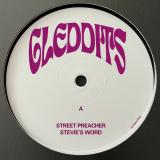
The Saint Wax label branches out with a new series of edits from founder Eduardo Barbi aka Gledd, who traverses funk, disco and soul across five irresistible cuts. 'Street Preacher' has a spoken word that reminds of early rap days paired with a rousing choral backing, then 'Stevie's Word' turns up the funk with a chunky bassline. 'Do It For Me' is another gospel-fuelled pumper with big stabs ramping up the intensity and then 'Under The Moonlight' is a classy disco stomper lead by florid and chunky funk in the drums. 'Your Love' is an excitable finish with big horns, bigger chords and even bigger vocals. It's big, basically.
Sorry We Play Vinyl makes no bones about their love of wax, and when they serve up music as worthy as this, then who can fault them? It's another anonymous offering with three cuts that traverse a wide world of sound. 'EDIT16' starts with an elephantine swagger and cow bells adoring a deep minimal sound next to woozy, aloof vocal musings. 'EDIT17' has a more ethnic groove that's clean and fresh, and this time the foreign-tongued vocal brings an exotic and eventually hypnotic charge that is sure to make this one a summer anthem with the heads. 'EDIT18' closes down with a psychotic melange of trippy vocals that are layered up in ghostly, spectral waves over a paddy rhythm. Brilliantly unusual.
20/20 Vision continues to flourish even well into its third decade. For its next trick, the Leeds label welcomes back Brett Johnson, who was last here 20+ years ago. Releases on Classic Records, DJ Heather collaborations and Derrick Carter championing his work all make him a bona fide house hero and 'Broken Machine' confirms it. 'Unstuck' opens with a mutating disco bassline that refuses to settle, while 'Juiced' dives deep into his signature boompty swing with a drop designed for pure devastation. The title track is the centrepiece - a trippy trip that stretches time entirely before 'iRemember' closes with starry-eyed ambient pads laced above a deep, slow, gorgeous groove. Sophisticated, playful and musical as always.
In the spring of 1971, somewhere between Brussels, Paris and a collective pop fever dream, Le Monde Fabuleux Des Yamasuki landed on vinyl. It sounded like nothing else then and it still does not today. More than half a century later, Sdban Records proudly presents a reissue of this singular cult album, available from April 3, 2026 on vinyl.
The album was produced by Jean Kluger and written both by Jean and Daniel Vangarde (aka Bangalter, later the father of Thomas Bangalter of Daft Punk), who were alreadywell ahead of their time, long before electronic music rewrote the rules of pop culture.
Released under the name Yamasuki, also referred to as The Yamasuki Singers, or The Yamasuki's, the project was never intended as a conventional band. It was a studio-born fantasy, a concept album disguised as a pop record. What began as a standalone single quickly expanded into a full-blown pan-cultural pop opera that ignored genres and common sense with joyful abandon.
Musically, the album sits at a delirious crossroads. Psychedelic pop collides with funk rhythms, samba and bubblegum melodies, full of chants and choruses in a phonetic pseudo-Japanese, written with the help of a dictionary. Kluger and Vangarde famously recruited a children's choir to perform the vocals, and for added spectacle, they brought in a Japanese judo grandmaster, whose ritualistic shouts and battle cries erupt throughout the record.
Several singles were released. One of them, Yamasuki, with accompanying dance move, appeared in the United Kingdom and France on John Peel's Dandelion label, a fitting home for a record that thrived on the margins of pop culture. Its B-side, Aieaoa, proved even more potent. In 1975, the song was reborn as A.I.E. (A Mwana) by Black Blood, an African group recording in Belgium, this time sung in Swahili. That melody would travel even further. Aie a Mwana became the debut single of English pop group Bananarama, and in 2010 it resurfaced once more as Helele, an official song of the FIFA World Cup, recorded by South African singer Velile Mchunu with Danish percussion duo Safri Duo. That version became the most widely known incarnation of the song. With Jean Kluger directly involved, it was less a cover than a continuation of the original idea.
The album's afterlife did not stop there. Over the years, Yamasuki has been quietly sampled, covered, and featured across media far beyond the realm of novelty pop. Kono Samourai was sampled in The Healer by Erykah Badu (2007), produced by Madlib, while Yama Yama has found its way into recent pop culture as well: appearing in the television series Fargo, on Angus Stone's project Dope Lemon, and on the 2008 Late Night Tales compilation curated by Arctic Monkeys drummer Matt Helders. Proof, if any were needed, that this strange little record carries a deeper musical DNA than its playful exterior might suggest.
This new reissue of Le Monde Fabuleux Des Yamasuki proves the renewed interest and respect for this cult album, faithful to the original spirit while finally giving it back the physical presence it deserves. In an era obsessed with genres and algorithmic neatness, Yamasuki still laughs, dances and karate-kicks its way past definitions. It reminds us that pop music can be playful without being disposable, strange without being cynical and joyfulwithout explanation. The world of Yamasuki was always fabulous, we are just lucky it found its way back to us!
What an unbelievable record. From the wild cover to the iconic breakbeats, Roots from Ian Carr’s Nucleus is one of the dopest albums we know. This is seriously thick, funky-prog jazz-rock heaven. Originally released on Vertigo in 1973, other than a couple of versions at the time for other territories, Roots was never re-pressed since so it’s gone on to become another one of those impossible to find records.
Maybe it was a little too out there for the time, but it’s aged very, very well indeed and this Be With re-issue, re-mastered from the original analogue tapes, shows off just why this deserves to be back in press.
Genius trumpeter and visionary composer Ian Carr was one of the most respected British musicians of his era. He was a true pioneer and saw the potential in fusing the worlds of jazz with rock, just as Miles Davis and The Tony Williams Lifetime did in the US. In late 1969, following the demise of the Rendell-Carr quintet, and tiring of British jazz, Carr assembled the legendary Nucleus. Regarding music as a continuous process, Nucleus refused to “recognise rigid boundaries” and worked on delivering what they saw as a “total musical experience”. We can get behind that.
Under bandleader Carr, Nucleus existed as a fluid line-up of inventive, skilled musicians. This constant evolution and revolution was all part of the continuous musical exploration and discovery that took jazz to new levels.
Working together with producer Fritz Fryer and engineer Roger Wake, the seven compositions by Carr, Brian Smith and Dave MacRae that make up Roots flirt with perfection, and Nucleus at that time made up of the cream of 1970s UK jazz with Brian Smith on tenor saxophones and flutes, Dave MacRae on piano and electric piano, Jocelyn Pitchen on guitar, Roger Sutton on bass, both Clive Thacker and Aureo De Souza on drums and percussion, Joy Yates delivering the vocals and of course Carr on trumpet.
The spellbinding title track immediately renders the album indispensable. Riding the illest of loping breakbeats, “Roots” is low-slung, doped-out heist-funk. An absolute monster. If it sounds familiar then that’s likely down to it being sampled by Madlib for Lootpack and Quasimoto’s “Loop Digga”, as well as by a whole host of beat manipulators. “Roots” conjures prime instrumental hip-hop / beat music, only 20 years ahead of its time. Truly, these are the roots. Through sinuous bass, twinkling keys and a hypnotic guitar riff, a smoky brass motif weaves its way into a gloriously deep haze around Carr’s solos. “Roots” is over 9 minutes long, but there’s not a single wasted second, not surprising given that this is a condensed version of an originally 40 minute long commissioned composition.
The soothing vocal fusion delight of “Images” follows. Meticulously constructed, with gorgeous flute work from Brian Smith, with Joy Yates’ silky vocals and Dave MacRae’s Rhodes never sounding better. The cool, driving “Caliban” closes out the first side. Originally the third movement in a four part commission to celebrate Shakespeare’s birthday it stands up on its own, all robust rhythms and blended brass. Keyboard colour and Carr’s trumpet are splashed across the funk drums and basslines (and there’s even some bamboo flute). This really is fusion: the elements of jazz and rock coming together in beautifully synthesis.
Side two opens in riotous fashion with the short, thrilling samba of “Wapatiti”. Next up, “Capricorn” forms a smoothed-out, jazzy constellation. Mellow and dreamy, its twinkling percussion and languid horns slowly build the vibe before head-nod drums and a killer bassline enter the fray. With a distinct heaviness that Black Sabbath would’ve envied, “Odokamona” is a venomous slice of riff-soaked jazz metal (yes, you read that right), elevated by Carr’s wah-wah horns.
The album closes with MacRae’s exceptionally cosmic “Southern Roots and Celebration”. Very much in conversation with Weather Report, it opens as a languorous, spiritual jazz of chiming keys and serene guitar that turns slowly, gorgeously into a mid-paced, brass-laced banger. It’s another sure-fire party starter and the sound of the band having a righteous blast, building an ecstatic chaos that ends with Yates screaming.
And of course we need to talk about Keith Davis’ cover for Roots. Perhaps the coolest record cover of all time? Certainly one of the most bonkers. Just your run-of-the-mill high-gloss, acid-tinged airbrush dystopian/utopian living-room party scene. Consider this your chemical flashback trigger warning.
Front-and-centre the hip-to-death green robot holds court with their giant ball of yellow barbwire wool, hooked up to… something(?) being teased out from under the stairs (probably best not to ask). A thoroughly zoned-out, long-legged Pop Art party-goer lounges half-plugged in to the painting behind her as a pair of legs flail into shot from the the top of the stairs opposite. We won’t even begin to guess what the chap’s up to in the middle, but the view out of the windows is rather nice, and someone’s already got the hoover out ready to tidy up. All of the Nucleus sleeves are something special, but this particular one? Crikey.
This Be With edition of Roots has been re-mastered from the original Vertigo master tapes, Simon Francis’ mastering working together with Pete Norman’s cut to weave their usual magic with these wonderful recordings. The crazy cover has been restored at Be With HQ as the finishing touch to this long overdue re-issue.
For more than 20 years, every CASPIAN album has been driven by a desire to stretch boundaries — a relentless ambition that's resulted in one of post-rock's most revered catalogs and established the Massachusetts quintet as an enduring, global force in the genre's modern era. On CASPIAN, the band’s first album in six years and debut for Wax Bodega, the more unexpected way forward was to stop searching for what they hadn’t yet done and instead trust what had defined them from the beginning.
The six-song, 39-minute effort draws freely from the musical vocabulary the band have spent their career writing: evocative melodic themes, dense textures, swelling crescendos and crushing heaviness that rolls in like a slow-moving storm on the horizon. But they still find new possibilities within those familiar contours, allowing patient development and repetition to carry as much weight as surprise. The nine-minute “Remain” turns a recurring melody into a sweeping study in tension and release, while “No One Left to Tell” layers subtle shifts around a hypnotic tremolo figure and “A Great Fire” sends serpentine guitars crashing into buzzsaw riffs. Even the graceful 3/4-time closer “Waltz for the End,” completed in a half-hour burst of inspiration, reflects the quiet confidence of five musicians comfortable enough in their skin to resist tearing everything down for the sake of reinvention, even as the circumstances surrounding them change dramatically.
For more than 20 years, every CASPIAN album has been driven by a desire to stretch boundaries — a relentless ambition that's resulted in one of post-rock's most revered catalogs and established the Massachusetts quintet as an enduring, global force in the genre's modern era. On CASPIAN, the band’s first album in six years and debut for Wax Bodega, the more unexpected way forward was to stop searching for what they hadn’t yet done and instead trust what had defined them from the beginning.
The six-song, 39-minute effort draws freely from the musical vocabulary the band have spent their career writing: evocative melodic themes, dense textures, swelling crescendos and crushing heaviness that rolls in like a slow-moving storm on the horizon. But they still find new possibilities within those familiar contours, allowing patient development and repetition to carry as much weight as surprise. The nine-minute “Remain” turns a recurring melody into a sweeping study in tension and release, while “No One Left to Tell” layers subtle shifts around a hypnotic tremolo figure and “A Great Fire” sends serpentine guitars crashing into buzzsaw riffs. Even the graceful 3/4-time closer “Waltz for the End,” completed in a half-hour burst of inspiration, reflects the quiet confidence of five musicians comfortable enough in their skin to resist tearing everything down for the sake of reinvention, even as the circumstances surrounding them change dramatically.
The track titles on Post Dub Cities – the new album by Adriano Zanni, photographer, sound artist, and field recordist – evoke the aftermath, that moment when a place continues to exist and live on, but no longer serves anyone. The human element has vanished, whether it happened overnight or through a slow abandonment that lasted for years. The perspective shifts: buildings, homes and palaces reveal a dimension of reality all their own, in which even the ruins give shape to this landscape that endures, transforming into pure presence.
This, after all, is our fate. The fate of us human beings, of our civilisation, of every civilisation: to pass away, to be forgotten, to erect monuments whose significance no one will remember once we are gone.
The opening track Crisopoli transforms the sonic dimension of a city into an echo chamber: a dark, urban dub built from delays and resonances, holding the imprint of what is no longer there — like a bassline that keeps vibrating even after its source has gone silent. What we see is not the presence, but its reverb.
Available from September 11, second excerpt Warosha gives us a minimalist, enveloping, solemn beat, like the symbols on a map that no one can read anymore. Warosha was the district of luxury hotels overlooking the sea in the city of Famagusta. After the island of Cyprus was invaded by the Turkish army, the entire area, emptied of its inhabitants, who had fled south, was fenced off and surrounded by barbed wire. No one has been allowed to enter it since 1974. Now, on these unspoilt beaches, sea turtles have found the perfect place to breed.
Fordlândia, on the other hand, is the symbol of Henry Ford’s failed dream of conquest. An industrial settlement built deep within the Amazon rainforest, several hours’ boat journey from the nearest towns, to gain access to natural rubber for the tyres of his mass-produced cars in Michigan. An extremely costly project, it quickly became a ruinous pipe dream: a town that has been uninhabited for almost a century and has since been reclaimed by nature.
For a long time now, Adriano Zanni has been exploring, through music and photography, the landscape that unfolds before our eyes, as attentive yet silent observers. As if we were absent, a civilisation that has long since vanished: human presence has dissolved, preparing to fade into oblivion. The precise depiction of places through field recordings, and the black-and-white imagery, give rise to apparitions, hallucinations, and memories. The less present we are, the more we seek meaning. We resist abandonment and the indifference of time.
In the ten tracks (plus three bonus tracks) of Post Dub Cities the echoes and reverberations of dub grant us access to an unknown future, as yet untold – in which we are nothing more than a vague memory. The deep sound guides us through a landscape that is familiar yet unknown, unrecognisable. The cold, distant, industrial rhythm resonates within us as if we were the last, all too aware, inhabitant of a now-deserted village.
Every place – be it an abandoned mining settlement on an island in Svalbard, or a ghost town in Pennsylvania evacuated following an underground fire that has been burning for sixty years at a depth of one hundred metres – leaves questions unanswered, shrouds itself in mystery, and makes us wonder, ceaselessly: what happened here?
In the end, we realise that we don’t really care that much about knowing the details of the disappearance. We can guess them, we’ve seen it happen a thousand times before. Just like in the photos accompanying the album, portraits of ghostly, deserted cities: Belgrade, like Venice, Dublin, Sarajevo, Lisbon, Kraków, Sofia, Naples, Hanoi, Lampedusa, Tehran. Unexpectedly, pleasantly emptied of people, and of their obsessions, struggles, illusions.
Then, suddenly, the crowd returns. Busy, feverish, hardworking. The record ends, the spell is broken. We feel a sense of longing for a future that has not yet come to pass, for a place we were only able to observe because we were not there.
Heavyweight psychedelic improvisers EarthBall are back with their third and most monstrous record to date: ‘Outside Over There’, released on Upset The Rhythm (Nov 7th). Born from the haunted basements of Nanaimo, Canada, the quintet thrives on spontaneity, shaping improvisation into jagged hallucinations and ecstatic eruptions.
Recorded live-off-the-floor in 2024 in Jeremy, Izzy, and Kellen’s basement, and mixed by drummer John Brennan, ‘Outside Over There’ is an album that feels both summoned and inevitable. Each track lands with uncanny purpose, as if uncovered rather than written.
The opener, 100%, features a cameo from comedian and English icon Stewart Lee, who lent his blessing for the band to use a fragment of his stand-up. The album was mastered by John Dieterich (Deerhoof), with liner text contributed by longtime comrade John Olson (Wolf Eyes). Olson describes the album in his unmistakable style:
“This eight-track odyssey unfolds like a dreamscape, where whispered incantations brush against the shadowy fringes of the cosmos, and wild, Cézanne-inspired rock anthems erupt like geysers of color in the midst of a western warm and wet rain storm… culminating in the sprawling eleven minute masterpiece, ‘And The Music Shall Untune The Sky,’ aptly dubbed the Earth Crusher. A creation so utterly deconstructed and intertwined with the pulse of nature itself that if AI was called upon to conceive ‘Outside Over There’ anew, it would just spit back, “F.U. in Tree Font”. An enchanting invitation for even the flat-earthers to join the circle, if only just a little.”
EarthBall’s trajectory has been relentless. Their 2024 album ‘It’s Yours’ was praised by The Quietus as “fully aggressive and fully life-affirming,” and by The Wire as "a boisterous mind-melting album”. The band’s live double set LP ‘Actual Earth Music Vol. 1 & 2’ (2025) captured blistering performances: a performance opening for Wolf Eyes at the Fox Cabaret, and a Café OTO improvised throw-down featuring Chris Corsano and Steve Beresford. These releases on their own confirm them as one of Canada’s most vital experimental exports, not to mention the impressive self-released discography on their Bandcamp. The band’s reach has stretched far beyond their west coast roots with a UK tour May 2024, plus this past June, EarthBall closed Montreal’s Suoni Per Il Popolo Festival alongside Pulitzer Prize-winning composer Raven Chacon. This November they will perform at Le Guess Who? Festival in Utrecht, with a European tour to follow (tour dates below). Outside of EarthBall, each member carries their own torch. Jeremy Van Wyck, founding member of the legendary Shearing Pinx, has toured extensively, released over 100 records, and has been a vital force in the Vancouver and West Coast underground for the past 25 years. He and Isabel Ford (Izzy) play together not only in EarthBall, but also in Psychedelic Dirt, Shearing Pinx, Behaviours, and Crotch.
John Brennan collaborates widely, including recently with Endlings (Raven Chacon and John Dieterich), Evichen (Victoria Shen), Francesco Fonassi, Plan Your Future (with Greg Saunier of Deerhoof), Brennan/Corsano duo and Physics with John Dieterich. Kellen Maclaughlin performs with KVMP and Ora Corgan, while saxophonist Liam Murphy is a west coast staple, playing with the best across Vancouver Island and the mainland. On three of the tracks of ‘Outside Over There’, the band is joined by their comrade Justin Patterson, who also plays with Brennan in the duo Modale. This cross-pollination fuels EarthBall’s sound - a collective improvisation, psychically overdriven, and grinding into bloom.
Outside Over There’ is more than an album though, it is a ritual, a gathering of sound at the forest’s edge; where feedback, saxophone screams, and ecstatic vocals dissolve the boundary between chaos and clarity. EarthBall invite you into their circle, to share in the joyful terror of spontaneous creation. ‘Outside Over There’ will be released on November 7th through Upset The Rhythm digitally and as a limited blue-in-black vinyl LP.
Acclaimed harpist and songwriter Mikaela Davis’ new album, Graceland Way (due TK via Kill Rock Stars), builds an expansive, kaleidoscopic neo-western dystopia from the cozy origin point—that duality compounded by a subtle exploration of light and dark, grace and struggle, rose and thorn, as well as the mystical power found at their meeting points. The “canyon country” epic born of that work is indebted to the titular street in Chevy Chase Canyon where she recorded the album, the lineage of Laurel Canyon, the mythos of Elvis’s Graceland, and Paul Simon’s restless reinvention. “At the end of the journey, the place you were destined for all along isn’t even a place, it’s a state of mind: Graceland Way,” Davis says. Featuring an unreleased Cass McCombs track (Mizmoon) as well as contributions from Karley Hartzman (Wednesday), Tim Heidecker, Madison Cunningham, Neal Francis, James Felice (The Felice Brothers), Clay Finch (Mapache) & Hannah Read.
Toronto in the spotlight again, as three of the city's finest line up in the shape of Ali Black, Sean Roman and Toronto Hustle. This outing for Selections is sublime deep house with a subtle nod to the smoother end of the garage spectrum. 'Shelter Me' has the sort of vocals that get you curling your lip, such is their emotional pull, while the drums are cuddly and the pads balmy to make for a perfectly immersive and calming sound. The Toronto Hustle Late Night dub beefs up the low end and makes it even more comforting and all-consuming, while the vocals become wispy infusions that are layered carefully into the mix. Timeless sounds.
On Last Night At Marienbad's latest, the imprint brings together three of the brightest souls found within the realms of Jazz, namely Mauricesax, 9ick and Milan93, with their collective talents synergising effortlessly on 'A Garden Between Us', alongside a stellar cast of remixers who add even further delight between the grooves….
As a genre, Jazz has perhaps lent itself the most to other musical universes, in that its curious heart, endlessly experimental nature, and parameter-defying spirit have wrapped itself deep within the core of countless albums, scenes, and music makers. It's a genre that welcomes reinvention, consistently defying its contents and always reaching out to find new methods of expressionism. Electronic music, in its many forms, has truly embraced Jazz perhaps like no other movement of music has, with a truly astonishing array of records surfacing in the past 40 years which have blended Jazz's unique motifs with grooves, chords, and emotive excellence. From 90s Jazz house and UR Techno, through to Future Jazz, downtempo, and Hip Hop, and around many other suns, there remains such an intrinsic and symbiotic relationship between the two musical realms that caters to those who wish to live music both within and out with themselves.
As practitioners of blending electronica and Jazz, few do it like the trio of Mauricesax, 9ick, and Milan93. All three are known for their distinctive soundscapes, yet share commonalities in terms of musical language, feel, and sense of progression. Bringing them together allows for overlaps in their sounds to emerge, and just like Jazz itself, this is where the intrinsicness of sound begins to blossom. 9ick brings his softly evolving vibe to the table, one which was so prevalent and celebrated on his 2025 album 'SMIL'; Milan93 draws from his focal point of exploring fill-laden grooves and a myriad of emotive sensibilities; and Mauricesax draws up his extensive musicality that exists at the corner of jazz, electronic, and experimental music, along with running musical workshops all over the globe.
'A Garden Between Us' represents the trio's core tenets, with this immediately obvious from the record's opener, 'Rhodora'. A gentle solo piano quickly evolves into a series of powerful rhythmic pulses, with brass lines bringing vitality and feel to proceedings. The track shifts gears with purpose, transitioning between musical vignettes of the highest order, with the synth work doing much to bind the transitions together. 'Tulip' emerges slightly differently, with glossy Rhodes tones and an unravelling rhythmic undercurrent setting an enthralling stage. The track flourishes amongst sweeping textures, coming up for air amongst a deeply hypnotic rhythmic section that holds on and never lets up. 'Honeysuckle' lands next, which sees the trio emerge with a boundless, dynamic soundscape. The drums shift within the undertones, as keys, chords, horns and hip-hop vocal samples dance around the pulse, capturing the imagination with their narrative-like placement. Wrapping up the A side comes 'Camellia'. A dazzling array of harmonic sounds converges around the transfixing rhythm section, which emerges from deep below to lavishly roll out over the midsection, with the delicateness of the instrumentation a real highlight here.
The B side features two exquisite remixes, with Pacific Coliseum's version of 'Tulip' landing first. Beginning with a signature four to the floor to get things going, his careful handling of the source material is seen in the tactful introduction of the blissful elements that made the original cut so impactful, with great focus placed on emotive fidelity. The result is a summer-bound house number that reimagines the original in all the right ways, flipping it into a euphoria-driven jazz-laden pacer that reaches for the heavens as much as it drives right into the heart. Teuteu then showcases their take on 'Honeysuckle', and at 9 minutes long, represents the longest cut on the record - and the experience is all the richer for it. Leaning heavily into dance music flavours, Teuteu shifts perspective totally into the realm of the club, with the walls beating hard to the kicks. The sax lines that drift ethereally up top keep eyes closed and souls full, as the dance shifts into the next phase.
An experience that drifts from the daydreaming, to soul-warming through to the club shaking - what else is left to experience, except for 'A Garden Between Us' and how it will brighten up life itself….
Across the past decade, KAS has established herself as a unique voice in experimental electronic music, a composer and synthesist whose work dissolves the boundaries between ambient electronica, contemporary classical, composition, and immersive sound design. Her new album “Ruin: It’s Not Just Music” arrives with a distinctive gravitational pull. The record moves with greater physical force, placing rhythm and impact at the centre of its architecture, revealing a more confrontational and embodied dimension of KAS’s musical language.
The first single “Ruin” arrives May 22nd, with the full album released October 2nd via SOMEONE SPECIAL the new label co-founded by KAS.
Where much of KAS’s earlier work explored harmonic environments, the forthcoming album is built around tension and release. Inspired by the sound of drum and bass, breakbeats fracture through dense fields of synthesis, percussive patterns and her signature melodic fragments – motions that feel closer to the kinetic language of club music than the meditative spaces often associated with her past catalogue. The result is a body of work that feels both recognisably hers and newly charged, music that moves through the body as insistently as it engages the mind.
For listeners who first encountered KAS through the glowing synthesis of “Ears” (2016) or the intricate experimental pop of “The Kid” (2017), this direction may feel initially surprising, yet the shift has been quietly unfolding across the past several years. KAS’s practice has steadily expanded beyond the expectations placed upon experimental electronic artists, moving between orchestral composition, audiovisual installations, film scoring, and large-scale commissions while retaining the unmistakable sonic signature that defines her work.
The 2022 albums “I Could Be Your Dog / I Could Be Your Moon” (2022) and “Let’s Turn It Into Sound” (2022) explored a deeply immersive approach to composition, expanded her reputation and instinct for constructing detailed sonic ecosystems while continuing to blur the lines between experimental electronics and contemporary pop structures. KAS’s most recent output has continued to widen that field including the rhythm oriented electronic album “Gush” (2025) and her return to more orchestral roots with “Thoughts on the Future” (2025). Together these releases underscored the breadth of her practice.
Her prolific collaborators and creative partners have ranged from Patti Smith and Suzanne Ciani to Danny Elfman, Tycho, Glass Beams, RY X, Caribou, Four Tet, Reggie Watts, and Max Richter, while her compositions have appeared in projects with Apple, Chanel, Meow Wolf, the BBC Orchestra, and major film and television productions.
On “Ruin: It’s Not Just Music”, that vocabulary becomes more kinetic than ever before. The record draws energy from jungle, drum and bass, and dance-floor focused electronic music while retaining the intricate synthesis and tonal curiosity that have defined KAS’s work from the beginning. The result is a record that feels equally at home within club culture, contemporary composition, and the experimental spaces that have long championed her artistry.
On May 27th KAS will present a major performance at London’s Barbican Centre alongside the London Contemporary Orchestra, marking the ten-year anniversary of her landmark album Ears. The evening will trace the arc of her creative evolution while also introducing material from the new album.
"Steve Watson's roots lie in Paramaribo, at that time the capital of the Dutch colony, where he won the 1975 Suriname Song Festival. This artist had a very strong connection with the music of his country, although unlike other artists - such as Max Nikman, for whom he acted as vocalist too - he performed his songs in English. Siegfried Boerleider, his real name, moved shortly thereafter to the Netherlands, where he also played in the groups The Backlot (with Laura Fygi and Rowan Moore) and Soul Conference. He released several singles on various labels, shaking off the "kaseko" music genre, which fused many different styles from Africa, Europe and the Americas, but considered rhythmically complex. He took time to move toward a simpler, yet well-structured, melodic genre in the recording studio, producing songs that were enjoyable to listen to on the radio and sensually danced to in the disco. With 1981's "Born To Boogie," we risk a seductive journey into the soul music of Suriname, which also possesses the fragrance of Dutch tulips. Then thanks to its charm, exploded in the Netherlands and subsequently in the world. Steve Watson - in addition to his personal style, rich in that simple and genuine expressiveness - also deserves recognition for his excellent songwriting, which led him to write for other Dutch artists, even though his two best songs are on this vinyl: "May Little One" and "Born to Boogie", ....the latter title has never been more fitting !!! Listen to it and go crazy !!!"
SECOND REISSUE ON THIS HEAT’s OWN NEW IMPRINT FOLLOWING ‘THIS HEAT’ (TH01LP) WHICH WAS UNCUT ‘REISSUE OF THE MONTH’ RECENTLY WITH 9/10 REVIEW + 4-PAGE FEATURE WITH Q+A.
*24 bit/96 kHz re-master from original analog tapes.
*Heavyweight 180gm vinyl and heavyweight sleeve with pantone printing to match original 1979 release.
Simon Reynolds on Health and Efficiency:
“For some fans, Health and Efficiency is This Heat’s peak achievement – their most concentrated blast of visceral intensity and wayward experimentalism….Lead track “Health & Efficiency” combines fierce angular rock that fully lives up to Cunningham’s belief that This Heat could become a postpunk King Crimson, with a multi-part babble of vocals, clattering percussive timbres, and found sounds.’’
Flipside “Graphic/Varispeed” is more subdued and hypnotic: a wavering tonescape whose duration depends on whether you play it at 45 rpm or 33 rpm. This reissue reproduces the original release’s striking cover image of a human figure painted in blue by Pete Cobb, along with the cryptic flipside of text in many different languages.
Although widely considered to be Post-Punk’s finest, This Heat actually began performing and recording their music in 1976, the early days of London’s punk era. Within their two albums and an EP they perfected a strange and volatile new strain of avant-garde rock that time has proved to be massively influential, a blueprint for much that would follow: post-rock, math rock, homemade musique concrète, experimental electronica. Numerous critics have recognised the band's influence on the music of Sonic Youth, Glenn Branca, Steven Wilson, Public Image Ltd., Radiohead, Swans, Shellac, Young Knives, Black Dice, Lightning Bolt and numerous other experimental and post-rock bands.
Disbanding in 1982 they have left an undeniable legacy that has only continued to grow in stature and relevance.Having recently passed the 50 year anniversary of their first gig, and the recording of material that appears on their debut album, the group’s surviving members Charles Bullen and Charles Hayward, true to their DIY roots, have set up an imprint to release their recordings for their growing fan base that is increasingly recognising their influential place in music history.
‘They went beyond punk before punk had properly started…the entire album is a controlled explosion of ideas. Nearly fifty years on, This Heat’s debut is something the world has still not completely caught up with.’ - Simon Reynolds
‘Over the years, there have been bands to play as aggressively, or even as strangely, but very few have been able to rise from their collective influences and histories to create music so singularly distinctive and inspiring.’ – Pitchfork 9/10
‘This Heat sounded like the future then ... and still do now.’ - Dan Snaith (Caribou)
‘This Heat had a certain kind of force the post-punk bands were unable to adequately control without falling foul of rawk excess, and which the punk bands—albeit blitzing and rowdy—were too basic in form to build.’ – John Calvert , The Quietus
There's something about summer that makes everything fall into place. Maybe it feels even more significant to us, especially if you know MM Discos through its Balearic leanings. It's that time of year when the whole scene reaches its peak, with everyone dreaming of being in Ibiza-or at the very least, somewhere on a forgotten beach or island in the Mediterranean.
For that very moment, Desert Island Disco make their MM Discos debut with a record tailor-made for the summer of 2026. Splitting their time between London and Lisbon, the collective have already shown a deep affinity for African-rooted midtempo sounds through releases on Shades of Sound and Mister T Records, alongside a steady stream of sought-after self-released edits on their Bandcamp.
This time, Desert Island Disco dive headfirst into South Africa, drawing deeply from the worlds of Kwaito and Bubblegum to deliver a record steeped in the warmth, groove and unmistakable spirit of both genres.
From its South African foundations, *World View* reaches far beyond, weaving together tropical textures, Caribbean flavours and Balearic sensibilities into something fluid and difficult to pin down. A borderless collection where geography becomes secondary to feeling, yet every track remains firmly rooted in the dancefloor.
Keen listeners who have dug below the surface of Oren Ambarchi"s triple-digit discography know that alongside hypnotic minimalism, veins of irreverent and joyously wayward exploration run deep. Cooked is something of a landmark in Oren"s work, bringing this gloriously cuckoo sensibility right into the heart of his most high-profile solo work. Carrying on the grand Ambarchi tradition of meticulously constructed all-star studio jams (which reached new heights with Shebang), Cooked brings together collaborators from Australia, Germany, Japan and Sweden for two side-long epics where the foot keeps tapping even as the mind boggles. Cooked is a long way from the spacious, light-dappled grooves of Ghosted, but Oren"s Swedish bandmates play starring roles here, with Johan Berthling"s double bass anchoring both sides, and drummer Andreas Werliin lending his delicate touch to the second piece, "Sleight of Hand". Beginning with glistening layers of electric 12-string guitar, "Sleight of Hand" takes some key cues from electric Miles touchstones like "Feio" or his epic take on David Crosby"s "Guinnevere", with Berthling"s sparse basslines punctuating an almost weightless cornucopia of shifting detail, glimmering with subtle contributions from Michiko Ogawa on sho and James Rushford on a panoply of acoustic keyboards. Suddenly, everything is overwhelmed by a knotty, hyper-complex "solo" from Marcus Pal on digital synthesis, teleporting us to an alternate history where Allan Holdsworth traded the SynthAxe for Xenakis" UPIC. Building with additional drums and percussion from Will Guthrie to a peak of sizzling intensity, the music then goes sideways into a gently surreal coda, where some distinctly Zawinul-esque chords and Fredrik Rasten"s guitar float over a sprightly rhythm box, the avian inventions of Swedish virtuoso whistler Isak Hedtjärn wafting atop the sunlit stew.
Born in São Paulo, Caetano Malta embodies the vibrant creative energy of one of Latin America's most dynamic cities. A singer, songwriter, and multi-instrumentalist, he has spent more than twenty years crafting a distinctive musical universe shaped by Brazil's rich and diverse traditions. Tropicalia, MPB, Afro-Brazilian rhythms, psychedelic folk, and contemporary pop blend seamlessly in his work with effortless elegance.
Over the years, he has become a highly sought-after collaborator. Since 2004, he has performed with numerous leading Brazilian artists, including Lucas Santtana, Bixiga 70, Karina Buhr, and many others. After two decades of international touring, he eventually settled in Paris, where he became the guitarist for Flavia Coelho, Luiza, Guts, among others. As a songwriter, he has also co-written with artists such as Lucas Santtana, Wado, MOMO, Rubinho Jacobina, and Arto Lindsay.
With Eterna Juventude, his long-awaited debut solo album, due for release in autumn 2026, Caetano Malta reaches a new artistic milestone. The record reveals a radiant songwriting style where harmonic sophistication, organic rhythms, and instantly memorable melodies come together naturally. Filled with joyful energy and deep tenderness, Eterna Juventude celebrates imagination, movement, and childhood's unique ability to reinvent the world. It is a remarkably accomplished debut, showcasing an artist whose singular voice and musical identity are already fully formed.
The year was 1989, and Derrick May was at a creative peak as both a DJ and producer. Under his Rhythim Is Rhythim moniker, he released a string of landmark records on Transmat, while his residency at Detroit's The Music Institute showcased the distinctive DJ style that would soon take him onto the international stage. Around the same time, he hosted a weekly radio show on Detroit radio station WJLB, alongside influential programs by The Electrifying Mojo and The Wizard (Jeff Mills).
For one of these broadcasts, May assembled a 15-minute megamix in his studio during the week leading up to the show. He opened his radio set with this continuous mix, blending his own tracks and versions into a seamless introduction that reflected his approach to DJing at the time. It includes unreleased versions of classics such as ‘Nude Photo 88’ and ‘Strings Of Life’.
‘All of this is unreleased because I made it as I was playing it on the spot as a special Mayday Mix for my show on the radio station WJLB in 1989, edited together straight from the keyboards live to tape. There is no other recording of these tracks in this form, only here’.
The original WJLB master tapes have since been lost, and no official recording is known to survive. Fortunately, many listeners recorded the broadcasts at home. One such cassette, preserved by Richie Hawtin, eventually made it our way. It has been carefully restored and mastered, with the artist’s approval.
To highlight this remarkable document of techno history, the recording is now available as a limited-edition, one-sided 12-inch release. The mix has been cut as a continuous side, visually divided into eight sections, while the reverse features a custom engraving.
The premise of this compilation is simple: music we’d like to hear at the airport.
The idea came after learning that Honolulu’s international airport has been playing AI-generated music over its speakers since November 2025. First reported by Civil Beat, the news has caused frustration and disappointment among residents and visitors, as well as within the local music community.
Everyone knows Hawaii is one of the most musically rich regions in the world — why then is the airport using AI music? 'Music For The Airport' is our response.
Located in the middle of the Pacific at the outskirts of one the most remote cities on the planet, Honolulu’s Daniel K. Inouye International Airport (HNL) is for most people the first place they encounter when they arrive in Hawaii. Warm sun, tropical tradewinds, playful palm trees and majestic mountains welcome every traveler, as do the sounds of birds, familiar music from Hawaiian artists like Aunty Genoa Keawe and Israel Kamakawiwo’ole, and—at least for now—seventeen “island-themed” AI-generated songs.
In late 1977, while sitting in Germany’s Cologne Bonn Airport on a Sunday morning, Brian Eno noticed how terribly uncomfortable he felt hearing the airport’s “muzak” overhead. For a harried, hurried place like the airport where travelers scramble to their gates, stand in long border control lines, and wait impatiently for their luggage at the carousels, music can create more anxiety than calm. Asking himself, "What should we be hearing here?", Eno soon created ‘Ambient 1: Music For Airports’, a sonic remedy aimed at reducing nervousness in public spaces.
When we heard the news that HNL airport is playing AI-generated “muzak”, we were immediately reminded of Eno’s genre-defying 1978 album. And we were similarly inspired to react. But how? Recreating an ambient masterpiece wasn’t in our wheelhouse. We started digging through our catalog of licensed music which we haven’t yet re-released. We quickly realized this was our chance to highlight some of favorite songs from the so-called CD era: the 1990s and 2000s (with a few exceptions). In less than 20 minutes, we pulled 17 original songs recorded by local artists between 1984 and 2017.
The speed at which this project came together surprised us; reactionary gut instinct often produces swift and lasting results. Ironically, our new compilation likely took less time than it did for the state Department of Transportation to commission its AI songs in question. But even though ‘Music for the Airport’ came together in less than one week, the truth is that this collection of 17 songs is the result of years of hard work, trust, sacrifice, patience, and understanding. Building relationships with and licensing music from artists doesn’t happen overnight, but more importantly: these songs are the result of people pouring their hearts and souls into something they believe in. This music wouldn’t exist today without the artists and their loved ones who supported them along the way.
As of this writing, the DOT states its intention in creating AI-generated songs is to “highlight different aspects of the islands, aviation and the airport” and that “no state funds were used to produce them”. Okay, but at what cost? Technology disrupting the music industry isn’t news to anyone. AI music in public spaces are cost-saving measures, since its users (airports, for example) don’t have to pay the licensing fees typically required, which can be a worthwhile source of revenue for artists. But what happens when a place like HNL airport, which hosts more than 21 million passengers annually, uses music created by machines instead of people to represent Hawaii? The identity of a place beings to erode, diluted by a language learning model’s conceptual summary of what a people and its culture sounds like. To echo Brian Eno: what should we be hearing here? In other words: what should the music of Hawaii sound like?
We believe in the power of music, especially when it comes from the soul. We believe in supporting artists, especially as AI disrupts our lives. We believe that Hawaii must be represented authentically, especially when it comes to song. And of course we believe in vinyl, especially since it was a record from 1978 (Mackey Feary Band’s debut LP) that inspired Aloha Got Soul’s origins in 2010.
We hope you find as much joy in this compilation as we have. Perhaps it’ll soundtrack your next journey to Hawaii. At the very least, we hope some people take a moment to hear these sounds: in your headphones for now‚ maybe someday overhead at the airport in Honolulu.
There is a hush most of us only knew as children, the warm drift between familiar household sounds and being carried to bed, a place that belongs to you and to some self you have not met yet. June McDoom’s debut full-length, Follow the Light, lives in that dream space and then keeps walking, slipping out of time and waking somewhere new, barely familiar enough to feel like home yet wholly your own. She came up in a Jamaican household on the edge of the Florida Everglades, an existence built of extended family, communal care, bass and harmonics. Her father, a carpenter and a student of sound, built his own speakers and kept three sound systems going across as many rooms. His low end would rise through her bedroom floor like some wayward cat while she lay above it with folk records, finding harmonies that were new and hers alone. Two musics in one room. Lushness as past and premonition. She found folk on her own, somewhere between the cast recording of The Sound of Music and Simon and Garfunkel, while everyone around her called it sleepy music. She did not mind being the only one. The solitude let her fall for harmony first, before words, before anything else, and harmony is still the thing she reaches for. Generationally speaking, the music was already in the air. Her grandfather, Colin Smith, is a distinguished mento man who played banjo and guitar and built his own rumba boxes, worked to keep Jamaica’s oldest acoustic folk form alive. Mento is the root of all of it: ska, rock steady, reggae, dub and everything after. He is the one who put a guitar in her hands. An inheritance, a gift and a map. Even her name is part of it, though she will tell you she landed on it more by feel than reason. She records as June McDoom, born Alyssa, June being a nickname one of her grandmothers, Joan, went by, a name she thought was cool to carry and simply liked the sound of. An etheric channel that reverberates all the same. A dub all its own.
Made slowly and by hand with her longtime partner Evan Wright, Follow the Light lays the harmony of folk over the rhythm of dub, with Dionne Warwick, Minnie Riperton, Pentangle and the washed guitars of Cocteau Twins haunting its outer edges. Voice and guitar seeking each other out first, then everything else stacked across long days in the studio they keep at home, restraint kept on purpose. The lead single “Without You” is the whole method surfacing, split open and sparkling like a geode in a creek bed. Angelic heroics, and nothing less.
At the heart is family. Her grandmother Aggie, the light behind “Memory,” guiding still. And underneath, the quieter truth the record keeps: none of us are only one person, but a continuum of selves, the ones who shaped us and the ones we have yet to meet. Future you is an ancestor your current self gets to greet. Press play and the same invitation is yours: A few minutes out of time, a place that turns familiar the longer you stay until you surface somewhere new and find it was yours all along
Few records sit between genres as confidently as Schöneberg. Not quite techno, not quite trance, not quite house, and precisely because of that, instantly recognisable as something of its own. Originally released in 1993 as part of Marmion's Berlin E.P. on Superstition Records, the track became one of the defining anthems of early European club culture, championed by Tony De Vit at London's legendary Turnmills Trade events and played in the best clubs across the UK, Benelux and beyond.
Schöneberg grew directly out of the duo's DJ sets at the Bunker in Berlin-Mitte. Between techno and trance, Mijk van Dijk and Marcos López were looking for a common ground. The track was recorded in a single night, the result of that search. Its defining details were deliberate: the hi-hat arriving unusually late, the short disorienting break that became a trademark. As López puts it: "For me the piece is still a condensed version of an entire DJ set."
In 2023, Superstition marked the 30th anniversary with a 21-track remix collection spanning three decades of reinterpretations. Now the track returns to vinyl, focused and stripped back to three versions: the original 1993 mix, the in itself legendary Marmion Remix, and the interpretation by DJ T., appearing on vinyl for the first time.
Pressed on orange coloured vinyl, this 2026 reissue sees all three versions carefully remastered from the original sources and newly recut for vinyl, bringing renewed depth and clarity while preserving the character that made Schöneberg a classic.
There is a hush most of us only knew as children, the warm drift between familiar household sounds and being carried to bed, a place that belongs to you and to some self you have not met yet. June McDoom’s debut full-length, Follow the Light, lives in that dream space and then keeps walking, slipping out of time and waking somewhere new, barely familiar enough to feel like home yet wholly your own. She came up in a Jamaican household on the edge of the Florida Everglades, an existence built of extended family, communal care, bass and harmonics. Her father, a carpenter and a student of sound, built his own speakers and kept three sound systems going across as many rooms. His low end would rise through her bedroom floor like some wayward cat while she lay above it with folk records, finding harmonies that were new and hers alone. Two musics in one room. Lushness as past and premonition. She found folk on her own, somewhere between the cast recording of The Sound of Music and Simon and Garfunkel, while everyone around her called it sleepy music. She did not mind being the only one. The solitude let her fall for harmony first, before words, before anything else, and harmony is still the thing she reaches for. Generationally speaking, the music was already in the air. Her grandfather, Colin Smith, is a distinguished mento man who played banjo and guitar and built his own rumba boxes, worked to keep Jamaica’s oldest acoustic folk form alive. Mento is the root of all of it: ska, rock steady, reggae, dub and everything after. He is the one who put a guitar in her hands. An inheritance, a gift and a map. Even her name is part of it, though she will tell you she landed on it more by feel than reason. She records as June McDoom, born Alyssa, June being a nickname one of her grandmothers, Joan, went by, a name she thought was cool to carry and simply liked the sound of. An etheric channel that reverberates all the same. A dub all its own.
Made slowly and by hand with her longtime partner Evan Wright, Follow the Light lays the harmony of folk over the rhythm of dub, with Dionne Warwick, Minnie Riperton, Pentangle and the washed guitars of Cocteau Twins haunting its outer edges. Voice and guitar seeking each other out first, then everything else stacked across long days in the studio they keep at home, restraint kept on purpose. The lead single “Without You” is the whole method surfacing, split open and sparkling like a geode in a creek bed. Angelic heroics, and nothing less.
At the heart is family. Her grandmother Aggie, the light behind “Memory,” guiding still. And underneath, the quieter truth the record keeps: none of us are only one person, but a continuum of selves, the ones who shaped us and the ones we have yet to meet. Future you is an ancestor your current self gets to greet. Press play and the same invitation is yours: A few minutes out of time, a place that turns familiar the longer you stay until you surface somewhere new and find it was yours all along
For more than two decades, AJJ has been writing albums that attempt to make sense of an increasingly confusing world. And the Arizona band has repeatedly succeeded, somehow managing to find the small traces of hope and beauty buried in the wreckage of a decaying planet. But on their ninth album, Dirty Old Power, they are coming to terms with the fact that they may no longer have the words to express it all. In fact, the proper words of communication may not even exist anymore.
Dirty Old Power takes stock of this surreal moment in American history where the post-World War II power structures of capitalism have given rise to full-on techno-fascism, and where humanity is being displaced by data centers, VR headsets, doomscrolling, and artificial versions of our loved ones.
To capture the disparate array of unique styles that make up Dirty Old Power, AJJ returned to Animal Rites studio in Los Angeles to record with their pal, Grammy-winning producer John Congleton, who also produced 2014’s Christmas Island and 2016’s The Bible 2. And for the cover artwork, the band turned to Winston Smith, the legendary visual artist known most famously for his iconic designs and logo for Dead Kennedys.
R.M.F.C. sound like? Let’s stay with the overused descriptors – I think R.M.F.C. is rock music band, more specifically a post-punk band. Indulge me. If you could say anything about post punk it means post-Wire, who were past punk before punk had an opportunity to codify and become everything brilliant and stupid that we’ve spent 40 years unpacking. Wire’s opening Pink Flag jab – Chairs Missing straight – and 154 hook knockout has haunted the mixing desks of ambitious post-punk bands since, and every major city in the western world has at least one Pink Flag band, one Chairs Missing band, one 154 band. Few bands manage to sound like all 3 records, but R.M.F.C. are a Rock Music Fan Club...
Anyone paying attention to underground Australian guitar overdose would relate: the R.M.F.C. Club Hits LP has been the culmination of five years of work, patience and discipline. If you’ve heard these songs live at any of their shows over the past couple of years you’ll understand – the wait is over and the result is exhilarating.
‘Bands like Devo, The Fall, and The Birthday Party have set the way for this type of post-punk rock (all in their own way). Surely, also, the rock scenes of the past fifteen years in Australia have also been influential. Thinking of bands like Royal Headache, Dick Diver, and Eddy Current Suppression Ring, there’s even been a fairly recent tradition of expanding styles of rock and roll (let alone the bigger, famous rock-centered acts). The Sydney based R.M.F.C., and the scene (or friend circle) from which it’s emerging, is carrying a torch of rock music which has the potential of a wider appeal.’ - POST-TRASH
The duo Jolie Gentiane come to us straight from a wild and unpredictable mountain peak, a perched place far from civilization, where the beauty and cruelty of mother nature reign but harmonize the elements. They walk the high, steep paths, looking down on the chaotic and industrial world. This increasingly smoky world, which, from the top of the mountains, looks metamorphosing dangeroulsy, but would only need a few changes to make it less crazy. Or perhaps infinitely more so. Jolie Gentiane is a skilful concoction of sound and daring. Unclassifiable, impalpable, the contemporary embracing the tradition and the acoustic swinging with the electronics. Autotuned/vocoderized vocals, 4th world, kitsch sax, psychedelic arpeggios, acoustic guitar, techno, it's all there: the story told by Jolie Gentiane on this album is rich and complete. Nature, love, celebration, struggle, work. Yes, even work. Because the energy deployed to create this album was surreal, patient, extremely methodical, and the abnegation of the protagonists has been vertiginous: the cliff of the highest peak is finally climbed. This album is like an ode to the earth, to the respect we owe it, an ode also to music in its purest essence, that which does not confine itself to borders, but shout for federation, dance and uprising.
The sun sat high above the desert outside Joshua Tree on October 17, 2024, baking the rocks and shrubbery outside the Farrington Observatory as a small group of invited guests ventured up a steep path towards the telescope. Kyle Simon, the artist and printmaker who founded the Observatory, was standing outside the print studio sat below the towering cylindrical building, greeting friends alongside his wife Sarah and lifelong friend Brian Weitz, the musician widely known as Geologist of Animal Collective. Simon and Weitz had spent the previous day testing and retesting a system that would transform the light of the oncoming full moon captured by the gigantic telescope into a signal that would modulate the control voltage of Weitz’s modular synthesizer. As the sun dipped below the horizon line, the audience gathered on a small wooden patio surrounded by speakers while Weitz readied himself behind the array of patches and knobs. Simon addressed the group, presenting the history of The Sirens, the sonic exploration of the night sky’s mystical and scientific significance about to unfold.
The music conjured under the Hunter’s Moon that night is now documented on this first official release of The Sirens, which was conceived by Simon and Weitz as a recurring performance piece and sound installation. Over a decade ago, Simon began immersing himself in literature on humanity’s sonic relationship to the celestial realm, including Homer’s Odyssey, Plato’s “Spindle of Necessity, ” Kepler’s Harmonices Mundi, and the field of astroseismology. He fitted homemade telescopes with photodiodes and optical sensors to make the images audible, finding latent patterns in the noisy sonic signals he began receiving from the stars. With Weitz, the process expanded as the signal was routed through an analog amplifier and set to modulate the pitch, filter, and other elements of his synthesizer. Together they developed a system of improvisation, with Simon adjusting the telescope to change the intensity of the light based on its relationship with the moon’s position (imagine a theremin player moving their hands in subtle, meaningful motion), and Weitz responding to that input in real time: bending it, amplifying it, or letting it stand on its own. The duo debuted the piece at the Integretron in Joshua Tree in 2018, providing a crucial proof of concept for the performance at Farrington featured here.
The first thing the listener hears on The Sirens is the opening of Farrington Observatory, the cranking of motor and metal. As the lens of the telescope is exposed to the evening air, a wavering drone emerges from the synthesizer, flickering at the margins, the tuning of the oscillators adjusting to the rapidly cooling desert air. The piece progresses and the drone becomes a luminous, spherical constant, bathing the listener in pure tone as Weitz draws out harmonically ambiguous melodies that spiral upwards. Electronics crackle and convulse, coalescing into dense dissonance before widening out into an open octave. Just as the moon orbits the Earth and the stars shift as the planet rotates, so each sonic element appears in flux, interrelationships slowly forming and falling away. Divided into two parts, The Sirens flows as a continuous conversation between the artists and the starlight completing its thousand-year journey across the galaxy.
The Sirens belongs primarily to a lineage beyond music: of sea captains navigating by looking skyward, of astrophysicists studying the formation of the Milky Way, of the modern myths of werewolves, of the stories embedded in constellations. As Simon writes in the album’s extensive liner notes, “These stories and explorations reveal a collective yearning to become conscious of our connection to the universe, our deep-seated desire to understand how we fit into it all.” This music underscores the history of the night sky as the place where poetry and science find common ground, where exploration hinges on the imagination. Driven by curiosity and ingenuity, Weitz and Simon look up and wonder.
A collection of vinyl and limited digital releases, curated by Millsart, an alias of Jeff Mills, of his most eclectic and transcendent compositions that derive from his Every Dog Has Its Day project as well as new unreleased works. Vernacular creations that fall off from the "other side" of the Electronic Music tree, this project is designed for the experienced Techno music listeners, and its goal is to reflect upon the pure artistry of the craft of storytelling. A realization between music and life. Whereas "dancing" is the goal of Dance Music, the goal of this music is about "reflecting on the complexity and simplification of life".Soundtracks for people in their evolutionary process.
This release 'Drifter' is about 'Hype'.
Hype
An animal that prowls on the vulnerable - it excites those who might be looking the other way or with their eyes and minds wide shut.
What is life without hype?
As a transitional tool, hype can be most effective especially when impulse reactions are at play. Something of a psychological currency, there is a lot to gain by giving people what they want - the rush that comes with taking part in a process of making something bigger, more successful and more preferred. Even if there is nothing there.
What's wrong with getting exciting about something?
There are only a few rare masterclass cases that have lasted a lifetime.
As Andy Warhol proclaimed that "everyone will be World famous for 15 minutes" rings darkly true in an era when each one of us can be the talent scout, artist, critic, audience.......and then a revisionist, hoping to bring hype back again by reminding people how great the first round felt.
We are all free to use our attention and time anyway we please. This is the freedom we have, right?
In most cases, we wake up and at some point, the question of justification becomes a debate between those who found unconditional solace and those who re-discovered the subject of substance and "kicked the tires".
Should I care if others like or dislike something?
For some, the hype of something never ends. It hardens and becomes part of a foundation like a cement podium. Something to be stood on to speak over all dissenting voices.
Jen Cardini & Shonky revive their 20 year old anthem August In Paris with remixes from Kasra V, Jennifer Loveless and Jump Source.
Originally released on Mobilee Records in 2006, Jen Cardini and Shonky’s record ‘August In Paris’ remains a defining statement from the minimal era. Ahead of its time upon release, the record distilled the genre to its essentials, bleeps, hypnotic grooves and impactful vocals, unfolding with the kind of restraint that continues to resonate two decades on.
To mark its 20th anniversary, ‘August In Paris’ returns with three distinctive reinterpretations from Kasra V, Jennifer Loveless and Jump Source plus a re-release of the original coming out on Jen Cardini’s formidable label Correspondant. As well as this Jen Cardini and Shonky will be playing an All Night Long set at Paris nightlife institution Rex Club on 29th August. Look out for merch on the night too.
Speaking about the project Jen Cardini discussed: “It is crazy to think this was two decades ago and that Shonky and I are still touring and sharing our love for music. For the anniversary, we decided to bring this special track to light again’.’
Each remix approaches the source material from a different perspective while preserving the essence of the original.
UK DJ and producer Kasra V leans further into the track’s skeletal framework, blending his signature sultry sonics into this hypnotic chunky groove to produce something entirely new but familiar.
Jennifer Loveless, an unearthed gem when it comes to production, strips things back even further, delivering a rough and tough uncompromising club version primed for sweaty dark dancefloors, it perfectly encapsulates the original without overshadowing it.
Closing the EP, Montreal duo Jump Source, Priori and Patrick Holland, take the record into more left of centre territory. Their version stretches the original into a warped, slow-burning electro excursion, perfectly suited to the blurred edges of the after-hours.
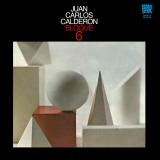
“Bloque 6” (1968), by Juan Carlos Calderón, is a landmark in the history of modern Spanish jazz, quite different from the later phase of his career, when he incorporated elements of fusion under the influence of funk, disco, and even flamenco. For the recording of this album, he was joined by prominent Spanish jazz musicians such as Pedro Iturralde, Vlady Bas, and Pepe Nieto.
In the United States, it was awarded Best International Jazz Album in 1969 and reissued on CD by Blue Note many years later.
It's hard to explain an album when one listen is enough. All the more so with MaMaMa: there's no room to stay passive. Listening to his new album, EST, means immersing yourself in an atmosphere that's softly psychedelic, comforting and organic all at once. A dreamy, electronic pop that proves this Strasbourg-at-heart, Paris-by-adoption musician, arranger, singer, songwriter and producer never stops reinventing himself. After changing his name — formerly Petit Prince — and delivering two critically acclaimed albums ("MaMaMa-gnificent." / "Hooks you carry in your head for a long time" / "sumptuous arrangements"), Elliott Diener now offers an even more sincere record. Real songs in French, after two albums where production sometimes took up all the space: "when you make heavily produced music, once you strip away the layers of sound, there's no fruit left underneath. On EST, I don't need makeup for the songs to work," he admits.
That's what this new album is about: the song and the French language first, then the pleasure of sound. An album less concerned with talking about its own making, more inhabited, more embodied, within a contemporary folklore. With this new album, don't expect to be bored: EST is his best record yet.
No pretense
Entirely conceived in his studio in Pantin — a room of his own, at last — imagined as a space free of any daydream, open to every sonic landscape, MaMaMa offers a record that's both hazy and downy soft. Often composed very early in the morning, it has become nostalgic without being dark, melancholic without being sad, with a few lineages showing through: Flavien Berger, Moodoïd, Feu! Chatterton for the taste for words and unease, Mount Kimbie for the approach to sound and rhythm. Unsurprising, given that EST was finalized with the British duo's producer. Live, MaMaMa is preparing a show in the style of Nicolas Jaar or UTO. Hypnotic and immersive.
The most liberating thing is that EST is an album without pretense. With it, we move through perseverance (in Aussi loin qu'il tiendra debout), the small arrangements we make to avoid facing reality (Tout sauf la vérité), and the fragility of bonds we thought were solid (Si bien ensemble). We also touch on lasting conflicts with the people we love (Anywhere You Are, There You Are), misunderstanding (Elle me parle une langue), and the erosion of friendships (S'envoler). EST draws an intimate and redemptive map of human relationships, in a body of work that's both lucid and sensitive — like when he also addresses social masks such as filial love (in Beau garçon, dedicated to his son) or relationships that have become impossible.
"It's really the album that sounds most like me, in terms of sonic landscape," Elliott points out. A record that rises above the noise of an imperfect, shifting world — like us — joyful in its words, liberating in its production. A true gem.