On the West Coast, gangsta rap held sway in hip-hop as the 21st century began. The alternative and conscious rap music of the early-to-mid-90s had all but faded into the underground. The scene was set for a comeback, perhaps as a backlash to the perceived violence and misogyny of gangsta rap's content. Leading the resurgence of alternative hip-hop were groups like Jurassic 5, and recentsignees to Capitol Records, a West coast trio that had been building steam underground since the early 90s called Dilated Peoples. Anticipation was high for the release of the debut album from Evidence, Rakaa, and DJ Babu. (Of the influential turntablist collective Beat Junkies.) When The Platform arrived in May of 2000 it was met with critical and underground acclaim, as well as affording Dilated Peoples their first Billboard chartings. It featured a back-to-basics sound with a heavy debt to the old-school hip-hop ethos, the kind of sound that harkened back to the early days of legends like De La Soul & A Tribe Called Quest. Hits like "No Retreat" and "The Platform" were bolstered by Evidence & Rakaa's subtle, abstract wit, and swift, adroit wordplay, while DJ Babu provided production chops and dextrous scratches. On The Platform the trio were joined by the likes of B-Real, Tha Alkoholiks, Everlast, Planet Asia, and many more providing guest vocals, while boasting guest production from The Alchemist & Kut Masta Kurt, among others. Since its 2000 release this influential record, which heralded the return of alternative hip-hop, has never seen a vinyl reissue. With that, Get On Down-always on top of giving the greatest hip-hop albums their due-is proud to present this re-release of The Platform. The rhymes are still fresh, the production is still pristine, and the album is now back on vinyl for the first time in 17 years.
Performing throughout the 1980s as Art Carnage to the gloomy hipsters of Portland, Attilio Panissidi III decided he needed a vacation. The result of his creative escape became Art Takes A Holiday, an album of fabricated FM synthscapes and MIDI environments that embrace elements of smooth jazz, new age, and pop.
Attilio had been playing in bands since he was thirteen, and had opened live shows for countless acts, from The Shangri-Las to Bruce Hornsby. The experience of producing, performing, as well as years spent writing for local music magazine The Downtowner, earned Attilio a gig to score a commercial film for a home security systems company. The opportunity allowed him to explore softer elements in his writing, and he created a suite of songs much deeper than the commission warranted. These instrumentals caught the attention of Marlon McClain (Gap Band, Shock), who invited Attilio to produce and release the music on his fledgling Nu-Vision label. Thus Art Takes A Holiday found its commercial release on cassette and CD in 1989. Although originally intended as soundtrack music, the album retains its own momentum, narrative and evocative imagery that betrays Attilio's years of crafting songs. Attilio found a perfect ambience on this mythic retreat, somewhere between William Aura's summer cottage on Half Moon Bay and DJ Alfredo's Balearic island getaway.
out of Stock
Last delivered 5 years ago available to reorder, subject to availability
Auch Auf Seinem Dritten Album Nutzt Sebastian Kramer Aka Redshape Den Für Ihn Prägenden Sound Von 90er-jahre-techno Allgemein Und Speziell Aus Detroit Nicht Als Zitat, Sondern Erzeugt Mit Seinen Neuen Tracks Ein Sehr Spezielles, Eigenes Narrativ: Düster, Gespenstisch, Und Doch Entschieden Romantisch. In Gewisser Hinsicht Ist "a Sole Game" Sogar Die Erste Echte Redshape-lp Überhaupt, Die Nun Nichts Mehr Imitieren Will, Sondern Sich Durch Selbstbewusstsein, Selbstreflexion Und Souveränität Ausweist. Im Klassischer Redshape-manier Begeben Sich Die Acht Tracks Von "a Sole Game" Auf Eine Reise Durch Nächtliche Welten Und Düstere Industrielandschaften, Durchzogen Von Seltsamen Stimmen Und Geräuschen. Eines Der Wichtigsten Ziele Lag Unüberhörbar Darin, Ein Nahtlos Perfektes, Ganzheitliches Elektronisches Album Zu Produzieren, Das Ohne Interludes Oder Typisches Füllmaterial Funktioniert. Entsprechend Warm Und Analog Klingt Die Platte. Letztendlich Setzt Redshape Damit Klassisches Songwriting Mit Den Codes Von Techno Um Und Macht In Seiner Musikalischen Entwicklung Einen Großen Schritt Nach Vorne.
When the new Halloween movie hits theaters in October 2018, it will have the distinction of being the first film in the series with creator John Carpenter's direct involvement since 1982's Halloween III: Season of the Witch. Carpenter serves on the new David Gordon Green-directed installment as an executive producer, a creative consultant, and, thrillingly, as a soundtrack composer, alongside his collaborators from his three recent solo albums, Cody Carpenter and Daniel Davies.
The new soundtrack pays homage to the classic Halloween score that Carpenter composed and recorded in 1978, when he forever changed the course of horror cinema and synthesizer music with his low-budget masterpiece. Several new versions of the iconic main theme serve as the pulse of Green's film, its familiar 5/4 refrain stabbing through the soundtrack like the Shape's knife. The rest of the soundtrack is just as enthralling, incorporating everything from atmospheric synth whooshes to eerie piano-driven pieces to skittering electronic percussion. While the new score was made with a few more resources than Carpenter's famously shoestring original, its musical spirit was preserved.
Another split vinyl between two new artist on the third Methodical release. On the A side, from the well known labels Semantica or Prologue, we have the pleasure to have Mod21. On the B side another excellent Italian artist, with releases on labels like Soma or Invite's choice, Drafted.
2 x heavyweight 180g black vinyl
4 x vinyl labels, 4col CMYK
Gatefold sleeve (open both ends) 4/0 CMYK on 350gsm double white board with matt dispersion varnish
2 x Inner bags (top opening) 4/0 CMYK on 180gsm sulphate with matt dispersion varnish
1 x download card 85x55mm 4/0 CMYK
For the second and last EP of Contemporary Spaces remixes, Dynamic Reflection welcomes yet another batch of talented producers to the label. Just like the first remix EP, it is a mix between household names, and up and comers. First off, it's Perc's interpretation of Glide. The UK based artist, who is known for his use of distortion and aggressiveness, takes it down a notch on this occasion. He has made Glide into a echoing and glitchy track that doesn't reach its energy peak until the last couple of minutes. Matrixxman takes overwith his Biohazard mix of Future Existence, which contains a tensive synth, confined by a filter that gradually opens,and than closes again, retaining your attention at all times. On the Bside, SHDW and Obscure Shape reshaped The Hunt to provide the first outright dance floor track of the EP. With its thumping kick and epic pads around the breaks, it's bound to win crowds over in the club. Dutch talent Ben Buitendijk also remixed Future Existence, in his own distinctive, hypnotic style. A deep, though energetic track with a very mature sound. Lastly, as a digital bonus, Matrixxman remixed Immersion as well. The subby kick, old school rides and uplifting lead, make it into one of those secret weapons, waiting to be used on the night's most workedup moments.
Shadow Play, the brand new label owned by Parisian artist Le Loup and his partner Pura, drops its second release courtesy of the bossman himself alongside Chris Carrier. The two men got together in the studio and cooked up some tasty goodness. The first of four tracks on this release is the intergalactic opus 'Phoenix Lights', which works off serene pads that transport you out into the cosmos, along with a warm, soothing bassline and electronic chirps and bleeps. 'Research Programm (Outro)' takes us into more obscure realms, as Chris Carrier and Le Loup sample a scientific vocal and create a mesmerising bed of sounds underneath it. On the flip we kick off with 'Clouds Reflection', another track which features a sample from an old instructional video. This track has minimal composition, with dreamy astral pads, shuffling beats and a grumbling low end. In the second half Chris and Le Loup introduce more twinkling FX, to engage and hypnotise you... To bring the EP to a close we're presented with 'V-Shape', which begins with a layer of clever drum programming aimed straight at the hips. Once you're moving get ready for the juicy bassline, and a sultry top end that grips you and gripping progression. The perfect to end an utterly fresh EP...
out of Stock
Last delivered 2 years ago available to reorder, subject to availability
We're proud to present our second release: Contemplation EP.
This release sees label owner Cavilla deliver a sound that reflects the label's vision. Blending Goa and psytrance with tribal influences, Contemplation EP represents the style and direction that Mind Racer Records is all about.
Cavilla is a DJ and producer from Gibraltar whose music combines progressive trance with psychedelic, goa and psytrance influences. A passionate vinyl collector and co-founder of Creatures of the Night EU, he has developed a distinctive sound built around hypnotic melodies, raw basslines, and driving energy.
Contemplation EP is Cavilla's debut release and his first EP on vinyl, introducing the sound that defines his artistic vision.
A1 Don't Sweat It focuses on ever-building energy, combining a rolling bassline with Goa-inspired leads and acid synths. Driving from start to finish, it pulls you deeper into the trance. A2 Danger Zone blends psychedelic textures with tribal influences, creating a dark and moody atmosphere.
B1 The Truth combines acid synths with psy influences, bringing a trippy and immersive feel to the release. Psychedelic details and evolving elements shape its distinctive character. B2 Catch Me If You Can" rides on ethereal textures, raw growling basslines, warping elements, and a hypnotic melody, laced with a seductive vocal layer perfect for late-night settings.
This latest project by Groovedesign Kollective is rooted in movement, thoughtful tension, joyful repetition and dreamy release.
United Tribes
The Groovedesign factor shapes itself in the opening track 'United Tribes' by repositioning intimacy over chaos, a life affirming sound that belongs to those magic early morning hours that really shape experiences. And generations. A unique blend of Afro, Funky beat and Disco Clubby grooves merging with visionary House piano's themes within a rich, deep electronic tapestry and dubby effects.
Supremes
This track perfectly complements the previous yet it is its own groove and carries great dancefloor weight. Further developing the concept of exquisite fusion and fine contamination between already blurred genre's lines, where feelings and emotions meet their sonic counterparts.
Feeling the dancefloor comes as a second nature to Groovedesign: unrelenting yet subtle, innovative yet grounded. Their music carries experience and innovation without announcing itself, guided by an intuitive sense of energy rather than formulas.
Charlotte de Witte now unleashes her slamming three-track EP ‘The Resistance’, featuring Theo Nasa and XSALT, out on KNTXT. It follows the astonishing summer tour of her new audiovisual show ‘The Resistance’, including a spectacular ‘XXL’ version at Belgium’s Rock Werchter in July, for a 40,000 audience watching from inside and outside the tent.
World #1 techno artist Charlotte de Witte’s new show continues a standout year of experimental ventures and celebrations, global pop-up shows, monster street parties, incredible new music (EPs and Deluxe LP)… and most recently ‘The Resistance’ AV show world premier at UNVRS Ibiza and the EU tour. The new ‘The Resistance’ EP is hard, fast, and uncompromising. It features Theo Nasa, whose raw, deep techno EP ‘Lifeline’ was released on her KNTXT label; vocal artist / longtime collaborator XSALT, (previously on ‘No Division’, ‘Overdrive’, ‘Roar’, ‘How You Move’); and Charlotte’s own vocals on a personal track ten years in the making.
‘The Resistance’ EP title track feat. Theo Nasa is urgent, demanding, unapologetic. Juddering main theme, rattling hyperspeed beat, spacey hoover swoops form a matrix for the deep, amused authoritative voice of Nasa – ‘we are unity, we are techno’. The brief ‘The Resistance (Intro Version)’ opens with futuristic FX and Nasa’s voice to the fore introducing the techno credo.
‘Never have I ever teased a track this much as I teased ‘The Resistance’. From the moment the track was being made in the studio, I knew this was going to be a special one. Theo Nasa captures the spirit of the underground and guides you through the essence of club culture like no one did before. An entire A/V show grew out of this feeling, this philosophy. It’s one of the biggest tracks I’ve ever made.’ Charlotte de Witte
‘See Through The Lies’ feat. XSALT: futuristic FX, fast stabby synth theme, and XSALT intoning ‘see through the lies. It’s time to take control’. A message of defiance. ‘XSALT delivers again on ‘See Through The Lies’, offering his own take on the EP's theme. Open your eyes. Break the illusion, see through the lies. Release the pressure. It’s time to take control!’ de Witte says.
‘Another Place’ has relentless pace, twanging pizzicato synth, and de Witte’s whispered phrases becoming full voice. ‘’Another Place’ has been in the making for over a decade. It saw the light of day in Brussels, where the lyrics took shape together with my friend One Track Brain. The track was forgotten and resurfaced years later, leading to an entirely new track created around that magical vocal from all those years ago. This is an EP very close to my heart.’
At the heart of ‘The Resistance’ EP and AV show is a message central to de Witte’s work: Protect Club Culture and the communities that sustain it. That’s why de Witte is donating all proceeds from The Resistance EP to The Nighttime Foundation, a global nonprofit dedicated to safeguarding and shaping the future of nightlife, empowering grassroots communities and promoting nightlife as a vital form of culture worldwide.
Originally released by Umor Rex on cassette in 2018, Rafael Anton Irisarri’s Sirimiri is now available on vinyl for the first time, newly remastered for this edition. This LP marks the fourth and final installment in a series of four reissues released throughout 2026 to celebrate the 20th anniversary of Umor Rex.
It is a fitting way to close such a special anniversary year. Rafael is not only an artist who has released three albums on Umor Rex, but someone who has been part of the label’s history for more than a decade. His sensibility and way of listening have complemented and nourished the label throughout the years, while his mastering work has helped shape the sound of many of our releases. A close friend, and an essential part of what Umor Rex is today.
Sirimiri roughly translates as “drizzle” in Basque, and we can’t think of a better word to describe its content. The album consists of four long-form pieces, each shaped through different processes and with its own distinct identity, in which Irisarri seeks to blend subjective time with the listening experience through loops, repetition, and subsequence-based sound. Following Eno, nothing happens in quite the same way twice: perception is constantly shifting, and nothing stays in one place for long. The desolation and despair—in a strangely positive way—that we heard in The Shameless Years (Umor Rex, 2017) and later in FAÇADISMS (Black Knoll, 2024) are present here, but the impression is more concrete, unfolding through rawer, less rhetorical landscapes. If The Shameless Years existed somewhere between beauty and active tragedy, this record travels through the beauty and melancholy of an observing eye—a quiet, rebellious insurrection.
Written, produced, mixed & mastered by Rafael Anton Irisarri at Black Knoll Studio, NY. Carl Hultgren: Guitars on “Sonder”, Taylor Jordan: Electric Piano on “Mountain Stream”. Design by Daniel Castrejón.
Annie Bloch’s luvt is a quiet reorientation of the organ: away from its monumental image and ritualised spaces, towards the delicate mechanics of touch, air and friction. Across seven compositions marking her debut on OOH-sounds, the Cologne based organist and composer turns to the chest organ, a small and mobile counterpart to its larger relative, traditionally used to accompany Baroque music. On luvt, Bloch limits herself to just three stops of wooden pipes, using the instrument’s sensitive keyboard, mechanical subtle effects to crystalline sound world shaped by meditative strategies and fanciful detailing. Bloch’s approach sits at the crossroads of modern composition, new psychedelia, ambient and minimalist traditions, with occasional traces of an avant pop sensibility, while keeping the unique sound and physical character of the chest organ at its core.
The title luvt derives from the German luven, “to turn to the wind” and Luft, “air”, a gesture Bloch extends beyond the mechanics of the chest organ towards what cannot quite be grasped or put into words. Bloch follows the organ into quieter, more intimate territory, letting its monumental potential fade into the background while exploring the sensual its sound. luvt is a gentle and immersive meditation on the sound of the chest organ, revealing the instrument’s contemporary relevance while pushing its expressive possibilities into new territory.
Annie Bloch (*1994) is an organist, composer and songwriter based in Cologne, Germany. As an organist she performs solo and in alternating constellations with an improvisational and situational approach. The reality that every pipe organ as well as the space it speaks in is unique, is something she not only adapts to, but actively works with. The resulting composed improvisations explore states of change. Her pieces focus on the in-between-spaces, that are already leaning towards the next event. Searching for the ambivalences in a sound and lingering on them, her music resists singular truths. The musical material she draws from is informed by her engagement with the experimental music scene, but also by compositional styles of pop and ambient music. She has performed at Huddersfield Contemporary Music Festival, Orgelpark Amsterdam, Philharmonie Köln, Moers Festival and others. As an indie-folk artist Annie Bloch released the album „I DEPEND“ (Papercup Records) with a chamber orchestral band, that she regularly performs with.
Molecular Recordings proudly announces the release of "Structure Series 1," a special vinyl collection marking the label's 30th anniversary.
This release features unreleased tracks from both veteran artists and emerging producers, highlighting the label's ongoing commitment to innovative and high-quality techno music.
For three decades, Molecular Recordings has been a leader in the techno scene, continually pushing the genre's boundaries and redefining its sound. "Structure Series 1" is a testament to this legacy, blending the work of established artists who have shaped the label’s history with fresh talent poised to influence its future.
"Structure Series 1" is more than a collection of tracks; it is a celebration of Molecular Recordings' journey and a glimpse into its future. This release commemorates 30 years of musical innovation and signals the beginning of a new chapter in techno.
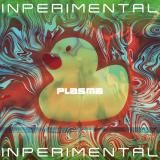
Inperimental is a bold return from Lithuanian electronic pioneers Plasma, presenting a meticulously crafted double LP that explores the intersections of techno, ambient, and forward-thinking electronic sound. Every element — sound, structure, and visual identity — is
intentional. This is not a collection of experiments, but a fully realized sonic architecture shaped by decades of experience and analog mastery. This vinyl edition is more than just an audio release — it's a multi-sensory experience.
The gatefold cover and packaging feature hidden artwork that can only be revealed using included red-lens glasses. This visual element isn’t just a gimmick — it reflects the same intentionality that defines the music. With no room for improvisation or trend-chasing, Inperimental is a precisely executed statement in both sound and form. The album blends ambient tones, analogue warmth, and dancefloor rhythms. It demonstrates a refined sound palette: humid techno grooves, cosmic textures, and cinematic depth.
Inperimental is described by the artist as a voyage where technology meets pure emotion — “a realm where warmth intertwines with technology, dreams blur into reality, and pure, authentic sound reigns supreme”. A digital download card is also included with each vinyl copy.
Keroxen presents Spandauer Damm 103, a new album by Dancelwerk.
Bringing together modular systems, worn drum machines and digital synthesis, the record nods directly to the first decade of Warp Records and the early logic of bleep culture.
Dancelwerk is a Tenerife-based electronic pioneer and one of the foundational figures of the Canary Islands underground. Active for over 30 years, Spandauer Damm 103 marks both a personal milestone and a renewed point of focus, reaffirming his role in shaping the region’s electronic lineage. The album draws on 1990s electronic futurism, filtering those references through a contemporary production approach rather than nostalgia.
The music moves between places and periods: from the early rave circuits of southern Tenerife, where Dancelwerk built his reputation through DIY releases and warehouse-level experimentation, to his later relocation to Berlin, famously arriving with a shipping container of vintage synthesizers and modular equipment.
Balancing melody and impact, Spandauer Damm 103 sets custom-programmed percussion against detailed sound design. FM, spectral and wavetable synthesis shape its harmonic and textural focus, resulting in music that remains physical without sacrificing clarity.
A long-standing practitioner reconnecting with his roots while pushing the system forward.
On his new album Chott, German-Tunisian producer and composer Taroug confronts his origins. Named after the Chott El Djerid, a vast salt lake in southern Tunisia, the ten-track album revolves around personal history and the search for identity. Chott is a conceptual work shaped by contrasting atmospheres, from minimalistic melancholy to raw, bass-heavy intensity. It blends traditional instruments with contemporary electronic text- ures, drawing lines between past and present.
Personal materials—such as vocal samples from family members—add layers of intimacy and cultural depth, most notably on the title track, featuring an original Arabic poem spoken by Taroug’s father, and on 1995,
a song reflecting on early childhood memories in Tunisia. Beyond these intimate dimensions, he works with sonic imagery that captures the sensory experience of heat and landscape in pieces like Saraab and Sirocco. In Nakhla, recordings of palm trees transformed into repetitive movements evoke scenes of southern Tunisia’s palm plantations, where organic and mechanical sounds converge.
For the artwork, Taroug once again collaborated with architect and designer Marie Brosius, assembling an experimental collage from old personal photographs of Tunisia that visually echoes the album’s themes of heritage and remembrance.
Born in São Paulo, Caetano Malta embodies the vibrant creative energy of one of Latin America's most dynamic cities. A singer, songwriter, and multi-instrumentalist, he has spent more than twenty years crafting a distinctive musical universe shaped by Brazil's rich and diverse traditions. Tropicalia, MPB, Afro-Brazilian rhythms, psychedelic folk, and contemporary pop blend seamlessly in his work with effortless elegance.
Over the years, he has become a highly sought-after collaborator. Since 2004, he has performed with numerous leading Brazilian artists, including Lucas Santtana, Bixiga 70, Karina Buhr, and many others. After two decades of international touring, he eventually settled in Paris, where he became the guitarist for Flavia Coelho, Luiza, Guts, among others. As a songwriter, he has also co-written with artists such as Lucas Santtana, Wado, MOMO, Rubinho Jacobina, and Arto Lindsay.
With Eterna Juventude, his long-awaited debut solo album, due for release in autumn 2026, Caetano Malta reaches a new artistic milestone. The record reveals a radiant songwriting style where harmonic sophistication, organic rhythms, and instantly memorable melodies come together naturally. Filled with joyful energy and deep tenderness, Eterna Juventude celebrates imagination, movement, and childhood's unique ability to reinvent the world. It is a remarkably accomplished debut, showcasing an artist whose singular voice and musical identity are already fully formed.
American DJ, producer, and Ovum label boss Josh Wink remixes Chris Liebing's 'Eye C' via CLR on 25th September 2026, one of the standout tracks from Liebing's first fully solo-produced LP, 'Evolver', which landed in March. The album featured collaborations with the likes of Luke Slater, Charlotte de Witte, and Daniel Miller, with Josh Wink the latest to rework material from the project. The Philadelphian is an electronic music veteran who has shaped countless releases on his own Ovum, while also remixing the likes of Depeche Mode, Moby, and Radiohead.
Josh Wink showcases his production skills once again with a blistering take on Chris Liebing's 'Eye C', rewriting it with fizzing synth modulations and prickly acid lines. The track grows in intensity as rumbling drums march on, and the synths become ever wilder before pulling back into a deep, atmospheric groove, rebuilding beneath the menacing vocals and icy, incendiary hi-hats.
The original version of Chris Liebing's 'Eye C' is a deep, rolling techno masterclass with pulsing synths and deft percussion peeling away from the groove. It's linear and heady, perfect for the small hours, with unsettling vocal fragments refracted around the mix and subtle hypnotism floating overhead as the drums grow ever harder.
In Living Color proudly presents Wasi Wasi EP, the debut label release from
Kenyan-born, Berlin-based artist Emo Rugene.
A striking first statement from one of the most exciting emerging voices in African electronic music, Wasi Wasi introduces Rugene's distinctive sound while reflecting the bold, forward-thinking vision at the heart of Living Color. Blending deep cultural roots with contemporary electronic production, the EP marks the arrival of an artist helping shape the future of the genre.
Deeply rooted in African rhythm and musical heritage, Wasi Wasi is a body of work that embraces the past while looking confidently toward the future. Blending hypnotic grooves, organic percussion, and contemporary electronic production, the EP reflects a new generation of artists drawing inspiration from their roots while carving out their own unique artistic identity.
The release features two compelling vocal collaborations that enrich its storytelling. “Wasi Wasi (Vocal Mix)” features Alai K, whose deep ancestral vocal brings a powerful spiritual presence to the title track. “Sahara Dena” features Soukou, whose soulful vocal performance adds warmth, emotion, and depth, creating a beautiful dialogue between tradition and contemporary sound.
With Wasi Wasi EP, Emo Rugene stands among a new generation of African electronic music artists redefining the future on their own terms. His music is deeply connected to where it comes from, yet unafraid to explore new ideas, proving that heritage is not something to preserve behind glass, but something to carry forward with imagination and purpose.
More than a collection of tracks, Wasi Wasi EP is a celebration of movement, identity, and possibility, a record that honours the voices of those who came before while contributing to the sound of tomorrow.
There is a hush most of us only knew as children, the warm drift between familiar household sounds and being carried to bed, a place that belongs to you and to some self you have not met yet. June McDoom’s debut full-length, Follow the Light, lives in that dream space and then keeps walking, slipping out of time and waking somewhere new, barely familiar enough to feel like home yet wholly your own. She came up in a Jamaican household on the edge of the Florida Everglades, an existence built of extended family, communal care, bass and harmonics. Her father, a carpenter and a student of sound, built his own speakers and kept three sound systems going across as many rooms. His low end would rise through her bedroom floor like some wayward cat while she lay above it with folk records, finding harmonies that were new and hers alone. Two musics in one room. Lushness as past and premonition. She found folk on her own, somewhere between the cast recording of The Sound of Music and Simon and Garfunkel, while everyone around her called it sleepy music. She did not mind being the only one. The solitude let her fall for harmony first, before words, before anything else, and harmony is still the thing she reaches for. Generationally speaking, the music was already in the air. Her grandfather, Colin Smith, is a distinguished mento man who played banjo and guitar and built his own rumba boxes, worked to keep Jamaica’s oldest acoustic folk form alive. Mento is the root of all of it: ska, rock steady, reggae, dub and everything after. He is the one who put a guitar in her hands. An inheritance, a gift and a map. Even her name is part of it, though she will tell you she landed on it more by feel than reason. She records as June McDoom, born Alyssa, June being a nickname one of her grandmothers, Joan, went by, a name she thought was cool to carry and simply liked the sound of. An etheric channel that reverberates all the same. A dub all its own.
Made slowly and by hand with her longtime partner Evan Wright, Follow the Light lays the harmony of folk over the rhythm of dub, with Dionne Warwick, Minnie Riperton, Pentangle and the washed guitars of Cocteau Twins haunting its outer edges. Voice and guitar seeking each other out first, then everything else stacked across long days in the studio they keep at home, restraint kept on purpose. The lead single “Without You” is the whole method surfacing, split open and sparkling like a geode in a creek bed. Angelic heroics, and nothing less.
At the heart is family. Her grandmother Aggie, the light behind “Memory,” guiding still. And underneath, the quieter truth the record keeps: none of us are only one person, but a continuum of selves, the ones who shaped us and the ones we have yet to meet. Future you is an ancestor your current self gets to greet. Press play and the same invitation is yours: A few minutes out of time, a place that turns familiar the longer you stay until you surface somewhere new and find it was yours all along
There is a hush most of us only knew as children, the warm drift between familiar household sounds and being carried to bed, a place that belongs to you and to some self you have not met yet. June McDoom’s debut full-length, Follow the Light, lives in that dream space and then keeps walking, slipping out of time and waking somewhere new, barely familiar enough to feel like home yet wholly your own. She came up in a Jamaican household on the edge of the Florida Everglades, an existence built of extended family, communal care, bass and harmonics. Her father, a carpenter and a student of sound, built his own speakers and kept three sound systems going across as many rooms. His low end would rise through her bedroom floor like some wayward cat while she lay above it with folk records, finding harmonies that were new and hers alone. Two musics in one room. Lushness as past and premonition. She found folk on her own, somewhere between the cast recording of The Sound of Music and Simon and Garfunkel, while everyone around her called it sleepy music. She did not mind being the only one. The solitude let her fall for harmony first, before words, before anything else, and harmony is still the thing she reaches for. Generationally speaking, the music was already in the air. Her grandfather, Colin Smith, is a distinguished mento man who played banjo and guitar and built his own rumba boxes, worked to keep Jamaica’s oldest acoustic folk form alive. Mento is the root of all of it: ska, rock steady, reggae, dub and everything after. He is the one who put a guitar in her hands. An inheritance, a gift and a map. Even her name is part of it, though she will tell you she landed on it more by feel than reason. She records as June McDoom, born Alyssa, June being a nickname one of her grandmothers, Joan, went by, a name she thought was cool to carry and simply liked the sound of. An etheric channel that reverberates all the same. A dub all its own.
Made slowly and by hand with her longtime partner Evan Wright, Follow the Light lays the harmony of folk over the rhythm of dub, with Dionne Warwick, Minnie Riperton, Pentangle and the washed guitars of Cocteau Twins haunting its outer edges. Voice and guitar seeking each other out first, then everything else stacked across long days in the studio they keep at home, restraint kept on purpose. The lead single “Without You” is the whole method surfacing, split open and sparkling like a geode in a creek bed. Angelic heroics, and nothing less.
At the heart is family. Her grandmother Aggie, the light behind “Memory,” guiding still. And underneath, the quieter truth the record keeps: none of us are only one person, but a continuum of selves, the ones who shaped us and the ones we have yet to meet. Future you is an ancestor your current self gets to greet. Press play and the same invitation is yours: A few minutes out of time, a place that turns familiar the longer you stay until you surface somewhere new and find it was yours all along
Emerging from the dark Olympic forests with a new album and a full bag of chanterelles, fish narc's Ben Funkhouser has shifted the damp melancholy characteristic of his earlier work towards the sun. Uncle is at once a cry of resignation ("say uncle!") and a declaration of seniority, a set of observations steeped in the blues of youth, delivered with Westerbergian inclination. Recorded and produced by Alex Farrar, the album's 11 tracks bear the hallmarks of his style: textured rock `n' roll somehow both raw and polished. Neither waxing pathetic nor sugarcoating, fish narc and the band are at peak form on Uncle, strumming out the complexities of aging with the conviction of a group that's fully found its footing in well-crafted rock and powerpop. Uncle KLP313, is a culmination of the punk rock musical work fish narc has done in his native Northwest environs. Says Funkhouser, "I feel like Uncle is the best record I've ever made. The songs grew without changing, the textures are spot on, and Alex [Farrar] and I saw eye to eye about almost everything. The album represents what I want for my band and songwriting and is the touchstone on which all my future work will be based." fish narc is a rocker and producer from the Pacific Northwest, recently relocated to Los Angeles. As a member of GothBoiClique, his innovative guitar playing became iconic of the group and helped shape the style of the movement that they pioneered. As a songwriter, fish narc leans more on influences from SST, K and the diy scene he grew up in. Catch him with a full band for the true intended experience. Previous records include WiLDFiRE in 2020, Camouflage in 2022, fruiting body [KLP295] in 2023 and frog song [KLP298] in 2025. This autumn fish narc will tour the United States with his punk horde.
A raw, groove-driven selection of previously overlooked 1990s recordings by legendary Turkish jazz impresario Okay Temiz, compiled here for the first time.
As the story goes, throughout the 1990s, Okay Temiz roamed the nights of İstanbul in search of rhythm — moving through its far corners, from the seedy underbelly to gypsy neighborhoods, from the outskirts of the city to smoke-filled taverns where cigarette haze turns into a living cloud atlas — capturing a largely unknown and maverick period of his work.
Compiled by long-time producers Haluk Damar and Erinç Güzel, the album brings together Turkish folk textures, İstanbul tavern sound, spiritual jazz, raw street groove, and flashes of Turkish psychedelia — with moments shaped by Temiz’s own distinctive vocals. The result is a deep, percussive, and highly playable set.
Positioned between global jazz, rare groove, and dancefloor material, İstanbul Groove is a strong crossover release with appeal across both listening and DJ set contexts.
Kvrk makes a debut on Distant Gaze with Synthetic Memories, a four-track EP exploring shadowy electronics where organic textures and synthetic forms constantly blur into one another.
Opening with Pulsewidth, the EP begins as a slow burn – a restrained piece of synthwave shaped by drifting ambience, hypnotic sequences and a steady sense of tension.
The pace gradually lifts with Void Caller and title track Synthetic Memory, pushing deeper into prog sound. Straight, driving rhythms form the backbone, occasionally dissolving into broken-beat passages, while warped synths and psychedelic details keep everything in constant motion.
Beneath the electronic framework runs something more primal: forest-like soundscapes, mystic undertones and subtly shamanic motifs give the music an earthy, ritualistic dimension.
Closing the release, Blu:sh reworks Void Caller through his signature deep and trippy approach, stretching the original into a spacious late-night interpretation with a submerged, dreamlike pull.
VV001 marks the debut release on Varco Vivo, an independent techno label based in Italy. Rooted in decades of club culture and shaped by contemporary vision, Varco Vivo brings rhythm and emotion together, creating music that moves the body while leaving something behind.
Detroit techno visionary Keith Tucker returns through his acclaimed alter ego Optic Nerve with AUGMENTATIONS EP, a forward-thinking exploration of minimalist machine funk, futuristic sound design, and deep electronic movement.
Crafted with precision and unmistakable Detroit character, AUGMENTATIONS merges hypnotic analog sequences, mechanical rhythm structures, atmospheric synth textures, and driving electronic beats into a powerful sonic statement rooted in the city’s enduring techno legacy. Sparse yet immersive, the EP balances raw underground energy with cinematic futurism — designed equally for dark warehouse floors and deep headphone listening.
Pressed as a Limited Collector’s Edition Clear Vinyl 12-inch, PBX-38 captures the sleek, transparent aesthetic of the music itself: pure signal, machine emotion, and uncompromising Detroit innovation.
A1 — Augmented 1 (Optic Nerve Original Mix)
A deep, stripped down Detroit techno workout driven by pulsing drum programming, evolving synth modulation, and hypnotic minimalist sequencing. Functional futurism engineered for late-night motion.
B1 — Augmented 2 (Infinite Worlds Mix)
Built around a rolling funky bass line and eerie flowing string textures, this expansive composition moves through layers of atmospheric electronics and mechanical groove architecture. The track creates an immersive sense of drifting through endless digital landscapes while maintaining a sharp rhythmic intensity designed for the underground dance floor.
B2 — Augmented 3 (Visual Shapes Mix)
Abstract melodic fragments, and precision electronic rhythms collide to form a futuristic minimalist soundscape filled with movement, tension, and cinematic pulsed chords.
‘I have always been drawn to those ambiguous territories between beauty and terror, and the Trinity test is their epitome: magnificent, sublime, terrifying, annihilating. A destructive power that, somehow, only love can compare with.’
The prescriptive art and performance of Berlin based, French producer, Julienne Dessagne, has concluded with a starkly beautiful reimagining of Chris Isaak’s Wicked Game.
As Fantastic Twins, her continuing creative manifestation for music and performance, has released an array of electronic art for the body and mind. A sonic exploration of dual characters shaped through experimental pop, cinematic electronics and the outer edges of techno.
First appearing on the cult Hippie Dance label, before establishing a long and warm collaboration with Keith McIvor aka JD Twitch and his inspiring Optimo Music label, as well as her own House Of Slessor label, this release comes full of mythology and symbolism.
Immersive sound design, narrative tension, and emotionally charged atmospheres, the origin of the project – Wicked Game (Trinity Version) – was composed for a live performance at the Beta Biennale Of Architecture Of Timișoara in September 2024 and given a limited digital release soon after.
The impact on the artist and the music was multi-layered:
‘While recording this cover, images of the Trinity nuclear test, as reimagined by David Lynch in Twin Peaks (Season 3 / Episode 8) kept resurfacing, almost on a subliminal level, suggesting another wicked game: humanity’s love affair with science and technology, driven by the same mix of desire fascination and inevitability that animates Chris Isaak’s original song.’
Approached by Emotional Response, this updated “vinyl” edition is re-recorded / remastered and comes with new interpretations by Julienne herself, as well as remixes by Aho Ssan and Optimo (Espacio).
Dessagne offers a spectrum of mixes and moods; the centrifugal ‘Trinity Version’ a sweeping cinematic masterpiece, between beauty and terror, the artist transmits the aesthetics of sublime; while ‘Thousand Suns Version’ fuses industrial and techno soundscapes for a beatdown reimagining; the melancholia ‘Atomic Love Version’, where the beautiful vocals are matched with a glitchy, clipping ambience; and the finale, the ‘Core Version’ shines a personal, drifting odyssey.
The accompanying remixes see Aho Ssan (Niamké Désiré), composer and sound artist, his remake merging a love of darkcore drone with moments of uplifting energy, the ‘Core Version Aho Ssan Remix’, a fusion of craft and Dessagne’s vocals.
To close, taking up the Optimo remix mantle, Jonnie Wilkes embraces the propulsion, his ‘Thousand Suns Version Optimo (Espacio) Remix’, offering brooding, electro-driven percussion that overflows with emotion and completes this stunning, evolving, organic and singular remake.
The fifth album from Saint Abdullah & Eomac began as a poem and became a record that refuses to stay in one place. The title arrived in a cab in Paris. Mohammad Mehrabani read it aloud from a list of options. Ian McDonnell said: that's interesting, what does that mean? The answer, it turned out, was the album. Their fifth album When The Sandbox Has No Edge is rooted in hip hop, but its cast tells you how far it travels. Abbas Zahedi, Richie Culver, and Armand Hammer contribute vocals and poetry. Lester St. Louis brings cello. Che Chen of 75 Dollar Bill brings guitar. The producer and sound designer Seraphim contributed textures and sound designs throughout. Samples run deep, from records pulled from charity shops to market stalls on road trips across the UK. Raw fragments were shaped into fully formed compositions, structuring the chaos without flattening it. The sandbox, rendered without an edge.
Trumpeter, rapper and sonic wanderer Pan Amsterdam has carved out one of the most distinctive voices operating at the intersection of jazz and hip-hop today.
Pan Amsterdam is a musical enigma wrapped in an enduring riddle. His creator is a jazz musician from Houston who’s found fame working with Detroit punk rock God, Iggy Pop, and British indie royalty, Metronomy, and now makes shapeshifting, adventurous hip hop out of the music’s spiritual home, New York.
He’s an irreverent character born out of frustration and named after a misunderstanding, yet one who’s on the verge of releasing his fifth album of truth-slaying, genre-crossing rhymes and beats. The result is a catalogue that feels both deeply rooted in Black American musical tradition and completely untethered by convention.
Pan Amsterdam returns with ‘Panarama’, his fourth full length album and a bold reassertion of his hip hop identity, released via Def Pressé. Created by Houston-born, New York-based musician and composer Leron Thomas, the record finds Pan Amsterdam embracing the harder edges of his sound while continuing to blur the lines between jazz improvisation, abstract rap, punk attitude, and experimental production
Written as a response to contemporary life and the endless cycle of information, conflict and distraction that defines modern culture, ‘Panarama’ unfolds as a stream of consciousness journey through hyper-normalised realities. Across sixteen tracks, Thomas navigates social commentary, personal reflection, absurdist humour, and cultural critique, delivering his observations with the same spontaneity and freedom that have become central to the Pan Amsterdam project
Lead single ‘Szechuan Beef’, produced by acclaimed collaborator 1FS, serves as one of the album’s defining statements. Built around Thomas’ signature free-flowing delivery, the track explores the overwhelming nature of contemporary life, where domestic conflict, social division, entertainment scandals and political discourse become flattened into a constant stream of content.
In Thomas’ own words: “My stream of consciousness style comes quite naturally to me due to the conditioning of scroll down culture where everything, no matter how minor or extreme, is hyper normalised.”
Elsewhere, the track ‘Vanilla Ice’ was written in response to widely publicised ICE killings and the speed at which tragedy is absorbed and forgotten within online culture. Thomas channels the anxiety and emotional disorientation of endlessly consuming information, allowing his thoughts to unfold in real time as social commentary collides with everyday digital noise. The result is both deeply personal and sharply observational, reflecting the fragmented reality of modern life. Other album highlights include the cinematic, Interpol-esque opener - ‘Old Friend’ complete with shimmering guitar lines and an far-reaching introspective, no-filter vocal as Thomas teams up with Nick Zinner (Yeah Yeah Yeahs) and Brad Truax (Interpol) across multiple tracks, often the production traverses left-field indie territory, but always maintaining Pan Amsterdam’s unique musical identity throughout. For the hip hop purists and beats lovers there are plenty of riches to discover from the clever nostalgic sample flips of ‘Cutlery’, the sleepy lofi of ‘Shuriken’ and the wonky LA beat scene / early Flying Lotus era beats of ‘Drunken Noodles’ - all boasting quick witted lyricism. ‘Deep Fried Shiney Things’ explores early electro and industrial sonics while album finisher is an upbeat new wave / indie band cut which sees Thomas take a break from rapping, but of course never letting up on the sharp observations nonetheless
While his previous record explored more alternative territory, ‘Panarama’ marks a deliberate return to rap, as Pan Amsterdam explains:
“I just wanted to do a rap album again.I enjoyed making my last album, but I felt like rapping again. I like to have the freedom to move in between musical worlds that suit the current state I’m in. Frequency accommodating frequency.”
This philosophy runs throughout the album. Tracks move effortlessly between jazz-inflected arrangements, experimental beats, punk energy and underground hip hop aesthetics, allowing ideas to evolve organically rather than conforming to traditional structures. Thomas describes himself as an improviser first and foremost: “I think like an improvisor. That’s how my albums pretty much move. It’s improvisation.”
Featuring additional contributions from Spice Programmers, AnOtter and Mr. Shn, ‘Panarama’ presents a wide-ranging cast of collaborators while remaining firmly rooted in Thomas’ singular creative vision. The record embraces contradiction, humour and unpredictability, capturing fleeting thoughts and observations with the same freedom and spontaneity that define jazz improvisation itself.
A musical enigma wrapped in an enduring riddle, Pan Amsterdam has built a reputation as one of contemporary music’s true outsiders. The project emerged from frustration, experimentation and artistic freedom, with Thomas drawing equally from his background as a jazz musician and his collaborations with artists including Iggy Pop and Metronomy. Operating from New York while carrying the spirit of Houston’s musical heritage, Pan Amsterdam has developed a distinctive voice that sits comfortably between avant-garde jazz, underground hip hop and experimental music.
Reuniting with Def Pressé for ‘Panarama’, Thomas explores what he describes as the more hardcore side of his artistic identity:
“They let me do anything and everything I wanna do so long as it’s on audio, and I need that freedom. What may verbally be perceived as vulgar to one group of people may be very thoughtful and a poignant description of the times that we’re presently in, so I’m glad that I’m part of a label home that understands that.”
Produced by François Tétaz and Luke Howard and recorded primarily at Melbourne's Synth Temple, Tina Arena's Way Of The World reimagines “True Faith” (New Order), “Way of the World” (Max Q / Michael Hutchence), “Enjoy the Silence” (Depeche Mode), “Ordinary World” (Duran Duran), “Torno Bambina” (Ada Mori) and “Cayendo” (Frank Ocean) through stunning orchestral arrangements, prepared piano, analogue synthesis and electronic textures.
Rather than traditional cover versions, these are complete artistic reimaginings that reaffirm Tina Arena as one of Australia's most expressive and enduring vocalists. Of first single “True Faith”, Tina says: “Making the deliberate choice to focus on the lyric of true faith was musically revelatory for me. It presented a blank musical canvas with endless vulnerability and space for me to explore.”
François Tétaz, a Grammy and ARIA-winning producer known for his work with Gotye, Kimbra and Architecture in Helsinki, contributes synthesisers, Rhodes, prepared piano and drum machines throughout, while pianist and composer Luke Howard shapes the EP's restrained, cinematic language. The pair are joined by an ensemble including the Budapest Art Orchestra, Peter Knight, James Rushford, Mindy Meng Wang and orchestrator Felix Watson, giving the collection its rich, orchestral backbone.
The EP announcement lands amid a landmark 50-year career anniversary for Tina — one of Australia's highest-selling artists of all time, having sold more than 10 million albums worldwide.
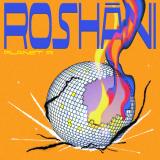
After establishing their identity with their debut EP, Alma de Baile, Geneva-based duo Roshâni unveil Planet R, their first album, set for release on October 15, 2026, via Stonepixels and distributed by The Orchard.
More than just a record, Planet R is a world of its own: a planet shaped like a disco ball, where languages blend, synthesizers intertwine with organic grooves, and dancing becomes a form of futuristic therapy. Sung in Farsi, Spanish, French, and English, the album moves freely between futuristic disco, alternative pop, experimental electronic music, and contemplative ballads, never seeking to belong to a single scene or territory.
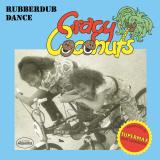
Of course everyone knows Kurt Hauenstein aka Supermax. He was one of the few Austrians to shape the sound of late-1970s disco, performing and selling records around the world. Not many know his daughters Judy and Nicola, however, and the fact that they in 1987 wrote a song that they recorded together with their father. Well, here it is: Cracy Coconuts, “Rubberdub Dance” – a true Hauenstein family affair. We are proud to re-release this super rare 7” that proves, once and for all, that Austrians can excel at digi-dub. Timelessly tropical and beautifully bouncy, its vibe is quite different from the iconic Supermax productions. Here, Judy and Nicola’s sweet yet confident vocals replace the moustache-driven sotto voce singing that we love Supermax for. The result is oh-so-catchy and bound to be a hit.
From Richmond, Virginia, Shy, Low have a reputation as one of the most compelling voices within the modern instrumental underground. Their music speaks to fans of post-rock's emotional grandeur and post-metal's crushing intensity alike, while simultaneously appealing to listeners drawn to experimental, atmospheric, and cinematic forms of heavy music. The band's ability to merge these seemingly disparate qualities has resulted in a body of work that is immediately recognizable and continually evolving. Luminous melodies, driving heaviness, layered textures, and carefully controlled tension allows `Purity Spiral' to move effortlessly between fragile moments of introspection and towering passages of intensity. Whether constructing intricate layers of harmony or driving songs toward explosive climaxes, there is a deep understanding of pacing, atmosphere, and the power of restraint. Momentum is at the heart of this album, through intricate rhythmic detail, and explosive bursts of energy, drums become the anchor and catalyst, supporting the band's expansive arrangements while pushing them toward moments of cathartic release. What distinguishes Shy, Low is their ability to balance enormity with restraint. Their music unfolds patiently, allowing tension to accumulate through layers of texture, melody, and dynamics. Moments of delicate clarity often coexist with overwhelming weight, creating a sense of organic motion. At the core of the band's sound lies an acute understanding of contrast. From shimmering, expansive passages to towering walls of distortion, the rhythm section provides both propulsion and atmosphere, becoming integral narrative voices that shape the emotion. There is a disciplined sense of purpose in their writing, an understanding that every note serves a larger arc. Shy, Low thrives in the space between introspection and catharsis, where subtle details become as impactful as the heaviest climaxes, and listeners are taken on a journey that is as visceral as it is profound. FOR FANS OF Caspian * Russian Circles * If These Trees Could Talk * Pelican * Toundra
From Richmond, Virginia, Shy, Low have a reputation as one of the most compelling voices within the modern instrumental underground. Their music speaks to fans of post-rock's emotional grandeur and post-metal's crushing intensity alike, while simultaneously appealing to listeners drawn to experimental, atmospheric, and cinematic forms of heavy music. The band's ability to merge these seemingly disparate qualities has resulted in a body of work that is immediately recognizable and continually evolving. Luminous melodies, driving heaviness, layered textures, and carefully controlled tension allows `Purity Spiral' to move effortlessly between fragile moments of introspection and towering passages of intensity. Whether constructing intricate layers of harmony or driving songs toward explosive climaxes, there is a deep understanding of pacing, atmosphere, and the power of restraint. Momentum is at the heart of this album, through intricate rhythmic detail, and explosive bursts of energy, drums become the anchor and catalyst, supporting the band's expansive arrangements while pushing them toward moments of cathartic release. What distinguishes Shy, Low is their ability to balance enormity with restraint. Their music unfolds patiently, allowing tension to accumulate through layers of texture, melody, and dynamics. Moments of delicate clarity often coexist with overwhelming weight, creating a sense of organic motion. At the core of the band's sound lies an acute understanding of contrast. From shimmering, expansive passages to towering walls of distortion, the rhythm section provides both propulsion and atmosphere, becoming integral narrative voices that shape the emotion. There is a disciplined sense of purpose in their writing, an understanding that every note serves a larger arc. Shy, Low thrives in the space between introspection and catharsis, where subtle details become as impactful as the heaviest climaxes, and listeners are taken on a journey that is as visceral as it is profound. FOR FANS OF Caspian * Russian Circles * If These Trees Could Talk * Pelican * Toundra
After decades contributing to records where a single riff could transform a dancefloor, Charlie May turns that instinct inward on Trusted Farms.
For over thirty years, Charlie has occupied a position that seems increasingly rare in electronic music: the musician’s musician, the person behind the machines, the extra pair of hands in the studio, and quite often, the person responsible for the melody you end up carrying around in your head for weeks on end.
Alongside Duncan Forbes as Spooky, Charlie helped shape some of the most important electronic music to emerge from the UK in the early ’90s. That partnership would also sow the seeds for one of Sasha’s defining records: the central riff behind Xpander began life in Spooky’s live material, before Charlie brought the idea into the studio with Sasha and helped transform it into one of electronic music’s most enduring anthems.
Listen closely to Charlie’s work and there’s a particular instinct that keeps returning: knowing when a simple synth line is enough. Knowing which note needs to change. Knowing when repetition stops being repetition and starts becoming the entire reason a track works. More recently, as one-third of Quiet Places on ASIP, he’s taken those same instincts somewhere looser — beatless, gridless and led by improvisation.
Trusted Farms puts those instincts front and centre.
Tiny melodic phrases appear and refuse to leave. Synth lines repeat just long enough to become lodged in your head. Parts rub against each other without being tidied into submission. There’s a sharpness and directness to it all amongst the purposeful analogue warmth.
Some of these tracks feel almost ridiculously simple at first. But simplicity is difficult when you’ve spent decades learning every possible way to complicate something. Many of the parts on Trusted Farms were performed live with minimal editing. A synth line might be doubled, distorted, re-recorded and pushed back through another piece of equipment, but it remains the same idea. Instead of filling the gaps, Charlie works on the weight and character of what is already there. The melodies become physical; slightly worn around the edges.
For someone whose fingerprints can be found across some genuinely monumental moments in electronic music, Charlie has spent decades knowing what to add.
Trusted Farms is about knowing exactly what to leave alone.
Available on black 12”, mastered by Andreas Lupo LOOP-O Lubich and featuring artwork by Peter Skwiot Smith,
Discrepant presents Fantarombo, a new album by Giovanni Lami.
While his previous works often moved through memory, residue, degradation, and dialogue with existing materials, Fantarombo takes shape as an unstable, bodily gesture.
Sound is not recalled or reconstructed, but triggered, pushed, and set in motion as an active force. Lami approaches modular synthesis as a physical, hands-on practice rather than a technical exercise or display of system mastery. The modular setup becomes a responsive body: something to be nudged, listened to, and occasionally resisted.
The pieces unfold through slow accumulations, unstable feedback paths, and carefully misaligned sequences. Rather than driving toward resolution, the music lingers in states of suspension, allowing small shifts in voltage, timing, and texture to reshape the whole. Chance and duration play a central role, with structure emerging gradually from repetition and drift.
There is an unmistakably organic quality to the sound: porous, tactile, and quietly resonant. A sensitivity to space, grain, and micro-movement, where subtle changes carry as much weight as overt gestures. On Fantarombo, process takes precedence over control, and the circuitry is allowed to speak back, resulting in music that feels intimate, unstable, and quietly insistent, revealing itself slowly through sustained attention.
A music of unresolved behaviours, suspended somewhere between obsolete digital optimism, imaginary systems and malfunctioning computational folklore.