With Sunrise and the Life We Live, John Beltran returns to his ambient techno roots, the sound that garnered him global appeal in the 1990s.
Through ten tracks, the album journeys through lush, aerated textures and beatless expanse. Hypnotic grooves deepen and bloom in a flow of shapes and colors, creating a sound that is both meditative and full of life.
Thirty years after the release of his seminal Ten Days of Blue, Beltran's musicianship, vision and desire to produce remain at a fever pitch. With Sunrise and the Life We Live his gift of extracting emotion from the universe and turning it into
a unique musical experience puts him in a class of his own.
The tracks on the upcoming Boysonic release are a snapshot of a period largely absent from the discussion around Romanian electronic dance music: the first half of the 1990s.
Boysonic’s music was made in the face of considerable adversity, in a Romania still reeling from the aftermath of the 1989 revolution, spiralling inflation of over 200%, and the violence of the early-1990s Mineriads. In the gatefold photos, one of the band’s members can be seen performing live wearing a miner’s safety helmet, a piece of stagewear, but also a charged symbol of the period.
The original music on Madhouse was made in Bra?ov during 1993–1994. Situated away from Bucharest’s political and cultural centre, Bra?ov gave the project its own slightly detached rhythm. Classically trained in piano and active in local radio, Mihai Barb developed Boysonic as a largely one-man act, often joined live by a changing cast of dancers and vocalists. In the absence of a developed club circuit, early performances took place in pre-1989 concert halls, seaside resorts and local entertainment circuits organised around regional radio stations.
Agnostic in genre and unusually fluid in approach, Madhouse moves through downtempo pop burners, KLF-type UK house, boomy breakbeat, new beat and acid-leaning experiments. The material reflects a short-lived moment before the Romanian mainstream/underground divide had fully taken shape, when electronic music lacked infrastructure but not imagination.
Sampling was used generously, with drum loops, vocal fragments and preset banks repurposed through software such as ProTracker and further processed outboard.
The release comes as a 2xLP gatefold.
Remixes are from Benedikt Frey, Boysonic, Cosmin TRG, Flore of Khidja, Romansoff, and Tankwart.
DJ Support by Massimiliano Pagliara, Fabrizio Mammarella, Ally Tropical, Sofa Elsewhere, Alexander Back, G-ha, Secret Soul Society, Olle Abstract, Logan Fisher, Timmy Stewart, Erki
The Vendetta Suite continues to show his broad range on Hell Yeah with the Scrabo Electric EP. Youthful memories, mushroom trips, 80s electro, dub and sleazy disco all colour a nostalgic tribute to early beat street culture in his home town of Newtownards.
Gary Irwin is a label mainstay with a thirst for weird and unconventional fusions that reframe 70s and 80s references through a contemporary lens.
Drawing on memories of breakdancing, dub reggae, and teenage mischief, he channels the spirit of demolished record shops, discos, and local haunts that shaped his musical identity. From tape-swapping electro compilations and local characters to dub influences and teenage discos, each track reflects a personal chapter rooted in 1980s Northern Irish life.
The wiggy rhythms of the title cut to the echo-laden 'A Dub For Dave', the punchy 80s drums of 'Uprock At Digby's Disco' and raw, textured funk breaks of 'Lead Mines Bonus Beats' all mean this EP blends cultural memories and musical history with undeniable style.
For the 63rd release on Memoria Recordings, Thessaloniki-based producer and DJ G.rush delivers a deep and hypnotic four-track EP shaped by experience, restraint, and underground club sensibility. With roots tracing back to the early days of his DJ career and a production path that has steadily developed through stripped grooves, subtle atmospheres, and low-end movement, G.rush brings a mature and focused sound to the Memoria catalogue. Across the EP, he moves with patience and control. “Spectra” opens the record with a reduced but magnetic drive, built around rolling pressure and detailed rhythmic tension. “Just Friendz” leans into shuffled swing and understated funk, while “Seduction” takes the B-side into deeper, late-night territory. Closing track “Tus Manos feat. Lucie” adds a warmer vocal touch, balancing intimacy with dancefloor flow. MEM063 is a refined club record for selectors who understand the power of subtle movement. Just deep, functional, emotionally charged grooves built for intimate rooms, warm systems, and long after-hours moments.
'Within the current Finnish jazz scene’s colourful embrace of ear pleasing and spiritual-leaning ensembles, Fågelbörs have felt a bit like an anomaly. They’re a lean quartet adhered to a virtuosic puritanism and a stern belief that every gesture serves the whole.
'A combo composed entirely of underground veterans, they belong to what could be described as the third wave of Finnish improvised music; several of whom helped shape that movement in the early 2000s. Elsewhere their collective lineage wends a bendy path through recent years of Finnish free jazz, experimental music, and dub. They’ve been alternately affiliated with projects such as Rauhan Orkersteri, Jooklo Quartet, Mohel, Kemialliset Ystävät, Odd Funk Records, Muumiot, Pascal & Baya Rays, and more.
'As Fågelbörs they’re configured like the four cardinal directions, a dynamic and cosmos-scaled unit capable of summoning elemental blasts of chaos and ecstatic, life-affirming joy. On Bagelfårs, they expand the unique vision of entropy and melody they introduced with their brilliant debut Marjassa (Ultraääni, 2022). Together, Matti Luokkanen (sax), Jaakko Tolvi (percussion), Tuure Tammi (trumpet), and Tero Kemppainen (bass) lock as an Aylerian helix, where effervescent free improv is always counterbalanced with key moments of gleeful, marching band-like reverie and mournful dissolves into passages of narcotic blues.'
Gyros Heroes is the latest release from Adlibitum Tum Tunes, showcasing the unmistakable synergy between label curator Kirill Matveev and trusted maestro Nicolas Barnes, a resident artist renowned for his consistently refined and emotive sound.
The EP unfolds as a sophisticated blend of deep- and tech-house aesthetics, designed to uplift, move, and connect. It balances percussive bounce with emotional subtlety, offering a graceful flow that is both club-ready and sonically rich.
A1. Kirill Matveev – Am I Happy With That and A2. Kirill Matveev – Once At Dawn deliver the opening momentum, channeling sleek grooves and playful introspection with polished restraint. These tracks glide effortlessly between warmth and drive—embracing the listener without overwhelming.
On the flip side, B1. Nicolas Barnes & Kirill Matveev – Naar Shada blends the duo’s sonic sensibilities into a mood-driven piece with elegant progression and percussive intricacy. Closing with B2. Nicolas Barnes – Qeezy, the record reaches its emotional high point: a dancefloor-oriented yet soul-touched cut that radiates both sensuality and controlled energy.
Gyros Heroes is a finely tuned experience—bright yet deep, emotive yet precise—crafted for selectors who value atmosphere as much as movement. This is an EP that invites you into its positive orbit, reminding us how expressive and graceful club music can be when shaped by masters of tone and detail.
Adlibitum Tum Tunes is a division of MixCult Records
Rooted in Black American dance music and shaped through European club culture, Bound States combines hypnotic rhythms, warm textures and driving low-end into a cohesive, contemporary club record.
From the dense atmospheres of Bones & Harmony to the driving energy of Type X, the EP unfolds as a journey designed for the dancefloor while remaining deeply personal.
LIMITED RELEASE Originally released in 1991 on the seminal ZoeMagik Records, San Francisco is one of the defining documents of the early Bay Area rave underground. Tasti Box -- the duo of Kelix Williams and Mouse -- brought together house, techno, breakbeat and psychedelic rave music into a sound that was unmistakably their own. Born from the free-party culture of early '90s San Francisco, their music found its way onto legendary sound systems and dancefloors around the city, helping shape the distinctive West Coast sound of the era. More than three decades later, we're bringing this elusive classic back to vinyl.
Reportage is the duo of Peter Olof Fransson and Svante Sjöstedt from Gothenburg, Sweden. They met in the late 1980s while working as postal workers in the district of Majorna. Since then, they have repeatedly worked together on music in various projects.
The recordings for "Reportage 1" began in late 2022 and were a natural development in the aftermath of a project called The Owl Report. But while The Owl Report mainly focused on English lyrics, the lyrics in Reportage are instead written and sung in Swedish.
Most of the Reportage material has been recorded in Svante’s family country house near Ulricehamn, and further edited and mixed in Gothenburg by Peter. The pieces mainly emerge from long evening improvisations, which then developed the melodic content and structures. Initially created on either guitar, mandolin, or ukulele, alongside bass guitar and simpler electronic rhythms as a base, the compositions were then further shaped with additional acoustic and electric string instruments, vocals, organs, field recordings, and electronically shaped fragments.
The music remains open, reduced, and without any visible intention to assert itself.
Peter Olof Fransson also releases music under the name Retep Folo, including on the UK labels Clay Pipe Music and Buried Treasure Records. His album "The Afterlife", on which Svante also participated, was created in collaboration with Dorothy Moskowitz, former singer of the American experimental and psychedelic band The United States of America, which was active in the late 1960s.
On "Reportage 1", images of a present out of balance emerge: overstimulated communication, social patterns of inclusion and exclusion, and repeating political and media loops. Figures move between withdrawal and overwhelm, between observation and participation. Again and again, it also touches on perception itself, and on how reality is filtered and shifted.
Double LP, pressed on gold vinyl. As part of Lineage II's 22nd anniversary celebration, NC America and Black Screen Records are proud to announce the first-ever Lineage II collector's edition vinyl album, which elegantly combines a track selection reflecting the game's iconic history and memorable musical identity. This vinyl album is now available for pre-order and will hit the stores in November. Arranged by composers Bill Brown (Tom Clancy's Rainbow Six), Jamie Christopherson (Metal Gear Rising: Revengeance), Inon Zur (Fallout 4), and NCSOUND, the track list is a collection of 40 of the most recognized pieces from the original soundtrack, carefully selected to create a cohesive listening experience rather than a complete collection. Published by NC, the album flows between calm, reflective village themes, atmospheric exploration pieces, and more intense, dramatic compositions tied to combat, progression and large-scale conflict. The track list draws from the original soundtrack's most recognized pieces and centers on two major regions: Giran and Aden. Early on their journey, players venture into the world's southern territory of Giran. As they explore the region's villages, tracks such as "Crossroad at Dawn," "Shepard's Flute" and "Caravans Crossing" help create a calm, grounded atmosphere that reflects the peaceful nature of travel through the area. In contrast, the world's northern territory of Aden reflects the game's grander, more conflict driven spirit. As players continue their journey, the Elven Village track "Unicorn's Rest" marks a turning point, gradually giving way to darker settlements and imposing castles through standout tracks such as "Knighting Ceremony" from the iconic Aden Castle and "Expedition March" from the Town of Oren, where tension, warfare and large scale conflict take center stage. Across both regions, the tracks are more than background music; they shape how players experience each location, from villages and hunting zones to moments of intense combat. This collection brings together the sounds that have defined Lineage II for the past 22 years, offering a reflective musical journey for both longtime players and new listeners alike.
Duality Trax reaches its tenth release with a defining moment for the label, as label boss Holly Lester steps forward with her debut EP. A personal milestone as much as a catalogue marker, the record channels sounds that have shaped her sound to date - early tech house, the low-end swing of UK garage and breakbeat, the rolling pulse of mid- 2000s European dancefloors, and the emotional lift of ’90s progressive house - all refracted through a distinctly personal lens. Open Your Mind sets the tone with a sense of lift and release: a wide, expansive bassline carries skippy, garage-tinged percussion, while bright piano stabs cut through guided by playful, restless FX. Big Fill pivots into tougher territory, a driving cut built on a rolling sub that pulls you into the groove - equal parts pressure and introspection, with moments of dreamlike suspension between the weight.
On the flip, Tanit drifts into more atmospheric space —an ode to Ibiza that still carries a distinctly UK undercurrent. A squelching, elastic bassline and cheeky, garage-leaning wubs provide a foundational groove but everything around it drifts: gated synths shimmer, drums sparkle, half-heard vocals dissolve into the mix and the track unfolds with a blissed-out, cruising energy. It feels just as natural in a dark room as it does out on open water, coasting past Formentera. For the remix, Holly turns to one of her favourite producers of the moment, DJ Life, who draws Open Your Mind into deeper waters. The Berlin via Australia producer stretches the groove into something more hypnotic and submerged, a patient 5am burner that lingers in the air,equally at home in basements, afterhours, and those inbetween moments as night slips quietly into day
Berlin-based Dutch-Italian composer and musician Aimée Portioli aka Grand River presents the new album Temporary, returning to the renowned Editions Mego label with her most expansive and focused LP yet.
Rooted in existential ideas of impermanence and flux, Temporary is a deeply emotive work centred on the rich interplay between resonant guitar work and innovative electronics. Written in the wake of profound personal grief and loss, the album sees Portioli infuse her music with a raw, expressive intensity anchored in this experience. Across eight strikingly melodic and affecting soundscapes, Portioli powerfully embodies a dramatic encounter with mortality.
Temporary reprises Portioli’s exceptional streak of material across acclaimed labels including Donato Dozzy and Neel’s Spazio Disponibile, Caterina Barbieri's light-years, Ghostly International, Tresor and Umor Rex. The LP represents the latest tour de force in her distinctive electronic practice. Alongside a raft of lauded releases, Portioli has devised visionary multichannel installations which dissolve the boundary between the art gallery and the performance space.
Her new album signifies a culmination of her work, imbued with the depth of Portioli’s artistry. Shaped by a paradigm shift rising from loss, the record reflects a contemplation of the human condition and the ephemeral nature of existence. Ruminating on the thoughts and experiences that have fed into the record, Portioli reveals a consequential recognition underpinning the record:
"Sometimes, when travelling in places far from home that I know I will most likely never return to, or while accompanying someone I loved towards the end of their life, I become intensely aware of the singularity of the moment, and of how precious and sad this feels at the same time. It carries a particular weight because it will never happen again in quite the same way. Through experiences like these, I have gradually come to understand the temporary nature of all things. They taught me that to live is to experience the present while already feeling the trace of its disappearance, something both painful and blissful." - Aimée Portioli, Grand River
The album is invested with a potent mood and momentum from the outset. Establishing an evocative tone with the subtle, pulsating synthesis, rustling undertow, and oceanic low end of 18 circles to heaven, Portioli gradually ascends through the incandescent modular majesty of Come to stay, and the turbulent, brooding guitar figures of The crossing of the body, the crossing of the mind. The album progresses through the rapturous electronic phasing of The little we last into the coruscating synth grandeur of Let me know when you’re pure, before a thrilling endgame.
Closing with the wavering harp runs, heavy percussive thud, and cataclysmic guitar discordance of Maybe I am dead and this is paradise, and the evanescent atmospherics and beautiful acoustic refrains of Work of ending, Portioli takes the listener through vast landscapes of sound and mercurial emotional states. Intimate and immersive in equal measure, the record traces a compelling sensory journey.
Each part of the album is part of a larger poetic sentence, with track titles forming fragments that together articulate a meditation on transience. From 18 circles to heaven and Come to stay through From the other side and Work of ending, they read like quiet statements about being human, about loving, losing, remembering and eventually fading. The record moves through these states as a continuous passage, depicting a poignant soundworld guided by temporality.
The awareness that our time is limited sharpens the value of what remains. Each encounter, each gesture, each fleeting moment becomes more vivid. Temporary lingers in the space where presence and disappearance coexist, where everything is already passing away and therefore becomes infinitely precious. Things matter because they do not last. Mortality does not diminish life; it intensifies it. In confronting these ideas, Temporary feels irrepressibly alive.
Composed, produced and mixed by Aimée Portioli
Production and mixing assistance by Luca Sammartin
Acoustic piano on Maybe I am dead and this is paradise by Andert Tysma
Mastered by Rashad Becker
Cut by Marta De Pascalis at Schnittstelle, Berlin
Artwork by Nicola Tirabasso
Layout by Riccardo Piovesan
Frozen Flashes is the new album by Okvsho, the Zurich-based project of brothers Christoph and Georg Kiss.
Recorded through sessions in Zurich and London, the album begins with musicians playing together in the room. Improvisations, rhythms, textures and small spontaneous moments are captured, then sampled, cut and rearranged into nine carefully shaped tracks.
Featuring collaborations with Azekel, Melodiesinfonie, FloFilz, Tenderlonious and Hadel, Frozen Flashes is built around the moments that are impossible to plan — brief flashes that appear in a session, disappear again, and sometimes become the starting point for an entire song.
Catch Okvsho +experience live across Europe this autumn — bringing Frozen Flashes on the road.
Finally, almost three years after the well-received Orange Wine EP, and three international tours, Okvsho is back with their fourth project “A place between us”. Georg and Christoph Kiss, the two brothers behind Okvsho, are showcasing a project that is more intimate and bolder than ever, offering an insight into their thoughts, feelings, and experiences during the last two years. The unique style Okvsho has become known for in recent years has once again evolved, combining organic and electronic elements with beautiful harmonies and expressive rhythms.
Okvsho’s second LP will also be the first full-length project to be released on the newly founded Zurich-based label Current Moves, with which the Okvsho-brothers aim to shape the young European jazz scene they are inspired by and also an established part of.
“A place between us is the frst step into a new era for us – We’re very grateful for the love and support we received during the past six years and we’ll continue to strive for the better. Thanks for becoming part of our journey.”
You asked for one more. Laibach duly oblige with MUSICK : ENCORE, a follow-up album to their 2026 record MUSICK, out on Mute.
They answer the crowd's demand with six brand new tracks and reworks of songs from the original album, reimagined by an eclectic line-up. Vinyl takers get the core 10-track experience, pairing new songs with four key reworks from the band, Richard X, PUNCHBAG, and Balžalorsky. The CD goes further, expanding to 13 tracks with additional remixes, including a rework of new track ‘#US’ from SILVERWINGKILLER, an Algorithm remix of fan-favourite ‘Allgorhythm’, and a bonus version of ‘Love Machine’ courtesy of The Lincolnshire Poacher.
Where MUSICK turned maximalist, hyper-driven pop into a reflection on our oversaturated, AI-warped media landscape, ENCORE pushes further into that fractured hall of mirrors – glitching, distorting, and rebuilding the original tracks into new shapes, from pulsing electropop to warped Eurodance detours and everything stranger in between.
Ihr habt nach einer Zugabe gefragt. Laibach liefern: Mit MUSICK : ENCORE erscheint auf Mute das Nachfolgealbum zu ihrem 2026 veröffentlichten Werk MUSICK.
Als Antwort auf die große Nachfrage präsentiert die Band sechs brandneue Tracks sowie Neuinterpretationen von Songs des Originalalbums, umgesetzt von einer vielseitigen Auswahl an Künstler. Die Vinyl-Version umfasst zehn Tracks und kombiniert neues Material mit vier ausgewählten Reworks von Laibach, Richard X, PUNCHBAG und Balžalorsky.
Die CD-Version erweitert das Programm auf insgesamt 13 Tracks und bietet zusätzliche Remixe. Darunter befinden sich eine Neuinterpretation des neuen Tracks „#US“ von SILVERWINGKILLER, ein Algorithm-Remix des Fan-Favoriten „Allgorhythm“ sowie eine Bonusversion von „Love Machine“ von The Lincolnshire Poacher.
Während MUSICK maximalistischen, hochenergetischen Pop als Spiegel unserer reizüberfluteten und durch KI zunehmend verzerrten Medienlandschaft inszenierte, führt ENCORE diesen Ansatz konsequent weiter. Die ursprünglichen Tracks werden zerlegt, verfremdet und neu zusammengesetzt – von pulsierendem Elektropop über verschobene Eurodance-Ausflüge bis hin zu allem, was dazwischen noch eigenwilliger und unerwarteter wird.
Balaise was the original title of Vers le Nord’s debut album. In French slang, balaise means something in between badass and flamboyant. The word keeps popping up throughout the record, like a teenager’s graffiti scrawled on a bus shelter after a few drinks. Balaise robots. Balaise ghosts lurking in the shadows. Balaise is the barfly who fantasies about becoming a street vigilante. In many ways, Matthieu Pellerin's new solo project is entirely contained within that word: a gigantic piece one man against the world cobbled together, a monument shaped by hand using layers of synthesizers sounding like cathedral organs cast in concrete.
Stitching this type of freak together took time. Five years, or what sounds like forever in an age obsessed with career trajectories and content strategies. But for Matthieu Pellerin, it was never about career plans or taking the easy road. Or he would have dug up the rotting corpse of Oi Boys, his now-defunct band, whose brief existence and explosive popularity once united sullen skinheads, gothic street punks, and old school punks alike. Or he would have fully embraced the Metz scene, now that the Great International Triple Alliance of the East (Noir Boy George, The Dreams, The Feeling Of Love...) and rising solo acts like Tune Zitoune, Josy Bazar, Fantôme Josepha, and Tony Gerrano have somehow transformed this sprawling open-air heroin camp into an unlikely capital of cool. But Vers le Nord doesn't point East, and it is as a lone rider that Matthieu Pellerin can fully reveal his songwriting scope.
With Le Seul Élément, his first solo project, the Lorraine native had already shown a rare gift for crafting worlds. Picture vast sonic masses stretching like industrial zones, noise-filled fog pierced by pale neon lights and landscapes caught somewhere between the gnarliest dive bar and a doomsday bunker. And slipping through the soul-crushing slowness and fractured blackened atmospheres, one could perceive a throwback to his years plotting in black metal-tinged Loth and Bishop.
Vers le Nord populates those landscapes that once were rough sketches. Damaged characters reign supreme, with a plethora of exquisite mutts brought to life, rather than outcasts committed to the cause. Where Nuits Blanches —his new supergroup featuring members of Rixe, Lion's Law, Headbussa and La Femme— pulls no punches with raw confessions, Pellerin switches gear for tales of robot apocalypses, vagrants and fam-seeking school shooters, delivered with William Sheller-esque rhymes and striking images. Yet even within fiction, he manages to create something deeply intimate, almost defining, showing very little effort: he is a natural. All in all, à l’aise (at ease). Songs resonate deeply with the listener, perhaps because of Pellerin’s odd way or always addressing someone without ever really naming them, a floating, obsessive and inescapable “you” calling us out.
Despite all of the darkness, Vers le Nord stirs deep emotions. There is something of Type O Negative or Anna von Hausswolff in its constant collision of the ludicrous and the epic gothic, its bleak romanticism that never tells a sordid tale. While the vocals remain rooted in a distinctly French punk lineage—think No Class, La Souris Déglinguée and OG Bérurier Noir—the reactor core is hidden somewhere else. Oneohtrix Point Never feels like a closer relative with his ultra-emotional music made of cold synths and disembodied anthems, swallowing and regurgitating forty years of icy, contemplative new wave across ten songs. It comes as no surprise that Lila Ehjä and Aimable, two rising specialists in lowering the temperature below seasonal norms, appear on “Enterrez-moi bordel” (“Bury Me, for fuck's sake”), a grandiose, spectral and magnificently arrogant finale. And in the end, Vers le Nord starts where the original idea was hiding all along: somewhere amid the ruins, definitely balaise and yet somehow, completely à l'aise.
Initial Interface opens its catalogue with II001, a four-track vinyl compilation bringing together Flits, Justyn Nell, Alessandro and label founder Justine Perry.
Born from years of touring and exchanges within the global underground scene, Initial Interface is an independent techno label dedicated to timeless music shaped by depth, emotional intensity and artistic freedom. Its first release reflects this vision through four distinct contributions, each offering a personal interpretation of deep, hypnotic and driving techno.
From the rolling, immersive grooves of Flits and Justyn Nell to the deep and hypnotic explorations of Alessandro and Justine Perry, II001 moves between subtle tension, rhythmic depth and dancefloor energy. A carefully curated introduction to the label's identity, connecting different voices through a shared commitment to underground techno.
As a longtime member of Hot Chip and LCD Soundsystem, Al Doyle has spent decades working alongside two of the most distinct vocalists in modern pop: Alexis Taylor and James Murphy. If he’s had a song or an idea, there’s always been someone else he’d rather have sing it.
But on November 20, 2026, the British multi-instrumentalist will release Hollywood Saviour, an album that drove him to finally embrace his own voice. “It’s me discovering a way to write and sing stuff that I could live with,” he says of his first-ever solo outing.
Recorded in his East London studio, Relax and Enjoy, Hollywood Saviour has the feeling—the rush and release—of a breakthrough, of an artist letting go. Doyle’s found freedom in simplicity here, leaning into the many pleasures of guitar-bass-drums, indulging wholeheartedly in the weird, spontaneous, raucous, and raw. He sounds free.
That sense of fun and rampant possibility can be felt in every groove, Doyle finding added inspiration in the loose and the louche, from Sexual Harassment’s 1983 electro-funk raunch-o-rama “I Need A Freak” to Throbbing Gristle’s locomotive 1980 paean to jerking off, “Something Came Over Me,” which is lovingly covered here.
At times, this album feels like a delirious response to the darkness of our current moment. On opener “Hard Times in America,” Doyle offers us a psychedelic window into his experiences traveling back and forth to the United States in recent years, feeling fascism’s hold tighten with each visit.
That sense of character comes through in Doyle’s vocal approach, a giddy combination of Iggy Pop, Pete Shelley, and PIL-era John Lydon. On “All I Want for Christmas”—a dark and devastating highlight—he takes on the shape of a drug addict come holiday season, “both dead and alive,” abandoned by his family, stumbling through a garden of drum machine and piano. It’s a pop song, lovely and lovingly rendered. It just wouldn’t be the same without his voice.
22, A Million is a record of dualities. First released in 2016, Bon Iver's third album found Justin Vernon reckoning with pain and love, suffering and redemption, omens and happenstance. Such ambiguity is the core of how Justin composes words: there are always two ways to see something. Inside a fragmented language of symbols and numbers is a sonic distillation of past years of turbulence and how to recover. Across ten songs, 22, A Million shattered expectations of what a Bon Iver record could be. Through different groups of friends—close, passing, new, old—he began to assemble proto-melodies, vague textures and specific moods from hundreds of hours of recorded improvisations. Songs like “22 (OVER S--N),” “33 ‘GOD’,” “715 - CRΣΣKS” and “8 (circle)” traded familiar structures for fractured electronics, pitch-shifted vocals and dense layers of sound. What initially felt like a radical departure has since become one of the most influential and enduring works in Bon Iver’s catalog. 2026 marks the ten-year anniversary of 22, A Million. To celebrate,
Bon Iver and Jagjaguwar will release a deluxe anniversary edition pressed on Frosted Silver vinyl, featuring new alternative artwork with soft-touch finish and spot UV gloss detailing. The package will include the original 28-page lyric booklet, represented here in 3x silver inks, with an additional 12-page full-color inlay booklet documenting the album’s creative process through previously unseen artwork and an essay penned by Eric Timothy Carlson. The Brooklyn-based artist’s visual work has shaped the Bon Iver world since 22, A Million and his visual language has become inseparable from the album itself. A custom 12-panel ‘inverted cross’ CD edition will also be available.
The Forbidden Planet is the new album by Tomorrow Comes The Harvest, featuring Rasheeda Ali. The album explores a wide range of electronic and acoustic improvisational conversations, creating expansive and constantly evolving sound landscapes.
The recording carries forward many of the qualities that have made Tomorrow Comes The Harvest so distinctive from its beginnings. The project originated through the percussive dialogue between Jeff Mills and the late Afrobeat pioneer Tony Allen. When thetwo creative forces first came together several years ago, what emerged was more than a collaboration or musical conversation. They opened a pathway-a way of creating through instinct, exchange, rhythm and freedom. That pathway continues to lead toward new horizons, and The Forbidden Planet is evidence of just how far it can travel.
The album is the result of an intricate creative process spanning nearly two years, connecting a series of recording sessions at notable studios including Criteria Studios in Miami, Soda Sound, and the legendary Studio Ferber in Paris, France.
The Forbidden Planet explores the more cerebral dimensions of the band's vast musical language. An idea is introduced, and almost immediately it begins to transform. Themes are questioned, reshaped and redirected as the musicians respond instinctively to one another.
As Tomorrow Comes The Harvest is known for, the performances were recorded largely through improvisation, often capturing the energy and spontaneity of an almost one-take process. These recordings were later carefully refined and shaped into the compositional structures heard throughout the album.
The creative seeds have been planted in fertile ground, allowing ideas to grow naturally and without restriction. In rhythm and in spirit, each musician contributes an essential voice to the conversation. Within that collective precision lies something even more important: a shared love of musical freedom and the possibility of creating without boundaries.
Prabhu Edouard - tabla and vocals
Jean-Phi Dary - keyboards
Jeff Mills - percussion and electronics
Featuring Rasheeda Ali on flute, with a special guest appearance by Laurent Vernerey on electric bass.
The Forbidden Planet will be released November 20th, 2026 on Axis Records on Double-Vinyl & CD + DVD. The DVD features selected live footage from Tomorrow Comes The Harvest, featuring Jeff Mills, Jean-Phi Dary, Prabhu Edouard and Rasheeda Ali.
Filmed & recorded live at London Jazz Café on September 27th, 2025, the footage captures highlights from the band's unique fusion of electronic music, jazz, percussion and improvisation.
New York hardcore royalty Sick Of It All returns to vinyl with a striking, crystal-clear LP reissue of their hard-hitting 2010 masterpiece Based On A True Story, pressed via Back on Black!
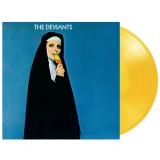
The Deviants (formerly The Social Deviants) were a British psychedelic rock band originally active from late 1966 to 1969. The bandname was later used as a vehicle for the musical work of writer Mick Farren until his death in 2013.
Musically, the Deviants were something like the British equivalent to the Fugs, with touches of the Mothers of Invention and the British R&B-based rock of the Yardbirds and the Pretty Things.
Their roots were not so much in the British Invasion as the psychedelic underground that began to take shape in London in 1966-1967. Mick Farren said that they were influenced by The Who, Charles Mingus, The Velvet Underground and Frank Zappa.
The Deviants is their 3rd album and is now available as a numbered limited edition of 1000 copies on yellow vinyl and it contains a replica of the original mini booklet.
Following a series of releases that have shaped its identity, Orion Records presents its first album “Debut” by label bosses Orion.
While keeping a recognizable tone, the duo moves in a broader direction, exploring different shades of experimental electronic music.
The record shifts between ambient soundscapes, breakbeat rhythms, syncopated grooves and tracks more geared towards the club still maintaining a strong focus on sound experimentation.
To feel with your eyes closed.
When We Froze is Ignez's entry into the Primal Instinct catalogue. A world held between ice and water. A kiss preserved beneath the frost, where winter finds its quiet shape. Yet somewhere below, the water keeps its own flow. It's a record about what happens beneath a frozen surface, about the quiet flow that never actually stops, even when everything above it looks still.
In the seclusion of a house in the Bavarian Forest, something unfolded that felt less like a conventional album production and more like an internal process of condensation. This house wasn’t a studio - it was a retreat. Its 1960s-inspired interiors, creaking wooden stairs, and crackling fireplace shaped the sound of Carl Gari as much as the instruments themselves. Though the house no longer exists, its atmosphere remains present in the recordings.
The music of Carl Gari - Jonas Yamer, Till Funke, and Jonas Friedlich - resists easy categorization, a trait that continues on this monumental new album. From the friction between electronic music and guitar textures, the trio forges a distinctive, idiosyncratic sound. Distorted electric guitars and pulsating basslines intertwine with analog drum machines, tape delays, and intricate effect chains, creating music that is raw, organic, and psychedelic. A new element on the album is the trio’s first use of vocals: Jonas Yamer, usually on bass, raises his voice in a punk-tinged, invented language that hints rather than narrates, unsettling more than it explains.
The guest artists do not merely decorate the sound - they alter its very structure at critical points. Polygonia contributes layered vocals that mesh seamlessly with the album’s technoid architecture. Will Brooks of Dälek delivers a dark rap feature on ‘Poison Shyness (Anti-Social)’, his words carving the sonic space with precision. Coby Sey adds introspective vocals that hover between experimentation and restraint on ‘Inner Link’. New York rap pioneer Sensational introduces a deliberately rough, individual counterpoint on ‘Disco Lights’, while the German percussionist Simon Popp drives the album forward with an uncompromising drum performance that insists rather than accompanies on ‘Zeitesser’.
The cover photographs, taken by Jonas Yamer, project images of corridors onto paintings located in the now demolished house where the album was recorded. Visually, this reflects a key motif of the album: spaces exist only as overlays and echoes - not mystical ghosts, but traces of a place that has physically vanished.
Recorded between 2016-2024 in Neunburg vorm Wald and Munich. With kind support by Kulturreferat der Landeshauptstadt München.
Mixed by Johannes Wagner aka J.Manuel at Apollo Studio, Berlin (A1, D1 w/ Fadi Mohem). Mastered & cut by Stefan Betke at Scape Mastering.
Photography by Jonas Yamer. Packaging design by Sepehr Mokhtarzadeh.
Landing on the 4th of September via his own imprint Knee Deep In Sound, ‘Obsessions’ is less a traditional dance record and more a reckoning — with where Daley Padley finds himself now, as an artist and as a person. Written across a period of constant movement, touring and introspection, the album holds the push and pull between intensity and stillness that has come to define his world.
This is an artist who started making music in Barnsley — long nights, small rooms, total commitment to sound. Those early marathon sets weren’t a stepping stone to something else. They were the foundation of everything that followed: global tours, chart success, the creation of Knee Deep In Sound, a career built entirely on instinct rather than expectation. Hot Since 82 has never followed a fixed path. He’s carved out a space that sits somewhere between underground credibility and global reach — and it’s that same restless, uncompromising approach that shaped this album.
“Some days feel heavier, some thoughts harder to hold. But music still reaches the places words can’t. It’s therapy and a reset button.”
That sense of release runs through the entire record. While rooted in house music, Obsessions doesn’t sit in one place for long — not to prove a point, but because that’s simply how Padley hears music. It moves between deep house, breakbeat, melodic electronica and full club focus as naturally as a conversation shifts tone. Moments of euphoria give way to reflection and tensions dissolves into release.
The album opens with ‘All That Matters’ — a track that feels immediately both expansive and intimate and sets the emotional register for everything that follows. From there it unfolds like a journey rather than a sequence.
Lead single ‘Shaded’, landing on the 12th June taps directly into classic house lineage while feeling unmistakably current — a bridge between where this music began and where it’s heading. Elsewhere, ‘Life’s Too Short’ and ‘Eternity’ introduce warmth and movement, weaving piano, breakbeat and subtle Afro influences into the album’s wider palette.
As the record progresses, the light changes. ‘Wow’ leans into darker, late-night territory — tension, restraint, a hypnotic centre. The collaborations with Kuuda on ‘State Of Mind’ and ‘Time’ bring the album back into full club focus: driving, physical, built for scale.
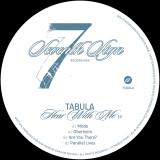
Scottish producer and label owner Graham Wilson signals a new phase for Seventh Sign Recordings with a four-track EP that blends Detroit techno roots with bright European electronic colours. Across the release, Wilson moves between pulsing four-on-the-floor rhythms, analogue basslines, crisp drum-machine percussion and shimmering synth work. "Mode" opens with an energetic, uplifting drive with steady kicks, pulsing bass and bright synth leads shaped with clean, modern production and side-chained pads. "Oberheim' follows with warm analogue textures, arpeggiated lines and optimistic pads, carrying a classic synth-wave feel while keeping a tight, Detroit-leaning groove. "Are You There" pushes into tense, atmospheric territory: rising pads, crisp hi-hats and a pumping bassline build momentum, giving the track a spacious, late-night techno edge. Closing cut "Parallel Lives" shifts into retro-futurist mode, neon-lit and melodic, evoking 80s energy and nocturnal late night drives. All in, a strong, forward-looking EP that connects machine-soul heritage with modern electronic clarity, ushering a fresh chapter for Seventh Sign.
Oráculo Records joins forces once again with Unknown Pleasures Records under the banner of “The Black Alliance” to celebrate one of electronic music’s most influential acts: SUICIDE. Widely regarded as pioneers whose radical approach helped lay the foundations of minimal synth and darkwave, Alan Vega and Martin Rev receive a tribute from artists who carried their influence into new territories. Absolute Body Control, Gabi Delgado of DAF, Patrick Codenys and Richard 23 of Front 242, and Dirk Da Davo of The Neon Judgement appear alongside some of the most compelling contemporary projects in the international dark music underground. Spread across two records, this collection of cover versions also features SUICIDE songs revisited by Alan Vega himself with Marc Hurtado, presented on vinyl for the first time. Their presence creates a direct connection between the original voice of SUICIDE and the generations shaped by the duo’s uncompromising vision. An instant classic in spirit and scope, “SUICIDE Pioneers’ Celebration” honours a legacy that continues to resonate across the underground. Produced in a one-off pressing of just 500 copies, this is a collector’s edition to discover, play and treasure for years to come.
The Third Room launches its new curator-led series with Oscar Mulero, one of techno's most uncompromising and influential voices. Through decades of releases, DJ sets and his work with PoleGroup, Mulero has helped shape a sound defined by tension, reduction and depth, leaving a lasting mark on contemporary techno culture. For this first chapter, he brings together artists who reflect that same discipline and sonic clarity. Rather than focusing on solo authorship, Mulero shifts towards dialogue - connecting with producers who operate within a shared language, while bringing their own distinct perspectives to the record. He opens with Sonic Synergy, the only solo track: restrained, dub-influenced and immersive, built on warm low-end and gradual development. The centrepiece of the record follows with Reaction Pair, a collaboration with DVS1. Bringing together two of the scene's most established voices, the track unfolds as a fluid, open construction: a rolling, slightly woobly bassline meets evolving chords that build and dissolve tension in continuous cycles, creating a sense of forward motion without obvious peaks. Seven, with Luigi Tozzi, introduces a more spatial dimension, merging Tozzi's atmospheric depth with Mulero's steady drive. Closing track Between the Stars, with Isabel Soto, leans into a timeless, understated energy - functional without ever becoming forceful. Across all four tracks, the EP remains consistent in tone: spacious, spheric and focused on long-form movement. As the first entry in the series, it sets a clear direction - reduced, hypnotic techno built for longevity. ? 2026 The Third Room A1 Written and Produced by Oscar Mulero | A2 Written and Produced by Oscar Mulero & Zak Khutoretsky | D1 Written and Produced by Oscar Mulero & Luigi Tozzi | B2 Written and Produced by Oscar Mulero & Isabel Soto Mastered by Ahmet Sisman (The Third Room Studios) Artwork by Charlotte Ernst Design by Daniel Bornmann (STUEDIO.XYZ) Distribution by Clone Pressing by Matter Of Fact
The second chapter of The Third Room's curator-led series is shaped by D.Dan, one of the defining voices of a new generation pushing techno into sharper, more forward-leaning territory. Through his productions, DJ sets and close ties to an emerging network of artists, he has helped shape a sound defined by precision, intensity and subtle experimentation. For his curation, the focus lies on collaboration and alignment. Rather than presenting a wide spectrum, the release draws a tight circle around a shared sound: one defined by contrast and a strong sense of aesthetic cohesion. D.Dan's Bound sets the tone: reduced, warm and controlled, balancing sharp accents with a steady, grounding low-end. On Dynamic, Rene Wise delivers a record's standout moment: a fluid, rolling tool shaped by subtle disruptions and evolving tension. Slither by Connor Wall expands into a more trippy, forward-facing space, while Gensou by Sunju Hargun & DJ MARIA. closes on a fresh, detailed take on acid - understated but effective. Across all four tracks, the release feels tightly unified - less like a compilation, more like a single body of work shaped from a shared sonic language. Contrast plays a central role: between tension and warmth, control and surprise, functionality and detail. Cohesive and focused, the record feels carved from a single aesthetic, where contrast and small, unexpected shifts drive its momentum. Copyright 2026 The Third Room A1 Written and Produced by Theodore Su-Ahn Shin | A2 Written and Produced by Andrew Shobeiri | B1 Written and Produced by Connor Wall | B2 Written and Produced by Sunju Hargun & DJ MARIA. Mastered by Ahmet Sisman (The Third Room Studios) Artwork by Charlotte Ernst Design by Daniel Bornmann (STUEDIO.XYZ) Distribution by Clone Pressing by Matter Of Fact
DJ Koze's 2013 album opus Amygdala has continued to bewitch all who encounter it since its release. Tipped as his own personal Sgt. Pepper, the sublime long-player revealed a fully-realised and personal body of work, complete with a classic songwriting at its core, House in its heart, and veins coursing with psychedelic color. La Duquesa' was the album's dreamy single standout, a journey into deep, tropical ecstasy. XTC' begins in the same spirit, and captures the all the blissful allusions of its name, but its initial gentility belies the deep intensity to come. Floating pads glow with celestial ambience as a kick drum is gradually coaxed into solid form, and the introduction of spoken text begins the second act. Many people are experimenting with the drug Ecstasy,' it says, ...is the drug like the lie and meditation the truth Or am I missing something that could really help me". XTC' then transforms: sweetly imploring tones become demanding, gentle gradients between chords turn hard-edged, and sharp hi-hats cut through the haze. Complete with Koze's signature percussive quirks, it drives towards the track's final pay off: an undeniable, all-consuming, irresistible high. Knee On Belly' recalls Koze at his most tongue-in-cheek and overt, it is bright, bold and literally brassy, using cut-up horns of all shapes and sizes to patchwork together his own unique arrangement. With the highs and mid ranges accounted for, Koze adds in a swollen, thrumming bass line to mix to bring this floor-filler to life. Knee on Belly' recalls a raw, filtered and funky approach to groove, with a nod to disco house and the art of artful sampling, as it orbits between its own neon highs and simmering lows.
The evolution of Andreas Tilliander's moniker TM404 has reached its third stage. The first TM404 album was a heavily self-restricted concept album, live recorded with classic Roland machines. The subsequent album had a more playful vibe, shaped by Tilliander's extensive live touring. This third TM404 album on Kontra-Musik simply tells the story of what he's been up to since. The third part of a musical diary, initiated in 2013. The TM404 venture might have started out as a dreamy acid dub project, more suited for the chill-out than the main floor. But by popular demand Tillander found himself touring big clubs around the globe and the TM404 sound adapted organically. As a result, the album features tracks like Vactro and Rymdeko: fast paced acidic techno tracks in the same vein as classic Plus 8 releases, but with more space echo. Much more. But never fear, fans of the classic warm and bubbling TM404 sound. You'll certainly get yours as well. A substantial portion of this album was recorded in a studio flat in Berlin as part of an artist residency. For obvious reasons, Tilliander could only bring a small portion of his studio gear to this German sanctuary. As a consequence, this album has a more stripped down vibe than its predecessors, which creates more space for Tilliander's glowing melodies. The last track on the album, a loving homage to Kontra-Musik's label boss, is a sublime example. And for the Instagram generation, here's the short version: The album is called Syra. That translates to Acid. You're welcome.
Francesco Messina is perhaps best known for his split album with fellow composer Raul Lovisoni, Prati Bagnati del Monte Analogo, originally released on the seminal Italian label Cramps in 1979. Along with contemporaries Franco Battiato, Juri Camisasca and Giusto Pio, Messina helped reshape the world of modern composition with an organic rawness and haunting beauty.
In November 2023, Messina performed Prati Bagnati live for the first time in Milan, Italy – along with pianist Michele Fedrigotti, who appeared on the original LP. The concert was a tremendous success and led the composer to further reflect upon the music he made over 40 years ago. From his home piano – a hundred-year-old Schimmel with magnificent resonance – new pieces began to emerge out of these meditative sessions.
As Messina says in the liner notes, "The idea of making a new album wasn't the driving force at all; what mattered was trying to reconnect with the 'freedom' I had experienced back then while creating that music. I started over without haste or deadlines, simply trying to find a deeper, inner connection."
W.25TH / Superior Viaduct is honored to present Le api dell'invisibile. From the hazy drone of "For Florian" and the title track to the gentle swells of "Letter for an Absent Friend," the album is a lush amalgam of new age and ambient minimalism that is vividly reminiscent of Messina's earlier work.
The title draws inspiration from a famous reflection by Austrian poet Rainer Maria Rilke: "We are the bees of the invisible. We ceaselessly gather the honey of the visible, to store it in the great golden hive of the Invisible." It is a phrase that has long shaped the way Messina looks at his music – transforming lived experience into sound, making audible what normally eludes the eye.
Hey! Mein Name ist Terry Cole, und ich habe das Privileg, ein wunderbares unabhängiges Plattenlabel namens Colemine Records in Loveland, Ohio, zu betreiben. Wir machen das schon seit fast 20 Jahren, und wir haben das Glück, unser Label direkt über unserem ebenso wunderbaren Plattenladen namens Plaid Room Records zu betreiben. Im März 2020, als die Realität einer globalen Pandemie einsetzte, waren wir uns nicht sicher, wie es mit unserem Veröffentlichungsplan weitergehen sollte. Alles kam quasi sofort zum Stillstand. Aber nach ein paar Wochen des Brainstormings beschlossen wir, dass wir - obwohl unser Plan für physische Veröffentlichungen völlig auf den Kopf gestellt worden war - jeden Donnerstag abends eine neue digitale Single veröffentlichen würden, bis wir den normalen Betrieb wieder aufnehmen konnten. Wir nannten die Kampagne ,Brighter Days Ahead", denn bei Colemine versuchen wir, immer das Positive zu sehen, wann immer es geht. Also haben wir den größten Teil des Jahres 2020 lang jeden Donnerstag digitale Singles veröffentlicht; dazu gab es virtuelle Listening-Partys und DJ-Sets auf YouTube. Das hat ziemlich viel Spaß gemacht. All diese Songs gipfelten in einem 2-LP-Set, das wir schließlich 2021 in physischer Form veröffentlicht haben. Und obwohl wir hoffen, dass so etwas wie eine globale Pandemie nie wieder passiert, musste ich zugeben, dass ich einen Weg finden wollte, die ,Brighter Days Ahead"-Kampagne zu einer Art dauerhaftem Projekt für uns zu machen. Während ich das hier schreibe, ist es das Jahr 2026 - offensichtlich habe ich also ein paar Jahre gebraucht, um diese Idee zu entwickeln, aber wir sind endlich am Ziel angekommen und das fühlt sich verdammt gut an. Die Idee ist ziemlich einfach: Der erste Band von ,Brighter Days Ahead" verfolgte einen rückblickenden Ansatz _ eine Zusammenstellung dessen, was wir bereits veröffentlicht hatten _ und dieses Mal verfolgen wir einen vorausschauenden Ansatz. Was du in deinen Händen hältst, ist ein Vorgeschmack auf das, was noch kommen wird. Diese Platte ist eine Kristallkugel, die tief in die musikalische Zukunft des Jahres 2027 blickt und dir einen kleinen Vorgeschmack darauf gibt, worauf du dich aus dem Colemine-Universum freuen kannst. Und wisst ihr was? Dieses Stück Plastik, das ihr in euren Händen haltet, ist die einzige Möglichkeit, es zu hören. Diese Songs sind noch nicht digital erhältlich. Einige davon sind Rohmischungen. Manche sind so brandneu, dass die Songtitel noch nicht einmal endgültig feststehen. Also reißt die Schutzfolie ab und schnallt euch an - ihr seid dabei, eine Zeitreise in die Zukunft zu unternehmen, ganz ohne Fluxkompensator. - TERRY COLE (Inhaber / Betreiber Colemine Records)
A first dispatch from Fernland. Three states of inner terrain: drift, then suspension, then trace. Nothing here announces itself. A pressure gathers before shape does; a distance opens that is not measured in space. What remains after each track is less a sound than a residue, the contour of a state that held still while you passed through it.
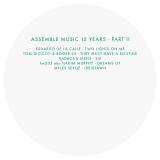
"ASSEMBLE MUSIC 15 YEARS - Part II : Founded in Lisbon in 2011, Assemble Music celebrates its 15th anniversary with a three-part vinyl compilation, bringing together fifteen artists who, in different ways, reflect the label's past, present and future. Released simultaneously in November 2026 and distributed worldwide by Clone Distribution, the three records are less a retrospective than a continuation of what Assemble has been building since the beginning: music with character, made by artists with their own language, away from trends and easy categorisation. Across fifteen years, Assemble has moved freely between house, techno, electro, dub and more experimental forms of electronic music. The catalogue has never been defined by one particular sound, but rather by a certain approach, personal, uncompromising and built to last. Part II begins with Eduardo de la Calle, whose uncompromising approach to techno and electronic music has made him a natural part of Assemble's more recent history. His contribution continues a relationship that has developed through releases and appearances around the label showcases. Tom Dicicco & Roger 23 move into deeper ambient techno territory, bringing together two producers whose work has always pushed beyond the conventional boundaries of house and techno. Radboud Mens is a Dutch sound artist and composer whose work has long explored the space between experimental electronics, minimalism and techno. Active since the early 1990s, his approach is built around repetition, texture and the physical qualities of sound. His contribution to the compilation reflects this perfectly with a deeply minimalist piece, stripped back to its essential elements, where subtle shifts and details gradually shape the track. Chicago's Hakim Murphy represents another long-standing Assemble connection. His relationship with the label goes back years, and his raw, instinctive approach to house and techno embodies much of what Assemble has always looked for in an artist, individuality before formula. Closing the second record, Myles Serge delivers a pure definition of deep techno, hypnotic, atmospheric and deeply immersive, built on subtle movement and timeless Detroit-rooted sensibilities, establishing a new connection with the label."
Sweep returns with its second release, bringing together Jigit co-head O.Bee and Unreleased boss Cem G. ‘Makes Me Feel’ is the first music to see the light from a long-standing friendship and collaboration shaped between their two homes, New York and Istanbul, and comes backed with a stirring remix from Giegling’s Edward.
O.Bee and Cem G bring forward a sound rooted in Istanbul’s music culture, developed through ReSolute’s warehouse parties on the outskirts of Brooklyn and refined at Berlin’s Club der Visionaere. It’s music that feels equally at home in all three settings. Dyed Soundorom’s Sweep is built around underground sounds with depth and groove — much like his own DJ sets — and this second release sits naturally within that world.
On side A, the original mix of ‘Makes Me Feel’ rolls out with a sturdy groove from the start. O.Bee and Cem G build the energy carefully, peppering the ethereal atmosphere with a repeated vocal clip as the tension grows. A variety of percussive layers and pads add depth, keeping you locked in. Halfway through, the vocal goes into full flow — scattered words bounce around like a jumbled poem, evolving into a call and response of dissipating voices on top of the rolling bass, fully hypnotizing. Underground music par excellence.
The flip features a rework from one of Giegling’s central figures, Edward, who adds a tougher edge to the original. Still operating in the deeper end of the spectrum, the remix plucks out the ‘Make me feel’ part of the vocal and uses it throughout. Dark, brooding and enchanting, Edward’s reinterpretation progressively adds more layers, increasing the dynamism while bringing further nuance to the atmosphere. A real treat for Edward fans…
If you caught Dyed Soundorom playing anywhere, you surely would have heard these cuts in the mix. Perfect dancefloor groovers… Now they’ve finally arrived on Sweep — c'est l'heure de la fête!
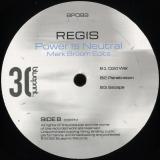
Following his recent appearance on Blueprint, Mark Broom returns to the label with a unique project, revisiting the work of techno pioneer Regis. Entitled "Power Is Neutral", the release sees Broom rework a selection of seminal Regis recordings originally released on Downwards Records across the albums Gymnastics (1996), Delivered Into The Hands Of Indifference (1998) and Penetration (2001).
Known as one of the key architects of the Birmingham techno sound, Regis (Karl O'Connor) helped shape British techno through his work as co-founder of Downwards Records and a catalogue that continues to influence generations of artists.
For Mark Broom, few artists embody British rave culture quite like Regis. Drawing on source material that has long stood as a cornerstone of UK techno, Broom approaches these edits with both respect and imagination. As Regis puts it, "Mark Broom is like some modern day Bagpuss... he has fired up his techno mouseorgan and polished old relics to make them all shiny and new."
Power Is Neutral delivers six expertly crafted reinterpretations that bridge the raw energy of Regis' original works with Broom's unmistakable contemporary dancefloor sensibility, bringing these timeless tracks to a new generation of listeners.
Often credited as the father of multi-media theatre, Alwin Nikolais (1910-1993) took complete creative control over his productions - including cutting-edge approaches to lighting and costume that transformed human bodies into shifting sculptural shapes, while also composing wildly innovative electro-acoustic and synth-based audio as accompaniment.
After initially experimenting with musique concrète and tape manipulation (as demonstrated on the 1959 LP Choreosonic Music of the New Dance Theatre of Alwin Nikolais) Nikolais became the first owner of Robert Moog's synthesizer at the Audio Engineering Society convention in New York in late 1964. Relying heavily on the Moog and later the Synclavier synth/sampler, these 21 tracks document Nikolais' highly-prescient compositions across the mid 1960s through to the late 1980s - existing not only as extensions of his other-worldly choreographic productions, but standalone pieces of foundational mid-century American electronic and experimental music.
"Born in Southington, Connecticut in 1910, Nikolais’s early years and early career were in acting, music and puppetry. It was not until the late 1930s that he began his work as dancer/choreographer in Hartford, Connecticut, where he was commissioned by the Avery Memorial Theatre, a part of the Wadsworth Atheneum, to create an evening-length work to the music of Ernst Krenek. Previously his work and study as a pianist-organist found him accompanying silent films. This sort of accompaniment required from the musician not only a playing skill but also a versatility in improvisation, matching movement to sound, and evoking mood to situation.
Nik was drawn initially to dance by his involvement with the percussion scores used by the illustrious early twentieth century German dancer Mary Wigman. In trying to learn more about percussion, he was lured into dance class and thus his career began. His development of music and dance occurred simultaneously. His introduction to the twelve-tone technique opened his mind to the expanding areas of atonal music, and his dealing with music as sound per se. In 1948, after being appointed director of the Henry Street Playhouse in New York, Nikolais formed the Playhouse Dance Company, later known as the Nikolais Dance Theater, and began his aesthetic orientation toward dance as a study of motion. By the 1950s, he had ceased creating literal dances and began his explorations and eventual milieu as an abstractionist.
Sound became an important part of his abstract theatre. For his first dances, which involved his new thinking of dance as both a visual and kinetic art, he used live percussion scores in which he directed his dancers to play instruments of all nature. There was a combination of children’s toy instruments as well as harsh and resonant automobile brake drums, and other pitched auto parts which he also used to accompany classes. Once he installed his own tape recording machines, he quickly used the limited range these instruments provided in a new way, slowing and increasing speed and reversing sound. He also made the sounds adhere to the choreographic structure (not the other way around), thereby giving the dance its independence from the musical phrasing. But the real need remained: the search for new sound. Nik made a sound library, recording noises and percussion and vocal sounds, which the French aptly called musique concrète. Needless to say, he became a master at splicing bits and pieces.
From 1956 to 1962 Nikolais composed eleven major scores for his theatre pieces using such techniques. In 1963, James Seawright, who at the time was assisting Nik in his productions and also working at the Columbia-Princeton Center for Electronic Music, recorded a sound bank for the production Imago (1963). With this material, Nikolais created his first synthesizer score. Imago won the Paris Grand Prix in 1968 and launched the Nikolais Dance Theatre towards its national and primarily international acclaim.
During the same period, Seawright came to Nik and told him of a young man who had invented and constructed a simplified synthesizer and insisted that Nik visit the electronic fair currently being held in New York. Nik did so and met Robert Moog. He was completely taken by the new machine and after making some suggestions to Moog, (which Moog made), Nik bought the inventor’s first machine with the aid of a Guggenheim Fellowship. Moog himself was astonished by what his machine could produce for Nik. This machine was later acquired by the Museum of Musical Instruments at the University of Michigan at Ann Arbor as the first Moog synthesizer. The Synclavier was Nik’s next source of sound and since the mid-1970s remained the major instrument in the Nikolais soundroom.
Alwin Nikolais has been honored and awarded throughout the world. He has received the French Legion of Honor, the Kennedy Center Honors, National Medal of the Arts, two Guggenheim Fellowships, as well as Mellon, Ford, and Rockefeller grants. He has been a recipient of NEA grants since 1966, been awarded five honorary doctorates, all for his remarkable achievements in Dance Theater. His genius has influenced several generations of artists."
—Murray Louis











![Various - II001 - VA [Printed Sleeve]](https://www.deejay.de/images/l/2/2/1267922.jpg)











![VARIOUS - BRIGHTER DAYS AHEAD [VOLUME 2]](https://www.deejay.de/images/l/7/1/1270471.jpg)