Wasteland is a record that is unafraid to plunge into the darkness of the modern world and embrace the weirder, edgier and more unnerving moments that come from doing so. It is an album that captures all the enormity of life from the micro to the macro, zooming in on the personal as well reflecting on broader societal issues.
“Wasteland is about the idea of a place once known or familiar that is now broken down and unrecognisable,” says Ghedi. “It’s about exploring the process of watching someone’s surroundings and environment collapse.” And within that you have a lot going on. “It also explores death, personal loss, grief, mental health and how the natural world provides solace and meaning for that loss and how these worlds blur into one another.”
Ghedi has always been an artist that in many ways perfectly encompasses folk music in its purest form but he is also someone that frequently pushes the boundaries of that label and no more so is that apparent than on this record. As like previous albums, such as 2018’s A Hymn for Ancient Land and 2021’s In the Furrows of Common Place, Ghedi uses traditional folk songs as a means to explore contemporary issues via modern and experimentally-leaning music. “With the traditional material on this album I wanted to find songs with content that resonated with me,” says Ghedi. “But also that were based roughly around the north of England.” This is a central underlying theme to the album for Ghedi. The feelings of loss, erosion, and degradation are often most pronounced in working class communities and this was something he wanted to weave in. “It was important to voice and choose material that represented or expressed issues that correlated with things going on around me.”
However, as remarkable as some of the traditional material is, some of the most arresting work on the album is Ghedi’s entirely original compositions. Lead single ‘Wasteland’ is a stunning piece of work that while rooted in an environment being corrupted and broken – “there’s violence on these hills” Ghedi sorrowfully sings, before claiming this is no longer somewhere that can be called home – it is also a stirringly beautiful composition that soars and glides as it opens up, as sweeping strings swoop and in and out of Ghedi’s twangy electric guitar.
The decision to incorporate more fuller sounds, such as electric guitar and huge drums, results in a notable shift and evolution in tone for Ghedi. “The lyrical content needed something more band-driven and loud to deliver them,” he explains. “Incorporating the electric guitar in my songwriting was also a big part of opening the sound up, using drop tunings pushed me to use my voice in a wider range, which forced me to use falsetto a lot which I haven’t previously done before. That then opened the sound up and gave me creative ideas for bigger arrangements and to sonically really push things.”
What Ghedi has done in creating his masterpiece is construct a remarkable space where deeply intimate and personal feelings coexist with reflections on environment, place and society, while also interweaving historical context via traditional songs. Wasteland is as much of a world to explore and exist in as much as it is an album, with Ghedi carving out his distinctly unique sonic language and voice to explore that singular environment.
Novedades
Wasteland is a record that is unafraid to plunge into the darkness of the modern world and embrace the weirder, edgier and more unnerving moments that come from doing so. It is an album that captures all the enormity of life from the micro to the macro, zooming in on the personal as well reflecting on broader societal issues.
“Wasteland is about the idea of a place once known or familiar that is now broken down and unrecognisable,” says Ghedi. “It’s about exploring the process of watching someone’s surroundings and environment collapse.” And within that you have a lot going on. “It also explores death, personal loss, grief, mental health and how the natural world provides solace and meaning for that loss and how these worlds blur into one another.”
Ghedi has always been an artist that in many ways perfectly encompasses folk music in its purest form but he is also someone that frequently pushes the boundaries of that label and no more so is that apparent than on this record. As like previous albums, such as 2018’s A Hymn for Ancient Land and 2021’s In the Furrows of Common Place, Ghedi uses traditional folk songs as a means to explore contemporary issues via modern and experimentally-leaning music. “With the traditional material on this album I wanted to find songs with content that resonated with me,” says Ghedi. “But also that were based roughly around the north of England.” This is a central underlying theme to the album for Ghedi. The feelings of loss, erosion, and degradation are often most pronounced in working class communities and this was something he wanted to weave in. “It was important to voice and choose material that represented or expressed issues that correlated with things going on around me.”
However, as remarkable as some of the traditional material is, some of the most arresting work on the album is Ghedi’s entirely original compositions. Lead single ‘Wasteland’ is a stunning piece of work that while rooted in an environment being corrupted and broken – “there’s violence on these hills” Ghedi sorrowfully sings, before claiming this is no longer somewhere that can be called home – it is also a stirringly beautiful composition that soars and glides as it opens up, as sweeping strings swoop and in and out of Ghedi’s twangy electric guitar.
The decision to incorporate more fuller sounds, such as electric guitar and huge drums, results in a notable shift and evolution in tone for Ghedi. “The lyrical content needed something more band-driven and loud to deliver them,” he explains. “Incorporating the electric guitar in my songwriting was also a big part of opening the sound up, using drop tunings pushed me to use my voice in a wider range, which forced me to use falsetto a lot which I haven’t previously done before. That then opened the sound up and gave me creative ideas for bigger arrangements and to sonically really push things.”
What Ghedi has done in creating his masterpiece is construct a remarkable space where deeply intimate and personal feelings coexist with reflections on environment, place and society, while also interweaving historical context via traditional songs. Wasteland is as much of a world to explore and exist in as much as it is an album, with Ghedi carving out his distinctly unique sonic language and voice to explore that singular environment.
Never before heard tunes from the heart of Manchester circa 1989. The lost demos of the band that was Joanna, recorded at iconic Strawberry and Pentagon Studios were discovered in a Manchester apartment loft after 35 years on the shelf. For fans of The Stone Roses, Happy Mondays and Charlatans. With the release of Hello Flower, Joanna is no longer “the most popular band without a record out,” as NME called them in 1990, but their singular spirit is now available for anyone who wants a taste.
Josh Butler joins Kerri Chandler’s Kaoz Theory imprint with the ‘Piranha’ EP, featuring a collaboration with Josh Daniel and two further original compositions.
Northern England’s Josh Butler has been at the forefront of the contemporary house scene over the past decade, racking up releases for the likes of Defected, Rejected, Solid Grooves, Hot Creations, Crosstown Rebels, MÜSE and many more. Here though we see Josh returning to Kerri Chandler’s Kaoz Theory following 2023’s ‘Sunday Club’ with some fresh, dub house leaning material.
Opening the release is ‘Be There’, a collaboration with Josh Daniel, laid out across five and half minutes with dubbed out piano chords, crisp drums, a bouncy bass line and Daniel’s soulful vocal stylings.
A dub mix is offered up to follow, laying focus solely on the groove. On the flip side we have ‘Piranha’ up first, a hazy journey through dubbed out synth swells, airy vocal chants, skippy low-slung percussion and snaking sub bass tones.
‘Chess’ then rounds out the EP, laying down heavily swung minimalistic percussion, fluttering low end pulsations and ethereal atmospheric textures to create a subtly unfurling, cinematic dance floor groove.
DJ Feedback:
Junior Sanchez – Dope freshness!
Dennis Quin – Nice EP, feel the tracks
Lele Sacchi – All good deep rollers
Alexander Maier – Superb deepness in all
Ruff Stuff – Great EP! Love it!
Danny Howells – Loving this, all four tracks totally worth of support
Milos – Amazing EP, great tracks
Chris Brennan – Supremely smooth tunes, lovely lovely
Mr V – Straight fire
Acid Nation is one of the defining releases from US techno and house icon K. Hand (Kelli Hand). First pressed in 1995 on Loriz Sound in collaboration with Acacia Records, the record captures the raw energy and forward-thinking spirit of the American underground scene of the era. Driven by gritty acid lines, powerful rhythms, and a fearless, machine-driven groove, Acid Nation showcases the full depth of K. Hand’s talent as a DJ and producer. Now seeing the light again on the Time To Impact imprint, the record returns in a remastered version, bringing its timeless acid power back to contemporary dancefloors.
Austrian Ken Hayakawa keeps up Stripped Down Records' fine run of form with two new tracks that get remixed by John Tejada and Whitesquare.
Hayakawa's mother is Japanese but he hails from Salzburg. He is formally trained in piano and has performed Beethoven's music in a number of prestigious venues. That melodic, minimalist style still informs his own output and over the last decade has come on the likes of Audiomatique and Upon.You.
Superbly soothing opener 'Sonic Wave' is a brilliantly warm and spaced out deep house track that voyages into the cosmos. Dreamy pads drift by as muted acid lines flesh out the supple, subtle drums. It's a late-night groove to really get lost in.
American tech house titan and long-time Kompakt associate John Tejada steps up to remix and takes things even deeper, with pulsing, sonar-like acid blips and icy hi hats all working on melting your mind as warm, gurgling bass drives things forwards.
It is Italian producer and DFTD, 2020 Vision and Freerange house master Whitesquare who then remixes. He brings plenty of spine-tingling chords to his version, which is deep yet driven, with layer upon layer of rich sound all oozing real soul.
Hayakawa then finishes things off in style with 'Lost,' a brilliantly atmospheric track that is cavernous, dubbed out and finished with exquisite ambient details that cannot help but calm you.
This is a beautiful EP of deep, dynamic house music.
Kid Twist is back with their second release, which is an alias for DJ Phantasy with input from his good mate Simon. This corking 12" was originally released in 1993 on Liquid Wax. The tracks were engineered back then by Alex Reece when he was assistant engineer to Jack Smooth at his Sound Entity Studios.
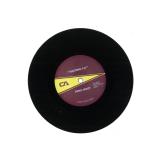
The new CA label is back with a second offering of edited hip-hop and r&b gold. These are the sort of steam and sexual cuts that bring real heat to any slow jam session. King Most's 'Waiting 4 U' is first with slow, funky breaks and lavish strings and horns bringing a nice sophisticated and seductive feel. Things somehow get even more smoochy and loved up on the flip, which comes from DJ Homicide_. 'Playin' For Money' is a classic boom-bap sound with low slung bass, libidinous vocals and buttery smooth backing that is going to get hips bumping in no time.
Garage Hermétique celebrates its tenth release with what could be described as a mini-album. Multi-talented producer Levat's electronic vision comes in different shapes and forms. Whether it's Electro, Italo, IDM, Trip Hop, Techno or Electronica, his brush paints a diverse yet cohesive collection of tracks, united by the ability to create dreamy atmospheres, emotional leads and punchy drum patterns, always bordering on the edge of pungent eeryness.
This release is an act of breaking out of conventional categories for Seismic records. Established boundaries of genres are completely dissolved into an unpredictable flow of sonic associations. It’s an unexpected collaboration, yet it makes perfect sense from the first kick. Two artists from seemingly opposite ends of the musical universe come together to create a project which fearlessly embarks on the synthesis of hypnotic trance-techno and utter sonic chaos. This project is anything but predictable.
The duality is noticeable from the very first moment. One side brings relentless movement forward in the project: a raw, hypnotic pulse based on rhythm and precision, locking the listener in the present moment and not letting go. Unpredictable textures and psychedelic ornaments are constantly weaving through the rhythmic framework.
A dedicated listener may recognize that the whole EP carries the legacy of David Lynch’s work. The sense of peculiar uneasiness and indecipherability, overridden by the desire to find out what comes next, are exactly what the artists manage to capture and what is so characteristic of Lynch himself. At one point, the EP even reveals a moment as if a red curtain parts in the depths of the track and the listener momentarily catches echoes from the town where owls are not what they seem. Hidden within is a playful nod to the iconic Twin Peaks soundtrack.
Dreamweavers II sees Mark de Clive-Lowe reunited with Italian rhythm masters Andrea Lombardini and Tommaso Cappellato for the next chapter in their electro-acoustic trio journey.
Recorded at Sotto il Mare Recording Studios in Verona, Italy in summer 2024, the album builds on the cosmic, hypnotic language established on Dreamweavers (2020) while pushing deeper into groove-driven terrain, dancefloor jazz and textural improvisation. Across eight tracks, the trio explore the elastic space between jazz tradition, beat culture, and club-influenced momentum – without samples or looping – relying purely on live interaction, feel and shared intuition.Opening with the Azymuth-inspired “Terra de Luz,” the album immediately signals its global outlook. “Kaze no Michi” follows with late-night Tokyo energy – dancefloor jazz that feels equally at home in jazz clubs or after-hours rooms. Two intentional reinterpretations bridge jazz and beat culture: J Dilla’s “Raise It Up” (from Slum Village – Fantastic Vol. 2) is reimagined with its original groove and bass line as the launch pad, while “The Bass That Don’t Stop” becomes a lush house-jazz tribute to the late Phil Asher, originally co-created by Asher and de Clive-Lowe in 2002 under the moniker musiclovelife.Bassist Andrea Lombardini’s “Pam” brings the album inward – introspective, spacious, and deeply melodic; while “Lucid Dreams” draws on the trio’s shared love of jungle, drum’n’bass and the exploratory spirit of greats like Chick Corea, amplifying the journey with forward motion and harmonic curiosity.Dreamweavers II is a concisely intentional sound narrative: a trio record rooted in jazz lineage, shaped by beat culture and guided by a collective curiosity for texture, rhythm, and movement.
Boogie Back Records proudly reissues BBR008 on 7-inch vinyl — a timeless slice of soulful innovation from Max Beesley, whose deep roots in the UK’s acid jazz and soul scene have influenced generations of musicians and listeners alike. A multi-instrumentalist, composer, and producer, Beesley has collaborated with some of the most iconic artists of our time — Stevie Wonder, Chaka Khan, Earth, Wind & Fire, James Brown, Incognito, Jamiroquai, and many more — contributing his signature touch on drums, percussion, keyboards, and vibraphone.
Originally released as part of Boogie Back’s 12” series, BBR008 captures Beesley’s unmistakable sound: rich harmonies, heavy grooves, and that soulful energy that bridges classic street soul and contemporary jazz-funk. This 7” reissue distills the essence of his acclaimed Boogie Back Records impacting era — a period defined by vibrant musicianship and cosmic jazz grooves ready for both the dancefloor and the deep listener. These two tracks showcase the full range of Beesley’s musical vision. “Night Daze” rides a hypnotic groove of cosmic Rhodes chords, tight percussion, and lush vibraphone lines, creating a cinematic, late-night atmosphere. On the flip, “Painful Truth” features the unmistakable voice of Omar, one of the UK’s most iconic soul vocalists — delivering a deep, heartfelt performance over Beesley’s rich, jazz-funk arrangements. This is another special and exclusive 45/7“ release via Soulkitchen Distribution…
MEMORIALS jump off the waterslides and head above the clouds with their stunning second album proper, 'All Clouds Bring Not Rain'. The duo of Verity Susman and Matthew Simms (formerly of Electrelane and WIRE) locked themselves away in a studio in a barn secluded deep in the woods in southwestern France and re-emerged with a beautiful, unusual record that is both melodic and unconventional. For such an ambitious album it's striking that it was written, performed, recorded and mixed solely by the two of them. Sounding like an unearthed classic, MEMORIALS twist their influences into their own unmistakable sound. Imagine Nico singing with Can produced by David Axelrod and you're somewhere in the right ballpark. The record draws inspiration from a wide range of music including folk, dub, post punk, experimental tape music, 60s soul, garage rock, 70s spiritual jazz and Canterbury prog. Verity's distinctive, unadorned singing is a focal point of the record, moving from tender to wild. Her vocal melodies quickly become earworms, providing the tuneful heart around which the songs' more unorthodox elements are arranged, which is where Matthew's unconventional approach to recording and production comes to the fore. With their adventurous arrangements, classic songwriting skills and innovative production techniques, MEMORIALS have created another mesmerising listen that's accomplished and compelling in its unique approach yet remains dizzyingly immersive - just like their acclaimed live shows. "Exciting and unpredictable" The Guardian "Everything you'd expect from a duo adept in the strange and esoteric, while also in thrall to pop music's melodic bent." The Quietus "Stunning, kaleidoscopic tunes" Electronic Sound "Engagingly eclectic" UNCUT "Divinely tuneful yet confrontational" The Wire "Kaleidoscopic art-pop and adventurous psych-rock with an immersive, experimental aura." KEXP.
Midnight Runners comes to Razor-N-Tape with a 12" of Southern Hemisphere disco gold!
Harry Septiandry has been gaining traction with standout releases on Darker Than Wax and Star Creature under his Munir alias, and for his RNT debut he serves up four extra special reworks of obscure disco from his native Indonesia.
The source material would stump even the most savvy of ears, but Harry finds the universal in these rare gems, augmenting the grooves and preserving just the right bit of camp for super sunny spin!
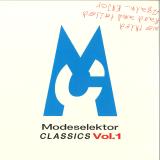
Modeselektor kündigen mit "Classics Vol. 1" einen neuen Release samt begleitender Live-Konzert-Tour an.
Mit "Classics Vol. 1" (CV1) veröffentlichen Modeselektor eine besondere Edition, die wie ein musikalischer Lebenslauf funktioniert. CV steht nicht zufällig für Curriculum Vitae. Eigentlich wollten Szary und Gernot alte Tracks aus ihren ersten beiden Alben "Hello Mom!" und "Happy Birthday!" neu aufnehmen. Doch was als Rekonstruktion begann, verwandelte sich fast vollständig in etwas Neues. Eine frische Sammlung von Stücken, die den Geist ihrer frühen Releases atmet, ohne sie einfach zu kopieren. Das Duo blickt zurück und erschafft dabei Zukunft. Tracks wie "KILL BILL Vol.4", "Edgar" und andere Albentitel dienten als Ausgangsmaterial, wurden zig mal auseinander und wieder zusammengebaut, neu interpretiert und dann doch in den meisten Fällen nur als abstrakte Inspiration verwendet. Das Ergebnis ist eine Rückschau, die sich emanzipiert hat. Ein mutiges Experiment, ein gescheiterter Versuch im allerbesten Sinne.
"Classics Vol. 1" schlägt so eine unerwartete Brücke zwischen damals und morgen und fasst alles zusammen, was Modeselektor ausmacht: Neugier, Chaos, Humor und ein unerschütterliches Bedürfnis, immer wieder Neues aus der eigenen Geschichte herauszuarbeiten. Und was passt besser zu Rückbesinnung, neuem kreativen Schub und Energie: Eine Tour. Modeselektor gehen 2026 auf eine ausgedehnte Konzertreise und spielen auch mehrere Festivals weltweit.