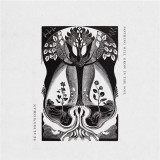
On Interior, Swiss composer Samuel Reinhard excavates intricate resonances at the periphery of our attention. Across four movements, Reinhard follows a process whereby he layers and loops fragments of piano improvisations. Yet Interior complicates its own systematicity by using samples that are not only recognizable as piano notes, but as live recordings of a piano being played. Reinhard composes from traces both analog and digital: we can hear static hiss and clicks, but also the soft trace of a finger pressing a key or the shuffle of a body shifting position.
Interior asks us to think about where we are, and how close we are willing to look, feel, and listen. Over the course of the four movements sounds return, familiar but transformed. What sounds like repetition is something more like accumulation, a thickening of space. Whether regarded at intimate range or from a distance, these compositions reveal more the longer we linger in the presence of each.
During the last few years, I’ve found myself more and more attracted to sounds that are somehow connected to slow, intentional musical gestures. This slowing down of the musical gesture makes it possible for me to pause, to observe and listen to the richness, the details and nuances of the timbres. It also reveals the relationships between sounds in space and time. This kind of listening from a closer perspective also amplifies the connection between timbre and frequency making it possible to investigate even the smallest differences in the intervals. EEEOOOSSS is the encounter between three instruments, each one tuned according to a different tuning system. This meeting was conceived and designed over a period of years but only once took place in the Church of S. Giusto, Volterra, Italy, during the night of the 12th of August, 2018, in the nave, the transepts and the choir.
Each of the three temperaments embodies specific characteristics, amplified by the instrument assigned to play it. The dark (almost pure and “spaceless”) tone produced by the e-bow on the strings of the guitar gives voice to the clear tones of the Pythagorean Tuning. The air resonating into the clarinet produces the frequencies of a system derived from the tuning of the ancient Greek flute. As a conclusion, I recorded on the cello one of the scales obtained from the exact relations observed in the partial harmonics of the second octave. Each of these three sounds possesses, in fact, a very different balance between inharmonic and harmonic qualities, from the almost pure sound of the e-bowed electric guitar to that of the most inharmonic, horse-hair bowed cello. Thus electric guitar, clarinet and cello are treated as raw material, modelled in their form (primarily through filters and envelope constraints), but without changing their individual distinctive timbral character. The real shaping factor, is, in fact, the architectural space, which added multiple reflections to these materials during the live session, amplifying asymmetric partials, dilating some of the frequencies and interweaving these three scale systems one into the other.
Temporarily structured into the domain of software, the gestures acted upon by these sounds are complete in itself. Repetition is illusory, it appears only on the surface. These three meditations are also an occasion to investigate the boundaries between the abstract dimension of electronic music and the living body of a concert.
Sandro Mussida / Firenze, 5 Aprile 2019
A FEW WORDS ABOUT THE COVER
After working on these pieces for a while I began to associate the sounds with the colour pink. Eos, for Homer, is the rosy-fingered goddess of dawn, whose light during this special moment transforms gradually before our eyes into many tonalities of oranges and blues. Since the three instruments and tuning systems interweave with each other in the acoustic space, similarly the idea of taking this relationship into the realm of the visible appealed to me, thus the three different materials are overlapped one on the other creating a sort of interaction with the light.
On her second album, Sawt El Doumouh (The Sound of Tears), Beirut-based Sandy Chamoun summons flickers of light from sadness. Influences from the Arabic tradition of Tarab – one of the first styles Chamoun learnt to sing – and polyphonic Cantu are reinterpreted and reimagined through her voice and electronics, synths from her SANAM and Ghadr bandmate Anthony Sayhoun, and live percussion from Ali Hout.
Marked by its times, the record isn’t what Chamoun had planned. “I wrote the lyrics between October 2023 and September 2025,” she explains. “The plan was to write about nature, since the album’s concept was inspired by Cantu, a tenor Sardinian ritual that celebrates humanity’s victory over nature. I intended to visit several places and regions in Lebanon and write a track for each, but after the genocide and the war in Lebanon, everything changed.”
“I chose the title because many mornings during this period I woke up crying silently. I remember a dark story from school: a teacher yelled at a small boy while he was crying and told him to cry without making any sound. I feel we are still living in that condition in the region — forced to die or suffer without making any noise.”
Sawt El Doumouh is a gorgeous refusal to be silent. It opens with a booming drum. Over keening autotune Chamoun’s pure voice cuts through, burying the despair to illuminate rays of hope. On “Ward W Shok” a shuffling swing gives way to a righteous organ interlude. The title track sees a choir of Chamoun’s vocals lull and lap. Drums arrive and indignation stirs, what’s mournful begins to stride.
Chamoun’s tracks are as beautiful as they are defiant. Why write songs in the face of horror? Perhaps because music can hold onto something better. By turning to song, Chamoun catches the hopeful glints and sparks that persist and strive outside the terror. In SANAM and Ghadr she often borrows lyrics from Arabic writers through the centuries, listening to what their words say in the present while reminding us the world can and has been different to how it is now. Solo she writes her own words, and the way her songs alternately soar and sigh evokes hopeful pluralities and suggestions of other, kinder realities. Even hearing someone cry is a connection to humanity.
It’s a possibility conveyed in the album’s most jubilant moments. “Shahed” is an incandescent dance of percussion and levitating synths. “I wrote it after I saw a photo of a small boy on a horse on the beach in Gaza,” Chamoun recalls. “I imagined a fantasy where the boy lives in the water and watches the terrifying reality on the shore, trying to bring water to put out the fire. Shahed is the witness who lives far from the shore, enjoying the water and trying to help. You can hear this duality: the percussion is desert-like, while the vocals and synths evoke the feeling of water.”
Although it comes from darkness, in Chamoun’s music we can hear faith in something beyond it.
The trio Susana Santos Silva / Torbjörn Zetterberg / Hampus Lindwall emerged in 2015 with their first album If Nothing Else (Clean Feed CF348) which was received with critical acclaim. The unique conceptual approach to composition & improvisation rooted in both free jazz and contemporary classical music was described as “guaranteed a unique listening experience” (JazzIn), “It is art!” (Gapplegate Music Review) and “unique sound and style” (New York City Jazz Record). On their new album “Hi, who are you?” (Matière Mémoire MATME004LP) they have taken the musical creation a step further by adding live electronics for real time sound treatment. Different techniques from experimental electronic music is juxtaposed with simple use of electric guitar effects to obtain tight and highly emotional sound.
Susana Santos Silva - trumpet
Torbjörn Zetterberg - double bass, and electric noise on track 5 and 10
Hampus Lindwall - pipe organ and live electronics
deleted
The Item is out of Stock. We will send You an Email as soon as it´s available again if you click on "in Stock Mail"
Canadian performer and composer Sarah Belle Reid’s 2021 acclaimed album, first time on vinyl, expanded with two new incredible songs, remastered featuring new artwork. From distant ocean song to the clang and howl of a murky forgotten memory, MASS is a dreamlike collage of shrill shrieks, gasps, corroded brass choirs, and melting modular synth soundscapes, all heard through a mist of hiss and noise. Fused with equal parts spastic improvisation, shrouded ritual, and meticulous arrangement, it presents a sonic topography at once tongue-in-cheek, sensitive, and nightmarish. With discordant chorales and angular trumpet improvisations churning in an ever-evolving wash of whispers and howls, MASS is a collection of three hazy, harsh, and frightful sound worlds. With tracks meandering between aggressive rhythms, eerie ambiances, and abrasive cut-up electronic textures, MASS draws inspiration from early tape music, horror film soundtracks, and grindcore. It was assembled between listening to extended doses of Else Marie Pade, Daphne Oram, Eliane Radigue, the Locust, Edgard Varèse, Maryanne Amacher, Dick Raaijmakers, Naked City, Mr. Bungle, and Thomas Ankersmit, bringing a little bit of all of them along with it. MASS was recorded and mixed over the course of three weeks in January–February 2021 while in the midst of a cross-country move. Recorded entirely in short-term housing away from her studio (and most of her instruments), Reid relied exclusively on her voice, trumpet, flugelhorn, household objects, and Make Noise's Strega semi-modular synthesizer for all sound materials. Original sound materials were recorded loosely and independently with little to no overdubbing, instead relying on meticulous editing and processing in the manner of classic tape music.
Nach dem Studioalbum 'Two Sisters' und dem Archiv-Sampler 'Selected Works 1&2' veröffentlicht die kanadische Komponistin & Performerin Sarah Davachi mit 'Long Gradus' ein Auftragswerk seitens des Montrealer Streicherquartetts Quatuor Bozzini für ein beliebiges Ensemble aus vier ähnlichen Instrumenten mit dem Untertitel 'Harmonische Beobachtungen in vier Teilen'. Die Streicherquartett-Version gibt es als CD & 2LP. Drei weitere Arrangements desselben Stücks (für Holzbläser, Blechbläser & Orgel, Chor & Elektronik) wurden im Laufe von 2022 in Berlin und LA aufgenommen und erscheinen gemeinsam auf der 4CD-Box 'Long Gradus: Arrangements', bei der jeder Interpretation eine CD gewidmet ist.
Boundary-pushing artist and producer sara sara returns with captivating second album Orgone, out on 5th July via One Little Indian Records. Her brooding new single, the first taken from the album, ‘Blood Brothers’, swells with a foreboding intensity, co-produced with Liam Howe of labelmates Sneaker Pimps (who has worked on albums by Nülifer Yanya, FKA Twigs, Tom Vek, Lana Del Rey etc).
The Matthew Herbert collaborator released her debut album Amor Fati to acclaim from The Fader, The Guardian, The 405 and more – as experimental as it is versatile, taking in elements of industrial electronica, trip-hop, r’n’b and breaks. Sarah, is a French singer, songwriter, electronic musician and record producer. Born in Fourmies, Nord, she began her music career in 2014. Following the success of her self-released David Bowie cover, ‘Heroes’, Sarasara moved to the UK to work on her first extended play in collaboration with Matthew Herbert.
deleted
The Item is out of Stock. We will send You an Email as soon as it´s available again if you click on "in Stock Mail"
Any trademark, any defining trait is a double-edged sword: it is, of course, the catchy part, the kind of stuff people will remember, but in turn they tend to miss some of the other feats, some of the actual details and intricacies. Look at Schnitt, a truly unique duo hailing from Augsburg in Southern Germany. Comprising Moritz Illner and Markus Christ (formerly Kitty Empire), who’ve been adding to their sizable arsenal of sonic tools (e.g. trumpet, bass clarinet, prepared flugelhorn, rhodes, pedals, turntables, drums) since 2012, the former is responsible for the band’s signature “shtick”: His sole instrument is actually a vinyl-cutting machine. A contraption that allows them to go massive, to go meta: live-cutting his multi-instrumentalist partner’s live parts to then add them as samples, in order to create even richer, thicker walls of sound, wilder improvisations. It’s a spectacular approach – because it’s probably the most haptic and Rube Goldbergian way to manually pull off what a sampling device normally does. No wonder they picked it as their name: “cut” translates to “Schnitt” in German.
And yet, apart from how they do it, there’s a lot more to discover on Wand, the group’s sophomore offering (its first for Alien Transistor) – because after all it’s about HOW THEY SOUND, as Baraka/Reed once stated: Part sonic installation, part beat-based exploration at the intersection of Postrock, Jazz, Minimal Music and Noise, it’s all about the details and the tracks’ hugely distinct dynamics.
Starting off as an incremental brass collage, opening/title track “Wand” sees Schnitt create crisp and scratchy units of sound, which are then aligned and rearranged along the track’s steady groove, one thing pushing the next like the balls of Newton’s Cradle. With “Unwucht” – meaning dynamic unbalance – things indeed go off-kilter for a static-filled moment, yet there’s always a way out: There’s the laid-back minimalism of “Raus,” some improvised contortions (“Torso”), wonderfully catchy lacunas between interlocked brass melodies (“Konstrukt”), and wild excursions even amateur bass-clarinetist André 3000 would endorse (“Tumult”). Almost radio-friendly and cinematic: The duo’s delicately moving “Saum,” the perfect cut for nighttime cruising.
Elsewhere, there’s more steady beats that almost feel like a reprise to the hey-days of Mo’Wax and the 90s: “Splitter”’s thumping bass drum, complete with a shimmering (think “Sketches of Spain”), slow-moving hint of a tune on top, or the jazzed-out, head-nodding crackle of “Fragment” (a track that doesn’t feel too fragmented, to be honest). So naked, so banging.
The common definition of a “deep cut”: the kind of recording only die-hard fans are even aware of; a hidden gem that really hits you, gets you hooked once you discover it and give it enough room to shine. Well, looks like Schnitt have created an album that’s 100% deep cuts.
deleted
The Item is out of Stock. We will send You an Email as soon as it´s available again if you click on "in Stock Mail"
In 2018, Kitty Whitelaw of folk jazz duo Sealionwoman had just completed the dark, atmospheric debut album ‘Siren’ with double bass player Tye McGivern, inspired by the Scottish folk tale of the selkie – a creature that can shapeshift between the forms of human and seal. That was an oceanic album, but Whitelaw’s growing fascination with yew trees – and a visit of her own to Crowhurst – saw them return to the land. Five years on, their astonishing second album ‘Nothing Will Grow In The Soil’ arrives: exploring the role these ancient, strange trees occupy in our culture, spirituality and imaginations. Alongside this, Kitty Whitelaw’s forays into the deeper end of her register and the dark churns of McGivern’s double bass – strengthened by a raft of digital effects – build a crushing, nightmarish landscape.
At its heart, this album is an enquiry into how these strange long-living, perennial plants relate to our culture and history. “There’s discussion about their role in pagan worship, which was adopted into early Christianity,” This forms the basis for ‘It Rides A Horse’, on which she intones: “Bark is the flesh / Heart wood is blood,” echoing the consecration of bread and wine in Catholicism. “In my mind, when we were creating the track I wasn’t singing as a human being,” she says, “but perhaps from the tree’s point of view.”
Opener ‘Two Sisters’ carries shades of Scott Walker’s Bish Bosch; Whitelaw’s expressive vocal twisting amidst swelling drone, and a mysterious scraping like knives being sharpened.
The lyrics are based on a recurring nightmare that Kitty had about wandering a desolate wasteland alone, with only two trees left standing in the far distance. As she draws closer one tree falls, and the standing tree “Who pleaded to the last of men” begs her to save her and ignore the already fallen sister who may be already lost.
Nothing Will Grow In The Soil generates its own thick, noxious aura through McGivern’s double bass. “You can get a lot of sounds from the double bass acoustically which sound like they’re coming from effects – scraping and distortion,” McGivern says of his attraction to the instrument. Through digital techniques like looping, he stretches these sounds out to produce swampy rhythms and cold, abrasive drones. While striking in themselves, they also lend a strange weight to moments where he returns to more familiar ideas from jazz and folk – the sudden arrival of dry, restrained plucking in ‘Butcher’s Broom’ - named after a plant of the same name, Ruscus aculeatus it is one of the only plants that can survive under the canopy of the yew tree. Its sharp leaves were used by butchers to clean chopping boards and floors to clear blood and sinew.
deleted
The Item is out of Stock. We will send You an Email as soon as it´s available again if you click on "in Stock Mail"
W.H.E.A.D. is the first solo vinyl effort for the Naples based sound artist Mimmo Napolitano. Over the course of the last 10 years he had developed an elaborate body of works where electroacoustic rumors interact with electric clangours and magnetic object presences, all reassembled and digested through his main instrument, a reel to reel machine. The result is a visceral language where the city of Naples plays a central role in the process, vivid and dramatic feeling of this composition breathes the humors of everyday life of this complex city. It couldn't have been born anywhere else.
deleted
The Item is out of Stock. We will send You an Email as soon as it´s available again if you click on "in Stock Mail"
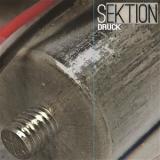
SEKTION's debut full-length DRUCK marks the first official collaboration between AtomTM & Siegmar Fricke, a connection rooted in 1992. Released by Geometrik Records, the label of industrial legend Esplendor Geométrico, in collaboration with Munster Records. Across thirteen interconnected tracks, DRUCK builds a stereo-enlarged environment shaped by metallic textures, rhythmic granulations and slow-moving structural shifts. Drawn from the compositional frameworks VOKOSTASIS, DIGITRAKTION, LEERZEICHEN, and UNWUCHT, the album unfolds as a continuum of mechano-sonic morphing. Fragments of frequency-altered voices emerge like damaged transmissions, woven into grain sliced rhythms, microsound detail, and layers of rusty tape noise and electro-acoustic particles. Tension and friction gradually push the material toward fragmentation without collapse. A formidable and immersive act of sonic engineering. German musician AtomTM (Uwe Schmidt) is one of the most imaginative and prolific talents in the global electronic music scene in recent decades. Since 1988, he has released music on cult labels such as Raster-Noton, Sähko, Mille Plateaux, Rough Trade, Rephlex, Fax, and his own label, Rather Interesting, under countless aliases. As producer, remixer and collaborator he has worked with and for musicians such as Ryuichi Sakamoto, Yellow Magic Orchestra, Depeche Mode, Towa Tei, Merzbow, Bill Laswell, Esplendor Geométrico, just to name a few. Uwe has developed an innovative, unconventional and highly personal musical vision, interpreting a wide variety of genres and styles in his own unique way, such as experimental music, techno, acid, EBM, electrolatino, ambient or industrial music, amongst others. Siegmar Fricke is a German artist starting with experiments involving short-waves and acoustic noises in the field between musique concrete and post-industrial around 1981. Ha became a very active player in the worldwide cassette culture movement. He ran his own label Bestattungsinstitut and published loads of releases ranging from experimental to ebm, electro, to ambient spread all over the world's tape labels from 1985 to 1993. Since 2001, Fricke has operated primarily under the alias Pharmakustik. His collaborations included notable ones with legends of electronic and industrial music such as Conrad Schnitzler and Mauricio Bianchi.
In tandem with the recorded album Senyawa undertook the creation of the Vajranala Monument, a 21st-century artefact standing 3.5 metres tall and 2.8 metres wide with a thickness of 2.4 metres, made up of 4100 pieces of carved red brick, surrounded by 26 carved andesite stones. The monument possesses a feature that can emit fire and is built with the hope of becoming a knowledge artefact for humans in the future.
Vajranala sees the Indonesian experimental duo of vocalist Rully Shabara and multi-instrumentalist Wukir Suryadi explore how, over centuries, the natural world has shaped our society, the knowledge systems from which power derives, and why that still resonates today. It’s an exercise in understanding the root of the power (knowledge) discussed in their 2021 release Alkisah. When it comes to ‘power’, says Senyawa vocalist Rully Shabara, “people will normally think of someone political, but I don’t think that’s the case. The origin of power goes deeper than that.” It’s the shamans, he says, who were the first possessors of power: “If you’re in a village, if you’re considered to have the knowledge to connect people with the realm of the gods, then you will have power before the leader. It’s very fundamental to explore this.”
Further to this, Vajranala is a collection of multidisciplinary works that reinterpret the mythology of the land where the Brojonalan Temple (Pawon Temple - more info below) stands. The work is also accompanied by an installation in the form of a stone relief that is placed on the ground where it was created, serving as an artefact for the future.
The first half of the album should technically be viewed as a single song split into three acts, each representing one strand. The first, for example, refers to Pawon’s connection with the star system. There is a theory that Pawon was constructed to align with Orion’s Belt, or ‘lintang waluku’ in Javanese. The appearance of lintang waluku, Shabara explains, would traditionally signify the beginning of the planting season, which Senyawa references in the third song ‘Kaca Benggala’. To reflect this, multi instrumentalist Wukir Suryadi took a ‘luku’ (traditional Indonesian plough) and transformed it into a giant and careening bowed instrument; for recording, they made a more compact recreation.
deleted
The Item is out of Stock. We will send You an Email as soon as it´s available again if you click on "in Stock Mail"
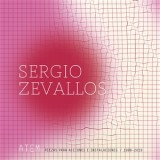
HIGHLIGHTS For the first time an album that brings together the compositions of the great visual artist Sergio Zevallos. DESCRIPTION Sergio Zevallos, a Peruvian artist based in Berlin, has been active since the 1980s when he was a member of the Chaclacayo Group, one of the most radical artist collectives in Peru, dedicated to performance art. Since then, Zevallos has been interested in composing his own soundtracks, writing scores with invented notation, working with recitation of texts and recordings of people talking, elements that he later used as raw material for his compositions. Zevallos' work has been developed in a multidisciplinary field, between drawing, performance and sound art, with a clear interest in setting iconoclasm and nonsense against the languages of power. Sergio Zevallos - ATEM: Pieces for actions and installations (1999-2019) compiles, for the first time, works in the field of sound, both soundtracks for various performances such as "Fragmentos" and "Atem", which are based on the montage of vocal sounds and noises, and "Cello", a musical composition for that instrument. In them, dissonance alternates with melodic work and experimentation with loops and recordings. "CHTP No. 3" is a work akin to the experiences of sound poetry. "Callejón Oscuro", on the other hand, documents the complex vocal sound textures achieved by Zevallos, in the manner of Radio Arte's compositions, for his sound installation of the same name. Sergio Zevallos - ATEM: Pieces for actions and installations (1999-2019) is released on vinyl LP, edition of 300 copies, and includes photos, drawings and notes written by Zevallos himself. This album is released by Buh Records with the support of Proyecto AMIL, who have joined efforts to develop a collection dedicated to presenting fundamental Peruvian works that operate at the borders of visual and sound art.
deleted
The Item is out of Stock. We will send You an Email as soon as it´s available again if you click on "in Stock Mail"
During the hiatus of System of a Down the members of the band found the time to work on their solo careers. The famous frontman Serj Tankian debuted as a solo musician with his highly anticipated record Elect The Dead. The album gained critical and commercial success upon its release in 2007. Tankian played almost every instrument on the album, with the exception of the drums and strings. A new lyrical vision is what he recorded, although musically it can be compared with the sound of SOAD. The album peaked at number 5 in the Billboard 200 chart and spawned singles like “Empty Walls” and “Sky Is Over”. The record contains an insert and etched D-side.
Elect The Dead is available as a limited edition of 1.500 individually numbered copies on gold marbled (solid gold & black mixed) coloured vinyl.
deleted
The Item is out of Stock. We will send You an Email as soon as it´s available again if you click on "in Stock Mail"
Riveting turns of rhythmic psychedelia from Lisbon’s Serpente, pursuing the spirits of Alice Coltrane and Don Cherry via Fourth World gateways and spiralling broken beat vortices on their debut full-length for Ecstatic following that killer Prince/LinnDrum session last summer.
A masterful example of his take on Black Atlantic energies and cultural sub-currents, Bruno’s Silva’s Serpente draws thrilling, jagged lines between the ground-breaking jazz fusions of the ‘60s-‘70s
and the Afro-Futurist pinnacles of ’90 Detroit and UK-based techno and their offshoots; broken beat, jungle, and “IDM”. Serpente’s style broadly collapses the psychedelia of his work as Ondness (Where To Now?, Holuzam, Sucata Tapes) into a more ravishing and arguably vital sound that frames a modern state of mind between utopian communism and dystopian paranoia.
Like last year’s cultishly acclaimed tribute to Prince’s ‘Parade’, Serpente’s follow-up comes to restlessly fulfil a physical and spiritual need for this kind of music right now. Looking back to go forward, it sidewinds into mazy multiples of polymetric rhythms, hypnotic drone and curious folk hooks that somehow gel with a fractious, rhythmelodic coherence that rudely acknowledges all that came before it.
Track to track he recalls the kaotic harmonies of Derrick May as much as Anthony Shakir’s sleight drum edits in ‘Novel De Fumo’, and the Reinforced cosmic rolige of Colin Lindo (Alpha Omega/ Nubian Mindz) or 4Hero - who were no strangers to the promise of spiritual jazz music and the Afro-Latin codes of Brazilian music - in ‘Em Sendo’, while the reticulated hot steppers ‘Visiticao’ and ‘Escalpe’ seamlessly bind roots and futurism in a singular, headlong style and the scudding
‘90s techno/IDM tone of ‘Razia’ surely recalls the rhythmic ingenuity and modern blueness of early Autchre.
This record feels unlocked and cosmically free compared with so much rictus, floor-based music, but with a grit and colour that can’t be denied on (currently imaginary) dance floors.
deleted
The Item is out of Stock. We will send You an Email as soon as it´s available again if you click on "in Stock Mail"
Seth Graham is an experimental musician and composer known for deftly creating barrages of beatific computer music and blue-collar musique concrète. Outside of his own recordings, Graham is also the co-founder of Orange Milk, a beloved DIY imprint that has established itself as a pillar of contemporary underground music.
"Hint", the Dayton, OH producer's sixth album, follows Graham sifting out an uncanny array of aural objects that clash together like some brilliant form of avant ASMR. Rejecting any and all recognized references or influences from musics both popular and obscure, Graham relies entirely on his own impulses and inclinations.
As Graham explains, "I wanted the creation of tracks to be pure joy, by not overthinking and collaborating with friends. This allowed me to let go of the outcome and find satisfaction in enjoying the process. Artists like myself are so over ridden with anxiety, the need to be accepted or the obligation to be ‘successful’ often dominates our process in making choices and creating. I tried to let this go."
Graham re-purposes and re-contextualizes found sounds, forgotten library music, and sampled stock sounds for a new form of symphonic pointillism, best heard on "Beyond Sadness", "Hint", and "Pierre / Ruby" (featuring More Eaze). Elsewhere, he creates dense but agile rifts of programmed patterns and textures, fully displayed on "Black / Yellow," a schizophrenic kaleidoscope of foley sounds, sinisterly suspenseful stringed arrangements, and shades of intrigued Italo horror featuring Koeosaeme. Even still, there's room left for both inner and outer contemplation, as with the haunting drift of synthetic serenity that is closing track "Love".
Taken as a whole, Hint provides a fitting entry point to new listeners who aren't familiar with Graham's past work while simultaneously poising Graham as an unsung hero of anti-composition.
deleted
The Item is out of Stock. We will send You an Email as soon as it´s available again if you click on "in Stock Mail"
Shake Chain will also be performing at Marina Abramovic’s private view at Modern Art Oxford on September 23rd.
Shake Chain have been busy demolishing audiences and expectations for the best part of three years. Vocalist Kate Mahony sets that standard by starting each live performance by crawling from the back of the room through a disbelieving crowd’s legs in a shiny yellow raincoat. The resulting questions that frantically arise of ‘what’s going on?’, ‘am I hallucinating?’ and ‘is this part of the show?’ are hallmarks of how Shake Chain approach making their unruly, lyric-bespattered rock music.
The four-piece from London are completed by Robert Syres (guitar, synth), Chris Hopkins (bass, synth) and Joe Fergey (drums), all artists hailing from Goldsmiths College, Nottingham Trent and Wimbledon, University of the Arts. A mutual love of thought-provoking performance art and a yearning for disruption have helped Shake Chain lock into their wayward sound. Twitchy guitar lines jolt and jerk, synths burble noisily and tack-sharp drums pin things down for Kate’s reeling vocal to vault and slur. Kate’s singing has drawn comparisons with Yoko Ono, Su Tissue and even a seance with it’s unique embrace of flights of atonal fancy, head-first repetition and ecstatic frenzy. Opinion-dividing arguably, but singular in making Shake Chain dauntingly brilliant.
Shake Chain’s debut album ‘Snake Chain’ was recorded in the New Forest’s Chuckalumba Studios early in 2022. The tranquil setting only slightly skewed by the intense extratropical cyclone occuring outside. When asked to sum up the album the group collectively settled on it sounding like “crying in a Catholic sex dungeon with Eastenders on”, perhaps only half tongue in cheek given the soapy dramatics of opening track ‘Stace’. ‘RU’ is a stompy triumph of ad lib monotony, heavy and wonky, its vocal slowly unwinding into residual sense. Shake Chain’s songs are populated with cowboys, cherry-pickers, content-addicts, private investments, a careless driver called Mike, architects and by much lamentation at the state of our confusing existencies. This last point underlined in luminous marker pen with slow-building vortex ‘Highly Conpeptual’ and whispered closer ‘Duck’.
‘Copy Me’ races along with radiant headbangs of dynamic abandon, one part tumble, two parts pummel, “hold your breath til something changes” commands Kate whilst everything of course is in hammering flux. ‘Second Home’ is similarly coruscating yet bouyant, whilst ‘Arthur’ feels like it could tear inside in two amid sobbing wails and the twining of its disparate parts. Throughout all the unhinged freakouts, found sounds and blasting rhythms though is Kate’s questioning, resilient presence, anchoring everything. On bruising creeper ‘Birthday’ she asks most tellingly “Do we speak language or does language speak us? Is there a mouth in the middle of the desert? Do you ask how cups are designed? Would you say yes when you really mean I don’t know”? Shake Chain are cathartic and absurd, humorous and deadly serious yet always inspired. Its this tightrope walk which makes their album such a thrilling, vital listen.
The lost soundtrack to "Chess of the Wind," Iran's banned 1976 queer-gothic-class-horror masterpiece, restored by the director and released for the first time. Not for the faint of heart!
SHHE, Scottish-Portuguese sound artist and producer Su Shaw, is releasing new mini-album, ‘DÝRA’, on July 19th via One Little Independent Records. The ambient project took form during a self-directed artist residency in the Westfjords of Iceland, influenced by the tranquillity of the Dýrafjörður fjord. Immersed in a distinct landscape with quietly monumental surroundings, Shaw began documenting her experience of the environment through field recordings and environmental data captured across several geographical locations.
‘DÝRA’ is an exploratory and mesmerising durational piece, evocative in its construction, inviting listeners to imagine their own space and scale within a landscape. Reflective, textured, and pensive, with expansive synths that further showcase Shaw’s deftness in sculpting immersive and introspective soundscapes.
Dýrafjörður is a 32-kilometre-long fjord in the Ísafjarðarbær municipality, in the Westfjords of Iceland. Shaw originally embarked on a 10-day residency in 2018, during which the village experienced an immense storm, hindering her schedule. Shaw explains, “It was my first visit to Iceland, and I’d made myself a meticulous itinerary in advance, which included recording at the summit of some of the peaks in the fjord. When the storm arrived after only a few days, it made any kind of travel challenging – so partly out of necessity to be able to continue developing the project, I began recording my immediate surroundings instead – attuned to incidental sounds from around the village and fluctuating weather states – and I quickly built up an archive of the environment”.
ONLY 400 PRESSED. NO RETURNS, ONLY ORDER TO DEMAND. With New Confusion they've usurped their own outré paradigms yet again, resulting in a demented heat-haze panorama of delirious beat-driven abandon and elucidated neural pathways. As ever the brainchild of Texan king of outlaw brinkmanship Craig Clouse, these nine abject and glorious meditations exist in an alternate dimension whereby a loop-driven exploratory framework is joyridden with alacrity offroad by a moonshine-swigging convict, a zone whereby aural scrap metal is alchemically transformed into gleaming, abstract and intimidating structures and sculptures anew. It may not have occurred to the average head that the sound of Tropicália melting gleefully in the sun (as here essayed on 'Miami') might be to their satisfaction, nor that the image of J Dilla trapped in a K-hole with Butthole Surfers would do anything but make them mildly anxious.
Music from throughout Sigur Rós’s career, twisted, bent, broken, and finally added to in the band’s Reykjavík studio, to create a new perspective for a dance piece of the same title initiated and created by Taiwanese choreographer CHENG Tsung-Lung. Musical director Kjartan Holm. Originally released on Record Store Day, 22° Lunar Halo returns with new artwork, reversed in colour and printed in special ink. 22° Lunar Halo will be re-released on August 9.
deleted
The Item is out of Stock. We will send You an Email as soon as it´s available again if you click on "in Stock Mail"
A score of high Nordic drama drawing on unreleased Sigur Rós material and multi-tracks from the band’s catalogue. Premiered at Norđur Og Niđur Festival, to soundtrack performances from the Icelandic Dance Company. Arranged by Valdimar Johansson, choreographed by Erna Ómarsdóttir. Originally released on Record Store Day, Variations on Darkness returns with new artwork, reversed in colour and printed in special ink. Variations on Darkness will be re-released on August 9.
deleted
The Item is out of Stock. We will send You an Email as soon as it´s available again if you click on "in Stock Mail"
SILENT SKIES ist die Band einer Kooperation zwischen Tom Englund (EVERGREY) und Vikram Shankar (REDEMPTION).
Geboten wird melancholische, soundtrackartiges Musik die hauptsächlich von emotionalen Keyboard-Klängen
begleitet wird.
Trostlos, düster, aber auch hoffnungsvoll bahnen sich die Kompositionen auf ”Satellites” ihren Weg, die von
Selbstreflexion und innerer Einkehr geprägt sind. Diese Melange erzeugt durch seine fast schon hypnotische
Wirkung Bilder vor dem inneren Auge des Zuhörers.
Wann immer EVERGREY-Frontmann Tom S. Englund und der US-amerikanische Pianist/Komponist Vikram Shankar (Redemption, Lux Terminus) zusammenkommen und ihre Kreativität gemeinsam als SILENT SKIES nach außen kehren, entsteht Magie! Mit Dormant veröffentlicht das schwedisch-amerikanische Cinematic-Pop-Duo nun das nächste, magische Stück Musik. Das dritte Studioalbum von Englund und Shankar erscheint am 1. September 2023 über Napalm Records. Getragen von vertonten Emotionen und skandinavischer Melancholie reiht sich Dormant in die klangliche Welt der vorherigen Alben Nectar (2022) und Satellites (2020) ein und bietet atemberaubende Klaviermelodien, atmosphärische Keyboards, weitläufige Soundlandschaften und eindringlich schöne und intensive Vocals auf zehn Eigenkompositionen, begleitet von mehreren Bonustracks. Für Letztere haben SILENT SKIES bekannte Klassiker gecovert, unter anderem von Iron Maiden und Linkin Park, und diese an ihren ganz eigenen, unverkennbaren Sound angelehnt.
Auf Dormant lädt der atmosphärische Eröffnungstrack „Construct"" die Hörer dazu ein, die beiden Musiker auf einer gefühlvollen Reise zu begleiten. „New Life“ schlägt hingegen dunklere Pfade ein. Englunds einfühlsamer Gesang spricht direkt zur Seele und harmoniert perfekt mit Shankars ausgefeilter Instrumentierung, die von zartem Piano getragen und einer einnehmenden Produktion unterstrichen wird. Das harmonische „Churches"" sowie das Pop-inspirierte „Just Above The Clouds"" – Letzteres mit einem fesselnden Solo des Leprous/Musk Ox-Cellisten Raphael Weinroth-Browne – bauen sich zu einem hypnotischen Tagtraum auf, um in den gefühlvollen Tönen von Dormant zu versinken. Einfühlsam kreieren „Reset"" und „Tides"" schier endlose melancholische Klanglandschaften, während das ergreifende „The Real Me"" mit elektronischen Tönen eine weitere Facette des Albums aufzeigt.
Die durch und durch stimmige Zusammenarbeit beider Künstler bildet das Fundament aller SILENT SKIES Kreationen. Durch viel Feingefühl und Liebe zum Detail, gepaart mit tiefgründigen, ausdrucksstarken Lyrics, entsteht ein einzigartiger Charakter, der mit jedem Ton die Handschrift von Englund und Shankar trägt. Auf das tief bewegende „Light Up The Dark"" und den Titeltrack „Dormant"" folgt mit „The Last On Earth"" die letzte Eigenkomposition des Albums.
Das dritte Werk von SILENT SKIES ist melancholisch und beruhigend, aber auch sprudelnd und glühend – es erweitert das klangliche Universum des Duos in alle Richtungen. Dormant reflektiert das Leben selbst und ist das Ergebnis mutiger klanglicher Experimente in Verbindung mit genau der künstlerischen Ästhetik, die SILENT SKIES auszeichnet. Mit ihrer Musik schreiben Tom S. Englund und Vikram Shankar so intensive Geschichten wie das Leben selbst und erreichen damit Menschen in unterschiedlichsten Lebenslagen mit verschiedensten musikalischen Vorlieben."
Lucciole ist Silvia Tarozzis leuchtendes Nachfolgealbum zu den intimen Reflexionen von "Mi specchio e rifletto" und den tief verwurzelten Folk-Dialogen von "Canti di guerra, di lavoro e d'amore" mit Deborah Walker. Hier bringt Tarozzi Stimmen, Erinnerungen und musikalische Traditionen zusammen, um ein Album zu schaffen, auf dem avantgardistische Kompositionen, persönliche Erzählungen und kollektive Resonanz frei miteinander verschmelzen. Das Album beginnt mit einem strahlenden Blechbläserensemble, das wegen seines populären, feierlichen und spirituellen Klangs ausgewählt wurde, und endet mit dem Piccolo Coro Angelico, dem Kinderchor, mit dem sie seit über fünfzehn Jahren zusammenarbeitet und den sie als ,meine beste Kompositionsschule und ständige Quelle der Hoffnung" bezeichnet. Zwischen diesen beiden Eckpunkten zeichnen Tarozzis Lieder mit seltener Zärtlichkeit die Übergänge des Lebens nach: von der Kindheit zum Jugendalter, von Gesundheit zu Gebrechlichkeit, von Anwesenheit zu Abwesenheit. Die Streicher, Stimmen und melodischen Konturen, die "Mi specchio e rifletto" prägen, tauchen hier mit neuer Wärme und Tiefe wieder auf. Produziert von Tarozzi in enger Zusammenarbeit mit Marta Salogni, die das Album technisch umgesetzt und abgemischt hat, strahlt Lucciole eine Klarheit, Intimität und klangliche Großzügigkeit aus, die ihre gemeinsame Reise durch den Aufnahmeprozess widerspiegeln. Im Kern ist Lucciole ein Album über kleine Lichter, die durch Momente des Übergangs tragen - eine Einladung, genau hinzuhören auf die Orte, an denen sich das Leben verändert, und auf die Menschen, die leben und in Erinnerung bleiben und den Weg erhellen.
Initially built around the idea of a “disney, sci-fi, alien landscape vision”, ‘Not Earth’ also finds a balance in its more meditative moments; for every jagged moment of inspired eccentricity, a stretch of measured stillness. “Music for me has never been about crafting the best sounding song, or even the most appealing song,” Como says. “It’s more about honouring the spark. If I can block out the other noise and not think about where a song will end up, or who will hear it, then I can follow that and it’s like the song is just coming through me.” Wanting to work on pure inspiration alone, Como relied on gut instinct, allowing songs to come and go, to be penned in half-thought and stay that way, learning to trust the sparks of creativity as they came to him. “The song Forever Green came into my head fully-formed while sitting in the backseat, on a road trip with my wife,” he says, an example of this process. “I was looking out the window and I just started receiving the song. Within minutes it was there, completely. Where did it come from? Why did it come to me? You can’t think about it or ask about it, you just submit to it or you lose the song.” As such, there’s an expected ebb and flow to Not Earth, the whole thing drifting between tender ditties such as ‘Little Magic’ before spiralling off into the more experimental pastures found on the likes of ‘Magnetic’ or the multi-layered closing-track ‘Out Of The Dream’. Informed both by the written work of Richard Brautigan (“I’ve always tried to align my life with that feeling I found in his books; the strange, psychedelic, childlike-wonder”) and the murky magic of Mark Linkous, who Como cites his biggest inspiration (“You could tell he wasn’t self-editing too much, always just following the inspiration...”) ‘Not Earth’ is both a reflection of the lush, deep world that provides its hand-painted cover art - Tarot imagery and all - and also a reflection of the unique mind who brought the whole thing into fruition.
deleted
The Item is out of Stock. We will send You an Email as soon as it´s available again if you click on "in Stock Mail"
Entering its 26th year of activity, the morphing, Los Angeles based experimental outfit, Sissy Spacek, joins Shelter Press with Entrance, among the project's most captivating outings to date. Encountering the duo of John Wiese and Charlie Mumma joined in various configurations by an incredible cast of collaborators - Tim Barnes, Marco Fusinato, Aaron Hemphill, Brad Laner, Katsura Mouri, Ralf Wehowsky, and C Spencer Yeh - collectively transformed into a series a deeply intimate and delicate gestures of musique concrète, Entrance radically repositions the possibilities presented by group improvisation outside of time and place. Founded at the end of the last millennium, the Los Angeles based project, Sissy Spacek, initially emerged from the knotted, fiery context 1990s American noise and grindcore, producing sheets of visceral sonority that quickly set the scene on its head. Going through numerous evolutions, before eventually settling as a duo of John Wiese and Charlie Mumma - joined by a rotating and often recurring cast collaborators - over the last 25 years the band has continuously entered states of evolution that have defied the expectations of its own context, seeding the sonic extremes noise with subtle and sophisticated approaches to free improvisation and musique concrète. Fiercely positioning its efforts within the outer reaches of contemporary experimental music, while resisting the constraints of a singular sound or proximity, Wiese regards Sissy Spacek as being primarily centred around the practice of musique concrète and the pursuit of extremes. From its earliest releases - collage treatments of material gathered from the band's full throttle practice sessions - the project's conceptual framework has continuously evolved within a deeply engaged process of experimentation, not only reworking tactical approaches, but also definitions and perception regarding the location and action of their work. In recent years, this has led to an increasingly varied and diverse output. Percolating within, is a thread marked by a striking sense of delicacy and intimacy, driving forward while doubling as an unexpected challenge, in real time, to perceptions connected to the band's past. Entrance is the most recent of these. Embarking upon the four compositions that comprise the finalized four sides of Entrance, Wiese and Mumma enlisted longstanding collaborators, Tim Barnes, Marco Fusinato, Aaron Hemphill, Brad Laner, Katsura Mouri, and C Spencer Yeh, as well as new initiate, Ralf Wehowsky (of the seminal German electronic noise collective P16.D4), requesting a contribution of sounds from each, determined by a general set guidelines that dictated certain qualities the given sonorities, while allowing for the expression of each player's distinct creative voice. The sets of resulting recordings were then chopped, harvested, manipulated, and reassembled as the four tape compositions that make up the album - Web Of Unfolding Appearance, Figure Of Reflected Light, Trancher And The Inheritors, True Dimension (From The Opaque - Spike) - each blurring the lines of authorship and clear creative proximity in remarkable ways. Where historical gestures of musique concrète tend to draw upon non-instrumental sound sources - regarding its sonorous material as raw elements, unburdened by inherent meaning or association, to be transformed and imbued with musicality - Sissy Spacek turns this position on its head. Entrance comprises works of musique concrète that not only draw upon instrumental sound sources, with all their possible meanings or associations, but also individual characters and personalities of their players, crediting each resulting piece to its respective configuration of contributors. As such, Entrance is an effort of sound collage defined by a rare sense of intimacy and humanity: four pieces that often take on the resemblance of group improvisation, but have, in fact, been assembled outside of time and place. Bent under the ever-present hand of Wiese's tape treatments and manipulation, each of the album's four compositions unfurl startling states of sonic abstraction and percolating texture, marked by a striking sense of hard-shifting structure, that culminate as tense, driven manifestations of ambient music: scrapes, squeals, rattles feedback, rolling drums, bouncing tones, whispers, bent electronics, electric artefacts, and seemingly everything else under the sun, configured into immersive, sublime mediations in sound from the most improbable events.
First vinyl pressing of the long out of print 1993 classic many consider not only Skullflower's apex, but one of the finest noise rock records of the 90's. Edition of 600 clear smoke 2xLP in deluxe embossed sleeve.
The Wrocław band Ślina returns with their third studio album, this time recorded with Mikołaj Trzaska.
This is not the album of Trzaska + Ślina or Ślina + Trzaska. This is Ślina Trzaska (a kind of wordplay in polish, means: The saliva cracks). A kind of full, new band that was created in the outstanding Sudeten studio Monochrom and is sometimes continued live.
Free improvisations and Krautrock motility are still the hallmark of Ślina, but the organic, radical sound of Mikołaj Trzaska's saxophone and clarinet gives this music a completely new character. From silence and delicacy of ambient to hurricane and violence, full of nuances, interfering motifs associated with Jewish music, it sounds as if the musicians already knew each other from the sandbox, even if they lived in other cities.
There are 4 tracks on the album, traditionally titled as their lengths.
This vinyl version is a 20-inch (!) Hybrid: a 180-gram black 12-inch, traditionally pressed, and an equally black 8-inch cut by Uncle Gusstaff in Studio im. Witolda Gombrowicza in Zielona Góra.
Mikołaj Trzaska - alto sax / bass clarinet
Matylda Gerber - alto/tenor/baritone sax
Filip Zakrzewski - electric guitar / SFX
Mikołaj Nowicki - double bass / synth / percussion
Stanisław Olek - drums/percussion
20th Anniversary Edition of «The Creep» by Slomo, this ambient doom masterwork is available on vinyl for the first time via Ideologic Organ. This is a storied album of verbal history, and emerged from a figurative long barrow deep within a virtual space of great depth and contemplation, an inverted framing of acoustic space with heavy floors ranging from the wake of COIL to the heaviest Japanese fire of psychedelia to the monuments of drone coagulating in the early ‘aughts. A first CDR edition in 2005 garnered focus of heavyweights like SUNN O))), Julian Cope, the esoteric legendary record store Aquarius, and the Wire.
Ideologic Organ are honoured to have been tasked to bring this to a limited LP for the very first time, and collaborated with mastering genius Rashad Becker to create a 61 minute single LP in a perfect cut.
Highly Ritualised Somnambulant Glumbient Downer band from Yorkshire, UK.
‘Slomo is a 2-piece made up of myself, Holy McGrail, and Howard «Iron Man» Marsden. Our debut album THE CREEP was released in a run of 100 copies on FUCK OFF & DI in 2005, after attracting a great buzz in its earlier promo form. THE CREEP is a single 1-hour-long track recorded live with minimal overdubs & zero eye-contact. Malnourished musical structures flourish, flounder and flag in virtual stasis.
We at FT have had the big pleasure to continue our collaboration with the brutalist rhythm explorer & Forest Limit resident Sofheso. Plenty had their brains scrambled by his 2.5hr ARCHIVE release in 2018 - ("the emotional impact is that of a solitary battering ram to the gut…” - ATTN magazine / "a staggering introduction to a mysterious talent" - The Quietus) and since then we’ve been pulling together yet more irresistibly ruff & spirited one-takes from his recent sessions.
Juggernaut rhythms, frenzied vocal samples, machinegun drum programming greets us from track a.1 / ECSS, and the pressure is maintained for almost the entire record. Major bludgeoning damage is dealt on a.4 / ONJJ particularly, as chunks of subby utterance boil over into a nimble breakbeat. Moments of melodic release are spoon fed through the cracks & become euphoric - like a nourishing sip of something offered in the smoke of a 5am dancefloor.
Across 53 minutes barely 4 bars are the same - always an unseen path is taken into a fresh rhythmic possibility. Sometimes it’s abrasive & chaotic. But our seasoned technician always finds the right addition or subtraction to make sense of the tumult, and discovers new levels of blown out/up POWER where others would be timidly reaching for the gain pot.
Sofheso has been sharpening his tools since 2002 - the year of his first performance under this moniker - and it’s apparent from his new recordings and his euphoric live shows that he wields them with a rare & unconstrained intuition. He is using this 6th sense to shake rooms & bodies in his home city of Tokyo, and soon (COVID willing) also in the UK & Europe.
We were lucky enough to get over to Japan this year to do a show with him in Tokyo’s Forest Limit as part of our tour. The recording of his performance at that show will be dubbed to tape and released as part of a special edition, along with the LP and a zine of sketches by Kan Togashi - the artist responsible for the album cover (and also the cover for ARCHIVE).
deleted
The Item is out of Stock. We will send You an Email as soon as it´s available again if you click on "in Stock Mail"
Un-easy listening from »anti-singer« and improviser Sofia Jernberg, a celebration of the voice in its rawest, most malleable form. Jernberg was born in Ethiopia and grew up in Vietnam and Sweden, so one can only imagine these diverse languages opened up a wealth of phonetic possibilities before she entered academia to study jazz and composition. If you dive into her catalogue you’ll clock her startling range – working as a jazz soprano and as an improviser, collaborating with everyone from Stefan Schneider to Mats Gustafsson, as well as appearances on the stage and screen, most notably in Matthew Barney, Erna Ómarsdóttir, and Valdimar Jóhannsson’s »Union of the North«.
On »Voice«, Jernberg provides a ground-level entry point to her work, meticulously running through a litany of unconventional techniques (non-verbal vocalisation, split tones, toneless singing, and distortion) without any effects, just pure batshit sonics designed to show off the voice’s scope as an experimental instrument. On »Mouth Synthesizer« she purses her lips to make ratcheting pops like some analog oscillator, hoarsely mimicking the sort of blustery, Merzbow-coded distortions you might get if you patched a RAT pedal into a broken guitar amp. It isn’t an act of caricature, it’s Jernberg’s way of demonstrating that expensive modular rigs aren’t an essential tool for experimental music, before throwing a side-eye to the field recording industrial complex on »Birds«, transforming her vocal chords into a nightmare aviary. But it’s Jernberg’s startling »multiphonic« experiments that hit hardest. The album opens on »Multiphonic I«, and it’s difficult to tell that you’re listening to a human voice at first – you could just as well be on Colin Stetson’s overblown sax airstreams. Jernberg creates a captivating spiral of crooked, phased tones and hoarse, guttural croaks that she develops over three movements. On »Multiphonic II«, her voice is turned into a storm of pained shrieks, and on the third and final segment, it almost resembles Arve Henriksen or Jon Hassell’s muted brass curlicues. Each track pulls a different musical muscle, whether it’s »One Pitch« with its unsettling yodel-like quivering drones or »Gurgle«, sounding like a close mic-ed recording of a small pot gently simmering.
SoiSong ist das helle, atemberaubende und kurzlebige Projekt, das 2007 von Ivan Pavlov (CoH) und Peter ,Sleazy" Christopherson (von Coil) gegründet wurde. Das Duo kombinierte Pavlovs kompromisslos visuelle digitale Ästhetik mit Sleazys dekadenter, düsterer und skurriler Herangehensweise an die Kreation. Die beiden benannten das Projekt nach dem thailändischen Wort für `zwei' (Song) sowie nach den schäbigen Rotlichtvierteln ("düstere Soi / Gasse") von Bangkok. Gemeinsam entwickelten sie eine einzigartige, elegante, aber eher kryptische Musiksprache. Das Debütalbum "xAj3z" von SoiSong ist eine digitale Referenz an den Jazz: scheinbar akustische, überschäumende, Grenzen sprengende, digitale Unterhaltung, in der Lichtstrahlen und tropische Hitze mit Nullen und Einsen unterlegt sind. Das Album ist ein definierendes Statement und ein Wegweiser für die Möglichkeiten in der (damals) entstehenden Musiklandschaft der späten 2000er. Ohne den Wunsch, kommerziell zu sein, war SoiSong nicht an die Konventionen einer einfach zu definierenden Verschlagwortung verpflichtet, und in ihrem eigenen, ,neuen, noch nicht kategorisierbaren Genre", wobei "xAj3z" ein Meisterwerk ist. "xAj3z" mischt frei Musikstile und kombiniert verschiedene Ansätze des Musizierens: Künstliche Vokalisten werden von echten Drums begleitet, Jazz-Noir-Arrangements treffen auf die zarte Melodik der Südsee, und Computer werden warm und organisch zum Klingen gebracht. Das Album zeigt keine offensichtliche Genre-Definition und zielt darauf ab, mit dem Hörer auf höchster emotionaler Intensität zu kommunizieren, oft lyrisch, manchmal dunkel, manchmal amüsant und sogar erhebend.