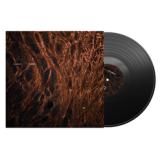
Slippery Yard’s third ecosystem lands with “The future is behind”, a very specific immersion into Lugo-based Javier Marimon’s own dub take. We have been fans of Javier’s music for years, one of those who makes up his own palette through experimentation. Textural low end, immersive granular synthesis and groove development in a way nobody approaches, sketchy yet very personal.
Amsterdam based fellow producer Bas Dobbelaer provides us a very different clean perspective of the surface of Slippery Yard biome. Biggest mention to our beloved ecosystem designer Fredonné for such a high quality 3D artwork of the new discovered ecosystem.
Martini Shot is the new album from Danny Scott Lane-a catchy, nostalgic and slightly manic collection that feels a little like one drink too many. Moving between lounge, soul, indie pop and exotica, the record plays more like a mixtape than a single idea, with a distinctly '90s streak running through it.
Lane sings on seven of the album's ten songs, a departure from his largely instrumental past work, and plays drums and percussion for the first time alongside his usual synths, keyboards, guitar and bass. Longtime collaborator David Lackner contributes flute, joined by new collaborators Logan Hone on flute and Katie Jacoby on violin.
Martini Shot marks Lane's second release with Records We Release, following the well-received House of Alice. The result is loose, romantic, restless and a little unpredictable.
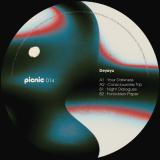
Really very exciting to introduce this new project by Dadada & Eden Burns.
Together they offer their first collaborative outing with „Your Gonna Lose Vol 1“ that contains fabulous (dance)music
mixxed up w/ some fun, social studies.
Nearly a decade after the acclaimed 2017 release of Hometown, Victor, the mind behind Module One is back with his highly anticipated follow-up album, dropping early November.
Now settled in Berlin, Victor's sound deeply reflects his integration into the city's vibrant cultural cosmos. Moving beyond earlier blueprints, his music has matured into a nuanced, fully developed aesthetic based on the personal reflections, artistic environment of the city, and live performances played and heard. Adding an intimate, personal dimension to the project, Soela and D'Loive lend their delicate vocal touch, weaving seamless melodic textures into Victor's refined production.
The upcoming Album HOMETOWN II stands as both a personal milestone and a captivating new chapter for Module One. Vinyl Tastes Better…
DJ Support: Boss Priester, Prozak, Kepler, Osmosis Jones, Bullet Tooth, Archie Hamilton, The Trip ,Reeshy, ADMNTI, M-High, Oldboy, Mattik, Ben UFO
On Da Floor return with their second release, this time a 4 track EP: Helmed by Leeds-based DJ and producer ODF, this release captures the eclectic, genre-bending essence he’s become renowned for.
Martini Shot is the new album from Danny Scott Lane-a catchy, nostalgic and slightly manic collection that feels a little like one drink too many. Moving between lounge, soul, indie pop and exotica, the record plays more like a mixtape than a single idea, with a distinctly '90s streak running through it.
Lane sings on seven of the album's ten songs, a departure from his largely instrumental past work, and plays drums and percussion for the first time alongside his usual synths, keyboards, guitar and bass. Longtime collaborator David Lackner contributes flute, joined by new collaborators Logan Hone on flute and Katie Jacoby on violin.
Martini Shot marks Lane's second release with Records We Release, following the well-received House of Alice. The result is loose, romantic, restless and a little unpredictable.
Revered worldwide for their love-fueled, technically adventurous all-vinyl b2b DJ sets, Maya Bouldry-Morrison (Octo Octa) and Eris Drew conceived Alchemical Sisters as a vehicle for creating music together. Alchemical Sisters describe themselves as "psychedelic chaos, acid rollers, and big beat, channeled through hardware instruments and animated by love, touch, rhythm, and spiritual fire." Their self-titled debut double album is forthcoming on Interdimensional Transmissions this October, just in time for Samhain XXVI. Alchemical Sisters was recorded in the forests of New Hampshire by Maya and Eris and mixed by BMG in Detroit in the Interdimensional Laboratory on high end hardware for ecstatically euphonic results. In the cold winter months, Maya and Eris emptied the master bedroom of their forest cabin and sealed it as an alchemical retort--a hermetic vessel in which a higher form could emerge. For a year they slept on the studio floor while, in white nightgowns and under the spell of mushrooms, they brought dulcimers and ancestral instruments into communion with turntables, twentieth-century machines, and new technologies. Alchemical Sisters is the substance crystallized within that vessel by their secret fire. They then brought their music to BMG in Detroit to meticulously mix their vision through hardware, in a high end studio environment. For two weeks at the height of winter, we shut out the world and focused on fusing their sonic vision within the Interdimensional Laboratory. Setting up their computer and sound card, BMG processed their tracking sessions through a high end mixing console, using transformers and tubes and the special properties of many machines to create a solid visceral sound out of a dream, to create a powerful euphonic ecstatic experience from their highly personal highly evolved music, whose sources could be both carnal and celestial. It was important to have their music connect before thought, to feel both the power and the gentleness of their sound, to have the texture and presence of their myriad influences unconsciously affect you. Watching them work together, the patience, the focus, the rigorous thought and discipline, the love, the space and the dedication afforded to each other was a genuinely inspiring thing to witness. They truly are Alchemical Sisters, and we are extremely proud to share their debut album on IT, and their debut performance at IT's Samhain XXVI. It truly is a loop point in time, a full circle moment.
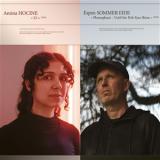
,X3" von Amina Hocine greift schrittweise, subtil und unaufhaltsam auf die Komplementarität verschiedener Klangmaterialien zurück. Durch die geduldige und feinfühlige Verschmelzung von reinen Sinuswellen, Feldaufnahmen und Klängen, die mit einer ,Nebelhorn-Orgel" (einem von Hocine selbst entwickelten Instrument) erzeugt wurden, lädt ,X3" sowohl zur Selbstreflexion als auch zur Kontemplation ein. Inspiriert von einem Symbol des dänischen Mystikers Martinus Thomsen, das die Entwicklung eines Wesens in der physischen Welt darstellt, nimmt uns Amina Hocine mit auf eine lange Reise, die mit seltener Eleganz und Anmut zwischen dem Statischen und dem Wandelnden, zwischen dem fast Unwahrnehmbaren und dem Grandiosen balanciert. Es ist eine Musik des Übergangs, die Amina Hocine uns bietet, eine Musik, in der die Vermittlung von Klang, Welle für Welle, zur Meditation wird. In ,Until the Fish Eyes Shine" wirft Espen Sommer Eide einen inspirierten, umfassenden und rückblickenden Blick auf sein musikalisches Schaffen, das er oft unter dem Pseudonym Phonophani produziert hat. Indem er die Klänge seiner frühen Jahre vor dem Hintergrund der Ambient-Techno-Szene in Tromso Ende der 1990er Jahre neu aufgreift und neu interpretiert, beschwört Eide eine Musik herauf, die alles andere als nostalgisch ist, sondern vielmehr eine Art ,geologische Schichtung" bietet, in der Epochen und Stilrichtungen aufeinanderprallen, sich überschneiden und ergänzen und so die bemerkenswerte Einzigartigkeit der Klangpalette des norwegischen Künstlers offenbaren. Das Stück bringt zudem die extreme Beständigkeit und Authentizität seiner musikalischen Vision zum Ausdruck - einer Vision, in der technologische Innovationen, die reflektierte Umgebung und gelebte Emotionen in einem eigenen Raum zusammenfließen: dem der traumhaften Musik, die immer neu erfunden wird, immer in Bewegung ist, immer im Wandel begriffen ist.
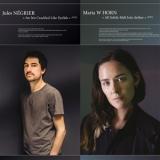
In ,An Iris Crackled Like Eyelids" erkundet Jules Négrier zwei Sätze, zwei innere Momente, die durch die schwebende Zeit eines ,knisternden" Augenlids voneinander getrennt sind. Der erste Satz beginnt, wie eine Geschichte endet - mit einem Ausbruch roher Emotionen -, um dann in eine weite Fläche harmonischer Divergenzen zu münden. Der zweite Satz führt erneut eine Verflechtung aus Rhythmen, Verdrehungen, Abwärts- und Aufwärtsbewegungen ein, um einen paradoxen Raum zu offenbaren, der sich in der Zeit einer ungelösten Beruhigung entfaltet. Indem er auf inspirierte und komplexe Weise Klänge offenlegt, die zugleich durchscheinend und gewunden sind, komponiert Jules Négrier eine geheimnisvolle Musik - eine Musik, die aus den Qualen elektronischer Materie schöpft, aus Formen und Werden, die allmählich in den Bereichen der Einfachheit Fuß fassen. In ,All Solids Melt Into Aether" verwebt Maria W Horn Akkorde, die mit einer bis an ihre Grenzen getriebenen Orgel erzeugt wurden, mit den unerbittlichen Texturen computergenerierter Klänge. Zwischen der extremen, kalten Präzision der elektronischen Töne und der Instabilität der warmen Orgelakkorde, die Druckschwankungen ausgesetzt sind, entfaltet sich ein stilles Drama, aus dem eine komplexe Welt entsteht, die aus harmonischen Zuständen besteht, welche von ihrer Entstehung bis zu ihrem Zusammenbruch eine kraftvolle und ergreifende Metapher hervorrufen und Bilder eines ewigen, urzeitlichen Kampfes heraufbeschwören. Dieser Kampf ist derjenige, der in jedem Augenblick zwischen zwei gegensätzlichen Energien stattfindet: Die eine bildet das Verlangen nach einem stabilen Zustand, sucht ein zerbrechliches Gleichgewicht - eine Energie, die unerbittlich durch die Kräfte der Entropie und des Chaos eingeschränkt und widerlegt wird. In dieser Hinsicht liefert Maria W. Horn mit ,All Solids Melt Into Aether" ein Werk von suggestiver und introspektiver Kraft, das wahrhaft faszinierend ist.
Not many can match V.I.V.E.K when it comes to pushing sound system culture.
With over two decades worth of releases, dances and low-end pressure, the Southall-born, System Music label owner announces the imminent arrival of his debut album, ‘The Escape To Nowhere’.
Spanning eight deep and meditative tracks, ‘The Escape To Nowhere’ is a fully realised exploration of dubwise tradition, reimagined through V.I.V.E.K’s unmistakable expert approach and unbound from one specific genre
Drawing from a lifetime immersed in bassweight heritage and club-ready experimentation, the record distils his musical journey into a fully formed and immersive statement, featuring the haunting vocals of Dandelion and Dego Ranking, experimental percussion and a meticulously sculpted low-end design.
‘The Escape To Nowhere’ will mark the 50th release on System Music, a landmark that underscores both the label and artist’s enduring commitment to forward-thinking bass music firmly rooted in culture and craft.
»Breathing Soil« is the third full-length album by Swiss musician and performance artist Elischa Heller. As a member of groups such as Film 2, Beurre, or 222Rn as well as in his live practice as a solo artist and his performances, notions of physical and temporal presence have always informed his multi-genre approach. These two side-long compositions centre around drone music and are both intended as an invitation to listen deeply as they are a product of deep listening itself. Drawing on Heller’s live practice, which aims to create shared social experiences, this music mediates between matter and metaphysics.
»If we recognise that we and the world around us are nothing but vibrations and oscillations, drone music can get in touch with a profound aspect of our ways of being,« says Heller. »It enables us to get in tune with our surroundings and each other.« Hence, resonance serves as the guiding principle of his work. As Heller explains, the title »Breathing Soil« can be read in two ways: As a description of how one breathes in the soil and gets in touch with the Earth through the sound, or that it is the soil itself that resonance, with sound serving as the connective tissue between different forms of being.
»Breathing Soil« relies on radical forms of reduction that treat sound as raw form—as vibrations and oscillations whose subtle acceleration and deceleration can have wide-reaching consequences. Meant to be played on speakers, the subtle shifts in dynamics, timbre, and volume of these two pieces are supposed to resonate with the rooms in which they are played. This music aims to make the things sing.
Scaler are the electrifying Bristol-based band hailed as the city’s “next national breakthrough” thanks to their pulverising live show and meticulous, mind-warping sound. Hot off their critically acclaimed sophomore record ‘Endlessly’ which was nominated for an AIM award for ‘Best Independent Album’ comes Reflex. An EP full of kinetic energy satisfying a craving for immediacy within the project. The layers of intricate collaboration of Endlessly are peeled back and the raw energy of SCALER is cast forth. “These songs were made with the four of us in the room together with our machines, reacting to what the others were doing. Trying to capture the feeling of when your body outruns your head, no second guessing or holding back. Together they work as both fight and flight. A chase and a reaction. Instinct not thought. A reflex.
Sucata Tapes and Annihaya proudly present Delia, the hypnotic new album by Munda (Selu Herraiz), following up on foundational explorations of ritual and territorial memory.
Recorded in September 2021 during a residency at Konvent—an old convent set within an abandoned industrial colony in Cal Rosal, deep in the lower Catalan Pyrenees—Delia is forged from the physical ghosts of a former textile factory. Within high ceilings, terracotta floors, and walls vibrating with low frequencies, Herraiz captured the remnants of another time: shards of glass, rusted iron, corrugated plastics, and the sonic echoes of a place where hundreds of women once worked the looms.
Using a dynamic microphone placed before the speaker of a battered Yamaha Electone organ with broken keys, Herraiz transformed these industrial ruins, raw materials, and acoustic traces into an immersive electroacoustic journey. Blending primitive textures, analog synthesis, and the deep resonance of territorial history, Delia stands as a profound meditation on memory, space, and alchemic listening.
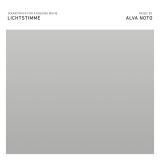
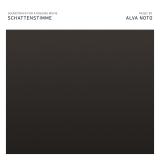
NOTON is pleased to announce the release of LICHTSTIMME and SCHATTENSTIMME by Alva Noto: two soundtracks for a film that never existed.
The starting point is E. T. A. Hoffmann's The Sandman: a world where perception and reality drift apart, and the question of identity remains unresolved. Recognition, in Hoffmann, is never quite secure. The doppelgänger is less a figure than a condition, the point at which the self can no longer vouch for itself.
The first record, LICHTSTIMME begins in an open, almost weightless sonic world. Something still appears untouched. The music carries a sense of proximity, clarity and trust. But this sense of certainty does not remain. Gradually, the proportions begin to shift. Sounds lose their definitiveness; familiar structures become strange. The music begins to question its own surface. What initially appears as light already contains the possibility of its shadow.
With the second record, SCHATTENSTIMME, the instrument enters the sonic space. The pieces were recorded together with percussionist Rainer Römer and the Ensemble Modern. A central role is given to the Sixxen, the extraordinary metallic percussion instrument originally developed by Iannis Xenakis together with Les Percussions de Strasbourg and instrument maker Robert Hébrard for Pléiades. Its resonances, unusual microtonal structure and distinctive timbre make it an instrument that resists being placed within a familiar musical context. Complete Sixxen sets are extremely rare and require highly specialised construction.
The instrument appears only on the second record. Its absence from LICHTSTIMME and its arrival on SCHATTENSTIMME are structural. It behaves like a shadow: present only when something else has already changed. With its appearance, it is not only the sound that changes. The entire musical space seems to shift its character. The Sixxen's metallic sound becomes the unfamiliar. The unfamiliar becomes a counterpart.
The two records follow an inner movement: from light to shadow, from trust to doubt, from identity to doppelgänger, and back to a harmony that is no longer quite the same. What emerges as an independent, personal sonic language has been transformed by the journey. The unfamiliar has not disappeared. It has become part of the self.
LICHTSTIMME and SCHATTENSTIMME are records about the instability of the familiar. Something is always almost recognisable and never quite confirmed, in the story, and in the sound.
Album art designed by Carsten Nicolai & Nibo.
NOTON is pleased to announce the release of LICHTSTIMME and SCHATTENSTIMME by Alva Noto: two soundtracks for a film that never existed.
The starting point is E. T. A. Hoffmann's The Sandman: a world where perception and reality drift apart, and the question of identity remains unresolved. Recognition, in Hoffmann, is never quite secure. The doppelgänger is less a figure than a condition, the point at which the self can no longer vouch for itself.
The first record, LICHTSTIMME begins in an open, almost weightless sonic world. Something still appears untouched. The music carries a sense of proximity, clarity and trust. But this sense of certainty does not remain. Gradually, the proportions begin to shift. Sounds lose their definitiveness; familiar structures become strange. The music begins to question its own surface. What initially appears as light already contains the possibility of its shadow.
With the second record, SCHATTENSTIMME, the instrument enters the sonic space. The pieces were recorded together with percussionist Rainer Römer and the Ensemble Modern. A central role is given to the Sixxen, the extraordinary metallic percussion instrument originally developed by Iannis Xenakis together with Les Percussions de Strasbourg and instrument maker Robert Hébrard for Pléiades. Its resonances, unusual microtonal structure and distinctive timbre make it an instrument that resists being placed within a familiar musical context. Complete Sixxen sets are extremely rare and require highly specialised construction.
The instrument appears only on the second record. Its absence from LICHTSTIMME and its arrival on SCHATTENSTIMME are structural. It behaves like a shadow: present only when something else has already changed. With its appearance, it is not only the sound that changes. The entire musical space seems to shift its character. The Sixxen's metallic sound becomes the unfamiliar. The unfamiliar becomes a counterpart.
The two records follow an inner movement: from light to shadow, from trust to doubt, from identity to doppelgänger, and back to a harmony that is no longer quite the same. What emerges as an independent, personal sonic language has been transformed by the journey. The unfamiliar has not disappeared. It has become part of the self.
LICHTSTIMME and SCHATTENSTIMME are records about the instability of the familiar. Something is always almost recognisable and never quite confirmed, in the story, and in the sound.
Album art designed by Carsten Nicolai & Nibo.
Annie Bloch’s luvt is a quiet reorientation of the organ: away from its monumental image and ritualised spaces, towards the delicate mechanics of touch, air and friction. Across seven compositions marking her debut on OOH-sounds, the Cologne based organist and composer turns to the chest organ, a small and mobile counterpart to its larger relative, traditionally used to accompany Baroque music. On luvt, Bloch limits herself to just three stops of wooden pipes, using the instrument’s sensitive keyboard, mechanical subtle effects to crystalline sound world shaped by meditative strategies and fanciful detailing. Bloch’s approach sits at the crossroads of modern composition, new psychedelia, ambient and minimalist traditions, with occasional traces of an avant pop sensibility, while keeping the unique sound and physical character of the chest organ at its core.
The title luvt derives from the German luven, “to turn to the wind” and Luft, “air”, a gesture Bloch extends beyond the mechanics of the chest organ towards what cannot quite be grasped or put into words. Bloch follows the organ into quieter, more intimate territory, letting its monumental potential fade into the background while exploring the sensual its sound. luvt is a gentle and immersive meditation on the sound of the chest organ, revealing the instrument’s contemporary relevance while pushing its expressive possibilities into new territory.
Annie Bloch (*1994) is an organist, composer and songwriter based in Cologne, Germany. As an organist she performs solo and in alternating constellations with an improvisational and situational approach. The reality that every pipe organ as well as the space it speaks in is unique, is something she not only adapts to, but actively works with. The resulting composed improvisations explore states of change. Her pieces focus on the in-between-spaces, that are already leaning towards the next event. Searching for the ambivalences in a sound and lingering on them, her music resists singular truths. The musical material she draws from is informed by her engagement with the experimental music scene, but also by compositional styles of pop and ambient music. She has performed at Huddersfield Contemporary Music Festival, Orgelpark Amsterdam, Philharmonie Köln, Moers Festival and others. As an indie-folk artist Annie Bloch released the album „I DEPEND“ (Papercup Records) with a chamber orchestral band, that she regularly performs with.