Repress!
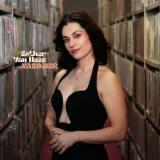
Research Records indicate their inclination for cosmic instrumentation and kraut pervaded polyrhythms once again with an introduction to newcomer Glass Beams. Recorded at the beginning of 2020, Mirage is the first release from the artist, issuing four compositions that lend from a profusion of sounds and influences.
The album's opener and title Mirage arrives with a coiling vocal mantra that conspires with a sliding bassline and transcendent synthwork, reminiscent of early 70's prog jams yet inverted and futuristic. Taurus is a brisk arrangement, steeped with spaghetti-western elements and space-jazz to pave the way for the agile Kong. Rife with psych-fusion guitar phrases and instrumentation, Kong unfolds like a forecast lysergic voyage. The finale Rattlesnake nudges the serpent with intergalactic scales and spellbinding riffs. We may not know much about the enigmatic Glass Beams but Mirage is one epic inauguration, leaving the listener with more questions than answers.
Pop & Rock Novedades
Wind of Oirat is the full length debut by Mongolian independent musician and sound artist Ts Bayandalai. Following his acclaimed 2020 EP Kimel, he now presents a further matured, composed and refined version of his signature sound, which combines traditional Mongolian music and instruments with influences from experimental music and post-rock. Deeply rooted in the cultural traditions of his homeland, Ts Bayandalai, who grew up in a nomadic family in the Mongolian steppe, explores nature and its myths, his ancestral roots, and the relationship between humans, animals and nature.
Artist Bio:
Ts Bayandalai is a Mongolian independent musician and sound artist. His childhood on the steppes shaped a deep sensitivity to natural and ethnic sound. To create his individual, deeply rooted yet modern soundscape, he combines traditional Mongolian musical elements with post-rock, experimental and electronic music, as well as from outernational music influences.
Born into a nomadic family on the steppes, Ts Bayandalai grew up wandering the vast grasslands with shepherds, absorbing the resonances of the horse fiddle and guitar — experiences that remain a primordial source of inspiration in his work.
Founder of the avantgarde band Horse Radio (2012) and the experimental project December3AM (2015), his compositions navigate cultural memory and contemporary aesthetics, reconstructing pastoral landscapes, temporal layers, and emotional spaces through sound.
His EP Kimel, released in 2020, manifested a delicate sculpting of sound, space, and cultural motifs, presenting a listening experience that is at once primal and modern.
Ts Bayandalai’s performances span China, Mongolia, and major independent music venues and festivals across Asia. His artistic vitality and creative autonomy have earned him critical acclaim and a devoted following in the international folk music and experimental music communities.
- 01: The Lake Will Give You Everything You Need
- 02: Sounding The Voice (Feat. Koleka Putuma)
- 03: The Poetry Of The In-Between
- 04: Iqhude: A Tale Of Horns And Bones
- 05: I Am Because You Are
- 06: Portals
- 07: A Basic Guide To String Theory (Feat. Shane Cooper)
- 08: Everything Is Connected To Everything (Feat. Ben Lamar Gay &Amp; Gontse Makhene)
- 09: We Oscillate, We Modulate
- 10: Mothers
Pioneering Swiss trombonist and composer Andreas Tschopp marries contemporary jazz with South African horns and homemade ocarinas, creating a record quite unlike anything you've heard before. "What if We Align Our Breath" disregards the curvature of borders, genre, and time itself - tugging a thread through the history of wind instrumentation with ghostly agility.
At the heart of the record lie spiralling, bonelike kudu (antelope) horns - instruments that have lent their stirring calls to indigenous South African rituals and signalling systems for millennia. These horns are clustered, harmonised and stretched beyond their godly usage by Tschopp - his extended techniques coaxing an array of melancholy, playful voices to canter through the album.
Flourishes of trombone, alpine flutes and a stellar supporting cast on double bass (Shane Cooper), cornet (Ben LaMar Gay), udu drums (Gontse Makhene) and spoken word (Koleka Putuma) bring groove, countermelody and a sense of earthy introspection to the proceedings. This is inconceivable music: a sighing tapestry of brass, clay and bone that hints at some preconscious connectedness, tracing figures that rejoice, exhale and embrace outside of time.
Recommended if you like Francis Bebey, quantum physics, peat bogs.
Even in these most turbulent of times, dub musician and fatigued onlooker Elijah Minnelli remains an inexplicable stalwart on the lower rungs of the Breadminster County Council.
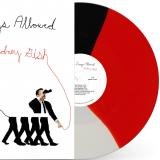
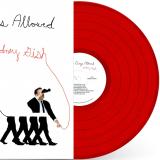
His latest record ‘Clams As A Main Meal’ continues his astute siphoning of council funds, this time with help from the Breadminster Board of Abstinence. As a further mark of respect, the original head of the Board, Dr. K'houldoux, graces the cover art in his infamous ‘Looming Moon of Desire’ guise.*
As fine a backdrop as any for Minneli’s off-brand dub experiments, and ‘Clams...’ is the truest representation of his varied wheelhouse yet...
We find vocal appearances from dub goliath Dennis Bovell and Welsh-language singer Carwyn Ellis. A pair of tracks which build on 2024’s acclaimed ‘Perpetual Musket’, a collection of folk songs reworked alongside reggae vocalists, released by FatCat Records. It garnered glowing reviews, with nods from The Guardian and The Quietus concluding with prominent appearances on their respective yearly round-up lists.
Elsewhere, the album finds Minnelli in a more experimental mode, all wheezing contraptions and cockeyed bass, creaking with the weight of creation, a satisfying tactility laid seam-side up.
As well as ‘Perpetual Musket’, the new album follows years of sold out 7" singles, handmade and self-released. Online, the tracks have amassed global streams numbering in the millions. His tracks have found play across an eclectic range of radio mixes and dance floors, most notably the likes of Andrew Weatherall, Batu, Optimo and Zakia Sewell (BBC6Music).
It is perhaps worth mentioning that this everbuilding interest in his work is at great odds with the growing suspicions amongst his fellow townsfolk, who see his Breadminster County Council Music Initiative as nothing more than an empty cash-grab.
Further Reading on the Breadminster Board of Abstinence
In the late 70s, Breadminster was awash with the last vestiges of the hippy era. Though the flared silhouette of the lower leg remained, the utopian ideals that had once flowed merrily around the youth's shaded ankles had begun to wane. LSD and free love had led to a sharp spike in population and a generation of children raised by air-headed psychonauts unprepared for the bleary-eyed strictures of parenthood.
Aware of the crisis, the County Council entrusted Dr. Paulinque K'houldoux to spearhead a pushback, and it was his pro-abstinence movement - a mixture of education initiatives and radical renutrition campaigns - that came to impact Breadminster's census deep into the new millennium.
Being a pseudo-archipelago Breadminster has fundamentally limited resources, however deep-seated ties to distant coastal villages meant that oysters were a regular part of the local diet. K'houldoux pinpointed this as a factor in the town's overpopulation, and believed that simply replacing these with clams (a “lesser mollusk”) would help lower the erotic urges of the people. It was his “anti-aphrodesia” movement that first championed the idea of “Clams As A Main Meal,” and the slogan “Consider Abstinence” carried the message yet further.
The Breadminster Board of Abstinence soon became involved in all cultural happenings in the area, with K'houldoux MCing at prominent festivals and performances, sometimes dressed as the “Looming Moon of Desire” - an idea of his relating to the tide, seafood, menstrual cycles, and his privately held celestial predilections.
It was in 1981 that it was revealed Dr. K'houldoux had never fully qualified as a doctor and was seeking exile in Breadminster due to a series of botched bracelet heists in which he had previously been involved. K'houldoux was subsequently extradited to Basingstoke, where he served 3 of a 12-year sentence, owing to the lunar-oriented prisoner health campaigns he helped implement.
It has been a strange twist of bureaucratic fate that the Breadminster Board of Abstinence has never stopped receiving public funding, despite its lack of clear utility. And while its roots are tied to a rose-tinted past, the Board continues to sponsor cultural events and projects to this day.
An extract from: Eugeniq Schooner's article in Sydney Parishioner: “Clams, Breadminster and Countercultural Abstinence Trends” (2008)
Limited run 10” vinyl, arrives in risograph printed cover, with additional insert.
Elijah Minnelli returns to Accidental Meetings, following stand out records for FatCat Records, ZamZam & his own BCC imprint, which have garnered support and AOTY charts from The Guardian, The Quietus and The Wire to mention a few.
Minnelli has a unique dub-wise take, fusing eastern & western folk influences with cumbia and earthy drones, cumulating in his own distinct sonic world and his ever evolving lore. Within Ball & Socket, Minnelli pushes his own vocals to the forefront for the first time, compared to the more accustomed background approach previously. The record also sees a collaboration with Osaka's Kiki Hitomi (Waqwaq Kingdom, ex King Midas Sound) on Unkind, the two intertwining throughout. Fans of the pairing will be happy when it gets a re-up halfway through on the Discomix.
Ball & Socket is a personal record on many a level for Minnelli, and the result ends up as one of his most beautiful body of works yet. It finds it's home on the Bristol imprint Accidental Meetings, four years after his first outing on the label.
Design by Oliver Kay, photography by Aleksandra Sandakow, printed & assembled by The Error Press.
Mixed by Simon Lam (Kllo, Armlock) and mastered by Grammy-nominated engineer Andrei Eremin, the album features collaborations with British talent including rising spoken-word artist Emmeline, Mancunian ambient producer Frameworks, and Nattica from Fickle Friends on the single 'Oh My'. Speaking on the album, Fractures says: "There's no overarching theme to this album, not lyrically anyway. It's cobbled together like short diary entries of someone journeying through a sort of middling stasis in their life, a time of nothing particularly noteworthy, and that in itself provokes deeper and maybe darker introspection.
I didn't feel like needlessly plugging holes with lyrics, just light dabs here and there, light and shade to complete the visual I pictured in my head. The through line of the album is more within the sonic palette. There's a murkiness, a sort of dust in the audio that is cast over every song. Noth
He was trying to survive. The album was born from loss, written in the quiet aftermath of his closest friend Dean Jendoubi's passing. In that stillness, Burnside stripped everything back. Gone were the dense textures and surreal folk tales; what remained were bare, trembling songs that told the truth.
Schatterau’s third album, »Wir gingen durch leere Stunden« (We went through empty hours), sees the German duo blossoms with beauty and sophistication through a broad creative language.
This opus, presented in the form of vivid auditory tableaux vivants, explores the topography of memory as a landscape in constant motion – full of loops, feedbacks, and mirage-like distortions. Sounds climbing like vines over old walls, concealing details only to reveal new ones. Some pieces feel like fragments of a dream whose origin has vanished, others like displaced echoes of a day long gone.
Memories create paths that only become visible in retrospect – detours that somehow always lead back to oneself. Each track draws the listener into a different recollection, as if opening an old door. Inside, time behaves strangely: it jumps, stretches, and repeats.
»Wir gingen durch leere Stunden« ultimately presents Schatterau at their most experimental, complex and measured extremes, channelling ambiguous human emotional resonance ranging from melancholy to pure ecstasy.
Kēpa is built whole, even if life has broken a few bones along the way.
Back when he was a pro skater, he gave everything to the board. Today, he gives that same intensity to the stage, delivering hypnotic cine-concerts where motion, sound, and image blur into one. The only falls left now are the ringing final chords of his guitar — not just an instrument, but an extension of his body.
Fingerpicking is his native tongue. So much so that Kēpa no longer sings — he lets the strings speak. Percussive, alive, essential. This music isn’t about performance, it’s about living: a personal quest, a way to reach others by first going inward. Moving against the current without fighting the wind. Finding breath, essence, and remembering we’re all drifting on a spinning planet, surrounded by forces bigger than us.
It’s easier to look away. Easier to follow noise, fear, or false prophets. Harder — and braver — to truly connect.
Released in late 2025, Hotline Service opened the door, offering a wide-open, spiritual escape. With SOUL WASH SERVICES— produced by Timber Timbre — Kēpa goes further. Warmer, deeper, more focused. The album feels like sunlight on asphalt, a long drive with the windows down, time slowing just enough to let something real surface.
A kindred spirit to Hermanos Gutiérrez, Kēpa plays the role of a modern, pagan preacher — guiding us through a dusty, golden road movie that unfolds entirely inside the listener. His music doesn’t shout; it cleans.
Kēpa does it all: writes, plays, films, edits, mixes. Music becomes image, image becomes music. Nothing is separate, on record or on stage. There’s no excess, no showboating — just an open invitation to slow down, go deeper, aim higher.
Tracks like Solarium and Paradisiac reach the peaks with minimal gear: five strings, a few picks, and total control of touch and space. Listening to Kēpa feels like checking in with yourself — a quiet inner trip shaped by sounds from every corner of the world. Blues, not to feel them, but to leave them behind.
After years devoted to picking, his playing has become something sacred.
And if you let it, it carries you with it.
- 1: Here (With Chris Stapleton)
- 2: Rubber Band Man (With Hozier)
- 3: The Banjo Song
- 4: Run Together
- 5: Conversation With My Son (Gangsters & Angels)
- 6: Alleycat
- 7: Prizefighter
- 8: Begin Again
- 9: Icarus (With Gigi Perez)
- 10: Stay
- 11: Badlands (With Gracie Abrams)
- 12: Shadow Of A Man
- 13: I'll Tell You Everything
- 14: Clover
Die Grammy- und BRIT-Award-Gewinner Mumford & Sons kehren mit ihrem sechsten Studioalbum „Prizefighter“ zurück, das am 20. Februar 2026 veröffentlicht wird. Ihr letztes Album „Rushmere“ erschien
Anfang 2025 und landete in Großbritannien auf Patz #1 der Album Charts und in Deutschland auf Platz
#5. „Prizefighter“ wurde von Mumford & Sons und Aaron Dessner (The National) gemeinsam produziert
und enthält unter anderem ihre Single „Rubber Band Man“ mit Hozier und weitere Features von Gracie
Abrams, Gigi Perez und Chris Stapleton.
After their recent LP Mirages (Kraak Records, 2025) with French turntablist Guilhem’All, the group continues to explore collaborations with artists and instruments from diverse musical traditions. Building on decades of uncompromising acoustic exploration, Razen delves deeper into their practice with five improvisational pieces that unfold slowly in time and space. The duo’s radical core - Brecht Ameel and Kim Delcour - finds in Van der Harst a longtime kindred spirit, united by the impact of sound, intonation, and the sheer joy of playing.
To be released on April 24 via VIERNULVIER Records, the artwork for Stained Glass Starling was created by American visual artist Robert Beatty (Oneohtrix Point Never, Christina Vantzou, The Weeknd, Tame Impala). The physical release comes with a 16-page booklet including artwork and an interview.
A long-standing artistic kinship lies at the heart of this project, with first encounters dating back to the early 2000s in Belgian musical improv theatre. Van der Harst’s lifelong experience in improvised music and music theatre, spanning back to the 1980s, combined with a vast arsenal of rare and historical instruments, opens new tonal territories within the Razen universe.
These explorations are not incidental: his family roots in the former Dutch East Indies — through his great-grandfather — provide a quiet backdrop to his enduring affinity for Asian musical traditions. Instruments such as erhu, Javanese kacapi, and others introduce timbres
that bring the music its most pronounced Asian inflections to date.
Yet despite this shift in colour, the underlying ethos remains unmistakably Razen. Working from sound rather than form, the ensemble approaches music as painters approach a canvas: adding layers, contrasts and shades with care. There is no soloist’s ego here; all voices are equal, echoing principles found in gamelan traditions.
Over the decades, Razen and Dick Van der Harst have crossed paths repeatedly, notably through cult theatre productions by Belgian theatre maker Eric De Volder, including Zwarte vogels in de bomen (2002) and Huis der Verborgen Muziekjes I–II (2000–2006). Recording an albumtogether had long been a shared aspiration — a wish that crystallised after a 2024 concert at Concertzaal Miry in Ghent, part of the Ruiskamer series by VIERNULVIER Art Centre.
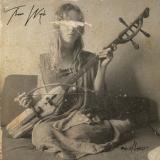
- A1: Is This What You Like - Terra
- A2: The Tribe - The Fred Bloggs Band
- A3: Morning Light - Smythe And Rucker
- A4: Zig Zag - David Chalmers
- A5: High Again - Shades Of Rayne
- B1: Animal Talk - Dana Alberts
- B2: Child Of Nature - The Key Of Creek
- B3: Child Of Earth - Chuck Robinson
- B4: Silvery Waterfalls - Luellen Reese
- B5: The Lost Road - Doria
2026 Repress
A further exercise in musical curation, Child Of Nature is our latest sonic confluence of self-released tracks from the loners, hippies and outsiders of the 70s and early 80s. A collection of privately pressed music, able to breathe and be created free from the constraints of heavy handed commercialism, yielding a pure vision of artistic expression. Child Of Nature features ten songs of brooding soft rock and psychedelic folk steeped in melancholia. Some ache for better times or past lovers, while others seek spiritual fulfilment or social progress.
A compilation to evoke the raw and unobstructed, to summon the occult, to fundamentally conjure a vivid portrait of our untamed natural environment. Recorded on the north coast of California, Luellen Reese’s ethereal “Silvery Waterfalls” drifts and swirls with electric guitar as her unearthly vocals transcend across a seven minute opus, fit for the golden age of labels like 4AD or Dedicated. “The flowers are dancing just for you …”, Reggie Russell croons over glistening Key Of Creek’s title track “Child Of Nature”, evoking a utopian world of natural harmony free from the present day realities of industrial decay.
Tap into your inner primal being, to embrace wholeheartedly, with frivolity and without reserve, your own child of nature.
- A1: Running To The Nearest Body Of Water
- A2: Perfect & Learning
- A3: I Could’ve Cried
- A4: Umlaut
- A5: Windows
- A6: Seven Less Functions (Feat Chloë Lestage)
- A7: Song | 6
- A8: Luca’s Song
- A9: Signs
- A10: A Wish Slanted
- B1: Storytime
- B2: The Primate
- B3: Texas Sundial V1
- B4: Quick Before Something Drastic Happens
- B5: Better Now
- B6: Uptown Lovebug
- B7: Talk / Pleasure
- B8: Cardinal
- B9: Window Seat
- B10: +Ad
For its second anniversary, Samba Jean-Baptiste’s 2023 LP, ‘Cardinal' arrives on vinyl and CD. Two years on from its original release on Samba’s own AM Radio imprint, this physical release via Scenic Route Records celebrates an album that’s quietly built a devoted following for its intimate songwriting, cinematic arrangements, and deeply human detail.
This edition features alternative artwork by Rafi Goudy and, for CD buyers, a 32-page lyric booklet featuring images captured by Samba himself.
An intimate, richly textured record that’s grown into a modern cult classic, ‘Cardinal’ stands as a deeply personal snapshot of a singular artist - now a tactile home experience.
Wasteland is a record that is unafraid to plunge into the darkness of the modern world and embrace the weirder, edgier and more unnerving moments that come from doing so. It is an album that captures all the enormity of life from the micro to the macro, zooming in on the personal as well reflecting on broader societal issues.
“Wasteland is about the idea of a place once known or familiar that is now broken down and unrecognisable,” says Ghedi. “It’s about exploring the process of watching someone’s surroundings and environment collapse.” And within that you have a lot going on. “It also explores death, personal loss, grief, mental health and how the natural world provides solace and meaning for that loss and how these worlds blur into one another.”
Ghedi has always been an artist that in many ways perfectly encompasses folk music in its purest form but he is also someone that frequently pushes the boundaries of that label and no more so is that apparent than on this record. As like previous albums, such as 2018’s A Hymn for Ancient Land and 2021’s In the Furrows of Common Place, Ghedi uses traditional folk songs as a means to explore contemporary issues via modern and experimentally-leaning music. “With the traditional material on this album I wanted to find songs with content that resonated with me,” says Ghedi. “But also that were based roughly around the north of England.” This is a central underlying theme to the album for Ghedi. The feelings of loss, erosion, and degradation are often most pronounced in working class communities and this was something he wanted to weave in. “It was important to voice and choose material that represented or expressed issues that correlated with things going on around me.”
However, as remarkable as some of the traditional material is, some of the most arresting work on the album is Ghedi’s entirely original compositions. Lead single ‘Wasteland’ is a stunning piece of work that while rooted in an environment being corrupted and broken – “there’s violence on these hills” Ghedi sorrowfully sings, before claiming this is no longer somewhere that can be called home – it is also a stirringly beautiful composition that soars and glides as it opens up, as sweeping strings swoop and in and out of Ghedi’s twangy electric guitar.
The decision to incorporate more fuller sounds, such as electric guitar and huge drums, results in a notable shift and evolution in tone for Ghedi. “The lyrical content needed something more band-driven and loud to deliver them,” he explains. “Incorporating the electric guitar in my songwriting was also a big part of opening the sound up, using drop tunings pushed me to use my voice in a wider range, which forced me to use falsetto a lot which I haven’t previously done before. That then opened the sound up and gave me creative ideas for bigger arrangements and to sonically really push things.”
What Ghedi has done in creating his masterpiece is construct a remarkable space where deeply intimate and personal feelings coexist with reflections on environment, place and society, while also interweaving historical context via traditional songs. Wasteland is as much of a world to explore and exist in as much as it is an album, with Ghedi carving out his distinctly unique sonic language and voice to explore that singular environment.
Wasteland is a record that is unafraid to plunge into the darkness of the modern world and embrace the weirder, edgier and more unnerving moments that come from doing so. It is an album that captures all the enormity of life from the micro to the macro, zooming in on the personal as well reflecting on broader societal issues.
“Wasteland is about the idea of a place once known or familiar that is now broken down and unrecognisable,” says Ghedi. “It’s about exploring the process of watching someone’s surroundings and environment collapse.” And within that you have a lot going on. “It also explores death, personal loss, grief, mental health and how the natural world provides solace and meaning for that loss and how these worlds blur into one another.”
Ghedi has always been an artist that in many ways perfectly encompasses folk music in its purest form but he is also someone that frequently pushes the boundaries of that label and no more so is that apparent than on this record. As like previous albums, such as 2018’s A Hymn for Ancient Land and 2021’s In the Furrows of Common Place, Ghedi uses traditional folk songs as a means to explore contemporary issues via modern and experimentally-leaning music. “With the traditional material on this album I wanted to find songs with content that resonated with me,” says Ghedi. “But also that were based roughly around the north of England.” This is a central underlying theme to the album for Ghedi. The feelings of loss, erosion, and degradation are often most pronounced in working class communities and this was something he wanted to weave in. “It was important to voice and choose material that represented or expressed issues that correlated with things going on around me.”
However, as remarkable as some of the traditional material is, some of the most arresting work on the album is Ghedi’s entirely original compositions. Lead single ‘Wasteland’ is a stunning piece of work that while rooted in an environment being corrupted and broken – “there’s violence on these hills” Ghedi sorrowfully sings, before claiming this is no longer somewhere that can be called home – it is also a stirringly beautiful composition that soars and glides as it opens up, as sweeping strings swoop and in and out of Ghedi’s twangy electric guitar.
The decision to incorporate more fuller sounds, such as electric guitar and huge drums, results in a notable shift and evolution in tone for Ghedi. “The lyrical content needed something more band-driven and loud to deliver them,” he explains. “Incorporating the electric guitar in my songwriting was also a big part of opening the sound up, using drop tunings pushed me to use my voice in a wider range, which forced me to use falsetto a lot which I haven’t previously done before. That then opened the sound up and gave me creative ideas for bigger arrangements and to sonically really push things.”
What Ghedi has done in creating his masterpiece is construct a remarkable space where deeply intimate and personal feelings coexist with reflections on environment, place and society, while also interweaving historical context via traditional songs. Wasteland is as much of a world to explore and exist in as much as it is an album, with Ghedi carving out his distinctly unique sonic language and voice to explore that singular environment.
Artist and multi-instrumentalist Flaer looks to the landscape to explore pastoral melancholy on debut release, Preludes. It is released in a second edition black vinyl, with an alternate cover artwork.
Ensconced in his family home in rural Leicestershire in the early months of 2020, painter and musician Realf Heygate (b. 1994) picked up his childhood cello for the first time in several years and began to play. Setting himself parameters to only record onto 4-track tape with acoustic instruments – cello, piano and acoustic guitar – he assembled a suite of instrumental compositions that form the basis of Preludes, his debut album as Flaer and the inaugural release on Odda Recordings.
Channelling the tension and unease between the pastoral idyll of the English countryside and the darkness which lurks beneath the surface, the mini-album draws inspiration from the analogue aesthetic of 1970s folk horror films, weaving field recordings of birdsong, church bells and the natural environment into chimerical melodies that reflect on Heygate’s childhood experiences of rural England.
“It was really important not to isolate the sound from its environment,” he explains, describing the compositional and recording process as “site-specific”. Developed over a series of intuitive musical enquiries, the mini-album’s uncanny quality emerges from combining raw demo takes with overdubs of almost orchestral grandeur.
Heygate points to the final track as indicative of the work as a whole: “‘Follow’ really is the mantra for the release and embodies the practical approach I was taking to music making: not to force the music but see where it takes you.”
As a painter, Heygate’s practice takes artefacts through sequences of reproduction that embrace the fluctuating materiality of the copy. Since obtaining a degree in Fine Art from Central Saint Martins in 2017, he has exhibited solo at Peter von Kant and Springseason galleries in London, and has participated in group shows at Saatchi Gallery, Cob Gallery and Senesi Contemporanea.
Describing his artistic practice as one of self-erasure, music instead provides Heygate with a more personal and autobiographical outlet. Where the two worlds combine is on Preludes’ striking artwork, which features paintings of 13th century stone carvings from the font of the church in the town where he grew up.
Speaking to a time where people were connected to the land in a more profound way, each symbol is assigned to a track on the album, which Heygate likens to giving them a title.
“To add that one juxtaposition might open a whole new interpretation or language that might be hard to find otherwise,” he explains.“Over time it might reveal itself to you, which is why I'm excited about it being released. To throw them out there and see what comes of it.”
Sunny Crypt’s ninth release - and first ever excursion into the realms of previously unreleased music - is “Ufficio Misteri”, the debut album of Milan-based musical collective UFOBAR, an eight piece digital folk orchestra born from the creative synergy of a group of friends with diverse artistic backgrounds. Inspired by evocative ambient electronica, stoner rock songwriting and industrial soundscapes, the project draws on a wide array of influences, crafting a dynamic and multifaceted sonic landscape. The band’s mission is to achieve and share an emotional state they call “total solar”: a synaesthetic experience capable of forging a profound connection between artist and listener.
Akae Beka's inimitable style, developed over decades performing with St. Croix based band Midnite and countless recordings (including 2014 iTunes reggae album of the year BEAUTY FOR ASHES and RIDE TRU). At the point of his untimely passing in 2019, he had released over 70LP's. He is without a doubt one of the most prolific reggae artists ever known and his quanity is always matched with quality, with his albums consistently featuring in the top 10 on the billboard charts reggae LPs.
A unique contribution to the sea of Akae Beka titles, this LP showcases Vaughn Benjamin in a stripped back, raw accoustic fashion. An LP which will not be easily confined to any one genre, but for the fans of Vaughns uniquly rich, deep, textrued songwriting, uncompromising devotion to RasTafari and soulful healing melodies an absolute must have!
- A1: Până Când Nu Te Iubeam
- A2: Nuneasca
- A3: Horă
- A4: Sârba De La Crângu
- A5: Pe Deal, Pe Teleorman Și Sârba De La Mavrodin
- A6: Miorița
- A7: Vară, Vară, Primăvară
- A8: Ce Cați Mândro Pe Muscel
- A9: Zalină
- B1: Hora De La Goicea
- B2: Leliță Cârciumăreasă
- B3: Dorul Meu Pe Unde Zboară
- B4: Brâu Bănățean
- B5: Dodă, Dodă
- B6: Ardeleană Și Pe Picior
- B7: Zicala După Cimpoi
- B8: Hațegană
- B9: De Botă Și Cimpoiască De La Bicaz-Chei
- B10: Tu Mireasă, Miresucă Și De-Nvârtit
- C1: Zicală Din Tilincă
- C2: Bărbătesc Și Învârtită
- C3: Doină Și Bătrâneasca De La Gura Putnei
- C4: Când Eram În Vremea Mea
- C5: Hora Boierească
- C6: Două Hore De La Săveni
- C7: Ciobănaș Cu Oile
- C8: Hangul Lui Gheorghe Brânză
- C9: Hai Bărbate La Băut Și Colacul
- C10: Edes Gergelem
- C11: Burduiul Lui Stanciu
- D1: De Mireasă Vrâncenește
- D2: Cântec Turcesc De Nuntă
- D3: Fedeleșul
- D4: Brâul Lui Papuc
- D5: Tumbe, Tumbe
- D6: Lume, Lume
- D7: Sârba Lui Pompieru
- D8: Hora Șapte Scări
Ourown proudly announces the collaboration with ELECTRECORD label, the oldest and most notorious record label in Romania.
The label was founded in 1932 and was subsequently transformed into the national recording company following the socialist doctrine of centralization and was the only record label in Communist Romania.
This is the first album of Electrecord after 27 years and the new team aims to deliver frequent releases, new music but also reissues of the most appreciated records from their archive; there is a wide range of music genres from Lăutărească music, folk, classical, rock, pop, folk, jazz to radio theater and literature.
Eingeklemmt zwischen dem Canyon und der Karibik gingen Cathy Hamers zwei privat gepresste LPs in den Hippie-Nachwehen der Me-Decade unter. Aufgenommen 1979 und 1980 bei Threshold Recordings, dem bekannten Bluegrass-Poerhouse aus Roanoke, Virginia, zeigen diese 11 Originalsongs die ganze Bandbreite des kosmischen amerikanischen Regenbogens von Folk über Country bis hin zu Yacht Rock. Die remasterte LP kommt in einer Tip-On-Hülle mit einem Begleitheft mit Notizen und den wenigen wertvollen Fotos, die aus Hamers kurzer Zeit als Lady des Canyons überlebt haben, voller Träume und ohne Ziel.
- A1: Wishing For Blue Sky
- A2: Does The Shade Choose Who To Comfort
- A3: Two Magpies
- A4: Memorise Your Senses
- B1: Dark Edges
- B2: Keeping You Awake
- B3: I Buried All The Answers
- B4: Spirit Of Place
Winter Gorse coloured vinyl[32,35 €]
These days – on the new, ninth Fink album – Greenall is operating within a lineage of authentic, quietly revolutionary artists from England’s verdant southwestern toe. Artists like Michael Chapman. In 1970, the elusive acoustic guitar wizard released an album called Fully Qualified Survivor. The cult-classic served as a lodestar for Greenall – along with bandmates Tim Thornton and Guy Whittaker – as he began jigsawing together The City Is Coming to Erase it All, the follow-up to 2024’s Beauty In Your Wake. He even considered covering a song from it, but in the process, inadvertently stumbled into what became the album’s opener. ‘Wishing For Blue Sky’ circles a universal teenage ache: waiting for life to start. “No point dying of patience” goes the first lyric as crunching footsteps cue a resonant, open-tuned acoustic swaying into view. By 18, Greenall was fed up with waiting, so he left suburban Bristol and saw the world, sending postcards from the edge, waiting tables, squirreling away tips for the next flight. Thornton had similar experiences when the guitarist/drummer busked across Eur
This is nowstalgia more than nostalgia, though; there’s a parallel between these 18-year-olds and Fink’s autumn-aged family men. “You’re expected to be boring and settling down at this age,” Thornton says. “But we’ve still got this tremendous wanderlust. We want to go and discover, and also achieve things. It’s a nice life – home and family – but fuck, I can’t wait to get back out there.” City is a product of this hunger for discovery, and idolatry of the album as a form – like we had in 1974. City’s cover mirrors its interior, the first song is the greeting, the instrumental closer the conclusion. It’s a story. It’s a record for people who, like its creators, are curious. People who happily face a little cold for music, who light a crackling fire back home, who sit with these songs until they’re ready to chase after their own blue sky
These days – on the new, ninth Fink album – Greenall is operating within a lineage of authentic, quietly revolutionary artists from England’s verdant southwestern toe. Artists like Michael Chapman. In 1970, the elusive acoustic guitar wizard released an album called Fully Qualified Survivor. The cult-classic served as a lodestar for Greenall – along with bandmates Tim Thornton and Guy Whittaker – as he began jigsawing together The City Is Coming to Erase it All, the follow-up to 2024’s Beauty In Your Wake. He even considered covering a song from it, but in the process, inadvertently stumbled into what became the album’s opener. ‘Wishing For Blue Sky’ circles a universal teenage ache: waiting for life to start. “No point dying of patience” goes the first lyric as crunching footsteps cue a resonant, open-tuned acoustic swaying into view. By 18, Greenall was fed up with waiting, so he left suburban Bristol and saw the world, sending postcards from the edge, waiting tables, squirreling away tips for the next flight. Thornton had similar experiences when the guitarist/drummer busked across Eur
This is nowstalgia more than nostalgia, though; there’s a parallel between these 18-year-olds and Fink’s autumn-aged family men. “You’re expected to be boring and settling down at this age,” Thornton says. “But we’ve still got this tremendous wanderlust. We want to go and discover, and also achieve things. It’s a nice life – home and family – but fuck, I can’t wait to get back out there.” City is a product of this hunger for discovery, and idolatry of the album as a form – like we had in 1974. City’s cover mirrors its interior, the first song is the greeting, the instrumental closer the conclusion. It’s a story. It’s a record for people who, like its creators, are curious. People who happily face a little cold for music, who light a crackling fire back home, who sit with these songs until they’re ready to chase after their own blue sky
- A1: 특급열차 (속에서) (Express Train (In The))
- A2: 아무에게도 말할 수 없소 (Can’t Tell Anyone)
- A3: 풋내기들의 합창 (A Chorus Of Fledglings)
- A4: 가을에 오시나요 (Will You Come In Autumn?)
- A5: 거인의 숲 (Giant’s Forest)
- A6: 그리움 (Longing)
- A7: 유리 인형 (Glass Doll)
- B1: 우리 강산 (Our Country)
- B2: 여운 (Afterglow)
- B3: 카멜레온 (Chameleon)
- B4: 어디로 갈까 (Where Shall I Go?)
- B5: 내일 또 내일 (Tomorrow And Tomorrow Again)
- B6: 바람 부는 강 언덕 (The Windy Hill By The River)
V album[52,06 €]
Original release date: April 15, 1979
Sanullim's 4th album consists of background music and insert songs for TV and radio dramas and plays, including Korean Film director Im Kwon-taek's movie "Tomorrow And Tomorrow Again". It is a noteworthy collection of works that has not faded with the unique scent of Sanullim, and contains several songs that still shine with charming emotions and whimsical or vague sensibilities.
Express Train (Inside), a mountain sound-style hard rock with dynamic rhythm, fuzz guitar, and Kim Chang-hoon's wild shouting, Kim Chang-wan's soft vocal and brilliant keyboard sound, Can't Tell Anyone, Love It includes the elegant performance songs Glass Doll and The Windy Hill By The River, and the beautiful song Afterglow that achieves the climax of romance and lyricism.
Das in Australien gegründete und in LA ansässige Duo VOWWS meldet sich mit I'll Fill Your House With an Army zurück, ihrem bisher ehrgeizigsten und am besten umgesetzten Album.
I'll Fill Your House With an Army ist der Höhepunkt der kühnsten Ideen der Band und zeigt, wie VOWWS, bestehend aus Rizz und Matt James, ihre charakteristische „Death-Pop“-Ästhetik vertiefen: eine genreübergreifende Mischung aus industrieller Elektronik, alternativem Rock, cineastischer Nostalgie und melancholischer Pop-Sensibilität. Co-produziert von Billy Howerdel (A Perfect Circle) und mit Gastauftritten von Josh Freese (A Perfect Circle, NIN, Devo) und James „Munky“ Shaffer (KORN), ist das Album eine Reise durch Sehnsucht, Entfremdung und die surreale Schönheit des Chaos.
Dieses Album zeigt perfekt die dynamische Bandbreite des Duos: von verzerrter Intimität bis hin zu gewaltigen Klangattacken reflektieren VOWWS ein zerbrochenes Spiegelbild des modernen Zustands - romantisch, aber desillusioniert, viszeral und doch seltsam erhebend.
Nachdem sie sich durch Touren mit den Deftones, Twin Temple und Poppy bereits eine kultige Fangemeinde erspielt haben und gerade einen bahnbrechenden Live-Auftritt im Golden Gate Park neben System of a Down und The Mars Volta absolviert haben, sind VOWWS bereit, ihr Vermächtnis mit dieser Veröffentlichung zu zementieren. Ihr künstlerisches Ethos, unbeugsam in einer Ära der Wegwerfbarkeit, hat sie auch in die Welt der High Fashion geführt, wo sie mit Comme des Garçons, Givenchy und Byredo zusammenarbeiten.
Back in stock!!
Reissue of this HEAVY Ghana disco / rap / boogie tune..., BIIG one!! Comes with a instrumental cover version by Welsh group Drymbago on the flip..
Soundway Records reissues Free Youth’s long sought-after 1985 single “We Can Move”, their only release - fully restored, remastered and available for the first time on digital and 12” vinyl. “We Can Move” is the first known iteration of Ghanaian hip hop, emerging at the dawn of ‘hip-life’ (hip hop meets highlife).
Free Youth comprised three main members: Terry “Sir Robot” Bright, Lenny “Nii Addy” Dimple, and Abednego “King Abed” Ayim Bright. In the early 80s they began performing in clubs and parties across Accra, with friends and other dancers occasionally joining them on stage – including Reggie Rockstone, who later went on to find commercial success.
In 1985, the band were approached by a producer and invited to record at a local studio. Without having written down any music, Terry, Lenny and Abed sang the parts and beatboxed the rhythms to the session musicians prior to recording. Out of this session came “We Can Move”, a blend of hip-hop and Afro-funk with a proto disco-boogie beat, punchy trumpet riffs and melodic rapping.
Included in the Soundway reissue is an exclusive instrumental cover version of “We Can Move” from Welsh ensemble Drymbago. This replaces the original B side track “Freedom Video Centre”, which was an advertising jingle for a business associated with their former producer.
Salix is a bold new departure for modular synthesist Loula Yorke, seen here using an antique reed organ to explore the ancient roots of willow trees in magic, myth and medicine, as well as inviting another musician into her recording studio for the first time, clarinettist Charlotte Jolly.
The EP forms a sonic archive of a singular instrument: an antique free reed organ left behind by a previous encumbent of Asylum Studios, (the artists' co-operative in Suffolk where Yorke's Truxalis labelmate and life collaborator, Seiche, has a studio space). The organ is in poor condition and fascinatingly, painfully detuned. Yorke's recordings bring out its host of unusual quirks exacerbated by age and neglect: the powerful rhythmic creaking of the wooden treadles; the bone-shaking resonance emanating from its body at specific pitches; unexpected exclamations of harmonic collision from within the carcass redolent of a human voice; the piercing, shrieking whistles of broken reeds, and the powerful timbres unlocked via Yorke's experiments with various combinations of stops.
The three tracks that form Salix are inspired by a local weeping willow tree, a constant companion photographed over the course of a year. Boughs caught in a gyre. A maiden in mourning. Branches that gesture in the wrong direction. A tree turned upside down. A hand-woven willow basket, an old technology to gather and store. The journey of a lovelorn bard through the underworld, a bundle of willow under one arm for protection.
For the opening track, The Carrier Bag Theory of Fiction, Yorke recorded herself playing a simple unaccompanied improvisation on the organ, the only ornamentation being the processed sounds of the keys being struck and returning to their positions.
For Bundle of Styx, a spell of protection is cast and then broken. Yorke invited virtuoso clarinettist Charlotte Jolly into the studio to test combining the breathy textures of both brass and natural reeds, the instruments uniting and obsuring each other in turn during this one-take improvisation. The organ's unpredictable sharpened tunings take centre stage here, with Jolly using them as a point of departure to conjure a set of peerless harmonic improvisations live in the moment. Throughout the improvisation, Yorke, a self-taught musician, unpracticed on the organ, supports and challenges, freely admitting that she's not always sure what effect her decisions to move up and down the keyboard or pull out certain stops will have. Jolly's genius lies in her ability to meet and build on every uncertain pitch thrown her way, saying of the experience, "I love that Loula isn't classically trained, I can't predict at all what she's about to do."
For the final track, With the Red Dawn, Yorke has come up with another unique combination of textures, this time bringing her own specialism in modular synthesis to the fore. A ten-minute reed organ drone characterised with ever-shifting bass swells and overtones is layered with tuned sines, often shudderingly wave-folded, that ebb and flow both in intensity and harmonic colour according to the duty cycles of eight interrelated LFOs. These recordings are collaged with Yorke's singing voice and a langorous, ascending sequence across two octaves on Jolly's clarinet, all arranged to form a cohesive whole far greater than the sum of its parts. Smatterings of untuned percussion and a fragment of a conversation between the duo left in the final mix cements Yorke's unprecious DIY aesthetic into the release.
At its heart, Salix is like watching the wind in the willows; hundreds of thousands of identical tiny leaves moving in confluence on its branches; at once one thing and many things; moment-to-moment our perception makes out different individuals parts within this expanse of texture, before sinking back into the whole.
Debut by a new string trio of Pelt and Elkhorn veterans with the wild card contributions of Kaily Schenker, creating a new variant of supremely pleasing acoustic-psychedelic-drone-Americana etc. “Lullaby>Summer Field” is an aptly named gentle rise, with Sheppard’s fingerpicked 12 string snaking through waves of elongated fiddle and cello. “Triode>Freedom” follows a darker minor-key ostinato with Gangloff’s keening melody over the top. “Freedom>Universal Blues” starts as a dirge and builds to a transition into the traditional “The Squirrel is a Pretty Thing,” with Kaily Schenker’s droning harmonium and vocal delivering a riveting, epic version of what’s usually cast as a short “kids”/folk-tale song (e.g. Peggy Seeger’s version). Originally this album was released by the band in an instantly sold-out edition of 100 for sale at their shows. This updated version includes a new insert by Kaily, a new cut by John Golden and a thick pressing from Smashed in Chicago.
London-based Irish singer-songwriter Seamus Fogarty returns with 'Ships', his most expansive and uplifting album to date, released March 6, 2026 on limited-edition 12” coloured vinyl, CD and digital formats. Praised for crafting “magical journeys through fable and modern life and back again, often in the same song” (----- – The Guardian), Fogarty blends motorik rhythms, folk traditions and leftfield electronics into a richly detailed collection that channels influences from Tortoise to early ’90s hip hop. Following 2023’s 'Hee Haw EP,' 'Ships' is packed with poignant, funny and deeply human vignettes touching on love, loss, DIY coffins, chance encounters and the quiet determination required to keep going.
Written in the wake of 'A Bag Of Eyes' and road-tested on tour with Lisa O’Neill, 'Ships' was brought to life with an esteemed cast of collaborators including Emma Smith, Chris Vatalaro, Aram Zarikian, Joe Auckland, Leo Abrahams and Mike Lindsay. Recorded across London, St Leonards-on-Sea and Margate, and fine-tuned in Fogarty’s Walthamstow home studio, the album moves effortlessly from the urban hum of ‘Come Down To The Square’ to the romantic sweep of the title track ‘Ships’ and the defiant crescendo of closing track ‘Doer Undoer’. “There’s something strangely uplifting about this collection,” Fogarty says. “It’s more honest than anything I’ve released before.”
- 1: Sorrow Reigns
- 2: Twisters
- 3: Comeback Loading
- 4: Hares
- 5: Heart Of The Country
- 6: Total Dive
- 7: Wreck
- 8: Oblivion
- 9: Heavy
- 10: Watching Something Burn Up
Brown Horse—named one of Brooklyn Vegan’s 10 Artists Shaping the New Indie-Country Boom—return with their third and best album in as many years, Total Dive. With songs from each of the four members (Patrick Turner, Nyle Holihan, Emma Tovell and Rowan Braham) the writing charts a world of small revelations and painful changes. Total Dive is out April 10 via Loose Music; pre-order today on LP and CD.
- 1: You Always Had A Way With Words
- 2: Zero Sum
- 3: Cycles
- 4 05: 00
- 5: Fading Out
- 6: Sea Swell
- 7: The Stray
- 8: Don't Find Me
- 9: The Underside
Lush in strings and pedal steel, the nine-track 'How I Became A Wave' album features contributions from some of Ireland's most accomplished musicians, headed up by Pat Carey, and featuring string and piano arrangements by Cormac McCarthy (RT Concert Orchestra). 'How I Became A Wave' will be available as a limited edition 12" gatefold vinyl that brings together music and visual art, featuring cover artwork based on the original oil painting 'Towards Pabaigh' by Scottish artist Ellis O'Connor, design by West Cork creative Megan Clancy, insert image by Cork- based artist Leslie Allen Spillane, and handwritten liner notes and lyrics from Pat Carey, who steers How I Became A Wave as a collaborative, multidisciplinary project. Pat Carey says: "At the heart of How I Became A Wave is a sense of collaboration - of connection between artists. Inviting artists of different disciplines into the creative process has been key to the journey. Understanding how other people see, hear and feel my work has been enlightening, affirming and vital, making sure that what we have created is a living body of work that I hope will continue to be expressed in changing ways."
Yellow Vinyl
Blue Lake reveals his most ambitious album yet, which finds its visionary creator Jason Dungan harnessing the collective alchemy of his band, with ten spirited tracks that resonate with a powerful directness, evoking an ecological connection to the wider world.
The solo project (Blue Lake), now on its fifth album, found its name and inspiration via Don Cherry's 1974 live album, sparking a creative epiphany in Dungan, who set off on a path into his own untapped sonic world, guided by what he cited as the emotional potential found within non-lyrical composition. With a newly inspired ethos aimed toward creating direct and simple instrumental music imbued with a deep sense of feeling, Jason began combining an array of musical elements that gave rise to his highly revered album 'Sun Arcs' (2023), with its "ornate, zither-led lattices" (Pitchfork, Best New Music). Conceived in the blissful isolation of a Swedish cabin set in the woods, this was music that soundtracked spring in full bloom. Then, in contrast to the solitary approach of 'Sun Arcs', the highly lauded mini-album 'Weft' (2025) began to set the tone for a more band-oriented approach to delivering the Blue Lake sound. Jason had by this time experienced a special collective energy with his band during a swathe of live performances, which he then sought to harness and distill on 'The Animal', leading him to take the project into a traditional recording studio (The Village) and its limitless potential along with his gifted cohorts.
'The Animal' at its core vividly celebrates human collaboration and is deeply rooted in a sense of community and non-hierarchical connectivity. The group's creative alchemy transcends outwards and beyond the musicians performing together, to summon an inclusive, existential and ecological connection to the wider world and its inhabited spaces. The album contemplates the idea of the human as an animal as Dungan explains: "I'm quite fascinated in thinking about humans more as part of the animal environment and not as something that's so separated into a "human" realm, or sitting on top of a hierarchical pyramid. So the Animal is also me, or us - that we are just living, existing, in the same way as a piece of moss or a sparrow or a cow.
'The Animal' is a form of musical metamorphosis, still acoustic, yet more amplified, elevating it to new dimensions. The Blue Lake project takes on a new lease of life to encompass collaboration with Jason Dungan bound in a universal connectivity, resulting in his most ambitious album to date. A harmonious rejoicing that cements his reputation as a transformative presence in contemporary music.
A friend of mine told me he had visited the place that Cancer House live and record.He said they jammed together all afternoon. In the moment, in the zone so to speak,he became more and more convinced that what they were making together was thebest music he had ever been involved with. As the afternoon drifted by, second byrevelatory second, he began making grandiose plans to release the recording. By the timeit was dark outside the windows he imagined it as a future lost classic, a key livedocument of a scene, a moment and an aesthetic. He thought about all the recordshe loved. He thought about the great, little known, statements of lo-fi, downer indie:dark, sweet, crawling guitar music by bands like Farewood, Bedhead, UN, orThe Sonora Pine. He could even picture the sleeve down to the last detail.
The session ended and as they were all packing up he asked about the recording.And someone said ‘oh, we weren’t recording.’ ”- Jack Rollo
- 01: Maanitus &Amp; Tšiižik
- 02: Markka
- 03: Melkutus
- 04: Letška
- 05: Kuuen Parin Hoirola
- 06: Brišatka
- 07: Tšiižik
- 08: Kirkonkellot
- 09: Kirkonkellot Korkea
- 10: Hoirola, 3 Parin
- 11: Lippa
- 12: Kyngäkiža
- 13: Ristakondra
- 14: Vanha Polkka
- 15: Viistoista
- 16: Vanha Valssi
- 17: Kiberä
- 18: Maanitus Kuokan Kanteleella
- 19: Tuuti Lasta Nukkumahe
Tape[16,39 €]
Death Is Not The End present a further volume of Arja Kastinen's eerie amalgamations of 110 year old wax cylinders with her own meticulously transcribed takes, this time focussing in on Armas Otto Väisänen's field recordings of kantele player Iivana Mišukka (b. 1861 d.1919).
"Ivana Mišukka (1861–1919) was one of the Karelian kantele players recorded by the folk music researcher Armas Otto Väisänen on wax cylinders in 1916 and 1917. In the early 20th century, the remote areas of Border Karelia were undergoing the final phase of a transformation in musical culture, with the ancient runo song tradition giving way to newer forms of music. This transition is reflected in Mišukka's repertoire and choice of instrument. The ancient small kantele, hollowed out of a single piece of wood, was already rare at the turn of the century. Mišukka's kantele was a new type of instrument with 26 strings, constructed of several parts, but he played it using the traditional plucking technique. Like other Border Karelian kantele players, his repertoire consisted of music rooted in runosong culture, as well as newer dances and songs from the east and west. Most of the recorded material falls into the latter category.
Ivan Bogdanov Mišukka was born out of wedlock in Suursara village, Suistamo, on 1 May 1861. He began playing the kantele at the age of five or six, quickly mastering the instrument. In adulthood, he was considered one of the area's best master players. Mišukka was landless for most of his life and lived in different parts of the Suistamo parish. His first wife, Tekla Markintytär, died in 1897 at the age of 40, and his second wife, Jevdokia Filipintytär Jeminen, died in 1907 at the age of 50. Seven children were born from the first marriage, two of whom died young. The third wife, Maria Ignatintytär Gurnan (Kuurnanen), was a well-known master of lamentations. Together with Maria, Iivana Mišukka worked as a tenant farmer in the village of Suursara. Mišukka suffered from rheumatism, which prevented him from participating in physical work like Maria. This was apparently partly the reason why Iivana Mišukka went to earn extra money by playing the kantele on gig trips. He often had other traditional artists from Suistamo as his travelling companions, such as the runosingers Konstantin Kuokka and Iivana Onoila. Iivana Mišukka died in Leppäsyrjä village, Suistamo, on 18 May 1919 at the age of 58, and his kantele was donated to Teppana Jänis.
Mišukka only used 14 of the 26 strings on his kantele, playing the same tunes either a fourth higher or lower. He tuned his kantele to the major scale using fifths, except for a low seventh scale degree on the upper strings, but not below the fundamental. Since he did not use the seventh note of the scale on the upper strings at all, he could use the major scale both lower and a fourth higher with this tuning. According to Mišukka, the sound of higher, or 'finer', strings is 'more beautiful', while that of lower ones is 'greater'. Among runosingers, the size of the thirds varied, ranging from major to minor to neutral. A similar phenomenon can be observed in kantele tunings, where the third, sixth and seventh scale degrees vary in a comparable way.
During a meeting, Väisänen suggested that Mišukka play the smaller kantele belonging to Konstantin Kuokka. The idea was to bring it closer to the horn to improve the recording quality. However, the kantele was completely out of tune, and now Mišukka tuned it to the Lydian scale (track 18).
Using the old plucking technique, Mišukka placed his right middle finger on the fundamental tone, his right index finger on the second scale degree, his left middle finger on the third scale degree and his left index finger on the fourth scale degree, and his right thumb on the fifth. The thumb also played the notes above the fifth note of the scale. As Mišukka remarked to Väisänen: 'Peigaloll' tuloo enemb ruadoa' (the thumb has to do more work). However, he did not use the seventh note of the scale on the upper strings at all. Below the fundamental note, he played the seventh and sixth notes of the scale with his right middle finger of and the fifth note of the scale with his right ring finger. This fifth scale degree below the fundamental is almost always used as a drone. Sometimes, when the melody required it, Mišukka, like other players, also varied the fingering. He would also occasionally strike the same string with the side of his fingernail after plucking it.
The wax cylinder recordings of Karelian kantele players are kept in the archives of the Finnish Literature Society in Helsinki, Finland. Copies were made of them onto reel-to-reel tapes in both the 1960s and 1980s. The 1960s copies are mono and the 1980s copies are stereo. However, not all kantele recordings from these decades have survived.
The sound of the kantele is difficult to hear in wax cylinder recordings due to its low volume, and it occasionally becomes completely obscured by noise. During the copying process, the cylinder sometimes rotates unevenly, resulting in breaks or jumps in the music. Additionally, the rotation speed of the cylinder in the copies does not correspond to the performance speed of the original music, which alters the pitch. However, since Väisänen's precise notes are available in the archive, it is possible to deduce the melodies, their speed, and the tuning level of the kantele in the recordings. Of the copies of the original recordings from the 1960s and 1980s, I have selected the one that best met the requirements of this publication and adjusted the speed of the recording to align with Väisänen's notes. To enhance the listening experience, I have replayed the songs, which now partly overlap the old recordings on this release."
— Arja Kastinen
Welsh multi-instrumentalist and producer Huw Marc Bennett sinks his hands deep into the soil of South Wales, reimagining traditional melodies from the Morgannwg/Glamorgan region through an earth-toned palette of folk, jazz and psychedelic roots. ‘Heol Las’ is ancient music seen through a modern prism; acoustic textures rubbing up against hypnotic grooves, field-worn stories refracted into new shapes.
Every track on the album is either drawn directly from, or woven around, archival tunes of the region. Bennett’s approach is reverent yet expansive, pulling history into the present while staying grounded in community, landscape, and lived culture.
Bennett says, “On this record there are versions, interpretations and tunes influenced by cerddoriaeth werin, the folk music of Morgannwg; The place I was born, I was raised in and revisit to feel grounded. The melodies you hear were given, found and invented.”
- A1: Full Blood Count Analyzer
- A2: Automated Instrument Rinse System
- A3: Mri Scanner
- A4: Anaesthetic Machine
- A5: Meti Human Patient Simulator - Mannequin Breathing
- A6: Simman Essential Mannequin
- A7: Cardiac Monitor
- A8: Lee Silverman Voice Treatment
- A9: Haemoglobin A1C Analyzer
- A10: Anaesthetic Machine 2
- A11: Infusion Pump (Alaris Plus)
- A12: Heater Fan
- A13: Phacoemulsifier – Suction And Ultrasound During Cataract Surgery (Two Perspectives)
- A14: Robotic Pharmacy - Manually Restocking Supplies
- A15: Ct Scanner
- A16: Pharmacy Label Printer
- A17: Dialysis Machine
- A18: Draeger Oxylog 3000 Plus
- B1: Meti Human Patient Simulator – Powering Up Of Bellows That Control Mannequin&Apos;S Artificial Lungs
- B2: Orthopantomograph Op 2000
- B3: Helium Cooler For Mri Scanner
- B4: Coagulation Analyzer
- B5: Meti Hps Mannequin
- B6: Ophthalmology
- B7: Sysmex Sp1000I Automated Slide-Maker
- B8: Agv (Automatic Guided Vehicle)
- B9: Ultrasound Scanner
- B10: Operating Theatre
- B11: Beckman Coulter Access 2 Analyzer
- B12: Geiger Counter (Berthold L4)
- B13: Automated Mailroom (Opex Mail Matrix)
- B14: Wall Mounted Suction Unit
- B15: Dialysis Machine 2
Tape[13,66 €]
Death Is Not The End reissue Mark Vernon's sought-after 2013 collection Sounds of a Modern Hospital on vinyl & cassette formats.
Whilst every effort has been made to record the subject in as great a degree of isolation as possible, the sound recordings you will hear on this record were made in a real working hospital and not under controlled conditions. Therefore, on occasion, you may hear some unavoidable background noise, conversations and other extraneous sounds.
All recordings were made by Mark Vernon at Forth Valley Royal Hospital, Larbert, Stirling Community Hospital and Falkirk Community Hospital between 2011 and 2013.
Luciano Cilio was born in Naples, Italy, in 1950. He studied music and architecture and, in the late '60s, collaborated with local artist Alan Sorrenti, American expat Shawn Phillips and various avant-garde theater groups. A virtuoso guitarist and self-taught composer, Cilio released only one LP before his untimely death at the age of 33.
Dialoghi Del Presente (1977) is a work like no other, one that sounds both ancient and ahead of its time. Produced by Renato Marengo, it features a series of muted tableaux for strings, woodwinds, guitar, chorus, piano and percussion. Cilio carves out a space where subtle, repetitive phrases yield – almost imperceptibly – to breathtaking silence.
As Jim O'Rourke writes, "These recordings sound as if they were to please no one but himself; they feel self-contained, introspective, and determined ... You can feel in the music a sort of necessity that can be rarely found, like in This Heat's debut or Nick Drake's Pink Moon."
While each subsequent "quadro" grows slightly more abstract, Cilio draws the listener into an expansive, pastoral soundscape. The closing piece, "Interludio," begins with a plaintive guitar, which is joined by haunting strings and woodwinds before concluding, poignantly, as the album began, with Cilio and his guitar, alone once more.
Superior Viaduct's edition reproduces the original sleeve design. Recommended for fans of Johann Johannsson, Talk Talk's Spirit of Eden, Arvo Part and Popol Vuh.