Nach dem Erfolg des offiziellen Anno 1800-Vinylsoundtracks feiern Black Screen Records und Ubisoft Mainz die populäre Aufbausimulation mit "The Four Season": Der opulente zweite Soundtrack entführt in die lebendigen musikalischen Welten der vier Erweiterungssets des Spiels und erscheint pünktlich zum 25jährigen Jubiläum der Traditionsmarke am 31.03.2023, natürlich auf audiophilem 180g Doppelvinyl. Alle neuen Musikstücke werden zur gleichen Zeit auf Spotify verfügbar sein. Das Album wird erneut in wunderschönem Klappcover mit Artworks von Ubisoft Mainz ausgeliefert und kommt mit kostenlosem Download-Code für den digitalen Soundtrack, inklusive 8 Bonustracks. Musikalisch dokumentiert die Doppel-LP nicht nur die enorme inhaltliche Abwechslung der vier Anno 1800-"Seasons", sondern auch die stilistische Bandbreite der Komponisten Steffen Brinkmann, Jochen Flach, Armin Haas, Alexander Röder, Tilman Sillescu und Matthias Wolf (Dynamedion). Die Stücke erzählen von versunkenen Schätzen und reichen Ernten, von Expeditionen in die Arktis und ins gefährliche Land der Löwen, von der Eroberung des Reichs der Lüfte oder dem überwältigenden Ausblick von den majestätischen Dächern der Stadt. Kurzum: Die Welt von Anno 1800 und der facettenreichen Spielerweiterungen wird als akustische Reise erlebbar gemacht. Anno 1800 ist eine von Ubisoft Mainz entwickelte und von Ubisoft veröffentlichte Aufbausimulation, in der Spieler die industrielle Revolution anführen, Metropolen errichten und mit Diplomatie, Handel oder Krieg um die Vorherrschaft wetteifern. Das erfolgreiche PC-Strategiespiel begeistert mehr als 2,5 Millionen Spieler auf der ganzen Welt mit einer Kombination aus bewährten Spielelementen, innovativen Neuerungen und dynamischem Spielverlauf in einer der spannendsten Epochen der Menschheitsgeschichte.
On the heels of his already critically acclaimed (yes, already!) retrospective, World Spirituality Classics 3: The Muslim Highlife of Alhaji Waziri Oshomah, Alhaji Waziri Oshomah — the Oyoyo King, the Godfather of Afemai Music, the Etsako Super Star, Mr. Please Please Please, Mr. Dynamite — returns with Vol. 2.
Along with the other four volumes of the series, Vol. 2 is now available—for the very first time!—as part of a complete set (in a box): Vol 1 - 5 (1978 - 1985) (November 4, 2022).
Waziri hails from a small part of Edo State in southern Nigeria called Afemailand, known for being a harmonious region where Muslims and Christians live—and dance—together. And there, as a devout Muslim and an exemplar of religious piety in his community, Waziri’s music fuses Etsako/Afemai folk styles with pan-Nigerian highlife and pop to create a sublime vehicle for his Islamic philosophy that gets everyone—Muslims, Christians, whoever—on the dancefloor.
Vol. 2 focuses on Waziri’s illustrious mid-career output—the music he created during the years leading up to and after he performed his first hajj. Every song here (one of which you might recognize from The Muslim Highlife) strikes his signature balance of traditional music, highlife, and funk, as he entreats you to stay on the straight and narrow, though there’s nothing straight about his beat.
On and off the record…
This is the second of the five-part Volume Series, which was recently compiled for the first time in the limited-edition box set, Vol. 1 - 5 (1978 - 1984) (November 4, 2022).
This release follows World Spirituality Classics 3: The Muslim Highlife of Alhaji Waziri Oshomah (September 23, 2022).
The Muslim Highlife of Alhaji Waziri Oshomah, received an 8/10 from Uncut, ★★★★ from MOJO, and has been called “therapy, worship, ecstasy” by Pitchfork (7.2).
Release supported by archival and new video content.
Alhaji Waziri Oshomah will play select shows—along with his wife and musical collaborator Madam Hassanah Waziri—in the U.S. and Europe throughout 2023. l He can perform sets as long as 3-4 hours! (Depending on the financial strength of the village).
Sings in English and local languages and is regarded as #1 Singer in all of Edo State.
Auf dem neuen Longplayer Crime Scene lenkt die bayuwarische Artrock-Institution ihre Aufmerksamkeit auf das Morbide, das Perverse, das Böse im Guten, die Abgründe des menschlichen Verhaltensspektrums in all seiner unvorhersehbaren Vielfalt, die dann manchmal auch so bizarr verstörend schlüssig daher kommt, wenn man denn ansetzt sie ergründen zu wollen.
In sechs dicht-atmosphärischen Tracks haben sich RPWL wieder einmal auf intensive Reisen durch die eigene Bandvita, als auch die jeweils eigenen Plattensammlungen begeben. Das Bemühen von Vergleichen ist immer so eine Sache, denn immerhin ist dies die 19te Veröffentlichung dieser international erfolgreichen Band. Die teils morbid-düsteren Themen werden mit old-school Fuzz konterkariert, das knapp 13-minütige "King of the World" mit seinem knurrenden Big Muff und seinen flächigen Vibes, oder "Life beyond Control", das mit seinem Offbeat-Einsatz sicher zu den härtesten Stücken in der RPWL Diskographie gehören dürfte, legen ihr Geständnis auf der Crime Scene ab. "Live in a Cage" bringt das das Kalkül des wie immer akribischen Sounddesigns dieses neuen RPWL-Albums auf den Punkt, nahtlos schließt sich "Red Rose" daran an. Pflaster auf Schusswunde als Prinzip. Aber der Wahn der normalisierten Gewalt wabert in so vielen Haushalten unter der vermeintlichen Harmonie, die die vier Musiker hier den Hörer glauben lassen. Wie fühlt es sich an, überhaupt kein Konzept von Freiheit zu haben, die Angst die bürgerliche Sicherheit zu verlassen aber größer ist? Allein im Lockdown-Jahr Jahr 2020 erfasste die Polizei über 119.000 Fälle von partnerschaftlicher Gewalt, 139 davon mit tödlichem Ausgang, die sich in über 80% der Fälle gegen den weiblichen Part in der Beziehung richteten.
Yogi Lang kommentiert aus künstlerischer Perspektive er sei schon immer von gesellschaftlichen und persönlichen Schattenseiten fasziniert gewesen. Kalle Wallner stellt die Gretchenfrage, wie man es denn mit dem Bösen an sich halte: "Wer macht uns zu dem wer wir sind? Ist es eine Frage der Genetik oder sind es doch die sozialen Umstände, unsere Kindheit, Schicksalsschläge, Druck oder Kränkungen?"
Das ‚Böse' bildet eines der Kernthemen auf Crime Scene, welches über das Band-eigene Label Gentle Art of Music erscheint. Als wertig aufgemachtes Digipak, drei unterschiedlichen Vinyl-Versionen (180Gr. Schwarz, 180Gr. Lim. Rot, 180Gr. Lim. Blau) und natürlich Digital.
eclipsed - Album des Monats:
"RPWL ist damit ein geradezu kriminell spannendes Werk gelungen. ....Auf "Crime Scene" spielen RPWL alle ihre Stärken aus. Tatorte gesichert. Fälle geklärt. Mission erfüllt. ... Wuchtige, cineastisch anmutende Arrangements, wunderschöne Melodiebögen, bewegende, leise, behutsame Momente und ein ausgesprochen spannendes Konzept hinterlassen einen starken Eindruck..."
SLAM (Highlight März/April)
Wieder einmal haben die bayrischen Artrocker RPWL ein Konzeptalbum am Start und wieder einmal kommt nach dem ersten Durchlauf der übliche Gedanke: Das ist absolut großartig, aber man hat keine Ahnung warum genau. Was haben die in Freising in ihrem Wasser, das ihnen erlaubt zu scheinbar egal welchem Thema eine Klangwelt zu bauen, die es so kein zweites Mal gibt? (...) Man kann gar nicht hoch genug einschätzen, wie wertvoll die Existenz so einer Band ist, es bleibt am Ende ein einfaches "Danke".
Erik Cohen meldet sich 2 Jahre nach "Northern Soul" mit seinem fünften Langspieler zurück. Das 10 Songs umfassende "True Blue" bringt nicht nur wohlbekannte Trademarks des sympathischen Kielers effektiv und lässig auf den Punkt. Die Platte erweitert das musikalische Spektrum des Norddeutschen durchaus um frische klangliche Facetten. Satt und mit Liebe für Details produziert, ergeben die abwechslungsreich rollenden neuen Lieder unter dem Strich ein reifes, individuelle Stärke präsentierendes Rockalbum in deutscher Sprache, das für durchgehenden Hörspaß steht.
Das erste Album in voller Länge seit fünf Jahren von den kanadischen Melodic-Metal-Helden Gatekeeper! Eine fesselnde Reise mit acht Songs, die epischen, melodischen Heavy Metal neu definiert! From Western Shores ist messerscharfen in Ausführung und Produktion. Der gefragte Arthur Rizk (Cavalera Conspiracy, Kreator, Sonja) übernahm die Mixaufgaben. Letztendlich verdoppelt sich From Western Shores auf die Elemente, die Gatekeeper zu einem internationalen Metal-Schwergewicht gemacht haben. Die epischen Teile sind epischer und die traurigen Teile - wie die Band unterstreicht - "sad as fuck". Es verstärkt die Vorstellung, dass Gatekeeper ein Schmelztiegel von Stilen ist, anders eben als diverse Protagonisten in der Melodic-Metal-Szene.
Umfangreiche Presse- und Online-PR durch Sure Shot Worx
Reviews / Features / Ratings: Deaf Forever, Rocks, Classic Rock, Eclipsed, Rolling Stone, Visions, Slam Magazine, Rock Tribune, Rock Hard, Legacy, Rock Hard, Rockway, Metal Invader, Loud and Proud u.a.
”How Many Dreams?” ist das mit Spannung erwartete vierte Studioalbum des australischen Dreiergespanns DMA’S. Mit den Singles ”I Don’t Need To Hide” und ”Everybody’s Saying Thursday’s The Weekend” ist das Album ein weiterer Schritt nach vorne für eine Band, die sich auf einem steilen Weg nach oben befindet.
Über die Single ”Everybody’s Saying Thursday’s The Weekend” sagt Gitarrist Johnny Took: ”In diesem Song geht es darum, die Dinge loszulassen, die uns bedrücken, und mit einem Gefühl von Optimismus in die Zukunft zu schauen.” – ein Grundgedanke, der sich durch das gesamte Album zieht.
Teilweise in Großbritannien mit Rich Costey (Sigur Ros, Muse, Foster the People) und Stuart Price (Dua Lipa, The Killers, Madonna) aufgenommen, bevor es in ihrer Heimatstadt Sydney mit Konstantin Kersting (Mallrat, The Jungle Giants) fertiggestellt wurde, ist ”How Many Dreams?” ein ambitioniertes Album mit einer klanglich weiten Landschaft; es gibt Songs zum Raven und Songs zum Weinen.
DMA’S tauchten 2014 mit ihrer Debütsingle ”Delete” auf der Bildfläche auf.
Seitdem hat die Band drei hochgelobte Alben veröffentlicht, wobei ihr letztes Album ”THE GLOW” (veröffentlicht im März 2020) auf Platz 4 in Großbritannien, Platz 1 in Schottland und Platz 2 in Australien in die Charts einstieg.
If you were smart enough to get your grubby paws on the first Scrap Metal compilation, you probably have a pretty good idea of what you’re in for with our second installment. Featuring long-lost gems from ultra-rare 45s and private press singles—plus one previously unreleased banger—Scrap Metal 2 maintains a steady NWOBHM course. Packed with infectious outliers and supremely talented one-and-done metal warriors from the crucial British movement of the late ’70s and early ’80s (and some killer American obscurities inspired by them), this collection delivers all the fist-pumping, riff-mongering and flashy solos of heavy metal’s golden age. As always, every track has been officially licensed and every artist gets paid. As a late entry into the NWOBHM sweepstakes, JJ’s Powerhouse was formed in Merseyside, England, by guitarist Jon “J.J.” Cox with members of his previous band, Quad. Much like the opener to the original Scrap Metal comp, you can hear early Metallica coursing through this legendary ripper. Coincidentally, this ultra-rare 45 was released in ’83, the same year as Kill ’Em All. Taking their name from a 1978 sci-fi novel by Marion Zimmer Bradley, Welsh super troopers Storm Queen reveled in animal-print clothing and flying Vs. The Motörhead-meets-Priest anthem “Raising the Roof” is the flipside to their only single, which the band self-released in 1982. Led by guitarist Dave Morse, Storm Queen’s earliest lineup included bassist Bryn Merrick (RIP), who would go on to join The Damned. Roaring out of Birmingham, England, in 1975, Jameson Raid palled around with fellow Brummies Black Sabbath and named themselves after a failed 19th century attack that helped kick off South Africa’s Second Boer War. Their three-song 1979 debut featured the infectious “It’s a Crime,” which comes across like a deadly hard-glam version of Budgie. Still fronted by vocalist Terry Dark, they’re going strong as of 2022. A.R.C., a punky proto-metal group from the UK, released the boozy single “Home Made Wine” b/w “The Chase” in 1979 and—as far as we know—were never heard from again. They’re not to be confused with a gang of Tolkien enthusiasts also called A.R.C., who released two NWOBHM singles in the early ’80s and actually were heard from again. Nonetheless, the A.R.C. we have here was led by a thirsty lad named Klaus Brunnenkant, who liked to rock n’ roll all night and party every day. Both sides of Metropolis’ sole single bear the legend, “Unauthorized duplication shall result in getting your ass beat.” This San Jose metal squad released their only single in 1986 and dedicated it to Metallica bassist Cliff Burton, who had recently been killed in a bus accident. “The Raven” is the serpentine NWOBHM- and Edgar Allan Poe-influenced flipside to “Time Heals Everything,” and yeah, you can hear the guitars going out of tune on the solo, but that’s part of the charm. Of the two dozen or so metal bands that have called themselves Prowler over the years, we’re pretty sure this particular Prowler is the only one from San Diego. These dudes take a thrashier approach than most of the bands here on Scrap Metal 2: “Temporary Insanity” strikes a deft balance between early Anthrax and early Testament, with just enough hard rock swing to keep it from getting overly staccato. Self-released in ’86 as the band’s only single, the song is the flip to “I Love It.” Not much is known about Christian Steel beyond this: They put out their only single in 1983, which boasted “Need Your Love” as the flip to “I Don’t Want To.” The former, included here, sounds kinda like a dizzy, more metallic version of ’70s Jersey rockers Starz, who famously influenced the likes of Mötley Crüe, Poison and Twisted Sister. Ohio guitarist/vocalist Marty Soski’s career dates back to at least 1969 with the Inside Experience track “Be On My Way,” which we unearthed for our own Brown Acid: The Third Trip. This time, we’ve got a monster Soski cut that he recorded under the name Black Rose. Released in 1982, the absolutely smokin’ “Sidewinder” was the A-side on the band’s sole single. The main riff isn’t far off from Y&T’s major-label banger “Mean Streak,” which was released the following year. When Dark Age titled their 1987 album The Youngest Metal Band in the World, they weren’t even sort of kidding. Legend has it that “Star Trippin’,” which was released as a single a year earlier, was written by guitarist CJ Rininger when he was just 12 years old. His brother Dave, the vocalist, was two years younger. Old photos of the band—complete with pineapple haircuts—seem to bear this story out. Either way, the song is pure flash metal, conjuring Sunset Strip sleaze all the way from Ohio. By now, all you heads know Los Angeles magic men Sorcery from their storied appearance in—and soundtrack for—the death-defying Ozploitation flick Stunt Rock. What we have here in “Whales” is a previously unreleased track from the same 1978 recording sessions. It’s a little bit Zeppelin, a little bit prog, and a whole lotta thundering riffage. Why this languished in the vaults for so long is anyone’s guess. Better late than never!
If you were smart enough to get your grubby paws on the first Scrap Metal compilation, you probably have a pretty good idea of what you’re in for with our second installment. Featuring long-lost gems from ultra-rare 45s and private press singles—plus one previously unreleased banger—Scrap Metal 2 maintains a steady NWOBHM course. Packed with infectious outliers and supremely talented one-and-done metal warriors from the crucial British movement of the late ’70s and early ’80s (and some killer American obscurities inspired by them), this collection delivers all the fist-pumping, riff-mongering and flashy solos of heavy metal’s golden age. As always, every track has been officially licensed and every artist gets paid. As a late entry into the NWOBHM sweepstakes, JJ’s Powerhouse was formed in Merseyside, England, by guitarist Jon “J.J.” Cox with members of his previous band, Quad. Much like the opener to the original Scrap Metal comp, you can hear early Metallica coursing through this legendary ripper. Coincidentally, this ultra-rare 45 was released in ’83, the same year as Kill ’Em All. Taking their name from a 1978 sci-fi novel by Marion Zimmer Bradley, Welsh super troopers Storm Queen reveled in animal-print clothing and flying Vs. The Motörhead-meets-Priest anthem “Raising the Roof” is the flipside to their only single, which the band self-released in 1982. Led by guitarist Dave Morse, Storm Queen’s earliest lineup included bassist Bryn Merrick (RIP), who would go on to join The Damned. Roaring out of Birmingham, England, in 1975, Jameson Raid palled around with fellow Brummies Black Sabbath and named themselves after a failed 19th century attack that helped kick off South Africa’s Second Boer War. Their three-song 1979 debut featured the infectious “It’s a Crime,” which comes across like a deadly hard-glam version of Budgie. Still fronted by vocalist Terry Dark, they’re going strong as of 2022. A.R.C., a punky proto-metal group from the UK, released the boozy single “Home Made Wine” b/w “The Chase” in 1979 and—as far as we know—were never heard from again. They’re not to be confused with a gang of Tolkien enthusiasts also called A.R.C., who released two NWOBHM singles in the early ’80s and actually were heard from again. Nonetheless, the A.R.C. we have here was led by a thirsty lad named Klaus Brunnenkant, who liked to rock n’ roll all night and party every day. Both sides of Metropolis’ sole single bear the legend, “Unauthorized duplication shall result in getting your ass beat.” This San Jose metal squad released their only single in 1986 and dedicated it to Metallica bassist Cliff Burton, who had recently been killed in a bus accident. “The Raven” is the serpentine NWOBHM- and Edgar Allan Poe-influenced flipside to “Time Heals Everything,” and yeah, you can hear the guitars going out of tune on the solo, but that’s part of the charm. Of the two dozen or so metal bands that have called themselves Prowler over the years, we’re pretty sure this particular Prowler is the only one from San Diego. These dudes take a thrashier approach than most of the bands here on Scrap Metal 2: “Temporary Insanity” strikes a deft balance between early Anthrax and early Testament, with just enough hard rock swing to keep it from getting overly staccato. Self-released in ’86 as the band’s only single, the song is the flip to “I Love It.” Not much is known about Christian Steel beyond this: They put out their only single in 1983, which boasted “Need Your Love” as the flip to “I Don’t Want To.” The former, included here, sounds kinda like a dizzy, more metallic version of ’70s Jersey rockers Starz, who famously influenced the likes of Mötley Crüe, Poison and Twisted Sister. Ohio guitarist/vocalist Marty Soski’s career dates back to at least 1969 with the Inside Experience track “Be On My Way,” which we unearthed for our own Brown Acid: The Third Trip. This time, we’ve got a monster Soski cut that he recorded under the name Black Rose. Released in 1982, the absolutely smokin’ “Sidewinder” was the A-side on the band’s sole single. The main riff isn’t far off from Y&T’s major-label banger “Mean Streak,” which was released the following year. When Dark Age titled their 1987 album The Youngest Metal Band in the World, they weren’t even sort of kidding. Legend has it that “Star Trippin’,” which was released as a single a year earlier, was written by guitarist CJ Rininger when he was just 12 years old. His brother Dave, the vocalist, was two years younger. Old photos of the band—complete with pineapple haircuts—seem to bear this story out. Either way, the song is pure flash metal, conjuring Sunset Strip sleaze all the way from Ohio. By now, all you heads know Los Angeles magic men Sorcery from their storied appearance in—and soundtrack for—the death-defying Ozploitation flick Stunt Rock. What we have here in “Whales” is a previously unreleased track from the same 1978 recording sessions. It’s a little bit Zeppelin, a little bit prog, and a whole lotta thundering riffage. Why this languished in the vaults for so long is anyone’s guess. Better late than never!
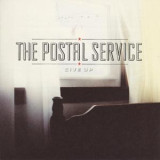
Nachdem 2013 zum 10-jährigen Jubiläum die Deluxe Version veröffentlicht wurde, ist ,Give Up" nun wieder als einfache LP im Original Format zu haben. Man kann alle Zeit und alles Geld der Welt darauf verwenden, das perfekte Pop-Szenario zu erschaffen, aber manchmal müssen sich die Sterne von ganz allein in die richtige Position rücken. Und obwohl die Mitglieder von THE POSTAL SERVICE schon früh darüber Witze machten, dass ,Such Great Heights" der ,Hit" ihres Debüalbums ,Give Up" sei, konnte niemand ahnen, was für einen Einfluss diese Album haben sollte, das in Schlafzimmern des Mittleren Westens konzipiert wurde. Über zehn Jahre sind ins Land gegangen, seit das kleine Projekt aus Ben Gibbard von DEATH CAB FOR CUTIE und Jimmy Tamborello (DNTEL, FIGURINE) scheinbar aus dem Nirgendwo anrauschte und sich tief in die Ohren all derer eingrub, die in Kontakt mit dem ansteckenden Electropop von THE POSTAL SERVICE geraten waren. Natürlich war die Musik von THE POSTAL SERVICE zu jeder Zeit viel mehr als nur Electropop. Die Kraft, mit der Jimmy und Ben den Zeitgeist des Indie Rocks der frühen Nuller Jahre heraufbeschworen, machte sie zu einem derartigen Phänomen, dass Künstler wie BEN FOLDS, AMANDA PALMER, STREETLIGHT MANIFESTO und CONFIDE ,Such Great Heights" gecovert haben. Ein Zeugnis des zauberhaften Funken und der melodischen Kompaktheit des Songs. Der Sound der Band ist ein derartiger Meilenstein, dass der Terminus ,Postal Service-esque" ein akzeptiertes Adjektiv in der Musikwelt ist. Es war unmöglich, vorherzusagen, wie groß ,Give Up" werden würde, aber schon 2003 war klar, dass diese Herren etwas ganz Besonderes erschaffen hatten.
Recommended If You Like: Boredoms, OOIOO, Blonde Redhead, Guerilla Toss, Rolling Stones, Liars, Marnie Stern, Yoko Ono, Battles. Cover by acclaimed photographer and artist Kunie Sugar White Vinyl / White Cassette available while stocks last. Did you know that miracles happen every day? We don’t always see it that way. We look at the state of the world and think, “It’ll be a miracle if we make it out alive.” But miracles are what humans do. We’re Earth’s most inventive and unpredictable species, when we’re allowed to be. Also the most destructive. Miracle-Level is Deerhoof’s mystical manifesto on creativity and trust. It celebrates the infinite small wonders of existence that spontaneously present themselves, when not obstructed by our death-driven masters. Musically, Miracle-Level is vulnerable, brave, and brimming with spicy surprises. Deerhoof’s 19th album is also their their first to be recorded and mixed in a recording studio. Production was entrusted to Mike Bridavsky, at No Fun Club in Winnipeg, Manitoba. This is also their first album written entirely in Satomi’s native language. Deerhoof once again speak in a secret code that only their fans understand, in which hooks abound, and genre is nonexistent.
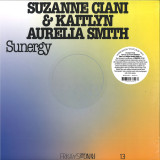
Sunergy brings together synthesists Kaitlyn Aurelia Smith and Suzanne Ciani for the thirteenth installment of FRKWYS, RVNG Intl.'s intergenerational collaboration series. For this edition, a panorama of the Pacific Coast provides the place and head space for a musical appreciation and consideration of a life-giving form vast and volatile with change. Fortuitously (as is the freaky way), Smith and Ciani were discovered to be neighbors in the small coastal community of Bolinas, California. The two had become close friends, bonding over their experience as woman musicians and, more unusually, their shared passion for the Buchla synthesizer. The music of Sunergy embraces this kinship, with Ciani and Smith respectively performing on the Buchla 200 E and the Buchla Music Easel, two modern configurations of the innovative instrument developed in the '60s by Don Buchla.
Sunergy was recorded in the Bolinas home where Ciani has lived for the last twenty-four years. Her living room overlooks the Pacific Ocean from a cliffside perch, creating an idyllic, inspired setting for music making. Setting up their synths side-by-side, Ciani and Smith took turns keeping time and freely improvising for the album sessions. As a complete piece, Sunergy is shaped by slow, pulsing forms and sinuous, melodic sequences that conjure both an oceanic world and the unlimited sound made possible by modular processing.For her part, Ciani has long been a Buchla voyager. Suzanne proselytized the potential of Don's synthesizer instruments in the '60s and '70s, performing her own compositions before introducing synthesized jingles and sound effects to household audiences. Ciani then achieved wide recognition for her debut album Seven Waves, a collection of colorful, classical song-like melodies fluidly working with harmonic textures and sounds of the ocean shore. Since its 1982 release, Seven Waves has become an important chapter of the ambient canon within which contemporary artists like Smith have developed their own synth syntax. Smith was born just a few years after the appearance of Seven Waves, growing up in Orcas Island, Washington. A place of profound natural beauty, the islands would inform Tides, her first instrumental collection from 2014. Smith composed Tides as an accompaniment for Yoga classes, ultimately freeing her from conventional songwriting into the exploratory, synth-based compositions demonstrated in ecstatic variety on 2016's Ears. Despite the serene setting where Sunergy was realized, the album does not romanticize a complete oneness with nature. Smith and Ciani use their collaborative ground to reflect on the unstable forces at play across the Bolinas horizon. Sunergy takes stock of Bolinas in the 21st century, a once-thriving artist's refuge now vulnerable to real estate pressure extending from affluent San Francisco, and more irreparably, the specter of climate change erasing its many waterfront habitats.
A diametric dynamic is present in Sunergy, a somber meditation amidst the intense cultural and solar forces transforming the landscape, and a hopeful assertion of the surviving creative culture of Bolinas. Far from rehashing the gentle grace of the artists' seminal works, Sunergy instead seeks to awaken and bear witness, employing the Buchla waveforms to mirror the infinite rhythms of the ocean and our essential relationship to it.
Kaitlyn Aurelia Smith and Suzanne Ciani's Sunergy will be released on September 16, 2016 on LP, CD, and digital formats. An accompanying documentary by Sean Hellfritsch will be offered in tandem.
out of Stock
Last delivered 3 years ago available to reorder, subject to availability
We’re all waiting for that tune to land in our lap, reach up and slap us simultaneously in the ears, feels, souls and feet. That big sonic blast of emotion and inspiration that sets the tone and gets us excited about a new season of shows.
Hard Times Records present ‘All I Need’, a powerful, slab of house music positivity that smacks of ‘first anthem of the year’ vibes and comes courtesy of one of house music’s biggest pioneers AND a certified UK House music institution that permanently changed the face of global club culture over 30 years ago... Steve ‘Silk’ Hurley and Hard Times.
Neither Hurley or Hard Times need any introductions, but both have histories that deserve so much more than this hype-fuelled promo blurb. Steve ‘Silk’ Hurley is a certified legend. As one of the pioneering House music artists to emerge from Chicago’s primordial 80s phenomenon and the first ever to score a UK number one Hit with ‘Jack Your Body’, the multiple Grammy nominated artist has been a powerful source of energy and inspiration ever since as one of the most consistent forefathers of this scene.
Hard Times have played an equally influential role and are arguably responsible for some of the most defining moments in uk House Music. One of the first club nights to import the US titans to UK dancefloors, the Yorkshire brand were instrumental in creating a blueprint in international DJ culture as they invited the biggest pioneers and legends to their events that began in the sleepy town of Mirfield, but eventually sprawled across the UK with line-ups that ranged from Todd Terry to Masters at Work to Deep Dish and every titan in between. A dominant force throughout the 90s, Hard Times wound down in the 2000s as its founder Steve Raine took a break from the industry to become a sheep farmer, which he still does to this day... Safe in the knowledge that he helped to create an ethos for uncompromising underground House Music that remains steadfast to this Day.
The Hard Times label originated back in 1994 And ran alongside the club night, boasting a small but elite catalogue. It’s about to thrive on a whole new level as Hard Times returns as a label with its first new material for over 20 years with ‘All I Need’.
Timeless yet forward-thinking, loaded to the brim with precision groovemanship, glazed with a strong Latin twist and sprinkled with the gorgeous vocals of Sara Garvey, who many will instantly recognise from her Nightmares On Wax collaborations, ‘All I Need’ is a pedigree house anthem-in-waiting. Universal in vibe and spirit, fully transcending trend or flavour-of-the-month fickleness, this taps into the source and has full potential to be the first big boundary-breaking house hit of 2023... 36 years after Steve ‘Silk’ Hurley topped the charts with ‘Jack Your Body’!
It comes complete with a rainbow of remixes from some equally eye-opening heavyweights: Alex Arnout, Eddie Leader, Terry Farley & Kevin Swain and DJ Skip (who runs S&S Records with ‘Hurley) all provide different perspectives on ‘All I Need’, giving it even more scope and depth to slap us simultaneously.
out of Stock
Last delivered 3 years ago available to reorder, subject to availability
Orange Vinyl
Kero & Steph’s landmark collaboration Syndrome now sees a sumptuous release on vinyl and evocative music video, spinning data into densely layered visual treats.
Steph’s coolly ethereal voice and poignant writing drift in harmonies atop the sliced-up, glitched, hard-hitting precision of Kero’s productions. The unforgettable directness of her compositional sense is here, as her long resume of scores and placements would suggest. It finds an urban-technological counterpart in Kero’s frenetic sounds. The DU label boss is in full force straight from the chilling post-pop of the opening titular cut. “Walk in the park” is a production masterwork, punchy organic percussion against grinding bass. “Who am I to complain” is at once arresting and vulnerable with vocals, but still packs an emotional gut-punch in the accompanying instrumental. “Count down from 7” is more stripped down and urgent, melodic hooks propelled by lo-fi rhythmic mechanism’s menace.
For the remixes, Oberman Knocks unleashes utter digital destruction - computer memory banks dropped through a wormhole. That thoroughly deconstructs Mtch into composite textures -- and opens “Walk in the Park” to near-unrecognizable, yet somehow danceable mayhem.
The new physical and motion elements find a visual language for these sonic strata of imagination and digital construction. From designer Christoph Grünberger, known for his tome The Age of Data: Embracing Algorithms in Art & Design, we get the packed outer sleeve and 2D design. These enshroud a calm-looking Steph in a Shibuya Crossing-style trip inside Defasten’s geometries, opposite a catalog of branching visualizations and glyphs.
Defasten, known for his live AV work fusing virtual reality and performance, here explodes faceted 3D cubes, in the cover and further in the music video. These pulsing crystalline hyper-geometries delve into data as expressive medium, shifting and vibrating with the glowing tones and crisp percussive hits of Kero and Steph’s composition. It’s a rare music video that matches the music in intricacy and form - a world that can only exist in virtual space, but that feels as immersively dreamy as the sound score.
“Sugar coated fabric … in braided covers” and “silver linings” were never so tempting.
out of Stock
Last delivered 3 years ago available to reorder, subject to availability
Sintering or frittage is the process of compacting and forming a solid mass of material by heat or pressure without melting it to the point of liquefaction. The material produced by sintering is called sinter. The word sinter comes from the Middle High German sinter, a cognate of English cinder.
Born in the mid-60s, German musician and sound designer Uwe Zahn came on the scene of electronic music with his debut full-length album for DIN, titled “Atol Scrap.” In the very same year of 2000, the influential City Centre Offices label has signed Arovane for his majestic “Tides,” which has withstood the test of time for over two decades now. Back then, electronic music was split between the dance floors and the bedroom listening, with the latter carrying the now-famous acronym for Intelligent Dance Music. And Zahn’s compositions were indeed just that – more than a gimmicky, knob-twisting, stuttering randomization of experimental rhythms and tone, Arovane’s music evoked real emotion which has assembled his followers from around the globe. But his arrival on the scene was more than a predictable trajectory. Zahn’s sound began to take shape in the late 80s when the cut-up hip-hop beats were layered with synthesizer pads and looped samples. This experimentation progressed into what the 90s coined as breakbeat and glitch.
As the 2000s rolled over, and the monumental imprints, such as Skam and Warp, honed their staple repertoire defining the future of electronic music, City Centre Offices had a staple of their own. Often referenced alongside Boards of Canada and Autechre, Arovane’s sound quickly gained a discerning audience, tuning into his melancholic melodies, advanced textures, and complex polyrhythms. The pinnacle of his production was released in 2004, when suddenly, on “Lilies,” Zahn signed off with the final track, which he has titled “Good Bye Forever.” And then there was silence. For nearly nine years, the scene and yours truly mourned the loss of Arovane, assuming that he’s given up. That is until, in 2013, Zahn came out with a brand new album, “Ve Palor,” on the surviving post-IDM imprint, n5MD.
While on hiatus, Uwe spent his time researching, reconnecting, and reflecting on all he’s built. The sound experiments went on, and so did the music scene, morphing, dissolving, re-shaping itself into a new form for new followers. During that time, Zahn spent some time with sound design, creating patches for Access Virus TI, as well as sample packs for various sound developers. After “Ve Palor,” Zahn began collaborating with various musicians from around the world, exploring, directing, and fusing their distinguished sound with his own. On his subsequent releases, he shared credits with ambient artists Porya Hatami, Hior Chronik, Darren McClure, and even yours truly. During our collaboration, Zahn often described the process of building a new vocabulary for our very own defined language, with which my piano spoke through sound.
With nearly two dozen studio releases under his belt, numerous EPs and singles, and just as many appearances on various compilations, Zahn continues to split his time between his fascination with sound design, sonic programming, and musical composition, which sees the light via his ongoing projects, releases, and contributions towards audio plug-ins, software synths, and sound sets for advanced hardware. It’s effortless to slot Zahn’s sound between the genres, scenes, and names, but very difficult to peel apart, define, and then express the essence using words. However, what is simple and essential for the ones who understand, is recognizing, admiring, and subsequently falling in love with all that is encompassing of Arovane. (by Mike Lazarev)
out of Stock
Last delivered 3 years ago available to reorder, subject to availability
Ukrainian folk instruments dissolve into abstract psychoactive sounds from the improvisational universe. The meditative engine of multi-instrumental music drives the magical means of influencing perception. This is the sonic amulet, which is decorated with radiant tones and the colorful ceremonial musical outline. Mythological music is spirited by epic historical times and ideas of freedom, dignity, and bravery. The acquired knowledge of ancient generations is infused into the present tense and crystallized into the art of liberation.
Transform pain into gratitude, fear into love, rage into action, self-importance into empathy, fatigue into inner peace, anxiety into courage, and hatred into strength. Say "no" to darkness and direct the light on it, disagree to compromise with yourself, create on the destroyed, free yourself from stipulations, believe in wonders, burn and resurrect free. Always remember your own path to walk. And plant the blossoming cherry tree in the funnel from the bomb on the heart.
Dedicated to free Ukraine.
out of Stock
Last delivered 3 years ago available to reorder, subject to availability
Eine der wichtigsten und wegweisenden deutschsprachigen Rock-Platten der 90er Jahre.
Dieses Album war und ist für viele Fans das Album des eigenwilligen Rockmusikers aus dem Ruhrgebiet schlechthin. Nach Jahren des Insider-Kult-Status katapultierten Songs wie "Dumpfbacke", "Wetterprophet", "So gemeint", "Tage wie dieser", "Wenn du weggehst" und viele andere mehr ihn in die Oberliga der deutschen Rockszene. "Der andere Rhythmus, die andere Phonetik der deutschen Sprache erfordert auch eine andere Spielweise von Rockmusik", war das erklärte Ziel von Stefan Stoppok als "Happy End im La-La-Land" 1992/93 im ICP-Studio in Brüssel aufgenommen wurde. Diese wunderbar lässige und beseelte Spielweise, in sich absolut stimmig und aus dem Bauch heraus, in der Kombination mit deutschen Texten, die lustvoll austesten, wie prickelnd das Spiel mit Sprache sein kann, zeichnet dieses Album aus. Erstmals 1993 veröffentlicht, war das Album eine der wichtigsten und wegweisenden deutschsprachigen Rock-Platten der 90er Jahre. Daran hat sich auch bis heute nichts geändert.
Jetzt, 30 Jahre danach, erscheint zum Jubiläum eine limitierte Doppel-Vinyl-Fassung, mit drei Outtakes aus der damaligen Studiosession und einer neuen, aktualisierten Version von "Denk da lieber nochmal drüber nach". Re-mastert von Dieter Krauthausen und auf orangenem Vinyl.
The incongruous, yet glorious, creative partnership between Nancy Sinatra and Lee Hazlewood was well underway when the two singular artists reunited to record 1972’s Nancy & Lee Again, a follow-up to their bestselling duet debut, Nancy & Lee. Nancy, the eldest daughter of Frank Sinatra, had been working with the Oklahoma-born songwriter since 1965, when she topped the pop charts with “These Boots Are Made For Walkin’.” Over the next five years, the two artists forged a prolific relationship in the studio, with Hazlewood writing and producing many of Nancy’s solo hits. Soon, the duo found success with a series of duets, including “Sand,” “Summer Wine,” and “Some Velvet Morning” – all of which appeared on their highly-influential 1968 debut.
Not long after the critical acclaim and chart success of Nancy & Lee died down, however, Hazlewood unexpectedly relocated to Sweden, leaving his musical partner in the proverbial dust. America, meanwhile, was in the midst of a cultural shift, as the Vietnam War waged on. By the turn of the decade, the musical landscape had changed significantly. “Trivial music and not profound music became unimportant,” recalls Nancy, speaking to Hunter Lea. “It was a tough time.” And yet, despite the circumstances, the stars somehow aligned for the duo to record some of their most magnificent music together.
Returning to Los Angeles for the project, Hazlewood – who reprised his role as producer – chose to take a new direction with the duo’s sophomore album. Nancy recalls, “It was more dramatic; it was more fun to do, more challenging to do…. It was more grandiose.” For the lush, orchestral arrangements, they collaborated with Larry Muhoberac (an original member of Elvis Presley’s TCB band, whose early ‘70s credits also included Barbra Streisand, Neil Diamond, and Lalo Schifrin) and Clark Gassman, who had worked on Hazlewood’s 1970 LP, Cowboy in Sweden. Backing vocals from brothers John and Tom Bahler, who remain two of the most recorded singers in history, added additional texture to several songs.
The big sound that Nancy describes above is exemplified in the album’s cinematic opener, “Arkansas Coal (Suite).” Clocking in at nearly six minutes long, the dynamic overture tells the tale of an ill-fated coal miner (sung by Hazlewood), while Nancy adjusts her vocals to sing as both the miner’s daughter and his wife. Hazlewood’s knack for vivid, nuanced storytelling shines throughout Nancy & Lee Again, particularly in “Paris Summer,” which details the conflict that a married woman faces, as she engages in a passionate affair. Another highlight is the country-inspired hit, “Did You Ever,” which was released as the album’s lead single. After it landed at No.2 on the U.K. pop charts, the song served as an alternate title track in several countries, including LP pressings in the U.K., Germany, and Canada.
One of the most emotionally-charged moments on Nancy & Lee Again is a cover of Dolly Parton’s “Down From Dover.” The heartbreaking tune tells the tale of a pregnant teenager, who has been abandoned by her lover and her family and ultimately gives birth to a stillborn baby. While Parton’s 1970 version was sung from the teenager’s point of view, Hazlewood and Sinatra transformed the country song into a duet. Hazlewood, who offers the man’s side of the story, sings in a notably deeper octave than his signature baritone.
Another poignant selection is “Congratulations,” which describes a soldier coming home from Vietnam. “His face has grown old and his eyes have grown cold/And they tell you of where he has been/Congratulations, you sure made a man out of him,” Hazlewood sings, pointedly. Nancy, who performs as the vet’s wife, argues that the song had a deeper meaning for her duet partner. “Lee started out a hawk, he was an army guy, so he was all for the war in the beginning. We didn’t talk about it, but at some point, he changed radically. ‘Congratulations’ was almost like an apology from him. I don’t want to put words in his mouth, but it was as though he was saying ‘I’m really sorry.’”
The song “Friendship Train” could also be interpreted as an apology of sorts – this time to Nancy. “You’ve been hurt and I’ve been hurt/Now we’re living pain,” the tune opens. When Hazlewood moved to Sweden without telling his longtime musical partner, Sinatra was understandably upset. “I felt pretty betrayed. I mean, who does that? Who just up and disappears like that? I’ll never understand it,” she reveals. But the uplifting duet – a slice of ‘70s pop perfection – offers reaffirming words of love between friends. “Lee felt things very deeply and tended to express his feelings in song instead of in real life,” explains Nancy.
The 10-track album closes with the stripped-down “Got It Together.” Backed by an acoustic guitar, the song is equal parts playful and candid, as the duo has an impromptu, spoken-word conversation about their lives. “I wish that we’d quit getting so old,” laments Nancy, who later shares her wish to have children (she would do so in the next few years). Hazlewood, meanwhile, attempts to remedy his past wrongdoings – this time asking his partner, “Can I go back to Sweden?” With that, Nancy gives her blessing.
This definitive reissue of Nancy & Lee Again also includes two bonus tracks. Both are stylistic departures for the duo – but fit right in with the psychedelic pop of the era. The first one, “Think I’m Coming Down,” is a harmony-filled reflection on a toxic relationship. “I think that was one of [Lee’s] drug things. I don’t mean that he used drugs; I mean that he was trying to be part of that culture. Trying to be hip,” explains Nancy, who delivers an emotive vocal performance on the solo track. Also included is “Machine Gun Kelly,” penned by a staple of the 70s singer-songwriter movement, Danny Kortchmar (James Taylor, Carole King, Linda Ronstadt). Recorded several months after the release of the album, the song found Nancy reuniting with Billy Strange, who arranged many of her solo albums, as well as Nancy & Lee. Sinatra and Hazlewood first performed “Machine Gun Kelly” during their residency at Las Vegas’ Riviera Hotel in February 1972 (later released as a concert documentary on Swedish television). While the recording has long remained a career favorite of Nancy’s, it would be decades before it was officially released.
Nancy & Lee Again remains a creative high point in the careers of Sinatra and Hazlewood and, upon its release, garnered rave reviews from Billboard, Record World, and Cash Box, among others. Yet, Nancy & Lee Again never received the spotlight it so utterly deserved. “We didn’t have label support at all in those days,” recalls Nancy. “Without the strength of a label, records die. We were old. We were old-fashioned. We were just not what was happening. It’s a very ageist kind of business.” Nevertheless, she adds, “I think it’s a very good album. I think it’s timeless.” Now, after years of being a sought-after rarity, this gem in the Sinatra-Hazlewood canon can finally get its due.
Five decades later, Nancy’s legacy only continues to grow, as new generations discover her impressive catalog (which boasts nearly 20 studio albums – her duets with Hazlewood among them – and dozens of charting singles, including the theme song to the 1967 James Bond film, You Only Live Twice). In 2020, Sinatra was recognized by her peers when “These Boots Are Made For Walkin’” was inducted into the GRAMMY® Hall of Fame. That same year, Sinatra partnered with Light in the Attic for Nancy Sinatra: Start Walkin’ 1965-1976, a definitive survey of her most prolific period. LITA has also reissued Sinatra’s classic debut, Boots, and her iconic, 1968 album with Lee Hazlewood, Nancy & Lee. The label looks forward to celebrating Nancy over the coming years with a variety of special releases, exclusive merchandise, and more.
The incongruous, yet glorious, creative partnership between Nancy Sinatra and Lee Hazlewood was well underway when the two singular artists reunited to record 1972’s Nancy & Lee Again, a follow-up to their bestselling duet debut, Nancy & Lee. Nancy, the eldest daughter of Frank Sinatra, had been working with the Oklahoma-born songwriter since 1965, when she topped the pop charts with “These Boots Are Made For Walkin’.” Over the next five years, the two artists forged a prolific relationship in the studio, with Hazlewood writing and producing many of Nancy’s solo hits. Soon, the duo found success with a series of duets, including “Sand,” “Summer Wine,” and “Some Velvet Morning” – all of which appeared on their highly-influential 1968 debut.
Not long after the critical acclaim and chart success of Nancy & Lee died down, however, Hazlewood unexpectedly relocated to Sweden, leaving his musical partner in the proverbial dust. America, meanwhile, was in the midst of a cultural shift, as the Vietnam War waged on. By the turn of the decade, the musical landscape had changed significantly. “Trivial music and not profound music became unimportant,” recalls Nancy, speaking to Hunter Lea. “It was a tough time.” And yet, despite the circumstances, the stars somehow aligned for the duo to record some of their most magnificent music together.
Returning to Los Angeles for the project, Hazlewood – who reprised his role as producer – chose to take a new direction with the duo’s sophomore album. Nancy recalls, “It was more dramatic; it was more fun to do, more challenging to do…. It was more grandiose.” For the lush, orchestral arrangements, they collaborated with Larry Muhoberac (an original member of Elvis Presley’s TCB band, whose early ‘70s credits also included Barbra Streisand, Neil Diamond, and Lalo Schifrin) and Clark Gassman, who had worked on Hazlewood’s 1970 LP, Cowboy in Sweden. Backing vocals from brothers John and Tom Bahler, who remain two of the most recorded singers in history, added additional texture to several songs.
The big sound that Nancy describes above is exemplified in the album’s cinematic opener, “Arkansas Coal (Suite).” Clocking in at nearly six minutes long, the dynamic overture tells the tale of an ill-fated coal miner (sung by Hazlewood), while Nancy adjusts her vocals to sing as both the miner’s daughter and his wife. Hazlewood’s knack for vivid, nuanced storytelling shines throughout Nancy & Lee Again, particularly in “Paris Summer,” which details the conflict that a married woman faces, as she engages in a passionate affair. Another highlight is the country-inspired hit, “Did You Ever,” which was released as the album’s lead single. After it landed at No.2 on the U.K. pop charts, the song served as an alternate title track in several countries, including LP pressings in the U.K., Germany, and Canada.
One of the most emotionally-charged moments on Nancy & Lee Again is a cover of Dolly Parton’s “Down From Dover.” The heartbreaking tune tells the tale of a pregnant teenager, who has been abandoned by her lover and her family and ultimately gives birth to a stillborn baby. While Parton’s 1970 version was sung from the teenager’s point of view, Hazlewood and Sinatra transformed the country song into a duet. Hazlewood, who offers the man’s side of the story, sings in a notably deeper octave than his signature baritone.
Another poignant selection is “Congratulations,” which describes a soldier coming home from Vietnam. “His face has grown old and his eyes have grown cold/And they tell you of where he has been/Congratulations, you sure made a man out of him,” Hazlewood sings, pointedly. Nancy, who performs as the vet’s wife, argues that the song had a deeper meaning for her duet partner. “Lee started out a hawk, he was an army guy, so he was all for the war in the beginning. We didn’t talk about it, but at some point, he changed radically. ‘Congratulations’ was almost like an apology from him. I don’t want to put words in his mouth, but it was as though he was saying ‘I’m really sorry.’”
The song “Friendship Train” could also be interpreted as an apology of sorts – this time to Nancy. “You’ve been hurt and I’ve been hurt/Now we’re living pain,” the tune opens. When Hazlewood moved to Sweden without telling his longtime musical partner, Sinatra was understandably upset. “I felt pretty betrayed. I mean, who does that? Who just up and disappears like that? I’ll never understand it,” she reveals. But the uplifting duet – a slice of ‘70s pop perfection – offers reaffirming words of love between friends. “Lee felt things very deeply and tended to express his feelings in song instead of in real life,” explains Nancy.
The 10-track album closes with the stripped-down “Got It Together.” Backed by an acoustic guitar, the song is equal parts playful and candid, as the duo has an impromptu, spoken-word conversation about their lives. “I wish that we’d quit getting so old,” laments Nancy, who later shares her wish to have children (she would do so in the next few years). Hazlewood, meanwhile, attempts to remedy his past wrongdoings – this time asking his partner, “Can I go back to Sweden?” With that, Nancy gives her blessing.
This definitive reissue of Nancy & Lee Again also includes two bonus tracks. Both are stylistic departures for the duo – but fit right in with the psychedelic pop of the era. The first one, “Think I’m Coming Down,” is a harmony-filled reflection on a toxic relationship. “I think that was one of Lee’s drug things. I don’t mean that he used drugs; I mean that he was trying to be part of that culture. Trying to be hip,” explains Nancy, who delivers an emotive vocal performance on the solo track. Also included is “Machine Gun Kelly,” penned by a staple of the 70s singer-songwriter movement, Danny Kortchmar (James Taylor, Carole King, Linda Ronstadt). Recorded several months after the release of the album, the song found Nancy reuniting with Billy Strange, who arranged many of her solo albums, as well as Nancy & Lee. Sinatra and Hazlewood first performed “Machine Gun Kelly” during their residency at Las Vegas’ Riviera Hotel in February 1972 (later released as a concert documentary on Swedish television). While the recording has long remained a career favorite of Nancy’s, it would be decades before it was officially released.
Nancy & Lee Again remains a creative high point in the careers of Sinatra and Hazlewood and, upon its release, garnered rave reviews from Billboard, Record World, and Cash Box, among others. Yet, Nancy & Lee Again never received the spotlight it so utterly deserved. “We didn’t have label support at all in those days,” recalls Nancy. “Without the strength of a label, records die. We were old. We were old-fashioned. We were just not what was happening. It’s a very ageist kind of business.” Nevertheless, she adds, “I think it’s a very good album. I think it’s timeless.” Now, after years of being a sought-after rarity, this gem in the Sinatra-Hazlewood canon can finally get its due.
Five decades later, Nancy’s legacy only continues to grow, as new generations discover her impressive catalog (which boasts nearly 20 studio albums – her duets with Hazlewood among them – and dozens of charting singles, including the theme song to the 1967 James Bond film, You Only Live Twice). In 2020, Sinatra was recognized by her peers when “These Boots Are Made For Walkin’” was inducted into the GRAMMY® Hall of Fame. That same year, Sinatra partnered with Light in the Attic for Nancy Sinatra: Start Walkin’ 1965-1976, a definitive survey of her most prolific period. LITA has also reissued Sinatra’s classic debut, Boots, and her iconic, 1968 album with Lee Hazlewood, Nancy & Lee. The label looks forward to celebrating Nancy over the coming years with a variety of special releases, exclusive merchandise, and more.
Big Red Balloon Swirl Edition! Light in the Attic Records is proud to present the next installment of the Nancy Sinatra Archival Series with the first ever reissue of the classic 1972 album Nancy & Lee Again. Recorded during a 1972 reunion between Nancy and the enigmatic Hazlewood, the album contains some of the pair's most enduring and ambitious duets including the epic "Arkansas Coal (Suite)," the sensual "Paris Summer" and the incredibly powerful Dolly Parton-penned "Down From Dover." Equal parts daring, psychedelic, cinematic, and sweet, Nancy & Lee Again reveals with each track a timeless, natural chemistry between two artists who would remain influential for generations to come. Nancy & Lee Again is available in a variety of formats, including vinyl and CD. The vinyl LP is presented in an expanded gatefold jacket and is accompanied by a 20-page booklet, featuring an array of photos from the legendary singer, actress, and activist's personal collection, as well as in-depth Q&A with Nancy Sinatra, conducted by the reissue's GRAMMYr-nominated co-producer, Hunter Lea (also available in the CD package). All formats have been beautifully designed by Darryl Norsen of D. Norsen Design, and include two bonus tracks, "Machine Gun Kelly" (first time on vinyl) and the previously unreleased "Think I'm Coming Down." Nancy, the eldest daughter of Frank Sinatra, had been working with the Oklahoma-born songwriter since 1965, when she topped the pop charts with "These Boots Are Made For Walkin'." Over the next five years, the two artists forged a prolific relationship in the studio, with Hazlewood writing and producing many of Nancy's solo hits. Soon, the duo found success with a series of duets, including "Sand," "Summer Wine," and "Some Velvet Morning" - all of which appeared on their highly-influential 1968 debut. Not long after the critical acclaim and chart success of Nancy & Lee died down, however, Hazlewood unexpectedly relocated to Sweden, leaving his musical partner in the proverbial dust. America, meanwhile, was in the midst of a cultural shift, as the Vietnam War waged on. By the turn of the decade, the musical landscape had changed significantly. "Trivial music and not profound music became unimportant," recalls Nancy, speaking to Hunter Lea. "It was a tough time." And yet, despite the circumstances, the stars somehow aligned for the duo to record some of their most magnificent music together. Returning to Los Angeles for the project, Hazlewood - who reprised his role as producer - chose to take a new direction with the duo's sophomore album. Nancy recalls, "It was more dramatic; it was more fun to do, more challenging to do_. It was more grandiose." Nancy & Lee Again remains a creative high point in the careers of Sinatra and Hazlewood and, upon its release, garnered rave reviews from Billboard, Record World, and Cash Box, among others. Yet, Nancy & Lee Again never received the spotlight it so utterly deserved. "We didn't have label support at all in those days," recalls Nancy. "Without the strength of a label, records die. We were old. We were old-fashioned. We were just not what was happening. It's a very ageist kind of business." Nevertheless, she adds, "I think it's a very good album. I think it's timeless." Now, after years of being a sought-after rarity, this gem in the Sinatra-Hazlewood canon can finally get its due.
Vor 42 Jahren im Jahr 1981 gegründet, ist Metallicas Karriere seitdem sowohl außergewöhnlich als auch brilliant. Zur Feier der Langlebigkeit der weltbekannten und beliebten US-Thrasher erscheint dieses atemberaubende und limitierte Live-Album nun als limitierte Picture-LP mit seltenen und raren Radio-Live-Aufnahmen inklusive den Hits Master Of Puppets, Battery und Fight Fire With Fire.
One more drop from the Switch label vaults - another killer UK disco-boogie gem from T.J. Johnson, originally released in in 1982 and recorded at the legendary Landsdowne Studios!
--------
"Switch Records was started by myself alongside Bill Campbell in the early eighties", says Aaron Harry - a library music producer who began using Lansdowne Studios in Holland Park for his productions on the renowned Bruton Music label. The studios had been operating there since the late 1950s, becoming the breeding ground for some key & early UK jazz and pop records (owner Adrian Kerridge teamed up with Joe Meek to lay down the first recordings there in 1958). It was here that Harry and engineer Chris Dibble started to work together as a regular team. After spending some time at the studio observing them in action, Kerridge and (Burton MD) Robin Phillps "recognised what a good team Chris and I had become" says Harry, "so, it was inevitable that I would also make pop music alongside Production Library Music."
The output of the relatively obscure Switch label is the result of this work, and Freestyle has licensed 3 of the most hard to come by 12"s as part of their series of rare & foundation UK funk & soul records. This one, Pretty Lady b/w Come On Let's Do It (Let's Rock) is provided by T.J. Johnson - a talented and seasoned guitar T.J. Johnson aka T.J. Bedeau is still working the gig circuit to this day. Jump on it!
out of Stock
Last delivered 3 years ago available to reorder, subject to availability
Der Bruch kam 2019 mit dem Album Putzlicht, mit dem sich Frevert nach fünf Jahren Pause neu erfand, das Korsett des Liedermachers abstreifte. Plötzlich war alles größer und druckvoller, als hätten The War On Drugs seine Schreibklause gestürmt. Pseudopoesie geht noch weiter – auch dank des neuen Produzenten Tim Tautorat (Faber, Provinz, Tristan Brusch). Freverts Lieder feuern nicht zum Durchhalten an, spenden keinen Trost, geben keinen Rat. Sie legen sanft den Finger auf die Wunde, da wo Träume verkümmern und Herzen verhärten, schieben dich sachte zur Tür und lassen dich da stehen mit dem Schlüssel in der Hand. Das ist große, zuweilen fast schmerzhaft schöne Popmusik, die das Leben und die Menschen ernst nimmt, aus Alltäglichkeiten das Drama unserer Existenz schält und neuerdings immer einen Ausweg bereithält: den radikalen Neuanfang, die Flucht in ein neues Leben, so als Idee. Aufgenommen mit der Live-Besetzung von Putzlicht ist es das erste Mal, dass seine Band zwischen zwei Alben komplett zusammenbleibt. Niels Frevert scheint angekommen zu sein: zwischen den Stühlen, auf der äußeren Umlaufbahn oder einfach nur auf dem Weg zum ewigen Weiter.
High Roller Records, black vinyl, ltd 250, 4 page insert, A5 photo card, All audio restored and mastered from vinyl and tape sources by Patrick W. Engel at TEMPLE OF DISHARMONY in October 2021. In den frühen achtziger Jahren war das Londoner East End eine der wichtigsten Keimzellen der glorreichen New Wave Of British Heavy Metal – man denke nur an Acts wie Iron Maiden oder Angel Witch. Das Ruskin Arms spielte für die Evolution der Bewegung eine nicht unwesentliche Rolle, waren es doch die legendären Probeauftritte jeden Donnerstagabend, die den hoffnungsvollsten Bands eine regelmäßige Anstellung im Ruskin sichern konnten. Teil dieser Szene waren auch Dragonfly, eine Gruppe von jungen Musikern, ohne Geld und ohne selbst auferlegte Grenzen, dafür aber mit unbändigem Enthusiasmus. Es dauerte nicht lange, bis die Band anfing, eigene Stücke zu schreiben und sich weit übers Ruskin hinaus einen Namen zu erspielen. Die Frage nach einem eigenen Vinyl wurde in der Folge immer dringlicher. Dieses wurde dann in Form der »Dragonfly E.P.« umgesetzt, eine Auswahl eigener Kompositionen, aufgenommen im Keller einer Zoohandlung ganz in der Nähe des Ruskin Arms. Die in Eigenregie gefertigte EP wurde in einer Auflage von 500 Stück gepresst, die Cover eigenhändig gefaltet sowie zusammengeklebt, und erschien im Jahre 1980. Die Qualität des Materials und das spielerische Können der Musiker machte die »Dragonfly E.P.« zu einer der substanzielleren Veröffentlichungen der NWOBHM, später wiederzuerkennen bei Bands wie Sapphire, Trilogy oder Terraplane. Das wieder erwachte Interesse an der NWOBHM trieb den Preis einer originalen Ausgabe der »Dragonfly E.P.« fortan in schwindelerregende Regionen und fachte zugleich das Interesse nach unveröffentlichtem Material des ausnahmslos in Originalbesetzung agierenden Quartetts an. Das vorliegende Album präsentiert alternative (ältere) Aufnahmen des Songmaterials der »Dragonfly E.P.« und sorgt dafür, dass Dragonfly endlich das breitere Publikum bekommen, das sie von Anfang an verdient gehabt hätten. Cleveres Songwriting, melodische Vocals und messerscharfe Gitarren sind die Schlüsselelemente ihres Sounds.
High Roller Records, black vinyl, ltd 250, 4 page insert, A5 photo card, All audio restored and mastered from vinyl and tape sources by Patrick W. Engel at TEMPLE OF DISHARMONY in October 2021. In den frühen achtziger Jahren war das Londoner East End eine der wichtigsten Keimzellen der glorreichen New Wave Of British Heavy Metal – man denke nur an Acts wie Iron Maiden oder Angel Witch. Das Ruskin Arms spielte für die Evolution der Bewegung eine nicht unwesentliche Rolle, waren es doch die legendären Probeauftritte jeden Donnerstagabend, die den hoffnungsvollsten Bands eine regelmäßige Anstellung im Ruskin sichern konnten. Teil dieser Szene waren auch Dragonfly, eine Gruppe von jungen Musikern, ohne Geld und ohne selbst auferlegte Grenzen, dafür aber mit unbändigem Enthusiasmus. Es dauerte nicht lange, bis die Band anfing, eigene Stücke zu schreiben und sich weit übers Ruskin hinaus einen Namen zu erspielen. Die Frage nach einem eigenen Vinyl wurde in der Folge immer dringlicher. Dieses wurde dann in Form der »Dragonfly E.P.« umgesetzt, eine Auswahl eigener Kompositionen, aufgenommen im Keller einer Zoohandlung ganz in der Nähe des Ruskin Arms. Die in Eigenregie gefertigte EP wurde in einer Auflage von 500 Stück gepresst, die Cover eigenhändig gefaltet sowie zusammengeklebt, und erschien im Jahre 1980. Die Qualität des Materials und das spielerische Können der Musiker machte die »Dragonfly E.P.« zu einer der substanzielleren Veröffentlichungen der NWOBHM, später wiederzuerkennen bei Bands wie Sapphire, Trilogy oder Terraplane. Das wieder erwachte Interesse an der NWOBHM trieb den Preis einer originalen Ausgabe der »Dragonfly E.P.« fortan in schwindelerregende Regionen und fachte zugleich das Interesse nach unveröffentlichtem Material des ausnahmslos in Originalbesetzung agierenden Quartetts an. Das vorliegende Album präsentiert alternative (ältere) Aufnahmen des Songmaterials der »Dragonfly E.P.« und sorgt dafür, dass Dragonfly endlich das breitere Publikum bekommen, das sie von Anfang an verdient gehabt hätten. Cleveres Songwriting, melodische Vocals und messerscharfe Gitarren sind die Schlüsselelemente ihres Sounds.
Third Pressing of Gilroy Mere's Adlestrop on blue vinyl with a blue cover.
Adlestrop is inspired by the remains of the rural railway stations, that were closed in the wake of the 1963 Beeching Report.
“This record started with Edward Thomas’s poem Adlestrop and a chance visit to the village that it takes its title from. I wanted to see the station, but found it was no longer there, all that remains is the old platform sign Adlestrop, now part of a local bus shelter. However as I walked around the village I was struck that; “all the birds of Oxfordshire and Gloucestershire” were still singing away - like ghosts from Thomas’ verse.
Visiting Adlestrop spurred me to get hold of a copy of the Beeching Report which, in Appendix 2, lists all the services and stations recommended for closure in the 1960s. The names read like an epic British poem, from halts to branch-line stops and stations and singular terminals for public schools, mines, ferries and even an asylum. There’s Ravenscar where a resort was planned but got no further in its construction than the station, and a hotel - the grid marked out for the roads never laid. Bethesda, a short branch line from Bangor up towards Snowdonia, was used for slate and passengers and is now just a quiet green valley, Christ’s Hospital on the old Cranleigh Line, opened with seven platforms to cope with the daily flood of pupils attending the famous school nearby which never came as it was a boarding school. Many of the stations have vanished, with just fields and car parks left in their place, some are repurposed as houses, or shops, or abandoned as artefacts of a lone-gone industrial past.
Armed with a digital recorder, and with a copy of Beechings Report as my guidebook I made notes and recordings on my travels around the country, and used them as the starting point for a set of pieces that try to capture the fading layers of history, in the areas where the stations had once stood making sure each track retains something of the real place within them. Back in my studio I reacted, improvised, and crafted musical responses to each station, trying to capture the ghosts and former lives of the stations and their imprint on the present.”
Gilroy Mere is Oliver Cherer who trading as Dollboy, Rhododendron, and Australian Testing Labs as well as his own name has meandered his way through the backwaters of left of centre English folk, ambient and electronic music, issuing numerous albums of original music to much critical acclaim via highly regarded boutique labels such as Static Caravan, Second Language, Deep Distance, Polytechnic Youth, and Awkward Formats.
The first of for the tone for his work for the company: Leon Russell Freddie King ’s Shelter label set ’s three albums
superb electric blues with a prominent rock/ soul influence. The massive Texan and the longhaired Oklahoman got it right the first time
around with the aptly titled Getting Ready LP. Recorded at the legendary Chess studios in Chicago, it might well rank as Freddie King’s most creatively satisfying work.
An array of styles is assembled here, ranging from deep Texas Blues to touches of country church Gospel and hard sockin’ funk. Also, Freddie delved deep into blues history to give his spin on some classic pieces of the genre. Elmore James’ “Dust My Broom” is done acoustically, with just Freddie and his Spanish guitar. The production on Jimmy Rogers’ “Walking by Myself” is equally low-fi, adding Russell’s honky-tonk piano ramblings and a tambourine.
Willie Dixon’s “Worried Life Blues”, however, features King at his most powerfully expressive on this electric blues. The fast-paced stomper includes lightnin’-fast solos from King and he can be heard duelling with the studio guitarist Don Preston, as well.
Das Warten hat ein Ende: Der legendäre Eric Clapton meldet sich mit einer bemerkenswerten neuen Veröffentlichung, ”The Lady In The Balcony: Lockdown Sessions” am 12. November zurück.
Auf den 17 Songs spielen Clapton und seine langjährigen Bandkollegen Nathan East (Bass und Gesang), Steve Gadd (Schlagzeug) und Chris Stainton (Keyboards) akustische Interpretationen von Claptons Klassikern und eine Auswahl anderer Nummern, die Blues, Country und seltene Eigenkompositionen umfassen.
Das Projekt wurde ins Leben gerufen, nachdem Eric Clapton seine für Mai 2021 geplanten Konzerte in der Royal Albert Hall absagen musste. Auf der Suche nach einer Alternative zog er sich mit seiner Band in die englische Landschaft zurück und inszenierte ein Konzert, bei dem nur die Teilnehmer selbst anwesend waren, während die Kameras liefen. Das Ergebnis ist weit mehr als nur eine Aneinanderreihung
der größten Hits. Vielmehr handelt es sich um eine der intimsten und authentischsten Darbietungen von Claptons gesamter Karriere, ein Angebot, das einen echten Einblick in die Zusammensetzung seines atemberaubenden Katalogs gewährt.
„The Lady In The Balcony: Lockdown Sessions” ist als CD, DVD, Blu-Ray und LP verfügbar .
Soreab – Sensitivity 6.0 Soreab debuts on Avian.
Dario Picchi, whose repertoire includes forays into Dancehall, Bass Music and genres less easily classified, alongside a spate of intriguing collaborations, keeps things sparse on Sensitivity 6.0. The six track EP offers up idiosyncratic takes on IDM, Techno and Ambient music with a focus on intricate sound design, showcasing the Baroque Sunburst label head’s admirable versatility as a producer.
Brazen opener Squirrel Stampede might surprise listeners expecting a more delicate approach from the EP title. Neatly layered and economic in its execution, it’s a forceful slice of modern Techno. Meditative follow up Trub marries a thick, undulating percussion line with a saccharine melody. Loose synths emerge sporadically from the sonic periphery, breaking up the rolling drum pattern to create a cinematic atmosphere. Closing out the A side is Giale Draws, an intriguing beatless piece with nods to both vintage Musique concrète and more contemporary compositions from the electronic music leftfield.
On the B side, Soreab ups the tempo and goes fathoms deep with the cavernous Dust Eater. Landing somewhere between Autonomic Drum & Bass and Dub Techno, it sets the tone for the dense… more
out of Stock
Last delivered 8 months ago available to reorder, subject to availability
Für The Source war es im Jahr 2005 das achtbeste Rapalbum aller Zeiten, für das Rolling Stone Magazin im Jahr 2020 Nummer 179 der 500 besten Alben aller Zeiten!
"Life After Death" hat mit seinen 24 Tracks als eines der wenigen Doppel-Rap-Alben der 90er einen wichtigen Beitrag dazu geleistet, zu zeigen, dass Rap-Produktionen umfangreich und dazu vielseitig sein können ohne qualitativ auf solch einer Länge nachzulassen. Neben klassischen Tracks im Stile trockener East Coast-Produktionen, sind hier auch Jiggy-Charthits wie "Hypnotize", "Mo' Money Mo' Problems" und "Sky Is The Limit" zu finden. Gerade letztgenannte Tracks brachten Biggie weltweit in die Radios und inspirierten junge Leute, die vorher wenig Rapmusik hörten, sich mit HipHop auseinanderzusetzen. Zu diesen jungen Leuten gehörte auf Haftbefehl, der gerade dieses Album in Interviews als für ihn wichtigen Einfluss nannte. Dass Biggie kurz vor Release des Albums wirklich erschossen wurde, trägt zum Status dieses Albums bei.
Did you know that there's a tunnel under Ocean Blvd is the ninth studio album from acclaimed singer-songwriter Lana Del Rey, comprising 16 tracks and interludes with features including Father John Misty, Tommy Genesis, Jon Batiste, Bleachers and more. It follows the prolific artist's 2021 albums Chemtrails Over The Country Club and Blue Banisters. Standard heavyweight black double vinyl in gatefold sleeve.
out of Stock
Last delivered 3 years ago available to reorder, subject to availability
Mit Album Nummer vier sollten MARIANAS REST nun endgültig auf dem Radar jedes Melodic Death- und Extreme Doom Metal-Fans landen. Die Band stammt aus der Küstenstadt Kotka, ihr Sound verkörpert finnische Melancholie und Traurigkeit einer kalten, rauen Winterlandschaft in Perfektion.
Am 24. März 2023 erscheint ihr neuestes Werk „Auer“ über Napalm Records, welches mit einer intensiven Mischung aus melodischem Death Metal und tief schwarzen Doom- und Black Metal-Elementen alle Erwartungen übertrifft!
Der Sixtett rund um Sänger Jaakko Mäntymaa und Omnium Gatherum‘s Aapo Koivisto am Keyboard wurde 2013 gegründet.
Mit der Veröffentlichung ihres beeindruckenden Debüts „Horror Vacui“ im Jahr 2016 eroberten sie die Underground Metal Szene im Sturm.
Pünktlich zu ihrem 10-jährigen Bandjubiläum entfesseln MARIANAS REST acht neue Tracks, die vielschichtiger nicht sein könnten. „Auer“ ist episch, schwer, traurig und düster; die insgesamt melancholischen jedoch brutalen Riffs, hypnotisierenden Klangfarben und eindringlichen Vocals dringen bis ins tiefste Mark.
„Auer“ ist eine Reise durch eine verstörend kalte und doch atemberaubend schöne, erhabene Klanglandschaft, wie sie nur eine finnische Band wie MARIANAS REST erschaffen kann.
Ohne Zweifel wird „Auer“ den Namen MARIANAS REST als eine der fesselndsten und außergewöhnlichsten Melodic Death- und Blackened Doom Metal- Bands etablieren!
out of Stock
Last delivered 3 years ago available to reorder, subject to availability
Das Warten hat ein Ende: Der legendäre Eric Clapton meldet sich mit einer bemerkenswerten neuen Veröffentlichung, ”The Lady In The Balcony: Lockdown Sessions” am 12. November zurück.
Auf den 17 Songs spielen Clapton und seine langjährigen Bandkollegen Nathan East (Bass und Gesang), Steve Gadd (Schlagzeug) und Chris Stainton (Keyboards) akustische Interpretationen von Claptons Klassikern und eine Auswahl anderer Nummern, die Blues, Country und seltene Eigenkompositionen umfassen.
Das Projekt wurde ins Leben gerufen, nachdem Eric Clapton seine für Mai 2021 geplanten Konzerte in der Royal Albert Hall absagen musste. Auf der Suche nach einer Alternative zog er sich mit seiner Band in die englische Landschaft zurück und inszenierte ein Konzert, bei dem nur die Teilnehmer selbst anwesend waren, während die Kameras liefen. Das Ergebnis ist weit mehr als nur eine Aneinanderreihung
der größten Hits. Vielmehr handelt es sich um eine der intimsten und authentischsten Darbietungen von Claptons gesamter Karriere, ein Angebot, das einen echten Einblick in die Zusammensetzung seines atemberaubenden Katalogs gewährt.
„The Lady In The Balcony: Lockdown Sessions” ist als CD, DVD, Blu-Ray und LP verfügbar .
out of Stock
Last delivered 3 years ago available to reorder, subject to availability
Am 24.03. veröffentlicht der internationale Superstar Bella Poarch ihre mit Spannung erwartete Debüt-EP "Dolls" auf Vinyl.
Bella trat Anfang 2021 zum ersten Mal in die Musikszene ein, als sie ihre Debütsingle "Build a Bitch" veröffentlichte.
Das Musikvideo zum Song landete auf Platz 1 der globalen und US-amerikanischen YouTube-Videocharts und markierte mit bisher über 410 Millionen Aufrufen das bisher größte Debüt für einen neuen Künstler.
Die Platin-Single nähert sich schnell einer Milliarde globaler Streams.
Bella Poarch ist eine philippinisch-amerikanische Sängerin und Songwriterin, die als Teenager beim Militär gedient hat und seit ihrem Ausbruch auf TikTok im Jahr 2020 schnell aufgestiegen ist.
Ihr Video "M to the B" erreichte 50 Millionen Likes auf TikTok. Mit TikToks beliebtestem Video aller Zeiten ist Bella die Nummer 3 der YouTuber mit den meisten Followern auf der Plattform und die Nummer 1 der asiatisch-amerikanischen Influencer der Welt mit mehr als 90 Millionen Followern.
out of Stock
Last delivered 3 years ago available to reorder, subject to availability
Creating an introverted version of restrained electronic music Berlin-based artist Constantijn Lange releases his second album 'Liquide' on Heimlich Musik. The album is based on sketches created in isolation during the second pandemic year. The compositions are characterized by self-reflection and an attempt to translate the abstract experience of listening to oneself into a concrete form. The sound of personal isolation, the necessary withdrawal from the world and the restriction of all social contacts is, therefore, less club oriented and focused on functionality than an expressive concept of ideas, rather oriented on Trip Hop, Breakbeat, Ambient and Jazz. The collective rediscovery of shared experience results in arrangements of melancholic but optimistic melodies recorded with vintage synthesizers, supported by complex drum patterns and diverse percussions that create a signature sound as a new liquid amalgam.
Constantijn Lange is an electronic music composer originally from Ostfriesland now based in Berlin. Besides several releases on Laut & Luise since the early days, his productions appear on labels like Get Physical, Traum Schallplatten, Sinnbus, Platon Records, Egoplanet
and many more.
His passion for thick layered synth melodies, jazzy and kraut – like vibes, atmosphere recordings, deep basslines and selfmade percussion designs give his music a recognizable vibe which can be heard on nearly every production he was involved in so far. He spends a lot of time in his studio in Berlin, working on new music, remixing other artists and also engineering for other sound projects in the art scene. On top of that, he performs as a liveact in clubs and on festivals all over the planet where his music can be described as very emotional and personal. Repeatedly this amazed people in countries like Germany, Russia, Poland, Switzerland, South Africa, Austria, Belgium, Mexico and
many more.
Constantijn’s ambition as an artist is to constantly evolve his productions and create music
which carries emotions and energies into the clubs, to festivals and living rooms alike.
out of Stock
Last delivered 3 years ago available to reorder, subject to availability
Veils Of Transformation 1972 - 1980 is a collection of the earliest works of Gregory Kramer, one of the 20th century masters of textural electronic music. This collection is available on CD and cassette with liner notes from Gregory Kramer and Kaitlyn Aurelia Smith, who first brought this fascinating work to the attention of Important Records.
“Greg is one of the pioneers of electronic music and these pieces are unique opportunities to discover how intricate and dynamic early synthesizers are.” Kaitlyn Aurelia Smith
Kramer developed a musical language focused on continuous transformation of timbre, yielding a continuity of attention. This musical language, formed of timbral change, is a compelling aesthetic in its own right and a source of meditative experience. The four works on this album share a deep sense of order derived not from organizing pitches or rhythms, but from the evolution of timbre itself.
Gregory Kramer (b. 1952) is a pioneering electronic composer, inventor, researcher, teacher and author. In 1975 he co-founded Electronic Musicmobile, a synthesizer ensemble later renamed Electronic Musicmobile, a series of synthesizer concerts in New York from which he formed the Electronic Art Ensemble, a highly regarded all electronic quartet. His work extended to developing synthesizers and related equipment. Kramer also co-founded the not-for-profit arts organization Harvestworks in New York City. He is recognized as the founding figure of the intensely cross-disciplinary field of data sonification. Since 1980, Kramer teaches Buddhist meditation.
The four compositions collected here each represent Kramer’s unique approaches:
The structure of Meditations on 32 Parts of the Body (1978) is derived from the means of its production. Recording 5 people chanting an ancient meditation text, then layering to gradually achieve more than one million voices. The layering was all done using analogue tape recorders. The decomposition of the sound reflects the anomalies of tape machines out of sync, and the build up of artifacts from the audio tape itself, such as uneven response curves and tape hiss, are all engaged as musical materials.
Role (1972) was generated using one complex patch on a large hybrid Buchla 200/100 system. Emerging from a zeitgeist that valued pure synthesis as a combined artistic and technological research. At the time this piece was realized its as exceedingly difficult to produce electronic sounds that were internally complex.
Blue Wave (1980) is built on Kramer’s timbral development technique Veils Of Transformation which allows for disparate timbres to be woven into a continuously developing sound.
Monologue (1977) is a virtuosic performance of a massive patch on a Buchla/Electron Farm hybrid electronic instrument. Built into the patch is a pathway for continuous transformation of voice and voltage-controlled synthesizer. The blunt, raw and sometimes harsh sounds of this piece reflect an attitude prominent among composers that music can, or even should, be difficult, contrary to what’s already been done and, by all means, new.
For the last 12 years audiences have scrambled to get seats at
venues whenever celebrated American tenor saxophonist Mark Turner toured with Danish guitarist Mikkel Ploug's quartet.
The bond between the musicians becomes especially evident when
they explore their shared musical language, which seamlessly blends composed and improvised material.
On Nocturnes Ploug presents new original compositions and fresh
interpretations of inspiring source material by Danish composers
Bent Sorensen and Carl Nielsen.
Mikkel Ploug - guitar;
Mark Turner - tenor sax; Jeppe
Skovbakke - double bass;
Sean Carpio - drums.
A limited edition 180g vinyl release.
Sacramento, CA duo Blank Gloss’s third album, Cornered, is an exquisite statement of pop ambient starkness, an album that oscillates between lush beauty and spare melancholy. It follows from their 2021 debut for Kompakt, Melt, an album that saw Morgan Fox (piano, synths) and Patrick Hills (guitar) aligned, loosely, with the cosmic pastorale of the ‘ambient Americana’ movement. Cornered feels like a significant step forward, though – by peeling back the layers of their music, they’ve revealed both its restful core and its solemn gravitas. It is unendingly lovely, but with something disquieting at its centre.
Cornered was recorded quickly, over two days in December 2020. There’s nothing rushed or haphazard about the album, though; everything has its place, with each sonic element contributing profoundly to these nine miniature dioramas. It signals change, quietly but perceptibly, through the way the duo sculpts their material, building out of loose improvisations that morphed into songs. While there was no plan in mind when Blank Gloss settled into the studio, Fox recalls that “right away we realised that things were sounding and feeling a bit different than any of the sessions we had previously.”
That difference can be heard in the increased amount of space Blank Gloss gift to their sound sources. Some of the most moving moments on Cornered come when Fox and Hills strip everything back – see, for example, “Crossing”, which sets pensive piano across a shyly humming drone and quiet arcs of guitar, recalling the driftworks of Roger Eno. Curiously, the album’s distinctive shape and mood develops, at least in part, from a change in instrumentation, with Hills using a MIDI pick-up on his guitar. “This resulted in making things happen a lot quicker,” Fox says. “It also helped create what I think is a bit more sombre, dark feeling to some of the songs.”
Elsewhere, on songs like “Salt”, the piano tussles with flecks of guitar, single tones sent out to mingle with the stars, like Morricone at 16 RPM, while Cornered’s centrepiece, the eleven-minute “No Appetite”, lets long arcs of electronic texture breathe and sigh, tangling together in a cat’s cradle of bliss. Throughout, it feels as though the music is blossoming as you hear it, like watching time-lapse footage of flora in bloom. But perhaps the most seductive thing about Cornered is the sense you get, listening, that the music was something unexpected, a visitation. “It almost felt like we weren’t dictating where the music went and how it sounded,” Fox agrees. “We were just there in a room together in December and these sounds were happening, and we were lucky enough to be recording the process.”
Cornered, das dritte Album des kalifornischen Duos Blank Gloss aus Sacramento, ist ein exquisites Statement von pop ambienter Krassheit, ein Album, das zwischen üppiger Schönheit und sparsamer Melancholie oszilliert. Es folgt ihrem 2021er Debüt für Kompakt, Melt, einem Album, auf dem sich Morgan Fox (Klavier, Synthesizer) und Patrick Hills (Gitarre) locker an der kosmischen Pastorale der „Ambient Americana“-Bewegung ausrichteten. Cornered fühlt sich jedoch wie ein bedeutender Schritt nach vorne an – indem sie die Schichten ihrer Musik abschälen, haben sie sowohl ihren ruhigen Kern als auch ihre feierliche Schwere offenbart. Es ist unendlich schön, aber mit etwas Beunruhigendem in seiner Mitte.
Cornered wurde relativ schnell aufgenommen, über zwei Tage im Dezember 2020. Es klingt jedoch nichts überstürzt oder willkürlich an diesem Album; alles hat seinen Platz, wobei jedes Klangelement einen wesentlichen Beitrag zu diesen neun Miniaturdioramen leistet. Es signalisiert Veränderung, leise, aber wahrnehmbar, durch die Art und Weise, wie das Duo sein Material formt und aus losen Improvisationen aufbaut, die sich in Songs verwandeln. Als Blank Gloss sich im Studio niederließen, gab es zwar keinen Plan, aber Fox erinnert sich: „Uns war sofort klar, dass sich die Dinge etwas anders anhörten und anfühlten als bei allen vorherigen Sessions.“
Dieser Unterschied ist in der größeren Menge an Raum zu hören, die Blank Gloss ihren Klangquellen bietet. Einige der bewegendsten Momente auf Cornered kommen, wenn Fox und Hills alles zurücknehmen – siehe zum Beispiel „Crossing“, wo ein nachdenkliches Klavier über einen schüchtern summenden Drone und leise Gitarrenloops setzt und an die Driftworks von Roger Eno erinnert. Seltsamerweise entwickelt sich die unverwechselbare Form und Stimmung des Albums zumindest teilweise aus einer Änderung der Instrumentierung, bei der Hills einen MIDI-Tonabnehmer an seiner Gitarre verwendet. „Dies führte dazu, dass die Dinge viel schneller abliefen“, sagt Fox. „Es hat auch dazu beigetragen, einigen der Songs ein etwas düstereres, dunkleres Gefühl zu verleihen.“ An anderer Stelle, bei Songs wie „Salt“, spielt das Klavier mit Gitarrenfetzen, einzelne Töne werden ausgesandt, um sich mit den Sternen zu vermischen, wie Morricone bei 16 U/min, während Cornereds Herzstück, das elfminütige „No Appetite“, lange Bögen schlägt, elektronische Texturen atmet und seufzt, um sich in einem Katzenkörbchen der Glückseligkeit zu verheddern. Während des Hörens fühlt es sich an, als ob die Musik blüht, als würde man sich Zeitrafferaufnahmen von blühenden Pflanzen ansehen. Aber das Verführerischste an Cornered ist vielleicht das Gefühl, das man beim Zuhören bekommt, dass die Musik etwas Unerwartetes war, eine Heimsuchung. „Es fühlte sich fast so an, als hätten WIR nicht diktiert, wohin die Musik geht und wie sie klingt“, stimmt Fox zu. „Wir waren just im Dezember zusammen in einem Raum, als diese Geräusche passierten, und wir hatten das Glück, dass die Aufnahme mitlief.”
out of Stock
Last delivered 17 months ago available to reorder, subject to availability
The Schnitzelbeat goes on ..... und wir finden uns am Übergang zweier Jahrzehnte wieder. Woodstock hat gerade das offizielle Ende des Summer Of Love besiegelt, die Beatles befinden sich im Stadium des Zerfalls und The Stooges läuten mit unbarmherzigem Lärm ein neues Zeitalter ein. Zurück in Österreich ... die Stadt Wien dämmert weiterhin selig im bornierten Mief der Nachkriegszeit. Gelegentlich weht der Wind den Klang einer Ziehharmonika und eines Jodlers vom Land in Richtung Stephansdom. Die eingeweihten Hörer der Schnitzelbeat-Serie ahnen es allerdings bereits: da war noch etwas Anderes, etwas Wildes, Ungutes, ein dröhnender Faustschlag in die hornbebrillten Gesichter der Spießbürger. Doch wer hätte gedacht, dass die gelungenste Annäherung an den Proto-Punk der Blue Cheer oder MC5 ausgerechnet auf dem Volksmusiklabel Alpenton erscheint? (Albatross, "I am dead"). Da fährt schon ein Aufschrei des Entsetzens aus der Lederhose. Und ein Lächeln puren Glücks in die Gesichter aufgeklärter Fans obskurer Rockmusik. Auch The Seals erweisen sich 1969 als würdige Kämpfer im Krieg der Generationen: "You know nothing about the new generation / because you live in the U-Bahn-Station" stellen die Psychedelic-Punks aus Wien interessanterweise in ihrer Nummer "Stop this War" fest. Und auch sonst ist der Krieg ein geläufiges Thema: der 2. Weltkrieg (The Cop Stigh, "War History"); der Vietnamkrieg (Maybe Hair, "War"); der Krieg der Geschlechter (Young Society, "It's War"). Doch was wäre die Zeit der Hippies und Kommunarden ohne freie Liebe, Blumenarrangements und von allerlei Substanzen unterstützte Ausnahmezustände? "Nicht auf die Blumen in dem Haar, auf euer Herz kommt es an / denn Liebe nur allein alles ändern kann" singt die Casting-Boyband The Wallflowers, aufs trefflichste begleitet von einem Kinderchor, der leider nicht immer ganz textsicher ist. Die Aussage an sich würden aber sicher auch The V-Rangers unterschreiben ("Make Love"). Oder Hannes, Erich, Peter und Arno von der Salzburger Beatband Les Marquis, die einen Westcoast-Liebestraum an den Stränden des Salzkammerguts lebendig werden lassen ("Sand on the Shore"). Zur Halbzeit von Schnitzelbeat Vol. 3 wird ein unvergesslicher Höhepunkt gereicht. 1973 veröffentlicht Rocky F. Holicke die ultimative psychedelische Hymne aus heimischer Produktion: "Ready for Take Off" ist ein unbeschreibliches Monument eines Songs, eine wahrhaft überirdische Erfahrung musikalischer Transzendenz. Wenn es schon über die Wolken geht, dann bitte so, Herr Reinhard Mey. Und natürlich auf Holickes eigenem Label, Aero-Sound. Wo sonst? Während Hide & Seek auf den Spuren von Cream wandeln und ebenfalls von jeder Flugangst befreit durch den Orbit segeln ("I can fly"), blasen aus den Triebwerken von Karl Ratzers Gitarre längst sengend heiße "White Flames". Der legendäre Musiker und Frontmann der Charles Ryders Corporation ist nicht nur einer der besten Jazzgitarristen die Österreich je hatte - er nimmt es auch mit James Marshall Hendrix auf, wenn alle Effektpedale bis zum Bühnenboden durchgedrückt sind. Etwa zur selben Zeit findet sich eine oberösterreichische Ministrantenband - heimlich, nächtens - am Wochenende im Musikzimmer einer Mühlviertler Volksschule ein. Und nimmt dort eine brandgefährliche Granate hochexplosiven, psychedelischen Garagenpunks auf. Mit mehr Fuzz, Wah-Wah, Echo und Farfisa-Orgel als selbst der Leibhaftige persönlich erlaubt hat (The Hush, "Giny"). Und dies ist nicht die einzige weithin unbekannte Super-Rarität, die der Archivar, Subkulturforscher und Rare-Track-DJ Al Bird Sputnik und sein Team von den Trash Rock Archives zusammengetragen haben: die verschollene erste Single von Novaks Kapelle erscheint hier erstmals in einer komplett restaurierten Version, ohne Nadelhüpfen und mit relativ wenigen lästigen Nebengeräuschen ("Garbage Man"). Von den lediglich 10 angefertigten Exemplaren der einzigen Platte der Austrian Brothers ("Brother") konnte die einzige Kopie ohne Pressfehler aufgetrieben werden. Und um endlich der 7" von The Cop Stigh habhaft zu werden, musste sogar jemand sein letztes Hemd verkaufen und die Hose bis zu den Knöcheln runterlassen. Aber "All right", um es mit den Worten der steirischen Acid-Rocker Generation 2000 zu sagen: es hat sich ausgezahlt. Schnitzelbeat Vol. 3 fügt der vergessenen Frühgeschichte der österreichischen Rockmusik wieder zahlreiche faszinierende Kapitel hinzu. Begeben Sie sich mit Al Bird Sputnik und den Labels Konkord und Digatone auf eine weitere Reise in die Tiefen wohlsortierter Plattenkisten und pilgern Sie vor einem Himmel voller Schwedenbomben und Mannerschnitten über Gebirge verzerrter Gitarren in die entlegensten Regionen der österreichischen Popkultur. NOVAK