Concocted in a share house in the South of Brisbane in the mid-80s, a small collective of well-acquainted musicians including Jon Anderson, Rainer Guth, Gary McFeat & Rod Owen gathered to compose film soundtracks, music for pictures, therefore ‘Picture Music’. To this end, a ‘spec’ tape of Picture Music recordings would be produced to give to potential clients and or sold to local stores. A distinct album comprising a collection of ambient, minimal-jazz and experimental music.
If there is a red thread running through the Picture Music album, it is its "late night" ambience. The wrath of the sub-tropical summer heat of Brisbane is not kind on electronic equipment, which would crash regularly by day. So, all recording was done in the relative cool of the late evening, in a room only dimly lit by lamp and candle. The Picture Music collective would make music and party all through the night, departing around sunrise. They would sleep through the heat of the day, only to return in the evening for more of the same.
This 2021 reissue of their self-titled 1987 cassette, was taken from the original master tapes and remains an evocative representation of the music that resulted from the late-night, dimly-lit, atmospheric-enabled environment, that sparked the creativity of a group of like-minded friends in a tiny corner of Brisbane. Dedicated to the memory Rainer Guth.
out of Stock
Last delivered 2 years ago available to reorder, subject to availability
Dana Kelley, aka DKMA, is a much revered writer, producer, remixer, performer and creative force whose releases have become timeless classics and Holy Grails amongst DJs, music heads and collectors alike. A true artist and innovator, his productions possess the unique ability to engage, transport, challenge and enthral as only next level musicians can.
Grounded in the deep, soulful US House sound of the mid '90's, his earliest releases can be found on Strictly Rhythm, before moving on to produce under his DKMA alias as well as releasing music as Callisto on Guidance. Although Dana sadly passed away in 2013, he left us with a remarkable body of work that has remained both exciting and relevant throughout the last 2 decades and beyond.
Boston Boy Vol.2 is the 2nd in a series of compilations that focuses on Dana's visionary work as DKMA, during his most compelling and creative phase between 1997 and 2002. The compilations themselves are collated from an incredible & far reaching archive of over 20 of Dana's original DATs that have been generously shared with us by the Kelley Family. In the archive, some of Dana's most sought after & cherished works were uncovered, restored and meticulously assembled alongside previously unheard archival material.
The tracks themselves are bold, clever and inventive, characterised by a need for innovation. Passages of deep soulful house underpin more forward thinking electronics without ever losing dance floor appeal. Jazz solos sit imaginatively on top of gritty swinging rhythms, deep infectious b-lines, eerie textures and chord sequences are warm and effortlessly soulful yet with a sound design, sonic range, dynamism and a technical prowess that most could only dream of.
These compilations celebrate the life, vision and art of one of house music's most hallowed producers. Unique and essential, these collections pull together DKMA's most coveted works. Respectfully sourced, restored and compiled from all audio sources courtesy of the Kelley family and Above Board Projects.
Mastered by Frank Merritt at The Carvery, London, with special artwork by Atelier Surplus featuring a special unseen image of Dana from his family's photo albums.
out of Stock
Last delivered 38 days ago available to reorder, subject to availability
‘Jim, I’m Still Here’ is the second album from James Righton under his own name; produced by David & Stephen Dewaele of Soulwax and released on their label DEEWEE, the album follows The Performer released in 2020. James’ musical past is well documented; as the frontman of the genre inventing Klaxons, he helped create a revolution in British music and spawned a youth subculture. ‘Jim, I’m Still Here’ is a captivating meditation on the artists experience of the pandemic as James looks to conceptualize the myriad of emotions and events into a fascinating third person narrative. One of the album tracks features Benny Andersson from Swedish pop legendary band ABBA, with whom James has been working on putting together their new live band.
"I wrote this record during the first few months of the pandemic. At the time I wasn’t intending to make any music. I’d just released ‘The Performer’ on what turned out to be the first week of lockdown. The outside world shut down and I was busy being Dad. Then. I started making notes on my phone. Just words. In moments stolen from family life I’d head downstairs to my garage studio and put the words to music. When I was happy with a song I’d send it to Dave and Stef. Demos and Pro Tools sessions were passed back and forth between my home studio and the Deewee studio in Ghent. I was nervous about their response to the music I was making. It was personal, raw: unlike anything I’d ever written before. A conversation with the outside world during these times of isolation. For the most part my life was centred on the domestic. Getting to spend so much time with my family was a blessing. Making music was my play time. Isolation opened me to memories and allowed me to dream of the future. As the outside world tried to adapt to the pandemic I was asked more and more to promote ‘The Performer’ in live stream concerts on various platforms. As the pandemic went on, demands on production increased (more camera angles, better lighting, higher quality audio recordings). It became a one man show. I’d head downstairs to my garage, put on my Gucci suit, comb my hair and become someone else. Jim. Jim the deluded rock star, living out his fantasies from the confines of his garage. A lonely stardom. And yet, Jim was part me. He made me feel like I still existed. Jim became the centre of the new album. Dave, Stef and I worked into the sessions over the following months. It was always exciting to see where they would take my initial demos. The working method and the restrictions of making music together but in separate spaces, separate countries shaped the sound and feel of the record.
I won’t make another record like this again”.James/Jim
out of Stock
Last delivered 4 years ago available to reorder, subject to availability
Hot Creations welcome back Fabio Neural and DJ Fronter who join forces once again for their second release on the label titled Ding Dong. Following on from their success with the first release, the eagerly anticipated second drops in May.
The title track opens proceedings, plunging straight into a heavy 4x4 beat, creating a stripped back, minimalistic base, expertly layered with finely chopped vocals. Foghorn like sounds and sharp percussion bring the piece together, resulting in a raw, industrial experience. Shocked follows, encapsulating the Hot Creations sound in true style, packed full of energy. Riveting bass lines paired with fanfare-esque melodies lay at the forefront of the track, transporting the listener to a bustling, colourful dancefloor.
Fabio Neural threw himself into the music industry at an early age. His productions have seen him release on Steve Lawler's Viva Music and feature in Pete Tong’s 500th Essential Mix. His eclectic DJ sets have enabled him to share the stage with heavyweights such as Carl Cox, Richie Hawtin and Adam Beyer. Colombian native DJ Fronter has become one of the greatest promises to come out of South America with releases being supported the likes of Paco Osuna, DJ Sneak and Matthias Tanzmann.
out of Stock
Last delivered 3 years ago available to reorder, subject to availability
“Babygirl” is the new album by CTM out on Posh Isolation. In its composition channels a sensuous consciousness. The music is like a prism reflecting tactile perceptions, light, movements and memories. Relations between the composed structures and the undetermined of the improvisations, the cracks in the form and the digital glitches, create a poetic and open elsewhere. With a sensibility of pop, the musical landscape moves from nostalgic popballads through the austere pomp of a deconstructed baroque menuet for solo cello, to lingering piano ornamentations and distorted guitars. There is a soft and wild intimacy to the music. Common collective musical languages are weaved effortlessly into the musical canvas, while the form and perspective change and move. With a profound emotional resonance in the music, tenderness and devotion are reflected in the narrative. The sense of nostalgia comes like glimpses of pastimes revisited, when life cycles reveal themselves repeating in the now. Babygirl continues in the track of her latest album “Red dragon”, exploring feverish dreams and personal material through a digital ephemera. Digital effects splinter the intimacy and transform into something more than human, shaking the balance between the codes of the popsong and the unexpected digressions, guided by the voice of CTM that is central throughout the album. The album is produced by Holger Hartvig, Malthe Fischer and Cæcilie Trier. It features vocal and instrumental contributions by Ydegirl, Coco O., Johan S. Wieth (Iceage), ML Buch, Jakob Littauer (Yangze), Emil Elg, Claus Haxholm among others. The album, containing bits and pieces of recordings and compositions made over several years, is like a musical platform with expressions of many voices, and with relations and time weaved into the compositions. Trier is a Copenhagen based cellist, singer, and composer, with her classical training apparent across her many and varied projects and collaborations. Having received critical acclaim from the earliest moments of her career, Trier's previous album 'Suite For A Young Girl' was nominated for the prestigious Nordic Music Prize in 2017.
‘Raiz’, the first release on the OITO//OITO Discos label, draws the musical focus towards the sound archives of Michel Giacometti, a French ethnomusicologist who dedicated his life to studying the oral traditions of Portugal which had become either lost or forgotten, with his collections still exhibited today in the Museum of Portuguese Music in Estoril. As with their previous releases, the duo carefully manage the source material and interweave it with their Acid House undertones, with both the original cuts ‘Ceifeiras’ and ‘A Poda’ doing a beautiful job at merging the powerful vocals with driving bass lines and rhythms. The opener in particular has a deep mysticism to it, the vocals leading the line as razor sharp pads craft a pulse alongside a steady but powerful drum structure. ‘A Poda’ takes things in a trippy-er direction, with the vocals stretched out in that prog house style that keeps the mind ticking over and the body left to its own devices. The breakdowns in this track are very effective, and really portray the soul of the original vocal performance and allow for the listener to connect with the wider feeling being conveyed. On the flip, the duo asked producers Switchdance and Terra Chã to put their spin on ‘Ceifeiras’, and the results only add to the atmosphere. Switchdance takes things down into murky depths, with a low slung beat expertly interspersed with driving bass notes, as sweeping chordal lines meander up above, giving a whole new angle to the original and winning over our hearts. Terra Chã’s version injects some swing into proceedings, with looping chordal stabs pulsating through the middle along with some beautiful melodic additions that exalt and inspire in equal measure.
Balanced, referential, blissful, dynamic. All this, and more, feature heavily on the first edition of OITO//OITO Discos, so why not come along and meander through time and space – it’s worth the trip…
out of Stock
Last delivered 3 years ago available to reorder, subject to availability
Eighteen sacred psychedelic suppositories from the laboratory of mad scientist and scalpel-happy pop mutilator Jean-Pierre Massiera. Includes
the rarest and most sought after fuzz funk, spooked surf and
interplanetary prog from ‘The French Joe Meek’ and all his schizoid splitpersonalities and freakish friends - The Maledictus Sound, Chico
Magnetic Band, Visitors, Human Egg, The Pirhana Sound and Jesus
himself.
Let Finders Keepers introduce you to some old friends of theirs - Charlie Mike Sierra, Jean-Pierre Areisam, JPM and Co. Erik, The Horrific Child, Jesus, Les Maledictus Sound, Human Egg... This might sound like they’re flicking through the imaginary LP racks in the record shop from ‘A Clockwork Orange’ or perhaps congratulating the runners up in a
Halloween fancy dress competition but for the previously uninitiated you
have just been ordained into the congregation of the many split
personalities of one Mr. Jean-Pierre Bernard Massiera. Bow down to the
nine-headed monster as he mutates and shape-shifts back through time
to his humble beginnings in a Buenos Aires province ravaging and
pillaging the music of the European people for his own twisted
benediction along the way.
This might, as intended, sound a little bit dramatic but if there is one
single ingredient that gives the eccentric Jean-Pierre Massiera his
distinct flavour it’s a large dollop of drama. Add sprinklings of
schizophrenia, shock, myth and macabre and you are on the way to a Bmovie broth with an acquired taste that has, like all the best cheese,
taken over thirty years to mature to perfection. Like all the best monsters,
his split personality is the key to his infamy and the secret of his blood
sucking success.
This is why Jean-Pierre Massiera is (un)commonly known for two key
periods in his career which, like a worm, can be split down the middle to
thrive and flourish independently. To cut a long story short, Massiera is,
above all, a lover and purveyor of musique fantastique, and is willing and
able to hijack whichever stylistic vehicle that passes him buy in order to
do feed his lust. In the earlier part of his career he honed his sordid craft
amongst psychedelic circles in Nice and Quebec. From late 1972
onwards he moved to Antibes and started a disco revolution and
became an in demand cosmic record producer. For years, prog rock
obsessives and disco aficionados have wondered if there was two
unrelated freak merchants called Jean-Pierre Massiera but, in this rare
instance, exploito-maniacs from both sides of the cosmic coin are united
by the work of this singular, single-handed monstrous music
manufactory.
Remastered and available once again on deluxe black vinyl since the
initial Finders Keepers limited edition 2009 pressing
The Who veröffentlichen am 8. Juli ihr Album „The Who Sell Out” erneut, was als ein loses Konzeptalbum mit Jingles und Werbespots begann und zu einem der außergewöhnlichsten Alben jeder Ära wurde.
Das ikonische Cover-Design schufen David King und Roger Law und porträtierten damit ein kühnes Abbild der Zeit. In Summe eine glorreiche Mischung aus klassischer, kraftvoller Who-Instrumentierung, melodischen Harmonien und satirischen lyrischen Bildern, die sich für das erst dritte Album der Gruppe herauskristallisiert haben. Das Album wurde 1967 veröffentlicht und enthält Klassiker wie „I Can See for Miles“ , „Armenia City in the Sky” und „Tattoo”. „The Who Sell Out” wurde vom langjährigen Who-Ingenieur Jon Astley mit den Originalbändern gemastert und ist in einer Originalhülle mit Obi und Echtheitszertifikat
verpackt
Diese schwarze Vinyl-Version wurde von Miles Showell in den Abbey Road Studios mit einer Half-SpeedMastering-Technik gemastert, die einen hochwertigen Vinylschnitt ergibt.
Joell Ortiz has a new solo album, "Autograph", coming out on Mello Music Group November 12th. Joell is 1/4 of the supergroup Slaughterhouse along with Joe Budden, Royce Da 5'9, and KXNG Crooked. His career started on Dr. Dre's Aftermath and then lead to Eminem's Shady Records, before joining the Mello Music Squad. He appears on Lin-Manuel Miranda's Hamilton soundtrack, as well as Eminem's most recent album "Music To Be Murdered By." Joell's upcoming album "Autograph" features production from 9x Grammy Nominee Salaam Remi, the Grammy Winning Heatmakerz, Hesami, and Detroit legend Apollo Brown, along with features from Sheek Louch, Marc Scibilia, KXNG Crooked, Pastor LBS, and CyHi the Prynce.
Third pressing on transparent pink vinyl. At the 2018 edition of Roadburn Festival - a congregation of all things obscure, heavy and experimental in Tilburg, the Netherlands - two generations of Japanese Krautrock genius took to the stage for a live collaboration that was just as hypnotic as it was inevitable. The artists in question were Tokyo's Minami Deutsch and the legendary ex-Can frontman Damo Suzuki. With Minami Deutsch's heady metronomic jams providing the backdrop on which Suzuki was left free to deliver his distinct improvised vocals, the Live At Roadburn LP is challenging, raw and, at times, totally alien. Divided into three parts, from start to finish the LP is consumed by an unrelenting motorik rhythm section that never lets loose for a second. At the flick of a switch, intricate guitars veer from hypnotic and meditative to skewed psychedelic freak-outs drenched in fuzz. Where Minami Deutsch's playing is sharp and meticulous, Suzuki's stream-of-consciousness ramblings steer the music into whatever direction he sees fit. The result is equal parts disorientating, sporadic and totally all-consuming - the only thing keeping you grounded being that distorted and seemingly-endless 4/4 drive. Repetition. Minimalism. Improvisation. Transcendence. That was the ideology of seminal Krautrock pioneers Can, whose 1970-1973 work with Damo Suzuki at the helm unleashed something in music that would change it forever. Some 45 years since Can's final record with Suzuki - the inimitable Future Days - and the spirit of that era still lives on. Not least because ever since then Suzuki has embarked on an endless one-man tour, traveling around the world and taking to the stage backed by countless different bands. Crossing paths at Roadburn, Suzuki's ensuing performance with Tokyo via Berlin-based group Minami Deutsch is now available to relive on wax.
The trance blues stylings of Otha Turner and his Rising
Star Fife And Drum Band should be a music classification
unto itself, a whole new primitive take on drum and
bass. This music is the oldest still-practiced post-colonial
American music, and Turner was one of its greatest artists
of the 20th century. Blowing the cane fife with a band
of drummers as back up, The Rising Star Fife And Drum
band was legendary in the hills of Tate County, Mississippi,
where they would perform during the yearly goat picnics
on Turner’s farm. These tracks were recorded by Luther
Dickinson during such picnics and released when Turner
was ninety years old. Everybody Hollerin’ Goat shows
first hand the hypnotic and rhythmic style of fife and drum
music at its best—raw and beautiful.
It is every bit as essential a document of America’s folkmusic
heritage as anything Harry Smith or Alan Lomax ever
offered up for posterity. Turner’s band included some of his
children and grandchildren that have gone on to continue
the fife and drum tradition since his death in 2003.
This first ever vinyl release of Everybody Hollerin’ Goat
contains a whole side of unreleased recordings from one
night of the picnic and is intended to bring the experience
of hollerin’ for goat in Senatobia, Mississippi to the living
room. Dancing around the plants is recommended (but
don’t eat the pickled eggs). The entire album is remastered
by legend Gary Hobish.
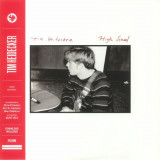
Produced by Heidecker, Drew Erickson, Eric D. Johnson and Mac DeMarco, High School sees Heidecker emerging as an increasingly playful and poignant story teller, infusing childhood tales with new gravity. In conjunction, he announces Tim Heidecker Live! Featuring Tim Heidecker and The Very Good Band, his first two-act tour of comedy and music. Since 2016, Tim Heidecker has chronicled the annals of adulthood on a series of supreme singer-songwriter albums. The crushing devastation of divorce and the existential malaise of middle-age, the minutiae of home ownership and the ritual of family vacation, child rearing and global warming: Heidecker has handled it all with humor and heart. But, there’s one pivotal lodestar of human development he has yet to mine that’s right, High School. First single “Buddy” is a composite of a few woebegone friends, which finds Heidecker reminiscing on the familiar tragedy of the adolescent stoner, manifesting the destiny of undiagnosed depression and parents who didn’t care much. The song itself is a jangly delight, but it’s hard not to mourn for “Buddy,” then re-count whatever blessings you may have. After initial and fruitful sessions with Jonathan Rado, Heidecker started recording tunes with DeMarco and Erickson, who had also worked on 2020’s collaboration with Weyes Blood, Fear of Death. At DeMarco’s studio, they added drum machines and synths and sidewinding solos to Heidecker’s big strummed chords. Johnson (Bonny Light Horseman, Fruit Bats) helped Heidecker finesse the tunes even more, making the music as rich as the feelings. Kurt Vile contributed to one song, as well. Through all those sessions, it slowly became clear: Heidecker was writing not only about the adventures and misadventures of life as a Pennsylvania teen in the early ’90s, but also how it felt to lose a juvenile sense of mystery and possibility as an adult. He was writing about high school and, really, the way it helped shape everything else. Back at Pennsylvania’s Allentown Central Catholic High School, Heidecker dreamed of making it with one of his many rock bands — Time and Other Things, Shaggy’s Beltbuckle, and (incredibly) The Pulsating Libidos. Two years shy of his graduating class’ 30th anniversary, Heidecker admits he had little of substance to say when he was 17, like all but the rarest of precocious minds. In college, though, he found the friends with whom he built his comedy career, largely apart from music and without much thought for his time back at Central Catholic. He was focused on his future. It is fitting, then, that as Heidecker has become such a delightful singer-songwriter and collaborator, he returns to the first scene of his time as a musician. Maybe he’s right — he didn’t have anything to say or sing about life back then. But across the earnest and amusing High School, he finds plenty to say about those weird and wonderful and ordinary times.
Following the precursor singles of 2021, Formality Jerne-Site’s unveiling is finally cast upon her already-growing fanbase. Trained classically as a composer and completing a masters at the Royal Danish Academy of Fine Arts, Jura introduces a highly-anticipated playground of carefully sculpted characters, plots and lessons - sometimes charming, sometimes nefarious, always absolute and sincere. A fictional land opens its doors and roof to us. A trio of trans kids run amok in rural suburbia. Various sorcerers of the wild future enter the scene on some songs; on others, the mind is cast to sun-drenched drives and journeys of yesteryear. At the heart is a pop sensibility: yearning, reflections, vanity, guesswork, hope. Jura is adamant about practice and precision. Dead seriously she offers, about making music: ‘Nothing should be half-hearted or an accident.’ There’s a maturity and elegance to her compositions, arrangements that - although at first sound seem abstract - lean away from experimental, somehow. She sing-speaks in English, and somehow not typically theatrically for such a play of a record. The theatrics are all real. It’s a fantasy land for sure, but it's based on hard facts. Like academia subdivided into poetry. It’s that weird-ass specificity she mentioned. Opener ‘Someone’s Lifework’ introduces less a choir of voices, than a choir of personalities. The art of storytelling is at the center of the musical expression. A protagonist relinquishes control of chaos that’s bigger than them on a perilous journey on some vessel: they comfort their co-passengers. There’s a sense that the hero - or anti-hero - might be more canny and cunning than the sweetness they first sell to fellow players. 'Is this our getaway chance?’ sings fellow Copenhagener Ydegirl amongst swelling synths and reverb that become so definitely Jerne-Site as the quest continues. The search? For intimacy, perhaps. ‘Same late Age (dIcK bIfFeReNcE)’ imbibes at once, some further disorientation, perhaps a little hallucinatory feeling which may come over the listener. Through a synthesizing of political themes that work across time ‘Same Late Age (dIcK bIfFeReNcE)’ bears reminiscences of the musical expressions of anti-capitalism in the 1980es, although in a new body and context. “I have a feeling that music reconjures societal morals and ideas from the time in which it was written when we press play or hear a live performance. From the moment at a concert when the symphonic orchestra starts tuning in, the time traveling begins. So I imagined how it would be to be trans sitting there playing the first violin, having the job of producing that first tone that all the other musicians around me tune in ona, ” Jura explains. The listener yearns for more; and subsequent tracks deliver. On ‘How Intimate It Gets,’ Jura meditates on the futility of closeness, begging the audience to enter the blood and guts of their own entanglements, the blueprints of focusing entering. Jura sings richly about fingers being lines, pointing or bending, and we’re reminded of their own wicked ways we can’t control. A history of singing in choirs informs the harmony of myriad inner voices heard across the album. At once prophetic and enigmatic, some of the songs rearrange historical events out of pop musical language. The enormously entertaining ‘Pinot-Botticelli Toast to European Users’ conjures scenes of Cold-War world leaders stuck on a cruise in the Transatlantic vacuum, and the protagonist watches a devastating heartbreaker careen on into the picture, led by his own hips on ‘The Lasceaux Associate’. Finally, on title track ‘Formality Jerne-Site’, American English rises to the occasion like a verdict around the narrative of three trans teenagers in rural Colorado: language turns into something sensual and haptic, playing with the snare and sizzle of syllables. The words twist and bend, while the music follows its own synaesthetic logic: “around us pop culture made a vow to a normative desire, drawing in like water color percussion”. Anyines is a site of play and documentation, with a canon so far quite nice. Their future is one that envisions supporting the galaxies their dear friends embody, be it music, performance, video games or beyond. Highlights from their discerning back catalogue include myriad formats: live and digital, plus releases binded to physical artefacts that enhance the live experience such as sculptures and scents. Their history also includes disappearing time-sensitive shadow-tracked material and cross-disciplinary opportunities that reflect deep professionalism and a totally non-schooled semblance of sound and drama. Recent releases include a dance-theatre soundtrack, a traditional shiny pop record, and the acclaimed ML Buch sophomore, Skinned.
Following up their hugely respected 2 demos (also available as a compilation) and fairly recent 7”, CHAOTIAN are back to release ultimate Death Metal barbarity into the underground in the form of their debut full length. Storming into life with a rotten amalgamation of putrescent riffing and blastbeats, the instrumental unity of this Danish titan is a juggernaut of pure filth. It is telling when a band can have those super groovy pinch harmonic laden riffs and not making them sound like all the others. This may seem a weirdly specific observation (perhaps a guitarist just being a guitarist) but it makes all the difference with heaviness, intensity and also the catchiness on the records. When met with the sewer-spewing vocals and weird dissonant spasms in the music, it doesn’t take long to recognise this will be a truly warped and maniacally brutal experience of Death Metal might. Interlinking primitive hooks that grasp you by the throat then transcend into these weird effects or spacious riffs, there’s nothing predictable about the album yet it has that familiar feeling that all good Death Metal has where it feels a bit daunting, unnerving and yet you cannot escape it. Obviously Denmark and this trio does not let the scene down. Amazingly this small country seems to have so much diversity in their rotten underground movement and CHAOTIAN are a shining example who embody the grotesqueries, masterful songwriting and tight musicianship that has become associated with this otherwise pretty and peaceful nation. It explains that mysterious gurgling from the sewers at least! Bludgeoning, cavernous and ultimately otherworldly, CHAOTIAN masterfully combine the cerebral and cosmic with brutish, old school music that is damned heavy and doesn’t feel pretentious nor directionless. Their debut LP is not just as strong as their previous works, but a more refined and complete vision, showcasing the bands full potential (so far)…
Greek genius Christos Chondropoulos’ stunning debut for The Death of Rave finally lands on vinyl - an incredibly imaginative masterwork rich with quartertone melody and meticulously chiselled production, shaped into a future-folk songbook that deeply expands on his wonders for 12th Isle and The Wormhole. Highly recommended if yr into Paul DeMarinis, Rashad Becker, Ryuichi Sakamoto, Kara-Lis Coverdale's 'Aftertouches', Jonathan Bepler’s soundtracks for Matthew Barney, Black Sabbath or Aphex Twin. Floors us every time!
Continuing Christos’ singular fascination with, and reappraisal of, Ancient Greek modes, ’Relics’ further excavates the deeptime topography of Greek music prior to the ban of “oriental” or 1/4 tone microtonal modes nearly 100 years ago.
Clandestine, euphoric, hyperreal and otherworldly; it takes shape as faintly familiar forms of new age folk, avant-techno and metal musicks, but with an alien appeal that treats the past almost like another planet, never mind a foreign land. Christos studiously raids the past for lost treasure, navigating his tuned instincts as an improvising percussionist, and lover of non-Western composition, to create a uniquely absorbing soundworld that resembles an AI’s dreams after ingesting encyclopaedia entries on thousands of years of Greece prior to 1936. In the process, the album acutely questions his and our relationship to the past, and what has become lost in translation with reliance on prelaid templates and the “wisdom” of elders.
Bursting to life with the iridescent arps and new age AI chorale of ‘First Love Fereter’, and concluding with bone-clacking raverie of ‘Jungle X’, the album offers a stunning advance of the themes and aesthetics in Christos' previous records, from the self-released free jazz of ‘Fingerpainting’ (2013) to 2021’s 12th Isle released ‘Athenian Primitivism.’
Thanks to meticulous detailing, ‘Relics’ allows a finer play of textured light and almost tangible - yet entirely generated - voices into his music: most strikingly on the sublime songcraft of ‘Regret’ and ‘I Dream Of You’, while the likes of ‘Asham’ are bathed in deeply uncanny atmosphere, and his percussive proprioceptions are most heightened in the delirious battery of ‘War Horns’ and ‘Sacrifice’, with ‘Cyber Crust’ calling up demonic, cthonic pagan spirits resembling Black Sabbath undergoing regression therapy.
Felicia Atkinson’s music always puts the listener somewhere in particular. There are two categories of place that are important to »Image Langage«: the house and the landscape. Inside and outside, different ways of orienting a body towards the world. They are in dialogue, insofar as in the places Atkinson made this record—Leman Lake, during a residency at La Becque in Switzerland, and at her home on the wild coast of Normandy—the landscape is what is waiting for you when you leave the house, and vice-versa. Each threatens—or is it offers, kindly, even promises? —to dissolve the other. Recognizing the normalization of home studios these days, she revisited twentieth-century women artists who variously chose, and were chosen by, their homes as a place to work: the desert retreats of Agnes Martin and Georgia O’Keefe, the life and death of Sylvia Plath. Building a record is like building a house: a structure in which one can encounter oneself, each room a song with its own function in the project of everyday life.
At times listening to »Image Langage« is immediate, something like visiting a house by the sea, sharing the same ground, being invited to witness Atkinson’s acts of seeing, hearing, and reading in a sonic double of the places they occurred. In an aching moment of clarity in »The Lake is Speaking,« a pair of voices emerge out of the primordial murk of piano and organ, accompanying the listener to the edge of a reflective pool that makes a mirror of the cosmos. "I open my feet to fresh dirt, and the wet grass. I hold your hand. You hold his hand. In the distance without any distance. The comets, the stars." At other times, listening to »Image Langage« is more like being in a theatre, the composition a tangle of flickering forms and media that illuminate as best they can the darkness from which we experience it. On »Pieces of Sylvia,« a noirish orchestra drones and clatters beneath and around a montage of vocal images, stretching the listener across time, space, subjectivities. Atkinson says that "Image Langage" is like the fake title of a fake Godard film. There is indeed something cinematic about Atkinson’s work—not cinematic in the sense that it sounds like the score for someone else’s film, but cinematic in the sense that it produces its own images and langage and narratives, a kind of deliberate, dimensional world-building in sound.
»Image Langage« is built from instruments recorded as if field recordings, sound-images of instruments conjured from a keyboard, instruments Atkinson treats like characters, what she calls “a fantasy of an orchestra that doesn’t exist.” And then, speaking of Godard, there are the monologues, operating as both experimental-cinematic device and a literary style of narration. Voice can be a writerly anchor or a wisp of a textural presence. Atkinson’s capacious and slippery speech plunges into and out of the compositional depths, shifting shapes, channelling the voices of any number of beings, subjectivities, or elements of her surroundings—not unlike her midi keyboard, able to speak as a vast array of instruments.
»Image Langage« is an environmental record, in the vastest sense of the world. It is about getting lost in places imagined and real; it registers, too, the dizzying feeling of moving between such sites. It puts forth a concept of self that is hopelessly entangled with the rest of the world, born of both the ache of distance and the warmth of proximity.
For Félicia Atkinson, human voices inhabit an ecology alongside and within many other things that don’t speak, in the conventional sense: landscapes, images, books, memories, ideas. The French electro-acoustic composer and visual artist makes music that animates these other possible voices in conversation with her own, collaging field recording, MIDI instrumentation, and snippets of essayistic langage in both French and English. Her own voice, always shifting to make space, might whisper from the corner or assume another character’s tone. Atkinson uses composing as a way to process imaginative and creative life, frequently engaging with the work of visual artists, filmmakers, and novelists. Her layered compositions tell stories that alternately stretch and fold time and place, stories in which she is the narrator but not the protagonist.
Charlemagne Palestine (born Charles Martin ni 1947 in Brooklyn, New York) wrote intense, ritualistic music in the 1970s, intended by the composer to rub against audiences' expectations of what is beautiful and meaningful in music. A composer-performer, he always performed his own works as soloist. His earliest works were compositions for carillon and electronic drones, and he is best known for his intensely performed piano works. He also performs as a vocalist. Palestine's performance style is ritualistic; he generally surrounds himself (and his piano) with stuffed animals, smokes large numbers of kretek (Indonesian clove cigarettes) and drinks cognac.
Oren Ambarchi (born 1969 in Australia) is a composer and multi-instrumentalist with longstanding interests in transcending conventional instrumental approaches. His work focuses mainly on the exploration of the guitar, "re-routing the instrument into a zone of alien abstraction where it's no longer easily identifiable as itself. Instead, it's a laboratory for extended sonic investigation". (The Wire, UK).
Oren Ambarchi's works are hesitant and tense extended songforms located in the cracks between several schools: modern electronics and processing; laminal improvisation and minimalism; hushed, pensive songwriting; the deceptive simplicity and temporal suspensions of composers such as Morton Feldman and Alvin Lucier; and the physicality of rock music, slowed down and stripped back to its bare bones, abstracted and replaced with pure signal.
From the late 90's his experiments in guitar abstraction and extended technique have led to a more personal and unique sound-world incorporating a broader palette of instruments and sensibilities. On releases such as Grapes From The Estate and In The Pendulum's Embrace Ambarchi has employed glass harmonica, strings, bells, piano, drums and percussion, creating fragile textures as light as air which tenuously coexist with the deep, wall-shaking bass tones derived from his guitar.
Ambarchi works with simple constructs and parameters; exploring one idea over an extended duration and patiently teasing every nuance and implication from each texture; the phenomena of sum and difference tones; carefully tended arrangements that unravel gently; unprepossessing melodies that slowly work their way through various permutations; resulting in an otherworldly, cumulative impact of patiently unfolding compositions.
Ambarchi has performed and recorded with a diverse array of artists such as Fennesz, Otomo Yoshihide, Pimmon, Keiji Haino, John Zorn, Rizili, Voice Crack, Jim O'Rourke, Keith Rowe, Phill Niblock, Dave Grohl, Gunter Muller, Evan Parker, z'ev, Toshimaru Nakamura, Peter Rehberg, Merzbow, Kassel Jaeger, Anthony Pateras, Crys Cole, Giuseppe Ielasi, Judith Hamann, Sunn 0))), James Rushford, Stephen O'Malley and many more.
For 10 years together with Robbie Avenaim, Ambarchi was the co-organiser of the What Is Music? festival, Australia's premier annual showcase of local and international experimental music. Ambarchi now curates the Maximum Arousal series at The Toff In Town in Melbourne and has recently co-produced an Australian television series on experimental music called Subsonics. Ambarchi co-curated the sound program for the 2008 Yokohama Triennale. Ambarchi has released numerous recordings for international labels such as Touch, Southern Lord, Table Of The Elements and Tzadik.
Belgian drummer Eric Thielemans is one of the most idiosyncratic figures in Belgian music, someone who not only demonstrates that special musicians always seek out (and find) their own place, but above all that they always remain students of the art of questioning and listening. No musician better illustrates the difference between playing music and playing with music than percussionist Eric Thielemans. He gets to the heart of the matter with an at times extremely minimalist approach, but on the other hand he frequently relies on a range of objects beyond the regular drum kit: a drum placed on its side, a bicycle wheel with a bow, hands and the body.
Charlemagne Palestine (born Charles Martin ni 1947 in Brooklyn, New York) wrote intense, ritualistic music in the 1970s, intended by the composer to rub against audiences' expectations of what is beautiful and meaningful in music. A composer-performer, he always performed his own works as soloist. His earliest works were compositions for carillon and electronic drones, and he is best known for his intensely performed piano works. He also performs as a vocalist. Palestine's performance style is ritualistic; he generally surrounds himself (and his piano) with stuffed animals, smokes large numbers of kretek (Indonesian clove cigarettes) and drinks cognac.
Oren Ambarchi (born 1969 in Australia) is a composer and multi-instrumentalist with longstanding interests in transcending conventional instrumental approaches. His work focuses mainly on the exploration of the guitar, "re-routing the instrument into a zone of alien abstraction where it's no longer easily identifiable as itself. Instead, it's a laboratory for extended sonic investigation". (The Wire, UK).
Oren Ambarchi's works are hesitant and tense extended songforms located in the cracks between several schools: modern electronics and processing; laminal improvisation and minimalism; hushed, pensive songwriting; the deceptive simplicity and temporal suspensions of composers such as Morton Feldman and Alvin Lucier; and the physicality of rock music, slowed down and stripped back to its bare bones, abstracted and replaced with pure signal.
From the late 90's his experiments in guitar abstraction and extended technique have led to a more personal and unique sound-world incorporating a broader palette of instruments and sensibilities. On releases such as Grapes From The Estate and In The Pendulum's Embrace Ambarchi has employed glass harmonica, strings, bells, piano, drums and percussion, creating fragile textures as light as air which tenuously coexist with the deep, wall-shaking bass tones derived from his guitar.
Ambarchi works with simple constructs and parameters; exploring one idea over an extended duration and patiently teasing every nuance and implication from each texture; the phenomena of sum and difference tones; carefully tended arrangements that unravel gently; unprepossessing melodies that slowly work their way through various permutations; resulting in an otherworldly, cumulative impact of patiently unfolding compositions.
Ambarchi has performed and recorded with a diverse array of artists such as Fennesz, Otomo Yoshihide, Pimmon, Keiji Haino, John Zorn, Rizili, Voice Crack, Jim O'Rourke, Keith Rowe, Phill Niblock, Dave Grohl, Gunter Muller, Evan Parker, z'ev, Toshimaru Nakamura, Peter Rehberg, Merzbow, Kassel Jaeger, Anthony Pateras, Crys Cole, Giuseppe Ielasi, Judith Hamann, Sunn 0))), James Rushford, Stephen O'Malley and many more.
For 10 years together with Robbie Avenaim, Ambarchi was the co-organiser of the What Is Music? festival, Australia's premier annual showcase of local and international experimental music. Ambarchi now curates the Maximum Arousal series at The Toff In Town in Melbourne and has recently co-produced an Australian television series on experimental music called Subsonics. Ambarchi co-curated the sound program for the 2008 Yokohama Triennale. Ambarchi has released numerous recordings for international labels such as Touch, Southern Lord, Table Of The Elements and Tzadik.
Belgian drummer Eric Thielemans is one of the most idiosyncratic figures in Belgian music, someone who not only demonstrates that special musicians always seek out (and find) their own place, but above all that they always remain students of the art of questioning and listening. No musician better illustrates the difference between playing music and playing with music than percussionist Eric Thielemans. He gets to the heart of the matter with an at times extremely minimalist approach, but on the other hand he frequently relies on a range of objects beyond the regular drum kit: a drum placed on its side, a bicycle wheel with a bow, hands and the body.
Highly awaited new album from longtime British Blues/
Americanastalwart Todd Sharpville
"Medication Time" explores a period of hislife 16 years ago, where the stress of a
child contact battle duringa messy breakup resulted in a total breakdown and a 2
month stayin a mental hospital in West Wales. "I wasn't emotionally prepared
forthe sudden separation from my children that came with the divorce. Upuntil
then I was somewhat of a control freak, so the realisation thatcontrol is but an
illusion never really dawned on me until I found myself floored by
reactivedepression, suicidal, & sectioned within a state- run facility. Men rarely
discuss these kindof emotions with one another, so they can often surprise the
hell out of us and prove tobe too overwhelming to cope with. Being a musician, I
was lucky that I was able to fit thepracticalities of my working life around my
predicament. I also have some amazing friends.I managed to get back on my
feet. Many people don't have these luxuries. Many fall by thewayside and never
get back up again." "Medication Time" examines & expresses many of the
emotions that led to thebreakdown, the hospital stay, and the slow climb back to
figurative normality. 12 relevant tracks (9 originals & 3 quirky covers), recorded in
West Greenwich Rhode Island,produced by 2-time Grammy nominee & multi BMA
winner Duke Robillard. Featuringtwo duets: one with Detroit artist Larry McCray,
the other with Rhode Island's own SugarRay Norcia.
'Hallival' is the long awaited debut album from Leeds based folk singer
and songwriter Iona Lane, Having found herself fascinated by folklore
and folk stories from across the UK 'Hallival' is inspired by natural
landscapes, scientific discoveries, equality, human relationships and the
supernatural, all tied together by a strong sense of place and a love for
being in wild places - creating something truly special.The name 'Hallival'
is taken after one of the mountains on the Isle of Rum, which inspired the
writing for the opening track 'Western Tidal Swell'
Karine Polwart and Julie Fowlis, amongst others, selected 'Western Tidal Swell' to
win Feis Rois'/NatureScots' In Tune With Nature competition in 2020.With Andy
Bell on production, Iona and her band ventured to Watercolour Music (Ardgour,
Highlands) for a week of recording in April 2020. The studio was chosen due to
it's stunning location - every day the team woke up to herds of deers guarding the
studio, ever changing weather and phenomenal views over to Ben Nevis 'Hallival'.
The lead single from the album 'Humankind', featuring Jenny Sturgeon on
backing vocals, was written from the depths of the Lake District in Wasdale just
before the first lockdown. Being the closing track on the album, it reflects on how
important humans are to each other and the kindness that we can bring
particularly whilst feeling isolated, a feeling that we all know too well after the
past couple of years.
'Schiehallion' was written after discovering the Schiehallion Experiment that was
carried out in 1774. During the experiment scientists from the Royal Society used
the shape and location of Schiehallion to calculate the mass of the Earth for the
first time. After a summer of calculations on the hill, the scientists and locals had
a party in a nearby bothy. The fiddler got so drunk that they burnt their violin and
the bothy to the ground. 'Schiehallion' features Lauren MacColl on fiddle and
Rachel Newton on harp.
Stemmed from being read 'Stone Girl Bone Girl, The Life of Mary Anning' by
Laurence Ann Holt as a child, Iona's song 'Mary Anning' focuses on the life of the
groundbreaking paleontologist who lived and worked in Lyme Regis in the 1800s.
Mary made vast contributions to the scientific world, however, due to her being a
woman she was unable to present her findings and would often end up selling
them to her male colleagues. Up until very recently Mary Anning has had little
credit for her work.
Having studied under the tuition of Nancy Kerr, Jim Moray and Stuart McCallum,
Iona has been praised throughout the scene for her delicate yet powerful vocals,
which have captivated audiences up and down the country.
Iona was chosen by Karine Polwart to receive the Taran Guitars Young Players
Bursary 2020. Since receiving the bursary luthier Rory Dowling, of Taran Guitars,
has designed and built a bespoke instrument for Iona's music.
Owing to a focused period of growth as a home recordist and producer,
there is a distinct, refreshing current that charges outtakes from 'bad
summer', the latest full-length album from Philly-via-Portland's cool
original (FKA cool american)
What under other circumstances might have been a string of homespun indie
rock songs is instead an energized pop- focused collection of tracks born from
what Nathan Tucker describes as 'the contrast between total formlessness and
rigid claustrophobia'. As heard almost immediately on album opener 'monad, no
windows', an electric atmosphere envelops outtakes from 'bad summer'. Pitchshifted vocal samples and previously- scrapped drum recordings fill out the
overture, setting the table for a patchwork of repurposed, resampled ideas
shaped into songs that rarely end up in the same place they started. The
unhurried and sentimental 'i just need a second' boasts the full spectrum of cool
original's songwriting prowess: foregrounded, infectious melody over subtly
chopped and screwed drums comprise the foundation for Tucker's own take on a
classic road song'a marked contrast to 'breaking my own rules', an experimental
pop number unlike any previous cool original work. Similar contrasts abound
throughout outtakes, making for a listening experience that's equal parts
rejuvenating and unpredictable.
As the daughter of a blues musician, Chastity Brown was born with an
innate ability to channel complex circumstances into beautiful, uplifting
songs
But after surviving the isolation of the early pandemic and witnessing the global
racial reckoning that manifested itself in the riots mere blocks from her South
Minneapolis home, even she is surprised to hear the way her new album 'Sing To
The Walls' turned out. "It's a love album, in a way I didn't plan on," Chastity says.
Like so many artists who endured the uncertainty of the 2020 lockdown,
Chastity's instinct was to turn inward, at first out of self- preservation, and then
because the new songs kept coming and coming. Since finishing her last album,
2017's 'Silhouette Of Sirens', she estimates she's written nearly 100 new songs,
10 of which found their way onto 'Sing To The Walls'. Produced by Brady Blades,
'Sing To The Walls' is a sonically expansive album; it mines the roots of
Americana, folk, and soul music, but Chastity's stories are delivered in a style that
feels remarkably timely, modern, and forward-thinking. "I celebrate the emotional
richness in the tradition, but in my music I've committed myself to moving
forward and reflecting the experiences of those overlooked by tradition."
Chastity Brown has been praised by NPR, CMT, American Songwriter, the London
Times, Paste Magazine, and The Independent, among many others, and appeared
on the U.K.'s Later… with Jools Holland. She tours nationally and internationally,
having shared the stage and supported artists such as the Indigo Girls, Ani Di
Franco, Andrea Gibson, Jayhawks, The National, and Micheal Kiwanuka.
Even in its moodiest, most downbeat moments there's a spark of energy
that bursts out of A Face In Your Life, the new album from Pet Fox.Where
past efforts played around with after-the-fact layering of instrumentation,
the band's third full-length comes alive in the moment
Tracked live in one room, without the use of a metronome, the ten songs that
unravel across the album capture Theo Hartlett (Guitar/ Vocals), Morgan Luzzi
(Bass), and Jesse Weiss (Drums) in their rawest, most immediate form. Touching
upon notions of anxiety and self-doubt, A Face In Your Life travails the depths of
these themes while also offering little snippets of hope and guidance along the
way. Indeed, the album's sprawling opening track 'Settle Even' is billed as a selfhelp pamphlet, a reminder to the band themselves and those listening that there
will always be people in the world looking out for us, even when that feels like an
impossible feat. An inspired collection of riffs that twists and turns into varying
shapes throughout, Pet Fox never outstay their welcome in the half-an-hour or of
A Face In Your Life but do more than enough to make the kind of impression that
leaves you wanting to journey back through the shadows, to unpick the little knots
of the ideas they're exploring here. It was brought to life by just three people in
one room but it lends itself to something way beyond that; the never- ending
search for coping mechanisms in the messiest of worlds.
“V I N C E N T” is FKJ’s second album and signals a new dawn, not just as a go-to producer and remixer for artists like PinkPantheress and Moses Sumney but as an artist in his own right, continuously selling out headline tours across the globe with his acclaimed ‘one-man-band’ live shows, and having a billion plus streams across all platforms for his music.
The concept for “V I N C E N T” came about during a solo trip to Los Angeles before 2020. “I just stayed in this house totally on my own, turned my phone off and had some time away from everything to figure out what I wanted to do.” He realised he wanted to tap into the freedom of being a teenager: “back then, I was making music strictly for playfulness, without overthinking it,” he says. “V I N C E N T’s” opening and closing songs underline the sentiment of the new album: the future-jazz of ‘Way Out’ (a playful mini soundtrack in one; a dainty piano motif underscored by a skittering trap beat and serene strings) and the lullaby-styled “Stay A Child”. “I wanted to get back some of that lost innocence of making music purely for pleasure,” he says.
Back in his home studio in the Philippines, with no wifi and an impending global lockdown, FKJ was quite literally cut off from the world, able to explore music’s endless possibilities. “Sometimes I would get into it for the whole night and go to bed when the sun came up.” Out of this freedom comes an expressionistic, touching album that’s impossible to pin down. There’s no more hiding behind a branch of leaves, as he did on the cover of his 2017 debut: “V I N C E N T” marks FKJ out as a crucial new voice. He’s redefining chillout music with his bursts of late-night jazz sax and piano, coupled with his wood-cabin whispery vocals, recalling Bon Iver’s early work, and those Santana-styled guitar flourishes.
Much of “V I N C E N T” is wilfully romantic, sometimes super sexy, and often with its head in the clouds, as on tracks like “Us”, a dreamy ode to his wife June, or “IHM”, which has a 90s hip-hop flavour slowed right down to lights-out tempo. Not entirely a solo record, ((( O )))) appears on ‘Brass Necklace’ – which has the soft power of The Internet and Stevie Wonder’s keys. It’s no wonder that lead single ‘A Moment of Mystery’, featuring Toro Y Moi, has a spacey vibe: while recording in San Francisco together, FKJ, Toro and his keyboard player Tony took some of what Tony called “holy water” – “we shared this bottle and took a bit of a trip,” laughs FKJ. The result is a gentle electronic ode to long-term love that could rival Tame Impala for melodic progginess.
Little Dragon’s Yukimi Nagano vocal, meanwhile, laces its way through the stunning “Can’t Stop”, and there is a call back to FKJ’s dancier beginnings with “Let’s Live”, a galvanising techno-pop number that blends piano, handclaps and soulful vocals to dazzling effect. Each of FKJ’s songs glistens, lambently, with a myriad of ideas but it never sounds overblown or too dizzying.
“V I N C E N T” is a marvel – and testament to the magic that can happen when you dig deep. “This was a challenging record,” he says. “I’m a perfectionist and it’s hard to shake that off. But once I did, and I let the music take over, I felt totally free.”
out of Stock
Last delivered 3 years ago available to reorder, subject to availability
Matmos are one of the most prominent experimental electronic artists working today, crafting work by creating new conceptual frameworks & immediately testing those frameworks absolute limits. For Regards / Uklony dla Boguslaw Schaeffer they've focused on another artist known, in large part, for doing the same. Boguslaw Schaeffer was one of the first Polish artists creating electronic music. In step with American contemporaries like John Cage and Morton Feldman, he worked across the boundaries of classical composition, electronic experimentation, and radical theater in playfully form-breaking ways. Matmos are not the first ones to recognize the power of his catalog, from Solo (a 2008 documentary that garnered numerous international awards), to the annual Shaeffer's Era Festival (most recently celebrated simultaneously in Warsaw and Los Angeles) his work continues to inspire. Regards.. however, was not just inspired by his work, Matmos were given access to the entirity of Schaeffer's recorded works to use as they saw fit, commissioned by the prestigious Instytutu Adama Mickiewicza. They re-assembled & re-combined these recorded works with modern instrumentations in a way that only Matmos could, and what emerges is a composite portrait of the utopian 1960s Polish avant-garde and the contemporary dystopian cultural moment regarding each other across a distance. To facilitate the transcultural exchange that is the album's essential premise, all song titles and liner-notes are provided in both English and Polish. The album was mastered by Rashad Becker and features illustration and design by acclaimed artist Robert Beatty (Tame Impala, Osees, Mdou Moctar). Like the anagrams of the letters of Boguslaw Schaeffer's name that were re-assembled to create some of the song titles, the album itself is a musical re-assemblage of component parts into possible but unforeseen new shapes. Adding harp from Irish harpist Una Monaghan, erhu, viola and violin from Turkish multi-instrumentalist Ulas Kurugullu, and electronic processes from Baltimore instrument builder Will Schorre, and Horse Lords wunderkind Max Eilbacher, the resulting arrangements constantly toy with scale as they move from the close-mic-ing of ASMR and the intimacy of chamber music to the immensity of processed drones and oceanic field-recordings that close the album. Offering a "life review" of production styles, Regards / Uklony dla Boguslaw Schaeffer builds temporary shelters out of the panoramic wreckage of modernist composition, sixties tape music, seventies dub, eighties industrial music, nineties postrock and dark ambient, 2000s era glitch fetishism, and contemporary post-everything collage sensibilities.
out of Stock
Last delivered 4 years ago available to reorder, subject to availability
Much deserved, remastered reissue of ‘We Are I.E.’ by Lennie De Ice, arguably the first proto jungle tune, now coming correct with fresh remixes from Solo & Blades alongside Borai, as well as the sought-after Horsepower Productions remix.
Released in 1991 on I.E. Records, an imprint based out of De Underground Records, a store in London’s Forest Gate run by Mike De Underground alongside Uncle 22 and Randall, it famously featured elements that paved the way for the Jungle sound. Centered around the Amen break, ragga style basslines, vinyl spinbacks and gun shot samples, it stood out as something different back in ’91, A certified classic, rinsed on dancefloors everywhere and anywhere, from back in the day to the present.
Solo & Blades are the first of the new versions, hitting hard with a heavyweight jungle remix, as Borai steps up with a beefy bassline rework. Horsepower Productions killer and sought after remix rounds off the package.
DJ Feedback:
Foul Play
Moving Shadow
"All the remixes totally land, great package, respectfully done. gonna hear a lot of these over the summer I think."
Jerome Hill
Super Rhythm Trax, Don't, Kool FM
"Was a little sceptical seeing these were remixes as its such an iconic track - BUT fair play ! Borai and Ed Solo & Blades both knocked it out of the park and i'll be playing both these, plus replacing my personal (slightly. crusty) vinyl rip of the original ! Bigups !!"
Om Unit
"Untouchable until now tbh"
jd Twitch
optimo
"even though I have probably heard it ten thousand times you can't beat the original. remixes are cool though."
Louise Chen
"this hits so hard it's tough choosing a fave mix!"
Emerald
BBC 1xtra/ Rinse FM
"Yeeeeeh found the dubstep remix vinyl of this in barcelona recently"
Werdna (Circular Jaw)
"Classic, lovely to see Hooj bringing in the big guns for the remixes. These are going off!"
Cortese
"Sick breaks on this one"
Truss/ MPIA3/ Overmono
"wicked"
Oli Warwick
Crack/ RA/ International Orange/ JunoJuno Plus
"Absolutely seminal bomb drop here, and the remixes are no joke either!"
Chris Farrell
"Always good to see this come round again, original and borai mix for me"
Smolny
"CLASICK !"
Doc Martin
Sublevel USA/Fabric UK.
"Complete Rave Warehouse Flashbacks!!!!"
Lil Mofo
The Trilogy Tapes / Tokyo
"wow!"
Moody Boyz
all over the worldstudio rockers records
"classic tune feeling the Filter Dread Remix"
Ciel
Rinse FM / Refuge Worldwide
"really nice collection of tunes!"
dop
"love the original"
out of Stock
Last delivered 8 months ago available to reorder, subject to availability
After two UK #1 albums, 2 million album sales and an array of international acclaim, you might’ve thought you knew what to expect from Royal Blood. Those preconceptions were shattered when they released ‘Trouble’s Coming’ last summer. Hitting a melting pot of fiery rock riffs and danceable beats, they delivered something fresh, unexpected and yet entirely in tune with what they’d forged their reputation with.
The reaction was phenomenal, with highlights including 20 million streams, a premiere as Annie Mac’s Hottest Record and a run on Radio 1’s A-list and earned alternative radio support and media attention across the globe. In short, Royal Blood are primed to be bigger than ever before. That feat is set to be realised when they release their eagerly anticipated third album ‘Typhoons’ on April 30th via Warner Records.
When Mike Kerr and Ben Thatcher sat down to talk about making a new album, they knew what they wanted to achieve. It involved a conscious return to their roots, back when they had made music that was influenced by Daft Punk, Justice, and Philippe Zdar of Cassius. It also called for a similar back-to-basics approach to what had made their self-titled debut album so thrilling, visceral and original.
“We sort of stumbled on this sound, and it was immediately fun to play,” recalls Kerr. “That’s what sparked the creativity on the new album, the chasing of that feeling. It’s weird, though - if you think back to ‘Figure it Out’, it kind of contains the embryo of this album. We realised that we didn’t have to completely destroy what we’d created so far; we just had to shift it, change it. On paper, it’s a small reinvention. But when you hear it, it sounds so fresh.”
Those traits pulsate throughout the new single and title track. Kerr’s spiralling bass riff casts an hypnotic allure as it grows in intensity, while his vocals switch at will between a raw rock roar and a soulful falsetto. It’s underpinned by Thatcher’s thundering beats, his taut rhythms infused with groove-laden hi-hats.
After setting the tone with ‘Trouble’s Coming’, the album opens in breathless, take-no-prisoners style with the fierce metallic grooves of ‘Who Needs Friends’ hitting an early visceral peak. Royal Blood further reference their fresh array of influences by deploying vocodered vocals on ‘Million & One’ before dynamically switching between the biggest contrasts of their sound with ‘Limbo’. Already a fan favourite having been a regular during the duo’s 2019 shows, ‘Boilermaker’ lives up to its reputation and is more than matched by ‘Mad Visions’, which evokes a hyper-aggressive Prince. It ends with a final surprise in the shape of the stark piano ballad ‘All We Have Is Now’, a vulnerable and revealing reminder to live in the moment.
That song’s unguarded sentiments gives the album a redemptive finale. Whether directly or allusively, the album focuses on exploring the flipside of success that they’ve experienced. It comes from the realisation that success is much more complicated than it seems and that having the time to regain perspective is a precious commodity which becomes ever more elusive. The situation called for reflection and change, which Kerr addressed in Las Vegas. He downed an espresso martini and declared it to be his last drink, and soon discovered that his new-found sobriety would have a positive impact upon his creativity and life as a whole.
That new approach manifested itself in the duo’s decision to produce the majority of ‘Typhoons’ themselves. ‘Boilermaker’ was produced by Queens of the Stone Age frontman Josh Homme, the two bands having first connected when Royal Blood supported them on a huge North American tour. Meanwhile, the multiple Grammy Award winner Paul Epworth produced ‘Who Needs Friends’ and contributed additional production to ‘Trouble’s Coming’.
out of Stock
Last delivered 4 years ago available to reorder, subject to availability
A lot has been said and repeated about the interiority of this club music - how the joyful tremor of the "Raingurl" refrain holds hands with such soft and doubtful verses. How special it is that house music so of New York can contain storytelling cultivated so far away. That repetition is born of people all over the world going out, and staying in, with this music as a compass; songs that define so many late night hangs for crews of friends, singalongs in DJ booths, contemplative 5am walks home from the club. What can get lost in that repetition, in the shifting canonization of these recordings as symbols of any one scene or moment, is what was behind the pair of round glasses reflecting so tirelessly outwards. Yaeji, an exceptional friend only at the very beginning of finding her path as a cross-disciplinary artist and collaborator. Yaeji wrote this music while going out nearly every night of the week to DJ and support her own NYC community of friends at their turns behind the decks. These tracks originated from explorations in dancefloor anonymity, growing from seeds planted by sharing her first musical experiments online.
out of Stock
Last delivered 4 years ago available to reorder, subject to availability
Time Cow & Ossia take 2 tracks from Jabu’s 2020 album ‘Sweet Company’ into unfamiliar (and dance floor friendly) territory. Side A sees ‘Us Alone’ gets transformed by Time Cow from slo-mo tearjerker into syrupy disco wrecker, managing to somehow touch on reference points everywhere from east LA lowrider anthems through 00s garage and all propelled fwd by an eyeball shaking low end pressure. On the flip Ossia takes snatches of the original ‘Slow Down’ and flashes them in around a 4/4 and a synth melody, fragments of Daniela’s vocal floating like a half remembered conversation. Later Rakhi’s strings come in but in a more unsettling way than the original, eventually dissolving to a kind of Majora’s Mask (in dub) conclusion. All terrain / all weathers - club / bbq / afterparty / late night introspection sessions.
out of Stock
Last delivered 4 years ago available to reorder, subject to availability
Jean Carne JID012 is twelfth installation in the Jazz Is Dead catalog. This album features seven original songs by Adrian Younge, Ali Shaheed Muhammad and the incomparable Jean Carne, who first came to life for many hip hop heads after being famously sampled by Brand Nubian. Jean Carne JID012 allows Carne the space to showcase her shape shifting vocal abilities. Arrangements crafted by Younge and Muhammad are reminiscent of Carne's 1970s collaborators: her then-husband Doug Carn (Black Jazz Records), Mtume (Third Street Records) and songwriting duo Gamble and Huff (Philly International). All songs produced by Adrian Younge & Ali Shaheed Muhammad. Recorded and mixed by Adrian Younge at Linear Labs, the preeminent analog studio of Los Angeles, CA.
Echoes of this summer's 'Shango' still shimmer through systems as Detroit's Waajeed continues to make good on his promise: to 'put paint where it ain't.'
After years of soul, funk and hip-hop explorations as a founding member of the Platinum Pied Pipers (among many other innovative escapades) and, most recently, a soulful remix of Amp Fiddler on Kenny Dixon's Mahogany Music, Waajeed is building on the fresh line of house grooves he commenced this summer. His first pedigree dancefloor tracks in almost 20 years, he taps directly into the source and builds with his own soulful bricks. It's working, too; DJ-wise he's playing alongside Moodyman, Mr. Scruff and Carl Craig this fall, while 'Shango' has enjoyed heavyweight support by The Black Madonna, Carl Craig, Jackmaster, Gilles Peterson and many notable selectors.
out of Stock
Last delivered 2 years ago available to reorder, subject to availability
“A Lucid Dub” and “Metronomik” get the remix treatment for the companion 12” to Louis’ Metronomik EP.
Diahgonal and John Beltran handle the a-side with masterful remixes of A Lucid Dub.
Santiago Salazar and Shawn Rudiman add their knowledge to the techno discussion with their remixes of Metronomik.
out of Stock
Last delivered 4 years ago available to reorder, subject to availability
"Born in Crystal Palace in 1995, Max moved to Brighton aged five and following his parents’ separation much of his youth was spent travelling between his parent’s homes on the coast and his nan in South East London.
A constant in his world of uncertainty was music. In part, this was thanks to his music obsessive father, who would expose him to an abundance of genres whenever he visited. Max soon developed an insatiable musical appetite of his own. The urgent poetry of Gil Scott-Heron resonated, as did Nick Drake’s intricate folk and the Beatles’ pristine pop. Bill Withers, Graham Coxon, Donny Hathaway and Jimi Hendrix also hit home. Max’s musical church has always been startlingly broad, counting funk, bossa nova, blues, jazz and rock and roll amongst its number and explains why many of these styles surface in his own material."
After having released solo albums on Western Vinyl and Preservation, Domes presents the first entirely instrumental work of the California based multi-instrumentalist Heather Woods Broderick.
Domes is a collection of meditative pieces based around the cello. While not being her primary instrument, the cello holds a very special place for the artist. Throughout the past 2 years, Heather often felt the need to find moments of respite in response to the chaotic and turbulent times we all faced in that period. Her days started or ended with the cello. A single melody initiated a process in which new elements were gradually added to the initial loop until the sounds filled her up. This process and the instrumental nature of these pieces opened the path for self-reflection and enabled her to express emotions outside the world of words or lyrics:
“The cyclical nature of the loop combined with the sound feeling like it’s surrounding me feels serene and safe. My hope is that listeners experience this as well.” - Heather Woods Broderick
Domes is a documentation of that period and offers 7 pieces which to the artist feels like dense masses – strong grounding sounds that can hold weight or be used to disperse weight - in an emotional sense. The album title, Domes, reflects this idea as domes are made out of triangles – the strongest shapes in the physical world. Coincidentally, there are 7 different triangles. As such, the pieces on Domes each reflect a different triangle, a different strongest shape which offers the listener a solid basis to find rest and calmness.
Heather Woods Broderick is a composer, songwriter, and multi-instrumentalist. Growing up in a family of musicians, music took root in Heather’s life at a very young age. Evenings spent singing along to her parents folk music collection began to shape her sense of song as a child. After many years of classical piano training, she began to expand her musical toolkit by learning to play guitar, cello, and flute among others. Deeply influenced by rich tapestries of the natural world, she excels at crafting sonic landscapes that reflect both lushness and intimacy. Heather has released three solo albums to date, and over the years has recorded and toured extensively around the world with a multitude of artists including Sharon Van Etten, Efterklang, Alela Diane, Horse Feathers, Damien Jurado, Lisa Hannigan, Laura Gibson, and more.
Tiptoe between the toadstools of Liverpool’s city parks, and amongst the foliage you might find a Strawberry Guy, contemplating his next chord-progression. Composing hi-fi symphonies from within his humble abode, the Welsh-born songwriter is ready to share the fruits of his labour with debut album Sun Outside My Window. A timeless vista of ethereal balladry looking towards 19th Century musical maestros and works of art, it brings new meaning to the term ‘Modern Classic’ and is the most optimistic of lockdown records yet.
“It’s about seeing the simple things in life and them making you happy,” tells Alex Stephens, the Guy behind the Strawberry. “I remember this day when I was really down… looking out the window, the sun beaming in was beautiful, it made me want to go outside – it was simple but made me so happy in that instance.”
A one-man impressionist, painting majestic soundscapes, Strawberry Guy blends truthful lyrics with lush arrangements to conjure new emotive worlds. Inspired by composers of the Romantic period, or Debussy, Ravel, and other classical artists of the 1800s, his wonderland moves like a Monet painting where arpeggios dance between meadows of dazzling dynamics and dramatic key changes. As former keyboard player of The Orielles and Trudy and The Romance, the light through his floor to ceiling windows has caused a dramatic Greenhouse Effect and now ripening on solo terms, his innocent uploads of ‘Without You’ and ‘F-Song’ comfort 2 million Spotify listeners a month. ‘Mrs Magic’ has received 40 million streams, landing at #13 in its chart and countless fan-created videos have appeared on YouTube. “Throughout history composers have tried to capture emotion, painting their own impressionist pictures with musical brush strokes… I guess I’m just trying to do the same and people enjoy that,” he suggests modestly.
Named by musical friends Her’s after his impeccable taste in milkshakes, Strawberry Guy upturns ‘bedroom artist’ perception, as each idea is crafted into a widescreen wonder where vocals tag-team instrumentals and countermelodies flourish within the Georgian walls of his Liverpool flat’s small space. “I want it to sound like I’ve squeezed an 80-piece orchestra into my room, and for listeners to wonder how all those strings got there,” he says. “Working on the 4-part harmonies, the orchestra became real; I began believing in myself.”
Imitating nature’s effect on emotion, like 70s songwriters, or the fantastical soundtracks accompanying vibrant scenes in the Japanese animated Studio Ghibli films and video games, landscape is brought to the fore. Monet’s picturesque Meadow at Giverny features as the album’s accompanying artwork – perhaps a reminder of the rural Welsh countryside views through his childhood home’s window; “I was inspired by how calm and peaceful the image felt. Its painted lines show real-life scenes in a magical way, which to me reflects my music.”
Just as the first Strawberry Guy EP Taking My Time To Be offered a slowing down for the soul, Sun Outside My Window is musically unhurried, written and recorded over 2 years. “Recording as a lone berry meant I could run with my emotions in the moment and deliver something true; it would have been an entirely different album had it been recorded in a studio,” he says.
Modern Classic? Only time will tell. For now this Guy’s happy-sad world is here to get the juices flowing and with, pandemic permitting, a US tour in 2022, life looks a whole lot sweeter. Until then, take it slow, be at one with the wilderness and remember, when life gives you lemons, swap them for Strawberries.
out of Stock
Last delivered 4 years ago available to reorder, subject to availability
Minru is the project of Caroline Blomqvist, a Swedish musician based in Berlin. Woven from light and shadow, the interplay of her folk and indie-rock blend appears from a personal space of finding life after death. On her debut LP »Liminality« she paints melody in soft tones, whispering secrets to navigate feelings of loss.
Built around winding layers of acoustic guitar, piano, and strings, Minru is a surprisingly uplifting and stirring testament to Blomqvist’s own suffering from the passing of someone close to her. Returning to Berlin from Sweden feelings of grief, confusion, and pain travelled with her, and these emotions prompted the journey both of and within the album, heard as a dreamlike actualisation of wandering lost between them. "I read that Carl Jung used the word "»Liminality«” to describe the psychological process of transitioning. I instantly felt seen; it reflected my own experience and the feelings I carried whilst making the album – a sense of the old certainties being gone, but the new not being quite there yet,” she says.
Defined as "the threshold separating one space from another" »Liminality« moves between feeling the ground beneath your feet fall away, fighting through the darkness and the doubt, and the emerging shades of hope and light as you painstakingly make peace with mortality and find yourself as a person again. "I am happy to have encapsulated this moment of time in sound," Blomqvist says, "it will always be there as a memory."
Flourishing from a preferred position of solitude, »Liminality« sees Blomqvist’s vision radiate with intensity from her home-based studio in Neukölln - a small, 2-room apartment with squeaky old wooden floors. Capturing the intimacy of the space, she recorded vocals and synth on gear partly borrowed from friends (to swiftly reunite it with its owners), and the songs flow with a stream of consciousness as feelings become entwined with melody. Time-restraint drew the process to a natural close, preventing Blomqvist from losing herself to experimentation. “Maybe I would have been stuck in »Liminality«, trying out sounds forever,” she suggests of the way ‘Into the well’s instrumental swims into a warm stream of synth pads. "It’s the cosiest moment on the album,” she says, “Cosy is a feeling I always strive for in life."
Finished and self-produced at a Berlin-Lichtenberg recording studio alongside musical friends (Povel Widestrand, Tobias Blessing, Sunniva Lilian Shaw Of-Tordarroch, Marlene Becher and Liv Solveig Wagner), the result is beautifully detailed and rich like the folk of her Swedish roots. First picking up a guitar as a kid and becoming obsessed with it, she would skip school to spend extra hours mastering the instrument, grappling to perfect the ‘Stairway to Heaven’ intro. “As a child I was fascinated by my dad’s acoustic guitars around the house and would hit the strings to make them sound,” she recalls. After attending music high school in Gothenburg and playing in bands during her teens, Blomqvist later moved to Germany. As well as enjoying walks at Tempelhofer Feld and coffee at Leuchtstoff café, she performed with Tuvaband, Adna, and Tara Nome Doyle and played in Berlin venues Loophole and Schokoladen, where music became her world. With the passing of time she felt a growing urge to find an outlet for her own songs; Minru was the answer along with her first »Yearnings« EP.
Now writing whenever she returns to Sweden, within the calm and stillness of her family’s mountainside cabin, her skilfully constructed arrangements summon the comforting atmosphere of home. “I hope listeners will feel inspired to slow down a bit, create, draw, cook something. Just be in the moment that is now.” »Liminality« is the kind of record that rewards attention. Give this album your time, it will give you its soul.
Samantha Togni makes her TITDM debut with five uncompromising cuts, exploring the darkest corners of techno and channeling her artistic expression in a flurry of controlled yet innovative directions. This compulsion to work without boundaries isn't new to Samantha, having always leaned toward a 'do it your own way' attitude, leading to Samantha founding Boudica in 2017; a collective aiming to give visibility to women and non binary artists through their events, conference, radio show and podcast.
'Trust The Heat' rattles through the speakers with its bone twitching bass, spilling out from its kickdrums and marching forward at an unnerving pace. The accompanying grooves give way to primal movements and an added layer of welcomed spice. There's no sing-songy samples here, just a vocal phrase with the energy of a megaphone edging through a busy club; guiding dancers to keep moving. 'No Pressure to Fit In' follows up with its spiraling basslines opening and closing, providing the movement against a backdrop of percussive power. Togni brings back the vocal snippets. this time to greater hypnotic effect.
'Sensible Social Lies' sounds like the type of techno you'd expect to hear on a planet from Dune; shapeshifting its way through sand with a heavy onslaught of newly discovered sounds. 'Cockroaches' scales back, remaining functional and still packing a serious punch, before the record comes to a pupil dilating close with 'In Vivo' a melodic, left-leaning piece honoring what makes techno so great, while remaining fiercely contemporary and unique to the artist who created it.
out of Stock
Last delivered 2 years ago available to reorder, subject to availability
Far Out Recordings proudly presents Milton Nascimento's Maria Maria. Recorded in 1974 and unreleased until almost thirty years later, the album was written as the soundtrack to a ballet which dealt with the legacy of slavery in Brazil. Raw, atmospheric and emotionally charged, Maria Maria reveals one of Brazil's greatest ever songwriters at his creative peak. Featuring an all-star cast of fellow Brazilian legends including Nana Vasconcelos, Joao Donato, Paulinho Jobim, and members of Som Imaginario, Maria Maria holds what Milton considers to be the definitive versions of some of his classic songs, including 'Os Escravos De Jó' and 'Maria Maria'.
Originally released in 2003 as a double CD package, with Milton Nascimento's 1984 follow up ballet soundtrack Ultimo Trem, Maria Maria will be available on vinyl for the very first time from December 2019, with Ultimo Trem set for vinyl release early 2020.
Milton Nascimento possesses one of the most immediately recognizable voices in Brazilian music: high and sweet and as breathtakingly sublime as that of any soul singer. It was this voice that the legendary Brazilian singer Elis Regina fell in love with back in 1964, having heard Milton perform his song 'Canção do Sal (Sultry Song)' at a private party in Sao Paulo. Ellis went on to record the song in 1967 -giving Milton his first hit in Brazil and beginning a career that has spanned over 50 years.
Born in Rio on the 26th October 1942, Milton moved with his adoptive parents at the age of 18 months to Tres Pontas, a rural town in the state of Minas Gerais, 500 miles north of Rio. He began his musical career as a young teenager, singing in a crooner style he learnt from listening to Brazilian singers and US groups such as The Platters on the radio. Hungry for more opportunities to perform, Milton moved to Belo Horizonte, the capital of Minas Gerais, at the age of twenty. By the beginning of the 60s Milton had made a name for himself both as an accomplished singer and guitarist.
Milton became part of a local network of musicians, film makers, dancers, theatre directors and writers that included the journalist and song writer Fernando Brant as well as lyricist Marcio Borges and his younger brother Lo Borges. Together these four wrote and produced what would become Milton's milestone album, 'Clube da Esquina (Club on the Corner)'. The originality of 'Club da Esquina' shaped the local scene, and it reflects the essence of 'the Nascimento Sound'. Milton's religious upbringing as an Afro-Brazilian Catholic saw him exposed to church choral music from an early age. His love of this genre of music is apparent in both his celestial falsetto and vocal choral arrangements. This collection also displays his early fascination with evocative, non-verbal, scat-style singing, spare, harmonic guitar work and local folk music, jazz and rock.
In 1976, Milton and Fernando Brant teamed up with a new contemporary dance company called Grupo Corpo, whose Argentinian choreographer Oscar Araiz, would become a collaborator with the two musicians. Together, they conceived a show based on the composite life story of the daughter of a black slave called Maria. Nascimento wrote music to Brant's lyrics and "Maria Maria" was premiered in the main theatre of the Belo Horizonte Palacio das Artes that year. "Fernando wrote the lyrics for the ballet, but there were originally no lyrics for the theme song, "Maria Maria'". Milton and Fernando worked on the lyrics together, basing them on folk stories about black women of the countryside. Adds Milton "These memories are mostly things that we witnessed – Fernando and I – rather than what we experienced ourselves.
Milton's music is impressionistic, emotional and romantic. Relying on songs without lyrics as well as evocative vocalizing and choruses, Milton experimented heavily with Afro-Brazilian percussion and taped jungle sounds. His composing method for these recordings was highly unconventional: "I wrote the music for 'Maria Maria' in a tiny Rio apartment with friends and their kids running around and having fun! I love to be in noisy places, surrounded by people", he says.
The music on 'Maria Maria' was performed by an impressive group of young musicians who are today household names in Brazilian music, including Naná Vasconcelos (percussion and effects), Toninho Horta (guitars) and Paulo Moura (sax). Several vocalist including Naná Caymmi, Fafá de Belém, Beto Guedes, and Milton himself, had hits in years to come with reworkings of these songs.
Milton says his compositions follow his visions "like a movie", and he believes that reflects his long love affair with cinema. "I only began composing because of enjoying the movies so much," he says. "I wrote my first song "Peace for the Coming Love" after seeing 'Jules et Jim' (the cult 60s French film directed by François Truffaut), with my friend Marcio Borges. We went early in the morning and watched it four or five times in a row, then went to Márcio's home and wrote the song."
The songs also include solo spoken passages set to music, clearly influenced by this style of French art cinema. On the title track, Maria's story is narrated and translated to music through the use of African Percussion, drums and metal signifying the field slave tools of the day. 'Trabalhos (Works)' runs to work rhythms and whipcracks: no words, just pain. 'Lília' documents the beating of the slave woman. After 'A Chamada (The call)' and the triumphant 'Era Rei e Sou Escravo (I was a king now I am a slave' things begin to turn and Milton employs tropical jungle cries to symbolize freedom. 'Santos Catholicos x Candomble (Catholic Saints vs Candomble)' represents the battle between African and European religions through the music of both sides. Milton's heavenly falsetto pours into 'Francisco' and 'Pai Grande (Great Father)' and the outstanding 'Eu Sou Uma Preta Velha Aqui Sentada no Sol (I'm an old black lady, sitting under the sun)' conjures images of an old woman sitting deep in the forest, her memories painted in drums, piano and voices.
out of Stock
Last delivered 6 years ago available to reorder, subject to availability
"The letter X marks the spot, crosses over, literally with a cross. It’s the former, the ex-. The ex-lover known simply as “an ex”. Ex- is the latin prefix meaning “out”. Exterior, an exit. Extraordinary. Excellent. It’s exciting. Generation X. X-files. X is the unknown. X is Extreme“
Extreme is Molly Nilsson’s tenth studio album. Recorded in 2019 and throughout the 2020 global pandemic at home in Berlin, Extreme is a departure for Nilsson, an explosion of angry love. It’s an album of anthems for the jilted generation, soaked with joy and offering solace, bristling with distorted, Metal guitars and planet-sized choruses that bring light to the dark centre of the galaxy. It’s an album of the times, by the times and for the people. It’s a record about power. About how to fight it, how to take it and how to share it.
Absolute Power explodes with massive guitars, double kick beats and the instantly iconic line “It’s me versus the black hole at the centre of the galaxy.” Nilsson’s performance itself portrays absolute power in its confidence but the song is a call-to-arms, an entreaty to grasp the here and now, to take the power back. It’s Nilsson pacing the ring and we’re instantly in her corner. Earth Girls takes familiar Molly Nilsson themes - female empowerment and subverting the patriarchy - but casually throws in one of the choruses of her career. “Women have no place in this world” she sings, but it’s the world that isn’t good enough. Stadium-sized but still warmly hazy, Earth Girls has its fists in the air, glorifying in harmony, almost ecstatic in its feeling good. Nilsson’s Springsteen-level conviction and righteousness bleeds through the speaker cones, the cognitive dissonance between the song’s cadences and angry lyrics redolent of Bruce in his prime. Female empowerment isn’t always an angry energy on Extreme, however. On Fearless Like A Child, Nilsson’s anthem to the female body and women’s sovereignty of it, she croons over a mid-80s blue-eyed Soul groove. It sets a nocturnal scene as the narrator surveys her past and her surroundings. Before we’re fully submerged in a dreamlike, Steve McQueen-era Prefab Sprout poem to learning from your mistakes the song erupts into one of those lines only Molly Nilsson can get away with: “I love my womb, come inside I feel so alive” she fervently sings. Against the backdrop of ever-encroaching, conservative rulings on women’s reproductive rights in places like Texas, it’s simultaneously angry and full of love.
Every song on Extreme is a gleaming gem in a pouch of jewels. On Kids Today, Nilsson is the voice of wisdom, archly commenting on the eternal struggle between youth and authority. Wisdom infuses Sweet Smell Of Success with a transcendent love that forgives the narrator’s shortcomings and celebrates the moment, it’s a letter to the author from the author that asks “what is success” and concludes that this is it, this song, this moment. It’s a rare moment of simple reflection that is generous in its insight to Nilsson’s inner life. “Success” is a tool of power and we don’t need it… We need power tools and there are moments on Extreme where it feels like Nilsson is showing us how to find them. It's an open conversation through out Extreme. She’s a warm, comforting presence through out the album and specially on these songs of encouragement, songs perhaps sang to a younger Molly Nilsson or, really, to whomever needs to hear them. “They’ll praise your efforts, they’ll call you slurs a rebel, a master, an amateur / Merely with your own existence, you already offer your resistance.” On Avoid Heaven she’s even more direct, pleading with us to avoid concepts of purity and to embrace the glorious, ebullient, emotional mess we’re often in as a method of upending the power structures who need things to be perfect.
They Will Pay brings back the big, distorted power chords in the form of a agit-punk, pop slammer. Of course, when Molly Nilsson does punk pop we get the catchiest chorus this side of The Bangles or The Nerves. It’s rendered in an off the cuff, throwaway manner that is just perfect in its roughness. However, it’s on Pompeii that Nilsson delivers the album’s epic, emotional heartbreaker. Like 1995 on Nilsson’s album Zenith, or Days Of Dust on Twenty Twenty, the lyrics of Pompeii are heavy with a transcendent sadness, an aching poetry that cuts to the truth of the heart like the best Leonard Cohen lines, though here delivered with an uplifting, life-affirming love. It contains the most personal moments of Extreme, a song lit by the dying embers of romance. Yet it’s here where the alchemy at the base of all Nilsson’s best work is found. Turning small nuggets of personal truth into big, generous universal moments that invite everyone to cry, to love and to fight the power. In an album of jewels, it might be the shining star.
Molly Nilsson’s biggest, boldest and most vital album to date, Extreme is about power. Against the love of power and for the power of love.
out of Stock
Last delivered 4 years ago available to reorder, subject to availability