quête:mad dog
Tropical psych outfit, Lola’s Dice, return with an exhilarating double AA side 45 on “Cacri 'e Playa” b/w “Señor Cartujo” . Venezuelan strains of Caribbean rhythms blend with South American grit and humour; aided and abetted by studio maverick and renown bandleader Alex Figueira ( Fumaça Preta, Conjunto Papa Upa).
Lola’s Dice, an ensemble born and battle-tested by years of punk and hard rock before fusing into its current form, a consolidated tropical-psych quartet. The band’s evolution has resulted in music that is a pure body-moving delight — a fuzzy blend of guitars, synths and musical sabor that is very much rooted in the percussive sounds of Latin America, where all band members hail from, yet still comfortable in its punk-ethos.
One such fusion of sounds took place at the Barracão Sound studio in Amsterdam where they first asked rhythm sensei Alex Figueira (who currently joins them on stage whenever his agenda allows him) to help them twist their sound and bring it into the incendiary tropical realm his production work was known for.
Together they vandalized all sorts of rhythmic traditions. The resulting 4-track EP, “Viaje al Centro de Ritmo”, was a perfect match of genre-defying psychedelic madness and Caribbean cool and was duly signed and released by on-the-pulse NY based Names You Can Trust label.
After two years and a plethora of stages Lola’s Dice returned to Figueira's Barracão Sound for another dose of experimentation, diving deeper into their Caribbean roots and twisting them even further. The first fruits are now offered for release jointly by Names You Can Trust (later this year) and Figueira’s own Music With Soul.
The African Caribbean vibrations of “Cacri 'e Playa” tell a story of a stray dog whose sole habitat consists of the beach. A common phenomenon all across the Caribbean coastline shared by Venezuela and Colombia. Wonky synths and surf guitars interplay over a stomping extra syncopated drum beat. All things collide towards the end into a 1970’s style Salsa street party, the relentless cowbell driving everyone forward.
On the flip, “Señor Cartujo” contains a humorous tale about the most popular brand of anise liquor in Venezuela ("Cartujo") and a shameless ode to the glory days of "Techno Merengue", when Latino rappers in the US started making Dominican Merengue with hip hop influenced vocals and house production techniques and equipment. Lola’s Dice, however, take a more psychedelic approach to this merengue, oozing with funky guitars and percussion.
Amsterdam might be susceptible to grey skies and rain as any other, but cup your ear to the music flowing out of the Dutch capital, and another story emerges. The Mauskovic Dance Band are a prime example of an act who have been dialing up the sunshine over the river Amstel in recent years.On Shadance Hall, their first release of 2020, they concoct a tantalising brew of no-wave, psych rock, cumbia, power dub and numerous other colourful shades of global grooves.
No stranger to Dekmantel as one of half of electro-grouping Bruxas, Nicola Mauskovic leads his percussive troupe through a heavy, trippy, disco fiesta with this, their first debut on Dekmantel Records.
The Mauskovic Dance Band’s epic sonic journey on Shadance Hall began deep in the Welsh valleys. Partnering dusty drum machines alongside phat layers of congas, assorted bric-a-brac of percussive tools, and distortion-soaked guitars, Mauskovic’s ensemble suspend the tempo and turn up the grooves. on this soundsystem-inspired, post-punk odyssey. The resulting soundsystem-inspired concoctions are a mixture of 130bpmbeats (‘Ventura Phase’), Jah Wobble-influenced bass rhythms (‘Squeeze Dogs’) and Carnival-ready soca-jams (‘Theorie Amerikaan’).
Taken back to Amsterdam’s famed Electric Monkey Studio (a favourite for Ghanian great Ebo Taylor and Dutch youngbloods Jungle By Night alike, Mauskovic teamed up with engineer Kasper Frenkel to mix down the record. Here the two acted as Mad Professors, experimenting with the recordings and making multiple versions of each track by creating tape loops, bouncing the audio back and forth and layering the resulting recordings in waves of reverb and echo. In classic dub style, the band ended up with dub edits, rich in space echo, reverb, crush, and dub-goodness, completing the second half of Shadance Hall like a funky palindrome. It rounds off an expressive EP steeped in musical history, bursting with inventiveness, projected at the listener as a maze of influences to get lost within.
After a 10 year absence Horizontal is back. 3 songs that revolve around Dinky’s pure musical dogma, arpeggiated basses bounce with the beautiful and contorted voices that play within this psychedelic party. Bathing in blue skies and a deep warm acid glow, this is music to capture your body and soul, made with love whilst dreaming of a brave new world within these innocent melodies.
Apparel Music is the platform, Chevals the protagonist, vinyl the material, end of March 2020 is the period of time decided for the landing of the Frenchman’s first solo body of work for the “lovers dogs” label. “Be Yourself” is the title of the four tracks EP by the artist which, by the headline itself, sounds like a declaration of intentions, an acknowledgement of his qualities as a producer, shaping up four different aspects of his creative attitude in a remarkable musical effort. The EP takes off with the title track which is a perfect display of Cheval’s capabilities when it comes to the art of developing intersecting harmonies and melodies, setting up the perfect ground for a smooth vocal line that keeps on repeating the concept in a hypnotic loop: “just be yourself”! With “Keep On” the Bpm increases to design a beat driven track that winks to northern European rhythmics in an apotheosis of upbeat acid lines, a vibey overlapping of loops we advise against light-sleepers! Side B starts with a more rhythmically classic composition called “Good Good” which is also the last of the three original tracks; here the strings section mashes up with the vocals, as usual expertly crafted by Chevals and again some hints of acid bass line to form a proper dance floor hit. B2 is dedicated to Madcat’s remix of “Good Good”, where the French producer explains his point of view with a more funky oriented version of the track but keeping the essential parts intact. Impossible not to be excited by this EP by the Parisian producer who finally slams his fist on the table in what is his best musical statement so far. Bare with us until the end of March to listen to this pearl.
- A1: Why Spend The Dark Night With You?
- A10: On & Off The Beat
- A11: Chant
- A12: From One To Nine
- A2: Moondog Nocturne Suite (Part 1)
- A3: Moondog Nocturne Suite (Part 2)
- A4: Moondog Nocturne Suite (Part 3)
- A5: Avenue Of The Americas (51St Street)
- A6: 2 West 46Th Street
- A7: Lullaby (2 West 6Th Street)
- A8: Fog On The Hudson
- A9: Utsu
- B1: Untitled Chant #1
- B2: Untitled Chant #2
- B3: Untitled Chant #3
- B4: Untitled Percussion Solo #1
- B5: Untitled Percussion Solo #2
- B6: Untitled Percussion Solo #3
- B7: Untitled Chant #4
- B8: Untitled Percussion Solo In Traffic #1
- B9: Untitled Percussion Solo In Traffic #2
Stap me! When you think you've heard it all, someone comes up with more earth shattering music, restoring your faith in humanity (well, almost). Back in the early 2000s, after locating those first Moondog 78s, and adding them to the mix at Honest Jons, assembling the compilation that became The Viking of Sixth Avenue, was a kind of musical cloud nine - a voyage of discovery, attempting to chart the worlds that Moondog had created. Now it's Spring again - as winter encroaches - and Mississippi expose us to some never before heard material. It's killer grade, recorded by yet another genius, Tony Schwartz, the pioneering Folkways field recordist, the first man to record Louis Hardin, aka Moondog, who in the 1950s also recorded a day in the life of a dog canine variety and a New York cab driver, among many others.
Behold! A survey of Moondog’s earliest recorded works - many of them unreleased until now - through a collaboration by Mississippi Records and Lucia Records. From 1954 - 1962 field recordist Tony Schwartz frequently checked in with Moondog, his favorite street musician. Tony Schwartz made recordings of Moondog’s earliest compositions as they were coming into focus. Sometimes these recordings were made right on the street as Moondog busked, sometimes they were made in Schwartz’s studio, and sometimes they were made on NYC rooftops. The resulting recordings, many of which had never been released, were deposited at the Library Of Congress as part of the Tony Schwartz Collection in 2006 when Schwartz passed away, and this record was culled straight from these original tapes.
Side one kicks off with an unreleased version of Moondog’s classic composition “Why Spend The Dark Night With You?” followed by the first ever complete recording of his “Nocturne Suite,” a beautiful piece of classical music performed with members of the Royal Philharmonic. The side ends with the complete “On The Streets Of New York” 7” EP, which was released on Mars records in 1955 and subsequently re-released by Honest Jon’s Records in 2004 on their excellent Moondog anthology. Side B features sketches of Moondog compositions never released, many with the man himself howling and chanting over his homemade percussion set.
Moondog’s music is as universal as it gets - part classical music, part Native American, part European folk, and part something completely unique. Moondog is one of the towering figures of 20th century music. This record comes with liner notes featuring never before released interviews with Moodog by Tony Schwartz and is housed in an old school “tip on” cover. All tracks fully licensed from the Library of Congress.
Vinyl Only. Produced by Ollie Marland of De-Lite and Jah Wobble's Invaders Of The Heart fame Label logo by manga legend Shintaro Kago. Archival reissue of rare 1984 jazz-funk fusion diamond in the rough by German-Australian-British madcap ensemble Bells of Kyoto, produced by Ollie Marland of De-Lite and Jah Wobble's Invaders Of The Heart fame. Fusions grooves with Orient-funk detours and looking out the window of a Swissair aircraft moments of cool mid 1980s contemplation.
Highly recommended to porthole dreamers, seasoned mind travelers, inventive dancefloor adventurers, and dogs who like to stick their head out the car window.
Drums - Alex Friedrich
Electric Bass - Peter Drefahl
Mastered By - Rico Sonderegger
Piano, Bells - Peter Waters
Producer - Bells Of Kyoto, Laurie Carls, Ollie Marland
Recorded By - Laurie Carls, Ollie Marland
Synthesizer, Guitar, Percussion - Ollie Marland
- Nothing Is Safe
- He Dead (Feat. Ed Balloon)
- La Mala Ordina (With The Rita) (Feat. Elcamino & Benny The Butcher)
- Club Down (With Sarah Bernat)
- Run For Your Life (Feat. La Chat)
- The Show
- All In Your Head (Feat. Counterfeit Madison & Robyn Hood)
- Blood Of The Fang
- Story 7
- Attunement (With Pedestrian Deposit)
- Piano Burning
There Existed An Addiction To Blood" ist das insgesamt vierte Album von Clipping und ihr drittes für Sub Pop. Es ist der Nachfolger des von Kritikern und Publikum gleichermaßen gefeiertes Album ,Splendor And Misery" aus dem Jahr 2016. ,There Existed An Addiction To Blood" enthält die Singles ,Nothing Is Safe", ,Blood Of The Fang" und ,La Mala Ordina" (Feat. Benny The Butcher, Elcamino, The Rita), die von Clipping produziert, von Steve Kaplan gemischt und von Dave Cooley bei Elysium Masters in Los Angeles gemastert wurden. Das Album enthält auch Gastbeiträge von Ed Balloon, La Chat, Counterfeit Madison und Pedestrian Deposit. ,There Existed An Addiction To Blood" ist Clippings Interpretation eines neuen Rap-Splitter-Genres unter Zuhilfenahme ihrer einzigartigen Lupe. Clipping wenden sich auf dem neuen Werk intensiv dem Horrorcore zu, eines bewusst absurden und kreativ bedeutsamen Subgenres, das Mitte der 90er Jahre blühte. Einige der bemerkenswertesten Pioniere hießen Brotha Lynch Hung und Gravediggaz, aber es umfasst auch bahnbrechende Werke der Geto Boys, Bone Thugs-N-Harmony und die nahezu vollständigen Veröffentlichungen des klassischen ,Memphis cassette tape rap". Der wahrscheinlich subversivste und experimentellste Rap hat sich oft als ,Alternative" zu konventionellen Sounds präsentiert, aber Clipping verzerren das Ganze respektvoll in neue Konstellationen. ,There Existed An Addiction To Blood" absorbiert die hyper-gewaltigen Horror-Symboliken der Murder Dog-Ära, stellt sie aber in einem neuen Licht dar: immer noch dunkel getönt und düster, aber in einem seltsameren und lebendigeren Farbton. Wenn der traditionelle Horrorcore mit ,Blacula", dem populären Blaxploitationsfilm-Klassiker aus den frühen 70er Jahren, verwandt war, so ist das neue Output von Clipping analog zu ,Ganja & Hess", dem blutrünstigen Kultklassiker von 1973, der als unbesungenes Wahrzeichen des schwarzen Independent-Kinos gilt, dessen Score von Sam Waymon, Clipping als Inspiration zum Titel des Albums diente und auch Samples auf dem Track ,Blood Of The Fang" lieferte.ENG The science-fiction visionary Octavia Butler once declared that "there is nothing new under the sun, but there are new suns." The aphorism could apply to any art form where the basic contours are fixed, but the appetite for innovation remains infinite. Enter Clipping, flash fiction genre masters in a hip-hop world firmly rooted in memoir. If first person confessionals historically reign, the mid-city Los Angeles trio of rapper Daveed Diggs and producers William Hutson and Jonathan Snipes have spent the last half-decade terraforming their own patch of soil, replete with conceptual labyrinths and industrial chaos. They have conjured a mutant emanation of the future, built at odd angles atop the hallowed foundation of the past. Their third album for Sub Pop, There Existed an Addiction to Blood, finds them interpreting another rap splinter sect through their singular lens. This is Clipping's transmutation of horrorcore, a purposefully absurdist sub-genre that flourished in the mid-90s. If some of its most notable pioneers included Brotha Lynch Hung and Gravediggaz, it also encompasses seminal works from the Geto Boys, Bone Thugs-N-Harmony, and the near-entirety of classic Memphis cassette tape rap. The most subversive and experimental rap has often presented itself as an "alternative" to conventional sounds, but Clipping respectfully warp them into new constellations. There Existed an Addiction to Blood absorbs the hyper-violent horror tropes of the Murder Dog era, but re-imagines them in a new light: still darkly-tinted and somber, but in a weirder and more vivid hue. The album contains interludes with hissing recordings of demonic invasions, and guest appearances from Griselda Gang's Benny the Butcher and Hypnotize Minds horror queen La Chat. Other tracks feature contributions from noise music legends The Rita and Pedestrian Deposit. It all ends with "Piano Burning," a performance of a piece written by the avant-garde composer Annea Lockwood. Yes, it is the sound of a piano burning. There Existed an Addiction to Blood fits neatly into the broader scope of the band's career, which has seen them expand from insular experimentalists into globally recognized artists. Since the release of their first album in 2013, Diggs has won a Tony and a Grammy (both for his acting/rapping work as Thomas Jefferson and Marquis de Lafayette in Hamilton), as well as co-written and starred in 2018's critically hailed Blindspotting, while Snipes and Hutson have scored numerous films and television shows. Clipping's last album, the 2016 afro-futurist dystopian space opus Splendor & Misery was recently named one of Pitchfork's Best Industrial Albums of All-Time. Commissioned for an episode of This American Life, their 2017 single "The Deep" became the inspiration for a novel of the same name, written by Rivers Solomon and published by Saga Press. But their latest masterwork embodies what the band had been building towards - a work that finds them without peer. This is experimental hip-hop built to bang in a post-apocalyptic club bursting with radiation. It's horrorcore that soaks up past blood and replants it into a different organism, undead but dangerously alive. It is a new sun, blindingly bright and built to burn your retinas.
- A1: How Do You Like My New Dog_ (2019 Remaster)
- A2: Kaltes Klares Wasser (2019 Remaster)
- A3: Geh Duschen (2019 Remaster)
- A4: Zarah (2019 Remaster)
- A5: Pernod (2019 Remaster)
- B1: Your Turn To Run (2019 Remaster)
- B2: Thrash Me (2019 Remaster)
- B3: You You (2019 Remaster)
- B4: Kampfen Und Siegen (2019 Remaster)
- B5: Dabo (2019 Remaster)
- C1: Geld - Money (2019 Remaster)
- C2: Leidenschaft - Passion (2019 Remaster)
- C3: Eifersucht - Jealousy (2019 Remaster)
- C4: Einsam - Lonesome (2019 Remaster)
- C5: Macht - Power (2019 Remaster)
- D1: Tod - Death (2019 Remaster)
- D2: Mensch (2019 Remaster)
- D3: Slave (2019 Remaster)
- D4: Traum - Dream (2019 Remaster)
- D5: Gewissen (2019 Remaster)
2x12" Repress
January 1981 found Gudrun Gut and Bettina Koster in Christopher Franke’s Berlin-Spandau Studio recording their first Malaria! EP (Zensor Records). Christine Hahn of The Static with Glenn Branca and Barbara Ess, joined in from New York, and Manon P. Duursma fresh from Nina Hagen’s O.U.T. project and Susanne Kuhnke completed the Line-Up.
Malaria! started touring intensively soon after the release of their 12”, commencing with a concert with New Order at Brussel’s Ancienne Belgique, and going on from there to concerts with Siouxsie and the Banshees, Birthday Party, The Slits, The AuPairs, Raincoats, Nina Hagen, John Cale, Einstuerzende Neubauten. They played venues as diverse as the Mudd Club, Peppermint Lounge and Studio 54 in New York, the Documenta in Kassel, the Bat Cave in London, Les Bains Douche in Paris, Milky Way and Paradiso in Amsterdam, ICA in London, the Piazza Santa Maria Novella in Florence and Markthalle in Hamburg and naturally, again and again, at the SO36 in Berlin.
While touring, Malaria! used their time off to record in Studios in New York, London, Brussels, New Orleans, and in Berlin (How Do You Like My New Dog? 7”, Weisses Wasser 12”, New York Passage 12”, Revisited MC, Emotion Album). At the BBC studios in London Maida Vale Malaria recorded an Kit Jensen and a John Peel Session.
Malaria! took a break in 1984 - Bettina and Christine re-located to New York, and Gudrun and Manon stayed in Berlin to form, with Beate Bartel, Matador, but not before they recorded their Mini-Album, Beat the Distance. 1992 Gudrun, Bettina, Christine, and Manon met up in New Orleans with Jim Thirlwell (Foetus) to record Elation 12”. Elation was followed by Cheerio, Album, which again was recorded in Berlin.
Chicks on Speed did their own version of Malaria’s song, Kaltes Klares Wasser in 2001, and the Remix went into the German Top 10.
Malaria has been an instrumental part of Berlin Music History, as recently presented at the „Zurück zum Beton“ at Düsseldorf’s Kunstakademie, Kunsthalle Wien „Punk!“, „Geniale Dilletanten“ Goethe Institut, and in B-Movie.
BIBA KOPF 2019
The theme song for that great German road movie yet to be made, Malaria!’s 1981 single “How Do You Like My New Dog?” etched the E into the motion music of their soon-come debut album Emotion with its trail-out line “Immer vorwärts, nie zurück...”. Always forward, never back: from West Berlin to London, Paris, New York and Tokyo... from here, there and everywhere to eternity, the Autobahn goes on forever, with Malaria! at the wheel, spinning new moves from timelines crossed in records and songs right on the money evoking Zarah Leander, fighting the power, staring down Death, and a whole lot more. In all, one merry hell of a ride, and on the evidence of Compiled 2.0, it’s not over yet.
MARK REEDER 2019
"Even today, their originality in everything from sound to style, has proven just how relevant Malaria! are. In my opinion, their music has stood the test of time. To me, Emotion sounds as good today as it did when it was first released and it was a pleasure to revisit it. They might not have had any zillion selling albums, and their image might have been copied, while their sound could never be. They remain exclusively unique and their influence and legacy will reach far into the future. This band is both an inspiration and a statement and they prove what five very creative girls can achieve, if given the right support to allow them to evolve, and it is exactly that, which has made Malaria! Germany’s most successful and renowned, all-girl band...“
DIEDRICH DIEDERICHSEN 1991
"...Malaria! put across so many clear, manifest, attractive, certain, muscular, and harsh symbols, just as they refused - defying the customs intrinsic to these symbols and the worlds in which they circulate - to weave all these things into a readable, reproducible and manageable, generic text..."
Zygos has been non-stop killing it for a good few years now. Every dub he churns out is a madness and he is constantly pushing and evolving his sound for the better. We couldn't be happier to get the man himself back for his third release and second wax outing on the label. His signature techno / industrial influenced sound runs throughout the EP from the twists and turns of Rotation to the deep dark sound designs of Sick as a Dog. Big ups Georgio on this wikid wikid plate!!!
Craig Leon revisits the extraterrestrial origins of civilization on Anthology of Interplanetary Folk Music Vol. 2: The Canon, a continuing chronicle of his early 80s albums Nommos and Visiting. Exploring the cosmic lore of Leon’s earlier work, The Canon expands upon the conceptual cycle based on the alien and mathematical relationships that backbone the creation of art, architecture, science, and music.
In 1981, producer and composer Craig Leon, known in the downtown New York zeitgeist for his production on The Ramones and Suicide’s debut albums, released Nommos, a minimal, primitive electronic exploration based on a speculative, wildly imaginative anthropology.
After viewing an exhibition of Dogon art at the Brooklyn Museum in 1973, Leon remained fascinated by the Mali tribe’s creation myth that the Earth was visited in ancient times by the Nommos, a semi-amphibious alien race who travelled from the white dwarf Sirius B to impart their wisdom to mankind.
Nommos, curiously released on John Fahey’s Takoma Records, manifested Leon’s obsession and investigation: an abstract, ascendent collection of music that could have soundtracked the interstellar visitors’ journey to Earth. Shimmering, mechanical, and anchored by an entrancing pulse of the Dogon’s ceremonial music, Nommos and its sequel, the privately pressed 1982 album Visiting, careened into obscurity.
In the intervening years, while Leon pursued his career as a successful producer, cult interest in the albums grew, culminating in the Anthology of Interplanetary Folk Music Vol. 1., the 2014 archival collection which presented Nommos and Visiting as they were intended to be heard, two sides of the same coin.
The Canon picks up where Nommos and Visiting left off, tracing the path of ancient wisdom imparted by the Dogon’s alien visitors spreading from Mali into Egypt and across the water to Greece as imagined in William Stirling’s ""The Canon,"" an anonymous exposition of cosmic law published in a nearly invisible print edition in 1897.
Though the music – propulsive and spacious – is clearly of a part with Nommos and Visiting, the alien sounds of the Nommos become more familiar to western ears and musical vocabulary as the album narrative thrusts forward. The Canon implies – through ecstatic, contemporary sound and synthesis – that the origins of Western thought, and civilization itself, lie in the great beyond.
Nearly four decades since their first collaboration on Nommos and Visiting, Leon is once again joined by his partner Cassell Webb on vocals and album production. Leon composed, and both he and Cassell performed, and produced all of the music of The Canon, consciously engaging many of the same synthesizers and programs of Anthology of Interplanetary Folk Music Vol. 1 for Vol. 2.
A few years ago, Roi took the wise decision of changing his life, he got away from the madding crowd of the city and moved to the coast of Dexo, surrounded by nature and animals. This kind of retreat has been the trigger of an enormous personal growth and a strong feeling of freedom, which has led him to find a certain inner calm, also to feel the constant climatic changes which are so typical of Galicia, alternating between wind, rain and sun. Roi has found himself; this deep self-knowledge has provoked an internal explosion of inspiration that made him to fully immerse in music production after years of experimenting.
Concurring with the 10th anniversary tour of the label and promoter Fanzine Project which he co-manages, the artist from A Coruna will publish his first EP next month of June. He comes with melodies full of power, light and elegance, embracing a wide spectrum of music styles which meet in a perfect point of balance between strength and delicacy. Deixo EP is the outcome of a small tribute paid to his three main sources of inspiration: The wonderful landscape of the coast of Dexo, Seixo Branco Point and his unconditional companion: His dog Tigre.
Dub echo, hip-hop lyricism and heavy guitar fuzz are boiled down into a heady, characteristic musical brew.
On “Dreaming Is Dead Now”, multi-talented wonder Skinny Pelembe meditates on grief, heartache, stunted aspirations and fresh possibilities in post-recession Britain. For his debut album, the Johannesburg-born, Doncaster-raised artist weaves together a patchwork of personal and musical touchstones; memories and observations are dreamily laced together, sun-dazzled California folk diced with the murkier corners of the UK dance lineage.
Tipping a hat to West London broken beat as much as My Bloody Valentine, the album was co-produced by Malcolm Catto (of The Heliocentrics, who’s previously worked with Yussef Kamaal, DJ Shadow, and Madlib), who helped to distil down its bounty of ingredients into the record’s distinctive flavour. Tough, tight-programmed rhythms are washed over with fuzzy overtures, and the title track is the product of a studio session with a foundational drum & bass duo (credited under the covert alias of The Bleeding Edge). It’s the rare kind of record where the messy, in-between musical spaces are given a light to shine.
First discovered through the Gilles Peterson- and Brownswoodfounded Future Bubblers programme, Skinny has since made it onto Peterson’s iconic Brownswood Bubblers compilation series, performed and collaborated with fellow Future Bubbler Yazmin Lacey, and been tipped by the likes of Ghostpoet and James Lavelle. Praise has also come from The Observer, The Quietus and Huck, with previous singles “Spit / Swallow” and “I Just Wanna Be Your Prisoner” bumped up onto heavy rotation on BBC 6 Music’s A-List. He’s also been in demand for live sessions with The Vinyl Factory and Worldwide FM, and supported Nightmares on Wax and Maribou State.
Ekin Fil is the solo moniker of Ekin Üzeltüzenci from Istanbul and 'KOMA' is her first release on Stockholm imprint Possible Motive.
'KOMA is an album which is based on the combination of separate songs made in various times in the last two years. Songs that sometimes include unwanted noises caused by my broken sound card, songs that I left unfinished with the intention of finishing later. The sleepy and still mood that's all over the 8 tracks may be the response to the hard times that I was not able to react sober to until recently.'
Ekin has been releasing albums on LP/digital and cassette formats on American and European labels under her moniker Ekin Fil since 2007. She was awarded 'Best Original Film Music' for her first Soundtrack 'Kaygi' at SIYAD, 2017 and 'Best Film Music' for the Soundtrack of 'Korfez - The Gulf' at Turkisches Film Festival in Frankfurt, 2018.
Cryovac Recordings is a collection of artists with a personal style that bleeds through their work. Cryovac artists have a relentless energy and passion for the music called techno. They are warriors with a clear vision and discipline on a course that is their own. The Cryovac crew believes in the vinyl record and has always been drawn to its’ unique quality it gives to sound. This e.p. celebrates the record shop, a crossroads of ideas and inspiration, where connections are made solid in the unity of the underground.
Rebecca Goldberg twists the 303 around a relentless 4/4 groove that evolves tweaks and pops into a sonic neurosis. Her yin yang approach applies a smooth steady delivery moving parallel to a raucous funk. The collaborative effort of Andy Garcia and Mike Kretsch produced a techno with moody rises and falls, stark kicks, and eerie effects held together with heroic energy. Toms and knocks, digital barks and farts, random clicks and ticks all fall into a galloping composition.
Due to overwhelming demand for our 5LP boxset which sold out on the day of release, here are the first ever official individual re-issues of all five of the iconic Lansdowne recording sessions by the legendary UK jazz combo, the Don Rendell/Ian Carr Quintet.
The five albums; Shades Of Blues (1965), Dusk Fire (1966), Phase III (1968), Change Is (1969) and Live (1969), have reached almost mythical status in the collector's world. Regarded as holy grail artefacts for even the seasoned aficionado, the collective second hand market value comes to an astonishing £6000.
The complete Don Rendell & Ian Carr Lansdowne recording sessions are now available as individual LPs. We located and acquired the original analogue master tapes from the Universal vaults and created masters at Abbey Road Studios to produce audiophile quality 180g pressings replete with replica artwork - shape, design, and even paper stock. No stone has been left unturned to deliver this absolute labour of love to the highest possible standard! Inside is a link to a printable online pdf which contains never before seen photographs, interviews with the remaining living band members and liner notes from BBC Radio 3 presenter and award-winning jazz writer Alyn Shipton.
The band played together for seven years and during this fruitful time they made a plethora of deeply melodic, post-bop British jazz compositions that later on took influences from Indo and more spiritually guided jazz. Produced by the influential Denis Preston and recorded at his Lansdowne Studios in London, the band was primarily made up of saxophonist Don Rendell, trumpeter/composer Ian Carr, and pianist/composer Michael Garrick. This is UK jazz at its absolute finest and is a treasure not to be missed.
Too $hort's legendary 1992 effort 'Shorty The Pimp' is back in effect on vinyl thanks to the hip hop preservationist at Get On Down. Though many don't consider this to be one of Too $hort's strongest releases, the project did move well over 80,000 in its first week of release landing at Number 6 on the Billboard Top 200. Taking the title from the incredibly rare 1973 Blaxploitation film, Too $hort does what he does best on Shorty The Pimp: funk beats, boastful braggadocio, a few conscious rhymes and layers of straight up pimp talk. The lyrical content can certainly be considered comical and entertaining. 'Shorty The Pimp' is also a stand out project for producer Ant Banks who did many of the beats for the project, his first works with Too $hort with many more to follow over the next decade. Oddly enough, one of the best comments on 'Shorty The Pimp' comes from a random guy on the internet who commented on his experience listening to the release, 'I ran my car into a tree after listening to 'It Don't Stop' Definitely made for cars with the booming systems!'
- A1: Where Am I Gonna Find Ya
- A2: I'm Going Back
- A3: I Can Get Along Without You
- A4: One O' Them Days
- A5: Sunday
- A6: There In Your Eyes
- B1: I Miss Ya Girl (New Version)
- B2: Wish I Could Write A Love Song
- B3: Old Dog & Me
- B4: Flying
- B5: When Days Were Long (But Far Too Short)
- B6: Ain't No Pleasing You
- Chas's very sad passing in September this year has made this release all the more poignant, as he had been planning
it for a while. Here is how Dave describes the LP:
- 'It had been on Chas's mind for quite some time to showcase our more laid-back numbers. A lot of people had never
heard this side of what we do even though our biggest hit - 'Ain't No Pleasing You' - was a ballad. So when the
opportunity came to put together this compilation, it became a labour of love for Chas. In fact, it was the last release
that he was involved with and wrote sleeve notes for. Enjoy listening to our 'other side''.
- The inner sleeve features many photos and Chas's commentary, and the record is pressed on 180 gram white vinyl.
I B3. Old Dog & Me [new version]
Limited Lenticular 10y Anniversary Edition w/ heavyweight vinyl, printed inner sleeve + digital companion album of unreleased demoes and outtakes from the album
Late of the Pier announce a special 10th anniversary edition of their cult debut album Fantasy Black Channel, produced by Erol Alkan and released in 2008 to great acclaim. Fittingly, the reissue - released on a limited lenticular sleeve, pressed on to heavyweight vinyl and accompanied by a digital companion album of unreleased demoes and outtakes from the album recording sessions. It's set for release through Alkan's Phantasy Sound label, landing in stores on January 18th, 2019.
LOTP (Sam Eastgate, Andrew Faley, Ross Dawson and Sam Potter) were a band of inter-dimensional musicians who landed in the late noughts, whose wild journey took them from the quiet North West Leicestershire countryside to the stages of Coachella, Tokyo and beyond, touring with the likes of Soulwax and Justice. Their music was a mutant take on pop that described the chaos of being a teenager by looking forwards and backwards over and over again until the present moment started to make sense. Following the release of Fantasy Black Channel they put out singles 'Blueberry' and 'Best In The Class' in 2010, picking up fans from Mike Skinner to Dave Grohl along the way. Talking in a 2014 interview, Grohl exclaimed, 'They blew my fucking mind. They're called Late of the Pier. They made one record and disappeared. They use crazy computers and then they rock and it sounds like dubstep for one minute, then it's a crazy prog thing, and it's like, 'Wow'.'
- A1: Lokonon André & Les Volcans - Mi Kple Dogbekpo
- A2: Picoby Band D'abomey - Mi Ma Kpe Dji
- A3: Gabo Brown & Orchestre Poly-Rythmo - It's A Vanity
- A4: El Rego Et Ses Commandos - Se Na Min
- B1: Napo De Mi Amor Et Ses Black Devil´s - Leki Santchi
- B2: Orchestre Poly-Rythmo - Gbeti Madjro
- B3: Roger Damawuzan - Wait For Me
- B4: Ouinsou Corneille & Black Santiagos - Vinon So Minsou
- B5: Orchestre Super Jheevs Des Paillotes - Ye Nan Lon An
- C1: Tidjani Kone & Orchestre Poly-Rythmo - Djanfa Magni
- C2: Discafric Band - Houiou Djin Nan Zon Aklumon
- C3: Le Super Borgou De Parakou - Congolaise Benin Ye
- D1: Vincent Ahehehinnou - Ou C'est Lui Ou C'est Moi
- D2: Les Volcans De La Capital - Oya Ka Jojo
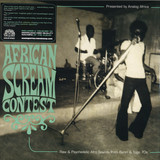
The Analog Africa label delves into the amazing history of music from 1970s Benin and Togo.
This compilation highlights forgotten raw and psychedelic Afro sounds, and the well-researched liner notes tell fascinating stories to accompany the mind-blowing music. The essence of Analog Africa is clear, searching in dusty warehouses for forgotten music to keep the sound alive!
- A1: I.o.t.a. (Instrument Of The Ancestors)
- A2: Play It Up
- A3: Overload
- A4: Blam
- A5: Williehook (Skit)
- A6: Aerosol
- A7: Vital Transformation
- B1: You Can Always Count On Me (Ft Shana Jenson)
- B2: These Are The Things I Really Like About You (Ft Dudley Perkins)
- B3: Canadian Hillbilly
- B4: Conmigo (Reprise)
- B5: Bobbie's Dittie
- B6: Ciao
Georgia Anne Muldrow returns with a modern soul classic in the
making - 'Overload', via Flying Lotus's Brainfeeder record label.
An incredibly talented vocalist, songwriter and producer,
Georgia Anne Muldrow effortlessly spans jazz, soul and hip hop
and, during her 12 year career, has collaborated with Madlib,
Erykah Badu, Dev Hynes aka Blood Orange, Bilal and Robert
Glasper.
'Overload' was executively produced by Flying Lotus, Aloe Blacc
and Dudley Perkins.
For fans of NxWorries, Erykah Badu, The Internet, Madlib.
Notable collaborations on 'Overload' include Dudley Perkins,
Shana Jenson, Moods, Lustbass and Mike & Keys (50 Cent,
Nipsey Hussle, Snoop Dogg, G-Eazy), who contribute
production to four tracks including the sleek, anthemic title
track alongside Khalil (Dr Dre).
CD digipack. LP pressed on 180g heavyweight black vinyl in an
artworked innersleeve housed in a 3mm spined outer sleeve
with digital download card included.
Artwork by Martin Norwood (Nice Dreams Studio). Layout by
Adam Stover.
'No one sings a heavy love song like Georgia Anne Muldrow' -
Pitchfork Best New Track
'Beautifully poised between classic 90s R&B and something
strange, disorientating and psychedelic.' - The Guardian
The debut release from new Scottish producer North Sea Dialect, Local Guide is a dense musical world made of uneasy ambience, shimmering distortion, subdued rhythm and propulsive melody.
Buried in its soundscapes are the echoes and surrealness of alienated life - expectant youth, distant voices and broken folklore. It's industrialised music tied together with found sound, adrenaline fuelled synthesis and the depths of late night solitude. Conceived during a move from Glasgow across Scotland and composed in isolation, a blistering sense of reality creeps through the recordings.
Local Guide is accompanied by three videos for the tracks Mossy Cyphol, Subarctic Baltasound and Gloup. The short films are haunted and illuminated by the serenity of rural freedom, the power of the sea, and the collapse of industry.
If you check the credits of The Rolling Stones' Goats Head Soup LP from 1973 you'll find a certain "Pascal" listed on the percussion section. That is none other than Los Angeles based artist Nicolas Pascal Raicevik (1933-1994), aka 107-34-8933, aka Head, aka Nik Pascal, aka Nik Raicevic. Besides his hitting the bongoes on the Stones album, Nik was a great artist on his own, both as a painter and as a musician. As a musician, he was a pioneer in the use of synthesizers, preceeding the Berlin school by some years when his Head LP was released on on Buddah in 1970. Buddah probably saw in Head the opportunity to cash in some money from the remains of the psychedelic scene - the three tracks on the LP are named after drugs used in the late sixties. The sounds, however, are accomplished works that show Raicevic as one of the most interesting pioneers in the use of synths. The album probably didn't do too well, since Buddah didn't renew the contract with Raicevic, who instead took his own way releasing his works on his very own Narco Records and Tapes label. Between 1968 and 1975 Narco would issue 4 LPs credited either to Nik Raicevic (Beyond The End... Eternity) or Nik Pascal (The Sixth Ear, Magnetic Web and Zero Gravity) plus one credited to 107-34-8933 (Numbers, which is in fact the same LP as Buddah's Head, albeit with different cover art). Copies of these LPs came with an ironic sticker over the shrinkwrap that read "Do not listen to this LP if you are stoned".
Magnetic Web was released in 1973. It appeared under the Nik Pascal monicker and showed a clear evolution in sound, favoured by the addition of an Arp 2600 and some rhythm boxes. It also included percussions and cymbals. The Two Headed Dog site thinks "this is his masterpiece in all of its acid-laced glory."
Besides his musical explorations, Nik was also an interesting painter. His paintings are auctioned from time to time, and are consciousness expanding works influenced by abstract cubism and surrealism, some kind of Salvador Dalí on drugs exploring the outter and inner space. All the artwork on the sleeves of his LPs is done by himself. Spacey landscapes and psychedelic colours that fit perfectly to the music they contain.
"Nik Raicevic's music is at the intersection of radical psycho-electronic weirdness and kraut kosmische music (in particular the scifi-hypno-minimal modules of Conrad Schnitzler in Grun, Rot and Blau). It presents mega epic & tripped out electronic improvisations.
"This is an absolute must for collectors and fans of visceral, neurotic soundscapes."
"As far as late-60s / early-70s American Bedroom' Electronic Music goes, these LPS have to be among the first transmissions from this sector, made all the more attractive when coupled with Raicevic's alien topographIes - the covers are high-color portrayals of Venusian lanes, knotted growths, & future-past architecture in a style you might equate with Vintage' sci-fi pulp-novel covers - & copious Downer' sentiment. This music is imbued with a sort of lonely, anti-social sensibility that's about as far as you can get from the Academic' Early Electronic vector. I will say that if the Steve Birchall, Cellutron & the Invisible, and/or Pythagoron™ seed your garden, this will likely do the same."
Never reissued before on vinyl format, the Wah Wah reissue features original sleeve artwork made of paintings and drawings by Nik himself, and reproduction of the famous ironic "Do not listen if you are stoned" sticker. Limited edition, 500 copies only.
On her debut EP, Brussels-based multi-instrumentalist Esinam gives us an entrancing insight into her eclectic world of jazztronica.
Released 21st September via Sdban Ultra, her self-titled EP carries influences from different worlds geographically, culturally and musically. Blending traditional and modern instruments with her soulful voice, the acoustic sounds of the instruments are allowed to evolve and take on new dimensions, opening up a kaleidoscopic spectrum of sound and colour.
Esinam Dogbatse is part of a new generation of musicians bringing forth a cultural blend of music. Having opened for the likes of Nakhane and Témé Tan at Les Nuits earlier this year, Belgian rapper Baloji invited her to guest on his latest critically acclaimed album '137 Avenue Kaniama'. She has also supported Alsarah & The Nubatones, Selah Sue and Melanie De Biasio on her sold-out shows at Ancienne Belgique.
For the recording of the EP, Esinam joined forces with Jules Fradet from Studio Planet (Damso, Afrikan Prötökol). Producing and playing most of the instruments herself, the EP was mastered by LA-based producer Kelly Hibbert aka Almachrome (J Dilla, Madlib, Little Dragon, Flying Lotus, Ebo Taylor, Mark de Clive-Lowe and Arca).
Lead track 'Birds Fly Under a Heavy Sky' is a mesmerising opener that smoulders effortlessly against a backdrop of subtle beats and sensual rhythms, with Esinam's soft vocals and hypnotic flute providing the groove.
On 'Do Not Go Into That Black Night', she is dark and direct. It's a magnetic take on jazz noire that doesn't distract from the sultry inflections of her voice, while 'Gavoé' recalls the spirit of her Ghanaian roots in a ballet of instruments that display a level of personal freedom and sensitivity. Through merging different genres of music, we are warmly welcomed into Esinam's musical universe.
Esinam teamed up with Senegalese DJ and producer Ibaaku on the highly charged 'Electric Lady', who provided some distinctive musical hues. A track drenched in afro-futurist colours, sonic samples and collages freely mix with electric and raw sounds, supporting the energetic playing of the flute. The structure of the song remains true to Esinam's signature sounds: surprising ruptures, poetic atmospheres and constant affirmation of groove.
When Esinam performs live, she juggles traditional instruments such as the tama, kalimba and pandeiro, which she loops and blends with the sound of her flute and voice. It sometimes triggers dance, sometimes contemplation
'Garage bands suddenly obtain cult status and become the antithesis of their initial appeal'
Garage Class were a group of reluctant outliers who produced one of the finest contributions to the wave of UK DIY music that emerged during the late 70s and early to mid-80s.
Hailing from Alsager in North West England and comprised of Tim Shutt (vocals) Phil Murphy (lead guitar) Clive Williams (guitar) Lynne Sanders (bass) and Phil Bourne (drums / bass on studio recordings) Garage Class originally went by the name of The Pits before their then manager Steve Hurt imposed an alias which, though unpopular within their ranks, would nevertheless reflect the shambolic art they would eventually capture on their first and only single.
As The Pits the group offered a loutish inflection on glam-punk flamboyance, evoking Johnny Thunder hitting the north and remaining disowned yet undeterred in a dreary old boozer. But as Garage Class the group distilled a roughcast and homespun primitivism that felt quintessentially their own. In this they proved too unruly to be assimilated into any wider scene. Early gigs descended into acrimony and recognition proved elusive. Yet what they managed to make back then now sounds like an extraordinary article of underdog ambition.
Released in 1984, four years after it was originally recorded, the Terminal Tokyo single is an unlikely triumph of exceptional messthetic punk. Though raw and unpolished the songs here are precariously pop-minded and indisputably anthemic. The titular A-side reveals the dry and detached drawl of Shutt aka The Subliminal Kid, a sharp, jaded and poetic voice that has some of the most iconic lines never heard in punk. Accompanied by second-hand guitars, on-the-fly handclaps and a chorus like a terrace chant this is the cult hit that never was, a heroically artless masterpiece that has all the ragged character and misfit euphoria of Swell Maps and The Buzzcocks if they were more impulsive and boisterous, and left to their own devices in the remote margins of a Cheshire town. The original B-side is here substituted for I Got Standards, a track that, until now, has somehow remained unreleased. An ideal twin to Terminal Tokyo there's the same brusque and dog-eared quality to the band's delivery, as well as the same upfront emphasis on strong hooks and insistent momentum. Yet again, Shutt is on impeccable form, perfecting an inflated, adolescent antagonism that has all the sardonic, malcontented charm of similarly 'shirty' buggers like Dan Treacy (Television Personalities), Patrik Fitzgerald and Mark Perry (Alternative TV).
Although never accepted in their own time both tracks represent a brief but inspired moment of fervent imperfection, one that epitomized the best of a diffuse and autonomous underground movement spearheaded by The Desperate Bicycles and built upon by the likes of Amos & Sara, The Homosexuals, The Cleaners From Venus and Family Fodder. Like them Garage Class were situated at a point where punk, art, humour and a sense of stubborn independence all intersected.
In the years since Terminal Tokyo has accumulated a retrospective appeal among certain trusted circles, with Jon Dale celebrating the single in his exhaustive and essential Story of UK DIY for Fact Magazine, and original copies regularly changing hands for a foolish forty quid or so. With this inaugural release on the Outer Reaches label Terminal Tokyo is not only restored for the very first time but given a worthy expansion courtesy of JD Twitch (Optimo).
Continuing his own fascination with the fringe history of UK DIY - documented on his own outstanding compilation Cease & Desist: DIY! (Cult Classics From The Post Punk Era 1978-1982) and in his re-edits of Crass Records classics for an early release on RVNG INTL - Twitch reinterprets I Got Standards as an incisive, dubwise outing that pictures Jaki Liebezeit and Muslimgauze on a bender in England's provinces, tasked with remixing the raw product of local punks. A new slant on Garage Class' crude magnificence, built to play loud on contemporary soundsystems.
Although the latter part of 1980 spelled the end for Garage Class with members moving on to other projects (Bourne fell in with The Colours Out of Time, Murphy went on to front The Regular Guys and Shutt eventually left to form Happy Refugees) this reissue attempts to give their fleeting time together and the unique single statement they made the treatment it deserves. If this means Garage Class have obtained cult status, their initial appeal remains. Just listen for yourself.
Long time friends (since Flex Vienna 95) Patrick and Luke joined forces on Blumoog Music and came up with this crafty and dynamic four tracker EP. Patrick Pulsinger opens the project on the A with two ingenious and uplifting tracks reminiscent of his old 'Sluts'n'strings &909' days with an acidic twist. 25 years have gone by since Patrick Pulsinger made history and put Vienna on the map by founding techno avant-garde label Cheap Records and with productions like 'Dogmatic sequences' on Disko B and pioneering sequential- minimal-techno soon after with the huge LP 'Porno' also on Disko B. On the flip side Luke M.R.E.U.X is consistent with his fine style. Dry percussions and rubbery bass in B1 'Cerebral fix'. A darker approach in confession B2 with a relentless 5 minutes of techno trip that will not let you catch breath.
- A1: La Tuna Club (S. Mantequilla' Font)
- A2: Azul Trompeta (S. Mantequilla' Font)
- A3: Whisky Jazz (S. Mantequilla' Font)
- A4: Jamboree (S. Mantequilla' Font)
- A5: Blue Note (S. Mantequilla' Font)
- A6: Full De Ases (S. Mantequilla' Font)
- B1: Moanin' (Timmons)
- B2: Not Problem (Marray)
- B3: Blues 3/4 (S. Mantequilla' Font)
- B4: Atmosfera (S. Mantequilla' Font)
- B5: Vat 69 (S. Mantequilla' Font)
- B6: Balada (S. Mantequilla' Font)
Salvador Font studied violin, clarinet, composition and harmony at the Conservatori Municipal de Barcelona, but very soon started to gain notoriety as a saxophonist in the rich jazz scene of 1940s Barcelona. Font would soon be playing tenor sax and clarinet in the Orquesta Gran Casino. He was in his early twenties and his hot swing technique was already praised through the citiy's scene, he would grow to be considered the best saxophonist in Spain by playing in many orchestras and combos, among them: José Puertas', Antonio Vilá's Virgina, Bonet de San Pedro's band, Pierre Michel, El Lirio Campestre, Los Marios, Luis Rovira y su orquesta, Orquesta brasileña Fon-Fon, Jaime Camino, Los Embajadores, Italo Leone's... With these and others, Font toured constantly, visiting many countries and even staying on some for long seasons: Mexico, Morocco, Switzerland, Egypt... Hungarian violinst of Turkish ancestry Kurt Dogan gave him the "Mantequilla" surname - he felt "Mantequilla" (which means "butter") fit Font's mellow yet swinging improvisation style.
Mantequilla y su conjunto
In the early sixties, "Mantequilla" had the chance to lead his own combo, Mantequilla y su conjunto, with which he was to record the three splendid EPs that are compiled on the present album. All these 7" have become elusive collector pieces in the record market, with sellers demanding from 200 to as much as 950 euros per copy.
In 1961 "Mantequilla" was at his best moment, his gigs at the Jamboree Jazz Cava had brought him back to the first line of Barcelona's jazzmen after he had been working abroad for a long time, and was approached by the Belter label to record an EP. On the sessions he was accompanied by Manolo Mercedes on trumpet, Pedro Ferré on piano, Rafael Lizandra on double bass and Rafael Verdura on Drums. The material chosen for the disc were four original compositions by Salvador Font which had a high West Coast flavour all over: "La Tuna Club", "Whisky Jazz" and "Jamboree" named after famous jazz clubs and "Azul Trompeta", dedicated to Manolo Mercedes.
In late 1962, after spending some time in Madrid working as members of the Italo Leone combo, "Mantequilla" and pianist Manuel Gas came back to Barcelona for the recording of the second "Mantequilla" EP, also on Belter. We find again Manolo Mercedes on trumpet, Pedro Ferré on piano and Rafael Lizandra on double bass, the drummer this time was José Farreras. Another news is that Manuel Gas also sat on piano and vibraphone. The songs chosen for the occasion were two tunes from the Art Blakey Jazz Messengers repertoire: Bobby Timmons' classic "Moanin'" and the Jacques Marray track "No Problem" from the soundtrack of the Les liaisons dangereuses film (mispelled "Not Problem" on the sleeve and label), plus the Salvador Font penned "Blue Note" and "Full de ases" - on "Full de ases" "Mantequilla" trades his sax for the violin, which he also mastered under high influence from Stephane Grapelli. The record was released on Belter in early 1963 and showed "Mantequilla" adding a certain aggressivity to his sound, in a soloist style which has been compared to that of tenor saxophonists Barney Wilen or Benny Golson.
1965 was the year of release of Mantequilla y su conjunto's third EP, now on the Discophon label. Mercedes and Farreras are again present in the recording sessions, joined by Ricardo Miralles on piano and Enrique Ponsa on double bass. Four original Font compositions make up the fantastic EP: "Blues 3/4", "Atmósfera", "Vat 69" and "Balada".
There would be a further EP on Belter, released in 1971 as Mantequilla Group it was a cash-in operation to take some redits of the ye-yé discothèque phenomenon, it gets quite afar in style from the jazz works of Mantequilla y su conjunto, so we just left it aside for the present edition.
"Mantequilla"'s career would continue, in 1968 he would settle in Majorca and form a swing band with Bonet de San Pedro and Manuel Bolao. He played in local orquestras and also with first class world acts like Gerry Mulligan, Tete Montoliu, Errol Gardner, a.o. He was even approached by Henry Mancini to play sax on The Pink Panther Theme in a gig Mancini did with his orchestra in Palma de Mallorca in 1975, He also joined his son Salvador Font (a demanded drummer himself who has played with Máquina!, Orquestra Mirasol, Música Urbana, Gary Burton Quartet, Georgie Fame, and many others) and his peers Carles Benavent, Emili Baleriola, Josep Mas 'Kitflus' and Jordi Bonell with whom he recorded his acclaimed "Mantequilla" album in 1987.
Now, for the first time ever, the legendary three ultra rare and imposible to find EPs by Mantequilla y su conjunto are compiled in a lavish vinyl LP with remastered sound, featuring liner notes and photos and a fantastic period inspired, three backflaped, front laminated sleeve. It is a stricly limited edition of only 500 copies and they are expected to sell out very soon, do not miss your chance of getting yours - it may be the last chance of chasing the Mantequilla sound on vinyl at a reasonable price!
l
- 1: Intro
- 2: Octopussies - Don't Skip That
- 3: Octopussies - Future Classic (Feat. Mista Min)
- 4: Blockboy - World Against Us (Feat. Mista Min)
- 5: Primatune - King Kong Rap (Feat. Masta Ace)
- 6: Blockboy - Bunnybreak
- 7: John Pussner - Riesen Himbeer Bonbon
- 8: Big Mama's Boys - Müncheeen (Feat. Epi.kur)
- 9: Epi.kur - Bis Wann
- 10: Mike Sense - Grown As Man
- 11: Danny Decock - Mosca
- 12: Blockboy - The Renaissance
- 13: Blockboy - Runaway (Feat. Ethic)
- 14: Primatune - Primat City Radio
- 15: Primatune - Oleg, Oleg (Feat. Gasreiz & Thk)
- 16: Primatune - Primat City Radio Werbepause
- 17: Dharmabums - Wassn Dassn!!
- 18: Primatune - So Sieht's Aus (Feat. Wordsworth)
- 19: Epi.kur - Wohin Die Reise Geht
- 20: Mikzn70 - Keinsommertrack (Feat. E.p.eazy & Pat Riot)
- 21: Blockboy - Blasdudler
- 22: Octopussies - Slidin
- 23: Mike Sense - Green Gold (Feat. Declaime)
- 24: Blockboy - Well Wicked
- 25: Blockboy - Woodbox Sonata No. 4
- 26: Blockboy - E E E (Jon Kennedy Remix / Pussner Edit)
- 27: Blockboy - Apache Walk (Asagaya Remix / Pussner Edit) (Feat. Nahawa Doumbia)
- 28: Lippovic - C.u
At a time when on every street corner, adolescent wannabe gangstas believed they had to tell everyone and their dog about their greatness and the inferiority of all others, there was a cadre of Munich-based Hip-Hop artists producing incredibly fresh and imaginative music, inspired, of course, by the golden era of the 90s. They played gigs in small clubs in front of some dozens of people, spread mixtapes and Eps and were celebrated by their friends and the rest of the scene. The world took no notice - until now ! Tramp Records, specializing in unearthing forgotten pearls of musical art, documents with "Golden Hits", an era of Munich underground Hip Hop which flew completely under the radar, spanning ten years from 2005 to 2015. The musical bandwidth and quality of the tracks is astonishing, but so much more could have been possible. Much of this music remained fragmented or unreleased for a host of reasons, families, stressful jobs, musical reorientation, and even lost hard disks... but one story has a happy ending! When Masta Ace had a live show at the legendary Atomic Cafe, Primatune's Fid Rizz was able to hand over a CD with demo beats. Unfortunately the CD was blank by mistake! But the curiosity of Masta Ace had been piqued, and he got back to him, the rest is history. Features of other stateside rap heroes like Wordsworth or Declaime followed.
The very best of this era, including tracks never before heard and ideas remaining fragmented, has now been compiled by Tramp Records to take you for a fascinating listening journey.
Hip Hop, as it was since it's inception in the Bronx, fresh and real, and made with passion by neighborhood kids spitting truth about life and the struggle!
Key selling points:
- including many unreleased songs
- the vinyl LP comes with a full album download code
Released in solidarity with Tiga's anti-tech house crusade, a silent campaign fought everyday on the streets of your hometown, 'Blaze' finds Russian crypto-whiz Dimitri Veimar still dancing with the rawer-than-the-rawest-dog electro that's brought him to the dizzying heights of the mid-tier crags of Mt. Turbo Mountain. Throwing his weight behind what some in the media are probably already calling 'Tiga's War' was absolutely necessary following the events of a recent gig in Moscow. Veimar opened the night by playing no fewer than three Tiga tracks, which anyone who's read Tiga's Taboos can tell you is definitely a Tiga Taboo. Deeply immersed in the practice of pouring his own mineral water, Tiga ignored the hootin' and hollerin' of the VIPs crowding the DJ booth (including Dennis Miller and Diego Maradona), and proceeded to play a set entirely comprised of recordings of every embarrassing thing Veimar had ever said in his life. Four hours later, an emotionally-shot Veimar collapsed into Tiga's arms, with the magnanimous label boss whispering, 'I forgive you, Dimitri' into his ear. The release also features a 'broken techno' remix from mysterious European producer Florian Kupfer, who made us sign a Non-Disclosure-Agreement dictating that we can only describe him as 'mysterious,' 'enigmatic,' and/or 'European,' so we'll have to let the music do the talking.
WHITE RING mark a triumphant return with a brand new full-length Gate Of Grief, due out on Rocket Girl on 22 June 2018. Their debut album arrives a full eight years since their benchmark EP, Black Earth That Made Me, which sold out almost instantly, making their records some of the most highly sought after on the underground scene and earning them a cult following across the globe. Swerving from aggressively abrasive to beautifully ethereal, musically they draw from varied and challenging palette, whilst tackling themes of loss and acceptance due to struggles with drug addiction and existential dread on a broader scope.
WHITE RING were originally formed by Bryan Kurkimilis and Kendra Malia, before they were joined by Adina Viarengo, with Bryan and Adina currently touring as a duo. One of the most acclaimed proponents of the "Witch House" movement, WHITE RING blend heavy, distorted electronics with eerie, unsettling vocals. However, their new material, created over the course of seven years, pushes the boundaries further, subverting genre ideas and mashing them all together, with industrial, metal, rave, chopped and screwed, rap, grunge, neo folk, post punk and new wave all in the mix. As Bryan Kurkimilis explains; 'We treat our influences like tools to create a certain feeling. We are interested in covering more ground than sticking to a certain formula.'
Bryan and Kendra originally met on Myspace in 2006. At the time Bryan lived in New Orleans and Kendra was in New York, and they didn't even meet face-to-face until 2008 after they had already released a few singles. In 2010 they released the EP Black Earth That Made Me, which was a collection of songs that they mostly recorded before they met in person. The record confounded expectations by selling out immediately on pre-order, making it very rare and highly sought after, with copies going on Ebay for large sums. It was reissued by Rocket Girl in 2011 and still continues to sell in voluminous amounts.
They started playing live in 2009 and rapidly grew a reputation for their captivating performances, usually bringing their own lighting equipment and putting on a spectacular laser show. They have played for large crowds in their hometown of NYC and toured the UK in 2010 in support of their sold out split 7" with oOoOO, playing InTheCity and SWN festivals - which were their first shows outside of New York. They have since shared the stage with the likes of Cold Cave, araabMUZIK, Liturgy, Blank Dogs, Gatekeeper, Blondes, oOoOO, Clams Casino, and others.
They started recording Gate Of Grief in 2010, with the hope of exploring new musical territory, however they took a while to find their path. Bryan and Kendra had some tough personal battles to fight, a sense that pervades the whole album. Thematically it delves in to some pretty dark places whilst exploring the concept of time and what it does to people, relationships and society. As Bryan explains; 'There is a lot of tragedy in this album but there is also hope at the end of it.'
By 2016 pressure was building to finish recording, however due to Kendra's ill health, they needed to bring in someone new to assist with vocals. Fortunately they found Adina Viarengo, who had played in various bands and gave them the impetus needed to complete the album. Shortly after meeting in Brooklyn, Bryan and Adina moved to Joshua Tree, California to finish recording the album, before settling in Massachusetts. Her vocal style fitted in seamlessly with what Kendra had been doing, and although she sang on half the songs, it's almost impossible to tell who is singing on which track, thus making her the perfect addition to the band.
Gate of Grief can be considered the second part of Black Earth That Made Me, or rather, they are the first two chapters in an overarching trilogy about evolution. As Bryan explains; 'First you are born but then you realize what you are and what is against you and it's a flood of emotion that you can only hope to hold on for and let it pass.'
The album title, Gate of Grief, refers to the real gate between Africa and Saudi Arabia that is believed to be the spot where the first humans migrated out of Africa and went on to populate the rest of the world. The album art ties in with this concept, with an image depicting a group of settlers in the USA in early 1900 during a parade. They were actually from a cult in the early 1900s in Bryan's hometown of Fort Myers, Florida.
M 13) Burn It Down
- A1: The Hell Raisers - Syd Dale
- A2: The Eyelash - Johnny Hawksworth
- A3: Walk In A Nightmare - Syd Dale
- A4: Beat Street - Johnny Hawksworth
- A5: Walk And Talk - Syd Dale
- A6: Big Bass Guitar - Bill Martin / Phil Coulter
- A7: Mr. Chestertons Dog - Bill Martin / Phil Coulter
- A8: Mods & Rockers - Bill Martin / Phil Coulter
- A9: L.s.d. - Bill Martin / Phil Coulter
- B1: Stand By - David Lindup
- B2: Take A Goosie Gander - Syd Dale
- B3: Juggernaut - David Lindup
- B4: Grand Prix - Johnny Pearson
- B5: Veiled Threat - David Lindup
- B6: Sixth Sense - David Lindup
- B7: Funky Flight - Keith Mansfield
- B8: Raver - Alan Hawkshaw
- B9: The Washington Affair - Syd Dale
Way back in 1967, an animated superhero cartoon was released into the world. It was created by Grantray-Lawrence Animation and was based on a web-spinning, crime fighting blue and red dressed character that had originated in1962, in Marvel Comics by Stan Lee and Steve Ditko. This amazing series (that we're not allowed to mention the name of for legal reasons) ran on ABC TV in the USA, then Canada, then a few years later started to spread its web further, running here in the UK throughout summer holidays, after school and possibly early mornings at weekends in the late 1970s. The series then got released on VHS video (and probably Betamax too) in the mid 1980s and still continues to spin its animated magic around the world through further broadcasts, YouTube and DVDs.
The series was notoriously low budget, with animated errors everywhere and numerous scenes, sequences and backgrounds being re-used all the time, often across the same episode. Even a certain spider logo on a costume would appear with six legs, then eight legs later on, then back to six again in the same show.
Series One opened with a newly written spider theme, a classic, hooky song all about doing whatever spiders can, and had, as Big George (RIP) once pointed out to me, a set of session singers falling slightly out of time with the backing track after the first verse. Series One also featured background music by jobbing composers Bob Harris and Ray Ellis but these cues and master tapes are now believed to be lost.
After Series One the company Grantray-Lawrence went bankrupt, so the amazing spider series (that we're not allowed to mention for legal reasons) was taken on by producer Steve Krantz. He brought in new talent, including animation director Ralph Bakshi who later went on to turn a Robert Crumb strip cartoon into the feature Fritz The Cat. Krantz also slashed the already cripplingly small spider budget, and brought in the idea of using economic library music. Here, thanks possibly to an independent sync agent (it has been suggested that a company called Music Sound Track Services may have been the one) production turned to the KPM catalogue. This was one of the few really established library catalogues around at the time with a modern edge, it was full of fabulous, modern dramatic music tracks - often all on the same LP. But more importantly all the tracks were far longer than the one minute musical cuts that many of the fledgling USA library companies were issuing at the time. Not only would this KPM music be efficient, affordable and very easy to use, it would also mean syndication worldwide would not be held up by any future musical issues. Krantz produced two amazing spider series (that we're not allowed to mention for legal reasons), and both were smothered with KPM music. In fact barely a spider second goes by without music playing in either the background or foreground.
For many years I - and many nostalgic others - have been thinking about putting this vinyl album together. For many enthusiasts this really is formative music - a junior foray into hip swinging crime jazz and esoteric musical grooviness. I've also read on line accounts by DJs from WFMU on the trail of original spider master tapes, and there's even a whole forum dedicated to Spidey-Jazz'. Then recently I was looking at an old spider tracklist and realized that several of my favourite KPM cues were there including Syd Dale's Hell Raisers' and Walk And Talk', both from one of the most elusive and desirable KPM albums of all time (yes, you just try and find yourself a copy of KPM 1002 right now), so I decided to push on and get the album made.
So, what features on this Spider-Jazz Lp Well it's music from the amazing TV series we are not allowed to mention for legal reasons, BUT, not music from Series One. No, but it is all from Series Two and Series Three. From looking at archival cue sheets, over 50 tracks from various early KPM 1000 series albums were used across episodes. I've distilled this down into one exciting and enthralling LP, and if this works a further Spider Jazz album may well swing in to production. If you're interested (and I'm sure you may well be) cues here came from KPM1001, KPM1002, KPM1015, KPM1017, KPM1018 and KPM1043 and were composed by master library composers of the era - Dale, Hawkshaw, Hawksworth, Mansfield etc.
And if you are listening over there in the USA, you may well recognize many of the cues here not just from the amazing TV series (that we're not allowed to mention for legal reasons) but also from classic 1960s and 1970s NFL highlight shows that we are allowed to mention.
Picture Vinyl
* BCee's 'Northpoint' LP gets the remix treatment from the big dogs.
* LSB puts his touch to 'Surfacing' and take things deep, turning what was an amen tear out into something beautiful.
* Lenzman strips back 'Black Sky' and turns it into a piano roller that liquid lovers are going to go mad for.
* New kid on the block Monty demonstrates his production skills and shows us exactly why Alix Perez snapped him up for 1985 music.
* As if that's not already enough, Bladerunner, Seba and Anile all join the party, all in all making this one heaven of a remix package.
* Support from all the big dogs, a few cats and a chicken.
The Works of John B. McLemore, the star of one of last years biggest podcasts, S-Town, which is coming out on Dais. The story behind this release is truly fascinating.. the music itself is ambient remixes of Tor Lundvall's best works, but with John's idiosyncratic slant on them, with some having been woven together using the horde of clocks he use to keep in his basement. This story is really worth a read if you get a chance."In September 2012, I received an e-mail from someone named John B. who said he had assembled a lengthy remix of my music, which also incorporated some of his own material. John asked if I'd mind if he posted this recording on YouTube, to which I agreed. He also mentioned that there was a second part to his mix that was "roughed out", but never completed. I was curious to hear both parts, so shortly afterwards, John mailed me two CDrs which I enjoyed very much. The recordings were hypnotic and haunting, evoking images of vast fields at twilight. I was especially fond of the second disc which had a darker atmosphere and featured more of John's original material, beginning with ghostly clock chimes and ending with a mysterious piece using dried seed pods and other cryptic sounds that slowly built-up into an intense, almost claustrophobic environment.
My correspondence with John lasted about two months. In one of his final e-mails, John said "I have to observe that your paintings seem to have a great deal of loneliness involved in them... even multiple characters seem to be together alone, so to speak... I really appreciate looking at your paintings as well as your music, I think I have connected with the spirit of them both as much as anyone can." He went on to discuss his struggles with depression, caring for his aging mom and his concerns about the future. I tried to encourage his music as a possible outlet, perhaps as a means to help transform his feelings of loneliness into a more content solitude. Always easy to say, but as I well know, not always easy to do.
In his last e-mail in late October 2012, John sent me a beautiful slideshow of his Fall flower beds and his dogs. I was touched and I told him how much watching his video had brightened my day. That was the last time I heard from him.
Last year, I visited John's YouTube channel to see if Part One of his mix was still posted, which it was, and still remains. I was shocked and saddened to read in the comments section that he had passed away. The comments also suggested that John had received some sort of national attention recently. This quickly led me to the S-Town podcast. Although I had mixed reactions after listening, I was thankful that S-Town shed more light on John and his remarkable life... but somehow, I just couldn't place the person in the podcast with the person I had corresponded with. Had I not listened to S-Town, I would have remembered John as a very private, somewhat dark and lonely person. He may have been these things, but there was obviously far more to him than that.
After finishing the final episode, I decided to play the second, unreleased CDr of John's recordings for the first time in years. Listening to his clock chimes ringing in the dark was an eerie and chilling moment. I was reminded of a line from my song "29" which says "I live with dreams and a lonely mind, my clock is set to a different time". I wondered what those lyrics might have meant to him.
John had mentioned that he wasn't satisfied with his final mix, but I felt his work was too special not to be heard. I hope that these recordings offer another glimpse into the creative mind of a unique, complex and gifted individual who tragically left this world all too early."
Tor Lundvall
January 17th, 2018
JOHN B.'s NOTES:
This is what was intended to be the second part of my Tor Lundvall Remix series. Unfortunately I am dissatisfied with it due to a few defects, and it is highly unlikely that I will ever be able to complete it. Still it serves as a testament to my interest in the work of Tor Lundvall that I made it this far. Defects are as follows: The first movement is too 'fussy', and the first section of the fifth movement seems a bit long and may bore the listener, but since it consisted of so many slow moving textures, I don't know how I could redo it and still achieve what I was wanting to accomplish. Additionally, this recording was done just days before my Father died, and there are many feelings of guilt associated with the time spent on it. If you are receiving this recording, either you are one of my better friends, or you are a great admirer of Tor Lundvall, and requested that I send it to you.
1st Part: Basically a track of me fiddling around with old clock bells, and air turbulence mixed with Tor Lundvall and Field Recordings of rain, birds, cicadas, frogs and such.
2nd Part: My interpretation of Lundvall's Dark Spring. This track was inspired by the music of Carl Michael von Hausswolff.
3rd Part: Very ambient Field Recordings inspired by the work of Francisco Lopez.
4th Part: A Very Quiet passage consisting of delicate Field Recordings.
5th Part: Music performed entirely by me inspired by the Darker paintings of Tor Lundvall. Most of the instruments on this piece consisted of dried seed pods from the plant; Showy Rattlebox (Crotolaria Spectabilis), that I had collected and dried the previous Fall. There are other sounds from my own environment as well.
This mix was assembled in the Late Fall of 2003. There are some very Quiet passages in this piece, so it requires a nearly Isolated listening environment... It should be heard After Midnight, in the Late Fall of the year, and, not surprisingly, a Very Long Attention span is a Prerequisite.
John B. McLemore
September 10, 2012
It's taken almost 3 years to get the man like Medlar back on Delusions fol- lowing his 2015 release with Dan Shake but finally it's come together. That release, along with his regular output for Wolf, Riverette and For Discos Only has helped cement Medlar's reputation as one of the leading UK un- derground house producers and led to official remixes and approved edits for legendary labels TK Disco and West End no less! The Medlar seal of quality has led to support from such influential heavyweight selectors as DJ Harvey, Gilles Peterson and DJ Koze.
Kicking things off we see Medlar in straight up dance floor mode on title track NRG, coming through with a drum-heavy workout that utilises a gnarly bassline, echoing synth stabs and rasping hats to excellent effect.
Flip over for his own Dub Version which strips things back further placing all the emphasis on the bassline and going heavy on the Space Echo for a tripped out, dubby warehouse vibe tailor made for the freaky hours.
Closing the EP we have the aptly named Tripped which drops the BPM's for a low-slung mood-setter to warm up the floors with. A simple groove lays the foundation for a rolling bassline while chiming synths weave in and out of the spacious mix.
- A1: Premiers - Shawnee
- A2: Charlie And The Bank Job - Al Katraz
- A3: Jules Blattner - 500 Pound Canary
- A4: The Flock Rocker - Chinese Rock And Roll
- A5: Bob Strauss - Nameless
- A6: Hurricane Harry - Last Meal
- A7: Glenn Willings - Me Tarzan, You Jane
- A8: The Bobby Borda Five - Mad
- A9: Dick Summer - The Goatee's Gotta Go
- A10: Wigland - Side A Outro
- B1: The Renaults - Rockin' With Joe
- B2: Wee Willie & The Soulettes - Pulp Wood Charley
- B3: Billy Duke And The Dukes - Roland
- B4: The Orbits - Knock Her Down
- B5: Dan Kubiak - Finding You
- B6: King Sid - Unh Uh Baby
- B7: Arnie Ginsburg - Pal Mal Rock
- B8: Sidney & Chimps - Blah
- B9: Stringbeans - Stop Your Cryin
- B10: H & A - Side B Outro
For over 20 years, your irrepressible host Rex and his legendary Fool's Paradise radio show on WFMU has held a grudge against the whole square world. Broadcasting from an undisclosed location in rural New Jersey in a fur-lined fall-out shelter located miles below the earth's crust, this weekly "excursion to nowhere" continues to proudly play nothing but greasy grooves from inane 45s, non-hit misfires, curveballs and oddballs from the Rock & Roll era. Yes sirree, those weird and warped ones about monsters, beatniks, chickens, apes, stewed moonbeams and mosquito knees...
And now, in the tradition of free love and nickel beer, Jazzman Records has teamed up with Rex to bring together a fabulous collection of his top spins! These are the songs that, by virtue of Rex's dogged persistence, have now achieved a kind of classic status that was surely never previously thought imaginable - The Fool's Paradise Favourites.
Gatefold LP includes 18 tracks with extra special chicken-themed twin spin bonus 45 single!
Southend quartet Ghost Music release their evocative debut album I Was Hoping You'd Pass By Here via Arlen on 19 January. They create careful, considered songs, weaving lo-fi lullabies with gliding guitars and understated arrangements. Influenced by Silver Jews, Flying Nun and K Records, they explore themes of nature, love, loss and a melancholic English romanticism embellished with beautifully spectral melodies and executed with startling subtlety.
Despite this record being their debut, the band has produced a veritable wealth of music over the past 20 years in various guises. Ghost Music revolves around the songwriting partnership of Matt Randall and Lee Hall, who had played together in the 90s with John Peel favourites Beatglider. More recently Randall has received critical acclaim as Plantman, with his three albums Closer to the Snow, Whispering Trees and To The Lighthouse receiving praise from The Guardian, Uncut and Mojo. When Randall and Hall reunited to collaborate on another album together, they brought in the talents of Roy Thirlwall on bass (Melodie Group) and Leighton Jennings on drums (Dark Globes) to complete the band.
The original idea would be that the songs would be 'ghosts' and create 'ghost music' to resurrect and dust off old songs that they had already started. Lee had found the beginnings of 'Home Dog' on a dusty old 4-track and he had recorded 'Strange Love' on his iPhone in 2014, whilst Matt had written 'My Cloud' as far back as 1997 (the night he moved out of his parents' house). As the album began to take shape, the ghostly premise took a back seat, as they began to breathe new life into the songs they found the impetus to write new ones.
Randall explains the songwriting process; 'When we were in Beatglider together and in the past we'd made a 'thing' out of writing long songs with a lot of changes. This time we pared it back a bit and stuck to the melodies more. We really wanted to make a proper guitar record. Lee's my favourite guitarist and it was lovely to see him stretch out on these songs with his diamond fingers.'
Not afraid to wear their influences on their sleeves, Ghost Music's sound is instantly familiar, echoing beloved bands from the 90s such as Pavement ('Home Dog' has a definite 'Range Life' feel), Galaxie 500 ('Blindspot'), Yo La Tengo ('Heart Shaped Holiday' is influenced by the languid YLT songs that peak after a short intro) and even old-school rock'n'roll ('Strange Love' was born out of an appreciation for the instantly engaging opening riff in 50s songs). Yet Ghost Music's work never feels derivative, being instead effortlessly emotive, melancholic and affecting, creating a world of sound that is hugely reassuring and a tonic for the modern age.
A first-ever collection of the highly sought after and largely previously unheard recordings of the one of Turkish pop and rocks best kept secrets - featuring the two rare has hen's teeth 1 Numara 7' singles (which fetch in excessive of £200 on certain internet auction sites) - including a previously unreleased extended version of Evren The missing component in the history of Turkish pop and one of the earliest exponents of Turkish electronic music alongside Ilhan Mimaroglu and Bülent Arel, Gökçen Kaynatan electrified the rock and roll scene of the late 50s/early 60s - sending teenagers wild with his custom built guitars and back lines - helping charge the climate for the birth of Anatolian rock. Then, from the sanctuary of his private studio, he revolutionised the industry with his pioneering use of electronics whilst hanging the sonic wallpaper in the living rooms of an entire generation of telly addicts as in house composer of choice for Turkey's first national television channel TRT 1. Despite having a modest discography of only four 7' singles to his name his influence is a major current that flows through over 50 years of Turkish pop culture. Compiled with unparalleled access to his private studio vault, Finders Keepers proudly presents the first-ever collection of Gökçen Kaynatan's pioneering early electronic works. Featuring a selection of his experimental pop and rock recordings dating from as early as the 1968 it features both of the highly sought after 1 Numara singles - including a never before heard extended version of Evren - as well as previously unheard archive material and songs recorded for and broadcast exclusively on TRT 1 - most of them never to be repeated. In helping Gökçen end his self-imposed 44-year exile from the record industry we can now share with you the first of these important recordings from a genuine maverick who helped shape the face of modern Turkish music, as well as shedding some light on the rise of one of Anatolian rock and pops must fruitful and experimental periods that began with the arrival (and subsequent explosion) of domestic synthesisers on the Turkish scene.
Native New Yorker Son Of Sound aka Henry Maldonado returns to Delusions of Grandeur with another fine EP including two floor-friendly originals plus a stripped back remix from Aroop Roy. For those too young to have been buying records in the early 90's Henry was a key figure, involved in seminal releases on Strictly Rhythm as House 2 House, Maxi Records as Deja Vu and MAW Records as Rhythm Section. To say this guy has history is something of an understatement having made an important contribution to the first wave of deep house with productions dating right back to '91. More recently he has created magic for Jus Ed's Underground Quality, Classic, Razor n Tape and Local Talk as well as establishing his own District30 imprint.
We kick off with NY Iz All I Know, a warm, soulful yet pumping slice of what can only be described as proper house music! Looped up vocal chops bounce around a classic disco groove until things breakdown into a new chord progression and saw wave bassline which add an interesting twist to the arrangement. Skin Tight drops next introducing a funk break underneath the solid four on the floor kick. One of Henry's trademark chord progressions emerges and the elements build up around to form another masterclass in sample-heavy house perfection.
Aroop Roy steps up for the remix following a run of fine edits and originals on the likes of Freestyle, Basic Fingers and House Of Disco. NY Iz All I Know gets stripped back and pumped up, taking the key elements and adding his own disco inspired groove and Moogy synth business for a floor- pleasing gem that we're sure will help find him new fans from across the house and disco spectrum.
The new EP by rRoxymore signals another audacious step forward for one of the most daring artists in the electronic music diaspora. 'Thoughts Of An Introvert Part 1' is born out of introspection, out of the necessity to disconnect from the frenzy of crowds and to create a soundtrack to an inner landscape which exists beyond the reach of government and dogma. In the words of the artist, "it is a sonic diary of sorts, cataloguing the events of a world which has not yet been invented, in the form of three mesmerizing dance tracks free of nostalgia and the expectations of style."
The spatial afro futurist funk of 'Prodrome' finds rRoxymore balancing darkness and optimism as only she can. The title track, 'Thoughts Of An Introvert' is instantly familiar and carries a soothing utopian spirit, so needed today. Mycetozoa, the closing track is bouncing, drum driven and mad, a celebration of rRoxymore's complex musical mind, offset by irresistibly banging toms and rolling rimshot patterns. It is a track which is at once melancholic, happy, vulnerable, and full of hope. Everything seems possible on the dancefloor this music was written for.