The Tedeschi Trucks Band and Leon Russell’s Mad Dogs & Englishmen Revisited ist eine lebendige Hommage an eine der kultigsten Live-Rock-Kollaborationen der Musikgeschichte. Ursprünglich von Joe Cocker
und dem legendären Keyboarder und Bandleader Leon Russell im Jahr 1970 geleitet, war Mad Dogs &
Englishmen eine raue, gefühlvolle Tour, die ein riesiges Ensemble von Musikern zusammenbrachte. Im
Jahr 2015 ließ die Tedeschi Trucks Band unter der Leitung des Gitarrenvirtuosen Derek Trucks und der
kraftvollen Sängerin Susan Tedeschi diesen Meilenstein wieder aufleben und fügte ihm ihre eigene Mischung
aus Südstaaten-Soul, Blues und Rock hinzu.
Das Revival-Konzert im Rahmen des Lockn’ Festivals war mit einem Staraufgebot besetzt. TTB brachten
nicht nur ihr übliches 12-köpfiges Ensemble mit, sondern begrüßten auch ursprüngliche Mad Dogs-Mitglieder
wie Rita Coolidge, Chris Stainton und Claudia Lennear sowie eine vielfältige Gruppe zeitgenössischer Kollaborateure, darunter Chris Robinson von den Black Crowes, Warren Haynes, Anders Osborne und Dave
Mason. Die Bühne schwoll oft auf über 20 Musiker an, was den großen, gemeinschaftlichen Geist der
ursprünglichen Tournee widerspiegelte.
Derek Trucks selbst sagt zum Projekt:
”Als ich anfing, mit Susan darüber zu sprechen, eine Band zu gründen, schauten wir ungefähr zu der
Zeit den Film ‚Mad Dogs‘ noch einmal. Uns ist klar geworden: Wenn wir jemals eine Big Band oder einen
Rock ‚n‘ Roll-Zirkus machen wollten, dann ist jetzt der richtige Ze
Search:mad dogs
- 1
Limited Lenticular 10y Anniversary Edition w/ heavyweight vinyl, printed inner sleeve + digital companion album of unreleased demoes and outtakes from the album
Late of the Pier announce a special 10th anniversary edition of their cult debut album Fantasy Black Channel, produced by Erol Alkan and released in 2008 to great acclaim. Fittingly, the reissue - released on a limited lenticular sleeve, pressed on to heavyweight vinyl and accompanied by a digital companion album of unreleased demoes and outtakes from the album recording sessions. It's set for release through Alkan's Phantasy Sound label, landing in stores on January 18th, 2019.
LOTP (Sam Eastgate, Andrew Faley, Ross Dawson and Sam Potter) were a band of inter-dimensional musicians who landed in the late noughts, whose wild journey took them from the quiet North West Leicestershire countryside to the stages of Coachella, Tokyo and beyond, touring with the likes of Soulwax and Justice. Their music was a mutant take on pop that described the chaos of being a teenager by looking forwards and backwards over and over again until the present moment started to make sense. Following the release of Fantasy Black Channel they put out singles 'Blueberry' and 'Best In The Class' in 2010, picking up fans from Mike Skinner to Dave Grohl along the way. Talking in a 2014 interview, Grohl exclaimed, 'They blew my fucking mind. They're called Late of the Pier. They made one record and disappeared. They use crazy computers and then they rock and it sounds like dubstep for one minute, then it's a crazy prog thing, and it's like, 'Wow'.'
Real heads with good memories and a lifelong love of good grooves might remember that the original mixes of 'Disco Glory' first appeared on DJ Garth's Wicked imprint in 1996. Top DJ dogs like Danny Tenaglia, Francois K and Doc Martin all used to drop them on the regular and ensuing remixes even made their way onto Sony Pictures' 'Groove' soundtrack. The DJ Garth & ETI mixes have long been out of print, so fetch a pretty penny on the second-hand market, which means it's great news that the 30th anniversary is marked with a fresh return to wax. The Acid Rock mix is psychedelic and trippy, the Look To The Moon dub is a dark and dubby tech sound that could be brand new, and the Ye Olde Organ Grinder mix has a moody and retro house charm.
Is the result of an unexpected and powerful connection between Meeks and Jedsa Soundorom.
Both have spent over 25 years immersed in music, coming from very different backgrounds but combining them to create something completely original.
Meeks, an experienced producer and beat-maker, made his mark during the French Touch boom of the early 2000s.
He worked with artists like Hernest Saint Laurent and Scratch Massive, earning respect for his attention to detail and his love of exploring sounds and textures.
Jedsa Soundorom, meanwhile, is a DJ and producer who’s traveled the world, always bringing new influences into his music and growing his unique style.
When they met a year and a half ago, it clicked right away. That connection became BUG DIVIsion, a project that blends Meeks’ careful precision with Jedsa’s raw energy, creating electronic music that feels both deep and natural.
Unpolished, refined, energetic club "mutations" Rantzen and Spinoglio go way back in time as old friends, and we are reuniting some of their old and recent pieces to forge a strong atmospheric dance LP with a unique flavor. Luen is also contributing strongly through her collaboration with Andy on " Black cloud". Some tracks in this release were made 15 years ago and some others were made in the last 5, but who cares ? Enjoy the music
- A1: Don The Armor
- A2: Czartacus
- A3: Lumberjack Match
- A4: Nightcrawler (Feat. Method Man)
- A5: World Premier (Feat. Large Professor)
- B1: The Great (Czar Guitar)
- B2: Red Alert
- B3: Junkyard Dogs (Feat. Juju Of The Beatnuts)
- B4: Sgt. Slaughter
- C1: When Gods Go Mad (Feat. Gza)
- C2: Ka-Bang! (Feat. Mf Doom)
- C3: Deadly Class (Feat. Meyhem Lauren)
- D1: Escape From Czarkham Asylum
- D2: Sinister
- D3: Good Villains Go Last (Feat. Ra The Rugged Man)
Repress!
Sophomore release from the acclaimed trio of Inspectah Deck (Wu-Tang Clan) And 7L & Esoteric. Features MF Doom, GZA, Method Man, Large Professor, Juju Of The Beatnuts, Ra The Rugged Man, & Meyhem Lauren. Packaged in a 70+ Page Hardcover CD Casebook / 2LP on Clear vinyl with Lyrics & Cover Art From L'amour Supreme (Mishka NYC). Includes a comic, written by Esoteric with artwork by Gilberto Aguirre Mata (El Ultimo Codice) & L'Amour Supreme. CZARFACE - Wu-Tang founding MC Inspectah Deck and veteran Boston duo 7L & Esoteric - isn't concerned with the glitz and the B.S. that modern consumer culture is pushing. And neither are the group's fans. In 2013, the trio appeared relatively unassumingly with their self-titled debut, which was chiefly produced by DJ 7L and included guests ranging from Ghostface Killah and Cappadonna to Vinnie Paz, Action Bronson and Roc Marciano. The soon-to-be acclaimed group found out quickly that there was a groundswell of hip-hop fanatics thirsting for the lunchpail, lyrics-above-all-else rap they fell in love with in the '90s. Several pressings of the album on CD, 2-LP and even cassette later, they are back and ready to up the ante. This time around the group is the same, but it's fair to say that all three men have stepped up their game. We knew how we felt about the last album, but weren't sure how it would be received by listeners,' explains MC Esoteric. But people really responded to it, even more than we had hoped. That gave us the confidence to really spread our wings and let loose on this one. The chemistry is even tighter this time around. We know exactly what lanes we are cruising in and what weight class we are fighting in for Round 2.' Inspectah Deck adds, Czarface is like the Danger Room for the X-Men, I can use all my weapons on there. When I'm in Wu-Tang, I have to come a certain way because we have a certain style of fan, when I'm here doing the Czarface projects, it allows me to actually be an MC, it allows me to actually just spit...I love that. I love when i can just spit freely and just be an MC.' The fighting analogy - whether drawn from pugilism or '80s wrestling, both which figure into Every Hero Needs A Villain - is an apt one, considering the unrelenting lyrical attacks that Deck and Esoteric unleash on track after track, each trying to one-up the previous verse. Best of all, it is friendly camaraderie, based around a loose theme of renegade mutant MC talents running wild. DJ 7L explains, All three of us are influenced by comics, sci-fi movies, TV, wrestling. Czarface encompasses all of that, and it helps with the visuals as well.' On the production side, 7L shows yet again - as he did with the group's debut - that he remains a formidable yet underappreciated musical force, constantly providing hard, funky and alternatingly ominous backdrops for the assembled MCs to use as lyrical luge paths. If that wasn't enough, it's all iced with a ridiculously intricate and beefy 70-plus page, hardcover CD casebook with lyrics and extensive artwork by Gilberto Aguirre Mata (El Ultimo Codice) and L'amour Supreme, and with Death & Abduction,' a comic written by Esoteric, and an explosive, comic-book-inspired cover by L'amour Supreme (Mishka NYC).
01. Don The Armor
02. Czartacus
03. Lumberjack Match
04. Nightcrawler (Feat. Method Man)
05. World Premier (Feat. Large Professor)
06. The Great (Czar Guitar)
07. Red Alert
08. Junkyard Dogs (Feat. Juju Of The Beatnuts)
09. Sgt. Slaughter
10. When Gods Go Mad (Feat. Gza)
11. Ka-Bang! (Feat. Mf Doom)
12. Deadly Class (Feat. Meyhem Lauren)
13. Escape From Czarkham Asylum
14. Sinister
15. Good Villains Go Last (Feat. Ra The Rugged Man)
2025 Repress
Dom Dolla makes a triumphant return, with 'Take It', a deep, dark, heaving club mix that combines an evocatively catchy vocal, with a deep groove beat to create one hooky production. Off the back of his 2017 ARIA nomination for Best Dance Release for the huge collaboration with Torren Foot on 'Be Randy', Dom has been busy touring the globe, stewing away in the dark corners of clubs, tweaking 'Take It', until it reached tech-house perfection.
"I put the bones of this tune together in a hotel room while road tripping between gigs in Arizona earlier this year, feeling heavily inspired by the west coast club audiences I was playing to. The vocals were written and recorded while sick in bed, using my tour manager's iPhone earbud microphone and a duvet as my vocal booth. At the time I had planned on replacing my recording with a cleaner take when I got home to Australia, but was never able to recreate something I liked as much, so it stayed! It's been slaying it for me ever since.", Dom Dolla had to say on explaining the origins of 'Take It'.
Having received over 20 million streams and consecutive ARIA Club Chart #1s for the former and Define, his 2016 collaboration with Go Freek, it becomes obvious that perfection is a common occurrence for Dom Dolla. Also, giving reason to why Dom has been cherry picked for official remixes by the likes of RUFUS DU SOL, Flight Facilities, Peking Duk, Madison Avenue, Motez and Sneaky Sound System and ongoing festival slots at Beyond The Valley (closing out the festival 4 years running), Splendour In The Grass, EDC Las Vegas and Splash House Palm Springs.
With Chris Lake, Kyle Watson and Billy Kenny already jumping on board, 'Take It' will be sure to garner a solid amount of support from the big-dogs. This goes without saying when Pete Tong is your biggest supporter, playing a spate of Dom Dolla releases across BBC Radio 1, a guest mix on All Gone Pete Tong and chosen as support for Pete Tong's huge orchestrated Ibiza Classics show at Melbourne's Sidney Myer Music Bowl.
After being tried and tested, this track is 100% guaranteed to rip your heart out and 'take it' straight onto the darkest dance floor out there. Australia, hold tight for a tour announce very soon, otherwise you can catch Dom on dance-floors throughout the US from July.
11 million streams across Spotify, SoundCloud + YouTube
#1 ARIA Club Chart
#1 Beatport Overall
Named as Pete Tong's artist to watch for 2019
- A1: Dj Koze I Haven't Been Everywhere But It's On My List (Dj-Kicks
- A2: Dimlite Can't Get Used To Those (Kosi Edit) / Efdemin - Ohara
- A3: Clouddead Dead Dogs Two (Boards Of Canada Remix)
- A4: Strong Arm Steady Best Of Times (Instrumental)
- A5: Homeboy Sandman Holiday (Kosi & Fink's Edit)
- A6: Freddie Gibbs & Madlib Shame (Instrumental)
- B1: Mndsgn Camelblues (Kosi Edit)
- B2: Broadcast Tears In The Typing Pool
- B3: Daniel Lanois Carla
- B4: Hi-Tek / The 2 Bears Come Get It (Tekstrumental) / Modern Amily (Kosi Kos Mélange)
- B5: William Shatner It Hasn't Happened Yet
- C1: Marker Starling In Stride
- C2: Session Victim Hyuwee (Dj Koze Remix)
- C3: Frank & Tony Bring The Sun Feat. Gry (Kosi Edit)
- D1: Marcel Fengler Jaz (Kosi Edit)
- D2: Portable Feat. Lcio Surrender (Kosi Edit)
- D3: The Gentle People Superstar
2023 Repress
DJ Koze - with his friendly and sometimes slightly melancholic take on the world - is one of the greatest auteurs of club music today, and one of the few internationally active DJs who dares to make music that has relevance beyond the dance floor. During the 70-minute journey on his DJ Kicks - the 50th edition - Kosi
Kos manages to establish a uniform color even though genres alternate in a way that is rarely heard on a mix CD: the stripped down hip hop of Madlib, brutalist Berghain techno, timeless songwriting, floating indie-pop and outlier numbers that oscillate between absurdity andmelancholy. Koze's disregard for the stylistic yoke presents him with an immense challenge. Hence, almost all the tracks are more or less edited, and one is fully rhymed (Session Victim: Hyuwee).Koze rambles on here himself: "I didn't want to kick around ophisticated knowledge, but rather try and weave together some good gems that would make sense to anyone, even people who aren't necessarily music nerds". But this is blabbing that you can count on, also because he approaches the term "mix" from a different angle and doesn't even try to make something fit that doesn't fit: "During the day, I don't need to hear anything that's mixed on the beat. I put the focus on making sure that it works harmoniously - the idea is more to create the impression of a radio show, like people such as John Peel did so uniquely. There is a giant cosmos of music and it runs through my filter".
Wilson Tanner return to dry land with Legends, a wine-soaked agricultural fantasy, made among the grapevines at Manon Farm in South Australia. Where their earlier works settled into the sun-struck torpor of a suburban Perth backyard (69) or drifted off-course on a riverboat on Port Phillip Bay (ii), Legends trades salt air for vineyard sweat, the scrape of boots on dry earth and workers’ radios humming with the summer test cricket season.
Through this agricultural haze an image of a working vineyard emerges - ducks, dogs and plovers intrude; tractors and quads fly-by; stainless steel gleams at the edges. Recorded without mains power, the Manon demos overflow with farmyard ingenuity. Wind, brass, balalaika, balloon, pipe and synth are trained onto the staff with wire, tape and string.
A caricature of Australian viticulture, Legends is packed to the horns with the mythology and manure of natural wine. Swigging and belching in camaraderie, Wilson Tanner press their surroundings into something raw and unfiltered, letting bum notes, leftovers and sediment linger in the bottle. A cornucopia of biodynamic sounds.
Incredible new album from our new signing to BDQ records ZAN on the Boogie - Jazz Funk tip, due May. We’re so happy to be releasing this fabulous album.
Zan’s beautiful voice is an abiding part of the Australian music landscape. In the 80’s, she came to prominence out front of Melbourne’s iconic pop funk band
I’m Talking with Kate Ceberano, Zan’s lead vocals shine on one of the bands biggest hits ‘Holy Word’, which is still considered a trail-blazing Australian classic today. She loaned her vocal
talents to some of the most memorable Australian songs including The Models “Out Of Mind Out Of Sight” and “Barbados”. She appears in numerous videos singing backing vocals for a number
of Australian artists.
Zan appeared with I’m Talking in the classic music film Australian Made directed by Richard Lowenstein of Dogs in Space and Mystify fame. The film captured the incredible concert tour, which featured a plethora of major Australian performers such as INXS, Jimmy Barnes, The Divinyls & The Models. In her time with the I’m Taking band and as a solo performer she has made countless appearances on Australian TV including the legendary music programme Countdown.
In the 80’s she even performed for Princess Diana and Prince (now King) Charles at the
Rockin’ the Royals concert, at the Arts Centre in Melbourne, meeting the Royal couple after the show. Zan was bitten by the soul/R&B bug at an early age. Born in London of Sri Lankan heritage,
arriving to the shores of Australia as a young girl. Her love of music took her from Australia to New York and London, where she lived in the 90’s and early 2000’s regularly performing and recording with top international session musicians/artists. She’s also
had the extraordinary honour of performing live with both U2 &
B. B. King, Zan’s self-titled solo album was released through Amber Records in Germany in the mid 90’s and she also toured with UK Acid Jazz band
Mother Earth throughout Europe & Japan, eventually returning to the city she calls home, Melbourne.
Since being back in Melbourne, Zan has performed at various popular music venues such as The Night Cat, Memo and The Espy and in 2019, to the delight of 80’s music fans, Zan sang once again with the re-formed I’m Talking, playing a number of shows supporting Bryan Ferry on his acclaimed Australian tour. The re-formed band received several rave reviews for their shows. Zan’s new material is influenced by her considerable experiences, her rich musical history and the songs and artists she grew up on - soul and R’N B singers such as Chaka Khan, Renee Geyer and many others of that genre. Her new songs are steeped in 80’s dance/boogie funk/soul & pop flavours, re-capturing that feel-good factor from the era whilst bringing to it a new unique and contemporary edge.
- 1: Exactly What Nobody Wanted
- 2: Except For The Fact That It Isn't
- 3: My Girlfriend Doesn't Worry
- 4: Depression! Despair!
- 5: Till Question Marks Are Told
- 6: Lps
- 7: Knucklehead/Happy Rain
- 8: Take It For Granted
- 9: In Certain Orders
- 10: Where Is The Machine
- 11: Dogs Of My Neighborhood
- 12: Not Supposed To Be Wise
‘Bad Wiring’ by Jeffrey Lewis & The Voltage, originally released in 2019 and long ago sold out, is re-released in UK/Europe on Blang Records. Recorded in Nashville by Roger Moutenot (Lou Reed, Yo La Tengo, Sleater-Kinny) the album blends raw lo-fi garage-punk with acoustic interludes. His trademark literate lyrics, moving between the poignant and the hilarious, shift from personal anxieties to existential dread (often in the same song eg, ‘My Girlfriend Doesn't Worry'), record stores ('LPs') and under-appreciated artists ('Exactly What Nobody Wanted'). The album was greeted with widespread acclaim in 2019 with many reviewers declaring it his best yet. Jeffrey Lewis & The Voltage play End Of The Road in September with a UK/Europe tour planned to follow.
Press For Bad Wiring In 2019:
" The “and about our relationship” refrain of ‘My Girlfriend Doesn’t Worry’ will have you replaying the album instantly." grade A- Robert Christgau, Consumer Guide (top albums of the year 2019).
" terrific wordplay." ******* Rob Hughes, Uncut
"Thick with the evergreen anti-folkie's charm." **** Mojo
"Electrifying, again." **** Q Magazine.
"one of the most consistently enjoyable records Lewis has made in his 18-year career." ********- HotPress
"possibly his best studio album yet." **** The Skinny.
"Jeff Lewis sits comfortably with Lou Reed and Leonard Cohen as an exemplary songwriter. Reed always strived for street cool and Cohen’s words were imbued with mysticism and his love of women. Lewis has the courage to open up his heart and lay out all the horrible neurosis, paranoia, and despair that we all fall prey to. Reed the cool, Cohen the mystic and Lewis the honest. A better triumvirate you couldn’t hope for.” Louder Than War.
"There’s a strong suggestion that this is the best album his written to date and after listening to just a handful of songs you’d be hard-pushed to disagree – you’ll also be left wondering why in the hell Lewis is not better known than he is, this album is filled with unforgettable songs that set his songwriting apart from anything else you’re likely to hear today." Folk Radio UK.
- A1: Dog Stream Connects
- A2: All For Nothing
- A3: The Emperor's Lapdog Part 1 - The Sultan's Pavillion
- A4: The Emperor's Lapdog Part 2 - Venusian Vip
- A5: The Emperor's Lapdog Pt 3 - The Bold Dragoon
- A6: Nothing Is Dead
- B1: Rise In A Thicket Of Thorns
- B2: The Shriek Of Pan
- B3: We Are The Asteroid
- B4: The Creak Of Insects' Knees
- B5: Dream In A Collapsing Sun
Renowned producer, dj, artist and author Justin Robertson fresh from the success of his Five Green Moons project joins forces with composer and Stone Club co-founder Matthew Shaw on their tribute to mythical band MineralTail. An 11 track cosmic trip through krautrock, weird ambience and loose-limbed grooves that accompanies the story contained in Justin's new novel of the same name. Expect hypnotic electronics and ritualistic rhythms, swirling melodies and glorious riffs.
'Critics agree that the greatest album ever recorded is the self-titled debut by the MineralTail. Recorded after the extinction of humanity by the combination of a Megalithic stone and two dogs, the record remains peerless in its ingenuity, passion and inventiveness. An album that consistently remains at the top of all rankings and charts. Though all such accolades are meaningless, nonetheless its enduring appeal is obvious. Here, at last is the first reliable account of how that record was made. The recording techniques, the creative disputes, the true source of the sound. It is a story of sublime inspiration, skulduggery, time travel, beauty and conflict. But most importantly it is the story of music itself. Because held within the grooves of the MineralTail's breathtaking debut is the voice of God's most dazzling accident. Music.'
High Roller Records, 2. Pressung, 425 g/m² schwerer Kartonumschlag, Beilage, Poster, 180 g schwarzes Vinyl, limitiert auf 500 Stück Original-Vinyl-Transfer von Marcus Mossmann (R.I.P.) bei PHONOGRAPHIC ARTIFACTS im März 2014. Audio-Reinigung und Mastering von Patrick W. Engel bei TEMPLE OF DISHARMONY im März 2022. Schnitt von SST Germany auf Neumann-Maschinen für optimale Qualität auf allen Ebenen... Die ultimative Neuauflage! Sacrilege wurden im Juli 1984 in Birmingham gegründet. Die ursprüngliche Besetzung bestand aus Sängerin Tam, Gitarrist Damian Thompson, Bassist Tony May sowie Schlagzeuger Liam Pickering. Im Sommer 1985 wurde Pickering durch Andy Baker ersetzt. Nach einigen lokalen Auftritten nahmen Sacrilege erste Demo-Tapes auf, die in der englischen Punk/Hardcore-Szene sowie auch in Metal-Kreisen durchaus auf offene Ohren stießen. Daraufhin zeigte das Kleinstlabel C.O.R. (Children Of The Revolution Records) Interesse an der Band. Sacrilege begaben sich ins Studio, um die sechs Songs “Lifeline”, “Shadow From Mordor”, “At Death’s Door”, “A Violation Of Something Sacred”, “The Closing Irony” und “Out Of Sight” für die Mini-LP »Behind The Realms Of Madness« einzuspielen. Musikalisch folgten sie damit dem Beispiel von englischen Gruppen wie Broken Bones, English Dogs sowie Discharge, indem sie die Energie von Punk/Hardcore mit der Finesse des Metal-Riffings fusionierten. Von der Originalpressung auf C.O.R. sollen zum Erscheinungszeitpunkt alleine in Europa 11.000 Exemplare abgesetzt worden sein, dazu kamen noch einmal 15.000 Kopien über Pusmort in Amerika.
- Batanga Caballero
- Spanish Dog
- Cocacho Mambo
- La Cuota
- Darling
- You Better Watch Out
- Galeno
- Straighten Up And Fly Right
- Esto Es Lo Que Hay
- Batanga Caballero
- Bruca Maniguá
El Combo Batanga ist eine musikalische Explosion an der Schnittstelle von afro-kubanischen Rhythmen und Latin Funk. Eine Gruppe kraftvoller Musiker, die Son, Timba, Latin Soul und Bogaloo zu einem Genuss für das Publikum verschmelzen. Die Reise der Band begann in Havanna, wo der Sänger Ale Gutiérrez herstammt, bevor er Ende der 1990er Jahre nach Madrid zog. Er war Teil von Habana Abierta, einem Pionier der neuen kubanischen Musik in Europa. In Madrid trafen sich mehrere bekannte Musiker im La Negra Tomasa zu wöchentlichen Jam-Sessions, was schließlich zur Gründung von Los Chocolatinos führte. Nachdem Ale Gutiérrez Los Chocolatinos gehört hatte, schloss er sich der Gruppe an, zu der auch Yago Salorio (Kontrabass), Julián Olivares (Gitarre), Rodrigo ,El Niño" (Schlagzeug und Pailas) und Pepe Prat (Congas) gehörten. Diese Zusammenarbeit wurde zur Grundlage für El Combo Batanga, das kubanische Musiker in Madrid zusammenbrachte. Im Jahr 2018 stellte Rodrigo ,El Niño" eine Band zusammen, um Joe Bataan auf seiner Tournee zu unterstützen, und holte zusätzliche Musiker für eine reichhaltige Bläsersektion und Keyboard hinzu. Ihr gemeinsames Talent führte zu einer kraftvollen Live-Performance, El Combo Batanga, einem unaufhaltsamen Zug, der Groove und Flair lieferte.
- A1: At The Shore
- A2: Morning Glory ~ River
- B1: My Story
- B2: The World Of The Sun
- B3: Her Story
- C1: Kind Japanese
- C2: Elegy Of Betrayal
- C3: Me On The Shore
- D1: The Mystery Of Union
In March 2025, "On the Love Beach" completed a highly successful solo concert in Shanghai and Beijing with Toushi Naoki.
In 2025, marking the 30th anniversary of their memorable debut album, "On the Love Beach," the band's first three albums will be reissued on CD and vinyl!
All three albums use the original master tapes, and each has been thoroughly remastered under the supervision of Shinji Shibayama for high-quality sound!
This is Nagisa Nite's second album and only live recording, released in 1998. Featuring an acoustic arrangement featuring acoustic guitar and djembe,
the band's imaginary concept is "A Tyrannosaurus Rex from Osaka." This is a realistic documentary of a solo performance held in a dilapidated wooden
apartment building in Tokyo during a scorching heat wave in July 1997, a space that was barely a free space. The band performed in the scorching heat
of July, with the venue lacking air conditioning, forcing them to play with the windows open. This resulted in "ambient music" that occasionally blended with
the sounds of the outside world and the barking of dogs. The band's determination to never perform in a place like that again led them to believe that this
unique and intriguing experience was what made this album so unique.
The environment forced the band members and the audience to remain unwavering, creating an undeniable tension in the small venue, creating a literally
"hot" groove despite the entire performance being acoustic. This experiential live album, the polar opposite of the '71 Nippon Genya Festival, is impossible
to recreate, even for the band members themselves, including the immersive recording.
The 1998 album was only available on CD, but this time, the album is available on vinyl for the first time on a 2LP!
Remastered using the original master DAT tape, it recreates the "hot" and "ambient music" atmosphere even more realistically. T
akeda's cover of Midori Mako's "Yasashii Nipponjin" is also a must-listen!
Repress!
200 COPIES ONLY
Nils Frahm has unexpectedly confirmed details of a new collection of solo piano music, his first album since 2022’s three-hour Music For Animals. Day will be released by LEITER on March 1st, 2024, and it will be available on limited edition vinyl as well as via all digital platforms. Recorded in the summer of 2022 in complete solitude and away from his studio at Berlin’s famed Funkhaus complex, it is preceded by a single, ‘Butter Notes’, out on January 19. Day may come as a surprise to those who, over the last decade, have watched Frahm shift slowly away from the piano compositions with which he first made his name in favour of a nonetheless still-distinctive approach that’s considerably more instrumentally complex and intricately arranged. In addition, in 2021, having spent the early part of the pandemic arranging his archives, he released the 80 minute, 23-track Old Friends New Friends, a compilation of previously unreleased piano music intended to enable him to ”start over” with a clean slate. Judging from the extended, ambient nature of Music For Animals, it proved a successful gambit, but Frahm has never been able to resist returning to his first love, and those who enjoyed earlier acclaimed albums like The Bells, Felt and Screws will once again revel in Day’s familiar, personal style. Day, which contains six tracks, three over the six-minute mark, is the first in a pair of albums Frahm has lined up for 2024. In keeping with their nature, however, he won’t be making a song and dance about the release. Instead, he’ll resume his ongoing world tour, which has already included fifteen sold-out dates at Berlin’s Funkhaus as well as a show at Athen’s Acropolis. It will continue with shows all over the world, among them several sold-out dates at London’s Barbican in July 2024, where he previously curated a weekend of music, film and art, Possibly Colliding, in 2016. The album is best enjoyed in the manner in which it was recorded, in the intimacy of a peaceful, cosy room. There are muffled pedal creaks on the cyclical, quietly jazzy ‘You Name It’ and, during the palliative ripples of ‘Butter Notes’’ arpeggios, the sound of dogs barking in the streets outside. The compassionate, hesitant ‘Tuesdays’ and emotionally ambiguous ‘Towards Zero’ linger with the poignant persistence of Harold Budd’s earliest work, while ‘Hands On’ is a sometimes brighter, airier tune that sets its own, deliberate pace, and, as he has on occasions before, ‘Changes’ sees Frahm employing elements of his instrument’s construction in a ‘prepared piano’ fashion. Characterised by its confidential mood, Day confirms that, while Frahm is arguably now best known for elaborate, celebratory concerts calling upon an arsenal of pianos, organs, keyboards, synths, even a glass harmonica, he’s still a prolific master of affecting simplicity, tenderness and romance.
Four cuts of unapologetic, immediate Jungle that capture Tim Reaper’s frantic energy and Fracture’s deadly sonics — a perfect balance of aggression and detail. No holds barred, examined with a fine-tooth comb. Precision Pandemonium. Alongside the music, the collaboration extends to artwork, with each label’s iconic logo reimagined in the other’s style. This visual partnership spans the 12” label and sleeve design, as well as an extensive range of streetwear merch.
Fracture says:
I’ve known Ed for over 15 years, going back to the forum days of Subvert Central and Dogs On Acid. Even then, his approach to Jungle was authentic and compulsive. He’s stayed on that path with unwavering focus, never chasing trends—just pure, raw Jungle. What he’s built with Future Retro London is so desperately needed in this day and age: a space where music and community come first, shining a light on artists and DJs often overlooked by mainstream channels that favour gimmicks. His passion for Jungle is infectious, and I’ve always wanted to work with him so doing a full label collaboration feels completely right. Working with Ed is a real eye opener - he’s so full of ideas and the speed at which he can generate patterns is scary. Watching him fly around his laptop, chopping breaks and writing basslines is like watching a Grandmaster play speed chess—always on, never off. Shout out Tim Reaper each and every. An incredible DJ as well.
Tim Reaper says:
I think this is probably the longest ever I've spent on any release for Future Retro London, clocking in at just over 3 years of back & forth between me & Fracture in the making of this. There's a lot of backstory behind this project, so excuse my ramblings below.
The story starts with me hearing Sully playing a tune by Fracture called "Booyaka Style" which I really liked and thought would be great to release. I reached out to Fracture about it and found out later that he already made plans to include it on an album project (0860) that he was working on at the time which later came out on his label Astrophonica. He asked if I would be up for sending him any tunes to be considered for release on Astrophonica, but in response to this, I suggested a joint label project that both of us would have tunes on & he seemed keen to do it.
Few months later, I got back in touch to ask if he had done any tracks for this release but he was still busy with other things and instead sent me a track he had been working on, with the suggestion of us collaborating on it. We finished a track together that we both liked & felt as if it was a good starting point for the release. We then got a few more collabs done with a fair bit of back & forth, but upon reflection, he felt as if they could be a lot better than what they currently were and so, the release started to change in format a bit. Fracture suggested that we should meet up in his studio and work on some tunes together in person, with the aim of getting a few bits done over a bunch of sessions and getting it all sorted out in a much quicker timeline. Thankfully, this actually worked, we managed to get some collabs done that both of us are very happy with (even managing to sample a recording of Blackeye from a set from a Future Retro London event!)
Thanks to Fracture for his co-operation & perseverance with this release, helping to see it through to the end & not allowing it to be anything less than the best possible version of itself, thanks to Mark at Sequence for his role in helping with the logistics/manufacture of this release, thanks to Utile for assisting on the design on this release and most importantly, a very special thanks to all the obstacles along the way that I faced in the making of this release, which helped me appreciate getting to this point so much more than I ever could have!
- Delincuente
- Bli, Blu, Bla (Bla Bla Bla)
- ?Dnde Estn?
- It's Great
- La Cueva
- No Mientas Ms
- Copa, Raya, Paliza
- Dicen
- Piedras
- Help Me Find Myself
- Viva Link Wray!!!
Valencia-based band Wau y Los Arrrghs!!! is made up of five punk rock hooligans as raw and real as chaos itself - led by one of the wildest frontmen around, Juanito Wau. Yes, there's garage rock here, no doubt - but you'll also find blasts of punk, rock 'n' roll, pop, and even a splash of surf. After many years unavailable, we are now delighted to reissue their second album "¡¡¡Viven!!!" (2009) featuring new artwork by Mik Baro. It includes their classic originals 'Copa, raya, paliza' and 'Viva Link Wray!!!' as well as a bunch of wild cover versions of Los Mockers, The Lyrics, The Troyes, The Hatfields, Jonah & The Whales_ The album was produced by Jorge Explosion (Dr. Explosion) and Mike Mariconda (Raunch Hands, Devil Dogs), and recorded at the celebrated Circo Perrotti Studios in Gijón. Please welcome again the undisputed kings of garage punk!
- A1: Lotus - Within Or Without You (Mr Sam's Travel To New York Remix)
- A2: Madrid Inc - My Sunday's Love
- B1: Delerium Feat. Leigh Nash - Innocente (Mr Sam's The Space Between Us Remix)
- B2: Mr Sam Vs Human Resource - Dominator
- A1: D*Note - Shed My Skin (Mr Sam's One Night In San Francisco Remix)
- A2: Mojado Feat. Mr Sam - Naranja (Dimitri Andreas Vision)
- B1: Y-Traxx - Mystery Land (Fred Baker Vs Mr Sam's Magical Mystery Vocal Mix)
- B2: Mr Sam - Lyteo (Rank 1 Remix)
- A1: Jam & Spoon - Odyssey To Anyoona (Mr Sam Return Of The Phoenix Club Remix)
- A2: Red Screen - Friday Sickness
- B1: Catapila - Void (I Need You) (Mr Sam's The Heart Of Trance Remix)
- B2: Deadmau5 - Clockwork (Mr Sam Remix)
- A1: Timo Maas Presents Mad Dogs - Better Make Room (Mr Sam's Berlin Cookies Remix)
- A2: Mr Sam Feat. Crash Course In Science - Flying Around (Michael Forzza Remix)
- B1: Yellow Screen - Out Of Time
- B2: Mr Sam Vs T99 - Anasthasia
- A1: Urban Electro Squad - Ex Girlfriends (Mr Sam Sunset Remix)
- A2: Mojado - Kaktus
- B1: Mr Sam Vs Fred Baker Present As One - Forever Waiting
- B2: Mr Sam Feat. Kirsty Hawkshaw - One Day
- A1: Miro - Spaceman (Mr Sam & Marko's 'Definition Of Weird Minds' Remix)
- A2: Mr Sam Feat. T4L - Rydem Koba
- B1: Dillinger & Capone - Trysting Fields (Mr Sam & Mikka Maffia Remix)
- B2: Mr Sam - Tantra
- A1: Mr Sam Feat. Claud9 - Cygnes
- A2: Bt - Suddenly (Mr Sam Pop Model Remix)
- B1: Mr Sam - This Is Cocaine Speaking
- B2: Mojado - El Toro
- B3: Mr Sam - Alegrya
- A1: Mr Sam With Bt - Thegreat Opus
- A2: Mr Sam - Radar
- B1: Mr Sam Feat. Kirsty Hawkshaw - Split (Jonas Steur Remix)
- B2: Mr Sam Feat. Kirsty Hawkshaw - Insight (Acoustic For Sam)
- A1: Blue Screen - You & Me
- B1: A Split Second - Flesh (Mr Sam Vs Fred Baker's Back To The Neo Punk Attitude Remix)
- B2: Corvin Dalek - Pounds & Penz (Mr Sam's Wet&Hard Remix)
- A1: Laysia - With Or Without You (Mr Sam Vs Fred Baker Always By Your Side Mix)
- A2: Mr Sam - Seven 7 Seven
- B1: 2 Flying Stones - Maybe Tomorrow (Mr Sam's French Sinatra Remix)
- B2: Blank & Jones Feat. Claudia Brücken - Unknown Treasure (Mr Sam Beyond The Grace Of God Remix)
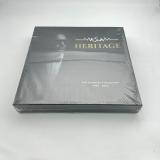
Mr Sam - HERITAGE (1995-2025)
HERITAGE celebrates 30 years of Mr Sam's career in a world-first collector's edition: a monumental best-of gathering 40 tracks across 10 vinyls. Never before has an electronic DJ and producer released such a project - an unprecedented box set that stands as a unique, sincere and intimate journey, blending emotion, innovation and musical memory.
Each track has been carefully selected, remastered, and placed as part of a personal narrative. More than just a compilation, HERITAGE is a musical journey - the story of an artist who has shaped the trance and progressive scene worldwide since 1995, and who continues to write history, with this release sealing his legacy forever.
The album features his most iconic productions (Lotus, the Screen series, Forever Waiting, Lyteo...) alongside timeless contributions from artists who influenced a generation, including D*Note, Timo Maas, Jam & Spoon...
This is more than a retrospective - with HERITAGE, Mr Sam permanently engraves his legacy in the history of electronic music.
- Krystal Ball
- Psychosis Is Just A Number
- Ceo Of Personal & Pleasure
- Life's A Zoo
- Red Flag To Angry Bull
- Panglossian Mannequin
- Deep Sight
- When Dogs Bark
- Crocodile Cloud
- Favorite Sun
When NYC-based experimental dance punks Guerilla Toss, active since 2011, were in Vermont recording their new full-length album You're Weird Now, frontwoman Kassie Carlson would prepare what she called 'punk lunch': a communal meal made by raiding the studio fridge for whatever was left and assembling a sandwich from the most random ingredients imaginable. Regularly joining punk lunch were two legends from their own corners of the weird music world: Stephen Malkmus (Pavement, The Jicks) and Trey Anastasio, Phish guitarist and owner of The Barn; the recording studio where Guerilla Toss were making You're Weird Now, with Malkmus in the producer's seat. Engineer Bryce Goggin, who has worked with Malkmus since Crooked Rain, Crooked Rain, and Ben Collette, Phish's longtime engineer at The Barn, were also part of the crew. While the idea of the guy from Phish and the guy from Pavement sitting around with Guerilla Toss, congenially assembling sandwiches from random foodstuffs dug up from the depths of a studio fridge, might seem absurd, it also makes total sense. Because really, if there's any band that serves as the natural bridge between slacker punks who saw Pavement way before you did, wild-eyed wooks who've seen Phish more times than you ever will, and even the eccentrics in '90s drip following former GT tourmates Primus-it's Guerilla Toss. A band so imaginative and unapologetically themselves, they're basically the real-life manifestation of a utopian, post-snob world where all musical ideas are worthy of expression and everyone is welcome. You're Weird Now powers this message. Guerilla Toss' fifth album and second for Sub Pop is a hugely creative and joyful statement about the joy of creativity. With You're Weird Now Guerilla Toss reclaim the word "weird" for everyone brave enough to let their freak flag fly and stay true to their artistic vision no matter what-a way riskier act than it's ever given credit for, and one that requires a certain amount of serene self-confidence that it takes time and effort to cultivate and sustain. And they do so with the enthusiastic support of their musical predecessors: a standout moment arrives with "Red Flag to Angry Bull," which builds to a campfire sing-along-worthy outro featuring Malkmus and Carlson duetting over a chatty, classically Phish-y (there's really no better word for it) solo from Anastasio. The band hopes the message of You're Weird Now will resonate not only with music heads but anyone who struggles with feeling weird in a world where it will always be hard to be different. At the end of the day, it's all about the spirit of punk lunch: there's room for everyone because music is for everyone. "Everyone loves and appreciates music," says Carlson. "If you don't like music, you're kind of an asshole." That's not weird-that's just true.
A“This album is about what it means to be human, and its creation is my offering. I attempt to tell a tale of the human experience in the reflection of my own.”
‘In the Andean mythology, condors are believed to be immortal. It is said that once they feel old, without energy, and useless, they climb to the highest peak and let themselves fall to death.’
The Allegorist is a visionary, enigmatic, transmedia, and boundary-pushing artist known for crafting deep, immersive dark sonic tales. Embracing a wide array of influences, weaving together the mysteries, art and spirituality, the art project defies categorisation, resonating with those who seek the unconventional.
From Birth Until Death is an introspective and immersive concept album that reflects on the essence of the human experience. Crafted over six years by The Allegorist (aka Anna Jordan), the album traces the arc of life—from its fragile beginnings to its inevitable end—using sound art to explore existential and philosophical terrain. Inspired by the Andean mythology of the condor – a symbol of immortality – the album blends electronic soundscapes with raw field recordings, evoking a deep sense of connection between the natural world and human existence.
The album’s progression mirrors the stages of life, starting with the birth of new beginnings and culminating in death, with each track offering a unique reflection on the moments in between. From the dynamic energy of Momentum, to the ethereal, illusionary world of Fata Morgana, the tracks guide the listener through emotions, perceptions, and experiences that shape the human condition.
A distinctive feature of From Birth Until Death is its intricate production. The album incorporates field recordings from Grunewald Forest, a distant roar of a jet, barking dogs, blending the sounds of nature – footsteps in the snow, birdsong, ocean waves – with layered synthesisers and electronic beats. The bass and ambient textures are crafted using an array of analog hardware, while all vocals, both lead and backing, are performed and recorded by Jordan. Some of the vocal takes were intentionally left raw, capturing the spontaneous energy of early recordings, while others were re-recorded to balance the album’s organic yet polished feel. Each element is meticulously crafted, revealing its deeper meaning as the album unfolds like a multidimensional, living sculpture.
At its core, From Birth Until Death is a meditation on the full spectrum of life. The album’s title track, From Birth Until Death, encapsulates this journey, reflecting on the passage of time and the unique experience of being human. The final track, Death, offers a melancholic yet beautiful exploration of endings, not as finalities, but as moments in the grand cycle of life. With its combination of evocative sound design and deeply personal themes, From Birth Until Death invites listeners to contemplate their own lives, offering a moving experience of reflection, growth, and transformation.
About From Birth Until Death
Words By Robin Rimbaud (Scanner)
From Birth Until Death is a deeply personal and reflective album and beautifully crafted. A detailed listen reveals that Jordan was in search of a profoundly human and authentic expression. In an era when so much around us seems defined by speed, Anna Jordan, aka The Allegorist, stands apart – aware that skimming the surface of life is neither sufficient nor rewarding. She reminds us of the value of deep, authentic listening.
The track Andean Condor seductively draws us into a smoky, blurred rhythmic soundscape, capturing the essence of the darkest Berlin nightclub, while Birth pulses with an almost shamanic transformation of sound, moving from the organic to the musical. It features a recording of Jordan’s footsteps in the snow in Grunewald Forest, Germany.
At times, the music feels almost sculptural in shape and tone – lifting, pushing, lilting, opening, and closing – where each piece is given room to fully develop. Many of the works blend synthetic sound with the natural, incorporating the human voice alongside environmental recordings: the wild waves of the ocean, a jet flying overhead, and barking dogs.
With From Birth Until Death, Jordan, like an alchemical architect revealing in the process of getting lost and relinquishing control, leaves us with a taut, immersive soundtrack in which to lose ourselves.
About the album ‘From Birth Until Death’
words by The Allegorist
“The album From Birth Until Death did not come easily to me. I started working on it in 2019, and it underwent many alterations over the years. I produced multiple versions of the tracks each year, but the album name, the track titles, and the album cover art stayed the same for 6 years. Not everything I did fit into the album’s final form, but I hope the heavy selection just made it better. I played this piece live in my techno live set between 2019 and 2020, and in the years after, I performed different art, ambient, and vocal versions of it, most notably the one at the church St. Marienkirche in Berlin in 2022. It just wanted to live and didn’t want to be finished. As I aged, this album aged with me. And now I’m ready to let it go.”
- A1: Dry The Rain
- A2: I Know
- A3: B + A
- B1: Dogs Got A Bone
- B2: Inner Meet Me
- B3: The House Song
- C1: The Monolith
- C2: She's The One
- D1: Push It Out
- D2: It's Over
- D3: Dr. Baker
- D4: Needles In My Eyes
BIOGRAPHY BY IRVINE WELSH
I discovered the Beta Band, like I discovered a lot of great music, basically through eventually surrendering to the enthused urgings of a mate who was cooler than me. He continually evangelized about the EP's. I was lost to the concert hall and firmly ensconced on the dancefloor by then and highly resistant, but quite taken by the idea that a band would bring out extended plays rather than singles. When I did check them out, I was instantly smitten by their originality and power.
The band, therefore, were pivotal for me in terms of my own musical journey, in that they represented a gateway back into indie guitar music, which I'd basically given up since becoming obsessed with rave and acid house.
The Beta Band were definitely a band for the cool cognoscenti- like my buddy- the ones you make a bit of a tit of yourself trying to convert quite straight boring people to.
The emotions they induced were a kind of throwback to school days when you were very pompous and prescriptive about what you liked, and derisive towards non believers. It's a testimony to the power of the music that they could take me to the raw state of the younger man.
I took it personally that they didn't hit the mainstream commercial base. At least two of the three albums they made deserved quadruple platinum status. Hot Shots II and Heroes to Zeros are permanently lodged very high in my top one hundred albums of all time.
So, the return of the Beta Band has me moving into the same mode of immature, adolescent anticipation. Everyone should have the Beta Band albums and EP's in their collection. It still kind of annoys me - in fact it bugs the shit out of me - that most of them don't.
And that really is something.
- A1: And Now Little Green Bag
- A2: Little Green Bag
- A3: Rock Flock Of Five
- A4: Hooked On A Feeling
- A5: Bohemiath
- A6: I Gotcha
- A7: Magic Carpet Ride
- A8: Madonna Speech
- B1: Fool For Love
- B2: Super Sounds
- B3: Stuck In The Middle With You
- B4: Harvest Moon
- B5: Let's Get A Taco
- B6: Keep On Truckin
- B7: Coconut
- B8: Home Of Rock
- A1: Ready To Rock; Written-By – Barden*, Schenker*
- A2: Attack Of The Mad Axeman; Written-By – Barden*, Schenker*
- A3: On And On; Written-By – Barden*, Schenker*
- A4: Let Sleeping Dogs Lie; Written-By – Glen*, Powell*, Barden*, Schenker*, Raymond*
- B1: But I Want More; Written-By – Barden*, Schenker*
- B2: Never Trust A Stranger; Written-By – Raymond*
- B3: Looking For Love; Written-By – Barden*, Schenker*
- B4: Secondary Motion; Written-By – Barden*, Schenker*
- C1: Never Trust A Stranger (Monitor Mix)
- C2: Let Sleeping Dogs Lie (Rough Monitor Mix)
- C3: Attack Of The Mad Axeman (Alt. Version-Monitor Mix)
- C4: On And On (Rough Monitor Mix)
- D1: Looking For Love (Monitor Mix)
- D2: But I Want More (Rough Monitor Mix)
- D3: Never Say Die (Live Rehearsal Take)
- D4: Never Trust A Stranger (Piano Demo)
- 1: Jimmy
- 2: I'm Out
- 3: Gimme The Bone
- 4: Never Enough
- 5: Cement Shoes
- 6: Concrete Jungle
- 7: I've Seen It All
- 8: Don't Wanna Be Like Me
- 9: One Big Step
- 10: Blood On The Streets
- 11: Pressure
This is not the end of a dark alleyway in some US city, this is not the bottom of a platform heel in England, this is not the back corner of some dusty drawer at a record fair in Holland. These are not the places you’ll find rock and roll. This is Quebec: A different sensory perception of rock and roll. A heightened awareness of the highest highs and the lowest lows. This is Belgium with snowmobiles, Catholic Texas, Ugly France. All the crumbling highways, the coldest beers, and the loudest joints. Guitars do different things in Quebec. PUFFER shimmy across the invisible barricade between Montreal and the rest of the world not just as another crop of punks but as the great descendants and inheritors of modern greats like INEPSY’s “Rock and Roll Babylon” and ANNIHILATION TIME's “II.” Loud, brash, unrelenting. You’ll go deaf before you get bored of it.
Self produced, self recorded, and mixed by the band, this is the vanguard of punk that has lived long beyond it’s moments of origin. This pure blast of 1979 by way of the hellish weimar end-times of 2025 never made the necessity of punk rock feel so real.
FFO SLAUGHTER AND THE DOGS, the 222s, THE DISCORDS, MOTORHEAD, INEPSY, AA Restaurant, Montreal pool room, Katacombes, and the eternal flame of punk in La Belle Provence.
REPRESS of the Orchid second full length. Strong riffs, a tight rhythm section and psychedelic background guitar passages are the first things that come to mind when trying to describe how the album sounds. Theo Mindell's voice bears some resemblance to Blackie Lawless' and while W.A.S.P. isn't the first band that comes to mind when thinking of doom metal and stoner rock, his voice fits the music perfectly. The production is spot-on, guiding the listener's thoughts to the sound of Master Of Reality while still sounding modern.
Violet vinyl, limited to 200 copies. REPRESS of the Orchid second full length. Strong riffs, a tight rhythm section and psychedelic background guitar passages are the first things that come to mind when trying to describe how the album sounds. Theo Mindell's voice bears some resemblance to Blackie Lawless' and while W.A.S.P. isn't the first band that comes to mind when thinking of doom metal and stoner rock, his voice fits the music perfectly. The production is spot-on, guiding the listener's thoughts to the sound of Master Of Reality while still sounding modern.
- A100:
- Carry No Thing
- Careful
- Please Slow Down
- The White Light Of The Morning
- Wake
- Heavy Hearts
- How It Was It Will Never Be Again
- Something Beautiful And Bright
- Heartbreakdown
- Nobody Lives Here
SYML is the solo venture of artist Brian Fennell. Welsh for “simple”—he makes music that taps into the instincts that drive us to places of sanctuary, whether that be a place or a person. Born and raised in Seattle, Fennell studied piano and became a self-taught producer, programmer, and guitarist. Says Fennell about his album Nobody Lives Here, "We change, the world changes, and there is so much unknown. About a year ago I started writing songs that represent the change that is happening in front of my face, a group that have emerged to become the third SYML album. Many of these songs are about getting older, and the intimate, and sometimes frightening, passing of time. Some are about how getting older revolves around looking forward to things happening, and when they don’t happen, or they feel different than anticipated, we can be left with surprise and sadness. I’m actually reminded of this watching my 2 year old! We learn to live with disappointment. I recorded some of these songs with kids and dogs making noise in the background, and others in silent studios with musicians I’ve listened to and admired for many years. These songs are meant to be pieces of clothing to wear as you need (or I need). Some are bright and bold and others are gentle, but they were all made with a sense of comfort in mind, even when things feel bleak. My wife jokes that when our friends hear some of these songs, they might think we are not “ok”. Thankfully, putting myself inside a sad song is still a good place to feel happy. There's this generally unspoken feeling that musicians don’t listen to their own music. That isn’t true for me. I love living with my songs because their meaning changes as I change. There is as much fear and beauty in the big questions as there is wonder and possibility in the simple, everyday shit we live through.”
- A1: Heading For Internal Darkness
- A2: The Innermost Ambience
- A3: Carnal
- A4: Fractal Light
- A5: True Names
- A6: Beast Raping
- B1: Foetus God
- B2: The Red Passage
- B3: Distant Dream
- B4: Black To The Blind
- B5: Anamnesis
A quintessential, timeless piece of death metal
In 1997, long-running Polish death metal act VADER - currently celebrating their 40th anniversary - made an important step towards international recognition by releasing “Black To The Blind”, their third studio album, which includes live staples like ‘Carnal’ or the savage title track. Honed from playing way over 250 concerts in the mid 90’s and sharing stage with Cannibal Corpse, Immolation, Morbid Angel, the quartet became true road dogs with a dedicated following up until today and perfected their intense and catchy, Slayer-meets-Morbid-Angel on steroids brand of death metal. “Black To The Blind” has been remastered and features an updated layout as well as the original cover art. A quintessential, timeless piece of death metal!
- Prologue To Paper Cathedral
- Paper Cathedral
- Prologue To Mary Louise
- Mary Louise
- Prologue To Red Flags
- Red Flags
- Prologue To Dunstable Downs
- Dunstable Downs
- Prologue To Over And Over
- Over And Over
- Prologue To O! My America
- O! My America
- Prologue To Eyes On The Road
- Eyes On The Road
- Prologue To Wild Swimming
- Wild Swimming
- Prologue To Cabin In The Woods
- Cabin In The Woods
- Prologue To Scars
- Scars
- Prologue To Last Night I Had A Dream
- Last Night I Had A Dream
- Prologue To Mad Girl S Love Song #2
- Mad Girl S Love Song #2
- Prologue To What You Waiting For
- What You Waiting For
- Prologue To Tip Of My Tongue
- Tip Of My Tongue
- Prologue To Long Goodbye
- Long Goodbye
- Prologue To May Day
- May Day
- Prologue To You Are Everything
- You Are Everything
- Prologue To Tiny Little Things
- Tiny Little Things
- Prologue To Throw Me To The Dogs
- Throw Me To The Dogs
Welcome into the world of scarse music for the ultimate connoisseurs, fine taste beatmakers and holy grails collectors.
You made a step close to The Edge.
From cult Italian soundtrack and 80's iconic anime, English and French library music, to tunes that made Hip Hop iconic anthem, Medline picked 10 compositions to cover, among his favorite crate diggers treasures.
With a 30 years Dj's culture, he unite on vinyl a collection of underground classics.
When other musicians sample, as former beatmaker, he found his fulfillment by playing the entire tracks, as homage to these composers.
In 2018 Solstice has set the corner stone of this unique artwork at the cross road of Jazz, Funk, Soul and Hip Hop worldwide culture.
With The Edge, the out of boundaries producer, placed the level even more higher.
The whole work is incredible, for a man alone, without music theory knowledge but playing flutes, horns, keyboard, guitar and many more instruments... creating in his little home studio the sound of a 70's orchestra.
Challenging and epic:
Epic for covers like A Day In The Life, Beatles cover by Les Demerle, took by Buck Wild for O.C. Time's Up and of course the eponym David Axelrod's The Edge on David McCallum album.
Challenging, for library anthem like Hot Dog, Ghetto or Keep Quiet by Jacky Giordano, sharp and definitely audacious.
Despite the variety of the ten themes, the man's touch is present each time, into the texture, sound taste and balance. Like a chef bringing up to date magical recipes.
The archetypal type of records My Bags loves to release, "The Edge" is built as a crate digger paradise, a timeless record linking past and present into a highly concentrate of divine grooves.
crys cole returns to Black Truffle with Making Conversation, her third solo release for the label. After the intimate song-like constructions of Other Meetings (BT096), Making Conversation documents a different facet of cole’s work, presenting three rigorously conceptualised commissioned pieces, each of which extend her signature approach to highly amplified small sounds into new directions.
The side-long title piece is a stereo version of an 8-channel sound installation exhibited in 2023 at the Tabakalera Art Center in Donostia / San Sebastian, Spain. The piece uses a multitude of instrumental, vocal, concrete and electronic sounds to evoke the soundscapes cole encountered during nocturnal listening session in Bali, Indonesia in 2018 and 2019. In this world of night sounds, she explains, she ‘observed the complex interplay between amphibian, lizard, bird and insect communication, domestic animals (roosters, dogs), man-made sounds (airplanes, vehicles, conversations and evening activities) and sounds that were difficult to place’. Drawing on field recordings as memory aids (but including none in the finished piece), cole’s piece uncannily reproduces the spatiality and pacing of environmental sound without attempting strictly to replicate it. We hear insect-like twittering and birdsong fragments, resonant thuds and distant roars, furtive crunches and taps, muffled breath and metallic scrapes. While at times it can be difficult to imagine the source of these sounds, at other points they are clearly instrumental or electronic in origin; in its placement and layering, though, the whole assemblage suggests the glorious, unthinking richness of a non-musical sound environment. Suggesting at once the electronic gardens of Rolf Julius and the little instrument expanses of classic AACM, the piece is a brilliant enactment of the Cagean drive to ‘imitate nature in her manner of operation’.
‘Valid ForeverrRrrRRrrr… (pt. 1)’ began as cole’s contribution to an Issue Project Room commission to realise a score from Alison Knowles and Annea Lockwood’s Women's Work, a 1975 collection of text and conceptual scores by women artists and composers. cole’s piece begins from Beth Anderson’s Valid for Life, a complex arrangement of the letter R in various typefaces. Where the composer suggests a realisation on a trio of acoustic instruments (playing rolls with velvet beaters), cole translates the piece into her characteristic sound and object language as a trio of rolling sounds on ‘two large similar paper things and one 5-pin bowling ball’. Rolling from one side of the stereo field to the other, the bowling ball’s uneven movement is the heart of this immersive textural array, created with the simplest materials, which generates phantom sensations of pitch and phasing effects solely through amplified friction.
On ‘Valid ForeverrRrrRRrrr… (pt. 2)’, cole makes a first foray in translating her signature approach into conventional instrumental sounds, here in the form of a transcription for MIDI percussion ensemble. The result is refreshingly puzzling, comparable perhaps only to the sparsest moments of Keiji Haino’s classic “C’est parfait…” Accompanied with extensive liner notes, photographic documentation and a download code, Making Conversation is an exciting next step in cole’s work, extending her signature concerns in new sonic and conceptual directions.
- In A Deserted Landscape (Read By Richard Hamilton)
- In A Little Hotel By The Deserted Sea (Read By Dieter Roth)
- In A Little Hotel By The Deserted Sea - A Landscape (Read By Duncan Smith)
- In A Little Hotel By The Deserted Sea - A Landscape Excerpt (Read By Richard Hamilton & Dieter Roth)
- Die Grosse Bockwurst (Read By Richard Hamilton, Dieter Roth & Friends)
Recital presents an artists’ record from the two giants Richard Hamilton and Dieter Roth. Hamilton (1922-2011) is revered as the father of British Pop Art as both theorist and practitioner, in addition to famously designing the artwork for The Beatles’ White Album. Dieter Roth (1930-1998) was a Swiss German artist who blithely ignored all artistic boundaries and aesthetic dictums. His oeuvre includes hundreds of artist books, almost half a thousand prints, sculptures, multiples and records, all balanced between magnetic playfulness and self-deprecating paranoia. Roth also ran his own record/book press Dieter Roth's Verlag and was a major force in the reckless improvisational music group Selten Gehörte Musik (1973-1979).
The two artists most significant collaborations happened between 1976 and 1978, beginning with a series of 74 paintings in which they reworked each other’s art. The paintings were made for an exhibition for dogs (as suggested by the late Marcel Broodthaers, to whom the works were dedicated) in Cadaqués, Spain. Hamilton and Roth then produced the catalogue Collaborations of Ch. Rotham with reproductions of all the paintings alongside four brilliant new collaborative texts. The narrative of the texts sprung from the “fairy story” (Hamilton) quality that emerged from these dog paintings – a hallucinatory tapestry of sausages, gestating giants, Sancho Panza, Don Quixote, and a donkey. Together they gallop, humorous and beautifully absurd, across the wild field of an imaginary seaside backdrop with endless garbled iterations of ever-mutating names riddled with mad typos.
For these recordings the individual texts were read by Roth and Hamilton, actor friend Duncan Smith, and a huge cast of British artists for the final play Die Grosse Bockwurst, performed at the Whitechapel Gallery in London in 1977. The recordings were first released on cassette on the Audio Arts label in 1978, and have now been remastered from the original ¼″ tapes for this double vinyl edition.
Also included are two booklets: one is a new essay written for this edition by artist and co-producer Malcolm Green (Red Sphinx, Atlas Press), alongside full reproductions of the Roth / Hamilton collaborative Ch. Rotham texts. Thanks to Björn Roth, Rita Donagh, Hansjörg Mayer, William Furlong, Tate Modern, and Hauser & Wirth.
Limited edition double-vinyl record of 300 copies in full color gatefold sleeve with over 70 minutes of audio recordings. Including two booklets: a 16-page new essay on Roth & Hamilton by Malcolm Green that includes new Roth translations, and a 20-page complete reproduction of the collaborative Ch. Rotham texts.
Reeling In The Weeks—which felt like Years — after my first Current 93 album, I had started on the difficult second C93 album, DOGS BLOOD RISING.
Having been asked to appear on both Top Of The Pops AND The Old Grey Whistle Test 93 times in the same week after the release of NATURE UNVEILED, I realised that God was telling me that I had hit on a winning formula of Christian eschatology and Apocalyptic Christian texts over a SoundScape As Cool As Flies, but that I was missing the vital ingredient of a Simon & Garfunkel song. DOGS BLOOD RISING — which I described to myself in a VISION as an album which hoped, wished, and made bad trips sound like good trips — was essentially the Mirror Night of NATURE UNVEILED, although only half of it was recorded at Roundhouse Studios. Squats were calling, and 8-track studios were all I was able to afford. DOGS BLOOD RISING didn’t chart, except in my NightSweats. Listening to it now, it makes me as restless as I was then, staring beyond the windows there, watching and praying for something, someone, anything, anyone.
Remastered by The Bricoleur at Bladud Flies!, and with the original artwork refreshed and reborn by Rob Hopeye, this 12” vinyl picture-disc comes in a full-colour die-cut sleeve, which is printed on both the outside and inside.
This is one of the first 4 reissues of the entire back catalogue of C93 on picture-disc and standard vinyl, in the lead-up to the publication of my autobiography at the end of 2025, whilst I also work on many other recording, publishing, and painting projects, and Watch And Pray! Each release in the picture-disc vinyl reissues series is limited to 1,000 copies, and the titles will not be repressed as picture-discs once they have sold out.
- A1: Goldne Abendsonne, Wie Bist Du So Schön
- A2: Aprilnacht
- A3: Urin Deiner Blüten 1
- A4: Mutter Maria Zwischen Den Himmeln
- A5: Requiem Für Eine Ringelnatter
- A6: Urin Deiner Blüten 2
- B1: Apfelbaum, Kuh Und Backofen
- B2: Nie Kann Ohne Wonne, Deinen Glanz Ich Sehn
- B3: Requiem Für Ein Schwalbennest
- B4: Morgensonne
- B5: Afra Altar Maidbronx
Originally released on tape by SicSic in 2014, Aprilnacht commemorates a decade of music from Brannten Schnüre and marked the spring in a tetralogy of albums about the four seasons when it came out. Back then the Würzburg-based project consisted solely of Christian Schoppik, who later welcomed Katie Rich to take over the vocals. He used to perform as Agnes Beil, but dropped the name when, while making this album realized his music was becoming "much gentler and more fragile". Aprilnacht already captured the particular musical ideas that Schoppik would thoroughly keep exploring, delving deeper and deeper into the use and manipulation of samplers from sources so diverging as to wander between the five continents to post-war German family television and cult cinema. Heir of the ritualistic intensity of Coil, of the intricate sampler assemblies of Ghédalia Tazartès', and of the dusty, dismal old ballads from around the world, Brannten Schnüre manages to make these paths cross in a territory that is as inherent as it is uncanny; sieged by the past and intimate as a hearth. An organic approach to folk, ambient, and sound collage, where ethereal yet thoroughly textured pieces coalesce in enthralling, delicate, and innermost musical rituals.
The album cover paintings reveal the temper: dreary old towns where shadows come to dim the slow passage of crepuscular colors, a soft area of reanimation where wind and light come close and foresee the night of spring. Aprilnacht was inspired by the stories of German philosopher and writer Friedrich Alfred Schmid Noerr, whose work exhaustively examines the conflict between paganism and Christianity, safeguarding myth in a way that Schoppik describes as boldly modern, humorous and unpredictable in its variations of the Germanic folklore motifs. "I wanted to do the same with the music," he states, and the music here could as well be suitable for a night when household deities welcome wandering will-o'-the-wisps, water nymphs, and gyrovagues to discuss Perchta's leadership of The Wild Hunt, but this album is not a folk tale, it's not an elegy to worlds already gone, hidden in years; it's an intersection of routes that open mysteriously before our ears like a congregation of vapors. Aprilnacht is a gathering of voices; "There are too many children, and none of them keeps quiet," reads the last verse of «Requiem für eine Ringelnatter.»
Sensuality drips over the music to celebrate both the voluptuousness and tragic quality of nature; "It's raining on me, urine from your flowers," Schoppik sings in «Urin deiner Blüten» and later on, faced with a snake's erotic features, as if he wanted to be embraced by it: "Your quick, sharp tongue and your warm venom; that's what the pond is missing." Orality is where this profusion of contents thrives. When the voices get closer and condense, the words reveal the saliva employed to pronounce them; we feel the mouth and the tongue, but when breath envelops them in sorrow and softens their edges, they sound distant, diffused in the atmosphere, letting go of the body that held them. These two vocal facets oscillate permanently and interact naturally with the fertile assembly of samplers and instruments that develop throughout the album, which condense and disperse impersonating each other, interweaving to search for a specific syntax. Tangled whisperings of enigmatic phrases, timid voices that stick out to check the scene but hide away quickly, shivering trance chants and monastic ambiances, distant screams and clamors in between chaos and warfare swirl until bursting into subtle songs where even Mother Mary comes forth softly. Soothed by foggy atmospheres and crackling punctuations, these voices shape a vulnerable crowd, an occasion of fragility. Along this swarm of songs thrown into thin air, accordions sound like heavy-breathing lungs; clarinets sigh like curtains shaking; violin solos wander around like bees; Gjallarhorns cries distend like fleeing cattle; glockenspiels evoke remote music boxes and inherited toys; backward emanations emerge like slender waves retreating. On the banks of stretching loops and ember textures is where the songs slowly nest, collecting the words to find their tone.
A poem by Jorge Teillier says, "To talk with the dead you have to choose words that they recognize as easily as their hands recognized the fur of their dogs in the dark. To talk with the dead you have to know how to wait: they are fearful like the first steps of a child. But if we are patient one day they will answer us with a flame that suddenly revives in the fireplace." This may be Brannten Schnüre's main purpose: To find the voice to speak to those of whom we were a vision. Not in mourning, but acknowledging the obscure and volatile nature of spring's regenerative force, searching for the treasure of balance, as evidenced in the lyrics of «Requiem für ein Schwalbennest,» "Its nest was destroyed so many times before it was finished, and despite that, the shallow builds as if it is infatuated." The same idea is here in the words of Schmid Noerr, who made poetry an act of resistance to the horror of Nazism; "Since having seen the ability of a brilliant spirit to die, with a calm mouth that everyone saw, health is true again and we affirm it, even if rivers of blood flow." And as we call for the dusk's kindness, waiting to return home and eat with our kin by the stove, our ears become used to the games of the night. We feel like we're rowing on wetlands, while the "moon musick" keeps us vigilant against the slightest movement of water or sweet moan because eeriness here is imperative for survival. Do not succumb to the insipid howl of death, for nothing may last but mutability. You see, the rock has moved a little during the night; the rest is just wind fleeing from the void.
Happy 20th birthday to Family Album, the third recording of Faun Fables and the first one released on Drag City. These songs belong to sons and daughters, entwined and orphaned, domesticated and feral; to all the family vines unraveling from a ball of yarn. In this family album, runaways graze the wild together, a mother finds her courage playing the piano, dogs become thieves and wolves, and a son is taken too soon. Fourteen-year-old nymphs sit dangerously at the crossroads, a younger brother tries to find his place, packs of girls defeat fear with a march, and the nightly adventures of the household mouse are spied upon. Dawn McCarthy"s creative background was forged in oral tradition amidst a large musical family in Spokane, Washington; studying piano, music theater, rock bands, guitar, folklore and ethnomusicology. Dawn cut her teeth as a singer and performer with various bands and cabarets in Madison, Wisconsin and New York City, most notably as yodeler with the Bindlestiff Family Cirkus, whom inspired her to want a gypsy life with a kindred spirit someday. Her focus took a pivotal turn in that direction in 1997 with a solo quest through the UK and Ireland and their bardic traditions; singing songs in clubs and homes, all the while undergoing a pastoral, psychological experience with the land. Upon her return to the States, a fateful meeting with Oakland, CA born-and-raised Nils Frykdahl (Sleepytime Gorilla Museum) moved McCarthy back to the West to begin a new creative collaboration in the thriving hills and art community of the San Francisco Bay Area. Since 1999, Faun Fables have released six albums and performed their animist, otherworldly folk music across North America and Europe, with shows in Australia, New Zealand and Israel, as well. Dawn"s writing and voice (described by The New Yorker as "one of the more compelling instruments in contemporary music") opens hearts and minds with a whisper to a rallying battle cry, further animated by Frykdahl"s adventurous musicality and vocals. Dawn has written musical theater performed by the Idyllwild Arts Academy, among others, and has lent her vocals to Bonnie "Prince" Billy on The Letting Go and What the Brothers Sang. In 2022, Faun Fables debuted their family band, joined onstage by their daughters with vocals, percussion, keyboard and dance.
Recorded in the past 25 years in different parts of the world, Encyclopedia Sónica Vol. 1 compiles the music and sounds of Leo Heiblum. Comes with insert.
Since Leo Heiblum was a little boy, he always found music everywhere. Listening to the engine of his mother's car and hearing incredible rhythms. He always thought every sound we hear can be made into music, every sound that we hear can be heard as music and it can be felt and understood as music. Every sound has an attack, a decay; some have a pitch. What is more beautiful, the sound of a flute, a bird, a trumpet, a car horn, a violin or a mosquito buzzing? They can all be used to make music.
Leo Heiblum believes that If we learn to hear all sounds as “musical” or at least to have the potential to be used to make music, we might look at the world and listen to the world more lovingly. That car passing by had a beautiful crescendo. That dog barking in the distance created a fantastic melody with an impossible-to- transcribe rhythm. Is there no creative intention behind those sounds? Can the listener give them an intention, can the listener transform them into art? Leo Heiblum is trying to organise them and use them in a way that will be musical for us. He hopes that the next time we hear an ocean wave breaking a bond, fire crackling, or a fly flying, we can enjoy the notes and the rhythms they are making. They are being created by something; who knows what the intention is, but some of the most unique beats he's heard come from rocks falling in cenotes or ice breaking down in a glacier. And the melodies he's heard from bats, dogs fighting, or a newborn dog are both haunting and beautiful. The timber from sounds such as the thorn of a cactus, the voice of a homeless person in the street or a mosquito buzzing can be used to create instruments as beautiful as any instrument. And they have a new sound or a familiar old sound used differently. A way that invites us to hear the music created by this planet.
- 01: Désert Culturel - "Peine" (1993)
- 02: Les Have-Nots - "About Some Damned O.e." (1994)
- 03: Mascarade - "La Chanson De Craonne" (2000)
- 04: Les Vermines - "Sometimes" (1999)
- 05: Kochise - "Ils Ne Passeront Pas" (1991)
- 06: Kargol’s - "Pression Dans Les Ghettos" (1996)
- 07: Un Dolor - "Acid Queen" (1995)
- 08: Rachid & Les Ratons - "Figuerolles" (1998)
- 09: Pleûm - "Le Lourd" (1995)
- 10: Abdomens - "A Bad Trip In Vatican" (1997)
- 11: Original Disease - "Hungry’ N’ Angry" (1995)
- 12: Rude Boy System - "Put It On It" (1996)
- 13: Zygomatik Zone - "Pas Assez" (1996)
- 14: Haine Brigade - "Territoire Des Ombres" (1991)
- 15: The Informers - "A President For The Dogs" (1993)
- 16: Les Gigoinces - "Nozeux" (1998)
- 17: Mister Moonlight - "You Dont Wanna Play With Fire" (1994)
- 18: Raymonde & Les Blancs Becs - "Paris Doit Brûler (Live)" (1993)
- 19: Extrême Onction - "Droit A L’avortement" (97)
- 20: Désert Culturel - "Guerre À La Guerre" (1993)
On a faim!" was originally an anarchist music fanzine created in 1984.
An entire network, with no geographical ties, grew up around the fanzine, helping to write articles and distribute them (often by hand). The fanzine's name even began to appear in connection with the organisation of concerts (Ludwig Von 88, Raymonde et les Blancs Becs, les Thugs, Les Ejectés, Kortatu, Yo Pizza Jump, etc.) and the creation of radio programmes.
The On A Faim ! label came into being at the end of the 80s, following the release of a host of live tapes and themed compilations: "A Bas Toutes Les Armées", "Cette Machine Sert A Tuer Tous Les Fascistes", "Ni Jah Ni Maitre", "Pogo Avec Les Loups". Then came the first artistic albums with Désert Culturel, Un Dolor, Have Nots, Kargols, Pleum, Mister Moonlight, Rude Boy System... Here again, the artistic choices were made primarily on the basis of human encounters, the attention paid to the bands' approach and discourse, and their attitude to the public... even before listening to the slightest demo!
Archives de la Zone Mondiale wanted to pay tribute to this inspiring label, which marked the history of independent and committed music for nearly 15 years. With one of its founders, Jean Pierre Levaray, we have cleverly concocted a sort of musical anthology retracing the essential bands that have marked the history of the label and the fanzine.
On A Faim ! - Anarchy & Musik is a double 20-track vinyl compilation in a highly graphic gatefold sleeve, retracing the label's extraordinary trajectory regardless of musical style: punk, of course, but also ska, hardcore and popular chanson...
Last but not least, all the royalties from this double vinyl compilation are donated to the Uzine (Le Havre) and Fanzinarium (Paris) fanzine libraries.
Javier Jiménez Rolo surprises with Saint Malo, a project that explores the intersections of neoclassicism, folk, ambient and electronic textures.
That Saint-Malo is a town in Brittany is the least of it. Even the fact that it exists is unimportant. Javier has never been there. Similarly, his album takes us to remote or not so remote places without moving from where we are. Javier composed these twelve songs between 2019 and 2021 from his room: "One of the problems with recording at home rather than in a studio is that when you move, your recording space changes too. In the case of this album, I was involved in three moves during its whole process. Trying to see the positive side of this situation, I realised that, as well as a collection of songs, it was a testimonial to the different places where I had lived during those years and their respective views: 'Promenade' is an imagined walk from an interior flat; 'Picture In A Frame' is a sunny afternoon in a park in Ciudad Lineal, Madrid, and 'Bells Of Nowhere' is a stroll through the neighbourhood that was once my grandparents' and is now mine."
It's an eminently evocative album but also powerfully narrative, which moves through different emotional states. Along the way, references as heterogeneous as Javier's own tastes come up. From the inevitable Arvo Pärt, Max Richter and Steve Reich to the more unsuspected Thom Yorke, Burial, Caribou, Vulfpeck or even Dua Lipa. Stéphane Grappelli, Andrew Bird, Nils Frahm, Olafur Arnalds or Rene Aubry are other names Javier mentions when he talks about something similar to influences.
The journey, during which the songs miraculously fit with magical precision to the landscapes we are travelling through, begins with the promising 'Beware Of The Dogs' and 'Maltravieso'. It is followed by the obsessive arpeggios of 'Le Havre' that give way to the luminous 'Fields Of Gold', the emotion of 'Cais do Sodré' and the passionate 'Le pont roulant', reminiscent of a restrained Alexandre Desplat. Along the way, dogs will bark, rain will fall on the 'Promenade' and the sun will come out with the perfectly playful 'Dolce Far Niente' ("a mix between elevator music and a song announcing the arrival of summer" according to Javier) in which echoes of Isao Tomita and Raymond Scott resound.
The result of this captivating, unexpected and suggestive mixture is Saint Malo, Javier Jiménez's first album and the empirical demonstration that he does not have, despite his classical training, any red lines. "I've always flirted with jazz, with swing... Then I moved on to messing around with loops, to doing more ambient and experimental things. I also had my folkie phase with the klezmer group Barrunto Bellota Band..."
In Saint Malo the melodies grow, become small, return and intertwine with loops and improbable aromas, to form an album that describes a journey through emotions. From melancholy to joy and the surprise of first discoveries.
Javier Jiménez Rolo surprises with Saint Malo, a project that explores the intersections of neoclassicism, folk, ambient and electronic textures.
That Saint-Malo is a town in Brittany is the least of it. Even the fact that it exists is unimportant. Javier has never been there. Similarly, his album takes us to remote or not so remote places without moving from where we are. Javier composed these twelve songs between 2019 and 2021 from his room: "One of the problems with recording at home rather than in a studio is that when you move, your recording space changes too. In the case of this album, I was involved in three moves during its whole process. Trying to see the positive side of this situation, I realised that, as well as a collection of songs, it was a testimonial to the different places where I had lived during those years and their respective views: 'Promenade' is an imagined walk from an interior flat; 'Picture In A Frame' is a sunny afternoon in a park in Ciudad Lineal, Madrid, and 'Bells Of Nowhere' is a stroll through the neighbourhood that was once my grandparents' and is now mine."
It's an eminently evocative album but also powerfully narrative, which moves through different emotional states. Along the way, references as heterogeneous as Javier's own tastes come up. From the inevitable Arvo Pärt, Max Richter and Steve Reich to the more unsuspected Thom Yorke, Burial, Caribou, Vulfpeck or even Dua Lipa. Stéphane Grappelli, Andrew Bird, Nils Frahm, Olafur Arnalds or Rene Aubry are other names Javier mentions when he talks about something similar to influences.
The journey, during which the songs miraculously fit with magical precision to the landscapes we are travelling through, begins with the promising 'Beware Of The Dogs' and 'Maltravieso'. It is followed by the obsessive arpeggios of 'Le Havre' that give way to the luminous 'Fields Of Gold', the emotion of 'Cais do Sodré' and the passionate 'Le pont roulant', reminiscent of a restrained Alexandre Desplat. Along the way, dogs will bark, rain will fall on the 'Promenade' and the sun will come out with the perfectly playful 'Dolce Far Niente' ("a mix between elevator music and a song announcing the arrival of summer" according to Javier) in which echoes of Isao Tomita and Raymond Scott resound.
The result of this captivating, unexpected and suggestive mixture is Saint Malo, Javier Jiménez's first album and the empirical demonstration that he does not have, despite his classical training, any red lines. "I've always flirted with jazz, with swing... Then I moved on to messing around with loops, to doing more ambient and experimental things. I also had my folkie phase with the klezmer group Barrunto Bellota Band..."
In Saint Malo the melodies grow, become small, return and intertwine with loops and improbable aromas, to form an album that describes a journey through emotions. From melancholy to joy and the surprise of first discoveries.
Black Vinyl[22,90 €]
The garage punkrock lieutenants of Sweden are back with a bang!
Formed in 1999, this high energy garage punk outfit is known for their
intense live shows, which have taken them all over Europe and even USA -
Now they're back with their sixth album, 12 brand new tracks, 100% made
for volume levels cranked to the max
It's hard hitting, raw, trashy, primitive yet with a twist of finesse that makes you
wanna hear it over and over again. This album is sure to keep your feet moving
and bring garage rock to the masses. For fans of garage rock of yesterday and
today, Buzzcocks, The Hives, The Nomads,The Marked Men, The Kidnappers, The
Devil Dogs
Orange Vinyl[24,79 €]
The garage punkrock lieutenants of Sweden are back with a bang!
Formed in 1999, this high energy garage punk outfit is known for their
intense live shows, which have taken them all over Europe and even USA -
Now they're back with their sixth album, 12 brand new tracks, 100% made
for volume levels cranked to the max
It's hard hitting, raw, trashy, primitive yet with a twist of finesse that makes you
wanna hear it over and over again. This album is sure to keep your feet moving
and bring garage rock to the masses. For fans of garage rock of yesterday and
today, Buzzcocks, The Hives, The Nomads,The Marked Men, The Kidnappers, The
Devil Dogs
,Wir sind die schönsten Jungs aus der Messestadt, ficken oder was, boxen oder was!?" Eine grobkörnige Schrotladung made in Leipzig: Die RIOT DOGS fabrizieren auf ihrem Debüt-Vinyl mißmutige Strassenklänge zwischen TROOPERS, SCHLEIMKEIM, TELEKOMA und BRECHRAIZ. Heavy Gitarrenriffs, heisere Aggro-Vocals (alles Atze !?) gepaart mit dem Underground-Feeling der ,Sicher gibt es bessere Zeiten, doch diese war die unsere"-Sampler. 12 deutschsprachige Oi!/Punk-Backpfeifen, inklusive einer aufgepeppten Version von ,Mein Garten" (SK). Hätte Otze sicher gefallen. Auch von den Aussagen her: Rabiate Klartexte über ,Dummer Bulle", ,Unsocial Media" oder ,Outlaw Punk Rock". ,Harte Worte und das alte Rein-Raus-Spiel". Ober-Motto ,Szenekonformität" wird nicht gesucht". Und auch nicht gefunden. Die Band existiert, mit Unterbrechungen und Umbesetzungen, bereits seit 2011, die angepisste Unfreundlichkeit ist ihr erster Streich. Erco recycled vinyl!
- Number One Ft. Richie Havens & Son Little
- Easy Tiger
- Live In The Moment
- Feel It Still
- Rich Friends
- Keep On
- So Young
- Mr Lonely Feat. Fat Lip
- Tidal Wave
- Noise Pollution (Version A, Vocal Up Mix 1.3) Feat. Mary Elizabeth Winstead & Zoe Manville
Well, we're two full months into 2017 and the world continues to burn like an avalanche of flaming biohazard material sliding down a mountain of used needles into a canyon full of rat feces. But hey, it's not all bad: Portugal. The Man has a new album coming out called Woodstock.
PTM's last album came out over three years ago—a long gap for a band who've dropped roughly an album a year since 2006. And in true, prolific band fashion, they've spent almost every minute since 2013 working on an album called Gloomin + Doomin. They created a shit-ton of individual songs, but as a whole, none of them hung together in a way that felt right. Then John Gourley, PTM's lead singer, made a trip home to Wasilla, Alaska, (Home of Portugal. The Man's biggest fan, Sarah Palin) and two things happened that completely changed the album's trajectory.
First, John got some parental tough love from his old man, who called John on the proverbial carpet or dogsled or whatever you put people on when you want to yell at them in Alaska. What's taking so long to finish the album' John's dad said. Isn't that what bands do Write songs and then put them out' Like fathers and unlicensed therapists tend to do, John's dad cut him deep. The whole thing started John thinking about why the band seemed to be stuck on a musical elliptical machine from hell and, more importantly, about how to get off of it.
Second, fate stuck its wiener in John's ear again when he found his dad's ticket stub from the original 1969 Woodstock music festival. It seems like a small thing, but talking to his dad about Woodstock '69 knocked something loose in John's head. He realized that, in the same tradition of bands from that era, Portugal. The Man needed to speak out about the world crumbling around them. With these two ideas converging, the band made a seemingly bat-shit-crazy decision: they took all of the work they had done for the three years prior and they threw it out.
It wasn't easy and there was the constant threat that the band's record label might have them killed, but the totally insane decision paid off. With new, full-on, musical boners, the band went back to the studio—working with John Hill (In The Mountain In The Cloud), Danger Mouse (Evil Friends), Mike D (Everything Cool), and longtime collaborator Casey Bates (The one consistent producer since the first record). In this new-found creative territory, the album that became Woodstock rolled out naturally from there.
Remember that mountain of burning needles we were talking about Good. Because Woodstock is an album (Including the new single Feel It Still') that—with optimism and heart—points at the giant pile and says, Hey, this pile is fucked up!' And if you think that pile is fucked up too, you owe it to yourself—hell, to all of us—to get out there and do something about it.
The follow up to the band’s celebrated 2020 release Fish Pond Fish and Darlingside’s fourth LP marks a subtle but remarkable departure for the Boston-based quartet NPR once described as “exquisitely arranged, literary minded, baroque folk- pop.” While the album retains much of the lushness and sophistication of Extralife (2018) and Fish Pond Fish, the band’s latest work highlights the individuality of the four songwriters in a way that adds a fitting element of reinvention to an album that captures brilliantly the quality of the moment in which it was made. Grappling with change both personal and universal, with quandaries domestic and existential, Everything Is Alive is an album about loss and the struggle for a semblance of redemption; themes of grief, distance and hope permeate an album filled with vivid imagery and lyrical creativity. Comprised of Don Mitchell, Auyon Mukharji, Harris Paseltiner and David Senft, four likeminded multi-instrumentalists who first met at Williams College in 2009, Darlingside’s career has been defined by the elegance of their compositions and the remarkable unity of their four voices. Their talent for harmony and melodic world-building is part of what garnered praise from outlets like NPR, Rolling Stone and The New Yorker, and what has created demand worldwide for their extraordinary live performances. Becoming beautifully unindividualized has, in other words, worked very well for Darlingside in the past. With a vigor and discipline more common to graduate-level writing workshops than to indie rock, Darlingside have, over the years, experimented with all manners of idiosyncratic methods for elevating and upholding a truly democratic process of songwriting—processes that include multiple rounds of group writing and recording exercises—all with the aim of escaping the trap that bands with multiple songwriters often fall into: the ruse of ego-driven infighting and artistic incoherence. Everything Is Alive is Darlingside taking a risk. Nudged by the limitations created by pandemic isolation, as well as through other more voluntary catalysts, the album, which was produced and recorded by the band and mixed by Tucker Martine (My Morning Jacket, Sufjan Stevens, Iron and Wine), foregrounds in a sustained and heretofore untried way the individual voices of each member.
- A1: Rock Around The Clock
- A2: Shake, Rattle And Roll
- A3: See You Later, Alligator
- A4: Dim, Dim The Light (I Want Some Atmosphere)
- A5: Happy Baby
- A6: Razzle Dazzle
- A7: The Saints Rock‘n‘roll
- A8: Burn That Candle
- A9: Mambo Rock
- B1: Don‘t Knock The Rock
- B2: Rockin‘ Through The Rye
- B3: Rock-A-Beatin‘ Boogie
- B4: Thirteen Women (And Oly One Man In Town)
- B5: Birth Of The Boogie
- B6: Hide And Seek
- B7: R-O-C-K
- B8: Two Hound Dogs
- B9: The Paper Boy (On Main Street, Usa)
Mit Hits wie “Rock Around The Clock” , “See You Later Alligator”, “Shake Rattle And Roll” hat sich Bill Haley in die Geschichtsbücher des Rock’n’Roll geschrieben.
Für alle Vinylliebhaber gibt es ab sofort eine Zusammenstellung mit allen Hits der Rock’n’Roll Legende.
With hits like „Rock Around The Clock“, „See You Later Alligator“, „Shake Rattle And Roll“, Bill Haley made his mark in the annals of rock‘n‘roll. „See You Later Alligator“, „Shake Rattle And Roll“, Bill Haley has made his mark in the records of rock‘n‘roll.
For all vinyl lovers, a compilation with all the hits by the rock‘n‘roll legend is now available.
White Vinyl
Gost Zvuk prepare for a busy 2023 with an enthralling double LP's worth of futurist sound design from Flaty. In the game for more than a decade now, the producer, mastering engineer and all-round visionary artist has delivered an impressive range of music across both his own ANWO imprint as well as for West Mineral ltd., 12th Isle, Firecracker and more.
Always content to subvert expectations and blur stylistic lines, on Intuitive Word there is a clear fascination with a spectral, whittled-down-to-its-core type of avant-pop/RNB hybrid. Digital strings, dubbed beyond recognition semantic snatches, re-imagined new age style synthesis and even flourishes of MMORPG computer game soundtracks all combine into something that feels uniquely Flaty. In a sense, Intuitive Word marries ambient sound collage and hyperreal, narrative-style vocal processing. However, glimmers of shoegaze and old 'ethereal' bands (think Harold Budd & Cocteau Twins) crop up on tracks like 'Tree' and 'Nepal Lit', a testament to Flaty's skill for world-building and atmospherics.
Across the 19 cuts there is a recurring theme of choral style, computer generated elegies. A kind of 'cristal trance', in their words. 'Mint' combines these with overtly RNB style vocal samples, whereas darker, more broken beat soundscapes can be heard on the Madteo collab 'Observer'. With plenty of sombre and cinematic style ventures such as 'NEWS' breaking up the album and eschewing this focus on vocals, we find one of the most consistent producers in the current Russian scene delivering what may well be his most accomplished collection yet.
In 2012, the two moved to an abandoned funeral home in rural southern Illinois where they founded Rose Raft, an artist residency and analog recording studio. This was done in part to alleviate the financial stress of being an artist in an expensive city, and it has allowed them to remain totally immersed in their craft, not unlike Dead Moon or Low.
“The biggest reason we were motivated to make our own studio is that it was the only conceivable way we could keep things going. We started as a band so trashy and raw and ‘low-fi’ is because that’s what we had access to.” says Jessee. The studio is all analog, and the pair has once again found how to find freedom in constraint, using the limitations of the process to think creatively and to inform their songwriting. Tracked entirely live, the new record celebrates the magic and physicality of analog recording, leaving in raw sounds and charming artifacts, like their dogs Junimo and Joja Cola barking at the tail of the keeper take of “Velvet Cash”.
Glow in the Dark Flowers finds Philip and Jessee reinventing their sound with maturity, grace, and poeticism, but without abandoning the fuzzed out sound and studio adventurousness of their earlier work. The album's intimate opener “Growing Cosmos” is propelled by an unquantized drum machine that stutters in and out of tempo, accompanied by enveloping hard-panned bass guitar. “Still Close To Me” recalls the duo’s effortless and hypnotic pop sensibility that made The Funs such a captivating live band in Chicago’s then thriving DIY scene. The albums closer “When The Leaves Have Fallen”, originally composed for a performance by the artist Lise Haller Baggesen, continually builds on its original theme until the drums drift out and gives way to cascading distorted guitars folding in on each other.
The band's new album represents a new level of their devoted partnership that continually produces raw and beautiful music. Glow in the Dark Flowers is a true representation of their passion and dedication to their drive for creation.
Koudlam returns to civilization with “Precipice Fantasy”, an abnormal album once again. The Album is made up of 2 very different parts which will be released separately, with a first part which shells 12 songs like so many flamboyant mutations and a second contemplative instrumental part halfway between uneasy yoga music and trance from the lowlands of Kathmandu. Inspired by the hallucinated stories of mountain pioneers and conquistadores, the artist delivers here the soundtrack of peaks and precipices. Or rather that of the path between the two, winding, vertiginous, always on the edge of the blade.
- 1: Cavity - First Communion
- 1: 2 Figurative Theatre
- 1: 3 Burnt Offerings
- 1: 4 Mysterium Iniquitatis
- 1: 5 Dream For Mother
- 1: 6 Stairs - Uncertain Journey
- 1: 7 Spiritual Cramp
- 1: 8 Romeo's Distress
- 1: 9 Resurrection - Sixth Communion
- 1: 0 Prayer
- 2: 1 Dogs
- 2: Romeo's Distress (Demo)
- 2: 3 Deathwish (Demo)
- 2: 4 Desperate Hell (Demo)
- 2: 5 Spiritual Cramp (Demo)
- 2: 6 Cavity - First Communion (Demo)
- 2: 7 Sleepwalk (198 Frontier Demo)
- 2: 8 Invocation (198 Frontier Demo)
- 2: 9 Cavity - First Communion (Alternate Version)
- 2: 10 Lord's Prayer (Alternate Version)
CHRISTIAN DEATH was formed by Rozz Williams in Los Angeles, California in 1979. Williams was eventually joined by guitarist/songwriter Rikk Agnew of ADOLESCENTS, James McGearty on bass and George Belanger on drums. This CHRISTIAN DEATH line-up was responsible for recording the band's iconic 1982 debut, ONLY THEATRE OF PAIN, widely regarded as the #1 American goth album of all-time. This exclusive double-LP version of OTOP commemorates its 40th anniversary- the first disc is the digitally remastered, original version of the album while the second disc is comprised of "Dogs" from HELL COMES TO YOUR HOUSE, four pre-Frontier demos, two studio demos made for a second Frontier Records' LP that never happened and two alternate studio mixes from OTOP. The gatefold LP jacket is printed in its original its black and metallic gold, includes a Colver collage poster and a hardcover copy of the photo book, ONLY THEATRE OF PAIN and all come in a hard slipcase. The oversized 12" x 12" book features rare and never-before-seen photos of CHRISTIAN DEATH as well as new interviews with photographer Edward C. Colver, the surviving band members, Frontier's Lisa Fancher and others. Colver befriended the band and followed them around in late 1981 and early 1982 at more than a dozen concerts as well as photo shoots in Rozz Williams' family home (used on the back cover and insert of ONLY THEATRE OF PAIN) and a session of now famous images at a Pomona CA cemetery. Info: Just as the theatrically-minded LA punk scene was beginning to give rise to such morbidly themed outfits as 45 Grave and the Flesh Eaters, an androgynous teenaged street performer named Rozz Williams (né Roger Painter) founded CHRISTIAN DEATH, one of the most prolific, enduring, and beloved gothic acts of all time. Williams' otherworldly groan can make "Only Theatre of Pain" difficult going for those that aren't the gothic faithful, but the loud/not-too-fast music (courtesy of ex-ADOLESCENTS guitarist Rikk Agnew and the walking-dead rhythm section of bassist James McGearty and drummer George Belanger) is appropriately doom 'n' gloomy, with inventive arrangements and clear sound - thanks to Frontier Records' go-to punk production legend, Thom Wilson- capturing the mood in full B-movie fidelity. The lyrics sacriligiously address horror topics and religion: they're overwrought (the backwards masking of 'Mysterium Iniquitatis' being one clever exception) but easy to overlook in the wash of inspired rock noise. The original lineup's recorded debut is a gem. Artists inspired by CHRISTIAN DEATH include Danzig, Craddle of Filth, Paradise Lost, Korn, Type O Negative, Nine Inch Nails, Marilyn Manson and Jane's Addiction. Press: "A depraved masterpiece, this was punk rock made poetic, subversive, and gracefully savage."- AV Club "The Gothic album to out-gothic all others" - Melody Maker "Only Theatre of Pain's influence should not be underestimated" - Record Collector Limited availability!
It's an all electronic affair, harmonically maximalist, predominantly symphonic-synthetic, requiring active listening. Some pieces function as challengers of musical structural habits, provoking the short attention span culture, others present a problem-solution scenario, collectively via a neoteric noise aesthetic and detailed melodic weaving. Ultimately, the objective was to engineer an assortment of works full of sound, euphonic and vivid in nature.
The making of this album was intentionally a very personal process, going into self therapy territory at times interpreting the composer's contemplating mind dealing with tolerance, destruction, compassion, misery, grace and tyranny in an auditory manner. Some pieces function as challengers of musical structural habits, provoking the short attention span culture, others present a problem-solution scenario, collectively via a neoteric noise aesthetic and detailed melodic weaving. Ultimately, the objective was to engineer an assortment of works, awash with euphonic sound vivid in its essence, with a deep focus on various synthesis techniques within a compositional framework.
Dedicated to Peter Rehberg aka Pita
Ata 'Sote' Ebtekar composes music with a deeply-held conviction that rules and formulas should be deconstructed and rethought. He alters musical modal codes from their original tonality and rhythmic tradition to achieve vivid, synthetic soundscapes. Over the last three decades, his work has been published by labels such as Warp, Sub Rosa, Opal Tapes, Diagonal, Mute and Morphine, among others. In 2018, he founded a new label called 'Zabte Sote', which focuses on releases by Iranian experimental electronic composers from around the globe.
Known for creating compositions that range from the delicate to the abrasive, using sounds both of acoustical and electronic origins, Ebtekar sees music as the expression of cultural habits in sound and anti-sound (silence). Seeking to expand such traditions he creates music that, while rooted in many cultures at once, belongs to none in particular. Sote's work deals with various blueprints, in particular his solo all synthetic music, his electroacoustic audio/visual group project, and his multi-channel sound installations. Sote is on the jury panel of The DAAD Artists-in-Berlin Program, and has created commissioned work for and performed at a.o. Berghain and CTM Festival (Berlin), Unsound Festival (Krakow), Cafe Oto (London), Jazzhouse (Copenhagen), TodaysArt Festival (The Hague), Bozar (Brussels), Ultima Festival (Oslo), Donaufestival (Krems), Donaueschinger Musiktage, Mira (Barcelona), Terraforma (Milan), and many more.
Punk pioneers Crass continue their vinyl reissue series, re-pressing their limited releases by adjacent artists through Crass Records, in association with One Little Independent. The series, including over twenty bands and solo artists recorded at the legendary Southern Studios and produced by Penny Rimbaud, continues with two more historic pieces from the Crass Records catalogue; The "Grey" EP by North London post-punks Lack of Knowledge, and "Beware" by US anarchists Sleeping Dogs. Sleeping Dogs were one of only two American bands to release on Crass Records and in 1982 their sardonic and sludgy, but politically sharp, hardcore made up the "Beware" EP. They were first formed under the moniker Arsenal by the late artist, and designer of the iconic Crass logo, David King. "Beware" showed the originality and potential of Sleeping Dogs, even as Rimbaud and Crass guitarist Phil Free augmented the band"s sound for the studio session. The front cover of the single featured its own striking image, courtesy of King. Sleeping Dogs disbanded shortly after, re-emerging briefly under the new guise of Brain Rust a few years later. Distorted, biting, and beat-driven, the collection is a well-researched and poignant expose of Western imperialism. First released on 7" vinyl, limiting the sound, the new series has been remastered for 12" by Alex Gordon at Abbey Road Studios, allowing them to be heard as never before. This, plus enlarged replicas of the original covers, brings new gusto to their already radical sound. Penny Rimbaud notes that "Our (Crass") interest was never in personalities, profits or power, and neither did we have time for reformist liberals. Our position was solidly revolutionary; we took no prisoners. Talking the talk was never enough for us, no, we demanded that we also walk the walk. Ours wasn"t a show, it was a battle, not a living, but a lifestyle, a lifestyle with a difference - rather than looking only to ourselves, we sought to share our gains. I feel that this willingness added great strength to the form of anarchism that we practiced both on stage and out on the street."
Seit der Bandgründung Mitte der 90er, haben Good Charlotte fünf Alben veröffentlicht und mit zahlreichen Künstlern kollaboriert. Die Band hat einen maßgeblichen Teil dazu beigetragen, das Pop Punk Genre weltweit zu etablieren. Dafür legten sie mit ihrem selbstbetitelten Debütalbum und den Singles 'Little Things' und 'Festival Songs' im Jahr 2000 das Fundament.
'The Young and the Hopeless', mit dem Good Charlotte 2002 riesige Erfolge feiern konnten, katapultierte die Band schließlich in den Pop Punk Olymp und machte sie zu weltweiten Superstars. Es folgten 'The Chronicles of Life and Death' (2004) und 'Good Morning Revival' (2007), die in ihrer Heimat ebenfalls mit Platin ausgezeichnet wurden. Nach ihrem letzten Album 'Cardiology' (2010), wurde es Zeit für eine Pause, man musste dringend durchatmen. Die Madden-Brüder konzentrierten sich auf ihr Recording Studio im Herzen Hollywoods, wo sie für andere Künstler vieler Genres schreiben, aufnehmen und produzieren. Außerdem sitzen die beiden in der Jury der australischen Version von The Voice.
Dass die beiden überhaupt wieder anfingen, ihre eigene Musik zu schreiben, ist laut Benji und Joel wohl den australischen Pop Punk Newcomern 5 Seconds of Summer zuzuschreiben. Die Zusammenarbeit mit der jungen, aufstrebenden Band, erinnerte die Brüder an den Spaß, den sie mit ihrer eigenen Band hatten und inspirierte die Beiden 2015 schließlich dazu, einen Neuanfang zu starten. "Es packte uns und das Schreiben kam wie von selbst," erklärt Joel. "Während wir an ein paar Platten für andere Künstler arbeiteten, wurde uns klar, dass es großen Spaß machen würde, wieder eine Good Charlotte Platte zu machen. Und eine Good Charlotte Platte können eben nur wir machen. Wir wurden ein bißchen nostalgisch und folgten unseren Instinkten."
- A1: Rock This Mother
- A2: Talk To Me Girl
- A3: You Can Find Me
- A4: Check This Out
- A5: Jesus Going To Clean House
- A6: Hope You Understood
- A7: Is It What You Want
- A8: Love Is Everlasting
- A9: This Is Hip-Hop Art
- A10: Opposite Of Love
- A11: Do You Know What I Mean
- B1: Saving All My Love For You
- B2: Look Out Here I Come
- B3: Girl You Always Talking
- B4: Have A Great Day
- B5: Take My Hand
- B6: I Need Your Love
- B7: Your Town
- B8: Talk Around Town
- B9: Booty Head/Take A Little Walk
- B10: I Love My Mama
- B11: I Never Found Anyone Like You
Vinyl LP[23,49 €]
As the sun sets on a quaint East Nashville house, a young man bares a piece of his soul. Facing the camera, sporting a silky suit jacket/shirt/slacks/fingerless gloves ensemble that announces "singer" before he's even opened his mouth, Lee Tracy Johnson settles onto his stage, the front yard. He sways to the dirge-like drum machine pulse of a synth-soaked slow jam, extends his arms as if gaining his balance, and croons in affecting, fragile earnest, "I need your love… oh baby…"
Dogs in the yard next door begin barking. A mysterious cardboard robot figure, beamed in from galaxies unknown and affixed to a tree, is less vocal. Lee doesn't acknowledge either's presence. He's busy feeling it, arms and hands gesticulating. His voice rises in falsetto over the now-quiet dogs, over the ambient noise from the street that seeps into the handheld camcorder's microphone, over the recording of his own voice played back from a boombox off-camera. After six minutes the single, continuous shot ends. In this intimate creative universe there are no re-takes. There are many more music videos to shoot, and as Lee later puts it, "The first time you do it is actually the best. Because you can never get that again. You expressing yourself from within."
"I Need Your Love" dates from a lost heyday. From some time in the '80s or early '90s, when Lee Tracy (as he was known in performance) and his music partner/producer/manager Isaac Manning committed hours upon hours of their sonic and visual ideas to tape. Embracing drum machines and synthesizers – electronics that made their personal futurism palpable – they recorded exclusively at home, live in a room into a simple cassette deck. Soul, funk, electro and new wave informed their songs, yet Lee and Isaac eschewed the confinement of conventional categories and genres, preferring to let experimentation guide them.
"Anytime somebody put out a new record they had the same instruments or the same sound," explains Isaac. "So I basically wanted to find something that's really gonna stand out away from all of the rest of 'em." Their ethos meant that every idea they came up with was at least worth trying: echoed out half-rapped exhortations over frantic techno-style beats, gospel synth soul, modal electro-funk, oddball pop reinterpretations, emo AOR balladry, nods to Prince and the Fat Boys, or arrangements that might collapse mid-song into a mess of arcade game-ish blips before rallying to reach the finish line. All of it conjoined by consistent tape hiss, and most vitally, Lee's chameleonic voice, which managed to wildly shape shift and still evoke something sincere – whether toggling between falsetto and tenor exalting Jesus's return, or punctuating a melismatic romantic adlib with a succinct, "We all know how it feels to be alone."
"People think we went to a studio," says Isaac derisively. "We never went to no studio. We didn't have the money to go to no studio! We did this stuff at home. I shot videos in my front yard with whatever we could to get things together." Sometimes Isaac would just put on an instrumental record, be it "Planet Rock" or "Don't Cry For Me Argentina" (from Evita), press "record," and let Lee improvise over it, yielding peculiar love songs, would-be patriotic anthems, or Elvis Presley or Marilyn Monroe tributes. Technical limitations and a lack of professional polish never dissuaded them. They believed they were onto something.
"That struggle," Isaac says, "made that sound sound good to me."
In the parlance of modern music criticism Lee and Isaac's dizzying DIY efforts would inevitably be described as "outsider." But "outsider" carries the burden of untold additional layers of meaning if you're Black and from the South, creating on a budget, and trying to get someone, anyone within the country music capital of the world to take your vision seriously. "What category should we put it in?" Isaac asks rhetorically. "I don't know. All I know is feeling. I ain't gonna name it nothing. It's music. If it grabs your soul and touch your heart that's what it basically is supposed to do."
=
Born in 1963, the baby boy of nine siblings, Lee Tracy spent his earliest years living amidst the shotgun houses on Nashville's south side. "We was poor, man!" he says, recalling the outhouse his family used for a bathroom and the blocks of ice they kept in the kitchen to chill perishables. "But I actually don't think I really realized I was in poverty until I got grown and started thinking about it." Lee's mom worked at the Holiday Inn; his dad did whatever he had to do, from selling fruit from a horse drawn cart to bootlegging. "We didn't have much," Lee continues, "but my mother and my father got us the things we needed, the clothes on our back." By the end of the decade with the city's urban renewal programs razing entire neighborhoods to accommodate construction of the Interstate, the family moved to Edgehill Projects. Lee remembers music and art as a constant source of inspiration for he and his brothers and sisters – especially after seeing the Jackson 5 perform on Ed Sullivan. "As a small child I just knew that was what I wanted to do."
His older brother Don began musically mentoring him, introducing Lee to a variety of instruments and sounds. "He would never play one particular type of music, like R&B," says Lee. "I was surrounded by jazz, hard rock and roll, easy listening, gospel, reggae, country music; I mean I was a sponge absorbing all of that." Lee taught himself to play drums by beating on cardboard boxes, gaining a rep around the way for his timekeeping, and his singing voice. Emulating his favorites, Earth Wind & Fire and Cameo, he formed groups with other kids with era-evocative band names like Concept and TNT Connection, and emerged as the leader of disciplined rehearsals. "I made them practice," says Lee. "We practiced and practiced and practiced. Because I wanted that perfection." By high school the most accomplished of these bands would take top prize in a prominent local talent show. It was a big moment for Lee, and he felt ready to take things to the next level. But his band-mates had other ideas.
"I don't know what happened," he says, still miffed at the memory. "It must have blew they mind after we won and people started showing notice, because it's like everybody quit! I was like, where the hell did everybody go?" Lee had always made a point of interrogating prospective musicians about their intentions before joining his groups: were they really serious or just looking for a way to pick up girls? Now he understood even more the importance of finding a collaborator just as committed to the music as he was.
=
Isaac Manning had spent much of his life immersed in music and the arts – singing in the church choir with his family on Nashville's north side, writing, painting, dancing, and working various gigs within the entertainment industry. After serving in the armed forces, in the early '70s he ran The Teenage Place, a music and performance venue that catered to the local youth. But he was forced out of town when word of one of his recreational routines created a stir beyond the safe haven of his bohemian circles.
"I was growing marijuana," Isaac explains. "It wasn't no business, I was smoking it myself… I would put marijuana in scrambled eggs, cornbread and stuff." His weed use originated as a form of self-medication to combat severe tooth pain. But when he began sharing it with some of the other young people he hung out with, some of who just so happened to be the kids of Nashville politicians, the cops came calling. "When I got busted," he remembers, "they were talking about how they were gonna get rid of me because they didn't want me saying nothing about they children because of the politics and stuff. So I got my family, took two raggedy cars, and left Nashville and went to Vegas."
Out in the desert, Isaac happened to meet Chubby Checker of "The Twist" fame while the singer was gigging at The Flamingo. Impressed by Isaac's zeal, Checker invited him to go on the road with him as his tour manager/roadie/valet. The experience gave Isaac a window into a part of the entertainment world he'd never encountered – a glimpse of what a true pop act's audience looked like. "Chubby Checker, none of his shows were played for Black folks," he remembers. "All his gigs were done at high-class white people areas." Returning home after a few years with Chubby, Isaac was properly motivated to make it in Music City. He began writing songs and scouting around Nashville for local talent anywhere he could find it with an expressed goal: "Find someone who can deliver your songs the way you want 'em delivered and make people feel what you want them to feel."
One day while walking through Edgehill Projects Isaac heard someone playing the drums in a way that made him stop and take notice. "The music was so tight, just the drums made me feel like, oh I'm-a find this person," he recalls. "So I circled through the projects until I found who it was.
"That's how I met him – Lee Tracy. When I found him and he started singing and stuff, I said, ohhh, this is somebody different."
=
Theirs was a true complementary partnership: young Lee possessed the raw talent, the older Isaac the belief. "He's really the only one besides my brother and my family that really seen the potential in me," says Lee. "He made me see that I could do it."
Isaac long being a night owl, his house also made for a fertile collaborative environment – a space where there always seemed to be a new piece of his visual art on display: paintings, illustrations, and dolls and figures (including an enigmatic cardboard robot). Lee and Issac would hang out together and talk, listen to music, conjure ideas, and smoke the herb Isaac had resumed growing in his yard. "It got to where I could trust him, he could trust me," Isaac says of their bond. They also worked together for hours on drawings, spreading larges rolls of paper on the walls and sketching faces with abstract patterns and imagery: alien-like beings, tri-horned horse heads, inverted Janus-like characters where one visage blurred into the other.
Soon it became apparent that they didn't need other collaborators; self-sufficiency was the natural way forward. At Isaac's behest Lee, already fed up with dealing with band musicians, began playing around with a poly-sonic Yamaha keyboard at the local music store. "It had everything on it – trumpet, bass, drums, organ," remembers Lee. "And that's when I started recording my own stuff."
The technology afforded Lee the flexibility and independence he craved, setting him on a path other bedroom musicians and producers around the world were simultaneously following through the '80s into the early '90s. Saving up money from day jobs, he eventually supplemented the Yamaha Isaac had gotten him with Roland and Casio drum machines and a Moog. Lee was living in an apartment in Hillside at that point caring for his dad, who'd been partially paralyzed since early in life. In the evenings up in his second floor room, the music put him in a zone where he could tune out everything and lose himself in his ideas.
"Oh I loved it," he recalls. "I would really experiment with the instruments and use a lot of different sound effects. I was looking for something nobody else had. I wanted something totally different. And once I found the sound I was looking for, I would just smoke me a good joint and just let it go, hit the record button." More potent a creative stimulant than even Isaac's weed was the holistic flow and spontaneity of recording. Between sessions at Isaac's place and Lee's apartment, their volume of output quickly ballooned.
"We was always recording," says Lee. "That's why we have so much music. Even when I went to Isaac's and we start creating, I get home, my mind is racing, I gotta start creating, creating, creating. I remember there were times when I took a 90-minute tape from front to back and just filled it up."
"We never practiced," says Isaac. "See, that was just so odd about the whole thing. I could relate to him, and tell him about the songs I had ideas for and everything and stuff. And then he would bring it back or whatever, and we'd get together and put it down." Once the taskmaster hell bent on rehearsing, Lee had flipped a full 180. Perfection was no longer an aspiration, but the enemy of inspiration.
"I seen where practicing and practicing got me," says Lee. "A lot of musicians you get to playing and they gotta stop, they have to analyze the music. But while you analyzing you losing a lot of the greatness of what you creating. Stop analyzing what you play, just play! And it'll all take shape."
=
"I hope you understood the beginning of the record because this was invented from a dream I had today… (You tell me, I'll tell you, we'll figure it out together)" – Lee Tracy and Isaac Manning, "Hope You Understand"
Lee lets loose a maniacal cackle when he acknowledges that the material that he and Isaac recorded was by anyone's estimation pretty out there. It's the same laugh that commences "Hope You Understand" – a chaotic transmission that encapsulates the duality at the heart of their music: a stated desire to reach people and a compulsion to go as leftfield as they saw fit.
"We just did it," says Lee. "We cut the music on and cut loose. I don't sit around and write. I do it by listening, get a feeling, play the music, and the lyrics and stuff just come out of me."
The approach proved adaptable to interpreting other artists' material. While recording a cover of Whitney Houston's pop ballad "Saving All My Love For You," Lee played Whitney's version in his headphones as he laid down his own vocals – partially following the lyrics, partially using them as a departure point. The end result is barely recognizable compared with the original, Lee and Isaac having switched up the time signature and reinvented the melody along the way towards morphing a slick mainstream radio standard into something that sounds solely their own.
"I really used that song to get me started," says Lee. "Then I said, well I need something else, something is missing. Something just came over me. That's when I came up with 'Is It What You Want.'"
The song would become the centerpiece of Lee and Isaac's repertoire. Pushed along by a percolating metronomic Rhythm King style beat somewhere between a military march and a samba, "Is It What You Want" finds Lee pleading the sincerity of his commitment to a potential love interest embellished by vocal tics and hiccups subtlely reminiscent of his childhood hero MJ. Absent chord changes, only synth riffs gliding in and out like apparitions, the song achieves a lingering lo-fi power that leaves you feeling like it's still playing, somewhere, even after the fade out.
"I don't know, it's like a real spiritual song," Lee reflects. "But it's not just spiritual. To me the more I listen to it it's like about everything that you do in your everyday life, period. Is it what you want? Do you want a car or you don't want a car? Do you want Jesus or do you want the Devil? It's basically asking you the question. Can't nobody answer the question but you yourself."
In 1989 Lee won a lawsuit stemming from injuries sustained from a fight he'd gotten into. He took part of the settlement money and with Isaac pressed up "Saving All My Love For You" b/w "Is It What You Want" as a 45 single. Isaac christened the label One Chance Records. "Because that's all we wanted," he says with a laugh, "one chance."
Isaac sent the record out to radio stations and major labels, hoping for it to make enough noise to get picked up nationally. But the response he and Lee were hoping for never materialized. According to Isaac the closest the single got to getting played on the radio is when a disk jock from a local station made a highly unusual announcement on air: "The dude said on the radio, 107.5 – 'We are not gonna play 'Is It What You Want.' We cracked up! Wow, that's deep.
"It was a whole racist thing that was going on," he reflects. "So we just looked over and kept on going. That was it. That was about the way it goes… If you were Black and you were living in Nashville and stuff, that's the way you got treated." Isaac already knew as much from all the times he'd brought he and Lee's tapes (even their cache of country music tunes) over to Music Row to try to drum up interest to no avail.
"Isaac, he really worked his ass off," says Lee. "He probably been to every record place down on Music Row." Nashville's famed recording and music business corridor wasn't but a few blocks from where Lee grew up. Close enough, he remembers, for him to ride his bike along its back alleys and stumble upon the occasional random treasure, like a discarded box of harmonicas. Getting in through the front door, however, still felt a world away.
"I just don't think at the time our music fell into a category for them," he concedes. "It was before its time."
=
Lee stopped making music some time in the latter part of the '90s, around the time his mom passed away and life became increasingly tough to manage. "When my mother died I had a nervous breakdown," he says, "So I shut down for a long time. I was in such a sadness frame of mind. That's why nobody seen me. I had just disappeared off the map." He fell out of touch with Isaac, and in an indication of just how bad things had gotten for him, lost track of all the recordings they'd made together. Music became a distant memory.
Fortunately, Isaac kept the faith. In a self-published collection of his poetry – paeans to some of his favorite entertainment and public figures entitled Friends and Dick Clark – he'd written that he believed "music has a life of its own." But his prescience and presence of mind were truly manifested in the fact that he kept an archive of he and Lee's work. As perfectly imperfect as "Is It What You Want" now sounds in a post-Personal Space world, Lee and Isaac's lone official release was in fact just a taste. The bulk of the Is It What You Want album is culled from the pair's essentially unheard home recordings – complete songs, half-realized experiments, Isaac's blue monologues and pronouncements et al – compiled, mixed and programmed in the loose and impulsive creative spirit of their regular get-togethers from decades ago. The rest of us, it seems, may have finally caught up to them.
On the prospect of at long last reaching a wider audience, Isaac says simply, "I been trying for a long time, it feels good." Ever the survivor, he adds, "The only way I know how to make it to the top is to keep climbing. If one leg break on the ladder, hey, you gotta fix it and keep on going… That's where I be at. I'll kill death to make it out there."
For Lee it all feels akin to a personal resurrection: "It's like I was in a tomb and the tomb was opened and I'm back… Man, it feels so great. I feel like I'm gonna jump out of my skin." Success at this stage of his life, he realizes, probably means something different than what it did back when he was singing and dancing in Isaac's front yard. "What I really mean by 'making it,'" he explains isn't just the music being heard but, "the story being told."
Occasionally Lee will pull up "Is It What You Want" on YouTube on his phone, put on his headphones, and listen. He remembers the first time he heard his recorded voice. How surreal it was, how he thought to himself, "Is that really me?" What would he say to that younger version of himself now?
"I would probably tell myself, hang in there, don't give up. Keep striving for the goal. And everything will work out."
Despite what's printed on the record label, sometimes you do get more than one chance.
- A1: Rock This Mother
- A2: Talk To Me Girl
- A3: You Can Find Me
- A4: Check This Out
- A5: Jesus Going To Clean House
- A6: Hope You Understood
- A7: Is It What You Want
- A8: Love Is Everlasting
- A9: This Is Hip-Hop Art
- A10: Opposite Of Love
- A11: Do You Know What I Mean
- B1: Saving All My Love For You
- B2: Look Out Here I Come
- B3: Girl You Always Talking
- B4: Have A Great Day
- B5: Take My Hand
- B6: I Need Your Love
- B7: Your Town
- B8: Talk Around Town
- B9: Booty Head/Take A Little Walk
- B10: I Love My Mama
- B11: I Never Found Anyone Like You
Cassette[11,72 €]
As the sun sets on a quaint East Nashville house, a young man bares a piece of his soul. Facing the camera, sporting a silky suit jacket/shirt/slacks/fingerless gloves ensemble that announces "singer" before he's even opened his mouth, Lee Tracy Johnson settles onto his stage, the front yard. He sways to the dirge-like drum machine pulse of a synth-soaked slow jam, extends his arms as if gaining his balance, and croons in affecting, fragile earnest, "I need your love… oh baby…"
Dogs in the yard next door begin barking. A mysterious cardboard robot figure, beamed in from galaxies unknown and affixed to a tree, is less vocal. Lee doesn't acknowledge either's presence. He's busy feeling it, arms and hands gesticulating. His voice rises in falsetto over the now-quiet dogs, over the ambient noise from the street that seeps into the handheld camcorder's microphone, over the recording of his own voice played back from a boombox off-camera. After six minutes the single, continuous shot ends. In this intimate creative universe there are no re-takes. There are many more music videos to shoot, and as Lee later puts it, "The first time you do it is actually the best. Because you can never get that again. You expressing yourself from within."
"I Need Your Love" dates from a lost heyday. From some time in the '80s or early '90s, when Lee Tracy (as he was known in performance) and his music partner/producer/manager Isaac Manning committed hours upon hours of their sonic and visual ideas to tape. Embracing drum machines and synthesizers – electronics that made their personal futurism palpable – they recorded exclusively at home, live in a room into a simple cassette deck. Soul, funk, electro and new wave informed their songs, yet Lee and Isaac eschewed the confinement of conventional categories and genres, preferring to let experimentation guide them.
"Anytime somebody put out a new record they had the same instruments or the same sound," explains Isaac. "So I basically wanted to find something that's really gonna stand out away from all of the rest of 'em." Their ethos meant that every idea they came up with was at least worth trying: echoed out half-rapped exhortations over frantic techno-style beats, gospel synth soul, modal electro-funk, oddball pop reinterpretations, emo AOR balladry, nods to Prince and the Fat Boys, or arrangements that might collapse mid-song into a mess of arcade game-ish blips before rallying to reach the finish line. All of it conjoined by consistent tape hiss, and most vitally, Lee's chameleonic voice, which managed to wildly shape shift and still evoke something sincere – whether toggling between falsetto and tenor exalting Jesus's return, or punctuating a melismatic romantic adlib with a succinct, "We all know how it feels to be alone."
"People think we went to a studio," says Isaac derisively. "We never went to no studio. We didn't have the money to go to no studio! We did this stuff at home. I shot videos in my front yard with whatever we could to get things together." Sometimes Isaac would just put on an instrumental record, be it "Planet Rock" or "Don't Cry For Me Argentina" (from Evita), press "record," and let Lee improvise over it, yielding peculiar love songs, would-be patriotic anthems, or Elvis Presley or Marilyn Monroe tributes. Technical limitations and a lack of professional polish never dissuaded them. They believed they were onto something.
"That struggle," Isaac says, "made that sound sound good to me."
In the parlance of modern music criticism Lee and Isaac's dizzying DIY efforts would inevitably be described as "outsider." But "outsider" carries the burden of untold additional layers of meaning if you're Black and from the South, creating on a budget, and trying to get someone, anyone within the country music capital of the world to take your vision seriously. "What category should we put it in?" Isaac asks rhetorically. "I don't know. All I know is feeling. I ain't gonna name it nothing. It's music. If it grabs your soul and touch your heart that's what it basically is supposed to do."
=
Born in 1963, the baby boy of nine siblings, Lee Tracy spent his earliest years living amidst the shotgun houses on Nashville's south side. "We was poor, man!" he says, recalling the outhouse his family used for a bathroom and the blocks of ice they kept in the kitchen to chill perishables. "But I actually don't think I really realized I was in poverty until I got grown and started thinking about it." Lee's mom worked at the Holiday Inn; his dad did whatever he had to do, from selling fruit from a horse drawn cart to bootlegging. "We didn't have much," Lee continues, "but my mother and my father got us the things we needed, the clothes on our back." By the end of the decade with the city's urban renewal programs razing entire neighborhoods to accommodate construction of the Interstate, the family moved to Edgehill Projects. Lee remembers music and art as a constant source of inspiration for he and his brothers and sisters – especially after seeing the Jackson 5 perform on Ed Sullivan. "As a small child I just knew that was what I wanted to do."
His older brother Don began musically mentoring him, introducing Lee to a variety of instruments and sounds. "He would never play one particular type of music, like R&B," says Lee. "I was surrounded by jazz, hard rock and roll, easy listening, gospel, reggae, country music; I mean I was a sponge absorbing all of that." Lee taught himself to play drums by beating on cardboard boxes, gaining a rep around the way for his timekeeping, and his singing voice. Emulating his favorites, Earth Wind & Fire and Cameo, he formed groups with other kids with era-evocative band names like Concept and TNT Connection, and emerged as the leader of disciplined rehearsals. "I made them practice," says Lee. "We practiced and practiced and practiced. Because I wanted that perfection." By high school the most accomplished of these bands would take top prize in a prominent local talent show. It was a big moment for Lee, and he felt ready to take things to the next level. But his band-mates had other ideas.
"I don't know what happened," he says, still miffed at the memory. "It must have blew they mind after we won and people started showing notice, because it's like everybody quit! I was like, where the hell did everybody go?" Lee had always made a point of interrogating prospective musicians about their intentions before joining his groups: were they really serious or just looking for a way to pick up girls? Now he understood even more the importance of finding a collaborator just as committed to the music as he was.
=
Isaac Manning had spent much of his life immersed in music and the arts – singing in the church choir with his family on Nashville's north side, writing, painting, dancing, and working various gigs within the entertainment industry. After serving in the armed forces, in the early '70s he ran The Teenage Place, a music and performance venue that catered to the local youth. But he was forced out of town when word of one of his recreational routines created a stir beyond the safe haven of his bohemian circles.
"I was growing marijuana," Isaac explains. "It wasn't no business, I was smoking it myself… I would put marijuana in scrambled eggs, cornbread and stuff." His weed use originated as a form of self-medication to combat severe tooth pain. But when he began sharing it with some of the other young people he hung out with, some of who just so happened to be the kids of Nashville politicians, the cops came calling. "When I got busted," he remembers, "they were talking about how they were gonna get rid of me because they didn't want me saying nothing about they children because of the politics and stuff. So I got my family, took two raggedy cars, and left Nashville and went to Vegas."
Out in the desert, Isaac happened to meet Chubby Checker of "The Twist" fame while the singer was gigging at The Flamingo. Impressed by Isaac's zeal, Checker invited him to go on the road with him as his tour manager/roadie/valet. The experience gave Isaac a window into a part of the entertainment world he'd never encountered – a glimpse of what a true pop act's audience looked like. "Chubby Checker, none of his shows were played for Black folks," he remembers. "All his gigs were done at high-class white people areas." Returning home after a few years with Chubby, Isaac was properly motivated to make it in Music City. He began writing songs and scouting around Nashville for local talent anywhere he could find it with an expressed goal: "Find someone who can deliver your songs the way you want 'em delivered and make people feel what you want them to feel."
One day while walking through Edgehill Projects Isaac heard someone playing the drums in a way that made him stop and take notice. "The music was so tight, just the drums made me feel like, oh I'm-a find this person," he recalls. "So I circled through the projects until I found who it was.
"That's how I met him – Lee Tracy. When I found him and he started singing and stuff, I said, ohhh, this is somebody different."
=
Theirs was a true complementary partnership: young Lee possessed the raw talent, the older Isaac the belief. "He's really the only one besides my brother and my family that really seen the potential in me," says Lee. "He made me see that I could do it."
Isaac long being a night owl, his house also made for a fertile collaborative environment – a space where there always seemed to be a new piece of his visual art on display: paintings, illustrations, and dolls and figures (including an enigmatic cardboard robot). Lee and Issac would hang out together and talk, listen to music, conjure ideas, and smoke the herb Isaac had resumed growing in his yard. "It got to where I could trust him, he could trust me," Isaac says of their bond. They also worked together for hours on drawings, spreading larges rolls of paper on the walls and sketching faces with abstract patterns and imagery: alien-like beings, tri-horned horse heads, inverted Janus-like characters where one visage blurred into the other.
Soon it became apparent that they didn't need other collaborators; self-sufficiency was the natural way forward. At Isaac's behest Lee, already fed up with dealing with band musicians, began playing around with a poly-sonic Yamaha keyboard at the local music store. "It had everything on it – trumpet, bass, drums, organ," remembers Lee. "And that's when I started recording my own stuff."
The technology afforded Lee the flexibility and independence he craved, setting him on a path other bedroom musicians and producers around the world were simultaneously following through the '80s into the early '90s. Saving up money from day jobs, he eventually supplemented the Yamaha Isaac had gotten him with Roland and Casio drum machines and a Moog. Lee was living in an apartment in Hillside at that point caring for his dad, who'd been partially paralyzed since early in life. In the evenings up in his second floor room, the music put him in a zone where he could tune out everything and lose himself in his ideas.
"Oh I loved it," he recalls. "I would really experiment with the instruments and use a lot of different sound effects. I was looking for something nobody else had. I wanted something totally different. And once I found the sound I was looking for, I would just smoke me a good joint and just let it go, hit the record button." More potent a creative stimulant than even Isaac's weed was the holistic flow and spontaneity of recording. Between sessions at Isaac's place and Lee's apartment, their volume of output quickly ballooned.
"We was always recording," says Lee. "That's why we have so much music. Even when I went to Isaac's and we start creating, I get home, my mind is racing, I gotta start creating, creating, creating. I remember there were times when I took a 90-minute tape from front to back and just filled it up."
"We never practiced," says Isaac. "See, that was just so odd about the whole thing. I could relate to him, and tell him about the songs I had ideas for and everything and stuff. And then he would bring it back or whatever, and we'd get together and put it down." Once the taskmaster hell bent on rehearsing, Lee had flipped a full 180. Perfection was no longer an aspiration, but the enemy of inspiration.
"I seen where practicing and practicing got me," says Lee. "A lot of musicians you get to playing and they gotta stop, they have to analyze the music. But while you analyzing you losing a lot of the greatness of what you creating. Stop analyzing what you play, just play! And it'll all take shape."
=
"I hope you understood the beginning of the record because this was invented from a dream I had today… (You tell me, I'll tell you, we'll figure it out together)" – Lee Tracy and Isaac Manning, "Hope You Understand"
Lee lets loose a maniacal cackle when he acknowledges that the material that he and Isaac recorded was by anyone's estimation pretty out there. It's the same laugh that commences "Hope You Understand" – a chaotic transmission that encapsulates the duality at the heart of their music: a stated desire to reach people and a compulsion to go as leftfield as they saw fit.
"We just did it," says Lee. "We cut the music on and cut loose. I don't sit around and write. I do it by listening, get a feeling, play the music, and the lyrics and stuff just come out of me."
The approach proved adaptable to interpreting other artists' material. While recording a cover of Whitney Houston's pop ballad "Saving All My Love For You," Lee played Whitney's version in his headphones as he laid down his own vocals – partially following the lyrics, partially using them as a departure point. The end result is barely recognizable compared with the original, Lee and Isaac having switched up the time signature and reinvented the melody along the way towards morphing a slick mainstream radio standard into something that sounds solely their own.
"I really used that song to get me started," says Lee. "Then I said, well I need something else, something is missing. Something just came over me. That's when I came up with 'Is It What You Want.'"
The song would become the centerpiece of Lee and Isaac's repertoire. Pushed along by a percolating metronomic Rhythm King style beat somewhere between a military march and a samba, "Is It What You Want" finds Lee pleading the sincerity of his commitment to a potential love interest embellished by vocal tics and hiccups subtlely reminiscent of his childhood hero MJ. Absent chord changes, only synth riffs gliding in and out like apparitions, the song achieves a lingering lo-fi power that leaves you feeling like it's still playing, somewhere, even after the fade out.
"I don't know, it's like a real spiritual song," Lee reflects. "But it's not just spiritual. To me the more I listen to it it's like about everything that you do in your everyday life, period. Is it what you want? Do you want a car or you don't want a car? Do you want Jesus or do you want the Devil? It's basically asking you the question. Can't nobody answer the question but you yourself."
In 1989 Lee won a lawsuit stemming from injuries sustained from a fight he'd gotten into. He took part of the settlement money and with Isaac pressed up "Saving All My Love For You" b/w "Is It What You Want" as a 45 single. Isaac christened the label One Chance Records. "Because that's all we wanted," he says with a laugh, "one chance."
Isaac sent the record out to radio stations and major labels, hoping for it to make enough noise to get picked up nationally. But the response he and Lee were hoping for never materialized. According to Isaac the closest the single got to getting played on the radio is when a disk jock from a local station made a highly unusual announcement on air: "The dude said on the radio, 107.5 – 'We are not gonna play 'Is It What You Want.' We cracked up! Wow, that's deep.
"It was a whole racist thing that was going on," he reflects. "So we just looked over and kept on going. That was it. That was about the way it goes… If you were Black and you were living in Nashville and stuff, that's the way you got treated." Isaac already knew as much from all the times he'd brought he and Lee's tapes (even their cache of country music tunes) over to Music Row to try to drum up interest to no avail.
"Isaac, he really worked his ass off," says Lee. "He probably been to every record place down on Music Row." Nashville's famed recording and music business corridor wasn't but a few blocks from where Lee grew up. Close enough, he remembers, for him to ride his bike along its back alleys and stumble upon the occasional random treasure, like a discarded box of harmonicas. Getting in through the front door, however, still felt a world away.
"I just don't think at the time our music fell into a category for them," he concedes. "It was before its time."
=
Lee stopped making music some time in the latter part of the '90s, around the time his mom passed away and life became increasingly tough to manage. "When my mother died I had a nervous breakdown," he says, "So I shut down for a long time. I was in such a sadness frame of mind. That's why nobody seen me. I had just disappeared off the map." He fell out of touch with Isaac, and in an indication of just how bad things had gotten for him, lost track of all the recordings they'd made together. Music became a distant memory.
Fortunately, Isaac kept the faith. In a self-published collection of his poetry – paeans to some of his favorite entertainment and public figures entitled Friends and Dick Clark – he'd written that he believed "music has a life of its own." But his prescience and presence of mind were truly manifested in the fact that he kept an archive of he and Lee's work. As perfectly imperfect as "Is It What You Want" now sounds in a post-Personal Space world, Lee and Isaac's lone official release was in fact just a taste. The bulk of the Is It What You Want album is culled from the pair's essentially unheard home recordings – complete songs, half-realized experiments, Isaac's blue monologues and pronouncements et al – compiled, mixed and programmed in the loose and impulsive creative spirit of their regular get-togethers from decades ago. The rest of us, it seems, may have finally caught up to them.
On the prospect of at long last reaching a wider audience, Isaac says simply, "I been trying for a long time, it feels good." Ever the survivor, he adds, "The only way I know how to make it to the top is to keep climbing. If one leg break on the ladder, hey, you gotta fix it and keep on going… That's where I be at. I'll kill death to make it out there."
For Lee it all feels akin to a personal resurrection: "It's like I was in a tomb and the tomb was opened and I'm back… Man, it feels so great. I feel like I'm gonna jump out of my skin." Success at this stage of his life, he realizes, probably means something different than what it did back when he was singing and dancing in Isaac's front yard. "What I really mean by 'making it,'" he explains isn't just the music being heard but, "the story being told."
Occasionally Lee will pull up "Is It What You Want" on YouTube on his phone, put on his headphones, and listen. He remembers the first time he heard his recorded voice. How surreal it was, how he thought to himself, "Is that really me?" What would he say to that younger version of himself now?
"I would probably tell myself, hang in there, don't give up. Keep striving for the goal. And everything will work out."
Despite what's printed on the record label, sometimes you do get more than one chance.
“20 Centuries Gone” is a collection of two new original songs and six cover songs that span the timeline of SPIRIT ADRIFT’s most foundational influences. Featuring artwork by Brian Mercer (Lamb of God, High on Fire, Mastodon), and mixed by Zeuss (Overkill, Crowbar, Municipal Waste), this release is a powerful journey through the past, present, and future of classic metal’s most exciting new band. SPIRIT ADRIFT mastermind Nate Garrett comments: “I always thought it would be a cool experience to record some songs by bands that are foundational to the DNA of SPIRIT ADRIFT. These choices are obvious and on the nose to me, but maybe unexpected to the fans. That made the whole thing a lot of fun. A band like Lynyrd Skynyrd might not be the first thing you think of when considering SPIRIT ADRIFT’s influences, so the task for me became figuring out how to honor these great songs, but in the distinct SPIRIT ADRIFT style. To make the whole thing even more special, I channeled these influences and wrote a couple of new songs to kick things off. There’s a lyric in ‘Sorcerer’s Fate’ that mentions ‘past and future both aligned,’ and that became the concept here. The whole thing is presented in reverse chronological order. That way, you get a sense of where SPIRIT ADRIFT is headed, but you’re also taken on a journey back in time through our most fundamental influences. Hope y’all enjoy it!” “20 Centuries Gone” is available as: LP, Standard CD Jewelcase and Digital Album
In literature an unreliable narrator is a narrator that can't be fully trusted, a
character whose credibility for some reason or another has been
compromised
When I chose to use the expression as the title for my new album, I did so
because I felt it resonated with me on a number of different levels.First of all, it
serves as an accurate way of describing my own lyrical universe, which has
always been a mash- up of real- life events and fiction. No one can tell for sure
what is real and what is made up. At times, even I find there can be a fluid
transition between the two poetic worlds. When I look back on my work, it is often
hard to tell where reality and fiction overlap.
Another factor that undoubtably and unavoidably bled into my writing this time,
was that I finished most of the new lyrics in the weeks and days leading up to the
2020 US Presidential election.
More than any time before, we witnessed a toxic political campaign that
consciously sought to mislead people. And any attempt at raising critical
questions and points of view were brutally brushed off and dismissed as fake
news. Several political narratives played out at the same time, all claiming they
exclusively owned THE TRUTH. A game of smoke and mirrors that for a lot of
people made it hard to decide who to believe. Who was the truthful and who was
the unreliable narrator of the political game?
10” black vinyl with download code. File under: Indie, UK. It’s been four years since we last heard from Tigercats, with the 2018 album Pig City marking the expansion of their sonic palette from indie-pop and alt-rock, to include highlife, afrobeat, and scuzzy West African psych. The New Works EP is another step into the new for Tigercats, the sound of an increasingly political band, unbound by the records they’ve made previously, and enjoying the freedom of exploring and experimenting for these 5 new tracks. “We’ve been a band over 10 years and it felt like all of our previous recordings have been leading up to this one. After Duncan switched from guitar to kalimba a few years back, and we welcomed a horn section into the line-up, the sound has been getting denser and grittier, particularly live. With this recording we’ve finally managed to capture some of that energy on record.” The opening track New Work, a song about the relentless tyranny of labour in the 21st century, grows from the synth bass riffs and riotous brass lines with production inspired by industrial techno like JK Flesh, to display lyrical ferocity not often heard. The Space came together completely improvised in the studio, and reflects on the fight for space to create art - in a world fighting for your attention 24-7, and the depletion of available arts spaces. The intensity subsides for The Picture, a track whose origins date back to the writing of the band’s second record. More reminiscent of Tigercats’ indie credentials, drawing on the textures of Low or Yo Lo Tengo, it is developed here by a band confidently hitting their stride. New Works was written in 2019 and recorded at Lightship 95 on the Thames, and at Big Jelly in Ramsgate. Originally scheduled for a spring 2020 release, we’re excited to finally bring you these 5 tracks and the promise of a return to blistering live shows from Tigercats. Tigercats are a kalimba-led psychedelic pop band from East London. Having honed his songwriting craft in the short-lived but much much-missed Esiotrot, in 2010, Duncan Barrett went about forming a new band and recruited sibling/long-time producer Giles Barrett (bass), talented songstress Laura Kovic (keys), as well as Paul Rains (guitar, of Allo Darlin’). The band have performed throughout the UK and Europe and have supported The Wave Pictures, Allo Darlin and Darren Hayman among others. They have also performed at the End of the Road and Primavera Festivals and have appeared on Spanish TV (RTVE Radio3) and Indietracks. A tour of the USA and Canada included a headline appearance at NYC Popfest. New Works harks a return to Fika Recordings, having released the debut Tigercats album Isle of Dogs back in 2012, bookending albums with Fortuna Pop! (2014’s Mysteries) and El Segell Del Primavera (2018’s Pig City). Tigercats are: Duncan Barrett - Vocals, Kalimba. Giles Barrett - Bass, Production. Laura Kovic - Keys, Vocals. Paul Rains - Guitar, Vocals. Will Connor - Drums, percussion. Seb Silas - Baritone saxophone. Meridyth Dickson - Alto saxophone. Thom Punton – Trumpet.
Renowned Finnish jazz innovator and band leader Iro Haarla takes a detour towards progressive rock Iro Haarla Electric Ensemble to release their debut album in October Known for her large number of works in the field of acoustic free jazz, Iro Haarla is a notable Finnish pianist, composer, arranger and band leader. Now, having inked a deal with Finnish cult label Svart Records, Haarla takes an eye-opening sidestep towards progressive rock. Her new band consisting of renowned Finnish musicians, Iro Haarla Electric Ensemble weaves a vastly colourful world of sound around Haarla’s peculiar melodies, and welcomes us to new sonic territory: a vibrant world where black music influenced rhythms, acoustic instruments, analog synthesizers and spacelike, valiant electric guitars converge. In her long career as one of the most distinctive creative powers in modern scandinavian jazz, Haarla’s history includes both the works with her past life partner Edward Vesala (d. 1999) and an extensive repertoire of her own innovative solo works, recorded for the renowned ECM Records. For What Will We Leave Behind - Images from Planet Earth Haarla has put together a band whose musical expression is strong and profound. The rhythm of the music lies in the dynamic hands of bass player Ulf Krokfors and drummer Aniida Vesala, and together with Sami Sippola’s (Hot Heroes) responsive tenor saxophone and Finnish rock legend Jukka Orma’s (Sielun Veljet) imaginative ability to dive into new dimensions with his electric guitar, What Will We Leave Behind grows into an unforgettable experience for both prog rock and jazz enthusiasts. Out on the 29th of October 2021, the Iro Haarla Electric Ensemble debut is a homage to nature - our common planet and home. Inspired by nature, the album is also a cry for help in the age of natural disasters and depletion of natural resources around us. “I admire nature’s grand beauty, which arises from extreme phenomena and the battle for survival. The thread of life is unbroken”, Haarla says. Each album track portrays a place on Earth: between the humane opening track The Song We Loaned From Our Children and the hopeful closing track What Will We Leave Behind? vibrates a variety of soundscapes from lakesides, oceans, glaciers and rainforests, all the way to the winds and rumbles of mountains and man-made cities. Adding even more depth to the musical themes and landscapes, the album’s cover art was picked up from environmental art pioneer Teuri Haarla’s photo collection.
- A1: Take Your Medicine
- A2: Meddle With Metal
- A3: Badness Of Madness
- A4: Close Talker
- A5: Forever People
- A6: Captain Crunch
- A7: Don't Spoil It
- A8: Phantoms (Feat Open Mike Eagle)
- B1: Bomb Thrown
- B2: You Masked For It
- B3: Astral Traveling (Feat Vinnie Paz)
- B4: Nautical Depth
- B5: Stun Gun
- B6: Mf Czar
- B7: Captain Brunch
- B8: Sleeping Dogs
Rising from the wreckage of a war torn planet, Czarface joins forces with MF DOOM in the epic Czarface Meets Metal Face! Blending DOOM's trademark abstractions and CZARFACE's in-your-face lyrical attack, this album is ripe with cartoon violence, societal observations and pop culture musings. Over banging beats provided by The Czar-Keys, the armored team give you the witty unpredictable treats any hip-hop fan can sink their fangs into. Expect beats, rhymes, and metal as Czarface controlled by WU-TANG CLAN powerhouse Inspectah Deck and 7L & Esoteric team up with everyone's favorite villain, MF DOOM. With track titles like "Nautical Depth","Meddle With Metal", "Astral Traveling" to "Madness of Badness" this album packs a punch with 16 brand new tracks. Add that with features from Open Mike Eagle and Jedi Mind Tricks' Vinnie Paz, we promise you mind-bending metaphors and brain-melting beats as this powerful pairing sounds off in March 2018! Long time rumored full length collaboration album from Czarface and MF DOOM, fan favorite "Ka-Bang" from Czarface's 2015 sophomore LP Every Hero Needs A Villain had fans begging for more. Cover Art by clothing brand Mishka's head designer Lamour Supreme. Album features Vinnie Paz of the legendary Jedi Mind Tricks, and Open Mike Eagle, who's most recent album "Brick Body Kids Still Daydream" was on Rolling Stone & Pitchforks top 50 albums of 2017 list. The albums lead video "Meddle With Metal" done by Animation Firm TFU Studios who have worked with MF DOOM prior on the "All Caps" video as well as with Mayer Hawthorne, Biz Markie, Cut Chemist and more!
- A1: Brass Construction - Movin
- A2: Brass Construction - Boogie Magic
- A3: Nytro - Nytro Express
- B1: Wild Cherry - Play That Funky Music
- B2: The Rhythm Makers - Zone
- B3: Richard T Bear - Sunshine Hotel (Just Walk On In) (Just Walk On In)
- B4: Dogs Of War - Future Jungle
- C1: Average White Band - Pick Up The Pieces
- C2: Stargard - What You Waitin' For
- C3: Martin Circus - Disco Circus
- D1: The Headhunters - God Made Me Funky
- D2: Bohannon - Happiness
- D3: Bumblebee Unlimited - Space Shuttle Ride
- D4: War - Flying Machine (The Chase) (The Chase)
I first discovered khroniky – Ukranian folk songs – in the Highlands of Scotland. I was watching a screening of Bajka, a mesmerising documentary made by the filmmaker Lucia Nimcová and sound artist Sholto Dobie. I knew nothing about these ballads beforehand, but I was fascinated by these odd, beautiful songs, especially the easy way in which they mixed misery and levity, where gentle melodies blend with tales of dark violence. The folk songs describe hardship, murder, torture, death in gulags, heavy drinking, outsmarting men, love affairs. But they’re often very funny too – many of the songs make fun of marriage, and there’s an amazing subcategory of khroniky songs called potka (vagina) songs.
The khroniky have never been properly documented because they were considered too crude, or contained lyrics that were problematic, politically. When Ukrainian folk songs have been archived in the past, it’s normally a sanitised, more polite version of the ones that Lucia remembers from her childhood. Lucia grew up on the other side of the Ukrainian border in Slovakia. She is part of the Rusyn (Ruthenian) minority ethnic group found in the borderlands of Slovakia, Hungary, Romania, Ukraine and Poland. Rusyn is a centuries-old Slavic language, looked down upon as a poor, uneducated dialect by the neighbouring Ukraine and Slovakia. It was forbidden to talk about Rusyn culture at Nimcova’s primary school, but the khroniky stayed in her memories.
“I remember weddings when I was young,” says Lucia, who now lives in Addis Abeba, Ethiopia. “At the end of the night, when everyone was drunk and the young couple would go around their guests, people would sing in Rusyn. There was singing and dancing, and songs about being in prison or falling in love. I picked up the lyrics and sometimes my mum would make my sister and I sing them for people we met on the train. I was about five or six but the lyrics still come back when I sing to my kids.”
Determined that these rich, nuanced, unique songs shouldn’t be forgotten, she decided to record them. Over two years, Lucia, joined by experimental musician Sholto Dobie, visited Rusyn villages high in the Carpathian mountains to rediscover the songs and make the documentary. It was at the beginning of war breaking out in Ukraine in 2014.
“The Rusyn community is a very closed one,” explains Lucia. “Sometimes we’d have to wait several days to hear someone sing; we had to earn their trust before they shared something very personal to them. We’d stay up ‘til 5am at a wedding, then go straight to a morning baptism, or collect haystacks with the villagers, hoping they’d sing while they were working.”
DILO is named after an important independent Ukrainian daily newspaper that was shut down when the Red Army entered Lviv in 1939. The four long tracks on DILO blur field recordings with song; an unpolished, privileged glimpse into a private world. We hear dogs barking and insects buzzing in the summer heat, then a blast of hurdy gurdy or violin will drift in, or a plaintive song soars softly over the rural background noise, with casually harrowing lyrics about a cuckoo, “lifeless in a world of misery”, as translated in the album’s booklet.
For both Lucia and Sholto, it was important not to tamper too much with what they heard. “When you think about ethnography,” Lucia explains, “you have to have a lot of time, love and respect to document it with sensitivity.”
“The songs all have their own atmosphere and intimacy from the spaces they were recorded in and it was important to maintain these particularities and move with them,” adds Sholto, who now lives in Vilnius, Lithuania. “They guide and sometimes interrupt a journey between interiors – domestic spaces; in kitchens, by the fire – and exteriors; marketplaces, cow sheds. We used contact microphones to record metal bridges and fences, and we spent one afternoon recording a wool processing machine, the details of the rattling and tuning wheels are the ground layer for the third track.”
Lucia took rough notes and diary entries during the recording process, which are now shared in the booklet alongside a selection of lyrics, loosely translated, but revealing the depth and astonishing beauty that sometimes lies in the language of these folk songs.
The feel of the album is intimate, flipping between laughter, where a woman sings about selling her pussy to buy a cow in one track, then shifts to a raw, painful truth; an adult son asks his mother why his dad won’t be back for dinner, as he’s gone to war.
Since Lucia and Sholto began working together in 2014, they have shared the audio recordings on radio and film and shown photos in gallery spaces, making sure these special, smutty, poignant songs don’t get lost. This new record and booklet joins that same continuum, another glorious fruit from the same rare tree.
“John Andrews is picking flowers from each corner of his life and
presenting you with an unusual bouquet. His imaginary band ‘The
Yawns’ are back! Third time’s a charm. In hockey terms, they call it a
‘hat trick’ and you know who’s always wearing a ratty old hat? John
Andrews. Three years in the making and we have Cookbook, the third,
and most colorful record from your favorite New Hampshire based
craftsman.
“Unknowing folks usually assume he lives in New York City or
Los Angeles but confer with John for five minutes and if he’s in the
right mood he’ll talk your ear off about the granite state and the old,
seedy colonial barn where he’s tracked his records with his weird and
wonderful friends.
“Take a listen to his previous effort, 2017’s Bad Posture. It was the
grassroot slacker’s pie in the sky. His head was stuck in the past. He
probably excessively listened to ‘Cripple Creek Ferry’ and he most
likely wasn’t keeping up with household chores. Time moves on,
but just look at him now! All grown up yet likely still feeling those
growing pains. After a few more years of traveling we now have
Cookbook, fresh out the oven…phew! About nine or ten new tracks,
but who’s really counting?
“The lyrics are simple and endearing, inspired by mid-century love
songs. His inspirations are all across the board. If his subconscious
was a bootleg taper, life would be the show.
“At any rate, it doesn’t sound like a record made in New
Hampshire, but make no mistake, this is a dyed-in-the-wool Yawns
record, refreshingly straightforward yet full of character. It’s less of a
crowded honky tonk, and more of an empty, poignant speakeasy. You
can finally relax indoors after a weary day out in the cold. Have you
ever seen that painting of dogs playing poker? It might as well be what
they were listening to as the bulldog pushed his chips forward.”
- A1: Harry Wolfman - Upstream (2021 Version)
- A2: Kiwi - We Are Here
- A3: Jad & The - 232 (Raw Tool)
- B1: Karl Hector & Nicolas Tounga - Ngunga Yeti Fofa (The Joaquin Joe Claussell's Electric Afrika Version (2021 Version)
- B2: Vito & Druzzi - Night Masquerade
- C1: The Barking Dogs - Mamarracho Feat Marcelo Burlon (2021 Version)
- C2: Capablanca & T Keeler - No Hay Ritmo
- C3: Kapote - Besamo Fly
- D1: Hard Ton - Food Of Love (Dj Sprinkles Grub Dub (2021 Version)
- D2: Munk - The Bolero Bunuel (Red Axes Remix)
- D3: Art Alfie - Dance To The Conga (Edit)
The MUSHROOM HOUSE compilation is a collection of balearic, afro and cosmic disco tracks that have been released on several Toy Tonics EPs over the last 5 years. Toy Tonics now releases some of these EPs on a double vinyl together. This is the second part. Featuring eleven tracks. (Vol 1 was released in 2020.)
Original tracks and remixes by friends of the label: Kiwi, Red Axes, Karl Hector, Hugo Capablanca, Harry Wolfman. Very special contributions by New York's legendary Joe Claussell and fashion designer Marcelo Burlon, who contributed the vocals to a song by Milan’s Barking Dogs. Art Alfie from Studio Barnhus is featured also with an exclusive track and legendary DJ Sprinkles with a magic rework of a Hard Ton song.
A few of the tracks had been already released on Gomma records. The now sleeping indie-electronica label that was the „mother“ of Toy Tonics records. Some were made exclusively for Toy Tonics.
Young Knives will announce their fifth album, Barbarians, to be released on 4th September 2020. The announcement will be accompanied by a single, ‘Sheep Tick’, and its extraordinary video.
Barbarians was written, recorded and mixed by Young Knives (brothers Henry Dartnall and The House of Lords) in their studio near Oxford, UK. John Gray’s book Straw Dogs inspired the brothers to dial into the ultra-violent, brutal nature of human beings. Our progresses in science and knowledge have not made us any less barbaric: our entertainment is obsessed with it, our world is full of it. What if cruelty to others is just part of who we are? How do we live with that?
Building on a base of loved hits from their early work last decade (Voices of Animals and Men, Superabundance, Ornaments from the Silver Arcade) and the metamorphosis of 2013’s Sick Octave, Barbarians is a leap into sonic experimentation by a band who love to confuse and entertain in equal measure.
- A1: Wouldn't It Be Nice
- A2: You Still Believe In Me
- A3: That's Not Me
- A4: Don't Talk (Put Your Head On My Shoulder)
- A5: I'm Waiting For The Day
- A6: Let's Go Away For Awhile
- A7: Sloop John B
- B1: God Only Knows
- B2: I Know There's An Answer
- B3: Here Today
- B4: I Just Wasn't Made For These Times
- B5: Pet Sounds
- B6: Caroline No
The ultimate pressings of the Beach Boys discography from Analogue Productions!
Original mono mix produced by Brian Wilson
One of 10 titles featuring 33 1/3 mono and stereo remastered editions: Surfin' USA, Surfer Girl, Little Deuce Coupe, Shut Down Vol. 2, All Summer Long, Today!, Summer Days (And Summer Nights!!), Beach Boys Party!, Pet Sounds and Smiley Smile
Mastered by Kevin Gray at Cohearent Audio, most from the original master tapes or best sources available
Lacquer plating by Gary Salstrom and 180-gram vinyl pressing by Quality Record Pressings!
"It was Pet Sounds that blew me out of the water…I love the album so much. I've just bought my kids each a copy of it for their education in life. I figure no one is educated musically 'til they've heard that album." – Paul McCartney
"All of us, Ginger (Baker), Jack (Bruce), and I consider Pet Sounds to be one of the greatest pop LPs to ever be released. It encompasses everything that's ever knocked me out and rolled it all into one." – Eric Clapton
"For those in search of an original mono in pursuit of sonic quality, search no more. This Analogue Productions pressing is now the definitive pressing and the one we chose to feature at our Classic Album Sundays events to honour the 50th anniversary of Pet Sounds, an album that helped change the course of pop music." — Colleen ‘Cosmo' Murphy, Classic Album Sundays
"Overall though, this new reissue is the best sounding of all. The bottom end has more weight and solidity and the instrumental separation and front to back layering is nothing short of astonishing compared to the pleasing mush offered up by other editions. ... Pet Sounds belongs in every serious rock record collection and if you're going to have but one version this one from Analogue Productions is the one to have." — Music = 11/11; Sound = 11/11 - Michael Fremer, AnalogPlanet Read the whole review here.
"What I can say is that Kevin Gray has been able to extract every last bit of information from whatever tape is in the box, and present it in a way that is pleasing and natural to the ear. ... in my opinion, the Analogue Productions pressings are now THE definitive issue of each Beach Boys album, and will be my reference copies until if and when something better comes along — which may be never." — Lee Dempsey, Endless Summer Quarterly, Summer 2015 Edition
To meet the standards of Analogue Productions, our Beach Boys album reissues had a mission to achieve: Present the band's music the way that Brian Wilson — famed co-founder, songwriter and arranger — intended. Mono mixes created under Wilson’s supervision were how the surf rockin’ California crew rose to fame! And we’ve got ‘em!
For the early part of the Beach Boys' career, all of their singles were mixed and mastered and released only in the mono format — they didn't release a single in stereo until 1968. In those days, hits were made on AM radio in mono. And the mono of those times worked well for Wilson, who suffers from partial deafness. In fact, for their first 13 albums, Wilson originally turned in all the final mixed Beach Boy albums to Capitol Records only in mono. The mono mixes were where Wilson paid intense attention, and the dedication paid off!
We’ve taken 10 of the most classic, best-sounding Beach Boy titles ever and restored them to their mono glory!
But there’s no disputing that the close harmonies and one-of-a-kind rhythms of hits like “Surfer Girl,” “In My Room,” “Little Deuce Coupe” and more lend themselves naturally to stereo. So we’ve got your 2-channel needs covered with prime stereo mix versions as well.
Mastered by Kevin Gray, most from the original master tapes, and plated and pressed by Quality Record Pressings, the finest LP pressing facility in the world, these are awesome recordings to experience. And the look of each album befits its sonic superiority! Presented in "old school" Stoughton tip-on jackets, these time honoured favourites shine brighter than the originals!
Pet Sounds is famous for its use of multiple layers of unorthodox instrumentation as well as other cutting edge audio techniques for its time. It's considered the best Beach Boys album, and one of the best of the 1960s. The group here reached a whole new level in terms of both composition and production, layering tracks upon tracks of vocals and instruments to create a richly symphonic sound.
Conventional keyboards and guitars were combined with exotic touches of orchestrated strings, bicycle bells, buzzing organs, harpsichords, flutes, Theremin, Hawaiian-sounding string instruments, Coca-Cola cans, barking dogs, and more. It wouldn't have been a classic without great songs, and this has some of the group's most stunning melodies, as well as lyrical themes which evoke both the intensity of newly born love affairs and the disappointment of failed romance (add in some general statements about loss of innocence and modern-day confusion as well). The spiritual quality of the material is enhanced by some of the most gorgeous upper-register male vocals (especially by Brian and Carl Wilson) ever heard on a rock record. "Wouldn't It Be Nice," "God Only Knows," "Caroline No," and "Sloop John B" (the last of which wasn't originally intended to go on the album) are the well-known hits, but equally worthy are such cuts as "You Still Believe in Me," "Don't Talk," "I Know There's an Answer," and "I Just Wasn't Made for These Times." It's often said that this is more of a Brian Wilson album than a Beach Boys recording (session musicians played most of the parts), but it should be noted that the harmonies are pure Beach Boys (and some of their best).
VH-1 named Pet Sounds as the No. 3 album in the Top 100 Albums in Rock 'n' Roll History, as judged in a poll of musicians, executives and journalists. It's been ranked No. 1 in several music magazines' lists of the greatest albums of all time, including NME, The Times and Mojo Magazine. It was ranked No. 2 in Rolling Stone's 500 Greatest Albums of All Time list.
- A1: Shine On You Crazy Diamond Parts 1-5
- A2: Signs Of Life
- A3: Learning To Fly
- A4: Yet Another Movie
- B1: Round And Around
- B2: A New Machine Part 1
- B3: Terminal Frost
- B4: A New Machine Part 2
- B5: Sorrow
- C1: The Dogs Of War
- C2: On The Turning Away
- C3: One Of These Days
- C4: Time
- D1: On The Run
- D2: The Great Gig In The Sky
- D3: Wish You Were Here
- D4: Welcome To The Machine
- E1: Us And Them
- E2: Money
- E3: Another Brick In The Wall Part 2
- E4: Comfortably Numb
- F1: One Slip
- F2: Run Like Hell
Delicate Sound Of Thunder encapsulates a band at their best. Alongside the classic live album and full concert film (restored and re-edited from the original 35mm film and enhanced with 5.1 surround sound), included in The Later Years box set, all stand-alone editions feature 24-page photo booklets, with the 4-disc box edition including a 40-page photo booklet, tour poster and postcards. The 3-LP 180-gram vinyl set includes 9 songs not included on the 1988 release of the album, while the 2-CD includes 8 tracks more than its original release.
In 1987, Pink Floyd made a triumphant resurgence. The legendary British band, formed in 1967, had suffered the loss of two co-founders: keyboardist / vocalist Richard Wright, who left after sessions for The Wall in 1979, and bass player and lyricist Roger Waters, who had left to go solo in 1985, soon after the 1983 album The Final Cut. The gauntlet was thus laid down for guitarist/singer David Gilmour and drummer Nick Mason, who proceeded to create the multi-platinum A Momentary Lapse Of Reason album, a global chart smash, which also saw the return of Richard Wright to the fold.
Originally released in September 1987, A Momentary Lapse Of Reason was quickly embraced by fans worldwide, who flocked to attend the live tour dates, which started within days of the album’s release. The tour played to more than 4.25 million fans over more than two years, and, as a celebration of the enduring talent and global appeal of David, Nick and Richard was unsurpassed at the time.
Filmed at Long Island’s Nassau Coliseum in August 1988 and directed by Wayne Isham, the 2020 release of the Grammy Award nominated Delicate Sound Of Thunder is sourced directly from over 100 cans of original 35mm negatives, painstakingly restored and transferred to 4K, and completely re-edited by Benny Trickett from the restored and upgraded footage, under the creative direction of Aubrey Powell/Hipgnosis. Similarly, the sound was completely remixed from the original multitrack tapes by longtime Pink Floyd engineer Andy Jackson with David Gilmour, assisted by Damon Iddins.
Pink Floyd’s stellar supporting cast for the live dates included: Jon Carin (Keyboards, Vocals), Tim Renwick (Guitars, Vocals), Guy Pratt (Bass, Vocals), Gary Wallis (Percussion), Scott Page (Saxophones, Guitar), Margret Taylor (Backing Vocals), Rachel Fury (Backing Vocals) and Durga McBroom (Backing Vocals).
Technical credits include: Film Producers: Curt Marvis and Carl Wyant; Director of Photography: Marc Reshovsky; Lighting Designer: Marc Brickman, with conceptual footage directed by Storm Thorgerson, except ‘Money’ directed by Storm Thorgerson, Barry Chattington and Peter Medak. Animation on 'Time' was by Ian Emes.
Amsterdam might be susceptible to grey skies and rain as any other, but cup your ear to the music flowing out of the Dutch capital, and another story emerges. The Mauskovic Dance Band are a prime example of an act who have been dialing up the sunshine over the river Amstel in recent years.On Shadance Hall, their first release of 2020, they concoct a tantalising brew of no-wave, psych rock, cumbia, power dub and numerous other colourful shades of global grooves.
No stranger to Dekmantel as one of half of electro-grouping Bruxas, Nicola Mauskovic leads his percussive troupe through a heavy, trippy, disco fiesta with this, their first debut on Dekmantel Records.
The Mauskovic Dance Band’s epic sonic journey on Shadance Hall began deep in the Welsh valleys. Partnering dusty drum machines alongside phat layers of congas, assorted bric-a-brac of percussive tools, and distortion-soaked guitars, Mauskovic’s ensemble suspend the tempo and turn up the grooves. on this soundsystem-inspired, post-punk odyssey. The resulting soundsystem-inspired concoctions are a mixture of 130bpmbeats (‘Ventura Phase’), Jah Wobble-influenced bass rhythms (‘Squeeze Dogs’) and Carnival-ready soca-jams (‘Theorie Amerikaan’).
Taken back to Amsterdam’s famed Electric Monkey Studio (a favourite for Ghanian great Ebo Taylor and Dutch youngbloods Jungle By Night alike, Mauskovic teamed up with engineer Kasper Frenkel to mix down the record. Here the two acted as Mad Professors, experimenting with the recordings and making multiple versions of each track by creating tape loops, bouncing the audio back and forth and layering the resulting recordings in waves of reverb and echo. In classic dub style, the band ended up with dub edits, rich in space echo, reverb, crush, and dub-goodness, completing the second half of Shadance Hall like a funky palindrome. It rounds off an expressive EP steeped in musical history, bursting with inventiveness, projected at the listener as a maze of influences to get lost within.
Apparel Music is the platform, Chevals the protagonist, vinyl the material, end of March 2020 is the period of time decided for the landing of the Frenchman’s first solo body of work for the “lovers dogs” label. “Be Yourself” is the title of the four tracks EP by the artist which, by the headline itself, sounds like a declaration of intentions, an acknowledgement of his qualities as a producer, shaping up four different aspects of his creative attitude in a remarkable musical effort. The EP takes off with the title track which is a perfect display of Cheval’s capabilities when it comes to the art of developing intersecting harmonies and melodies, setting up the perfect ground for a smooth vocal line that keeps on repeating the concept in a hypnotic loop: “just be yourself”! With “Keep On” the Bpm increases to design a beat driven track that winks to northern European rhythmics in an apotheosis of upbeat acid lines, a vibey overlapping of loops we advise against light-sleepers! Side B starts with a more rhythmically classic composition called “Good Good” which is also the last of the three original tracks; here the strings section mashes up with the vocals, as usual expertly crafted by Chevals and again some hints of acid bass line to form a proper dance floor hit. B2 is dedicated to Madcat’s remix of “Good Good”, where the French producer explains his point of view with a more funky oriented version of the track but keeping the essential parts intact. Impossible not to be excited by this EP by the Parisian producer who finally slams his fist on the table in what is his best musical statement so far. Bare with us until the end of March to listen to this pearl.
Vinyl Only. Produced by Ollie Marland of De-Lite and Jah Wobble's Invaders Of The Heart fame Label logo by manga legend Shintaro Kago. Archival reissue of rare 1984 jazz-funk fusion diamond in the rough by German-Australian-British madcap ensemble Bells of Kyoto, produced by Ollie Marland of De-Lite and Jah Wobble's Invaders Of The Heart fame. Fusions grooves with Orient-funk detours and looking out the window of a Swissair aircraft moments of cool mid 1980s contemplation.
Highly recommended to porthole dreamers, seasoned mind travelers, inventive dancefloor adventurers, and dogs who like to stick their head out the car window.
Drums - Alex Friedrich
Electric Bass - Peter Drefahl
Mastered By - Rico Sonderegger
Piano, Bells - Peter Waters
Producer - Bells Of Kyoto, Laurie Carls, Ollie Marland
Recorded By - Laurie Carls, Ollie Marland
Synthesizer, Guitar, Percussion - Ollie Marland
Dub echo, hip-hop lyricism and heavy guitar fuzz are boiled down into a heady, characteristic musical brew.
On “Dreaming Is Dead Now”, multi-talented wonder Skinny Pelembe meditates on grief, heartache, stunted aspirations and fresh possibilities in post-recession Britain. For his debut album, the Johannesburg-born, Doncaster-raised artist weaves together a patchwork of personal and musical touchstones; memories and observations are dreamily laced together, sun-dazzled California folk diced with the murkier corners of the UK dance lineage.
Tipping a hat to West London broken beat as much as My Bloody Valentine, the album was co-produced by Malcolm Catto (of The Heliocentrics, who’s previously worked with Yussef Kamaal, DJ Shadow, and Madlib), who helped to distil down its bounty of ingredients into the record’s distinctive flavour. Tough, tight-programmed rhythms are washed over with fuzzy overtures, and the title track is the product of a studio session with a foundational drum & bass duo (credited under the covert alias of The Bleeding Edge). It’s the rare kind of record where the messy, in-between musical spaces are given a light to shine.
First discovered through the Gilles Peterson- and Brownswoodfounded Future Bubblers programme, Skinny has since made it onto Peterson’s iconic Brownswood Bubblers compilation series, performed and collaborated with fellow Future Bubbler Yazmin Lacey, and been tipped by the likes of Ghostpoet and James Lavelle. Praise has also come from The Observer, The Quietus and Huck, with previous singles “Spit / Swallow” and “I Just Wanna Be Your Prisoner” bumped up onto heavy rotation on BBC 6 Music’s A-List. He’s also been in demand for live sessions with The Vinyl Factory and Worldwide FM, and supported Nightmares on Wax and Maribou State.
Ekin Fil is the solo moniker of Ekin Üzeltüzenci from Istanbul and 'KOMA' is her first release on Stockholm imprint Possible Motive.
'KOMA is an album which is based on the combination of separate songs made in various times in the last two years. Songs that sometimes include unwanted noises caused by my broken sound card, songs that I left unfinished with the intention of finishing later. The sleepy and still mood that's all over the 8 tracks may be the response to the hard times that I was not able to react sober to until recently.'
Ekin has been releasing albums on LP/digital and cassette formats on American and European labels under her moniker Ekin Fil since 2007. She was awarded 'Best Original Film Music' for her first Soundtrack 'Kaygi' at SIYAD, 2017 and 'Best Film Music' for the Soundtrack of 'Korfez - The Gulf' at Turkisches Film Festival in Frankfurt, 2018.
WHITE RING mark a triumphant return with a brand new full-length Gate Of Grief, due out on Rocket Girl on 22 June 2018. Their debut album arrives a full eight years since their benchmark EP, Black Earth That Made Me, which sold out almost instantly, making their records some of the most highly sought after on the underground scene and earning them a cult following across the globe. Swerving from aggressively abrasive to beautifully ethereal, musically they draw from varied and challenging palette, whilst tackling themes of loss and acceptance due to struggles with drug addiction and existential dread on a broader scope.
WHITE RING were originally formed by Bryan Kurkimilis and Kendra Malia, before they were joined by Adina Viarengo, with Bryan and Adina currently touring as a duo. One of the most acclaimed proponents of the "Witch House" movement, WHITE RING blend heavy, distorted electronics with eerie, unsettling vocals. However, their new material, created over the course of seven years, pushes the boundaries further, subverting genre ideas and mashing them all together, with industrial, metal, rave, chopped and screwed, rap, grunge, neo folk, post punk and new wave all in the mix. As Bryan Kurkimilis explains; 'We treat our influences like tools to create a certain feeling. We are interested in covering more ground than sticking to a certain formula.'
Bryan and Kendra originally met on Myspace in 2006. At the time Bryan lived in New Orleans and Kendra was in New York, and they didn't even meet face-to-face until 2008 after they had already released a few singles. In 2010 they released the EP Black Earth That Made Me, which was a collection of songs that they mostly recorded before they met in person. The record confounded expectations by selling out immediately on pre-order, making it very rare and highly sought after, with copies going on Ebay for large sums. It was reissued by Rocket Girl in 2011 and still continues to sell in voluminous amounts.
They started playing live in 2009 and rapidly grew a reputation for their captivating performances, usually bringing their own lighting equipment and putting on a spectacular laser show. They have played for large crowds in their hometown of NYC and toured the UK in 2010 in support of their sold out split 7" with oOoOO, playing InTheCity and SWN festivals - which were their first shows outside of New York. They have since shared the stage with the likes of Cold Cave, araabMUZIK, Liturgy, Blank Dogs, Gatekeeper, Blondes, oOoOO, Clams Casino, and others.
They started recording Gate Of Grief in 2010, with the hope of exploring new musical territory, however they took a while to find their path. Bryan and Kendra had some tough personal battles to fight, a sense that pervades the whole album. Thematically it delves in to some pretty dark places whilst exploring the concept of time and what it does to people, relationships and society. As Bryan explains; 'There is a lot of tragedy in this album but there is also hope at the end of it.'
By 2016 pressure was building to finish recording, however due to Kendra's ill health, they needed to bring in someone new to assist with vocals. Fortunately they found Adina Viarengo, who had played in various bands and gave them the impetus needed to complete the album. Shortly after meeting in Brooklyn, Bryan and Adina moved to Joshua Tree, California to finish recording the album, before settling in Massachusetts. Her vocal style fitted in seamlessly with what Kendra had been doing, and although she sang on half the songs, it's almost impossible to tell who is singing on which track, thus making her the perfect addition to the band.
Gate of Grief can be considered the second part of Black Earth That Made Me, or rather, they are the first two chapters in an overarching trilogy about evolution. As Bryan explains; 'First you are born but then you realize what you are and what is against you and it's a flood of emotion that you can only hope to hold on for and let it pass.'
The album title, Gate of Grief, refers to the real gate between Africa and Saudi Arabia that is believed to be the spot where the first humans migrated out of Africa and went on to populate the rest of the world. The album art ties in with this concept, with an image depicting a group of settlers in the USA in early 1900 during a parade. They were actually from a cult in the early 1900s in Bryan's hometown of Fort Myers, Florida.
M 13) Burn It Down
Picture Vinyl
* BCee's 'Northpoint' LP gets the remix treatment from the big dogs.
* LSB puts his touch to 'Surfacing' and take things deep, turning what was an amen tear out into something beautiful.
* Lenzman strips back 'Black Sky' and turns it into a piano roller that liquid lovers are going to go mad for.
* New kid on the block Monty demonstrates his production skills and shows us exactly why Alix Perez snapped him up for 1985 music.
* As if that's not already enough, Bladerunner, Seba and Anile all join the party, all in all making this one heaven of a remix package.
* Support from all the big dogs, a few cats and a chicken.
The Works of John B. McLemore, the star of one of last years biggest podcasts, S-Town, which is coming out on Dais. The story behind this release is truly fascinating.. the music itself is ambient remixes of Tor Lundvall's best works, but with John's idiosyncratic slant on them, with some having been woven together using the horde of clocks he use to keep in his basement. This story is really worth a read if you get a chance."In September 2012, I received an e-mail from someone named John B. who said he had assembled a lengthy remix of my music, which also incorporated some of his own material. John asked if I'd mind if he posted this recording on YouTube, to which I agreed. He also mentioned that there was a second part to his mix that was "roughed out", but never completed. I was curious to hear both parts, so shortly afterwards, John mailed me two CDrs which I enjoyed very much. The recordings were hypnotic and haunting, evoking images of vast fields at twilight. I was especially fond of the second disc which had a darker atmosphere and featured more of John's original material, beginning with ghostly clock chimes and ending with a mysterious piece using dried seed pods and other cryptic sounds that slowly built-up into an intense, almost claustrophobic environment.
My correspondence with John lasted about two months. In one of his final e-mails, John said "I have to observe that your paintings seem to have a great deal of loneliness involved in them... even multiple characters seem to be together alone, so to speak... I really appreciate looking at your paintings as well as your music, I think I have connected with the spirit of them both as much as anyone can." He went on to discuss his struggles with depression, caring for his aging mom and his concerns about the future. I tried to encourage his music as a possible outlet, perhaps as a means to help transform his feelings of loneliness into a more content solitude. Always easy to say, but as I well know, not always easy to do.
In his last e-mail in late October 2012, John sent me a beautiful slideshow of his Fall flower beds and his dogs. I was touched and I told him how much watching his video had brightened my day. That was the last time I heard from him.
Last year, I visited John's YouTube channel to see if Part One of his mix was still posted, which it was, and still remains. I was shocked and saddened to read in the comments section that he had passed away. The comments also suggested that John had received some sort of national attention recently. This quickly led me to the S-Town podcast. Although I had mixed reactions after listening, I was thankful that S-Town shed more light on John and his remarkable life... but somehow, I just couldn't place the person in the podcast with the person I had corresponded with. Had I not listened to S-Town, I would have remembered John as a very private, somewhat dark and lonely person. He may have been these things, but there was obviously far more to him than that.
After finishing the final episode, I decided to play the second, unreleased CDr of John's recordings for the first time in years. Listening to his clock chimes ringing in the dark was an eerie and chilling moment. I was reminded of a line from my song "29" which says "I live with dreams and a lonely mind, my clock is set to a different time". I wondered what those lyrics might have meant to him.
John had mentioned that he wasn't satisfied with his final mix, but I felt his work was too special not to be heard. I hope that these recordings offer another glimpse into the creative mind of a unique, complex and gifted individual who tragically left this world all too early."
Tor Lundvall
January 17th, 2018
JOHN B.'s NOTES:
This is what was intended to be the second part of my Tor Lundvall Remix series. Unfortunately I am dissatisfied with it due to a few defects, and it is highly unlikely that I will ever be able to complete it. Still it serves as a testament to my interest in the work of Tor Lundvall that I made it this far. Defects are as follows: The first movement is too 'fussy', and the first section of the fifth movement seems a bit long and may bore the listener, but since it consisted of so many slow moving textures, I don't know how I could redo it and still achieve what I was wanting to accomplish. Additionally, this recording was done just days before my Father died, and there are many feelings of guilt associated with the time spent on it. If you are receiving this recording, either you are one of my better friends, or you are a great admirer of Tor Lundvall, and requested that I send it to you.
1st Part: Basically a track of me fiddling around with old clock bells, and air turbulence mixed with Tor Lundvall and Field Recordings of rain, birds, cicadas, frogs and such.
2nd Part: My interpretation of Lundvall's Dark Spring. This track was inspired by the music of Carl Michael von Hausswolff.
3rd Part: Very ambient Field Recordings inspired by the work of Francisco Lopez.
4th Part: A Very Quiet passage consisting of delicate Field Recordings.
5th Part: Music performed entirely by me inspired by the Darker paintings of Tor Lundvall. Most of the instruments on this piece consisted of dried seed pods from the plant; Showy Rattlebox (Crotolaria Spectabilis), that I had collected and dried the previous Fall. There are other sounds from my own environment as well.
This mix was assembled in the Late Fall of 2003. There are some very Quiet passages in this piece, so it requires a nearly Isolated listening environment... It should be heard After Midnight, in the Late Fall of the year, and, not surprisingly, a Very Long Attention span is a Prerequisite.
John B. McLemore
September 10, 2012
Having released on the label before (including a collaboration with Lake Haze last time out) Lisboa based producer IVVVO now returns to Creme Organization with a new three track solo EP. Showcasing his unique take on analogue house, here he conjures up his most unique work to date, Up first, 'Raised' is a dishevelled concoction that sees organic hand drums rattling over heady kicks, with groaning vocals, ghostly pads and afro mutterings all adding to the intoxicating brew. 'Our Journey' is then an acid flecked, lo fi techno rave up with car alarms, barking dogs and white noise textures that all come over like an urban soundtrack as much as anything else. It's captivating stuff that gets rounded out with '0000', a slurred, smeared bit of ambient with awkward key progressions, wordless vocals and tons of crunchy texture. Few people sound as idiosyncratic as IVVVO and this EP proves that in spades.
- 1