Japanese acid pop outfit Cho Co Pa Co Cho Co Quin Quin channel the globe-trotting spirit of Haruomi Hosono’s 1970s tropical boogie on their debut album, Tradition.
Named after one of the basic rhythms of Cuban folk music and drawing on influences from across the globe, Cho Co Pa Co Cho Co Quin Quin are quite simply a world unto itself.
Comprised of three childhood friends, Daido, Yuta and So, who reconnected during the coronavirus pandemic, Cho Co Pa initially emerged as a playful way for the three 23-year-olds to pass the time. Tapping into their youthful connection, they created a sound that exudes confidence and curiosity, a homage to the masterful world of YMO’s and Happy End’s Haruomi Hosono, rooted in the trio’s own idiosyncratic experience of the present.
Recorded at home and promoted on hugely popular DIY TikTok videos, their debut album Tradition is a technicolour exercise in armchair travelling – a kind of lockdown exotica for the housebound whose nostalgic flights of fancy are laced with a sense of whimsical melancholy for the lost freedoms of youth.
Referencing everything from Afro-Cuban percussion to lo-fi beats, Buddhist spirituality to trap, each member of the band brings different musical inspirations to the table. Latin American and Middle Eastern styles sit adjacent to a fascination for the electronic music of Aphex Twin, Dorian Concept, Underworld and Daft Punk. At times, the music verges on acid pop bliss, at others, it grooves with the instrumental funk sensibility of BADBADNOTGOOD.
“In the first place, when I create a song, my goal is to transport the listener to a mysterious place,” vocalist Daido explained in a recent magazine interview. Using lyrics as another sonic texture in the composition of ideas, Cho Co Pa paint beguiling sonic postcards of far-flung moods across 12 highly original tracks.
Marrying the organic and the electronic on rhythmically sophisticated compositions like ‘Chichibu’ and ‘Watatsumi’, it is on the album’s standout track ‘Gandhara’ that the experimental sound of Cho Co Pa comes to the fore. Referencing the ancient city of Gandhara through which Buddhism made its way from India to China, the track is a vocoder-trap-inspired, Udu drum-driven pop jam that lilts with unmistakable Balearic flair. If that’s difficult to imagine, then know simply that ‘Gandhara’ sounds like nothing else on this side of Saturn. Even Daido seemed surprised by the outcome: “I feel like we were able to create something that exceeded our abilities. That was huge!”
Hugely popular in Japan, with festival appearances lined up alongside BADBADNOTGOOD at Asagiri Jam in October, it's safe to say the success of Tradition has taken Cho Co Pa by surprise. You won’t have heard anything like it."
The Vessel Recordings Group label is headed up by Ira James who has shown he has great taste when it comes to tapping into global house sounds. This new EP is another standout with Toronto talent Demuir behind the beats. He brings his signature mix of influxes to this one starting with 'Conversing With Angels' which has disco-tinged loops and soulful, feel-good vibes that liven up any party. 'Everynight' has a deep cut and funky groove that is made all the more arresting and emotive with the vocals and smart synth filters, while 'Mizz Hunni' comes as a hefty tech stomper and also as a dub.
out of Stock
Last delivered 10 days ago available to reorder, subject to availability
In the early 2000s, Belgium had almost no answer to what was brewing in London, the dark, hypnotic intersection of techno and house soul that Terry Francis, Nathan Coles and Mr. C were shaping at nights like Wiggle and The End. Fred Nasen (A&R Visitor Records) fell in love instantly. While working as an import manager at N.E.W.S. Records, he had a front-row seat to the records coming out of that scene, and the conviction that someone in the Benelux needed to do something about it. With Kozzmozz as one of the few local parties willing to back the sound at their parties & N.E.W.S Records giving Fred carte blanche,, Visitor Records was born and lasted for around 41 releases till 2006.
Now almost 25 years later, these 5 vinyl samplers with much sought-after tracks from the labelare available - never repressed since their original release.
If there's a single release in this reissue series that captures Visitor Records' place in the broader lineage of tech house, it's this one. Eddie Richards, the Godfather of the genre, resident at Wiggle, contributes 'Feel The Music', a track that does exactly what it says with the kind of effortless authority only a few producers ever achieve.
On the flip, Lilac Road Productions - the alias of Affie Yussuf and Trevor Loveys, the duo behind House of 909 and a significant chunk of the UK's deep house DNA - deliver 'Kongo Magic': percussive, hypnotic, and carrying the kind of spiritual weight that made their records change hands on Discogs for serious money.
out of Stock
Last delivered 28 days ago available to reorder, subject to availability
In the early 2000s, Belgium had almost no answer to what was brewing in London, the dark, hypnotic intersection of techno and house soul that Terry Francis, Nathan Coles and Mr. C were shaping at nights like Wiggle and The End. Fred Nasen (A&R Visitor Records) fell in love instantly. While working as an import manager at N.E.W.S. Records, he had a front-row seat to the records coming out of that scene, and the conviction that someone in the Benelux needed to do something about it. With Kozzmozz as one of the few local parties willing to back the sound at their parties & N.E.W.S Records giving Fred carte blanche,, Visitor Records was born and lasted for around 41 releases till 2006.
Now almost 25 years later, these 5 vinyl samplers withmuch sought-after tracks from the label are available - never repressed since their original release.
VISITOR2501 kicks off the series with three Fred Nasen productions made with longtime collaborator Dimitri De Wever. 'Landcruising' and 'Static' laid the blueprint early on: tight, groove-driven and built around the kind of melodic basslines that defined the label's sound. On the flip, 'Sunday Visitor (A Visit From The Mingers)' - a remix from The Mingers, the UK tech house alias of producers Mike Parsons and Timmy Stuart, stretches out to nearly eight minutes of peak-time hypnosis, and remains one of the most sought-after cuts from the Visitor back catalogue.
out of Stock
Last delivered 23 days ago available to reorder, subject to availability
Palace return with their most open-hearted collection yet, 'Ox', out September 18th. The announcement of the new album arrives alongside the release of its latest single, ‘Dream On’. Palace’s fifth album, Ox, finds beauty and wisdom in the most human of revelations: watching a child encounter music for the first time, feeling overcome by gratitude, or sensing that the possibilities ahead are endless The album arrives as Palace continue to thrive as an independent act. What began in 2016 as Palace Presents, a monthly takeover at The George Tavern in London, has evolved into a worldwide community. This autumn, the band will embark on a major North American run, following a sold-out homecoming show at London’s iconic Somerset House this summer. 'Ox' will be available on CD and in four LP formats including 180g heavyweight black vinyl from the official store and a black cherry vinyl available from independent record stores.
Celebrating dubwise origins, Mole Audio delivers two fresh remixes of their very first release: Andy Martin ft. Gavsborg's Plato & Caves.
Gavsborg is a towering figure in Jamaica's dancehall scene. So when Andy found an acapella, he set to work on a renegade edit. Subsequently approved and embraced by Gavborg himself, Andy's interpretation provided the launch point for Mole Audio - and is re-envisioned twice more here.
Paired with the original A-side, the B-side remix comes courtesy of south London’s legendary Dub War. Benny ill & Bill Robin are progenitors of the original London Dubstep sound, and their Dub War releases on Tempa are highly prized among collectors.. Pairing hypnotic beats with spacious textures, an insistent analog bass line weaves its way through an infectiously dystopian atmosphere.
Taking a minimalistic house-driven approach, Andy's all-new Mad Magnetism Version brings Gavsborg's original vocal to a prime time environment. Sizzling high hats and diving bass drops combine to keep the dancefloor in motion before insistent dub chords further elevate the urgent atmosphere.
Combined with the original and Nit Yardman's remix, the resulting package once again showcases Mole Audio's unique approach to modern dub aesthetics.
out of Stock
Last delivered 18 days ago available to reorder, subject to availability
Planet Mushroom, a new sub-label from Kimchi Records, drops its first release, made from field recordings and instruments sampled by Que Sakamoto, along with unique handmade instruments built and played by Paulo Santos in Brazil. Produced by NT and Que Sakamoto across Japan, the tracks fuse dense jungle textures, raw breakbeat energy, and warm house grooves, all threaded with a meditative, spiritual atmosphere.
out of Stock
Last delivered 18 days ago available to reorder, subject to availability
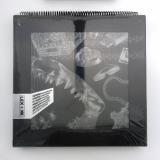
A Project dealing with the relative length of time at a record label and the effect of adding another zero. To explore this passage of time and all those memories, we’ve commissioned remixes of key tracks from the LEX catalog by artists we love and admire. The album features contributions from Danger Mouse & Jemini, Fly Anakin & Pink Siifu, Eyedress, Golden Rules featuring Yasiin Bey and Freddie Gibbs, Neon Neon feat. Cate Le Bon, alongside Kaleida, Belief, Nevermen, Prince Po and MF DOOM. With remixes that reinterpret the tracks by Boards of Canada, Kevin Shields of My Bloody Valentine, DJ Premier, Prefuse 73, Madlib, Stereolab, Warpaint, King Krule, Chad Hugo and Thom Yorke. The limited edition physical release is presented in a rigid slipcase, with the vinyl housed in a triple sleeve gatefold, and accompanied by a large format board book, with both featuring artwork by Commission Studios. The records are pressed on 180g heavyweight vinyl, with the D-Side finished with a bespoke etched design.
out of Stock
Last delivered 39 days ago available to reorder, subject to availability
Kerri Chandler begins a brand-new chapter with the launch of his self-titled label, Kerri Chandler, and its debut release; the Downtown EP Pt. 1.
The release includes four tracks reconnecting with the spirit of Kerri’s iconic Downtown Records era while offering something fresh for the next generation of listeners. 3 of the tracks come straight from that timeless catalogue and firm favourites among Kerri’s community, now beautifully presented on vinyl once again.
Part 1 also features one brand-new, exclusive track, giving fans something truly special: a glimpse of Kerri’s sound, and an invitation to join him on a journey through his remarkable catalogue. This release marks the start of an ongoing celebration of Kerri’s music, his evolution, and the sound that continues to inspire house music lovers around the world. Every detail, from the sleek new sleeve design to the thoughtful presentation, reflects Kerri’s care and respect for his music and the people who’ve supported it. It marks the beginning of something bigger; it’s a series of reworks, reissues, and rediscoveries that will guide listeners through the depth of Kerri’s catalogue and his lifelong love for house music. For long-time followers and new listeners alike, Downtown EP Pt. 1 captures everything Kerri Chandler represents, soulful, honest, and made with nothing but heart.
PUREST FORM pulls visceral dance-punk music from modern-day angst and unrest. The newly formed Los Angeles trio—vocalist Story Beeson, guitarist/programmer Madi Woodward, and bassist Riley Oikawa-Dahlson—draws on their respective backgrounds in hardcore bands and a shared love of industrial and techno, splicing the intensely heavy with the playful and sensual.
RESISTANCE, their debut with Dais Records, delivers a potent, six-track anarchist assault on the system, fueled by collective anger amidst late-stage capitalism and a year of nonstop trauma in Los Angeles, from the fires to ICE.
RESISTANCE builds on the promise of their self-titled 2024 EP, a sonic blueprint that Stereogum likened to Nine Inch Nails' Broken. RESISTANCE is more agile and charged-up, a cataclysmic set with structural jumps and hard left turns, confronting sonic and societal constructs. Serrated riffs meet fractured breakbeats, basslines, and body-quaking feedback, with nods to death metal and acid house in equal measure, all punctuated by Beeson's urgent, anthemic narration, often shouted to near shreds.
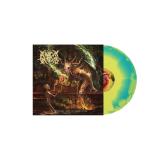
For fans of Signs of The Swarm, Thy Art is Murder and Lorna Shore The devastating new full length from one of Australia’s household names in the Deathcore genre. ‘The Darkest Side Of Humanity’ is a sprawling, hellish journey into the psyche of mankind, drawing influences from every colour of the heavy spectrum. ANIT have always been a razor sharp prospect, but with this album they seem to have found a powerful amalgamation of everything that made them so fun to listen to. The fat is trimmed, the concept is focused…the songs are HEAVY.
Manonmars’ 3rd album sees him at his most amorphous and psychedelic, at points sharper and laser focused, and at others more blurred and impressionistic than his previous records. Many of the core players remain the same, all of the production is once again handled by O$VMV$M (the duo of Neek and Amos Childs of Jabu) while Paulina Korobkiewicz (also of Young Echo) makes a return handling both the album’s cover artwork and contributing a series of diaristic field recordings and voice notes.
‘The project references movies, cartoons, fictional characters and video games, among other things. The album title is open to interpretation but all of these elements are forms of visual entertainment which have their own unique ability to transcend things like language barriers and cultural divides. The visual element is key because those details bridge the gap on a communicative level.’ - Manonmars
The album blends abstract, blurred braggadocio with more immediate personal details such as on ‘Volcanic Shield’ a posse cut of sorts featuring Bristol improv luminary Dali de Saint Paul and Franco Franco (½ of cyborg rap duo Kinlaw & Franco Franco) - where Mars recalls;
‘Memories of brighter days, happy meal hit the spot
Mum was spinning vinyl playing Super Ape or Pressure Drop
I would spend the weekend with the Turkish mandem on the block
single parent household, mum was studying or on the job
money came and went always was an on and off
made it back from school time to see what’s on the box’
The beat fades away to leave one of Korobkiewicz’s recordings of Mars’ mum talking about her life in London in the 80s, spending her money on reggae records as an ambient chord fades in like an echo of a jungle intro – stretching out as a link between generations of UK music.
The production by and large is brighter and more kinetic than earlier Manonmars records – with O$VMV$M drawing on everything from modern underground rap and drill through to jazz and acid ambient passages.
London is also a central character here, bustling and constantly shifting, either when bleeding in through field recordings, or as an ever-present backdrop in the lyrics;
‘I’m a fusion of Tippa Irie and Topper Harley
Hit the target like the black Atari
I dropped a tab now shit’s A Scanner Darkly
Got the munchies, Imma yam a sarnie
Pour the Wray and Ting like man at Carni
Exit Peckham Rye and turn left, walk past Hannah Barry
Get your (w)raps up like its January’
‘I've always considered London my home, despite spending some time in the South West of England too. My mum had been living in London for 25 years (...) That was a pretty big deal in some ways because it removed us from multicultural society during the period which overlapped with my teenage years. (...) I never got used to how quiet it was in the countryside (...) Bristol was the closest city to where we lived and it was through travelling there and making connections that I became involved in making music and playing gigs.’ - Manonmars
Mars’ practice as a painter (under his given name Jack Martyn Richardson) and photographer also loom heavy over the album, he cites Paul Verhoeven, Abdul Mati Klariwein and H.R Giger as influences – as well as Miles Davis, Drakeo the Ruler and DJ Rashad.
As with much of Richardson’s work the raps at times feel blurred to a point of almost inscrutability, creating a distance between the audience and himself. A process that ties into his visual work and the way he experiences the world as mainly abstract colour without his glasses. He explores this further in an ongoing visual collaboration with Korobkiewicz, ‘Fun and Games’ which serves as a visual archive of one of London's largest and oldest travelling fairgrounds.
‘I was diagnosed with very severe short-sightedness at the age of seven. I remember my early formative years as visually blurred. Some of my photography reflects this experience of partial vision and uncertainty, referencing memory and perception rather than fixed representation.’
Manonmars’ first public outing as a rapper was at a Young Echo radio event, broadcast shambolically from a practice room just off Jamaica street, Bristol in 2011, as much as things have moved on both stylistically and in terms of focus - strong links back to the city remain a key foundation throughout the collaborations and guest appearances.
‘I have no problem with being an outsider looking in. One of the things I enjoy about London is the anonymity (...) it's easy to be a stranger here when so much is happening. I feel like thats more valuable than people may realise.’
John Tchicai (1936 – 2012) was one of the most important free improvising saxophonists of the 20th Century: an artist of rare vision and aptitude whose lines soared and stood out even in the most hallowed company, and whose body of work as a leader / composer is among the most singular and distinct within the entire canon of that music. But Tchicai’s importance doesn’t end there. Born in Copenhagen, Denmark, to a Danish mother and a Congolese father, his life and career represent a crucial bridge between the European and American traditions of free jazz. Initially trained on violin as a child, Tchicai shifted his focus to the clarinet and alto saxophone during his mid-teens, and began touring Europe as a professional musician by his early 20s, which landed him at a socialist youth festival in Helsinki, Finland, where he met the trumpeter Bill Dixon and saxophonist Archie Shepp. Impressed by what they heard, Dixon and Shepp encouraged the young saxophonist to move to New York, and in so doing changed the history of jazz forever.
Tchicai’s arrival in New York marks the rare occurrence of a European player joining the intimate circle that was first wave of American free jazz. Following his landing in the city in November of 1962, in addition to regularly sitting in with Don Cherry’s group, Tchicai began playing with Bill Dixon's band alongside Archie Shepp and Roswell Rudd, forming the nucleus of the foundation of the New York Contemporary Five - one of the most important groups of the era - which counted Tchicai, Shepp, Cherry, Don Moore, and J. C. Moses as its members. From the ashes of this group, Tchicai would go on to found the legendary ensemble, New York Art Quartet, with Roswell Rudd, Milford Graves, and Lewis Worrell, as well as working within Albert Ayler's band, recording “New York Eye and Ear Control”, Shepp’s band, recording “Four for Trane”, the ensemble that recorded John Coltrane's “Ascension”, and the Jazz Composer's “Orchestra”.
By the time he decided to return to Denmark in 1966, had Tchicai chosen to record little else, his legacy within the history of music would have been ensured. Incredibly ambitious, his arrival home marked the beginning of an incredible period of activity which saw him radically expanding his creative explorations, which by the end of the decade would include becoming a founding member of Amsterdam's Instant Composers Pool and helping to record John Lennon and Yoko Ono's “Unfinished Music No.2: Life with the Lions”. This, however, was proceeded the formation of a new orchestra, Cadentia Nova Danica, led by Tchicai, dedicated to radical cross-disciplinary exploration. Remaining together between 1966 and 1971, the group and its shifting membership regularly fell into collaboration with artists and composers, notably Musica Elettronica Viva, who existed beyond the realms of jazz, as well as participating within multi-media events that incorporated the visual realms.
Cadentia Nova Danica’s only two LPs - “Cadentia Nova Danica” (Polydor, 1968), and “Afrodisiaca” (MPS, 1969) - are effectively Tchicai recorded efforts as a leader, and are legendary. There’s little mystery, once heard, why the later landed on Thurston Moore’s iconic “Top Ten from the Free Jazz Underground”, published by Grand Royal in 1996. Sadly, despite playing extensively during their five year run, with exception of a CD documenting a performance at Jazzhus Montmartre, in 1966, until now there has been no other publicly available recordings that allow us to capture a glimpse of this astounding band at work. Alga Marghen / Formalibera’s vinyl pressing of a never before released body of recordings, made in Copenhagen between 1969 and 1970, changes that in the most exciting of ways.
Comprising three pieces - “Mc Gub Gub, (I–VIII)”; “Ode to Skt. John”; and “Pladepip” - the material on this stunning LP comes from two specific events. The first, which encompasses the first side, “Mc Gub Gub, (I–VIII)” was recorded by Cadentia Nova Danica - in this instance, Tchicai, Sune Weimar, Theo Rahbek, Christian Kyhl, Niels Holt, Jørgen Thorup, Michael Schou, Morgens Bollerup, Allan Gregersen, Ole Matthiessen, Pierre Dørge, Willy Jaegert, Anthony Barnett, and Jon Finsen - on May 29th, 1969, at the ABC-Theatre in Copenhagen. Penned by Tchicai, the piece is a sprawling, evolutionary composition at the outer reaches of free jazz, rooted in large blocks of colliding tonality and rhythm - a sound only accessible to larger ensembles - that push territories explored by Charles Mingus to previously unimagined heights, threaded by moments of hard blown fire. Writhing like a stormy sea - skronking and devilish - “Mc Gub Gub, (I–VIII)” is a work of profound complexity that singlehandedly illuminates not only Tchicai’s singular vision as a composer, but also the power and uniqueness of Cadentia Nova Danica during the band’s most vital period.
The two pieces - “Ode to Skt. John” and “Pladepip” - taking up the flip side, were recorded on February 21st, 1970, at the Danish Broadcasting Corporation’s Radio House, and are the outcome of Cadentia Nova Danica’s extended residency there between 1969 and 1970. In many ways, these two recordings offer some of the best insights into the broad collaborative approaches that defined the band, in this case encountering them working with Danish experimental composer, Svend Erik Werner, who was among the earliest in his country to embrace stylistic pluralism and the use historical forms within a modern context. “Ode to Skt. John” - based on aspects of Gregorian music - was penned by Werner, incorporating heady improvisation by the members of Cadentia Nova Danica, this time made up by Tchicai, Sune Weimar, Hugh Steinmetz, Theo Rahbek, Christian Kyhl, Michael Schou, Morgens Bollerup, Ole Kühl, Torben Enghoff, Mauritz Tchikai, Kjeld Ipsen, Willy Jaegert, Ole Matthiessen, Ole Thilo, Pierre Dørge, Steffen Andersen, Jon Finse, and Clause Bøje. The piece is a fascinating binary of the composed and improvised, utilising the band’s large scale to introduce a remarkable sound within its slow progressions and furious, driving free moments, in this incredible meeting of worlds.
The album’s final piece, “Pladepip”, is arguably its most historically significant: an entirely singular piece, unlike anything in Tchicai’s recorded canon as his foray into musique concréte. Drawing upon two recordings of full-band improvisations by Cadentia Nova Danica, for its creation Tchicai also gouged the surfaces of 78rpm records in his collection to skip and create repeated phrases and patterns, creating a stunning sound collage of hard angles and abrupt phrase, that creates a striking counterpoint to the band’s flowing improvisations that bookend those passages. The result is an engrossing listen and easily one of the most unique and culturally important gestures in the entire history of musique concréte.
Truly incredible, Alga Marghen / Formalibera’s vinyl pressing of this never before released body of recordings, made by John Tchicai’s Cadentia Nova Danica, in Copenhagen between 1969 and 1970, offers an unprecedented window into one of the most important groups working in Europe during that period, significantly expanding their rare and slim discography to date. Accompanied by extensive exploratory liner notes by veteran jazz writer, Ed Hazell, this is easily one of the most historically important archival releases of the year and is impossible to recommend enough. Absolutely essential on every count.
Graham Hunt kann einfach nicht aufhören, Alben aufzunehmen. Seit 2019 hat der in Madison, Wisconsin, lebende Songwriter ein umfangreiches Repertoire an einzigartiger Musik zusammengetragen - in einem Tempo, das nur von der Qualität der Werke selbst übertroffen wird. Nun, bereits bei seinem sechsten Album ,American Pyramid", hat Hunt sich aus seiner Komfortzone herausgewagt, die bodenständigen, computerorientierten Experimente seiner früheren Arbeiten hinter sich gelassen und stattdessen Minnesotas legendäres Pachyderm Studio mit einer neunköpfigen Band, um zu versuchen, eine andere Seite seiner grenzenlosen Kreativität einzufangen. Das Ergebnis ist ein Album, das musikalisch und textlich neue Wege geht, wobei Hunt mit seinem surrealistischen Ansatz sowohl die Traditionen des amerikanischen Indie-Rock als auch die beunruhigende Distanziertheit der amerikanischen Erfahrung selbst seziert. Zusammen mit einer Reihe von Multi-Instrumentalisten aus früheren Besetzungen seiner Live-Auftritte zog Graham ins Pachyderm Studio, den berühmten Aufnahmestandort unzähliger Kultalben, von Nirvanas ,In Utero" und PJ Harveys ,Rid of Me" bis hin zu neueren Alben wie ,Sugaregg" von Bully oder ,Once Twice Melody" von Beach House. Die Session erwies sich als fruchtbar, da die meisten Songs, die es auf ,American Pyramid" schafften, jene maximalistische Ambition ausstrahlen, die in Grahams meisterhaftem Songwriting offensichtlich ist - doch nachdem er nach Hause zurückgekehrt war, wurde Hunt von noch weiterer Inspiration erfasst - und das Album schwelgt in der Dualität beider Prozesse. Tracks wie der bei Pachyderm aufgenommene Rave-up ,Riverboat Blues" gehen nahtlos in die zu Hause aufgenommene Musik wie ,Dust Underwater" über, wobei beide in eskapistische Fantasien abdriften, in denen lebhafte Produktionselemente die surreale Erzählung untermalen. Oder anderswo bietet der Album-Highlight ,Getting Older" einigen von Hunts unmittelbar befriedigendstem Gitarrenpop und die bodenständigsten Texte auf ,American Pyramid". Die Fähigkeit, so viele verschiedene Klänge, Emotionen und Stimmungen zu vereinen, macht Graham Hunt zu einem so besonderen Songwriter. Nur sehr wenige würden es überhaupt versuchen, Westerberg-artigen Everyman-Rock mit gonzoartigen, autotune-bearbeiteten Gesangspassagen oder psychedelischen lyrischen Abstraktionen mit offenherzigen Gedanken über den unaufhaltsamen Lauf der Zeit zu kombinieren - und noch weniger könnten das so umsetzen, wie Hunt es auf ,American Pyramid" tut.
5 x LP
60-page hardback book
Black vinyl
Printed labels
Printed inners
Slipcase
A2 poster
Slipmat
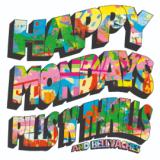
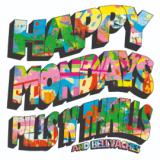
Originally released in 1990 by Happy Mondays, Pills ‘n’ Thrills and Bellyaches captured the chaotic, euphoric spirit of the Madchester movement, blending indie rock, acid house rhythms and funk grooves into a sound that helped reshape British alternative music. Featuring era-defining tracks such as “Step On” and “Kinky Afro,” the record became both a commercial breakthrough and a cultural snapshot of a generation fuelled by dance culture and Northern nightlife.
More than three decades later, its grooves, attitude and genre-blurring production still resonate strongly with contemporary audiences, influencing modern indie and electronic artists alike.
5LP Edition. All original audio remastered from Factory Records master tapes. Includes original album, Hallelujah + Madchester Rave On, Baby Big Head Bootleg Album (Live at Elland Road, 1991), classic and new remixes, 60-page hardback book with brand new essays from James Brown and Central Station designers, fold-out A2 tour poster and Madchester slipmat.
Originally released in 1990 by Happy Mondays, Pills ‘n’ Thrills and Bellyaches captured the chaotic, euphoric spirit of the Madchester movement, blending indie rock, acid house rhythms and funk grooves into a sound that helped reshape British alternative music. Featuring era-defining tracks such as “Step On” and “Kinky Afro,” the record became both a commercial breakthrough and a cultural snapshot of a generation fuelled by dance culture and Northern nightlife.
More than three decades later, its grooves, attitude and genre-blurring production still resonate strongly with contemporary audiences, influencing modern indie and electronic artists alike.
1LP Red Edition. All original audio remastered from Factory Records master tapes. Includes original album and brand new liner notes by James Brown.
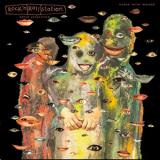
A long-overdue return to one of the most singular moments in Nurse With Wound's sprawling discography. Originally issued in 1994, Rock 'n' Roll Station marked a turning point - the album where Steven Stapleton's decades-long engagement with collage, musique concrète, and the outer limits of post-industrial sound first met the hypnotic, rhythm-driven studio sensibility of Colin Potter. What began as a request to rework some of the more percussive sections of 1992's Thunder Perfect Mind mutated, under Potter's hand, into something else entirely: an hour of swivelling grooves, warped exotica, and looping psychedelia, channelling the ghosts of Pérez Prado, Graham Bond, Joe Meek, and Jacques Berrocal into the most rhythm-conscious work the group had ever made. Three decades on, it remains one of the most beloved entries in the NWW catalogue. Issued by United Dirter as a limited LP, this new VIP edition reframes the album through four extended remixes and reworkings, each running close to or beyond ten minutes - a deep re-engagement with the source material by the extended Nurse With Wound family. Joining the usual suspects of Colin Potter, Matt Waldron, Andrew Liles, and Diarmuid MacDiarmada is an unexpected and historically significant presence: Jean-Jacques Birgé, the French composer, filmmaker, and co-founder of Un Drame Musical Instantané, whose GRRR imprint (founded 1975) famously appeared on the original Nurse With Wound List nearly half a century ago. A quiet circle, closing. The LP arrives as forerunner to a more ambitious project still to come: The Iron Lung Gives Way To The Surgical Stocking, a 5CD set due later in 2026, of which these reworks offer a first glimpse. Housed in striking new full-colour artwork by Babs Santini - Stapleton's longstanding visual alter ego. 500 ww copies in black & orange vinyl. Genre/Style: Electronic / Dark Ambient / Experimental / Drone
Archaic Vaults is proud to present »Ley Lines«, the debut album by St Circul.
Concise collection of folkloric grime instrumentals to rise from a new moniker taken on by the elusive First Circle. A breadcrumb trail of effortlessly crafted early 2000s-era grime, trap and drill instrumentals can be found on a fairly sparse Soundcloud account and numerous NTS shows spanning the last ten years, on which he is known to play almost entirely his own material. Now a different energy takes hold on »Ley Lines«: ten tracks by the enigmatic producer to be released both on a label and in physical format for the first time.
»Ley Lines« was born from a meandering quest through South London’s more leafy dwellings. These cherished regions became a place of refuge in which to ruminate on the hopes that love and community can outlast the dwindling state of Britain’s social and political climate. Photo documentation was made which would later form the genesis for each track, and a return to the studio resulted in something which could not be fitted into the existing First Circle discography.
Harpsichord and brass samples (»A Plan Is Formed«, »Hilly Fields«) are underpinned by murky bass loops and tight militaristic percussion – motifs recognisable amongst white label grime’s most influential producers (Wiley, Skepta, Lewi White etc.) that push the formula into far more rapturous territories than any of FC’s previous productions. The more introspective moments of the album (»Wares at the Ivy House«, »Blythe Vision«) put local field recordings and devotional reverberant ambience to the forefront, alluding to St Circul’s proto-dungeon synth influences and giving the whole album a unique world all its own.
Archaic Vaults is proud to host an album which shares intrinsic roots with the label’s own South London birthplace. »Ley Lines«’ ten tracks of psychogeographic drifting are available in digital and limited cassette format via Archaic Vaults.
Mastered by Owen Pratt Design by Severin Black Artwork image by St Circul
There is with Tour-Maubourg an eternal desire to translate the feeling of love into music. Sometimes cheerful, sometimes melancholy, always exhilarating, the producer, native of Brussels and expatriate in Paris, has continued for 3 years to attract the praise of his peers and the support of a growing audience. The man who was described by Trax Magazine upon the release of his 1st EP as ‘‘one of the most promising producers of the French house scene’’ has revealed himself in this hyperactive new scene to become one of its best standards.
After several EPs released in France on Pont Neuf, FHUO (ie. Folamour’s label), as well as Happiness Therapy or in England and Germany on FINA and Salin, Tour-Maubourg unveils his first album, Paradis Artificiels. The Parisian producer refers to Charles Baudelaire’s poem, to which he links his melancholy music, who wrote:
‘‘common sense tells us that the things of the earth exist very little, and that the true reality is only in the dreams’’.
If the producer’s first EPs were mainly focused on club music, Paradis Artificiels oscillates between the atmospheres that made the success of these previous releases and those of a studio album. Composed of both house songs and downtempo sound researches, always flirting with the jazz sounds that have made the fame of the producer, this first album invites us on a journey in the lineage of St Germain, Massive Attack or Nicolas Jaar.
out of Stock
Last delivered 24 days ago available to reorder, subject to availability
Handpicked by MoBlack, here are eight tracks that lended the dynamic vision and artistic stimulation for what is now a bastion of Afro House. Collected from the label's artists, friends and inspirations of past and present, "House of Mo'" comprises musical snapshots from Mimmo Falcone's journey as a DJ, producer and label head. Reverberating rhythms and grooves attached to memories made on and off dancefloors, these sonic wonders are part and parcel of the House the label built, go-to jams that speak of the spirit that binds its growing family.
We’re delighted to be working with London based deep house label, To The Rocks
Presenting the Visions of love EP from Lucas Moinet, a Paris-born producer with his roots planted firmly in the soul of house music. Through projects like Keraw, Groove Boys Project and Projecture, he’s built a catalogue that doesn’t chase trends, it’s going straight back to the source. Chicago, Detroit, New York. Four tracks. Deep, soulful, deliberate. Made by someone who clearly loves and lives the culture.
I Never Knew Love sees Detroit house mainstay Chez Damier return to the iconic KMS catalogue with a timeless house classic, now available again on fresh 12” vinyl.
A staple of the deeper side of Detroit house, the release combines soulful vocals, warm grooves and refined production, reflecting the signature sound that has defined Chez Damier’s work across decades.
This edition features standout versions including the MK Extended Club Mix from Marc Kinchen, alongside additional extended mixes and a reconstructed version of Help Myself by Carl Craig, offering strong depth and versatility for DJs.
As a key release from the KMS catalogue, this record continues to hold lasting appeal across both classic house collectors and DJs seeking authentic Detroit-rooted material.
Back on fresh 12" vinyl, this repress brings an essential Chez Damier release back into circulation for a new generation of listeners.
An essential catalogue piece for stores supporting classic house and Detroit heritage releases.
out of Stock
Last delivered 4 days ago available to reorder, subject to availability
Originally released on Art Yard in 2017 finally back in print!
Solo album displaying a collection of foggy electronic dub meditations recorded between 2000 and 2005 by Berliner Ring member Alexander Christou under his Al Chem guise.
In 2009, the label Art Yard sent a probe into the outer regions of contemporary electronic music, releasing Berliner Ring's "Orbital" album, a dub techno hymnal for Berlin’s orbital ring road. Drawing together the disparate elements of invented instruments, modified keyboards, customized rhythm and string machines, it was built around moods and themes drawn from the Berlin landscape.
One member of the Ring, Alexander Christou, also a part of the Berlin electro rock group Elecdrones, recording for Katzensonne. The band were “not interested in the crafting of chunks of music ready to be consumed”. Christou has since been recording under the moniker Al Chem, crossing analogue and digital realms, synthesizing a kind of philosopher’s stone. As Al Chem, he released on Tummy Touch Records, and now follows with a collection of foggy electronic dub meditations recorded between 2000 and 2005 in a full album.
In the battle to harness the elements, ancient mists permeated Chem’s music. A murky, mercurial humidity saturates the project. A distinctly north European descendant of dub, a kind of Seventh Seal that Bergman could have made, if provided enough hydroponic infusions.
No Hopper is a rework of the Ras Michael song No Hoppers, from his legendary album, Rastafari Dub, Chem's version shuffles the pack of electronic percussion with organic, Moondog-like rhythms and hazy atmospheric chords; The Prophet pinpoints Chem's GPS firmly in Berlin, just as The Red Tower blurs that kick-drum parallel between reggae and house music; Baudelaire sputters digital delay, piling on the pressure, a clatter of surgical implements performing an operation out of Dead Ringers, the patient storming out of the theatre with loosely fitted mechanical body parts; the instrumental No Hopper only serves to highlight the distant gathering storm. Ladder of Perfection rounds off the set with a drone, creaking with bubbling digital mud pools
Originally released by Panjabi MC in 1998 and propelled to worldwide success in 2002, “Mundian To Bach Ke” is widely recognized as one of the most influential Punjabi tracks ever recorded. Featuring the unmistakable vocals of Labh Janjua, the record fused traditional Punjabi bhangra with contemporary hip-hop production, creating a groundbreaking crossover sound that resonated with audiences across continents. Today, it remains a cultural landmark that helped introduce Punjabi music to international audiences and paved the way for the worldwide rise of South Asian artists.
Now, Spanish electronic music heavyweight Dario Nuñez joins forces with Afro House tastemaker Juany Bravo to breathe new life into this timeless anthem. The remix transforms the iconic vocal hook and instantly recognizable melodies into a high-energy Afro House and tribal-infused club weapon, blending modern production with the infectious spirit that made the original a worldwide phenomenon.
Also included on side A is the new remix by Benin-born, Brooklyn-raised DJ and producer, Amémé. Celebrated for his "AMÉMÉ House" sound, he blends deep house, tech, and ancestral African tribal percussions. The remix bridges two very distinct styles, classic South Asian bhangra and modern, spiritual Afro-house energy, all with Panjabi MC's personal blessing.
On side B the classic original version alongside the remix featuring Jay-Z !
out of Stock
Last delivered 32 days ago available to reorder, subject to availability
High Roller Records, reissue 2022, black vinyl, ltd 250, lyric sheet, poster, mastered for vinyl by Patrick W. Engel/ Temple of Disharmony
“Urm the Mad” was Protector’s sophomore album, recorded in the summer of 1989 at the Phönix Studio in Bochum, where the four-piece from Wolfsburg had already recorded their killer full-length debut “Golem”. Urm the Mad” was to become the last album before the split in 2003 that features Martin Missy; he should be replaced by Olly Wiebel in December 1989. Protector did not change too much about their style – genre-defining early thrash/death – but one of the most notable things about “Urm the Mad” was the sound: The album is famous for its heavy, noisy, dirty sound, for its raw production that makes the music all the more evil and menacing, with guitars in the front and Martin’s unmistakeable vocals lying on the riffs like poisonous mould. “Urm the Mad” is thrash metal walking the path of death. Protector’s special blend of thrash and death metal has always set them apart from their compatriots and even inspired German metal tabloid Rock Hard to declare Protector to be “Germany’s hardest band” – and this in 1989, the year both Kreator’s “Extreme Aggression” and Sodom’s “Agent Orange” were released! Protector, too, play fast and energetic thrash, but the overall feel of the album is that of creeping, lurking evil – crawling along on frequently slowed down, heavy riffs and Martin Missy’s sick death-like growls which seem to come straight from the charnel house. “Urm the Mad” does not sport that “positive” aggression usually found in 80’s thrash; on the contrary, the album is grim, dark and desperate, but nonetheless brutal and extreme. Back in the days, Protector’s contribution to the then-proliferating Teutonic thrash was mainly recognized within the underground scene, and the metal press played its own part in keeping Protector a bit below the radar: “We got pretty much the same response as we got for ‘Golem’: Good, positive feedback from our fans and ‘ok’-reviews from the bigger metal magazines.” Time to make up for that.
Huge classic techno history! Echoes originally appeared in 2001 on Kanzleramt, and from the moment it landed, it was clear this was something different. Eleven techno-dub-house tracks, rich in texture and depth, that mapped out a singular vision of Berlin's dancefloor aesthetic at the turn of the millennium. Not a collection of club tools, but a fully realised album statement, one that understood the dancefloor and the living room in equal measure.
Twenty-five years on, Alexander Kowalski reissues Echoes on his own label Cycles Music - remastered, on double vinyl, and presented as it always deserved to be heard. The ten tracks across four sides move through deep, rolling grooves, melodic undertow and the kind of emotional precision that made Kowalski's name in the first place. Echoes are fragments from the past which follow us into the future, the album's original motto reads like it was written for this moment.
out of Stock
Last delivered 15 days ago available to reorder, subject to availability
Following a huge wave of global support since its digital debut, ‘Edge Of Desire’ from Jonas Blue & Malive finally lands on 12" vinyl. A fitting format for one of the most talked-about house records of the past twelve months.
Since its release in July 2025, ‘Edge Of Desire’ has become a genuine streaming and club phenomenon. The sun-drenched house cut built on shimmering guitar riffs, bubbling synths and an irresistible vocal hook quickly took on a life of its own, topping Beatport Overall Chart and spending weeks in the Top 10 while racking up 100 million streams worldwide and over 100,000 global radio plays. From major playlists to festival stages, the track’s uplifting energy has made it a staple for selectors and listeners alike, with early DJ support from tastemakers including Adriatique, Adam Ten and Carlita.
Now, ahead of summer 2026, the record arrives on a special 12" vinyl edition bringing together the original alongside standout reinterpretations from some of house music’s most respected names. Dutch favourite Franky Rizardo delivers a groove-heavy club workout, Florida legends Jazz-N-Groove add their unmistakable soulful house touch, while Grigoré & Serve Cold transform the track into a deep, rolling dancefloor weapon.
With the original continuing to dominate playlists and dancefloors around the world, the vinyl release of ‘Edge Of Desire’ feels perfectly timed. Ready to soundtrack open-air sets, beach parties and late-night club moments throughout the season. For DJs, collectors and house music fans alike, this pressing captures the record at the peak of its momentum: a modern Defected anthem finally given the wax treatment it deserves.
out of Stock
Last delivered 59 days ago available to reorder, subject to availability
Due to demand, ‘Completely Deep Patterns’, the 2025 debut album of the Deep Patterns project of Bristol producer Ben Dubuisson, is to be reissued as a full vinyl release on 14th July. Originally released on very limited edition lathe-cut vinyl, tracks from Deep Patterns have been supported on BBC 6 Music, FIP, Jazz FM, KEXP, NTS, Rinse FM, and SWU; with Electronic Sound magazine describing it as “An immersive 1970s soul bath scented by lo-fi hip hop and dub” and Twisted Soul calling it “Nothing short of a triumph…indicative of its architect’s boundless talents and fascinating vision”.
Lush, late-night tracks rooted in hip-hop foundations, live instrumentation, rare samples, and recurring motifs; the album was crafted in collaboration with a revolving cast of musicians Dubuisson has built deep connections with over the years, including BEAK> bassist Billy Fuller, Dan Harris on piano, Jamichael on flute, and vocals from The Epoch House Choir. Sliding between soul, jazz, library, and cinematic soundtracks, the album is filtered through a gritty, modern Bristol lens. At its heart, it’s a meditation on loss, longing, and the strange beauty of the world we’ve made for ourselves. From running cult Bristol record shop Purple Penguin and co-founding the city’s influential club Native, to his releases as Hundred Strong, Dubuisson has long championed soulful, forward-thinking music. Having collaborated with everyone from Taskforce and A-Trak to Joseph Malik, Alison Crockett, Amp Fiddler and Boca 45; ‘Completely Deep Patterns’sees him push deeper still, weaving a sonic world that feels both timeless and freshly alive.
Ecstasy and delirium—Amterdam’s duo Match Box transport us once again, getting us back on bright, trance-leaning club sounds; while Berlin-based Olsvangèr takes on remix duties with patient in waveform form—dubby, radiant and groove-led. X-File’s is an ep leaned into pure ecstasy made for this summers festival calendar and beyond.
303 synthesiser leads, driven bouncy baselines, infectious chopped vocal samples from the nineties—Match Box sit somewhere between euphoric trance and high-energy progressive house, shaping the sound of the EP.
On B1, Olsvangèr takes Stone Again into dubby territory with his signature prog touch, full of intricate textures and depth.
out of Stock
Last delivered 14 days ago available to reorder, subject to availability
One of the true, undisputed pioneers of Dutch techno, Steve Rachmad appears on Dekmantel for an EP of peerless machine music. On the 3-6-9 EP, the artist also known as Sterac, Parallel 9 and many other names plies a powerful trade in funked up, gritty and soulful techno made the proper way.
The connection between Rachmad and Dekmantel reaches back many years via his frequent appearances at the Dekmantel Festival — he has two performances at the 2026 edition as well as sets at Dekmantel Selectors lined up later in the summer. The 3-6-9 EP lands ahead of an album and world tour that marks 45 years in service to electronic music, nodding to Rachmad's earliest roots in electro funk through to his day-one embrace of house and techno as it made its way across the Atlantic from Chicago and Detroit.
There's a rowdy, rave-spirited energy to the synth hook bucking its way through the centre of '3 Creation Energy', coming on in brassy tones laced with artful distortion while the drums dutifully jack the way they ought to. There's a more linear, pressure cooker quality to the tidal filter work guiding '6 Physical Manifestation' to its own energetic peaks, while '9 Completion and Delivery' surfs on coursing waves of arpeggiated lead lines before breaking through to the oceanic calm of grandiose pad tones.
There's no mystery to unpick here — this is quite simply techno perfection made with the instinct and experience of a master of the form, whose life is synonymous with every inch of the culture.
out of Stock
Last delivered 46 days ago available to reorder, subject to availability
Picture disc, artwork by C. Bedford Black Screen Records and Kaizen Game Works have teamed up for two new vinyl editions of Barry "Epoch" Topping's vibrant funky city pop/vaporwave soundtrack to the open world adventure game Paradise Killer. Topping's incredible soundtrack will be available on brand new picture discs as well as rosé & crystal clear with white marbled vinyl. The LPs are housed in a gatefold sleeve with beautiful 80s anime- & city pop-inspired artwork by Mizucat - additional art and layout by Kaizen Game Works, Barry Topping and Dane Baudoin. The picture disc artwork was crafted by C. Bedford as well as the one for the included folded A2 Crimson Acid poster. The sounds of Paradise. The music of a cosmic dream. Tunes from another reality. The tempo of the crime to end all crimes. The beat of long dead alien gods. The playlist of the investigation freak. Let the music take you away to Paradise. Feel the sun scorching your skin. Smell unbearably hot concrete. Savour the sweet taste of crime committed on a tropical island in another reality. Remember when we danced along the beach? Along the streets of Paradise? You made me this mix tape on the roof of your apartment block. We stared at the moon. You said you'd kill the moon. I didn't believe you. I was wrong.
Picture disc, artwork by C. Bedford Black Screen Records and Kaizen Game Works have teamed up for two new vinyl editions of Barry "Epoch" Topping's vibrant funky city pop/vaporwave soundtrack to the open world adventure game Paradise Killer. Topping's incredible soundtrack will be available on brand new picture discs as well as rosé & crystal clear with white marbled vinyl. The LPs are housed in a gatefold sleeve with beautiful 80s anime- & city pop-inspired artwork by Mizucat - additional art and layout by Kaizen Game Works, Barry Topping and Dane Baudoin. The picture disc artwork was crafted by C. Bedford as well as the one for the included folded A2 Crimson Acid poster. The sounds of Paradise. The music of a cosmic dream. Tunes from another reality. The tempo of the crime to end all crimes. The beat of long dead alien gods. The playlist of the investigation freak. Let the music take you away to Paradise. Feel the sun scorching your skin. Smell unbearably hot concrete. Savour the sweet taste of crime committed on a tropical island in another reality. Remember when we danced along the beach? Along the streets of Paradise? You made me this mix tape on the roof of your apartment block. We stared at the moon. You said you'd kill the moon. I didn't believe you. I was wrong.
Ever since the late 1950s bossa-nova revolution, Brazil’s influence on French music has been undeniable. Pierre Barouh, Georges Moustaki and a vast array of lesser known artists, all made the Musica Popular Brasileira (MPB) an axis of promotion at the service of a cool and metaphysical, modern and mixed Brazilian lifestyle. Some were seduced by the poetic languors of the bossa, some were looking for fun, and others just loved the American hybridization of jazz-bossa, jazz-samba.
What is bossa nova? One of its creators, Joao Gilberto said: "Its style, cadence, everything is samba. At the very start, we didn't call it bossa nova, we sang a little samba made up of a single note - Samba de uma nota so .... The discussion around the origins of bossa nova is therefore useless”. It is nevertheless useful to remember that these magnificent Brazilian songs, which the guitarist describes as samba, were shifted and balanced around improbable chords. "I like things that lean, the in-betweens that limp with grace," said Pierre Barrouh, quoting Jean Cocteau.
With emotion, arrangements for violin and supple guitar licks, bossa nova rapidly changed. A transformation that can be heard in the Tchic, tchic, French Bossa Nova 1963-1974 compilation, the result of a cultural reappropriation, which traveled through the United States and supplemented itself in France.
A musical revolution that has remained significant, bossa nova was born in Rio. From 1956 to 1961, Brazil lived through its golden years. In five years, the country had invented its modernist style. Elected president in 1956, Juscelino Kubitschek de Oliveira, an elegant man with a broad forehead, brandished a promising slogan: "Fifty years of progress in five years". He quickly got to work. Not worried about increasing debt, he launched the project for a new federal capital, Brasilia, designed by the communist architect Oscar Niemeyer. Volkswagen opened state-of-the-art factories and created the “fusquinha”, the Beetle. In Rio, the Vespa made its first appearance. The Arpoador Surf Club crew run into the “girl” from Ipanema, Helô Pinheiro - the tanned garota ("chick"), between a flower and mermaid, who at 17 walked by the Veloso bar, where the fiery author and composer, Tom Jobim and Vinicius de Moraes, were getting drunk on whiskey. From then on, bossa symbolized cool.
In 1958, Joao Gilberto recorded Chega de Saudade, which the directors of Philips denied, calling it "music for fagots". The marketing director, who believed in it, secretly pressed 3000 78-inch vinyls and distributed them at schools around Rio, creating a tidal wave.
American jazzmen then took over. In particular, trumpeter Dizzy Gillespie and guitarist Charlie Byrd. In November 1962, the Brazilian Ministry of Foreign Affairs funded a "Bossa-Nova" concert at Carnegie Hall in New York, inviting the genre’s pioneers. Unprepared, the show soon turned to disaster. But the troupe was invited to the White House by Jackie Kennedy. The first lady loved "the new beat" and in particular Maria Ninguem, a song by Carlos Lyra, later covered by Brigitte Bardot.
In Brazil, the 1964 military coup quickly ended this euphoria. The destructive atmosphere that ensued pushed many Brazilian musicians to leave, if not to exile. Thus, Tom Jobim, Sergio Mendes and Joao Gilberto arrived to the United States. In New York, Joao Gilberto met saxophonist Stan Getz. At the time, he was married to the Bahianese Astrud Weinert Gilberto, who had a German father. She had never sung before, but she knew how to speak English. Getz therefore asked her to replace her husband on The Girl From Ipanema. The Getz/Gilberto record with Tom Jobim on piano, was released in March 1964. Phil Ramone, the "pope of pop" was in charge of sound.
Bossa nova arrived in Paris through the classic “guitar-voice” channel (Pierre Barouh, Baden Powell, Moustaki…) But France loved jazz and Paris had already welcomed its American contributors. All these good people were to pass through Saint-Germain-des-Prés. The cabaret l'Escale became the Mecca of Latin American sound where one could find Pierre Barrouh and his friends, such as the Camara Trio, samba-jazz aces, whose only record was published by the Saravah label. With a band strangely called Les Masques (a band that included Nicole Croisille and Pierre Vassiliu, among others), the Camara Trio recorded an interesting Brazilian Sound, including the track Il faut tenir which is present on this tasty compilation of rarities.
Other enlightened musicians can also be found on the compilation, such as Jean-Pierre Sabar (songwriter for Hardy, Auffray, Leforestier ...) and the French pop rock organist Balthazar. In 1975, Sabar recorded Aurinkoinen Musiikkimatka on a Finnish label, which featured the crazy Vai, Vai, included on this record. We are now following the footsteps of Brazilian electronic musicians such as Sergio Mendes, Eumir Deodato or Marcos Valle who created funk and disco sounds on their keyboards and synthesizers. A style that influenced Véronique Sanson when she wrote Jusqu’à la Tombée de la nuit in 1969 for Isabelle de Funès, the niece of Louis and a great friend of Michel Berger - Sanson did end up singing this track on her 1992 Sans Regret record.
The pinnacle of exoticism and travel, Sylvia Fels’ Corto Maltese includes bongos, sea mist and ocean sounds. The title was taken from Jacky Chalard’s concept album written in 1974, Je suis vivant, mais j’ai peur (I am alive, but I am scared), based on Gilbert Deflez’s science fiction novel.
However, bossa nova extended the scope of popularity. "In the 1970s, I was a fan of Sergio Mendes, Getz / Gilberto. I fell in love with this music that I knew because I had been an orchestral singer, " explained Isabelle Aubret, who in 1971 delivered a composite record of covers by the very funky Jorge Ben, Orfeu Negro, Tom Jobim, Vinicius de Morais and Jean Ferrat. "I recorded this album for Meys Records in Paris, far from Brazil, with wonderful musicians, François Raubert, Roland Vincent, Alain Goraguer...". The latter wrote the arrangements for Casa Forte, a very percussive title borrowed from Edu Lobo, one of the initiators of the bossa who spent time in California. "Jazz and bossa came together and produced very rhythmic music. I love singing, it allows me to dream, to have fun, to feel a high on stage, and these songs brought me joy, made me swing, my singing felt like a dance.”
The world tours of French singers and their desire for the tropics, often brought them to Rio with its hills, forests, caipirinhas and tanned bodies. There are surprises though, like this Iemenja (Iemenja is the goddess of the sea in the Afro-Brazilian candomblé religion). Not unlike the composer and musician Jean-Pierre Lang, based in Sao Paulo, Claire Chevalier taught Brazil to Brazil. In 1970, the singer and painter published a 45-inch vinyl, Mon mari et mes amants (My husband and my lovers), under the improbable pseudonym of Clarinha (little Claire). She was then living in Rio, with her husband, Joël Leibovitz, who founded a band called Azimuth, and who owned a record label specialized in "sambas enredos" songs for samba school parades.
For its B side, she asked Pierre Perret to come up with lyrics for a song composed by Carlos Imperial: "Oh goddess of the sea, o goddess Iemenja, I bring a white rose to adorn your long hair ..." . "Perret came to see us, and we had fun, remembers Joël Leibovitz. We wrote Lemenja for fun, we recorded it at the Havaí studio, behind the Central do Brasil the central station. Erlon Chaves, the arranger who worked with Elis Regina, joined us" adding his share of Afro-Brazilian percussions and funky brass to the mix.
There is a common misunderstanding in Franco-Brazilian history: that bossa, admittedly hedonistic, is perceived as funny, even though the poets who wrote the texts are often philosophizing on the human condition. Its French interpreters pull it towards a carnival inspired universe, far removed from its fundamental essence. Thus, Jean Constantin covered the famous Samba da minha terra, an ode to the art of samba written by the classic Bahian composer Dorival Caymmi, renaming it with the enticing title of Pas tant de tchi tchi pompon: "On your pier there is no tchi tchi / when you arch your back, you know everything is alright ”(lyrics by Gérard Calvi). This expedited bossa aims for the absurd, but retains a certain elegance.
Indeed, Jean Constantin was not an idiot, the rather large man had a huge mustache and liked fantasy, (Les pantoufles à papa, Le pacha, inspired by cha-cha-cha-cha, salsa and jazz) but he was also the lyricist of Mon manège à moi interpreted by Edith Piaf, the composer of Mon Truc en plume by Zizi Jeanmaire and the soundtrack of François Truffaut’s 400 Blows. Le Poulpe, published in 1970, from which this bossa is extract, was arranged by Jean-Claude Vannier, an accomplice of Serge Gainsbourg’s Melody Nelson. In short: "There is enough of samba / By looking at the parasol / Because my poor cabeza / Is going to die in the sun".
Even the American actress Marpessa Down, who was at the heart of the bossa nova revolution with her role as Euridyce in Marcel Camus’ film Orfeu Negro, winner of the 1959 Cannes Palme d'or, fed the clichée with Je voudrais parler au petit cuica - "Tell me how you manage to always make people want to dance / It's true, I must admit that I cannot resist your magic" - in consequence, once can hear the cuica, a little drum inherited from the Bantu.
But bossa nova had many angles. Societal, of course, pushing actresses who were symbols of women's liberation like Brigitte Bardot, Jeanne Moreau, or Sophia Loren to engage in the exercise of accelerated bossa. In February of 1963, Sophia Loren made a record in French in Rome, Je ne t'aime plus, featuring the song De jour en jour, a bossa written by two Italians, Armando Trovajoli and Tino Fornai, which was released a little later by Barclay. Bossa accompanied the 1960s, a decade of moral liberation. Ann Sorel, who interpreted La Poupée des favellas, caused a sensation with L’amour à plusieurs, a provocative song written by Frédéric Bottom and Jean-Claude Vannier. As for the actress Andrea Parisy, she displayed her bourgeois cheekiness in Marcel Carné's Les Tricheurs before interpreting Les mains qui font du bien. And Magalie Noël, the friend of Boris Vian, who sung Johnny fais-moi mal, was hired to sing Une énorme Samba, composed by Alain Goraguer (arranger to Gainsbourg, Bobby Lapointe and Jean Ferrat) with lyrics by Frédéric Botton.
But in the end, of what wood is bossa nova made of? The answer is given by Christianne Legrand, daughter of Raymond the conductor, and sister to Michel the composer: "With me, with jà" - jà means "immediately" in Portuguese. In 1972, the singer, an expert in vocal jazz and a member of the Double Six, published Le Brésil de Christianne Legrand. Two songs included on the Tchic Tchic compilation that demonstrate how bossa, jazz, funk, rock, etc. work like a swiss army knife: the music is used to denounce broken systems, or miracles, HLM et ciné roman, Cent mille poissons dans ton filet, two songs from the O Cafona soundtrack, a successful telenovela broadcast, at the time in black and white, on TV Globo. The first was adapted in French by the fighter and friend of the Legrand tribe, Agnès Varda. The second is content with a play on words, jostling them into a summer fun.
Véronique Mortaigne
out of Stock
Last delivered 3 months ago available to reorder, subject to availability
Gold Panda returns with TON UP, a brilliantly stubborn new album for Studio Barnhus: eight rough-hewn dance tracks and two cozy little service-station interludes, all crafted with the robust determination of a producer who knows that 140 bpm is not so much a tempo as a way of life.
Made with Derwin Dicker’s unmistakable sampler-bashing touch, the tracks on Ton Up carry the raw knock of old-school hip-hop instrumentals, pushed through pumping house-music machinery and ready to cause absolute trouble on any half-decent sound system.
Here you’ll find zero of that dreaded, over-explained “maturity” usually demanded of beloved electronic artists several albums deep into the game. Instead, Gold Panda just sounds as happily locked in as ever, carelessly chasing the physical joys of pressure, swing and repetition.
TON UP is functional, funny and oddly tender club music, arriving just when the world needed it the most (June 26 that is.)
out of Stock
Last delivered 32 days ago available to reorder, subject to availability
H- side is etched
The American cable-television industry exploded in the 1980s, pushing broadcasts of diverse programming and emissions of low-laying cultures into homes. Community stations piggybacked on the digital developments of the time, extending their existence through telephony and broadcast a iliates. For those growing up in this time, in locations such as New York City, the localized communications beamed into their homes exposed them to an impressionable array of disparate sounds and visions.
Move into the 1990s and New York was filled to the brim of emergent cultures drawing from this ebullition of communication. From Rammellzee’s shapeshifting to the late Judy Russell and Frank and Karen Mendez’s Nu Groove imprint fusing reggae, poetry and house, nascent ideas emanated from the city walls, from within stores such as Sonic Groove store and on VHS releases such as Stakker’s The Evil Acid Baron Show, a legendary technicolor psychedelic trip along the wildest frontiers of acid house. As scenes expanded and identities developed, such individuals weather the events of the visceral now, expressing themselves right into an unpredictable future.
Function’s long career has seen him uncover a vast range of sonic identities, a mainstay through house, techno and industrial with collaborations with the likes of Regis, Damon Wild alongside his highly influential Infrastructure imprint. With influences deeply tied to pop art, rave and gay scenes, and early memories of block-parties emitting Kraftwerk and Strafe, he found himself seeking out the undercover illegal nights of the 90s on a quest of sexual unearthing, mixing the ever-yearning escapology mission of disco with the influential DJ sets of Jeff Mills.
For his new album Existenz, he marks a clear step away from the corporeal techno of his recent releases. Pivoting around themes of religion, sexuality, trauma and healing, it is a work expansive and celebratory, a clear liberation from a deeply internalized past. Formed from a collection of recordings made in a period from late 2016 to mid 2019, Existenz takes the form of a creative outburst in reaction to a number of traumas - recent, childhood and throughout Function’s life. Life partner Stefanie Parnow assisted the production process in its entirety, providing inspiration, spiritual healing and featuring vocal contributions.
Cosmic synths soar and swoop in ‘Pleasure Discipline’ through towering stacks of rhythm that stutter and creak to a halt before rebooting, a firm robotic response to human intervention. ‘Zahlensender’ reflects a spatial tetris of urban life, as digitalization set within an XYZ matrix confronts the sprawling city. Constant arpeggiated meditations echo synaptic transmissions, e ecting a dissolution of boundaries. ’The Approach’ recalls the unification of the self, a state of delirium non-subjective and smooth, as all connections and functions give way to simple intensities of feeling, crossing the threshold into spirituality. ’Golden Dawn’, featuring Stefanie Parnow, marks a further elevation of dubbed-out euphoria, as once more positive rays emerge. His ode to the effortless short-trip urban navigation 'Kurzstrecke' finds Function in motion, upfront and bold, snapshots of conversation and flickers of light. 'Ertrinken' finds metallic bass jabs swamping snipped synthetic voices, with hidden stores of emotion set as a nod to the history of vocoders as a tool for encrypted military communication. House icon Robert Owens features on 'Growth Cycle' and 'Be', entrenching a celebratory atmosphere over Function's clubwise leanings. Closing track 'Downtown 161' reflects the unmistakeable filtered and squashed interjections of television, and sampled dance vocals - a sound for the curious, dreamers and dancers.
With Existenz, Function reveals an essential body of work, spread over 4LP - thought experiments on the role of identity and spirituality after a lifetime of upheaval and trauma. Leading up until the release date, Function will undertake an album promo tour with select dates - A/V shows at Berlin Atonal and Rural festival in Japan, and three dates as part of his Bassiani residency.
out of Stock
Last delivered 31 days ago available to reorder, subject to availability
Bosconi Records returns with Tangled Waves Vol. 2, the second chapter of the series—this time expanding the concept into a four-artist VA, diving deep into progressive house and neo-trance territories while keeping that unmistakable timeless, old-school spirit alive.
Like shifting currents moving in parallel, Tangled Waves Vol. 2 brings together different voices, each following their own path while converging in the same flow—crafted for longevity, built for the dancefloor.
The EP opens with Fly High by DJ Glc, founder of Digging Deeper records and already known to the label through his contribution to the Home Cooked Beats compilation. Here he delivers an epic italo-infused progressive cut, driven by a classic rolling bassline and lifted by a futuristic arpeggio that bridges past and present. Hypnotic, warm, and undeniably effective—pure late-night material.
Next up is Strange Gift by rising artist Little Sea, founder of Sea Horse Records. A high-energy progressive groover with a clear nod to ‘90s classics, the track blends a punchy forward-moving bassline with bright melodic flashes and a sensual female vocal in the breakdown—making it a proper peaktime weapon with emotional depth.
On the flip side, Matteo Guarnieri (aka Rare Happiness) makes his Bosconi debut following a standout release on Kulture Galerie. His track Roller Disco Truck merges old and new with ease—leaning into a tech house framework with a distinct groove, textured stabs, and a subtle arpeggio that adds a psychedelic edge. A playful yet driving cut with strong character.
Closing the EP is Stargazing by Andrea Mera, also debuting on the label. A soft, mesmerizing progressive journey, the track unfolds with lush pads, a fluid atmosphere, and a gently evolving energy. With its warm 303 touches and emotional depth, it feels like a timeless closing moment—introspective, romantic, and built for those final hours on the floor.
With Tangled Waves Vol. 2, Bosconi introduces a new wave of artists while staying true to its roots—delivering four carefully crafted cuts that balance nostalgia and forward motion. Another essential addition for the bag, made to last.
out of Stock
Last delivered 14 days ago available to reorder, subject to availability
A journey made of shared glances and chance encounters, born over glasses of passito wine and memories of a summer that tasted like the sea.
“You Only You” is Alex Farolfi’s latest sonic vision—a musical story dedicated to whoever lives in our "happy place", that safe haven we always return to when we need to find ourselves.
A true pillar of Italy’s “Radio Deejay” Alex Farolfi is a household name in the Italian radio and dance music scene. His career is packed with international hits and major collaborations: The Tamperer feat. Maya: Hit No. 1 in the UK and across Europe with the global smash "Feel It", followed by the Top 10 hits "If You Buy This Record" and "Hammer To The Heart", following his recent singles "Time Won’t Wait" and "Loving This New Feeling,"
Alex Farolfi is back with his unmistakable signature sound in "You Only You."
out of Stock
Last delivered 3 months ago available to reorder, subject to availability
Somewhere between the after-hours haze and the first flicker of sunrise, Nebraska re-emerges - this time with a twist in the signal. Long respected for his deep-cut sensibilities and dancefloor intuition, Ali Gibbs returns to Delusions Of Grandeur not just as Nebraska, but with a handover to his new alias: Dubl Drat. The Alter Alter Ego EP plays like a transmission from both sides of his creative psyche - one rooted in warm, groove-led house and disco mutations, the other drifting deeper into dubbed-out, heady abstraction.
The A-side opens with Alter Alter Ego in its Nebraska OG Mix form - a crunchy, funked-up mid-tempo burner. Chopped Rhodes solos flicker in and out of the mix while a rolling bassline locks into a low-slung groove - equal parts party-starter and late-night dancefloor hypnosis. Next, The Teckel Track slides the tempo down into a proper slo-mo four-on-the-floor bumpy groove. Fat stabs punch through layers of glitchy FX while a melodic bassline snakes underneath, forming a hazy, infectious earworm tailor-made for those early-night mood-setting sessions. Closing the A-side, Olive (Dubl Drat Dub) signals a shift. Here, Gibbs leans fully into his Dubl Drat persona, dissolving structure into a blissed-out dub excursion.
Chopped breaks scatter across the stereo field, chiming melodies echo into the distance, and granulated percussion parts build a dense, immersive landscape - one to get lost in rather than dance through. Flipping over we have Alter Alter Ego (Dubl Drat Remix) which reconfigures the title track into a stripped-back boogie workout. The groove is leaner but no less potent, driven by a killer bassline and punctuated with signature Rhodes licks - pure, understated club pressure. Finally, Olive (Nebraska Version) offers a gentle comedown. This alternate take softens the edges, introducing additional guitar textures that drift into Balearic territory. It’s nostalgic, introspective, and quietly expansive - a closing chapter that lingers long after the last note fades. The Alter Alter Ego EP isn’t just a new release - it’s a dual-state exploration, a conversation between rhythm and space, between Nebraska and Dubl Drat, and marks the last ever Nebraska release as Ali closes the chapter and the alias for the final time.
out of Stock
Last delivered 67 days ago available to reorder, subject to availability
After ten years 12 Inch Lovers has become a household name not only because of their parties but also because of the fantastic vinyl samplers they released over the past few years, which were sold out in no time and have become true collector's items.
They now continue in the same vein and once again bring a fresh and contemporary mix of hard to find, original house classics or even classics that never had a vinyl release.
These samplers should therefore not be missing from any 12 Inch Lovers collection.
"Gregor Salto" is at it again! Sampler 6 opens with that other and hard to find classic of his "Your Friend". A club classic that has won the hearts of countless clubbers and house fanatics around the world since 2009. And speaking of hearts; Belgian dj-producer "DJ Wout" released this beautiful and emotional remix of "D. Van Horn's" "Somebody Now To Love". A true trance classic and typical in sound for that period that you can find on A2.
On B1 we find a more recent track but which you can already say is a future classic. "MZ" from "Sascha Funke" is still played to this day by top DJs like Solomun and very hard to find on vinyl. A must have! Dutch producer "Karmon" delivered this catchy deephouse remix of "Fabo's" "Where I Stand" in 2012. You can find it on B2.
On C1 we find the beautiful "Andain" classic in the "Gabriel & Dresden Unplugged Mix". "Beautiful Things" was picked up by "Tiësto" at the time and has made it a true classic. Hard to find on vinyl.
"Moko" "Fly" on C2 is a very catchy and quirky track from 2010 that never had a vinyl release! Highly recommended!
D1 brings the dreamy and highly sought after "Today" from "POB & Taylor" in the "Seismic" remix after which we close with D2 with a true classic.
"My Moon My Man" by "Feist" is probably that record which remix is better than the original. "Boys Noize" was responsible for this in 2007 and the rest is as they say history.