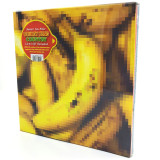
Germany's iconic deep funk collective digs into a new soundscape: "A Higher Frequency" was recorded with a nine-piece live to tape at legendary MPS studio in the Black Forest, adding an airy, jazzy flavour to their trademark raw and breaks-heavy funk. Ten tracks full of spiritual grooves, soulful themes, loose funkiness and organic interplay, captured with state-of-the-art 1960s gear in a super-vibey room - but the title A Higher Frequency is not just about the pristine analogue sound quality of the recording, it is also a reference to a trancendant wavelength where minds meet and music connects.
Together with long-time friends and collaborators Daniel Kimaz on flute and Guillame Métenier, who worked his magic on the studio's historic Bösendörfer grand piano and Hammond organ, the group spent a week in the Black Forest, with full focus on the mission to capture the live energy and togetherness of the ensemble.
The result is an album bursting with positive energy and power, rooted in a universal funk groove with excursions into many colourful branches like outernational, cinematic, soulful jazz, psychedelic & disco.
The common thread is a propulsive, driving-forward feel: "Open The Gate" welcomes us with hard-hitting breakbeats and dramatic crime brass, followed by the cool groovin' piano-led soul jazz of "Get Loose", while "Spinning" takes us on a ride through cinematic horn choruses and folky-psych flute and guitars. "Back And Better" is Nichola Richards' time to shine, laying her sweet vocals over the sparse hiphop-infused soul beat to tell a comeback story. "Sweet Company" is a lighthearted uptempo tune inspired by TV and library themes of the 1960s. The swampy groove of "Sparks Of Joy" best reflects the fun of the band playing together and "Phantom Power" combines a trademark Mocambo breakin' theme with an unusual instrument, an electric phin from Thailand – a nod to the many so-called "world music jazz" recordings that the MPS studio gave birth to. On "Can't Stop This Fire", soul singer Carlton Jumel Smith from New York City takes over the mic as a special guest and brings the house down with a heavy funk delivery. "When We Roll" builds another highlight where bouncy drums play off disco-jazz horn themes and finally, the gospel-flavoured cine-soul epic "Homebound" drives it all home.
The vinyl record comes in a limited first edition in hand-made tip-on sleeve.
The Understated Debut That Launched a Peerless Career: Bob Dylan Is the Clearest Connection to the Singer-Songwriter's Folk Roots
Pressed on MoFi SuperVinyl for Reference Playback: Mobile Fidelity 33RPM SuperVinyl Mono LP Features the Direct Sound Dylan Intended
1/4" / 15 IPS analogue mono master to DSD 256 to analogue console to lathe
Bob Dylan's self-titled 1962 debut is as understated of an entrance as any significant musician as ever made. Well-versed in American roots music, Dylan simultaneously pays homage to tradition and extends it by putting his own stamp on classic material that metaphorically functions as the soil of contemporary songs and styles. Free of ego, and performed with masterful conviction, Bob Dylan ranks with the initial efforts of giants like Elvis Presley and the Rolling Stones.
Nodding to Woody Guthrie and re-imagining Blind Lemon Jefferson's "See That My Grave Is Kept Clean," Dylan straddles the past and future. He authoritatively displays the ability to handle weighty topics such as death, sorrow, and lamentation with the vaudeville flair, bluesy mannerisms, and poignant command of an artist three times his then-20-year-old age.
Sourced from the original master tapes, housed in a Stoughton jacket, and pressed on MoFi SuperVinyl at Fidelity Record Pressing, Mobile Fidelity's numbered-edition 180g 33RPM mono SuperVinyl LP brings the contents of this seminal release as close as they've ever come to live-in-the-studio quality. Transparent to the source, Dylan's voice, acoustic guitar, and harmonica come across with exceptional realism — the "husk and bark" to which Robert Shelton referred in his legendary New York Times review of a Dylan appearance at Gerde's Folk City — courtesy of the format’s nearly non-existent noise floor, groove definition, and quiet surfaces.
Heard in the original mono configuration, Dylan’s vocals are in the heart of the musical action and as one with the accompaniment. This reissue paints an incredibly accurate portrait of the concrete mass of sound that features no artificial panning and offers a straight-ahead immersion into the music producer John Hammond recorded in just two days in November 1961.
Though much has been made of the commercial indifference that greeted the album upon its low-key release, focusing on sales figures and the reaction of a public not yet hip to Dylan's name miss the forest for the trees. Distinguished from the era's other folk efforts by way of the singer-songwriter’s determination, brazenness, and lived-through-this worldliness, Bob Dylan lays the groundwork for the path he'd soon trailblaze and everyone else would follow.
As Dylan scholar and pop-culture critic Greil Marcus observed in 2010: "Everybody knew Joan Baez and the Kingston Trio; if you knew Bob Dylan, you knew something other people didn't, something that soon enough everybody had to know. Within a year, an album could put an adjective in front of the singer's name as if it were already common coin."
Mono is how almost everyone first heard Dylan’s opening salvo. A career like none other starts here.
MoFi SuperVinyl:
Developed by NEOTECH and RTI, MoFi SuperVinyl is the most exacting-to-specification vinyl compound ever devised. Analog lovers have never seen (or heard) anything like it. Extraordinarily expensive and extremely painstaking to produce, the special proprietary compound addresses two specific areas of improvement: noise floor reduction and enhanced groove definition. The vinyl composition features a new carbonless dye (hold the disc up to the light and see) and produces the world's quietest surfaces. This high-definition formula also allows for the creation of cleaner grooves that are virtually indistinguishable from the original lacquer. MoFi SuperVinyl provides the closest approximation of what the label's engineers hear in the mastering lab.
Following the success of his ‘Love Dub So’ EP, Nick Barber’s Doof project returns to Mysticisms, delving back to his earliest recordings of his ground-breaking Trance project, presenting tracks from his previously cassette only release ‘The Love Mixes’.
A youth that had captured the psychedelia of Pink Floyd, Gong, Hawkwind and on to Psychic TV, as a self-taught guitarist, his first trip to India and Thailand in 1989 and witnessing the early electronic dance music at the Full Moon parties, had seemed rudimentary in nature compared to musicality of psychedelic rock.
Returning to England, the electronic / rock crossover of The Shamen’s ‘Progeny’ parties – featuring DJs like Paul Oakenfold and Mixmaster Morris with the live acts of Orbital and Ramjac Corporation – offered something new that turned his head, before finally finding his crew in the legendary squat / underground Pagan parties. There, residents Lol and Yaz first played the new electronic Trance sound, introducing Barber to the music of Eye-Q, Dance To Trance and the hugely influential Pete Namlook.
Recorded between 1990 – 1991, while living in Cambridge to study Philosophy, these are the first versions of tracks that formed the basis of his debut EP on Novamute, in 1993. Working with minimal equipment – an Akai sampler, Roland monosynth, Yamaha delay pedal, all sequenced on an Atari black and white PC and single MIDI output and then recorded straight to an 8-track Tascam cassette multitrack – the exuberance and rawness of the music are full of the excitement and naivety of youth.
Never intended for public release or initially even as a demo, Barber would play the music off the Tascam multitrack for friends at after parties. Dubbing a handful of cassettes himself and personally drawing the covers, around a dozen cassettes were handed out to mates. Eventually one copy found its way to Mute Records, who were looking to launch their dance offshoot, Novamute. Re-edited mixes of Gift Of The Gods and The Nagual appeared on his debut EP and history was made, before Doof went on to release for luminaries like TIP Records and Dragonfly and a career touring the globe was launched.
Remastered from the original tapes, this EP offers a snapshot of that time, the energy and joy of these early recordings is clear and overwhelming. Where Ambient, House and Techno met the birth of electronic Trance that truly stand up some 30 years later as originals then and now.
Trance The Mystery.
out of Stock
Last delivered 7 months ago available to reorder, subject to availability
Born from a desire to explore her background in film composing to create a music film, Hannah Holland’s upcoming album 'Last Exit On Bethnal’ is set for release via PRAH Recordings on 18th July. Together with director Lydia Garnett, the multi-faceted London producer shaped ideas born out of images the pair weren’t finding in film, inspired by queer icon filmmakers like Kenneth Anger and Derek Jarman. “We wanted to craft something unapologetically for dykes: a poetic, surreal exploration of dyke power and sexuality set in a fantasy underworld,” explains Holland. Once the film was shot, she channelled its stunning imagery and the energy of the cast into making the record. Seductive and bass-driven, its nine tracks merge sleazy guitars with 707 machine drums, beautiful evolving arps, and surreal moments of Lynchian dreaminess and Aphex Twin-inspired atmospherics. "It was a really amazing collaborative experience and coming together of a community to make something totally unique….and hot!” she continues. The first single ‘Biker’ features a filthy synth hook atop Hannah’s signature bass-guitar, perfectly capturing the raw and sexy energy of the album and its visual centrepiece. You can listen to it here. The film will be screened at a one-off club night at London’s ICA on 11th April in association with Culture Divided, Somesuch and Bala Project.
Hannah Holland has played a pivotal role in London’s alternative and queer London club scene since the mid-noughties. Rooted deeply in London’s fertile musical community, musical exploration and the transcendent potential of dancefloor have always been her biggest inspiration. Her recent delve into experimental theatre, film and TV scores has proved a future further artistic voyage to explore her creative vision. Holland first arrived on dancefloors sharing electro-tinged techno, with equal inspiration taken from the sounds of DnB and jungle heard at legendary parties such as Metalheadz, which she had frequented in her early teens. Having already been “borrowing” (and perhaps never since returning) Kraftwerk, Grace Jones and Talking Heads records from her parents, the influence of this metropolitan musical soup ensured that Holland emerged on the decks with a unique musical character and diverse taste, hallmarks of her sound that she has not lost since. This has been reinforced with trusted residencies at iconic parties such as Trailer Trash, Adonis, Glastonbury’s NYC Downlow, or undertaking far-reaching marathon sets at Berlin’s Panorama Bar. In 2006 Hannah started Batty Bass with vocalist Mama. Immediately a roadblock party and then a record label with releases from Josh Caffe and The Carry Nation sitting in its discography, Batty Bass explores the disparate strains of electro, acid, techno and house. Hannah also released her own music on the label including the ever-anthemic Paris’ Acid Ball.
A steady stream of releases have followed on Shall Not Fade, Super Rhythm Trax, Crosstown Rebels, Classic, Nervous, as well as remixes for Blessed Madonna ft. Kylie Minogue, Planningtorock, The Knife and Goldfrapp among others. Hannah also finds the time to play bass in several bands including Black Gold Buffalo whose debut album she also co-wrote. Her much-anticipated debut album, Tectonic, came out on PRAH Recordings in 2021, with a second on the way. Hannah’s latest venture into the world of film scores have included queer icon Bruce LaBruce’s ‘The Visitor,’ Channel 4 series Adult Material and award-winning indie feature Electrician.
Hannah Holland continues to push the boundaries of electronic and live music, telling stories and carving her own path in the deeper frequencies.
After 45 years, Trigger’s never-released second album, Second Round, invites listeners to rediscover the hard rock sound that made the band a standout act of the 1970s. In early 1979, Trigger walked out of Electric Ladyland Studios with a completed second album. Mere months had passed since their self-titled debut came out on Casablanca Records, home to KISS and Parliament. The band had toured with Cheap Trick and The Godz, met Bruce Springsteen and Joni Mitchell, and things were looking bright. But Casablanca unexpectedly went bankrupt, and the label’s artists went into freefall. Trigger unsuccessfully sought interested parties, shelved the recordings and disbanded; a disappointing end for a band who dominated the Jersey Shore club scene on their way up with fiery, kick ass live shows. RIP Trigger: 1973-1979. Jump to 2024. Guitarist Richie House is living in Northern New Jersey with his wife, enjoying a relaxing afternoon at the community pool with neighbors. One of them, Andrew Wexler is shocked to discover his friend had a band in the ’70s. He listens to their recordings, and as an avid record collector, assumes the mission of getting that unheard second album released. He writes to Ba Da Bing, a label with Jersey roots. Much excitement ensues. Second Round’s long-awaited release will now be available. All original members—Derek Remington (vocals/drums), Jimmy Duggan (guitar/vocals), Tom Nigra (bass guitar/backing vocals), and Richie House (lead guitar/vocals)—are present on the recordings. Sadly, Duggan and Nigra have passed away, but Remington and House have overseen this reissue, with songs sourced directly from the analog masters.. The Trigger of today maintains a high level of quality, albeit with a bit less flair, and even less hair. And there’s more going on here than at first listen. While the band carries the earmarks of their era—melodic hard-rock fashioned for Saturday night parties—they override the cliché with incredibly catchy songs. How would a ripping song like “Back Talk” have been received in 1979? It’s a question we’ll never be able to answer, but the raw energy of the track spans generations. “One In A Million,” however, with its full harmonies and forceful chorus, could have easily made the soundtrack for Fast Times. Celebrate the discovery of this lost gem by giving it a listen. You’ll be Trigger happy…
interloot returns with a stellar compilation, assembling a cadre of versatile heads to deliver a bulletproof warehouse set for your gear bag. kicking off the a-side is »once again« by stuttgart's jakob mäder. known for his eclectic blend of ambient, disco, house and techno, mäder crafts a heavy opener boosted by a propulsive rhythm, seamlessly melding forceful chords with swirling acid echoes. »tick« by bristol-based fella thrilogy screws down the force and untwines the groove with a more mellow, bass-driven foundation and intricate percussive patterns to a subtle yet weighty synth journey through space and time. flipping to the b-side, »back on back« by renowned duo decent rides instantly slaps your face and unfolds its raw energy with a stomping infectious vibe urging forward unchecked. supplemented by delicate vocal rollbacks this guy’s a real peak-time pusher. rounding out the little concrete jungle voyage, »groove got me« by vienna’s moff & tarkin proves the name’s the product. A massive breakbeat blast tenderly detailed and beautifully arranged builds up to a complex raw and punchy climax leaving no one’s body parts unmoved. savour this collection poised to satiate the appetites of discerning nightlife buds and sistas.
out of Stock
Last delivered 16 months ago available to reorder, subject to availability
Mia Zapata was the greatest rock singer of her time. She may have likely been the greatest blues singer in punk rock history, the woman who married the 78 and the '78. Tragedy did not make this true. Mia Zapata made this true, and the ferocious, spring-loaded shrapnel frame that was built around her by Andy Kessler (guitar: metronomic and furious), Matt Dresdner (bass: fluid, punching, beat-addicted and melodic), and Steve Moriarty (drums: martial and explosive) - who, with Mia, combined to form The Gits - made it true. The Gits were formed at Antioch College in Yellow Springs, Ohio in mid-1986, grabbing and swapping pieces of art, thrash, noise, punk rock, classic rock, and all the sorts of magical silly and bookish jingle bells that an old-school liberal arts education handed you; for the next few years they worked on turning it all into something tough, sensitive, both brutal and kind. Andy, Matt, Mia, and Steve moved to Seattle in middish 1989, landing in a house on Capitol Hill where they (and fellow travelers) wood-shedded and rehearsed for the next few years. The Gits put out three EPs in 1990 and '91 before signing with C/Z Records and releasing their first full-length album, Frenching the Bully. Seattle quickly claimed the quartet as their own and embraced the Gits blend of ferocious fangs and soft heart, the slug/slap of the guitars, and the gorgeous, soft underbelly of the poetic emotions. These qualities not only fit in with the doe-eyed/sharp-clawed grunge ethos but earned the Gits the respect of their peers, including Nirvana, who tapped them to open a major local show in 1990. Then other stuff happened, and their frantic, confessional barbed-heart snowball began rolling up hill very, very fast; the Gits "quickly" (hah! After half a decade learning to implode and explode hearts and stomping their boots on manifold beer-softened, Marlboro-weeded wood stages!) inspired rapture, awe, and the levitation that happened when peak emotion meets peak grindage in front of amps spitting out something that sounded like the mad marriage of Bolan swagger and Dischord tension_ all fronted by a genuinely incomparable woman who held her heart in her mouth and shared it, in all its celebration and fear, without hesitation. The Gits were an angry, inflamed slinky fully in tune with and tuned by the Bessie Patti Smith of her time, truly the only singer who could summon Joplin, Poly Styrene, Sam Cooke, Iggy Pop and Ian MacKaye all in the same goddamn song. In 1993, less than four weeks after accepting an offer from Atlantic Records, Mia died. I leave it at that, because this is not about death; it's about an extraordinary life. I do not say, "You should have been there," I say, "We are lucky so many of us were, and I am so glad we have this extraordinary evidence of the power and gifts of Mia and the Gits that you now can hold in your hands." And I note that Frenching the Bully, this extraordinary testament to the soul, shock, fury and feeling of the Gits, has been long out of print on vinyl and CD, and this new edition - remastered by legendary Seattle engineer Jack Endino - joyfully rectifies that. -Tim Sommer
Double Italo Header incoming! Hailing from Turin in northern Italy, we have a new artist on Frank Music named Hey Cabrera! who presents his dance single "The Moment", which has it all: The ever-familiar bassline, melodies, and pianos for days and topped with additional catchy vocal phrases. It's exactly this kind of unique vibe you only hear when it's truly made in Italy. Label boss Giovanni Francesco Alberto—a.k.a. Johannes Albert—steps in with a sizzling club mix to keep the vibe afloat. Who wouldn't want to live in "The Moment"? We sure do! Flip it over, and the B-side "Exposed" carries the same high-energy tradition—more vocals, even punchier pianos, and for the J.A. club mix, a dash of 808s for that extra groove. Housed in a fully printed cover and ready to soundtrack your summer nights. Grazie mille, Gianluca! The power of Italo Disco—often imitated, never duplicated.
out of Stock
Last delivered 9 months ago available to reorder, subject to availability
SAISEI founder Junki Inoue continues his vital archival work uncovering the riches of Japan’s distinctive electronic music scene and bringing them to new audiences around the world.
HERO U.D.A. aka Hiroyoshi Udaka is not someone you can easily google, but he’s sure lived a life worth retelling. His story starts back in the late 80s when, inspired by the acid house emanating from the UK — during what was fondly christened the Second Summer of Love — he picked up DJing and made the move from Japan to London. Throughout the 90s he DJed at underground techno institutions like London’s The End, CLUB UK and Silver Fish, as well as at the infamous Tribal Gathering raves, periodically returning to Japan to support techno greats like Colin Dale, Mad Mike, Suburban Knight and D. Wynn on tour.
The tracks on this EP, previously unreleased except for one, were all recorded after Udaka moved back from London to Tokyo, between 2002 and 2005. Yet they sound strikingly modern, drawing on a rich range of sounds that have come back round again two decades later: broken beat, acid jazz, dub and breaks. Deceptively simple grooves are given depth by layers of textures and micro samples, for example the surface noise on ‘On The Way’ that glues together an otherwise sparse skeleton of dubby pads and body popping drums. ‘Mature Missile’, ‘So Good’ and ‘Night Driver’ employ raw broken beat templates with acid accents, whimsical melodies and vocal interjections for a playful mood. ‘Sin City’ takes a darker turn, off-key piano hits and plunging bass adding to the wonkiness. The EP closes with a wiggly vignette, ‘222AM’, reminiscent of early 00s contemporaries like Mouse On Mars. Now these hidden treasures from Udaka’s archive gain a new life on SAISEI.
———
SAISEI is a Japanese word which translates to ‘reproduction’ and ‘to play’ (as in playing records). Japanese culture is widely known for its traditional nature just as much as it is for being forward into the future and this label’s concept does justice to exactly that. Having started digging for records as early as 16 years old, Junki Inoue delved into productions from 1990s Japan to uncover these native gems. SAISEI’s core concept is to recapture and reintroduce unique pieces of Japanese electronic music onto vinyl, to an audience it never reached before as most of this music was only released in Japan.
b A2. So Good Acid Funk
out of Stock
Last delivered 5 months ago available to reorder, subject to availability
As time marched on, many of the DJs I had been working with such as Pete Tong, Paul Oakenfold, Trevor Fung, Simon Dunmore and Johnny Walker got involved in the world-leading UK dance scene, raking in cash by making records. I thought ‘I’ll Have some of that!’ This led to my first foray into the studio creating the proto-acid jazz classic 12”, ‘Psychedelic Jack (That’s Where It’s At)’, which cheekily sampled Frank Zappa, Soft Machine and Gong. With me and Gilles on vocals, it got us signed to Acid Jazz Records, who released in 1988 under the name of Extasis.
That was just the start and nearly 35 years later (gulp!) I’ve had a ball, producing Galliano and Paul Weller, working with Mick Talbot, Roy Ayers, Linda Clifford and Sharon Redd, remixing Will Downing, Ce Ce Rogers and Blaze. I’ve made house tunes with Faith’s Terry Farley, run the legendary Dadhouse Records label with Dave Jarvis. I also set up my own studio and released music under a variety of names, both for my own labels and Acid Jazz Records. Recent releases include my solo albums “Firebird” (2023) and “Dream World” (2024). There was also “Back To Business” with Mick Talbot, released in 2023.
Musique Pour La Danse is proud to present the definitive edition of the highly acclaimed and globally beloved Donkey Kong Country soundtracks, meticulously recreated by composer and producer Jammin' Sam Miller. Released in 1994 for the Super Nintendo Entertainment System (SNES), Donkey Kong Country was celebrated not only for its groundbreaking quasi-3D graphics but also for its exceptional soundtrack.
The soundtrack featured a variety of compositions, and has been highly praised for its diverse and high-quality music, with tracks like "Aquatic Ambiance" and "Fear Factory" standing out as fan favorites. The influence of the Donkey Kong Country soundtrack extends beyond the gaming world, having inspired modern artists and changed the way video game music was perceived.
This limited edition boxset, limited to 500 copies, comes as a triple DLP set, containing Volumes 1, 2, and 3. Pressed on red, green, and blue marbled vinyl, it is housed in a hardboard slipcase featuring new and original artwork by Andrew Beltran.
Don't sleep on this ultimate release-the previous boxset edition has been sold out for a long time, and if you can find it, it's being sold for crazy money.
Using hex SPC data converted to MIDI, Jammin' Sam Miller painstakingly recreated the DKC soundtrack note by note, sourcing the original equipment used to create it. He then translated the MIDI into a modern studio context, incorporating keyboard samples, remixing the sounds with added effects, and mastering the tracks. To learn more about his process, watch the explanatory video here: cutt.ly/ulUHE6J.
out of Stock
Last delivered 3 months ago available to reorder, subject to availability
The debut release of Collective Direction explores the incredibly broad and fascinating variety of work of Tasti Box, operating in San Francisco in the early 90’s.
This previously unreleased album, made in the early 90’s, captures the spirit of the San Francisco free party scene that exploded around that time. DJ Harvey, Doc Martin, the Hardkiss Brothers, the Wicked Crew and a host of international guests played at legendary all-night parties at locations such as under the Golden Gate Bridge, on huge custom-built sound systems. Helping to define not only the West Coast scene but also influencing the rest of the country throughout that decade. The cultural impact of this moment in time continues to inspire today’s dance music landscape.
Opening on the delicate and melodic ambient tracks Mim and Quetzcal, the A side closes on Dr Tripi, a house-infused track preluding the uniqueness and diversity of the emblematic Tasti Box sound, explored more broadly on the B side with the triptych of Desire, U Can Fly and Box, a trippy journey melting influences from breaks, house, experimental and techno, one that can be experimented at home or in a club setting. The C side opens with the killer trancey and psychedelic club track Feel It, one expected to be definitely heard on dancefloors over the Summer. It is complemented by the almost balearic Story of O and bleepy and esoteric Electrons. On the D side, some Daisy Glow tracks, showing strong late Tasti Box influence, close the musical journey with four tracks of joyful and melodic house music, a perfect ending to a night and to the double LP.
It’s a compilation for music collectors and dancers alike and those excited to explore the history of a sound not afraid to experiment. The vinyl includes a limited edition A4 design of the artwork cover, an exclusive conversation with the artists and two vinyl exclusive tracks. One not to miss!
out of Stock
Last delivered 13 months ago available to reorder, subject to availability
''Stop'' is the emblem of Italo-Disco par excellence even if in 1983 it was inserted by Carlo Favilli and Stefano Zito on the B-side of the 12''of the nascent label House of Music. However, the song, although recorded in a hurry and with evident sound defects, is the perfect example of the musical genre that was developing in Italy in those very early 80s. ''Stop 4 Remixes'' is long-awaited answer that followers have been waiting for over 4 decades and now it lives with its own light with 4 new versions that testify how the piece was a driving force for the entire Italo-Disco movement."Pushed Up'' is the remix by Woody Bianchi, who according to Claudio Casalini (who does not allow any discussion on this matter) is the best Italian disc-jockey for the technical quality of the mixes and the artistic choice of the pieces to play. It would take a book to retrace the stages of his prestigious career. So here just a bravo' to Gino (Woody Bianchi). Ditto with potatoes for Danilo Braca who works assiduously in the clubs of the Big Apple, spinning only tracks by Italian composers and arrangers. Once again this Italian DJ-producer (Danyb is his old nickname), author of two very pregnant extensive versions: ''The Remix'' and ''Re-Visited'', shows his ability as a 'remixer', known everywhere, but especially in Ibiza especially where the DJs ((DJ Harvey included) often use his ''edits' existing only on pen drive. Among those who have madly loved ''Stop'' near Florence there are certainly Luca Pardini (Dirtyelements), Guido Sonato and Edoardo Guccione (Drunkdrivers) who when they are together form the renowned they Tuscan trio of DJ-producers Dirtyelements & Drunkdrivers with very interesting and successful experiences on Pusic Records, Masterworks Music, Samosa Records and Lego Funk. The approach to sounds in their ''Acid Re-Solution Remix'' is absolutely decisive. Here too, skill and passion seasoned with a pinch of art and... why not?... madness !!!
out of Stock
Last delivered 12 months ago available to reorder, subject to availability
DJ Serviced Records is made by DJs, for DJs, and curated with love by DJ Service.
Four tracks, four situations, no tools - just timeless sound.
This first release, "At Your Service EP," contains tunes made by Brian Topham aka Papolious Jones, Driahn and Jason, Ease Up George, and Wisdom Water. Artwork by Sydacidd
out of Stock
Last delivered 16 months ago available to reorder, subject to availability
“In my category, I’m the one and only,” proclaimed Oakland legend Too $hort on his 1990 single “Short But Funky.” Few disagreed then, and even fewer would do so decades later. First appearing in the mid-1980s, slinging homemade tapes out of his car trunk, the man born Todd Shaw has always stayed true to himself. Although he is known more for the dirty side of his rap game, on “Short But Funky,” he also reminds listeners of an important fact: “There’s a serious side to everything I say.” Short Dog’s In The House, was $hort’s sixth studio album, and his second for the Jive label. By the time it hit, he was a West Coast legend, but his rep was growing Eastwards, as the rest of the country started opening its ears to new sounds. Peaking at #20 on the national Billboard 200 chart, the album was exactly what his dedicated fans expected funky, 70s drenched beats made for cars on the boulevard, and no nonsense lyrics that made more sense and dropped more knowledge than he was ever given credit for. For examples of his conscious side, look no further than the P-Funk fueled “It’s Your Life” or the album’s lead single, “The Ghetto.” The album’s second single “Short But Funky” landed somewhere in the middle of $hort and Todd Shaw, talking about where he was at as the new decade broke, and making it clear that he wasn’t going anywhere. His mortality was mainly on his mind after rumors had surfaced the year before that he had died in a crack house. He speaks directly to this crazy episode on “Dead Or Alive.” And although it’s mostly a solo affair, he brings in some heavy artillery and a lot of not for the kids profanity on “Ain’t Nothin’ But A Word To Me,” featuring none other than Ice Cube In between, $hort distributed plenty of tales and charisma for fans to eat up, continuing to build his legendary status as one of the rap trailblazers of the era. Get On Down has repressed this 1990 Bay Area classic album on Blue and Ruby Color-In-Color vinyl
Risk/Reward is the brainchild of New York based, London-born underground music scene veteran and Archivio Records owner Daniel Dutts.
The label fuses leading contemporary artists, with iconic 90s producers to create a playful yet sophisticated sound, firmly focused on creating dance floor magic!
The first EP showcases rising Philadelphia talents Post Play (Sweater & John Raffaele), whose previous excursion on Small Moves became a much sought after cult classic.
Danger is what’s commonly known by DJs as a “sure thing”, guaranteed to get the most stubborn of crowds moving. A cheeky bass groove, quirky stabs, hip hop breaks and scratched vocals, create a vibe best described as “if DJ Premier made a track for Wiggle in the late 90s”
Go blends vintage Nu Groove style NYC house with progressive and techy elements to create a unique dancefloor monster. warping speed garage style sub bass combines with punchy stabs, lush pads, trippy synth leads and skippy, swinging drums, creating an atmospheric but driving track, that keeps you guessing til the very end.
Bushwacka! channels his Plank-era heyday to create a remix of Danger that delivers multiple “what the f#%k was that?” moments, as he takes you on a breakbeat voyage with crisp percussion, devastating low end, hypnotic ragga vocals and a didgeridoo no less! A reminder of the man’s genius and genre-defining sound.
What I Meant To Tell You merges warm, J Dilla style sampled chords, with punchy 808s, a deep and warm bassline, dreamy pads and enchanting male/female call and response vocals. Perfect for a warm up or deep in the afters.
With heavy support from the likes of Dyed Soundorom, Tini, Harry McCanna and more, the Post Play boys are ready to add another buy on sight record to their growing discography.
out of Stock
Last delivered 8 months ago available to reorder, subject to availability
Pavilions neue Compilation "Break The Glass, Burn The Cage (The Sound Of Indie Punk Rock)" feiert alles, was Indie und Punk ausmacht. Die Welt der engen, verschwitzten Grassroots-Locations mit elektrisierenden Gitarrenriffs, mitreissenden Basslines und den Stimmen der Bands, die man unbedingt gehört haben muss. Mit herausragenden Tracks von Lime Garden, SPRINTS, Lambrini Girls, Sunflower Bean, English Teacher, Dream Wife, Panic Shack oder, Big Joanie kanalisiert die Compilation die rohe Energie und den rebellischen Geist, die man nur erlangen kann, wenn man sich tief um die Ungerechtigkeiten und den Hass in dieser Welt kümmert. Es ist eine Soundreise durch die Angst, Leidenschaft, den Spass und die Freiheit, die man findet, wenn man "es dem Mann zeigt".
"Break The Glass, Burn The Cage (The Sound Of Indie Punk Rock)" wird am Internationalen Frauentag 2025 als Charity-Album angekündigt, alle Tracks wurden freundlicherweise von den Bands kostenlos gespendet. Somit geht der gesamte Gewinn aus jedem Verkauf an die beiden ausgewählten Wohltätigkeitsorganisationen, die ihr Möglichstes tun, um Frauen und Mädchen aus allen Schichten und Altersgruppen zu helfen, von häuslicher Gewalt über Trauerfälle bis hin zu Obdachlosigkeit und Krieg – Brighton Women's Centre & War Child. Das Album erscheint als recyceltes Vinyl und CD in limitierten Auflagen.
2005's Naturally was a pivotal moment in the history of soul music. It was the first Daptone album tracked at the renowned "House of Soul", a recording studio handbuilt by Sharon and the rest of the Daptone family in a two story rental in Bushwick, Brooklyn. The album has gone on to sell over 200,000 records, with hit singles "How Long Do I Have To Wait?" and "This Land is Your Land" streaming in the hundreds of millions- staggering figures for a wholly independent release.
Up to this point Sharon Jones & the Dap-Kings had yet to reach an audience outside of dingy, hole-in-the-wall clubs, dive bars, and underground DJ parties, attended by only the most in-the-know. This was the scene where the band began to flourish, developing the sound that would forever alter the musical landscape and set a lofty new bar for what could be considered real-deal soul music. It made Daptone a household name and opened doors for countless musicians and record labels to come. Naturally sparked a renaissance that is still vibrating today- a testament to Sharon Jones' legacy as the undisputed, reigning Queen of Heavyweight Soul.
Extending the melodious and mad, three-decade story of Super Furry Animals projects by adding another bombastic and beautiful chapter, Huw Bunford, Cian Ciarán, Daf Ieuan and Guto Pryce reconvene to announce the release of their second album, Pando.
Meeting every pummelling motorway mile with the beat of their psychedelic-soul-house blend since the release of their debut, Official UK Breakers Album Chart No.1 album, DK.01, in late 2023, Das Koolies’ energetic return to festival fields, intimate venues and service station shopping has affected no distraction from their mission. Committing to more time on the road at the same time as sharing rich spoils from the studio, Das Koolies include Newport, Nottingham, London and Manchester in their live plans. Determinedly exploring capability and ambition, the band’s continued, restorative return to wired and wonderful, man-and-machine-based music, following years of psych-folk-rock experimentation as four Furries, hasn’t meant forgetting the past. Som Bom Magnífico’s tour story, combining wistful and weary memory, rests the band’s case.
Taking on the lead lyrical and vocal role, Daf Ieuan, says: “Hindsight and rose-tinted glasses. It’s a song about a time when it was normal to order a veggie breakfast in hotels as a concession to a healthier life style, then following up by requesting to see the ‘Breakfast Wine Menu’. As Lou Reed sang: "Wine in the morning!".
Everyone should live like that for a while. Could be for a couple of days or a couple of decades. We’ve never laughed so much, but never again.”
Extending the melodious and mad, three-decade story of Super Furry Animals projects by adding another bombastic and beautiful chapter, Huw Bunford, Cian Ciarán, Daf Ieuan and Guto Pryce reconvene to announce the release of their second album, Pando.
Meeting every pummelling motorway mile with the beat of their psychedelic-soul-house blend since the release of their debut, Official UK Breakers Album Chart No.1 album, DK.01, in late 2023, Das Koolies’ energetic return to festival fields, intimate venues and service station shopping has affected no distraction from their mission. Committing to more time on the road at the same time as sharing rich spoils from the studio, Das Koolies include Newport, Nottingham, London and Manchester in their live plans. Determinedly exploring capability and ambition, the band’s continued, restorative return to wired and wonderful, man-and-machine-based music, following years of psych-folk-rock experimentation as four Furries, hasn’t meant forgetting the past. Som Bom Magnífico’s tour story, combining wistful and weary memory, rests the band’s case.
Taking on the lead lyrical and vocal role, Daf Ieuan, says: “Hindsight and rose-tinted glasses. It’s a song about a time when it was normal to order a veggie breakfast in hotels as a concession to a healthier life style, then following up by requesting to see the ‘Breakfast Wine Menu’. As Lou Reed sang: "Wine in the morning!".
Everyone should live like that for a while. Could be for a couple of days or a couple of decades. We’ve never laughed so much, but never again.”
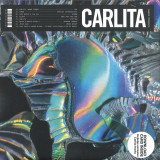
fabric Records has enlisted Turkish-Italian DJ and producer Carlita for the next instalment of its prestigious mix compilation series, ‘fabric presents’. Set for full release on April 11, fabric presents Carlita will showcase her meticulous curation, featuring two new original tracks.
The double vinyl sampler features eight full length tracks taken from Carlita’s mix. Her two exclusives ‘Raf’ and ‘Stop Now’ are cut to A1 and C1 respectively.
The two black vinyl plates are 140g and are packaged in black inners, inside a matt printed reverse board printed sleeve. The vinyl package accompanies the CD, digital download and streaming of fabric presents Carlita mixed compilation across all major platforms on 11th April 2025.
The announcement of Carlita’s mix arrives alongside the release of the first single, “Raf,” a collaboration with Toronto producer Andre Zimmer, out now via fabric Records. “Raf” is a high-energy fusion of classic house and rave influences, crafted with the dancefloor in mind. The track pairs infectious, soulful vocal elements with punchy synth stabs and rolling breakbeats, all anchored by a deep, groovy tech-house bassline. “Raf,” along with an additional original from Carlita, “Stop Now,” is nestled among storied house and techno juggernauts such as Butch, Alex Metric, and Paco Osuna, as well as rising underground producers Prunk, Toman, Alinka, and more.
Beyond the club and festival circuit, Carlita is a leading figure at the intersection of music and fashion. She’s been featured in British Vogue and on the cover of Vogue Italia, performed at exclusive events for Louis Vuitton, Versace, and Fendi, and curated performances featuring The Blessed Madonna and Heron Preston at her own multi-sensory Senza Fine parties. Most recently, she collaborated with Audemars Piguet to mark the release of her debut album, Sentimental.
Carlita (real name Carla Frayman) comes from a background of musical mastery, having played classical cello for the Royal Academy of Music in London in her earlier years (after learning to play piano at age 3). Since her earliest memories, Frayman has never stopped developing her musical talent, picking up more instruments, learning music theory, and after university, saving up enough money to pursue it full time. She hasn’t stopped chasing her dreams and is now playing high-profile DJ slots (check out her Cercle set at Cinecittà in Rome), and has quickly risen as a producer with her phenomenal debut album Sentimental on Ninja Tune last year, as well as remixes for Disclosure and RÜFÜS DU SOL.
Coming up, Carlita be performing at festivals and clubs in Puerto Rico, Switzerland, Germany, and many more. On April 12, celebrating her fabric presents release, Carlita will be taking over Room 2 at fabric alongside Jennifer Loveless, Tommy Gold, and Pedrose.
out of Stock
Last delivered 88 days ago available to reorder, subject to availability
The compositions of Miłosz Kędra (b. 2001) explore synthetic sound, electroacoustic music, and self-built acoustic instruments, seeking diverse timbres, tunings, and textures. His main field of work is the pipe organ. Through minimalist motifs, he has transported the instrument’s sound beyond the church space by synthetically processing its tones. He is currently pursuing a Master’s degree in New Media Music at the Academy of Music in Poznań and recently completed a Bachelor’s degree in Electroacoustic Composition, during which he built his own pipe organ from scavenged pipes.
~ Liner notes ~
Miłosz Kędra - "their internal diapasons"
The pipes that Miłosz Kędra used to craft his own organ emulator have lived many lives. They come from churches scattered across Greater Poland—some trimmed for a more presentable façade, others left to gather dust in parish houses until, stripped of purpose, they were cast away. Their first voices have faded, their inner resonance unsettled, yet with patience, one can teach them to sound again—to sing in their altered state, to be gently coaxed out of silence.
Audiomancy—the conjuring of lost sounds—is the word that lingers when I try to grasp the lore crystallizing with Kędra’s second album.
The resolve with which the musician and composer has inhabited his self-built instrument recalls Witold Szalonek and his search for “unexploited properties of wind instruments in classical music.” Szalonek sought to map these hidden voices into a system of multiphonics, revealing over 160 on the oboe alone by 1968. Some sound eerily alike, yet emerge through distinct gestures—“a particular breath, a precise choreography of levers and apertures, the seamless fusion of the two.”
The splitting of a single note into its spectral fragments—allowing a melodic instrument to speak in two, three, even four voices at once—enabled Szalonek to bend the rigid structures of Western music. "their internal diapasons" follows a similar path: an aesthetic bypass through which Kędra taps into the sacred gravity of the church organ, only to reveal it as a domesticated echo of something far older—the primal theater of transformation. To listen closely to an instrument is to learn its flaws, to turn its imperfections into a new way of speaking.
Each of the nine compositions on "their Internal diapasons" is an invitation—to approach the material world with the intent of letting it speak beyond expectation. An instrument that is at once a sculpture, a performance, and a manifesto of voicing the discarded suggests that its creator—following the path of Didier Eribon (Returning to Reims)—might take as his motto, a principle of asceticism, Sartre’s words: “What matters is not what is made of us, but what we ourselves make of what is made of us.”
Orchid Mantis, by Michelle Helene Mackenzie and Stefan Maier, is a work that draws its inspiration from the history of the Sanzhi Pod City, in northern Taiwan. Sanzhi Pod City was built from 1978 onwards, made up of buildings constructed from assemblages of `pods' inspired by the futuro houses of Finnish architect Matti Suuronen. The project was abandoned in 1980, following a number of accidents during construction and persistent rumours that the site was haunted. However, this wasteland of a city has allowed insects to proliferate, in particular five species of orchid mantis. It is this strange environment, made up of utopian buildings, proliferating insects and vegetation reclaiming the site, that serves as the imaginary space for Michelle Helene Mackenzie and Stefan Maier's music, a music of carefully designed pace and progression, drawing, through resonance and stridulation, subtle sonic materials that guide and accompany us into multiple worlds with admirable ease and grace. Breach, by American composer Olivia Block, engages in a dialogue between field recordings and synthesised sounds, creating a vibrant plea for wild spaces that face an ever-growing threat to their survival from human activities. The work is based on recordings collected in the San Ignacio lagoon in the Mexican part of Southern California. This lagoon is known as a breeding ground for eastern Pacific grey whales. With the help of precise electronics, the music unfolds like a drift, depicting the subjective soundscape of whales caught up in the noise of the Anthropocene. The composer uses otoacoustic emissions in particular, representing the sound saturation caused by humans in the habitat of these large marine mammals. Going beyond a merely descriptive dimension, Olivia Block manages to transcend her subject to offer a fascinating musical form that engages the listener in a constantly renewed way.
2005's Naturally was a pivotal moment in the history of soul music. It was the first Daptone album tracked at the renowned "House of Soul", a recording studio handbuilt by Sharon and the rest of the Daptone family in a two story rental in Bushwick, Brooklyn. The album has gone on to sell over 200,000 records, with hit singles "How Long Do I Have To Wait?" and "This Land is Your Land" streaming in the hundreds of millions- staggering figures for a wholly independent release.
Up to this point Sharon Jones & the Dap-Kings had yet to reach an audience outside of dingy, hole-in-the-wall clubs, dive bars, and underground DJ parties, attended by only the most in-the-know. This was the scene where the band began to flourish, developing the sound that would forever alter the musical landscape and set a lofty new bar for what could be considered real-deal soul music. It made Daptone a household name and opened doors for countless musicians and record labels to come. Naturally sparked a renaissance that is still vibrating today- a testament to Sharon Jones' legacy as the undisputed, reigning Queen of Heavyweight Soul.
Listen to This.” As the original working title for Bitches Brew, the instruction and invitation remains to this day as the best way to approach a record that shattered conventions, altered music history, and, 55 years later, still sounds far ahead of its time. The template for jazz fusion, Bitches Brew is rightly ranked by virtually every significant outlet among the 100 greatest albums ever made. Sewn together with vibrant colors, voodoo textures, and ethereal moods, the 1970 landmark emerges with supreme detail and nonpareil feeling on Mobile Fidelity’s UltraDisc One-Step 180g 33RPM 2LP vinyl set.
Sourced from the original master tapes, strictly limited to 5,000 numbered copies, and pressed at Fidelity Record Pressing in California, this definitive-sounding 55th anniversary reissue enhances every element of a double album that established new possibilities for studio recording techniques. You’ll hear wide and deep soundstages, separation between instruments, and an extremely broad dynamic range. If ever a jazz album can be said to have gone to outer space and back, this is it.
Sourced from the original master tapes, strictly limited to 5,000 numbered copies, and pressed at Fidelity Record Pressing in California, this definitive-sounding 55th anniversary reissue enhances every element of a double album that established new possibilities for studio recording techniques. You’ll hear wide and deep soundstages, separation between instruments, and an extremely broad dynamic range. If ever a jazz album can be said to have gone to outer space and back, this is it.
Davis conceived Bitches Brew by having the musicians stand in a semi-circle. There, he pointed at them with vague directions for tempo, solos, and cues. The collective improvisation and interplay spawned a galaxy of melodies and grooves that were later spliced together by producer Ted Macero. Benefitting from the ultra-low noise floor and superb groove definition of this pressing, these distinct creations take shape with utmost realism. Compositions stretch across jet-black backgrounds and paint canvases laden with millions of colors and shades. Juxtaposed percussion, loose jams, and melodic segues explode with impressionistic verve.
Bitches Brew also boasts visionary artwork. By design, the lavish packaging and gorgeous presentation of the UD1S Bitches Brew set call attention to such matters. Housed in a deluxe slipcase, it features special foil-stamped jackets and faithful-to-the-original graphics that illuminate the splendor of the recording. It is made for discerning listeners who desire to fully immerse themselves in everything surrounding the album, from the images to the tones. And this is one effort where every last detail matters.
Gathering a Hall of Fame-worthy lineup of musicians and tweaking it according to his desires, Davis follows through on his idea to “put together the greatest rock and roll band you ever heard.” Central to his proposition is the presence of two (and sometimes three) drummers and two bassists, a tactical move that makes rhythms a central focus. Akin to the futuristic album cover art, the drum-driven suites head toward distant universes and uncharted territories. At once hypnotizing and grooving, they chart maverick adventures via quixotic rock, funk, and R&B elements.
A without-a-net experiment involving interchangeable double-quintet lineups, Bitches Brew explores the previously unimaginable with electrified instruments — Fender Rhodes piano, processed trumpet, dissonant guitars, and bass among them — and an emphasis on feeling over composition. Mesmerizing and soothing, jarring and smooth, overt and subtle: The music seemingly covers an entire map of emotions and sensations, and like no record before, ties together the groundbreaking creativity of the multiple disciplines that were changing popular culture at the end of the 1960s and dawn of a new decade.
Conceptually, Davis described Bitches Brew as “a novel without words” and “an incredible journey of pain, joy, sorrow, hate, passion, and love.” The vast psychedelic expanses of warped echoes, liquid reverb, and tape loops confirm such ambitious contrasts of light and dark, fear and hope. Yet the most absolute characteristic of the watershed effort lies in how it resists definitive interpretation and encourages free thought — the very principles Davis used to conceive Bitches Brew.
More About Mobile Fidelity UltraDisc One-Step and Why It Is Superior
Mobile Fidelity Sound Lab’s UltraDisc One-Step (UD1S) technique bypasses generational losses inherent to the traditional three-step plating process by removing two steps: the production of father and mother plates, which are created to yield numerous stampers from each lacquer that is cut. For UD1S plating, stampers (also called “converts”) are made directly from the lacquers. Since each lacquer yields only one stamper, multiple lacquers need to be cut. Mobile Fidelity's UD1S process produces a final LP with the lowest-possible noise floor. The removal of two steps of the plating process also reveals musical details and dynamics that would otherwise be lost due to the standard multi-step process. With UD1S, every aspect of vinyl production is optimized to produce the best-sounding vinyl album available today.
Dateline: April 10, 1970. Setting: The storied Fillmore West in San Francisco, CA. Context: Miles Davis, three days removed from his first session for Jack Johnson and, with newly recruited soprano saxophonist Steve Grossman in tow, opening shows for countercultural heroes the Grateful Dead on the latter’s home turf. Result: The initial rumblings of a thrilling era in which Davis and his cohorts would again upend jazz and popular conceptions of the genre with music steeped in groove, improvisation, and hang-on-for-your-life adventurousness. All captured on Black Beauty: Miles Davis at Fillmore West.
Mastered at MoFi’s California studio, pressed at Fidelity Record Pressing in California, and housed in a Stoughton gatefold jacket, Mobile Fidelity's numbered-edition 180g 33RPM 2LP set helps bring what went down that spring evening in Bill Graham’s venue to your listening room with exceptional clarity, balance, and presence. Originally only released in Japan in 1973 and unavailable in the United States until the late ‘90s on compact disc, this marks the first time Black Beauty has been issued on domestic vinyl. The wait is worth it.
Benefitting from quiet surfaces and excellent definition, these LPs present the band’s livewire energy and torrential storm of notes with captivating dynamics, pacing, and fullness. At its core, this audiophile reissue takes you into the walls of sound erected by a band learning on-the-fly the sheer power, will, and breadth of the electric jazz Davis was orchestrating and realizing, on the spot, would reach rock audiences that until that point had only a faint awareness of his mad-scientist experimentation. The sense of release and reach conveyed by these carefully restored records make it clear the veteran bandleader was in the process of a permanent shift that he’d chase for the next five years.
Given Davis was only a few months away from releasing the pioneering double album Bitches Brew, it shouldn’t come as a surprise that much of the fare here adheres to similar explorative approaches. Turbulent rhythms, provocative trumpet passages, and rich, saturated tonal colors that seemingly splash against a blank canvas take precedence over any traditional attempts at organization and melody. Davis and Co. intentionally play everything on a line with the bandleader signaling changes with his horn via coded phrases. The group speaks a common language — with each member having gone to achieve iconic status for their career contributions and technical prowess.
In the company of Grossman, Chick Corea (piano), Dave Holland (bass), Jack DeJohnette (drums), and Airto Moreira (percussion), Davis constructs themes around “Directions,” “Miles Runs the Voodoo Down,” “It’s About That Time,” the title track to Bitches Brew, and more from his then most-recent studio works and the in-progress Jack Johnson. His farewell to the popular standards that for nearly two decades remained a part of his repertoire arrive via a brief dalliance with “I Fall in Love Too Easily,” a shortened albeit aggressive “Masqualero,” and the “Theme” finale of “Spanish Key.” Initially, Black Beauty lacked specific track listings due to Davis’ increasing frustration with listeners over-analyzing his music.
In retrospect, it’s difficult to blame anyone for wanting to view what’s on display here with the aural equivalent of a magnifying glass. Leaning in rock directions, yet maintaining an ear for spaciousness and solos, Black Beauty survives as a snapshot of a thrilling moment amid a transitory period in which evolution came fast and furious. Just two months later, Davis would add another instrumentalist to the lineup in the form of organist Keith Jarrett, and the perpetually restless visionary would blast off to a more atmospheric and arguably more chaotic universe.
Consider, then, this live document a bridge to that galaxy and a breathtaking example of the possibilities of jazz itself.
The annual Bonkers Music compilation returns, delivering another round of high-energy bangers. This year, the release explores a slightly evolved musical style while staying true to its signature sound. Celebrating its sixth edition, “Year VI” will be available on 12” vinyl, accompanied by a few exciting surprises.
A1. Neskeh’s “106 Cabrel” revolves around a melodic yet hypnotically repetitive lead sequence, crafted to evoke a trance-like state on the dance floor and radiate positive energy. The foundation of big, punchy kicks and a robust bassline gives it a quintessential club vibe.
A percussive break in the middle shifts the mood entirely, paying homage to Goa rhythms and shamanic rituals, immersing listeners in a more primal atmosphere. The drop reignites the momentum, enhanced by the warm tones of the beloved Minilogue, adding an almost epic dimension to the journey.
A2. Berlin’s Mike Sacchetti and Madrid’s David Meyer unite on “Agria Pachanga,” a dance energy piece that pulses with percussive drive and a subtle touch of Latin identity.
Acid-inspired arrangements swirl around classic drum machine sounds. The syncopated rhythms and pumping basslines push the track towards an agitated club atmosphere, building this song into a bold declaration of fiesta.
A3. Two friends from Guadalajara, Mexico, Leonor & Ludviq, now living in different European cities, (Barcelona & Lyon) join forces to bring you Capybara Trance, This electrifying track combines dark, driving energy with intricately sequenced melodies, a hard-hitting chugging bassline, and the unique touch of capybara-inspired sounds. Anchored by a commanding kick drum that sets an unrelenting tempo.
B1. “Nebula” is a deep, atmospheric journey through cosmic sounds and pulsating rhythms. The track blends hypnotic melodies with dark synthetic textures, evoking a sense of drifting through endless galaxies. With a strong groove and intricate arrangements, it delivers energy that fits perfectly in both morning sets and more conceptual playlists. The collaboration between Radial Gaze, Ducati Flux, and Persona RS captures the spirit of exploration, creating a versatile track that can be the highlight of any set
B2. Intruso hailing from Bogota, now based in Barcelona brings “Somos Acido” this track draws inspiration from the early 2000’s House and Trance, capturing the nostalgia and emotional resonance of his first experiences with electronic music as a child. A driving Acid bassline injects dynamic energy, making it perfectly suited for the dance floor.
B3. Argentinian born, Australia based producer Poulper teams up with Mexican maestro Hugo Vallejo to kick off this intergalactic adventure. This track weaves together acid-laced elements and an infectious rhythm, layered with haunting post-dark vocals that narrate the fiery, cosmic tale of love burning in the vast expanse of space. A bold and immersive journey into the unknown, perfect for this stellar compilation.
out of Stock
Last delivered 9 months ago available to reorder, subject to availability
Selador’s Magic Black Plastic series returns with our seventh instalment and this one is all about one of our most treasured artists here at Selador, the one and only Danny Howells.
Long time friend of the label, DJ extraordinaire and one of the nicest guys in the business, Danny has been flexing his production muscle again much more frequently over the last 12 months and we’re delighted to be hosting two brand new tracks from him on this vinyl release.
The lead track ‘Powershow’ features here as a ‘vinyl only’ version, a 12+ minute extravaganza of authentic house vibes. Oozing class and quality from every groove. Just beautiful.
Following in its considerable slipstream like a season wingman, for the first time on vinyl, comes Danny’s first release for the label from 2018, one of our best selling digital releases, the classic ‘Earthlings X’, still sounding as fresh as the day it was made.
And finally, another fresh for 2025 Production, the majestic ‘Stereodrama’ picks up the pace for a driving, rumbunctious workout, that once again has Danny’s stamp written all over it.
Three absolute pearlers then from a man who can.
Get’ em down ya!
out of Stock
Last delivered 39 days ago available to reorder, subject to availability
Johnny Mathis (born September 30, 1935) is an American singer. He is one of the best-selling recording artists of the 20th century. Starting his career with singles of standard music,
Mathis became highly popular as an album artist, with several of his albums achieving gold or platinum status and 73 making the Billboard charts. Mathis has received the Grammy Lifetime Achievement Award and has been inducted into the Grammy Hall of Fame for the single “It’s Not For Me To Say”. Although frequently described as a romantic singer, his discography includes traditional pop, Latin American, soul, rhythm and blues, soft rock, blues and country music.
On this compilation some of his greatest hits like “Wonderful, Wonderful”, “Chances Are”. Johnny’s voice & music has been used in countless Hollywood movies, TV shows, and even video games for theme songs & background music to enhance a particular setting or segment. Just to name a few: Family Ties, Gremlins, Criminal Minds, Soul Train, Goodfellas, The Simpsons, Desperate Housewives, EastEnders, Mad Men, and Close Encounters of the Third Kind.
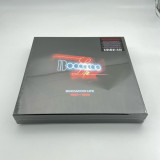
(10x12" box set, limited to 1000 copies, with premium finishing, uniquely numbered, incl. 10 records in individually printed sleeves, a booklet detailing the club's history & exclusive stickers) Boccaccio has secured its place among legendary venueslike Paradise Garage in New York and The Hacçinda in Manchester. Its bold fusion of emerging electronic genres such as New Beat, Acid, House, and Techno was way ahead of its time, drawing music lovers and clubbers from across Belgium and beyond.
Belgian label Music Man Records presents Boccaccio Life 1987-1993, a new compilation offering a fresh perspective on the legacy of the iconic Belgian club Boccaccio - often associated with the short-lived New Beat movement. The 40-track compilation highlights the raw and futuristic early house and techno sounds that were heard in the pioneering club.
Located in rural Destelbergen (Belgium), just a stone's throw from Ghent, Boccaccio has secured its place among legendary venues like Paradise Garage in New York and The Hacçinda in Manchester. Its bold fusion of emerging electronic genres such as New Beat, Acid, House, and Techno was way ahead of its time, drawing music lovers and clubbers from across Belgium and beyond. Sundays at Boccaccio were unlike anywhere else-offering sounds you couldn't hear anywhere else.
Boccaccio Life 1987-1993 is carefully curated by resident DJ Olivier Pieters and club regular Stefaan Vandenberghe, standing as the ultimate testament to a club that was more than just a venue. For those who experienced it, it was a community - a way of life. Hence the club's full name: Boccaccio Life.
This compilation stands as a testament to an innovative time in electronic music, capturing the raw, futuristic sounds of early house and techno. It sheds light on another side of Boccaccio, one that goes far beyond the short-lived New Beat scene. A carefully curated selection of 40 tracks, resonating with those who were there by offering familiar classics, while also reaching a new generation-those who never experienced it firsthand.
With tracks from Blake Baxter, Virgo, Frankie Knuckles, Tyree, and A Guy Called Gerald, the unmistakable influence of black American pioneers is clear-the originators of the firstanalog house and techno sounds. On the other hand, UK sound innovators such as The Orb and LFO bring both sharp textures and rough breakbeats to the table.
Club staple tracks include dreamy excursions from Roger Sanchez under his Egotrip moniker, the relentless basement house of Circus Bells by Robert Armani on Dance Mania, an uplifting take on a hip-house cut from The D.O.C. (Portrait of A Masterpiece in the CJ Ed-Did-It Mix), a timeless remix of UK Formation's Age of Chance from 1994, and an alternate take on The Tape by Boccaccio club regular and Belgian producer Frank De Wulf, taken from his B-Sides project.
While not always the obvious hits, these tracks have gracefully withstood the test of time, and were exclusive to Sundays at Boccaccio. Now, they are finally available to experience together in one collection, offering a timeless snapshot of a unique era.
out of Stock
Last delivered 14 months ago available to reorder, subject to availability
Madteo is one of the great eccentric visionaries of Electronic Music and his new album Misto Atmosferico E Ad Azione Diretta on Unsure once more happens to be a mind-bending piece of art. Misto Atmosferico E Ad Azione Diretta shifts between focused gritty grooves and the long freeform associative adventures that you haven't heard before, never static, sometimes overwhelming, always on edge.
The opener Cans People is an archaic rave monster, To Know Those Who is non-linear dub techno, Nocturnal Palates expands the Filter House universe and Rave Nite Itz All Right hits you hard and strange (yet subtle, in a way). The last two tracks then let loose; Madteo manipulates time, space and sounds to create the psychedelic secrets of Luglio Ottantotto. And Emo G (Sticky Wicket) explores the outskirts not only of House or Techno or whatever but music in general, a 15-min-trip through the low frequencies, the rumble, the dark hearts and the enchantment. Breathtaking. Bring The Voodoo Down.
out of Stock
Last delivered 17 months ago available to reorder, subject to availability
Eridu's 'Nous Sommes' EP prepares us for the first open-air house sessions of Spring 2025! The A-side starts off with 'Nous Sommes' where a bouncy bassline is countered by a French vocalist, balancing style and punch. The Belgian trio continues with 'Je M'en Fous', ready to get the crowd in a 'carefree' mood with the funky elements we all enjoy. The real French touch comes with the B-side where they start off with a long-lost house gem 'Jean Babbie's Theme', finally seeing the light on a record. 'Mad About' catches you in a warm texture of classic samples that will keep you busy long after the last note has faded.
out of Stock
Last delivered 10 months ago available to reorder, subject to availability
Carrying on their longstanding dedication to the seminal output of Merzbow, Urashima returns with what is unquestionably their most ambitious release to date: “Collection 001-010”, a deluxe, 10 LP vinyl box set limited to 299 copies, gathering together the entirety of the project’s first ten releases, originally released in 1981. Encountering the band in its early incarnation of the duo of Masami Akita and Kiyoshi Mizutani, raw, exposed and bristling with energy, foreshadowing numerous trajectories they would follow over the coming years, these astounding full lengths - the majority of which have never been released on vinyl - come housed in a beautifully produced, deluxe wooden box, with each LP in its own individual sleeve reproducing the original artwork, and a LP-sized 32-page book containing reproductions of artworls and collages by Masami Akita, an interview conducted by Jim O'Rourke, and liner notes penned by Lasse Marhaug, Thurston Moore, and Akita himself, amounting to what is unquestionably one of the most historically significant releases we’re likely to encounter in 2025.
Deluxe Edition of 299 copies, remastered from the original analog tapes by Masami Akita, each LP comes in its individual sleeve reproducing the original artwork, also includes a LP-sized 32-page book. ** Since its founding during the late 2000s, the Italian imprint, Urashima, has become a definitive voice in the landscape of noise. Bringing forth beautiful limited edition releases, they’ve sculpted a singular vision of one of the most vibrant and revolutionary bodies of experimental sound to have graced the globe. Among the many projects that they have supported over the decades, there has been an undeniable dedication to the output of the seminal Japanese noise outfit, Merzbow, making a significant amount of the project’s out of print back catalog available across a range of formats. Now they return with what is arguably their most stunning and ambitious release dedicated to the project to date: “Collection 001-010”, gathering the entirety of Merzbow’s first ten releases, largely privately released by the band on cassette across 1981, in a deluxe, 10 LP vinyl box set. Representing what is effectively ground zero in Japanese noise and collectively amounting to some of the most sought after releases ever produced within that movement, Urashima’s truly beautiful collection comes fully remastered by Masami Akita himself from the original tapes, presenting all but a small number in their first ever vinyl pressings, with each LP housed in its own individual sleeve reproducing the original artwork, alongside a LP-sized 32-page book containing reproductions of artworks and collages by Masami Akita, an interview conducted by Jim O'Rourke, and liner notes penned by Lasse Marhaug, Thurston Moore and Akita himself. Towering with energy and groundbreaking creative vision, within the realms of noise and experimental music, releases don’t get more monumental or historically important than this!
Merzbow came roaring onto the Tokyo scene in 1979, and remains, to this day, one of the most prolific and aggressively forward-thinking projects in experimental music. Eventually becoming the solo vehicle for the efforts of Masami Akita, in its earliest incarnation the project was the duo of Akita and Kiyoshi Mizutani, taking their name from German artist Kurt Schwitters' pre-war architectural assemblage, The Cathedral of Erotic Misery or Merzbau, and quickly set out to challenge entrenched notions of what music could be. Embracing technology and the machine, even in its earliest iterations, Merzbow pushed toward new territories of the extreme, arriving at a space of pure, unadulterated sonic onslaught that has continued, for over 40 years, to set the pace for the entire genre of noise, and has remained one of the movement’s most important, definitive voices, continuously laying the groundwork for countless artists who have followed in its wake.
When dealing with historical gestures, there’s an invertible aura surrounding original line-ups and early statements, and rightfully so. It is often within a band’s debut that we catch the purest glimpse of the raw energy and creative ferment that made them what they are. This is certainly the case when regarding the coveted early releases of Merzbow, capturing the emergence of the project in its form as the duo of Masami Akita and Kiyoshi Mizutani as they helped set the blue print from the then emerging movement of Japanese noise. Over the course of its nearly five decades of activity, Merzbow has always been noted for how prolific and ambitious the project is. This was no less the case in the very beginning. While they were active for roughly two years prior, in 1981 alone they issued ten self-released cassettes numerically titled “Collection 001-010”, albums which have both individually and collectively become holy grails in the realms of noise, with only two - “Collection 007” and “Collection 009” - ever receiving vinyl reissues prior to now.
As Lasse Marhaug deftly articulates in the newly commissioned liner notes for “Collection 001-010”, despite having been recorded in different location across a span of time, the sum total of Merzbow’s first ten releases might be best regarded as a single release to be listened to in the same, durational sitting, with the material standing well apart from what most came to expect from Merzbow, while foreshadowing numerous trajectories the project would take over the coming years. Not only do these recordings feature a vast array of instrumentation - tapes, acoustic and electric guitar, violin, drums, voice, recorder, organ, found sounds, clarinet, homemade and prepared instruments, a vast arsenal of effects and electronics, and piano, to only begin to scratch the surface - the majority of which would disappear from the project’s active sources of sound generation over the subsequent years, but there is a slow pacing and raw sense of openness and exposure that reveals strong connections to the avant-garde improvisations of groups like AMM, Musica Elettronica Viva, and Gruppo di Improvvisazione Nuova Consonanza, the psychedelia of groups like Taj Mahal Travellers and Flower Traveling band (both of whom Akita mentions having seen in youth within his interview with Jim O’Rourke), and rock in general - albeit in fully abstracted forms - unspooling as brittle, pointillistic, textural, raw and abrasive forms, that occasionally flirts with unexpected tonal sensibilities. As Marhaug describes it in his excellent liner notes: «Sonically, “Collection” sounds more sparse and stripped. It’s dry sounding, up-front, no reverb, and there’s less heavy low-end grime and thin on the signature frequency sweeps. Viewed in a 1981 context, musically, it’s more akin to what the LAFMS (Los Angeles Free Music Society) pool of artists were doing at that time than what was happening in industrial music... There’s a strong playfulness throughout, like the sound objects are being explored for the first time, without neither restraint nor hurry. Events are allowed to be fully examined before the music moves on, or simply cuts off. To a large degree, the music on “Collection” feels acoustic in nature, although a Electro-Harmonix ring-modulator features prominently throughout.»
Easily described as a rarely encountered revelation into the original and earlier documented studio sound of Merzbow, “Collection 001-010” collectively amounts to an engrossing sonic journey in its own right, while also allowing for important, often overlooked connections drawn from numerous other creative wellsprings, notably free jazz, underground rock, the output of European and Japanese avant-garde music, as well as Dada, Fluxus, and Mail Art, much of which, beyond the illumination made possible by the sounds, Jim O’Rourke’s fantastic interview with Akita, published in the booklet, further explores, offering great insights into the origins of Merzbow and the thinking behind the project, as well as aspects of the earliest days of Japanese noise.
Rhiannon Giddens reunites with her former Carolina Chocolate Drops bandmate Justin Robinson on What Did the Blackbird Say to the Crow, an album of North Carolina fiddle and banjo music. Produced by Giddens and Joseph "joebass" DeJarnette, the album features Giddens on banjo and Robinson on fiddle, with the duo playing eighteen of their favourite North Carolina tunes: a mix of instrumentals and tunes with words.
Many were learned from their late mentor, the legendary North Carolina Piedmont musician Joe Thompson; one is from another musical hero, the late Etta Baker, from whom they also learned by listening to recordings of her playing. Giddens and Robinson recorded the album outdoors and on location at Thompson’s and Baker’s North Carolina homes, as well as the former plantation Mill Prong House. They were accompanied by the sounds of nature, including two different broods of cicadas, which had not emerged simultaneously since 1803, creating a true once-in-a-lifetime soundscape. The duo, along with four other string musicians including the multi-instrumentalist Dirk Powell, will embark on the Rhiannon Giddens & The Old-Time Revue North America tour in April.
“With the assaults on reality going on in the world today, we wanted to offer another kind of record, like walking back onto a gravel or dirt road while a stampede goes the other way,” Giddens says. “With the cicada choir, this record could’ve only happened at a certain time in the last 120 years. We doubled down on place, time, realness, and old-fashioned front porch music. It’s a reminder that another way exists, with music made for your community’s enjoyment and for dancing–not solely for commercial purposes.
“What is the role of music in our society?” she wonders. “How do we de-couple it from unfettered capitalism, where music is a product and musicians are incidental? How do we use the tools and system that we have been bequeathed in a way that reminds us of other ways of being?” Robinson adds, "Recording this album felt like being back in the saddle. Just this time Joe is not here, and his fiddle is under my chin. The album is about home, the cicadas, the storms, the music, and the people who make it feel like home."
Thompson was one of the last musicians of his era and his community to carry on the southern Black string band tradition. He played a crucial role in the lives of Giddens and Robinson, who, along with their Carolina Chocolate Drops bandmate Dom Flemons, spent their formative years learning from Thompson in traditional apprentice/mentor relationships. His influence has guided all of their artistic journeys as well as their mission to keep the legacy of the Black string band tradition alive.
In further tribute to Giddens’ North Carolina roots, What Did the Blackbird Say to the Crow will arrive just a week before Biscuits & Banjos, the inaugural edition of her first festival, which highlights the deep roots and enduring legacy of Black music, art, and culture while fostering community and storytelling. The sold-out festival will feature a much-anticipated Carolina Chocolate Drops reunion, their first performance together in more than a decade.
Seasons Limited made a welcome return in 2024 and now keeps up that good momentum with another big single from French house mainstay Franck Roger with some fine vocals by Paul B. It's a super smooth sound with drum swaying back and forth, molten synth adding late night and tissue soul and the tender vocal adding intimacy and late night romance. Rocco Rodamaal steps up for remixes and first of all he pairs things back to a sedate, seductive deep house roll then fleshes out the drums with some dubby weight to finish.!
out of Stock
Last delivered 18 days ago available to reorder, subject to availability
Black Loops is an endlessly creative producer who has brought constant invention to house music since his first release over a decade ago. His widescreen sounds take their cue from funk, soul and disco and are underpinned by a love of 90’s grooves. They appeal to DJs and dancers alike which explains his constant demand for DJ sets around the world as well as his music being played and supported by the biggest names in the scene. After many years of vital 12"s and remixes, he now draws on everything he has learned and raises his levels with a fully realised debut full length album dropping 9th May, 2025.
Ahead of the LP we present the Experience EP which sees Jimpster and Black Loops himself deliver Dub versions of two of the LP’s highlights; Electrical and Experience. Jimpster kicks off with a stripped back, rolling Italo-inspired groover with touches of modular synth sequences, string stabs and dubbed out vocals. Black Loops follows with his own version keeping the funk factor intact with guitar licks, synth blips and extra fat, moog bassline.
Flip over for the original of Experience featuring Marlena Dae with it’s distinctly 90’s, Vogue-era Madge mood. Black Loops then proceeds to take it to the club on his Dancefloor Dub, stripping out the vocals and working up a punchy, minimal groove for the dancers. Closing out the release we have an exclusive original, not included on the LP entitled Inmasoul. Jazzy, deep beats are the order of the day here, making for a perfect warm up track to set the mood.
out of Stock
Last delivered 4 months ago available to reorder, subject to availability
For Record Store Day 2020, Far Out Recordings presents a special 'poisoned vinyl' edition of Ivan 'Mamão' Conti's critically acclaimed Poison Fruit album. The 180g splattered colour LP is accompanied by an exclusive bonus 7” with a previously unreleased track from the original Poison Fruit sessions ‘Katmandu, and ‘Ninho’, a track never before released on vinyl.
From an artist in their seventies, you probably wouldn’t expect to hear an album like this. But Brazilian drumming legend Ivan ‘Mamão’ Conti has been experimenting and innovating for the last half a century. As one third of cult Rio jazz-funk trio Azymuth, Mamão was at the root of the group’s ‘samba doido’ (crazy samba) philosophy, which warped the traditional samba compass with jazz influences and space age electronics. Even with his lesser known jovem guarda group The Youngsters, Mamão was experimenting with tapes and delays to create unique, ahead-of-its-time sounds, way back in the sixties. More recently Mamão recorded an album with hip-hop royalty Madlib under the shared moniker ‘Jackson Conti’.
With his first album in over twenty years, and the first to be released on vinyl since his 1984 classic The Human Factor, Mamão shares his zany carioca character across eleven tracks of rootsy electronic samba and tripped out jazz, beats and dance music. Featuring Alex Malheiros and Kiko Continentino on a number of tracks, the Azymuth lifeblood runs deep, but venturing into the modern discotheque (as Mamão would call it), Poison Fruit also experiments with sounds more commonly associated with house and techno, with the help of London based producer Daniel Maunick (aka Dokta Venom) and Mamão's son Thiago Maranhão.
Take a bite of Mamão’s psychoactive Papaya and join the maestro on a weird and wonderful stroll through the Brazilian jung
out of Stock
Last delivered 18 months ago available to reorder, subject to availability