Amsterdam based indie rock band POM made their debut in 2019 with their immediately successful single Down The Rabbit Hole, which has now streamed over 2 million times.
After releasing a number of singles and an EP, their debut album We Were Girls Together will be released on November 10 via Mattan Records.
POM brings together a balanced sound of raw guitar rock on the one hand and a sense of catchy melodies on the other. With their fresh and idiosyncratic style, a combination of Britpop, punk and garage rock, their sound can best be described as fuzzpop.
They were previously named by 3voor12 as one of the 12van3voor12 talents and tipped as a must-see act at Eurosonic Noorderslag.
The Cult brings on board a legend. From DMC scratch champion in the late eighties to the missing link between Detroit and Amsterdam in the nineties. Dutch producer Orlando Voorn needs little introduction and with seminal hits like his dancefloor destroying KMS smash ‘Fix’ under his belt, it is no surprise that the ever-innovative producer is as in demand today as he ever was. Having worked alongside techno originators such as Juan Atkins and honed his production skills under an incredible number of monikers over the years, we bring the multi-talented producer into the Cult. Here he produces an EP of techno brimming with the musicality and inventiveness that is regularly stamped all over his productions.
Opener ‘Between the Surface’ rolls along effortlessly with its Detroit house leanings, loose jazz drums and buoyant walking bass line driving the groove onwards. Hitting hard, ‘Dazed’ is up next with its jackin’ DX style bass and deep evolving arpeggios, that hark back to the glory days of early house music. Finally, ‘Immortal’ ventures into deeper territory for a twisted journey of discordant synths, electro bleeps and haunting synth melodies. His debut on Rhythm Cult is rich with ideas and showcases the creativity that has made Voorn a force to be reckoned for nearly three decades in the game. Joining the dots between Amsterdam and Detroit this new EP brings fresh inspiration with every listen.
out of Stock
Last delivered 6 months ago available to reorder, subject to availability
Detroit label Choose Better Friends made an immediate impact late last year when it dropped three EPs all in the same week. We've had to wait a while for this next one but it has been worth it: Bale Defoe is on the buttons and brings some dusty Motor City house heat with opener 'Morning Workouts' which rides a bumpy, booty shaking broken beat with meaningful chords and aching vocal snatches up top. 'Prewar Vibe' brings some swinging jazz chords and cut-up drums seemingly bashed out on an MPC. There is subtle euphoria in the bursts of excitable chords and vocal fragments of 'In Love On The Balcony At Terminal 5' and plenty of humidity in the diffuse synths and bumps drum funk of 'Summertime On Michigan Ave'. It's EPs like this that keep our fascination with Detroit very much alive.
out of Stock
Last delivered 2 years ago available to reorder, subject to availability
V-House Sound boss, AJ Christou is next to make his Hot Creations debut with the two-tracker ‘Babaloop’.
Hailing from Manchester, AJ Christou stands as a testament to artistic accomplishment with his unwavering commitment to his evolving craft and sound. The success of his new label, V-House Sound, has made this year particularly significant for him, with unshakable support from industry heavyweights like Marco Carola, Joseph Capriati, and Jamie Jones, backing his reputation as one of the most sought-after DJs in the game. With another impressive year behind him, December now marks his debut on Hot Creations as he delivers two club ready gems in his ‘Babaloop’ EP.
The bumping two-tracker kicks off with ‘Babaloop’, a lively late-night house cut featuring entrancing male chants and a bouncing bassline that captivates the listener with its groove. ‘No Fear’ follows up with a funky bass riff, alluring female vocals and deep stabs, radiating prime-time resonance and bustling club energy.
out of Stock
Last delivered 4 months ago available to reorder, subject to availability
Compiling the follow-up to a very successful first album is always a tricky task, but just 12 months since the release of volume one in the 'With Love' series, miche has excelled himself once again with another glorious, deep dive into the world of rare soul. 15 tracks of independently released music, created by magnificent artists with stories to tell and primed for rediscovery.
The ambition to celebrate under-the-radar artists has remained, but instead of a facsimile of volume one, what we have here is a selection shaped by life changes. Volume two is for the dancers; still soulful, still ultra-rare and slept-on records from the USA, Chile, Brazil and beyond, but the dynamics of the collection have shifted slightly. It represents a move from being immersed in a week in week out environment of beautiful, soulful music in a cosy, dimly lit hi-fi bar to playing livelier, more energetic, dancefloor-focused music in nightclubs. This volume will get you on your feet, make you move and unleash whatever it is that makes you get down.
One of the jewels in the crown of this compilation is a joyous, anthemic gospel version of Stevie Wonder's 'As' by The Family Tree (a project produced by the fantastic Julius Brockington). We are also treated to a rare and sought-after Pennsylvanian funk / AOR bomb by Maxwell, a stunning modern soul tune 'High On You' by Freedom, and self-released Brazilian 45s by Banda 22 and Zé Da Lata. P.J. City's 'Straight Forward (Non-Stop)' is gospel-disco perfection, and we also have 'Dame Solamente Amor’, a sublime, soul beauty from Chile by Rogers Mitchell. Many of these artists featured in this compilation aren't household names, but they deserve their moment to shine, to be heard, loved and appreciated for their artistry.
As Miche says it, “I hope this compilation helps in some way to keep this glorious music alive and play a part in connecting generations of music lovers from the worldwide soul family. As always, it has been made ‘With Love’.”
out of Stock
Last delivered 2 years ago available to reorder, subject to availability
Barcelona-based DJ, crate digger and producer Lis Sarroca makes her debut on Shall Not Fade's coloured vinyl series marking the tenth release on the imprint.
Taking influence from her extensive travels - before lockdown hit - Sarroca mixes classy 90s house rhythms with standout melodies. No Wait EP follows on from her 2020 release on Hot Haus Records. Sarroca describes her music as "danceable, energetic, deep and warm", an ethos reflected throughout this EP. Despite dabbling in variations on dance music, stripped back disco to punchy tech house rhythms, this record is accomplished and consistent, coming together to deliver memories of sweaty summer club nights. "No. Wait" references French filter house, pairing a chugging bass and booming kick drum with sparkly disco keys into one very sultry track.
In "La Neta" Sarocca turns her attention to electro with the squelching bassline and drum machine loops but uplifting chords bring it back to house roots. There's a little bit of Kraftwerk in "Round & Round", a hypnotic pulsing track with synths of a distinctly German sound palette; it's the darkest moment on the record.
The B-side is expansive feel-good house, "Hi Montana" plays with dramatic strings while "Get This Right" is a certified summer anthem of sharp chord stabs and clean bassline made for the beer garden. No Wait closes with "AX", a piece of fun cowbell-smattered organ house.
out of Stock
Last delivered 2 years ago available to reorder, subject to availability
First time on vinyl!
Newly remastered. LP housed in a gatefold jacket.
Featuring Herbie Hancock, Martha Reeves, Alphonse Mouzon, Chuck Rainey, Patryce “Choc’let” Banks, Carlos Morales, and members of The Pointer Sisters.
In the 1970s, Betty Davis defied genre and gender by pushing her voice to extremes and embracing the erotic. She articulated a kind of pre-punk, funk-blues fusion that had yet to be normalized in mainstream music – a style that few musicians have come close to replicating. As one of the first Black women to write, arrange, and produce her own albums, Betty was a visionary who disregarded industry boundaries and constraints. Raw, unapologetic and in full control, Betty paved the way for generations of future artists who said “funk you” to the music industry and social norms.
In 1979, when Davis entered an L.A. studio to record her fifth and final album, she was reeling from a series of setbacks. Three years earlier, after recording her fourth album, Is It Love Or Desire, Davis was dropped from her label and the LP was subsequently shelved. In 1978, her beloved band Funk House went their separate ways. Looking for a fresh start, Davis relocated to Hollywood to focus on songwriting. Before long, British manager Simon Lait (Toni Basil), offered to fund her next project.
With renewed vigor, Davis reunited with former Funk House guitarist Carlos Morales and brought together industry veterans like fusion drummer Alphonse Mouzon and session bassist Chuck Rainey. Old friends Anita and Bonnie Pointer (The Pointer Sisters) and Patryce “Choc’let” Banks joined Davis on vocals, as did Motown legend Martha Reeves. The resulting album, Crashin’ From Passion, was her most musically diverse, blending elements of reggae and calypso (“I’ve Danced Before”), jazz (“Hangin’ Out in Hollywood,” “Tell Me a Few Things”), dark synth-pop (“She’s a Woman”), and even disco (“All I Do Is Think of You”). Equally exploratory are Davis’ vocals, as she trades in her signature sass and snarls for more nuanced stylings.
Among the album’s few funk tracks is “Quintessence of Hip,” in which Davis hails musicians like Bob Dylan, Billie Holiday, Stevie Wonder, and John Coltrane, while deftly integrating elements of their work. The song also offers a moment of stark vulnerability, as she sings, “Isn’t rich? Isn’t it queer? Losing my timing so late in my career.” It would prove to be a prophetic line in the months to follow.
The mixing process was mired by artistic differences and then cut short, amid the death of Davis’ beloved father. Bereft and exasperated, Davis returned home for the funeral, setting into motion her retirement from the music industry. Crashin’ From Passion, meanwhile, would be shelved for 15 years and licensed for a CD-only release, without Davis’ consent, in the ‘90s. This 2023 edition of the album, made with Davis’ full approval and cooperation, marks its first official release and first time ever on vinyl. The package was designed by GRAMMY®-winning artist, Masaki Koike, while the album cover features an incredible shot of Betty captured in London in the mid-1970s by renowned photographer Kate Simon.
Crashin’ From Passion was remastered by Dave Cooley at Elysian Masters and pressed on vinyl at Record Technology, Inc. (RTI). The accompanying booklet includes a treasure trove of rare photos from the era, plus lyrics, and new liner notes by writer, ethnomusicologist, and Betty’s close friend, Danielle Maggio, who integrates interviews that she conducted with Davis, marking her last ever interviews.
Paul C returns to Hot Creations as he serves up his first solo material for the label with his bumping three-track ‘Let The Bass Kik’ EP.
A mainstay within the Italian house landscape for over two decades, DJ/producer and label owner Paul C has delivered quality house records via a wealth of top-tier imprints while featuring at key clubs across Europe and beyond. Having made his debut on the label back in 2013 with his bustling collaboration ‘Get This!’, with 2015’s follow-up ‘Pinball’ also proving to be a favourite for many, he now returns to Hot Creations as he delivers three impressive tracks across his ‘Let The Bass Kik’ EP.
Opening the package is title track ‘Let The Bass Kik’, a vibrant, energy-charged effort loaded with slinking basslines, hooky samples and sweeping synths to provide a peak time cut made for bustling dancefloors. Next, ‘Can U Dance’ keeps things moving as sweeping electronics and soaring leads are guided by slick metallic drums, before ‘Red Green Yellow’ closes the show as sharp percussion arrangements meet echoed vocals and rich melodies.
out of Stock
Last delivered 51 days ago available to reorder, subject to availability
For fans of post-Chicago post-"Second Summer of Love" acid; Chris & Cosey, Terekke, Cabaret Voltaire, Anthony Naples, JTC, D.K., Luke Vibert, Khotin. The latest by Texan-turned-Angeleno progressive vaporwave producer Carlos Ramirez aka AURAGRAPH finds him shifting focus to the dance floor across eight chrome clockworks of cosmic acid house and liquid rave glide: New Standard. Inspired by lessons learned during a 5K mile American road trip tour in the summer 2022, he set to work in his Simi Valley Tuff Shed of synths and hardware, pursuing an explicitly DJfriendly muse: "I realized I wanted to make a record where every track could go off in a live setting." These cuts do just that, revved and rhythmic, peppered with slap bass, Madchester whistles, filtered acid, gated snares, baggy cowbell, and sample pack classics - record scratches, orchestral stabs, the "Yeah! Woo!" from Lynn Collins "Think (About It)." Ramirez describes the process as immediate and instinctual: "I'd turn on the MPC, pick a tempo, and just improv - it was incredibly fun." From sleek freeway techno ("110 Cruising") to arcade lurker acid ("Coast 2 Coast") to big room bangers ("666 Ambience"), the tracks time-travel across the canon of club music, sifting tricks and styles to fashion fresh anthems of hypnagogic jack. It's an album channeled as much as crafted, tapping into the decks of mythic warehouse infinities past and present, where the system rips all night and acid never dies.
out of Stock
Last delivered 2 years ago available to reorder, subject to availability
Deer Tick’s debut album, ‘War Elephant’, is back (even though it never went anywhere). It is the same stellar album released in 2007 and then reissued by Partisan in 2008. This version of the album finds us returning to the original 2007 illustrated cover. This cover will become the new standard version of the album across all formats. The music and track listing remains the same.
John McCauley III wrote, arranged, played, and recorded the album at the tender age of 21. The album is full of songs wiser and more nuanced than John should have been able to produce according to natural law. The words are deliberate and heartfelt and follow the lead of singer / songwriter heroes of John’s like Townes van Zandt, Neil Young and Richie Valens.
The album concludes with a cover of the 1962 GRAMMY-winning Song Of The Year, ‘What Kind of Fool Am I’, made famous by Sammy Davis, Jr.
It can safely be said that this debut album is a genre defying classic; it’s a hook filled bar room rock album that is as connected to 90’s Seattle catchy gloom as it is to left-of-the-dial late 80’s Minneapolis and 70’s Austin honky tonk.
140g Heavy Metal Grey (gun metal grey) coloured double LP with an etching on side D, housed in a single sleeve jacket with printed insert.
Original release press included reviews from Pitchfork and The Line of Best Fit plus support from Billboard, Brooklyn Vegan, All Music and American Songwriter.
The first-ever LP box set gathering the entire 10 albums collection of Obscure Records produced by Brian Eno’s.
Curated by Gavin Bryars
Originally issued between 1975 and 1978, nearly 50 years on the output of Obscure remains radically forward-thinking - offering glimpses of a future yet to be fully seen - and amounts to one of the most important, influential, and creatively accomplished album series ever conceived.
Co-curated by Eno and the composers Gavin Bryars and Michael Nyman - issuing the recording debuts of Bryars, Nyman, John Adams, Christopher Hobbs, David Toop, Max Eastley, Jan Steele, Simon Jeffes / The Penguin Café Orchestra, and Harold Budd, in addition to important works by John Cage, Tom Phillips, and John White - Obscure’s collective output is a groundbreaking landmark in the histories of Minimalism, modern composition, and Experimental music, and laid much of the groundwork for the soon to emerge movement of Ambient music.
Illuminating the remarkable, and largely otherwise undocumented, creative ferment within and between the British and American scenes of experimental music during the mid to late 1970s, this collection - made in full collaboration with all of the composers or their estates - contains the entire 10 album output of Obscure, the majority of which have been out of print for years, with a number having never received a CD reissue.
Offering each of Obscure’s albums, completely remastered and housed in faithful replicas of their original covers and liner notes, as well as a 80-page book (LP dimension) for LP-BOX SET, filled with rare photos, archival material and texts by - among others - Gavin Bryars, Bradford Bailey, David Toop, Max Eastley, Richard Bernas, and Tom Recchion, this historic collection marks the first time this seminal series has received a complete LP repress.
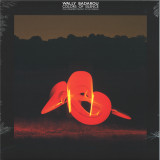
Synth pioneer and musical polymath, Wally Badarou is a genius. But you know that already. A vinyl version of his majestic Colors Of Silence has been craved by the Balearic cognoscenti ever since its low-key 2001 release. Indeed, when we first started work on Be With, we asked some pals with exquisite taste what their dream release would be. We asked Balearic legend Moonboots and, without hesitation, he said Colors Of Silence by Wally Badarou. We didn't know Wally had made this album. And most still don't. But that's about to change.
Colors Of Silence is ostensibly a new age album. As ever though, Wally's sophisticated synth textures and expressive keyboard runs are so full of character, so full of life, that this work of art transcends any easy genre categorisation. It's simply stunning, throughout. It sounds like A.r.t. Wilson or Suzanne Kraft, with traces of CFCF and Jonny Nash. But it was made a good decade earlier than the work of these modern giants. Sometimes, it doesn't seem far from some Larry Heard albums.
Island Records founder Chris Blackwell's friend Nathalie Delon asked Wally to provide music for the yoga DVD she was to release. Lack of time on both sides made them agree on using "quality demos" Wally had in his ideas bank. It's understandable why Colors Of Silence remains somewhat of a lost gem. As Wally explains: "Total lack of promotion made it an 'intimate' release, which was exactly what I was looking for: just a buzz-maker and time-buyer that would allow me to concentrate on the real thing as soon as I'd have time, which could also turn into a rare collecting item later, once the final versions made their way to success. You never know."
Over the years, Colors Of Silence has become a true cult record for the ambient/Balearic heads.
The beguiling but brief "Dance In The Dust" is the shuffling, hyper-percussive, hypnotic opener. It gives way to the deep serenity of "Amber Whispers". It's a gliding, divine, mini melodic masterpiece. It'll make you swoon in its extreme beauty. The bright and breezy "Where Were We" follows, a tropical, reggae-tinged bounce through the islands.
The uptempo groove is maintained on the keys-drizzled soca-funk of "The Lights Of Kinshasa" before Side A is rounded out with "Pictures Of You". It starts with stately, melancholic, unadorned piano and this alone would make for a beautiful song. But Wally always gives us that bit extra and he effortlessly introduces warm, dreamy pads and minimal, slo-mo percussion to augment a frankly stunning piece of work.
Ushering in Side B, Wally's mesmeric piano playing is to the fore again, in the intro to uber-chilled "Serendipity For Two". The playing becomes more mellifluous as the track progresses and adds warmth through exotic percussion, woodwind, sweeping synths and digi-drums. It has echoes of, er, Echoes. It segues seamlessly into the more propulsive, wavy "Smiles By The Millions". If you're not nodding and grinning along widely to the gently throbbing bassline underpinning this, we can't help you. The meditative "Higher Still" follows, cinematic in feel and ever so slightly sinister with the strings. It sounds particularly Badalamenti-esque, if you ask us.
That unmistakable, almost peculiar Badarou funk - so lyrical, so texturally rich and so rhythmically spacious - is all over "Oriental". Next up, "Days To Wonder" brings the serenity back, insistent yet melodic keys, as if played in a place of worship, coupled with birdsong, conjure a kind of instant nostalgia for halcyon days of youth. The contemplative "Dawn Of Europa" is a sombre, beatless, ambient journey whilst the glorious, too-brief "Crystal Falls" features soft percussion and sparkle before fully glistening with some gentle head-nod beats. Wally brings this incredible collection to a mellow, tender close with the graceful "Purple Lines".
There can be few artists more under-appreciated given their vast influence than Wally Badarou. His solo work practically defined the sound of the Balearic DJs of the 1980s, and thus the more sophisticated sound of dance culture thereafter. A synth specialist, Badarou was the long-time associate of Level 42. He was one of the Compass Point All Stars (with Sly and Robbie, Barry Reynolds, Mikey Chung and Uziah "Sticky" Thompson), the in-house recording team of Compass Point Studios responsible for a series of albums in the 1980s recorded by Grace Jones, Tom Tom Club, Mick Jagger, Black Uhuru, Gwen Guthrie, Jimmy Cliff and Gregory Isaacs. Badarou's keyboard playing could also be heard on albums by Robert Palmer, Marianne Faithfull, Herbie Hancock, M (Pop Muzik), Talking Heads, Manu Dibango and Miriam Makeba. He also produced Fela Kuti. Phew!
Meticulously remastered and cut by both Simon Francis and Cicely Balston respectively, it has been pressed to the highest possibly quality at Record Industry in Holland. Special thanks must go to Apiento from Test Pressing who first introduced us to Wally and facilitated all those early zoom meetings. It couldn't have happened without his help. Not least on pulling the art together, too, which features striking original photography by Mads Perch. Benji Roebuck of Roebuck Press did his thing brilliantly in art working the whole package to completion. All in all: essential.
out of Stock
Last delivered 22 months ago available to reorder, subject to availability
Harry Romero returns to Crosstown Rebels as he links with vocalist Shyam P for ‘Mind Games’.
With a catalogue as rich as any and continuing at the top of his game two decades after his emergence within New York’s fabled nightlife scene, Harry Romero continues to serve up his own take of Latin-inspired and percussive- driven house music via a long list of the industry’s leading imprints. Having previously remixed Chilean favourite Francisco Allendes on the label last year alongside his collaborative ‘It Hurts’ EP with Jessica Eve in 2021 and his contribution to the ‘Spirits III’ compilation before that, the Bambossa Records head honcho is back on Damian Lazarus’ revered Crosstown Rebels for his latest EP project, uniting London-bon, Dubai based singer/ songwriter Shyam P for the excellent ‘Mind Games’.
Crafting a slick and heady groove before launching into a hypnotic haze accenting by a bubbling bassline, ‘Mind Games’ is an infectious and vibrant house cut as Shyam P’s alluring vocals take hold amongst emotive builds and breaks. Nest, ‘Mira’ is a classic Romero offering as the focus shifts to crisp organic percussion arrangements, carnival-esque whistles and hooky Latin vocals for a bustling terrace number, before ‘Analog Bugz’ takes cues from its title as crisp drum shots and sharp stabs unite to create a no-nonsense builder made for the main room.
out of Stock
Last delivered 15 months ago available to reorder, subject to availability
“The revelation that you didn’t need formal training to start a band in 1977 and the realization that you don’t need to be Merce Cunningham to dance are one and the same.” - Ryan Schreiber, Pitchfork,2003 47 minutes. Two sides. A single spine jacket. Confident and deliberate. Lightning in a bottle. The Rapture’s ‘Echoes’ was, and is, a clear-eyed kick in the teeth, a band at the peak of their powers and producers with an ambitious vision making. a. point. The whole ‘indie crowd finally learns to dance’ narrative is overwrought and irrelevant in 2023 - perhaps context is no longer king - but what remains clear is that this album, made by a San Diego punk band who had moved to New York via Seattle, and produced by the DFA in their own studio, where time and gear and ideas both good and bad were aplenty, maintains an energy and search for catharsis that could bulldoze even the most uptight. For whatever reason, it’s remained out of print on vinyl since its initial run. (Don’t worry, though, there were a lot of CDR promos lying around.) And now, with minimal pageantry, it’s back. Recut by Bob Weston, loud and cl
Experience the captivating soundscape from one of 2023’s biggest blockbusters on the Spider-Man: Across the Spider-Verse (Original Score) vinyl. The sequel to 2019’s Oscar-award winning Spider-Man: Into the Spider-Verse broke the global box-office on release, and the critically acclaimed, viral hit-making score is now available on vinyl and CD for the first time.
Academy Award, Golden Globe and BAFTA-nominated composer Daniel Pemberton returns to expand upon the Spider-Verse’s iconic, multi-versal soundscape with a genre-defying score that seamlessly combines a 100-piece orchestra with DJ scratching, operatic vocals, techno beats, punk rock, acid-house-inspired Indian percussion, soaring synth solos, and even…a prominently sampled goose. From the Gwen Stacy’s fan favorite motif to Spider-Man 2099’s internet-breaking theme music, the film and its intricately-woven score is sure to transport you into some wildly unexpected parallel dimensions.
This double vinyl release comes pressed on two white and dark purple marbled LPs, featuring highlights from the score hand-selected by Daniel Pemberton. The package includes a stunning soft-touch gatefold jacket with spot gloss, a double-sided collectable poster and two printed sleeves with custom art – plus, an 8-page art booklet featuring liner notes from Daniel Pemberton and art from the film.
After a 3-year hiatus, Noerk is back with a spacey acidic three tracker plus a rolling peaktime remix from our good friend and really talented producer Lee Burton. Untitled_02 is an electrified, deep yet funky tribute to Vangelis (as we perceive it) with lush synthesizers and grooving 303s. Pending forties is reminding us of the 90s era when sample based breakbeat and acid realised they were made for each other like peanut butter and jelly. It's Over (original mix), on the other hand, follows a more straightforward 4 on the floor loop and lets the jazzy chords and the intergalactic melodies do all the work. Lee Burton's remix wraps up the EP nicely offering us a certified banger with 90s house elements that can destroy any dancefloor. We have entered the wormhole. Time and space are no longer relevant. Only feelings.
out of Stock
Last delivered 2 years ago available to reorder, subject to availability
God knows enough has been written about Workshop. Surely you haven't read it, but this group has been around since 1985, and what they did was this: musically quite limited, they made the music they wanted to hear, but in an ingenious way. Some played the instruments skillfully and others not so much. Something came out of it! One says: that's just the way I like it. The other one boasts: yes, I understood everything how you play here, sometimes you hit it, or sometimes you play so that the parents cry with joy. In fact, seven records were recorded, which, with the exception of the second LP, are still more than worth listening to today. Are they in danger of being forgotten?
Yes and no. What is worth listening to here has often been banned. One must bring it out again. Make attentive. Against the forgetting. These impetuous songs - just let them get close to you again and listen to them in a new context and forget all the smart-ass talk that was said about them. That means to put the self with all its reality entanglements in the pillory. This is of course not only pleasant. Bravo!
out of Stock
Last delivered 2 years ago available to reorder, subject to availability
After two years, Carl and Andreas present their second album, and once again, it opens up a wide associative space for us. What strikes us initially is the uncommon instrumentation: a church organ, harpsichord, glass tubes, and more. Like their first album (The Aporias of Futurism), it is mysterious and dark. But it also carries a strong touch of rebellion and adrenaline, sometimes quite pointedly. The pieces are now shorter and feature intricate yet irresistible rhythms. The impact is immediate, yet it maintains a sense of solemnity and ceremony. The Apollonian complexity of the rhythms and subtle melodic interweavings is transformed into a Dionysian, ecstatic, hypnotic, and at times tribal context. "Music for Unknown Rituals" oscillates between primitive instincts and avant-garde intrigues.
The process began in Döblitz, a small village on the Saale river in Germany, inside an old church that houses an organ built in 1886 by Johann Adolph Ibach. Carl and Andreas gained access and secluded themselves there for a few days, accompanied by the organ, an instrument made of glass tubes, and a set of modular synthesizers. After recording the basic tracks in Döblitz, the work continued in Munich and Berlin. Carl played electric guitars, harpsichord, bass, metallophone, xylophone, Indian harmonium, and various percussive instruments. Andreas added layers of electronic sounds, noises, and atmospheric drones. He also created percussive structures extracted and derived from recorded material of technical and industrial noises, which contrasted with the acoustic drums played by Carl. The antithetical approach continues with the dichotomous arrangement of the instruments, often panned hard left and right in the stereo field, creating an antiphonic communication. Some parts, especially the use of the electric guitar, evoke memories of the psychedelic sixties. However, this is anything but a nostalgic album—these musical references are merely remnants, set pieces, and fragments used from a contemporary, post-modern, post-youth-cultural, and post-romantic perspective.
Although Andreas and Carl continue on their chosen path of composing music with an almost literary narrative structure, this album is conceptually and formally completely different from their first effort. If “The Aporias of Futurism” was a revolutionary manifesto (in a pataphysical sense), "Music for Unknown Rituals" is more like the implementation in action; it is the practical application of the previous statement. To put it another way, if "The Aporias of Futurism” was the conceptual manifesto of a dark utopia of modernity, "Music for Unknown Rituals" is the staging of free will surrendering to the myths and catharsis of a Greek tragedy. And in response to this, the artwork features a leitmotif of histrionics with hands, the hands being the first and intuitive part of the body to express something: a ritual, a prayer, a defeat...
— Andreas Gerth is one half of Driftmachine, and Carl Osterhelt is part of F.S.K and collaborates with Hans-Joachim Irmler of Faust. Both became connected through their participation in the Tied & Tickled Trio.
Kacy & Clayton first met Jeff Tweedy in the backroom of the Fillmore Auditorium in San Francisco in September 2016. The band had been invited to open for Wilco on night 4 of their annual 5-night run. While waiting for their soundcheck, Jeff appeared through a curtain backstage and introduced himself. In the conversations that followed, Kacy Anderson, Clayton Linthicum and Jeff Tweedy discussed their mutual appreciation of Davy Graham and Jeff’s understanding of Saskatchewan’s geography. Those conversations would eventually blossom into an invite to stop by Wilco’s studio, the Loft, a visit they made only weeks later. In January 2017, Kacy & Clayton returned to the Loft with a rhythm section and a batch of new songs. Over the course of 8 days, the band recorded 9 songs with Jeff Tweedy producing and Loft house engineer Tom Schick at the helm. These 9 songs are what would become the band’s fourth album, The Siren’s Song. While writing and recording The Siren's Song, Kacy & Clayton found inspiration in the music of Sammi Smith, The Everly Brothers, Link Wray's chicken shack LPs, country records with harpsichords, The Sir Douglas Quintet, Gene Clark, Jeannie C. Riley, as well as British traditional singers like Peter Bellamy and the Watersons. The Siren's Song is a product of these influences and an extraordinary progression in the band's own sound.
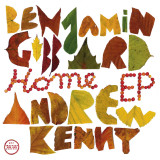
Originally released in 2003 on CD via Post-Parlo Records, and two years later on vinyl via Morr Music, the »Home EP« sees Benjamin Gibbard (Death Cab for Cutie, The Postal Service) and Andrew Kenny (The American Analog Set) each contributing three original tracks and playing one of the other's songs. This 2023 vinyl edition is released via Morr Music (EU+UK) and Barsuk Records (US). It features the artwork by Jan Kruse, that was originally made for the 2005 Morr Music version.
The EP was released as the fifth and final volume of the early-’00s series of split albums on Austin, TX indie Post-Parlo, the Gibbard/Kenny pairing followed short contributions in the series from such varied notable early-aughts indie artists as Kind of Like Spitting, Britt Daniel (Spoon), Bright Eyes, Pavo and Super XX Man.
Gibbard and Kenny’s installment came out during a prolific era for both writers: The American Analog Set had released the classic »Know By Heart« album in 2001 and followed it in 2003 with the acclaimed »Promise of Love«, while Gibbard’s profile was rising significantly via the critical and commercial success of The Postal Service’s »Give Up« and Death Cab’s »Transatlanticism«. Unlike the more lush arrangements of their main projects, both Kenny and Gibbard took a simple approach for their entry into the Home series, recording on cassette four-track machines in their respective living rooms in New York and Seattle and each performing four exclusive stripped-down tracks (including a cover of one of the other’s songs – Kenny choosing a rendition of Death Cab’s »Line of Best Fit« and Gibbard delivering his version of AmAnSet’s »Choir Vandals«).
»Home EP« showcases two brilliant songwriters whose legacies continue to shine twenty years later. The American Analog Set recently announced »For Forever«, their seventh album and first new music in 18 years, which was released last week and followed the band’s announcement earlier this year that The Numero Group will reissue their first three albums »The Fun of Watching Fireworks« (1996), »From Our Living Room to Yours «(1997), and »The Golden Band« (1999) as a vinyl boxset in early 2024.
Benjamin Gibbard has recently finished fronting both bands on the sold out Death Cab for Cutie / The Postal Service co-headline tour of arenas and amphitheaters in the United States celebrating the 20th anniversary of »Give Up« and »Transatlanticism«.
Istanbul born performing artist, producer, composer and instrument builder Berke Can Ozcan, in collaboration with critically acclaimed Norwegian trumpet mastermind Arve Henriksen and Brooklyn-based baritone saxophonist Jonah Parzen-Johnson, takes you on a captivating journey through the depths of nature on the Lycian Way, immersing the listener in a mesmerizing soundscape that echoes the wonder and mystery of the trail leading to the ancient Lycia As Ozcan ventures deeper into uncharted territory, he stumbles upon a sight that would spark an artistic flame - the Twin Rocks. This collaboration weaves together a tapestry of sonic explorations that capture the essence of Ozcan's journey. The ambient-jazz album's delicate balance between organic sounds and electronic manipulation creates a dreamlike atmosphere that transports the listener to the rugged terrain of the Lycian Way. Mastered by three time Grammy winner Dave Darlington, each track on this ethereal album mirrors a different aspect of the journey to the Twin Rocks, meticulously composed by Ozcan, Parzen-Johnson and Henriksen with each section of the trail in mind. The album is infused with melodic bird songs and sound walk memories that add depth and texture to the ethereal soundscape. Ozcan's array of self- crafted instruments made out of bamboos, soda bottle caps, straws, house keys, terracotta flower pots alongside with his long time companions like his steel drums, chimes, gongs, and vibraphone, serve as the medium through which he expressed the reflections of his encounters in his own world of rhythm and melody
A decade after his groundbreaking debut ‘Classical Curves,’ British producer Jack Latham, aka Jam City, continues to redefine genres with his effervescent new album “Jam City Presents EFM,” delivering an immaculate fusion of rattling garage, glitzy disco, thumping house, and euphoric hooks across the album’s 10 tracks with features by Empress Of (Wild n Sweet), Clara La San (“Touch Me”), Wet (“LLTB”), Show Me The Body’s Julian Cashwan Pratt (“Redd St. Turbulence”), and more.
Take the 101 north out of Los Angeles, and you'll pass by Agoura Hills, where the core duo of the band Dub Thompson grew up. Whatever you see in that town won't readily prepare you for the music they wrote while there, but you're free to look."Most everyone who's in a group who's our age lives on the Internet," says guitarist Matt Pulos. "The kinds of things that have shaped our band aren't anchored to any one time or place."Pulos and his bandmate, drummer Evan Laffer, are currently both 19 years old, and are putting that line of thought to the test; their musical influences travel from the Midwestern malaise of Big Black and Pere Ubu, to Kraut pioneers Can and Kraftwerk, while bowing to the British belligerence of The Fall and This Heat.Recording the album while living with Foxygen's Jonathan Rado at his rented house in Bloomington, the band had its first taste of a heavy Indiana summer, and all the humidity and insect life that buzzes along with it. "We woke up every day, ate hard-boiled eggs and stood on a porch," says Pulos of the experience.Their first collection of songs slyly unties the shoes of genre and convention, shapeshifts mischievously, and tramples on the promises delivered on the name itself.There are only eight songs on this rangy debut.Intense blasts of hook-filled noise rock ("Hayward!"), rocksteady marionette stomp ("No Time"), hypnotic bouts of doomy poetics ("Epicondyles"), outlandishly sexy groove rock ("Dograces"), and a number of other bite-sized forays into parts unknown are made manifest across 9 Songs. The vibes are strong here. Pulos sings and plays like he's working out long-standing grudges, pulling the most sinewy tones from an acoustic guitar and ripping huge chunks of demon flesh out of his electric. Laffer matches him step for step on the drums, an exacting presence behind the kit who pushes even the band's more placid moments into bouts of tension. Together they succeed in animating their musical ideas to startling, almost unnatural life. Reverb units, keyboards, samples and processing gluing everything together, saturated in the August heat and worn in until they sound second nature, it's like somehow you've been listening to these songs forever.
Confident and deliberate. Lightning in a bottle. The Rapture’s Echoes was and is a clear-eyed kick in the teeth, a band at the peak of their powers and producers with an ambitious vision making. a. point. The whole “indie crowd finally learns to dance” narrative is overwrought and irrelevant in 2023 - perhaps context is no longer king - but what remains clear is that this album, made by a San Diego punk band who had moved to New York via Seattle, and produced by the DFA in their own studio, where time and gear and ideas both good and bad were aplenty, maintains an energy and search for catharsis that could bulldoze even the most uptight. For whatever reason, it’s remained out of print on vinyl since its initial run.
out of Stock
Last delivered 2 years ago available to reorder, subject to availability
A fixture in Mexico's thriving electronic scene, the Argentinian import has made a name for himself alongside cohort Iñigo Vontier with a style that seamlessly blends haunted desert disco with gritty acid house and techno.
This EP might be his most cogent formulation yet, a mightily playable set of peak-time DJ-friendly tracks that bring enough mystery and wonkiness to a perfectly club-ready backbone. It's a conspiracy of sound, a cosmic abduction with pulsating rhythms and hypnotic bleeps sure to melt minds on the dance-floor.
DJ Feedback:
Tiefschwarz - "soooo gooood!!"
Roe Deers - "dope EP"
Matt FX - "an absolute tour de force EP. hard to pick a favorite, maybe guadalajara"
Justin Strauss - "great ep"
Kiki - "Cool trax!"
Mawimbi - "really like the acid touch in back in guadalajara"
Jerry Bouthier - "well put together madness yay!"
Phil smart - "Solid bunch of tracks, all great! Can't wait to test out on a dancefloor:)"
Vidis - "Cool stuff as per usual from señor Thomass. Young Woman in Kashmir and Back in Guadalajara are the faves."
Phred Noir - "Alll the tracks are so good, super happy to see Thomass back with sooo good tracks !"
Genish - "Back in Guadalajara for me ! fire"
Ayala (It) - "I'm a Thomas fan from years and years"
Kato - "mad fun”
Fabio Me Llaman Soltero - "Sublime work, always favorito Thomaaaaaazzzz"
out of Stock
Last delivered 5 months ago available to reorder, subject to availability
The last twelve months have been a whirlwind for Henry Counsell and Louis Curran, the men who make up Joy (Anonymous). Having established themselves during the Covid-19 era by playing impromptu meet-ups on London’s South Bank, they have graduated to bigger venues, travelled to far-flung locales and recorded their second album, Cult Classics, while maintaining the spontaneous energy and irrepressible joy that made their name. Their music revels in the euphoria of being alive and all the feelings, good or bad, that come with it. It invites us into a community, draws us close and promises the night of our lives.
Recorded over the course of a year, the blueprint for Cult Classics was laid down over a two-week span at Imogen Heap’s Round House in east London. Joy (Anonymous) invited friends old and new to visit - they’d record live instruments in jam sessions upstairs and then retreat to a second room to flip and loop and generally mess with the sounds, moulding them into sizzling dance tracks. “Loads of people were coming up to me like ‘I thought this was going to be a dance record?’” Louis says, remembering the quietly beautiful music they’d be recording. “I’d be like, don’t worry about that, just keep playing.” He’d send it back to people later and they’d be floored - “That was my bit and you’ve made it... jungle!”
It was an organic and creatively fulfilling approach, one that didn’t allow any of the music to get stale or stagnate. As they built the tracks from the sounds they’d collected, Joy (Anonymous) would weave the new songs into their famously improvised live sets, testing them, refining them, taking note of the audiences’ reactions. In a year punctuated by a lot of travel, they’d also incorporate the voices of people they met along the way - “Beazley’s Poem”, which opens the record, features the words of a man who was working security at a Fred Again show at New York’s Terminal Five. “He was basically doing the opposite of his job and being a hype man, climbing on the fence and ramping up the crowd - we ended up hanging out with him - like, who’s this legend?” Louis explains. “He just speaks really amazingly about his life, all these amazing thoughts and opinions - he started jumping on the mic when we were playing, preaching these amazing messages to the crowd, like that we all need to be nicer to each other. The first time we played the record in its entirety, he introduced us and that’s the recording we’ve used.”
Joy (Anonymous) remain dedicated to the spirit of spontaneity. They shut a street down with a surprise waterside party in New York. On a trip to Copenhagen they played an impromptu set in a cafe, which turned into a house party and a night-long good time. In Lithuania, they ended up playing in a decommissioned prison. It’s harder, perhaps, to keep that spirit alive now that they are operating more within the confines of the music industry but they will keep lugging their kit to wherever the party calls for as long as they can. “I think if we lose that, we’ve kind of lost what makes us us,” Henry says.
Bursting with multi-genre reference points and disparate influences, Cult Classics is very much a dance album. The samples we made ourselves or we took from music that is quite different to dance music, but we definitely wanted to shout out a lot of the dance influences that we love,” Henry says. They listened to a lot of Daft Punk and Basement Jaxx as well as The Prodigy (“more rage stuff”), taking songwriting tips from their dance forebears, but also recording bits that felt more like jazz and motown (see: A Place I Belong and the lovely album closer, You’re In Or You’re Out). Emir Taha’s gentle classical guitar runs like a thread throughout Cult Classics, washing into the undertones of the record, tying it all together.
The album follows the beat of a night out, from frenetic, sweaty movement to the gentler winding down as the dawn breaks. At times it is euphoric, celebratory and pure, whirling fun, at others it seeks the joy in the darker emotions that life throws our way. 404 is designed to encapsulate everything about the Joy (Anonymous) journey so far. Skittering beats and ghostly vocals give way to vibrating house chords: sirens blare as we approach a dubstep drop. It’s dramatic and wild, ratcheting up, seeming to settle then hitting you with an intense and frantic breakdown before the ghostly vocal returns to lull us back into the world. It has the feel of a hungry cat playing with a mouse, toying with it before letting it get away.
What sounds like someone playing the spoons on playful, housey How We End Up Here is actually Louis’ restless habit of clicking his rings on everything, one of a myriad of calling cards and easter eggs that day one fans will recognise. They rework Miley Cyrus and Swae Lee’s Party Up The Street into a French-electro-inspired future classic, adding a note of melancholy to a tune that you can imagine hearing blaring from every car on a summer drive. The lyrics on Cult Classic are generally reassuring, inspirational, originally drawn from Henry in stream-of-consciousness freestyles. You’re fine the way you are, they seem to say - the repeated “No need to try” of A Place I Belong, the assurance that “It’s in me all the time” on In Me All The Time. Even the summery but regretful Did You Wrong hints at the growth that is possible from less than ideal behaviour. For Joy (Anonymous), joy isn’t about just being “happy” all the time - it’s about relishing every element of your being.
The name ‘Joy (Anonymous)’ is taken from the work Henry did with Alcoholics Anonymous groups: it is a way to build a community around sharing joy. Their impromptu live sets are known as ‘meetings’; they encourage fans to share moments of joy to their website. They care deeply about the scene they’ve come up in and are determined not to leave it behind. Every show is another chance to reach out and connect with people who love to come together and revel in music as loud as it can go.
Support slots for Fred Again and The Streets, wild B2Bs with Fred and Skrillex, and a set at Four Tet’s Finsbury Park all-dayer this summer have given the duo the opportunity to live out childhood dreams and introduced their infectious live shows to new audiences at huge venues.
With an album as assured and joyful as Cult Classics on the horizon (and a killer collab with The Blessed Madonna coming up), they’re only going to reach higher heights. But the essence of Joy (Anonymous) remains on the South Bank. Between shows at Ally Pally in September, they dragged their camping chairs and gear back down to the banks of the Thames: and it just felt right.
In the mid-1970s, a force of nature swept across the continental United States, cutting across all strata of race and class, rooting in our minds, our homes, our culture. It wasn’t The Exorcist, Goodbye Yellow Brick Road, or even bell-bottoms, but instead a book called The Secret Life of Plants. The work of occultist/former OSS agent Peter Tompkins and former CIA agent/dowsing enthusiast Christopher Bird, the books shot up the bestseller charts and spread like kudzu across the landscape, becoming a phenomenon. Seemingly overnight, the indoor plant business was in full bloom and photosynthetic eukaryotes of every genus were hanging off walls, lording over bookshelves, and basking on sunny window ledges. The science behind Secret Life was specious: plants can hear our prayers, they’re lie detectors, they’re telepathic, able to predict natural disasters and receive signals from distant galaxies. But that didn’t stop millions from buying and nurturing their new plants.
Perhaps the craziest claim of the book was that plants also dug music. And whether you purchased a snake plant, asparagus fern, peace lily, or what have you from Mother Earth on Melrose Avenue in Los Angeles (or bought a Simmons mattress from Sears), you also took home Plantasia, an album recorded especially for them. Subtitled “warm earth music for plants…and the people that love them,” it was full of bucolic, charming, stoner-friendly, decidedly unscientific tunes enacted on the new-fangled device called the Moog. Plants date back from the dawn of time, but apparently they loved the Moog, never mind that the synthesizer had been on the market for just a few years. Most of all, the plants loved the ditties made by composer Mort Garson.
Few characters in early electronic music can be both fearless pioneers and cheesy trend-chasers, but Garson embraced both extremes, and has been unheralded as a result. When one writer rhetorically asked: “How was Garson’s music so ubiquitous while the man remained so under the radar?” the answer was simple. Well before Brian Eno did it, Garson was making discreet music, both the man and his music as inconspicuous as a Chlorophytumcomosum. Julliard-educated and active as a session player in the post-war era, Garson wrote lounge hits, scored plush arrangements for Doris Day, and garlanded weeping countrypolitan strings around Glen Campbell’s “By the Time I Get to Phoenix.” He could render the Beatles and Simon & Garfunkel alike into easy listening and also dreamed up his own ditties. “An idear” as Garson himself would drawl it out. “I live with it, I walk it, I sing it.”
But as his daughter Day Darmet recalls: “When my dad found the synthesizer, he realized he didn’t want to do pop music anymore.” Garson encountered Robert Moog and his new device at the Audio Engineering Society’s West Coast convention in 1967 and immediately began tinkering with the device. With the Moog, those idears could be transformed. “He constantly had a song he was humming,” Darmet says. “At the table he was constantly tapping.” Which is to say that Mort pulled his melodies out of thin air, just like any household plant would.
The Plantae kingdom grew to its height by 1976, from DC Comics’ mossy superhero Swamp Thing to Stevie Wonder’s own herbal meditation, Journey Through the Secret Life of Plants. Nefarious manifestations of human-plant interaction also abounded, be it the grotesque pods in Invasion of the Body Snatchers or the pothead paranoia of the US Government spraying Mexican marijuana fields with the herbicide paraquat (which led to the rise in homegrown pot by the 1980s). And then there’s the warm, leafy embrace of Plantasia itself.
“My mom had a lot of plants,” Darmet says. “She didn’t believe in organized religion, she believed the earth was the best thing in the whole world. Whatever created us was incredible.” And she also knew when her husband had a good song, shouting from another room when she heard him humming a good idear. Novel as it might seem, Plantasia is simply full of good tunes.
Garson may have given the album away to new plant and bed owners, but a decade later a new generation could hear his music in another surreptitious way. Millions of kids bought The Legend of Zelda for their Nintendo Entertainment System back in 1986 and one distinct 8-bit tune bears more than a passing resemblance to album highlight “Concerto for Philodendron and Pothos.” Garson was never properly credited for it, but he nevertheless subliminally slipped into a new generations’ head, helping kids and plants alike grow.
Hearing Plantasia in the 21st century, it seems less an ode to our photosynthesizing friends by Garson and more an homage to his wife, the one with the green thumb that made everything flower around him. “My dad would be totally pleased to know that people are really interested in this music that had no popularity at the time,” Darmet says of Plantasia’snew renaissance. “He would be fascinated by the fact that people are finally understanding and appreciating this part of his musical career that he got no admiration for back then.” Garson seems to be everywhere again, even if he’s not really noticed, just like a houseplant.
out of Stock
Last delivered 17 months ago available to reorder, subject to availability
First released over 30 years ago, this release was further instrumental in establishing a new genre of electronica within dance music. Mental Cube was the creation of Brian Dougans and Gary Cobain, “So This Is Love” the follow up to their 1990 debut “Chile Of The Bass Generation”. This is before their creation of The Future Sound Of London. They were ahead of their time and extremely progressive, and here three decades later they are making an impression. “So This Is Love” has been described as unique with ‘the most seductive 30 seconds of any house track ever. Timeless, emotional, sexy and deep. A masterclass in UK house, one of the best electronic tracks ever made’. “Q” has been described as sounding inspired by the 90s techno sound out of Germany and Belgium, a French issue of it on 12” selling in the current market for between £200 and £350.
out of Stock
Last delivered 17 months ago available to reorder, subject to availability
Stix Records is a sub-division of Favorite Recordings, recently launched with a first official single by Taggy Matcher Birdy & Nixon (STIX033), who pleased us with two Reggae-Rocksteady renditions of the famous Black Keys. Precisely specialized in the exercise of producing covers with a Reggae twist,
the new label presents his first album entitled "Disco Reggae". Many artists faithful to the stable of Favorite Recordings and its various sub-labels are invited for the occasion: The Dynamics, Blundetto, Grandmagneto, 7 Samurai, John Milk or Taggy Matcher. All came and brought their respective touch to this first compilation, with among other things some of the rarest titles from their Big Single Records' years, but also 4 new and exclusive productions. Each of them delivers a great isco-Reggae version of classic hits by some artists as diverse as Madonna, Herbie Hancock, Justin Timberlake, The Commodores, The O'Jays, Curtis Mayfield, Harry Nilsson or Sugarhill Gang. Whatever the genre or the period, nothing can resist their inventiveness and creativity, to the point sometimes we confuse between originals and covers. Everything is remastered and cut at Carvery Records (UK), known for their expertise in Caribbean and Disco music. The vinyl LP comes in a deluxe version, housed in an old-school Tip-On Jacket.
Run-D.M.C.'s Raising Hell remains the turning point at which hip-hop crashed through mainstream barriers and never left. Anchored by the crossover smash "Walk This Way," the 1986 blockbuster still sounds like a revolution unfolding in real time. It has everything – hard-rock riffs, turntable scratching, itchy rhythms, hit singles – not the least of which are the trio's invigorating raps and inseparable chemistry. And now it's the first rap record afforded audiophile treatment, courtesy of Mobile Fidelity.
Sourced from the original master tapes and pressed on MoFi SuperVinyl, the reissue label's numbered-edition 180g 33RPM SuperVinyl LP elevates Raising Hell to sonic heights on par with its musical and cultural significance. Ranked the 123rd Greatest Album of All Time by Rolling Stone, 43rd on Pitchfork's Greatest Albums of the 1980s, one of the Top 100 Albums of All Time by TIME – and included on "Best of" lists by Spin, Paste, XXL, Entertainment Weekly, and basically every other significant media outlet – the triple-platinum effort rocks the house.
Benefitting from the ultra-low noise floor and groove definition of SuperVinyl, Raising Hell unleashes a torrent of massive dynamics and tsunami of frequency-plumbing details underlined by Rick Rubin's taut, crisp, albeit raw and streetwise production. Just as the Queens-based group both defined what hip-hop could represent – and displayed just how big it could get – Rubin's work melded ear-worm hooks, savvy drum loops, metal-leaning guitars, and, of course, Run and D.M.C.'s cross-fire lyrical interplay into watertight frameworks bursting with ideas, tones, samples, and beats. Heard anew on Mobile Fidelity vinyl, Raising Hell is in every regard the aural equivalent of a direct-to-console 1970s classic. And it sounds as fresh as hell.
As for the music, it ranks among the most influential, inventive, and invigorating ever released – rap or otherwise. Vanguard artists such as Ice-T, Eminem, Jay-Z, and Public Enemy's Chuck D – who declared it his all-time favorite and "the first record that made me realize this was an album-oriented genre" – have testified on behalf of its brilliance. And never mind the presence of the Top 5 single "Walk This Way," whose power helped make Aerosmith's Steven Tyler and Joe Perry relevant for the first time in nearly a decade – and literally put Run-D.M.C. in bedrooms ranging from the Bronx to Bartlett to Bad Axe.
Look instead to the rest of the entirely filler-free set, be it the corkscrew turns, slippery wordplay, and "My Sharona"-meets-"Mickey" mixology of the boisterous "It's Tricky," the fat-but-minimized bass grooves and warped turntable wobble of the hysterical "You Be Illin'," chimes-accented inertia and boombox-on- shoulder thunder of the now-iconic "Peter Piper," or voice-as-percussion attack of the funky "Is It Live." With Raising Hell, the answer to the question is always affirmative – a sensation bolstered by the fact the group always had something to say.
The definition of Golden Age Hip-Hop in every way, Run-D.M.C. avoids the negativity and misogyny that later plagued the style, spinning assertive tales about identity (the biographical and culture-changing "My Adidas"), work ethics ("Perfection"), and, most notably, pride (the Harriet Tubman- and Malcom X.-referencing "Proud to Be Black"). Pavement-packed inner cities, tree-lined suburbs, and cornfield-rimmed rural areas would never again be the same. And rocking a rhyme that's right on time would become trickier than ever.
Sofia Kourtesis veröffentlicht ihr lang-erwartetes Debütalbum ‘Madres’ ,welches ihrer Mutter gewidmet ist, auf Ninja Tune! Als sie mit der Arbeit an ihrem Debüt begann, war Kourtesis scheinbar unaufhaltsam. Eine Reihe von begeistert aufgenommenen EPs und Singles machten sie zu einem der am schnellsten aufsteigenden Stars in der elektronischen Welt und darüber hinaus. Sie zierte bereits das Cover von Mixmag, veröffentlichte eine brillante, energiegeladene und bewegende RA Session für Resident Advisor, erschien auf den Jahresendlisten der New York Times, Pitchfork, DJMag und Spotify (#6 bester elektronischer Song) und spielte sofort ausverkaufte erste Shows sowie herausragende Auftritte beim Pitchfork Music Festival, Glastonbury und Primavera neben Tourneen als Support von Caribou und Bicep. „Madres“ enthält alles, was Kourtesis bereits so beliebt gemacht hat: der doppelte Klang ihrer peruanischen Heimat und ihrer Wahlheimat Berlin ist präsent („mein Herz ist sehr lateinamerikanisch, aber mein Motor ist deutsch“), ebenso wie der Aktivismus für die Gleichstellung der Geschlechter, den Schutz queerer Menschen und den Zugang zu sicheren Abtreibungen in Peru, der ihr so sehr am Herzen liegt.
out of Stock
Last delivered 2 years ago available to reorder, subject to availability
Because Hold, Jack Tatum's fifth album under the moniker Wild Nothing, was written in the aftermath of new parenthood during the pandemic, it was probably inevitable that it would be searching and existential music. But during the recording process, the artist known for synth-pop tastefulness used it as an opportunity to reach for a new sonic maximalism and wider set of influences. With contributions from longtime collaborator Jorge Elbrecht, Tommy Davidson of Beach Fossils and Hatchie's Harriette Pilbeam, first single "Headlights On" features an acid house-worthy bass groove and breakbeat that prove Tatum is playing for the rafters. Tatum produced the rest of the record on his own, partially out of necessity, due to the challenges of the pandemic. The songs were eventually brought to Adrian Olsen at Montrose Recording in Richmond to begin recording drums and filling in the gaps. While largely a product of isolation, Hold also reflects the things Tatum has learned from collaborators, both on previous records and during his acclaimed work with Japanese Breakfast and Molly Burch. The rest of the record was mixed by Geoff Swan, who listeners might know for his work with Caroline Polachek and Charli XCX. Swan put Tatum's vocals high in the mix, and throughout the album, he embraces playful vocal processing like never before. Tatum moved from Los Angeles back to his home state of Virginia about five years ago in search of a scaled-back lifestyle. The relatively suburban environment - and the occasional regret it inspired - proved to be great artistic fodder. It's the paradox of modern America - the suburbs are supposed to be stultifying to art, but they are so full of human desperation perfect for dramatizing. On "Suburban Solutions", he presents an anti-jingle with an acidly bright synthesizer melody, imploring you to sign on the dotted line, put your feet up, and embrace sweet oblivion. Adding to the song's menacing cheeriness is a chorus-sung bridge, made with assistance from Molly Burch and Tatum's wife, Dana, It was loosely inspired by the classic Martika song "Toy Soldiers" and the long-ago pop craze for children's choirs, and he embraces the trend's less-than-stellar reputation. By design, Hold dwells in uncertainty and fear, but in a package that encourages meditation and a bit of fun. "In the face of the pandemic, I think being a parent really forced my hand," Tatum said. "I felt that I had no other choice but to have a positive outlook on the world. Because if I were to give in at any moment and say, "Oh, everything is horrible," then I'll feel as if I've lost and I've given up on my son being able to thrive in this world."
Sea Blue in Coke Bottle Clear Vinyl LP + artist signed art print. Only 200 available.
Because Hold, Jack Tatum's fifth album under the moniker Wild Nothing, was written in the aftermath of new parenthood during the pandemic, it was probably inevitable that it would be searching and existential music. But during the recording process, the artist known for synth-pop tastefulness used it as an opportunity to reach for a new sonic maximalism and wider set of influences. With contributions from longtime collaborator Jorge Elbrecht, Tommy Davidson of Beach Fossils and Hatchie's Harriette Pilbeam, first single "Headlights On" features an acid house-worthy bass groove and breakbeat that prove Tatum is playing for the rafters. Tatum produced the rest of the record on his own, partially out of necessity, due to the challenges of the pandemic. The songs were eventually brought to Adrian Olsen at Montrose Recording in Richmond to begin recording drums and filling in the gaps. While largely a product of isolation, Hold also reflects the things Tatum has learned from collaborators, both on previous records and during his acclaimed work with Japanese Breakfast and Molly Burch. The rest of the record was mixed by Geoff Swan, who listeners might know for his work with Caroline Polachek and Charli XCX. Swan put Tatum's vocals high in the mix, and throughout the album, he embraces playful vocal processing like never before. Tatum moved from Los Angeles back to his home state of Virginia about five years ago in search of a scaled-back lifestyle. The relatively suburban environment - and the occasional regret it inspired - proved to be great artistic fodder. It's the paradox of modern America - the suburbs are supposed to be stultifying to art, but they are so full of human desperation perfect for dramatizing. On "Suburban Solutions", he presents an anti-jingle with an acidly bright synthesizer melody, imploring you to sign on the dotted line, put your feet up, and embrace sweet oblivion. Adding to the song's menacing cheeriness is a chorus-sung bridge, made with assistance from Molly Burch and Tatum's wife, Dana, It was loosely inspired by the classic Martika song "Toy Soldiers" and the long-ago pop craze for children's choirs, and he embraces the trend's less-than-stellar reputation. By design, Hold dwells in uncertainty and fear, but in a package that encourages meditation and a bit of fun. "In the face of the pandemic, I think being a parent really forced my hand," Tatum said. "I felt that I had no other choice but to have a positive outlook on the world. Because if I were to give in at any moment and say, "Oh, everything is horrible," then I'll feel as if I've lost and I've given up on my son being able to thrive in this world."
out of Stock
Last delivered 2 years ago available to reorder, subject to availability
Cardiff-based, DIY-folk-pop collective, Quiet Marauder, are set to release their 5th album at the end of October 2023. This follows on from their madcap 111-song debut album, MEN (2013), as well as the more recent Tiny Men Parts (2020) and The Gift (2021), and continues their long-established relationship both with their label, Bubblewrap Collective, and Canadian collaborators, The Burning Hell.
Recorded in a Snowbird Studios pop-up in Lourinha, Portugal, Introducing Malcolm Del Monte continues the band’s fascination with high concepts and musical, album-length storytelling. At its core, it is an album about self-identity, isolation, and our innate fluctuations as human beings. Set during the pandemic, the album's a very loosely autobiographical (read: almost entirely false) account of band leader Simon M. Read's day-to-day life during Covid lockdowns with partner, Kadesha Drija, and imaginary friend, Malcolm Del Monte.
Choosing to largely avoid the topic of the pandemic altogether, Introducing Malcolm Del Monte instead charts the highs and lows of these living arrangements. These range from outrageous daytime drinking (high) to disagreements on the nature of perversion (low), with the first half of the album covering Malcolm’s emergence and ultimate expulsion from the house. With his absence being sorely felt, the second half sheds light on the alternative voices looking to fill that Malcolm-shaped space: a murderous green giant; a despondent Milk Tray Man; and a broken-necked, hypersexual Jet from Gladiators.
As with their previous story-based albums, the foreground narratives act to enable background allusions to other core concerns: the power of nostalgia; advertising and cultural consumption; well-being and isolation; balancing acts of the self. Ultimately, the album’s message is of striking a balance between self-questioning and improvement, and most of all, not being too hard on yourself when things don’t feel quite right.
Sonically and seamlessly ranging from alt-folk to industrial synth to melodic indie-pop, Introducing Malcolm Del Monte covers a lot of ground. Injected with the musicality of Quiet Marauder themselves, as well as Canadian kindred spirits, The Burning Hell, instrumentation includes flute, piano, chunky bass, acoustic and electric guitar, programmed beats, synthscapes, bamboo clarinet, bongos, and a heap load of vocals. Indeed, alongside the main lead voices of Simon M. Read, Kadesha Drija and Malcolm Del Monte (Rowan Liggett) there are guest performances from My Name Is Ian and The Burning Hell’s Mathias Kom.
The album will be preceded by lead single and video Momma Mia! I Made You Some Sangria! on 22nd September,
ALBEIT009 sees a solo artist EP from Spanish dance music producer Alex Martin under his A3K alias. The release comprises three minimal techno and house cuts made for the club and afters – all tracks were recorded in the late 90s.
out of Stock
Last delivered 2 years ago available to reorder, subject to availability
Ruins was made in Aljezur, Portugal in 2011 on a residency set up by Galeria Zé dos Bois. I recorded everything there except the last song, which I did at mother's house in 2004. Iʼm still surprised by what I wound up with.
It was the first time Iʼd sat still for a few years; processed a lot of political anger and
emotional garbage. Recorded pretty simply, with a portable 4-track ,Sony stereo mic and an upright piano. When I wasnʼt recording songs I was hiking several miles to the beach. The path wound through the ruins of several old estates and a small village.
The album is a document. A nod to that daily walk. Failed structures. Living in the remains of love. I left the songs the way they came (microwave beep from when power went out after a storm); I hope that the album bears some resemblance to the place that I was in.
out of Stock
Last delivered 2 years ago available to reorder, subject to availability
AN ABRASIVE POST-PUNK WITH A HINT OF PSYCHE GARAGE, PRODUCED BY SYD KEMP. After a short briefing on the steps of the Saint-Etienne Cathedral of Toulouse, the band chose the name Cathedrale. A simplicity that can also be found in their sound: sharp and abrasive guitars, nervous rhythm and a touch of pop in the vocals. Cathedrale draw their influences mostly from British punk and American power pop, bands such as the Buzzcocks, Wire, Parquet Courts or Protomartyr. To follow up their two previous EPs, recorded locally at Swamp Land Studios, the quartet chose to cross the channel to record their third album in London at Haha Sound Studios. Under the supervision of producer Syd Kemp, their sound gained both in clarity and scale, whithout losing any of the urgency that made their previous recordings so endearing. The 13 tracks of Houses Are Built The Same will undoubtedly confirm Cathedrale as one of the most exciting rock bands in the French indie scene.
Der vielschichtige schottische Künstler und Musiker Barry Can’t Swim veröffentlicht sein Debütalbum, „When Will We Land?“, auf Ninja Tune. Das elf Tracks lange Album, bewegt sich von Deep House bis Jazz, von Ambience bis zur perkussiven Ladung Afrobeat und ist sein bisher umfassendstes und vielfältigstes Projekt. Alles wird durch seinen einzigartigen Sinn für Zielstrebigkeit und die typische Lebhaftigkeit zusammengehalten; mit seiner geschickten Finesse ist es ein Album, das als eine Art musikalische Autobiografie fungiert.
Der in Edinburgh geborene Musiker erregte 2020 mit einer Reihe von Veröffentlichungen Aufmerksamkeit, bevor er beim Ninja-Tune-Label Technicolor für seine sensationelle EP „More Content“ aus dem Jahr 2022 unterschrieb. Billboard ernannte ihn zu einem ihrer „10 Dance Artists To Watch“, während die Single „Blackpool Boulevard“ auf der Playlist von BBC Radio 1 landete – der Radio-Legende Pete Tong war begeistert, während Tastemaker:innen wie The Blessed Madonna und Annie Mac große Fans wurden. „Man kann sein Debütalbum nur einmal machen.“, betont Barry Can’t Swim. „Deshalb möchte ich alle Elemente der Dinge präsentieren, die mir bis jetzt an der Musik Spaß machen.
out of Stock
Last delivered 11 months ago available to reorder, subject to availability
Classy French deep house label D3 Elements (D3, pronounced day-trois, is French for Detroit, which is a big inspiration on its sound) returns with more of that lush and timeless backroom tackle, this time from Neuronphase.
'Outside' is a dusty jam with atmospheric vocal samples and sustained chords, 'Information Society' has a more playful piano lead and ramshackle drums and 'Shadows' then brings some acid madness. 'Soru' comes as a skipping, percussion-laden original and as a hi-tek soul remix with cosmic leads from Hugo LX rework. Plenty to love here, as always from this label.
out of Stock
Last delivered 2 years ago available to reorder, subject to availability