First-ever vinyl repress of her classic 1982 fan-favourite album, third in a series of remastered vinyls of her 1980s albums, and part of Cherry Red’s on-going re-issue campaign of the star’s EMI catalogue in association with RT Industries.
Remastered from the original master tapes and pressed on green coloured vinyl with refreshed artwork including new inner sleeve.
Includes the singles ‘Machinery’, ‘Are You Man Enough’ and ‘I Wouldn’t Beg For Water’ as well as her original recording of ‘Wind Beneath My Wings.’
Sheena Easton rocketed to overnight fame in 1980 with the BBC broadcast of ‘The Big Time’ – arguably the first pop reality show – subsequently breaking records with her first two singles ‘Modern Girl’ and ‘9 To 5’ simultaneously hitting the UK Top Ten. Within a year, she had topped the US Hot 100 with the renamed ‘Morning Train (Nine To Five)’, recorded the Bond theme ‘For Your Eyes Only’, released two platinum-selling albums and become an international sensation.1982 proved another whirlwind year for Sheena – beginning with her ‘Best New Artist’ win at the Grammies, followed by first national US tour, the recording of her first TV special ‘Live At The Palace, Hollywood’ and capped with the release of her third album
– the aptly-titled ‘Madness, Money and Music’. Produced by Christopher Neil, the album ranged from the hyperkinetic new wave-infused ‘Machinery’ via the smooth west coast yacht rock of ‘There When I Needed You’ to classic, Streisand-style balladry on the top 20 AC hit ‘I Wouldn’t Beg For Water.’ It also included one of the earliest recordings of the classic ‘Wind Beneath My Wings’.
Buscar:mad machine
Spurred on by emergent footage of a recent live performance, Efficient Space delves deeper into the world of Spanish shoegaze outfit Bélver Yin, now solely helmed by founding member Pedro L. Orte-ga. An intimate collection of new recordings, Para Mi Madre is a parting gift to his mother, fulfilling a promise made in her final days.
Bélver Yin’s story begins at the turn of the ‘90s, blooming from a fixation with British ethereal alt-pop (Cocteau Twins, The Chameleons, The Cure et al.). Utilising guitar, bass and drum machine rhythms to record the cathartic 1991 debut Luz Bel, their quintessentially Mediterranean angle on slow, reverb and echo-laden atmospherics found a home on fleeting label Noisex Music. Despite radio play and con-certs around Spain, lack of distribution led to the album being largely overlooked, until Efficient Space’s faithful reissue in 2020.
With this newfound interest stoking Ortega’s fire, the wealth and strength of Para Mi Madre’s expres-sive impulses will woo fans and newcomers alike. Patiently moving from pastel hues, sepia-tones and balearic nostalgia, its crystallised instrumentals give a knowing nod to the wide-eyed possibilities of youthful summers as much as they do world-weary respite. Not wallowing in gloom, the deeply per-sonal and spirit-stirring memorandum documents Ortega coming to terms with the loss of his greatest champion.
blue 12"[19,29 €]
First time on wax for P.0.3 and BLUMET!!!
Printed sleeve
A1 TRASHIN is a POWERFUL 194 bpm melodic hardfloor banger, old school off beat bass, full of mini breaks and surprises with a stomping kick!! FIRST DEBUT FOR P.0.3 ON VINYL!!!
A2 ANTRAX is a mega TRIBE CORE track with an impressing solid kick and mental melodies. Slowing down a bit to 165 bpm, driving off beat bass and ghosty effects, nice mixing tool!! FIRST DEBUT FOR P.0.3 ON VINYL ALSO!!!
B1 BLUE ANGER is the very first debut on vinyl for BLUMET, 2013 RS7000 drum machine remake. The track recall IVAR THE BONELESS war cry saying "you cannot kill me". Mad 210 bpm angry tune to make the crowd gabber kick the air! Edit and mix from STITCH!
B2 THE NAME OF DOVA is an old school hardfloor unreleased banger at 180 bpm from the infamous UZI. Stomping and deep first part with fidget recalls and digi sound effects, second part goes melodic on a Zelda Epic theme sound like, very cool!
MASTER from the very talented producer and Master engineer 1NC1N.
GRAPHICS from STITCH!!
Wisdom Teeth co-founder K-LONE returns with his second full length project, ‘Swells’: a kaleidoscopic and expansive record that looks to deep house, synthpop, leftfield R&B and beyond for a spellbinding masterwork of melodic electronica.
His debut LP ‘Cape Cira’ became the accidental soundtrack of the long strange summer of 2020 - its lush marimbas, hazy atmos and synthesised bird calls providing the ideal soundtrack for some much needed collective escapism. The record was widely deemed one of 2020’s standout electronic LPs, gaining glowing reviews in Pitchfork, DJ Mag, Mixmag and Resident Advisor, and ranking highly in end of year lists by Crack Magazine.
Approaching its follow up, the Brighton-based producer felt a fresh perspective was needed. Originally landing on the name ‘Swells’ as a secret pen-name to write the record under, the intention was to keep the project as separate as possible from ‘Cape Cira’ to avoid settling into familiar territories - but as the record took shape it became clear that it made perfect sense amongst his already diverse discography.
Like ‘Cape Cira’, there is a distinct and intentionally limited sound palette at play on ‘Swells’. Looping vocal cuts, rich cluster chords and undulating arpeggios sit front and centre here - as does the lo-fi plonk of of the CR78 drum machine. But while the record clearly takes influence from a range of vintage sound sources, its overall aesthetic is unmistakably contemporary. Sounds are not artificially degraded nor obscured under washes of sampled tape hiss. Rather, everything is processed with a gloss, hi-fidelity sheen. The record’s rhythms are bright, dry and snappy, and its melodies are processed with a neon poppy glow.
The producer’s unabashed love of contemporary pop music is most obviously exemplified by the appearance of British singer-songwriter Eliza Rose. The pair met for a session at a North London studio back in 2021, and the now Brit Award-nominated singer’s warm, emotive vocal takes became an immediate source of inspiration early in the record’s conception. As such, Rose’s voice is heard in various states of manipulation throughout its duration - initially as reduced and looped phrases, and then finally in full form on ‘With U’: a low-lit, dubbed-out slice of leftfield R&B that beckons comparisons with Tirzah, Little Dragon and even Erykah Badu.
Elsewhere, there are references to G-Funk (‘Oddball’), Autonomic drum and bass (‘Shimmer’), hip-house (‘Love Is’) and even Metronomy-era electro pop (‘Love Me A Little’).
As always, the true magic of K-LONE’s artistry is to present complex, subtle and original ideas in ways that feel familiar and immediate. Melodies are introduced as effortless earworms, only to be twisted out of shape into strange and unusual formulations. Looping rhythms unspool into washes of hazy, dubbed-out ambience before rebuilding themselves. Refined and endlessly creative, ‘Swells’ marks a captivating next step for a producer and record label that have both reliably positioned themselves at the very forefront of contemporary electronic music.
In 1990, a friend was thinking about acquiring a synthesiser...
Synthesisers... mysterious keyboard instruments with lots of knobs that made strange sounds. Something we’ve always known about but never really had an opportunity to experience up close. Most of the music we grew up listening to and loved featured synths.
So we trawled through the Trading Post and found an old Roland JX-8P going cheap. I had a car, my friend had the cash - now we had a synth! We wanted to make electronic music, but something was missing...
Shortly after, a drum machine was acquired. Like the synth, we had no clue about them but very soon a Roland TR-707 was acquired. Pooling our remaining funds, we purchased a 4-track tape recorder and began to learn how to use these instruments to compose music.
Fast forward to 1991, SWLABR was born. I'd fallen down the techno rabbit hole and amassed several more electronic devices... synths, samplers, sequencers and began composing tunes with a techno flavour in my bedroom studio - some of which feature on this EP in all their original glory, tape hiss included!
Long time Leng recording artists 40 Thieves are back with one of their most notable singles to date – a surprise collaboration with two NYC disco originals, storied vocalist Cinnamon Jones and multiinstrumentalist/producer Gary Davis.
San Francisco outfit 40 Thieves has been serving up cosmic, dubbed-out and otherworldly contemporary disco treats since the mid 2000s, and have been part of the Leng family since 2011. The crew, headed up by Layne Fox, Jay Williams and Corey Black, have released countless killer cuts on the label, as well as an expansive
debut album, 2014’s The Sky Is Yours.
They’ve worked with other artists before, but nobody at the same legendary level as Cinnamon Jones and Gary
Davis. The latter cut his teeth as a musician working with iconic disco producers Patrick Adams and Peter Brown at their P&P Records stable, before becoming a producer and artist in his own right writing and arranging the disco classic ‘Got To Get Your Love’ performed by Clyde Alexander & Sanction.
Jones, meanwhile, has enjoyed a hugely successful career both in her native New York (as Joyce Jones, an original member of First Choice) and on the West Coast, where she not only became an in-demand performer, but also snagged a role in the Supremes biopic Dream Girls.
‘The Gift’ is one of Jones’ most cherished solo songs – a joyful celebration of a new day dawning that has long been popular in her live sets. With input and instrumentation from Davis and a fantastic delivery of her own lyrics by Jones, 40 Thieves has successfully re-framed the track as a sunrise-ready future Bay Area free party
favourite; a dubbed-out, suitably cosmic creation that’s presented in three potent versions.
Leading the charge, and stretched across side A of the vinyl version is the band’s ’Disco Mix’ which boasts a fully realised instrumental arrangement and extensive use of passages from Jones’ vocals. Not all the lyrics are present as the Bay Area band has chosen to focus on selected lines that most neatly fit their musical vision and
celebrate the joys of dancing at sunrise. There are more spaced-out keyboard solos, sharper guitars (smothered in effects in true 40 Thieves fashion) and sound design that’s as immersive as it is heady and intoxicated.
On the flip is the ‘Disco Dub’. A bona-fide dub disco chugger rich in relentless synth-bass, addictive guitar licks, echo-laden vocal snippets, sparkling nu-disco electronics, tactile, deep house style electric piano stabs and cosmic effects aplenty, it’s a track tailor-made for slowly shuffling while the sun peeps over the horizon.
To complete an inspired package, 40 Thieves have also included a killer DJ tool: a ‘Beats’ take that wraps energy packed percussion hits, trippy electronic noises, trailing dub delays and sparse melodies around a metronomic drum machine beat. It’s a wavy, groovy and pleasingly mind-altering way to conclude one of 40 Thieves’ most magical EPs to date.
From the trademark melancholy tone of Scandinavian Jazz, to cinematic synth textures and propulsive programmed drum machines, Danish quintet "Andorra" embodies the melting-pot spirit of jazz. Their sophomore album "Current", set to release March 23rd on April Records, brings a hard-hitting indie-rock-esque attitude to a sound which is bold, fresh, and full of twists. Jazz"s ability to evolve, grow, and remain relevant over the past century is arguably due to its capacity to transcend genre and classification. Andorra"s 2021 debut (conceived and recorded during covid) re-united five musicians who met at the Funen Music Conservatory in Denmark and work in a range of areas, from film music and orchestral, to large ensembles and chamber jazz. With their long-held desire to explore their creative potential together finally launched, "Currents" shows them diving deeper into their self described "modern vintage" sound. Distorted guitar riffs, modern effects processing, warm soaring trumpet melodies and deep grooves carry the listener through an exciting journey that pays homage to their roots whilst pushing confidently into the future. With a focus on lyrical melodies, the record features intricate compositions, open passages of ethereal texture, and virtuosic, interactive improvisations from all corners of the ensemble. Each member of the quintet is a highly active member of Denmark"s vibrant music scene; Mads La Cour is an award-winning horn player who runs his own band Almugi and plays in the DR Big Band; Morten Jorgensen plays with The White Album and Soren Huss; Nikolaj Bundvig has played for Alex Canasta and Blue Foundation; Simon Krebs has recorded with the likes of Tomasz Dabrowski; and Peter Kohlmetz Moller"s diverse back catalogue includes compositions for Den-mark Radio"s documentary department, and multiple theatre productions.
- A1: Speedboat (2023 Edit)
- A2: Low Res Skyline (2023 Edit)
- B1: Blocks (2023 Edit)
- B2: Burma Heights (2023 Edit)
- B3: Skin Diving (2023 Edit)
- C1: Fukumachi (2023 Edit)
- C2: L O.9.V.e. (2023 Edit)
- C3: Cone (Mix 2)
- D1: Bueno (2023 Edit)
- D2: French Dub (2023 Edit)
- D3: Evil Dub (2023 Edit)
- E1: Blufarm (Abbey Road 2023 Edit)
- E2: Unknown Mind
- E3: Bueno (Ambient Mix)
- F1: Speedboat (96 Demo)
- F2: L O.9.V.e. (Boat Mix, 2023 Edit)
- F3: Redfarm (Abbey Road 2023 Edit)
Dance music has always been grounded in a sense of place. Chicago, Detroit, London, Berlin—a zip code can tell you as much about the music as the year it was made.
But beyond the nuts and bolts of the here and now lies a netherzone where some of the best electronic music floats, impossible to pin down. Swayzak’s Snowboarding in Argentina is one such record.
The title hints at its uncanny placelessness. The music has nothing outwardly to do with Argentina, for one thing. The work of UK producers David Nicholas Brown and James S. Taylor, it was recorded in a number of locations—mostly bedrooms—around London. Yet there is little that is quintessentially British about the music.
Instead, Brown and Taylor drew much of their inspiration from, on the one hand, the luminous chords and silky heft of Detroit techno, and on the other, the staccato drums and clipped textures that were then beginning to bubble out of Berlin and Cologne.
That brings us to the question of time. For if Snowboarding in Argentina belongs to nowhere, it is equally a product of nowhen.
On a practical level, the music took shape in the mid to late 1990s, although it took nearly 10 years for it to come to fruition. Brown and Taylor began jamming on instruments, then machines, in the late 1980s. Then, after Brown suffered a serious car accident, the two musicians began working together more seriously. Trial and error yielded a promising single with a downtempo vibe that a hired-gun studio producer promptly ruined; Swayzak retreated to their bedrooms.
They learned about Chain Reaction from a radio show, found new ways to burrow into the circuitry of their machines, and by 1996 they had hit upon their sound. brought 10 copies of the first to Berlin’s Hard Wax, sold them directly to the shop for a fistful of Deutschmarks, and turned around and spent the money on records; that’s how DIY electronic music worked in those days.) The album itself appeared in 1998 on London’s Pagan label and quickly built a cult following. It was clear that the music was in conversation with its contemporaries: Heard from the right angle, it was possible to imagine it as a halfway point between the proto progressive house of Underworld and the monochromatic minimalism of Kompakt. But it also didn’t quite sound like anything else around; it was a dispatch from an unknown territory that needed no special understanding to decipher.
A quarter century later, Snowboarding in Argentina sounds simply eternal. Certain hallmarks of ’90s production are available—the music’s almost murky warmth is a reminder of what electronic music sounded like before software swallowed everything into its digital maw—but there’s nothing dated about it. The exploratory nature of these tracks, as the result of experimenting with their machines’ limitations, never eclipses their musical or emotional essence.
Long since been deemed a classic, Snowboarding in Argentina remains an underdog in the annals of electronic music. Its semi-obscurity was surely not helped by the decision to publish nine of its original 12 tracks on the CD, and seven on the vinyl, with only four appearing on both formats. Twenty-five years after its original release, Lapsus’ Perennial Series edition unites, for the first time, all the album’s tracks as a single triple-vinyl package, rounding out the 12 original songs with previously unreleased material. Working off the original DAT premasters, Swayzak have created new edits of all the tracks. The result might be considered the definitive edition of the album as it was meant to be, after a 25-year journey. It seems fitting that an album so timeless would continue morphing throughout its lifespan. For fans, it’s the chance to hear a beloved album as never before. And for newcomers, it’s the perfect introduction to a record that, in its own quiet way, reshaped the sound of electronic music, opening up new frontiers unbound by cartography or calendars.
The core of Snowboarding in Argentina appeared on a series of three two-track singles in 1997. (Taylor brought 10 copies of the first to Berlin’s Hard Wax, sold them directly to the shop for a fistful of Deutschmarks, and turned around and spent the money on records; that’s how DIY electronic music worked in those days.) The album itself appeared in 1998 on London’s Pagan label and quickly built a cult following. It was clear that the music was in conversation with its contemporaries: Heard from the right angle, it was possible to imagine it as a halfway point between the proto progressive house of Underworld and the monochromatic minimalism of Kompakt. But it also didn’t quite sound like anything else around; it was a dispatch from an unknown territory that needed no special understanding to decipher.
A quarter century later, Snowboarding in Argentina sounds simply eternal. Certain hallmarks of ’90s production are available—the music’s almost murky warmth is a reminder of what electronic music sounded like before software swallowed everything into its digital maw—but there’s nothing dated about it. The exploratory nature of these tracks, as the result of experimenting with their machines’ limitations, never eclipses their musical or emotional essence.
Long since been deemed a classic, Snowboarding in Argentina remains an underdog in the annals of electronic music. Its semi-obscurity was surely not helped by the decision to publishnine of its original 12 tracks on the CD, and seven on the vinyl, with only four appearing on both formats. Twenty-five years after its original release, Lapsus’ Perennial Series edition unites, for the first time, all the album’s tracks as a single triple-vinyl package, rounding out the 12 original songs with previously unreleased material. Working off the original DAT premasters, Swayzak have created new edits of all the tracks. The result might be considered the definitive edition of the album as it was meant to be, after a 25-year journey. It seems fitting that an album so timeless would continue morphing throughout its lifespan. For fans, it’s the chance to hear a beloved album as never before. And for newcomers, it’s the perfect introduction to a record that, in its own quiet way, reshaped the sound of electronic music, opening up new frontiers unbound by cartography or calendars.
PUTAS VAMPIRAS Vol.1 is the debut release of PUTAS VAMPIRAS, a DJ and producer who is an icon of Sao Paulo's queer underground scene.
As the organizer and mother of the infamous VAMPIRE HAUS raves and its community of vampires, her work is a celebration of DIY culture, resistance and an unapologetic commitment to inclusion and the freedom of the Brazilian LGBTQIA+ community.
Over the last decade VAMPIRE HAUS has become much more than a rave, its an aesthetic, a mind-set and a movement that spans across the whole of Latin- America. After almost 10 years, it is finally debuting as a record label.
In this first release, PUTAS VAMPIRAS reimagines post-punk attitudes and the frenzied energy of a rock and roll mosh pit through the lens of the queer Sao Paulo underground. The album's tracks were built to withstand the heat of the VAMPIRE HAUS raves, and to satisfy the legions of dissident ravers, drag monster queens, techno lovers, and "vampiras" from all around the world. She describes her sound as VAMPIRE TECHNO, the perfect soundtrack to a kinkier and queerer alternative reality version of Tony Scott's "The Hunger" movie.
All the tracks on this compilation are anthems at the VAMPIRE HAUS raves and part of PUTAS VAMPIRAS' live performances in recent years, with the track "Puta Vampira Bixa Loka" becoming the soundtrack of LGBTQ freedom and empowerment in Sao Paulo.
Using a hybrid setup of analog drum machines, modular synths and vinyl during her performances, PUTAS VAMPIRAS made thousands of "vampiras" dance like there was no tomorrow.
She has performed on BOILER ROOM and extensively toured across the world, playing amongst many places in the UK, USA, India, Turkey, Ukraine, Chile, and Paraguay and being the first Brazilian to perform a hardware live set on the main floor of Berghain.
PUTAS VAMPIRAS has become a household name and a symbol of LGBTQ+ empowerment, liberation, and resistance and her music will carry the VAMPIRE TECHNO spirit into more corners of the world.
Marc Richter aka Black To Comm released his debut record 20 years ago. In 2023 he is still busy releasing music under various disguises and is currently signed to the Thrill Jockey label. To celebrate this anniversary his own Cellule 75 label is re-releasing some classic out-of-print vinyl albums that originally came out on the defunct Type and De Stijl labels. The LP will feature a full-colour printed inner sleeve exclusive to this edition.
In 2009 the Type Recordings label run by John Twells had just released seminal records by Grouper, Jóhann Jóhannsson and Yellow Swans when they signed Richter and put out his breakthrough Alphabet 1968 album. The LP sold out within two weeks, receiving a glowing full-page review in The Wire Magazine by the late Mark Fisher (later reprinted in his book Ghosts Of My Life), was selected for Boomkat's Top 10 releases of the year (alongside debut albums by Leyland Kirby, Demdike Stare and Oneohtrix Point Never) and was greeted with universal praise in the underground blog network as well as established magazines such as The New Yorker and Pitchfork.
The music itself played with the notion of nostalgia without being nostalgic itself. It's the sound of half-remembered dreams, a surreal distorted vision of the past, an aural polaroid of long forgotten musics, a ghostly voice from a non-existent era.
From the original Type one-sheet:
"The mission statement for Alphabet 1968 was to write an album of "songs" for want of a better word. Short tracks which represented genre points, the milestones which stuck in Richter's mind when he thought back to his favorite records. What we arrive at is a breathtaking 10-track album which, over the course of 45 minutes, explores world music, techno, noise, avant-garde, ambient music and even exotica. Each track is linked with a loose thread of radio static or environmental sound, dragging you through the album, as if tuning in to a stray broadcast or a particularly adventurous mix. Richter has pieced the album together from hours of recordings made at his studio with home made gamelan, small instruments and loops gathered from a collection of ancient vinyl and 78 records. The scope of the album is admirable, but ignoring this, it is simply a shockingly arresting collection of experimental oddities, with references ranging from Moondog to Basic Channel by way of Bernard Herrmann. It's not hard to fall in love with Alphabet 1968, far harder would be to place exactly where the record should fit into your collection."
Mark Fisher in The Wire:
"But what if we were to take Richter's provocation seriously - what would a song without a singer be like? What would it be like, that is to say, if objects themselves could sing? It’s a question that connects fairy tales with cybernetics, and listening to Alphabet 1968, I’m reminded of a filmic space in which magic and mechanism meet: JF Sebastian’s apartment in Blade Runner. The tracks on the LP are crafted with the same minute attention to detail that the genetic designer and toymaker brought to his miniature automata, with their bizarre mixture of the clockwork and the computerised, the antique and the ultramodern, the playful and the sinister. Richter’s musical pieces have been built from similarly heterogeneous materials - record crackle, shortwave radio, glockenspiels, all manner of samples, mostly of acoustic instruments. ….. JF Sebastian's apartment was itself an update of older spaces in which science and sorcery co-existed: the workshops of ETA Hoffmann's inventor-magicians, or of Pinocchio's creator, Geppetto. I think, too, of Auguste Villiers de l'Isle-Adam's astonishing 1886 tale The Future Eve in which Edison, using the expertise he has recently acquired from inventing the phonograph, sets himself the task of constructing an artificial woman. But if there are songs here, they are sung by the gramophone and other recording and playback machines. Richter so successfully effaces himself as author that it is as if he has snuck into a room and recorded the objects as they played (to) themselves. Rather than simply automating his music, as in the case of Pierre Bastien and his mechanical machines, Richter makes us feel that he has merely recorded the unlife of objects. ….. Indeed, the impression of things winding down is persistent on Alphabet 1968. Entropy has not been excluded from Richter's enchanted soundworld. It feels as if the magic is always about to wear off, that the enchanted objects will slip back into the inanimate again at any moment."
Selected by Jim O’Rourke for his Tone Glow list of 25 albums that “never got their due”, Org was founded in the early 90’s by Espen Jensen and Kjetil D Brandsdal who would later go on to variously record as Elektrodiesel, Noxagt and Ultralyd in the swirl of the highly active Norwegian underground. “Org" was the only album the pair recorded as a duo, pressed in a meagre edition of just over 100 copies which disappeared almost as soon as they were made, lodged in the memory of the select few who have managed to hear it in the years since.
Made up of three long tracks, the near 20-minute ‘001’ opens the album with an extended organ zone-out matched with scraping factory machinery saturated into a dense cloud of harmonic fuzz. There's something transcendental about the sound that intersects with microtonal Alice Coltrane (particularly the unfairly maligned organ-only edition of "Turiya Sings"), as well as Pauline Oliveros and Ramleh. It’s music that pulls you in subconsciously; before you know it, you're fixating on the uncomfortable grind of metal on metal, buried mechanical rhythms and liturgical organ vamps that wind between industrial cacophony and sacred ritual music. For its last few seconds, we go into a full death metal tearout that fades out before it takes full flight, a glorious wtf.
‘002’ connects between minimalist drone styles and shoegaze, distorting fuzzed organ into pliable, dreamlike warbles that end up sounding like Kevin Shields' ‘Loveless’-era glides, or even Sunn O))) at their most devotional. Never losing the numbing overdriven mettle, its a piece that sounds spiritually entwined with Matthew Bower's Skullflower - a minimalist re-reading of high-contrast guitar music that takes all the psychoacoustic power and none of the annoying posturing.
For ‘003’, subaqueous organ is joined by synth and drum machine, sounding like the inspirational spark for Religious Knives' screwed 'n chopped cosmic psychedelia. The choice of sounds links it to Antena's foundational electro samba recordings too, but the overwhelming drone - a constant on all three compositions - connects the music to minimalist spirituals that have simmered beneath the DIY/avant garde for decades.
‘Org’ sits heavy on the nerves with overproof levels of mulched amp worship and ungodly, palms-down organ chords and wheezing, bezonked lines of melodic thought. 25 years out of sight and marinading in the archives, with the benefit of hindsight we can better understand the role these sounds played in the development of music in the contemporary sphere. It’s an important piece of the puzzle, one that makes valuable connections that, over time, have looked progressively more faint.
Lewis II was the follow up to Lewis Taylor's epochal, self-titled debut album. It was initially released in 2000 and this double LP release, its first ever vinyl edition, has been heavily anticipated for nearly a quarter of a century. It's often years before most listeners catch up with an album's breathtaking vision and devastating execution, and so it has proved with Lewis II; it stands up exceptionally well today.
After Island rejected Lewis Taylor's second release (later released as The Lost Album), he returned to the studio to record Lewis II. Less esoteric than Lewis Taylor, Lewis II is a more polished, sophisticated funk and mature uptempo soul than the dark psych-soul of his debut. The production, whilst slicker, is a bit tougher, with more crisp, R&B-flavoured grooves and head-nod beats and more bass pumping up his voice. The vocal intensity present on album number one doesn't abate. Indeed, as Lewis himself noted, "my voice is better on Lewis II and the vocals are high in the mix."
The moody funk of "Party" sounds like a mad blend of Riot-era Sly Stone and Brian Wilson. It rides a stuttering drum machine groove with acapella harmony vocals arriving halfway through to stay for the duration. "My Aching Heart", with its clean, slick, late 90s R&B drums, could surely have been a single. Perhaps Lewis's idiosyncratic melodies would've been too challenging for the charts. Lewis *had hoped* "You Make Me Wanna" would be a single but the dank, organ-drenched groove, coupled with the growling eroticism of Lewis's vocals would've, again, made this beyond the pale for most mainstream music fans. Somewhat incongruous acidic synths and bleeps give way to a laconic summertime groove on breezy highlight "The Way You Done Me", all funky acoustic guitars and stunning, good-time vocals. Sumptuous ballad "Satisfied", a real fan favourite, marries unusual instrumentation with classic soul-ballad structure and closes with a monster guitar solo which almost out-Princes Prince in its gritty melodicism, set against sweeping strings of real majesty. Prog-Funk-Rock!
The dubbed-out, spaced-out "Never Gonna Be My Woman" is the closest the album comes to classic D’Angeloesque neo-soul, with echoes of the esoteric funk featured across Maxwell's contemporaneous Embrya. But what follows is on some next level business. As Lewis's biggest fan, Geoffrey Scull, noted, "the "I'm On The Floor" / "Lewis II" / "Into You" song cycle stacks up against any other consecutive 15 minutes of recorded music, ever!" And who are we to argue with that? These could've been hits for Justin Timberlake during his fascinating Timbaland-collaborating days, such is the sonic and textural pop experimentation at play here. The extraordinary title track sounds like an outtake from Marvin Gaye’s Trouble Man and spends its last third as a searingly dark piano-led psychedelic-guitar-crunching soul instrumental. Just astounding. And then. AND THEN! The way it segues into, er, "Into You" is just straight up genius. Goosebumps galore on this one, no words can describe its celestial brilliance. Just kick back and be beguiled by the "Let me come on over again" refrain that ornately adorns its sensational coda. Phew.
The swoonsome, lovelorn ballad "Blue Eyes", apparently written in the spirit of Marvin’s "Vulnerable", is a lush, slow swinger with some gorgeous noir touches. To close, Lewis completely retools Jeff Buckley’s beloved, beautiful "Everybody Here Wants You" and, while talking some liberties, even manages to surpass the original. Yes, really! With soaring, fiery vocals set against icy piano and psychedelic guitars, Lewis recasts Buckley's effort as dramatic, ethereal soul.
When it came to translating the original CD booklet into a 12 inch LP sleeve, thanks to some suggestions from Cally Callomon (head of Island’s art department, who designed all the sleeves for Lewis’s two Island albums and their singles) and his trusting us with his “Lewis Taylor” folder full of various negatives, test prints and whatever else he was able to salvage from the old Island art department, we’ve gotten pretty close to what the original LP sleeve would’ve looked like if it existed. Simon Francis’s vinyl mastering, presents the eleven tracks over a double LP so, as ever, the record sounds outstandingly good. The records have been cut by Cicely Balston at Air Studios and pressed at Record Industry.
Nothing compares to Lewis Taylor and nobody crafts a "B-Side" quite like him. Indeed, his long deleted B-Sides are the stuff of legend. So, gathered together for the first time on one slice of wax, we present The Damn Rest: an album's worth of B-Sides from the era of the 1996 Lewis Taylor ("Damn") album. More off-the-wall and abstract than the album proper, these rare, underheard tracks burst with Lewis's uncompromising genius. A lot more experimental, the music is still drop dead beautiful. The Damn Rest is the essential bridge between Lewis Taylor and Lewis II.
Lewis Taylor's self-titled masterpiece from 1996 was to be originally called Damn. You can see the word right there on the from cover. However, concerns over distribution in the US scuppered this desired title. When thinking about what to call this collection of essential B-Sides from the era of that first album, we thought The Damn Rest would be appropriate. But these tracks aren't simply throwaways or outtakes, as Lewis himself states: "each little group were recorded specifically for the release of each 'single'." These B-Sides were simply the next thing to happen after self-titled, and before Lewis II. In other words, you need this!
The collection opens with "Asleep When You Come", the A2 on the original "Lucky" 12". It's a slow-mo string-drenched soul offering, cast in cinematic soft-focus with a vocal performance from the heavens set against wonky, shuffling drums and delicate instrumental flourishes. Beautiful. Also from the "Lucky" single, "You Got Me Thinking" may actually be Lewis' funkiest moment and is definitely one of our favourites, a great, gently psychedelic funky club track, that's for sure. Next, the gorgeous, meandering "I Dream The Better Dream" is just sheer, metronomic bliss, with shades of Stevie Wonder. Just ask D’Angelo, who included the track on his Feverish Phantasmagoria show for Sonos. Not only a celebrity-fan-favourite, it's Lewis's, too: "My favourite has always been this track. In my fantasy it’s what early Soft Machine would’ve sounded like if Marvin Gaye was their lead singer."
As we move to the B-sides from the "Whoever" single, the first to feature is "Pie In The Electric Sky / If I Lay Down". It's a brilliantly sprawling classic. A head-nod funk workout in two parts; part psychedelic heavy soul jam, part breezy Marvin-esque near-instrumental of the deeply lush variety. It needs to be heard to be believed. Astonishing! Flip over for "Waves", a shimmering, dramatic, sweeping string-led fan favourite. The climax of the song is just too stunning for words. It's followed by the deep wyrd-soul of "Trip So Heavy" the final, dizzying track from the "Whoever" single and another celestial funk delight featuring strings, organ, twisted bass and heavy drums. From the "Bittersweet" 12", "A Little Bit Tasty" is a building, schizophrenic soul-jazz epic that starts out with Lewis performing a call and (distant) response with himself over a gentle mid-90s drum loop before snatches of heavy, crunching metal guitars blast apart the otherwise neat song structure. Ultimately, it's unarguable that The Damn Rest is worth it for the inclusion of the jaw-dropping "Lewis III" alone. A dazzlingly lush and stunningly sophisticated prog/soul hybrid that owes as much to "Pet Sounds" as "What's Going On" with arrangements that grow and unfold in layers. Just sparkling.
A compilation like this feels like one of those promo-only rarities they used to give out to a select few back in the good old days, so when it came to the artwork it only made sense to follow what Cally Callomon (head of Island’s art department) had done for the singles and promos back in the 90s. He even did us some fresh scribbles of “The Damn Rest” to match his handwriting that’s all over the first album and its singles. We hope you like it as much as the music contained within. Simon Francis’s vinyl mastering ensures these classic recordings sound as great as they deserve to. The record has been cut by Cicely Balston at Air Studios and pressed at Record Industry. We've lost Prince. We still have Lewis.
Clear LP[22,65 €]
Blue Lake is the musical moniker of American born, Copenhagen based multidisciplinary artist and musician Jason Dungan, who signs to the Tonal Union imprint for the release of his new longform album ‘Sun Arcs’. It follows 2022’s release ‘Stikling’, earning a nomination for ‘Album of the Year’ at the Danish Music Awards plus warm praise from The Hum blog and musicians and DJs alike including Jack Rollo (Time is Away/NTS) and Carla dal Forno. A self taught player, Dungan began freely experimenting with self-built multi-string instruments, preferring to build his own hybrid 48-string zither and working in the realms of left-field ambient music, off kilter folk and improvised acoustic minimalism.
The starting point of ‘Sun Arcs’ saw Jason travel for a week alone to Andersabo, a cabin set in the idyllic Swedish woods just outside of Unnaryd, known also as the music project, festival and residency space which has been run by Dungan since 2016, hosting artists like Sofie Birch, Johan Carøe and Ellen Arkbro. Whilst writing 1-2 pieces per day, a conscious decision was made to leave behind everyday distractions and shut out the outside world to instead focus on the natural passage of time as Dungan recalls: “My only sense of time came from these daily walks out in the woods with my dog, and an awareness of the sun’s path as it moved across the sky each day.”
The album’s immersive world unfolds with the opener ‘Dallas’, an ode to his home state and a musical synthesis of these two disparate spaces (Texas and Denmark), the touchstones of Dungan’s life. A folk-esque single acoustic builds to a flowing arrangement of clarinets, organ and cello drones coupled with percussion. ‘Green-Yellow Field’ chimes in as the first of two solo oriented zither recordings twinned with the dreamlike title track ‘Sun Arcs’, both densely rich as cascading and overlapping harmonic tones resound. ‘Bloom’ emerges with a krautrock psyche before an eruption of cello drones, slide guitar and free-ranging zither playing, ushering in the anticipation of spring. With half of the recordings conceived in Andersabo, Jason returned to Copenhagen to form the album's centre piece ‘Rain Cycle’ which features a tempered Roland drum machine alongside shifting zither improvisations. ‘Writing’ explores the shimmering harp-like qualities of sweeping playing figurations with Dungan mapping out adjusted tuning “zones” on the zither for unconventional but creatively liberating effects. ‘Fur’ captures the feeling of openness and the momentum of time, seeing Dungan perform waves of solo clarinet, often in one takes and embellished with textural drones, a zither solo, and layers of guitar. ‘Wavelength’ the album's closer is fondly inspired by the film works of Michael Snow and Don Cherry’s seminal live album ‘Blue Lake’ (1974), as it builds out from a drone-generated zither chord and features an alto recorder solo. Dungan found a deep connection to Cherry’s stripped back performance ethos, focusing on the core beauty of minimal instrumentation creating a genre-less meeting between folk and jazz. A dialogue is formed between the solo and the bandlike performances, interlinked in a geographical duality with all finding a sense of commonplace as musical sketches of visited landscapes. The bountiful instrumentation ebbs and flows as further layers emerge with Dungan constructing his material much like an artist would, recording and reviewing, adding and subtracting.
Musically it portrays a form of double life led by an American-identifying person living in Scandinavia, and a new found presence in Denmark, seeking out underdeveloped marshlands and barren stretches of beach adrift from other rhythms and distractions. Highlighting their individual and potent importance Dungan concludes: “Both places feel like “me”, I think on some level the music is always some kind of self-portrait.” ‘Sun Arcs’ depicts the intricate balance of nature’s cycles and the paths outlined by the seasons, from a winter dormancy to a warm sun drenched scene. The album scales new glorying heights and further defines Dungan’s musical narrative, inhabiting a unique space in left-field, improvised and experimental music, borning his most accomplished compositions to date. A singular and visionary expression, drawing on an array of instruments and sound worlds with a renewed sense of joy and discovery.
The album's rich tapestry was mixed by Jeff Zeigler (Laraaji, Mary Lattimore, Kurt Vile /Steve Gunn) and mastered by Stephan Mathieu (Kali Malone, KMRU, Félicia Atkinson).
I Shall Die Here / Earth Triumphant is an expanded edition of the fourth full-length album by The Body, first released to widespread acclaim, and terror, in 2014. Sharing their moribund vision with Bobby Krlic, aka The Haxan Cloak, the tried and true sound of The Body is shred to pieces on I Shall Die Here, mutilated by process and re-animated in a spectral state by the collaboration.
This double album set is expanded with the previously unreleased Earth Triumphant, a full-length companion album that would become I Shall Die Here, showcasing The Body's brutality in its most primal form. With both albums revisited by The Body and Seth Manchester at Machines With Magnets and remastered by Matt Colton at Metropolis Studios, this is the definitive edition of a shocking classic of unbridled bleakness and innovation. Formed by drummer Lee Buford and guitarist Chip King in Little Rock, Arkansas in 1999, The Body soon relocated to Providence, Rhode Island. The duo remained in Providence for a decade before moving west to their current home of Portland, Oregon. Their debut self-titled album (Moganano, 2003) and on the widely-acclaimed, classification curtailing of All the Waters of the Earth Turn to Blood (At A Loss, 2011) readied the band for even more experimentations. The employment of the Assembly of Light Choir's classical chorales on All the Waters, alongside more industrial music techniques such as vocal sampling and drum programming, prompted RVNG to inquire with King and Buford which darker corners of the electronic universe they were presumably interested in exploring.
The undertaking of I Shall Die Here was aided by Seth Manchester and Keith Souza, The Body's long standing engineer and creative collaborator, and noted producer Bobby Krlic. Krlic's own work as The Haxan Cloak struck a similarly despairing chord to The Body with the celebrated Excavation (Tri Angle, 2013), itself a minimalist evocation of the afterlife. I Shall Die Here shares similar nether space with the morbidly deviating darkness of Excavation, but remains sculpturally frozen in a sort of earthen purgatory.
The Body's musical approach, engraved by Buford's colossal beats and King's mad howl and bass-bladed guitar dirge, became something even more terrifying with Krlic's post-mortem ambiences serving as both baseline and outer limit. I Shall Die Here sonically serrates the remains of metal's already unidentifiable corpse and splays it amid tormented voices in shadow. This expanded edition gives us a window into the creation of a classic with the inclusion of its in utero twin, Earth Triumphant. Recorded as a nearly finished album by Buford and King before The Haxan Cloak's transformation, it stands as a raw statement of intent, the original DNA for what would soon mutate into something wholly new.
Fans of I Shall Die Here will find familiar sonic fragments in a more primitive state - like seeing an out-of-context photograph of a family member taken well before you knew them - but the album stands on its own in its minimalist brutality, a natural bridge to what The Body was soon to become. The Body's I Shall Die Here / Earth Triumphant will be released in digital and vinyl formats on June 30, 2023. On behalf of The Body, The Haxan Cloak, and RVNG Intl., a portion of the proceeds from this release will benefit Intransitive, an organization that works to advance the cause of Trans liberation in Arkansas through art, education, advocacy, organizing and culture in order to create effective systemic change and on-the-ground impact.
I Shall Die Here / Earth Triumphant is an expanded edition of the fourth full-length album by The Body, first released to widespread acclaim, and terror, in 2014. Sharing their moribund vision with Bobby Krlic, aka The Haxan Cloak, the tried and true sound of The Body is shred to pieces on I Shall Die Here, mutilated by process and re-animated in a spectral state by the collaboration.
This double album set is expanded with the previously unreleased Earth Triumphant, a full-length companion album that would become I Shall Die Here, showcasing The Body's brutality in its most primal form. With both albums revisited by The Body and Seth Manchester at Machines With Magnets and remastered by Matt Colton at Metropolis Studios, this is the definitive edition of a shocking classic of unbridled bleakness and innovation. Formed by drummer Lee Buford and guitarist Chip King in Little Rock, Arkansas in 1999, The Body soon relocated to Providence, Rhode Island. The duo remained in Providence for a decade before moving west to their current home of Portland, Oregon. Their debut self-titled album (Moganano, 2003) and on the widely-acclaimed, classification curtailing of All the Waters of the Earth Turn to Blood (At A Loss, 2011) readied the band for even more experimentations. The employment of the Assembly of Light Choir's classical chorales on All the Waters, alongside more industrial music techniques such as vocal sampling and drum programming, prompted RVNG to inquire with King and Buford which darker corners of the electronic universe they were presumably interested in exploring.
The undertaking of I Shall Die Here was aided by Seth Manchester and Keith Souza, The Body's long standing engineer and creative collaborator, and noted producer Bobby Krlic. Krlic's own work as The Haxan Cloak struck a similarly despairing chord to The Body with the celebrated Excavation (Tri Angle, 2013), itself a minimalist evocation of the afterlife. I Shall Die Here shares similar nether space with the morbidly deviating darkness of Excavation, but remains sculpturally frozen in a sort of earthen purgatory.
The Body's musical approach, engraved by Buford's colossal beats and King's mad howl and bass-bladed guitar dirge, became something even more terrifying with Krlic's post-mortem ambiences serving as both baseline and outer limit. I Shall Die Here sonically serrates the remains of metal's already unidentifiable corpse and splays it amid tormented voices in shadow. This expanded edition gives us a window into the creation of a classic with the inclusion of its in utero twin, Earth Triumphant. Recorded as a nearly finished album by Buford and King before The Haxan Cloak's transformation, it stands as a raw statement of intent, the original DNA for what would soon mutate into something wholly new.
Fans of I Shall Die Here will find familiar sonic fragments in a more primitive state - like seeing an out-of-context photograph of a family member taken well before you knew them - but the album stands on its own in its minimalist brutality, a natural bridge to what The Body was soon to become. The Body's I Shall Die Here / Earth Triumphant will be released in digital and vinyl formats on June 30, 2023. On behalf of The Body, The Haxan Cloak, and RVNG Intl., a portion of the proceeds from this release will benefit Intransitive, an organization that works to advance the cause of Trans liberation in Arkansas through art, education, advocacy, organizing and culture in order to create effective systemic change and on-the-ground impact.
For the third time to the house of Sakskøbing we are witnessing return of a close friend to the label, Portland-based Aaron Carlson who goes by the moniker ac$. This legend of a human being has crafted a 5 audio pieces which has been made on his modular machines at his home studio and showcases a good range of what I believe we call house music. With the first release he has done for the label that went out in the year 2017 and marks a 6-year friendship between the artist and all of us fellas who hold his music dear to the hearts. The record turned out to be warm, personal and true to the artist’s vision you’ll agree if just like us you have been following the man’s sound output over the years. Very importantly it teaches that bean curd is not only good for your body but for the mind as well and let’s not even start to count how many things you can do with it. You know what they say…
- A1: Hawking And Fire
- A2: Super Erotica
- A3: The Bends
- A4: J P. Walk
- A5: The Build Up (Gentle In The Night)
- B1: Back Up To The Bumper Boogie
- B2: Can't Get Enough (Of That Buttered Stuff)
- B3: Night Driving Scene (From The Thrill Is On)
- B4: Greg's Groove Thing
- B5: Rollerblade Escapade (From Jailbait)
- B6: Gabi's Theme (From Dagmar Zeigt's Euch)
- C1: Four Weelin' Meat Movers
- C2: Nightclub Theme (From The Devil Made Me Do It)
- C3: Pimp Fight
- C4: Bang 'Em Hard
- C5: Hot Buttered Buns (From The Manimal)
- C6: Portobello Surprise (From Brighton Beach Bunnies)
- D1: Bedtime For Busty
- D2: Love Theme (From Sir Lancealot)
- D3: I Dig Your Vibe
- D4: Theme (From A Thousand And One Knights)
- D5: Motion Lotion
- D6: Exchanging Glances
Music follows strange paths, goes where it wants, always. This is how music created for use only as a background for adult films in the 70s today sounds so current, sophisticated, groovy and cool.
In this new chapter of Sexopolis "Beyond The Valley Of The Beats" ( Pornobeats ), we will in fact find songs "for adult listeners" who have made non-trivial musical research their final destination. 23 soul, funk, jazz, lounge and more songs that are not so easy to label with a musical genre, believe me.
18 of the songs in this selection have never been made on phonographic support before, a real "first time" that you can discover with all the taste, curiosity and kindness due, please.
The fourth chapter of the Sexopolis series is certainly the most alternative and ambitious, the result of an accurate and difficult musical research that will satisfy listeners at all times. The turquoise double vinyl is as always a limited edition. Then, all that remains is to add it to your collection and ... make your own mental private film.
Enjoy!
black 12"[20,13 €]
First time on wax for P.0.3 and BLUMET!!!
Printed sleeve
A1 TRASHIN is a POWERFUL 194 bpm melodic hardfloor banger, old school off beat bass, full of mini breaks and surprises with a stomping kick!! FIRST DEBUT FOR P.0.3 ON VINYL!!!
A2 ANTRAX is a mega TRIBE CORE track with an impressing solid kick and mental melodies. Slowing down a bit to 165 bpm, driving off beat bass and ghosty effects, nice mixing tool!! FIRST DEBUT FOR P.0.3 ON VINYL ALSO!!!
B1 BLUE ANGER is the very first debut on vinyl for BLUMET, 2013 RS7000 drum machine remake. The track recall IVAR THE BONELESS war cry saying "you cannot kill me". Mad 210 bpm angry tune to make the crowd gabber kick the air! Edit and mix from STITCH!
B2 THE NAME OF DOVA is an old school hardfloor unreleased banger at 180 bpm from the infamous UZI. Stomping and deep first part with fidget recalls and digi sound effects, second part goes melodic on a Zelda Epic theme sound like, very cool!
MASTER from the very talented producer and Master engineer 1NC1N.
GRAPHICS from STITCH!!
The Acid Series celebrates over 10 years of No Way Back, with music that directly references that experience. This is the third volume in the series, to be followed by BMG & Derek Plaslaiko, and there will be four more after this pair, with records by Tin Man & Ectomorph, Dona, Romans, and Pervocet (Patrick Russell & Jasen Loveland) yet to come. They all arrive in a unique sleeve especially created for this series, inspired by the decorations of NWB. Jordan Zawideh's music perfectly reflects his personal migration from Detroit to Chicago. It somehow combines the raw elegance of a Larry Heard demo (listen to the demos of "A Path" or "Acid Dreams" and cry) with Detroit Techno and an unconscious take on the sonic exploration of Drexciya, showcased in songs like "Magellanic Cloud" and "Trails of Sophia". In Jordan's sound, the raw power of the cassette era of Chicago House combines with a Detroit Acid Dream. His debut record was on K Starke Records in 2014, and while he was working at the store,
the concept for "No One (Jacks The Box)" came together. Kevin Starke proposed a concept for a collaboration, using an old Chicago radio ad, so Jordan borrowed a 303 & 707 from Kevin and some gear from Beau Wanzer, but Kevin never made the session. Ultimately we had master editor Gay Marvine edit this instant lost classic. Jordan has also released on the Nation box set, and is part of the No Way Back family. Jordan lives like a monk, in total dedication to learning his machines and advancing his craft. He is also an accomplished DJ. BMG on his edit of "Magellanic Cloud" - this is my fantasy version of this jam, its so lost in it, like a cool mature Chicago take on Gerald's jam for the Silicon Ghetto series on Accelerate, or Mika Vainio's "Spirality".
- A1: Madman (4 22)
- A2: Keep Right On (5 30)
- A3: Reconsider (3 51)
- B1: When Will I Ever Learn 2 (3 44)
- B2: Out Of My Head Is The Way I Feel (3 05)
- B3: Carried Away (3 32)
- C1: Stoned Part 2 (4 13)
- C2: Positively Beautiful 2 (4 09)
- C3: Throw Me A Line (3 42)
- D1: Shame 2 (3 34)
- D2: Won’t Fade Away (4 05)
- D3: Keep On Keeping On (4 47)
Part 1[30,21 €]
Stoned Part II is Lewis Taylor's pure, perfect dance-pop album. His second self-released album and fourth album proper, it initially appeared on his own label Slow Reality in 2004. It's been licensed to Be With for this long-awaited double LP release, its first ever vinyl edition. Gravely misunderstood at the time by hardcore fans and the music press alike, it has aged quite magnificently. An experiment in the sounds of contemporary pop and dance music, Lewis's wonky take on funky pop would annihilate anything kicking around the charts, then or now. If only it were given half a chance.
Stoned Part II is brimming with Lewis's trademark soul, his singing as beautiful as ever, but the rhythms throughout are more upbeat, the overall sound a more smooth and slicker dance-funk presentation. Roughly half the tracks are absolutely essential, fascinating re-workings of tracks from the eternal Stoned Part 1, as Lewis explains: "When we were doing Stoned we were trying different approaches with everything so we ended up with more than one version of nearly all the songs which left us with more than an album's worth of material. There was a lot of really cool house tunes around at the time which we were both really into and that shaped the sound and production, some songs more directly than others." Amen to that.
The swoonsome, string-drenched opener "Madman" is quite the departure, a bleepy, bumping soulful disco-house record with a bassline to die for. Is there anything he can't do? It's followed by another huge dancefloor stomper, "Keep Right On" again riding another killer bassline over funky drums and featuring Lewis's dazzling vocals. There's no let-up with the sparkling "Reconsider" which sounds an awful lot like Daft Punk meets Nile Rodgers (prescient as ever, our Lewis). The wide-eyed French filtered house vibe is to the fore here, and how this wasn't picked up by someone like Kylie and taken wholesale to the top of the charts is something we'll never understand.
Opening the B-Side, "When Will I Ever Learn 2" really slaps, presenting a breezier, more upbeat funk take on the brilliant original and incorporating "From The Day We Met" from Stoned Part I. "Out Of My Head Is The Way I Feel" is absolutely fantastic and one of Lewis's very best songs. The vocals, self-harmonising and virtuoso playing are next level. To close out the side, "Carried Away" is a real standout, Lewis's gorgeous falsetto riding a quasi D&B groove to begin with before adorning a more classically funky 2-step rhythm. The marriage of undulating synths and guitars is stunning, giving way to Lewis indulging his goosebump-inducing Brian Wilson harmonies.
The funky, Rhythm King drum machine soul of "Stoned Part 2" refashions the original in the style of an unearthed Sly Stone classic, circa There's A Riot Going On. Yes, it's that good. On we then glide to "Positively Beautiful 2" which, if it's even possible, manages to be better than the original. The epic, orchestral opening truly captivates before Lewis truly gets down with kaleidoscopic dancefloor-slaying Philly soul-funk. It's surely tracks like this which help explain why he was soon to be tapped up by Dangermouse and Cee-Lo for the musical director role with Gnarls Barkley. "Throw Me A Line" closes out the side
"Shame 2" is a blissful, restrained version of the massive original, without the crazy psych-soul wig-out. Definitely more radio-friendly, that's for sure. The gorgeous mellow vibe continues with "Won't Fade Away", featuring more Beach Boys harmonies over a barely-there pulse (a version of which later pops up in an altered state on The Lost Album). The album bows out with - you guessed it - a psych-soul wig-out! "Keep On Keeping On", a real highlight, opens with looped sampled drums a la Massive Attack and Lewis's multi-layered self-harmonising again very much high in the mix. It amps up gradually to feature vocals dripping with tune and bite before screaming guitars and crashing drums really blast this whole set into the stratosphere.
Simon Francis’s vinyl mastering, approved by Lewis himself, presents the twelve tracks over a double LP so it sounds exactly as it should. The records have been cut by Cicely Balston at Air Studios and pressed at Record Industry. Allow Lewis Taylor to get you Stoned, Part II.
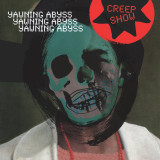
In the five years since Creep Show’s acclaimed Mr Dynamite album was released it’s fair to say that we’ve all been through a fair bit. Sitting here, in 2023, things don’t seem to be getting any better. There’s the cost of living crisis and political meltdowns; we're in deep water with global warming and to top it all there’s a war on our doorstep.
Back in 2018 everything seemed less complicated. Sure, there was stuff to get riled about, but we knew nothing about what was to come. Mr Dynamite was a fairground ride into the dark corners of a world that was on the brink of being blitzed in a blender. It was a record teetering on the edge. Five years down the line you’d expect the follow-up, Yawning Abyss, would double-down and bring the white-knuckled, teeth-gritted fury of the last five years to the boil. And yet….
A quick recap? No problem. Wrangler + John Grant = Creep Show. And Creep Show? “A band of musical misfits who have found a voice or two”, says Wrangler’s Ben “Benge” Edwards, whose Bond villain studio on the edge of a moorland is Creep Show Grand Central as well as home to an analogue synth arsenal that could sink ships.
Wrangler have known each other for a while. Tunng’s electronics wizard Phil Winter and Cabaret Voltaire’s trailblazing, pioneering frontman Stephen Mallinder go way back, while Phil and Benge crossed paths in the 21st century when they seemed to be increasingly in the same venues at the same times. Meanwhile, Mal had been living in Australia since the mid-90s and when, in 2007, he returned to the UK his old pal Phil suggested he meet Benge and the three of them immediately began working together.
Wrangler collectively bumped into Grant at their soundcheck for Sheffield’s Sensoria Festival in 2014 where they were playing with Carter Tutti. A friendship blossomed and when they were invited to perform together for Rough Trade’s 40th anniversary show at London’s Barbican in 2016, well, they jumped at the chance... and Creep Show was born.
Let’s talk about the new album... What is the ‘Yawning Abyss’? You might well ask. According to Mal, it’s “a cosmic event horizon that I can see from my attic window when stand on a chair”. Yeah. Thanks.
“On this album”, offers Benge, feet firmly on the floor, “Wrangler wrangled some vintage synths, mostly Roland, Moog, and the ‘Crystal Machine’ - then John Grant joined in the fun at Memetune Studios where lots of musical experiments were carried out. Then Mal and John ran off to Iceland with the master tapes and recorded a load of madcap vocals. Back at Memetune, me and Phil were left to try and make sense of it all. Which wasn’t hard because what they did in Iceland was totally magnificent.”
Which kind of brings us back to where we began. You’d imagine ‘Yawning Abyss’ would be blowing steam out of its furious ears. Mr Dynamite but kicking a wasps nest. Repeatedly. And yet…
Opener ‘The Bellows’ comes on like a modular ‘Radio Ga Ga’, the singalong ‘Moneyback’ (“You want your money back? / I didn’t think so”) sounds like Godley & Creme’s ‘Snack Attack’ meets Prince Charles And The City Beat Band (“Pennies, pounds, dollar bills, signed agreements, death wills”). ‘Yahtzee!’ is an unhinged electro breakdance party in four minutes and nine seconds.
Where Mr Dynamite was menace, a mélange of mangled voices, with Grant and Mallinder being heavily treated, pitched up or down, rendering their contributions largely indistinguishable, Yawning Abyss takes a more direct approach. You hesitate to say feelgood, but there’s a skip in the step here for sure.
The title track plays John Grant’s vocal straight. Completely. It’s good, so very good. Like ‘Axel F’ covered by Vangelis. The delicious shimmering synths of ‘Bungalow’ also plays those Grant pipes with a straight bat. ‘Matinee’ delves into darker, very funky territory. With Mal upfront it comes on like ‘The Crackdown’. Choice lyric: “You are starting to breakdown / And it’s so fun for me to see / You should have thought of that / You should have come prepared / You can see what’s happening and you look a little scared”.
So, you know, not all feelgood. But it does feel good. It’s probably best to draw your own conclusions... This is Creep Show after all.
The next chapter of the Natural Information Society is here. Since Time Is Gravity, credited to Natural Information Society Community Ensemble with Ari Brown, presents a newly expanded manifestation of acclaimed composer & multi-instrumentalist Joshua Abrams nearly 15 year, 7 albums &-counting flagship ensemble. Joining the core NIS of Abrams (guimbri & bass), Lisa Alvarado (harmonium) Mikel Patrick Avery (drums) & Jason Stein (bass clarinet) are Hamid Drake (percussion), Josh Berman & Ben Lamar Gay (cornets), Nick Mazzarella & Mai Sugimoto (alto saxophones & flute), Kara Bershad (harp) & Chicago living legend of the tenor saxophone Ari Brown. Recorded live to tape at Electrical Audio & The Graham Foundation, cover painting Vibratory Cartography: Nepantla, by Lisa Alvarado. 2xLP on Eremite USA, 2xLP & CD on Aguirre/Eremite Europe. Out 14-04.
Since first developing Natural Information Society in 2010, Joshua Abrams has been gradually expanding the group’s conceptual underpinnings, its musical references & the sheer number of the group’s members. Its music is, in a sense, an expansive form of minimalism, based in repeated & overlaid rhythmic patterns, ostinatos & modality. Its roots, its scale & its meaning become clearer in time. If time is gravity, it also allows us to carry more. Having begun as fundamentally a rhythm section with Abrams’ guimbri at its core, the version here can stretch to a tentet, including six horns.
Abrams has been expanding his minimalism gradually, but he has long understood a key to minimalism’s potential: the breadth of its roots in the late 1950s & early 1960s, ranging from the dissatisfaction of young European-stream composers with the limitations of serialism to the simultaneous dissatisfaction of jazz musicians with the dense harmonic vocabulary of bop & hard bop. The former began exploring rhythmic complexity & narrow tonal palates in place of harmonic abstraction (Steve Reich’s Drumming, Philip Glass’ Music with Changing Parts; perhaps above all Terry Riley’s In C & his late ‘60s all-night organ & loop concerts); the later reduced dense chord changes to scales (signally with Miles Davis' Kind of Blue, but rapidly expanding with John Coltrane’s vast project). In the 1950s the LP record opened the world with documentation of Asian & African musics, key influences on both minimalists & jazz musicians. If John Coltrane’s soprano saxophone suggested the keening shehnai of Bismillah Khan, the instrument was rapidly taken up by two key minimalists, LaMonte Young & Riley, similarly appreciative of its flexible intonation, the same thing that kept it out of big bands.
If the guimbri, the North African hide-covered lute that Abrams plays with NIS, involves a rich tradition of hypnotic healing music associated with the Gnawa people, Abrams’ music also touches on other musics as well — other depths, memories & healings, different drones, rhythms & modes. As the group expands on Since Time Is Gravity, he has made certain jazz traditions in the same stream more explicit as well. If there is a mystical & elastic quality involved in the experience of time, both in direction & duration, you will catch it here. The parts for the choir of winds expand on the roles of Abrams’ guimbri, Mikel Patrick Avery & Hamid Drake’s percussion & Lisa Alvarado’s harmonium: at times, the winds are almost looping in the tentet version, each hitting a repeating note in turn, at once drone & distinct inflection on temporal sequence. The brilliance of the work resides in Abrams’ compositions, the NIS’ intuitive execution & in Ari Brown’s singular embodiment of the great tenor saxophone tradition, including the oracular genius of Eddie “Lockjaw” Davis, & Yusef Lateef. The three pieces by the expanded NIS featuring Brown —the opening “Moontide Chorus” & “Is” & the ultimate “Gravity”— have an immediate impact, & togther might be considered a kind of concerto for tenor saxophone. Here Brown presses almost indistinguishably from composed melody to improvised speech, getting so close to language that he might have a text. Everything here is a sign. Note the tap of the Rhythm Ace that links “Moontide Chorus” to “Is”, the attentive heart always present, even when signed by a machine. There’s a link here to the methodologies & meanings of dub music & the linear & vertical collage of beats, textures & tongues: treated with reverence, a sample of a beat-box can be as soulful, as hypnotic, as a mbira or a tamboura. If those pieces with Brown are heard as a suspended concerto, the three embrace & enfold the other works, like the sepals of a flower. That placement will also touch on the mysteries of our perception of time.
Particularly in “Is”, but elsewhere as well, a phenomenon of transcendence arises in which time appears to be tripartite, at once moving backwards & forwards & standing still. This is an act of technical brilliance certainly, but also an illumination of music’s ability to represent temporal consciousness through polymetrics. This particular listener has only heard it before in a few places, including the horn shouts & bowed basses of Coltrane’s Africa, in moments of Charles Mingus’ The Black Saint & the Sinner Lady, in certain pieces where tapes were literally running backwards, & earlier still in Dizzy Gillespie’s Cubana Be, Cubana Bop, in which the composer George Russell & conguero Chano Pozo found a music that spoke at once in the voices of Stravinsky’s Rite of Spring & the vestigial rites, rhythms & songs of the Yoruba language & Santeria religion of inland Cuba.
In Joshua Abrams’ compositions & the realization of them by the NIS, in the time of one’s close listening & memory thereof, distinctions between the “natural” & the “social”, the “quotidian” & the “transcendent” are erased, suspended or perhaps irrelevant. Consider two of the ensemble pieces, one named for nature, the other social science. In “Murmuration” the repeated wind figures of flute & alto saxophone combine with the interlocking patterns of harp, guimbri & frame drum (tar) to create a perfect moving stillness, not an imitation but a witness to the miracle of the starlings’ astonishing collective art, a surfeit of beauty that might be the ultimate defense tactic.
“Stigmergy” takes its name & concept from the Occupy movement’s Heather Marsh, who proposes a social system based on a cooperative rather than competitive models, one in which ideas are freely contributed & developed as ideas rather than an individual’s property. In its form, Abrams’ “Stigmergy” is the closes thing to traditional jazz, a series of accompanied solos by each of the wind players. However, the composed accompaniment is a radically collectivist notion: a repeated rhythmic figure, call it ostinato or riff, in which the different winds each play only a note or two of the figure, a concept both more collectivist & individualistic in its conception than any typical unison figure. It suggests another of the underlying recognitions that propel the Natural Information Society, the group as social organism, the teleology of hypnotic anarchy, all parts in place, functioning systematically, evolving & expressing itself, its nature & society, as a transformative organism.
George Lewis has described music as “a space for reflection on the human condition”. This suggests that, rather than a “distraction”, at least some music might serve as a distraction from distraction. It’s a focus, a clarity, a awareness, an external invitation to interiority, as if music itself is a model for form & contemplation, an organism contemplating for us or as us. If that is a possibility, & I am sure I have heard such musics, than this music is among them. How many of our rhythms, melodies & harmonies (cultural, historical, biological, psychic) might such music carry, translate & transform in the particulate ecstasy of our own murmuration? (Stuart Broomer, April 2022)
DMX Krew unearths the lost Cold War LP.
Created for 1983. Created in 2003. Released in 2023. In mistrust and blindness mankind wages a COLD WAR, East against West in a spiraling cycle of mindless escalation. For 40 years the madness continues until it reaches its inevitable climax, NUCLEAR WAR.
Armageddon is achieved at the push of a button, millions of lives are destroyed. Those who are spared struggle for survival in the bleak conditions of NUCLEAR WINTER.
Acid rain destroys the landscape, darkness falls across the face of the
earth and hope is lost as the population falls prey to radiation sickness and cancer. Deep underground, the last survivor works feverishly in his isolated laboratory. A lone scientist attempting desperately to save mankind, he uses occult technology and deep-frozen human tissue to create a group of 12 radiation-resistant HUMAN CLONES.
They set forth to rebuild and repopulate the planet, whilst the scientist continues his work to improve and strengthen mankind. He develops a technique to fuse his own living flesh with the transistorized mind of a supercomputer, transforming himself into FUTURE MAN. Synergy of man and machine. Having transcended his mortal condition, he is now deemed ready to meet THE ELOHIM, a race of super-evolved aliens who created mankind 40000 years ago and have been watching and waiting ever since for the day when man at last becomes enlightened.
They descend from the heavens in their storship telling Future Man to
rejoice, for the trials of mankind are over and they sing to him of their long wait and THE GOLDEN AGE which is about to begin. Future Mom and the Clones are taken on board the spacecraft whereupon the Elohim transport them through the STAR GATE to a planet paradise where they are able to live in peace and happiness and once again become prosperous and many.
German neo-classical techno trio Brandt Brauer Frick is back with “Multi Faith Prayer Room” their fifth album and probably their mots ambitious to date . Recorded over the past two years, it includes collaborations with Mykki Blanco, Azekel, Marina Herlop, Kom_I, Sophie Hunger and Duane Harden. Their new album is a great example of their modern and hybrid approach to electronic music. The band still combines acoustic drumming and drums machines, syncopated layered bass and hectic Steve Reich-inspired piano to create simultaneously analogic and synthetic techno tracks.
The album comes hand-in-hand with an audio visual art installation by the same name which will be debuted at Art Basel Miami on December 1st . The band will be presenting the album live starting February 2023 with an extensive European tour, and more dates to follow.
zake's fruitful contributions as an artist to his own Past Inside The Present label continues on this new album Deep Into The Unknown We Shall Endlessly Roam. It is an assemblage of arrangements made using archaic tape machines such as a Sony M-570V microcassette voice recorder and obsolete VSC Soundpacer, all on analogue tape. Of course that lends the music a misty, grainy quality that defines much of zake's ambient. Here his loops and found sounds meld and melt to create vast open spaces that are pregnant with emotion and tension. It's another magical work of ambient art that, says the artist, "is dedicated to those who continue to yearn for greater understanding."
Jack Vegas is the sixth album by Swedish electro/post punk outfit Agent Side Grinder. It marks the band’s first exploration of American culture, drawing heavily on the beatnik-era works of Jack Kerouac and William S. Burroughs, as well as the proto-punk and avantgarde movements — while maintaining a contemporary storytelling perspective.
The American dream becomes a symbol for escape from a Europe ravaged by pandemics, war and financial instability. Lyrical themes revolve around boredom, resilience, government and corporate intrusion, and mental health — with the occasional glimmer of light. It’s a drum machine-driven road movie, plotting its course through the desperate heart of rural Sweden.
The name Jack Vegas’ is derived from a Swedish chain of low-stakes slot machines.
The album has been produced by former ASG member Henrik Sunbring, and recorded in Stockholm during 2022.
Genre-wise Agent Side Grinder has always existed in some kind of twilight zone. Deeply rooted in early electronic and industrial music as well as proto- and post punk, their sound is driven by iterative, suggestive beats and sudden bursts of untamed ferocity, built on equal parts dissonant samples and elegant melodies.
- My Woman Done Left Me
- You Don't Love Me
- Dust My Broom
- Pretty
- Woman
- Last Night (I Love The Best Friend I Ever Had)
- Slippin' And Slidin
- Going Down South
- Rolling And Tumbling
- How Many More Years
- Well, Well, Well
- Leave Me And My Woman Alone (Friend Of Mine)
- My Baby Caught The
- Train (Who's Been Talkin')
- Scrambling For My Shoes (Walking Blues)
- Sitting On
- The Top Of The World
- Searching For My Baby
- Going Away, Baby
- Jumper
- Hanging Out On The Line
For years he mesmerized audiences with his unique North Mississippi Hill
Country Blues style and influenced a new generation of blues musicians.
University of Memphis professor, David Evans, recognized Burnside's
extraordinary talent while he was still working in the cotton fields in North
Mississippi. The seventeen tracks on "Raw Electric 1979-1980" reveal R.L.'s true
talent. Most of the recordings were made at Burnside's home near Independence,
Mississippi, with a live audience participating.Song-by-song descriptions and rare
photographs are included in the "bonus" booklet.
- A1: Johnny P's Caddy (Feat. J. Cole)
- A2: Back 2X (Feat. Stove God Cooks)
- A3: Super Plug
- B1: Weekends In The Perry’s (Feat. Boldly James)
- B2: 10 More Commandments (Feat. Diddy)
- B3: Tyson Vs. Ali (Feat. Conway The Machine)
- C1: Uncle Bun (Feat. 38 Spesh)
- C2: Thowy’s Revenge
- C3: Billy Joe
- D1: Guerrero (Feat. Westside Gunn)
- D2: Bust A Brick Nick
- D3: Mr. Chow Hall
Benny The Butcher blazed a trail as an elite voice in rap’s underground to become a top artist in all of music. The prolific Buffalo, New Yorker has established two legendary (and concurrent) album series, broken bread with industry leaders, and twice reached the Billboard Top 40 albums chart as an independent. Now Benny sets the table for a definitive 2022. Soon, he will unveil his highly-anticipated Tana Talk 4. By 2004, Benny combined these experiences to launch the Tana Talk series while on house arrest. As TT3 promised, Benny delivered two volumes of The Plugs I Met, in 2019 and 2021, on his Black Soprano Family imprint. In between, Benny inked with Roc Nation management and made songs with Drake, Lil Wayne, Black Thought, and Freddie Gibbs. He also partnered with Grammy-winning producer Hit-Boy to flaunt his range on 2020’s acclaimed Burden Of Proof. If the third installment of Tana Talk made Benny a formidable presence in Rap, Volume 4 propels him to stardom. Debut single “Johnny P’s Caddy” partners The Butcher with J. Cole over The Alchemist production. Al’ and Daringer handle the album’s music, just as they seamlessly did on TT3. Conway, Westside Gunn, 38 Spesh and more guest on TT4, as does Stove God Cooks. Benny’s skills and authenticity have cemented his place in the game. However, in a career defined by will and perseverance, The Butcher’s blade keeps getting sharper.
- A1: Vromm - Red Tuna
- A2: Hyphen - Winter Sky
- B1: Saytek - Iyndub01 (Live)
- B2: Pascal Nuzzo – Hold On
- B3: Nphonix & Matrika - Rumble Around
- C1: Acidulant - Make Love To A Machine
- C2: Insider - Something Flash
- D1: Dharma - Structured Chaos
- D2: Som.1 – Ultimatum
- E1: Dino Lenny – Did This
- E2: Adam Antine - Sortavala
- E3: Paul Roux – Bapteme
- F1: Underworld – Appleshine (Film Edit)
- F2: Subject 13, Conscious Route – Dripping Sauce
First released back in the fall of 1989, the In Order To Dance album was a compilation LP that pulled together tracks from a
select band of electronic producers, pushing the boundaries of the house and electronic music that was in its infancy stage.
Released on the R&S Records label, the IOTD series would become pivotal in the development of the electronic music scene
at large.
The world of music is a constant shape shifting, trend moving behemoth. Style may come and go (and come back around
again), stars are made, stars can fall. But the ethos behind In Order To Dance remains the same as it ever has, with a fierce
independent spirit, and a pledge to bring forward the next generation of young artists and their music. And so, here we arrive
at a new collection, fresh for 2023, and just in time for the labels 40th anniversary year, and with the ardent A&R’ing of label
founder Renaat Vandepapeliere, a selection of new tunes is assembled to reinforce the strength and power to be found within
music.
Across thirteen tracks, a squad of refreshingly contemporary producers from around the globe are brought together under the
In Order To Dance banner. Ushering the series into a new era, new variations on the electronic genre and fresh ideas are
fused into a delightfully engaging collection of tracks. There’s deep breakbeats courtesy of UK producer Dharma, smooth and
dubby live action from Saytek and complex bass heavy rhythms from Vromm. There’s esoteric electronics from Hyphen, epic
piano driven deep house from Dino Lenny and swinging jazzy breaks from Nphonix & Matrika. Paul Roux’s melancholic
‘Bapteme’ unfurls waves of deft pianos and guitar swirls over taunt beats, and a driving electro tone is set on Acidulant’s
contribution. Intoxicating rave tropes and hefty breaks come courtesy of Pascal Nuzzo and Adam Antine delivers a wall of
sound anchored by shuffling, funky beats on ‘Sortavala’.
And to accompany the new wave of In Order To Dance, a series of music videos have been produced. Acclaimed artists and
video directors, including Alessandro Amaducci, Ben Marlowe and Gala Mirissa, have all stamped their digital artistic
visions onto these stunning compositions, synching audio and visual for a multi-sensory experience!
‘In Order To Dance 4.0’ by Various Artists is available on R&S Records from 14th April 2023 on 3LP vinyl, download &
streaming services.
RP Boo's essential first album, 2013's ‘Legacy’ caused a storm of acclaim worldwide as people finally started to piece together his true place in Footwork and the powerful legacy of his work as an innovator. In parallel with productions, his always on-point DJ sets have lit up festivals and clubs worldwide and continue to do so to this day, notably leading to him being named one of the ‘100 World’s Best DJs’ in a recent book by DJ Mag. Now on its 10th anniversary ‘Legacy Vol.2’ continues his story. Featuring tracks created between 2002 and 2007, this is a wonderous selection of material, some known, some unknown. The album kicks off with the dark and epic ‘Eraser’ created in September 2007, during a time RP was going to underground Footwork club War Zone on the west side of Chicago. The track was inspired by, and created to fuel, the “taunting words of intimidation” between dancers.” And now it makes for one intense album opener. Some cuts are inspired by everyday life – take for example 2005's ‘Pop Machine’, which was inspired by the time he was working at Speedway Oil Change who had a temperamental soda/pop machine. One day, a customer put money in the machine and nothing came out, so he continued to press the button, and for some reason RP found this funny so he went over to the machine and started pressing the buttons himself and everyone he touched started saying “Work!.” Inspired once he was back home in his studio he made ‘Pop Machine’ in tribute to the defunct machinery. When he came back to work the next day and played the track for all this co-workers it blew their minds and they also laughed with at how creative RP could get using things from his everyday life as inspiration. ‘Pop Machine’ also illustrates how RP’s Footwork uses repetition and minimalism as fuel. Years later RP Boo is still inspired by Foot Work – the art of dancing and working for dancers. He continues to shake up clubs and isn’t afraid to get out from behind the decks and drop some Foot himself. We’ll let the man himself have the final word - “What inspires me to keep going is seeing the people having an awesome time moving on the dance floor, as well as playing music that is a recognizable part of my life. I’m one with it.”
MD Pallavi & Andi Otto first crossed paths on a theatre stage in India ten years ago. They started collaborating instantly and in 2016 MD Pallavi's mesmerizing vocals for the downtempo raga Bangalore Whispers warmed hearts and ears. Their musical relationship flourished with artistic residencies in Bangalore and Hamburg, their respective hometowns, and a concert tour in Japan. The collaborative track Six made ears turn again on Andi’s album Bow Wave (Multi Culti 2019). And now, years later, the fruits of this artistic endeavour are fully formed here on Songs for Broken Ships - the debut album of the duo.
The album presents an interwoven pop-aesthetic vision of the two artists with their contrasting musical backgrounds. It ranges from organically woven folktronica to cut-up disco tracks and acoustic ballads. Reminiscent of, but not akin to Nicola Cruz, Beach House or Four Tet’s early productions the music is experimental but focused on the listener and their experience.
MD Pallavi is a singer, actress, filmmaker and performer from Bangalore, South-India, where she trained in Hindustani music and poetry since childhood. On Songs for Broken Ships, poems in her native tongue Kannada*, one of India's many languages, are performed over Andi’s alluring production, translating the stories into musical narratives. The poems address topics that are as timeless as the music itself. Social equality is touched upon in Bayalu (written by Bontadevi in the 12th century). Artistic struggles - communicated on An Unwritten Word (Gangadhar Chittala, 1865) - are almost prophetic and the surreal, dreamlike scenario of Clockshop (KS Narasimhaswamy,1958) brings you further inside the sonic journey.
Andi Otto is a composer, cellist and DJ based in Hamburg, Germany, He is known for his idiosyncratic and unconventional dance music productions on labels such as Multi Culti, Shika Shika and Pingipung (which he co-runs and curates). For this collaborative experience his dubbed out basslines gently interlock with the 7/4 and 5/4 beats to create a backbone for the instrumentation and expressive vocal timbres of MD Pallavi. His sound design combines graceful acoustic recordings, juxtaposed against modern drum machines, computer generated noise and vintage synthesizers.
*The LP comes with a text sheet containing all Kannada lyrics - which have their own vocabulary and script - together with the phonetic transcription and English translation.
Irish-born, Manchester-based Kerrie is a multi-disciplinary artist, incorporating live sets, DJing, producing and running her label Dark Machine Funk across her repertoire of work. Now, Kerrie follows up last year's 'Raw Regimen' (BP063) with a second EP for James Ruskin's seminal Blueprint Records.
Having garnered a rich musical education through working at and holding a DJ residency for one of the UK's most respected record shops Eastern Bloc, Kerrie's in-depth knowledge and unwavering dedication to music shines through her notable back catalogue and bolshy, unforgiving DJ and Live sets. Honing her craft for over a decade, Kerrie has played worldwide in celebrated venues such as Tresor, Berghain, fabric, FOLD, Elsewhere NYC and festivals including Freedom Medellin, Freerotation, Drift and Basilar.
First learning to mix via her brother's turntables in the early 2000s, it wasn't until 2009 that Kerrie invested in her own set-up and built an extensive record collection, covering everything from ambient, electronic, house, EBM, acid, electro, and her go-to genre, techno. Kerrie delivers tough moods from the turntables, as conveyed in her mixes for Reclaim Your City, Bassiani, SLAM and Crack, where she carefully blended high-energy styles of UK, Detroit, and European techno, many of which stem from the 90s and the 00s. It's frequent to hear Kerrie weave broken elements into her mixes too, chopping up the 4/4 groove at just the right moment to keep things propulsive. Kerrie's Live sets are fast becoming renowned for their trippy motifs and high impact on the dancefloor, applauded by Berlin's long-running club Tresor, where she made several appearances with her Elektron machines. Kerrie's Live set at Freerotation in 2019 was one of the festival's most talked-about debuts, and this year, Kerrie will return to and debut at multiple festivals and clubs across Europe and the Americas.
Following well-received releases on labels such as Don't Be Afraid, Cultivated Electronics, I Love Acid and Symbolism, Kerrie launched her imprint Dark Machine Funk DMF in 2020. The label homes her distinctly raw aesthetic and honours her love for dark, gritty, metallic and industrial sounds melded with elements of funk, heavily influenced by second-wave Detroit artists, UK techno and music by some of her favourite artists; James Ruskin, Blawan and Surgeon. Kerrie's first release on DMF, 'Inner Space PT1', was praised by Resident Advisor, who credited her ability to make "lean, fierce techno that knows how to groove."
2022 was a watershed year for Kerrie's productions. She debuted on the monumental UK techno label Blueprint with her EP 'Raw Regimen', which landed acclaimed reviews. Truly welcomed to the Blueprint family, Kerrie shares her second EP on the label in May and joins the crew at Blueprint showcases around the globe. This year marks the release of Kerrie's 10th EP on vinyl, and considering her consistent output on DMF, Blueprint and many more labels, the producer shows no sign of slowing down.
Coming to international prominence in more recent years, regardless of her decade-long tenure in Manchester's vibrant scene, Kerrie is deeply invested in the culture of electronic music, starting from her teenage era as a raver in Ireland up to her innovative projects today. In 2017, she founded Eastern Bloc's in-house event space to nurture local talent, which remains at the heart of Manchester's music community. Having ended her 11-year stint at the shop in 2023 to fully commit to the studio and accommodate her increasingly busy tour schedule, Kerrie is forging a long-lasting path fuelled by drive, passion, authenticity and a community-first way of thinking.
Cavernous, mystical beat tribalism from the GT zone; loose yet conscious-minded dub-wise runnings land on planet Earth. Murderous tempos create fiery, twisted percussion dances, lifted and buried in blazing licks of dabbed bass-weight. 808 moves left to right, upside down, with a melodic, hypnosis-minded sway. DEEP transforms waves of metallic drum machines, isolated melodies, and wooden beats into rooted sonic spiritualism recalling distant, future bygone eras. Hand made cover artwork.
In hand-stamped, paper taped sleeve.
Clear Vinyl
* Eomac has injected a new level of consciousness into beat making by recording water drips and drops. This edge of real life and water frequencies feels like opening a door in your mind and taking a rhythmic sound shower, finding tiny minimal melodies within the water itself.
*Distorting reality, in the most beautifully crafted and playful manner, Eomac’s Water Tracks are made with natural sounds of water and they not only make your body want to dance, they are a joy for the minds ear; sound design full of life and character, refreshing for the soul too. If hyper-real Techno was a genre - perhaps Eomac has invented it here - the idea to use micro melodies found in drips, drops and sploshes of water feels clever and inventive, Swimming up-stream against the standardized sound of Techno’s machine-made Electronic presets.
* Eomac is a project from Irish composer and producer Ian McDonnell, releasing genre-spanning electronic music via Planet Mu, The Trilogy Tapes, Bedouin Records, Killekill, Phantom Limb, Emika Records and more. Eomac’s sound draws from obscure samples and raw sound design in a continuing exploration of the furthest reaches of intense, visceral music for body and soul. He digs deep into light and dark mysticism for the dancefloor, as experienced in numerous performances at festivals and clubs across the globe.
Distorting reality, in the most beautifully crafted and playful manner, Eomac’s Water Tracks are made with natural sounds of water and they not only make your body want to dance, they are a joy for the minds ear; sound design full of life and character, refreshing for the soul too. If hyper-real Techno was a genre - perhaps Eomac has invented it here - the idea to use micro melodies found in drips, drops and sploshes of water feels clever and inventive, Swimming up-stream against the standardized sound of Techno’s machine-made Electronic presets.
Voice Magnetic by Hainbach is the enigmatic Berlin based artist’s sonic diary of 2022. On his sixth release on Seil Records, Stefan Goetsch collages the sounds he made and the ones that surrounded him over the course of twelve months into a powerfully intimate ambient experience.
In his studio or on travels — Hainbach always is working on new material and allows the locations he records his tracks in to find their way into the music. Consequently, on many tracks you can can hear the outside bleeding in — seagulls and waves on "Izmir", the voices of his children while record the piano or the sirens of Neukölln’s police cars in background.
The connecting threads between these pieces are magnetic tape and the human voice — hiss and breath. The result are 15 immersive ambient pieces that make up Voice Magnetic. Often short like the moments that spark them. Fading and intricate, honest and pure.
Based out of Berlin, Germany, electro-acoustic music composer and performer Hainbach creates shifting audio landscapes, using esoteric synthesizers, nuclear test equipment, magnetic tape and a collection of idiophones. Hainbach has become known for his immersive live shows and an unique sound that is both abstract yet very much a corporal experience. Otherworldly and intimate, raw and heartfelt. On his wildly popular YouTube channel, Hainbach shares his love for experimental music techniques and his passion for forgotten machines with a wide audience. Inspiring over one hundred thousand each week to explore synthesis, electronics - and to leave beaten paths.
Tom Zé and Faust collide in Domenico Lancellotti's "machine samba"
Domenico Lancellotti's SRAMBA reaches back to the roots of samba whilst completely revamping its blueprint, indoctrinating guitar and percussion-led rhythms with analogue synthesisers, courtesy of album producer Ricardo Dias Gomes.
The majority of SRAMBA was recorded over two months in The Cave - Domenico's home studio in Lisbon, the city both Brazilian ex-pats reside in, where the arrival of a couple of Russian-designed synths purchased by Ricardo influenced the direction of their initial experimentation: "Ricardo had these instruments, modular machines" remembers Domenico, "and I had my guitar, some percussion instruments. On the first day we started making sounds and recording them, and songs started to appear, sambas started to appear."
The son of a renowned samba songwriter, at home Domenico would watch his father play and compose. At parties, the adults would hand his father a tamborim (a small tambourine) and ask him to play along. "I grew up inside samba, it's my roots", he says. "For me, everything is samba, I bring it into whatever style of music I am making".
Domenico and Ricardo instantly saw how the synthesisers were not at odds with the sambas they were playing, instead they had a similar sound to its typical percussion instruments (ganza, repinique, surdo, tarol). What's more, they saw a connection with roots samba, the samba that existed before bossa nova and samba jazz came along. This was rhythmic samba, with grooves that could go on ad infinitum. "It's samba de clave, geometrically structured" says Domenico. "It's ostinato samba", adds Ricardo.
"Diga" is a great example of what their proposal is capable of, as what begins as a glitchy machine whirring into action soon turns into a glorious samba in which the gurgles and scratchy beats coming from the analogue equipment only add to the arrangement. Likewise, on "Tá Brabo" it's an aching melody from one of the synths that gives the guitar rhythm its needed counterpoint, and shows how the duo's greatest accomplishment is not in invention alone, but in creating a great samba album. It's an album that can go from the opening track "Ere" with its reverberant bass thud, mantra-like vocals and staccato rhythms to the string-accompanied "Nada Sera de Outra Maneira", a swooning samba that pays tribute to the Brazilian ensemble Tamba Trio, who along with Tom Zé's Estudando O Samba, Domenico names as the biggest influence on their treatment of samba.
Other important reference points are made clear on "Um Abraço No Faust". One of three instrumentals on the album its title riffs off a JoãoGilberto song, "Um Abraço no Bonfá", but whereas JoãoGilberto was giving a hug (um abraço) to bossa nova guitarist Luiz Bonfá, Domenico and Ricardo are giving theirs to the German avant-gardists Faust. "Quem Samba", with its horn section and dramatic melody give a whiff of Domenico's Italian ancestry, while "Descomunal" is devoid of rhythm whatsoever, guest vocalist Tori singing over a bed of electronic drums, cello and swirling synths, that highlights the duo's unwillingness to stick to a particular formula.
Both Domenico Lancellotti and Ricardo Dias Gomes are revered names within Brazilian music over the past 20 years. As a member of the +2's, with Moreno Veloso and Kassin, Domenico released a trio of albums on Luaka Bop in the early 00s that pioneered a new Rio samba sound with elements of funk and psychedelia. With Veloso and Kassin he would later form Orquestra Imperial, a big band intent on reviving ballroom (gafieira) samba, and that has worked with guest vocalists such as Seu Jorge, Elza Soares and Ed Motta. SRAMBA is his fourth solo album. Multi-instrumentalist Ricardo Dias Gomes first came to notice as a member of Caetano Veloso's band Cê which helped reinvigorate Caetano's career with a sound influenced by British new wave. As well as collaborations with Lucas Santtana, Negro Leo and Thiago Nassif, and work with his own group Do Amor, he has released a series of acclaimed solo albums that reveal a restless music-maker.
SRAMBA is a glorious showcase of the duo's style, uniting Domenico's playful lyrics and rhythmic, samba-rooted songs with with Ricardo's assured accompaniment of unorthodox textures and instrumentations. It may be a new language for samba, machine samba (samba de máquina), but as Domenico says, "samba da máquina is samba".
- A1: Pistol Opera
- A2: Invisible Other (Feat Method Man)
- A3: Faith Healer
- A4: Be Wise As Serpents
- A5: Heroin On A Harpoon (Feat Geechi Sued Of Camp Jo)
- B1: Curse Of Canaan (Feat Kurupt)
- B2: Rambo Knife
- B3: 3 Levels Of Hikmah
- B4: Killpoint (Feat Mop)
- C1: Deadman's Hand
- C2: Winged Assassins (Feat Boob Bronx & Ras Kass)
- C3: A War Chest & Propaganda Machine
- C4: Gunpowder Plot (Feat Ot The Real)
- C5: Slight Rebellion Off Madison
- D1: Father Yod (Feat Ill Bill & Lord Goat)
- D2: Spoils Of War (Feat Big Twins)
- D3: Joro Piana Robes (Feat Thirstin Howl The 3Rd)
- D4: Zafiro Anejo (Feat Boob Bronx & Recognize Ali)
Underground rap stalwart, Vinnie Paz returns with his seventh studio LP, Tortured in the Name of God’s Unconditional Love. The 18 track LP falls on the heels of Jedi Mind Trick’s 10th album, The Funeral and the Raven, which dropped in November of ’21, and succeed’s the April 21 release of Vinnie’s sixth studio LP, Burn Everything That Bears Your Name.
Weighing in at nearly one hour of all new music, the hard-hitting LP ranks among Vinnie’s most decorated line-up of guest appearances to date, with features from the likes of Method Man, M.O.P., Kurupt, Geechi Suede (Camp Lo), Ras Kass, ILL Bill, Lord Goat, Big Twins, Thirstin Howl the 3rd and more. To boot, Pazienza calls upon the production talents of DJ Muggs, C-Lance, Stu Bangas, Oh No and more to lay the foundation with their neck-snapping soundscapes.
Over the past two decades, Pack Pistol Pazzy has ranked amont the most commercially successful indie hip-hop artists in the underground, and with his latest solo effort his legacy is only further reinforced.