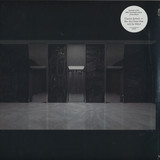
Federico Madeddu Giuntoli is an italian multidisciplinary artist. Mostly autodidact, his art is based on groundedness and simplicity, and focused on the complexity of human journey in a non aggressive, warm and unfiltered way.
His works, ranging from contemporary art, music, writing and photography, are usually delicate and subtle, yet unequivocally tuned into a certain kind of pop communication, however essential and experimental it may be.
"The text and the form" is his first solo album, featuring german e-poetess AGF and japanese artist Moskitoo (12K).
The album is a collection of 11 minimal and intimate short songs, in which piano fragments, lonely guitar solos, spoken words and evocative vocals resonate with processed microsounds and lo-fi field recordings, creating a concise and very deep journey into romance and sense of mystery.
In the artist's words, "the album shaped itself according to a loose process of refinement and layering. A long, undisturbed assembling across more then a decade, often against my own will to reach a definitive form. If any relevance in this work can be found, I would say it resides in its capability to deliver a rare sense of vulnerability, longing and aliveness together, an aroma of improvisation and instability mixed with a unexplicable impression of perfection".
Search:mad work
For Dizzy everything starts and ends with laughter. In the meantime, all paths are possible. That of melancholy, of dance or of political commitment... Dizzy is everywhere at once, always elusive, he is this explorer who, after having been one of the founders of Bebop in the 40's, will never stop experimenting, surprising and pushing back the borders. Proud of his Afro-American heritage, he knew like no other how to confront it with other cultural horizons such as Latin America or Cuba. On 25 August 1973 Dizzy Gillespie came to the Dutch public in Laren. True to form, he introduced his musicians in a mischievous and generous mood and then launched thunderously into a Caribbean tempo that lasted 19 minutes! Then, in a deep voice, Dizzy evokes his friend Martin Luther King. He dedicates "Brother K" to him, a tender ballad punctuated by flashes of storm and anger. As a conclusion Dizzy invokes his roots: "The Blues", where he abandons his trumpet to unleash the full force and warmth of his voice. The musicians withdraw to a surprisingly light theme. We leave as we arrive, on tiptoe. However, we leave with a certainty: "Yes Dizzy, you made it".
Dizzie Gillespie, Trumpet and Vocals
Mike Longo, Piano
Alexander Gafa, Guitar
Earl May, Bass
Mickey Roker, Drums
Guest Artist : Jon Faddis, Trumpet on tracks 9 and 10
Recorded at the Singer Concert Hall
Laren Jazz Festival, 25.VIII.1973
STEREO ℗ 1973 VARA
Remastered by ℗ & © 2017 FONDAMENTA
Made and printed in Germany
After the relative success of The Bitter Springs' last album, The Odd Shower, Simon Rivers promptly disbanded the long-running group and began recording his first solo album, Like Yer Wounds Too, under the name Poor Performer. As Jim Wirth wrote of a recent Bitter Springs reissue, "Weaving the messy threads of suburban life into dense tapestries, he has something of the Go-Betweens' gift for melody, something of Mark E Smith’s ear for language, something of Vic Godard’s common touch, and almost none of the acclaim that should have been his due." This holds true for Poor Performer's debut album, though the songs seem based around a loose concept of issues dealing with middle-age self-reflection . . . though nothing nearly as navel-gazing as that statement might imply! Rivers: "For as long as I can remember, I've been either making records or planning to make them. But for once, this is a record I didn't really plan to make. The strange circumstances of the Covid lockdown led to its coming together. I'd lost my Dad to a demential-related death, retired from work due to mental stress, and was shielded for seven months . . . I took my banjo, my Dad's Yamaha keyboard and a few of my guitars, and booked a month of studio days at One Cat with the brilliant Jon Clayton at the controls . . . after a week or so of recording backing tracks, Jon said, "I think 57 songs is a bit ambitious, Si", so together made the decisions that shaped this record and its accompanying EP." With 7" 45s now nearly as expensive to make as a full vinyl LP, a decision was made to include likely contenders on a bonus CD EP, which certainly rivals the album in quality and perhaps generally exceeds it in immediacy, but Like Yer Wounds Too is more of a grower than anything yet released by Tiny Global Productions, and one of the releases we're most proud to present to the public. Humour, insight and brilliance abound. Album tracks: Golden London Leaves / Kempton Park / Life U Chose / Hard To Be Happy / Lil' Bro / Sleepy Little Town / No Escape From Me And You / Right As Rain / The Point / Our Souls / The Frog's Tale / Can You Whistle? / Something's Gonna Kill Ya ep tracks: The World Has Had Enough / 2 Hard 2B Happy / For A While / Get Up Them Stairs / Daylight Robbery
2022 Repress
.For this from that will be filled is the debut album by Clarice Jensen, artistic director of the American Contemporary Music Ensemble (ACME). The album explores the variable differences between acoustic and electronic sound as well as depiction of the simulated and the unconscious. It was originally conceived as a collaboration between Jensen and the artist Jonathan Turner as an audio-visual work, but is here presented in it´s pure audible form.Building on a long and romantic tradition of solo cello repertoire, Jensen expands and confuses the familiar sound of the cello through the use of effects pedals, multi-tracking, and tape loops recorded at variable speeds, presented in works she has written for herself as well as a piece she conceived together with Icelandic composer Jóhann Jóhannsson. Also featured is Michael Harrison's Cello Constellations for multi-tracked cello and sine tones, written for Jensen, which meditates on long, sustaining tones.With For this from that will be filled, Jensen has made an incredibly strong first album that feels like a surreal and futuristic journey through an alternate timeline.
»Hallway Waverider« is Mikko Singh’s second album for Morr Music under his Haleiwa moniker. Blending the washed-out aesthetics of dream pop with a lo-fi take on modern psychedelia, it is a fuzzy record in more than one sense. The ten songs see the multi-instrumentalist explore the sonic idiosyncrasies of analogue recording equipment while also expressing a self-assured statement by a musician who has carved out a niche for himself and feels perfectly at home in it. “This record is like me telling my teenage self that I am OK,” says Singh. “Back then, I was recording my song ideas on cassette players but held the belief that music should be recorded in an expensive studio with expensive gear in order to be real.” As it turns out however, Singh had been right from the start, having come full circle as an established artist some twenty years later.
After exploring the affordances of vintage equipment for 2019’s »Cloud Formations« LP, Singh worked with a Tascam 244 4-track cassette recorder and Tascam 388 8-track reel-to-reel recorder to transform the sounds of his vintage synthesizers, bass, the occasional guitar part, and drums supplied by Svante Karlsson for »Hallway Waverider«. By experimenting extensively with the machines’ unique sonic qualities and constantly reworking the pieces in regards to their sound signature over the course of two years, Singh has found the perfect equilibrium of electronic music and lo-fi aesthetics while navigating with ease through styles like driving surf rock, gritty garage punk and ethereal dream pop. On his new record, he seamlessly integrates these influences into anthemic yet soothing songs.
The title of the album refers to Singh’s halcyon days as a teenager spent listening to punk music and—in wintertime—skateboarding in his own bedroom. The lyrics refer to surfing as a nod to both his own experiences with riding the waves and the music genre that has provided him with inspiration throughout his career as a prolific recording artist with three solo albums under his belt. However, surfing primarily serves as a metaphor for something bigger. “It’s about things in life that are important to me; things that make me feel good and soothe the mind,” he explains. It comes as no surprise then that »Hallway Waverider« is also dedicated to a key figure in his life. “The album is an ode to my mother who passed away in 2015,” says the artist. “She made it possible for me to have a good childhood and to be able to do what I love.”
This sense of closure and being at peace with himself is also expressed in lyrics like "A sea stroll. Going slower. Feeling featherlight,” expressing a calm that perfectly mirrors the music’s steady grooves and welcoming overall feeling. Starting with the upbeat »River Park/ Sleeping Pill«; to the almost ambient, synthesizer-heavy »A Bottomless Pit«; or short, punk-inspired and bassline-driven outbursts like »Watered Down« or »Halulu Lake«; to the blissful title track that closes the album, Singh opens up a whole panorama of different moods across a broad variety of musical styles. They are connected by that rare thing: a unique musical vision expressed by an instantly recognisable sonic signature.
BYG album, facsimile-edition. Newly mastered to vinyl from original BYG tapes. Lacquers cut by Alchemy Mastering at AIR STUDIOS. Exclusive liner notes by author, journalist and BYG-authority Kevin Le Gendre. Cd: expanded cd edition in deluxe gatefold sleeve & printed inner wallet Original 1973 BYG album. Expanded with 2 original single-version tracks. Digitally mastered from original BYG tapes by Nick Robbins. 16-pages booklet with exclusive liner notes by author, journalist and BYG-authority Kevin Le Gendre. *** Vocalist-multi-instrumentalist Areski and singer Brigitte Fontaine are a legendary French musical couple that rose to prominence in the ‘60s, making a series of albums that showcased a boldly unorthodox approach to the art of song. While their defiantly esoteric style, which could veer from North African folk to Brazilian samba to subversive takes on French chanson, was striking their lyrics were no less provocative, broaching anything from mental health to social injustice. “This re-mastered version of a timeless work is a must-hear for open minds and open ears ...” Kevin Le Gendre, 2022
Having already made her name in different UK scenes and subcultures, Eva has previously collaborated with Swindle, Mungo’s Hi Fi, Gardna, Benny Page and Zed Bias. Through Brandy Kisses, she explores an amalgamation of sounds and genres that have shaped her artistry. Effortlessly jumping from soulful croons to punchy rap verses, Eva showcases all avenues of her incredible singing and songwriting ability to create a seamless body of work. The album is entirely produced by UK Hip Hop Stalwart and beat maker extraordinaire, Dirty Dike - Adding to his already very impressive list of production credits, having produced LPs & EPs for names such as Rag'n'Bone Man, Ocean Wisdom, Ronnie Bosh, and more... it is safe to say that the production on this is top notch.
With endorsements from MTV UK, Clash Magazine, Line Of Best Fit, Crack Magazine, an epic album launch party at Rough Trade Bristol as well as a mesmerising acoustic set on BBC Radio 4 - ‘Brandy Kisses’ is tipped to to be one of the R&B albums of the year.
Both LPs pressed 45RPM in gatefold jacket+ white paper sleeves + LP3 insert for full album download. Yellow vinyl is for Indies only. It might be too soon to declare In Prism the best Polvo record ever…but it might be okay by the time you’re done reading this. ...Only at this point in life would Polvo be so assured, so casually stormy and intensely calm, graceful and free with their power without setting aside anything that made them the rock artists they were during their first, unblemished run. There is not a thing on In Prism that they aren’t doing better than before: the sidewinder guitars and the mighty roar and the moody atmospheres and the psychedelic explosiveness; the writing, the singing, the words you can understand, the ones you can’t. Polvo spent 1990–98 giving voice to a chorus of discrete rock & roll ideas that really hadn’t been heard before. And while there was nothing wrong before, it’s now so much more right—perhaps because after ten years none of the peripheral stuff matters anymore. Now is for Polvo, and Polvo is for now. In Prism is the best Polvo record even before you get to the majestic “A Link in the Chain,” serene and tempestuous like few other things you’ll hear. The album was recorded with Brian Paulson and Polvo has never sounded better. Don’t you agree? Mike Wolf, NYC (2009). Side A 1. Right the Relation 2. D.C. Trails Side B 3. Beggar’s Bowl 4. City Birds Side C 5. Lucía 6. Dream Residue/Work Side D 7. The Pedlar 8. A Link in the Chain
For fans of - Booker T & The MGs, James Taylor Quartet, Georgie Fame, Big Boss Man. Groovy Hammond garage rock instrumentals from Billy Childish (Thee Headcoats/CTMF etc) and featuring James Taylor (Prisoners/JTQ) We’re loving this new album by The Guy Hamper Trio! Who’s in the band sunshine? Mainly myself on guitar, Julie on bass, Wolf on drums, and of course Jamie on Hammond. A great bonus is Thee Headcoats with Bruce and Tub guest as rhythm section on a track or two. You and James Taylor go back a long way. Do you remember how you first met? The Prisoners were a young group who played with us (the Milkshakes) in the early 1980s. One day they turned up with an organ player, Jamie. Jamie used to then borrow my Selmer guitar amp to play through. You’ve revisited a few old classics on this album, and given them a true makeover. How would you describe The Guy Hamper Trio’s sound? I guess there must be a derogatory term for it but I might need some help finding it. In the very early days of The James Taylor Quartet (Wolf was their drummer back then), I was in the Natural Born Lovers (A blues group with Big Russ and Sexton Ming). We used to be the support for them. I really liked their sound and I guess The Guy Hamper Trio is not a million miles from that blues-influenced, film soundtrack vibe, man. There you made me say “man”. Next thing you know I will be saying “cool!” Let’s just say it's a wizard sound, Jamie is such a great player. Prior to this album The Guy Hamper Trio’s sole release was the ‘Polygraph Test’ 7” from 2009. Why such a big gap? It takes time for all of us to get all our solders in line. “Get on with it mush! And trifle not, your time is but short!” What inspired the album’s title track All The Poisons In the Mud? It’s actually the title of a novel I’ve been writing, and rewriting, over the past 12 years, and is taken from a quote from I Claudius by Robert Graves - a formative influence on me as a 15 year old. The sleeve art is pretty different to your other recent records, could you tell us a about that? Who designed it? I nominally designed it but the truth is that it's essentially a rip off of a Saul Bass sleeve he did for Duke Ellington. We started mining that seam back in the Milkshakes when Bruce (Brand) did the sleeve for Thee Knights of Trashe. The album closes with a storming cover of Jimi Hendrix’s “Fire”. What do you think Jimi would make of your version? I've been a fan of Jimi since my elder brother brought his records home in the '60s. Jimi was well known to “dig” others work and interpretations and would no doubt smile, narrow his smoky eyes and say “cool man!” and I would no doubt reply "wizard Jimi!" TRACKLISTING 1. All The Poisons in the Mud 2. Come Into My Life 3. Moon of the Popping Trees 4. Girl From '62 5. Full Eclipse of the Sun 6. Sally Sensation 7. 7% Solution 8. Step Out 9. Polygraph Test 10. The Kids are all Square 11. Skinwalker 12. Fire
Limited Metallic Silver Vinyl[10,04 €]
Limited Metallic Silver Vinyl is exclusive to INDIE STORES. "Money Mouse Records moves effortlessly into the neon-hued vibes of 80's boogie culture with their latest 7" offering from Nashville's CA$H BONU$. Made up of some familiar faces from Music City's funk and soul movement, Andrew Muller and Nick DeVan are joined by Amber Woodhouse who lends her powerfully silken vocals to the mix. With the addition of Pittsburgh's synthesist maestro, BusCrates, along with Muller's deftly executed production flourishes; this record goes straight to the sweet spot of post-disco lushness. "Got Me Thinkin Tonight" is designed for the late-nite dancefloor aficionados, taking cues from some of the era's greats and shaking things up into something new and heaving. The synth work and beats weave together with Woodhouse's amorous lyrics to create a dancefloor jam that sounds just as at home in 1982 as it does in 2022. That magic is repeated on the B-side with "Joy & Pain" a straight up hustler of a track, with a driving drums and heady arrangements that, again, are meant to get the dancefloor churning. Woodhouse's vocals deliver a sweet soulful emotion that jives perfectly with a groove that would make Rod Temperton proud. And don't forget the heavy drum break at the end. CA$H BONU$ is bringing the boogie heat to your feet for real!"
Black Vinyl[8,61 €]
Limited Metallic Silver Vinyl is exclusive to INDIE STORES. "Money Mouse Records moves effortlessly into the neon-hued vibes of 80's boogie culture with their latest 7" offering from Nashville's CA$H BONU$. Made up of some familiar faces from Music City's funk and soul movement, Andrew Muller and Nick DeVan are joined by Amber Woodhouse who lends her powerfully silken vocals to the mix. With the addition of Pittsburgh's synthesist maestro, BusCrates, along with Muller's deftly executed production flourishes; this record goes straight to the sweet spot of post-disco lushness. "Got Me Thinkin Tonight" is designed for the late-nite dancefloor aficionados, taking cues from some of the era's greats and shaking things up into something new and heaving. The synth work and beats weave together with Woodhouse's amorous lyrics to create a dancefloor jam that sounds just as at home in 1982 as it does in 2022. That magic is repeated on the B-side with "Joy & Pain" a straight up hustler of a track, with a driving drums and heady arrangements that, again, are meant to get the dancefloor churning. Woodhouse's vocals deliver a sweet soulful emotion that jives perfectly with a groove that would make Rod Temperton proud. And don't forget the heavy drum break at the end. CA$H BONU$ is bringing the boogie heat to your feet for real!"
Broken Bells are back with their third full length album, INTO THE BLUE. Featuring two of the bigger names in indie and alternative music -- the Shins' singer/guitarist James Mercer and producer/multi-instrumentalist Brian Burton, aka Danger Mouse -- Broken Bells combined the pair's greatest strengths. On 2010's Grammy-nominated self-titled debut and 2014's more structured After the Disco, Mercer's gift for indelible, slightly spooky melodies and Burton's atmospheric productions complemented each other perfectly. In the late 2010s, the duo reconvened to release a succession of singles ahead of their third album. Mercer and Burton were inspired to collaborate when they met at 2004's Roskilde music festival in Denmark, where they discovered they were fans of each other's work. However, they didn't start writing and recording together as a band until March 2008, when Mercer holed up in Burton's home studio in Los Angeles. They took a different approach to working together than with their other projects: Burton avoided the sample-heavy style he used on The Grey Album and Beck's Modern Guilt, and played only live instruments; Mercer broadened his vocal style to include falsettos and deeper registers. Mercer and Burton made their official debut as Broken Bells in 2009, releasing their debut single, "The High Road," late that year. Their self-titled debut album came out in March 2010; it reached number seven on the Billboard 200 Albums chart and was nominated for a Best Alternative Album award at the 2011 Grammy Awards.
- A1: Watch Your Tone
- A2: Ready (Feat Nov)
- A3: You Don't Know (Feat Kas, Jarv Dee & Jvde)
- A4: Maybe I Should Move To La
- A5: Heartache + U
- A6: Why Can't We Go Back
- B1: Come Closer (Feat Marcus Harmon)
- B2: Flirtation Avenue (Feat Foreign Tapes & Jvde)
- B3: Easy Come, Easy Go (Feat Jvde)
- B4: Flow (Feat Dave Giles Ii & Cor.ece)
- B5: Do Better (Feat Toribio)
- B6: Always With U
Bad Colours is back with his sophomore album, "Always With U," out on Bastard Jazz Recordings in November, 2022. The London-born, Maryland-raised, Brooklyn-based DJ, songwriter, producer, and multi-instrumentalist - aka Ibe Soliman - continues to build on the well-deserved acclaim from his 2021 debut LP, "PINK," as well as a slew of standalone singles and collaborations with the likes of Shabazz Palaces, Jarv Dee, and Stas THEE Boss.
"Always With U" sees Ibe further develop his talents as a songwriter and producer, while maintaining the signature balance of banging dance music and dense bars that he's quickly becoming known for. The album expands Ibe's role to a collaborator, band leader, and all-around star-of-the-show; it's certainly still a dance record, but there's also so much more. Live instrumentation accompanies every track, with the notable contributions of Nigerian bassist Akin-Alade Ogo heard across the album, as well as the NY-based saxophonist Carras Paton on the jazzy, upbeat house number, "Heartache + U."
The lead single, "Maybe I Should Move to LA," sees the proudly Brooklyn-based Bad Colours contemplate a move out West – an idea that came about following a trip to LA for the 20 Years of Bastard Jazz anniversary party (which he DJed) in November last year. Bright pads, a thumping four-on-the-floor beat, and a catchy vocal line make it the perfect accompaniment to a top-down joy-ride up PCH. The album's second single, "You Don't Know," features frequent collaborator and PNW darling Jarv Dee, as well as KAS and JVDE who have both been making waves in the Brooklyn scene (KAS for his work with Grammy- nominated producer Harmony Samuels featured on BET, and JVDE as the lead-singer of alternative band Blind Benny). "You Don't Know" turns up the heat with Jarv and KAS trading dense, rapid-fire verses over a high-tempo beat and detuned vocal; the kick cuts out for the bridge, replaced by syncopated keyboard stabs and JVDE's stacked vocals. "You Don't Know" is high-energy hip house at its finest: Super catchy and irresistibly dancey.
The two singles are emblematic of the rest of the album, which largely alternates between vocal and hip house, sometimes jazzy, other times touching on R&B or dancefloor influenced pop. Dave Giles II and Cor.Ece (who recently both contributed to Beyoncé's chart-topping "Renaissance" LP and Honey Dijon's "Work" single) feature on "Flow," while Toribio (of the acclaimed Brooklyn band Conclaves) provides vocals for "Do Better;" both tracks are on the mellower side, reminiscent of late-90s New York mid-tempo garage. Rising artist N.O.V. features on the second track, "Ready," rapping over a bass-heavy beat; MarcusHarmon makes a return after appearing on "PINK," with smooth vocals on the romantic "Come Closer." Aforementioned JVDE can be heard throughout the album, contributing to "You Don't Know," "Flirtation Avenue," and "Easy Come, Easy Go."
While Ibe's career has spanned nearly two decades - as both a DJ (alongside the likes of James Murphy, Mark Ronson, and Q-Tip) and producer (for Kendrick Lamar, Faith Evans, Keyshia Cole, and Rick Ross, among others) - the Bad Colours name only came into being in early 2020, with the debut LP, "PINK," being released in February, 2021 on the Brooklyn tastemaker label Bastard Jazz. By tapping into his deep network of artist friends, Ibe compiled a treasure-trove of vocal samples, snippets, sketches, and fresh instrumental loops into a beautiful debut record that touches on hip-hop, house, and left-field electronic, while remaining danceable.
A slew of singles throughout 2020 and 2021 included "Feelin' Like," featuring the Seattle rapper Jarv Dee, has become an underground hit, popping up everywhere from Best Buy ads, Hulu's "Woke," celebrity Peloton instructor Emma Lovewell's playlist, and even as a soundtrack to the Mayor of Madrid's TikTok video. Most recently, "Feelin' Like" had a prominent placement in the #1 Netflix film "Spiderhead," directed by Joseph Kosinski ("Tron: Legacy;" "Top Gun: Maverick") and starring Chris Hemsworth, Miles Teller, and Jurnee Smollett. The breakout success of "Feelin' Like" further led to a collaborative EP with Jarv Dee, titled "BLAKHOUSE," which saw additional features from fellow PNW natives Shabazz Palaces ("Clouds," featured in Hulu's "Shoresy") and Stas THEE Boss ("Black Skin"). This year, Bad Colours dropped the early Summer banger "Hit The Breaks," and served as the musical director for the influential MADE New York festival, a two-day fashion, music, and arts event presented by Public School NYC and Paypal, that saw performances by Nas, Heron Preston, and Bearcat among others.
"Always With U" is a testament to Bad Colours' versatility as a producer and artist, which has allowed him to bring together such a diverse group of friends and collaborators. Yes, the house and hip-hop roots remain, but "Always With U" shows an evolution of the Bad Colours sound into masterfully crafted dancefloor sounds. It's a truly stunning follow-up from an artist undoubtedly on the rise. The album is out on all platforms, via Bastard Jazz Recordings, November 11th, 2022.
Inspired by revolutionary efforts against oppressive hegemonies in Detroit, and in Black locales around the world, Memoirs of Hi-Tech Jazz is a sound score evocative of that resistance. It is also a reminder that although violence and injustice looms, it is not the only story: we are much more than what oppresses us. The album celebrates Black leisure and play; the mundane joys that persist in spite of the depleting realities of the world.
Movement, and the very mobility of the car specifically is integral to Memoirs of Hi Tech Jazz. Timed perfectly to match the duration of a round trip drive from Underground Music Academy in the North End, to Detroit’s island park, Belle Isle - the album is undoubtedly best experienced while driving.
That journey signifies the transition from labor to pleasure: from the neighborhood of the Techno Museum in North End to an outdoor park that has long been a destination for Black Detroiters to cookout, park their boats, play spades, and listen to local music.
Memoirs of Hi-Tech Jazz embodies the feeling this place engenders—a reprieve from the midwestern work ethic, and a reminder to ground in the pleasures of your body and the land.
Special 10th Anniversary Edition In Brown Card Artboard Sleeve With Additional Lyric Print Insert
Slowdive singer and songwriter’s third solo album, which was originally released in November 2012. It is a stunning record and one which, upon its release, underlined the claims that Neil was one of the finest and most underrated British songwriters of recent times. It’s also a very special release in the Sonic Cathedral catalogue; the shoegaze label licensed the record from Jack Johnson’s Brushfire imprint for the UK and Europe and it was the start of a relationship that also gave us the Black Hearted Brother album in 2013 and, ultimately, brought about the reformation of Slowdive in 2014. But Palindrome Hunches is a very different beast. Both stately and understated, this moody and mesmerising collection of peculiarly British folk songs was made with the Band of Hope, a Wallingford, Oxfordshire based collective consisting of Ben Smith (violin), Drew Milloy (double bass), Paul Whitty (piano) and Tom Crook (guitar). Together with producer Nick Holton, banjo player Kevin Wells and backing singer Aimee Craddock, they recorded the album to tape over a few weekends in the music room of their local junior school. “At first we were going to record in a studio, but everything seemed too clean,” said Neil at the time. “We just went through the songs and recorded them live without very much rehearsal. We wanted to be spontaneous and simple and to keep the little mistakes that sneaked in.” This goes a long way to explaining the album’s humanity and intimacy, and also why it has had a quiet life of its own over the past decade, gradually growing in stature alongside Neil’s more high-profile activities with Slowdive; copies of the 2012 original and even the 2017 repress currently fetch up to triple figures on Discogs. The stunning opener ‘Digging Shelters’ was used to devastating effect in the posthumously released James Gandolfini movie Enough Said – a fitting home for a song that rubs shoulders here with ruminations about love and loss such as ‘Tied To You’ and ‘Spin The Bottle’ and, on ‘Wittgenstein’s Arm’, an Austrian pianist who had his right arm amputated in World War I and lost three of his brothers to suicide. The wordplay of the title track is almost light-hearted in comparison; “I wanted to write a song that was the same forwards and backwards, but it didn’t quite work out,” explained Neil, adding that he also chose ‘Palindrome Hunches’ for the album’s title because “I like the idea of things being reversible”. A couple years later, by reforming his old band, he proved that. And now, ten years on, it’s the perfect time to rewind to this understated, underrated classic. Side A 1 Digging Shelters 2 Bad Drugs and Minor Chords 3 Wittgenstein’s Arm 4 Spin The Bottle 5 Tied to You Side B 1 Love Is a Beast 2 Palindrome Hunches 3 Full Moon Rising 4 Sandy 5 Hey Daydreamer 6 Loose Change. Praise for Palindrome Hunches on its original release: ““Nope, it ain’t shoegaze as it's been codified and re-codified. But why be disappointed in someone following his muse to a logical conclusion when that path was always the one he walked on?” – Pitchfork An exquisite set of dark folk music” – The Times “Draws from the same understated, reflective well as John Martyn” – MOJO “‘Tied To You’ doesn’t merely evoke Nick Drake but withstands the comparison – evidence of the songs’ quality” – Financial Times “Halstead’s songs breathe the sort of honesty and goodness that’s harder and harder to find in the iTunes age” – The Independent “Given the chance, they could be songs that continue to enchant for many years to come” – The Line Of Best Fit
Green Vinyl
Föllakzoid are nearly unparalleled in the hypnotic lysergic drenched neo-psychedelic experience. On their debut it is mostly a rather bulky one, determined by the downright dirty, distorted electric guitar, which is also usually accompanied by a spacey, howling and herbaceous howling one. In addition, there is fat bass and powerful drums. During the prolific post-napster musical era dominated by myspace, the Chilean musical field opened up so that many bands could broaden their creative spectrum by taking global and timeless references as an aesthetic holy grail. This experimentation had the internet and specialized forums as a search engine, which not only provided the world parameters in trends, but also allowed to find true hidden gems, bands that were adored by a few connoisseurs of the real quality left behind by the record labels. In this context, a group of university students who have known each other from school began to rehearse in the Caracol Vip underground (Santiago, Chile), in a room owned by a local heavy-metal legend, Juanzer. Equipped with tube amplifiers, Marshall and other custom made, the members of that time: Gonzalo Laguna on vocals, Juan Pablo Rodriguez on bass, Domingo García-Huidobro on guitar, Diego Lorca on drums and Francisco Zenteno on second guitar, they began to play endless jams without a strict sense of songs or directed compositional notion. The rule was to follow the noise in a journey through valleys and peaks that allowed the spontaneous appearance of textures, lyrics, phrases and some invented chords that did not resemble anything that had been heard at that time. The rehearsals were transformed into true live performances without an audience, which were only seen by a few curious, among alcohol, smoke and deafening noise, which could only end when the owner of the room (Juanzer) entered to turn off the equipment. Over time he himself stayed as an auditor, witnessing how the musicians stripped themselves in their rehearsals. Considered at that time as play or fun, the idea of forming a band with a name came with the real live performances to which they were invited, without yet having songs made, at the end of 2006. The myth of their first live performance alludes to a numerical superstition, on July 7, 2007, in a small bar in Providencia (Santiago), which also provided the band with an upward recognition for the psychedelic-punk music they were doing, with a voracious vocalist who destroyed everything on stage and a band that stood firm on the endless songs they built. The name that was invented for that occasion was the result of a nonsense about the German word feuerzeug brought to the group by their close friend Alfredo Thiermann (who would later make the cover of the first album and become keyboardist), which the members of that time took and Spanishized at will. This neologism represents the second founding myth of the band since the interest in bands like Can, Neu! and AMON DUUL II and the characteristic motorik rhythm would soon arrive, in the form of kosmische musik. By 2008 the band had already added several live performances and some songs appeared, among which were Directo al Sol and Loop (nod to the English band), which allowed a greater deployment of ambient-noise resources, almost close to the 'concrete' music. The deconstructed rock of Spacemen 3 was also present in the form of repeated sequences on the bass and drums, as the layers of shrill guitars formed the foam of the tide bursting in the darkness of space. With the ideas and general feeling of the sound that they already had, the band made the decision to record their first album with the sound engineer and Juan Pablo's brother, Ignacio 'Nes' Rodríguez, who later together with JP would form the BYM label to make the first CDs of the forthcoming debut of Föllakzoid and other bands that Nes was recording. Sheltered that winter in the studio that Nes had built in an old house in Recoleta, the band recorded the bulk of the songs on the album with a new jam that emerged in that room composed of 1 note and moments of rising intensity: Sky Input I and II appeared to complete a set of songs that came from rock but were slowly passing to a level of trance and cacophony typical of orchestrated and atonal music. With three takes per song but only one take of the jam, the album was finished with a few extra takes and overdubs, some made in the house of Nes himself, who contributed a guitar to Loop, although it does not appear in the credits, and additional takes of "Pelao" Zenteno with delay and reverse for almost all songs. The names of the songs came from the lyrics that Laguna had worked from the live versions to the studio finals, except for Loop, Sky Input and El Humo. The cover of the album, which as mentioned was made by Thiermann, represents well the spirit of those days, when creative magma looked for an outlet through the instruments without any restriction or explicit direction from any of the members of the group. The image of the tree towards the sky speaks of the roots that rise towards the immensity, the nature projected towards the stratosphere. Ideas that the neo-psychedelia of those years seemed to capture well, echoing in the Chilean bands that at that time were gathering around the BYM label. Both the creative fluency and the lack of a musical director ensured that Föllakzoid was an original band that did not impose themselves a way of doing things or sounding, collective music took shape in the most wonderful way, without characters, without a record name, without faces. Just an instant in space. 2022 GALAXY GREEN coloured vinyl
White Vinyl[28,53 €]
There are only a few figures in music whose work influences and
shapes a genre as a whole. This is undoubtedly true of the Swede
Esbjörn Svensson. With his trio e.s.t., the pianist and composer
wowed audiences beyond age and genre affiliations. And his
influence on jazz as a whole reverberates to this day and already
within the second and third generation of musicians worldwide.
‘HOME.S.’ is Esbjörn Svensson’s only solo album and the sheer
existence of such a recording and its completely unexpected
discovery over a decade after its creation are nothing less than a
sensation: Since the early 1990s, Svensson focused almost his entire
creative energy and recording activities on his work with e.s.t.. Thus,
these new recordings are not only the first, but practically the only
ones that show Svensson in a setting other than that of the trio:
Intimate, concentrated and completely one with himself. The
recordings for ‘HOME.S.’ were made only a few weeks before
Esbjörn Svensson’s sudden death on June 14, 2008. Svensson
recorded the music in his Swedish home.
For almost ten years afterwards, the album rested untouched in his
wife Eva Svensson’s personal archive. Here, she tells the story
behind the discovery of the album and the music: “After Esbjörn’s
passing, I made sure all the contents of his computer were saved to
backup hard drives. And then I basically left them untouched for the
next ten years. At the point where I eventually felt ready to look into
the material, I soon realised that there was something I wanted to
look into.
“I took the hard drive and went to Gothenburg to meet with Åke
Linton, the sound engineer who had worked on all e.s.t. albums as
well as on their live shows. He was also the one who had helped me
to save the material from Esbjörn’s computer in the first place. So he
probably already knew that there was something hidden in there. But
nobody had listened to it.
“We went to his studio. And we pressed the start button. Then there
was a total silence and we couldn't speak for the entire time the music
was playing. After it finished, at first we were not able to say anything,
because we were both so touched and surprised that it was all there,
and that it was so beautiful. The tracks seemed to follow one another
like pearls on a string. After we just had sat there for a while we
agreed: This is really good. Musically, but also from a sound
perspective.”
Felix Laband’s The Soft White Hand is the masterwork of an artist who expresses himself through musical and artistic collage acting together to reinterpret his sources and to express significant elements of his own personal story.
Released by Munich-based Compost Records, the 14-track album is Laband’s first full-length offering since the critically acclaimed Deaf Safari in 2015. It is heralded by the single “Derek and Me”, and is being pressed on vinyl for distribution globally.
In The Soft White Hand Laband works with source materials that will be familiar to those who know his previous four records – Thin Shoes in June (2001), 4/4 Down the Stairs (2002), Dark Days Exit (2005) and especially Deaf Safari which reached deep into the South Africa scene and its political culture to inspire its vocal and music sampling. However, the disengagement he felt from his homeland during his latest album’s creation – an abiding sense of untethered-ness to place and space, exquisitely rendered in tracks like “Death of a Migrant” – is perceptible in Laband’s desire to illuminate instead aspects of his own life.
“For this album, my source material became almost autobiographical as opposed to African statements I’ve worked with previously,” says the artist. “I have sampled a lot from documentaries from the 80s crack epidemic in impoverished African American communities and believe my work speaks unapologetically for the lost and marginalised, for those who are the forgotten casualties of the war on drugs. In the past, I have had my issues with substance abuse, and I know first-hand about the nightmares and fears, what it feels like to be isolated and abandoned.”
Few artists have managed to air these intimate aspects of their life so luminously as Laband does in tracks like “5 Seconds Ago”, “They Call Me Shorty” and in the strange and meditative “Dreams of Loneliness”. “I’ve been building this weird, autobiographical story using other people talking. It’s kind of humorous but it is also sad and beautiful,” says Laband.
Yet, as in all of Laband’s recorded output, the delineations between emotions are never starkly drawn and The Soft White Hand is also shot through with beauty. Nature appears in recordings made in his garden in the intimate early morning hours, whether as in the calls of the Hadada Ibis and other birdsong in “Prelude” or of the vertical-tail-cocking bird in “Derek and Me”. The last is a wonderful track with Derek Gripper, the South African experimental classical guitarist of international renown, whose 2020 song “Fanta and Felix” imagines a meeting between Fanta Sacko and Laband.
Laband’s eloquence in reinterpreting classical composers such as Beethoven in “We Know Major Tom’s a Junkie” is another thrilling aspect of the new record. “I’ve been properly exploring classical music on this album,” explains Laband, “taking melodies from classical compositions and reinterpreting them”. A fresh quality comes to his work through this sonic adventuring: the tender manipulation of the mundaneness of the computer’s AI voice to reimagine and reinvent iconic lyrics and melodies in strange and unexpected configurations.
The Soft White Hand is Laband’s most cohesive body of work to date. Yet it remains, in its sheer artistic scope, impossible to describe fully. Darkness abuts the gossamer light. A song that summons the sunrise and all the hope of a new day could also be about the final dipping down of the sun that portends a troubled night ahead. Interludes are invitations to expand outwards or shift inwards. Mistakes and “weird fuckups” in the sound are cherished as convincing statements against what Laband calls the “grossness” of perfect sound in modern music.
For this world-leading electronic artist, the boundaries are unfixed. He is inspired by the German Dada artist, Hannah Höch, who memorably declared: “I wish to blur the firm boundaries which we self-certain people tend to delineate around all we can achieve.” His music consequently reflects a primal artistic impulse that is also visible in Laband’s considerable visual art output as seen recently in several solo exhibitions such as that held in the No End Gallery in Johannesburg in 2019 and in the works he produced during his 2018 Nirox Foundation Artists Residency. “My music is always about collage, as is my art,’’ he affirms. “Everything I do is collage. It is a medium I find very interesting because you are taking history and distorting it and changing its meaning and turning it upside down and back to front.” In her book Recollections of My Non-Existence, Rebecca Solnit calls collage “literally a border art”; it is “an art of what happens when two things confront each other or spill onto each other”.
With The Soft White Hand, Laband is confirming his singular ability to achieve this in both art and music, melting the divisions between the two creative disciplines until they become one. He is also affirming his belief that an album of music should be more than a collection of unrelated tracks, but should unfold a fully integrated, cohesive story as in the song cycles of the great classical composers. In doing so, he claims his position as one of the most significant artists working today.
Artist Statement – Felix Laband – August 2022
When the Khmer Rouge took their captives for processing, they identified their class enemies by looking at their hands. If they were sunburned, rough and calloused, they were those of a peasant, a proletarian to be spared. But if they were soft and white, then they were those of a city-dweller, an intellectual or bourgeois, an adversary to be liquidated.
In calling this album The Soft White Hand, I was reflecting on the Cambodian genocide and how it resonates in contemporary South Africa. The apartheid era is over, and gone with it is white political domination. Yet economic and social privilege is still held in soft white hands. But those who grasp it know just how tenuous is their hold, how it singles them out, and my music reflects their subconscious fears, the stress and guilt of clinging on to what others envy and desire.
The soft white hand of the title suggests to me a further image, one that relates to all of postcolonial Africa. In my mind’s eye, I see the soft, duplicitous handshake of the smooth representatives of the superpowers making deals and promising gifts that benefit only them, and not their African dupes.
Yet, soaring above the wailing of sirens sampled from the first day of the invasion of Ukraine, my music is also about love gained and passion lost. It is about the tender caress of a soft white hand that conducts you into a place of dreams to be enfolded by nocturnal melodies.
Cassette[20,97 €]
Self-recorded indie experimentalist from the Pacific Northwest. For fans of Grouper, The Microphones, Unwound’s Leaves Turn Inside You. Features Madeline Johnston (Midwife), Alex Kent (Sprain), Lula Asplund, a chamber ensemble and more. In 2019, Drowse’s Kyle Bates set out to produce a self-recorded new album. Marked by moving across state lines, long-distance relationships, and deaths in the family, the following years proved to be metamorphic. Now, three years later, he’s emerged with Wane Into It, continuing a distinctly Pacific Northwestern tradition of self-recording indie experimentalists (Grouper, The Microphones, Unwound’s Leaves Turn Inside You). One of the most impactful moments came during the looming passing of a family member. With death expected, the choice was made to conduct a bizarre “living-wake” gathering—with the soon-to-be1deceased in attendance. Shortly after, Bates found himself disturbed, preoccupied with the abstraction of memory. The experience led him to reassess the tool one uses to curate our selective memories: the internet. The internet, which creeped into even more aspects of life during the pandemic, serves as our self-made digital link to the past. Its uncaring presence layered over humbling thoughts of death and his own childhood memories of the Oregon Coast as he worked on Wane Into It; life’s hyperreal texture sank into the recordings as he felt his body age and wane. Big sounds were captured in bedrooms, hallways, practice spaces, forests, and on highways throughout West Coast vibraphones chime over black metal guitars, a mellotron drones under degraded samples, violins splinter against granular field recordings. In the process of documenting these aural moments Bates completed an MFA at Mills College, coloring the album with shades of avant electronic and minimalist composition (Pauline Oliveros, Terry Riley, Maryanne Amacher, Sarah Davachi etc…). To realize this scope Drowse collaborated with Madeline Johnston (Midwife), Alex Kent (Sprain), Lula Asplund, a chamber ensemble and more. Bates’s songwriting and production have never been more lucid; sounds flicker as he sings with fragile intensity. The record, Drowse’s third for The Flenser, impressionistically distills loss, distance, mystery, prescription drugs, the preservation of memory via recording, and ambient anxiety through its titular act: to Wane Into It, to disappear awaiting the next moon phase, water returning to sea before reemerging as a wave. Track Listing: 1. Untrue In Headphones 2. Mystery Pt. 2 3. (Ashes Over The Pacific Northwest) 4. Wane Into It 5. Telepresence 6. Gabapentin 7. Blue Light Glow 8. Three Faces (Cyanoacrylate) 9. Ten Year Hangover / Deconstructed Mystery
Black Vinyl LP[34,41 €]
Self-recorded indie experimentalist from the Pacific Northwest. For fans of Grouper, The Microphones, Unwound’s Leaves Turn Inside You. Features Madeline Johnston (Midwife), Alex Kent (Sprain), Lula Asplund, a chamber ensemble and more. In 2019, Drowse’s Kyle Bates set out to produce a self-recorded new album. Marked by moving across state lines, long-distance relationships, and deaths in the family, the following years proved to be metamorphic. Now, three years later, he’s emerged with Wane Into It, continuing a distinctly Pacific Northwestern tradition of self-recording indie experimentalists (Grouper, The Microphones, Unwound’s Leaves Turn Inside You). One of the most impactful moments came during the looming passing of a family member. With death expected, the choice was made to conduct a bizarre “living-wake” gathering—with the soon-to-be1deceased in attendance. Shortly after, Bates found himself disturbed, preoccupied with the abstraction of memory. The experience led him to reassess the tool one uses to curate our selective memories: the internet. The internet, which creeped into even more aspects of life during the pandemic, serves as our self-made digital link to the past. Its uncaring presence layered over humbling thoughts of death and his own childhood memories of the Oregon Coast as he worked on Wane Into It; life’s hyperreal texture sank into the recordings as he felt his body age and wane. Big sounds were captured in bedrooms, hallways, practice spaces, forests, and on highways throughout West Coast vibraphones chime over black metal guitars, a mellotron drones under degraded samples, violins splinter against granular field recordings. In the process of documenting these aural moments Bates completed an MFA at Mills College, coloring the album with shades of avant electronic and minimalist composition (Pauline Oliveros, Terry Riley, Maryanne Amacher, Sarah Davachi etc…). To realize this scope Drowse collaborated with Madeline Johnston (Midwife), Alex Kent (Sprain), Lula Asplund, a chamber ensemble and more. Bates’s songwriting and production have never been more lucid; sounds flicker as he sings with fragile intensity. The record, Drowse’s third for The Flenser, impressionistically distills loss, distance, mystery, prescription drugs, the preservation of memory via recording, and ambient anxiety through its titular act: to Wane Into It, to disappear awaiting the next moon phase, water returning to sea before reemerging as a wave. Track Listing: 1. Untrue In Headphones 2. Mystery Pt. 2 3. (Ashes Over The Pacific Northwest) 4. Wane Into It 5. Telepresence 6. Gabapentin 7. Blue Light Glow 8. Three Faces (Cyanoacrylate) 9. Ten Year Hangover / Deconstructed Mystery