Cerca:mada

Generi
Tutto
Joseph Kamaru - Heavy Combination 1966-2007 (LP 2x12")
  • A1: Kenya Kurungara (1977)
  • A2: Ke Wapendane (1977)
  • A3: Kwandikwo Ti Guciarwo (1976)
  • A4: Gari La Trela (1982) With City Sound Band
  • A5: Wa Mwene Ni Umwe (1976)
  • B1: Njohi Ndiri Mwarimu (1966)
  • B2: Karolina (1982) With Kamaru Super Stars
  • B3: Ngunia Nguru (1985) With Kamaru Mixed Grill And Kamaru Super Stars
  • B4: Kimiiri (2007)
  • C1: Ikihanda Munyugi (1988)
  • C2: Chunga Rurimi (1989) With City Sound Band
  • C3: Riria Mugutwenja (1975) With City Sound Band
  • C4: J.m. Kariuki (1975) With Kamaru Celina Band
  • C5: Ndari Ya Mwarimu Pt. 2 (1969)
  • D1: Muhiki Wa Mikosi (1988)
  • D2: Andu A Madaraka (1969)
  • D3: Ni Kirume (2007)
  • Ähnliche Artikel

Eine essentielle Einführung in den Katalog des "King of Kikuyu Benga", Joseph Kamaru! 17 Tracks, die seine ganze Bandbreite abdecken – von schwungvollen Dancefloor-Chants, High-Life-esken Gitarren über Afro-Funk, Drum-Machine- und Keyboard-lastigen Disco-Grooves bis zu folkloristischen Klageliedern. Die Musik ist rau, direkt, tanzbar und voller einprägsamer Hooks. Die prägnanten Texte reichen von Protestliedern bis hin zu Beziehungsratschlägen. Joseph Kamaru war in seiner Heimat Kenia eine unglaublich populäre Persönlichkeit und verband sie alle – von einflussreichen Politikern bis zur ländlichen und städtischen Arbeiterklasse. Seine Musik verdient ein viel größeres internationales Publikum.

pre-ordina ora31.10.2025

dovrebbe essere pubblicato su 31.10.2025

31,89
Wil Malone - Until The End (The Long-Lost Album?) (LP)
  • A1: Jesus (3:05)
  • A2: Until The End Dreamer (0:40)
  • A3: Jane (2:33)
  • A4: Until The End Drifter (0:35)
  • A5: L.a. (3:05)
  • A6: Until The End Songbird (0:47)
  • A7: Message To Mary (2:12)
  • A8: Jake And The Wife (2:02)
  • B1: Madame Le Mar (2:10)
  • B2: Until The End Angel (0:38)
  • B3: Lean On My Gun (1:37)
  • B4: Do You Remember The Day (2:49)
  • B5: Beautiful Green (1:30)
  • B6: One Foot In The Gutter (3:17)
  • B7: Jesus (Alternative Version) (2:54)

Until The End (The Lost Album) features recordings made by Wil Malone throughout 1970, possibly intended as a follow-up to Wil Malone – Wil Malone, which was recorded in mid-1969 and mastered for release on Fontana Records on July 5, 1969.
Recently unearthed from the Morgan Blue Town tape vaults, these tracks offer a compelling mix of ’60s pop and bubblegum, diverging from the original album’s string-heavy, progressive-psych sound. All the material comprises either demos or finished masters, recorded over several months. With the exception of the brass parts — performed by session musicians — all instruments were played by Wil Malone himself.
It’s a shame the debut didn’t achieve greater commercial success, as it might have brought these follow-up recordings to light much earlier, back in the 1970s.

pre-ordina ora31.10.2025

dovrebbe essere pubblicato su 31.10.2025

25,84
POISON GIRL FRIEND - SHYNESS (1993) LP

POiSON GiRL FRiEND’s first full album produced by British artist Momus. Simon Turner and Louis Philippe also participate.


releases, August 8

Nippon Columbia/J-Digs / Ambient, Synth Pop, Bossa Nova, Downtempo, Japanese

non in magazzino

Ordina ora e ordineremo l'articolo per te presso il nostro fornitore.

36,56

Last In: 6 months ago
Various - Dolores: Salsa & Guaracha From 70's French West Indies

In Guadeloupe, many people think that jazz and ka music are like a ring and a finger. To some extent, the same could be said about so called Latin music and the music played in the French West Indies.

Both aesthetics were born in the Caribbean and bear so many connections that they can easily be considered cousins. In constant dialogue, there are lots of examples of their fruitful alliance and have been for a while. The English country dance that used to be practiced in European lounges came to be called kadrille in Martinique and contradanza in Cuba. They both featured additional percussion instruments inherited from the transatlantic deportation. Drawing from shared feelings about the same traumatized identity – later to be creolized – it would be hard not to assume that they were meant to inspire each other. The golden age of the orchestras that graced the Pigalle nights during the interwar period further proves the point. As soon as the 1930s, Havana-born Don Barreto naturally mixed danzón and biguine music in a combo based at Melody's Bar. In the following decade, Félix Valvert, a conductor who was born and raised in Basse-Terre in Guadelupe, also worked wonders in Montparnasse with La Coupole, which was an orchestra made up of eclectic musicians. Afro- Caribbean performers of various origins were often hired on rhythm and brass sections in jazz bands, which used to enliven the typical French balls of the capital. In the 1930s and onwards, Rico’s Creole Band was one of them.


Martinican violinist-clarinettist Ernest Léardée, who would become the king of biguine music as well as the main figure of French Uncle Ben's TV commercials (a dark stigma of post-colonial stereotypes), had musicians from the whole Caribbean sphere play at his Bal Blomet – and they all enchanted "ces Zazous-là" (according the words of Léardée's biguine-calypso piece). In les Antilles (French for French West Indies), music history started to speed up in the 1950s, when trade expanded and radio stations grew bigger. The Guadelupean and Martiniquais youth tuned in their old galena radio sets to South American and Caribbean music. As for the women traders, les pacotilleuses, they bought and sold goods across different islands (the "passing of items through various hands" was thought to be most pleasurable) and brought back countless sounds in their luggage. Such was the case of Madame Balthazar, who once returned from Puerto Rico with the first 45rpm and 33rpm to ever enter Martinique.

Out of this adventure was created the famous Martinican label La Maison des Merengues, a music business she opened and undertook with her husband and which proved to be a major landmark. At the end of the 1950s, in Puerto Rico, Marius Cultier competed in the Piano International Contest playing a version of Monk's Round 'Midnight. He won the first prize and this distinction foreshadowed everything that was to come. Cultier, the heretic Monk of jazz, was quickly praised for writing superb melodies, always tinged with a twist that conferred a unique sound to his music. It didn't take long for the gifted self-taught musician to get to play with Los Cubanos, making a name for himself thanks to his impressive maestria on merengues.

The rest is history. Besides, in the late 1950s, Frantz Charles-Denis, born into the upper middle class in Saint-Pierre and better known by his first name Francisco, went back home after working at La Cabane Cubaine – a club located rue Fontaine where he had caught the Latin fever. Francisco's music was therefore heavily marked by his Cuban cousins' influence, which gave the combos he led a specific style and also led to renewal. Things were swinging hard in La Savane, located in the main square in Fort-de-France. He set up the Shango club close by and tested out the biguine lélé there, a new music formula spiced up with Latin rhythms. Soon afterwards, fate had him fly to Puerto Rico and Venezuela.

As for percussionist Henri Guédon (percussions were only a part of his many talents), he was born in Fort-de-France in May 22nd 1944, the day marking the celebration of the abolition of slavery. As an old man, he could remember that in " his father's Teppaz, a lot of hectic 6/8 music was constantly playing...". In the opening lines of his Lettre à Dizzy, a small illustrated collection of writings published by Del Arco, he highlighted the huge impact that cubop had on him as a teenage boy, around 1960. He eventually turned out to be the lider maximo in La Contesta, a big band steeped in Latin jazz. He was also the one who originated the word zouk to describe music which brought the sound of the New York barrio to Paris. It was the culmination of a journey that started in Sainte-Marie: "a mythical place for bélé, the equivalent of Cuban guaguancó". In the early 1960s, the tertiary economy developed to the detriment of agriculture. Yet rural life was where roots music emerged in Martinique and in Guadeloupe.

Record companies played a major part in the process of Latin versions sweeping across the islands – before reaching everywhere else. Producer Célini, boss of the great Aux Ondes label, and Marcel Mavounzy, both the head of Émeraude records - a firm which was founded in 1953 - as well as the brother of famous saxophonist Robert Mavounzy, were big names to bear in mind. Although there were many of them - all of whom are featured on this record - Henri Debs was definitely the major figure in the recording adventure. He proved to be so influential that he even got compared to Berry Gordy. In the mid 1950s, when he acquired his first Teppaz, he worked on his first compositions: a bolero and a chachacha. Then, he became the one man who made people discover Caribbean music, from calypso to merengue. He was among the first ones to rush out to San Juan, Puerto Rico, to buy records and distribute them through a store run by one of his brothers in Fort-de-France. He had members of the Fania All Star come and perform there, which he was madly proud about. He was also the first one to pay attention to Haitian music, such as compas direct and various other rhythms which would soon flood the market. As a result, many of the combos hitting his legendary studio would end up boosted by widespread "Afro-Latin" rhythms. However, he never denied his identity: gwo ka drums were given a major role, although they were instruments which had long been banned from the "official" music spheres. The present selection bears witness to such a creative swarming. Here are fourteen tracks of untimely yet unprecedented cross-fertilization: all types of music rooted in the Creole archipelago have found their way, whatsoever, to the tracklisting. Whether originating from the city or being more rural, they all go back to what Edouard Glissant, in an interview about the place of West Indian music in the Afro-American scope, called "the trace of singing, the one which got erased by slavery." "It is so in jazz, but also in reggae, calypso, biguine, salsa... This trace also manifests through the drums, whether Guadelupean, Dominican, Jamaican or Cuban... None of them being quite the same. They all point to the idea of a trace, seeking it out and connecting to each other through it. This is the hallmark of the African diaspora: its ability to create something new, in relation to itself, out of a trace. It may be the memory of a rhythm, the crafting of a drum, a means of expression which doesn't resort to an old language but to the modalities of it." The opening track features one of the emblematic orchestras of this aesthetic identity, criscrossing many music types from the archipelago. The 1974 Ray Barretto guajira – Ray Barretto was a major New York drummer influenced by Charlie Parker and Chano Pozzo – is magnificently performed by Malavoi, a legendary Fayolais group (i.e from Fort-de-France). Additionally, the compilation ends on a piece by Los Martiniqueños de Francisco. It symbolically closes the circle as it is a genuine potomitan of Martinique culture which also functions as a tireless campaigner for Afro-Caribbean music. Practicing the danmyé rounds (a kind of capoeiria) to the rhythm of the bèlè drum, it delivers a terrific Caterete, a kind of champeta of Afro- Colombian obedience which was originally composed by Colombian Fabián Ramón Veloz Fernández for the group Wgenda Kenya. The icing on the cake is Brazilian Marku Ribas, who found refuge in Martinique in the early 1970s, bringing his singing to the last trance-inducing track. These two "versions" convey the whole tone of a selection composed of rarities and classics of the tropicalized genre, swarming with tonic accents and convoluted rhythms. It is the sort of cocktail that the West Indians never failed to spice up with their own ingredients. For instance, the Los Caraïbes cover of Dónde, a famous Cuban theme composed by producer Ernesto Duarte Brito, has a typical violin and features renowned Martinique singer Joby Valente and his piquant voice.


The track used to be – or so we think – their only existing 45rpm. The meaningful Amor en chachachá by L'Ensemble Tropicana, a band which included Haitian musicians among whom was composer and leader Michel Desgrotte, also recalls how Latin music was pervasive in the tropics in the mid-1960s. They were the ones keeping people dancing at Le Cocoteraie in Guadelupe and La Bananeraie in Martinique. Around the same time, another "foreign" band, Congolese Freddy Mars N'Kounkou's Ryco Jazz, achieved some success on both islands by covering Latin jazz classics – such as their adaptation of Wachi Wara, a "soul sauce" by Dizzy Gillespie and Chano Pozo whose interweaving of strings and percussions can have anyone hit the dancefloor. How can you resist Dap Pinian indeed, a powerful guaguancó by Eugene Balthazar, performed by the Tropicana Orchestra and published by the Martinique-founded La Maison des Merengues? It also acts as a symbol of the maelstrom at work. Going by the name Paco et L'orchestre Cachunga, Roger Jaffory used to play guaguancó too: his Fania-inspired Oye mi consejo is one example of his style. Baila!!!!! Dancing was also one of the Kings' focus points. Oriza is a Puerto Rican bomba and a "classic" originally composed by Nuevayorquino trumpeter Ernie Agosto, which reserves major space for brasses, giving it a special sheen.

Emerging from the New York barrios crucible was also La Perfecta, a Martinique group originating from Trinidad, whose name directly references the totemic Eddie Palmieri figure as well as his own band, also called La Perfecta. Here they borrow Toumbadora from Colombian producer and composer Efraín Lancheros and interpret it by emphasizing percussions, which set fire to the track even more than the wind instruments. The same goes for Martinique's Super Jaguars, who use Tatalibaba – a composition by Cuban guitarist Florencio "Picolo" Santana which was made famous by Celia Cruz & La Sonora Matencera – as a pretext for sending their cadences into a frenzy. In a more typically salsa vein, the Super Combo, a famous Guadelupean orchestra from Pointe-Noire that was formed around the Desplan family and had Roger Plonquitte and Elie Bianay on board, adapt Serana, a theme by Roberto Angleró Pepín, a Puerto Rican composer, singer and musician also known for his song Soy Boricua. Here again, their vision comes close to surpassing the original. In the 1970s, L'Ensemble Abricot provided a handful of tracks of different syles, hence reaching the pinnacle of the art of achieving variety and giving pleasure. They played boleros, biguines, compas direct, guaguancó and even a good old boogaloo - the type they wanted to keep close to their hearts for ever, "pour toujours", as they sang along together in one of their songs. Léon Bertide's Martinican ensemble excelled at the boogaloo which had been composed by Puerto Rican saxophonist Hector Santos for the legendary El Gran Combo.


Three years later, in 1972, Henri Guédon, with the help of Paul Rosine on the vibraphone, tackled the Bilongo made famous by Eddie Palmieri. Such a classic!!!!! And so were the Aiglons, the band from Guadelupe: choosing to execute Pensando en tí, a composition by Dominican Aniceto Batista, on a cooler tempo than the original, they noticeably used a wonderfully (un)tuned keyboard in place of the accordion. On the high-value collectible single – the first one released by Les Aiglons under the Duli Disc label – there is a sticker classifying the track under the generic name "Afro". Now that is what we call a symbol. Jacques Denis


non in magazzino

Ordina ora e ordineremo l'articolo per te presso il nostro fornitore.

21,43

Last In: 31 days ago
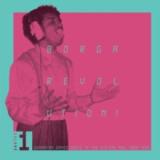
Various Artists - Borga Revolution!

Various Artists

Borga Revolution!

12inchKALITALP9
Kalita
08.09.2025
  • A1: Uncle Joe\'S Afri-Beat - Eshe Wo Kon Ho
  • A2: Thomas Frempong - Mada Meho So
  • A3: Native Spirit - Odo San Bra Fie
  • B1: George Darko - Medo Menuanom (12" Version)
  • B2: Wilson Boateng - Mabre Agu
  • B3: Paa Jude - Odo Refre Wo
  • C1: Aban - Efie Nny
  • C2: Wilson Boateng - Asew Watchman
  • C3: Uncle Joe\'S Afri-Beat - Mr Dj
  • D1: George Darko - Obi Abayewa
  • D2: Dr K Gyasi\'S Noble Kings - Damfo Agoo/David Akofo/ Obegyaa Nowa/Okwantuni Moboro (Medley)
pre-ordina ora08.09.2025

dovrebbe essere pubblicato su 08.09.2025

27,02
SARAGOSSA BAND - Original Hits & Remixes
  • A1: Agadou
  • A2: Zabadak
  • A3: Big Bamboo
  • A4: Se Me Quieres
  • B1: Saragossa Band X Madagascar 5 - Agadou (Extended Mix)
  • B2: Big Bamboo (Jonny Nevs Remix)
  • B3: Kalimba De Luna (Bob Shepherd X Da Clubbmaster Extended Remix)
  • B4: Agadou (Jonny Nevs Remix)
  • B5: Saragossa Band X Madagascar 5 - Zabadak (Extended Mix)
  • B6: Se Me Quieres (Jonny Nevs Remix

Die Stimmungsgaranten sind zurück – auf farbigem Vinyl! Mit der Saragossa Band – Original Hits & Remixes erscheint eine ganz besondere Ausgabe für alle Fans von Kult-Partyhits.

Seite A bietet die beliebtesten Klassiker der legendären Band in ihren Original Versionen:

Agadou
Zabadak
Big Bamboo
Se Me Quieres

Auf Seite B wird es modern: Frische, brandneue Remixe dieser Klassiker bringen den typischen Saragossa-Sound ins Hier und Jetzt – perfekt für heutige Dancefloors, Sommerpartys und gute Laune nonstop!

pre-ordina ora01.08.2025

dovrebbe essere pubblicato su 01.08.2025

19,75
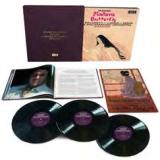
Luciano Pavarotti - Madama Butterfly LP 3x12" (Boxset)

Diese brandneue Deluxe-Edition ist Teil des Jubiläumsprogramms von Decca zum 100. Todestag des großen
Opernkomponisten Giacomo Puccini. Die im Januar 1974 in den Wiener Sofiensälen entstandene Aufnahme
präsentiert die beste Besetzung der damaligen Zeit: angeführt von Mirella Freni und Luciano Pavarotti
sowie unter der Leitung von Herbert von Karajan. Bei ihrer Erstveröffentlichung wurde die Einspielung
von Kritikern und Musikliebhabern gleichermaßen gelobt. Das Magazin Gramophone beschrieb sie als „ein
Set zum Träumen“. Dieses Erbe wird mit der neu präsentierten Edition fortgesetzt. Die Aufnahme wurde
von den Original-Bändern aus dem Jahr 1975 neu gemastert und ist nun auf audiophilem Vinyl sowie als
Hybrid-SACD mit einer Auflösung von 192 kHz/24 Bit erhältlich.

a1 E Soffitto E Pareti (LP1: Act 1) (2:19)
a2 Sorride Vostro Onore? (3:26)
a3 Dovunque Al Mondo Io Yankee Vagabondo (2:00)
a4 America For Ever (2:47)
a5 Ier L'altro Il Consolato Sen; Venne A Visitar (3:43)
a6 Ecco. - Son Giunte Al Sommo Del Pendio (2:51)
a7 Gran Ventura (3:40)
a8 L'imperial Commissario, L'Ufficiale Del Registro, I Congiunti (3:50)
a9 Vieni, Amor Mio! VI Piace La Casetta (2:13)
b1 E Un Presente Del Mikado (3:52)
b2 Tutti Zitti! (5:21)
b3 O Kami! O Kami! (4:36)
b4 Cio-cio-san! Cio-cio-san! Abbominazione! (1:15)
b5 Bimba, Bimba, Non Piangere (3:52)
b6 Viene La Sera (4:33)
b7 Vogliatemi Bene (3:19)
c1 E Izaghi Ed Izanami (LP2: Act 2 - part 1) (4:15)
c2 Un Bel Di, Vedremo Levarsi Un Fil Di Fumo (2:59)
c3 C'e - Entrate (3:17)
c4 Si Sa Che Aprir La Porta E La Moglie Cacciar (4:41)
c5 Udiste? (3:20)
c6 Ora A Noi - Sedete Qui (4:22)
c7 Ebbene. Che Fareste, Madame Butterfly (3:11)
c8 E Questo? E Questo? (3:16)
d1 Che Tua Madre Dovra Prenderti In Braccio (3:13)
d2 Vespa! Rospo Maledotto! (4:05)
d3 Una Nave Da Guerra (2:47)
d4 Scuoti Quella Fronda Di Ciliegio (4:35)
d5 Or Vienmi Ad Adornar (4:27)
d6 Humming Chorus - Summchor (5:09)
e1 Intermezzo - Oh Eh! Oh Eh! (LP3: Act 2 - part 2) (2:16)
e2 Twittering Of Birds From The Garden (2:59)
e3 Gia Il Sole! Cio-Cio-San! (2:30)
e4 Chi Sia? (2:27)
e5 Io So Che Alle Sue Pene Non Ci Sono Conforti! (2:09)
e6 Non Ve L'avevo Detto? (4:20)
e7 Addio, Fiorito Asil Di Letizia E D'amor (2:48)
e8 Suzuki! Suzuki! Dove Sei? (2:36)
f1 Tu, Suzuki, Che Sei Tanto Buona, Non Piangere! (3:39)
f2 Come Una Mosca Prigioniera L'ali Batte Il Piccolo Cuor! (5:15)
f3 "Con Onor Muore Chi Non Puo Serbar Vita Con Onore" (5:10)

non in magazzino

Ordina ora e ordineremo l'articolo per te presso il nostro fornitore.

109,87

Last In: 8 months ago
Eric Hilton - Midnight Ragas

Eric Hilton

Midnight Ragas

12inchMH029
VMG
07.07.2025

Die Ära der Mix-CDs mag schon lange vorbei sein, doch wenn man sich 'Midnight Ragas' anhört, das neue Album des legendären Downtempo-Produzenten und Thievery Corporation Mitbegründers Eric Hilton, könnte man der Meinung sein, sie wäre nie weg gewesen. Man stelle sich Khruangbin vor in noch entspannter, wie sie einen alten Billy Dee Williams-Werbespot für Malt Liquor vertonen, neu abgemischt von Zero 7, und man kommt der Sache schon sehr nahe. 'Midnight Ragas' - ein süchtig machendes Hörerlebnis.Auf dem Album sind auch die Thievery Corporation-Mitglieder Natalia Clavier und Puma Ptah zu hören.'Midnight Ragas' ist Erics 8. Solo-Studioalbum und der Nachfolger von Sound Vagabond und seinem Ambient-Album Out of the Blur.- Ltd. Col. LP: (Bone Color Vinyl)Tracklist LP:A-SeiteA1. Life (In The Deep End)A2. Leave It All (feat. Puma Ptah)A3. Je ne t’aime plus (feat. Natalia Clavier) videoA4. Behind My Eyes (feat. The Infinite Daisy Chains)A5. All I Want (feat. Puma Ptah)A6. Burkina FasoB-SeiteB1. Midnight RagaB2. Sol Interior (feat. Natalia Clavier)B3. Galactic ShineB4. Madame AshaB5. L’Ocean (feat. Natalia Clavier)B6. Beautiful Moment (feat. The Infinite Daisy Chains)

non in magazzino

Ordina ora e ordineremo l'articolo per te presso il nostro fornitore.

26,68

Last In: 3 months ago
VARIOUS - NEW BREED R&B: MONEY TALKS
  • A1: Don't Try To Tell Me - Berna-Dean
  • A2: This Mornin' - The Jesse Stone Singers
  • A3: All Around The World - Vermettya Royster With James Brown's Band
  • A4: What's On Your Mind - The Four Bars
  • A5: Don't Look Now - Wilbur "Hi-Fi" White & King Kolax Band
  • A6: Money Talks - Kenny Smith
  • A7: Hey Little Girl Pt 1 - Roosevelt Lee
  • B1: Goin' Away Baby (Round Like An Apple) - Smokey Wilson
  • B2: Hey Hey Baby - T-Bone Walker
  • B3: I'm A Good Woman - The Afterglows
  • B4: You Make Me Mad - Johnny Madara
  • B5: Money Talks (Tell Me What I Say) - The Citations
  • B6: Tell Me Why - Richard Berry
  • B7: Mary Don't You Weep - The Delights

New R&B discoveries continue to emerge and entertain the many followers of the New Breed musical cult; nobody finds more than the Kent connoisseurs.
Berna Dean’s two previously unheard recordings are by far her best. They were laid down at Cosimo Matassa’s New Orleans’ studios by GNP Crescendo but eschewed in favour of two relatively average sides. The great 50s R&B songwriter Jesse Stone provides a rocker for the much-admired Jimmy Breedlove and a super-catchy ‘This Morning’ for an unknown mixed vocal group that has a joyous gospel feel. Jesse also penned ‘Private Eye’, a classic early 60s story-song, for Buddy Wilkins which was issued on Al Sears’ Tri-Ess imprint.
The title track is used twice, on two very different Fraternity recordings. Kenny Smith’s version was issued in 1964 and has many followers, but the equally meritorious Coasters-inspired composition by the Citations is newly discovered. Win Menifee’s ‘I’m Runnin’ Around’ from the same Cincinnati label comes complete with a fascinating back-story.
There are three cover versions. Vermettya Royster’s ‘All Around The World’ is backed by James Brown’s 1961 band, while Roosevelt Lee's 1970 update of the 1947-originated ‘Hey Little Girl’ funks the tune up a la Godfather of Soul. The cover that will make the biggest noise is undoubtedly west coast band the Afterglows’ version of Barbara Lynn’s evergreen dancer ‘I’m A Good Woman’ – this is a future monster.
Golden Crest provides two fabulous male vocal group sides – the swinging ‘What’s On Your Mind’ by Eddie Daye’s Four Bars and the delightful harmonies of the appropriately-named, but unknown Delights ‘Mary Don’t You Weep’.
Blues still thrived into the 70s as Albert Washington’s mean and moody ‘Case Of The Blues’ proves. Smokey Wilson took the music into the late 70s with the storming ‘Goin’ Away Baby (Round Like An Apple)’, which benefits here from a 45-style edit. His Pioneer Club on 88th Street in South Central L A provides the atmospheric photo for this collection.
More early 60s movers come from Wilbur “Hi-Fi” White with ‘Don’t Look Now’, future hit songwriter Johnny Madara’s raucous ‘You Make Me Mad’ and Big Boy Groves ‘Bucket O’ Blood’ which brilliantly describes the kind of club these tracks would fit right into.
The LP version loses a few tracks, but so many collectors have strong preferences we’ve thrown the vinyl junkies a lifeline.

pre-ordina ora27.06.2025

dovrebbe essere pubblicato su 27.06.2025

29,37
Diemajin - Diemajin MC (TAPE)
  • 1: Madara
  • 2: Tydow
  • 3: Niramu
  • 4: Gyafooon
  • 5: Onshinfutsuu
  • 6: Uyamuya
  • 7: Moshi-Moshi
  • 8: Ideyo
  • 9: Miz-Kicaz-Iwaz
  • 10: Izanai
  • 11: Hijousen

DIEMAJIN is the duo of Berlin-based producer DJ DIE SOON (Daisuke Imamura) and Tokyo-based vocalist MA. Their self-titled debut is equal parts scrambled hip-hop, simmering noise and spectral Tokusatsu soundtrack. A set of cursed beats and possessed raps inspired by Japanese sci-fi and supernatural-horror films from the 1960s.
The pair, both originally from Japan, first collaborated live at an event in Berlin organised by Morphine Records in 2019. But the eleven tracks on their self-titled debut were made by swapping beats, sounds and acapellas across the internet. Editing, arranging and degrading them into the collection presented here.

pre-ordina ora20.06.2025

dovrebbe essere pubblicato su 20.06.2025

18,45
MADALITSO BAND - MA GITALA LP

Madalitso Band

MA GITALA LP

12inchBJR110LP
Bongo Joe
13.06.2025
  • Anafera Chiboda
  • Princess Wanga
  • Ma Gitala
  • Chemwa
  • Mwadala
  • La Bwino
  • Zili Komweko
  • Po Lankhula

For their third album on Bongo Joe, Madalitso Band takes a new direction.

After two records capturing the raw intensity of their live performances, the Malawian duo ventures for the first time into the possibilities of the studio — without ever compromising their signature style or energy.

Armed with their handmade babatone, a guitar, and their interwoven voices, Yobu and Yosefe craft a sound at the crossroads of banjo music, kwela, gospel, and African folk. An acoustic trance that’s both minimal and vibrant, deeply rooted in tradition yet undeniably fresh and contemporary. On Ma Gitala, they add new textures: layered vocals, playful percussion, melodic surprises, and guests from their close and family circles.

Always guided by instinct, the band reveals a more intimate and narrative side of their universe — full of memories, spontaneity, and close-knit complicity. An album that captures the joy and creativity of two artists who turned the street into a stage, and the stage into a playground.

pre-ordina ora13.06.2025

dovrebbe essere pubblicato su 13.06.2025

30,21
MADALITSO BAND - MA GITALA
  • Anafera Chiboda
  • Princess Wanga
  • Ma Gitala
  • Chemwa
  • Mwadala
  • La Bwino
  • Zili Komweko
  • Po Lankhula

For their third album on Bongo Joe, Madalitso Band takes a new direction. After two records capturing the raw intensity of their live performances, the Malawian duo ventures for the first time into the possibilities of the studio - without ever compromising their signature style or energy. Armed with their handmade babatone, a guitar, and their interwoven voices, Yobu and Yosefe craft a sound at the crossroads of banjo music, kwela, gospel, and African folk. An acoustic trance that"s both minimal and vibrant, deeply rooted in tradition yet undeniably fresh and contemporary. On Ma Gitala, they add new textures: layered vocals, playful percussion, melodic surprises, and guests from their close and family circles. Always guided by instinct, the band reveals a more intimate and narrative side of their universe - full of memories, spontaneity, and close-knit complicity. An album that captures the joy and creativity of two artists who turned the street into a stage, and the stage into a playground.

pre-ordina ora13.06.2025

dovrebbe essere pubblicato su 13.06.2025

23,11
VENETIAN SNARES - ROSSZ CSILLAG ALATT SZULETETT LP 2x12"

Das viel gesuchte klassische Orchester-Breakcore-Album "Rossz Csillag Allat Született" von Venetian Snares aus dem Jahr 2005 wird anlässlich seines 20-jährigen Jubiläums auf schwarzem Vinyl neu aufgelegt. Was wäre, wenn wir beide nur einen Tag lang Tauben sein könnten? Manchmal kann ein Moment in der Zeit eine so große Bedeutung erlangen, dass er zu einer endlosen Welt für sich wird und alles außerhalb dieses Moments, vergangene und zukünftige Zeitpunkte, zur Folklore dieser Welt werden. Was wäre, wenn wir beide die Királyi Palota überfliegen und sie so sehen könnten wie diese Tauben? Eine schöne Kultur von ungleichen Winkeln als Eselsengel über dieser Stadt. Aber auch in der Welt des unendlichen Augenblicks können wir uns die Feder unseres Vogels nicht aussuchen, und die Taube mag sich danach sehnen, die Gans zu sein, der Esel die Taube und so weiter. Und während unsere Welt aus diesem einen Tick in der Zeit erblüht, ist sie für die eine Taube eine wirbelnde romantische Flut euphorischer Möglichkeiten und Faszination, für die andere ein minderwertiges Leben, in dem sie auf jeden vom Himmel aus scheißt, unbeholfen und beschämt, und sich damit abfindet, die elende Plage zu sein, als die sie von denen, auf die sie scheißen, dargestellt wird. So schnell wie unsere Welt blüht, so schnell ist sie auch wieder im Unfrieden und unsere Tauben sind verwundet, und wenn unsere Welt stirbt, sterben auch wir, und wir sind ausgestorben. Wenn wir uns doch nur immer wieder umbringen könnten, bis wir es richtig machen. So wie ein ganzes Musikgenre aus einem einzigen beschleunigten Zehn-Sekunden-Breakbeat geboren werden kann, so kann ein komplettes Symphonieorchester in harmonischem Einklang zusammenkommen, um diesen perfekten Moment in der Zeit zu erschaffen, so kann jeder Moment eine völlig neue Welt hervorbringen, und jede Welt kann den perfekten Moment beherbergen, und so wie dieser Breakbeat bis zur Unkenntlichkeit gebrochen werden kann, so kann sich das Orchester zusammenschließen, um ein dissonantes Sperrfeuer kolossalen Kummers hervorzubringen, und so löst der Moment seine Welt auf, und diese Welt erstickt den Moment unter ihrem Zusammenbruch.

non in magazzino

Ordina ora e ordineremo l'articolo per te presso il nostro fornitore.

30,46

Last In: 51 days ago
Margaux Gazur - Blurred Memories LP 2x12"

Margaux Gazur presents her debut album „Blurred Memories“ on Smallville- almost 70 minutes into a very special search for her musical origins.
Margaux Gazur is a French-Vietnamese composer, musician, producer and DJ, now based in Berlin. Having lived in Vietnam for 5 years from 2012, she found herself searching for the sounds of her roots, played-back in form of field-recordings combined with traditional instruments and the sounds of her blurred childhood memories.
The tracks of her debut-album unfold the magic in a very subtle way, filled with vivid rhythms of Hanoian street sounds, evolving layers of mesmerizing tones and organic textures to create an intimate and unique atmosphere. Each track offers yet another something to discover while listening- mysterious voices and fragile elements next to beautiful melodies and trippy glitches, organic grooves and hypnotic wonkiness- and a lot of magic moments implemented. Woozy pads meandering and moving along – there is so many things to discover within „Blurred Memories“.
Margaux released her first track on vinyl on Smallville 55 back in 2019 and she has played endless live-sets and DJ performances at amazing spaces like Panorama Bar/Berghain, Heideglühen, Club der Visionäre, Berlin, La Station, Paris, Giegling events, Smallville and Kann Parties as well as beautiful festivals such as Waking Life in Portugal, Fusion, Berlin Atonal, Meakusma Festival or Equation in Vietnam amongst others.
Smallville is extremely happy to present „Blurred Memories“, music to stay with you.

non in magazzino

Ordina ora e ordineremo l'articolo per te presso il nostro fornitore.

22,27

Last In: 3 months ago
Alkaline Trio - Maybe I'll Catch Fire LP
  • 01: Keep Em Coming
  • 02: Madam Me
  • 03: You've Got So Far To Go
  • 04: Fuck You Aurora
  • 05: Sleepyhead
  • 06: Maybe I'll Catch Fire
  • 07: Tuck Me In
  • 08: She Took Him To The Lake
  • 09: 5-3-10-4
  • 10: Radio

The second full-length album and the fourth Asian Man release by this band whose fan base seems to grow day by day. Melodic punk with a definite edge. Great vocals! Songs you'll want to hear over and over again.

pre-ordina ora02.05.2025

dovrebbe essere pubblicato su 02.05.2025

25,63
Various - Tsapiky! Modern Music From Southwest Madagascar
  • A1: Mamehy - Je Mitsiko Ro Mokotse (“Those Who Talk Dirty Behind Your Back Tire Themselves Out For Nothing”)
  • A2: Drick - Sinjake Panambola (“Dance Of The Rich”)
  • A3: Befila - Eka Ndao (“Let's Go”)
  • A4: Behaja - Marolinta (Name Of A Village On The South-Western Tip Of Madagascar)
  • B1: Mahafaly Mihisa - Fanoigna (“Heated Debate“
  • B2: Meny & Ando - Ka Tseriky Iha (“Don't Be Surprised”)
  • B3: Rebona - Zana-Konko
  • B4: Mirasoa & Mahapoteke - Bleu Bleu (“Blue Blue“)

Wild ecstatic vocals, distorted electric guitars, rocket bass, and the amphetamine beat! // Unlike anything else, this is THE high life music you've always wanted // Ceremonial music played with abandon and extreme intent, honoring the living and dead alike // Recorded on location in SW Madagascar by Maxime Bobo // “Tsapiky music from Southwest Madagascar features wild ecstatic vocals, distorted electric guitars, rocket bass, and the amphetamine beat! Unlike anything else, this is THE high life music you've always wanted - ceremonial music played with abandon and extreme intent, honoring the living and dead alike. In Toliara and its surrounding region, funerals, weddings, circumcisions and other rites of passage have been celebrated for decades in ceremonies called mandriampototse. During these celebrations – which last between three and seven days – cigarettes, beer and toaky gasy (artisanal rum) are passed around while electric orchestras play on the same dirt floor as the dancing crowds and zebus. The music, tsapiky, defies any classification. This compilation showcases the diversity of contemporary tsapiky music. Locally and even nationally renowned bands played their own songs on makeshift instruments, blaring through patched-up amps and horn speakers hung in tamarind trees, projecting the music kilometers away. Lead guitarists and female lead singers are the central figures of tsapiky. Driven as much by their creative impulses as by the need to stand out in a competitive market, the artists distinguish themselves stylistically through their lyrics, rhythms or guitar riffs. They must also master a wide repertoire of current tsapiky hits, which the families that attend inevitably request before parading in front of the orchestra with their offerings. This work, a constant push and pull between distinction and imitation, is nourished by fertile exchanges between various groups: acoustic and electric, rural and urban, coastal or inland. What results during these ceremonies is a music of astonishing intensity and creativity, played by artists carving out their own path, indifferent to the standards of any other music industry: Malagasy, African or global. Recorded live on location by Maxime Bobo, this vinyl LP includes a 4-page full-color insert with detailed liner notes plus photos of the musicians and surroundings.”

pre-ordina ora18.04.2025

dovrebbe essere pubblicato su 18.04.2025

28,36
Tjaqu - The Doorsmith Chronicles EP

Two deep and hypnotic grooves from the mysterious TJAQU alias launch this ten inch series! Expect two tracks full with synths & unconventional basslines, meant for DJs who like to encompass a story with their sets.

non in magazzino

Ordina ora e ordineremo l'articolo per te presso il nostro fornitore.

14,24

Last In: 9 months ago
Articoli per pagina:
N/ABPM
Vinyl