Modeight proudly adds another chapter to its vinyl legacy with Fedo - a Ukrainian artist with deep Greek roots, known for his meditative groove architecture, percussive depth, and the raw spirit of live music. On Nuke Hook EP, Fedo delivers four deep and dynamic cuts that strike a perfect balance between minimalistic precision and emotional richness.
Each track feels lived-in - jammed rather than programmed - crafted to resonate both on the dancefloor and in the mind. "Life is Life" opens with a thick, dubby beat and a jagged, growling bassline.
Midrange sequences curl around the low-end like vapor trails, creating a shadowy, hypnotic space built for late hours and strobe-lit intimacy. "Madam from Athens" pays homage to his Hellenic roots - dipping into dreamy chords, textured atmospheres, and modular motifs wrapped in velvety vocals. Warm and transportive, it's a love letter to place and memory.
On the flip, "After Out" hits hard. Sub-heavy, percussive, and driven by acidic synth lines, it's a peak-time weapon that doesn't ask - it commands.
Rounding off the EP is the cerebral yet groovy "Nuke Hook," where crisp percussion dances around mysterious piano phrases and immersive textures. A subtle but magnetic closer that lingers long after the drop.
Fedo joins the Modeight family with a statement of intent - deep, expressive, and forged in the heart of the underground. The journey continues.
Suche:madam
- 1: The Gallopers
- 2: Dr Love
- 3: Tears For Leda
- 4: The Back Of Your Bike
- 5: The Tears Of Cora Pearl
- 6: The Rose Tattoo
- 7: Don't Come Crying To Me
- 8: Witch Hazel
- 9: Old Flame
- 10: Carmilla
- 11: The Bride Wore Black
- 12: Madame X
- 13: Away With The Fairies
- 14: The Moon Doesn't Mind
Tears Before Bedtime is the sparkling new album by the Would-be-goods, Jessica Griffin’s band of pop adventurers. Since The Camera Loves Me, their cult classic 1988 debut for the legendary él Records, they have blazed a musical trail through indie guitar pop, with a garage band edge and forays into other territories - glam rock, tango, French chanson… The result is unique and timeless.
The songs on Tears Before Bedtime balance delicacy and power. Perfect pop melodies are delivered in Jessica’s gorgeous and idiosyncratic voice. Her lyrics are intelligent and wry, wistful and witty. Every song tells a story, taking us on a journey through space and time, from belle époque Paris to a 1960s London biker café, from a riverbank in ancient Greece to a 1970s teenage bedroom.
Listening to a Would-be-goods album is like wandering through a gallery of portraits. Innocence gives way to experience. Danger lurks amid the lights of the funfair in the 1950s carousel whirl of The Gallopers. The sinister Dr Love promises heaven but sends you down to hell, to the sound of a last dance in a smoky soul basement. A nymph meets a god in disguise in a garage-band take on a Greek myth (Tears for Leda). The Rose Tattoo is the tale of a doomed love in a sultry Southern state. Don't Come Crying To Me flames an ex-lover to the sound of Bollywood horns and shivery guitar. In Madame X a portrait painter vents his fury on a spoilt socialite beauty. The album closes with a sweetly jazzy lullaby (The Moon Doesn't Mind).
The Would-be-goods began playing as a full band in the 2000s and have been previewing some of these songs at recent shows in England, Scotland, France, and Spain. The album was recorded in London with Jessica on guitar and vocals, Peter Momtchiloff (Heavenly, Talulah Gosh) on guitar, Debbie Greensmith (Thee Headcoatees and many others) on drums, and Andy Warren (The Monochrome Set, Adam and the Ants) on bass. Guest musicians have contributed organ, piano, vibraphone, cello, trumpet, and flute to make this the richest-sounding Would-be-goods record yet.
- A1: Strandbad Eldena 5:03
- A2: Madame Tussauds 3:37
- A3: Pluto 3:38
- A4: Evolution 3:03
- A5: Help Me Out With Steiner & Madlaina 3:45
- A6: Den Haag 2:38
- A7: Kokon 2:29
- B1: Mars 4:52
- B2: Gespenst With Luvre47 3:02
- B3: Mindset 4:03
- B4: Gleichgewicht 2:53
- B5: Anxiety 3:07
- B6: Widersprüche 3:28
- B7: Feuer 2:40
- A1: Jesus (3:05)
- A2: Until The End Dreamer (0:40)
- A3: Jane (2:33)
- A4: Until The End Drifter (0:35)
- A5: L.a. (3:05)
- A6: Until The End Songbird (0:47)
- A7: Message To Mary (2:12)
- A8: Jake And The Wife (2:02)
- B1: Madame Le Mar (2:10)
- B2: Until The End Angel (0:38)
- B3: Lean On My Gun (1:37)
- B4: Do You Remember The Day (2:49)
- B5: Beautiful Green (1:30)
- B6: One Foot In The Gutter (3:17)
- B7: Jesus (Alternative Version) (2:54)
Until The End (The Lost Album) features recordings made by Wil Malone throughout 1970, possibly intended as a follow-up to Wil Malone – Wil Malone, which was recorded in mid-1969 and mastered for release on Fontana Records on July 5, 1969.
Recently unearthed from the Morgan Blue Town tape vaults, these tracks offer a compelling mix of ’60s pop and bubblegum, diverging from the original album’s string-heavy, progressive-psych sound. All the material comprises either demos or finished masters, recorded over several months. With the exception of the brass parts — performed by session musicians — all instruments were played by Wil Malone himself.
It’s a shame the debut didn’t achieve greater commercial success, as it might have brought these follow-up recordings to light much earlier, back in the 1970s.
POiSON GiRL FRiEND’s first full album produced by British artist Momus. Simon Turner and Louis Philippe also participate.
releases, August 8
Nippon Columbia/J-Digs / Ambient, Synth Pop, Bossa Nova, Downtempo, Japanese
- A1: Malavoi - Te Traigo Guajira
- A2: Los Caraibes - Donde
- A3: Tropicana - Amor En Chachacha
- A4: Ryco Jazz - Wachi Wara
- A5: Eugene Balthazar - Dap Pignan
- A6: Roger Jaffort - Oye Mi Consejo
- A7: Les Kings - Oriza
- B1: Les Supers Jaguars - Tatalibaba
- B2: Super Combo De Pointe A Pitre - Serrana
- B3: L'ensemble Abricot - Se Quedo Boogaloo
- B4: Henri Guedon - Bilonga
- B5: Les Aiglons - Pensando En Ti
- B6: Los Martiniquenos - Caterate
In Guadeloupe, many people think that jazz and ka music are like a ring and a finger. To some extent, the same could be said about so called Latin music and the music played in the French West Indies.
Both aesthetics were born in the Caribbean and bear so many connections that they can easily be considered cousins. In constant dialogue, there are lots of examples of their fruitful alliance and have been for a while. The English country dance that used to be practiced in European lounges came to be called kadrille in Martinique and contradanza in Cuba. They both featured additional percussion instruments inherited from the transatlantic deportation. Drawing from shared feelings about the same traumatized identity – later to be creolized – it would be hard not to assume that they were meant to inspire each other. The golden age of the orchestras that graced the Pigalle nights during the interwar period further proves the point. As soon as the 1930s, Havana-born Don Barreto naturally mixed danzón and biguine music in a combo based at Melody's Bar. In the following decade, Félix Valvert, a conductor who was born and raised in Basse-Terre in Guadelupe, also worked wonders in Montparnasse with La Coupole, which was an orchestra made up of eclectic musicians. Afro- Caribbean performers of various origins were often hired on rhythm and brass sections in jazz bands, which used to enliven the typical French balls of the capital. In the 1930s and onwards, Rico’s Creole Band was one of them.
Martinican violinist-clarinettist Ernest Léardée, who would become the king of biguine music as well as the main figure of French Uncle Ben's TV commercials (a dark stigma of post-colonial stereotypes), had musicians from the whole Caribbean sphere play at his Bal Blomet – and they all enchanted "ces Zazous-là" (according the words of Léardée's biguine-calypso piece). In les Antilles (French for French West Indies), music history started to speed up in the 1950s, when trade expanded and radio stations grew bigger. The Guadelupean and Martiniquais youth tuned in their old galena radio sets to South American and Caribbean music. As for the women traders, les pacotilleuses, they bought and sold goods across different islands (the "passing of items through various hands" was thought to be most pleasurable) and brought back countless sounds in their luggage. Such was the case of Madame Balthazar, who once returned from Puerto Rico with the first 45rpm and 33rpm to ever enter Martinique.
Out of this adventure was created the famous Martinican label La Maison des Merengues, a music business she opened and undertook with her husband and which proved to be a major landmark. At the end of the 1950s, in Puerto Rico, Marius Cultier competed in the Piano International Contest playing a version of Monk's Round 'Midnight. He won the first prize and this distinction foreshadowed everything that was to come. Cultier, the heretic Monk of jazz, was quickly praised for writing superb melodies, always tinged with a twist that conferred a unique sound to his music. It didn't take long for the gifted self-taught musician to get to play with Los Cubanos, making a name for himself thanks to his impressive maestria on merengues.
The rest is history. Besides, in the late 1950s, Frantz Charles-Denis, born into the upper middle class in Saint-Pierre and better known by his first name Francisco, went back home after working at La Cabane Cubaine – a club located rue Fontaine where he had caught the Latin fever. Francisco's music was therefore heavily marked by his Cuban cousins' influence, which gave the combos he led a specific style and also led to renewal. Things were swinging hard in La Savane, located in the main square in Fort-de-France. He set up the Shango club close by and tested out the biguine lélé there, a new music formula spiced up with Latin rhythms. Soon afterwards, fate had him fly to Puerto Rico and Venezuela.
As for percussionist Henri Guédon (percussions were only a part of his many talents), he was born in Fort-de-France in May 22nd 1944, the day marking the celebration of the abolition of slavery. As an old man, he could remember that in " his father's Teppaz, a lot of hectic 6/8 music was constantly playing...". In the opening lines of his Lettre à Dizzy, a small illustrated collection of writings published by Del Arco, he highlighted the huge impact that cubop had on him as a teenage boy, around 1960. He eventually turned out to be the lider maximo in La Contesta, a big band steeped in Latin jazz. He was also the one who originated the word zouk to describe music which brought the sound of the New York barrio to Paris. It was the culmination of a journey that started in Sainte-Marie: "a mythical place for bélé, the equivalent of Cuban guaguancó". In the early 1960s, the tertiary economy developed to the detriment of agriculture. Yet rural life was where roots music emerged in Martinique and in Guadeloupe.
Record companies played a major part in the process of Latin versions sweeping across the islands – before reaching everywhere else. Producer Célini, boss of the great Aux Ondes label, and Marcel Mavounzy, both the head of Émeraude records - a firm which was founded in 1953 - as well as the brother of famous saxophonist Robert Mavounzy, were big names to bear in mind. Although there were many of them - all of whom are featured on this record - Henri Debs was definitely the major figure in the recording adventure. He proved to be so influential that he even got compared to Berry Gordy. In the mid 1950s, when he acquired his first Teppaz, he worked on his first compositions: a bolero and a chachacha. Then, he became the one man who made people discover Caribbean music, from calypso to merengue. He was among the first ones to rush out to San Juan, Puerto Rico, to buy records and distribute them through a store run by one of his brothers in Fort-de-France. He had members of the Fania All Star come and perform there, which he was madly proud about. He was also the first one to pay attention to Haitian music, such as compas direct and various other rhythms which would soon flood the market. As a result, many of the combos hitting his legendary studio would end up boosted by widespread "Afro-Latin" rhythms. However, he never denied his identity: gwo ka drums were given a major role, although they were instruments which had long been banned from the "official" music spheres. The present selection bears witness to such a creative swarming. Here are fourteen tracks of untimely yet unprecedented cross-fertilization: all types of music rooted in the Creole archipelago have found their way, whatsoever, to the tracklisting. Whether originating from the city or being more rural, they all go back to what Edouard Glissant, in an interview about the place of West Indian music in the Afro-American scope, called "the trace of singing, the one which got erased by slavery." "It is so in jazz, but also in reggae, calypso, biguine, salsa... This trace also manifests through the drums, whether Guadelupean, Dominican, Jamaican or Cuban... None of them being quite the same. They all point to the idea of a trace, seeking it out and connecting to each other through it. This is the hallmark of the African diaspora: its ability to create something new, in relation to itself, out of a trace. It may be the memory of a rhythm, the crafting of a drum, a means of expression which doesn't resort to an old language but to the modalities of it." The opening track features one of the emblematic orchestras of this aesthetic identity, criscrossing many music types from the archipelago. The 1974 Ray Barretto guajira – Ray Barretto was a major New York drummer influenced by Charlie Parker and Chano Pozzo – is magnificently performed by Malavoi, a legendary Fayolais group (i.e from Fort-de-France). Additionally, the compilation ends on a piece by Los Martiniqueños de Francisco. It symbolically closes the circle as it is a genuine potomitan of Martinique culture which also functions as a tireless campaigner for Afro-Caribbean music. Practicing the danmyé rounds (a kind of capoeiria) to the rhythm of the bèlè drum, it delivers a terrific Caterete, a kind of champeta of Afro- Colombian obedience which was originally composed by Colombian Fabián Ramón Veloz Fernández for the group Wgenda Kenya. The icing on the cake is Brazilian Marku Ribas, who found refuge in Martinique in the early 1970s, bringing his singing to the last trance-inducing track. These two "versions" convey the whole tone of a selection composed of rarities and classics of the tropicalized genre, swarming with tonic accents and convoluted rhythms. It is the sort of cocktail that the West Indians never failed to spice up with their own ingredients. For instance, the Los Caraïbes cover of Dónde, a famous Cuban theme composed by producer Ernesto Duarte Brito, has a typical violin and features renowned Martinique singer Joby Valente and his piquant voice.
The track used to be – or so we think – their only existing 45rpm. The meaningful Amor en chachachá by L'Ensemble Tropicana, a band which included Haitian musicians among whom was composer and leader Michel Desgrotte, also recalls how Latin music was pervasive in the tropics in the mid-1960s. They were the ones keeping people dancing at Le Cocoteraie in Guadelupe and La Bananeraie in Martinique. Around the same time, another "foreign" band, Congolese Freddy Mars N'Kounkou's Ryco Jazz, achieved some success on both islands by covering Latin jazz classics – such as their adaptation of Wachi Wara, a "soul sauce" by Dizzy Gillespie and Chano Pozo whose interweaving of strings and percussions can have anyone hit the dancefloor. How can you resist Dap Pinian indeed, a powerful guaguancó by Eugene Balthazar, performed by the Tropicana Orchestra and published by the Martinique-founded La Maison des Merengues? It also acts as a symbol of the maelstrom at work. Going by the name Paco et L'orchestre Cachunga, Roger Jaffory used to play guaguancó too: his Fania-inspired Oye mi consejo is one example of his style. Baila!!!!! Dancing was also one of the Kings' focus points. Oriza is a Puerto Rican bomba and a "classic" originally composed by Nuevayorquino trumpeter Ernie Agosto, which reserves major space for brasses, giving it a special sheen.
Emerging from the New York barrios crucible was also La Perfecta, a Martinique group originating from Trinidad, whose name directly references the totemic Eddie Palmieri figure as well as his own band, also called La Perfecta. Here they borrow Toumbadora from Colombian producer and composer Efraín Lancheros and interpret it by emphasizing percussions, which set fire to the track even more than the wind instruments. The same goes for Martinique's Super Jaguars, who use Tatalibaba – a composition by Cuban guitarist Florencio "Picolo" Santana which was made famous by Celia Cruz & La Sonora Matencera – as a pretext for sending their cadences into a frenzy. In a more typically salsa vein, the Super Combo, a famous Guadelupean orchestra from Pointe-Noire that was formed around the Desplan family and had Roger Plonquitte and Elie Bianay on board, adapt Serana, a theme by Roberto Angleró Pepín, a Puerto Rican composer, singer and musician also known for his song Soy Boricua. Here again, their vision comes close to surpassing the original. In the 1970s, L'Ensemble Abricot provided a handful of tracks of different syles, hence reaching the pinnacle of the art of achieving variety and giving pleasure. They played boleros, biguines, compas direct, guaguancó and even a good old boogaloo - the type they wanted to keep close to their hearts for ever, "pour toujours", as they sang along together in one of their songs. Léon Bertide's Martinican ensemble excelled at the boogaloo which had been composed by Puerto Rican saxophonist Hector Santos for the legendary El Gran Combo.
Three years later, in 1972, Henri Guédon, with the help of Paul Rosine on the vibraphone, tackled the Bilongo made famous by Eddie Palmieri. Such a classic!!!!! And so were the Aiglons, the band from Guadelupe: choosing to execute Pensando en tí, a composition by Dominican Aniceto Batista, on a cooler tempo than the original, they noticeably used a wonderfully (un)tuned keyboard in place of the accordion. On the high-value collectible single – the first one released by Les Aiglons under the Duli Disc label – there is a sticker classifying the track under the generic name "Afro". Now that is what we call a symbol. Jacques Denis
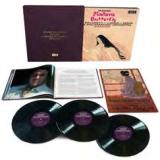
Diese brandneue Deluxe-Edition ist Teil des Jubiläumsprogramms von Decca zum 100. Todestag des großen
Opernkomponisten Giacomo Puccini. Die im Januar 1974 in den Wiener Sofiensälen entstandene Aufnahme
präsentiert die beste Besetzung der damaligen Zeit: angeführt von Mirella Freni und Luciano Pavarotti
sowie unter der Leitung von Herbert von Karajan. Bei ihrer Erstveröffentlichung wurde die Einspielung
von Kritikern und Musikliebhabern gleichermaßen gelobt. Das Magazin Gramophone beschrieb sie als „ein
Set zum Träumen“. Dieses Erbe wird mit der neu präsentierten Edition fortgesetzt. Die Aufnahme wurde
von den Original-Bändern aus dem Jahr 1975 neu gemastert und ist nun auf audiophilem Vinyl sowie als
Hybrid-SACD mit einer Auflösung von 192 kHz/24 Bit erhältlich.
a1 E Soffitto E Pareti (LP1: Act 1) (2:19)
a2 Sorride Vostro Onore? (3:26)
a3 Dovunque Al Mondo Io Yankee Vagabondo (2:00)
a4 America For Ever (2:47)
a5 Ier L'altro Il Consolato Sen; Venne A Visitar (3:43)
a6 Ecco. - Son Giunte Al Sommo Del Pendio (2:51)
a7 Gran Ventura (3:40)
a8 L'imperial Commissario, L'Ufficiale Del Registro, I Congiunti (3:50)
a9 Vieni, Amor Mio! VI Piace La Casetta (2:13)
b1 E Un Presente Del Mikado (3:52)
b2 Tutti Zitti! (5:21)
b3 O Kami! O Kami! (4:36)
b4 Cio-cio-san! Cio-cio-san! Abbominazione! (1:15)
b5 Bimba, Bimba, Non Piangere (3:52)
b6 Viene La Sera (4:33)
b7 Vogliatemi Bene (3:19)
c1 E Izaghi Ed Izanami (LP2: Act 2 - part 1) (4:15)
c2 Un Bel Di, Vedremo Levarsi Un Fil Di Fumo (2:59)
c3 C'e - Entrate (3:17)
c4 Si Sa Che Aprir La Porta E La Moglie Cacciar (4:41)
c5 Udiste? (3:20)
c6 Ora A Noi - Sedete Qui (4:22)
c7 Ebbene. Che Fareste, Madame Butterfly (3:11)
c8 E Questo? E Questo? (3:16)
d1 Che Tua Madre Dovra Prenderti In Braccio (3:13)
d2 Vespa! Rospo Maledotto! (4:05)
d3 Una Nave Da Guerra (2:47)
d4 Scuoti Quella Fronda Di Ciliegio (4:35)
d5 Or Vienmi Ad Adornar (4:27)
d6 Humming Chorus - Summchor (5:09)
e1 Intermezzo - Oh Eh! Oh Eh! (LP3: Act 2 - part 2) (2:16)
e2 Twittering Of Birds From The Garden (2:59)
e3 Gia Il Sole! Cio-Cio-San! (2:30)
e4 Chi Sia? (2:27)
e5 Io So Che Alle Sue Pene Non Ci Sono Conforti! (2:09)
e6 Non Ve L'avevo Detto? (4:20)
e7 Addio, Fiorito Asil Di Letizia E D'amor (2:48)
e8 Suzuki! Suzuki! Dove Sei? (2:36)
f1 Tu, Suzuki, Che Sei Tanto Buona, Non Piangere! (3:39)
f2 Come Una Mosca Prigioniera L'ali Batte Il Piccolo Cuor! (5:15)
f3 "Con Onor Muore Chi Non Puo Serbar Vita Con Onore" (5:10)
- A1: Life (In The Deep End)
- A2: Leave It All (Feat. Puma Ptah)
- A3: Je Ne T’aime Plus (Feat. Natalia Clavier) Video
- A4: Behind My Eyes (Feat. The Infinite Daisy Chains)
- A5: All I Want (Feat. Puma Ptah)
- A6: Burkina Faso
- B1: Midnight Raga
- B2: Sol Interior (Feat. Natalia Clavier)
- B3: Galactic Shine
- B4: Madame Asha
- B5: L’ocean (Feat. Natalia Clavier)
- B6: Beautiful Moment (Feat. The Infinite Daisy Chains)
Die Ära der Mix-CDs mag schon lange vorbei sein, doch wenn man sich 'Midnight Ragas' anhört, das neue Album des legendären Downtempo-Produzenten und Thievery Corporation Mitbegründers Eric Hilton, könnte man der Meinung sein, sie wäre nie weg gewesen. Man stelle sich Khruangbin vor in noch entspannter, wie sie einen alten Billy Dee Williams-Werbespot für Malt Liquor vertonen, neu abgemischt von Zero 7, und man kommt der Sache schon sehr nahe. 'Midnight Ragas' - ein süchtig machendes Hörerlebnis.Auf dem Album sind auch die Thievery Corporation-Mitglieder Natalia Clavier und Puma Ptah zu hören.'Midnight Ragas' ist Erics 8. Solo-Studioalbum und der Nachfolger von Sound Vagabond und seinem Ambient-Album Out of the Blur.- Ltd. Col. LP: (Bone Color Vinyl)Tracklist LP:A-SeiteA1. Life (In The Deep End)A2. Leave It All (feat. Puma Ptah)A3. Je ne t’aime plus (feat. Natalia Clavier) videoA4. Behind My Eyes (feat. The Infinite Daisy Chains)A5. All I Want (feat. Puma Ptah)A6. Burkina FasoB-SeiteB1. Midnight RagaB2. Sol Interior (feat. Natalia Clavier)B3. Galactic ShineB4. Madame AshaB5. L’Ocean (feat. Natalia Clavier)B6. Beautiful Moment (feat. The Infinite Daisy Chains)
- A1: Deon Cole Ft. Terisa Griffin - Where The Freaks At (Terry Hunter Club Mix)
- A2: Culoe De Song - Aftermath
- B1: Anané — Walking On Thin Ice (Louie Vega, Sebastien Grand, Alex Finkin Remix)
- B2: N.w.n. - Girl
- B3: Tal Fussman - Parallel Reality
- C1: Dailly - Autonomy (New York Drums Mix)
- C2: Copy Paste Soul — The Fall (Laurent Garnier Remix)
- D1: Carlo Ruetz - Proton
- D2: Marco Bailey — Full Steam
- D3: Mary Droppinz - The Cycle
- E1: Sammy Virji & Flowdan — Shella Verse
- E2: Rohaan - Easy For Them
- E3: Taxman — All Crew
- E4: 2Xm & Neil Macleod — Hear My Call (Neil Macleod Remix)
- F1: Regents, Cartridge, Strategy — Greengate Adhesive
- F2: Benny L — Salute
- F3: Cocktail Party Effect - Collapse
- G1: Loma - I Swallowed A Stone
- G2: Phiorio — Spark (Doubtingthomas Rework)
- G3: Bardino - Tília
- H1: Equiknoxx — Urban Snare Cypher
- H2: Dialog — Book Of Life (Feat. Benji)
- H3: Kang Brulèe — Out Of Time
- H4: Melody Gardot — You Never Ask (From 'Madame Sean Connery')
- 01: Keep Em Coming
- 02: Madam Me
- 03: You've Got So Far To Go
- 04: Fuck You Aurora
- 05: Sleepyhead
- 06: Maybe I'll Catch Fire
- 07: Tuck Me In
- 08: She Took Him To The Lake
- 09: 5-3-10-4
- 10: Radio
- A1: Madame - Gdyby Nie Szerszenie
- A2: Siekiera - Jest Bezpiecznie
- A3: Made In Poland - Ja Mysle
- A4: Kineo Ra - Oblakany
- A5: Brygada Kryzys - Fallen Fallen Is Babylon
- A6: Lech Janerka - Jest Jak W Niebie
- A7: 1984 - W Holdzie Fanatykom Marszu (Idziemy)
- A8: Made In Poland - Jedna Kropla Deszczu
- A9: Ziyo - Panie Prezydencie
- A10: One Million Bulgarians - Animal Love
- B1: One Million Bulgarians - Wysadzony Za Wysoko
- B2: Made In Poland - Obraz We Mgle
- B3: Kineo Ra - Szczury
- B4: Lech Janerka - Reformator
- B5: Brygada Kryzys - Przestan Snic
- B6: 1984 - Tu Nie Bedzie Rewolucji
- B7: Madame - Dzien Narodzin
- B8: Ziyo - Poza Tym Miejscem
- B9: Siekiera - Serce
- B10: Made In Poland - Nieskazitelna Twarz
- Adele
- Cogne
- Madame Tout Le Monde
- Sans Tes Mains
- La Maison En Bord De Mer
- Embrasse
- Marre De Mon Amant
- Sans Nous
- Ne L Oublie Jamais
- Le Jour Et L Heure
- La Langue Que Je Parle
- Ma Meteo Personnelle
- Ma Tristesse Est N Importe Ou
Patricia Kaas’ 2016 self-titled album Patricia Kaas marks her return to original material after a long hiatus. The album showcases a more personal and introspective side of Kaas, blending elements of French chanson, pop, and jazz. Known for her smoky vocals and emotional depth, Kaas explores themes of love, heartbreak, and resilience through tracks like "Le jour et l’heure" and "Madame tout le monde." The album's modern production enhances Kaas’ signature sound, offering a fresh yet familiar experience for longtime fans. Patricia Kaas reflects her maturity as an artist, highlighting her ability to connect with listeners on a deeply emotional level. For fans of French music and soulful storytelling, this album is a must-listen, embodying Patricia Kaas' timeless appeal and musical evolution. Discover Patricia Kaas for a captivating journey through heartfelt melodies and poignant lyrics. Patricia Kaas is available as a limited edition of 1500 numbered copies on blue coloured vinyl.
The fourth release on Madam X's KAIZEN imprint sees the hotly anticipated return of Manchester heavyweight Biome. The Fargo EP continues along the forward thinking tangent of the label, expertly blending elements of bass, techno and rolling percussion. Early support from Hodge, Loefah and Walton, KZN004 provides 6 club ready, certified weapons fit for the dance.
- A1: Madonna & Maluma - Everybody (You Can Dance Remix Edit)
- A2: Into The Groove (You Can Dance Remix Edit)
- A3: Like A Prayer (Remix- Edit)
- A4: Express Yourself (Remix- Edit)
- B1: Vogue (Single Version)
- B2: Deeper & Deeper (David Radio Edit)
- B3: Secret (Junior Luscious Single Mix)
- B4: Frozen (Extended Club Mix Edit)
- C1: Music (Deep Dish Dot Com Radio Edit)
- C2: Hollywood (Calderone & Quayle Edit)
- C3: Hung Up (Sdp Extended Vocal Edit)
- C4: Give It 2 Me (Eddie Amador Club 5 Edit)
- D1: Girl Gone Wild (Avicii Umf Mix)
- D2: Living For Love (Offer Nissim Promo Mix)
- D3: Medellin (Offer Nissim Madame X In The Sphinx Mix)
- D4: I Don't Search I Find (Honey Dijon Radio Mix)
Madonna is the first and only recording artist to have 50 #1 hits on any single Billboard chart. To celebrate this historic milestone, Madonna curated a new 50-track collection titled FINALLY ENOUGH LOVE: 50 NUMBER ONES which includes her favourite remixes of those chart-topping dance hits that have filled clubs worldwide for four decades as well as an abridged 16-track version, titled FINALLY ENOUGH LOVE. This 140-gram 2LP gatefold jacket includes single covers and a track-by-track on all featured 16 number one singles.
This collection highlights You Can Dance, Madonna’s first ever remix collection. Celebrating 35 years this year, You Can Dance has sold more than five million copies worldwide and is still the second best-selling remix album of all time. The collection also pays homage to “Everybody,” Madonna’s first single. Each remix was newly remastered for the collection by Mike Dean, who produced Madonna’s two most-recent studio albums, Rebel Heart (2015) and Madame X (2019). Along with those rarities, this album also introduces the “Offer Nissim Promo Mix” of “Living For Love” as its first official release.
Following their groundbreaking collaboration with Art Ensemble of Chicago, Comme à la Radio, Areski and Brigitte Fontaine began recording almost exclusively together as a duo.
Deeply rooted in North African and European folk traditions, the album features evocative vignettes with breezy vocals and minimal accompaniment of classical guitar, strings and woodwinds.
As always, there is a mercurial quality to their lyrics. The title track (translated as "I Do Not Know This Man") suggests at once Apostle Peter's denial and a poetic acknowledgement. On "C'est Normal" Fontaine playfully questions the status quo while Areski offers satirical answers. What makes Je Ne Connais Pas Cet Homme one of their best-loved albums, though, is its remarkable sense of intimacy – as if Areski and Fontaine beckon listeners into their strange and beautiful world.
This first-time domestic release continues Superior Viaduct's reissue campaign of Fontaine's classic '70s catalog.
- No One Mourns The Wicked - Ariana Grande Ft. Andy Nyman, Courtney Mae-Briggs, Jeff Goldblum, Sharon D. Clarke & Jenna Boyd
- Dear Old Shiz - Shiz University Choir Ft. Ariana Grande
- The Wizard And I - Cynthia Erivo Ft. Michelle Yeoh
- What Is This Feeling? - Ariana Grande & Cynthia Erivo
- Something Bad - Peter Dinklage Ft. Cynthia Erivo
- Dancing Through Life - Jonathan Bailey Ft. Ariana Grande, Ethan Slater, Marissa Bode & Cynthia Erivo
- Popular - Ariana Grande
- I’m Not That Girl - Cynthia Erivo
- One Short Day - Cynthia Erivo & Ariana Grande
- A Sentimental Man - Jeff Goldblum
- Defying Gravity - Cynthia Erivo Ft. Ariana Grande
Part 2[34,03 €]
Wicked: The Soundtrack features performances by the stars of Universal Pictures’ new cinematic event, Wicked, with music and lyrics by legendary Grammy and Oscar® winning composer and lyricist Stephen Schwartz. The soundtrack includes songs performed by Emmy, Grammy, and Tony winning powerhouse and Oscar® nominee Cynthia Erivo (Harriet, Broadway’s The Color Purple) as Elphaba and Grammy-winning, multi-platinum recording artist and global superstar Ariana Grande as Glinda. In addition, the soundtrack features the musical talents of Oscar® winner Michelle Yeoh as Shiz University’s regal headmistress Madame Morrible; Olivier Award winner and Emmy nominee Jonathan Bailey (Bridgerton, Fellow Travelers) as Fiyero, a roguish and carefree prince; and pop culture icon Jeff Goldblum as the legendary Wizard of Oz. Based on one of the most beloved and enduring musicals on stage for the past two decades, the spectacular, generation-defining film adaptation of Wicked is destined to be the most talked-about film of the holiday season. The official soundtrack track list includes iconic Wicked songs “Defying Gravity,” “Popular,” “Dancing Through Life” and more, performed as you’ve never heard them before! Wicked, in theaters November 22, 2024, is the first chapter of a two-part immersive, cultural celebration. Wicked Part Two is scheduled to arrive in theaters next year, on November 21, 2025.
imited White Vinyl
Norwegian post punk duo Mayflower Madame return with their 3rd Studio album and we are delighted to welcome them to the Up In Her Room Family!
Norwegian band Mayflower Madame is set to release their highly anticipated third LP Insighton 1st November 2024. The lead singles, "A Foretold Ecstasy" and "Paint It All in Blue," have garnered widespread acclaim and extensive radio support, including airtime on BBC 6 Music. These tracks offer just a glimpse of what the album delivers—an expansive canvas of pulsating post-punk, shimmering shoegaze, and atmospheric psych-noir, masterfully blended with delicate sonic nuances.
Mixed and mastered by Maurizio Baggio (known for his work with The Soft Moon, Boy Harsher, and The Vacant Lots),Insightshowcases the band refining their sound into a sharper and more expansive sonic landscape than ever before. This album sees them exploring greater depths and heights, delivering a hypnotic journey through the shadows, filled with haunting melodies and dreamy melancholia. At the same time, it remains catchy and dynamic, with moments of vibrant brightness.
Insightis dedicated to frontman Trond Fagernes' stillborn daughter and is bookended by two songs—"Ocean of Bitterness" and "Insightfor the Mourning Hours"—that directly address this profound sorrow. Between these somber pieces, the album delves into a wide range of emotions, from nostalgic reflections on lost loves to feverish depictions of escapism and catharsis.
Over the past years, Mayflower Madame have gained a reputation far beyond their hometown of Oslo, Norway. They made their debut with the album ‘Observed in a Dream’ in 2016, which created a buzz in the indie music press and earned them tours across Europe and North America, while 2020s long-awaited sequel ‘Prepared for a Nightmare’ firmly established their position as one of the continent’s leading purveyors of cinematic shoegaze psychedelia swathed in 1980s post-punk and dark romanticism.
Nach einem denkwürdigen Auftritt bei der Eröffnungsfeier der Paralympischen Spiele in Pais ist Lucky Love der Künstler, den man im Auge behalten muss. An seinem 30. Geburtstag hat Lucky Love bereits 1.000 Leben gelebt: Schauspieler, Tänzer, Drehbuchautor, Schriftsteller, Model, er trat als Sänger in der Kabarettgruppe von Madame Arthur auf, bevor er eine außergewöhnliche Solokarriere startete. Seine erste Ep öffnete ihm die Türen zu einer internationalen Tournee, die ihn in so unterschiedliche Länder wie Georgien, Lettland und die USA führte. Der Grund: der Titel "Masculinity", der zusammen mit seiner sonnigen Ausstrahlung die Herzen von Millionen von Menschen vom ersten Hören an berührte. Das Debütalbum "I don"t care if it burns" ist nun endlich in dern Startlöchern, und es ist genau wie er: leuchtend! 13 Tracks, gemischt mit Gospelchören, die Unterschiede überwinden und die dunklen 80er mit den unbeschwerten 60er Jahren versöhnen, für einen originellen Cocktail des Jahres 2024, der den Nerv der Zeit trifft! Es ist schwer, sich dem Charme des Debütalbums von Lucky Love zu entziehen: eine Einladung zu Toleranz und Brüderlichkeit, die uns alle verbindet.