2026 Repress
Fellow long time in the disco trench dweller his graciousness Dimitri of Paris kindly offered us employment on a remix for him as his friend Malik, after doing said job we asked if we could impose a tariff of releasing our unused mixes, because he’s a super nice guy he complied with our art of the deal for art….Welcome to another EDM banger from BTD.
Buscar:madame
Madame E. is a musical setting of Georges Bataille's 'Madame Edwarda', a short novel that interlaces themes of eroticism, religiosity and death, and was written under the pseudonym Pierre Angelique in 1941, during the occupation of Paris.
Composer Mirco Magnani wrote eleven electronic pieces and presented them to actor/singer Ernesto Tomasini. They turned them into songs by adding vocal melodies and together they produced a libretto based on Bataille's French text. The result of their dynamic interpretation is a hypnotically spellbinding performance where the audience is transported through worlds - ancient and new - and where Tomasini's haunting falsetto conveys the tormented emotions in Bataille's work and becomes the instrument that articulates the writer's famously obscure themes.
The experimental operatic performance captures the atmosphere of heightened human passion, reminiscent of opera seria and revisited through hazy and minimalistic lens. The resulting dark and twitchy mood amalgamates old vintage electronic devices, string piano and Stella Veloce´s touching violoncello. The stage becomes a space where Eros and Thanatos, real and virtual, analogue and digital, cluster and melody, spirituality and technology are intermixed and turned unidentifiable, hence collapsing the binary logic of dualism.
Written by Magnani/Tomasini and produced by Mirco Magnani, with lyrics taken from "Madame Edwarda" by Georges Bataille, Madame E. was developed between Berlin and London where Magnani and Tomasini are respectively based. Recorded in Berlin, mastered by Murcof and released by Magnani's label Undogmatisch, a collective that also includes Nicolas Defawe (Urban Spree) and Valentina Bardazzi, the painter responsible for the album artwork.
imited White Vinyl
Norwegian post punk duo Mayflower Madame return with their 3rd Studio album and we are delighted to welcome them to the Up In Her Room Family!
Norwegian band Mayflower Madame is set to release their highly anticipated third LP Insighton 1st November 2024. The lead singles, "A Foretold Ecstasy" and "Paint It All in Blue," have garnered widespread acclaim and extensive radio support, including airtime on BBC 6 Music. These tracks offer just a glimpse of what the album delivers—an expansive canvas of pulsating post-punk, shimmering shoegaze, and atmospheric psych-noir, masterfully blended with delicate sonic nuances.
Mixed and mastered by Maurizio Baggio (known for his work with The Soft Moon, Boy Harsher, and The Vacant Lots),Insightshowcases the band refining their sound into a sharper and more expansive sonic landscape than ever before. This album sees them exploring greater depths and heights, delivering a hypnotic journey through the shadows, filled with haunting melodies and dreamy melancholia. At the same time, it remains catchy and dynamic, with moments of vibrant brightness.
Insightis dedicated to frontman Trond Fagernes' stillborn daughter and is bookended by two songs—"Ocean of Bitterness" and "Insightfor the Mourning Hours"—that directly address this profound sorrow. Between these somber pieces, the album delves into a wide range of emotions, from nostalgic reflections on lost loves to feverish depictions of escapism and catharsis.
Over the past years, Mayflower Madame have gained a reputation far beyond their hometown of Oslo, Norway. They made their debut with the album ‘Observed in a Dream’ in 2016, which created a buzz in the indie music press and earned them tours across Europe and North America, while 2020s long-awaited sequel ‘Prepared for a Nightmare’ firmly established their position as one of the continent’s leading purveyors of cinematic shoegaze psychedelia swathed in 1980s post-punk and dark romanticism.
Am 13. September 2024 erscheint das neue Album 'Easy Tiger' der Salzburger Indie-Rock-Band Please Madame, für und auf dem Album sie rundum neue Wege gegangen sind: erstmals mit eigenem Label, alle Konzerte aus eigener Hand und auch musikalisch so entfesselt frisch wie selten zuvor. Im Oktober geht es mit der neuen Platte im Gepäck auf Tour durch Österreich und Deutschland!
Here comes round 2 of Dimitri From Paris and Chatobaron’s live sessions on Le Heartbeat records. In a clear departure from their Silly Not Silly debut “I like (The Music That You Play)” the 10 piece crew returns with a slightly more trippy mid-tempo groover.
“Chez Madame La Baronne” nonchalantly mixes highly skilled musicianship with vintage lo-fi recording. Here, Chatobaron echo the sound of West Coast Jazz-Funk, as if trapped in a French sexploitation flick - imagine the Mizell Brothers visiting heady Baroness Brigitte Lahaie’s mansion, and you get the picture.
Once again, a lot of pleasure was taken by Dimitri From Paris who directed the proceedings, meticulously arranging the sophisticated material: drum breaks, solos and horny sections, leading to an orgasmic climax. It's lush but raw, and as enjoyable at home as it is effective in the club.
Long time friends The Idjut Boys join the party, deconstructing the original piece from the top down. Ripping it apart to hone in on its darker parts, they deliver a solid and psychedelic Fazz Junk Version in their signature dubbed out style.
With label partner & vinyl digger supremo Melik Ben Cheikh, Le Heartbeat Records continue their quest to bring the higher standards of yesterday’s music to today’s ears.
Early support from François K, Red Greg, Volcov, DJ Deep, Alex From Tokyo, Alex Attias, Hugo LX.
Directed by Just Jaeckin, the creator of Emmanuelle, starring Françoise Fabian, Madame Claude is inspired by the fictionalized memories of Fernande Grudet, the sulphurous instigator of the most famous luxury prostitution network in Pompidolian France. The totally disco-funk Original soundtrack of this film released on screens in 1977 from Serge Gainsbourg is sublimated by the immense arranger- Jean-Pierre Sabar". Without forgetting the generic song of Madame Claude “Yesterday, Yes a Day” interpreted by Jane Birkin. Reviews in London Macadam, and L’Echo Ads London Macadam and L’Echo
Limitierte Regenbogen-Picture Disc Edition /// Die Queen of Pop meldet sich mit neuer Musik zurück und ja, sie ist immer noch die Queen of Pop. Vier Jahre nach ihrem Nr.1-Album "Rebel Heart" kommt "Madame X" mit dem mysteriösen Cover. Mit dem Album feiert Madonna ihre Liebe zu Latin Music und der Kultur, aber auch viele andere globale Einflüsse, die sie in ihrem Leben und in ihrer Karriere prägten. Sie ist ja schon ganz gut rumgekommen in all den Jahren. Was Madonna schon immer ausmachte, ist die Liebe zum Zeitgeist der Musik, so sind wie immer aktuell in der Popwelt angesagte Produzenten am Start. Als erste Single gibt es „Medellín“ mit dem weltbekannten kolumbianischen Reggaeton-Sänger Maluma.
All the beats, tracks, and harmonies that Vega Records release have a story behind them, 'UNION DANCE (LOUIE VEGA REMIX) - DJ CLOCK FEATURING MADAME-X's begins where most great things do as far as we are concerned.... under a mirror ball in a dark club! One night, (well really EARLY morning to be honest) while Louie Vega was vibbing in the booth, listening to Timmy Regisford work it out for a packed NYC dance floor a wild beat caught his ear. As Louie looked over and saw the crowd confirm exactly what he felt he turned to Timmy with a smile and said "that beat is hot, let me get that", and from that moment UNION DANCE's story began with Louie Vega.
No surprise to Louie, DJ CLOCK of Durban South Africa was the mastermind producer behind this fiery beat. DJ CLOCK is practically a house hold name in S.Africa since he first got into producing and djing in 2007. He's collaborated with some serious heavy hitters including Fistaz Mixwell, Euphonik, Oskido, Chynaman et al and has become the go-to producer for compilation albums across his continent and now with Louie Vega he's making his way to all of us. This gritty beat captured every emotion that makes you go in even harder at 3am... It had heat pumping out the system but it was missing something as far as Louie was concerned.
The missing element was the incomparable force that is MADAME-X, known to many as a sexy sultry vocalist by all accounts but there is a force living within HER expressed only as MADAME-X. She interprets the words of Maya Angelou with the utmost confidence and conviction. A powerful woman, with her raw, unapologetic edge MADAME_X pro claims "I WANNA DO THIS MY WAY" transforming a hot beat Louie heard one night into a FIERCE TRACK to ignite crowds around the world today!
UNION DANCE (LOUIE VEGA REMIX) - DJ CLOCK FEATURING MADAME-X reminds us that not only is it ok but its necessary to OWN THE DANCE FLOOR! This right here is for the djs, the dancers and all those who truly understand that HOUSE MUSIC IS A FEELING!
AVAILABLE AT YOUR NEAREST VINYL OUTLET. DISTRIBUTED BY ABOVE BOARD DISTRIBUTION, UK & MANUFACTURED BY OPTIMAL, GERMANY
On this third release, Deviant Disco keeps on digging up lesser known gems of various origins and delivers a hot batch of four brand new edits. The French label sticks to its peculiar aesthetics and welcomes you once again to an enthralling musical trip — starting with Tchamy Patterson's groovy & percussive afrobeat only to spiral into Barnes' and Ygalove's hypnotic The Mongol Raid slow-mo trance edit, and steering from La Decadanse's tropical and sensual rework of Yves Simon vintage hit Amazoniaque all the way down to Eric Vincent's obscure 80s French erotica.
- A1: Schntzl - Lindbergh
- A2: Brzzvll - De Vlijtige Kip
- A3: 2 Times Nothing - Fuckbox
- A4: Labtrio - Elevator
- B1: Glass Museum - Tribal Coffee
- B2: Steiger - Part One
- B3: De Beren Gieren - Oude Beren
- B4: Black Flower - Artifacts
- C1: Commander Spoon - Introducing - Part Iii
- C2: Compro Oro - Bombarda
- C3: Stuff. - Strata
- C4: Mazzle - Hikari Park
- D1: Madame Blavatsky - Steak In The Neck
- D2: Collective Conscience - Takeoff
- D3: Beraadgeslagen - Suikerbeat
- D4: Pudding Oo - Hiza Hiza Hey
Vol.2 Black Vinyl[24,79 €]
Vol.2 Limted Red Vinyl[26,01 €]
Vol. 3 Black Vinyl[24,16 €]
Vol. 3 Transparent Violet Vinyl[27,52 €]
"It´s More Like Jazz For DJ´s"
2lp In Gatefold Sleeve With Liner Notes. 180gr Vinyl. Including Download Card. An Outstanding Collection Of Musical Gems From Belgium's Thriving Jazz Scene. Compiled By Belgian Dj And Eclectic Connoisseur Lefto.
'A Part Of Me' is the debut album by Ivan Arlaud alias 1954, a young musician from Lyon, France. It's an immersive journey between nostalgic and synthetic sounds, melancholia and hope, fears and confidence. He contrived to describe all the bright, warm, cold and dark moments of his restless imagination in rhythms without being intrusive. As the title says, it's his personal disclosure.
After the successful Calypso Rose's 'Far From Home' album, Because Music will release a two remixes EP for the Record Store Day. Those remixes are made by the South African Mo Laudi. His work is considered to be in the vein of Jamie XX's music. Forget the thorns, because she has them, and without delay pick this (Calypso) Rose who, at 76 years old, looks fresher than ever. Calypso Rose was always a fighter and had to overcome hostility from her father, a Baptist preacher thoroughly opposed to her pursuing a musical career. And she was sexually abused as a teenager, as she bravely confessed in Calypso Rose, Lioness of the Jungle, the 2009 documentary about her. A tireless worker, she composed almost 800 songs, starting at age 13, and spent 17 years singing on cruise ships for the New York-based company Celebration At Sea, before playing on the legendary stages of the Apollo and Madison Square Garden with two of the greatest calypsonians, Lord Kitchener and Mighty Sparrow. Calypso Rose is a fighter indeed: you don't survive cancer and two heart attacks without a solid dose of grinta.
- 1: Le P'tit Jardin
- 2: Petite Blonde Du Bld Brune
- 3: La Valse À Sale Temps
- 4: Les Mille Paillettes
- 5: Il Faut Manger
- 6: Helno Est Mort
- 7: J'ai Besoin De La Lune
- 8: L'automne Est Làs
- 9: Si Loin De Toi... Je Te Joue
- 10: 0.000 Remords
- 11: Trop Tôt, Trop Tard
- 12: Te Tromper
- 13: Madame Banquise
- 14: Les Rues De L'hiver
- 15: Sibérie Fleuve Amour
- 16: Les Petites Planètes
- 17: Te Souviens Tu
- 18: J'ai Besoin De La Lune (Remix)
- 19: Dans Mon Jardin
- 20: Merci Bonsoir
- 21: Fou De Toi
- 22: Les Yeux Turquoise
- 23: Sibérie
- 1: Glutgirl66
- 2: Sorority
- 3: Take Me Back
- 4: Weep Today
- 5: W Alls Of Jericho
- 6: Hydroxycut (Take It All)
- 7: À Qui De Droit
- 8: Madame Lucy
- 9: Kelly Kelly
- 10: Use Your Wings
- 11: Infinitude // Uroboros
- 12: Sisterhood (Love, Her.)
- 13: I Am, She Is, We Are
- 14: How To Pretend
- 15: Mimosa
- 16: Hot Boy
- 17: Knot Me
- 18: Pretty Peach
- 19: Altruism Kills
- 20: Sweet Pitcher
- 21: Lift, Jump, Exhale
Club Splendore was born in 2022 in Modena, Italy, as an itinerant party and club format.
In just a few years, it has established itself as one of the most recognizable disco-oriented projects within the new Italian nightlife scene, exporting its sonic and visual identity to iconic clubs and international settings.
With over 20 dates in a single year, recurring sold-outs and a diverse crowd, Club Splendore has evolved into an experience that goes beyond the dancefloor: an inclusive, label-free space where music, style and attitude coexist under red lights and immersive atmospheres. The format has appeared in some of the most relevant venues across Europe, including Villa Delle Rose (Riccione), Palazzina Grassi (Venice), Matis Club (Bologna), Hierbas Club (Cortina), while also expanding internationally with dates at Do Not Disturb – W Hotel Amsterdam, COYA Mykonos, and House Party London, confirming the project’s ability to connect with an international audience. From the club to the record.
Club Splendore Vol.1 is the project’s first official vinyl release and marks a natural step forward: capturing on physical format the sound that has been defining its dancefloors over the past years. The record explores a contemporary take on Italo Disco, infused with classic disco, funk and modern house elements, delivered with an ironic, sensual and direct approach. A sound that reinterprets the aesthetics of the ’80s without nostalgia, translating them into a current, club-focused language. Behind the production and on the decks: Sparkling Attitude, Nicola Zucchi and Matteo Mussoni, resident DJs of the format and the core musical force behind Club Splendore.
Side A features “Drink Campari”, an italo disco track built around warm, enveloping textures, elastic basslines, bright synths and a late-night groove. A story of summer desire and endless nights, playing with the iconography of Italian Red Passion in a light, effortless way.
Side B hosts “Madame”, a bonus track and electronic ballad with a more intimate, suspended mood. A track designed for the final hours of the night, when the club slows down and the dancefloor gives way to something more personal.
Club Splendore Vol.1 is not a compilation, but a statement of intent. A first chapter that brings the club experience beyond the club itself, staying true to the promise that has defined the project from the very beginning: “We will bring the light into the darkness of the night.
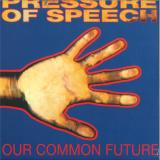
Originally issued in 1996 and now re-pressed for the first time by A.R.X. and Krisis Publishing, Pressure of Speech ''Our Common Past, Our Common Future'' remains one of the best-kept secrets of 1990s British electronica. Founded by Mickey Mann, together with fellow explorers Luke Losey (lighting designer for Orbital) and DJ Stika (already part of Spiral Tribe), their elusive second album is an obsidian relic of screwed ambient techno, mutant breakbeat and hypnotic radical sounds excavated from the goldmine of the UK's post-rave underground.
Erudite, the upcoming album by Thomas Decock, is a powerful exploration of modern jazz fusion that uniquely intertwines literature and music. Inspired by iconic literary characters and novels, the album aims to bring the profound emotions and complex themes of these stories to life through music. This project reflects the collective creativity of Thomas Decock and his band, pushing the boundaries of jazz and redefining them with an innovative approach.
Compositions such as the exhilarating and dynamic Rodya, inspired by Dostoevsky's renowned novel Crime and Punishment, and the refined interpretation of Joni Mitchell's Cherokee Louise, showcase both technical virtuosity and profound emotional engagement. From the sharp, angular theme of Rodya to the lyrical melody of Emma-inspired by the character from Flaubert's Madame Bovary-which also highlights the acoustic qualities of the ensemble, Erudite offers a wide palette
of musical colors, ranging from intense improvisation to expressive, lyrical moments.
The music on the album is characterized by the remarkable interaction between the musicians, who are equally at home in jazz and electronic music. Both individual and collective improvisation form the core of the band's musical expression. The sound is crafted through a blend of electronic and acoustic instruments. Erudite is not only an album for jazz enthusiasts but also for listeners intrigued by how music can complement and deepen literary narratives.
Released under the W.E.R.F. label, the album promises an engaging listening experience for a broad audience, from jazz purists to fans of innovative music. Erudite is a work that brings the spirit of both music and literature to life, taking the listener on a journey through the musical translation of classic stories.
10, 9, 8, 7, 6… the countdown to blastoff has started! Paris-based band Setenta is preparing for their upcoming 20th anniversary by releasing their sixth album, Apollo Solar Drive. The record is poised to be their best yet and is the culmination of an odyssey of artistic discovery. Setenta has been constantly striving for illumination through the years, yet also exploring the dark side of the human condition along the way. As the band describes it, this record is an Afro-Latin retro-futurist tribute to the sun. If their previous album, Materia Negra, launched the Setenta space shuttle crew into the void of “dark” matter and black holes, they now change course and valiantly approach the sun at full warp speed, taking us from darkness into the light. Miraculously, Setenta manage to bring some of the rhythmic and harmonic material they’ve explored on Earth with them, yet boldly dare to go where no one has gone before, challenging themselves to take their music, and their audience, to uncharted dimensions and new realms of existence.
In keeping with the themes of Materia Negra, FIP (Radio France) selection in 2020, Setenta’s sixth mission to explore “the great beyond” of “inner space” is aptly titled Apollo Solar Drive, emphasizing the band’s turning to the life-giving light of the sun for inspiration while playfully echoing the title of Eddie Palmieri’s Latin funk and social commentary masterpiece, Harlem River Drive. The overall vibe is warm and positive, propelled by the dual energy thrusters of funky, fierce beats and deceptively complex arrangements, yet going down smooth in the best sense of the word, like your favorite tropical cocktail or classic jazz dance fusion record of the 1970s. Of course this delicious treat is served with a special Setenta flavor all its own.
This time around, Apollo Solar Drive celebrates the trajectory of the band’s unique interstellar journey by deploying a resolutely jazzy, “funkadelic” angle to their beloved Afro-Latin music. Setenta’s band members tell their truths as a collective, with an emphasis on instrumental sections, focusing on the interweaving of multiple keyboards and guitars, while condensing the vocals to group choruses, as opposed to the solo voices of the past. The overall approach is more futuristic in its conception and realization, from the arrangements to the sonic engineering, although the rhythmic base still remains rooted in Afro-Cuban traditions as well as those of other Caribbean nations.
Pablo E. Yglesias (DJ Bongohead) of Peace & Rhythm (USA)
Layers of fog, hazy synths, solid percussion, and liquid basslines – Esaïa's debut album Mindscapes invites listeners into a dreamlike soundscape. A sonic experience where Berlin’s Berghain meets the vibrant streets of Kingston, Jamaica.
With its cinematic chiaroscuro lined with sub-bass, the album blurs the boundaries between genres. Inspired by the pioneers of dub, Esaïa seamlessly blends hybridisation and experimentation, pushing musical limits to carve out her own sonic space.
An album designed for both the dance floor and introspective listening, 4-to-the-floor techno-driven beats fuse with blissful instrumental flows. Paired with Madame Ipsum’s luminescent visuals, Esaïa’s work creates a multi-sensory experience that sparks the synapses.
- A1: Il Principe Delle Modificazioni
- A2: Il Respiro Si Blocca
- A3: Il Castello (Dedicato A F Kafka)
- A4: La Notte È Piena Di Echi
- A5: Madame Edwarda Parte 1
- A6: Madame Edwarda Parte 2
- A7: L’uomo È Morto
- B1: Spiragli In Spazi
- B2: L’isola Nuda
- B3: Un Passo Precipitato
- B4: Effigi Inquietanti
- B5: Al Dio Ignoto
- B6: Potrebbe Dire Il Tipografo Hans
- B7: Contenta Dei Deserti
From a research work started in full lockdown three years ago, finally sees the light (or darkness) Echi Senza Fine, a remastered collection of sound material by Tasaday. Inspired by the controversial media story in 1971 of the discovery of a tribe in the Philippines that apparently had technology that had stood still in the Stone Age, the project officially borrows the name Tasaday in 1984 from the evolution of Nulla Perreale, in turn union of Die Form (musical part) & Orgasm Denied (performative part).
To put it in the words of Marcello Ambrosini, the Tasadays find in Die Form the controlled destruction of the form after its careful design and construction, while in Nulla Iperreale the spontaneity free from any possible superstructure. They declare themselves new primitives, not in the perspective of a nostalgic return to a pre-industrial or prehistoric external world, but in the exception of an inner experience in stark contrast to the leviathan of the single utilitarian thought that has dominated the West for centuries.
Their production-action does not allow itself to be tempted by the repetitiveness used by many industrial groups of those years, thus resulting seminal in the evolution of the scene. Their impulse to go further and not remain caged in the format of the new wave is witnessed by their particular sound vocabulary that sees, along with the use of conventional instruments, the use of DIY tools such as Chopper Vox and highly sui generis tools, like the Camolofono, cariole loaded with sheets, stones, tubes, chains and “garbage” of various shapes and sizes.
A discography dotted with primordial electronic experiments that reaches the new millennium through several vinyl records and an endless number of cassettes. From this undefined and mysterious number of tapes that is born Echi Senza Fine: 14 tracks (+ 2 digital bonuses) remastered, collected by Asymmetrical, who also edited the release insert, a collage of visual and textual material from their fanzines. A series of 300 transparent vinyl + Insert.
- 1: The Gallopers
- 2: Dr Love
- 3: Tears For Leda
- 4: The Back Of Your Bike
- 5: The Tears Of Cora Pearl
- 6: The Rose Tattoo
- 7: Don't Come Crying To Me
- 8: Witch Hazel
- 9: Old Flame
- 10: Carmilla
- 11: The Bride Wore Black
- 12: Madame X
- 13: Away With The Fairies
- 14: The Moon Doesn't Mind
Tears Before Bedtime is the sparkling new album by the Would-be-goods, Jessica Griffin’s band of pop adventurers. Since The Camera Loves Me, their cult classic 1988 debut for the legendary él Records, they have blazed a musical trail through indie guitar pop, with a garage band edge and forays into other territories - glam rock, tango, French chanson… The result is unique and timeless.
The songs on Tears Before Bedtime balance delicacy and power. Perfect pop melodies are delivered in Jessica’s gorgeous and idiosyncratic voice. Her lyrics are intelligent and wry, wistful and witty. Every song tells a story, taking us on a journey through space and time, from belle époque Paris to a 1960s London biker café, from a riverbank in ancient Greece to a 1970s teenage bedroom.
Listening to a Would-be-goods album is like wandering through a gallery of portraits. Innocence gives way to experience. Danger lurks amid the lights of the funfair in the 1950s carousel whirl of The Gallopers. The sinister Dr Love promises heaven but sends you down to hell, to the sound of a last dance in a smoky soul basement. A nymph meets a god in disguise in a garage-band take on a Greek myth (Tears for Leda). The Rose Tattoo is the tale of a doomed love in a sultry Southern state. Don't Come Crying To Me flames an ex-lover to the sound of Bollywood horns and shivery guitar. In Madame X a portrait painter vents his fury on a spoilt socialite beauty. The album closes with a sweetly jazzy lullaby (The Moon Doesn't Mind).
The Would-be-goods began playing as a full band in the 2000s and have been previewing some of these songs at recent shows in England, Scotland, France, and Spain. The album was recorded in London with Jessica on guitar and vocals, Peter Momtchiloff (Heavenly, Talulah Gosh) on guitar, Debbie Greensmith (Thee Headcoatees and many others) on drums, and Andy Warren (The Monochrome Set, Adam and the Ants) on bass. Guest musicians have contributed organ, piano, vibraphone, cello, trumpet, and flute to make this the richest-sounding Would-be-goods record yet.
- A1: Strandbad Eldena 5:03
- A2: Madame Tussauds 3:37
- A3: Pluto 3:38
- A4: Evolution 3:03
- A5: Help Me Out With Steiner & Madlaina 3:45
- A6: Den Haag 2:38
- A7: Kokon 2:29
- B1: Mars 4:52
- B2: Gespenst With Luvre47 3:02
- B3: Mindset 4:03
- B4: Gleichgewicht 2:53
- B5: Anxiety 3:07
- B6: Widersprüche 3:28
- B7: Feuer 2:40
- A1: Jesus (3:05)
- A2: Until The End Dreamer (0:40)
- A3: Jane (2:33)
- A4: Until The End Drifter (0:35)
- A5: L.a. (3:05)
- A6: Until The End Songbird (0:47)
- A7: Message To Mary (2:12)
- A8: Jake And The Wife (2:02)
- B1: Madame Le Mar (2:10)
- B2: Until The End Angel (0:38)
- B3: Lean On My Gun (1:37)
- B4: Do You Remember The Day (2:49)
- B5: Beautiful Green (1:30)
- B6: One Foot In The Gutter (3:17)
- B7: Jesus (Alternative Version) (2:54)
Until The End (The Lost Album) features recordings made by Wil Malone throughout 1970, possibly intended as a follow-up to Wil Malone – Wil Malone, which was recorded in mid-1969 and mastered for release on Fontana Records on July 5, 1969.
Recently unearthed from the Morgan Blue Town tape vaults, these tracks offer a compelling mix of ’60s pop and bubblegum, diverging from the original album’s string-heavy, progressive-psych sound. All the material comprises either demos or finished masters, recorded over several months. With the exception of the brass parts — performed by session musicians — all instruments were played by Wil Malone himself.
It’s a shame the debut didn’t achieve greater commercial success, as it might have brought these follow-up recordings to light much earlier, back in the 1970s.
POiSON GiRL FRiEND’s first full album produced by British artist Momus. Simon Turner and Louis Philippe also participate.
releases, August 8
Nippon Columbia/J-Digs / Ambient, Synth Pop, Bossa Nova, Downtempo, Japanese
- A1: Malavoi - Te Traigo Guajira
- A2: Los Caraibes - Donde
- A3: Tropicana - Amor En Chachacha
- A4: Ryco Jazz - Wachi Wara
- A5: Eugene Balthazar - Dap Pignan
- A6: Roger Jaffort - Oye Mi Consejo
- A7: Les Kings - Oriza
- B1: Les Supers Jaguars - Tatalibaba
- B2: Super Combo De Pointe A Pitre - Serrana
- B3: L'ensemble Abricot - Se Quedo Boogaloo
- B4: Henri Guedon - Bilonga
- B5: Les Aiglons - Pensando En Ti
- B6: Los Martiniquenos - Caterate
In Guadeloupe, many people think that jazz and ka music are like a ring and a finger. To some extent, the same could be said about so called Latin music and the music played in the French West Indies.
Both aesthetics were born in the Caribbean and bear so many connections that they can easily be considered cousins. In constant dialogue, there are lots of examples of their fruitful alliance and have been for a while. The English country dance that used to be practiced in European lounges came to be called kadrille in Martinique and contradanza in Cuba. They both featured additional percussion instruments inherited from the transatlantic deportation. Drawing from shared feelings about the same traumatized identity – later to be creolized – it would be hard not to assume that they were meant to inspire each other. The golden age of the orchestras that graced the Pigalle nights during the interwar period further proves the point. As soon as the 1930s, Havana-born Don Barreto naturally mixed danzón and biguine music in a combo based at Melody's Bar. In the following decade, Félix Valvert, a conductor who was born and raised in Basse-Terre in Guadelupe, also worked wonders in Montparnasse with La Coupole, which was an orchestra made up of eclectic musicians. Afro- Caribbean performers of various origins were often hired on rhythm and brass sections in jazz bands, which used to enliven the typical French balls of the capital. In the 1930s and onwards, Rico’s Creole Band was one of them.
Martinican violinist-clarinettist Ernest Léardée, who would become the king of biguine music as well as the main figure of French Uncle Ben's TV commercials (a dark stigma of post-colonial stereotypes), had musicians from the whole Caribbean sphere play at his Bal Blomet – and they all enchanted "ces Zazous-là" (according the words of Léardée's biguine-calypso piece). In les Antilles (French for French West Indies), music history started to speed up in the 1950s, when trade expanded and radio stations grew bigger. The Guadelupean and Martiniquais youth tuned in their old galena radio sets to South American and Caribbean music. As for the women traders, les pacotilleuses, they bought and sold goods across different islands (the "passing of items through various hands" was thought to be most pleasurable) and brought back countless sounds in their luggage. Such was the case of Madame Balthazar, who once returned from Puerto Rico with the first 45rpm and 33rpm to ever enter Martinique.
Out of this adventure was created the famous Martinican label La Maison des Merengues, a music business she opened and undertook with her husband and which proved to be a major landmark. At the end of the 1950s, in Puerto Rico, Marius Cultier competed in the Piano International Contest playing a version of Monk's Round 'Midnight. He won the first prize and this distinction foreshadowed everything that was to come. Cultier, the heretic Monk of jazz, was quickly praised for writing superb melodies, always tinged with a twist that conferred a unique sound to his music. It didn't take long for the gifted self-taught musician to get to play with Los Cubanos, making a name for himself thanks to his impressive maestria on merengues.
The rest is history. Besides, in the late 1950s, Frantz Charles-Denis, born into the upper middle class in Saint-Pierre and better known by his first name Francisco, went back home after working at La Cabane Cubaine – a club located rue Fontaine where he had caught the Latin fever. Francisco's music was therefore heavily marked by his Cuban cousins' influence, which gave the combos he led a specific style and also led to renewal. Things were swinging hard in La Savane, located in the main square in Fort-de-France. He set up the Shango club close by and tested out the biguine lélé there, a new music formula spiced up with Latin rhythms. Soon afterwards, fate had him fly to Puerto Rico and Venezuela.
As for percussionist Henri Guédon (percussions were only a part of his many talents), he was born in Fort-de-France in May 22nd 1944, the day marking the celebration of the abolition of slavery. As an old man, he could remember that in " his father's Teppaz, a lot of hectic 6/8 music was constantly playing...". In the opening lines of his Lettre à Dizzy, a small illustrated collection of writings published by Del Arco, he highlighted the huge impact that cubop had on him as a teenage boy, around 1960. He eventually turned out to be the lider maximo in La Contesta, a big band steeped in Latin jazz. He was also the one who originated the word zouk to describe music which brought the sound of the New York barrio to Paris. It was the culmination of a journey that started in Sainte-Marie: "a mythical place for bélé, the equivalent of Cuban guaguancó". In the early 1960s, the tertiary economy developed to the detriment of agriculture. Yet rural life was where roots music emerged in Martinique and in Guadeloupe.
Record companies played a major part in the process of Latin versions sweeping across the islands – before reaching everywhere else. Producer Célini, boss of the great Aux Ondes label, and Marcel Mavounzy, both the head of Émeraude records - a firm which was founded in 1953 - as well as the brother of famous saxophonist Robert Mavounzy, were big names to bear in mind. Although there were many of them - all of whom are featured on this record - Henri Debs was definitely the major figure in the recording adventure. He proved to be so influential that he even got compared to Berry Gordy. In the mid 1950s, when he acquired his first Teppaz, he worked on his first compositions: a bolero and a chachacha. Then, he became the one man who made people discover Caribbean music, from calypso to merengue. He was among the first ones to rush out to San Juan, Puerto Rico, to buy records and distribute them through a store run by one of his brothers in Fort-de-France. He had members of the Fania All Star come and perform there, which he was madly proud about. He was also the first one to pay attention to Haitian music, such as compas direct and various other rhythms which would soon flood the market. As a result, many of the combos hitting his legendary studio would end up boosted by widespread "Afro-Latin" rhythms. However, he never denied his identity: gwo ka drums were given a major role, although they were instruments which had long been banned from the "official" music spheres. The present selection bears witness to such a creative swarming. Here are fourteen tracks of untimely yet unprecedented cross-fertilization: all types of music rooted in the Creole archipelago have found their way, whatsoever, to the tracklisting. Whether originating from the city or being more rural, they all go back to what Edouard Glissant, in an interview about the place of West Indian music in the Afro-American scope, called "the trace of singing, the one which got erased by slavery." "It is so in jazz, but also in reggae, calypso, biguine, salsa... This trace also manifests through the drums, whether Guadelupean, Dominican, Jamaican or Cuban... None of them being quite the same. They all point to the idea of a trace, seeking it out and connecting to each other through it. This is the hallmark of the African diaspora: its ability to create something new, in relation to itself, out of a trace. It may be the memory of a rhythm, the crafting of a drum, a means of expression which doesn't resort to an old language but to the modalities of it." The opening track features one of the emblematic orchestras of this aesthetic identity, criscrossing many music types from the archipelago. The 1974 Ray Barretto guajira – Ray Barretto was a major New York drummer influenced by Charlie Parker and Chano Pozzo – is magnificently performed by Malavoi, a legendary Fayolais group (i.e from Fort-de-France). Additionally, the compilation ends on a piece by Los Martiniqueños de Francisco. It symbolically closes the circle as it is a genuine potomitan of Martinique culture which also functions as a tireless campaigner for Afro-Caribbean music. Practicing the danmyé rounds (a kind of capoeiria) to the rhythm of the bèlè drum, it delivers a terrific Caterete, a kind of champeta of Afro- Colombian obedience which was originally composed by Colombian Fabián Ramón Veloz Fernández for the group Wgenda Kenya. The icing on the cake is Brazilian Marku Ribas, who found refuge in Martinique in the early 1970s, bringing his singing to the last trance-inducing track. These two "versions" convey the whole tone of a selection composed of rarities and classics of the tropicalized genre, swarming with tonic accents and convoluted rhythms. It is the sort of cocktail that the West Indians never failed to spice up with their own ingredients. For instance, the Los Caraïbes cover of Dónde, a famous Cuban theme composed by producer Ernesto Duarte Brito, has a typical violin and features renowned Martinique singer Joby Valente and his piquant voice.
The track used to be – or so we think – their only existing 45rpm. The meaningful Amor en chachachá by L'Ensemble Tropicana, a band which included Haitian musicians among whom was composer and leader Michel Desgrotte, also recalls how Latin music was pervasive in the tropics in the mid-1960s. They were the ones keeping people dancing at Le Cocoteraie in Guadelupe and La Bananeraie in Martinique. Around the same time, another "foreign" band, Congolese Freddy Mars N'Kounkou's Ryco Jazz, achieved some success on both islands by covering Latin jazz classics – such as their adaptation of Wachi Wara, a "soul sauce" by Dizzy Gillespie and Chano Pozo whose interweaving of strings and percussions can have anyone hit the dancefloor. How can you resist Dap Pinian indeed, a powerful guaguancó by Eugene Balthazar, performed by the Tropicana Orchestra and published by the Martinique-founded La Maison des Merengues? It also acts as a symbol of the maelstrom at work. Going by the name Paco et L'orchestre Cachunga, Roger Jaffory used to play guaguancó too: his Fania-inspired Oye mi consejo is one example of his style. Baila!!!!! Dancing was also one of the Kings' focus points. Oriza is a Puerto Rican bomba and a "classic" originally composed by Nuevayorquino trumpeter Ernie Agosto, which reserves major space for brasses, giving it a special sheen.
Emerging from the New York barrios crucible was also La Perfecta, a Martinique group originating from Trinidad, whose name directly references the totemic Eddie Palmieri figure as well as his own band, also called La Perfecta. Here they borrow Toumbadora from Colombian producer and composer Efraín Lancheros and interpret it by emphasizing percussions, which set fire to the track even more than the wind instruments. The same goes for Martinique's Super Jaguars, who use Tatalibaba – a composition by Cuban guitarist Florencio "Picolo" Santana which was made famous by Celia Cruz & La Sonora Matencera – as a pretext for sending their cadences into a frenzy. In a more typically salsa vein, the Super Combo, a famous Guadelupean orchestra from Pointe-Noire that was formed around the Desplan family and had Roger Plonquitte and Elie Bianay on board, adapt Serana, a theme by Roberto Angleró Pepín, a Puerto Rican composer, singer and musician also known for his song Soy Boricua. Here again, their vision comes close to surpassing the original. In the 1970s, L'Ensemble Abricot provided a handful of tracks of different syles, hence reaching the pinnacle of the art of achieving variety and giving pleasure. They played boleros, biguines, compas direct, guaguancó and even a good old boogaloo - the type they wanted to keep close to their hearts for ever, "pour toujours", as they sang along together in one of their songs. Léon Bertide's Martinican ensemble excelled at the boogaloo which had been composed by Puerto Rican saxophonist Hector Santos for the legendary El Gran Combo.
Three years later, in 1972, Henri Guédon, with the help of Paul Rosine on the vibraphone, tackled the Bilongo made famous by Eddie Palmieri. Such a classic!!!!! And so were the Aiglons, the band from Guadelupe: choosing to execute Pensando en tí, a composition by Dominican Aniceto Batista, on a cooler tempo than the original, they noticeably used a wonderfully (un)tuned keyboard in place of the accordion. On the high-value collectible single – the first one released by Les Aiglons under the Duli Disc label – there is a sticker classifying the track under the generic name "Afro". Now that is what we call a symbol. Jacques Denis
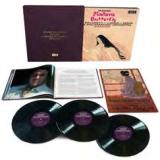
Diese brandneue Deluxe-Edition ist Teil des Jubiläumsprogramms von Decca zum 100. Todestag des großen
Opernkomponisten Giacomo Puccini. Die im Januar 1974 in den Wiener Sofiensälen entstandene Aufnahme
präsentiert die beste Besetzung der damaligen Zeit: angeführt von Mirella Freni und Luciano Pavarotti
sowie unter der Leitung von Herbert von Karajan. Bei ihrer Erstveröffentlichung wurde die Einspielung
von Kritikern und Musikliebhabern gleichermaßen gelobt. Das Magazin Gramophone beschrieb sie als „ein
Set zum Träumen“. Dieses Erbe wird mit der neu präsentierten Edition fortgesetzt. Die Aufnahme wurde
von den Original-Bändern aus dem Jahr 1975 neu gemastert und ist nun auf audiophilem Vinyl sowie als
Hybrid-SACD mit einer Auflösung von 192 kHz/24 Bit erhältlich.
a1 E Soffitto E Pareti (LP1: Act 1) (2:19)
a2 Sorride Vostro Onore? (3:26)
a3 Dovunque Al Mondo Io Yankee Vagabondo (2:00)
a4 America For Ever (2:47)
a5 Ier L'altro Il Consolato Sen; Venne A Visitar (3:43)
a6 Ecco. - Son Giunte Al Sommo Del Pendio (2:51)
a7 Gran Ventura (3:40)
a8 L'imperial Commissario, L'Ufficiale Del Registro, I Congiunti (3:50)
a9 Vieni, Amor Mio! VI Piace La Casetta (2:13)
b1 E Un Presente Del Mikado (3:52)
b2 Tutti Zitti! (5:21)
b3 O Kami! O Kami! (4:36)
b4 Cio-cio-san! Cio-cio-san! Abbominazione! (1:15)
b5 Bimba, Bimba, Non Piangere (3:52)
b6 Viene La Sera (4:33)
b7 Vogliatemi Bene (3:19)
c1 E Izaghi Ed Izanami (LP2: Act 2 - part 1) (4:15)
c2 Un Bel Di, Vedremo Levarsi Un Fil Di Fumo (2:59)
c3 C'e - Entrate (3:17)
c4 Si Sa Che Aprir La Porta E La Moglie Cacciar (4:41)
c5 Udiste? (3:20)
c6 Ora A Noi - Sedete Qui (4:22)
c7 Ebbene. Che Fareste, Madame Butterfly (3:11)
c8 E Questo? E Questo? (3:16)
d1 Che Tua Madre Dovra Prenderti In Braccio (3:13)
d2 Vespa! Rospo Maledotto! (4:05)
d3 Una Nave Da Guerra (2:47)
d4 Scuoti Quella Fronda Di Ciliegio (4:35)
d5 Or Vienmi Ad Adornar (4:27)
d6 Humming Chorus - Summchor (5:09)
e1 Intermezzo - Oh Eh! Oh Eh! (LP3: Act 2 - part 2) (2:16)
e2 Twittering Of Birds From The Garden (2:59)
e3 Gia Il Sole! Cio-Cio-San! (2:30)
e4 Chi Sia? (2:27)
e5 Io So Che Alle Sue Pene Non Ci Sono Conforti! (2:09)
e6 Non Ve L'avevo Detto? (4:20)
e7 Addio, Fiorito Asil Di Letizia E D'amor (2:48)
e8 Suzuki! Suzuki! Dove Sei? (2:36)
f1 Tu, Suzuki, Che Sei Tanto Buona, Non Piangere! (3:39)
f2 Come Una Mosca Prigioniera L'ali Batte Il Piccolo Cuor! (5:15)
f3 "Con Onor Muore Chi Non Puo Serbar Vita Con Onore" (5:10)
- A1: Life (In The Deep End)
- A2: Leave It All (Feat. Puma Ptah)
- A3: Je Ne T’aime Plus (Feat. Natalia Clavier) Video
- A4: Behind My Eyes (Feat. The Infinite Daisy Chains)
- A5: All I Want (Feat. Puma Ptah)
- A6: Burkina Faso
- B1: Midnight Raga
- B2: Sol Interior (Feat. Natalia Clavier)
- B3: Galactic Shine
- B4: Madame Asha
- B5: L’ocean (Feat. Natalia Clavier)
- B6: Beautiful Moment (Feat. The Infinite Daisy Chains)
Die Ära der Mix-CDs mag schon lange vorbei sein, doch wenn man sich 'Midnight Ragas' anhört, das neue Album des legendären Downtempo-Produzenten und Thievery Corporation Mitbegründers Eric Hilton, könnte man der Meinung sein, sie wäre nie weg gewesen. Man stelle sich Khruangbin vor in noch entspannter, wie sie einen alten Billy Dee Williams-Werbespot für Malt Liquor vertonen, neu abgemischt von Zero 7, und man kommt der Sache schon sehr nahe. 'Midnight Ragas' - ein süchtig machendes Hörerlebnis.Auf dem Album sind auch die Thievery Corporation-Mitglieder Natalia Clavier und Puma Ptah zu hören.'Midnight Ragas' ist Erics 8. Solo-Studioalbum und der Nachfolger von Sound Vagabond und seinem Ambient-Album Out of the Blur.- Ltd. Col. LP: (Bone Color Vinyl)Tracklist LP:A-SeiteA1. Life (In The Deep End)A2. Leave It All (feat. Puma Ptah)A3. Je ne t’aime plus (feat. Natalia Clavier) videoA4. Behind My Eyes (feat. The Infinite Daisy Chains)A5. All I Want (feat. Puma Ptah)A6. Burkina FasoB-SeiteB1. Midnight RagaB2. Sol Interior (feat. Natalia Clavier)B3. Galactic ShineB4. Madame AshaB5. L’Ocean (feat. Natalia Clavier)B6. Beautiful Moment (feat. The Infinite Daisy Chains)
- A1: Deon Cole Ft. Terisa Griffin - Where The Freaks At (Terry Hunter Club Mix)
- A2: Culoe De Song - Aftermath
- B1: Anané — Walking On Thin Ice (Louie Vega, Sebastien Grand, Alex Finkin Remix)
- B2: N.w.n. - Girl
- B3: Tal Fussman - Parallel Reality
- C1: Dailly - Autonomy (New York Drums Mix)
- C2: Copy Paste Soul — The Fall (Laurent Garnier Remix)
- D1: Carlo Ruetz - Proton
- D2: Marco Bailey — Full Steam
- D3: Mary Droppinz - The Cycle
- E1: Sammy Virji & Flowdan — Shella Verse
- E2: Rohaan - Easy For Them
- E3: Taxman — All Crew
- E4: 2Xm & Neil Macleod — Hear My Call (Neil Macleod Remix)
- F1: Regents, Cartridge, Strategy — Greengate Adhesive
- F2: Benny L — Salute
- F3: Cocktail Party Effect - Collapse
- G1: Loma - I Swallowed A Stone
- G2: Phiorio — Spark (Doubtingthomas Rework)
- G3: Bardino - Tília
- H1: Equiknoxx — Urban Snare Cypher
- H2: Dialog — Book Of Life (Feat. Benji)
- H3: Kang Brulèe — Out Of Time
- H4: Melody Gardot — You Never Ask (From 'Madame Sean Connery')
- A1: Madame - Gdyby Nie Szerszenie
- A2: Siekiera - Jest Bezpiecznie
- A3: Made In Poland - Ja Mysle
- A4: Kineo Ra - Oblakany
- A5: Brygada Kryzys - Fallen Fallen Is Babylon
- A6: Lech Janerka - Jest Jak W Niebie
- A7: 1984 - W Holdzie Fanatykom Marszu (Idziemy)
- A8: Made In Poland - Jedna Kropla Deszczu
- A9: Ziyo - Panie Prezydencie
- A10: One Million Bulgarians - Animal Love
- B1: One Million Bulgarians - Wysadzony Za Wysoko
- B2: Made In Poland - Obraz We Mgle
- B3: Kineo Ra - Szczury
- B4: Lech Janerka - Reformator
- B5: Brygada Kryzys - Przestan Snic
- B6: 1984 - Tu Nie Bedzie Rewolucji
- B7: Madame - Dzien Narodzin
- B8: Ziyo - Poza Tym Miejscem
- B9: Siekiera - Serce
- B10: Made In Poland - Nieskazitelna Twarz
- Adele
- Cogne
- Madame Tout Le Monde
- Sans Tes Mains
- La Maison En Bord De Mer
- Embrasse
- Marre De Mon Amant
- Sans Nous
- Ne L Oublie Jamais
- Le Jour Et L Heure
- La Langue Que Je Parle
- Ma Meteo Personnelle
- Ma Tristesse Est N Importe Ou
Patricia Kaas’ 2016 self-titled album Patricia Kaas marks her return to original material after a long hiatus. The album showcases a more personal and introspective side of Kaas, blending elements of French chanson, pop, and jazz. Known for her smoky vocals and emotional depth, Kaas explores themes of love, heartbreak, and resilience through tracks like "Le jour et l’heure" and "Madame tout le monde." The album's modern production enhances Kaas’ signature sound, offering a fresh yet familiar experience for longtime fans. Patricia Kaas reflects her maturity as an artist, highlighting her ability to connect with listeners on a deeply emotional level. For fans of French music and soulful storytelling, this album is a must-listen, embodying Patricia Kaas' timeless appeal and musical evolution. Discover Patricia Kaas for a captivating journey through heartfelt melodies and poignant lyrics. Patricia Kaas is available as a limited edition of 1500 numbered copies on blue coloured vinyl.
- A1: Madonna & Maluma - Everybody (You Can Dance Remix Edit)
- A2: Into The Groove (You Can Dance Remix Edit)
- A3: Like A Prayer (Remix- Edit)
- A4: Express Yourself (Remix- Edit)
- B1: Vogue (Single Version)
- B2: Deeper & Deeper (David Radio Edit)
- B3: Secret (Junior Luscious Single Mix)
- B4: Frozen (Extended Club Mix Edit)
- C1: Music (Deep Dish Dot Com Radio Edit)
- C2: Hollywood (Calderone & Quayle Edit)
- C3: Hung Up (Sdp Extended Vocal Edit)
- C4: Give It 2 Me (Eddie Amador Club 5 Edit)
- D1: Girl Gone Wild (Avicii Umf Mix)
- D2: Living For Love (Offer Nissim Promo Mix)
- D3: Medellin (Offer Nissim Madame X In The Sphinx Mix)
- D4: I Don't Search I Find (Honey Dijon Radio Mix)
Madonna is the first and only recording artist to have 50 #1 hits on any single Billboard chart. To celebrate this historic milestone, Madonna curated a new 50-track collection titled FINALLY ENOUGH LOVE: 50 NUMBER ONES which includes her favourite remixes of those chart-topping dance hits that have filled clubs worldwide for four decades as well as an abridged 16-track version, titled FINALLY ENOUGH LOVE. This 140-gram 2LP gatefold jacket includes single covers and a track-by-track on all featured 16 number one singles.
This collection highlights You Can Dance, Madonna’s first ever remix collection. Celebrating 35 years this year, You Can Dance has sold more than five million copies worldwide and is still the second best-selling remix album of all time. The collection also pays homage to “Everybody,” Madonna’s first single. Each remix was newly remastered for the collection by Mike Dean, who produced Madonna’s two most-recent studio albums, Rebel Heart (2015) and Madame X (2019). Along with those rarities, this album also introduces the “Offer Nissim Promo Mix” of “Living For Love” as its first official release.
Following their groundbreaking collaboration with Art Ensemble of Chicago, Comme à la Radio, Areski and Brigitte Fontaine began recording almost exclusively together as a duo.
Deeply rooted in North African and European folk traditions, the album features evocative vignettes with breezy vocals and minimal accompaniment of classical guitar, strings and woodwinds.
As always, there is a mercurial quality to their lyrics. The title track (translated as "I Do Not Know This Man") suggests at once Apostle Peter's denial and a poetic acknowledgement. On "C'est Normal" Fontaine playfully questions the status quo while Areski offers satirical answers. What makes Je Ne Connais Pas Cet Homme one of their best-loved albums, though, is its remarkable sense of intimacy – as if Areski and Fontaine beckon listeners into their strange and beautiful world.
This first-time domestic release continues Superior Viaduct's reissue campaign of Fontaine's classic '70s catalog.