Manonmars’ 3rd album sees him at his most amorphous and psychedelic, at points sharper and laser focused, and at others more blurred and impressionistic than his previous records. Many of the core players remain the same, all of the production is once again handled by O$VMV$M (the duo of Neek and Amos Childs of Jabu) while Paulina Korobkiewicz (also of Young Echo) makes a return handling both the album’s cover artwork and contributing a series of diaristic field recordings and voice notes.
‘The project references movies, cartoons, fictional characters and video games, among other things. The album title is open to interpretation but all of these elements are forms of visual entertainment which have their own unique ability to transcend things like language barriers and cultural divides. The visual element is key because those details bridge the gap on a communicative level.’ - Manonmars
The album blends abstract, blurred braggadocio with more immediate personal details such as on ‘Volcanic Shield’ a posse cut of sorts featuring Bristol improv luminary Dali de Saint Paul and Franco Franco (½ of cyborg rap duo Kinlaw & Franco Franco) - where Mars recalls;
‘Memories of brighter days, happy meal hit the spot
Mum was spinning vinyl playing Super Ape or Pressure Drop
I would spend the weekend with the Turkish mandem on the block
single parent household, mum was studying or on the job
money came and went always was an on and off
made it back from school time to see what’s on the box’
The beat fades away to leave one of Korobkiewicz’s recordings of Mars’ mum talking about her life in London in the 80s, spending her money on reggae records as an ambient chord fades in like an echo of a jungle intro – stretching out as a link between generations of UK music.
The production by and large is brighter and more kinetic than earlier Manonmars records – with O$VMV$M drawing on everything from modern underground rap and drill through to jazz and acid ambient passages.
London is also a central character here, bustling and constantly shifting, either when bleeding in through field recordings, or as an ever-present backdrop in the lyrics;
‘I’m a fusion of Tippa Irie and Topper Harley
Hit the target like the black Atari
I dropped a tab now shit’s A Scanner Darkly
Got the munchies, Imma yam a sarnie
Pour the Wray and Ting like man at Carni
Exit Peckham Rye and turn left, walk past Hannah Barry
Get your (w)raps up like its January’
‘I've always considered London my home, despite spending some time in the South West of England too. My mum had been living in London for 25 years (...) That was a pretty big deal in some ways because it removed us from multicultural society during the period which overlapped with my teenage years. (...) I never got used to how quiet it was in the countryside (...) Bristol was the closest city to where we lived and it was through travelling there and making connections that I became involved in making music and playing gigs.’ - Manonmars
Mars’ practice as a painter (under his given name Jack Martyn Richardson) and photographer also loom heavy over the album, he cites Paul Verhoeven, Abdul Mati Klariwein and H.R Giger as influences – as well as Miles Davis, Drakeo the Ruler and DJ Rashad.
As with much of Richardson’s work the raps at times feel blurred to a point of almost inscrutability, creating a distance between the audience and himself. A process that ties into his visual work and the way he experiences the world as mainly abstract colour without his glasses. He explores this further in an ongoing visual collaboration with Korobkiewicz, ‘Fun and Games’ which serves as a visual archive of one of London's largest and oldest travelling fairgrounds.
‘I was diagnosed with very severe short-sightedness at the age of seven. I remember my early formative years as visually blurred. Some of my photography reflects this experience of partial vision and uncertainty, referencing memory and perception rather than fixed representation.’
Manonmars’ first public outing as a rapper was at a Young Echo radio event, broadcast shambolically from a practice room just off Jamaica street, Bristol in 2011, as much as things have moved on both stylistically and in terms of focus - strong links back to the city remain a key foundation throughout the collaborations and guest appearances.
‘I have no problem with being an outsider looking in. One of the things I enjoy about London is the anonymity (...) it's easy to be a stranger here when so much is happening. I feel like thats more valuable than people may realise.’
John Tchicai (1936 – 2012) was one of the most important free improvising saxophonists of the 20th Century: an artist of rare vision and aptitude whose lines soared and stood out even in the most hallowed company, and whose body of work as a leader / composer is among the most singular and distinct within the entire canon of that music. But Tchicai’s importance doesn’t end there. Born in Copenhagen, Denmark, to a Danish mother and a Congolese father, his life and career represent a crucial bridge between the European and American traditions of free jazz. Initially trained on violin as a child, Tchicai shifted his focus to the clarinet and alto saxophone during his mid-teens, and began touring Europe as a professional musician by his early 20s, which landed him at a socialist youth festival in Helsinki, Finland, where he met the trumpeter Bill Dixon and saxophonist Archie Shepp. Impressed by what they heard, Dixon and Shepp encouraged the young saxophonist to move to New York, and in so doing changed the history of jazz forever.
Tchicai’s arrival in New York marks the rare occurrence of a European player joining the intimate circle that was first wave of American free jazz. Following his landing in the city in November of 1962, in addition to regularly sitting in with Don Cherry’s group, Tchicai began playing with Bill Dixon's band alongside Archie Shepp and Roswell Rudd, forming the nucleus of the foundation of the New York Contemporary Five - one of the most important groups of the era - which counted Tchicai, Shepp, Cherry, Don Moore, and J. C. Moses as its members. From the ashes of this group, Tchicai would go on to found the legendary ensemble, New York Art Quartet, with Roswell Rudd, Milford Graves, and Lewis Worrell, as well as working within Albert Ayler's band, recording “New York Eye and Ear Control”, Shepp’s band, recording “Four for Trane”, the ensemble that recorded John Coltrane's “Ascension”, and the Jazz Composer's “Orchestra”.
By the time he decided to return to Denmark in 1966, had Tchicai chosen to record little else, his legacy within the history of music would have been ensured. Incredibly ambitious, his arrival home marked the beginning of an incredible period of activity which saw him radically expanding his creative explorations, which by the end of the decade would include becoming a founding member of Amsterdam's Instant Composers Pool and helping to record John Lennon and Yoko Ono's “Unfinished Music No.2: Life with the Lions”. This, however, was proceeded the formation of a new orchestra, Cadentia Nova Danica, led by Tchicai, dedicated to radical cross-disciplinary exploration. Remaining together between 1966 and 1971, the group and its shifting membership regularly fell into collaboration with artists and composers, notably Musica Elettronica Viva, who existed beyond the realms of jazz, as well as participating within multi-media events that incorporated the visual realms.
Cadentia Nova Danica’s only two LPs - “Cadentia Nova Danica” (Polydor, 1968), and “Afrodisiaca” (MPS, 1969) - are effectively Tchicai recorded efforts as a leader, and are legendary. There’s little mystery, once heard, why the later landed on Thurston Moore’s iconic “Top Ten from the Free Jazz Underground”, published by Grand Royal in 1996. Sadly, despite playing extensively during their five year run, with exception of a CD documenting a performance at Jazzhus Montmartre, in 1966, until now there has been no other publicly available recordings that allow us to capture a glimpse of this astounding band at work. Alga Marghen / Formalibera’s vinyl pressing of a never before released body of recordings, made in Copenhagen between 1969 and 1970, changes that in the most exciting of ways.
Comprising three pieces - “Mc Gub Gub, (I–VIII)”; “Ode to Skt. John”; and “Pladepip” - the material on this stunning LP comes from two specific events. The first, which encompasses the first side, “Mc Gub Gub, (I–VIII)” was recorded by Cadentia Nova Danica - in this instance, Tchicai, Sune Weimar, Theo Rahbek, Christian Kyhl, Niels Holt, Jørgen Thorup, Michael Schou, Morgens Bollerup, Allan Gregersen, Ole Matthiessen, Pierre Dørge, Willy Jaegert, Anthony Barnett, and Jon Finsen - on May 29th, 1969, at the ABC-Theatre in Copenhagen. Penned by Tchicai, the piece is a sprawling, evolutionary composition at the outer reaches of free jazz, rooted in large blocks of colliding tonality and rhythm - a sound only accessible to larger ensembles - that push territories explored by Charles Mingus to previously unimagined heights, threaded by moments of hard blown fire. Writhing like a stormy sea - skronking and devilish - “Mc Gub Gub, (I–VIII)” is a work of profound complexity that singlehandedly illuminates not only Tchicai’s singular vision as a composer, but also the power and uniqueness of Cadentia Nova Danica during the band’s most vital period.
The two pieces - “Ode to Skt. John” and “Pladepip” - taking up the flip side, were recorded on February 21st, 1970, at the Danish Broadcasting Corporation’s Radio House, and are the outcome of Cadentia Nova Danica’s extended residency there between 1969 and 1970. In many ways, these two recordings offer some of the best insights into the broad collaborative approaches that defined the band, in this case encountering them working with Danish experimental composer, Svend Erik Werner, who was among the earliest in his country to embrace stylistic pluralism and the use historical forms within a modern context. “Ode to Skt. John” - based on aspects of Gregorian music - was penned by Werner, incorporating heady improvisation by the members of Cadentia Nova Danica, this time made up by Tchicai, Sune Weimar, Hugh Steinmetz, Theo Rahbek, Christian Kyhl, Michael Schou, Morgens Bollerup, Ole Kühl, Torben Enghoff, Mauritz Tchikai, Kjeld Ipsen, Willy Jaegert, Ole Matthiessen, Ole Thilo, Pierre Dørge, Steffen Andersen, Jon Finse, and Clause Bøje. The piece is a fascinating binary of the composed and improvised, utilising the band’s large scale to introduce a remarkable sound within its slow progressions and furious, driving free moments, in this incredible meeting of worlds.
The album’s final piece, “Pladepip”, is arguably its most historically significant: an entirely singular piece, unlike anything in Tchicai’s recorded canon as his foray into musique concréte. Drawing upon two recordings of full-band improvisations by Cadentia Nova Danica, for its creation Tchicai also gouged the surfaces of 78rpm records in his collection to skip and create repeated phrases and patterns, creating a stunning sound collage of hard angles and abrupt phrase, that creates a striking counterpoint to the band’s flowing improvisations that bookend those passages. The result is an engrossing listen and easily one of the most unique and culturally important gestures in the entire history of musique concréte.
Truly incredible, Alga Marghen / Formalibera’s vinyl pressing of this never before released body of recordings, made by John Tchicai’s Cadentia Nova Danica, in Copenhagen between 1969 and 1970, offers an unprecedented window into one of the most important groups working in Europe during that period, significantly expanding their rare and slim discography to date. Accompanied by extensive exploratory liner notes by veteran jazz writer, Ed Hazell, this is easily one of the most historically important archival releases of the year and is impossible to recommend enough. Absolutely essential on every count.
For any other artist, an album like Asher White’s Love Aggregates might come out of a conscious push to treat no idea as off-limits, to make something bold and new. Jubilant art-funk about cocaine addiction—absolutely. Swooning orchestral pop about Jerry Garcia—why not? Rippling electronic noise, jazzy brushed drums, an elderly motorcyclist with dementia, a profoundly emotional bass solo—put them all in one song. There are threadbare folk tunes, glammed-up power-pop bangers, “Sir Duke” horn charts, Morton Feldman string arrangements, layers of guitar feedback like violins made of liquid chrome. Yes, for another artist, Love Aggregates might be the most adventurous album in their catalog. For Asher White, it’s what passes for settling down.
White is 25 years old and has been making records—writing, recording, producing, and playing almost everything herself—for over a decade. She’d released two dozen of them on Bandcamp before catching the indie-rock industry’s attention with 2024’s Home Constellation Study and last year’s 8 Tips for Full Catastrophe Living. The latter album’s dizzy eclecticism and formidable craft landed her on Rolling Stone’s Future 25 list with the likes of xaviersobased and Oklou, along with a slew of other accolades. That came as something of a surprise to White, who didn’t craft the chaotic 8 Tips with a breakthrough in mind. Love Aggregates feels like a chance, for one of the most thrilling musical talents of her generation, at a more deliberate introduction.
She wrote and recorded her new album while her previous one was gathering
momentum, tinkering in the DIY recording studio where she always works, acutely conscious now that people would be listening to whatever she came up with. At around the same time, her years-long romantic relationship ended in a flurry of betrayal and addiction, her first experience of devastating heartbreak. Even so, Love Aggregates is not a bitter album about wallowing or seething, but instead making use of those impulses as raw materials in work that transcends the specificity of its origins, fashioning them into something surprising and new.
With her new album Trespasser, Grace Potter introduces a beautifully unruly cast of characters who step into forbidden spaces with absolute abandon. As the spiritual sequel to 2023’s Mother Road, the four-time Grammy nominee’s seventh studio LP continues the kaleidoscopic storyline shaped by her many road trips from her Topanga Canyon home to her part-time residence in her native Vermont (a journey she’s made eight times in the last five years, usually on her own). But while Mother Road was born from a desperate need for solace in the midst of emotional freefall, Trespasser reveals an artist firmly anchored in her singular vision.
The latest chapter in a career marked by endless transformation and elite recognition—including sharing stages with rock & roll icons like the Rolling Stones & Robert Plant and earning praise from legends like Bob Dylan and Bonnie Raitt—Trespasser ultimately lights the way toward a more unbound and expansive means of moving through the world. Produced by her husband and frequent collaborator Eric Valentine (Queens of the Stone Age, Weezer, Slash) and recorded in a cross-country journey beginning at her home in Topanga with Benmont Tench, continuing in Nashville with Mother Road session players (members of Cage the Elephant, Kings of Leon, and Train), and completed in Vermont with members of her longtime live band, the album echoes its origins with a wayward sound that spans from stripped-bare soul to cosmic country to hellraising rock & roll—all while orbiting Potter’s force- of-nature voice and lavishly imagined storytelling. “We’ve always been taught that the trespassers are the bad guys, but to me it’s not about reckless rebellion,” says Potter. “It’s about exploring, physically and mentally and emotionally, and being willing to step outside the narratives we’ve accepted. Because in my experience, the places we’re told not to go are exactly the ones that show us who we really are.”
With her new album Trespasser, Grace Potter introduces a beautifully unruly cast of characters who step into forbidden spaces with absolute abandon. As the spiritual sequel to 2023’s Mother Road, the four-time Grammy nominee’s seventh studio LP continues the kaleidoscopic storyline shaped by her many road trips from her Topanga Canyon home to her part-time residence in her native Vermont (a journey she’s made eight times in the last five years, usually on her own).
But while Mother Road was born from a desperate need for solace in the midst of emotional freefall, Trespasser reveals an artist firmly anchored in her singular vision. The latest chapter in a career marked by endless transformation and elite recognition—including sharing stages with rock & roll icons like the Rolling Stones & Robert Plant and earning praise from legends like Bob Dylan and Bonnie Raitt—Trespasser ultimately lights the way toward a more unbound and expansive means of moving through the world. Produced by her husband and frequent collaborator Eric Valentine (Queens of the Stone Age, Weezer, Slash) and recorded in a cross-country journey beginning at her home in Topanga with Benmont Tench, continuing in Nashville with Mother Road session players (members of Cage the Elephant, Kings of Leon, and Train), and completed in Vermont with members of her longtime live band, the album echoes its origins with a wayward sound that spans from stripped-bare soul to cosmic country to hellraising rock & roll—all while orbiting Potter’s force- of-nature voice and lavishly imagined storytelling. “We’ve always been taught that the trespassers are the bad guys, but to me it’s not about reckless rebellion,” says Potter. “It’s about exploring, physically and mentally and emotionally, and being willing to step outside the narratives we’ve accepted. Because in my experience, the places we’re told not to go are exactly the ones that show us who we really are.”
In the years after independence, Tunisia made an unlikely bet: tourism. Beach resorts rose along the coast, each one trying to outshine the next, and each one needing a band to entertain their guests. A whole generation of musicians grew up on those hotel stages - sharing bills with James Brown, Claude François and the Mingus Dynasty - and what came out of it was a small revolution. Funk played on Tunisian instruments. Disco with an oud in it. Reggae carried back from the island of Kerkennah. A "Third Language" the press didn't quite know what to do with.
Tunis Hotel Stereo gathers nine of those records. Most of them were pressed in tiny quantities, sold to tourists as souvenirs, censored before reaching the radio, or quietly slipped onto a 45 between two hotel sets. Some of these artists filled the Carthage amphitheatre. Some topped the Maghreb hit-parades. Most have been waiting, for forty years, for someone to play their music again.
This compilation is the result of years of work - collating memories, hunting down records, sitting with the artists who made them, and with the people who once danced to them. It is the third release on Shakshouka Records, and the first compilation of Tunisian music ever curated by Tunisians, in Tunisia.
SIDE A
The mysterious Les 4 Dés, who turned the national anthem into psychedelic pop on Ya Tounes - and then nearly vanished. Peace Band, hard rockers turned hotel professionals, recording as Omnya at Hammamet's legendary Topkapi club. Ridha Zalila, the eternal shape-shifter, in a rare instrumental of Tiou Tiou Tiou. And Sadok Gharbi's Noujoum - pulled from his sabotaged, near-lost masterpiece Souar.
SIDE B
Carthago, the impossible big band that married the elite of Tunisian jazz-rock with the stars of tourist entertainment, with the original Dhikrayet. Khaled Mellef, one of the great UFOs of his generation, with Wait Till the Morning Dew, recorded in the Netherlands. Marhaba Band's Baba Bahri, originally pressed only for hotel guests and now a cult artefact. Corniche Band's Dance, cut in Milan during a technical stop on a cruise ship. And Jomaa Bouzrara, the "Bob Marley of the Maghreb," with Now That, drawn from his landmark 1983 debut Sunset.
These weren't rebels without a cause. They were musicians who understood that modernity and heritage are not opposites - that a Tunisian could play funk and still be deeply, irreducibly Tunisian. They drew from every direction at once, and built something that belonged to none of those worlds entirely, and to all of them at the same time.
This compilation is one small act of remembering. The music does the rest.
After Diogo’s hit record, we are following it up with another set of swinging dance floor detonators! Arriving directly from Brasil, Sérgio presents itself as another moniker from one of the greatest creative minds in all South America, Gabriel Guerra. With dozens of releases scattered over Future Times, Superconscious Records, LAMA, Got Tun, Balaclava Records, or his own 40% Foda/Maneiríssimo, he lands on our lap with a couple of highly effective, UK infused, and slightly nostalgic dance tracks. We’ve allways neutered a profound sense admiration for everything that Guerrinha was releasing under his 40% Foda/Maneiríssimo label, and had the feeling that his vibe was definitely one that we could relate to. Happy, a little wacky, and truly unpretentious dance floor madness! From acknowledging that, to reaching out was just a step. He was super available to work with us, and after the first talks he promptly provided us with a google drive folder with more of 100 unreleased tracks… Yes! You heard it! More than 100 gems of pure creativity ranging from all kinds of genres and across a fucking multiverse of alias and alter egos! So yes, that’s the kind of creative genius we are talking about… Moving from this “garagy” universe, Guerrinha presents us with a set of super fun tracks, which both leans over this infamous side of dance music, as well as it keeps an eye open for the most blatant forms of pop culture. Pure and simple dance floor tracks, to be enjoyed with a smile on your face.
"Is this the sound Sérgio?" or "Is this Sergio's sound?". The question of the questions seems silly, but it was postulated in 2019 to answer Guerrinha a new sound idea: A super appealing garage sound, so that any kind of doubt about the fact that Guerrinha's sets being fun, and that he himself would be able to mix swinging rhythms, would be eliminated. Sérgio is Guerrinha’s pseudonym for this, and since its first release in 2019 with the album “Utensílios” it has strangely become his most played alias, with a few small hits in the small Brazilian scene. After the pandemic drama, he returned in 2022 with the album "Mais Utensílios" and the single "Fantabobi / Riquititas", two releases that again grew the good problem of other djs constantly asking Guerrinha for these tracks. Now he releases the 12'' "Pelo da Churreia" via Discos Extendes, made in 2020 and containing small garage hits from that time. All this information raises the initial questions, since Sérgio is not just a pseudonym, but the curse that grew inside Guerrinha himself, sometimes it's in the appeal that “the bug catches on”.
out of Stock
Last delivered 3 years ago available to reorder, subject to availability
There are two version of the LP - limited to 100 numbered copies with transparent wax and classic black wax edition. Both 180g with special OBI strip.
Maciej Envee Goliński is an artist who probably needs no introduction. He has been working with U Know Me practically since the label's inception. His last album ("Time & Light") made a huge impact worldwide, but we had to wait eight years for the next vinyl release. In the meantime, Maciej has certainly been busy – he has released numerous club singles under several aliases, and has helped record and mix numerous albums from the world of jazz, soul, and electronica. "Wyszymory" is a carefully crafted concept album, inspired by our roots. "Wyszymory" is an album on which every open-minded listener will find something that has been playing in their soul for a long time...
"Of all things visible and invisible, my life is most filled with music and a fascination with sound. It matters not whether they are natural or artificial, isolated or resonating through space. Sounds that evoke
memories, as well as those entirely new. Some of them have resonated unchanged for thousands of years. Certain resonances and rhythms have remained unaltered for generations so distant that they have left no other trace in human civilization.
This bond with our ancestors truly fascinates me. Ever since I realized it, I have become more attuned to inspiration. Listening to traditional and classical music, I kept finding new anchor points. I was constantly surprised by new invitations to ponder what connects – or divides – the pulse of our region’s traditional music with the rhythms of Africa, the tribes of the vast East, or the frozen North. My great authority, Tomasz Stańko, in interviews conducted by Tomek Michałowski, used beautiful parables of love and creativity to bring me closer to the Cro-Magnon cave artists. The Icelandic literary magician Andri Snær Magnason, in his book On Time and Water, captivated me with the fascinating observation that through emotional contact, words, ideas, or memory, we reach back and forward two or even three generations – spanning a period of about 270 years. Then there is Sam Kowalski, who with his wonderful obereks played on the gitalele, took me on a hypnotic journey, from which one returns with a deep admiration for the art of musical storytelling, passed down from generation to generation. Finally, my own children surprise me with talents, behaviors, and increasingly distinct features of those generations that now dwell only in my hazy memory and on old photographs.
I wanted the protagonists of this album to be the very phenomena that modern humans share with their ancestors, regardless of the level of civilization. Most vital among them is the relationship between humans, nature, and their own emotions. Wyszymory has nothing to do with an academic study, though I did delve into Slavic mythology, archaeology, and history in search of inspiration. Nor is it an album of traditional music, even if such music is present thanks to wonderful instrumentalists. I managed to invite artists who cross boundaries daily, working not only with Polish music but also with Hindu and African traditions, and even jazz, with its long history of blending influences. Naturally, the album became a kind of sonic comic book, where individual scenes and stories – the sounds, pulsations, and ideas on how to use them – came to me over time, often under unique circumstances and in inspiring contexts."
Envee
‘THE GREATEST ROCKSTEADY ALBUM OF THE MILLENNIUM’ NARC - MAY 2022
4/5 REVIEW IN MOJO: “ONE OF THE MOST THRILLING ROCKSTEADY ALBUMS TO HAVE BEEN MADE SINCE THE GENRE EMERGED IN THE LATE 60's”
8/10 REVIEW IN UNCUT + TRACK ON COVERMOUNT: “A STUDIO-ONE INDEBTED, VINTAGE-SOUNDING STUNNER.”
The Frightnrs escort Daptone into the world of long-playing reggae with both the sweetest and the roughest record of the decade. This record will long be treasured by lovers of reggae, lovers of soul and lovers of love...
Crafted under the meticulous eye of black-belt reggae mastermind/producer Victor Axelrod (AKA Ticklah), Nothing More to Say is a rocksteady masterpiece the likes of which has not reared it’s head since the golden era of Studio One. However, you’ll find no imitation here - none of the faux-jamaican cliches of lesser reggae bands. Like all things Daptone, this record is above all soulful and honest.
With the exception of two soul covers (both from the Daptone catalog: Bob & Gene’s "Gotta Find a Way” and Saun and Starr’s “Gonna Make Time”,) the record is populated by original compositions of the highest order.
They are simply great songs, and though their treatment here is masterful, each one of them has the melodic and lyrical substance to hold it’s own in any genre. “Till Then” invokes the coquettish hyper-rhymes of top-form Smokey Robinson, while “Hey Brother” sounds like it fell off the desk of Gamble and Huff, and “Purple” defies any comparison at all.
From the first cracking snares of “All My Tears” through the final pulsing echoes of “Dispute,” the murderous rhythms of Rich Terrana (drums,) and brothers Preet and Chuck Patel (bass and piano, respectively) can be heard chunking mercilessly towards oblivion as Dan Klein pours his endearing poetry over the top like some
otherworldy falsetto potion.
Nite Hawk is a new name to us, but one we'll be keeping an ear on, just off the back of this new EP on York-based John Deevechis's The Owl label. The opener plays with a classic rhythm and serves it up with a bleeping synth sequence that will also be familiar, while the rickety drums unfold in off-grid patterns. It's a great start before 'Shake Ya Rump' brings machine-made disco with sugary synths and playful vocals over funky basslines, then 'Be Together' closes with another cold analogue groove that ramps up the pressure and is the sort of tasteful and timeless crowd pleaser you will be playing forever.
out of Stock
Last delivered 19 days ago available to reorder, subject to availability
Soul Music legend Candi Staton returns to her down-home Alabama roots on her 32nd album, Back to My Roots. The twelve-track Americana set features an array of Staton-penned originals and some well-chosen covers.
"These songs represent my roots," Staton adds as she reflects on her many trials and triumphs. "Even the new songs on some level represent something I've experienced and that's what real soul music is about." Back to My Roots was produced by Staton with her second eldest son, Marcus Williams, a professional drummer who has toured with the likes of Peabo Bryson, Isaac Hayes, and Tyler Perry. They brought in Mark Nevers of Lambchop fame, who produced three of Staton’s prior Americana albums for Honest Jon’s and Thirty Tigers, to sweeten certain tracks. “Some of the first songs I ever heard were songs like `Peace in the Valley’ and `It’s Gonna Rain,’” says Staton. “The new songs or cover songs are tracks that remind me of that era when I was growing up as a child and evolving as a young woman. That’s why I named the album Back to My Roots because I’m going back to the roots that made me who I am.”
Staton received the Americana Music Association UK’s highest honour, the International Lifetime Achievement Award, at the UK Americana Music Awards ceremony at Hackney Church in London last year for her southern soul work that stretches from her 1969 Muscle Shoals hits to her more recent collaborations with the likes of Americana kings Jason Isbell and John Paul White.
The album opens with a mid-tempo Bonnie Raitt-styled contemporary blues “I Missed the Target Again” that finds Harry Connick Jr.’s longtime guitarist Jonathan DuBose Jr. (aka the Prophesying Guitarist) showing off his skills that set the tone for the song and the album.
Staton’s older sister, Maggie Staton Peebles (who alongside Staton was a member of the Jewel Gospel Trio in the 1950s), joins her for two duets. The first, “It’s Gonna Rain,” features just a drum, steel guitar and vocals. “My mother used to sing that song to us all the time when I was a child,” Staton recalls. “It’s a really soulful kind of song I wanted to revisit.” They then take turns leading Thomas Dorsey 1939 gem “There Will Be Peace in the Valley” that Elvis Presley popularized in the 1950s.
“Hang on in There” is a new, mid-tempo song that has an old school gospel flavour and features vocals from veteran bluesman, Larry McCray.
While in Europe in 2023 for her farewell concert tour that took her to the Glastonbury Festival and Love Supreme, Staton and her British band, PUSH, went into a London studio to record a new version of The Rolling Stones’ 1972 gem, “Shine A Light.” “I love the way that came out,” Staton says. “We put a big choir on it and put our own twist on it.”
From there, Staton revives another Thomas Dorsey classic, “The Lord Will Make a Way Somehow,” with a bluesy vibe. When Al Green started recording gospel in the early 1980s, he re-introduced this song into the culture.
“God’s Gonna Use Me Anyway” is a new mid-tempo blues with subtle Caribbean influences.
The mood takes a turn on “1963.” It’s a poignant, spoken-word reflection on September 15, 1963, when four black girls were killed in the Birmingham Church bombing. “I was in the city that day and I remember the chaos and horror after the bombing,” Staton recalls. “Just thinking of how racism and hatred caused those men to kill those girls was so emotional for me that I could only do it in one take.”
It's a perfect segue into "Reach Down and Touch Heaven," a haunting, plea for divine intervention into the affairs of mankind. "That's straight Baptist," she says. "I used to be a church pianist back in the 1960s. I've never played piano on one of my records before so that's a unique song for me because I’m finally playing on one of my records. The message of that song is about the homeless. It came to me when a homeless person on the street asked me for $5. When God touches your heart to help somebody else that’s heaven to God’s hears. So, when we reach into our purse or wallet to help someone, we’re touching heaven."
Staton offers love as an antidote to hate on the bouncy, Motown-styled, “Love Breakthrough.”
Her publicist brought Aaron Frazer & the Flying Stars of Brooklyn NY’s 2017 cut “My God Has a Telephone” to Staton’s attention. She shifts the track from a retro 1960s groove to more of a 1980s Malaco Records arrangement, a subtle but distinct variation. Staton brought in her longtime friend and STAX Records legend, William Bell (“I Forgot to Be Your Lover” and “Trying to Love Two”), to add raspy seasoning to the track.
The album closes with the wistful, “In God’s Hands We Rest Untroubled,” that was originally written and recorded by the late country star, Lari White, who died in 2017 at the age of 52. “Lari sent me that song to consider at least ten years ago and I always loved it,” Staton says. “The record label didn’t want it on the album or something, so I just held it.”
Staton says, “I grew up hearing a lot of these old songs when they were new songs. I toured with the Jewel Gospel Trio in the 1950s and we got to know people like Mahalia Jackson, Sam Cooke and others who sang these types of songs. So, I’m sort of paying tribute to them and the influence they had on me by refreshing these songs and making new songs in the old style.”’
Somewhere in the Wind is the third record that Loren Connors and I have made together. Of the three, it’s the first that consists exclusively of electric guitar duos and it’s the first that was recorded live. To me it feels very much like a live record; this music happened in crowded rooms in Brooklyn on two dates in 2025 and there’s an urgency to connect with others and a pleasure in doing so that can be heard on both of these tracks. On the first of our duo records (Arborvitae, 2003) I primarily play piano, and on the second (Evening Air, 2024) we switch off on piano and guitar. Both of those albums bespeak the privacy of the recording studio, where time is suspended and one can explore the quietest of sounds. By contrast, Somewhere in the Wind is the noisiest, most raucous and most free of our duo records. It’s the sound of us taking it to the stage.
I became a fan of Loren’s playing from the moment that I first heard it, after happening upon a beat-up copy of In Pittsburgh circa 1992 in a used bin in the Dr. Wax record store in Chicago where my then-bandmate Bundy K. Brown worked. Everyone has taken a chance on a record because it looked interesting and wouldn’t set you back too much. In that regard In Pittsburgh was the find of a lifetime. I had just switched from playing in a postpunk power trio (Bastro) to making mostly drummerless respect-your-neighbors music (Gastr del Sol), and Loren’s pacing and touch and his lovely, unaffected compositions had me from the first listen. Not long after that, Jim O’Rourke and I reissued In Pittsburgh on our Dexter’s Cigar label, and I fondly remember first meeting Loren in New York’s Grand Central Station—so glamorous for this country mouse—and taking the train upstate with him where he shared a bill with Gastr del Sol. During soundcheck, Jim, Loren, and I played together for a bit and Loren’s approach to the instrument was something that one could instantly sink into, the kind of situation where there are no mistakes. I still feel that when we play together.
This special collector's edition is available in a strictly limited run of only 250 copies. The vinyl version is pressed on transparent vinyl and features metallic paper packaging along with a printed inner sleeve made from dyed paper stock. The entire release was designed by the exceptionally creative graphic designer Weronika Lipniewska, resulting in an edition that is as captivating visually as it is musically.
EY AY (Deluxe Slay Jazz) is the second album by Piotr Checki - an artist who, following the intimate, home-recorded debut PE, returns with something radically different: a living, spontaneous work captured in real time. If PE was a personal document of moments enclosed within a controlled studio environment, EY AY is its opposite - a sonic organism that breathes, pulses, and unfolds in the here and now.
The album was created in just two weeks during a period of intense inspiration. Ch?cki developed a series of compositional sketches which were then expanded together with drummer Tymek Papior and pianist Marcel Balinski during a single six-hour recording session. Crucially, the entire album was recorded as one-take performances. No overdubs, no edits, no second attempts. It is a document of pure presence - a moment that can never be repeated.
The subtitle Deluxe Slay Jazz carries an additional personal layer of meaning. It serves as a subtle yet significant nod to one of Checki's greatest passions: ski jumping. The initials "DSJ" may also evoke the cult classic ski-jumping computer game released in 1999, beloved by an entire generation of players.
With EY AY, Checki redefines his approach to music-making. Instead of constructing rigid structures, he places trust in the process. Instead of production, interaction. Instead of perfection, authenticity. This is music that does not strive to be finished - it simply exists.
out of Stock
Last delivered 78 days ago available to reorder, subject to availability
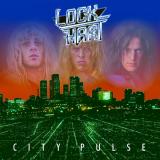
Lockhart is a new melodic rock/AOR band from Canada, fusing synthesizer-fueled eighties arena rock with classic hard rock. The trio consists of Devon Kerr (vocals, guitars, keyboards), Jason Junop (bass) and Fabio Alessandrini (drums). Jason is best known for his work in Cauldron and Goat Horn. Devon’s main band is Axxion, and Fabio plays or has played in Bonfire, Enforcer, Annihilator, Hardline and many others. Lockhart issued their debut EP »No Chance« in 2022, followed by the single “City Pulse” in 2025. The band has signed with High Roller Records, and their first full-length album »City Pulse« is now ready to be unleashed to the public. It's hard to describe the specific sound of Lockhart in all its details but on »City Pulse« you will certainly hear a lot of Journey, Boston, Toto, Foreigner, REO Speedwagon, and maybe even some Starcastle. “The influences are endless,” comments the vocalist, guitarist and keyboard player Devon Kerr, “and they go deep. I appreciate the comparisons. These bands are monumental. Lockhart has a sound of its own though. Bands that existed during the times you mentioned definitely provide influence! However, if you look past the surface (overdriven guitars and old synthesizers), you’ll hear influences from 50s doo wop, legends like Brian Wilson, and straight up choral music, too.” Compositions such as “The Dose That Made You Poison”, “Under Fire”, “Before The Fall’” or “Together As One” are very well constructed and flawlessly performed. “For me, songwriting is a deliberate process,” explains Kerr. “I set out a time and carve out the songs. Lyrics are written last. Once the song is ready, it undergoes hours of polishing to mold the perfect choir parts, guitar leads, and so on. Everything is very deliberate and carefully selected. Nothing was written by accident.” You can clearly hear that on »City Pulse«. With their melodic, at times even poppy approach Lockhart may stand out a bit on High Roller Records. Devon Kerr: “Our music has so many elements that traditional metal fans value, but with something very different, too. Something that might be new for some of the High Roller Records fanbase. I mean for those unsure, we’ve got Nick from Municipal Waste shredding guitar leads on ‘You Wouldn’t Know Love’, and Ian from Cauldron on ‘Can’t Shake It’ …”
If you have kept a keen eye on what is going on in German thrash these days, you cannot have missed the comeback of Protector, legendary thrash/death outfit from Wolfsburg, Lower Saxony. Formed in 1986, Protector first called it a day in 2003, only to return in 2011 and releasing their “Reanimated Homunculus” on High Roller Records in 2013. Protector are widely regarded as one of the most underrated outfits from the prolific German thrash/death scene of the Eighties. Their debut-EP “Misanthropy” from 1987 is a thorny gem of uncompromising thrash metal, raw and fast, and with a strong feel of evil blackness. This first official release laid the base for Protector's reputation as “Germany’s most brutal band”, as some people called them. Protector? Really? Some band from some far out place in Lower Saxony? It’s true, Protector never rose to the same heights of fame as Kreator, Sodom and the likes, but back in the days, they made a name for themselves by playing not only fierce and sharp thrash metal, but always being extremely harsh, brutal and very very evil. “Misanthropy” is a perfect testimony for this: In its six-tracks-brevity, Protector’s debut-EP is a violent attack on the listener, giving you six razor sharp cuts and leaving you behind, crushed and bleeding. “Misanthropy” was recorded in the summer of 1987 at the White Lines Studio in Braunschweig. While the band's main influences at that time were Slayer’s “Reign in Blood”, Possessed’s “Seven Churches” and Exodus' “Bonded by Blood”, “Misanthropy” actually sounds like none of these albums – but very unique; In part this is due to Martin Missy's extraordinary extreme vocal performance, which always bordered on the verge of death metal growls and thus added a lot to Protector’s very own way of evil. The reactions to “Misanthropy” were mixed: Fans and the underground media celebrated the release, while the bigger magazines were sceptical about Protector's brutal and aggressive style and sound. Anyway: “Misanthropy” made people aware of this four-piece who lived in the shadow of the then still intact German Wall, far away from the Ruhr-Area, the heart of Teutonic thrash. For the High Roller re-release, nothing will be changed about the sound, which makes total sense, given that “Misanthropy” is great just as it is. Instead, “Misanthropy” comes with a very special feature: To make the release as complete as possible, High Roller includes the two songs from the demo from 1986, “Protector of Death” and “Apocalyptic Revolution”, something Martin Missy totally appreciates: “I think this is a great thing to do. That way the fans get an idea about what Protector sounded like before the EP was recorded.” One thing is already clear: Protector never got any more aggressive, sharp and shattering than on „Misanthropy”.
A label compilation can be the first sign of a new cycle. After years shaped by individual trajectories, it brings the focus back to what made scenes powerful in the first place: shared language, mutual influence and a sense of collective movement.
For a label built on deep rhythm, organic textures and emotional drive, this carries an even stronger meaning. These musical spaces hold connection, memory and exchange at their core.
In this light, a compilation becomes more than a format: it becomes a statement of identity, a meeting point where different voices contribute to one evolving vision.
Following the previous chapters, “MoBlack presents: COLORS OF INDIA” marks the third instalment in the series. Built around hypnotic percussion, evocative vocals and textures inspired by Indian tradition, the collection moves between organic groove and club energy while maintaining a strong sense of atmosphere.
Rameff – “Ferena” opens the collection with rolling percussion and warm melodic details, establishing a hypnotic atmosphere that naturally sets the foundation for what follows. From there, Bull&Jems – “Asha” brings a brighter sense of movement, introducing expressive vocal textures and rhythmic lift while keeping the groove connected to the same organic pulse. The mood then becomes more immersive with Rameff – “Bondhu”, where repetition and subtle melodic shifts create a steady build in tension without breaking the flow of the journey. Closing the selection, Hefty (CA) – “Taka Dum” injects a more playful rhythmic energy, tying everything together through percussion-led movement and a vibrant late-night spirit.
With “COLORS OF INDIA”, MoBlack adds a new chapter to its compilation series, bringing together cultural references and club-driven energy through a shared rhythmic language. The result is a collection where tradition and contemporary interpretation meet naturally on the dancefloor.
Following a huge wave of global support since its digital debut, ‘Edge Of Desire’ from Jonas Blue & Malive finally lands on 12" vinyl. A fitting format for one of the most talked-about house records of the past twelve months.
Since its release in July 2025, ‘Edge Of Desire’ has become a genuine streaming and club phenomenon. The sun-drenched house cut built on shimmering guitar riffs, bubbling synths and an irresistible vocal hook quickly took on a life of its own, topping Beatport Overall Chart and spending weeks in the Top 10 while racking up 100 million streams worldwide and over 100,000 global radio plays. From major playlists to festival stages, the track’s uplifting energy has made it a staple for selectors and listeners alike, with early DJ support from tastemakers including Adriatique, Adam Ten and Carlita.
Now, ahead of summer 2026, the record arrives on a special 12" vinyl edition bringing together the original alongside standout reinterpretations from some of house music’s most respected names. Dutch favourite Franky Rizardo delivers a groove-heavy club workout, Florida legends Jazz-N-Groove add their unmistakable soulful house touch, while Grigoré & Serve Cold transform the track into a deep, rolling dancefloor weapon.
With the original continuing to dominate playlists and dancefloors around the world, the vinyl release of ‘Edge Of Desire’ feels perfectly timed. Ready to soundtrack open-air sets, beach parties and late-night club moments throughout the season. For DJs, collectors and house music fans alike, this pressing captures the record at the peak of its momentum: a modern Defected anthem finally given the wax treatment it deserves.
out of Stock
Last delivered 60 days ago available to reorder, subject to availability
Brannten Schnüre is an experimental dark folk group out of Würzburg, Germany. Christian Schoppik composed and played all the music, Katie Rich whispers, recites and sings. Together they make astoundingly beautiful folk with a rich instrumentation leaning towards the atonal spectrum. Instrumental wanderings stand alongside Nico-esque poetry tales. Christian plays the accordeon and in some songs guitar and flute. Inspired by hierophants like Nový Svet and David Jackman, solemn song fragments (a lot of old greek rembetiko-recordings) are modified and looped, with additional instruments and voices being integrated later on. Their music has been described as 'surreal folkcollage' and 'german hauntology'.
With the emergence of Schoppik's second project, a dada cabaret called Agnes Beil in 2010, Brannten Schnüre moved closer to the song structures of its frivolous sibling. The songs of Schoppik's latest creation Sommer im Pfirsichhain are further accompanied by a female singing voice, lending the pieces the voluptuous quality of a stickily tense midsummer. Sommer Im Pfirsichhain (Summer In The Peachgrove) is the second part of a quartet of releases. The first being Aprilnacht which got released on Sic Sic Tapes last year. Part three Geträumt hab' ich vom Martinszug and part four will follow later.
Reference points are bands like Winter Family and Twinsistermoon. Music etched on folkloric, ritual elements transferred into the 21th century. Also worth mentioning is the hand-drawn artwork which is made by artist Gwénola Carrère.
LP1 New album
LP2 Available on vinyl for the first time
LP3/4 Debut album on green vinyl
LP5 Second album on red vinyl
When I recorded the first 2 Trickfinger records, I had recently discovered that you could make electronic music in a room with a bunch of synced machines going at the same time, record it on a
CD burner and have a finished track. I've heard this process described as “overdubbing into the air”. It was as exciting to me as my first 4 track was when I was 14. I wasn't trying to be good, or
original. I was just excited that music could be made that way; it felt like I was a whole group of musicians playing together… or like I was jamming with ghosts of myself. This has actually been a
very common way of making electronic music since the 80s, particularly in the main pioneering genres like Chicago Acid and Detroit Techno, but anyways I didn't figure it out until 2006. In 2007,
I started doing it myself, which resulted in what was eventually released as Trickfinger, and Trickfinger II. I was just home from tour and was still in the middle of recording The Empyrean.
A couple of years later I started making music by overdubbing onto a computer, but using the same machines. I tried to make music that didn't sound like anything else. I saw a way of combining
Progressive Rock and Synth Pop which nobody had done. And I was combining my songwriting and guitar playing with these old machines in a way which I was sure was unique. I had reached a point
where it was more important to do something original than to do something good, whatever “good” means.
Some of this music did not get a proper release, and is compiled here as the vinyl record High Low. I don't think I have ever tried so hard at making music as I did during that period. This in contrast to
those two Trickfinger records, where I wasn't trying at all. There’s something to be said for both mental states. When you're in one, the other seems impossible. I was really pushing myself on High
Low. Looking back, it was as if I had an audience inside myself, driving me to go beyond my abilities, while at the same time I had a total disregard for any concept of an actual audience. It
was one of those periods in life where things come together in a certain way that feels natural at the time, but seems foreign in retrospect. It felt like I was going to die if I didn't do something musically
different.
The fourth record in this box is me breaking in a new mixing console, making live-to-stereo music. The record is called Rotation, and it is all new music. These tracks are more in the “not trying”
category, since we're on that subject. I had just come home from tour, and was just really glad to be in the studio with my machines. Acid Test thought it would be nice to do a box set commemorating the 10th anniversary of the release of Trickfinger, and so we put together this box set, with homemade cover art.
John Frusciante 2026
out of Stock
Last delivered 85 days ago available to reorder, subject to availability
Lemon Vinyl. Black Screen Records and Kaizen Game Works have once again teamed up for the vinyl repress of About That_ Paradise Killer B-Sides, the follow-up release to Barry "Epoch" Topping's vibrant funky city pop/vaporwave soundtrack to the open world adventure game Paradise Killer, which has proven to be a true essential release for itself. The record is featuring three new songs, vocal tracks, instrumental versions, remixes and piano arrangements along with a number of amazing guests, which are Fiona Lynch, Kyle Murray-Dickson, Fabian Hernandez, Ged Cartwright, Thomas Temple, MEEBEE and Okumura. Now available on lemon coloured vinyl with gorgeous cover art by José Salot. The sounds of Paradise. The music of a cosmic dream. Tunes from another reality. The tempo of the crime to end all crimes. The beat of long dead alien gods. The playlist of the investigation freak. Let the music take you away to Paradise. Feel the sun scorching your skin. Smell unbearably hot concrete. Savour the sweet taste of crime committed on a tropical island in another reality. Remember when we danced along the beach? Along the streets of Paradise? You made me this mix tape on the roof of your apartment block. We stared at the moon. You said you'd kill the moon. I didn't believe you. I was wrong.
e 5TO THE HEART [VOCAL VERSION]
[f] 6HOUSE OF BLISS [VOCAL VERSION]
Picture disc, artwork by C. Bedford Black Screen Records and Kaizen Game Works have teamed up for two new vinyl editions of Barry "Epoch" Topping's vibrant funky city pop/vaporwave soundtrack to the open world adventure game Paradise Killer. Topping's incredible soundtrack will be available on brand new picture discs as well as rosé & crystal clear with white marbled vinyl. The LPs are housed in a gatefold sleeve with beautiful 80s anime- & city pop-inspired artwork by Mizucat - additional art and layout by Kaizen Game Works, Barry Topping and Dane Baudoin. The picture disc artwork was crafted by C. Bedford as well as the one for the included folded A2 Crimson Acid poster. The sounds of Paradise. The music of a cosmic dream. Tunes from another reality. The tempo of the crime to end all crimes. The beat of long dead alien gods. The playlist of the investigation freak. Let the music take you away to Paradise. Feel the sun scorching your skin. Smell unbearably hot concrete. Savour the sweet taste of crime committed on a tropical island in another reality. Remember when we danced along the beach? Along the streets of Paradise? You made me this mix tape on the roof of your apartment block. We stared at the moon. You said you'd kill the moon. I didn't believe you. I was wrong.
Picture disc, artwork by C. Bedford Black Screen Records and Kaizen Game Works have teamed up for two new vinyl editions of Barry "Epoch" Topping's vibrant funky city pop/vaporwave soundtrack to the open world adventure game Paradise Killer. Topping's incredible soundtrack will be available on brand new picture discs as well as rosé & crystal clear with white marbled vinyl. The LPs are housed in a gatefold sleeve with beautiful 80s anime- & city pop-inspired artwork by Mizucat - additional art and layout by Kaizen Game Works, Barry Topping and Dane Baudoin. The picture disc artwork was crafted by C. Bedford as well as the one for the included folded A2 Crimson Acid poster. The sounds of Paradise. The music of a cosmic dream. Tunes from another reality. The tempo of the crime to end all crimes. The beat of long dead alien gods. The playlist of the investigation freak. Let the music take you away to Paradise. Feel the sun scorching your skin. Smell unbearably hot concrete. Savour the sweet taste of crime committed on a tropical island in another reality. Remember when we danced along the beach? Along the streets of Paradise? You made me this mix tape on the roof of your apartment block. We stared at the moon. You said you'd kill the moon. I didn't believe you. I was wrong.
Newly signed to EMI Records, seven-piece boyband December 10 are ushering in a new era in pop music. Formed on camera during Netflix’s Simon Cowell: The Next Act (released globally on 10 December 2025), the hugely fun, utterly joyful, incredibly charismatic, often rambunctious and completely endearing group consist of Cruz (20), Danny (17), Hendrik (19), John (17), Josh (17), Nicolas (17) and Seán (19).
Within weeks of the series airing, the pace was relentless. December 10 sold out their Introducing! run of live dates across the UK and Ireland, adding extra shows twice in response to demand before all 13 dates sold out within minutes; built a huge online following, with millions of followers across social media; and released their debut single “Run My Way” on 30 January 2026.
Since then, the band have released the singles “Infinity (123)” and “Angel”, landed in the Official UK Top 10 best-selling vinyl singles of 2026 so far, and made their festival debut at Ultra Teens Fest Japan, performing to a crowd of more than 12,000 fans.
Summer 2026 will see December 10 embark on their headline UK and European tour, December 10: The Next Step, (which kicks off in Amsterdam on 26 June and wraps up in Dublin on 21 July,) release their debut EP, On Your Side, on 10 July, and make appearances at Summer Sonic Festival in Japan and Reading & Leeds Festival in the UK.
They’re not just brilliant singers, but accomplished musicians too, playing 14 instruments between them: Nicolas plays guitar and harmonica; Danny plays guitar; Josh plays guitar, cajón and drums; Hendrik plays guitar, bass and piano; Seán plays guitar, piano and harmonica; while John was due to take Grade 8 clarinet and piano this year - until life got a bit busy.
December 10 are very much a boyband for our times: a truly inclusive group representing Chorley, Rochester, Dublin, London, Lisbon and Walsall, with Irish, Brazilian, Indian, Nigerian and Jamaican heritage between them, and musical influences that are just as expansive.Pre-order our debut EP ‘On Your Side’ now!
Ever since the late 1950s bossa-nova revolution, Brazil’s influence on French music has been undeniable. Pierre Barouh, Georges Moustaki and a vast array of lesser known artists, all made the Musica Popular Brasileira (MPB) an axis of promotion at the service of a cool and metaphysical, modern and mixed Brazilian lifestyle. Some were seduced by the poetic languors of the bossa, some were looking for fun, and others just loved the American hybridization of jazz-bossa, jazz-samba.
What is bossa nova? One of its creators, Joao Gilberto said: "Its style, cadence, everything is samba. At the very start, we didn't call it bossa nova, we sang a little samba made up of a single note - Samba de uma nota so .... The discussion around the origins of bossa nova is therefore useless”. It is nevertheless useful to remember that these magnificent Brazilian songs, which the guitarist describes as samba, were shifted and balanced around improbable chords. "I like things that lean, the in-betweens that limp with grace," said Pierre Barrouh, quoting Jean Cocteau.
With emotion, arrangements for violin and supple guitar licks, bossa nova rapidly changed. A transformation that can be heard in the Tchic, tchic, French Bossa Nova 1963-1974 compilation, the result of a cultural reappropriation, which traveled through the United States and supplemented itself in France.
A musical revolution that has remained significant, bossa nova was born in Rio. From 1956 to 1961, Brazil lived through its golden years. In five years, the country had invented its modernist style. Elected president in 1956, Juscelino Kubitschek de Oliveira, an elegant man with a broad forehead, brandished a promising slogan: "Fifty years of progress in five years". He quickly got to work. Not worried about increasing debt, he launched the project for a new federal capital, Brasilia, designed by the communist architect Oscar Niemeyer. Volkswagen opened state-of-the-art factories and created the “fusquinha”, the Beetle. In Rio, the Vespa made its first appearance. The Arpoador Surf Club crew run into the “girl” from Ipanema, Helô Pinheiro - the tanned garota ("chick"), between a flower and mermaid, who at 17 walked by the Veloso bar, where the fiery author and composer, Tom Jobim and Vinicius de Moraes, were getting drunk on whiskey. From then on, bossa symbolized cool.
In 1958, Joao Gilberto recorded Chega de Saudade, which the directors of Philips denied, calling it "music for fagots". The marketing director, who believed in it, secretly pressed 3000 78-inch vinyls and distributed them at schools around Rio, creating a tidal wave.
American jazzmen then took over. In particular, trumpeter Dizzy Gillespie and guitarist Charlie Byrd. In November 1962, the Brazilian Ministry of Foreign Affairs funded a "Bossa-Nova" concert at Carnegie Hall in New York, inviting the genre’s pioneers. Unprepared, the show soon turned to disaster. But the troupe was invited to the White House by Jackie Kennedy. The first lady loved "the new beat" and in particular Maria Ninguem, a song by Carlos Lyra, later covered by Brigitte Bardot.
In Brazil, the 1964 military coup quickly ended this euphoria. The destructive atmosphere that ensued pushed many Brazilian musicians to leave, if not to exile. Thus, Tom Jobim, Sergio Mendes and Joao Gilberto arrived to the United States. In New York, Joao Gilberto met saxophonist Stan Getz. At the time, he was married to the Bahianese Astrud Weinert Gilberto, who had a German father. She had never sung before, but she knew how to speak English. Getz therefore asked her to replace her husband on The Girl From Ipanema. The Getz/Gilberto record with Tom Jobim on piano, was released in March 1964. Phil Ramone, the "pope of pop" was in charge of sound.
Bossa nova arrived in Paris through the classic “guitar-voice” channel (Pierre Barouh, Baden Powell, Moustaki…) But France loved jazz and Paris had already welcomed its American contributors. All these good people were to pass through Saint-Germain-des-Prés. The cabaret l'Escale became the Mecca of Latin American sound where one could find Pierre Barrouh and his friends, such as the Camara Trio, samba-jazz aces, whose only record was published by the Saravah label. With a band strangely called Les Masques (a band that included Nicole Croisille and Pierre Vassiliu, among others), the Camara Trio recorded an interesting Brazilian Sound, including the track Il faut tenir which is present on this tasty compilation of rarities.
Other enlightened musicians can also be found on the compilation, such as Jean-Pierre Sabar (songwriter for Hardy, Auffray, Leforestier ...) and the French pop rock organist Balthazar. In 1975, Sabar recorded Aurinkoinen Musiikkimatka on a Finnish label, which featured the crazy Vai, Vai, included on this record. We are now following the footsteps of Brazilian electronic musicians such as Sergio Mendes, Eumir Deodato or Marcos Valle who created funk and disco sounds on their keyboards and synthesizers. A style that influenced Véronique Sanson when she wrote Jusqu’à la Tombée de la nuit in 1969 for Isabelle de Funès, the niece of Louis and a great friend of Michel Berger - Sanson did end up singing this track on her 1992 Sans Regret record.
The pinnacle of exoticism and travel, Sylvia Fels’ Corto Maltese includes bongos, sea mist and ocean sounds. The title was taken from Jacky Chalard’s concept album written in 1974, Je suis vivant, mais j’ai peur (I am alive, but I am scared), based on Gilbert Deflez’s science fiction novel.
However, bossa nova extended the scope of popularity. "In the 1970s, I was a fan of Sergio Mendes, Getz / Gilberto. I fell in love with this music that I knew because I had been an orchestral singer, " explained Isabelle Aubret, who in 1971 delivered a composite record of covers by the very funky Jorge Ben, Orfeu Negro, Tom Jobim, Vinicius de Morais and Jean Ferrat. "I recorded this album for Meys Records in Paris, far from Brazil, with wonderful musicians, François Raubert, Roland Vincent, Alain Goraguer...". The latter wrote the arrangements for Casa Forte, a very percussive title borrowed from Edu Lobo, one of the initiators of the bossa who spent time in California. "Jazz and bossa came together and produced very rhythmic music. I love singing, it allows me to dream, to have fun, to feel a high on stage, and these songs brought me joy, made me swing, my singing felt like a dance.”
The world tours of French singers and their desire for the tropics, often brought them to Rio with its hills, forests, caipirinhas and tanned bodies. There are surprises though, like this Iemenja (Iemenja is the goddess of the sea in the Afro-Brazilian candomblé religion). Not unlike the composer and musician Jean-Pierre Lang, based in Sao Paulo, Claire Chevalier taught Brazil to Brazil. In 1970, the singer and painter published a 45-inch vinyl, Mon mari et mes amants (My husband and my lovers), under the improbable pseudonym of Clarinha (little Claire). She was then living in Rio, with her husband, Joël Leibovitz, who founded a band called Azimuth, and who owned a record label specialized in "sambas enredos" songs for samba school parades.
For its B side, she asked Pierre Perret to come up with lyrics for a song composed by Carlos Imperial: "Oh goddess of the sea, o goddess Iemenja, I bring a white rose to adorn your long hair ..." . "Perret came to see us, and we had fun, remembers Joël Leibovitz. We wrote Lemenja for fun, we recorded it at the Havaí studio, behind the Central do Brasil the central station. Erlon Chaves, the arranger who worked with Elis Regina, joined us" adding his share of Afro-Brazilian percussions and funky brass to the mix.
There is a common misunderstanding in Franco-Brazilian history: that bossa, admittedly hedonistic, is perceived as funny, even though the poets who wrote the texts are often philosophizing on the human condition. Its French interpreters pull it towards a carnival inspired universe, far removed from its fundamental essence. Thus, Jean Constantin covered the famous Samba da minha terra, an ode to the art of samba written by the classic Bahian composer Dorival Caymmi, renaming it with the enticing title of Pas tant de tchi tchi pompon: "On your pier there is no tchi tchi / when you arch your back, you know everything is alright ”(lyrics by Gérard Calvi). This expedited bossa aims for the absurd, but retains a certain elegance.
Indeed, Jean Constantin was not an idiot, the rather large man had a huge mustache and liked fantasy, (Les pantoufles à papa, Le pacha, inspired by cha-cha-cha-cha, salsa and jazz) but he was also the lyricist of Mon manège à moi interpreted by Edith Piaf, the composer of Mon Truc en plume by Zizi Jeanmaire and the soundtrack of François Truffaut’s 400 Blows. Le Poulpe, published in 1970, from which this bossa is extract, was arranged by Jean-Claude Vannier, an accomplice of Serge Gainsbourg’s Melody Nelson. In short: "There is enough of samba / By looking at the parasol / Because my poor cabeza / Is going to die in the sun".
Even the American actress Marpessa Down, who was at the heart of the bossa nova revolution with her role as Euridyce in Marcel Camus’ film Orfeu Negro, winner of the 1959 Cannes Palme d'or, fed the clichée with Je voudrais parler au petit cuica - "Tell me how you manage to always make people want to dance / It's true, I must admit that I cannot resist your magic" - in consequence, once can hear the cuica, a little drum inherited from the Bantu.
But bossa nova had many angles. Societal, of course, pushing actresses who were symbols of women's liberation like Brigitte Bardot, Jeanne Moreau, or Sophia Loren to engage in the exercise of accelerated bossa. In February of 1963, Sophia Loren made a record in French in Rome, Je ne t'aime plus, featuring the song De jour en jour, a bossa written by two Italians, Armando Trovajoli and Tino Fornai, which was released a little later by Barclay. Bossa accompanied the 1960s, a decade of moral liberation. Ann Sorel, who interpreted La Poupée des favellas, caused a sensation with L’amour à plusieurs, a provocative song written by Frédéric Bottom and Jean-Claude Vannier. As for the actress Andrea Parisy, she displayed her bourgeois cheekiness in Marcel Carné's Les Tricheurs before interpreting Les mains qui font du bien. And Magalie Noël, the friend of Boris Vian, who sung Johnny fais-moi mal, was hired to sing Une énorme Samba, composed by Alain Goraguer (arranger to Gainsbourg, Bobby Lapointe and Jean Ferrat) with lyrics by Frédéric Botton.
But in the end, of what wood is bossa nova made of? The answer is given by Christianne Legrand, daughter of Raymond the conductor, and sister to Michel the composer: "With me, with jà" - jà means "immediately" in Portuguese. In 1972, the singer, an expert in vocal jazz and a member of the Double Six, published Le Brésil de Christianne Legrand. Two songs included on the Tchic Tchic compilation that demonstrate how bossa, jazz, funk, rock, etc. work like a swiss army knife: the music is used to denounce broken systems, or miracles, HLM et ciné roman, Cent mille poissons dans ton filet, two songs from the O Cafona soundtrack, a successful telenovela broadcast, at the time in black and white, on TV Globo. The first was adapted in French by the fighter and friend of the Legrand tribe, Agnès Varda. The second is content with a play on words, jostling them into a summer fun.
Véronique Mortaigne
out of Stock
Last delivered 3 months ago available to reorder, subject to availability
Bosconi Records returns with Tangled Waves Vol. 2, the second chapter of the series—this time expanding the concept into a four-artist VA, diving deep into progressive house and neo-trance territories while keeping that unmistakable timeless, old-school spirit alive.
Like shifting currents moving in parallel, Tangled Waves Vol. 2 brings together different voices, each following their own path while converging in the same flow—crafted for longevity, built for the dancefloor.
The EP opens with Fly High by DJ Glc, founder of Digging Deeper records and already known to the label through his contribution to the Home Cooked Beats compilation. Here he delivers an epic italo-infused progressive cut, driven by a classic rolling bassline and lifted by a futuristic arpeggio that bridges past and present. Hypnotic, warm, and undeniably effective—pure late-night material.
Next up is Strange Gift by rising artist Little Sea, founder of Sea Horse Records. A high-energy progressive groover with a clear nod to ‘90s classics, the track blends a punchy forward-moving bassline with bright melodic flashes and a sensual female vocal in the breakdown—making it a proper peaktime weapon with emotional depth.
On the flip side, Matteo Guarnieri (aka Rare Happiness) makes his Bosconi debut following a standout release on Kulture Galerie. His track Roller Disco Truck merges old and new with ease—leaning into a tech house framework with a distinct groove, textured stabs, and a subtle arpeggio that adds a psychedelic edge. A playful yet driving cut with strong character.
Closing the EP is Stargazing by Andrea Mera, also debuting on the label. A soft, mesmerizing progressive journey, the track unfolds with lush pads, a fluid atmosphere, and a gently evolving energy. With its warm 303 touches and emotional depth, it feels like a timeless closing moment—introspective, romantic, and built for those final hours on the floor.
With Tangled Waves Vol. 2, Bosconi introduces a new wave of artists while staying true to its roots—delivering four carefully crafted cuts that balance nostalgia and forward motion. Another essential addition for the bag, made to last.
Ovatow made quite a stir when he first started dropping deep dubs on his mysterious MySpace page (the main social media at the time). The tracks on the little crappy audio player got hunted down by a flock of DJ's and label heads. From behind a curtain of anonymity he soon started releasing his material on various labels, becoming cult classics in the dub-techno world. It was 2007 when X-dub first appeared on the Dutch imprint SD Records, followed up by his classic release on Frantic Flowers and a string of other projects while keeping his identity secret to everyone. Years later, the rumors proved true... the artist behind these mysterious projects was non other than the Frantic Flowers / Frustrated Funk label head himself. Just testing the waters around him, receiving release offers from close friends and colleagues while he kept his anonymity up. A fun little joke for himself, though the tracks are still relevant and sought after classics today. Both X-dub versions re-appear now, for the first time after almost 20 years, fully retouched and remastered, together with an unknown unreleased jam called Autistic Navigational Spectrum. This is the first in a series of Ovatow work, revived for the heads that appreciate the foggy deep of the Undacurrnt.
out of Stock
Last delivered 82 days ago available to reorder, subject to availability
Big Crown Records is proud to present Adult Themes, the latest full length offering from El Michels Affair. This album takes the band's "Cinematic Soul" aesthetic literally and sends the listener on a journey through a whirlwind of moods and energies. With their 2005 debut album Sounding Out The City, EMA spearheaded an instrumental funk / soul movement that inspired a slew of bands and even lead to the creation of a few independent record labels. El Michels has since lent his signature sound to artists from Adele to Dr John, Lana Del Rey to Aloe Blacc, and a who's who list of others. In 2016 he co-founded Big Crown Records and has since produced the lion's share of its output. A short stint as the touring band for Wu Tang Clan in 2007 led to the cult classics Enter The 37th Chamber (2009) and Return To The 37th Chamber (2017). Adult Themes marks the long awaited, highly anticipated return to an album of original compositions from El Michels Affair. In 2017 in between producing, playing, and recording on other artists' records Leon Michels began creating compilations of short interludes intended to be sampled by hip hop producers. Some of these wound up becoming songs by Jay Z & Beyonce, Travis Scott, and Don Toliver. These minute-long snippets were inspired by the dense moody work of `60s composers like David Axelrod, and Francois de Roubaix, as well as Moondog's brand of classical jazz. Michels was having so much fun creating these instrumental / orchestral nuggets that he decided to expand on some of the ideas and create what would become the soundtrack for a movie that has yet to be made, an imaginary film entitled "Adult Themes." The album plays like the colors on an artists pallet. Songs like "Rubix" and "Villa" are densely orchestrated with the hard-hitting drums that El Michels Affair is known for. On "Life of Pablo", Leon's son makes his first appearance on record and intros a song with an epic arrangement and a moving mood. "Hipps" is a drum heavy ballad that could've easily fit on EMA's debut record, Sounding Out the City. Other compositions like "The Difference" and "Kill The Lights" are bare, melodic mood pieces with sparse drums and sophisticated chord movement. All of these tunes come together to make perfect backgrounds for dialogue and action. One of the beautiful things about instrumental music is that the listener can decide what the narrative is. With Adult Themes El Michels Affair has created a "choose your own adventure" in musical form.
Pioneering NYC house label Nu Groove Records is proud to unveil a four-track EP of originals from fellow NYC house legend Jovonn.
After nearly three decades without a release, the cult house label relaunched in 2021 spearheaded by none other than Jovonn with ‘Random / Get Over It’. Following his ‘Funn Houze EP’ released earlier in 2023, the Brooklyn native is back with his ‘Blaque Katt EP’, a masterful display of innate musicality combined with an affinity for roaring '90s-inspired club music.
For the lead, ‘The Piano Fix’, Jovonn creates a dichotomy between the delicate nature instrument and the heavy, sweaty feel of the dancefloor. This is followed by a harder pianistic technique in both ‘The Piano Fix Returns’ and ‘Let Me Tell You Somethin’, showcasing the producer’s flair for harmony and melody.
Closing the immersive collection is ‘Drop That Traxx’, a playful track featuring addictive, syncopated hooks over a pounding four-on-the-floor beat. Throughout the EP, Jovonn displays his talent for gritty, hard music made with tender care.
out of Stock
Last delivered 17 days ago available to reorder, subject to availability
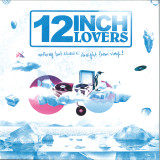
Since 2020, 12 Inch Lovers have been releasing new samplers every year, eagerly anticipated by collectors. These samplers have now become a staple and are easily added to vinyl collections across Europe. They offer timeless classics and rare tracks that are often hard to find elsewhere.
With Samplers 9 & 10, they surprise again with a mix of modern classics and tracks that have never been released on vinyl or are difficult to find. By adding unique and exclusive tracks, the 12 Inch Lovers samplers remain innovative and high-quality. They are a must-have for DJs, collectors, and fans of contemporary classics!
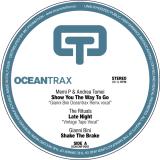
Released in 2014 on the German label KOMPAKT, this remix by Maceo Plex features Ten Walls-like horns, vocals, and pumping drums, making it a true Ibiza floorkiller. The vocals are by Konstantin Sibold. This remix was only released as a white label (Kompakt Exclusive) and has yet to have an official vinyl release. Despite this, it remains a favorite among DJs and clubbers worldwide, regularly played at festivals and clubs.
A2) Plaything - Into Space (Original Release 2001)
This groovy track, released in 2001, contains a sample from Sheila & B. Devotion's Spacer, with Nile Rodgers as one of the producers. The original trackSpacer is an iconic disco hit from the 1970s, and Plaything put a contemporary spin on this classic. The track was a hit in Belgian clubs in the early 2000s, often played by prominent DJs. It has since been released on various labels and remains a timeless favorite in the electronic music scene.
B1) Ion - W.B. (Original Release 2002)
This trance classic by DJ Ion was first released in 2002 on the Belgian label B². The track quickly became a beloved classic within the trance community. Danny Casseau, the producer behind this track, is also known for other legendary works, including the trance classic Ion 98 - Tructure, which had a significant impact on the trance scene. W.B. is a pure, old-school trance track, crafted in the way only tracks from that era were!
This vinyl is extremely rare and hard to find, making it a sought-after item for collectors and trance lovers. It is still played in the sets of DJs who cherish the older trance sound, and it fits perfectly in contemporary sets as well!
This club banger was released in 2007 on the French label Voices Records and was a popular track in well-known Belgian clubs like Illusion and La Rocca. The Ledge Remix added an energetic, infectious vibe that made it a true hit on the dancefloor. It received an official vinyl release in 2007, but it is now difficult to obtain. Subaltern's Forever remains an unforgettable club classic still appreciated by electronic music lovers.
C1) Lykke Li - No Rest For The Wicked (Joris Voorn Remix) (Original Release 2014)
Swedish singer-songwriter Lykke Li scored a worldwide hit with I Follow Rivers, but also had great success with the powerful track No Rest For The Wicked. The Dutch producer Joris Voorn gave his own tech-house spin to the track in his known style!
Voorn's remix keeps the atmospheric mood of the original but adds a new, dancefloor-friendly dynamic that makes it suitable for the electronic music world.
This is the first time this remix is being released on vinyl since the original release in 2014, making it a rare and desirable item for both collectors and DJs. Thanks to the powerful mix of melody and rhythm, this remix of No Rest For The Wicked remains a timeless favorite that has found its place both in clubs and in vinyl collections of music enthusiasts and DJs.
C2) The Roc Project feat. Tina Arena - Never (Filterheadz Luv Tina Remix) (Original Release 2002)
This Spanish dance track hit Europe in 2003, thanks in part to the legendary remix by the Belgian techno duo Filterheadz. Brothers Bert and Maarten Wilmaers, known for their distinctive techno sound, gave the track their own twist with strong beats and an uplifting bassline, creating a timeless club hit that was heard everywhere in the early 2000s.
The vocals by Tina Arena add an emotional layer, while the Filterheadz Luv Tina Remix has stood the test of time and still gets everyone moving. At 12 Inch Lovers parties, this track never goes unnoticed and often brings the night to a high point. This track is a must-have for both collectors and DJs who love a mix of emotion, energy, and a solid techno sound.
D1) Soul Syndicate - Inside Of Me (Steel Union Remix) (Original Release 1995)
Speaking of a trance classic, this one is a true gem! Inside Of Me was released in 1995 during the golden years of Belgian trance music on the legendary Belgian label Aquatic Records. The Steel Union Remix by Zzino is an absolute favorite among trance lovers.
With its iconic sound and unmatched energy, this track is a true ode to the Belgian trance scene. It remains an unadulterated classic that still makes an irresistible impact, not only at retro trance events but also in the sets of contemporary DJs. Since its release, this remix has been hard to find, making it an even rarer piece of trance history. A track that has stood the test of time and is a must-have for collectors and fans of old-school trance.
D2) Ken Laszlo vs. Disco Dice - Hey Hey Guy (House Dub) (Original Release 2003)
Ken Laszlo, the Italian singer who became globally famous in the 1980s with the iconic Italo-disco hit Hey Hey Guy, received a re-release in 2003 on the house label Dubmental. This version was reimagined by Disco Dice, who gave the track a fresh house vibe with a more modern sound. Belgian DJ Jean, known for his influence on the Belgian nightlife scene, introduced this track into the clubs and transformed it into a club classic.
This release, although released in 2003, is now very rare and hard to find on vinyl. It's a hidden gem that continues to withstand the test of time, making it a valuable collector's item for lovers of both Italo-disco and house.
The Australian band Icehouse released the iconic track Hey Little Girl in 1982 on the British label Chrysalis. This synth-pop track was a big hit and still remains one of the classics from the 1980s. The original track was later included in the remix album Meltdown in 2003, where the Australian duo Infusion created a contemporary electronic remix that gave the track a new dimension.
The Infusion Remix adds a modern, danceable twist to the original synth-pop sound. This version surprised both fans of the original hit and lovers of electronic music, remaining a sought-after track in DJ sets.
This track has been unavailable on vinyl since its original release in 2003, making it a rare collector's item.
out of Stock
Last delivered 3 months ago available to reorder, subject to availability
Incl. Pryda, Dexter Connection, Superfunk feat. Ron Carroll, Dave Swayze, Chris Bangs feat. Rita Campbell, Hyper Pearl, Daniel Bovie & Roy Rox, The Disco Freaks, The Mackenzie feat. Jessy
Since 2020, 12 Inch Lovers have been releasing new samplers every year, eagerly anticipated by collectors. These samplers have now become a staple and are easily added to vinyl collections across Europe. They offer timeless classics and rare tracks that are often hard to find elsewhere.
With Samplers 9 & 10, they surprise again with a mix of modern classics and tracks that have never been released on vinyl or are difficult to find. By adding unique and exclusive tracks, the 12 Inch Lovers samplers remain innovative and high-quality. They are a must-have for DJs, collectors, and fans of contemporary classics!
SAMPLER 9
A1) Pryda - Allein (Original Release 2012)
Pryda, the legendary alter ego of Eric Prydz, has earned iconic status in the electronic music scene with his refined productions and epic tracks. Under this name, he has released several hits that have stood the test of time, including Allein. This track is a progressive house masterpiece built around a sample from Polarkreis 18's Allein Allein and is infused with the characteristic Pryda sound: grand, hypnotic, and emotionally powerful.
With its timeless and universal appeal, Pryda - Allein has captivated fans worldwide. The track is an absolute floor-filler that forms a highlight in any DJ set. Notably, this iconic track has never had a vinyl release, making this edition extra special for both collectors and lovers of true electronic music history.
A2) Dexter Connection - Baby Be Mine (Original Release 2003)
Released in 2003, this delightful groover samples Michael Jackson's Baby Be Mine and Brothers Johnson's Stomp. The track combines funky basslines with a tight, rhythmic groove that immediately invites dancing. The nostalgic vibes from the classic samples provide a familiar sound, while the modern production gives it a fresh, contemporary twist. Ideal for DJ sets where you want to get the crowd in the right mood.
A3) Superfunk feat. Ron Carroll - Lucky Star (Original Release 2000)
This track needs little introduction. Released in 2000, with soulful vocals from Ron Carroll, it quickly became an iconic hit within the house scene. Lucky Star was the breakthrough single of Superfunk, a French house group,and sold over 500,000 copies worldwide. The track reached number 42 on the UK Singles Chart and has since become a staple in house and dance sets.
With its funky basslines, catchy melody, and infectious groove, it's a perfect mix of disco, house, and soul. The track includes a sample from Chris Rea's Josephine, adding to the recognizable and nostalgic vibe. Lucky Star became not only a floor-filler but also an anthem of the French house movement, alongside acts like Daft Punk and Cassius who dominated the world in the same period.
B1) Dave Swayze - Goldwave (24K) (Original Release 1996)
This 1996 trance classic needs little introduction. Goldwave is a timeless track that continues to resonate with trance lovers, thanks to the unique combination of dreamy synths, hypnotic rhythms, and epic build-up. The track is a true ear-candy and touches anyone who hears it. Originally released in 1996 on Belgium's DiKi Records, it quickly became a classic in clubs like La Bush, Illusion, La Rocca, and many more.
To this day, Goldwave is still played in the sets of many DJs, and remains a favorite at retro trance events. The track has stood the test of time and remains a key track for fans of old-school trance. It's a piece of electronic music history that makes people dream on the dancefloor with its dreamy Goldwave.
Warm Weather by Chris Bangs feat. Rita Campbell is a summery, uplifting track that perfectly evokes the atmosphere of Ibiza. The song blends house and trance with the infectious vocals of Rita Campbell, creating a warm, relaxed vibe. The Ibiza BeachBall Vocal Mix adds a touch of Balearic energy, with a calm rhythm and melodies that immediately remind you of sunny beaches and carefree days. Originally released in 2000 on the UK label INCredible, it remains a hidden gem for many trance lovers.
C1) Hyper Pearl - Can You Feel The Pain (Up & Vox Version) (Original Release 1995)
This 1995 trance classic made a lot of noise in clubs like Illusion, La Bush, Lagoa, and At the Villa. Pure old-school trance with emotion and drive like only that era could produce. A fantastic track, produced by Carl Drake, Matt Spinner, and Zzino, originally released on Belgium's Aquatic label.
C2) Daniel Bovie & Roy Rox - Stop Playing With My Mind (Dub) (Original Release 2008)
Daniel Bovie (aka Danny Van Wouwe) is a versatile producer with dozens of tracks to his name, many of which are considered classics. This track is no exception. Originally released on the legendary Strictly Rhythm label, co-produced with Dutch producer Roy "Van Luffelen" Rox, this track quickly became a floor-filler and charted in Belgium and the Netherlands. The vocals wereprovided by the talented Nelson.
D1) The Disco Freaks - Make My Dreams Reality (Chord Memory Mix) (Original Release 1997)
Originally released on an EP by The Disco Freaks, the alter ego of producers Bart Grinaert and Lajos Meszaros. This mix, which is much stronger than the original, quickly became a club classic and was played extensively in clubs like Illusion, Carat, and Extreme. A delightful, groovy, and uplifting track that combines disco elements with house. The Chord Memory Mix adds a nostalgic touch by using warm chords, funky basslines, and uplifting percussion.
D2) The Mackenzie feat. Jessy - I Am Free (Marino Stephano Club Mix) (Original Release 1997)
I Am Free by The Mackenzie needs little introduction and is a must in every DJ and vinyl lover's collection. This mix, often played at our parties, is something special. The man behind many legendary trance classics, Marino Stephano (RIP), hasreworked this version in his unmistakable way. The remix has an energetic and captivating vibe, with deep, hypnotic beats and floating synths. A beautiful track in its original version, it continues to fascinate.
out of Stock
Last delivered 3 months ago available to reorder, subject to availability
Atkinson first saw Les yeux sans visage when she was a teenager, around the turn of the century. The film made an impact for its iconic imagery and the way Franju draws on the aesthetics of early filmmaking, from its score that relies on stylistic markers typical of the 1940s or 50s to the decision to shoot in black and white. Even four decades after its first release, it was clear that this was a work that stood outside of the cultural moment that birthed it, speaking through time in ways that were uncanny, but profound.
A quarter-century later, Atkinson was approached by the Belgian cultural center VIERNULVIER to create a new score for Les yeux sans visage for its celebrated Videodroom series, which has seen artists like claire rousay, Mabe Fratti, Lee Renaldo, and many more create new original scores for cult classics and genre cinema. Atkinson's music, with its sublime meditations on space and proximity, its elusive sense of narrative development, mirrors the pacing and mystery at the heart of horror filmmaking. There is a shadow at the heart of her soundtrack to Les yeux sans visage, an ever-shifting wisp and an insinuation of encroaching transfiguration. Echoing a climactic moment in the film, the music obliquely points to "the Beyond," an impossible place of discovery and revelation.
Atkinson envisioned her music as something akin to the air moving throughout and beyond the many cages that appear in the film, unconstrained by the bars and with undefined borders. Those cages hold the victims of a madman surgeon, determined to graft a new face onto his daughter, the protagonist Christiane Génessier, who lost hers in a car accident while he was behind the wheel. Atkinson was reminded of her predecessors at the pioneering French studio the GRM, who approached sound in a less sinister, but similarly surgical manner, and took inspiration from their playful approach to cerebral soundmaking for the electroacoustic topography into which the piano is embedded. As such, Atkinson’s reactions to the larger themes and the minute-by-minute happenings onscreen are both audible simultaneously.
A film about a man who destroys the lives of young women marked by their beauty and similarity to his daughter in a shame-fueled rage has clear, continuous cultural resonance. "Through the music, I decided to bring back their empowerment despite what they endure," says Atkinson. "This is why the record is also dedicated to Gisèle Pelicot, whose trial happened while I was in the process of composing the music and kept thinking of her strength and her decision to share her trial in order to reverse the shame."
This recorded version of the soundtrack is a 34-minute synthesis of the full 90-minute score, presented on LP along with an essay by writer-musician Claire Cronin and drawings by Momo Gordon, together forming a complex reflection on the film's themes. If these sounds move as if the bars of cages are no barrier, they also intimate the freedom and power of those held behind them. Rather than simply mirroring the fear and confinement shown onscreen, Atkinson offers an elusive escape, a beacon for the characters, and the listener, to follow as they reckon with the narrative and move through it.
out of Stock
Last delivered 3 months ago available to reorder, subject to availability
ALERT: BIG 90s ITALIAN RAVE COMP - a lot of very in demand tunes on here.
Navigators
Franco Falsini and the Interactive Test Universe
There are musicians who follow their time.
And then there are those who seem to move along a different trajectory—like navigators crossing sonic eras without ever truly belonging to any one of them. The story of Franco Falsini belongs to the latter. It is a story that begins long before raves, before techno, before the word “electronic” had even become a recognizable musical genre. A story that moves across continents, technologies, and sonic visions, eventually arriving at a small creative laboratory born in Italy in the early 1990s: Interactive Test. This compilation is a fragment of that universe. But as often happens with the hidden histories of music, understanding it requires going back. Far back.
The Beginning: Machines, Tape and Space
In the late 1960s Franco Falsini leaves Italy and moves to the United States. It is not merely a geographical journey—it is also a journey into a new idea of music. At the time, synthesizers are only just emerging from research laboratories. Multitrack tape recorders allow musicians to build entire sonic worlds on their own. Technology is still far from standardized: every studio is almost an experimental workshop. In Virginia, Falsini builds one of his own. Among cables, oscillators, electric guitars and reels of magnetic tape, a kind of music begins to take shape that resembles nothing else being made at the time. It is not simply rock, and it is not yet truly electronic. It moves somewhere in the space between the two. Out of these explorations emerges Sensations' Fix, the project through which Falsini releases a series of albums during the 1970s. Records that seem to come from a parallel dimension: cosmic landscapes, electronically treated guitars, synthesizers drifting like satellites. Many years later those albums would be rediscovered as visionary works. But at the time they were simply the result of relentless curiosity. A curiosity that would never fade.
The City That Never Sleeps
In the 1980s Falsini’s trajectory leads him to New York. The city is a sonic organism in constant transformation. In its clubs and recording studios something entirely new is beginning to take shape: music built from drum machines, sequencers, and samplers, created for the body before the living room. It is the dawn of modern dance culture. Falsini works as a sound engineer, producer and experimenter. From close range he observes electronic music transforming into a global language. Machines become more accessible, computers begin entering studios, and rhythm takes on an increasingly central role. Yet even in this phase Falsini does not simply follow what is happening. He absorbs. Observes. Reimagines. When he eventually returns to Italy, he brings back not only technical experience but also a clear vision: the conviction that electronic music is an open space, a territory still waiting to be explored.
Tuscany, Early 1990s
At the beginning of the 1990s something is happening in Italy as well. In clubs, abandoned industrial warehouses and clandestine parties, a new scene is beginning to form. It is rave culture: a spontaneous movement bringing together DJs, producers and listeners in a collective experience driven by rhythm, technology, and creative freedom. It is within this context that Franco Falsini, together with his brother Riccardo, creates Interactive Test.
The name almost sounds like a scientific experiment. In many ways, it is. Interactive Test does not emerge as a traditional record label. It begins as a laboratory—a place where ideas, sounds and musical identities can be tested and explored. Around the Falsini studio in Tuscany a small constellation of artists and DJs begins to gather, helping to shape the sound of Italy’s emerging electronic scene. Among them are Andrea Giuditta, Francesco Farfa, Gabry Fasano, Roby Mastelloni, Roby J and many others. Each brings a different musical sensibility. But they all share the same intuition: electronic music is not a genre. It is a language.
The Laboratory of Identities
One of the most fascinating aspects of the Interactive Test universe is its constant play with identity. Franco Falsini releases music under several different names: Open Space, Youth Wave, Agent Fylfoyt, Man Myth Magic. These are not simply pseudonyms.
They are different sonic perspectives, as if each project were a window opening onto a parallel musical universe. Open Space, for example, explores more atmospheric and visionary territories. Youth Wave moves between electronic groove and club-oriented rhythms. Other projects experiment with digital psychedelia or hypnotic techno textures. Interactive Test becomes something more than a label. it becomes an ecosystem.
Domestic Machines, Infinite Worlds
Looking back today at the technology used in those productions, one might almost smile. Many tracks were created on Amiga computers, MIDI sequencers and analog synthesizers wired together in home studios—tools that appear modest when compared to today’s digital possibilities.
Yet precisely these limitations became a creative force. Every sound had to be built, shaped and reinvented. Sequences developed slowly, almost like living organisms. The tracks did not always follow traditional dance music structures; often they felt like genuine sonic journeys. Music built from space.
A Hidden Constellation
Many of the records released by Interactive Test in the 1990s remained for years almost invisible objects, circulating quietly among DJs, collectors, and devoted listeners. Yet it is precisely this underground existence that helped preserve them. Listening again today, one perceives something rare: the feeling of music that does not fully belong to its own time. Music suspended between different eras. Perhaps because it comes from a vision that both precedes and transcends trends.
Continuing the Journey
Looking at Franco Falsini’s entire path—from the electronic psychedelia of Sensations’ Fix to the rave culture of the 1990s—a surprisingly coherent line emerges.
A line defined by exploration.
Each project, each pseudonym, each record appears as a new route within the same great sonic voyage.
Interactive Test was one of its stations.
A laboratory.
A community.
A creative platform.
This compilation gathers some of its traces.
Not as a simple archive of the past, but as a map of a musical territory that continues to expand even today.
Like all true sonic explorations.
out of Stock
Last delivered 5 days ago available to reorder, subject to availability
This new album compiles several songs made in the years following Black To Comm's classic "Alphabet 1968" album. Originally released on the seminal Type label in 2009 (and to be reissued on Cellule 75 this year) "Alphabet 1968" combined the sound of vintage shellac and vinyl loops with broken electronics and field recordings, the press release mentioning disparate influences "ranging from Moondog to Basic Channel by way of Bernard Herrmann". In a beautiful one-page review in The Wire magazine (later reprinted in his book Ghosts Of My Life) Mark Fisher compared Richter's music to JF Sebastian’s miniature automata in Blade Runner ("with their bizarre mixture of the clockwork and the computerised, the antique and the ultramodern, the playful and the sinister"), ETA Hoffmann's inventor-magicians and Auguste Villiers de l'Isle-Adam's 1886 tale of Thomas Edison's (fictitious) construction of an artificial human.
Now titled "Coh Bâle" (inspired by a strange dream) these recordings were supposed to become a follow-up to said album but for reasons unknown it never materialized and the album seemed forever lost. At the time Richter started to dive deeper into several strains of (so-called) world music aka the folk music of Southeast Asia and Eastern Europe as well as liturgical and medieval music, the Kraut-Electronica of Harmonia and several certain Mediterranean experimentalists from the 1980's who started to merge their mostly electronic and field recording based compositions with traditional musics from all over the world by way of new sampling technology.
Many of the songs for the album were recorded while travelling and at various residencies around Europe: a detuned piano in a Thessaloniki basement (Richter played at a children's birthday party there), vintage synthesizers in the GRM studios in Paris, decaying acoustic instruments found in an old Black Forest mansion, childrens' voices at a workshop in Karlsruhe's ZKM Institute; then mixed on headphones in the ICE trains running between these places and his hometown Hamburg.
"Coh Bâle" is taking inspirations from old Nonesuch Explorer and Ocora LP's, Crammed Records, 80s Mediterranean Ambient (Nuno Canavarro, Roberto Musci) combined with the DIY spirit of Deux Filles and Flaming Tunes and the playfulness of Asa Chang & Junray. The songs are both mysterious and transparent, intricate and frugal, vibrant and patient. One of the album's unexpected climaxes is a gorgeous (artificial) berimbau version of the Welsh traditional "Iechyd o Gylch".
No two songs feature the same instrumentation and many acoustic sources (pianos, flutes, wood percussion, viola, tablas, autoharp) were disassembled and later coalesced into new configurations or used as virtual instruments; later combined with samples, field recordings, electronics and (on a few tracks) autotuned vocals reminding of recent works by the likes of Claire Rousay or More Eaze.
We had to wait for a worldwide pandemic for Richter to dig deep into the vaults and finally bring these recordings to light. This is the 2nd release from his archives after the "Diode, Triode" LP which presented Musique Concrète/Acousmatic recordings made at INA/GRM and ZKM. Another massive Double-CD (MM∞XX Vol. 1 & 2) was released last year featuring collaborations with 33 artists such as Andrew Pekler, Richard Youngs, Eric Chenaux, Maja Ratkje, Radwan Ghazi Moumneh of Jerusalem In my Heart, GRM boss François Bonnet (Kassel Jaeger), Felix Kubin, Timo van Luijk (In Camera, Af Ursin), Luke Fowler and many others, showing Richter's versatility and his willingness to reinvent himself for every new release.
Marc Richter is widely known under his Black To Comm moniker, having released (at least) 12 albums under this alias in the last 20 years. He is currently signed to the Thrill Jockey label. Richter composes soundtracks for film and has worked with visual artists such as Mike Kelley and Ho Tzu Nyen. He also records as Jemh Circs and Mouchoir Étanche for his own Cellule 75 label (named in tribute to the late Luc Ferrari).
out of Stock
Last delivered 4 months ago available to reorder, subject to availability
Side A’s “Mysterious Vibes” comes from Action (1977), the later-era The Blackbyrds LP produced by Donald Byrd. By this point the group had fully locked into that hazy jazz-funk pocket—rhodes, bassline glide, & drums that feel tailor-made for loops. It’s been a quiet weapon for producers: Kurious (“I’m Kurious”), Paris (“The Days of Old”), plus later flips from Big K.R.I.T. & Dom Kennedy. The Jazz Dub leans into that—stretching the groove, letting the atmosphere breathe, keeping it playable.
Flip side is certified soul-collector territory. Tom Brock’s “When There’s Nothing Left…” is lifted from I Love You More and More (1974), produced by Barry White & Gene Page. Lush, aching, full orchestration—exactly why Just Blaze flipped it for Jay-Z’s “Girls, Girls, Girls” off The Blueprint. One of those samples that instantly connects eras.
This isn’t just a “nice edit” 45—it’s a bridge between jazz-funk heads, soul collectors & hip-hop producers. Both sides rooted in records that already did damage, now reworked for the floor.
out of Stock
Last delivered 4 months ago available to reorder, subject to availability
German-Turkish singer and composer Alev Lenz follows her self-released album 4 in a Cycle of Thirds (Jan 2026) with a complete, album length ambient rework by Simian Mobile Disco co-founder Jas Shaw. “The two records are very much intertwined," writes London-based German-Turkish singer and composer Alev Lenz. "I made 4 in a Cycle of Thirds with Jas in mind, inspired by a mix he created for my last album.” Lenz and Shaw have previously worked together on 2024 collaboration EP Bring Your Friends, as well as album mixes for Lenz' previous two solo records. Lenz' original album was created from a series of single-note drones, one for each note of the chromatic scale. "When I had this idea, I wanted Jas’ touch involved somehow. I asked him for drones on each note. He sent me 12 and I wrote most of the album listening to these drones. They eventually left the picture and were replaced by new drones I made, new sounds or vocals. But the memory of them lingers in the songs, like an imprint on the retina, an afterimage.
So naturally when the record was finished I sent the totality of it to Jas and said: here you go, make your versions!" 4 in a Cycle of Thirds in its original form touches on traditional folk musics, chamber music, contemporary composition, film score, and even interweaves subtle metal inflections, but now presented on double vinyl alongside Jas Shaw's versions as twin records, it has a newly foregrounded quietude, spectral and delicately nuanced. Through reduction, meticulous replacement, and sensitively applied edits, Shaw gently rebalances the light and shadow of the original pieces, coaxing new subtleties and harmonic resonance. "It occupies a space that is in-between the lines," describes Lenz. Shaw employs a "feedback system" he created for his piano, applied here to devastating effect. "Take the key bed off it and set up a resonators, mics and a mixer. Lots of gaffa tape, lots of precarious propping stuff open. You grub around on the floor and slowly the room fills with harmonics, it’s wonderful." And, on the relationship between the original record and these new versions, he explains "we could really let the songs drift into a different shape without worrying that we were missing elements that were great."
Alev Lenz is a singer, songwriter, composer, and producer born to a Turkish actor, activist, and artist mother and an Oscar-winning German engineer father. Alev’s creative foundation is as diverse as her musical output. Her solo discography includes three albums - Storytelling Piano Playing Fräulein (2009), Two-Headed Girl (2017), and 3 (2019). She has contributed vocals to scores by Oscar-winning composer Volker Bertelmann, including the US drama Conclave. She has collaborated with artists such as Anoushka Shankar, Jas Shaw (Simian Mobile Disco), Roomful of Teeth, and plenty more. Songwriter, composer, and producer Jas Shaw is best known for his work with Simian Mobile Disco, whom he co-founded in 2003. He mixed Alev Lenz' 2016 and 2019 albums Two-Headed Girl and 3, and also performs with Selling alongside Gold Panda, and Shaw & Grossfeldt with visual artist Bas Grossfeldt. Shaw and Lenz released the collaboration EP Bring Your Friends in 2024.
The Definite Article captures the Scientists "Weird Love" lineup (Kim Salmon, Boris Sujdovic, Tony Thewlis, Leanne Cowie) performing live at the peak of their powers at The Triffid in Brisbane on November 4, 2017. The Australian rock legends run through twenty of their best loved songs and captures them at their raucous, swampy, noisy best. The band were so happy with the performance and the recording that they decided to release it on cassette on Emmett Kelly’s Ha Ha label and sell it on tour. With the tape long sold out, In The Red is happy to bring this incredible performance to vinyl for the first time. “I love their records. They wrote fantastic singles and looked like they just crawled out of the ooze. What more could you ask for?” – Warren Ellis “The Scientists turned my head around and made a man out of me! They grew hair on my palms and made my socks stink.” – Jon Spencer “The Scientists proved to me that rock 'n' roll could be played by gentlemen in fine silk shirts half-unbuttoned and still dirty, cool and real.” – Thurston Moore
"raqs", which translates to the Dari noun for "dance" is written the same way like its Arabic original made of the three root letters: ra qa sa - to dance. under this premise of cultural kinship Afghan-German producer artist Farhot is about to addanother sonic layer to his discography, this time designed for the dance floor - a space, where culture can be shared by many, which invites movement and connection.while his earlier work was heavily influenced by the various traditions of hiphop, which later was enfused with sounds inspired by his Afghan roots, on "Raqs" he explores the vibrant musical heritage of mostly Arabic speaking regions from North Africa to West Asia, where as his fascination for Somali music also took him to East Africa. Like a well versed HipHop producer Farhot"s approach to "raqs" was guided by a virtual sampling journey which allowed him to connect and fuse sounds from Egypt, Lebanon or Somalia carefully woven into an EP that stands apart from his previous work but nevertheless carries his sonic signature: productions, that can sound as complex and immense as they sound playful and simple or creating intensity through unconventional ways of chopping and distorting vocals - amongst others one will find samples of Lebanese legend Fairuz dressed in an almost experimental uptempo production. Whoever followed Farhot"s work around the release of his sophomore LP Kabul Fire Vol. 2 via his own label Kabul Fire Records will know that he releases music intentionally alway ensuring a new quality to music, especially when he samples from cultures that are often times overshadowed by conflict or simply forgotten. With "raqs" he reminds us of the rich musical traditions that always existed beyond the west. he also reminds us of the ways that music can connect beyond borders, like an Afghan producer from Germany, who loves Somali music and Fairuz.
New chapter on the internationally famous labels "Ocean Trax" and "Confidential Records"
“Shake That Brake” an energetic track that blends classic House elements with a modern club sound.
“Late Night” by The Rituals is a vibrant soul/funk/disco track infused with retro flair and modern polish.
Driven by groovy basslines, tight rhythmic patterns, and shimmering disco elements, the song delivers a warm, feel-good energy.
Funky guitar licks and dynamic arrangements blend seamlessly with soulful influences, creating a lively and infectious atmosphere made for the dancefloor.
“Let Me Show Ya” by Memi P & Andrea Tomei is a groovy soul/funk track packed with rhythm and attitude.
Built around a tight bassline and punchy drum patterns, the song delivers an infectious groove that instantly grabs attention.
Funk-driven instrumental touches and smooth vocal elements blend seamlessly, creating a vibrant, feel-good atmosphere rooted in classic soul energy with a contemporary edge.
“You Know How To Love Me” for this track Gianni Bini and Memi P. joins forces to create a new soul-funk anthem perfect for dancefloors all across the world.
With the help from Fatimah Provillon’s rich and expressive vocals this track has a timeless yet modern sound, a perfect fit for nu-disco, funk and soulful dance playlists.
“Feel The Rhythm” by Memi P is a driving house track built around a solid groove and infectious energy.
Steady four-on-the-floor drums, pulsating basslines, and vibrant synth elements create a dynamic club atmosphere.
The track balances rhythmic intensity with catchy vocal touches, delivering a powerful and uplifting vibe designed to move the dancefloor.
out of Stock
Last delivered 82 days ago available to reorder, subject to availability
The early 80’s in Aylesbury, Buckinghamshire, was hardly the place where music dreams came true. It had an amazing venue called Friars which was on the touring circuit, but very few local bands. There was the VICE CREEMS fronted by Kris Needs and there was the notorious yet terrible SORE WILLIES. EFFIGY came from the ashes of the SORE WILLIES and formed in 1983. EFFIGY came fully formed and instantly became popular in the local area, where they put on a weekly night at the Uptown Coffee Bar. The band hardly left Aylesbury though, and when they did it was to play in nearby High Wycombe and Bicester. They played bigger gigs with everyone from ALIEN SEX FIEND, BILLY BRAGG, UK DECAY, THE SCARS and SPIZZ. The band recorded one 5 track demo in October 1983 and it is simply unbelievable that it has never been re-released, but then again the bands legacy seems to have banished without a trace, with literally no mentions anywhere. Making their demo one of the hardest ones from 1983 to track down, or even hear, since it is not even uploaded on YouTube.
EFFIGY’s sound is so instant. It’s driving, tight female fronted post punk with hooks, style, and had it been released at the time would have made them a household name. Think a straight ahead version of SIOUXSIE AND THE BANSHEES, early X-MAL DEUTSCHLAND, THE A-HEADS or the SKELETAL FAMILY but with a more pop edge. The songs lyrically were around the obsession with paganism and old black and white horror films, the name EFFIGY was taken from a book Roger was trying to write about witchcraft and the Pendle witch trials called Effigy of Isobel, which was never completed (due to his very low attention span) but a song on this recording did emerge.
The release comes with a lyric sheet, a new interview with the band and as much archive as we could dig out, which in this case wasn’t much.
Roland Leesker reimagines a House Classic with Vinyl-Only Cover of ‘What You Need’.
Definitive Recordings presents a special vinyl-only release as Roland Leesker delivers his cover version of ‘What You Need’, the seminal house anthem originally released in 1990 by Soft House Company. This release is a respectful homage to one of house music’s defining records, crafted for DJs and collectors alike.
On the Original Mix, Leesker stays close to the spirit of Soft House Company’s classic, faithfully honoring the original arrangement but properly pumping.
On the flip, Leesker presents his ‘Mysterious Eastern Force Edit’, an expansive, eleven-minute journey designed for deep dancefloor moments. While retaining the essence of the original, this version introduces a more energetic bassline before weaving in a subtle 303 acid line, bridging different eras of house music history into one hypnotic, evolving arrangement.
This vinyl-only release is a tribute to the legacy of house music — respectful, powerful, and made to be played loud on a proper sound system.
out of Stock
Last delivered 4 months ago available to reorder, subject to availability