Ava Max is ready to take her already extraordinary rise to the pinnacle of pop success to even greater heights with her first new single of 2022, “Maybe You’re The Problem,” and her upcoming album DIAMONDS AND DANCEFLOORS. With over 11B worldwide streams, an array of smash collaborations, and multiple RIAA gold and platinum certifications in the US alone, the first-generation Albanian American artist has fast proven a true pop superstar, hailed for her seismic voice, idiosyncratic high fashion mindset, and undeniable knack for cinematic, theatrical popcraft. 2018 saw Max make her explosive arrival with the blockbuster success of the RIAA 3x-platinum certified hit, “Sweet but Psycho.” Currently boasting more than 3.5B global streams, the track took the world by storm, spending three weeks in the top 10 on Billboard’s “Hot 100” while reaching #1 in more than 20 countries around the world and earning diamond certification in Brazil, France, Poland, as well as multi-platinum certification in Australia (5x), Austria (3x), Belgium (2x), Canada (6x), Denmark (3x), Germany (2x), Italy (3x), the Netherlands (2x), New Zealand, Norway (9x), Portugal (2x), Spain, Switzerland (4x), and the United Kingdom (3x). Joined by an official video that has now garnered over 770M views, “Sweet But Psycho” further earned Max a long string of international honors, including the 2019 MTV Europe Music Awards’ coveted “Best Push Artist” award, “Best New Artist” nominations at both the 2019 MTV Video Music Awards and the 2019 MTV Europe Music Awards, and an iHeartRadio Titanium Award marking over 1B spins in 2020 alone.
Max kept up the pace with a series of smash singles, including the RIAA gold certified “So Am I,” “Salt,” and “My Head & My Heart,” as well as the platinum certified title track to her acclaimed full-length debut, Heaven & Hell. The RIAA gold certified album made spectacular chart debuts around the globe, earning over 11B worldwide streams and gold, platinum, and multi-platinum certifications in over a dozen countries. 2021 saw Max unveil “EveryTime I Cry,” declared by PAPER as “an undeniably uplifting banger.” What’s more, Tiësto & Ava Max’s worldwide hit anthem, “The Motto,” has proven an undeniable international blockbuster since its November 2021 release, reaching the top 5 on Billboard’s “Dance/Electronic Songs” chart while earning close to 500M worldwide streams thus far.
Named to Forbes’ prestigious “30 Under 30” list in 2021, Ava has been feted with a wide range of media attention from such high profile outlets as VOGUE, Rolling Stone, Vanity Fair, Billboard, PAPER, to name but a few, while also delivering a long run of show-stopping performances on CBS’s The Late Late Show with James Corden, NBC’s TODAY, ABC’s Jimmy Kimmel Live!, Good Morning America, and Dick Clark’s New Year’s Rockin’ Eve with Ryan Seacrest 2020, the MTV Europe Video Music Awards, and more. A truly international artist, Max has teamed up with a stunning assortment of diverse musicians around the world, spanning Norwegian DJ/producer Alan Walker and Spanish superstar Pablo Alborán to David Guetta, Jason Derulo, AJ Mitchell (for the RIAA gold certified “Slow Dance”), and country stars Thomas Rhett & Kane Brown (the RIAA gold certified “On Me”). Now, on “Maybe You’re The Problem” – and more exhilarating new music to come – Ava Max is poised to push pop even further, setting a direct course toward the top and beyond with her newly announced upcoming album DIAMONDS AND DANCEFLOORS, out January 27th2023.
For this uniquely personal retrospective spread over twelve vinyl discs, Sven Väth takes us back to the early days of his DJ career. On What I Used To Play we meet great pioneers of electronic music, gifted percussionists, obscure wave bands, and innovative producers of a bygone 'new electronic' era. Rough beats and irresistible grooves from the identification stage of house, techno, and acid remind us not just how far electronic music has evolved over the past four decades, but how great it was to dance to EBM, techno, and house for the very first time.
If there is one protagonist of the electronic music scene who has remained curious, innovative and at the very cutting edge of music for over four decades, it's Sven Väth. His multi-layered artist albums and Sound of the Season mix compilations have been defining the genre for over two decades, and even today, he is constantly on the lookout for the next top tune to add to the highlights of his next set. At least, that's the case when he's not producing them himself as an artist or remixer. "Actually, it's always been part of my DNA to think ahead," and nothing had been further from his mind than looking back at his past, but when in spring of 2020 the international DJ circuit had to be scaled down to virtually zero, the 'restless traveler' suddenly had time. Time to stop and reflect on "how it actually was back then, at the very beginning of my career..."
"It was a great trip and with every track, beautiful memories came flooding back".
In the London apartment, he had just moved into, Sven has set up a "little music room", where he cocooned himself for several days, "to look way back for the first time and review my musical journey through the eighties, so to speak."
The interim result was six thematically oriented playlists with a grand total of 120 tracks from 'early 80s' to 'Balearic late 80s', together with excursions into afrobeat, European new wave, and EBM sounds and a few epochal techno/house tracks from the USA in between. From these 'Best of Sven Väth's favorites', the project What I Used To Play crystallized. Sven remembers how the Cocoon team reacted to his proposal: "They found the idea of making a compilation out of it MEGA from the beginning and everyone said 'Sven, go for it', but then, of course, the work really started, namely, to clear the rights and to get clean sounding masters of the up to 40-year-old tracks. There was also disappointment, of course. We couldn't clear certain titles because the rights holders in the USA had fallen out with each other or simply disappeared from the scene. In short, it wasn't easy, but now I can safely say we got the most important tracks."
Finally, after two years of research, curation, design, and administrative fine-tuning, the "little retrospective" from 1981 to 1990 is available. The exquisitely packaged, and three-kilo heavy box set is not only physically impressive, WIUTP is also the definitive record of Sven Väth's musical development. On each of the twenty-four sides of vinyl, you can trace track by track, what influenced him during which phase, and how he took off as a DJ from his parents' Queen's Pub straight into the spotlight at Dorian Gray. There and at Vogue (later OMEN), Sven became the style-defining player in the DJ booth that he still is today.
1981 - 1990: Future Sounds of Now
In the early eighties, the crowd in clubs like Vogue and Dorian Gray danced to what nowadays we call 'dance classics' - mainly disco, funk, soul, and chart pop. It was up to a new generation of DJs, including Sven Väth, the youngest protagonist in the Rhine-Main area at the time, to create their own club-ready music mix. Good new tracks and potential floor-fillers were rarities that had to be sought out and found, in order to prove oneself worthy.
Without MP3s, internet streaming, or other digital download possibilities, music didn't just gravitate to the DJ, instead, it had to be tracked down. In well-stocked record stores in Frankfurt and Wiesbaden or even in Amsterdam, London, or New York, Sven and friends sourced the material for countless magical nights. On WIUTP we can follow Sven's very personal journey through this wild, innovative era in which synth-pop, funk, hip-hop, and disco were successively replaced as 'club music' by house, techno, acid, and breakbeat. By the end of the decade, it was clear to see that these once exotic 'fringe' phenomena would soon become 'mass' phenomena.
Early 80s
Dirty Talk by the Italian-American duo Klein & M.B.O. represents the most innovative phase of the Italo-disco genre in the early eighties like no other track. Mario Boncaldo (I) and Tony Carrasco relied entirely on the original synthetic drum and percussion sounds of the Roland TR-808, coupled with the raunchy vocals of Rossana Casale and guitar accents of Davide Piatto. Of course, other tracks from this period were also influential in style, most notably Unit by Logic System, which worked as the perfect soundtrack to the laser lighting system at the legendary Dorian Gray club. With stomping beats and robotic rap interludes, Bostich by Yello also belongs on Sven's eternal playlist - after all, it caught the attention of Afrikaa Bambaataa, who invited the Swiss duo to perform at the Roxy in New York in 1983.
EBM Wave - Mid 80s
From today's point of view, the almost ten-minute-long, downtempo track Giant by Matt Johnson's band project The The, would probably not be considered an obvious club classic. However, a closer (re)listen reveals the rhythmic intricacies of the percussion overdubs by JG Thirlwell (aka Foetus) on Johnson's composition, and it becomes clear why this exceptional piece of music is one of Sven's absolute favorites. Other classics from this phase include Kaw-Liga by the mysterious The Residents, the hypnotic-synthetic Our Darkness by Anne Clark (and David Harrow), and last but not least, the somber, monotonous anthem Where Are You? by 16Bit, one of Sven Väth's projects together with Michael Münzing, Luca Anzilotti from 1986.
US House - Late 80s
You certainly can't talk about Chicago house without mentioning Frankie Knuckles. The resident DJ at the Warehouse not only gave the name to an entire genre, but also produced epochal floor fillers on the Trax label like the timeless Your Love, sung (and moaned) by Jamie Principle. Acid house protagonists Phuture also hail from Chicago, and on We Are Phuture (also released on Trax) we hear the chirping acid sounds of the legendary Roland TB-303 in full effect. Another featured classic is No UFO's by Detroit's Model 500 aka Juan Atkins, who is rightly considered the 'Godfather of Techno' even if the genre-defining track from 1985 still breathes with the spirit of hip-hop and electro from the first breakdance era.
Afrobeat
Le Serpent, by Algerian-born Abdelmadjid Guemguem, is a track that sounds completely different from everything else on WIUTP. Made in 1978, it's a monumental, rousing groove created without bass or synths, just with five congas! Even though Guem sadly passed away in 2021, his immortal, acoustic beats are understood all over the world and will continue to enrich many thousands of DJ sets for years to come. Another classic that not only Sven appreciates beyond measure is Hugh Masekela's Don't Go Lose it, Baby. In addition to being one of the most important jazz pioneers, the trumpeter and freedom fighter from Johannesburg was very experimental, integrating electronic sounds into his music in later years, in a similar vein to Miles Davis and Herbie Hancock. Dutch jazz pianist Jasper van't Hof's afrobeat project Pili Pili has also aged well. The trance-like, almost sixteen-minute-long track of the same name, manages to fill a whole side on the seventh of twelve vinyl discs in the WIUTP box.
UK-US-Euro - Late 80s
Time for a change of scene, in the truest sense of the word, and from a musical perspective, this section is like landing on another planet. First up is Andrew Weatherall's classic remix of Primal Scream's Loaded, featuring the iconic Peter Fonda sample (lifted from the 1966 biker film Wild Angels) that came to personify the mood triggered by the British Second Summer of Love in the late eighties: "We wanna be free to do what we wanna do, and we wanna get loaded...". This period also saw the emergence of M/A/R/R/S whose only single, 1987's Pump Up The Volume, became a club classic with support from DJ legend CJ Mackintosh. In this most eclectic of sections, we also encounter New York house and reggae producer Bobby Konders and his seminal Nervous Acid.
Balearic - Late 80s
Those who know him, know that Sven had already lost his heart to the 'magic island' of Ibiza as a teenager, so with that in mind, the WIUTP project couldn't end without a Balearic chapter. Inspired by Manuel Göttsching's E2-E4, the immortal, eponymously titled Sueño Latino belongs in there without question. Equally popular on the island was, and still is Break 4 Love by Raze, which thinking about it, would also fit perfectly into the house chapter. Last, but not least, there's an overdue reunion with Sven Väth himself, in his role as frontman of the successful Frankfurt trio OFF. Together with Michael Münzing and Luca Anzilotti (later of Snap!) this 'Organization For Fun' created the off-the-wall club hit Electric Salsa in 1986 which incidentally turned into an international chart smash, putting Sven in the enviable position of having to decide between pop stardom and a DJ career. Well, we all know how that decision turned out and the rest, as they say, is history. A not insignificant part of his story is What I Used To Play. Enjoy!
Tod Dockstader's Aerial series, an electronic/drone masterpiece, is cherished among fans of the artist's work and this second volume is available in an audiophile quality double LP edition.
Tod Dockstader's Aerial series is sourced from his life long passion for shortwave radio. Dockstader collected over 90 hours of recordings, made at night, and comprised of cross signals and fragments plucked from the atmosphere.
Opening with airwave drones, Dockstader gradually allows elements to slowly come and go, summoning an ominous atmosphere of ethereal cloud clouds. Malignant placidity continues, giving the feeling of eavesdropping upon late-night audio activity not unlike discovering number stations while sweeping the dials. These sounds pull you in as their density and rhythms come and go.
Backward voices, deep echoing choruses of conversations flowing under the surface, ocean sounds, pulsing electro-rhythms, all seem to be created via the collaging of many hours of source recordings. A masterwork of collage and juxtaposition by an overlooked pioneer of American electronic music.
Artwork by John Brien (Imprec) is inspired by the propagation of shortwave radio signals throughout the earth's atmosphere.
"This return of Dockstader is something to cherish, not just because his output has been so limited and scarce but because what we do have is so intriguing, persuasive and cliche-free; the music of an inspired explorer who trails in nobody's slipstream." The Wire
"One of the great figures of musique concrete composition." Dusted
The Aerial project
I've written before of my interest in shortwave radio, in the notes to the Quatermass CD. Also, in the notes to the Omniphony CD (which has my first "Aerial" mix, "Past Prelude," in it), I mentioned "The Aerial Etudes," which was my working title for what became the three CDs you have. And, at the end of an interview with Chris Cutler (which can be found in the "Unofficial TD Website"), the piece I mentioned I was starting to work on at the time became Aerial.) When I was very young, people got most of their entertainment from radio. They called it "playing the radio," as if it were a musical instrument. That's what I've tried to do in this piece. About this time, a few people encouraged me to look into using a computer for this work.
I'd never used one, but I saw it would allow me to keep my mixes digital - no more transfer losses. So, at the end of 2001, I got a computer and an editing program for it, and spent what seemed a long time learning it. I began selecting mixes and loading them into the computer in late March, 2002. Out of the 580, I selected 90 "best" mixes - eventually reduced to 59, the ones on the CDs. Finally, in assembling the CDs, I followed David Myers' suggestion to allow each piece to flow into the next - making a continuous journey to the end. Tod Dockstader, 14 september 2003
About Tod Dockstader: Dockstader moved to New York in 1958 and became a self-taught sound engineer and sound effects specialist and apprenticed as a recording engineer at Gotham Recording Studios. It was around this time that he started to use his off-work hours to experiment with mixing and manipulating sounds on magnetic tape (musique concrète). By 1960 he had amassed enough material to assemble his first record Eight Electronic Pieces which was released on the Folkways label in 1961 (this would later be used in the soundtrack of Fellini’s Satyricon). The last of the eight pieces was later re-worked into his first stereo piece. In 1961 he applied to use the facilities at the Columbia-Princeton Electronic Music Center and was denied access by Vladimir Ussachevsky. Ussachevsky’s official reason was the “overstrained” scheduling of the studios, although many suspect that Dockstader’s lack of academic training was a factor in the decision. He continued to create music throughout the first half of the 60s, working principally with tape manipulation effects. His last piece at Gotham was Four Telemetry Tapes in 1965, after which he left to work as an audio-visual designer on the Air Canada Pavillion at Montreal’s Expo ‘67. It was around this time in 1966 that some of Dockstader’s pieces were released on three Owl L.P.s, and his work became known to a larger audience. He achieved modest recognition and radio play alongside the likes of Karlheinz Stockhausen, Edgard Varèse, and John Cage.
Duane Pitre's Varolii Patterns was made with an eight-voice synthesizer, tuned in Just Intonation. These consonant pieces explore shifting polyrhythms that slip in and out of rhythmic focus and "Common Rhythmic Pulses" that carry over as the pattern evolves within a piece.
Duane Pitre's statement:
"While experimenting with microtonal electronics for a piece I was writing for Zinc & Copper, which would eventually be titled Pons, I came across a process-based technique that I was quite keen on. Although I wouldn't use this technique on the Zinc & Copper piece, I would later implement said process to make up some of the electronics on Omniscient Voices. During this time I carried out dozens and dozens of instances of this process and recorded them all. Varolii Patterns is composed of a small collection of these recorded takes, ones I felt were stand alone pieces on their own and that worked well together as a whole."
The debut studio album from multi-platinum singer RAYE. Featuring number one single Escapism feat. 070 Shake.
Four times BRIT nominated, RAYE is one of the most streamed artists in the world with over
2.3 billion streams of her music. She has a double-platinum, four platinum, two gold and
three silver singles to her name. She is also indisputably one of the UK's premier
songwriters. Her songs have amassed over 3 billion streams, having written for some of the
world’s biggest artists including: John Legend, Ellie Goulding, Khalid, David Guetta, Diplo,
and Beyonce. In 2019 she was awarded The BMI Impact Award in recognition of her 'groundbreaking artistry, creative vision and impact on the future of music, in 2022 she was
nominated for the Ivors Songwriter of the year, landed R1 Brits List and made her debut solo
TV performance on Jools Holland. During the summer of 2021, her cries of frustration for not being able to release her album were heard worldwide, leading to a mutual separation from her label and allowing her to
carve her own path. Having made her public tirade, followed by her personal 'declaration of
independence', Raye in effect has obligated herself to deliver the ground-breaking first
album that her 2019 BMI award prophesied.
On behalf of re:discovery records, it is with great excitement that we announce the release of Stryke – The Introspection Trilogy (1994-2022). rd011 features a track that is very close to my heart. My senior year in high school. I was heavily into chill-out music at the time. Labels like FAX, Instinct Ambient, Reflective, Astralwerks, em:t, Silent, Moonshine, Rising High, Warp, Exist Dance, Visible, Eye Q and others were giving me such a wide array of beautiful sounds of more subdued techno and rhythmic ambient music. I was buying every compilation I could at the time that looked remotely different based on the artwork, the unusual artist names or the tracks. I was soaking in everything I could under the chill-out style. That year 1994 I picked up the 2nd edition of Moonshine's 'United State of Ambience 2'.
It has so many good tracks on it. One track that always held a special place in my heart was Stryke's 'Introspection pt.1'. The simple but catchy melody layering. The easy atmosphere made me feel like I was floating in the ocean. The deep 808 bass notes (I hope one day you and I will hear this on an amazing sound system). The amazing strings reach a crescendo nearing the end. This track has so many simple but beautiful sounds on it. It's a great example of what I call sequencer-styled electronic music. At a time when producers layered tracks in more of a sequence then building or placing sounds. In 2021 I was able to get a hold of Greg Chin to see if he was interested in putting the track on my label and letting it breathe freely on its own side alone as the highlight of an EP. Greg was enthusiastic about the opportunity and told me that he always wanted to complete the trilogy he had in mind of a part 2 and 3. The ominous and eerie part 2 adds a terrific tension to the finale of part 3. The last being almost an updated part 1 really concluded the trilogy for me. Both parts melded together on side B pushing near 17 minutes. I want to thank Greg for letting us be a home to complete his journey.
In October 1974, the first number of “L'Indépendant du Jazz”, a small self-produced magazine DIY -before punk supposedly invented the concept- was launched by Jef Gilson, Gérard Terronès, Jean-Jacques Pussiau and a few other specialists of a different kind of jazz in France, it looked at the already long career of Jef Gilson and in detail at the album with saxophonist Philippe Maté:
“The ‘Workshop’ is, with Philippe Maté (alto-sax), an undeniable success. Maté is genuinely ‘the’ most inventive French saxophonist since Michel Portal burst onto the jazz scene (who has also worked with Jef Gilson on both “Enfin” and “Gaveau”).”
Even though the author of the article is a mysterious I.H. Dubiniou, and it is difficult to know if it is a real person or a pseudonym used by one of the merry bunch, it is also tempting to hear it as what Jef Gilson really thought about his new discovery. Even more so as the two men would work together over a long period, as Maté became one of the key figures of Gilson’s Europamerica orchestra up until the 1980s.
Philippe Maté had started to make a name for himself with the Acting Trio when they released an album on the BYG label in 1969, and he was also one of the regular sidemen for the Saravah studios (he can notably be heard on albums by Higelin, Fontaine or his cult duo album with Daniel Vallancien).
The album was recorded on 4 February 1972, at the Foyer de Montorgueuil, where Gilson had set up his studio, with more or less the same team found on “La Marche Dans Le Désert” by Sahib Shihab + Gilson Unit (recorded ten days later). This was drummer Jean-Claude Pourtier and pianist Pierre Moret (regular Gilson accomplices since “Le Massacre Du Printemps”), alongside Maurice Bouhana and Bruno Di Gioa on various percussions and/or wind instruments. On bass is Didier Levallet, of the now mythical Perception, (Jean-François Catoire would replace him with Shihab) and Philippe Maté who took top billing, rather than the American saxophonist afterwards. The two albums are however quite different. This “Workshop” is more abrasive, more free. Made up of two long improvisations each of over 22mn, “L'Œil” on side A and “Vision” on side B (Gilson specialists would recognise the nod to one of his albums from the 60s), the album plunges you into the depths, attempting to drown you in electronic waves, dragging you back to the surface by the collar, giving you a good shakedown, before showing you the light, leaving you breathless on the shore after 46mn of the most intense music French has to offer. “An undeniable success”, they said. (by Jérôme "Kalcha" Simonneau)
Rhythm Shower is the 1973 studio album by The Upsetters, but also features tracks by Dillinger and Sir Lord Comic. Many of the rhythms on the album are known as those done by Lee “Scratch” Perry. Originally released in a very limited Jamaican pressing with no sleeve, it became better known after its reissue by Trojan Records as part of The Upsetter Collection.
Rhythm Shower is available as a limited edition of 1500 individually numbered copies on orange coloured vinyl. Since the original release contained no sleeve, this edition is housed in a custom made sleeve by Music On Vinyl in collaboration with Trojan Records.
Fan favorite dark dance outfit Boy Harsher have contributed a sumptuously eerie track for the David Gordon Green directed finale to the iconic Halloween franchise. Sacred Bones and Nude Club (Boy Harsher's imprint) are joining forces and releasing a proper 12" maxi single containing four versions of the track "Burn it Down," to be released in tandem with the original score provided by John Carpenter, Cody Carpenter, and Daniel Davies. Boy Harsher said of the experience: "During an extremely brief period of rest between tours, we got this call from the music supervisor of Halloween. The director, David Gordon Green, had listened to our music and wanted to use something for the final installment in the trilogy - Halloween Ends. We flew to New York the next day to meet the team and discuss the possibilities. It was totally surreal. Obviously we're huge fans of Carpenter and the franchise is a fav, but to work with Gordon Green was also so special, his early films (George Washington, Undertow, Snow Angels) were heavy influences on our work. The real kicker is that Halloween Ends was shot in Savannah, GA - the birthplace of Boy Harsher and where we met. Unbelievable. It all felt too synchronous, and we knew we had to make something work although we were about to leave for a multi-month tour that week. We flew home to Massachusetts, dug through old demos, and found "Burn It Down". In the end it was the perfect energy for the bittersweet love affair between Allyson and Corey, so during a couple days off - we cleaned it up and made it come alive."
'Intensely textured, interlocking guitar riffs weave together on New Bright Object, the debut album from Berlin and Edinburgh-based duo I’m Not You.
Working under the name I’m Not You, artist Alex Gibbs (bass & vocals) and sound designer Niall McCallum (guitar & drums) have honed a sound that draws in equal measure from jazz funk of Weather Report and the math rock of Don Caballero. Their debut album, New Bright Object is their most developed statement to date, an intricate, robust and unique collection of songs born from serpentine jam sessions in rural idylls.
The duo make no secret of their admiration for bands like Battles and Tortoise. They reference Jim O’Rourke’s lounge numbers and the droll lyricism of Modern Lovers’ Jonathan Richman. There’s a touch of Vini Reilly in their sparse and serpentine guitar lines. A hint perhaps of Mogwai. All these names place New Bright Object within a constellation of albums made with bigger budgets for wider audiences.
New Bright Object opens In a flash of light, comet-like, with the sound of ‘Mr. Wind- Up Bird’. The threads they weave are full with intent, as moments of density rise like hills from the track’s quieter valleys. It’s easy to imagine the pair looking out over the rolling fields of the garden studio in East Lothian where they recorded the album, as they assiduously try and draw their own landscapes in sound.
Similarly, there is a crispness to ‘A Certain Arrangement Of Atoms’ - every clipped hat, rim-shot snare and tightly wound tom a fine-tipped mark on the score. It is intricate and precise, a result perhaps of Niall’s attention to detail. Then there is the piano, Alex’s grandmother’s, slightly out of tune, which adds a few expressionist strokes to this pointillist composition. The piece loosens, until all we’re left with is the bass.
Although the album orbits around the pendulum sway of ‘The Older I Get’, it is ‘What Cats Think About’ that stands out most. That it does is by design – a nod to the Sun City Girls and albums that like to throw their listeners a curveball every now and then. Pleasantly ramshackle, confusingly domestic, agreeably strange.
All this speaks to the spirit of the album and the creative relationship between two best friends whose differences seem to have been the only things they could agree on.'
Franco Esse is the moniker of Francesco Semproni, who in the late 60s began working as a music and recording assistant in major recording studios in Rome, Italy. He started out at Dirmaphone (then located in Via Pola) under sound engineer Gianni Fornari, before following him to the Emmequattro studios in Viale Mazzini, which at the time were the headquarters of Edipan, the record label founded by composer and conductor Bruno Nicolai after parting ways with friend and fellow composer Ennio Morricone.
Semproni tried to become a singer-songwriter in the early 80s, when he recorded a number of demos with the session musicians who gravitated around the studios. None of these demos was ever released though, for reasons that are still unclear today – his thorny and stubborn personality may have been a factor, since it apparently made him reluctant to compromise with the major record labels of the time.
The unsuccessful efforts to launch his solo artist career led to a personal crisis, and Franco Esse eventually quit music to go to work as a sales assistant in a toyshop in Rome's Prati neighbourhood.
Today he seems to have vanished without a trace, but after extensive research, we managed to dig some of his demos out of an abandoned archive and miraculously bring back to life two semi-instrumental tracks he recorded in 1983.
Both of them reveal Franco Esse as a refined musician with a reserved personality, an almost minimalist approach to lyric-writing, and a strongly cinematic synth-pop style that is in line with the musical trends of the time and gives a nod to the soundtracks of Fabio Liberatori, falling somewhere in between slow-wave and new-romantic.
These two ballads would have been the perfect soundtrack to cold winter nights in the early 80s, with snowflakes floating down on ski slopes, people clad in puffy down jackets, and music pouring into headphones from walkmans kept in back jean pockets.
Samuel L Session and Van Czar drop a four-track techno EP on Unrilis that showcases a deeper and more hypnotic sound with dystopian atmosphere and driving percussion. Rino Cerrone launched the Unrilis record label over 15 years ago, and part of the label's back catalogue is its iconic Rilis series. 2022 sees the relaunch of the Rilis series that has a focus on underground DJ tools with raw analogue sounds. The Rilis series was originally launched in 1999, and was restricted to a concept on only 10 releases, each pressing a limited run of vinyl. It was hugely popular with each one often selling out in only a week and picking up DJ support by people ranging from Jeff Mills to Richie Hawtin. Those first 10 releases were focused on Rino Cerrone's own music, but since his retirement from the industry, the revitalised Rilis series will welcome other artists whose sound matches the label's underground concept.
This latest release in the Rilis series features collaborative tracks by Samuel L Session and Van Czar who have previously teamed up for releases on other imprints ranging from Marco Bailey's MB Elektronics to Ben Sims' Hardgrooves. Both are also successful solo artists, Sweden's Samuel L Session being well-known for his headline DJ sets at clubs around the world, along with the music he has released via iconic imprints such as Slam's Soma, Shlomi Aber's Be As One, Len Faki's Figure and Emmanuel's ARTS plus his own imprints SLS, Cycle, New Soil, and Klap Klap Belgium's Van Czar is also an accomplished DJ who is well-established across Europe and he has also released music on respected record labels ranging from Kevin Saunderson's KMS Records as well as the classic imprint, Yin Yang.
'Air Raid' opens the release with its eerie pads, spine-tingling melody loop and machine-driven percussion. It's got a raw aesthetic with dramatic claps and snare fills that add to the building suspense.
'18-022' is a dark and stripped back track with modulating synth textures layered with fast-flowing high-end percussion. Its pounding kick drum and clap rhythms add rigid structure to its expansive atmosphere and dance floor focused groove.
'Route 200' has thrashing cymbals punishing claps and rippling pads that create a stripped back groove submerged in deep atmosphere. Rich with analogue textures and gritty sound design, its relentless energy is tailor made for club sound systems.
'Objectivism' closes out the release with it's funky bassline and bleeping melody. Whirling textures and fluttering percussion maintain an unrelenting tension that's driven forward by the pounding kick drum.
Mathis Ruffing’s Transatlantic debut cuts to the chase. This is getaway music, music designed to vaporise your long-dormant adrenal glands. ‘Skybox’ is made up of tracks that surge like quicksilver through veins, pulsing, flexing, relentlessly disciplined in execution. These tunes are crystalline and shimmering, eight sleek and streamlined club constructs rendered with what feels like the precision-engineering of some advanced alien DAW.
Opener ‘Ultranova’ hits like a cyborgian headbutt and refuses to let up. It’s followed by the one-two punch of the title track and ‘Hitherto’, which install cooling, gaseous pads and synths within breakneck drum&bassian exoskeletons. ‘Crater Edge’ and closer ‘Raytraced’ offer cryochamberesque respite from the cold-blooded fury enclosed within this release — well-earned breathing room in an album that takes hold with crisp and calculated force. Pure focus.
Nearly 10 years on since his last solo LP, Berlin techno icon Marcel Dettmann arrives on Dekmantel with an expansive album captured in a flash of inspiration.
In many ways Fear Of Programming is a reflection on the artistic process – the critical hurdles one has to overcome, the constant strive for originality, the ability to capture inspiration in its pure moment of inception. Bar the closing title track (and we all know Marcel loves a surprise closing), these 13 tracks came together during a period in which our hirsute host was able to immerse himself in studio practice and set the intention to record an album’s worth of material every single day. From the resulting mass of work there were many options to choose from, and Fear Of Programming stood out as one of the most complete statements on Dettmann’s approach in the here and now.
Unconcerned with an overarching concept, it was the work in the studio which drove the musical direction. No labouring over knotty arrangements, no painstaking mix downs – just honest expression, a moment caught, a groove locked, a stroke of synth sent pirouetting over a cavernous bed of texture. The results are varied, and while you might well hear plenty of bruising machinations in line with the techno Dettmann has made his name on, there are plenty of other shades expressed across the album.
Ambient sojourns, beatless epics and angular electronica have equal footing with strident, floor-friendly workouts. Standout piece ‘Water’ offers an icy ballet of swinging minimal and drip-drop melodics fronted by Ryan Elliott on lesser-spotted vocal duties, urging, ‘give me a sign, just a little something to let me know that you’re mine’. It’s playful, but still underpinned with the sincerity that comes with Dettmann’s work.
Running on instinct, Dettmann presents an honest version of himself in the here and now, speaking through the sonics and not over-thinking the results. His decades of experience helming a thousand techno parties speak for themselves, while his evolution as a musical entity through collaboration and his own BAD MANNERS label demonstrate his appetite for change. Indeed, the working method which resulted in the album also spurred him on to create a live set beyond his well-established DJ practice. Without resorting to a conceited overhaul, Fear Of Programming opens up the idea of what Dettmann represents in the modern techno landscape.
Presented together for the first time, American composer John McGuire’s Pulse Music series (1975-1979) blurs the popular narrative that Minimalism was a reaction against Europe’s angular, intellectual, inscrutable high-modernism. McGuire, born in California, studied at Occidental College in Los Angeles and UC Berkeley before going to Europe to study with Karlheinz Stockhausen, Krzysztof Penderecki, and Gottfried Michael Koenig. His compositions lock serialism’s warped geometries onto an evenly spaced grid, perfectly preserving serial music’s multi-dimensionality while smoothing its wildest disjunctures and sharpest angles. If serialism is Montreal’s Habitat 67 modular housing complex, McGuire’s Pulse Music compositions are the primary-colored grids of Le Corbusier’s L’Habitation apartment complex — an exuberant expression of the same materials and principles.
Every layer of pulses is made distinct through its timbre, register, and tempo. We hear them as a plurality, organized like stars in the sky. Every so often the sky rotates and the stars appear in a different arrangement. Our ear naturally starts to draw connections and, as it sweeps between one layer and another, what was discrete becomes continuous. Pulses become flows; quantitative reality becomes qualitative experience.
The Lagaffe boys have a special one for you. Lagaffe 10 marks the 10th EP in our vinyl series and serves as a perfect way to end our 10th year in existence. To mark this occasion we are releasing a 4 tracker with our founders and label regulars.
The EP opens up with Cohen Social Club by Flexi Leifs aka Felix Leifur. Our man Felix lost his drum machines last spring but luckily he found a guitar and some drums. The track starts off with suspicious sounding guitar notes that somehow end up as pure beauty, giving hope in the darkest of places. Frodo with the ring stuff, if you know what I mean. Playful reverbs and echos give the tune the classic Felix Leifur feel to it!
Moff & Tarkin has the next track "Pure Fury", some breakbeats and cheesy disco vocals, why change a winning recipe?
Next up is "We are not alone " by label boss Jonbjörn. I think this is what Elton John meant when he said "thank god for those electro bangers!" Solid 909 drum work featuring dramatic chords and some original vocal work. If you can spot the sample write us on Soundcloud and you might win a year's worth of LaCafe Tales!
With "Að handan" Viktor Birgiss comes back to the label in style. Our mastering engineer described it as having the loudest kick drum in history, imagine that! Lo fi dub sounding drums interlaced with atmospheric chords, made for those late night intimate moments on the dancefloor, again Frodo with the ring stuff, if you know what I mean.
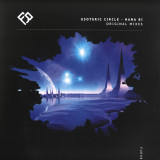
The parisian DJ and producer duo Esoteric Circle are back on Future Romance and take us on the eighth journey of our young label history.
With "Hana Bi" the two brothers give us three brandnew creations named "Nowhere", "Hana Bi" and "Hidden Life" full of euphoric moments and glittering melodies made for the deeper melodic dancefloors. Early DJ support by Mind Against, Innellea, Einmusik, Magdalena, Alfa Romero, Markus Kavka, Miss Melera, Raphael Mader and many more...
''Fact & Fiction" The second Tranquil Eyes album delivers poignant & exciting synthwave songs. Drenched in an eternal 80s feel, well crafted & complete.Tranquil Eyes is a Dutch minimal synth band formed in 1982. Lex Grauwen and Paul Oosterbaan had worked together for about 8 years before they formed the band. They decided to turn their back to stage performances and started experimenting with home-taping. Using an array of electronics, they recorded a great amount of songs and made a fine selection on Walks. Their first and only release. Today, after digging into the archives, a lot of restoring, recording & re-mastering, there�s Fact & Fiction. The album is an extension to the Walks album both in genre and in spirit. Comprising a selection of lost tracks, compilation only releases, unreleased songs and even two newly recorded songs, Fact & Fiction gives a great view on the bands musical abilities & influences over the years.
LASMO is a Polish duo composed of Smolny and Lachowski, currently they taking bold steps in the world of techno music.
They made their first moves together on the native music scene in 2017. In April, they conducted and played on the TECHNO Conference in Lodz and continued on the second edition of Lodz Electronic Music Festival DOMOFFON, performing alongside Jonas Kopp, Anthony Rother, Dopplereffekt and others.
(THIS ALBUM IS DIRECT ACTION: ALL REVENUE GOES TO THE ARTISTS IN ODESA. YOU ARE PARTICIPATING IN KEEPING UKRAINIAN ARTISTS WORKING AND EARNING MONEY DURING THIS TIME. Слава Україні!) BE:AT WAR is the new album from Odessa’s MEDIUM, who released the acclaimed Evolution of the Universe on Ohm Resistance in 2017. They have been writing drum and bass for over 15 years and released on labels such as Ohm Resistance, Sonic Terror, Hardline, Close2Death Recordings, Distortion Records, Combat Records and more. This follow up album is made under adversely different conditions - the approach of war to their home city, the assault on their native land. Yet these men are making music happen in the midst of it, recording their artistic and emotional reactions as chaos unfolds around them. Guest starring London MC Flowdan, Godflesh’s Justin K Broadrick, SIMM and Submerged. BE:AT WAR is a full spectrum image of the horror, uncertainty, and perseverance surrounding these Ukraine-based producers.
The album began to take shape duringJanuary 2019.
It has been recorded live by Matt Bordin ad Inside Outside
Studio, in Veneto, Italy. The choice of this method is due to the
desire to avoid the use of any post-production tool, to
maintain a natural sound and a hard impact on the listener.
"Robox" is made of nine instrumental songs characterized with
A furious post-punk full of violent and high impact riffs.
The artwork has been realized by Lacy Faery: nine monstrous
creatures, everyone of which portrays a song.
The cover art is the final portrait: the representation of
Dante's infernal journey, here embodied by the Robox, who
goes through the nine circles of Hell and faces the ancestral
traumas that affect the human psyche during its
trasformative path.
On Oct. 14th "Hard Pop" - first official single, published along
with a video - has been released.
The video has been realized by Mauro Romanzi in the ''lounge''
room of the Astro Club in Fontanafredda.
In few days the video reached more than 10k views on Youtube.
A red suite, a robot mask, violent riffs and
furious post-punk: this is Robox.
Francesco “Cesco” Cescato – Bass
Carlo Veneziano (One Dimensional Man, Orfaust, Julinko) – Guitar
Franz Valente (Il Teatro Degli Orrori, Buñuel, Snare Drum Exorcism) – Drums The Robox project was born out of the idea of making music that points towards future and innovation. This music wants to escape
from the monotony and from general music trends of the music industry.
The band uses the sound as a carrier for the lightning of the senses, to give a strong emotional shake to whoever listens to it.
After a long period made of musical experiences and geographical
distance, the Robox project starts to take shape in 2016.
During this period the songs start to sound defined, also because of
the practice coming from the first live shows.
Cesco, struck by a vision, since the first gigs starts to go on stage with a specific outfit: a bright red suite and a golden mask, evoking the image of a robotic man, the Robox: a superhero that fights the eternal struggle between instinct and reason.
Powerful rave tracks by the talented Ukrainian producer Daniel Syenichkin aka Bejenec on the first vinyl release of his own label "& The Refugees" (Inspired by his artist name which translates as "Refugee"). This 4 track ep has it all! An energetic hybrid of break-beats, Acid, playful trance elements and beautiful emotions. The young and promising artist has made a big name in the eastern parts of Europe where he is known for his energetic and upbeat live performances. He now is ready to take his artistic inspirations a step further with the start of his new label project!
The moons of Saturn are the inspiration for this brooding, often soaring and searching odyssey of dark electronica.
The second largest planet in the solar system after Jupiter, and the sixth planet from the sun, Saturn is orbited by 53 confirmed moons, with another 29 that are unnamed and still being studied.
Saturnian is a suite of thirteen choral tracks taking their names from some of Saturn's known moons; Dione, Daphnis, Phoebe, Prometheus, Rhea, Janus, Titan, Enceladus, Tethys, Telesto, Mimas, Hyperion and Iapetus, all named after figures from Greek and Roman mythology, each loaded with their own turbulent back stories. It is the debut release by Holmes + atten Ash, written, recorded and produced remotely in Edinburgh and Bristol by the duo Simon Holmes and Paul Nash.
Their project began during the 2020 lockdown. For Simon, time was spent exploring the Pentland Hills south of Edinburgh. For Paul, the Mendip Hills, south of Bristol. Both would experience the darker side of our human impact on the environment. Simon observed the wilderness as a wasteland, finding discarded, rusting metal littering the Pentland Hills while Paul witnessed the decimation of the ancient woodland of the Mendips' King's Wood due to the destructive tree fungus ash dieback.
These field trips fuelled a desire to navigate not just the landscape, but the duo's emotional place within it. Their collaboration led to a concept album that explores the outer reaches of the solar system, while simultaneously grounding them in a specific place. Looking inwards as much as outwards, theycreated soundscapes based on deeply imagined and felt connections to their surroundings.
After Simon had created a choral piece to accompany Luke Jerram's enormous, world touring artwork Museum of the Moon, Saturnian was a natural progression. When Simon was sent an initial score for the ethereal track Enceladus, composed by Paul in Bristol, he added choral arrangements recorded in Edinburgh. Their shimmering, tense opus continued to evolve from there. Just as the discarded bed springs and abandoned car parts that Simon stumbled upon in the Pentland Hills seemed to him at once "horrible but also oddly beautiful", Saturnian melds together melancholy and levity, fusing moments of dark angst with a celestial calm.
Opening with the glistening, hopeful brightness of Dione, increasingly urgent rhythms give way to digital, otherworldly calls from what might be rainforest creatures chirping into life with robotic squawks and delicate keyboard lines on Phoebe, followed by slowed down, monastic song on Rhea. Tethys is a hypnotic blur of synthesiser and soft chanting, while Rhea is a mysterious, echoing chasm, lifted by melodic, gentle male vocals. Janus has a glowing, effervescent energy, swiftly followed by a sense of tension on Titan, which throbs with driving percussive unease.
The album artwork is a pencil drawing created by Edinburgh artist Simon Kirby. It was made by a robot drawing machine, using custom algorithms that bring to life recordings of the sound of magnetic waves near Saturn's icy moon, Enceladus. The lines in the centre of the drawing are distorted by sound captured by the Cassini spacecraft which studied Saturn for over a decade.
Much like Saturn and its frozen, rocky moons, this debut album from Holmes + atten Ash is mysterious and beguiling, with a hint of foreboding in the depths of its powerful beauty and epic scale.
MUSTA presents an elaborate six track EP project, titled 'Tamburi
Parlanti' which translates to 'Talking Drums' in English. The body of
work marks a turning point in his career to make more than electronic
music, and delves into a plethora of live music and field recordings
recorded for the EP, ranging from polyrhythmic tribal drum-patterns to
Afro-funk bass chords, congas and jazz-keyboard, played by local
musicians as well as himself.
Musta's love for music began during his 11 years spent living in the
Dominican Republic. This encounter of Latin rhythms started the musical
genre contamination that to this day distinguishes his productions. In
this EP, like the rest of his releases, the music is diverse, tribal and
hypnotic. Respectful of the past yet constantly innovative. This love of
the past and future has led him to release edits and originals on staple
labels such as Nervous Records, Samosa Records.
Music aside the EP artwork has significant meaning, the mask shown is
that of the ancient Mamuthone icon of Sardinian folklore which goes back
further than 2000 years, defined as a representation of the collective
soul of Sardinia, the ancient ritual of the Mamuthone creatures is that
of a rhythmic dance where 12 of the creatures dance together,
representing the 12 months of the year. With this theme, Musta aims to
connect the dots of this pastime tradition into the EP, reflecting it
visually as well as through the music itself.
"Tamburi Parlanti EP is a collection of songs that I've made myself
around the world, recording and collaborating with various musicians of
many different nationalities. The music reflects my musical path in
recent years which draws strong inspiration from afro-funk and latin
disco from the 70s and 80s. My intent is to create music that presents a
journey between the hottest Latin sounds, over to more African disco
rhythms.
There was a time when a person would pick up an instrument to compose yet another song for a loved one. A sad figure humming into a microphone, pronouncing the most basic words and forms to convey quantity, quality, fact, statistics and similar sounds describing pain, loss and sorrow. The human brain would perceive the melody sad and perhaps within herself feel a sense of melancholia.
In another parallel world a new composition would then appear. But not one composed on a wooden built instrument, no, sounds made into structures and tables that would assists the listener into providing an additional context and meaning through digital synthesis and quantised harmonies. But who could really tell if these sounds were real? Or where they just sounds impersonating an idea of something?
Rhyme nor reason is as abstract in its shapes and ideas as it is concrete and elegant in its narratives. A carefully crafted wooden cabinet with an over-whelming amount of different drawers and hidden compartments. Each box storing blissful arrangement; a fluorescent stone, a paper note saying something about lunch, some collectible objects, a forgotten token or perhaps an autograph, all so very vibrant and joyful for its possessor.
Deleted files stored on rapidly rotating platters coated with magnetic material. Small, easy to loose SSD memory cards of recorded corrupt files and digital artefacts. Software engineered compositions trying to grasp the shared belief of an upcoming future, vivid and uncertain; birds, waters and long lost recollections. A release unconcerned with the literal depiction of things from the visible world. At least not for now.
Rich Aucoin is announcing his next album entitled Synthetic - The record is a rare Quadruple Album with its 4 seasons/LPs being staggered in 6 month intervals over the next 2 years
The album, which began at The National Music Centre in Calgary, Alberta in March 2020, houses one of the world's most extensive collections of rare and historic synthesizers. There, Aucoin was doing the Artist In Residence program and recorded 51 synthesizers to begin the project. The project was paused with the start of the pandemic and Aucoin shifted back into film scoring and worked
on the critically- acclaimed and short- listed New Yorker - Films of the Year documentary, No Ordinary Man, about the trans- masculine jazz musician Billy Tipton.This record is a good demonstration of Aucoin's scoring potential as well as it's a quadruple instrumental album; a huge contrast to United States, Aucoin's previous, and most vocal heavy album to date. Lyrics just take me so long to write that I just want to take a couple years to make other kinds of albums before going back to lyrical music as I can write instrumental music much faster. This first fulllength features Aucoin as the solo musician playing some 37 synthesizers including: Arp 2600s, the Supertramp owned Elka Rhapsody 610 String Machine, Formanta Polivoks, Novatron T550, Oxford Synthesizer Company Oscar, Selmer Clavioline CM 8 and the legendary TONTO which the first release off the record
was made on.
Tracks: Tonto / Hypernormalization / Algorithm / Future / Buchla / Esc / 456 /
Space Western / Return
One of those tracks you simply can't forget - perhaps because it's a hard one to put in any specific genre category - laying somewhere in between the realms of synth pop and italo disco with hints of even new beat, this Austrian diggers delight has been haunting Discogs want-lists for years. Aesthetically smooth and sexy (as it shares chord changes with non other than “Careless Whisper”) but with accents of less orthodox production techniques in the “Wunderbar” mix emphasize a uniquely charming playfulness. Originally released as a 7” single, THANKYOU brings it back to your record collections now in a 12” format with an additional extended cut by Castro for those of you who might have thought the original was just a little too short. Remastered by Man Made Mastering.
After our last release titled “jazz Baileys” we are back with House Experience Vol.2., this time in Ep format, presented by Bs As deep.
The previous volume was clearly dedicated to being a various artists, also with the participation of Bs As deep.
We have been working since vinyl number 4 with musicians, who have a participation in almost all the tracks released.
When we talk about musicians, we are including keyboardists, saxophonists, percussionists, guitarists or bassists.
Our goal or common thread has always been to achieve a warm and forceful sound, so that it can be heard in any environment, and at the same time be used at any time of the night, on a dance floor.
With those involved in both past and current releases, we share a common idea, which guides us in the interpretation of each song.
We also base ourselves on house influences from the late 90s (96,97,98,99)
Personally, we are moved by those times in which the sounds become more sophisticated, more elaborated in detail, and that is when we believe that the house that we listen to today with soul and jazz sounds, take on more relevance.
They also promote Afro and Latin percussion, leaning towards that New York and Puerto Rican fusion.
For all this, we like to include classic instruments, such as roland rhodes, the much-loved Juno, or korg packages with their inevitable M1.
Many shots are made live through a session expressed by the musician, who improvises for a while, from there we extract some part, which can be used several times in several tracks.
It is always necessary to do an editing job to adapt and correct any dissonance or variation in time that implies desynchronization in the beat. All this working in the sequencer of the daw to use.
On this album you will be able to hear soulful house sounds strongly impacted by keyboards, flutes and session basses, as well as some perfectly adapted percussion samples.
Some records just stop you in your tracks. They resonate with you and feel instantly familiar like an old friend, even on the first listen. SOYUZ's third album ‘Force of the Wind’ is one of those records. It holds all the trademarks, beauty, and eccentricities of classic Brazilian recordings, from the 60s and 70s, that we have come to love. Think artists such as Milton Nascimento, Lô Borges, Burnier e Cartier, Arthur Verocai et al. But this record wasn’t made in Brazil and is in fact a brand-new release.
SOYUZ (which translates as 'union') is a creative collective from Minsk, Belarus, led by composer, arranger, and singer, Alex Chumak, multi-instrumentalist, Mikita Arlou, and drummer, Anton Nemahai. SOYUZ's previous albums explored and reimagined the legacy of jazz-oriented, non-English-language pop music of the 20th century. For their third album, there is a stronger focus, and it is influenced by 70s Música popular Brasileira and building bridges from it to present-day Belarus. Alex notes that from the moment he first encountered Brazilian music, he found in it a kind of concentrated emotion that felt as if it were familiar to him from his childhood. This non-verbal emotion and connection between the listener and musician echoes in the music, regardless of understanding of the language the album is recorded in.
‘Force of the Wind’ includes songs sung in Russian and Portuguese as well as instrumental compositions. Its musical palette is both acoustic and electroacoustic: rich warm Rhodes piano, soaring string arrangements, and a controlled drum swagger sounding both relaxed yet super tight. Alongside Alex's sublime vocals, that grace the majority of the tracks, the album features guest performances by multi-talented musician and vocalist Kate NV and rising Brazilian star, Sessa. Alex also recently arranged a number of tracks on Sessa's highly praised 2022 album 'Estrela Acesa'.
On the album, the trio is joined by a cast of friends; NY-based musician of Turkish origin percussionist, Cem Mısırlıoğlu, classically trained composer, Simon Hanes, who aided with string arrangements and conducting the string players, Netherlands-based Brazilian multi-instrumentalist, Gabriel Milliet, on flutes. With the collaboration of these friends SOYUZ have created nine songs/suites that are subtle and plenitude and like the best albums, leave you aching for more.
‘Force of the Wind’ is an enigma, Brazilian yet not Brazilian, vintage yet still contemporary, out of sync with modern culture yet completely relevant and necessary.
Horsey’s critically acclaimed debut album Debonair arrives on vinyl via London label untitled (recs). Made up of Jacob Read, Theo McCabe, Jack Marshall and George Bass, Horsey have built a cult live following having toured with the likes of King Krule, Goat Girl and Hinds, as well as playing sold-out shows across their hometown venues with the likes of YOWL, Hotel Lux, Norman, Ugly, Lazarus Kane and more. Horsey refused to be pigeonholed at every turn. “Debonair” is propelled forwards from the opener with an incomparable wide-eyed intensity that blurs the lines between dark, glam inflected noise-rock, surreal jazz breakouts, wonky apocalyptic pop, emphatic rock opera-esque histrionics and melancholic lo-fi without abating. The juxtaposition between maturity and immaturity is central to the album’s themes, and this contrast is not only found in the album’s dynamic instrumentation but is also prominent in Horsey’s intoxicating and coltish lyrical prose, which is all at once deeply personal, tumultuous and utterly abstract. Though often delivered with overtones of sardonic humour the subject matter carries a sincere message, one that channels the spirit of when the band first met in nursery whilst tackling the tropes of modern living. The result is a gripping and exuberant reminder that there is great value in applying some childlike lateral mentality to the all too serious events of adult life. Tracklist: A1/Sippy Cup A2/Arms and Legs A3/Underground A4/Everyone’s Tongue A5/Wharf B1/Lagoon B2/1070 B3/Clown B4/Leaving Song B5/Seahorse (Feat. King Krule)
(Late Nite Tuff Guy & Farley 'Jackmaster' Funk Remixes)
An ‘80s dance classic from the legend John Rocca, gets a fresh new take from Aussie edit king Late Nite Tuff Guy alongside a remastered reissue of Chicago house royalty Farley 'Jackmaster' Funk’s 1987 Hot House Piano Remix.
The main man behind jazz funk favourites, Freeez, John Rocca took to the studio in ’84 and whipped up an electro-fied steamer in the form of ‘I Want It To Be Real’. Tantalizing synthwork, beefed up basslines, gated snares and pure ‘80s vocals, it’s a melting pot of influences with a catchiness that caused a serious stir.
This special double header of remixes kicks off with a brand new mix from Late Nite Tuff Guy. He builds up the brilliance with masterful effect, keeping the vocal in the back pocket till the final frontier whilst adding in some buttery new synth magic and deft filtering to the mix.
On the flip, Chicago house don Farley 'Jackmaster' Funk’s 1987 remix homes in on those blissful piano and vocal stabs for a dubbed out ‘Hot House Piano Mix’. Spiritual keys laid down with passion that will be sure to get any dancefloor hot under the collar.
DJ Feedback:
OPTIMO/ JD TWITCH
Nice! The Farley mix is an all time classic. Lovely version from LNTG.
GERD JANSON
I have love for this.
GRAEME PARK/ THE HACIENDA
I vividly remember playing this record the day it was released while working at Selectadisc in Nottingham like it was yesterday. I played it the same night at The Garage club not long after I started DJing there. It brings back some great memories and this superb remix is just wonderful. Its made me get all bleary eyed and tingly. Absolutely tremendous stuff.
AXEL BOMAN
Love this
KAI ALCE / NDATL
This is a HOT EDIT from Late Nite Tuff Guy!
A LOVE FROM OUTER SPACE/ SEAN JOHNSON
Killer - love it
NORM TALLEY
I love this!
CROSSTOWN REBELS
Nice one!!
JACQUES RENAULT / LETS PLAY HOUSE
LOVE the classic Farley piano mix and the LNTG version is a fun take too!
OSUNLADE/ YORUBA
LOVE THIS!!
DANIELE BALDELLI
Love this classic, and now more love for both new remixes
DANNY TENNAGLIA
I really like this remix
DANNY KRIVIT/ BODY & SOUL
Nice
DJ KEMIT/ ARRESTED DEVELOPMENT
An incredible beefed up edit of an international dance floor classic. 10/10
HELENA STAR / NTS
Amazing record, those chords!!
LOUISE CHEN/ NTS
I’d love to play this.
ERIC DUNCAN/ RUB N TUG
This ones cool.
MAKE A DANCE / BEN
Yes yes yes pease love the original so much.
HOT TODDY/ CRAZY P
The Farley mix is a total winner which is a new one on me, LNTG mix is pretty tasty also
TERRY FARLEY
Yes please. A big early House lesson for me BITD
SUB CLUB HARRI
Realy diigin this.
GROOVE ARMADA / TOM FINDLAY
Love this, production is so good!
Home is a powerful concept with an abstract definition. This solo album takes those subjective ideas and unifies them under one roof. Evolving from Jerve’s #dailypiano posts in 2019, ‘The Soundtrack of My Home’ relays thoughts and improvisations that trace his journey from childhood home to adult and now, father. Nurturing a mood or feeling, each song begets a sonorous story of someone close to him, expressed through the language of piano playing.
Jerve makes use of his hands as a human step sequencer, often programming two or more motifs of varying lengths in a polymetric fashion. These melodic patterns and arpeggios evolve at varying rates but grow around clear progressions with standard 8-bar forms.
The first track - ‘Kjetil’ enters with an earnest, gentle and endearing character - like a young river near its source. As with such a river, it will grow to varied sizes throughout the album but must begin as a humble expression from the source. The following titles sketch his interpretations of the people that have made up his home.
There is a theme across the album that unites the songs, so much so that differentiating tracks can at times be difficult. Though, Jerve punctuates this overarching mood with a few distinct structures, as found in tracks ‘Karoline’ (wife), ‘Espen’ (brother) and ‘Sven’ (father). ‘Turid’ (daughter) and ‘Jon Eirik’ (brother) seem less directive and welcome more intrigue, reminiscent of a curious child wandering through the dappled light of a forest.
‘Iben’ (daughter) and ‘Eivor’ (daughter) have a hypnotic, three-pointed melodic structure that leaves the listener suspended; transfixed - while ‘Sussi’ (cat) carries unique momentum and suitably feline autonomy. ‘Mette’ (mother) has a mood of ascending, like that of a child's upward gaze at their maternal carer. Utterly nuanced in structure, Jerve leaves ample space for subjective interpretation and allows the listener to weave their own life into the tones.
As expected from the founder of Dugnad rec - this album signifies a deeply personal sentiment. Sometimes we are forced to confront the music and other times, we are left to wonder. Here, we find a balance and unity that allows little thoughts and worries to drift away, bringing us warmly to rest in the present. The LP edition's bonus track features producer/performer extraordinaire Stian Balducci, drawing a line to the next chapter of piano-based music from Dugnad rec: TOKYO TAPES: PIANO RECYCLE.
The first 3 tracks on the Ep are loop technoid darkish typical berghain techno, the fourth track is typical idm techno as styled by source or the corresponding English Acts (direction b12, warp etc). Cleanly made productions.
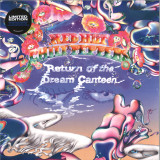
Red Hot Chili Peppers announce their brand new studio album, Return of the Dream Canteen which will be released October 14th on Warner Records. The surprise announcement was dropped at Denver’s Empower Field to rapturous response as the North American leg of their critically and commercially acclaimed global stadium tour kicked off.
The news of Return of the Dream Canteen's imminent release marks the band’s second album of 2022, hot on the heels of the platinum-selling chart topper Unlimited Love which was released in April debuting at #1 in the UK. It will also be the band's second Rick Rubin produced album of 2022, and reinforces their reputation as a band at their absolute peak, riding the crest of an undeniable creative wave.
Continuing to win over audiences across the generations, the band performed a run of sold-out UK/EU dates earlier this year, including two nights at London Stadium. "A scorching European touch-down from the California legends" – CLASH
We went in search of ourselves as the band that we have somehow always been. Just for the fun of it we jammed and learned some old songs. Before long we started the mysterious process of building new songs. A beautiful bit of chemistry meddling that had befriended us hundreds of times along the way. Once we found that slip stream of sound and vision, we just kept mining. With time turned into an elastic waist band of oversized underwear, we had no reason to stop writing and rocking. It felt like a dream. When all was said and done, our moody love for each other and the magic of music had gifted us with more songs than we knew what to do with. Well we figured it out. 2 double albums released back to back. The second of which is easily as meaningful as the first or should that be reversed. 'Return of the Dream Canteen' is everything we are and ever dreamed of being. It’s packed. Made with the blood of our hearts, yours truly, the Red Hot Chili Peppers.
After debuting on Flippen Disks in 2018 and a follow-up track on Bradley Zero’s Rhythm Section, PTDD is back on Flippen Disks with this debut solo-EP called „Sizipin“.
Melting PTDD’s signature minimalist sound with a welcoming harmonic world in Hoe Je Het Snijdt, taking a wide array of influences from UK-bass and broken beat in Sizipin to HipHop in N Btj Blvn Dnsn or more progressive club sounds in Kajuit, this EP is a clear big step in PTDD’s development as a producer.
„Sizipin“, a made-up term for an adaptor that you don’t know the use for anymore, it’s a rather fitting name considering the circumstances of the creation go this EP. A connector for quitting his day-job to focus fully on audio and music work, building his studio in deep pandemic lockdown-Utrecht and most importantly becoming a father. Also features a vocal performance of PTDD’s son Olivier. Can you find it?
It has been one year since the world has lost one of it's most talented and gifted reggae singers, Apple Gabriel, one of the founders of Israel Vibration. We feel honoured and privileged to have been given the chance to work with Apple in 2010 on his critically acclaimed solo album Teach Them Right. There where plans for a follow up album but they unfortunately never materialised. As it was in the beginning so shall it be in the end.
Israel Vibration made some of their best music in the Tuff Gong studio in the early days. We went back there to work on this special musical tribute together with the Tuff Gong All Stars and with a contribution from sax maestro Dean Fraser. We recorded a brand new version of No Equality, one of our favorite songs from the Teach Them Right album. A solid roots tune full of cultural vibes, capturing the soul of Israel Vibrations early releases. The song is accompanied by a video that shows the story of the early beginnings of Israel Vibration as told to us by Apple. Long acapella shows on the streets of Jamaica to make some money to survive, before the band went on to become one of the most successful and inf luential roots harmony groups in reggae history. Rest In Power Apple Gabriel, your music will live on and continue to inspire many generations to come.
Melodies Of Ancient Beats Depth or Deep, (with Dep also meaning beautiful in Indonesian) is the meaning of this newly created persona from the artist DemoDc. After many years of experimenting with music making, releasing digital eps and albums, Demo has come to an end of a cycle arriving to a mature state of craftsmanship, ready to deliver his dream onto the vinyl medium.
This is the 1st ep that kickstarts a volume of a 5 ep project. Its own kind of album type edition so to speak. Down the rabbit hole is a deeply rich exploration of the unknown, immersing oneself with faith and love into a pandora’s box type scenario to find not chaos and random violence of destruction yet a carefully arranged melodic structure of orderly tapestry, traveling through the expression of quirky acid gobbles, with a steady deep chord of drive, arriving at a climatic unwind of free moving dance type melodies and wonder. This track gives electro a fresh stroke to a well founded genre, giving it a different approach to the medium. Today’s special is a track held close to heart, made back in 2007 after a skiing incident left MOAB DEP immobilized for 2 weeks. Whilst having travelled to NZ Queenstown for the trip, it dawned on the wounded artist to make sense elsewhere with his time, using it to create a very special track, of course unknowingly at the time. Returning home to Adelaide it quickly become a favourite for many underground artists yet the track has never really been given a chance to shine, to be heard…. not until now 12 years later, 2019. All made on his laptop, no midi used ( which is to be said mostly with all tracks created at heartheartrecords studios).
Today’s Special has a certain energy and vibe that immediately calls for the listener to pay attention. From its moody beginnings with lush rhodes keys, glitch ambient sounds, followed by the groovy-type horn sounding hook, whisking the listener away into a sunsetting type mood elevating itself onto new ground each step of the way. With some subtle bass movements and emotive chord progression, we arrive at a very warm heartfelt dance track that can only leave any dedicated listener and lover of common deep house music, with a tingling effervescence of radiant glow and smiles. Today’s Special proves to be its own cult hit within the archives of tracks made in the heartheartrecords realm. Today's special celebrates the meaning of 'NOW' the present moment.
Melancholia is a made-up medical condition manifested in an incessant moment of reflection. The newest album is a soundtrack to different stages of it and the accompanying feelings. The extremes of those got illustrated by Wojtek Łebski who designed the graphic identity of the album.
"I wrote this music during the last 3 years which for me and to many others were the most bizarre time on the planet we live. Lots of dilemmas, problems, ups and downs, self-doubt and permanent anxiety I transformed into different frequencies of sound. From the very first song, you can hear my fascination with the bass and half-step music scene. Thanks to Mr Envee who mixed the album, it sounds exactly how I imagined - deep and worm. Welcome to the journey." - says the author.
Teielte is a very important person to U Know Me Records - his debut album was the first one in the history of the label. To honour the album properly, the "Melancholizm" was labelled with the number UKM 100 and it will be released exactly 12 years after the famous debut of Taielte's album "Homeworkz".
The album will be released in two versions - classic black LP and limited colour LP. What's special about the limited edition is that every copy is different and is numbered by hand (100 copies). Also, both versions have different covers designed by Wojtek Łebski
Developer Archive returns with its 14th release, this time it's 8 tracks with the moods and grooves changing on each track, it's mostly a slab of Developer made exotic techno, with looped riffs, haunting modular electronics and occasional mind-altering synth lines. Huge TIP
"The haunting ambience of Beat fit somewhat with the then-popular Massive Attack and Portishead, but the album's subsonic drone made it more of a minimal mood piece than a collection of songs." MAGNET
The second in a trio of albums released by the core duo of Lawrence Chandler and Martha Schwendener, Beat is without doubt their definitive artistic statement.
Coming 20 years to the day of its original release, this is the first time this album has been available on vinyl in almost two decades, and the first ever U.S. vinyl release. (Was released here on Beggars Banquet, original copies very hard to find..)
The second album from New York City's Bowery Electric was released in late 1996, less than 15 months after their self-titled debut, but it found them having traveled light years musically in the interim, the group having seemingly decided to see how far they could take the guitar/ bass/ drums/ vocal setup into the atmosphere.
Every aspect of their approach had been refined and focused: squalling, distorted guitars had been transformed into hazy, sensual sheets; the live drums transmuted to sampled rhythms more in debt to the blossoming downtempo sound of the day; bass lines reduced to their most basic diagrams; vocals submerged to become one with the narcotized fog of the instruments; even the lyrics were reduced to a few minimal lines used sparingly so as not to overshadow the dynamic.
Beat is a lush and dense mantra of shadowy percussion, barely-there vocals and immersive drones that envelops the listener in an opiated blanket of sound.
quotes:
"Bowery Electric have made something utterly astonishing here. So deep, so wide, and somehow as intimate as a train crash. The first six tracks are just the most crushingly beautiful thing I've heard in 1997; the last five are even better. Good god, THIS IS IT." Melody Maker
"While cymbals shower down over the songs like a torrent of shattered glass, their austere beauty is never static. Ambience has rarely sounded so messy." Exclaim
A near-perfect mix of shifting dance beats, menacing electronic drones, analogue bleeps,
syncopated rhythms and ethereal vocals." Now UK