High Hopes - New album from the Mole.
High Hopes is 17 songs across 40 minutes on one slice of wax that, as advertised, sounds nothing like last month’s Ep, High Dreams. Here, rather than the long form dance form, is a continuation of the beat tape pacing from the last album, a collection of moments posing as ideas posing as a narrative stuffed with oddities and surprises that reward the close listen.
What’s heard on High Hopes is the Mole’s exploration of a love letter, from one person to a family, from the northern Pacific to the southern Atlantic, from a boy to a painted bird. Vancouver Island to Manantiales. The songs range from ambient sound bath and hip hop sludge, up to micro boogie and almost House before tumbling back down and forth again. Bubbling synths, MPCs swung out, samples chopped and chewed, bass and violins from Rick and Sophie, field recordings of birds and frogs and beaches, friends and family and fiestas. Did we mention the love ?! This album has got it all! Original collages from Antonio Carrau envelope this wax: jacket, sleeve and cookie. Antonio’s work is typified by playful combinations and bold statements about living in a embrace of analog and digital health. His co lages marry the corporeal world with an updated, digitalized age of reproduction, inducing feelings of gratitude for the simple everyday scenes we sometimes lose touch with when we forget to slow down. Good living, like breathing, requires inhaling as well as exhaling.
We can’t always produce content, make art, we must also pause, and listen. And enjoy. The Mole is joined by friends and colleagues on several songs included on High Hopes. Rick May plays bass on both Que Rico and album stand out GoinF4er. Sophie Trudeau (Godspeed You Black Emperor) plays and arranges violins on GoinF4er and Danuel Tate (Cobblestone Jazz) and Julz Chaz (Wagon Repair) both play Vibes and Emaxx throughout the album. Working with these incredible talents not only enriched this album, but fulfilled a long standing goal of the Mole’s; to work again with the musicians from whom he learned so much. People who helped inform the shape of Mole to come.
The Mole who was As High As The Sky. The Mole has been ‘recognized’ by the ‘global underground’ since his critically celebrated premiere album, As High As The Sky, but his earlier Eps (Wagon Repair, Philpot, Musique Risquee) got the attention of Top DJs, clubs, and festivals around the world first. His sound remains unique, fresh and deep: enjoying plays in a wide variety of spaces and places.
High Hopes is the Mole’s 5th solo album and his 2nd album for Circus Company (The River Widens) who have also proudly released two eps of Mole magic (Little Sunshine, High Dreams).
*Isn’t that too much time for one record? Short answer - No. Long answer - depends on the material. Due to the many quiet passages in the album, the groove spacing can be modulated and the needle can slow it’s progress towards the center/end resulting in longer sides with continued high gain and low distortion.
The making of a maiden album can be a capricious process. One moment of outright musical flow paired with another period of sustained creative struggle are feats experienced by seasoned producers the world over. So when Miraclis was forced to hole away in his makeshift studio - in the midst of a global pandemic - the stage was set for something magical. Now it will see the light of day for the very first time.
Having released two singles on Secret Teachings to critical acclaim already this year, Chilean talent Miraclis will accomplish a milestone achievement in July with the release of his debut album: Origin Of Truth.
Difficult experiences were fundamental to the creation of such work, as were Miraclis’ inherent musical interests. He explains: “Origin Of Truth had its birth during the pandemic. I created it as a way of communicating to myself the sensations and feelings that were spinning around my head at the time. I've always been inspired by Bristol trip hop, as well as classical rock, and these genres definitely contributed to the making of these melancholic tracks. In a way I wanted to fuse all the musical influences that were part of my childhood, up until this point now, so this album really means a lot to me. It was my way of communicating, when there was a lack of social contact and communication itself was hard to come by.”
It's this meditative quality that initially drew Damian Lazarus to the project. “It’s a record that has its roots in electronic music, but it’s a very alternative, very deep, melancholic album. I find it both soothing and stirring at the same time, and that’s a quite interesting juxtaposition in that it feels edgy but delicious at the same time,” says Lazarus. “The fact that this was written in this place surrounded by the most incredible desert landscapes makes this a very important piece of work to me. It doesn’t sit in any particular genre, which is why it feels right for a Secret Teachings release. It hints at so many genres that I as a DJ am quite into, and it feels like a first as it’s unique and unclassifiable. That mystical, esoteric, edgy feel makes this a perfect release for the label.”
Sonnet opens proceedings, with ghostly vocals residing next to raw instrumental elements throughout. Miraclis’ signature guitar riffs soon converge on saddened keys, paving the way for Scienter. It takes the form of an instrument-based, electronic-inspired cut, building slowly before reaching a crescendo midway through via an enrapturing acoustic solo.
Floating Child comes next, brimming with a darker intensity courtesy of broody synth pulses and rhythmic hi-hats, as Shiver arrives next. There’s a rock-leaning sensibility to the piece that gives way to earnest lyrical offerings, opening swiftly into the breakbeat-esque world of Perceptions. Hard-hitting drums act as the focal point, with electric chords adding depth and intrigue, whilst Bright continues in a similarly heartfelt vein.
Introspective pads leave us feeling pensive, ahead of Interstellar taking us on a celestial journey through warped bass tones. Acting as the LP’s penultimate number, it’s a four-and-a-half minute showcase of guitar-based musical goodness and one that perfectly sets the stage for Trapped, a closing saga of suitably emotive proportions.
Miraclis earned his stripes as a DJ under the name Max Clementi in his native Chile, as well as Spain after a stint at the Barcelona SAE Institute. Playing and writing music since his parents gave him his first guitar at age twelve, he found himself inspired by synth wave, electronic pop, trip hop, and psychedelic rock of the ‘80s and ‘90s, drenching himself in music by the likes of Massive Attack, Tricky, Depeche Mode, and Nine Inch Nails. However, it wasn’t until he had to move back to Pucón to take care of his father during the pandemic that he began working on what would become Origin Of Truth.
Serendipity seems to play a large part in Crosstown Rebels’ new label Secret Teachings. Just look at the story of how Damian met Miraclis in the first place. It involved a chance midnight encounter in Pucón, Chile at a woodland campfire after the DJ was locked out of his hotel room. This meeting of minds was the start of a remarkable friendship, where Miraclis invited Lazarus to stay at his house and break bread with his family. The two kept in touch, exchanging music and ideas as a result.
out of Stock
Last delivered 4 years ago available to reorder, subject to availability
12” paddling pool blue vinyl, is an edition of 500. CD Digifile. Following the runaway success of their critically acclaimed 2021 second album Contender, the question for fast-rising London four-piece Fightmilk was always going to be “what next?” With a tight indie-pop sound that defined their early recordings, the answer was obvious to a band who seem hellbent on the notion of evolve or die… The band originally formed in 2015 in a Brixton pub garden by Lily and Alex, who had both, separately, just been dumped and thought being in an angry punk band would cheer them up. Then they found Nick and Healey to hold the rhythm down and make them sound good. With three albums under their belt, they’ve perfected their chaotic, melodic brand of joy and rage-filled pop with full-throated yelling and sparkling guitar riffs as their trademark. They’ve graduated from angsty whippersnappers in their mid-twenties to overgrown teenage 30-somethings with mild ongoing back and shoulder pain. Their previous 2 albums Not With That Attitude (2018) & Contender (2021) marked them out as an ambitious and rising prospect, and now on their forthcoming new album No Souvenirs the band eschew their former Britpop ties and edge further into DIY punk and heavier rock influences to reveal a leaner, meaner, more abrasive side to their cathartic lo-fi anthems. Whilst collectively diving into their passion for Jimmy Eat World, frontwoman Lily Rae made a conscious decision to strengthen her “big loud yell” with influence from Alicia Bognanno (Bully), Nat Foster (Press Club), and Missy Dabice (Mannequin Pussy). “My voice is the biggest it’s ever been and I’m constantly thrilled when people are surprised at how loud I am, considering I’m so small in stature,” she grins. “Lyrically I always look to Bruce Springsteen for inspiration but I also really enjoyed the angsty candour of Sour by Olivia Rodrigo, and Kacey Musgraves’ impeccable one-liners.” There are a few genre experiments on the record—Yo La Tengo in ‘Paddling Pool’, ‘Canines’ is part The Strokes and part Neu!, and ‘Back From Tour’ was heavily influenced by long term friends Johnny Foreigner. “You could probably make a case for ‘Inferno’ having a bit of Counting Crows to it, but we were never writing to emulate,” explains guitarist Alex. “The references and touchstones just happened along the way. As far as we’re concerned, they just sound like Fightmilk - and that’s a really nice place to be nearly a decade in.” “That said, we’ve also been REALLY picky with the songs that made it onto the album - there’s probably an-other album’s worth of songs that didn’t feel right, even if we loved them. We got really good at finding the “magic thing” in each song that made it work.” Spilling over with candid lyrics about death, doomed love, and dog bites, framed by endless punk energy and the kind of full-throated riff-rock that sounds just at home in a giant stadium as it does in a sticky-floored toilet bar, No Souvenirs is a triumphant return from the band, who are equally enthused by the album. “I only realised after we put the songs together how personal to me this album was,” explains Lily. “Not just because I’m writing about extremely specific sitcom episodes in my life (getting fired from bridesmaid duty, being bitten on the arse by a dog, being relentlessly asked when I’m going to have kids), but because whilst we were making it, I turned 30. It’s a significant age for women, especially in music, because aside from being something called a ‘geriatric millennial’, there’s an unspoken rule that there’s a cut-off point for you to have ‘made it’ and after that you have to settle down and be normal.” For Lily, writing for the album also aligned with the 10th anniversary of the death of a close friend, with the resulting track ‘No Souvenirs’ lending its title to the album as a whole. “It had taken me that long to write about it in a way I felt ok with. But I realised that I couldn’t have written it before,” she explains. “I needed that distance, and that maturity, to be able to articulate those feelings. It feels to me now like the album is about scorched earth, moving on, taking nothing with you for the next ‘thing’ - and realising that getting older is a privilege.” Bringing a huge amount of energy and joy with them whenever and wherever they hit a stage, interacting with the audience is a vital part of the Fightmilk live experience. “Without people singing and dancing at us we wouldn’t have gigs at all, so we want everyone to get involved!” says Lily of the band’s future tour plans
In the eternal city of Rome, where the whispers of cryptic ecclesiastical hierarchies still linger, FELDSPAR emerges as a musical enigma, delving into the shadows to unravel, with a certain dose of irony and creativity, the clandestine threads of power. Named after a mineral purportedly worn by a covert Roman clergy, this entity consists of six eclectic souls working tirelessly to expose the elusive puppeteers who have shaped the lives of millions of people since the beginning of time. Formed in late 2023 and based just a stone's throw from the Vatican, the Godless folk two blocks from the Pope, FELDSPAR's journey begins with the legendary Andrew Mecoli, founder of the iconic Growing Concern, Mecoli's guitar riffs echo the peculiar spirit of Italian hardcore. Joining him is Stefano Casanica, a prolific songwriter and producer, whose musical odyssey spans decades with undertakings in Undertakers, Craiving, Crude, and collaborations that transcend genres. Casanica's production magic is immortalized in Noyz Narcos cult classic 'Non dormire', a cornerstone of Italian hardcore rap with millions of streamings so far. Old City, New Ruins," the debut album of Feldspar, takes its title from Rome, the city where the band is based. It depicts the contemporary ruins of the capital, yet it's merely a pretext to expose the complexities of everyday life common to Western societies and their major cities, foremost among them.
Camelot, the legendary seat of King Arthur's court in Early Middle Ages Britain, was probably not a real place. A corruption of the name of a real Romano-Briton city, the word "Camelot" accumulated symbolic, mythic resonances over centuries, until achieving its present usage as a near-synonym of "utopia." In the mid-20th century alone, Camelot inspired an explosion of representations and appropriations, among them the violent, affectless Arthurian court of Robert Bresson's 1974 film Lancelot du Lac and the absurdist iteration of Monty Python's 1975 Holy Grail, both of which feature armored knights erupting into fountains of blood; the mystical Welsh world of novelist John Cowper Powys's profoundly weird 1951 novel Porius, with its Roman cults, wizards and witches, and wanton giants; and the nationalist nostalgia of President John F. Kennedy's White House. Unsurprisingly there are fewer Camelots in more recent memory. Camelot, Canadian songwriter Jennifer Castle's extraordinary, moving 2024 chronicle of the artist in early middle age, charts a realer, more rooted, and more metaphorical place than the fabled Camelot of the Early Middle Ages (or its myriad depictions), but it too is a space more psychic than physical. In Castle's Camelot, the fantastic interpenetrates the mundane, and the Grail, if there is one, distills everyday experience into art and art into faith, subliming terrestrial concerns into sublime celestial prayers to Mother Nature, and to the unfolding process of perfecting imperfection in one's own nature. Co-produced by Jennifer and longtime collaborator Jeff McMurrich, her seventh record is at once her most monumental and unguarded to date, demonstrating a mastery of rendering her verse and melodies alike with crisply poignant economy. For all their pointedly plainspoken lyrical detail and exhilarating full-band musical flourishes, these songs sound inevitable, eternal as morning devotions. "Back in Camelot," she sings on the lilting, vulnerable title track, "I really learned a lot / circles in the crops and / sky-high geometry." The album opens with a candid admission of sleeping "in the unfinished basement," an embarrassing joke that comes true. But the dreamer is redeemed by dreaming, setting sail in her airborne bed above "sirens and desert deities." If she questions her own agency_whether she is "wishing stones were standing" or just "pissing in the wind"_it does not diminish the ineffable existential jolt of such signs and wonders. This abiding tension between belief and doubt, magic and pragmatism, self and other, sacred and profane, and even, arguably, paganism and monotheism, suffuses these ten songs, which limn an interior landscape shot through with sunstriped shadows of "multi-felt dimensions" both mystical and quotidian. The epic scale and transport of "Camelot," with its swooning strings, gives way dramatically to "Some Friends," an acoustic-guitar-and-vocals meditation in miniature on Janus-faced friends and the lunar and solar temperatures of their promises_"bright and beaming verses" versus hot curses_which recalls her minimalist last album, 2020's achingly intimate Monarch Season. (In a symmetrical sequencing gesture, the penultimate track, the incantatory "Earthsong," bookends the central six with a similarly spare solo performance and coiled chord progression, this time an ambiguous appeal to _ a wounded lover? a wounded saint? our wounded planet?) Those whom "Trust" accuses of treacherous oaths spit through "gilded and golden tooth"_cynics, critics, hypocrites, gurus, scientists, doctors, lovers, government, the so-called entertainment industry_sow uncertainty that can infect the artist, as in "Louis": "What's that dance / and can it be done? What's that song / and can it be sung?" Answering affirmatively are "Lucky #8," an irrepressible ode to dancing as a bulwark against the "tidal pools of pain" and the "theory of collapse," and "Full Moon in Leo," which finds the narrator dancing around the house with a broom, wearing nothing but her underwear and "big hair." But the central question remains: who can we trust, and at what cost faith, in art or angels or otherwise? Castle's confidence in her collaborators is the cornerstone of Camelot. Carl Didur (piano and keys), Evan Cartwright (drums and percussion), and steadfast sideman Mike Smith (bass) comprise a rhythm section of exquisite delicacy and depth. This fundamental trio anchors the airiness of regular backing vocalists Victoria Cheong and Isla Craig and frames the guitars of Castle, McMurrich, and Paul Mortimer (and on "Lucky #8," special guest Cass McCombs). Reprising his decennial role on Castle's beloved 2014 Pink City, Owen Pallett arranged the strings for Estonia's FAMES Skopje Studio Orchestra. On the ravishing country-soul ballad "Blowing Kisses"_Pallett's crowning achievement here, which can be heard in its entirety in the penultimate episode of the third season of FX's The Bear_Jennifer contemplates time and presence, love and prayer_and how songwriting and poetry both manifest and limit all four dimensions: "No words to fumble with / I'm not a beggar to language any longer." Such rare moments of speechlessness_"I'm so fucking honoured," she bluntly proclaims_suggest a state "only a god could come up with." (If Camelot affirms Castle as one of the great song-poets of her generation, she is not immune to the despairing linguistic beggary that plagues all writers.) Camelot evinces a thoroughgoing faith not only in the natural world_including human bodies, which can, miraculously, dance and swim and bleed and embrace and birth_but also in our interpretations of and interventions in it: the "charts and diagrams" of "Lucky #8," a daydreamt billboard on Fairfax Ave. in LA in "Full Moon in Leo," the bloody invocations of the organ-stained "Mary Miracle," and all manner of water worship, rivers in particular. (Notably, Jennifer has worked as a farmer and a doula.) The album ends with "Fractal Canyon"'s repeated, exalted insistence that she's "not alone here." But where is here? The word "utopia" itself constitutes a pun, indicating in its ambiguous first syllable both the Greek "eutopia," or "good-place"_the facet most remembered today_and "outopia," or "no-place," a negative, impossible geography of the mind. Utopia, like its metonym Camelot, is imaginary. Or as fellow Canadian songwriter Neil Young once sang, "Everyone knows this is nowhere." "Can you see how I'd be tempted," Castle asks out of nowhere, held in the mystery, "to pretend I'm not alone and let the memory bend?"
. For Fans Of: The Weather Station, Weyes Blood, Adrianne Lenker, Phoebe Bridgers, Joan Shelley, Lana Del Rey, Cass McCombs, Angel Olsen & Neil Young. Camelot, the legendary seat of King Arthur’s court in Early Middle Ages Britain, was probably not a real place. A corruption of the name of a real Romano-Briton city, the word “Camelot” accumulated symbolic, mythic resonances over centuries, until achieving its present usage as a near-synonym of “utopia.” In the mid-20th century alone, Camelot inspired an explosion of representations and appropriations, among them the violent, affectless Arthurian court of Robert Bresson’s 1974 film Lancelot du Lac and the absurdist iteration of Monty Python’s 1975 Holy Grail, both of which feature armoured knights erupting into fountains of blood; the mystical Welsh world of novelist John Cowper Powys’s profoundly weird 1951 novel Porius, with its Roman cults, wizards and witches, and wanton giants; and the nationalist nostalgia of President John F. Kennedy’s White House. Unsurprisingly there are fewer Camelots in more recent memory. Camelot, Canadian songwriter Jennifer Castle’s extraordinary, moving 2024 chronicle of the artist in early middle age, charts a realer, more rooted, and more metaphorical place than the fabled Camelot of the Early Middle Ages (or its myriad depictions), but it too is a space more psychic than physical. In Castle’s Camelot, the fantastic interpenetrates the mundane, and the Grail, if there is one, distills everyday experience into art and art into faith, subliming terrestrial concerns into sublime celestial prayers to Mother Nature, and to the unfolding process of perfecting imperfection in one’s own nature. Co-produced by Jennifer and longtime collaborator Jeff McMurrich, her seventh record is at once her most monumental and unguarded to date, demonstrating a mastery of rendering her verse and melodies alike with crisply poignant economy. For all their pointedly plainspoken lyrical detail and exhilarating full-band musical flourishes, these songs sound inevitable, eternal as morning devotions. “Back in Camelot,” she sings on the lilting, vulnerable title track, “I really learned a lot / circles in the crops and / sky-high geometry.” The album opens with a candid admission of sleeping “in the unfinished basement,” an embarrassing joke that comes true. But the dreamer is redeemed by dreaming, setting sail in her airborne bed above “sirens and desert deities.” If she questions her own agency whether she is “wishing stones were standing” or just “pissing in the wind” it does not diminish the ineffable existential jolt of such signs and wonders. This abiding tension between belief and doubt, magic and pragmatism, self and other, sacred and profane, and even, arguably, paganism and monotheism, suffuses these ten songs, which limn an interior landscape shot through with sunstriped shadows of “multi-felt dimensions” both mystical and quotidian. The epic scale and transport of “Camelot,” with its swooning strings, gives way dramatically to “Some Friends,” an acoustic-guitar-and-vocals meditation in miniature on Janus-faced friends and the lunar and solar temperatures of their promises—“bright and beaming verses” versus hot curses which recalls her minimalist last album, 2020’s achingly intimate Monarch Season. (In a symmetrical sequencing gesture, the penultimate track, the incantatory “Earthsong,” bookends the central six with a similarly spare solo performance and coiled chord progression, this time an ambiguous appeal to … a wounded lover? a wounded saint? our wounded planet?). Those whom “Trust” accuses of treacherous oaths spit through “gilded and golden tooth” cynics, critics, hypocrites, gurus, scientists, doctors, lovers, government, the so-called entertainment industry sow uncertainty that can infect the artist, as in “Louis”: “What’s that dance / and can it be done? What’s that song / and can it be sung?” Answering affirmatively are “Lucky #8,” an irrepressible ode to dancing as a bulwark against the “tidal pools of pain” and the “theory of collapse,” and “Full Moon in Leo,” which finds the narrator dancing around the house with a broom, wearing nothing but her underwear and “big hair.” But the central question remains: who can we trust, and at what cost faith, in art or angels or otherwise? Castle’s confidence in her collaborators is the cornerstone of Camelot. Carl Didur (piano and keys), Evan Cartwright (drums and percussion), and steadfast sideman Mike Smith (bass) comprise a rhythm section of exquisite delicacy and depth. This fundamental trio anchors the airiness of regular backing vocalists Victoria Cheong and Isla Craig and frames the guitars of Castle, McMurrich, and Paul Mortimer (and on “Lucky #8,” special guest Cass McCombs). Reprising his decennial role on Castle’s beloved 2014 Pink City, Owen Pallett arranged the strings for Estonia’s FAMES Skopje Studio Orchestra. On the ravishing country-soul ballad “Blowing Kisses” Pallett’s crowning achievement here, which can be heard in its entirety in the penultimate episode of the third season of FX’s The Bear Jennifer contemplates time and presence, love and prayer and how songwriting and poetry both manifest and limit all four dimensions: “No words to fumble with / I’m not a beggar to language any longer.” Such rare moments of speechlessness “I’m so fucking honoured,” she bluntly proclaims suggest a state “only a god could come up with.” (If Camelot affirms Castle as one of the great song-poets of her generation, she is not immune to the despairing linguistic beggary that plagues all writers.) Camelot evinces a thoroughgoing faith not only in the natural world including human bodies, which can, miraculously, dance and swim and bleed and embrace and birth but also in our interpretations of and interventions in it: the “charts and diagrams” of “Lucky #8,” a daydreamt billboard on Fairfax Ave. in LA in “Full Moon in Leo,” the bloody invocations of the organ-stained “Mary Miracle,” and all manner of water worship, rivers in particular. (Notably, Jennifer has worked as a farmer and a doula.) The album ends with “Fractal Canyon”s repeated, exalted insistence that she’s “not alone here.” But where is here? The word “utopia” itself constitutes a pun, indicating in its ambiguous first syllable both the Greek “eutopia,” or “good-place” the facet most remembered today and “outopia,” or “no-place,” a negative, impossible geography of the mind. Utopia, like its metonym Camelot, is imaginary
This follow up album to Tapper Zukies `Bunker Buster’ set, sees Tapper again rally calling his fellow reggae singers to work up some great songs. This group of tunes lean towards a more soulful sound, yet still holding that reggae feel we know and expect from Mr Zukie. The title itself `A Soulful Chant I’ we felt suited this set of songs perfectly .
The roll call of great singers starts with Prince Alla adding his distinctive feel to the opening track `Children Don’t Cry’. `Heaven On Earth’ features Junior Ross on vocal duties. `Poverty’ is richly enhanced by one of Jamaica’s greatest vocal bands, Silvertones. Tapper himself follows with the thoughtful `Man-A-Man’ and another great reggae trio the Viceroys counter with `Help Me’. Dennis Walks guides us with `I Wanna Go’ and Junior Ross appears again with the timeless `Be On The Right Track’. Mr Zukie points the way on `People of Love’ and Prince Alla insures us that right will always overcome wrong doing with `Good Over Evil’. A favourite of ours `That Was The Day’ again song so majestically by the Viceroys leads us into the Silvertones `Magic Touch’. Little Roy leads us out with `Youth In The Ghetto’.
Hope you enjoy the set.
out of Stock
Last delivered 23 months ago available to reorder, subject to availability
HOO - master builders of woozy dynamics, songs unfurl with a mysterious, hooky logic all their own to create deeply emotive, chaotic, cinematic and - surprisingly, with this album ‘III’ - indie pop tunes! Songs clocking in just over 2 or 3 minutes, driven by heavy grunge guitars & potty Moog magic, opening out at times during the breathtaking prog Ov Violence/ Evil Weeks and the epic gothy final track Method Papers. ‘III’ has been 10 years in the making and features friends Simon Rowe (Chapterhouse, Mojave 3), Ian McCutcheon (Mojave 3, Slowdive), Paul Blewett (Moon Attendant), Lee Lavender & long-time collaborator & award-winning folk artist Jackie Oates. The themes and feel of the songs meant they had to lay in wait in HOO’s church-like studio, patiently growing & spawning like a 70's Dr WHO monster. Newer songs like the almost indie disco Snake & Myself When I Am Real finally gave the album foundation. HOO songwriter Nick Holton explains “All my music, including stuff in the past with Coley Park & Neil Halstead (Slowdive), is made at home in my own studio ‘Oaki Room’, so they blend into one another and my broader life. This is why musicians like Paul Blewett, Ian McCutcheon and Simon Rowe are always in the band or on my records - because they are part of my life. I have always made music this way and intended to. Jackie’s beautiful lead on England Theme, a high for me, was a simple idea. A mirror, as is so much of what I write about, here pride and disappointment in your world. Politics, religion, conflict, human frailty & alien tentacles, the collapsing environment all feature heavily and inspire. Despite this, we aim to make these dark songs engaging & endearing, skipping about you at volume in a psychedelic fug.” “I cannot and will not explain what is going on, but ‘III’ definitely closes a door and feels the most complete work of my life” Holton concludes. ’III’ is playful, eccentric, explosive and shamelessly takes itself seriously. Finished and mastered by Heba Kadry (Beach House, Bjork, Slowdive). We hope you now enjoy HOO’s third album. “Highly recommended to those who dig cinematic dream pop & Krautrock.” Echoes & Dust “50s sci-fi meets peak Reading shoegaze. It’s an ideal soundtrack for the new normal” Mojo “Shoegaze guitars, space-folk synths, otherworldly drones & krautrock drums into soundscapes immersive, possibly hallucinogenic.” Uncut “Textural & cinematic guitar driven epic” Shindig “A place where you see shadows of ghosts and echoes of your imagination” HiFi World Highlights “50s sci-fi meets peak Reading shoegaze. It’s an ideal soundtrack for the new normal” Mojo feat ex-Slowdive & Coley Park
HOO - master builders of woozy dynamics, songs unfurl with a mysterious, hooky logic all their own to create deeply emotive, chaotic, cinematic and - surprisingly, with this album ‘III’ - indie pop tunes! Songs clocking in just over 2 or 3 minutes, driven by heavy grunge guitars & potty Moog magic, opening out at times during the breathtaking prog Ov Violence/ Evil Weeks and the epic gothy final track Method Papers. ‘III’ has been 10 years in the making and features friends Simon Rowe (Chapterhouse, Mojave 3), Ian McCutcheon (Mojave 3, Slowdive), Paul Blewett (Moon Attendant), Lee Lavender & long-time collaborator & award-winning folk artist Jackie Oates. The themes and feel of the songs meant they had to lay in wait in HOO’s church-like studio, patiently growing & spawning like a 70's Dr WHO monster. Newer songs like the almost indie disco Snake & Myself When I Am Real finally gave the album foundation. HOO songwriter Nick Holton explains “All my music, including stuff in the past with Coley Park & Neil Halstead (Slowdive), is made at home in my own studio ‘Oaki Room’, so they blend into one another and my broader life. This is why musicians like Paul Blewett, Ian McCutcheon and Simon Rowe are always in the band or on my records - because they are part of my life. I have always made music this way and intended to. Jackie’s beautiful lead on England Theme, a high for me, was a simple idea. A mirror, as is so much of what I write about, here pride and disappointment in your world. Politics, religion, conflict, human frailty & alien tentacles, the collapsing environment all feature heavily and inspire. Despite this, we aim to make these dark songs engaging & endearing, skipping about you at volume in a psychedelic fug.” “I cannot and will not explain what is going on, but ‘III’ definitely closes a door and feels the most complete work of my life” Holton concludes. ’III’ is playful, eccentric, explosive and shamelessly takes itself seriously. Finished and mastered by Heba Kadry (Beach House, Bjork, Slowdive). We hope you now enjoy HOO’s third album. “Highly recommended to those who dig cinematic dream pop & Krautrock.” Echoes & Dust “50s sci-fi meets peak Reading shoegaze. It’s an ideal soundtrack for the new normal” Mojo “Shoegaze guitars, space-folk synths, otherworldly drones & krautrock drums into soundscapes immersive, possibly hallucinogenic.” Uncut “Textural & cinematic guitar driven epic” Shindig “A place where you see shadows of ghosts and echoes of your imagination” HiFi World Highlights “50s sci-fi meets peak Reading shoegaze. It’s an ideal soundtrack for the new normal” Mojo feat ex-Slowdive & Coley Park
The Blessed Madonna began with three magic words, scrawled in shoe polish on a broken - down box and hung on the wall at a small sweaty party: We Still Believe. “I think you have to give up completely to really understand what hope is. It was like 2011? I had spectacularly, monumentally failed. I left the label. I wasn’t DJing. I wasn’t putting out records. I was divorced and living on my Dad’s couch so naturally my friends and I decided to throw an illegal rave. We didn’t have any decorations, so I took a box and wrote, ‘We Still Believe’ on it. I needed to believe that something better was possible and that’s how it all started.” After years of $50 gigs, strung together by gas money and surfed couches, The Blessed Madonna cemented her reputation as a sublime technician behind the decks with a legacy of fluent and dynamic sets, spanning from disco to techno to house and back. One room sweatboxes, circus tents, theatres, massive festival stages and entire city blocks have all served as the canvas for her shows. After a jam packed 2023, from Glastonbury to Sonar to Boiler Room Bali, The Blessed Madonna has been filling the dance floor everywhere she goes and is now releasing her debut album.
In Cornish slang it is said that things get done ‘dreckly’; that is, not now, not necessarily tomorrow, but, at some indefinite point...in the future...soon...
Fitting then that when Bristol’s Langkamer decamped to their de facto home-from-home in the picturesque south-west seaside town of Falmouth to record their third album in as many years (with an EP thrown in there too) - there was no particular need to rush things: “The process was much slower and more considered for Langzamer.”, drummer/vocalist Josh Jarman explains: “The first two albums felt pretty urgent, and each was finished in about 6 months, but this one feels a lot more deliberate. It’s taken us two years to get this done.”
Equally fitting too that Langzamer kicks off proceedings with ‘Heart of Tin’: the first bars are languidly lugubrious, so deliciously plucked-out and scuzzed-up that they linger in the air like passing smoke, magically, slowing time down to their own assured and steady will. And in so much time, that also feels like no time at all, comes an opening line of such stark, disarming confessionalism as might be found in the David Berman/Silver Jews songbook: “Do you want the good news or the bad news first? // They’re both bad news, but the bad is worse” It’s Langkamer in a nutshell: embattled, heart-on-sleeve Slacker Rock slaked with twinges of fret-sliding Americana, yet deeply embedded in the folk mythologies, colloquialisms and experiences of the band’s West Country roots.
Throughout Langzamer, confronting the listener again and again is this conflict between the band’s breezy, melodic charm, and the threat of something more sinister lurking in the undergrowth. While those more familiar with Langkamer’s oeuvre to date will have already come to know and love their often self-deprecating yet witty lyricism, the songs on Langzamer take this trademark ebullient gloominess to more challenging plains: “Principally this is an album about grief, and everything that entails...” explains Jarman. “in a sense death brought these songs to life.”
This thread is felt no more so than on ‘Salvation XL’. Inspired by a “particularly bad batch of food poisoning I had in Morocco”, Jarman explains, and beginning with the memorable opening line, “Jesus came to me a Burger King in Marrakech”, the band wind their way through the ‘big topics’: death and God.
“This trip was shortly after a few of my friends had passed away, and I think a lot of my thoughts and actions at that time were being influenced by my grief without me realising it.”, he explains, “Whenever I dwell on grief, and how death has given my life a new context, I come back to that. The ongoing battle between agnosticism and atheism. I wasn’t raised in a very strict religious home, but I come from a long line of methodists, and it’s interesting to think about the way theism and religion have shaped my life without me knowing it. I think that’s being channelled on this album a lot. The uncertainty that comes with disbelief.”
Our collective mortal frailties are also felt on lead single ‘Richard E Grant’. With a trademark bittersweetness, a track that begins as an appreciation of the actor’s humorous social media presence unfolds as a study on “finding healthy coping strategies to deal with loss.”. Elsewhere, ‘At The Lake’ - to the tune of mournful, folk-like balladry - explores binge-drinking culture and the troubled association between unhealthy behaviour and creativity. The listener is left in no mind as to the meaning behind the references to James Joyce and Janis Jopin as “souvenirs stolen from the dark”.
With themes as weighty as these strewn across the album’s 10 tracks, It seemed like a particularly astute move then for the band to personally approach Ben Woods, founder of the Golden Dregs, to assist on production duties. Not only would the delicate intimacies of Woods’ main project - see 2023’s On Grace & Dignity for reference - add an appropriate moodiness, but Woods was also born and raised in Cornwall, where the album was recorded; amidst “eating pasties” and breaks by the sea, Woods and the band transformed the vaults underneath iconic Falmouth venue The Cornish Bank into a makeshift studio for a weeks’ worth of recording. Occasionally friends would drop by to lighten the load; Zander Sharp tracking violin on ’Double Island’ and ‘Flight’; Josh Law and Ben Sadler of Breakfast Records labelmates Getdown Services, both of whom contribute to the soul-stirring ‘mountain’ chorus on ‘Aberfan’.
When compared to the brightness of 2023’s The Noon and Midnight Manual, Woods’ influence on the record seems indisputable. On the aforementioned ‘At The Lake’, for instance, which features backing vocals from Woods. Or, most acutely, on the piano strains of harrowing closer ‘Bluff’, a track with such chilling, spectral severity as to effect the band’s most heartbreaking effort to date. While it’s particularly sombre note on which end proceedings, it's also an appropriate one: Langzamer bravely stands tall as their most restrained, matured, and sincere collection to date. And almost by virtue of its impeccable honesty, those moments of sunshine-joy that creep through the cracks feel that much more golden.
Forgetting You Is Like Breathing Water, the self-titled debut from the duo of trumpeter Will Evans and guitarist, synthesist, producer and multi-instrumentalist Theo Trump, arrives like a vault revelation. It feels like a decades-old yet newly unearthed masterwork of gorgeous ambient improvisation, the sort of thing scholars live to research and shepherd into deluxe reissue.
The patient, crystalline chords that swell and resonate like a series of confessions; the textured brass murmurs that suggest a ’60s or ’70s Fire Music master at their most poignant. Provocative found-sound experiments threading arcane religious recordings through dystopian soundscapes. Ear-shattering free-noise tumult. Where and when did this music come from? Who are these voices?
As it turns out, Forgetting You Is Like Breathing Water springs from an engrossing human story, though it isn’t necessarily the one you’d expect. This work of stunning maturity is in fact an entrance by two little-known explorers in their early 20s, who grew up together in Virginia, in the shadow of the Blue Ridge Mountains. It documents one of those perfect, sparkling moments in post-adolescence when big decisions and responsibilities are right around the corner, but for a spell, two young artists are able to create among the comforts and nostalgia of their shared past.
It also represents a reunion of sorts, as Evans and Trump connected as toddlers, became inseparable as boys, then pursued independent lives and creative paths as young adults. “Theo is my oldest friend,” Evans says, “and I feel like that’s what this band is — us meeting right in the middle of our interests.”
Now, having conjured this magic, they’ve detached once again: Evans, whose other works include the indie/avant-jazz unit Angelica X, is currently based in New York City. Trump recently moved to England, where he’d participated in his family’s theatre company, to go to school and further his solo ambient project. “This album didn’t start out as something super ambitious,” Evans explains. “It was more just an excuse to spend time together again and make music.”
***
In conversation, Evans and Trump are a delight, especially for cynics who might think that Gen-Z is only capable of doomscrolling. They come across as kindly young intellectuals who grew up using the internet as it was intended, for exposure to ideas and art across genres and generations. Trump points to indie-folk and the oracular post-rock of late Talk Talk, Bark Psychosis and Gastr del Sol. Pressed for his guitar heroes, he cites Bill Orcutt, Mary Halvorson and Marc Ribot, and mentions his devotion to alt-country. Heyday electro-industrial stuff like Skinny Puppy and Nine Inch Nails also meant a lot to him.
Evans is equally intrepid, though his background has a greater jazz focus. Ambrose Akinmusire, among today’s most thoughtfully commanding trumpeters, is a favorite. As for the soulful murmur he offers throughout Forgetting You, Pharoah Sanders’ wistful and lyrical contributions to Floating Points’ work is a touchstone.
The two grew up down the street from each other in the northern Piedmont town of Batesville, Virginia. Their families were friends, holidays were celebrated together and they became the most loyal of pals. As children they had a pretend band.
Then life unfolded, they attended different schools and their paths diverged. Evans discovered John Coltrane and became a jazz obsessive, as Trump found punk and hardcore and later began making ambient music. As a dedicated jazz trumpeter, Evans studied formally and widely; Trump was an autodidact, teaching himself guitar and absorbing synthesis and production techniques. The late teens and very early 20s brought moves away from home and back to home, as well as plenty of listening and learning. The Covid pandemic meant an opportunity to reconnect on long walks. Through it all, together and apart, they remained reverent of each other.
By early 2023, they found themselves living again among the Blue Ridge Mountains. In the evening, after giving trumpet lessons in Charlottesville, Evans would make the eerily beautiful trek “over the mountain” to Trump’s home in Staunton, Virginia. They’d talk and eat and begin to improvise, deep into the night. Evans played trumpet and sometimes drums. (Given the wee-hours recording schedule, the neighbors didn’t appreciate the latter.) Trump plugged a rickety, junk-store Telecaster-style guitar into a cheap solid-state amp and explored open tunings; he also layered on lap steel, electric bass, synths and electronics.
They locked in and relished each other’s gifts. In Trump, those include patience and intentionality and sonic decision-making; for Evans, a distinctive trumpet sound that both musicians think of as a singer’s voice. “Will’s playing is so thoughtful and well placed,” Trump says. “My goal from a producer’s mindset is that the trumpet will occupy the space that vocals would take.”
Often, they got lost in the best way. “The thing I look for most when I’m playing is that feeling of disappearing into what you’re doing,” Evans says. “Usually when that happens, the music is good.”
By the same token, they didn’t pursue free improvisation as an ethic, or as a pure process. Their goal was something closer to spontaneous composition. “We were trying to make good songs,” Evans says simply. Later, Trump did brilliant post-production work, expanding a modest setup into an enthralling soundworld. Under his judicious editorship, music that was wholly improvised sounds at times like a carefully composed new-music commission.
The results speak for themselves. “A Happy Death” summons up a swath of American desolation through the viewfinder of Wim Wenders. “Flesh of Lost Summers” and “Partings” are highlights from an essential ECM LP that never was. “A Collapse of Horses” infuses those seminal post-rock influences with the plod of doom metal or slowcore. The album’s final track, “The Mountains Are a Dream That Calls to Me,” was in fact the first thing the duo recorded, as an evocation of those twilit drives across the Blue Ridge Mountains. “Looking back at what we chose to name the songs,” Evans says, “and some of the sounds and how they make me feel, there is an air of impermanence and loss to this album.”
“I’m excited for everything that’s to come,” he adds, “but I recently thought, ‘Damn — that’s not going to happen again.’ It was a privilege for us to have that time together.”
LP - 180 Gram Vinyl Alex Rossi`s third solo album `Buenos Aires Sessions' , is a vibrant and soulful exploration of funky jazz, recorded in May 2023. He came upon the Harmonica in his childhood when passing a harmonica factory. The young musician developed his own technique by profiting of his basic musical knowledge, technical information given at the factory and by his musical experiments. Since then, he is traveling the world, giving courses and performing on stages with great names of the Blues circuit like Buddy Guy, Magic Slim, Koko Taylor, Smokin' Joe Kubek, Tutu Jones, Lucky Peterson, Texas Slim, Sam Meyers, Robert Ealey, and John Primer, Jeff Healey, the saxophonist Joshua Redman.
LP - 180 Gram Vinyl Alex Rossi`s third solo album `Buenos Aires Sessions' , is a vibrant and soulful exploration of funky jazz, recorded in May 2023. He came upon the Harmonica in his childhood when passing a harmonica factory. The young musician developed his own technique by profiting of his basic musical knowledge, technical information given at the factory and by his musical experiments. Since then, he is traveling the world, giving courses and performing on stages with great names of the Blues circuit like Buddy Guy, Magic Slim, Koko Taylor, Smokin' Joe Kubek, Tutu Jones, Lucky Peterson, Texas Slim, Sam Meyers, Robert Ealey, and John Primer, Jeff Healey, the saxophonist Joshua Redman.
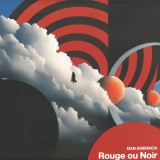
Dan Ghenacia's influence on the European underground over the last 25-plus years cannot be overstated. He has run vital labels, hosted essential parties, laid down definitive DJ sets, and produced seminal sounds both solo and as part of the tastemaking Apollonia trio with friends Shonky and Dyed Soundorom. His understanding of house music across the ages and continents is second to none, and he brings all that experience to this fantastic new solo EP.
The bumpy and infectious 'Rouge Ou Noir' opens with looped and funky guitar riffs and neon synths winding their way through dusty, dynamic drums. Cooing vocal stabs ramp up the steaminess of this most tasteful party starter. The superb 'Chilly' has a bustling blend of louche rhythms and rugged synth arps that dart about the mix. They hurry along beneath swirling vocal sounds up top with hints of Metro Area magic and tripped-out colours, all making it a characterful groove. Last but not least, 'Chilly' gets dubbed out and becomes a more low-slung sound with a fleshy bassline popping up the choppy, playful and synth-infused rhythm.
out of Stock
Last delivered 12 days ago available to reorder, subject to availability
Coming out on September 6th on Sharptone Records, Sundiver is Boston Manor’s fifth album and one that represents a glimmering dawn for the Blackpool five-piece. Grown from a seedbed of optimism and sobriety, the LP celebrates new beginnings, second chances and rebirth. With two members recently stepping into fatherhood, hope is baked into every note. “Datura came out of these really dark few years over the hangover of the pandemic,” Henry reflects. “I'd been struggling a lot with drinking and not taking care of myself and bad mental health and stuff. We wanted Sundiver to be the next morning of the following day.” He explains that it feels good this time round to write through the lens of positivity. “The themes began to emerge, of rebirth, spring, dawn, sunshine and then other elements just started to fit into that.” It was during the making of Sundiver that Henry found out he was going to be a dad. This album is a significant one for the band. Originally coming out of the emo and pop punk scene, they’ve explored sonics and genres throughout their career, taken risks and achieved more than they could ever had dreamed of. They’ve grown up as Boston Manor – their lives and the world changing around them. They’re now taking stock, at a crossroads of the band they were and the band they could be.
While writing the album, they revisited the bands that shaped them in the late 90s and early 00s. “I was listening to the music I loved when I was a teenager and I just thought, why don't we make music like our favourite bands?”, guitarist Mike Cuniff remembers with a smile. “So we brought our interests to the table that way. Y2K kind of vibe. There are elements of Deftones, there are elements of Portishead in there, some Garbage, The Cardigans.” He laughs and adds NSYNC to the list of inspirations. From this cocktail of classics comes a dynamic and ambitious record, rich with depth, groove and more hooks than Peter Pan’s nightmares. Lyrics that foxtrot from parallel universes to personal growth, vivid dreamscapes to raw grief. Individually they’re single strokes full of meaning and magic. Together they’re a landscape.
Container (out Feb 15th) is the first single and it’s them at their best – impassioned and infectious. “This song is about the stagnancy of life creeping up on you & how that can bring about change.,” Henry explains, citing Ocean Song by US band Daughters as an inspiration.
The concept of the butterfly effect is present on Sundiver – how small actions can lead to big changes. This is no clearer than on their second single, Sliding Doors (out April 5th). It has the golden sound of late 90s Lollapalooza rock – think Smashing Pumpkins - rebooted with crisp 2024 production and a potent heaviness. In the lyrics Henry wonders, what if?, pondering on what could be. The idea that there are infinite versions of you whose lives splinter off in different directions at every decision you make. That there’s another you out there somewhere right now reading this sentence, and another me writing it. “So much is down to chance and circumstance,” Henry says. “You might catch that train and your life totally changes. Or you might miss it and things stay the way they are.”
Heat Me Up (out May 30th) is defiant and victorious, the audio equivalent of quitting your shit job and driving into the hot summer sun with a head full of dreams. “The lyrics are about love and gratitude,” Henry shares. “Another theme on the record is just appreciating what you have. It’s about not taking for granted the things that you've been afforded.”
There was some natural magic in the creation of Sundiver. They worked with their usual producer, Larry Hibbitt, and engineer, Alex O’Donovan, but instead of recording in London again they ended up in the green pastures of Welwyn Garden City. “Because Larry lives out in the countryside now, it was a way different environment and way different experience recording this time,” Mike remembers. “That contributed a lot to the brighter sound of the record.” The daily barbecues they had during their recording sessions imbued the process with harmony – five old friends spending quality time together and making quality music.
However, the album is by no means one-note. Birthing this new world they’ve created wasn’t without it’s pain, and that can be heard in the heavier moments on Sundiver. What Is Taken Will Never Be Lost is the most-stripped back on the album, a slow rock number seasoned with the downtempo Portishead influence. The heartfelt lyrics are Henry’s way of processing the loss of his grandfather, who died in a hospice last year(?). “It was just fucking horrible. It was always cold when I went there and they were always trying to get rid of me. The song title, What Was Taken Can Ever Be Lost, is the idea of his memory fading at the time because of dementia.” Henry goes onto explain that shoeboxes of photographs, diaries and a legacy is what he’s left behind. “He lived a really rich life and it has really impacted me and my father. His legacy is etched into the fabric of history in a very small way.” This song continues the connection between his grandfather and the band, as his painted face is emblazoned on the cover of the very first Boston Manor EP, Driftwood. As well as emotionally heavy themes, there’s heaviness in the music of Sundiver too. The closing song, Oil In My Blood, descends into an intense shoegaze outro with Debbie Gough from Heriot screaming hellfire. It’s in moments like this that the band show us aggression and fury can be as much a part of positive change as quiet introspection. The last lyrics of the song, “It resets and starts again,” leaves us in contemplation as the final chord rings out.
Touring the US, Europe and Japan over the years makes for an impressive CV, but if you know anything about Boston Manor you’ll know that they’re all about their hometown. Their choice to work with Blackpool-based photographer Nick Barkworth is testament to that. They’ve been working with him since the pandemic. “He captures Blackpool in a light that really reflects the weirdness and quirkiness of the town,” Henry says.” He's got a really good way of presenting that.” For the Sundiver cover, Nick photographed a 30ft tall abstract glass sculpture made by the local artist John Ditchfield. A striking and bewitching monolith that’s familiar to them but unusual to most people. “It has such kind of a gravity and power to it,” Henry describes the sculpture which stands in a field just outside of the seaside town. “It reminds me of either an explosion or a star or a supernova. To me it represents new life, power and radiance.” Boston Manor have got a knack for that - connecting the otherworldly and the everyday, the stars and the streets.
They’re a band known for using their music to make bigger statements about society. This time round they’re harnessing the uplifting power of music, and the communion it creates, as an antidote to the daily doom and isolation. “It seems like absolute chaos out there at the moment,” Henry says. “You’ve got Gaza and Israel, you've got Russia, you've got the fact that 40% of the world is going to have an election this year and increasingly most governments are leaning very far to the Right. The internet is dividing everybody, people are getting poorer and more desperate. It's really, really scary.” They considered trying to tackle the weight of it all in their music. “We could’ve written Welcome to the Neighbourhood on steroids, where it's just absolute darkness and misery”. He’s referring to their 2018 concept album that deals with class, inequality and the bleaker side of Blackpool. “But I think it's really important to write something that people can be immersed in and find some sort of solace in. Somewhere they can escape to from the modern day pressures and everything that’s going on. We’re all in this together.”
Arp Frique returns with a brand new release on his imprint Colorful World Records in collaboration with Rush Hour. A compilation of 12 Cape Verdean gems assembled with the help and knowledge of Americo Brito, there is a very special story behind it. Americo Brito, who features on Arp Frique’s original Nos Magia, is a proud and important member of the Cape Verdean community in Rotterdam. His story reveals the historical connections between radio, vinyl, Cabo Verde and Rotterdam’s international music scene in the 70s and 80s. Cape Verdean insiders say “we export all they have to other countries, only to import it back again”. Cape Verdeans have migrated all over the world, mainly to cities with big harbours, like New York, Boston and Rotterdam (Holland). Rotterdam became one of the main destinations (next to Portugal) on the European mainland. When Americo, like many of his friends and relatives moved to Rotterdam, he quickly became infected with the music virus. Surrounded on a daily basis by Cape Verdean music in Portuguese pensions and small hotels, this was where sailors ingested a dose of “sodade” through the interpretations of their beloved music by the local Cape Verdean artists. Americo took to the stage with his band Djarama in the 70s and 80s. The live music scene was buzzing and the Cape Verdean community had their own infrastructure for arranging shows, often in nightclubs where the band had to bring their own soundsystem. Interestingly, Americo didn’t stick to performing and recording music. He found another way to help spread the Cape Verdean magical secret of music across Rotterdam, Holland and beyond: “There was this spot in Rotterdam where all foreign radio stations were housed, all these different nationalities together, Surinam, Cape Verdean, Hindustani…Guy Ramos and some of my other friends made radio in the 80s there. I got involved in their radio activities. Later on I started to work as a technician and eventually as producer and radio DJ for “Radio Voz De Cabo Verde”. Radio became bigger and there were around 4 different Cape Verdean stations active at one point in Rotterdam. instrumental in the development of this was the attic of a Dutch friend, where “Radio Babalu” came to life. Radio has always held a special place in my heart.” Americo’s music collection stems from this era, also aided by his many travels across Europe to cities with Cape Verdean communities. Alongside Rotterdam local, Arp Frique, Americo unveils some of these songs: dancefloor hits and beloved radio gems known in the Cape Verdean scene by younger and older generations alike, and so far undiscovered by a “bigger” audience. The compilation showcases the worldly view of Cape Verdean music, incorporating knowledge from their travels in their compositions. It ranges from the obvious funana and coladeira, to the more unexpected influences of deep disco, new wave, uptempo reggae, jazz-funk and Brazilian pop music; demonstrating just the tip of the iceberg, but what an amazing t(r)ip it is!
out of Stock
Last delivered 8 months ago available to reorder, subject to availability
There is something simultaneously both brand-new and retro about 'All News Is Good News’ - the debut album from Melbourne's instrumental soul group Surprise Chef. It sounds like something dreamt up by lo-fi cousins of David Axelrod and Janko Nilovic, with dramatic Library-music-eqsue cinematic arrangements echoing both light and dark, delving into moments of dissonance and positivity.
There is a meticulous education of 1970’s soul on display that touches on the legacies of the great composer / producers, yet at the same time this is a truly contemporary record that could have only been made now. The first limited pressing of 'All News Is Good News’ was released on the band's own 'College Of Knowledge' imprint in November 2019. It slipped rapidly into the collective consciousness of underground music lovers around the world, with all copies selling out within a week and becoming a firm favourite at Mr Bongo HQ in the process.
We felt Surprise Chef had made something very special, a future-classic, and that needed to be heard well beyond those lucky enough to have bagged those limited first copies. Formed at the end of 2017, Surprise Chef have grown within the fertile, creative, and supportive Melbourne music scene. Whilst the band is comprised of four core members, the album features friends and family as guest instrumentalists on flute, saxophone, vibraphone, congas, and assorted percussion; all adeptly recorded by engineer Henry Jenkins from the band Karate Boogaloo. The warm-raw-authenticity of the album was captured in the recordings live to tape over a handful of sessions in the band’s home studio in Melbourne’s inner-northern suburb of Coburg. As band member Lachlan Stuckey explains “All of the music we record is tracked live to tape, simply because so many of the records we love most were made that way".
The results are a captivating journey of instrumental cinematic-soul that will connect with the hardened Axelrod, Truth & Soul, El Michels Affair, and Daptone's fans, as well as the open-minded first-time listener. We are very excited to share this first slice of Surprise Chef’s world, with plenty more magic from these guys coming around the corner very soon.
Also available on Red Vinyl - Limited Edition of 200 Copies.
out of Stock
Last delivered 2 years ago available to reorder, subject to availability
We interrupt our regular Drum Chums programming to bring you a little V/A tackle via the 'Percussion Pals' project.
These razor sharp cuts come from friends near and far, old and new, each one primed to upgrade your record collection.
Debuts abound on the A-side, first via international man of mystery DJ Poufsouffle and his Balea-rock disco stomper "Totally Manic". Brimming with Flash & The Pan style pub-rock wonk this one boasts a growling vocal, sparkling keys and an uplifting chorus which doesn't quite break the spell of extreme silliness.
On the A2, Bristol's Spice Route rescue a nebulous reggae gem from Library obscurity, swinging the scalpel and working the desk to turn out an unstoppable groover.
Built around an irresistible rhythm section, "Gruler Dub" keeps on getting higher as the space-based vocals and trilling synths turn your brain inside out.
The B1 brings the return of Drum Chum extraordinaire Neil Diablo, who follows the Balearic brilliance of his last label outing with a cosmic caper into pure oddball pop. "Starry Night" slinks along in a chromed out catsuit, purring weirdo vocals over robo-chug and mechanical drums before indulging in a catchy chorus packed with addled innuendo. Not only is this as arch as Gina X doing a forward fold, but it also boasts some serious bass weight in the later stages - you have been warned.
We're delighted to finally feature a little magic from Australian Italo wizard Hysteric, who brings the curtain down in utterly emotional fashion via AOR disco dream "Pinball". A steady beat, infectious bassline and glistening chords play host to a swooning vocal, which reminds us to go with the flow and follow fun at all times.
100% Drum Fun Guaranteed.
out of Stock
Last delivered 19 months ago available to reorder, subject to availability
After the first casual meeting at Lessinia Psych Fest 2014 (Maxigross festival in the Lessini Mountains) Miles managed to come back in Italy during spring 2015 to work with the band. In march 2015 they went together in the studio house of the band in the small mountain village of Vaggimal (Verona) to improvise and record one month straight, interrupting the sessions only for a few shows between Verona and Roma. They put few microphones around a big room in the house to catch the general sound in a Daniel Lanois’s style, and they played in the dark of the night without any light to forget the individual sound of each member, focusing only on the main sound of the Music. Miles brought from LA some recordings he made with drummer Joe Westerlund (Megafaun, Califone…) and, starting from that material, they begin to play on that. After these magical musical encounter they became close friends, sharing an house in Verona (Casa Tega), many albums, shows and life experiences, forgetting about these Vaggimal Sessions, that bring inside of itself the magic and the purity of any first meeting. These naked recordings are the only witness of this session.
out of Stock
Last delivered 2 years ago available to reorder, subject to availability
Imagine a Latin remake of Back to the Future. The mad scientist is Arsenio Rodriguez (the godfather of salsa) and the young student who travels through time with him is Eblis Alvarez (Meridian Brothers). This album can only be described as the perfect soundtrack for that movie that never was.
After the massive buzz generated by his first solo album, Mentallogenic, Alex Figueira got back in the studio to work in a more collective fashion this time, carefully assembling the second album of his largest project to date, Conjunto Papa Upa; a team of 6 musicians, spanning 3 generations of some of the best talent in the Latin and avant-garde scenes.
In an era where tropical music is dominated by purely electronic and rhythmically uniform sounds, the ten songs encompassed in “Fruta Madura” (“Ripe Fruit”) wander through the most diverse tempos, rhythms, and motifs effortlessly. A real breath of fresh air that gracefully incorporates soul, funk, jazz, psychedelia, and electronics into a solid tropical, irresistibly polyrhythmic foundation, without ever succumbing to the many genre clichés.
The distinctive production and catchy songwriting of Figueira shine in a very distinctive light on this second full-length. Living up to his reputation (Miles Cleret, founder of Soundway Records, called him “one of the scene's truly authentic and eccentric producers”), he takes the opportunity to show he’s not afraid to keep walking his own path.
Taking the band for a wild ride through the traditions of Africa, America, and the Caribbean; contrasting them with a ridiculously wide plethora of vintage, contemporary, and futuristic sounds, and pivoting on the exuberant musicality displayed by his musicians; the result leaves no doubt: this album is destined to be considered a future classic of the exciting tropical psychedelic music of the 21st century.
Addressing the most diverse themes in this new collection of songs, things take on a much more mature tone, as the title clearly suggests.
The opening track “El segundo es más sabroso” (“The second one is tastier”) sets the tone in the most assertive way imaginable, with the band boldly declaring, through multiple metaphorical references (laid upon a crazy mix of Dominican merengue, Detroit techno, classic and free jazz, dub, and electro), that the bar will be set higher with this second album.
The remaining compositions touch upon the most diverse subjects, with a fair dose of humor, sarcasm, and postmodern “magic realism”. “El Algoritmo” (The Algorithm) is a parranda-cumbia hybrid (for lack of a specific term) about the omnipresence of technology in our lives. The sophisticated Latin soul of the titling track “Fruta Madura” makes a case for the beauty of the maturity process. Some key philosophical teachings of Marcus Aurelius (the role of causality, the impositions of “the logos” and the importance of self-control) get a twisted cumbia treatment on “Reos del Deseo” (Prisoners of Desire). “No le pongas Coca-Cola” (“Don’t put Coca Cola in it”) shows us the most satirical side of the band, accusing those who mix Coca Cola with Rum of committing "sacrilege", on a powerful base of Dem Bow (the grandfather of Reggaeton), intertwined with touches of soul, salsa, and Cuban comparsa.
"Háblame Claro" (“Talk to me clearly”) is a story of heartbreak that evokes in its first part the spirit of the erotic salsa of the 80s (a subgenre deeply despised by purists), and after an unexpected samba interlude, leads to the hardest salsa of the 70s (a subgenre adored by purists), to end up in the surprising form of pure Afro-Cuban ceremonial music.
“Tu mamá tenía razón” ("Your Mom Was Right") is an attempt to exalt the spirit of the Latin American soap opera in the key of “acid bachata”, to recount a real-life case, witnessed by the band on countless occasions: the partying woman who arrives at the show accompanied by her bitter husband, who obviously does not like to dance. A very cheeky song to talk about the very serious and pertinent topic of female empowerment.
“La misma vaina” (“The same thing”) with its indescribable blend of bantú, candomblé, and Mozambique rhythms with abstract synthesizers, is an ode to adventure in favor of the aversion to taking risks and seeking predictability.
“Amigas picadas” (“Salty friends”) is another humorous song recounting another real-life case witnessed by the band on countless occasions: a love encounter sabotaged by the girlfriend's friends, who all happen to fancy the same guy. A jazzy take on the ancient Dominican rhythm of pambiche (grandfather of merengue), with generous psychedelic touches, resembling the classy late 60s releases of Guadeloupe's legendary producer / label owner Henri Debs.
“Vinimos a hablar” (“We came to talk”) takes sarcasm to the highest level, to ridicule the absurdity (also experienced by the band firsthand) seen in live music venues where people pay a ticket to go and have conversations that could be carried out much better on any bar, where no band is playing. The music alternates between a delicate melody with loose, sparse percussion and a full-on, pumping Angolan semba, with a techno kick drum included; bringing things to an apotheotic grooving finale, where the peculiar swing of Venezuelan calypso from the Callao region is thrown on top of all the precedent elements; closing the album in the most uplifting, “end of the carnival parade” feel.
The artwork is a delicate and impactful oil painting by Colombian artist Kevin Simón Mancera, who has collaborated many times with the label before (“Maracas, tambourines and other hellish things” tape and the Lola’s Dice LP).
What the experts are saying:
“Alex (Figueira) dove into this work with a brutal cohesion between lyrics and synths. Timbre poetry, sound poetry (you name it). And that, superimposed on his always impeccable percussive base, confirms the title of “avant-garde visionary of our beautiful Latin music”".
EBLIS ALVAREZ (MERIDIAN BROTHERS)
“Papa Upa's infectious quirkiness is a balm against boredom. A mature album, but without an expiration date”.
GLADYS PALMERA
“Here there is a lot of strength, drum, cadence and psychedelia, lost dance rhythms, united in an intercontinental Latin/African/and Caribbean journey, a unique winning combination that we could consider the new “Ritmo Figueira”.
DISCODELIC
All songs written by Alex Figueira.
Arranged and performed by Conjunto Papa Upa.
Recorded, produced, mixed and mastered by Alex Figueira at Heat Too Hot, Amsterdam.
Writing music for film and theatre has always been a big part of Hania Rani's musical world. It is also a part of the creative process that can be tantalisingly out of reach for listeners, either the project doesn't come to fruition or the music simply isn't available away from the film or play. From early collaborations with friends, to last year's two scores for full length films (xAbo: Father Boniecki directed by Aleksandra Potoczek and I Never Cry directed by Piotr Domalewski') Rani has been involved in many such projects, each representing an important step in her artistic development and life as a composer and artist:
"Composing for motion picture or theatre is for me a very different kind of work than writing for my own projects. Firstly, I need to collaborate with somebody else who sees the world through the lense of their own art and craft. That's why these kinds of encounters can be so exciting - they are a promise of creating something very new, as a result of creative work of so many people from all walks of life. Secondly, I feel that music in film is an invisible character, a missing emotion that creates a special atmosphere and sensation. It doesn't illustrate, it completes the work of art. I think it is an extremely sensitive matter that rejects banal associations and easy solutions. I feel like composing for film works like an exercise for my imagination."
It is the nature of these collaborations though, that sometimes the composers own preferred compositions don't make the final cut. This is where Music for Film and Theatre comes in as it allows Rani to present a selection of her own personal favourite pieces composed for film and plays. Pieces that made it to the final cut and pieces that were rejected by the director or the producer. Bringing the music together as an album offers a chance for Rani to share her music with her listeners on her own terms and a chance for her fans to hear a different side of her art.
"I put them in one place, as a collection of precious objects that were kept for years in a drawer. Some of them were composed a couple years ago, some are the result of recent research. I am very happy to finally be able to present them as a separate project."
Rani is of course grateful to all of the directors who have entrusted her to create music for their projects, but she professes especially warm feelings for the pieces composed for her first 'real' theatre play, Pradziady, directed by Michał Zdunik. The title comes from 'Dziady' a term in Slavic folklore for the spirits of the ancestors and a collection of pre-Christian rites, rituals and customs that were dedicated to them. The essence of these rituals was the 'communion of the living with the dead', namely, the establishment of relationships with the souls of the ancestors. "I felt this story needed extremely dark and fragile music, and at the same time a sound that could express the mixture of the two worlds - the living and the dead. I decided to compose part of the soundtrack with a string quartet but including two cellos, viola and only one violin. We recorded in a little house, completely built from wood, mostly from Finnish pine. I always felt this space has a very special, warm and natural acoustics - especially when it is combined with string instruments. The track composed for this theatre play is called Ghosts but actually didn't finally make it to the performance, although I like it so much that I thought it would perfectly fit
this compilation". Other highlights include the enchanting Soleil Pâle written for a collaboration with director Neels Castillon, and improvising dancers Alt Take, the beautiful melancholy of In Between (from the film score for xAbo: Father Boniecki) and the magical bliss of The Beach (from I Never Cry) and together they create a beautiful offering from an artist whose every note is worth hearing, but for whom the journey is just beginning:
"I am very happy to see that many artists consider my music as the right soundtrack for their works, because film music was always a huge inspiration for any of my compositions. I find there a lot of life and real emotions, but also a feeling of freedom. Freedom from my own thinking patterns and prejudices. I also believe strongly in collaboration between people, I always feel this is the way to create something really new, based on a mixture of different ways of thinking, feeling, expressing."
This then is Hania Rani, Music for Film and Theatre – enjoy!
out of Stock
Last delivered 2 years ago available to reorder, subject to availability
Perhaps one of the most exciting and anticipated projects in the world of heavy instrumental music is Parlor Greens, a fresh organ trio on Colerine Records! You could say that Parlor Greens are greater than the sum of their parts.. however, the individual parts are simply stellar on their own. Tim Carman (GA-20) on drums, Jimmy James (True Loves, formerly Delvon Lamar Organ Trio) on guitar, and Adam Scone (Scone Cash Players, The Sugarman 3) on organ. Parlor Greens started off as an idea before it even had a name. Carman had been chatting with Colemine label boss Terry Cole about their shared love for organ combo records of yesterday on labels like Blue Note and Prestige. Cole said he'd love to have an organ trio be the first project at the label's new studio, Portage Lounge, located in Loveland, Ohio, So when Carman tapped James and Scone for the session, the stage was set. Carman and Cole had started work a day early to dial in the drum sound, so when the rest of this murderer's row arrived they hit the ground running. It was instant chemistry, Within the first ten minutes of everyone plugging in, a song was written and recorded, "West Memphis". And over the next three days, these three maestros conducted a beautiful and soulful symphony straight to tape. As natural and fun as three old friends getting together after a long absence, only this was the first time they had written and performed together. True magic. So this is the result of that session. Eleven outs. Ten originals. Two sides. All killer, no filler. Straight to the old reliable Tascam 3BB tape machine, mixed up nice and dirty for your enjoyment. Parlor Greens are proud to present their debut long player, in Green / We Dream.
Perhaps one of the most exciting and anticipated projects in the world of heavy instrumental music is Parlor Greens, a fresh organ trio on Colerine Records! You could say that Parlor Greens are greater than the sum of their parts.. however, the individual parts are simply stellar on their own. Tim Carman (GA-20) on drums, Jimmy James (True Loves, formerly Delvon Lamar Organ Trio) on guitar, and Adam Scone (Scone Cash Players, The Sugarman 3) on organ. Parlor Greens started off as an idea before it even had a name. Carman had been chatting with Colemine label boss Terry Cole about their shared love for organ combo records of yesterday on labels like Blue Note and Prestige. Cole said he'd love to have an organ trio be the first project at the label's new studio, Portage Lounge, located in Loveland, Ohio, So when Carman tapped James and Scone for the session, the stage was set. Carman and Cole had started work a day early to dial in the drum sound, so when the rest of this murderer's row arrived they hit the ground running. It was instant chemistry, Within the first ten minutes of everyone plugging in, a song was written and recorded, "West Memphis". And over the next three days, these three maestros conducted a beautiful and soulful symphony straight to tape. As natural and fun as three old friends getting together after a long absence, only this was the first time they had written and performed together. True magic. So this is the result of that session. Eleven outs. Ten originals. Two sides. All killer, no filler. Straight to the old reliable Tascam 3BB tape machine, mixed up nice and dirty for your enjoyment. Parlor Greens are proud to present their debut long player, in Green / We Dream.
Enjoy The Ride Records is happy to share an exclusive variant of the Milan Records release of Euphoria (Original Score from the HBO Series), Music by Labrinth.
Written and recorded in close collaboration with the Euphoria writer and director Sam Levinson, Labrinth‘s original compositions feature prominently throughout the hit HBO series as a sonic companion to the show’s angst-driven narrative and intoxicating visuals. The resulting 26-track collection is a genre-blending mix of gospel, soul, and electronic influences, indicative both of Labrinth’s imitable style as well as the show’s deeply moving storyline.
Of the album, Labrinth says, “My experience with Euphoria has made me a better musician. It was a dream come true to give wings and add magic to the different storylines. It was a collaborative effort among Sam Levinson, the crew, and the cast – I only added texture to an already phenomenal show. I hope that anyone who listens to the music embraces feeling something.”
Euphoria follows a group of high school students as they navigate love and friendships in a world of drugs, sex, trauma, and social media. The ensemble cast of Euphoria includes actor and singer Zendaya, Maude Apatow (Girls), Angus Cloud, Eric Dane, Alexa Demie, Jacob Elordi, Barbie Ferreira, Nika King, Storm Reid, Hunter Schafer, Algee Smith and Sydney Sweeney (Sharp Objects).
Euphoria is an American adaptation of an Israeli show of the same name, and all episodes are written by Sam Levinson (Assassination Nation), who also serves as executive producer.
The Enjoy The Ride Records Exclusive variant, ""Night Sky Blue,"" is limited to 1,000 copies. Euphoria is housed in a silver foil stamped & numbered soft-touch gatefold jacket with spot gloss and also contains a full-color insert.
Bassist, bandleader and composer Orlando le Fleming continues to make music that crosses genres as readily as he crosses the Atlantic - after 20 years in New York City, he"s back in his native UK, forging new pathways and renewing old partnerships. His love for the acoustic tradition continues unabated alongside his deep affection for the robust, muscular electric fusion that emerged in the 1980s. Old London friends Tom Cawley (piano/keys) and James Maddren (drums) completed the rhythm section: new acquaintance Nathaniel Facey was picked from the ranks of the UK"s brightest young saxophone players: NYC stalwart Philip Dizack flew in from the US to play trumpet. Orlando"s old schoolfriend Chris Martin contributes a starkly sincere vocal performance, singing words from a poem by Persian poet Rumi, in unison with Orlando"s daughter Nadia.
2024 first time vinyl release, 140g double vinyl, remastered audio with restored artwork.
Limited and Non-Returnable.
Holy grail hip-hop alert! Superstar Quamallah's Invisible Man was never released on wax so, to celebrate the 15th anniversary of this astounding record, we present the first ever vinyl edition. A stunning record which gained accolades upon its initial release, such as a prominent feature on Gilles Peterson's renowned Best Of 2009 show, it's one of the most essential jazz rap albums of all time.
Deep jazz rap on that mellow-melodic tip, Invisible Man is an unforgettable album with nothing but dope beats and dope bars. There's a strong chance this album has passed you by but we truly believe it to be a lost hip-hop masterpiece. It supremely captures the essence of a golden age classic without being slavish to the past. No, this ain't some facile throwback rap. It's a fresh and deeply soulful, original album shot through straight from the heart. Perfect to chill to, Invisible Man is profoundly jazz-oriented and captures with simplicity and sincerity the essence of hip-hop circa 1983-1994. It sounds like vibing with your nearest, dearest and oldest friends on a long hot summer night as the tantalising thought that anything is possible fills the air. You know what, we can just call this "magic hour rap" and we think you'll know what we mean. It's just beautiful. Just Listen.
Brooklyn-born, California-based emcee, DJ, and producer Superstar Quamallah was active in the West Coast underground scene throughout the 90s and recorded extensively with such revered names as Defari and Tajai. His parents were some serious artistic heavyweights, too; his father was soul organist Big John Patton, a giant in the jazz world known for his releases on Blue Note whilst his mother was an active designer. However, he remains relatively unknown. Invisible Man, named ostensibly after the classic Ralph Ellison novel, could also refer to how he is viewed by the public at large. With close affiliations to the Hieroglyphics, Dilated Peoples and Likwit crew, his debut EP "Don't Call Me John" arrived in 1999 on ABB Records, after which he took a sabbatical from recording which included graduate school, travelling, teaching at Inglewood High and eventually a professorship of African Studies at Berkeley.
With a laidback flow and deep, relaxing presence on the mic, Superstar Quamallah is equal parts Big Daddy Kane, Rakim and Guru. Invisible Man is refined, soulful, feel-good hip-hop of the old school. Its wise, spiritual and literate sound, combined with the summertime vibes projected by the smooth beats and the nostalgia-inducing samples and vocal scratches, created jazzy boom-bap rap reminiscent of prime De La Soul, A Tribe Called Quest and Gang Starr.
Irresistibly bouncing opener "You Need Knowledge" loops sparkling pianos, horns and a nagging whistle refrain with scratched vocal refrains from Slick Rick, Mobb Deep and Guru. The super-smooth head-nod classic "88 Soul" also utilises a beautifully swelling piano line and dusty breaks whilst Quamé reminisces about his childhood in NYC. Deeply moving, the silky, sultry "Black Shakespeare" is built around an elegant piano loop and goes hard on the superman lover tip whilst "For My People...It's Spiritual" is transcendental rap in conversation with Rakim and older gods. The "Moment Of Truth"-sampling "Lonely At The Top" is striking for its undiluted boom-bap stylings and the staccato flute-hop of "Just Listen" is riddled with soulful refinement. The deeply-affecting, wistful-yet-triumphant bells and horn-drenched single "California Dreamin'" is top-tier rap of unimpeachable quality. What a flow!
Another highlight is the rich melodic piano-rap of "Purity", a beautiful ode to the foundations of rap and those keeping the culture authentically alive. Beautifully played instruments and spiritual jazz samples elevate the deep thinking present on "Kunta Kente" whilst the darker jazz-tinged battle-rap of "93 Shit" goes super hard both in a lyrical sense and with its no-holds drum punches. The breezy Rhodes and string loops that serve as the sonic backdrop to the slinky jazz rap of "We Got Plots" are just gorgeous as our hero evokes Common's "I Used To Love H.E.R." with a head-spinning tale of crime, deception and double crossing. And some twist! "Do Win-Dis" has a tense crime-funk backing and rolling beats which complement Quamé's flow perfectly before the record is rounded out by the tough yet jazzy brilliance of rap confessional "Hope She Remembers Me". Just sensational.
Upon its original release, Quamallah himself declared: "My favorite time period for Hip Hop music was definitely between 1983 and 1994 with 1988 and 1993 being two years that standout as extremely impressive years musically and culturally. The fashion, slang, movies, TV shows and vibe during those years was incredible. While totally submerged in the feelings and music of that entire time period, I went to work on Invisible Man and I am excited for people to hear the result! It is an album that I would want to hear from some of my favorite artists of the past and present today. This is not a RETRO trip for me; this is me at my best lyrically and spiritually using the accessories of the 80s and 90s to fuel me. I am a 88 soul as the song states!"
This album goes deep. It goes all in. When Invisible Man first came out it had a real hold on us here at Be With HQ. We couldn't stop listening to it. We'd venture to say it's one of the top 25 rap records of the 2000s. In the years since its release, it has remained a criminally underrated record, an increasingly hidden gem. We sincerely hope this first time double LP release will go some way to correct this.
It's been mastered for vinyl by Simon Francis, cut by Cicely Balston and pressed at Record Industry. Finally available on the format it should always have been on, it must never be rendered invisible again.
out of Stock
Last delivered 2 years ago available to reorder, subject to availability
Any reasonably knowledgeable fan of post-punk will likely recognise the name of Una Baines. A founder of both The Fall and Blue Orchids, Una's influence in the development of both bands is a matter of historical fact . . . so much so that people scarcely realise how few recordings she's actually made - a solitary 7" with The Fall, one LP and a few singles by Blue Orchids, and that's it, barring her most recent recording, The Fates' obscure album "Furia", released nearly forty years ago on a tiny label until its rediscovery a few years back on the Finders Keepers label. Una's spent much of the last four decades working in community organising, raising a family, and functioning as a symbolic godmother to many Mancunian artists and musicians who cite her as an aspiration and mentor. Her band Poppycock has undergone several line-up changes between their sporadic - almost exclusively local - live appearances. Una was never shy in describing her personal ideals and artistic expression in terms of feminism - even if the term was occasionally derided by some female punk artists. "Magic Mothers" displays a consistency of vision rare traceable back to interviews she did during The Fall. Hearing it, we're reminded of the emotional fierceness set against pop arrangements from acts like Look Blue Go Purple and Dead Famous People, or the spare pop jazziness found in songs by Marine Girls, Tracey Thorn's pre-fame combo. The arrival of "Magic Mothers" will come as a surprise to many. Though recorded in fits and starts over the last fifteen years, it's a cohesive statement with an expansive cast of friends and allies, including Blue Orchids' Howard Jones and The Fall / House Of All's Simon Wolstencroft, plus many others. The original keyboardist for both The Fall and Blue Orchids, Una Baines returns with her brilliant musical partners for her first album in 39 years
Los Angeles April 18, 2024The origin of this record is a weird one. In 2019, we had just returned from two long European tours when we decided to take a “little break” from the road. You all know what happened next. That “little break” turned into a couple of years and during that time Dane, our drummer, decided to quit the band and music in general (no hard feelings).. Sean and I had a discussion and thought about ending the band as a whole, but I knew I had to go out on my own terms. I had an ace in the hole, though. Jeff Murray, drummer from LA rippers The Shrine. I had been friends with Jeff and The Shrine’s founder, Josh Landau since our “Scavenger” 7” came out, around 2012. We had run into them in Berlin a few months back and I knew they weren't playing anymore. I called Josh first, ‘cause asking a dude if you can take his drummer, is like asking your girlfriend's Dad if you can marry her. And Josh said “go for it”. And Jeff was in. Honestly if he had said no, that would have been the end. I had written a ton of stuff since our last album but I had shelved most of it. I was trying too hard - basically. Eventually Sean, Jeff and I said, ‘Fuck it, let’s make a “Fake Live” record’ - like Kiss or Slayer did. John Dwyer from Osees was opening his new studio, Discount Mirrors and it seemed like the perfect place to record it. We settled on re-recording a bunch of old stuff while simultaneously demoing our new material, as the three of us were now starting to really get in the groove. The result is Strange Masters Vol. 1. These are not new songs. These are Zig Zags classics re-recorded with a ripping-ass band that’s old and angry and just wants to get on with it. We are already on to recording the next album of new songs. That one is coming soon, but in the meantime, enjoy this one…while you still can!-Jed Maheu-Guitars-Vocals-Zig Zags
avigating vibrant influences of Latin-jazz, Tropicália and joyful grooves; multi-instrumentalist, songwriter, singer and producer Inês Loubet presents her utterly gorgeous debut album ‘Senga’. The album covers Inês’ experiences over the past five years, originating in Portugal, travelling through Brazil, before finding home in London.
Previously, Inês co-wrote and performed on Caravela’s album 'Orla' on None More Records, which was praised by the likes of Gilles Peterson and The Line of Best Fit. Her music has been played on Jazz FM, BBC 6 Music, BBC Radio 3, NTS and Soho Radio. A relentless live performer, she’s played alongside Brazilian legends Gilberto Gil & João Bosco, graced the stage of The Royal Albert Hall, Union Chapel, and O2 Shepherds Bush, around UK and international tours.
The album explores a range of profound themes including nature, travel, grief, unconditional love, separation, family dynamics, and the nuanced experience of womanhood in contemporary society. Dedications to the music, philosophy and revolutionary history of samba (‘Sambo Mesmo Sem’), everyday observations of joy (‘Guri’), and motivating generational change for the better (‘Sab Sabim’); glide across romantic harmonies and the Brazilian rhythms at the melodic heart of the album.
“I started writing whilst living in Salvador da Bahia, Brazil, in February 2020”, says Inês. “I was shy and hadn't written fully composed tracks before then. During lockdown I received support from The Arts Council’s DYCP, started making demos, gained confidence and started playing them live”. In October 2022 Inês was presented with the Drake YoLanda award and went to Giant Wafer studio in Wales for three days, before recording the final vocals at her home studio and mixing and mastering in Porto, Portugal.
Inês is joined on the album by a band of close friends. Percussionist and long-time collaborator Jansen Santana from Salvador da Bahia brings the soul of the drums, the tambor. “I always have the Bahia drums present in my mind when I write a new composition. I studied Latin percussion at University and then lived in Salvador absorbing all that heritage and knowledge”. Playing four different stringed instruments on the album, Greg Sanders is a long-time friend and collaborator from London “I met him in a samba band in 2015 and he was the first person I ever showed my songs to and played with”. The band is completed by Ruta Sipola on flute, Jake Burgess on tenor sax, Peu Meurray who recorded a lot of the percussion and lead vocals, and bassist Julio de Castro from Sao Paulo. “I was blown away by his bass playing, his swing and creativity, his ton of experience and professionalism but also his voice - he's an amazing singer and I believe that adds a lot to the magic”.
Inês concludes, “Last year, I had a show in London and I asked everyone in the audience to write down what they felt when they listened to the music. These are some of the things they wrote: wholesome, refreshing, lifted, moving, joyful, happy, nostalgic, warmth, force, goosebumps, emotional, togetherness, transported, rooted”. ‘Senga’ captures all of these feelings and more in a memorable first impression from a highly talented musician.
out of Stock
Last delivered 2 years ago available to reorder, subject to availability
Placenta is the fourth collection of broadly imaginative and highly collaborative Carlos Niño & Friends music released on International Anthem since 2021. But perhaps more notably for the zeitgeist of today, it is the first new music to be released by Carlos Niño & Friends following the November 2023 release of André 3000’s New Blue Sun – an album which Carlos produced alongside André, while co-writing, performing, and co-mixing every song. The announcement of Placenta also comes while Carlos is in the middle of tours with André to support New Blue Sun, where Carlos wields an immense presence as music director, bandleader, and percussionist, and performs alongside many of the same musicians that are present on his recent & Friends albums, including this new one.
Placenta is announced on the 1st solar return of Moss Niño, of whom Carlos and his partner Annelise are Earth parents. Their experience of pregnancy, labor and delivery were all profoundly impactful for Carlos. Becoming a father again (a whole 25 years after the birth of Azul Niño, who has become a regular artistic collaborator for Carlos) he felt total Inspiration for this set of recordings, and hence it is perhaps the most conceptually-grounded Carlos Niño & Friends album we've yet to present–fully connected to the spirit of family, birth, and "how we get here."
In Niño’s words, Placenta is “dedicated to Mothers, Children, Babies, Aunties, Doulas, Midwives, Birthworkers...,” and a short list of track titles includes: "Love to all Doulas!," "Some Rest for the Midwives," "Real Vital Organs," and "Generous Pelvis." The centerpiece of the album, the sprawling "Placenta, Nourishment, New Home, The Galaxy," is an unbelievably vivid immersion in the sonic architecture of Niño's memory-scape...like being present in his energy field...or being present in a birthing room, or maybe even being born yourself. And it just might be the most powerful, unique piece of music Niño has ever created.
Featured artists on Placenta, in order of their entry on the album, include: Nate Mercereau, Jamire Williams, Sam Gendel, Jamael Dean, Dexter Story, Brandon Eugene Owens, Maia, André 3000, Jesse Peterson, Ariel Kalma, Surya Botofasina, Annelise, Haize Hawke, Aaron Shaw, Devin Daniels, Tiffany de Leon, Michael Bolger, Michael Alvidrez, Moss, Iasos, Photay, Deantoni Parks, Adam Rudolph, Andres Renteria, and Cavana Lee.
out of Stock
Last delivered 2 years ago available to reorder, subject to availability
The name Sleepnet first emerged when UKF premiered a mysterious release named "Angel Blade", following a series of cryptic posts on social media. Now confirmed to be the debut solo project for Noisia's Nik Roos.
The EP, cites Sleepnet, is "inspired by true events", and features the tracks: "Love No More", "Angel Blade", "Void Song" (collaboration with Former), "Unravel", "First Light", "Glass Hearts" (collaboration with IMANU), and "Hindsight" The music explores different stages of loss, grief and rebirth, and some of the tracks contain fragments of sounds and music that were originally intended for Noisia productions over the past two decades, but never used.
"Sleepnet exists because I wanted to have an outlet for my music after Noisia. I want to use that vocabulary to tell a more personal story. I want the music, the whole project, to mean something to me. So I tried to do as much as I could myself. Writing and producing, mixing and mastering, logo design and artwork, even some singing here and there. I am considering knitting the merchandise myself as well :D I worked on this EP from December 2019 to December 2020. Writing it helped me identify and process things I'd been going through: letting go of Noisia, grieving over lost friends, and welcoming my daughter into the world. You can look at it in that light: as a process of grief and rebirth. That's what I hear in it. But the music should speak for itself and it has a magical ability to mean different things to different people. So have a listen yourself, I wonder what you might hear."
out of Stock
Last delivered 2 years ago available to reorder, subject to availability
On 'Mirror, Reflect,' Amy O returns to form as she documents her transition into motherhood in the early days of the pandemic. Initially conceived as a lo-fi endeavor to record songs made with friends in those days of uncertainty, 'Mirror, Reflect' is an intimate and exploratory work that weaves collected home and field recordings with shimmering synths and Oelsner's playful lyricism. A stalwart presence in the indie-pop underground since 2012, Oelsner shifted her approach to record making on 'Mirror, Reflect' to emphasize process over product, with the resulting songs born out of a myriad of home sessions, song-a-day projects, songwriting workshops and online collaborations. This kind of patchwork, home-spun approach was familiar to Oelsner, who made her name with her sparkling, homemade pop songs before releasing three studio albums, including her most recent album, 2019's Shell. 'Mirror, Reflect' gently shrugs off the sheen of those studio albums, as an early prenatal recording of Oelsner's daughter's heartbeat opens the record in the near-ambient instrumental prelude of "Honey" -- a wonderfully nuanced dispatch from the dog days of summer that's under-bellied by both the precarity and beauty of the early months of infancy and new motherhood. Oelsner's knack for finding magic in the mundane is also deeply apparent on "Dribble Dribble," where the stick-with-you nature of the playful rhyme schemes of the children's books that became a regular part of her literary intake are worked into a lilting reflection on resilience, destruction and loss. Oelsner's initiation into motherhood is inseparable from the poetic heart of 'Mirror, Reflect', but the album is also largely informed by the shifts in Oelsner's relationship to herself. Through playful and emotionally acute observations, Amy O turns the potentially contractive experiences of motherhood, isolation, family and aging into a freewheeling work where ephemerality and humor collide over her deft lyrical phrasing, musicality and her keen observations turned poetic revelations.
The female-led discodelic soul band Say She She, named as a silent nod to NileRodgers (C'est chi-chi!: It's Chic!"), release their sophomore album `Silver' on theheels of an epic break-out year that grows brighter by the day. The three strong voices of Piya Malik (El Michels Affair staple feature, and formerbacking singer for Chicano Batman), Sabrina Mileo Cunningham and Nya GazelleBrown front the band. This harmonizing trio was formed in a classic New York taleof friends that met by following the music: the downtown dancefloors, through theLower East Side floorboards and up to the rooftops of Harlem. `Silver' was entirely written and recorded live to tape at Killion Sound studio inNorth Hollywood earlier this year and produced by Sergio Rios (of Orgone). Whilethese analog recording techniques help root Say She She's sound in a bedrock oftonal warmth that only tape can achieve, it is also their process of cutting the trackin the moment and capturing the magic of communal creativity that has seen theirsound described as "a glorious overload of joyful elation and spiritualelevation" (MOJO) and "infused with the wonky post-disco spirit of early'80s NYC" (The Guardian). Silver, the element, is known as the metal of self-confidence and the mirror of thesoul. With that, the 16-song double-LP projects not only their growth in writingwith confidence, but also reflects a deeper exploration into their punk-chic, femme-forward sensibility. Ultimately, `Silver' oozes with quirk and adventure and embraces themultifaceted nature of what it means to be a modern femme. The She She'sfully embrace their role as beauticians, actively reminding people of the inherentbeauty in the world. They skillfully employ double entendres and humor toencourage open dialogue and fearlessly address important matters that demandattention.
In the dimly lit corners of a nondescript basement party, amidst the cacophony of laughter and clinking glasses, a pulsating beat cuts through the haze of alcohol-induced euphoria. It's a track that none have heard before, yet it feels instantly familiar, echoing the electrifying energy of Underworld's iconic 'Born Slippy'. The song, discovered by accident during a drunken deep-dive into the depths of an online music platform, becomes the unexpected anthem of the night. Titled "Macht over het Stuur", this track is an odyssey of sound, blending relentless techno rhythms with haunting, ethereal vocals that seem to drift in from another world. The opening notes are a siren call, drawing listeners into a whirlpool of synths and beats that mimic the heartbeat of the city at night. It's music that doesn't just want to be heard; it demands to be felt, pulsating through the veins and igniting a fire in the soul. As "Macht over het Stuur" unfolds, it weaves a narrative without words, telling tales of fleeting connections, electric glances, and the raw, unfiltered essence of human emotion. It captures the spirit of those who chase the dawn, those who find beauty in the blur of lights as they speed past on their way to nowhere. The track is a paradox, both a celebration of the present moment and a longing for something just out of reach, a sound that encapsulates the feeling of being utterly lost yet exactly where you're supposed to be. The discovery of "Macht over het Stuur" on that drunken night feels like unearthing a treasure, a secret shared among friends that would soon ripple out to captivate a wider audience. As word of the track spreads, it becomes more than just a song; it's a movement, a collective memory etched into the minds of those who experienced it firsthand. It stands as a testament to the power of music to unite, to transform an ordinary night into something magical, a reminder that sometimes, the most unforgettable moments are those we never see coming.
out of Stock
Last delivered 2 years ago available to reorder, subject to availability
Stephen EvEns highly anticipated new album Here Come the Lights is set for release, March 29, the album is self-produced and mastered with Sean McGee (Abbey Road) will be released via Onomatopoeia (Hurtling, William D. Drake, Crayola Lectern). The album celebrates the recent success of his limited-edition vinyl only release, Smoking Is Cool (recorded with Steve Albini). Here Come The Lights takes a step into the future, as folk-art tales are interspersed with psych rock magic and post-punk sensibilities amidst swooping and motoric guitars, sound effects and metronomic happenings, in this rich tapestry of life. A Song For Europe teases, cracking, and fizzing onto our radar, this ‘love affair to Europe’ is a celebration of a continent and moments in time, complete with virtuoso guitar, full backing choir and grunge atmospherics. Firefly has a pure folk aesthetic, sound effects, symphonies, and percussion combine in a call to find one’s true strength. BBQ Head picks-up more of a groove, interspersed with rapping style lyrics fused with the fuzzy intermission of 7 Bells. Lazy Eyes takes on a more mournful and melancholic hue, depicting a couple’s evasive looks over dinner, as they avoid the elephant in the room, cracks into a soaring space-rock ending. A Tree takes us on a kaleidoscopic journey into the forest, as EvEns takes a moment out from modern life, where he and his dog Rudy escape into the autumnal wilderness. A Bee takes on a more high glam Roxy Music appeal meets 70s novelty pop, fun and exhilarating. The album is polished off with a song of hope called Happy New Year, metronomic beginnings, gentle Hammond orchestrations weigh-up the importance of friendship and the meaning of success. Multi-instrumentalist and talented musician Stephen EvEns tours with his own guitar and full band line-up. The album welcomes a whole host of Brixton Hill Studios collaborators, accompanied by former Echobelly/Curve bassist Debbie Smith, Cardiacs alumni Bob Leith and William D. Drake, and Hurtling guitarist and sometime My Bloody Valentine keyboard player Jenny Macro, Stephen EvEns plays live at The Lexington, alongside labelmates from Onomatopoeia
Sundub Society - featuring Josephine Nightingale, Ally Garrido, Tiago Saga, Naomi Falcon, Cutty Wren, Hedvig Larsson. The Bahama Soul Club are a German-based group whose unique blend of soul, jazz, funk, blues, bossa nova, afro and Caribbean influences has firmly put them on the map as one of the most exciting contemporary outfits of the black music scene. Inspired by the blissful energies of the sun drenched coast and the multicultural verve of tattooed wave riders, spiritual seekers, rainbow healers, mystic maidens and dreadlocked beauties, .... and of course the funky smell of sandy flip flops. Lush arrangements painted with sun-soaked brushes, captivating hangout vibes, shuffling bits of Reggae, woven threads of 70s roots, traditional rhythms and beats and sounds of the South Western Algarve. Sincere, artistic, full of spirit and definitely unique. No striving for the worldly charts. An album recorded mainly with the local legends. Stoned troubadoures, poetic pirates, authentic rebels. The songs were born from a vague idea after the release of "Bohemia After Dawn", the last album on which a few artist friends from the Algarve had already contributed. There is always a special magic in the neighborhood when sunny midday jams morph to sundown sessions to party-till-dawn skanks. We then just put those jams on tape. So, ten sundubby love songs to 'Oh, those sandy beaches'!
out of Stock
Last delivered 23 months ago available to reorder, subject to availability
This release follows Chantal's earlier musical odysseys, including Let Your Hands be My Guide (2013), The Sparkle In Our Flaws (2015), Bounce Back (2017), Puwawau (2019) and Saturday Moon (2021). Each album, a testament to her artistic evolution, has resonated with audiences worldwide.
Silently Held comes to life with the collaborative brilliance of accomplished musicians. Bill Frisell with his beautiful understanding of Chantal’s flow of melody, Eric Thielemans who brings his percussive mastery to the mix. Jozef Dumoulin playing the piano with immense calmth. Thomas Morgan's who seems to be picking magic out of the skies with his bass and Shahzad Ismaily's golden touch as a multi-instrumentalist contribute to the album's rich texture. Colin Stetson, renowned for his avant-garde saxophone work but also his work for Bon Iver, lends his unique voice, creating moments of emotive intensity.
And Joachim Badenhorst, Niels Van Heertum and Kurt Van Herck finishing the album with their beautiful brass. Guided by the skilled production of Philip Weinrobe (known from his work for Dirty Projectors and Adrienne Lenker) the album's sonic landscape is carefully crafted. Most of the songs recorded in one take. One breath to keep close to the realness and rawness Chantal was looking for. Meanwhile, the experienced touch of mixing engineer Phill Brown (Talk Talk, Mark Hollis,..) who has been very present on Chantal’s journey for years.
In the quiet embrace of the music, Chantal unveils a raw and authentic portrayal of vulnerability, where every flaw and feeling is held close. The album becomes a sanctuary, inviting listeners to join in this silent communion with the intricacies of the human experience. Through each note and lyric, Chantal Acda crafts a space where imperfections are not only acknowledged but celebrated, creating a profound and intimate connection between the artist and the audience. "Silently Held" stands as a testament to the beauty found in the closeness of our flaws and feelings, inviting us to embrace them with grace and authenticity.
Silently Held by Chantal Acda & The Atlantic Drifters, released 3 May 2024, includes the following tracks: "Above ", "The Friends Parade ", "Taking Part ", "The Barn " and more.
We Release JAZZ is very happy to announce an exciting new body of work by Joseph Deenmamode aka Mo Kolours. The singular musical spirit’s new 21-track album Original Flow is available as a double LP housed in a heavy 350gsm sleeve with original artwork by Mo Kolours himself and the classic WRJ obi strip, as well as in digipack CD and digital formats.
A catalog of critically acclaimed records, including his self-titled debut (2014), ‘Texture Like Like Sun’ (2015), 2018 album ‘Inner Symbols’ and three companion EPs, established Deenmamode as a prodigious musician and vocalist. Pitchfork extolled his “hypnotic, tribal-infused dance grooves”, DJ Mag appreciated the “colourful celebration of soundsystem culture”, and Resident Advisor advocated that “no one sounds quite like Mo Kolours”. Musical analogies were drawn by The Guardian as “The best album Curtis Mayfield never made with A Tribe Called Quest and Lee Perry” and Mojo as “like Marvin Gaye produced by J Dilla”.
Five years ago, Deenmamode moved to the Japanese countryside. Far away from familiarity, he contemplated his place and further questioned his identity. “I had none of my ‘own’ people around. I had time to really find what makes me tick musically. Japan has helped me go back to those subconscious leanings, really go deep, and reflect the aspects that make up my story”.
The tracks on ‘Original Flow’ have been constructed from sessions, improvisations and soundbites captured around the world during this time; collecting contributions from musicians including Deenamode’s brothers Reginald Omas Mamode and Jeen Bassa plus Andrew Ashong, Charles Bullen, Dwaye Kilvington, Eddie Hick, Stefan Asanovic, Myele Manzanza, Ross Hughes, and Tom Dreissler. Deenamode says “I’m proud of this album’s creative process. Coming from a tradition of scouring through hours of records, I wanted to create my own samples, to find that perfect loop that no other producer could put their hands on. I decided to invite a group of friends and acquaintances, who also happen to be incredible musicians, to a studio in Crystal Palace to improvise based on some loose ideas I had. We spent all day, and recorded everything”.
‘Original Flow’ is an album of UK street-soul nouveau, future indigenous jazz fusion, Rasta Segga, Nyahbinghi jazz, Malagasy Hebrew hip hop. While retaining a spirit of exploration and improvisation, it sees Deenmamode grow and flex beyond beat tape brevity, expanding composition and stretching his musical muscle to play live with other musicians. Themes of empowerment, overcoming adversity, and mental liberation coexist with notes from ancient history, futurism, and science, as well as musings on family and togetherness.
‘Magik Momentum’ springs from a discussion that features at the start of the song, an inspiring mentor answering a question from Deenmamode about improvisation and what role it plays in life when planning and manifesting the future. ‘Rockets to Mars’ questions the lack of care for the billions of people with nothing, while governments plan to explore space. “This sparked a comparison in my mind to a Sonny Okuson song that I would reference when performing. Okuson’s song talked of the lack of resources in many communities in the world, while governments go to the moon”.
He says the music behind ‘The News These Days’ is “possibly my favourite on the album”. Looped like he would a late sixty jazz-fusion sample, there was nothing added and the track was complete within a matter of minutes. “It was the first and best moment from the entire Crystal Palace session”, he adds. The album’s contrasting title track with minimal instrumentation played solo by Deenamode. While frustratingly searching for gems in past recordings, he thought in a burst of ego, “I don’t need no-one else to make a dope beat!” picked up his ravanne, (the traditional frame drum of his fathers home-land of Mauritius), pressed record, and started to play. He says, “In my thoughts were the rhythms of the Nubians in Upper-Egypt and Sudan, the swing of the huge drums played by Mauritanian women, of-course the Sega beat of Mauritius, and the ever inspiring beat of James Yancey”.
Driven by UK broken beat, Cuban congas, Nigerian and Mauritian inflections, ‘Love Vibration’ follows the concept that all emotions carry a vibratory frequency and pays homage to the frequency of creation and the power of love. The two part ‘Tatamaka’ tells of the history of Deenmamode’s ancestors, the maroons of Mauritius. “We are people who managed to run from our oppressors and find refuge in a corner of the island called ‘Le Morne’ where they could not reach us. One bloody day they came in numbers to re-capture, to revenge. Many of us chose to jump to our deaths, rather than be taken back into subjugation. The poem by Creole Richard Sedley Assonne says; “there were hundreds of them, but my people, the maroons chose the kiss of death over the chains of slavery”. Tatamaka was the name of a famed maroon leader who was murdered for claiming his, and our people’s freedom. The song is the imagined journey of escape and freedom by an ancestor of the maroons of Le Morne”.
Born in the west midlands and raised on the traditional sega music of his father’s Indian Ocean homeland of Mauritius alongside records by the likes of Jimi Hendrix, Santana and Michael Jackson; his influences expanded with late 90s jungle and drum and bass nights in Bristol, experiments at art college in Camberwell, and the rich culture of Peckham, “at the time we called it the Afro Quarters of London” says Deenmamode, adding hip hop, dub, soul and soundsystem styles to his individual sound.
He explains, “I love drum music, from hand-drums to 808s. I love music from the ancient past, heritage music, indigenous music, traditional music passed down from the beginning of time. Music from the body, hand claps, grunts and foot stomps. Music with audible depth, busy, bustling, highly charged. Music from the soul, the music from beyond. I love music from the islands and the mountains. The music of the streets, hustle music, alleyway beats. Club music”.
He describes the creative process as thinking in images. “The visual world and the world of sound seem to intermingle in my thought process. When I play the drum with my eyes closed, a world of imagery dances and moves with beat. Improvised drumming feels like I am listening to what I want to hear, rather than trying to play what I want to hear. Following the rhythm and finding new pathways to walk within the patterns is what I experience. In this way I often feel I am just a listener, instead of the player”.
Original Flow is pressed on biovinyl, a sustainable alternative to traditional vinyl. Biovinyl replaces petroleum in S-PVC by recycling used cooking oil or industrial waste gases, resulting in 100% CO2 savings in bio-based S-PVC production. Furthermore, it is 100% recyclable and reusable, embracing the circular economy ideology.
out of Stock
Last delivered 2 years ago available to reorder, subject to availability