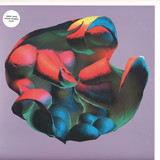
ERROR105 comes from Marseille based producer Magic Doz.
Being no stranger to System Error having already been featured on Party Bombs Vol. 1 followed by this year's release of his debut album on his own label Luzerna Records titled “Dynasty of Dreams - Brotherhood Of The Dragon’s Sword”.
Now we are finally ready to announce his debut release on System Error's ERROR100 Series which we’ve been sitting on for a while already.
Some of you will recognise the tracks already for everyone else you are in for a treat!
An energetic and rave sounding 4 tracker to get the dance floor up to cooking temperature and let the dancers simmer for a bit to let that spice mix in with all the sonic flavors provided by the “Underground Traffic EP”.
A future retro classic with modern touch!
Suche:magic system d j
- 1
ALEX is a dark, haunting and brooding synthwave record that sets the night on fire, taking you from darkness all the way to the shining lights of Broadway. With hints of cyberpunk, outrun and other 80's inspired retrowave influences, ALEX has developed a true signature sound that is funky, groovy and totally rocking. X takes you on a futuristic, electronic music trip that's filled with nostalgia and suspense. Artist bio: Originating from Edinburgh Scotland, ALEX is a Scottish born electronic music producer, composer and DJ. After spreading his sound to every channel and label possible, ALEX broke through in the most significant way possible. If you get the attention of Playmaker and NewRetroWave in the Synthwave scene, you're doing something right, and ALEX's unique approach to composition and production led to his debut release with NRW, the 'Blood Club' EP. And things haven't slowed for the young producer, with two more EP's and an album since his debut, each showing another side to the artist. After the release of his Drive inspired EP 'Youth', fans of the powerful vocal tracks 'Rebel of the Night' and 'Youth' can get excited for the pair of major budget music videos ALEX has in store, with filming having taken place in Russia and New York City. ALEX grew up listening to the likes of Daft Punk, Justice, Underworld, Chromatics, Deadmau5, absorbing the sounds of Disco, House, Hip-Hop, and Rock, cherry picking his favourite elements to blend into the new retro haze of his own material. He also cites film composers, such as Disasterpiece, John Carpenter, Vangelis, Johan Johansson, and John Williams.
- A1: Les Masques - Il Faut Tenir (1969)
- A2: Isabelle Aubret - Casa Forte (1971)
- A3: Christianne Legrand - Hlm Et Ciné Roman (1972)
- A4: Jean Constantin - Pas Tant D'chichi Ponpon (1972)
- A5: Billy Nencioli & Baden Powell - Si Rien Ne Va (1969)
- B1-: Marpessa Dawn - Le Petit Cuica (1963)
- B2: Jean-Pierre Sabar - Vai Vai (1974)
- B3: Sophia Loren - De Jour En Jour (1963)
- B4: Isabelle - Jusqu’à La Tombée Du Jour (1969)
- B5: Sylvia Fels - Corto Maltesse (1974)
- C1: Frank Gérard - Comme Une Samba (1972)
- C2: Ann Sorel - La Poupée Des Favellas (1971)
- C3: Charles Level - Un Enfant Café Au Lait (1971)
- C4: Andrea Parisy - Les Mains Qui Font Du Bien (1970)
- C5: Audrey Arno - Quand Jean-Paul Rentrera (1969)
- C6: Aldo Frank - T’as Vu Ce Printemps (1970)
- D1: Christianne Legrand - Cent Mille Poissons Dans Ton Filet (1972)
- D2: Clarinha - Lemenja (1970)
- D3: Hit Parade Des Enfants - Aquarela (1976)
- D4: Jean-Pierre Lang - Tendresse (1965)
- D5: Magalie Noël - Une Énorme Samba (1970)
- D6: Françoise Legrand - La Lune
Ever since the late 1950s bossa-nova revolution, Brazil’s influence on French music has been undeniable. Pierre Barouh, Georges Moustaki and a vast array of lesser known artists, all made the Musica Popular Brasileira (MPB) an axis of promotion at the service of a cool and metaphysical, modern and mixed Brazilian lifestyle. Some were seduced by the poetic languors of the bossa, some were looking for fun, and others just loved the American hybridization of jazz-bossa, jazz-samba.
What is bossa nova? One of its creators, Joao Gilberto said: "Its style, cadence, everything is samba. At the very start, we didn't call it bossa nova, we sang a little samba made up of a single note - Samba de uma nota so .... The discussion around the origins of bossa nova is therefore useless”. It is nevertheless useful to remember that these magnificent Brazilian songs, which the guitarist describes as samba, were shifted and balanced around improbable chords. "I like things that lean, the in-betweens that limp with grace," said Pierre Barrouh, quoting Jean Cocteau.
With emotion, arrangements for violin and supple guitar licks, bossa nova rapidly changed. A transformation that can be heard in the Tchic, tchic, French Bossa Nova 1963-1974 compilation, the result of a cultural reappropriation, which traveled through the United States and supplemented itself in France.
A musical revolution that has remained significant, bossa nova was born in Rio. From 1956 to 1961, Brazil lived through its golden years. In five years, the country had invented its modernist style. Elected president in 1956, Juscelino Kubitschek de Oliveira, an elegant man with a broad forehead, brandished a promising slogan: "Fifty years of progress in five years". He quickly got to work. Not worried about increasing debt, he launched the project for a new federal capital, Brasilia, designed by the communist architect Oscar Niemeyer. Volkswagen opened state-of-the-art factories and created the “fusquinha”, the Beetle. In Rio, the Vespa made its first appearance. The Arpoador Surf Club crew run into the “girl” from Ipanema, Helô Pinheiro - the tanned garota ("chick"), between a flower and mermaid, who at 17 walked by the Veloso bar, where the fiery author and composer, Tom Jobim and Vinicius de Moraes, were getting drunk on whiskey. From then on, bossa symbolized cool.
In 1958, Joao Gilberto recorded Chega de Saudade, which the directors of Philips denied, calling it "music for fagots". The marketing director, who believed in it, secretly pressed 3000 78-inch vinyls and distributed them at schools around Rio, creating a tidal wave.
American jazzmen then took over. In particular, trumpeter Dizzy Gillespie and guitarist Charlie Byrd. In November 1962, the Brazilian Ministry of Foreign Affairs funded a "Bossa-Nova" concert at Carnegie Hall in New York, inviting the genre’s pioneers. Unprepared, the show soon turned to disaster. But the troupe was invited to the White House by Jackie Kennedy. The first lady loved "the new beat" and in particular Maria Ninguem, a song by Carlos Lyra, later covered by Brigitte Bardot.
In Brazil, the 1964 military coup quickly ended this euphoria. The destructive atmosphere that ensued pushed many Brazilian musicians to leave, if not to exile. Thus, Tom Jobim, Sergio Mendes and Joao Gilberto arrived to the United States. In New York, Joao Gilberto met saxophonist Stan Getz. At the time, he was married to the Bahianese Astrud Weinert Gilberto, who had a German father. She had never sung before, but she knew how to speak English. Getz therefore asked her to replace her husband on The Girl From Ipanema. The Getz/Gilberto record with Tom Jobim on piano, was released in March 1964. Phil Ramone, the "pope of pop" was in charge of sound.
Bossa nova arrived in Paris through the classic “guitar-voice” channel (Pierre Barouh, Baden Powell, Moustaki…) But France loved jazz and Paris had already welcomed its American contributors. All these good people were to pass through Saint-Germain-des-Prés. The cabaret l'Escale became the Mecca of Latin American sound where one could find Pierre Barrouh and his friends, such as the Camara Trio, samba-jazz aces, whose only record was published by the Saravah label. With a band strangely called Les Masques (a band that included Nicole Croisille and Pierre Vassiliu, among others), the Camara Trio recorded an interesting Brazilian Sound, including the track Il faut tenir which is present on this tasty compilation of rarities.
Other enlightened musicians can also be found on the compilation, such as Jean-Pierre Sabar (songwriter for Hardy, Auffray, Leforestier ...) and the French pop rock organist Balthazar. In 1975, Sabar recorded Aurinkoinen Musiikkimatka on a Finnish label, which featured the crazy Vai, Vai, included on this record. We are now following the footsteps of Brazilian electronic musicians such as Sergio Mendes, Eumir Deodato or Marcos Valle who created funk and disco sounds on their keyboards and synthesizers. A style that influenced Véronique Sanson when she wrote Jusqu’à la Tombée de la nuit in 1969 for Isabelle de Funès, the niece of Louis and a great friend of Michel Berger - Sanson did end up singing this track on her 1992 Sans Regret record.
The pinnacle of exoticism and travel, Sylvia Fels’ Corto Maltese includes bongos, sea mist and ocean sounds. The title was taken from Jacky Chalard’s concept album written in 1974, Je suis vivant, mais j’ai peur (I am alive, but I am scared), based on Gilbert Deflez’s science fiction novel.
However, bossa nova extended the scope of popularity. "In the 1970s, I was a fan of Sergio Mendes, Getz / Gilberto. I fell in love with this music that I knew because I had been an orchestral singer, " explained Isabelle Aubret, who in 1971 delivered a composite record of covers by the very funky Jorge Ben, Orfeu Negro, Tom Jobim, Vinicius de Morais and Jean Ferrat. "I recorded this album for Meys Records in Paris, far from Brazil, with wonderful musicians, François Raubert, Roland Vincent, Alain Goraguer...". The latter wrote the arrangements for Casa Forte, a very percussive title borrowed from Edu Lobo, one of the initiators of the bossa who spent time in California. "Jazz and bossa came together and produced very rhythmic music. I love singing, it allows me to dream, to have fun, to feel a high on stage, and these songs brought me joy, made me swing, my singing felt like a dance.”
The world tours of French singers and their desire for the tropics, often brought them to Rio with its hills, forests, caipirinhas and tanned bodies. There are surprises though, like this Iemenja (Iemenja is the goddess of the sea in the Afro-Brazilian candomblé religion). Not unlike the composer and musician Jean-Pierre Lang, based in Sao Paulo, Claire Chevalier taught Brazil to Brazil. In 1970, the singer and painter published a 45-inch vinyl, Mon mari et mes amants (My husband and my lovers), under the improbable pseudonym of Clarinha (little Claire). She was then living in Rio, with her husband, Joël Leibovitz, who founded a band called Azimuth, and who owned a record label specialized in "sambas enredos" songs for samba school parades.
For its B side, she asked Pierre Perret to come up with lyrics for a song composed by Carlos Imperial: "Oh goddess of the sea, o goddess Iemenja, I bring a white rose to adorn your long hair ..." . "Perret came to see us, and we had fun, remembers Joël Leibovitz. We wrote Lemenja for fun, we recorded it at the Havaí studio, behind the Central do Brasil the central station. Erlon Chaves, the arranger who worked with Elis Regina, joined us" adding his share of Afro-Brazilian percussions and funky brass to the mix.
There is a common misunderstanding in Franco-Brazilian history: that bossa, admittedly hedonistic, is perceived as funny, even though the poets who wrote the texts are often philosophizing on the human condition. Its French interpreters pull it towards a carnival inspired universe, far removed from its fundamental essence. Thus, Jean Constantin covered the famous Samba da minha terra, an ode to the art of samba written by the classic Bahian composer Dorival Caymmi, renaming it with the enticing title of Pas tant de tchi tchi pompon: "On your pier there is no tchi tchi / when you arch your back, you know everything is alright ”(lyrics by Gérard Calvi). This expedited bossa aims for the absurd, but retains a certain elegance.
Indeed, Jean Constantin was not an idiot, the rather large man had a huge mustache and liked fantasy, (Les pantoufles à papa, Le pacha, inspired by cha-cha-cha-cha, salsa and jazz) but he was also the lyricist of Mon manège à moi interpreted by Edith Piaf, the composer of Mon Truc en plume by Zizi Jeanmaire and the soundtrack of François Truffaut’s 400 Blows. Le Poulpe, published in 1970, from which this bossa is extract, was arranged by Jean-Claude Vannier, an accomplice of Serge Gainsbourg’s Melody Nelson. In short: "There is enough of samba / By looking at the parasol / Because my poor cabeza / Is going to die in the sun".
Even the American actress Marpessa Down, who was at the heart of the bossa nova revolution with her role as Euridyce in Marcel Camus’ film Orfeu Negro, winner of the 1959 Cannes Palme d'or, fed the clichée with Je voudrais parler au petit cuica - "Tell me how you manage to always make people want to dance / It's true, I must admit that I cannot resist your magic" - in consequence, once can hear the cuica, a little drum inherited from the Bantu.
But bossa nova had many angles. Societal, of course, pushing actresses who were symbols of women's liberation like Brigitte Bardot, Jeanne Moreau, or Sophia Loren to engage in the exercise of accelerated bossa. In February of 1963, Sophia Loren made a record in French in Rome, Je ne t'aime plus, featuring the song De jour en jour, a bossa written by two Italians, Armando Trovajoli and Tino Fornai, which was released a little later by Barclay. Bossa accompanied the 1960s, a decade of moral liberation. Ann Sorel, who interpreted La Poupée des favellas, caused a sensation with L’amour à plusieurs, a provocative song written by Frédéric Bottom and Jean-Claude Vannier. As for the actress Andrea Parisy, she displayed her bourgeois cheekiness in Marcel Carné's Les Tricheurs before interpreting Les mains qui font du bien. And Magalie Noël, the friend of Boris Vian, who sung Johnny fais-moi mal, was hired to sing Une énorme Samba, composed by Alain Goraguer (arranger to Gainsbourg, Bobby Lapointe and Jean Ferrat) with lyrics by Frédéric Botton.
But in the end, of what wood is bossa nova made of? The answer is given by Christianne Legrand, daughter of Raymond the conductor, and sister to Michel the composer: "With me, with jà" - jà means "immediately" in Portuguese. In 1972, the singer, an expert in vocal jazz and a member of the Double Six, published Le Brésil de Christianne Legrand. Two songs included on the Tchic Tchic compilation that demonstrate how bossa, jazz, funk, rock, etc. work like a swiss army knife: the music is used to denounce broken systems, or miracles, HLM et ciné roman, Cent mille poissons dans ton filet, two songs from the O Cafona soundtrack, a successful telenovela broadcast, at the time in black and white, on TV Globo. The first was adapted in French by the fighter and friend of the Legrand tribe, Agnès Varda. The second is content with a play on words, jostling them into a summer fun.
Véronique Mortaigne
Zeb & Scotty without a doubt belong to the unsung heroes of the Jamaican-Caledonian underground, running tings during sound system nights all over Scotland in the 2010s – most notoriously for Mungo’s Hifi in Glasgow and Big Toe’s Hifi in Edinburgh. Wherever a heavy bass could be heard through wet nights, you could be sure the duo was tearing the place down inside.
Always getting the vibes best on a small stage next to a blasting rig, their vinyl releases remained scarce however. Luckily one of their magic moments, “Bring Di Sensi” on a Jahtari 8bit chip hop jam, was captured on tape in 2008 at the Glasgow School of Art during a Mungo’s Hifi session.
Now pressed to fine 7″ wax with an all new Dub cut on B and alongside beloved oddball reggae outro “Roll That Shit“, this heavyweight delivery is scheduled to arrive at all sound systems shortly!
- A1: Organ Yn Dy Geg
- A2: Fix Idris
- A3: Crys Ti
- A4: Blerwytirhwng?
- B1: Pam V?
- B2: God! Sho Me Magic
- B3: Sali Mali
- B4: Focus Pocus/ Debiel
The vinyl version of this release compiles the tracks from their two earliest EPs originally released by Ankst whilst the 22 track CD features further unreleased & unheard bonus tracks from this early era.
Super Furry Animals also recently announced additional festival dates to follow their sold out Supacabra Tour dates including stops in Llangollen, Bristol, York, Glasgow and London (their first since late 2016. See full 2026 dates below.
Holding the world record for the longest ever EP title the first EP -Llanfairpwllgwyngyllgogerychwyndrobwllantysiliogogogochynygofod (In Space), was released in 1995, followed in the same year by Moog Droog, with both EPs making up the eight-song track listing of the vinyl version of Precreation Percolation.
Later that year, with a record deal on the table and future classics such as God! Show Me Magic and Hangin’ With Howard Marks already making up the SFA’s set list, the band’s path following “two years of chaos” (including a legendary 1993 debut ‘gig’ at Bangor University’s Banana Lounge, lasting all of five minutes due to technical and chemical misadventure) was set. In the album’s liner notes, singer, Gruff Rhys writes: “It would have been the best gig ever, had we not daisy chained so many synthesizers together, that it resulted in a terminal systems failure.”
By summer they’d joined Oasis, Primal Scream and The Jesus and Mary Chain in the Creation Records family, leading to a huge London signing party that saw members of the band famously thrown out of.
The term of intriguing genre experimentation, spanning long-form electro, blissed out instrumentals and expansive prog-influenced rock, heard across much of Precreation Percolation was subsequently refined and channeled into their thrilling, 1996 debut album, Fuzzy Logic and their untamed live performances.
While consciously and frequently referring to the unheard, untold and unforeseen as a naturally nostalgia-resistant band, Super Furry Animals look ahead to reconvening with fans to celebrate their shared history as the Supercabra Tour gets underway.
(the vinyl comes with a copy of the CD in a slim card wallet)
To celebrate the 20-year anniversary of our label Jamaican Recordings and to mark the
sad one year passing of the musical maestro reggae producer Bunny `Striker’ Lee, we
have pulled together a brand new collection of some great Bunny Lee rhythms.
Our label started way back with initial meetings with Bunny Lee and a promise to keep his music available, out on the streets. He will be sorely missed but will live on through his extraordinary musical legacy and we hope to add to this by including this release to the stable of an unbeatable catalogue.
Legendary record producer Bunny `Striker’ Lee’s vast selection of rhythms were ever present at any Sound Clash or Dance worth talking about in the early to mid-1970’s.
Where the version found on the b-side of a single or special dub cut on acetates, would be played to win over the people and conquer the dance. Bunny Lee was the undisputed rhythm master and on this special release he is also the MC telling the crowd how it is and that any rival sound system should watch out as he has the rhythms that can reign supreme. The band cutting these timeless rhythms were a group of top Jamaican musicians Bunny had put together called The Aggrovators.
The Aggrovators were a group of reggae musicians that usually featured Carlton `Santa’ Davis on drums playing alongside Robbie Shakespeare on bass, with other musicians added like Earl `Chinna’ Smith on guitar and Tommy McCook and Vin Gordon and Lennox Brown added for horn arrangements. Keyboards and organ duties normally fell
to musicians Ansel Collins and Bernard ‘Touter’ Harvey. The band was named after singer Eddie Grant had repeated the phrase to Bunny Lee on one of his many trips to England, that such and such artist was giving him `Aggro’. This was a term used in England in the 1970’s by the Skinhead followers of reggae music. A term shortened
from the word `Aggrovation’, meaning trouble, fighting or making the situation worse. Bunny Lee was so taken with this term that on returning to Jamaica, not only did he name his group of musicians the `Aggrovators’ but he also named his record shop situated at 101 Orange Street `Agro Records’.
We have compiled some great tracks recorded by this fantastic group of musicians. With the added extra magic of Mr Bunny Lee calling it out as only he can on the microphone.
Yes Run Sound Boy Run the version master is here…Respect
Adult Sonics - Shuffle Master EP (SRR004)
BODJ & ROKSI in true magician style, wear their top hats & capes as they come together once more under their Adult Sonics alias, this time shuffling the deck for the inaugural vinyl release of London based record label, Stay Restless.
An original 3-track EP with the signature ADS sound - trippy and dark yet playful, created having big sound systems in mind, it’s already been in rotation from Sunwaves festival to SASH in Sydney and back.
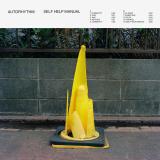
/// First track, Symmetry, debuted on BBC Radio 6 New Music Fix, 10th February: "A beautiful, beautiful album" /// I got my life back. On 17 February 2025, 1024 rays of ultra sound converged at an operation table in Bern, Switzerland, and disconnected a noisy circuit on my brain. 90% of the manifestation ceased – of a disease that I no longer wish to mention by its name. During the same period, I completed my new album: Self Help Manual. I’ve read more current research about the nameless disease than my neurologist, who despite that I didn’t follow his advice on suitable treatment, called me after the successful operation: a brave, brave man. I have composed the music in the same way as in my previous album – Songs for the Nervous System – through layers upon layers of improvisations in dialogue with my synthesizers, most of which are the same age as me. I made the majority of the songs in my studio in the remains of Old Hagalund in Solna. I edited the recordings in my bed during the waking hours of clarity at night. Some songs – NAC, Ketosis, Overkill – were recorded in the basement of my childhood home in Skutskär, in Norduppland, where I’d returned to be nurtured by my retired parents – who during a night when I couldn’t turn over in bed, or pull the blanket over me – made a list of what would happen to my belongings. To my friends who have stood out with me despite my disease, I want to state: you will not inherit me yet. On the new album, the electric bass takes on a leading role. ESG and Liquid Liquid have been important when I reinvented my baselines, limited and liberated by my poor fine motor skills. Plasma is my homage to Summertime Rolls by Jane’s Addiction, that I listened to frequently in my youth. I guess that no one will hear the resemblance. In several songs, the Fender Rhodes plays an important role, a magical instrument that I bought shortly after my diagnosis over a decade ago, and for a long time didn’t dare to touch out of respect for Herbie Hancock and Fela Kuti. A couple of songs draw inspiration from the Horn of Africa – Inner Nile and Delta. At first, subconsciously in the reverb-drenched Inner Nile, then more consciously in Delta. I’m sorry it doesn’t swing the right way, but it was my attempt to return to the cradle of humanity. Longevity is possibly my favourite. The melody is played by an arpeggiator that I controlled by pressing down different keys in an exhilarating sense of freedom. One song in particular, the second track – One – has caused friends to associate freely: one thought it sounded like Patrick Cowley, another like Sly & Robbie meets Kraftwerk, a third like Air – Moonlight Safari. I made one song just before the surgery: opening track Symmetry. It’s the mightiest and most minimal song. I made one song after the surgery: finishing track Self Help Manual. My previous medication pump is heard through the microphone of my Ovation Magnum. It’s the most hopeful song on the album. I took the cover photos with my Hasselblad during walks in Tokyo suburbs of Ōmori and Kamata more than ten years ago. It was something about the faith of the traffic cones that fascinated me – born in the same streamlined form, they had over the years become increasingly individual and lovable. The mixing was finalized by Christoffer Roth in the newly built Studio Dubious in Nacka. Rashad Becker, who in an interview said that he listens as much with his mouth as with his ears, mastered the album at Clunk in Berlin. Right now it feels like anything is possible. My recovery is perhaps a small step for mankind, but a giant leap for me. I hereby leave the music to you. Joakim Forsgren
Métron Records announces Mycorrhizal Music, the forthcoming album from composer and multi instrumentalist Ess Whiteley. Currently a PhD candidate in Composition at the University of California-San Diego, Whiteley’s practice spans recordings, installations, performances, and scores, a body of work as diverse as the fungal webs that inspire it.
Across seven tracks, Whiteley explores interconnected sound worlds shaped by mycelium networks, rhizomatic structures, and other unseen systems that sustain life. Rooted in experimental electronics, minimalism, ambient and IDM, the record imagines sound as ephemeral connective tissue capable of reshaping how a listener might experience time, memory, and futurity.
At the core of Whiteley’s work is an excavation of what lies beneath perception, the felt but unspoken currents of emotionality and subtle experiences that dwell in the unconscious.
Mycorrhizal Music channels these hidden threads into a speculative ecosystem of kinship and exchange, where joy, play, and spirituality interlace like branching hyphae beneath the soil. Mycorrhizal Music has been conceived as kinetic ambient music, designed to move with the listener while walking, riding trains, driving, cooking, where everyday rhythms align with shifting sonic textures, reminding them of hidden, interconnected, mycelial webs of spiritual vitality beneath the surfaces of daily activity.
Guided by a vision of speculative ecology and interspecies resonance, it thrives in contrasts: tracks like Rhizomatic Harpists and Whispered Messages in Tapestried Fields of Fluid Motion pulse with fluid momentum, while Kaleidoscopic Patterns of Emptiness Dancing drifts into fragile stillness.
With artwork by Kenta Senekt and mastering by Brandon Hocura, Mycorrhizal Music extends Métron Records’ ethos of cultivating subtle, interconnected sound worlds.
- A4: Daniele Baldelli, Francesca Amati - Inner Light
- A5: Ruins - Sexual Desire
- B1: Midnight Magic - Beam Me Up (Eli's Mix)
- B2: Musclecars - Running Out Of Time
- B3: Working Men's Club - Ploys (System Olympia Edit)
- B4: Royalty - Heart Strings
- C1: Dirty Art Club - Daysleeper
- C2: Admiral - Soho Girl
- C3: Tom Sharkett & Raf Rundell - Where's It All Go?
- C4: Gina Calabrese - Nobody Lives Forever
- D1: Romolo Grano, Gianni Oddi & Edda Dell'orso - Kilimangiaro
- D2: Lndfk - Hana-Bi
- D3: Fitness Forever - Vederti Distante
- A1: System Olympia - The Heat Of The Night (Feat. Reinen)
- A2: Flavia Fortunato - Se Tu Vuoi
- A3: See Thru Hands - Hot City
- D4: Piero Umiliani - Chaser
- D5: Stefano Torossi - Feeling Tense
White Vinyl[32,35 €]
System Olympia presents a bold, cinematic compilation that redefines the sound of sensuality. Love Language is an
18-track double-vinyl release pressed on deluxe heavyweight black vinyl.
It’s accompanied by a provocative, limited-edition 24-page fanzine, exclusive to 18+ audiences.
This is not just a compilation, Love Language is a manifesto. A carefully curated sonic journey through eroticism, artistic rebellion,
and liberation, it spans nearly five decades of music and features exclusive edits and rare gems that illuminate System Olympia’s
radical aesthetic vision.
****
Since her emergence on the electronic underground, System Olympia has carved out a distinct, sensual sonic universe, equal parts
vulnerable and defiant. With Love Language, she presents her most audacious project to date: a compilation rooted in what she
calls The Aesthetics of Sexual Desire in Sound.
It’s a daring declaration that desire is more than a feeling - it’s a language. Across 20 tracks, including her own sultry opener “The
Heat Of The Night (feat. REINEN)” and a rare System Olympia edit of Working Men’s Club’s “Ploys”, this compilation speaks in
rhythms and textures that evoke longing, intimacy, and ecstatic release.
This is not a traditional compilation. System Olympia’s sequencing is cinematic and deliberate. Every track a scene in a film that exists
only in the listener’s imagination. From the retro-futurist seduction of Flavia Fortunato’s Italo gem “Se Tu Vuoi” to the deep, extended
tension of Musclecars’ “Running Out of Time,” each piece plays its part in an arc of anticipation, climax, and reflection.Uniting artists as diverse as Daniele Baldelli, Piero Umiliani, and DJ Rocca, Love Language refuses boundaries of genre, era, or
expectation. It dances between vintage Italo-disco, dreamy electronica, sweaty club tracks, and avant-garde jazz, forming a rich
tapestry of sound and sensation.
System Olympia explains, “This is music for lovers, outsiders, and dreamers. It's a rebellion made of velvet and
basslines.
The accompanying 24-page fanzine insert, restricted to adults, further deepens the narrative, with erotic visual fragments and
poetic texts that amplify the compilation’s raw, sensual energy. A tangible extension of the music’s spirit, the zine invites listeners to
step into Olympia’s world and engage their senses fully.
As much a provocation as it is a celebration, Love Language is a deeply personal curation and a radical act of creative freedom. It
champions eroticism as art, desire as dialogue, and music as a liberatory force.
a A1. System Olympia - The Heat Of The Night (feat. REINEN) 3:44
b A2. Flavia Fortunato - Se Tu Vuoi 3:38
c A3. See Thru Hands - Hot City 3:57
[d] A4. Daniele Baldelli, Francesca Amati - Inner Light [4:43]
[e] A5. Ruins - Sexual Desire [3:14]
[f] B1. Midnight Magic - Beam Me Up (Eli's Mix) [5:13]
[g] B2. musclecars - Running Out Of Time [5:10]
[h] B3. Working Men's Club - Ploys (System Olympia Edit) [4:56]
[i] B4. Royalty - Heart Strings [5:05]
[j] C1. Dirty Art Club - Daysleeper [3:45]
[k] C2. Admiral - Soho Girl [4:14]
[l] C3. Tom Sharkett & Raf Rundell - Where's It All Go? [3:41]
[m] C4. Gina Calabrese - Nobody Lives Forever [4:40]
[n] D1. Romolo Grano, Gianni Oddi & Edda Dell'Orso - Kilimangiaro [3:55]
[o] D2. LNDFK - Hana-bi [1:55]
[p] D3. Fitness Forever - Vederti Distante [2:47]
[a] A1. System Olympia - The Heat Of The Night (feat. REINEN) [3:44]
[b] A2. Flavia Fortunato - Se Tu Vuoi [3:38]
[c] A3. See Thru Hands - Hot City [3:57]
[d] A4. Daniele Baldelli, Francesca Amati - Inner Light [4:43]
[e] A5. Ruins - Sexual Desire [3:14]
[f] B1. Midnight Magic - Beam Me Up (Eli's Mix) [5:13]
[g] B2. musclecars - Running Out Of Time [5:10]
[h] B3. Working Men's Club - Ploys (System Olympia Edit) [4:56]
[i] B4. Royalty - Heart Strings [5:05]
[j] C1. Dirty Art Club - Daysleeper [3:45]
[k] C2. Admiral - Soho Girl [4:14]
[l] C3. Tom Sharkett & Raf Rundell - Where's It All Go? [3:41]
[m] C4. Gina Calabrese - Nobody Lives Forever [4:40]
[n] D1. Romolo Grano, Gianni Oddi & Edda Dell'Orso - Kilimangiaro [3:55]
[o] D2. LNDFK - Hana-bi [1:55]
[p] D3. Fitness Forever - Vederti Distante [2:47]
[a] A1. System Olympia - The Heat Of The Night (feat. REINEN) [3:44]
[b] A2. Flavia Fortunato - Se Tu Vuoi [3:38]
[c] A3. See Thru Hands - Hot City [3:57]
[d] A4. Daniele Baldelli, Francesca Amati - Inner Light [4:43]
[e] A5. Ruins - Sexual Desire [3:14]
[f] B1. Midnight Magic - Beam Me Up (Eli's Mix) [5:13]
[g] B2. musclecars - Running Out Of Time [5:10]
[h] B3. Working Men's Club - Ploys (System Olympia Edit) [4:56]
[i] B4. Royalty - Heart Strings [5:05]
[j] C1. Dirty Art Club - Daysleeper [3:45]
[k] C2. Admiral - Soho Girl [4:14]
[l] C3. Tom Sharkett & Raf Rundell - Where's It All Go? [3:41]
[m] C4. Gina Calabrese - Nobody Lives Forever [4:40]
[n] D1. Romolo Grano, Gianni Oddi & Edda Dell'Orso - Kilimangiaro [3:55]
[o] D2. LNDFK - Hana-bi [1:55]
[p] D3. Fitness Forever - Vederti Distante [2:47]
[a] A1. System Olympia - The Heat Of The Night (feat. REINEN) [3:44]
[b] A2. Flavia Fortunato - Se Tu Vuoi [3:38]
[c] A3. See Thru Hands - Hot City [3:57]
[d] A4. Daniele Baldelli, Francesca Amati - Inner Light [4:43]
[e] A5. Ruins - Sexual Desire [3:14]
[f] B1. Midnight Magic - Beam Me Up (Eli's Mix) [5:13]
[g] B2. musclecars - Running Out Of Time [5:10]
[h] B3. Working Men's Club - Ploys (System Olympia Edit) [4:56]
[i] B4. Royalty - Heart Strings [5:05]
[j] C1. Dirty Art Club - Daysleeper [3:45]
[k] C2. Admiral - Soho Girl [4:14]
[l] C3. Tom Sharkett & Raf Rundell - Where's It All Go? [3:41]
[m] C4. Gina Calabrese - Nobody Lives Forever [4:40]
[n] D1. Romolo Grano, Gianni Oddi & Edda Dell'Orso - Kilimangiaro [3:55]
[o] D2. LNDFK - Hana-bi [1:55]
[p] D3. Fitness Forever - Vederti Distante [2:47]
- A3: See Thru Hands - Hot City
- A4: Daniele Baldelli, Francesca Amati - Inner Light
- A5: Ruins - Sexual Desire
- B1: Midnight Magic - Beam Me Up (Eli's Mix)
- B2: Musclecars - Running Out Of Time
- B3: Working Men's Club - Ploys (System Olympia Edit)
- B4: Royalty - Heart Strings
- C1: Dirty Art Club - Daysleeper
- C2: Admiral - Soho Girl
- C3: Tom Sharkett & Raf Rundell - Where's It All Go?
- C4: Gina Calabrese - Nobody Lives Forever
- D1: Romolo Grano, Gianni Oddi & Edda Dell'orso - Kilimangiaro
- D2: Lndfk - Hana-Bi
- A1: System Olympia - The Heat Of The Night (Feat. Reinen)
- A2: Flavia Fortunato - Se Tu Vuoi
- D3: Fitness Forever - Vederti Distante
- D4: Piero Umiliani - Chaser
- D5: Stefano Torossi - Feeling Tense
Black Vinyl[29,83 €]
System Olympia presents a bold, cinematic compilation that redefines the sound of sensuality. Love Language is an
18-track double-vinyl release pressed on deluxe heavyweight black vinyl.
It’s accompanied by a provocative, limited-edition 24-page fanzine, exclusive to 18+ audiences.
This is not just a compilation, Love Language is a manifesto. A carefully curated sonic journey through eroticism, artistic rebellion,
and liberation, it spans nearly five decades of music and features exclusive edits and rare gems that illuminate System Olympia’s
radical aesthetic vision.
****
Since her emergence on the electronic underground, System Olympia has carved out a distinct, sensual sonic universe, equal parts
vulnerable and defiant. With Love Language, she presents her most audacious project to date: a compilation rooted in what she
calls The Aesthetics of Sexual Desire in Sound.
It’s a daring declaration that desire is more than a feeling - it’s a language. Across 20 tracks, including her own sultry opener “The
Heat Of The Night (feat. REINEN)” and a rare System Olympia edit of Working Men’s Club’s “Ploys”, this compilation speaks in
rhythms and textures that evoke longing, intimacy, and ecstatic release.
This is not a traditional compilation. System Olympia’s sequencing is cinematic and deliberate. Every track a scene in a film that exists
only in the listener’s imagination. From the retro-futurist seduction of Flavia Fortunato’s Italo gem “Se Tu Vuoi” to the deep, extended
tension of Musclecars’ “Running Out of Time,” each piece plays its part in an arc of anticipation, climax, and reflection.Uniting artists as diverse as Daniele Baldelli, Piero Umiliani, and DJ Rocca, Love Language refuses boundaries of genre, era, or
expectation. It dances between vintage Italo-disco, dreamy electronica, sweaty club tracks, and avant-garde jazz, forming a rich
tapestry of sound and sensation.
System Olympia explains, “This is music for lovers, outsiders, and dreamers. It's a rebellion made of velvet and
basslines.
The accompanying 24-page fanzine insert, restricted to adults, further deepens the narrative, with erotic visual fragments and
poetic texts that amplify the compilation’s raw, sensual energy. A tangible extension of the music’s spirit, the zine invites listeners to
step into Olympia’s world and engage their senses fully.
As much a provocation as it is a celebration, Love Language is a deeply personal curation and a radical act of creative freedom. It
champions eroticism as art, desire as dialogue, and music as a liberatory force.
a A1. System Olympia - The Heat Of The Night (feat. REINEN) 3:44
b A2. Flavia Fortunato - Se Tu Vuoi 3:38
[c] A3. See Thru Hands - Hot City [3:57]
[d] A4. Daniele Baldelli, Francesca Amati - Inner Light [4:43]
[e] A5. Ruins - Sexual Desire [3:14]
[f] B1. Midnight Magic - Beam Me Up (Eli's Mix) [5:13]
[g] B2. musclecars - Running Out Of Time [5:10]
[h] B3. Working Men's Club - Ploys (System Olympia Edit) [4:56]
[i] B4. Royalty - Heart Strings [5:05]
[j] C1. Dirty Art Club - Daysleeper [3:45]
[k] C2. Admiral - Soho Girl [4:14]
[l] C3. Tom Sharkett & Raf Rundell - Where's It All Go? [3:41]
[m] C4. Gina Calabrese - Nobody Lives Forever [4:40]
[n] D1. Romolo Grano, Gianni Oddi & Edda Dell'Orso - Kilimangiaro [3:55]
[o] D2. LNDFK - Hana-bi [1:55]
[2:47]
[a] A1. System Olympia - The Heat Of The Night (feat. REINEN) [3:44]
[b] A2. Flavia Fortunato - Se Tu Vuoi [3:38]
[c] A3. See Thru Hands - Hot City [3:57]
[d] A4. Daniele Baldelli, Francesca Amati - Inner Light [4:43]
[e] A5. Ruins - Sexual Desire [3:14]
[f] B1. Midnight Magic - Beam Me Up (Eli's Mix) [5:13]
[g] B2. musclecars - Running Out Of Time [5:10]
[h] B3. Working Men's Club - Ploys (System Olympia Edit) [4:56]
[i] B4. Royalty - Heart Strings [5:05]
[j] C1. Dirty Art Club - Daysleeper [3:45]
[k] C2. Admiral - Soho Girl [4:14]
[l] C3. Tom Sharkett & Raf Rundell - Where's It All Go? [3:41]
[m] C4. Gina Calabrese - Nobody Lives Forever [4:40]
[n] D1. Romolo Grano, Gianni Oddi & Edda Dell'Orso - Kilimangiaro [3:55]
[o] D2. LNDFK - Hana-bi [1:55]
[2:47]
- A1: System Olympia - The Heat Of The Night (Feat. Reinen)
- A2: Flavia Fortunato - Se Tu Vuoi
- A3: See Thru Hands - Hot City
- A4: Daniele Baldelli, Francesca Amati - Inner Light
- A5: Ruins - Sexual Desire
- B1: Midnight Magic - Beam Me Up (Eli's Mix)
- B2: Musclecars - Running Out Of Time
- B3: Working Men's Club - Ploys (System Olympia Edit)
- B4: Royalty - Heart Strings
- C1: Dirty Art Club - Daysleeper
- C2: Admiral - Soho Girl
- C3: Tom Sharkett & Raf Rundell - Where's It All Go?
- C4: Gina Calabrese - Nobody Lives Forever
- D1: Romolo Grano, Gianni Oddi & Edda Dell'orso - Kilimangiaro
- D2: Lndfk - Hana-Bi
- D3: Fitness Forever - Vederti Distante
- D4: Piero Umiliani - Chaser
- D5: Stefano Torossi - Feeling Tense
Ritual Dance - is a sound journey, where futurism and the obsolete merge into a new world. Arash & Quasar (truth and star) - is a duo of electronic producers, friends, DJs, rare record collectors and artists, Pavel Grachev and Vitaly Zhul'kov. Their approach for music making compiles elements of various cultures and eras, resulting in fresh and trippy sonic labyrinths. The title track puts the listener in a state of trance and wild fields, where shaman dance moves take over the existense. Powerful percussion, rich synth textures and traditional instruments are mixed in one. 'Acid Krishna' extends the trip, adding acid basslines and meditative flavour. A true morning anthem of a proper rave trip. 'Lokum' is exploring the deepness of the East through melodies, that sweeten up your adventure away from the daily reality. The flip side starts with 'Opium', where slow beats suck you in the abyss more and more. 'Truth & Star' - is an energy exchange ceremony, where Arash & Quasar become rhythm wizards and dictate how you move and feel, just like snakes dance to the magic flute... The Truth refers to the inner awakening and The Star is the symbol of the external shine. 'Desert' is the final chapter of the trip, evolving into eternity, just like a caravan dissolves in the endless desert, hot air and the blue night... Besides studio work, Arash & Quasar share videos of their own trips and adventures via Youtube-chanel, called DIG LOTO. Together with their best friend, the portative Vestax Handy Trax vinyl player, they search for rare records in remote destinations.
Following the success of the 12” “Trip To Your Mind (The Reworks)”—where Delfonic and LTJ Xperience both brought their own magic to Hudson People’s disco/jazz-funk anthem—we’re back with a fresh twist: DJ Friction steps in for an official 7” rework, breathing new life into this cult classic in his own unmistakable style.
For those who’ve been following the story, you know “Trip To Your Mind” is a true favorite among DJs and collectors since decades, from its creative inception by the writer Reginald Hudson with the GI funk band Body Heat, to the original recording taking place in the late 70s in London that eventually paved the way for disco lovers to produce this recent string of reworks.
Where the 12” reworks stretched out the groove with extended intros and club-friendly builds, Friction’s version keeps things tight and energetic. He adds his own drums, claps, synth touches, and some new vocal layers—combining the standout parts from both the original mix and the classic UK remix. The result is a punchy new take that’s perfect for DJs who want maximum impact in a short format, but still want all the funk and psychedelic flavor that’s made this song a dancefloor staple for decades.
And for collectors? The original 7” of “Trip To Your Mind” is notoriously hard to find—and pricey when it turns up. This new release finally makes it easy to spin a fresh, fully licensed version on 7” wax, expertly mastered for today’s systems.
Whether you were hooked by the Delfonic or LTJ Xperience edits, or you’re just discovering this tune for the first time, DJ Friction’s rework is a natural next step in the ongoing journey of “Trip To Your Mind.
There’s a particular magic that happens when seasoned producers with global roots come together under a shared ethos - not for hype, but for connection. That’s precisely what MISINGO represents. A cross-continental studio experiment born out of Covid-era isolation, the group spans hemispheres and histories: Yorkshire's Doorly, L.A. legend Gary Richards (aka Destructo), and Australian duo Colour Castle. Their debut offering, Give You Love, lands via UK House Music institution Hard Times Records, and it’s as emotionally resonant as it is built for the floor.
Anchored by a slow-burning acid line and moody, immersive synthwork, 'Give You Love' carries the DNA of classic house without feeling like pastiche. DJ Rae’s smokey vocal, recorded in Doorly’s Ibiza studio, sets the tone - raw, intimate, immediate. Gene Farris enters with a gravelly, magnetic counterpoint, flipping the call-and-response into something spiritual. It’s a record that feels both new and deeply lived-in, a jam session from afar that somehow lands with unity and purpose.
For the remix suite, Hard Times dig into family ties and deliver a heavyweight lineup that spans generations of dance music lineage.
First up, DJ Pierre, the Phuture pioneer himself, brings a Wild Pitch revision that is pure summer sleaze and shimmer. Glistening keys, kinetic snares, and a syrup-thick bassline collide in a mix that’s tailor-made for golden-hour sets and open-air systems.
DJ Romain brings that New York swing. All velvet chords, stabbing pianos, and organ swells that spiral skyward. It’s gospel-house energy that doesn’t need to shout to be heard, a reminder that soul still moves the dancefloor.
Closing out the package is Charles Lavine of Soul Clap fame, whose Boston-bred funk sensibility steers things into new territory. He strips back the mix, lets Rae’s vocal ride the groove, and injects a subtle bounce that turns heads and hips in equal measure.
With 'Give You Love', MISINGO and Hard Times haven’t just released a single, they’ve bottled a moment: one born of distance, stitched together with soul, and destined for collective release on dancefloors worldwide.
Mysticisms arrives majestic at 20, transformative ceremonial offerings. Ritualistic, rhythmic, spiritual, chemistry.
The deep house of Elements Of Life returns, the forever sound. Alex From Utopia is a rising name. Utopia Records releasing a myriad, ambient to esoteric, Balearic to breaks, a discerning DJ found in smarter, darker London nightspots. He unearths and sanctifies the rare and lesser known Are You With Me Love?. Alex’s bump and swing version overlays the ambient original in to a late night groove for those hallowed hours. Find the Eternal.
Øyvind Morken comes fresh, How Bleep Is Your Love? all pure Detroit electro and Chicago jack beats, reminding where it’s at. Elemental, creative, demanding attention. The sound intensifies, gliding, heralding the past and future. Find the Control.
Eirwud Mudwasser & Romansoff are the nod’n’wink jack in the pack, popping and locking, Cherrie is all polyrhythmic pots and pans, crackles and unshackled, dubby beats ripple, psychedelic waves overflow. Find the Elixir.
Label brother N-Gynn appears, the on-going uplift of his Superlux label and DJing the globe, from Ibiza to Thailand, always the man who’s hard to pin. Dream house Es Vedra TB Deluxe floats across White Isle waves, embracing Rimini memories, 303 bubbling, fermenting the magic, alchemists all, gold in the sunrise. Find the System.
180 G. BLACK VINYL WITH LINER NOTES IN CREOLE, FRENCH, ENGLISH
Originally released in 1979, "Spiritual Sound" lives up to its name, a soaring, triumphant album, six tracks of spirit magic from Guadeloupe.
Telluric, intense, terribly alive, the gwoka drums of Guadeloupe carry the identity of a painful and fervent island. Marked forever by the crime of slavery, Guadeloupe's créolité cherishes the ka drums and their natural environment: the low-pitched boula drum with male goatskin, the high-pitched soloist makè drum with female goatskin, the chacha, ti bwa, triangle, calabash and other percussion instruments that surround them, and the voices - the fiery, proud, timbred, urgent voices of the gwoka.
This album is also a legend for its voices: in his then dazzling youth, singer Lukuber Séjor was one of the first gwoka artists to largely feminize the chorus of répondè, who converse with his text delivered in a straight and powerful voice.
And everything here sets new standards. In 1979, Mizik Filamonik - Spiritual Sound proclaimed a spiritual patriotism of ferocious intensity. The album by Lukuber Séjor - whose spelling alone is a battle - sets out to give Guadeloupe the intangible weapons of self-respect and self-knowledge, through a singular practice of traditional music.
The genesis of gwoka music is less straightforward than one might imagine... The drums performed the servile task of accompanying the work of slaves in the fields and during the “corvées” imposed by the administration, before being freely practiced by the common people after the abolition of 1848. At the heart of the conviviality of the Guadeloupeans furthest from the cities - geographically and socially - the gwoka drums come out for carnival, funeral wakes and neighborhood celebrations, but also during strikes, fits of anger and armed vigils of the riots and revolts that have punctuated the island's history. For generations, governors of the colony and then the prefects of the overseas department of Guadeloupe have been viewing the gwoka as a potential for turbulence and a threat to public order.
But as the Beatlesmania, “chanson engagée” and rock revolutions unfolded in Europe, young people turned to the drums of mizik a vié nèg (“bad negro music”, in Creole), which Guadeloupeans had learned to despise by following the “assimilation” process advocated by the school system and most of the political class. At the end of the sixties, in a Guadeloupe mourning the deadly repression of the May 1967 social movement, they played traditional music, refusing to wrap it up in tourist prettiness and madras folk costumes. Instinctively, they played a rough and contemporary gwoka, led by the incendiary Guy Konkèt. This was the era of decisive 45 rpm records such as Robert Loyson's Kann a la richès, which brought to light the fieriest words of union rallies.
At his home in Sainte-Anne, Lukuber Séjor played with flautist Olivier Vamur and his brother Claude Vamur, who cobbled together a drum kit from tin crockery and became, a few years later, the most influential drummer in Kassav'.
These were the years of the Bumidom program, when young Guadeloupeans were encouraged to emigrate to mainland France. At the age of twenty, Lukuber Séjor embarked on the liner Irpinia, disembarking at Le Havre and taking the train to the Gare Saint-Lazare - the route taken by thousands of young West Indians who went on to study or looked for work, all the while trying to maintain a link with their homeland. In this case, it's at the Antony university residence, where Lukuber played the drum and participated in a thousand gwoka updates and aggiornamentos, while exile reinforced the need for a spiritual link with the native land.
In 1978, Guy Konkèt played at the Salle Wagram, a historic event for West Indian music. After serving as répondè - i.e. backing vocalist - on one of his home-recorded albums, Lukuber joined his live band. Little by little, he became one of the key artists on a circuit parallel to French show business. At a student party in Caen, he met a young woman from Martinique who, at the time, was more motivated by her ambitions as a visual artist than by her vocation as a musician. Her name was Jocelyne Béroard and, a few years before she plunged into the Kassav' adventure and became the greatest West Indian singer of her generation, she designed the cover of Lukuber Séjor's LP.
This ambition was obvious and imposed its will. A more or less regular band was formed, with Roger Raspail, Rudy Mompière and Éric Danquin on ka drums, Claude Vamur on ti bwa, Olivier Vamur and Françoise Lancréot on flutes and Annick Noël on keyboards. Lukuber Séjor is set on wanting to extend the gwoka palette to other instruments, as the jazz-rock revolution opens a thousand new doors. Annick Noël will play a wide range of timbres and textures on electric piano and synthesizer. Another novelty: the répondè are two men and two women, Roger Raspail, Olivier Vamur, Françoise Lancréot and Maryann Mathéus ...
Mizik Filamonik - Spiritual Sound is a self-production in which the singer and leader sank all his savings, allowing him no more than a single day in the studio. The first side is more of a musical manifesto, with the first two tracks, Éritage and Penn é plézi, being instrumentals. The third, Son, forcefully celebrates the need for Guadeloupeans to connect with the gwoka. In fact, Jocelyne Béroard's cover shows a tambouyé in the shadow of a cloudy sky, against which a radiant sun is rising and whose light will soon flood the entire landscape. The silhouette and face of this man strongly evoke the immense Vélo, master of the ka, rejected at the time on the fringes of society.
The second side of the LP is surprising. Formally, three tracks are explicitly linked like the three parts of a triptych. Primyé voyaj evokes the appalling tribulation of Africans deported as slaves to Guadeloupe; dézyèm voyaj speaks of the Bumidom program and the economic, political and social forces driving young Guadeloupeans towards the mirage of prosperity in France; twazyèm voyaj closes the cycle with the emigrants' return from Europe after years away from their island...
This gwoka, obsessed with the need to save Guadeloupe spiritually, appeals far beyond the politicized audience. Mizik Filamonik - Spiritual Sound instantly became a classic, although Lukuber Séjor never really made a career for himself as a musician.
After all, the album was released in 1980, with no promotional resources in France or Guadeloupe - and therefore no concerts. The thirty-two-year-old author, composer and performer made his own third trip back to Guadeloupe. He set up a small woodworking business, which he lost in Hurricane Hugo in 1989. His other activity, teaching in a medical-educational institute, became the core of his professional life. He continued to be an active campaigner - a campaigner for the Creole language, a campaigner for the reawakening of identity, a campaigner for special education, a campaigner for a thousand causes that he ignited with his generous and perceptive enthusiasm, such as the defense of breadfruit fries...
The echoes of his 1979 album have not died down. Of course, the use of Penn é plézi as the theme tune for Radio Guadeloupe's funeral notices from 1980 to 1992 kept him in the collective memory, but he continues to sing and compose sporadically, as with his all-female
vocal group Vwapoulouéka... Still convinced that music is a means of liberating the spirit, he continues the journey of a young man eager to deploy the power of Creole music and language.
Bertrand Dicale
Good friends and Record Mission co-captains, Dan Tyler (one half of the Idjut Boys) and Nick The Record, take the reins for the third volume of the Mr Bongo Edits 12" series. With previous editions coming courtesy of Danny Krivit and Luke Una, Dan and Nick set their sights on a hand-picked selection of iconic ‘70s Cuban recordings for this three-track cosmic whirlwind. Across the A side, Dan picks out two Juan Pablo Torres tracks, with Nick taking on Grupo Los Yoyi on the B. Tweaking, extending and reworking the recordings with a dose of extra magic they remould the tracks to fit the sounds and structure of today’s dancefloors.
Having formed the Idjut Boys in the early ‘90s, Dan and Conrad McDonnell have crafted a dubbed-out, disco-tinged style that permeates their countless productions, remixes and DJ sets. Speaking of the two tracks Dan has chosen to rework for this EP he mentions, “Having been caught under an avalanche of good music from Mr Bongo, I took it upon myself to extend and add effects to a couple of the fantastic tracks from the Juan Pablo Torres LPs they recently re-issued. Just for disco jockey and barn dance use.”
First, Dan looks to Cuban maestro Juan Pablo Torres’ 1978 album 'Algo Nuevo', taking one of the standout tracks ‘Cacao’ and giving it more space to breathe. Teasing out the scatting vocal line and percussive climax that nods to George Kranz's ’83 electronic disco anthem 'Din Daa Daa', whilst adding more cosmic tripped-out synths and space echoed dubs, Dan builds the tension to fine effect. This track sounds immense on a big club system and the swirling synths felt like they were lifting the ceiling off when we played it at the amazing La Paloma ballroom in Barcelona.
Dan then turns his attention to Torres’ 1977 'Super Son' album, giving the psych-Latin-funk track 'Pastel En Descarga' a dub makeover. Rich in delay and drama, whilst maintaining and extending the breakers funk intro, he juices it up into a punchy, no-nonsense, cosmic-funk delight.
On the B side, Tangent co-founder, long-standing Life Force resident and seasoned rework master, Nick The Record, revisits an edit that he originally constructed in 2009. Clocking in at over double the length of the original cut, Nick’s edit of Grupo Los Yoyi’s 1977 cut 'Paco La Calle', is made with dancers firmly in mind. This secret weapon builds and simmers, with the drums and percussion pushing and pulling before the psychedelic synth lines return in a sweltering fashion. In this new 2025 version, Dan is drafted in to work some brilliant new synth lines into the mix.
There's iconic. Then there's *iconic*.
A MASSIVE speaker-smashing release, decades overdue. It's been bootlegged - shamefully so, many times over the years - but finally we present the first ever officially licensed reissue of this truly special Afro-disco-not-disco LP from 1979. A favourite of Harvey, Antal, Young Marco and, er, every great DJ to ever play deep records ever, basically. It's not hard to see - or, indeed, *feel* why.
Gem after gem of relentless, irresistibly funky gold, it's an incredibly revelatory album with endlessly complex drum patterns and basslines to dive into, throughout. Truly, this is uniquely FIRE music, unlike anything else you've ever heard, based on Gwo ka music from the gorgeous islands of Guadeloupe and Martinique. A thrilling synthesis of primal, hypnotic drums - the most tribal of percussive elements high in the mix throughout - with the loping synth pyrotechnics of, amongst a whole host of other greats, Wally Badarou and bass power of disco funk don Sauveur Mallia (Arpadys, Spatial & Co.)
Originally released on the seminal French label Barclay, you'd be hard pressed to even find an original copy in nice condition anywhere, let alone for a reasonable price, so it's high time an officially licensed, remastered reissue came around. It's just the latest in a long line of Be With reissues where the music sounds like the - drop-dead dazzling - cover. This here is a true drum attack. BUY ON SIGHT!
Tumblack was a short-lived project, produced and arranged by electronic wizard Yves Hayat and it can certainly be regarded as one of the first examples of Zouk, mixing powerful disco-funk arrangements with Gwo ka, traditional music from Guadeloupe. Gwo ka is an Antillean Creole term for "big drum". You can say that again! It refers to both a family of hand drums and the music played with them, which is a major part of Guadeloupean folk music.Whilst the first side is credited to the exceptional Tumblack band, the flip is given over to "Tumblack & Friends". These weren't just any old friends. Oh no, they were the absolute cream of the French scene (think Arpadys, Voyage, Le Club, Giant, CCPP, Synthesis, Swing Family) such as Sauveur Mallia, Wally Badarou, Marc Chantereau on percussion, Slim Pezin on guitar and Jean-Paul Batailley and Pierre Alain-Dahan handling drum duties.
The urgent, frantic "Fracas" gets things moving straight away with a cavalcade of drums and percussive funk before giving way to the stratospheric "Invocation", one of the album's many, many highlights. It's effectively one long heavenly drum break, a really hard, raw, tribal drum workout without a whole lot else going on - and all the better for it! One to make you sweat, no question. Up next, "Jubilé" is announced with a bellowing accapella voice, chanting the titular name before the heaviest of kicks smashes out your system and lulls you into an absolute state of bliss for nearly 6 minutes. Whoooooosh! Rounding out the sensational A-Side, "Vaudou" is a scratchy, funky patterned drum workout which - yep, yet again - absolutely slays your neck muscles, making them snap and contract in extraordinary fashion. TURN IT UP!
Ushering in the B-Side, the brief, fidgety, African chant-funk of "Parlement" segues seamlessly, beautifully into "Waka", an overwhelmingly rich gem of percussive funk. You do not want this to end, once it hits its stride. For maximum heavenly drum pleasure, you'd need to go a long way than the moment "Waka" feels like it's fading out before it kick-drum-blend into the mighty "Caraïba (Intro)". It's just staggeringly good. It's a minute-long layered drum prelude to the gigantic track which follows. Indeed, "Caraïba" is arguably the best loved and most well-known cut off the LP. And with good reason...featuring that Mallia bass, warm Rhodes and clavs, synth magic, memorably alto sax lines and, of course, tribal chanting.
Another mighty super-ahead-of-its-time classic, the bouncing bass heavy synth funk of "Chunga Funk" deploys Mallia and Wally Badarou (on Mini Moog) exceptionally well. I mean, come on, that bassline is just ridiculous. Try not to move to this one. This extraordinary record closes out with the more traditional Gwo ka sounds of "Bateau La Passé", the tribal chorus making the hairs on the back of your neck stand up.
Tumblack really is a gorgeous late-70s disco-not-disco essential. It's an absolute MONSTER that will completely blow you away; and, yes, it's as compelling and trance-inducing as the cover. The audio for Tumblack has been carefully remastered by Be With regular Simon Francis, ensuring it sounds better than ever. Cicely Balston's expert skills have made sure nothing is lost in the cut whilst the records have been pressed to the highest possible standard at Record Industry in Holland. The cover of Tumblack is so iconic and we sought special permission from original artist Hélène Majera to recreate this at Be With HQ. It absolutely zings off the print and serves as the perfect finishing touch to this long overdue re-issue.
Cumulating tens of millions of streams with hits like ‘Jump up Pon It’, ‘Heal Them’ or ‘Supanova’, BROTHER CULTURE is a true icon of the global reggae and dub scene. As one of the UK’s most influential voices, his career has spanned decades, earning him legendary status and a devoted following worldwide.
Now, Brother Culture joins forces with Swiss reggae powerhouse THE 18TH PARALLEL to deliver ‘Ghetto Man’, a commanding anthem of social emancipation. This track blends Brother Culture’s unmistakable lyrical prowess with The 18th Parallel’s hardcore roots-driven sound, creating a powerful call to rise above adversity and fight for justice. Brother Culture’s reputation as a trailblazer in reggae and dub shines through in every verse, while The 18th Parallel cements their place as a leading force in modern roots music. Together, they’ve crafted a track that resonates deeply, speaking to both the struggles and the strength of communities worldwide.
Adding to the magic is the presence of Paolo Baldini DubFiles on the mix, turning the song into a sound system killer with his dub effects. A true mix lesson that connects with reggae enthusiasts and newcomers alike.
The Dancefloor Records reissues on Emotional Rescue comes in the form a true House classic. Produced and released by the Chicago legend Andrew Komis, It’s You is an original Deep House bomb and an education to those increasingly misusing the term today.
Essentially a cover / updated version of the all-time early House classic in ESP’s Its You, this 1989 update shows how much the scene was progressing in just 3 years with a tougher, heavier and deeper 12” that was all about rocking club sound systems.
Coming out on Komis’ own (Dancefloor subsidiary) Big Shot Records, this might not of been as big as Dionne’s Come Get My Lovin’, but has long been an ‘in the bag’ record for the likes of Derrick Carter and Solar. Just one listen spread across the time-defining “Mixes” and it’s clear why.
The stepping bass of the New York – London Mix was so indicative of the time. As the latter’s ascent as a clubbing capital took hold, ears were pinned to what was emanating from across the seas, especially the clubs of NYC and ‘Windy City’. Trademark Komis bass and hats ride are all here to allow the breathy vocals space to do their magic.
However it is the Free House Mix that really shows where things were at. Skipping hats, electro-meets-Belgian bass and a dark synth line pull the track down before acid touches take the song to a much deeper place and has long been the favourite version for the discerning DJ.
Ending with what was indicative of the time, the title says it all with the NU Style Mix. A drum heavy work out, taking in elements of successful records of the time, we get Break 4 Love percussion arranged around a NYC influenced Konder’s style quick cut-up editing for a more 'freestyle' mix to round out what is simply, an underground bomb and therefore, worthy of what this label has always been about, bringing great records to new ears.
Always endeavoring to drop it a little way different, Ital Counselor Records once again stretch things in a forward direction while paying full and forceful tribute to that which has come before. This heartical 7" is a tribute to the late great Prince Lincoln Thompson in the form of a reimagined take on his composition "Kinky Money Game."
It is with great honor that ITAL COUNSELOR records has been able to work with two legends of the music business on this slab of plastic. Firstly, Jeb Loy Nichols comes with a storied history in music and the visual arts. He first came to ITAL COUNSELOR’s attention upon discovering the 1981 compilation, “Wild Paarty Sounds” via Cherry Red/On-U Sound. Later would be greater, with projects skirting the realms of country, soul, reggae, and leftfield. Bands like the Fellow Travelers, solo albums with Adrian Sherwood, and more recently writing songs for Horace Andy’s latest On-U album have all contributed to an impressive body of work.
Over the years when Jeb is not making music, he can be found writing books or churning out block prints of birds, leaves, pithy phrases, and the odd sleeve art for labels like Pressure Sounds, and, yes ITAL COUNSELOR. His sleeve work on this 7” indeed captures the essence of the music hiding under the cardboard exterior. Lo-fi, retro while poignantly on time. Social commentary manifested auditorily and visually.
Jeb’s reinterpretation of Thompson's original bubbles over a slow burning one drop built by none other than Studio One, Riz Records, and Tuff Scout Records alum Gil Cang. In yet another musical first brought to you by ITAL COUNSELOR, this piece of wax represents the only time Jeb and Gil have worked together. The results are a magical mix equally at home in the hands of a sound system operator unconstrained by the current ‘steppers’ norms as it is on a home stereo where one can deeply sit with the lyrics of depth and significance. An old time something feel for these nowadays times. An ITAL COUNSELOR Records essential.
Feel the vibes…
Slush Records, the brainchild of London-based DJ Lora Mipsum, unleashes its first release, a much called for reissue of Andy Falconer’s finest EP from 1995 ‘Transmissions’. Remastered from the original DAT, it’s an introspective, absorbing and enticingly expansive roam through the realms of downtempo, electronica, progressive house and experimental sounds.
Best known for his work with The Orb between ‘91-‘94, you’ll also find Falconer’s name nestled in the credits of many other seminal works including albums from The Art Of Noise, Hypnotone and System 7. It’s no surprise then that the Transmissions EP, that landed in 1995, captures the essence of the early ‘90s expertly. An amalgamation of genres within each track, blurring the lines masterfully between them all.
Opening the EP, ‘Afghan Receptor No.9’ plots a driving orbit, rolling seamlessly from a dubbed out intro, into a progressive warper. A track that builds eagerly in intensity, with layer upon layer of mind-bending synths, a whomping bassline, and even Falconer’s old Canon printer sampled to top, tail and weave into the sonics of this track.
On the B side, the title track is an immersive, all-encompassing lunar excursion that engulfs you within Falconer’s soundscape odyssey. Centred around a spacey stuttering synth, hypnotising Roland S-50 harp and dream-inducing keys, it’s a spellbinding swell of emotive brilliance, interspersed with moon landing transmissions that reverberate through your brain.
Finally, like a slip back through memories in a dream, ‘Koda (Dreamscape No.1.1)’ is a psychedelic, ethereal and haunting slice of experiential ambience that provides the perfect closing sequence to this magical EP.
Transmissions takes all of Falconer’s knowledge and production prowess, creating three tracks that nod to those he’s worked with in the past, yet plotting its own course to a far off dimension.
Italian legend Walter Del Vecchio aka Quiroga pays tribute to the acid house era on Hell Yeah with a new package that comes with two originals, an ambient mix and a remix from cult hero DMX Krew.
Quiroga released his last sublime album Passages on this label and it came as the latest entry into a discography filled with beauty and detail. He is a talented musician from Naples who has his own left-of-centre take on the Mediterranean sounds of the city, as he shows once again here with a house-leaning outing.
Quiroga has teamed up with cult musician Dario Bassolino and called upon Whodamanny's mixing skills for these new tracks. First is 'Once Again', a punchy and chunky house cut with skewed bass spraying about the mix. Its rough analogue edges are lit up by searing acid lines that never quit and will turn any party into a cauldron of intensity. The Ambient Version is a full-flavour downtempo workout that keeps the wild acid lines, adds in some FX, old-school piano chords and a yelping female vocal next to a blissful breakdown. 'Once Again' (DMX Krew Remix) is then a bumping acid-electro monster with fat drums and the manic 303 offset by serene chord work to make for a perfectly emotional dance floor delight.
'Freak The Funk' is a second original cut, as rides of crisp snares and snapping drum breaks blend with a warm bassline and smeared cosmic chords up top. It's a classy peak-time house cut with magical pixelated synth melodies.
Alongside superb artwork from PlanetLuke, this is another essential package from Hell Yeah.
DJ Support:
Sean Johnston (ALFOS), Kristian (AME), Fango, Front De Cadeaux, Sinchi Collective, Phat Phil Cooper, Balearic Gabba Sound System
AVNU (UK) follows up his fantastic recent single on Ellum Audio with a long-awaited and hugely adventurous new album, ‘Tough To Love But Worth The Effort’.
AVNU (UK) is based on the East Coast of Scotland and has been deeply immersed in music for twenty plus years. He has a love of everything from rock, soul and blues to disco, electro, techno, trance and rave. All of that comes out in his innovative sounds, which range from sweat-inducing club tracks to hooky and feel-good grooves. This album finds him working his magic across 15 tracks that bring plenty of fresh perspective to house, electro, synth, techno and pop. They add up to a storytelling record filled with left turns and tracks that work in a range of different contexts.
'Surprise!' opens with a glossy electro beat and shimmering 80s synths that set the tone for the whole record. 'I Love You' brings a French touch influence with plenty of filtered synth loops and crisp drums under a soulful vocal, then 'Supaflake' cuts loose on an old-school funk vibe with nods to early Daft Punk. This most colourful of records plays out through the likes of sombre cosmic techno offering 'Bad Karma,' the longing chords and heavy-hearted electronica of 'Odyssey Jam' feat Mariel Ito and distorted bass of 'Phlegm In The Street' which comes with laser-like synths and menacing vocals.
The future styles continue on 'Yo E, Check This Out' which collides jungle breakbeats with brain-melting sine waves, while 'Wilkie' is a moment to catch your breath amongst bright and shiny synths and deeper drums that suspend you in a celestial sky. 'Proud You’re Mine' is a perfect electro-dance-pop gem that has potential to be a summer festival anthem and the title track closes down with six minutes of enchanting and mystical synth lines and hypnotic drums.
‘Tough To Love But Worth The Effort’ is a spectacularly broad and accomplished album that lives in a world of its own.
Suns of Arqa is a sonic mission created by luminary Michael Wadada, who began in 1979 after receiving higher guidance in Jamaica while working with roots reggae chanter Prince Far-I. It is a prolific traveling music collective that has seen over 200 collaborators, meant to connect people from all cultures and walks of life through a “deeply spiritual vibration that merges cultures, faiths and musical genres”. Wadada combines ancient Hindustani raga systems with Piobaireachd and Nyabinghi roots drumming, creating ritualistic world music infused with dub and reggae.
The lyrics combine both mystical and sensory elements, often including prayer and referencing a higher power but finding root in experiences common to all people- memory, sight, and physical sensation.
Their first album, Revenge of the Mozabites, was a collaboration between Wadada and On-U Sound creator Adrian Sherwood. Following its 1980 release,Peter Gabriel invited them to perform at the first WOMAD festival. Today, the record is regarded by some as a cult classic. Over the years they have played at many major music festivals including Glastonbury, Big Chill, Telerama Dub Festival, and Transmusicales, and released over 40 albums on Virgin, EMI, Interchill Records, Antler Subway, Red Rhino, and their own label, Arka Sound.
Suns of Arqa has had a seminal influence on the World Beat sound, and continued to make appearances at seasonal festivals and sacred ritual spaces all over the world until 2021. Michael Wadada passed away in the midst of planning their U.S. tour for this release. The record is a compilation of some of Wadada’s and Sleepers Record’s favorite old Sun of Arqa tracks, mixed by Youth and Adrian Sherwood, and mastered by Eroc (drummer of Grobshnitt).
Notable collaborating artists include: Guy Called Gerald, UK producers Youth and John Leckie, Greg Hunter, 808 State's Graham Massey, Finley Quaye, Sounds From the Ground, Bryn Jones aka MuslimGauze, Adrian Sherwood, John Cooper-Clarke, The late great Professor Stanley Unwin, Eric Random, New age guru Tim Wheater, Astralasia, Prince Far-I, The Orb's Alex Patterson, Zion Train, and Gaudi.
"And although the Great Spiritual being Michael Wadada has returned to source and his body to earth at our time, his music is alive and will continue to be a great force for higher spiritual realms and raising vibration through occult frequencies...Suns of Arqa will continue to raise the vibration of the hearts and minds of humanity" – Angela aka Angel-Eye (Wadada's wife and bandmate)
Paris-come-NYC diva Adeline makes her solo debut on RNT Reserve with a future club classic! Previously known as the front woman for disco outfit Escort, Adeline has recently been coming into her own as a solo artist, crafting a distinctive and soulful sound.
Co-written and produced with Morgan Wiley of Midnight Magic, When I’m Alone is a bright and bouncey disco anthem, which feels both fresh and familiar at the same time.
NYC cohort Jacques Renault takes things to a deep and hypnotic place on his remix, while Milan’s Dirty Channels turn in a blistering disco-house treatment, and RNT co-head joins forces with Underground System’s Peter Matson for the electro-boogie vibes.
with »redsuperstructure«, robert lippok created a new foundation for his musical endeavors. now - 7 years later - this system properly comes to life on »applied autonomy«. the title of the new album is a clear indicator as to what the berlin-based producer has been up to during the last couple of years, both on a conceptual level as well as how he molds his ideas into tracks.
»applied autonomy« orchestrates a certain state of frantic standstill, which occurs once a structure is set. has this state been reached, the artist is free to focus on other equally important aspects, balancing the various shades, pushing ideas even further to really make them shine and blossom in their self-declared autonomy. the more light one lets in, the more layers become visible.
layers are key when it comes to understanding »applied autonomy«. big chunks of the material with which the album has been produced derive from sketches specifically made for a club performance. rather than meticulously devising each and every detail, lippok focussed instead on recording as many fragments as possible in a short period of time, elements which he could later combine and layer on stage. based on this material and his experience experimenting with it in a live environment, the album slowly began to shape. an album culminating in a collaboration with klara lewis, with whom lippok spent 2 days at the EMS studios in stockholm, approaching the idea of autonomy from yet another angle. during the session, both musicians played and performed simultaneously, yet not explicitly together, lost in their own thoughts and ideas, only subconsciously taking in what the other one was coming up with. the result is »samtal«, 14 minutes of a constantly evolving state of poise, magically connecting all the dots Lippok had already defined as »applied autonomy«.
Barcelona-based Rob Clouth returns to Leisure System with the Deep Field 12', a stomping showcase of his focused sound design and knack for memorable melodies with additional remixes from Kowton and Vessels.
Deep Field is Clouth's Leisure System follow-up to the Clockwork Atom EP, which was named one of the top EPs of 2014 by Bleep and introduced his electronic wizard by to a wider audience following prior releases as Vaetxh and under his own name. Debuted on Max Cooper's Boiler Room and appearing again on his Essential Mix, 'Deep Field' is tactile and threatening, with disorienting glitches weaved into the 4/4 structure. The belching low-end brings to mind a talkative machine that's been muzzled, eager to burst from its restraints.Livity Sound boss Kowton inverts the original into a gelatinous mass, adding jackhammering drums to the cloudy atmosphere and creating a spacious and stuttering lesson in tension and release. Fresh off the release of their LP Dilate, Leeds band Vessels put their own euphoric electronic magic to work with a housier take, drawing out Clouth's propulsive percussion with an added dose of lush melodicism that
should make it a new favorite for house DJs looking for a spirited twist on the typical. Deep Field is the third in Leisure System's new GRIDLOCK series, melding the freaky and functional
for modern dance floors.
In the heart of an ancient forest deep in Europe, the Council, a secretive assembly of goblins and trolls, convenes under the light of the dancefloor. These beings, often misunderstood by the outside world, harness the power of music and sound to weave potent magick. Their rituals, held on hidden sound systems resonate with the echoes of nature. As the goblins fiddle their enchanted samplers and the trolls beat their massive drumbreaks, the air shimmers with vibrant energy. drawing the attention of mystical forces. Bound by ancient traditions, the Council safeguards the balance of the hardcore.
The Sound Migration SYT reissue campaign continues with the 1994 single Echo System / School Of Thought. Originally released on Astralasia's Magick Eye Records records, it features two long spacey psychedelic acid cuts plus a fresh set of remixes with E-Talking delivering a refined tech house version and Trent taking things in cosmic disco direction.
Reggae music in many ways reminds us of America’s Motown records. The music comes out of its stable fast and furious we tend to know the songs, the artists, the
studio but who? are the players. The unsung heroes that in many cases, cut most of our favourite tracks One such band this applies to in the Reggae field is the Soul Syndicate Band.
Each Jamaican record producer would have their favourite set of musicians they would use, availability permitting. Although several musicians crossed over into different named bands. For example, a set of players working with Producer Bunny 'Striker' Lee would go under the guise of The Aggrovators. The same group working with Producer Joe Gibbs would work under the name The Professionals. Soul Syndicate were the band of choice for Producer Niney the Observer, who used them for his own recordings and when you put that aside the other artists Niney produced, Dennis Brown, Max Romeo, Michael Rose, I Roy, The Ethiopians, Barry Brown, Gregory Issacs and Freddie McGregor. To name a few and not necessary all, you begin to see the amount of material this set of musicians played on.
Built around the rhythm section of Calton 'Santa' Davis and George 'Fully' Fullwood, drums and bass respectfully. They were usually accompanied by Earl 'Chinna' Smith, Tony Chin on guitars, Keith Sterling, Gladstone 'Gladdy' Anderstone, Bernard 'Touter' Harvey, organ/keyboards and Noel 'Skully' Simms, percussion. Niney's tracks tended to be rhythm heavy and thus Sound System favourites.But when brass was needed/called for ,this was provided by the likes of Tommy McCook, Bobby Ellis, Felix ' Deadley Headley' Bennett. Niney not having a studio of his own at the time used most of Kingston's studios, again availability and money providing. But most of these cuts
selected for this release were cut at Channel 1 and a few exceptions at Randy's Studio 17 and at Joe Gibbs studio at Burns Avenue.
Niney also worked closely with King Tubby on his dub plates, so tracks after the recording sessions were taken to King Tubbys for reconstruction and sometimes
re-voicing over an existing rhythm. These were then used as version sides to the vocal cuts, but most importantly used to nice up the dances, being played out on King Tubbys Hometown Hi-Fi Sound System. We have pulled together a selection of such dub plate specials cut by the Soul Syndicate band for this release. Dub sides that emphasise how well the band worked together, and with Niney at the reigns and the added bonus of some Tubby magic sprinkled on top. Please see our Niney the Observer at King Tubbys 1973-1975 (JRO11) for further examples of this work.
We at Jamaican Recordings hope we are not alone in saluting the musicians, that played such a big part in producing many of our favourite Reggae Sounds. Having released titles by The Revolutionaries (JR003), The Aggrovators (JR005), Sly and Robbie (JR006), we are now pleased to release a selection of rare Dub cuts by another one of Jamaica's finest, the Soul Syndicate band to our catalogue...
Respect Jah Floyd.
Acclaimed electronic musicians, producers and sound architects Max Cooper and Rob Clouth team up for a new collaborative EP; a dark, playful four-track dive into ambient, breakbeat and techno’s subconscious flow, featuring a standout vocal performance from South London rapper FLOHIO.
Recorded over a series of spontaneous London sessions, “8 Billion Realities” channels years of creative exchange between two of the genre’s most quietly innovative artists and is a result of a decision between the longtime friends to refrain from conceptual overthinking in favour of instinct and joy.
As long-time admirers of each other’s audio/visual work, Cooper and Clouth collaborated in London together after both emerging from intense, idea-heavy album cycles. What followed was a series of exploratory sessions, half-improvised, half-built around half-formed thoughts.
The result is a club-ready EP that feels alive and human: imperfect and hypnotically rich.
“Rob Clouth has been one of my favourite electronic music producers since I first heard his work in 2011,” says Cooper. “His work is more full of ideas and structure than anyone else.” “We were both coming from extensive conceptual studio albums and both in the mood for simplifying things and having some fun with the music, so that’s what we did”.
For Clouth, no stranger to Max Coopers Mesh label having previously released an array of EP’s plus his 2020 debut album “Zero Point” this record marks a new chapter, both creatively and personally.“Something pretty new for me is collaborating,” he says. “You kind of have to when to stop, because if you develop an idea all the way to its endpoint, the other person has nowhere to jump in.”
The first “A Moment Set Aside” began as a break from another idea, a live, unplanned improvisation based around arps and ambience. “The track was written in about as long as it took to play it,” says Cooper. “It was pulled from a 1 hour recording session, more or less as you hear it… the energy and excitement grew as the unplanned moment bore some magic.”
“The lesson being that sometimes it’s helpful to set aside a moment without forcing results, and let the subconscious have something to say.” What followed was darker, heavier. “Asymptote” is detuned techno. Subversive and euphoric in its descent. “We found a sort of brain mangling, half consonant, half wandering detuned techno pulse, which we started chatting about being a sort of pit of spiralling body parts we were falling into,” says Cooper. “It was a lot of fun to work on and let loose with bigger kicks than I usually ever get to unleash.”
Then came “8 Billion Realities”, featuring a standout rap performance from FLOHIO; an emerging figure in the UK grime and rap scene. The track was inspired by conversations about algorithmic echo chambers and hyper-personalised online worlds. Frantic, direct, and South London to the core, FLOHIO brings this tension to life. Her sharp, intense flow cuts through distortion and rhythm, landing the track somewhere between chaos and control instantly making it one of the most striking moments in either artist’s catalogue. “A different reality for all 8 billion of us,” says Cooper. “We weren’t sure if it would work… but there was something about the energy of the percussive idea and the story which felt like it might fit.” “Then FLOHIO had a play with it and straight off the bat absolutely killed it, not just with the lyrics and energy, but the harmonising too, it was a beautiful process.”
The final piece on the EP “Candeleda” originated from Clouth’s solo experiments with a live rig made entirely of vocals and keys, using his self-developed “cheatbox” system. “He put forward a beautiful stumbling melodic sequence which we bounced back and forth adding harmonies and synth layers,” says Cooper. “It rounds off a collection covering some of the breadth of music that we both love.”
- End Result
- I Ain't Thick, It's Just A Trick
- Systematic Death
- The Gasman Cometh
- Banned From The Roxy
- Where Next Colombus?
- Do They Owe Us A Living?
- Securicor
- Demo(N)Crats
- Big A, Little A
- Punk Is Dead
- Walls (Fun In The Oven)
Blang Records are thrilled to announce another two vinyl album re-releases from Jeffrey Lewis's back catalogue: The debut classic The Last Time I Did Acid I Went Insane (originally Rough Trade 2001) and The critically acclaimed 4th album 12 Crass Songs (originally Rough Trade 2007). 12 Crass Songs (VV004LP): Astonishingly transformed covers of songs originally written by the band Crass in 1978-1984, this 2007 LP is the most rare and sought-after vinyl in Jeffrey's catalogue and is also now completely out of stock. "Weird? Very_ _ but it's also downright inspiring" (4 of 5 stars) - Rolling Stone. "The record presents Crass's lyrics calmly, often demonstrating how sane and practical they are; it proves once again, and kind of thrillingly this time, that no music is immune to interpretation" - The New York Times. "Folk maverick raids anarchist commune and finds catchy tunes_ Works wonderfully" - Spin "Jeffrey Lewis' talents appear without end_ (on 12 Crass Songs he) magically makes the anarcho-rockers' anti-establishment savagery his own, by wrapping their barbed sentiments in his trademark mottled tea-towel warmth" - NME. "12 Crass Songs succeeds utterly_ eerily beautiful and strangely affecting" - Plan B Magazine "He's taken hold of any number of my old stormy favourites and breathed fresh life and fire into them. . . Man, I'm in awe of Jeffrey right now. Who'd have thought he could have done that?" - Everett True/ Village Voice "Quite brilliant" - (4 of 5 stars) MOJO. "It's no mean feat to transform such abrasive harangues into lush, tuneful folk_ without defusing their righteous anger_ but Crass's intelligent and indignant screeds could not hope for a more sympathetic translator." (4 of 5 stars) - THE GUARDIAN. Blang Records and Jeffrey Lewis have history: before Blang was a label, it started life as a live night at the 12 Bar Club in Denmark Street, hosting many a set of the NY Antifolk artists over on UK shores, including Jeffrey Lewis. Now 20+ years since Jeffrey first played Blang. Native New Yorker Jeffrey Lewis is a comic book writer/artist and a musician. A cult hero birthed from the now infamous antifolk movement that sprung up on Manhattan's Lower East Side in the 90s, Jeffrey has released dozens of albums showcasing his unique blend of bleakly witty observations, scratchy, lo-fi punk and croaky folk/anti-folk, all firmly rooted in a strong DIY sensibility. Jeffrey and his band have toured the world multiple times over, released albums on Rough Trade, Moshi Moshi and Don GIovanni Records, and have been featured by NPR, The History Channel, The NY Times and more.
Born Osborne Ruddock in Kingston in 1941, he grew up around High Holborn Street in Kingston, before moving to the new Waterhouse district in 1955. His electronic genius grew from working and fixing radios and TV sets. A natural progression led to working with amplifiers, and starting his own sound system, 'Tubby's Home Town Hi-Fi'. A very competitive games i the late 60's. You were as good as the EXCLUSIVE records you played.
Tubby discovered during his time cutting discs for Duke Reid's Treasure Isle set up, that by dropping vocals/instruments in and out of the backing tracks, you could invent new versions of existing old tunes. These early versions tried and tested on his sound system went down so well that he invested in a four track mixing console with delay echo effects, sliders and phasing units and so began King Tubby's 'Studio Of Dub' at 18 Drummlie Avenue, Kinston 11 , Jamaica...His Home.....
This is where all the producers would bring their tracks for Tubby to put his magic over. Most tracks that came out in Jamaica from here on in would carry a 'Version' on it's B- Side more than likely a Tubby Dub.
One of the producers who used him the most was Bunny Striker Lee, who's labels Jackpot, Justice and Attack all carried Tubby's mixes/versions on their flip sides.
Our collection here, all taken from original master tapes you might have heard the tracks before but not these versions....Lost in the vaults till now. So sit back and enjoy the dub master at work.
RESPECT.... JAH FLOYD
Track 1 CHERRY'S DUB
We start off with a very early version of Eric Donaldson's 'Cherry O Baby'.
This version was recorded at Dynamic Sounds, in 1971 and has remained lost on master tape until now.
Track 2 FRENEMY DUB
This classic rhythm known as 'Mad Mad World' and 'Crying in the Ghetto' both voiced by Winston Jarret
got worked on by Tubby as an exclusive mix for his sound system. Released here for the first time featuring
the late, great Jacob Miller on dubbed vocal.
Track 3 FALLING FOR DUB
A version here of Cornell Campbell's 'My Whole World is Falling Down' Tubby in fine form.
Track 4 DUB ON THE STREET AGAIN
Yes my friend The Street Again finds Cornell Campbell's vocal dubbed King Tubby Style Nice Rockers drums from Sly Dunbar.
Track 5 DECEIVING THE DUB
Sly and Robbie dubbing up Delroy Wilson's ' So Long Jenny' with King Tubby at the boards
- 1: Shy Girl
- 2: Ooh Baby
- 3: Rockaway
- 4: Night Night
- 5: Holding On
- 6: In The Pictures
- 7: Frontline
- 8: Take Me In Your Arms
- 9: Crying Wolf
- 10: River Runs Deep
- 11: Hello Operator
- 12: We Share Love
Orange Vinyl[27,10 €]
Almost fifteen years since the release of her self-titled debut LP on Mr Bongo, reggae’s orator of love Hollie Cook is returning to the label for Shy Girl, her fifth studio album and her most authentic yet. Woven with tight grooves, beautiful vocals and catchy melodies, Shy Girl hears singer and songwriter Hollie Cook revel in her contemporary lovers rock sound, more confident and open to vulnerability than ever before.
A sun-drenched exploration of love in all its guises, Shy Girl tells stories of the magical and the melancholy, the heart-lifting and heart-breaking, across 12 luscious, analogue reggae compositions - the culmination of a soft-hued and instantly recognisable “tropical pop” sound that Cook has made her own.
Put together across three years and four cities – from LA and NYC, to Vejer de la Frontera in Spain and Cook’s hometown London – Shy Girl was written with long-time collaborators, The General Roots Band, and features a contribution from legendary dub MC Horseman, who lends his voice to the album’s first single ‘Night Night’.
The album opens with the title track ‘Shy Girl’, a buoyant and elastic slice of lovers rock that was written in a moment of spontaneous intuition, and bubbles with a charisma and positivity that Cook radiates. “I’m not a natural show-off,” Cook explains. “The Shy Girl theme is me. It’s just about being my most vulnerable self and being as true to the music that Iove as possible.” It is this honesty which shines throughout, from the chugging deep dub of ‘Frontline’, complete with raking electric guitar lines, to the bittersweet roots ballad ‘We Share Love’, which closes out the album.
It's clear to see that Cook’s songwriting draws on a lifetime of musical influences and inspirations. From her father, Sex Pistols drummer Paul Cook’s record collection and touring with post-punk icon Ari Up’s The Slits, to her love for strong female-led pop music and the bassweight of London’s sound system culture. Enamoured with the music of Janet Kay and Phyllis Dillon, Shy Girl represents a homecoming and a coming-of-age for Hollie Cook, distilling and refining a shimmering reggae sound that will capture your heart, as it first captured hers.
Almost fifteen years since the release of her self-titled debut LP on Mr Bongo, reggae’s orator of love Hollie Cook is returning to the label for Shy Girl, her fifth studio album and her most authentic yet. Woven with tight grooves, beautiful vocals and catchy melodies, Shy Girl hears singer and songwriter Hollie Cook revel in her contemporary lovers rock sound, more confident and open to vulnerability than ever before.
A sun-drenched exploration of love in all its guises, Shy Girl tells stories of the magical and the melancholy, the heart-lifting and heart-breaking, across 12 luscious, analogue reggae compositions - the culmination of a soft-hued and instantly recognisable “tropical pop” sound that Cook has made her own.
Put together across three years and four cities – from LA and NYC, to Vejer de la Frontera in Spain and Cook’s hometown London – Shy Girl was written with long-time collaborators, The General Roots Band, and features a contribution from legendary dub MC Horseman, who lends his voice to the album’s first single ‘Night Night’.
The album opens with the title track ‘Shy Girl’, a buoyant and elastic slice of lovers rock that was written in a moment of spontaneous intuition, and bubbles with a charisma and positivity that Cook radiates. “I’m not a natural show-off,” Cook explains. “The Shy Girl theme is me. It’s just about being my most vulnerable self and being as true to the music that Iove as possible.” It is this honesty which shines throughout, from the chugging deep dub of ‘Frontline’, complete with raking electric guitar lines, to the bittersweet roots ballad ‘We Share Love’, which closes out the album.
It's clear to see that Cook’s songwriting draws on a lifetime of musical influences and inspirations. From her father, Sex Pistols drummer Paul Cook’s record collection and touring with post-punk icon Ari Up’s The Slits, to her love for strong female-led pop music and the bassweight of London’s sound system culture. Enamoured with the music of Janet Kay and Phyllis Dillon, Shy Girl represents a homecoming and a coming-of-age for Hollie Cook, distilling and refining a shimmering reggae sound that will capture your heart, as it first captured hers.
Spanish roots singer Marcus I is well known among the reggae community for his masterpieces ‘2000 Years Showcase’ and ‘Jesus Was Black’ or more recent works with producer aDUBta on F-Spot Records and Hornin’s Sounds. Backed by the heavyweight sound of The 18th Parallel, Marcus I delivers a heartfelt anthem for every selector and music devotee who treasures the magic of black wax. A tune dedicated to all vinyl lovers and record collectors worldwide, ‘Wax Box’ is a celebration of the sound system culture. Reggae has been shaped by sound operators and selectors collecting the best and most obscure 45rpm records and revealing the full potential of a tune with heavy bass and crisp trebbles to their audience.
Russell Haswell and Florian Hecker have both a long history with Mego/Editions Mego. Individual releases have peppered the Mego catalogue since Haswell’s Live Salvage 1997->2000 cd release (MEGO 012) in 2001 and the debut Hecker release IT ISO161975 (MEGO 014) in 1998.
The individual exploration of sonic phenomena by these two practitioners has resulted in both being highly regarded for their uncompromising approach to sound as matter. Russell Haswell and Florian Hecker came together as a collaborative duo with the now-legendary record Blackest Ever Black, somewhat inexplicably, on the classical imprint of Warner Brothers.
In 2025, Hecker and Haswell return with a new album featuring the two-channel edit produced initially for their UPIC DIFFUSION SESSION #23, performed as a live diffusion across 8-channels at the X100 Festival, Berlin, 2023, celebrating the 100th anniversary of Xenakis' birth.
This record furthers the duo's exploration of Xenakis's UPIC system as the sole instrument. The UPIC is a computer music system that generates sound from visual input. The original intention of the system developed by Xenakis was to make a utopian tool for producing new sounds accessible to all, independent of formal training. One can locate footage of Xenakis and a group of children making drawings for the system in the 70's.
The duo set off experimenting with a diverse array of hand-drawn images to feed the UPIC system including news photographs of disasters and atrocities, "food porn" through to depictions of the natural world and microscopic images of molecular structures (including 'the blackest ever black'). The resulting eccentric audio from these images is claimed by the artists to heighten synaesthesia and is as mysterious as it is baffling.
Throughout UPIC DIFFUSION SESSION #23 frequency clusters move and morph in the most unusual manner, shifting and stretching into shapes that hint at some kind of magical process. What starts out deceptively simple soon unravels into a large array of sonic mayhem. Symbolic jet planes are shredded by a swarm of insects, a metal bowl howls into the void, a tiny tin toy crawls into a thicket with the resolute aura of a black hole. A burning geyser of laser forms liquid shrapnel. This is sound as an alchemical process, a constant chimerical flow into the netherworld and is the net result of the decades long radical investigations by the two artists involved. UPIC DIFFUSION SESSION #23 is a direct, rich and rewarding listen for those willing to invest time into the outer limits.
- A1: Creation Of Tron ( 46)
- A2: Only Solutions (Journey) (3 15)
- A3: We’ve Got Company (2 16)
- A4: Wormhole (2 27)
- A5: Ring Game And Escape (2 55)
- A6: Water Music And Tronaction (2 22)
- A7: Tron Scherzo (1 44)
- A8: Miracle And Magician (2 38)
- A9: Magic Landings (3 41)
- A10: Theme From Tron (1 32)
- A11: 1990’S Theme (Journey) (2 25)
- B1: Love Theme (2 05)
- B2: Tower Music - Let Us Pray (3 45)
- B3: Light Sailer (2 34)
- B4: Sea Of Simulation (3 21)
- B5: A New Tron And The Mcp (5 08)
- B6: Anthem (1 37)
- B7: Ending Titles (5 11)
A reissue on black vinyl of the cult 1982 soundtrack to Tron by legendary electronic pioneer and composer Wendy Carlos (The Shining, Clockwork Orange). The music, which was the first collaboration between Carlos and her partner Annemarie Franklin, featured a mix of an analogue Moog synthesizer and GDS digital synthesizer, along with non-electronic pieces performed by the London Philharmonic Orchestra. Two additional musical tracks (“1990’s Theme” and “Only Solutions“) were provided by the American band Journey. This is the first reissue of the black 18 track 1 LP vinyl. 2022 will mark the 40th anniversary of the Tron Franchise. The original film tells the story of computer engineer Kevin Flynn who finds out that an executive at his company, has been stealing his work. Flynn tries to hack into the system but instead is transported into the digital world of The Grid , where he has to battle Sark, and the imposing Master Control Program. Helped by Tron (a security program) and Yori , Flynn becomes a freedom fighter for the oppressed programs of the grid. The soundtrack perfectly captures the geometrically intense landscapes of cyberspace and the virtual gladiatorial computer game.
Vacation Records finally lives up to its name — after years of throwing parties and pushing wax across Indonesia, the collective-turned-store-turned-label now drops its first official 12". VAC001 is here, and it's a punchy four-tracker pressed to vinyl and primed for peak time.
Side A is helmed by label head Angga, who delivers two tightly-wound cuts: the tough, acidic stinger ‘Failed System’, followed by the psychedelic and hypnotic builder ‘Extension’. These tracks channel Angga’s ear for raw basslines and left-of-centre rave magic, honed over years behind the decks across Indonesia.
Flip to Side B and Seoul’s Jesse You takes the controls. Kicking off with ‘Cherry Lights’, a pulsating ride for strobe-lit hours, Jesse then closes the record with ‘DJR’, showing off his knack for bending sonic layers without breaking the groove.
What started in 2022 as a simple mission — bringing electronic music’s vinyl culture closer to home rather than waiting for overseas digs — has grown into something much bigger. Now, with VAC001, Vacation Records cements its place as a platform connecting Indonesia’s scene with the rest of the world, one release at a time.
First Word Records are proud to present the debut single from Above The Clouds (aka kidkanevil & Magic Manfred) with their instrumental take on an MF DOOM classic, 'Arrow Root'
One of the original First Word roster, UK Producer/DJ and all-round laptop music geek kidkanevil has developed a distinctive and progressive sound over the years, gleefully exploring the beats and bleeps of the electronic music universe to international recognition. Leeds born, sound system bred and raised on a (un)healthy diet of video games and anime, his solo work inhabits the curious space between bass frequencies and otaku culture. But as a devoted teenage backpack rap nerd, somewhere in the back of kid's mind was a lingering desire to reconnect with his first love, hip hop.
Not long after moving to Berlin he joined a studio space in graffiti plastered Kreuzberg, where he met multi instrumentalist wizard Magic Manfred; a disciple of all things boogie, disco, funk and soul. Born and raised in Berlin, and currently a touring musician for many an act, Manfred's musical map joins the dots from piano lessons at four, to starting a band with his teenage friends, leading him to his true calling - the bass - via the club vibrations of his hometown, which introduced him to the world of DJing and production, and a stint studying in the explosive London jazz scene to finalise his Jedi training.
Bonding over their mutual love of '90s hip hop, a friendship and musical kinship developed, coupled with a desire to honour past eras but push things forward, Above The Clouds was born; named after their joint favourite DJ Premier beat, with a touch of irony regarding their basement based studio of a windowless variety.
kidkanevil explains "We did a number of covers to sort of get warmed up and in the pocket, of which 'Arrow Root' was one. I actually interviewed DOOM once, mask and all, and I always regretted I forgot to ask him about the original sample. It's been one of my favourite DOOM beats forever and it came up in conversation one day, then manifested pretty quickly into a session. It came together with relative ease and quickness, which is usually a good sign. Manfred worked out the chords and I remade the drums in about the same time frame. Mario is an exceptional saxophone player based in Berlin, so a few text messages later she came by the studio and nailed the entire thing on her first take. And that was that, our humble tribute to the supervillain!"
This one is backed up on the flip side with 'Tram Delay Beat'; a low slung neck-snapper teasing more of what's to come.
This is the first single from the duo, with a long player now in the works…
Above the crowds, above the clouds, where the sounds are original, infinite skills create miracles…
Horace Andy has always commanded a place high on the list of Reggae singers from Jamaica. His distinctive haunting vocal style stands strong on any rhythm,song or style he chooses to cover. Of the singers on that long list, he has managed more so than any other, to crossover to a new generation of listeners due to his individual style, helped also by his collaborations with the likes of Massive Attack. Horace Andy (b. Horace Hinds,1951,Kingston Jamaica) like many otherJamaican singers began his musical career at Coxsonne Dodd's Studio One. So impressed with the youth, Coxsonne decided on a name change for theyoung artist and called him after his top songwriter of the time Bob Andy. So Horace Hinds became Horace Andy. His first tune for Coxsonne 'Something On My Mind' was a slow burner in Jamaica, but his belief in his young protégé paid off when followed later by 'Skylarking' a tune that burst the singer all overthe radio and sound systems of Jamaica. After numerous singles and two albums worth of material, Horace moved on to work with many of the topflight Jamaican producers, among them Keith Hudson, Augustus Pablo and Niney the Observer, but it was his work with producer Bunny Lee in the 70's that he cut most of his hits for and from this stable of work, that we have compiled this set. Some of his late 60's classics were recut in the popular1970's style, working with the rhythm kings themselves, Sly Dunbar andRobbie Shakespeare. They have added some shine to the tracks, 'SomethingOn My Mind' and 'Skylarking' and made them hits all over again. Such wasHorace's delivery to the covers he sang like Delroy Wilson's version of theTams 'Riding For A Fall', the Heptones 'My Guiding Star', John Holts'Man Next Door' and Bill Wither's 'Ain't No Sunshine', that these finetunes were made his own. The roots end of his musical style was covered by
Andy originals such as 'You Are My Angel', 'Zion Gate','Money Money'and the cut which we have taken our edited title, the timeless 'Just SayWho'.A bass heavy cut to Bob Marley's 'Natural Mystic' works so well inthis style also. Another nickname Horace acquired was the affectionate title of Sleepy, as he was always hanging around the yards and studios of Jamaica waiting his turn, sometimes so long he would fall asleep. His enthusiasm to get back in the studio to work some more of his magic, to a catalogue of material that has developed into one of the finest in Jamaica. I hope you will agree, this fine set of 1970's classics will sit alongside.
O B8 | AIN'T NO SUNSHINE
Far above the skylark sings And beats the air with joyful wings Till all the sky with music rings At high noon of the day With 2022's critically acclaimed album Ghosts, enigmatic Shropshire group HARESS markedout their own place in a growing landscape of artists navigating the world of the traditional and the rural in new ways. Ghosts led to the normally reclusive Haress venturing out from their base in the Shropshire Hills for live performances with the likes of Godspeed You! Black Emperor, Shovel Dance Collective, Big Brave, Steve Von Till and appearances at Supersonic and Krankenhaus Festivals - not to mention making fans of everyone from Kevin Martin to James Holden in the process. Skylarks is perhaps the natural conclusion of these past few years for the group. Whereas previous Haress recordings have embraced something of the unknown in the process of their making, Skylarks sees a well-travelled group of musicians carefully craft long and expressive pieces of music in a powerful and instinctual way. The music here might be long, but it never sprawls out of control. The telepathy present in live performance has been harnessed and used to carefully compose and arrange these four pieces, narrating a journey through landscape and time that is as powerful as it is beautiful. Inspired by found folk songs, the power of nature and the power of community and Ben Myers' brutal tale of resistance The Gallows Pole, Haress have created a genuinely epic soundtrack to a world both past and future, real and imagined. The ambience and atmosphere of the recording (expertly captured by Phil Booth of JT Soar Studio on location in the group's hometown of Bishop's Castle) is entirely natural, the sound of an ensemble playing live in the room around you. The only vocal interjection this time comes from a choir of voices, replicating the communal singing that has been the centrepiece of Haress live performances. When the voices emerge, it feels truly euphoric and heavy. Not heavy as in metal, but heavy as in the Earth itself - a primal, joyful gut punch to the system. "This blissed-out psychedelia is not quite pastoral – there’s nothing twee about these unwinding grooves – yet evokes water and wood, light and shadow, a place of forgotten labour and the absent human form with a beguiling grace" - Luke Turner on Ghosts, The Quietus Albums Of The Year 2022 "That timelessness of the old sounds but with an added tripped out modernity and dissonance hooked into the past by the power of drone is magical and exhilarating stuff – they are truly spellbinding – ancient and modern like British ragas or a damp searching for the soul of England take on the desert blues of a Tinariwen" - Jon Robb reviews Krankenhaus Festival 2023, Louder Than War
- A1: Patina Shift
- A2: Blistex
- A3: Rust Halo
- A4-: Lesio
- B1: Sightjacker Ft. Visio
- B2: Here Used To Be A Star
- B3: Spume (Formerly An Icefield)
- B4: Hypnoxia
- C1: Astral Trepidation Ft Jiyoung Wi
- C2: Spotshadowsphere
- C3: Cable Eater
- C4: Velvet Myst Ft. Heith
- D1: Nerveghost
- D2: Relaxus
- D3: L’ Inaperçu Nous Traverse Ft. Bernardino Femminielli And Habib Bardi
Corrosiv, the sophomore album from Orchestroll, reveals the duo at their most mature and vulnerable. Originally conceived as a reflection on hybridity and bastardization, the album deploys New Age and ambient compositional tropes as a launchpad, exposing their trite sanctity to the realities of corrosion. Having come of age in the 1970s and 1980s, the New Age movement perdures today as a domain of contradictions; its promise of transcendence riddled with the very commercialized dogma from which its adherents claim to flee. Healing modalities such as reiki, crystal therapy, and sound baths are simultaneously pathways to solace and sites of exploitation; their sonic counterparts—ethereal synth pads, shimmering textures, celestial drones—claim to facilitate meditation and enlightenment while devolving into empty signifiers of vitality. With Corrosiv, Orchestroll displays neither reverence nor disdain toward New Age: they exhume it instead, revealing the saccharine effervescence and commodified murk undergirding its aesthetics. The result is intoxicating—disquieting.
Born from a two-week residency at EMS Studios and expanded through a performance at MUTEK Montreal’s 25th anniversary, Corrosiv has since outgrown its original conceptual nucleus, taking on a broader scope. Its inquiry into New Age ideology’s voided rhetoric and aesthetic mysticism now informs a broader interrogation of cultural mediocrity, anti-authoritarianism, gatekeeping, music industry toxicity, and the crumbling edifice of late capitalism and techno-feudalism—all the mechanisms by which meaning is stripped from ceremony, and once-potent forms of knowledge are subsumed into the machinery of economic extraction, severed from their original essence, and transformed into hollow simulacra. Corrosiv distills these themes through a loose narrative: a soul, fixated on wellness as dictated by cosmetic economism, becomes ensnared in an endless afterlife, unable to transcend and shed its dilapidated consciousness.
Framed as an act of audio dissolution, the album thus engages in an alchemical process, whereby complex waveshaping, morphing synthesis, and distortion enact a ritual of fragmentation. There is also friction: between the rigid, mechanical imposition of systematized order and the untamed, chaotic force of organic metamorphosis. Here corrosion and confinement are not solely conceptual motifs; they are enacted in real time, sculpting the album’s terrain. Scraping, tarnishing, degradation—the languid wear of form and substance—become instruments in their own right: buffing as abrasion, entrapment as transformation, corrosion as a means of reconfiguration. The ‘protagonist,’ if there must be one, is the listener, caught within the throes of structural determinism and the potential for emancipation, unable to pass into something greater as the specters of collapsed futures accumulate in the margins.
Corrosiv extends its reach through collaborations with familiar voices: Heith (PAN), VISIO (Haunter), Femminielli (Drowned by Locals), Habib Bardi (Interzone), and Jiyoung Wi (Enmossed, Psychic Liberation, Doyenne) each leave their imprint on its sprawling landscape. At 1h16m, it is a procession, dense with earworms that burrow into the listener’s unconscious.
Misshapen, broken-down metals leach copper into blood, acid reflux burning through the core. Psyche disaggregates into cosmic turmoil, drifting between planes—tongue on rustline, gullet laced with solvent hymns, molars unlatching, bitcrushed to marrowspill. A spasm of brine, ferrous scripture, venomtext blooming in leaden rivulets, cartilage smoldering in phosphor decomposition, synapses drowning in a quicksilver choir. Crest of bile, churning ore, breath clotting into arsenic mist, vein-thread cinched, a corrosive gospel, limb by limb, oxidized to silence.
Ultimately, as the music exhales its final breath, its residue refuses to dissipate—and stillness alone remains. There are no conclusions here—no resolution, no collapse—only the slow drift outward of a vessel unmoored, lost in the sea of symbolic souring. Corrosiv sings the song of a world barren of prophecy, littered with aesthetic detritus. Whether this magic has been transfigured or simply worn away is unclear: the last breath dissipates, but the oxidation does not stop. The silence, too, will decay.
Conceptualized, composed, performed, recorded, mixed, engineered and produced by Jesse Osborne-Lanthier, and Asaël Richard-Robitaille in 2023 and 2024 at Elektron Musik Studion (EMS) - Stockholm, Sweden and Landsc8pe Studio - Montréal, QC, Canada.
Artwork by Jesse Osborne-Lanthier.
Mastered by Stephan Mathieu @ Schwebung Mastering.
If this LP exists it is thanks to the vision, energies, work and perseverance of Thomas M. Lopez, aka Meatball Fulton. He is the president and one of the founding members of the ZBS Foundation (ZBS stands for Zero Bullshit), where the audio dramas written by Lopez himself were born. Dramatic programs with stories that blended noir, comedy and science-fiction genres such as Ruby The Galactic Gumshoe or Jack Flanders were produced to critic and public acclaim. It was in Ruby The Galactic Gumshoe that the Android Sisters, who would later have their own spin-off series, first appeared. The characters represent two robotic siblings that Tom Lopez created under big influence from Do Androids Dream of Electric Sheep?, the Philip K. Dick novel that was taken to cinema by Ridley Scott in Blade Runner. The Androids were performed by actresses Ruth Maleczech and Valeria Wasilewski.
The big success of these “cosmic and comic” sci-fi series, as they are described in the ZBS Foundations website, led to the releasing of cassette tapes, CDs, USBs and podcasting of the stories. Along with these, several music albums were also released in different formats. One of them is Songs Of Electric Despair, the first of two released by the Android Sisters. The songs contained are written by Tom Lopez and his long time collaborator experimental musician Tim Clark.
The Android Sisters Songs Of Electronic Despair LP was originally released as a ZBS Foundation cassette and also as a vinyl LP on Vanguard in 1984. It featured 11 compositions (two bonus tracks not on the original LP have been added to the Wah Wah reissue) on which the experimental synthesizer music of Tim Clark finds a perfect counterpoint in the deliciously surrealistic, cosmic social satire of Tom Lopez’s texts, magically performed by the robotic, yet sensual voices of the Android Sisters as performed by Maleczech and Wasilewski. Clark composed and performed the backing tracks on the Synclavier II synthesizer.
The Wah Wah reissue comes with two bonus tracks not on the original 1984 LP, respects the beautiful original album artwork and enhances it with a 4 pages full colour insert with notes and lyrics of the songs.
BARBARELLA MEETS PHILLIP K. DICK!
RIYL : SYNTH POP CYBERPUNK with DEVO’s sense of humor, LOGIC SYSTEM, FRANK CHICKENS or even some 1990s things to come such as LIKE A TIM or ARPANET.
If this LP exists it is thanks to the vision, energies, work and perseverance of Thomas M. Lopez, aka Meatball Fulton. He is the president and one of the founding members of the ZBS Foundation (ZBS stands for Zero Bullshit), where the audio dramas written by Lopez himself were born. Dramatic programs with stories that blended noir, comedy and science-fiction genres such as Ruby The Galactic Gumshoe or Jack Flanders were produced to critic and public acclaim. It was in Ruby The Galactic Gumshoe that the Android Sisters, who would later have their own spin-off series, first appeared. The characters represent two robotic siblings that Tom Lopez created under big influence from Do Androids Dream of Electric Sheep?, the Philip K. Dick novel that was taken to cinema by Ridley Scott in Blade Runner. The Androids were performed by actresses Ruth Maleczech and Valeria Wasilewski.
The big success of these “cosmic and comic” sci-fi series, as they are described in the ZBS Foundations website, led to the releasing of cassette tapes, CDs, USBs and podcasting of the stories. Along with these, several music albums were also released in different formats. One of them is Songs Of Electric Despair, the first of two released by the Android Sisters. The songs contained are written by Tom Lopez and his long time collaborator experimental musician Tim Clark.
The Android Sisters Songs Of Electronic Despair LP was originally released as a ZBS Foundation cassette and also as a vinyl LP on Vanguard in 1984. It featured 11 compositions (two bonus tracks not on the original LP have been added to the Wah Wah reissue) on which the experimental synthesizer music of Tim Clark finds a perfect counterpoint in the deliciously surrealistic, cosmic social satire of Tom Lopez’s texts, magically performed by the robotic, yet sensual voices of the Android Sisters as performed by Maleczech and Wasilewski. Clark composed and performed the backing tracks on the Synclavier II synthesizer.
The Wah Wah reissue comes with two bonus tracks not on the original 1984 LP, respects the beautiful original album artwork and enhances it with a 4 pages full colour insert with notes and lyrics of the songs.
BARBARELLA MEETS PHILLIP K. DICK!
RIYL : SYNTH POP CYBERPUNK with DEVO’s sense of humor, LOGIC SYSTEM, FRANK CHICKENS or even some 1990s things to come such as LIKE A TIM or ARPANET.
- A1: Overgrown
- A2: Waterfall
- A3: Want It W/ Iyamah
- A4: How It Was W/ Charli Brix + Monrroe
- B1: The One I Needw/ Kelli-Leigh
- B2: Aurora
- B3: Stampede W/ Jelani Blackman
- C1: Twilight W/ Cimone
- C2: Magic
- C3: Phoneline W/ Emily Makis
- C4: Falling 4 U W/ Mph
- D1: Listen W/ Goddard
- D2: Temple Stomp
- D3: This Chance W/ Break + Cimone
- D4: Insomnia
The most pivotal moment yet in the journey of one of dance music's most in-demand duos, Shogun Audio are proud to present 'Overgrown', the highly-anticipated fourth studio album from Pola & Bryson.
Having always strived to encapsulate the experience of euphoria they felt in their early raving days, ‘Overgrown’ is Pola & Bryson’s way of paying homage to music that’s shaped their lives. Across all fifteen tracks, the UK-based duo showcase their stunning approach to electronic music production like never before. Innovative, unique, and just as addictive on the hundredth listen as the first, the UK-based duo continue to cement their position as some of the best in the business.
Featuring one of drum and bass' most notable recent singles, the scene-shattering 'Phoneline w/ Emily Makis', an incredible slice of euphoric drum and bass in the form of 'The One I Need w/ Kelli-Leigh', the massive crossover hit 'Want It w/ IYAMAH', and the sound-system destroying sounds of ‘This Chance w/ Break & Cimone’, the singles released before the full album drop have already accumulated over 75M streams, mass DSP editorial support, consistent UK specialist and playlist radio support, and 100s of millions of views online.
Fresh cuts, including ‘Listen w/ goddard.’, ‘How It Was w/ Monroe & Charli Brix’, ‘Falling 4 U w/ MPH’, as well as superb solo offerings like ‘Insomnia’, ‘Temple Stomp’, and ‘Aurora’, all flawlessly gel together under the umbrella of big synths and pure euphoria to create what is sure to be one of the most talked about and repeatedly listened to moments in electronic dance music this year.
“This album is the evolution of us branching off to a more euphoric and club-orientated sound, which heavily influenced the album title. ‘Overgrown’ as a title also represents the relationship between the digital and organic sounds in our music, which in turn, also represents the contrasting factors of nature and urban environments that we both grew up in, both of which have influenced our sound massively.” - Pola & Bryson
A coming-of-age moment for some of the most talented artists the scene has to offer, the act that Sub Focus once claimed was "leading the new wave of liquid drum and bass" has now taken centre stage.
- Dogs
- Magic Again
- Never Been
- Sight Of Sound
- Lilac Whiskey Noise
- Warbird
- Company Of Punishment
- Dead Dogs
- Motion
- Nothing's Good Anymore
Nothing is lost on Cash Langdon. It’s something you can hear in the observational lyrics of his last record, 2022’s Sinister Feeling; but on its follow-up, Dogs, you can also hear it in the camaraderie he cultivates playing live with his band Meadow Dust, a sonic energy that gives off the heat of his native Birmingham. The trio’s fuzzy take on heavy country rock has a worn-in no-fussiness that recalls Neil Young & Crazy
Horse – nothing overthought, nothing understated. And like Young, Langdon’s voice is simultaneously earnest and world-weary – but there’s a sense of humor, too, and a resignation to keeping on (“Dogs,” “Magic Again”). Recorded at Portside Studios (the former location of the legendary Muscle Shoals Sound) in just two days, engineer Brad Timko (Dan Sartain, St. Paul and The Broken Bones) captured Langdon and Meadow Dust at their fiercest yet. The title track “Dogs” and side B heater “Dead Dogs” both take inspiration from the wild dogs Langdon encountered in his neighborhood at the time of writing the record, where he wondered about the sick twist of fate that renders one dog a pet and another a threat. Across songs, he examines how oppressive cycles overlap, intersecting the personal and the societal at all times. The heavy yet melodic “Lilac Whiskey Noise” is the heartbeat of the record, written following an active shooter event that Langdon witnessed at work in 2016. It’s an indictment – not of the perpetrator – but of the systems of power that enable such an act. It’s a microcosm for all of the themes on the album, too: the ongoing violence of simply being awake to the world around you, and the resolve to stay awake anyway.
On the crunchy album-closer “Nothing’s Good Anymore,” Langdon sings about overhearing someone say just that – and you can tell he’s tempted to agree. He’s going to find what kernel of beauty he can. Dogs is a sonic map for finding that beauty in just about anything.
Dennis Brown has always been cited as Jamaica’s favourite singer. While Bob Marley set out to conquer the world, Dennis’s popularity on the island grew with every year. Overseas success also came Browns way with crossover hits like the massive ‘Money In My Pocket’. He will always be fondly remembered on the sound systems across the caribbean as the Crown Prince of Reggae.
Dennis Brown (b Dennis Emanuel Brown,1957, Kingston, Jamaica) began his illustrious career at the grand age of eleven like many of the other child singers at Coxsonne Dodds Studio One stable. His first hit in 1969 a cover of Van Dykes ‘No Man Is An Island’ still stands the tests of time and also its follow up cut ‘If I Follow My Heart’ as Reggae classics. The 1970’s saw Dennis build on his reputation by working with all the top Jamaican producers and
studio’s perfecting his sound. Lloyd Daley, Impact, Joe Gibbs, Aquarius and Derrick Harriott to name but a few. But it was his work with producer Winston ‘Niney’ Holness that he enjoyed the most success and many say recorded his best work for. Where many of the other producers stayed with the tried and tested Lovers Rock formula that did prove so popular with Dennis’s voice, producer Niney the Observer as he is fondly called, pushed him into a more roots led direction, over stark rhythms created by Niney’s studio band Soul Syndicate.
Two outstanding albums were put together ‘Just Dennis’ (1975) built on a collection of singles they had recorded together, ’Cassandra’, ’Westbound Train’, ’No More Will I Roam’ and ‘Conqueror’. The second 1977 set ‘Wolf and Leopards’ made up again of singles the prolific two had cut including, ‘Here I Come’ (a live favourite that Dennis always liked to start his set with) and ‘Children of Israel’ made these both strong roots era albums.
We have stayed with this period for our Dennis Brown album. Some of the above-mentioned cuts are present alongside the timeless crossover hit ‘Money In My Pocket’ (1979) produced by Niney but often credited as a Joe Gibbs production as it was released (and sweetened by adding Orchestration for the foreign market place) on his label. By the way this is the original Jamaican version (unsweetened) that you will find on this album a more truthful version in our humble opinion. His voice reigns supreme across these Niney produced cuts ‘Smile like An Angel’ ‘Silver Words’, ‘Play Girl’ and the fantastic ‘Poor Side Of Town’ (helped along by the great harmonies of the Heptones group), ‘Tribulation’ and ‘We Will Be Free’. Dennis Brown’s prolific catalogue of tunes that also found an outlet on his own DEB inprint (named after his initials) stands to show what a great artist he was and what a fine team he and Niney made when in the studio creating these magical moments. So sit back and enjoy a killer set of tunes compiled by Niney himself...Tribulation Times indeed and long may the records of the Crown Prince of Reggae Dennis Brown rule the world.....
- A1: Yves Deruyter - The Rebel (40 Years Yves Deruyter Rework)
- A2: F.u.s.e. Vs Lfo - Loop
- B1: Two Pieces - Magic Bells (Final Mix)
- B2: Channel X - Rave The Rhythm
- B3: Master Techno - My Noise
- C1: Circuit Breaker - Overkill
- C2: Dj Misjah - Karin's Paradox
- D1: Technicida - Purgatorio
- D2: Meng Syndicate - Sonar System
- D3: Epilepsia - Epilepsia
- E1: Insider - Destiny
- E2: Symphony Of Love - Quantum Leap
- F1: Ramin Feat. 2 Stripes - Brainticket
- F2: Peyote - Alcatraz
- G1: A.paul - Juice
- G2: The Effect - Green Angel (Angel Mix)
- H1: Cybersonik - Technarchy
- H2: Dna - La Serenissima
- H3: Tronikhouse - The Savage & Beyond (Savage Reese Mix)
- I1: Yves Deruyter - Back To Earth (40 Years Yves Deruyter Rework)
- I2: Dream Concept - Shy Kid (In Rhythm Mix)
- I3: All In One - Mama's Kick
- J1: F.u.s.e. - Substance Abuse
- J2: Dj Bountyhunter - The Bountyhunter
- L2: The Wavecatcher - Flight Dh2126
- M1: Yves Deruyter - Feel Free (40 Years Yves Deruyter Rework)
- M2: Methadon - Synthetic Fruits
- N1: Edge Of Motion - Set Up 707
- N2: Reese & Santonio - Rock To The Beat
- N3: Mechanical Soul Saloon - Punos
- O1: Plastikman - Panikattack
- O2: Reese - Funky Funk Funk
- P1: The Prodigy - Charly (Alley Cat Mix)
- P2: Phantasia - Inner Light
- P3: Second Chance - In Paradise
- Q1: Final Exposure - Vortex
- Q2: Quazar - Dragonfighters
- R1: Ecstasy Club - Jesus Loves The Acid
- R2: Quadrophonia - Quadrophonia
- S1: Illuminatae - Tremora Del Terra
- S2: Josh Wink - Higher State Of Consciousness (Tweekin Acid Funk Mix)
- T1: Phuture - Rise From Your Grave (Wild Pitch Mix)
- T2: Black Scorpion Aka Steve Rachmad - Empyrion
- J3: Cybersonik - Backlash
- K1: Robert Armani - Circus Bells (Full Length Original Mix)
- K2: Photon Inc. Feat. Paula Brion - Generate Power (Wild Pitch Mix)
- L1: L.s.g. - Netherworld (Dj Randy's Smoke Free Remix)
Celebrating 40th anniversary of Yves Deruyter's musical career with this 10 x 12" Vinyl Box Set. Including tracks from F.U.S.E. vs LFO, Tronikhouse, Robert Armani, L.S.G., Edge Of Motion, Plastikman, The Prodigy, Ecstasy Club, and the master himselfYves Deruyter.
Yves Deruyter - 40 Years at the Pinnacle of the Night
Forty years. A rollercoaster of a musical career, meandering through five decades, leaving timeless marks on the collective dancefloor memory. Yves Deruyter is the exception that proves the rule. An icon behind the decks, celebrated far beyond national borders for his legendary sets, impeccable musical choices, and the anthems released under his name. The result of collective effort, where Yves, with his vision and unique touch, consistently left his mark-transforming good tracks into inescapable bombs that still resonate through time.
If you've spent forty years living to the pulse of music, the night is in your DNA. Yves Deruyter, a DJ to the core-the real deal. The man who bent the night to his will, dragging weekend vibes into the workweek like a warrior, a true master behind the turntables who made his people dance. His beats: the oxygen that generations lived on.
Yves sharpened his musical weapons in the early '90s within the iconic afterparty scene of Barocci and The Globe-places that became sanctuaries in Belgium's endless night. Here, die-hard dancefloor warriors, cutting-edge music lovers, and night owls from the four corners of the globe gathered. They willingly followed Yves' masterful mixing and his razor-sharp set construction. Clubs with a more conventional timeframe were the next step, with the iconic Cherrymoon as his home base for years-alongside endless guest DJ spots and global gigs. From there, the underground pulsed through Yves' hands and crates, reaching ever-larger crowds-without ever compromising for commercial or crossover sounds. Yves stayed true to his choices, lifting his audience to euphoric heights like a craftsman, armed with his hits, hidden gems, and freshly unearthed nuggets.
From the pounding energy of Rave City to the flippy, epic flashes of Calling Earth-tracks that not only captured the spirit of the times but conquered dancefloors worldwide. This isn't just music; it's a time capsule-a connection between generations and a reminder of the energy from a golden era.
With musical partners like Roel Butzen, Frederico Santini, M.I.K.E. Push, and more recently, Insider, Yves forged a sound that etched its place into rave and dance history. From The Rebel to The House of House, parts of Yves' musical taste have become immortal pillars of dance music heritage. In the early rave days, he topped Belgium's DJ rankings year after year, elevating every club he played to the highest echelons of popularity. The same held true for the records where his name appeared like a badge of honor.
From The Globe to the globe itself-it seemed almost written in the stars. Yves, thestar DJ, became one of the instigators of the electronic music storm that put Belgium on the global map-a storm that never subsided. Festivals like Love Parade, Mayday, I Love Techno, Nature One, and Tomorrowland saw Yves as a trusted force, effortlessly commanding crowds and turning dancefloors inside out. Forty years later, that storm still ignites partygoers, vibrates through dancefloors, and keeps entire generations moving.
Even today, Yves still holds a steady residency with Yves Deruyter and Friends at Club Moustache, where his concept always sells out. Here, both fresh talent and seasoned DJs deliver a killer blend of modern electronic dance music and timeless classics, creating an atmosphere that hooks the crowd every single time.
Because partying doesn't need an excuse. But forty years? That deserves the spotlight-not as a mere milestone, but as a showcase of timelessness. Music mutates, reinvents itself for new generations, yet retains the same impact as that very first time. Yves proves that forty is just a number, and relevance isn't about trends-it's about vision, energy, and an unmistakable touch. His sets? Indestructible. His sound? A heartbeat echoing through time.
And Yves? He doesn't live in the past. Today, Yves distills those four decades into a compilation capturing the essence of his career. Belgian beats, interpreted and refined into a sound that powered raves around the world. Ten vinyls featuring not just a fiercely curated selection that contextualizes the magic of his early days, but also new versions of three unbeatable anthems-potent hits designed to turn dancefloors upside down in wonder, without losing a shred of their soul. Yves remains a beacon in the night, a searchlight for that one perfect beat-always relevant, always chasing that magical moment.
Yves Deruyter-a name spoken in the same breath as the greats of the scene. A ten-vinyl compilation is more than a celebration; it's a well-earned trophy. As unique, indestructible, and uncompromising as the man himself.
- A1: First One
- A2: Cellar
- A3: Spice It Up
- A4: In The Loop
- A5: Restless
- A6: Healin The Feelin
- B1: Psycho System
- B2: Seek The Silence
- B3: Can't Beat The Sound
- B4: Hello Again
- B5: Old Place By The Moon
- B6: Tappin Into Magic
Surf Trash, die aus Lake Macquarie stammen und im australischen Newcastle leben, machen melodischen Surf-Pop-Punk, der laut aufgedreht grossartig klingt, wenn man im Auto des Kumpels auf dem Weg zurück zum Strand fährt. Ihr von Jack Nigro (The Terrys, Pacific Avenue, Rum Jungle) koproduziertes Debütalbum ist voller Hooks, Melodien, gewaltiger Gitarrensoli und Mitsing-Refrains. Sie haben bereits zwei US-Tours absolviert und erregten viel Aufmerksamkeit.
"Surf Trash sind hier und im Ausland gerade der absolute Hammer und das zu Recht." – Claire Mooney, triplej (US)
Efficient Space honours the memory of producer and MC Ali Omar with Hashish Hits, a posthumous selection from the dub rebel’s self-released discography.
One of ten children in working-class Liverpool, Omar drew deep influence from his father's Arabic heritage—a thread central to his identity and sample origins. After art school and a spell clubbing during Manchester's halcyon days, he relocated to Sydney, where he cofounded the blunted downbeat duo Atone with fellow British expatriate Andy Fitzgerald. As an MC, he infiltrated the city’s house, dub, jungle, and bass circuits, becoming a regular fixture at the Bentley Bar, where he commanded the mic with his versatile, rumbling baritone and charisma.
Freakishly talented in the studio, Omar was a pioneer of the Akai sampler and Atari, deftly recording live sessions straight to DAT. Drawing on industry insights from his sister, Merseybeat firebrand Beryl Marsden—who supported The Beatles on their final UK tour and was signed to Decca and Columbia—the non-conformist sought to build a self-sufficient business model. Between 1998 and 2004, he independently issued four albums on CD through his Hashish Studios imprint, hustling copies directly to local record stores and live shows for instant returns, even hand-sewing screen-printed hessian sleeves for his final release.
Uncompromising in his principles and refusing to suffer fools or charlatans, Omar relished the opportunity to collaborate with those who embodied the same spirit. Hashish Hits offers a snapshot of his inner sanctum—Fitzgerald on the opening track's billowing smoke stacks, the serpentine vocals of Gina Mitchell and the magic hands of mixer Louis Mitchell on 'On Release,' and Wicked Beat Sound System’s Kye on 'Poor Man Beggar Man Thief'. Meanwhile, 'Suicide Bomber' smoulders with the tension of a lost Muslimgauze relic, as the instructional 'Roll Up' and 'The Last Straw' spiral deeper into Omar’s signature production vortex— where space stretches in slow motion and walls reverberate with ricocheting delay.
A true icon of Sydney’s underground scene, the larger-than-life Omar passed away on 23 June 2009 after a valiant battle with cancer. He is remembered for his assertive spirit, larrikin humour, wild anarchic personality, and enduring mantra: “Love and live your life”.1
Uomo Meccanico also known as Nicola Altieri is a producer from Naples.He dropped this ep on IIB and we were blown away. Odyssey is a heads down smoke machine trip. Arpy baseline and a proper old style sample . Can't wait to hear on a big system. Strange Interferences is a straight up acid sleazebomb, squelching like a wet flip flop and again perfect sample technique. HOUSE! It's All Magic No Tricks drops the tempo and a syrupy sample.over Basement style bass and melodies, Strangely familiar but alien. La Guardia De La Luz (who we are big fans of here at IIB) take us on a slow drive through the desert, San Pedro dream style, slo mo brooding and massively balearic. A real gem to finish off one of our favourite ever releases
- A1: Bells
- A2: Night Drive
- B1: Gaming Man
- B2: Fuyuukan
- C1: Gotta Have House
- C2: Machibouke
- D1: Way Of Jungle
- D2: Quiet Town Of Tokyo
- E1: Right Here Right Now
- E2: Sora - Sky Magic
- F1: Water Melodies
- F2: Nippon No Natsu
- G1: Rain
- G2: Orange Moon
- H1: I Know You Like It
- H2: Tokyo 018
- I1: Time Traveling
- I2: This Moment
- J1: Timeless
- J2: Take Yours
- K1: Night Drive (Reprise)
- K2: Simoon
- L1: Lens 1992
- L2: Bass Man
WRWTFWW Records is in a state of total bliss as it announces the release of the Pitstop Box compiling all 24 tracks from Japanese house music pioneer Shinichiro Yokota’s two acclaimed albums Do It Again and Again (2016) and I Know You Like It (2019). The collection, available on vinyl for the first time ever, is presented as six 45rpm-cut 12inches housed (!) in a superb slipcase box set created by Lopetz, designer, illustrator, typographer, and co-founder of Swiss graphic design studio Büro Destruct. Included as bonuses are two sticker sheets.
Previously only available on CD in Japan via cult electronic label Far East Recording, Shinichiro Yokota’s album discography finally gets a long overdue vinyl release in the form of a limited-edition box set housing (!) six 12inches and a total of 24 songs showcasing the house legend’s celebrated sound. With a production style drawing from a rich blend of funk, hip hop, electronic, and Japanese influences, Yokota’s music is loved for its simplicity, its hypnotic quality, and, most importantly, its SOUL – homegrown 90s soulful melodic club music…pure love!
The Pitstop Box, full of dancefloor treasures and sprinkled with downtempo gems, not only defines Yokota’s personal journey but also resonates as an essential contribution to the house genre and Japanese music in general. It includes his house hits (“Right Here Right Now”, “Night Drive” and the list goes on), a cover of “Simoon” by Haruomi Hosono’s Logic System, and a collaboration with his longtime partner and electronic music hero Soichi Terada.
Shinichiro Yokota began his musical history in Tokyo, inspired by electronic music giants such as Yellow Magic Orchestra and Kraftwerk. He co-founded Far East Recording with the great Soichi Terada (who also worked with WRWTFWW for the Omodaka compilation) in 1990. After releasing the now highly sought after Far East Recording album with Terada in 1992 (from which his viral hit “Do It Again” is from), he took a hiatus from music and, most notably, brought his passion for sports cars to the next level by launching Night Pager, a company he started with his wife, specializing in tuning sports cars and modifying limiters for competition racers. It’s this side of Yokota’s life which has inspired the design of the Pitstop Box. He triumphantly came back to music with the album Do It Again and Again in 2016, consisting of unreleased 90s recordings as well as new material, and followed it up with I Know You Like It in 2019. His work has influenced generations of producers, and has expanded Japanese house music's reach on the global stage. Experience it on vinyl now.
Full unadulterated pleasure forever - from night drives to dancefloors.
Some things take a long time. And some things are meant to last. But how you know that, or learn how to find out, that’s a more intangible thing. That’s A Shaw Deal – intangible. A communal meeting place for two old friends and their different musics. A Shaw Deal is the first album by Geologist and DS. They go back a long ways – back before Highlife, before Shaw joined White Magic – back to the early childhood of Animal Collective. Basically, Doug Shaw touched down in NYC around 2003, and he and Brian Weitz have been friends ever since.
“DS” first released his own music under the moniker “Highlife” on the album “Best Bless” EP, in 2010. Listeners were lifted by the sound – a vital new transmission imbued by the popular African guitar music, British folk-pop, desert blues and the ritual spirit energy that Doug had been evoking in White Magic with Mira Billotte. And really, if you knew Doug, this incredible alchemy was just one of the amazing ways he could come through on the guitar.
A couple years back, Doug was posting bits of his playing on Instagram, and Brian found them to be a much-needed escape from reality – he’d just let them loop for stretches of time, get lost in there, and emerge with recharged energies. They were such perfect mini-encapsulations of Doug’s fantastic spirit. Brian was inspired. Eventually, he ran them through his modular system, editing and tweaking and looping as he went, creating new shapes and juxtapositions, instinctively rewiring Doug’s original sounds to extend the feeling of peace they’d given him. Once it was all together, it would make a cool birthday present to regift to Doug! And once the gift was given, it was sounding like an album too…
From start to finish, A Shaw Deal taps into DS’s guitar playing and the vibe of his expression, drawing out meditative waves in new forms while exploring the worlds within them. Geologist and DS collaborate in a manner that’s brought comfort and release to them both. A Shaw Deal leaves no doubt, as it radiates further into the world and beyond – it will bring a new range of views and feels to everyone who listens in.
Sir James and King Johnny are the leading figures of the mysterious crew: L'ENTOURLOOP. These elders, fed on the sound of sound systems, vinyl culture and lulled by the epic dialogues of classic cinema, concoct a fine fusion of Reggae and Hip Hop. These beatmakers like to use scratches and samples, all blended with a vintage French touch that takes us from France to Kingston, London and New York! Originally released in 2019, "Golden Nuggets" is an EP in collaboration with the Jamaican Skarra Mucci aka the "Dancehall President". Here we find all the ingredients that make the magic of the sound of L’Entourloop and Skarra Mucci.
Shaka's new drop on Selections is a delightful one that combines real jazz melodies with authentic deep house. Opener 'Sacred Church' (feat Eve - main mix) immediately wins you over with the buys keys, Rhodes chords and eco-system of cosmic synths that busy about while the soulful vocal oozes cool. Jon Cutler's Distant Music mix pairs things back and makes it more of a smoky late night sound and 'Shaker Games' then blisses you out with dusty drum depths and incidental chords that are magically feel good. 'Get Me Higher' shuts down with some superb US house vibes.
- 1: Untouchable - Part
- 2: Untouchable - Part
- 3: Thin Air
- 4: Dreaming Light
- 5: Everything
- 6: The Storm Before The Calm
- 7: A Simple Mistake
- 8: The Beginning And The End
- 9: Universal
- 10: Closer
- 11: A Natural Disaster
- 12: Flying
Anathema's phenomenal live album with the Plovdiv Philharmonic Orchestra reissued on vinyl.
'A band that have mastered the art of aural seduction'- Metal Hammer
In May 2012 Anathema released 'Weather Systems', which became the most acclaimed and successful album of the band's celebrated career. The album
scored high in numerous critics end of year polls around the world and cemented the band's reputation as one of the most exciting and progressive
band around. Following the release of the album the band embarked on a lengthy tour. The European leg opened with a triumphant one-off show at the ancient Roman
theatre of Philippopolis with the Plovdiv Philharmonic Orchestra in September 2012. This incredible show was recorded, and the results were later released in
2013 on Kscope as 'Untouchable'. It is now reissued on double vinyl in a wide spine sleeve. The release of 'Untouchable' follows an extensive worldwide headline tour,
including performances at Download Festival, ArcTanGent and Wembley Arena with Opeth in support of their 2017 studio album 'The Optimist'. The release
won the Album of the Year at the Progressive Music Awards '17, reached the top 10 in the Polish charts, top 20 in Germany, top 40 in the UK, and has 6
million track streams on Spotify. This built on the success of their previous Kscope material, which also won at the Progressive Music Awards, including
Album of the Year, Live Event of the Year & Multimedia Package of the Year for 2010's 'We're Here Because We're Here', 2012's 'Weather Systems' and 2013's 'Universal'.
'A beautiful bit of live magic' - Kerrang
'Sumptuous live recording of a band at their zenith' - Prog
"We are delighted to be able to bring you these gorgeous field recordings from the Sumedang Province of West Java which, over their 50 minutes, present two distinct sides of Sundanese musical and devotional culture.
Although West Java is a Muslim country, these recordings highlight currents of pre-Islamic animist beliefs and practices that continue to flourish in the small towns and villages of the highlands of West Java. The recordings showcase two forms of trance music that are essential to the spiritual life of the Sundanese people in the highland regions.
Tarawangsa trance music is a traditional ceremonial genre known for its deep spiritual and hypnotic qualities. This music is made using only two instruments, the tarawangsa, a two-stringed fiddle, accompanied by the jentreng, a seven-stringed zither, creating a unique blend of resonant, droning sounds. Historically, tarawangsa music has been performed as part of sacred rituals and agricultural celebrations to honor local deities and ancestors, particularly associated with the Sunda culture. The minimalist, repetitive melodies gradually build, guiding participants and listeners into a meditative, trance-like state, during which dancers can be possessed by the spirits of ancestors or deities from the spirit realm, the music serving as a link between the two worlds.
In stark contrast to the calm, medititive sound of tarawangsa, we also present here two long pieces from Panca Buana Reak Group. Sundanese Reak trance music is like the punk rock of Sunda folk music, combining powerful and driving rhythms played on a number of hand drums and percussion instruments with the buzzing sound of the tarompet, a double reed wind instrument often amplified through whatever mobile speaker system might be at hand. Sometimes the group will play gamelan gongs, as heard on the first piece on the album, although this remains a music that is popular mainly with the working class youth of the rural villages, many of whom will also be fans of Indonesia's burgeoning metal and punk scenes. Reak performances are often wild, anarchic events that feature masked dancers, costumes, public trancing and spirit possession.
These recordings were made by Xenia At during her travels through West Java earlier this year. The tarawangsa recordings were made in a home in the village of Rancakalong on the evening of 17th January 2024, while Panca Buana Reak Group were recorded during rehersals in the village of Cinunuk on 19th and 20th January 2024."
Limited edition of 100 copies.
The musicians:
Overture (played by Panca Buana Reak Group, musicians: Rian Hidayat, Daffa, Rendi, Haswa, Doni, Aconk, Bayu, Zidan, Iwan Uwak, Mahadewa Sehu, Bebet, Adi, Bebet).
Reundeu - Master Yayat (kacapi), Tedi Kurniadi (tarawangsa).
Degung - Master Yayat (kacapi), Teguh Permana (tarawangsa).
Pamapag__Gelar Mataram__Panimang__Limbangan - Akbar Nendi (kacapi) & Tedi Kurniadi (tarawangsa).
Reak Lugay Pusaka Pajajaran (played by Panca Buana Reak Group, musicians: Aconk (tong), Rendi (brung), Hendrik (tarompet), Ade (kecrek), Riki (bedug), Doni (talingtit), Adi (badublag).
Xenia would like to extend gratitude to:
Master Yayat, Tedi Kurniadi, Akbar Nendi, and Teguh Permana for their incredible talent that turned this recording into a magical experience.
Ibrahim Adi Surya for technical support.
The Juarta Putra and Panca Buana Reak groups for explaining the cultural significance of local traditions.
Anggun Tresnasari for sharing her deep knowledge of regional music traditions.
Igor Moskalenko, Kate Snap, Stasya Frolova, Roman Gold, Misha Maltsev, Ilona Popychko, Galih Muhammad, Wildan Wiliansyah, Rizalu Ramadhan, Rahi Rahmat, Fahmi Solihin and Muhammad Ismael whose unwavering belief made this project possible.
Hive Mind would like to thank Luigi Monteanni (Artetetra) and Palmer Keen (Aural Archipelago) for their invaluable work and research in this region.
"This is the time that we, who have benefitted from the Last Poets shouldbe able to say, 'it's the Last Poets. It's them we should be honouring, because we did not honour them for so many years_"
KRS One wasn't just addressing the hip hop fraternity when he uttered
those words by way of introducing the video for Invocation - a poem
written thirty years ago, around the time of the Last Poets' last significant comeback. He was speaking to everyone who's been affected by the word, sound and power issuing from the most revolutionary poetry ever witnessed, and that the Last Poets had introduced to the world outside of Harlem at the dawn of the seventies.
In 2018 the two remaining Last Poets, Abiodun Oyewole and Umar Bin
Hassan, embarked on another memorable return with an album -
Understand What Black Is - that earned favourable comparison with theirseminal works of the past, whilst showcasing their undimmed passion andlyrical brilliance in an entirely new setting - that of reggae music. Trackslike Rain Of Terror ("America is a terrorist") and How Many Bullets demonstrated that they'd lost none of their fire or anger, and their essential raison d'etre remained the same.
"The Last Poets' mission was to pull the people out of the rubble o f their lives," wrote their biographer Kim Green. "They knew, deep down that poetry could save the people - that if black people could see and hear themselves and their struggles through the spoken word, they would be moved to change."
Several years later and the follow-up is now with us. The project started when Tony Allen, the Nigerian master drummer whose unique polyrhythms had driven much of Fela Kuti's best work, dropped by Prince Fatty's Brighton studio and laid down a selection of drum patterns to die for. That was back in 2019, but then the pandemic struck. Once it had passed, the label booked a studio in Brooklyn, where the two Poets voiced four tracks apiece and breathed fresh energy, fire and outrage into some of the most enduring landmarks of their career. Abiodun, who was one of the original Last Poets who'd gathered in East Harlem's Mount Morris Park to celebrate Malcolm X's birthday in May 1968, chose four poems that first appeared on the group's 1970 debut album, called simply The Last Poets. He'd written When The Revolution Comes aged twenty, whilst living in Jamaica, Queens. "We were getting ready for a revolution," he told Green. "There wasn't any question about whether there was going to be one or not. The truth was many of us still saw ourselves as "niggers" and slaves. This was a mindset that had to change if there was ever to be Black Power." He and writer Amiri Baraka were deep in conversation one day when Baraka became distracted by a pretty girl walking by. "You're a gash man," Abiodun told him. The poem inspired by that incident, Gash Man, is revisited on the new album, and exposes the heartless nature of sexual acts shorn of intimacy or affection. "Instead of the vagina being the entrance to heaven," he says, "it too often becomes a gash, an injury, a wound_" Two Little Boys meanwhile, was inspired after seeing two young boys aged around 11 or 12 "stuffing chicken and cornbread down their tasteless mouths, trying to revive shrinking lungs and a wasted mind." They'd walked into Sylvia's soul food restaurant in Harlem, ordered big meals, then bolted them down and run out the door. No one chased after them, knowing that they probably hadn't eaten in days. Fifty years later and children are still going hungry in major cities across America and elsewhere. Abiodun's poem hasn't lost any relevance at all, and neither has New York, New York, The Big Apple. "Although this was written in 1968, New York hasn't changed a bit," he admits, except "today, people just mistake her sickness for fashion." Umar is originally from Akron, Ohio, but had arrived in Harlem in early 1969 after seeing Abiodun and the other Last Poets at a Black Arts Festival in Cleveland. That's where he first witnessed what Amiri Baraka once called "the rhythmic animation of word, poem, image as word- music" - a creative force that redefined the concept of performance poetry and stripped it bare until it became a howl of rage, hurt and anger, saved from destruction by mockery and love for humanity. When Umar's father, who was a musician, was jailed for armed robbery he took to the streets from an early age where he shined shoes and raised whatever money he could to help feed his eight brothers and sisters. By the time he saw the Last Poets he'd joined the Black United Front and was ready to join the struggle. Once in Harlem, Abiodun asked him what he'd learnt in the few weeks since he'd got there. "Niggers are scared of revolution," Umar replied. "Write it down" urged Abiodun. That poem still gives off searing heat more than fifty years later. In Umar's own words, "it became a prayer, a call to arms, a spiritual pond to bathe and cleanse in because niggers are not just vile and disgusting and shiftless. Niggers are human beings lost in someone else's system of values and morals." And there you have it. It's not just race or religion that hold us back, but an economic system that keeps millions in poverty and living in fear - a system born from political choice and that's now become so entrenched, so bloated on its own success that it's put mankind in mortal danger. It was many black people's acceptance of the status quo that inspired Just Because, which like Niggers Are Scared Of Revolution, was included on that seminal first album. Along with their revolutionary rhetoric, it was the Last Poets' use of the "n word" that proved so shocking, but it would be wrong to suggest that they reclaimed it, since it never belonged to black people in the first place. There's never any hiding place when it comes to the Last Poets. They use words like weapons, and that force all who listen to decide who they are and where they stand. Umar's two remaining tracks find him revisiting poems first unleashed on the Poets' second album This Is Madness! Abiodun had left for North Carolina by then where he became more deeply enmeshed in revolutionary activities and spent almost four years in jail for armed robbery after attempting to seize funds related to the Klu Klux Klan. Meanwhile, the 21 year old Umar was squatting in Brooklyn and had developed close ties with the Dar-ul Islam Movement. A longing for purity and time-honoured spiritual values underpins Related to What, whilst This Is Madness is a call for freedom "by any means necessary," and that paints a feverish landscape peopled by prominent black leaders but that quickly descends into chaos. "All my dreams have been turned into psychedelic nightmares," he wails, over a groove now powered by Tony Allen's ferocious drumming. Those sessions lasted just two days, and we can only imagine the atmosphere in that room as the hip hop godfathers exchanged the conga drums of Harlem for the explosive sounds of authentic Afrobeat. Once they'd finished, the recordings and momentum returned to Prince Fatty's studio, since relocated from Brighton to SE London. This was stage three of the project, and who better to fill out the rhythm tracks than two key musicians from Seun Anikulapo Kuti's band Egypt 80? Enter guitarist Akinola Adio Oyebola and bassist Kunle Justice, who upon hearing Allen's trademark grooves exclaimed, "oh, the Father_ we are home!" Such joy and enthusiasm resulted in the perfect fusion of Nigerian Afrobeat and revolutionary poetry, but the vision for the album wasn't yet complete. He wanted to create a new kind of soundscape - one that reunited the Poets with the progressive jazz movement they'd once shared with musicians like Sun Ra and Pharoah Sanders. It was at that point they recruited exciting jazz talents based in the UK like Joe Armon Jones from Mercury Prize winners Ezra Collective, also widely acclaimed producer/remixer and keyboard player Kaidi Tatham, who's been likened to Herbie Hancock, and British jazz legend Courtney Pine, whose genius on the saxophone and influence on the UK's now vibrant jazz scene is beyond question. The instrumental tracks on Africanism are in many ways as revelatory and exciting as the Last Poets' own. It's important to remember that the kaleidoscope of styles and influences we're presented with here aren't the result of sampling but were played "live" by musicians responding to sounds made by other musicians. That's where the magic comes from, aided by Prince Fatty's peerless mixing which allows us to hear everything with such clarity. Music fans today have grown accustomed to listening to all kinds of different genres. Their tastes have never been so broad or all- encompassing, and so the music on this new Last Poets' album is as groundbreaking as their lyrics, and perfectly suited to the era that we're now living in. John Masouri
Mischievous festa punk meets astral steppas, kalaedoscopic free ambient meets harsh noise, scattered amen breaks with IDM and free jazz trumpets meets the earthly plod of digidub. It can only be Felinto from Sao Paulo.
UTOPIA MILHÃO honors the life forces that allow us to transform the darkness where dreams reside. The album brings a new moment of intimacy for Felinto's musical expression flowing through dirty, raw, dense and brilliant dub fractals, ready to transform unexpectedly into a new shape then another, and another, and another... featuring collaborations with magical people: Sarine (Deafkids), Douglas Leal (Deafkids), Guizado (Afrobombas), Sandra X, Paula Rebellato (Rakta), Lorena Hollander, Yao Bobby, Kiko Dinucci, Paulo Papaleo, Cint Murphy, Rodrigo Lima.
Felinto is a political agitator and musician at the heart of the São Paulo underground - a movement that confronts the various effects of the capitalist system of racial, sexual, ,,,,, and 22222 lawand material oppression.
His provocations range from yoga for children and parenting studies (SACYOGA), theatre (PROJETO CRIOULOS and PROJETO JAMES BALDWIN), web series highlighting the black presence in electronic music in São Paulo (MODULAÇÃO PRETA), reflective groups on gender violence and masculinities, occupation of public spaces for political art q(Coletivo Sistema Negro), artistic curatorship (Residência SOMSOCOSMOS) and studies with sound as a tool in conflict mediation practices. Felinto composes for film, theatre and immersive installations such as MEGACITIES presented at the National Gallery of Victoria, Canada in 2023.
He is currently researching - as part of a masters project in clinical psychology - the collectivised dream realities of black people. A field of action that contemporary anthropology, psychoanalysis and psychology call ONIROPOLITICA.
His interest in affinity groups, autonomous networks of micro-political articulation and penal abolitionism led him to the questions: what do black people dream about within the permanent context of civil war and state violence (like the one in Brazil)? How does this experience create dreams and how does the dream affect the construction of identities beyond the boundaries established by the capitalist unconscious?
The Nightstalker - Mystical sounds from the shadows of the night The Zurich duo The Nightstalker, consisting of producers Dan Piu and Popshop (Gary Rich), create a cosmos of sound that plunges deep into the darkness and unfolds an almost magical attraction.
After two acclaimed albums on the Berlin label Childhood Intelligence, they now invite us on a sonic fantasy journey with their new mini-album ‘Isoutopic Fantasia’ on World Wide Web Records.
With six tracks that oscillate between danceable darkness and playful, surreal moments, ‘Isoutopic Fantasia’ embodies a seductive fusion of mystical depth and bizarre beauty. The sounds are addictive and lead us through a musical dream realm where each beat reveals a new twist and the melodies unfold into sprawling, unexpected dimensions. A sonic fantasy carried by the shadows of the night, in which light and darkness unite in a hypnotic dance.
All tracks written & produced by The Nighstalker (Dan Piu & Gary Rich)
Mastering by Johanz Westerman at Ballyhoo Studio (NL)
Suffocating, the hidden child of Plastikman, Farmer's Manual and Warp. The glitches could just as well be the disgusting sound system of the club crackling under the humidity as a rhythmic pan too well timed to be honest. From durations to sound grain, the gloves are removed. The standards are far behind, the pleasure vibrates from the ears to the lower abdomen. The listener manages to get lost on a straight line, the perfect labyrinth according to Borges, but the exits flash red for those who want to escape. Will Elvis leave the building?.
The eighth and latest slate of refined retro-futuristic synth-pop by Liz Wendelbo and Sean McBride aka Xeno & Oaklander is named after and inspired by "the study of what not to do, a negative image of a positive, the other side, the other:" Via Negativa (in the doorway light). Recorded in the fall of 2023 at their modernist Connecticut home fashioned into a two-story synthesizer laboratory and mixing studio, the album is uniquely visionary in spirit yet precision in execution, a contrast central to the duo's enduring chemistry. Embryonic piano sketches were translated to nuanced modular systems, which McBride weighted with "harmonic padding," tuned percussion, and a spectral transfer device capable of "rendering spasms of rhythmic overtonal filigree." Despite the technological complexity of their craft, emotively the songs require no deciphering - these are technicolor widescreen anthems of the cybernetic age. The eponymous opening track sets the pace, soaring sleekly over glittering synths and call-and-response vocals about arias, shattered light, and faces in stereo. From there the record expands and contracts, cycling through a gallery of moods and masks, animated by the band's fascination with drama, "the idea of personae," and theatrical characters. Track by track, a murky, tragic backstory reveals itself: forlorn figures navigating a treacherous mercury mine, alternately poisoned by fumes or buried in collapsing caverns. The tension between Teutonic, utopian synthetic pop and lyrical narratives of ghosts in silos, ruined mills, and the traumas of mineral excavation creates a compelling friction, alternately futurist and obsolete, elevated and subterranean. Wendelbo describes the music's polarities perfectly: "The heavy machinic din of extraction in contrast with the enchantment of the mined precious gems and metals." From bilingual odes to bloodstones ("O Vermillion") to cosmic chrome dance floor classics ("Lost & There" "The present tense can never feel real / So many pasts conspire in the burning sun") to strutting EBM sensualities ("Actor's Foil"), Xeno & Oaklander re-prove themselves masters of the axis of technology and poetry, snaking cables and synesthesia, mining melodies and myths across 15 years of focused artistry. Theirs is a muse still gilded and gleaming, burnished red and silver, attuned to "the unobservable, the unfamiliar, that which you don't see directly."
The eighth and latest slate of refined retro-futuristic synth-pop by Liz Wendelbo and Sean McBride aka Xeno & Oaklander is named after and inspired by "the study of what not to do, a negative image of a positive, the other side, the other:" 'Via Negativa (in the doorway light)'. Recorded in the fall of 2023 at their modernist Connecticut home fashioned into a two-story synthesizer laboratory and mixing studio, the album is uniquely visionary in spirit yet precision in execution, a contrast central to the duo’s enduring chemistry. Embryonic piano sketches were translated to nuanced modular systems, which McBride weighted with "harmonic padding," tuned percussion, and a spectral transfer device capable of "rendering spasms of rhythmic overtonal filigree." Despite the technological complexity of their craft, emotively the songs require no deciphering – these are technicolor widescreen anthems of the cybernetic age.
The eponymous opening track sets the pace, soaring sleekly over glittering synths and call-and-response vocals about arias, shattered light, and faces in stereo. From there the record expands and contracts, cycling through a gallery of moods and masks, animated by the band’s fascination with drama, "the idea of personae," and theatrical characters. Track by track, a murky, tragic backstory reveals itself: forlorn figures navigating a treacherous mercury mine, alternately poisoned by fumes or buried in collapsing caverns. The tension between Teutonic, utopian synthetic pop and lyrical narratives of ghosts in silos, ruined mills, and the traumas of mineral excavation creates a compelling friction, alternately futurist and obsolete, elevated and subterranean. Wendelbo describes the music’s polarities perfectly: "The heavy machinic din of extraction in contrast with the enchantment of the mined precious gems and metals."
From bilingual odes to bloodstones ("O Vermillion") to cosmic chrome dance floor classics ("Lost & There" "The present tense can never feel real / So many pasts conspire in the burning sun") to strutting EBM sensualities ("Actor's Foil"), Xeno & Oaklander re-prove themselves masters of the axis of technology and poetry, snaking cables and synesthesia, mining melodies and myths across 15 years of focused artistry. Theirs is a muse still gilded and gleaming, burnished red and silver, attuned to "the unobservable, the unfamiliar, that which you don’t see directly."
The eighth and latest slate of refined retro-futuristic synth-pop by Liz Wendelbo and Sean McBride aka Xeno & Oaklander is named after and inspired by "the study of what not to do, a negative image of a positive, the other side, the other:" 'Via Negativa (in the doorway light)'. Recorded in the fall of 2023 at their modernist Connecticut home fashioned into a two-story synthesizer laboratory and mixing studio, the album is uniquely visionary in spirit yet precision in execution, a contrast central to the duo’s enduring chemistry. Embryonic piano sketches were translated to nuanced modular systems, which McBride weighted with "harmonic padding," tuned percussion, and a spectral transfer device capable of "rendering spasms of rhythmic overtonal filigree." Despite the technological complexity of their craft, emotively the songs require no deciphering – these are technicolor widescreen anthems of the cybernetic age.
The eponymous opening track sets the pace, soaring sleekly over glittering synths and call-and-response vocals about arias, shattered light, and faces in stereo. From there the record expands and contracts, cycling through a gallery of moods and masks, animated by the band’s fascination with drama, "the idea of personae," and theatrical characters. Track by track, a murky, tragic backstory reveals itself: forlorn figures navigating a treacherous mercury mine, alternately poisoned by fumes or buried in collapsing caverns. The tension between Teutonic, utopian synthetic pop and lyrical narratives of ghosts in silos, ruined mills, and the traumas of mineral excavation creates a compelling friction, alternately futurist and obsolete, elevated and subterranean. Wendelbo describes the music’s polarities perfectly: "The heavy machinic din of extraction in contrast with the enchantment of the mined precious gems and metals."
From bilingual odes to bloodstones ("O Vermillion") to cosmic chrome dance floor classics ("Lost & There" "The present tense can never feel real / So many pasts conspire in the burning sun") to strutting EBM sensualities ("Actor's Foil"), Xeno & Oaklander re-prove themselves masters of the axis of technology and poetry, snaking cables and synesthesia, mining melodies and myths across 15 years of focused artistry. Theirs is a muse still gilded and gleaming, burnished red and silver, attuned to "the unobservable, the unfamiliar, that which you don’t see directly."
King Tubby the Dub Master, who's output was as prolific as it is sought after, and who's presence is surely missed. We would like to take you on another dub excursion. This time through some essential cuts made for the Producer / DJ Tappa Zukie. King Tubby always added something a little special to the tracks he worked on. Producers would often bring their already recorded tracks to his home studio at 18 Drummlie Avenue in the Kingston district of Waterhouse. The backing tracks which were laid at various other studios around Kingston. Like Channel 1and Randy's Studio 17, would then be voiced/Re-voiced at King Tubby's. Tubby and his team which included Prince Jammy and Philip Smart would be left to create the version cut.
Having listened to the track it would be striped back to the bone of bass and drums and rebuilt. Sprinkling his magic over the track by dropping the bass in and out, adding echo and emphasising various elements of the song. In some cases, dubbing the cut into something unrecognisable from its original sound.
The tracks would be aired on Tubby's Hometown Hi-Fi Sound System. Which acted much like a pre-release for the record to gauge the crowd’s reaction, before the tracks would be unleased on the public. We think we have sourced another fine collection of Tubby Cuts see also King Tubby's Lost Treasures JR001, comprising of work with Mr Tappa Zukie. Lost cuts to some of his own tracks like 'First Street Rock', alongside productions he undertook with the great Prince Allah, Junior Ross and the Spears. Also, the much-overlooked vocal group Knowledge. Some great rhythms, some great tracks, worked over by the greatest dub mixer of them all. Hope you enjoy the set as much as we have compiling it...
Respect Jah Floyd.
- A1: L'intro
- A2: System System (Ft Lass)
- A3: Love And Death (Ft Joao Selva)
- B1: Trouble Travel (Ft Nai-Jah)
- B2: Anna Est Partie (Ft Pat Kalla & Ayuune Sule)
- B3: Too Young To Die (Ft Olivya)
- C1: Mtae Rock
- C2: Sane Kunda (Ft Lass)
- C3: Jolie Sarah (Ft Pat Kalla)
- C4: Les Temps Ont Changé (Ft Fouley Badiaga)
- D1: Faché (Ft Pat Kalla)
- D2: Tu Nous Fatigues (Ft Fouley Badiaga)
- D3: C'est La Danse
- D4: Life
For almost 10 years and with 3 albums on the clock, Voilaaa has established itself with a unique style, reviving African rhythms and atmospheres in the colors of Disco dancefloors and Funky arrangements, all often accompanied by lyrics and vocals tinged with humor and commitment.
As a result, the Afro-Tropical adventure launched by producer Bruno “Patchworks” Hovart today leaves behind a host of hits (“On te l’avait dit”, “Spies Are Watching Me”, “Ben Bene La”, …), as well as trips around the globe and as many gigs and festivals, but also and above all numerous and lasting collaborations with singers like Lass, Pat Kalla, Sir Jean, Ayuune Sule, Rama Traore, or Fouley Badiaga, the latter which also marks its great return on two tracks of the album.
With C'est tout, Voilaaa returns to us without revisiting this unstoppable recipe, while seasoning things with a more Latin and Caribbean inspiration, brought back in Bruno Hovart's suitcases after several stays in South America in recent years. Introduced last spring with the release of a first maxi single, this new opus once again delivers hit after hit.
As on the already famous “Faché” alongside Pat Kalla, which displays all the classic assets of Voilaaa’s sound: punchy Afrobeat horns, woozy chords and crunchy clavinet licks rising above a low-slung, hypnotic, dub disco-meets-Afro-boogie groove. The rest of the album is not to be outdone with a total of 14 wild tracks entirely composed by an unstoppable Bruno Hovart.
Two exceptions confirm the rule, a beautiful interpretation of the song "Love and Death" by Ebo Taylor, where Voilaaa's Afro skills perfectly melt with Angolan and Brazilian vapors, beamed by Joao Selva's lovely vocals; as well as a magical cover of “Too Young to Die”, transporting Jamiroquai to the crossroads of Africa and the Antilles, carried by the superb vocal performance of singer Olivya (Dowdelin) for a first collaboration.
Well, Voilaaa is back as its best, “that’s all” (C’est tout).
repress !
Patrice Scott emerges from the studio, once again, with a fresh 4-tracker of authentic Sistrum sounds to soothe, move and invigorate listeners, worldwide.
The vibes are high and the grooves are modern, yet firmly rooted in tradition. Put simply, this is proper deep house music for the heads, crafted as only Patrice can. Enjoy the sonic journey…
1 – For My People
A low-slung groover, “For My People” opens the EP in fine form. Soft chords lay the groundwork as the bassline bobs and weaves through the rhythm section. Liquid synth stabs soon punctuate the groove, as dreamy layers float in and out. Without a doubt, this is a high quality head-nodder and a dancefloor delight.
2 – Let’s Dance
Elevating the BPMs ever-so-slightly, “Let’s Dance” gets moving with a proper, straight ahead rhythm, sprinkled with just enough shuffle to add that P. Scott signature. Blippy keys bounce atop a backdrop of sweet synth chords while the bassline punches through in refined fashion. This is the Sistrum brand of deep, hypnotic, spiritual house music, straight up.
3 - Abstract Jazz
This one is all about those keys… Amidst the crisp, punchy beats, the electric piano dances and hypnotizes. There is really only one option when this cut is on the system - close your eyes and feel it.
4 - The Detroit Track
Nothing less than an homage to his hometown and the sounds and culture that have shaped a musical revolution, “The Detroit Track” is a study in timeless quality. Jazzy synth riffs, punchy bass, spacey echoes and classic, shuffled beat structures remind us that Detroit house music has a special magic unto itself. Feel the magic and let it move you.
“I am OBSESSED with the 80s. I love the loud neon colours and fashion and the kinetic energy of the music. It’s uplifting and bittersweet with a ton of keyboards, what’s not to like?” reasons Morgane when asked what it is she likes about the decade. This exuberance is brightly reflected in the mirror ball synthpop of her third album released at the end of September. It is her second long player to appear on vinyl after the release of Between The Funk And The Fear debut on the Polytechnic Youth label.
Morgane was the keyboard player in Stereolab between 1995 and 2001 during which time they released Emperor Tomato Ketchup (her favourite) and Dots And Loops. As a teenager though she first played the drums, then guitar and bass. She only learnt the keyboards one month before joining the group. “They gave me 40 songs to learn, it was a baptism of fire”.
After leaving Stereolab, Morgane first moved to New York for nine years; she’d always planned to move to America having spent a lot of time there with her parents and of course those space-pop pioneers. The warmer weather of LA enticed her though and you can hear its pulse in Day-Glo Chaos. The album’s thumping heart is pumped by the city’s night sky and when asked she cites three particular albums as her favourites: the oddball analogue electro of Jacno’s 1979 debut; John Carpenter’s ‘Escape From New York’ and The B-52’s ‘Cosmic Thing’. There’s also a strong nod to the playful computerised harmonies of Yellow Magic Orchestra whilst she’s somewhat partial to the synth prog of Yes and Soft Machine. “I actually created a synth on Ableton Live named after Rick Wakeman’. I should create one after Mike Ratledge next!”
Throughout her work (but especially on this record) you can hear the influence of computer games. “I’m an avid gamer and have been one since I was a teenager and fell in love with my Commodore 64”. Though not a fan of Hotline Miami or the GTA series (“too violent”) she liked Hang On and loved Outrun which she used to play a lot on her Sega Master System. “I just got the soundtrack reissue from Data Disc and it is beautiful” she enthuses.
You’ll see and hear such influences on the lead single from the album ‘Midnite Rogue’ the video to which pays (im)perfect juddering homage to such arcade culture. Car tyres glued to sticky tarmac, French pop music lost in the air. The title was inspired by a Fighting Fantasy book which she adored as a kid. “I love the idea of this entity causing mischief during night time”, she beams. It’s not hard to see why.
“The Firebird” is a ballet and orchestral concert work by the Russian composer Igor Stravinsky. It was written for the 1910 Paris season of
Sergei Diaghilev’s Ballets Russes company based on the Russian fairy tales of the Firebird and the blessing and curse it possesses
for its owner. The Firebird’s mortal and supernatural elements are distinguished with a system of leitmotifs placed in the harmony dubbed
“leit-harmony”. Stravinsky intentionally used many specialist techniques in the orchestra, including ponticello, col legno, flautando, glissando,
and flutter-tonguing. Set in the evil immortal Koschei’s castle, the ballet follows Prince Ivan, who battles Koschei with the help of the magical Firebird.
Recorded in 1961 by The Columbia Symphony Orchestra.
This version in limited pressed on Solid Orange vinyl.
- A1: Start
- A2: Saving Flowers (With Rina Sawayama)
- A3: Reason (With Karma Kid)
- A4: Lift Off! (With Disclosure)
- B1: Maybe It's U (With Sam Gellaitry)
- B2: Go! (With ???????)
- B3: True Magic, Bonus Round
- C1: One Of Those Nights (With Empress Of)
- C2: Move Faster
- C3: System
- C4: Softly (With Léa Sen)
- D1: Luv Stuck (With Piri)
- D2: Perfect (With Leilah)
- D3: Drive (With Leilah)
Ltd Yellow Vinyl[30,04 €]
Der aus Wien stammende und mittlerweile in Manchester beheimatete Produzent salute (Pronomen mittlerweile „him/ they“, folglich im Deutschen wieder Singular) kündigt sein kommendes Album, „TRUE MAGIC“, an, das am 12. Juli 2024 bei Ninja Tune erscheint. Auf dem kommenden Album von salute sind außerdem Disclosure, Empress Of, Karma Kid, Sam Gellaitry, piri, Léa Sen, LEILAH und Nakamura Minami vertreten.
Mit ästhetischer und auditiver Inspiration durch alte japanische Autowerbung, die salute stundenlang in YouTube-Archiven recherchierte, entwickelte er ein Konzept für das Album, bei dem sie den legendären 1985er Toyota MR 2 W1 in einem Rennen namens „TRUE MAGIC“ fahren. Dieses sehr visuelle Konzept half dabei, den Sound des Albums voranzutreiben und dem Album ein Gefühl von treibender Dynamik zu geben. Die Albumankündigung folgt auf seine allererste Nominierung bei den MOBO Awards 2024 in der Kategorie „Best Electronic/ Dance Act“ nach der Veröffentlichung von salutes EP, „Shield“, die von The FADER als „verträumt“ und von Clash als „Surging with spring-like energy“ gelobt wurde. „Shield“ folgte auf die früheren Singles „Joy“ und „Therapy“ und wurde von Künstlern wie Four Tet, DJ Seinfeld, Floating Points, Mall Grab, Daphni, Skrillex, Fred Again und anderen bestätigt, was ihn zu einer Kultsensation machte und die Bühne für ein größeres Album bereitete. salute wurde mit 18 Jahren in die britische Clubszene eingeführt, nachdem er nach Brighton und dann nach Manchester gezogen war. Dort kam er mit der Clubkultur in Berührung, die sich zuvor nur auf Videos bei YouTube und Boiler Room beschränkt hatte. Von hier aus verfeinerte er seinen unverwechselbaren Sound, der sich aus seinem neu gewonnenen Verständnis für Genres wie Grime, Garage und Dubstep speiste.
- A1: Start
- A2: Saving Flowers (With Rina Sawayama)
- A3: Reason (With Karma Kid)
- A4: Lift Off! (With Disclosure)
- B1: Maybe It's U (With Sam Gellaitry)
- B2: Go! (With ???????)
- B3: True Magic, Bonus Round
- C1: One Of Those Nights (With Empress Of)
- C2: Move Faster
- C3: System
- C4: Softly (With Léa Sen)
- D1: Luv Stuck (With Piri)
- D2: Perfect (With Leilah)
- D3: Drive (With Leilah)
Black Vinyl[28,78 €]
Der aus Wien stammende und mittlerweile in Manchester beheimatete Produzent salute (Pronomen mittlerweile „him/ they“, folglich im Deutschen wieder Singular) kündigt sein kommendes Album, „TRUE MAGIC“, an, das am 12. Juli 2024 bei Ninja Tune erscheint. Auf dem kommenden Album von salute sind außerdem Disclosure, Empress Of, Karma Kid, Sam Gellaitry, piri, Léa Sen, LEILAH und Nakamura Minami vertreten.
Mit ästhetischer und auditiver Inspiration durch alte japanische Autowerbung, die salute stundenlang in YouTube-Archiven recherchierte, entwickelte er ein Konzept für das Album, bei dem sie den legendären 1985er Toyota MR 2 W1 in einem Rennen namens „TRUE MAGIC“ fahren. Dieses sehr visuelle Konzept half dabei, den Sound des Albums voranzutreiben und dem Album ein Gefühl von treibender Dynamik zu geben. Die Albumankündigung folgt auf seine allererste Nominierung bei den MOBO Awards 2024 in der Kategorie „Best Electronic/ Dance Act“ nach der Veröffentlichung von salutes EP, „Shield“, die von The FADER als „verträumt“ und von Clash als „Surging with spring-like energy“ gelobt wurde. „Shield“ folgte auf die früheren Singles „Joy“ und „Therapy“ und wurde von Künstlern wie Four Tet, DJ Seinfeld, Floating Points, Mall Grab, Daphni, Skrillex, Fred Again und anderen bestätigt, was ihn zu einer Kultsensation machte und die Bühne für ein größeres Album bereitete. salute wurde mit 18 Jahren in die britische Clubszene eingeführt, nachdem er nach Brighton und dann nach Manchester gezogen war. Dort kam er mit der Clubkultur in Berührung, die sich zuvor nur auf Videos bei YouTube und Boiler Room beschränkt hatte. Von hier aus verfeinerte er seinen unverwechselbaren Sound, der sich aus seinem neu gewonnenen Verständnis für Genres wie Grime, Garage und Dubstep speiste.
*REMASTERED ROUGH TRADE 4 TRACK E.P LIMITED TO JUST 500 COPIES*
Everything on “Up Home!” is bigger, richer; the guitars are huge, as though they’re being played through the clouds, massive gusts of blue-green noise that move across the stereo spectrum like weather systems. “Baby Milk Snatcher” is built around face-flattening dub bass, with glinting piano and shards of guitar ricocheting through the song. “W.O.G.S.” is delirious to the point of expiration; “One Way Mirror” is their attempt at weird, lopsided ‘anti-funk’, the song’s melody crushed by avalanches of six-string interference. And the closing “Up” is AR Kane’s masterpiece, a disembodied thud pulsing at its heart as a six-note guitar melody spirals ever onward, Ayuli’s voice lost in its own reverie, hymning escapism via references to Jamaican political activist Marcus Garvey’s ‘black star line’.
• Jon Dale, lead review in Uncut Magazine
who grew up together in Stratford, East London. From the off the pair were outsiders in the culturally mixed (cockney/Irish/West Indian/Asian) milieu of the East End, with Alex and Rudy’s folks first generation immigrants from Nigeria and Malawi, respectively. The two of them quickly developed and fostered an innate and near-telepathic mutual understanding forged in musical, literary and
artistic exploration. Like a lot of second-generation immigrants, they were ferocious autodidacts in all kinds of areas, especially around music and literature. Diving deep into the music of afro-futurist luminaries such as Sun Ra, Miles Davis, Lee Perry and Hendrix, as well as devouring the explorations of lysergic noise and feedback from contemporaries like Sonic Youth and Butthole Surfers, they also thoroughly immersed themselves in the alternate literary realities of sci-fi and ancient history (the fascination with the arcane that gave the band their name), all to feed their voracious cultural thirsts and intellectual curiosity.
It was seeing the Cocteau Twins performing on Channel 4 show the Tube that spurred A.R. Kane into being - “They had no drummer. They used tapes and technology and Liz Fraser looked completely otherworldly with those big eyes. And the noise coming out of Robin’s guitar! That was the ‘Fuck! We could do that!
The duo debuted with the astonishing ‘When You’re Sad’ single for One Little Indian in
1986. Immediately dubbed a ‘black Jesus & Mary Chain’ by a press unsure of WHERE to put a black band clearly immersed in feedback and noise, what was immediately apparent for listeners was just how much more was going on here – a tapping of dub’s stealth and guile, a resonant umbilicus back to fusion and jazz, the music less a conjuration of past highs than a re-summoning of lost spirits.
The run of singles and EPs that followed picked up increasingly rapt reviews in the press, but it was the ‘Up Home EP’ released in 1988 on their new home, Rough Trade that really suggested something immense was about to break. SimonReynolds noted the EP was: Their most concentrated slab of iridescent awesomeness and a true pinnacle of an era that abounded with astounding
landmarks of guitar-reinvention, A.R. Kane at their most elixir-like.
If anything, the remastered ‘Up Home’ is even more dazzling, even more startling than it was when it first emerged, and listening now you again wonder not just about how many bands christened ‘shoegaze’ tried to emulate it, but how all of them fell so far short of its lambent, pellucid wonder. This
remains intrinsically experimental music but with none of the frowning orthodoxy those words imply. A.R. Kane, thanks to that second generation auto-didacticism were always supremely aware about the interstices of music and magic, but at the same time gloriously free in the way they explored that connection within their own sound, fascinated always with the creation of ‘perfect mistakes’ and the possibilities inherent in informed play.
- A1: Masters Of Ceremony – Rocking With The Best
- A2: Evil Activities – Mc’s And Dj’s
- A3: Kasparov – Part Of The Project
- A4: D-Fence – Krakaka
- B1: The Viper & Neophyte – Coming Home
- B2: Hard Creation – I Will Have That Power (The Stunned Guys Remix)
- B3: Evil Activities & Dj Mad Dog – 911
- B4: Nosferatu & Sefa – Killer Beat
- C1: Kasparov, System Shock & Revolter Ft Zwaargewicht – Poeder In Je Neusgat
- C2: Tha Playah & Restrained – Let It Burn
- C3: Neophyte & Nosferatu – Rubberduck
- C4: Neophyte Records All Stars – Door Het Dak!
- D1: Furyan & Angerfist – Hoax
- D2: Tha Playah – Controlled By Chaos
- D3: D-Fence – Pompen
- D4: Guerrillas – Can’t Stop Us Now
Introducing a new double vinyl: Neophyte Records – 25 Years Of Hardcore Legacy – Volume 1! A timeless journey through the decades of hardcore music that has left an indelible mark on the scene. This exclusive vinyl celebrates a quarter-century of Neophyte Records, taking you on a nostalgic trip back in time.
A Musical Odyssey Across Decades:
Relive the evolution of hardcore as Neophyte Records presents a curated selection of tracks spanning all eras. From the iconic beats of the late ‘90s to the raw energy of the 2000s and beyond, this vinyl encapsulates the essence of hardcore.
Special Artwork Design:
Immerse yourself in the visual spectacle of 25 Years Of Hardcore Legacy. The vinyl features specially commissioned covers that captures the spirit of each era, making it a collector’s item not just for the ears but for the eyes as well.
Limited-Edition Collectors Item:
This vinyl is not just an album; it’s a piece of history. Limited to a select number of copies, this vinyl is a rare gem that will become a prized possession for hardcore enthusiasts and collectors.
Anniversary Edition Celebration:
Join the celebration of Neophyte Records’ 25th anniversary with this special edition vinyl. Commemorate the legacy of one of the pioneering labels in the hardcore scene! Embrace the passion, dedication and innovation that has defined Neophyte Records over the years.
Whether you’re a devoted hardcore fan, a collector or someone looking to rediscover the magic of hardcore through the ages, this vinyl is a must-have addition to your collection. Secure your copy now and become part of the enduring legacy of hardcore music!
Repress!
Landing next on Toolroom is our most recent instalment in our 4-track vinyl sampler with some of our biggest recent releases including Kurd Maverick vs Adeva, Friend Within, Retna, Toolroom head-honcho, Mark Knight and label favourite, GW Harrison.
First up is Kurd Maverick vs Adeva who makes a huge return with the infectious 'In & Out My Life'. A straight up cut of 90's house & rolling tech house influences mixed into one, sampling cuts from the feel-good classic 'In & Out My Life' by Adeva, turning the original on its head.
Next on the sampler is fresh heat incoming from DJ and producer Friend Within, the artist behind previous toolroom hits 'Lonely', 'The Truth' and 'Waiting'. Having been a secret weapon of choice for the likes of Paul Woolford, John Summit, Dombresky and Danny Howard to name a few, 'Monkeys Bars' has been bubbling for months and is now set to blow!
London based producer Retna returns to the label with Mark Knight as the pair deliver a debut collab that's been carving up dance floors worldwide in 2022. 'What I Need' takes things to the next level, focusing on Retna’s raw, arpeggiated synth line that cuts through the records tough, chunky bassline and groove. Throw in Mark Knight's magic touch for creating top-quality, club focused productions that'll tear through any system it's played through, and you'll get their latest outing – 'What I Need'.
Abode resident DJ and frontrunner GW Harrison completes the package with latest outing, ‘Feels Good’, enlisting the powerful voice of Laura Davie, the vocalist behind some of Toolroom’s most popular releases from Mark Knight’s ‘If It’s Love’ to Illyus and Barrientos’ ‘Disco Hearts’. Feels good’ offers a summertime piano house belter featuring a staunch bassline and pumping groove that pushes that euphoric, hands in the air feeling to the max.
Four killer cuts that you will not want to miss, this is ‘Toolroom Sampler Vol. 3’!
Radio:
Radio plays on Radio 1 from Danny Howard, Sarah Storie, Pete Tong
Alongside plays on Kiss Fm, Toolroom Radio, Sirius Xm, Data Transmission Radio, Radio 1 Dance Anthems, Radio 1 Party Anthems, Rinse Fm, Select Radio, Tomorrowland Radio
DJ Support:
Danny Howard, Annie Mac, Mistajam, Pete Tong, Charlie Hedges, Kraak & Smaak, Maxinne, Todd Terry, Alex Preston, Full Intention, Rudimental, Alaia & Gallo, Illyus & Barrientos, Johan S, David Penn, Sam Divine, Riva Starr, Claptone, Nice7, Dario D’attis, Mousse T, S-Man, Huxley, Dombresky, Gorgon City, Pirupa, TCTS, Alan Fitzpatrick, Low Steppa
The Slovak band Shallov releases their new track "Refrain" on the experimental label Weltschmerzen just one year after the release of "Coexist". Two tracks that both span more than 10 minutes in length, work together as one coherent audiovisual art piece and are out as an EP on 10" vinyl. Music videos do not only visually supplement both tracks but they are equally autonomous art pieces.
The visual feature of the music pieces is highlighted by the vinyl's cover painted by Slovak artist Michal Fízik. The previous back cover carries a photograph which served as an inspiration for the painting while the current back has been created via AI reinterpretation.
The musical component of Refrain is based on a repetition building into a hypnotic trance, gradually disintegrating so it eventually ends in a monumental climax. It contrasts the band's previous work as well as the track Coexist which uses rather neverending rhythmic variations, and a changeable vibe and atmosphere.
The concept of the visuals in Coexist is a result of a collective fusion between the theatre director Adam Dragun, Viktor Ori and dozens of other participating non-actors. The video depicts individualistic egoist actions shaping a contradicting and incomprehensible totality of the world which ultimately seems to be alienated to everybody.
Refrain is an introspective journey leading to the dissolution of the individualistic experience of human existence. The video's concept, direction and production was conducted by the visual artist and performer Jak Užovič who also tends to inter-media art and object installations.
As Shallov and Jak Užovič explain the track's conceptual background: "The idea of owning one's own body and mind is an unnatural way of looking at ourselves imposed by the dominant paradigm. It's a blind ideology - the view of a body as a machine or a commodity is incomplete and represents a materialistic utopia which is being systematically internalized. We're not a community that acts right or wrong, our intentions are determined by an ideology which pretends not to exist - our relations are relations of masters and slaves, of domination and exploitation. We are a society bound by these features and even though we refuse to admit it, the world presented to us is only a legend we're striving to keep alive at all costs, while believing that there is no alternative. Our quality doesn't stem magically from the inside, on the contrary, it's determined by the conditions within which we interpret it through collectively shared fictions. We don't get to know our consciousness through ourselves, but we recognize it through others as they create and form us."
Il Quadro di Troisi presents La Commedia
Everything changes, all things evolve: four years after their eponymous debut, Il Quadro di Troisi return with a new album and a new line-up.
The perfect circle traced by Eva Geist (aka Andrea Noce) and Donato Dozzy (aka Donato Scaramuzzi) becomes a triangle with the permanent addition of Pietro Micioni, who collaborated in the previous recordings and had been part of ll Quadro’s live set.
Nothing stays the same, and the world is a lot different from what it was in 2020. The global crisis generated by the constant escalation of conflict and by the pandemic was mirrored by a time of individual crisis and personal, often irreversible transformation that underscored the entire period of the album’s composition.
The influence of these turbulent times is felt in the writing: La Commedia is about turning a crisis into an opportunity and using change as a catalyst for rebirth. Much like the characters in classic Italian comedies, who are masters in using irony to face life’s hardships, Il Quadro di Troisi explores the vast and unpredictable terrain between the lighter and darker sides of the human experience, matching the magical with the mundane.
La Commedia is about the many facets of life: each song is named after an archetype (e.g. the truth, the night, the Earth, the prophet), as though our existence were a tarot deck and its reading an exercise in collective consciousness.
La Commedia marks the band’s embrace of a more traditional song form, shaped by a very personal and distinctive musical style. The distinguishing elements of Il Quadro di Troisi’s music – classic Italian songwriting with an electronic spin – meld into a unique mix that is both seductive and eerie, elegant and earthy, contemporary and timeless. La Commedia celebrates the band’s cultural roots while constantly moving into new territory, balancing nostalgia with a forward-thinking approach.
La Commedia is a rare gem that confirms Il Quadro di Troisi’s relevance in the international music scene, as demonstrated by the number of top-level artists featured on the album: from Suzanne Ciani, a legend and a pioneer of independent music with a career spanning five decades, to Aimee Portioli, aka Grand River, a Dutch-Italian musician, composer and sound designer based in Berlin, along with Francesca Colombo’s eclectic violin (the de facto “fourth angle” of Il Quadro di Troisi’s frame), Fiona Brice’s strings, cultural agitator and icon of the Roman underground scene Stefano Di Trapani (aka Demented Burrocacao and a member of Trapcoustic and System Hardware Abnormal, among other projects), Maestro Daniele Di Gregorio, an excellent musician and a longtime collaboration of songwriting legend Paolo Conte, and Tommaso Cappellato, whose professional description goes well beyond “drummer” and who has been working with artists like Rabih Beaini and Maurice Louca.
The cover of the album, as well as those of the singles, was designed by Francesco Messina, another icon of Italian music. Messina is a longtime Franco Battiato collaborator and co-author, a cult musician (his Prati Bagnati del Monte Analogo, made in collaboration with Roul Lovisoni, is considered a seminal record by the alternative Italian music scene), as well as a photographer, visual artist and the author of legendary record covers.
- Magical Chronicle - Part I - The Book
- Magical Chronicle - Part Ii - The Flowers Of Origo 6:09
- Skyslumber 7:25
- Cloudship 6:56
- Empress Of The Sun 7:47
- Lost In The Palace Garden - Part I - The Tree Herd & The Moon Princess
- Lost In The Palace Garden - Part Ii - Within The Maze Garden
- Lost In The Palace Garden - Part Iii - The Wind Of Rememberance Lost 7:58
The Chronicles Of Father Robin ist eine norwegische Prog-Rock-Supergruppe, deren Mitglieder von den norwegischen Symphonie-Prog-Masters Wobbler, den immer undefinierbaren Tusmørke, den erfahrenen Post-Rockern The Samuel Jackson Five und dem schwer fassbaren Prog-Juwel Jordsjø stammen. 'The Songs & Tales Of Airoea', an dem seit 30 Jahren gearbeitet wird, ist ein zusammenhängendes Dreifach-Konzeptalbum mit insgesamt 18 Songs, die über einen Zeitraum von drei Jahrzehnten in einer alternativen archaischen Welt angesiedelt sind. Die erste beiden Alben, 'Book I' & 'Book II', erscheinen nun als CD und LP. Durch lange Jam-Sessions und fein abgestimmte Arrangements entwickelte die Band ein fortlaufendes System, in dem jeder Song mit den anderen verknüpft ist. Ganzheitliche Impulsivität und Ideen, altruistische Freundschaft, Musik, Fantasien und ein schlüssiges Konzept.
Beginnend mit dem sakralen und atmosphärischen Over Westwinds führt 'Book II' weiter auf eine dynamische musikalische Reise durch üppige und abwechslungsreiche Klanglandschaften, die Visionen der goldenen Ära des Progressive Rock hervorrufen. Mit dem geschmackvollen Einsatz verschiedener Instrumente wie Flöte, Mellotron und Glockenspiel und alles verpackt in einer dynamischen und organischen Produktion, sind beide Alben Juwelen, die es für jeden Fan von Progressive Rock zu entdecken gilt.
'Book III' erscheint hoffentlich zeitnah.
In a union of drum and bass talent at its most authentic, MAKO and SEBA have joined forces to deliver a long-awaited and highly anticipated collaborative single titled "Brotherhood" and "Stockholm Syndrome." These tracks were initially started when SEBA visited MAKO in 2019 and showcase the synergy and creative prowess of both artists.
"Brotherhood" sets the tone for this momentous release as MAKO and SEBA combine their unique styles and sonic signatures to create a track that embodies the essence of Drum & Bass in its purest form. Crushing amen breaks over dystopian themes and chilling Rhodes hooks, this track is constantly moving with its fusion of commanding rhythms, complex arrangement quirks, and grudge-bearing bass work, resulting in a captivating sonic journey that is sure to shatter any jungle sound-system. Topped off with the inspiring mantra of “What is love? One name for it is knowledge."
On the flip side, "Stockholm Syndrome" pays homage to SEBA's cherished hometown. The track captures a minimal yet visceral spirit, a catchy hook that's rare for a track with such a haunting theme is backed with stepping beats and macabre break edits, topped with intricate percussion. This track clearly identifies both MAKO and SEBA's signatures and instantly lets the listener know they're hearing both in fusion, and the heart and soul of both producers' heritage.
MAKO and SEBA's collaborative single is a testament to their individual artistry and the magic that unfolds when they unite. Their ability to seamlessly blend their distinct styles and push the boundaries of the drum and bass genre, while remaining true to its core values, is evident in every note and beat.
This is a brotherhood we're delighted to witness taking shape.
- A1: ドロボウ兄弟登場 The Thief Brothers Appear Kohei Tanaka
- A2: サンジ大ピンチ! Sanji's In A Big Pinch! Kohei Tanaka
- A3: 恐怖のキング砲 Terror Of The King Cannon Kohei Tanaka
- A4: ボロードの告白 Boroodo's Confession Kohei Tanaka
- A5: 怒りのベアキング Bear King's Rage Kohei Tanaka
- A6: 気迫の剣士ゾロ Spirited Swordsman Zoro Kohei Tanaka
- A7: 命かけなきゃ! Bet Your Life On It! Kohei Tanaka
- A8: 母、そして旅立ち Mother, Then Setting Off Kohei Tanaka
- A9: バトラー一味登場! Butler And His Henchman Appear! Kohei Tanaka
- A10: 迫りくる敵? An Enemy Is Coming! Kohei Tanaka
- A11: サンジVsヘビー Sanji Vs Snake Kohei Tanaka
- B1: 大ゲンカ! Big Fight! Shiro Hamaguchi
- B2: 激闘!ゾロ&サンジ Fierce Battle! Zoro & Sanji Shiro Hamaguchi
- B3: シュライヤVsニードルズ Shuraiya Vs Needles Shiro Hamaguchi
- B4: ゴーイングメリー号、飛ぶ!! Going Merry, Fly! Shiro Hamaguchi
- B5: ガスパーデの能力 Gasparde's Power Kohei Tanaka
- B6: シュライヤの過去 Shuraiya's Past Kohei Tanaka
- B7: 生きていればこそ As Long As You're Alive Kohei Tanaka
- B8: ルフィ登場! Luffy Appears! Shiro Hamaguchi
- B9: 雄叫ぶ海軍剣士 The Marine Swordsman's Battle Cry Shiro Hamaguchi
- B10: 行動開始! Action Starts Shiro Hamaguchi
- B11 3: つの塔 Three Towers Shiro Hamaguchi
- B12: ルフィ猛攻! Luffy's Fierce Attack Shiro Hamaguchi
- B13: リゾートアイランド? Resort Island Kohei Tanaka
- B16: 思いだけじゃ届かない… Thoughts Don't Reach Far Enough Kohei Tanaka
- C1: カラクリ防衛システム、起動! Karakuri Defense System, Activate! Yasunori Iwasaki
- C2: カラクリ防衛システム、発動! Karakuri Defense System, Deploy! Yasunori Iwasaki
- C3: とんでもないものが目覚める! Something Terrible Awakens! Kohei Tanaka
- C4: 目覚めた!! It Awakens! Kohei Tanaka
- C5: 母の想い A Mother's Love Kohei Tanaka
- C6: 金の冠はある! The Golden Crown Exists! Kohei Tanaka
- C7: ラチェットの野望 Ratchet's Ambition Yasunori Iwasaki
- C8: カラリ城、変形! Karakuri Castle, Transform! Yasunori Iwasaki
- C9: 麦わら海賊団、反撃開始! Straw Hat Pirates, Begin Counterattack! Kohei Tanaka
- C10: 巨大要塞、発進!! Giant Stronghold, Takeoff!! Yasunori Iwasaki
- C11: カラクリに気をつけろ! Karakuri On Guard! Kohei Tanaka
- C12: ルフィVsラチェット Round1 Luffy Versus Ratchet Round 1 Yasunori Iwasaki
- C13: ゾロVsマジ将軍 Zoro Versus General Maji Yasunori Iwasaki
- C14: サンジVsホンキ大佐 Sanji Versus Captain Honki Yasunori Iwasaki
- C15: ルフィVsラチェット Round2 Luffy Versus Ratchet Round 2 Yasunori Iwasaki
- D1: おれはお前を越えていく!!! I Will Surpass You!!! Kohei Tanaka
- D2: 黒ひげ海賊団の猛襲 Conviction Of The Blackbeard Pirates Kohei Tanaka
- D3: うるせェ!!!いこう!!!! Shut Up!!! Let's Go!!!! Kohei Tanaka
- D4: ダフトグリーン ~悲劇とその理由~ Daft Green ~Cause Of Tragedy~ Kohei Tanaka
- D5: 集結 ~絶望の前の希望~ Gathering ~Last Desperate Hope~ Shiro Hamaguchi
- D6: 作戦開始 ~襲われる村~ The Operation Begins ~The Village Is Destroyed~ Kohei Tanaka
- D7: 迫り来る巨大生物 ~それでなくても大変なのに~ Terror Of The Giant Animals ~Things Were Already Bad!~ Shiro Hamaguchi
- D8: サンジ 風脚 ~これがイーストブルーの恋の味~ Sanji's Leg Of Wind ~This Is A Taste Of East Blue Love~ Shiro Hamaguchi
- D9: 最後の戦い ~渾身の巨人の雷斧(ギガント・トールアックス)~ The Final Battle ~Gigant Thor Axe~ Shiro Hamaguchi
- D10: 勝利の雄叫び ~島は海へ 人は空へ~ Song Of Triumph ~The Islands Fall To The Sea, The People Fly To The Sky~ Shiro Hamaguchi
- B14: 沈む… Sinking... Kohei Tanaka
- B15: 気をつけろ Be Careful Kohei Tanaka
New World[40,29 €]
Immerse yourself in the musical universe of ONE PIECE MOVIES - BEST SELECTION! Enjoy over 70 minutes of music from the One Piece films for the first time on vinyl, taking you on a journey through the adventures of the famous Straw Hat crew.
Fully licensed.
Luffy, a mischievous boy, dreams of becoming the king of the pirates by finding the "One Piece", a fabulous and mysterious treasure. But, inadvertently, Luffy one day swallowed a "magical devil fruit" that turned him into a rubber man. Since then, he is able to contort his elastic body in all directions, but he has lost the ability to swim, the height for a pirate! Over the course of ever more incredible adventures and chance encounters, Luffy will gradually compose his crew and multiply friendships with the peoples he discovers, while facing formidable enemies.
Kohei Tanaka worked on the composition and arrangement of this album.
Impex Records is celebrating the 35th anniversary of this seminal audiophile classic with our final and finest collaboration with long-time partner and raconteur Jennifer Warnes. This ultimate authorized production of Famous Blue Raincoat is getting the complete Impex 1STEP treatment! After Bernie Grundman cuts the last lacquers, Jennifer's analogue master tapes will return to her personal vault for good.
Impex has always treasured our work with Ms. Warnes, from the original Famous Blue Raincoat 45 Box, The Well, The Hunter, and her latest LP, Another Time, Another Place. Each of these releases celebrates Jennifer's singular legacy of musical excellence combined with exceptional craft in coordination with the original production team of Jennifer, C. Roscoe Beck, and Bernie Grundman.
For FBR's ultimate release, Impex returned to Jennifer's first-generation analog "slave" master tapes and let Bernie work his magic within the laborious 1STEP mastering process on BG Mastering's tube-cutting lathe. We will cut as many refs and test pressings as needed to get the quietest surfaces and intimate detailing. Final discs will be pressed at RTI on VR-900 super vinyl, illuminating every note and nuance of this cherished masterwork.
The three 1STEP LPs and the elegant new 24-page booklet are housed in a deluxe four-sleeve Monster Pack tip-on jacket and booklet with metallic accents and spot gloss applications. Even if you have every version of this pop classic, you will find considerable value and new benefits from this unbeatable production!
The 1STEP Process:
The Impex 1STEP process relies on short, tightly controlled runs that require a new lacquer after each run of 500 pressings. This unforgiving format has the lacquer skipping the regular father-mother process, going right to a single convert and then pressing. Though this dramatically increases mastering and production costs, it also assures each run is more consistent from disc to disc, with less noise, clearer details, and deeper bass.
Reducing production complexity to just a single "convert" disc between the lacquer and the press greatly improves groove integrity, diminishes non-fill anomalies, and increases signal integrity from the master tape to your system.
“A piece of music never truly comes to An end. Revisiting a theme illustrates this idea that life goes on.” These are the words of Wayne Shorter, uttered in 2018 upon the release of Emanon, his final opus. On this record, the octogenarian uses dusky hues to shade in the passions of his youth - drawing and science-fiction, as well as the causes he has defended all his life - the fight against ecological upheaval and structural racism. This sentiment did not fail to resonate with Julien Lourau, who has reached a stage in life where he has begun to look back over certain pages written by the man he has always considered one of the masters of his trade. Five years later, this Parisian native has also chosen to revisit his glory days, offering reworked versions of specific tracks composed by his titular elder throughout the 80s. “When I play this music, I find myself back in my teenage bedroom. These are my standards, and they remind me of autumn in Rambouillet.” At that time, after practising his scales, Julien would also play Dungeons & dragons, and immerse himself in SF as well as heroic fantasy - epic influences which are not without a certain connection to the dreamworlds Shorter conjured up, as another fan of landscapes beyond the grasp of reality.
This album features four themes taken from Atlantis, which came out in 1985, and two from Joy Ryder, released three years later. To these, he has added a composition penned at around the same time for Sportin’ Life, the penultimate LP by Weather Report. This is rounded off by a tune taken
from Native Dancer, the record which, ten years earlier, in 1975, brought together this saxophonist who learnt his trade alongside Art Blakey, before joining Miles’ second quintet, and Brazilian Milton Nascimento.
“Between Native Dancer and Atlantis, Shorter did not release anything under his own name, but he took the time and care to really perfect his writing. Upon his return, he injected a very Brazilian form of subtlety into his compositions, especially rhythmically. And from a harmonic point of view, these themes are extremely sophisticated, and reveal truly singular colours. In fact, he decided to display the score as if it constituted the liner notes of Atlantis.”
Julien Lourau is a fan of every Wayne Shorter era, from his Blue Note days, where Mr Gone defined the bases of a truly unique repertoire, all the way to his final quartet - a reference like no other. He decided to focus on this “highly electric” period, which is not necessarily Shorter’s best known, nor his most widely appreciated - despite being a unanimous reference, Shorter has nonetheless never had a direct descendent. In Lourau’s line of sight there lies a desire to focus on typically South American tonic accents which characterise this repertoire, twinned with the ambition to switch up their actual sound “by attempting to open up onto a production highly influenced by eighties fusion". However, he admits that modifying the structures of these most unique of worlds constituted a fresh challenge. “There’s this labyrinthine harmonic system where you’ve no idea how it holds together, but where it’s actually impossible to touch the slightest element without the whole edifice wavering. It is in fact a very difficult thing to achieve!”
In order to successfully transcribe all this creativity free of obstacles, Julien Lourau once again called upon the help of Mathieu Debordes. From January 2023 onwards, Mathieu endeavoured to break down all the musical elements, on paper, before creating any actual music. The record was therefore constructed on the faith of these scores, without necessarily transiting through a creative residency - just two live gigs, to make sure the setup worked. Besides Mathieu Debordes and his synthesisers, Julien Lourau has assembled an ad hoc team by his side. On the bass, according to the track, we can hear erstwhile companion Sylvain Daniel or a new acolyte on the fretless bass, Joan Eche Puig.
Stéphane Edouard, on percussion, even dives headfirst into an unlikely proto-rap of sorts, on Pearl On The Half Shell (where, on the original version, Bobby McFerrin adjusted his interventions in a rather madcap style). Aesthete and drummer Jim Hart as well as pianist Leo Jassef also figure on this release - both were present on previous project devoted to label
CTI. “At sixteen, I wanted to sound like Michael Brecker rather than Ben Webster - that was equated with modernity in those days”, adds Julien with a smile, as for him, all this rings out a little like a logical next step, a joyful immersion into the fountain of youth. And if, for this record, he plays the soprano more than ever, the saxophone Shorter set in his sights on, he never tries to replicate an unattainable ideal note by note. What would be the point?
“Wayne Shorter is not just a saxophonist’s saxophonist. In fact, I don’t know a single person who has risen to challenge of his solos. I have not done it myself either, but on the other hand, I have retained a lot of his phraseology. His way of approaching the instrument reveals a more evanescent language, a work on colour and shape. Keeping this in mind has allowed me to gravitate towards certain elements, that in hindsight, I find echoes of in my work, even in Groove Gang.” Shorter etches out these phrases, creating a groove within which Lourau had traced subtle punctuation, managing, from a highly written base, to create fresh apertures, promises of a great escape. Emblematic of this standpoint, his regal version of Ponte de Areia, originally a wonderful dialogue between Milton Nascimento and Wayne Shorter. Here, the Frenchman takes liberties with the original melodies, without ever growing distant from the original spirit, extending one section with delicacy, offering a rubato development and then a groove “like a little suite”. Julien Lourau also renews with an accomplice from last century, Magic Malik, who lends his high-pitched vocals to the track. Though they had not recorded together for more than twenty years, the two of them got on as if they had only ceased collaborating yesterday, everything flowed naturally. The track was wrapped up in just one take, much like other themes, such as opener Who Goes There where the flautist deploys smooth, enchanted and smoky wisps.
Fundamentally, reflecting of the sleeve which features a child playing with a ball, image that could symbolise the sun just as much as the moon, Julien Lourau manages to translate the ambiguous candour which characterizes Shorter’s work - solar and crepuscular at the same time, that of a visionary and poet definitively situated outside of all chronology, but with whom Julien shares surprising and ‘timely’ coincidences. Shorter was born August 25, 1933, the same day as Julien’s father, “if we take time zones into account”, and who died on Lourau’s birthday, March 2, 2023. Should we take this as a random fact? Or could we not see here the sign of a destiny connecting the agnostic Frenchman to the man who, as a fervent Buddhist, believed in the transmission of his spiritual flow ?
Repress!
1981 SYNTH CLASSIC BY JAPANESE KEYBOARD WIZARD AND YMO PROGRAMMER HIDEKI MATSUTAKE REISSUED OUTSIDE OF JAPAN FOR THE FIRST TIME IN 40 YEARS. REMASTERED FROM THE ORIGINAL TAPES WITH STRIKING ORIGINAL ARTWORK BY LEGENDARY ILLUSTRATOR PATER SATO INCLUDING ITS STUNNING FULLY ILLUSTRATED
8-PAGE BOOKLET
His name may not be instantly familiar, but Hideki Matsutake has had a huge influence over Electronic music. Starting his career as the assistant of Japanese Electronic Music master Isao Tomita in the early 70s, he went on to work with Ryuichi Sakamoto and then Yellow Magic Orchestra as their keyboard programmer and unofficial fourth member. In 1981 he started his own Logic System project recording "Venus" that year in Los Angeles with Don Grusin, Nathan East and Michael Boddicker, brilliantly mixing Synth Funk, Ambient and Boogie with a touch of Fusion Jazz predating Vaporwave by a mere 30 years. Wewantsounds is delighted to reissue this visionary album, which
comes remastered from the original tapes and features Pater Sato stunning artwork including the rare beautiful 8-page insert with an exclusive interview of Hideki Matsutake by Hashim Kotaro Bharoocha.
The early 80s were prolific for Hideki Matsutake. As the go-to keyboard programmer for the tokyo music scene, he worked on Akiko Yano's "Gohan Ga Dekitayo", YMO's "BGM", Ryuichi Sakamoto's "B-2 Unit", Mkwaju Ensemble's "Mkwaju" and found time to record two Logic System albums in 1981. While the first album, "Logic" had a harder techno feel, the second one "Venus" was different affair. Recorded in Los Angeles at the new state of the art Yamaha Studio, it was loosely themed on the Greek goddess Venus and had a funkier more organic sound. For the album Matsutake had asked a handful of American musicians to provide songs he would then add his synth magic touch to. Michael Boddicker, Don Grusin, Nathan East and Roger Powell duly complied and also played on the album.
The updated sound was achieved by switching from the Moog III to the E-mu modular System (which Matsutake brought over to LA) and other synths like the Prophet 5, the Roland MC-8 and TR 808 and the Yamaha GS-1, a forerunner of the DX7.
The result is an amazing futuristic mix of electronic music and early 80s funk, announcing many genres to come, from techno and house to French electro and Vaporwave. From the breezy ambient synth of "I Love You" to the city pop edge of "Be Yourself" (originally written by Nathan East for Debra Laws) and the vocoder-led Daft Punk-ish "Take A Chance", Venus is a fascinating album that both pushes the boundaries of electronic music and is yet strangely accessible and beautiful.
The other key elements of Venus is the artwork designed by Japanese legendary illustrator Pater Sato. Sato had started in Japan in the early 70s doing many album covers for Japanese artists including Tatsuro Yamashita's cult Spacy LP before moving to New York in 1979 to pursue a career in fashion and advertising. His airbrush style became hugely influential over the years and in 2018, Stella McCartney dedicated a whole Men’s collection based on his Venus. Star make up artist Pat McGrath also regularly posts his artwork to her 3 million fans on her instagram.
The original album came with a beautiful 8-panel insert illustrated by Sato which Wewantsounds has reproduced on this deluxe reissue also featuring remastered sound, OBI strip and a second insert featuring credits and line up plus liner notes by Hashim Bharoocha. The notes will feature an exclusive interview with Hideki Matsutake reminiscing about the making of this visionary album which Wewantsounds is delighted to reissue.
My Light, My World is a gorgeously slammin’ four track release by Brooklyn-based Ryan Clover on Eris Drew’s Ecstatic Editions imprint. We fell in love with Ryan’s music as we wore out the grooves on his killer 12 inch for ARTS. The tracks featured on My Light, My World are a perfect fit for Ecstatic Editions because, much like Eris’s sets, the tracks are beautiful musically and genuinely emotional, but they also seriously slap and translate powerfully on large sound systems. It is hard to find Big Room records with so much heart, so the label jumped to sign the tracks and prepare the project for release.
Clover’s arrangements on the EP unfold in truly magical and unexpected ways with buildups giving way to gorgeous musical passages. “We Love (We Feel)” is a heartfelt instrumental which sets the tone for the record, while the title tune “My Light, My World” declares boldly “ITS ON!” before heeding to woozy chords and a sax riff that sounds amazing in the mix. Flip the record over for “Here We F***ing Go!” which is a total boast track for deck players but doesn’t lose its sweetness in the process, and the powerfully fun closer “Let Me Tell U Sumthin’” which reminds sweaty dancefloors that “Love Is Special.” Ecstatic Editions hopes you’ll put your needle in the groove and dance hard to one of the season’s sweetest bangers.
The EP features original art by Karina A. Linares and mastering by Trutone legend Carl Rowatti.
Invisible Inc is back with another remarkable release, this time diving even further into ambient, spiritual and folk-infused psychedelia.
“Mondo Organico”, as the name suggests, is a concept compilation that captures the “organic” side of Invisible Inc. The use of non-electronic instrumentation is a familiar theme explored by the label previously with the likes of Komodo Kolektif, Immaculate Rivombo and Peter Power...but this time the instruments and voices, tranquil and meditatively hypnotic in places, display an even deeper spirituality.
Featuring the talents of Andi Otto and his fello (electronic cello), Anna vs June's ethereal vocals, Tyler Ov Gaia's zoned-out mantra rhythms, Pieter Kock's 8-minute bass and guitar psych odyssey, as well as label favourites Sordid Sound System and Puma & The Dolphin, the record is enthralling and mesmerizing from start to finish - and yet another notch in Invisible Inc's rather idiosyncratic belt.
This record was pressed on eco vinyl. Everything from the sleeve to the inks are recycled too, in an attempt to address some the environmental issues we face today, albeit fractionally.
“Mondo Organico” is the future.
Bump 'n Grind Wax takes another turn in their vinyl-only exploration into the intersections of dance and sound system music. The Uganda Connect, Swordman Kitala, brings two dancefloor killers straight from Kampala's active underground hip hop and dance scene to this limited edition vinyl-only 7" release on Bump 'n Grind Wax! An MC with heavy influences from dancehall and hip hop traditions, Swordman Kitala has been tearing up leftfield dance-focused productions from cross-genre artists like Tom Blip, Soft-Bodied Humans, and DJ Scotch Egg. With memorable performances and releases with the musical-trendsetting Nyege Nyege Festival, Swordman Kitala's infectious flow pairs perfectly with club-ready tracks, crafting a sound that is being felt in all corners of the world!
The A-Side of BNG-006, "Chidongo", hits straight to the gut with militant drums, off-kilter claps, industrial tones, and rapid-fire lyrics. The elements combine for a rough and tough dance track that will have necks breaking, bodies shaking, and sweat-dripping from your brow as your gun fingers pop off in the dance. B-Side brings the magic man from Richmond, VA, Charles Benjamin, into the fold, with this special edit of Swordman Kitala's "Bade". Swordman Kitala's rudeboy lyrics champion him as the "Uganda Connect" while Charles Benjamin adds the omnipresent low-end, sirens, and wick drum pattern which crescendos towards the end of the track into a dance-ready drum groove that DJs will be looping for years to come.
Raw Energy by JD Twitch showing Petersen's Trance (Not Trance) the way to the dancefloor.
Synths and sitars for eternal bliss on the flipside. Another pin glowing!
Back in 2017, Basso delved into his micro-press cassette collection to treat us to the first retrospective of kosmische wizard Trance. Spanning both the bucolic and galactic, ‚Tapes' (GBR010) suspended time and space, enveloping us in the nebulous beauty of Jürgen Petersen's misty ambience.
Among the appreciative audience for this mind expanding release was one JD Twitch aka Keith McIvor, one half of the mighty Optimo. Keith's vision of remixing Jurgen's ‚Purification' for the club was embraced by both the artist and the label guy with glowing eyes. Charting a course through progressive house, ambient techno and the weirder bits of the solar system, McIvor combines the celestial synthesis of the original with some tough and tracky drum programming, turning the intensity up to 11 in pursuit of early morning ascension. A sensitive arrangement allows space for Peterson's waveforms to work their magic, while laser fire and additional fx abuse unlock evolutionary abilities buried deep in your unconscious mind.
The previously unreleased, largely unheard ‚Contemplation' was originally intended to feature on the ‚Tapes' compilation, but fell off the edge of that flat Earth thanks to its maximal runtime. Too good to remain a secret, this crepuscular creation enjoys the entirety of the B-side, drifting through the eons via meditative electronics, delicate sitar and a touch of tapey flutter.
Embrace the almost 40 year old tape's flaws and imperfections that could not be restorated and dive into the immersive and unparalleled.
This is music for higher beings.
How sad, if timely: this stunning reissue of the 1994 live album arrived in the very week that trumpeter Masekela passed away. One of the most successful ambassadors ever for African music, his fusing of the continent's rhythms and instruments with contemporary jazz and rock proved irresistible. Nearly every one of you has heard him, thanks to guess spots with The Byrds and Paul Simon. His breakthough hit from 1968 — the infectious "Grazing In The Grass" — is here, along with another 11 tracks recorded at Blues Alley, the U.S. club that gave us Eva Cassidy. Notably, despite its early-1990s origins, this is all-analogue." — Sound Quality = 90% - Ken Kessler, HiFi News, May 2018
"...Hope is one of those intensely visceral, large as life, and immediately present recordings that will make pretty much any system sound at least very good, and will cause better ones to raise goose bumps." - Wayne Garcia, The Absolute Sound, August 2008
"...The high quality original mix plus Analogue Productions' superb mastering has resulted in a terrific, very transparent sonic with great impact." - John Henry, Audiophile Audition
What more can be captured from the masterpiece that the late trumpet great Hugh Masekela left devoted fans, the effervescent Hope. Now cut at 45 RPM and spread over four 200-gram premium LPs, you're about to discover the answer to that question. The eight sides of vinyl reduce distortion and high frequency loss as the wider-spaced grooves let your stereo cartridge track more accurately. And this set is plated and pressed at Quality Record Pressings, Acoustic Sounds' own industry-lauded LP manufacturer. Virtually silent surfaces coupled with sharp delineation of musical detail are QRP pressing hallmarks.
Two Stoughton Printing old-style tip-on gatefold jackets house the four LPs, which are contained in a custom-designed slipcase reproducing the original artwork.
A longtime audiophile demonstration disc. Hope will show off your system's dynamic range as well as any record ever released. Hugh Masekela, the outstanding South African trumpeter, assembled a seven-piece group and recorded this great set live at Washington, D.C.'s Blues Alley. The songs stretch over a period of nearly five decades and serve as an informal guided tour of Masekela's life. The songs are honest and bare, and as for the sound — WOW!
Unlike a prior 45 RPM version that included seven songs, this 45 RPM reissue contains the full program as originally recorded with all 12 tracks included! Plus, as an added bonus, we've included a special insert — featuring an exclusive interview with Grammy/Emmy Award-winning engineer David Hewitt, who recorded Hope originally.
"Hugh's record is right up near the top for a lot of reasons," Hewitt says.
Hewitt and his team were afforded the time they needed, and they pulled out all the stops to pull off what's now recognized as an all-time great recording. They used better-quality microphones, they were mic-ing the room for ambient sound, and Masekela was performing for a sophisticated and appreciative audience.
"We used stuff from our stash of mics as opposed to what you'd find typically at a jazz club. We actually had control via the record label and producers, so we could take our time. We had the ability to mic the room for abient sound. ... you've got people that actually know and appreciate the music and respond accordingly. What you've got there is all the right stuff at the right time and the right people, and then something magical happens."
Listen to that magic unfold — put on this Analogue Productions 45 RPM 4LP reissue of Hope, and be transported.
- A1: Drawing Future Life - 1969
- A2: Ruutu Poiss - Ihatsin
- A3: Digital Distortion - Mellow Bug
- B1: French Audacity - The Final One (Feat. Valerie)
- B2: Dj Spike - Gaps In Space
- B3: Interdance - Kurz
- C1: Bad Behaviour - Living On Smoke (Edgware Mx)
- C2: Frequency - Systematic Input
- C3: Diffusion - Lushes
- D1: M.f.a. - Blue To Be Happy
- D2: R.i.p. - E.o.pan
- D3: Mad Professor - Oh Hell
Orpheu the Wizard has a magic touch at finding records that fall between the gaps in music - oddities, curios, the weird, the wonderful. But that's just half the trick. It takes a sensitive and selective ear to construct a coherent, accessible narrative from them. So you get DJs who can play for the crowd and "selectors" adept at mining the black gold. In Orpheu, you've got yourself someone who can do both. On a festival main stage, he can keep it weird enough for the heads. In an audiophile setting, he'll keep the flow.
These skill sets come into play on the fifth The Sound of Love International compilation. Jumping between genres, decades, continents, the truly rare, and many B-side cuts that passed you by. But never eclecticism for its own sake; this collection makes sense. Orpheu never loses sight of the listener - he's a friendly and knowledgeable guide to the cosmic outer reaches.
He opens his account with the warm, psychedelic electronics of Drawing Future Life, with ‘1969’. Tucked away on the B-side of an LP of ambient/trance hailing from Fukuoka, this is a very pretty piece of music on a truly rare piece of wax. Then, leapfrogging a couple of decades and timezones, we have Rutuu Poiss' "IHATSIN." Off-kilter, experimental sounds with an endearing melodic hook, followed up by the with lethargic ambient breakbeat of Digital Distortion's "Mellow Bug".
On the B-side, things start to get lively. French Audacity featuring Valerie's "That Fine One" is Gallic garage that has simultaneously got it hugely wrong and massively right. Owing as much to new wave as New York house, this is propulsive and quirky dance music at its finest. Next, we're on a ferry over the channel for DJ Spike and "Gaps In Space." Up-tempo electro with a fondness for sampled vocal cut-ups, like its predecessor.
lnterdance's "Kurz" (another B-side) is the perfect segway - house from 1990 with that sweet, slightly goofy naivete. Things move toward the gnarly with Bad Behaviour and "Living on Smoke," a lesser-known cut on the legendary Atmosphere records. The tempo edges upward on "Systematic Input" by Frequency, hectic hardcore techno that still retains a lightness of touch.
"Lushes" by Diffusion spins us off into space, filigree techno with an emotive trance edge. The chiming intro of "Blue to Be Happy" by MFA lulls us into a sense of false security before massively putting the boot in with a pounding kick drum, bassline, and arpeggiation. From there, it's a sharp left turn into the urban psychedelic dub of R.I.P's "E.O Pan" on cult label Digi Dub.
Sticking with UK sound system music but taking it down a notch, Orpheu closes proceedings with a leftfield reggae excursion from the master of the mixing desk, Mad Professor’s"Oh Hell".
It's a compilation as varied as the many moods and grooves of Love International itself - from sun-dappled olive groves to moments deep in the strobes. This is serious music for party freaks or party music for serious freaks. Tisno is calling.
Mattias Petersson debuts on the Swiss label Hallow Ground with »Triangular Progressions,« a suite in nine parts written entirely in the SuperCollider environment using additive synthesis. The starting point for the evocative piece is a magic number triangle that Petersson invented during his early composition studies and which has been an obsession of the artist for over twenty years, previously forming the foundation of many other of his works. By exploring the harmonic progressions found hiding within the triangle, »Triangular Progressions« at once emits a sense of introspective calm that fosters deep listening and evokes a whole spectrum of emotions, mediating between the abstract and the visceral.
The Stockholm-based Petersson, also known under the moniker Codespira1 and for his long-term collaboration with violinist George Kentros as There Are No More Four Seasons, has been active as a composer of computer music as well as an artist in the realms of live coding and modular synthesis for over two decades. Originally trained as a classical pianist, he also holds a diploma in electro-acoustic composition from the Royal College of Music in Stockholm, where he currently works as an associate professor. Besides his activities as a musician and teacher, Petersson is pursuing a PhD in composition at the Luleå University of Technology. Researching modular systems comprising both human and non-human modules, he is part of the GEMM))) Gesture Embodiment and Machines in Music cluster.
»Triangular Progressions« can be considered a perfect synthesis of Petersson’s academic interests and aesthetic ideas, combining a mathematical approach with artistic rigour. The magic number triangle highlights the beauty of symmetrical properties. By exploring its idiosyncrasies, the composer manages to translate them into engaging sounds. The lush melodies and harmonies of the music at times call to mind the intimate organ and drone works by label mates Kali Malone and Maria W Horn while also maintaining a unique signature sound. The addition of pure sinusoidal waves enables a deep listening exploration of the counterpoint between melodic and harmonic rhythms, chord structures and spectral harmonies that Petersson extrapolates from those magic numbers.
Like a winding system of trails and paths cutting through a digital forest-scape, M. Sage's Paradise Crick is shaped by time. Full of wonder and charm, designed patiently and from a rich, curious mulch of synthesized and acoustic sound, the versatile American artist and magic realist's new suite of music is an imaginary destination and a pastoral fantasy that envisions the natural and fabricated worlds as one. Matthew Sage is a musician, intermedia artist, recording engineer and producer, publisher, teacher, partner, and parent. Assembling a sprawling and idiosyncratic catalog of experimental studio music between Colorado and Chicago since the early 2010s, recent highlights include The Wind of Things (Geographic North, 2021), an ensemble-recorded expression of bow-splashed nostalgia, and the four seasonal albums of Fuubutsushi, the improvisatory ambient jazz quartet he formed with friends from afar in 2020. Sage renders projects with nuanced velocity and a completist sensibility _ when it's finished, it's done _ which is what makes Paradise Crick, his debut for RVNG Intl., a compelling outlier. Sage first staked his tent in Crick's conceptual campground five years ago from his home studio in Chicago (he's since returned to Colorado, home to the mountains and prairies often personified in his work). He had just read Richard Brautigan's Trout Fishing in America, a kaleidoscopic reflection of pastoral America's shifting identity by way of magical fishing sojourns. Inspired by that feeling, of getting lost but finding oneself in through the outdoors, he amassed over seventy demos documenting a fictional soundtrack for camping. Pull up to this park, and the sign might read, "Welcome to Paradise Crick. Fire Danger Is Low." The sequence, pruned down to thirteen tracks, courses the dewy mornings, afternoon hikes, and firelit nights of a weekend expedition. While Sage is not a filmmaker, he views the method of making this album as a similar form of world-building via structure, narrative, formal elements, and editorial refinement. Contrasted with his collaborative craft, here he is a sole auteur reclined in total autonomy, able to improvise scenes and implement special effects at will. A parallel precedent for such unchecked imagination in the M. Sage canon is A Singular Continent, his 2014 album that tilted its compass to a faraway land. Where Continent built its world layering samples as composition, Paradise Crick deploys a balance of accessible song structures with experimental instrumentation and sound design. Speckled with harmonica, autoharp, chimes, penny whistle, voice, hand percussion, and other mysteries, Crick's texture is treated as a sensorial adventure; the swamps gurgle, the lakes glisten, and the valleys breathe in robust HD. The rhythms are loose and buoyant, bursting with a few `kick and snare' moments shaped by Sage's lifelong love for drumming and headphone prone electronic music. Crick bumps more than most anything he's done before; crackling static pulses and lush vibrations reveal an intrinsic groove, a hidden beat map. In the landscapes of Paradise Crick, science and magic co-exist, 5k boulders and midi frogs share the frame with real-life memories of Midwest camping trips and the desire to feel extra human in a digitized space. Sage strived for "nature in the holodeck" but couldn't help leaving fingerprints in the simulation, and it's these traces of spirit and character that give Paradise Crick its strange allure. The album's bubbling sense of play, melody, and timbre takes cues from left-field electronic lineage; synth pioneers like Tomita and Raymond Scott up through the more expressive pop tendencies of Woo, Stereolab and the Cocteau Twins, and into contemporary composers like Sam Prekop. The album's vocabulary is uncomplicated; the gestures are sweet and inviting, intended to lull the listener. As much as Sage continues to be an experimentalist by nature in his work, with Paradise Crick, he spins a narrative. Not necessarily a concept album, but rather an invitation to take off for a weekend. That's the modus operandi down here in the Crick, we stretch out. M. Sage's Paradise Crick will be released May 26, 2023 in LP, CD, and digital editions. A portion of the proceeds from this release will benefit Earthjustice, the premier nonprofit public interest environmental law organization.
I was dancing when I was out, I was dancing when I was in. Is it strange to dance so late? Is it strange to dance so soon? Cosmic dancers always ball. Dancing with themselves, dancing space away. Right into the smallest hole a human brain can create: the inner cosmos, a psychedelic region, where time gets space and space turns to haze.
Berlin based producer TM Solver is such a kind of cosmic dancer. He has danced late. And so soon. Since 2008 he released yearly one, sometimes two albums via the German Berlin School dedicated label Syngate and its experimental subdivision Luna. Intensely meandering synthesizer journey music, that is pirouetting on inner universes, genuinely crafted in the tradition of Berlin School and Krautrock. You can catch the unearthly nuances of Can and the spaciously swinging psychedelic corners of Amon Dül, Embryo, Tangerine Dream, or Klaus Schulze. As TM Solver has been a lover of analog synthesizers for almost 30 years, all pulsates on analogue sound orbs under the zigzagging guidance of machines like Moog Prodegy, Korg MS20 and GRP A4, as well as state-of-the-art systems as ASM Hydrasynth and Korg Wavestate. When he got in touch with the Berlin club scene and all its propelling grooves in 2006, a new rhythmic universe joined his vast musical space of sound latitudes. “Tinkering around with sound structures is my thing. Leading the listener into a combination of music and sound spaces.“ he reveals on his emotive musical art. How affecting it works, is now displayed with four epic compositions for R.i.O., Berlin Wedding’s label of novel ways for caved rhythmic patterns. Grooving between 90 to 240 BPM, they offer a vast variety of emotional landscapes, slowing down, rolling up, drifting into genuinely layered tonality magic. Headspace music for vigilant wanderers. Utterly psychedelic and yet so clear. His R.i.O. debut “Subtraktiv Additiv“ comes with five additional remixes, fashioned by R.i.O. conspirator Benedikt Frey, Amsterdam based DJ and producer Mayo, “Die Orakel” magician O-Wells from Frankfurt, Siamese Twin Records co-runner Sunju Hargun, and the versatile club and beyond production duo Red Axes. They all respect TM Solver’s analogue zones and pitch them into the 115 to 130 BPM districts, while transcending his absorbing synth compositions into the world of nervous acid-laden ambient, slow-mo techno, industrial bass, post-trance, and all that hallucinogenic echo house. Nine subtle energy vibrations, epic and full of countless facets, shaped to turn on, tune in, and drop out.
- A1: The Chemical Brothers - Fight Test (Original Allbum)
- A2: One More Robot/Sympathy 3000-21
- A3: Yoshimi Battles The Pink Robots (Part 1)
- A4: Yoshimi Battles The Pink Robots (Part 2)
- A5: In The Morning Of The Magicians
- B1: Ego Tripping At The Gates Of Hell
- B2: Are You A Hypnotist
- B3: It's Summertime
- B4: Do You Realize??
- B5: All We Have Is Now
- B6: Approaching Pavonis Mons By Balloon
- C1: All My Life -Morning Of The Magicians (Demos+)
- C2: Ego Tripping Part 2 Or 3
- C3: Yoshimi Battles The Pink Robots
- C4: Hypnotist: Early Version
- C5: Epic Systems Delirium
- C6: In The Morning Of The Magicians
- D1: Do You Realize?? 1St Chords Wayne
- D2: Do You Realize?? Steven New Part
- D3: Fight Test: Primitive Demo With Helium Voice
- D4: If I Go Mad/Funeral In My Head
- D5: Syrtis Major
- E1: Yoshimi Battles The Pink Robots (Japanese Version - Non Lp+)
- E2: Spongebob & Patrick Confront The Psychic Wall Of Energy
- E3: Seven Nation Army
- E4: Go (Feat Sparklehorse)
- E5: The Deterioration Of The Fight Or Flight Response
- E6: Fight Test
- F1: Do You Realize??
- F2: Yoshimi Battles The Pink Robots
- F3: Waitin' For A Superman
- F4: In The Morning Of The Magicians
- F5: White Christmas
- F6: The Golden Path (Feat The Flaming Lips)
- G1: Suspicious Minds (Radio Sessions)
- G2: Assassination Of The Sun
- G3: Can't Get You Out Of My Head
- G4: Do You Realize??
- G5: One More Robot
- H1: Do You Realize??
- H2: One More Robot
- H3: Can't Get You Out Of My Head
- H4: Yoshimi Battles The Pink Robots
- H5: Breathe
- H6: Ego Tripping Atthe Gates Of Hell
- H7: Sunship Balloons
- I1: Fight Test (Radio Sessions+)
- I2: Thank You Jack White
- I3: Do You Realize??
- I4: One More Robot
- I5: Can't Get You Out Of My Head
- J1: Ego Tripping At The Gates Of Hell
- J2: Yoshimi Battles The Pink Robots
- J3: Sunshipballoons
- J4: Up Above The Daily Hum
- J5: Xanthe Terra
The Flaming Lips veröffentlichten 2002 "Yoshimi Battles the Pink Robots", welches das meistverkaufte Album der Band ist und in den USA mit über 700.000 verkauften Alben mit Gold ausgezeichnet wurde.
Das Album enthält einen der kultigsten Songs der Band - "Do You Realize?" - sowie die Singles Fight Test, Ego Tripping at the Gates
of Hell und den Titeltrack. Die 20th Anniversary Deluxe Edition 5 LP Vinyl Box Set enthält das Originalalbum, B-Seiten, Demos und Radiosessions sowie weitere Raritäten. Die Vinyl-Box enthält 56 Tracks, von denen über 30 bisher unveröffentlicht sind, und 40, die zum ersten Mal auf Vinyl erhältlich sein werden.
- 1: Intro (Ghetto Kumbé Remix)
- 2: Sola (Les Enfants Sauvages Remix)
- 3: Vamo A Dale Duro (Uproot Andy Remix)
- 4: Djabe (Monte Remix)
- 5: Pila Pila (Trooko Remix)
- 6: Cara A Cara (Dj Firmeza Remix
- 7: Tambo (Nickodemus Remix)
- 8: Esta' Pillao (Studio Bros Remix)
- 9: Pide Mas (Montoya Remix)
- 10: Lengua Ri Suto (Cero39 Remix
- 11: Bomba Feat. Walshy Fire (Sky Monroe Remix)
There's no denying the power of the drum. It's primal, it cuts across borders and most importantly, it makes you want to move. Ghetto Kumbé don't just understand that_they celebrate it, and it's why the tambor was at the heart of the Bogotá-based trio's 2020 self-titled debut album. Rooted in mysticism and the Afro-Caribbean rhythms they'd grown up with all their lives, the critically acclaimed LP thrillingly updated the traditional Latin template, folding in elements of modern hip-hop, house and bass music while also delivering a transportive Afro-futurist vision. On Clubbing Remixes, that vision has been further amplified, as Ghetto Kumbé_who were already one of Colombia's most prominent alternative acts_have now gone fully global; enlisting an all-star roster of artists from four different continents, they've put together a fresh version of their debut album that's been specifically geared to the world's diverse slate of dancefloors. As the title implies, the new LP is meant for the club, which is why Ghetto Kumbé have turned to Latin music heavyweights like Trooko_a multiple Grammy winner whose resume includes work with Lin-Manuel Miranda and Residente_and Monte (a.k.a. Bomba Estéreo founder Simón Mejía), along with top-shelf DJs like Nickodemus and Uproot Andy, two NYC artists who've spent decades championing Afro-Latin rhythms. True to the LP's global spirit, the record also includes reworks from batida maestro DJ Firmeza, fellow Afro-Portuguese outfit Studio Bros and Parisian house groovers Les Enfants Sauvages, plus genre-blurring remixes from sonically adventurous Colombians Montoya (himself another ZZK artist) and Cero39. Even the artwork on Clubbing Remixes is a remix, as Ghetto Kumbé have tapped Uganda's Denzel Muhumuza to transform the cover of their debut album into a new, explicitly Afro-futuristic illustration. Depicting a strong Black face and glowing neon fauna beneath a sparkling moonlit sky, the fantastical image speaks to both the ritual magic and Afro-indebted heritage of Ghetto Kumbé's music, and thanks to Clubbing Remixes, the group's passionate, drum-fueled sounds will soon be blasting out of sound systems around the globe.
"Hungarian guitarist Gabor Szabo (1936-82) issued only three live recordings during his lifetime. Significantly, the first of these, The Sorcerer (1967), remains the most popular album in the guitarist’s all-too abbreviated discography. But there were also More Sorcery (1968) and Gabor Szabo Live with Charles Lloyd (1974), offering Szabo totally in his element and at his bewitching best.
Several more of Szabo’s concert recordings have surfaced in the intervening years, including this one, superbly captured for radio broadcast live in 1976 at the 600-seat Agora Ballroom in Cleveland, Ohio. It is a revelation. There is a sense here that concert patrons may have been hearing an altogether different Gabor Szabo than record buyers.
For one thing, Szabo is heard fronting what is likely his own group, rather than an army of studio musicians. In 1976, Szabo was leading a tremendous quartet with George Cables (or Joanne Grauer) on piano, Tony Dumas on bass and Sherman Ferguson on drums. Szabo had not had a band with this much jazz clout since his famed quartet with Jimmy Stewart in 1967-68 – and it is a union worth savoring: Szabo’s records during this period were light, at best, on jazz.
It’s unclear if any of these musicians are on the Agora date, but as Dumas’s “It Happens” opens the program, it’s a good bet, at least, that the bassist is on board here. But as Szabo’s ’76 quartet is not known to have recorded a studio record, Live in Cleveland is the closest thing to what a mid-seventies Szabo jazz album would sound like.
Gone, are the strings, vocals and concessions to commercial consideration so prevalent on so many of Szabo’s studio records at the time. What is present, though, is fine craftsmanship, tremendous interplay, and the exciting improvisation that good jazz always yields.
This particular concert was part of Sansui’s “New World of Jazz,” a series of 13 hour-long jazz concerts recorded at Cleveland’s iconic Agora Ballroom and broadcast over 40 FM radio stations. The series was sponsored by Sansui Electronics, a Japanese manufacturer of audio and video equipment, which previously sponsored a similar series of rock concerts recorded at the Agora as well.
Sansui was promoting its matrix QS 4-channel sound system – offering, what was considered at the time, superior diagonal separation and stereo compatibility. The firm, partnering with Agora Ballroom and Agency Recording Studio owner Hank LoConti (1929-2014), was looking to take advantage of what they rightly felt was the then-current jazz renaissance.
Each show’s 16-track master tape was mixed through the Sansui QS 4-channel encoder,” according to an August 1976 Billboard article detailing the arrangement, “for distribution to the 40 FM stations throughout the United States that bought the series” – allowing for three commercial spots for local dealers to advertise."
The recording is available for the first time on CD and VINYL. Mastering by grammy-nominated Jessica Thompson.
Enormous album again... with a clear banging sound and a variety of explorations, from Techno to Drum & Bass with a bunch of those Hardcore magic tricks. A triple album that will never let you down !
If you find the time, please come and stay a while in abracadabra’s beautiful neighbourhood; a magically wonky wonderland where strangers leave as friends to a block party soundtrack as eclectic as it is infectious. The California duo’s album shapes & colors is a dazzling collage of psych-fuelled synthscapes and contemporary Baroque-pop of anti-capitalist movements and escapism, precisely pieced around their own working lives in a blue-collar town.
In the heart of Oakland’s industrial Jingletown above a former auto-repair shop in what was once a mechanics’ break room where poker rounds ensued, Hannah Skelton (Vocals, Synthesizers) and Chris Niles, (Bass, Synthesizers) constructed the angular 80s-tinged anthems (think John Hughes montages to Talking Heads) of their new album, to positively offset the pandemic’s amplification of dysfunctional society. “It reflects our current reality: a huge mess that is systematically broken but isn’t entirely lost,” Hannah tells. “We’re inviting listeners to conjure up every drop of hope and willpower left inside them, pour that into the giant vat of anger and frustration bubbling inside us all, and with this potion collectively enact the necessary change to bring love and light into this dark space.”
When Covid forced Hannah from her salon in San Francisco to become a backyard mobile hairdresser, what she saw inspired them both and the lyrical foundations for their new record. “I’d drive to mansions and people would complain about how hard the pandemic had been next to their swimming pool and tennis courts.” First meeting after the album’s co-producer Jason Kick (Mild High Club, Sonny and the Sunsets) recruited the pair for a Halloween band covering Eurythmics’ art-rock debut ‘In The Garden,’ the pair hit it off and shapes & colors is a product of the years that followed. It combines Chris’ own rhythmic demos following years on the road touring and opening for Amon Tobin, Matthew Dear and Generationals in Maus Haus with Hannah’s lyrical musings honed from project Cassiopeia, so even when topics are as heavy as the beats, they’re met with luminously positive arrangements of hope and warmth.
The by-product of a psychedelic New Year’s Eve escaping a monotonous 2020 reality, the title track itself captures fireworks over East Oakland as viewed from the pair’s couch whilst listening to Mort Garson’s Plantasia for 6 hours straight. The daydream collage of ‘inyo county’ is “a little souvenir taking me back into the bottled-up essence of a slow lazy morning, waking up in bed far from home,” Hannah tells recalling those enforced stay-at-home days. “It fell out of me because I was craving that blissful flavour.” Meanwhile ‘dawn of the age of aquarius’s new parallel reality evolved from a happy accident when their demos had reset to a drone which Jason reworked into a Laurie Anderson-esque breathy vocoder effect. Even bloops and beeps from a forgotten recording session at the Vintage Synthesizer Museum in Emeryville can be heard, where the pair used Mini Moog, Fairlight EMI and ARP 2600 to arrange their sound into shapes whilst distortion and dirt from mixing on 1979 Neve 5313 Console added to the recordings’ color.
Casting a brighter rainbow still, in all its pastel-hued glory, Hannah, also illustrated a self-portrait of the band for the album artwork. “It reflects our makeshift recording studio to encapsulate all aspects of that time and space,” she shares of their abode where, over an intense two-week period and fuelled by the aroma of fermenting vino from the winery below, their single chord, bass and drum-heavy, groove-first momentum took them on an unexpected journey whilst the next-door couple would fire pizzas in their yard and a grandfather across the road would sweep the street clean. “We’d drink coffee and start the day, consistently working, without interruption,” Chris tells of finding their flow. “The loft is a cool space with skylights, tall ceilings and no shared walls so we could be as loud as we wanted to be.”
Just as well. Diving into decades of electronica and crunchy sound effects, field recordings and animal sounds, blended with an infectious Latin influence, shapes & colors is bolstered by live percussionists Greg Poneris (drums), K. Dylan Edrich (Vocals, Percussion: congas, bongos, chimes, cow bells and wood blocks, tone drum and tri-tone whistle) and Tom Smith (Guitar, Synthesizers, Vocals).
NIMBY crews grab those earplugs now. abracadabra is your new noisy neighbour, and there’s no turning this party down.
- A1: Logic System - Unit
- A2: Kraftwerk - Computerwelt (2009 Remastered
- B1: Whodini - Magic's Wand
- B2: Rocker's Revenger - Walking On Sunshine (Feat Donnie Calvin
- C1: Klein & Mbo - Dirty Talk (European Connection
- D1: Liaisons Dangereuses - Los Niños Del Parque
- D2: Yello - Bostich
- E1: The The - Giant
- F1: The Residents - Kaw-Liga
- G1: Clan Of Xymox - Stranger
- G2: A Split - Second - Flesh
- H1: Severed Heads - Dead Eyes Opened
- H2: The Weathermen - Poison!
- I1: New Order - Blue Monday
- J1: Anne Clark - Our Darkness
- J2: 16 Bit - Where Are You?
- K1: Phuture - We Are Phuture
- K2: Model 500 - No Ufo's (Vocal
- L1: Frankie Knuckles Feat Jamie Principle - Your Love
- L2: Quest - Mind Games (Street Mix
- M1: Jasper Van't Hof - Pili Pili
- N1: Guem Et Zaka Percussion - Le Serpent
- N2: Hugh Masekela - Don't Go Lose It Baby
- O1: Sly & Robbie - Make 'Em Move
- Q1: The Ecstasy Club - Jesus Loves The Acid
- R1: Foremost Poets - Reason To Be Dismal?
- S1: Lhasa - The Attic
- S2: A Guy Called Gerald - Voodoo Ray
- T1: M/A/R/R/S - Pump Up The Volume - Usa 12" Mix
- T2: Bobby Konders - Nervous Acid
- U1: Meat Beat Manifesto - Helter Skelter
- V1: Raze - Break 4 Love
- W1: Sueño Latino With Manuel Goettsching Performing E2-E4 - Sueño Latino (Paradise Version
- X1: Off - Electrica Salsa
- O2: Brian Eno - David Byrne - Help Me Somebody
- P1: Primal Scream - Loaded (Andy Weatherall Mix
For this uniquely personal retrospective spread over twelve vinyl discs, Sven Väth takes us back to the early days of his DJ career. On What I Used To Play we meet great pioneers of electronic music, gifted percussionists, obscure wave bands, and innovative producers of a bygone 'new electronic' era. Rough beats and irresistible grooves from the identification stage of house, techno, and acid remind us not just how far electronic music has evolved over the past four decades, but how great it was to dance to EBM, techno, and house for the very first time.
If there is one protagonist of the electronic music scene who has remained curious, innovative and at the very cutting edge of music for over four decades, it's Sven Väth. His multi-layered artist albums and Sound of the Season mix compilations have been defining the genre for over two decades, and even today, he is constantly on the lookout for the next top tune to add to the highlights of his next set. At least, that's the case when he's not producing them himself as an artist or remixer. "Actually, it's always been part of my DNA to think ahead," and nothing had been further from his mind than looking back at his past, but when in spring of 2020 the international DJ circuit had to be scaled down to virtually zero, the 'restless traveler' suddenly had time. Time to stop and reflect on "how it actually was back then, at the very beginning of my career..."
"It was a great trip and with every track, beautiful memories came flooding back".
In the London apartment, he had just moved into, Sven has set up a "little music room", where he cocooned himself for several days, "to look way back for the first time and review my musical journey through the eighties, so to speak."
The interim result was six thematically oriented playlists with a grand total of 120 tracks from 'early 80s' to 'Balearic late 80s', together with excursions into afrobeat, European new wave, and EBM sounds and a few epochal techno/house tracks from the USA in between. From these 'Best of Sven Väth's favorites', the project What I Used To Play crystallized. Sven remembers how the Cocoon team reacted to his proposal: "They found the idea of making a compilation out of it MEGA from the beginning and everyone said 'Sven, go for it', but then, of course, the work really started, namely, to clear the rights and to get clean sounding masters of the up to 40-year-old tracks. There was also disappointment, of course. We couldn't clear certain titles because the rights holders in the USA had fallen out with each other or simply disappeared from the scene. In short, it wasn't easy, but now I can safely say we got the most important tracks."
Finally, after two years of research, curation, design, and administrative fine-tuning, the "little retrospective" from 1981 to 1990 is available. The exquisitely packaged, and three-kilo heavy box set is not only physically impressive, WIUTP is also the definitive record of Sven Väth's musical development. On each of the twenty-four sides of vinyl, you can trace track by track, what influenced him during which phase, and how he took off as a DJ from his parents' Queen's Pub straight into the spotlight at Dorian Gray. There and at Vogue (later OMEN), Sven became the style-defining player in the DJ booth that he still is today.
1981 - 1990: Future Sounds of Now
In the early eighties, the crowd in clubs like Vogue and Dorian Gray danced to what nowadays we call 'dance classics' - mainly disco, funk, soul, and chart pop. It was up to a new generation of DJs, including Sven Väth, the youngest protagonist in the Rhine-Main area at the time, to create their own club-ready music mix. Good new tracks and potential floor-fillers were rarities that had to be sought out and found, in order to prove oneself worthy.
Without MP3s, internet streaming, or other digital download possibilities, music didn't just gravitate to the DJ, instead, it had to be tracked down. In well-stocked record stores in Frankfurt and Wiesbaden or even in Amsterdam, London, or New York, Sven and friends sourced the material for countless magical nights. On WIUTP we can follow Sven's very personal journey through this wild, innovative era in which synth-pop, funk, hip-hop, and disco were successively replaced as 'club music' by house, techno, acid, and breakbeat. By the end of the decade, it was clear to see that these once exotic 'fringe' phenomena would soon become 'mass' phenomena.
Early 80s
Dirty Talk by the Italian-American duo Klein & M.B.O. represents the most innovative phase of the Italo-disco genre in the early eighties like no other track. Mario Boncaldo (I) and Tony Carrasco relied entirely on the original synthetic drum and percussion sounds of the Roland TR-808, coupled with the raunchy vocals of Rossana Casale and guitar accents of Davide Piatto. Of course, other tracks from this period were also influential in style, most notably Unit by Logic System, which worked as the perfect soundtrack to the laser lighting system at the legendary Dorian Gray club. With stomping beats and robotic rap interludes, Bostich by Yello also belongs on Sven's eternal playlist - after all, it caught the attention of Afrikaa Bambaataa, who invited the Swiss duo to perform at the Roxy in New York in 1983.
EBM Wave - Mid 80s
From today's point of view, the almost ten-minute-long, downtempo track Giant by Matt Johnson's band project The The, would probably not be considered an obvious club classic. However, a closer (re)listen reveals the rhythmic intricacies of the percussion overdubs by JG Thirlwell (aka Foetus) on Johnson's composition, and it becomes clear why this exceptional piece of music is one of Sven's absolute favorites. Other classics from this phase include Kaw-Liga by the mysterious The Residents, the hypnotic-synthetic Our Darkness by Anne Clark (and David Harrow), and last but not least, the somber, monotonous anthem Where Are You? by 16Bit, one of Sven Väth's projects together with Michael Münzing, Luca Anzilotti from 1986.
US House - Late 80s
You certainly can't talk about Chicago house without mentioning Frankie Knuckles. The resident DJ at the Warehouse not only gave the name to an entire genre, but also produced epochal floor fillers on the Trax label like the timeless Your Love, sung (and moaned) by Jamie Principle. Acid house protagonists Phuture also hail from Chicago, and on We Are Phuture (also released on Trax) we hear the chirping acid sounds of the legendary Roland TB-303 in full effect. Another featured classic is No UFO's by Detroit's Model 500 aka Juan Atkins, who is rightly considered the 'Godfather of Techno' even if the genre-defining track from 1985 still breathes with the spirit of hip-hop and electro from the first breakdance era.
Afrobeat
Le Serpent, by Algerian-born Abdelmadjid Guemguem, is a track that sounds completely different from everything else on WIUTP. Made in 1978, it's a monumental, rousing groove created without bass or synths, just with five congas! Even though Guem sadly passed away in 2021, his immortal, acoustic beats are understood all over the world and will continue to enrich many thousands of DJ sets for years to come. Another classic that not only Sven appreciates beyond measure is Hugh Masekela's Don't Go Lose it, Baby. In addition to being one of the most important jazz pioneers, the trumpeter and freedom fighter from Johannesburg was very experimental, integrating electronic sounds into his music in later years, in a similar vein to Miles Davis and Herbie Hancock. Dutch jazz pianist Jasper van't Hof's afrobeat project Pili Pili has also aged well. The trance-like, almost sixteen-minute-long track of the same name, manages to fill a whole side on the seventh of twelve vinyl discs in the WIUTP box.
UK-US-Euro - Late 80s
Time for a change of scene, in the truest sense of the word, and from a musical perspective, this section is like landing on another planet. First up is Andrew Weatherall's classic remix of Primal Scream's Loaded, featuring the iconic Peter Fonda sample (lifted from the 1966 biker film Wild Angels) that came to personify the mood triggered by the British Second Summer of Love in the late eighties: "We wanna be free to do what we wanna do, and we wanna get loaded...". This period also saw the emergence of M/A/R/R/S whose only single, 1987's Pump Up The Volume, became a club classic with support from DJ legend CJ Mackintosh. In this most eclectic of sections, we also encounter New York house and reggae producer Bobby Konders and his seminal Nervous Acid.
Balearic - Late 80s
Those who know him, know that Sven had already lost his heart to the 'magic island' of Ibiza as a teenager, so with that in mind, the WIUTP project couldn't end without a Balearic chapter. Inspired by Manuel Göttsching's E2-E4, the immortal, eponymously titled Sueño Latino belongs in there without question. Equally popular on the island was, and still is Break 4 Love by Raze, which thinking about it, would also fit perfectly into the house chapter. Last, but not least, there's an overdue reunion with Sven Väth himself, in his role as frontman of the successful Frankfurt trio OFF. Together with Michael Münzing and Luca Anzilotti (later of Snap!) this 'Organization For Fun' created the off-the-wall club hit Electric Salsa in 1986 which incidentally turned into an international chart smash, putting Sven in the enviable position of having to decide between pop stardom and a DJ career. Well, we all know how that decision turned out and the rest, as they say, is history. A not insignificant part of his story is What I Used To Play. Enjoy!
Fire Red Color Vinyl[34,41 €]
Five tracks of masterful, ritualistic, and pitch-black evil make up the
entirety of Ng'ambu - an album which is meant to be interpreted as a
hymnal to invoke and praise spirits - shows the band drenched in
offerings to the bands personal connection and dedication to Quimbanda,
the Afro-Brazilian diasporic belief system based around magic, rituals,
and offerings
The band explains, "It is both an offering to our Cabula, that is our house, as it is
to the spirits of Quimbanda themselves. In some sense we are turning what could
otherwise be poison into medicine. It is a process of engaging, through struggle,
with those aspects of ourselves and the world which live at the pivot point of
chance and desire. It is about seeking agency even in the thistles of the road.
Quimbanda is the fire by which we forge our iron and the strangling plantst that
cure disease. Quimbanda is both the pox and the inoculation. Quimbanda is our
anxiety and the motivation that anxiety produces. It is conflict and the strength
that comes from engaging that conflict. People say, idle hands are the devil's
plaything, and so we have put those hands and The Devil to work."
For the band's sophomore release, MEHENET connects a powerful fury of black
metal mastery to the deeply rooted sounds of New Orleans - by way of utilizing
samples of the bustling French Quarter and by paying respect and praise to the
cultural music of the city by incorporating congas, whistles, and bells. Recorded
and mixed in 2019 by James Whitten at High Tower Recording in New Orleans,
LA.
Black Vinyl[34,41 €]
Five tracks of masterful, ritualistic, and pitch-black evil make up the
entirety of Ng'ambu - an album which is meant to be interpreted as a
hymnal to invoke and praise spirits - shows the band drenched in
offerings to the bands personal connection and dedication to Quimbanda,
the Afro-Brazilian diasporic belief system based around magic, rituals,
and offerings
The band explains, "It is both an offering to our Cabula, that is our house, as it is
to the spirits of Quimbanda themselves. In some sense we are turning what could
otherwise be poison into medicine. It is a process of engaging, through struggle,
with those aspects of ourselves and the world which live at the pivot point of
chance and desire. It is about seeking agency even in the thistles of the road.
Quimbanda is the fire by which we forge our iron and the strangling plantst that
cure disease. Quimbanda is both the pox and the inoculation. Quimbanda is our
anxiety and the motivation that anxiety produces. It is conflict and the strength
that comes from engaging that conflict. People say, idle hands are the devil's
plaything, and so we have put those hands and The Devil to work."
For the band's sophomore release, MEHENET connects a powerful fury of black
metal mastery to the deeply rooted sounds of New Orleans - by way of utilizing
samples of the bustling French Quarter and by paying respect and praise to the
cultural music of the city by incorporating congas, whistles, and bells. Recorded
and mixed in 2019 by James Whitten at High Tower Recording in New Orleans,
LA.
Tired of the crazy pandemic lockdown time, we've got another Bourassa release.
Smolny, who recently debuted with the song 'Secret' on the PLUR vol.4 compilation for Lobster Theremin, returns to his label this time with the 'Magic Series' of 4 beautiful rave tracks from the 90s.
The A side offers two wonderful classic old school jungle sounds, which recall the crazy times of that golden era. Cheerful pianos and twisted well-known vocals take us into a magical world.
On the other side, 'Fantasy' and 'Euphoria' at a slightly faster pace of 140 bpm, brings us killin' happy hardcore vibes. Who doesn't remember the epic sample 'Can't beat the system'? Used again in the 'Fantasy' with the new arrangement will definitely destroy the dancefloor on more than one occasion.
It's been 5 years since Nicolas Cubillos started his musical odyssey with his band Lachinos. In 2020 they released their first EP America Lachina with the label Goutte d'Or Records. Through these four songs full of lysergic magic, they offer an ode to Latin American music that was danced at home.
In the fall of 2022, Lachinos will release his second EP entitled Costa Brava, still on Goutte d'Or Records. This record, which mixes surf rock, merengue, cha cha cha and cumbia with Japanese tints, is a sincere exploration through their colorful and festive universe.
With the added bonus of two brilliant remixes by Voilaaa and Matias Aguayo Currently, the group is composed of important actors of the avant-garde music scene in Peru and Colombia: Ernesto Velarde
(Moldes, Juan Wauters) on drums, Santiago Jimenez (Mamíferos, Las Migrañas) on keyboards and vocals, John Socha (Romperayo, Nkumba System, the Caribbean Makina) on bass.
- 1: Return Of The Mozabites (From The Album "Revenge Of The Mozabites)
- 2: Acid Tabla (From The Album "Revenge Of The Mozabites")
- 3: Pablo's Lament - Youth Dub Mix (From "Hindu Pict")
- 4: Ark Of The Arqans (From "Ark Of The Arqans")
- 5: Sanskrit Hymn (From "Ark Of The Arqans
- 6: El Horto Part 2 (From "Universe City)
- 7: Brujo Magic (From "Wadada Magic
- 8: Sostenuto Ft. Professor Stanley (From "Tributey")
- 9: Paradisum In Dub (From "Seven")
- 10: Hear The Call (From "Shabda")
Suns of Arqa is a sonic mission created by luminary Michael Wadada, who began in 1979 after receiving higher guidance in Jamaica while working with roots reggae chanter Prince Far-I. It is a prolific traveling music collective that has seen over 200 collaborators, meant to connect people from all cultures and walks of life through a "deeply spiritual vibration that merges cultures, faiths and musical genres". Wadada combines ancient Hindustani raga systems with Piobaireachd and Nyabinghi roots drumming, creating ritualistic world music infused with dub and reggae. The lyrics combine both mystical and sensory elements, often including prayer and referencing a higher power but finding root in experiences common to all people- memory, sight, and physical sensation. Their first album, Revenge of the Mozabites, was a collaboration between Wadada and On-U Sound creator Adrian Sherwood. Following its 1980 release, Peter Gabriel invited them to perform at the first WOMAD festival. Today, the record is regarded by some as a cult classic.
Damian Schwartz makes a welcome return to Pulp for his third full-length album, La Sal De Tu Especie. The 11 track record was written over the last three years as a way of coping with some tough experiences and features remixes
from K15 and Gifted & Blessed. It once again finds the Madrid producer serving up the sort of richly musical house that has always stood him apart.
Schwartz has been away for a while but emerged in the early 2000s with an artful take on house music. As a student of jazz, composition and bass, his intricate grooves have always been embellished with real melodic craftsmanship. In the past, they have come on this label, Esperanza and A Harmless Deed which he co-runs with Jose Cabrera. He has put out two albums before now and also works under the Epiphany alias as a producer and live act. He is a real master of his analog machinery and someone who never fails to bring fresh ideas. This superbly adventurous and widescreen new album proves that once again and shows off diverse influences such as 90s broken beat by acts like Hanna and 4 Hero, the early IDM of LFO and Aphex Twin and the Detroit house and electro styles of greats such as Juan Atkins, Teknotika, Marcellus Pittman and Kyle Hall.
It kicks off with Renacido which is a cinematic synth opener that places you into orbit. La Elipa is expansive and jazzy house with cosmic chord work over the tight, punchy kicks and Lopp then gets physical with broken beat drums and funky bass dancing around each other to uplifting effect. The superb Zwei Danke is another masterclass in off-grid beat programming and soulful machine sounds that captures the essence of early Detroit house.
It is remixed by K15, a vital London beatmaker with credits on labels like Eglo and Wild Oats. His version showcases rugged, lo-fi and dusty drums softened by heart-melting chords and angelic vocal coos.
Schwartz's 'Morro Da Urca' is a suspensory ambient interlude that makes way for the crisp electro-funk and starry-eyed pads of 'Rufo,' then 'Meco' cuts loose
with boogie bass and glistening drums and perc that voyage through a whole eco-system of bright, nebulous synths. 'Mika' is another out of this world house composition with majestic leads and pixelated pads that bring warmth and future soul. There is real electricity in the freeform keys and corrugated drums of Coney Island that will ensure any dance floor takes off.
Final remixer Gabriel Reyes-Whittaker aka GB (Gifted & Blessed) is a composer and sound artist whose music is a constant exploration of the bridge between the technological and the ancestral. He flips 'Loop' into an Afro-future jazz dance with infectious percussion and expressive chords that never rest.
La Sal De Tu Especie is a timeless fusion of jazz freedom and house grooves that takes you into a magical new dimension.
- A1: Party Time- Dennis Brown
- A2: Fancy Make Up- John Holt
- A3: Can I Change Your Mind- Alton Ellis
- A4: Mean Girl- Jackie Edwards
- A5: Once Upon A Time- Delroy Wilson
- A6: Moving Away- Ken Boothe
- A7: Dancing Mood- Delroy Wilson
- B1: The Love Of A Woman- Horace Andy
- B2: Man Next Door (Got To Get Away)
- B3: Those Guys- Pat Kelly
- B4: I'm Still Waiting- Jackie Edwards
- B5: Why Birds Follow Spring- Cornell Campbell And The Eternals
- B6: Soul And Inspiration- Johnny Clarke
- B7: Riding For A Fall- Delroy Wilson
2022 Repress
The Sound of Studio One can be identified by the great singers that it cultivated along the many great songs that these singers released. But as studio 1's dominance was slowly pulled away by the up and coming new breed of producers many of the artists would inevitably end up working for these new camps and so the songs and singers found a new audience. The reggae sound of the Studio 1 would make a great combination and the man to pull this was together Bunny Lee.
The 1960's in Jamaica was run by two main factions, Coxsonne's Studio 1 and Duke Reid's Treasure Isle. These two leading protagonists saw what some of the other great Sound System men like ' Tom The Great Sebastian' had not taken onboard, that when the tunes they imported began to dry up from the USA, their future lied in producing music. Tunes that suited the musical styles that the people of Jamaica still enjoyed. By the late 1960's thse supremacy was being challenged by the up and coming new producers on the scene, Lee Perry being one, and the other being 'Ghost of the Studios' himself, Bunny Lee. Bunny 'Striker' Lee may have inherited the moniker 'Striker' from his liking of a particular TV show called 'The Hitch-Hiker', but it would soon stand also for the considerable hits he would obtain as he was declared producer of the year in Jamaica in 1969, 1970,1971 and 1972.
For this release, we have compiled many of the great Studio hits that Bunny Lee recorded with the singers that had originally cut at the famed Studio 1. Bunny Lee's sprinkling of magic over some classic tunes....the sound of Studio 1 backed up this time Bunny 'Striker' Lee's set of star musicians The Aggravators. Proving you can't keep a good tune down, or a great producer pushing forward.....Bunny Lee strikes back....
Hope you enjoy the set.....
Middle Eastern psych-rock collective Al-Qasar"s debut album is an explosive mix of heavy Arabian grooves, global psychedelia and North African trance music. The band calls it "Arabian fuzz." Brazenly electric yet deeply connected to their roots, guests include Lee Ranaldo (Sonic Youth), Jello Biafra (Dead Kennedys) and Alsarah (Alsarah & The Nubatones). Mixed by Alain Johannes (Queens of the Stone Age, PJ Harvey). Al-Qasar was born in the Barbès neighbourhood of Paris," explains band leader Thomas Attar Bellier. "I"ve lived in Los Angeles, Paris, New York, Lisbon... I wanted to start a project that was in tune with the daily life of people living in these international cities, something diverse, radically colourful, with a fresh, contemporary outlook on what societies really look like today". The musicians came together from France, Morocco, Algeria, Egypt, and the United States. Shows followed, first in France, then in Europe and the Middle East. They put out an EP, the widely-lauded Miraj, recorded in Cairo. In the same time frame, Attar Bellier collaborated with the likes of Emel Mathlouthi and Dina El Wedidi, two of the most exciting names in contemporary Arab music. Drawing on years of experience working in Los Angeles studios, Attar Bellier produced the album. Who Are We? translates the sound that inhabited his head into something physical that stirs spirit, heart and feet. It is relentless and insistent, like a psychedelic celebration on the dancefloor, bristling with the kind of deep energy that makes Al-Qasar sound like the world"s most dangerous wedding band. During those years spent behind the control board, Attar Bellier made some good friends in the US, and they"ve been eager to help out on the project. Alain Johannes (Queens of the Stone Age, PJ Harvey) mixed the record, and Grammy-winner Dave Collins mastered it. The Dead Kennedys" Jello Biafra was a natural addition to "Ya Malak," his inimitable voice reciting a translation of Egyptian revolutionary poet Ahmed Fouad Negm, elevating the record"s social critique while showcasing the first-ever English recording of Negm"s work. Jello Biafra is not the only punk hero to appear on Who Are We? Lee Ranaldo of Sonic Youth layers textured, brooding guitar over the first two cuts, "Awtar Al Sharq" and "Awal." The sweeping drones embrace the Moroccan bendir groove to magical results. "Lee sent me upwards of eighteen guitar tracks," says Attar Bellier in amazement. "It was enough for an entire EP, and all so good. The hard part was deciding what not to use. Lee"s vibe just fit perfectly with what I was trying to do with the track." Who Are We? is an exhilarating album. Its intensity never wavers, music that pulls from the hypnotic roots of North African trance and threads it into a fabric with the elaborate beauty of Arabic scales and the shock and thrill of rock"n"roll. It is modern folklore, a reflection of the cross-cultural societies we"ve become.
Tape
Over the course of two nights, a few weeks before the pandemic arrived in Portugal, André Gonçalves (ADDAC System) and Casper Clausen (Efterklang) recorded music from another realm, dreamy and scary at the same time, sounds complete but it seems to be falling apart at any moment. It is like an alien language or a way to process sound that sounds foreign because it is different from everything else, formally, and aesthetically. This is “Aether”, 37 minutes of constant take-off. A departure from what both musicians have done in the past.
That’s the beauty of these collaborations. You don’t know exactly the point of departure and where it leads. “Aether” masters that feeling throughout seven parts. The synthesized sounds hang in the air like clouds slowly moving, transforming into something else. Sometimes they touch each other and form something else. Or they just hang in there, waiting, just waiting. And then Casper Clausen’s voice shows up and offers a “Twin Peaks” feeling to everything, transforming that sound mass into ethereal melodies that become too overwhelming.
We think about all those Popol Vuh soundtracks from the Werner Herzog films, the fog that never goes away. The constant ecstasy of creating something magical or achieving the impossible. Or even Vangelis and his ability to elevate simple sounds into something beautiful and glorious. Both share this element of the unexpected, you’ll never know what you’ll listen to or feel during the process of active listening. It is a bizarre but comforting experience, a synthetic dream you want to be part of. Music to be touched and felt.
- A1: Creation Of Tron
- A2: Only Solutions
- A3: We've Got Company
- A4: Wormhole
- A5: Ring Game & Escape
- A6: Water, Music & Tronaction
- A7: Tron Scherzo
- A8: Miracle & Magician
- A9: Magic Landings
- A10: Theme From Tron
- A11: 1990'S Theme
- B1: Love Theme
- B2: Tower Music - Let Us Pray
- B3: Light Sailer
- B4: Sea Of Simulation
- B5: A New Tron & The Mcp
- B6: Anthem
- B7: Ending Titles
A reissue on black vinyl of the cult 1982 soundtrack to Tron by legendary electronic pioneer and composer Wendy Carlos (The Shining, Clockwork Orange). The music, which was the first collaboration between Carlos and her partner Annemarie Franklin, featured a mix of an analogue Moog synthesizer and GDS digital synthesizer, along with non-electronic pieces performed by the London Philharmonic Orchestra. Two additional musical tracks (“1990’s Theme” and “Only Solutions“) were provided by the American band Journey. This is the first reissue of the black 18 track 1 LP vinyl. 2022 will mark the 40th anniversary of the Tron Franchise. The original film tells the story of computer engineer Kevin Flynn who finds out that an executive at his company, has been stealing his work. Flynn tries to hack into the system but instead is transported into the digital world of The Grid , where he has to battle Sark, and the imposing Master Control Program. Helped by Tron (a security program) and Yori , Flynn becomes a freedom fighter for the oppressed programs of the grid. The soundtrack perfectly captures the geometrically intense landscapes of cyberspace and the virtual gladiatorial computer game.
For an artist whose career is flush with enigma, myth, and disguise, Nashville Skyline still surprises more than almost any other Bob Dylan move more than four decades after its original release. Distinguished from every other Dylan album by virtue of the smooth vocal performances and simple ease, the 1969 record witnesses the icon's full-on foray into country and trailblazing of the country-rock movement that followed. Cozy, charming, and warm, the rustic set remains for many hardcore fans the Bard's most enjoyable effort. And most inimitable. The result of quitting smoking, Dylan's voice is in pristine shape, nearly unidentifiable from the nasal wheeze and folk accents displayed on prior records.
Mastered on our world-renowned mastering system and pressed at RTI, this restored 45RPM analog version zeroes in on the shocking purity and never-again-replicated croon of Dylan's vocals. Enhanced, too, are the images associated with the calmly strummed and picked acoustic guitars and decay connected to the fading notes. The dimensions and ambience of the Columbia studio translate via subtle echoes and natural blend of instruments melding with one another, akin to honey integrating with tea. Providing comparably soothing effects, relaxing vibes pour forth from this reissue, which affords this masterpiece the fidelity it's always deserved. Wider grooves mean more information reaches your ears.
"Is it rolling, Bob?," Dylan famously queries producer Bob Johnston at the beginning of "To Be Alone With You," indicating the laissez-faire feelings that surrounded the sessions and helped yield the laidback, convivial music defining the album – arguably the most unique in the artist's vast catalog. While he dipped his toes into country waters on the preceding John Wesley Harding, Nashville Skyline throws its collective arms around the style in bear-hug fashion and drops any obvious folk references. Everything from the songs' moods to the amicable arrangements reacts against the era's turmoil and popular sounds.
This beautiful and beautifully executed effort might stand as Dylan's most effective protest ever, even if many missed the point upon original release. Advocating peace, love, and old-world allure without calling attention to any characteristic in an overly forward manner, Dylan frames the songs as ballads, rags, lullabies, and gentle honky-tonk dances. He adheres to expeditious brevity, keeping the arrangements tight and free of any filler, thus allowing the melodies to immediately work their magic and place hummable memories inside listeners' heads.
Indeed, if any Dylan masterpiece is overlooked, it's Nashville Skyline. In addition to his superb singing and infallible songs, Dylan enjoys backing from a crackerjack assembly of Nashville session musicians including Charlie Daniels, Marshall Grant, W.S. Holland, Charlie McCoy, Ken Buttrey, and Norman Blake. Country pros, and their respective performances, don't come any better.
As much as on any of his records, Dylan resides in a good place, mentally and emotionally. The idyllic, warmhearted environs of Nashville Skyline stand apart now just as they did in the late 1960s. The sincerity conveyed on the inviting "Lay Lady Lay," relief sighed on the romantic "Tonight I'll Be Staying Here With You," and unlimited promise expressed on the jittery "To Be Alone With You" parallel the lessons-learned yearning and genuine desire found on "One More Night," bracing "I Threw It All Away," and eternal "Girl From the North Country," performed to perfection with Johnny Cash.
- 11: Non- Specific Song
- 12: Charterhouse
- 13: Happy Shopper
- 14: Useless Second Cousin
- 15: Ex- Cable Street Tomorrow Attacking
- 16: Son Of Nothing
- 17: Ropeswing
- 18: Rent Act
- 19: Invisible People
- 20: A Mess Of Paradise
- 21: No Soap In A Dirty War
- 22: Red Tape Red Light
- 23: Natural Disasters
- 24: Cottonmouth, Torture
- 25: Tied The Small Death
- 26: A Mess Of Paradise (Scarf Demo)
- 27: I’m Not Like Everybody Else
- 28: Set Me Free
- 29: Second Son
- 30: Everybody, Recycle
Deluxe reissue of their 1989 sophomore album pressed on pale blue colour vinyl.
Presented in a gloss laminated gatefold sleeve, which features the original LP plus a bonus disc with all the A and B sides, some compilation tracks and an outtake, plus a 12-page booklet containing previously unpublished lyrics and tons of contemporary reviews and photos.
Completely remastered for your listening pleasure.
In 1989, while the musical world was fêting serial-killer worshipping noise bands, white boys with dreadlocks and the first glimmers of techno, one band – The Wolfhounds – was describing the times and the country exactly as they were. Or at least as they saw it.
Well, not exactly. The privations of finding enough money to live on, a semi-permanent roof over your head and perhaps the hope of real change were all there in the lyrics along with the multitudinous shards of ideas in the music, both raging and reflective – but there was also a sense of magical realism and authentic personal circumstance imbued in it all.
Formed as a frantic noisy fusion of sixties garage and independent post-punk in Romford in 1984, by 1986 it was the band’s misfortunate to be corralled with the jangly and quirky bands of the era-defining C86 tape, given away free with the NME that year. The frustration of being lumped with the lumpen was already spilling over into a heightened creativity that would see the band release three LPs in 18 months, the first and perhaps most fully realised of which was Bright & Guilty.
The band’s sense of melody saw three singles taken off it, and all received plentiful radio play that resulted in enthusiastic audience responses when the band toured with My Bloody Valentine and the House of Love shortly after the LP came out. This renewed attention also saw them being threatened with legal action by the food company satirically targeted by one of the singles – Happy Shopper.
The band’s magpie listening habits also saw the first glimmers of an interest in sampling with the track Cottonmouth, hip hop in the drum rhythms of Invisible People and Son of Nothing, discordant post- hardcore in Non-specific Song and even percussive hints of Tom Waits’ Rain Dogs in Charterhouse.
The album’s lyrical themes have sustained the relevance of these 30-something year-old songs. The dictatorship of the class system over the economy is touched on in Charterhouse, the unfairness of housing policy in Rent Act and Red Tape Red Light, the desperation of not having enough money to even seek employment in Useless Second Cousin. But there is contemplation and mystery, too: Rope Swing’s nostalgia for pre-teen childhood, Invisible People’s detailing of intangible weaknesses.
Of all their peers, The Wolfhounds post-C86 output stands up straight and proud, and you’ll find echoes of their sound in Fontaines DC, Idles and many others – but not performed with the brashness, vigour and uniqueness of the originals.
Jazz writer Walter Kolovsky has said that Friday Night In San Francisco "may be the most influential of all acoustic guitar albums." LPs of it have been a demonstration staple on turntables around the world for over 40 years. To celebrate the lasting impact of this singular album and the legendary concert that it represents, Impex Records is proud to announce the long-awaited follow up: Saturday Night In San Francisco.
Working with hours of original 16-track live session tapes, Al Di Meola and his team have brilliantly curated this musical tour-de-force, bringing to life for the first time on LP, SACD-Hybrid and CD the explosively virtuosic final performance of Di Meola, John McLaughlin, and Paco De Lucia at the Warfield Theater in San Francisco, December 6, 1980. In the exclusive essay by music historian Charles L. Granata, Di Meola says of that final night: "It's exciting because the audience was right there with us, savoring every single note of music. And, we were ripping. It was crazy good!"
Impex worked carefully with Di Meola, mixing engineer Roy Hendrickson (SPIN Studio), and mastering engineer Bernie Grundman to recreate the magic of Friday Night In San Francisco so these never-before-released solos and trios burst out of your system with striking clarity, dynamics and technical brilliance. "Crazy good," indeed.
Tim Pinch
Musicians
Al Di Meola guitar
John McLaughlin guitar
Paco De Lucia guitar
Selections
Jazz writer Walter Kolovsky has said that Friday Night In San Francisco "may be the most influential of all acoustic guitar albums." LPs of it have been a demonstration staple on turntables around the world for over 40 years. To celebrate the lasting impact of this singular album and the legendary concert that it represents, Impex Records is proud to announce the long-awaited follow up: Saturday Night In San Francisco.
Working with hours of original 16-track live session tapes, Al Di Meola and his team have brilliantly curated this musical tour-de-force, bringing to life for the first time on LP, SACD-Hybrid and CD the explosively virtuosic final performance of Di Meola, John McLaughlin, and Paco De Lucia at the Warfield Theater in San Francisco, December 6, 1980. In the exclusive essay by music historian Charles L. Granata, Di Meola says of that final night: "It's exciting because the audience was right there with us, savoring every single note of music. And, we were ripping. It was crazy good!"
Impex worked carefully with Di Meola, mixing engineer Roy Hendrickson (SPIN Studio), and mastering engineer Bernie Grundman to recreate the magic of Friday Night In San Francisco so these never-before-released solos and trios burst out of your system with striking clarity, dynamics and technical brilliance. "Crazy good," indeed.
Tim Pinch
Musicians
Al Di Meola guitar
John McLaughlin guitar
Paco De Lucia guitar
Selections
We’re stoked to welcome back Medlar to Delusions for his third EP on the label and you’re in for a proper treat! One of the unsung heroes of UK underground house music, Medlar has released on Wolf Music, Wah Wah 45’s and West Friends. His remixes and edits for the likes of West End, Kon, Dele Sosimi, Glenn Astro, Disclosure and Billy Cobham always hit the spot with an authentic, raw and crunchy sound that work magic on the dance floor.
Here on his Interruptor EP we have 4 tracks which show off his range as a producer, taking in percussive tools, deep and dusty basement jams and blissful late night atmospherics. Lead track Interruptor is deceptively simple but devastating on a big system. Chopped up percussion, speaker wobbling bass and a heavy kick lay the foundation for crazy timbales and filtering syn-toms, all topped off with a familiar sample from back in the rave days.
Next up we have I Wish which features Kim Anh who delivers a brilliant vocal complimenting the low-slung disco drums, 808 percussion and fat bassline perfectly. This is our idea of what a modern day house hit should sound like. Raw and unpolished with a loose, un-quantized groove so you can feel the funk and a dynamic arrangement which keeps the energy high throughout.
Flipping over we have Cable Street which cranks things up with a techy house jam perfect for more peaks time sets. Once again, Medlar knows ex- actly how to make more with less and keeps the shuffling drums stripped back and simple stabs and modulating FX front and centre for maximum im- pact.
Finally, Turn Things Around brings a more 90’s deep NYC feel to the EP with floating pads, bouncing bassline, piano stabs and organ riff. Subtley epic and grandiose without being showy, this is a slow-burner that could just be one of those B2 tracks which become your favourite of the release.
Winston 'Niney' Holmes AKA The Observer, must be one of Reggaes finest Roots Rebel producers. Capable of making some of the heaviest, innovative music, not only in sound but also in the Cultural/Political sense.
Born George Boswell, Montego Bay, Jamaica 1951, and name checked 'Niney' due to losing a thumb in a workshop accident. He began his career in music by organising bands to play at school dances. But his first steps learning the musical ropes came working under the tutelage of producer Bunny Lee around 1967, organising sessions for Bunny's stable of artists. He moved on to work alongside Lee Perry at Joe Gibb's 'Amalgamated' label setup, where on Lee Perry's leaving in 1969 to start his own 'Upsetter' label, Niney became chief engineer.
Inspired by Perry's success it wasn't long before his own 'Destroyer' label was under way. It was 1970, and his first production entitled 'Mr Brown' by DJ's Dennis Alcapone and Lizzy, proved to be a minor hit, but his own 'Blood and Fire' track released in December of that year would become a major hit. After initial problems with it's likeness to Bob Marley's track ' Duppy Conqueror' being ironed out, it's reissue on his now named 'Observer' label, saw it go on to become, Jamaican Record of the Year 1971. Far out selling Bob Marley's track to the tune of 30,000 copies in Jamaica alone. A roots classic...
Niney's reputation for building great roots tracks, was furthered with more success working with singer Max Romeo. Issuing cuts such as 'Beard Man Feast', the great 'Reggae Matic' and 'Aily Ailaloo' and renewing his friendship with Lee Perry on the track 'Rasta Band Wagon', who's production credit read Perry, Niney, Maxie. In 1973, Niney began working with Dennis Brown, who was already an established star from an early age, they found a chemistry that went on to produce some of Dennis' finest work. The 1973 hit 'Westbound Train' was followed in 1974 by 'Cassandra', 'I am the Conqueror' and the timeless 'No More Shall I rOam'. Another important connection around this time was the great King Tubby who Niney would take his tapes along to and even record some of his tracks at Tubby's house, 18 Drummlie Avenue, Kingston, which doubles as his Studio of Dub.
It's these tracks that we are concentrating on here. Tubby would strip the tracks back to the bone and rebuild then sometimes leaving off the hook line. Whether that be the horn line or keyboard line and adding effects over the top that could disguise the cut even more. Even Niney stating that when Tubby had finished with a cut, he found it hard to recognise the track himself. Its these tracks as dub plate specials that Tubby would play on his Hometown HI-FI Sound System and it's these such tracks that we have compiled for this release. Dub Plated that have not seen the light of day since tragically the great Osborne Ruddock AKA King Tubby was gunned won and murdered on the 06th December 1989. For a few dollars and a gold chain, reggae music has lost one of it's most creative, inventive forces.
Niney also cut tracks with many other Reggae giants such as Gregory Issacs, Michael Rose, Junior Delgado, Horace Andy and Delroy Wilson to name but a few. As in house producer at the legendry Channel Studios and supervising sessions at Dynamic and Randy's Studio 17, his magic touched many. DJ, Arranger, Producer, his Roots Rebel music still stands the test of time.
Hope you enjoy the set.....
- A1: Soul Fingers - Where Is The Love
- A2: Arthur Conley - Funky Street
- A3: Laura Lee - Crumbs Off The Table
- A4: Boogaloo Combo - Hot Pants Road
- A5: Jean Knight - Carry On
- A6: Chuck Womack & The Sweet Souls ?- Ham Hocks And Beans (Pt 1)
- B1: Nico Gomez And His Afro Percussion Inc – Lupita
- B2: Roberto Roena Y Su Apollo Sound –
- B3: Tim Maia - Sossego
- B4: Charanga 76 - Music Trance
- B5: Jorge Ben - Cavaleiro Do Cavalo Imaculado
- C1: Lonnie Smith - Do It
- C2: Uncle Louie - I Like Funky Music
- C3: Sweet Daddy Floyd ?- I Just Can't Help Myself
- C4: East Coast - The Rock
- D1: Mavis John - Use My Body
- D2: Goody Goody - It Looks Like Love
- D3: Tracy Weber - Sure Shot
A sound that embraces different styles and different eras, but which has only one basic concept as a common denominator: spreading the “Black Power Sound”.
That’s the spirit of the double vinyl compilation of Soul Fingers, a legendary Black Music traveling party that has now become a cult in Italy, still religiously followed by dancers of all kinds and ages.
At Soul Fingers it is usual to listen and dance to a unique and tasty blend of soul, disco and funk, with rap and latin rhythms. There are no preconceptions other than that of putting songs to feel good and make people feel good.
The real deal is to share with the dancefloor a record that is magical, full of soul and that can elevate us from our state of human beings to become a single beating heart under the speakers of the sound system.
- 1: Dubvisionist Meets Dubblestandart - Fly Me To The Moon
- 1: 2 Dubmatix Meets Future Dub Orchestra - Black Arc
- 1: 3 Dubjestic - Sleepless
- 1: 4 Seanie T Meets Aldubb - Punky Reggae Party (Rob Smith A
- 1: 5 Dubmones - Pinhead
- 1: 6 Dubby Stardust Ft. Jasmine Ash - Heroes
- 1: 7 Re 20 (Palmer In Dub) Ft. Mika Bajinsky - Every Kind O
- 1: 8 Dubxanne Aka Guido Craveiro Ft. Sara Lugo - Heart Of Gl
- 1: 9 Dubinator Ft. Dieter Meier - Magic (Anarchy Version)
- 1: 0 Seeed - Komm In Mein Haus (Umberto Echo - Dub)
Es gibt eine Dub-Serie die seit Jahren für Furore sorgt, und das seit der VÖ der "KING SIZE DUB 1" (damals in Zusammenarbeit mit dem Kult-Magazin SPEX) im Jahre 1994! In der Serie gab es immer wieder Ausflüge zu obskursen Zählweisen (Vol.69) und Specials über bestimmte Regionen (Dub In Germany), Labels (ON-U Sound Records aus London) oder Bands (Dubmatix aus Toronto)! Wunderbar, dass nun mit KSD 25 eine weitere Compilation der Reihe Dub als vielschichtige Kunst des Klangmischens darstellt. Im Rahmen dieser Ausgabe dubben sich alte und neue Freunde des Hauses Echo Beach gegenseitig oder präsentieren eigene Versionen von Pop- und Reggae-Hits von u.a. Ramones, Bob Marley, Blondie, Robert Palmer und David Bowie. Die Musik suggeriert Sonnenschein und Sound Systems, heissen Sand und coole Drinks, der Bass schlurft gelassen aber auch aufreizend rebellisch. Dub ist die Kunst des Disk Jockeys, den sie zunächst in Jamaika zum Star erhoben haben. In den Fünfzigern waren dort Musikmobile, die "Sound Systems", der Ersatz für fehlende Radiosender. Die auf Exklusivität bedachten DJs nahmen ihre Hitsingles bald selbst auf, mit instrumentalen Rückseiten für Ulk und Ansagen. Ende der Sechziger verselbständigte sich dieser Dub durch den technischen Fortschritt. King Tubby und Lee "Scratch" Perry spielten mit Hall, Echo und rückläufigen Bändern. Dub löste sich von Jamaika, ging nach New York oder London, wo er in seiner Militanz gut zum Punk passte.
- A1: Seventh Mirror
- A2: Ionization
- A3: Cloud Chamber
- A4: Harmonic Oscillator
- A5: Transfiguration
- A6: Urzeit
- A7: Cybernetic Dreams
- B1: Interference
- B2: Computer Garden
- B3: Pyramid
- B4: Halide Crystals
- B5: Integratron
- B6: Imaginary Forces
- B7: Phantom Lfo
- B8: Opticks
- C1: Mannequin
- C2: Mind In Light
- C3: Palantir
- C4: Vertigo Of Flaws
- C5: Exit Syndrome
- C6: Stasi
- D1: Atomic Voyage
- D2: Ultraviolet
- D3: Violence Cascades
- D4: Traumsprache
- D5: Zeitgeber
- D6: Prism
- D7: Threnody
- D8: Mind Oscillation
Trees Speak are back!
Speak’s new album, “Vertigo of Flaws: Emancipation of the Dissonance and Temperaments in
Irrational Waveforms” comes as a double-vinyl edition, single CD and digital release. The limitededition first pressing only of the vinyl includes a bonus 45 enclosed in an 8-page 7”x7” booklet
insert housed within the gatefold sleeve with cover artwork created by Soviet Union propaganda
artist Lazar Markovich Lissitzky in 1911.
Trees Speak are back!
This new release is a vast leap into an ocean of space and sound, a quantum leap into cybernetics, biology, anti-gravity,
time travel, dream speech and transfiguration. A seriously next step release!
Showing no signs of slowing down their rapid creative pace – incredibly this is their fourth album in the space of just over
one year – ‘Vertigo of Flaws’ is a mighty 29 tracks, one and a half hours of music across one double album that is surely
going to be a defining point in their musical career, a giant leap into the sonic unknown, an epic exploration of intensity
and sound.
Alongside their now trademark German krautrock motoric-beat rhythms, angular New York post-punk attitude, tripped-out
60s spy soundtrack, psyche-rock, and 70s synthesizers and vocoders, here you will also hear a new cosmic spacial
awareness (both personal inner space and galactic outer space) and a truly wilful pushing of sonic boundaries - as police
sirens, static noise, alarms, radio signals, avant-garde voices, and orchestral string quartets, all collide to add beautiful
dissonance to uber-powerful, intense, addictive and propulsive rhythms - in the process creating a truly unique
soundscape that Trees Speak have made wholly their own.
If you ever wanted to hear Can, Hawkwind, Destroy All Monsters, Pere Ubu, electric eels, John Cage, Liquid Liquid,
Tangerine Dream, Suicide, Neu!, Laurie Spiegel, Art Ensemble of Chicago, John Barry, Mother Mallard’s Portable
Masterpiece Company, Sun Ra, Stockhausen, John Carpenter, Electro-Acoustic and Musique Concrete and Mars in one
band - then this is it!
Trees Speak are Daniel Martin Diaz and Damian Diaz from Tucson, Arizona and their music often draws on the cosmic nighttime magic of Arizona’s natural desert landscapes. ‘Trees Speak’ relates to the idea of future technologies storing
information and data in trees and plants - using them as hard drives - and the idea that Trees communicate collectively.
Special guests from the hyper-creative hub of the Tucson music scene on this release are Gabriel Sullivan, Ben Nisbet, Saul
Millan, Stephani Guilmette, and Davis Jones.
The album Vertigo of Flaws was recorded in Brooklyn, New York, and Tucson, Arizona during the plague of 2021.
Extract from Vertigo of Flaws sleevenotes:
‘As we travel through space and time, avoiding the discarded remains of the industrial period, the
deconstruction of social norms through the expression of art, music, and philosophy guide the human
experience towards the unknown.
All that remains are musical echoes scattered throughout the universe, like ancient vibrations that now
populate the cosmos. These waves now show signs of decay. Melody, beauty, tonality have all but fallen
away as dissonance blossoms. As John Cage wrote in 1937,
“Whereas, in the past, the point of disagreement has been between dissonance and consonance, it will be,
in the immediate future, between noise and so-called musical sounds. New methods will be discovered,
bearing a definite relation to Schoenberg’s twelve-tone system and present methods of writing percussion
music and any other methods which are
free from the concept of a fundamental tone”.
Similarly, George Van Tassel claimed the Integratron as capable of
rejuvenation, anti-gravity, and time travel. So, what remains of the
“people”? We have adopted from them our own Zeitgeber: their pulses
now guide our sun, our planets, our earths, and are the new circadian,
diurnal, and ultradian rhythms of the galaxy. Traumsprache, dream
speech, is now the internal language of trees.
Decaying metal and machines liberated the note unto nature’s table,
and we sip the delicious nectar of music once more irrational, elaborate,
violent, vast. The past is the future, musical disintegration its own rebirth.
We are nature, once more the computer of the Universe.’
- A1: Sampuesana - Los Dinners
- A2: La Borrachita - Junior Y Su Equipo
- A3: Paga La Cuenta Sinverguenza - Manzanita
- A4: Infinito - Hugo Blanco Y Su Arpa Viajera
- B1: El Jardinero - Manzanita Y Su Conjunto
- B2: Feito Parrandero - Los Feos
- B3: Bien Bailadido - Junior Y Su Equipo
- B4: Saturno 2000 - Los Santos
- C1: La Danza Del Mono - Lucho Gavilanes
- C2: Capricho Egipcio - Conjunto Tiupico Contreras
- C3: El Chacarero - Los Gatos Blancos
- C4: Pa Oriente Me Voy - Los Atomos De Paramonga
- D1: Alegrate - Junior Y Su Equipo
- D2: Todo Lo Tengo De Ti Menos Tu Amor - Grupo Celeste
- D3: La Fuga Del Bandido - Los Ecos
Analog Africa delves deep into the scene of the Mexican's sonideros (sound-system operators) to present the "Rebajada" movement they've created using locally made pitch controls, speakers and sound effects.
"In 2010, I had asked Eamon Ore-Giron - aka DJ Lengua - if he would be interested in compiling a Latin project for Analog Africa, and if so, if he had a theme in mind. He replied, “Have you ever heard of rebajada?“ The question mark above my head, together with the wall of China, must have been the only other object visible from out of space because Eamon, probably noticing I got paralysed, continued, “Rebajada in Spanish means “to reduce, to lower”. It’s basically Mexican sonideros (soundsystem operators) slowing down the beat of a Cumbia to create a much more tangible music to dance to. I’ll send you a mix I made last year and let me know what you think.“ And so he did.
That mix was called Rebajada Mota Mix and I began listening to it on a loop. Although I was not immediately hooked it was intriguing from the get-go, and so I kept listening until magic began unfolding. Slowed down music allows you enough time to hear right through it, revealing itself in ways I had rarely experienced before. Everything became more transparent and I was noticing sounds normally only perceptible by bats. A near psychedelic experience. That mysterious mix included a few Ecuadorian songs by Junior y su Equipo - aka Polibio Mayorga (a cult figure in the sonidero scene), a couple of Mexican tunes, one Colombian, and various Peruvian songs, undoubtedly the driving force behind this project.
The sonidero who brought Peruvian and Ecuadorian music to Mexico was the legendary Pablo Perea from Sonido Arco-Iris, and although his fingerprints are all over the compilation Saturno 2000, this selection of songs in rebajada is exclusive to DJ Lengua. With the exception of a few classics from Polibio Mayorga and La Sampuesana – the queen of all rebajadas – most of these songs were probably never performed as such before, let alone released.
So how did rebajada come to be? In a nutshell; Rebajada started with two families of brothers – the Pereas and the Ortegas – who travelled all over Latin America and returned to Mexico with heavy loads of records which they would sell to the various sonideros always on the lookout for new tunes. Colombian beats especially seemed to fit almost perfectly with the Mexican dance steps – but they were just a bit too fast. As a result some sonideros began experimenting with equipment, and Marco Antonio Cedillo of Sonido Imperial created a revolutionary pitching system that could slow records down to an extent other players could only dream about. And so rebajada was born . . . or so we thought.
At the same time in north of the country, in Monterrey, sonidero Gabriel Dueñez almost got electrocuted by a short circuit that nearly set his record player on fire. As a result the platter started spinning in slow motion for the rest of the party, turning Cumbia into a different affair altogether. The youngsters went crazy for it and started harassing the sonidero with requests to record cassettes for them. Reluctant at first, Dueñez finally began recording a series of pirated cassettes called “Rebajada” which included mainly Colombian cumbia and porro in slow-mo exclusively. Those tapes took the city by storm and turned rebajada into a celebrated and defiant movement of the youth.
Of course it would not be a Mexican urban legend if it didn’t include dramaturgical elements, and so for nearly 30 years, until this day and probably for ever, both cities have been arguing and claiming ownership the creation of rebajada for themselves. But sonidera Joyce Musicolor, who never has time for such trivial arguments, got straight to the point: “Rebajada, and the equipment to perform it, is from here Mexico City but it was Monterrey that popularised it.“
Repress
Bump 'n Grind Wax's newest relief channels a collective sigh of relief, one that promises to remind the world that joy and love can triumph through togetherness.
Bristol's sonic luminary, Rob Smith (aka RSD), has offered his support in this dynamic cover of Al Green's "Let's Stay Together." With a hint of lover's rock and a dash of neo-soul, RSD invites Denise Morgan to voice this timeless tune. On the A-side, prominent piano runs, synth stabs, and RSD's iconic drum section frame Morgan's deliciously-soulful approach to this classic. RSD brings the magic for the B-side version, "Let's Dub Together." With a blown-out bassline, Denise's tricked out vocal samples, and a thoughtful caressing of the track's timing, reverb, and echo, RSD adds his undeniable signature to the latest BnG Wax tribute.
A formidable architect behind the now-beloved "Bristol Sound," Rob has been an irreplaceable thread in the development of bass-heavy dance music since the 1980s. From raves to basements, lounges to sound system dances, Rob has pushed the limits of music technology to forge a vital link between the past and future. He is a pioneer who has explored the intersections of nearly every genre through dubbed-out breaks, drops, and quintessential remixes. BnG Wax is honored to have his fingerprints on one of our releases.
23H23 is back in town... a superb Crystal Distorsion tune... One of the rare of a kind... Full out love of a music style creator... and all the other tunes trying, tiding and overfooding for more : Ixindamix in her funky live exercise... always surprised me and I luv that sound... Kindaz and his style too... Gravos bugging the tribe for more experimental groove : big 3rd type encounter ! Attention the extract we builded up does not show the end of the tune .. but finally you get 3 minutes of a round confortable kick... ahaha big I say again... 25D, Redge, Assolm System, Gravos... some other 23 heads of all kind will joice you up to the nirvana of the magic clock ! 23H23 of march or november 2023 !... ouuups... 2022 !
Breaking News! DJs Pareja and Matias Aguayo have joined to form the dance project MDM Factory!
Modern transcendental Techno music for those who know, and those who want to learn!
In a turmoil of events nightlife would change forever, and confined to their respective places - A flat in Buenos Aires and a house in the jungle Diego Irasusta, Mariano Caloso and Matias Aguayo joined forces to create new communication on distance via music.
Taking all their dance floor knowledge and dreaming of sound systems and togetherness in a better future, DJs Pareja & Aguayo put their minds, bodies and souls to work on this stunning EP that will please the forward thinking underground freaks as well as the big room techno pros.
Let’s dive into this divine mess of glorious dance floor jams from the future...
A1. Curvas Peligrosas
With the first track it becomes clear what this is all about: Wobbly metamorphous sounds from outer space jamming with stomping and bass driven techno beats of tomorrow, a new kind of rave, hypnotic and seductive, utterly strange but wonderfully catchy and contagious in a good sense, harsh shuffled hiatus and alternating kick drums, a relentless bassline and sophisticated electronic sounds in a a permanent evolution resembling and invoking altered states of consciousness.
A2. Love Boat
This new rave anthem seems like a classic you haven’t heard about. Muscle memories from dancefloor days trigger your body as you listen on your headphones, awaiting the chance to play it out soon, hopefully, as the dance floors slowly reopen. Alternating between parts of kickdrum, clap and snare awesomeness, and the mangled rave signals that slowly morph into a more concrete melody reminiscent of ancient dreams of the future, this track has it all for the club kids of today.
B1. La Vida Loca
The title track is a tech banger that will please those who dig Kenny Larkin, Claude Young, The Surgeon, Dave Clark or any other star in the nocturnal sky of Techno Techno, as well as the lovers of DJs Pareja’s classic Cómeme Clubbangers, or the more Techno side of Mr. Aguayo. Definitely has the potential to become a huge hit if enough djs that don’t rely on algorithms get their hands on it
B2. Las Llaves
The closer is hyper modern tech funk at its best. Percussive greatness as you can find it on many Cómeme releases is triggered in a different way, “sabroso” rhythms that are played in the light and purposeful way of an elegant jazz drummer, pave the way for an always evolving psychedelic lead synth sound, that will be a useful tool for the dj who knows when to keep the groove, prolonging those magic times between the risings...
- A1: Tyrell (2021 Remaster) 03 42
- A2: Take The Bus (2021 Remaster) 05 14
- A3: Rollen Rink (2021 Remaster) 06 09
- A4: Close, But Not Quien (2021 Remaster) 06 01
- A5: The Official Gm Ski-Wm Theme (2021 Remaster) 01 07
- B1: Temko (2021 Remaster) 05 20
- B2: Boom (2021 Remaster) 06 33
- B3: Madshoes (2021 Remaster) 05 38
- B4: Obvious (2021 Remaster) 03 36
- C1: No Ketting (2021 Remaster) 05 30
- C2: Blob Return (2021 Remaster) 02 12
- C3: Bonden (2021 Remaster) 04 54
- C4: Mimi (2021 Remaster) 01 41
- C5: 11 25 (2021 Remaster) 04:40
- D1: Die Mondlandung (2021 Remaster) 11 00
First time vinyl issue of this 1997 Mego classic. General Magic, the duo of Ramon Bauer and Andi Pieper, who, alongside Pita, first pioneered the classic Mego sound on the Fridge Trax 12” in 1995. The following year proved to be formulative when Mego released Frantz alongside a slew of game changing releases from Farmers Manuel, Pita and Fennesz.
Originally released as MEGO 010 Frantz presented a thrilling digression from what was in vogue in music at the time. This was the advent of portable computing and the Vienna based label was at the forefront of harnessing the potential of audio within this new technology.
At once smart and playful these releases reconfigured once disparate genres such as industrial, techno, glitch and the avant garde, folding them into a bright, audacious and euphoric new system of sound. The music on Frantz (named after the Austrian skier, Franz Klammer) still pushes the boundaries of acceptable audio constructions with it’s startling fried electricity and twisted sensibility. The sense of joy in the audio discovery is palatable as techno laced explorations unfold a variety of unexpected and unprecedented sonic manoeuvres.
Tyrell launches proceedings as schizophrenic stuttering handclaps simultaneously slice into pieces as it propels forward. The bending of the brain is on display with the likes of ‘Obvious’ and ‘Close, But Not Quien’. Temko skewers digital debris in which a ghost melody comes to the fore. Brazen rhythms mobilize the tracks ‘No Ketting’ and ‘Bonden’ whilst the Official GM Ski-WM Theme is a short stab of priceless pop wizardry skittering about a strange exhilarating melody in homage to the finest of winter activities.
This reissue also includes ‘Die Mondlandung’ which was released as a 12” in 1995 (MEGO 002), and has never been released anywhere, physical or digital, since. This track is based on the live German TV coverage of the moon landing. An apt theme for the abundance of exploration contained within this classic release.
--
About Frantz ... and Peter (by Ramon Bauer & Andi Pieper, November 2021):
Listening to the test pressings of the remastered Frantz album for the first time on vinyl, 25 years after the original release on the then still young Mego label in 1997, felt like uncovering an ancient artefact. In those exciting days during the mid-1990s, together with the late Peter Rehberg, we founded a label called Mego to further explore the wonders of electronic music. And that is what we did for the next 10 years until everything became too much with the label in somewhat rough waters. So we dropped out of music business and pursued different things. It was Peter who continued producing and releasing music with the restarted label, now called Editions Mego. Until his unexpected death in July 2021, he developed Editions Mego into the grown-up and much acclaimed outfit for which it is known today. We will forever miss Peter’s inspiring personality and his uncompromising creativity. His legacy will live on in his music and in the vast and rich Mego and eMego catalogues. We are humbled and proud to have played a role in those formative years of the label.
Peter approached us in October 2020 with the idea to do a vinyl reissue of Frantz, just in time for the 25 year anniversary of its release. That came as a complete surprise for us, General Magic had not released any music or performed live for over 15 years. Anyway, we were delighted with the prospect of having that General Magic "classic" remastered (by the exceptional Russell Haswell) and released for the first time on vinyl on Editions Mego.
Frantz is a collection of tracks that we produced in 1995 and 1996 right after recording “Fridge Trax” (with Peter) and “Die Mondlandung” (which comes as a bonus track on this reissue). At that time, we started to migrate our analogue gear to 64 MB RAM computers and used almost every other digital thing that yielded a sound by any means. We even deliberately crashed our then so-called "Powerbooks" and scratched self-produced CD-Rs until they produced previously unheard sounds. Real time audio processing with computers was barely a thing back then (before SuperCollider was released), but cheerful massaging of sound files yielded interesting results and the future looked bright. Listening to Frantz today, with decades of distance, there are some parts that might appear dated by modern standards, but the energy and the general magic of that period is well captured.
All Frantz tracks were produced in Andi's studio in Berlin and at Mego Vienna. The Mego studio/office was a vivid place located in an old factory on the outskirts of Vienna. We shared the place with Tina Frank, who created most of the early Mego covers and videos. Other artists, musicians and friends were hanging out there almost every day. Many ideas on Frantz are a product of that particular environment. “Mimi”, for example, is based on a field recording in the backyard of the factory, where we also shot the video for “Tyrell”. “11.25” contains sounds from the Prague train station we regularly passed through on the night train travelling between Vienna and Berlin. Other sounds were sourced from the early internet and mangled on the computer, carefully preserving those early audio codec artefacts. While working on the Frantz tracks at the Mego Vienna studio, Peter was usually around, as he was literally working and living there. And so, of course, he also made an impact on that album: It might not be widely known but Peter even appeared on Frantz contributing his voice to the choir on “The Official Ski WM Theme”.
Let there be Frantz!
For a number of years now, A Guy Called Gerald has largely made music only for himself. But this special EP is borne from Gerald’s unique and long-lasting friendship with Analog Room founders Mehdi Ansari, Siamak Amidi and Salar Ansari. They first met in 2013 when Siamak booked Gerald to play his Analog Room party in Dubai – a leading underground light in the UAE’s then emergent scene. Away from the glossy VIP hotels and expensive bottle service parties
typically associated with Dubai, Analog Room only deals with quality bookings of the caliber of Move D, Roman Flügel, Moritz Von Oswald and the likes. Gerald immediately fell in love with the party. Its strict music-first, no-nonsense policy appealed to him and he’s returned many times over the years.
By then, of course, A Guy Called Gerald’s musical legacy was already assured. The Manchester icon is best known for his 1988 hit single Voodoo Ray – the touchstone of his hometown’s dawning acid house scene. As well as being an early member of 808 State, Gerald embraced breakbeat and jungle, ran his own Juice Box Records label and worked with the likes of Columbia, Perlon, K7! and many other vital labels. His skills on everything from synths to keys, samplers to
drum machines stood him apart then – and still do today.
“This release is based on a real friendship,” Gerald explains. “I feel part of the Analog Room family. Back in the early days, that’s how it was. These days, it’s like, ‘Oh, you’re famous, let’s do something.’ I’m not interested in that. I’m not interested in being a celebrity or living that life. I’m the same as I was 30 years ago, all I care about is the music. With Mehdi, we have spent hours jamming in private in Dubai, we have partied together. We’ve vibed together for so long and he’s shown me new parts of the world I should be making and playing music in, away from the trendy scenes in other places. So this is an exclusive just for him.
I’m not looking at doing anything else with anyone, and the music is just about celebrating individuality rather than trying to fit in anywhere.”
When Iranian-born Mehdi decided to start Moozikeh Analog Room – which translates from Farsi as “the music of the Analog Room” – Gerald was one of the first artists he asked to release on the label. It might have taken some time for Britain’s Dirty Little Secret to materialize, but boy it’s been worth the wait.
Says Mehdi, “The magic comes through proper relationships and friendships.
That’s why Analog Room worked. It was a great room, an amazing sound system, with amazing artists doing their thing. Bookings were so on-point because we had agents around the world, on the dancefloors, spying up artists who were killing it,
and Gerald was one of them. He was a perfect fit from the first gig and our friendship grew from there. He’s always been very kind to me. We have this common language of music without any bullshit, and that is where this EP comes from.”
The EP is a mixture of different things. Some of it is unreleased material from the vaults revisited, some of it is brand new. It opens up with the devastating Old Skool – a writhing, physical track with naughty bass. The drums hark back to Gerald’s early days of making jungle but reimagined through a modern perspective. As the synths spray about the mix and the percussion bounces atop the jostling drums, muttered vocals draw you in deeper. Sugoi is an experimental
track that fuses ambient synth design with the spacious and eerie atmospheres of jungle. Nimble drums get you on your toes as the spangled synths twist and turn in all directions. It is a thrillingly original, impossible to define track.
Flash Fight is built on a captivating rhythm that sits in the area where house, techno and jungle intersect. It is warm and cavernous, physical yet elegant as it bounces on rubbery kicks and lithe synths roam in and out of earshot. Perfect for those sweaty, cozy back rooms, it’s another masterclass from Gerald. Closing out the EP is False Religion, a deep-rooted house track with elastic drums and
haunting, wispy pads. As a subtle acid bassline rises and falls way down below,
Gerald’s own mystic whispers leave listeners hypnotized.
Following on from Analog Room co-founder Salar Ansari’s debut release on the label, this EP is a statement of intent. More releases will follow from some of Analog Room’s most frequent international guests, but only when the time is right. Moozikeh Analog Room is a label of love, one that is focused on putting out the best possible music at all times rather than chasing hype.
A timely reminder of why A Guy Called Gerald is one of the world’s most enduring electronic artists.
The Mighty Soulmates is a towering early 90s project from the legitimate super group of André Cymone (bass player with Prince), St. Paul Peterson (guitarist with The Family and Prince), Mic Murphy (of Sass and The System fame) and Gardner Cole (writer, producer and musician probably best known for his work with Madonna). The sound is a majestic blend of sophisticated funk, emotional R&B, New Jack Swing flava and slick deep soul.
These should-be legendary sessions have been almost a secret since they were recorded back in 1993. The first Be With knew about the project was whilst working with Mic on some Sass re-issues and he told us he had something else we might be interested in hearing.
Mic explained, “In the summer of 1993, Gardner Cole asked if I’d be interested in coming out to work with him, André, and St. Paul. So we all headed out to what can best be described as a fantasy music summer camp at Gardner’s house in Woodland Hills, California. We had all worked together in the past in some form or another so everyone was energized and enthused and excited to see what we could create together. St Paul and Andre had already begun some songwriting at Gardner’s well equipped home garage studio. The songs and ideas progressed quickly and some additional recording was completed at André Cymone’s studio in downtown LA. We ended up working on the project for about 6 months, off and on, until Gardner's house fell victim to the Northridge Earthquake in January 1994.”
There were some vague ideas at the time about turning the sessions into a finished record, but everyone went back to their day jobs and as St. Paul puts it: “for nearly 30 years it just sat there, marinating like a fine funk masterpiece. Everything has its right time and now just be the time”.
From all the tracks Mic sent over, we’ve cherry picked the absolute cream for a tight four track EP. In an alternate history all four for these would’ve been radio smashes. No doubt. But these songs never even reached a plugger. A mixture of beat ballads and uptempo non-hits, coming on like Al B Sure! or Babyface take on Shalamar or, dare we say it, The Purple One - maybe not so surprising given who’s playing!
The feel-good dancefloor dynamite of “I Wanna Be The One” is the explosive opening track. A piano-driven, groove-laden blast of yearning deep-pop, with perfectly delivered soulful vocals and an unmistakable “early 90s” sound. Indeed, fans of Eddie Chacon’s old group will dig this for days. “Back In The Day” has a timeless swing and swagger, the lyrics reminiscing about the halcyon streetlife of the Soulmates’ youth, about Curtis, Superfly and innocent days gone by, about hustling with friends. Yet more spine-tingling vocals over yet another perfectly produced musical backdrop. Stunning.
Opening side B, “Blue Tuesday” is the thrilling pinnacle of the EP, at least for us. It’s absolute soulful-pop perfection, and the one we’ve been asked about most after teasing this collection on our NTS show. A soaring beat ballad full of chiming guitars, gorgeous harmonising, falsetto “doo-doo-doo-doo do-do-do-do” backing vocals and a real steppers’ groove. Glide to this with your loved one at the next roller rink party.
Dramatic, purple-hued closer “Private Time” seems to predict the Timbaland-dominated sound of the mid-to-late 90s, all synthetic strings and squelchy, acidic-drum-machine soul. There’s even room for funky piano breaks, vocoder bridges and more cowbell than you can shake a cowbell at. You could just as easily hear Aaliyah vibing over this as much as Mic.
This EP represents the sound of four incredibly soulful, talented, and influential (soul)mates jamming together over one long hot summer and weaving pure sonic magic. André Cymone loved the “kinda pop, experimental exploration of sound and music. I think these songs make a statement. Not just because of the collection of talented musicians involved but the idea of musically branching out and experimenting; which is what I loved about the project and for people to hear and hopefully appreciate the artistic adventure this music takes, I think it’s a much needed breath of fresh air.” As Mic recalls, “it had the feeling of recovery in a circle with my dudes making music sitting around catching up on life - it felt like living a second childhood. We just wrote what we felt. I don’t remember ‘aiming’ at anything but a great song, melding all our different influences from throughout our lives. We had no restraints. For me personally, it was a time to make music and regroup. I call it the ‘Soulmate Experience’ because in many ways we are kindred souls as a band. We did have an amazing time making the record and so much fun together. Probably my best summer ever”.
The Mighty Soulmates EP has been mastered for vinyl by Simon Francis, cut by Pete Norman at Finyl Tweek and pressed at Record Industry. That early 90s gloss sounds spectacular, if we do say so ourselves.
And such a special record needed some truly almighty artwork, so thanks go to DJ Ruby Savage for directing us to London-based illustrator and designer River Cousin. This music needed something elegant and indulgent yet soulful and striking and something as simultaneously tongue-in-check and deadly-serious as the group’s name. The end result is as modern yet timeless as the music itself.
And these are just our four picks. There’s plenty more where this came from and Mic tells us he’s even picked the album title: “Earthquake Summer”.
Clear Vinyl
DDS catch enduringly absorbing sonic alchemist Jim O’Rourke at his knottiest and most ingenious in a wormholing suite of amorphous rhythm and psychedelic electronics - a massive RIYL Autechre, Roland Kayn, Bernard Parmegiani, NYZ, Keith Fullerton Whitman.
Playing up to and into DDS’ freeform aesthetics, O’Rourke renders 40 minutes shearing hyaline synth tones and ruptured rhythm generated at his Steamroom facilities in Tokyo, a modular outzone trawling that harks back to his iconic Mego releases and some of the more recent Steamroom experiments. It’s an ideal addition to the ever expanding DDS cosmos, following Demdike’s recent ‘Drum Machine’ expo with a slice of purist and screwed modular magick that transcends early
electronics and modern styles in pursuit of musical sensations that defy stylistic brackets.
‘Too Compliment’ was assembled using a bespoke Hordijk modular system, a rare West Coast-style setup hand made by Dutch engineer Rob Hordijk. O’Rourke focuses on the frequency shifter here, using it to coax out fluxing tone thickets, haphazard frequencies and elongated drone corridors.
It’s transportive stuff, harking back to the early days of private press academic synth music but also sitting on edge alongside Autechre’s recent long-form work, as well as O’Rourke’s classic “I’m Happy, And I’m Singing, And A 1, 2, 3, 4” In O’Rourke’s hands, the mass of electronics takes on throbbing, organic dimensions, congealing
grey matter and purplish veins of fluid in viscous transitions that glisten and spark with invention as they form new tissue. What comes out is as unearthly as the earliest electronic music, but also
blessed with a psychedelc spirit in a way that’s long kept O’Rourke right out on his own, teetering between paradigms yet never settling into any single style. If you’ve always been keen on finding a way into that sprawling soundworld, ‘Too Compliment’ is a perfect entry point into a highly rewarding creative macrocosm.
A sonic clash of Tropical, On-U and Eastern proportions, t-woc drops 6 tracks of dope sound system bashment for Strangelove. Informed by Mick's musical wanderlust and prolific digging, Pentangle deftly blends a mélange of influences where Caribbean steel drum, Anatolian melodies and the sounds of the Maghreb all float through the mix.
Like his work for Macadam Mambo/ Emotional Response- its a sound hard to pin down and all woven into a heady brew percolating somewhere in the dance-floor twilight zone. With early works created pre-lockdown at an artist residency in The Dock in County Leitrim, the heads down groove of 'Crazy Bronco' & 'Goddy' don't sound out of place with an early 90's Uk bass culture. Elsewhere the deeper cuts rub against a little sunshine as the late night swing of Midnight Magic riffs off Junior Delgado's roots classic.
With killer artwork c/o Marius Houschyar Strangelove is super stoked to release this collection of outernational rhythms from the Irish vinyl wallah, mix engineer and producer
Vital Sales Points:
Follow up to the labels previous exotic waves of Scribble & Sjunne Ferger,
Lee 'Scratch' Perry's Black Ark Studio opened its doors in 1974. Situated in his backyard at 5 Washington Gardens, Kingston, Jamaica. Using only basic
equipment, a Teac Four-Track Recorder, a Sound craft mixing desk, an Echoplex delay unit and later adding a Phaser effects unit that he used in conjunction with his Roland RE201 Space Echo. He managed mixing down the tracks from Four track to Two track to make his distinctive whirling sound that sets apart the Black Ark Sound from the other Jamaican Studios.
Born Rainford Hugh Perry, 28 March 1936, Hanover, Jamaica. He began his career at the grand age of 16, working for Clement ‘Coxsone’ Dodd’s sound
system, rising quickly to the position of record scout and organising recording sessions during his 3-year period 1963-1966. Restlessness and unsatisfied with credit he felt due to him he moved on to work with Producers J.J. Johnson and Clancy Eccles, the latter of which would help him set up his ‘Upsetter’ label in 1968, which would see his first of many recordings telling the injustices done to him by previous employers. ‘The Upsetter’ track itself pointed at Mr Dodd but reflected to Perry when he inherited it as a nick name alongside many others during the course of his career, including ‘Scratch’, again taken from one of his recordings ‘Chicken Scratch’ recorded in 1965/1966. Perrys work in 1968 with producer Joe Gibbs was fruitful and resulted in many successful releases, but again feeling a lack of credit and itchy feet, it was time to move on. Still not having a studio of his own, Perry recorded at the various Kingston establishments at the time, Randy’s Studio 17 on North Parade, Dynamics on Bell Road and Harry J’s on Roosevelt Avenue where the bulk of the aforementioned recordings with The Wailers were carried out. His dream was always to build his own studio and not to have to work to the constraints of the other studios and producers.
On opening the Black Ark studios, the hits seemed to come immediately. Firstly with Junior Byles' 'Curly Locks' and in 1975 the massive crossover hit Susan Cadogans' 'Hurt So Good' that reached No 4 in the UK charts.1976 saw Island Records releasing Perrys vast output, timeless material like the Heptones 'Party Time', Max Romeo's 'War Inna Babylon' Bob Marley and the Wailers 'Jah Live', 'Punky Reggae Party' and Junior Murvins 'Police and Thieves' to name but a few.But sometimes missing out on a few classics like Perrys own 'Roast Fish, Collie Weed & Corn Bread' and possibly one of the best reggae albums of all time The Congos 'Heart of the Congos'. Dub releases like 'Revolution Dub' (1975) showed a way forward for his production skills in this formidable arena. Having his own studio allowed him to build up a vast catalogue of tracks to work on. We have culled together some lost productions that Lee Perry carried out with singer Mike Brookes, a fine singer, arranger from that special time in the Black Arks history. Sounding like Junior Marvin in parts and Max Romeo in others but still carrying a distinctive Falsetto voice. Some classic tracks as you can see recorded with the cream of musicians at Lee Perrys disposal. Mr Perry works his magic that gives these songs that distinctive feel that his output.
carried around the mid 1970's.
So we hope you enjoy some more lost treasures from the Black Ark that we feel should be added to that mighty cannon of material that still sound so fresh and strong today.
Paperback: 256 pages
Product Dimensions: 12.9 cm x 19.8 cm x 2 cm
• The first book to detail exactly what DJing is like for the 99% of DJs who never make it big.
• Covering electro, hip hop, rare groove, acid house, rave and the UK underground club scene, it’s a 30-odd year tale of a life lived in dance music.
• ‘Long Relationships’ is full of tales of clubs, raves, warehouses, DJing, music, record production, record deals, low-level international travel, shady promoters, dodgy club security, magical dance floor moments and much more.
Written by former DJ/producer Harold Heath, ‘Long Relationships: My Incredible Journey From
Unknown DJ to Small-time DJ’ is a biographical account of a DJ career defined by a deep love of music and a shallow amount of success.
‘Long Relationships’ is a love letter to DJing and to every small-town DJ who never made it to the big time but whose life was enriched and improved by DJing anyway. It’s packed with tales of gigs, clubs, raves, warehouses, music, record production and record deals, low-rent international travel, shady promoters, dodgy club security, magical dance floor moments and much more.
If you ever DJed, if you ever lost yourself on a dance floor, or if you ever simply fell in love with the potential contained within a dark basement, a strobe and a sound system, then this story is your story.
"Like with footballers, there are a plethora of lower-tier DJs who are just as gifted as their superstar compatriots, but for one reason or another don’t make it beyond the Vauxhall Conference league. Harold Heath is one of them. Full of highs and lows, his journey as a DJ who didn’t quite ‘make it’ is a compelling tale."
Carl Loben, DJ Mag Editor in Chief
“Excellent, well-written book which looks at the scene from a perspective we don’t usually get. Filled with great stories and anecdotes that had me hooked from beginning to end. A recommended read both for newbies and old veterans alike.”
DJ Colin Dale
Roman Flügel is a magician. This statement is far from being a hyperbole. Just put the needle down on any record – I mean any! – of his ( collaborations included) since the early nineties and see for yourself: none of them are without that special effect. The magic works instantly. And as the thing with magic goes: it’s challenging to explain it. But I guess that is what makes it magic.
Eating Darkness is the title of his newest spell. Affected by the fundamental shock that any system got in 2020 – but not the result thereof – it is an album that could absorb it – as its name might suggest. Music and nightlife work hand in hand as escapism and as anchors or as the undercoat of social interactions. They enable people to deal with hardships as well as the burden and the joy of life. That is the starting point and hope of Eating Darkness: the outlook and invitation to enrich each and everyone’s existence.
Bound to the single LP format and reminiscent of a time with format limitations, the nine tracks are testament to Flügel’s weakness for the art of pop music with the use of little and especially short motifs. Furthermore equipped with a clear instrumentation and without any camouflage, Eating Darkness corresponds to his idea of a virtual band.
As it happens, the opener is called The Magic Briefcase. That sits not only well with my first sentence, but pretty much embodies the album and Roman Flügel’s apparatus in an alternative title: Crystal clear sounds and melodies bounce on and off the dance floor, living room and club are pulled together and transcendental moments take turns with the tangibility of reality. After all, that is how a real magician allures you.
Absolutely stunning second album from Trees Speak new on Soul Jazz Records. Trees Speak's new album 'Shadow Forms' is a blend of 1970s German electronic and 'motorik' Krautrock instrumentals (think Harmonia, Can, Cluster, Popul Vuh, Neu!), haunting and powerful 1960s & 1970s soundtracks (think Italian prog-rock Goblin and John Carpenter horror movies, Morricone and existential John Barry spy movies), together with a New York no wave electronic synth and guitar analogue DIY-ness (think Suicide, anything on Soul Jazz's New York Noise series or Eno's New York No Wave)! Trees Speak' segue together all these elements into 'Shadow Forms,' which follows on from their critically-acclaimed debut LP 'Ohms,' released on Soul Jazz Records less than six months ago. Trees Speak are Daniel Martin Diaz and Damian Diaz from Tucson, Arizona and their music often draws on the cosmic night-time magic of Arizona's natural desert landscapes. 'Trees Speak' relates to the idea of future technologies storing information and data in trees and plants - using them as hard drives - and the idea that Trees communicate collectively. The album includes an exclusive bonus 45 single 'Outtake' and 'Transmitter' that will only be available with the first order of this amazing and ground-breaking new album.
2023 Repress
it’s happening again: dj, producer and dial records co-owner lawrence produced his fourth album for mule musiq. and once more, another very special one. the berlin-based artist wrote nine new arrangements specifically for “studio mule”, the new audiophile listening bar that mule musiq's head-honcho toshiya kawasaki recently opened in shibuya, tokyo. it features an exquisite vintage hi-fi sound system, a small record shop, craft liquor and beer as well as an extensive natural wine collection. “toshiya's wine and listening bar was the inspiration for the project. i followed the idea of listening to music in this (for me imaginary) place on a magic vintage sound system, slightly drunk with an always special drink in my hand! the music is therefore also very eccentric and “tipsy”, improvised on acoustic instruments, synthesizers and computer, combined with recordings i did in berlin's central tiergarten park.” lawrence acknowledges the imaginative superstructure above his new album and his mode of operating during the recordings. the records is called “birds on the playground” and features deep pulsating music, that unfolds its true absorbing character when the auditor listens care-fully to the detailed storytelling of lawrence. like always his tunes got a special, radiant pulse, that somehow is a signature sign of most of his productions. playful cosmic grooves, light-hearted, crafted with love and yet freshly unset-tling in some moments. his arpeggiated melodies remind partly on the music of hans-joachim roedelius. in other sec-onds they display a jazzy spiritual character and drift into meditative areas, that sound to a degree like long forgotten japanese folk music spheres. as “birds on the playground” isn’t aimed straight for the dancefloor, the overall coating of the music is a relaxed, cautious one, that goes beyond the average definition of ambient music. each track builds up gracefully, in order to present a mesmerizing musical architecture, that offers new sound dimensions with any fresh listening turn. as the record is made for mule musiq`s latest public space enterprise, everyone who is close-ly connected to the label was involved.
mule musiq’s core artist kuniyuki was in charge for the mastering. and the labels visual draw-er stefan marx painted the cover artwork. “when i saw the record cover for the first time, i had to think a bit of an extremely funny new year's eve party from over 10 years ago, when stefan and i founded the imaginary band “the dead sea”. this record would have been a wonderful soundtrack to the bustle during that night.” lawrence reveals.
it must have been a party beyond hysteric spheres, where all guests dance and talk dearly at the bar, while the music slows down their body functions enough to hear a sound that takes everybody away to a place, that must have been home in that very moment.
With his new album Rhapsodic, Nicolas Repac gives life to the archives of the hunter-gatherer of sounds: Charles Duvelle Nicolas Repac is pursuing the dreamlike magic of his art of sampling with his new album "Rhapsodic". The musician plunged into musicologist Charles Duvelle's pioneering field recordings, in order to deconstruct and revisit rare music archives gleaned from all over the world. Repac ventures into the craziest sonic and stylistic pileups - adding voices, rhythms and traditional music from "every world". He offers some "Rhapsodies" of multicoloured sounds and instrumentals, revisited through the prism of electronic music. He liberates himself from all ethnomusicological coherence to speak directly to the soul and imagination of his listeners - beyond the frontiers of time and space. Grafting heady grooves of traditional percussion from Benin onto sub-Saharan violin refrains, interweaving them with Mongolian morin khuur on a bed of pygmy mouth-bow, Nicolas Repac leads us on the most captivating of immobile journeys, to the heart of the most intimate impulses, the most human pulse.
Formed from the ashes of The Beta Band, The Aliens blazed a trail with two critically acclaimed LP's in the mid to late Noughties - hitting the UK official charts as well as Hollywood film & TV - before mysteriously vanishing from the Humanoid star system.
Hot on the heels of marking their return with the surprising electronica-delia of Electronville The Aliens pre-sent their latest album-length EP and a return to something more familiar for their long time fans. The A-side on Back To Beyond entails the 10 minute drone rock disasterpiece Follow The Son, the melancholy instru-mental sdlmnm strings and the bastard love child of two of their most popular songs in Roxbot. Side B features atmospheric instrumental tingler For Emma, a Robot Man disco mix appropriately titled Reboot Man and finishes with the longer, dirtier, rawer, inbred cousin of fan favourite Magic Man - Majic Man Pre-quel. Something old, something new, something borrowed, something blue… Back To Beyond is like a wedding of The Aliens.
After a dormant decade the mercurial Gordon Anderson AKA Lone Pigeon is on a crusade to release as many of his estimated 10,000 songs as Alienly possible and come to the rescue of the downward spiralling Humanoids of Planet Earth. While The Aliens continue work on their much anticipated new LP the good news is that there’s plenty to keep fans occupied in the meantime.
Luigi Madonna returns for his first Drumcode EP in five years, teaming up with fellow Neapolitan and label favourite Robert Capuano.
We got our last taste of the creative synergy that marks Luigi Madonna and Robert Capuano’s friendship when the pair dropped ‘Limitless’ in 2017, a brilliant addition to A-Sides Vol.6. Prior to that Luigi hadn’t dropped a cut on DC since 2015’s hook-driven ‘Magic Land’, while Capuano stands as one of the label’s most infallible contributors, last year’s ‘The Walker’ EP was typically impressive.
Crafted between two studios in a pre-COVID-19 world, the three-track conceptual EP opens with ‘Mad World’, as masterfully layered industrial hits and rides depict it’s narrative, while a pulsating melodic lead ensures heavy impact. ‘System Alert’ is inspired by the destructive effects of climate change and the track’s composition mirrors this malaise, as a pitch-bending synth elicits rhythmic chaos alongside Luigi and Robert’s deft drum work. ‘Headquarter’ is steeped in drama and cinematic charm, backed by a distorted vocal sample, stormy oscillating synths and a sharp percussive backdrop.
- A1: Neogeo Sound Logo
- A2: Opening
- A3: Stage Start
- A4: Magician Lord
- A5: Ankoku No Kett?
- A6: Gal Agiese
- A7: Shugo Shinden
- A8: Stage Clear
- A9: Surrender!!
- A10: Flying Killers
- A11: The Castle Of Zephros ~ Seifû No Kyûden
- B1: Magician’s Dream
- B2: Fukkatsu No Az Athos
- B3: Epilogue
- B4: The Great Gate Of Granada
- B5: Unfinished Man
- B6: Ranking
- B7: Game Over
- B8: Magician Lord Wayô Piano Collection
For the 30th anniversary of the legendary SNK Corporation’s Neo-Geo, Wayô Records is proud to present this new complete edition of the Magician Lord soundtrack in both vinyl and CD digipak formats, featuring a new illustration by Eisuke Ogura! This iconic game has been released in 1990 and was one of the launch titles of the cult arcade system by SNK, and 1991 on the home system. It is still regarded today as one of the legendary game made by SNK on these systems.
In addition to this release, the soundtrack is accompanied by a brand-new virtuoso piano arrangement, especially produced by Wayô Records, and recorded in studio on a beautiful Steinway model C by Nicolas Horvath (official Steinway Artist). This new piano arrangement is part of our Wayô Piano Collection and is a unique way to rediscover the fabulous Magician Lord soundtrack.
The new illustration designed and hand-signed by Eisuke Ogura is available with this vinyl edition, as a collector japanese-made Shikishi, offered to the first 150 orders!
- A1: Lloyd Clarke & Smithie's Sextet - Now I Know The Reason
- A2: The Charmers & Prince Buster - Now You Want To Cry
- A3: The Rhythm Aces & The Caribs - A Thousand Teardrops
- A4: Jiving Juniors - Have Faith In Me
- A5: Chuck & Dobby - I Love My Teacher
- A6: The Blues Busters - Call Your Name Forever
- A7: The Echoes Celestials - I Love You Forever
- B1: Wilfred Jackie Edwards - Hear My Cry
- B2: Jiving Juniors - Valerie
- B3: The Magic Notes - Why Did You Leave Me
- B4: Rupert Edwards - Guilty Convict
- B5: Keith & Enid - Worried Over You
- B6: The Moonlighters - Julie
- B7: Higgs & Wilson - How Can I Be Sure
Limited Vinyl LP edition!
The second volume in a two-part collection of Jamaican doo wop from the late 1950s through to the early 1960 represents a period in which sound systems began to dominate the island, and were starting to step up their rivalry by beginning to record heir own platters rather than rely on imports to gain the competitive edge.
With the uniquely Jamaican ska craze yet to fully catch hold, these tracks are largely imitative of the sounds that had been reaching the island from American shores, albeit peppered with hints of what was to come ~ some of the future stars of ska, rocksteady and reggae are starting to cut their teeth here on these records, providing a unique view into the fledgling industry at a time of creative flux.
Thaba is a collaboration between South African singer/
songwriter Khusi Seremane and American producer/musician
Gabriel Cyr. Tragically in July 2020, while the two were
working with Soundway to prepare the release of their first
record, Seremane died a few days past his 41st birthday, after
battling health issues for several years.
The particular Thaba sound reflects a sonic duality drawing
on a double pop heritage of Mbaqanga and Bubblegum artists
like The Soul Brothers, Paul Ndlovu and Pat Shange alongside
traces of Roxy Music, Grace Jones, Sade, and Talk Talk that’s
wrapped up in a modern, electronic, layered, introspective
and at times jazz-tinged production style.
Brought together by a shared love of kwaito, 90’s R&B and
classic downtempo, Seremane and Cyr collaborated for a
decade after meeting online in the halcyon days of Myspace
Music. While the pair initially planned for Seremane to guest
on a Teleseen track, their ideas eventually evolved into an
entire record. Their debut, Eyes Rest Their Feet, was created
remotely over the course of several years, with the core
recorded during a 2016 studio session in Cape Town.
After returning to New York, Cyr honed these recordings with
several Brooklyn-based musicians, calling upon members
of Antibalas, Underground System, Midnight Magic, Loboko
and others. Eyes Rest Their Feet spans genres as well as
geography, touching on elements of soul, reggae, synth-pop
and beyond, with lyrical themes that explore loneliness and
the challenges of human relationships.
Eyes Rest Their Feet not only represents the apex of
Seremane’s work as an artist but also a meditation on the
transformative power of love and the impermanence of all
things.
- A1: Miami - Chicken Yellow
- A2: The Sunshine Band - Black Water Gold
- A3: Freedom - Get Up And Dance
- B1: Joe Thomas - Polarizer
- B2: Herman Kelly & Life - Dance To The Drummer's Beat
- C1: T-Connection - Groove To Get Down
- C2: George Mccrae - I Get Lifted
- C3: Queen Samantha - Take A Chance
- D1: Ralph Macdonald - Jam On The Groove
- D2: Blowfly - Rapp Dirty
Presenting a collection of stone-cold classic breakbeats and b-boy jams from the sunkissed vaults of Miami's legendary TK Disco label!
NYC in the late 70's and early 80's saw a nascent street subculture fully evolve, a movement with it's own language, art, aesthetics, dances, fashion and way of living.
What would become what is now globally known as 'hip-hop' was in its infancy, with it's own legends and history being forged on an almost daily basis across the city's Black and Hispanic neighbourhoods. Music was central to hip-hop, the DJ was king and at the hands of people like Kool Herc, Grandmaster Flash, Grandmaster Flowers, Mean Gene, Jazzy Jay, Afrika Bambaataa, Charlie Chase and numerous other groundbreaking DJ's of the era, music took on a whole new meaning that would reverberate through popular culture for the rest of time.
The breaks - minute sections or breakdowns of a record where we get to the unadulterated groove and the band on the record cut loose - is what it was all about! Unlike the discotheque DJ's who favoured the long mixes and blends in their club scenarios, hip-hop DJ's were amassing huge collections of records that had these magical sections on them, often x 2 copies of each, so that they could elongate the best part of the record ad infinitum by cutting them up live - all killer no filler! These special on the fly mixes and edits were then unleashed in the local parks of their neighbourhoods, on gargantuan DIY sound systems for all of their friends and neighbours to party on down until the wee small hours. These breakbeat segments also gave the MC's space to address the gathered masses without their voices colliding with lavish string arrangements or vocals underneath. A clear, concise, stripped back slab of funk on which to put forth their ideas, feelings and rhymes for all to enjoy.
Collected here are some of those most infamous breakbeats, all from the TK vaults. These records were studied by these young DJ's, coveted, covered up, hunted down, whispered about in darkened corners by those who needed and obsessed over the freshest of beats. There's a good chance you will have heard these records in some form or another as they have been covered, sampled, recreated and spun in clubs across the galaxy for over 4 decades. These are the very building blocks upon which popular culture and club music have been built, and here they are all in one place for your listening enjoyment!
Released with love and respect by: Above Board and TK Disco, Miami FL. 2020.
- A1: Willie Hutch - Brother's Gonna Work It Out
- A2: Charles Earland - Leaving This Planet
- B1: Laura Lee - (If You Want To Try Love Again) Remember Me
- B2: The Modulations - I Can't Fight Your Love
- B3: Margie Joseph - Prophecy
- C1: Blue Magic - Welcome To The Club
- C2: Twennynine With Lenny White - Fancy Dancer (12" Version)
- D1: Miroslave Vitous - New York City
- D2: Edgar Winter - Above And Beyond (12" Version)
For the last 20 years London-based author and party organiser Tim Lawrence has dedicated himself to excavating the history of New York City party culture and bringing some of the most powerful aspects of that culture to London’s dance scene, from where it has ricocheted around the world.
Having conducted the first and set of major interviews with David Mancuso of the New York City Loft, Lawrence started to host Loft-style Lucky Cloud Sound System parties with David and friends in London in June 2003. In February 2004 he published the first of three published three pioneering histories that have excavated and championed the previously overlooked foundations of contemporary party culture: Love Saves the Day: A History of American Dance Music (1970-79), Hold on to Your Dreams: Arthur Russell and the Downtown Music Scene (1973-92), and Life and Death on the New York Dance Floor (1980-83). Since 2018 Lawrence has hosted and DJed at the community audiophile party "All Our Friends. Paper Magazine describes him as the “reigning authority on the history of dance music in New York”.
With knowledge to share, and a readership as well as a dance floor to feed, Lawrence released Life and Death on the New York Dance Floor as the debut imprint on Reappearing Records. A year in the making, a compilation featuring rare and iconic tracks that appear in his much-loved and heavily-thumbed classic Love Saves the Day amounts to the follow-up. The collection features several tracks selected regularly by Mancuso, the party host who exerted a prophetic and unparalleled influence on New York City party culture, as charted by Lawrence. It also includes choice picks from groundbreaking DJs such as Michael Cappello, Steve D’Acquisto, Francis Grasso, Richie Kaczor, Larry Levan and Nicky Siano, whose expressive contributions are faithfully recorded in Love Saves the Day. The compilation traces how disco grew out of the record collections and intuitive sensibility of these and other DJs, offering a unique survey of the era’s expansive sonic palette.
► One half of duo Lumisokea and persistent sonic explorer ANDREA TAEGGI (Opal Tapes, SM-LL, Type, Präsens Editionen) debuts on OOH-sounds with a new solo album under-the-influence of mushrooms.
► Recorded at Willem-Twee synthesis studios in Holland, Mycorrhiza is a lucid excursion into a new form of 'ritual-computer-music' — gamelan from the future.
►Master + Cut by Helmut Erler, D&M Berlin. Limited Edition of 200, 12" black vinyl housed in gold cardboard sleeve with 'ad-hoc' fluo sticker.
Of course this is not the first album born under-the-influence of mushrooms, but apparentlyTaeggi doesn't take them here as he rather observes the cognitive and intelligent behavior of mycorrhizal fungal roots—one of the great mysteries inhabiting the forest soil, and from which a network of beneficial underground relationships with plants sprouts. Known as Mycelium, this fascinating wood-wide-web very much resembles the intricacy of the human neural system—transporting carbon, water and nutrients from one tree to another. A mutualistic symbiosis that Taeggi similarly establishes with the rather rare arsenal of sound machineries he had access to at Willem-Twee synthesis studios in Holland—a center for experimentation inspired by Berio and Maderna's Studio di Fonologia RAI in 1950s Milan.
In the process of tweaking and feeding electric impulses and sound signals into instruments of the likes of the iconic ARP 2500/2600 and a number of testing/measuring units from the 50/60s—originallynot conceived as musical instruments—Taeggi engages into an exchange of nutrients and information, while abruptly sabotaging un-welcome elements, hence accelerating the sound superhighway towards spectral psychedelic tension—a process he seems to be extremely in control of. Taking a step aside from his usual minimal approach to address more complex structures and augmented mind-sets, Mycorrhiza sounds at times like gamelan from the future: a lucid excursion into a form of "ritual-computer-music" with a conspicuous penchant for detail,alluding to a continuitybetween pseudo-cerimonial and laboratory-like computer music, steering clear from any reference to a specific creed or religion—imagine Stockhausen drinking the Amazonian sacred brew Ayahuasca..
The swarming micro-movements of "Cuttleburrs" multiply in a series of crescendos marked by sudden falls, saturated drums incursions and tense sonic clusters, introducing the more explicit gamelan percussive tones and compositional forms of "Kodama" and "Icaro". Recorded on the ARP 2500, "Mycorrhiza" uses white noise generators, resonant bass and spring reverb to conjure up a magical fungal diorama, which expands into the spooky shadows of skeletons and demons of "Phantasmagoria" and the spectral mystics of "Oculus Cordis"—the Eye of the Spirit — in which Taeggi grapples with the same sine-wave generators that Stockhausen used in his seminal "Studie I" and "Studie II".
Sir James and King Johnny are the leading figures of the mysterious crew: L'ENTOURLOOP.
These elders, fed on the sound of sound systems, vinyl culture and lulled by the epic dialogues of the cinema of yesteryear, concoct a fine fusion of Reggae and Hip Hop.
These beatmakers like to use scratches and samples, all blended with a vintage french touch that makes us travel from France to Kingston, London and New York! The two unstoppable seniors come back this fall to hit ever stronger with a new EP called "Golden Nuggets" in collaboration with the Jamaican Skarra Mucci aka the "Dancehall President".
"Golden Nuggets" is a 6-piece-EP in which we find all the ingredients that make the magic of the sound of Entourloop and Skarra Mucci.
Originally a Library oriented Music label, Apollo Sound by the mid 70s commissioned contemporary musical pieces from new composers, aiming presumably to provide atmospheric backgrounds for film, television and advertising, and to feed the burgeoning demand for ‘New Age’ music. Therefore comes Following The Light.
While certainly melodic, Owen’s music makes no concessions to mid-afternoon mindfulness or commercial use and reuse. Instead, Following The Light - whose title is taken from the Tao. Number 27 - is a deep and immersive listening experience, clearly the work of a singular musical imagination following its own rules in its own way.
With the help of Katherine Sweeney on violin and Milada Polasek on electric piano and organ, Albert Alan Owen recorded Following The Light in “live” condition, taking profit of a strong use of the digital effects which were in its infancy at this time; the music was written to make the most of what technology was available, resulting a singular piece of music of sheer beauty
The record demands to be considered as a stand-alone unit, its three sections unfolding elegant and propulsive by turns, as reoccurring themes answer each other through the layers. There are echoes of Reich and Riley in the use of delay, that warm rolling repetition and those bass pulses. But this is not in the service of a system. There is something more lyrical, more humane at work in the music.
With Following the Light, Albert Alan Owen has given us a record that stands outside of time and place, it’s familiar elements made strange and new, all bathed in magic hour light.
Soft Machine is a surreal wander through the mystical sonic forest. A vision curated and designed by Chicago native Justin Aulis Long. A Cyclopian point of view while gazing through a wide lensed scope, which exists in the liminal spaces where light meets dark and angelic forces bath in the sludge and stardust of unfiltered eroticism.
Eye of the Minotaur - collage 001 is a collection of artists working in varying musical practices that are channeling the solitude of mutantness, strolling through the familiar yet unfamiliar halls of the uncanny, refusing ordinary structures of the mundane, grasping the cold humor of cynicism, basking in the dichotomy of cosmos and chaos, and invoking the energies of Eris and Eros.
Setting the ground is Ciarra Black, a Berlin based New Yorker who makes no apologies for her bare knuckled soundscapes. DuPont Street is a ritualistic unification of discordant entities that summons visions of Pazuzu (lord of the demons) and Inanna (goddess of love) fornicating beneath The Tree of Life. Razor edged synthesizers slice through the atmosphere with the precision of an avenging angel’s flaming sword, while a psychedelic drum code activates ritual movement of the body.
As the needle passes beyond the next threshold it is met by a towering totem, bristling with the illuminated light of the sonic astral plane. Erected from the foundational matter that birthed the Detroit electro punk sound, Eyes Up continues to add to the narrative that is drenched in deranged electronics intuitively mangled in a post punk tradition. Dystopian percussive rhythms generate an unorthodox domain where muffled utterances present an aural Rorschach test. Could this be the riddle of the Sphinx, or an ancient spectral being that possesses secret knowledge? Only its creator, Stallone the Reducer, holds the key.
Fixed at the axis of the journey, Perfect Headache Forever, a mystic operating within the DIY spaces of Chicago, levitates on a transcendental mass that is equally melancholic and optimistic. Her voice hosts a strength equal to a pantheon of titans. Armed with a magical electronic musical box, she weaves narratives that are prophetic. Itself Ecstatic is a voyage through a misty soundscape that begins at one point, but ends in a distant other, in accordance with a system of divination.
Gazing into the murky waters of the oracle’s cauldron, Circling Vultures, (a collaborative effort by Justin Aulis Long and Kenneth Zawacki) channel and evoke the spirits of Antonin Artaud and Geroges Bataille. The poet’s voice, engaged in an act of mutilation and self cannibalization, howls while projecting visions of sacred conspiracies, sensations of vertigo while peaking over the edge of the abyss, and the looming weight acquired from the solitude of the Minotaur alone, sitting silently at the center of the labyrinth. Accompanying the mystical bard’s verbal declaration is a triggered mechanized synth that roars with the vitality of Cold War era Wave music, which is then juxtaposed against applications of loose keyboard playing. The artist’s hand is revealed against the calculated actions of machines.
Bringing the document to its finale, Libby Del Barrio, a multi disciplinary artist based in San Antonio, performs a closing ritual in a manner that only she knows. Setting fire to the Elysium Fields while personified as Moze Pray, Del Barrio rejects plastic narratives that aim to pacify. No Tears, is an unapologetic account of life’s feedback loop around the Wheel of Fortune. Sacrificial actions through ceremonial performance reveals a gateway founded on truth and torment. Moze Pray’s ability to combine musical production, poetic vocalization and ritualistic body performance is charged by chaos and amalgamates into a product of pure expression that defies the rose colored filters aiming to conceal harsh realities.
Heavy-weather, beyond-good-and-evil soundsystem poetics, channelling raw and rootical techno, Isolationist abstraction, and dub at its most turbulent and raw-nerved and space-time-warping. New worlds ahead... Equal parts tuff, tail-thrashing dancehall pressure - see 'Hell Dub' - and art-of-darkness ambience and introspection, culminating in the slow-burning, third-eye-opening 23-minute dreamweapon, 'Vertigo'. Part of the Young Echo crew, Ossia embodies the best tradition of Bristol underground music in that he doesn't pay much mind to tradition, just does his own thing. Yes, Devil's Dance shares DNA with those sullen masterpieces we will always associate with the city, from blunted 90s street-soul/hip-hop to sub-loaded dubstep - but like his forebears Ossia is ultimately a mongrel breed, drawing from his own, very contemporary and idiosyncratic well of influences: grime, jazz, steppers, dub, post-punk and industrial abrasion, concrète minimalism... Devil's Dance could easily be not just a forbidding, but a suffocating proposition. But even at its most angst-ridden it feels lithe and aerodynamic, its darker impulses both intensified, and offset, by a pure soundboy's delight in detail and colour and higher dancefloor mechanics. The music pulses with energy, a fever to communicate...and Raki Singh (violin), Jasmine (vocals) and Ollie Moore (saxophone) add vivid flesh-tone to the punishing, plasmic electronics. The record was mixed at an infamous, subterranean Bristolian recording studio, using an arsenal of spring and plate reverbs, modded pedals, tape-delays and compressors: systems of black magic crucial to the album's intense presence and physicality and carefully modulated dread. In the end what we are witnessing, and experiencing vicariously, is a purging, an exorcism: find the devil, dance with the devil... and then chase, chase, chase him out of the earth
The new album from Danish electronic trio System is a special kind of collaborative effort with piano magician Nils Frahm. His purpose-built improvisations on synth, organ and piano served as source material for the members of System (Thomas Knak, Anders Remmer & Jesper Skaaning), who merged his warm acoustic tones with their minimalist digitalism and set out to translate their distinctive clicks 'n' cuts electronics into vivid soundscapes. Over two years in the making, the resulting nine tracks are as sonically intriguing as they are touching. Ranging from the mellow bliss of the title track to echoes of 90's and 2000's electronica and ambient sequences frequented by mesmerizing movements and sounds. The blending of piano and digital tones and noises into emotive pieces might instantly recall the work of Alva Noto and Ryuichi Sakamoto, though System and Frahm come to quite different results.
Thomas Knak met Nils Frahm at one of his concerts in Copenhagen. They stayed in touch, exchanging thoughts and ideas. Two years later, Anders Remmer was also introduced to Nils. From then serious ideas for a collaboration formed. As Nils was a fan of System's self-titled debut album (released in 2002 via Pole's Scape label) their talks centred around Dub and minimalism, elements that constitute most of System's music as well as their side and solo projects. This in mind, System began producing sketches and brought them to Nils´ Durton Studio in Berlin in December 2015, where they recorded ten hours of him playing keys and effects to their drafts. Back in Copenhagen, they decided to change direction. - As Nils had told us about his fascination with our debut album, we tried to rediscover this minimal clicks 'n' cuts era. But hearing Nils playing to our rhythmic beds, we felt the need to scrap those beats and instead head in a more cinematic direction.'
So they started building new pieces from the Durton recordings, maintaining some of the minimal and static quality while new layers of synth sounds and noises created a richer and more organic quality compared to older System albums. The solo projects of Thomas (Opiate), Anders (Dub Tractor) and Jesper (Acustic) always relied on steady beats or rhythmic material, so the productions of 'Plus' with their focus on acoustic and melodic elements, ambient layers and cinematic moods, sees them pushing forward into new areas.
This way, the trio avoided copying what they had already done years ago, when they built a reputation as Denmark's prime originators within electronic music in the 90's and 2000's. 'Plus' is a triumphant example of collaborative experimentation and may be the dawn of a new era for System: - For us it was really satisfying to focus more on actual sound rather than rhythmic aspects. There is a lot of potential in this field, so it would only be natural for us to pursue this, maybe as a series of collaborations with other people who's music we admire.'
- A1: Heliopause (Dbs & Aux 88) - Electro City
- A2: Middle Men - Space Quest Ii (Earth Odyssey)
- A3: Dibu-Z - Remote View
- B1: Kalson - Global Surveyor
- B2: Anthony Rother - Matrix
- B3: Keen K - Cat In Space
- C1: Tekkazula - Enya
- C2: Patronen - Zukunft Flug
- C3: Wilx - Vengonost
- D1: Amper Clap - Desolation (Robyrt Hecht Remix)
- D2: Tyraell - Paleocontact
- D3: C*Nt - Hunter
- E1: Silicon Scally - Machine Bias
- E2: Blake Casimir - At The Outer Sector
- E3: Low Orbit Satellite - Projected Memories
- F1: N-Ter - Agram Sunrise
- F2: Obsolete Robotics Feat. Phil Klein - Walk Alone
- F3: Hardfloor - Diet Starts Monday
- G1: Energy Principle - Tempus Fugit
- G2: Fleck E.s.c. - Phase 4
- G3: Adj - Days Of Light
- H1: Pi-Xl - Disciplinary Action (Remix)
- H2: Rauschenmaschine - Nebulous Spirograph (Subatomic Mix)
- H3: Visonia - Nausicaa
Electro globalisation! The German label Dominance Electricity presents Phase 4 of the Global Surveyor various artist album series (launched in 1998).
Featuring heavy-weights of the international Electro genre such as Anthony Rother, Hardfloor, Silicon Scally aka Carl Finlow and Heliopause (a project of Germany's Dynamik Bass System & Detroit's Keith Tucker of AUX 88) and many more, this carefully selected collection includes a total of 24 productions out of 13 countries / 5 continents ranging between clubbish acid power, deep space cruiser, playful kraftwerkesk melodic downtempo and ambient synth magic.
For its tenth year as a label, 4Weed Records proudly presents Zion Kingdom, a special EP we've been working on since long time. A feature between historical sound system Dread Lion Hi Fi, also active as producer and promoter, and Mr Biska, this release is enhanced by legendary Henry Tenyue's trombone melody, aka Matic Horns, and it is mixed, dubbed and mastered by Steve Vibronics.
Over the years Matic Horns has been collaborating in studios and live performances with the best Jamaican and English talents such as Gregory Isaacs, Freddie McGregor, John Holt, Luciano, Aswad, UB40, Horace Andy, just to name a few. Dread Lion Hi Fi crew is a historical Italian sound system, that has been a reference point for the reggae vibez in Italy, promoter of historical events such as the Milano Dub Club and the Dubwise Festival, where the best producers, singers and selectas of the international scene have been hosted. The combination with master Steve Vibronics was born far away in time, from a consolidated relationship over the years that brought about this collaboration.
The track opens with a magical trombone melody by Matic Horns that perforates the pad carpet laying down the whole tune while indicating the path, a victorious march to Zion. The guitar riff, which perfectly fits to the trombone melody, introduces the drop of a deep overwhelming rhythm that transmits the desire of moving and dancing, and at the same time a spiritual mantra for high meditation. The production is enriched by three different dubs, mixed and made unique by Steve Vibronics' technique, reverbs, filters and delay, a very guaranty for the lovers of Uk Dub in roots and culture style.
Norm De Plume has been quietly making a name for himself the last eight years with remixes for Tornado Wallace and Ben La Desh and EP's for Kolour LTD and his own vinyl only imprint Plumage winning him a solid fol- lowing along the way. His passion for all things disco and deep, dubby, un- derground house inspired by his musical hero Ron Hardy feeds through into his production style as well as his recently formed Peaches & Prunes party which boasts an audiophile sound system and vinyl-only sets from the DJ's. So when the opportunity arose to do a full EP with Norm we jumped at it. Here we present you with the Castlecrag EP, a nod to the Londoner's new adoptive home of Sydney, Australia, and whilst his sound may be more akin to the recent musical movements of Melbourne, the laid-back sun-kissed melting pot of The Harbour City certainly shine through in the two originals and Folamour remix on offer here.
Title track Castlecrag leads the charge with a deep mood-setter driven by a cowbell riff and filtering pads. The spacious mix and less is more arrange- ment ensures that the drums and rolling bassline punch through making for a track that sounds both unique yet accessible and demonstrates Norm's sense of musicality as well as DJ instinct for setting the right mood on the dancefloor. Next up we have Whole In One which treads a similar path whilst dropping the BPM's a touch and building up layers of synth strings to create a subtle yet engaging track to immerse yourself in. Finally, man of the moment Folamour gets busy on the remix of Whole In One working his magic by upping the tempo and going heavy on the jazz- inspired drums. By laying down a driving groove and pushing the string stabs to the fore, the Lyonnais producer behind the wonderful Moonrise Hill Material label has delivered a fresh-sounding take that will work like magic on discerning dance floors out there.
Mannequin Records presents a trilogy of reissues from the avantgarde Italian-born producer Doris Norton, "Nortoncomputerforpeace" (1983), "Personal Computer" (1984, originally released by Durium Records), "Artificial Intellingence" (1985).Apple's first music "endorsement" and Roland affiliate, Doris Norton is one of the most important women pioneer in the use of synths and in the early electro / computer music. Norton is the wife of Antonio Bartoccetti, progressive rock guitarist, and mother of the musician and techno producer Rexanthony. As a teenager, she was drawn to medieval, Renaissance and Baroque music, not to mention quantum physics, differential equations, organic chemistry, the experimentalism of John Cage and animated movie soundtracks. Her love for modules and circuits found expression through the waves of an old harmonium, the frequencies of a Minimoog, a Roland System 100M, a Roland System 700 and the ARP 2500/2600.
In 1980, Norton began her solo career by recording at Fontana Studio 7, the Milan studio of the composer and musician Tito Fontana, resulting in the electronic opera "Under Ground". Norton became more prolific, continuing her adventures in experimental electronics and computer music with Parapsycho (1981), Raptus (1981), Nortoncomputerforpeace (1983), PC (1984) - whose album cover prominently features Apple's colored logo - and Artificial Intelligence (1985).
While the beat-oriented style of Norton's music aligns her with such global fellow-travelers as Yellow Magic Orchestra and Kraftwerk, her championing of the personal computer as a tool for self-sufficient musical creativity also connects her to more artsy musicians such as Pietro Grossi, Laurie Spiegel, and the League of Automatic Music Composers. Norton's predilection for the bright, glossy timbres of early digital instruments also recalls Hubert Bognermayr and Harald Zuschrader's bizarre 1982 one-off Erdenklang.
Later, her talent and expertise attracted the attention of IBM, who in 1986 named her as an official consultant. Already the reigning queen of the Italian electronic scene, she recorded two CDs for IBM: Automatic Feeling and The Double Side Of The Science. Influenced by her son, the musician and producer Rexanthony, Norton brought her fascination with the early days of techno into the 1990s, when she released three volumes of Techno Shock on Italian trance/hardcore label Sound Of The Bomb.
While her music remains largely out of print and inaccessible, Norton's early records have recently begun to receive the inevitable rediscovery treatment.
"In the late sixties I had already conceived computers as personal.' I have always trusted in the benefits of solitude, (being) alone means freedom... What's better than a personal' computer for materializing ideas, by oneself" (Doris Norton)
Tom Ware is a Grammy nominated engineer, producer and musician from Omaha Nebraska. Throughout the 70s and 80s Tom was the drummer for many bands, including Norman & The Rockwells, Toy boat Toy boat Toy boat, and Hit N Run. Because of his love for electronics, mechanics, and machines of any kind, he was always the only one who truly knew how pa systems worked. Tom got an entry level job at a Rainbow Studios and would work at the recording studio during the day, play evening gigs till 2 in the morning, then go back to the studio and work on new ideas all night. During these teeth cutting sessions, Tom worked by himself, following his instincts and creating sounds he loved to listen to.
His reckless abandon approach and thrill to learn was a high octane fuel that resulted in his first solo self-titled album. The album's 10 songs were recorded and mixed between August & December of 1983 and self-released in early 1984. The album would be re-released in 1985 by independent Krautrock/Kosmische Musik label Sky Records in Germany and re-titled 'The Fourth Circle'. Some of the instruments used on the LP were a Sequential Circuits Prophet 5, & Pro One, Simmons SDSV electronic drums, Roland TR-606 drum machine, & Hammond B3 organ. While recording this album Tom was influenced by new wave sounds of Yellow Magic Orchestra, the Berlin and Düsseldorf schools of pulsing synth music and the celestial realms of Jean Michel Jarre. All songs have been mastered and lacquer cut by George Horn at Fantasy Studios in Berkeley. Each LP is housed in a replica cover with computer graphics by Lars Erickson and photos by Ken Mayer and includes a postcard with liner notes by Tom Ware.
(180 gr) Talamanca System are the unlikely trio of Gerd Janson, Phillip Lauer of Tuff City Kids and Mark Barrott. Their sole release in late 2014 became one of the best selling on the International Feel imprint. My Past Is Your Future brings them back together for a trio of magical productions that cumulate the power of their production skills and winks at a forthcoming album coming on the imprint this summer.
Talamanca System are the unlikely trio of Gerd Janson, Phillip Lauer of Tuff City Kids and Mark Barrott. Their sole release in late 2014 became one of the best selling on the International Feel imprint. My Past Is Your Future brings them back together for a trio of magical productions that cumulate the power of their production skills and winks at a forthcoming album coming on the imprint this summer.
Talamanca System's debut set them alight across the dance music press and the follow up catapults their distinctive take on modern dance music back into the current consciousness. The EP delivers a nirvanic state, with My Past Is Your Future's use of delicate chords, cascading keys and effortless groove. This is a divine record, paired with a Beatless Stars Is Space mix that strips it back to its core and the Chukka Chukka Dance mix squares up to the dancefloor with an end of night classic.
Best known for his burgeoning Running Back imprint, Gerd Janson is a DJ's DJ, a connoisseur of dance music with an inimitable style that cross genres. His production partner Phillip Lauer forms part of Tuff City Kids and Black Spuma, who have also released on International Feel, with a style that fuses the rhythms of house music with bold melodies to form structured songs. The result is music that can sit comfortably in many worlds.
Mark Barrott started out in the mid 90's as Future Loop Foundation and since has composed music for numerous films & TV shows and founded one of the world's leading music consultancies. His highly-respected International Feel label has featured albums from the likes of DJ Harvey and Jose Padilla, with a huge portion of the releases dedicated to Barrott's own anonymous pseudonyms. Barrott's Sketches from an Island project has gained support from Pitchfork, the Fader, the Guardian and even the Financial Times for its bold and quirky take on Balearic music.
The three of them form an exhilarating partnership in Talamanca System and this EP gives a snapshot into their forthcoming album due to be released on International Feel in May 2017.
- 1


![The Council [Stekker & DJ Sofa] - We Must Proceed / On One](https://www.deejay.de/images/l/2/8/1126128.jpg)