Search:majó

Styles
All
Steve O'Sullivan - Tribal Dubs EP

Steve O'sullivan

Tribal Dubs EP

12inchPHONOGRAMME46
PHONOGRAMME
23.04.2026

Steve O'Sullivan Returns to Phonogramme Records with New EP 'Tribal Dubs’ Following the success of his debut EP on the label, Steve is back with a mesmerizing three-track offering that showcases his signature blend of deep grooves and atmospheric textures.This marks Steve O'Sullivan's second EP on Phonogramme Records, further solidifying his relationship with the label and cementing his reputation as a leading figure in the techno scene. 'Tribal Dubs' is a testament to Steve's continued creativity and innovation, showcasing his ability to push boundaries while staying true to his roots.'Tribal Dubs' is set to release on Phonogramme Records and will be available on all major streaming platforms and vinyl. Don't miss out on this exceptional release from one of techno's most respected artists.

stock from19.05.2026

14,50

Last In: 22 days ago
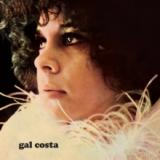
GAL COSTA - Gal Costa (1969) LP
  • A1: Não Identificado (Caetano Veloso)
  • A2: Sebastiana (Rosil Cavalcanti)
  • A3: Lost In The Paradise (Caetano Veloso)
  • A4: Namorinho De Portão (Tom Zé)
  • A5: Saudosismo (Caetano Veloso)
  • A6: Se Você Pensa (Roberto Carlos-Erasmo Carlos)
  • B1: Vou Recomeçar (Roberto Carlos-Erasmo Carlos)
  • B2: Divino, Maravilhoso (Caetano Veloso-Gilberto Gil)
  • B3: Que Pena (Êle Já Não Gosta De Mim) (Jorge Ben)
  • B4: Baby (Caetano Veloso)
  • B5: A Coisa Mais Linda Que Existe (Gilberto Gil-Torquato Neto)
  • B6: Deus É O Amor (Jorge Ben)

Gal Costa’s 1969 self-titled album stands as one of the
boldest statements of the Tropicália movement. Blending
psychedelic rock, experimental arrangements, and Brazilian
popular music with fearless originality, the album showcases
Costa’s powerful, expressive voice at its most adventurous.
Featuring contributions from major Tropicália figures such as
Caetano Veloso and Gilberto Gil, its mix of sweetness and
sonic daring helped redefine contemporary Brazilian music,
cementing Gal Costa as a groundbreaking and influential artist.

out of Stock

Order now and we will order the item for you at our supplier.

17,02

Last In: 23 days ago
The Snake Corps - Flesh On Flesh

The Snake Corps

Flesh On Flesh

12inchLANR063
Lantern Rec.
18.04.2026

Reissued for the first time on vinyl, the debut album by English post-punk heroes Snake Corps, originally released in 1984 on Midnight Music. The band raised from the ashes of Sad Lovers & Giants, after their official split in 1983. Led by Tristan Garel-Funk and Nigel Pollard (who immediately left the band replaced by Jon Greville of Rudimentary Peni). Often championed by legendary John Peel, The Snake Corps deserve a major recognition for their epic sound often reminiscent of early U2 and Ultravox.

pre-order now18.04.2026

expected to be published on 18.04.2026

27,52
Christina Kubisch - TUNING

Christina Kubisch

TUNING

12inchFAIT-41LP
Faitiche
17.04.2026

Faitiche welcomes a new artist: Christina Kubisch belongs to the first generation of sound artists. Her practice ranges from performances, concerts, to works with video and visual art, but she is best known for her sound installations and electro-acoustic compositions.

TUNING brings together three pieces by Christina Kubisch from different periods of her oeuvre. What they have in common is the way they transform sound phenomena originally considered “non-music” into compositions.

Jan Jelinek: Gaming in Silence (2024) is the most recent work on this compilation. It’s a collage of electromagnetic waves, voice, and abstract sound textures. How did this combination come about?

Christina Kubisch: Gaming was commissioned as a fixed-media composition for the Sound Dome at ZKM Karlsruhe. Since Resonances: The Electromagnetic Bodies Project (2005), I’ve been making recordings in the old and new server rooms at the ZKM and in their permanent collection of historical computer games. Computer games like Asteroids (Atari, 1979) and Poly-Play (VEB Polytechnik, 1986) have specially generated analogue electromagnetic waves that interest me in particular on account of their density, rhythms and textures. I originally studied painting and to me the work of composition often feels like painting an abstract picture. I alter my source material as little as possible, layering and overlapping until a distinctive sound space emerges. In recent pieces, I sometimes combine magnetic waves with field recordings or live instruments. In Gaming it’s my recording of a Chinese song about silence.

JJ: Two persons walking through a street in Madrid (2004) is a recording from your Electrical Walks series. Here we should give a brief explanation of one of your best known works: participants in an Electrical Walk move through public spaces wearing prepared headphones that allow them to receive electromagnetic waves from their surroundings – for example from security gates, ATMs or neon signs. They discover a situation that normally is inaudible to the human ear and they can actively shape it by choreographing their movements. I really admire this piece, not least because there’s no clear dividing line between participants and artist. What exactly do we hear in Two persons walking through a street in Madrid (2004)?

CK: With this early work, I wanted to understand what is heard by people participating in an Electrical Walk in the same place but moving in different ways. The Spanish composer Miguel Alvarez-Fernàndez and I set off from opposite ends of a major shopping street in Madrid, met briefly in the middle, and then continued to the end. We both recorded our walks and I then layered them over one another. You might call it a work of electromagnetic conceptualism.

JJ: Diapason (2009 version) is an installation that plays a composition based on sounds from fifteen tuning forks. This setting is audible in the recording: there’s no dramatic arc, no beginning or end – instead, it recalls a piece of aleatoric music focussing on the decay phase. How did you come to make this work and could you tell us something about your compositional method?

CK: Diapason is part of a series of three pieces that deal with “non-instruments” or instruments that no longer exist: electrical mine bells used to send signals to the workers underground; a historical glass harmonica originally used for medicinal purposes; and tuning forks that were used by doctors to test people’s hearing. All of these methods are no longer in use. The sound of the tuning forks, audible only if held close to the ear, was recorded at the electronic studio at Berlin’s Technical University in such a way that even their decay remained audible. The frequencies range between 64 and 2048 Hertz and they can be adjusted at micro-intervals using small movable weights. The sequence and the duration of the pauses are dictated by chance and were not defined in advance. The 2009 version was created for an installation in the historic Holy Cross Church (Korskirken) in Bergen. Visitors could enter and leave the space at any time, deciding for themselves where and for how long they wished to listen to the sounds played back over an array of small loudspeakers placed on the floor of the apse.

Credits:

Gaming in Silence: commission of the ZKM/Hertzlab, Karlsruhe 2023
elektronic sound processing: Tom Thiel
sound engineering and mixing: Eckehard Güther

Diapason: produced at Elektronisches Studio of TU Berlin
rearrangement: Eckehard Güther

Christina Kubisch, published by Edition Christina Kubisch / Random Musick Publishing

image front: Transitionen 2021 by C. Kubisch, sonagrams of electronic waves (courtesy: Galerie Mazzoli Berlin)
image back: Diapason Tuning Fork, property of Folkmar Hein, Photo: Archiv Christina Kubisch

design by Tim Tetzner
mastered by Giuseppe Ielasi
Thanks to Miguel Álvarez-Fernández, Folkmar Hein, Dominik Kautz and Mario Mazzoli

pre-order now17.04.2026

expected to be published on 17.04.2026

27,31
ARBEID ADELT FT. PARKAPARAPLU - AA! FT. PKPP

ARBEID ADELT FT. PARKAPARAPLU

AA! FT. PKPP

12inchSMR521
STARMAN Records
17.04.2026

Belgian minimalist, Dutch-language new wave/synth pop, since 1981! The historic album ‘Jonge Helden’ (1981) brought them instant eternal fame, the single ‘Lekker Westers’ (1983) a Belpop classic & the line-up changed wildly with icons such as Luc Van Acker (Revolting Cocks), Dani Klein (Vaya Con Dios), Willy Willy (The Scabs) or Andrew Chi Claes (Stuff) ...

However, MARCEL VANTHILT (lyrics & music) continues to rock the anarcho-Dadaist-electro-super-tronica scene to this day. Side note: Vanthilt often strayed into TV land (BRT, VPRO, MTV-EUROPE, BBC) and is now a DJ at Radio WILLY with the alternative ‘De M-Show’.

AA! is once again performing frequently in the best clubs (Depot, Casino, Macca) and on major stages (Pukkelpop, Villa Pace, Paulus Oostende). This will also be the case in 2026! This is due to the fresh and spicy new album ‘AA!PKPP’ in collaboration with PARKAPARAPLU.

PARKAPARAPLU: New dark wave duo from Antwerp. With ...

> EMMA ROTSAERT, singer and actress. She plays the lead role in the Ensor-nominated TV drama series ‘How To Kill Your Sister’ (2025). And comes from the same absurd planet as Vanthilt.
> GEERT VANBEVER, veteran of Wizards Of Ooze, Rudy Trouvé Septet, Dead Man Ray, Tuff Guac, among others... worked with Hugh Cornwell (The Stranglers) and Budgie (The Banshees), among others. Together, Emma & Geert also have a Sisters Of Mercy tribute band: Body Electric.

pre-order now17.04.2026

expected to be published on 17.04.2026

23,95
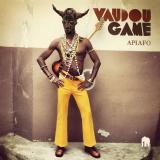
Vaudou Game - Apiafo (2025 Repress)
  • A1: No Problem
  • A2: Dangerous Bees
  • A3: Pas Contente Feat Roger Damawuzan
  • A4: Meva
  • A5: Happiness
  • B1: Ata Calling
  • B2: Wrong Road
  • B3: No Way To Go
  • B4: Djin Ku Djin
  • B5: Think Positive

Repress of the 1 st album of the fresh Afro funk sensation ! Recorded on analog equipment in Lyon in 2014 !


Peter Solo is a singer and composer born in Aného-Glidji, Togo, the birthplace of the Guin tribe and a major site of the Voodoo culture. He was raised with this tradition’s values of respect for all forms of life and the environment. With his new band, Vaudou Game, Peter Solo claims, and spreads this spiritual and musical heritage. Chants are at the heart of the Voodoo practice, but for times immemorial, harmonic instruments have never accompanied them. No balafon, no kora - only the “skins” support the singers. However, in 2012, Peter, along with his band based in Lyon, France, decided to explore and codify the musical scales that are found in sacred or profane songs of Beninese and Togolese Voodoo so they can be played easily on modern instruments. Peter composed the album Apiafo, using the two main musical scales of this tradition. The first musical scale on Apiafo leans towards raw Funk with a sound similar to the famous 70’s bands, L’Orchestre Poly Rythmo De Cotonou and El Rego. Funk, is the skeletal structure of this record, and provided the opportunity for Peter to invite his uncle, Roger Damawuzan - the famous pioneer of the 70s Soul scene - on two tracks. Their collaboration on “Pas Contente” is a highlight on this 100% analog album. Apiafo was entirely recorded, mixed and mastered with old tapes and vintage instruments. The second scale, which had never before been transposed for instruments, evokes deeper feelings and a sacred ambiance. The moving song Ata, an invocation to a supreme divinity is another highlight of this record. Even if some can recognize similarities between this scale and Ethiopian scales, they are in fact different. Peter, the only African band member, introduced the other musicians to the universal values of Voodoo and he taught them his native language. On the recording of Apiafo and during their live performances, the musicians all sing and answer Peter in the Mina language. The strive for authenticity, the analog sound and vintage looks don’t mean that Vaudou Game is looking backwards. This is Togolese funk, born in the post-colonial era but that never before explored its ancient roots so deeply and proudly.


Antoine RAJON

pre-order now17.04.2026

expected to be published on 17.04.2026

24,58
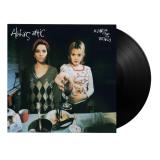
Alisha's Attic - Alisha Rules The World LP
  • A1: Irresistable U Are
  • A2: Intense
  • A3: I Am, I Feel
  • A4: Alisha Rules The World
  • A5: White Room
  • A6: Stone In My Shoe
  • B1: Personality Lines
  • B2: Indestructable
  • B3: I Won't Miss You
  • B4: The Golden Rule
  • B5: Just The Way U Like It
  • B6: Air We Breathe
  • B7: Adore U

Alisha's Attic were one of the defining English pop duos of the late 1990s and early 2000s. Formed by sisters Shelly and Karen Poole, the pair first appeared in 1988 under the name Keren & Chelle, releasing their single "Sugar Daddy". In 1996 Alisha's Attic released their debut single "I Am, I Feel" which reached the #14 in the UK Singles Charts. Their debut album, Alisha Rules the World was released in November 1996, produced by Dave Stewart of Eurythmics. The album became a major success, achieving Platinum in the UK and generated a string of single "Alisha Rules The World", "Indestructible" and "Air We Breathe" all of which reached the UK Top 15.

pre-order now17.04.2026

expected to be published on 17.04.2026

34,03
Die drei ??? - 034/und der rote Pirat LP

Wer verbirgt sich hinter der Maske des roten Piraten? Und warum bedroht er Justus, Peter und Bob? Was steckt hinter den Tonbandinterviews von Major Karnes? Und wonach gräbt dieser heimlich in der Piratenbucht? Trotz aller Gefahren lassen die drei ??? nicht locker, bis sie das Rätsel um den legendären Piratenschatz gelöst haben - einen Schatz, der allerhand Geheimnisse birgt!

pre-order now17.04.2026

expected to be published on 17.04.2026

26,26
Liliane Donskoy - Intégrale Acousmatique
also available

Box Set[110,71 €]


Metaphon is pleased to present this première edition, which brings together a near-complete collection of the acousmatic works of Liliane Donskoy, recorded in the 1970s and 1980s.

Liliane Donskoy (*1933) is a French, classically trained pianist, music teacher, and composer of both instrumental and acousmatic music. She began her musical training at an early age, undertaking private piano studies with Yves Nat at the age of thirteen, shortly after the Second World War. During the 1960s and 1970s, she pursued advanced studies with prominent figures of twentieth-century music, including Darius Milhaud, Olivier Messiaen, Pierre Schaeffer, and Guy Reibel, and participated in courses led by Karlheinz Stockhausen, Luciano Berio, György Ligeti, and Iannis Xenakis.

Despite this extensive and diverse training, Donskoy encountered limited institutional and professional opportunities to fully realize her artistic vision. A decisive turning point occurred in 1977, when she gained access to the facilities of the Institute of Psychoacoustics and Electronic Music (IPEM) in Ghent. There, she realized and completed the majority of her acousmatic compositions.

Donskoy’s oeuvre is characterized by a high degree of structural complexity, precision, and expressive intensity. Her work reflects a pronounced and distinctive artistic temperament, manifested through a rigorous exploration of sound material and form. Notwithstanding its artistic significance, her music has remained largely unknown, as her compositions were neither widely circulated nor formally released, leading to their relative obscurity until the present publication.

pre-order now17.04.2026

expected to be published on 17.04.2026

63,24
Liliane Donskoy - Intégrale Acousmatique (Boxset)
also available

slipcase edition[63,24 €]


Metaphon is pleased to present this première edition, which brings together a near-complete collection of the acousmatic works of Liliane Donskoy, recorded in the 1970s and 1980s.

Liliane Donskoy (*1933) is a French, classically trained pianist, music teacher, and composer of both instrumental and acousmatic music. She began her musical training at an early age, undertaking private piano studies with Yves Nat at the age of thirteen, shortly after the Second World War. During the 1960s and 1970s, she pursued advanced studies with prominent figures of twentieth-century music, including Darius Milhaud, Olivier Messiaen, Pierre Schaeffer, and Guy Reibel, and participated in courses led by Karlheinz Stockhausen, Luciano Berio, György Ligeti, and Iannis Xenakis.

Despite this extensive and diverse training, Donskoy encountered limited institutional and professional opportunities to fully realize her artistic vision. A decisive turning point occurred in 1977, when she gained access to the facilities of the Institute of Psychoacoustics and Electronic Music (IPEM) in Ghent. There, she realized and completed the majority of her acousmatic compositions.

Donskoy’s oeuvre is characterized by a high degree of structural complexity, precision, and expressive intensity. Her work reflects a pronounced and distinctive artistic temperament, manifested through a rigorous exploration of sound material and form. Notwithstanding its artistic significance, her music has remained largely unknown, as her compositions were neither widely circulated nor formally released, leading to their relative obscurity until the present publication.

pre-order now17.04.2026

expected to be published on 17.04.2026

110,71
DEATH OF LOVERS - THE ACROBAT

DEATH OF LOVERS

THE ACROBAT

12inchDAISLP108
Dais Records
17.04.2026
  • 1: Orphans Of The Smog
  • 2: Here Lies
  • 3: Ursula In B Major
  • 4: The Lowly People
  • 5: Perfect History
  • 6: Quai D' Orsay
  • 7: Divine Song
  • 8: The Absolute
also available

BLUE IN CLEAR VINYL[23,49 €]


Dass Death Of Lovers das Potenzial für mehr als ihre bislang einzige EP "Buried Under A World Of Roses" haben, war schon 2014 bei der Veröffentlichung unverkennbar. Die Frage war eher, wann kommt die Band aus Philadelphia, die seitdem mehr oder weniger permanent auf Tour ist, endlich dazu, ihr erstes Album aufzunehmen? "The Acrobat" besticht mit glitzernden Shoegaze-Gitarren, wavigen Rhythmen und konzentrierten, durchdachten und atemberaubend schönen Melodien. Die Stücke zeichnen sich durch eine einladende Komplexität und Tiefe aus, die Stimmung ist immer funkelnd und spannend und bietet einen schönen Kontrast zu den ehrlichen und dunklen Texten. "The Acrobat" erreicht eine warme Vertrautheit und klingt doch völlig neu. Und obwohl die Titel leicht aus dem Soundtrack zu jedem Lieblingsfilme der 80er-Jahre stammen könnten, gibt es eine neue Perspektive und eine Weiterentwicklung, die das "Post-Punk"-Reglement neu schreibt.

pre-order now17.04.2026

expected to be published on 17.04.2026

22,65
DEATH OF LOVERS - THE ACROBAT

DEATH OF LOVERS

THE ACROBAT

12inchDAISLP9108
Dais Records
17.04.2026

Dass Death Of Lovers das Potenzial für mehr als ihre bislang einzige EP "Buried Under A World Of Roses" haben, war schon 2014 bei der Veröffentlichung unverkennbar. Die Frage war eher, wann kommt die Band aus Philadelphia, die seitdem mehr oder weniger permanent auf Tour ist, endlich dazu, ihr erstes Album aufzunehmen? "The Acrobat" besticht mit glitzernden Shoegaze-Gitarren, wavigen Rhythmen und konzentrierten, durchdachten und atemberaubend schönen Melodien. Die Stücke zeichnen sich durch eine einladende Komplexität und Tiefe aus, die Stimmung ist immer funkelnd und spannend und bietet einen schönen Kontrast zu den ehrlichen und dunklen Texten. "The Acrobat" erreicht eine warme Vertrautheit und klingt doch völlig neu. Und obwohl die Titel leicht aus dem Soundtrack zu jedem Lieblingsfilme der 80er-Jahre stammen könnten, gibt es eine neue Perspektive und eine Weiterentwicklung, die das "Post-Punk"-Reglement neu schreibt.

pre-order now17.04.2026

expected to be published on 17.04.2026

23,49
John Coltrane - My Favorite Things LP
  • My Favorite Things
  • Everytime We Say Goodbye
  • Summertime
  • But Not For Me
  • Like Sonny

My Favorite Things is one of J ohn Coltrane 's all time bestselling LPs. Recorded in 1960 for Atlantic Records during three marathon sessions that also produced enough music for four subsequent albums: Coltrane Plays the Blues , Coltrane's Sound , and Coltrane Legacy. The LP's title tune belongs to the Rodgers & Hammerstein musical The Sound of Music, which at the time, might have seemed an odd choice by critics and fans. However, in Coltrane's hand the tune is spun out with an Eastern sound, a waltz reminiscent of a dervish dance, hypnotic and totally engaging. An edited version of the track was issued as a single and gained popularity across US radio stations, resulting in the LP becoming a major commercial success. My Favorite Things features John Coltrane 's first recorded performance on soprano saxophone - an instrument gifted to him by Miles Davis.

pre-order now17.04.2026

expected to be published on 17.04.2026

22,65
D.A.F. - El Que (Terence Fixmer Remixes)

Mannequin Records presents a special release that bridges two generations of electronic body music: DAF’s iconic track “El Que” reimagined by French techno and EBM pioneer Terence Fixmer.

A lifelong admirer of DAF, Fixmer has been playing El Que in his DJ sets for years, considering it one of the band’s most enduring and powerful pieces. His connection to the track and to DAF’s groundbreaking legacy is the core inspiration behind these two new remixes, created with both reverence and bold creative vision.

On the “El Que (Terence Fixmer Leather Remix)”, Fixmer remains close to the original’s raw, muscular pulse while injecting a sharp, modern club sensibility. The remix builds on DAF’s unmistakable rhythmics but adds a contemporary momentum that feels like a natural extension of the band’s DNA. “It was like imagining what I would do if I were a member of DAF today,” Fixmer says.

The second version, “El Que (Terence Fixmer Drive Remix)”, ventures deeper into Fixmer’s own territory: darker, hypnotic, and peak-time focused. Tension and release are crafted with surgical precision, taking the original’s spirit into a harder-edged, suspense-driven sound world. It’s a version built for late-night floors without ever losing the soul of El Que.

Fixmer explains:
“I’ve been playing DAF’s El Que in many of my DJ sets for years. It’s a track I deeply loved from the first listen. I’m super proud to have remixed DAF — one of my cult bands and a major influence on my sound and electronic universe. For the "Leather Remix", I wanted to stay close to the original while bringing modernity and club momentum. For the "Drive Remix", I pushed the track toward darker, peak-time and hypnotic techno, keeping the soul of the original intact. I wanted to make versions that make you think: ‘I know this track… but wait — what is this version? I want it!’ When I tested them, that’s exactly what happened.”

DAF remains one of the most influential bands in electronic music history. These new remixes by Terence Fixmer reinforce the timeless power of El Que while offering two striking, club-ready perspectives for a new generation of listeners.

out of Stock

Order now and we will order the item for you at our supplier.

17,44

Last In: 16 days ago
Saucy Lady - Why & Instrumental 7"

SAUCY LADY with a hot new 45 edit of her smash cover of the CARLY SIMON classic "WHY". Staying true to her boogie via hip-hop roots, she cranks up the tempo, majorly upping the energy and feel for dancing. B-side contains an instrumental version.

out of Stock

Order now and we will order the item for you at our supplier.

11,56

Last In: 22 days ago
Guilty Razors - Complete Recordings 1977 - 1978

UILTY RAZORS, BONA FIDE PUNKS.


Writings on the topic that go off in all directions, mind-numbing lectures given by academics, and testimonies, most of them heavily doctored, from those who “lived through that era”: so many people today fantasize about the early days of punk in our country… This blessed moment when no one had yet thought of flaunting a ridiculous green mohawk, taking Sid Vicious as a hero, or – even worse – making the so-called alternative scene both festive and boorish. There was no such thing in 1976 or 1977, when it wasn’t easy to get hold of the first 45s by the Pistols or the Clash. Few people were aware of what was happening on the fringes of the fringes at the time. Malcolm McLaren was virtually unknown, and having short hair made you seem strange. Who knew then that rock music, which had taken a very bad turn since the early 1970s, would once again become an essential element of liberation? That, thanks to short and fast songs, it would once again rediscover that primitive, social side that was so hated by older generations? Who knew that, besides a few loners who read the music press (it was even better if they read it in English) and frequented the right record stores? Many of these formed bands, because it was impossible to do otherwise. We quickly went from listening to the Velvet Underground to trying to play the Stooges’ intros. It’s a somewhat collective story, even though there weren’t many people to start it.
The Guilty Razors were among those who took part in this initial upheaval in Paris. They were far from being the worst. They had something special and even released a single that was well above the national average. They also had enough songs to fill an album, the one you’re holding. In everyone’s opinion, they were definitely not among the punk impostors that followed in their wake. They were, at least, genuine and credible.

Guilty Razors, Parisian punk band (1975-1978). To understand something about their somewhat linear but very energetic sound, we might need to talk about the context in which it was born and, more broadly, recall the boredom (a theme that would become capital in punk songs) coupled with the desire to blow everything off, which were the basis for the formation of bands playing a rejuvenated rock music ; about the passion for a few records by the Kinks or the early Who, by the Stooges, by the Velvet mostly, which set you apart from the crowd.
And of course, we should remember this new wave, which was promoted by a few articles in the specialized press and some cutting-edge record stores, coming from New York or London, whose small but powerful influence could be felt in Paris and in a handful of isolated places in the provinces, lulled to sleep by so many appalling things, from Tangerine Dream to President Giscard d’Estaing...
In 1975-76, French music was, as almost always, in a sorry state ; it was still dominated by Johnny Hallyday and Sylvie Vartan. Local rock music was also rather bleak, apart from Bijou and Little Bob who tried to revive this small scene with poorly sound-engineered gigs played to almost no one.
In the working class suburbs at the time, it was mainly hard rock music played to 11 that helped people forget about their gruelling shifts at the factory. Here and there, on the outskirts of major cities, you still could find a few rockers with sideburns wearing black armbands since the death of Gene Vincent, but it wasn’t a proper mass movement, just a source of real danger to anyone they came across who wasn't like them. In August 1976, a festival unlike any other took place in Mont-de-Marsan – the First European Punk Festival as the poster said – with almost as many people on stage as in the audience. Yet, on that day, a quasi historical event happened, when, under the blazing afternoon sun, a band of unknowns called The Damned made an unprecedented noise in the arena, reminiscent of the chaotic Stooges in their early adolescence. They were the first genuine punk band to perform in our country: from then on, anything was possible, almost anything seemed permissible.

It makes sense that the four+1 members of Guilty Razors, who initially amplified acoustic guitars with crappy tape recorder microphones, would adopt punk music (pronounced paink in French) naturally and instinctively, since it combines liberating noise with speed of execution and – crucially – a very healthy sense of rebellion (the protesters of May 1968 proclaimed, and it was even a slogan, that they weren’t against old people, but against what had made them grow old. In the mid-1970s, it seemed normal and obvious that old people should now ALSO be targeted!!!).
At the time, the desire to fight back, and break down authority and apathy, was either red or black, often taking the form of leafleting, tumultuous general assemblies in the schoolyard, and massive or shabby demonstrations, most of the time overflowing with an exciting vitality that sometimes turned into fights with the riot police. Indeed, soon after the end of the Vietnam War and following Pinochet’s coup in Chile, all over France, Trotskyist and anarcho-libertarian fervour was firmly entrenched among parts of the educated youth population, who were equally rebellious and troublemakers whenever they had the chance. It should also be noted that when the single "Anarchy in the UK" was first heard, even though not many of us had access to it, both the title and its explosive sound immediately resonated with some of those troublemakers crying out for ANARCHY!!! Meanwhile, the left-wing majority still equated punks with reckless young neo-Nazis. Of course, the widely circulated photos in the mainstream press of Siouxsie Sioux with her swastikas didn’t necessarily help to win over the theorists of the Great Revolution. It took Joe Strummer to introduce The Clash as an anti-racist, anti-fascist and anti-ignorance band for the rejection of old-school revolutionaries to fade a little.

The Lycée Jean-Baptiste Say at Porte d’Auteuil, despite being located in the very posh and very exclusive 16th arrondissement of Paris, didn’t escape these "committed" upheavals, which doubled as the perfect outlet for the less timid members of this generation.
“Back then, politics were fun,” says Tristam Nada, who studied there and went on to become Guilty Razors’ frontman. “Jean-Baptiste was the leftist high-school in the neighbourhood. When the far right guys from the GUD came down there, the Communist League guys from elsewhere helped us fight them off.”
Anything that could challenge authority was fair game and of course, strikes for just about any reason would lead to increasingly frequent truancy (with a definitive farewell to education that would soon follow). Tristam Nada spent his 10th and 11th unfinished grades with José Perez, who had come from Spain, where his father, a janitor, had been sentenced to death by Franco. “José steered my tastes towards solid acts such as The Who. Like most teenagers, I had previously absorbed just about everything that came my way, from Yes to Led Zeppelin to Genesis. I was exploring… And then one day, he told me that he and his brother Carlos wanted to start a rock band.” The Perez brothers already played guitar. “Of course, they were Spanish!”, jokes their singer. “Then, somewhat reluctantly, José took up the bass and we were soon joined by Jano – who called himself Jano Homicid – who took up the rhythm guitar.” Several drummers would later join this core of not easily intimidated young guys who didn’t let adversity get the better of them.

The first rehearsals of the newly named Guilty Razors took place in the bedroom of a Perez aunt. There, the three rookies tried to cover a few standards, songs that often were an integral part of their lives. During a first, short gig, in front of a bewildered audience of tough old-school rockers, they launched into a clunky version of the Velvet Underground's “Heroin”. Challenge or recklessness? A bit of both, probably… And then, step by step, their limited repertoire expanded as they decided to write their own songs, sung in a not always very accurate or academic English, but who cared about proper grammar or the right vocabulary, since what truly mattered was to make the words sound as good as possible while playing very, very fast music? And spitting out those words in a language that left no doubt as to what it conveyed mattered as well.
Trying their hand a the kind of rock music disliked by most of the neighbourhood, making noise, being fiercely provocative: they still belonged to a tiny clique who, at this very moment, had chosen to impose this difference. And there were very few places in France or elsewhere, where one could witness the first stirrings of something that wasn’t a trend yet, let alone a movement.

In the provinces, in late 1976 or early 1977, there couldn’t be more than thirty record stores that were a bit more discerning than average, where you could hear this new kind of short-haired rock music called “punk”. The old clientele, who previously had no problem coming in to buy the latest McCartney or Aerosmith LP, now felt a little less comfortable there…
In Paris, these enlightened places were quite rare and often located nex to what would become the Forum des Halles, a big shopping mall. Between three aging sex workers, a couple of second-hand clothes shops, sellers of hippie paraphernalia and small fashion designers, the good word was loudly spread in two pioneering places – propagators of what was still only a new underground movement. Historically, the first one was the Open Market, a kind of poorly, but tastefully stocked cave. Speakers blasted out the sound of sixties garage bands from the Nuggets compilation (a crucial reference for José Perez) or the badly dressed English kids of Eddie and the Hot Rods. This black-painted den was opened a few years earlier by Marc Zermati, a character who wasn’t always in a sunny disposition, but always quite radical in his (good) choices and his opinions. He founded the independent label Skydog and was one of the promoters of the Mont-de-Marsan punk festivals. Not far from there was Harry Cover, another store more in tune with the new New York scene, which was amply covered in the house fanzine, Rock News (even though it was in it that the photos of the Sex Pistols were first published in France).
It was a favorite hang-out of the Perez brothers and Tristam Nada, as the latter explained. “It’s at Harry Cover’s that we first heard the Pistols and Clash’s 45s, and after that, we decided to start writing our first songs. If they could do it, so could we!”
The sonic shocks that were “Anarchy in the UK”, “White Riot” or the Buzzcocks’s EP, “Spiral Scratch” – which Guilty Razors' sound is reminiscent of – were soon to be amplified by an unparalleled visual shock. In April 1977, right after the release of their first LP, The Clash performed at the Palais des Glaces in Paris, during a punk night organised by Marc Zermati. For many who were there, it was the gig of a lifetime…
Of course, Guilty Razors and Tristam were in the audience: “That concert was fabulous… We Parisian punks were almost all dressed in black and white, with white shirts, skinny leather ties, bikers jackets or light jackets, etc. The Clash, on the other hand, wore colourful clothes. Well, the next day, at the Gibus, you’d spot everyone who had been at this concert, but they weren’t wearing anything black, they were all wearing colours.”

It makes sense to mention the Gibus club, as Guilty Razors often played there (sometimes in front of a hostile audience). It was also the only place in Paris that regularly scheduled new Parisian or Anglo-Saxon acts, such as Generation X, Siouxsie and the Banshees, the Slits, and Johnny Thunders who would become a kind of messed-up mascot for the venue. A little later, in 1978, the Rose Bonbon – formerly the Nashville – also attracted nightly owls in search of electric thrills… In 1977, the iconic but not necessarily excellent Asphalt Jungle often played at the Gibus, sometimes sharing the bill with Metal Urbain, the only band whose aura would later transcend the French borders (“I saw them as the French Sex Pistols,” said Geoff Travis, head of their British label Rough Trade). Already established in this small scene, Metal Urbain helped the young and restless Guilty Razors who had just arrived. Guitarist for Metal Urbain Hermann Schwartz remembers it: “They were younger than us, we were a bit like their mentors even if it’s too strong a word… At least they were credible. We thought they were good, and they had good songs which reminded of the Buzzcocks that I liked a lot. But at some point, they started hanging out with the Hells Angels. That’s when we stopped following them.”

The break-up was mutual, since, Guilty Razors, for their part, were shocked when they saw a fringe element of the audience at Metal Urbain concerts who repeatedly shouted “Sieg Heil” and gave Nazi salutes. These provocations, even still minor (the bulk of the skinhead crowd would later make their presence felt during concerts), weren’t really to the liking of the Perez brothers, whose anti-fascist convictions were firmly rooted. Some things are non-negotiable.
A few months earlier (in July 1978), Guilty Razors had nevertheless opened very successfully for Metal Urbain at the Bus Palladium, a more traditonally old-school rock night-club. But, as was sometimes the case back then, the night turned into a mass brawl when suburban rockers came to “beat up punks”.

Back then, Parisian nights weren’t always sweet and serene.

So, after opening as best as they could for The Jam (their sound having been ruined by the PA system), our local heroes were – once again – met outside by a horde of greasers out to get them. “Thankfully,” says Tristam, “we were with our roadies, motorless bikers who acted as a protective barrier. We were chased in the neighbouring streets and the whole thing ended in front of a bar, with the owner coming out with a rifle…”
Although Tristam and the Perez brothers narrowly escaped various, potentially bloody, incidents, they weren’t completely innocent of wrongdoing either. They still find amusing their mugging of two strangers in the street for example (“We were broke and we simply wanted to buy tickets for the Heartbreakers concert that night,” says Tristam). It so happened that their victims were two key figures in the rock business at the time: radio presenter Alain Manneval and music publisher Philippe Constantin. They filed a complaint and sought monetary compensation, but somehow the band’s manager, the skilful but very controversial Alexis, managed to get the complaint withdrawn and Guilty Razors ended up signing with Constantin with a substantial advance.

They also signed with Polydor and the label released in 1978 their only three-track 45, featuring “I Don't Wanna be A Rich”, “Hurts and Noises” and “Provocate” (songs that exuded perpetual rebellion and an unquenchable desire for “class” confrontation). It was a very good record, but due to a lack of promotion (radio stations didn’t play French artists singing in English), it didn’t sell very well. Only 800 copies were allegedly sold and the rest of the stock was pulped… Initially, the three tracks were to be included on a LP that never came to be, since they were dropped by Polydor (“Let’s say we sometimes caused a ruckus in their offices!” laughs Tristam.) In order to perfect the long-awaited LP, the band recorded demos of other tracks. There was a cover of Pink Floyd's “Lucifer Sam” from the Syd Barrett era – proof of an enduring love for the sixties’ greats –, “Wake Up” a hangover tale and “Bad Heart” about the Baader-Meinhof gang, whose actions had a profound impact on the era and on a generation seeking extreme dissent... On the album you’re now discovering, you can also hear five previously unreleased tracks recorded a bit later during an extended and freezing stay in Madrid, in a makeshift studio with the invaluable help of a drummer also acting as sound engineer. He was both an enthusiastic old hippie and a proper whizz at sound engineering. Here too, certain influences from the fifties and sixties (Link Wray, the Troggs) are more than obvious in the band’s music.

Shortly after a final stormy and rather barbaric (on the audience’s side) “Punk night” at the Olympia in June 1978, Tristam left the band ; his bandmates continued without him for a short while.

But like most pioneering punk bands of the era, Guilty Razors eventually split up for good after three years (besides once in Spain, they’d only played in Paris). The reason for ceasing business activities were more or less the same for everyone: there were no venues outside one’s small circuit to play this kind of rock music, which was still frightening, unknown, or of little interest to most people. The chances of recording an LP were virtually null, since major labels were only signing unoriginal but reassuring sub-Téléphone clones, and the smaller ones were only interested in progressive rock or French chanson for youth clubs. And what about self-production? No one in our small safety-pinned world had thought about it yet. There wasn’t enough money to embark on that sort of venture anyway.

So yes, the early days of punk in France were truly No Future!

out of Stock

Order now and we will order the item for you at our supplier.

21,43

Last In: 35 days ago
Sugar Horse - Not A Sound In Heaven LP
  • 1-: Fire Graphics
  • 2: Secret Speech
  • 3: Ex-Human Shield
  • 4: History's Biggest T-Shirts
  • 5: Not A Sound In Heaven
  • 6: Company Town
  • 7: You Can't Say Dallas Doesn't Love You

Bristol experimental band SUGAR HORSE are delighted to announce that their third album, Not A Sound In Heaven, will be released on 10th April 2026 via Fat Dracula Records.

To celebrate the news, the band are sharing the bruising lead single ‘Secret Speech’, available to stream on all good digital service providers from 12th February 2026.

Also announced today are a run of April 2026 UK album headline tour dates and an appearance at StrangeForms Festival 2026, with tickets on sale now (see below for full listings).

“We are fortunate enough to live in what is generally known as ‘The West’,” says front man Ash Tubb of the lyrical themes behind the new track. “I say fortunate with gritted teeth, because I know—as I’m sure the reader knows—that living in the West isn’t always rosy. The vast majority of people struggle everyday to feed, clothe and house themselves. Let alone receive adequate healthcare, schooling and workers’ rights.”

“We are, however, where all the world’s wealth is hoarded. We are at the centre of Empire. The people outside of this empire—those of the Global South—have had their resources extracted and their populations exploited by our own governments, with very little given back in return. This won’t go on forever. It will inevitably end, as all great empires do.”

“We in The West have a choice to make in the meantime; either help create a new, fairer world, or let the greed of our ruling classes become the undoing of all of us.”

The first glimpse of new material from the quartet, ‘Secret Speech’ starts as Not A Sound In Heaven means to go on—a politically-charged wrecking ball of a song that smashes its way through the often unbelievable chaos and brutality of the 21st century with vitriolic malice.

How do you capture the machinations of the geo-political industrial war machine—and all the horrors that go with it—in the studio, without seeming trite or crass? That’s the question that Sugar Horse have posed themselves on their forthcoming third album Not A Sound In Heaven, and they must surely be one of the only bands in existence capable of delivering on just that premise with both musical substance and cutting philosophical insight.

“Ever since I was born I can remember visions of war, famine, and death being beamed directly into my living room via the magic of television,” says Tubb of the record. “These visions were accompanied by newsreader narratives designed to either humanise or dehumanise the people involved. We humanise our government’s allies and dehumanise their enemies. This is taken as common sense, or even wisdom to some degree. People watch the news and accept it as fact, simple and true.”

“As a person gets older they move in one of three different directions with this acceptance of reality; They embrace what they’re being told, they fall into a kind of trust free nihilism or they learn that there are deeper narratives at play.”

“Not A Sound In Heaven is an aged acceptance of the latter. An acceptance of sitting at the centre of a global empire of both military and economic dimensions. An acceptance that the stories we’re told as a nation, or what’s generally in the zeitgeist, isn’t necessarily reality itself.”

“How does a person cope with the weight—and, frankly, the guilt—of a society that perpetuates such distinct inequalities? A society that thinks a bit of killing abroad is fine, as long as it improves the lives of people at home. You can see why so many choose to embrace it. Hell, nihilism seems pretty sensible. Once a person decides upon pursuing a degree of truth however, things get a bit depressing. Beyond depressing...maddening.”

“This album explores this kind of breezy, frivolous subject matter in a manner that will no doubt be uplifting to the listener and massively financially rewarding for the artist.”

The new album follows on from their standalone AA single ‘What’s Your ETA? Let’s Have A Tear Up’/‘Would You Like Me To Be The Cat?’ which was released late last year as a surprise double drop.

pre-order now10.04.2026

expected to be published on 10.04.2026

24,79
SKRAECKOEDLAN - SAGOR (10YEARS ANNIVERSARY RE-MASTERED)
  • 1: Prolog
  • 2: Gigantos
  • 3: Epos
  • 4: Awen
  • 5: El Monstro
  • 6: Odjuret
  • 7: Flod
  • 8: Tale Of Squidman
  • 9: Mothra
  • 10: Epilog

Ten years ago, Norrköping's own Skraeckoedlan released their second full-length album, Sagor (Fairy Tale/Stories). Spring 2026 marks its 10th anniversary, and the band is celebrating with a newly remastered edition along with a special tour that once again invites listeners back into their myth-filled universe. Rooted in the Riff-driven heaviness of stoner rock and the storytelling spirit of progressive rock, Skraeckoedlan craft sonic worlds where myths, cosmic beings, and the forces of nature feel as alive as the guitars driving them. Back in 2015, they released the concept album Sagor, weaving together their love of grand narratives with their massive, immersive sound - a musical journey through Nordic legends, timeless natural mysticism, and entirely original realms. It became a landmark release, firmly establishing Skraeckoedlan as one of Sweden's most ambitious and imaginative heavy bands. Today, they stand as one of the Nordic region's most distinctive and celebrated fuzz acts-musicians who don't just write songs, but entire stories. In 2026, the band will take Sagor back on the road, celebrating another major milestone together with their fans! But wait, there's more from our friends in Skraeckoedlan..!

pre-order now10.04.2026

expected to be published on 10.04.2026

27,31
Tucker Zimmerman - I Wonder If I'll Ever Come True  LP
  • 1: It All Depends On The Pleasure Man
  • 2: Watching Heroes Come And Go
  • 3: Slide On
  • 4: So It Goes
  • 5: Let's Start Over Again
  • 6: Taoist Tale
  • 7: Welcome To Mass Media
  • 8: Song
  • 9: Advertisement For Amerika

Orange Vinyl with exclusive illustrated notes/lyric insert ltd to 300 w/w.“Zimmerman conjures up a kind of Arcadian folk surrealism that is utterly his own” MOJO Never released before collection featuring Ian A Anderson & Maggie Holland recorded 72-80 is among Tucker’s finest - Free-ranging, Playful, Intimate - his Songpoet imagination unbound and in full bloom now on colour Vinyl for first time with (exclusive to this version) illustrated lyric insert with notes from Tucker.Recorded between 1972-80 this is the first ever release for ‘I Wonder If I’ll Ever Come True’ a stunningly beautiful, homegrown collection by Songpoet Tucker Zimmerman and friends. The range and depth is astonishing. From the heady surreal journey of ‘It All Depends’ Upon the Pleasure Man’, to the uplifting Gene Clark-esque 'So It Goes’, to some of his most beautiful & touching love songs in ‘Let’s Start Over Again’ & ‘Song’. Only one song has seen the the light of day before now - ‘Taoist Tale’ from his 1984 album ‘Word Games’. This recording from a decade earlier loses no power in its folkier stripped down style driven by Tucker’s strong narrative.

While living in bucolic seclusion in Belgium with Marie-Claire, Tucker invited visiting musicians (Derroll Adams, Wizz Jones, Maggie Holland, Dave Evans, Ian Anderson) into his home studio to play and live tape whatever songs he had at hand. Maggie Holland and Ian A Anderson feature, while Tucker found a freeing simplicity in just guitar, ’70s organ, bass and piano. We are so grateful to Ian A Anderson, who carefully kept and curated these recordings from 50 years ago. “Every time I would leave, Tucker would hand me another tape full of songs”. Ian worked with Tucker and ourselves to present this wonderful album. The collection is among Tucker’s finest - free-ranging, playful, intimate - his Songpoet imagination unbound and in full bloom. The ethos, the playing, the freedom, feels like Ronnie Lane’s time in the Welsh Borders. Unhurried, liberated, down-home and cosmic. Extraordinary music made among friends.
"Startling collection of intimate, home-recorded songs from the cult singer-songwriter adored by David Bowie and Big Thief alike.

When I first interviewed Tucker Zimmerman back in 2015 neither of us had any idea that, a decade later, he would be venerated by a new coterie of young fans, touring with maximal folk-rockers Big Thief and recipient of a concerted reissue campaign by the wonderful Big Potato Records. Last year I eulogised the “Arcadian folk surrealism” of his 1974 LP *Over Here In Europe but, if anything, this informal collection of intimate home-studio recordings is even better. Recorded between 1973 and 76 whilst living in Belgium and hosting such visiting folk musicians as Derroll Adams, Wizz Jones, Maggie Holland, Dave Evans, and Ian A. Anderson this is the kind of assured, organic freewheeling folk music that has the mellow, introspective rough-edged feel of some lost private-press LP, the kind rightly revered by Endless Boogie’s Paul Majors as “real people” music. A true find.” Andrew Male MOJO 4/5
“Here's a charming oddity: an unreleased album dating from the mid-Seventies by an American-born songwriter beloved of David Bowie and, more recently, Adrianne Lenker of the folk-rock band Big Thief. Zimmerman's a bohemian type who eschewed the big time for a life of gigging around Europe. He, his wife, Marie-Claire, and a handful of friends recorded these songs in seclusion in the Belgian countryside, and what songs they are. Slide On could have come from the Byrds when they discovered country music, Let's Start Over Again captures the dreamlike experience of being in love with unsettling clarity. This is a real unearthed gem.” 4/5 The Times

pre-order now10.04.2026

expected to be published on 10.04.2026

23,32
1 Umbrella - 1 Umbrella MC

1 Umbrella

1 Umbrella MC

CassetteERE1235
EMPIRE
03.04.2026
  • A1: 1 Umbrella
  • A2: One Of Those
  • A3: Code
  • A4: Baller Blockin
  • A5: The Blueprint
  • A6: Off Top (Feat. Larry June)
  • A7: No Gimmicks (Feat. Daboii)
  • B1: Pretty
  • B2: Type Of Time
  • B3: N.e.w.s. (Feat. Lingo & Dooder)

1 Umbrella represents a watershed moment for modern Bay Area hip-hop, effectively serving as the region’s "Avengers" assembly designed to consolidate the Northern California sound. For years, the local scene has been bisected by the distinct "mob music" bounce of Oakland and the melodic, trauma-drenched "pain music" of San Francisco; this collective is the first major commercial force to deliberately fuse these competing energies into a single, dominant infrastructure. The roster is a calculated cross-Bay alliance that balances opposing sonic weights: Lil Bean and Lil Yee anchor the group with the emotive, auto-tune-heavy melodies that define the current SF landscape, while Zaybang cuts through that introspection with his signature high-octane aggression.

Balancing the scales are ALLBLACK and 22nd Jim, who inject the classic East Bay attitude—ALLBLACK delivering the motivational, sports-heavy "player" lineage of the region, contrasted against Jim’s nonchalant, rhythmic flow. Backed by the powerhouse infrastructure of EMPIRE and united under tracks like "Baller Blockin" and the unification anthem "The Blueprint," the group is attempting to solve the fragmentation that has historically plagued the Bay’s independent market. By synchronizing their movement with the arrival of Super Bowl LX, 1 Umbrella is positioning itself not merely as a rap group, but as the official cultural ambassadors for the region, betting that a unified front can finally command the national spotlight that often eludes the West Coast’s independent giants.

pre-order now03.04.2026

expected to be published on 03.04.2026

10,88
Items per Page:
N/ABPM
Vinyl