quête:majo mann

Genres
Tout
  • 1
D.A.F. - El Que (Terence Fixmer Remixes)

Mannequin Records presents a special release that bridges two generations of electronic body music: DAF’s iconic track “El Que” reimagined by French techno and EBM pioneer Terence Fixmer.

A lifelong admirer of DAF, Fixmer has been playing El Que in his DJ sets for years, considering it one of the band’s most enduring and powerful pieces. His connection to the track and to DAF’s groundbreaking legacy is the core inspiration behind these two new remixes, created with both reverence and bold creative vision.

On the “El Que (Terence Fixmer Leather Remix)”, Fixmer remains close to the original’s raw, muscular pulse while injecting a sharp, modern club sensibility. The remix builds on DAF’s unmistakable rhythmics but adds a contemporary momentum that feels like a natural extension of the band’s DNA. “It was like imagining what I would do if I were a member of DAF today,” Fixmer says.

The second version, “El Que (Terence Fixmer Drive Remix)”, ventures deeper into Fixmer’s own territory: darker, hypnotic, and peak-time focused. Tension and release are crafted with surgical precision, taking the original’s spirit into a harder-edged, suspense-driven sound world. It’s a version built for late-night floors without ever losing the soul of El Que.

Fixmer explains:
“I’ve been playing DAF’s El Que in many of my DJ sets for years. It’s a track I deeply loved from the first listen. I’m super proud to have remixed DAF — one of my cult bands and a major influence on my sound and electronic universe. For the "Leather Remix", I wanted to stay close to the original while bringing modernity and club momentum. For the "Drive Remix", I pushed the track toward darker, peak-time and hypnotic techno, keeping the soul of the original intact. I wanted to make versions that make you think: ‘I know this track… but wait — what is this version? I want it!’ When I tested them, that’s exactly what happened.”

DAF remains one of the most influential bands in electronic music history. These new remixes by Terence Fixmer reinforce the timeless power of El Que while offering two striking, club-ready perspectives for a new generation of listeners.

En stock

Disponible en stock et prêt pour l'expédition

17,44
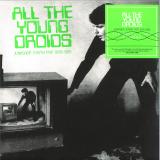
VARIOUS - ALL THE YOUNG DROIDS: JUNKSHOP SYNTH POP 1978-1985 (LP 2x12")
 
24
également disponible

Black Vinyl[27,69 €]

MB Crystal Vinyl[32,73 €]

LTD Trans Pink Vinyl[32,82 €]


2025 REPRESS ON TRANSPARENT GREEN VINYL


Compiled by Philip King “And then came the rise of synth pop : blokes with dodgy haircuts hunched over keyboard-operated machines stuffed with wires and do-it-yourself tone oscillators making sounds like a brood of geese passing gas in a wind tunnel. Whoopee! This is the way the ‘70s ended : not with a blood-curdling bang bang but with a cheap, synthesized, emasculating whimper.” NICK KENT, NME. All The Young Droids: Junkshop Synth Pop 1978-1985 is a new compilation that charts the underbelly of the epoch-defining sound of the synthesiser in 80s popular music. Compiled by Philip King (previously seen compiling All The Young Droogs, Glitterbest and Boobs - The Junkshop Glam Discotheque), the music here connects the dots between DIY synth enthusiasts grappling with new, cheap synthesisers at the tail-end of punk and wannabe, jobbing songwriters enthral to the new music pioneered by Gary Numan, Depeche Mode and Daniel Miller’s Mute Records. Featuring rare tracks of auto-didactic progressive pop music, proto-techno punk, shoot-for-the-stars-land-in-the-gutter chart flops and heralded, underground synth classics, School Daze paints a picture of beautiful failure. Complete with extensive sleeve notes written by King and never before seen imagery, all 24 tracks were remastered by RPM in-house engineer Simon Murphy, many from vinyl copies due to lost master tapes. The story told on All The Young Droids is one of the dawning opportunity presented by both the emergence to the market of cheaper analog synthesisers and the distribution networks plus indie labels that exploded with the advent of punk music in 1976. While the music that sprouted out all over the globe in the wake of these factors was decried as fake, plastic, a refutation of punk’s guitar-led revolution, it’s telling that much of the music on All The Young Droids.. was created in bedrooms, ramshackle studios and home-made set ups with often borrowed equipment. In the era of record labels jumping to capitalise on the success of The Sex Pistols, The Clash (both on major labels, of course) these artists struggled to stand out from a new gold-rush with next to no budget or PR team. With radio and labels desperate for the new Yazoo, what resulted was a testament to necessity being the mother of invention. At the time, the synthesiser was the music of the future, a shiny new machine that could paint like an orchestra with a single finger and a 4-track. In the hands of Manchester avant-pranksters Gerry & The Holograms it’s a pulsing, sardonic weapon.. the only instrument on the Messthetics classic lampooning of New Wave fashion. In Hamburg, a 16 year old Andreas Dorau used it to write and record (with his female classmates on vocals) a global smash in Fred Vom Jupiter (later licensed to Mute Records). The hard-to-find English version (Fred From Jupiter, natch) is included here. Many artists with alreadystoried careers caught the bug and recorded synthesiser-fuelled peons to space, computers, the future and, of course, love-interests. Harry Kakoulli, late of Squeeze, recorded a solo album in 1979 that included the incredible power-synth-pop smash-that-never-smashed I’m On A Rocket. Similarly, Ian North of Neo and American Power Pop stalwarts Milk ’n’ Cookies bought a Korg MS20 and used a tape machine to record We’re Not Lonely, an absolute lost-classic of minimal synth pop. We’re Not Lonely also features on the Junkshop Synth Pop sampler 7” twinned with John Howard unreleased track You Will See, released April 12th 2025. There are plenty of compilation debuts in evidence. Sole Sister were a mysterious trio who were featured on the Scaling Triangles compilation of female-fronted, queer-adjacent post-punk / underground music that also featured The Petticoats. Selwin Image were from San Francisco and featured members of the recently defunct power pop/punk group The Pushups. Their stupidly catchy The Unknown fizzes with New Wave energy - think XTC to Sparks but remains unreleased until now. Dream Unit’s A Drop In The Ocean is an early synth wave cut, positively teaming with Joy Division instrumentation, previously only released on a long-forgotten and super rare, self-released EP. Incandescent Luminaire’s Famous Names belies an archetypal struggle of a small-town trying to make it in a cruel industry but is a thrilling New Romantic-Synth Wave cross over with a OMD gloominess that’s a joy to hear. Feminist Minimal Wave track I Am A Time Bomb by performance artist Peta Lilly and Michael Chance is a revelation destined for new found cult status. It was released on 7” and lost until now. The flipside to the subterranean, never-made-it synth pop mentioned above are the ambitious, even fruity attempts at success that have a perennial elegance to their confidence. New Jersey-ite Billy London (real name Ed Barth) tried to cash in on the synth boom with Woman, released by a major label, a lurching new wave track built on the Louie Louie rhythm and a wonderfully camp Lou Reedstyle sleazy vocal before exploding in the synthesised chorus. The song bombed but with a chorus like this, you have to wonder why? Ex-Glitter Band member John Springate’s My Life is truly epic, with doomed chord progressions and massive sounding drums turning into at least 3 different songs in the course of the track. Before you wonder what’s going on the song resolves with a glorious return to the main refrain. The dry-ice-dressed dance floor is well catered for too. Design’s Premonition and Vision’s Lucifer’s Friend are stone-cold minimal synth bangers, well loved but given a new lease of life here. The Warlord’s The Ultimate Warlord was released in 1978, a homespun proto Hi NRG banger that was later re-recorded by The Immortals in Canada who had a club hit with it. One-man- band Disco Volante’s No Motion was re-issued by Synth wave label Medical in 2012 but makes its first vinyl compilation appearance here. Close your eyes and you can imagine what Lawrence of Felt would have sounded like with some cheap Korgs a little earlier in his career. Gibraltar-based trio The Microbes imagined a computer programming people to dance - how prescient - and ended up with a propulsive, robo-funk track with splendid rubbery bass playing over a tectonic drum machine. Previously picked up by Belgian label Stroom TV, Dee Jay Bert & Eagle’s heavily Euro-accented I Am Your Master demands the listener to “come to paradise!” In a frankly terrifying manner. All The Young Droids is the first compilation to peel away from the narrative that dour, Minimal Synth and Cold Wave were the only musical children of the first rush of synth pop. Philip King and School Daze Records describe a much more complicated world: along with the austere, Brutalist children of Daniel Miller (who produced Alan Burnham’s Bowie-Low-influenced Science Fiction here) was a plethora of desperate cash-ins, accidental mainstream hits, ambitious pop dramas and major label punts that went nowhere. Crucially, the compilation blurs the line between junk and treasure. What if the two things are interchangeable. What if it’s all science fiction?

En stock

Disponible en stock et prêt pour l'expédition

27,69
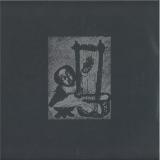
Various - The World Is But a Place of Survival: Ethiopian Begena Songs (TAPE)

The begena is a large ten-stringed lyre which is part of the traditional Amharic heritage of Ethiopia. The Amharas, who have long formed the politically and culturally dominant people of Ethiopia, mainly inhabit the central and northern part of the country. In the majority, they follow the monophysite Orthodox Tewahido Church established in the early fourth century AD.

Music plays a very important part in the life of the church. Most of the liturgy is sung and, contrary to secular music, it is accompanied by percussion instruments only. The begena occupies a special place because it is the one melodic instrument exclusively dedicated to the spiritual repertory. Because of its mythical origin, it is highly respected. Tradition holds that the begena was given to king David by God, and brought to Ethiopia by Menelik I, together with the Ark of the Covenant. It has always been the instrument of kings and nobles. Played by pious men and women of letters, it never became widespread. But it never disappeared either, not even under the Derg regime (1974-1991) which had banned the instrument.

Among Amhara string instruments, the begena is the most carefully crafted, especially with regard to the ornately sculpted crossbar. Its ten gut strings are cleaned and twisted several times. The characteristic buzzing timbre equalled by no other Amhara instrument is due to the enzirotch, that is, small bits of leather placed between each string and the bridge. This plays an important part in the sound production by creating a brief contact between the string and the upper rim of the bridge, thus modifying the vibrating properties of the string. In this manner, the spectrum of the sound is considerably enhanced (up to over 10 kHz).

The begena is a very powerful instrument, it keeps the devil thirty steps away, and its presence in the home wards off malicious spirits. Priests and preachers recommend its presence, especially during Lent (Fassika Tsom) when the Orthodox Amharas ponder their sins and repent. Because of its spiritual import, the begena generates intense emotion. According to some musicians, playing the begena brings them into direct contact with God or the Virgin Mary. The religious role of the begena is underscored by the shape of the instrument, each part symbolises an important element of the faith. The crossbar for instance, which reaches across the entire width of the instrument, represents God who is above all things. The belly which "gives birth" to the sound represents the Virgin Mary, and the ten strings recall the Ten Commandments.

Recorded by Stéphanie Weisser in Addis Ababa, Ethiopia, March 2002-December 2005.

Mastered by Renaud Millet-Lacombe.

Issued under license from VDE-Gallo, Switzerland.

En stock

Disponible en stock et prêt pour l'expédition

16,18
Various - The World Is But a Place of Survival: Ethiopian Begena Songs LP 2x12"

The begena is a large ten-stringed lyre which is part of the traditional Amharic heritage of Ethiopia. The Amharas, who have long formed the politically and culturally dominant people of Ethiopia, mainly inhabit the central and northern part of the country. In the majority, they follow the monophysite Orthodox Tewahido Church established in the early fourth century AD.

Music plays a very important part in the life of the church. Most of the liturgy is sung and, contrary to secular music, it is accompanied by percussion instruments only. The begena occupies a special place because it is the one melodic instrument exclusively dedicated to the spiritual repertory. Because of its mythical origin, it is highly respected. Tradition holds that the begena was given to king David by God, and brought to Ethiopia by Menelik I, together with the Ark of the Covenant. It has always been the instrument of kings and nobles. Played by pious men and women of letters, it never became widespread. But it never disappeared either, not even under the Derg regime (1974-1991) which had banned the instrument.

Among Amhara string instruments, the begena is the most carefully crafted, especially with regard to the ornately sculpted crossbar. Its ten gut strings are cleaned and twisted several times. The characteristic buzzing timbre equalled by no other Amhara instrument is due to the enzirotch, that is, small bits of leather placed between each string and the bridge. This plays an important part in the sound production by creating a brief contact between the string and the upper rim of the bridge, thus modifying the vibrating properties of the string. In this manner, the spectrum of the sound is considerably enhanced (up to over 10 kHz).

The begena is a very powerful instrument, it keeps the devil thirty steps away, and its presence in the home wards off malicious spirits. Priests and preachers recommend its presence, especially during Lent (Fassika Tsom) when the Orthodox Amharas ponder their sins and repent. Because of its spiritual import, the begena generates intense emotion. According to some musicians, playing the begena brings them into direct contact with God or the Virgin Mary. The religious role of the begena is underscored by the shape of the instrument, each part symbolises an important element of the faith. The crossbar for instance, which reaches across the entire width of the instrument, represents God who is above all things. The belly which "gives birth" to the sound represents the Virgin Mary, and the ten strings recall the Ten Commandments.

Recorded by Stéphanie Weisser in Addis Ababa, Ethiopia, March 2002-December 2005.

Mastered by Renaud Millet-Lacombe.

Issued under license from VDE-Gallo, Switzerland.

En stock

Disponible en stock et prêt pour l'expédition

28,36
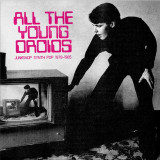
VARIOUS - ALL THE YOUNG DROIDS: JUNKSHOP SYNTH POP 1978-1985 (LP 2x12")
 
24
également disponible

MB Crystal Vinyl[32,73 €]

LTD Trans Pink Vinyl[32,82 €]

LTD Trans Pink Vinyl[27,69 €]


Compiled by Philip King
“And then came the rise of synth pop : blokes with dodgy haircuts hunched over keyboard-operated
machines stuffed with wires and do-it-yourself tone oscillators making sounds like a brood of geese
passing gas in a wind tunnel. Whoopee! This is the way the ‘70s ended : not with a blood-curdling bang
bang but with a cheap, synthesized, emasculating whimper.”
NICK KENT, NME.

All The Young Droids: Junkshop Synth Pop 1978-1985 is a new compilation that charts the
underbelly of the epoch-defining sound of the synthesiser in 80s popular music. Compiled by Philip
King (previously seen compiling All The Young Droogs, Glitterbest and Boobs - The Junkshop
Glam Discotheque), the music here connects the dots between DIY synth enthusiasts grappling with
new, cheap synthesisers at the tail-end of punk and wannabe, jobbing songwriters enthral to the new
music pioneered by Gary Numan, Depeche Mode and Daniel Miller’s Mute Records. Featuring rare
tracks of auto-didactic progressive pop music, proto-techno punk, shoot-for-the-stars-land-in-the-gutter
chart flops and heralded, underground synth classics, School Daze paints a picture of beautiful failure.
Complete with extensive sleeve notes written by King and never before seen imagery, all 24 tracks
were remastered by RPM in-house engineer Simon Murphy, many from vinyl copies due to lost master
tapes. The story told on All The Young Droids is one of the dawning opportunity presented by both the
emergence to the market of cheaper analog synthesisers and the distribution networks plus indie labels
that exploded with the advent of punk music in 1976. While the music that sprouted out all over the
globe in the wake of these factors was decried as fake, plastic, a refutation of punk’s guitar-led
revolution, it’s telling that much of the music on All The Young Droids.. was created in bedrooms,
ramshackle studios and home-made set ups with often borrowed equipment. In the era of record labels
jumping to capitalise on the success of The Sex Pistols, The Clash (both on major labels, of course)
these artists struggled to stand out from a new gold-rush with next to no budget or PR team. With radio
and labels desperate for the new Yazoo, what resulted was a testament to necessity being the mother
of invention.

At the time, the synthesiser was the music of the future, a shiny new machine that could paint like an
orchestra with a single finger and a 4-track. In the hands of Manchester avant-pranksters Gerry & The
Holograms it’s a pulsing, sardonic weapon.. the only instrument on the Messthetics classic lampooning
of New Wave fashion. In Hamburg, a 16 year old Andreas Dorau used it to write and record (with his
female classmates on vocals) a global smash in Fred Vom Jupiter (later licensed to Mute Records).
The hard-to-find English version (Fred From Jupiter, natch) is included here. Many artists with alreadystoried careers caught the bug and recorded synthesiser-fuelled peons to space, computers, the future
and, of course, love-interests. Harry Kakoulli, late of Squeeze, recorded a solo album in 1979 that
included the incredible power-synth-pop smash-that-never-smashed I’m On A Rocket. Similarly, Ian
North of Neo and American Power Pop stalwarts Milk ’n’ Cookies bought a Korg MS20 and used a
tape machine to record We’re Not Lonely, an absolute lost-classic of minimal synth pop. We’re Not
Lonely also features on the Junkshop Synth Pop sampler 7” twinned with John Howard unreleased
track You Will See, released April 12th 2025.

There are plenty of compilation debuts in evidence. Sole Sister were a mysterious trio who were
featured on the Scaling Triangles compilation of female-fronted, queer-adjacent post-punk /
underground music that also featured The Petticoats. Selwin Image were from San Francisco and
featured members of the recently defunct power pop/punk group The Pushups. Their stupidly catchy
The Unknown fizzes with New Wave energy - think XTC to Sparks but remains unreleased until now.
Dream Unit’s A Drop In The Ocean is an early synth wave cut, positively teaming with Joy Division
instrumentation, previously only released on a long-forgotten and super rare, self-released EP.
Incandescent Luminaire’s Famous Names belies an archetypal struggle of a small-town trying to
make it in a cruel industry but is a thrilling New Romantic-Synth Wave cross over with a OMD
gloominess that’s a joy to hear. Feminist Minimal Wave track I Am A Time Bomb by performance artist
Peta Lilly and Michael Chance is a revelation destined for new found cult status. It was released on 7”
and lost until now.

The flipside to the subterranean, never-made-it synth pop mentioned above are the ambitious, even
fruity attempts at success that have a perennial elegance to their confidence. New Jersey-ite Billy
London (real name Ed Barth) tried to cash in on the synth boom with Woman, released by a major
label, a lurching new wave track built on the Louie Louie rhythm and a wonderfully camp Lou Reedstyle sleazy vocal before exploding in the synthesised chorus. The song bombed but with a chorus like
this, you have to wonder why? Ex-Glitter Band member John Springate’s My Life is truly epic, with
doomed chord progressions and massive sounding drums turning into at least 3 different songs in the
course of the track. Before you wonder what’s going on the song resolves with a glorious return to the
main refrain.

The dry-ice-dressed dance floor is well catered for too. Design’s Premonition and Vision’s Lucifer’s
Friend are stone-cold minimal synth bangers, well loved but given a new lease of life here. The
Warlord’s The Ultimate Warlord was released in 1978, a homespun proto Hi NRG banger that was
later re-recorded by The Immortals in Canada who had a club hit with it. One-man- band Disco
Volante’s No Motion was re-issued by Synth wave label Medical in 2012 but makes its first vinyl
compilation appearance here. Close your eyes and you can imagine what Lawrence of Felt would have
sounded like with some cheap Korgs a little earlier in his career. Gibraltar-based trio The Microbes
imagined a computer programming people to dance - how prescient - and ended up with a propulsive,
robo-funk track with splendid rubbery bass playing over a tectonic drum machine. Previously picked up
by Belgian label Stroom TV, Dee Jay Bert & Eagle’s heavily Euro-accented I Am Your Master
demands the listener to “come to paradise!” In a frankly terrifying manner.
All The Young Droids is the first compilation to peel away from the narrative that dour, Minimal Synth
and Cold Wave were the only musical children of the first rush of synth pop. Philip King and School
Daze Records describe a much more complicated world: along with the austere, Brutalist children of
Daniel Miller (who produced Alan Burnham’s Bowie-Low-influenced Science Fiction here) was a
plethora of desperate cash-ins, accidental mainstream hits, ambitious pop dramas and major label
punts that went nowhere. Crucially, the compilation blurs the line between junk and treasure. What if the
two things are interchangeable. What if it’s all science fiction?

En stock

Disponible en stock et prêt pour l'expédition

27,69
Guilty Razors - Complete Recordings 1977 - 1978

UILTY RAZORS, BONA FIDE PUNKS.


Writings on the topic that go off in all directions, mind-numbing lectures given by academics, and testimonies, most of them heavily doctored, from those who “lived through that era”: so many people today fantasize about the early days of punk in our country… This blessed moment when no one had yet thought of flaunting a ridiculous green mohawk, taking Sid Vicious as a hero, or – even worse – making the so-called alternative scene both festive and boorish. There was no such thing in 1976 or 1977, when it wasn’t easy to get hold of the first 45s by the Pistols or the Clash. Few people were aware of what was happening on the fringes of the fringes at the time. Malcolm McLaren was virtually unknown, and having short hair made you seem strange. Who knew then that rock music, which had taken a very bad turn since the early 1970s, would once again become an essential element of liberation? That, thanks to short and fast songs, it would once again rediscover that primitive, social side that was so hated by older generations? Who knew that, besides a few loners who read the music press (it was even better if they read it in English) and frequented the right record stores? Many of these formed bands, because it was impossible to do otherwise. We quickly went from listening to the Velvet Underground to trying to play the Stooges’ intros. It’s a somewhat collective story, even though there weren’t many people to start it.
The Guilty Razors were among those who took part in this initial upheaval in Paris. They were far from being the worst. They had something special and even released a single that was well above the national average. They also had enough songs to fill an album, the one you’re holding. In everyone’s opinion, they were definitely not among the punk impostors that followed in their wake. They were, at least, genuine and credible.

Guilty Razors, Parisian punk band (1975-1978). To understand something about their somewhat linear but very energetic sound, we might need to talk about the context in which it was born and, more broadly, recall the boredom (a theme that would become capital in punk songs) coupled with the desire to blow everything off, which were the basis for the formation of bands playing a rejuvenated rock music ; about the passion for a few records by the Kinks or the early Who, by the Stooges, by the Velvet mostly, which set you apart from the crowd.
And of course, we should remember this new wave, which was promoted by a few articles in the specialized press and some cutting-edge record stores, coming from New York or London, whose small but powerful influence could be felt in Paris and in a handful of isolated places in the provinces, lulled to sleep by so many appalling things, from Tangerine Dream to President Giscard d’Estaing...
In 1975-76, French music was, as almost always, in a sorry state ; it was still dominated by Johnny Hallyday and Sylvie Vartan. Local rock music was also rather bleak, apart from Bijou and Little Bob who tried to revive this small scene with poorly sound-engineered gigs played to almost no one.
In the working class suburbs at the time, it was mainly hard rock music played to 11 that helped people forget about their gruelling shifts at the factory. Here and there, on the outskirts of major cities, you still could find a few rockers with sideburns wearing black armbands since the death of Gene Vincent, but it wasn’t a proper mass movement, just a source of real danger to anyone they came across who wasn't like them. In August 1976, a festival unlike any other took place in Mont-de-Marsan – the First European Punk Festival as the poster said – with almost as many people on stage as in the audience. Yet, on that day, a quasi historical event happened, when, under the blazing afternoon sun, a band of unknowns called The Damned made an unprecedented noise in the arena, reminiscent of the chaotic Stooges in their early adolescence. They were the first genuine punk band to perform in our country: from then on, anything was possible, almost anything seemed permissible.

It makes sense that the four+1 members of Guilty Razors, who initially amplified acoustic guitars with crappy tape recorder microphones, would adopt punk music (pronounced paink in French) naturally and instinctively, since it combines liberating noise with speed of execution and – crucially – a very healthy sense of rebellion (the protesters of May 1968 proclaimed, and it was even a slogan, that they weren’t against old people, but against what had made them grow old. In the mid-1970s, it seemed normal and obvious that old people should now ALSO be targeted!!!).
At the time, the desire to fight back, and break down authority and apathy, was either red or black, often taking the form of leafleting, tumultuous general assemblies in the schoolyard, and massive or shabby demonstrations, most of the time overflowing with an exciting vitality that sometimes turned into fights with the riot police. Indeed, soon after the end of the Vietnam War and following Pinochet’s coup in Chile, all over France, Trotskyist and anarcho-libertarian fervour was firmly entrenched among parts of the educated youth population, who were equally rebellious and troublemakers whenever they had the chance. It should also be noted that when the single "Anarchy in the UK" was first heard, even though not many of us had access to it, both the title and its explosive sound immediately resonated with some of those troublemakers crying out for ANARCHY!!! Meanwhile, the left-wing majority still equated punks with reckless young neo-Nazis. Of course, the widely circulated photos in the mainstream press of Siouxsie Sioux with her swastikas didn’t necessarily help to win over the theorists of the Great Revolution. It took Joe Strummer to introduce The Clash as an anti-racist, anti-fascist and anti-ignorance band for the rejection of old-school revolutionaries to fade a little.

The Lycée Jean-Baptiste Say at Porte d’Auteuil, despite being located in the very posh and very exclusive 16th arrondissement of Paris, didn’t escape these "committed" upheavals, which doubled as the perfect outlet for the less timid members of this generation.
“Back then, politics were fun,” says Tristam Nada, who studied there and went on to become Guilty Razors’ frontman. “Jean-Baptiste was the leftist high-school in the neighbourhood. When the far right guys from the GUD came down there, the Communist League guys from elsewhere helped us fight them off.”
Anything that could challenge authority was fair game and of course, strikes for just about any reason would lead to increasingly frequent truancy (with a definitive farewell to education that would soon follow). Tristam Nada spent his 10th and 11th unfinished grades with José Perez, who had come from Spain, where his father, a janitor, had been sentenced to death by Franco. “José steered my tastes towards solid acts such as The Who. Like most teenagers, I had previously absorbed just about everything that came my way, from Yes to Led Zeppelin to Genesis. I was exploring… And then one day, he told me that he and his brother Carlos wanted to start a rock band.” The Perez brothers already played guitar. “Of course, they were Spanish!”, jokes their singer. “Then, somewhat reluctantly, José took up the bass and we were soon joined by Jano – who called himself Jano Homicid – who took up the rhythm guitar.” Several drummers would later join this core of not easily intimidated young guys who didn’t let adversity get the better of them.

The first rehearsals of the newly named Guilty Razors took place in the bedroom of a Perez aunt. There, the three rookies tried to cover a few standards, songs that often were an integral part of their lives. During a first, short gig, in front of a bewildered audience of tough old-school rockers, they launched into a clunky version of the Velvet Underground's “Heroin”. Challenge or recklessness? A bit of both, probably… And then, step by step, their limited repertoire expanded as they decided to write their own songs, sung in a not always very accurate or academic English, but who cared about proper grammar or the right vocabulary, since what truly mattered was to make the words sound as good as possible while playing very, very fast music? And spitting out those words in a language that left no doubt as to what it conveyed mattered as well.
Trying their hand a the kind of rock music disliked by most of the neighbourhood, making noise, being fiercely provocative: they still belonged to a tiny clique who, at this very moment, had chosen to impose this difference. And there were very few places in France or elsewhere, where one could witness the first stirrings of something that wasn’t a trend yet, let alone a movement.

In the provinces, in late 1976 or early 1977, there couldn’t be more than thirty record stores that were a bit more discerning than average, where you could hear this new kind of short-haired rock music called “punk”. The old clientele, who previously had no problem coming in to buy the latest McCartney or Aerosmith LP, now felt a little less comfortable there…
In Paris, these enlightened places were quite rare and often located nex to what would become the Forum des Halles, a big shopping mall. Between three aging sex workers, a couple of second-hand clothes shops, sellers of hippie paraphernalia and small fashion designers, the good word was loudly spread in two pioneering places – propagators of what was still only a new underground movement. Historically, the first one was the Open Market, a kind of poorly, but tastefully stocked cave. Speakers blasted out the sound of sixties garage bands from the Nuggets compilation (a crucial reference for José Perez) or the badly dressed English kids of Eddie and the Hot Rods. This black-painted den was opened a few years earlier by Marc Zermati, a character who wasn’t always in a sunny disposition, but always quite radical in his (good) choices and his opinions. He founded the independent label Skydog and was one of the promoters of the Mont-de-Marsan punk festivals. Not far from there was Harry Cover, another store more in tune with the new New York scene, which was amply covered in the house fanzine, Rock News (even though it was in it that the photos of the Sex Pistols were first published in France).
It was a favorite hang-out of the Perez brothers and Tristam Nada, as the latter explained. “It’s at Harry Cover’s that we first heard the Pistols and Clash’s 45s, and after that, we decided to start writing our first songs. If they could do it, so could we!”
The sonic shocks that were “Anarchy in the UK”, “White Riot” or the Buzzcocks’s EP, “Spiral Scratch” – which Guilty Razors' sound is reminiscent of – were soon to be amplified by an unparalleled visual shock. In April 1977, right after the release of their first LP, The Clash performed at the Palais des Glaces in Paris, during a punk night organised by Marc Zermati. For many who were there, it was the gig of a lifetime…
Of course, Guilty Razors and Tristam were in the audience: “That concert was fabulous… We Parisian punks were almost all dressed in black and white, with white shirts, skinny leather ties, bikers jackets or light jackets, etc. The Clash, on the other hand, wore colourful clothes. Well, the next day, at the Gibus, you’d spot everyone who had been at this concert, but they weren’t wearing anything black, they were all wearing colours.”

It makes sense to mention the Gibus club, as Guilty Razors often played there (sometimes in front of a hostile audience). It was also the only place in Paris that regularly scheduled new Parisian or Anglo-Saxon acts, such as Generation X, Siouxsie and the Banshees, the Slits, and Johnny Thunders who would become a kind of messed-up mascot for the venue. A little later, in 1978, the Rose Bonbon – formerly the Nashville – also attracted nightly owls in search of electric thrills… In 1977, the iconic but not necessarily excellent Asphalt Jungle often played at the Gibus, sometimes sharing the bill with Metal Urbain, the only band whose aura would later transcend the French borders (“I saw them as the French Sex Pistols,” said Geoff Travis, head of their British label Rough Trade). Already established in this small scene, Metal Urbain helped the young and restless Guilty Razors who had just arrived. Guitarist for Metal Urbain Hermann Schwartz remembers it: “They were younger than us, we were a bit like their mentors even if it’s too strong a word… At least they were credible. We thought they were good, and they had good songs which reminded of the Buzzcocks that I liked a lot. But at some point, they started hanging out with the Hells Angels. That’s when we stopped following them.”

The break-up was mutual, since, Guilty Razors, for their part, were shocked when they saw a fringe element of the audience at Metal Urbain concerts who repeatedly shouted “Sieg Heil” and gave Nazi salutes. These provocations, even still minor (the bulk of the skinhead crowd would later make their presence felt during concerts), weren’t really to the liking of the Perez brothers, whose anti-fascist convictions were firmly rooted. Some things are non-negotiable.
A few months earlier (in July 1978), Guilty Razors had nevertheless opened very successfully for Metal Urbain at the Bus Palladium, a more traditonally old-school rock night-club. But, as was sometimes the case back then, the night turned into a mass brawl when suburban rockers came to “beat up punks”.

Back then, Parisian nights weren’t always sweet and serene.

So, after opening as best as they could for The Jam (their sound having been ruined by the PA system), our local heroes were – once again – met outside by a horde of greasers out to get them. “Thankfully,” says Tristam, “we were with our roadies, motorless bikers who acted as a protective barrier. We were chased in the neighbouring streets and the whole thing ended in front of a bar, with the owner coming out with a rifle…”
Although Tristam and the Perez brothers narrowly escaped various, potentially bloody, incidents, they weren’t completely innocent of wrongdoing either. They still find amusing their mugging of two strangers in the street for example (“We were broke and we simply wanted to buy tickets for the Heartbreakers concert that night,” says Tristam). It so happened that their victims were two key figures in the rock business at the time: radio presenter Alain Manneval and music publisher Philippe Constantin. They filed a complaint and sought monetary compensation, but somehow the band’s manager, the skilful but very controversial Alexis, managed to get the complaint withdrawn and Guilty Razors ended up signing with Constantin with a substantial advance.

They also signed with Polydor and the label released in 1978 their only three-track 45, featuring “I Don't Wanna be A Rich”, “Hurts and Noises” and “Provocate” (songs that exuded perpetual rebellion and an unquenchable desire for “class” confrontation). It was a very good record, but due to a lack of promotion (radio stations didn’t play French artists singing in English), it didn’t sell very well. Only 800 copies were allegedly sold and the rest of the stock was pulped… Initially, the three tracks were to be included on a LP that never came to be, since they were dropped by Polydor (“Let’s say we sometimes caused a ruckus in their offices!” laughs Tristam.) In order to perfect the long-awaited LP, the band recorded demos of other tracks. There was a cover of Pink Floyd's “Lucifer Sam” from the Syd Barrett era – proof of an enduring love for the sixties’ greats –, “Wake Up” a hangover tale and “Bad Heart” about the Baader-Meinhof gang, whose actions had a profound impact on the era and on a generation seeking extreme dissent... On the album you’re now discovering, you can also hear five previously unreleased tracks recorded a bit later during an extended and freezing stay in Madrid, in a makeshift studio with the invaluable help of a drummer also acting as sound engineer. He was both an enthusiastic old hippie and a proper whizz at sound engineering. Here too, certain influences from the fifties and sixties (Link Wray, the Troggs) are more than obvious in the band’s music.

Shortly after a final stormy and rather barbaric (on the audience’s side) “Punk night” at the Olympia in June 1978, Tristam left the band ; his bandmates continued without him for a short while.

But like most pioneering punk bands of the era, Guilty Razors eventually split up for good after three years (besides once in Spain, they’d only played in Paris). The reason for ceasing business activities were more or less the same for everyone: there were no venues outside one’s small circuit to play this kind of rock music, which was still frightening, unknown, or of little interest to most people. The chances of recording an LP were virtually null, since major labels were only signing unoriginal but reassuring sub-Téléphone clones, and the smaller ones were only interested in progressive rock or French chanson for youth clubs. And what about self-production? No one in our small safety-pinned world had thought about it yet. There wasn’t enough money to embark on that sort of venture anyway.

So yes, the early days of punk in France were truly No Future!

pas en stock

Commandez maintenant et nous commanderons l'article pour vous chez notre fournisseur.

21,43

Derniere entrée: 7 jours
Sugar Horse - Not A Sound In Heaven LP
  • 1-: Fire Graphics
  • 2: Secret Speech
  • 3: Ex-Human Shield
  • 4: History's Biggest T-Shirts
  • 5: Not A Sound In Heaven
  • 6: Company Town
  • 7: You Can't Say Dallas Doesn't Love You

Bristol experimental band SUGAR HORSE are delighted to announce that their third album, Not A Sound In Heaven, will be released on 10th April 2026 via Fat Dracula Records.

To celebrate the news, the band are sharing the bruising lead single ‘Secret Speech’, available to stream on all good digital service providers from 12th February 2026.

Also announced today are a run of April 2026 UK album headline tour dates and an appearance at StrangeForms Festival 2026, with tickets on sale now (see below for full listings).

“We are fortunate enough to live in what is generally known as ‘The West’,” says front man Ash Tubb of the lyrical themes behind the new track. “I say fortunate with gritted teeth, because I know—as I’m sure the reader knows—that living in the West isn’t always rosy. The vast majority of people struggle everyday to feed, clothe and house themselves. Let alone receive adequate healthcare, schooling and workers’ rights.”

“We are, however, where all the world’s wealth is hoarded. We are at the centre of Empire. The people outside of this empire—those of the Global South—have had their resources extracted and their populations exploited by our own governments, with very little given back in return. This won’t go on forever. It will inevitably end, as all great empires do.”

“We in The West have a choice to make in the meantime; either help create a new, fairer world, or let the greed of our ruling classes become the undoing of all of us.”

The first glimpse of new material from the quartet, ‘Secret Speech’ starts as Not A Sound In Heaven means to go on—a politically-charged wrecking ball of a song that smashes its way through the often unbelievable chaos and brutality of the 21st century with vitriolic malice.

How do you capture the machinations of the geo-political industrial war machine—and all the horrors that go with it—in the studio, without seeming trite or crass? That’s the question that Sugar Horse have posed themselves on their forthcoming third album Not A Sound In Heaven, and they must surely be one of the only bands in existence capable of delivering on just that premise with both musical substance and cutting philosophical insight.

“Ever since I was born I can remember visions of war, famine, and death being beamed directly into my living room via the magic of television,” says Tubb of the record. “These visions were accompanied by newsreader narratives designed to either humanise or dehumanise the people involved. We humanise our government’s allies and dehumanise their enemies. This is taken as common sense, or even wisdom to some degree. People watch the news and accept it as fact, simple and true.”

“As a person gets older they move in one of three different directions with this acceptance of reality; They embrace what they’re being told, they fall into a kind of trust free nihilism or they learn that there are deeper narratives at play.”

“Not A Sound In Heaven is an aged acceptance of the latter. An acceptance of sitting at the centre of a global empire of both military and economic dimensions. An acceptance that the stories we’re told as a nation, or what’s generally in the zeitgeist, isn’t necessarily reality itself.”

“How does a person cope with the weight—and, frankly, the guilt—of a society that perpetuates such distinct inequalities? A society that thinks a bit of killing abroad is fine, as long as it improves the lives of people at home. You can see why so many choose to embrace it. Hell, nihilism seems pretty sensible. Once a person decides upon pursuing a degree of truth however, things get a bit depressing. Beyond depressing...maddening.”

“This album explores this kind of breezy, frivolous subject matter in a manner that will no doubt be uplifting to the listener and massively financially rewarding for the artist.”

The new album follows on from their standalone AA single ‘What’s Your ETA? Let’s Have A Tear Up’/‘Would You Like Me To Be The Cat?’ which was released late last year as a surprise double drop.

pré-commande10.04.2026

il devrait être publié sur 10.04.2026

24,79
ROBERTA FLACK - Killing Me Softly LP 2x12"
  • A1: Killing Me Softly With His Song
  • A2: Jesse
  • B1: No Tears (In The End)
  • B2: I'm The Girl
  • C1: River
  • C2: Conversation Love
  • C3: When You Smile
  • D1: Suzanne

Analogue Productions (Atlantic 75 Series) Celebrating the 75th Anniversary of Atlantic Records! Platinum-selling, Grammy-nominated album featuring the No. 1 smash title track! Tip-on old style gatefold double pocket jacket by Stoughton Printing Female R&B singers were expected to be forceful, big-voiced divas (like Aretha Franklin) or come-hither seductresses (like Diana Ross), but, as AllMusic says, Roberta Flack had her own unique approach. Flack's voice is vast, deep, and stately — where some singers confuse frenzy with passion, she is confident, majestic, and unhurried, intense in a profound yet reserved manner.

The title song of this 1973 masterful eight track album, "Killing Me Softly," was her second No. 1 hit, establishing her as a major modern R&B stylist. Killing Me Softly reached No. 3 on the Billboard Top LPs & Tape and No. 2 on the Soul LPs chart. The Recording Industry Association of America (RIAA) certified the album gold on August 27, 1973, and double platinum on January 30, 2006, denoting shipments of 2 million copies in the United States. It was nominated for a Grammy Award for Album of the Year, which it lost to Stevie Wonder's 1973 album Innervisions. The album's title track was released as a single and topped the Billboard Hot 100. The title track won the 1974 Grammy Award for Record of the Year. This deluxe 180-gram 45 RPM 2LP Analogue Productions (Atlantic Series) reissue of Killing Me Softly is a true audiophile gem and a worthy addition to your music collection.

pré-commande

Cet article n'a pas encore été publié. Vous pouvez pré-commander le produit maintenant.

83,82
Vanbur - Of Becoming

Vanbur

Of Becoming

12inchMANNERS001LP
Manners McDade
21.11.2025
  • 1: In The Absence
  • 2: Aevum
  • 3: My Own
  • 4: Apricity
  • 5: Strange Kind Of Creature
  • 6: Friends Of Mine
  • 7: My Dove, To Sleep
  • 8: Earthing
  • 9: Together, Apart
  • 10: Of Becoming
  • 11: Threads

Vanbur – artist duo consisting of composers Jessica Jones & Tim Morrish – are releasing their debut album release this autumn. The album scoops up Earthing and my dove, to sleep, made famous by the Netflix show ONE DAY, alongside previous material from their debut EP ‘Human’ including In Cold Light which had a huge TikTok moment around the show’s release. Written over several years, ‘Of Becoming’ reflects a maturing of Vanbur’s sound as they themselves have gone through major life changes and transitions, which are addressed both lyrically and sonically in this impressive body of work. There’s a dreamlike quality to the album, representing the sometimes disorientating dichotomy found in immense change of wistful nostalgia and strength found in adaptation. Recorded at Church Studios with a 12-piece ensemble, the album weaves between lush orchestral heights such as Of Becoming and Friends of Mine and edgier alt-pop bangers such as Strange Kind Of Creature. Jess’ vocals are at times ethereal and textured, and at times lean further into her song-writing sensibilities with their most personal lyrics yet. With the pair’s range and skillset across production and composition fully explored, the album is a triumph of song-writing. The band have worked with filmmaker and Creative Director Matt Houghton on a strong visual aesthetic, from key artwork to narrative promotional films shot on 35mm. With graphic design by Torsten Posselt, the vinyl will have a tactile and natural quality tying in with the analogue feel of the campaign. Vanbur’s debut EP, Human, was released in 2018 and received press coverage in Clash, Ear Milk, Higher Plain etc and was played across BBC 6Music shows. The had their debut performance at the 100 Club and plan to bring a scaled up version to stages in 2026. The follow up remix EP included remixes by Mogwai and Katie Gately, and their music has been placed in hit-shows including One Day (Netflix), The Rising (Sky), Hanna (Prime) and Queens (Nat Geo).

pré-commande21.11.2025

il devrait être publié sur 21.11.2025

24,79
Igorrr - Amen LP

Igorrr

Amen LP

12inch03984161567
Metal Blade
25.09.2025

Igorrr ist das visionäre Projekt des französischen Multi-Instrumentalisten und Produzenten Gautier Serre, der seit zwanzig Jahren unter diesem Namen operiert. Seit der Unterzeichnung bei Metal Blade Records im Jahr 2017 hat sich Igorrr von einem Ein-Mann-Projekt zu einer vollständigen Bandidentität entwickelt, wobei Gautier als Mastermind und kreative Leitfigur fungiert.Das Projekt ist bekannt für seine kompromisslose Verschmelzung von Classical, Death Metal, Electronic und Breakcore - eine Musik, die sowohl von Bach und Chopin als auch von Cannibal Corpse, Aphex Twin und Meshuggah inspiriert ist. Mit jedem Album überrascht Igorrr selbst die treuesten Fans mit radikaler Vitalität und experimentellen Wendungen.Current Lineup:• Gautier Serre: Machines• Jb Le Bail: Vocals• Marthe Alexandre: Vocals• Remi Serafino: Drums• Martyn Clément: GuitarsAktiv seit: 2005Herkunft: FrankreichCHART-ERFOLGE & STREAMING-ZAHLEN• #12 Official German Album Charts (Spirituality & Distortion)• #57 Swiss Official Album Charts (Spirituality & Distortion)• US Billboard Charts: Multiple Top 10 Positionen• Über 74 Millionen Streams auf Spotify gesamt• 255.000 Follower auf Spotify• 28 Millionen Streams für "Spirituality & Distortion" alleinLIVE-PERFORMANCE & TOURNEEN• Massive Headlining-Tour in Europa (1.500-2.000 Kapazität)• Ausverkaufte US-Shows: Regent Theater LA (1.100), Irving Plaza NYC (1.110), The Crocodile Seattle (750)• Major Festival-Auftritte: Hellfest, Wacken, Download, Sweden Rock, Graspop, Nova Rock, Bloodstock• Weitere US-Shows für 2026 geplantSPECIAL FEATURES• Gastauftritte: Scott Ian (Anthrax), Trey Spruance (Mr. Bungle), Mike Leon (Soulfly)• Echter Chor in Kirche aufgenommen für authentische AtmosphärePLAYLISTING-ERFOLGSpotify: All New Metal, Alternative Metal, Kickass Metal, New Music Friday (USA/UK)Apple Music: Avant-Garde Metal Essentials, Extreme Metal, Metal Rewind, Breaking MetalDeezer: Industrial, Metal Radar, French Metal

pas en stock

Commandez maintenant et nous commanderons l'article pour vous chez notre fournisseur.

26,47

Derniere entrée: 21 jours
Igorrr - Amen LP

Igorrr

Amen LP

12inch03984161561
Metal Blade
25.09.2025

Igorrr ist das visionäre Projekt des französischen Multi-Instrumentalisten und Produzenten Gautier Serre, der seit zwanzig Jahren unter diesem Namen operiert. Seit der Unterzeichnung bei Metal Blade Records im Jahr 2017 hat sich Igorrr von einem Ein-Mann-Projekt zu einer vollständigen Bandidentität entwickelt, wobei Gautier als Mastermind und kreative Leitfigur fungiert.Das Projekt ist bekannt für seine kompromisslose Verschmelzung von Classical, Death Metal, Electronic und Breakcore - eine Musik, die sowohl von Bach und Chopin als auch von Cannibal Corpse, Aphex Twin und Meshuggah inspiriert ist. Mit jedem Album überrascht Igorrr selbst die treuesten Fans mit radikaler Vitalität und experimentellen Wendungen.Current Lineup:• Gautier Serre: Machines• Jb Le Bail: Vocals• Marthe Alexandre: Vocals• Remi Serafino: Drums• Martyn Clément: GuitarsAktiv seit: 2005Herkunft: FrankreichCHART-ERFOLGE & STREAMING-ZAHLEN• #12 Official German Album Charts (Spirituality & Distortion)• #57 Swiss Official Album Charts (Spirituality & Distortion)• US Billboard Charts: Multiple Top 10 Positionen• Über 74 Millionen Streams auf Spotify gesamt• 255.000 Follower auf Spotify• 28 Millionen Streams für "Spirituality & Distortion" alleinLIVE-PERFORMANCE & TOURNEEN• Massive Headlining-Tour in Europa (1.500-2.000 Kapazität)• Ausverkaufte US-Shows: Regent Theater LA (1.100), Irving Plaza NYC (1.110), The Crocodile Seattle (750)• Major Festival-Auftritte: Hellfest, Wacken, Download, Sweden Rock, Graspop, Nova Rock, Bloodstock• Weitere US-Shows für 2026 geplantSPECIAL FEATURES• Gastauftritte: Scott Ian (Anthrax), Trey Spruance (Mr. Bungle), Mike Leon (Soulfly)• Echter Chor in Kirche aufgenommen für authentische AtmosphärePLAYLISTING-ERFOLGSpotify: All New Metal, Alternative Metal, Kickass Metal, New Music Friday (USA/UK)Apple Music: Avant-Garde Metal Essentials, Extreme Metal, Metal Rewind, Breaking MetalDeezer: Industrial, Metal Radar, French Metal

pas en stock

Commandez maintenant et nous commanderons l'article pour vous chez notre fournisseur.

23,95

Last In: 3 months ago
Various - Fetenhits - NDW Neue Deutsche Welle LP 4x12"
 
48

Die FETENHITS-Folge NDW Neue Deutsche Welle wurde neu aufgelegt - mit verändertem Tracklisting.
Einige Titel, die auf der früheren Folge fehlten, sind nun endlich mit dabei, wie z.B. ”Der Mussolini” und
”Als wär’s das letzte Mal” von DAF sowie ”Der Kommissar” von Falco. Des weiteren finden sich einige
tolle Raritäten von Michael Cretu, Alphaville und Thomas Anders wieder. Man darf gespannt bleiben...
Als 3CD & Download und im September dann auch als 4-fach Vinyl!

pas en stock

Commandez maintenant et nous commanderons l'article pour vous chez notre fournisseur.

36,93

Derniere entrée: 55 jours
VARIOUS - ALL THE YOUNG DROIDS: JUNKSHOP SYNTH POP 1978-1985 (LP 2x12")
 
24
également disponible

Black Vinyl[27,69 €]

MB Crystal Vinyl[32,73 €]

LTD Trans Pink Vinyl[27,69 €]


Compiled by Philip King
“And then came the rise of synth pop : blokes with dodgy haircuts hunched over keyboard-operated
machines stuffed with wires and do-it-yourself tone oscillators making sounds like a brood of geese
passing gas in a wind tunnel. Whoopee! This is the way the ‘70s ended : not with a blood-curdling bang
bang but with a cheap, synthesized, emasculating whimper.”
NICK KENT, NME.

All The Young Droids: Junkshop Synth Pop 1978-1985 is a new compilation that charts the
underbelly of the epoch-defining sound of the synthesiser in 80s popular music. Compiled by Philip
King (previously seen compiling All The Young Droogs, Glitterbest and Boobs - The Junkshop
Glam Discotheque), the music here connects the dots between DIY synth enthusiasts grappling with
new, cheap synthesisers at the tail-end of punk and wannabe, jobbing songwriters enthral to the new
music pioneered by Gary Numan, Depeche Mode and Daniel Miller’s Mute Records. Featuring rare
tracks of auto-didactic progressive pop music, proto-techno punk, shoot-for-the-stars-land-in-the-gutter
chart flops and heralded, underground synth classics, School Daze paints a picture of beautiful failure.
Complete with extensive sleeve notes written by King and never before seen imagery, all 24 tracks
were remastered by RPM in-house engineer Simon Murphy, many from vinyl copies due to lost master
tapes. The story told on All The Young Droids is one of the dawning opportunity presented by both the
emergence to the market of cheaper analog synthesisers and the distribution networks plus indie labels
that exploded with the advent of punk music in 1976. While the music that sprouted out all over the
globe in the wake of these factors was decried as fake, plastic, a refutation of punk’s guitar-led
revolution, it’s telling that much of the music on All The Young Droids.. was created in bedrooms,
ramshackle studios and home-made set ups with often borrowed equipment. In the era of record labels
jumping to capitalise on the success of The Sex Pistols, The Clash (both on major labels, of course)
these artists struggled to stand out from a new gold-rush with next to no budget or PR team. With radio
and labels desperate for the new Yazoo, what resulted was a testament to necessity being the mother
of invention.

At the time, the synthesiser was the music of the future, a shiny new machine that could paint like an
orchestra with a single finger and a 4-track. In the hands of Manchester avant-pranksters Gerry & The
Holograms it’s a pulsing, sardonic weapon.. the only instrument on the Messthetics classic lampooning
of New Wave fashion. In Hamburg, a 16 year old Andreas Dorau used it to write and record (with his
female classmates on vocals) a global smash in Fred Vom Jupiter (later licensed to Mute Records).
The hard-to-find English version (Fred From Jupiter, natch) is included here. Many artists with alreadystoried careers caught the bug and recorded synthesiser-fuelled peons to space, computers, the future
and, of course, love-interests. Harry Kakoulli, late of Squeeze, recorded a solo album in 1979 that
included the incredible power-synth-pop smash-that-never-smashed I’m On A Rocket. Similarly, Ian
North of Neo and American Power Pop stalwarts Milk ’n’ Cookies bought a Korg MS20 and used a
tape machine to record We’re Not Lonely, an absolute lost-classic of minimal synth pop. We’re Not
Lonely also features on the Junkshop Synth Pop sampler 7” twinned with John Howard unreleased
track You Will See, released April 12th 2025.

There are plenty of compilation debuts in evidence. Sole Sister were a mysterious trio who were
featured on the Scaling Triangles compilation of female-fronted, queer-adjacent post-punk /
underground music that also featured The Petticoats. Selwin Image were from San Francisco and
featured members of the recently defunct power pop/punk group The Pushups. Their stupidly catchy
The Unknown fizzes with New Wave energy - think XTC to Sparks but remains unreleased until now.
Dream Unit’s A Drop In The Ocean is an early synth wave cut, positively teaming with Joy Division
instrumentation, previously only released on a long-forgotten and super rare, self-released EP.
Incandescent Luminaire’s Famous Names belies an archetypal struggle of a small-town trying to
make it in a cruel industry but is a thrilling New Romantic-Synth Wave cross over with a OMD
gloominess that’s a joy to hear. Feminist Minimal Wave track I Am A Time Bomb by performance artist
Peta Lilly and Michael Chance is a revelation destined for new found cult status. It was released on 7”
and lost until now.

The flipside to the subterranean, never-made-it synth pop mentioned above are the ambitious, even
fruity attempts at success that have a perennial elegance to their confidence. New Jersey-ite Billy
London (real name Ed Barth) tried to cash in on the synth boom with Woman, released by a major
label, a lurching new wave track built on the Louie Louie rhythm and a wonderfully camp Lou Reedstyle sleazy vocal before exploding in the synthesised chorus. The song bombed but with a chorus like
this, you have to wonder why? Ex-Glitter Band member John Springate’s My Life is truly epic, with
doomed chord progressions and massive sounding drums turning into at least 3 different songs in the
course of the track. Before you wonder what’s going on the song resolves with a glorious return to the
main refrain.

The dry-ice-dressed dance floor is well catered for too. Design’s Premonition and Vision’s Lucifer’s
Friend are stone-cold minimal synth bangers, well loved but given a new lease of life here. The
Warlord’s The Ultimate Warlord was released in 1978, a homespun proto Hi NRG banger that was
later re-recorded by The Immortals in Canada who had a club hit with it. One-man- band Disco
Volante’s No Motion was re-issued by Synth wave label Medical in 2012 but makes its first vinyl
compilation appearance here. Close your eyes and you can imagine what Lawrence of Felt would have
sounded like with some cheap Korgs a little earlier in his career. Gibraltar-based trio The Microbes
imagined a computer programming people to dance - how prescient - and ended up with a propulsive,
robo-funk track with splendid rubbery bass playing over a tectonic drum machine. Previously picked up
by Belgian label Stroom TV, Dee Jay Bert & Eagle’s heavily Euro-accented I Am Your Master
demands the listener to “come to paradise!” In a frankly terrifying manner.
All The Young Droids is the first compilation to peel away from the narrative that dour, Minimal Synth
and Cold Wave were the only musical children of the first rush of synth pop. Philip King and School
Daze Records describe a much more complicated world: along with the austere, Brutalist children of
Daniel Miller (who produced Alan Burnham’s Bowie-Low-influenced Science Fiction here) was a
plethora of desperate cash-ins, accidental mainstream hits, ambitious pop dramas and major label
punts that went nowhere. Crucially, the compilation blurs the line between junk and treasure. What if the
two things are interchangeable. What if it’s all science fiction?

pas en stock

Commandez maintenant et nous commanderons l'article pour vous chez notre fournisseur.

32,82

Last In: 8 months ago
VARIOUS - ALL THE YOUNG DROIDS: JUNKSHOP SYNTH POP 1978-1985 (LP 2x12")
 
24
également disponible

Black Vinyl[27,69 €]

LTD Trans Pink Vinyl[32,82 €]

LTD Trans Pink Vinyl[27,69 €]


Compiled by Philip King
“And then came the rise of synth pop : blokes with dodgy haircuts hunched over keyboard-operated
machines stuffed with wires and do-it-yourself tone oscillators making sounds like a brood of geese
passing gas in a wind tunnel. Whoopee! This is the way the ‘70s ended : not with a blood-curdling bang
bang but with a cheap, synthesized, emasculating whimper.”
NICK KENT, NME.

All The Young Droids: Junkshop Synth Pop 1978-1985 is a new compilation that charts the
underbelly of the epoch-defining sound of the synthesiser in 80s popular music. Compiled by Philip
King (previously seen compiling All The Young Droogs, Glitterbest and Boobs - The Junkshop
Glam Discotheque), the music here connects the dots between DIY synth enthusiasts grappling with
new, cheap synthesisers at the tail-end of punk and wannabe, jobbing songwriters enthral to the new
music pioneered by Gary Numan, Depeche Mode and Daniel Miller’s Mute Records. Featuring rare
tracks of auto-didactic progressive pop music, proto-techno punk, shoot-for-the-stars-land-in-the-gutter
chart flops and heralded, underground synth classics, School Daze paints a picture of beautiful failure.
Complete with extensive sleeve notes written by King and never before seen imagery, all 24 tracks
were remastered by RPM in-house engineer Simon Murphy, many from vinyl copies due to lost master
tapes. The story told on All The Young Droids is one of the dawning opportunity presented by both the
emergence to the market of cheaper analog synthesisers and the distribution networks plus indie labels
that exploded with the advent of punk music in 1976. While the music that sprouted out all over the
globe in the wake of these factors was decried as fake, plastic, a refutation of punk’s guitar-led
revolution, it’s telling that much of the music on All The Young Droids.. was created in bedrooms,
ramshackle studios and home-made set ups with often borrowed equipment. In the era of record labels
jumping to capitalise on the success of The Sex Pistols, The Clash (both on major labels, of course)
these artists struggled to stand out from a new gold-rush with next to no budget or PR team. With radio
and labels desperate for the new Yazoo, what resulted was a testament to necessity being the mother
of invention.

At the time, the synthesiser was the music of the future, a shiny new machine that could paint like an
orchestra with a single finger and a 4-track. In the hands of Manchester avant-pranksters Gerry & The
Holograms it’s a pulsing, sardonic weapon.. the only instrument on the Messthetics classic lampooning
of New Wave fashion. In Hamburg, a 16 year old Andreas Dorau used it to write and record (with his
female classmates on vocals) a global smash in Fred Vom Jupiter (later licensed to Mute Records).
The hard-to-find English version (Fred From Jupiter, natch) is included here. Many artists with alreadystoried careers caught the bug and recorded synthesiser-fuelled peons to space, computers, the future
and, of course, love-interests. Harry Kakoulli, late of Squeeze, recorded a solo album in 1979 that
included the incredible power-synth-pop smash-that-never-smashed I’m On A Rocket. Similarly, Ian
North of Neo and American Power Pop stalwarts Milk ’n’ Cookies bought a Korg MS20 and used a
tape machine to record We’re Not Lonely, an absolute lost-classic of minimal synth pop. We’re Not
Lonely also features on the Junkshop Synth Pop sampler 7” twinned with John Howard unreleased
track You Will See, released April 12th 2025.

There are plenty of compilation debuts in evidence. Sole Sister were a mysterious trio who were
featured on the Scaling Triangles compilation of female-fronted, queer-adjacent post-punk /
underground music that also featured The Petticoats. Selwin Image were from San Francisco and
featured members of the recently defunct power pop/punk group The Pushups. Their stupidly catchy
The Unknown fizzes with New Wave energy - think XTC to Sparks but remains unreleased until now.
Dream Unit’s A Drop In The Ocean is an early synth wave cut, positively teaming with Joy Division
instrumentation, previously only released on a long-forgotten and super rare, self-released EP.
Incandescent Luminaire’s Famous Names belies an archetypal struggle of a small-town trying to
make it in a cruel industry but is a thrilling New Romantic-Synth Wave cross over with a OMD
gloominess that’s a joy to hear. Feminist Minimal Wave track I Am A Time Bomb by performance artist
Peta Lilly and Michael Chance is a revelation destined for new found cult status. It was released on 7”
and lost until now.

The flipside to the subterranean, never-made-it synth pop mentioned above are the ambitious, even
fruity attempts at success that have a perennial elegance to their confidence. New Jersey-ite Billy
London (real name Ed Barth) tried to cash in on the synth boom with Woman, released by a major
label, a lurching new wave track built on the Louie Louie rhythm and a wonderfully camp Lou Reedstyle sleazy vocal before exploding in the synthesised chorus. The song bombed but with a chorus like
this, you have to wonder why? Ex-Glitter Band member John Springate’s My Life is truly epic, with
doomed chord progressions and massive sounding drums turning into at least 3 different songs in the
course of the track. Before you wonder what’s going on the song resolves with a glorious return to the
main refrain.

The dry-ice-dressed dance floor is well catered for too. Design’s Premonition and Vision’s Lucifer’s
Friend are stone-cold minimal synth bangers, well loved but given a new lease of life here. The
Warlord’s The Ultimate Warlord was released in 1978, a homespun proto Hi NRG banger that was
later re-recorded by The Immortals in Canada who had a club hit with it. One-man- band Disco
Volante’s No Motion was re-issued by Synth wave label Medical in 2012 but makes its first vinyl
compilation appearance here. Close your eyes and you can imagine what Lawrence of Felt would have
sounded like with some cheap Korgs a little earlier in his career. Gibraltar-based trio The Microbes
imagined a computer programming people to dance - how prescient - and ended up with a propulsive,
robo-funk track with splendid rubbery bass playing over a tectonic drum machine. Previously picked up
by Belgian label Stroom TV, Dee Jay Bert & Eagle’s heavily Euro-accented I Am Your Master
demands the listener to “come to paradise!” In a frankly terrifying manner.
All The Young Droids is the first compilation to peel away from the narrative that dour, Minimal Synth
and Cold Wave were the only musical children of the first rush of synth pop. Philip King and School
Daze Records describe a much more complicated world: along with the austere, Brutalist children of
Daniel Miller (who produced Alan Burnham’s Bowie-Low-influenced Science Fiction here) was a
plethora of desperate cash-ins, accidental mainstream hits, ambitious pop dramas and major label
punts that went nowhere. Crucially, the compilation blurs the line between junk and treasure. What if the
two things are interchangeable. What if it’s all science fiction?

pas en stock

Commandez maintenant et nous commanderons l'article pour vous chez notre fournisseur.

32,73

Last In: 8 months ago
EMSCHERKURVE 77 - LERN MA DEUTSCH! UND ANDERE LEKTIONEN LP 2x12"
 
28
également disponible

SPLATTER Vinyl[24,79 €]

Black Vinyl[23,11 €]


"Lern ma Deutsch!" - Die seit fast zwei Jahrzenten ausverkaufte und hochgehandelte Kultscheibe der Emscherkurve77 als Sammler-Edition mit fetter Bonus-LP ("und anderen Lektionen") endlich wieder - streng limitiert - erhältlich! Für das "Lern ma Deutsch!" Album haben die Jungs seinerzeit (2002) ihre Oi! & Punk- & Hardcore-Lieblingssongs zusammen mit den Original-Sängern der Bands neu aufgenommen, mit augenzwinkernden Humor interpretiert und "perfekt" eingedeutscht! Von The Cracks "This is my world/ Meine Welt" bis hin zu The Toasters, Murphy's Law, (Secret Agent Skin..ääh Spiller), Cockney Rejects, Agnostic Front, The Business, Dropkick Muphys, Antiseen...ach, schaut einfach die Tracklist selbst an. So eine Scheibe mit dieser prominenten Beteiligung wird wohl nie wieder kommen! Zeitlos, vom Kulturminister garantiert nicht empfohlen und auch heute noch etwas ganz Besonderes! Aber damit nicht genug, denn auf der Bonus-LP finden sich "andere Lektionen" in Form von Demo-Raritäten und gesuchten Sampler-Beiträgen, z.B. vom Johnny Cash-Tribute Sampler ("San Quentin") mit Gunter Gabriel), einen Coversong von Gunter selbst (Intercity Linie Nr.4) oder alle Songs von der ebenfalls vergriffenen Split-Scheibe mit Hudson Falcons "One Size Slits All" von 2003. Insgesamt 27 Songs (oder sind es sogar 28?) auf erstmals Doppel-Vinyl! Eine Nachhilfestunde der punkigeren Art!. Woanders hieß das wohl Deluxe Edition mit Röstaroma, hier "Lern ma Deutsch! und andere Lektionen" Doppel-Vinyl als 2LP schwarz, 2LP zwei Farben oder 2LP zwei Splatter! In Klappcover, mit Insert und verstecktem Bonustrack auf der D-Seite.

pré-commande04.07.2025

il devrait être publié sur 04.07.2025

24,79
EMSCHERKURVE 77 - LERN MA DEUTSCH! UND ANDERE LEKTIONEN LP 2x12"
  • Secret Agent Spiller (Ft. Murphy's Law)
  • Meine Welt (Ft. The Crack)
  • Hau Mal Ab (Ft. U.s. Bombs
  • Sauer (Ft. Agnostic Front)
  • Heute Bleib Ich Liegen (Ft. Cockney Rejects)
  • Sündenbock (Ft. Iron Cross)
  • Hau'n Auf Die Kacke, Heut' Nacht (Ft. Anti-Nowhere League)
  • Ruhrpott Beat (Ft. The Toasters)
  • Randalemacher-Karaoke (Ft. Dropkick Murphys)
  • Wochenendhelden (Ft. The Business)
  • Gefühle Sterben (Ft. Kill Your Idols)
  • Ich Hass Die Bullen (Ft. Antiseen)
  • Mir Geht Es Bestens (Ft. Major Accident)
  • Prolog (Ft. Steffen)
  • Wunderbare Jahre ("One Size Slits All!"-Split)
  • Deine Eltern Sind Geschwister ("One Size Slits All!"-Split)
  • Komma Hier Bei Uns Im Ruhrpott Hin ("One Size Slits All!"-Split)
  • Schiri (Der Mann In Schwarz) ("One Size Slits All!"-Split)
  • Siega ("One Size Slits All!"-Split)
  • Ein Lied Für Dich ("One Size Slits All!"-Split)
  • Intercity Linie Nr.4 (Gunter Gabriel Cover)
  • Verschenkter Tag (4 Skins Cover)
  • Abschaum Der Nacht (Kassierer Cover)
  • San Quentin (Johnny Cash Cover Ft. Gunter Gabriel)
  • Fußballmillionär (1St Version)
  • Blutgrätsche (1St Version)
  • Lieder Aus Der Kurve (1St Version)
  • (... (Religion) (Slime Cover))
également disponible

ZWEI FARBEN Vinyl[24,79 €]

Black Vinyl[23,11 €]


"Lern ma Deutsch!" - Die seit fast zwei Jahrzenten ausverkaufte und hochgehandelte Kultscheibe der Emscherkurve77 als Sammler-Edition mit fetter Bonus-LP ("und anderen Lektionen") endlich wieder - streng limitiert - erhältlich! Für das "Lern ma Deutsch!" Album haben die Jungs seinerzeit (2002) ihre Oi! & Punk- & Hardcore-Lieblingssongs zusammen mit den Original-Sängern der Bands neu aufgenommen, mit augenzwinkernden Humor interpretiert und "perfekt" eingedeutscht! Von The Cracks "This is my world/ Meine Welt" bis hin zu The Toasters, Murphy's Law, (Secret Agent Skin..ääh Spiller), Cockney Rejects, Agnostic Front, The Business, Dropkick Muphys, Antiseen...ach, schaut einfach die Tracklist selbst an. So eine Scheibe mit dieser prominenten Beteiligung wird wohl nie wieder kommen! Zeitlos, vom Kulturminister garantiert nicht empfohlen und auch heute noch etwas ganz Besonderes! Aber damit nicht genug, denn auf der Bonus-LP finden sich "andere Lektionen" in Form von Demo-Raritäten und gesuchten Sampler-Beiträgen, z.B. vom Johnny Cash-Tribute Sampler ("San Quentin") mit Gunter Gabriel), einen Coversong von Gunter selbst (Intercity Linie Nr.4) oder alle Songs von der ebenfalls vergriffenen Split-Scheibe mit Hudson Falcons "One Size Slits All" von 2003. Insgesamt 27 Songs (oder sind es sogar 28?) auf erstmals Doppel-Vinyl! Eine Nachhilfestunde der punkigeren Art!. Woanders hieß das wohl Deluxe Edition mit Röstaroma, hier "Lern ma Deutsch! und andere Lektionen" Doppel-Vinyl als 2LP schwarz, 2LP zwei Farben oder 2LP zwei Splatter! In Klappcover, mit Insert und verstecktem Bonustrack auf der D-Seite.

pré-commande04.07.2025

il devrait être publié sur 04.07.2025

24,79
EMSCHERKURVE 77 - LERN MA DEUTSCH! UND ANDERE LEKTIONEN LP 2x12"
 
28
également disponible

SPLATTER Vinyl[24,79 €]

ZWEI FARBEN Vinyl[24,79 €]


"Lern ma Deutsch!" - Die seit fast zwei Jahrzenten ausverkaufte und hochgehandelte Kultscheibe der Emscherkurve77 als Sammler-Edition mit fetter Bonus-LP ("und anderen Lektionen") endlich wieder - streng limitiert - erhältlich! Für das "Lern ma Deutsch!" Album haben die Jungs seinerzeit (2002) ihre Oi! & Punk- & Hardcore-Lieblingssongs zusammen mit den Original-Sängern der Bands neu aufgenommen, mit augenzwinkernden Humor interpretiert und "perfekt" eingedeutscht! Von The Cracks "This is my world/ Meine Welt" bis hin zu The Toasters, Murphy's Law, (Secret Agent Skin..ääh Spiller), Cockney Rejects, Agnostic Front, The Business, Dropkick Muphys, Antiseen...ach, schaut einfach die Tracklist selbst an. So eine Scheibe mit dieser prominenten Beteiligung wird wohl nie wieder kommen! Zeitlos, vom Kulturminister garantiert nicht empfohlen und auch heute noch etwas ganz Besonderes! Aber damit nicht genug, denn auf der Bonus-LP finden sich "andere Lektionen" in Form von Demo-Raritäten und gesuchten Sampler-Beiträgen, z.B. vom Johnny Cash-Tribute Sampler ("San Quentin") mit Gunter Gabriel), einen Coversong von Gunter selbst (Intercity Linie Nr.4) oder alle Songs von der ebenfalls vergriffenen Split-Scheibe mit Hudson Falcons "One Size Slits All" von 2003. Insgesamt 27 Songs (oder sind es sogar 28?) auf erstmals Doppel-Vinyl! Eine Nachhilfestunde der punkigeren Art!. Woanders hieß das wohl Deluxe Edition mit Röstaroma, hier "Lern ma Deutsch! und andere Lektionen" Doppel-Vinyl als 2LP schwarz, 2LP zwei Farben oder 2LP zwei Splatter! In Klappcover, mit Insert und verstecktem Bonustrack auf der D-Seite.

pré-commande04.07.2025

il devrait être publié sur 04.07.2025

23,11
The Delights - The Delights

The Delights formerly unissued recording “Listen To Me Girl” first made it’s vinyl debut during 2017 when released back to back with Tearra’s modern soul anthem “Just Loving You” (SJ1008). Having sold out very quickly this release now commands a price of £60.00 a copy. So, with demand still high we have decided to release “Listen To Me Girl” for a second time with the addition of two recently found unissued master tape tracks, which make their vinyl debut as part of this 3 track EP.

The Delights story began in the early 1960’s while as a children’s group from Chester PA. known as ‘The Twilights’ they began entering local talent shows which culminated in a performance at Philadelphia’s prestigious ‘Uptown Theatre’ during 1963. ‘The Twilights’ made their professional recording debut in 1964 for Weldon McDougal III, Johnny Stiles and Luther Randolph’s Harthon Production’s label with “It’s Been So Long/She Put Me Down” (TW-34). A second Twilights 45 came in 1967 “Shipwreck/For The First Time” (TW-35) which sold sufficiently well to be picked up for national distribution by Cameo Parkway. The group consisted of four male vocalists, brothers Kemp “Toppy” Hill, Ellis “Butch” Hill (the eldest) and Jaime “Peanut” Hill and their friend Raymond, plus lead singer and only female member Brandi ‘Peaches’ Wells (born Marquerite J. Pinder) who was only 9 years old when she sang on the group’s first Harthon 45, (Jaime Hill reputedly never featured on either of the two Harthon 45 recordings).

The Hill Brothers were cousins of Manny Campbell and it’s through this family connection that the group came to Emandolynn Productions initially as backing singers before being persuaded by Manny to drop their former performing name of ‘The Twilights’, to become ‘The Delights’. Under Manny and fellow Philadelphian Charles J. Bowen’s tutelage they recorded the delightful crossover dance track “Listen To Me Girl” during the months of July and August of 1968. Recent unearthed master tape finds from these early sessions have since yielded the featured “Come And Rejoice” an energetic subtle gospel influenced dance track which Manny wrote and produced on them in the hope of giving them a wider body of work and appeal as he shopped their demos around local record companies. The original backing track to “Listen To Me” is also featured on this release.

During the mid-1970’s ‘The Delights’ under the tutelage of respected Philly producer, arranger and songwriter Morris Bailey Jr recorded two 45 releases for the Jamie/Guyden distributed Phil-L.A Of Soul label “It’s As Simple As That/I’ve Got Enough Sense” (PH-374) and “Face The Music/Things Ain’t What They Used To Be” (PH-379). Brandi Wells had left the group prior to the Phil-L.A Of Soul releases to firstly join Major Harris’s backing singers ‘Brown Sugar’ before forming the group ‘Breeze’ who backed fellow WMOT label stable mates Billy Paul, Fat Larry & Philly Cream (a.k.a Ingram). Breeze later evolved into the group Slick who recorded the self-named album which produced the chart hits “Space Bass” and “Sexy Cream”. In 1981 Brandi recorded her first solo debut album ‘Watch Out’ which reached #37 on the Billboard R&B Chart, her second solo album entitled “20TH Century Fox” followed in 1985 for the Omni label. She recorded the Butch Ingram penned “I Love You” 12” single for Butch’s Society Hill records in 1992. Sadly, Brandi Wells passed away in 2003 at the age of 47.

pas en stock

Commandez maintenant et nous commanderons l'article pour vous chez notre fournisseur.

18,28

Last In: 12 months ago
BENEFITS - CONSTANT NOISE

Benefits

CONSTANT NOISE

12inchINVLPC1332
INVADA RECORDS
21.03.2025
  • Constant Noise
  • Land Of The Tyrants (Feat Zera Tonin)
  • The Victory Lap
  • Lies And Fear
  • Missiles
  • Blame
  • Divide (Feat Shakk)
  • Relentless (Feat. Peter Doherty)
  • Terror Forever
  • Dancing On The Tables
  • Everything Is Going To Be Alright
  • Burnt Out Family Home

Benefits kehren mit ihrem mit Spannung erwarteten zweiten Album "Constant Noise" zurück. "Constant Noise" erscheint am 21. März über Invada Records und folgt auf das Debütalbum "NAILS". Nach einer Reihe verschiedener Besetzungen haben sich Benefits nun als Zwei-Mann-Band etabliert, bestehend aus Frontmann Kingsley Hall und dem Elektronik-Virtuosen Robbie Major. "Wir sind immer noch wütend", sagt Hall, "nur auf eine andere Art als früher. Wenn die vorherige Platte schwarz-weiß war, wollten wir, dass diese Platte in Technicolor erstrahl". Der erste Vorgeschmack auf diese neue musikalische Richtung kam in Form von "Land Of The Tyrants", bei dem die Band in basslastige, tanzbare Rhythmen und subtile Industrial-Unterströmungen eintauchte. Bei der Nachfolgesingle "Relentless" wirkte Peter Doherty von den Libertines mit, und die Band bewegte sich weiter in Richtung elektronischer Ambient-Atmosphären. Doherty ist nur einer der Mitstreiter auf dem neuen Album. Zera Tonin, der Sänger des Queerpop-Elektro-Duos Arch Femmesis, Neil Cooper von Therapy? und der Rapper Shakk aus Middlesborough haben alle einen Gastauftritt. Zusätzlich zu den Gastmusikern wurde das Album von James Welsh (Phantasy Sound) und James Adrian Brown (ex-Pulled Apart By Horses) produziert, die die neue Richtung mitbestimmten. Das Ergebnis ist ein Album, das von Underworld und Leftfield ebenso viel hat wie von The Streets oder den Beastie Boys in ihrer Blütezeit oder sogar von der Indie-Sleaze-Ära der 90er und frühen 00er Jahre.

pré-commande21.03.2025

il devrait être publié sur 21.03.2025

24,79
Leaves - All the Good That's Happening

The Leaves’ sophomore album weaves blues, folk and garage together through kaleidoscopic shards of psychedelia to bring listeners All The Good That’s Happening. On translucent chlorophyll green vinyl! Fired by youthful exuberance and a well-rounded repertoire of musical fashions, The Leaves, by all rights, should have turned into major stars. Despite the fact the band’s second and final album, “All The Good That’s Happening,” parented no winning singles and isn’t quite as potent as the first disc, the platter remains terribly underappreciated. Tracks such as the moody stupor of “On The Plane” and the ping-pong pulsations of “Lemmon Princess,” which carries a chaotic circus-like air, are decorated in psychedelic decals, while “Twilight Sanctuary” features some hard-driving harmonica blowing chained tight against giddy blues rock jamming.

The band’s blues influences additionally prevail on honest recyclings of Jimmy Reed’s raspy-throated “Let’s Get Together” and Buffy Sainte-Marie’s candidly cryptic “Codine,” along with “Flashback (The Rhythm Thing),” a retooling of John Lee Hooker’s “Crawling King Snake” that morphs into an intense boogie woogie instrumental. A copy of Manfred Mann’s “The One In The Middle” weighs in as another blues based item, and “To Try For The Sun” is a stark and haunting folk ballad. Snapping guitars, compounded by strong and solid harmonies give the album a strutting garage rock edge, where smatterings of offbeat arrangements and curious effects zone in on the freakier side of The Leaves. To call the album trailblazing would be stretching the truth, but there are enough amusing and exciting ideas to keep listeners awake and interested. Personnel issues, paired with lack of promotion prevented “All The Good That’s Happening” to be heard, resulting in the end of a band that died on the vine (pun intended) way too soon.

pré-commande10.01.2025

il devrait être publié sur 10.01.2025

32,35
Flat Duo Jets - White Trees

Flat Duo Jets: White Trees 2024 Remaster Fronted by the late Dex Romweber. The duo’s fourth album was the first album of all original material. Produced by Caleb Southern, White Trees is a Jets’ masterpiece that proved that Romweber could diversify his band’s material without losing his recklessness and urgency.

Dex passed away earlier this year on February 16th and this reissue is dedicated to his memory and legacy. Jack White from the White Stripes has called Dex and the Flat Duo Jets a major influence when starting out. White declared that seeing the Jets for the first time “opened up a whole new inspiration for me about the guitar.” And he was downright effusive in the 2006 cult-classic Romweber documentary ""Two Headed Cow"", calling Romweber “a huge influence on my music… one of the best-kept secrets of the rock & roll underground.” In 2009, White recorded a seven-inch with Romweber, and in 2011 he reissued the Jets’ long-out-of-print 1991 album Go Go Harlem Baby on his Third Man Records imprint.

“[White Trees] by North Carolina’s Jets is a tarnished neo-rockabilly gem. Dexter Romweber’s battered honk is the perfect voice to wrap around these twisted tales about Charlie Dick (Patsy Cline’s hubby), UFOs, and dining with Van Gogh. It’s as if the ”Eraserhead” soundtrack were recorded at Sun Studios and sent to Weekly World News for editing.”- Entertainment Weekly Arguably the busy Duo’s most accomplished set, ‘93s handily diversified White Trees jumbled stylistically antiquated originals in a cohesively dignified manner. -Beermelodies"

pré-commande22.11.2024

il devrait être publié sur 22.11.2024

31,72
Fleetwood Mac - Tango In The Night LP 2x12"
  • Big Love
  • Seven Wonders
  • Everywhere
  • Caroline
  • Tango In The Night
  • Mystified
  • Little Lies
  • Family Man
  • Welcome To The Room…Sara
  • Isn’t It Midnight
  • When I See You Again
  • You And I, Part Ii

A Universe of Pop: Fleetwood Mac’s Tango in the Night Features Meticulous Production, Includes the Hits “Big Love,” “Everywhere,” “Seven Wonders,” and “Little Lies”

Experience the 1987 Album in Audiophile Sound for the First Time:

Mobile Fidelity’s Numbered-Edition 180g 45RPM 2LP Set Captures the Perfectionist Details

1/2" / 30 IPS analogue master to DSD 256 to analogue console to lathe

The perfectionism involved in crafting Fleetwood Mac’s Tango in the Night reached a level of intensity experienced by few artists before or since. Commercially and creatively, the painstaking efforts paid off. Recorded over the span of 18 months, the triple-platinum album spawned four hit singles and put Fleetwood Mac back at the center of mainstream conversation. Its demands also ultimately forced its primary architect, guitarist-singer Lindsey Buckingham, to leave the group shortly after its completion. Was it all worth it? A thousand times “yes.”

Sourced from the original master tapes, pressed at Fidelity Record Pressing, and housed in a Stoughton jacket, Mobile Fidelity’s numbered-edition 180g 45RPM 2LP set of Tango in the Night presents the 1987 record in audiophile sound for the first time. Everything co-producers Buckingham and Richard Dashut sought to instill in the music — the exacting tones, gauzy textures, plush atmospherics, shifted harmonics, unique pitches, pristine acoustics, biting rhythms — can now be heard with elevated accuracy, range, depth, and detail.

Made under challenging circumstances, Tango in the Night is as much a universe of sound as it is an album. This reissue conveys that sonic spectrum in exhaustive manners that go beyond prior editions by playing with a combination of transparency, imaging, openness, and dynamics that provides uncanny insight into the meticulously layered vocal and instrumental tracks. Equally important, it also amplifies your connection to the elaborate melodies, contagious hooks, and airy highs that account for the album’s ageless pop brilliance.

As for the wondrous array of percussive accents, synthesizer elements, interlaced guitars, and lush choruses — all seemingly occupying the exact right place amid the soundstages and taking on shapes and forms that lend them a living, breathing quality? If your audio system is up to the task, the realism, presence, and warmth of Mobile Fidelity’s collectible edition will have you considering Tango in the Night from a new perspective — one that puts its lavish, gorgeous creations on a par with those from Rumours and Tusk.

Unlike those records, Tango in the Night began from a more individualistic perspective in that it sprang from what originally was intended to become a Buckingham solo effort. Instead, it remains the final album credited to the peak Fleetwood Mac lineup involving Buckingham, Stevie Nicks, Christine McVie, Mick Fleetwood, and John McVie. Though the participation of all the members varies from track to track, the cohesive arrangements and alchemic production on Tango in the Night suggest a unity that remains on a par with the band’s other landmark works.

Largely constructed from laborious methods that involved recording at half speed to achieve the desired sonics and tonal nuances, piecing together verses and choruses to attain seamless synchronicity, and Buckingham using a Fairlight CMI synthesizer/workstation in visionary ways, the songs pair electronic and acoustic elements to radiant effect. Tango in the Night also possesses light dance structures that resulted in several tunes being recast as dance mixes on extended-play singles. Above all, however, this is music that appears to float and cast dreamy spells.

Surrender to the frisky interplay of the opening “Big Love,” big pop punctuated with Buckingham’s back-and-forth “oh-ah” sighs that ping the Top 5 smash with innocuous sensuality and toe-tapping momentum. Delight amid the shimmering lights of “Seven Wonders,” whose shades and shadows shift amid Nicks’ raspy vocals and a large group chorus. Wrap yourself in the warmth of the weightless “Everywhere,” a flawless slice of hummable pop that topped with Adult Contemporary charts for three weeks and towers as an ode to the love everyone desires. Stare into the mysterious landscape of the title track (and dig the synthesized harp) just before it explodes, briefly ceding to a terse riff and locked-in grooves.

Tango in the Night teems with delightful surprises and well-honed specifics, especially when Buckingham and Christine McVie team together. In addition to the aforementioned “Everywhere,” the singer born Christine Anne Perfect plays a major role on four more cuts — all highlights — from the breathy, head-over-heels emotionalism of “Mystified” to the sweet, sweeping escapism of “Little Lies,” a cover-up of romantic despair aided by Nicks’ irreplaceable background vocals.

“If I see you again/Will it be the same,” asks Buckingham on “When I See You Again,” finishing up a song a longing-sounding Nicks had started while voicing words that many likely knew would resonate far beyond the confines of the heartfelt song — a goodbye wearing a faint disguise. Though Fleetwood Mac would never again reach the heights maintained throughout Tango in the Night, and members would go their own way, the album towers as a paean to what’s possible in the fields of pop, rock, and studio wizardry.

pré-commande15.11.2024

il devrait être publié sur 15.11.2024

90,34
CHRIS CORSANO / BILL ORCUTT - MADE OUT OF SOUND LP

REISSUED!!! Received an 8.1 rating from Pitchfork. "Sadly, many will hear Chris Corsano & Bill Orcutt's latest LP, Made Out of Sound, as 'not-jazz,' though it would be more aptly described as 'not-not-jazz.' In a better world, it would warrant above-the-fold reviews in Downbeat, or an appearance on David Sanborn's late-night show (if someone would only give it back to him). More likely, we can hope for a haiku review on Byron Coley's Twitter timeline to sufficiently connect the various improvised terrains trodden by this long-time duo—but if you've been able to listen past the overmodulated icepick fidelity of Harry Pussy, it should surprise you not an iota that Orcutt's style is rooted as much in the fractal melodies of Trane and Taylor as it is in Delta syrup or Tin Pan Alley glitz. As for Corsano, well, it may seem daft to call this particular record 'jazz' (because duh, it has a drummer), but to me Corsano is beyond jazz, almost beyond music, his ambidextrous, octopoid technique grappling many stylistic levers and spraying a torrent of light from every direction. Corsano's ferocity has elevated many 'mere' improv records to transcendence, but here he's crafted his polyrhythms within more narrative channels, bringing to mind his 'mannered' playing in the lamented Flower-Corsano duo. It's not 'groove' playing precisely, but it follows many grooves simultaneously, much like Orcutt's own melodic musings—which is why they're so naturally lock-in-key here. Which maybe makes it all the more surprising that Made Out of Sound was in fact recorded in different rooms on different coasts at different times, and stitched together by Orcutt on his desktop. Corsano recorded the drums in Ithaca, NY, and (as Orcutt states), 'I didn't edit them at all. I overdubbed two guitar tracks, panned left/right. I'd listen to the drums a couple times, pick a tuning, then improvise a part, thinking of the first track as backing and the second as the 'lead', though those are pretty fluid terms. I was watching the waveforms as I was recording, so I could see when a crescendo was coming or when to bring it down.' Fluidity ties the tracks together. With a little more groove and a little less around-the-beat maneuvering, one could almost hear the boiling harmonic layers as Miles-oid in 'Man Carrying Thing,' but with new-found Sharrockian modalities, Corsano accentuating the tumbling nature of the falling notes. The Sharrock vein continues with 'How to Cook a Wolf,' its Blind Willie-esque melodic simplicity and repetition extrapolated 360-style in a repetitive descending riff that falls into Cippolina-isms (by way of Verlaine ) until the end crashes upon the shore. Much like Orcutt's last solo album, Odds Against Tomorrow, there's a gentler, almost pastoral flow to some tracks ('Some Tennessee Jar,' 'A Port in Air,' 'Thirteen Ways of Looking') that calls to mind the mixolydian swamplands of Lonnie Liston Smith—but unlike Odds , other tracks ('The Thing Itself') smash that same lyricism into overdriven, multi-dimensional melodic clumps that push several vector envelopes at once in an Interstellar Space vein. With the help of Corsano, Orcutt has managed to slither even further out of the noise/improv pigeonhole lazy listeners/writers keep trying to shove him into. Looking at the back cover of Made Out of Sound , we should not see Orcutt hurling a guitar into the air with post-punk bravado, Corsano toiling behind him in the engine room—we should witness an instrument levitating from his hands, rising on invisible major-key tendrils of melody, fired by percussion, spiraling into an invisible event horizon..."—Tom Carter

pré-commande20.09.2024

il devrait être publié sur 20.09.2024

33,19
Anthony Manning - Islets in Pink Polypropylene LP

LP, 2024 Repress - half speed mastering
"The 50 best IDM albums of all time"
Pitchfork

"A liquidy headbox of aural shapes, whose forms hardly change yet seem to encompass infinite viscosity within them, like rainbow pools of oil on water"
Wire

"Before IDM became a nation of Aphex and Autechre cosplayers, the genre was less defined by aesthetics than by a shared ideology. Here was a loosely connected axis of post-rave kids, united by little more than a shared willingness to subvert the tools of their techno idols and create sounds that hadn't previously been imagined. No record of the era better embodies this find-a-machine-and-freak-it ethos than Islets in Pink Polypropylene, the otherworldly debut by British producer Anthony Manning."
Pitchfork

"It’s refreshing to hear an all-electronic album that sounds so organic yet so totally alien."
Fact

"One of the UK’s first post-rave ambient records proper; sharing much more in common with Autechre’s Amber or AFX’s Selected Ambient Works Vol. II - which were both released in that same year - than anything else before or around it."
Boomkat

For fans of avant everything innovative and experimental music.


About The Album>>>>

The whole album was composed and realized on the Roland R8 drum machine. It followed the same process as the Elastic Variations pieces, with the major addition of many, many hours of editing.

Each piece was composed as a series of patterns, of varying lengths ( 5,6,7 bars long ). The stock R8 sounds were embellished with one of several ROM sound library cards ( mostly the Dance card, number 10 ).

These patterns were created by tapping out a rhythm, then, in real time, using the Pitch slider as the pattern looped, to create improvised melodies for each of the pattern's voices.

The rough version of each piece was built by stitching the patterns together as a song, listening to each addition over and over, to make sure the melodies flowed into each other in a vaguely coherent manner.

Once this initial rough structure was in place I set about fine tuning every single note.

The R8 doesn't allow you to assign a pitch to a note in the conventional sense. It's not possible to assign a pitch of Middle C to the first note of the first bar. Instead, it assigns a numerical value to a note's pitch, between -4800 and +4800 ( I think those numbers are correct - that little screen is seared into my memory ).

If you restrict all notes within a piece to a multiple of, say, 400, you therefore create the possibility of a sort of scale. For multiples of 400, you have a total number of 24 permissable notes. However, most of the percussive sounds, when pitch shifted, only sounded 'good' over a reduced range.

The first editing step was to go through the entire piece, and change every note's pitch to its nearest multiple of 400.

The second step was to draw out the entire piece on graph paper, the Y axis being pitch, X being time. This drawing gave me a visual sense of a melody's flow. It was easy to see too many notes clustering around too tight a pitch range for instance, or a single note straying way down into the lower register while all others at that point in the melody were in the upper.

Once these first 'clearing-up' edits were complete I could set about re-writing elements that didn't sound right melodically. Often this meant stripping out whole chunks of superfluous notes, to reveal a cleaner melody line, then shifting its shape slightly. If the flow of the line of dots on the graph 'looked' balanced and sweetly sinuous, then often it sounded so.

This entire process took many weeks per piece. Weeks of doing almost nothing else. Listening. Re-drawing. Re-writing. Listening. Round and round and round. When I could hear the whole thing in my head, from beginning to end, and nothing seemed to jar ( too excessively ), I knew it was done, time to move on.

I imagine it's very similar to the process of stop animation. Your days are filled with painfully tiny incremental changes that seem to be getting nowhere. Then, slowly, a shape, narrative, starts to appear. Then, all of a sudden, somehow, it's done.

When all the pieces were complete the R8 was taken into Irdial's studio where some simple effects were added, each voice recorded individually for clarity onto 8-track tape and mastered onto an ex-BBC half-inch tape deck.

Then I slept. And vowed never to do it again.

*****

And the title ?

Soon after finishing the pieces I happened to read a magazine article about Christo's "Surrounded Islands" installation with the music playing in the background.

There was something about a particular cluster of words within a random sentence that seemed pleasing and somehow appropriate.

"Islets in Pink Polypropylene" seemed to make as much sense as anything else.

pas en stock

Commandez maintenant et nous commanderons l'article pour vous chez notre fournisseur.

19,96

Last In: 4 years ago
Kaleidoscope - Tangerine Dream - 50th Anniversary Remastered Edition

Look through any self respecting quality music publication or web site and peruse through a list of the most important and influential psychedelic albums of all time and you can be pretty sure to see KALEIDOSCOPE'S 'Tangerine Dream' ranked high up there, along with your 'Sgt Peppers', your 'Forever Changes' 'Satanic Majesties Request' 'Axis Bold As Love' 'Odyssey & Oracle' and 'The Psychedelic Sounds of the 13th Floor Elevators'........

This seminal album of quintessential English psychedelia is one of the most highly prized artifacts that define the psychedelic genre and like some of the most highly collected and prized albums from that time, mint copies can now go for way in excess of £1000.

Thus given the record`s rarity & collectability, matched to the recent explosive interest in all things psyche, garage & underground, you would be excused for thinking that this slice of perfect late 60's progressive underground pop would have been given the full reissue and remastering treatment already. Surprisingly though, you would very much be mistaken. But to those of you who know the checkered history of Kaleidoscope this will perhaps come as no surprise!!!

Thankfully after 3 years of painstaking detective work, chance encounters with Universal archivists, heavy negotiations with major label legal executives and some good fortune, we are delighted to announce that this record will finally not only get its first proper official reissue in over 5 decades, but thanks to a lot of pure persistence it can now be presented to its listeners in the manner in which it was supposed to have been heard, following the discovery of a batch of the original master tapes that were languishing in the vaults of Universal that have laid largely unheard for 50 years!

Furthermore following a couple of shared festival billings at Austin and Copenhagen Psyche Festival, with another legend of the scene, Mr Pete Kember aka SONIC BOOM of SPACEMEN 3 fame, Sonic has been holed up in his Lisbon studio, painstakingly remastering the album from the original ¼' tapes.

The remastering of these ¼' tapes though is only part of the story, as along with the discovery of these a significant number of ½' tapes and other material was also discovered which is penned for a future release when the band`s entire works will be presented in a definitive boxset of all four of their studio albums (including all their Fairfield Parlour recordings) plus BBC Sessions, live recordings, alternative takes, new mixes, unreleased tracks and material from the band`s own archive including pre-Kaleidoscope demos when they were known as both The Sidekicks and The Key.

For now though, this 50th Anniversary release comes with a flavor of what is to come, with the inclusion of two unreleased out-takes tracks from 1967 on a bonus 7' housed in a replica original paper thin Fontana sleeve which, includes an early version of the track that gave the band their name, the suitably titled: 'Kaleidoscope'. Whilst the flip presents an alternative earliest known recorded version of the album's follow-up single: Dream For Julie'.

The album itself, has been cut onto 180g heavyweight vinyl, housed in a deluxe high-end gatefold tip-on sleeve with the lyrics printed and new artwork. The first 1000 copies of the album will be hand numbered by the band & pressed on 'Tangerine' orange vinyl housed in an inner sleeve with attractive new artwork + download code.

pré-commande24.05.2024

il devrait être publié sur 24.05.2024

31,05
Ruth Brown - Rock & Roll LP

Rock & Roll, indeed. Ruth Brown’s sizzling full-length debut — also known by its eponymous title — symbolizes what was exciting, fresh, invigorating, and raw about the burgeoning style in its halcyon days. Originally released in 1957, and reissued here in audiophile quality for the first time in partnership with Atlantic Records’ 75th anniversary, the set remains a testament to one of the most pioneering and talented vocalists to ever command a stage.

Mastered on Mobile Fidelity Sound Lab's renowned mastering system in California, pressed at RTI, housed in a Stoughton jacket, and strictly limited to 2,000 numbered copies, Mobile Fidelity’s 180g mono LP of Rock & Roll plays with an immediacy, vibrancy, and fullness that showcase the reach, power, and emotionalism of Brown’s voice. The sound of her support musicians — brassy horns, swinging rhythm combos, echoing backing vocalists, rollicking pianists, jaunty guitarists — is made clear and vivid, helping the upbeat fare to jump, juke, and jive with newfound energy and exuberance. In a related manner, Brown’s slower, more understated material crackles with an intimacy and passion that let you know you're in the presence of a woman who has lived what she sings. The longtime Rock and Roll Hall of Fame member deserves nothing less.

In an era dominated by big-throated vocalists, few — if any — came grander than Brown. The singer, whose repeat million-selling ‘50s success with Atlantic Records led many to call the then-indie label “The House That Ruth Built,” charted two dozen R&B hits in the span of a decade for the fledgling imprint. Rightly coined “Miss Rhythm,” the extroverted Brown put Atlantic on the national map, became the best-selling female musician of the ‘50s, and established a precedent that would ultimately lead to Grammy and Tony Awards. Her early works have lost none of their fire or flair.

Akin to many full-length LPs of its era, Rock & Roll doubles as a collection. Its 14 tracks comprise some of the more famous sides Brown recorded for Atlantic, beginning in 1949 with the all-time-great rendition of the ballad “So Long,” and continuing through 1956. After the song caught the public’s ear, the Virginia native briefly became known for her smoldering style with lovelorn material and torch songs, approaching them (see “Oh What a Dream,” “Old Man River”) with a combination of pained sadness and hardened resilience that had no contemporary equal. Encouraged to pursue the style by Atlantic Records co-founder Ahmt Ertegun, her R&B-driven material soon made her a constant chart presence.

Demonstrating what fellow legend Bonnie Raitt deemed “sex with class and dignity,” Brown merges blues and jazz, swing and gospel in electrifying fashion. She dares you not to move, dance, and get on your feet. A majority of Rock & Roll explodes with uptempo runs and jaunty readings of hot-blooded R&B numbers. Sweaty and sultry, bawdy and bold, Brown eclipses the anthemic blare of the saxophones and joyful clatter of the 88s, singing with a slight catch in her voice and hurricane-gale force that threatens to blow the roof off whatever room her voice occupies.

Evidence abounds. Listen to her prod the band and encourage the band members to blow a fuse on a sizzling “Hello Little Boy,” complete with cries and wails; stretch her phrasing to the heavens on the swaying “Wild Wild Young Men,” laden with romp-and-stomp beats; plead and persuade on the snaking “5-10-15 Hours,” which flips the script on the age’s notions of dominance; use her raspy tones, high notes, and breath control to mesmerizing effect on the smash “Mama He Treats Your Daughter Mean,” recorded with a group led by Ray Charles; survey the scene and take charge on the steaming “As Long as I’m Moving”; and tap a classy albeit flirtatious vein on “Lucky Lips,” which dented the pop charts as her first crossover hit.

Throughout Rock & Roll, Brown knows the lyrical connotations and spirited architecture of the songs inside-out. Her assertive voice — never harsh, strident, or false — is the epitome of the passionate desires and sonic strains that turned into nascent rock ’n’ roll. Brown played a pivotal role in helping the style develop, the record a timeless reminder of a lasting legacy that will never be forgotten.

pré-commande15.03.2024

il devrait être publié sur 15.03.2024

67,19
Hexorcismos - MUTUALISMX LP 2x12"

For the last seven years, sound artist, technologist, and electronic musician Moisés Horta Valenzuela (aka Hexorcismos) has been studying artificial intelligence and generative art, wondering how these new technologies might be augmented into his musical process. Born in Tijuana and currently based in Berlin, Hexorcismos has long attempted to break down the permeable borders between musical styles and expressions, using the spaces in between to reinforce his politics and worldview. And on 'MUTALISMX - becoming sonic network', he expands his vision, inviting artists from across the globe to collaborate on work that questions the biases inherent in AI models, offering a collective alternative that could serve as a blueprint for further research.

The majority of AI art at this stage works with "big data", taking ideas from the cultural canon and muddying them with our contemporary reality. But if we accept that mass culture is always politically biased, always swaying towards historical prejudices, then there must be a counter-narrative. Hexorcismos began to develop a bottom-up approach, using "small data" to interrogate his idiosyncratic approach to art; he built a tool called SEMILLA.AI based on neural audio synthesis that could not only mimic his sonic fingerprint but transform it into another. So when he offered the synth to his network of collaborators, he gave them the option of either using only their data or sharing the signatures of each other artist involved in the project, blurring their identities into a mutual voice.

The result is a compilation that unspools with the coherence and fluidity of a single-artist album or adventurous DJ mix, genreless and boundless but unified by a singular message. Hunanese-American artist Kloxii Li for example takes rugged percussion and tense, industrial ambience, smudging her soundscape into a swirling gust of ghostly dissonance. Hexorcismos himself contributes two compositions: the lengthy, hypnotic 'Acaso de veras se vive con raíz en la Tierra', an AI-powered scramble of his pointed tribal guarachero experiments; and 'Interferencias', a collaboration with Mexican club veteran Bryan Dálvez, aka El Irreal Veintiuno that drives intense dancefloor rhythms into a dense haze of frozen drones and radio static. Elsewhere, Berlin-based Lebanese artist and writer Jessika Khazrik dissolves her voice into a mesh of obscured rhythms and dissociated whirrs, blending the organic with the artificial but retaining an overpowering sense of humanity.

Some artists were drawn to the nebulous aspects of the technology, searching for truth in a soup of different sounds, while others, such as KMRU, used Hexorcismos's synthesizer the examine their output. On 'hidden options', the Kenyan sound artist fed his immense catalog into the neural net, bringing out his mannerisms and tendencies in the process. Each track is singular but myriad, prompting both mutual respect and a sonic becoming, a feedback process between the artist and the tool, the individual and the collective. Data sets are made by people, and by engaging directly with musicians, Hexorcismos suggests a new way of utilizing a technology demonized and glorified without careful examination. Each artist owns their AI model, and alongside the album Hexorcismos will release SEMILLA.AI to the public (with custom-made models to start the process), allowing anyone to access this revolutionary technology.

Even the album's artwork reflects the political message, conceptualized by Chilean duo hypereikon, who used AI processes to develop a visual reflection of the technology and its possibilities. Operating outside of academia and capitalist enterprises, MUTUALISMX proposes an alternative future - one without borders that's not beholden to the Western canon, where independent labor can be prioritized and celebrated, and where creativity can truly flourish.

pas en stock

Commandez maintenant et nous commanderons l'article pour vous chez notre fournisseur.

31,05

Last In: 2 years ago
DIZZEE RASCAL - BOY IN DA CORNER - STRICTLY LTD. COLOURED 20T 3x12"
pré-commande03.11.2023

il devrait être publié sur 03.11.2023

40,04
Various - THE VERY BEST OF JAZZ INSTRUMENTALS 2x12"
pré-commande30.09.2023

il devrait être publié sur 30.09.2023

27,69
Cassandra Miller - Traveller Song / Thanksong

Black Truffle is pleased to announce its first release from celebrated London-based Canadian composer Cassandra Miller. Though her body of mature work stretches back almost twenty years, many listeners were introduced to Miller through the success of her astonishing 2015 Duet for Cello and Orchestra, which sets an imperturbable two-note cello part against a series of increasingly dense orchestrations of an Italian folk melody; in 2019, it was selected by The Guardian as one of the ‘best classical music works of the 21st century’. Traveller Song / Thanksong, the first release of her music on vinyl, presents a pair of compositions for voice and ensemble that exemplify Miller’s gently absurd, strikingly beautiful, and utterly unique work.

Like many of Miller’s compositions, these pieces originate in existing music. Traveller Song (2016/2018) begins from a 1950s song of an anonymous Sicilian cart driver recorded by Alan Lomax and Diego Carpitella, which Miller recorded herself singing along to, going on to then record herself singing to her own layered voices. Miller’s untutored voice is an unsteady, wavering wail that has, in her words, ‘more in common with a quasi-shamanistic keening than anything Sicilian’. Heard sometimes alone, sometimes layered, her pre-recorded voice is accompanied by a chamber sextet drawn from London’s Plus-Minus Ensemble. In the first section, Miller’s exposed warble is set to a spare piano accompaniment, somehow both faintly preposterous and magisterial. Following the voice note for note, the piano part often makes use of almost mechanical sequences of parallel chords, reminiscent both of Satie’s Rosicrucian period and the abrupt harmonic movements of a chord organ. The orchestration then opens up to guitar, clarinet, and sliding strings, a delicate environment for Miller’s voice, which, especially when it begins to be layered, generates a powerful sense of intimacy. In its concluding minutes, the folk roots of the original melody return in the form of a glorious full ensemble setting dominated by accordion, clarinet, and strummed guitar. Thanksong begins from recordings of Miller singing along to the third movement of Beethoven’s late quartet in A minor (Op. 132), the ‘holy song of thanks’ the composer wrote to express his gratitude for (temporarily) recovering from illness. Recording herself singing along repeatedly to each of the individual parts of the quartet, Miller created an aural score where each member of the string quartet listens to their own part on headphones, playing by ear. Performed on this recording by Montreal's Quatuor Bozzini, with whom Miller has a decades-long relationship, they are joined by the British soprano Juliet Fraser, who sings material from the Beethoven quartet ‘as slowly and quietly as possible’. The atmosphere of the opening of Beethoven’s Dankgesang, of hushed reawakening and thoughtful reflection, is sustained throughout the fourteen minutes of Miller’s piece, building at points almost to sentimentality before the five individual parts again fall back into a gentle burble of unsynchronised melodic gestures. Like Traveller Song, here the use of the voice is a long way from the mannered performance of much contemporary music, reaching for a human and bodily presence more connected to the reality of the everyday, albeit suffused with wonder. Presented in a stylish sleeve adorned with photography by Lasse Marhaug and liner notes by Cassandra Miller, this is a key release from a major contemporary composer whose work challenges and dazzles in equal measure. .

pas en stock

Commandez maintenant et nous commanderons l'article pour vous chez notre fournisseur.

20,97

Last In: 2 years ago
Ron Trent - Raw Footage Part 2 (2x12")

The tone always makes the music. But only those who actually make the sound An ancient-house-avantgarde dream has always been there since the legendary -Warehouse- days of Ron Hardy, to bring more sounds and tones constantly to an independent, repetitive development. And thus beyond the limits of an executive creative artist on the otherwise purely commercial sense what we call in common -beyond imagination-. -Raw Footage-, the latest album concoction of Chicago house legend Ron Trent (Prescription) on his new imprint -Electric Blue- works in the best sense of Stanislav Lem heroes Trurl & Klapauciusals, cruising like those two metal brains frantically invented by the universe of 4/4-Sounds to get insane tracks out of the new material matter located there, and put them together to brand new ones. This trackwerk varies as well as of course between classical Chi-Town to the context of contemporary, epic house dubs and lives in a perfidious manner from the interaction of various computer
modules that constantly spits out new and exciting interactions. In the end, the software sings only as digital output of great analog sounds, which may well be understood as a mocking voice to the majority of contemporary Homeboy wackiness formats.-Unpredictable- and less -cryptic- might fit here as a keyword excellent, where you kick out of the rough house plant a significant entertainment value must, without the need to posess necessarily the same nerves of steel. Anyone who has ever really wondered what House sound could be appropriate for a journey through the vastness of the universe is, gets there now at this point completely to his fullest expense. Trent 2012 and its tracks on this album reflect a lot about the revolutionary founder of -Spirit of music- from the mid-80s, who is recorded then as now but with inadequate slogans such as -light years ahead of its time-. For as
Trents body of work -Raw Footage- is also particularly scary genius material, although still of totally solid stress field and background from the musical spectrum between the Windy City and the Motor City engine bridled her.-But heres to the Future- For Sir Trent more than twenty years after -Altered States- and the relevant follow-ups, thats not really a problem!
Der Ton Macht immer die Musik. Nur wer macht eigentlich den Ton Ein uralter-House-Avantgarde-Traum war und ist es seit den legendären
:Warehouse: Tagen eines Ron Hardy, Sounds und Töne immer ständig neu zur selbstständigen, repetitiven Entfaltung zu bringen und somit die kreativen Grenzen des exekutiven Künstlers über die sonst im rein kommerziellen Sinne gängige Vorstellungskraft hinaus zu sprengen.
:Raw Footage:, das neueste Album-Machwerk von Chicago House-Legende Ron Trent (Prescription) auf seinem neuen Imprint :Electric Blue: kommt im besten Sinne der Stanislav Lem Heroen Trurl & Klapauciusals, und cruiost wie jene beiden Metallgehirne wie wahnsinnig durch das All der 4/4-Sounds, um aus dem dort befindlichen Materiematerial neue, wahnsinnige Tracks zu erfinden und zusammenzustellen. Dieses Trackwerk variert denn auch wie selbstverständlich zwischen dem klassischen Chi-Town-Kontext bis zu kontemporären, epischen House-Dubs, und lebt auf perfide Art
und Weise aus der Interaktion verschiedenster Computermodule, die dabei ständig neue aufregende Interaktionen ausspuckt. Am Ende singt eine digitale Software nur noch als Output großer analoger Sounds, die durchaus als Spottgesang auf den Großteil eitgenössischer Homeboy-Frickelei Formate verstanden werden dürfen.:Unberechenbar: und weniger kryptisch mag hier als Schlagwort vortrefflich passen, wo man dem rohen Housewerk ganz erheblichen Unterhaltungswert abgewinnen muss, ohne das man dazu unbedingt gleich Nerven wie Drahtseile benötigt. Wer sich je
eigentlich gefragt hat , welcher House-Sound so für eine Reise durch die endlosen Weiten des Universums angemessen sein könnte, kommt an dieser Stelle jetzt völlig(st) auf seine Kosten. Trent 2012 und seine Tracks reflektieren mit diesem Album zwar viel von dem revolutionären Gründerspirit einer Musik aus der Mitte der 80er-Jahre, die damals wie heute dennoch nur unzureichend mit Slogans wie ihrer Zeit um Lichtjahre voraus zu erfassen ist. Denn wie Trents Gesamtwerk ist eben auch :Raw Footage: insbesondere furchteinflößend genialer Stoff, wenngleich auch immer noch vom ganz und gar soliden Spannungsfeld und Background des musikalischen Spektrums zwischen der Windy und der Motor City her aufgezäumt. :But here's to the future: - Für Trent auch mehr als zwanzig Jahre nach :Altered States: und den einschlägigen follow-ups nicht wirklich ein Problem!

pas en stock

Commandez maintenant et nous commanderons l'article pour vous chez notre fournisseur.

19,75

Last In: 22 months ago
Sonny Sharrock - Black Woman LP

2024 Restock

"Warren 'Sonny' Sharrock died of a heart attack at the age of 53 in 1994. At the time of his death, many writers noted that he had recently landed a contract with a major label (RCA) and was perhaps 'destined for big things.' In my opinion, these writers missed the point. Although Mr. Sharrock may not have been successful financially (as though that might be a primary motivating goal for any true artist), he was uncommonly successful aesthetically. Certainly, there are a few dubious moments to be found inside his oeuvre, but Mr. Sharrock produced several of the most mind-shredding avant-garde albums ever recorded. Premier among them is Black Woman.

"Originally released on the Vortex label in 1969, Black Woman may be the universe's first true statement of guitar skronk majesty. It also represents Mr. Sharrock's first date as a leader and stands as the sole documentation of a band that well-understood the essentials of energy. Besides Sharrock's explosive guitar, the band features the omni-directional percussion mastery of Milford Graves (then in the midst of recording Love Cry with Albert Ayler), the gorgeous post-tongue vocalizing of Sonny's then-wife Linda Sharrock, the sinuous bass presence of Norris Jones (later known as Sirone) and some the most explicitly abstract piano work ever recorded by Dave Burrell. That Black Woman was produced by flautist Herbie Mann, a guy not well-known for his affinity to fire music, makes it even more intriguing." – Byron Coley

pré-commande30.06.2023

il devrait être publié sur 30.06.2023

28,78
Sam Wilkes & Jacob Mann - Perform the Compositions of Sam Wilkes & Jacob Man LP

Of all the things that can and should and will be said of Sam Wilkes’ & Jacob Mann’s Perform the Compositions of Sam Wilkes & Jacob Mann, let’s begin at the beginning and acknowledge that it is an aptly named record indeed. An ideal collaborative effort (which is to say, greater than the sum of its parts), here we have two longtime friends, two luminaries of the New Weird Los Angeles — the experimental, genre-encompassing underground—who have, at last, devoted a full-length record to their signature musical admixture.

Since their meeting as USC music students (Wilkes studied bass, and Mann, jazz/piano), the two have, with a kind of ceaseless abandon, chased the music to the ends the earth — oftentimes quite literally; travel is a recurrent theme in Compositions’ track titles (Pre-board, Soft Landing, and Around the Horn), and the record’s second track, Jakarta, was sketched out in a hotel room in the city of the same name, where Wilkes and Mann were performing at a jazz festival in 2019. Having initially bonded over a mutual and abiding appreciation for the Soulquarians, the two have spent over a decade playing and traveling, together and separately, their styles coevolving all the while.

Across its thirteen tracks, Compositions captures the relaxed creative flow of two consummate musicians. Most of the record’s sessions (“four-to-five-day summits” in an apartment studio, occasioned by “blasts of inspiration”) began with casual improvisation, and, indeed, roughly half of the final material was composed in this manner: Wilkes and Mann squaring off, a Yamaha DX7 facing a Roland Juno 106, alternating leads, two co-pilots with no set course. And though the songs are polished to a shine, there are artifacts of the intimacy of these sessions. Yes It Is concludes with a snippet of just-intelligible studio chatter: “…A flat minor, then A major.” A figuring-it-out-as-we-go moment that briefly renders explicit the warmth, friendship, and creative freedom that is the album’s heart.

pré-commande21.04.2023

il devrait être publié sur 21.04.2023

30,67
Pauline Oliveros - The Well & The Gentle 2x12"

The Well & The Gentle, two of the major works of Pauline Oliveros, are presented here in a first time reissue on double vinyl in a gatefold sleeve with extensive liner notes.

If Oliveros had followed a more conventional path she may have, all social obstacles aside, been considered among the major composers of her time. However, Oliveros approached composition in a more egalitarian manner. She wrote music for musicians to interact with or, in the composers words, she wished to create "an inclusive and interdependent and unfolding world of relationships."

Oliveros' propensity towards inclusion is part of what makes this work so remarkably distinctive. The Well & The Gentle is carefully crafted, allowing performers to participate in the creation of the work. Players are asked to collaborate, focus, react and make imaginative choices. Only then can the performers "pass through stages of awakening to the possibilities inherent in making music, working together, leading to the essence of what can shape musical impulses and individual freedom simultaneously."

Unlike most major composers of the era, Oliveros' work focuses on collaboration and improvisation. For Oliveros, the processes involved in making music are as fundamental as the music itself. Oliveros creates, as Arthur Sabatini put it so eloquently in the liner notes, "A world in which sound and the practices entailed in making music merge; become, at once, source and atmosphere, energy and essence, presence and dynamic."

Pauline Oliveros was an electronic music pioneer, accordionist, composer and educator who resided in Kingston, New York. Her instrument was tuned in Just Intonation and she often included it in her meditative improvisational music. Her music is not meditative in the sense that it is intended for listening to while meditating, rather each piece is a form of meditation, such as her aptly titled Sonic Meditations.

A central figure in post-war electronic art music, Oliveros is one of the original members of the San Francisco Tape Music Center (along with Morton Subotnick, Ramon Sender, Terry Riley, Steve Reich and Anthony Martin), which was the resource on the U.S. West coast for electronic music during the 1960s. The Center later moved to Mills College, where she was its first director, and is now called the Center for Contemporary Music. Oliveros often improvised with the Expanded Instrument System, an electronic signal processing system she designed, in her performances and recordings.

pré-commande17.03.2023

il devrait être publié sur 17.03.2023

36,55
ELECTRIC LIGHT ORCHESTRA - Eldorado 2x12"

Electric Light Orchestra leader Jeff Lynne did more than figuratively reach for the sky on Eldorado. Daring to be bold, and creating imaginative worlds that invite the listener to escape the mundane, the visionary composer-musician achieved a multidisciplinary fantasia and, in the process, a prog-rock landmark. Nearly 50 years later, the concept album's brilliance can be experienced like never before in cinematic, IMAX-worthy fashion.

Sourced from the original analogue master tapes, pressed on MoFi SuperVinyl vinyl at RTI, housed in a keepsake box, and limited to 10,000 numbered copies, Mobile Fidelity's UltraDisc One-Step 180g 45RPM 2LP set of Eldorado allows the long-time audiophile staple to resonate with reference-setting dynamics, tones, and colours. Conjuring the feeling of journeying to different horizons, the record's songs teem with layer upon layer of details, which can now be heard as the producers intended. This very special release both pays tribute to the record's merit and enhances the spectacular program for generations to come.

Presenting the album with breathtaking clarity yet retaining the warmth, texture, and emotion that differentiate live music from reproduced sounds, the collectible reissue features beguiling levels of in-the-moment presence, grand-scale sound-staging, and instrumental balance. Bursting with a veritable cornucopia of stimuli, MoFi's Eldorado package also benefits from superb separation and immersive atmospherics that stem from the meticulous remastering process – as well as an ultra-low noise floor, industry-leading groove definition, and dead-quiet surfaces courtesy of the MoFi SuperVinyl properties.

The premium packaging and gorgeous presentation of the UD1S Eldorado pressing befit its extremely select status. Housed in a deluxe box, it features special foil-stamped jackets and faithful-to-the-original graphics that illuminate the splendour of the recording. No expense has been spared. Aurally and visually, the reissue exists as a curatorial artefact meant to be preserved, touched, and examined. It is made for discerning listeners that prize sound quality and production, and who desire to fully immerse themselves in everything involved with the album.

An artistic breakthrough that established Electric Light Orchestra as a pioneering band (and confirmed Lynne as the leading practising Beatles disciple), the 1974 effort remains notable for its involvement of a full orchestra and choral section, the range of which are captured with exquisite results on this LP. Eldorado distinguished itself from the band's first two works not only via Lynne's sharpened songwriting but due to the hiring of an orchestra that augmented the group's three string players. Co-arranged by Lynne and conductor Louis Clark, the symphonic movements bolster the contagious fare without ever drowning it. The accents also act as transports into the varied narrative universes.

Finished as a story before Lynne put notes down on paper, Eldorado ironically owes its inspiration to Lynne's father. In response to his dad's criticisms about the band, Lynne conceived a melodic tour de force that, like The Wizard of Oz, which informs the cover art, emphasizes the power of everyday dreams and everyman heroism. It's no coincidence that the sonic journey begins with an overture punctuated by the words of a cynic who condemns "the dreamer, the un-woken fool."

Beautiful yet fun, ambitious yet consistent, Eldorado proceeds to celebrate such romantics and escapists. A Technicolour escapade marked by lush melodies, fluid crescendos, and an intoxicating blend of energetic rock and sweeping orchestral elements, the album weds rich imagery and sweeping sounds in manners that make the two inseparable. In Lynne and company's hands, reality and fantasy collide, and dissolve any dividing lines. The proof is not just in the epic production, but in the timeless (and catchy) nature of songs such as the balladic "Boy Blue," power-pop packed "Illusions in G Major," and, of course, the aptly titled hit, "Can't Get It Out of My Head."

Decades later, Eldorado doubles as an invitation to break away from monotony whether you're listening to your Mobile Fidelity reissue on a large system or an excellent pair of headphones.

MoFi SuperVinyl


Developed by NEOTECH and RTI, MoFi SuperVinyl is the most exacting-to-specification vinyl compound ever devised. Analogue lovers have never seen (or heard) anything like it. Extraordinarily expensive and extremely painstaking to produce, the special proprietary compound addresses two specific areas of improvement: noise floor reduction and enhanced groove definition. The vinyl composition features a new carbonless dye (hold the disc up to the light and see) and produces the world's quietest surfaces. This high-definition formula also allows for the creation of cleaner grooves that are indistinguishable from the original lacquer. MoFi SuperVinyl provides the closest approximation of what the label's engineers hear in the mastering lab.

More About Mobile Fidelity UltraDisc One-Step and Why It Is Superior

Mobile Fidelity Sound Lab's UltraDisc One-Step (UD1S) technique bypasses generational losses inherent to the traditional three-step plating process by removing two steps: the production of father and mother plates, which are created to yield numerous stampers from each lacquer that is cut. For UD1S plating, stampers (also called "converts") are made directly from the lacquers. Since each lacquer yields only one stamper, multiple lacquers need to be cut. Mobile Fidelity's UD1S process produces a final LP with the lowest-possible noise floor. The removal of two steps of the plating process also reveals musical details and dynamics that would otherwise be lost due to the standard multi-step process. With UD1S, every aspect of vinyl production is optimized to produce the best-sounding vinyl album available today.

pré-commande24.02.2023

il devrait être publié sur 24.02.2023

195,17
Jon Brion - Meaningless

One of the most distinctive recordings of the early 2000s, Jon Brion's one
and only solo album Meaningless is a master course in power popinspired art rock songwriting and production
Uniting psychedelic rock, classic songwriters, tape loop soundscapes, and
chiming folk jangle, the record offers a vivid backdrop for Brion's wry
observations on love, reality, and the elusive quality of meaning €"all that plus a
mind-bending Cheap Trick cover. More than two decades later, its emotional core
remains undiminished by year's spent in the major label wringer, both before and
after its creation. Like his work with artists including Aimee Mann, Fiona Apple,
and Elliott Smith, Brion's songs offer depth and resonance, and like his
soundtrack work on films like Magnolia, Punch Drunk Love, I Heart Huckabees,
and Eternal Sunshine of the Spotless Mind, its scope is widescreen. Remastered
and artist approved, Meaningless can finally be heard the way Brion intended.

pré-commande30.10.2022

il devrait être publié sur 30.10.2022

28,15
Lee Tracy & Isaac Manning - Is it What You Want

As the sun sets on a quaint East Nashville house, a young man bares a piece of his soul. Facing the camera, sporting a silky suit jacket/shirt/slacks/fingerless gloves ensemble that announces "singer" before he's even opened his mouth, Lee Tracy Johnson settles onto his stage, the front yard. He sways to the dirge-like drum machine pulse of a synth-soaked slow jam, extends his arms as if gaining his balance, and croons in affecting, fragile earnest, "I need your love… oh baby…"

Dogs in the yard next door begin barking. A mysterious cardboard robot figure, beamed in from galaxies unknown and affixed to a tree, is less vocal. Lee doesn't acknowledge either's presence. He's busy feeling it, arms and hands gesticulating. His voice rises in falsetto over the now-quiet dogs, over the ambient noise from the street that seeps into the handheld camcorder's microphone, over the recording of his own voice played back from a boombox off-camera. After six minutes the single, continuous shot ends. In this intimate creative universe there are no re-takes. There are many more music videos to shoot, and as Lee later puts it, "The first time you do it is actually the best. Because you can never get that again. You expressing yourself from within."

"I Need Your Love" dates from a lost heyday. From some time in the '80s or early '90s, when Lee Tracy (as he was known in performance) and his music partner/producer/manager Isaac Manning committed hours upon hours of their sonic and visual ideas to tape. Embracing drum machines and synthesizers – electronics that made their personal futurism palpable – they recorded exclusively at home, live in a room into a simple cassette deck. Soul, funk, electro and new wave informed their songs, yet Lee and Isaac eschewed the confinement of conventional categories and genres, preferring to let experimentation guide them.

"Anytime somebody put out a new record they had the same instruments or the same sound," explains Isaac. "So I basically wanted to find something that's really gonna stand out away from all of the rest of 'em." Their ethos meant that every idea they came up with was at least worth trying: echoed out half-rapped exhortations over frantic techno-style beats, gospel synth soul, modal electro-funk, oddball pop reinterpretations, emo AOR balladry, nods to Prince and the Fat Boys, or arrangements that might collapse mid-song into a mess of arcade game-ish blips before rallying to reach the finish line. All of it conjoined by consistent tape hiss, and most vitally, Lee's chameleonic voice, which managed to wildly shape shift and still evoke something sincere – whether toggling between falsetto and tenor exalting Jesus's return, or punctuating a melismatic romantic adlib with a succinct, "We all know how it feels to be alone."

"People think we went to a studio," says Isaac derisively. "We never went to no studio. We didn't have the money to go to no studio! We did this stuff at home. I shot videos in my front yard with whatever we could to get things together." Sometimes Isaac would just put on an instrumental record, be it "Planet Rock" or "Don't Cry For Me Argentina" (from Evita), press "record," and let Lee improvise over it, yielding peculiar love songs, would-be patriotic anthems, or Elvis Presley or Marilyn Monroe tributes. Technical limitations and a lack of professional polish never dissuaded them. They believed they were onto something.

"That struggle," Isaac says, "made that sound sound good to me."

In the parlance of modern music criticism Lee and Isaac's dizzying DIY efforts would inevitably be described as "outsider." But "outsider" carries the burden of untold additional layers of meaning if you're Black and from the South, creating on a budget, and trying to get someone, anyone within the country music capital of the world to take your vision seriously. "What category should we put it in?" Isaac asks rhetorically. "I don't know. All I know is feeling. I ain't gonna name it nothing. It's music. If it grabs your soul and touch your heart that's what it basically is supposed to do."

=

Born in 1963, the baby boy of nine siblings, Lee Tracy spent his earliest years living amidst the shotgun houses on Nashville's south side. "We was poor, man!" he says, recalling the outhouse his family used for a bathroom and the blocks of ice they kept in the kitchen to chill perishables. "But I actually don't think I really realized I was in poverty until I got grown and started thinking about it." Lee's mom worked at the Holiday Inn; his dad did whatever he had to do, from selling fruit from a horse drawn cart to bootlegging. "We didn't have much," Lee continues, "but my mother and my father got us the things we needed, the clothes on our back." By the end of the decade with the city's urban renewal programs razing entire neighborhoods to accommodate construction of the Interstate, the family moved to Edgehill Projects. Lee remembers music and art as a constant source of inspiration for he and his brothers and sisters – especially after seeing the Jackson 5 perform on Ed Sullivan. "As a small child I just knew that was what I wanted to do."

His older brother Don began musically mentoring him, introducing Lee to a variety of instruments and sounds. "He would never play one particular type of music, like R&B," says Lee. "I was surrounded by jazz, hard rock and roll, easy listening, gospel, reggae, country music; I mean I was a sponge absorbing all of that." Lee taught himself to play drums by beating on cardboard boxes, gaining a rep around the way for his timekeeping, and his singing voice. Emulating his favorites, Earth Wind & Fire and Cameo, he formed groups with other kids with era-evocative band names like Concept and TNT Connection, and emerged as the leader of disciplined rehearsals. "I made them practice," says Lee. "We practiced and practiced and practiced. Because I wanted that perfection." By high school the most accomplished of these bands would take top prize in a prominent local talent show. It was a big moment for Lee, and he felt ready to take things to the next level. But his band-mates had other ideas.

"I don't know what happened," he says, still miffed at the memory. "It must have blew they mind after we won and people started showing notice, because it's like everybody quit! I was like, where the hell did everybody go?" Lee had always made a point of interrogating prospective musicians about their intentions before joining his groups: were they really serious or just looking for a way to pick up girls? Now he understood even more the importance of finding a collaborator just as committed to the music as he was.

=

Isaac Manning had spent much of his life immersed in music and the arts – singing in the church choir with his family on Nashville's north side, writing, painting, dancing, and working various gigs within the entertainment industry. After serving in the armed forces, in the early '70s he ran The Teenage Place, a music and performance venue that catered to the local youth. But he was forced out of town when word of one of his recreational routines created a stir beyond the safe haven of his bohemian circles.

"I was growing marijuana," Isaac explains. "It wasn't no business, I was smoking it myself… I would put marijuana in scrambled eggs, cornbread and stuff." His weed use originated as a form of self-medication to combat severe tooth pain. But when he began sharing it with some of the other young people he hung out with, some of who just so happened to be the kids of Nashville politicians, the cops came calling. "When I got busted," he remembers, "they were talking about how they were gonna get rid of me because they didn't want me saying nothing about they children because of the politics and stuff. So I got my family, took two raggedy cars, and left Nashville and went to Vegas."

Out in the desert, Isaac happened to meet Chubby Checker of "The Twist" fame while the singer was gigging at The Flamingo. Impressed by Isaac's zeal, Checker invited him to go on the road with him as his tour manager/roadie/valet. The experience gave Isaac a window into a part of the entertainment world he'd never encountered – a glimpse of what a true pop act's audience looked like. "Chubby Checker, none of his shows were played for Black folks," he remembers. "All his gigs were done at high-class white people areas." Returning home after a few years with Chubby, Isaac was properly motivated to make it in Music City. He began writing songs and scouting around Nashville for local talent anywhere he could find it with an expressed goal: "Find someone who can deliver your songs the way you want 'em delivered and make people feel what you want them to feel."

One day while walking through Edgehill Projects Isaac heard someone playing the drums in a way that made him stop and take notice. "The music was so tight, just the drums made me feel like, oh I'm-a find this person," he recalls. "So I circled through the projects until I found who it was.

"That's how I met him – Lee Tracy. When I found him and he started singing and stuff, I said, ohhh, this is somebody different."

=

Theirs was a true complementary partnership: young Lee possessed the raw talent, the older Isaac the belief. "He's really the only one besides my brother and my family that really seen the potential in me," says Lee. "He made me see that I could do it."

Isaac long being a night owl, his house also made for a fertile collaborative environment – a space where there always seemed to be a new piece of his visual art on display: paintings, illustrations, and dolls and figures (including an enigmatic cardboard robot). Lee and Issac would hang out together and talk, listen to music, conjure ideas, and smoke the herb Isaac had resumed growing in his yard. "It got to where I could trust him, he could trust me," Isaac says of their bond. They also worked together for hours on drawings, spreading larges rolls of paper on the walls and sketching faces with abstract patterns and imagery: alien-like beings, tri-horned horse heads, inverted Janus-like characters where one visage blurred into the other.

Soon it became apparent that they didn't need other collaborators; self-sufficiency was the natural way forward. At Isaac's behest Lee, already fed up with dealing with band musicians, began playing around with a poly-sonic Yamaha keyboard at the local music store. "It had everything on it – trumpet, bass, drums, organ," remembers Lee. "And that's when I started recording my own stuff."

The technology afforded Lee the flexibility and independence he craved, setting him on a path other bedroom musicians and producers around the world were simultaneously following through the '80s into the early '90s. Saving up money from day jobs, he eventually supplemented the Yamaha Isaac had gotten him with Roland and Casio drum machines and a Moog. Lee was living in an apartment in Hillside at that point caring for his dad, who'd been partially paralyzed since early in life. In the evenings up in his second floor room, the music put him in a zone where he could tune out everything and lose himself in his ideas.

"Oh I loved it," he recalls. "I would really experiment with the instruments and use a lot of different sound effects. I was looking for something nobody else had. I wanted something totally different. And once I found the sound I was looking for, I would just smoke me a good joint and just let it go, hit the record button." More potent a creative stimulant than even Isaac's weed was the holistic flow and spontaneity of recording. Between sessions at Isaac's place and Lee's apartment, their volume of output quickly ballooned.

"We was always recording," says Lee. "That's why we have so much music. Even when I went to Isaac's and we start creating, I get home, my mind is racing, I gotta start creating, creating, creating. I remember there were times when I took a 90-minute tape from front to back and just filled it up."

"We never practiced," says Isaac. "See, that was just so odd about the whole thing. I could relate to him, and tell him about the songs I had ideas for and everything and stuff. And then he would bring it back or whatever, and we'd get together and put it down." Once the taskmaster hell bent on rehearsing, Lee had flipped a full 180. Perfection was no longer an aspiration, but the enemy of inspiration.

"I seen where practicing and practicing got me," says Lee. "A lot of musicians you get to playing and they gotta stop, they have to analyze the music. But while you analyzing you losing a lot of the greatness of what you creating. Stop analyzing what you play, just play! And it'll all take shape."

=

"I hope you understood the beginning of the record because this was invented from a dream I had today… (You tell me, I'll tell you, we'll figure it out together)" – Lee Tracy and Isaac Manning, "Hope You Understand"

Lee lets loose a maniacal cackle when he acknowledges that the material that he and Isaac recorded was by anyone's estimation pretty out there. It's the same laugh that commences "Hope You Understand" – a chaotic transmission that encapsulates the duality at the heart of their music: a stated desire to reach people and a compulsion to go as leftfield as they saw fit.

"We just did it," says Lee. "We cut the music on and cut loose. I don't sit around and write. I do it by listening, get a feeling, play the music, and the lyrics and stuff just come out of me."

The approach proved adaptable to interpreting other artists' material. While recording a cover of Whitney Houston's pop ballad "Saving All My Love For You," Lee played Whitney's version in his headphones as he laid down his own vocals – partially following the lyrics, partially using them as a departure point. The end result is barely recognizable compared with the original, Lee and Isaac having switched up the time signature and reinvented the melody along the way towards morphing a slick mainstream radio standard into something that sounds solely their own.

"I really used that song to get me started," says Lee. "Then I said, well I need something else, something is missing. Something just came over me. That's when I came up with 'Is It What You Want.'"

The song would become the centerpiece of Lee and Isaac's repertoire. Pushed along by a percolating metronomic Rhythm King style beat somewhere between a military march and a samba, "Is It What You Want" finds Lee pleading the sincerity of his commitment to a potential love interest embellished by vocal tics and hiccups subtlely reminiscent of his childhood hero MJ. Absent chord changes, only synth riffs gliding in and out like apparitions, the song achieves a lingering lo-fi power that leaves you feeling like it's still playing, somewhere, even after the fade out.

"I don't know, it's like a real spiritual song," Lee reflects. "But it's not just spiritual. To me the more I listen to it it's like about everything that you do in your everyday life, period. Is it what you want? Do you want a car or you don't want a car? Do you want Jesus or do you want the Devil? It's basically asking you the question. Can't nobody answer the question but you yourself."

In 1989 Lee won a lawsuit stemming from injuries sustained from a fight he'd gotten into. He took part of the settlement money and with Isaac pressed up "Saving All My Love For You" b/w "Is It What You Want" as a 45 single. Isaac christened the label One Chance Records. "Because that's all we wanted," he says with a laugh, "one chance."

Isaac sent the record out to radio stations and major labels, hoping for it to make enough noise to get picked up nationally. But the response he and Lee were hoping for never materialized. According to Isaac the closest the single got to getting played on the radio is when a disk jock from a local station made a highly unusual announcement on air: "The dude said on the radio, 107.5 – 'We are not gonna play 'Is It What You Want.' We cracked up! Wow, that's deep.

"It was a whole racist thing that was going on," he reflects. "So we just looked over and kept on going. That was it. That was about the way it goes… If you were Black and you were living in Nashville and stuff, that's the way you got treated." Isaac already knew as much from all the times he'd brought he and Lee's tapes (even their cache of country music tunes) over to Music Row to try to drum up interest to no avail.

"Isaac, he really worked his ass off," says Lee. "He probably been to every record place down on Music Row." Nashville's famed recording and music business corridor wasn't but a few blocks from where Lee grew up. Close enough, he remembers, for him to ride his bike along its back alleys and stumble upon the occasional random treasure, like a discarded box of harmonicas. Getting in through the front door, however, still felt a world away.

"I just don't think at the time our music fell into a category for them," he concedes. "It was before its time."

=

Lee stopped making music some time in the latter part of the '90s, around the time his mom passed away and life became increasingly tough to manage. "When my mother died I had a nervous breakdown," he says, "So I shut down for a long time. I was in such a sadness frame of mind. That's why nobody seen me. I had just disappeared off the map." He fell out of touch with Isaac, and in an indication of just how bad things had gotten for him, lost track of all the recordings they'd made together. Music became a distant memory.

Fortunately, Isaac kept the faith. In a self-published collection of his poetry – paeans to some of his favorite entertainment and public figures entitled Friends and Dick Clark – he'd written that he believed "music has a life of its own." But his prescience and presence of mind were truly manifested in the fact that he kept an archive of he and Lee's work. As perfectly imperfect as "Is It What You Want" now sounds in a post-Personal Space world, Lee and Isaac's lone official release was in fact just a taste. The bulk of the Is It What You Want album is culled from the pair's essentially unheard home recordings – complete songs, half-realized experiments, Isaac's blue monologues and pronouncements et al – compiled, mixed and programmed in the loose and impulsive creative spirit of their regular get-togethers from decades ago. The rest of us, it seems, may have finally caught up to them.

On the prospect of at long last reaching a wider audience, Isaac says simply, "I been trying for a long time, it feels good." Ever the survivor, he adds, "The only way I know how to make it to the top is to keep climbing. If one leg break on the ladder, hey, you gotta fix it and keep on going… That's where I be at. I'll kill death to make it out there."

For Lee it all feels akin to a personal resurrection: "It's like I was in a tomb and the tomb was opened and I'm back… Man, it feels so great. I feel like I'm gonna jump out of my skin." Success at this stage of his life, he realizes, probably means something different than what it did back when he was singing and dancing in Isaac's front yard. "What I really mean by 'making it,'" he explains isn't just the music being heard but, "the story being told."

Occasionally Lee will pull up "Is It What You Want" on YouTube on his phone, put on his headphones, and listen. He remembers the first time he heard his recorded voice. How surreal it was, how he thought to himself, "Is that really me?" What would he say to that younger version of himself now?

"I would probably tell myself, hang in there, don't give up. Keep striving for the goal. And everything will work out."

Despite what's printed on the record label, sometimes you do get more than one chance.

pas en stock

Commandez maintenant et nous commanderons l'article pour vous chez notre fournisseur.

11,72

Last In: 3 years ago
Steamhammer - Wailing Again

Steamhammer

Wailing Again

12inchMIG02701
MIG
30.09.2022

New album by Steamhammer - British blues-rock band STEAMHAMMER
was formed at the end of 1968 by Martin Quittenton (guitar), Kieran White
(vocals, harmonica, guitar), Martin Pugh (guitar), Steve Davy (bass) and
Michael Rushton (drums)
Their first album "Reflections" (AKA "Junior's Wailing") was released in 1969. Pete
Sears played piano on this album before he joined Rod Stewart on his four early
classic recordings. Pugh also played on Rod Stewart's first solo album, "The Rod
Stewart Album" (AKA "An Old Raincoat Would Never Let You Down") with Ron
Wood, Mickey Waller, Martin Quittenton and Keith Emerson. After "Reflections",
Quittenton and Rushton both quit the band to be replaced by Mick Bradley
(drums) and Steve Joliffe (sax, flute), who gave a jazzy influence to the band in
their second album, "Mk. II" (1969). Shortly after this release, Joliffe left the band,
which continued as a 4 piece in their third album "Mountains" (1970), which was a
returning to the blues- rock of the first album. After a major turnover, Pugh and
Bradley invited Louis Cennamo (bass) and, along with special guest Garth WattRoy (vocals), recorded "Speech" in 1971. This last album was released
posthumously, after Bradley's death in 1972.Now, exactly 50 years after the
release of "Speech" and 53 years after Pugh and Sears collaborated on the band's
first LP, Steamhammer will release a new album, "Wailing Again". Featuring beside
1968 founder member Martin Pugh (guitars) and Pete Sears (bass, keys &
background vocals), member of Jefferson Starship from 1974 to 1987, Manfred
Mann's Earth Band - drummer John Lingwood, who joined Steamhammer in 1972,
and Phil Colombatto (vocals & harmonica).

pré-commande30.09.2022

il devrait être publié sur 30.09.2022

23,11
Lee Tracy & Isaac Manning - Is it What You Want LP

As the sun sets on a quaint East Nashville house, a young man bares a piece of his soul. Facing the camera, sporting a silky suit jacket/shirt/slacks/fingerless gloves ensemble that announces "singer" before he's even opened his mouth, Lee Tracy Johnson settles onto his stage, the front yard. He sways to the dirge-like drum machine pulse of a synth-soaked slow jam, extends his arms as if gaining his balance, and croons in affecting, fragile earnest, "I need your love… oh baby…"

Dogs in the yard next door begin barking. A mysterious cardboard robot figure, beamed in from galaxies unknown and affixed to a tree, is less vocal. Lee doesn't acknowledge either's presence. He's busy feeling it, arms and hands gesticulating. His voice rises in falsetto over the now-quiet dogs, over the ambient noise from the street that seeps into the handheld camcorder's microphone, over the recording of his own voice played back from a boombox off-camera. After six minutes the single, continuous shot ends. In this intimate creative universe there are no re-takes. There are many more music videos to shoot, and as Lee later puts it, "The first time you do it is actually the best. Because you can never get that again. You expressing yourself from within."

"I Need Your Love" dates from a lost heyday. From some time in the '80s or early '90s, when Lee Tracy (as he was known in performance) and his music partner/producer/manager Isaac Manning committed hours upon hours of their sonic and visual ideas to tape. Embracing drum machines and synthesizers – electronics that made their personal futurism palpable – they recorded exclusively at home, live in a room into a simple cassette deck. Soul, funk, electro and new wave informed their songs, yet Lee and Isaac eschewed the confinement of conventional categories and genres, preferring to let experimentation guide them.

"Anytime somebody put out a new record they had the same instruments or the same sound," explains Isaac. "So I basically wanted to find something that's really gonna stand out away from all of the rest of 'em." Their ethos meant that every idea they came up with was at least worth trying: echoed out half-rapped exhortations over frantic techno-style beats, gospel synth soul, modal electro-funk, oddball pop reinterpretations, emo AOR balladry, nods to Prince and the Fat Boys, or arrangements that might collapse mid-song into a mess of arcade game-ish blips before rallying to reach the finish line. All of it conjoined by consistent tape hiss, and most vitally, Lee's chameleonic voice, which managed to wildly shape shift and still evoke something sincere – whether toggling between falsetto and tenor exalting Jesus's return, or punctuating a melismatic romantic adlib with a succinct, "We all know how it feels to be alone."

"People think we went to a studio," says Isaac derisively. "We never went to no studio. We didn't have the money to go to no studio! We did this stuff at home. I shot videos in my front yard with whatever we could to get things together." Sometimes Isaac would just put on an instrumental record, be it "Planet Rock" or "Don't Cry For Me Argentina" (from Evita), press "record," and let Lee improvise over it, yielding peculiar love songs, would-be patriotic anthems, or Elvis Presley or Marilyn Monroe tributes. Technical limitations and a lack of professional polish never dissuaded them. They believed they were onto something.

"That struggle," Isaac says, "made that sound sound good to me."

In the parlance of modern music criticism Lee and Isaac's dizzying DIY efforts would inevitably be described as "outsider." But "outsider" carries the burden of untold additional layers of meaning if you're Black and from the South, creating on a budget, and trying to get someone, anyone within the country music capital of the world to take your vision seriously. "What category should we put it in?" Isaac asks rhetorically. "I don't know. All I know is feeling. I ain't gonna name it nothing. It's music. If it grabs your soul and touch your heart that's what it basically is supposed to do."

=

Born in 1963, the baby boy of nine siblings, Lee Tracy spent his earliest years living amidst the shotgun houses on Nashville's south side. "We was poor, man!" he says, recalling the outhouse his family used for a bathroom and the blocks of ice they kept in the kitchen to chill perishables. "But I actually don't think I really realized I was in poverty until I got grown and started thinking about it." Lee's mom worked at the Holiday Inn; his dad did whatever he had to do, from selling fruit from a horse drawn cart to bootlegging. "We didn't have much," Lee continues, "but my mother and my father got us the things we needed, the clothes on our back." By the end of the decade with the city's urban renewal programs razing entire neighborhoods to accommodate construction of the Interstate, the family moved to Edgehill Projects. Lee remembers music and art as a constant source of inspiration for he and his brothers and sisters – especially after seeing the Jackson 5 perform on Ed Sullivan. "As a small child I just knew that was what I wanted to do."

His older brother Don began musically mentoring him, introducing Lee to a variety of instruments and sounds. "He would never play one particular type of music, like R&B," says Lee. "I was surrounded by jazz, hard rock and roll, easy listening, gospel, reggae, country music; I mean I was a sponge absorbing all of that." Lee taught himself to play drums by beating on cardboard boxes, gaining a rep around the way for his timekeeping, and his singing voice. Emulating his favorites, Earth Wind & Fire and Cameo, he formed groups with other kids with era-evocative band names like Concept and TNT Connection, and emerged as the leader of disciplined rehearsals. "I made them practice," says Lee. "We practiced and practiced and practiced. Because I wanted that perfection." By high school the most accomplished of these bands would take top prize in a prominent local talent show. It was a big moment for Lee, and he felt ready to take things to the next level. But his band-mates had other ideas.

"I don't know what happened," he says, still miffed at the memory. "It must have blew they mind after we won and people started showing notice, because it's like everybody quit! I was like, where the hell did everybody go?" Lee had always made a point of interrogating prospective musicians about their intentions before joining his groups: were they really serious or just looking for a way to pick up girls? Now he understood even more the importance of finding a collaborator just as committed to the music as he was.

=

Isaac Manning had spent much of his life immersed in music and the arts – singing in the church choir with his family on Nashville's north side, writing, painting, dancing, and working various gigs within the entertainment industry. After serving in the armed forces, in the early '70s he ran The Teenage Place, a music and performance venue that catered to the local youth. But he was forced out of town when word of one of his recreational routines created a stir beyond the safe haven of his bohemian circles.

"I was growing marijuana," Isaac explains. "It wasn't no business, I was smoking it myself… I would put marijuana in scrambled eggs, cornbread and stuff." His weed use originated as a form of self-medication to combat severe tooth pain. But when he began sharing it with some of the other young people he hung out with, some of who just so happened to be the kids of Nashville politicians, the cops came calling. "When I got busted," he remembers, "they were talking about how they were gonna get rid of me because they didn't want me saying nothing about they children because of the politics and stuff. So I got my family, took two raggedy cars, and left Nashville and went to Vegas."

Out in the desert, Isaac happened to meet Chubby Checker of "The Twist" fame while the singer was gigging at The Flamingo. Impressed by Isaac's zeal, Checker invited him to go on the road with him as his tour manager/roadie/valet. The experience gave Isaac a window into a part of the entertainment world he'd never encountered – a glimpse of what a true pop act's audience looked like. "Chubby Checker, none of his shows were played for Black folks," he remembers. "All his gigs were done at high-class white people areas." Returning home after a few years with Chubby, Isaac was properly motivated to make it in Music City. He began writing songs and scouting around Nashville for local talent anywhere he could find it with an expressed goal: "Find someone who can deliver your songs the way you want 'em delivered and make people feel what you want them to feel."

One day while walking through Edgehill Projects Isaac heard someone playing the drums in a way that made him stop and take notice. "The music was so tight, just the drums made me feel like, oh I'm-a find this person," he recalls. "So I circled through the projects until I found who it was.

"That's how I met him – Lee Tracy. When I found him and he started singing and stuff, I said, ohhh, this is somebody different."

=

Theirs was a true complementary partnership: young Lee possessed the raw talent, the older Isaac the belief. "He's really the only one besides my brother and my family that really seen the potential in me," says Lee. "He made me see that I could do it."

Isaac long being a night owl, his house also made for a fertile collaborative environment – a space where there always seemed to be a new piece of his visual art on display: paintings, illustrations, and dolls and figures (including an enigmatic cardboard robot). Lee and Issac would hang out together and talk, listen to music, conjure ideas, and smoke the herb Isaac had resumed growing in his yard. "It got to where I could trust him, he could trust me," Isaac says of their bond. They also worked together for hours on drawings, spreading larges rolls of paper on the walls and sketching faces with abstract patterns and imagery: alien-like beings, tri-horned horse heads, inverted Janus-like characters where one visage blurred into the other.

Soon it became apparent that they didn't need other collaborators; self-sufficiency was the natural way forward. At Isaac's behest Lee, already fed up with dealing with band musicians, began playing around with a poly-sonic Yamaha keyboard at the local music store. "It had everything on it – trumpet, bass, drums, organ," remembers Lee. "And that's when I started recording my own stuff."

The technology afforded Lee the flexibility and independence he craved, setting him on a path other bedroom musicians and producers around the world were simultaneously following through the '80s into the early '90s. Saving up money from day jobs, he eventually supplemented the Yamaha Isaac had gotten him with Roland and Casio drum machines and a Moog. Lee was living in an apartment in Hillside at that point caring for his dad, who'd been partially paralyzed since early in life. In the evenings up in his second floor room, the music put him in a zone where he could tune out everything and lose himself in his ideas.

"Oh I loved it," he recalls. "I would really experiment with the instruments and use a lot of different sound effects. I was looking for something nobody else had. I wanted something totally different. And once I found the sound I was looking for, I would just smoke me a good joint and just let it go, hit the record button." More potent a creative stimulant than even Isaac's weed was the holistic flow and spontaneity of recording. Between sessions at Isaac's place and Lee's apartment, their volume of output quickly ballooned.

"We was always recording," says Lee. "That's why we have so much music. Even when I went to Isaac's and we start creating, I get home, my mind is racing, I gotta start creating, creating, creating. I remember there were times when I took a 90-minute tape from front to back and just filled it up."

"We never practiced," says Isaac. "See, that was just so odd about the whole thing. I could relate to him, and tell him about the songs I had ideas for and everything and stuff. And then he would bring it back or whatever, and we'd get together and put it down." Once the taskmaster hell bent on rehearsing, Lee had flipped a full 180. Perfection was no longer an aspiration, but the enemy of inspiration.

"I seen where practicing and practicing got me," says Lee. "A lot of musicians you get to playing and they gotta stop, they have to analyze the music. But while you analyzing you losing a lot of the greatness of what you creating. Stop analyzing what you play, just play! And it'll all take shape."

=

"I hope you understood the beginning of the record because this was invented from a dream I had today… (You tell me, I'll tell you, we'll figure it out together)" – Lee Tracy and Isaac Manning, "Hope You Understand"

Lee lets loose a maniacal cackle when he acknowledges that the material that he and Isaac recorded was by anyone's estimation pretty out there. It's the same laugh that commences "Hope You Understand" – a chaotic transmission that encapsulates the duality at the heart of their music: a stated desire to reach people and a compulsion to go as leftfield as they saw fit.

"We just did it," says Lee. "We cut the music on and cut loose. I don't sit around and write. I do it by listening, get a feeling, play the music, and the lyrics and stuff just come out of me."

The approach proved adaptable to interpreting other artists' material. While recording a cover of Whitney Houston's pop ballad "Saving All My Love For You," Lee played Whitney's version in his headphones as he laid down his own vocals – partially following the lyrics, partially using them as a departure point. The end result is barely recognizable compared with the original, Lee and Isaac having switched up the time signature and reinvented the melody along the way towards morphing a slick mainstream radio standard into something that sounds solely their own.

"I really used that song to get me started," says Lee. "Then I said, well I need something else, something is missing. Something just came over me. That's when I came up with 'Is It What You Want.'"

The song would become the centerpiece of Lee and Isaac's repertoire. Pushed along by a percolating metronomic Rhythm King style beat somewhere between a military march and a samba, "Is It What You Want" finds Lee pleading the sincerity of his commitment to a potential love interest embellished by vocal tics and hiccups subtlely reminiscent of his childhood hero MJ. Absent chord changes, only synth riffs gliding in and out like apparitions, the song achieves a lingering lo-fi power that leaves you feeling like it's still playing, somewhere, even after the fade out.

"I don't know, it's like a real spiritual song," Lee reflects. "But it's not just spiritual. To me the more I listen to it it's like about everything that you do in your everyday life, period. Is it what you want? Do you want a car or you don't want a car? Do you want Jesus or do you want the Devil? It's basically asking you the question. Can't nobody answer the question but you yourself."

In 1989 Lee won a lawsuit stemming from injuries sustained from a fight he'd gotten into. He took part of the settlement money and with Isaac pressed up "Saving All My Love For You" b/w "Is It What You Want" as a 45 single. Isaac christened the label One Chance Records. "Because that's all we wanted," he says with a laugh, "one chance."

Isaac sent the record out to radio stations and major labels, hoping for it to make enough noise to get picked up nationally. But the response he and Lee were hoping for never materialized. According to Isaac the closest the single got to getting played on the radio is when a disk jock from a local station made a highly unusual announcement on air: "The dude said on the radio, 107.5 – 'We are not gonna play 'Is It What You Want.' We cracked up! Wow, that's deep.

"It was a whole racist thing that was going on," he reflects. "So we just looked over and kept on going. That was it. That was about the way it goes… If you were Black and you were living in Nashville and stuff, that's the way you got treated." Isaac already knew as much from all the times he'd brought he and Lee's tapes (even their cache of country music tunes) over to Music Row to try to drum up interest to no avail.

"Isaac, he really worked his ass off," says Lee. "He probably been to every record place down on Music Row." Nashville's famed recording and music business corridor wasn't but a few blocks from where Lee grew up. Close enough, he remembers, for him to ride his bike along its back alleys and stumble upon the occasional random treasure, like a discarded box of harmonicas. Getting in through the front door, however, still felt a world away.

"I just don't think at the time our music fell into a category for them," he concedes. "It was before its time."

=

Lee stopped making music some time in the latter part of the '90s, around the time his mom passed away and life became increasingly tough to manage. "When my mother died I had a nervous breakdown," he says, "So I shut down for a long time. I was in such a sadness frame of mind. That's why nobody seen me. I had just disappeared off the map." He fell out of touch with Isaac, and in an indication of just how bad things had gotten for him, lost track of all the recordings they'd made together. Music became a distant memory.

Fortunately, Isaac kept the faith. In a self-published collection of his poetry – paeans to some of his favorite entertainment and public figures entitled Friends and Dick Clark – he'd written that he believed "music has a life of its own." But his prescience and presence of mind were truly manifested in the fact that he kept an archive of he and Lee's work. As perfectly imperfect as "Is It What You Want" now sounds in a post-Personal Space world, Lee and Isaac's lone official release was in fact just a taste. The bulk of the Is It What You Want album is culled from the pair's essentially unheard home recordings – complete songs, half-realized experiments, Isaac's blue monologues and pronouncements et al – compiled, mixed and programmed in the loose and impulsive creative spirit of their regular get-togethers from decades ago. The rest of us, it seems, may have finally caught up to them.

On the prospect of at long last reaching a wider audience, Isaac says simply, "I been trying for a long time, it feels good." Ever the survivor, he adds, "The only way I know how to make it to the top is to keep climbing. If one leg break on the ladder, hey, you gotta fix it and keep on going… That's where I be at. I'll kill death to make it out there."

For Lee it all feels akin to a personal resurrection: "It's like I was in a tomb and the tomb was opened and I'm back… Man, it feels so great. I feel like I'm gonna jump out of my skin." Success at this stage of his life, he realizes, probably means something different than what it did back when he was singing and dancing in Isaac's front yard. "What I really mean by 'making it,'" he explains isn't just the music being heard but, "the story being told."

Occasionally Lee will pull up "Is It What You Want" on YouTube on his phone, put on his headphones, and listen. He remembers the first time he heard his recorded voice. How surreal it was, how he thought to himself, "Is that really me?" What would he say to that younger version of himself now?

"I would probably tell myself, hang in there, don't give up. Keep striving for the goal. And everything will work out."

Despite what's printed on the record label, sometimes you do get more than one chance.

pas en stock

Commandez maintenant et nous commanderons l'article pour vous chez notre fournisseur.

23,49

Last In: 3 years ago
William S. Fischer - Circles

William S. Fischer

Circles

12inchRLGM13291PMI
REAL GONE MUSIC
12.08.2022

1970 was a time for heady experimentation in popular music, but very few records—and even fewer on major labels—come close to matching the stylistic ground covered by William S. Fischer’s album
Circles.
African American composer/arranger/keyboardist/saxophonist Fischer grew up woodshedding with the likes of Ray Charles, Fats Domino,
Muddy Waters, and Percy Mayfield…and then took a sudden left turn by studying electronic music in Vienna during the mid-‘60s. There, he met Joe Zawinul, and ended up penning five of the six tunes on Zawinul’s groundbreaking 1968 album The Rise and Fall of the Third Stream. Fischer went on to arrange for Herbie Mann, who signed him to his Embryo imprint for Atlantic Records; Circles was Fischer’s one and only release for the label. And he didn’t waste the opportunity; an utterly mindblowing mix of Sly Stone funk, heavy Hendrix-y metal, Southern soul, jazz fusion, and Stockhausen-esque explorations on the Moog synthesizer, Circles enlisted the same band (bassist Ron Carter, guitarists Eric Weissberg and Hugh McCracken) that Fischer had worked with while acting as Musical Director on Eugene Daniels’ underground classic Outlaw, complemented by drummer Billy Cobham and a five-piece cello section. With a line-up like that, it’s little wonder that the artistic reach of Circles is breathtaking, but it somehow manages to cohere according to its own internal, crazy logic; it remains one of the most adventuresome and collectible releases of its day. For this, its first-ever vinyl reissue, we’ve pressed 2000 copies in “black ice” vinyl, preserved the original “circle” cut-out stencil cover, and added liner notes by Peter Relic that feature quotes from Fischer himself. For the intrepid listener!

pas en stock

Commandez maintenant et nous commanderons l'article pour vous chez notre fournisseur.

41,81

Last In: 3 years ago
ELECTRIC LIGHT ORCHESTRA - Eldorado

MASTERED FROM THE ORIGINAL ANALOGUE MASTER TAPES AND PRESSED ON MOFI SUPERVINYL

· A Bold Celebration of Romantics, Escapists, and Dreamers: Electric Light Orchestra’s Eldorado Marries

Rock and Symphonic Elements, Includes the Aptly Titled Hit “Can’t Get It Out of My Head”

· Mastered from the Original Analog Master Tapes for Audiophile Quality: Mobile Fidelity 180g Vinyl LP and

· Melodic, Beatles-Inspired Tour de Force Features Full Orchestra and Choral Section: Arrangements and Lyrics

Transport the Listener to Faraway Horizons


Electric Light Orchestra leader Jeff Lynne did more than figuratively reach for the sky on Eldorado. Daring to be bold, and creating imaginative worlds that invite the listener to escape the mundane, the visionary composer-musician achieved a multidisciplinary fantasia and, in the process, a prog-rock landmark. Nearly 50 years later, the concept album's brilliance can be experienced like never before in cinematic fashion.


Mastered from the original analogue master tapes, pressed on MoFi SuperVinyl vinyl at RTI, and housed in a tip-on jacket, Mobile Fidelity's numbered-edition 180g LP of Eldorado allows the long-time audiophile staple to resonate with previously unheard dynamics, tones, and colours. Conjuring the feeling of journeying to different horizons, the record's songs teem with layer upon layer of details, which can now be heard as the producers intended.


Presenting the album with breath-taking clarity yet retaining the warmth, texture, and emotion that differentiate live music from reproduced sounds, this collectible reissue features reference-quality levels of in-the-moment presence, grand-scale sound-staging, and instrumental balance. Bursting with a veritable cornucopia of stimuli, MoFi's Eldorado LP also benefits from superb separation and immersive atmospherics that stem from the meticulous remastering process – as well as an ultra-low noise floor, industry-leading groove definition, and dead-quiet surfaces courtesy of the MoFi SuperVinyl properties.

An artistic breakthrough that established Electric Light Orchestra as a pioneering band (and confirmed Lynne as the leading practicing Beatles disciple), the 1974 effort remains notable for its involvement of a full orchestra and choral section, the range of which are captured with exquisite results on this LP. Eldorado distinguished itself from the band's first two works not only via Lynne's sharpened songwriting but due to the hiring of an orchestra that augmented the group's three string players. Co-arranged by Lynne and conductor Louis Clark, the symphonic movements bolster the contagious fare without ever drowning it. The accents also act as transports into the varied narrative universes.


Finished as a story before Lynne put notes down on paper, Eldorado ironically owes its inspiration to Lynne's father. In response to his dad's criticisms about the band, Lynne conceived a melodic tour de force that, like The Wizard of Oz, which informs the cover art, emphasizes the power of everyday dreams and everyman heroism. It's no coincidence that the sonic journey begins with an overture punctuated by the words of a cynic who condemns "the dreamer, the unwoken fool."


Beautiful yet fun, ambitious yet consistent, Eldorado proceeds to celebrate such romantics and escapists. A Technicolor escapade marked by lush melodies, fluid crescendos, and an intoxicating blend of energetic rock and sweeping orchestral elements, the album weds rich imagery and sweeping sounds in manners that make the two inseparable. In Lynne and company's hands, reality and fantasy collide, and dissolve any dividing lines. The proof is not just in the epic production, but in the timeless (and catchy) nature of songs such as the balladic "Boy Blue," power-pop packed "Illusions in G Major," and, of course, the aptly titled hit, "Can't Get It Out of My Head."


Decades later, Eldorado doubles as the equivalent of an out of body experience, an invitation to break away from monotony whether you're listening to your Mobile Fidelity reissue on a large system or an excellent pair of headphones.


MoFi SuperVinyl

Developed by NEOTECH and RTI, MoFi SuperVinyl is the most exacting-to-specification vinyl compound ever devised. Analog lovers have never seen (or heard) anything like it. Extraordinarily expensive and extremely painstaking to produce, the special proprietary compound addresses two specific areas of improvement: noise floor reduction and enhanced groove definition. The vinyl composition features a new carbonless dye (hold the disc up to the light and see) and produces the world's quietest surfaces. This high-definition formula also allows for the creation of cleaner grooves that are indistinguishable from the original lacquer. MoFi SuperVinyl provides the closest approximation of what the label's engineers hear in the mastering lab.

pré-commande30.06.2022

il devrait être publié sur 30.06.2022

91,39
Various - Le Pop 10 "2xLP

Various

Le Pop 10 "2xLP

2x12inchLPM54-1
LE POP MUSIK
20.05.2022

Generation '22: Chanson mit Seele

Wenn andere Jubiläen begehen, dann schwelgen sie in Erinnerungen. Le Pop ist anders:
Unsere Nummer 10 schaut nach vorn. Sie ist jünger, femininer und souliger als ihre
Vorgänger. Und stellt 16 neue Namen vor, die zuvor auf keiner anderen Ausgabe zu finden
waren. Die neuen Stars heißen Emma Peters, Iliona, UssaR, P.R2B, Ariane Roy und
Clou. Viele dieser Namen stehen am Anfang ihrer Karriere, haben bisher erst eine EP, ein
Album oder ein paar Singles draußen und doch ist spürbar, dass diese neue Generation das
Nouvelle Chanson prägen wird. Nicht alle sind Newcomer, aber Künstlerinnen und Künstler
wie KCIDY, Voyou, Malik Djoudi und Laura Cahen haben in den letzten 4 Jahren (so lange
ist Le Pop 9 schon draußen) eine so fulminante Entwicklung gemacht, dass wir sie diesmal
unbedingt vorstellen wollten. Dazu gesellen sich Schauspielerinnen wie Edwige, Elisa Erka
und Suzanne Lindon, die sich zum ersten Mal als Sängerinnen präsentieren. Ganz
besonders erwähnenswert: Camélia Jordana – einerseits als Musikerin in der Charts-Welt
etabliert, anderseits César-prämierte Schauspielerin, trägt sie in dieser illustren Runde sicher
den glamourösesten Namen.

Doch was macht sie aus, diese neue Generation? Zuerst einmal das Offensichtlichste: Nur
vier der hier vorgestellten Stimmen sind männlich. Das Chanson wird weiblicher und
orientiert sich damit an den Erfahrungen der letzten 20 Jahre. Denn meistens waren es die
Frauen der aktuellen Szene, die sich in der Breite auch im Ausland durchgesetzt haben (man
denke nur an Zaz, Coeur de pirate und Angèle). Le Pop 10 ist nicht nur femininer, die neue
Generation ist auch viel stärker durch die Präsenz von HipHop und R'n'B geprägt. Ein
richtiges Crossover findet zwar nicht statt, dafür merkt man, dass das heutige Chanson
grooviger geworden ist, soul-lastiger auch und punktuell tatsächlich Rap-Anklänge mitliefert.
Besonders deutlich wird das bei P.R2B, die gelegentlich in den Sprechgesang wechselt, bei
Emma Peters, die sogar ein ganzes Album mit Coverversionen von französischen Rap- und
R'n'B-Hits veröffentlichte, bevor sie eigene Songs aufnahm und bei UssaR, der als
Bühnenmusiker auch Rapper wie Kery James und Youssoupha begleitet. Vielleicht nicht
ganz so deutlich, aber wunderschön und subtil binden Iliona aus Belgien (was für eine
Entdeckung!) und Ariane Roy aus Kanada Soul-Elemente in ihre Musik mit ein. Selbst bei
Uptempo-Nummern wie "Le confort" von Voyou ist ein Hauch Motown zu spüren.
Selbstverständlich fehlt auch diesmal nicht der Einfluss von britischem Pop und Americana.
Die Band Palatine etwa ist gitarrenlastig, bringt Folk-Elemente mit und verbindet dies sehr
elegant mit Chanson-Tradition. Bei Laura Cahan finden wir Einflüsse der Cocteau Twins,
Kate Bush aber auch Anklänge an Camille oder Keren Ann. Eine erstaunliche Entwicklung
legte KCIDY hin, die nach einer längeren Phase des Experimentierens mit Elektro und Wave
auf einmal einen mit Vocal-Harmonien, Kraut- und 70ies-Elementen veredelten Gitarrenpop
aus dem Hut zaubert, der nur theoretisch aus der Zeit zu fallen scheint und sich doch ganz
harmonisch in den Gesamtklang der Compilation einfügt.

Und dann ist da auch noch Edwige, eine belgische Schauspielerin, der es nicht mehr
genügte gelegentlich auf Theaterbühnen zu singen. Sie hat ein traumhaftes, in dezenten
Gitarrenarrangements ausgekleidetes Debüt-Album aufgenommen, das im Herbst 2022
erscheinen soll. Ihren Song "Corps & Ame" hat sie uns vorab exklusiv für diese Compilation
überlassen. Den Tipp, uns mit Edwige zu beschäftigen, bekamen wir übrigens von Albin de
la Simone (seit Le Pop 2 immer wieder vorgestellt), der auch schon ein Duett mit ihr
aufgenommen hat.

Mit De La Simone, seit seiner Arbeit für Carla Bruni und das Durchbruch-Album von Pomme
(Le Pop 9) einer der meist gebuchten Produzenten der Szene, sprachen wir anlässlich
seines Konzerts bei der Kölner Reihe "Le Pop La Série" über junge Künstlerinnen wie Iliona,
Clou, Emma Peters und über deren Karrierewege. Dabei machte er uns auch auf Ariane
Roy aufmerksam. Wie sie sind viele der hier vorgestellten Namen Labelmates oder Protegés
etablierter Künstler.

Das sind nicht immer zufällige Beziehungen. In Frankreich erntet das neue Chanson zudem
immer mehr die Früchte des Casting-Show-Booms der letzten 15 Jahre. Hier bekommen
viele Teilnehmer irgendwann die Chance mit renommierten Musikern zusammenzuarbeiten.
Carla de Coignac zum Beispiel flog zwar noch vor dem Finale bei "Nouvelle Star" (2017)
aus dem Wettbewerb, trotzdem nahm Louane (die bei der Konkurrenz-Sendung "L'école des
stars" entdeckt wurde) fünf Songs in ihr Repertoire auf, die die Aussortierte für sie
geschrieben hatte. Teilnehmerin der gleichen Show war auch Camélia Jordana, allerdings
schon 2009. Jordana scheiterte damals im Halbfinale, bekam aber beim Major Sony einen
Vertrag. An ihrem Debüt-Album arbeitete sie mit Jean Felzine (Mustang, auf Le Pop 8
vorgestellt), BabX (Le Pop 8), "L" (Le Pop 7) und Mathieu Boogaerts (seit Le Pop 1 dabei)
zusammen. Inzwischen ist Jordana in der Musik- und Filmwelt etablierter Star und Celebrity.
Wir lernten sie abseits glamouröser Welten bei einer "sièste acoustique" kennen, einem
speziellen Konzertformat in Paris, bei dem das Publikum tatsächlich Siesta hält. Dort trat sie
mit Le Pop-Künstlern wie Armelle Pioline (Holden), BabX und Siesta-Gastgeber Bastien
Lallemant auf. An diesem Beispiel sieht man einmal mehr, wie durchlässig die französische
Szene geworden ist. Jordana ist heute ihre eigene Songwriterin – bei dem hier vorgestellten
Song, dem wunderbar groovenden "Jusqu'au bout des cils" stammen Musik und Text aus
ihrer Feder.

Der Mainstream zeigt sich immer wieder offen für Impulse von Indie-Acts, Kooperationen
zwischen diesen scheinbar gegensätzlichen Szenen sind inzwischen nahezu
selbstverständlich und verschaffen dem Underground zusätzliche Unabhängigkeit.
Le Pop 10 zeigt die Vielfalt dieser Welt auf authentische Weise und formt daraus eine
kohärente Einheit. Wie immer hat auch diese neue Ausgabe keinen Anspruch auf
Vollständigkeit. Wir lassen bewusst Künstler außen vor, die manche Fachleute hier erwarten
würden, die aber nicht "unsere Tasse Tee" sind. Im Vergleich zu ihren Anfängen ist die
Szene heute dynamischer und diverser. In den 50er und 60er Jahren haben Jazz und Brazil
ihre Einflüsse im Chanson der Gegenwart hinterlassen. Zu Beginn der Le-Pop-Reihe waren
es Indie, Electro und Reggae. Heute sind darüber hinaus die Einflüsse von HipHop und R'n'B
zu spüren. Das neue Chanson ist in Bewegung und wird es sicher auch in Zukunft bleiben

pré-commande20.05.2022

il devrait être publié sur 20.05.2022

19,03
MALKA FAMILY - SUPERLUNE 2x12"

In the 1990s, Malka Family landed from the planet Kif to convert France to their vibrant and crazy madness made of euphoric riffs and glittering suits. Direct heirs of George Clinton and his cosmic P-Funk, they quickly burned stages around the world with this communicative energy which only large ensembles have the secret to. France, Europe, Japan, Africa, Canada… They will be forced to stop in the early 2000s replaced by DJs and computers.

2021. June 5th. Three years after the reformation of the band, Ground Control received a message from "Major Thom" - the astronaut Thomas Pesquet himself. The post is clear! Le Retour du Kif produced in 2018 is played in space… @Thom_astro and all the crew members of the ISS are totally fans of the Malka Family’s Music!

A new era begins, the Jedi of Funk have swept away the machines and their logarithmic music, groove and heavyweight Funk reign in the galaxy once again. The Malka Family is releasing a new 14 track album, SuperLune, a crazy and heavenly funk combo!

This time, back to Malka Family’s old recipes. They spend hours, nights in the studio, writing songs, arranging horns, recording vocals, slapping the bass guitar… "SuperLune is a more introspective album, we did everything without any restrictions, and our funk is more accomplished than ever…" says Jo Mannix fresh out from mixing the album. French Radio Nova tells: "In their spaceship, the bass is definitely queen. From your head to your feet and (especially) through your buttocks, “Blue Funk” will awaken your senses. Without even realizing it, you've already been swept up in the crazy storm of the Malka Family. All the ingredients are there: the dance, the music and an atmosphere that only they have the secret to…" Last but not least, to accompany the interplanetary release of SuperLune, Malka re-embark in their spaceship for the next cosmic tour. Let’s go to the Moon! The SuperLune!

pas en stock

Commandez maintenant et nous commanderons l'article pour vous chez notre fournisseur.

21,81

Last In: 4 years ago
Destroy Boys - Open Mouth, Open Heart

‘Open Mouth, Open Heart’ is the Hopeless
Records debut from San Francisco-based punk
band Destroy Boys.

Identifying as majority female, non-binary,
LGBTQA+ and POC, Destroy Boys are known as a
band that uses their platform to be outspoken
advocates for myriad social justice issues,
especially when it comes to racial equality,
LGBTQA+ rights and inclusion for all.

The punk trio have been redefining West Coast
punk and have been embraced by TikTok to the
tune of 20 thousand user-made videos and over
3.5 million views.

In addition to having racked up over 60 million
streams, their music can be heard in 2020's Tony
Hawk’s Pro Skater 1+2 game and upcoming
campaigns for Fender and Starz' Hightown.

The band can currently be seen on Sad Summer
Festival, where they will be sharing the stage with
All Time Low, The Story So Far, The Maine,
Movements and Grayscale.

For fans of FIDLAR, Bikini Kill, Mannequin Pussy.

pré-commande08.10.2021

il devrait être publié sur 08.10.2021

23,82
Typhoon - Sympathetic Magic

“Sympathetic Magic” is the new surprise album from Portland’s indie-rock outfit Typhoon. The album is scheduled for a surprise release on January 22, 2021. This is the band’s first new music since the release of their critically-acclaimed fourth LP Offerings in January 2018, followed by extensive touring across North America, UK, and Europe.
“The songs are about people - the space between them and the ordinary, miraculous things that happen there, as we come into contact, imitate each other, leave our marks, lose touch. Being self and other somehow amounting to the same thing.” – kyle / Typhoon
“This marks a major moment of growth for Typhoon. An album born from reckoning and upheaval, the experience is fraught with heavy sentiments and dark themes that are explored in a graceful manner. Sympathetic Magic is one of the band’s most personal and intimate albums yet. Each track is crafted with purpose, further carrying on the message Morton is trying to share. The album came as a surprise, but the love for it was guaranteed, and Typhoon has yet again proven their talents are to be lauded.” – Atwood Magazine

pré-commande01.10.2021

il devrait être publié sur 01.10.2021

24,75
Irakli - Major Signals 2x12"

Irakli

Major Signals 2x12"

2x12inchDIALLP045
Dial Records
19.03.2021

Once upon a time, two operators stared at their screens. They sat silently for hours, their whole being dedicated to the task they had been assigned to. Days and nights passed in the same monotonous manner. Suddenly signals showed up on their monitors. Alarms started to ring. Both reacted at the same speed and did what they were supposed to do. Controls and commands were entered, as was protocol. After observing these waves for 61:01 minutes, everything became quiet again. What they had just witnessed made them wonder. For the first time they addressed each other. "The data is transferring through our system," announced the first. “Let us both check how this can be interpreted.” The second validated the response. Together, they looked at what had been recorded. Ideas raced through their complicated minds until they realized simultaneously: sounds! They listened. “Is this an unknown language?” one asked. “This is the first time this has been heard throughout our history,” the other answered. They listened again and again. “This electricity has been arranged to form a cohesive entity,” the first said. “Why would machines be used to create that?” the second mused. Something had awakened inside of them, an obsessive curiosity they had never experienced before. They did not understand and were blown away by the beauty of it. “Do you think it could have been left by humans before us?” one whispered. “If it was, these would be Major Signals,” the other concluded. As they processed these thoughts, the two artificial intelligences sat still.

pas en stock

Commandez maintenant et nous commanderons l'article pour vous chez notre fournisseur.

19,12

Last In: 5 years ago
GANT-MAN - Distorted Sensory

Gant-Man

Distorted Sensory

12inchTEKLIFE11
Teklife
15.03.2021

Legendary Chicagoan General Juke aka Gant-Man returns with Distorted Sensory, his brand new acid house adventure. A longtime veteran who's been behind the decks since before he was even a teen, he's been an essential part of Chicago dance music history since the Dance Mania days in the mid 90s, and a major pioneer in jumpstarting the juke movement that followed. This new single, and his debut solo releaseon the Teklife imprint explores the time honored tradition of jacking, channeling the very essence of house music though a modern lens. Employing an enigmatic 303 bassline that mutates and breathes as if it were alive, Gant plays malicious melodies that run up and down octaves in a freaky, hallucinatory manner. Squelchy synth movements are met by eerie FM tones, reminiscent of Cajmere's classic Chicago staple the Percolator. A rugged 909 drum kit bangs the track along in true jacking fashion, making it the perfect tool for shaking the floors of dark, sweaty warehouses. In addition to the original, two of the UK's finest contribute remixes as well. Hyperdub boss Kode9 puts things into overdrive with his 160 BPM warped vision of Gant's acid, sliced up to appeal more to the footworkers and fans of psycho tempos. Dubstep pioneer Loefah strips back the original percussion and lets the 303s float over a cloud of deep sub bass, adorned with lovely splashes of rolling snares and micro percussion. With an array of stone cold classics under his belt, from ghetto house anthem Juke Dat Girl to his brilliant collabs with the late DJ Rashad Heaven Sent and Juke Dat Juke Dat, Gant-Man is a true renaissance man. For over 20 years, he's consistently shown the world the complexity that makes up his city's dance culture, never sticking to one area or tempo. Distorted Sensory is a beautiful celebration of Chicago house music, a return to its true raw design, and a reminder of just how timeless an art form it really is.

pas en stock

Commandez maintenant et nous commanderons l'article pour vous chez notre fournisseur.

18,03

Last In: 4 years ago
C.P.I. - Alianza 2x12"

C.p.i.

Alianza 2x12"

2x12inchHVNLP02
Hivern Discs
22.10.2020

What does a contemporary album mean to us? Marc Pinol and Hugo Capablanca asked themselves this question when faced with the challenge of recording their first C.P.I. LP. To find the answer they went back to some of the most important records in their lives and listened to them from start to finish. At a time when the whole concept of an album might be at its lowest ebb for decades, they wanted to return to the old way of telling stories, recreating the notion of a narrative "journey" but doing so in their own original manner. 'Alianza' displays a wide range of emotions through only a few elements. There are no structures, barely any drums. It's a puzzling journey that moves through darkness and light, happiness and despair, hope and menace, as it unveils its own mysterious universe. Every track is a world in its own, yet all of them are linked by an invisible energy that reflects a coherent constellation. To achieve this, Hugo and Marc used a broad array of vocal timbres, including their own drone-treated voices, digitized vocals from an old vector synth, and those of several contributors. Most of the sounds on the album come from digital devices, as they wanted to "prove themselves" in the studio "by doing something as warm as we could while trying to avoid analogue if possible? The major part of 'Alianza' was recorded during the spring of 2018 in Barcelona, with further takes and additions recorded in Berlin, New York, Los Angeles and Switzerland. It features contributions from Spacemen 3's Will Carruthers, Tanja Siren, Veronica Vasicka, Anna Homler, Demetrio Martini and Pablo Sanchez. The album was mastered by Gordon Pohl in Dusseldorf. The artwork is by Dominic Brucia and features a picture by Tanja Siren. The album was created with the support of The Richard Thomas Foundation.

pas en stock

Commandez maintenant et nous commanderons l'article pour vous chez notre fournisseur.

25,17

Last In: 4 years ago
Adriano Spatola - Ionisation

Adriano Spatola

Ionisation

12inchR67LP
Recital
16.03.2020

Ionisation is the first LP by Italian poet Adriano Spatola. Born in Yugoslavia in 1941, by the age of 23 he became a major force in the Italian avant-garde. “Towards Total Poetry,” Spatola’s critical study on the state of modern poetry, spells out his position: “to become a total medium, to escape all limitations to include theater, photography, music, painting, typography, cinematographic techniques, and every other aspect of culture, in a utopian ambition to return to origins.” Graphic poetry (cut-up zeroglyphs), volatile and beautiful prose (particularly his books The Porthole and Majakovskiiiiiiij), and of course sound poetry, represented here for the first time. Spatola was the editor of many underground publications: Baobab (a legendary audio-cassette magazine), Tam Tam, and Edition Geiger. Each of his pursuits spread the margins of the format, all done with a relentless, piercing curatorial eye.

Spatola has dark, drunken wit in spades. In his sound poems, an even more saturated persona is conjured. A desperate humor sneers through this LP, a humor that has surrendered to the severe joke of life long ago - lashing out on syllables and ingrown word games. Particularly, his classic “Aviation/Aviateur” (akin to his “Seduction/Seducteur,” & “Violacion/Violateur” etc.). Read by lesser performers, these pieces would falter and float by in the trough, though Spatola’s bull-like confidence tears through. “Poker Foundation” features the poet hysterically singing “the play of the words” over a classical radio piece, mocking and squawking against the string swells. Steve Lacy plays scissors, knife, and saxophone on “Hommage à Eric Satie,” a piece originally recorded for the luxurious Cramps LP boxset Futura. Collaborators Gian Paolo Roffi and Paul Vangelisti are also featured across the collection.

The LP concludes with the titular work “Ionisation,” recorded just days before his premature death in 1988. Feeling his sinking health, his belly in the quicksand, he prefaces the piece, “a funeral march for my body.” He proceeds to scrape and pound the microphone on his chest, face, and clothing. This thick pumping of Adriano’s torso rapping across the speakers abruptly stops after two minutes. A piercing moment.

I was born the day after Adriano died, which has some poetic meaning to me, naturally. I am indebted to him, his sickly sweet manner. The opportunity to publish these largely unknown sound works is an honor which brings a warmth to my torso. Much appreciation goes to Giovanni Fontana (poet and dear friend of Adriano), who helped produce this edition with me. “Every single word has been a tempest of gestures.“

Sean McCann, January 2020

pas en stock

Commandez maintenant et nous commanderons l'article pour vous chez notre fournisseur.

25,00

Last In: 6 years ago
Neurosis & Jarboe - Neurosis & Jarboe (Reissue)

Neurot Recordings are proud to reissue the landmark collaboration Neurosis & Jarboe, which was originally released in 2003. This latest version is fully remastered and with entirely new artwork from Aaron Turner.

Very limited silver metallic and black swirl 2LP - Non-Returnable

Steve Von Till explains the idea behind the remastering; "Bob Weston (Chicago Mastering Service, and member of Shellac) worked closely with Noah on making these new versions sound as good as the possibly can. Noah has the most trained critical ear for fidelity out of all of us being an engineer himself. We recorded this ourselves with consumer level Pro Tools back then, in order to be able to experiment at home in getting different sounds and writing spontaneously.  The technology has come a long way since then and we thought we could run it through better digital to analog conversion and trusted Bob Weston to be able to bring out the best in it....This new mastered version is a bit more open, with a better stereo image, and better final eq treatment."

He continues about the original artwork..."Aaron felt he could create something that would unify the energy of both Jarboe and Neurosis in an elegant manner.  We let him do his thing and I think it definitely adds to mystery of the album and sets it apart from the rest of our catalog."

When two independent and distinct spheres overlap, the resulting ellipse tends to emphasise the most striking and powerful characteristics of each body. Such is the case with this particular collaboration between heavy music pioneers Neurosis and the multi-faceted performer Jarboe (who performed in Swans and who has collaborated with an array of people from Blixa Bargeld, J.G. Thirlwell, Attila Csihar, Bill Laswell, Merzbow, Justin K. Broadrick, Helen Money, Father Murphy, the list goes on...) The musicians pull from one another some of the most harrowing and unusual sounds ever heard from either artist at the time - a sentiment which also rings true to some 15 years later.

Neurosis & Jarboe opens with a high-pitched whirring sound winding up as Jason Roeder's ominous tom-drum beat and Noah Landis' slinking synth line writhe in unison until Jarboe drops in, drawling in her characteristic, corrupted Southern belle voice, "I tell ya, if God wants to take me, He will." From there on in, the album is a series of abrupt shifts and cleverly juxtaposed themes that flows in a rhythm of its own. The sinister and ethereal sounds, vocal coos and electro-pulses of "His Last Words" seem like the perfect soundtrack to a David Lynch film. On "Erase," song parts are dissected and grafted one atop the other, continually building tension as Jarboe wails and yelps with Banshee fervor.

The project began with the artists working in seclusion, recording the elements that would best highlight their own characteristic integrity and personality, rather than either attempting to mimic one another's familiar elements. As recorded ideas were passed back and forth, the collaboration proved to bring out the most unhinged and urgent talents of all those involved.

Throughout the album, that signature "Neurosis note" - the sound of something simultaneously recoiling and erupting, the apocalyptic tone announcing the birth of a new world - reaches its apex and becomes evermore icy and eviscerating. Guitarists Steve Von Till and Scott Kelly trim their tones for cleaner, chorus-drenched effects layered between the thunderous distortion blasts of bassist Dave Edwardson. Likewise, Jarboe's operatic wail and other vocal contortions sound perfectly suited to the eruptive emotional fray of the music.

The collaboration is a deeply textured mosaic that is a culmination of merged aesthetics from two major influences on free-thinking sounds. It unlocked the hidden potential of electronic music as a new force in heavy rock. At a time when groups like Oneida, Wolf Eyes and Black Dice were beginning to experiment with technology in making mind-numbing leaden electro-drone freed from any essence of "dance music," Neurosis & Jarboe redefined all notions of their past - and outlined the course of heavy music to come. It's interesting to look back through the lens of this release, and think about these ideas and concepts in the present.

Neurosis & Jarboe remains the meeting point of all art that takes us beyond ourselves.

pas en stock

Commandez maintenant et nous commanderons l'article pour vous chez notre fournisseur.

24,58

Last In: 6 years ago
Nocturnal Emissions - Spiritflesh

Led By Nigel Ayers And Caroline K, The Band Was One Of The First To Use Tape Cutting, Avant-garde Art, And Underground Video Works To Create A Stage Experience That Was Being Cultivated By Like-minded Artists Like Throbbing Gristle, Spk And Cabaret Voltaire.

Originally Self Released In 1988 On Earthly Delights, Spiritflesh' Is A Masterpiece And A Major Reference For The Early Drone/dark Ambient Minds.

By The Time The Album Came Out, Nocturnal Emissions Had Already Produced Several Albums Of Electronic Music Which Varied From Noisy To Funky. Displaying His Usual Perversity, Nigel Chose To Ditch Electronic Dance Music Immediately Before The Acid House Revolution And Produce A Series Of Utterly Compelling Atmospheric Albums Which Are Often Referred To These Days As Being 'ambient Industrial'.

"spiritflesh" Was The First Offering By The New Shape Of Nocturnal Emissions. The Record 'came Out Of A Long, Hard Thinking, A Personal Examination Of My Own Motives For Working Within Music.' Nigel Ayers Played Church Harmonium, Chime And Music Box On The Record, And Used Samples Of Chimpanzees, Cattle, And African And European Wild Birds. While Generally Ambient, The Music Is Not Like Brian Eno's Work; It Is Atmospheric, But Impossible To Relegate To The Background.

'there's Always A Dangerous Intrusion Of The Real World Into Our Music,' Ayers Said. 'we're Looking Into The Relationship Between People And The Environment, The Kind Of Feedback Which Happens Between People And Locations. Underneath It All, This Planet Has Got Its Own Message.'

pas en stock

Commandez maintenant et nous commanderons l'article pour vous chez notre fournisseur.

17,61

Last In: 7 years ago
The Lucid Dream - Actualisation

'they've quietly found themselves elevated into the psych scenes premier league.' Drowned In Sound 
 
'when they go pedal-to-metal it rarely fails.' Mojo Magazine
 
'The Lucid Dream are rapidly becoming major players in an ever-increasingly crowded psych scene..utterly seductive.' The Quietus
  
'one of the most enthralling bands in the UK.' Far Out Magazine
 
 
The Lucid Dream return in October with the release of their 4th album, 'Actualisation'.
Driven by fans raising £10,000 to help replace all equipment robbed after a Paris show in early 2017, a new album became the instant focus in the summer of 2017 for a rejuvenated The Lucid Dream.
 
'Actualisation' is soaked in the influence of acid house, amalgamated with dub and kosmische. It will again see them acknowledged for venturing into pastures new, setting themselves apart from 'genres', 'scenes' or what any other act are currently doing. 
 
The album was penned over the summer of 2017 by Mark Emmerson (vocals/guitar/synths), using only the classic Roland 303/808 synths, bass and vocals as tools for writing. Inspiration for the writing was formed via continuous listening to the Chicago to UK acid house works of 1986-1992, the focus predominantly on the groove.
Several months on from those writing sessions and The Lucid Dream have completed their 4th album in 5 years. A record made for the dancefloor.
 
 
Recorded at Whitewood Studios, Liverpool, with Rob Whiteley, the album is produced alongside long-time collaborator Ross Halden (Ghost Town Studios, Leeds), with mastering via Dean Honer (All Seeing I/I Monster/The Moonlandingz).
 
The confrontational techno-punk of 'Alone In Fear' opens the album, a 9-minute attack fuelled by the frustration and anger spawned by Brexit, government and a realisation of what 2018 Britain currently is.
Recent single 'SX1000' (the first work from the album, unveiled via 12' vinyl in April this year) is the band's first move into pure acid house. The acid house fusion runs throughout the record, represented furthermore by 'Ardency', a track already praised by live critics when aired live for the first time earlier this year as 'even on first hearing, would've raised the roof of The Hacienda'.
 
The 2-part opus of 'Zenith' follows, commencing with a space-dub/house instrumental groove before building into a track that will go for your head as much as your hips. Only 'Breakdown' harks back to sounds of old for the band, a little reminder of the skull-crushing impact they can make when stripped to the bare bones. 'No Sunlight Dub' closes the album, a dark-dub that invites the classic acid-house tool (Roland 808) into the dub. The track makes a stop-off into drum 'n' bass/jungle along the way before rounding up in a manner suited to Lee Perry, King Tubby, Augustus Pablo and other Jamaican greats.
 
 
The Lucid Dream formed in Carlisle, Cumbria, in 2008. A string of sold-out 7s was followed by the debut longer player, 'Songs Of Lies and Deceit', in August 2013. The initial vinyl pressing of the debut album (500 copies) sold out within 2 days, and was backed by a main stage slot at Kendal Calling, and supports to Death In Vegas and A Place To Bury Strangers (full UK tour).
 
The bands 2nd album ('The Lucid Dream') was released in March 2015 to further acclaim. This included 2 BBC 6 Music sessions and plays across most shows on the station, as well as plays from BBC Radio 1 (Huw Stephens) and BBC Radio 2. Further press followed from Uncut, The Skinny, Louder Than War, and Drowned In Sound, who named the album #7 UK album of 2015. Supports to Clinic and A Place To Bury Strangers also coincided.
 
 
3rd album, 'Compulsion Songs' was released in September 2016, on Holy Are You Recordings. The vinyl pressing of the album sold-out within a day, prompting an immediate 2nd press, with pre-sales of the album topping 1,000 before release. The album was backed by a headline UK tour, and a main slot at Liverpool International Festival of Psychedelia (for which they were singled out for major plaudits from The Quietus, The Skinny and Drowned In Sound). The album again received acclaim from the likes of Mojo, Uncut, Classic Rock Magazine, BBC Radio 2 (Huey Morgan) and across the board on BBC 6 Music (Lauren Laverne, Marc Riley, Tom Ravenscroft, Gideon Coe, Stuart Maconie).


'Actualisation' is released on 19th October 2018 (CD/download/ltd red vinyl/standard black vinyl), via Holy Are You Recordings.

pas en stock

Commandez maintenant et nous commanderons l'article pour vous chez notre fournisseur.

13,24

Last In: 7 years ago
The Lucid Dream - Actualisation

'they've quietly found themselves elevated into the psych scenes premier league.' Drowned In Sound 
 
'when they go pedal-to-metal it rarely fails.' Mojo Magazine
 
'The Lucid Dream are rapidly becoming major players in an ever-increasingly crowded psych scene..utterly seductive.' The Quietus
  
'one of the most enthralling bands in the UK.' Far Out Magazine
 
 
The Lucid Dream return in October with the release of their 4th album, 'Actualisation'.
Driven by fans raising £10,000 to help replace all equipment robbed after a Paris show in early 2017, a new album became the instant focus in the summer of 2017 for a rejuvenated The Lucid Dream.
 
'Actualisation' is soaked in the influence of acid house, amalgamated with dub and kosmische. It will again see them acknowledged for venturing into pastures new, setting themselves apart from 'genres', 'scenes' or what any other act are currently doing. 
 
The album was penned over the summer of 2017 by Mark Emmerson (vocals/guitar/synths), using only the classic Roland 303/808 synths, bass and vocals as tools for writing. Inspiration for the writing was formed via continuous listening to the Chicago to UK acid house works of 1986-1992, the focus predominantly on the groove.
Several months on from those writing sessions and The Lucid Dream have completed their 4th album in 5 years. A record made for the dancefloor.
 
 
Recorded at Whitewood Studios, Liverpool, with Rob Whiteley, the album is produced alongside long-time collaborator Ross Halden (Ghost Town Studios, Leeds), with mastering via Dean Honer (All Seeing I/I Monster/The Moonlandingz).
 
The confrontational techno-punk of 'Alone In Fear' opens the album, a 9-minute attack fuelled by the frustration and anger spawned by Brexit, government and a realisation of what 2018 Britain currently is.
Recent single 'SX1000' (the first work from the album, unveiled via 12' vinyl in April this year) is the band's first move into pure acid house. The acid house fusion runs throughout the record, represented furthermore by 'Ardency', a track already praised by live critics when aired live for the first time earlier this year as 'even on first hearing, would've raised the roof of The Hacienda'.
 
The 2-part opus of 'Zenith' follows, commencing with a space-dub/house instrumental groove before building into a track that will go for your head as much as your hips. Only 'Breakdown' harks back to sounds of old for the band, a little reminder of the skull-crushing impact they can make when stripped to the bare bones. 'No Sunlight Dub' closes the album, a dark-dub that invites the classic acid-house tool (Roland 808) into the dub. The track makes a stop-off into drum 'n' bass/jungle along the way before rounding up in a manner suited to Lee Perry, King Tubby, Augustus Pablo and other Jamaican greats.
 
 
The Lucid Dream formed in Carlisle, Cumbria, in 2008. A string of sold-out 7s was followed by the debut longer player, 'Songs Of Lies and Deceit', in August 2013. The initial vinyl pressing of the debut album (500 copies) sold out within 2 days, and was backed by a main stage slot at Kendal Calling, and supports to Death In Vegas and A Place To Bury Strangers (full UK tour).
 
The bands 2nd album ('The Lucid Dream') was released in March 2015 to further acclaim. This included 2 BBC 6 Music sessions and plays across most shows on the station, as well as plays from BBC Radio 1 (Huw Stephens) and BBC Radio 2. Further press followed from Uncut, The Skinny, Louder Than War, and Drowned In Sound, who named the album #7 UK album of 2015. Supports to Clinic and A Place To Bury Strangers also coincided.
 
 
3rd album, 'Compulsion Songs' was released in September 2016, on Holy Are You Recordings. The vinyl pressing of the album sold-out within a day, prompting an immediate 2nd press, with pre-sales of the album topping 1,000 before release. The album was backed by a headline UK tour, and a main slot at Liverpool International Festival of Psychedelia (for which they were singled out for major plaudits from The Quietus, The Skinny and Drowned In Sound). The album again received acclaim from the likes of Mojo, Uncut, Classic Rock Magazine, BBC Radio 2 (Huey Morgan) and across the board on BBC 6 Music (Lauren Laverne, Marc Riley, Tom Ravenscroft, Gideon Coe, Stuart Maconie).


'Actualisation' is released on 19th October 2018 (CD/download/ltd red vinyl/standard black vinyl), via Holy Are You Recordings.

pas en stock

Commandez maintenant et nous commanderons l'article pour vous chez notre fournisseur.

11,72

Last In: 7 years ago
Gedevaan - Class Compliant

Gedevaan

Class Compliant

12inchSYB04
Syberian
05.09.2018

Scion of the Urals this devotee called Gedevaan drops a notable classy non-Moscow sound. The city where music can be fake, where anyone can lie to you, where anything can be sold and re-sold for a higher price. Where constantly you suffer from major vanity and notorious capital speedy manner. Moving to that town may change you with no warning. 'Class Compliant' is more about authentic slow-burning undercurrents. Smells like 'rest of Russia' the noise is out of massive roaring cities and their pre-harsh dummy lives. Inclined to withdrawn and introspective synthesis Gedevaan offers an original dim-light feel, warm-wet, woody swamps and mossy rocks. A velvet haze makes your vision blurry. Just look! Is it a Baba Yaga's hut Track the music. To don't forget about your roots. It's pretty nice to accomplish with old stuff by Perc and a brand new one of Electric Rescue - the pure primal perception with a high impact factor.

pas en stock

Commandez maintenant et nous commanderons l'article pour vous chez notre fournisseur.

7,77

Last In: 6 years ago
Chilly Gonzales - Solo Piano III

Ein Schlussakt voller Dissonanzen, Spannungen und Unklarheiten mit süchtig machendem Potenzial.

Der aus Kanada stammende und in Europa lebende Pianist, Entertainer und Grammy-Gewinner Chilly Gonzales ist für den innigen Klavierklang seiner Erfolgsalben "Solo Piano" (2004) und "Solo Piano II" (2012) ebenso bekannt wie für seine Selbstdarstellung auf der Bühne und Kompositionen für preisgekrönte Stars wie Jarvis Cocker, Feist und Drake. "Gonzo", wie ihn engste Weggefährten nennen, strebt stets danach, ein Mann seiner Zeit zu sein. Er nähert sich dem Klavier auf der Basis einer klassischen und jazzmusikalischen Ausbildung - aber mit der Haltung eines Rappers. Wie die beiden vorangegangenen "Solo Piano"-Alben findet auch die dritte Folge ein glückliches Ende in C-Dur, doch auf dem Weg dorthin finden sich mehr Dissonanzen, Spannungen und Unklarheiten als früher. Denn mittlerweile ist es Chilly Gonzales egal, ob seine Musik gefällt oder nicht, und damit werden falsche Noten auch nicht mehr glattgebügelt. Dadurch erhalten seine geheimnisvollen Akkorde und seltsamen Strukturen einen solchen Suchtfaktor, dass sie schließlich wie unvermeidlich klingen. Im Gegensatz zu den ersten beiden Editionen ist die musikalische Reinheit von "Solo Piano III" kein Gegengift für unsere Zeit, sondern reflektiert all das Schöne wie auch Hässliche, das uns umgibt.

pas en stock

Commandez maintenant et nous commanderons l'article pour vous chez notre fournisseur.

23,91

Last In: 7 years ago
Various - Atomic Blonde - Ost

Various

Atomic Blonde - Ost

2x12inchMOND114
Mondo
09.04.2018

A cool film needs a cool soundtrack, right And none come cooler than ATOMIC BLONDE. A double LP filled to the brim with needledrops of some of the '80s best known cuts, as well as some under the radar gems, and a smattering of brand new tracks recorded especially for the movie.

David Bowie, George Michael, The Clash, Nena, Siouxsie and the Banshees, and A Flock Of Seagulls of course need no introduction, and they all contribute absolutely killer songs here. Rubbing shoulders with these A-listers are lesser known acts such as Re-Flex, whose track 'The Politics of Dancing' was a minor hit in the UK and is a pure '80s synth-pop banger from start to finish. After The Fire went from playing uninspired prog rock to recording the should-have-been classic 'Der Kommissar,' full of funky guitar licks and a chorus so hook-laden it should be illegal. 'Voices Carry' by American new wave band 'Til Tuesday features Aimee Mann on vocals and is an all-timer everyone needs on vinyl.

pas en stock

Commandez maintenant et nous commanderons l'article pour vous chez notre fournisseur.

47,86

Last In: 5 years ago
3tm - Form

3Tm

Form

2x12inchWJLP05
WE JAZZ
15.01.2018

Drummer/producer Teppo Mäkynen (of Teddy's West Coasters, The Stance Brothers, The Five Corners Quintet) presents his new major work during the fall of 2017. 3TM is a trio formation including Mäkynen, tenor sax man Jussi Kannaste and bassist Antti Lötjönen. Mäkynen, manning the drum seat in the combo, is using samples and sounds here to break off from the standard aural image of the jazz trio. What we have instead, is a new world of sound rooted somewhere in between acoustic jazz and abstract electronic music, blurring the lines of genre and time.

The 180g heavyweight 2LP version of the album comes with gatefold sleeve, digital download and 12" source book featuring photography by Teppo Mäkynen. These images serve as the visual roadmap into the world of 3TM, at times abstract and spacious, at times intense and swinging.

pas en stock

Commandez maintenant et nous commanderons l'article pour vous chez notre fournisseur.

23,32

Last In: 8 years ago
Traxman - Tekvision

Traxman

Tekvision

12inchTEKLIFE006
Teklife
07.11.2017

A leading figure and respected elder in the Teklife family, Traxman has waited patientlywhile releases from young upstarts like Taso and Dj Earl have been enjoyed by footwork lovers all over the world. Now the time has come for Traxman to take centre stage, presenting a collection of new material that demonstrates his mastery of the footwork sound. Tekvision arrives hot on the heels of Teklife 005: Greenlight by DJ Manny, bringing an interesting contrast of production methods and styles. A prodigious crate digger, Traxman has provided the sample sources for many of Footwork's classic tracks over the years. So while DJ Manny recorded the majority of the vocals on Greenlight himself, Traxman uses his expert sample flipping techniques to add the human element to his productions. Traxman is a mainstay of the Chicago underground, with a discography stretching back to the golden era of Dance Mania Records in the 1990s. Ghetto House was an important precursor to Footwork, and Traxman was a key figure during this transition.

Echoes of the Ghetto House sound resonate through Tekvision, with tracks like Drop It Down and Twist The Party Out paying homage to the origins of Juke and Footwork music. Be Gagen feat DJ Earl is a beautiful opening track, with a soulful, melancholic synth unfolding patiently over a half-speed beat. When the bass kicks in after 1 minute 10 seconds it has a profoundly uplifting effect, and the late arriving vocal rounds off the composition perfectly.

Many of the tracks demonstrate brilliant and playful manipulation of vocal snippets, with Let Me Get Up and Control Ya Bitchezzz among the finest examples of this art. Finally,Tone Deaf and Whop Line show yet another side to Traxman's sound with an intoxicating and angular mix of bass and bleeps.

pas en stock

Commandez maintenant et nous commanderons l'article pour vous chez notre fournisseur.

13,82

Last In: 6 years ago
Wizzdom / Jo Bo Horne - Free Bass / Is It In

3 overlooked jams on one 12" single, excavated from the deepest realms of the TK Disco vaults. Remastered, represented and brought back into focus for 2017's DJ bags and dance-floors. Side A sees Wizzdom's 1980 boogie jam 'Free bass' kicking off proceedings. A P-funk-ish, low slung jam indeed, it has everything you'd want including some Furious Five esque shouts of 'Free-Bass!' weaving in and out of the mix. This one is a true heads cut, one for the diggers! Over on side B we get Jimmy 'Bo' Horne's slamming 'Is it in' - a stomping piece of Disco-funk that in the right hands will cause maximum damage. Also, Jimmy's mildly double-entendre lyrics are hugely entertaining! Following up we have a cut from Herman Kelly & Life, 'A refreshing love' was an LP only release and is some serious downtempo Latin tinged soul super soaked in Miami sunshine! All in all, 3 majorly overlooked gems nestled away in the TK archive now brought back into the light. As usual, these TK represses are always done in the proper manner. 100% legit re-edits, from the archive, remastered and released in conjunction with Henry Stone Music / TK Disco - Miami FL.

pas en stock

Commandez maintenant et nous commanderons l'article pour vous chez notre fournisseur.

8,61

Last In: 8 years ago
De-bons-en-pierre - Crepes Ep

De-Bons-en-Pierre is a project from Beau Wanzer & Maoupa Mazzocchetti. Beau Wanzer spends the majority of his days sifting through paraffin embedded animal tissues and reading old issues of Fangoria, occasionally breaking his monotonous routine to record in various fits and bursts. As well as solo material, he is also in numerous projects including Streetwalker, Mutant Beat Dance, Civil Duty, and Corporate Park. He's released on many labels including; Diagonal, L.I.E.S, Cititrax, Nation, Rush Hour, and Light Sounds Dark. Maoupa Mazzocchetti is the pseudonym of Florent Mazzocchetti, a French producer based in Brussels. Florent is strictly devoted to a DIY mentality around music production and his sound revives the electro-industrial aesthetic of the late 70s and early 80s. He's released notable productions on labels such as Unknown Precept, PRR! PRR!, Knekelhuis and Mannequin Records.

While Beau was visiting Brussels he stopped by Maoupa's house to jam for a bit. All songs were recorded on April 4, 2016 between 11:00am and 11:00pm, as single live takes.'Crepes' is a 6-track EP, titled so because they ate crepes the majority of the session. Beau says, "There was a bit of a language barrier. We'd mostly just laugh and nod when something sounded cool to us." The equipment set up included a Roland TR-808, TR-606, SH-101, CR-78, CR-8000, two Syncussions and effects. Over 23 minutes of garbles, sludgy synths and leviathan rhythms. Surfing the slippery slope between industrial and electro, but never quite falling in, just a dip of your pinky toe to to test the temperature.

All songs are mastered by George Horn at Fantasy Studios in Berkeley. Housed in a sewage green/blue jacket featuring a crepe-masked duo reminiscent of pulpy VHS covers. Designed by Eloise Leigh and Florent Mazzocchetti. Each copy includes a 2-sided postcard with a photo taken during the recording session.

pas en stock

Commandez maintenant et nous commanderons l'article pour vous chez notre fournisseur.

15,08

Last In: 7 years ago
  • 1
Articles par page:
N/ABPM
Vinyl