A Floor-Killer Cover by a UK Soul/Jazz Unit Now on 7-Inch!
The legendary mellow break classic Lowrell - "Mellow Mellow Right On" and the female free-soul masterpiece Gloria Scott - "(A Case Of) Too Much Love Makin'" are now available as covers on their first-ever 7-inch release. Formed in 1993, Paprika Soul is a unit led by Alan Barnes and Andrew Spiller, leaving their mark on the UK soul/jazz scene. Side A features a stunning cover of Lowrell's "Mellow Mellow Right On" (1979), with Christine Glen Cousee and Tim Whitnal delivering a smooth rendition titled "Mellow Mellow." Side B brings a soulful cover of the timeless masterpiece Gloria Scott's "(A Case Of) Too Much Love Makin'"(1974) performed passionately by Jacqui Hicks. This 7-inch is a must-have, guaranteed to set the dance floor alight on both sides!
нет на складе
Последняя поставка 16 месяцев назад доступно для дозаказа без гарантии
Another classic release on Makin' Madd Records in the rebound! This time it's The Shadow aka Lou Robinson of SCAN7) "The Lurking Shadow EP" which came out 1995 will be soon available again on solid black vinyl. Re-mastered edition - don't sleep! Special thanks to Mr. Terrence Parker!
нет на складе
Последняя поставка 10 месяцев назад доступно для дозаказа без гарантии
David Norland is an Emmy-nominated English composer, known for his scores for drama and documentary, alongside his experimental choral and electronic music. Bringing stories to life through sound, he received critical acclaim for his debut solo album ‘Glam Tear Stain’ (2019) and is set to release follow-up album ‘La Source’ in June 2026 via Denovali Records.
Relocated back to his London home after many years in Los Angeles, and free from years of drug and alcohol problems, recent commissions for two choral works allowed Norland to return to the innocent origin of his musical world, and his experience as a parent prompted a lot of outward reflection. What kind of world are we leaving to our children?
Inspired by his score to the forthcoming silent black and white film ‘Carousel’ (2026), Norland found other music emerging that refused to be ignored. The film’s director opened the door to an entirely free scoring process – no temp music, no expectation, no guidelines, just pure intuitive expression. ‘La Source’ draws on this experience, alongside his childhood as a touring chorister, the honkytonk upright piano in the north-east London bedroom of his early 20s, his early recording experiments with a TASCAM 4-track cassette recorder, and his intense preoccupation with bells, flutes, stone architecture, and mysticism.
From the haunting, choral beauty of ‘E-Car Soul’ to the breezy album title track, Norland blends minimalist classical structures with electronics. A unified tapestry of blended voices, harmonies and textures, ‘La Source’ is a deeply emotional and melancholic journey for Norland. “In the end, I’m looking to find meaning through the music, like when I was a kid singing in choirs. But I get the most sense of meaning through transcendent experiences, rather than anything intellectual or dogmatic. I have to feel it, not think it. I’m trying to make work that’s luminous, wondrous, shimmering and strange, so I can keep having those experiences,” says Norland.
On his inspiration for the album, Norland adds, “I love making patterns in things and finding patterns. That’s why minimalism was so enticing to me, the patterns are so explicit. I love word play and anagrams. The big sadness coming through as I was making the record is this clarity over the future of my kids. Everything else is a complete distraction. This incredible nurturing planet and its ecosystem are being rapidly destroyed, and the forces destroying it are relentless and punitive. And they seem to be fine with consigning our children to live in an ever-more-hostile wasteland. You can’t pretend that’s not coming, if you do I think you’re lying to yourself. And perhaps eventually it will be the fact that people love their kids that will stir wider fear and action. It’s hard to think of anything more connected to the idea of spirit.” The result is the reflective, ecstatic, mystical and sad world of ‘La Source.’
Norland’s screen work includes the award-winning documentary Anvil! The Story Of Anvil (2008), directed by Sacha Gervasi, and since 2010, he has composed much of the music for US broadcasting giant ABC’s primetime news documentaries. His work for ABC is broadcast in the US and around the world on a daily basis.
In 2012, he was the music supervisor for Hitchcock (2012) featuring Anthony Hopkins, Helen Mirren & Scarlett Johansson and in 2017, he teamed up once again with Gervasi for the score to November Criminals starring Chloe Moretz and Ansel Elgort. The following year, he composed the score for the Emmy-nominated HBO film My Dinner With Herve, starring Peter Dinklage and Jamie Dornan.
Norland will be performing the score of Carousel later this year, and the score itself will be a forthcoming release on Denovali. 2026 will also see the release of documentary All Permits Secured, a valentine to the history of EDM, featuring Norland’s score.
For Louis Johnstone, making music has never been about waiting for the right equipment, the right environment or the right moment. Across more than a decade of work as both Wanda Group and A Large Sheet Of Muscle, the Huddersfield-based musician has built one of British experimental music's most singular bodies of work by embracing whatever happens to be within reach, allowing instinct, improvisation and circumstance to shape the outcome as much as conscious composition.
"'Chinese Benefits' was made over a year ago on an iPhone that had a broken microphone and was on its way out," he explains. "I have made many records after this with clearer sounds. Sharper ideas. That is never the point, though. You work with what you hold in your hands."
Recorded entirely on a failing iPhone 6 that stopped working shortly afterwards, 'Chinese Benefits' isn't a record about damaged technology. It is a record shaped by it. Rather than resisting the limitations of the device, Johnstone allows them to become part of the music itself, where distortion, interference and deteriorating fidelity are inseparable from the recording process.
Across twenty brief but disquieting pieces, corroded spoken word, environmental recordings, abrasive noise and fractured electronics continually emerge and dissolve. Voices drift in and out of range, reverberation stretches everyday sounds beyond recognition, and bursts of white noise interrupt moments of uneasy calm. There are echoes of radio transmissions, field recordings and musique concrète throughout, yet 'Chinese Benefits' never settles comfortably into any one tradition. Instead, it inhabits a space where accident and intention become almost impossible to separate.
That philosophy has long defined Johnstone's work. Through a vast catalogue of self-released recordings on his Umbro G imprint, alongside releases for labels including The Trilogy Tapes, he has consistently favoured immediacy over refinement, embracing imperfection not as an aesthetic but as a practical reality. His recordings are less concerned with perfection than with capturing the conditions in which they were made.
Looking back on 'Chinese Benefits', however, Johnstone's own assessment is characteristically understated.
"Listening back fully, it's quite a nice record actually. Fair enough, I make them and never really listen again TBH. Even better, it was the last Large Sheet Of Muscle record made on that phone with grit and damaged guts."
Like much of his work, 'Chinese Benefits' offers few fixed meanings. Its titles remain cryptic, its voices partially obscured and its structures deliberately unstable. What emerges instead is a deeply personal document of process over perfection, where the limitations of the tools become inseparable from the music they produce, and where the act of making something matters far more than the conditions in which it was made.
These two very different sessions involving John Surman and Mike Osborne have much in common. They both share a wonderful sense of liberation, of the joy of making music together and of finding collectively new ways of making jazz happen. And even more importantly, they speak volumes about the eclecticism and openness of British jazz in those years of the mid- to late-sixties and about the creative ambitions of John Surman. In the current absence in the market of his first LP, this is an essential purchase for Surman fans. Notes by Duncan Heining with suggestions from John Surman. These sessions have never previously appeared officially in any form.
Side One 26.2.67 - Mike Osborne (as), John Surman (ss, bs), Harry Miller (b), Alan Jackson (d) - Side Two 17.7.68 - Sterling Betancourt for Alan Jackson and add Russ Henderson (p)
Manfredi and Marijn met for a studio retreat in Paris and quickly found common ground in their love for synthesizers, strange vocals, punk, leftfield electronics and music that doesn't necessarily fit into one box.
In the early '90s, Manfredi joined Wide Records in Pisa, becoming part of a post-punk and DIY network that stretched from Fugazi and The Make-Up to Coil, Clock DVA and early Nine Inch Nails, while spending time on the road tour managing bands across Europe.
Marijn grew up in a completely different generation, but has always had an old soul when it comes to making music. He's drawn to old machines, unconventional sounds and records made long before he ever entered a studio himself. The weirder the vocal or synthesizer, the better. credits
Following hot on the heels of the Frequency Damage EP, DJ Quest returns to Cyberfunk with Squeaks / Snake Style— a two-track release that dives deep into the unmistakable sound that made Quest’s productions stand out during the early 2000s.
Rather than simply recreating the past, both tracks tap directly into the DNA of the original Cyberfunk sound: rolling breakbeats, huge basslines, twisted analogue synths and the kind of distinctive production that became synonymous with DJ Quest at the height of the Bassline Breaks era.
Built around original analogue synth work throughout, Squeaks / Snake Style is a deliberate throwback to the raw, futuristic sound of the early 2000s, produced with the weight and clarity needed for today’s sound systems.
It’s classic Quest, strange noises, big bass, rolling drums and plenty of attitude.
A. Squeaks
Everything DJ Quest became known for rolled into one track. Squeaks is an unapologetic throwback to the classic Quest sound of the early 2000s, driven by heavyweight breaks, deep bass and original analogue synth work throughout.
Twisted electronic squeaks and evolving analogue sounds weave their way around the drums, giving the track that instantly recognisable combination of funk, darkness and futuristic weirdness that characterised so many of Quest’s early productions.
Raw, energetic and built firmly for the dancefloor, Squeaks takes the spirit of the original Bassline Breaks era and brings it straight back onto a modern sound system.
AA. Snake Style
On the flip, Snake Style takes the same analogue-driven approach but moves into deeper rolling territory.
A more hypnotic, heads-down breaks roller, the track develops around a heavyweight bass groove, rolling drums and constantly shifting analogue synth lines. There’s less emphasis on the immediate impact of the A-side and more on building a groove that locks into a DJ set and keeps moving.
Still unmistakably Quest, Snake Style combines the rawness and character of early-2000s breakbeat with modern low-end weight and production, proper rolling Cyberfunk business.
Special Vinyl Edition
Making this release particularly special for collectors, the 12” vinyl comes with an exclusive book showcasing the artwork from some of DJ Quest’s biggest and most memorable releases.
The book looks back through Quest’s extensive catalogue and the visual identity that accompanied the records, bringing together a selection of classic release artwork from across his career plus photo collages of memories made across his journey.
It turns Squeaks / Snake Style into more than just a new DJ Quest 12”, it’s also a celebration of the music, artwork and history surrounding one of the original pioneers of the Bassline Breaks sound.
For long-time followers it offers a piece of Quest history alongside two brand-new productions, while newer listeners get an introduction to the catalogue and imagery behind the sound
In their own words, it's "more focussed, paced and thought-out." Over 13 tracks that explore the horrors of the outside world and the internal minefield of the brain, Mould's debut also hits with the thrills of a brilliant live band who've distilled that energy to tape. The title comes from a line taken from the time signature-warping 'Emotive Language' that distills what it means to be a band in 2026 down to one concise sentiment. "This has always been the dream, playing with your mates and making good songs and getting to tour and make records," says Kane. "But the realities of trying to start a band now, when you're 30 and also have other goals at the same time are hard. We'd be doing it regardless, but you have to learn a lot. " This duality runs throughout the record, where tracks like lead single 'Float' speak of "strolling through hellscapes" of social media yet surround their frustrations with the sort of barbed, visceral musicality that sounds like if Interpol had grown up in gloomy, rain- soaked Britain. "You're endlessly doom scrolling, past a funny video of a sausage, and then there's Farage and then there's an ad for something," Joe says of the track. "That mindnumbing flashy distraction turns you into idiots."
In their own words, it's "more focussed, paced and thought-out." Over 13 tracks that explore the horrors of the outside world and the internal minefield of the brain, Mould's debut also hits with the thrills of a brilliant live band who've distilled that energy to tape. The title comes from a line taken from the time signature-warping 'Emotive Language' that distills what it means to be a band in 2026 down to one concise sentiment. "This has always been the dream, playing with your mates and making good songs and getting to tour and make records," says Kane. "But the realities of trying to start a band now, when you're 30 and also have other goals at the same time are hard. We'd be doing it regardless, but you have to learn a lot. " This duality runs throughout the record, where tracks like lead single 'Float' speak of "strolling through hellscapes" of social media yet surround their frustrations with the sort of barbed, visceral musicality that sounds like if Interpol had grown up in gloomy, rain- soaked Britain. "You're endlessly doom scrolling, past a funny video of a sausage, and then there's Farage and then there's an ad for something," Joe says of the track. "That mindnumbing flashy distraction turns you into idiots."
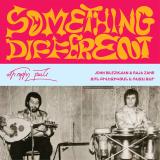
Discotchari unveils a full deadstock run of this rare 7 inch from 1970, found in original factory boxes and reissued as the first release of the label. It features previously unheard material from oud virtuoso John Bilezikjian and percussionist Raja Zahr, a Burbank via Beirut collaboration. The record will be available on vinyl and digital platforms from November 3rd, 2023.
Recorded under the name Something Different, the duo produced a single 45 RPM that was shelved as their solo careers took off. At just 21, Bilezikjian handles oud, bass and harpsichord, while Zahr delivers rich and inventive percussion.
Side A, Zulu Man, blends late 60s psychedelia with a more experimental edge, closer to underground acts than mainstream rock of the era. Carried by evocative vocals and expressive oud lines, the track unfolds like an epic narrative.
Side B, Chemical Reaction, is harder to define, moving between cinematic moods and rhythmic tension. The track evokes shifting landscapes and contrasting atmospheres, making it as intriguing as it is unpredictable on a dancefloor.
A dream come true for A Colourful Storm to be releasing an early gem by Tenniscoats, a duo whose DIY spirit, boundless creativity and lust for life and collaboration has left an indelible mark. From self-releasing albums and tapes on their own Majikick imprint to meeting kindred spirits The Pastels, Bill Wells and Jad Fair in between outings for Morr Music, Chapter and Häpna, to name but a few, Tenniscoats have embodied an understated determination and optimism for over two decades.
"A foghorn melodica, voice, fractions, fragments, nothing and everything all at once. We Are Everyone opens out slowly, a little eerily, magic tumbles into play in well-measured rations. Meanwhile, on the cover, Saya and Ueno's heads seem to merge into the sky as if living amongst the wisdom of the clouds. Or maybe somewhere between sleep and reality, like Ueno's description of Tenniscoats' music. We Are Everyone is one of those records where you almost feel engulfed in its making - you feel like you're in the room with Tenniscoats as they push themselves to the limit, trying to make the very best record they can." - Stephen Pastel
4/5 REVIEW IN MOJO: “HEARTBEAT TONES DISSOLVE INTO BEAUTEOUS SHIMMER AND STELLAR SYNTH MEDITATIONS GIVE WAY TO CAREFULLY ORCHESTRATED ELECTRONICA.”
4/5 REVIEW IN UNCUT: “IT'S MASTERFUL, THOUGH IT WILL LEAVE YOU FEELING LIKE A SPECK OF GRAVEL IN A SELF-DESTRUCTING WORLD.”
NME - 8/10 review (w/c 14 October) "He’s mastered this stylistic skittishness and you’ll do well to find much dispute about his talent."
NARC - 5/5 review (October issue) "An immersive soundtrack to your own personal psychodrama."
WIRE - ONE PAGE REVIEW (October issue) "The sentiments it stirs to life are shadowed and ambiguous, simultaneously personal and impersonal. It is also fantastically immersive, dragging the listener into its turbulent undertows, then washing them back on dry land, intact but changed.’’
Virgins was recorded during three periods in 2012, mostly in Reykjavik, Montreal and Seattle, using ensembles in live performance.
While this album remains committed to a painterly form of musical abstraction, it is also a record of restrained composition recorded live primarily in intimate studio rooms. This record employs woodwinds, piano and synthesizers towards an effort at doing what digital music does not do naturally—making music that is out of time, out of tune and out of phase.
Some pieces go off the rails before forming into anything, others eschew crescendo
compositional structures or bombastic density while going sideways instead. It points to the ongoing development of Hecker's work. It suggests illusory memories of drug- hazed jams or communal music performance that may have never been performed or been heard.
It is an offering of music into the void, a gift of digital filler between distractions. Yet hopefully it also stands as a document of the enduring faith in the narcotic, enigmatic function of music as long-form expression.
Mixed by Valgeir Sigurðsson and Tim Hecker. Additional assistance by Randall Dunn and Ben Frost. Mastered by Mandy Parnell at Black Saloon Studios in London, UK.
The Dutch composer and conductor, born in 1993, has assembled a powerful collective with his "hugely inventive and fast- thinking" (UK Jazz News) Brainteaser Orchestra, uniting the vanguard of the current Amsterdam scene - including guitarist Teis Semey , saxophonist Kika Sprangers , drummer Jamie Peet , violinists George Dimitriu and Yanna Pelser , trombonist Nabou Claerhout , clarinetist Federico Calcagno, and bassist Alessandro Fongaro. This lineup has been making international waves, highlighted by invitations to major European festivals and a recent performance alongside Pat Metheny at the North Sea Jazz Festival. Now comes Tonepool Paradox, the orchestra's second album, commissioned to celebrate the 50th anniversary of Amsterdam's legendary BIMHUIS. Wybenga's compositional approach radically breaks with big band conventions. His process mirrors that of a hip- hop producer: he records solo improvisations by his musicians, chops the material into pieces, and uses these fragments as samples to build entirely new tracks. Wybenga layers jazz, electronics, and contemporary classical music without ever sounding academic or overintellectualized. For Tonepool Paradox , he expanded this concept internationally, bringing in guests such as Berlin-based saxophonist Otis Sandjo, Parisian violinist Theo Ceccaldi, singer Lizz Wright , and hip- hop vocalist Pink Oculus . Mixed by Grammy winner Nic Hard (Snarky Puppy), the sound brings together the diverse musical styles of everyone involved, juxtaposing the angular lines of the horns with sweeping, melodic string passages.
Back in November 2015, after years of collaborations with such as Ghostface Killah, Raekwon, Obie Trice, Sean Price, Kool G Rap, Eternia and countless others, Toronto-based producer MoSS released his debut producer album entitled "Marching To The Sound Of My Own Drum". Since the beginning of his career, the Canadian beatsmith, record digger and music connoisseur has been making a name for himself with his signature sound and on this record he gives an amazing display of what he's capable of doing being backed up by an all stars team that features AZ, Havoc, Slum Village, Onyx, Inspectah Deck, Ill Bill, Skyzoo, Guilty Simpson and 20+ other legendary MC's. A few years after its original release, we've decided to team up with MoSS to bring you this masterpiece on wax and, for the occasion, he's also added an unreleased bonus track called "We Here" that features Smif-N-Wessun that, together with "Emotional Redux", we've put on a 7" together with its instrumental. Limited edition of 500 hand-numbered copies, with the first 200 pressed on orange/black A-side B-side vinyl, and 300 on black vinyl.
BONUS 7”
A1. Emotional Redux (feat. Big Gov, Guilty Simpson, Jon Connor, Vstylez, Willie The Kid)
B1. We Here (feat. Smif-N-Wessun) UNRELEASED
B2. We Here (Instrumental)
The process of making this mini-album “anaiis & Grupo Cosmo” was truly life-altering for me. It changed my approach to making music and really brought me back to the roots of what creation is about. I went to Salvador for a month-long artist residency in February 2020 and during that time, I not only fell in love with Brasil’s culture and music, but I also wrote “Toda Cor” with the wonderful Luedji Luna. A few years later, I reached out Biel who’d co-produced “Estrela Acesa” with Sessa to see if they’d be interested in re-developing “Toda Cor” with me. They were enthusiastic and we fully reproduced the record in December, remotely. The connection between us all was electric and it felt like there was a collective enthusiasm for creating more together so I flew out to Brasil in April 2023 to continue this exploration. The beauty behind this record really lies in the experience of making it. We all stayed together in Biel’s house in Ilhabela for a week with Cabral, who co-produced the record with us and plays bass. We would go to the beach, eat communally, share stories, be around the kids, but then spend most of the days creating and jamming together. Each day we would record our songs live to tape, not a computer in the room. By the end of the week we had this album. It was refreshing to make music in this way. The music and approach really held us in that moment and gave us a chance to create freely, in a big moment of transition in our lives in a way that truly embraces imperfection, spontaneity, just very human.
High Focus Records are proud to present the latest collaboration from Verb T & Illinformed. ‘Stranded in Foggy Times’ both continues and completes the trilogy that began back in 2015, with ‘The Man with the Foggy Eyes’, before broadening the horizons with last year’s release ‘The Land of the Foggy Skies’. This final chapter returns to the same conceptual landscape as its predecessors, but also sees Verb T & Illinformed returning to a more classic approach to album making. In spite of its concept, the Foggy Trilogy is something of a personal outpouring for Verb T, with the original aim being to vicariously discuss the trials and tribulations that play a part in his life, including his struggles with chronic illness and the feeling of alienation from leaving his hometown, while also reflecting on the state of the world as a whole. Their approach to making the album meant taking it back to the most natural form, where the idea for the track would be outlined, Illinformed would make the beat, Verb T would write to it and then they would tweak and adjust accordingly. The result is 19 of the most finely crafted tracks to emerge from the UK shores this year. As with the previous albums, ‘Stranded in Foggy Times’ finds Illinformed moving away from the more rugged sound that has shrouded the British scene over the last few months, thanks to his collaborations with the likes of Datkid and Wish Master, instead providing Verb T with an arguably more mellow backdrop. From the string and piano driven introduction on ‘Legacy’, to the blissful head-nod vibes of the closing track, ‘Blind Faith’, the union between beats and rhymes sits at the perfect level. The album also boasts one of the most impressive guestlists of the year, one that is very much a product of both players’ worlds. Thanks to Illinformed’s Bristol connection, there are features from the likes of Res One, Datkid, Leaf Dog, Smellington Piff and Chillman, as well as some locally sourced cuts from DJ Rogue. While on Verb T’s side of the fence, we have features from Rye Shabby and Moreone, along with a collaboration that reignites the same creative spark he found in his early days, as King Kashmere steps into the booth on Feeling Strange. All in all, ‘Stranded in Foggy Times’ does exactly what it sets out to do, by drawing the trilogy to a close while also providing insights into Verb T’s personal world and the world at large. The fact that it also happens to be one of the strongest rap albums of the year is the icing on the cake
Muyei Power or Orchestre Muyei (muyei means 'our country') was one of the top dance bands of the1970s in Sierra Leone. Soundway Records' first collection of music from this West African country ('Muyei Power: Sierra Leone in 1970s USA') is an album of rock-infused, 'afro' music from a group that traveled the world throughout the mid 1970s. Fusing elements of electric Congolese and Nigerian music with fast, syncopated, uptempo modernised arrangements of traditional music, Muyei Power produced a series of unique single-only releases that have been unavailable for 35 years. The rare recordings featured here are a glimpse of a dynamic and powerful band at the very height of its powers.
Even though lyrically Orchestre Muyei focused on traditional themes and songs, the arrangements and formulation of the instrumental side of things still very much reflected the mixed nature of urban Sierra Leone music, exemplified by a small collection of bands that also included Afro National, Sabanoh 75 and Super Combo.
For the early part of 1970s the band toured extensively throughout Sierra Leone, Liberia and Côte d'Ivoire before making a handful of 45s in local TV and radio studios. The recordings featured here however come from a period of touring the college circuit in California during late 1975 and early 1976. Later that year, as they played the colleges of the east coast, they gave the tracks to the owner of the African Record Centre in Brooklyn, New York. He initially released two of them on his in-house Makossa Records label as 7-inch 45rpm singles in 1976. The tracks from 1975/6 were then not heard of again until 1979/80 when the African Record Centre released many of them on a series of Makossa Records 12's that sounded far superior than the records that had been released a few years earlier.
Orchestre Muyei Power finally split up in 1979 leaving no proper album releases and only a handful of recordings for us to enjoy all these years later.
180g Heavy double vinyl LP with liner notes by Tyran Grillo. Limited Japanese Obi for the first pressing. Original artwork by Russell Mills and photography by Jean-Baptiste Mondino.
The third Time Capsule is a body of dub reinterpretations by celebrated producer Bill Laswell of Ethiopian singer Gigi. Curated by Tokyo record collector, music researcher and seasoned reissue supervisor Ken Hidaka, it is the first time Illuminated Audio is pressed to vinyl after its CD release in 2003.
Ejigayehu Shibabaw was born in 1974 in Chagni, northwestern Ethiopia and by pursuing a career as a singer, went against her father’s strict, traditional gender roles. As Gigi, she embraced the same musical freedom she had strived for in her personal life, incorporating the Ethiopian church, funk, hip-hop, West and South African music into her work. She first settled in Nairobi, then Addis Ababa, where she quickly established herself as one of the city’s leading singers. A move to San Francisco in 1998 led to a long and fruitful creative partnership with bassist and producer Bill Laswell.
Around the same time, Chris Blackwell had stepped away from Island Records to start the art house film company and label Palm Pictures. He took an interest in Gigi and together with Laswell, pulled together an all-star cast of musicians for her self-titled US debut album, including Herbie Hancock, Pharoah Sanders and Wayne Shorter. It won international critical acclaim, not just for its musicianship but for making Gigi a “defining voice for the Ethiopian expatriate community”, as journalist Tyran Grillo praises in his Time Capsule liner notes. From the nation-defining 1896 victory over Italian invaders to the quiet revolutionaries who wear simple shemma garments, Grillo believes the themes in Gigi make it “a shower of sunlight on her homeland for those ignorant of its struggles.”
After its success, Blackwell encouraged them to go back into the studio to rethink the album and Illuminated Audio was born. “Anyone can make a voice sound worldly”, Grillo remarks, “but rare are those who can make one sound inner-worldly.” Gigi was clear with Laswell to give her vocals a minor role “because it’s already been done.” Instead her Amharic verse is fleeting, exhaling through the textures like ghostly fragments; soaring yet muted. Yet the album is still titled under her name, an assertion by Laswell of her central role in the album’s creation. Not only was it a fully endorsed project by Gigi, but she would be present throughout its development, giving feedback on half-finished ideas as Laswell played them back in the studio. “It works perfectly”, she reflected after the album’s release. “We wanted to capture the whole spirit of each track, and Bill’s remixes create a different music language that really puts you in a pleasant place”.
This new vocabulary takes its lead from a technical approach that Laswell had been perfecting during a furtive creative period at the turn of the millennium. Much like his ambient interpretations of Miles Davis (Panthalassa, 1998), Bob Marley (Dreams of Freedom, 1997), and Carlos Santana (Divine Light, 2001), Laswell approached Illuminated Audio by returning to the original multitrack masters. Gigi wasn’t just reworked, but recomposed into an expansive lattice of instruments, submerged in a watery ambience of dub and trance undercurrents.
Sonically, this new language that Gigi refers to, is manifested by the original album’s more understated parts being pushed to the fore. Explaining his contrasting methods, Laswell saw Gigi as being “put together in a way that fits”. Contrastingly, in Illuminated Audio, “a lot of things that I featured in the remix weren’t as audible in the original.” Instrumentation laying near-dormant, deep in the mix, are brought to the fore: the acid rock guitar and Wayne Shorter’s saxophone on ‘Tew Ante Sew’, Graham Haynes’ flugelhorn on ‘Nafekeñ’, Laswell’s bass on ‘Kahn’, the melodica in Mengedegna or the floating synths and talking drums in ‘Gud Fella’.
Brought to his attention by mentor DJ Nori, Hidaka describes Illuminated Audio as a “masterful sonic exploration into ethereal ambience and dub” and made sure this reissue also contained a full remaster to give its “deep musicality” much better dynamics and density in the overall sound. Hidaka admits that Laswell's music “is sometimes so out-there, it is often misunderstood” and, indeed, to dub album non-believers this might seem like a prolific producer imposing himself on another artist’s work; eternally developing rearrangements that never quite get to its destination. But that’s missing its true power and triumph. This is more than the reissue of a remix, but “a wholly unique musical entity”, as Hidaka describes. Illuminated Audio refers to the illuminated manuscripts that comprise the major part of Ethiopian art and its new compositions stand in proud solitude as a rare body of reworks that both informs and enhances their originals.
Mihail A. Popov is a Russian with two decades in the game behind him, partly under his given name, but half of that time has also seen him work as I Gemin. Now he lands on Deeppa Records with a conceptual EP "built around depth, patience and underground exploration." The aim is to explore all new musical ground and follow newly emerging paths, and the result is a fine four-tracker. 'Like The Star' is a lush, deep nu-disco jam, 'Love Undercover' has a seductive slide to the live-sounding drums and playfulness in the horns, while 'Terra Incognita' brings jazzy chords and a balmy late-night warmth. 'Melancholy' gets more heavy and roughed up with smudged neo-soul and r&b samples, making it a romantic affair. Kid Sublime and 6th Borough Project drop remixes that bring more club-ready grooves and complete a superb EP.
KRK Rap Atak 2.0 is a limited-edition compilation that unites Kraków's old and new school hip-hop talent. Mastered by DJ Eprom and featuring artwork by Maciej Wroblewski, this album showcases the city's vibrant rap culture. Each vinyl copy is hand-numbered, making it a true collector's item. With exceptional production and a unique artistic identity, KRK Rap Atak 2.0 celebrates the evolution of Kraków’s hip-hop scene.
Kassie Krut is comprised of Kasra Kurt and Eve Alpert — former members of Philadelphia math rock institution Palm — alongside Matt Anderegg (Mothers, Body Meat). On their self-titled debut EP, the newly minted Brooklyn three-piece have retained the fangled snarl of their prior work, outlining sugary melodies with visceral flourishes. Front to back, 'Kassie Krut' smudges starkness & filth, settling into a commanding partnership fit for muddy raves, basement punk spaces, and festival stages alike.
After years of twisting rock instrumentation into unknown shapes, the first release by Kassie Krut represents a transformative refocusing of energies. These tracks evince the kind of wisdom that only comes from experience—and the kind of experience that can only be scored by new sounds, still glittering with the metal filings of their making
Hip Horns Brass Collective presents Brassvillain, a tribute to the cult album Madvillany by MF DOOM and Madlib with the collaboration of Las Ninyas del Corro, Ana Tijoux, Escandaloso Xpósito and Rodrigo Laviña. The catalan brass band covers iconic songs like Figaro, Meat Grinder or All Caps, with the metallic explosion that characterizes them and the voices of some of the best artists on the current rap scene. Daniel Dumile, aka, MF DOOM is not only a musical reference, but also the illustrations that accompanied his project have a great role in the history of hip hop. For this reason, Brassvillain is also a great graphic epic where the versatile artist Hermes LeBleu displays all his versatility. In the featurings appears HO$$$ Benítez, one of the most renowned drummers on the hip hop scene, who has already accompanied them on their previous releases, “The Dream” and “Thunder”. The production is by Hip Horns together with one of the best bassists and musicians in our country, Tito Bonacera, making this tribute a multidisciplinary meeting point between artists who grew up with the masked hero. On the B side we have two new singles from the band, BRAM! and Mulligan, in which they unleash their full potential both in composition and in execution to prove once again that they are one of the leading brass bands of the moment.
Hidden Sounds Record store – with the help of Emotional Recordings – launches the Dark Times label with the first of two club orientated EPs from Canadian brother-production duo Lex and Rew MacCrimmon and their project Alkahest.
Released on their own Post Contemporary label between 1994 – 1996, Alkahest contrasted with the spacious electronica of their influential and still on-going project, Legion Of Green Men.
Growing up in suburban city life in Burlington, Ontario, the MacCrimmon brothers’ interest in music and collecting records started early, always looking for interesting sounds in new places. With a limited local music scene or record stores, the alternative and college radio stations were the only way to discover new music or the type of music they sought.
The German electronic sounds of Kraftwerk, Klaus Schulze and Tangerine Dream were early obsessions, alongside Neu, Cluster (& Eno) and the post punk and synth pop emanating from Britain. The Flying Lizards, John Foxx / Ultravox, Gary Numan and The Normal were favourites, before diving into the 80s industrial experiments of Cabaret Voltaire, Severed Heads, Nurse With Wound and Throbbing Gristle.
Making their own music soon followed, first experimenting with 4 track cassette and digital delay, drum machines and synths soon followed, steadily building their own studio. All these influences merged in the early 90s with the dawn of house and techno and the progression to start the Post Contemporary label launched in 1992.
With the project Legion Of Green Men achieving early success, their diversion with Alkahest explored a post-industrial techno hybrid. Unsubtle, night music, the rhythm and sonic textures are more prominent over melody.
Contact High covers this Alkahest sound, from the 133 bpm trippy, psychedelics of opener Black Tabs, the acid breaks of Ground Zero or the charging nature of closing Séance 333, where all bets are off – together this 4 track EP perfectly captures the early spirit of Canada’s electronic music scene finding its place in dance culture, from the raves of the Toronto’s outer rim to the beaches of Anjuna.
However, in the title cut Contact High, there is something else happening, as electronic dub is explored, where the space in the music, between the beats, is as important at what happens on the surface. A love of this ethereal feeling would lead the brothers to head further in this direction and here is a perfect example of that early journey.
Dan Kye is the mysteriously evoked moniker from multi-instrumentalist, producer, and vocal sensation Jordan Rakei. The New Zealand-born artist - who now resides in London - presents his first long-player from Dan Kye, ‘Small Moments’, on Bradley Zero’s Rhythm Section INTL. An ode to the dancefloor, the musical project was born out of Jordan’s lockdown experience, created from the comfort of his own home. Recorded with just a laptop, extra live instruments and guest musicians, ‘Small Moments’ seamlessly transcends across electronica, jazz and funk, with each genre being effortlessly fused with Jordan’s melancholy vocals. Allowing himself to push the boundaries, Jordan’s Dan Kye moniker draws on the energetic and uplifting elements of house and techno and perfectly mixes it with the sultry vocals and emotion that come with the live elements we know and love from Jordan Rakei. The record offers listeners a journey through more floor-heavy tracks such as ‘Mogeri’ and ‘Raro’ to more groove infused offerings such as ‘Rainbow Road’ (which is named after one of the maps in Mario Kart and inspired by the energy of Prince’s iconic live concert at The Aladdin in Las Vegas), whilst tracks, like ‘Sober’, take on a more lyrical and anthemic feel.
Jordan Rakei: “Rhythm Section INTL was my entry point into dancefloor orientated music, and it was Bradley who asked me whether I could head in that direction so he could play my music out in the clubs. Dan Kye has still got melodies, but the main focus is to keep it high energy.”
After meeting Bradley Zero online whilst living in Australia, Jordan eventually moved to London in 2014. The same day he landed, he went straight to a Rhythm Section party to meet Bradley, and it was here that he first got a taste for house music. He enjoyed Rhythm Section INTL’s ability to draw on both live and electronic talent; and thus, after Bradley asked him for some productions for the parties, the idea for Dan Kye was born. ‘Small Moments’ is a musical masterpiece that can be enjoyed as much on the dancefloor as it can in the comfort of your own home and is a perfect step into Jordan’s landscape and idealism of dance orientated music.
Bradley Zero - “In around 2014 the proprietor of the famous Northside Records in Melbourne handed me a self released 12” from a new, unknown artist based in Brisbane. It was Jordan Rakei - Franklin’s Room. I’d been home almost a year before I actually got round to listening to it and I remember that moment like it was yesterday. I lay down on the sofa, put the record on and was transported! The Dan Kye project is a testament to the experimental and independent ethos Jordan lives by and is a product of an artist reaching full stride but not afraid to still try something new. This ‘Small Moments’ LP was conceived in a record store, born in a club on Rye Lane and is now flying the nest, throwing caution to the wind and making a bold statement.”
Party Store Records is back with their third release and are digging deep into the current Detroit
underground with a debut EP from live duo Lock & Hammer and an ethereal remix from legend
Terrence Dixon as Population One.
The four cuts are locked in across a range of vibes making this record a useful weapon across
the spectrum of peak time intensity to deep after-hours absurdity.
The title track, “Hofmann’s Bicycle”, is a mind melter that has the promise of a psychedelic
anthem. A driving, swirling stomper that will push you to limits you didn’t know existed. Fire up
the grill as your brain’s about to get cooked.
Population one aka Terrence Dixon delivers a cathartic and ultra deep remix of “Hofmann’s
Bicycle”, injecting a classic Detroit take with heavy strings overlaying a dense kick and hypnotic
groove.
“Freq” is a trip into the void, with sinister synth lines and hard hitting percussion propelling the
journey. Peak time engagement awaits any dancefloor it’s played on.
To round the package out “Sour Monkey” dives right back into pure absurdity, hanging at the
edge of right and wrong with drug addled rhythms and low end attack, this is already a cult hit in
the darkest of rooms.
CER015 sees Celestial Echo bring back one of the great modern soul 45s, Ramsey & Company – “Love Call”.
Coming out of New York in the late ’70s, Ramsey & Company was led by Mainor Ramsey, with the group originally playing the Catskills supper club circuit. Their only single was released privately on Ramsey’s own Ramco label, with copies sold at shows and barely making it into wider distribution. Like so many great soul records, it found its real afterlife much later, becoming a favourite across the UK modern soul and rare groove scene.
“Love Call” is the reason this record has carried such a reputation for so long. A beautifully arranged modern soul dancer, it has that perfect late ’70s balance of groove, song and musicianship. On the B-side, “Leg Grease” brings the funk.
Original copies are now almost impossible to find, often selling for serious money when it turns up and even the Lotus Land reissue has become expensive in its own right. This Celestial Echo edition puts the track back into circulation properly, cut loud and ready for the DJs and soul heads who have been waiting on a clean copy.
Celestial Echo is here to put proper soul records back into circulation — respectfully cut, properly pressed, and ready to play.
Father Hervé and son Louis return as FRONTMASCHINE with “Rühren”, their most accomplished and refined work to date. United by a shared passion for the rawest and most uncompromising forms of EBM, the duo continues to explore the essence of body music while pushing their sound to a new level of maturity.
On “Rühren”, cold, almost chilling polyphonic synthesizer melodies intertwine with their classic relentless drum programming that sits somewhere between the militant precision of DAF and the mechanical drive of the “Commando days” of Front 242. Every track is built around pure functionality: no unnecessary ornamentation, no concessions—just stripped-down, commanding rhythms designed to move bodies.
This is an exceptionally DJ-friendly record. Each cut is crafted for maximum impact on the dancefloor, making “Rühren” an essential tool and a true secret weapon for any DJ devoted to uncompromising body music. Martial, hypnotic and brutally effective, FRONTMASCHINE once again prove that the most direct approach is often the most powerful.
“When the flesh gets cut off the soul, it’s not the end.”
More than forty years after hardCORPS emerged from a Brixton basement, ‘Metal & Flesh’ returns in a new expanded edition on double vinyl and CD, newly remastered with the full involvement of surviving members Rob Doran and Clive Pierce. Born from the collision of punk, analogue synthesisers, sequencers, disco, reggae and experimental studio techniques, hardCORPS created electronic music that was as physical and emotional as it was mechanical. The arrival of French vocalist Regine Fetet gave the group its defining identity, placing her raw, uncompromising voice against the dense machinery of Hugh Ashton, Clive Pierce and Rob Doran. Working mainly with a Roland System 100, several Roland MC4 sequencers and later an additional MC500 and Atari ST 1040 computers, etc. pp., hardCORPS always transformed limitations, accidents, distortion and human imperfection into part of the music itself. Although rooted in the early 1980s, ‘Metal & Flesh’ refuses easy nostalgia, retaining the tension, space and character that made hardCORPS unlike their contemporaries. Yet, shall we eventually mention Kraftwerk, maybe let’s quote Ian Shirley from Record Collector magazine: „’Je Suis Passée‘ was not only a love letter to Kraftwerk but penned with such verve, passion and precision that Ralf and Florian probably would have accepted a blind date at a Düsseldorf cocktail bar (…).“ And as Martin Rushent famously said in 1990: “Hard Corps were ignored in their time. Perhaps it is the burden of the adventurous and the innovative to be ignored in their time, which is sad. Don’t ignore them now.”
This new edition has been carefully remastered to preserve that character and dynamics rather than simply making the recordings louder or more ‘modern’, while the artwork has likewise been developed to reflect the band’s original identity. Metal & Flesh’ is not merely an artefact of the 1980s, but a rare and fiercely individual document of four people discovering what happens when human instinct and machines collide.
Remastered by Martin Bowes. Graphic design by hard CORPS and Steve Lippert.
Gatefold sleeve gloss lamination, printed inner sleeves with lyrics, two double-sided hand-numbered.
Hackney Electronica come to Dark Entries with the Feedback Memory EP, featuring 5 cuts of acidic rave-inflected wave. Quinn Whalley (Paranoid London), Unai Trotti (Cartulis Music), and Margo Broom (Hermitage Working Studios) formed Hackney Electronica during COVID era. Trotti and Whalley were spending countless hours digging through records and making music during lockdown. As their sound took shape – heavy and hypnotic – they invited Broom to join, cementing the motley trio. Following their debut EP, Synaptic Shadows, the five pieces on Feedback Memory muse on the loss of self in the digital era and the fine line between pleasure and paranoia. Each track pulses like a memory from the backstreets of Hackney, where the night transforms the city into an electrified maze of fleeting highs and inevitable crashes. Their hard-hitting dancefloor indulgences shine on “Trapped in the Circuit” and “Six Foot Seven,” which features Mutado Pintado on vocals, while tweaked-out wave sounds blossom on “Feedback Memory” and “Lost Trip - Destino.” Things close out with “Compressed Air,” a lush, breakbeat-laced affair that veers into trip-hop territory. Housed in a sleeve designed by Germán Bardo, Feedback Memory continues Hackney Electronica’s tumultuous journey through the flickering alleys of the mind, where tension and transcendence intertwine.
Two of the most prolific remixers in the world of Disco,Dave 'Love' Lee and John Moraleshave teamed up for one of their biggest projects to date - 'Mixed To The Maxxx'. After gaining access from the legendary original artists, the pair take the multi-track tapes of many classic Disco, Funk & Soul tracks and re-work them...to the Maxxx!
Where Remixed With Love stands as Dave Lee's own gold-standard body of work, Mixed To The Maxxx sets that legacy alongside Morales' own decades-deep M+M body of work: Lee brings his musically dense, groove-first touch to the likes of Harold Melvin, Syreeta, Lenny Williams and The Brand New Heavies, while Morales applies his extended, dancefloor-built M+M treatment and crushes the likes of Barry White, The Temptations and Loleatta Holloway, plus Dennis Coffey's breakbeat classic "Scorpio" for the DJs and collectors alike. Both work from original tapes, surfacing parts barely audible or entirely unheard in the source mixes, and both know when to let a classic breathe rather than bury it under modern production. It's a pairing a long time in the making. Lee and Morales first talked about working together around a decade ago, and getting Mixed To The Maxxx off the ground took five years of patient work: tracking down usable stems, securing approvals, and navigating a licensing landscape where much of the best material is now tied up with major labels increasingly cautious about clearing remixes. What's landed here is the product of that graft as much as the pair's shared ear for a great record, the sound of two people who know exactly what they're looking for and are willing to put in the time to find it.
A double 12" sampler in summer 2025 previewed the record's range. A bass-driven overhaul ofThe Brothers Johnson's "The Real Thing" and an extended mix of Philly legends Bell & James' "Livin' It Up (Friday Night)" showcased Lee's side, while an anthemic take on Inner Life's "Ain't No Mountain High Enough" and a tempo-lifted Light Of The World"London Town" flew the flag for Morales. Both drew strong early support ahead of the full LP.
Put your hands together and please welcome Linda Lo to Shall Not Fade's Time is Now imprint. The LA producer/DJ's new 12" EP "Masa" drops 23rd Oct 2026 and f**k is it sick.
Linda Lo fuses* mambo, samba, and salsa with UK garage, dubstep, and club rhythms to make guaranteed rewind material that is gonna light up the dance…
* imma talk about this fuses sh*t in a minute.. First we need to get a bit philosophical. Cos rewinds and fusions aside, this EP is alive. It's part of something bigger and cyclical, without a start or an end. It is music. It was part of someone else's music before and it will be part of other people's music in the future. Right now though, it's Linda Lo's music.
Too esoteric? Let me elaborate and, let's talk about fusion. There is the fusion that is – steal a bit of genre X and culture Y, chuck it on the grid and strut about professing fusion – and then there's actual fusion: Music that is something "new" and real and genuine. Music that you end up describing excitedly as a "fusion of" things (even if it inevitably ends up doing it a disservice). Music that is simultaneously one thing and not that thing, and also something else and not that something else too. Music that is just "music" to the creator but is also part of the progression and evolution of music for others. Mala wasn't making "dubstep". Skream & Benga ended up not making Garage. Like many before and after they were making their music and Linda Lo is making her music so let's hear from her about it. Big up Linda. This is real.
Notes from Linda:
-----------------
“Like Croydon by way of Havana”
“Masa, or corn-based dough used to make tortillas and tamales, is a traditional staple food for many in Mexico and throughout LatAm. In the Maya worldview, people's flesh is made out of masa. In order to make masa, corn must be dried, nixtamalized, ground, and mixed (often by hand) to create the right textured dough. I find much of my music work is a collision and a mixing of many elements, all worked into one product. In this way, I've worked these songs, transforming raw rhythms and sub bass into hand-mixed tunes. ‘Masa - EP' presents four delicious heaters. The title track explodes with a fiery double-time dubstep groove. Mambo horn stabs bite through a bass inferno. ‘Cenote' looks down upon a subterranean pool of sound—still on the surface but impossibly deep. ‘Minifalda', pure flirt and gyration, calls in cuica and other voices from a samba bateria. Finally, claves stitch across ‘Mestiza', a fusion of blooming lush orchestration and jagged 2step rhythm.
Around 1960, my grandparents were regular dancers at the Palladium in Los Angeles: young, Mexican, and falling in love to dance music, specifically big band mambo. My mom, consequently, is a fantastic dancer, and her mambo collection along with my dad's exotica records formed the base of my own vinyl collection. When I first discovered garage and dubstep, there was something indescribably familiar to me, something mambo-like about the syncopated offbeat hits and drama. Later, as I began stitching together mambo claves and 2step drums, I assumed I was trying out something totally new. The farther I go, the more I see that I was wrong.
Dubstep, garage and jungle share a parental lineage back to dub reggae, originating from Jamaica. Mambo hails from Cuba, and sister genres of salsa to NYC & PR, and bachata and meringue to the Dominican Republic. Yet, these musical genres of the Caribbean have not developed in isolation. Reggae, mambo, dancehall, salsa, even son jarocho from Veracrúz, Mexico (where my family is from), all developed together, influencing each other fundamentally. Ultimately, all musics of the Caribbean have come from West African polyrhythmic musical heritages. Garage, mambo, dubstep, and salsa are points in time along one musical continuum.
I feel very honored to be a selector working in Los Angeles (and elsewhere!). I hope I can share some music for the next generation of young people to fall in love to. "
-----------------
I'm moved by what Linda writes here. #1 Doing what you love, and finding you are part of something bigger. Creating for yourself freely and hoping to inspire others with healthy amounts of care, humility, freedom, self awareness and enjoyment. (It is inspiring and I'm honoured we are now a part of sharing Linda's music). #2 There's something wonderful about finding connection and a sense of place. A place physical, spiritual and in time. Music can help us all find connection and be part of a place. Wheel it up wherever you are.
Following the success of the inaugural all-Jiri Jiri edition, Batov Records returns with the second instalment of its Give Me Disco series, once again curated by label co-founder and globe-trotting selector DJ Kobayashi. Rather than revisiting familiar disco classics, Give Me Disco Vol. 02 digs deeper, bringing together four dancefloor discoveries from across Europe and Asia, including two previously unreleased tracks available here for the first time.
Spanning Portuguese jazz-funk, Norwegian cosmic oddities, Japanese-inspired psychedelic disco and cinematic groove, the EP reflects the breadth of Kobayashi's record bag - a carefully assembled selection of tracks that have soundtracked his DJ sets for years alongside exclusive material rescued from the vaults.
Opening the record is The Bam Jam Band's brilliantly understated "Theme", a soaring slice of jazz-infused disco from Portuguese musicians Sérgio Alves and Pedro Tenreiro. Originally released only as a now long-sold-out 7 inch on Mad About Records, the track has become one of Kobayashi's trusted secret weapons, championed by discerning selectors including Darryn Jones and Red Greg. Built around Alves' dazzling synthesiser work, "Theme" finally gets the wider audience it deserves. The EP's first exclusive arrives courtesy of D. Apal, instrumentalist and member of Norway's Flammer Dance Band. His only solo release, issued on the band's Lysketrekk Records, has become a cult favourite among adventurous record collectors. Batov now unveils the previously unreleased "60 Meter'n (Rytme)", an extended instrumental dub that strips away the vocals to let the handclaps, cavernous bassline, dub effects and wonderfully eccentric synthesisers breathe, transforming an underground favourite into an irresistible dancefloor weapon.
Side B opens with YĪN YĪN's "Tokyo Disco", taken from the band's acclaimed third album Mount Matsu on Glitterbeat Records. Long-time admirers of the Dutch quartet, Kobayashi has championed them since first hearing the breakthrough pairing of "Dis ̄ kô Dis ̄ kô" and "Dion Ysiusk" on Bongo Joe. Since then, he has hosted the band twice on Soho Radio and supported them live in London. "Tokyo Disco" perfectly captures YĪN YĪN's distinctive blend of Japanese-inspired psychedelia, Southeast Asian influences, post-punk funk and shimmering disco grooves, making it a natural fit for the Give Me Disco series.
Closing the EP is another exclusive from Jiri Jiri, whose contribution helped launch the series on Vol. 01. Ahead of their forthcoming album later this year, the duo unveil the previously unreleased "Spaghetti Western", a wonderfully off-kilter fusion of Morricone-esque cinematic atmosphere, taut funk rhythms and the soulful modern groove of SAULT. Equal parts soundtrack and dancefloor curveball, it provides a fitting finale while offering another tantalising glimpse of what's still to come. With two exclusive cuts sitting alongside two carefully chosen modern classics, Give Me Disco Vol. 02 is another lovingly curated snapshot of DJ Kobayashi's musical universe: borderless, groove-driven and unapologetically built for adventurous DJs, discerning collectors and open minded dancefloors alike.
Indroducing our new vinyl collaboration, a fusion of talents by Eafhm and our Co-Founder Nils Edte. Exploring the theme of "Glossolalia" or speaking in unknown tongues, they treat music as its own language. Featuring stunning remixes by MTRL & Laima Adelaide, the vinyl is not just an auditory experience but a visual one too. The cover artwork, a joint effort by Nils Edte and painter Mariano Fernandez, adorns the limited edition of 200 records. Each cover is a unique piece of the painting, making this release a truly exclusive collector's item. Immerse yourself in this blend of art and music, where sound and visuals unite in a captivating collaboration.
Phenomena begins with two artistic voices that seem to speak different languages. Barcelona-based producer R-010 (Lucas Rojo) approaches composition through rhythm, space and electronic transformation; Madrid-born vocalist and multidisciplinary artist Venerandi through texture, breath and the expressive possibilities of the human voice. By the time the album reaches its final moments, that distinction has quietly disappeared.
Rather than functioning as a meeting point between two individual practices, Phenomena gradually
becomes a third language—one that belongs to neither artist alone. Voice no longer sits above the music
but moves inside it, dissolving into layers of synthesis, percussion and guitar until performance itself
becomes another malleable sound source. Likewise, electronic production never behaves as a fixed
environment; it constantly adapts, absorbs and responds, allowing acoustic gestures and digital
manipulation to reshape one another in real time.
This continuous transformation defines the record more than any particular genre ever could. Echoes of trip hop, bass music, psychedelia and experimental electronics drift across its surface, yet they are never
presented as stylistic markers. Instead, they appear as temporary states within an ecosystem that remains
in constant motion, where dense rhythmic passages collapse into suspended atmospheres and moments
of stillness carry as much weight as those driven by pulse.
The presence of Matteo Caro (guitar and percussion), Pablo Gorostiaga (guitar) and Alessio Rodolico
(percussion) further expands this dialogue. Their contributions are not decorative additions but structural
ones, gradually dissolving the distinction between composition, improvisation and production. Instruments
emerge, mutate and disappear inside the same sonic fabric, making it increasingly difficult to distinguish
what was performed from what was transformed.
With Phenomena, Lapsus Records presents a work that feels less interested in crossing genres than in
questioning the borders between artistic identities themselves. The album never asks the listener to decide
where the human ends and the machine begins. Instead, it quietly suggests that, after enough careful
listening, the question itself may no longer matter.
Early DJ Support: Massimiliano Pagliara, Paranoid London, Logan Fisher, Terry Farley, James Holroyd, Rocky (X Press 2), Francois K, Marcel Vogel, Sean Johnston, Austin Ato, Ron Basejam, Richard Rogers, Oliver Dollar, Crazy P and many more
Creating an international name for itself over the past decade as a sample pack label, Samples From Mars made its inevitable venture into the music world originally as a home for founder Teddy Stuart’s work. Long before making samples, Stuart garnered credits working as a grammy-nominated recording engineer in the hip hop world, and DJing / producing with Justin Strauss as A/JUS/TED, for labels such as DFA, Domino Records and Southern Fried Records. Now the label is set to release a variety of genres - house, disco, techno, ambient, all with a vintage tinge and a focus on high quality, analog production.
Enter Salt Queen. Visual artist and musician Magali van Caloen together with Samples From Mars founder, Teddy Stuart. Based in New York, the duo combine hardware dance aesthetics with dry, salty takes on familiar club moments into music that sits somewhere between funny, raw and unpredictable.
Salt Queen’s debut ‘ARE U OK’ is an acid-laced, deadpan spoken word track with an opening line that snaps any room to attention. A disorienting club encounter unfolds over Italo-inflected 808s and a relentless 303 bassline. There are no chords and no melodies - just a skeletal groove and an intimate voice circling the dancefloor. Drifting between concern and provocation, the vocal runs through cliché club conversations before destabilizing completely into a siren-laden crash out. The ‘Freak Nasty Club Mix’ ditches the plot and lets the hardware breathe, with a thick SH-101 bassline anchoring the first half before a sudden switch into an unrelenting acid pattern that refuses to settle. Two versions of the same wild night out.
“Slide in the party like three monkeys wearing a trench,” GDP says in the opening seconds of Cross Off Matthew, his first solo album in over a decade. The line is indicative of the New Jersey emcee/ producer’s relationship with music, one that’s ebbed and flowed throughout his career and eclectic discography. Entirely self-produced, Cross Off Matthew feels like a reintroduction as well as an expansion of what makes the cult rapper so beloved. GDP came up in the respective punk, hardcore, and skateboarding scenes of New Jersey, roots that inspired his DIY approach to making hip-hop. He applied a decidedly punk ethos to his brand of neo- boom bap on early releases like 2009’s Realistic Expectations and 2011’s Useless Eaters, albums that celebrated his youthful indiscretions but also signaled an old soul lying beneath the surface.
He opted to release them on punk/indie labels (including Run For Cover and Ride The Fury Records) instead of more traditional hip-hop outlets, and along with an ambitious touring schedule, he carved out a dedicated fanbase throughout the early 2010’s. Cross Off Matthew is a slow-cooked labor of love, born out of taking enough time away from something to understand the journey with greater perspective and appreciation.“I’m older, arguably wiser, but that creative fire stayed with me,” he says. “I wanted to make something that felt nuanced, something that I could feel proud of.” Throughout the album, the production toggles between foreboding and facetious just as deftly as his bars. Tracks like “Island In The Sky” and “Location Therapy” make rap confetti out of caustic guitars and glaring distortion, while “Seroquel” and “Rock For Light,” (the latter a nod to NJ rap royalty, The Outsidaz) embrace GDP’s signature blend of East Coast hip-hop and punk sensibilities, with lyrics that highlight the sharp wit and heady philosophizing that he made his name on. GDP examines vices, interpersonal relationships, the collective dread of late-stage capitalism as well as the pitfalls and rewards of trying to lead a creative life throughout it all. The wiseman that peaked out from beneath the shield of debauchery on his early releases has now come to the forefront, as GDP’s trademark humor and commentary feel refined by years of life lived experience
Area records delivers their first release from ADMNTi, with a 4-tracker that spans through electro tinged tech house, breaks and 2-step, making up the GigaHertZ EP.
‘Unfindable Ring', out October 23 on Bayonet Records, is an adventurer’s epic. The arc of the journey, like any good Spirited Away or Neverending Story, lands its wide-traveled protagonist right back at home before bedtime. Grumpy, like many great hero tricksters before him, has always been a project of juxtaposition: upbeat radio-ready hits whose buoyant, goofy hooks belie the dark thoughts they describe. Much of this, Schmitt acknowledges, owes its due to the matter-of-fact morbidity of the trans experience in America. It’s from these experiences—personal, romantic, political, and existential—that the tale of ‘Unfindable Ring’ unfolds.
Ambition and play have always defined the Grumpy sound. Late last year, the Fader praised their “demented, hooky” EP, “Piebald,” whose innovative fuzz-pop confections earned them coverage in NPR and the New York Times. Stereogum heralded them as “wonderfully weird,” and Paste designated them “the best of what’s next.”” Through boisterous collaborations with the likes of Sidney Gish and Claire Rousay, they’ve effortlessly ingratiated themselves with the titans of DIY, and, more recently, Schmitt has become an unlikely favored collaborator of chart-topping country giant Zach Bryan, who named his new record––which prominently features Schmitt’s harmonies–– conspicuously, ‘With Heaven On Top.’
In Grumpy, Heaven Schmitt is joined by Anya Good, Ellie Long (Kid Lake), Austin Arnold, Diego Clare (D.A. Crimson), and Lane Rodgers, who each contribute to every step of the process—engineering and recording, mixing, drafting artwork, producing, and making music videos. A kind of interdisciplinary thieves’ guild, the project, while once Schmitt’s solo eponym, is a labor of communal love.
“We are living these happy lives, and there are people we come across who don’t know us at all who want us to die,” Schmitt, explains. Often the visibility of the joy itself is what prompts the vitriol––“I’m so happy I could die,” Schmitt belts over and over on the chorus (a familiar figure of speech, sure, but one which, upon any scrutiny, shows Schmitt’s hand in the macabre.) A middle finger to fate, Good started asking, “What are you going to do with your One Beautiful Life?” Grumpy is going to keep playing, touring, searching, finding.
No Home is the new album by Lane Hartley, releasing October 23rd 2026 on Royal Oakie Records. Produced in collaboration with David Hartley of The War On Drugs & Adam McDaniel (Animal Collective, Angel Olsen, Geologist), the album was recorded at Drop of Sun Studios in Asheville and features contributions from North Carolina’s tight knit music community–including Mary Lattimore, Seth Kaufman of Floating Action & Dream Sitch, David Hartley, Jack Victor Johnson, and more.
After recording his debut album Naming Horses, Lane left Los Angeles and returned home to the Carolinas, eventually landing in Asheville. It wasn’t too long until the songs started flowing and Lane found himself reaching out to Adam McDaniel at Drop of Sun Studios–a vaunted space that’s been at the heart of indie-rock the past few years, bringing to life recent albums from MJ Lenderman, Wednesday, Fust, and more. McDaniel introduced Lane to David Hartley, and what originally started with discussions to record one song quickly turned into a plan to track a whole album live with a six piece band. Once in the studio, co-producer McDaniel encouraged the group to lean on intuition–“All of the players on this record really brought it to life in such a cosmic way. They instilled so much childlike wonder and fun into the making of the album. It inspired me to keep going” says Lane.
Lyrically the album is a collection of vignettes about people who’ve become alienated from their deepest desires of connection, belonging, intimacy, and autonomy–inspired both by Lane’s own life and the lives of people he’s loved. The unique character of the album emerged when Lane made the decision to pair the dark lyrical content with bright & lush arrangements, inspired by Gene Clark’s No Other, Neil Young’s After the Gold Rush, and Amen Dunes’ Love. In Lane’s words, “The content of the songs got way darker, and my reaction was to make the songs catchier, and to lean harder into the music that influenced me. I wanted each song to feel like a room in a haunted house, with a beautiful garden growing outside”.
Album opener “I Am Not Ashamed” was inspired by the anti-memoir of actress Barbara Peyton, a 1950’s Hollywood starlet who met an untimely end; “It’s about knowing that whatever you’ve done to survive, you still deserve love” says Lane. “Mother” pairs lyrics about ancestral trauma with the sunshine-pop influence of Colin Blunstone, featuring backing vocals from Lane’s sister Barrett Hartley. “It's about coming to terms with the fact that the people meant to protect us are dealing with their own trauma…”
Meanwhile, “All Of This Is Yours” and “Tone Poem” form the spiritual center of the album, an attempt to transmute anger & pain to bittersweet acceptance in the wake of a breakup. “I feel like on the surface this is essentially a breakup album, a lot of these songs are about mourning the end of a relationship and reflecting on what went down. I was falling in love and getting my heart broken, then waking up and driving across the country and doing it all over again.” “Love Is Not A Song” was inspired by Margo Guryan’s Love Songs, pairing bright piano with playful lyrics about an old man who’s been beaten down by life but still believes his greatest love is yet to come. Last but not least, title track “No Home” sums up the album’s key theme of alienation, “It all goes back to this feeling of wanting to belong to someone or somewhere, wanting to belong in your own body.”