“Certain albums hit like howling bullets at pivotal moments, tearing open the face of music to reveal hidden sonic muscles and fusing them back into something both strangely familiar and yet entirely unrecognisable. We believe this is one of those records.”
The double album Death of Music delivers 18 crooked vocal pops, some ruthless, others unexpectedly disarming. In some songs, Ajukaja & Mart Avi function like a two-headed saurus swinging its spiky tail to shady pop-house smackers. In others, Ajukaja's serene organ licks descend into subterranean caverns, allowing Avi to float to the surface on their wavelengths and turn his voice into billions of extinct moths, enslaved by the moonlight’s pull. There are songs that face destruction and those that seek to prevent it.
One kykeon rap goes, “If you die before you die, then when you die, you don't die!”. Ajukaja & Mart Avi have embraced this notion to create new music that allows them to thrive in the algorithmic wasteland. 13 years in the making, these 66 minutes are packed with lifetimes of truths you didn’t know you needed to know. They are Ajukaja & Mart Avi – two against death.
Produced by Ajukaja
Words by Mart Avi, Music by Raul Saaremets
Guitar and Bass by Sten Sheripov (Can’t Touch The Earth, Safe)
Sax by Steve Vanoni (I.D.O.L.)
Recorded between 2011—2024
Mastered by The Bastard
Cover Photo by fs
Sleeve by Marke, Mart Avi
Pressed in Tartu, Estonia
Next up on Philippa Pacho’s, 'phorum' imprint is Berlin based artist Regent. Across four tracks Regent
showcases a diverse range of sound backed with purposive force making for a futuristic and interstellar
voyage into the deep depths of modern techno
out of Stock
Last delivered 3 months ago available to reorder, subject to availability
Finally, finally, FINALLY! After many years of fruitless praying, a true collector grail can finally grace every turntable the world over. Bright And Shining is a miraculous leftfield library classic from the genius mind of Barbara Moore. It's Highly Addictive Happiness Music TM and one of the coolest records to come out of anywhere...ever! With originals almost impossible to find - and, when they do, going for over £300 - you already know how crucial this beautiful reissue is.
Recorded in 1981 for Sylvester Music Company, Bright And Shining is breezy, dreamy and funky in a perfectly smooth jazzy-soul-groove fashion, with Moore's patented celestial male-female vocal harmonies this time benefitting from the addition of Fender Rhodes and pumping bass lines.
As one particularly enthusiastic Discogs user put it: "If Eno is responsible for Music for Airports, Moore is responsible for Music for Holidays." Indeed, this is brilliantly unique, "maximum happiness music". If you miss the sun-dappled soft-psych soul of Koushik, the heavenly vocal arrangements of the great Library Music doyenne Barbara Moore - her depth, richness, sophistication and warmth - will see you just right.
The gigantic title track, "Bright And Shining", gallops out the gate, all sophisticated, jazzy leisure-soul with sax and guitars backing Moore's effortless vocal swag in this relaxed, mid-tempo head-nod strut. Worth the price of admission alone. Up next, the sunny, vibey "Fly Me High" features strolling, "unworded" vocals (aside from the refrain of the title) alongside breezy alto sax and electric guitar. Pastoral and perfect. The slow'n'sultry "Affluence" presents a moody elegance, a classical "downlifting" gem. Another crucial highlight is the breezy "Going On Holiday". It's happy. It's sunny. It's lively. It's cool and happy. Did we say happy? A mid-tempo, romantic sax workout, "Alto Sex"presents smooth jazzy funk before the first side closes out with the soaring, jazzy "Stay With Me". Seriously uplifting.
Side B opens with "Feel Fine", an excellent uptempo and bright jazz groove. Up next, "Canon" is wracked with refinement, a peaceful, smooth vocal harmony over repeating bass making for an elegant, late-night classic. It's followed by the laconic "Smooth And Soft", a laidback, casual sophisticated soul and easy-feeling jazz gem. The jazzy "Real Thing" is another exercise in strolling sophistication, complete with wordless vocal harmonies. The fairly self-explanatory "Voice Over Sax" sounds precisely how you would expect; a relaxed sax number with heavenly vocal support! To close, the carefree "Feeling Free" is a pleasant, light and breezy mid-tempo groove.
The audio for Bright And Shining has been meticulously remastered by Be With regular Simon Francis, ensuring this release sounds better than ever. Cicely Balston's expert skills have made sure nothing is lost in the cut whilst the records have been pressed to the highest possible standard at Record Industry in Holland. The original, iconic sleeve has been restored here at Be With HQ as the finishing touch to this long overdue re-issue. We'll grant the final word to MillionDollars. on discogs from about 10 years ago: "If you listen to the record on a sunny day you feel like going out surfing in a white linen suit with a blunt on your lips, catching a cool breeze."
out of Stock
Last delivered 7 months ago available to reorder, subject to availability
Another Thought was the first collection of Arthur Russell’s music to be released after his death in 1992. Released in 1993 on Point Music it marked the beginning of nearly 30 years of work to let the world hear the enormous archive of unreleased recordings Arthur left behind. Be With revisits this first compilation for a new gatefold double vinyl version and a triple-fold digipak CD reissue.
Both versions of Be With’s 2021 reissue of Another Thought have been mastered by Simon Francis and the vinyl cut by Pete Norman. The original artwork has been restored and tweaked at Be With HQ for the gatefold sleeve and the triple-fold digipak, with the essential help of Janette Beckman. Each version comes with an insert reproducing the liner notes and lyrics from the original CD release.
Together with Calling Out Of Context, Soul Jazz’s World of Arthur Russell, and much of the ongoing work of Audika, Another Thought is absolutely essential for even the most casual Arthur Russell collection. In fact we’d argue it’s essential for any fan of non-obvious pop music. This is the only place where you can hear some of Arthur’s most recognisable tunes and it’s an album that absolutely deserves to be kept in press.
We’ll assume that by now you’re all at least a little familiar with the story of Arthur Russell, the farm boy from Iowa who moved to 1970s New York. Arthur Russell the genuine musical genius who died just 40 years old, leaving behind a wealth of music that dwarfed the few 12"s and LPs that were released during his short life.
Although Arthur had been working on an album for Rough Trade during his last years, with the label no-longer operating it was Point Music (Philip Glass and Michael Riesman’s label set up together with Philips) who stepped in to help Arthur’s partner Tom Lee start working out exactly what Arthur had left behind.
Tom suggested that Arthur’s friend Mikel Rouse was the right person to make the first catalogue. Working in Tom and Arthur’s apartment he had only two weeks to go through what turned out to be around 800 tapes.
As Tom explained “at the end of each day he would generally wait for me to come home and I would, to the best of my knowledge, name and identify pieces in question from that day’s work. As he worked Mikel compiled about a dozen cassettes that he thought would present the most finished sounding songs for Don/Point to use. As Don listened he would then suggest and ask me and thus we collaborated on the choices.”
Don is Don Christensen, Another Thought’s producer. With a final selection of songs from recordings made between 1982 and 1990, including sessions with some of Arthur’s regular collaborators Peter Zummo, Steven Hall, Mustafa Ahmed, Elodie Lauten, Julius Eastman, Jennifer Warnes and Joyce Bowden, it was then Don’s job to turn these into a finished album.
Another Thought is a little different from the compilations of Arthur’s music that came out since. In our conversations with Steve Knutson (who founded Audika Records and who manages Arthur’s estate together with Tom), he explained that “more than any project released by Arthur during his lifetime or posthumously by Audika, ‘Another Thought’ is the most worked over. The material was significantly edited and rearranged from the original source tapes”.
If the aim was to release a comprehensive exploration of every facet of Arthur’s music, from the most avant-garde of his avant-garde compositions through to the most disco-not-disco of his disco-not-disco tunes then the project was a spectacular failure. But as a coherent album of non-obvious pop music Another Thought is wonderful.
Starting with the sparse voice-and-cello of the title track, A Little Lost adds some guitar along with the sneaking suspicion that we’re listening to something nowhere near as simple as it first sounds. By the time we get to This Is How We Walk On The Moon - it could be the moment you notice the congas, or the percussion that’s been building behind them, or maybe it’s that blast of trumpet and trombone - we realise we’ve gone from splashing around to being completely submerged in the musical world of Arthur Russell.
From here the album heads off on its journey around the sounds of the left-field contemporary classical music of the time, re-directed towards pop ears, with minor detours through the swirling woozy disco of the half-remembered night before on In The Light Of The Miracle and My Tiger, My Timing. Whether it’s just Arthur, his cello and some bleeps on Just A Blip, or whether he has some vocal help as he does on the bounding Keeping Up, this is difficult music made so, so easy. And through it all is Arthur’s voice and cello. Sometimes drowned in distortion and sometimes clear as a bell, but always there somewhere.
A Sudden Chill finally returns us to the calmer waters we started in and this last track closes the album with a melancholy that’s not surprising given how soon after Arthur’s death the album was put together.
Whilst Another Thought holds together with the consistency of a proper album, there’s still no getting away from the fact that this was put together from audio recorded in different ways, in different places, with different people at different times. Those with keen ears will hear traces of tape hiss, the occasional blown-out note and some digital fuzz, all fingerprints of those original recordings as well as of the 1990s digital equipment that was used to piece Another Thought together.
Add to this Arthur’s obvious pleasure in making music from the sort of sounds that can make microphones, speakers and ears uncomfortable, it’s no surprise that Another Thought isn’t glossy and pristine. Don Christensen’s productions have been careful to not scrub up those original recordings so much that they lose their original vibe, understandable given that Arthur wasn’t around as a guide. We’ve applied a similarly light touch with the mastering for these Be With versions, just working to make sure they sound like they should on both the vinyl and the CD.
Despite the Discogs rumours, Another Thought was never originally released as an LP. So when it came to the sleeve for this Be With vinyl version we took the original CD artwork as a starting point to come up with something that looks like it could have been in the record racks back in 1993.
We have to thank Janette Beckman for helping us reproduce her iconic photograph of Arthur in his newspaper boat hat. One of many photographs she took of Arthur, Janette shot this in her New York studio back in 1986 for a short article in the January ’87 issue of The Face Magazine. Those with eagle-eyes will notice we’ve used an ever-so-slightly different shot from the one that appeared in The Face and then again on the original cover of Another Thought. The original has long since been lost so we’ve worked with what is left in Janette’s archives. And we also have to thank Tom Lee for giving us permission to reproduce his liner notes from the original CD booklet, together with Arthur’s lyrics.
out of Stock
Last delivered 4 years ago available to reorder, subject to availability
Sundays is the debut full length from Oakland-based Tanukichan, aka multi-instrumentalist Hannah van Loon. At surface level, the album sounds just how the title describes: hazy, dreamy, reflective, just like a lazy Sunday afternoon. Upon second and third listens, the dreamy music unveils a deeper world: an ever present sense of longing, an endless state of summer and a period of instability that plagues us all at one point or another in our lives.
Raised in San Francisco, van Loon started out making classical, bluegrass and jazz music as well as playing in numerous bands in the area before deciding to make something more personal. What started with a few unfocused demos, with van Loon playing all the instruments herself in her house, became a studio experience and viable collection of music after her friend Anthony Ferraro of Astronauts, Etc. introduced her to Company Records founder Chaz Bear (Toro Y Moi, Les Sins). After collaborating on her 2016 EP Radiolove, van Loon and Bear set out to make a much more sonically cohesive release, with both the producer and artist playing all the instruments on the record. The result is a slice of dream pop that could only come from the combination of the laid back atmosphere of California and the nostalgic and often difficult memories that are generally associated with coming of age.
To van Loon, the tracks of Sundays are a form of contemplation and approaching life’s issues from a different and less complicated perspective. “Sometimes for me, it feels easier to write songs about things than to talk. A lot of things in life are layered and paradoxical, but with songs it always seems simpler.”
Opening track “Lazy Love” sets the stage, sonically and lyrically, for the rest of the album, combining vulnerable lyrics with gorgeous, fuzzy tones. Above pummeling synths and guitar tones, van Loon sings “you know I'd do anything/don't you know I try my best/if I could wake up when the sun is rising” showing the album’s constant theme of balancing always wanting to be the best person you can be, while also feeling a low level joy at letting life play out as it wants to. “Natural” is a track that feels perfect for a road trip, a track that hums away with a driving beat, culminating in the sheer excitement of finally having a night alone with someone you’ve loved for a while, among many highs and lows: “a window too bright/it's natural sunlight/grey fades to white lie/kiss you tonight/it's natural delight/help me feel right.” The tracks collectively address a deep rooted sense of yearning for someone, something new, while also feeling content with your life; a realization that maybe the places you’ve always belonged aren’t where you should be anymore, that suddenly you might be looking for something completely different.
“I settled on the name Sundays as the title of the record because it encapsulated how the record felt to me,“ van Loon says. “I was thinking about the laziness, and dreamy clarity that you can feel after a late night, waking up having to face the world with a new perspective.” Sundays encapsulates this feeling, a nostalgic way of looking at the world, waking up feeling like a slightly different person than before, looking back on life, not sure if you can tackle what’s next, but doing your best, day in and day out
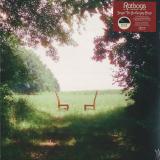
Despite its title, Ratboys’ new album Singin’ to an Empty Chair is not defined by what’s missing. Rather, it’s the beginning of an important dialogue with a close loved one, vocalist Julia Steiner finds herself estranged from. The music on the band’s sixth studio album – its first for New West Records – fills the space that person left behind with 11 songs showcasing Ratboys at the peak of their powers — twangy, effervescent, as confident as they’ve ever been, and perhaps more emotionally interrogative than ever before. The four-piece Chicago band followed up 2023’s highly acclaimed The Window by reconvening with co-producer Chris Walla to begin tracking at a rural Wisconsin cabin before taking the songs to Steve Albini’s famed Electrical Audio studios in Chicago and later to Rosebud Studio in Evanston, Illinois. The results veer from bubbly power-pop on “Anywhere” to irresistible post-country on “Penny in the Lake,” along with heart-piercing ballads like “Just Want You to Know the Truth” and an exhilarating detour into the extraterrestrial on “Light Night Mountains All That,” which Steiner dubs the band’s mammoth “wormhole jam.” Singin’ to an Empty Chair also marks the first Ratboys album written since Steiner began therapy, which the singer/lyricist credits for the clarity found across the album’s unflinching examinations of relationship and self. Fittingly, as the album begins by extending a hand into the void, it concludes with a scene of serenity – all while weaving candid honesty, humor, chaos, and whimsy along the way. “It's not all doom and gloom,” Steiner says. “The experience of making this record definitely gives me hope for whatever happens next.”
out of Stock
Last delivered 7 months ago available to reorder, subject to availability
Heavenly return! As fiercely independent as any punk band, but as sweetly melodic as any chart-topping act, Heavenly combine sharp-edged lyrics with shamelessly joyful pop music. The band comprises original members Amelia Fletcher, Peter Momtchiloff, Cathy Rogers and Rob Pursey, who are now joined on drums by Ian Button. An important element of the Heavenly story was the loss of Mathew Fletcher, who took his own life just before the fourth album was released. It took Amelia, Peter, Cathy and Rob a long time to get over the loss; maybe it took even longer to find a drummer as good as Ian. 'Highway To Heavenly' shares its musical recipe with the band's first four albums, all of which were released in the 1990s at a time when sensitive indie types in the UK were sheltering from the prevailing macho-rock storm under the Sarah Records umbrella, and when women in the US were starting to find their Riot Grrrl voices in the small town of Olympia, where labels like K and Kill Rock Stars were designing a new creative space. The new songs are full of anger, of grief, of empathy, of love, and set themselves in opposition to the resurgence of the cold 'masculine energy' that is making the world a miserable, aggressive place today. It's all pop here, but Highway To Heavenly has a huge range of tones and moods. Heavenly have recently enjoyed a huge resurgence of interest from a younger generation of fans, who have cottoned on to Heavenly's music, but also embraced the band's inclusive version of feminism. The new Heavenly have played a number of sell-out shows in the past couple of years, where older fans have mingled with new devotees. Still our love is Heavenly!
The special one! Mr. G’s productions are distinctive, deep, driving and, above all, a listen to behold. Like the man–machine interface between hypno house and roots techno, he manages to unite dance floors either through his High Mass–like live sets full of swing, grit and soul, or simply through other DJs playing his records.
Blessing Running Back for the second time, Mr. G’s Reconnection EP is the result of a serious dive into his vaults.
City Heat (G’s Underground Dub) is a picture-perfect example of his skill to groove without a doubt: raw, funky and fabulous. Serendipity and Work on the flip side complete this picture. Decades of record buying, music making and a love supreme for this culture rolled into one. Made yesterday, released today, and it will still sound great tomorrow. A personal gift from Mr. G’s archive to Running Back.
out of Stock
Last delivered 7 months ago available to reorder, subject to availability
To celebrate its 25th anniversary, XL Recordings today announce a special, expanded version of Leila’s acclaimed second album Courtesy Of Choice. Originally released on 11th September 2000, the album followed the success of her Rephlex Records debut Like Weather and felt like a broadcast from a futuristic radio station no one else could tune into. Twenty-five years on, alongside collaborations with the likes of Bjork, Aphex Twin and Terry Hall and iconic performances at the likes of the V&A and Venice Biennale, more and more listeners have found the frequency. While Courtesy of Choice's influence continues to transmit through contemporary culture. the Iranian-born, London-raised producer remains utterly singular:
"I realised very early on that people don't really belong anywhere. That's what gives me the freedom to do any kind of music...I don't feel any commitment or loyalty to anything. My commitment is to noise." – Leila
This new version, Courtesy Of Choice… asides and besides, re-presents the original 14 track album — including the previously vinyl-only “Relax the Pleasuredome” — alongside a wealth of unreleased material. Leila chose to re-edit rather than remake the album (she has all the original data… midi and audio), choosing to set the parameters of only recovering buried details while preserving its spirit. “I wanted this reissue to be honest,” she explains. “Nothing added, just making sure the performances came through as they were meant to.” Among the twenty unheard tracks are Roya Arab’s striking collaboration on Cabaret classic “Mein Herr,” the surrealist collage “A Reasoning” with a sample of Max Ernst, the hypnotic “Acid Frog Fave,” the digi rave blowout “Birdie Rave,” and “techyarr”’s future forever funk from the realm of primetime Neptunes. Together they reveal both the breadth of Leila’s vision and the enduring power of an album that continues to sound ahead of its time.
out of Stock
Last delivered 7 months ago available to reorder, subject to availability
The second release from Irish label IL Corpo Records comes from Dublin native Dave Hughes. The Fastplay E.P. sees the accomplished audio engineer and Dj return to production duties with 4 carefully crafted excursions into mid tempo deep house with elements of dub and techno. Having had multiple releases on John Tejada’s legendary Palette label and iRecords amongst others, the production values are top notch and well executed making this an interesting listen indeed.
Fastplay chugs along building gradually before sultry vocals from Svelte weave their way into the mix and beckon the listener to the dance floor for the night ahead.
Feel Better is a downtempo dubby experiment inflected with a dose of rave nostalgia.
Walk Alone sees more atmospheric chord work and well chosen percussion that cements the sentimental feel of the E.P.
Tabouli rounds out the release with broken beats wrapped up in mid eastern rhythms. Moody chords and a G Funk lead line keep the groove evolving to the end.
out of Stock
Last delivered 7 months ago available to reorder, subject to availability
(Early support by Ben Klock, DVS1 & Rene Wise) DHÆÜR makes his debut on Dustin Zahn's Enemy Records with 4 stripped down Techno tools ranging from "relentless and heavy" to "grooving and introspective." Each track offers a different approach to minimalistic Techno, all rich in moody atmospherics.
In classic A1 fashion, "Bayes Theorem" is the heaviest track on the record. Throbbing sub bass meshes together with pedaling hi hats while vocal chops and modulating synth work cover the top end. It's sinister and pounding, yet retains a sense of groove without becoming too aggressive. "Perception" closes the A side with a deeper and more introspective approach. The bass fills in only where necessary,leaving the pads and bleepy synths to do all the heavy lifting.
"Scanning" kicks off the B-side, defined by a rolling bass line and moody chord stabs. It gives the dance floor exactly what it needs and nothing more. The record comes to a close with "5th Avenue." It's deep, steady, rolling, and dripping in polymeter synth pulses. Brief glimpses of vocal phrases offset the darkness, giving it a bit of funk and playfulness...making it essential for deeper late night sets.
out of Stock
Last delivered 7 months ago available to reorder, subject to availability
“Fever” and its Dub version “Influenza Dub” were released together around 1974 (exact year unknown but it has been
registered for copyrights in 1974 & 1972) on 7” vinyl on the Upsetter label, under the name Suzan Cardogan in Jamaica only…
This is therefore the very first release on 7” vinyl of these two Reggae masterpieces outside of Jamaica and it is the first
reissue of the original Jamaican single on 7” vinyl, finally making these two exceptional and popular tracks available again in their original iconic format.
The original Jamaican pressings are now quite rare, expensive and highly in demand among collectors and Reggae enthusiasts alike.
out of Stock
Last delivered 7 months ago available to reorder, subject to availability
Macclesfield 3-piece Cassia make their extremely welcome return with the announcement of their most ambitious release yet in new studio album everyone, outside - out April 11th.
The album marks a bold new chapter, and recently served up a tropical-tinged first offering in ‘heat’ - with today serving a superb Round Two with the stomping, insatiable, hook-laden new single ‘friends’.
everyone, outside takes Cassia’s sound to new heights. Written fresh off the back of two years of relentless touring, the band channelled every ounce of their renowned live energy into the album, returning to a studio they built themselves in Macclesfield, after creating their previous album in Berlin. The journey provided an added twist, recording the majority of tracks live on TikTok, giving fans a unique, inclusive experience to be part of the process.
The album’s title is a metaphor for embracing your truest self and reflection of a band who are at their happiest outside. It’s a message that speaks to the idea of reconnecting with nature and Britain’s finest summers. As frontman Rob explains, “That title, ‘everyone, outside’ started as a song about how weird it is that we stay inside all the time when being out in nature always makes us feel better. Over time, it came to mean more than that - like a metaphor for being your truest, most natural self, unburdened, like when no one’s watching.”
Drawing influences from a host of genres and cultures, everyone, outside reveals Cassia’s venn diagram of global sounds and intimate storytelling. A trip to Mexico during the writing process injected the record with a new energy, while their time spent in their new space back home gave the band a freedom to try new instruments, new sounds, acquire new tools to hone their production skills - and to simply have fun and explore. “The time we spent in Berlin taught us so much, but coming back home to Macclesfield allowed us to really focus on making something that felt like it came from us. No distractions, just pure creativity,” says drummer Jacob Leff.
Cassia’s rise has been impressive. From their early days busking the streets of Cornwall to playing major festivals, touring the world and receiving critical acclaim from BBC Radio 1, Radio X, The Independent, Rolling Stone UK, Clash & many more, the band has carved out a unique niche. Their sound, influenced by the African music Rob’s father introduced him to, combined with the indie heritage of nearby Manchester, combines the positivity of bands like Foals and Vampire Weekend, with the jazz-tinged afrobeats of Fela Kuti and Ebo Taylor.
After signing to Distiller Records in 2018, the band gave up their full-time jobs and ventured to Bath to record their debut album, Replica. Tracks such as ‘Right There’, ‘Drifting’ & ‘100 Times Over’ have amassed millions of streams, seeing the band sell out multiple headline Tours both in the UK and Europe. Playing to a homecoming capacity crowd at Manchester’s O2 Ritz, as well as sold out headline shows at London’s KOKO & The Garage, the band have accrued a huge, loyal following and their live shows earned them a nomination for Best Live Act at the AIM Awards alongside Idles and DMA’s, as well as making them the winners of Reeperbahn’s Anchor Award in 2022.
Cassia will tour the UK in May 2025, playing songs from the new album and some of their biggest tracks - headlining Leeds, Bristol, a newly added night in Southampton, a special Manchester homecoming, Glasgow, Birmingham, & a huge show at London’s HERE @ Outernet - dates below & Tickets Here. The band will also take things Stateside this year for their first ever run of headline shows in the US & Mexico.
DJ Quik is a giant of West Coast hip-hop. With his fourth album Rhythm-Al-Ism he created his masterpiece, a perfect hip-hop album. As Quik explains, “the name Rhythm-Al-Ism alone tells you what I was doing. I was mixing up rhythms. I was meshing R&B with hip-hop and jazz. And a little bit of comedy”. It’s absolutely sensational and as with a lot of mid-90s albums those original vinyl copies are now rare so here’s the Be With re-issue.
A preternaturally gifted producer/rapper, DJ Quik has produced scores of LA gangsta rap classics. He’s released platinum and gold records of his own, as well as helped craft them for the likes of Tupac, Snoop Dogg, and Dr Dre. Quik has always been quirkier and more interesting than his gangsta rap peers, both musically and lyrically. An old-school funk producer at heart, he’s also incredibly nice on the mic. His raps often deal in boasts, jokes and good times but also cover his beefs, his trials and his trauma. Partying and pain, all mixed up. DJing and producing hype beat tapes from age 14, Quik’s tracks blended the languid funk and rubbery synths of Zapp and George Clinton with a gangsta aesthetic, creating a more danceable foil to Compton’s more typical nihilistic hedonism. Ultimately, his records sound custom engineered to drift out over sun-soaked barbecues.
Released in 1998 on Profile, Rhythm-Al-Ism was the closest Quik ever got to making a commercial splash. “You’z A Ganxta” and “Hand in Hand” made radio waves across the country and the less radio-friendly tracks like “Medley For A ‘V’” were bumping out of car stereos. Combining his soulful, jazzy P-Funk/G-Funk beats with his effortlessly smooth flow, Rhythm-Al-Ism was the quintessential West Coast Party. Squelchy synths, bouncy bass, monstrously knocking drums and freaky keys - this is peaking acidic party-rap, straight out the gate. Music for gliding, for skating, for time with your people and your poison. Sunshine. No cares. BBQs. Heavy smoke in the air. Dripping with wit and good humour. A real swing to the vibe.
The album opens with Quik setting out his mission statement with “Rhythm-Al-Ism (Intro)”, telling us what this is all about before the self-explanatory “We Still Party” rocks the spot. It’s definitely all about the party here, complete with Quik’s signature head-nod/body-moving beat. Next up, the undeniable laidback funk and dripping swing of groove-laden “So Many Wayz”. This positively slaps.
Then we get to the three huge singles. The R&B-tinged radio-friendly minor-hit “Hand In Hand” closes the first side only for the flip to get straight into the rolling and scratching of bleepy computer-funk banger “Down, Down, Down” (featuring a particularly nice use of Howard Johnson’s epochal “So Fine”). The effortlessly smooth, flute and guitar-laced “You’z A Ganxta” completes the trio. Next up the fast-paced, vocoder-enhanced, woulda-beena-global-hit “I Useta Know Her”. This coulda (shoulda) been a single too. Head-nod funk workout “No Doubt”, with its ace sample of Prince's “Sexy Dancer”, closes out the second side.
“Speed” races out the gate on the second disc, sampling Edwin Birdsong’s “Rapper Dapper Snapper” in a harder, better, faster, stronger way than those daft Parisian punks. Amphetamine-swift raps over soaring, string-drenched b-boy beats. A total anthem. Up next, the staggering, near 8-minute laconic, lounge-y sax-rap of “Whateva U Do” cools things down and smooths things out with its flute wrapping around a sample of Smokey Robinson’s “So In Love” and some oh-so-classy lounge-piano tinkling. And speaking of smooth, things don’t get much smoother than the blissfully melodic glider-anthem “Thinkin’ ’Bout U” riding that ace flip of SWV’s “Use Your Heart”. Exceptional.
The exquisite funky-flute-slapper “Medley for a ‘V’ (The P***Y Medley)” opens the fourth and final side, with star turns from Snoop Dogg and a typically suave Nate Dogg. It’s followed by the supremely skanked-out “Bombudd II”, a beautifully sweet reggae-fuelled ode to the herb. “Get 2Getha Again” is slick funk. Stunning.
This 2022 Be With double LP re-issue has been mastered for vinyl by Simon Francis, cut by Pete Norman and pressed at Record Industry. Unusual for the time, Rhythm-Al-Ism was originally pressed as a double and we’ve reproduced the original LA vibe picture sleeve and insert to match.
As that original front cover says, this is “over 70 minutes of commercial free music” and it’s absolutely perfect from start to finish. There are no stand-out tracks here. It’s all gold.
: Rhythm-al-ism (2LP)
out of Stock
Last delivered 19 months ago available to reorder, subject to availability
600% Dynamite is the critically acclaimed Soul Jazz Records compilation series of Jamaican music, praised for its eclectic selection of upbeat reggae, ska, soul, rocksteady, dancehall, funk and dub satisfying both connoisseurs and newcomers alike.Originally released in 2003 this album has been out of print for nearly 20 years making it one of the most-collectible of Soul Jazz Records" Dynamite! Series. This is the first ever Color Vinyl edition of this classic album.Party classics and non-stop reggae anthems such as Tenor Saw"s "Golden Hen", The Uniques "Queen Majesty", Johnny Osbourne"s "Buddy Bye" and many more, 600% Dynamite is an addictive mix of well-known classics and rarities.Classic artists such as Dennis Brown, Johnny Osbourne, I Roy, Yabby You and Tenor Saw which feature alongside classic and rare tracks by lesser known artists such as Tall T and The Touchers, Prince Mohammed and more.
Intricate structures with an intertwining of spontaneity and randomness, meeting the diverse genre influences of the band members from mediaeval music to shoegaze to noise. That is Unravel, the new album, and first in six years, from Czech band Manon Meurt.
"Unravel reflects the different stages of dissociation, a person's thoughts, observations - whether of the environment or of oneself - and admiration for the beauty and cruelty that nature mirrors," multi-instrumentalist and lyricist Kateřina Elznicová says of the album.
Produced by Eddie Stevens (Freakpower, Zero 7, Moloko, Roisin Murphy) the album was pieced together from recorded fragments, meticulously pieced together. The title Unravel refers to the development of the band, unravelling what they are to find the full potential of their music as well as uncovering the layered nature of the songs and emotions.
"Eddie Stevens’ approach to recording was a big surprise. We understood that there was no one right version of the songs. Each of our themes carries a certain energy that can manifest and blossom in many ways. Compared to previous records, the vision of each member was much more evident, while we learned not to cling to our individual ideas of a signifying break or a nu-metal bounce at the end of an ambient song. The main thing was a common concept," adds keyboardist David Tichý on creating the seven songs on the record.
Abum producer Eddie Stevens describes the collaboration, “Each album is an adventure. You do some preparation, check the route over and over, prepare for any eventuality that your packing space and imagination will allow, plan some places to stop and rest en route, places to eat, sleep, then consider the challenges - the ice wall, the summit, even just finding your way in foreign land. But despite all that planning, you can never really say for sure what’s going to happen, what unexpected path you might take, what strangers might invite you in for a cup of tea and to what ends. So it was making Unravel with Manon Meurt and engineer and studio owner Lukas Martinek at Svárov studios and of course back home in the relative safety of my studio. Musicians who quickly became friends showed me more than I showed them, people with ideas, with creativity seeping from their pores. Music making the right way: no blinkers, no walls, no preconceptions, no barriers, no rules. What a pleasure, and what a magical, technicoloured,
kaleidoscopic album we’ve made together, “
The combination of industrial material with plant motifs in the work Untitled_1 by Ukrainian artist Liza Libenko, which adorns the cover of Unravel, strongly attracted the band. After all, floral motifs have always been close to Manon Meurt's music. Libenko, a student of the Academy of Fine Arts and a finalist of the prestigious Austrian Strabag Artaward International Prize, has recently been working on overcoming the narrative boundaries of the canvas, the paintings "attack"the viewer. Sunflowers are a powerful symbol of life and the sun; in Libenko's paintings they are black and burnt, serving as an allegory for contemporary conditions. The work was photographed by photographer and artist Marcel Rozhoň, and the final processing of the Unravel album was done by graphic artist Zuzana Malá.
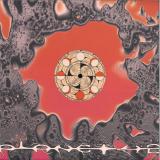
For their very first offering, Hanna & Robbie unveils a 5-track album making an ever possible encounter between psychedelic fractured grooves and mellow sci-fi haze in a divergent electronic shell. Planet42 carves a slow-burning path through severance and trance, a trip back to the subconscious like an escape or a sin, guiding both body and mind into unfamiliar exploration
Taking a fey look on electronic performance, where dubby-inspired and fractured rhythms tend to unveil ethereal ambiances, HR was born and raised in the emergent underground electronic French scene and started being moving targets in 2023 with a first live show at the Supercamp Festival happy few’s gathering.
With a mosaic of gritty textures, clubby breaks and otherworldly echoes in the lead-off project Planet42, Hanna & Robbie dives deep in this restless esoteric tension their identity is all about : an spunky early signal sculpting precise and intricate yet atypical tones revealing this crawling need of delivering unsettled arrangements and dreamscaped lines. Already in the move for their next in order work, it is settled in their experimentation lab that new doses of psychedelia and delusive resonances were written as an incipit to a future alternative live act.
out of Stock
Last delivered 7 months ago available to reorder, subject to availability
At the start of this summer, following a three-year hiatus for Daphni (punctuated only by his first ever collaborative Daphni track ‘Unidos’ alongside Sofia Kourtesis), he dropped ‘Sad Piano House’. The track represented something of a continuation in the Daphni catalogue, its roots growing from Cherry’s ‘Cloudy’ and its subsequent Kelbin remix, something in that song’s makeup having a profound effect when played on dancefloors by Snaith and countless others. ‘Sad Piano House’ deployed more intangibly irresistible bendy piano to equally satisfying effect and continues to achieve similarly rhapsodic dancefloor saturation.
Though a sizeable gap for Daphni releases, between Cherry and Butterfly however of course sits Honey, the latest Caribou album and one that saw the more instantaneous and dancefloor leaning traits of Daphni peaking through the cracks more than ever before. This blurring of the lines leads to an intriguing collaboration in Butterfly’s lead single ‘Waiting So Long (feat. Caribou)’. An unlikely duo - in that both artists are the same man, Dan Snaith - ‘Waiting So Long’ is not so much an identity crisis, ego trip, or the result of a chemical spill in the Snaith laboratory. It’s simply a track that Snaith felt for the first time belongs to both aliases, and might appeal to fans of both. He has never sung on a Daphni track before, and did not set out with the intention to do so this time, and yet this strange billing was born.
Daphni music has always been Snaith’s way of hitting directly to the core of the dancefloors he spends so much of his time playing to, and those dancefloors have been steadily expanding as his name grows, with the music following suit. This album however also draws from further back with a definite kinship to the very first Daphni album, the invigorating bag of ideas that was Jiaolong.
Butterfly is a showcase of the wonderful variety and surprising twists and turns that made that album such an exciting new prospect and that still to this day make Snaith such an intriguing DJ. There are more heavy hitters here, tracks that fill those dancefloors better than anyone, like ‘Clap Your Hands’ which picks up the energy of ‘Sad Piano House’ and flips it, exposing the gritty and intoxicating underbelly of Snaith’s hitmaking side, while retaining the playful urgency that runs through all of his work of late. Meanwhile ‘Hang’’s comic-strip horns are unpinned by gleeful force, unrelenting and thrillingly unshakeable. Elsewhere though comes a clutch of other tunes that might creep out somewhere more off the beaten path, a path Snaith has never stopped seeking in amongst his larger billings. ‘Lucky’ is squirmy and elusively intoxicating, ‘Invention’ skitters down meandering, inviting corridors, ‘Talk To Me’ grumbles and broods in the murk, and ‘Miles Smiles’ could roll on endlessly, so confident in its groove. There are no obvious peaks in these tracks or unifying moments, in fact many of them really have no business being on the dancefloor at all, and yet in the right setting, they could be the most fun to be had all night.
One such club is a good microcosm for the ethos of Butterfly as a whole. “Around the time I was finishing up this album I played a long set in a club called Open Ground in Wuppertal, Germany.” Snaith recalls, “It’s kind of, in one sense, the platonic ideal of the kind of club I’d want to play in. Every single decision has been taken, at great expense, with the aim of making the perfect sounding medium sized club room. But on top of it being the perfect acoustic environment it also is run by an amazing collection of people in a way that gives it a sense of community that dance music at its best provides. It is an absolute pleasure to play in that room to a crowd of people who come from all over. Playing in there you feel like you can play anything, and I played works in progress of pretty much every track on this album in my set there. Don’t get me wrong, I love playing a short set at a festival or in a more raw warehouse kind of club where you bang it out and only really functional music works but on record I guess the point of these Daphni records is to keep in mind a more expansive idea of dance music where the parameters are broad and the church is broad. I think that actually, putting really functional stuff next to weirder tracks (both on an album and in a dj set) might be the thing that’s still most interesting to me.”
This is the feeling that’s most palpable on Butterfly, and in every single time you see Snaith DJ. Right from the inception of the Daphni alias - and even before that – the thrill of trying stuff out, pushing at the boundaries has always been there and on Butterfly is present in all its twists and turns. It leaps all over the place and yet it hangs together, never feeling like a grab bag of dancefloor utilities but rather a distillation of all the strings to Snaith’s bow, exhilaratingly human and unified by one singular concept – simple and joyful exploration.
out of Stock
Last delivered 85 days ago available to reorder, subject to availability
Editions Mego welcomes KMRU back to the fold. Kin is Kenyan born, Berlin based, sonic wizard Joseph Kamaru’s second release on Editions Mego, following on from the classic 2020 release Peel. Since the release and subsequent praise for Peel, the artist has been a staple on the electronic scene performing on numerous stages and festivals worldwide in tandem with a flood of media recognition. Kin could be construed as the second child following Peel. The project came out of initial discussions with Peter Rehberg about what a Peel sequel would sound like. Kamaru is quick to clarify that Kin is not that record; “I'll know when that record will come and when I'll make it. It's already happening... or maybe it lives within both of these Mego records”.
It is this deft ambiguity and vague tiptoeing around the concrete that encapsulates the ambiguous sound world of Kamaru’s vision.
Kin was started early 2021 in Nairobi with Kamaru exploring his noisier palette of sounds encompassing distortions reminiscent of the sounds he would muster from in his youth when playing guitar. He paused making this record for a year as soon as Peter died, then slowly returned to it through 2022 resulting in the immense new work we have here.
The charms within Kin lay as Easter eggs revealing the true identity behind the colourful sonics only after multiple deep listens. With Trees Where We Can See sets the tone by way of a warm swaying melody inviting the listener in for further investigation. In 2022 KMRU and Mego stalwart Fennesz toured the USA together resulting in a strong friendship and also, the second track here, Blurred. A neat Mego/Editions Mego loop as such. Blurred arranges twangy guitar strums alongside glistening glaciers of shimmering drones. They Are Here represents a darker hue as melancholic clouds of shadowy noir tap directly into the listener's nerve stream. Maybe takes a detour into a bristling euphoric electronic storm whilst We Are screeches in a pattern formation not unlike a highly abstracted Aphex Twin forcing its way out of a hard drive. By Absence concludes proceedings, operating as both exit music and a portal to further sonic investigation with acoustic bellowing residing amongst a kaleidoscopic backdrop.
Kin is a trip that rewards close repeated listens as all the colours and textures, nuance and narratives unveil themselves. This isn’t a record to be glossed over, magic rewards concentration.
Kin is a record to be Played slow and LOUD.
For Pita.
All tracks written, produced, mixed by Joseph Kamaru
Blurred co-written & produced with Christian Fennesz
Mastered by Stephan Mathieu at Schwebung Mastering
Photography: Joseph Kamaru
Layout & Design: Nik Void
Cut by Andreas Kauffelt at Schnittstelle, Berlin
out of Stock
Last delivered 7 months ago available to reorder, subject to availability
Portland, Oregon dark rock trio HOAXED return with their stunning new album Death Knocks. Three years in the making, the group—featuring vocalist/guitarist Kat Keo, drummer Kim Coffel, and new bassist/vocalist April Dimmick—have honed their stygian craft to perfection. "We've added another element to the writing and collaboration process," says the band. "April comes from a classic heavy metal background, and her influence is in these songs. We've also had experiences on tour that have helped shape these songs. You can hear influence from the bands we toured with and learned from. We played together for three years as we wrote this album, and we learned a lot about our styles, and our sound evolved naturally together on stage. So, when we sat down to write this album, it didn't feel like a departure or a change." Anchored by the witchy spell of opener "Where the Seas Fall Silent," the rock-hardened groove of "Kill Switch," and the dimly lit power pop of "The Family," HOAXED upped the tempo, sawed the edges (Dimmick's raspy menace intimidates), and strengthened their ties to the golden gods of heavy metal. Indeed, cyclical riffs, dynamic rhythms, and bottom-heavy bass propel Death Knocks through its filmic, hard-nosed gloom, but Keo's sorcerous vocal hooks seal the deal. Often smartly paired with Dimmick's angels' n' demons, her performance effuses fragility and potency across the album's alluring expanse. HOAXED recorded Death Knocks at Falcon Recording Studios with producer/engineer Gabe Johnston (Unto Others, Vintersea) and enlisted Arthur Rizk (Power Trip, Kreator, and more,) for mixing and mastering. In total, the group spent eight days in February and March tracking Death Knocks. While most bands spend months ironing their metallic mettle, Hoaxed's expeditious time at Falcon engendered a polished, big-sounding force befitting their larger-than-life songs. Short: Portland, Oregon dark rock trio HOAXED return with their stunning new album Death Knocks. Three years in the making, the group—featuring vocalist/guitarist Kat Keo, drummer Kim Coffel, and new bassist/vocalist April Dimmick—have honed their stygian craft to perfection. FFO: Ghost, Tribulation, Bloody Hammers, Khemmis, Unto Others, GGGOLDDD, Katatonia. Pallbearer
Explosive Ukrainian metalcore force SPACE OF VARIATIONS returns with Poisoned Art, out on February 13, 2026 via Napalm Records. Blending furious brutality with heartfelt emotion, the four-piece band sheds their skin and continues to push the boundaries of modern metal, their new record showing a new facet of their ever-evolving sound—a new era. Twice crowned Ukraine’s best metal band, and former tour partners of genre giants Jinjer, SPACE OF VARIATIONS are raising the bar for metalcore with the twelve new tracks of Poisoned Art. Mercilessly honest, the opening track “TRIBE” sees the band battle existential fears in both English and their native Ukrainian. Driving in the urgency are diverse stylings, ranging from djent in “HALO” to fitting sirens in “MAYDAY”, showing that SPACE OF VARIATIONS doesn’t shy away from adding a certain edge to their catchy choruses. “PARALLEL REALITIES” cleverly combines soft melodies with brutality, staging captivating desperation and neck-snapping breakdowns as parallel realities. Explosive outburst “DOPPELGÄNGER” powerfully blends groovy distorted guitars and unrelenting intensity, contrasted by haunting melodic passages and subtle electronic textures, making this song especially hard-hitting. The mix of pummeling ferocity with emotional depth continues throughout “GODLIKE” and “GHOST TOWN”, before “COLDHEAVEN” stands out from Poisoned Art through its exploration of hip hop elements and cold industrial grain. “BACK TO DIRT” continues the djent vibe, while “SNAKE SKIN” delves into electronic territory.
Notti Senza Fine is the second album by the post-avant-garde theater company Magazzini Criminali, released in 1983 on the independent label Riviera Records and now reissued for the first time by Soave Records in a very limited edition of 200 copies. This work breaks away from linearity and meaning, creating a dizzying collision of voices and sounds that blend theater, punk, and experimental elements. Through montage and collage techniques inspired by the visual arts and poets such as Antonin Artaud, the album explores a dense and layered soundscape.
Composed by Federico Tiezzi, Sandro Lombardi, and Marion d'Amburgo, “Notti Senza Fine” uses sounds and fragments to create an experience that transcends conventional music. The song titles evoke geographical spaces without clear definition, while the sound textures, which include tribal percussion and synthesizers, intertwine without resolution. The album is a “meaningful object,” a musical vehicle that challenges conventions and rejects institutional distribution channels, remaining a rarity appreciated by collectors for over forty years.
The cover, designed by Mario Schifano, adds another layer of meaning to the work, making it a timeless sonic and visual experience.
APORIAMOR noun 1. The death of love’s contradiction.
| “Embody APORIAMOR”
Etymology
aporia-: an irresolvable internal contradiction or logical disjunction in a text, argument, or theory. from Greek aporos ‘impassable’, from a- ‘without’ + poros ‘passage’
-amor: love. Sentimiento intenso del ser humano que, partiendo de su propia insuficiencia, necesita y busca el encuentro y unión con otro ser. Del latín amor.
-mor: latin for death.
APORIAMOR explores the affective ontological and organic processes of love and lust in the turmoil of an urban existence, through the female lens. It expresses the process of strengthening through heartbreak in its various forms.
With her debut EP The Art of the Concrete, elsas knew that by giving that name to a record which was ironically expansive and experimental, she would be calling for a distilled and clearer path further down the line. This is what she’s been incorporating into the sonic world of this new EP, APORIAMOR, signifying the birth of a more matured and distilled version of herself as an artist.
With APORIAMOR (“the death of love’s contradiction”) elsas conveys a personal process of healing in the romantic space. Through different experiences of heartbreak, elsas builds a language - a coping mechanism attached to its subsequent artistic expression – that isn’t founded on hardness or a closing-off, but instead, on a playful but profound reckoning, and learning of self-worth.
APORIAMOR embraces the complexities of being a lover-girl: of moving through life with an open heart. It celebrates the clarity, sweet hindsight, and detachment that come from processing emotion. APORIAMOR is both an affirmation and a release.
elsas makes canonical blends with a forward boundary-bending vision. Her sound in this record is naturally referential of both her Mediterranean heritage and UK alternative music — intrinsic parts of her lived experience. She has had the opportunity to collaborate with artists she deeply admires, each exchange enriching her creative world.
The experience of working hand-in-hand with Sampha for the last 3 years and ongoingly has been a core of her evolution as an artist. She has also collaborated in many forms with artists like Florence + the Machine, Little Simz, Jordan Rakei, Jockstrap, Obongjayar, Black Country New Road, Genevieve Artadi (KNOWER) and Duval Timothy. Additionally, her ongoing work with the Idrîsî Ensemble, of which she is a core member, continues to inform her artistic depth.
The making of this largely self-produced record unfolded over four years — “it’s a well-kneaded dough,” she says. These songs evolved through exposure to multiple environments: from early writing sessions in her childhood home in the Spanish countryside, to stages across the U.S. while on tour supporting Sampha.
Experimentation and modulation are an intrinsic part of elsas’ method, conceiving songs as organisms that respond to their surroundings. Collaborators on this collection of songs include Shrink, Will Lister, Gabriel Gifford, Ethan P. Flynn and more. The record was mixed by David Wrench (a long-time supporter of elsas’) and Nathan Boddy, and mastered by Matt Colton.
With APORIAMOR, elsas creates a visual world from the fabulation of the past, as an act of playful historical revisionism in which she embeds herself as both subject and storyteller. The songs function like an archive of her experiences across various years, each one unearthed and presented as some sort of archaeological artifact. Through this body of work, elsas begins to conceptualize herself as a legacy artist: one who honors the archive of her own becoming while emerging as a distinct and resonant voice in today’s musical landscape.
Tilaye Gebre is one of Ethiopia’s most soulful saxophone giants, with a musical legacy that’s hard to surpass. A founding member of the Equators, later renamed the Dahlak Band, he was a key figure in Ethiopia’s vibrant hotel music scene and a sought-after musician and arranger for artists like Aster Aweke, Mahmoud Ahmed, Tilahun Gessesse, and Muluken Melesse.
Tilaye — still going strong — was at the epicenter of the Ethiopian music scene during one of the most turbulent periods in the country’s history. Tilaye’s musical trajectory, regardless of the forms it has taken over the decades, is simply ceaseless. The road to a musical career spanning six decades started out winding, and the first steps came almost as a fluke.
With the Dahlak Band, Tilaye had managed to secure a musical residency at the legendary Ghion Hotel, where they honed their skills and developed their musical expression to unparalleled levels. From the late sixties onwards, Dahlak Band lit up Addis Ababa with a mixture of James Brown and Wilson Pickett tunes, rhythm and blues, soul, funk, and the sound of the disco era — mixed with modern Ethiopian styles — serving up majestic concoctions with full-range instrumentation, featuring trumpet, keyboard, saxophone, bass, drums, and guitar. Through their hotel sessions, Tilaye developed further as an arranger, arranging fellow band member Muluken Melesse’s first solo album, Muluken Melesse with the Dahlak Band (Kaifa Records – LPKF 39), recorded during the turbulent years of 1975–1976, following the fall of Haile Selassie. Everything was in flux in this transitional period, but a constant was how Tilaye stood in the spotlight. On that record, there’s a loose vibe to the soundscape that lets Tilaye’s skills shine, while all the other musical contributions coalesce into a slowly cooking atmosphere where the groove at times fluctuates into psychedelic territory, making the music stand out from most contemporaries.
Most of their recorded output came from one-take live cassette recordings at the Ghion, or from music shops at that time — one microphone at the front, hit record: no EQ, no reverb, just some delay. Some of the Dahlak Band’s releases featured Tilaye as frontman, such as Tilaye’s Saxophone with the Dahlak Band from the late 1970s — typical of a rare groove on the Ethiopian scene — with excursions into reggae territory, including the band’s characteristic sound featuring Tilaye Gebre (tenor and alto saxophone), Dawit Yifru (organ), David Kassa (electric guitar), Shimelis Beyene (trumpet), Moges Habte (tenor saxophone), Abera Feyissa (bass guitar), Tesfaye Tessema (drums), and Muluken Melesse (cowbell). The Dahlak Band’s output was so prodigious that they simply couldn’t be pigeonholed.
No saxophonist in Ethiopia influenced the sound of popular music more than Tilaye in the 1970s, yet his recordings have been hard to come by for ages, which has meant that newcomers to the scene have gems to uncover in retrospect. Arguably, Tilaye shifted gears when he relocated to the U.S. to such an extent that his musicianship became even more renowned, accompanying the greatest of his contemporaries internationally. Tilaye is one of Ethiopia’s all-time greats, with a musical legacy — both as musician and arranger — that’s hard to surpass. It’s a wonder to be able to enjoy a recording like this half a century later.
out of Stock
Last delivered 2 days ago available to reorder, subject to availability
After nearly five decades of relentless innovation, Truus de Groot's Plus Instruments project shows no signs of slowing down. The ninth album, Unnoticed, finds the `dutch Pioneer diving deeper into the experimental synthesiser palette than ever before, delivering 12 tracks of minimalist, analogue noise and her signature vocals.
Recorded at The Ranch in Escondido, Unnoticed showcases her continued evolution as an artist. Often referred to as the "Queen of the Dutch Underground," de Groot has is a stalwart of the experimental underground music scene since establishing Plus Instruments in 1978 in Eindhoven. Her journey has taken her from the punk rock explosion of the late '70s Netherlands to the No Wave scene of early '80s New York.
The Plus Instruments project has always been characterised by its ever changing nature and collaborative spirit. She has worked with an impressive roster of artists over the years , spanning continents and genres, including James Sclavunos (Nick Cave), Jim Duckworth (Gun Club), most recently, Miguel Barella and Cosmo Vitelli, who co-writes, produces and adds programming to standout track "Sexy Machine." This creative partnership has opened new avenues for de Groot's explorations, as she continues to plough yet another field of creativity.
Now based back in the Netherlands, she continues her work while maintaining the core elements that have made Plus Instruments a touchstone for electronic music innovators. Her influence can be heard in everything from Electroclash to Cold Wave, with younger artists regularly seeking collaboration with the veteran experimentalist. Unnoticed arrives as de Groot enters her sixth decade of music-making, proving that true artistic vision only grows stronger with time.
The Helsinki-based Bowman Trio return with their second LP on We Jazz Records on October 18. "Persistence" is a strong effort, showcasing the young trio's knack at creating dynamic, sparse and memorable music which carries well the term "loft jazz" occasionally attached to it. Here, drummer Sami Nummela, trumpeter Tomi Nikku and bassist Joonas Tuuri present 9 strong originals, 8 of which are penned by Nummela and one by Nikku.
On the course of the new album, Bowman Trio moves from the introspective, calm moments of "Badwater", "Mac Elliot" and "Mä en jaksa" to the full swing of "The Chase" and the solid grind of "Persistence". The album closing track "Sista sommardagen" ("The last day of summer" in Swedish) is a hauntingly beautiful, delicately breezy ballad. Two years in the making, the album is a testament to the album title and a fine example of a band taking time in developing their sound to perfection.
Bowman Trio debuted in 2016 with the group's first LP also being the first release on Helsinki's We Jazz Records, and since then their reputation has grown in Finland and beyond. The trio is known for making music which invites the listener in and takes it sweet time in unraveling its secrets. Their sound is somewhat dry, naturally relaxed and there's a lot of room for manoeuvre within it for all of the players. That being said, each of the musicians in the trio know how to play for their team, and the compositions move forward constantly and effortlessly. Bowman Trio makes music which always feels close to you, like you're right there in the room with the band. That's "loft jazz".
Despite its title, Ratboys’ new album Singin’ to an Empty Chair is not defined by what’s missing. Rather, it’s the beginning of an important dialogue with a close loved one, vocalist Julia Steiner finds herself estranged from. The music on the band’s sixth studio album – its first for New West Records – fills the space that person left behind with 11 songs showcasing Ratboys at the peak of their powers — twangy, effervescent, as confident as they’ve ever been, and perhaps more emotionally interrogative than ever before. The four-piece Chicago band followed up 2023’s highly acclaimed The Window by reconvening with co-producer Chris Walla to begin tracking at a rural Wisconsin cabin before taking the songs to Steve Albini’s famed Electrical Audio studios in Chicago and later to Rosebud Studio in Evanston, Illinois. The results veer from bubbly power-pop on “Anywhere” to irresistible post-country on “Penny in the Lake,” along with heart-piercing ballads like “Just Want You to Know the Truth” and an exhilarating detour into the extraterrestrial on “Light Night Mountains All That,” which Steiner dubs the band’s mammoth “wormhole jam.” Singin’ to an Empty Chair also marks the first Ratboys album written since Steiner began therapy, which the singer/lyricist credits for the clarity found across the album’s unflinching examinations of relationship and self. Fittingly, as the album begins by extending a hand into the void, it concludes with a scene of serenity – all while weaving candid honesty, humor, chaos, and whimsy along the way. “It's not all doom and gloom,” Steiner says. “The experience of making this record definitely gives me hope for whatever happens next.”
Despite its title, Ratboys’ new album Singin’ to an Empty Chair is not defined by what’s missing. Rather, it’s the beginning of an important dialogue with a close loved one, vocalist Julia Steiner finds herself estranged from. The music on the band’s sixth studio album – its first for New West Records – fills the space that person left behind with 11 songs showcasing Ratboys at the peak of their powers — twangy, effervescent, as confident as they’ve ever been, and perhaps more emotionally interrogative than ever before. The four-piece Chicago band followed up 2023’s highly acclaimed The Window by reconvening with co-producer Chris Walla to begin tracking at a rural Wisconsin cabin before taking the songs to Steve Albini’s famed Electrical Audio studios in Chicago and later to Rosebud Studio in Evanston, Illinois. The results veer from bubbly power-pop on “Anywhere” to irresistible post-country on “Penny in the Lake,” along with heart-piercing ballads like “Just Want You to Know the Truth” and an exhilarating detour into the extraterrestrial on “Light Night Mountains All That,” which Steiner dubs the band’s mammoth “wormhole jam.” Singin’ to an Empty Chair also marks the first Ratboys album written since Steiner began therapy, which the singer/lyricist credits for the clarity found across the album’s unflinching examinations of relationship and self. Fittingly, as the album begins by extending a hand into the void, it concludes with a scene of serenity – all while weaving candid honesty, humor, chaos, and whimsy along the way. “It's not all doom and gloom,” Steiner says. “The experience of making this record definitely gives me hope for whatever happens next.”
The strongest Japanese covers of Grover Washington Jr. and Kool & the Gang's representative songs are now available on 7-inch vinyl for the first time!
Side A, "Ja Ashita Ni Sureba?" is a cover of Grover Washington Jr.'s famous soul/R&B song "Just the Two of Us," released in 1980. The song depicts the human weakness of putting off troublesome tasks, with lyrics that play on the ears, and an arrangement that retains the atmosphere of the original song while still being danceable, making it a superb track. Side B features a cover of the legendary funk band Kool & the Gang's 1981 hit "Get Down On It," titled "Netanone." This powerful double-sided single will have you intoxicated by the gap between the cool, danceable sound and the humorous lyrics!
out of Stock
Last delivered 8 months ago available to reorder, subject to availability
The strongest Japanese cover of Earth, Wind & Fire and KC & The Sunshine Band's signature song is now available on 7" for the first time!
Side A, "Seppun No Theme," is an up-tempo dance tune full of love for Earth, Wind & Fire's well-known classic "September," while side B is a funky cover of a dance classic, KC & The Sunshine Band's "That's the Way (I Like It)." The B-side features "One-box No Owner," a funky cover of the dance classic KC & The Sunshine Band's "That's the Way (I Like It)" that addresses the woes of one-box car owners. The gap between the high quality sound and the surrealistic, empty-headed lyrics is intoxicating, making this a super-powerful double-sider!
out of Stock
Last delivered 8 months ago available to reorder, subject to availability
Big Science Records is proud to unveil a brand-new split 12” EP — crafted equally for peak-time energy and post-rave reflection — from the label’s co-foun-ders, NVST and Warzou.It’s been a minute since our last vinyl release — the Leo James edition — and we’re excited to be back with an ultra-limited, hand-stamped pressing. Four tracks total: two from each of these kindred artists, the duo behind Big Science.We’re constantly making, exchanging, and living through music — daily, weekly, endlessly. “Nothing is real, nothing exists,” says NVST. And yet, this release feels like a moment where the invisible becomes tangible — the private tracks we’ve shared and cherished with each other now find their place in the world. They’re here. They’re real.
out of Stock
Last delivered 7 months ago available to reorder, subject to availability
In 2017, at Documenta Kassel (but in Athens), I invited José Jiménez Bobote, a remarkable gitano artist from the Tres Mil Viviendas neighbourhood in Seville, to record a series of actions in specific locations in the Greek capital. Ancient Greece and modern Greece. I wanted him to draw sound from the city, to strike it as only a flamenco artist can, with his feet. To hit the ground and make it moan, ring out with noises evoking significant moments in history: from Diogenes the Cynic and the Apostle Paul’s sermon at the Areopagus to Rosa Eskenazi’s resistance to the Nazi-German occupation, and the ups and downs of police Inspector Costas Haritos’s survival at the European Bank during the PIGS crisis. Bobote struck the ground and Athens responded, sending back echoes of the past, in an exceptional anachronistic exercise. In flamenco it is possible for several times to sound simultaneously.
We took seventeen hours of footage, and water from many wells.
I then shut away producer, musician, and friend Raül Refree with this material so that he could take the long titles and use them as scores, turning them into mere songs. It was very important to think in terms of songs. The tracks had to have the capacity to be songs, the kind of thing one whistles while absent-mindedly walking down the street. Generally speaking, the scores—that is, the texts—defended the use and abuse of the loose coins that people carry around in their pockets. Loose change as a kind of everyday fetishism against big financial capital. Pistis! Refree managed to coax that distinctive unity of songs, their bright catchiness, from the amalgamation of sounds that would, in other hands, end up being labelled concrete music. Peter Szendy would be pleased and grateful. Being able to sing under one’s breath something that others consider simply noise.
Seven songs, yes. And if you get the chance, take a stroll through Athens with them: the locations are clearly defined. If not, then let Athens fill your home with all its ancient wisdom, boring into your ears like worms, making holes in history.
Listen, and, as people used to say, turn up the volume!
Pedro G. Romero, Santa Marta, Colombia, November 2025
Comes with booklet with song lyrics written by Pedro G. Romero. Limited edition of 250 vinyl records.
Techno pioneer Robert Hood debuts on Rekids with a blistering release entitled ‘Nothing Stops Detroit’ ahead of an album this winter.
Over the last three decades the Underground Resistance alum has continually been at the forefront of the techno genre whilst releasing on many of electronic music’s finest labels to boot. In recent years his solo outings have appeared on a select few labels such as Dekmantel, Music Man Records, not to mention his very own M-Plant. Having made appearances on Rekids in the past remixing label boss Radio Slave - both as Robert Hood (‘Don’t Stop No Sleep’) and Floorplan (‘Feel The Same’) - the Detroit originator now drops a four track release in his official debut on the label.
With its machine aesthetic, ‘Nothing Stops Detroit’ is unmistakably Hood from start to finish. Precision kick drums propel the title track forward as stuttering effects and deep stabs work alongside a march band rhythm. ‘7 Mile Dog’ is next with its grainy synths and scintillating pads, making way for the meandering bassline, rattling atmospherics and trippy, oscillating top line of ‘Ignite A War’. Finally, ‘The Cure’ is a cacophony of twisted percussion and rumbling low-end that energetically concludes matters.
out of Stock
Last delivered 2 days ago available to reorder, subject to availability
The journey through French-speaking pop archives continues with this fifth volume, packed with fuzz, gimmicks, and dissent. Far from the charts, the selected tracks display a great creative freedom, often backed by corrosive humor. Welcome to the surprising, kaleidoscopic, and colorful world of the late sixties and early seventies, Wizzz!
Born in Montauban, Robert Pico stumbled into music by chance when he met René Vaneste, then artistic director at Pathé-Marconi. René brought him to Paris to record his first 45 RPM EP in 1964. A year later, Pierre Perret introduced him to Vogue, where he recorded his second album with Claude Nougaro’s orchestra. Sylvie Vartan then introduced him to RCA, where he recorded four singles, including the astonishing "Chien Fidèle," a track backed by a hair-rising fuzz guitar. Alongside his solo career, he also composed for other artists like Alain Delon (the song was recorded but remains unreleased), Magali Noël, Bourvil, and Georges Guétary. In the Paris of the sixties, he mingled with Mireille Darc, Elsa Martinelli, Marie Laforêt, France Gall, Françoise Hardy, Petula Clark, Régine, Dani, Serge Gainsbourg, Joe Dassin, Franck Fernandel, Charles Level, and Roland Vincent. Despite his efforts and winning a Grand Prix Sacem for his final record, Robert Pico didn’t achieve the expected success in show business and decided to leave Paris and return to the Southwest, where he devoted himself to writing. He is the author of 23 books (including Delon et Compagnie, Jean-Marc Savary Editions 2025, a memoir about his youth and his many encounters). Today, he is relieved to never have become a celebrity and devotes himself to his work with passion.
In 1969, the Franco-Italian movie Erotissimo was released, directed by Gérard Pirès (who later directed Taxi in 1998, written and produced by Luc Besson). This pop comedy features Annie Girardot, Jean Yanne, Francis Blanche, Serge Gainsbourg, Nicole Croisille, Jacques Martin, and Patrick Topaloff. The soundtrack was written by Michel Polnareff and William Sheller, with lyrics by Jean-Lou Dabadie. "La Femme Faux-cils," performed by Annie Girardot. It recounts the feelings of a rich CEO's wife who seeks to develop her sex appeal under the influence of advertisement and magazines. Groovy, sparkling and light, this track, with ITS lush arrangements humorously critiques consumer society and feminine beauty standards.
“Je suis l’Etat” (1967) is the flagship track of the first EP by singer-songwriter Spauv Georges, aka Georges Larriaga, better known as Jim Larriaga (1941-2022). Born into a family of bakers, the young man was initially planning to become a hairdresser when he discovered English-speaking music through Elvis Presley and the Beatles. After this revelation, he decided he would become a songwriter and gave himself five years to succeed. He recorded his first two EP’s independently for RCA under the pseudonym Spauv Georges; meaning “that poor George”, a nickname given to him by the mother of her friend Jean-Pierre Prévotat (future drummer of the Players, Triangle, or Johnny Hallyday). Portraying a depressed and eccentric young man, Spauv Georges created corrosive and amusing songs that didn’t reach a wide audience, despite a TV appearance with Jean-Christophe Averty.
Supported by his loyal friend and fellow songwriter Jean-Max Rivière, Georges Larriaga met the future singer Carlos in the early '70s, then Sylvie Vartan’s assistant. He wrote songs for Carlos, including the popular "La vie est belle," "Y’a des indiens partout," and "La cantine", which went onto become a huge hit in 1972. He also composed for Claude François (“Anne-Marie”, 1971), Charlotte Julian (“Fleur de province”, 1972), helped launch child singer Roméo (who sold 4 million records), and later wrote the hit "Pas besoin d’éducation sexuelle" (1975) for the young Julie Bataille. In 1971, Jim recorded an album for Disc'Az: “L’univers étrange et fou de Jim Larriaga”, which featured pop gems like “La maison de mon père”.
The story of the song "Zoé" began when Pierre Dorsay, artistic director at Vogue Records, asked Swiss singer and musician Pierre Alain to write a song for a new female singer. The inspiration came when he realized that Zoé (the artist's name) was also the name of France's first atomic battery, created in 1948, which consisted of uranium oxide immersed in heavy water! The lyrics reflect a bubbling energy that must be handled with caution, while the instrumentation echoes this atomic theme, notably with the use of a theremin.
Zoé’s career lasted only as long as a single 45 RPM, but it seems Christine Fontane was the vocalist behind this pseudonym, who is known for several EPs, a good "popcorn" album in 1964, and a handful of children’s singles in the '70s. Regardless, the photograph on the cover is of a different girl entirely.
Later, Pierre Alain continued his career, writing songs for himself, Marie Laforêt, Danièle Licari, Alice Dona, Arlette Zola (3rd place in Eurovision 1982), and achieving multiple gold and platinum records in Canada. Also an inventor with several patents, president of the Romande Academy, and head of the French Alliance in Geneva, he now composes atonal music, books, and poetry. Moreover, he is also the host of "Les Mardis de Pierre Alain" at "Le P'tit Music'Hohl" in Geneva.
Filled with oriental choruses and fuzz guitar, "Fou" is from Jacques Da Sylva's only EP released by Vogue in 1967. Despite the quality of this recording, all traces of this singer disappear after this first effort.
Valentin is a baroque pop singer born in Belgium. He is the songwriter and composer of most of the tracks on his three singles released in the late 60s in Canada. A legend says that he reincarnated himself as Jacky Valentin during the 1970s for a rock'n'roll revival career in Belgium, but his older brother sadly debunked this story. Valentin's first two singles were arranged by Claude Rogen, a Parisian session pianist who had come to Canada to promote the song “Mister A Gogo”, a cover of David Bowie’s “Laughing Gnome”, adapted by singer Delphine, his wife at the time. Far from his usual network, Claude Rogen arranged music for Polydor, including the arrangements for “Je suis un vagabond” in 1969, a jerk tune with string arrangements and a furious optimism.
Jacques Malia wrote, composed, and recorded his only 45 EP for Festival in 1966. “Histoire de gitan” is an incredible beat track with bohemian scat that tells the story of a gypsy musician who came to Paris to make it in the Music-Hall, to no avail. The hero of the song and its author probably shared a similar fate, as Jacques Malia faded into anonymity after this remarkable attempt.
Bernard Jamet recorded two EPs for Barclay in the late sixties and co-wrote several songs with Christine Pilzer, Pascal Danel, and prolific songwriters Michel Delancray and Mya Simile. The track “Raison Légale” (1968), his masterpiece, immerses the listener in a courtroom right when a murderer is being judged, with jerk rhythm and free arrangements. A unique, paranoid, judicial, and psychedelic oddity.
Jean-Pierre Lebrot-Millers started his career in show business in 1967 as a singer and songwriter for the Philips label. After three singles, he wrote several songs of a new kind with his friend Pierre Halioche, in the midst of the sexual liberation movement and the democratization of drugs. With provocative lyrics, “Les filles du hasard” and “Barbara au Chapeau Rose” were released on a Philips singles in 1968. The character of Barbara was inspired by a queen of Parisian nightlife during the psychedelic years: model Charlotte Martin, who dated Eric Clapton from 1965 to 1968, then Jimmy Page from 1970 to 1983. Jean-Claude Petit’s arrangements, with a table-filled intro, soul brass, and Hendrixian guitar, emphasize the flamboyance of a hedonistic and sexy character, whose dog is named Junkie because “Junkie est un nom exquis”! The track was recorded live in three takes with a full orchestra.
Upon its release, the record was censored by Europe 1 and RTL due to its references to drug use. Jean-Pierre Lebrot was then banned from the airwaves and later dismissed by his record label. He changed his artist name to Jean-Pierre Millers, while his companion Pierre Halioche became D. Dolby for a new dreamy composition, “Chilla”, which Jean-Pierre produced himself with arrangements by Jean Musy. Once again, the song was immediately censored everywhere. After this setback, he decided to stop singing and started taking on odd jobs to support his Swedish wife and their son until the day he met Jean-Pierre Martin, then production manager at Decca, who had worked with Manu Dibango. Martin offered Jean-Pierre Lebrot-Millers, then employed at Rank Xerox, the position of artistic director at Decca. He accepted and became, a year later, promotion director (radio, press, TV). He worked on Julio Iglesias’s first album for Decca, which became a massive hit and allowed him to meet Claude Carrère. The latter asked him to write new songs and find their performers, much like a “talent scout.” It’s through him that Jean-Pierre discovered Julie Pietri and Corinne Hermès. He composed “Ma Pompadour” for Ringo, Sheila’s husband, and took the microphone again for the syncope hit “Rendez-Vous” in 1982.
That same year, Jean-Pierre Lebrot-Millers tried to release a track for which he had heavily gone into debt: “Si la vie est un cadeau”. Having recorded it in London, he presented it to numerous professionals, all of whom refused to get involved. The same thing happened with Antenne 2 and the Sacem when he proposed the song as France’s entry for Eurovision. He then met Haïm Saban, who was producing cartoon soundtracks and had just launched the Goldorak theme song. Saban, having listened to the song, declared it had the potential to become a hit. He sent Jean-Pierre and Corinne Hermès to meet the CEO of the Luxembourg radio and television network. The latter received them, asked to hear a verse and chorus a cappella in his office, and immediately hired them to represent Luxembourg at Eurovision 1983. They reworked the arrangements and recorded a new version with Haïm Saban as co-producer. The song ended up winning Eurovision 1983, a great comeback for our hero. He continued producing and hung out with the band Nacash in Belgium when a couple came to introduce their daughter for an impromptu audition in a hotel room. The girl sang “Les démons de minuit” while dancing to a radio cassette. Impressed, he had her take singing lessons for a year and composed a song for her (for which he had the melody and title, but no lyrics). This required him to go on the hunt for a lyricist, who ended up being Guy Carlier. They recorded the song, which was initially a ballad, at Bernard Estardy’s CBE studio, and gave the singer a new name: Melody. They showed the song around their industry network without success. Later, Estardy called Jean-Pierre to suggest changing the rhythm and making it pop-rock. Orlando, Dalida’s brother, liked the result and decided to co-produce the track. “Y’a pas que les grands qui rêvent » became a classic hit. The song has since been covered by Juliette Armanet (as a ballad, like the original) and Valentina.
Born into an aristocratic Breton family, Hervé Mettais-Cartier worked as a DJ at Queen Kiss, a nightclub in Poitiers, where he formed the band Les Concentrés with Michel (an actor) and Christian (a radio technician). Together, they created a repertoire of whimsical songs (“Ma bique est morte”, “J’suis un salaud”, “Fils de dégénéré”...) that they performed on stage dressed in white (in homage to “concentrated milk”). They performed at Bliboquet and Olympia in 1968 for the 10th edition of the “Relais de la chanson Française” organized by L’Humanité-Dimanche and Nous les Garçons et les Filles, sponsored by Pepsi Cola. Winners in the author-composer category, alongside Danish singer Dorte, their visibility allowed them to record a 45, and appear on television in Jean-Christophe Averty’s show. The A-side of the disc features Bruno le ravageur, a casatchok dedicated to Bruno Caquatrix, the director of Olympia, nicknamed in the song “Coq Atroce” or “croque-actrices”. The B-side is dedicated to “Fils de dégénéré”, a quirky tribute to Hervé's aristocratic roots, mixing absurdity with sophisticated vocal harmonies.
After Les Concentrés, Hervé Mettais-Cartier formed the duo La Paire et sa Bêtise with his friend Olivier Robert. They performed in Parisian cabarets and toured with Pierre Vassiliu. In the late 1970s, Hervé began a solo career. He recorded two albums for the Motors label in 1978 and 1979, which did not achieve their anticipated success due to lack of promotion. In 1980, he met Bernadette, with whom he started a family and created a “Chansons à voir” (songs to see) show that he performed until his death at the end of 2024.
Publicité comes from the final EP by the Missiles (Ducretet Thomson, 1966), a disc that also includes “La (nouvelle) guerre de cent ans”, featured on Volume 4 of our Wizzz! series. Please refer to the booklet for the story of the band.
“He’s 1.82 meters tall, 28 years old, weighs 135 kg, is black and Belgian”: this is the description of singer Hegesippe on the back of his sole single (Decca, 1967). He appears on the album cover wearing a Greek toga, like a hippie gag – we are at the end of the year 1967. In “Le crédo d’Hegesippe”, this former bodyguard of Antoine and the Charlots plays the delightful card of the thick brute converted to Flower-Power and non-violence, with arrangements by Jean-Daniel Mercier, aka Paul Mille.
“Ethéro-disco” was released on a promotional record for clients of the Maréchal company (Liège, Belgium) for the New Year 1979. Over a funky rhythm, celebrity impersonations (Brigitte Bardot, Jacques Dutronc, Fernandel…) deliver an enigmatic text about pharmaceutical products like ether, bismuth, and aspartate. The track was composed by Dan Sarravah (responsible for Joanna's “Hold-up inusité” featured on Wizzz! Volume 3) and Tony Talado, who was also a singer (one 45 in 1967), songwriter (with over a dozen credits between 1964 and 1985 in various styles from surf music to disco), author (Devenez Végétarien, Dricot Editions, 1985), ad designer, and psychologist.
Décollez-les is on the A-side of Mamlouk's only single, a pseudonym for Marsel Hurten, who is known for his work on several EPs in the late sixties, as well as composing music for Hervé Vilard’s “Capri, c’est fini”, Claude Channes' “La Haine”, Annie Philippe’s “On m’a toujours dit”, and Nancy Holloway’s “Panne de Cœur”.
This strange song, with Afrobeat horns and absurd dialogues between a chef and his kitchen staff, is the result of a collaboration between Marsel Hurten and one of his neighbors, a photographer from Pavillon-sous-Bois (93), where the musician settled after returning from the Algerian War. A music video was shot to promote the record.
Marsel Hurten was born in Tourcoing (59) into a musical family. At a young age, he joined the brass band founded by his grandfather, playing the piston before studying trumpet at the conservatory, as well as teaching himself how to play the guitar. As an orchestra musician, he toured in France, Belgium, Germany, and England. He released a series of solo 45’s between 1965 and 1968 for the DMF and Az labels before stopping recording to focus on working for other artists (Gilles Olivier, Noëlle Cordier…).
“L’amour nu” (Vogue, 1971) is the work of the short-lived Belgian band Mozaïque. The track, written by singer Jacques Albin, closely resembles another of his compositions, “Carré Blanc”, which he recorded in 1969 for Disc’AZ.
Represented by the Lumi Son micro-label based in Marignane (Côte d'Azur), Jean-Marc Garrigues released two 45 RPMs in the late sixties, defending the French jerk sound. The song “Je dis Non” is a short, joyful ode to youth, pop music, and rebellion.
Songwriter and performer Jacques Penuel released three singles. The first one, “Astronef 328” (Fontana, 1969), features a dizzying series of chords punctuated by sound effects, a sci-fi story, and arrangements by Jean-Claude Vannier.
We would like to sincerely thank Pierre Alain, Moon Blaha, Marsel Hurten, Bastien Larriaga, Jean-Pierre Lebrot-Millers, Bernadette Mettais-Cartier, Robert Pico, Olivier Robert, Claude Rogen, Micky Segura.
out of Stock
Last delivered 8 months ago available to reorder, subject to availability
Sweatmaster releases a new full-length album after a 15-year hiatus via Svart Records Sweatmaster, one of the aristocrats of Finnish garage rock, is making a big comeback with the release of their fifth album More! in January 2026. After the release of their 2010 album Dig Up the Knife, the band took a long break, which ended a few years ago with live performances both domestic and abroad. At the same time, new material began to emerge in the rehearsal room, and the band quickly found a common strategy for working on it. "We were unanimous about the strengths of our band and decided to get to the heart of the matter. The main idea was to make straightforward songs carried by the vocals. The kind that would work well live with our aggressive playing style," says the band's drummer Matti Kallio. Svart Records will release Sweatmaster's fifth album early next year. More! is a sharp package of fourteen songs that has not been polished to death. "We wanted a raw and electric sound for the new album, built tightly around the three of us playing. The aim was to stick to Sweatmaster's original energy and not spread ourselves too thin. However, despite our efforts, the intervening years brought some new tones with them," guitarist Mikko Luukko explains the background of the new album. The album's first single will be released on Friday, September 19th, and according to singer-bassist Sasu Mykkänen, Destroyer is the essence of Sweatmaster. "The drum fill draws you into the pull of the electric triangle. The guitar taps at the ballads and wants nothing more than to drive the rhythm until the passionate vocals take over. The song doesn't lead anywhere, it's already there. 2 minutes, 37 seconds. Wham bam. Here you go." More! is available for pre-order now at Svart’s webstore on Svart exclusive vinyl, limited coloured vinyl, classic black vinyl, and CD. Release date January 30th, 2026.
Sweatmaster releases a new full-length album after a 15-year hiatus via Svart Records Sweatmaster, one of the aristocrats of Finnish garage rock, is making a big comeback with the release of their fifth album More! in January 2026. After the release of their 2010 album Dig Up the Knife, the band took a long break, which ended a few years ago with live performances both domestic and abroad. At the same time, new material began to emerge in the rehearsal room, and the band quickly found a common strategy for working on it. "We were unanimous about the strengths of our band and decided to get to the heart of the matter. The main idea was to make straightforward songs carried by the vocals. The kind that would work well live with our aggressive playing style," says the band's drummer Matti Kallio. Svart Records will release Sweatmaster's fifth album early next year. More! is a sharp package of fourteen songs that has not been polished to death. "We wanted a raw and electric sound for the new album, built tightly around the three of us playing. The aim was to stick to Sweatmaster's original energy and not spread ourselves too thin. However, despite our efforts, the intervening years brought some new tones with them," guitarist Mikko Luukko explains the background of the new album. The album's first single will be released on Friday, September 19th, and according to singer-bassist Sasu Mykkänen, Destroyer is the essence of Sweatmaster. "The drum fill draws you into the pull of the electric triangle. The guitar taps at the ballads and wants nothing more than to drive the rhythm until the passionate vocals take over. The song doesn't lead anywhere, it's already there. 2 minutes, 37 seconds. Wham bam. Here you go." More! is available for pre-order now at Svart’s webstore on Svart exclusive vinyl, limited coloured vinyl, classic black vinyl, and CD. Release date January 30th, 2026.
Berlin-based Swiss vocalist Lucia Cadotsch returns with her celebrated Speak Low trio for their second album, released by We Jazz Records on 27 Nov. "Speak Low II" features Cadotsch on voice, Otis Sandsjö on tenor saxophone and Petter Eldh on double bass, and introduces guest artists Kit Downes on hammond organ and Lucy Railton on cello. "Speak Low II" picks up where their genre-bending and forward-looking debut album left off, introducing new shades into the band's sound and also diving even deeper into the songs they tackle. What makes Speak Low special is their approach to really get to the heart of each composition with seemingly minimal means, yet generating a sound which is both instantly recognisable and remarkably impactful.
"Speak Low II" comes almost five years after the band's lauded debut, and proves the depth of the band's approach right from the start. At the core of the trio's operation is an openness to their love of the music and to their surrounding scene(s). The album comes across as a unified collection of songs made truly theirs and found through listening to records and spending time with their musician friends, often on the road. The highly evolved band sound and the equality of the musicians shines through on the Speak Low sound, as the group uses their 100+ performances together as a vehicle for the development of their music.
"The first album was filled with pretty famous songs, but that was actually not at all intentional" explains Cadotsch. "Those were just my favourite songs of the previous 10 years and we started working on making them ours, musically. We were playing around with concepts for the second album, but soon realised that we just needed to find the right songs and adapt them organically, which comes through in how we interact with the songs and each other. This time around, we wanted to dig deeper and made finished arrangements of around 20 tracks, half of which we ditched in the process. The ones that made the cut have been through a lot and they just felt right for us."
In a way, the Speak Low approach could be described as archaeological. Three music lovers connecting with songs found at various sources, readily throwing away any ideas that don't seem natural to them, and hanging on tight to the ones that do.
Turns out there is a concept to "Speak Low II". It's the band itself, their shared musical development and their love of music.
"Speak Low II" will be available on We Jazz Records on vinyl (PURPLE and BLACK editions), CD and digitally. The vinyl versions come with a heavy duty tip-on sleeve and a printed inner sleeve. CD in digisleeve with no breaking plastic parts.
out of Stock
Last delivered 5 years ago available to reorder, subject to availability
Strong one on Voyage Direct from Rotterdam's Benny Rodrigues...TIP!
The label say "Benny Rodrigues seems to delight in confounding critics. Since making his debut alongside Darko Esser with 2007's Underwater Records--released 'Paradox', the Rotterdam--based DJ has surprised and excited at every turn.
Variously delivering woozy tech--house, rave revivalism, stripped--back minimal, jackin' acid, wide--eyed deep house and, under his occasional ROD alias, shirts--off warehouse techno. Along the way, he's released music on some of Europe's most prestigious labels, including Desolat, Soma, EC Records, Be As One and Wolfskuil Records.
Here, he makes his debut for Tom Trago's Voyage Direct imprint with two undulating, hypnotic, heads--down tracks that blur the boundaries between house and techno. Rhythmically loose but impressively tough - like all of Rodrigues' best productions - both cuts are built around mesmerising late night grooves and intoxicating chords.
'Master French' kicks things off, lacing nagging shakers, subtle synth strings and fluttering chords over a robust, shuffling tech--house groove. Rodrigues works the mix like a master, bringing elements to the fore before sliding them into the background. It's a simple, heads--down, 4am groove, but it's executed brilliantly.
'Z', on the other hand, is an altogether breezier affair, with repetitive, new age-- inspired synthesizer melodies seemingly drifting over a rock solid house groove. Notable ride cymbals and warm beats proper the track forward, giving it a humid, tropical feel. This is music to move the body, mind and soul. "
Detroit producer-MC Black Milk’s breakthrough album Popular Demand makes its long-awaited return to vinyl. Originally released in 2007, this project introduced Black Milk’s signature balance of warm soul chops, crisp drum programming, and sharp lyricism — earning praise from XXL, Pitchfork, and Okayplayer as one of the defining independent hip-hop releases of its era.
Unavailable on wax for several years and long sought after by collectors, Popular Demand now returns fully remastered for vinyl with updated packaging, making it available to new audiences and longtime fans alike.