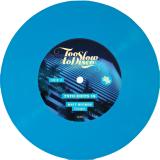
We here at TSTD are longtime fans of UK producer/musician/Label maker MATT HUGHES. For a few years he is delivering tasteful, deep, dubbed reworks for Too Slow To Disco, some in Edit form, but also his 2 official remixes for Goodvibes Sound on The Sunset Manifesto 2.
Both new TSTD Edits on this 7 inch are slow disco masterworks, he is giving the originals his trademark deep, warm versions. Who is the guy….?
Matt Hughes is a music producer from the north of England. A purveyor of all things funk, soul, disco, jazz and house! Most recent releases have been with Outcross Records, Bubblegum Pop, Editorial and Too Slow To Disco. A large number of Matt's works have been released under the MAM project with Miguel Campbell remixing the likesof the Climbers, Deadmau5 and Flight Facilities, as well as putting out releases via Wolf+Lamb, Future Classic, Hot Creations, Outcross Records, BPitch Control and Editorial Records to name a few.
Among his most notable collaborations are works with Derrick McKenzie, drummer of Jamiroquai; Drop Out Orchestra, Art Of Tones, amongst others. Each of these collaborations has allowed him to explore new musical dimensions, enriching his characteristic sound with diverse and fresh influences.
With a musical style deeply rooted in disco, funk and jazz, Monsieur Van Pratt combines classical elements with contemporary touches, creating a sound experience that is both nostalgic and innovative. His work not only stands out for its technical quality, but also for its ability to connect emotionally with the listener, making him a central figure in the evolution of modern dance sound.
out of Stock
Last delivered 35 days ago available to reorder, subject to availability
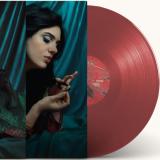
Julia Cumming’s solo debut Julia opens with an unadorned declaration of independence: her voice and a piano uniting for a liberating proclamation of self that rejects doubt, misogyny, and the notion of being “too much.” Julia unlocks a creative door years in the making for the New York–born multi-instrumentalist and Sunflower Bean bassist, culminating after nearly two decades of bands, releases, labels, and relentless touring. As Sunflower Bean’s Headful of Sugar era ended in 2023, Cumming decamped to Los Angeles, where a two-year, deeply healing collaboration with producer Brian Robert Jones — her “second artistic puberty” — took shape. Drawing freely from formative influences: Burt Bacharach, Carole King, Joni Mitchell, Carly Simon, and Brian Wilson. Julia emerges as a joyful, anti-cool coming-out: a celebration of the dorks, the misfits, and the enduring truth of being enough.
Julia Cumming’s solo debut Julia opens with an unadorned declaration of independence: her voice and a piano uniting for a liberating proclamation of self that rejects doubt, misogyny, and the notion of being “too much.” Julia unlocks a creative door years in the making for the New York–born multi-instrumentalist and Sunflower Bean bassist, culminating after nearly two decades of bands, releases, labels, and relentless touring. As Sunflower Bean’s Headful of Sugar era ended in 2023, Cumming decamped to Los Angeles, where a two-year, deeply healing collaboration with producer Brian Robert Jones — her “second artistic puberty” — took shape. Drawing freely from formative influences: Burt Bacharach, Carole King, Joni Mitchell, Carly Simon, and Brian Wilson. Julia emerges as a joyful, anti-cool coming-out: a celebration of the dorks, the misfits, and the enduring truth of being enough.
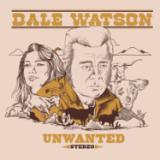
With Texas- sized defiance and drive, he's spent four decades flying the flag for his own brand of honky-tonk, outlaw country, western swing, and rockabilly. That signature sound has a name -- "Ameripolitan" -- and its originator is Watson himself: a singer, songwriter, guitarist, producer, actor, cultural architect, and rulebreaking traditionalist for the modern world, championing the traditions that fly in the face of the homogenous mainstream. With Unwanted, he fires another doublebarreled shotgun blast of country twang and honky- tonk bang fueled by the heartaches, hard- won lessons, and high- speed thrills of a life largely logged on the road. Singing with a booming voice that could cut through the chaos of a packed dancehall, Watson runs the show like a roots-rock ringleader. He salutes his vices on the galloping "Willie Waylon and Whiskey," reflects upon a lifetime of loss with the gorgeous ballad "If You Really Loved Me (Outlive Me)," and gets wistfully contemplative on "Life is Like a Song." Entirely written and produced by Watson, Unwanted is the sound of an Ameripolitan diehard with plenty of life left in the tank, speeding toward a horizon of his own making.
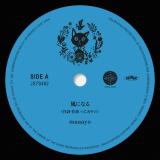
This is the second 7"single cut project from the album"Ghibli HOUSE essential PIANO set", which blends the beautiful melodies of the original Ghibli classic songs with the vibrancy and exuberance of house!
"Kaze Ni Naru" is a refreshing arrangement of the theme song for the movie"The Cat Returns"released by Ayano Tsuji in 2002. The song incorporates the essence of house music without losing the bright atmosphere of the original. The B-side "Kimi Wo Nosete" is an instrumental cover of the theme song for "Castle in the Sky," written by Hayao Miyazaki and composed by Joe Hisaishi in 1988. The beautiful melody with a hint of sadness is reworked in an up-tempo style, making it perfect for floor use. A must have for Ghibli and house fans!
Studio One Sound is the classic Studio One collection from Soul Jazz Records. Described as ‘The University of Reggae’ by Chris Blackwell, Studio One, and founder Clement ‘Sir Coxsone’ Dodd are by far the most-important names in the history of reggae music. Originally released in 2012 this album has been out of print for many years, making it one of the most-collectible of Soul Jazz Records’ Studio One Series. This is the first ever colour vinyl edition of this classic album.
The album features some of the most in-demand and collectible Studio One tracks from over its fifty-year history and includes incredible legendary reggae artists such as The Heptones, Ken Boothe, The Skatalites, Johnny Osbourne and Wailing Souls. All these artists (and hundreds more) launched their careers at Studio One under the guidance of Clement 'Sir Coxsone' Dodd. The Studio One Sound collection features everything from classic ska and rocksteady to the deepest roots, heaviest dub and dancehall roots. Sleevenotes are by Rob Chapman, author of the celebrated books about Studio One Records, 'Never Grow Old' and 'Downbeat the Ruler'. The exact reproduction of the original artwork features the classic image of Dennis Brown on the cover. This album is newly fully remastered for vinyl by Jason Goz at Transition. Exclusive one-off pressing on heavyweight double transparent green vinyl.
Concert at Prades-le-Lez marks the origins of the Intercommunal Free Dance Music Orchestra. In 1974, François Tusques and his companions (Michel Marre, Jo Maka, Adolf Winkler and Guem), in the spirit of Don Cherry or Chris McGregor, playfully dismantle all borders and all styles of creative music.
On this second volume, the Intercommunal builds unprecedented soundscapes around a song of revolt, a dance tune, or a burst of dissonance. The journey is unforgettable, no question about it. On repeat listening, it even becomes… lunar!
“The music that we make is primarily meant to be listened to live,” warned a leaflet from the Intercommunal Free Dance Music Orchestra. This is precisely why the (restored!) reissue of the two volumes of Concert at Prades-le-Lez, recorded on January 25 and 26, 1974 by François Tusques and his comrades, is such an important event.
In 1971, after recording a series of albums that would leave a lasting mark on French jazz (Free Jazz, of course, with Michel Portal, François Jeanneau, Bernard Vitet, Beb Guérin and Charles Saudrais, but also Le Nouveau Jazz with Barney Wilen, or the solo Piano Dazibao), François Tusques founded the Intercommunal—a grouping whose very name called for the fraternization of the various communities making up the country: Our music will help, we hope, to resolve the contradictions that exist between workers be longing to different communities, by breaking down various forms of national chauvinism, and more particularly the chauvinism of certain French people toward the cultures of Third World countries… Long live the friendship between the peoples of the whole world!
Among the great records made by the Intercommunal Free Dance Music Orchestra, the two volumes of Concert at Prades-le-Lez come first, before L’Inter Communal, Vol. 4, Le Musichien, and Après la marée noire (four titles already reissued by Souffle Continu). François Tusques and his companions (Michel Marre and Jo Maka on saxophones, Adolf Winkler on trombone, and Guem on percussion) performed on January 25 and 26, 1974 at the Moulin de Prades-le-Lez, a few kilometers from Montpellier. It was thus in the southern region of Occitanie that the first echoes of this musical vision of a borderless brotherhood were recorded.
“We’re not among the Colonels,” the Intercommunal reassures us right away, performing a stride piano tune carried by African winds that the audience cannot resist for long. The energy is already striking and it never lets up throughout these two recordings, from start to finish: jazz, blues, traditional music, minimalism, even funk… The musicians of the Intercommunal have heard a lot of great music and now delight in reinventing it by mixing it all together.
“We want the song form to take its place as a weapon in the struggle against capitalist exploitation and all those who oppress us morally and materially,” declared an Intercommunal leaflet, quoting Jean-Baptiste Clément, author of the lyrics to “Le Temps des cerises.” The struggle was therefore serious—but it did not prevent François Tusques and his group from waging it in a festive spirit: each piece on Concert at Prades-le- Lez sends out a call for love and fraternity. Fifty years later, the message remains as relevant as ever—and once again, it is François Tusques who makes it heard.
Concert at Prades-le-Lez marks the origins of the Intercommunal Free Dance Music Orchestra. In 1974, François Tusques and his companions (Michel Marre, Jo Maka, Adolf Winkler and Guem), in the spirit of Don Cherry or Chris McGregor, playfully dismantle all borders and all styles of creative music.
On this first volume, the Intercommunal takes its audience from New Orleans to Brittany and on to North Africa. The journey was bold, without a doubt—and its memory remains unforgettable.
“The music that we make is primarily meant to be listened to live,” warned a leaflet from the Intercommunal Free Dance Music Orchestra. This is precisely why the (restored!) reissue of the two volumes of Concert at Prades-le-Lez, recorded on January 25 and 26, 1974 by François Tusques and his comrades, is such an important event.
In 1971, after recording a series of albums that would leave a lasting mark on French jazz (Free Jazz, of course, with Michel Portal, François Jeanneau, Bernard Vitet, Beb Guérin and Charles Saudrais, but also Le Nouveau Jazz with Barney Wilen, or the solo Piano Dazibao), François Tusques founded the Intercommunal—a grouping whose very name called for the fraternization of the various communities making up the country: Our music will help, we hope, to resolve the contradictions that exist between workers be longing to different communities, by breaking down various forms of national chauvinism, and more particularly the chauvinism of certain French people toward the cultures of Third World countries… Long live the friendship between the peoples of the whole world!
Among the great records made by the Intercommunal Free Dance Music Orchestra, the two volumes of Concert at Prades-le-Lez come first, before L’Inter Communal, Vol. 4, Le Musichien, and Après la marée noire (four titles already reissued by Souffle Continu). François Tusques and his companions (Michel Marre and Jo Maka on saxophones, Adolf Winkler on trombone, and Guem on percussion) performed on January 25 and 26, 1974 at the Moulin de Prades-le-Lez, a few kilometers from Montpellier. It was thus in the southern region of Occitanie that the first echoes of this musical vision of a borderless brotherhood were recorded.
“We’re not among the Colonels,” the Intercommunal reassures us right away, performing a stride piano tune carried by African winds that the audience cannot resist for long. The energy is already striking and it never lets up throughout these two recordings, from start to finish: jazz, blues, traditional music, minimalism, even funk… The musicians of the Intercommunal have heard a lot of great music and now delight in reinventing it by mixing it all together.
“We want the song form to take its place as a weapon in the struggle against capitalist exploitation and all those who oppress us morally and materially,” declared an Intercommunal leaflet, quoting Jean-Baptiste Clément, author of the lyrics to “Le Temps des cerises.” The struggle was therefore serious—but it did not prevent François Tusques and his group from waging it in a festive spirit: each piece on Concert at Prades-le- Lez sends out a call for love and fraternity. Fifty years later, the message remains as relevant as ever—and once again, it is François Tusques who makes it heard.
Egyptian Lover's first record since 1994..... Solid electro dancefloor tracks like no other. Still rocking and still making the ladies shake their hot pants! BIG TIP!!...
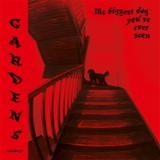
Following their debut album "Flaws," here is a high-quality follow-up from GARDENS. The popular Viennese indie band are making music that feels warm, direct, and a little rough around the edges. Bright guitars, soft synths, and melodies that stick without trying too hard. Their sound drifts between indie pop, dreamy folk, and gentle garage energy, grounded in honest, quietly catchy songwriting. EP digitally and on ltd tape available. "GARDENS certainly succeed in adding new layers of inspiration into the modern dream-pop genre, something which has been far too long overdue for a refresh. Their debut record offers a colossal level of promise" - Far Out Magazine " an irresistible sonic tapestry" - KEXP "intricately crafted_glistens with warmth and depth" - DIY
DJ 3000 BRIDGES CONTINENTS WITH "SO SHEIK": A CINEMATIC MIRAGE ON MOTECH #178
DETROIT / GLOBAL — Motech Records founder DJ 3000 returns with "So Sheik," a release that operates in the shadows between the Motor City and the Mediterranean. Having carved out a unique sonic identity among Detroit’s elite producers, DJ 3000 moves away from standard tropes to craft a cinematic mirage that blends the mechanical pulse of Detroit with a haunting, orchestral depth.
The production is anchored by the rhythmic drive of the shekere and deep percussion, layered with a haunting fusion of analog strings and horns. Rather than traditional brass, the horns blend seamlessly with the strings to create a lush, otherworldly atmosphere—making "So Sheik" a masterclass in global techno mystery.
True to the label’s roots, Motech #178 is a limited vinyl-focused release, continuing the label's unwavering commitment to the wax tradition in a digital age.
out of Stock
Last delivered 65 days ago available to reorder, subject to availability
Writings on the topic that go off in all directions, mind-numbing lectures given by academics, and testimonies, most of them heavily doctored, from those who “lived through that era”: so many people today fantasize about the early days of punk in our country… This blessed moment when no one had yet thought of flaunting a ridiculous green mohawk, taking Sid Vicious as a hero, or – even worse – making the so-called alternative scene both festive and boorish. There was no such thing in 1976 or 1977, when it wasn’t easy to get hold of the first 45s by the Pistols or the Clash. Few people were aware of what was happening on the fringes of the fringes at the time. Malcolm McLaren was virtually unknown, and having short hair made you seem strange. Who knew then that rock music, which had taken a very bad turn since the early 1970s, would once again become an essential element of liberation? That, thanks to short and fast songs, it would once again rediscover that primitive, social side that was so hated by older generations? Who knew that, besides a few loners who read the music press (it was even better if they read it in English) and frequented the right record stores? Many of these formed bands, because it was impossible to do otherwise. We quickly went from listening to the Velvet Underground to trying to play the Stooges’ intros. It’s a somewhat collective story, even though there weren’t many people to start it.
The Guilty Razors were among those who took part in this initial upheaval in Paris. They were far from being the worst. They had something special and even released a single that was well above the national average. They also had enough songs to fill an album, the one you’re holding. In everyone’s opinion, they were definitely not among the punk impostors that followed in their wake. They were, at least, genuine and credible.
Guilty Razors, Parisian punk band (1975-1978). To understand something about their somewhat linear but very energetic sound, we might need to talk about the context in which it was born and, more broadly, recall the boredom (a theme that would become capital in punk songs) coupled with the desire to blow everything off, which were the basis for the formation of bands playing a rejuvenated rock music ; about the passion for a few records by the Kinks or the early Who, by the Stooges, by the Velvet mostly, which set you apart from the crowd.
And of course, we should remember this new wave, which was promoted by a few articles in the specialized press and some cutting-edge record stores, coming from New York or London, whose small but powerful influence could be felt in Paris and in a handful of isolated places in the provinces, lulled to sleep by so many appalling things, from Tangerine Dream to President Giscard d’Estaing...
In 1975-76, French music was, as almost always, in a sorry state ; it was still dominated by Johnny Hallyday and Sylvie Vartan. Local rock music was also rather bleak, apart from Bijou and Little Bob who tried to revive this small scene with poorly sound-engineered gigs played to almost no one.
In the working class suburbs at the time, it was mainly hard rock music played to 11 that helped people forget about their gruelling shifts at the factory. Here and there, on the outskirts of major cities, you still could find a few rockers with sideburns wearing black armbands since the death of Gene Vincent, but it wasn’t a proper mass movement, just a source of real danger to anyone they came across who wasn't like them. In August 1976, a festival unlike any other took place in Mont-de-Marsan – the First European Punk Festival as the poster said – with almost as many people on stage as in the audience. Yet, on that day, a quasi historical event happened, when, under the blazing afternoon sun, a band of unknowns called The Damned made an unprecedented noise in the arena, reminiscent of the chaotic Stooges in their early adolescence. They were the first genuine punk band to perform in our country: from then on, anything was possible, almost anything seemed permissible.
It makes sense that the four+1 members of Guilty Razors, who initially amplified acoustic guitars with crappy tape recorder microphones, would adopt punk music (pronounced paink in French) naturally and instinctively, since it combines liberating noise with speed of execution and – crucially – a very healthy sense of rebellion (the protesters of May 1968 proclaimed, and it was even a slogan, that they weren’t against old people, but against what had made them grow old. In the mid-1970s, it seemed normal and obvious that old people should now ALSO be targeted!!!).
At the time, the desire to fight back, and break down authority and apathy, was either red or black, often taking the form of leafleting, tumultuous general assemblies in the schoolyard, and massive or shabby demonstrations, most of the time overflowing with an exciting vitality that sometimes turned into fights with the riot police. Indeed, soon after the end of the Vietnam War and following Pinochet’s coup in Chile, all over France, Trotskyist and anarcho-libertarian fervour was firmly entrenched among parts of the educated youth population, who were equally rebellious and troublemakers whenever they had the chance. It should also be noted that when the single "Anarchy in the UK" was first heard, even though not many of us had access to it, both the title and its explosive sound immediately resonated with some of those troublemakers crying out for ANARCHY!!! Meanwhile, the left-wing majority still equated punks with reckless young neo-Nazis. Of course, the widely circulated photos in the mainstream press of Siouxsie Sioux with her swastikas didn’t necessarily help to win over the theorists of the Great Revolution. It took Joe Strummer to introduce The Clash as an anti-racist, anti-fascist and anti-ignorance band for the rejection of old-school revolutionaries to fade a little.
The Lycée Jean-Baptiste Say at Porte d’Auteuil, despite being located in the very posh and very exclusive 16th arrondissement of Paris, didn’t escape these "committed" upheavals, which doubled as the perfect outlet for the less timid members of this generation.
“Back then, politics were fun,” says Tristam Nada, who studied there and went on to become Guilty Razors’ frontman. “Jean-Baptiste was the leftist high-school in the neighbourhood. When the far right guys from the GUD came down there, the Communist League guys from elsewhere helped us fight them off.”
Anything that could challenge authority was fair game and of course, strikes for just about any reason would lead to increasingly frequent truancy (with a definitive farewell to education that would soon follow). Tristam Nada spent his 10th and 11th unfinished grades with José Perez, who had come from Spain, where his father, a janitor, had been sentenced to death by Franco. “José steered my tastes towards solid acts such as The Who. Like most teenagers, I had previously absorbed just about everything that came my way, from Yes to Led Zeppelin to Genesis. I was exploring… And then one day, he told me that he and his brother Carlos wanted to start a rock band.” The Perez brothers already played guitar. “Of course, they were Spanish!”, jokes their singer. “Then, somewhat reluctantly, José took up the bass and we were soon joined by Jano – who called himself Jano Homicid – who took up the rhythm guitar.” Several drummers would later join this core of not easily intimidated young guys who didn’t let adversity get the better of them.
The first rehearsals of the newly named Guilty Razors took place in the bedroom of a Perez aunt. There, the three rookies tried to cover a few standards, songs that often were an integral part of their lives. During a first, short gig, in front of a bewildered audience of tough old-school rockers, they launched into a clunky version of the Velvet Underground's “Heroin”. Challenge or recklessness? A bit of both, probably… And then, step by step, their limited repertoire expanded as they decided to write their own songs, sung in a not always very accurate or academic English, but who cared about proper grammar or the right vocabulary, since what truly mattered was to make the words sound as good as possible while playing very, very fast music? And spitting out those words in a language that left no doubt as to what it conveyed mattered as well.
Trying their hand a the kind of rock music disliked by most of the neighbourhood, making noise, being fiercely provocative: they still belonged to a tiny clique who, at this very moment, had chosen to impose this difference. And there were very few places in France or elsewhere, where one could witness the first stirrings of something that wasn’t a trend yet, let alone a movement.
In the provinces, in late 1976 or early 1977, there couldn’t be more than thirty record stores that were a bit more discerning than average, where you could hear this new kind of short-haired rock music called “punk”. The old clientele, who previously had no problem coming in to buy the latest McCartney or Aerosmith LP, now felt a little less comfortable there…
In Paris, these enlightened places were quite rare and often located nex to what would become the Forum des Halles, a big shopping mall. Between three aging sex workers, a couple of second-hand clothes shops, sellers of hippie paraphernalia and small fashion designers, the good word was loudly spread in two pioneering places – propagators of what was still only a new underground movement. Historically, the first one was the Open Market, a kind of poorly, but tastefully stocked cave. Speakers blasted out the sound of sixties garage bands from the Nuggets compilation (a crucial reference for José Perez) or the badly dressed English kids of Eddie and the Hot Rods. This black-painted den was opened a few years earlier by Marc Zermati, a character who wasn’t always in a sunny disposition, but always quite radical in his (good) choices and his opinions. He founded the independent label Skydog and was one of the promoters of the Mont-de-Marsan punk festivals. Not far from there was Harry Cover, another store more in tune with the new New York scene, which was amply covered in the house fanzine, Rock News (even though it was in it that the photos of the Sex Pistols were first published in France).
It was a favorite hang-out of the Perez brothers and Tristam Nada, as the latter explained. “It’s at Harry Cover’s that we first heard the Pistols and Clash’s 45s, and after that, we decided to start writing our first songs. If they could do it, so could we!”
The sonic shocks that were “Anarchy in the UK”, “White Riot” or the Buzzcocks’s EP, “Spiral Scratch” – which Guilty Razors' sound is reminiscent of – were soon to be amplified by an unparalleled visual shock. In April 1977, right after the release of their first LP, The Clash performed at the Palais des Glaces in Paris, during a punk night organised by Marc Zermati. For many who were there, it was the gig of a lifetime…
Of course, Guilty Razors and Tristam were in the audience: “That concert was fabulous… We Parisian punks were almost all dressed in black and white, with white shirts, skinny leather ties, bikers jackets or light jackets, etc. The Clash, on the other hand, wore colourful clothes. Well, the next day, at the Gibus, you’d spot everyone who had been at this concert, but they weren’t wearing anything black, they were all wearing colours.”
It makes sense to mention the Gibus club, as Guilty Razors often played there (sometimes in front of a hostile audience). It was also the only place in Paris that regularly scheduled new Parisian or Anglo-Saxon acts, such as Generation X, Siouxsie and the Banshees, the Slits, and Johnny Thunders who would become a kind of messed-up mascot for the venue. A little later, in 1978, the Rose Bonbon – formerly the Nashville – also attracted nightly owls in search of electric thrills… In 1977, the iconic but not necessarily excellent Asphalt Jungle often played at the Gibus, sometimes sharing the bill with Metal Urbain, the only band whose aura would later transcend the French borders (“I saw them as the French Sex Pistols,” said Geoff Travis, head of their British label Rough Trade). Already established in this small scene, Metal Urbain helped the young and restless Guilty Razors who had just arrived. Guitarist for Metal Urbain Hermann Schwartz remembers it: “They were younger than us, we were a bit like their mentors even if it’s too strong a word… At least they were credible. We thought they were good, and they had good songs which reminded of the Buzzcocks that I liked a lot. But at some point, they started hanging out with the Hells Angels. That’s when we stopped following them.”
The break-up was mutual, since, Guilty Razors, for their part, were shocked when they saw a fringe element of the audience at Metal Urbain concerts who repeatedly shouted “Sieg Heil” and gave Nazi salutes. These provocations, even still minor (the bulk of the skinhead crowd would later make their presence felt during concerts), weren’t really to the liking of the Perez brothers, whose anti-fascist convictions were firmly rooted. Some things are non-negotiable.
A few months earlier (in July 1978), Guilty Razors had nevertheless opened very successfully for Metal Urbain at the Bus Palladium, a more traditonally old-school rock night-club. But, as was sometimes the case back then, the night turned into a mass brawl when suburban rockers came to “beat up punks”.
Back then, Parisian nights weren’t always sweet and serene.
So, after opening as best as they could for The Jam (their sound having been ruined by the PA system), our local heroes were – once again – met outside by a horde of greasers out to get them. “Thankfully,” says Tristam, “we were with our roadies, motorless bikers who acted as a protective barrier. We were chased in the neighbouring streets and the whole thing ended in front of a bar, with the owner coming out with a rifle…”
Although Tristam and the Perez brothers narrowly escaped various, potentially bloody, incidents, they weren’t completely innocent of wrongdoing either. They still find amusing their mugging of two strangers in the street for example (“We were broke and we simply wanted to buy tickets for the Heartbreakers concert that night,” says Tristam). It so happened that their victims were two key figures in the rock business at the time: radio presenter Alain Manneval and music publisher Philippe Constantin. They filed a complaint and sought monetary compensation, but somehow the band’s manager, the skilful but very controversial Alexis, managed to get the complaint withdrawn and Guilty Razors ended up signing with Constantin with a substantial advance.
They also signed with Polydor and the label released in 1978 their only three-track 45, featuring “I Don't Wanna be A Rich”, “Hurts and Noises” and “Provocate” (songs that exuded perpetual rebellion and an unquenchable desire for “class” confrontation). It was a very good record, but due to a lack of promotion (radio stations didn’t play French artists singing in English), it didn’t sell very well. Only 800 copies were allegedly sold and the rest of the stock was pulped… Initially, the three tracks were to be included on a LP that never came to be, since they were dropped by Polydor (“Let’s say we sometimes caused a ruckus in their offices!” laughs Tristam.) In order to perfect the long-awaited LP, the band recorded demos of other tracks. There was a cover of Pink Floyd's “Lucifer Sam” from the Syd Barrett era – proof of an enduring love for the sixties’ greats –, “Wake Up” a hangover tale and “Bad Heart” about the Baader-Meinhof gang, whose actions had a profound impact on the era and on a generation seeking extreme dissent... On the album you’re now discovering, you can also hear five previously unreleased tracks recorded a bit later during an extended and freezing stay in Madrid, in a makeshift studio with the invaluable help of a drummer also acting as sound engineer. He was both an enthusiastic old hippie and a proper whizz at sound engineering. Here too, certain influences from the fifties and sixties (Link Wray, the Troggs) are more than obvious in the band’s music.
Shortly after a final stormy and rather barbaric (on the audience’s side) “Punk night” at the Olympia in June 1978, Tristam left the band ; his bandmates continued without him for a short while.
But like most pioneering punk bands of the era, Guilty Razors eventually split up for good after three years (besides once in Spain, they’d only played in Paris). The reason for ceasing business activities were more or less the same for everyone: there were no venues outside one’s small circuit to play this kind of rock music, which was still frightening, unknown, or of little interest to most people. The chances of recording an LP were virtually null, since major labels were only signing unoriginal but reassuring sub-Téléphone clones, and the smaller ones were only interested in progressive rock or French chanson for youth clubs. And what about self-production? No one in our small safety-pinned world had thought about it yet. There wasn’t enough money to embark on that sort of venture anyway.
So yes, the early days of punk in France were truly No Future!
out of Stock
Last delivered 6 months ago available to reorder, subject to availability
Sound Records proudly presents ‘Morpho’, the debut LP from UK-based producer Benyayer, formerly one-third of celebrated electronic trio Dark Sky. A deeply personal record and a symbolic transition, Morpho captures the emotional and sonic evolution of an artist in metamorphosis.
Having stepped into the solo spotlight following his successful Infiltrator EP, Benyayer (aka Matt) delivers a bold, vinyl release that combines seven previously digital-only tracks with a brand new cut, ‘The Return’, all meticulously curated and pressed for the first time on wax.
Bridging influences from techno, UK bass, Afrofuturism, and electronica, Morpho is a meticulous exploration of rhythm designed to excite, cause chaos, personal reflection and movement. Each track is a raw, rhythmic exploration that draws on his time spent busking on the streets of London with found objects, experimentation with modular synths and years of experience honing his craft as a performer at some of the finest establishments in the electronic music landscape.
This initial vinyl edition is limited to just 300 copies. Designed in collaboration with Harry Cresswell, each sleeve features a deconstructed butterfly motif, laser-cut on both sides of heavy matte stock, paired with a matte-printed inner sleeve and a transparent vinyl disc, making each copy a true collector’s item.
The LP arrives amid support from tastemakers like Gilles Peterson, Benji B, and Tom Ravenscroft (BBC 6 Music), as well as heavyweight artists including Ben UFO, Bicep, Laurent Garnier, Bonobo, and Modeselektor.
Benyayer's new live show, built around these very tools, has already been trailed to great acclaim across Europe, adding a powerful performative dimension to the record. With previous performances at Berghain, Fabric, Glastonbury, MUTEK, Dimensions and Melt Festival. Benyayer's solo trajectory continues to rise with intent, mystery, and a fierce sense of artistic purpose.
out of Stock
Last delivered 6 months ago available to reorder, subject to availability
Twice Grammy-nominated, Mercury Prize and BRIT Award-winning artist Arlo Parks announces her new album, Ambiguous Desire, due April 3rd via Transgressive Records.
Ambiguous Desire is Parks at her most confident and experimental, supplanting live band sessions for modular synths, ableton plugins and samplers that channel the frenetic, vibrant spaces she was immersed in, all while spotlighting the acclaimed poetry and lyricism she’s beloved for.
Reflecting on the making of the record, Parks shares, "I danced more than ever as I made this record, I made more friends than ever too, found myself in the weird underbelly of New York juke nights, unleashed, laughed and laughed and laughed. This record has desire at its centre. Desire is a life force, it’s a wanting, a yearning, a momentum - we are all alive because there is something or someone we want - desire is an engine. But it is also mysterious, tangled, random, enlightening and HUMAN."
Parks crafted the album with producer Baird (Brockhampton, Kevin Abstract). Their process unfolded between NYC’s vibrant, community-rooted nightlife and long, introspective days spent in Baird’s downtown loft. The result is Parks’ most vulnerable, self-affirming, and euphoric work to date.
Die zweifach Grammy-nominierte, mit dem Mercury Prize und BRIT Award ausgezeichnete Künstlerin Arlo Parks kündigt ihr neues Album „Ambiguous Desire“ an, das am 3. April über Transgressive Records erscheinen wird.
„Ambiguous Desire“ zeigt Parks von ihrer selbstbewusstesten und experimentellsten Seite. Live-Band-Sessions wurden durch modulare Synthesizer, Ableton-Plugins und Sampler ersetzt, die die frenetischen, pulsierenden Räume widerspiegeln, in denen sie sich bewegte, während gleichzeitig ihre gefeierte Poesie und Lyrik, für die sie so geliebt wird, im Vordergrund stehen.
Über die Entstehung des Albums sagt Parks: „Ich habe während der Arbeit an diesem Album mehr getanzt als je zuvor, ich habe mehr Freunde gefunden als je zuvor, ich habe mich in den seltsamen Untergrund der New Yorker Juke-Nächte begeben, mich gehen lassen, gelacht und gelacht und gelacht. Dieses Album dreht sich um das Thema Begehren. Sehnsucht ist eine Lebenskraft, sie ist ein Verlangen, eine Dynamik – wir alle leben, weil es etwas oder jemanden gibt, den wir wollen – Sehnsucht ist ein Motor. Aber sie ist auch geheimnisvoll, verworren, zufällig, erleuchtend und MENSCHLICH.“
Parks hat das Album zusammen mit dem Produzenten Baird (Brockhampton, Kevin Abstract) produziert. Der Entstehungsprozess fand zwischen dem pulsierenden, gemeinschaftsorientierten Nachtleben von NYC und langen, introspektiven Tagen in Bairds Loft in der Innenstadt statt. Das Ergebnis ist Parks' bisher verletzlichstes, selbstbewusstestes und euphorischstes Werk.
Twice Grammy-nominated, Mercury Prize and BRIT Award-winning artist Arlo Parks announces her new album, Ambiguous Desire, due April 3rd via Transgressive Records.
Ambiguous Desire is Parks at her most confident and experimental, supplanting live band sessions for modular synths, ableton plugins and samplers that channel the frenetic, vibrant spaces she was immersed in, all while spotlighting the acclaimed poetry and lyricism she’s beloved for.
Reflecting on the making of the record, Parks shares, "I danced more than ever as I made this record, I made more friends than ever too, found myself in the weird underbelly of New York juke nights, unleashed, laughed and laughed and laughed. This record has desire at its centre. Desire is a life force, it’s a wanting, a yearning, a momentum - we are all alive because there is something or someone we want - desire is an engine. But it is also mysterious, tangled, random, enlightening and HUMAN."
Parks crafted the album with producer Baird (Brockhampton, Kevin Abstract). Their process unfolded between NYC’s vibrant, community-rooted nightlife and long, introspective days spent in Baird’s downtown loft. The result is Parks’ most vulnerable, self-affirming, and euphoric work to date.
Die zweifach Grammy-nominierte, mit dem Mercury Prize und BRIT Award ausgezeichnete Künstlerin Arlo Parks kündigt ihr neues Album „Ambiguous Desire“ an, das am 3. April über Transgressive Records erscheinen wird.
„Ambiguous Desire“ zeigt Parks von ihrer selbstbewusstesten und experimentellsten Seite. Live-Band-Sessions wurden durch modulare Synthesizer, Ableton-Plugins und Sampler ersetzt, die die frenetischen, pulsierenden Räume widerspiegeln, in denen sie sich bewegte, während gleichzeitig ihre gefeierte Poesie und Lyrik, für die sie so geliebt wird, im Vordergrund stehen.
Über die Entstehung des Albums sagt Parks: „Ich habe während der Arbeit an diesem Album mehr getanzt als je zuvor, ich habe mehr Freunde gefunden als je zuvor, ich habe mich in den seltsamen Untergrund der New Yorker Juke-Nächte begeben, mich gehen lassen, gelacht und gelacht und gelacht. Dieses Album dreht sich um das Thema Begehren. Sehnsucht ist eine Lebenskraft, sie ist ein Verlangen, eine Dynamik – wir alle leben, weil es etwas oder jemanden gibt, den wir wollen – Sehnsucht ist ein Motor. Aber sie ist auch geheimnisvoll, verworren, zufällig, erleuchtend und MENSCHLICH.“
Parks hat das Album zusammen mit dem Produzenten Baird (Brockhampton, Kevin Abstract) produziert. Der Entstehungsprozess fand zwischen dem pulsierenden, gemeinschaftsorientierten Nachtleben von NYC und langen, introspektiven Tagen in Bairds Loft in der Innenstadt statt. Das Ergebnis ist Parks' bisher verletzlichstes, selbstbewusstestes und euphorischstes Werk.
Talulah’s Tape is the debut offering from magnetic Midwest-jangle collective Good Flying Birds. Across a patchwork mixtape of stripped-down home recordings that span the independent-guitar spectrum, the band delivers colorful, intricate pop songs perched between the immediacy of DIY punk and the intimate sweetness of twee. Breakbeats, memes, and noise glue everything together, making the album feel as chronically online as it is timeless.
Originally released on cassette in January 2025 by Midwest-punk legend Martin Meyers’s Rotten Apple label, the tape sold more than 300 copies in under a month and quickly became an out-of-print and coveted item. Meyers called it “certified catnip for popheads.” Now, with a refined track list and a fresh master from Greg Obis, Talulah’s Tape returns on LP and CD via Carpark and Smoking Room in October 2025.
While production and approach vary, a through-line of sensitive self-contemplation rests on bright, scrappy guitars and hyperactive melodic bass. Opener “Down on Me” rides a buoyant bass line while jangling guitars frame reflections on overcoming trauma: “I see you in the mirror every time I cry / I hear your voice every time I try.” Next, the guitars trade twinkling counter-melodies on “I Care for You,” pairing sugary, lovestruck lyrics with effervescent strums: “You catch me when I fall / You build me up so tall.”
The rosy grin occasionally twists into a wicked smirk. “Dynamic” warns, “You used to paint the face, but now you’re just the clown,” while “Glass” asks, “Is it lonely at the top when everyone follows the trend, and you hold the pen?” Both tracks brim with sparkling guitar interplay. By the closing, nearly five-minute “Last Straw,” Good Flying Birds stand far beyond conventional indie-pop or 4-track punk, unveiling a roller-coaster of unpredictable changes, vocal harmonies, and instrumental cross-talk.
Altogether, Talulah’s Tape is a pastel-yellow, candy-coated shell filled with thoughtful juxtapositions and melodic experiments. Standing on the same ground as idiosyncratic songwriters like Connie Converse and Daniel Johnston, Good Flying Birds find sweetness in sadness, tear stains on a colorful flower-print couch. Simultaneously, it’s packed with the scratchy guitars and vibrant rhythms of Scottish guitar groups like The Pastels, Orange Juice, and Josef K. It’s a tremendous opening statement from a band just getting started.
Macclesfield 3-piece Cassia make their extremely welcome return with the announcement of their most ambitious release yet in new studio album everyone, outside - out April 11th.
The album marks a bold new chapter, and recently served up a tropical-tinged first offering in ‘heat’ - with today serving a superb Round Two with the stomping, insatiable, hook-laden new single ‘friends’.
everyone, outside takes Cassia’s sound to new heights. Written fresh off the back of two years of relentless touring, the band channelled every ounce of their renowned live energy into the album, returning to a studio they built themselves in Macclesfield, after creating their previous album in Berlin. The journey provided an added twist, recording the majority of tracks live on TikTok, giving fans a unique, inclusive experience to be part of the process.
The album’s title is a metaphor for embracing your truest self and reflection of a band who are at their happiest outside. It’s a message that speaks to the idea of reconnecting with nature and Britain’s finest summers. As frontman Rob explains, “That title, ‘everyone, outside’ started as a song about how weird it is that we stay inside all the time when being out in nature always makes us feel better. Over time, it came to mean more than that - like a metaphor for being your truest, most natural self, unburdened, like when no one’s watching.”
Drawing influences from a host of genres and cultures, everyone, outside reveals Cassia’s venn diagram of global sounds and intimate storytelling. A trip to Mexico during the writing process injected the record with a new energy, while their time spent in their new space back home gave the band a freedom to try new instruments, new sounds, acquire new tools to hone their production skills - and to simply have fun and explore. “The time we spent in Berlin taught us so much, but coming back home to Macclesfield allowed us to really focus on making something that felt like it came from us. No distractions, just pure creativity,” says drummer Jacob Leff.
Cassia’s rise has been impressive. From their early days busking the streets of Cornwall to playing major festivals, touring the world and receiving critical acclaim from BBC Radio 1, Radio X, The Independent, Rolling Stone UK, Clash & many more, the band has carved out a unique niche. Their sound, influenced by the African music Rob’s father introduced him to, combined with the indie heritage of nearby Manchester, combines the positivity of bands like Foals and Vampire Weekend, with the jazz-tinged afrobeats of Fela Kuti and Ebo Taylor.
After signing to Distiller Records in 2018, the band gave up their full-time jobs and ventured to Bath to record their debut album, Replica. Tracks such as ‘Right There’, ‘Drifting’ & ‘100 Times Over’ have amassed millions of streams, seeing the band sell out multiple headline Tours both in the UK and Europe. Playing to a homecoming capacity crowd at Manchester’s O2 Ritz, as well as sold out headline shows at London’s KOKO & The Garage, the band have accrued a huge, loyal following and their live shows earned them a nomination for Best Live Act at the AIM Awards alongside Idles and DMA’s, as well as making them the winners of Reeperbahn’s Anchor Award in 2022.
Cassia will tour the UK in May 2025, playing songs from the new album and some of their biggest tracks - headlining Leeds, Bristol, a newly added night in Southampton, a special Manchester homecoming, Glasgow, Birmingham, & a huge show at London’s HERE @ Outernet - dates below & Tickets Here. The band will also take things Stateside this year for their first ever run of headline shows in the US & Mexico.
out of Stock
Last delivered 6 months ago available to reorder, subject to availability
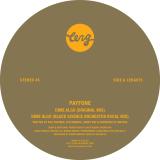
Some tracks are just too good to only feature on a compilation, even if it is a significant and celebratory set like Leng’s 15 Year anniversary album from late last year. That’s certainly the case with Payfone’s brilliantly atmospheric ‘Dime Algo’, a seductive slab of slow-motion Balearic disco featuring ‘I Feel You’ vocalist Kyd Nereida, along with Sofi Hardoy and Ludmila Rodriguez.
For this single release Black Science Orchestra, one of Britain’s most storied production collectives, deliver some truly exceptional remixes. Initially making their name with a series of sensational house jams on Junior Boy’s Own across the 1990s, BSO became renowned for the quality of their remixes as well as an ever-evolving trademark sound that put soul, organic instrumentation and references to dance music’s rich and varied past front and centre.
Comprised of Rob Mello, Ashley Beedle and Darren Morris, Black Science Orchestra work has been rare in recent years but here they deliver some magical takes on ‘Dime Algo’, blending Payfone’s original instrumentation with their own low-tempo magic. The Vocal Mix begins with sparse drums, Kraftwerkian bleeps and heavy sub-bass, building the action in waves with 303 lines, electro synths, warm chords and Nereida’s superb lead vocals combining to re-frame ‘Dime Algo’ as a deep, far-sighted slice of chugging 21st century acid-disco. The Dub Mix stretches things out with effects-laden instrumentation, acid lines and vocal snippets. Deeper and woozier, with more prominent use of the trio’s 303 trickery and Payfone’s superb original elements, it’s a heady, intoxicating and loved-up interpretation that subtly gains intensity throughout its seven-minute duration.
out of Stock
Last delivered 4 months ago available to reorder, subject to availability
As Selofan's fifth studio album, Vitrioli, from 2018, is a testament to the tragedy of life. The Greek duo, Joanna Pavlidou and Dimitris Pavlidis, who recorded the album in the Fabrika Records home studio, continue on in their poetic, but heartbreaking, music set to a dance beat. Between languages (Greek, English, German, and Spanish), Selofan feels on the brink of mania with Vitroli. However, the madness is controlled, the songs are restrained hysterics that culminate into the alchemic perfection of the band's specific moody sound.
From synthpop to synthpunk elements, the twelve-track LP leads listeners through dark corridors and into haunted, empty beds. There is a resignation to a doomed destiny with Vitroli—a trait that connects all Selofan releases—as a bitter pain and loneliness that cannot, or will not, subside.
The album begins with "Give Me a Reason" whose lyrics feel universal in this day and age: Give me a reason, to get out of bed / I could just watch the ceiling instead. Its heartbreak is profound as bells and voice pads echo under Joanna's voice. The adjacent music video for the song was directed by Dimitris Chaz Lee, and the band describes the video as "depicting the fragile nature, conflicts, emotional demands, and vulnerability of each person in a relationship."
"Billie Was a Vampire" is a story about an undead creature who works at a nightclub followed by the urgency of "Black Box." Brass sounds moan against the fast beat and suggest a frenzied need to escape.
"I'm Addicted" became the second single for the LP. I am addicted, you are mine, Joanna demands of the lover. The music video, also directed by Dimitris Chaz Lee, depicts a clean, white photoshoot primed for the most beautiful creatures of the Athenian wave scene. Alex Macharias, from the legendary Greek band In Trance 95, acts as the photographer for the session, as the models pose and flail under the bright bulbs. The director states: "Addiction is a mental state, something inside all of us. It altered our perception and created a parallel world of avant-garde beings and flashy lights making us part of this everlasting bond."
Paper Crown release their third album Letters - an ambitious and playful record that marks a clear new chapter for the duo, brimming with confidence, nostalgia and new horizons. Letters is the result of a long and meticulous creative process, with guitarist, producer and songwriter Ornulv Snortheim and vocalist and lyricist Johanne Kippersund (MEER) working closely, patiently and with great attention to detail. The album was recorded and produced at Snortheim's own Dakkota Studio in Hamar, Norway. Drummer Borre Flyen contributes throughout the record, and violinist Aud Ingebjorg Barstad adds beautiful string textures on selected tracks. Musically, Letters draws inspiration from the organic warmth of 1970s recordings - featuring spacious arrangements and live, breathing instrumentation - while also clearly nodding to alternative 1990s pop- rock, with strong melodies, distinctive guitar lines, raw energy and a spirit of exploration. The result is a sound that feels both nostalgic and contemporary, making Letters the duo's most complete release to date.
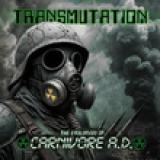
The Evolution Has Begun. Dedicated with love and honor to the memories of Peter Steele and Keith Alexander, Carnivore A.D. emerged as a post armageddon neo barbaric soundscape - a relentless force keeping the primal energy of Carnivore alive on stages and festivals around the world. Formed by NYC Hardcore and Metal veterans Baron Misuraca (vocals & bass – ex-SHEER TERROR), Chuck Lenihan (guitar – ex-CRUMBSUCKERS), and Joe Cangelosi (drums – ex-KREATOR, WHIPLASH, MASSACRE). Co-founded with full endorsement by original drummer Louie Beateaux, Carnivore A.D. has honored its roots by performing the explosive and brilliant works of Peter Steele with intensity, respect and raw power. But now, with the release of their first-ever studio EP "Transmutation", Carnivore A.D. transcends tribute.
They have challenged themselves to write new material - not to replace the original legacy, but to continue its spirit through their own lens. While the legacy of Carnivore remains sacred, Carnivore A.D. has become something more than its origin - a band with its own scars, its own instincts, and now, its own songs. “Think of Carnivore AD as a renowned dining establishment where it’s Chef passed on years ago but the recipes remain and folks still want to dine there instead of cooking the food themselves. And Chef Pete wouldn’t mind because his friends are making it with love.”- Louie Beateaux.
Lush in strings and pedal steel, the nine-track 'How I Became A Wave' album features contributions from some of Ireland's most accomplished musicians, headed up by Pat Carey, and featuring string and piano arrangements by Cormac McCarthy (RT Concert Orchestra). 'How I Became A Wave' will be available as a limited edition 12" gatefold vinyl that brings together music and visual art, featuring cover artwork based on the original oil painting 'Towards Pabaigh' by Scottish artist Ellis O'Connor, design by West Cork creative Megan Clancy, insert image by Cork- based artist Leslie Allen Spillane, and handwritten liner notes and lyrics from Pat Carey, who steers How I Became A Wave as a collaborative, multidisciplinary project. Pat Carey says: "At the heart of How I Became A Wave is a sense of collaboration - of connection between artists. Inviting artists of different disciplines into the creative process has been key to the journey. Understanding how other people see, hear and feel my work has been enlightening, affirming and vital, making sure that what we have created is a living body of work that I hope will continue to be expressed in changing ways."
She studied classical music on viola from the age of 3 through into college where she was on a path to be a performer in a large ensemble, but eventually left after feeling frustrated and limited in a world that did not provide much of an outlet for individual creativity. But the doors of perception really opened when she moved to British Columbia and was exposed to the raw beauty of the wilderness there.
She began recording at home using a basic audio setup along with a cello, viola, violin and double bass, and spent time making field recordings of natural sounds in BC. Her next idea was to actually move into nature to record, curious as to “how it would sound if I recorded outside entirely, with the natural reverb and sounds of the environment in the recording from the very beginning. The rustling of the leaves or a raven’s beating wings were as integral to the music as whatever I played.”
Fables is a mix of pieces that were recorded in the fall of 2024, in a small, remote cabin and outside, primarily using stringed instruments. The result is a series of stunning vignettes, meditations patiently unfurling like gentle waves, slowly advancing and retreating.4, in a small, remote cabin and outside, primarily using stringed instruments. The result is a series of stunning vignettes, meditations patiently unfurling like gentle waves, slowly advancing and retreating.
out of Stock
Last delivered 6 months ago available to reorder, subject to availability
Originally released in 1993 on Full Motion Records, Tranvision by Optical Phase is a cult Italian progressive house / trance record from the early ’90s underground.
Produced during the golden era of Italian progressive, the track captures the hypnotic and melodic sound that defined many European dancefloors of the time, driven by atmospheric pads, rolling rhythms and uplifting synth progressions.
Long sought-after by DJs and collectors, the record has become increasingly hard to find in its original pressing.
Now finally back on vinyl, making this early ’90s Italian progressive gem available again for a new generation of DJs and collectors.
out of Stock
Last delivered 59 days ago available to reorder, subject to availability
A Profound Non-Event, the debut album by Sydney-based three piece Daily Toll, comprises 11 songs traversing three years of forged friendships, collaborative experimentation and a shared love of growing through words and song.
Those attuned to the ever-vibrant Australian underground may already be well familiar with Daily Toll, their consistent live presence since their inception in 2021 embroidered by a handful of (mostly) home-recorded, (mostly) digital self-releases that have steadily accumulated an appreciative following. Initially the project of self taught musician, poet & artist Kata Szász-Komlós(they/them) and Jasper Craig-Adams(he/him), and expended to a three piece with the more recent addition of friend Tom Stephens(he/him), Daily Toll represents the union of three unique creative dispositions, of relationships blooming through the push and pull of creative practice. Mapping the band’s existence through their recorded output is to bear witness to the flux of three people learning to respond to one another and gently ossify into a collective vision that at once calls to mind folk song intimacy, post-punk dynamics and the artful poeticism of an adjacent Flying Nun legacy.
If those earlier recordings reflect a band imagining themselves into being in real time, A Profound Non-Event observes a clear shift in both conviction and approach. Recorded in just three days with Alex Bennett at the purely analogue Sound Recordings studio in Castlemaine and holing up at night in the century old cottage situated beside the studio, sheltering from the late-June wind and rain within walls littered with instruments and microphones, lighting fires to stay warm. Kata describes the experience as defined by “candle light and creative camaraderie”, an idyllic account of a collection of songs that glide with an undeniably warm, easy charm, evidenced in particular in the record’s second half as the tone turns increasingly introspective, the very sound of a cold evening’s drift into night. When contrasted with the moody swirl and sing-song bounce of the opening trio of tracks, there’s clear evidence of a band not simply in the process of becoming, but committed to finding their truth in that process.
Still, if Daily Toll display a reluctance to be wholly defined, then album centerpiece ‘Killincs‘ (positioned in the middle for a reason) might just be their Rosetta Stone. A verbose rumination on unsettled feelings of isolation and longing, exploring the challenges in making peace with one's decisions amidst the uncertainty of an often harsh world and the realisation that some things remain best unresolved - “I have the keys still, but I’ve buried the path”.
out of Stock
Last delivered 6 months ago available to reorder, subject to availability
I Made It All Up For You is the new record by Hugo Race Fatalists, their 6th studio album, set for release March 20, 2026 thru Gusstaff Records / Helixed on LP/CD and digital.
"In his 40-year career, Hugo Race has lived a thousand lives and played the role of songwriter, producer, musician, performer, head of a record label (Helixed). His music went from folk to lounge, from "trance industrial blues" to psychedelia, from world music to electronics. Starting from post-punk Melbourne in the 1980s, he took fascinating paths that led him from Africa to Turkey, from Berlin to Romagna…"
Hugo Race returns after highly successful collaborative albums with Michelangelo Russo (100 Years), The Church frontman Steve Kilbey (Speed of the Stars) and Gianni Maraccolo (The Vigil, winner of the prestigious Premio Ciampi) with I Made It All Up For You, an epic album with his Italian band Fatalists - existential songwriting framed by the band's signature fusion of roots music, electronica, Italian soundtracks and desert rock.
"I wanted to create something melodic and beautiful in defiance of our current reality. The songs started as bare acoustic sketches written in a remote mountain cabin in Italy where I had two weeks off during a solo tour. The weather turned into a raging blizzard, the days a struggle to keep the wood fire lit and the smoke out of the house. I wrote about twelve songs, threw them all away, started again with an unplugged electric guitar in front of that
damp fire, searching for the album's theme. When the smoke cleared, I was at the crossroads of a long term relationship unraveling under a blazing antipodean sun.
Fatalists recorded the basic tracks at the floating studio on the Puccini lake an hour out of Florence - Giovanni Ferrario (Scisma, PJ Harvey) on guitars and synth, Francesco Giampaoli (Brutture Moderne) on bass and Diego Sapignoli (Sacri Cuori) on percussion.
Violinist Massimiliano Gallo met me in Sicily for a short tour to learn the new songs, adding layers of his Calabrian magic to the mix. Jennifer Charles (singer of New York band Elysian Fields) and I had been talking for a long time about making new music and this was the occasion when we made it happen. Jennifer's distinctive voice graces this
album on the songs I Collide and Broken Love, the lyrics of which were written by author and designer Alannah Hill. My longtime road brother Michelangelo Russo also dusts the tracks with his otherworldly electric harmonica on Against The World, Born To Fly and Open Field. A lot of joy and pain and reflection went into the making of this album and I hope that comes across; this is about the darkness yes, but also the light. Everything changes and every ending is a new beginning but it's how we experience transformation that really matters. I hope you love this album. I made it all up for you."
Hugo Race, Naples, 2025
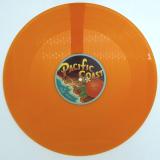
Introducing the 4th instalment of the Pacific Coast House rebirth. We bring back another much sought-after 12” from The Coastal Commission & Jesse Outlaw. “Bring down the Walls” was a nod to Raze’s “Break for Love”, Robert Owens “Bring Down the Walls” and Ritchie Hawtin’s use of the Roland 606 throughout “Sheet One”. Long out of reach and fetching $100+ on Discogs, Atjazz’s freshly remastered editions are finally available .. “Let it Go” was never mastered & only ever cut to dub-plate. It has now been mastered & available in all it’s glory.
Coastal Commission “Bring Down the Walls” “Bring down the Walls” was a nod to Raze’s “Break for Love”, Robert Owens “Bring Down the Walls” and Ritchie Hawtin’s use of the Roland 606 throughout “Sheet One.” We gave the tune a Californian psychedelic twist with conga laden drums, a moody synth, low pulsing 303 patterns + Benjamin Zephaniahs patois call to “Move the Body Rhythmwize!” The first PCH releases had dropped Worldwide to International acclaim from DJ’s far and wide across the Globe with support in London, Paris & New York. However the local scene here in L.A that preached “Love, inclusion & Unity” was anything but that. L.A at that time was very tribal & divided up into 3 camps. If you weren’t affiliated with any of them (aka independent) then you were pretty much locked out of getting any kind of gig support or the Dj’s from those camps actually playing the music. The local feedback from Dj’s was that what we were making wasn’t “house,” but “Techno” which was absurd to me. “Bring Down the Walls” was a mantra to “move the bod”y and in doing so “bring down the walls” of separation not just in L.A but throughout society in general. Thank goodness for support from people like Terry Francis, Eddie Richards, DJ Deep & Philly Stalwart King Britt. After years of copies going for upward of $100+ on Discogs the now freshly remastered copies by At Jazz’s Martin Iveson are finally hitting the platters this Spring.
Jesse Outlaw “Let it Go” I met Jesse at Beatnonstop Records on Melrose Ave with Miguel Placencia in the late 90’s. Miguel (RIP) was a mainstay in the Underground scene and had always been very supportive of my endeavors. He had had success with a huge release on Yellow Orange and was working with Jesse under the moniker “When Worlds Collide.” I signed “Brighter Days” & “Set you Free” from them and released the tracks on my Seductive imprint. They told me that they were making the tracks on a Sony Playstation “Music Now” program and I was like FFS “What.s more Underground than that!?” Later Jesse gave me some of his solo work. The track “Let it Go” was never mastered & only ever cut to Dub-plate and featured on my 1st PCH mix “Pacific Coast House Sounds.” It has now been mastered by Martin Iveson and is available in all it’s glory. The dreamy vocal “You need to let it go” beckons over the top of driving percussive Latin beats and church organ which is a great compliment to the flip side of “Bring down the Walls.” All in all two West Coast stompers now finally available remastered on PCH in Orange vinyl.
out of Stock
Last delivered 2 days ago available to reorder, subject to availability
Driveline Records launches its catalog with a focused four-track vinyl EP built for the dancefloor, presenting four distinct yet cohesive techno cuts driven by groove, atmosphere and functionality.
The A-side opens with Invexis - "Roots", a hypnotic builder that slowly unfolds into a funky-driven rhythm. Tight hi-hats and rolling basslines carry the track forward, culminating in a subtle yet engaging melodic progression that lifts the energy without losing tension.
Next, Pylot - "Observation" delivers a highly functional club tool based on steady loops and an aquatic sound design. Aggressive low-end and raw basslines support an atmospheric and hypnotic flow, making it a solid choice for mid-set pressure and long blends.
On the B-side, Berlin-based duo Disguised contribute "Gitty (Dub Mix)", a dub-influenced and dreamy track designed to keep the dancefloor moving while creating a floating, immersive mood. Deep grooves and spacey textures balance rhythm and emotion.
Closing the EP, Shadow Hrym - "Delia" explores more melancholic territory, combining tribal and funky rhythms with emotive soundscapes, offering a powerful and memorable ending to the record.
A strong debut statement that defines Driveline Records' sonic vision: DJ-oriented techno with depth, groove and atmosphere, pressed on vinyl for dedicated selectors.
out of Stock
Last delivered 6 months ago available to reorder, subject to availability
Double LP pressed on transparent red vinyl with black marbles. In Dying Light: The Beast, you step back into Kyle Crane's skin, but he's no longer the man he once was. Years of experiments have left him torn between fragile humanity and a monstrous power that he can barely control. Every light, every shadow, every choice feels dangerous. The forests and ruins of Castor Woods don't just set the stage, they breathe, they watch, and they punish the reckless. This is survival stripped to the bone, where horror is not just outside, but inside you. Olivier Deriviere's powerful and capturing score for Dying Light: The Beast doesn't just accompany Crane's journey, it is his voice. Sometimes it whispers in empty rooms, fragile and broken, sometimes it roars with distorted rhythms and pounding drums when the Beast takes over. Between silence and sound, the music pulls you deeper into Kyle's fractured soul, making every step and every heartbeat part of the story. It's not just a soundtrack, it's the echo of a man losing, and maybe finding, himself.
Inspired by the long tradition of radical country and folk artists, longtime friends Sally Buice and Molly Rochelson use their passion for literature and storytelling to craft an album that reckons with the current global fever pitch. The album's 12 introspective, thematically and sonically layered tracks chart a transformative pilgrimage through an inextricably connected world. A woman desperate to save her community from a gas pipeline in "Plains of Ohio," a devout grandmother traveling across the world to Yugoslavia in search of the Virgin Mary in "Our Lady," and a trouble- making Bible College misfit in "Loud and Clear" are just a few of the archetypes listeners meet.
The Cincinnati-based duo cut their teeth as teens busking on Market Square in Knoxville, TN. Produced by Eli LoPinto (Chris Stapleton), the duo opted for a bigger sound and the result is a bonafide, left-of-center indie country record. Path of Totality does not shy away from the weight of political strife and catastrophe, opting instead to boldly confront it, bringing to bear the power to unite us all.
I Made It All Up For You is the new record by Hugo Race Fatalists, their 6th studio album, set for release March 20, 2026 thru Gusstaff Records / Helixed on LP/CD and digital.
"In his 40-year career, Hugo Race has lived a thousand lives and played the role of songwriter, producer, musician, performer, head of a record label (Helixed). His music went from folk to lounge, from "trance industrial blues" to psychedelia, from world music to electronics. Starting from post-punk Melbourne in the 1980s, he took fascinating paths that led him from Africa to Turkey, from Berlin to Romagna…"
Hugo Race returns after highly successful collaborative albums with Michelangelo Russo (100 Years), The Church frontman Steve Kilbey (Speed of the Stars) and Gianni Maraccolo (The Vigil, winner of the prestigious Premio Ciampi) with I Made It All Up For You, an epic album with his Italian band Fatalists - existential songwriting framed by the band's signature fusion of roots music, electronica, Italian soundtracks and desert rock.
"I wanted to create something melodic and beautiful in defiance of our current reality. The songs started as bare acoustic sketches written in a remote mountain cabin in Italy where I had two weeks off during a solo tour. The weather turned into a raging blizzard, the days a struggle to keep the wood fire lit and the smoke out of the house. I wrote about twelve songs, threw them all away, started again with an unplugged electric guitar in front of that
damp fire, searching for the album's theme. When the smoke cleared, I was at the crossroads of a long term relationship unraveling under a blazing antipodean sun.
Fatalists recorded the basic tracks at the floating studio on the Puccini lake an hour out of Florence - Giovanni Ferrario (Scisma, PJ Harvey) on guitars and synth, Francesco Giampaoli (Brutture Moderne) on bass and Diego Sapignoli (Sacri Cuori) on percussion.
Violinist Massimiliano Gallo met me in Sicily for a short tour to learn the new songs, adding layers of his Calabrian magic to the mix. Jennifer Charles (singer of New York band Elysian Fields) and I had been talking for a long time about making new music and this was the occasion when we made it happen. Jennifer's distinctive voice graces this
album on the songs I Collide and Broken Love, the lyrics of which were written by author and designer Alannah Hill. My longtime road brother Michelangelo Russo also dusts the tracks with his otherworldly electric harmonica on Against The World, Born To Fly and Open Field. A lot of joy and pain and reflection went into the making of this album and I hope that comes across; this is about the darkness yes, but also the light. Everything changes and every ending is a new beginning but it's how we experience transformation that really matters. I hope you love this album. I made it all up for you."
Hugo Race, Naples, 2025
out of Stock
Last delivered 6 months ago available to reorder, subject to availability
Musically, the album represents a range of compositional approaches. Murky, densely textured depths of sound are explored with subtle pulses and pings woven within, contrasted with composed or improvised moments of acoustic instrumentation making a move into the foreground. Certain tracks on Sea Island such as album opener Ahull make rhythm their focus by exploring subtle polyrhythms and investigating colliding moments of repetition and variation.
Though staunchly electronic at its core, instruments such as vibraphone and piano make appearances, and layers of live musicality, improvisation and detail appear in the looped and layered beds of manipulated sound recordings.
A varied cast of players appear in the loscil “ensemble”, some familiar collaborators from the past such as Jason Zumpano on rhodes and Josh Lindstrom on vibraphone, and others new to the mix such as Fieldheadʼs Elaine Reynolds who provides layered violin on Catalina 1943, and Ashley Pitre contributing vocals on Bleeding Ink. Seattle pianist Kelly Wyse, who collaborated with loscil on his 2013 edition of piano-centric reworks Intervalo, performs on the tracks Sea Island Murders and En Masse.
out of Stock
Last delivered 6 months ago available to reorder, subject to availability
Cambridge-based improv collective Concrete Gazebo present their latest collection of open-hearted, quantum splice-downs, via Goldsmiths University label NX Records.
"Acid Heath" documents the ebb and flow of a collective in flux; online and in-the-flesh improv sessions form the raw material to be welded into new and fantastic forms by the group's hive-mind. Instruments falling into the pot this time around include a heavily effected Harmonic Art Handpan, the Yamaha PortaSound PSS-50, live-triggered field recordings, and mobile phone recordings of the jams themselves.
The result is a murky, atmospheric stew, at different times suggesting a sort of Fenland psychedelia, lof-fi krautock, or a deconstructed Broadcast.
When not making music, the band have organised free, open-to-all improvisation nights, "Under The Concrete Gazebo", since 2018.
In 1962, Black Music was making its transition from R&B to soul and the Chicago music industry was exploding, producing thousands of records and dozens of new labels. The two biggest black labels Vee-Jay and Chess led in the creation of the distinctive, smooth, Chicago soul brand with names familiar and not so familiar: the former with Curtis Mayfield and Jerry Butler and the latter with Mitty Collier, Etta James and Billy Stewart. And yet it's the smaller labels that make up the bulk of the Chicago story: Hawk with Geraldine Taylor, Lu-Cee with Roberta, M-Pac with Dorothy Prince and it's here that we explore some of the finest sounds of the era in this collection. Extensive liner notes written by Robert Pruter, author of the acclaimed 'Chicago Soul'. Side One. 1. The Town I Live In - McKinley Mitchell 2. I'm The One Who Loves You - The Impressions 3. Shake A Tail Feather - The Five Du-Tones 4. Mama Didn't Lie - Jan Bradley 5. Make It Easy On Yourself - Jerry Butler 6. Seven Day Fool - Etta James 7. The Blues Don't Like Nobody - Tony Adams 8. I've Got To Get Away From It All - Mitty Collier 9. How Much Longer - Geraldine Taylor 10. I'm On The Prowl - Roberta. Side Two: 1. Fat Boy - Billy Stewart 2. Can't Take No More - Ted Taylor 3. I Don't Want To Suffer - Walter Jackson 4. Open Your Heart - Sugar Pie DeSanto 5. Shook Up Over You - Dee Clark 6. Something's Got A Hold On Me - Etta James 7. Why Not Tonight - Dorothy Prince 8. Delilah - Major Lance 9. Money In My Pocket - Moss Tolbert
Turbotito and Ragz's electrifying Naya Beat label has curated a cultured list of remixers to add their spin to the work of legendary Indian vocalist Asha Puthli. This essential remix album features Yuksek, Maurice Fulton, Psychemagik, Kraak & Smaak, Jitwam, and Turbotito & Ragz.
Naya Beat, which translates from Hindi as 'new beat', is focused on uncovering foundational electronic sounds from the subcontinent and South Asian diaspora through reissues, remixes and compilations. It found quick success with its first release, 'Naya Beat Volume 1: South Asian Dance and Electronic Music 1983 - 1992', followed by a rare 1985 Hindi New Wave album by Pinky Ann Rihal and more recently a ground-breaking compilation ‘Awaaz’ uncovering Bollywood electro and leftfield 80s original soundtrack recordings.
Hot off their highly sought after EP of Dimitri From Paris’ seminal remixes of Asha Puthli’s iconic track ‘Space Talk’, the label now offers up the first of two full-length releases based around her music. Cosmic disco pioneer, Studio 54 icon and jazz improviser Asha Puthli has recorded, sung or shared the stage with the likes of Roy Ayers, Alice Coltrane, Grace Jones, Barry White, Andy Warhol and many more. From David Mancuso's The Loft, to Giorgio Moroder's early work with Donna Summer, to hip-hop where she has been sampled extensively, Asha's musical influence and impact is profound. She was the first artist of South Asian descent to successfully crossover and make a mark on dance, jazz and pop culture in the West.
For this LP, Naya Beat tracked down the long mythologised original stems and recordings of Puthli's most seminal albums, including ‘The Devil is Loose’, and working closely with Asha, they have tasked a series of producers inspired by her work to remix her music.
Yuksek opens up with a pumping disco remix of 'I Am Song (Sing Me)' awash with uplifting synths and big claps next to the original vocals, which soar to the heavens. The seminal 'Space Talk' is remixed by Maurice Fulton into super steamy and late-night territory. The live drums and jumbled percussion are lit up with soulful chords as Puthli's carefully delivered vocals seduce up top. 'Lies' (Kraak & Smaak Remix) rides on fat-bottomed drums and bass that unfold with a dub swagger beneath a nebulous eco-system of cosmic synths and dramatic vocals. Label heads Turbotito & Ragz flip 'One Night Affair' into a leggy disco celebration with sweeping synths and bright effects, and Psychemagik's 'Right Down Here' is a pulsating mix of dark, snaking bass and drums with deep space ambience and raw hits making for a turbulent and tense atmosphere. Lastly, Jitwam closes out with a smooth disco sound laced with dynamic drums and cruising chords next to another sensuous top line from Asha Puthli.
out of Stock
Last delivered 4 months ago available to reorder, subject to availability
"The Outfit release career defining new album, Preservers of the Pearl, asserting themselves as messengers of the new wave of underground rock and roll, pushing the movement forward alongside fellow trailblazers Mystery Lights, Sheer Mag, Shadow Show, Uni Boys + more.
Everything has been leading here. Daniel Romano shifts from his position as sole writer, opening the floor to Outfit stalwarts Ian Romano and Carson McHone, and welcoming into the fold longtime friend and legendary Canadian rock-n-roller, Tommy Major. The band is functioning as a true collective — multiple voices and perspectives — all serving one creative pulse. The result is both a new beginning and a homecoming, a complete and fearless statement.
Tracked to tape at their own Camera Varda studio, the album captures the band live in the room — breathing, musing, and believing. It’s the sound of human hands and hearts at work, in a shared moment of co-creation, preserved in real time in stunning hi-fi.
Here is music as communion — rock n roll as experience. Preservers of the Pearl rejects the flattening forces in modern times — what the band calls “the mono-agriculture of the mind.” In a “target culture”, condemned to homogeny and banality, The Outfit refuse polish and uniformity, embracing imperfection as truth, and promoting curiosity through creativity. At the center of it all is a deep spiritual current — what The Outfit calls Rock & Roll Magick: the belief that music is a sacred act, a force that can reconnect the individual to what is larger.
The Outfit are making music that is purposeful and profoundly urgent. Preservers of the Pearl is an invocation - it’s fearless in a time of great compromise, and resolute in an age of peripheral bullshit. Here is a band serving something greater than themselves."
"The Outfit release career defining new album, Preservers of the Pearl, asserting themselves as messengers of the new wave of underground rock and roll, pushing the movement forward alongside fellow trailblazers Mystery Lights, Sheer Mag, Shadow Show, Uni Boys + more.
Everything has been leading here. Daniel Romano shifts from his position as sole writer, opening the floor to Outfit stalwarts Ian Romano and Carson McHone, and welcoming into the fold longtime friend and legendary Canadian rock-n-roller, Tommy Major. The band is functioning as a true collective — multiple voices and perspectives — all serving one creative pulse. The result is both a new beginning and a homecoming, a complete and fearless statement.
Tracked to tape at their own Camera Varda studio, the album captures the band live in the room — breathing, musing, and believing. It’s the sound of human hands and hearts at work, in a shared moment of co-creation, preserved in real time in stunning hi-fi.
Here is music as communion — rock n roll as experience. Preservers of the Pearl rejects the flattening forces in modern times — what the band calls “the mono-agriculture of the mind.” In a “target culture”, condemned to homogeny and banality, The Outfit refuse polish and uniformity, embracing imperfection as truth, and promoting curiosity through creativity. At the center of it all is a deep spiritual current — what The Outfit calls Rock & Roll Magick: the belief that music is a sacred act, a force that can reconnect the individual to what is larger.
The Outfit are making music that is purposeful and profoundly urgent. Preservers of the Pearl is an invocation - it’s fearless in a time of great compromise, and resolute in an age of peripheral bullshit. Here is a band serving something greater than themselves."
James Ruskin's Blueprint Records continues its 30-year celebrations with a new EP by Kr!z who returns with his fourth EP for the label. Kr!z made his Blueprint debut in fine style with his "Neutrino EP" in 2022 and went on to deliver the "Revelation EP" in 2023 and "Horo EP" in 2024 so it's fitting that he's back to join in this landmark label anniversary.
Kr!z has been at the forefront of techno for more than a decade. Influenced by the hypnotic and energetic sound helmed by veterans such as Jeff Mills, Steve Rachmad and James Ruskin, he gradually but steadily developed his own identity in the international techno scene.
After making a name for himself as a skilled DJ with sharp focus and a quick mixing style in home country Belgium and the Netherlands, Kr!z launched Token Records in 2007. It has since been a leading outlet for heady, purist sounds. He rapidly established the label as a fixed value with a timeless and powerful sound and took it around the world with label nights on every continent. Token remains important in defining techno today - always straightforward, sometimes weird, often catchy - all under the helm of Kr!z as avid A&R.
After 12 years spent assiduously focused on curating the Token discography, showcasing artists he has nurtured and supported over this time, and incorporating the connoisseur's knowledge and experience he has cultivated in his work as a DJ, in 2019 he released his own debut EP "Mantra" on the label, earning high acclaim from both media and key DJs. Since then, he has continued to develop a strong body of work, regularly releasing on the influential Blueprint Records and SK_eleven alongside his own Token imprint, and producing aseries of notable remixes. This steady output has established him as a key figure within the techno landscape, recognized for both consistency and artistic depth.
Kr!z's latest Blueprint EP "Footprints" is released 13th March on vinyl and digitally.
out of Stock
Last delivered 4 months ago available to reorder, subject to availability
RCR002 marks the second release from RAW CUTS Records, bringing together four established producers making waves across their respective scenes.
Leading the VA is 'Junior' from Argentinian artist Light Blue File whose been creating buzz with his cotemporary take on electro house built to set dancefloors alight. On A2, UK mainstay and Bizarre Trax founder Jhobei delivers 'Radionyx,' a hypnotic, progressive leaning takes on modern UK tech.
Flipping to the B-side, Christopher Ledger brings the acid-driven pressure of 'Acid Redux.' with a commanding bassline Rounding out the release is fellow Argentinian Guile, closing the VA with 'El Sonido Subterráneo,' an electro-infused funk workout that brings us home.
out of Stock
Last delivered 14 days ago available to reorder, subject to availability