"Oscillation associations
This album is titled Os. When I look at the shape of these two letters, O and S, I realize that they are a rotation and an oscillation.
Os is Dutch for Ox. An ox is a castrated male bull. The primary benefit of castrating bull calves is to temper their tempers, making it easier and cheaper for people to handle them. Os is also an abbreviation of oscillation, -cillation being castrated off. Oscillation means a movement back and forth in a regular rhythm, like breathing, push-ups, tides, swinging or sound. For this album Lyckle was not dealing with oxes or bulls, but with oscillations, guiding them through synths, handling their tempers. If I look at the etymology of oscillation, I learn that it stems from the term Oscilla, which were ancient disks depicting a face or animal on each side. Oscilla is a diminutive of os and means ‘little face’. They were hung in trees during religious feasts honoring various deities, as well as being thought of as purifying the air as they swung in the wind.
The wind chime with its little sunny face, smiling on the cover of this record was hanging in the windowsill of Lyckle’s studio, behind his back, where the wind would make it jingle, averting the Evil Eye according to apotropaic magic. In ancient Rome, wind chimes named Tintinnabulum were decorated with a phallus, which was also seen as a good luck charm. Phallic charm also appeared as objects of jewelry such as pendants and finger rings. It has been suggested that some types of phallic pendants were designed to point outwards in the direction of travel in order to face any potential danger or bad luck, nullifying it before it could affect the wearer.
When I take the record itself out of the sleeve, I see that there are two phalluses carved into the surface of the vinyl, like little ornaments. When you start playing the record, they start chasing each other, going round and round. They point in all directions of the room, but are never able to point at each other. Finally, I am told that it is recommended to listen to this record with the window open, allowing sounds from outside to blend in with the music. "
- Bernice Nauta
Suche:mal e
Spaniard Cuartero debuts on LOCUS as he drops his slick four-track ‘Wasp’ EP this September.
A mainstay within Spain’s house music scene over the past decade, Malaga’s Cuartero remains one of the most consistent and well-supported names on the circuit. With releases via the likes of Hot Creations, Desolat and Saved, his recent material has seen a deeper and more minimal emphasis placed on his work, dropping material via Eastenderz, Constant Black and Djebali, plus his own Cuartero Concept imprint. Up next, September welcomes the addition of a new label to his catalogue as he makes his first appearance on LOCUS, delivering a quartet of crisp cuts in the form of his ‘Wasp’ EP.
The lively ‘Eucalyptus’ opens proceedings as swirling pads and rugged kicks bounce atop of nimble basslines, while ‘Assault’ employs rubbery, elastic bass alongside bright vocal interjections and sharp drum licks. On the flip, ‘Bagonda’ welcomes a deeper, warping journey through skipping hats, rich chords, and glitched vocals, before closing the show via the off-kilter and scattered yet impactful sonics of title cut ‘Wasp’.
- A1: 1986 - Where Are You
- A2: 1978 - Sérénade D'un Autre Monde
- A3: 1982 - Légère Complainte
- A4: 1982 - Complainte À Deux
- B1: 1991 - Tensus (Ceremonial)
- B2: 1991 - Anhamete (Ceremonial)
- B3: 1991 - Amdaï (Ceremonial)
- B4: 1991 - Sacuo (Ceremonial)
- C1: 1982 - Excitation Séquencée
- C2: 1982 - Sautillement Déjanté
- C3: 1982 - Brut De Décoffrage
- C4: 1982 - Mal À L'aise
- C4: 1989 - Mov' In
- C5: 1976 - Musique Concrète 1
- C6: 1976 - Musique Concrète 2
- C7: 1981 - Ne Fait Que Passer
- D1: 1983 - Comme Une Distance 1
- D2: 1983 - Comme Une Distance 2
- D3: 1983 - Comme Une Distance 3
- D4: 1983 - Comme Une Distance 4
Described by Swiss press as an “inventive genius marked by total unpredictability,” Roger Baudet’s music has preserved its freshness and spontaneity. Provoking feelings of surprise, anxiety and subjugation, he ends up bewitching you completely through his bizarre non-conformity. The oddity of the sounds is a choice of heterogeneity: the works gathered, although coming from one person, have little to do with each other. Forming a mosaic that provides a fragmented vision of atmospheres without apparent links, his music multiplies diverse rhythms and combinations, rejecting any principle of hierarchy in the musicality of the moment. The decorative music was composed as the soundtrack for theatre and ballet performances, documentaries, short films and exhibitions of paintings – a context that inevitably shines through the twenty-two pieces. Despite these classical settings, the music had a forward-facing, futuristic cadence – a precursor to the electronic genres that would later become techno or trance. This compilation from the past century is a collage of ornaments made out of sounds; stripped down, yet undoubtedly imbued with sensitivity, with hints of classical training, all suitable for contemplation.
Ancient Africa represents Nat Birchall’s official follow-up to last year’s universally acclaimed Mysticism of Sound.
Nat once again plays all the instruments here, tenor and soprano saxophone, bass clarinet, bass, drums and percussion. But this time around the Korg synth is replaced by piano as
Nat wanted to utilise a more “classic” Jazz sound to express his musical visions. He has also arranged the songs for multiple horns, with melodies and harmonies played by up to five different instruments to achieve a fuller and often glorious sound.
An exception to this is Mirror Mind, a ‘duet’ featuring tenor saxophone and piano, hence the title.
With most of his compositions Nat tends to come up with titles depending on the thoughts or images the music manifests within him as he listens back to the recording.
The title track conjures up images of an African sunrise, the horns perhaps invoking the sun as it begins to illuminate the land which was the origin of the human story on Earth.
“Africa is the root of everything, and is the source of civilization, art, music, you name it.”
Paladins is so titled for the African heroes of the past and the present, in all walks of life, social, political, the arts etc.
“Anyone who fights against oppression, whether it be through activism or art, not only in Africa but throughout the whole diaspora, is a Paladin in my book.”
Song for John Blanke is named for the African trumpeter who played in the court of Henry VIII. The horn line sounding
a little like a fanfare, but in a lower register than the Tudor trumpets might have played for the court of the king!
Malidoma is named in honour of the African writer Malidoma Patrice Some. His excellent book ‘Of Water and The Spirit’ is a deeply
moving and illuminating narrative of his life’s journey. From his abduction by Jesuit priests at an early age from his village in Burkina Faso to
his being reunited with his people and subsequent assignment to spread his people’s ancient knowledge to the Western world.
The final song, Ancestral Dance, is a musical reminder to both celebrate life as and when the occasion demands, but also to not forget where we came from, as individuals and as a species.
"Widerstehe dem Drang, den Raum zu füllen." Diesem Impuls folgt die New Yorker Elektronik-Experimentalistin Nicky Mao aka HIRO KONE auf ihren vierten Album "Silvercoat The Throng", das Elemente von experimentellem Techno, Spoken Word, Neo-Klassik und Industrial Noise verwebt. Kompositorisch drückt sich dies in einer schwelenden, schattenhaften Energie aus, die verschleiert, aber variabel ist und in einer Komposition aus Streichern, Synthesizern, Rhythmus und Stimme nachgezeichnet wird. Der Titel spielt auf den poetischen Begriff der "Möglichkeit, die aus der Dunkelheit gerettet wurde" an, was das formverändernde, hingebungsvolle Gefühl dieser ehrgeizigen und eleganten Klangentwürfe treffend beschreibt, die trotz der Vergänglichkeit entstanden sind, angetrieben von dem Streben, "immer artikulierter, differenzierter" zu werden. "Silvercoat The Throng" zeigt HIRO KONE auf dem Höhepunkt ihrer Kräfte, aber lauscht selbst.
New York electronic experimentalist Nicky Mao's 4th full-length, Silvercoat the throng, emerged against the backdrop of lockdown, compelled by an intuitive directive: “resist the urge to fill the space.” Compositionally this translated as a simmering, shadowy energy, veiled but variable, traced in a composite of strings, synthetics, rhythm, and voice. The title alludes to a poetic notion of “possibility, rescued from darkness,” which aptly evokes the shape-shifting, devotional feel of these ambitious and elegant sound designs, crafted in defiance of impermanence, driven by the pursuit of becoming “more and more articulated, differentiated.”
Collaborations with travis from ONO, Speaker Music, and Muqata'a further expand the album's lyrical, liminal palette, meshing elements of experimental techno, spoken word, neo-classical, and industrial noise into a fluid, encrypted dialect all its own. Mao speaks of creative strategies of solidification and reification, encounter and transformation, pure being and punctuation – a multitude
of sparks, fuses, and forking paths leading across fresh thresholds and twilit terrain. Taken as a whole, Silvercoat captures Hiro Kone at the peak of their powers, alchemizing disruption and decomposition into regenerative interior worlds: “Within the darkness and absence is an opportunity for discovery.”
Tchamantché, meaning “point of equilibrium” in Bambara, is the fourth album of Mali singer Rokia Traoré. Released in 2008, and dedicated to her fellow countryman Ali Farka Touré, one of the African continent's most internationally renowned musicians, the album is a turning point in the singer’s career after she has spent a large part of it revisiting the Malian musical tradition. Tchamantché reveals a unique sound in which electric Gretsch guitar riffs come to mingle with the ancestral sounds of Malian instruments, offering a new setting to her crystalline voice. If Traoré favors minimalist and emotional acoustic ballads, she clearly assumes her blues and even rock influences, signing an intimate and voluptuous album of artistic maturity.
Digitmovies proudly presents on LP another musical jewel by Ennio Morricone from the TV movie broadcasted by Italian Rai Television in 1978 "Il prigioniero" (aka "The Prisoner”). Ennio Morricone has composed an extremely serious score which reflects the whole sentimental and dramatic side of the historic atmosphere, in which the protagonist is immersed. The author varies the main theme with different orchestrations: the romantic, but nostalgic "L'estate è finita" for flute, harpsichord and orchestra, reprised with harpsichord chromatism and with harpsichord and orchestra. The second motif "I due prigionieri" is introduced by the solo flutes in an almost experimental context, later accompanied by cellos and basses and then reprised as a background to psychological suspense with brass, piano and vibes and with fascinating variations. This painful atmosphere is broken up by "source music" which re-creates the sound of that era, like the Sicilian folk song for voice and guitar "Si l'ammuri" and the romantic old- fashioned romantic tune for male voice, piano and guitar "Dove sei amore".
[a] a1 L'estate È Finita [Versione Singolo Lato A]
[b] a2 I Due Prigionieri [Versione Singolo Lato B]
[d] a4 I Due Prigionieri [Versione 2]
[e] a5 L'estate È Finita [Versione 2]
[g] b1 L'estate È Finita [Versione 3]
[h] b2 I Due Prigionieri [Versione 3]
[i] b3 Dove Sei Amore [Versione Vocal]
[j] b4 I Due Prigionieri [Versione 5]
[k] b5 L'estate È Finita [Versione 5]
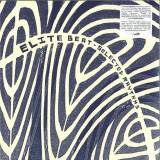
Elite Beat is a musical collective from Portland, Oregon with a history spanning back to 2006.
'Selected Rhythms' captures the finest moments from all three of their ultra limited cassette series 'Casual Rhythms'.
Packed full of DIY dub mixing, cosmic orchestration and raw, percussion driven polyrhythms, the recordings have been remastered and put to vinyl for the first time with sections from Casual Rhythms Vol. 1 being re-shaped into previously unavailable single tracks.
Recording plays a big role in the Elite Beat creative process. The studio as an instrument. Much of the Elite Beat music is mixed in an all-hands-on-deck dub style approach - live with an analog mixer and loads of FX being thrown and dubbed in real time. The sound is genre-less rhythm music with an emphasis on live playing, free form expression and technique that borrows from soundsystem culture. Inspiration can be heard from all parts of time and place. Some Ethio Jazz, Black Ark psychedelia, Exotica, Malian blues, even Haight-Ashbury in the summer of love. Each member an accomplished musician in their own right, Elite Beat thrive on collaboration. 2018 saw the release of their astral-Saharan jams with celebrated Taureg guitarist Mdou Moctar.
The players get together every Wednesday evening, sometimes to chat, sometimes to play. The 'record' button gets pressed when they find what they are searching for. For this crew it's all about 'Casual Rhythms / Harmonious Lifestyles' - if things don't fall under that mantra, then it's got to go. 'Less is more' for Elite Beat and their cosmic sounds.
Jazz Sahara is the debut album by double bassist and oud player Ahmed Abdul-Malik featuring performances recorded in late 1958 and originally released on the Riverside label.
Dirty Dynamite is the seventeenth studio album from Swiss melodic hard rock/heavy metal band Krokus. The album was well received by critics, partly due to the surprising element of their Beatles cover of “Help”. The band origins from the seventies, and have since sold over 15 million records, toured the world and received gold and platinum discs in the US and Canada. The legendary English journalist Malcolm Dome quite rightly said: “If you look at the long-term output of this band, Krokus is clearly one of the best hard rock bands of the last 40 years”.
Dirty Dynamite is available as a limited edition of 1500 individually numbered copies on transparent red vinyl. The records are housed in a gatefold sleeve with lyrics.”
Castello, Sole is the first project signed by Issam Dahmani on Dischi Malizia.
This new series keep up the 80s and 90s feelings atmospheres very tied to Italy with a strong signature of modern vibes. Fresh sound from funk and italo disco ready for summer madness.
Third part of the Modern House Quintet’s album, this time featuring their work under the Cyclades alias. A collection of numerous dreamlike House, Breakbeat, Jazzy House and Electronica, sometimes ambient, sometimes heavier. This third LP is distinct from the previous two in the sounds explored - but connected somewhat in the sheer variation.
The independent label Six Nine Records Ltd. UK, based in Newcastle upon Tyne, proudly presents B & The Family and their first release on the label!
B & The Family, as a musical unit, reminds you of a modern day Jacksons or Sylvers group. Everybody plays several instruments and sings. This band is led by MD, patriarch, and male lead vocalist Brian K. Morgan, Katie Goulet (Wife/Bass/Vocals), Tayler Morgan (Daughter/Drums/Vocals), Genevieve (Daughter/Keys/Vocals) and Willa (Daughter/Keys/Vocals).
“Count On Me” and “Magic” (produced and written by Brian K. Morgan and Katie Goulet), was originally created in the early 80’s for Johnny Kemp (“Just Got Paid”). Although these two songs never made the album, Brian was able to write and produce a few of his other songs on Johnny’s albums.
Definitely not to be missed as it is a limited UK press with small hole
and full colour printed picture cover!
- 1: Quiver (Extended) (3:59)
- 2: Ace Degenerate (1:5)
- 3: Strike First (1:07)
- 4: Cobra Guy (Extended) (2:32)
- 5: Slither (1:4)
- 6: The Internet (1:25)
- 7: You're The Champ (1:34)
- 8: Johnny's Story (2:29)
- 9: Web Md (1:10)
- 10: A Badass Name For A Dojo (Extended) (3:30)
- 11: Awake The Snake (2:07)
- 12: Worthy Opponent (2:)
- 13: Furious Hawk / Dark Hawk (2:14)
- 14: The All-Valley Tournament (3:34)
- 15: Snake In The Grass (2:05)
- 16: Stone Vs. Diaz (1:41)
- 17: The Cobra Effect (2:34)
- 18: Snap (1:46)
- 19: I'm A Sensei (1:58)
- 20: It Belongs To Me (3:)
- 21: Miyagi-Do Fix-Up (2:15)
- 22: Miyagi Memories (1:35)
- 23: The Wheel Technique (1:54)
- 24: Like A Dance (3:12)
- 25: Miyagi-Do (1:53)
- 26: Balance (1:03)
- 27: Kan-Geiko (1:04)
- 28: Mall Fight (1:39)
- 29: The Wrong Path (1:58)
- 30: Medal Of Honor (1:24)
- 31: Into The Snake Pit (2:26)
- 32: Miyagi's Tomb (2:43)
- 33: Miyagi Metal (2:16)
- 34: Return To Okinawa (3:20)
- 35: Live Or Die, Man (1:41)
- 36: Crane Technique (3:02)
- 37: Secrets Of Miyagi-Do (2:56)
- 38: Two-Time Champion (1:32)
- 39: Chop Shop (2:02)
- 40: The Right Path (3:00)
- 41: Sam And Robby (Extended) (4:26)
- 42: Final Match (1:48)
- 43: The Cobra And The Mongoose (1:19)
- 44: Time Out (1:35)
- 45: No Mercy (1:14)
- 46: New Champion (1:37)
- 47: I'm Coming For You, Bitch (1:38)
- 48: Hallway Hellscape (3:36)
- 49: Scale The School (0:50)
- 50: Hawk's Prey (1:28)
- 51: Rematch (2:08)
- 52: Fallen Soldier (2:38)
- 53: Carol Of The Cobras (2:17)
- 54: Dojo From Hell (1:50)
- 55: Must Not Lose To Fear (1:45)
- 56: Call Of The Cobra (2:12)
- 57: Duel Of The Snakes (Mega-Edit) (9:58)
- 58: Challenger (3:09)
Mondo and Madison Gate are proud to present the premiere vinyl release of Leo Birenberg and Zach Robinson's incredible score to the Netflix streaming phenomenon COBRA KAI. This 3-disc vinyl set features music from the first 3 seasons of the hit series, curated by the composers into themed collections.
This exclusive retail version comes pressed on red, white, and blue marble discs. Also featuring all new artwork from the incredible Matt Ryan Tobin and liner notes from composers Leo Birenberg, Zach Robinson, star Ralph Macchio, and showrunners Josh Heald, Jon Hurwitz, and Hayden Schlossberg.
Music from the first 3 seasons of the series curated into three collections of music:
Disc 1: COBRA KAI - a curated mix of music scoring the most badass dojo in the Vallely
Disc 2: MIYAGI-DO - curated selections from the music scoring Laruso Family, and its ties to the Miyagi legacy.
Disc 3: FINAL FIGHTS - the music from all three of the explosive season finale episodes.
All of the music has been hand selected, and in many cases expanded from their original form for the most definitive Cobra Kai listening experience available.
The Alice Comedies are a series of Animated/live-action shorts created by Walt Disney in the 1920s, in which a live action little girl named Alice (originally played by Virginia Davis) and an animated cat named Julius have adventures in an animated landscape.
The Magic Clock is a whirlwind mishmash of motifs that 1 draws on an unusually wide range of sources: Hoffman’s The Nutcracker and medieval romances working cheek by jowl with Arabian Nights, Ovid, Midsummer Night’s Dream, Peter Pan, Mallarme’s “Afternoon of a Faun,” and Novalis’ blue flower.
Paul Dessau was a German composer and conductor. He composed operas, scenic plays, incidental music, ballets, symphonies and other works for orchestra, and pieces for solo instruments as well as vocal music.
The music is conducted and produced by Hans E. Zimmer, who conducted an extensive repertoire including Die Zauberflöte, Le Nozze di Figaro, Euryanthe, Jenufa, Ariadne auf Naxos, Salome, Der Rosenkavalier, Der Friedenstag, Die Meister-singer von Nürnberg, Lohengrin.
- A1: Say Yes (Detest Of Sirens)
- A2: Stay True (Vinyl Version)
- A3: Back Again (Vinyl Version)
- A4: Run The Streets (Vinyl Version)
- A5: Rekontext #1 (Berger&Apos;S Theme)
- A6: Where We At (Vinyl Version)
- A7: Cthru (Vinyl Version)
- B1: Cleanser #1 (Vinyl Version)
- B2: Losing Mine (Vinyl Version)
- B3: Rekontext #2 (Vinyl Version)
- B4: What I Meant (Vinyl Version)
- B5: Cleanser #2 (Detached Observer&Apos;S Theme)
- B6: Deià (Bends)
- B7: Test Of Sirens (Vinyl Version)
Oliver Torr is about to release his first full length solo album. The album features many moods and colours, with Oliver exploring the use of his voice and lyrics as a new form of his expression. Successfully mixing electronic avant-garde/experimental forms with pop-like harmonic structures is the main theme of the record.
The idea of recontextualisation and themes of observation are mainly inspired by the philosophical literature and ideas of John Berger, Marshall McLuhan, and many others was a driving force during the creation of the album. The lyrical and sound design content is mainly inspired by panic attacks and depression, and serves as a therapeutic tool to aid in personal psychological healing.
Tracks make use of creative sound design by utilising field recordings and various experimental instruments and sources of sound, such as the Radical Chip, designed by John Richards (one of Oliver's mentors) and Max Wainwright. Tracks like 'Deià' which create a chaotic sonic palette are the author's representation of his mind under the siege of an intense panic attack, experienced in the seaside town of the same name that is located on the island of Mallorca.
Oliver feels like the album has been writing itself for the past 5 years, and in the past few months it has decided to finally show its form. With the help of Aid Kid, who is mixing the album and providing additional production, Oliver has put together a 14-track rollercoaster record, with the help of some special guests. Guests on vocals include Chrysalism, BCAA's Bilej Kluk, and sci fi RnB newcomer LVCIFER. Other sonic collaborators include Sunnbrella (guitars on two tracks), Bastl Instruments' David Strobach (distorted samples in intro), Peter Kutin, and Radio Laude's DeSteffan and R.A. (distorted samples/vocal on one track).
The record's sonics are a combination of Oliver's conscious influences, including experimental music, classical avant-garde, shoegaze, IDM, EBM, electronica, hints of modern club music, as well as PC music influences.
Oliver Torr is known as a composer, music producer, performer and installation artist. Outside of his solo projects, he has worked with many prominent musicians and creative companies/film makers worldwide. He is the founder of XYZ project, a music label concentrating on electronic music and audiovisual art (xyzproject.bandcamp), and a member of the noise.kitchen crew (a music and synth shop run by Bastl Instruments in Prague). Oliver is also a part of the 2020 SHAPE Platform roster (shapeplatform.eu), and the 2021 Gravity Network roster (gravitynetwork).
Oliver releases the album prior to the release of his 'Trans Europe Postal Express' project (supported and arranged in collaboration with SHAPE Platform) and gallery exhibition at MeetFactory art space Prague, that will take place in March, and will further the sonic palette of the album.
The album's artwork is directed and designed by Kristyna Kulikova and photographed by Lukas Havlena (VICE, National Gallery of Prague).
The album's pre-release sees a teaser trailer shot and directed by Tereza Halamova and Filip Kettner that will be released 1st of February. A short movie music video with the same crew is scheduled a month after the album's digital release.
A remixed version with reworks from established European electronic musicians (including Peter Kutin, Fausto Mercier, Wim Dehaen, Natalie Plevakova, Evil Medved, NobodyListen, David Herzig, Ancestral Vision and Trauma), will be coming in the next few months after the release.
Having released 10 albums since their debut in 2008, it’s hard to believe that ‘Crystal Bullets b/w King Tears’ is the first ever 12” single from “The last great Rock’n’Roll band” (The Guardian).
Containing White Denim’s first new music since the lockdown 30-day-album project ‘World As A Waiting Room’.
‘Crystal Bullets’ was inspired by the groove of the great Bernard Purdie and the signature chopped and screwed production techniques of Houston, Texas’ late great DJ Screw. The final minute features the most sublime harmonised sax solo you’ll ever hear, leaving you wishing this was more than just a 2 track 12”…
White Denim have long pulled hard at the parameters of rock & roll, admitting garage punk, soul, psychedelic boogie, prog, jazz and country blues while holding onto its vital goodtime core, and their up-tempo drive has produced a body of work defined as much by stellar musicianship as off-the-chain exhilaration. Energy and adventurism have always been paramount.