Estupendo is an alternative electronic band from Buenos Aires, Argentina, formed in 1993. San Antón presents newly remastered versions and bonus tracks from the pioneering album Bistró Málaga-originally released only on CD in 1994.
“San Antón” is a two-disc mind-bending collection of dystopian sci-fi electronica from the spaciest Buenos Aires-based legends Estupendo, reawakened and curated for the first time on vinyl by “The Pressure Company“. The record features a surreal tapestry of illuminated synthesizer layers, processed guitars, ample use of echo, blended watery pianos, and hypnotic soundscapes.
A perfect storm of catchy melodies along with a whole cosmos of ideas and dance-culture references packaged in a bundle of underground hits.
Suche:mala
*Repress*
We've been fans of Samba for a few years now and have been following his progress as he's risen to become one of the most sought after producers in the Dubstep scene today. When Sam sent us this EP, we were instantly blown away by the music.
Title track 'Kings' has become a huge dubplate within the scene with support from dons like Commodo and Mala. To us the quite melodic 808 bassline harks back to early Good Looking records vibes, while the crisp fresh production and drumwork firmly places this release in 2019.
It was in 1973, on the 14 of October, late in the afternoon; on a pretty Sunday under the Big Top in the heart of the “Parc de la Pépinière”, in Nancy; it was the “premiere”, the world
first hearing, and it has so far remained the only one commissioned by composer and trumpet player lvan Jullien, for the first international Nancy Jazz Pulsations festival. In order to complete this work of composition and orchestration, Ivan asked the great Eddie Louiss on organ, and chose to do without a double bassist who would have been drowned in a telluric outburst, for the best drummers in Europe and beyond had accepted out of sympathy to offer their contribution to such a festival. The only melodist with Louiss was the English John Surman (born in 1944) here on soprano saxophone, discharging torrents of incandescent lava.
Conversing with drums, cymbals, xylophones, kettledrums, vibraphones, tumbas, djembes and all other percussive things that you’ll like to imagine – a bunch of talents such as those
of the French André Ceccarelli, Daniel Humair or Bernard Lubat, the New Yorker Stu Martin, who reminds of Paul Motian in his “breaks”, South African Louis Mo-Holo, young Lamont Hampton, the great trombonist “Slide” Hampton’s son and the Malagasy Franck
Raholison, the Senegalese Lamine Konte. And we will scrupulously refrain from omitting the four musketeers, here representing
percussion in classical music, namely the Percussion Quartet of Paris under the leadership of Mr. Lucien Lemaire.
Efficient Space is honoured to share the little-heard recordings of three Yolngu songmen from Northeast Arnhem Land - Bobby Bunnungurr, Jimmy Djamunba and Peter Milaynga (d. 2007) - working in collaboration with Victorian musician Peter Mumme. Yolngu are the indigenous peoples of Arnhem Land in Northern Territory, Australia; their clans are the Marangu and Malabirr, the languages Djinang and Gannalbingu. Their songs are of instruction, story and ceremony.
A connection first initiated by Yolngu actor David Gulpilil, Waak Waak Djungi's mid-90s recordings were preceded by years of respectful sharing of culture. Mumme explains that 'the aim was to produce something that is new, not in the sense of a breakthrough, but what emerges from the combining of existing ideas'. What developed was sonically unique - sprawling vocal/electronic soundscapes and field recordings that reimagine the traditional songs of black crows and white cockatoos, sharing, creation spirits and of leaving and returning home to country. Spacious and patiently durational, the songs resound in a big land with a big story to tell.
On the 1997 Waak Waak Djungi album Crow Fire Music, these interpretations were assembled with traditional recordings and additional material from Sebastian Jörgensen and Sally Grice. Falling short of generating public interest, it became well known in the Yolngu homeland. Nearly two decades later, a CD copy filed away in the 3RRR FM library would prompt a three year investigation to meet the people behind the music.
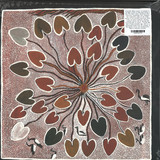
Waak Waak ga Min Min (Black Crow, White Cockatoo) combines the previously unreleased Gandi Bawong with five contemporary versions from the original album, with a new cover painting by Bobby Bunnungurr. Tracing 1997 back to many millennia ago, this is a captivating window into the richness of Aboriginal culture and collaboration.
Back in the day, French pianist, composer and all-round jazz superstar Jean-François Quiévreux, a.k.a. Jef Gilson, was up there alongside the likes of peers John Coltrane, Oscar Peterson, and Sun Ra. In a fitting homage to the decades worth of sublime music, and his sad passing away in 2012, French quarter Palm Unit have released a lively, honest tribute, upbeat and contemporary re-interpretative vision of his legacy.
.
Gilson has been noted for changing the face of bebop with free-jazz and afro. Along the way his big band featured the likes of Lloyd Miler, Bill Coleman, Michel Portal, and others. With his own recording studio and label Palm Records, Gilson released music from greats including Byard Lancaster, David S. Ware, François Jeanneau, and more. He also helped embed a more entho style to the world of jazz, inspired by his visits to Madagascar, which resulted in the famous Malagasy jazz albums.
Palm Unit are a wildly eclectic super-group of jazz greats includes uKanDanZ's saxophonist Lionel Martin, keyboardist Fred Escoffier from Le Sacre du Tympan, drummer Philippe 'Pipon' Garcia whose mostly known from his worth with the Erik Truffaz Quartet, and special guest Del Rabenja -- who played alongside Gilson in Malagasy -- on the Magascan valiha harp. Palm Unit plays Gilson's repertoire without any a priori, in a totally complex-free manner, reinventing it whilst preserving its original essence. The keyboards sound almost psychedelic (and often not that far from the style of Eddy Louiss on Jef Gilson's 60's albums), the sax scratches, mews and wails, whilst the drums make the whole thing swing. Even Del Rabenja was surprised to rediscover the songs still sounding so modern, decades after they were created.
Spoiled Drama reemerges exhibiting their darker side on "This is Our Mission", their debut on the label embodiment of Berlin's Fleisch collective. The five track EP exhibits a unique range and dexterity, blurring lines between the realms of techno, EBM, acid and electro with a touch of maladjusted pop and post-punk. From the anxious beat and shimmering tones of "Another Death Experience" to the ritualistic war drums and heavily distorted vocals of "Kisses Are Out of Fashion", expect to feel dizzied, unnerved, yet beckoned to move. The eponymous track closes out the EP in an undeniably Drexciyan fashion, low-pitched vocals emerging from watery depths in lush sweeping pads and dissonant melodies. A mission accomplished with style.
- Hypnosis Tapes
- Like A Chump
- Mental Relaxation
- Phantasms Of The Living (Feat. Sonoda)
- Shadow Of
- In The Mind's Eye
- Cocteau Swan (Feat. Citrus Clouds)
- Malaise
- Skin Slip
- Another Simple Pleasure
Tony Bontana, the Birmingham rapper, producer and multi-instrumentalist, releases his 35th album My Name, which is also his first to receive a proper vinyl pressing. The album follows an impressive 2025 in which he performed with Nourished By Time, Mark William Lewis, YHWH Nailgun, TAGABOW and 454.
His earlier 2025 album The Beautiful Malaise made The Wire’s annual top 50, and he appeared as the sole feature on Nourished By Time’s album The Passionate Ones, where Marcus praised his “freewheeling spirit.”
Tony’s production work has appeared on records by Billy Woods, Cities Aviv and Novelist, with upcoming collaborations planned with Blackhaine and DJ Python. The single Battered Chips has received airplay from NTS, Esk on Rinse and Huw Stephens on 6 Music.
If anyone is counting this is the 35th album by Birmingham rapper, producer, multi-instrumentalist Tony Bontana. A pioneer of his own ‘Splayed’ style of production characterised by heavily manipulated samples, non-linear rhythms and introspective lyricism. My Name is a significant landmark for Tony being the first album to receive a proper vinyl pressing. It caps an impressive 2025 which has seen Tony play live with acts such as Nourished By Time, Mark William Lewis, YHWH Nailgun, TAGABOW and 454. His previous album “The Beautiful Malaise” (one of four he released in 2025) made The Wire’s annual top 50. He appeared as the sole feature on the acclaimed Nourished By Time album The Passionate Ones on the track Jojo with NBT’s Marcus praising the rapper as having the “freewheeling spirit of a street baller out on the playground” . His productions have already appeared on records by Billy Woods, Cities Aviv and Novelist with further collabs to come with the likes of Blackhaine and DJ Python. The standout single Battered Chips has received airplay from NTS, Esk on Rinse, New Music Fix and Huw Stephens on 6.
- 1: Loberman, El Hombre Lobo
- 2: Los Ejes De Mi Carreta
- 3: Blackman, El Justiciero
- 4: El Marques
- 5: El Pasito De Nano
- 6: Zamba De Mis Pagos
- 7: La Vuelta Del Elefantor
- 8: Oda A Billy Joe
This first-time reissue of Quinteplus’ 1971 album revives a key moment in Argentine jazz, featuring crisp trumpet and tenor sax, electric piano-driven funk and modal grooves, and a tight, spacious rhythm section. It showcases prominent figures like Jorge Anders and “Pocho” Lapouble.
==================================
Quinteplus was born in Buenos Aires at the end of the 1960s, emerging directly from the ideas and experiments of the legendary Agrupación Nuevo Jazz. Founded in the early ’60s, this collective brought together some of the most forward thinking figures in Argentine jazz functioned as a creative lab where musicians questioned where jazz could go next. Among the key ideas discussed was the fusion of jazz with Argentine folk styles such as zamba, chacarera, malambo, cueca, and candombe, as well as a deeper look into African rhythms as a bridge between musical worlds.
Two members of that collective, keyboardist Santiago Giacobbe and bassist Jorge “Negro” González, carried those ideas forward when they formed Quinteplus in 1969. The group came together naturally: all the musicians already knew each other and had played in different projects around the Buenos Aires scene. They shared a strong admiration for Julian “Cannonball” Adderley’s quintet, along with a clear goal—to develop a modern jazz language grounded in local Argentine rhythms.
From the start, Quinteplus stood out for its openness and adventurous spirit. Rhythm was central, and so was experimentation. The band belonged to a generation of Argentine jazz musicians eager to explore electric instruments and new textures, anticipating what would soon be known as jazz-rock. This was happening in Buenos Aires at the very same time Miles Davis was opening new doors with “In a Silent Way” and “Bitches Brew”. Giacobbe introduced one of the first Fender electric pianos in Argentina, while González pioneered the amplification of the upright bass and even developed a hybrid electric, boxless version of the instrument. Trumpeter Gustavo Bergalli, meanwhile, maintained close ties with the emerging Argentine rock scene, collaborating with Luis Alberto Spinetta and appearing on Almendra’s first album.
In 1971, Quinteplus recorded its first and only studio album for EMI. The original lineup featured Jorge Anders on tenor saxophone, Bergalli on trumpet, Giacobbe on keyboards, González on upright and electric bass, and Norberto “Pocho” Lapouble on drums and percussion—who also illustrated the album’s iconic sleeve. The record is a refined showcase of the band’s musical vision: original compositions, fluent jazz language, folk-derived rhythms, funky electric textures, tight ensemble playing, and standout brass solos. Though critically praised, the album received little label support and sold modestly, eventually becoming a sought-after collector’s item.
Quinteplus disbanded in 1973, their music was perhaps too bold and unconventional for its time.
- 1: Rhizoid
- 2: Space Ray
- 3: Shadow Casting Glass
- 4: Wave Field
- 5: Mayan Bees
If you’ve been following the wanderings of prolific psychedelic magicians Elkhorn, you might be surprised that Elkhorn guitarist Drew Gardner’s solo LP Wave Field is the most out and out “rock” record on VHF in many years. Working here in a small group with excellent players Tom Malach (guitar), Andy Cush (bass), and Ryan Jewel (drums), Gardner cuts loose on a set of propulsive and swinging material that allows him to greatly expand his sound into unexpected areas. “Rhizoid” starts with a sneaky groove riding the nimble bass and drums of Cush and Jewel before a leap into the ripping Sonic Youth/NEU! hybrid of “Space Ray.” “Shadow Casting Grass” brings things back down to end the side with some Elkhorn-adjacent gentle guitar weave backed again by the sly rhythm section. “Wave Field” kicks off side 2 with an extended buzzy guitar raga with Cush’s melodic and fat bass providing jammy counterpoint. The epic “Mayan Bees” closes the LP with an extended workout on another extremely fine drum and bass ostinato, a hypnotic minor key riff that slow builds over 10+ minutes.
- 1: Timeless
- 2: Peony Garden
- 3: Marrow
- 4: Moonflower
- 5: Linen
- 6: Boy Beneath
- 7: Mirrors
Intricate structures with an intertwining of spontaneity and randomness, meeting the diverse genre influences of the band members from mediaeval music to shoegaze to noise. That is Unravel, the new album, and first in six years, from Czech band Manon Meurt.
"Unravel reflects the different stages of dissociation, a person's thoughts, observations - whether of the environment or of oneself - and admiration for the beauty and cruelty that nature mirrors," multi-instrumentalist and lyricist Kateřina Elznicová says of the album.
Produced by Eddie Stevens (Freakpower, Zero 7, Moloko, Roisin Murphy) the album was pieced together from recorded fragments, meticulously pieced together. The title Unravel refers to the development of the band, unravelling what they are to find the full potential of their music as well as uncovering the layered nature of the songs and emotions.
"Eddie Stevens’ approach to recording was a big surprise. We understood that there was no one right version of the songs. Each of our themes carries a certain energy that can manifest and blossom in many ways. Compared to previous records, the vision of each member was much more evident, while we learned not to cling to our individual ideas of a signifying break or a nu-metal bounce at the end of an ambient song. The main thing was a common concept," adds keyboardist David Tichý on creating the seven songs on the record.
Abum producer Eddie Stevens describes the collaboration, “Each album is an adventure. You do some preparation, check the route over and over, prepare for any eventuality that your packing space and imagination will allow, plan some places to stop and rest en route, places to eat, sleep, then consider the challenges - the ice wall, the summit, even just finding your way in foreign land. But despite all that planning, you can never really say for sure what’s going to happen, what unexpected path you might take, what strangers might invite you in for a cup of tea and to what ends. So it was making Unravel with Manon Meurt and engineer and studio owner Lukas Martinek at Svárov studios and of course back home in the relative safety of my studio. Musicians who quickly became friends showed me more than I showed them, people with ideas, with creativity seeping from their pores. Music making the right way: no blinkers, no walls, no preconceptions, no barriers, no rules. What a pleasure, and what a magical, technicoloured,
kaleidoscopic album we’ve made together, “
The combination of industrial material with plant motifs in the work Untitled_1 by Ukrainian artist Liza Libenko, which adorns the cover of Unravel, strongly attracted the band. After all, floral motifs have always been close to Manon Meurt's music. Libenko, a student of the Academy of Fine Arts and a finalist of the prestigious Austrian Strabag Artaward International Prize, has recently been working on overcoming the narrative boundaries of the canvas, the paintings "attack"the viewer. Sunflowers are a powerful symbol of life and the sun; in Libenko's paintings they are black and burnt, serving as an allegory for contemporary conditions. The work was photographed by photographer and artist Marcel Rozhoň, and the final processing of the Unravel album was done by graphic artist Zuzana Malá.
ince its opening in spring 2021, JUBG, a still young Cologne gallery for contemporary art, has specialized in the broad field of artists and collaborations working along artistic interfaces, especially those between visual art and experimental and/or electronic music. For example, JUBG has already hosted exhibitions by Markus Oehlen, Kim Gordon, Wolfgang Voigt, Matthias and Aksel "Superpitcher" Schaufler, Sven-Åke Johansson, and Emil Schult. Albert Oehlen, who is a kind of mentor and supporter of the gallery, was also a guest at Albertusstraße this summer, where he presented the exhibition D-I-E ORPHEUSMASCHINE together with Michael Wertmüller, Thomas Stammer and the poet Rainald Goetz.
It is only logical that the gallery now expands its sphere of activity to include its own label, on which music appears that comes from similar contexts as the artists listed above already suggest.
As catalog number 1, JUBG is now releasing the official soundtrack to "The Painter" from 2021. The film, German title "Der Maler", is a mixture of feature film and documentary and a collaboration between German director Oliver Hirschbiegel, best known for his Oscar-nominated film "Downfall", and Albert Oehlen, with whom Hirschbiegel has a long friendship, as they both once studied together at the Hochschule der Bildenden Künste in Hamburg.
The docu-fiction shows Oehlen struggling with a painting and pondering the meaning of his work. Oehlen is played by German actor and musician Ben Becker, accompanied by the off-screen voice of Charlotte Rampling. In the film, Becker makes a painting that Oehlen himself creates step by step behind the camera, while the actor improvises the process in front of the camera.
The wonderful music for this film comes from no less than two outstanding personalities whose individual biographies and musical signatures could hardly be better suited to this project. On the A-side it is Gudrun Gut, icon not only of the German electronic music scene since at least the 90's, singer, composer, DJ, label owner (Monika Enterprise) and of course founding member of the legendary 80's New Wave band Malaria. On the B-side it’s the world famous and award winning US avant-garde trumpeter and improvisational musician Nathan "Nate" Wooley, who has played with Fred Frith and John Zorn among others.
Gudrun Gut's tracks bear such beautiful titles as "Bewegung", "Küste" or "Weinen" and she once again pulls out all the stops of her great skills and decades of experience as a producer of the most diverse electronic music genres. These are unusual and much more experimental musical paintings that she creates here than on her recent solo works. Edgy, angular, raw and unpolished, yet always elegant and clever, she subverts the male artist madness depicted extensively in the film in her own unique way.
Nathan Wooley answers with the instrument he has been familiar with since childhood, the trumpet, with which he is able to create a ravishingly virtuosic noise. His pieces are more like sketches, often only 90 seconds or a few minutes long, but in all their abstractness underpin the narrative of the film almost perfectly.
A limited edition of 20 copies in total, painted and signed by Ben Becker, can be purchased directly through JUBG.
JUBG, eine noch junge Kölner Galerie für zeitgenössische Kunst, hat sich seit ihrer Eröffnung im Frühjahr 2021 auf das weite Feld von Künstler:innen und Kollaborationen spezialisiert, die entlang künstlerischer Schnittstellen tätig sind, insbesondere an denen zwischen bildender Kunst und experimenteller und/oder elektronischer Musik. So hat JUBG bereits Ausstellungen von Markus Oehlen, Kim Gordon, Wolfgang Voigt, Matthias und Aksel "Superpitcher" Schaufler, Sven-Åke Johansson und Emil Schult gezeigt. Auch Albert Oehlen, der eine Art Mentor und stiller Unterstützer der Galerie ist, war im Sommer dieses Jahres zu Gast in der Albertusstraße, wo er zusammen mit Michael Wertmüller, Thomas Stammer und dem Dichter Rainald Goetz die Ausstellung D•I•E ORPHEUSMASCHINE präsentierte.
Es ist nur logisch und folgerichtig, dass die Galerie ihren Wirkungskreis nun um ein eigenes Label erweitert, auf dem Musik erscheint, die aus ähnlichen Zusammenhängen und Sphären stammt, wie es die oben aufgezählten Künstler:innen bereits vermuten lassen.
Als Katalog-Nummer 1 veröffentlicht JUBG nun den offiziellen Soundtrack zu "The Painter" aus dem Jahr 2021. Der Film, deutscher Titel “Der Maler”, ist eine Mischung aus Spiel- und Dokumentarfilm und eine Zusammenarbeit zwischen dem deutschen Regisseur Oliver Hirschbiegel, vor allem bekannt für seinen Oscar-nominierten Film "Der Untergang", und Albert Oehlen, mit dem Hirschbiegel eine lange Freundschaft verbindet, studierten sie doch beide zusammen einst an der Hochschule der Bildenden Künste in Hamburg.
Die Doku-Fiktion zeigt Oehlen, wie er mit einem Gemälde kämpft und über die Bedeutung seines Werks nachdenkt. Oehlen wird vom deutschen Schauspieler und Musiker Ben Becker gespielt und von der Stimme von Charlotte Rampling aus dem Off begleitet. Im Film erstellt Becker ein Gemälde, das Oehlen selbst hinter der Kamera Schritt für Schritt anfertigt, während der Schauspieler den Prozess wiederum vor der Kamera improvisiert.
Die wunderbare Musik zu diesem Film kommt von gleich zwei herausragenden Persönlichkeiten, die mit ihren individuellen Biographien und musikalischen Handschriften kaum besser zu diesem Projekt passen könnten. Auf der A-Seite ist dies Gudrun Gut, Ikone nicht nur der deutschen elektronischen Musikszene seit mindestens den 90er Jahren, Sängerin, Komponistin, DJ, Label-Betreiberin (Monika Enterprise) und natürlich Gründungsmitglied der legendären 80er Jahre New Wave-Band Malaria, auf der B-Seite der weltberühmte und Preisgekrönte US-amerikanische Avantgarde-Trompeter und Improvisationsmusiker Nathan “Nate” Wooley, der u.a. mit Fred Frith und John Zorn zusammengespielt hat.
Gudrun Gut’s Tracks tragen so schöne Titeln wie “Bewegung”, “Küste” oder “Weinen” und sie zieht hier einmal alle Register ihres großen Könnens und ihrer jahrzehntelangen Erfahrung als Produzentin der verschiedensten elektronischen Musikspielarten. Es sind ungewöhnliche und sehr viel experimentellere musikalische Gemälde, die sie hier entwirft als auf ihren jüngsten Solo-Werken. Kantig, eckig, roh und ungeschliffen und dabei immer elegant und schlau, unterläuft sie den im Film ausgiebig dargestellten männlichen Künstlerwahnsinn auf ihre ganz eigene Art und Weise.
Nathan Wooley antwortet mit dem ihm seit Kindesbeinen vertrauten Instrument, der Trompete, mit der er in der Lage ist, einen hinreißend virtuosen Lärm zu erzeugen. Seine Stücke sind eher Skizzen, oft nur 90 Sekunden oder ein paar wenige Minuten lang, die in all ihrer Abstraktheit das Narrativ des Films nahezu perfekt untermalen.
Eine auf insgesamt 20 Exemplare limitierte Edition, bemalt und signiert von Ben Becker, ist direkt über die JUBG zu erwerben.
- A1: Because Feat. Lora Ute
- A2: Wild Things
- A3: Todo Mal Feat. Jose Fernancaster
- A4: Todo Bien
- A5: All I've Got To Say
- A6: Lemon Haze Feat. Intr0Beatz
- A7: Sugar Dummy
- A8: Bola De Interludio
- B1: Carlo & Black Loops - Midnight Cruiser
- B2: B & S
- B3: Left Out
- B4: May
- B5: Carlo & Piek - Esperanza
- B6: Wolf Suit
- B7: Last Dance
- B8: Tchüsikowsky
2026 Repress
Originally from Malaga but a Berlin resident for the past 13 years, Carlo is thrilled to unveil his first album released under his own record label, Bisiesto. This label stands out for its unique approach, releasing just one album every four years on leap day, February 29th. In contrast to his previous style, this album blends all his musical influences into a unique mixtape of instrumentals.
Reminiscent of Nightmares on Wax, Kid Loco, and Mushroom Jazz, this album offers a unique auditory experience. Lora Ute brings a hint of tangy mellowness to ‘Because’ balancing dreaminess with playful notes, while Jose Fernancaster, with his immaculate guitar skills, infuses ‘Todo Mal’ with sexy guitar riffs and wahs. Intr0beatz's hip-hop touch enhances ‘Lemon Haze’, while Black Loops, a percussionist at heart, collaborates on ‘Midnight Cruiser’ to encapsulate the solitude of night-time city cruising with a lo-fi sound. Piek rounds off ‘Esperanza’ with an empowering bassline, tying the track together with a golden ribbon.
- 1: Blossom
- 2: Kyoto Dans La Brume
- 3: Sans Laisser D'adresse
- 4: Answer Me
- 5: La Course
- 6: Ida Lupino
- 7: Lontano
- 8: Le Jour J A L'heure H
- 9: Les Tuiles Bleues
- 10: Resonances
The album begins with the title track (Blossom) a light and immediate song composed by Besson. Also composed by Besson are 'Kyoto dans la brume', inspired by a stay in Japan's imperial city, and 'La Course', originally written for three slapstick short films by Fatty Arbuckle starring Buster Keaton. Suarez's composition ' Sans laisser d'adresse' , was initially written for a stage play titled ' Ici Nougaro' , and his ' Le jour J a l'heure H' for a film by director Jean- Henri Meunier. 'Les Tuiles Bleues' is a nod to Suarez's late friend, Malagasy accordionist and singer, Regis Gizavo.
There are also three covers on the album, 'Answer Me' by Gerhard Winkler and Fred Rauch, a composition recorded by Keith Jarrett during his 2016 European tour; Besson cites Jarrett as a major influence. There is also Carla Bley's ' Ida Lupino' and Pat Metheny and Lyle Mays' ' Au Lait'. These and their own compositions result is Blossom' ', a highly accomplished album on which trumpet and accordion shine in equal measure.
- A1: Love And Maladies (Feat Joonas Leppänen, Tomi Nikku, Jarno Tikka &Amp; Nathan Francis)
- A2: Impermanence (Feat Jarno Tikka &Amp; Tomi Nikku)
- A3: La Nuit (Feat Joonas Leppänen, Tomi Nikku, Jarno Tikka &Amp; Nathan Francis)
- A4: I Saw It In A Dream (Feat Joonas Leppänen, Tomi Nikku, Jarno Tikka &Amp; Nathan Francis)
- B1: November Ghost (Feat Joonas Leppänen, Tomi Nikku, Jarno Tikka &Amp; Nathan Francis)
- B2: The Gordian Knot (Feat Joonas Leppänen, Tomi Nikku, Jarno Tikka &Amp; Nathan Francis)
- B3: Nathan&Apos;S World (Feat Nathan Francis)
- B4: Ephemeral (Feat Joonas Leppänen, Tomi Nikku, Jarno Tikka, Nathan Francis &Amp; Natalia Castrillon)
Helsinki quartet Alder Ego, led by drummer/composer Joonas Leppänen, returns with their new album "III" on 9 April on We Jazz Records. A follow up to their successful 2018 We Jazz album, "III" finds Leppänen and his bandmates extracting more depth and punch out of their tenor sax + trumpet + double bass + drums setup, which echoes the greats in the game, such as Ornette Coleman, yet adds a readily identifiable edge to it all. Leppänen's writing is evolving, becoming more and more of a signature of the band and sounding delightfully angular yet easily flowing. On "III", Alder Ego features Leppänen on drums, Jarno Tikka (of OK:KO) on tenor sax, Tomi Nikku (of Bowman Trio) on trumpet and the new addition Nathan Francis on bass.
Kicking off with a key track introducing the band's deep sound, "Love And Maladies", "III" moves through a sonic landscape which is constantly surprising yet identifiable as Alder Ego guided by Leppänen's musical vision at all times. This is true even during moments when the composer himself steps aside, namely in the Tikka–Nikku duo cut "Impermanence" and Nathan Davis's highly memorable solo outing "Nathan's World".
The album's many highlights include singles "November Ghost" and "I Saw It In a Dream", plus the stunning closing track "Ephemeral", featuring Natalia Castrillon on harp.
Alder Ego "III" is available on We Jazz Records on as orange and black vinyl editions, digitally, plus as a bundle bringing together "III" and the band's 2018 album "II".
Gente Seria Viste Chándal ataca de nuevo con el Volumen 7, esta vez con motivo del supercoche Renault 5 Copa Turbo. Como siempre, motivos que hemos vivido en nuestros barrios.
En el Vol. 7 encontrarás 6 cortes de puro electro, que van desde el New Old School hasta el sonido más espacial o contundente, con un guiño/homenaje a los padres de todo esto: los robots alemanes.
Da Vektah_ Chandalwerk – No hace falta decir nada más; solo con escuchar, lo entenderás. Todo un homenaje a Kraftwerk.
Sace2_ La malla (The Mesh) – Un grande del New Old School, con una canción cargada de ritmos electro-funk, voces con pitch y mensaje directo.
David Pasajero_ The Knight of the Revolution – Canción combativa y muy espacial que invita a coger la nave y viajar por el universo musical.
Carlos Native_ Sculpture – Temazo con subgraves que te penetran hasta el fondo de la médula. Delays, leads y pads y voces místicas… todo un rompe-pistas.
Slit Observes_ Biodex – Este dúo gallego nos entrega un tema contundente y pistero, con bajos punzantes y mucha mala leche. Este dúo promete.
Gerard Braions & The Bandit_ Cortocircuito en la ciudad – Toda una declaración de intenciones. Electro-rap que promete ser (y será) un nuevo himno para nuestra escena.
“Si no escucho electro me da ansiedad”. The Bandit y Gerard Braions lo han vuelto a hacer.
- A1: Los Mirlos - Sonido Amazonico
- A2: Juaneco Y Su Combo - Linda Nena
- A3: Los Hijos Del Sol - Carinito
- A4: Los Destellos - Patricia
- A5: Los Diablos Rojos - Sacalo Sacalo
- A6: Los Riberenos - Silbando
- B1: Compay Quinto - Diablo
- B2: Los Destellos - Elsa
- B3: Ranil Y Su Conjunto Tropical - Mala Mujer
- B4: Manzanita Y Su Conjunto - Agua
- B5: Los Destellos - Para Elisa
- B6: Juaneco Y Su Combo - Ya Se Ha Muerto Mi Abuelo
- C1: Los Ilusionistas - Colegiala
- C2: Los Diablos Rojos - El Guapo
- C3: Manzanita Y Su Conjunto - El Hueleguiso
- C4: Juaneco Y Su Combo - Vacilando Con Ayahuasca
- C5: Los Hijos Del Sol - Linda Munequita
- D1: Grupo Celeste - Como Un Ave
- D2: Los Destellos - Constelacion
- D3: Los Wembler's De Iquitos - La Danza Del Petrolero
- D4: Chacalon Y La Nueva Crema - A Trabajar
- D5: Los Shapis - El Aguajal
- D6: Los Mirlos - La Danza De Los Mirlos
The Roots of Chicha, compiled by Barbès Records, was originally released in 2007 and became the first recording to popularize psychedelic cumbia around the world.
From the late 60's through the 80's, Peruvians invented a new popular musical hybrid inspired by music from the Americas. In 1968, Enrique Delgado released his first record on Odeon with his new group, Los Destellos, single-handedly creating Peruvian cumbia. He codified the genre early on by using the electric guitar as the primary melodic instrument, and mixing cumbia rhythms with folkloric huaynos, criollo voicings, Cuban guarachas and guajiras, rock, boogaloo, surf, psychedelia, oriental music, classical music, and bits and pieces from Brazil, France, Chile... All Peruvian cumbia bands for the next thirty years would end up drawing from the exact same sources (Grupo Celeste, Los Mirlos, Juaneco Y Su Combo, Manzanita Y Su Conjunto...).
This new wave of Peruvian cumbia came to be known as chicha. Chicha is originally the name of an alcoholic drink, made of fermented maize, which the Incas were especially fond of. In the past thirty years, however, the word has taken on a pejorative connotation. Peruvian cumbia started being called chicha in the late 70s, around the same time that the music came to be viewed as the expression of the slums – the pueblos jovenes. Little by little, the word became an adjective, and people now talk of chicha culture, chicha press, chicha architecture, even of a chicha president, and none if it – you guessed right – is meant as a compliment. Chicha suggests corruption, shady deals, and cholos – a derogatory term for a person of Andean heritage that, of late, is being reclaimed and worn as a badge of honor by the very cholos it was supposed to demean in the first place.
Audio taken from a live performance by Anar Band (Jorge Lima Barreto and Rui Reininho) with E.M. de Melo e Castro in November of 1978 at Cooperativa Árvore, Porto. The performance was filmed. A segment was included in »Obrigatório Não Ver«, a weekly programme presented by Ana Hatherly on Public Television’s Second Channel. It was not possible to determine the exact date of the event, and no documentation seems to be available in the relevant archives.
»Encontro que Tenho« and »Profissões«: these titles are specific to this release. Having failed to locate the respective poems after a thorough search in E.M. de Melo e Castro’s body of work, it was deduced both texts were created for the occasion.
Even without a full contextualisation, the sound transmits the spirit of cultural agitation proper to these sessions. When this show happened, Anar Band were Jorge Lima Barreto (ARP Odyssey synthesizer) and Rui Reininho (Ibanez double-neck guitar), with the addition of E.M. de Melo e Castro, whom we shall call a poet but whose creative intervention was far reaching. Besides poetry, also continued his efforts in linking up diverse artistic areas (painting, drawing, collage, performance, video) and his official training in textile engineering. He was one of the artists featured in Henri Chopin's »OU Revue« in 1966, establishing his natural connection to the European concrete/visual/sound-poetry avant-garde. Melo e Castro was also proficient in the agitation of minds and political awareness. A good example in »Profissões«, where initially separate professionals (an intellectual, a fisherman, a soldier, a factory worker) are gradually mixed in a show of interdependency. Symbolically, through his words one listens to a transformation of society, although the same conclusion arises twice: surplus always finds its way to the hands of the capitalists.
That was the state of affairs many were looking to change, an economic and social malaise that the 1974 Revolution in Portugal fully uncovered, when dissident voices could finally be heard in public. Each in his own way, all three participants in this recording were non-believers in the structure of society such as it was presented. Through his books and press writings, mainly concerned with Jazz, Jorge Lima Barreto pushed his way into Portuguese artistic and critical circles since the late 1960s. Consciously and unwittingly, he collected enemies and pointed them by name, people he labelled as reactionary, people who delayed progress, social and cultural mixes, the avant-garde; they even delayed the chaos from which new forms and attitudes arise.
Rui Reininho, a non-conformist by heart, experienced incomprehension from an early age. His anarchic ways, a tendency to baffle others, were revealed through the choice of clothes and accessories, public behaviour, and »real life« performances. Just as Lima Barreto, and even together with him, he enjoyed provoking the extremes: Maoists on one side, right-wing conservatives on the other. He translated leftist books and joined Anar Band precisely on the day a duck or swan or goose (one of them) was thrown on stage in Porto, 1976.
This record documents a concrete action, a snapshot of the agitation, something we have no problem calling punk activism, something which allowed two people with little to no musical training to play and record music. By then, Anar Band had managed to release their only LP in 1977. It’s this performance, however, that reveals the naked rawness of the music: improvisation, mutual listening, and choice of intervention between both musicians and Melo e Castro, clearly sensing when the synth has to change tone, the voice has to make pauses, the guitar punctuates both and finds the space to… scream. The sound was captured by the film crew, adding to the rawness: the instruments are palpable, the voice often too close to the mic. Everything was preserved. First time on disc.
- Morale Is Low
- Coping With Senility (Lowlife Owns A Pen)
- This Aftfternoons Malady
- Fixed On Ththe One
- Sitcom Epiphany
- Solar
- New Clear Saturday
- Regrets Are Unanswered Dreams
- Demonica
- 38: Calumet
- One Transmission
- Same To You
Die zweite Emo-Welle atmet den letzten Atemzug des Alternative Rock. Jejunes zweites und letztes Album ,This Afternoons Malady" demonstriert ihre Vorliebe für Midwest Emo durch eine Corganesque-artige Wand aus knurrenden Gitarren. In Zusammenarbeit mit Ted Leo von Chisel produziert, mischen die zwölf Songs von ,Malady" Handklatschen und Herzschmerz zu gleichen Teilen, alle remastered und endlich zum ersten Mal auf Vinyl erhältlich. Sie können die Picture Disc nun entsorgen.
- A1: Nuseance
- A2: Du Trik
- A3: Go (Feat. May)
- A4: Haunted House
- A5: El Snorto (Feat. Ruoy Yaw)
- A6: Oldtimer
- B1: Babylon Hills
- B2: Malandragem
- B3: Roy Roy
- B4: The Muted Sound Of Falling Things (Feat. Pb Louison)
- B5: Cyclo
- B6: Daftari Hili (Feat. Imam Ally-Salaam)
- B7: Nunu
- 7: ’ A1. Freispiel
- A2: Oklahoma
- 7: B1. Florida Nails
- B2: Doux
Green Vinyl[25,63 €]
Schwarze Vinyl LP Edition. Inklusive 7’’ Vinyl mit unveröffentlichten Bonus Tracks.
10-Jahre-Jubiläums-Reissue von Twit Ones wegweisendem Album „The Sit-In“ aus dem Jahr 2015. Von vielen Twit-Aficionados als eines seiner besten Werke gefeiert, unterschied sich „The Sit-In“ bei seinem Erscheinen deutlich von seinen vorherigen Alben – und Twits Musik war noch nie leicht vorhersehbar. „The Sit-In“ war die erste Twit-Platte, zu der man Räucherstäbchen anzünden kann, und auch zehn Jahre später hat sie nichts von ihrem Zauber verloren. Mit Sängerin May sowie den Poeten PB Louison und Imam Ally-Salaam. Artwork von Van Lagerstein und Robert Winter. Das 10-Jahres-Jubiläums-Reissue enthält außerdem eine Bonus 7"" mit vier neuen Tracks.
- A1: Nuseance
- A2: Du Trik
- A3: Go (Feat. May)
- A4: Haunted House
- A5: El Snorto (Feat. Ruoy Yaw)
- A6: Oldtimer
- B1: Babylon Hills
- B2: Malandragem
- B3: Roy Roy
- B4: The Muted Sound Of Falling Things (Feat. Pb Louison)
- B5: Cyclo
- B6: Daftari Hili (Feat. Imam Ally-Salaam)
- B7: Nunu
- 7: ’ A1. Freispiel
- A2: Oklahoma
- 7: B1. Florida Nails
- B2: Doux
Black Vinyl[25,63 €]
10-Jahre-Jubiläums-Reissue von Twit Ones wegweisendem Album „The Sit-In“ aus dem Jahr 2015. Von vielen Twit-Aficionados als eines seiner besten Werke gefeiert, unterschied sich „The Sit-In“ bei seinem Erscheinen deutlich von seinen vorherigen Alben – und Twits Musik war noch nie leicht vorhersehbar. „The Sit-In“ war die erste Twit-Platte, zu der man Räucherstäbchen anzünden kann, und auch zehn Jahre später hat sie nichts von ihrem Zauber verloren. Mit Sängerin May sowie den Poeten PB Louison und Imam Ally-Salaam. Artwork von Van Lagerstein und Robert Winter. Das 10-Jahres-Jubiläums-Reissue enthält außerdem eine Bonus 7"" mit vier neuen Tracks.
- A1: Besame Mucho
- A2: The Pea Seller
- A3: Malagueña
- A4: Taboo
- B1: Fallen Leaves
- B2: My Boyfriend
- B3: Come Back To Me, My Lover
- B4: Swanny
This is the origin of Chiemi Eri, who continues to enjoy immense popularity across generations and borders. Seven vinyl records focusing on jazz are
released simultaneously! Chiemi's punchy style explodes against the backdrop of two of Japan's biggest big bands!
This album is a collection of soulful standard numbers that marks the end of her single years.
What We Do When in Silence is the trio of Nicola Ratti, Alessandra Novaga and Enrico Malatesta.
Imagine a series of small movements in an empty space. Imagine their shadows on the floor, there’s a natural light sliding in from the 3 windows on your right side. There’s no silence here. There are people outside waiting for others, waiting for the people since what we do is not visible, since we do it when in silence and there is no silence here. Synthesizer, piano, whistling, electric guitar and percussions.
Nicola Ratti is a versatile musician and sound designer who has long been active across diverse experimental fields. His sound production creates systems shaped by repetition and expansion, with a particular focus on building environments that resonate with the spaces and architectures we inhabit, and on balancing the emotional and perceptual orientations to which we are accustomed.
Alessandra Novaga is a guitarist who has been exploring, for years, the possible territories her instrument can lead her to. She has crossed through the most classical worlds, reaching into intangible abstractions without setting boundaries between the two. Sound, meanings, encounters, and narratives are the elements that guide her path.
Enrico Malatesta is a percussionist and independent researcher working within experimental contexts that intersect music, performance, and territorial investigation. His practice explores the relationship between sound, space, and movement, and the vitality of materials, with a particular focus on surfaces, listening modes, and the articulation of multiple layers of information through an ecological and sustainable approach to percussion instruments.
- Malata
- Tika Kolela Chérie
- Ba Mpangi Ya Matadi
- Mosala Etindi
- Casier Judiciare
- La Mode Ya Pius Apiki Dalapo
- Ngai Muana Na Weyi
- Cha Cha Cha Erique
- Baiser Na Litama
- Lopango Ya Bana Na Ngai
- Victoire De Bruxelles
- Onzeteuna
- Revolver
- Baila Charanga
- El Paso De Encarnacion
- El Pinazo
- Na Mokili Mibale Na Mibale
- Ma Nkewa
- Bandoki Kabasala Ye Nkenda Ko
- Beno Bakongo Sika
- Owawa
- Camp Luka
- Lokumu Ya Mwasi Mpo Na Mobali
Eisenmund, the debut by Berlin-based Schimmel über Berlin is a thing of pounding, brittle beauty that seeks to continue on from where angst-ridden, early-eighties Berlin left off. Angular, monophonic synths, guitars that slice through with wiry yet melodic urgency, basslines that pulse with a taut, driven precision and drums that meld everything together. Liv Billerbeck’s vocals come from the middle distance, drifting between detached and desperate, as if transmitted through a wintery cityscape.
Title track Eisenmund jangles with reedy synths floating over a carpet of bass and mournful vocals dripping with a sense of loss. This mood spills over into the other tracks, like post-punk jewel Schreck with its iridescently lovely guitars.
Eisenmund is sharp, atmospheric, and quietly thrilling - proof that the shadows of the eighties can still dance under today's flickering lights. The album, immaculately produced by T-Rex, captures that classic post-punk mood of urban decay, late-night introspection and stubborn sense of motion, which for someone like me, who was there back in the day, seems utterly familiar without ever sinking into mere nostalgia.
Fiona Sangster (Xmal Deutschland)
Die Band Schimmel über Berlin ist eines der vielen Klanggesichter der Liv Billerbeck, ein Gesicht, das man niemals sieht, das im Verborgenen sich umblickt und agiert und das trotzdem aber in einer seltenen Klarheit erscheint. Man sieht es beim Hören, schemenhaft. Ihr Schaffen ist befallen vom West-Berlin der 1980er Jahre (Xmal Deutschland, Malaria etc.).
Eine Rolle, gerade in der musikalischen Brillanz und Produktionsraffinesse, spielt britischer Post-Punk, der sich sehr klar auch im treibenden Spiel von T-Rex (Bass + Produktion), Việt Phương Vũ (Gitarre) und Christian Ramisch (Schlagzeug – mit Phương übrigens bei der ebenfalls sehr guten Band NOJ) zeigt: The Sound, Killing Joke et. al.!
Es handelt sich bei dieser Musik um einen Sound mit retroesquem Anstrich, der spürbar eine vergangene Luft atmet, einer Nostalgie an eine ferne Zeit anheimfällt, die das Quartett ob ihres Alters nicht erlebt haben kann, und die vielmehr eine Sehnsucht bedeutet, in der Unerfüllbarkeit eine Melancholie mitbringt, eine Art treibende Traurigkeit spürbar macht. Das allein ist groß! Was weitergehend daran aber so interessant, besonders und wahnsinnig schön ist: Das klingt in Billerbecks Schaffen – und insbesondere hier, beim Schimmel über Berlin – nicht wie eine Kopie, ein Abklatsch, eine Reminiszenz oder das, was in der so called NNDW bald flächendeckend geschieht: das Anzapfen einer überholten Coolness. Denn etwas ist ganz gegenwärtig daran, in der Eigenständigkeit, macht einem eindringlich das Hier und Jetzt spürbar, auf unterschiedlichen Ebenen: Traurigkeit, ja, aber auch Bock, bis in die Morgenstunden auszugehen, schnellen Schrittes über rutschiges Kopfsteinpflaster zu traben. Musik dann wieder zum Verkrümeln in zugigen Altbauten, von Schreien über einen nebelbedeckten See im Umland Berlins.
Und eben kein Eskapismus, auch wenn die Musik zur Flucht taugte. Merkwürdig ist, dass in dieser Retroschleife dann etwas Märchenhaftes mitschwingt. Vielleicht liegt es auch in der authentischen 1980er-Jahre Produktion, in der immer wieder so ein Klimpern, ein Schellen durchkommt. Es mag aber auch an den Texten liegen, die etwas von Minnesang haben und in ihrer Klarheit, die aus der Kühle und den Kargheiten (der Vergangenheit, der Gegenwart, der Zukunft) entsteht, doch Wärme transportieren.
Wir hören darin heute, trotz all dem Bewusstsein für die Vergangenheit, den Sound einer seltenen Dichterin der Gegenwart. Das ist von einer Intensität, die einen bald absorbiert. Eisenmund etwa, das Titelstück, ist so ein Song, bei dem man sich hinsetzen oder gleich hinlegen muss. Da sind Dinge, die man nicht ändern kann. Wie geht das? Also: nach vorne, heftig, und dann aber so weich und traurig. Hätten Schimmel über Berlin die 1980er-Jahre dieser Stadt beschallt, sie wären hiermit, das mögen sie selbst vielleicht gar nicht hören, die Helden dieser Zeit gewesen. Eisenmund ist das tollste Album, das mir seit Jahren begegnet ist – und die bisherige Klimax dessen, was aus der Allee der Kosmonauten hervorgeht.
Und wenn man das alles so hört, aufmerksam hört, wird einem, obwohl das alles so ein einziger, riesiger Hit ist, völlig klar: Hier geht es nicht darum, irgendwo damit zu landen, irgendwo mitzumischen, erfolgreich zu sein oder in aller Munde. Hier geht es darum, einfach nur genau das zu machen, was es ist! Alles andere ist egal.
Der Klagegesang wird mich immer umwehen.
– Hendrik Otremba
- Fyordh - Malabar
- Gotama - Shanti
- Eastern Wizard - El Sueno Santo
- Trabbart, Sahraaoui - Memories
- Rameff - Cosmic Bindi
- Majnoon, Zeynel - Pinarbasi
- Fausto Messina - Pekmez
- Raw Main - Above The Hil
- Tamer Elderini - Monaya
- Bluepaper, Okassus - Exertion
- Carlos Campos, Ravin - Mysterio
- Dj Phellix & Idin Gorji - Aman (Original Mix)
- Vs Prjct - Pianissimo
- Ephlum & Stephane Salerno - Upendo
- Omary - Motherland
- Nora B & Determind - Nho Nguoi Yeu (Original Mix)
Winter Sessions in Courchevel - compiled by DJ Ravin Bereit für den Winter? Mit Winter Sessions in Courchevel präsentiert der legendäre DJ Ravin eine exklusive Doppel-Compilation, die den Soundtrack für stilvolle Höhenflüge liefert - von glamourösen Nächten in den Alpen bis zu entspannten Après-Ski-Momenten. Die Auswahl vereint feinste World Lounge, Electro-Chill und festliche Deep Vibes - perfekt abgestimmt auf die Atmosphäre des Luxus-Skiorts Courchevel. Mit dabei sind renommierte Buddha-Bar-Künstler wie Majnoon, VS Prjct, DJ Phellix, Souhail Artwork, Omary, Carlos Campos und viele mehr. Ob auf exklusiven Partys oder in ruhigen Stunden am Kamin - diese Musik schafft Räume für Emotion, Eleganz und Eskapismus. Jeder Track ist ein Fenster in eine Welt zwischen Tradition und Moderne, zwischen globaler Klangästhetik und alpinem Chic.
- Fire (Luke 12:49)
- Nature Is A Song
- Springtime (In Australia)
- Mass-Emmanuel
- Messe Du Saint Esprit
- Light (John 8:12)
- O Brother (Matt. 7:1-5)
- Mary Was Here
- Teenager's Chorus
- O Great Mystery (John 6)
- Christ Our King (Col. 1:13)
- Keshukoran
FIRE VINYL[24,79 €]
Fire of God's Love ist das legendäre Album der australischen Nonne Schwester Irene O'Connor aus dem Jahr 1973 - eine aufrichtige, gefühlvolle und unbewusst psychedelische Songfolge, die der Selbstreflexion und dem Erwachen des inneren Geistes gewidmet ist. Das Album ist eine Sammlung von originellen spirituellen Folksongs, die von O'Connor geschrieben und mit Gitarre, E-Orgel, Drumcomputer und ihrer engelsgleichen Stimme interpretiert wurden. Es wurde von ihrer Mitschwester und Toningenieurin Sister Marimil Lobregat auf erstaunlich futuristische Weise aufgenommen und abgemischt. Freedom To Spend bietet die erste autorisierte Neuauflage dieses heiligen Grals seit 1976; das Album wurde mit Sorgfalt und Bedacht aus den besten verfügbaren Quellen restauriert und remastered. Als junge römisch-katholische Nonne im Orden der Franziskanerinnen von Maria begann Schwester Irene 1953 ihre musikalischen Aktivitäten, als sie von Sydney in ein Kloster in Singapur zog und begann, Kinder mit Lernschwierigkeiten zu unterrichten. Nachdem sie sich eine Akustikgitarre zugelegt und drei einfache Akkorde gelernt hatte, blühten Irenes Lieder dank der Begeisterung der Kinder auf. Durch einen glücklichen Zufall arbeitete ein Elternteil eines Schülers bei einem kommerziellen Radiosender in Singapur, und Irene wurde eingeladen, im Studio des Senders aufzutreten und aufzunehmen. Sie ging hin, trug ihre Ordenstracht und hatte ihre Gitarre dabei, und nahm dort 1965 ihren ersten eigenen Song auf. Unter dem Pseudonym Myiriam Frances, um innerhalb ihres Ordens anonym zu bleiben (,Nonnen machten so etwas nicht", bemerkte O'Connor), veröffentlichte Phillips Ende der 1960er Jahre eine Reihe von Platten von Schwester Irene. Im Kloster in Singapur lernte Schwester Irene Schwester Marimil Lobregat kennen, eine Mitbrüderin aus dem Franziskanerorden, die Anfang der 1960er Jahre von den Philippinen auf die Insel gezogen war. Mehr als ein Jahrzehnt später trafen sie sich, wie durch göttliche Fügung, in einem anderen Kloster in Point Piper in Sydney wieder. Marimil, ebenfalls Musikerin und Klangenthusiastin, arbeitete als Audio- und Videotechnikerin beim Catholic Radio and Television Centre in Homebush im Westen Sydneys. Schwester Irene, die treu an ihren musikalischen Fähigkeiten feilte, und Schwester Marimil schmiedeten den Plan, sich an mehreren Sonntagnachmittagen im Zentrum zu treffen und die Lieder zu komponieren, die später auf ,Fire of God's Love" erscheinen sollten. Die Lieder von ,Fire of God's Love" werden von Schwester Irene mit ihrer engelsgleichen Sopranstimme gesungen (mit Texten in Englisch, Latein und Malaiisch) und von Schwester Marimil produziert und auf einem Teac 3340S 4-Spur-Tonbandgerät aufgenommen. Marimil trug maßgeblich dazu bei, die unheimliche Jenseitigkeit zu zaubern, die das Album durchzieht. Die kristallklare Stimme von Schwester Irene wird exquisit von einem schimmernden Mosaik aus Hall und analogen Synthesizer-Klängen umhüllt, während sie wie eine Glocke in der Dunkelheit erklingt und so lange nachhallt, bis die Wahrheit oder das Göttliche erscheint. Themen wie Barmherzigkeit, Gnade, Licht und Geheimnis werden von sanften Akustikgitarrenklängen und ewigen Pianotönen untermalt, die sich langsam auf vibrierenden Fäden drehen. Bei den Songs mit Keyboards spielte Schwester Irene alle Parts live in Echtzeit, einschließlich der Basspedale. Die Drum Machine wurde von derselben Orgel erzeugt, die sie spielte, und gleichzeitig ausgeführt. All dies trägt zu einer Atmosphäre erhöhter Präsenz bei, einem organischen Blitz, der tief aus dem Unterbewusstsein kommt. Entstanden aus Ideen, die in einem ruhigen Kloster und abgeschieden von weltlichen Einflüssen entstanden sind, wird der liturgische Rahmen des Albums durch die innige Hingabe zweier Schwestern gefiltert - ihre eigene Interpretation von Popmusik, befreit von Anmaßung und oberflächlichem Glamour. Der Titel des Albums stammt, wie viele seiner Songs, aus einem Bibelvers, in diesem Fall Lukas 12:49. Aber Schwester Irene und Schwester Marimil haben ihn in einen Raum gebracht, in dem alle spirituell Suchenden die Übertragung oder: ungewöhnliche Hermeneutik schätzen können. Die Texte sprechen universelle Bedürfnisse, Wünsche und Sehnsüchte an: ewige Liebe und Zuneigung, ein Ende der Einsamkeit, eine neue Form der Erleichterung, Befreiung von der Angst vor dem Tod. Anstelle von Hymnenformeln bedient sich Schwester Irene, vielleicht unbeabsichtigt, der damals modischen Folk- und Psychedelic-Musik, um eine Predigt zu halten, die sich wie Liebesbriefe an eine göttliche Präsenz liest und über jede formale Religion hinaus zur Seele spricht. ,Fire of God's Love" ist ein inspirierendes Archiv früher elektronischer Experimente zwischen zwei befreundeten Frauen und Mystikerinnen, eine Dokumentation ihrer göttlichen Energie, die auf disziplinierte Weise kanalisiert wurde. Bei seiner Erstveröffentlichung war es weder ein durchschlagender Erfolg noch ein Misserfolg, sondern wurde vor allem mit Neugierde aufgenommen. Die beiden haben nie wieder gemeinsam Musik gemacht, und in den 50 Jahren seitdem zieht ihre einmalige Zusammenarbeit weiterhin Zuhörer an, die sie in Plattenläden entdecken (sei es die Originalpressung von Phillips oder die klanglich überlegene Neuauflage von 1976 bei Alba House Communications) oder eher über YouTube, als zufällig entdeckter und heiß diskutierter Kultklassiker. Heute lebt Schwester Irene in Sydney, Australien, und freut sich, dass ein neues Publikum in ihrer Musik mit Schwester Marimil einen Sinn findet. Ihre Geschichte ist ein Beweis dafür, dass man nicht viel braucht, um ein visionäres, zeitloses Album zu schaffen: ein Tonbandgerät, Freundschaft und ,The Fire of God's Love", um den Weg in die Zukunft zu ebnen. Das kann ein spiritueller Freund sein oder ein irdischer Begleiter direkt neben einem. Sister Irene O'Connors ,Fire of God's Love" wird am 14. November über Freedom To Spend auf Vinyl, CD und als digitale Ausgabe veröffentlicht.
- 1: Angelito
- 2: On Green Dolphin Street
- 3: Corcovado
- 4: Without You (Tres Palabras)
- 5: Ho-Ba-La-La
- 6: Something Latin
- 7: Manha De Carnaval
- 8: Latin Village
- 9: The Girl From Ipanema
- 10: Malaguena
- 11: Sugar Cane
- 12: Flying Down To Rio
In 1964, Martin Denny looked beyond the Hawaiian and Asian influences of his previous records to find another place to plant his umbrella in the sand, as well as in your drink: the sounds of Latin America. With this new sound to hang his exciting arrangements on, Latin Village has long been considered one of Denny's high-water marks, and Jackpot is thrilled to have this long-cherished LP back in print. This is an album that rips through what was considered "The Now Sound From Overseas," a sophisticated mash-up of sambas, bossa novas, and Latin jazz. From the first track, "Angelito" (the hit song written by Réne y Réne, later to also be covered by Trini Lopez & Herb Albert), all the way through to its closer, "Flying Down To Rio" (a song which Roxy Music later referenced in their 1972 song "Virginia Plain”), the album is a hypnotic listen. Latin Village also drops in some serious jazz numbers, with respected compositions such as "On Green Dolphin Street" by Kaper & Washington (which has been covered by Miles Davis, Bill Evans & Sarah Vaughn), "Malagueña" the sixth movement in Ernesto Lecona's Suite Andalucía & "Corcovado" by Antônio Carlos Jobim (who merged samba with jazz to create bossa nova). Latin Village is comforting in its familiarity within Denny's sonic world, but steps refreshingly out of the smoke-filled Tiki bars of his previous records and straight into the sunlight where this music still strolls around in a listener's heart, soul, and mind. “Latin Village is a triumph of Martin Denny’s search for a new style, post-exotica.” – ALLMUSIC, 4 stars.
- Mafia K'1 Fry - Pour Ceux
- Mala - Hommes De L'ombre (Feat. Lunatic)
- Nessbeal - Rap De Tess
- Kamelancien - Stressés (Feat. Iam)
- Psy 4 De La Rime - Le Son Des Bandits (Feat. Saleem)
- Suprême Ntm - Ma Benz (Feat. Lord Kossity)
- Salif - Il Suffit
- Mc Jean Gab'1 J't'emmerde
- Antilop Sa - Avec Des Si, On Mettrait Paris En Bouteill
- Dany Dan & Kyo Itachi - Crypto Cash (Feat. Freeze Corl
- Lacrim - A.w.a ( Feat. French Montana)
- Gradur - Terrasser
- Niska - Salé
- Ateyaba - Casino
- Maes - Billets Verts
- Kalash - Mwaka Moon (Feat Damso)
- Kaaris - Zoo
- Sch - A7
- Dosseh - Habitué
- Isha & Limsa D'aulnay - Le Chant Des Cigales
- Sdm - Bolide Allemand
- Jolagreen23 - 4Bulldog
Französischer Rap - Die komplette Geschichte auf 5 CDs & farbigem Doppel-Vinyl! Frankreichs Hip-Hop hat längst Kultstatus - auch in Deutschland! Von den harten Straßenpoesien der 90er bis zu den modernen Trap-Beats: Diese Sammlung zeigt, warum französischer Rap weltweit gefeiert wird. Mit dabei sind Klassiker wie Suprême NTM - Ma Benz, IAM - Stressés, Mafia K"1 Fry - Pour Ceux, aber auch aktuelle Größen wie Damso, SCH, Ninho, Freeze Corleone, SDM, Kalash, Kaaris, Josman, Jul, Ateyaba und viele mehr. Ob du den Sound von Paris, Marseille oder Brüssel liebst - diese Compilation bringt dir die Vielfalt und Tiefe des französischen Rap direkt nach Hause.
- Malanka
- Mermaids
- Carpathians
- Utopia
- Rano
- Mother
- Baba
- Zemlya
- Der Mann Im Mond (The Man In The Moon)
Die gefeierte Sängerin und Komponistin Ganna Gryniva präsentiert mit UTOPIA ein Album zwischen ukrainischer Folklore, Indie-Pop und improvisiertem Electro-Folk. Uralte Melodien aus Archiven treffen auf Eigenkompositionen - mal verträumt, mal treibend, immer voller Emotion. Seltene Ritualgesänge wie Malanka mischen sich mit peruanischer Percussion, der Opener Mermaids entführt in eine magische Welt, Stücke wie Baba und Mother ehren starke Frauen. Zemlya erzählt von Grynivas Rückkehr in die Ukraine nach der russischen Invasion. Überraschend fügt sich das deutsche Gedichtlied Der Mann im Mond ein - Ausdruck einer Identität zwischen zwei Kulturen. Mit Gästen wie Ambrose Akinmusire (Trompete) und Maxym Berezhnyuk (Flöten) entsteht ein poetischer, kraftvoller und grenzenloser Sound zwischen Folk, Jazz, Synths und Loops. UTOPIA erscheint am 17. Oktober 2025 bei BERTHOLD records.
- A1: Djilon
- A2: Sira
- A3: Mousso Mina Mousso
- A4: Ambideu
- A5: Bara
- B1: Labanko
- B2: Tungan
- B3: Djonmaya
- B4: Deen Wolo Mousso
Victor Démé loved life, music, friends, his hometown of Bobo Dioulasso, and above all, his family — by blood and by heart. Jovial and generous, he would have been delighted to see his world gathered once again in celebration: with concerts, unreleased tracks, live recordings, and a podcast retracing his finest musical years. Ten years after his sudden passing, this album carries the simple ambition of honoring his music and memory.
Victor passed away on September 21, 2015, in Bobo Dioulasso, during the coup d’État in Burkina Faso. The hospital he rushed to for malaria treatment was closed… His third album was due to be released just days later, but he never had the chance to sing it on stage.
A prolific and unique songwriter, Victor often revived songs he had composed in his youth during sessions at the OuagaJungle studio. With his guitar, he would breathe new life into them, refining them with his musicians — making the final choices sometimes difficult. Among the previously unreleased tracks on this record are Djilon, a reggae piece from Abidjan; Sira, a radiant yet solitary blues; Ambideu, a crooner-style ballad reimagined as an elegant cello-and-voice duet; Mousso mina mousso, a love song meant for a djandjoba celebration; and Bara, a heartfelt choral tribute to the workers of Burkina Faso.
These songs remained in the studio after Victor’s passing and have now been brought to life by the talented musicians Clément Petit, Alex Finkin, and Max “Blundetto” Guiguet. On Side B, the album captures the energy and sincerity of Victor and his band live on stage, with recordings from the May 19, 2009 concert at Théâtre de la Ville in Rouen. The performance opens with Labanko — a song never recorded in studio — followed by several classics, including the iconic Djon Maya, delivered here in its most blues-infused version, carried by Issouf Diabaté’s magical guitar.
Unforgettable memories for his musicians and for all who had the chance to applaud him live. We can only hope that, wherever he is, Victor is smiling and dancing as we celebrate him once more through music.
Eager Buyers is an observation of longing, of memory, of attempted connection, of lost innocence, and irreconcilable dreams. It"s the sound of broken promises for a bright future, where rose-tinted glasses have lost their clarity, dirtied with disaffection over time. Across this sultry, smoky, cinematic epic, JASSS attempts to process mixed feelings amidst the modern malaise. Alluringly atmospheric and cerebral, but bold and direct, with high-spec sound design, JASSS spaces each element with expert definition. Searing swathes of noise nestle with crisp breakbeats, billowing bass, dark ambience, prepared piano, phosphorescent electronics and calibrated percussion.
„A Danger to Ourselves“, das neue Album von Lucrecia Dalt, erscheint am 5. September 2025 bei RVNG Intl. und ist eine gewagte und doch intime Reflexion über die ungefilterten Komplexitäten menschlicher Beziehungen. Ohne die fiktiven Erzählungen der letzten Alben der Künstlerin kommt „A Danger to Ourselves“ von einem Ort der emotionalen Aufrichtigkeit. Dalts Stimme steht im Mittelpunkt und wird von einer üppigen akustischen Orchestrierung, perkussiven Instrumenten und einer Reihe hochkarätiger Mitstreiter unterstützt, die sich wie ein tiefes persönliches Gespräch entwickeln.
Die in Pereira, Kolumbien, geborene Dalt wuchs in einer musikbegeisterten Familie auf, die sie im Alter von neun Jahren dazu ermutigte, eine Gitarre in die Hand zu nehmen. Dalt folgte diesem kreativen Impuls, war fasziniert von computergestützter Produktion und verließ eine aufkeimende Karriere als Bauingenieurin, zog von Medellín nach Barcelona und schließlich nach Berlin, wo sie ihren unverwechselbaren, abenteuerlichen Sound entwickelte. Mit „Anticlines“ (2018) und „No era sólida“ (2020) und vor allem mit „¡Ay!“, Dalts bahnbrechendem Sci-Fi-Bolero-Album von 2022, hat sich ihre Arbeit auf immer anspruchsvolleres Terrain begeben. Auf dem Weg dorthin hat Dalt ihre Praxis auf die Vertonung von Filmen wie „On Becoming a Guinea Fowl“ (2024), die HBO-Serie „The Baby“ (2022) und den bevorstehenden psychologischen Horrorfilm „Rabbit Trap“ ausgeweitet, während sie Klanginstallationen und Performances kreiert, die ihre leuchtenden Modulationen und ihren unverwechselbaren, sich entwickelnden stimmlichen Ansatz zur Schau stellen. „A Danger to Ourselves“ entstand aus fragmentarischen Erklärungen, die Dalt aufschrieb, während sie das Leben auf der Tournee von „¡Ay!“ und die prägenden Momente einer neuen Beziehung meisterte. Im Januar 2024 begann sie, diese intimen Fragmente zu musikalischen Kompositionen zu kristallisieren, die allmählich zu einer zielgerichteten Konstellation von Songs wurden. Die Klangarchitektur des Albums basiert auf dynamischen Drum-Loops, die von Alex Lázaro beigesteuert werden, dessen perkussives Rückgrat wie bei „¡Ay!“ zur Leinwand für Dalts vielschichtigen Gesang wurde. Anstatt konventionellen melodischen Strukturen zu folgen, erzeugt das Album Musikalität durch das Zusammenspiel von Basslinien, Rhythmen und kompositorischem Design. „A Danger to Ourselves“ offenbart Dalts kompromissloses Streben nach klanglicher Klarheit, bei dem kühne Produktionsentscheidungen und sorgfältige Aufnahmetechniken Stimme und Instrument mit neuer Tiefe und Strahlkraft harmonieren lassen. „A Danger to Ourselves“ ist eindeutig anti-konzeptionell und ein poetischer Instinkt, mit dem Dalt den Fokus auf die Musik selbst lenkt, indem er Stimmen verwendet, die über die Parameter der Songs hinaus schwingen, und die perlenden Echos der ursprünglichen, romantischen Erregung beobachtet. Dalts klare Aufmerksamkeit für Details ist in jedem Takt spürbar, eine Hingabe, die sich in konzentrischen Kreisen dreht und ein Feld bildet, das das Persönliche und das Ätherische vereint. Das Album basiert auf intuitiven Experimenten und nutzt einfache Gesten und komplexe Kompositionen, um wandernde Linien zu weben, wie in „Divina“, das sich zwischen Spanisch und Englisch durch elastische Klanglandschaften bewegt. Der Titel des Albums geht auf David Sylvians Text „cosa rara“ zurück, der die Zerbrechlichkeit des Lebens, die Schwingungen der Liebe und die treibende Sehnsucht nach dem Wundersamen symbolisiert. „A Danger to Ourselves“ spiegelt diese transzendenten Zustände wider, indem es die Komplexität menschlicher Verstrickungen und den Wunsch nach Befreiung von Dopaminspiralen und gewöhnlichen Pfaden hin zu einer offeneren inneren Welt widerspiegelt. Sylvian selbst hat auf „A Danger to Ourselves“ eine Doppelrolle als Co-Produzent und Musiker gespielt. Es ist eine kollaborative Collage mit Beiträgen zahlreicher gefeierter Künstler. Weitere Kollaborationen ziehen sich durch das gesamte Album: Juana Molina ist Co-Autorin und Interpretin von „The Common Reader“, Camille Mandoki singt bei „Caes“, Cyrus Campbell spielt den grundlegenden Elektro- und Kontrabass, und Eliana Joy steuert bei mehreren Stücken Hintergrundgesang und Streicherarrangements bei. In den leuchtenden Tiefen von „A Danger to Ourselves“ inszeniert Dalt eine tiefgreifende Metamorphose, bei der das Persönliche durch klangliche Alchemie zum Universellen wird. Dieses Album ist sowohl Höhepunkt als auch Aufbruch - ein Portal, an dem ihre früheren experimentellen Reisen zu etwas verblüffend Intimem und doch Expansivem zusammenlaufen. Das Album ist ein Netz emotionaler Offenbarungen, jede Komposition ein präziser Indikator für Verletzlichkeit, in der Dalts Stimme eine Offenbarung in neuen harmonischen Gefilden verkörpert. Dalt hat ein lebendiges Dokument der Intuition jenseits konventioneller Grenzen geschaffen, das den Weg in Bereiche eröffnet, in denen die Musik sowohl Spiegel als auch Fenster ist.
Für Fans von PJ Harvey, Broadcast, St. Vincent, ML Buch, Stereolab, Cate LeBon, Aldous Harding, Mabe Fratti, Dry Cleaning, Juana Molina
- 1: Mom'lo Siwaju
- 2: The World Is A Village
- 3: L'enfant C'est Notre Dieu
- 4: Bowo Fun Obir
- 5: Women Rights
- 6: Jusqu'au Bout Du Monde
- 7: Unis Pour Toujours
- 8: Azo We Yin Gbeto
- 9: Tonkuro, Yonnu
- 10: Yonin Isa Pom'bi
- 11: Nin Yani
- 12: Pee
Star Feminine Band, hardest working women in Beninese show business, are releasing their third album on Born Bad, who went all out for their first. Some get malaria at the sight of that sticky world label : rest assured, the world is all they deserve after nine years of hard work. These eight young women, from a village that even Beninese can't quite place, started out in hard mode.
They had to convince themselves that it was worth a shot, but also their family, their village and an entire continent.
André Balaguemon, composer, manager and lyricist, does a lot, while remaining in the background. He put the group together, included his three daughters, houses everyone with his wife Edwige who also manages dances and costumes. He gave them a musical training, and created the framework for them to continue school while rehearsing hard. From local heroes to UNICEF ambassadors, the group has made it. The very existence of this new album is a testament to the perseverance of Grâce, Anne, Urrice, Bénie, Angélique, Sandrine, Julienne and Ashley. The personnel of this family affair has changed a bit : two new women have joined the group, which conquered bigger stages (Glastonbury in the summer, the X-mas BBC special).
This new album brings simple joys : watching them grow from Benin's first girl band to a band in its own right. And never forgetting why they took to the stage in the first place. Star Feminine Band makes straightforward music, taking no detours to express what's missing in the country. When Grâce advocates for kids getting a chance to get to school it's because there's nothing else more important to say that day. Teachers, don’t leave the kids alone, after all.
As they said on their first album, « music is our job », let them be that : musicians having a lot of fun on this album. It wanders through the vast territory of the countless West African styles. They even make a quick foray into reggae to talk about marriage (with a little rap thrown in), and interweave their voices in multiple languages (Waama, Ditamari, Bariba, Fon, Yoruba). And boy do they have hits. To each is own, but “L'enfant c'est un don de Dieu » (Child is god’s gift) is a mighty steamroller, methodically smoothing out the ground for dancing together to its final chorus, singing « debout-les-en-fants / get up, kids ! » along.
Smoother than the first two albums, supported by fine arrangements, ambitious keyboard parts and more complex vocal harmonies without losing any of their spontaneity, this third opus quietly adds to Benin's musical heritage. As they make clear in « Jusqu'au bout du monde », clever little number that we can already hear swelling up on stage: « oui, c’est Star Feminine Band qui a gagné - o / Star Feminine Band won».