Bossk are a metallic post-everything band from Ashford, Kent, England. In many ways all of us are migrating. To who, or from, is unique to the individual. "Migration" from Bossk is a soundtrack to that herculean journey we all take. Opener "White Stork" is a haunting swirl of analog synth noise and guitars, painting an ominous and fantastic atmosphere. "Menhir" then kicks open the door as a sludge-metal giant of a track, featuring guest vocalist Johannes Persson of Cult Of Luna. Machine-like "Iter" serves as an otherworldly interlude, a pathway to the post-metal masterpiece "HTV-3". Featuring Palm Reader vocalist Josh Mckeown, the song conjures the spirit of Tool and even late-era Faith No More in its sonic twists and turns. Experimental "Kibo" offers a deeper glimpse before fading into the horizon. "Lira" then emerges, a towering giant of a song (nearly 10 minutes in length) that contains one of their most unforgettable riffs to date. All of this leads to the epic "Unberth". A beautiful slow-build closer that brings to mind Pink Floyd in its vast sonic expanse.
Buscar:man machine
"Moody Disco Vol. 1" finds Los Angeles disco/funk maestro, KCRW fave & rising TikTok star (250k followers for his "Interpolation" videos) LUXXURY aka Blake Robin exploring new disco directions.
Leading the EP, "Let's Stay Together” blends house and jazz-funk rhythms with his trademark dusty basslines, dreamy ‘70s keys, and minimal vocals. Next up, “Don't Give Up (I Believe in You)” is a fresh, funk-infused fusion of 'Forget Me Nots'-style Rhodes, infectious bass, dusty lo-fi beats and a simple, uplifting mantra-like vocal delivered by Robin in his gorgeous falsetto.
On the flip, "Two Hearts" revitalizes a familiar 80s Hi-NRG topline with a new chill-yet-funky instrumental. Rounding out the EP are two popular remixes never before released on vinyl, the upbeat piano house classic “Pleasure!” and Crackazat’s floor-filling take on “Hold On.” Moody though it may be, the EP is a gimmer of hope near the end of a dark period.
DJ Support:
Purple Disco Machine, Polo & Pan, The Reflex, JKriv, KCRW
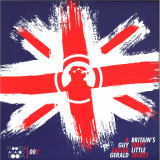
For a number of years now, A Guy Called Gerald has largely made music only for himself. But this special EP is borne from Gerald’s unique and long-lasting friendship with Analog Room founders Mehdi Ansari, Siamak Amidi and Salar Ansari. They first met in 2013 when Siamak booked Gerald to play his Analog Room party in Dubai – a leading underground light in the UAE’s then emergent scene. Away from the glossy VIP hotels and expensive bottle service parties
typically associated with Dubai, Analog Room only deals with quality bookings of the caliber of Move D, Roman Flügel, Moritz Von Oswald and the likes. Gerald immediately fell in love with the party. Its strict music-first, no-nonsense policy appealed to him and he’s returned many times over the years.
By then, of course, A Guy Called Gerald’s musical legacy was already assured. The Manchester icon is best known for his 1988 hit single Voodoo Ray – the touchstone of his hometown’s dawning acid house scene. As well as being an early member of 808 State, Gerald embraced breakbeat and jungle, ran his own Juice Box Records label and worked with the likes of Columbia, Perlon, K7! and many other vital labels. His skills on everything from synths to keys, samplers to
drum machines stood him apart then – and still do today.
“This release is based on a real friendship,” Gerald explains. “I feel part of the Analog Room family. Back in the early days, that’s how it was. These days, it’s like, ‘Oh, you’re famous, let’s do something.’ I’m not interested in that. I’m not interested in being a celebrity or living that life. I’m the same as I was 30 years ago, all I care about is the music. With Mehdi, we have spent hours jamming in private in Dubai, we have partied together. We’ve vibed together for so long and he’s shown me new parts of the world I should be making and playing music in, away from the trendy scenes in other places. So this is an exclusive just for him.
I’m not looking at doing anything else with anyone, and the music is just about celebrating individuality rather than trying to fit in anywhere.”
When Iranian-born Mehdi decided to start Moozikeh Analog Room – which translates from Farsi as “the music of the Analog Room” – Gerald was one of the first artists he asked to release on the label. It might have taken some time for Britain’s Dirty Little Secret to materialize, but boy it’s been worth the wait.
Says Mehdi, “The magic comes through proper relationships and friendships.
That’s why Analog Room worked. It was a great room, an amazing sound system, with amazing artists doing their thing. Bookings were so on-point because we had agents around the world, on the dancefloors, spying up artists who were killing it,
and Gerald was one of them. He was a perfect fit from the first gig and our friendship grew from there. He’s always been very kind to me. We have this common language of music without any bullshit, and that is where this EP comes from.”
The EP is a mixture of different things. Some of it is unreleased material from the vaults revisited, some of it is brand new. It opens up with the devastating Old Skool – a writhing, physical track with naughty bass. The drums hark back to Gerald’s early days of making jungle but reimagined through a modern perspective. As the synths spray about the mix and the percussion bounces atop the jostling drums, muttered vocals draw you in deeper. Sugoi is an experimental
track that fuses ambient synth design with the spacious and eerie atmospheres of jungle. Nimble drums get you on your toes as the spangled synths twist and turn in all directions. It is a thrillingly original, impossible to define track.
Flash Fight is built on a captivating rhythm that sits in the area where house, techno and jungle intersect. It is warm and cavernous, physical yet elegant as it bounces on rubbery kicks and lithe synths roam in and out of earshot. Perfect for those sweaty, cozy back rooms, it’s another masterclass from Gerald. Closing out the EP is False Religion, a deep-rooted house track with elastic drums and
haunting, wispy pads. As a subtle acid bassline rises and falls way down below,
Gerald’s own mystic whispers leave listeners hypnotized.
Following on from Analog Room co-founder Salar Ansari’s debut release on the label, this EP is a statement of intent. More releases will follow from some of Analog Room’s most frequent international guests, but only when the time is right. Moozikeh Analog Room is a label of love, one that is focused on putting out the best possible music at all times rather than chasing hype.
A timely reminder of why A Guy Called Gerald is one of the world’s most enduring electronic artists.
Vice Squad are a UK Punk Rock band who’s first single releases included the classic ‘Last Rockers’ 7” in 1981. This was followed by the landmark albums ‘No Cause For Concern’ in the same year and ‘Stand Strong Stand Proud’ in 1982 which were both released on EMI. Since then Vice Squad have delivered short sharp songs with incisive political lyrics and a dash of humour spat out over a thunderous rhythm and machine gun Rock ’n’ Roll guitars. Their latest releases are the EPs 'Born In A War' and 'Ignored To Death V2' taken from the forthcoming album ‘Battle of Britain’ set for release on their own Last Rockers label in May 2020. The band have become 100% DIY since forming Last Rockers Records in 2009. In keeping with the DIY ethic the previous albums were recorded in the band’s own ‘Sci Fidelity’ studio South London and the new album ‘Battle of Britain’ continues this with the band maintaining full artistic control with the benefit of global distribution via Cargo. Their last album ‘ Cardboard Country’ was launched on the back of a very successful Pledge campaign raising funds for the Shelter homeless charity in line with the album title which was inspired by 'Cardboard City', the name given to the settlement of homeless people living in cardboard boxes near London's Waterloo station. Vice Squad is fronted by raucous voiced singer/guitarist Beki Bondage who was famed for being a teenage champion of Animal rights long before the current popularity of veganism. Vice squad’s song ’Humane’ was one of the first ever Animal Rights songs. Beki has been featured on the front cover of a number of influential music tabloids such at Melody Maker, NME, Sounds, Record Mirror and Smash Hits. After a hiatus, Beki formed a new version of Vice Squad in 1997 featuring longstanding members of her post VS outfit The Bombshells and they have released several quality albums of powerful punk songs that have been very well received across the world. Vice Squad are considered one of the most influential punk rock bands of all time, paving the way for other female Punk and Rock singers and influencing male performers such as Dave Grohl of Nirvana and Foo Fighters fame who was introduced to Vice Squad via his sister’s record collection. The first rule of Punk is there are no rules and Vice Squad ably illustrate this with ‘Battle of Britain’. Written, Recorded and Mixed by Beki Bond and Paul Rooney in their home studio. The 13 track album opens with the blistering ‘Ruination’ which cuts through the bullshit of small time promoters and blaggers with consummate swagger and melody while ‘I Dare To Breathe’ is an amphetamine driven anthem to paranoia. ‘When You Were 17’ is almost-tender and tells of first tattoos and under age booze whilst the more chilling ‘Ignored To Death’ rails against isolation and homelessness. The explosive ‘Born In A War’ rages along like a missile ravaging a third world country and warns ‘See how they treat refugees? That’s how they’ll treat you and me’. Elgar’s ‘Nimrod’ reworked with a pulsating industrial bass segues into title track, 'Battle Of Britain' where Beki's vocals soar like a Spitfire over the crunching de-tuned riff and spit fury over the hypocrisy of putting war memorials before people. The dystopian ‘Poverty Face’ hits you with the opening line ‘Disinheriting the meek, slyly killing off the weak’ and is counter balanced by the more upbeat ‘How The Other Half Lives’. ‘No Evil’ is a relentless attack on the normalisation of the suffering and death of billions of animals for the meat industry. Battle of Britain's hard hitting collection of anger and riffage pulls no punches in covering topics from austerity and factory farming to the pernicious influence of the Mainstream Media - ‘Led by lies lambs to the slaughter, tax exiles say who you vote for’. Brexit, fake patriotism and cognitive dissonance all get a good kicking too. The penultimate track, 'You Can’t Fool All Of The People' mixes baritone guitar with violin and Celtic rhythms climaxing in an epic James Bondesque heavy guitar/orchestral blend and breaks every rule in the Punk Police hand book whilst pleading for unity against a rigged political system. ‘Pulling Teeth’ with its ominous riff and hilariously frustrated lyrics ‘Dithering jibbering solid as jam, is it fair I’m both the woman and the man’ closes the album in manic style
The third release on U-TRAX in 1993 was also a third debut, this time by Natasja Hagemeier and Jeroen Brandjes. Early in their career, they used several artist names, but became most commonly known as The Connection Machine. With their debut mini-album The Dream Tec Album they more or less described their style: dreamy techno. It became an instant Dutch techno classic and U-TRAX is proud and delighted to offer a fully remastered re-release, including three never before released bonus tracks (one of which is digital-only).
Natasja and Jeroen resided in Utrecht back in the 90s. In 1991 they assembled all their ideas and recorded the track "24 Hours" with DJ Paradize. Soon after this experience, they started to buy their own gear, all strictly MIDI (which wasn't too obvious in those days). In their early recording years, they had three producer-names (Syndrome, The Connection Machine and Bitch&Bites), that were all collected under the The Utroid Machine Missions umbrella, which was used for their debut on U-TRAX.
All tracks on The Dream Tec Album are The Connection Machine's earliest works, from the 1991/1992 years.
"An Overflow of the Mind" is a beautiful, dreamy track with almost divine sounds and strange voice-samples that serves perfectly as an introduction to their entire repertoire.
Their first production was "24 Hours", and what a brilliant one it is! A well-known jazz-musician talks about a "24 hour party going on", on top of a sinister and trancey rug, woven of sampled sounds from pioneers in electronic music and nailed down to the floor with a deep pounding bassdrum. At the time they made this track, 141 bpm was unbelievably fast...
"Evilish Cosmos" is all about a very sad and personal emotion, so everything we say about it will be absolutely wrong. Just listen to the meandering piano line, distorted voice samples - and feel it.
The first bonus track on this release is "Recognized Pain", which was intended to be part of the original The Dream Tec Album. It had appeared on the Phuture Classical Section C cassette in 1993, on the famous Drome Tapes label that formed the roots of U-TRAX. It truly is an amazing track: pure sonic terror with haunting rhythms, psychedelic synth lines and shards of voice samples that make the listener feel slightly uncomfortable.
"X_Manray" is many electronic music lover's favorite track. It is sooo deep that it is hard not to get hypnotized by it. Warm strings are coupled with deep beats that show up and disappear every now and then. Could serve perfectly to start off any DJ's set, as long as she or he has the guts.
Though "Braindrain" is probably the most danceable track on this album, it is carefully designed to tease the listener. Everything in this track drops in too late and every tone, melody or loop last exactly a few bars too long. Designed as a DJ-teaser and so it is.
The second bonus track, "Cafe d'Anvers", is another previously unreleased work, of which unfortunately no master recording was saved. All that is left, as far as we know, was an old VHS Hifi tape from the U-TRAX Archives. And that is where this bonus track was taken from. Mastering engineer Thee J Johanz managed to restore the quality of the recording somewhat, while at the same time maintaining its dark, clubby sound, a tribute to the famous club of the track's name in Antwerp, Belgium.
"Dream Affected Dream" is one of the most recent productions on this album. It was recorded with CNN playing live on top of it. At this exact moment, CNN was having an interview with David Koresh, the leader of the infamous Branch Davidians sect from Waco, Texas, while they were under siege by an armed police force. Natasja and Jeroen were just ready to record Dream Affected Dream, and spontaneously decided to mix in the audio from CNN. Not very long after that, the cult members set fire to themselves. A very strange and oddly funky track, that also serves as a time-document.
The final track is another bonus track. Like Cafe d'Anvers, "Voight-Kampff" is taken from on old U-TRAX VHS Hifi tape and masterfully mastered into a lovely relaxed dreamtech piece. Very suitable to start the Sunday after a long night of clubbing. This track is available for free to buyers of the complete digital album only.
Original release date: July 1993.
The Artists Formerly Known As The Connection Machine (Utrecht, Netherlands) go raw and mean on this one! If the underground The Hague-style from the 90s is your thing, this 12" is your cup of tea. 4 hectic 808/303 trax, all mixed in a dirty way, with loadsa fx on the 303.
The Connection Machine/Cray Emoticon is the multi-talented duo of Natasja Hagemeier and Jeroen Brandjes, who debuted on U-TRAX in 1993 with their instant classic and much sought after 'The Dreamtec Album' (catalogue no: 3 UTR UMM 1). They went on to create another epic release called 'The Black Hole EP' on U-TRAX (catalogue no: 5 UTR UMM 2), but not after they presented 'Bitflower', a true work of art on Planet E from Detroit. Later they released the CD album 'Painless' on Down Low Music and in more recent years two 12"s (shared with The Lost Trax) and an album on Tabernacle Records from the UK.
The title track is originally meant as a replacement for the original game music of level 9 of the 2nd episode (E2L9) of the computer game Doom. The artists thought the original score wasn't doing right to the intensity of the game and made their own apocalyptic soundtrack. 'Gnawing The Heart' already proved its usefulness on many a dancefloor, whilst 'Choice Chip' will satisfy the ultimate speed freaks amongst you. If you're not into drugs or mushrooms, 'I Wish My Zapper Was A Gun' can deliver you the same effects: it's a psychedelic space-acid trip, built around a sample of the sitcom 'Neighbours'.
You can't get wrong with this vintage and merciless dance floor material from the mid-nineties.
Original release date: October 1995.
- A1: Saint Etienne - Cool Kids Of Death (Underworld Mix)
- A2: Unloved - Why Not (Gwenno Remix)
- A3: Nots - Reactor (Mikey Young Remix)
- B1: Mildlife - Automatic (Jono Ma Ascend Mix)
- B2: Espiritu - Los Americanos (Mother Mix)
- B3: Confidence Man - Out The Window (Greg & Che Wilson Remix)
- C1: Mattiel - Guns Of Brixton (Rub-A-Dub Style Part 2)
- C2: Baxter Dury - Miami (Parrot & Cocker Too Remix)
- C3: Jimi Goodwin - Terracotta Warrior (Andy Votel Spazio 1975 De-Mix)
- D1: Working Mens Club - X (Minsky Rock Remix)
- D2: Moonflowers - Get Higher (Get Dubber Mix)
- D3: Raf Rundell - Monsterpiece (Harvey Sutherland Remix)
- D4: Cherry Ghost - Finally (Time & Space Machine Edit)
Marshall McLuhan’s famous edict ‘the medium is the message’ has never been more apt than with regard to modern remix culture. Although the idea of the remix goes way back to the Jamaican dub pioneers and New York disco remixers of the 1970s, the form didn’t truly come into its own until the acid house explosion of the 1980s, when remixers’ credentials often subsumed — and sometimes surpassed — the original source material. Some, among them our lost friend Andrew Weatherall, used remixing as a springboard into multiple other directions, and became auteurs in their own right.
Forged in the white-hot heat of post-acid house Britain, these Heavenly remixes are perfectly weighted with respect and irreverence, the remixer in each case carefully chosen to add heft to the song (as on Al Breadwinner’s dubwise reworking of Mattiel’s ’Guns of Brixton’— the pairing more a game of chess than a best-of-three arm wrestle).
Although Heavenly was founded in the wake of huge upheavals in electronic music, it was still imbued with its own curious parallel life. I’ve always thought of Heavenly as one of the UK’s alt-pop labels; a place where brilliant pop bands live and record, if the general public would only realise. Some of them have ended up in the real, actual charts (Saint Etienne, Doves), but that’s missing the point about Heavenly, who are, like Factory and Fast Product before them, pop music’s conscience.
There is no sense of order to this compilation and we make no apologies. It’s the Heavenly way. Think of it as a present from Loki, the Norse god of mischief. You’ll find a smattering of older tracks: album openers Saint Etienne are taken on a Poseidon Adventure with Underworld, who inject ‘Cool Kids of Death’ with typically manic energy. Elsewhere, ’90s Brum duo Mother add dancefloor pzazz to Espiritu’s innate glamour on an all-funked-up reworking of ‘Los Americanos’, and Mark Lusardi’s remix of Moonflowers’ ‘Get Higher’ is an early Heavenly classic.
On ‘Terracotta Warrior’, a perfect, psyched-out, Mancunian union is created betwixt Jimi Goodwin and Andy Votel, whilst Goodwin cohort Simon Aldred, in his Cherry Ghost guise, receives a proper Tamla-Motowning from Richard Norris (aka Time & Space Machine) on an inspired cover of Cece Peniston’s glam-house hit, ‘Finally’.
There are several of Heavenly’s current darlings here too. One of the most exciting young British prospects, Yorkshire’s Working Men’s Club, effectively remix themselves, as Minsky Rock — WMC’s Syd Minsky-Sargeant and producer Ross Orton — cleave ‘X’ into a riotous industrial racket. Jagwar Ma’s Jono Ma takes the Kraftwerkian leitmotif on ‘Automatic’ and drives the Australian jazz-funkers Mildlife down an electro-convulsive psychedelic tunnel (thankfully no-one was harmed during the making of this remix); Sheffield’s DJ Parrot and Jarvis Cocker deliver one of the outstanding remixes of 2018, turning Baxter Dury’s ‘Miami’ into a lovelorn minor opera; and, making its first appearance on vinyl, David Holmes’ Unloved project is taken on a panoramic Welsh waltz thanks to Gwenno.
There may well be no rhyme, nor reason, to how these compilations have been put together, beyond the fact that they are assembled with love, an innate understanding of the power of great pop music, and a skilled marriage of song and remixer — but does one really need anything more than that for an album to make sense? I’d suggest not.
A sublime techno reissue from the vaults of one of London's leading electronic labels of the last 25 years, remastered and re-presented for 2022!
Originally released in 1994 on Mr.C's cult UK house and techno label Plink-Plonk and composed and performed by Laggy Panteli and Zeno Messis (aka Megalon) in their London studio, 'Pandora's Box' is a truly unique record. Sleek, futuristic, fathoms deep and wholly original, the music contained on these 2 discs sounds as modern and as vital as it did on it's arrival all of those years ago.
Exploring a deeper vein of electronic music, Megalon craft their own sonic landscapes that are undoubtedly inspired by all forms of cerebral electronic music. Ambient, Detroit techno, electro, European electronics and of course the duo's experiences in London's early acid house and rave scene all filter through their lens to bring something brand new to the table. The arrangement, sound design and mix on the album is outstanding, lending a totally visionary and modern feel to the tracks that continues to echo today.
'Pandora's Box' is a record that has existed within the shadows for many years, with a hardcore cult following. The kind of record that one might hear deep into the early hours, at the hands of a seasoned selector or an 'insider' who has the knowledge. It is redolent of a time when innovation, ideas and imagination trumped the run of the mill and the homogenous, which goes a long way in explaining what makes this record so exciting some 25+ years later.
A totally essential mid 90's UK techno and electronic classic, as much a treat for the mind as for the body.
Reissued in full conjunction with the artists and remastered by Curvepusher from DAT and original source materials. Redesigned by Atelier Superplus and distributed worldwide by Above Board distribution, 2022.
- A1: Halo Maud - Des Bras (Andy Votel Remix)
- A2: Boy Azooga - Face Behind Her Cigarette (Mikey Young Remix)
- A3: Doves - Jetstream (Lindstrom Remix)
- B1: The Orielles - It Makes You Forget (Itgehane) (Itgehane)
- B2: Katy J Pearson - Take Back The Radio (Flying Mojito Bros Mojito Refrito Dub)
- B3: Confidence Man - First Class Bitch (Raf Rundell Party Nails Remix)
- C1: Audiobooks - Friends In The Bubble Bath (Gabe Gurnsey Gamma Ray Remix)
- C2: Gwenno - Chwlydro (R Seilog Remix)
- C3: Working Men's Club - Valleys (Graham Massey Acid Mix)
- D1: Saint Etienne - Filthy (Monkey Mafia Mix)
- D2: Night Beats - Sunday Morning (Jono Ma Remix)
- D3: M Craft - Chemical Trails (Beyond The Wizards Sleeve Re-Animation)
It’s incredibly easy to get a remix wrong — as the back catalogues of far too many major labels, whose slapdash commissioning of the latest hot remixer half-guarantees an unsympathetic mangling of the song, can attest. At their best, remixes can make you look at an artist as though positioned from a different angle or using a different camera; sometimes hearing a song in a different context gives it a completely new meaning. “So you take a piece of a vocal…blah” says master remixer David Morales. “That’s a remix? That represents the artist? That doesn’t represent the artist, it represents you.” In the hands of the insensitive a remix is like chucking a song into the washing machine for a 100 extra spins.
In the hands of a master, things are a little more complex. Heavenly was all but founded on the art of the remix; our departed friend Andrew Weatherall remixed the first ever release, and the label has built up an immense catalogue in the intervening years that demonstrates all that is good about the art form.
Assembled on this compilation are twelve sterling examples of the remix, from Hanspeter Lindstrøm’s reading of Doves’ ‘Jetstream’, which turns their glistening pop into Lieutenant Pigeon meets Italo-disco (in a good way), to Andy Votel’s gentle folk-funk version of Halo Maud’s délicieuse ‘Des Bras’. We delve deep into the vaults for Saint Etienne’s ‘Filthy’, Monkey Mafia turning it into a rump-shaking groove perfectly suited to Q-Tee’s rap, while more recently, Flying Mojito Bros, purveyors of Tex-Mex house groove, reimagine Katy J. Pearson as a lonesome Lone Star lover.
Though not purposely themed, beyond being judiciously chosen as the catalogue’s finest gems, there’s a tiny hint of psychedelia about this set that is hard to ignore. Firstly, there are the acid contributions from Gabe Gurnsey, who knows his way around a coruscating bassline, and from Graham Massey, whose impeccable credentials in 808 State are brought to bear on ‘Valleys’, by young turks Working Men’s Club (acid house being modern psychedelia, whether the rock press approves or not).
Jono Ma, meanwhile, flips Night Beats’ amazing ‘Sunday Mourning’ into ‘Warm Leatherette’ on benzos, creating a disorienting glimpse of a dystopian Sunday that most definitely doesn’t include a genteel read of the papers and a nice cup of tea. On the other side of the miasma is Beyond The Wizard’s Sleeve’s redemptive re-interpretation of M. Craft’s ‘Chemical Trails’, which, alongside Boy Azooga’s ‘Face Behind Her Cigarette’ (Mikey Young remix), Gwenno’s ‘Chwlydro’ (R. Seiliog remix) and and Katy J. Pearson’s ‘Take Back The Radio’ (Flying Mojito Bros Refrito Dub), is issued on vinyl for the very first time.
This dozen tracks — each one curated, remixed and delivered with love (and a teensy bit of impertinence) — is just a glimpse into the catalogue of one the UK’s finest indie labels.
In the alternative reality in which I’d prefer to exist, this what Top of the Pops might sound like; or, at the very least, the jukebox in the Korova Milk Bar. Pop disruption at its best.
Damage machine delivers a chanting speedcore industrial pearl.
Infamozz is here the more "normal" hardcore tune : an industrial banger.
Komprex goes extreme speedcore, hardish shaker !
The flip opens with a Qualkommando acid uncompromised style. Massive superb savage tune.
Infared is my fave... with a clear clean minimal speed hard HELP tune, travelling in a flashcore, full of life and surprising sequences. Big structure here !
Lawrencium goes even more extreme and success into doing an overspeed hardcore with a high definition... probably the best 400BPM vinyl release of the year !
The third release on U-TRAX in 1993 was also a third debut, this time by Natasja Hagemeier and Jeroen Brandjes. Early in their career, they used several artist names, but became most commonly known as The Connection Machine. With their debut mini-album The Dream Tec Album they more or less described their style: dreamy techno. It became an instant Dutch techno classic and U-TRAX is proud and delighted to offer a fully remastered re-release, including three never before released bonus tracks (one of which is digital-only).
Natasja and Jeroen resided in Utrecht back in the 90s. In 1991 they assembled all their ideas and recorded the track "24 Hours" with DJ Paradize. Soon after this experience, they started to buy their own gear, all strictly MIDI (which wasn't too obvious in those days). In their early recording years, they had three producer-names (Syndrome, The Connection Machine and Bitch&Bites), that were all collected under the The Utroid Machine Missions umbrella, which was used for their debut on U-TRAX.
All tracks on The Dream Tec Album are The Connection Machine's earliest works, from the 1991/1992 years.
"An Overflow of the Mind" is a beautiful, dreamy track with almost divine sounds and strange voice-samples that serves perfectly as an introduction to their entire repertoire.
Their first production was "24 Hours", and what a brilliant one it is! A well-known jazz-musician talks about a "24 hour party going on", on top of a sinister and trancey rug, woven of sampled sounds from pioneers in electronic music and nailed down to the floor with a deep pounding bassdrum. At the time they made this track, 141 bpm was unbelievably fast...
"Evilish Cosmos" is all about a very sad and personal emotion, so everything we say about it will be absolutely wrong. Just listen to the meandering piano line, distorted voice samples - and feel it.
The first bonus track on this release is "Recognized Pain", which was intended to be part of the original The Dream Tec Album. It had appeared on the Phuture Classical Section C cassette in 1993, on the famous Drome Tapes label that formed the roots of U-TRAX. It truly is an amazing track: pure sonic terror with haunting rhythms, psychedelic synth lines and shards of voice samples that make the listener feel slightly uncomfortable.
"X_Manray" is many electronic music lover's favorite track. It is sooo deep that it is hard not to get hypnotized by it. Warm strings are coupled with deep beats that show up and disappear every now and then. Could serve perfectly to start off any DJ's set, as long as she or he has the guts.
Though "Braindrain" is probably the most danceable track on this album, it is carefully designed to tease the listener. Everything in this track drops in too late and every tone, melody or loop last exactly a few bars too long. Designed as a DJ-teaser and so it is.
The second bonus track, "Cafe d'Anvers", is another previously unreleased work, of which unfortunately no master recording was saved. All that is left, as far as we know, was an old VHS Hifi tape from the U-TRAX Archives. And that is where this bonus track was taken from. Mastering engineer Thee J Johanz managed to restore the quality of the recording somewhat, while at the same time maintaining its dark, clubby sound, a tribute to the famous club of the track's name in Antwerp, Belgium.
"Dream Affected Dream" is one of the most recent productions on this album. It was recorded with CNN playing live on top of it. At this exact moment, CNN was having an interview with David Koresh, the leader of the infamous Branch Davidians sect from Waco, Texas, while they were under siege by an armed police force. Natasja and Jeroen were just ready to record Dream Affected Dream, and spontaneously decided to mix in the audio from CNN. Not very long after that, the cult members set fire to themselves. A very strange and oddly funky track, that also serves as a time-document.
The final track is another bonus track. Like Cafe d'Anvers, "Voight-Kampff" is taken from on old U-TRAX VHS Hifi tape and masterfully mastered into a lovely relaxed dreamtech piece. Very suitable to start the Sunday after a long night of clubbing. This track is available for free to buyers of the complete digital album only.
Original release date: July 1993.
- 2021 repress / white vinyl / comes in stickered sleeve / incl. dl code -
Ghost in the Machine returns to continue their adventures in the world of acidfueled industrial techno. This shiny white 12" sees them further exploring, stretching, establishing and reestablishing the boundaries of their own sound. Dirtier kicks, cleaner kicks, deeper kicks, techier techno and even more acidic acid. They actually managed to sneak a track on here that doesn't use a 303. A very bold move which will undoubtedly have farreaching consequences for the future of future dance music. Recommended if you like buying records.
"In Vivo" is the result of the photographic work of Klavdij Sluban at the Fleury-Mérogis Young Offender Institution (France) from 1995 to 2016 Beds in addition to his work from Izalco prison, located in El Salvador, from 2008 [visiting rooms] connected to the music of Gareth Davis.
Gareth Davis is an artist, composer and musician living in Amsterdam. He plays clarinet(s), the result of a somewhat impulsive purchase whilst window shopping in Covent Garden, London, around ten years before the turn of the century. The serendipitous location of a rather wonderful (and equally important, rather cheap) second hand record shop less than 10m from the bus stop required for seven years of schooling, combined with delivering newspapers on a daily basis, lead to a somewhat eclectic, dusty and generally unclassified taste in music.
The result. Activity covering sonic art and contemporary classical music through rock, improvisation and noise with collaborations that have included the premiering of new written pieces by composers such as Bernhard Lang, Peter Ablinger, Toshio Hosokawa and Jonathan Harvey, soloist with orchestras including the SWR Symphonieorchester, Warsaw Philharmonic and Orquesta de la Comunidad de Madrid, performances with groups and performers ranging from the Neue Vocalsolisten and Arditti Quartet through to improvisers Elliott Sharp and Frances Marie Uitti, electronic artists Robin Rimbaud and Merzbow and multimedia work with artists including Christian Marclay and Peter Greenaway.
"In Vivo" is his second solo release after to have recorded a bunch of collaborative albums with artists such as Scanner, Machinefabriek, Steven R. Smith, Kleefstra Brothers, Frances-Marie Uitti, Merzbow, Adain Baker, Duane Pitre and more...
Klavdij Sluban, winner of the European Publishers Award for Photography 2009, of the Leica Prize (2004) and of the Niépce Prize (2000), main French prize in photography, is a French photographer of Slovenian origin born in Paris in 1963.
He develops a rigorous and coherent body of work, nourished by literature, never inspired by immediate and sensational current affairs, making him one of the most interesting photographers of his generation. The Balkans, the Black Sea, the Baltic Sea, the Caribbean, Central America, Russia, China and the Antarctic (first artistic mission in the Kerguelen islands) can be read as many successive steps of an in-depth study of a patient proximity to the encountered real.
His images have been shown in such leading institutions as the Metropolitan Museum of Photography of Tokyo, the Maison Européenne de la Photographie in Paris, the Rencontres d’Arles, the Museum of Photography in Helsinki, the Fine Arts Museum in Canton, the Musée Beaubourg, the Museum of Texas Tech University. His many books include East to East (published simultaneously by Actes Sud, Dewi Lewis, Petliti, Braus, Apeiron & Lunwerg with a text by Erri de Luca), Entre Parenthèses, (Photo Poche, Actes Sud), Transverses, (Maison Européenne de la Photographie) and Balkans -Transit, with a text by François Maspero (Seuil). Since 1995, Sluban has been photographing teenagers in jails. In each prison he organizes workshops with the young offenders to share his passion. First originated in France, in the prison of Fleury-Mérogis with support of Henri Cartier-Bresson during 7 years, as well as Marc Riboud and William Klein punctually. This commitment was pursued in the disciplinary camps of Eastern Europe –Serbia, Slovenia, Ukraine, Georgia, Moldavia, Latvia – and in the disciplinary centres of Moscow and St Petersburg as well as in Ireland. From 2007 to 2012, Sluban has been working in Central America with imprisoned youngsters belonging to maras (gangs) in Guatemala and Salvador. In 2015, he started photographing imprisoned teenagers in Brazil. In 2013, the musée Niépce showed a retrospective of K.Sluban’s work, After Darkness, 1995-2012. In 2015/16, he was awarded the Villa Kujoyama Residence in Kyoto, Japan. K.Sluban is member of national and international jurys, such as prix Niépce, prix de la Jeune Photographie de Niort, prix Leica, All About Photo…
HESITATION return with a heartfelt take on the Christmas record. A gift of seven traditional pieces fed through a brandy-oiled machine of analogue synthesizers and robotically assisted singing, festooned with wayward horns and primitive sprigs of guitar recorded in a conservatory in Dorchester.
The emotional hit of the results - from the deconstructed Macca synth and plucked harmonics of 'Good King Wenceslas', to the zero gravity glacial cloud that forms 'Once in Royal David's City' - is undeniable. Think John Fahey and Beefheart pulling an augmented reality wishbone, and you're halfway there.
Recommended if you like CS + Kreme, Zappa, Colleen.
La Maison's story is essentially an oral one, like for many bands in those years. Casual encounters, records found and exchanged, demos recorded at home, live club shows in a country that in those years was changing socially and culturally at the speed of light, and was molding itself at the rate of a fluid modernity. The tracks of this album, Collected Tape Experiments 1980-1984 tell the story of a world where synthesizers and drum machines coexist and replace traditional rock instruments. Where homemade overdubs broaden the spectrum of sonic possibilities and the "cut and paste" of tapes is done, literally, by hand. A world in which the first infatuations for wave and industrial are contaminated with no prejudice by the rhythms and sounds of funk and disco. A milestone for those who want to understand the vibrant landscape of Italian music of the eighties, many times too hectic and elusive to be captured in real time. Twenty one tracks on CD and twelve on vinyl, most of them never published before, see the light of day more than thirty years after their creation. - Livia Satriano
• The first book of its kind to give music artists practical step-by-step comprehensive instructions for setting up and running an independent music label.
• Features a detailed breakdown of how each part of the industry works, including copyright in the UK and US, record label set-up, record releases, and royalty collection.
• Provides in-depth guides on marketing, covering; traditional PR, Facebook and Instagram advertising, Spotify playlisting, and fan growth.
• Includes templates for record label and management contracts, marketing and promotion schedules, press releases, and fan email automation.
Whether you want to start a record label, self-release your own music, or are just an avid music lover, this book will give you information about the business of music. The Label Machine: How to Start, Run and Grow Your Own Independent Music Label is the first book to give music artists practical step-by-step comprehensive instructions for setting up and running an independent music label to successfully distribute and market their music.
You will learn all about the music industry business and how to navigate the tricky dos and don'ts. You will finally understand and take control of your music copyright and get to grips with the legalities involved. You will build your music business effortlessly, learning how to professionally market your music and artists - allowing you to reach thousands of fans. And essentially, you will learn how to create multiple label revenue streams to create an established record label.
It features a detailed breakdown of how every part of the industry works together, including copyright in the UK and US, record label set-up, record releases, and royalty collection. It also provides in-depth guides on marketing, covering; traditional PR, Facebook and Instagram advertising, Spotify playlisting, and fan growth. Includes templates for record label and management contracts, marketing and promotion schedules, press releases, and fan email automation.
"This is a great resource, and it has a lot of information that is compiled into one place that's easy to find" Roy Lindsey (Dapr Music)
"It gave me a lot more direction and I knew what to focus on. Everything is so easily mapped out" Dave Strickland (Sensible Recordings)
The Mighty Soulmates is a towering early 90s project from the legitimate super group of André Cymone (bass player with Prince), St. Paul Peterson (guitarist with The Family and Prince), Mic Murphy (of Sass and The System fame) and Gardner Cole (writer, producer and musician probably best known for his work with Madonna). The sound is a majestic blend of sophisticated funk, emotional R&B, New Jack Swing flava and slick deep soul.
These should-be legendary sessions have been almost a secret since they were recorded back in 1993. The first Be With knew about the project was whilst working with Mic on some Sass re-issues and he told us he had something else we might be interested in hearing.
Mic explained, “In the summer of 1993, Gardner Cole asked if I’d be interested in coming out to work with him, André, and St. Paul. So we all headed out to what can best be described as a fantasy music summer camp at Gardner’s house in Woodland Hills, California. We had all worked together in the past in some form or another so everyone was energized and enthused and excited to see what we could create together. St Paul and Andre had already begun some songwriting at Gardner’s well equipped home garage studio. The songs and ideas progressed quickly and some additional recording was completed at André Cymone’s studio in downtown LA. We ended up working on the project for about 6 months, off and on, until Gardner's house fell victim to the Northridge Earthquake in January 1994.”
There were some vague ideas at the time about turning the sessions into a finished record, but everyone went back to their day jobs and as St. Paul puts it: “for nearly 30 years it just sat there, marinating like a fine funk masterpiece. Everything has its right time and now just be the time”.
From all the tracks Mic sent over, we’ve cherry picked the absolute cream for a tight four track EP. In an alternate history all four for these would’ve been radio smashes. No doubt. But these songs never even reached a plugger. A mixture of beat ballads and uptempo non-hits, coming on like Al B Sure! or Babyface take on Shalamar or, dare we say it, The Purple One - maybe not so surprising given who’s playing!
The feel-good dancefloor dynamite of “I Wanna Be The One” is the explosive opening track. A piano-driven, groove-laden blast of yearning deep-pop, with perfectly delivered soulful vocals and an unmistakable “early 90s” sound. Indeed, fans of Eddie Chacon’s old group will dig this for days. “Back In The Day” has a timeless swing and swagger, the lyrics reminiscing about the halcyon streetlife of the Soulmates’ youth, about Curtis, Superfly and innocent days gone by, about hustling with friends. Yet more spine-tingling vocals over yet another perfectly produced musical backdrop. Stunning.
Opening side B, “Blue Tuesday” is the thrilling pinnacle of the EP, at least for us. It’s absolute soulful-pop perfection, and the one we’ve been asked about most after teasing this collection on our NTS show. A soaring beat ballad full of chiming guitars, gorgeous harmonising, falsetto “doo-doo-doo-doo do-do-do-do” backing vocals and a real steppers’ groove. Glide to this with your loved one at the next roller rink party.
Dramatic, purple-hued closer “Private Time” seems to predict the Timbaland-dominated sound of the mid-to-late 90s, all synthetic strings and squelchy, acidic-drum-machine soul. There’s even room for funky piano breaks, vocoder bridges and more cowbell than you can shake a cowbell at. You could just as easily hear Aaliyah vibing over this as much as Mic.
This EP represents the sound of four incredibly soulful, talented, and influential (soul)mates jamming together over one long hot summer and weaving pure sonic magic. André Cymone loved the “kinda pop, experimental exploration of sound and music. I think these songs make a statement. Not just because of the collection of talented musicians involved but the idea of musically branching out and experimenting; which is what I loved about the project and for people to hear and hopefully appreciate the artistic adventure this music takes, I think it’s a much needed breath of fresh air.” As Mic recalls, “it had the feeling of recovery in a circle with my dudes making music sitting around catching up on life - it felt like living a second childhood. We just wrote what we felt. I don’t remember ‘aiming’ at anything but a great song, melding all our different influences from throughout our lives. We had no restraints. For me personally, it was a time to make music and regroup. I call it the ‘Soulmate Experience’ because in many ways we are kindred souls as a band. We did have an amazing time making the record and so much fun together. Probably my best summer ever”.
The Mighty Soulmates EP has been mastered for vinyl by Simon Francis, cut by Pete Norman at Finyl Tweek and pressed at Record Industry. That early 90s gloss sounds spectacular, if we do say so ourselves.
And such a special record needed some truly almighty artwork, so thanks go to DJ Ruby Savage for directing us to London-based illustrator and designer River Cousin. This music needed something elegant and indulgent yet soulful and striking and something as simultaneously tongue-in-check and deadly-serious as the group’s name. The end result is as modern yet timeless as the music itself.
And these are just our four picks. There’s plenty more where this came from and Mic tells us he’s even picked the album title: “Earthquake Summer”.
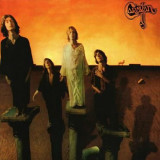
For their first album, Caravan was surprisingly strong. While steeped in the same British psychedelia that informed bands such as Love Children, Pink Floyd, and Tomorrow, Caravan relates a freedom of spirit and mischief along the lines of Giles, Giles & Fripp or Gong. The band's roots can be traced to a British blue-eyed soul combo called the Wilde Flowers. Among the luminaries to have passed through this Caravan precursor were Robert Wyatt, Kevin Ayers, and Hugh Hopper and Brian Hopper (pre-Soft Machine, naturally). The Caravan album never sold in serious numbers, and for much of 1968 and early 1969, the members were barely able to survive -- at one point they were literally living in tents. Suddenly, Caravan was an up-and-coming success on the college concert circuit, even making an appearance on British television's Top of the Pops. With national exposure and a growing audience, the group was at a make-or-break moment in their history. They rose to the occasion with their second Decca LP, In the Land of Grey and Pink, which showed off a keen melodic sense, a subtly droll wit, and a seductively smooth mix of hard rock, folk, classical, and jazz, intermingled with elements of Tolkien-esque fantasy.
Glimmering medieval weaponry forged, polished and brandished, Zhenya Lavrinov arrives to take us back in time and beyond the stars. As LVRIN, he appeared opposite Maoupa Mazzochetti on a split EP for Arma – but one pockmark in a scattering of machine-powered ruminations for respected, proudly underground labels – and now he returns to wield a new alias across five tracks of ominous, night-creeping sonics.
The tracks making up Milky Way were recorded by Bryansk-based Lavrinov between 2013 and 2020, reflecting a side of his musical demanour not betrothed to the demands of the dancefloor. Golden Axe is far from ambient though – this is still resolutely rhythmic music spoken by specifically sculpted synths and powered by purposeful sequencers.
There’s a cosmic theme at play here, but ‘Moon Influence’ speaks as much to ancient rites and man’s obsession with lunar forces as any space-age sci-fi symbolism you might associate with gurgling electronic patterns. ‘Rhythmbox From Space’ may be brimming with analogue freakery, but it’s also locked into a rhythmic mantra which tracks back to the dawn of humanity.
Cementing the philosophy of the record visually, Milky Way comes clothed in a striking artwork by Alina Vinogradova. Lavrinov’s Golden Axe seems to hail from this very space depicted on the cover, speaking through time-honoured tools and revelling in universal mysticism as it opens a new chapter in his darkly seductive, psychosomatic music.