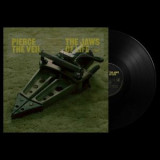
Irish-born, Manchester-based Kerrie is a multi-disciplinary artist, incorporating live sets, DJing, producing and running her label Dark Machine Funk across her repertoire of work. Now, Kerrie follows up last year's 'Raw Regimen' (BP063) with a second EP for James Ruskin's seminal Blueprint Records.
Having garnered a rich musical education through working at and holding a DJ residency for one of the UK's most respected record shops Eastern Bloc, Kerrie's in-depth knowledge and unwavering dedication to music shines through her notable back catalogue and bolshy, unforgiving DJ and Live sets. Honing her craft for over a decade, Kerrie has played worldwide in celebrated venues such as Tresor, Berghain, fabric, FOLD, Elsewhere NYC and festivals including Freedom Medellin, Freerotation, Drift and Basilar.
First learning to mix via her brother's turntables in the early 2000s, it wasn't until 2009 that Kerrie invested in her own set-up and built an extensive record collection, covering everything from ambient, electronic, house, EBM, acid, electro, and her go-to genre, techno. Kerrie delivers tough moods from the turntables, as conveyed in her mixes for Reclaim Your City, Bassiani, SLAM and Crack, where she carefully blended high-energy styles of UK, Detroit, and European techno, many of which stem from the 90s and the 00s. It's frequent to hear Kerrie weave broken elements into her mixes too, chopping up the 4/4 groove at just the right moment to keep things propulsive. Kerrie's Live sets are fast becoming renowned for their trippy motifs and high impact on the dancefloor, applauded by Berlin's long-running club Tresor, where she made several appearances with her Elektron machines. Kerrie's Live set at Freerotation in 2019 was one of the festival's most talked-about debuts, and this year, Kerrie will return to and debut at multiple festivals and clubs across Europe and the Americas.
Following well-received releases on labels such as Don't Be Afraid, Cultivated Electronics, I Love Acid and Symbolism, Kerrie launched her imprint Dark Machine Funk DMF in 2020. The label homes her distinctly raw aesthetic and honours her love for dark, gritty, metallic and industrial sounds melded with elements of funk, heavily influenced by second-wave Detroit artists, UK techno and music by some of her favourite artists; James Ruskin, Blawan and Surgeon. Kerrie's first release on DMF, 'Inner Space PT1', was praised by Resident Advisor, who credited her ability to make "lean, fierce techno that knows how to groove."
2022 was a watershed year for Kerrie's productions. She debuted on the monumental UK techno label Blueprint with her EP 'Raw Regimen', which landed acclaimed reviews. Truly welcomed to the Blueprint family, Kerrie shares her second EP on the label in May and joins the crew at Blueprint showcases around the globe. This year marks the release of Kerrie's 10th EP on vinyl, and considering her consistent output on DMF, Blueprint and many more labels, the producer shows no sign of slowing down.
Coming to international prominence in more recent years, regardless of her decade-long tenure in Manchester's vibrant scene, Kerrie is deeply invested in the culture of electronic music, starting from her teenage era as a raver in Ireland up to her innovative projects today. In 2017, she founded Eastern Bloc's in-house event space to nurture local talent, which remains at the heart of Manchester's music community. Having ended her 11-year stint at the shop in 2023 to fully commit to the studio and accommodate her increasingly busy tour schedule, Kerrie is forging a long-lasting path fuelled by drive, passion, authenticity and a community-first way of thinking.
Cerca:man machine
- A1: No Silence (With Vok)
- A2: Speed Of Light (With Dave Thomas Junior)
- A3: Take Me Home (With Mor & Grandfather Machine)
- B1: American Boy (With Asbjorn)
- B2: Chaos (With Run Rivers)
- B3: Matriarch (With Red Dragons)
- B4: Under Pressure (With Olan)
- C1: 4/15/10 11:15 Am - Volcano
- C2: Thank You For Being With Us
- C3: Equal (With Asbjorn)
- C4: Midnight (With Alison May)
- D1: Dna (With Run Rivers)
- D2: Greater Chances (With Olan)
- D3: On Tape
- E1: I Would (With Alison May & Grandfather Machine)
- E2: Break The Rules (With Kaleena Zanders)
- E3: Let Go
- F1: What Is Real (With Vok)
- F2: If You Loop It, They Will Come
- F3: Pulse (With Olan)
Introducing ‘Duality’, the new double album from Andrew Bayer. Two musical threads weave through the collected works of Andrew Bayer. One thread gave us the downtempo masterclass of 2013’s ‘If It Were You We’d Never Leave’ and the brilliant 'In My Last Life' LP. The other thread produced arena-sized anthems like 2014’s ‘Once Lydian’, his epic 'Super Human' with Asbjørn and the club remix project 'In My Next Life'. From the introspective to the explosive, these records are our community’s shared soundtrack: we’ve all got a favourite Andrew Bayer record. But they have come in so many forms and styles. It leaves us asking the question, who exactly is Andrew Bayer? It’s a question he’s asked himself. “Since day one, I have always struggled with how to present myself. I love making these experimental home listening albums of electronica and indie sounds, but I also love DJing and making trance bangers. On my last album I had to remix the album in full after it was released to make the worlds fit. This time around I wanted to capture all the breadth, depth and tension within that duality under one single project” - Andrew Bayer ‘Duality’ brings these two creative threads together under one album for the first time since his debut album 'It's Artificial'. Crafted over three years, Bayer is joined by an eclectic cast of collaborators old and new. ‘Duality’ pt. 1 explores Bayer’s passion for downtempo and indie-pop, while ‘Duality’ pt. 2 takes on his forward-thinking trance and progressive sond. Both are tied by Bayer's unique vision, a shared sensibility and same group of collaborators. Today, you can hear a sample from each side: ‘Equal’ (with Asbjørn), and ‘Midnight’ (with Alison May). ‘Duality’ is the true follow up to my first album ‘It’s Artificial’. It is by far my most raw and honest work, and I can’t wait to celebrate the album around the world with you all on tour” - Andrew Bayer
"Split 1.0" is definitely a split release! Side A delivers some fresh hypnotic techno sounds by Bastian Balders himself while side B catches up with some groovy house tracks by Anton Kubikov, who is active since the mid 90s and well known for his minimalistic dub techno-house style. Side A ends with a mysterious electronica outro while Anton produced some chilled guitar riffs combined with acoustic signals and delays to finish the whole EP. Don't miss this limited hand-stamped record!
Early bird support by:
Vincent Neumann, Cecilia Tosh, Truncate, Alexander Kowalski, Kaiser, illousion, ForestOn Stasys, Kontinum, Richie Hawtin, Cristian Varela, Virgo, Hellix, Vasco Valente, Frank Leicher, Ina Kacz, Carlotta Jacobi, Hypnotic Black Magic, Clubberia / Nori, Juho Kusti, DJ W!ld, Rich NXT, Marcel Dettmann, JosephCapriati, Wlderz, JakoJako & many more.
Clear Vinyl
* Eomac has injected a new level of consciousness into beat making by recording water drips and drops. This edge of real life and water frequencies feels like opening a door in your mind and taking a rhythmic sound shower, finding tiny minimal melodies within the water itself.
*Distorting reality, in the most beautifully crafted and playful manner, Eomac’s Water Tracks are made with natural sounds of water and they not only make your body want to dance, they are a joy for the minds ear; sound design full of life and character, refreshing for the soul too. If hyper-real Techno was a genre - perhaps Eomac has invented it here - the idea to use micro melodies found in drips, drops and sploshes of water feels clever and inventive, Swimming up-stream against the standardized sound of Techno’s machine-made Electronic presets.
* Eomac is a project from Irish composer and producer Ian McDonnell, releasing genre-spanning electronic music via Planet Mu, The Trilogy Tapes, Bedouin Records, Killekill, Phantom Limb, Emika Records and more. Eomac’s sound draws from obscure samples and raw sound design in a continuing exploration of the furthest reaches of intense, visceral music for body and soul. He digs deep into light and dark mysticism for the dancefloor, as experienced in numerous performances at festivals and clubs across the globe.
Distorting reality, in the most beautifully crafted and playful manner, Eomac’s Water Tracks are made with natural sounds of water and they not only make your body want to dance, they are a joy for the minds ear; sound design full of life and character, refreshing for the soul too. If hyper-real Techno was a genre - perhaps Eomac has invented it here - the idea to use micro melodies found in drips, drops and sploshes of water feels clever and inventive, Swimming up-stream against the standardized sound of Techno’s machine-made Electronic presets.
Voice Magnetic by Hainbach is the enigmatic Berlin based artist’s sonic diary of 2022. On his sixth release on Seil Records, Stefan Goetsch collages the sounds he made and the ones that surrounded him over the course of twelve months into a powerfully intimate ambient experience.
In his studio or on travels — Hainbach always is working on new material and allows the locations he records his tracks in to find their way into the music. Consequently, on many tracks you can can hear the outside bleeding in — seagulls and waves on "Izmir", the voices of his children while record the piano or the sirens of Neukölln’s police cars in background.
The connecting threads between these pieces are magnetic tape and the human voice — hiss and breath. The result are 15 immersive ambient pieces that make up Voice Magnetic. Often short like the moments that spark them. Fading and intricate, honest and pure.
Based out of Berlin, Germany, electro-acoustic music composer and performer Hainbach creates shifting audio landscapes, using esoteric synthesizers, nuclear test equipment, magnetic tape and a collection of idiophones. Hainbach has become known for his immersive live shows and an unique sound that is both abstract yet very much a corporal experience. Otherworldly and intimate, raw and heartfelt. On his wildly popular YouTube channel, Hainbach shares his love for experimental music techniques and his passion for forgotten machines with a wide audience. Inspiring over one hundred thousand each week to explore synthesis, electronics - and to leave beaten paths.
Tom Zé and Faust collide in Domenico Lancellotti's "machine samba"
Domenico Lancellotti's SRAMBA reaches back to the roots of samba whilst completely revamping its blueprint, indoctrinating guitar and percussion-led rhythms with analogue synthesisers, courtesy of album producer Ricardo Dias Gomes.
The majority of SRAMBA was recorded over two months in The Cave - Domenico's home studio in Lisbon, the city both Brazilian ex-pats reside in, where the arrival of a couple of Russian-designed synths purchased by Ricardo influenced the direction of their initial experimentation: "Ricardo had these instruments, modular machines" remembers Domenico, "and I had my guitar, some percussion instruments. On the first day we started making sounds and recording them, and songs started to appear, sambas started to appear."
The son of a renowned samba songwriter, at home Domenico would watch his father play and compose. At parties, the adults would hand his father a tamborim (a small tambourine) and ask him to play along. "I grew up inside samba, it's my roots", he says. "For me, everything is samba, I bring it into whatever style of music I am making".
Domenico and Ricardo instantly saw how the synthesisers were not at odds with the sambas they were playing, instead they had a similar sound to its typical percussion instruments (ganza, repinique, surdo, tarol). What's more, they saw a connection with roots samba, the samba that existed before bossa nova and samba jazz came along. This was rhythmic samba, with grooves that could go on ad infinitum. "It's samba de clave, geometrically structured" says Domenico. "It's ostinato samba", adds Ricardo.
"Diga" is a great example of what their proposal is capable of, as what begins as a glitchy machine whirring into action soon turns into a glorious samba in which the gurgles and scratchy beats coming from the analogue equipment only add to the arrangement. Likewise, on "Tá Brabo" it's an aching melody from one of the synths that gives the guitar rhythm its needed counterpoint, and shows how the duo's greatest accomplishment is not in invention alone, but in creating a great samba album. It's an album that can go from the opening track "Ere" with its reverberant bass thud, mantra-like vocals and staccato rhythms to the string-accompanied "Nada Sera de Outra Maneira", a swooning samba that pays tribute to the Brazilian ensemble Tamba Trio, who along with Tom Zé's Estudando O Samba, Domenico names as the biggest influence on their treatment of samba.
Other important reference points are made clear on "Um Abraço No Faust". One of three instrumentals on the album its title riffs off a JoãoGilberto song, "Um Abraço no Bonfá", but whereas JoãoGilberto was giving a hug (um abraço) to bossa nova guitarist Luiz Bonfá, Domenico and Ricardo are giving theirs to the German avant-gardists Faust. "Quem Samba", with its horn section and dramatic melody give a whiff of Domenico's Italian ancestry, while "Descomunal" is devoid of rhythm whatsoever, guest vocalist Tori singing over a bed of electronic drums, cello and swirling synths, that highlights the duo's unwillingness to stick to a particular formula.
Both Domenico Lancellotti and Ricardo Dias Gomes are revered names within Brazilian music over the past 20 years. As a member of the +2's, with Moreno Veloso and Kassin, Domenico released a trio of albums on Luaka Bop in the early 00s that pioneered a new Rio samba sound with elements of funk and psychedelia. With Veloso and Kassin he would later form Orquestra Imperial, a big band intent on reviving ballroom (gafieira) samba, and that has worked with guest vocalists such as Seu Jorge, Elza Soares and Ed Motta. SRAMBA is his fourth solo album. Multi-instrumentalist Ricardo Dias Gomes first came to notice as a member of Caetano Veloso's band Cê which helped reinvigorate Caetano's career with a sound influenced by British new wave. As well as collaborations with Lucas Santtana, Negro Leo and Thiago Nassif, and work with his own group Do Amor, he has released a series of acclaimed solo albums that reveal a restless music-maker.
SRAMBA is a glorious showcase of the duo's style, uniting Domenico's playful lyrics and rhythmic, samba-rooted songs with with Ricardo's assured accompaniment of unorthodox textures and instrumentations. It may be a new language for samba, machine samba (samba de máquina), but as Domenico says, "samba da máquina is samba".
Shannon, and veteran electronic producer and remixer producer Dave Clark, best-known for his Sparky moniker, and as one-half of the production/remix team Optimo (Espacio).
First emerging in 2015 with a couple of compilation appearances, Kübler-Ross released their debut, self-titled album in 2020. Originally released as a limited-edition cassette on the Glasgow label Akashic Records, the album — now resequenced and released on vinyl via Suction Records’ minimal synth sublabel Ice Machine — is a collection of tracks recorded over a three year period in a variety of studios, rehearsal rooms, and gigs, documenting the musical variety and ferocity of their incendiary live performances. The Akashic tape, despite being low-key, under-the-radar, and released in limited quantity, managed to earn them a Long List nomination for SAY (Scottish Album of the Year) for 2020.
Standout cut “Bridges”, first released in 2015, is synthpop perfection — sitting comfortably alongside classics from the first wave of UK electronic classics by Thomas Leer and Robert Rental, John Foxx, and even early Depeche Mode. It’s not the only synthpop track on the record, but the album is dominated by a more tough, raw, and punk spirit, featuring aggressive female vocals, live drums + bass guitar, and judicious use of crude analog synthesizers and tape delay fx. Think Liaisons Dangereuses meets Suicide, and you’re beginning to get close…
Available digitally, and on limited vinyl LP in a reverse-board jacket. We’ve also pressed up a special edition with an additional bonus 7”, featuring covers of songs by US minimal synth oddball John Bender,and Australian industrial mavericks SeveredHeads. The special edition LP and 7” are on pink-vinyl LP + green-vinyl-7”, and strictly limited to 200 copies. Both versions include a Bandcamp download card inside.
- A1: Pistol Opera
- A2: Invisible Other (Feat Method Man)
- A3: Faith Healer
- A4: Be Wise As Serpents
- A5: Heroin On A Harpoon (Feat Geechi Sued Of Camp Jo)
- B1: Curse Of Canaan (Feat Kurupt)
- B2: Rambo Knife
- B3: 3 Levels Of Hikmah
- B4: Killpoint (Feat Mop)
- C1: Deadman's Hand
- C2: Winged Assassins (Feat Boob Bronx & Ras Kass)
- C3: A War Chest & Propaganda Machine
- C4: Gunpowder Plot (Feat Ot The Real)
- C5: Slight Rebellion Off Madison
- D1: Father Yod (Feat Ill Bill & Lord Goat)
- D2: Spoils Of War (Feat Big Twins)
- D3: Joro Piana Robes (Feat Thirstin Howl The 3Rd)
- D4: Zafiro Anejo (Feat Boob Bronx & Recognize Ali)
Underground rap stalwart, Vinnie Paz returns with his seventh studio LP, Tortured in the Name of God’s Unconditional Love. The 18 track LP falls on the heels of Jedi Mind Trick’s 10th album, The Funeral and the Raven, which dropped in November of ’21, and succeed’s the April 21 release of Vinnie’s sixth studio LP, Burn Everything That Bears Your Name.
Weighing in at nearly one hour of all new music, the hard-hitting LP ranks among Vinnie’s most decorated line-up of guest appearances to date, with features from the likes of Method Man, M.O.P., Kurupt, Geechi Suede (Camp Lo), Ras Kass, ILL Bill, Lord Goat, Big Twins, Thirstin Howl the 3rd and more. To boot, Pazienza calls upon the production talents of DJ Muggs, C-Lance, Stu Bangas, Oh No and more to lay the foundation with their neck-snapping soundscapes.
Over the past two decades, Pack Pistol Pazzy has ranked amont the most commercially successful indie hip-hop artists in the underground, and with his latest solo effort his legacy is only further reinforced.
Repress!
Back in the washing machine for another high intensity Tekno wash cycle of gorgeous percussive mayhem with one more carefully selected EP from the vast Spiral Tribe repertoire. This time “Stormcore 2” from Crystal Distortion aka Simon Carter takes us on a high speed stroll with 4 tracks set at a solid 180bpm all throughout. Another masterful expose of early hardcore/tekno production techniques with endless layering and intertwining of percussive elements skillfully unfolding throughout long build ups of raw rhythmic intercourse. Aesthetically pioneering to say the least. Meticulously remastered down the street from Sound Metaphors at Manmade mastering.
repressed !
A lot can happen in 15 years. Few things manage to thrive for a decade and a half, especially in music. But a scrappy, left of center, Bay Area house music label, Dirtybird, has managed to do just that. Claude VonStroke, Dirtybird’s founder, is marking this 15-year milestone the only way he knows how… working. This year, VonStroke will throw two dozen-plus parties, three festivals (including the famous Dirtybird Campout), host his traveling Dirtybird BBQ series in major cities across the US, publish a coffee table book, release a seasonal clothing line, stage art shows, produce a fly on the wall docu series...and kick it all off by releasing a new album, out February 21st.
What began as a free party, turned basement record label, has morphed into a truly thriving community whose familial, fun and welcoming vibe has won over hearts and minds across the world. And while Dirtybird has grown and evolved, VonStroke’s core focus on music remains unwavering. The new album ‘Freaks & Beaks’ is a celebration of quirky innovation and a relentless pursuit of something new and fresh, while hearkening back to the freewheeling spirit that inspired the launch of his label. This is a project that draws upon the inspirations of family, old friends, new fans and proper dancefloors.
Claude will let his flock wet their beaks while they wait in anticipation of the new album with two new singles demonstrating the breadth of the dance music landscape explored on the record. Youngblood touches on the deeper sides of Claude VonStroke, a throwback to the label’s early days, featuring local LA music house talent Wyatt Marshall, while All My People in the House is a dancefloor heater that is sure to unite new and old Dirtybird fans together.
Today, Claude also delivers fans part one of an intimate video series, shot by his sister Emily (an accomplished filmmaker), documenting the creation of ‘Freaks and Beaks’, celebrating this historic milestone and taking a deeper dive into the day to day life of Claude VonStroke on the road.
‘Freaks and Beaks’ is the fourth artist album and sixth full-length project from Claude VonStroke. He approached the album with a new process, including committing to daily creative time, experimenting with a lot of new hardware and having fun creating a huge amount of sketches. He made music on many levels of gear all the way from complex modular synths to simple drum apps on his iPad. Keeping it all DIY, he sampled his own voice and his two children on several tracks as well. He allowed himself to breathe while creating over 130 ideas, which were whittled down to the finished 11 album tracks.
Freaks & Beaks nods at the inspirations that underpin VonStroke’s world, inside jokes between him and Justin Martin (FlubbleBuddy), unused experimental live sessions (Session A), playful noodling on synths (Alpine Arpline), obscure French producers (Frankie Goes To Bollywood), championing new talent (Youngblood), irreverent self-aware humor (Birthday Messages) and genre inspirations that range from ghetto tech and drum n bass to hip-hop and breaks. This is VonStroke’s love letter to the vibrancy and genre diversity that have made Dirtybird such a singular label.
Red Vinyl
Mandylion ist das klassische dritte Studioalbum der niederländischen Band The Gathering. Es wurde am 22. August 1995 von Century Media Records veröffentlicht. Es ist das erste Album der Band mit der Sängerin Anneke van Giersbergen. Mandylion ist das bis heute meistverkaufte Album von The Gathering. Strange Machines, eine unerwartete Hit-Single in den Niederlanden, wurde im holländischen Radio viel gespielt und ist immer noch oft in diversen All-Time-Listen zu finden. Das Album wurde zwischen dem 1. und 16. Juni 1995 in den Woodhouse Studios in Hagen, Deutschland, aufgenommen und gemischt, und zwar unter der Leitung von Siggi Bemm und Waldemar Sorychta.
Im April 2023 gibt es nun eine neue Rote Vinylfarbe für den Handel!
- A1: Captain Clark Welcomes You Aboard
- A2: The Saints Go Marching Through All The Popular Tunes
- A3: Summer Will
- A4: Outside The Pier Prowed Like Electric Turtles
- A5: The Total Taste Is Here - News Cut-Up
- A6: Choral Section, Backwards
- A7: We See The Future Through The Binoculars Of The People
- A8: Just Checking Your Summer Recordings
- B1: Creepy Letter - Cut-Up At The Beat Hotel In Paris
- B2: Inching - Is This Machine Recording
- B3: Handkerchief Masks - News Cut-Up
- B4: Word Falling - Photo Falling
- B5: Throat Microphone Experiment
- B6: It's About Time To Identify Oven Area
- B7: Last Words Of Hassan Sabbah
Clear Vinyl[24,79 €]
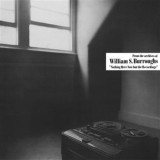
In 1980, Genesis P-Orridge and Peter 'Sleazy' Christopherson (then of Throbbing Gristle renown) travelled to New York City to meet up at the fortified apartment, known as The Bunker, of famed beat writer and cultural pioneer William S. Burroughs and his executor James Grauerholz to starting the daunting task to compile the experimental sounds works of Burroughs, which, up until that point, had never been heard. During those visits, Burroughs would play back his tape recorder experiments featuring his spoken word 'cut-ups', collaged field recordings from his travels and his flirtations with EVP recording techniques, pioneered by Latvian intellectual Konstantins Raudive. Throughout the next year, P-Orridge, Christopherson and Grauerholz would spent countless hours compiling various edits, each collection showcasing Burroughs sensitive ear and keen experimental prowess for audio anomaly within technical limitations. By the time 1981 came through, Burroughs had relocated to Lawrence, KS in which to escape the violence and mania of New York City life. It is in Lawrence that P-Orridge and Christopherson put the finishing touches on the record that would be known as 'Nothing Here Now but the Recordings'. The album would come out in the Spring of 1981 as the final release for the shuttering Industrial Records, brought about by the dissolution of Throbbing Gristle. The album remained out of print until 1998 when John Giorno and the Giorno Poetry Systems included the album on a multi-disc retrospective CD box set compiling the majority of Burroughs seminal recordings.
Modular synthesizers / electronics + a drum kit enhanced with triggers and sensors: on its self-titled debut album, the duo hÄK / Danzeisen creates a sonic energy that oscillates between high-precision rhythm patterns, analogue sounds and frenzy climaxes.
One must imagine hÄK / Danzeisen as a man-machine apparatus. A collection of cables, resonating bodies and restless limbs that together question all routines. Who overthrow conventional role of instruments and explore the possibilities of a new sound language. Bernd Norbert Würtz alias hÄK operates modular synthesizers, self-soldered circuits and control knobs. Philipp Danzeisen plays a drum kit enhanced with triggers and sensors. These two poles are connected to an interdependent whole in which a constant musical dialogue takes place. The dependencies within this system have been meticulously defined by hÄK / Danzeisen: Drum rolls and sound modulations are interconnected in such a way that there is no contradiction between the strict technological structure and the creative outburst that is possible at any time.
What drives hÄK / Danzeisen is the basic idea that the contrast between acoustic drums and synthetically produced sounds must be overcome in order to create a new experience. Würtz, Danzeisen and their combined instrumentation simultaneously rub up against the same edges, finding a single, piercing voice.
Ideal manifestations of this approach are the duo's live performances: raw energy that oscillates as precisely as it surprises between drones, abstraction and noise attacks, driven by an impudent take on jazz. Constantly oscillating between the registers of "composed" and "improvised", each performance by hÄK / Danzeisen ultimately becomes one of a kind. (Arno Raffeiner)
- A1: Captain Clark Welcomes You Aboard
- A2: The Saints Go Marching Through All The Popular Tunes
- A3: Summer Will
- A4: Outside The Pier Prowed Like Electric Turtles
- A5: The Total Taste Is Here - News Cut-Up
- A6: Choral Section, Backwards
- A7: We See The Future Through The Binoculars Of The People
- A8: Just Checking Your Summer Recordings
- B1: Creepy Letter - Cut-Up At The Beat Hotel In Paris
- B2: Inching - Is This Machine Recording
- B3: Handkerchief Masks - News Cut-Up
- B4: Word Falling - Photo Falling
- B5: Throat Microphone Experiment
- B6: It's About Time To Identify Oven Area
- B7: Last Words Of Hassan Sabbah
Black Vinyl[26,01 €]
In 1980, Genesis P-Orridge and Peter 'Sleazy' Christopherson (then of Throbbing Gristle renown) travelled to New York City to meet up at the fortified apartment, known as The Bunker, of famed beat writer and cultural pioneer William S. Burroughs and his executor James Grauerholz to starting the daunting task to compile the experimental sounds works of Burroughs, which, up until that point, had never been heard. During those visits, Burroughs would play back his tape recorder experiments featuring his spoken word 'cut-ups', collaged field recordings from his travels and his flirtations with EVP recording techniques, pioneered by Latvian intellectual Konstantins Raudive. Throughout the next year, P-Orridge, Christopherson and Grauerholz would spent countless hours compiling various edits, each collection showcasing Burroughs sensitive ear and keen experimental prowess for audio anomaly within technical limitations. By the time 1981 came through, Burroughs had relocated to Lawrence, KS in which to escape the violence and mania of New York City life. It is in Lawrence that P-Orridge and Christopherson put the finishing touches on the record that would be known as 'Nothing Here Now but the Recordings'. The album would come out in the Spring of 1981 as the final release for the shuttering Industrial Records, brought about by the dissolution of Throbbing Gristle. The album remained out of print until 1998 when John Giorno and the Giorno Poetry Systems included the album on a multi-disc retrospective CD box set compiling the majority of Burroughs seminal recordings.
Brand new album by The Church, their first in 6 years! Presented in deluxe card gatefold sleeve CD with 16 page booklet and as limited gatefold purple double vinyl LP! "Let it first be said that the title track of The Hypnogogue, the first new album from The Church in six years, is one of the most breath-taking singles they've released in years, a darkly psychedelic six minutes that slowly spirals into a menacing descent. That alone is a reason to keep this one on your radar; the Australian neo-psych band have been going for over 40 years, with around a half dozen classic albums and zero bad ones, yet their ability to keep evolving and uncovering new aspects to their sound and approach only serves as a reminder of how vital they remain after four decades". After an epic return to homeland stages, Australian psych-rock legends The Church announce their forthcoming studio album The Hypnogogue. Following on from 2017's widely acclaimed Man Woman Life Death Infinity, the Sydney band's 27th album was recorded just before the world was shut down by the COVID-19 pandemic. Emerging from the darkness is the band's first new studio album in six years and the first to feature the newest line-up led by founder, bassist and vocalist Steve Kilbey. "The Hypnogogue" is the most prog rock thing we have ever done, we've never created a concept album before," says Kilbey. "It is the most teamwork record we have ever had. Everyone in the band is so justifiably proud of this record and everyone helped to make sure it was as good as it could be. Personally, I think it's in our top three records." Picking up substantial international airplay, raising anticipation for the album's release, the digital singles 'The Hypnogogue' and 'C'est La Vie' set the stage for the album's striking science fiction narrative. Kilbey unpacks the themes that tie the album together: "The Hypnogogue is set in 2054, a dystopian and broken-down future. Invented by Sun Kim Jong, a North Korean scientist and occult dabbler, it is a machine and a process that pulls music straight off dreams." This new five-piece line-up is made up of Kilbey along with long-time collaborator, drummer and producer Tim Powles, who's remained a staple across 17 albums since 1994. Joining them is guitarist Ian Haug, formerly of Australian rock icons Powderfinger, who has been with the band since 2013. Touring multi-instrumentalist talent Jeffrey Cain is now a full-time member since the departure of Peter Koppes in early 2020. Completing the line-up, newcomer Ashley Naylor is one of Australia's finest guitarists and a long-time member of Paul Kelly's touring band. Formed in 1980, The Church found early chart success in their homeland, before establishing themselves as an international touring entity, earning a worldwide hit with the single 'Under The Milky Way' from their hit 1988 album Starfish, while their stellar live shows have been deemed 'spectacular' by MAGNET magazine and continue to win the hearts of industry and fans across the world. Often seen as the Godfathers of an Australian psych/prog scene generating such internationally successful names as Tame Impala and King Gizzard And The Lizard Wizard, The Church have gone on to maintain a loyal and far-reaching following as their fanbase has expanded with their evolving sound. Entering their fifth decade as a band, The Church continue to remain a treasured creative force. European tour 2023 - Reviews secured in Mojo, Classic Rock, Uncut, Vive Le Rock, Record Collector, Louder Than War - Press Quotes: "While some may just want The Church to write another "Under the Milky Way", The Hypnogogue's title track is excellent. One of the most anticipated albums of 2023" - Brooklyn Vegan - Treble Zine have named The Hypnogogue one of their most anticipated albums for 2023
Limited Edition of 2,000 copies, First time ever on vinyl. RIYL: Brian Eno, Max Richter, Eluvium, Tim Hecker, John Cage. Originally released a year after the increasingly iconic The Disintegration Loops, a decade later Melancholia still stands as William Basinski's second most beloved album. To commemorate its 10-year anniversary, we are honored to present the first-ever vinyl edition of this otherworldly piece of music. Remastered from the original recordings and pressed onto audiophile-quality 100% pure virgin vinyl, this limited-edition vinyl reissue is packaged in a stunning gatefold jacket featuring all-new artwork. It is truly a sight and sound to behold. Like many of Basinski's most soul-stirring works, Melancholia began as a series of short tape loops captured in the early 1980s. Basinski then stored them away for decades, revisiting them at a different time in his life, at which point they took on a stunning new sound all their own - one that many consider to be among the finest of the past decade. "Melancholia is probably the best of Basinski's records until now, even if this is hard for me to say given my love for each one of his releases. This music is so beautifully delicate and sad in its auto-reflective moods, it stands right there with everything ranging from the usual suspects in the 'ambient' field, to a distorted damp ghost of Claude Debussy or Maurice Ravel put into a time machine.' - Touching Extremes //
The duo WILDES from the south of Germany, consisting of Jana Pantha and Jenny Tulipa, presents a musical mix of electro-synth-pop, post-punk and dark disco influences. After the release of their first EP “RAWWR” in 2021, their debut album entitled “KLISCHEE” will be released on 3 February 2023. Released via the Kommando 84 label, the album features 11 songs and a musical re-interpretation of German-language Neue Deutsche Welle sounds. The songs combine spoken word passages in which the singers combine a certain irony with word-playful rhymes. In addition to world-political, social issues, the songs revolve around the complexity of the new romance in love - between cosmos and stereo. The strong and experimentally avant-garde lyrics accompany the danceable pulse of the drum computer, melodic synth waves and the shimmering solos of the lead guitar.
The album “Klischee” begins with an electro-pop track that combines consistent grooves with atmo- spheric sound arrangements and a lead guitar that accompanies our journey to the moon. With the chorus’ high-pitched words, „Konsum - leg mich auf den Moon“ (“Consumption - put me on the Moon”), WILDES dryly yet humorously allude to a society that couldn’t fly “higher”.
The following cheeky song Leger in Schwarz combines impeccable post punk with influences from the NNDW scene. A short love story led by the electronic beat of the synthesizer makes the hearts of the night beat faster. With casual reduction, a guitar riff leads through the song. The guitar solo finally rounds off the plea about the longing for a good flirt.
Italo disco shimmers and pulsates on the driving song Capri. With lyrics like “Pack the boats - Vai a bordo”, Capri is a homage to the tried and tested Italo feeling with a cappucino on the terrazza, or indeed on the yacht with a view of the rocky walls of the island. An electric charge of sequencers and synth tracks acts here as a lightness of being in contrast to the porosity of the rock.
An electrifying electric guitar solo kicks off the fourth track with a mysterious invitation to Steig ein translated, get in. Hypnotised by the lights of the road, dazzled in the side mirror, a clearly repeating rhythm leads into the chorus and through the coming verses. English spoken-word lyrics add to the stoicism of the German language. The song’s great power ends with the line Lost in the dark, holding open the finale of the “Night Drive” encounter.
Digital and stereo on all channels, the distinctly tight and robust rhythm sounds in the song Apparat. A clear and simple synth melody is heard as a contrast and the electric bass gives the balance of the machine at points. Hiddenly, WILDES points here to the superior power that can control human action beyond all limits. A piece as a laudation to all the science fiction novels that play with the switching of the individual parts.
Side One of the vinyl is finalised by a song called La Grande Bellezza that motivates to dance and sing along. The punky pop craft lives through the recurring beat of the rhythm guitar. Here the focus is on the woman in all her facets. The great beauty, una donna, who can do everything as well as wanting everything and nothing...a strong woman who, however, also staggers and wants to jump off the cliff. Clearly and distinctly, the musical accompaniment of the drum machine and the accompanying synth melody reflect hidden parallel worlds and the ambiguity of character - of life? We get a desire for more and turn the round record.
The B side starts with a powerful guitar riff, complemented by a catchy and strong bassline that runs through the song. In this work, WILDES provocatively describes the West’s lust for the much-cov- eted Schwarzes Gold black gold. The song is reminiscent of the works of the band D.A.F. and thus ties in with the electronic punk sound spate.
The driving guitar riff joins in with the reduced synth bass sequence - the electro-pop song with the title Hitze (Heat) came onto the digital music market as the first single from the LP in the summer of 2022. Pulsatingly, the drum computer lets the beats vibrate to the rhythm of heated air. The duo po- etically describes heat with supercooled voices, a clarity in the sky that makes everything flow, that makes the breath dry. The work ends with a melodic synth solo.
Ich lad dich ein, I invite you - we have all said or heard this sentence before. A chance meeting of two people later leads to the altar in love. A far-reaching question that more or less arises in many love relationships at some point “Do you dare?” positions itself in lyrical contrast to the simple ques- tion in the refrain “Do you need sugar?”. WILDES plays with laconic poetry and, full of irony, makes the listeners think about living together. Krautrock contours are skilfully used in this piece. Reduced to the essentials, the chorus immediately sticks in the ear. A cheerful mix of steel drums and infec- tious solo.
Toccami - touch me! We sit on padded leather chairs - “you’re a rocket! Peng Puff Peng” - this song by the band WILDES joins experimental art-punk-pop, electronically with flowing synth waves we take off immediately. Melodically sung, lyrical layers of lyrics dance loosely light and gracefully in the ears of the viewer. The rhythmic beat visualises the feeling of floating in a spaceship. It’s love in the universe - “I love you, my darling” sounds tipsy in the beat-heavy disco refrain.
Hypnotically, WILDES launches into the final song of the entire LP. The title Zone takes us on a journey through time. Inspired by the film Stalker, we find ourselves in a science fiction setting that couldn’t be more present in today’s European events. The musicality of the electric guitar riffs ac- companied by simple new wave drums drives the listener into unknown realms.
Repetition and electronic synth sounds play a compositional role alongside rocking guitar riffs like their forerunners in the NDW scene. Lyrically, each song varies between pop-romantic and politically critical passages. Listeners start pondering about hedonistic life and its consequences. Sometimes it feels like listening to a Tarantino soundtrack in German, other times it feels like listening to an 80s track by a James Bond. Science fiction fantasies and reality add up in dadaistic theatricality to spir- ited synthpunk of the New German Wave from the South. Discoid beats and driving drums in digital are included.
2023 Repress
it was in february 2015 when japanese producer and sound designer kuniyuki takahashi, sometimes known as koss, releases with the ep 'newwave project '2' a record, that tapped some roots of his musical education: new wave, german electro punk from bands like a daf, ebm from acts like front 242 as well as industrial music.
styles, about kuniyuki claims that they are his 'favourite music'. now, nearly two years after his first newwave project ep, he drops an album that is leaning towards his musical love from the past. compared to his former work, that was rooted in worlds of classic, jazz, house, ambient, and electronic song-writing, his new tunes are full of melodic drifts and rhythmical shifts.
as usual all is loaded with tones and rhythms straight from the heart that filter and modulate human emotions without losing their natural source. to get a sound that is fresh but still leaning to the 1980ees, he used some old synthesisers like a roland jupiter 8, a juno 60, a korg ms 20, an old tape echo machine but also new instruments like the roland aira. furthermore, his modular synthesizers talk too.
instead of having a masterplan, kuniyuki just made sound, drifted on his machines and moved into a territory, that his far away from his former sound. also the use sampled voices and other alienated sound sources of unknown origin inject his new tunes otherworldly atmospheres.
his skills as a fine instrumentalist is evidence as kuniyuki also played the piano, percussions or flute, if he felt their warm sound is needed for his freely grooving tracks. some dance in a house or techno outfits.
other slam like a mix of funk and ebm. tunes like 'puzzle' or 'body signal' are twisted treasures that bemuse deeply. in-between you hear the echoes of cosmic spheres, the darkness of the cold war days and some bewitching tribal jungle vibes. a new, moving, unorthodox and yet catchy side of kuniyuki takahashi.
it is not totally novel to him, as he already released some industrial, ebm and electronic with the project drp in 1990 on the belgium label body records. but for his listeners, that know him for detailed house, jazz and classic or that love him as a man of collaborations who already worked together with artists like innervisions jazz house heavyweight henrik schwarz, the famous japanese pianist fumio itabashi or the british synth-pop protest spoken word icon anne clark, the 'newwave project' sheds a light on a different artistic side of kuniyuki takahashi.
it is diversified, has many rhythmical and atmospheric turns but stays stirring and compelling in all twelve tracks. a true new wave, formed, played in and envisioned with a view on the past that was filtered through the now while feeling the future. the cover art work comes from the swiss artist augustin rebetez - a man who also loves to generate unknown poetic universes in his drawings, sculptures, videos and installations.
Liberation is the latest evolution by David West, a dedicated underground dweller and traveler with his groups Rat Columns and Rank/Xerox and previously spotted in Lace Curtain and Total Control. Many familiar elements of West's songwriting creep out from the speakers this time around, albeit in a sonically more adventurous and personal manner. Swathed in analogue and FM synths, pinned down by near-funk drum machines, and with a vision expanded into the past and future. While in previous incarnations, West's alienated and fragile vocal has battled with jangling guitars and distortion, Liberation sets free his woes and ruminations into space. Taking inspiration from the heyday of Mute Records, the beginnings of electronic dance music's rudimentary sampling, broken and sound art, Liberation's debut LP is 10 songs of the road, about the nameless ghosts on the highway, accidental lovers, the alienation of the stranger in a strange land, the unbearable weight of freedom.
Beginning with a curveball, Liberation's first vocal sets out the position of the forever-cuckold, the sad lover hanging on: Looking For A Lover combines a Roland 707's loping mid-tempo with creeped-out synth lines as West intones his intentions close to the ear. Continuing in a more baroque manner, Move Me makes astounding use of string samples and space, with esteemed engineer Mikey Young's (Total Control / Eddy Current Suppression Ring) production prowess making for a distilled yet inviting loneliness. Forget is the night-drive centerpiece of the album, a 7 minute that erupts into a nihilistic sub-disco darkness. A constant theme of Liberation is the friction between West's characters: a frustrated love in victim-status paired with a menacing intent. The adorable, fragile stalker in the moonlight, illuminated by Whatever You Want, a
subjugated protagonist offering they have while the city burns. The brightest pop moment of the album has this in abundance: Cold And Blue, a classic synth pop jam to be played on repeat til the end of time, like New Order played by one man in his bedroom, with no drugs for a cushion, coming down the stairs, she looks like a perfect fear and Im a monument to your existence. But West has moments of touching sincerity that speak direct to the listener, as in album highlight Leaves Falling; a sparse string arrangement frames his vocal, "why do I keep falling for you I must just really like to be alone." Liberation is the freedom from attachments, about how sometimes they're what you want most.
In the label's own words:
"Kennedy returns to another musical dream state bringing nocturnal visions to life through the power of machines. Including three tracks of borderless Hi Tech Soul music, on this third 12" in the series he widens his sonic scope via elements of Jazz and African rhythms next to his own distinctive take on the original sounds of Detroit.
It's another musical offering that comes from deep within mind, body and soul. Side a sounds like a warm fusion of loose rhythms and glowing synths determined by machines, whereas the b-side is more explicitly human-made with flute recorded live by Amsterdam Jazz man Han Litz, bringing a lightness of touch that imbues the music with hope and optimism. Beneath that, a battery of drums is set free calling up acoustic sounds driving from deep inside in a dense forest.
This third translation of thoughts, sensations and sounds is another emotive coming together of man and machine that will find yourself invited to gaze off into an infinite sonic cosmos."
An intergenerational meeting of minds, Galaxy is the first collaborative EP from Meanjin, Brisbane musicians Sam Poggioli aka Sampology and Charlie Hill. Equal parts brain dance and body music, Galaxy’s seven tracks represent a vivid intermingling of 70s jazz-funk, fusion, machine-funk, Latin house and broken beat, accented by flourishes of minimalist composition. Considered as a whole, it evokes the possibility and potential of a space-age future where technology and nature exist in simpatico.
One of the most in-demand young jazz drummers in the Meanjin (Brisbane) music scene, Charlie started producing electronic music on his laptop three years ago. It was a vibe shift that hit him after several months spent immersing himself in Europe’s jazz and electronica scenes on the eve of the global coronavirus pandemic. After returning home, he approached Sam about recording some music together.
Sam, a well-travelled Australian DJ, producer and Worldwide FM radio host, was cautious about starting a new side project. However, when he heard his demos, he realised Charlie was blending rhythmic fundamentals he’d learned while completing a music degree with a beautifully wide-eyed approach to jazz-tinged electronica.
With Charlie on drums and Sam on MPC, they set about recording the songs on Galaxy, along the way discovering Sam’s mother taught Charlie visual art as a child. They also learned that Charlie’s mother plays with Sam’s father in the Queensland Symphony Orchestra, synchronicities which made their collaboration feel like it was meant to be.
As part of the Galaxy sessions, Sam and Charlie collaborated with fellow Australian vocalists Tiana Khasi and Merinda Dias-Jayasinha. On ‘Constant Call’, Tiana threads neo-soul/modern soul melodies through a backdrop that sounds like Burial on a future jazz tip. ‘Merinda’, on the other hand, sees Merinda laying a repeated Steve Riech-style vocal refrain over a man/machine instrumental accented by stargazed synths.
At the same time as they were creating Galaxy, Charlie was also busy recording his debut solo EP Yore, both of which are due for release in August 2023, respectively, through Middle Name Records.
- A1: Petit A Petit (Feat Agnès Hélène) 4 20
- A2: Man Bo Diak (Feat Amatah Keo) 5 06
- A3: Femme Qui Danse (Feat Pat Kalla) 4 11
- A4: Bas Les Masques (Feat Charly Sanga) 4 14
- A5: Oh Ma Cherie (Petit À Petit Part 2) (Feat Agnès Hélène & Charly Sanga) 3 39
- B1: Love Is Jokin (Feat Pat Kalla) 4 35
- B2: Metissage (Feat Sana Bob) 4 24
- B3: Kinkeliba (Feat Jy Cooly) 3 33
- B4: Electro Highlife (Instrumental) 5 10
- B5: T’es Haut (Instrumental) 4 18
After Joao Selva, Dowdelin, The Bongo Hop, Underdog Records continue their exploration of the Black Atlantic with IREKE.Ecstatic brass, 70’s keyboards, elastic guitars, round bass and world percussion: from this sonic heritage, Ireke makes a unique fusion, enhanced by the audacious contribution of his dub science, and a few electronic touches
IREKE
Ireke? Sugar cane in Yoruba. Like her, the duo loves tropical climates and intoxicating rhythms, quick to liberate the bodies gathered on a dancefloor. Afrobeat urgency, funk suppleness, dub alchemy, highlife jubilation: with Tropikadelic, Ireke summons the heritage of the masters and the audacity of machines to give life to new sonic territories. At the crossroads. For the love of groove.
From the West, with their ears to the Black Atlantic, Julien Gervaix and Damien Tes- son are both children of the collective and of improvisation, playgrounds for these complete multi-instrumentalists.
The first one puts his talents of arranger-saxophonist at the service of the Nantes collective Soulshine and of numerous formations - in turn funk or rhythm’n blues - where swinging is the rule.This is notably the case of the afrobeat group Walko, in which Julien Gervaix had the honour of sharing the stage and the studio for several years with Kiala Nzavotunga, guitarist extraordinaire for Fela Kuti and Egypt 80. Meanwhile, Damien Tesson was being trained as a dubmaster-guitarist-arranger at the reggae roots school with the digital option of the Vendée collective Shi Fu Mi Temple.This initiation led Damien Tesson to join, among others, the Nantes-based group BIBA (Bingy Band) and then to collaborate with Jideh High Elements, a key figure on the international dub scene, Roberto Sanchez and the team of his Lone Ark Studio, as well as Sana Bob, a famous reggae singer from Burkina Faso.And then, life being well done, the paths of Julien Gervaix and Damien Tesson ended up crossing within the jazz-funk combo Playtime, before meeting again in the Vendée a few years later.
With an obvious tropism for Afro-Latin grooves, tropical colours, electronic tricks and furious swaying, the two musicians create Ireke like a glass of well arranged rum. Here’s to us, here’s to you! As if guided by the spirit of the plant, Ireke toasts the immense richness of these danceable rhythms, true generators of life, connection and energy.
Like Legba, the Yoruba orisha of intersections and crossroads, Ireke thrives in the between worlds.Aware of the lineage of goldsmiths who preceded them, Ireke
knows his classics and humbly draws inspiration for Tropikadelic from the musical genius of Pat Thomas, Poly-rythmo Orchestra, King Tubby,Tony Allen, Fela Kuti, Maître Gazonga, Ernesto Djédjé or the Vikings of Guadeloupe. Ecstatic brass, 70’s keyboards, elastic guitars, round bass and world percussion: from this sonic heritage, Ireke makes a unique fusion, enhanced by the audacious contribution of his dub science, and a few electronic touches patiently flushed out in the studio - which the duo considers as an instrument in its own right.
Finally, to give voice to his compositions, on Tropikadelic, Ireke calls upon an army of serious enthusiasts, each member of which has come up with his or her own lyrics. Thus, alongside Ireke, we find the groove griot Pat Kalla (“Femme qui Danse”,“Love Is Jokin”), the Franco-Laotian reggaeman Amatah Keo (“Man Bo Diak”), the Vendée- based Agnès Hélène (“Petit à Petit”,“Oh Ma Chérie”) and Charly Sanga (“Bas Les Masques”,“Oh Ma Chérie”), the Burkinabè lion Sana Bob (“Métissage”) as well as the Nantes soulman Jy Cooly (“Kinkeliba”).
For the duo, music is above all a collective practice, an active liberation, a rhythmic approach to letting go, a source of communicative joy... In short, groove is the weap- on! And Ireke knows how to use it.
Toronto-based retro-soul artist Claire Davis shares her journey of self-worth and love on her debut album "Get it Right", out April 21st 2023, via LRK Records. This lively 10-track analog soul LP was recorded to an 8-track tape machine by engineer Braden Sauder in a converted garage- studio in Toronto, owned by the renowned instrumental jazz/hip-hop group, BADBADNOTGOOD. Featuring some of the city's top-flight musicians in the R&B/Soul scene, the album was laid down live-off-the-floor in one week during the winter of 2022. Davis shares, "My heart really lies in live performance so I wanted to recreate that experience as much as possible for this record by having the musicians all record together to tape. I feel like I personally thrive under the limitations that tape gives you; it offers the opportunity to
capture a vibe of a performance more so than chasing perfection. Knowing that my favourite soul records were recorded this way gives me an even deeper appreciation for the skill and talent involved in this process." "Get it Right" is a record born out of the faith that there's better things on the other side of fear.
Whether that's breaking toxic cycles or being truly honest about what is and isn't working in life. The first song written for the record was the title-track of the album which began as a jam between Davis on guitar, producer Scott McCannell on bass, and drummer Chino deVilla. "The lyrics were inspired by my relationship with my partner and the intention that we both have to work on healing ourselves in order to make our partnership work. I'd like to think that it's a love
song with a strong sense of maturity and understanding to it. And the whole record was really shaped around that idea of my relationships and experiences stemming from my own sense ofself-love add my desire to live and create from an authentic place."
The songs on the album feature co-writes from Scott McCannell, Kyla Charter, and Toronto production house Safe Spaceship Music, in addition to horn and background vocal arrangements by composer La-Nai Gabriel. Musicians include Heather Crawford on guitar,
Scott McCannell on bass, Adrian Hogan on keys, Chino de Villa on drums, Juan Carlos Medrano on percussion, Aphrose, Tegan Michelle Gordon and Chynna Lewis on background vocals, and horn section The Northern Soul Horns.
"Get it Right" follows up Davis' most recent 7" vinyl release of "Long Gone"/ "Times Have Changed" and most recent single release "Intuition" on LRK Records Huey Morgan played "Times Have Changed" on " The Huey Show " on BBC Radio Six
Tune of the week on David Bishops Street Sounds radio.
Karen Gabay played "Intuition" taken from the album on "The People" BBC Manchester
Light in the Attic Records is proud to present the next installment of the Nancy Sinatra Archival Series with the first ever reissue of the classic 1972 album Nancy & Lee Again. Recorded during a 1972 reunion between Nancy and the enigmatic Hazlewood, the album contains some of the pair's most enduring and ambitious duets including the epic "Arkansas Coal (Suite)," the sensual "Paris Summer" and the incredibly powerful Dolly Parton-penned "Down From Dover." Equal parts daring, psychedelic, cinematic, and sweet, Nancy & Lee Again reveals with each track a timeless, natural chemistry between two artists who would remain influential for generations to come. Nancy & Lee Again is available in a variety of formats, including vinyl and CD. The vinyl LP is presented in an expanded gatefold jacket and is accompanied by a 20-page booklet, featuring an array of photos from the legendary singer, actress, and activist's personal collection, as well as in-depth Q&A with Nancy Sinatra, conducted by the reissue's GRAMMYr-nominated co-producer, Hunter Lea (also available in the CD package). All formats have been beautifully designed by Darryl Norsen of D. Norsen Design, and include two bonus tracks, "Machine Gun Kelly" (first time on vinyl) and the previously unreleased "Think I'm Coming Down." Nancy, the eldest daughter of Frank Sinatra, had been working with the Oklahoma-born songwriter since 1965, when she topped the pop charts with "These Boots Are Made For Walkin'." Over the next five years, the two artists forged a prolific relationship in the studio, with Hazlewood writing and producing many of Nancy's solo hits. Soon, the duo found success with a series of duets, including "Sand," "Summer Wine," and "Some Velvet Morning" - all of which appeared on their highly-influential 1968 debut. Not long after the critical acclaim and chart success of Nancy & Lee died down, however, Hazlewood unexpectedly relocated to Sweden, leaving his musical partner in the proverbial dust. America, meanwhile, was in the midst of a cultural shift, as the Vietnam War waged on. By the turn of the decade, the musical landscape had changed significantly. "Trivial music and not profound music became unimportant," recalls Nancy, speaking to Hunter Lea. "It was a tough time." And yet, despite the circumstances, the stars somehow aligned for the duo to record some of their most magnificent music together. Returning to Los Angeles for the project, Hazlewood - who reprised his role as producer - chose to take a new direction with the duo's sophomore album. Nancy recalls, "It was more dramatic; it was more fun to do, more challenging to do_. It was more grandiose." Nancy & Lee Again remains a creative high point in the careers of Sinatra and Hazlewood and, upon its release, garnered rave reviews from Billboard, Record World, and Cash Box, among others. Yet, Nancy & Lee Again never received the spotlight it so utterly deserved. "We didn't have label support at all in those days," recalls Nancy. "Without the strength of a label, records die. We were old. We were old-fashioned. We were just not what was happening. It's a very ageist kind of business." Nevertheless, she adds, "I think it's a very good album. I think it's timeless." Now, after years of being a sought-after rarity, this gem in the Sinatra-Hazlewood canon can finally get its due.
Das kommende Jahr 2023 wird das letzte Kapitel in der langen Geschichte der legendären deutschen Thrash-Metal-Band HOLY MOSES markieren, das mit dem kommenden neuen Studioalbum "Invisible Queen" und einer letzten Reihe von Live-Shows gefeiert wird.
"Ich bin im Dezember 1981 zu Holy Moses gestoßen und das hat den Weg, den ich in meinem Leben gehen sollte, grundlegend verändert. Unser erstes Album im Jahr 1986 hieß "Queen Of Siam" und nun, um die Sache abzurunden, wird mein letztes Album mit Holy Moses im
Jahr 2023 den Titel "Invisible Queen" tragen", verrät Sängerin Sabina Classen und ergänzt: "Nach 42 ereignisreichen Jahren und nach so vielen großartigen Alben, fantastischen Shows und unglaublichen
Erlebnissen ist die Zeit gekommen, das letzte Kapitel von Holy Moses zu schreiben. Und wir freuen uns, dass dies über Fireflash Records mit der Veröffentlichung unseres 12. Studioalbums "Invisible Queen" geschieht."
Das kommende Jahr 2023 wird das letzte Kapitel in der langen Geschichte der legendären deutschen Thrash-Metal-Band HOLY MOSES markieren, das mit dem kommenden neuen Studioalbum "Invisible Queen" und einer letzten Reihe von Live-Shows gefeiert wird.
"Ich bin im Dezember 1981 zu Holy Moses gestoßen und das hat den Weg, den ich in meinem Leben gehen sollte, grundlegend verändert. Unser erstes Album im Jahr 1986 hieß "Queen Of Siam" und nun, um die Sache abzurunden, wird mein letztes Album mit Holy Moses im
Jahr 2023 den Titel "Invisible Queen" tragen", verrät Sängerin Sabina Classen und ergänzt: "Nach 42 ereignisreichen Jahren und nach so vielen großartigen Alben, fantastischen Shows und unglaublichen
Erlebnissen ist die Zeit gekommen, das letzte Kapitel von Holy Moses zu schreiben. Und wir freuen uns, dass dies über Fireflash Records mit der Veröffentlichung unseres 12. Studioalbums "Invisible Queen" geschieht."
Marcos Díaz has been part of Buenos Aires underground for many years, being in projects like Bosques and making solo music under the pseudonym Entidad Animada (animated entity). Under this project, Marcos has explored sounds that involve a mix of feedback/distortion through synthesizers, guitars and drum machines that hint at the influence of Stereolab, Spacemen 3, and mid-nineties shoegaze. However, there are also ambient soundscapes with a slight rubbed of the ritualistic psychedelia of the Popol Vuh. The display of colours in his music comes together in the midst of a playful, relaxed and optimistic environment that is simultaneously melancholic. Because of the nature of those pieces, but also because in Entidad Animada there is also space for collage sounds that blend randomly with textures of a primitive analog sound, which inevitably causes a paradox between what is alive and what is inert. And it is because Entidad Animada is precisely that, a spectrum or a vision, a ghost. And these sounds are proof of his existence.
Pruebas de existencia (proofs of existence) is a collection of recordings that Marcos has made in recent years and that we have selected for this album, his first work on Umor Rex. A couple of these pieces were only released digitally, while the others have been on ltd cassette editions through Fuego Amigo Discos in Argentina. Pruebas de existencia is an Umor Rex compilation and remastered edition.
Guitar, sampler, synthesizer, organ, bass, drums & electronic beats, vocals, recording and mixing by Entidad Animada in Buenos Aires. Mastered by Rafael Anton Irisarri at Black Knoll Studio, NY. Cover photography Natch Tablescape (1979) by Langdon Clay. Layout by Daniel Castrejón, Mexico City.
- A1: #1
- A2: Get You Back Ft Maassai
- A3: War Ft Hprizm X Funkstörung
- A4: Stop Wars
- A5: Lost My House In France (N Yama Type Beat)
- A6: Rosenheim Cops Arriving (N Yama Type Beat)
- B1: I Went Left Ft Hprizm
- B2: 247 Turmoil Interlude
- B3: Majesty Ft Coppe
- B4: There Were Times Ft Anothr
- B5: Flâner Ft Her Tree
- C1: Consume Land Flea Market
- C2: 83128 Halfing (N Yama Type Beat)
- C3: Crime Drift (N Yama Type Beat)
- C4: Ingozi Ft Silo Inf3Rnx
- C5: Someone Killed Indiana Jones Rip (N Yama Type Beat)
- D1: Neon Soul Ft Taprikk Sweezee
- D2: Unpopular Nostalgia
- D3: At 7Am (N Yama Type Beat)
- D4: Countryside
Welcome to the "Consume Land Flea Market". This is the atmospheric setting and at the same time the luminous title of the debut album of young producer Noayama. "It centers on the contradiction between turbo-capitalist consumerism and the desire for vintage stuff in all kinds of shapes and colors to escape reality for a bit. I think it's quite a nice and suitable metaphor for the position my generation is in right now" says the 21-year-old producer, musician and interdisciplinary artist.
On about 40 minutes, Noah Berger, who grew up near Munich, spans a wide musical arc with his alter ego Noayama. He combines Hip Hop aesthetics with playful Electronica and acts skillfully in the interstices of Pop. Hints of 70s Funk hedonism, Old-School House vibes and modern J-pop sensibilities can also be found on "Consume Land Flea Market." The binding agent of the album is Noayama's "Punk Attitude" which comes through clearly on his tracks and beats and is an elementary part of his producer DNA. "I just like to drift, it's very central to the way I work" adds Noah.
Just as important for him are intergenerational collaborations, which adorn his debut work in numerous ways. An illustrious round of artists is therefore represented on CLFM. It starts with young female rap artist Maassai from the New York underground scene who can be heard on the pulsating opener "Get You Back". Also from N.Y.C is Hprizm, a member of the legendary avant-garde rap group Anti-Pop Consortium, who is featured on the dark and gritty "I Went Left" and the bouncer "War." Funkstörung is also involved here. Not too much of a coincidence as Noah has been encouraged since his teenage days by his father Michael Fakesch, one half of the Glitch-hop pioneers who became famous in the late 90s. With "The Legendary Godmother of Japanese Electronica" Coppe' on "Majesty" and the German singer-songwriter her tree on the song "Flâner", introverted pieces have also found their place on CLFM. In addition multilingual verses with Silo Inf3rnx from the townships in Gugulethu on "Ingozi" and on top "the homies from the neighborhood" Anothr and Taprikk Sweezee who give the album further facets through their contribution.
Noayama combines elements and working methods of the last five decades in a relaxed manner and bundles them into a genuine piece of work. Emblematic of this approach is the choice of features. So is the gear he uses. He incorporates old synths (Roland Jupiter 8, Nordlead) and drum machines (Roland 808, Roland 909) with playful ease with common software tools. It's also pretty convenient that he's currently studying Digital Arts at the Kunstuni Linz. In fact, his semester project is the visualization of his own album which means that every single track and every interlude gets its own video. Well, Noayama is just a gambler.
The latest on Warehouse Music comes courtesy of Joshua James: ‘Love To Do It’ which samples the iconic, pleasure-seeking vocals of American drag vocalist Roxy and The Ride Committee.
For the original mix, the London DJ gives Roxy’s ‘90s house lyrics an electro makeover, twisting around mangled samples, vibrant snares and bubbling slapback delays. Keeping true to the artist's wild vocal stylings and referencing the queer underground sound James has called home.
On the flip, label boss Mella Dee takes us back into four-four territory on the first of two remixes. The ‘Law & Disorder’ mix works James’ dialled-up modern sass into a hypnotic loop, rolling into the heart of the club via a deep house bassline.
Meanwhile, the 'Split Your Wig’ mix strips the track down to body-poppin’ 909s and swirling percussion, paying tribute to NYC club culture via drum machine.
- A1: Believe • A2. Pacifc Coast Highway (Feat. Larry June) • A3. Good Lookiní (Feat. Kamaiyah)
- A4: Helicopter Homicide (Feat. Conway The Machine & Big Body Bes)
- A5: Tonight • A6. Editorials (Feat. Curren$Y • A7. Daytons (Feat. Ramirez)
- B1: Almighty • B2. Stick Up Kids (Feat. Bandgang Lonnie Bands)
- B3: Earth Sky (Feat. Madeintyo) • B4. Monday Motivation
- B5: Winnipeg Winters (Feat. A$Ap Twelvyy) • B6. Six Figure Strolls (Feat. Sha Hef)
- B7: St. Nick The P
aEast Coast meets West Coast when Brooklyn’s own Harry Fraud teams up with Jay Worthy, the Los Angeles based rapper (by way of Canada) and LNDN DRGS front man, for the release of their collaborative album You Take The Credit, We’ll Take The Check. The duo dropped their last joint project back in 2020, Eat When You’re Hungry, Sleep When You’re Tired, which left their fans wanting to hear from the bi-coastal duo. Fraud and Worthy answered the call back in July of 2022, releasing the 14 track album, You Take The Credit, We’ll Take The Check, across all digital platforms to critical and commercial acclaim. Now available for the first time on vinyl,YTCWTC sounds better than ever. Entirely produced by Harry Fraud, YTCWTC features A$AP Twelvyy, BandGang Lonnie Bands, Big Body Bes, Conway The Machine, Curren$y, Kamaiyah, Larry June, MadeinTYO, Ramirez and Sha Hef.
Following in the footsteps of "Mind Palace" and "Lost Spirits", respectively issued in 2018 and 2021, Hidden Empire return to Stil vor Talent with their eagerly anticipated third studio full-length, "Momentum". Going the same route that came to define their sound throughout the years, Branko Novakovic and Niklas Schäfers cook a savvy mix of deep electroid flavours and prog techno magnitude which flourishes in the long-playing format. Orbiting the frontier between proper no-nonsense, floor-focussed effectiveness and a trademark exploratory take on electronics, Hidden Empire here delivers one of their most accomplished slices to date, which not only spans the largest span of their many-faceted influences, from tribal anchorage to hypermodern escapology, but breathes a truly epic wind into it.
Draped in luscious, silken envelopes and easternmost ambiences, "Dawn" gets the ball rolling on a mystique-imbued note, halfway meditation-friendly material and square-shouldered club busting wares. Moving into Afro-infused house grounds, "Modesty" finds Branko and Niklas heading for the deeper end of the spectrum, as they pull out a clinically precise blender of rattling percussions, opaque incantations, lush synth swashes and verbed-out machine talk, tailored for nightly boogie rituals in the forest. "Avalanche" opts for a more brooding, deadlier approach. Cutting its path away from prying eyes, this one finds Hidden Empire pulling the stealth weaponry to absolute hypnotic effect - perfect for serious in-between peak time business with its thick, thriller-like tension, mist-shrouded atmosphere and surgical focus. Featuring Felix Raphael on vocals, "Who We Are", is a pop-influenced chugger that perhaps best defines Hidden Empire's ambivalent style, both hi-NRG and innervated with a melancholy that infuses down to the bass and most functional elements. Geared up for big-room traction with its seesawing synths and clinical drumwork, Raphael's moving timbre does more than offer a sensible counterpoint to the track's overall sturdy backbone, it takes it to a whole other dimension completely.
"Repeat The Good" ft. Wolfson balances out a fast-ticking groove with those subtle melodic lines Hidden Empire champion to astounding vibrancy, offering a particularly satisfying glimpse into their vortical imaginarium, whereas "Last Call" has us journeying to straight out Moroder-esque territories, flush with the aptly configured palette of fuzzy space disco bass, fast-paced Italo churn and vocodized talk for good measure. All in breaks and chopped-up euphoria, "Vivid" runs the hoodoo down in muscular fashion and with impressive levels of energy throughout, all set at cranking up the heat one notch further, while "Rebel" provides us with the kind of rough-around-the-edges EBM horsepower and neon-clad synth engineering that'll get the basement in a state of alert. Encompassing all of the pair's idiosyncratic merger of styles - from pop-laced Italo to spaced-out techno wares, through jagged motorik and heavily mecched-out jacking house, "Alright" shows off Hidden Empire's wide arsenal of pyrotechnics under the most compelling of lights. A more openly jagged and quirky weapon that hatches into a full-fledged solar number around the half, "Momentum" roars up the club's highway at full throttle, proving a formidable asset when it comes to plunging dancers into a state of weird, left-of-centre euphoria.
A stroboscopic eclipse is predicted as "Dark Sun" enters the room, deploying its obscure wingspan over the ravers, not quite a bad omen as it lets more light in with every bar, its brittle piano lines and heart-wrenching vocals cutting a path into the crowd's pulsating hearts. Graceful as Hidden Empire's music can be, a moment of utter exhilarating beauty. "Savasana" wraps up the voyage with a pure slab of cyphered 4x4 seduction, as an ASMR-like voice guides us across the soul-questioning haze that blankets our pathway onto a luminous finale. A piece of elusive nature, clearly designed for the club and yet telling a tale of off-piste initiation through twelve fascinating movements, "Momentum" will undoubtedly etch on the listeners' mind as one of the German pair's most strikingly powerful emanations.
Download:
1. Hidden Empire - Dawn Interlude
2. Hidden Empire - Modesty
3. Hidden Empire - Avalanche
4. Hidden Empire & Felix Raphael - Who We Are
5. Hidden Empire & Wolfson - Repeat the Good
6. Hidden Empire - Last Call
7. Hidden Empire - Vivid
8. Hidden Empire - Rebel
9. Hidden Empire - Alright
10. Hidden Empire - Momentum
11. Hidden Empire - Dark Sun
12. Hidden Empire - Savasana
13. Hidden Empire & Felix Raphael - Who We Are (Instrumental)
Kerri’s Kaoz Theory label unlocks the vault to two key tracks from the early days of the label that have never pressed on vinyl before.
First up the man himself, Kerri Chandler with a deep, heads down stomper ‘Who’s Afraid Of The Dark’. Kerri at his hard hitting best, as vocal refrains wash over the chunkiest of synth stabs and basslines with crunched up percussion laying the basis for a track that is readymade for smoke filled clubs and pumping sound systems.
On the flip, Josh Butler ‘Sunday Club’ goes deep down the rabbit hole effortlessly moving from ethereal elegance to twisted machine energy, showcasing that light and dark can sit together seamlessly to produce something seriously special.
LIMITED EDITION CASSETTE
Formed in 1976, the Damned were Britain's first punk rock band.
By 1979 they had managed to disintegrate and re-assemble, way before it was fashionable.
By then punk rock and its neater sibling, new wave, were regularly producing real hits in the UK and the Damned were no exception, with three hit singles drawn from the “Machine Gun Etiquette” LP released that year.
Red Vinyl
ASSASSINS did what many bands do: they grabbed a moment out of the air and slammed it onto tape machines and hard drives with relentlessness, cunning, and an attitude.
It was in Chicago, mid 2000’s, and though there was energy in the music scene, it wasn’t coalescing into anything you could use as a heading in the musical encyclopedia. Drag City, Thrill Jockey, Bloodshot, Tortoise, Andrew Bird, 90 Day Men – amazing labels and bands, but discrete and siloed and separated by boundaries that weren’t very real.
In the midst of that complicated morass, ASSASSINS generated a collection of songs that became the album YOU WILL CHANGED US. And it did.
There was confidence built into the fabric of the project: 5 members, 2 singers, massive synced video walls and samples streaming from laptops swirling in three dimensions around the stage. They could go from subtle atmospheric moments to a gargantuan wall of sound instantly. It was hard to do- months in cold practice rooms troubleshooting sections of songs or reworking synthesizer patches put the band through a self-imposed boot camp. And it brought them together as a sort of hive-mind focused on one thing: that these songs could connect. They could cut through the noise and share a state of mind with other human beings.
And it worked. Those early shows were mind bending. It was fun, loud, drunken, and rewarding- that time together, before the record deal, before the tragic let down of being traded and gobbled up by the major label system. The years after that got more difficult, more complicated, more human.
Leading us here: the musical journey of the Assassins has ended. With the up-coming release of their second and final album THE YEAR THAT NEVER CAME, we finally get to hear, and feel, the final statements of their inspiring chemistry.
In July of 2021, founding member, songwriter and singer Joe Cassidy unexpectedly passed away. THE YEAR THAT NEVER CAME is the culmination and end point of a collaboration that started in the early 2000’s with a chance meeting and excited conversation with Aaron Miller at a gig in Chicago. Quickly joined by David Golitko on keyboards, Merritt Lear on vocals and guitar, and Alex Kemp on bass.
It was Miller who saw Joe Cassidy’s song writing in a new context. Cassidy had been known for his beautiful, post- pop inflected BUTTERFLY CHILD, a thoughtful, regal project where Joe’s emotions could soar. Miller saw a different context for that voice- not dreamy, but immediate, not just hopeful, but demanding. He took Joe’s open hand and suggested that it could be a fist, raised in the air, with a crowd of other people doing the same.
At the time of his death legendary composer and songwriter Jimmy Webb (who wrote such hits as ‘Wichita Lineman and MacArthur Park) said Joe ‘was a creative and generous producer but, more importantly, he was a creative and generous friend.’
With the release of THE YEAR THAT NEVER CAME, this band, this relentless creative force, has to finally relent. No one in the band could see a future ASSASSINS that doesn’t include Cassidy. So in one last act of will, for the love of their friend, they did the rigorous work of finishing the songs that they had started together for the second album.
Assassin’s obsession with the notion of time, from YOU WILL CHANGED US to THE YEAR THAT NEVER CAME, flows from the most natural question we all have to ask ourselves: what do I do now? Because: how we react today to life’s unpredictability - that is the tomorrow we build for ourselves.
Circassian-Turkish Producer Sine Buyuka debuts new solo project Sinemis with lush, graceful album ‘Dua’, gently combining the ancestral Sufi music of her homeland with sophisticated techno-inflected ambient. Dua’s life began with a life-threatening illness. “I started feeling unwell last year and no one could figure out the reason,” Sine writes. “It was a scary time, not knowing and trying to manage symptoms while they slowly worsened. In late 2021, while I was visiting my family in Turkey during the Christmas break, I was taken into A&E. After more tests, I had a diagnosis and had surgery in January.” Following this, within the healing process - highly emotional as well as physical - Sine was drawn to the traditional Sufi music of Turkey and the Middle East. Ritualistic music to accompany ancient sema ceremonies, in which whirling dervishes enter a transcendental consciousness through ecstatic movement and repetition. With this influence at heart, Sine began work on ‘Dua’, with a newly-formed artist name to signify new, unfamiliar music from a celebrated electronic producer. For her, the album marks a significant step in her recovery. But it is also a potent marriage of contemporary and ancestral trancestates, interweaving sci-fi synthesis and floor shaking bass tones with mystic imagery, textures and timbres. A meditative, spiritual balm that melds field recordings, found sounds, ambient soundscapes, electronics and acoustic instrumentation to celebrate life and survival in challenging circumstances. The breathy, cinematic tones of album opener ‘Dua’ hover and shiver in preparatory stasis as broken-machine punctuation begins to dot rhythmically through the space. A yearning, repeated vocal sample - a living, beating heart inside the machine - characterises a crucial theme for the album: the marriage of digital instrumentation with the analogue, the human and the organic. Later, ‘Elegy’ reflects its title with heartbreaking chordal shifts and glitching birdsong, conjuring a sound world somewhere between KMRU and Max Richter. Key track ‘Gazel’ moves in glacial slo-mo, like whirling dervishes frozen in time at the peak of their trance. Euphoric ceremony made haunting and poignant without losing a mote of power…Across the album, the timbres of Sufi ritual are often captured by the otherworldly presence of the historic ney flute, said to be as old as the Holy Books. “Sufi music can be created using several different instruments but the ney flute is at the heart of it. The sounds emanating from this fascinating instrument kept capturing my imagination,” Sine tells us. Working both with samples and with Turkish musician Omar Faruk Tekbilek, Sine achieves a rare balance of reverence and recontextualisation for such a time-honoured instrument, here performed by a lifelong student of its intricacies and mysteries. In Sinemis’ hands, the processing and sonic treatment of the ney even sometimes renders it indistinguishable from Dua’s synthesis and sound-design
- A1: Machine Language
- A2: Welcome To Los Angeles
- A3: Spaceways (Ft. Salami Rose Joe Louis)
- A4: Outta Sight
- A5: Aswang
- A6: Kaduwa (Ft. Teebs)
- B1: Far Away (Ft. Chhom Nimol)
- B2: Listen Up
- B3: Flowers (Ft. Salami Rose Joe Louis)
- B4: Fangoria (Ft. Rsi & Joey Viasuso)
- C1: Daku (432 Hz)
- C2: Distance (Ft. Salami Rose Joe Louis)
- D1: Codex (Ft. Mrr) . Lucid (Ft. Phil Nisco)
- D2: Drifter (Ft. The Nois Iv) D3. Brighter Than A Planet Or A Star
Free The Robots intentionally marries various electronica genres into a joyous, machine-like syrup that swims between the currents of deep introspection and the depths of the dance floor. 'Kaduwa' is his most recent manifestation, born out of his travels around the world. Especially inspired by his time between Los Angeles, Barcelona, and the island Siargao in the Philippines, Free The Robots translates his experiences into electronic, jazz-centric and sample based beats with sublime tinges of psych, rock, house, and hip-hop. For the most part, these compositions are blunted, funky, and psychedelic. There are tracks for club nights, tunes for early morning comedowns, and songs that are suitable for both. Once more adding new ripples to his sound, Free The Robots continues to explore new frontiers while keeping the torch burning for the L.A. beat freaks
All of us carry a piece of where we’re from with us, but these parcels of fallow land often in a uniquely mysterious way become the prey that nourishes our aspirations. Agnès Gayraud a refined thinker by day that transforms into la Féline at night left Tarbes many years ago in search of greener pastures. After making a name for herself with Adieu l’Enfance (2014), Triomphe (2017), and Vie Future (2019), the author and musician has evolved once again. Her latest release Tarbes reinvents the circle of life and challenges our preconceived notions. She welcomes us to her hometown with sweet and clear melodies over the backdrop of an electronic hum, reminiscent of Mark Twain classic Tom Sawyer. Tarbes is no more than a listen away. Physically prevented from returning to her hometown by the viral threat we all know all too well, Agnès found her way back with a small Electone home organ. The constraints of off-peak hours that called for some DIY savvy, slowly but surely, roused her spirit. With a drum machine, a bass and a guitar, she succeeded in making the young girl inside her smile again. With 13 songs and just as many adventures Tarbes is a concept album that tells the story of a young woman’s formative years, as spent in her hometown. The returning hymn doesn’t only imprint nostalgia, it paints the full emotional portrait of a town. Because for Agnès, Tarbes is not just her theater, but her whole world, showing how fiercely protective she is of her hometown in the song Solazur. Under a magnifying glass of emotion, and with the sentimental testimony that is La Panthère des Pyrénées, the artiste shows us the skeletons in our own closets. Tarbes, more than a brief stopover in a rail journey to the coast, broaches issues that touch on abandonment, desertification, aging and redevelopment that many French towns and cities face today. Alexandre Guirkinger’s photographs serve as album art that illustrates this strangely unique singularity. While fine-tuning this collection of stories, in an oh-so-intimate album where solitude rips away the mask of confidence, Agnès found solace in uniting with other spirits. For 3 songs Tarbes, Jeanne d’Albret and Fum, inspired by an Occitan poem of Louisa Paulin (1888-1944), she invited the young voices of Conservatoire Henri Duparc a building she knows intimately, despite never feeling allowed to enter as a child to breathe the energy of their adolescence into this record. She also collaborated with Lyon’s own François Virot to imbue his delicate rhythms into her work, as well as Belgian guitarist Mocke Depret. Lastly, La Féline entrusted the last production stages to her eternal partner in music, Xavier Thiry, with Stéphane “Alf” Briat on the mixing board. The final piece has a complex tranquility, surrounded by non-verbality, with Jeanne d’Albret, Louisa Paulin and the Pyrénées safeguarding Agnes’ secrets. With the calm reassurance of her metamorphoses, La Féline delivers a slice of silence to her town, serving as both her cradle and theater. Tarbes’ Théâtre des Nouveautés is where Agnès Gayraud, La Féline, has decided to present Tarbes to its residents on October 14, 2022. While “nouveautés” evokes newness, this theater is reminiscent of a future which is already outdated, where modernity is only vague and fictional, carrying reminders of French haute-kitsch accordionist Yvette Horner, whose parents were the caretakers of what was then called the Cani Eldorado a bastion of virtue through the 30s, with its lineup of Catholic films. However, by the 60s, it would have become a temple of pornographic cinema. Tarbes, “Les Nouveautés”, end card. In the mid 90s, then 16 years old, Agnès discovered the volatile dust and the ghosts of the past that were hidden in this apostate theater. This phantom bequeathed song the teenager with the gift of her undeniable talent at her first appearance on stage a high school performance of a guitar-laden ballad sung in Spanish, a language her Andalusian mother has infused her with. On October 14, 2022, Agnès returns to the stage, bass in hand and joined by François Virot (drums), Mocke Depret (guitar), Léa Moreau (keyboard) and the Conservatoire de Tarbes singers to perform the album in its entirety
SP-1200 beats made using postal service. Fredfades and Sraw collaborate through post, exchanging dusty beats for an experimental Hip Hop record. The process of sending floppy discs back and forth, where each producer added element over element on their own SP-1200, has been on-going for almost 10 years, slowly building a collaborative body of work.
The result is Double Density, an LP that oozes with the character of that infamous instrument which laid much of the foundation for the earliest Hip Hop artists and still manages to evoke those raw and visceral sounds of that era. Reinforcing those sounds are the voices of Planet Asia, Pink Siifu and Blue November, who deliver lyrics from US coasts to Scandanavia’s fjords.
The duos collaborative effort swims in a sea of eclectic influences where Jazz, Soul and Hip-Hop thrive in the construct of this unique instrument. The drum machine pops, crackles and hisses on a bed of big bass lines through 12 tracks that go from short instrumentals to fully arranged songs.
Taking Hip-Hop back to its origins, everything is stripped bare to its essentials and for every vocal track, there’s its antithesis in the form of an instrumental break. It’s a record that plays with the archetypes of Hip Hop and Rap as something that we’ve lost over the years that begs for revocation. Double Density sounds exotic in the world of today’s gleaming beats.
AZMLP01COR[19,29 €]
Part 31[19,71 €]
Part 6[14,92 €]
Part 4[14,92 €]
Part 15[14,92 €]
Part 43[14,92 €]
Part 17[14,92 €]
Part 26[14,92 €]
Part 27[14,92 €]
Part 12[14,92 €]
Part 9[19,71 €]
Part 3[19,71 €]
Part 2[19,71 €]
Part 7[19,71 €]
Part 41[19,71 €]
Part 40[19,71 €]
Part 37[19,71 €]
Part 39[19,71 €]
Part 44[19,71 €]
Part 38[19,71 €]
Part 29[19,71 €]
Part 20[19,71 €]
Part 19[19,71 €]
Part 33[19,71 €]
Part 42[19,71 €]
Part 45[22,06 €]
Part 21 Standard[22,06 €]
Part 22[22,06 €]
Part 5[29,79 €]
Part 8[29,79 €]
Part 18[29,79 €]
Part 35[29,79 €]
Part 16[29,79 €]
White/Purple Vinyl[26,01 €]
Part 21 Edition Or[26,01 €]
Concerto Pour Détraqués" was ranked 52nd best French rock album by Rolling Stones magazine in 2010.
Eleven tracks like so many vitriolic pictures of a sick society: rape, extreme right-wing, psychiatric confinement, security paranoia, alcoholism and all the other crap that the future seems to hold. Loran and François express more than ever their rage and their refusal of the adult world in a recital with three chords: more aggressive guitars, more incisive lyrics and voices while an armada of chorus members and a saxophone come to heckle or underline this darkness.
"Concerto Pour Détraqués" is the band's reference album, with a string of hymns to insubordination and freedom: Petit Agité, Vivre Libre ou Mourir, Les Rebelles, Porcherie, Hélène et le Sang...
The band's name alone evokes the epic of alternative rock: rebellious and committed.
Born by mistake on a February evening in 1983, Bérurier Noir soon found itself the driving force behind a vast "Youth Movement", determined to take control of its life in the face of a society that was ultra conservative at the time. Times have hardly changed.
From the first self-produced records distributed by hand to the creation of self-managed labels, from concerts in squats and wild appearances in demonstrations, on the street or in the metro to endless tours, from interviews given to fanzines and free radio stations to unclassifiable appearances in the mainstream media, Bérurier Noir has waged the most exciting war of independence in the history of French rock, with only a microphone, a guitar, a drum machine, a few red noses and patched-up theatre masks.
The last finger of honour of this turbulent and irrecoverable raia, François, Loran and their "Troupeau d'Rock" commit hara-kiri, at the peak of their glory, during three last concerts in the heart of Paris in November 1989.
Forty years after its birth, Bérurier Noir's work still resonates, whether in demonstrations or free parties, nourishing the hopes of those who wish to overthrow this world to build a truly libertarian, united and fraternal society.
The label Archives de la Zone Mondiale reminds those who missed this unprecedented adventure, 8 discographic parts of the group Bérurier Noir in the form of reissues on particularly original colour vinyls (crown finish), in a limited series and distributed throughout the year.
After almost two years of work, we're glad to invite you to a new journey through the fog of time and enjoy the upcoming reissue of the great Ambient/Folk record from 1984. A well-known to collectors but extremely rare record by Jon Iverson a multi-instrumentalist from Palo Alto and his college friend, mandolinist Tom Walters. They shared a love for singer/songwriter fare and gigged around campus playing covers of Neil Young, CSN, and Loggins/Messina in the late '70s.
"First Collection" was recorded during the Spring of 1984 in a small garage that had been converted to a one-room apartment in the seaside community of Los Osos, California.
With an instrumentation of 12-string guitar, piano, mandolin, analog synthesizers, and sampler, the duo has recorded nine bright, weightless, and diverse compositions where electronic experiments mix with ethnic rhythms, sweeping through inspired folk reminiscent of the work of William Ackerman, John Fahey, Master Wilburn Burchette, and Robbie Basho, to homemade pastoral space folk exuding sophisticated, pale, lunar sonic moods that somehow might remind of the work of Roedelius from the early 80s.
Equipment used for tracking included a rented 1/2" 8-track Otari MX5050 analog tape machine and assorted mics. With only a few thousand albums pressed, First Collection has become a collectable in some circles.
Now, almost forty years later, First Collection has been remixed and remastered from the original 1/2" tapes for this release.
The incongruous, yet glorious, creative partnership between Nancy Sinatra and Lee Hazlewood was well underway when the two singular artists reunited to record 1972’s Nancy & Lee Again, a follow-up to their bestselling duet debut, Nancy & Lee. Nancy, the eldest daughter of Frank Sinatra, had been working with the Oklahoma-born songwriter since 1965, when she topped the pop charts with “These Boots Are Made For Walkin’.” Over the next five years, the two artists forged a prolific relationship in the studio, with Hazlewood writing and producing many of Nancy’s solo hits. Soon, the duo found success with a series of duets, including “Sand,” “Summer Wine,” and “Some Velvet Morning” – all of which appeared on their highly-influential 1968 debut.
Not long after the critical acclaim and chart success of Nancy & Lee died down, however, Hazlewood unexpectedly relocated to Sweden, leaving his musical partner in the proverbial dust. America, meanwhile, was in the midst of a cultural shift, as the Vietnam War waged on. By the turn of the decade, the musical landscape had changed significantly. “Trivial music and not profound music became unimportant,” recalls Nancy, speaking to Hunter Lea. “It was a tough time.” And yet, despite the circumstances, the stars somehow aligned for the duo to record some of their most magnificent music together.
Returning to Los Angeles for the project, Hazlewood – who reprised his role as producer – chose to take a new direction with the duo’s sophomore album. Nancy recalls, “It was more dramatic; it was more fun to do, more challenging to do…. It was more grandiose.” For the lush, orchestral arrangements, they collaborated with Larry Muhoberac (an original member of Elvis Presley’s TCB band, whose early ‘70s credits also included Barbra Streisand, Neil Diamond, and Lalo Schifrin) and Clark Gassman, who had worked on Hazlewood’s 1970 LP, Cowboy in Sweden. Backing vocals from brothers John and Tom Bahler, who remain two of the most recorded singers in history, added additional texture to several songs.
The big sound that Nancy describes above is exemplified in the album’s cinematic opener, “Arkansas Coal (Suite).” Clocking in at nearly six minutes long, the dynamic overture tells the tale of an ill-fated coal miner (sung by Hazlewood), while Nancy adjusts her vocals to sing as both the miner’s daughter and his wife. Hazlewood’s knack for vivid, nuanced storytelling shines throughout Nancy & Lee Again, particularly in “Paris Summer,” which details the conflict that a married woman faces, as she engages in a passionate affair. Another highlight is the country-inspired hit, “Did You Ever,” which was released as the album’s lead single. After it landed at No.2 on the U.K. pop charts, the song served as an alternate title track in several countries, including LP pressings in the U.K., Germany, and Canada.
One of the most emotionally-charged moments on Nancy & Lee Again is a cover of Dolly Parton’s “Down From Dover.” The heartbreaking tune tells the tale of a pregnant teenager, who has been abandoned by her lover and her family and ultimately gives birth to a stillborn baby. While Parton’s 1970 version was sung from the teenager’s point of view, Hazlewood and Sinatra transformed the country song into a duet. Hazlewood, who offers the man’s side of the story, sings in a notably deeper octave than his signature baritone.
Another poignant selection is “Congratulations,” which describes a soldier coming home from Vietnam. “His face has grown old and his eyes have grown cold/And they tell you of where he has been/Congratulations, you sure made a man out of him,” Hazlewood sings, pointedly. Nancy, who performs as the vet’s wife, argues that the song had a deeper meaning for her duet partner. “Lee started out a hawk, he was an army guy, so he was all for the war in the beginning. We didn’t talk about it, but at some point, he changed radically. ‘Congratulations’ was almost like an apology from him. I don’t want to put words in his mouth, but it was as though he was saying ‘I’m really sorry.’”
The song “Friendship Train” could also be interpreted as an apology of sorts – this time to Nancy. “You’ve been hurt and I’ve been hurt/Now we’re living pain,” the tune opens. When Hazlewood moved to Sweden without telling his longtime musical partner, Sinatra was understandably upset. “I felt pretty betrayed. I mean, who does that? Who just up and disappears like that? I’ll never understand it,” she reveals. But the uplifting duet – a slice of ‘70s pop perfection – offers reaffirming words of love between friends. “Lee felt things very deeply and tended to express his feelings in song instead of in real life,” explains Nancy.
The 10-track album closes with the stripped-down “Got It Together.” Backed by an acoustic guitar, the song is equal parts playful and candid, as the duo has an impromptu, spoken-word conversation about their lives. “I wish that we’d quit getting so old,” laments Nancy, who later shares her wish to have children (she would do so in the next few years). Hazlewood, meanwhile, attempts to remedy his past wrongdoings – this time asking his partner, “Can I go back to Sweden?” With that, Nancy gives her blessing.
This definitive reissue of Nancy & Lee Again also includes two bonus tracks. Both are stylistic departures for the duo – but fit right in with the psychedelic pop of the era. The first one, “Think I’m Coming Down,” is a harmony-filled reflection on a toxic relationship. “I think that was one of [Lee’s] drug things. I don’t mean that he used drugs; I mean that he was trying to be part of that culture. Trying to be hip,” explains Nancy, who delivers an emotive vocal performance on the solo track. Also included is “Machine Gun Kelly,” penned by a staple of the 70s singer-songwriter movement, Danny Kortchmar (James Taylor, Carole King, Linda Ronstadt). Recorded several months after the release of the album, the song found Nancy reuniting with Billy Strange, who arranged many of her solo albums, as well as Nancy & Lee. Sinatra and Hazlewood first performed “Machine Gun Kelly” during their residency at Las Vegas’ Riviera Hotel in February 1972 (later released as a concert documentary on Swedish television). While the recording has long remained a career favorite of Nancy’s, it would be decades before it was officially released.
Nancy & Lee Again remains a creative high point in the careers of Sinatra and Hazlewood and, upon its release, garnered rave reviews from Billboard, Record World, and Cash Box, among others. Yet, Nancy & Lee Again never received the spotlight it so utterly deserved. “We didn’t have label support at all in those days,” recalls Nancy. “Without the strength of a label, records die. We were old. We were old-fashioned. We were just not what was happening. It’s a very ageist kind of business.” Nevertheless, she adds, “I think it’s a very good album. I think it’s timeless.” Now, after years of being a sought-after rarity, this gem in the Sinatra-Hazlewood canon can finally get its due.
Five decades later, Nancy’s legacy only continues to grow, as new generations discover her impressive catalog (which boasts nearly 20 studio albums – her duets with Hazlewood among them – and dozens of charting singles, including the theme song to the 1967 James Bond film, You Only Live Twice). In 2020, Sinatra was recognized by her peers when “These Boots Are Made For Walkin’” was inducted into the GRAMMY® Hall of Fame. That same year, Sinatra partnered with Light in the Attic for Nancy Sinatra: Start Walkin’ 1965-1976, a definitive survey of her most prolific period. LITA has also reissued Sinatra’s classic debut, Boots, and her iconic, 1968 album with Lee Hazlewood, Nancy & Lee. The label looks forward to celebrating Nancy over the coming years with a variety of special releases, exclusive merchandise, and more.
The incongruous, yet glorious, creative partnership between Nancy Sinatra and Lee Hazlewood was well underway when the two singular artists reunited to record 1972’s Nancy & Lee Again, a follow-up to their bestselling duet debut, Nancy & Lee. Nancy, the eldest daughter of Frank Sinatra, had been working with the Oklahoma-born songwriter since 1965, when she topped the pop charts with “These Boots Are Made For Walkin’.” Over the next five years, the two artists forged a prolific relationship in the studio, with Hazlewood writing and producing many of Nancy’s solo hits. Soon, the duo found success with a series of duets, including “Sand,” “Summer Wine,” and “Some Velvet Morning” – all of which appeared on their highly-influential 1968 debut.
Not long after the critical acclaim and chart success of Nancy & Lee died down, however, Hazlewood unexpectedly relocated to Sweden, leaving his musical partner in the proverbial dust. America, meanwhile, was in the midst of a cultural shift, as the Vietnam War waged on. By the turn of the decade, the musical landscape had changed significantly. “Trivial music and not profound music became unimportant,” recalls Nancy, speaking to Hunter Lea. “It was a tough time.” And yet, despite the circumstances, the stars somehow aligned for the duo to record some of their most magnificent music together.
Returning to Los Angeles for the project, Hazlewood – who reprised his role as producer – chose to take a new direction with the duo’s sophomore album. Nancy recalls, “It was more dramatic; it was more fun to do, more challenging to do…. It was more grandiose.” For the lush, orchestral arrangements, they collaborated with Larry Muhoberac (an original member of Elvis Presley’s TCB band, whose early ‘70s credits also included Barbra Streisand, Neil Diamond, and Lalo Schifrin) and Clark Gassman, who had worked on Hazlewood’s 1970 LP, Cowboy in Sweden. Backing vocals from brothers John and Tom Bahler, who remain two of the most recorded singers in history, added additional texture to several songs.
The big sound that Nancy describes above is exemplified in the album’s cinematic opener, “Arkansas Coal (Suite).” Clocking in at nearly six minutes long, the dynamic overture tells the tale of an ill-fated coal miner (sung by Hazlewood), while Nancy adjusts her vocals to sing as both the miner’s daughter and his wife. Hazlewood’s knack for vivid, nuanced storytelling shines throughout Nancy & Lee Again, particularly in “Paris Summer,” which details the conflict that a married woman faces, as she engages in a passionate affair. Another highlight is the country-inspired hit, “Did You Ever,” which was released as the album’s lead single. After it landed at No.2 on the U.K. pop charts, the song served as an alternate title track in several countries, including LP pressings in the U.K., Germany, and Canada.
One of the most emotionally-charged moments on Nancy & Lee Again is a cover of Dolly Parton’s “Down From Dover.” The heartbreaking tune tells the tale of a pregnant teenager, who has been abandoned by her lover and her family and ultimately gives birth to a stillborn baby. While Parton’s 1970 version was sung from the teenager’s point of view, Hazlewood and Sinatra transformed the country song into a duet. Hazlewood, who offers the man’s side of the story, sings in a notably deeper octave than his signature baritone.
Another poignant selection is “Congratulations,” which describes a soldier coming home from Vietnam. “His face has grown old and his eyes have grown cold/And they tell you of where he has been/Congratulations, you sure made a man out of him,” Hazlewood sings, pointedly. Nancy, who performs as the vet’s wife, argues that the song had a deeper meaning for her duet partner. “Lee started out a hawk, he was an army guy, so he was all for the war in the beginning. We didn’t talk about it, but at some point, he changed radically. ‘Congratulations’ was almost like an apology from him. I don’t want to put words in his mouth, but it was as though he was saying ‘I’m really sorry.’”
The song “Friendship Train” could also be interpreted as an apology of sorts – this time to Nancy. “You’ve been hurt and I’ve been hurt/Now we’re living pain,” the tune opens. When Hazlewood moved to Sweden without telling his longtime musical partner, Sinatra was understandably upset. “I felt pretty betrayed. I mean, who does that? Who just up and disappears like that? I’ll never understand it,” she reveals. But the uplifting duet – a slice of ‘70s pop perfection – offers reaffirming words of love between friends. “Lee felt things very deeply and tended to express his feelings in song instead of in real life,” explains Nancy.
The 10-track album closes with the stripped-down “Got It Together.” Backed by an acoustic guitar, the song is equal parts playful and candid, as the duo has an impromptu, spoken-word conversation about their lives. “I wish that we’d quit getting so old,” laments Nancy, who later shares her wish to have children (she would do so in the next few years). Hazlewood, meanwhile, attempts to remedy his past wrongdoings – this time asking his partner, “Can I go back to Sweden?” With that, Nancy gives her blessing.
This definitive reissue of Nancy & Lee Again also includes two bonus tracks. Both are stylistic departures for the duo – but fit right in with the psychedelic pop of the era. The first one, “Think I’m Coming Down,” is a harmony-filled reflection on a toxic relationship. “I think that was one of Lee’s drug things. I don’t mean that he used drugs; I mean that he was trying to be part of that culture. Trying to be hip,” explains Nancy, who delivers an emotive vocal performance on the solo track. Also included is “Machine Gun Kelly,” penned by a staple of the 70s singer-songwriter movement, Danny Kortchmar (James Taylor, Carole King, Linda Ronstadt). Recorded several months after the release of the album, the song found Nancy reuniting with Billy Strange, who arranged many of her solo albums, as well as Nancy & Lee. Sinatra and Hazlewood first performed “Machine Gun Kelly” during their residency at Las Vegas’ Riviera Hotel in February 1972 (later released as a concert documentary on Swedish television). While the recording has long remained a career favorite of Nancy’s, it would be decades before it was officially released.
Nancy & Lee Again remains a creative high point in the careers of Sinatra and Hazlewood and, upon its release, garnered rave reviews from Billboard, Record World, and Cash Box, among others. Yet, Nancy & Lee Again never received the spotlight it so utterly deserved. “We didn’t have label support at all in those days,” recalls Nancy. “Without the strength of a label, records die. We were old. We were old-fashioned. We were just not what was happening. It’s a very ageist kind of business.” Nevertheless, she adds, “I think it’s a very good album. I think it’s timeless.” Now, after years of being a sought-after rarity, this gem in the Sinatra-Hazlewood canon can finally get its due.
Five decades later, Nancy’s legacy only continues to grow, as new generations discover her impressive catalog (which boasts nearly 20 studio albums – her duets with Hazlewood among them – and dozens of charting singles, including the theme song to the 1967 James Bond film, You Only Live Twice). In 2020, Sinatra was recognized by her peers when “These Boots Are Made For Walkin’” was inducted into the GRAMMY® Hall of Fame. That same year, Sinatra partnered with Light in the Attic for Nancy Sinatra: Start Walkin’ 1965-1976, a definitive survey of her most prolific period. LITA has also reissued Sinatra’s classic debut, Boots, and her iconic, 1968 album with Lee Hazlewood, Nancy & Lee. The label looks forward to celebrating Nancy over the coming years with a variety of special releases, exclusive merchandise, and more.
- A1: Arkansas Coal (Suite)
- A2: Big Red Balloon
- A3: Friendship Train
- A4: Paris Summer
- A5: Congratulations
- A6: Down From Dover
- B1: Did You Ever?
- B2: Tippy Toes
- B3: Back On The Road
- B4: Got It Together
- B5: Machine Gun Kelly (Bonus Track, First Time On Vinyl)
- B6: Think I'm Coming Down (Bonus Track, Previously Unreleased)
Big Red Balloon Swirl Edition! Light in the Attic Records is proud to present the next installment of the Nancy Sinatra Archival Series with the first ever reissue of the classic 1972 album Nancy & Lee Again. Recorded during a 1972 reunion between Nancy and the enigmatic Hazlewood, the album contains some of the pair's most enduring and ambitious duets including the epic "Arkansas Coal (Suite)," the sensual "Paris Summer" and the incredibly powerful Dolly Parton-penned "Down From Dover." Equal parts daring, psychedelic, cinematic, and sweet, Nancy & Lee Again reveals with each track a timeless, natural chemistry between two artists who would remain influential for generations to come. Nancy & Lee Again is available in a variety of formats, including vinyl and CD. The vinyl LP is presented in an expanded gatefold jacket and is accompanied by a 20-page booklet, featuring an array of photos from the legendary singer, actress, and activist's personal collection, as well as in-depth Q&A with Nancy Sinatra, conducted by the reissue's GRAMMYr-nominated co-producer, Hunter Lea (also available in the CD package). All formats have been beautifully designed by Darryl Norsen of D. Norsen Design, and include two bonus tracks, "Machine Gun Kelly" (first time on vinyl) and the previously unreleased "Think I'm Coming Down." Nancy, the eldest daughter of Frank Sinatra, had been working with the Oklahoma-born songwriter since 1965, when she topped the pop charts with "These Boots Are Made For Walkin'." Over the next five years, the two artists forged a prolific relationship in the studio, with Hazlewood writing and producing many of Nancy's solo hits. Soon, the duo found success with a series of duets, including "Sand," "Summer Wine," and "Some Velvet Morning" - all of which appeared on their highly-influential 1968 debut. Not long after the critical acclaim and chart success of Nancy & Lee died down, however, Hazlewood unexpectedly relocated to Sweden, leaving his musical partner in the proverbial dust. America, meanwhile, was in the midst of a cultural shift, as the Vietnam War waged on. By the turn of the decade, the musical landscape had changed significantly. "Trivial music and not profound music became unimportant," recalls Nancy, speaking to Hunter Lea. "It was a tough time." And yet, despite the circumstances, the stars somehow aligned for the duo to record some of their most magnificent music together. Returning to Los Angeles for the project, Hazlewood - who reprised his role as producer - chose to take a new direction with the duo's sophomore album. Nancy recalls, "It was more dramatic; it was more fun to do, more challenging to do_. It was more grandiose." Nancy & Lee Again remains a creative high point in the careers of Sinatra and Hazlewood and, upon its release, garnered rave reviews from Billboard, Record World, and Cash Box, among others. Yet, Nancy & Lee Again never received the spotlight it so utterly deserved. "We didn't have label support at all in those days," recalls Nancy. "Without the strength of a label, records die. We were old. We were old-fashioned. We were just not what was happening. It's a very ageist kind of business." Nevertheless, she adds, "I think it's a very good album. I think it's timeless." Now, after years of being a sought-after rarity, this gem in the Sinatra-Hazlewood canon can finally get its due.
The electronic music producer and DJ whose catalogue of collaborations namechecks acts as diverse as Agoria, Green Velvet, Roman Flugel to Nitzer Ebb, Depeche Mode and David Holmes is set to release his 6th studio album The Strand Cinema on the 24th March on his own label PKR.
The last five years have seen an evolutionary shift for the electronic musician, undertaking more soundtrack work, including for film (Nightride on Netflix, Rough), radio (The Northern Bank Job BBC R4) and theatre (East Belfast Boy).
The Strand Cinema album is a tribute to the art deco cinema building , The Strand, where Phil’s recording studio is. A stirring and beautiful record, it seamlessly traverses the worlds of contemporary classical to beautifully elevated dance music with a recognisably cinematic influence. Managing to sound both grand and expansive, as well as minimal and introspective – it’s a record that explores the macro and the micro.
The opening track “Strand Cinema”, begins with a steady, gentle, looping pulse, almost recalling the kosmische ripples of Cluster, before sweeping and enveloping strings enter, resulting in a track that manages to sound both grandiose and tender in one fell swoop.
Lead single “Atlantic” perhaps most perfectly encapsulates the various sonic worlds that Kieran is operating in, merging a bordering on euphoric dance beat layered with infectious melodies, while remaining anchored to organic sounds, as strings and percussion collide with the driving and hypnotic groove of the track.
“Strike the Match” showcases Kieran’s talents for detail, in a track that feels almost palpably textural and rich in complexity but without feeling overly busy or superfluous; while “Elephant in Castle” utilises intense, almost gargling electronics, that drone with a foreboding and ominous tone, but also produces fractured moments of light, beauty and poignancy.
Created during Covid Kieran’s method was “To literally be like a tuning fork and ask: What's in my chest? If I were to describe what's inside me, and what's going on in the outside world, If I had to score that in a film, what would it sound like right now? I guess I sort of soundtracked my own life”
“One positive side of lockdowns was that we spent more time in natural surroundings where I’d make field recordings. I’d also record acoustic sounds: cello, violin, percussion, guitar etc and then create my own sample bank from all these single one-note sounds. So, creating your own loops and drones. The album was created from organic sounds manipulated by machines; melted, mangled and hacked with computers but machines only sound as good as the human spirit put into them.
The idea of nature and humans versus technology is the concept behind the album’s A/V show which debuts in Belfast in March before touring. Featuring works by 11 artists from across the worlds of film, animation, advertising, architecture, computer science and dance such as Scottish BAFTA nominated Simone Smith, LA based director Frederico Marzio Vitetta who is famous for skateboarding films like ‘Wet Dream’ with Spike Jonze, to futuristic CGI from BAFTA nominated Kris Kelly and a video from contemporary dancer Oona Doherty. onscreen visualisations that explores The visuals explore nature and technology along a timeline from past, present to future with cinema as a loose reference point with varying degrees of utopian versus dystopian moods.
Right Diagonal' kicks off with the title track which presents a potent wall of sound that undulates across a pensive current. Distant vocals, frazzled signals and stuttering drum patterns work together to build a fantastically unheimlich vibe. The Crosser version then projects sound into a spacious, chilly warehouse as reverberated flashes of sound depict futuristic machines at work.
'Conjugated In Boring Crimes' then follows up with a dense, shuddering recording. Growls and whispers swell beneath more dystopian sonics before 'Safe Resist' rolls out as a jagged Techno experiment. A steady kick propels a rich, metallic sound palette before 'One Man Clearing' renders another scene of murky futurism.
'Farewell Seesaw' then follows up with a subtle Electro track peppered with hypnotic vocals and a distant, snappy snare. The 'Clubmix' version then delivers what it promises as urgent drums whip up a menacing, heady dance floor vibe.
'Night Voodoo' then brings things to a close as cinematic sweeps suffuse a sawtooth sequence and thick, bubbling bass tones. Frazzled hats bleed through in giving the track a certain live feeling which brings the record to a close.
Hit-writing anti-icons, Das Koolies emerge to explode three decades of digression as Super Furry Animals with their electronic depth-charge debut EP: The Condemned. Huw Bunford, Cian Ciarán, Dafydd Ieuan and Guto Pryce restore original Furry vision with techno-inspired, heavy-tech sound inspired by illegal rave roots.
A past fades out for a future to begin as the long-running, secretive DAS KOOLIES ‘dream project’’, emanating from Cardiff’s post-industrial docklands, delivers its first consignment of complex, wired euphoria: The Condemned. Chains of decayed connection and shackles of genre-expectation are audibly broken as Huw Bunford, Cian Ciarán, Dafydd Ieuan and Guto Pryce re-route their paths as notorious scientists of sound, taking the outside lane to arrive close to where it all began for Super Furry Animals.
Soldering human touch to synths and samplers, Das Koolies come through on their manifesto pledge of incinerating acoustic guitars while unsafely loading as much noise- making machinery onto their studio mains supply as possible. The Condemned, a confrontational, synth-driven outsider anti-anthem comes through as a warm-blood-on-cold- steel rope act of strict automation and humanity, commanding computers and code to find compromise with Ieuan and Bunford’s vocals.
Critically acclaimed rock group EELS announce
vinyl reissues of earlier records ‘End Times’, ‘Hombre Lobo’ and ‘Tomorrow Morning’, released via E Works / PIAS.
EELS will hit the road this Spring for the longawaited Lockdown Hurricane tour of Europe and North America, starting in March in Nottingham. The reissues follow EELS’ critically acclaimed
2022 record, ‘Extreme Witchcraft’, which found
praise at MOJO, NME, The New York Times,
Stereogum, SPIN and more. EELS have had one of the most consistently acclaimed careers in music. The ever-changing
project of principal singer / songwriter E (Mark Oliver Everett), EELS have released 14 studio albums since their 1996 debut, ‘Beautiful Freak’. In 2008, E published his highly acclaimed book,
‘Things the Grandchildren Should Know’, and starred in the award-winning ‘Parallel Worlds, Parallel Lives’ documentary about the search to understand his quantum physicist father, Hugh
Everett III. Single LP on standard weight black vinyl in a
gatefold sleeve with matt machine varnish.
Critically acclaimed rock group EELS announce
vinyl reissues of earlier records ‘Hombre Lobo’,
‘End Times’ and ‘Tomorrow Morning’, released via
E Works / PIAS. EELS will hit the road this Spring for the longawaited Lockdown Hurricane tour of Europe and
North America, starting in March in Nottingham. The reissues follow EELS’ critically acclaimed 2022 record, ‘Extreme Witchcraft’, which found praise at MOJO, NME, The New York Times,
Stereogum, SPIN and more. EELS have had one of the most consistently acclaimed careers in music. The ever-changing
project of principal singer / songwriter E (Mark Oliver Everett), EELS have released 14 studio albums since their 1996 debut, ‘Beautiful Freak’. In 2008, E published his highly acclaimed book,
‘Things the Grandchildren Should Know’, and starred in the award-winning ‘Parallel Worlds, Parallel Lives’ documentary about the search to understand his quantum physicist father, Hugh
Everett III. Single LP on standard weight black vinyl in a
gatefold sleeve with matt machine varnish.
After on the first futuristic EP, MAXIMILIAN this time taking it back to the 90's base with 2 classic Deep-House tracks on EVIDEON Studio Records 002. All tracks have been made in with analogue machines in an oldschool manner with beats in transcendent atmospheres. All the essentials delivering exquisitely balanced sounds that merge emotion and intensity.
For a quarter of an hour, Zürich was the navel of the world. Let's look back: at New York's CBGB's, pre-punks were shredding away, Malcolm McLaren, as a man with a fine-tuned taste for the hip, imported the sound to London, where his sweetheart Vivienne Westwood dressed the test-tube band The Sex Pistols. A few pop magazines later (we are in an analog world!) punk bands sprouted everywhere, like shiny pimples on poorly fed teenagers. Contrary to legend, even back then, it was often those with a musical background who were the most successful. One such example, Henrich "Wüste" Zwahlen, who had learned the violin, attended a jazz school and went into prog-rock before joining the Nasal Boys, one of the first punk bands in Zürich. The scene included the female band Kleenex (cover: Fischli of art heroes Fischli/Weiss), whose minimalism was praised by the London music press, while the world's most important rock theorist, Greil Marcus, wrote an ode highlighting Zürich's role as the birthplace of Dadaism. A fertile ground for the militant youth movement that exploded in 1980 and stirred up the city of banks, protestantism and boredom with raw wit and expressive violence. Gathering at concerts of local bands and fueled by endogenous and artificial substances - they paid homage to exuberance and self-indulgence.
The mantra of "everything-is-possible" was driven forward on the musical front by progress in terms of means of production: analog electronic instruments were no longer reserved for hippie nerds, who sat in front of large plug-in boards like autistic-psychedelic switchboard operators connecting cables for their sound carpets. Now snazzy stage personnel elicited fast-paced sounds from handy devices often made in Japan. Kraftwerk was fashionable, the Zurich duo Yello experimented with new synthetic sounds, and the groundbreaking album "Alles Ist Gut" by the Düsseldorf based duo D.A.F. (Deutsch Amerikanische Freundschaft) was released, which chanted its program of provocation times danceability with lines such as "Tanz den Jesus Christus, tanz the Mussolini, tanz the Adolf Hitler." In England meanwhile, electronically backed New Romantic bands were replacing New Wave. The Human League, Heaven 17, Duran Duran, OMD, Depeche Mode or Visage stormed the charts.
In Zürich's underground, the duo Aboriginal Voices caused a stir at that time. A couple, good-looking, styled, looking cool into the cold neon light, with a danceable beat and sequenced electro sounds, to which Micheline gave a very unique touch when she sang in French and English. Micheline had a classical piano education, had left home early, worked as a lighting technician in a strip joint and at Booster, the hottest boutique in town (one of the relicts that still exists). Voilà: a musician who was as stylish as she was tough. She was already playing with Wüste in the band "Doobie Doos", a band where everyone played an instrument they didn't master. In 1980 the Aboriginal Voices were formed, initially with vocalist Magda Vogel (of later UnknownmiX fame), who was trained as a classical singer.
Frustrated by organizational friction and constant hassles with band lineups, Wüste and Misch decided to do everything as a twosome: self-mixed, self-styled, self-produced. With the top-of-the-line Linn drum machine clocking the beat, Wüste's guitar and Micheline on the Yamaha synthesizer created a unique sound of danceable electronic music. Whereby the Aboriginal Voices acted as a kind of proto-influencer, receiving the latest equipment to try out, especially since they made it a point not to work with tapes, but to design everything for live shows. They had an interface built for the legendary Roland MC-4B, who sequenced the modular Roland System 100M but where one output controlled a light show synchronized with the sound. A pioneering act that fit well into the DIY spirit of punk, with its self-distributed tapes and fuck-you attitude towards the cretins of the music industry. Consequently only two cassettes and an EP were released. There was something futuristic about the sound, the vestiary style and the electronics, while the attitude remained rebellious. Of course something so deeped in the Zeitgeist wasn't meant to last. Wüste moved to New York, Micheline stayed in Zurich, both still active in the music scene to this day.
Sven Regener, head of the band Element of Crime and one of Germany's most successful pop writer said a few years ago when asked if he knew of any Swiss music: "Of course! In 1983, a Swiss band called Aboriginal Voices played with us at a festival in Zurich. Great, avant-garde electro-pop. That was my first encounter."
If you ever saw them live, you never forgot them, and so over the years you belonged to a teeny-tiny circle of insiders, happy to be joined after all these years by new aficionados who appreciate the sound of that quarter-hour, when Zurich was ravishing, creative and exciting.
- Thomas Haemmerli
Scopic Records - a new UK label which aims to "bring newcomers and artists with backgrounds, regardless of their background or gender" - launches with a single by its founder New Digital Fidelity in collaboration with singer Monet. We get three nicely different mixes of 'Getting Colder' in all. The A-side is taken up by the club mix, a classic New York deep house groove with chunky pianos chords and Monet's confident vocal performance. The flip begins with the original, a slower version but still effortlessly groovy, bringing its soul, jazz, and R&B influences to the fore. US techno's man of the moment Byron the Aquarius completes the set by turning the track inside out with shuffling hats, snapping machinefunk snares and a bubbling bass, making it even more impressive by exposing its moving parts and giving them a neat polish.
"El Pasaje del Aumento" is a collection of syncopated rhythms for hypnotic slow dance. An accident of oppressive atmospheres with a humorous sense of rhythm and composition, which moves between downtempo, African rhythms and dub. With a certain oriental softness, it introduces you into a state of enchantment, spell... a hypnotic and mysterious restlessness, almost uncomfortable. Sentuhlà squeezes his Yamaha Rm1x on this second album, creating rhythms that you would never believe possible with a single synthesizer. He spins, twists and strangles it to the limit, til getting the last drop of frequency and oscillation.
Without too obvious references, it recalls the rhythms of Toulouse Low Trax or Wolf Müller, the experimentation of Muslimgauze, the repetition of Huerco S... But if you ask Sentuhlà himself, he will also mention Fela Kuti, Sun Ra, Can, Cabaret Voltaire, Tom Zé or Lee Scratch Perry...
Sentuhlà is one of the many aliases of musical jack of all trades José Guerrero, a long-standing figure in the already rich underground scene of Valencia. In this solo excursion, he explores the vast possibilities of mechanical repetition, the machine funk of dirtbag rhythms, and proper boogie DIY synth music, sculpting a syncopated sound that is both modern and atavistic. Coming from a deep knowledge and ability to communicate very diverse sounds, slow jams unfold into dance music for clear-eyed lounge lizards for whom sleaze comes not dizzy but focused. Whitened African rhythms beat up no-wave disco pleasure points, managing the hard task of being very cool and nonchalant, but also hot and dedicated.
Freestyle puts out another reissue 12" in their drive to unearth rare and classic UK funk, soul & boogie records - this time a much needed pressing of the late Candy McKenzie's heavy boogie-funk cover of Patrice Rushen's classic Remind Me. Produced by Candy's late cousin, and seasoned session bass player, John McKenzie (and licensed from the family estate) this was originally released in 1983 - and comes with an excellent dubbed-out 'Different Style' instrumental version on the flip.
-----------------------
Candy McKenzie (1953-2003) was a North West London-based vocalist from a Guyanese family heavily steeped in musicianship . She began learning the piano at a young age, picking up vocal harmony from her father, a jazz bass player. Her brothers Bunny & Binky, were also celebrated bassists. Candy would marry young in 1970 at the age of 17, though just one year later her brother Binky (who played with the likes of Cream, Alexis Korner & John Mclaughlin in the late 60s) tragically killed her mother and father, along with Candy's husband in an attack at the family home to which Candy was present. Candy was also injured but escaped with her life.
In the years that followed the tragedy Candy, regularly accompanied by her brother Bunny, would find reggae vocal session work - often at the Chalk Farm Studios frequented by many key producers & acts. She found her way onto Aswad's first album and Keith Hudson's legendary Flesh Of My Skin Blood Of My Blood LP - and a little while later on a couple of sessions with Bob Marley for Island, under the supervision of Lee Perry.
The latter two parties took a keen interest in Candy, with Island wisking her away to Jamaica in 1977 to record an album at the legendary Black Ark. Her vocals found their way onto The Congos seminal Heart of the Congos LP, but the album she recorded with Perry was shelved - with just the Black Art holy grail 12" Disco Fits / Breakfast in Bed finding it's way to release at the time.
Back in London, Candy spent the early to mid 80s recording various lovers and funk/soul 12"s, including this fantastic cover of Patrice Rushen's Remind Me, produced by her cousin John. She went on to record singles for labels like Elite & Cooltempo throughout the '80s and early '90s, and appeared as backing vocalist with the likes of Leonard Cohen, Whitney Houston, Elton John and Diana Ross. She passed away in 2003, with her one and only album recorded at the Black Ark finally seeing release on Trojan in 2011.
Candy's cousin John McKenzie got his starts in the music industry in the mid 70s as part of prog group Man and communal festival rockers Global Village Trucking Co., as well as playing with the likes of Annette Peacock and Steve Hillage. His father Mike McKenzie was also a key Carribbean jazz figure in the UK throughout the early 1950s, through to the '60s and '70s. John would become a heavily in-demand session musician - playing with everyone from the Eurhythmics to Bob Dylan - while also finding time to produce this record, alongside a couple of excellent 12"s with Mel Gaynor as Finesse, between 1982 and '83. He would regularly tour the world as a live musician for a huge array of headline acts, appearing on multiple chart hits, and in his later years was a member of the excellent group Ibibio Sound Machine. He lost his battle with cancer in 2020.
This reissue is dedicated to the memory of both John & Candy McKenzie.
- A1: Biohazard' // "Punishment
- A2: Madball // "Set It Off
- A3: Stormtroopers Of Death // "March Of The S.o.d
- A4: Life Of Agony // "River Runs Red
- A5: Obituary // "The End Complete
- B1: Mercyful Fate // "Curse Pf The Pharaohs
- B2: King Diamond "'Abigail
- B3: Annihilator // "Alison Hell
- B4: Deicide // "Dead By Dawn
- C1: Trivium // "Pull Harder On The
- C2: Strings Of Your Martyr
- C3: Killswitch Engage // "My Last Serenade
- C4: Chimaira // "Pure Hatred
- C5: Fear Factory // "Replica
- D1: Type O Negative // "Black No. 1
- D2: Roadrunner United // "Tired ?N Lonely
- D3: Stone Sour // "Brother
- D4: Roadrunner United // "The Rich Man
- E1: Roadrunner United // "The Dagger
- E2: Roadrunner United // "The End
- E3: Soulfly // "Eye For An Eye
- E4: Sepultura // "Refuse/Resist
- F1: Slipknot // "Surfacing
- F2: Machine Head // "Davidian
- F3: Slipknot // "(Sic)
- F4: Sepultura // "Roots Bloody Roots
Roadrunner United war ein Projekt des berühmten
Hardrock-Labels Roadrunner Records, das 2005 zur Feier
des 25-jährigen Bestehens organisiert wurde und seinen
Höhepunkt in den "All-Star Sessions" fand, einem Album,
das für Chart-Platzierungen in Deutschland, den USA,
Großbritannien und weiteren Ländern sorgte. Vier
"Spielführer" (Joey Jordison von Slipknot, Robb
Flynn von Machine Head, Dino Cazares von Fear
Factory und Matthew K. Heafy von Trivium) wurden
auserkoren, sich mit 57 Artists aus 45 ehemaligen und
aktuellen Roadrunner-Bands einzufinden. Ein
Metal-Familientreffen der besonderen Art!
Ab dem 10. März 2023 sind sowohl das Original-Album
der "All-Star Sessions" als auch das Konzert selbst in
Vinyl wieder erhältlich.
- A1: Biohazard "Punishment
- A2: Madball "Set It Off
- A3: Stormtroopers Of Death "March Of The S.o.d
- A4: Life Of Agony "River Runs Red
- A5: Obituary "The End Complete
- B1: Mercyful Fate "Curse Pf The Pharaohs
- B2: King Diamond ''Abigail”
- B3: Annihilator "Alison Hell
- B4: Deicide "Dead By Dawn
- C1: Trivium "Pull Harder On The Strings Of Your Martyr
- C2: Killswitch Engage "My Last Serenade
- C3: Chimaira “Pure Hatred
- C4: Fear Factory "Replica
- D1: Type O Negative "Black No. 1
- D2: Roadrunner United “Tired ‘N Lonely
- D3: Stone Sour "Brother
- D4: Roadrunner United "The Rich Man
- E1: Roadrunner United "The Dagger
- E2: Roadrunner United "The End
- E3: Soulfly "Eye For An Eye
- E4: Sepultura "Refuse/Resist
- F1: Slipknot "Surfacing
- F2: Machine Head "Davidian
- F3: Slipknot "(Sic)
- F4: Sepultura "Roots Bloody Roots
We have opened the vault to bring to you for the first time on a 2CD set Roadrunner United ‘The Concert (Live at the Nokia Theatre, New York, NY, 12/15/2005)’, featuring members of Slipknot, Anthrax, Trivium, Machine Head, Fear Factory, Sepultura & more. Roadrunner United was a project organized by the heavy metal record label Roadrunner Records to celebrate its 25th anniversary. On December 15th, 2005, in New York City, the label produced the Metal Concert to end all Metal Concerts: 39 musicians, representing 25 different Roadrunner bands, performed 25 songs from 19 different bands’ repertoire. This unique and unprecedented aggregation of musicians was no jam session. Each song was studiously rehearsed and arranged, coming together with exuberant perfection, to produce a concert that can only be called “Legend.”
Conceived as a follow-up to the Roadrunner United All-Star recording sessions, the label recruited the core team of musicians (Dino Cazares, Adam Duce, Paul Gray, Joey Jordison, Andreas Kisser and Roy Mayorga) as the backbone of the performance. Sure enough, as they fine-tuned the songs and rehearsed them tirelessly, dozens of other musicians came on board.
This 3LP set represents the gathering of a community of musicians that spans the heavy metal history of the first 25 years of Roadrunner Records: from King Diamond to Slipknot and beyond. Those who were lucky enough to be there experienced a night they will never forget. For the first time as a live concert album, this 3LP set on red, white and black coloured vinyl is a chance to relive that special night again and again.
Essential reissue of the 3rd and final BL'AST! studio album from 1989.
Sonically enhanced with an aggressive remaster from Brad Boatright.
Visceral, brash re-design via a gatefold jacket! TAKE THE RIDE FOR LIFE! Black Vinyl - NON RETURNABLE.
Jewel case CD with fold out poster cover insert and a clear tray card.
In June of 1988 the mighty BL'AST! went into the studio with Black Flag’s live sound engineer GOAT : Dave Rat (RATSOUND). The result was the album: Take The Manic Ride. It was released by SST in 1989.
After the dust had settled the band was somewhat dissatisfied with the production of the album and regret ended up eternally haunting the band. The massive intensity of the songs completely outmatched what the recording ultimately captured. The master tapes were destroyed and were never to be recovered. Through some incredibly magical surgery a new heavy as fuck version of the album has been produced.
Following the tumultuous riots of the late 60's, youths in Washington, DC were looking for two things: positivity and an outlet to relieve tension. MUGO, aka "Music, Unity, Guidance, & Organization", offered just that. Formed by 8 high school friends during the summer of 71', this high-octane machine was driven by Manager and retired Marine Sgt. Reuben McNair Sr. His son, Reuben McNair Jr., was a leader within the group, and consequently wrote the B-side of their only public release. This cut, entitled "Space Travel", boasts a driving rhythm section as well as synthesizer overdubs likely to captivate even musically ambitious extraterrestrials. The flip, "Organize", became the group's unofficial theme song; submitting to the public a deft vocal response to rampant inner city blues.
It's hard not to see the hype around BRUIT= as the next big thing in post-rock. While their 2018 EP Monolith provided a promising indication of their son- ic ambition, it was their debut LP The Machine is Burning and Now Everyone Knows It Could Happen Again which really set off the trig- ger. Receiving rave reviews around the globe and selling out the first vinyl pressing of 3.000 copies within less than a year, BRUIT= have no need to prove themselves beyond what they have already achieved so far. Consisting of three musical meditations, Apologie du Temps Perdu Eng. apology for time wasted sees BRUIT= cut down on their massive sound in favour of a more subtle contem- plation. In contrast with their recent streaming single «Parasite (The Boycott Manifesto)» with its direct message for Spotify CEO Daniel Ek and his listeners, the band have seemingly forgone their activist agenda paring back the grand thematic gestures and poignant spoken-word excerpts. Instead, BRUIT= let the music do the talking, reaching an activism which is more visceral, but all the more personal. "This ambient EP is conceived as a comma between our first album and the next one," explains bass player & violinist Cle'ment Libes about the purpose of this record. "It is an invitation to lose time, a parenthesis in the frantic race of our society." Existing somewhere between the grand genius of soundtrack composers like Hans Zim- mer and Ramin Djawadi, and the experimental prowess of fringe pop artists like Radio- head and Darkside, Apologie du Temps Perdu reveals the hidden power of film scores. We all know that moment in which we cease to be conscious of the musical accompani- ment and we become truly absorbed in the story. The music becomes part of scenery, and in this moment we lose track of time. Talking of his own work Ramin Djawadi (Game of Thrones, Westworld) notes: "If you were to turn the picture off, there is a story there and a connection to the characters and the plots." In the same way, through the sweeping strings of «La Sagesse de Nos Ai"eux», the ethereal tape loops of «Re^veur Lucide» and the undu- lating synths of «Les Temps Perdus», worlds are created to get lost in, and we experience the full power of music with our eyes and ears open. RIYL Hans Zimmer, Nils Frahm, Godspeed You! Black Emperor, Balmorhea, Max Richter, Olafur Arnalds, A Silver Mount Zion, Boards Of Canada
Castelli is the musical moniker of Milan’s Stefano Castelli. His debut album, Anni Venti, combines all the synth history of his native Italy with soulful song writing. Produced by Luca Urbani, the record draws on inspiration from the analogue sounds of pop and wave whilst commenting on our contemporary condition. Rumbling basslines and clean beats are elevated by the glorious chorus lines of the opening “Festa.” The tracks on offer are short and bursting with energy, like the lilting “Cosmonauti” or the addictively upbeat duet of “Wave Goodbye.” A retrospective future dawns in the vocoder and rhythmic pulses of “Cani,” electro echoes of a man machine world. A range of styles are drawn on to create Castelli’s signature sound, his band background merging with synth warmth in “Paradiso Tropicale.” Italy’s famed soundtracks come to the fore in the measured drama of “Quando Guardi I Film.” What permeates the collection is a tender hopefulness, one that culminates in the enthusiasm and electronic exploration of “Nave.” A ten track journey from the heart of Milan.
Kate NV's WOW offers listeners a prismatic shift in perspective and scale, a parallel dimension in which the mundane becomes funny, unfamiliar, and altogether sensational. Turning the contents of her 2020 album Room for the Moon upside down and spilling them across a floor checkered with intrigue and surprise, Kate places sound, object, and ritual under the microscope to magnify the delight hidden in plain sight of everyday life. WOW is Kate Shilonosova's fourth full-length release as Kate NV in six years, and third for RVNG Intl. Her prolific musical output aligns with a highly attuned aesthetic and a deep commitment to visual world building. WOW is one of many of these worlds in which music is fully saturated with color, deeply tactile and textural. Shiny, sproingy, plastic. Where Room for the Moon embraced structure (abstractly speaking) and veered pop, WOW happily abandons conventional song shapes, parsing the experience of musical time into ecstatic fragments. It's difficult to imagine a more fitting album title: pure exclamation, an organic pitch of delight leaving the mouth, with no clear etymological links. On Room for the Moon, Shilonosova's voice was layered and lyrical, with sweeping and urgent melodies. WOW finds her as a peripheral purveyor of high jinks, peeking out from the corners, commenting on her surroundings in non-verbal, and arguably non-human, utterances. Instead of employing lyricism, Shilonosova steps outside of language, and rewards us with a gum ball machine of textures: soda fizz and wind-up teeth and scraps of bubble wrap become comically huge, as if heard from an insect's perspective. Words are tasty plosives, onomatopoeias, percussive chirps and one-liners, and singing serves as another form of what Shilonosova refers to as "funny tiny sounds." WOW skews and skitters, trips over its own feet and laughs about it, plays out of tune on purpose, tilts and leans like a top-heavy flower. Shilonosova is a longtime user of Found Sound Nation's Broken Orchestra sample pack, a sound catalog of over one thousand dilapidated instruments sourced from Philadelphia public schools. These perfectly imperfect instruments are tightly spliced into WOW's patchwork of synthesizer and reworked snippets of Shilonosova's friends playing clarinet, flute, and marimba. It's central to the record's internal logic: a disregard for what is, and isn't, broken, what is, and isn't, a sentence or a song. A commingling of subject and object, with a firmly new wave sensibility. Shilonosova has long had an unusual relationship with inanimate objects (citing her bicycle as her best friend), as if the joys they evoke for her are personality traits of the objects themselves. On WOW, she evinces a kind of inverted anthropomorphism: she shrinks her voice and becomes an object among multitudes, toylike in size and perspective, cohabitating with sedentary, indifferent roommates. This pursuit of childlike perspectives is a thread that runs through much of her catalog, and places her work on a plane with that of her personal hero Nobukazu Takemura, who for decades has treated his music as a portal to childlike curiosity, both in subject matter and tone. With an invitation to pursue this curiosity, WOW further confirms Kate NV's deeply inventive, fluid and technically dizzying artistry. By refusing constraints and rules, Shilonosova embodies a profound freedom, allowing objects, sounds, and processes to unfold organically; or, as she puts it, a commitment to "accepting randomness." She succeeds terrifically at a breed of auditory defamiliarization that is all her own, and the rewards for listeners are many: through her lens, the small becomes monstrous, the abstract becomes sensorial, and the old becomes new. Kate NV's WOW will be released on February 10, 2023 on vinyl and digital formats. On behalf of Kate NV and RVNG, a portion of the proceeds from this release will benefit War Child, an organization that supports children and their families impacted by conflict, and working to build sustainable peace for generations to come.
Yellow Vinyl
Kate NV's WOW offers listeners a prismatic shift in perspective and scale, a parallel dimension in which the mundane becomes funny, unfamiliar, and altogether sensational. Turning the contents of her 2020 album Room for the Moon upside down and spilling them across a floor checkered with intrigue and surprise, Kate places sound, object, and ritual under the microscope to magnify the delight hidden in plain sight of everyday life. WOW is Kate Shilonosova's fourth full-length release as Kate NV in six years, and third for RVNG Intl. Her prolific musical output aligns with a highly attuned aesthetic and a deep commitment to visual world building. WOW is one of many of these worlds in which music is fully saturated with color, deeply tactile and textural. Shiny, sproingy, plastic. Where Room for the Moon embraced structure (abstractly speaking) and veered pop, WOW happily abandons conventional song shapes, parsing the experience of musical time into ecstatic fragments. It's difficult to imagine a more fitting album title: pure exclamation, an organic pitch of delight leaving the mouth, with no clear etymological links. On Room for the Moon, Shilonosova's voice was layered and lyrical, with sweeping and urgent melodies. WOW finds her as a peripheral purveyor of high jinks, peeking out from the corners, commenting on her surroundings in non-verbal, and arguably non-human, utterances. Instead of employing lyricism, Shilonosova steps outside of language, and rewards us with a gum ball machine of textures: soda fizz and wind-up teeth and scraps of bubble wrap become comically huge, as if heard from an insect's perspective. Words are tasty plosives, onomatopoeias, percussive chirps and one-liners, and singing serves as another form of what Shilonosova refers to as "funny tiny sounds." WOW skews and skitters, trips over its own feet and laughs about it, plays out of tune on purpose, tilts and leans like a top-heavy flower. Shilonosova is a longtime user of Found Sound Nation's Broken Orchestra sample pack, a sound catalog of over one thousand dilapidated instruments sourced from Philadelphia public schools. These perfectly imperfect instruments are tightly spliced into WOW's patchwork of synthesizer and reworked snippets of Shilonosova's friends playing clarinet, flute, and marimba. It's central to the record's internal logic: a disregard for what is, and isn't, broken, what is, and isn't, a sentence or a song. A commingling of subject and object, with a firmly new wave sensibility. Shilonosova has long had an unusual relationship with inanimate objects (citing her bicycle as her best friend), as if the joys they evoke for her are personality traits of the objects themselves. On WOW, she evinces a kind of inverted anthropomorphism: she shrinks her voice and becomes an object among multitudes, toylike in size and perspective, cohabitating with sedentary, indifferent roommates. This pursuit of childlike perspectives is a thread that runs through much of her catalog, and places her work on a plane with that of her personal hero Nobukazu Takemura, who for decades has treated his music as a portal to childlike curiosity, both in subject matter and tone. With an invitation to pursue this curiosity, WOW further confirms Kate NV's deeply inventive, fluid and technically dizzying artistry. By refusing constraints and rules, Shilonosova embodies a profound freedom, allowing objects, sounds, and processes to unfold organically; or, as she puts it, a commitment to "accepting randomness." She succeeds terrifically at a breed of auditory defamiliarization that is all her own, and the rewards for listeners are many: through her lens, the small becomes monstrous, the abstract becomes sensorial, and the old becomes new. Kate NV's WOW will be released on February 10, 2023 on vinyl and digital formats. On behalf of Kate NV and RVNG, a portion of the proceeds from this release will benefit War Child, an organization that supports children and their families impacted by conflict, and working to build sustainable peace for generations to come.
Clear Vinyl
Kate Fagan took the Chicago punk scene by storm in the early 80's with her self-released single "I Don't Wanna Be Too Cool", which became the best-selling single ever by a local artist at the legendary Wax Trax! Records. Today, Captured Tracks is thrilled to present an expanded, re-mastered edition of I Don't Wanna Be Too Cool as a full-length vinyl album. Fagan wrote "I Don't Wanna Be Too Cool" after moving to Chicago from New York in the late 70's. The track is a critique of the emergent "hipster" attitude of the disco crowd and the posturing she was witnessing among her peers in New York. With its surf-inspired drum machine, irresistible melody, and defiant lyrics, "Too Cool" was immediately embraced by club DJs, radio stations, and independent record stores. Its b-side, "Waiting For The Crisis," also gained notice for its raw musical style and politically charged Reagan-era lyrics, which still resonate today. In the years that followed, Fagan continued to break new ground In 1980, she co-founded the enormously popular ska band Heavy Manners (whose dance parties are still legendary), and with them opened shows for The Clash, Grace Jones, Peter Tosh, The English Beat, and many more. The "Too Cool" single became a sought-after rarity among record collectors for decades after its initial release, until Manufactured Recordings gave it a proper reissue in 2016. Captured Tracks' expanded 2023 follow-up features four unreleased songs, which encapsulate the gutsy, new wave energy that pulses through the original single. The final track, the reggae-tinged "Say It", features production from the reggae legend Peter Tosh and Bob Marley's guitarist Donald Kinsey, who flew in from Jamaica to record with Heavy Manners after witnessing their impassioned live show. While the 2016 reissue re-established Fagan's cult-classic status for a new audience, this new expanded release solidifies her place in a tradition of trailblazing, powerhouse frontwomen.
Sharing the spotlight along with the label owner Umwelt on this brand new split EP, Zeta Reticula the Slovenian born artist delivers two tracks of high intensity with distinct energy! Melodic "The Fate Of The Ship Unknown" opens A side with a pure robotic mayhem based upon synthetic strings, rushing leads and frantic arpeggiator flights over seductive vocals. Hostile and heading at the same. Progressive "Documented Contact", coming next, signs an intricate yet groovy electro sci-fi masterpiece made of rolling bassline, moody atmosphere and pounding beats. This is Zeta Reticula at its finest!
The Lord of Darkness treats the flipside with a more aggressive sound. As its title suggests, "Hyperspace" propels the listener at light speed through the depths of the universe thanks to a dystopian machinefunk atmosphere where hammering drums fuse with cold layers in Umwelt's typical trademark. Classical electro shaker "Earth To Unknown" concludes this uncompromising 12" with a luminous structure enhanced with a deeper and soulful approach.
Sharp, underground and always dancefloor oriented, this limited release comes packed in a colorful urban picture disc designed by the great CN6 aka Nexus 6!
Let's go back to Italy with the dynamic duo Marvin & Guy aka Alessandro Parlatore and Marcello Giordani.
On their first release for Live At Robert Johnson they team up with another dynamic duo: Hard Ton - and you guessed right, they're Italian too.
So what else to expect than some real cool contemporary Italo Disco just in time for summer? »Save Me« comes in two different mixes: The »Disco Mix« and the »Club Mix« - both featuring the marvelous falsetto voice of Hard Ton's singer Max - himself quite a passionate singer in the field of Heavy Metal - AND Disco - yes, you heard right. But fear not, the Heavy Metal part isn't audible at all. We're talking Hi-NRG sounds galore and of course D.I.S.C.O. - the Munich style disco of someone like Giorgio Moroder doing his thing with Donna Summer or Harvey Fuqua's and Patrick Cowley's work with LGBT legend Sylvester - yes, the »You Make Me Feel (Mighty Real)« Sylvester. Not a bad company to get name-dropped, right?
Especially the »Disco Mix« of »Save Me« features many of those typical sounds of said producers and is a beautiful tribute to the golden disco era. The slightly darker »Club Mix« does a great job too by pulling all dancers straight onto the floor with its drum machine generated bass drum and its euphoric claps.
Marvin & Guy's solo track, the aptly named »Supported By Your Favourite DJ« will surely be supported by everyone of our favourite DJs: It's a happy and positive track which definitely will not fail as a secret weapon in everybody's DJ bag.
Now let's get saved by Marvin & Guy - and let's support the Italian scene - it's mighty real!
Green Marbled Vinyl
Following up to his maiden transmission for the label, "Cosmic Silence", issued a year ago, Italian producer Alessandro Cozzolino AKA Cioz resurfaces on Stil vor Talent with his longed-for debut album "Supermassive Whole" - a ten-track cosmic odyssey in sound percolating staple elements of Cioz's palette of choice, from otherworldly techno to Latin-inflected house, via the obvious injection of kosmische and electronica soundscaping.
The lead single "Wachaka" - recorded in collaboration with Cape Town producer Ryan Murgatroyd, exemplifies Cozzolino's electrifying approach to a T. An inch-perfectly balanced mix of Afro-infused polyrhythmic bravura and seesawing synth moves, the track swells with a blazing fire at heart that keeps on sprawling infectiously with each and every bar. Trading the linear buildup for most sensuous levels of syncopation, "Me Monkey" serves up a warmer kind of funk, perfect for getting snug and cozy before an avalanche of seesawing chords up the ante towards space-opera-esque amplitude. All in elusive sinuosity and processed machine talk, "Harakat" dwells the confines of wonky house templates and polyamorous EBM, while "I Always Wanted To..." goes the slo-burning, counterclockwise route, primed for languid moments in the alcove.
"B1" is perhaps the most spitting avatar of the Italian whiz's hybrid rolling-and-pounding rhythmic style, nicely embodying both its quirky, hip-swaying and fanfare-like percussive aspects. The ecstatically bouncy "Do It The Way You Feel" showcases Cioz's more rousing, floor-friendly facet with a killer combo of hi-octane electro dynamics, pop-rock motif'd hooks and slashing breaks taking the controls. The mood also happens to be melancholic at times, such as on the beautifully understated "Is This Real", which bridges the gap betwixt piano-house déjà-vu - here tweaked to distinctively soul-wrenching effect, and a prog buildup glossed under a thick sauce of FX, similar to that of "Sudpol Birgit"'s inflating saturation in the post-prod treatment. Somewhat brushed with balearic shades in mind, "Pace e Amore" follows a more classic curve, slowly veering off onto ambient-laced territories, while "Lost in Space" evokes a certain idea of gravity-defying plenitude through that ever intuitive and subtly arranged collage of tender wistfulness and endless attraction towards the groove, which defines Cozzolino's phraseology so fittingly.
“This music is staggeringly original and innovative, and while it’s possible to locate it in a chain of circumstance that links it to ‘Industrial’ music, P16.D4 indulged in none of the empty cliches associated with the genre, worked incredibly hard, and seem to have been aiming at a form of sound art that was much more profound, varied, subversive, and potentially dangerous. Kuhe In 1/2 Trauer’s accompanying credits indicate their radical approach to making music: lots of improvisation, lots of live electronics, extensive use of tape-loops, some conventional instrumentation, and much that isn’t – like the milk churn on ‘Paris, Morgue’ or the use of baking tray and washing machine elsewhere. Even when guitars, drums or keyboards are used, they’re played very weirdly. It’s not even made clear who was doing what; the main credit is ‘Concept,’ which I assume means that one of the three devised the framework in which the noise would operate itself, and while RLW gets the lion’s share of these credits, a lot of the cuts are evenly divided among the team and I have no doubt that the group operated in a very democratic or libertarian manner. None of this prepares you for the insane and troubling sounds that reach your ears, composed with scant regard for conventional logic and following an exciting, absurdist path, especially in the matter of tape edits and juxtapositions of recordings.” - Ed Pinsent, The Sound Projector.
“Though this German group started out as a the new wave band P.D., by the time of Kuhe in 1/2 Trauer, their first LP under the P16.D4 name from 1984, they had developed far beyond into extremely experimental music similar to other post-industrial artists working with abstract avant-garde soundscapes. There’s a bleak industrial feel to the gritty, lo-fi electronics and tape loops, while the group throws in enough curve balls to keep it interesting. On some pieces, strange, looped choirs bubble out of throbbing pulses and drones of feedback, while others have clanging and clattering, and elements of musique concrète and improvisation blur the boundaries even further. The opening track, “Default Value,” is one of those disorienting pieces with noises flying everywhere, while “Paris Morgue” takes excerpts from one of their old P.D. tracks and messes it up with additional instruments, while the ungainly titled fourth track throws in a heavy texture of percussive noises to create an edgy ambience about to teeter off the edge, and the even darker and more ambient title track takes the tension even further. Arrhythmic and amorphous and capable at moments of becoming quite noisy and abrasive, while at others far more somber and quiet, Kuhe in 1/2 Trauer is quite a fascinating release.” - Rolf Semprebon / AMG
P16.D4 was a German electronic noise music collective, active primarily from 1980 to 1988. P16.D4 embraced tape cut-ups, musique concrète, endless recycling and transformation of previously published material, and many long-distance collaborations with like-minded artists such as DDAA, Vortex Campaign, Nurse With Wound, and Merzbow. Their active participation in the international industrial tape scene yielded collaborative output such as their release Distruct, where bands such as Nurse with Wound, Nocturnal Emissions, Die Tödliche Doris, and The Haters provided the source material. The longest-term collaboration was with the installation and conceptual artist Achim Wollscheid, who used P16.D4 sounds as the basis for LPs he recorded under the name SBOTHI. Ralf Wehowsky, the only constant member of the group, later released solo material under the alias RLW.
Members of P16.D4 were also involved with Selektion, a collective of people involved with sound as well as the visual arts. Selektion published LPs, CDs, books, visual art and design.
The collective worked in a strongly improvised, spontaneous and anti-professional way, using acoustic and electronic instruments, using existing sound fragments, duplicating and alienating them, using repetition, distortion, changes in speed and playing direction. For this they used not only sounds of other artists but also their own material from earlier productions. Late works of the collective are associated with musique concrete.
As soon as the pilots of the Space Oddities endeavour decided to tackle Yan Tregger's oeuvre, a major problem surfaced: where to begin? And where to end? Upon which side should one launch into the ascension of this body of work? It will have taken Alexis Le-Tan and Jess years to put up this selection, capturing the profusion and eclecticism of Tregger who, at 81 years old, has yet to lay down the arms and still defines himself as a "jack of all trades". Symphonies, library music, movie soundtracks, TV credits, advertisement, French variété, pop, disco, electronic, experimental or relaxation music, Yan Tregger (born Edouard Scotto di Suoccio) took up all genres, styles and formats through a career spanning from the end of the 50s to this day. How the Stakhanovist successfully went down so many different routes can be explained by his innate talent for composing melodies; they are the very basis on which his iconoclastic production was built. Ten years ago already, Yan Tregger had welcomed us in the studio of his Parisian suburb pavilion. There, sat in front of his machines and albums framed on the wall, he had delved into the midst of a life writing itself like would a rather unusual musical score.
Metropolis Metropolis three vinyl set is an abbreviated version of the most recent Electronic Music soundtrack for Fritz Lang's Metropolis (1927) by the Techno music producer and cultural icon Jeff Mills. Unlike his first soundtrack where tracks addressed specific segments of the film in a track listing form, which was created and released in 2001, this version is more a symbiotic mix of compositions that proposes a nuanced representation of the plot and storyline.
As an electronic symphonic music creation, Mills proposes a few interesting points in the schematics of this album. 1- the positioning and role of the listener as the soundtrack is based on the environment of the scenes, rather than pure transcription, 2 - as a storyline that takes place in the year 2000, the choice of sound elements refer to some future commonality and foresight between the genres of Classical and Electronic music - between man and machine.
And 3, in many parts of the soundtrack where sounds are played in unison. This is symbolic of the hopefulness the storyline works towards.
"Creating music for Fritz Lang's masterpiece film "Metropolis" over the many years has been and continues to be a great experience. The film is a story about "man vs man" with the help of a machine. It's dramatic theme is as relevant now as it was when the filmed debuted in 1927. A film to enjoyed, but also noted and examined." - Jeff Mills
- A1: Allegretto For A Lady/Allegretto Per Signora
- A2: Belinda May
- A3: Dream Inside A Dream/In Un Sogno Il Sogno
- A4: Poetry Of A Woman/Poesia Di Una Donna
- A5: Sestriere
- B1: Fashion (No 2)/La Moda (No 2) (No 2)
- B2: Like When It Rains Outside/Come Quandofuori Piove
- B3: A Bit Of An Acid Irony/Un Po' Di Ironia Acida
- B4: Faith/U-Pa-Ni-Sha
- B5: Listen, Let's Make Love/Scusi, Facciamo L'amore? (The Big One)
- C1: Fashion/ La Moda (No 3) (No 3)
- C2: The Alibi/L'alibi (Shake No 2) (Shake No 2)
- C3: Slalom (Un Caffe Sulla Banchina) (Un Caffe Sulla Banchina)
- C4: The Doll/La Bambola
- C5: To Lydia/A Lidia
- D1: The Alibi/L'alibi (Shake No 3) (Shake No 3)
- D2: Slalom (Una Sera In Albergo) (Una Sera In Albergo)
- D3: Steal To Your Next/Ruba Al Prossimo Tuo (Seq 9) (Seq 9)
- D4: Definitive Turning Point/Svolta Definitiva
- D5: Little Cat Lady/La Donna Cattina (#2) (#2)
180 GRAM AUDIOPHILE VINYL
PVC PROTECTIVE SLEEVE
GATEFOLD SLEEVE WITH VELVET SPOT VARNISH ON THE OUTSIDE AND IMAGES OF ICONIC MOVIE POSTERS ON THE INSIDE
4-PAGE INSERT
A SELECTION OF DEFINING MORRICONE SONGS, FEATURED IN CLASSIC MOVIES AND SERIES “VERUSCHKA”, “SLALOM”, “ALIBI”, “VIOLENT CITY”, “MACHINE GUN MCCAIN”, AND MANY MORE
LINER NOTES BY CLAUDIO FUIANO
PART OF THE MORRICONE THEMES COLLECTION
THE SPINES OF THE FIVE TITLES FORM ONE IMAGE TOGETHER
MORE INFORMATION ABOUT THE SERIES ON MORRICONEONVINYL
BLACK VINYL
Lounge is the third in a series of five double vinyl releases that bring together some of Ennio Morricone’s greatest soundtrack music. Each collection centres on a different movie genre, together they allow the listener to rediscover the unmatched genius of the greatest movie composer of all time. The Maestro. This collection was announced before Ennio Morricone passed away on July 6, 2020. We’ll continue to release the series to honour this great composer.
The term Lounge Music is not one that Ennio Morricone would have heard at the time he was composing these pieces for the movies that they enhanced, but it is one has been retrospectively applied to a certain type of music, and it is a style that Morricone has contributed a great deal towards.
Lounge refers to a type of easy listening music that began to be popular in the 1950s and developed right through the 1960s and into the 1970s. This was sophisticated music for an adult audience. Lounge music combined its American influences with music that was popular outside the USA such as Latin, Hawaiian, Polynesian, French , and many others. This was an era that was inspired by new inventions. Lounge mimicked the space-age sound effects of the time and the advent of stereophonic technology allowed spatial audio techniques to be used to full effect.
This collection is not about a specific genre of music for film, it is a celebration of Lounge style pieces by Morricone that are capable of evoking in the listener thoughts of easy living, sophistication, romantic moods, and the excitement of a 1950s cocktail lounge or a 1960s nightclub.
Starting 70 years ago as an arranger for the piece Mamma Bianca, Ennio Morricone is the emperor of scores and soundtracks. Morricone has always been a huge influence for the likes of Hans Zimmer, Danger Mouse, Muse, Metallica and many more musicians. He was one of the most successful composers of all-time, selling over 70 million records and winning dozens of awards.
Lounge on black vinyl includes a 4-page insert with liner notes written by Claudio Fuiano. The gatefold sleeve contains a velvet spot varnish on the outside and images of iconic movie posters on the inside.
Equipped with a cassette porta studio and a mic found in a recycling bin, Your Planet Is Next has put together an album of 10 tracks stripped down to their essentials. Half of the them were produced using a Yamaha CS-01 synthesizer and a Yamaha MR-10 drum machine — the perfect 1982 budget combo — while the other half were made solely with a Yamaha CS-10 synthesizer and a Boss DR-55 drum machine, both from the late 70s and budget options even in their heydays. As many times before throughout music history, pristine sound quality had to be sacrificed for pristine creativity... After all, ideas are what makes the world turn, not high fidelity!
The title, nature morte, is the French term for still life paintings whose literal translation is "dead nature." BIG|BRAVE color the songs of nature morte with unease, creating an air of beauty in decay, chords suspended in contemplative stillness. Robin Wattie"s experiences structuring lyrics and song forms on The Body & BIG|BRAVE"s Leaving None But Small Birds informed her work on nature morte, creating stories that, like many folk tales, are at once specific and universal. Wattie"s voice manages to be commanding and vulnerable with impressive range and intimacy. Even her gasps carve their way through the tidal crash of Mathieu Ball"s distortion wail and the pummel of Tasy Hudson"s drums. The momentum of nature morte conjures the image of a beast collapsing beneath its own weight before resiliently staggering upright to thunder onward. BIG|BRAVE convey heft from silence as deftly as they do from swaths of feedback and distortion to cathartic ends. "Distortion is key," notes Ball The three members recorded primarily live over the course of a week at Machines with Magnets with Seth Manchester, pushing the potential of their instruments beyond expectations. For each song, the trio"s songwriting and attention to detail deliver its simple but devastating emotional power. Across the album"s six pieces BIG|BRAVE create a tension between immediacy and patience, invoking the essence of disquiet, while conveying anguish through inventive arrangements and nuanced performances. nature morte captures BIG|BRAVE at their heaviest and their mournful fury is at its zenith, an album where each moment is so immense and consuming that it possesses its own gravitational pull.
Country songwriter from Brooklyn's indie underground, Dougie Poole blurs the lines between genre and generation on his third solo album, The Rainbow Wheel of Death. Rooted in sharp songwritingvand the organic sounds of a live-in-the-studio band, it's a classic-sounding record for the modern world. The Rainbow Wheel of Death's title nods to the colorful pinwheel that appears onscreen whenever a computer's application stalls. For Poole _ who found himself working as a freelance computer programmer once the pandemic brought his touring schedule to a temporary halt in 2020 _ it's also a reference to the holding pattern that's left much of society feeling stuck, unable to move ahead in an uncertain world. That feeling was pervasive when he in his New York City bedroom and wrapping up the songwriting process in the recording studio itself. Once hailed as the "patron saint of millennial malaise" for his sardonic wit and topical, tongue-in-cheek songwriting, Poole broadens his reach here. "High School Gym" builds a bridge between 2020s lo-fi textures and 1980s pop vibes, while "Must Be In Here Somewhere" _ whose narrator sits at a lap top, searching through "every server burning in North Carolina" for a digital souvenir of a long-lost relationship _ mixes modern concerns with classic country instrumentation. If records like 2017's Wideass Highway and 2020's breakthrough release The Freelancer's Blues told stories about uninspired Millennials languishing in dead-end jobs and no-good relationships, then The Rainbow Wheel of Death focuses on more universal issues like mortality, love, and the passing of the time. With The Rainbow Wheel of Death, Dougie Poole breathes new life into country music, retaining the acclaimed elements of his previous work _ drum machines, synthesizers, and his deep-set voice _ while pushing toward something warm, organic, and prismatic.
Part 1[10,71 €]
Orlando Voorn is back on Heist after his 2022 ‘Heist mastercuts’ EP and comes in with a heavy dose of soulful machine funk. ‘Heist mastercuts part 2’ has the techno & house veteran showing his eclectic style with the vocal cut ‘Soundsystem’, Midwest inspired sample jam ‘High’ and his Boo Williams collaborative drum workout ‘909’.
On the first Heist mastercuts, Orlando dove deep into his archives and presented a collection of old and new tracks, showing us that his music has aged well and reminding us that he’s a producer still on the top of his game. He kept busy in 2022 with releases on our own label Transient Nature, Kompakt, a handful of Bandcamp only tracks, and a self-released album. Somehow, he found the time to work on his follow up ep on Heist and managed to completely blow us away with the music.
The EP kicks off with Soundsystem: a masterclass in simplicity. A steady and minimalistic groove guides you through the track, where silky vocals and woozy chords take you on a trip through Orlando’s sonic universe. Orlando moves into freak mode with a trippy lead and dubbed-out keys to add some playfulness to an already outstanding track.
‘High’ is Orlando’s take on what could easily be an old Andrés track. Here, he samples a female vocal (I get high, I get high, I get high), and cleverly adds his own vocals to add depth and originality to the track. The percussion on high grooves in an effortless way and underlines the feel of this track: It’s fun, cool and incredibly funky. There’s a bit of Dam Swindle sauce on the mix to make sure this track hits the right spot on any dancefloor.
On the flip, there’s ‘Day by day’: A classic Orlando Voorn cut with a live bassline, plenty of chopped samples and a Rhodes loop that could have come straight from a B-roll of a ‘First Choice’ recording session. The b-side ends with a collab with Orlando’s close friend Emil and legendary Chicago producer Boo Williams. The producers take a monologue from Boo Williams about working the 909 and deliver a drum workout -yes with the 909- that keeps on building energy, showing exactly what Boo is talking about.
The digital package also includes an instrumental mix of Soundsytem and an alternative mix to 909, just for good measure. This is the first artist release in our 10 years of Heist anniversary year and this EP perfectly encapsulates the Heist Sound: varied, deep, soulful, and banging.
Yours sincerely,
Maarten & Lars
Debut album by Ani Zinc, member of the Spanish experimental duo Diseño Corbusier and co-founder of the iconic record label Auxilio de Cientos. - First time reissue of this much sought-after record on the highly collectable Spanish experimental label Auxilio de Cientos. Formed in 1981, NEO ZELANDA was the way of expression of a woman, Ani Zinc, who since then began to experiment with vocal music, manipulated tapes or sound collages. As a child, radio had been her only contact with music. She received her first shock listening to 'Remember Love', the repetitive song by Yoko Ono. She later found out about Llorenç Barber, Spanish experimental music pioneer. After recording a single ("Paso Hambre") and several cassettes ("Radio-Sabotage", "Ese Lenguaje"), which helped her to gain international recognition, and the inclusion of her work in various contemporary cultural centers (Juan March Foundation, among others), her first LP saw the light of day in 1986 on her own label, Auxilio de Cientos (also home to Diseño Corbusier, pioneer Belgian EBM/Industrial band The Klinik, and the amazing compilations "Pas De Deux" and "Terra Incognita"). "Mix Zelanea" brings together part of her experimental work with voices and sound effects ('Si Esto Es Amor' or 'Il Drama'), together with new compositions, in which she is accompanied by some friends and welcomes the use of conventional instruments such as drum machines, keyboards, etc, resulting a richer and more diverse outcome ('Alemana Mix', 'Extenso Mundo Brillante', etc).
Sublime Frequencies is honored to release the third LP from Baba Commandant and the Mandingo Band. Sonbonbela was recorded in the beginning of 2022 in the Republic of Burkina Faso. The group continue to hone their trademark fusion of Mandingue and afro-beat styles. The Mandingo Band are a hit machine, sculpting seven new tracks of near Beefheart/Magic Band dynamics, Fela inspired groovers dusted out in the Sahel zone, rather than the humidity and sweat of Lagos, creating one of the most original and propulsive musical statements to come from the contemporary West African cultural juggernaut. As with previous releases, the band features the legendary guitar pyrotechnics of Issouf Diabate, truly one of the greatest West African (or Earth for that matter) guitarists of the last forty years. The band is completed by a near bottomless barrel of artistry from the Ouagadougou and Bobo Dioulasso musical talent pool. On bass guitar, Wendeyida Ouedraogo, on drums Abbas Kabore, and on percussion and balafon, Nickie Dembele. Leading the charge again is the captain himself, Mamadou Sanou on the Doso Ngoni featuring one of the most distinctive voices of the modern era. The opposite of the banal trends of auto-tune that have pervaded most of West African popular music, Baba’s voice still impresses with its gravel and grit, showcasing a range that is ancient and defiant in equal measure. This LP is a non-stop hit parade of afro-beat bangers destined to light dance floors and living rooms ablaze!!! This album is dedicated to the memory of Massimbo Taragna, the bass player extraordinaire who was an integral part of the Mandingo Band’s trance stun musical power. He passed away in early 2022. RIP TRACKLIST: Side A: CHASSER LES SACHETS, KAMELEBA, AFRO MANDINGO, SEMAYALA Sida B: SEREJUGU, SONBANBELA, WARIKO
Local Action is proud to present Cyclorama, the long-awaited debut album by Ariel Zetina.
A resident DJ at Chicago’s iconic Smartbar, a long-standing Discwoman family member and a key part of the city’s dance music and LGBTQ+ communities, Ariel has established herself as one of the most exciting electronic artists operating today - through releases such as 2020’s acclaimed MUAs at the End of the World and 2017’s Organism, and her meticulous approach to DJ mixes - as recently evidenced on Sestina, her 2020 contribution to Mixtape Club.
Written across 2021 and honed this Spring, Cyclorama is Ariel’s most impressive and all-encompassing work yet, showcasing her as a producer, vocalist and also curator, pulling together an ensemble cast of her peers in Chicago (Cae Monāe, Mia Arevalo, DANNN) and some of the most exciting names in contemporary club music (Violet, Bored Lord).
Conceptually, Cyclorama draws heavily from Ariel’s background as a theater writer and producer. Popularized in 19th century German theater, a cyclorama (or cyc) is a large curtain, placed on the back wall of the stage. This creates an illusion of extra depth in the background, and often is used to represent the sky. In Ariel’s words, “I imagine all the tracks on this as the lights and action projected onto the cyclorama. The whole album is like the cyc, a representation of the sky. Or an imagined sky. An imagined dancefloor. An imagined theatrical production.”
As well as drawing conceptually from Ariel’s background in theater, the album draws on a personal level from Ariel’s journey as a trans woman of color - most directly on Cyclorama’s three vocal tracks, ‘Gemstone’, ‘Slab of Meat’ and lead single ‘Have You Ever’.
On ‘Have You Ever’, Ariel collaborates with Cae Monāe, a dear friend and fellow trans woman of color. “‘Have you ever been with a girl like me before?’ and all the lyrics refers to the fear and anxiety that cis men who are attracted to trans women feel, and also any woman that doesn’t fit the mold of a stereotypical woman”, Ariel explains. “Cae and I - and many trans women - have been in so many situations where society tells cis men they cannot be with trans women and this explores that and gives power to all trans women in this situation. The techno reflects that, as well as the “Spell my name” section at the end, showing the true power of trans women.”
On ‘Slab of Meat’, Ariel delivers a hypnotic solo vocal performance that builds in intensity with each line (“I am treated like a slab of meat both emotionally and sexually sometimes, especially one left in the freezer on the back burner. Why did you bring this meat home from the market? For what? You’re wasting meat!”), while ‘Gemstone’, a collaboration with Mia Arevalo, continues the empowering themes of ‘Have You Ever’ in a different context:
“‘Gemstone’ is a call for trans women to take time with your transition because it will all happen eventually. As two girls who have started our transition almost a decade ago, I think we have both seen that we have always needed to take our time to take our time. Reminders not to rush or compare yourself to other girls. I love the metaphor of gemstone months representing different periods of transition. I’ve been so many different women in recent years, and I'm excited to continue my journey.”
It’s immediately followed by album closer ‘Tropical Depression’, the title of which is a reference to Ariel growing up with tropical depressions, storms and hurricanes affecting her hometown of Jacksonville, Florida as well as her family in Belize City:
“This track for me is about living day to day and continuing while dealing with my really intense clinical depression. The sample comes from “Why can’t you let me go?” but is supposed to be transformative and not necessarily legible. How we hold on to our trauma and depression like a protective shell. This is an attempt to deal with it in a different way.”
The Cyclorama album cover, directed by Dylan Bragassa, stars Ariel alongside Monāe and Arevalo in an imagined theater production. In Ariel’s words, “a theoretical performance starring only trans women of color - I wanted an ensemble shot to represent the ensemble nature of this album! Love how Dylan combines so many ideas to create a very unique image that asks so many questions.”
- A1: Raymond Guiot - District Machine
- A2: Gabriel Yared - Vocal In Love
- A3: Slim Pezin - Mam's Song
- A4: Pierre-Alain Dahan - Rythmique N°3
- A5: Georges Chatelain - Piège Nocturne
- A6: Bernard Lubat - Rocket 2
- A7: Janko Nilovic - Pop Percussions
- B1: Raymond Guiot - Bass Duettino
- B2: Guy Pedersen - Les Copains De La Basse
- B3: Marc Chantereau & Pierre-Alain Dahan - Synthétiseur & Company
- B4: Bernard Estardy - Phasing Round
- B5: Pierre-Alain Dahan & Mat Camison - Mister Mistery
- B6: Raymond Guiot - Oriental Vibrato
- C1: Pierre-Alain Dahan & Mat Camison - West Coast Drive
- C2: Jean-Jacques Debout - Mitsuko
- C3: Hervé Roy - Percussionissimo
- C4: Luis Conti & François Langel - Midnight Rendez-Vous
- C5: Pierre-Alain Dahan & Mat Camison - Rythmique N°8
- C6: Michel Gonet - Suspense Time
- C7: Sauveur Mallia - Meteor One
- D1: Bernard Estardy - Gang Train
- D2: Pierre-Alain Dahan - Rythmiques N°2
- D3: Bernard Estardy - Vertigo Leitmotiv
- D4: Georges Chatelain & Hervé Roy - Voix D'eau
- D5: Luis Conti & François Langel - Sierra Sunrise
- D6: Jean-Jacques Debout - Bossa A Gogo
Welcome to the third part of the TELE MUSIC saga, the label founded by Roger Tokarz. He deeply marked the era with his audacity and his vision of music on film. This irresistible new selection tells the story from 1968 to 1985 of a prolific label that sometimes produced ten albums a year, and which delighted many French and foreign film directors who, to 'flavour' their films, drew on this sumptuous catalogue.
In this volume 3 TELE MUSIC, we have highlighted legendary artists who have left an indelible mark on the history of the music bookshop and on the history of music in general:
• Janko Nilovic (also known as Yanko Nilovic, Anady Loore, E. Orti or Alan Blackwell),
• Jean-Jacques Debout with his irresistible “Mitsuko” released in 1967 and re-released in 1969 on “Music Bazaar”, • Bernard Lubat, the impressive percussionist, vibraphonist, multi-instrumentalist and very good “scator” (Bernard played in the Doubles Six with Quincy Jones and Eddy Louiss),
• Gabriel Yared, the man with a hundred film scores. Arranger and composer for Johnny Hallyday and Charles Aznavour, among others!
• Hervé Roy conductor and writer for Nancy Holloway,
• George Chatelain, pianist, guitarist, clarinettist, founder of the famous studio “CBE” created in 1966 with his sister Janine Bisson and his high school friend Bernard Estardy.
All these composers were renowned for their acute sense of composition, arrangement, conducting and inter- pretation, and in their own way left their mark on many sound recordings of musical illustration "made in France!
CBE, the Chatelain, Bisson and Estardy studio is located in the 18th arrondissement of Paris. Still in operation and run by Julie Estardy, it has been receiving major artists for over half a century. It is a place of reference. At the time: Johnny Hallyday, Claude François, Sheila, Carlos, Françoise Hardy, Nino Ferrer recorded their hits there.
Now it's the turn of Sebastien Tellier, Bertrand Burgalat, Keziah Jones, Tony Allen, Jeff Miles to name but a few. CBE and its giant Bernard Estardy put TELE MUSIC in the best conditions to produce an atypical and powerful sound.
Bernard Estardy had a custom- built mixing console built by his German friend Gunther Loof, offering the perfect tool for recording 4 and then 32-track Arp 2000, Moog, Korg, Prophet synthesizers and all acoustic instruments. The field of experi- mentation was limitless.
Until now, the titles of this collection were only available in vinyl format, via rare and expensive prints that collectors sell for a high price on dedicated websites. This volume 3 gives you access to the "crème de la crème" of the legendary repertoire made in France!
Steve Moore's Lovelock is back with Washington Park, a gorgeous suite of instrumental lounge music that can only be described as synth exotica. A real departure for Steve, this is a more mellow, soothing sound and can be regarded as Lovelock's response to these dystopian times.
New York-based multi-instrumentalist/producer/film composer Steve Moore is probably best known for his synthesizer and bass guitar work as Zombi, together with Anthony Paterra. Yet his Lovelock alias has been quietly blowing minds and warming hearts for a decade plus now. His latest effort, Washington Park, was not initially meant to be a Lovelock album. But Steve was posting little snippets of his work on Instagram and people started asking him: "is this new Lovelock?" It was at this point that Steve had an epiphany, of sorts. "It occurred to me that Lovelock can be whatever I want it to be. So yeah, maybe this new lounge/exotica record is, in fact, Lovelock."
Washington Park creeped out in a very low-key, early lockdown fashion and there wasn't much of a reaction. Says Steve, "I just self-released it and all my usual suspects were down with it, but it didn't really make it outside of my own circle." Yet many of the Balearic heads in Europe were indeed on it and Be With were most certainly listening. So, when we struck a deal to do the vinyl version of Burning Feeling, we couldn't resist asking about Washington Park.
Gentle opener "It Means Love" grooves along in the laconic style, conjuring carousel innocence and complimented by dreamy, spiritual sax and syrupy synth strings over a digi-soul beats. Title-track "Washington Park" glides smoothly in much the same vein, almost like a slightly more acidic, squelchier version of the preceding track with more insistent organ. Swoon. Closing out Side A, steady ambient gem "We'll See" is all gorgeous, soft pads with plaintive guitar and organ giving way to soaring digital strings over that metronomic drum machine soul.
Flip for the eerily brilliant "Seduction", a track which starts like a minimalist slice of Tommy Guerrero-esque guitar and drum machine soul but soon takes on a more menacing bent as Steve leans into his long-held predilection for horror by creating a slow-mo haunted house jam. The tempo (and temperature) rises with "Center Square", a Latin rhythm section and a sensual sax rubbing up against hot and heavy organ and string action. Steamy! To round things off, the ominous creeping groove of "Rhythm 77" feels like exotica-in-excelsis.
Washington Park was recorded over the first few months of the pandemic, during the spring of 2020, against the backdrop of his kids being out of school which meant daily walks and bike rides through Washington Park in Albany. It was during these moments of family activity and gentle movements, trying to make sense of the chaos engulfing his world, that Steve formed the ideas that led to this album. To make it manifest, he used all his old Roland beat boxes (CR-78, Rhythm 77 and Rhythm 330, Rhythm Arranger) plus a Chamberlin Rhythmate for all the percussion. Basslines were usually performed with his Moog Source or Minitaur and for pads and brass he used his Sequential Prophet 600 and Roland Juno 60. Strings came via a variety of old stringers - Korg Polysix, Elka Rhapsody, Crumar Orchestrator and Solina String Ensemble - and he also used his Fender Strat and Yamaha Custom saxophone.
Steve is a huge fan of exotica and that's clearly where this album is coming from. The likes of Martin Denny, Les Baxter and Henry Mancini can all be discerned here. As Steve explained, "I spent a lot of time listening to that stuff in the 90s and I figured it was time to let those influences show." You're going to be glad he did.
Mastering for the Washington Park vinyl edition was overseen by Be With regular Simon Francis before being cut by Cicely Blaston of Alchemy Mastering at AIR Studios and pressed in the Netherlands by Record Industry.
On Origins Chris Bartels takes on the role of singer-songwriter for the first time under his Elskavon moniker, unveiling a voice that wouldn't sound out of place next to vocal-forward artists like Justin Vernon, Jónsi, or Baths, who master the balance between conventional songcraft and bold, idiosyncratic experimentation. Origins is vast yet intimate, fluttering yet cohesive, tattered yet clean, a little like rainfall during sunlight. Shedding the ambient-classical confines of his previous output, the album's opener and title track, offers a swirling mosaic of acoustic textures that recall the beloved duo The Books, laced with warped vocal utterances flitting in and out of a club-friendly beat. "Origins" is followed by the equally danceable "Coastline," which drives home the smiling melodies and intricate sound-design that form the spine of Origins, keeping Bartels' voice in a largely decorative and impressionistic role up to this point. "Blossom and the Void" dissolves the introductory tension as Bartels comes out lyrically swinging, his digitized voice chanting widely over the mutated New Wave-esque anthem. Here, Bartels shows his instinct for dynamics by rising to bombast and quickly dispelling it, making steep yet grace- ful descents into skillfully delicate sound-design. Throughout Origins, the patient glacial aesthetic of his previous work is still discernible-- there are wordless, expansive panoramas that stretch out patiently for minutes at a time and smartly resist the impulse to pack each moment with a persona made even more impactful when Bartels chooses to wield it. At other times, his spokesmanship is woven discreetly into a larger tapestry, like on "See Out Loud" (and its ambient reprise) where Bartels' voice shimmers from a distance, covering the scene in diffuse splendor. "There is so much warping, mangling, re-sampling, reversing and pitching," Bartels says of his intricate vocal manipulations. "I printed a lot of the vocal recordings onto a tape machine from the `60s, first at one speed, and then I'd halve, or double the speed going back into my comput- er," he elaborates, illustrating how this kind of analog processing freed him from his habits. "Sometimes I'd do this multiple times on one recording or layer-- it gave me such a unique and unexpected sound. At this point, I threw away any inhibition on what type of vocals to have, or not have, on the album." This newfound freedom is palpable in the peaks of soaring grandeur that dot the emotional landscape of Origins. "All These Years" cathartically reaches one such summit in its second half after laying a path of gently plodding indie-IDM in its first. The cinematic vignette "Dreymur Aftur" provides pause for reflection amid its brisk procession of string plucks and rhythmic synthesizer while marching wordlessly into album-closer "This Won't Last Forever." Here at the end, Bartels' guitar playing is laid bare in the mix, skeletally framing a single ribbon of his voice as it unfurls into the atmosphere. Though the track isn't expressly lyrical, its starkness still exemplifies the new leaf of vulnerability Bartels has turned over on Origins, an album that documents his hard-won evolution from musician, to producer, to composer_ and finally_ his confident arrival in the role of songwriter.
One amp. One mic. One person. Countless hooks. That’s the Dazy formula. Since first releasing the single Bright Lights b/w Accelerate in August 2020, Dazy mastermind James Goodson has been writing, recording, and releasing new music like a man on the hunt to find the best pop hook, and he won’t stop until he’s put all of them into his songs. Show- casing a unique set of influences, Dazy’s sound marries thumping drum machine beats, blasts of feeding back guitar, and sugar-sweet hooks into something that sounds like God- flesh covering Oasis—or maybe the other way around. With lean songwriting that recalls Teenage Fanclub but a home-re- corded production style better suited for Big Black, Goodson builds a constant churn of abrasive, consuming noise and then makes it catchier than anyone else would ever dare to.
repressed !
Firmly entrenched in techno's haziest alcoves, every new record from Denise Rabe is as punishingly hypnotic an experience as it aims to penetrate the deepest laid of your cerebral zones. Having plied her trade on Arts' sub-division Arts Collective before moving on to establish her own dedicated label, Rabe, in 2017, the Berlin-based DJ and producer steps up with her much anticipated debut platter for Stroboscopic Artefacts, as she takes the helm for the fifth sortie of the Totem series. True to her love for all things droney and psychoactive, this time Rabe has us descending into rugged, hostile sonic terrains with just a headlamp and the thick mantle of darkness for closest companions. Ahead’s a demented safari across nightmare-prone visions and thunderstruck vistas.
Hosing off the loud, churning 909 kicks and passive-aggressive machine talk straightaway, 'Manifesto' sets the tone for the warehouse-sized hammering to come. Evil-minded swashes of hyper-delayed percs and criss-crossing chimes lash out in successive waves, further subjugating the dancers as bars fly by. A more spacious and atmospheric number, B-side opener 'Clouds' heads for quieter high-altitude spheres as the dubbed-out drums beat an off-kilter, leftfield friendly pulse and ominous synth stabs and pads envelop the listener in entrancing textural folds and interplays. Back to floor-ready dynamics, the adrenaline booster 'Don't Leave' caps it off on a truly mind-bending tip. Primed for unrelenting peak time action with its angry buzzard-like drones, pacey 4/4 swing and refined palette of eerie circuit noises and click-y minimalism, this one's a high-impact steamroller, sure to get maximum response when things start getting muscular.
A collection of improvisational electronic mantras, premiered earlier this year on NTS, where Parisian artist Shelter explores odd meters, Indian-inspired drum cycles and expansive drone harmonics. It's a dreamed folklore, reminiscent of Hariprasad Chaurasia and Charanjit Singh's Eternity, John Hassel's fourth world or Craig Leon's Nommos. The LP blurs the line between organic and synthesis where drum machines melt into surreal harmonium textures and programming is indistinguishable from improvisation.
Part 31[19,71 €]
Part 6[14,92 €]
Part 4[14,92 €]
Part 15[14,92 €]
Part 43[14,92 €]
Part 17[14,92 €]
Part 26[14,92 €]
Part 27[14,92 €]
Part 12[14,92 €]
Part 9[19,71 €]
Part 3[19,71 €]
Part 2[19,71 €]
Part 7[19,71 €]
Part 41[19,71 €]
Part 40[19,71 €]
Part 37[19,71 €]
Part 39[19,71 €]
Part 44[19,71 €]
Part 38[19,71 €]
Part 29[19,71 €]
Part 20[19,71 €]
Part 19[19,71 €]
Part 33[19,71 €]
Part 42[19,71 €]
Part 45[22,06 €]
Part 21 Standard[22,06 €]
Part 22[22,06 €]
Part 5[29,79 €]
Part 8[29,79 €]
Part 18[29,79 €]
Part 35[29,79 €]
Part 16[29,79 €]
Part 3 Black/Orange Vinyl[26,01 €]
White/Purple Vinyl[26,01 €]
Part 21 Edition Or[26,01 €]
Nada is Bérurier Noir's first 45t EP, released in 1983, originally on vinyl, shared with the band Guernica. 6 punk-psychiatric, aggressive and cold tracks. All in a black and white sleeve, with a terribly disturbing illustration signed by François (singer).
"A delirious rhythm box, relentless guitars, impeccable lyrics, voices from hell, all in a sordid and unhealthy climate, puking as you wish. They walk in the forest, for sure, but their forest is made of concrete, psychiatric hospitals and torture rooms. They're getting uglier and uglier, it's true, but their ugliness is like their music, cold, dark and totally derisory. At last, a dirty record in which one can wallow with pleasure.
In Cauda Venenum n°7 - 1983
The band's name alone evokes the epic of alternative rock: rebellious and committed.
Born by mistake on a February evening in 1983, Bérurier Noir soon found itself the driving force behind a vast "Youth Movement", determined to take control of its life in the face of a society that was ultra conservative at the time. Times have hardly changed.
From the first self-produced records distributed by hand to the creation of self-managed labels, from concerts in squats and wild appearances in demonstrations, on the street or in the metro to endless tours, from interviews given to fanzines and free radio stations to unclassifiable appearances in the mainstream media, Bérurier Noir has waged the most exciting war of independence in the history of French rock, with only a microphone, a guitar, a drum machine, a few red noses and patched-up theatre masks.
The last finger of honour of this turbulent and irrecoverable raia, François, Loran and their "Troupeau d'Rock" commit hara-kiri, at the peak of their glory, during three last concerts in the heart of Paris in November 1989.
Forty years after its birth, Bérurier Noir's work still resonates, whether in demonstrations or free parties, nourishing the hopes of those who wish to overthrow this world to build a truly libertarian, united and fraternal society.
The label Archives de la Zone Mondiale reminds those who missed this unprecedented adventure, 8 discographic parts of the group Bérurier Noir in the form of reissues on particularly original colour vinyls (crown finish), in a limited series and distributed throughout the year.
Die mit Platin ausgezeichneten Band Pierce The Veil - Gitarrist/Sänger Vic Fuentes, Gitarrist Tony Perry und Bassist Jaime Preciado veröffentlichen ihr neues Album ”The Jaws of Life” am 10. Februar 2023 über ihr langjähriges Label Fearless Records/Concord.
Pierce The Veil sind in ihrem Genre zu einer Legende geworden - und das zu Recht. Ihre Rückkehr wurde mit Begeisterung aufgenommen und die erste Single ”Pass the Nirvana” wurde seit ihrer Veröffentlichung im September über 13 Millionen Mal gestreamt.
Sie haben in den USA zweimal die Spitze der Billboard Top Rock Albums, Alternative Albums und Hard Rock Albums Charts erreicht - zuerst mit Collide With the Sky (2012) und dem Nachfolger Misadventures (2016). Ein Jahrzehnt nach seiner Veröffentlichung schoss das bereits mit Platin ausgezeichnete ”King for a Day” auf Platz 1 der Billboard Hard Rock Streaming Charts, angetrieben durch den viralen Hashtag #KingForADay auf TikTok.
Was The Jaws of Life als Ganzes angeht, sagt Fuentes: ”Dieses Album hat uns wirklich näher zusammengebracht, als wir es je waren. Es war extrem schwierig für uns, so lange von der Straße weg und getrennt zu sein. ... In The Jaws of Life geht es darum, wie das Leben seine Zähne in dich schlagen und versuchen kann, dich zu verschlingen. Die ganze Negativität in der Welt und in deinem Kopf kann eine bösartige Sache sein. Wir sind extrem dankbar für diese Platte, unsere Fans und die Möglichkeit, wieder live Musik zu machen.”
Since 2006, Pierce The Veil have unassumingly yet consistently climbed their way into the hearts of millions worldwide via an unshakable devotion to making honest and hypnotic hard rock. The San Diego band — Vic Fuentes (vocals, guitar), Tony Perry (guitar), and Jaime Preciado (bass) — released A Flair for the Dramatic 2007 and Selfish Machines 2010, the latter of which camped out at No. 1 on the Billboard Heatseekers Chart. They have steadily built a dedicated and diehard fanbase through touring and by nurturing an honest connection. PTV truly established themselves with 2012's Collide With the Sky, which spawned their first RIAA Platinum-certified single with "King for a Day." They followed with Misadventures in 2016, which charted at No. 4 on the Billboard Top 200 and notched No. 1s on multiple charts, including Top Alternative Albums, Top Hard Rock Albums, Top Independent Albums, and Top Rock Albums. In between sold-out tours all over the globe and a headlining stint on 2015's Warped Tour Main Stage, the musicians garnered five Alternative Press Music Awards (including "Album of the Year" for Misadventures), two Kerrang! Awards, and a Revolver Golden Gods Award. They've graced the covers of Alternative Press, Kerrang!, Rock Sound, and more — multiple times. Elsewhere, their digital and streaming footprint is nothing short of staggering. They've tallied over 1.5 billion global streams and almost 370 million YouTube views — proving that growth is a constant for them. Ultimately, Pierce The Veil, who've earned multiple gold and platinum certifications, remain one of the most beloved bands of their generation and they show absolutely no signs of slowing down as they march into a new decade ready to share the most important music of their career.
AZMLP01COR[19,29 €]
Part 31[19,71 €]
Part 6[14,92 €]
Part 4[14,92 €]
Part 15[14,92 €]
Part 43[14,92 €]
Part 17[14,92 €]
Part 26[14,92 €]
Part 27[14,92 €]
Part 12[14,92 €]
Part 9[19,71 €]
Part 2[19,71 €]
Part 7[19,71 €]
Part 41[19,71 €]
Part 40[19,71 €]
Part 37[19,71 €]
Part 39[19,71 €]
Part 44[19,71 €]
Part 38[19,71 €]
Part 29[19,71 €]
Part 20[19,71 €]
Part 19[19,71 €]
Part 33[19,71 €]
Part 42[19,71 €]
Part 45[22,06 €]
Part 21 Standard[22,06 €]
Part 22[22,06 €]
Part 5[29,79 €]
Part 8[29,79 €]
Part 18[29,79 €]
Part 35[29,79 €]
Part 16[29,79 €]
Part 3 Black/Orange Vinyl[26,01 €]
White/Purple Vinyl[26,01 €]
Part 21 Edition Or[26,01 €]
Concerto Pour Détraqués" was ranked 52nd best French rock album by Rolling Stones magazine in 2010.
Eleven tracks like so many vitriolic pictures of a sick society: rape, extreme right-wing, psychiatric confinement, security paranoia, alcoholism and all the other crap that the future seems to hold. Loran and François express more than ever their rage and their refusal of the adult world in a recital with three chords: more aggressive guitars, more incisive lyrics and voices while an armada of chorus members and a saxophone come to heckle or underline this darkness.
"Concerto Pour Détraqués" is the band's reference album, with a string of hymns to insubordination and freedom: Petit Agité, Vivre Libre ou Mourir, Les Rebelles, Porcherie, Hélène et le Sang...
The band's name alone evokes the epic of alternative rock: rebellious and committed.
Born by mistake on a February evening in 1983, Bérurier Noir soon found itself the driving force behind a vast "Youth Movement", determined to take control of its life in the face of a society that was ultra conservative at the time. Times have hardly changed.
From the first self-produced records distributed by hand to the creation of self-managed labels, from concerts in squats and wild appearances in demonstrations, on the street or in the metro to endless tours, from interviews given to fanzines and free radio stations to unclassifiable appearances in the mainstream media, Bérurier Noir has waged the most exciting war of independence in the history of French rock, with only a microphone, a guitar, a drum machine, a few red noses and patched-up theatre masks.
The last finger of honour of this turbulent and irrecoverable raia, François, Loran and their "Troupeau d'Rock" commit hara-kiri, at the peak of their glory, during three last concerts in the heart of Paris in November 1989.
Forty years after its birth, Bérurier Noir's work still resonates, whether in demonstrations or free parties, nourishing the hopes of those who wish to overthrow this world to build a truly libertarian, united and fraternal society.
The label Archives de la Zone Mondiale reminds those who missed this unprecedented adventure, 8 discographic parts of the group Bérurier Noir in the form of reissues on particularly original colour vinyls (crown finish), in a limited series and distributed throughout the year.
2023 Repress
Marc Acardipane's Pitch-Hiker, originally released under Marc's Pilldriver alias, is without doubt one of the foundation tracks of European hardcore. From the moment it was released in 1995 it caused shockwaves with its stripped down, kick drum focused approach. Gone were the hoovers, sirens, breakbeats and vocal samples of that era's hardcore and instead a stark new minimalism emerged, focusing equally on the kick drum itself and the negative space and air around it.
Like all groundbreaking records it was soon followed by an endless stream of unofficial rip-offs, re-edits and remixes, none of which got close to the perfection of Marc's original. Now for the first time Pitch-Hiker gets officially remixed showing the level of trust Marc has in Perc Trax and Perc's own affection for PitchHiker and for Marc's enduring legacy as an electronic music innovator.
First up is Marc himself with his own take on his classic. Keeping the distinctive reverb soaked kick hits of his 1995 original mix he adds dive-bombing synths and scything hi-hats to increase the energy of the original mix without losing any of its dark charm.
Next label boss Perc adds more weight to the original's unmistakable kick drums, slowly building up the tension until his remix drops into the kind of noise assault not heard on Perc Trax since Tymon's devastating remix of Perc's own 'Hyperlink'. Kick drum specialists Ghost In The Machine step up next and work the original mixes' warping kick drums to the max. Updating and strengthening the track perfectly whilst keeping the sense of space that gave the original mix so much character.
Finally Sissel Wincent and Peder Mannerfelt team up for their Perc Trax debut following on from Perc's remix of 'Sissel & Bass' back in 2019. Flipping the script completely Sissel & Peder add multiple vocal hooks and fuse the original mix's 4/4 kick with half-speed broken beat rhythms to serve up a very different, but still successful interpretation of the original mix.
2023 Repress
Marc Acardipane's Pitch-Hiker, originally released under Marc's Pilldriver alias, is without doubt one of the foundation tracks of European hardcore. From the moment it was released in 1995 it caused shockwaves with its stripped down, kick drum focused approach. Gone were the hoovers, sirens, breakbeats and vocal samples of that era's hardcore and instead a stark new minimalism emerged, focusing equally on the kick drum itself and the negative space and air around it.
Like all groundbreaking records it was soon followed by an endless stream of unofficial rip-offs, re-edits and remixes, none of which got close to the perfection of Marc's original. Now for the first time Pitch-Hiker gets officially remixed showing the level of trust Marc has in Perc Trax and Perc's own affection for PitchHiker and for Marc's enduring legacy as an electronic music innovator.
First up is Marc himself with his own take on his classic. Keeping the distinctive reverb soaked kick hits of his 1995 original mix he adds dive-bombing synths and scything hi-hats to increase the energy of the original mix without losing any of its dark charm.
Next label boss Perc adds more weight to the original's unmistakable kick drums, slowly building up the tension until his remix drops into the kind of noise assault not heard on Perc Trax since Tymon's devastating remix of Perc's own 'Hyperlink'. Kick drum specialists Ghost In The Machine step up next and work the original mixes' warping kick drums to the max. Updating and strengthening the track perfectly whilst keeping the sense of space that gave the original mix so much character.
Finally Sissel Wincent and Peder Mannerfelt team up for their Perc Trax debut following on from Perc's remix of 'Sissel & Bass' back in 2019. Flipping the script completely Sissel & Peder add multiple vocal hooks and fuse the original mix's 4/4 kick with half-speed broken beat rhythms to serve up a very different, but still successful interpretation of the original mix.
- A1: Fractions - Zero Ground
- A2: Dimi - Drive Me Up
- B1: Hadone - Hope Reminds Me Of Her
- B2: Tellurian - Big Bad City (Dax J Mix)
- C1: Vtss - Atlantyda
- C2: Lds - Algorithmic Reality
- D1: Buried Secrets - Distant Voices
- D2: Uvb - God Knows You're A Cunt
- D3: Zanias - Holocene
- E1: Dax J - Zephyr
- E2: Aahan Feat The Dag - Venting
- F1: Vladimir Dubyshkin - Lorry
- F2: Knarz - Kind Der Nacht
- F3: Hive - Devious Methods
3x12" 2023 Repress
To celebrate its landmark 20th release, Monnom Black invites you to enter The World of Monnom Black II - a return trip to techno's most uncompromising landscape. The triple vinyl release features 14 hand-picked contributions from the label's trusted collaborators alongside cutting-edge artists new to the roster; making this compilation one of the label's most varied and innovative collections yet.
On The World of Monnom Black II, new artists including VTSS, DIMI (AnD), Vladimir Dubyshkin, Hadone, Fractions, LDS, Aahan and Buried Secrets all throw down tracks which fuse tight machine rhythms with intricate detail. There's also a return for many established label favourites such as UVB, Dax J, Zanias and Thomas P. Heckmann as Knarz.
To round out the compilation there's a re-release of the timeless 1998 hip hop cut, "Devious Methods", from legendary drum and bass producer, Hive, and Tellurian's hardcore classic, "Big Bad City", gets a new mix from Dax J.
This release further confirms Monnom Black's reputation for representing raw analogue music and cements the label's place as the home of some of the roughest and classiest contemporary sounds in techno.
Welcome to the world of Monnom Black.
THE CULT DEBUT ALBUM OF INDUSTRIAL BLACK METAL FROM THE
NORWEGIAN PIONEERS, PRESENTED ON VINYL FORMAT WITH
ORIGINAL COVER ART
One of the pioneering industrial black metal forces to emerge in the early 90's,
Mysticum brought to the world a completely unique brand of extreme &
psychedelic discordant black metal with insane drum machine patterns & synths.
They were originally signed to Euronymous' Deathlike Silence Productions label;
such was his belief in the band (Mysticum even featured Hellhammer from
Mayhem in their line-up for a brief period). However, this venture proved to be cut
short following his death, forcing Mysticum to look elsewhere for the release of
their eventual debut album, 'In The Streams Of Inferno', finally surfacing in 1996.
A perfect concoction of cold, primitive black metal & forward-thinking ideas from
an act unafraid to push boundaries, the hell of 'In The Streams Of Inferno' has had
a lasting & profound impact on many since 1996. For this release, the album has
had some extensive remastering work courtesy of Tom Kvålsvoll at Strype
Studios in Oslo to give a better representation of the sound the band initially
intended & includes 2 bonus songs in the form of 'Eriaminell' & 'Black Magic
Mushrooms'.
This vinyl edition of 'In the Streams Of Inferno' includes the original's cover art,
plus printed inner sleeve.
Time to Play Records strikes back with a new 4 tracks ep, late night club-ready, with heavy bass-kicks tracks straight to your chest.
Filippo Tazzer, label manager and executive producer, continues in his search, musical sensitivity and evident production skills. After having entrusted the baptism of the label to Reekee and Colosimo, the moment is propitious to introduce another Italian Producer:
Phonorem, fresh with a new album called “Algorythm”.
Phonorem production skills in those 4 tracks embrace different styles forged by his 90’s hip-hop and drum and bass roots, by mixing synthetizers and drum machines with samples.
SEAMLESS, the track that gives the EP its title, is a deep-house track with double bass – bassline and atmospheric scenarios by manipulating old Italian movie soundtracks samples.
PREE, is a downbeat track which made homage to DJ Premier beats, with some melodies created with a Chinese hammered dulcimer.
FLIP DOWN gives a high contrast experience: fusing a raw drum machine rhytm with dreamy pads and a mysterious vocal.
LOW FAT is a heavy bass kick track with some sythetizers-melodies with a story to tell. With a happy end :)
After a year and a half writing and recording rock music, I needed to clear my head. I listened to and made music where things generally happen gradually rather than suddenly. I would set up patches on a Monomachine or Analog Four and listen to them, hearing one sound morph into others, making changes to a patch only after having listened for quite a while, gradually adding elements, and finally manipulating the sounds on the fly. All tracks were recorded live to CD burner, with no overdubs, and executed on one or two machines.
While I was almost exclusively listening to artists such as Chris Watson, Peter Rehberg, Bernard Parmegiani, CM Von Hausswolff, Jana Winderen, Oren Ambarchi, Hazard, Bruce Gilbert, Klara Lewis, Ryoji Ikeda, and so on, I was also inspired by my mental image of John Lennon's tape and mellotron experiments he made at home during his time in the Beatles, as well as events like the first minute of Bowie's Station To Station, ...And The Gods Made Love by Jimi Hendrix, the synths in the song Mass Production by Iggy Pop, and the general idea of Eno's initial concept of Ambient music.
Music being a solitary sculpture in sonic space was the main motivating thought. I was looking at pictures of sculptures and trying to make music that simultaneously conveyed both movement and stillness. I refrained from sudden musical changes, especially avoiding sequences of notes and rhythms. In fact, this music was made from sequences which never exceed a single note, many of these pieces being made on a single pattern. The movement which a good sculptor conveys when the shape of his medium meets the eyes of the viewer who walks around the piece, or the sun changes its position, are the kinds of movement which it was the role of the synth patches to communicate.
I've been listening to music like this since I was 13 or so, but I felt that making it was out of my reach because of the amount of restraint I imagined it required. Once I found myself making this music, it did not feel like a matter of restraint at all. I wanted to build a certain type of building, and hear certain types of movement, and I knew when it was complete. There was no place for sequences of notes and rhythms in my plans.
I also cannot overstate the role that being in my band played. I had previously spent 12 years programming and engineering my own music, and then spent a year and a half making music where my role was basically to write songs and play guitar. When the band's recording phase was completed, I needed to go back to my adopted language. I had done enough with chords, rhythms, notes, defined sections, sharp transitions, etc.. What I needed was to create music from the ground up with nothing but sound, and have that music reflect "being" rather than "doing". It was a therapeutic way of re-balancing myself, before and during my band's mixing process.
This music seeks to just exist, and is not attempting to manipulate or grab the listener in any way. I believe it works well if one listens loud and focuses on it, but also works well at soft volumes and in the background. It can compete with silence on silence's own terms, and it can also happily wipe silence out.
There are two versions of this album. The CD version is pronounced "two" and called : I I . This is the longer version. The vinyl version is pronounced "one", and called . I : This version is shorter, but contains one vinyl-only track. The reason the vinyl is shorter is that some of the tracks have sounds that can not be pressed on vinyl.
John Frusciante
The WAEVE - composed of Graham Coxon and
Rose Elinor Dougall – release their eponymous
debut album on Transgressive Records.
Produced by The WAEVE and James Ford (Arctic
Monkeys, Florence & The Machine, Foals, HAIM)
and recorded in London earlier this year, ‘The
WAEVE’ is a collection of 10 new tracks from
songwriters Graham Coxon and Rose Elinor
Dougall.
Joining creative forces in The WAEVE gave the
duo the opportunity to push past their instrumental
comfort zones. Many tracks feature Graham on
saxophone, one of the first instruments he played
as a young musician back in the 80s.
First single, ‘Can I Call You’, starts as a ballad then
morphs into a Krautrock-style motorik number with
a sprawling Coxon guitar solo. ‘All Along’ features
Graham on cittern, a medieval folk lute. Rose plays
piano and an ARP 2000 modular synth.
The heavy weather all over ‘The WAEVE’ recalls
the blustery folk rock of Sandy Denny or John &
Beverly Martyn, while tracks such as ‘Kill Me
Again‘ and ‘Over and Over’ recall the 70s rock of
Kevin Ayers or Van der Graaf Generator, almost
industrial in places.
Especial presents a 2 EP live concept collaboration with Berlin's Giraffi Dog. With live tours cancelled due the on-going changing world, the idea of bringing their live set to vinyl - an opera for your innerspace, while constrained from outerspace - was born.
Setting up Doom Chakra Tapes with DJ Deflektorschild in 2016, Max Webber's project first released the L'Existence Du Reve cassette album as a blueprint for the Giraffi Dog sound, with some tracks appearing on the acclaimed vinyl debut for Aiwo Recs, before a split 7" for the WARNING label series followed.
Teaming up with friend Max Heesen (Dessous, Poker Flat) to take the project live, their backgrounds in punk and hip-hop shine in their take on breakbeat driven club culture.
Recording live in the studio, as a different state of meditation, MCPs trigger drum machines, the duality of live synth and vocoder, while tape machines, reverb and FX looped, twisted and filtered for an inter-mind festival
Cut as a continuous mix, tracks like Concorida, Jam X and Multiverse, are a manifestation of their sets dropped from small basements in Berlin to fields in the outskirts of Paris, this first EP acts as a hypothesis for the parallel, the other, the alternate, the infinite.
Arkada records is excited to announce our 4th release - forthcoming split vinyl EP featuring the sounds of ADJ & Adrien d’Elzius.
We are very happy to present the first part of the EP with the unique sounds of one of the pioneering artists in the UK underground Electro scene, the label owner of Pyramid Transmissions - ADJ
ADJ originates from and is based in London. He has been playing Underground Electronic Music for over 35 years as a DJ, starting in the days of Early Electro and Hip Hop. He has also been producing and releasing music for 25 years, releasing over 200 tracks in this time on a plethora of labels including Touchin Bass,For Those That Knoe, Another Perspective, Ai, Outside, Cultivated Electronics,Yellow Machines, Crobot Muzik, Diffuse Reality, Netlabel ,Digital Distortions and more...has done remixes for Flint Kids, Scanone, LASynthesis, Carl Finlow, Fleck Esc, Arsonist Recorder , Paul Hierophant to name a few.
He has run the Pyramid Transmissions Record label with label partner Pathic for 20 years and also ran the Analogique record label for 5 years from 1995-2000 releasing Techno, Electro and Electronica as 3 Elements.
ADJ also performed his first LIVE set in a few years in March 2020 MUTABOR in Moscow.
As a DJ, he has played at many festivals including a BLOC residency, Glastonbury For BLOC, Bestival, Shambala, Infiltrate at WMC Miami. 2019 saw another tour of the US with Silicon Scally,Ben Milstein, EVAC, Ion Driver and 214. He also runs the Dodo Club and Frequency Resonate(with Errorbeauty) nights in London and Berlin aswell as playing in Lille, Kiev, Moscow, St Petersburg Berlin,Zagreb,Athens, Napoli, Brussels, Budapest, Vienna, Valencia, Sofia, Paris and many more..
Second part of our EP presents the futuristic glitched-out sounds of the one of a kind Belgium producer Adrien d’Elzius also known under his allies HosmOz.
Adrien d’Elzius was born in the gloomy south of Belgium spending his youth hanging around in a camping and listening to Hip Hop, he started his life in a mess of paradox. At 10, he learned to play drums under his punk’s brother regard, and experimented different kind of rock until 18. That’s where someone showed him a track of Aphex Twin, who blew his mind and made him believe he had finally found the music that suited him. From there, he compulsively spend hours playing around with his computer and slowly made himself a place in the very small community of underground music lover of Brussels under the nickname hosmOz after winning a contest. From his melodic and acidic drill’n’bass beginning, his sound slowed down and got darker, challenging himself to try to create something he couldn’t before. He recently re-released his Lp on Diffuse Reality that make it available on physical form and also his debut album on Burial Soil with remixes by Umwelt and Lloyd Stellar.
The masters of the release are kindly made by Thomas Dunstan. Artwork made by our amazing designer Lawrence Cli
Glasgow’s Seated Records return with more archival Scottish New Wave material; this time, in the form of Pop Wallpaper’s disco-not-disco interpretation of the Shuggie Otis classic, “Strawberry Letter 23”. And interpretation is the right word, guitarist Evan Henderson confesses that the lyrics sang by Audrey Redpath on the record were, “err inaccurate due to pre-internet home recording translation”.
The Edinburgh band first released “Strawberry Letter 23” in 1986 as a double A side 12” alongside original song, “Nothing Can Call Me Back". The 1986 record’s sleeve states that the original - “Strawberry Letter 23" has been “re-modelled for special pleasures, namely on the dance floor”. Here the re-model has been re-modelled once more. The track is recontextualised for 2022 playing on a four track 12” that includes an unreleased instrumental demo version of the track, as well as mixes from label founder Pigeon Steve and close friend of the label, Useful Tom.
Wallpaper’s first EP “Over Your Shoulder” was released in 1984. The release received a considerable amount of radio support, not least from Radio 1’s John Peel and Janice Long, which culminated with a live session for Long’s show at the BBC’s studios in London. Released a couple of years later, Strawberry Letter received similar levels of radio play. Despite (much to the band’s confusion) being tracked by Motown UK at one point, Pop Wallpaper did not go on to receive commercial success and eventually went their separate ways.
“Strawberry Letter 23” sits in the singular historical, cultural context of mid-80s Britain. Following the explosion of punk at the end of the 1970s, in the 1980s many British bands began experimenting with new styles and instruments - always keeping an eye firmly on their punk roots. The loose percussion and synthesiser melodies have an almost new-age, balearic mood, while the falsetto vocals of singer Audrey Redpath are an unmistakable embodiment the Post-punk style of the time. The prominent bass-line suggests a reggae or disco inspiration, and bass player Myles Raymond admits that he obsessed over a Sly & Robbie Taxi records compilation around the time the band put the tune together.
This reissue includes an unreleased, unheard instrumental demo-version of the cover, “SL23”. The band recorded the demo during an nighter at Wilf’s Planet studios in Edinburgh, just after Wet Wet Wet had just finished up their own demo for “Wishing I Was Lucky” (Pop Wallpaper all insist they thought it would never be a hit). In this version, we hear the band messing around with drum machines and synths which, in a similar style to Kevin Low and Fiona Carlin on Seated 001, creates a stripped back dance floor work-out that bares almost no resemblance to any version of “Strawberry Letter 23”. In an attempt to emulate the Trevor Horne production style of the time, the band’s drummer Les Cook recalls pushing for more and more reverb on the drums during the session to a reluctant producer Chic Medley, who “eventually obliged, but needed a lot of persuading”. Much to Cook’s disappointment “the reverb was toned down when we got to the final release”.
On the B side, label boss Pigeon Steve delivers a dubbed-out and acid drenched, cosmic rendition of the track with “SL24”, before Useful Tom (son of Pop Wallpaper bass player Myles Raymond) brings the EP to an end with spacey de-construction of fractured vocals and gliding synths on the B2 with “SL25”.
High Roller Records, reissue 2022, white w/ orange & blue splatter vinyl, ltd 500, 425gsm heavy cardboard cover, lyric sheet printed on uncoatd paper, poster, A5 photo card, Restored Roadster master! Transfer by Marcus Mossmann at PHONGRAPHIC ARTIFACTS, mastering by Patrick W. Engel at TEMPLE OF DISHARMONY in March 2020. Cutting by SST Germany on Neumann machines for optimal quality on all levels ... The ultimate audiophile edition of this eternal classic!
1000 black vinyl LPs. London-based ‘indie-supergroup’ SUEP announce their long-awaited debut mini-album Shop, a collection of 6 oddball, car-boot-sale pop songs with a sprinkling of theatrical storytelling. Led by Georgie Stott (of Porridge Radio, Garden Centre) and Josh Harvey, SUEP was born out of a near-decade of playing in sheds and barns with like minded personnel, holding a mutual love for Paul McCartney, Jona Lewie, the B-52s, Devo and other performative freaks enjoying themselves. Following a move to London from Brighton, the pair added George Nicholls (The GN Band, Joanna Gruesome, The Tubs), Will William Deacon (PC World, Garden Centre), and Ollie Chapman (Boil King) to the line-up. The 5 piece take turns writing songs and taking the lead vocal duties in a wonderfully playful but coherent collaboration, with their debut being a kaleidoscopic off kilter pop ride, taking the listener through haunted castles, deprived encounters, days lost to the imagination in bed, and through the integral friendships that give SUEP the energy to keep dancing to their own beat. The album was arranged and recorded in the Red Lion Boys Club, an ex-youth centre in which Georgie and Josh both lived. Using equipment collected by Josh in his travels as a bootsale and market trader, the sports hall was transformed into a makeshift studio for a few days, with sessions conducted by producer Matthew Green (Sniffany & The Nits, The Tubs, etc.) Mark Riley (BBC 6 Music) described SUEP’s debut single and album opener, ‘Domesticated Dream’ (2021) as “perfect pop music.” The joyfully kitsch track brims with a 70s Yamaha disco beat, deep bass, nostalgic drum machines, and hooky melodies. Possibly the most psychedelic and infectious track born out of lockdown, it tackles homelife, drinking too much, and making big plans that never come to fruition, but with a big technicoloured positivity for the future of the human-race, with the chorus’ refrain, “the psychedelic 4000s,” predicting the return of the psychedelic Age of Aquarius in a couple of millennia time. The following single ‘Misery’ (2021) is pure cosmic swing-pop wizardry in part inspired by spy music and The Supremes. Ollie, The track’s baritone vocalist, describes it as “A love song disguised as a song about loss. It's about cherishing the things that matter but it’s also about having the courage to say goodbye,” with each line of the song a small story about a different character. Whilst latest Shop taster ‘In Good Health’ is darkly euphoric like a pleasantly strange meeting of Siouxsie Sioux and Jona Lewie. It’s a playfully discombobulating mix of 80s jangly guitar, chirpy keyboard and moody post-punk tackling mental health, drug addiction, and the power of friendship, written after the song’s vocalist Georgie came out of hospital following a mental health crisis. “I wanted to write a song that encapsulated how important my relationships with my friends and boyfriend were at that time” she explains “…and one that also felt dark like I did at the time. I couldn’t go outside due to anxiety surrounding my health so I stayed inside for weeks. People would visit and watch films with me or let me tattoo them or make music with me. My community helped me recover.” Elsewhere on Shop is ‘Just The Job’ fronted by Harvey and described by him as “About the relief of accepting a menial existence, and allowing life to be boring - but (within that) how the small things are the important ones, how pulling a sicky or extra long lunch break are important things to do for yourself. It’s an anthem for working people who’ve had enough - and a crowd favourite at SUEP gigs. The darker undertones and post-punk angles of the Georgie-fronted ‘Onions’ is inspired by the crapness of cliques, with the band calling the song “A cry of welcome to all;” and finally the hooky ‘Friend of Mine,’ described as “A love letter to all the people that come and go throughout your life no matter how long you know them”. SUEP have received coverage in Independent & Clash, (among many others), with big support from Mark Riley and Steve Lamacq (BBC 6 Music) for early singles.
Observatories is the collaborative music project by Ian Hawgood and Craig Tattersall. This is their second opus together after their first release "Flowers Bloom, Butterflies Come" on IIKKI in March 2021.
Born in the United Kingdom, Ian Hawgood spent most of his adult life living in Japan, Italy and Poland. Currently he calls Peacehaven (on the south coast, near Brighton) his home. Since 2009, he’s well-known with his work as the curator of the Home Normal label. He makes music using an array of reel-to-reel and tape machines in his studio by the sea, where he also master works for many labels and artists alike. You could often catch him on the coast with his faithful Nagra recorder, hydrophone and field microphones. These days his focus of music is on decayed ambient works using old synths and reels mostly, alongside his childhood piano.
Craig Tattersall is a former member of The Remote Viewer and Famous Boyfriend bandmate Andrew Johnson. Tattersall's music can be found these days more often under his alias The Humble Bee; as a founder member of The Boats; and in his collaborative works with the likes of Bill Seaman in The Seaman And The Tattered Sail. He has run the wonderful label Cotton Goods from 2008 to 2015 and since 2009 he has recorded 15 solo albums on his moniker The Humble Bee and almost the same under his name on some collaborations.
- 1: Devil's Island
- 2: Downtown
- 3: London Bridge
- 4 10: 00 Miles
- 5: Hk
- 6: Tape Measure, Feat Juliyah
- 7: Machines Like Me
- 8: Black Sheep
- 9: Volcano
- 10: Who's Asking
Debut solo album by Dave Rowntree, best known as the drummer in Blur. It"s a record set to surprise many people, being an electronic-based album with orchestral fringes, filled with great, tuneful songs delivered by Rowntree"s assured and expressive vocal performances. While down the years he"s provided backing vocals on many of Blur"s albums and onstage during their live sets, this is the first time the drummer has stepped up to the microphone as a singer in his own right. He says he didn"t particularly find the prospect daunting. Produced by Leo Abrahams (Brian Eno, Ghostpoet, Wild Beasts), featuring co-writers including Gary Go and Högni Egilsson and stirring orchestrations recorded in Budapest, Radio Songs is a sonically expansive, but also deeply personal record.
Australian 9-piece Spiritual Jazz group Menagerie announce their highly anticipated third album 'Many Worlds', released 15th January 2021 on esteemed U.K label Freestyle Records.
Menagerie is the Melbourne-based Jazz ensemble founded by producer, songwriter, guitarist, DJ and recording artist Lance Ferguson, also the driving force behind The Bamboos, Lanu, Rare Groove Spectrum and Machines Always Win.
Recorded at Union Street Studio by award-winning engineer John Castle, 'Many Worlds' features some of Australia's finest musicians, including pianist Mark Fitzgibbon (a regular performer at Gilles Peterson and Patrick Forge's original Dingwalls sessions), drummer Daniel Farrugia and renowned saxophonist Phil Noy (The Bamboos).
Inspired by both the post-Coltrane generation of the 70's, labels like Strata-East, Impulse! and Tribe, along with the current 'New Wave Of Jazz', Menagerie aligns with the world of Kamasi Washington, Shabaka Hutchings and Nubya Garcia, whilst also bringing their own unique twist.
Lead single 'Free Thing' leans heavily into the spiritual side of the band's sound. The hypnotic spoken word-poem is evocative of The Last Poets, an earthy yet futuristic meditation on the universal theme of freedom itself, set to a backdrop of insistent percussion, double bass and brooding piano voicings.
'Hope' carries forward the sound of spiritual jazz into the 21st century, with its epic vocal harmonies and melodic fanfare, it is an uplifting anthem for this period of global worldwide upheaval and uncertainty.
The title track 'Many Worlds' is a perfect example of how Menagerie incorporates their myriad influences, but manage to create a sound that feels uncannily fresh and contemporary. Book-ended by ambient, ethereal sections, the slow-burning groove builds over its 11-minute duration to create a standout crossover track.
Menagerie have received airplay and radio support from Gilles Peterson (BBC6/Worldwide FM), Don Letts (BBC6), Jamie Cullum (BBC Radio 2), Simon Harrison, Paul Miller and Ennio Styles (3RRR).
'Many Worlds' will be released on legendary U.K imprint Freestyle Records - home to jazz contemporaries Courtney Pine, Jessica Lauren, and keyboard legend Brian Auger.
Red Vinyl
Adrian Borland and Graham Bailey might be better known as members of legendary post-punk group The Sound, but the two were childhood friends and had been playing together even earlier in The Outsiders, and continued their deep musical rapport as a duo, creating these intense and engaging songs as Second Layer at the same time as their higher profile band output.
Combining their early recordings, including the 1979 Flesh As Property EP and 1980 State Of Emergency EP, Courts Or Wars takes its title from the first song that served as the pair’s introduction to listeners. Right from the beginning you are enveloped in what The Quietus described as, “a monochrome worldview morbidly obsessed with the dehumanizing effect of war, nuclear weapon annihilation, and the fracturing and negation of the self within an increasingly distorted and technologically mediated society.” Where The Sound fit snugly next to Echo And The Bunnymen, Second Layer had far more in common with the pulsing menace of Suicide.
Borland’s familiar vocals and sense of melody hold a connection to his other songwriting, but within these songs he takes far more risks in his guitar work to suit the subject matter. What really drives everything is Bailey’s propulsive bedrock, formed by his homemade pre-drum machine rhythm generators, creating an innovative mechanical approach that somehow inserts a jittery neurotic touch that merges perfectly with his electronic layers driven by the wasp synth, various unique effects boxes or tape loops. Adding in Bailey’s own distinctive bass playing, the results feel personal and experimental, pointed and harsh, while also bracingly accessible and covered in dark manic energy.
Over forty years later, these recordings feel shockingly appropriate. In painting a bleak reality and frightening future, there is real desperate beauty here.
The Bad Ends are a band of veteran musicians from Athens, GA featuring
Bill Berry (REM), Mike Manitone (Five Eight) Christian Lopez (Curly
Maple) Geoff Melkonian (Josh Joplin Group) and local guitar-shop-owner,
Dave Domizi
Their New West Records debut, The Power And The Glory, was recorded at the
legendary local studio, Espresso Machine, and features guitar driven songs like
"Mile Marker 29," "Thanksgiving 1915," and "Honestly." An immediate classic
referencing the best of early 90s college rock. Athens, GA to the max.
On his debut 12" EP, Chicago producer and bike messenger DJ HANK captures the feeling of racing against traffic and, as he puts it, "trying to make it out alive with the chaos of the city going around you."
DJ Hank grew up in North Carolina, Eastern USA. As a teenager, he began making rap beats on pirated music software while also DJing and playing keyboards in experimental punk band Whatever Brains. In 2011, at age 18, Hank moved to Chicago to pursue a career as a bike messenger. In a city dominated by 21+ clubs and venues, Hank gravitated to the famous footwork hub Battlegroundz due to it's all-ages inclusivity and raw energy. DJ Rashad, DJ Spinn and other luminary figures of the footwork community spun weekly, while dancers spanning multiple generations and crews battled it out on the dance floor every Sunday.
Through the underground network of Chicago footwork events, Hank became a close and frequent collaborator with international footwork collective Teklife. He has released music on Teklife's record label but isn't a member of the group itself. In similar fashion, he's loosely affiliated with dance group Take Ova Gang (TOG) founded by DJ Manny. Hank maintains a fluid relationship with the footwork culture from which his sound draws. Beyond collaborating with his friends, Hank has collaborated with Chilean rapper Catana, Berlin-based DJ Paypal, and Floridian DJ Orange Julius.
On "Traffic Control," however, Hank explores a wide range of sounds, from melodic to experimental, influenced by everything from UK Garage and Grime to Ghetto House and Snap music (or Southern Hip hop production in general). Artists like Kode9, MachineDrum, and Sherelle have been supporters of Hank's music, playing his tracks throughout multiple recorded sets. In a live setting, Hank has shared the stage with such influential acts as Loefah, DJ Deeon, Sporting Life, DJ Spinn, Traxman, and pioneering footwork artist Jana Rush, who has been both a friend and mentor to Hank during his formative years in Chicago.
Oslo-based four-piece Legs 11 return to Beatservice Records with their third studio album, serving seven beguiling tracks on the delightfully off-kilter 'Welcome Home'.
Comprising of deviant players Sigmund Floyd, Torstein Dyrnes, Nils Tveten, and Audun Severin Eftevåg, Legs 11 have been Beatservice mainstays since making their label debut back in 2016. Fusing a disparate blend of esoteric sounds that include synth-pop, post-punk, new wave, house and more, the quartet journey from the murkiest depths into the pop-leaning stratosphere, taking in all manner of mind-altering detours along the way. Throughout their production journey, they've revelled in the unexpected, and 'Welcome Home' masterfully continues this aberrant trajectory.
Kicking things off in energetic mood, the new wave swagger of 'Flawless Logistics' dives deep into late-night rave abandon, Unhinged vocals and throbbing synth bass drive the cut through a futurist landscape of stripped rhythms and sinister tones before an atmospheric sax solo rises in to augment the searing lyrical message. Casting a critical eye on consumer-driven culture and mercenary musical forms, the vital composition is at once an unmissable social commentary and an irresistibly floor-filling groove.
Next, the glistening synths and sing-along vocals of 'Coup' saunter over bouncing bass notes and crisp machine drums. Acid licks rise in to add thrust to the club-primed groove while brooding pads and sultry spoken words meander through the sonic space. Elegantly sashaying into post-punk swirls, the hallucinatory swagger of 'Sax Consensual' bursts with theatrics. Seductive dart across the hyper-atmospheric backing track of pointed instrumentation, with glassy synths and fizzing drums joined by an evocative sax solo to vividly conjure late-night moods.
'Into The Darkness' bubbles with sinister intent, as striking bass and stripped rhythms charge through nocturnal synths, the serrated vocals purposefully projecting through the powerfully vivid subterranean mist. Maintaining the floor-focused tempo, 'This Is Your Home' sees sleazy vocals soar across an alien landscape. Distorted toms drive the groove as mysterious swirls and metallic textures fizz across the off-world horizon. Growling bass arrives alongside a searing sax lead as the endlessly-morphing rhythm undulates and evolves.
'The Crawley Within' sees darkly suggestive vocals enveloped by ominous synths and snarling acid licks, the determined rhythm steering the sparsely-woven instrumentation across alien topography as sensual whispers permeate the groove as the music undulates to an aberrant climax. Finally, completing a strikingly coherent collection, 'fuckboi' brims with attitude, with unhinged synths joined by growling rhythm guitar as the erotically-charged vocals project the steamiest of post-club invitations.
This is entirely unique work from Legs 11. Deviant, potent, and fiercely energetic, each track is propulsive enough to ignite dancefloors while embodied with more than enough profundity for headphone immersion. Utterly compelling.
After 9 full length studio albums and playing their asses off at over 800 shows, the Finnish disco metal machine Turmion Kätilöt is ready for the next level in their world dominance. Their 10th full length studio album “Omen X” will be released in 36 countries on 13th January 2023 via Nuclear Blast. The touring cycle starts in Finland immediately after the release of Omen X. Band will play its biggest show ever in Helsinki Ice hall on 14th January 2023. After couple of shows in the home country “Omen X” will be served all over Europe with 20 gigs inFebruary 2023 – see the full show schedule below.
”In the Omen X production, we encountered only positive problems. Due to the closures caused by Covid 19, there were so many songs available this time that it was even painful to choose only one album of songs from them. The amount of material and the difficulty of selection seemed to take up an unnecessary amount of valuable studio time at times. Otherwise, making the album went smoothly as always. From the artist's point of view, the album got a hell of a new sounds and atmosphere. A very cleansing experience. The tenth prophecy has been given. You're welcome!” - MC Raaka Pee
Turmion Kätilöt was formed in 2003 in Finland by MC Raaka Pee and Dj Vastapallo. Soon they were joined by the other members of what would become Turmion Kätilöt: Master Bates, Run-Q, DQ and Spellgoth as a second vocalist. With a couple of line-up changes as Dj Vastapallo left the band in 2009 replaced by Bobby Undertaker on guitars (ex-Deathchain) and Spellgoth leaving in 2017 replaced by Shag-U (Fear Of Domination) on vocals, Turmion Kätilöt has become the mean disco metal machine they are today.
From the very beginning Turmion Kätilöt has had a reputation of being a great live band. Disco beats from the 90’s, metal to the pedal, melodies, sing-a-longs, you name it – there are no rules. Yet still if you peek under the skin you can find the darkness pointing its finger to you. Their live shows have been praised to be the fiercest and craziest mayhem to be witnessed creating the twisted world of Turmion Kätilöt.
There is an endless abundance of variations that the clarinet can use in changing the colour of a single note. As a privileged listener - and - experiencer, Ben Bertrand through his favourite instrument shared the musical blueprints with me, which resulted in this album. His music has become a vivid part of my almost daily thoughts - allowing what I hear to clash and sing with the patterns and rhythms already established in my mind. A voluntary trip, an absorbing experience in our Brussels vibrant cultural life. With his instrument and countless machines, Ben creates a web of sounds that are hard to pin down but easy to absorb as a whole. Ben Bertrand happened to me. His music, full of beauty, is good to listen to and pleasant to follow. A sense and perception of continued growth too illuminated and overwhelming to resist. While I sense when a new composition is coming, Ben was able in our daily conversations, to progressively untangle a musical mystery and layout the puzzle of a new creation. Listening to his music is like sitting at the sea, watching a slow motion of our crazy life sailing by. You, as a listener, with this record stepped in an early stage of his career, with hardly any involvement of other people, composition wise. Besides composing alone, there have been countless hours when Ben Bertrand worked and interacted with Christophe Albertijn for the recordings. There is also the essence of our regular exchanges and the visions we knit. These are in my opinion just the starting points of plural interactions and musical endeavours to be. It is a matter of his artistic trust and let go, while Ben creates his own language, package and macrocosm. The excellence of Ben Bertrand's music lays in its involving and easily accessible nature, regardless of your personal or musical past experience. Ben Bertrand is all before you for you to dig, and nobody is asking you to file him away under any category. - Tommy Denys
Dutch record label and shop Deeptrax has been tirelessly pushing the boundaries between rigid funk, electro, ambient & techno since 2016 and for release number 033, Singaporean Tserg delves in to the realms of science fiction. First up 'Dreadfully Distinct' conjures up themes of consciousness and the connections between man and machine in this Blade Runner=inspired soundscape, punctured with breakbeats and star-twinkling percussion, while 'Stardust' warps an electronic bassline among more day-dreaming voyages into the universe. On the flip the ambient stylings of 'Decisions; Derisions' wash over the listener as heartbeat bass kicks punctuate airy tapestries of space and sound, while 'Ready State of Mind' ramps up the tempo with light percussion and syncopated beats, all tightly wound around spaced-out samples.
7" Black Vinyl in Fold-out Concertina Sleeve, 500 copies only. An anachronism in current times where individualism reigns supreme, Teeth Machine are a rare band knitted together through close camaraderie: a collective in the truest sense of the word, whose intricate, improvisational style resolutely resists being reduced to one single contributor. Teeth Machine found its beginnings in the close friendship and musical collaborations of Arthur Bently (saxophonist/lead guitarist) and Gray Rimmer (lead vocals/guitar). Having played together in various other projects since the age of 17 and disaffected with the music industry, the pair’s first furtive experimentations with the music that would later become Teeth Machine took place at a deliberate distance from the Outside world. This early incubation period, and the music made through endless bedroom sessions and demos recorded on laptops and tapes, became the spine of the project, fostering a sound that still retains both a precious intimacy and a large, expansive sonic scope. The band’s lineup as it stands today features long term friends and collaborators Anthony Boatright (Bass), Jamie Staples (Drums), and Ciara Reddy (Vocals/Synth). On their first self-assured, recorded offering to the wider world, Teeth Machine still bear the imprint of their origins, the band’s sound firmly grounded in the ethos of mutually weighted contribution, as well as the closeness cultivated in their early experiences, always retaining an air of uninhibited creativity and adolescent intimacy. ‘Gumball’, their first release on RaRaRok (Wulu, The Goa Express) was self-produced, mixed by Dilip Harris (King Krule, Mount Kimbie). It’s a song that conveys the tension and impossibility of communication and language, even when attempting to connect with those closest to us. Despite this, and however much the track itself bristles with an unmistakable air of friction, the listener gets the strong sense that there has not been a love lost, but rather one renegotiated, even expanded. Speaking about ‘Gumball’, Teeth Machine said: “‘Gumball’ is about the impossibility of talking. It was written during quite a chaotic period, and the lyrics came about after we had a big argument in the kitchen while trying to record a demo at the time - it tracks the madness and intensity of trying to make sense to someone you care about, or to yourself in your head. There’s a kind of antagonistic self help mantra that resonates throughout; it’s about internal and external conflict. It’s angry, but it’s also full of love too
The debut from new splinter alias of Manchester producer, sequencer designer, and Cong Burn label boss John Howes was made entirely on a Nord Modular G2, Elektron Machinedrum, and Monomachine – a rig he characterizes as “an authentic 2006 studio, best listened to on Windows XP Media Player or Winamp.” Paperclip Minimiser’s self-titled full-length collects eight elusively multi-dimensional constructs of stereo panned synthetics and slithering ambient techno, born of a web of generative patches subjected to improvisational alterations. Taking things further, Howes’ process involves “planting ghosts in the machines,” instilling each element with “some self-correcting behavior in a cybernetic / lo-fi AI / semi-autonomous agent kinda way.” The result is an ambiguous and dynamic hybrid of accident and intention, chaos and control, shuffling through an innerspace wilderness of psychic circuitry.
The title alludes to a 2003 thought experiment about the existential risk of artificial intelligence; how even a mundane objective, algorithmically extrapolated, could culminate in catastrophe. Here the notion is inverted, demonstrating the sonic infinities to be mined by “pushing and pulling at the strings” of musical systems. Howes aptly samples a vintage interview with electronic music pioneer Bebe Barron – co-composer of the Forbidden Planet soundtrack – discussing the anthropomorphic potential of randomized audio generation: “We thought of our circuits as actors in a script.” Paperclip Minimiser descends from a similar family tree, coaxed as much as crafted, flickering rhythmic synchronicities glimpsed in a mirage of wires and glass.
The four-piece known as Man…or Astro-Man? have been using the pandemic to conduct more research at Astro Labs and a by-product is a new vinyl single! The B-side features a cover by Solid Space. Space 1991. The year the future finally begins! You now indeed live in the future. The past is so outdated and we all know how fleeting the present is, so seriously... why not live in the future? In fact, the first ever computer “website” was created this very year. Soon enough, everyone will have their own personal “website” or “webspace” that will reside in its own virtual “domain.” Think of it: everyone in the whole world will be now be digitally connected and able to interact in just a matter of a few minutes. Dear citizens of the past and present: we want to welcome you all. Enjoy the future. The future is now.
- A1: Bill Evans - Very Early
- A2: Piltch And Davis - Horizontal Blue
- B1: Budy Tate - Stardust
- B2: Louis Armstrong - C Est Si Bon
- B3: Marleve Ver Planck - Deep In A Dream
- C1: Dave Brubeck - Take 5
- C2: Monty Alexander Trio - Samba De Orfeu
- C3: Matthieu Latour Reference Drum Track
- D1: Marc Valle Trio - Cameleon
- D2: Histoire Du Soldat
- D3: Trio De Curda - Oblivion
Cut by Bernie Grundman AAA all-analog from the master tapes. Plated by Master Craft and pressed at Le Vinylist Quebec
To celebrate its 70th anniversary, Naga products is introducing its 70th Anniversary 45 RPM double LP with lacquers cut by famed mastering engineer Bernie Grundman from the original masters.
The set is pure analogue from analogue master tapes. The LPs feature tracks from Bill Evans, Louis Armstrong, Monty Alexander, and Buddy Tate, along with some amazing audiophile tracks recorded on the legendary Nagra IV-S tape machine.
Naga hifi products are designed and manufactured by Audio Technology Switzerland in the Lake Geneva region. Naga's products cover high-end hi-fi equipment and professional audio recorders.
Most audiophiles know Alan Parsons Project's I Robot by heart. Engineered by Parsons after he performed the same duties on Pink Floyd's Dark Side of the Moon, the 1977 record reigns as a disc whose taut bass, crisp highs, clean production, and seemingly limitless dynamic range are matched only by the sensational prog-rock fare helmed by the keyboardist and his creative partner, Eric Woolfson. Not surprisingly, it's been issued myriad times. Can it be improved? Relish Mobile Fidelity's stupendous UltraDisc One-Step 180g 33RPM box set and the question becomes moot.
Mastered from the original master tapes and pressed at RTI on MoFi SuperVinyl, I Robot comes to life with reference-setting realism on this numbered, limited-edition reissue. Boasting immaculate highs and lows, generous spaciousness, and see-through transparency that takes you into the studio with Parsons and Woolfson at Abbey Road, this definitive edition is designed to demonstrate the full-range capabilities of the world's best stereo systems while offering listeners the convenience of having all the music on one LP.
Featuring a nearly inaudible noise floor, this transcendent UD1S edition functions as a repeat invitation to savor reference-grade soundstages, immersive smoothness, sought-after instrumental separation, three-dimensional imaging, and consummate tonal balances. Able to be played back at high volumes without compromise or fatigue, it is a demonstration record for the ages – the likes of which are no longer being made. This is the very reason you own and invest in high-end audio gear.
The special characteristics of this UD1S version extend to the premium packaging. Housed in an elegant slipcase, the reissue features special foil-stamped jackets and faithful-to-the-original graphics. Aurally and visually, it is made for discerning listeners who prize sound quality and production, and who desire to fully immerse themselves in everything about this conceptual landmark. The Alan Parsons Project's most famous record deserves nothing less.
Inspired by and loosely based around the Isaac Asimov stories of the same name, I Robot delves into themes of artificial intelligence and technological dominance that make the record extremely relevant in the 21st century. Indeed, Parsons and Woolfson's pinnacle creation dovetailed with the ascendency of Star Wars, which itself is experiencing a rebirth in an age of self-driving cars, smart devices, and mindless automation. Lyrically, songs such as "The Voice" call into question human behavior – and their relationship to increasing robotic supremacy – in everyday life. Parsons and Woolfson reflect the associated paranoia, dichotomy, and transformation via shifting sci-fi arrangements steeped in drama and moodiness.
The absorbing tunes on I Robot also continue to fascinate due to their perfectionism and innovation. Borrowing from Pink Floyd's strategies, Parsons and Woolfson utilize a looped sequence on the title track to create new downbeats. "Some Other Time" employs two different lead vocalists and yet gives the illusion that only one is involved. Captivating strings, a piccolo trumpet, and bona fide pipe organ grace "Don't Let It Show." The origins of "Nucleus" stem from a unique analog keyboard concoction dubbed "the Projectron," devised by Parsons and electronic engineer Keith Johnson. Andrew Powell's orchestral and choral arrangements top it all off, with "Total Eclipse" arriving as a frightening track that presages the climactic "Genesis Ch. 1 V. 32."
Does man or machine win in the end? Decide as you get lost in Mobile Fidelity's UltraDisc 180g 33RPM LP pressing. Secure your numbered copy today!
More About Mobile Fidelity UltraDisc One-Step and Why It Is Superior
Mobile Fidelity Sound Lab's UltraDisc One-Step (UD1S) technique bypasses generational losses inherent to the traditional three-step plating process by removing two steps: the production of father and mother plates, which are created to yield numerous stampers from each lacquer that is cut. For UD1S plating, stampers (also called "converts") are made directly from the lacquers. Since each lacquer yields only one stamper, multiple lacquers need to be cut. Mobile Fidelity's UD1S process produces a final LP with the lowest-possible noise floor. The removal of two steps of the plating process also reveals musical details and dynamics that would otherwise be lost due to the standard multi-step process. With UD1S, every aspect of vinyl production is optimized to produce the best-sounding vinyl album available today.
MoFi SuperVinyl
Developed by NEOTECH and RTI, MoFi SuperVinyl is the most exacting-to-specification vinyl compound ever devised. Analogue lovers have never seen (or heard) anything like it. Extraordinarily expensive and extremely painstaking to produce, the special proprietary compound addresses two specific areas of improvement: noise floor reduction and enhanced groove definition. The vinyl composition features a new carbonless dye (hold the disc up to the light and see) and produces the world's quietest surfaces. This high-definition formula also allows for the creation of cleaner grooves that are indistinguishable from the original lacquer. MoFi SuperVinyl provides the closest approximation of what the label's engineers hear in the mastering lab.
"Für "Earth Rocker", den Nachfolger des 2009er Werks "Strange Cousins From The West", mussten knapp vier Jahre ins Land ziehen. Ob sich die Wartezeit gelohnt hat? Wer CLUTCH kennt, der weiß: Ja! Das neue Album strotzt nur so vor Energie, beinhaltet aber auch die klassischen ruhigeren Songs, bei denen Sänger Neil Fallon natürlich mit seinen interessanten und gut durchdachten Texten voller Poesie überzeugen kann.
Doch bevor es an ruhigere Nummern geht, die auf dem Album in der Minderheit sind, geht es mit dem Titeltrack "Earth Rocker" erst mal gnadenlos rockig ab. Die schnelle Nummer ist schon mal ein guter Einstand, und Neil's "Muhahahas" in dem Song lassen einem ein breites Grinsen ins Gesicht treiben. Ein weiteres Highlight und garantierte Live-Granate ist den Mannen mit "Crucial Velocity" gelungen. Wer schon "Mob Goes Wild" oder "Electric Worry" mochte, wird diesen Song vergöttern. Tim Sult lässt seine Klampfe gnadenlos im Stoner-Dickicht die Rock-Welt regieren. Hammer!
"Mr. Freedom" groovt ganz gewaltig, Obacht: auch hier unbedingt auf die Textpassagen achten. Bei "D.C. Sound Attack" wird die bewährte Mundharmonika aus der Tasche gezogen und im Sinne von ZZ TOP abgerockt. Weiter über "Unto The Breach", "The Face" (MOTORJESUS lassen grüßen), "Cyborg Bette" oder "Book, Saddle & Go", CLUTCH zeigen sich abgezockt und saucool, wie eh und je. Warum cool? Weil diese Band einfach das macht, was ihnen gefällt, sei es Mucke, Attitüde oder Acting. Wer es mal bluesig mag, dem ist "Gone Cold" ans Herz zu legen. Relaxte Nummer, genau richtig zum chillen mit nem Glas Whisky.
Veredelt wurde "Earth Rocker" durch die Hand von Machine, der schon auf "Blast Tyrant" oder "Pure Rock Fury" für CLUTCH tätig war. Der räudige Sound, wie man ihn von der Gruppe gewohnt ist, wurde beibehalten und noch einmal auf eine höhere Stufe gewuchtet. Da bleiben keine Wünsche offen.
"Earth Rocker" reiht sich nahtlos in die Gassenhauer-Alben der Band hinein. "Blast Tyrant" oder "From Beale Street To Oblivion" gehören zwar noch immer zu den absoluten Highlights, "Earth Rocker" übernimmt ab jetzt jedoch den Vorsitz." (9von10/metal.de)
The Belgian minimal synth band's three releases – a cassette and two vinyl EPs – were all titled »Against The Dark Trees Beyond«. This compilation collects the songs from these records.
"They were interesting times, the early eighties. Against a backdrop of cold war and economic crises, the DIY attitude of the earlier punk movement had spawned near countless new genres where artists and bands broke the three-chord guitar mould and experimented with new content matter, singular song structures and – in many cases – new instruments. Synthesizers became affordable and were no longer the sole privilege of rock millionaires. All around the globe, musical creativity boomed as never before, and Belgium was no exception: Digital Dance, Snowy Red, The Names, Pseudocode, Marine, 1000 Ohm, De Kommeniste, M.Bryo & D.M.T., De Brassers, Struggler, Siglo XX are but a few legendary names of bands and artists who started making a name for themselves.
In Leuven, things were happening as well. Until then, the music scene in this rather provincial town had been dominated by straightforward rock and blues acts. Not for much longer, though: in places like Arno'z and (later) The Gladhouse, where young budding artists met with kindred spirits, bands were often formed on the spot and, more importantly, started to make ripples.
Ludo Camberlin and Karel 'Bam' Saelemaekers already had a certain track record in Leuven's burgeoning music microcosm. But what they shared would become the cornerstone of A Blaze Colour (Against The Dark Trees Beyond): a fascination for new forms and instruments, a penchant for sonic adventure and a profound love for gripping songs. The full band name, by the way, was inspired by a phrase from the Irish-American novelist J.P. Donleavy, a writer who belongs in the definitely-worth-checking-out section.
After appearing on the first No Big Business LP (1981) with the instrumental 'Fisk', A Blaze Colour's first proper release, as was so often the case in those days, was a self-produced cassette. The music – which would later be dubbed 'minimal' – was characterized by the use of basic rhythm machines (Boss Dr. 55, mainly) and analog synthesizers (for the synth geeks: Korg Delta and MS20, Roland SH-2 and Jupiter IV, and the infamous Casio VL-1). Camberlin’s vocals, meanwhile, displayed an aloofness totally in sync with the zeitgeist. Equally important, though: all five tracks on this cassette were bona fide songs with a clear sense of structure, aided by a sonic mastery that demonstrated a high level of experience: 'Means To An End' started out as a proto-industrial track before bursting out into a moroderesque finale. The remix of 'Fisk' was as sprightly as the next river salmon, while 'Or Lie Again' proved the perfect soundtrack to a nightly walk through wet deserted streets. On the other hand, 'Through With Life', rife with disturbing sound effects countered by a slow portamento, could have been a prize track on a post punk 'Lamb Lies Down On Broadway'. And in true dramatic fashion, 'Follow The Signs' was the perfect ending of this five-song cycle: a driving sequencer and gripping chord progression coupled with a simple but powerful vocal line. Considering the limited technical means the duo was working with, this was no less than a triumph.
A few months later, the band released a seven-inch single on its own ABLACO label. 'Dark Trees Beyond', a quirky pop song, was coupled with 'Addict Of Time', a dark and brooding spoken word piece. Not the kind of single to storm hit parades, but it didn't go unnoticed. The Minny Pops' Wally van Middendorp, who had founded the Plurex label in 1978, invited A Blaze Colour to his studio in the Netherlands, to record an EP. It would prove to be a massive step forward: recording in a semi-professional studio offered great possibilities, the recently acquired TR-808 drum machine allowed for a broader rhythm palette, and the three new tracks (next to the re-recording of 'Through With Life') showed a band on the top of their game: 'The New Ones' was a wry and haunting song built around a live drum loop and an ominous bass pattern, while 'Nowhere Else' was a near-pop track with very un-minimal vocal harmonies. And it's a mystery why 'Altitude' – another instrumental – was never used in a stylized, high-profile detective soundtrack.
Another song from these sessions, the revved-up 'Cold As Ever' turned up on the high-profile Plurex "Hours" compilation, where it shone brightly, next to songs of a.o. X-Mal Deutschland, Nasmak, Minny Pops and Section XXV.
Meanwhile, Camberlin had already carved out a bit of a reputation for himself as a producer, while Saelemaekers was a respected graphic designer. It remains uncertain if this played a big part in the end of A Blaze Colour, but the fact remains: as studio recordings go, 'The Ultimate Fight' on the "No Big Business 2" compilation, was to be their swan song. What a way to go, though: maybe their best song ever, this was a synthetic bastard funk groove, complete with shout-out chorus and punch-drunk middle-eight. It shut a door, for sure, but it did so with a resounding bang.
So there it is and there it was. Short, sweet, visionary, pioneering and highly influential. And as anybody listening to this first ever compilation will be able to assess probably one of the most colourful electronic acts of its time.
On a more a personal note, A Blaze Colour proved to be instrumental in my own coming of age as a lyric writer, when Ludo and Bam graciously adopted some of my earlier writings, warts and all. To hear them translated into songs was no less than magic, and it certainly gave me the confidence to start our own band a bit later. And the magic continued when Ludo became our producer and Bam designed our record sleeves. But that’s another story, obviously. Because this is the place and the time to dive back into the wondrous world of A Blaze Colour!"
Bart Azijn (Aimless Device)
Acclaimed Brooklyn artist Bird Streets has returned with Lagoon, an album about separation, rumination, regret, and recurrence. For his second album under the Bird Streets name, John Brodeur has widely expanded on the project’s collaborative foundation, enlisting production b Patrick Sansone (Wilco), Michael Lockwood (Aimee Mann, Fiona Apple), and Zach Jones (Sting) and Oscar Albis Rodriguez (A Great Big World), plus guest appearances from the likes of Aimee Mann, Ed Harcourt, John Davis (Superdrag), Jody Stephens (Big Star), and an array of top-shelf session players. With mixing split between Sansone and Grammy winner Michael Brauer (Coldplay, John Mayer), and mastering by Grammy nominee Pete Lyman (Brandi Carlile, Chris Stapleton), Lagoon is an enormous step forward from an artist who has been hailed or his evocative storytelling and keen attention to craft. Producer and multi-instrumentalist Patrick Sansone helmed sessions in Nashville (“Burnout”, “Leave No Trace”, the bossa-flavored “The Document”) and later in Memphis, where he and Brodeur were joined by John Davis on guitar and Jody Stephens on drums, forming a power-pop fantasy band of sorts. (“Machine”, “Go Free”, and wistful “SF 1993” come from the Memphis dates.) Back in Brooklyn, Brodeur cut several tracks with the production team of Zach Jones and Oscar Albis Rodriguez, including “Ambulance,” the catchy AM Gold of “Let You Down,” and the Last Waltz-styled soul-rock of “Disappearing Act.” When the pandemic threw a wrench in the works, Brodeur turned to Los Angeles-based producer Michael Lockwood to remotely helm Lagoon’s final stretch. Track listing: Sleeper Agent; Machine; Burnout; The Document; Let You Down; Leave No Trace; SF 1993; Ambulance; Disappearing Act; On Fire; Unkind; Go Free
After a summer of touring and working on remixes, Big Miz readies this new self-released 5 track EP. The first outing on Miz Records since February, three solo cuts and two collaborations
bring us yet another versatile spin on the modern house sound.
With aquatic sound design and tight kicks introducing ‘Causal Loop’, an opener that quickly morphs into a Legowelt / Alden Tyrell type synth-led jacking house jam, the EP wastes no time in getting going. There’s a sharp vocal sample of the narcotic persuasion that brings to mind Paul Johnson’s classic ‘Give Me Ecstasy’, whilst the clubbier vibe of those early LIES 12”s is also present. The title track is a drum machine workout that gradually ends up in a loopy 90s style minimal techno groove, whereas ‘An Facile’ pushes and pulls at the dancefloor with a mean acid line and makes reference to a gig that may or may not have taken place at a now shut-down Glasgow club many moons ago. You’ll need to ask Miz.
Over to Side B and ‘Sleep Well’ brings in production help from fellow Scottish stalwart Ewan McVicar, the pair working on the tune in a hotel room after a show. Evidently no sleep was had as the swirling acid lines, modulated rimshots and tempo trickery combine to make one of the trippiest jams on the record. Things draw to an end with an Underground Resistance sampling colab with Good Thing resident DD Watermelon.
We are happy to welcome a true classic to our label, none other than Jeroen Search, a true veteran with countless pivotal releases on the best labels out there.
On this occasion, he has delivered four cuts.
Dutch veteran producer wastes no time but lets his ever evolving array of machines do the talking. They speak in many tones - be it snappy or propelling, vivid or restrained, stomping or intricate - yet they all retain Searchs consistently singular voice.
all drenched in the signature analog Search-sound.
- A1: Mirror (Feat Josue Thomas)
- A2: Lava (Feat Ua)
- A3: The Battle Part 1 (Feat. Emilie Chick)
- A4: Sumimasen Suite Part 1(Feat. Emily Capell & Rebel Dread)
- A5: We Need Power Part 1 (Feat. Josh Milan)
- B1: I'm Thinking, I'm Spacing(Feat Afrika Bambaataa)
- B2: Outer Space (Feat Dj Krush)
- B3: Galactic Beats Part 1
- B4: Hear, There (Feat Kan Takagi & Reck)
- B5: New Beginning
Japanese street music icon, Yasushi Ide released new album featuring Don Letts, Josh Milan, Jeff Mills, DJ Krush and more.
"This is a sound track for rude, underground adults! Amazing mixture of reggae, dub, funk, jazz, rock, afro, house. Masterpiece that goes beyond genres of music created by great producer, Yasushi Ide who has relentless motivation and global network of talents." - Shuya Okino (Kyoto Jazz Massive / Kyoto Jazz Sextet)
"Great album! It is amazing to finish such a big project involved many collaborators at this high quality only in a year and 4 months. The magic of Cosmic Suite is there are variety of styles, and it makes you feel deep and spiritual at one point, but at the same time you can feel relaxed. Also, I have to say that the sound quality is great. It sounds very clear and it can only be done with top level recording and mixing professionals." - Ken Ishii
Yasushi Ide is the Japanese street icon. In the 90's he was called "the Guru of Shibuya-kei" which was the movement of Shibuya style of eclectic pop by the artists such as Cornelius, Pizzcato Five, or Original Love who is once again recognized in City Pop revival of recent years. (Yasushi Ide was a manager of Original Love, and also Kenji Ozawa)
Through his works, he has been creating the global network of musicians such as Josh Milan of the Blaze, house music icon, Don Letts, the pioneer of connecting punk rock with reggae, and Jeff Mills, Detroit techno legend, and released a great amount of hi-quality music on his label, Grand Gallery.
The Cosmic Suite project started in 2020, during the pandemic. It started as a project to reconstruct the parts of music Jeff Mills created for Chieko Kinbara, a violinist which Mills produced. However, it turned out to be 36min of spaced themed original track = Cosmic Suite.
(There are few phrases of Jeff Mills music left in the final version) This masterpiece created a buzz in the music scene in Japan and overseas, and became Yasushi Ide's new beginning.
In June, 2022, Ide released "Cosmic Suite 2". Originally, Cosmic Suite was an instrumental. "Cosmic Suite" is the reconstruction of "Cosmic Suite 2" with the element of vocals. In this project, Don Letts, Josh Milan, DJ Krush are featured as guest musicians. Moreover, drums of Tony Allen, the legendary Afrobeat drummer, and Style Scott, a drummer known for his works in early days of ON-U label, and Gota Yashiki, a Japanese drummer known for his works with Soul II Soul are featured in this album. Also, Japanese brightest talents such as Kan Takagi of Major Force, Kaoru Inoue aka Chari Chari, Tomoyuki Tanaka aka Fantastic Plastic Machine and Calm are featured as artists and engineers. This is the true dream team of the Japanese underground music scene.
The artwork is done by Josue Thomas, the founder of popular fashion brand, Gallery Dept. He is also featured as poetry reading artist in track 1 of "Cosmic Suite 2." Ide and him collaborates in various projects under the concept of "Universal Music Connection."
Yasushi Ide's also well received as a dub artist. (beside his wide range of musical styles)
His dub cover of Bill Withers' "Ain't No Sunshine (Space Dub Mix)" is selected for "Late Night Tales mixed by Don Letts" in 2021.
Highlight of "Cosmic 2" is the unique dub sound in tracks such as "Lava" feat. UA, the Japanese singer often described as "Japanese Bjork", and "Sumimasen Suite" feat. Rebel Dread (= Don Letts).
Tokyo is the melting pot of street music from all around the World such as Dub, Jazz, House, Hip Hop, Afrobeat, Punk rock, Techno,,, You can see the influence of all spectrums of rebel music in this album. This unique avant-garde music can only be created by Yasushi Ide, who has been heavily involved in this truly unique music scene for a long time.
New artist on Mule Musiq.
Tel Aviv born producer “Nadav Siegel aka Autarkic” has been releasing nice indie dance tracks from Disco Halal, Life And Death, Turbo, Optimo Music and name a few.
This is his first release on Mule, it is a sampler 12inch from the upcoming new album (digital only).
12inch kick off killer psychedelic techno house “Cymbals Powder Rush”, floating deep house which remind us Lawrence stuff “A Petition For Grace”, slow mo electric German progressive new age tune “New Age Swag”, detroit manner machine funk “Breeder”.
We are very happy to welcome the brightest hope from Tel Aviv.
A record that should never leave any HiNRG sympathetic record bag. You get two monstrous club tracks from the second half of the 80s for the price of one. These two singles put the power couple (Pascal and Denise Languirand) on the HiNRG map worldwide. “Imagination” is an electro influenced anthem that will shift gears for any dancefloor. The percussive work on the break is a ground quaking homage to freestyle/latin influences from the scene in LA at the time, (reminiscent of the unconstrained drum machine programing on “Just My Love” by Umo Vogue for example). Flip it and you're left with “I'm Yours Tonight”: a highly sought after Patrick Miller holly grail that might have been too honest to be taken seriously by the already "house" infected zeitgeist which might have been dominating the mainstream for the tail end of the late 80s. But for many faithful HiNRG scholars this would never leave our radars, so here it is again at a now reasonable price and remastered for serious club application.
Debut album by Dutch producer w1b0, who passed away in August, to be released in November on U-TRAX.
Wibo Lammerts' sudden death on August 15thshocked the worldwide electro community, and also left the record label, that had been working on the debut album with the artist known as w1b0 for the past two years, dumbfounded and in grief.
Wibo had jokingly always called his upcoming debut album 'his legacy', which now sadly has become a painful truth. With the support of Wibo's family, U-TRAX is now doing the only thing that doesn't feel totally wrong: proceed as planned, and release 'When Humans Ruled The Earth' on November 11.
W1b0 made quite a name for himself with heavy electro tracks that he released on labels like Bass Agenda, Hilltown Disco and Discos Antónicos. Standing at 202 meters, and combined with a cheerful character, most people remember him as the gentle giant of electro.
For this album, Wibo wanted to steer away from the dark and heavy electro he mostly made until then. The idea of having a platform to create delicate electronic music in different styles, and make it a showcase of his versatility, was very appealing to him. And that is where he and U-TRAX found each other.
The full-length album (over 75 minutes on cd and digital) comes after 'The Pilex Program EP', released in October, that featured a remix by Detroit's Ectomorph of 'Pilex Driver' and saw 'Program Yourself To Feel' remixed by a well-known Dutch producer that recently created the new 'techno alias' Human Form.
As usual with U-TRAX, the album comes in three different editions, with the 11-track double vinyl version containing the Ectomorph and Human Form remixes. The CD and digital version boast original versions only, plus four additional tracks: 'Alternate Reality Interface', 'Mixed Matter Fluctator', 'Synthetic', and 'In There'. The cassette version more or less has the same track list as the CD/digi version, but has both aforementioned remixes and a bonus track in the incredibly hypnotizing 'I Wanted You', a track that unfortunately couldn't be on the CD and vinyl versions.
Buyers of the physical releases get treated on superior quality products, another trademark of U-TRAX. The vinyl edition boasts over one hour of music, on two 180 grams, green vinyl discs, in a black & white & neon green gatefold sleeve. The eye-catching artwork is created by Utrecht artist Leffe Goldstein, known amongst others for his psychedelic beer can designs for Utrecht brewery Maximus. Wibo, being the beer lover he was, had zero doubts about having Leffe Goldstein do the cover for his album. The CD has a total playing time of 75 minutes and comes in a beautiful 6-panel digipack, while the cassette will have full-color on-body print and comes in a plastic-free Maltese cross fold-up sleeve.
Opener 'Acid Whip' is one of the oldest compositions on this album, in which a dark 303 bassline hums over layers of spacey strings. Wibo named it after the legendary Whip It party in Amsterdam's De Melkweg. 'Alternate Reality Interface' then presents bouncy rhythms toying around with all sorts of analog (bass) synthesizers, before we go really deep with the epic ambient techno track 'Wandering Souls'.
Then things get a little lighter spirited: 'Mixed Matter Fluctator' is an electro track that builds on sounds created by Matt Buggins. It has very strong Detroit influences, the city Wibo loved so much and that he made a pilgrimage to with a group of friends that called themselves 'The Techno Tourists'. The tempo goes up a notch in 'Program Yourself To Feel', that halfway opens up in wide science fiction strings that evoke memories of Star Wars, the movie series that Wibo was a great fan of, and that was the source of many of his tracks' names. The Human Form remix opens the vinyl edition of this album and is a downright belter of a track.
Next is a somewhat experimental intermezzo named 'Synthetic'. Erratic beats and pounding bassdrums get accompanied by very subtle eerie-sounding strings, before melancholic synthesizers and piano chords take over. This is an excellent prelude to the epic 'Hologram Computing', a track that is one of our favorites. It slowly and softly builds and builds, before a pounding bassdrum breaks loose and a hypnotic arpeggio takes you to higher planes.
Not ready to letting the listener relax, w1bo then serves 'Beilstein Reference', which again presents his trademark cocktail of down-to-earth electro rhythms and catchy melodies, covered in all sort of little sounds and noises, giving the song a lot of energy. What follows is 'Hit me', a track loosely based on a song by Dutch indie rock band Mr. Joe Abe. Wibo met the band's singer on a camping site while being on holidays and the two decided Wibo should do a remix of one of their songs. Nothing was left of the original except the vocals, and the result is a remarkable cheerful, poppy electro song.
'Anticipated Input' is one of the more recent tracks Wibo made for this album, combining electro, acid and, yes: epic strings. But not all is peace and quiet on this album, as 'Pilex Driver' shows. This is w1b0 going experimental in a danceable fashion: Industrial sounds make the track sound like we're passing a construction site that is playing loud electro music. On the vinyl version of this album, Ectomorph totally decomposed the original and made it into a mysterious, almost subdued, and totally brilliant electro track that sees a main role for the retro Roland CR drum machines sounds.
TFHats, Wibo's fellow member of the Transhumanism collective, added lyrics to 'Cartesian Coordinates'. His vocals add a pleasant New Wave flavor to this song, that has breaks that remarkably reminds one of Nirvana's 'Smells Like Teen Spirit'. What follows is the most personal track on this album. 'Fornan' is a song that Wibo made for his wife Nanette, and was added as the last piece of the puzzle that creating an album is. The warm Detroit techno atmosphere in this electro song couldn't be a more beautiful tribute to his love, and mother of their two young boys.
The album then takes a surprising detour through a 1980s landscape with 'In There', that features the Joy Division-esque vocals of another one of Wibo's friends, indicated only as Vincent. The super slow and gloomy track is a treat for anyone that loved the darker side of New Wave. The album has a worthy closer in the sensitive, yet playful 'Schlegel Diagram'.
h 08: Hit Me (w1b0's Slugfest Assault Dub) feat. Mr Joe Abe
- A1: Modern Day Miracle (Feat Ghostface Killah)
- A2: Death Defying (Feat Inspectah Deck)
- A3: Sparrow
- A4: The Pulpit (Feat Conway The Machine, Ghostface Killah & Cappadonna)
- A5: Crazy 8'S (Feat Method Man, Ghostface Killah, Inspectah Deck, Masta Killa, Cappadonna, Solomon Childs & Streetlife)
- A6: Supreme Intellect (Feat Rza)
- A7: To Say The Least
- B1: Greatness - Killa Bee Legacy (Feat Trife Diesel & Solomon Childs)
- B2: The Recipe (Feat Method Man & Cappadonna)
- B3: The Art Basel (Feat Ghostface Killah & Shyheim)
- B4: Calculated Risk
- B5: Killa Bee Invasion (Feat Cappadonna & Solomon Childs)
- B6: Noir Story (Feat Killah Priest)
- B7: Never Again
Wu Tang & Staten Island MC/Producer come together again in new vinyl release Wutang x Remedy. Remedy is a MC/producer from Staten Island, New York who first made his mark with the song "Never Again" off the Wu-Tang Killa Beez' debut album The Swarm in the summer of '98. He eventually made his full-length debut The Genuine Article in the spring of '01 & followed it up with Code Red about 2« years later. The last we heard from him on his own was when It All Comes Down to This was released in 2010. But as the 12-year anniversary of that approaches in a few weeks, he's enlisting a star studded cast of veterans to be featured on his 4th album. Ghostface Killah tags along for the opener "Modern Day Miracle" working in an occultist loop to verbally abuse anyone who wants to challenge them whereas "Death Defying" with Inspectah Deck finds the 2 over an operatic instrumental talking about choosing whether to kill or be killed. "Sparrow" takes a more soulful route feeling comparing himself to the titular bird leading into Ghostface returning alongside Conway the Machine for "The Pulpit" incorporating some orchestral samples talking about the street life.The penultimate track "Noir Story" is a full-on Killah Priest solo cut with a drumless instrumental & his lyricism on here is a reminder as to why he's this reviewer's 2nd favorite affiliate right behind Killa Sin in terms of lyrical skill, the previous cuts. "Never Again" then ends the album by mournfully paying tribute to those we've lost along the way.If you're a diehard Wu fan like I am, then you're gonna come away from this highly impressed. It's great to hear Remedy completely rejuvenated & he does an awesome job of paying homage to my all-time favorite hip hop group from the guests to the production.
Originally released in 2014, “Instruction Booklet N. 1232” marks the first cassette release on Dauw for Tatersall under his The Humble Bee moniker. Taking advantage of the format, each side on “Instruction Booklet N. 1232” is reserved for a single piece nearing the 20-minute mark.
“Exploding View” (aka Side A) swells into existence with a very grand sounding synth-driven melody. Of course the other thing that’s present is the decaying sound of the tape loop that’s working to bring that music to life. At first, the melody grows and grows, fairly undisturbed, but eventually the sound of so-much tape warble threatens the rising nature of the piece until it sounds as though it is one loop away from total decay and simply fluttering out of existence.
But of course that’s the point. There’s a tension between that grand melody that opens these moments and that warble. It’s a lesson in opposites: the mechanics of a tape loop, guaranteed to break down, placed in contrast with those signature Tatersall melodies, which somehow seem eternal. And just as that tension seems too much to bear — the melody dies to be replaced by something altogether new. What comes next is something much quieter, driven by a sub-aquatic bassline, some rhythmic tape hiss and some gentle piano.
It’s a very dramatic and sudden break. The technical elements of that could be attributed to Tattersall’s understanding of how far a melody can be pushed before it succumbs to the abuse of being processed out of existence — perhaps the tape had been looped and processed to its breaking point. Regardless of whether it was a technical or artistic choice, that hard break serves an important narrative function. Frequently in instrumental music, musicians play with opposites (quiet-loud, clean-distorted) to create a narrative to their work since they don’t have words/lyrics as a tool. In the case of The Humble Bee’s use of tape loops, one set of opposites in tension is always driven by the fragility of the melodies and the limitations of a machine guaranteed to inevitably decay the media it is designed to support. And where one thrives, the other takes a backseat. As side A winds down, the melodies are much more sparse — appropriate for en ending, yes; but it also gives more space for those hisses and crackles to claim their moment.
Side B is filled out by “Manual with Foot Pedal” and it begins as gently as its predecessor ended. Slowly eking outing it existence – it’s as if watching Tatersall set the board, showing his players on opposite sides of the table before really setting them in motion to do their thing. By the piece’s midpoint, melody has taken centre stage as a glitchy, piano-led rhythm marches its way forward, clearly carving out its space and claiming its territory. And almost immediately following that: the decay takes over again and those tape loops seem processed to near death — the melody almost barely decipherable as it flutters under the weight of the history of being looped/played ad nauseum. And in the very final moments, the melodies are sparse again, giving the tape hiss room to play its part — it’s as if Tatersall is giving both players enough space to take their final bows.
- 1: Turpe Est Sine Crine Caput
- 2: Não Fale Com Parede
- 3: Espêlho
- 4: Lem - Ed - Êcalg
- 5: Ôlho Por Ôlho, Dente Por Dente
- 6: Metrô Mental
- 7: Teclados
- 8: Salve-Se Quem Puder
- 9: Animália
Módulo 1000 were not messing around when they made 'Não Fale Com Paredes’. It holds its own, not just as a raw, heavy, experimental “Brazilian” psychedelic rock album, but as a raw, heavy, experimental psychedelic rock album, full-stop!
Formed in Rio de Janeiro in 1969, Módulo 1000 honed their craft as the house band in clubs and resorts in São Paulo where they predominantly covered American artists such as Jimmy Hendrix as well as British giants, Led Zeppelin. After acquiring a taste for fame following the performance of one of their tracks at the Rio International Song Festival, the band focussed their attention on composing original material. Their manager, Marinaldo Guimarães, encouraged the band to explore their experimental and creative sides. This, in parallel with the explosion of experimental music in Brazil, resulted in the band performing alongside heavyweights such as O Têrço; there was a happening in the air.
Módulo 1000 recorded just one album. Released on Top Tape records in 1972, it featured Eduardo Leal on bass, Candido Faria on drums, Daniel Cardone on guitar, violin and vocals, and Luiz Paulo Simas on organ, piano, and vocals. 'Não Fale Com Paredes' was produced by the popular DJ, Ademir Lemos, and came housed in a fold-out cover featuring tripped-out artwork and design by Wander Borges. However, due the uncompromising nature of its wild, heavy psychedelic rock sound, the album was destined not to be played on the radio in Brazil. Rumours suggest that the label didn't understand the album, and as a result, it wasn't promoted or marketed. Thus, like many other underground cult classics, it was lost in the ether, only later to be rediscovered by a new audience at a different time.
One thing is certain, you definitely know when you've heard Módulo 1000. The sound is raw, heavy and at points quite aggressive, more Black Sabbath than Os Mutantes. It floats between psychedelic rock, prog rock, early metal, and dare we say, displays elements of proto-math-rock.
The band’s discography includes a 7" single, as well as their music being featured on several compilations for Odeon Records, additionally they released a 7" single under their alias 'Love Machine' for Top Tape Records. These compositions are included as bonus tracks on the CD version of our reissue.
MILK GREY VINYL
100% GALCHER was by all accounts a game-changer when it landed in 2013 as an hour of original music from a relatively unknown producer ushered in by the beloved mix series Blowing Up The Workshop. Galcher Lustwerk's signature sound _ a smoky stream-of-consciousness baritone shadow-boxing with beats, informed by funk, rap, rhythm, and blues _ felt like an epiphany, impossibly hypnotic and complete. Resident Advisor writes, "100% GALCHER laid out a louche, lysergic and resolutely black take on deep house." Pitchfork remembers the music's immediate impact: "It's the sort of gem you felt inclined to pass around" _ and by year-end list time, word-of-mouth intensified. It was Resident Advisor and Juno's mix of the year, and earned a top-ten placement in FACT Magazine's albums list, as well as Philip Sherburne's personal rundown for Spin." Since then, select songs from 100% GALCHER have seen small-run pressings, while the album has lived primarily on SoundCloud and YouTube as a low-key cult legend. The gateway into Lustwerk's now well-established catalog, known for its reliability as a late-night listen and its prophetic vision for the near future of underground dance music. RA would later name it a mix of the decade, citing its influence and imagination: "Original in every sense _ unknown, unheard and unbelievably good." In late 2022, marking ten years since he first recorded the material, Lustwerk returns to Ghostly International to release 100% GALCHER as a remastered limited-edition double LP. Lustwerk is a product of the Midwest. Growing up in Cleveland, he'd tape over his parents' cassettes and spend hours at his family computer recording loops and designing artwork for the jewel cases of burned CDs. In high school, he turned to Ableton Live and absorbed every electronic music magazine he could find at the local Borders Books store. As a college student at RISD, he played in noise bands, plugged into Providence's DIY scene via Myspace, and started DJing weeknights at bars downtown. There he connected with Young Male and DJ Richard, who would go on to found White Material Records and offer their third release to Galcher Lustwerk, an alias realized via CAPTCHA test, a perfect artifact of its internet age. By 2012, Lustwerk had drifted to New York City and settled into a graphic design job, quickly growing disenfranchised by office culture. "Some days I felt like a token, other days I felt invisible." At night, he and his friends were carving out their own space, throwing parties in small basements, office buildings, and off-beat karaoke bars in Manhattan, influenced by series such as Mr. Sunday in Gowanus and The Bunker at Public Assembly. The lifestyle started to bleed into Lustwerk's musical vision. He remembers the night it clicked in Providence, partying and listening to tunes with Morgan Louis and Alvin Aronson. He went back to New York and pieced together his bedroom setup: a Dave Smith Tempest drum machine, a Waldorf Blofeld synthesizer, and a TEAC cassette recorder. Early snippets went straight to SoundCloud, where Lustwerk tested the crowd. Comments and messages offered instant feedback. One DM proved to be the greenlight: from Matthew Kent, an invitation to his burgeoning mix series Blowing Up The Workshop. 100% GALCHER traveled fast and far. A phenomenon he could only enjoy for a short period before discovering that nearly all the masters of the tracks got wiped by water damage to his computer. "The only copies were now on the 192kbs mp3 mix I sent Matt." Until now, after Lustwerk revived the lost tracks and handed them to Josh Bonati for remastering. "The original mix was never mastered so I hope older fans can find something new here." Hearing the enhanced set for the first time delineated by tracklist reveals this was a proper album all along. Sly synth interludes (all titled "Stem") clear the air for raspy house anthems like "Fifty" and "Parlay," the set's original breakout. Themes present across Lustwerk's catalog first materialize in this iconic run _ the link between the meditative state of Midwest driving and the solitary comedowns of nightlife. Lust- werk, the narrator, is an elusive character, a secret agent of the club, embodied by the hooks: "One minute I'm on / next minute I'm gone," he reminds us on cult-favor- ite "Put On." These narcotic, one-line refrains stick with you; look no further than the original YouTube upload of "Kaint" to know that fans can't let these phrases go. While recorded alone, 100% GALCHER was a collective moment. A decade later, Lustwerk sees the legacy as shared: "Making music can be an alienating experience, especially for DJs who travel a lot, it's all super isolating. It's easy to express lone- liness in the music itself, but when it comes down to getting things done, putting music out, you def should go on that journey w other people, friends, or maybe just a group of people online, build things with your friends then they can build to help you."
The elusive SW. returns to Avenue 66 with okALGORYTHM. His third LP for the label is a semi-opaque wandering through the shadowy byways of memory, driven by tough-yet-supple production and his unmistakable, unerringly original voice. Inspired by all night electronic radio shows of the '90s, okALGORYTHM pulses with rich imagination and a sense of purposeful meandering. Speaking in cryptic fragments, the artist hints at elusive reminiscences "back then on the autobahn, to Berlin, with friends" while also noting that some recollections are "of things that didn't happen that way."
To this end, the album drifts from the knotty synth spirals of opener "WHAtADAY" through the tense, technoid tropics of "stepCLASSixMOtor," the brightly melancholic Larry Heard-isms of "TROPyCALLhytsrIA" to the stately skronk of closer "What endingENDs." The rhythmic undergirding never lets up, suggesting a limitless night drive tinted in deep greens and refracted reds. Each of the album's ten tracks comes alive with warm, analog finesse and a palpable atmosphere, though they play out by turns urgent or unhurried, coaxing or inscrutable. Yet throughout, there's a consistently hypnotic quality which draws the listener deeper into the album's unique balancing act.
If listeners are trained to expect throwback anthems every time the '90s are referenced, here they might find a more apt touchstone in the wilder, left-of-center corners of Chicago's foundational epoch. Throughout the album, the spirit of jacking house is absorbed, metabolized and transmuted. Drawing on lineages of taut, nervy synth-and-drum machine workouts, SW. manipulates his hardware with the delicate, considered touch of a painter. Perhaps the memory that lingers longest from that bygone era is the sense of profound possibility that dawns before forms become rigidly calificed and commodified. Either way, adventurous listeners will find that okALGORYTHM blooms with a uniquely affecting grace and SW.'s inimitably obscure loveliness, infused with a somber glow and marked by shimmering, untraceable contours.
Many Worlds Interpretation is a collection of cosmic Americana for electronics, guitar, and percussion culled from Jon Iverson’s extensive home-studio archive. 1984, Los Osos, California. In a small cinderblock cottage, hand-painted with bright psychedelic flora, Jon Iverson created vibrant new worlds. He spent long days and nights immersed in sound, perfecting home recording on his 8-track reel-to-reel, combining his love for kosmische and Berlin School electronics with an infatuation with ethnographic sounds and expansive guitar music. In a duo with fellow sonic traveler Thomas Walters, Iverson released missives from the studio on a self-titled LP released on country legend Guthrie Thomas’ Eagle Records. That release featured
three electro-acoustic compositions (“Naningo”, “River Fen”, and “Fox Tales”) as well as a gathering of guitar duo tapestries. Many Worlds Interpretation re-imagines those interplanetary works alongside several unreleased compositions that also feature synthesizer, guitar, and percussion, creating a re-visioned album which leans into Iverson’s electronic studio wizardry.
All songs have been carefully transferred from analog tape to high resolution digital, retaining their vintage studio warmth, but mixed and mastered for modern ears and audio systems. The album is pressed at 45rpm, further enhancing the audiophile experience.
Artist Statement
I worked in a Harley Davidson parts warehouse in the summer of 1976 in the San Francisco Bay Area. The goal was to save enough money to buy transportation for college and a Teac 4 track 1/4" reel to reel tape machine. By September there was a rusting monkey-vomit green car in the driveway and shiny new Teac with a Sony condenser microphone in the bedroom. At this point I had been playing guitar for a dozen years and like most children of the sixties, dreamed of joining
a band.
Went to college instead to study business.
But all was not lost. 1978-1979 was spent as Weird Al Yankovic's roommate and we recorded and created enough songs to play shows around San Luis Obispo, California, where we were attending college. Many of those recordings have yet to be heard by the public, including the first performances of My Bologna and many other parodies of pop songs of the day. We sent tapes to Dr. Demento, we auditioned for The Gong Show and were barred from playing at the local college after one memorable performance. Wild times.
I, however, was more intent on working on "serious" music, with albums from Vangelis, Tangerine Dream and Jean Michel Jarre providing inspiration. DJing at the local college radio station and then public radio outlet provided exposure to an endless stream of obscure albums (Sky Records from Germany was a particular favourite). Most of them would never make it to the air, but my buddies and I would pass them around like exotic treasure.
Fast forward a couple more years and I had picked up a Mini-Moog and eventually a Prophet V synthesizer as well as starting a collection of instruments from around the world. The Teac and synths formed the basis for a growing DIY studio that had taken over a modest-size garage (pictured on the cover) that had been converted into a two room cottage in Los Osos, California.
The Teac was eventually joined by a rented Otari 1/2" 8-track and then finally a vintage MCI JH-100 2" 16-track. The compositions on this album were recorded on these three machines between 1982 and 1989. At some point an Apple II computer with Alpha Syntauri sound card and keyboard were added and then later the first personal computer sampling hardware/software kit, the Decillionix DX-1. The DX-1 forms the rhythm track for “Fox Tales” and the Alpha Syntauri was programmed to create the pulsing synth for “Naningo”. “River Fen” was tracked with both the Alpha Syntauri and the Prophet V.
I knew this music wasn't commercial, but didn't care. It was inspiring working with the first computer-based synths and semi-pro gear. Home studios were still rare in the early 80s until the Tascam Portastudio blew the DIY door wide-open. But I was more interested in sound quality so stuck with reels of tape instead of lower fidelity cassettes.
During the time these songs were recorded, I was also collaborating with my good friend and mandolinist, Tom Walters. “River Fen”, “Naningo” and “Fox Tales”, were solo recordings that also ended up on the first Iverson & Walters album, First Collection. The other four pieces on this new LP were never fully finished or released until now.
— Jon Iverson, September 2022
Berlin-based producer Rampue has not released an album in 14 (in words: fourteen) years. Between 2008 and 2020 he toured the world and worked mainly on his live sets in the meantime. So now only a worldwide pandemic had the power to prevent the traveling musician from continuing this hustle and bustle and eventually share a new record with the public. Corona was what brought this standstill and the otherwise well- traveled individual experiences cabin-fever during lockdown. Hence, the new Rampue album "Tragweite" came into existence in February 2021, which portrays the artist's desire for experimentation.
Inspired by a modular synthesizer (Buchla), Rampue has seemingly put himself into a kind of trance, in which he lets the machines work and combines randomly created sounds with airy structures such as low drums or simple grooves. Rampue accomplished to break free by using random sounds as a new impulse and a way out of a creative crisis, which stemmed both from the enforced home isolation and from the self-perceived paralysis. The result is literally unique, as many of the sound products cannot be reconstructed and are preserved in album form for the general public.
Listening to "Tragweite" one gets the impression that the dialectical relationship between chaos and order, further supported by its production, is the defining theme of the album. After an initially perceived chaos, a delicate order, which is determined by structuring drum patterns and basslines, takes over throughout the course of the album.
Later, it frays and loses itself again in sounds and tones created mechanically However, it never seems arbitrary, but willful and skillfully staged. For instance, "Furo?" begins with apparent arrhythmia. The combination of bass and subtle percussion, however, gives this arrhythmia a shape, guiding the track which gradually becomes more and more driving without losing its original playfulness.
Although one might be inclined to think of genres such as Downtempo or Ambient at the beginning in the further course of the album results in such a diverse sound and rhythmic landscape that one willingly questions one's own perception of music while listening and finally throws every type of categorization overboard joyfully. The listening experience is too intoxicating and enlightening to stick to simple genre boundaries. The musical spectrum ranges from straight arrangements that live entirely without a drum foundation ("Fu?r Dich") to almost meditative sound collages ("Regengesicht") to the four-to-the-floor banger "Kembang" which adds a grimmer note with a certain industrial appeal to the overall rather melancholic-progressive curation. "Direct Faden" on the other hand, surprises with its simple guitar-based foundation on which the omnipresent synth snippets and pads are allowed to let off steam towards the end of the record. The track that most closely combines the progressive production style with a danceable club atmosphere is probably "Phobia". Wafting, partly breaking away synthesizer sounds rise higher and higher, while the driving mixture of bass and drums consistently march forward.
Rampue breaks with his old, musical habits as "Tragweite" creates the impression of improvisation and jam character without getting lost. Rampue takes his listeners on a journey that is stirring and moving, sometimes demanding or even a bit disturbing, yet always one thing: incredibly exciting.
2022 Repress
After a few nice but largely unnoticed 12"s for lower-profile labels, Dürerstuben is ready to make a serious maneuver, and Pampa is pleased to provide them with the proper platform. The Sheets of Rane EP is the Berliner duo's most sophisticated statement yet, imbuing cold programmed sounds with a glowing human touch and a penchant for melody. A1 'Gscheids Planet' unfolds with a deceptive intro, click-clackety downtempo stomps and crunchy snares beneath a tender vocoder coo, just when some muted guitar plucks crescendo into a burst of robo-synths. Although three minutes have passed, only now does the song reveal its true nature, a summery tune with rich synths that billow in the wind. Then, as its title indicates, 'Haeckles Kosmos' further explores Dürerstuben's fascination with the unlimits of outer space. This star system in particular has a very tropical flair, punctuated with bouncy parallel fifths straight out of the Italo Orient. In between movements, the duo makes some brief non sequiturs into piano balladry, the kind that force a smile (and a record deal) out of DJ Koze. Finally, venturing even further into jacking territory, 'Freiherr in der Wall' hinges upon syncopated, sometimes faltering beatbox rhythms, a swaggering bassline and fluttering arpeggiation. Coupled with hand-played chords, this is a prime example of how Dürerstuben can tame the beast machine and let irregularities be strengths. If you can get down with Metro Area, Zapp, Tensnake, and yes, even Survivor, then pick this one up.
The story about the lost recordings of Ghia continues: Following the recently released "At The Hilton" single, our label is extremely proud to present "Curaçao Blue", the band's first full-length album. And it is simply mind-blowing, to say the least! The LP features 10 unreleased tracks in a similar Balearic vein as featured on the single.
Incredibly, it was only just a few months ago that these tracks were rediscovered on some old tapes by band members Lutz Boberg and Frank Simon. Could anyone imagine that two physics students from a small German town could create such beautiful, thrilling music in their home studio? Although the technical aspects in the creation of the band's earliest tracks may have been straightforward, the outcome is high-quality, creative, modern jazz-funk, with one step in the electro-funk genre due to the use of a drum machine and synthesizer basslines. The album features mostly 4-track recordings, based mainly on the musicians' weapons of choice: a DX21 keyboard (later updated to the legendary DX7) and a guitar. Many things had to be done live in just one take, though the artists were unafraid of using overdubbing techniques to weave their instrumental journeys. The DIY aesthetics just add more beauty and uniqueness to the songs and compositions, and the result is an extremely harmonic work of undeniable musicality. Ghia delivers Balearic jazz-funk at its finest.
Though the music was recorded in Germany, Ghia had a true relationship with the Balearic region and effortlessly applied the vibes to their compositions. As a side note, one track on their earliest demo tapes was called "3 AM at Moëf Gaga" and we did not know what it meant. The band explained that Moëf Gaga is a nightclub on the Spanish coast that is actually still active today. Boberg and Simon, the two original band members of Ghia, visited the club in the early 80s and spent their holiday close to the sea. With their music, they intended to create a summery vibe, capturing a relaxed and soulful view of the seashore, likely with a drink in hand... Perhaps a Blue Curaçao?
The album starts with a revised version of the title track. The drums in this take are much punchier, and we thought that it would fit just perfectly as an introduction. We continue with the already classic "Down At The Hilton" that was featured on the single, but like us, we are sure you could happily listen to this track on repeat. Next up, "Jump In The Water" opens with a catchy delayed melody, which develops into another perfect jazz-funk piece with an extended guitar solo. Another remarkable song might be "In The Fast Lane". As the name suggests, an uptempo number, now with an electro-funk beat combined with speedy keyboard solos that almost sounds like a marimba. On side B, the album keeps the relaxed seaside vibes flowing. To round out the album, we are treated to two pieces that originated after the return home, with memories of the Spanish coast fading but still lingering, likely recorded between 1986 and 1988. Both are instrumental versions of songs to be used later for studio sessions with their new band member, singer Lisa Ohm (who you will hear on Ghia's next album!). On "Crystal Silence In Dub" we get a perfect downtempo groove, positively reminding us of the sound of the 1980s UK funk scene. The album ends with "Keep Your House In Disorder", here as an earlier, rougher, and funkier take than on the final vocal version, which could be found on the B-side of the "What's Your Voodoo" single.
We hope you love this album as much as we do! Nothing like this has yet been released out of Germany. We hardly can recall any privately produced, home recorded jazz-funk/fusion from the 1980s as free, creative, and uninhibited as Ghia's Curaçao Blue. The playful and creative approach, coupled with those nostalgic tones should make this LP an essential pick for any record collection, whether you are a DJ, a home listener, a music lover, or a modern jazz-funk/synth-funk aficionado.
The album is out now on The Outer Edge, the new label by record collector DJ Scientist, aka John Raincoatman. We also want to thank Frederic Stader for his awesome work mastering and sound restoration of the material on this LP.
Neuer akustischer Angriff der US Metaller Resistance. Die amerikanischen Power Metaller haben die Schwerter einmal mehr gekreuzt, um mit ihrem bisher besten Album den Donner zu beschwören. "Skulls of my Enemy" ist ein von Hymnen durchzogener Schlachtruf, der die Metaller Gemeinde weltweit begeistern wird. Resistance haben es geschafft, den Sound und die Energie ihrer Live-Performance auf den neuen Longplayer einzufangen. "Skulls of my Enemy" liefert alles, was man von der "Los Angeles Metal Machine" erwartet.
Unitas Multiplex The unity in diversity Out of many sounds, one track. Out of many tracks, one ep. Fifth release by Thomas Hessler including a remix by The Lady Machine and a Thomas Hessler remix of Binny that never got released officially on vinyl. Tracks A1, A2, B1 w+p by Thomas Hessler. Additional production by The Lady Machine on B1. Mastered by Conor Dalton. B2 w+p by Binny. Additional production by Thomas Hessler. Mastered by MB Mastering. Distributed by Ready Made Distribution. Artwork by Galster. Layout by Blind Observatory.
Wah Wah 45s are proud to present a new set of remixes, as well as originals released on vinyl for the very first time, from Afrobeat supergroupEparapo. Having come togetherduring the unprecedented events of the pandemic and the Black Lives Matter movement, and despite being a project born from the privations of lockdown, their music is ultimately an expression of hope, resilience & resurgence.
The word "eparapo" means "join forces" in Yoruba, the language of Afrobeat. It's also the title of a track by the late, greatTony Allen- drummer for Afrobeat legendFela Kutiand lifelong friend and mentor of our very own "Afrobeat Ambassador",Dele Sosimi. Not only did Tony help to invent Afrobeat, he always looked for ways to push the boundaries, never content with recreating what had gone before but constantly expanding and developing the genre. This project hopes to pay homage to his legacy, and that of Fela Kuti himself. Its aim is to innovate, fuse and diversify while still retaining the essence of the music.
The force behind Eparapo is bassist, composer & producerSuman Joshi.He has been a member of Dele Sosimi's Afrobeat Orchestra for nearly a decade and has performed on stage with the likes of Tony Allen, Seun Kuti, Ginger Baker & Laura Mvula. He is also bassist with UK jazz ensemble Collocutor and fusion project Cubafrobeat.
Featured vocalist on both original tracks, and remixes, is the aforementioned Dele Sosimi - keyboard player and musical director for Fela's Egypt 80 as well as Wah Wah 45s recording artist on both his solo material and the recent collaboration with house music producer, Medlar.
The rest of the group comprises of bandleader ofAfrik Bawantuand percussionist for Ibibio Sound Machine and Keleketla,Afla Sackey; highly rated UK jazz vocalistSahra Gure; saxophonist, composer, producer and bandleader of the renowned forward thinking jazz outfit Collocutor,Tamar Obsorn; keyboard player, producer and front man for Lokkhi Terra and Cubafrobeat,Kishon Khan; one of the UK's finest and most in demand trumpeters,Graeme Flowers, who has played with Quincy Jones, Gregory Porter and many more; trombonist for Bellowhead and mainstay of Dele's Afrobeat Orchestra,Justin Thurgur; and finally drummer for Steamdown and Sons of Kemet, as well as the man behind the Nache project,Eddie Wakili Hick.
From London To Lagoswas inspired by a talk given by writerRoberto Savianoat the Hay Book Festival in 2016, just before the Brexit referendum. In it he described the UK as the "most corrupt country in the world". This was a reminder of how the leaders of so-called developed countries, conveniently suffering from colonial amnesia, still point disparagingly at the rest of the world and talk of "endemic corruption" and "Banana Republics". All the while the ill-gotten gains of organised crime syndicates, corrupt multinationals and military juntas across the globe are funnelled through financial centres such as London. Same trouble, different methods, greater scale. Of course the best way to divert the population from all this is to find distractions such as populist leaders who declare their countries "world beating" and scapegoats such as refugees, immigrants and other members of the underclasses. It has always been thus but it doesn't always have to be so.
This track was once more recorded remotely during lockdown and features an all star lineup of world class musicians from the UK Afrobeat and jazz scenes. Members of the Dele Sosimi Afrobeat Orchestra, Keleketla, Sons of Kemet and beyond have come together to create this powerhouse of a band. They encapsulate the meaning of "eparapo" and "join forces'' to fight a common enemy in the shape of corrupt and divisive ideologies.
Its remix comes fromWheelUP- the moniker of West London broken beat revivalist Danny Wheeler, who here delivers something of a smoother straight up Afro flavoured house workout that's sure to be heard across dance floors and festivals this summer. The Tru Thoughts signed artist adds gliding synths and tight drums that ride the original's hypnotic melody perfectly and make for a future club classic.
Black Lives Matterwas obviously inspired by the movement of the same name and was the first track to be released by Eparapo in late 2020. Dele's voice tell the story slave ships leaving West Africa in the fifteenth century, the brutal conditions that were experienced on board, and the continued suffering of the African diaspora today. As always, half of the artist's income for this song will be donated to the NAACP - a civil rights organisation in the United States, created for the advancement of black people by means of following judicial policies.
The remix here comes from Birmingham based producer signed to Jalapeno Records,Sam Redmore. Sam's love for breaks and beats comes into play well here, subtly chopping up the original to create a bass worrying version that still sends that very important message of justice and equality - Black Lives Matter!
a 01: From London to Lagos (WheelUP Remix) feat. Dele Sosimi
[c] 03: Black Lives Matter (Sam Redmore Remix) [feat. Dele Sosimi]
Repressed !
Early February 2011: Decided to make an album inspired by the Japanese post-war economic miracle. While searching for more information I found an old photo of the Mihama nuclear plant. The fact that this futuristic-looking plant was situated in such a beautiful spot so close to the sea made me curious. Are they safe when it comes to earthquakes and tsunamis? Further reading revealed that many of these plants are situated in earthquake-prone areas, some of them are even located next to shores that had been hit in the past by tsunamis. A photo of Mihama made me narrow down my focus only to Japanese nuclear plants. I wanted to make a soundtrack to some of them, concentrating on the architecture, design and localizations, but also questioning the potential radiation danger (a cooling system being destroyed by a landslide or earthquake, etc). As the head of the Nuclear and Industrial Safety Agency said the plants were so well designed that "such a situation is practically impossible." The album was finished on February 13th. On March 17th I received the following message from a FB friend: "Geir, some time ago you asked people for a photo of a Japanese nuclear powerplant. Is this going to be the sleeve of your new coming album? But more importantly: how did you actually predict the future?"
“N-Plants is a master craftsman's reaffirmation of a fundamental but lapsed tenet of electronic ambient: You set up a conversation between the machines, and then you step out of the way.”
Brian Howe — Pitchfork
Before he co-founded the legendary Sunday afternoon event Body & Soul with fellow New York DJs Danny Krivit and Francois Kevorkian in 1996, Joaquin "Joe" Claussell was the driving force behind Instant House, an eclectic production outift who released a series of uplifting deep house records, several of which were spun by David Mancuso at the 90s iteration of his influential Loft parties.
In 1993, Instant House released their deepest single, Lost Horizons, through Jungle Sounds Recordings. The A-side, ‘Lost Horizons (The Mind Travel Saturday Night Sunday Morning Mix)’ is a seventeen-minute and twenty-second sojourn into the vibrant club sounds of early 90s NYC. Driven by a Latin-accented man-machine beat that marches into infinity, it comes backed by two shorter mixes, ‘Lost Horizons’ and ‘Lost Horizons (Percussion Bonus)’. Twenty-nine years later, Isle of Jura presents an official vinyl and digital reissue of this slow-burning deep cut.
The Instant House story begins in the late 80s at Dance Tracks, an East Village record store established by the businessman, DJ, and graphic designer Stan Hatzakis. Patronised by New York trendsetters like Frankie Knuckles and Larry Levan, Dance Tracks was considered one of the world's best underground dance music retailers.
During the winter of 1991, Stan got together with one of his best customers, Tony Confusione, to make music. A wall street guy by day and a keyboardist by night, Tony was also a serious DJ. Not long after their first recording sessions, they invited another Dance Tracks fixture, Joaquin "Joe" Claussell, to join them in Tony’s state-of-the-art home studio in Long Island. He brought a vibrant, percussive edge to the sample-based tracks Stan and Tony were cooking up. Emboldened, the three DJs began recording together as Instant House. That year, they released the Dance Trax EP.
In 1992, after Instant House had dropped two certified classics, 'Over' and 'Awade', for Jungle Sounds Records, Stan exited the group and sold Dance Tracks to Joe and his business partner, Stefan Prescott. Following Stan's departure, Joe and Tony headed into the studio for a special recording session. “I just remember how powerful the connection was while we were making that record,” explains Joe, recalling the creation of ‘Lost Horizons (The Mind Travel Saturday Night Sunday Morning Mix)’. “It was a very spiritual encounter in the studio.”
While laying out the drum patterns, sound effects, and arrangement, Joe explained the vibe to Tony, who played the lush cosmic chords and an effortless keyboard saxophone line over the top. “That was Tony completely feeling himself,” Joe reflects. “He performed majestically.”
After the release of the Lost Horizons 12”, Joe received a phone call from Cisco International Corp. A plane flight later, he was sitting in their label offices in Tokyo, talking to a senior record executive who wanted to introduce Lost Horizons to Japan. “What they were primarily doing at the time was pressing classical records - we’re talking thousand dollar plus classical reissues - and they wanted to license and distribute Lost Horizons,” Joe remembers. Three years later, Joe and Tony released 'Asking Forgiveness', their final 12” as Instant House, before parting ways with full hearts.
In the context of his career as a DJ, remixer, and producer, Joe is known for long songs and compositions. As Lost Horizons illustrates, he’s carried that impulse with him since his foundational days. “When I produce, I don’t believe in the beginning or endpoint of anything,” Joe explains. “I really despise the rules. To me, that’s not true to the art of creation. I just believe there is a flow in creation. When we were making music in the 90s, we were restricted by format, but that record could have gone on forever.”
The 12” is housed in a full sleeve jacket by Bradley Pinkerton based on the original release design.
Deca’s streak of entrancing releases continues with Smoking Gun, an album that deftly blends psychedelic, raw production with sharp insights and clever lyricism. But it’s also much more than that. Smoking Gun is a sonic representation of an artist grappling with living in America, a country with a network of broken systems that leaves Deca questioning when and if it may turn around. To say this all makes for a compelling listen would be a vast understatement, because the New York City-based rapper/producer knows the key to presenting this material. He does it in a way that’s both refreshing and new, but never isolating or simply too oddball. There’s a left-field quality to his work, but Deca knows exactly what he’s doing. To prove that point, he enlisted fellow outside-the-box thinkers like Blu and Homeboy Sandman to appear on some of the album’s standout cuts. “Shelter,” which features Blu, is a jazzy, dusty piece of thoughtful hip-hop with crazy flows and lyrics to match. It’s so good you’ll wish these two would record an entire project together, and the same goes for Boy Sand’s appearance on “Dawn Wind.” Backed by Deca’s own low-key funky production, both he and Homeboy Sandman go verse for verse, each offering their own take on how to liberate yourself from the machine that aims to surveil and control both our outer world and inner peace. Other tracks embody a similar energy, including the justifiably cynical “St. America (feat. DJ Stan Solo)” and stunning “Tuning.” The latter track may just be the most impressive piece on Smoking Gun, thanks in part to the mind-melting beat-switch. It’s a thrilling musical journey that furthers Deca’s narrative about mankind’s ethical plight, and the problems we collectively face. TRACKLIST: 1. Smoking Gun (Intro) 2. St. America (feat. DJ Stan Solo) 3. Tuning 4. Blight 5. Flight Path (feat. Ichiban, DJ AWHAT!) 6. Hive of Industry 7. Crab Apples 8. Shelter (feat. Blu) 9. Tunnel Under 10. Dawn Wind (feat. Homeboy Sandman) 11. War Heads 12. The Eagle's Descent
Cosimo and The Hot Coals represents the very
roaring sound of 20s, a time machine will drag
you to the New Orleans infamous jazz clubs
where history was made.
This new record is a journey on the early
American railways.
A journey made by an Italian emigrant
discovering the American dream and looking
forward to meet the love of his life. One of the
most liked "new school" band by Michael Bublé
with over 3 milions views on TikTok.
With I was born by the sea, Richie Culver brings to a close a period of intense introspection and emotional reckoning with a debut album that serves as both an optimistic statement of intent and a final glance back at the painful places it explores. Following recent work with Blackhaine and Pavel Milyakov, I was born by the sea picks up where Culver’s EP for Italian label Superpang, Post Traumatic Fantasy, leaves off, painting an unabashed portrait of contemporary malaise, detailing a life lived behind closed doors, pinned under the crushing weight of austerity, sapped of the strength to do anything other than gaze out to sea and all the grey possibilities it represents. Where Post Traumatic Fantasy saw Culver returning to his hometown of Hull after a period spent entangled in London’s relentless sprawl, his first full length project reaches further back to his formative years working in a caravan factory and going to raves in and among Hull’s outskirts. Unspooling like a fever dream, I was born by the sea is the anxious clutter of a racing mind spoken clearly, a stark reflection on how it feels to have too many ideas and too much time to act on them.
Though unquestionably a snapshot of a time of significant difficulty, Culver reflects on this period with tender empathy and pitch-black humour, stitching together unflinching observations from England’s neglected corners, ‘there’s more mobility scooter repair shops and bookies than there are bookshops,’ and devastating vignettes of everyday struggle, ‘tears on the tin foil’, with surreal depictions of industrial grit, ‘skimming stones in a small pond by the slaughterhouse’. His DIY approach to production stretches the rough sinew that connects these fragments of memory, a process he describes as using a paired back collection of synths and drum machines to the best of his ability, ‘but to the least of their capabilities,’ wringing out visceral sound with self-taught urgency. During the album’s most impressionistic passages it’s as though Culver has transposed past internal turmoil into powerfully resonant noise, the Sisyphean sonics of ‘Create A Lifestyle Around Your Problems’, which evokes in its concrète clatter and MRI machine barrage the sound of making the same mistake again and again, or the stuttered jumble of ‘Its Hard To Get To Know You,’ its garbled vocal modulation and frayed edges of distortion channeling the paranoia of somebody listening to muffled voices through thin plaster, climbing the walls of their bedroom with the curtains closed, a nervous breakdown in stereo.
In counterpoint to this glides the ever-present spirit of the dance floor, which haunts the record from the moment it is invoked in its first few seconds. Opening onto a sea wall of bright synthesis, the stuttering vocals and bass tone chops of ‘Nervous Energy’ dump us directly into post rave ecstasy, the echoing cry of a voice amplified by loudspeaker carrying the loose energy and surge of crowds moving in darkness. The incessant, dead phone line beep of ‘Pigeon Flesh’ builds to a pulse that suddenly swells into an anxious technoid surge, shapeshifting at lysergic speed into head shrinking audio hallucinations, a descent into the void of the present via machine music hypnosis. Even ‘Its Hard To Get To Know You’ summons the ego death drive of hardcore techno within its scorched textures, flickering indiscernibly between attritional noise and frazzled hardware stomp. Paying homage to both the parties of his youth and a countless succession of Sundays spent offering himself up within Berghain’s hallowed architecture, Culver’s experiments in addressing his formative relationship with rave provide an energetic glimpse at where he might take his sound next.
Between spikes of propulsive energy and grim mood pieces Culver returns to suspended passages of aching, glacial drift, the cold swell of the North Sea, accompanied by some of his heaviest testimonials. The gauzy ebb of ‘Daytime TV,’ its tumbling loops reminiscent of boats bobbing off a distant shore, sees the artist at his most checked out, slumped in front of his television, seven days a week. ‘I used to dream of doing something,’ he admits, ‘anything to get out of this town.’ ‘Love Like An Abscess’ pairs swirling currents of ambient shimmer with violent images of baseball bats lying next to beds and blood-stained mattresses, next to which Culver pleads in a desperate mumble, ‘let our love grow, like a broken abscess.’ Yet it’s with the album’s final word and title track that Culver reveals a glimmer of cautious optimism, a parting gesture of exposition and closure. ‘I knew I had to get away,’ he asserts, ‘so I did and I never looked back.’ What follows builds from a low throb, the flutter of a tiny heartbeat, to a resonant glow, embellished with unfurling synthetic burbles, oil rigs sparkling in the distance, golden light spilling across the sea. In reckoning with the place he had to escape, Richie Culver is now free to look towards the promise of something new, something hopeful.
Italian The Villains Inc. moves up a gear with its fourth release to date and already the second in less than a year!
Conscious “Time To Go Back EP” introduces the exclusive collaboration between label owner Gab.Gato (Dominance Electricity, Drivecom, SolarOne) and his partner in crime Jack Bags (La Sabbia) from Milan.
Together, they drop an untouchable dancefloor oriented five tracker based upon a terrific concept.
Coming from the year 2106 with a preventive message to save Earth from manhandled destruction, scientist Dr Boomer understands how much it’s too late to prevent the planet from Armageddon.
A side opens with insane “Man Of The Future”: a pure analogical time machine merging whispers a la Egyptian Lover to heading vocoder sequences over a sharp 808 programming.
Luminous and hypnotizing at the same, this oldschool anthem is instantly followed by enthusiastic “No Permission”.
A groovy bassline melt with acidic loops turns the song into a masterpiece enhanced by funny vocal scanding “You Have No Permission To Get Into My Head”.
Top notch! With its fierce rhythm and relentless beats, title track “Time To Go Back” coming next signs an ode to the glorious days of West Coast electro sound.
Vintage sonorities fuse into cutting-edge drums while a funky atmosphere will propel you through time and space. Ace!
The flipside goes deeper into the realm serving up what appears as the climax of the EP. Combining gloomy strings to progressive swirls and ethereal chords, well named “Darkness” delivers a scary yet prophetic message from the future that will spread guilty feelings to any listener: “There Will Be No Light, No Hope…”. You have been warned! Last cut “The Bad Place” concludes the 12” on a soulful note regarding the state of our world controlled by government and technology.
Completed by a fantastic comic style artwork, awaken and despair “Time To Go Back EP” offers an outstanding retrofuturist release from which no one will come out unscathed.
One of the best outings in The Villains Inc. so far, rush on it!
*Ltd Coloured Vinyl on Transparent Blue Vinyl* London-based musician and producer Ryan Lee West, aka Rival Consoles, creates driving, experimental electronic music that makes synthesisers sound human. His consistent desire to create a more organic, living sound, sees him forming pieces that capture a sense of songwriting behind the machines.
‘Now Is’ marks a new chapter in an ongoing quest for refinement and evolution. More playful and melodic, the album draws from much experimentation in minimalist songwriting and seamlessly blends synthesisers and acoustic instruments. “There are some pieces that are influenced quite strongly by the isolation and anxiety of these times. There are also pieces which are more optimistic and vibrant, which I think is a consistent attitude of my records, as I want art to express many aspects of life.”
From the elevating arrangements of ‘Beginnings’ and motorik beats of ‘World Turns’, to the isolation of ‘Frontiers’, influenced by the barren landscapes of Iceland, Rival Consoles’ eighth studio album subtly morphs and evolves. “The title of the record ‘Now Is’ interests me because it is the beginning of a statement, but it is incomplete. I like art that is open and suggestive of ideas even if they are inspired by very specific things. With my previous record ‘Overflow’ being very dark, heavy and almost dystopian, I wanted to escape into a different world with this music and ended up creating a record which is a lot more colourful and euphoric.”
For the sonic ‘Vision of Self’, West looked to create the kind of movement and colour a string section in an orchestra would construct, but with synthesisers. “I think there’s a lot of synergy between the two worlds. I wanted to create a hypnotic journey, where the synths and sounds weave in and out of each other, so you get lost in the music and don’t know where one sound starts or another ends.” This “journey” West refers to is symbiotic of the way he has approached music throughout a progressive career – an ongoing project that is never static and always moving forward.
A sense of euphoria is reached with the pulsating title track which bursts into colour like the appearance of the summer sun, while ‘Echoes’ is a vivid exploration of rhythm and sound for summer nights. The track starts with a dense collage of modular synths, fragmented metallic tones, broken sounding drums and a downcast melodic synth line. “This is a piece where the main melody has been in my head for a long time and was just waiting to come out. I kind of think of it as the sonic equivalent to an impressionist painting in that I wanted to explore the sensation of lots of small layers of different colours and textures that are constantly moving around each other.”
Rival Consoles is set to appear at festivals across Europe this summer, with headline shows expected to follow in the autumn.
Ingredient is the elegant collaboration of Toronto poets, composers, producers and dear friends Ian Daniel Kehoe and Luka Kuplowsky. Their self-titled release is an enigmatic electronic avant-pop record attuned to the micro and macro perspectives of the natural world. Ingredient is an album whose lyrics are more poem than lyric, and whose songs exist in a merger of house music, philosophically-minded lyricism and contemporary R&B. One might recall electronic and art-pop luminaries such as Yukihiro Takahashi, The Blue Nile, and Arthur Russell, or connect it to contemporaries like Nite Jewel, Westerman and Blood Orange. A distinct world of dance, of questions, of secrecy and ultimate softness.
Eight years of friendship forges strange telepathy.
In the summer of 2020, Ian Daniel Kehoe was entrenched in a new feeling of heaviness; psychosomatic symptoms had started to proliferate; stress made new pores across the body, bending sensitivity into pain. His days were met with confusion, detachment, sleeplessness and pain without causation. Disfigured, he felt that what had been central and centering was blown out to the periphery of things. In a moment of self-preservation he reached out to his dear friend Luka Kuplowsky to make an album together. For Kehoe, it was an instinctual grasp for the anchoring truthfulness of deep friendship and the potential for a dedicated creative collaboration. Kuplowsky’s presence was light, supportful and curious, eager to explore musically the sounds they were mutually drawn to: house music, ambient pop, dub. The duality between Kuplowsky and Kehoe – between the Aflight and the Unmoored – is a portrait of a friendship whose exchanges came easy and produced an outpouring of song. Creation and therapy crisscross. In email correspondence that catalogs their process of collaboration, affection abounds: “feels bare without the Luka Licks”, or “Love you so much”, or “Kinda just overwhelmed with deadliness coming in at all angles.” When their voices first come in together on “Wolf,” that harmony arrives in a dramatic avant-pop sound that is bold and wondrous.
Kuplowsky and Kehoe both arrive at Ingredient as established artists whose works are committed to language’s propensity to provoke and mystify. Kuplowsky’s 2020 album Stardust is an idiosyncratic and otherworldly blend of pop and jazz romanticism grounded by Cohen-esque vocals and a stirring philosophical curiosity. Kehoe’s entrance into the new decade has hatched four records of pop experimentation, most recently 2022’s Yes Very So, a euphoric and bold album of poetic synth-pop and meditative ambient instrumentals. Kuplowsky and Kehoe’s union as Ingredient is a beautiful and unusual chemistry that integrates their distinct approaches while bringing forth a newness: a sound that alternates between cinematic technicolor and dubbed out fogginess; a lyricism that exchanges their lucid and clear poetics for a playful and obtuse verse. The album intuitively taps into the opposing emotional states of Kuplowsky and Kehoe during the conception of the record, contrasting the buoyancy of trumpeting keyboards (“Resurface”), angelic synthesized voices (“Come”), and rolling bass (“Photo”) with the record’s underlying darkness of whirring buzzsaw textures (“Transmission”), whooping sirens (“Wolf”) and murky ambience (“Illumination”). Lyrically, this duality arises in the record’s flux between openness (“Variation”, “Raindrop”) and existential dread (“Wolf”). “Illumination” most clearly crystalizes this opposition, reconciling the verses’ neurotic yearning for enlightenment with the chorus’ liberating doctrine of negation: “no more devotion… no more delusion”. Amidst the gradations of light and dark, Kuplowsky and Kehoe trade indelible, lush melodies as though their voices are made of a substance that melts easily one into the other. The harmony of poetry, sound, and texture cuts through your brain fog like a wet diamond.
Ingredient’s self-titled record was assembled by Kuplowsky and Kehoe over the course of six months in a home studio they frequented daily. Amidst synthesizers and drum machines they composed, re-composed, and workshopped a wide array of music, ultimately focusing on a set of eight songs that lived in a shared musical and philosophical world. Recording days often ended in basketball games at a local court or a rooftop commune over a pot of tulsi tea and a crossword puzzle. Kuplowsky brought in the Blue Cliff Record – the classic anthology of Chan Buddhism – whose inscrutable and sublime insights remained constant throughout the recording process as an activator of reorientation and reflection. While Kehoe was frequently rendered physically immobile by bouts of anxiety, a patience and mutual caring governed the pace of their creation; rest, stretching and meditation became equally important as the act of arrangement. Invited into their intimate circle of composition was Thom Gill, whose heavenly voice uplifts “Variation” and “Raindrop,” and Karen Ng, whose alto sax simmers and dances around the funky strut of “Raindrop.”
The lyrics on Ingredient reflect the persistence of change, the infinite variability of nature where randomness and divergence are no accidents. In Daoism, duality, in the form of Yin and Yang, is not contradictory as it is in Western idealist philosophy, but rather composes the eternal and lived paradox of our changeless-changing universe: changeless because all is change, and changing because the dynamism of the Dao makes each moment transformational. Kuplowsky and Kehoe refract this way of seeing the world, as in Variation: “Variation in the natural world / there it is.” Ingredient is an experience of the manifold ways of saying there it is of the transformational world, and there it is, unfolding. Elsewhere, change and ephemerality is addressed through the record’s preoccupation with non-human perspectives, reorienting the listener to the wolf, the mouse, the emerald frog, the centipede, the bird, the fly in the lamp. The album cover visualizes this fascination with the striking image of a reddish-orange frog atop a defamiliarized landscape of dark green leaves. Mirroring the exploratory process of the record’s collaboration, the frog also signals the amphibian’s natural inclination to leap into boundless potential. Kuplowsky and Kehoe’s lyrics manifest philosopher and ecologist Timothy Morton’s concept of “the mesh,” drawing attention to the “vast, entangled web” of interconnectedness that connects all life forms and interweaving the songwriters’ shared wonder into the Animal’s unknowability. As Luka narrates in the breakdown of the dance-floor ready “Photo,” “the closer we observe things, the further they retreat into abstraction.” In Ingredient’s ecosystem, perception is a reversible fractal where the world’s minutest details mirror the shape of the cosmos.
According to the Dao, the path to healing starts by reorienting perception away from the self and toward the self’s subsumption in Totality. For Kehoe, collaborating with Kuplowsky became the reorientation necessary for the self-preservation he was seeking, opening up a shared creative practice to navigate and soften the complexity of his psychological shattering. The album begins with Kuplowsky intoning “colossal faith” which bounces around the stereo field in a cloud of echo, and it is the enormity of “faith” that centers both Kuplowsky and Kehoe’s collaboration and their inquisitiveness in the vast mysteries of our very being. Truth in Ingredient is not an essential nugget, but a bending of the light – it is the equivocal entanglement of how we are in nature as nature, but with a plea or prayer under our breath that marks our felt distance from what we are a part of: “carry me towards the mountains of my birth / returning to the nest / the silence of the earth.”
If you need to know anything about Australian-American pop trailblazer Betty Who, it’s that she is a survivor and an LGBTQ+ icon due to her infectious, always-inclusive artistry. Moving from the rigid major-label machinery to rediscovering her power as an independent artist, Betty Who is primed to kick off her latest, most triumphant chapter on her fourth studio album BIG!
Betty sings with as much pop exuberance as ever on the most open-hearted and personal work she’s ever produced. BIG explores many topics including self-love and acceptance, as well as career perseverance.
- 1: All You Need Is Now
- 2: Blame The Machines
- 3: Being Followed
- 4: Leave A Light On
- 5: Safe (In The Heat Of The Moment)
- 6: Girl Panic !
- 7: A Diamond In The Mind
- 8: The Man Who Stole A Leopard
- 9: Other People's Lives
- 10: Mediterranea
- 11: Too Bad You're So Beautiful
- 12: Runway Runaway
- 13: Return To Now
- 14: Before The Rain
- 15: Networker Nation
All You Need Is Now is the 13th studio album by English new wave band Duran Duran. Produced by Mark Ronson, the album was originally released in the US on March 22, 2011. The album peaked at #11 in the UK, becoming the band's 13th Top 20 album. It debuted at #29 on the US Billboard 200 chart (#7 Top Alternative Albums).
The lead single “All You Need Is Now” peaked at #38 on Billboard’s Adult Pop Songs Chart, while “Leave A Light On” reached #31 on the same chart.
The origins of Cos date back to the second half of the sixties when Daniel Schell joined forces with Jean-Paul Musette, Pascale Son and Robert Pernet to form Classroom. When Classroom split, Daniel Schell and Pascale Son moved ahead and formed Cos together with Charles Loos, Alain Goutier and Bob Dartsch. They produced an experimental jazz rock sound linked to the influences above mentioned, but without being mere copycats since they always managed to keep to their own personality.
Postaeolian Train RobberyI is an obscure classic from the 1970's Belgian jazzy prog scene that has become a much sought after piece in the collector's market since it was originally released in 1974. Highly inspired by both the UK's Canterbury scene and the Zeuhl sound, the debut album by Cos has been compared to the likes of Soft Machine, Gong, Hatfield & The North, National Health, Gilgamesh, Egg, Placebo, Magma or Zao, with Pascale Son's unique wordless vocals and nonsense syllables singing in a voice that some sources have compared to Flora Purim's.The album was released on the small obscure label Plus, and has arised interest not only among prog-rock psych-heads and jazz experimentalists, but also among those looking for breaks and bits to sample.
The Wah Wah reissue comes housed in a beautiful reproduction of the original gatefold sleeve, featuring a 4-page image booklet and an insert with photos and liner notes. Mastered from the original tapes. We did the first official LP reissue with its original sleeve of this album some time ago and it sold out so soon that many of you has been asking for a reprint since - here is another 500 copies, again licensed from and with the collaboration of Daniel Schell.
Comes with a reproduction of killer original poster.
Repress in soon, note new price. For the ten-year anniversary of Algernon Cadwallader's first full length, "Some Kind of Cadwallader," Lauren Records and Asian Man Records are reissuing the record along with their second album, "Parrot Flies" (2011), and a new self-titled collection LP. The 16-track collection includes EPs, B-sides, previously unreleased versions, and two covers. Side A reects one era of Algernon Cadwallader, and Side B the other. Tracklist: 1. Second Rate Machines 2 Breath Wish 3 Look Down 4 Sailor Set Sail 5 Shirt 6 Serial Killer Status (Unreleased Version) 7 Katie's Conscious (Unreleased Version) 8 Spit Fountain 9 Fun 10 Foggy Mountain 11 Black Clouds 12 I Wanna Go To The Beach 13 Responsible Party 14. Simulation 15 This Boy 16 No Action
2022 marks the 25th anniversary of Suction Records, the Toronto-based electro/IDM label founded in 1997 by two emerging producers, Lowfish (aka Gregory De Rocher) and Solvent (aka Jason Amm), the latter still overseeing the label to this day. The label’s inaugural release was a split Lowfish/Solvent 12”, marking both artists’ debut vinyl appearance.
Gregory and Jason had known each other since high-school, but a deeper friendship was forged during their university years, after Gregory introduced Jason to early Rephlex releases by Aphex Twin and µ-Ziq. Gregory had been making electronic music in his bedroom for more than a decade, but it was those Rephlex releases that ignited Jason’s passion to do the same. After several years of obsessive gear buying, music making, and playing tracks for each other, Lowfish and Solvent had hit their stride, and their demos even attracted the interest of legendary early IDM labels labels Skam (for Lowfish), and Isophlux (for Solvent). But things were slow-moving in those days — letters, faxes, phone calls… nothing was panning out. So that’s when they decided to start their own label, and put out 300 copies of this 12”, suction001.
The label was heavily inspired by contemporary artists like AFX, Autechre, and Panasonic, but on suction001, those influences collided with their ‘80s synth-pop and industrial roots to create something unique. 25 years later, it still sounds fresh, and like nothing else out there. On suction001, 808 drum machines are run through distortion and breakbeats are chopped and mangled, contrasting with melodic OMD-style leads and catchy synth-pop basslines — a sound the label would refer to as ‘distortion pedal new wave.’
Over the past 25 years, Suction’s sound has morphed and evolved, but in recent years has shifted back to it’s original Rephlex-inspired roots. That makes 2022 the perfect year to revisit this wild, 1997 debut, now reissued in a new, expanded edition for it’s 25th anniversary. The reissue adds 2 bonus tracks — a 1999 remix by Detroit electro-punk duo ADULT., along with a previously-unreleased version of Lowfish’s A1 cut, and also features new and improved artwork, including an insert with full label discography.
Limited to 500 copies, and comes with a Bandcamp download card.
Black & Opaque Silver vinyl. ZZK Records Presents Uji's TIMEBEING. A prehistoric tribe dances around the fire. Young revelers lose themselves on a packed dancefloor. Explorers fly a rocket toward another galaxy. In the TIMEBEING universe, these things are all connected. From the earliest days of humanity, people have strived to expand their reality beyond the limitations of the here and now and have used technology to make it happen. Their methods and machines may have changed across the centuries, but the drive remains constant, vibrating through history and occupying a space where time loses all meaning. "The art of making music is the art of manipulating time," says Uji. "I have had experiences where time shifts dramatically; sometimes it slows down to a halt, while moments seemingly become infinite. This is where the magic happens. This is when the fabric of what we call reality begins to show its seams." An Argentinian electronic producer and ethnomusicologist, Uji has been navigating those seams for more than two decades, initially as one half of the pioneering duo Lulacruza, but more recently with his own solo work. TIMEBEING continues that lineage, but also elevates it, taking shape as a interdisciplinary multimedia journey that includes a new album, an accompanying short film, an immersive live show and the birth of a new decentralized community of like-minded artists, creators, seekers, and dreamers. Mesmerizing and deeply psychedelic, the TIMEBEING LP certainly reflects the rich sound palette of Latin America and its intersection with various strains of electronic music but Uji taps into traditions both musical and spiritual that can't be hemmed in by borders and boundaries. Transcendence is the goal, and the album moves through fantastical spaces that may or may not exist: a metallic jungle, a Balkan spaceship, a cloud that morphs into a tumultuous whirlpool. All the while, Uji criss-crosses history, consulting elders and futurists alike as he throws open the doors of perception and pens a new mythology about what it means to be human. Some of that mythology takes shape in the TIMEBEING film. Written by Uji himself, the eight-part opus has been brought to life by Jazmin Calcarami, who makes her directorial debut following years of working as an experimental make-up artist with the likes of Björk and Cirque de Soleil. On stage, the transportive TIMEBEING live show is set to premiere at the Artlab Cultural Center in Buenos Aires, where it will be debuted as a part of a weekly residency this spring. More than just a concert, it's a dazzling theatrical experience, complete with dancers, costume changes, arresting visuals and even an on-stage "ship" (shaped like mollusk) where Uji himself will perform. "What we see on the surface, is only that the surface," says Uji. "There is so much more. Music is the bridge and the possibilities are limitless." Track listing: 1. Mito 2. Oropo 3. Truenatruena 4. QuemaQuema (feat. Nyaruach) 5. Kinto 6. Lunay (feat. Zola Dubnikova) 7. Flechas 8. Sirios (feat. Kristine Barrett)
'Transplant Rejection’ is the second in a trilogy of cassette albums released via Muscut in the latter half of 2022. The work of Estonian artist and IDA Radio co-founder Robert Nikolajev, this collection of seven ‘almost’ dark ambient tracks embody the melancholy of autumn whilst hinting at the forthcoming eternal winter. A man with many hats, Nikolajev operates on the fringes of the leftfield house underground for labels such as Incienso, Collect-Call and Sad Fun as well as being one half of the sporadic DIMA DISK act with Ragnar Rahouja. Eschewing the more rhythmic side of his productions for this Muscut tape, Nikolajev taps into the fictional soundtrack atmospheres the label is known for and brings his own brand of wistful, introspective world-building by way of machine harmony to the now Tallinn based imprint.
There’s a lo-fi, grainy quality running throughout the collection, a kind of sepia-toned nostalgia that envelops the listener and disorientates any perception of time or place. Buried vocal fragments sit in the mix on ‘Stifled’ alongside decaying synthesiser drones whilst ‘DDM’ channels an edgy post-rock dirge with its use of sagged bass guitar. Overall, an inspired look into the more ‘at home’ side of this increasingly prolific Estonian artist.
Horse Lords return with Comradely Objects, an alloy of erudite influences and approaches given frenetic gravity in pursuit of a united musical and political vision. The band's fifth album doesn't document a new utopia, so much as limn a thrilling portrait of revolution underway. Comradely Objects adheres to the essential instrumental sound documented on the previous four albums and four mixtapes by the quartet of Andrew Bernstein (saxophone, percussion, electronics), Max Eilbacher (bass, electronics), Owen Gardner (guitar, electronics), and Sam Haberman (drums). But the album refocuses that sound, pulling the disparate strands of the band's restless musical purview tightly around propulsive, rhythmic grids. Comradely Objects ripples, drones, chugs, and soars with a new abandon and steely control. This transformation came, in part, due to circumstance. Sidelined from touring their early 2020 album The Common Task in a world turned upside down, Horse Lords promptly returned to their Baltimore practice space and began piecing together the music that became Comradely Objects (Bernstein, Eilbacher, and Gardner have since relocated to Germany). Removed from their tried and true method of refining new music on the road, the quartet invested less energy ensuring live playability and more rehearsing and recording. The deliberate writing and tracking process, a rarity since the band's earliest days, led to a collection of pieces that signal a new peak of creativity and musical heft without devolving into studio sprawl or frippery. Comradely Objects reflects familiar elements of Horse Lords' established palette_the mantra-like repetition of minimalism and global traditional musics, complex counterpoint, the subtleties of microtonality, a breadth of timbres and textures drawn from all across the avant-garde_with some standout stylistic innovations. At different moments, the album veers closer to free jazz than anything else in the band's catalog, channels spectral electroacoustic tones, and throbs with unexpected yet felicitous synth. While these new elements are evidence of additional studio time and care, Comradely Objects retains the dizzying obsessive rhythmic energy that galvanizes the best moments of the band. Music for people who like Mdou Moctar, This Heat!, Battles, Ndagga Rhythm Force, Can, Captain Beefheart, Art Ensemble of Chicago, LaMonte Young.
This fifth volume fulfills the first year of hard work for
reasearching, mastering and above all to bring back up to the
listeners many lost “disco” gems.
The selection, never banal as usual when it comes to the
Cosmic Disco Machine series, includes Edgar Froese
"Videophonic”, Tom Ware "Chinatown", Future World
Ochestra "Mister Y" and many other historical pieces, and fo
the first time an unreleased track too.
So dear collectors and djs, let yourself travel into the world o
that alternative disco that you have proven to appreciate so
much.
As always, limited edition vinyl, this time marbled green
pressed.
Melody Tomb is the first album in a new collaboration between Tokyo artist Teruyuki Kurihara and London drone pop band The Leaf Library. The nine tracks here have in common a metallic hum and a minimal, austere kind of beauty that recalls Teru's work on his 2020 Frozen Dust album (Mille Plateaux). Machine tones mix with static, noise and warm drones, whilst in other places the lineage of classic mangled Warp hardware is visible. In March 2020 The Leaf Library sent their friend Teru a batch of synth drones to play with in the hope a new collaboration would be born. "From the first time we heard Teru's music we knew we wanted to make something with him," say the band. "It has been such a pleasure seeing him take our minimal synth parts and turn them into something really strange and beautiful." The track Kite Beach was the first to arrive, featuring on The Leaf Library-curated Object Ten compilation on Objects Forever in 2021, with the rest of the album slowly appearing over the last year. The artists hope to continue the collaboration with another album in the near future.
For fans of: Autechre, Biosphere, Ben Frost
A NEW, STELLAR & ECLECTIC JOURNEY OF OLD METAL IN THE
DARKTHRONE ODYSSEY
From their formation back in 1986, to becoming one of Norway's finest musical
exports (with a number of highly revered black metal masterpieces released in
the early 90's helping to solidify their legacy), Darkthrone has continued to evolve
& challenge in equal measure, throughout their illustrious recording career
spanning over three decades. And now, the ever- productive duo of Nocturno &
Fenriz continue their own metallic saga with a new selection of fine, vintage
sounding headbanging classics in the making. 'Astral Fortress' is itself a swift
follow- up to 2021's 'Eternal Hails' opus, because of Darkthrone's consistent &
ongoing writing process, which has been in force for some years now. For
Darkthrone does not sleep - it only waits.
Carried on the brisk wind of eager rock, with foundations in black, thrash, doom &
heavy metal, 'Astral Fortress' is the latest album of stellar, eclectic old metal in the
Darkthrone odyssey. With a seemingly endless dungeon full of heavy metal
influences channelled through Darkthrone's dynamic riff-machine, plus also with
many increasing inspirations taken from their own past catalogue, Darkthrone
has truly become its own beast within the metal world. Even though sprinkled
with atmospheric touches such as synthesizers & mellotron on 'Astral Fortress' to
great effect, the Darkthrone sound remains stripped down to the core; always
primitive & organic.
'Astral Fortress' was recorded at Chaka Khan Studios in Oslo, the same location
used for the 'Eternal Hails' album, with Ole Øvstedal & Silje Høgevold.
Hitting play on SEAMOSS2, the latest missive from Portland noisetinkerers Sea Moss, is like punching the big red button on a cartoon
bomb before it explodes into a multicolored mushroom cloud
From the second Nap Time revs up, vocalist Noa Ver and drummer Zach
D'Agostino absolutely clobber the listener with a distorted hodgepodge of sounds
as raw and violent as they are winkingly playful, as if Black Dice and Melt-Banana
were caught in the middle of some kind of psychotic square dance together.The
duo's setup "which involves a primitive assemblage of hacked feedback
oscillators, colorful Rococo tin boxes, and a contact mic plugged directly onto
Ver's neck to capture her barking intonations " harkens back to an era of DIY
where live performance meant everything. Blurring the line between reckless
improvisation and tightly- knit compositions, the band achieves a disorientingly
complex interplay. Though Sea Moss's music may initially seem to be an act of
pure blunt force, the duo's true prowess lies in the intricacy of their rhythmic
interplay. As freeform as it all might seem, SEAMOSS2 contains the band's most
potent, precise compositions yet, refining the distinct style they forged on
disorienting releases like Bread Bored and Bidet Dreaming into a thrilling act of
controlled chaos.
In an era where the communal spirit of DIY feels more difficult to achieve than
ever, Sea Moss embody the classic ethos of weirdo punk music in all its absurdity
and wonder. It's this same sense of scrappiness that's earned them attention
from legends like Lightning Bolt and Machine Girl, and SEAMOSS2 illustrates why
they're every bit as deserving of their own trophy in the noise-rock hall of fame
one adorned in broken contact mics and scuffed-up scratches from one too many
bloody basement shows.
Positive Disintegration was DIÄT’s sophomore album in which they expanded their post punk to a new pop level, reaching their songwriting peak. DIÄT sound builds upon the FALLOUT/ SIX MINUTE WAR / CRISIS skeletal sound adding muscular marching drums and sparsely using synths and drums machines. Their trademark dead pan vocals is at the center of the mix narrating the inane existence of a soul under the dreads of late capitalism. Questioning your own existence in a sea of depression, low paid jobs, borders, information, lack of sleep and a fast moving world that threatens to leave you behind. All too familiar. Positive Disintegration was originally released in 2019. Re-released with a totally new mix on time for DIÄT’s rare appearance at Static Shock Weekend in London. Marking the 10 years since their first London show. Remastered by Guitarist Tobias Lill at Dong Xuan Productions the new edition sounds deeper and highlights many parts of the album buried in previous editions, breathing new life to it. This edition keeps the same artwork of previous presses. With sleeve artwork by Yuta Matsumura and including a lyric insert and poster by Nada Ollosp.
Classic Black vinyl, Lyric insert + DL card. The Black Lips return with their 10th studio effort ‘Apocalypse Love’, scorched with their trademark menace, it cryogenically mutates all recognised musical bases; it spins yarns about vintage Soviet synths, Benzedrine stupors, coup de’ tats, stolen valor and certified destruction, all set against a black setting sun. Since the turn of the decade the band have transformed from austere country pioneers, into a set of Lynchian surrealists, hellbent on recalibrating the history of rock ‘n’ roll. Singer and saxophonist Zumi Rosow muses, “It’s a weird dance record, one that reflects the moment that the world’s in right now…” ‘Apocalypse Love’ is an album that emanates from a dive bar jukebox in the back of your mind; with a playlist that bends between tub thumping doom-glam, Plastic Ono singalongs, cocktail-shaken space age pop, Morricone reverberations and lo-fi outsider acoustic-punk, with mariachi horns, theremins, drum machines and harmonies filtering through the infectious melodies. Stand-out number ‘Among The Dunes’ is an amorphous platform-heeled anthem, a signature sax-fuelled stomper filled with trippy swagger. While opener ‘No Rave’ proffers a hypnotic locked groove, with Cole Alexander’s trademark snarl delivered over a sulphurous wall of distorted hedonism, a dystopian anthem for an apocalyptic manifesto. Meanwhile, the twisted exotica of ‘Whips Of Holly’ with its silver screen façade is like the soundtrack to a classic Theda Bara vamp-fest. As the band venture into their third decade, ‘Apocalypse Love’ is proof that The Black Lips show no sign of slowing down… “A wonderful new chapter… The world may be on fire, but at least we have Black Lips.” The Line Of Best Fit // “Simply masters in their field” NME // Track List A1 No Rave A2 Love Has Won A3 Stolen Valor A4 Lost Angel A5 Whips of Holly A6 Apocalypse Love A7 Operation Angela. B1 Crying on A Plane B2 Sharing My Cream B3 Among The Dunes B4 Tongue Tied B5 Antiaris Toxicaria B6 The Concubine
Treviso, Italy-based two piece Kill Your Boyfriend will release their fourth album 'Voodoo' on October 14th via Sister 9 Recordings (Europe), Little Cloud Records (North America) and Shyrec (Itay). A frantic and hypnothising bacchanalia of Psych & Industrial tinged soundwaves, the new album is a collection of reverb laden necromantic charms, summoning the souls and bones of the greats in the Rock & Roll pantheon of the 1950s. The duo delivers such glittery dark enchantment via 7 hoodoo hymns, travelling with a crumbling, ghostly and magically whizzing Rocket 88, in the company of Marie Laveau and madame Lalaurie. It's a relentless whirl of Voodoo-Psych, Industrial-Billy, Electro-GrisGris, which you can dance to. The new LP follows 'Killadelica', where Kill Your Boyfriend had refined their debut signature sound, bridging the gap between the semi-obscure but hauntingly fascinating tradition of Veneto's Post-Punk (Death In Venice, Evabraun, Pyramids, etc.) and contemporary Psych-Nouveau. With 'Voodoo', Matteo Scarpa and Antonio Angeli, explore new genres and expand the sonic borders, without losing their original intent. They replace the synth bass with a bass-guitar, adding more fluidity and weight to a renewed and punchier rhythmic section. Electronic and acoustic percussion are fuller and heavier, and the band's new stomp-machine is a hyper-convulsive version of the saturated Rock & Roll and R&B drumming, from the cheap garage studios of 1950s indie labels. Sida A is the most Rock & Roll of the two, and it is inspired by Michael Ventura's essay "Hear that Long Snake Moan", which brought forward the idea that "the Voodoo rite of possession by the god became the standard of American performance in Rock’n’Roll" where the performers "let themselves be possessed not by any god they could name but by the spirit they felt in the music”. Each song invokes one or a set of the lost souls of the Rock & Roll era, with 'The Day The Music Died' referring to the infamous 3rd of February 1959. Side B descends deeper into the magic swamps of Creole magic, with music taking on a much more liturgical function, conjuring shamanic possessions via extra layers of tribal percussion. The band says of side B: "we see it as a one long ritualistic descent into a psychedelic underworld made of echoing voices, claustrophobic spaces populated by lost souls, enchanters and witchdoctors."
TRACKLIST 1. The King 2. The Man In Black 3. Mr Mojo 4. Buster 5. The Day The Music Died 6. Papa Legba 7. Vodoo





![Eparapo - From London To Lagos (Remixes) [feat. Dele Sosimi]](https://www.deejay.de/images/l/1/5/1008215.jpg)