
4

Javonntte Detroit native producer is delivering here 4 tracks of house music for Attias brothers label. The a side contains 2 versions of a killer soulful vocal track « Searching « with his typical voice and repeating technique to get to a certain soul mantra in your head and certainly your legs ! On the flipside you have 2 rough and funky instrumental house nuggets . 2 tunes to make people dance . 2 rolling house numbers in the tradition of dirty Detroit underground dance tracks. I hope you'll enjoy as much as we do , its aimed to the dancefloor. Stay tuned we will also soon release a collaboration between Alex Attias and Javonntte

Omaggio brings the heat once again with the reissue of Prana People, self titled LP originally released in 1977 on Prelude. The Aleem brothers Taharqa and Tunde Ra (or Albert and Arthur) are Prana People and brought a perfect treasure of disco/funk/soul to make you want to dance from the funked up "Is Your Life A Party" to that slow, head nodding sexy groove of "Wishful Thinking" to proper hands in the air feel good disco of "Angels Say Flee" to the perfect strings and flawless soul of "All Around My World". The combination of the tracks and strong production make for an endlessly playable album, and with the legendary brothers, who since the 60's have their place in music history, this is an instant buy if not already owned to add to The Aleems discography of your collection.

Tint is the first new solo recording from Joe Talia in over a decade. Australian-born but now based in Tokyo, Talia is known to many listeners as a drummer (frequently collaborating both live and in the studio with artists such as Oren Ambarchi and Jim O'Rourke) and as a recording and mixing engineer responsible for dozens of releases across the fields of contemporary experimental music, wayward pop, and jazz. Alongside James Rushford, he is also responsible for one of the most legendary releases in the Kye records catalogue, the creaking electronic morass of Manhunter (2013).
Lovingly crafted over many months in his tiny Tokyo studio, Tint is an album-length electroacoustic suite that brings together Talia's expertise as percussionist, studio engineer, and performer on analogue electronic instruments (primarily modular synth and Revox tape machine). Ranging from minimalist austerity to kosmische lushness, Tint refreshingly refuses the dark and moody sonic palette of much contemporary electroacoustic music in favour of an airy, at times almost weightless sound-world of gliding tones, skittering percussion, and burbling field recordings. Drawing inspiration from Jean-Claude Eloy's epic concrète love letter to Tokyo, Gaku-No-Michi, Talia makes extensive use of his own recordings of his new home, but removes any sense of audio verite, abstracting them into transparent glosses of outdoor ambience or unidentifiable chimes and creaks. Flowing seamlessly between distinct episodes, Tint is compositionally controlled while retaining a sense of played spontaneity, eventually building to a maelstrom of analogue synth zaps and tape manipulated percussion that reflects Talia's deep engagement with the relentless yet constantly shifting dynamics of free jazz.

The optimum effect of Music of the Five Elements will be achieved if each side of this recording is played through, from beginning to end without interruption. Music of the Five Elements, when used as a meditational or body work tool, rather than entertainment, will increase in effect over time. Overplaying or improper use, however, may eventually diminish its designed effect'
.
Music is the healing force of the universe. It's an ancient idea bandied about by Pythagoras and Plato. In the last century, music as medication has been explored by musicians as diverse as Albert Ayler, Spacemen 3 and Pauline Oliveros. Nowhere did this concept gain more traction than in the so-called realm of New Age Music, an entire movement of synth droners and echoey flautists recording home-baked healing mantras on 4-track. In recent years, thanks to cassette collecting devotees and open-minded music journalists, New Age has shed its flowing robes and is being mined for the truly incredible music that swells under its pastel surface. Musician/acupressurist Sam McClellan's 1982 Music of the Five Elements is one of those revelatory discoveries, an unrivalled work of intense research and focus, simultaneously a near perfect work of art and a scientifically sound elixir for body and mind.
After studying electronic composition at Hampshire College with Randall McClellan (no relation), Sam McClellan became intrigued with the possibilities of healing through music. He explored this idea by applying the ancient Chinese philosophy of medicine to the principles of musical composition. Using the pentatonic scale (the traditional scale of Chinese music), McClellan related each of the notes to one of the five elements (Wood, Fire, Earth, Metal Water), and created five variations for each. He experimented with tempo, beat, pitch, duration, and sound quality, studying the effect on people's energy levels. Using the results of his tests he developed a comprehensive theory of sonic healing and spent the next year composing an album designed to help people achieve inner balance, reducing anxiety and energy depletion.
Music of the Five Elements is not only the acoustic massage' that McClellan set out to make, but is a fully realized and peerless piece of music. Taking cues from Minimalism, American Primitive guitar (Fahey & Basho) and even psychedelia, the album is a continuous sound voyage for voice, synthesizer, guitar, bowed bass, piano, effects and ciao (Chinese flute) all played by McClellan himself. Although divided into sections, the journey is best undertaken as a whole, without distraction.

Coco finally available on double vinyl for the first time. With his unmistakable sound-mix of Jazzand Swing samples and electronic music, Parov Stelar has secured his own unique position in the world of music.
The double vinyl starts off where his former successful LP's ended. On the other hand he is consequently developing his established jazzy sound, by adding new stylistic elements to his tunes. Also his dancefloor-productions, which
have been published only as singles, now find a debut to a greater extent on this album. They meet with Stelar's melancholic-melodious trademark-sound, which is well known from his earlier albums, but now also spiced up with Hip-
Hop beats and synthpads. An electrifying album to fall for. The two vinyls are originally thought of as one with tracks that can be danced to and one with tracks just for listening. Nevertheless the line between those two approaches becomes blurred in Parov Stelar's newer compositions. The
album makes your feet tap more and more with every track. The musician himself sees the LP as a 'book for musical readers' which is classically defined in introduction, middle part and end. Because of streaming hit singles the
consumer behaviour changed, people don't listen to albums the same way they used to. The whole experience that includes refelecting on less prominent tracks somehow got lost. Parov Stelar sets 'Coco' as a statement against this habit.

In the Eighties there was an incredibly interesting underground scene emerging in the Belgian Leuven area. Bands like 'The Neon Judgement', 'Sovjet War' and countless others all came from that area and era. One of the most underestimated bands in that scene was 'Company Of State', a duo with a unique sound that played dark moody guitar-electro with a minimal DIY touch. Influenced by a wide array of artists (such as Joy Division, Velvet Underground & Edith Piaf) the duo Rudolf Hecke & Paul Taes formed the band 'Company Of State' and recorded their self-titled debut (a four track 7'EP) on their self-founded label in 1983. Best described as: wild guitars with all kinds of feedback & distortion combined with a heavy bumping rhythm-box in the background... and once the vocals kick in you get that melancholic magic that makes this EP a true classic. With this kind of pedigree, it was only logical that the band landed in the stable of Ludo Camberlin and his label 'Anything But Records', where Belgian dark & danceable underground groups such as 'The Neon Judgement' & 'Aroma Di Amore' resided in those days. Later the band would move to Maurice Engelen's label 'Antler', in company of similar acts such as '2 Belgen', 'Nacht Und Nebel', 'Siglo XX' and many others.

"This release is a 12"" and it's individually 500 hand-numbered limited edition. The first 100 copies are pressed on CLEAR TRANSPARENT vinyls (AR013).
It contains 2 previously unreleased tracks from TONY ESPOSITO's Viaggio Tribale CD (2004): Dove c'e luce and Veronica song + A SPECIAL BALEARIC REMIX of Dove c'e luce from LucaEffeSunset + 3 previously unreleased tracks from the Lucan (Basilicata) musician Antonio Nicola Bruno CD (2004): Storia della terra mia and Danza e ridanza. In addition to the usual Archeo insert of credits and photos of the original album, it features also of a second insert concerning a beautiful photographic journey of 2004 by Manu-Archeo, related to this Music. Archeo Recordings is a reissue record label that regenerates old, lost, obscure (and forgotten) rare gems of Italian music of the 70s and 80s, and not only.
All outputs are licensed by the artists and the vintage labels, audio tracks are remastered in their original form, the sleeves and center labels are graphically recreated for today but all based on the original images.
Archeo would like to make the music available to a wider audience of collectors, DJs, music lovers of a forgotten time.
All releases are hand-numbered limited edition vinyl. The first copies of each release are pressed in coloured vinyls."

Instant is the trio of Bernd Schöll (Bass, Vocals, Rhythm), Mike Hauer (Guitar, Synth, Percussion), and Marion Siekmann (Vocals) from Munich, Germany. They formed in 1980 after meeting through mutual friends attending the local art and graphic design school. The trio were dissatisfied with their surrounding musical environment. Inspired by the Velvet Underground, Kraftwerk, and Giorgio Moroder, they set out to create their own brand of Neue Deutsche Welle fusing Dada, disco, and Krautrock.
Over the course of 2 weeks in Summer 1980 the band teamed up with local producer Mario Strack to record 6 songs. These would make up their debut eponymous album that was originally self-released on 10' vinyl in 1981. They utilized a simple set up of guitar, bass, and keyboards, plus the BOSS DR-55 Dr. Rhythm drum machine. Metal scraps clanging appear on the tracks 'Do Not' and 'Optimate Minimum', and a washing machine was sampled on the track 'Joyboy', which features Marion reading from the appliance's instruction manual. The A-side features 4 tracks in 11 minute, while the B-side hosts 2 songs in the same stretch of time. 'Charade' features no wave saxophone accompaniment from Kai Taschner of Munich New Wave band Luna Set. Marion's vocals are between Nico's Teutonic chill and Alison Statton's (Young Marble Giants) playfulness, while Bernd takes a monotone approach. Lyrics for 'My Boy' and 'Everybody's Gotta Mutate' were adapted from 'Rotwang', a fragmented novel written by Tim Hildebrandt, one of the brothers famous for illustrating the works of Tolkien.
All songs have been remastered for vinyl by George Horn at Fantasy Studios in Berkeley. The vinyl comes housed in a replica of the original jacket design, which features a neon red screen-printed drawing of a cut-out doll family on a stark white background. Each LP includes a postcard insert with lyrics.

Do you like Love songs After spending a lifetime spent avoiding this subject in song, Joel Sarakula finally admits that he does. On his new album "Love Club" Sarakula relives the golden age of Soulful and Romantic Pop music and connects it with a modern aesthetic. While a deeper message of love and peace flows through the record, Joel Sarakula is no old fashioned hippie: ",Love Club' is about connecting to reality and re-framing the idea of romantic love and loss in the present, loveless age ". Featuring eleven songs touching all genres from disco to blues, from soul to soft-rock, Joel Sarakula's "Love Club" is a profound pop statement.
Joel Sarakula has travelled the world in search of his muse, experiencing everything from being a victim of Caribbean carjackings to performing in the remote fishing villages of Norway, via the dive bars of Europe and the US. It was the hodge-podge musical tapestry of England's capital that finally drew him to a settling point, in the wake of seemingly never ending run of shows. With personal tastes that span from the more avant-garde to soul and pop greats like Sly Stone, Todd Rundgren and Hall & Oates, there are clear nods to contemporaries like Unkown Mortal Orchestra, Erlend Oye and Toro Y Moi in terms of ambition and style.
With his last two albums "The Golden Age" and "The Imposter" collecting strong radio plays at BBC Radio 2, BBC 6, BBC London, XFM Joel Sarakula has been play-listed nationally in Europe including Flux FM, WDR 5, Radioeins, Bayern 2, Deutschlandfunk and Deutschland Kultur Radio in Germany as well as in Benelux and Italy and Spain. He is a regular fixture on the live festival and club circuit in the UK, Europe and internationally including appearances at SXSW, Primavera Sound, Glastonbury, The Great Escape, Liverpool Sound City, Scala London, Tallinn Music Week, V-ROX (Vladivostok) and Reeperbahnfestival Hamburg.
"Love Club" is Sarakula's bold and unashamedly emotional next step. In essence the album is a homage to the soulful singer & songwriter artistry of the Seventies filtered through a darker contemporary lens - fitting for these uncertain times. "I always shied away from generic love songs," the Sydney, Australia born songwriter admits, "but on this record I embraced the subject wholeheartedly... and intellectually, looking at themes of love, lust, loneliness and everything in-between." Take the first single "In Trouble", co-written with Michele Stodart of The Magic Numbers, as the best example for Joel Sarakula's unique, and honest approach to making music. "We Used To Connect" questions the changing nature of relationships in our social-media addicted world: 'We used to connect in the real world too, now the touch of your hand is a digital cue'.
"Coldharbour Man", on the other hand, examines the identity of the song's narrator and the artist vs. fan dynamic all wrapped up in a disco love song: "There's a lot going on in this particular track. I feel my writing has grown emotionally...", explains Joel Sarakula. "Just best to listen yourself and make up your own interpretation!: 'We met in a song come to life like some fantasy cliché, though I'm known for my moves in the dark you flooded sunshine on my day'. Then there's "Baltic Jam", capturing romantic love and loss in authentic 70s confessional singer & songwriter style and of course "Dead Heat", a song about how there is struggle in the most perfect relationship pairings as the match is so even: "I recall an ex-girlfriend of mine... when we first met, we thought we hated each other but we eventually flipped that emotion and realised we had a deep passion and love for each other, there just was a lot of underlying sexual tension!" : 'It's a battle we could only win, if we lose. We'd be stronger if these lonely ones became two'.
More than a year in the making, Joel Sarakula recorded "Love Club" in various studios around London and Berlin capturing soulful performances from his many musical comrades on vintage analogue equipment. "This record has truly been a labour of love. Recording and privately sharing these performances amongst my collaborators started to feel like a bit like a club - I guess that lead to the album title! I was surprised how much I actually enjoyed the 'love-making process' and I look so much forward to playing these new songs on stage with my band." We can't wait, Joel Sarakula.

Haiku's Raw Waxes label is delighted to welcome the famously unconventional Stanislav Tolkachev with a new track EP of experimental techno and IDM sounds. Entitled Champions' Breakfast and with brilliant artwork from German Benedikt Rugar, the releases features six cuts, one of which is a previously digital-only track landing here on vinyl for the very first time.
Haiku has long been a fan of Ukrainian Tolkachev having previously collaborated on a remix for the label, while Tolkachev has also released on Haiku's other label Inkblots. This new EP is one that not only shows off the label's willingness to take risks and put out diverse and interesting electronic music, but also one that proves Tolkachev is a truly unique artist with his own musical voice. He has been that way for more than a decade now, and has put out three long players as well as countless EPs that get heavy support from the tastemakers of the day. This latest offering contains his take on the essentialness of groove, enriched by his use of atonality, dissonance and acid-not-acid textures, all in a minimal style.
The deep 'Shady' kicks things off with spangled synth lines and eerie pads off in the distance. It's a lonely and insular piece with kinked rhythms that keep you locked. The excellent 'The Main Thing Is To Survive' is then less constrained, with kicks that rock back and forth as off kilter synth lines warp and wrap around each other in mind melting and tripped out fashion. Switching up the mood with ease, 'Fuck This Guy' is a dark and musty passage of humid ambient techno with static electricity buzzing about over smeared pads that are filled with menace, then the curious 'Hair In My Mouth' is about blurting, busted frequencies, loose and scattered drums and glassy melodies. It's a mangled and mashed up track that sounds like little else. 'Negative Space' is horror soundtrack techno with urgent, driving drums and nervy sound design that keeps you on edge, and closer 'Self Destruction' is built on broken, bristling beats. A rhythm slowly emerges from the haze and it is one that is physical and restless and sure to make a big impact in the club.
This is a varied and vital EP that oozes essential electronic invention.

A high-speed car chase between a Dodge Charger and a Ford Mustang, with super-cop Bullitt at the wheel, who forces the hitman off the road and into a petrol station, which explodes and incinerates him. Prior to that, harsh clashes of metal, hubcaps flying all over the place, and the chief character Steve McQueen, who grimly changes gears and hurtles through the streets of San Francisco, wheels screaming and rubber burning. That was how Hollywood staged one of the longest and most dramatic car chases, long before the days of the Anti-Blocking-System and Anti-Slide-Control.
Very up-to-date and just as exciting as the screenplay is the music Lalo Schifrin wrote for the film, which embeds the characters, places and events in a musical context. For example, "Bullitt": the metrically angular main theme portrays a mysterious, cool character who sums up a situation with keen alertness and then makes his attack with the speed of lightning.
Initially the music travels through easy-going Latin terrain. But gradually the rhythmic texture changes and takes a rougher path, with clicks, knocks and hammering. Legendary flute lines create a compensatory placidness with airy clouds floating above the sharp mix. A really special track is "Shifting Gears": here you can listen to Schifrin tuning the car, how he manipulates a jammed springy bossa to take on the sound of clean, smooth-running rock.
This Speakers Corner LP was remastered using pure analogue components only, from the master tapes through to the cutting head. All royalties and mechanical rights have been paid.

Repress
Machines redefined and shaped the way we make music and gave access to new sounds. Enabling the availability of music instruments to a wider spectrum of artists gave birth to many genres and sound aesthetics. The sound of Roland machines from the 80's have had a huge influence on underground music and is outstandingly beautiful. Therefore this very first Talking Machines v.a. is dedicated to the synthesizer Roland SH-101.

Tommy Mandel's Mello Magic' on Invisible City Editions is a compilation of personal synth-laden pop songs created between 1980-87 in NYC. BIG BIG TIP!
.
His professional work as a keyboardist and vocalist found him on stage and in the studio with many of the 80s greats from the Clash, Todd Rundgren, B-52s, Violent Femmes, The Ramones, Tina Turner, Mark Ronson, Dire Straits and Bryan Adams. While offstage and out of the major studio sessions, Tommy wrote in little books, made animation films and hooked up a massive amount of synthesizers, sequencers,microphones and recorded songs like diary entries. He self released almost 20 CDs, cassettes and one Self Titled 12' Ep. Each song selected here is stunningly simple, lush, desperate, playful, and harmonic, touching on disparate trangents like Brian Wilson, Egyptian Lover, Michael Shrieve,Holger Czukay, Ariel Pink, YMO, AOR FM West Coast Rock, Arthur Russell, Martin Denny, Peter Gordon, Drexciya, Prince and Private Issued New Age Boogie. Tommy recently jokingly coined his music corporate ambient' and and it all shouldn't work, but somehow he manages to effortlessly make each song a Tommy Mandel song - DIY, homespun,personal, stunning, and not too serious. This is perfect pop, charming, sincere, infectious and the work of a humble, good hearted, romantic savant. Tommy Mandel's Mello Magic' will be out on limited LP Vinyl release and available Spring 2018. Be sure to check his ambient new age LP from his cassette Music For Insomniacs'also out soon on ICE/Intelligent Instruments. Designed by Marko Vuleta-Djukanov. - Sesto F

* The Timespan was a regular artist on the famous Kniteforce subsidiary label, Remix Records. One of Luna-C's many aliases, The Timespan has always been on a mission to make simple, effective hardcore. This EP takes that formula and applies the years of knowledge gained since 1994 to make something that sounds...almost the same as it would in 1994. Only better. Full on pianos, running break beats, happy vocals, hip hop snippets and hectic stab patterns, this EP was made almost entirely on hardware rather than software. The result is that it contains not only the ideas of the old skool, but the warm analogue soundscapes from that era. It also features a 'revisit' by label mate Cru-l-t of the Timespan's classic track 'Music' - an updated and rebuilt from the ground up version of that tune.
Club / DJ Support
Billy Bunter, Slipmatt, Dj Jedi, Dj Luna-C, Dj Brisk, Bustin, Sc@r, Doughboy, Saiyan, Dave Skywalker and many others

Dapayk Solo, Berlin based producer and veteran of the minimal techno scene, announces the release of his 10th studio album 'The Calling'. This latest project will be the producer's first solo album since
2015. The 8-track double 12inch LP will be available via Dapayk Solo's label Mo's Ferry Productions and comes with a free download voucher for the extended 12-track digital album.
The first track on this LP 'The Calling' shares its name with the album and starts off with a pang of energetic, chopped beats before exploding into a brassy melody, continuously gaining momentum.
'Blackout' immediately announces itself as a next generation Detroit House anthem. The rolling synths, hi hats, and vocals make this one of the most outstanding tracks on the album. 'Aurora' stays true to its name with a buildup composed of throbbing ethereal synths that give the track an otherworldly vibe. 'Flood' transports listeners to the dancefloor with its pulsating bassline combined with Komplement's quaint vocals.
The second part of the album begins with 'After All', one of the most enticing tracks on the album. It combines the groovy rhythm of four to the floor percussion with tantalizing vocals by VARS before New Release Information 'Low Tinnitus' reverts to Dapayk's signature minimalist sound. The transition into 'Wanderer' continues the momentum built up by the previous tracks. The closing 'Walk With Me' is a deep-house jam that features a rhythmic shaker layered under Mental Bend's powerful vocals.
Dapayk Solo, alias Niklas Worgt, isn't afraid to try new things. With 5 aliases under his belt, he continuously strives to experiment with different styles and production techniques to create innovative sounds. Throughout the span of two decades he went from producing drum'n'bass to house to ultimately crafting the groovy, edgy techno sound that he's now known for.
With more than ten LP releases and over 70 single releases on his record, he is one of the main protagonists in the world of underground electronic music. In 2017, he released an LP titled 'Harbour' with his wife Eva Padberg under one of his many projects, Dapayk & Padberg. While that album aimed to steer away from traditional club beats, 'The Calling' sees Dapayk reassume his deep, dark, and infectious sound. While Dapayk is often categorized as a minimal producer, the LP proves that he is capable of extending beyond the scope of a single genre. 'The Calling' is just another example of why Dapayk has managed to stay in the scene for so long: he loves electronic music and he's great at
making it, too.
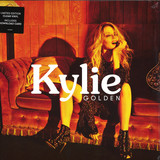
Limited Edition Clear Vinyl
Includes 12' Vinyl and Deluxe CD album, 30 page hard back book
Now that I've been to Nashville,' Kylie Minogue says with audible affection, I understand. It's like some sort of musical ley-line...'
Golden, Kylie's fourteenth studio album, is the result of an intensive working trip to the home of Country music, a city whose influence lingered on long after the pop legend and her team returned to London to finish the record: We definitely brought a bit of Nashville back with us,' she states. The album is a vibrant hybrid, blending Kylie's familiar pop-dance sound with an unmistakeable Tennessee twang. It was Jamie Nelson, Kylie's long-serving A&R man, who first came up with the concept of incorporating a Country element' into Kylie's tried-and-trusted style. That idea sat there for a little while, with Minogue and her team initially unsure about how to bring it to life. Then, when Grammy-winning songwriter Amy Wadge's publisher suggested Kylie should come over to collaborate in Nashville, a city Kylie had previously never visited, something clicked. You know when you're so excited about something,' she recalls, that you repeat it an octave higher and double the decibels I was like that. 'Nashville! Yes! Of course I would!'. I hoped it would help the album to reveal itself. I thought 'If I don't get it in Nashville, I'm not going to get it anywhere.''
Kylie's Nashville trip involved working alongside two key writers, both with homes in the city. One was British-born songwriter Steve McEwan (whose credits include huge Country hits for Keith Urban, Kenny Chesney and Carrie Underwood), and the other was the aforementioned Amy Wadge, another Brit (best known for her mega-selling work with Ed Sheeran). It was then a truly international project: Golden was mainly created with African-German producer Sky Adams and a list of contributors including Jesse Frasure, Eg White, Jon Green, Biff Stannard, Samuel Dixon, Danny Shah and Lindsay Rimes, and there's a duet with English singer Jack Savoretti.
However, the album's agenda-setting lead single Dancing was, significantly, first demoed with Nathan Chapman, the man who guided Taylor Swift's transition from Country starlet to Pop megastar. If anyone knows how to mix those two genres, Chapman does. Nathan was the only actual Nashvillean I worked with. He's got a huge studio in his house, which is probably due to his success with Taylor... there's plenty of platinum discs of her, and others on his walls.' There's something of the spirit of Peggy Lee's Is That All There Is, of Dylan Thomas' Do Not Go Gentle Into That Good Night, even of Liza Minnelli's Cabaret about Dancing, a song which not only opens the album but sets out its stall, providing a microcosm of what is to come. You've got the lyrical edge, that Country feel, mixed with some sampling of the voice and electronic elements, so it does what it says on the label. And I love that it's called 'Dancing', it's immediately accessible and seemingly so obvious, but there's depth within the song.'
The experience of simply being in Nashville was an overwhelming one, before Kylie had even arrived. Once I knew I was going to Nashville, people talked about the place with such enthusiasm. They said without doubt I would love it and, I would come back with songs. They were sending lists of restaurants, coffee shops and bars. It really was a beautiful and genuine response and it felt like I was about to have a life changing experience and in a way, I did.' The reality came as something of a surprise, when she found a far more modern metropolis than the vintage one she'd envisaged. I thought it would be like New Orleans: little houses and bars, with music spilling out onto the street. It reminded me more of Melbourne: apartment blocks going up everywhere! The main strip, Broadway, where the honky tonk bars are, that's where the street was filled with music and it was just amazing.' Mainly, Minogue remembers the heat and humidity. It was 100 degrees. It was like it was raining with no rain.' She also relished the chance to wander around unrecognised, visit a few venerable music bars and soak in the atmosphere. I didn't get to the Grand Ole Opry or the music museums but I managed to go to a couple of the institutions there like The Bluebird Cafe and The Listening Room, and just by being there, through some kind of osmosis, you get this rejuvenated respect for The Song, and the writing of The Song. There's no hoo-hah around it. There's a singer-songwriter there, talking about the song and singing the song, to an audience who are there to listen. Although, I have to confess I was guilty of starting to clap too soon during a long pause at the end of one of the songs. The guy made a bit of a joke out of it and got a laugh from it, but I thought 'Of all people in the audience, no...''
It's probably no coincidence, therefore, that every track on Golden is a Kylie co-write, making it arguably her most personal album to date. The end of 2016 was not a good time for me,' she says, referring to well-documented personal upheavals, so when I started working on the album in 2017, it was, in many ways, a great escape. Making this album was a kind of saviour. I'd been through some turmoil and was quite fragile when I started work on it, but being able to express myself in the studio made quick work of regaining my sense of self. Writing about various aspects of my life, the highs and lows, with a real sense of knowing and of truth. And irony. And joy!'
The songwriting process allowed Kylie to get a few things out of her system. Initially, she admits, it was cathartic, but it also wasn't very good. I think I was writing too literally. But I reached a point where I was writing about the bigger-picture, and that was a breakthrough. It made way for songs like Stop Me From Falling and One Last Kiss. It also meant I had enough distance to write an autobiographical song, like A Lifetime To Repair, with a certain amount of humour. The countdown in that song: 'Six-five-four-three, too many times...'. I don't know if that will be a single, but I can just imagine a girl with framed pictures of past boyfriends, and kind of going 'Oh god, when am I going to get this right'' When she listens back to Golden, Kylie can vividly hear the Nashville in it. It is, she'll agree, probably the first time that a Kylie album has sounded like the place it was made. You wouldn't normally relate my songs to the cities. Can't Get You Out Of My Head sounds more like Outer Space than London. But Shelby '68, for example, was written in London but it was done with Nashville in mind. It's about my Dad's car, and my brother recorded Dad driving it! I don't think I'd have written a number of the songs, including Shelby '68 and Radio On without having had that Nashville experience.'
The latter, she says, is about music being the one to save you.' Throwing herself into the making of the record, she says, crystallised that idea. If there's one love that will always be there for you, it's music. Well, it is for me, anyway.' That song, in particular, carries nostalgic echoes of the golden age of Country, as heard through Medium Wave transistors and tinny home stereos in the distant past. Like any child of the Seventies, Kylie had a basic grounding in Country music, mainly absorbed from older family members. My Step-Grandfather was born in Kentucky and though he lived most of his adult life in Australia, he never stopped listening to his beloved Country artists.' If there's any classic Country singer whose imprint can be heard on Golden, it's Dolly Parton.
Kylie saw Dolly live for the first time at the end of 2016, at the Hollywood Bowl. It was like seeing the light,' she beams. It was incredible. Everyone, whether they know it or not, is a Dolly Parton fan. When I was in Nashville, I did pick up a T-shirt that said 'What Would Dolly Do' Maybe that should be my mantra.' And, whether consciously or otherwise, there's a timbre and trill to Kylie's vocals on Radio On that is distinctly Parton-esque. My delivery is quite different on this album,' she says. A lot of things are 'sung' less. The first time I did that was with Where The Wild Roses Grow. On the day I met Nick Cave, when I recorded my vocals, he said 'Just sing it less. Talk it through, tell the story.' This album wasn't quite to that extreme, but a lot of the songs were done in fewer takes, to just capture the moment and keep imperfections that add to the song. I remember on my last album, a lot of producers were trying to take out literally every vibrato they heard. And that's not natural to my voice. I mean, I can make myself sound like a robot, but it's nice to sound like a human!' Working within the Country genre also gave Kylie permission to write in the Nashville vernacular. Because we were going there, I wasn't afraid to have lines like 'When he's fallen off the wagon we'd still dance to our favourite slow song', 'Ten sheets to the wind, I was all confused', 'I'll take the ride if it's your rodeo'. The challenge of bringing a Country element to the album made the process feel very fresh to me, kind of like starting over. I started to look at writing a different way, singing a different way.'
If ever Kylie lost confidence in the Country-Pop concept, and found herself pondering This is great, but back in the real world - my real world - how will this work', Jamie Nelson was there to badger her into sticking to the path. We found a way to make it a hybrid with what we'll call my 'usual' sound. It had to stay 'pop' enough to stay authentic to me, but country enough to be a new sound for this album. The closer we zoomed in, and the more we honed it, I knew Jamie was right. We sacrificed good songs that weren't right for this album, because we wanted it to be as cohesive as possible. The songs that were hitting the mark were these ones, so we decided to be strong, and that's how we wrapped up the album. What he said, that stuck with me, was that 'I'd hate to get to the end of this and really wish we'd gone for it.'' Having worked with Kylie for so long, Nelson was able to put this latest shift of direction into perspective. He said 'You've traditionally done it throughout your career. You had your PWL time, then you did a complete turn when you went to deConstruction, then another complete turn with Spinning Around, and R&B dance-pop, and then another turn with Can't Get You Out Of My Head, icy synth-pop, and this is another one.' He was right. It felt like the right time to have a change sonically. New label, new stories to tell, and a new decade almost upon me.'
Kylie Minogue will, it's scarcely believable, turn 50 this year. This looming milestone is partly behind the album's title, and title track. I had this line that I wanted to use: 'We're not young, we're not old, we're golden' because I'm asked so often about being my age in this industry. This year, I'll be 50. And I get it, I get the interest, but I don't know how to answer it. And that line, for my personal satisfaction, says it as succinctly as possible. We can't be anyone else, we can't be younger or older than we are, we can only be ourselves. We're golden. And the album title, Golden, reflects all of this. I liked the idea of everyone being golden, shining in their own way. The sun shines in daylight, the moon shines in darkness. Wherever we are in life, we are still golden.' One of the album's shiniest moments is Raining Glitter, an exuberant banger which ventures closest to Kylie's traditional dance-pop comfort zone. Eg White, who is one of the producers and writers and a great character, was talking about disco one day. I said 'I love disco, but you know the brief.' We needed to be going down the Country lane, so to speak. But we managed to bring them both together. When I wrote it, I was thinking about the Jacksons video for Can You Feel It where they're sprinkling glitter over everyone. And I think there's a Donna Summer record that's got that feel to it. I think that's my job: I basically leave a trail of glitter after every show I do anyway.'
Kylie is looking forward to the challenge of incorporating the Golden material into her live shows. Mixing these songs in with my existing catalogue is going to be fun. And it could be fun to do some of those songs with just a guitar. It'll make my acoustic set interesting...'Her incredibly loyal fans - to whom one Golden song, Sincerely Yours, is intended as a love letter' - will, she believes, have no problem with her latest stylistic shift. My audience have been with me on the journey, so I shouldn't be afraid that they won't come with me on this part. I've had fun with it, and I'm sure they will too.'
The time spent making Golden has, Kylie says, been a time of creative and personal renewal. I've met some amazing people, truly inspiring writers and musicians. My passion for music has never gone away, but it's got bigger and stronger.' And if there's an overriding theme to the record, it is one of acceptance. We're all human and it's OK to make mistakes, get it wrong, to want to run, to want to belong, to love, to dream. To be ourselves.'
I was able to both lose and find myself whilst making this album.'

On 30thMarch, Wah Wah 45s will release ORANGE WHIP, the new album by their latest signing, Honeyfeet. The outfit, who have received praise from the likes of The Guardian, have also set festivals alight up and down the country with their unique melange of sounds.
For the last couple of years the Honeyfeet (who name from a line in the Blues Brothers film) have been a conduit for the ideas and expressions of an exotic mixture of Manchester based musicians. This genre-defying band incorporate styles including jazz, folk and hip hop into their music. Someone once called it Folk-Hop and Barrelhouse-pop, and that's just vague enough to make sense.
The band are fronted by Ríoghnach Connolly - also known for her work with Real World artists Afro Celt Sound System and The Breath - "a remarkable singer and flautist who...can ease from Irish traditional influences to soul" (The Guardian). The line up is completed by Rik Warren (vocals/harmonica), Gus Fairbairn (tenor sax), Biff Roxby (trombone/vocals), Ellis Davies (guitar), Lorien Edwards (bass guitar), John Ellis (keyboards) and David Schlechtriemen (drums).
ORANGE WHIP finds the band at their most incredibly diverse. Opening with recent single Sinner (received radio play from the likes of 6 Music and BBC Manchester), which showcases Ríoghnach's extraordinary agile and emotive voice, the album moves with dizzying swagger on songs covering a wide range of subjects. Quickball tells the story of being so infatuated with someone you want to eat them, while Whatever You Do addresses the fear-mongering of the press over folk-hop and oom-pah, and Demons deals with love and redemption on a blast of harmonica-driven country, sung by Rik Warren.
Rik also takes lead vocal on a re-working of Robert Johnson's Love in Vain, a song showing Honeyfeet's more reflective side, his Skip James-esque drawl bringing an eerie quality to the lyrics about a doomed relationship. The band reshape the progression too, swinging the tune slowly and creating a little underground blues club in the midst of the recording.
Elsewhere the band go all New Orleanian on Colonel Hathi's Trunk Juice, a sinister tale inspired by trombonist Biff Roxby's horn riff recalling one of the elephants of The Jungle Book. Further showcasing their virtuosity, on one of the album's best moments - especially the nuanced vocal performance by Ríoghnach, who was raised on Irish folk - on Hunt and Gather the band do their own take on prog-folk, with a flute and cello melody running alongside a brass counterpoint.
Ríoghnach turns in another incredible vocal on the album's final track - future single Meet Me On The Corner. With a pounding beat, it is one of the album's main highlights. Guitar and brass propels Ríoghnach to sing lyrics that could be straight out of the playground, but suggest something deeper, possibly mystical even, in it's demands for a dalliance on the street. It closes the album on a high note, for a band who have that rare ability to distil all their disparate influences, while always sounding like their unique selves.
ORANGE WHIP heralds the sound of a remarkable band going overground.

There are some records that manage to sound both of a time and utterly timeless and Bon Voyage Organisation's Jungle Quelle Jungle (a nod to Supertramp's Crisis What Crisis) is one of those albums. Its silken-smooth production, irresistible grooves, funk-tinged guitars, lush soundscapes and general glowing presence could easily lead one to believe that have dug up a lost disco gem from the 1970s. However, behind the disco-pop gleam lies eerie dystopian sci-fi ruminations of a futuristic bent and tones that can often feel as French as they do Asian or African.
This sort of cross-continental exploration is an expansion on BVO's previous two EPs, the man behind the Organisation, Adrien Durand, says. 'I tried to continue the musical expedition between dystopian Science-Fiction Haunted Africa - plus Haitian Vaudou on 'Soleil Dieu' - and futuristic Asia. Addressing, in a double entendre manner, some of the political issues that I am sensitive to.' In fact the jungle in question in the album's title is a metaphorical one and one that creates a vast series of environments for Durand to explore such subjects as world trade, utopian ideals and themes of idols, as well as of time and communication. However, one will need to speak French to decipher such explorations, as well as shake off the natural impulse to move with every glorious beat on its 13 tracks, of which are moved along by Maud Nadal and Agathe Bonitzer's golden vocals.
Durand is a full-time producer based in Paris, working with the likes of Amadou & Mariam, so it makes sense that this record would absolutely sparkle in this department. Durand feeds off the variety of musicians coming and going during recording sessions as well as the rotating members and numbers of people involved with the band but fundamentally he writes all songs on piano first before bringing them to record live. 'We recorded a rhythm section of five - drums, percussion, guitar and myself on bass/synth bass and keyboards - at La Frette which is a studio located in a mansion outside of Paris and fitted with a beautiful 1973 NEVE desk. We only used analogue gear, by taste really, and found it a pretty reliable way of doing things. This simply consists of putting good players together in a room and waiting for the right take to happen.' Two four-day sessions and a 'cooling off' period (to let the recordings settle) soon followed before Durand picked the material back up to give it a final polish.
The resulting album is one loaded with intricacies and idiosyncrasies, something that Durand puts down to his own unique approach. 'I don't consider myself much of a songwriter but I love arranging rhythm sections and I'm pretty proud of the ones on this record.' This applies when it comes to working with such musicians as Inor Sotolongo Zapata, who with Durand used traditional Cuban percussive instruments and explored Haitian rhythms. When Durand expands on some of the ideas and influences that were funnelled into the record, you begin to get a sense of the vastness of the sounds that fill his world, from Trevor Horn's production work on ABC's Lexicon of Love, to the literary work of JG Ballard to the visual flair of the original Blade Runner and even the Tuareg sounds of Tinariwen, due to the fact that his studio neighbours their manager's and he would hear their rhythms bleeding through the walls. You therefore end up with an album that offers tracks such as 'GOMA' that fuses Chinese and African rhythms as well as 'SI D'Adventure' a piece of pop music that is dazzlingly hook-laden.
As a result of this cooking pot of sounds, influences, thoughts and creations, Durand has more of a gumbo approach to making this music than a set-out scientific formula. 'There is no definite recipe for me to like the production of a record,' he says. 'Of course it really sticks out that my work is really influenced by the 1978-1983 period, the golden age and last stand of analogue studios and session musicians.' Whilst Durand adores the traditional and conventional music, he really views this as something bigger and wider. 'I have a taste for the otherworldly vibe from records coming from less sought-after musical scenes, particularly Poland, Haiti, Ethiopia, Somalia, Congo and early Cantonese pop. Languages and the rapport of the people involved in the making of those records really inspires me. I particularly hate the use of the word 'World Music' as a potpourri for everything that doesn't sound quite western enough.'

It was chance that brought about the release of One/Three, Dabrye's debut album. Early demos were tucked on the B side of a cassette Tadd Mullinix passed to Sam Valenti in 2000 while working at the Dubplate Pressure record shop in Ann Arbor. Mullinix had spent the late '90s producing jungle, techno, house, hip-hop and more using the All Sound Tracker software as a primary instrument. Each style pulled from a similar sound palette as Mullinix used limitations to define the contours of di-erent musical personalities. Dabrye was his hip-hop wildstyle, a captivating collage of sparse instrumentals inspired by the laid back vibes of midwestern hip-hop and east coast boom bap, the futuristic funk of Umma-era Jay Dee, and the calculated subtlety of Detroit dance music. Released in 2001 as the first in an intended trilogy, One/Three announced Dabrye's arrival with an unavoidable contribution to Detroit hip-hop. Ghostly International is reissuing the album in 2017 for the first time, including a long overdue vinyl edition.
On its release One/Three was the rare album that appealed to both fans of Slum Village's smooth yet rugged hip-hop and enthusiasts of the distinct American IDM released by labels like Schematic. Over the following decade, the inadvertent demo submission turned into a body of work that placed Dabrye alongside innovators such as Prefuse 73 amid the cannon of a new generation of producers. Today, One/Three remains a concise and intriguing study in instrumental hip-hop that helps join the dots between J Dilla and Flying Lotus.
One/Three is a record that says much with little. There are no obvious hip-hop tropes. Instead Mullinix captures the ingenious minimalism of '90s hip-hop instrumentals to build tracks both supple and hard, joyous and melancholy, full of sharply angled rhythms and warm rubbery basslines: 'The Lish' throws a sickly sweet saxophone against digitally fragmented melodies, 'How Many Times (with this)' draws you in with an irresistible, clipped guitar groove, the rhythmic stutter of 'Smoking The Edge' makes your head spin with pleasure. Playing with his inspirations, Mullinix injects omitted downbeats for imagined rhymes and repurposes the intricacy of ragga jungle for breakdowns.
But what really defines One/Three is the rhythmic sensibility and metric modulation of Detroit's school of hip-hop production, which Mullinix was a fervent student of. The beats feel like they're constantly escaping a rigid tempo grid even though they are, in fact, pretty tight. A lot of it is nuance,' Mullinix explains. I've been known to say that I'm not impressed by spectacle. I think that nuance is what really captivates people.'
If you like your beats with a dash of class, do not miss this. An essential purchase of the highest order.' -BBC
- First time all tracks from the original 2001 release appear on vinyl.
- Remastered by Daddy Kev
- Standard weight black vinyl is inserted in to 3.5mm matte finish vinyl jacket.
- Download card includes free download of the Payback EP
