Not very often does a remix equal the original track it follows, but every now and again it happens. The thing is the original was already a monster track but somehow this, the DJ Force & The Evolution Remix of Sweet In Pocket came along and just blew up! For so many people, this is one of the best tracks ever to grace a dance floor and to say that it doesn’t still sound fresh more than 25 years later would be a lie! Then we have the flip side! Austin Reynolds has been one of the best producers, engineers, artists and remixers for over 30 years now and again, this track is over 25 years old, yet Austin makes classics that stand the test of time and this is without a doubt one of those occasions.
out of Stock
Last delivered 4 years ago available to reorder, subject to availability
Released for the first time in CD and Digital format in 2017 this is the sixth album by Luca Trevisi LTJ Xperience.
It contains some of his most played songs such as Get Down, Let There Be Groove, Put Me Down and the one that gives the title to the album Beggar Groove here in its two versions.
The release is in a limited edition double album on White vinyl. Luca LTJ Trevisi (LTJ Xperience) trained as a producer DJ in the late 1980s. Resident first at the Kinki Club in Bologna and then at Cap Creus in Imola, he is one of the first Italian DJs to program house and above all to re-propose Black Music, Jazz and Latin Bossa, all the genres that then over time gave way to Acid Jazz and Nu Jazz.
He began his work as an artist and producer with Irma Records and in the 90s also his activity as an international DJ who saw him play at the Blue Note and the Jazz Café in London, at the Giant Steps in New York and at the Jazz Festival in Montreux.
In 1999 he released his first solo album under the name LTJ Xperience. To date he has released 7 albums all on Irma Records, several compilations, many singles and remixes also collaborating with international labels such as Far Out Recordings, Sleazy Beats, Future Classics, E.A.R., Music For Dreams, Apersonal Music.
out of Stock
Last delivered 15 months ago available to reorder, subject to availability
Ramos, Supreme & Sunset Regime are names better known for making hardcore of all types throughout the 90s, but as so many did, they also made some epic jungle tracks, and here we have a couple of their sublime but never before released dubplate tracks. Morning Glory is a more traditional jungle track, with subtle hardcore influences. It has a pace and a feel that will put a smile on your face and make any morning feel glorious. Menawhile, Alien in the Jungle draws more on the early days of hardcore rave, mixing it with the jungle beats but keeping the aural soundscape that the early RSR tracks had. It is a journey of discovery and fulfilment.
out of Stock
Last delivered 4 years ago available to reorder, subject to availability
Pachakuti is a musician and producer with family roots in Colombia. He plays keys, tenor saxophone and clarinet. While living and working in Berlin, he draws inspiration from the natural world, investigative travels, and ancestral traditions of Latin America and beyond. His expressive and rhythmical playing and his instantaneous compositions are directed at the human core, arousing subtle experiences. While not being conformed to one style, it always invokes a sense of liveliness and depth to be delved in. young.vishnu is a producer and DJ. He has studied philosophy and music in Hildesheim, Germany, which heavily influenced his views on meaning and mythology in music. In his DJ sets he selects and plays classic and contemporary Funk, Soul and Afrobeat. His practice as a DJ informs his work behind the boards directly, adding also more organic grooves and broader spectrum of musical styles to his in Hip-Hop based production. If you had to put one single tag on their forthcoming album Dédalo, the best choice would be Jazz. That being said, Pachakuti and young.vishnu's sound worlds might be better described in their own words: "We just make music and try to incorporate what we love about it". They are musical freethinkers with shared interests in eastern philosophy and botany who interweave Hip-Hop, Latin and Funk with musical storytelling and world mythology. Undoubtedly, their most ambitious work to date, Dédalo (Spanish synonym for labyrinth), recorded and produced over the course of a year, shows Pachakuti & young.vishnu's ambitions and growth. Where their debut work Semilla (2020) centered around the image of the seed, Dédalo takes on the entire garden. Besides playing multiple instruments by themselves, Pachakuti & young.vishnu invited a growing group of befriended musicians into the studio, including percussionist maestro Eric Owusu (Pat Thomas, Ebo Taylor, Jembaa Groove) and drummer Leon Raum (Bokoya, Wyl), as well as Brazilian newcomer vocalist Laíz, and members of their former band project Soularkestra. The 16 recorded songs, ranging from 1:19 to 14:58 minutes, take you on an emotionally honest, metaphoric journey through the maze of human existence, of modern society and mythic poetry. The mostly instrumental tracks build on expressive melodies, layered rhythms, and a wide range of musical instruments, merging the sounds of Jazz with the classical word of orchestras and choirs, and urban soundscapes with traditional instruments such as the Andean Kena and Charango, the Colombian Gaita and Marimba de Chonta, and an Indian harmonium. The Album thus weaves together past and future, and diverse cultural threads, sounds and ideas in an act of cultural appreciation and global conscience. Mixed and mastered by Roe Beardie at The Brewery Studios, Berlin. The album artwork itself merges the visionary art of Mexican painter Sergio Chávez Hollar with an original artwork-inlay of Brazilian artist Laíz and the work of Carsten Pölking of the Nima Compositions Archive.
Dédalo will be available digitally and on double-vinyl with inside-out print cover and colored inlay with credits and painting by Laís De Mello Barbero.
out of Stock
Last delivered 4 years ago available to reorder, subject to availability
Not much is known about the mysterious pop sensation Vumani or his short musical career. Originally from KwaZulu Natal he made his way to Johannesburg in the mid 80’s to follow his dream of becoming a recording artist. He was able to make that dream come true when talent scouts from Decibel Music came across the charismatic youngster. At the time Decibel was still a small fish trying to make waves and the label believed in Vumani they had found the star they were looking for. Being a label with mostly groups signed to the catalog they needed a Front Man to push into the growing demand for Solo Artists that were dominating the airwaves and catching the hearts of youngsters.
Up to this point Decibel had one major hit record. In 1986 they released a single by an artist named David Thanzwane. The music was a direct rip off of the first hit Single by Shangaan Disco pioneer Paul Ndlovu. Copying the music of both sides of the original single the “covers” offered different lyrics and hooks also sung in xiTsonga. This was enough to trick the masses and the single led to record sales for the small label. The unintentional outcome of the single was that from then on the producers and label had one sound they wanted to pump out in hopes of recreating that magic. This desire to create another Shangaan Disco hit would be the backbone of the Vumani sound and what makes his music so special and collectable after all these years.
That same year Vumani would release two Singles, Black Mampatile and Guy Fawkes. Musically these playful and fun singles would have great appeal to youngsters as they sung of daily life in the Townships. Black Mampatile being a game of Hide and Seek, Banana Kari referring to the trucks that would go around the Township exchanging chips and snacks for glass bottles and of course every child’s favourite reason the dress up on November 5th, Guy Fawkes Day. Both singles were received well and a few more tracks were later recorded to create the full album Isiqedakoma. Although he would sing in Zulu the music was unmistakable for Shangaan Disco. The synth heavy bass lines and happy melodies along with relatable fun lyrics were a perfect blend for an album that would make people dance if they were out at a Tavern or Shabeen on a weekend or just enjoying at home with family and friends.
Vumani quickly became the Label’s top priority with managers making sure he always had the freshest clothing styles to go along with his persona, and he never missed any performances or opportunities to impress a crowd. His popularity grew in the Township’s but with that came the unfortunate and all too common problems with fame. He started getting mixed with wrong crowds. He would record another album for Miracle Music, the Decibel sub label that had emerged to focus on the more underground sounds of the post synth pop era. Musically things were going well for Vumani but it would be his life off the stage that would catch up with him. Always known for his commitment to his music and fans one day he uncharacteristically failed to show up and was never heard from again. His body would later be found in a burnt car on the outskirts of Soweto. What led to his tragic death was never known but with the company he kept it is not hard to imagine what one of the many situations that led to that horrific ending could be. His funeral was attended by the entire Township it seemed as people packed the service and flowed out onto the streets, a testament to his popularity and the love the people had for one of their own.
out of Stock
Last delivered 2 years ago available to reorder, subject to availability
The British composer, musician and audio engineer Daphne Oram was a pioneering figure in the use of electronic music. Coming to prominence through her work with the BBC Radiophonic Workshop, which she co-founded, Oram was one of the first British composers to feature electronic instruments in her work and has been rightly hailed as helping musique concrete to become accepted in Britain. Born in 1925 and raised in rural Wiltshire, close to Stonehenge and the ancient stone circle at Avebury, Oram eschewed a place at the prestigious Royal College of Music to take a junior engineering role at the BBC in 1942, she was often tasked with creating sound effects, leading to cut-up experiments with tape recorders and the development of synthetic sound; her composition Still Point, involving two orchestras, two turntables and five microphones, was deemed too radical by the BBC, though she was promoted to studio manager in 1950, leading to the gradual introduction of electronic music and musique concrete techniques on BBC soundtracks. In 1957, she composed the music for the play Amphitryon 38, using a sine wave oscillator and homemade filters, and this and other subsequent works led to the establishment of the BBC Radiophonic Workshop the following year, but Oram soon tired of the conservative constraints of the BBC, leading to her resignation in 1959 to pursue her own vision at the Oramics Studios for Electronic Composition, located in Tower Folly, a former hop kiln located at Fairseat, near the village of Wrotham in rural Kent. Oramics was a radical sound composition technique that sought to transform images to music, enacted by drawing onto 35mm film, which would then be read by photo-electric cells; in addition to its use in Radiophonic Workshop material, Oramics was also employed for sound installations, theatre productions and feature films, such as The Innocents, though financial pressures forced Oram to seek a range of commercial engagements in addition to creating her own artistic works. The Listen Move And Dance series of BBC programmes were devised as a radical new technique to help British schoolchildren learn how to dance; on the LP releases, Vera Gray arranged short adaptations of classical pieces by Bartok, Stravinsky, Shostakovich and others, designed for “stamping, punching, kicking and jumping” movements, as well as “running lightly, dancing on toes” and “shaking all about,” which contrasted sharply with Oram’s electronic abstractions, which seemed to have been beamed in from outer space.
out of Stock
Last delivered 4 years ago available to reorder, subject to availability
HIGHLIGHTS: 1967 descargas album by Peruvian percussionist Coco Lagos y Sus Orates, featuring Alfredo Linares, Charlie Palomares, Otto de Rojas, Mario Allison_ This album was recorded following the success of the descarga sessions released by New York label Alegre Records. It includes a version of Cal Tjader's 'Mamblues' and 'Brava pachanga', an original by the Father of Boogaloo, Joe Cuba, among many other stand-out tracks. Quality official reissue on 180g vinyl after years unavailable. Includes insert with liner notes. Details: 1966 was a prolific year for the MAG record label. The microphones were constantly on at the label's studios, recording timeless hits by Los Demonios de Corocochay, Betico Salas, Cholo Berrocal, Mario Allison, Alfredo Linares, Carlos Muñoz and Los Pacharacos, just to mention the most successful ones. The percussion playing by 29-year-old Peruvian Coco Lagos stands out on a number of these recordings. Coco continued his early career, and he played the conga drums for artists who passed through Lima, accompanying Pérez Prado, Oréfiche and Chano Scotty, among others. In the late 50s, he started working as a regular musician in the recently founded record company MAG, alongside musicians such as Ñiko Estrada, Mario Allison, Lucho Macedo...
out of Stock
Last delivered 4 years ago available to reorder, subject to availability
The first release from Edinburgh-based rave Headset, showcasing unsung Scottish artists making alternative house, techno, garage & breaks in dubby styles.
Creep Woland provides the first EP with floating breaks, UKG & broken beat, finishing with a creepy slow jam.
Pressed on heavyweight 180g vinyl
Mastered & cut by Optimum Mastering in Bristol (Livity Sound, Tectonic, Pressure Dome)
Pressed by MPO
DJ approved by Hodge, Danielle, Daisy Moon, Chris Farrell (Idle Hands) & many mor
out of Stock
Last delivered 3 years ago available to reorder, subject to availability
'The Best of Chet Baker' pressed on limited edition 180g violet coloured vinyl 14 Essential Chet Baker tracks recorded in Los Angeles, New York, Milan, and Paris between 1954 - 1959 and featuring Herbie Mann, Pepper Adams, Bill Evans and Kenny Drew among others.
out of Stock
Last delivered 4 years ago available to reorder, subject to availability
FOR FANS OF: Big Thief, Parquet Courts, Cate Le Bon, Elliott Smith, LVL UP. On their debut for Western Vinyl, recording engineer and multi-instrumentalist Nate Mendelsohn and his band use lyrical maximalism for the powers of good. Where Market’s previous home recorded releases shifted genre restlessly, on The Consistent Brutal Bullshit Gong Mendelsohn took a core band of longtime collaborators to a house in rural Massachusetts where they carved out space for his words to speak through with humor and intensity. Though he comes from a background in experimental music, Mendelsohn’s ear for pop has prevailed. Certain moments on Bullshit Gong reveal his stranger side, as on the thundering bridge of “Scar,” which sounds like a more unhinged Parquet Courts, or the angular “I Would Do That,” which takes cues from Cate Le Bon. On the whole, though, this band of close friends insists on directness, their arrangements clear despite the intricacies. Guitars and synthesizers tangle fluidly atop the rhythm section’s tight bedrock, evoking the tenderness and backbeat-centric qualities of Elliott Smith or Big Thief. After college, where he met most of the members of Market, Mendelsohn became an engineer and producer at the Brooklyn studio Figure 8 Recording. Through that community he’s recorded artists like Frankie Cosmos and Wendy Eisenberg, and played with Yaeji, Vagabon, Katie Von Schleicher (who co-produced Bullshit Gong with him), and Sam Evian, who mixed the album. Creating intimacy out of manic self-reflection requires a delicate balancing act, one Mendelsohn tackles with abandon. His words never skew too poetic or grandiose, and when he invokes the ugly it’s met with a sonic tonality that sets him right again. In tender moments, his voice is often flanked by bandmates Natasha Thweatt or Von Schleicher, who help skew his words toward the universal. Still, Bullshit Gong is an obsessive look inward, one in which Mendelsohn simply asks himself if he is good to those he loves. It’s an act of trust between the artist and the imagined listener he takes with him. UK press campaign by Silver PR. Mendelsohn has worked in the studio as an engineer and musician with Frankie Cosmos, Yaeji, Sam Evian, Wendy Eisenberg, Thor Harris, Rebecca Black, in addition to touring as a member of Katie Von Schleicher’s band. Market developed a cult following emerge after being championed by British comedian James Acaster, who featured the band’s first album in his book Perfect Sound Forever and his follow-up podcast for BBC Sounds.
24 Songs. A new project from The Wedding Present. A new 7” single every month throughout 2022. 24 Songs sees David Gedge writing with legendary Sleeper guitarist Jon Stewart for the first time, and a more perfect union could not have been predicted. The notion of a monthly 7” single is not new to The Wedding Present, but 24 Songs shows us that even classic concepts can be reinvented. The series also continues the band’s association with photographer Jessica McMillan, who has created stunning images and films as a visual accompaniment to the recordings. Explaining 24 Songs, David Gedge said: “In 1991, The Wedding Present were rehearsing in a studio in Yorkshire when we hit upon an idea that immediately thrilled us all. Our bass player Keith Gregory had been a member of the ‘Sub Pop Singles Club’ - a service that allowed subscribers to receive 7”s released by that Seattle label on a monthly basis. Keith wondered if we, as a band, could attempt a similar thing. In that instant, The Wedding Present’s Hit Parade series was born and, during 1992, we managed to release a brand new 7” single each and every month. “The Hit Parade went on to become something of a significant milestone in the history of the band and it’s a project about which I’m often asked. As its thirtieth anniversary approached, I began to wonder if we should celebrate it in some way. A ‘Hit Parade Part 2’ didn’t feel quite right, though. Then, someone said to me: “Other bands have released music in similar ways but there has been nothing like the Hit Parade.” And they were right! A 7” single a month seems, somehow, very ‘Wedding Present’. So, inspired by that little idea from three decades ago, we’ve embarked on this new project, 24 Songs. “Even though The Wedding Present have never been known for taking the easy route, the idea of recording 24 tracks and releasing them in this way could seem daunting to any band. However, I’ve been inspired by the music that has been written since Jon and Melanie joined the group. The thought of celebrating this exciting new line-up with an exciting new series has motivated us all… and I suppose we also didn’t want any of these songs to be hidden away in the middle of an album!”
It would have seemed like a dream come true, when a young teenage country girl was drawn to New York landing work as a maid, nanny and sometime session singer, to suddenly find herself with a worldwide hit record. It should have changed her life from then on, but such is the fickle nature of the music business that she never managed to maintain the fruits of her record sales. Despite many fine single releases and this very fine and well respected album, she was soon to fall down the snakes as quickly as she had climbed the ladders. King and Goffin worked for Aldon Music, owned by Don Kirshner, where they were enjoying hits for the likes of Bobby Vee, The Drifters and Tony Orlando. Kirshner asked them to write a possible follow-up to Dee Dee Sharp’s #2 hit Mashed Potato Time, and they quickly came up with The Loco-Motion and had their live-in nanny Eva sing the demo with Carole herself playing piano and singing back-ups with her. Kirshner absolutely loved it and decided to keep the song for his own newly formed Dimension Records. Here for all to enjoy is her musical legacy in the form of this fine début album.
Studio album number 10 is now ready, and the anniversary is marked by what the band itself refers to as 'The Dogs 2.0'
They have recruited the star producer Chips K, who, in addition to producing
bands such as The Hellacopters, Sahara Hotnights and Millencolin, has played in
both Sator and Thåström. Locked up in the venerable Athletic Sound for a few
weeks last summer, they gave Chips free rein to manage the song material they
had given him 18 months prior. During the past years, via numerous releases and
massive touring, The Dogs have established themselves as one of Norway's
hardest working and most critically acclaimed bands. They have played sold-out
gigs all over Norway, supporting the likes of Bruce Springsteen as well as
Kvelertak on their European tour. The Dogs serve up intense, flat-out rock 'n' roll,
with A- list celebrity and TV and radio personality Kristopher Schau's ferocious
voice leading it all. The Dogs will embark on a massive release tour in Norway,
Sweden, Denmark, Germany, The Netherlands, Belgium and The Czech Republic
in March and April 2022.
7" Black Vinyl in Kraft Board Company Sleeve (300 made). Broadside Hacks release their brand new single “Barbry Allen”, a fresh take on the traditional folk ballad which has its earliest recorded reference in a 17th century diary entry. Broadside Hacks means many different things. It is a sprawling collective of young musicians who meet regularly for casual, open-to-all jam sessions at a South London pub. It is their live iteration, a more fixed – but nevertheless still flexible group of players who have been performing acclaimed shows across Britain for the last year, bringing in local musicians as they go. There is also the Broadside Hacks record label, which put out the compilation ‘Songs Without Authors Vol. 1’ last September: a diverse array of left field artists injecting fresh life into songs whose original authors have been lost in time. Beyond even that, there is the film ‘The Broadside Hack’, exploring a wider network of London musicians employing traditional folk influences in vastly different ways, from caroline’s multi-genre experimentalism to Shovel Dance Collective’s forthright politics, of which Broadside Hacks are just one crucial part.
The remastered, repackaged set Music From Grizzly Man contains all of the out of print material Thompson recorded for the acclaimed documentary. Richard Thompson's score for “Grizzly Man” Werner Herzog's 2005 documentary film of real life and death in the Alaskan wilderness is one of the best-kept secrets in the British guitarist's epic canon: an instrumental masterpiece disguised as a movie soundtrack. Recorded over two days as Thompson played live in the studio to Herzog's footage – mostly alone, at times in chamber settings with cello, piano and percussion – these tenderly detailed melodies and quietly visceral improvisations are cinema in their own right, rendered with pictorial instinct and the dazzling technique forged in Thompson's lifelong passage through traditional folk, psychedelia, North African modes and intensely personal songwriting. Here is Thompson at his natural best – finger-picking dance; snake-curl twang and singing-wire harmonics – in a solo clarity that runs from jig-like joy to deep-note meditation, the "Main Title" blues march with its echoes of Fairport Convention's "Sloth" to the long night of "Treadwell No More," a harrowing darkness in slicing treble and tremolo shiver. Produced by guitarist Henry Kaiser, Grizzly Man is a record of powerful solitude as bold and majestic as the land in Herzog's film; as intimate as prayer and essential Richard Thompson.
RIYL: Velvet Underground, Lou Reed, Nick Cave, Patti Smith, Leonard Cohen, Iggy Pop, Radiohead & Tom Waits. "If you have never heard the Doctors of Madness, you should. Musically they are the Velvet Underground, New York Dolls with shades of glam, hippie, prog and punk all rolled into one, yet are still totally original. Vastly underrated, they should have been huge. Pure genius" Vic Reeves…. The DOM are “the missing link between David Bowie & The Sex Pistols” (The Guardian May 2017). Exploding onto the music scene in 1975 with their theatrical, William Burroughs-inspired Sci-fi nightmare, they were misunderstood by many, but those who knew understood the importance of the band’s dangerous, uncompromising approach to lyrics, to music and to performance. Among the many fans of the band were acts as diverse as The Damned, Vic Reeves, Joe Elliott of Def Leppard, Spiritualized, Julian Cope, The Adverts, The Skids and Simple Minds. The Sex Pistols supported them, so did The Jam & Joy Division. They were the first to combine the avant-garde approach of The Velvet Underground with a distinctly European aesthetic. The blue hair, exotic stage-names, the lyrical themes of urban decay, political propaganda, mind control and madness were all taken up by the punk bands who followed in their wake. The DOM were trailblazers, pioneers, adventurers…pushing the boundaries of rock music and theatre to see how far it would go before it bust. What happened after them was due, in no small part, to what they achieved in 3 short years. They may not have been Jesus Christ, but they were, arguably, John the Baptist!!! Now, 40 years after they imploded, they are back…with an album seething with lyrical anger and passion. It is the most potent and incisive musical dissection of modern life and contemporary politics released the decade. With tracks titles like “So Many ways To Hurt You”, “Sour Hour”, “Make It Stop!” and the ground-breaking sonic assault of the title track “Dark Times”, Richard “Kid” Strange proves once again that he has his finger firmly on the pulse of our times, just as he had when he founded the band in 1974. Produced by John Leckie (Radiohead, Stone Roses, Pink Floyd), the new album, Dark Times, features contributions from Joe Elliott (Def Leppard), Sarah Jane Morris (Communards), Terry Edwards (PJ Harvey, Nick Cave etc), Steve ‘Boltz’ Bolton (The Who, Scott Walker) and the young protest singer Lily Bud, alongside the current thrilling and thunderous DOM rhythm section of Susumu Ukei (bass guitar) & Mackii Ukei (drums) of the Japanese extreme glam-metal band Sister Paul, and Dylan O Bates (violin and keyboards). Julian Cope, another rock star who, like Strange, found the confines of music too tight for his ambition, his energy and his imagination, was blown away when he first heard the songs, declaring, “These Dark Times are enormously informing: the RULES OF THE FUTURE are indeed being forged right now”. Top producer Martyn Ware (Human League/Heaven 17) said the album “…reminds me of Iggy Pop’s Kill City album – love it.” and Biba Kopf (The Wire) declared, “Still listening to new DOM album with immense interest and pleasure”. The first single, Make It Stop!, is an impassioned howl against the global drift to right wing extremism and persecution of minorities, and is already a live showstopper for the band. It features the thrilling cross-generational combination of Def Leppard’s Joe Elliott and Lily Bud on backing vocals. In the period since the last DOM gig in 1978, Richard has written a memoir, collaborated on a cantata with internationally celebrated composer Gavin Bryars, worked as an actor on films with Tim Burton, Martin Scorsese, Harmony Korine & Jack Nicholson, toured the world in a Russian version of Hamlet with James Nesbitt as his grave-digging co-star, played Glastonbury, sung baritone in the British premiere of Frank Zappa’s200 Motels at the Royal Festival Hall, directed a multi-media evening celebrating the life and work of William Burroughs, won Best Art Film Prize at the Portobello Film Festival last year, had his own live talk show, worked with Tom Waits and Marianne Faithfull on the William Burroughs/Robert Wilson stage play The Black Rider, curated events for the Tate Gallery, and sung Walt Disney songs with Jarvis Cocker.
Graham Nash: Live is the unique project arriving on May 6, on which Nash revisits his first two classic solo albums, Songs For Beginners and Wild Tales, recorded live in concert The live albums were recorded in 2019, each in their entirety with their songs in familiar sequence. Nash was joined on stage by a seven- piece band led by his
longtime collaborators, Shane Fontayne (guitar and vocals) and Todd Caldwell (keyboards and vocals), The album was mixed by Grammy Award® winner Kevin Killen and mastered by Grammy Award® winner Bob Ludwig.
An extraordinary Grammy Award® winning renaissance artist – and selfdescribed "simple man" - Nash was inducted twice into the Songwriters Hall of Fame, for his work with CSN and his work as a solo artist, beginning with these two landmark albums, Songs For Beginners and Wild Tales.
Nash's lifelong commitment to his work is unwavering. His inspiration is simple: "All the things we stood for, that love is better than hatred, that peace is better than war, that we have to take care of our fellow human beings, because that's all we have on this planet - those things are still true today. I need to know that I've brought something into the world that was positive and not negative."
Berlin and London based avant-pop duo Private Agenda will release their second full-length album – A Mannequin – on Lo Recordings on 22 October via digital, limited-edition LP and music box formats.
A Mannequin: Twelve tracks corresponding to twelve character traits, imagined as personalities in musical form. What are the dichotomies that define us? Our seen and unseen selves, the façade and the fundamental, the real and the imaginary. The result is musical hyper-realism.
Dena Miller grew up on a diet of folk before spending 6 years writing and exploring projects through Philly's punk scene, Oberlin's conservatory experimentalist and NY's DIY history before arriving at her debut album 'Woodpecker' . Think Waxahatchee, Told Slant & Moldy Peaches...
Black vinyl with inner sleeve lyrics & download.
Deer Scout’s debut full length Woodpecker is a record about memory and the subconscious. And like an unforgettable dream that keeps you puzzling over its riddles for days, it’s as packed with direct symbols as it is with ruminative haze. “I approach songwriting as a process of boxing things up, or putting away a time capsule,” explains front person Dena Miller, who wrote the album over a period of six years. It’s a culminating collection of the project’s many sounds and influences to date, from Philly’s punk cooperatives to Oberlin’s conservatory experimentalism to New York’s DIY history. At the center is Miller’s assured guitar fingerpicking and boldly clear voice, firmly grounded even as it gently probes uncertain emotional and musical terrain.
Raised by two folk musicians in Yonkers, Miller began recording songs as Deer Scout her freshman year of college in Philadelphia. There, she wrote Woodpecker’s earliest song “Synesthesia” about a train ride home from a basement show: “Night in the city / Big house on the corner / Her voice has the timbre of summers ago,” recalls Miller resonantly. After Miller’s transfer to Oberlin College, Deer Scout began touring DIY venues around the country and sharing stages with favorite artists including Waxahatchee and Told Slant. The twinned intimacy and intricacy of those two influences is reflected in the carefully adventurous arrangements on Woodpecker, which features, among other contributors, bass from close collaborator Ko Takasugi-Czernowin, cello from Zuzia Weyman, drums from Madel Rafter, and guitar from Miller’s father Mark—who also wrote the song “Peace with the Damage” and originally released it with his band Spuyten Duyvil in 2011.
Many of the songs on Woodpecker were written during periods of grief or change. “I used to sing myself to sleep as a baby and I think music still plays the same role in my life—it’s a way of self-soothing or seeking comfort,” explains Miller. “But there’s also part of it that comes from wanting to connect with people." Recorded and mixed primarily by Heather Jones at So Big Auditory in Philly with overdubs by Miller at home, Woodpecker is an exercise in portraying the incommunicable. “Cup”—about a relational psychology test called “a walk in the woods” that turns encounters with symbols into meaning—uses watery arpeggios, wintry strings, and roving bass to create a liminal sonic space, optimistic but tense. “Cowboy,” with airy layers of acoustic guitar riffs and Miller’s charmingly double tracked voice, takes its little fish, big pond inspiration from the character Joe Buck in Midnight Cowboy. And “Afterthought,” with its unexpectedly bright resolutions, is about God, love, and the complexity of empathy; “Heaven isn’t watching us,” sings Miller candidly over pedal steel.
Though Woodpecker is a record about uncertainty and the unknown, it’s also about compassion and connection—as Miller was able to find over the course of writing and recording this next chapter for Deer Scout and first release for Carpark, which she’s excited to at last share with the world.
out of Stock
Last delivered 4 years ago available to reorder, subject to availability
Stars of the Lids, Tim Hecker, Brian Eno, Manuel. Duo Consists of Jonas Munk (aka Manual) and Jason Kolb (guitarist from Auburn Lull). 4th album, 2nd for Felte and first one since 2012. Initially on blue vinyl. Past press by Pitchfork, XLR8R, Impose. Past project Releases on Morr Music, Darla, and more. Billow Observatory is the project of trans-Atlantic duo Jonas Munk (Denmark) and Jason Kolb (Michigan). Initially planned as a small sideproject from their main work in Manual and Auburn Lull respectively, the two quickly realized their collaborative experiments merited more time and attention. Using heavily treated cavernous guitars, subtle synths, and crackling radio transmissions, their self-titled debut was released in 2012 as a double LP and established Billow Observatory as purveyors of unhurried, highly detailed ambient immersion. The release pair of II: Plains/Patterns in 2017, and III: Chroma/Contour in 2019, on Munk's own Azure Vista Records, introduced a subtle underpinning of rhythm, pulse, and stutter among the washes, expanding their sound with a hint of understated electronica. Marking 10 years since debuting on Felte, 2022 sees the release of Stareside, their most forcefully elegant undertaking to date. A record of swaying quarantine temperament, Stareside's 9 tracks thread the needle between hope and hopelessness - daydreaming whilst watching the world go mad in the blink of an eye. Not shy of overt rhythm, soaring motifs, and daunting undercurrents, Stateside veers wildly in new directions, yet keeps one hand near the record bin of comforting nostalgia (think early Warp Records, Jon Hassel, and Conny Plank to name a few).
New Heavy Sounds is proud to present the new album by Mammoth Weed Wizard Bastard. now known simply as MWWB. There has been some speculation amongst fan circles that the final part of the trilogy of albums that preceded this, marked the end of Mammoth Weed Wizard Bastard’s five-year mission. Not so. We can categorically confirm that having officially slimmed their name down to the acronym, MWWB are continuing their voyage through the far reaches of the galaxy. The first phase of that journey is their new album ‘The Harvest’. ‘The Harvest’ is the band’s fourth album, and of course it is a record shot through with the trademark heavy MWWB sound, and their unique blend of metal and shoegaze. However it also sees the band adding more experimentation, a progressive approach, and going a bit more left field conceptually. To some extent, it shares similarities with Pink Floyd’s ‘Dark Side Of The Moon’. Not only by having the mix of experimentation and melodicism as that seminal record, but also in the way that it has been engineered and constructed as a seamless piece. Nine tracks flowing into one another. Space age riff monsters segueing into shorter musical interludes, where John Carpenter, rubs shoulders with Pink Floyd and a maelstrom of moog and mellotron. There are surprises, and of course a bucketload of heavy shit. With ‘The Harvest’ MWWB have refined and honed their sound, it’s a carefully crafted distillation of ideas, written, conceived and sequenced to be listened to in its entirety (preferably in one sitting). MWWB have always loved film scores and this new album is in many ways, the soundtrack to a film. MWWB provides the musical narrative (the song titles also provide a pointer) and the listener's imagination does the rest. ‘Oblok Magellana’ and its spooky atmospherics set the scene. before things really kick in with the riffs of title track ‘The Harvest’. A grooving Sabbathian chug intro’s Jessica Ball, who at the top of her game throughout. Her voice simultaneously sweet yet dark; almost neofolk; which when put against those riffs, is always a startling juxtaposition, nevertheless it perfectly crystallises MWWB’s distinctive dynamic. ‘Interstellar Wrecking’ is a succinctly crafted nugget of John Carpenter-esque drama, you can imagine the thundering mothership forging its way through the universe on some nameless quest before encountering ‘Logic Bomb’ and its fat fuzzed-up ride through light and shade guitar/vocal interplay. Ball’s voice soaring and shimmering throughout. ‘Betrayal’ gives a nod to Pink Floyd’s ‘On The Run’ but with its freaky spoken word and four on the floor kick it’s almost a dance track, yet there’s no incongruity here. ‘Altamira’ is epic MWWB, adding large doses of psych into a melodic concoction of dreampop and metal. Ball’s vocals here are many layered and textured effortlessly gliding through the weight of the backing. ‘Let’s Send The Bastards Whence They Came’ is another little gem. A plaintive repeating synth figure that builds with bass, drums, mellotrons and synths into ‘Strontium’ which rounds off the album’s ‘heavy’ numbers, a blend of monster grooves, and Ball’s swooning vocals. Finally, and outstandingly, Jessica strips things back to a distorted guitar and voice on ‘Moonrise’. Shorn of the layers of fuzz, it is a simple, beautiful and fitting catharsis to an epic voyage. MWWB are a thrilling proposition. They demonstrate that you can seamlessly mix crushing power, experimentation and delicate vulnerability into something that transcends any genre.
"I wrote the album in a tiny apartment, at a time when everything felt big and overwhelming," says poet and songwriter Jenny Berkel about her new album, "These Are the Sounds Left From Leaving"
She was living in a brownstone walk-up full of radiant light and the ever-present soundscape of a leaky bath faucet. It was a sudden move at the time - a spontaneous departure from touring, bustling city life, being many things to many people'that landed Jenny in a space of self- imposed stillness. "The songs themselves are a study of proximity, bringing big fears into small spaces," says Jenny, reflecting on the album. "They're intimate examinations of a world that often overwhelms." The album features contributions from critically acclaimed folk duo Kacy & Clayton, and string arrangements by Colin Nealis (Andy Shauf) - the record was co- produced by Jenny alongside Dan Edmonds and Ryan Boldt (The Deep Dark Woods). Warm and dark, soft with stabs of madness, "These Are the Sounds Left From Leaving" is a cohesive collection of spare songs that bloom
lushly with detail. Whether you're reading Jenny's poetry or listening to her songs, you'll experience her drawing layers of far- reaching concern into particular moments, like concentric waves rippling inward toward a lone cast stone. "These Are the Sounds Left From Leaving" showcases the perspective of a unique storytelling artist, with an evocative practice that hinges powerful narratives on the intricacies of a multifaceted musicality. A songwriter immersed in poetry, a poet immersed in music'her work in all its forms is an invitation into a world of relatable introspection, in which even absences can be sculpted into vividly memorable verse.
In the tsunami of American bands formed after the Beatles' appearance on The Ed Sullivan Show in 1964, many made records, some had hits, and some even had sustained success like their idols - But there were just as many who carved out a niche in their local scenes, yet never made it to vinyl and faded into memory
Such was the case with Violent River ' until now.Packaging: 7" Vinyl Gold vinyl
French finest synth-pop band Bon Voyage Organisation release his second opus after a feature on Cocktail d'Amore 10 Years compilation.
"La Course" is a cinematic, synthesized and library-esque journey that could be a mixed-up between Italian early 80's productions and french 00's disco.
"This record marks the beginning of a new attitude towards recording," says Bon Voyage Organisation's Adrien Durand. "Switching from a busy studio that I shared to having my own very quiet cabin in the North West of Paris has inspired me to adopt a more meditative approach."
Whilst it's fair to say Durand has been constantly on the move for some time - be it touring or producing records for the likes of Amadou & Mariam, Papooz and Bagarre - there's a sense of new momentum, as well as stillness, that hangs over this record. One that's fully instrumental and as he describes being more free.
The band's trademark glistening production, disco flair, shimmering electronics and incandescent melodies still remain but a more intuitive and striped back approach was favoured this time around. Some of this attitude stemming from an evening opening for Kamasi Washington. "Because of the constraints of being an opening act we played as an instrumental quintet instead of our usual 9-piece band," says Durand. "We rehearsed the day before, our set opened with John Coltrane's 'Naïma' followed by a hard-bop ish version of Kraftwerk's 'Trans Europe Express'. It felt so good to perform that repertoire in that configuration that I had the vision of bringing this aspect of the band in the studio."
There was also a removed sense of pressure with this record - no major label expectation of a radio friendly record, combined with a deconstructed approach to songwriting. "Since 2014 I've been working mostly on projects involving a lot of conventional songwriting," Durand says. "I was keen on producing a record based on performance and atmospheres more than repertoire." He also sought inspiration from a perhaps unlikely source: The Arctic Monkeys. "I was really encouraged by them going out of their comfort zone on their last album - it really caught my attention in a Bowie / Berlin period way."
The result of the album is one that oozes the natural momentum of experimentation, texture, mood and intuition while managing to retain a sonic coherence. In a none-obvious and zeitgeist clichéd way, there is perhaps a more jazz-leaning approach to the record that weaves between soft subtle moments to the more atonal and experimental, all underpinned by sweeping, engulfing soundscapes and the usual touch of non-Western musical flourishes. This vibe came from a distinct lack of editing, says Durand. "In the studio we had everyone sitting in the same room - sometimes up to 6 players - and I never edited the playing. I just went on to record some additional synth and percussion, insert the soundscapes, and mix the record."
This less is more approach, avoiding indulgence and superfluousness, is something Durand can't help but feel is an artistic response to the pace of modern life. "There is a frenetic approach to everything," he says. "People want to binge on everything, expect ultra fast changes on any political cause etc. The response is a big comeback of things like the practice of meditation, yoga and ambient music." There are times when this record falls into the territory of meditative ambience, as on the immersive plunge one takes swimming through the beautiful 'Un Am Ricain En Danger'. It's an album to bathe in and to be carried along by, it's gripping by being so rather than fighting for your attention
Ultimately the record is one that feels it's been allowed room to breath, a sonic sphere in which musicians have been allowed to roam as freely and thoughtfully as the listener. "This record is about welcoming the music and being able to let each musician express themselves during the recording process," says Durand. "This is a valuable trade that takes time."
out of Stock
Last delivered 6 years ago available to reorder, subject to availability
Bear’s Den have today announced the release of their eagerly anticipated fourth studio album, Blue Hours.
Set for release on May 13th via Communion Records, the album sees the much-loved folk-rock duo – made up of Andrew Davie and Kevin Jones – once again team up with producer Ian Grimble on what is one of their most personal records to date.
Speaking about the new album, Davie says: “Blue Hours is a kind of imaginary space you get into at night, a place where you process difficult things or where you try to figure everything out.”
Themes on the album include both self-reflection and mental health after both struggled with the latter in recent years. “It’s the main over-arching theme with this record,” Davie explains. The group, who have worked with mental health charity CALM (Campaign Against Living Miserably) previously added: “It probably speaks to our struggles and hopefully many other people’s too. Men are not very good at talking. We’re not really taught how to – men have no idea how to talk about this stuff, certainly to each other.”
The pair describe the conceptual blue hours headspace that gives the new album its title as being “somewhere between a hotel, a mental health hospital, a bar that stays open later than anywhere else, a paradise, a dream, a nightmare and an endless sea of corridors and staircases leading you to rooms that represent memories – good, bad, happy or difficult.”
Despite the album’s challenging themes, it’s an album drenched in hope too. “We wanted this to be a celebration of music,” Jones continues. “I think that informed some of the bolder decision making on this record. At a time when music was so distant, it felt important to make an album that sounded hopeful, celebratory, ambitious and beautiful in spite of the heavy subject matter in some of the songs.” Jones adds: “It was almost like we needed to shout louder than before because we felt that there were more barriers between the audience and us. We needed something to transcend that.”
Following on from the album’s lead single, ‘All That You Are’, which was released late last year, the group have also given a further taster of what to expect from the new album with the release today of their bold, electronic-driven latest single, ‘Spiders’. Stream the new single here.
Speaking about the song, Davie says: “I started writing ‘Spiders’ around the time we left London. In my head, I thought moving would solve lots of problems, like everything will be better – almost like this Neverland vibe,” he laughs. “‘Spiders’ is a song dealing with the fact that this absolutely wasn’t the case. I had this vision in my head that I’d be at one with nature, that I’d be calmer – but all the things that were rattling around in my brain before were still there after the move. The song is about the fact you can’t run away from the things that are bothering you.”
Adding, “While making the record we wanted to get across a kind of simmering intensity with the song and the idea of someone trying to keep their shit together while wrestling with these darker thoughts and feelings. We wanted to get across a sense of bravery & triumph in saying, “sometimes I can’t pull myself out” of these difficult situations. To celebrate the difficult moments because we all have them. They are a universally shared experience even if it feels sometimes like they’re not and you’re the only one who feels them.”
Melodically, the song is a gentle Wurlitzer and guitar-driven track filled with hope thanks to the electronic elements added by long-term producer, Ian Grimble. “This song maybe sparked a lot of detail that ended up coming out on other songs on the album,” Davie says. “The sound of this felt exciting to us both,” Jones adds.
Bear’s Den have today announced the release of their eagerly anticipated fourth studio album, Blue Hours.
Set for release on May 13th via Communion Records, the album sees the much-loved folk-rock duo – made up of Andrew Davie and Kevin Jones – once again team up with producer Ian Grimble on what is one of their most personal records to date.
Speaking about the new album, Davie says: “Blue Hours is a kind of imaginary space you get into at night, a place where you process difficult things or where you try to figure everything out.”
Themes on the album include both self-reflection and mental health after both struggled with the latter in recent years. “It’s the main over-arching theme with this record,” Davie explains. The group, who have worked with mental health charity CALM (Campaign Against Living Miserably) previously added: “It probably speaks to our struggles and hopefully many other people’s too. Men are not very good at talking. We’re not really taught how to – men have no idea how to talk about this stuff, certainly to each other.”
The pair describe the conceptual blue hours headspace that gives the new album its title as being “somewhere between a hotel, a mental health hospital, a bar that stays open later than anywhere else, a paradise, a dream, a nightmare and an endless sea of corridors and staircases leading you to rooms that represent memories – good, bad, happy or difficult.”
Despite the album’s challenging themes, it’s an album drenched in hope too. “We wanted this to be a celebration of music,” Jones continues. “I think that informed some of the bolder decision making on this record. At a time when music was so distant, it felt important to make an album that sounded hopeful, celebratory, ambitious and beautiful in spite of the heavy subject matter in some of the songs.” Jones adds: “It was almost like we needed to shout louder than before because we felt that there were more barriers between the audience and us. We needed something to transcend that.”
Following on from the album’s lead single, ‘All That You Are’, which was released late last year, the group have also given a further taster of what to expect from the new album with the release today of their bold, electronic-driven latest single, ‘Spiders’. Stream the new single here.
Speaking about the song, Davie says: “I started writing ‘Spiders’ around the time we left London. In my head, I thought moving would solve lots of problems, like everything will be better – almost like this Neverland vibe,” he laughs. “‘Spiders’ is a song dealing with the fact that this absolutely wasn’t the case. I had this vision in my head that I’d be at one with nature, that I’d be calmer – but all the things that were rattling around in my brain before were still there after the move. The song is about the fact you can’t run away from the things that are bothering you.”
Adding, “While making the record we wanted to get across a kind of simmering intensity with the song and the idea of someone trying to keep their shit together while wrestling with these darker thoughts and feelings. We wanted to get across a sense of bravery & triumph in saying, “sometimes I can’t pull myself out” of these difficult situations. To celebrate the difficult moments because we all have them. They are a universally shared experience even if it feels sometimes like they’re not and you’re the only one who feels them.”
Melodically, the song is a gentle Wurlitzer and guitar-driven track filled with hope thanks to the electronic elements added by long-term producer, Ian Grimble. “This song maybe sparked a lot of detail that ended up coming out on other songs on the album,” Davie says. “The sound of this felt exciting to us both,” Jones adds.
RIYL: David Byrne, Guy Clark, Bob Dylan, The Flatlanders, Randy Newman, John Prine, Lucinda Williams, Townes Van Zandt. The first-ever vinyl reissue of Allen’s manifold, moving fourth album, remastered from the original analog tapes. Deluxe LP edition features 140g virgin vinyl; a gatefold jacket, inner sleeve with restored, new, and alternate art and photos by Terry and Jo Harvey Allen and friends, insert with lyrics and original notes & DL. Deluxe CD edition features a trifold jacket & inner sleeve. On his manifold fourth album, acclaimed songwriter and visual artist Terry Allen contemplates kinship the ways sex and violence stitch and sever the ties of family, faith, and society with skewering satire and affection alike. Bloodlines compiles thematically related but disparate recordings from miscellaneous sources both theatrical and historical: two songs written for plays; two full-band reprises of selections from Juarez; the irreverent hellfire-hitchhiker-on-highway ballad “Gimme a Ride to Heaven Boy” (featuring Joe Ely); and the poignant eponymous ode to the arteries of ancestry and landscape (the debut recording of eight year-old Natalie Maines, later covered by Lucinda Williams). Since 1970, when they met in Allen’s studio in his hometown of Lubbock, Texas, one of songwriter and visual artist Terry Allen’s great foils and friends was the sometimes cantankerous but always brilliant art critic and writer Dave Hickey, with whom he sparred on topics musical, visual, and beyond (and to whom this reissue is dedicated in memoriam, in the wake of his passing in 2021.) Hickey, a fellow Texan paddling against the currents of the hermetic New York centric art world, was an accomplished songwriter in his own right, and he and Terry pushed each other to refine their respective practices. In 1983, the two were thick as thieves brothers in blood and Hickey’s wry but big-hearted presence haunts the history and periphery of Bloodlines, the album Terry released in June of that year. Hickey’s commercial doubts notwithstanding, critical recognition was not in short demand. In a 1984 review of Bloodlines, the L.A. Herald Examiner called Allen “one of the most compelling American songwriters working today … making the most unique art-pop of our time,” elsewhere comparing him not only to Moon Mullican and Jerry Lee Lewis, but also to the Velvet Underground and Philip Glass (probably the first time that unlikely quartet ever appeared together in one sentence). In 1983, against all odds, such sentiments were growing in underground prominence, as Allen’s records gained a fanatical word-of-mouth following they weren’t easy to find in those days. Recorded piecemeal at Caldwell Studios in Lubbock, in sessions spanning August 1982 through January 1983, Terry self-released it, like all his previous records, on his own Fate Records imprint. Despite his frustration with the protracted timeline and some anxiety about the correspondingly higher budget, the production on Bloodlines courtesy, once again, of master guitarist Lloyd Maines is slicker, cleaner, and more dynamic than prior efforts, and it reached a broader audience than ever before. UK label Making Waves reissued it in 1985, facilitating semi-reliable European distribution for the first time as well as a 1986 UK tour, on which the great BJ Cole filled in for Lloyd on pedal steel. No veteran country songwriter sounds more attuned to the national mood. His songs still feel like little guidebooks for staring down a harsh universe. – The Washington Post // It has always been a fool’s errand to frame Allen in terms of other artists there was nobody like him before he showed up, and the subsequent 40 years have been equally light on plausible peers. Uncut
Ex RSD LP on transparent red vinyl, gatefold sleeve with lyric inner sleeve and DL card. Final copies now reduced to £7.99. The tracks on this album have never been officially released before now. The eight songs on this album were recorded in 1978 on a 2-track stereo Revox A77 tape recorder. The recordings are unashamedly analogue, using one microphone and guitars plugged directly into the tape recorder. Bouncing down tracks irreversibly as they went on, forced to make creative decisions that could not be undone. Some hard choices had to be made with the mix, but with no record company meant no record company agenda. TV Smith & Richard Strange could write and record whatever they wanted – and did! It has been an enormous pleasure to rediscover these recordings, the result of a friendship of two artists emerging from broken bands and each about to embark on a lifelong adventure in words and music. TV SMITH - I wasn’t having a lot of fun in 1978 when Richard asked me to collaborate on a song he was writing called “Summer Fun.” I was in the final stages of songwriting for the second Adverts album “Cast Of Thousands,” a project that already seemed doomed to failure given an unenthusiastic record company, a band in the throes of falling apart, and a dwindling audience - but my creative juices were in full flow and I was ready for something different. I already knew Richard, of course, from the Doctors Of Madness, who I’d followed in the years before punk when I was still living in Devon and they were one of the few bands to come and play in the area. I considered them a warped poetic glam band with gothic leanings, and was slightly surprised when the song I’d been invited to work on turned out to be a kind of California surf pastiche. But I was game to get involved, and after we’d finished it and ventured forward with regular writing and recording sessions over the following weeks it soon became clear that “Summer Fun” was just a gateway drug, and the songs that were emerging from our combined forces were going to quickly become much deeper and much darker // RICHARD STRANGE - Watching the remnants of a musical dream being swept away by the juggernaut of corporate punk rock in 1976, I felt a combination of jealousy and resentment towards many of the key players who had been responsible for our demise. The Sex Pistols had supported my band Doctors of Madness early in their career and nicked not only our future but £12.00 from a pair of trousers in our dressing room in Middlesbrough Town Hall! The Jam, who supported us over four shows at London’s fabled Marquee Club, were how I imagined The Who would be if they’d joined the Young Conservatives. Warsaw, our go-to support band in Manchester, had just changed their name to Joy Division, and Johnny and the Self-Abusers, our Scottish flag wavers, had become Simple Minds. All were being feted by the all-powerful music press, while we were being buried. But there was one punk band for whom I never had anything but the greatest affection…The Adverts.
RARE RECORDINGS BY SEMINAL HIP_HOP GROUP TUFF CREW - This record is a double album vinyl set w/ unreleased bonus material/tracks. - Tuff Crew is known throughout the world as Philly's first Rap super group. They've toured extensively with some of the biggest names in Rap music such as Public Enemy, Run-DMC, Biz Markie, Big Daddy Kane, Rob Base and LL Cool J. The response to Tuff Crew's music has been nothing short of stellar. On a national level, their single "My Parta Town" peaked at #23 on the Billboard Rap charts, while their album Back to Wreck Shop reached #74 on the Billboard R&B album charts. Estimates of Tuff Crew's global sales are in excess of three million units. Tuff Crew's body of work has resulted in a dedicated legion of fans across the world and their DJ Too Tuff has been the recipient of various accolades throughout his career. DJ Z-Trip advised that the technique of DJ Too Tuff inspired him to be a scratch DJ. Three time global DMC scratch champion DJ Q-Bert also notes Too Tuff as one of his inspirations. And A-Trak, Kanye West's DJ, has also voiced his adoration of the turntable techniques of DJ Too Tuff. Although Tuff Crew made an incredible mark on the musical landscape, they unfortunately fell victim to bad management and infighting. It was during this time period that DJ Too Tuff, the man behind legendary Tuff Crew sound, gathered the finest of Philly's underground MC's and began work on a solo project. The new Tuff Crew album, containing the finest of DJ Too Tuff's solo work, is entitled DJ Too Tuff's Lost Archives. DJ Too Tuff's Lost Archives will be highly sought after, and is destined to become an instant collector's item. For fans of of Eric B and Rakim, Public Enemy, Ultramagnetic MC's, Run DMC and Wu-Tang Clan, this record is not to be missed.
out of Stock
Last delivered 3 years ago available to reorder, subject to availability
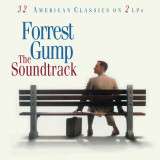
Double black vinyl LP format of the 1994 OST from one of the all time classic films. Features 32 songs including Elvis Presley, Aretha Franklin, The Four Tops, Bob Dylan, The Beach Boys, The Mamas & Papas, Simon & Garfunkel, The Byrds, Lynyrd Skynyrd, The Supremes, Willie Nelson, Joan Baez and more. Marketing activity.
RIYL: Guided by Voices, Pavement, The Clean, XTC, Flying Nun. The title of The Stroppies' newest LP, Levity, serves as a creative statement of intent and an acknowledgment of the dichotomy between the music they have made and the conditions in which they were produced. For a group that started over an initial idea to "create open ended music, quickly and haphazardly”, the logistical challenges of creating their second album in the midst of a pandemic, in a city that endured the longest lockdown in the world, created a need to redefine process. Levity, The Stroppies strongest creative statement to date, is the result of this new approach to creative process. Playful yet focused, but broader in scope and experimentation than previous efforts, the ten songs that comprise Levity continue the band's exploration of the pop song as both foil for experimentation and conduit for personal reflection. Whereas the group's debut LP Whoosh! demonstrated their ability to craft clean, concise jangle pop, Levity takes a different route by utilizing a darker pallet of sounds to create its impressionistic whole. Fuzz and distortion are employed to add weight to songs built on tape loops and Motorik drum patterns. Warbling synthesisers and modulated keys add new moods and dimensions to The Stroppies unique brand of pop classicism. Thematically, the band continues their exploration of the personal refracted through the lens of the absurd, though this time around the music feels a few shades darker, a somewhat inevitable consequence of the collective trauma of the past 24 months. While the narrative around the 'lockdown record' is increasingly commonplace, there are unavoidable realities involved in making creative decisions under such circumstances that can't be overlooked, especially for a band that thrives on collaboration. "The restrictions around COVID really informed the way we made the record', says Angus Lord, the band's co-founder and guitarist. "It meant that there was a lot less opportunity to meet and build ideas collaboratively, which is how we’ve worked in the past. Instead, ideas were developed in isolation, then shared digitally, developing slowly over correspondence and only bearing fruit when we were able to be in a room together. I think this had a big effect on the songwriting and execution.” This process even extended to the studio, where The Stroppies found a kindred spirit in John Lee of Phaedra Studios, who mixed the record in isolation, somehow managing to synthesise the band's pop sensibilities with their penchant for studio experimentation. Furthermore, the addition of new member Zoe Monk, known for playing in a diverse array of Melbourne acts (Eggy, Thibault, The Opals) contributed both synthesiser experimentation and rock solid rhythm guitar, a huge addition to the band's developing sound, an infectious combination of the off-kilter 90s US underground, British artpunk ala Wire and a more than generous love of classic Pop songwriting. The Stroppies have managed to craft a record of weight and substance. Through Levity the Stroppies have, at least temporarily, found their feet amongst the chaos
This first-ever vinyl reissue, remastered from the original analog tapes, includes a gatefold jacket and inner sleeve with restored, new, and alternate art and photos by Terry and Jo Harvey Allen; an insert with lyrics, original notes, and Terry’s letter to H.C. Westermann about the songs; and a high-res download code. Deluxe CD edition features a trifold jacket and inner sleeve. Recorded exactly two years after acclaimed visual artist and songwriter Terry Allen’s masterpiece Lubbock (on everything), the feral follow-up Smokin the Dummy is less conceptually focused but more sonically and stylistically unified than its predecessor it’s also rougher and rowdier, wilder and more wired, and altogether more menacingly rock and roll. Following the 1973 Whitney Biennial, in which songwriter and visual artist Terry Allen and fellow iconic artist Horace Clifford “Cliff” Westermann both exhibited, Allen maintained a lively long-distance correspondence and exchange of artworks and music with Westermann, whose singular and highly influential art he admired enormously. In a February 1981 letter to his friend and mentor, written shortly after the late 1980 release of his third album Smokin the Dummy, while he and his family were living in Fresno, California, Terry explains the genesis of the album title: Westermann died shortly after receiving this letter, enclosed with a Smokin the Dummy LP, the minimalist black jacket of which Allen suggested that Cliff fold into a jaunty cardboard hat if he didn’t like the music. That response was unlikely, since Westermann loved Terry’s music, calling his debut record Juarez (1975) “the finest, most honest and heartfelt piece of music I ever heard.” The Panhandle Mystery Band had only recently coalesced during those 1978 Lubbock sessions, Lloyd Maines’s first foray into production. Through 1979, they honed their sound and tightened their arrangements with a series of periodic performances beyond Allen’s regular art-world circuit, including memorable record release concerts in Lubbock, Chicago, L.A., and Kansas City. Terry sought to harness the high-octane power of this now well-oiled collective engine to overdrive his songs into rawer and rockier off-road territory. His first album to share top billing with the Panhandle Mystery Band, Dummy documents a ferocious new band in fully telepathic, tornado-fueled flight, refining its caliber, increasing its range, and never looking down. Alongside the stalwart Maines brothers co-producer, guitarist, and all-rounder Lloyd, bassist Kenny, and drummer Donnie and mainstay Richard Bowden (who here contributes not only fiddle but also mandolin, cello, and “truck noise theory,” the big-rig doppler effect of Lloyd’s steel on “Roll Truck Roll”), new addition Jesse Taylor supplies blistering lead guitar, on loan from Joe Ely (who plays harmonica here). Jesse’s kinetic blues lines and penchant for extreme volume were instrumental in pushing these recordings into brisker tempos and tougher attitudes. Terry was feverish for several studio days, suffering from a bad flu and sweating through his clothes, which partially explains the literally febrile edge to his performances, rendered largely in a perma-growl. (By this point, he was regularly breaking piano pedals with his heavy-booted stomp.) Like the album title itself, the songs on Smokin the Dummy ring various demented bells. The tracks rifle through Terry’s assorted Obsessions especially the potential energy and escape of the open road, elevated here to an ecstatic, prayerful pitch and are populated by a cast of crooked characters: truckers, truck-stop waitresses, convicts, cokeheads, speed freaks, greasers, holy rollers, rodeo riders, dancehall cheaters, and sacrificial prairie dogs, sinners seeking some small reprieve, any fugitive moment of grace. A reigning deity of a certain kind of country music since the mid-70s. – The New York Times // The kind of singular American artist who expresses the fundamental weirdness of his country. – The Wire
From mimicking drum sounds with their mouths and then processing the result to create a world of intricate, intimate sound; to recording a short EP’s worth of work at the snail’s pace of a minimum 12 months, the Sydney based duo Thomas Gray & Liam Ebbs approach their work with a fascinating blend of impulse and consideration. Sounds can be carefully sulptured, massaged, edited and reworked, only to be thrown out the window and replaced with a whole new set of material at a moment’s notice. The pair pay acute attention to mood, space and atmosphere; they are not afraid to take their time. Listening to their compositions is like travelling through the countryside on a train, downriver on a boat, or rising into clouds through the windows of a commercial airliner. Gray and Ebbs’ music, it feels, is an accompaniment to thought and feeling, a personal soundtrack to carry in one’s head. As Eno said when famously coining the term ‘ambient’ - “Ambient music must be able to accommodate many levels of listening attention without enforcing one in particular; it must be as ignorable as it is interesting.” In 2022, the pair will return with a new EP, ‘Blue’, their first for the Bedroom Suck Records label. The five tracks on Blue continue to explore the world that lies somewhere between organic and electronic, between natural sound and manufactured signal. Acoustic instruments make a notable appearance, as does a strong lead vocal in ‘It’s Alright’. The music is evocative, nostalgic and inspirational; It leaves one feeling hopeful.
RIYL: Guided by Voices, Pavement, The Clean, XTC, Flying Nun. The title of The Stroppies' newest LP, Levity, serves as a creative statement of intent and an acknowledgment of the dichotomy between the music they have made and the conditions in which they were produced. Levity, The Stroppies strongest creative statement to date, is the result of this new approach to creative process. Playful yet focused, but broader in scope and experimentation than previous efforts, the ten songs that comprise Levity continue the band's exploration of the pop song as both foil for experimentation and conduit for personal reflection. Whereas the group's debut LP Whoosh! demonstrated their ability to craft clean, concise jangle pop, Levity takes a different route by utilizing a darker pallet of sounds to create its impressionistic whole. Fuzz and distortion are employed to add weight to songs built on tape loops and Motorik drum patterns. Warbling synthesisers and modulated keys add new moods and dimensions to The Stroppies unique brand of pop classicism. Thematically, the band continues their exploration of the personal refracted through the lens of the absurd, though this time around the music feels a few shades darker, a somewhat inevitable consequence of the collective trauma of the past 24 months. While the narrative around the 'lockdown record' is increasingly commonplace, there are unavoidable realities involved in making creative decisions under such circumstances that can't be overlooked, especially for a band that thrives on collaboration. "The restrictions around COVID really informed the way we made the record', says Angus Lord, the band's co-founder and guitarist. "It meant that there was a lot less opportunity to meet and build ideas collaboratively, which is how we've worked in the past. Instead, ideas were developed in isolation, then shared digitally, developing slowly over correspondence and only bearing fruit when we were able to be in a room together. I think this had a big effect on the songwriting and execution." This process even extended to the studio, where The Stroppies found a kindred spirit in John Lee of Phaedra Studios, who mixed the record in isolation, somehow managing to synthesise the band's pop sensibilities with their penchant for studio experimentation. Furthermore, the addition of new member Zoe Monk, known for playing in a diverse array of Melbourne acts (Eggy, Thibault, The Opals) contributed both synthesiser experimentation and rock solid rhythm guitar, a huge addition to the band's developing sound, an infectious combination of the off-kilter 90s US underground, British artpunk ala Wire and a more than generous love of classic Pop songwriting. The Stroppies have managed to craft a record of weight and substance. Through Levity the Stroppies have, at least temporarily, found their feet amongst the chaos.
Idrissa Soumaoro, L’Eclipse De L’I.J.A.’s sought-after album ‘Le Tioko-Tioko’ was originally released in the German Democratic Republic (GDR) in 1978 and has been a long-time favourite at Mr Bongo. Two tracks from the album were featured on our 2017 compilation ‘The Original Sound Of Mali’ (MRBLP135), and we subsequently released the track ‘Nissodia’ on its own 12” (MRB12053) in 2020, complete with a blistering dancefloor re-edit by Mike D of The Beastie Boys.
‘Le Tioko-Tioko' is one of the rarest vinyl albums from the already scarce Malian vinyl discography, partly as the album was never released commercially, only independently distributed via the Malian Association for the Blind in Bamako. Though recorded at Radio Mali under the aegis of master engineer Boubacar Traoré; the album was originally released in East Germany. The tapes had been taken by some Malian students to East Berlin as part of a student exchange program. It was then manufactured and released on the East German state-owned label Eterna with only a few boxes of records being shipped back to Bamako.
A true masterpiece, this legendary LP offers some devastating songs such as ‘Djama’ (society), ‘Nissodia’ (joy of optimism), and ‘Fama Allah’ (an ode to god). Hypnotic organ riffs and breakbeats convey an unknown funk quality in Malian music, it now stands as a loving tribute to an unsung Malian golden age. Sadly, like many of the other now desired and prized vinyl rarities, at the time of release, it almost immediately disappeared without a trace due to a lack of promotion, and distribution. So, it feels fitting to share this gem of a record again, and hopefully it will reach the wider audience it deserved over 45 years ago.
Many thanks to Florent Mazzoleni for contributing sections of these notes.
out of Stock
Last delivered 4 years ago available to reorder, subject to availability
If you are looking for nostalgia and rocksteady at its finest, all in one package, then this vinyl by Keith & Tex offers a good blend of both.
Born in the rocksteady era, Keith & Tex made their mark with a slew of hits and classics that have lasted over 50 years. From their haunting rendition of "Hypnotic Eyes" to the iconic guitar intro and solo of Lynn Taitt on "Stop That Train", you are treated to a unique style that still lives on after five decades. Since 1967 many of their songs have enjoyed great success and continue to be played and sung by a new generation of rocksteady lovers. This duo has a style that still seems surprisingly engaging and refreshingly innocent.
So lean back, turn up the stereo or plug in the earphones, and enjoy!
Part of IF Music founder Jean-Claude’s ever expanding ‘YOU NEED THIS!’ series of compilation albums, the London record shop impresario and DJ takes us on another scintillating musical journey, this time exploring the catalogue of German jazz imprint, Enja Records. Like Jean-Claude’s ‘Journey Into Deep Jazz’ series on BBE Music and his 2017 exploration of Black Saint & Soul Note Records before it, ‘IF MUSIC PRESENTS YOU NEED THIS!: AN INTRODUCTION TO ENJA RECORDS’ provides another impeccably curated and programmed selection of music, assembled by simply one of the most knowledgeable and passionate vinyl specialists in the business. Featuring performances by John Stubblefield, Bobby Hutcherson, Harold Land, Don Cherry, Cecil McBee and Pharoah Sanders collaborator Marvin Hannibal Peterson to name but a few, this collection provides a great jumping-off point for Enja’s rich and diverse back catalogue. Founded in 1971 by Munich natives and jazz obsessives Matthias Winckelmann and Horst Weber, in its heyday Enja released albums by Eric Dolphy, Charles Mingus, Tommy Flanagan and John Scofield, as well as Kenny Barron, Chet Baker, Abbey Lincoln, Bea Benjamin, Freddie Hubbard, to name but a few. Having firmly established itself as “a bastion of all things deep in jazz” as Jean-Claude neatly sums up, Enja also went on to issue early World Music projects from Abdullah Ibrahim, Rabih Abou-Khalil, Mahmoud Turkmani and many others, and it remains active to this day. “There is no doubt that to the uninitiated, a compilation introducing such an esteemed archive is well overdue” says Jean-Claude. “As with previous albums curated by us, this is just a soupçon of this label’s vast back catalogue, which we hope will lead the listener to discover new music and to search out more from this criminally underrated, class act.”
"Good To Be is a sort of homecoming for the five-time GRAMMY Award winning artist, most recently for 2019’s Oklahoma. Having recently renovated his childhood home in Compton, CA the album is heavily inspired by his connection to both Compton and where he finds himself now at the intersection of Country and Americana in Nashville, TN.
While it sonically contains the blues influence we come to expect, there’s a stronger country tinge thanks to production from country legend Vince Gil and help from Keb’s good friend Darius Rucker, who features on the first single “Good Strong Woman”. Outside the music, Keb’ collaborated with the Compton Cowboys, a local non-profit deeply rooted in the community who are re-introducing cowboy culture to South LA. A striking image of Keb’ driving a vintage Oldsmobile Dynamic 88 through the streets of Compton, flanked by the Cowboys on horseback, will be a part of both the album artwork and a music video. "
Strut present the first ever reissue of an essential lost classic from the Black Fire catalogue, Wayne Davis’ powerful self-titled gospel-soul album from 1976.
An accomplished vocalist and keyboard player, Davis had studied in Washington D.C. and had worked with Roberta Flack and she subsequently secured him a recording deal with Atlantic Records; he released the 'A View From Another Place' album in 1973 and Roberta contributed electric piano to one of the tracks. Davis was the dropped from the label and his subsequent album was released by Jimmy Gray on Black Fire. Produced by Jimmy Watkins and Bias Studios manager, Bob Dawson, the album line-up featured the celebrated poet and flautist Wanda Robinson and the horn section from legendary D.C. go-go pioneers Experience Unlimited. Wayne later returned the favour, appearing as a vocalist on Experience Unlimited’s seminal 'Free Yourself' album.
This first international reissue of the album features new sleeve notes including band member interviews and original illustrated artwork by Muzi Branch. Audio was transferred from the original tapes by the album’s engineer, Bob Dawson, and was remastered by The Carvery.
• First international reissue of Wayne Davis’ album from 1976