Johnny Clarke stands tall as one of the great vocalists that ruled the Jamaican reggae scene from the mid 1970's to the early 1980's Dancehall period. This re-issue of his 'Don't Stay Out Late' set shows his versatility to sing any song that was put in front of him and make it his own. Under producer Bunny 'Striker' Lee's guidance, Mr Clarke produced a run of singles and albums few could match.
Johnny Clarke (b 1955, Jamaica, West Indies) cut his first record 'God Made the See and Sun', after winning a local singing contest in the Bull Bay area of Jamaica. Although the single was not a hit, it led to two follow up tracks for producer Rupie Edwards, '
Everyday Wandering' and 'Julie' that fared much better, both on the island and overseas in England and Canada. These tracks also brought the singer to the attention of producer Bunny Lee and a working relationship that would go on to produce a prolific catalogue of music.
Johnny Clarke's Dread Conscious/ Love Song style were to grace many hits around this time in 1974. Such tunes as 'None Shall Escape The Judgement' , 'Move Out Of Babylon' , 'Rock With Me Baby' , 'Enter The Gates With Praise' to name but a few. All new songs added to a host of cover tunes, recommended by Bunny Lee, many taken from singer John Holt's catalogue, that suited Clarke's vocal style.
The rhythms were cut at various studios around the Island. Randy's Studio 17, Channel I, Treasure Isle, Dynamic Sounds and Harry J's by a group of musicians loosely called The Aggravators and voiced King Tubby's studio.
All great tracks backed by great rhythms, cut by Mr Johnny Clarke with a voice that few could equal.
out of Stock
Last delivered 22 months ago available to reorder, subject to availability
What kind of music does she make? Is she an opera singer? Does she write pop songs? Does she compose ethereal ambient soundscapes? Does she play chamber music on the violin? Is she producing dark, electronic beats?
Well… yes. But Isabelle Lewis is not so much a person as a project. Isabelle’s debut album, Greetings, credits a trio of composer–performers at its heart: producer Valgeir Sigurðsson, vocalist Benjamin Abel Meirhaeghe, and violinist Elisabeth Klinck. The sound of the elusive Isabelle Lewis is heard most clearly in the push and pull between them, the three-way tension that gives the album its musical and emotional drive.
Each of the three brings more to the collaboration than those epithets might imply. Elisabeth’s solo performance practice incorporates composition, improvisation, live electronics, and a close command of bowing and fingering techniques that make her fiddle sing, whisper or whistle as required. Benjamin is a self-taught countertenor - keening, crooning, and swelling to a voluptuous sensuality—but also an interdisciplinary stage director and performer. Well known for his work as a producer and studio collaborator, and as a composer of scores for film and stage, Valgeir’s solo discography interweaves meticulously crafted electronics, drones, noise, and other digital elements with acoustic instruments and vocals recorded with naked, unflinching clarity.
But the extravagant theatricality Benjamin brings to the aptly titled “Drama”—also featuring a heroic violin solo from Elisabeth—grapples against the thudding bass of the implacable digital backdrop. On “Mother, Shelter Me” Valgeir’s austere and detailed production throws the hushed violin and vocals into stark relief. The result is an exquisitely uncanny juxtaposition of past and present, human and mechanical, like a Rococo treasure viewed under cold fluorescent lights, or an 18th-century automaton slowly opening its clockwork eyes.
Even the lyrics seem somehow out of time. On “O Solitude,” Benjamin goes so far as to quote an entire song by the first great English opera composer, Henry Purcell, verbatim. No stranger to Purcell’s music, which has made its way into Benjamin’s theatrical productions as well, here Isabelle Lewis removes Purcell’s melodies and harmonies and sets the text, Katherine Phillips’s 17th century translation of a poem by Antoine Girard de Saint-Amant, to new music whose heightened, archaic character nevertheless seems haunted by Baroque ghosts.
Throughout the album, the outsized emotions and timeless archetypes of Benjamin’s lyrics feel like relics from some half-forgotten past—from the neatly rhymed couplets of “Fisherman,” a seemingly straightforward (but still somewhat askew) character study, to the abstraction of “Moonshell,” whose words seem like the fragments of some ancient, lost lament. It is just another of many ways in which Isabelle Lewis carefully distorts the listener’s notions of time. On a more micro level, time can stop for a moment of weightless, drifting ambience, and then plunge forward as the cloud of harmonies suddenly lock into tempo with the drop of the bass or the change of a chord. Or else that weightless moment is allowed to be, as in the aptly named prologue and epilogue to these Greetings (“Voicemail”/“…and farewell”), or in the interstitial tracks that bind the album together, connecting its dramatic peaks with expanses of meditative stasis.
The album as a whole is elegantly shaped, swelling from an intimate, interpersonal statement into something deeper and more spacious. The first half of the album leans slightly towards self-contained pop songcraft and ticking beats, while side B jumps off from “O Solitude” into the almost symphonic grandeur of songs like “Moonshell” or the instrumental “Not the water, air, or the dirt.”
But as it progresses, the contrasts only grow more sublime: antique and postmodern, human and machinelike. The ominous weight of the droning sub-bass and trombone (guest player Helgi Hrafn Jónsson) only makes the interplay between vocals and violins (guest player Daniel Pioro joining Elisabeth) seem more delicate and vulnerable. The ethereal string tremolos of “Moonshell” seem to pull against the heavy, shuddering electronics and layers of crooning vocals.
And that, in short, is where you will find Isabelle Lewis. Like an ancient stone archway, or a delicate house of cards, the architecture of Greetings is held together by the tension between opposing forces. Not just in Elisabeth’s playing, Benjamin’s singing, or Valgeir’s arrangements and production but in the conflict and contrast that generates the synergy between them.
Oh—Isabelle says hi, by the way. She’s looking forward to meeting you.
out of Stock
Last delivered 22 months ago available to reorder, subject to availability
Bon Jovi has used great hooks, epic-sounding productions and stadium-sized passion to forge a sound that combines a pop sensibility with a heavy-metal attitude.
Moondog's jovial H'art Songs was the first release not to incorporate his name in the title, but the record that forever proved his genius. A rare vocal album recorded by Moondog when he was in his sixties, these ten art songs blur the boundaries between classical and pop music. Moondog called this series of art songs "H'art songs" - Hardin's art songs. The musical content is on a higher level than most popular music, but has an appeal to a wide range of tastes, from the pop to the classical listener. This collection of piano pop songs written and recorded in 1977 made Moondogs' stunningly eclectic discography even more chaotic musically. It also featured some of his most mesmerizing wordplay. Telling tales that can be interpreted as metaphors for how to live - sometimes political, sometimes autobiographical, sometimes nature loving - they are always intriguingly poetic, and helped push this album to the very top of all Moondog'sreleases. "My singing style is without vibrato, as is the singing style of most of the people in the world. The voice part I have kept simple, intentionally, so that I and many others who like to sing such songs, including the barbershop quartet people, would be able to sing them. As I did on the record, the voice part should be sung by one voice or in unison, but not in harmony, because the harmony is exclusively in the piano parts, which are more complicated than the voice parts, especially in the canons and the obligati, which carry the main melodic burden." "Moondog singing Moondog? Really! even goodness knows, Moondog doesn't sing a song; he shows you how it goes." - Louis T Hardin aka Moondog. First time on Vinyl since 1978. Inner sleeve with lyrics to sing along to. Album liner notes by Moondog.
After navigating the labyrinthine musical chambers of their 2023 modern exotica album 'Palace Of A Thousand Sounds', Reno. Nevada’s Whatitdo Archive Group has returned with their first-ever holiday offering—venturing into the darker side of Christmas folklore with their new ice-cold 45, 'Wild Man'. Drawing inspiration from a global archetypical myth of the same name, Whatitdo Archive Group examines the ancient story of the Wild Man—the hairy, half-human, half-beast that stalks the shadows of humanity’s shared primeval past. The myth of the Wild Man is a folktale that goes by many names: The Yeti of the Himalayas, the Bigfoot of North America, and, of course, Krampus of Eastern Europe—a yuletide beast with a reputation as a child-devouring "Anti-Claus" who now finds himself the subject of Whatitdo’s latest musical exploration.
‘Wild Man’ gives us a glimpse into the band’s newest sonic direction. With a heavy rhythm section carried by Alexander Korostinsky’s driving bass line, the sticky wah-guitar of Mark Sexton’s L-5, and the acrobatic lines of the Wurlitzer electric piano, “Wild Man” revels in the spiritual jazz flavors of Pharoah Sanders and grooves hard like the classic soul-jazz stylings of Ramsey Lewis. Much like the Krampus myth itself, 'Wild Man' is meant to weave an ominous spell over any Christmas cocktail party long after the kids have gone to bed. Hear the warning for yourself in the song’s haunting chant: "You better watch out for your life, when the Wild Man comes in the night".
But mythology isn’t abandoned on the B-side. The band takes the traditional English folk melody 'Greensleeves' and reimagines it through the musical lens of Ethio-jazz. Recorded live at the Archive Group Studios, the track exudes a dark, roomy atmosphere, drenched in unease and mystery courtesy of the wandering electric piano dancing above the hypnotic rhythm section and mesmeric groove of the distant Batá drums. This fresh reimagining taps into the ancient, cross-cultural lineage of the "Green Man" myth, a pagan symbol of rebirth and the power of the natural world, further blurring the lines between holiday cheer and the primal, elemental forces enshrined in our collective cultural memory.
After the band’s 'Palace Of A Thousand Sounds' was named 2023’s "Best Library Record" by PopMatters Magazine, their new 'Wild Man' 7” capitalizes on the same creative process that shaped their last record, while now exploring new conceptual territory. By drawing inspiration from archaic global folklore and again utilizing their peculiar recording techniques, W.A.G. has crafted a truly unique holiday offering that unearths the darker, more primal undercurrents of the Christmas tradition. The 'Wild Man' 7" is released as part of the Snowflakes Christmas Singles Club, pressed on snow-white bio-vinyl and limited to 300 copies.
First Word Records areproud to present a new double-AA sided collaboration from K S R and Konny Kon (Children of Zeus) - 'Part of the Plan / Faded from the Jump', available on 7" vinyl and digital.
Two of Manchester's finest r&b ambassadors, the duo team up for two tracks displaying very different styles of soul music.
'Part of the Plan' has a timeless classic feel, nodding back to the likes of Stax and Atlantic, akin to the contemporary sound of Daptone artists like Jalen Ngonda or Thee Sacred Souls. Waves crash on the dock of the bay, with [ K S R ]'s soulful tones and Konny's laidback production (accompanied by Son of Zeus, Tyler Daley on the backing vox).
'Faded from the Jump' is another three and a half minutes of bliss, taking on a sound that's more signature to the duo's previous work, individually and collectively, sitting somewhere between future r&b, neo-soul and classic Manny street soul. [ K S R ] again takes the lead on this smoothed-out cut, with Konny behind the boards on production.
[ K S R ] hails from Moss Side and has been steadily building a strong rep for himself over the past few years with a slew of releases, including an EP and several singles via First Word. He was named "R&B act to watch" by Complex, and hand-picked by Mahalia to perform an event she curated personally at London's Jazz Cafe. He's toured with artists including Pip Millet, Etta Bond, Mica Miller & The Mouse Outfit, and also collaborated with various d&b artists, such as Zero T, Lenzman, Searchlight and Makoto. Music aside, [ K S R ] has also been creative ambassador for New Balance, Foot Locker, Nike, Size? and Manchester United.
Konny Kon is best known for being one half of hip hop soul duo, Children of Zeus. With performances for Colors and Soulection, and support from peers Jazzy Jeff, Jazzie B, Loose Ends & countless others, Children of Zeus have released two highly-acclaimed albums and two EPs on Worldwide Award winning-label, First Word. Additionally to writing, performing and producing, Konny is a formidable DJ, hosting a popular monthly show on NTS Radio, and performing at numerous events; most recently supporting Mercury Award-winner's Ezra Collective at every date on their European tour, culminating in a show with Children of Zeus at Wembley Arena, London.
Both artists have had wide support across the board from numerous tastemakers, including 1Xtra, BBC Radio 1, BBC 6 Music, Rinse, Represent, Unity, Mixmag, Notion, Hypebeast and tons more. The duo have previously collaborated on 'All on You' (from the CoZ album 'Travel Light') and single 'CGWY' (from [ K S R ]'s EP 'Peace + Harmony').
This single showcases the vocals of [ K S R ] and the production of Konny Kon to a degree that exudes pure quality and class, exemplifying the power of modern British soul music.
'Part of the Plan / Faded from the Jump' is released on 7" vinyl and digital, 22nd November 2024.
NOTON is pleased to announce the release of Xerrox Vol. 5, the final installment of Alva Noto’s Xerrox series.
For anyone who has been following the series since its inception in 2007, the concept of Xerrox no longer requires introduction. Originally, it aimed to create copies of images—both visual and acoustic—that are more memorable than the originals. The exploration of the relationship between the original and the copy, along with the invention of the copier, not only inspired the series name but also informed its underlying concept. In 2024, this series comes to an end, marking the culmination of a journey that began with the first recording in 2005/2006. Over nearly two decades, the five albums in this series have accompanied the artist's evolving perspective and conceptual approach.
Initially characterized by rawness and a conceptual focus on seeking resolution in white noise, the later works engage with themes of dissolution while shifting their emphasis toward acoustic particles. The copying process is now less visible through software manipulation; rather, it unfolds as the artist describes melodic and acoustic images that are then manipulated, copied, and transformed into new patterns during composition.
Nicolai describes this evolution as a journey encompassing buildup, exploration, and resolution, drawing parallels to the Odyssey and the stories of Jules Verne, particularly those featuring Captain Nemo.
The conclusion of this album holds a sense of finality for the artist. “I aimed to create a whole cycle of tracks that frame both the beginning and the end,” Nicolai explains. “The motif of the journey continues, but this time, the story reaches a dissolution through a conceptual object that embarks on its own journey into infinity. The word “dissolution” (“Auflösung” in German) is a wonderful concept. On one hand, you can solve a riddle, on the other hand, a pill can completely dissolve in water. Here, I am deliberately describing the process of dissolution.”
In crafting Volume 5, Nicolai has evolved his compositional process, eschewing samples in favor of original melodies. “This album probably took the longest to complete,” he reveals. “I first created melodic sketches, which became the foundation for the pieces. These recordings are created entirely from scratch. Based on these sketches, I constructed the process of copying, manipulating, and reshaping.”
Drawing from his recent experiences working with film and larger ensembles, Nicolai's approach to composition reflects a growing influence of classical instrumentation. “This experience of working with acoustic classical instruments has flowed into the compositional process for Xerrox Vol. 5. Certain instruments are designed with potential orchestral translation in mind.”
The sonic atmosphere of Xerrox Vol. 5 is one of profound dissolution. “I wasn’t initially interested in strong, emotional melodic aspects,” Nicolai shares, “but I realized that the fragment plays a central role.” This shift leads to an emotionally charged experience, imbued with melancholy and the bittersweet essence of farewell. The passing of Ryuichi Sakamoto, an admirer of the series, has further deepened the album’s emotional resonance.
“Xerrox Vol. 5 has a lot to do with farewell,” the artist explains. "Not only the farewell to the series itself, which I’ve nurtured for almost two decades, but also there have been many farewells to people who were close to me. I believe these people are recognizable in the music. It’s a very emotional, personal album.”
Listeners can expect a visual dimension to the music, though Nicolai intentionally leaves this open to interpretation. “I prefer to allow the music to evoke personal experiences and images rather than dictate a specific narrative,” he states. The result is a layered listening experience that invites tenderness and introspection.
out of Stock
Last delivered 6 months ago available to reorder, subject to availability
Direct follow up to OKC noise rock band’s 2022’s breakthrough album God’s Country. Mixed by Benjamin Green (Uniform, Portrayal of Guilt, Drab Majesty). Mastered by Matt Coloton (The Rolling Stones, Blur, Nick Cave, Sunn O)). Full US tour in 2024, EU early 2025, with more dates to come. Like the towering mounds of toxic waste from which it gets its namesake, the music of Oklahoma City noise rock quartet Chat Pile is a suffocating, grotesque embodiment of the existential anguish that has defined the 21st Century. It figures that a band with this abrasive, unrelenting, and outlandish of a sound has stuck as strong of a chord as it has. Dread has replaced the American dream, and Chat Pile’s music is a poignant reminder of that shift—a portrait of an American rock band molded by a society defined by its cold and cruel power systems. Though very much on-brand with Chat Pile’s signature flavor of cacophonous, sludgy noise rock, the band’s shift to a global thematic focus on Cool World not only compliments the broader experimentations it employs with their songwriting but also how they dissect the album’s core theme of violence. Melded into the band’s twisted foundational sound are traces of other eclectic genre stylings, with examples of gazy, goth-tinged dirges to abrasive yet anthemic alt/indie-esque hooks and off-kilter metal grooves only scratching the surface of what can be heard in the album’s ten tracks. Besides stylistically stretching the boundaries of the Chat Pile sound, Cool World is also the band’s first record to have someone else handle mixing duties, with Ben Greenberg (Uniform) capturing and further amplifying the quartet’s unmistakably outsider and folk-art edge. While Chat Pile’s debut album was plenty disturbing with its B-movie-inspired interpretation of a “real American horror story”, what the band depicts on Cool World is unsettling not just from its visceral noise rock onslaught, but from depicting how all sorts of atrocities are pretty much standard parts of modern existence. In film terms, think something like a Criterion arthouse film by way of schlocky grindhouse splatterfest: undeniably gratuitous and thrilling in the moment but leaving a looming dread in the back of one’s mind for how close the horrors depicted mirror reality.
Hailing from Nancy, France, Cyann is a young artist aged 19. She is preparing a debut album that will surprise you with its maturity, so abundant is her work and her imagination fertile.Cyann or Wysteria, her stage name, has been immersed in the world of musical environment.A multi-instrumentalist, she began her musical career learning to play the harp at the age of four, then violin at Nancy Conservatoire. Dedicated and passionate Cyann went on to teach herself piano and acoustic guitar, two instruments that are now at the heart of her creative process. A singer-songwriter, Wysteria is the heir of a light, airy and genuine folk sound and modern Pop, from Vashti Bunyan to Billie Eilish. Yet her music remains coherent in the themes it tackles. If Cyann is naturally gifted as a composer, she is also an excellent lyricist.She writes stories as well as poems.At ease in both English and French, her texts are a true declaration of love to nature and life. Water, air, fire and all the natural elements are inexhaustible sources of inspiration for Cyann, who succeeds in associating an imagery and an atmosphere with simple, meaningful sensations.Cyann is a spontaneous artist, and her voice doesn't betray her. Her singing comes straight from the heart, natural, unadorned singing, comparable to that of Beth Gibbons (Portishead). Bold and inspired, Cyann has many strings to her bow. The breathtaking freshness and the wide range of her repertoire will surprise many a listener
Repress of this Christmas classic, 300 copies on snowy WHITE vinyl! "At long last! Finally on vinyl! Can Fifteen Great Christmas Songs be collected together on one lovely 12-inch vinyl disc featuring bands and artists from the Damaged Goods archives? ...you betcha bottom dollar they can! Each song has been recorded with the Christmas spirit in full flow and we'd guess the odd mince pie was consumed along the way as well. The full-on Christmas feeling that is flowing through these wonderful tracks is a joy to behold and we implore you to not just read these sleeve notes but to go crimble-crumble-crazy and actually buy this record and treasure it, not only this year but for many years to come. We are very proud to have put this album together as Christmas is our favourite time of the year. We love the feeling at special Christmas gigs - the overinflated people and prices of things and the way everyone just has to go out and drink as much as they possibly can in the name of the good old lord Jesus. We did this for you, and only for you because we really, really care and want to share the joy that only Damaged Goods Records can bring you at this special time of the year. So enjoy some great music from the likes of Will Billy Childish, Miss Holly Golightly, Helen Love, Goldblade & Poly Styrene, The Courettes and so many more and remember, this LP is not just for Christmas it's for LIFE!" - Ian Damaged, National Elf
Formed in 2019, Lawne is the result of a meeting of minds between old friends and self confessed music nerds Joe Nicklin and Joe Martin. Their sound draws upon myriad influences with dub, electronics, hip hop, psych, jazz, post-punk and Afrobeat all somehow ingrained within the mix.
It's something that evolved during at a time of change for both of them, as Joe Nicklin explains:
"The start of this project coincided with me moving onto a canal boat, which was a hugely rewarding time of my life but not without its challenges. You can hear some of my boating vents coming through in the lyrics of Beta Pan and Ame Tova.
Another challenge during this time was trying to figure out a way of still playing and recording drums that wasn't going to break the bank. I decided to start renting a tiny storage space near Caledonian Road in North London, that I would convert into a makeshift studio and soon learned that corrugated iron sheets aren't the best walls for a drum booth. My friend cut me some curtains and a few egg boxes later we were able to insulate the thing, sort of.
These limitations meant that we had to keep recordings pretty simple and I feel like this set the tone for the whole record. Whether it was digging out my childhood bass guitar for Joe to play, squeezing every last drop out of Logic presets or mumbling into a SM57 for the first time, we made do with what we had and I'm proud of the charming thing we were able to create. I felt like I was learning on the job at times for this album and I'm grateful for what it has taught me, whilst being excited for what we can do next. As I was moving off the water and out of my lockup, the album masters were also starting to trickle through. A fitting close to that chapter of my life and the making of our first album."
Joe Martin reflects more on how their unique sound came about:
"It's interesting thinking back to the sound we were exploring when we first started writing together, and how different much of the record is to that original sound. We didn't set out a clear musical direction and that meant we were rarely constrained stylistically, we could shift between genres and feels and grooves, take inspiration from the new and the old and it still sat comfortably with what we were trying to do. I think the eight tracks we landed on illustrates that nicely.
The record's named after the self storage unit we used as a studio for many years, there's something quite poetic about parting ways with the space within weeks of the album coming out; a final homage to the place it all started."
out of Stock
Last delivered 19 months ago available to reorder, subject to availability
"Long sought-after by those in know, this essential Irish jazz album finally gets a vinyl reissue on Outernational Sounds! Fully licensed from producer John D’Ardis, remastered at Abbey Road from the original tapes, and with lacquers cut at Dubplates and Mastering, the Noel Kelehan Quintet’s stunning 1979 Ozone is presented with unseen photographs of the band and commentary from original band members.
Featuring moody, modal jazz of the first order, subtle and original composing and world- class playing, Ozone was the creation of Ireland’s most respected jazz composer and musician, pianist Noel Kelehan (1935-2012). The only small-group album under his name, and arguably the first ever Irish jazz LP, Ozone was a landmark recording, but it was far from Kelehan’s only achievement. Born in Dublin, Kelehan had studied music from an early age. From the mid-1950s he worked at state-broadcaster Radio Éireann (RÉ, later RTÉ – Radio Telefis Éireann), and from the early 1960s he fronted Dublin’s first be-bop unit, the Jazz Heralds. A busy professional career saw him compose for numerous Irish pop stars, arrange and conduct many of Ireland’s Eurovision entries, and even contribute string arrangements to U2’s Unforgettable Fire LP.
But jazz was Kelehan’s first passion, and he never stopped playing in both small modernist units and composing for his own big band. The late 1970s saw him fronting the Noel Kelehan Quintet, alongside drummer John Wadham, saxophonist Keith Donald, bassist Frank Hess and trumpeter Mick Nolan. Playing weekly in Dublin for several years, they opened for visiting stars including Dollar Brand and the Ronnie Scott Orchestra, and eventually played a two-week residency at Ronnie Scotts in London. Though Kelehan had recorded a big-band LP of traditional Irish songs arranged as easy jazz in 1970, Ozone was his first album of modern jazz. Released on John D’Ardis’s independent Cargo imprint and press on blue vinyl, it featured original compositions such as the deep collectors cut ‘Spon Song’, subtle Latin flavours on ‘Spacer’s Delight’ and a beautiful modal arrangement of the traditional Irish air ‘Castle of Dromore’. A legendary recording in Ireland, Ozone reflected Kelehan’s keen appreciation of classic quintet-era Miles, with touches of the cerebral fusion of Ian Carr and the arranging genius of Neil Ardley. Not just a landmark Irish jazz set, Ozone is a lost classic of European jazz more widely."
out of Stock
Last delivered 22 months ago available to reorder, subject to availability
Hubbard was only 22 years old when he recorded the album, yet it showcases his prodigious talent and hints at the remarkable career he would go on to have
The album has become a classic in the hard bop genre, combining elements of bebop and blues with advanced harmonies and improvisational flair and features a stellar lineup of musicians, many of whom were already influential figures in the jazz world or would go on to become so Freddie Hubbard, Tina Brooks, McCoy Tyner, Sam Jones, Clifford Jarvis. "Open Sesame" is rooted in hard bop, a jazz style characterized by a mix of bebop's fast tempo and complex improvisations with blues, gospel, and R&B influences. Hubbard's trumpet playing is both aggressive and lyrical, marked by his technical precision and emotive phrasing. His performance is complemented by Tina Brooks' soulful tenor saxophone and McCoy Tyner's distinctive piano comping, which adds a rich harmonic layer. The album's compositions range from the upbeat and fiery title track "Open Sesame", to the lush ballad "But Beautiful", and the bluesy groove of "One Mint Julep". The track "Gypsy Blue", written by Tina Brooks, is a highlight with its sophisticated chord changes and melodic inventiveness. Open Sesame received critical acclaim upon release and established Hubbard as one of the premier trumpet players of his generation. It's considered a cornerstone of Hubbard's career and a significant recording helped launch Hubbard into a long and successful career where he would collaborate with some of the biggest names in jazz, including Art Blakey, Herbie Hancock, and Wayne Shorter and remains an essential listen for anyone exploring Freddie Hubbard's discography.
Washington, DC’s DES DEMONAS have been hailed as a favorite of Henry Rollins (KCRW FM/Black Flag), Marc Riley (BBC6 Music/The Fall), and Iggy Pop (BBC6 Music/The Stooges) since the release of their debut LP on In The Red Records and their subsequent singles and EP. DES DEMONAS’ much anticipated follow-up LP “APOCALYPTIC BOOM! BOOM!” is out this fall on In The Red Records. The group is made up of some familiar names from the DC punk, garage, and indie scenes. A Kenyan punk-poet-politique Jacky “Cougar” Abok (Foul Swoops, Thee Lolitas) is on vocals & percussion, Mark Cisneros (Hammered Hulls, Kid Congo and the Pink Monkey Birds, The Make-Up) is on guitar, Paul Vivari (Benjy Ferree, DJ Soul Call Paul) is on Farfisa organ and bass machine, and Matt Gatwood (Two Inch Astronaut) is on drums. Des Demonas’ music is a melding of disparate sounds and influences, hitting with a driving pulse and fiery intent. “The sonic fuel of the band is a blend of post punk, punk, funk, blues, psych rock, Afro beat, even bubble gum but the noise you hear is pure Des Demonas.” - Kim Salmon / The Scientists “Dig the Des Demonas. Play it loud. Twist your wig.” - Kid Congo Powers
“Music is my forever cove,” writes Portland, Oregon’s Luke Wyland of the ideas that give shape to Kuma Cove, his latest album under his own name. Though named after a real place on the Oregon coast, Kuma Cove casts its gaze far beyond the sightseer’s line of vision. Recorded live in the studio and blurring obvious lines between computer-based composition and electro-acoustic instrumentation, it is an album about flow, borders, transitory states, and shelter. Composed of discontinuous ripples and repetitions (“I’m forever searching for a better descriptor than looping, which feels too simple and flattened by overuse,” Wyland says), shaped into richly emotive arcs, and informed by his experience as a person who stutters, it is also an album about identity, self-expression, and the energies that sluice through and across what we perceive as linear time—like floodwaters seeking an exit, like streams running into the sea.
Artist’s Statement:
I made this record while spending significant time in the woods by the Sandy River in Corbett, Oregon,
where I've had my studio for the last five years. It is a diary of spontaneous live recordings edited to highlight the moments of clarity that emerge from long-form improvisations. These compositions express a slowing internal rhythm. An unwinding. A somatic recalibration as I enter middle age. A newly empowered vulnerability.
Here are the internalized cadences of my stutter, flowing freely from my fingers. The musicality of my disfluency is revealed in its frictions, elongations, and foreshortenings. Disruptions in linear time, where the bubbling cadences of my stutter find unexpected pathways, reveal the elasticity of the present moment. This is my idiosyncratic language, shaped and inspired by my disability. Subliminally mirroring internal processes, neural firings, cognitive entanglements...
The title, Kuma Cove, refers to a beloved cove on the coast of Oregon my wife and I return to yearly. There has always been something so magnetic about coves. The way they cradle one from the overwhelming enormity of the ocean beyond, muting a primordial fear. I experience these improvisations as ecosystems I'm able to inhabit for stretches of time, embodying the particular rhythms and sensorial textures within each. Music is my forever cove. Everything you hear is created live in Ableton on a setup I've been honing for 15 years. I celebrate MIDI and computer music as an extension of self and strive to make it as expressive as any analog instrument. I was a visual artist for the first half of my life and quickly adapted those skills to composing and producing on a computer. The transition felt natural within the landscape of DAW's interfaces, especially as a synesthete. Ableton and its community of Max creators continue to surprise me with its expansiveness.
I'm forever searching for a better descriptor than looping, which feels too simple and flattened by overuse. I envision sonic loops as tangled masses of time, three-dimensional knots spinning on tilted axes, or overlapping wreaths refracting out a myriad of colors. My practice is continually refocusing my ear to what is revealed in the repetitions, searching for the fingerprint of each. I find it incredible how technology lets us manipulate time like this. Nothing on this record is quantized or locked to a universal bpm. Experiencing numerous tempos at once feels important. Recordings as mirrors. Freedom from expected (conversational) flow as we hold time for each other.
-Luke Wyland, August 2024
Artist Bio:
Luke Wyland is an interdisciplinary artist, composer, and performer based in Portland, OR (USA). Wyland has been releasing critically acclaimed records for the past 20 years in the groups AU and Methods Body, as LWW, and under his own name, working with such labels as New Amsterdam, Beacon Sound, Balmat, The Leaf Label, and Aagoo Records. As a person who stutters, Wyland’s approach to music is informed by his idiosyncratic relationship with language. Wyland believes deeply in the cathartic power of live performance as a means for collective healing. Through an interdisciplinary art practice that focuses on improvisation, somatic embodiment, bespoke tuning systems, the cadences of disfluent speech, and time manipulation technologies, he’s collaborated with choreographers, high-school choirs, filmmakers, sound designers, and renowned musicians such as John Niekrasz, Holland Andrews, Colin Stetson, and Abraham Gomez-Delgado. He’s also the co-creator of the “It’s A Fucking Miracle” dance class with Tahni Holt.
Wyland has toured nationally and internationally and performed at the Whitney Museum, Ecstatic Music Festival, Issue Project Room, PICA’s Time-Based Arts Festival, End of the Road Festival, and Les Nuits Botanique, among others.
out of Stock
Last delivered 21 months ago available to reorder, subject to availability
On November 8th, 2Tone Records/Chrysalis Catalogue will release a 40th Anniversary Half-Speed Mastered Edition of The Special AKA 'In The Studio' album. This release has been liaised and approved by the band's founder and main songwriter Jerry Dammers. Formed in Coventry in the mid-1970s, The Specialswas the idea of musician Jerry Dammers, who brought together an eclectic array of individuals to fulfill his vision of a multi-racial band, fusing the energy of punk with the legendary but, at the time, often overlooked, sound of Jamaican ska. The band rose to prominence along with the 2Tone movement, which included two No. 1 singles, Too Much too Young and 1981's Ghost Town, which theme still resonates today before Terry Hall, Lynval Golding and Neville Staple left to form the Fun Boy Three and Roddy Byers left to tour with his band the Tearjerkers. The remaining members, Dammers, Bradbury and Panter, recruited guitarist John Shipley from The Swinging Cats, ex-Bodysnatcher Rhoda Dakar and lead vocalist Stan Campbell,reverting the original band name of The Special AKA and set to work on a new album. Released in 1984, 'In the Studio' was a brave mix of bold and challenging music, with a strong political, social and moral conscience. The album made it into the Top 40, and while it might not have been a huge commercial success, it was, and still is, an astonishingly unique work: a haunting, claustrophobic mix of lounge, soul, reggae, jazz and Arabic rhythms, with uncompromising subject matter. It featured two classic singles: the joyous, yet serious rallying anthem for the then imprisoned South African ANC leader, 'Free Nelson Mandela', and 'What I Like Most About You Is Your Girlfriend'. As time has gone by, the status of 'In The Studio'has grown, and today it is rightly viewed as a genuine lost classic. Like the previous two Specials 40th Anniversary vinyl editions, this has been newly remastered and cut at half-speed by Miles Showell at Abbey Road Studios, London. Format: Wide spine sleeve, 2LP 180gm Black Vinyl cut at 45rpm with insert inside and OBI.
Gavin Vanaelst runs the space Aboli Bibelot in Antwerp where exhibitions and musical performances can happen side to side with dealings in centuries-old furniture and unique pieces of folk art or volkskunst. Gavin makes music under the aliases DJ Charme, Kassett and So Sorry. This is the first album under his birth name. Takeaway Loops cycles back to the days when Gavin was working as a courier for .
is a food delivery company. Their couriers - ehm, brand ambassadors, as the company prefers to call them - dressed in bright orange, they race their bikes around the city. They deliver meals and groceries for all sorts. Thanks to them, the privileged can stay tucked in their private spaces. Interaction between the two groups - the privileged and the brand ambassadors - is mostly kept to the bare minimum. And sparse communications are often driven by annoyances - “my Coke is warm because you kept it too close to the French Fries.” And on the streets the general public dis-approaches the brand ambassadors with pity. We tell our peers: “That’s not a good job,” and “stay away from the Sharing Economy.” Because, you know, in our capitalistic dollhouse we all stand our grounds and play our parts wholeheartedly.
During his shifts for , Gavin recorded location sounds on his phone at fast food restaurants while waiting on the orders he had to pick up and deliver. Later in his home studio Gavin added piano and electronics to this source material. The result: a gloomy soundtrack for a shadow world. Seven songs in evening blue with a bright orange glare.
A few years ago, our favorite Belgian publishing house Het Balanseer released Seizoenarbeid by Heike Geissler (available in English trough Semiotext(e)). Geissler writes about her job at Amazon in Leipzig. Because her writing and freelance work did not pay the bills any longer, she was forced towards this underprivileged shadow-world of unwanted jobs. Seizoenarbeid shed a light on freedom in an unfree world. A monument of ‘we are all in this, but not together’. Takeaway Loops gives us a similar peak in a world that is at the same time so visible, but then also very veiled for many. A world that we prefer to use, yet that most of us prefer not to see - a world that we don’t like to enter.
Last year at Harbourland subway station in Kobe i was mesmerized by its sound design, created by Hiroshi Yoshimura. For each part of the subway station he composed a short phrase. While walking trough the station, a full composition grows in your head. The looping melodies guide you trough a microworld. Trough a blue world of commuters, of the homeless, of the lonely, of the fast paced, of the tourist. Gavin creates a similar effect with Takeaway Loops. The tonality somehow corresponds to Yoshimura’s work. Yet instead of being guided trough a building, we are now taken to the after dark. You feel the concrete evening heat of the city. You hear the rain. Stiff fingers during cold winters’ nights. You are alone on the bike, cruising. Your maps app telling you where to go. You just left the fake leather bench of the well-lit pastiche interior of a fast food restaurant.
Next order, number ECN44! Please wait outside, sir?
There are few hidden gems that we can find on the different streaming channels, and it is precisely our job to have them for you. This Saturday we want to bring you a Chilean band that is born from transversal rock and its variants. We talk about The Cruel Visions. The Cruel Visions is the name that Pablo Giadach (founder) proposes to imagine a luminous and nostalgic interior landscape, expressed in songs of subtle composition and evocative beauty. The guitarist and musician in the bands Casino, Trancemission and The Ganjas, brings with him an album weathered by the passage of time in nightly improvisations and his recording studio, influenced mainly by the sounds of the early 80's, new wave, paisley underground, post punk and dark wave. The Cruel Visions was born from the idea of grouping together different recordings that Pablo made in parallel to his work with The Ganjas between 2015 and 2017 at different times and formats. Most of the album is a collection of demos and improvisations with a Rickenbacker 12-string guitar, an echo chamber and a drum machine, which were then worked on for almost 3 years in the free time at Estudio Lautaro, where he also performs. as an engineer and producer. His authorial present discovers the ethereal and light sounds that bands like The Cure or The Jesus and Mary Chain decanted, who left the initial rawness to give way to a more atmospheric and personal repertoire, which, although luminous, maintains traces of the darkest noise of the post-punk era. This time the path taken in other formations where Pablo provides precise sounds, completed with effects such as reverb and distortion, gives shape to a more personal list of songs that sails with the wind in its favor through foggy waters, already known to listeners of English 80's alternative music. Vocals and some arrangements were done at Woodbine St Recording by John A. Rivers, who has produced records by Love and Rockets, The Specials, Nikki Sudden, Close Lobsters and Dead Can Dance, among many others
Endonomos is the brainchild of Austrian multi-instrumentalist, producer and session musician Lukas Haidinger, who was mostly known for playing extreme metal in bands such as Profanity, Nervecell, Distaste and many more, but as a longtime ‘doomer’, he finally brought his sinister yet melodic sound to tape. Of what started as a one man's urge to craft menacing yet epic death/doom ‘funeral’ metal, turned into a full group of dedicated musicians in 2021 with their debut-album “Endonomos” (2022) as a result. Along with some of his closest friends to accompany Haidinger on this adventure, namely Armin Schweiger (drums), Philipp Forster (guitars) and Christoph Steinlechner (guitars), Endonomos now releases the sophomore album “Enlightenment”, recorded, mixed and mastered by Haidinger in his DeepDeepPressure Studios. Fans of acts such as Ahab, Evoken, Mournful Congregation, Katatonia, My Dying Bride, Candlemass, Swallow The Sun and Paradise Lost should give ear, as Endonomos once again unleashes a fierce blend of sinister, epic, melodic and menacing doom/death ‘funeral’ metal; low and cavernous grunt-vocals are continually breached by captivating clean vocals, combined with thick riffs, highly melodic lead guitars and, from time to time, also fragile parts, with uncanny chord progressions.
At long last! Finally on vinyl! Can Fifteen Great Christmas Songs be collected together on one lovely 12-inch vinyl disc featuring bands and artists from the Damaged Goods archives? …you betcha bottom dollar they can! Each song has been recorded with the Christmas spirit in full flow and we’d guess the odd mince pie was consumed along the way as well. The full-on Christmas feeling that is flowing through these wonderful tracks is a joy to behold and we implore you to not just read these sleeve notes but to go crimble-crumble-crazy and actually buy this record and treasure it, not only this year but for many years to come. We are very proud to have put this album together as Christmas is our favourite time of the year. We love the feeling at special Christmas gigs - the over-inflated people and prices of things and the way everyone just has to go out and drink as much as they possibly can in the name of the good old lord Jesus. We did this for you, and only for you because we really, really care and want to share the joy that only Damaged Goods Records can bring you at this special time of the year. So enjoy some great music from the likes of Will Billy Childish, Miss Holly Golightly, Helen Love, Goldblade & Poly Styrene, The Courettes and so many more and remember, this LP is not just for Christmas it’s for LIFE! Ian Damaged, National Elf
out of Stock
Last delivered 4 years ago available to reorder, subject to availability
Black vinyl 180g made only in 100 numbered copies.
This record is different. It is different from what might be expected of Jan Emil Mlynarski by those who know him, from sold-out shows and platinum albums of his bands – Jazz Band Młynarski – Masecki and Warsaw Dance Combo, as an old-timer, curator and reenactor of pre-World War II Warsaw's plush dancehalls and backyards folklore. Quite likely they may not recognize him until the last song, when he removes his shaman mask and bows down: Yeah, that's really me, folks, your good ol' Jan Emil, the entertainer. They might not have even known that he ever played drums because in his flagship bands, clad in a white tux in the former or in a Peaky Blinder hat in the latter, he sings and plays mandolin banjo. In fact, Młynarski has been a drummer for a lot longer than a singer. He stands clear of the jazz mainstream but is active on the progressive scene. A record he contributed to, trumpeter Tomasz Dąbrowski's 2022 release The Individual Beings, was recognized by Downbeat magazine as "excellent" and awarded the highest rating of five stars.
However, this is the first instrumental record to bear his name. As an album by a drummer, it stands out from other records, especially as it features drums as the principal content rather than the performance by a band with a drummer as the leader. It's all about drums, there is neither an articulate melody – because the melodies that are there are only micro-linesencased in ostinato modules – nor is harmony as an intentional chord progression – because whatever harmony-wise there is, is rather a product of the counterpoint of overlapping voices. All sounds other than the drums make only a riverbed through which runs a raging stream of rhythms. And indeed, this record took off just with this stream. At first all the drums were recorded live onto an analog tape, all at once, without overdubs or editing. After that, synthesizer riffs were added, and the record was ultimately assembled on tape without the use of computers or complex postproduction, which sets it apart from most releases today.
Młynarski the drummer acknowledges that he follows the trail beaten by Art Blakey, Max Roach, Roy Haynes, and Billy Higgins, but he walks it in his own strides. He treats the jazz drumming with specific reversed engineering by decompiling the jazz drum kit originally compiled by the pioneer jazz drummers from an array of instruments that had made their way from a jungle to New Orleans, first to Congo Square and then to street brass bands.
This takes him back to the jungle, his drums don't sound like jazz drums, the snare is rare, and the hi-hat and ride aren't there at all. Instead, there are drums and bells from Nigeria, Ghana, Burkina Faso, and Côte d'Ivoire. He doesn't sound like a jazz drummer either, but like a gang of drummers, each playing their own rhythm, and it's hard to believe that all this is the work of one man.
Not only his drumware comes from the jungle, but also the software – his approach to rhythm and time. Its essence is polyrhythm and ostinato. The polyrhythmic matters were unveiled to Młynarski and Piotr Zabrodzki, his creative partner in many projects and co-composer/producer of this album, by the legendary eccentric veteran-drummer Władysław Jagiełło, who introduced them, aged thirteen, to his concept and practice of "17 Latino rhythms at once". Ostinato, an obstinate repetition of a phrase or rhythm, "arrests" time, turning its linear course into cyclical in-place rotations. This is specific not only to African music but also to cultural music of other regions and differs from Western artistic music in that it does not "run" to fulfil an aesthetic intention but "stays" to provide the framework for recurrent routines of communal proceedings.
So, this record is different. And, if you are different too, this is the record for you.
Known for his pivotal role in the Acid Techno sub-genre revival through his label, Involve Records, Regal's latest work revisits the genre's essence while infusing it with a fresh, modern twist. Under his ACIDBOY alias, his latest album, 'The Final Chapter', is a nostalgic and forward-looking expression of an artist who has grown and adapted but remains true to his core musical identity.
This eleven-track project blends the high-energy sounds that first defined his career with the depth and maturity gained over years of evolution whilst also honouring an unforgettable era of one of electronic music's boldest and most expressive sub-genres and artists.
'The Final Chapter' is an album that goes against the current flow, bringing to light the sound of the sub-genres of Techno from the last 35 years. It's a clever balance between past and present, the old and new Regal aka ACIDBOY, emphasising his introverted artistic side, a lover of music and production as well as a story intended for a patient and cultured listener. The album defies superficial musical trends, offering a profound sonic experience that invites listeners on a deeper journey, far removed from the quick-hit tracks designed for social media.
The name of this album and Regal's previous EP 'The Last Summer' certainly leaves room for interpretation as these might sound like signs of a farewell to the music scene.
out of Stock
Last delivered 5 months ago available to reorder, subject to availability
The making of a maiden album can be a capricious process. One moment of outright musical flow paired with another period of sustained creative struggle are feats experienced by seasoned producers the world over. So when Miraclis was forced to hole away in his makeshift studio - in the midst of a global pandemic - the stage was set for something magical. Now it will see the light of day for the very first time.
Having released two singles on Secret Teachings to critical acclaim already this year, Chilean talent Miraclis will accomplish a milestone achievement in July with the release of his debut album: Origin Of Truth.
Difficult experiences were fundamental to the creation of such work, as were Miraclis’ inherent musical interests. He explains: “Origin Of Truth had its birth during the pandemic. I created it as a way of communicating to myself the sensations and feelings that were spinning around my head at the time. I've always been inspired by Bristol trip hop, as well as classical rock, and these genres definitely contributed to the making of these melancholic tracks. In a way I wanted to fuse all the musical influences that were part of my childhood, up until this point now, so this album really means a lot to me. It was my way of communicating, when there was a lack of social contact and communication itself was hard to come by.”
It's this meditative quality that initially drew Damian Lazarus to the project. “It’s a record that has its roots in electronic music, but it’s a very alternative, very deep, melancholic album. I find it both soothing and stirring at the same time, and that’s a quite interesting juxtaposition in that it feels edgy but delicious at the same time,” says Lazarus. “The fact that this was written in this place surrounded by the most incredible desert landscapes makes this a very important piece of work to me. It doesn’t sit in any particular genre, which is why it feels right for a Secret Teachings release. It hints at so many genres that I as a DJ am quite into, and it feels like a first as it’s unique and unclassifiable. That mystical, esoteric, edgy feel makes this a perfect release for the label.”
Sonnet opens proceedings, with ghostly vocals residing next to raw instrumental elements throughout. Miraclis’ signature guitar riffs soon converge on saddened keys, paving the way for Scienter. It takes the form of an instrument-based, electronic-inspired cut, building slowly before reaching a crescendo midway through via an enrapturing acoustic solo.
Floating Child comes next, brimming with a darker intensity courtesy of broody synth pulses and rhythmic hi-hats, as Shiver arrives next. There’s a rock-leaning sensibility to the piece that gives way to earnest lyrical offerings, opening swiftly into the breakbeat-esque world of Perceptions. Hard-hitting drums act as the focal point, with electric chords adding depth and intrigue, whilst Bright continues in a similarly heartfelt vein.
Introspective pads leave us feeling pensive, ahead of Interstellar taking us on a celestial journey through warped bass tones. Acting as the LP’s penultimate number, it’s a four-and-a-half minute showcase of guitar-based musical goodness and one that perfectly sets the stage for Trapped, a closing saga of suitably emotive proportions.
Miraclis earned his stripes as a DJ under the name Max Clementi in his native Chile, as well as Spain after a stint at the Barcelona SAE Institute. Playing and writing music since his parents gave him his first guitar at age twelve, he found himself inspired by synth wave, electronic pop, trip hop, and psychedelic rock of the ‘80s and ‘90s, drenching himself in music by the likes of Massive Attack, Tricky, Depeche Mode, and Nine Inch Nails. However, it wasn’t until he had to move back to Pucón to take care of his father during the pandemic that he began working on what would become Origin Of Truth.
Serendipity seems to play a large part in Crosstown Rebels’ new label Secret Teachings. Just look at the story of how Damian met Miraclis in the first place. It involved a chance midnight encounter in Pucón, Chile at a woodland campfire after the DJ was locked out of his hotel room. This meeting of minds was the start of a remarkable friendship, where Miraclis invited Lazarus to stay at his house and break bread with his family. The two kept in touch, exchanging music and ideas as a result.
out of Stock
Last delivered 4 years ago available to reorder, subject to availability
For the first time two single records of Baksey Cham Krong - the first Cambodian guitar band - are officially being reissued in an identical version. Between surf music and ballad, these two records released in 1963 and 1964 are an invitation to rediscover the effervescent Khmer musical scene of the 1960s.
The early 1960s are often described as the “golden age” of Cambodia, with a flourishing economy and a strong cultural development. As the country had just won its independence, the King Norodom Sihanouk - who had been a singer himself (see below) - encouraged dynamism and creativity in all aspects of cultural life.
In 1959, in the midst of this artistic turmoil, Mol Kamach and his brothers created a band: the Baksey Cham Krong (also spelled Bakseis Cham Krung) named after a temple of the Angkor site. The teenagers were influenced by the latest hits they had listened on the radio. For the music, Kagnol got his inspiration from the rock n’ roll of the Ventures and the Shadows while Kamach took over the vocal techniques of crooners such as Paul Anka. The lyrics were either in French (as for the song Ne penser qu’à toi) or in Khmer. The song Pleine Lune became a hit and revealed Kagnol’s musical genius at playing guitar and Kamach’s delicate voice. From their beginnings on the capital’s high school stages to their first broadcasts on national radio, the success of the Baksey Cham Krong was very quick. At the end of the decade the band already split, the brothers getting back to activities that conformed more with their parents’ expectations.
A few years later, in April 1975, the arrival of the Khmer Rouge in Phnom Penh put an end to this musical development and started the darkest era of Cambodia’s contemporary history. A quarter of the population was killed in the Khmer Rouge genocide and the majority of artists and intellectuals were exterminated in a sordid will to wipe out any form of culture in the country. Films and music were banned, movie tapes and vinyls were destroyed. Mol Kamach and Mol Kagnol luckily managed to flee the country: one now lives in France, the other in the USA. Both still continue to make music nowadays.
Bearing witness to the past history, the reissue of these two single records of Baksey Cham Krong brings back to us the Cambodian musical scene of the 1960s.
"7"" single for the djs of the initial digital 45 of Peixeira Amolada e Quebra Queixo b/w Mariposa Tigre.
Peixeira Amolada e Quebra Queixo It represents two popular stereotypes common in the third world: the sharp cutting knife and the quebra-queixo, the coconut candy brought from Angola by enslaved blacks. But, playfully, it is also the expression of direct speech and a sharp blow, also as a duo of anti-heroes in search of justice, equality and fraternity. This song also features an element never used before in the band: the guitar. One of the most popular instruments in the world, it provides the basis for the song, which goes through a groove full of counter-melodies that bring that feeling of a cut (hence the name of the song), in non-obvious conventions, and a surprising ending in another time signature. As well as the musical reference for the name, this track represents the struggle that many Brazilians go through every day to have a decent life. You have to have a ""sharpened knife"" to open the way.
Quebra Queixo Represents the playful and magical beings of the forest. How can a moth be a tiger? This song carries a lot of the sound Nomade has built up over the course of their career. Strong funk influences, ethno groove, with unconventional brass themes and a very jazzy accent. Halfway through the song, another of the band's very strong references comes to the fore: reggae, more precisely ragga, which makes the song even more danceable. Finally, a convention from the whole band brings the song to a grand end, making you want to listen to it again."
Ava Mendoza has never made an album quite as personal as her second solo full-length, The Circular Train. Through her decades of collaborations with Nels Cline, Carla Bozulich, William Parker, Fred Frith, Matana Roberts, and Mick Barr—plus years leading her power trio Unnatural Ways and playing in Bill Orcutt’s quartet—the guitarist’s name has become synonymous with virtuoso technique, raw passion, and visceral resonance, a player pushing the edges of the guitar’s possibilities. Along the way, from 2007 to 2023, Mendoza was writing these slow-burning, incandescent songs. The Circular Train is comprised solely of her single-tracked guitar playing and, on two songs, her corporeal singing. Her first solo LP of original material since relocating from California to New York City a decade ago, much of The Circular Train was honed amid pandemic years that clarified the virtues of slowing down. This expressive avant-rock is a definitive introduction to one of the most uncompromising and inquisitive visions in creative music. Mendoza’s thrilling melange of free jazz, blues, noise, classical training, and blazing experimental rock’n’roll all coheres with ecstatic feedback, with picking and solos that crest with shimmer. Sometimes she sounds like a one-woman Sonic Youth with guttural and poised vocals that equally evoke Patti Smith and blues greats like Jessie Mae Hemphill. Conceptually, The Circular Train is presented as a psychogeographical train ride through certain of Mendoza’s musical homelands. The songs draw on ancestral and recent familial memories, notably of her parents’ roots in mining towns—in her father’s home country of Bolivia and mother’s hometown of Butte, Montana, each country with its own history of colonialism, racism, forced labor, the eradication of culture and the subsequent excavation of it. These adventurous songs were composed in cars and planes, in the heart of the Mississippi Delta, in Los Angeles and upstate New York—which is to say in motion. “Ride to Cerro Rico,” named for the mountain and silver mine at the center of Potosi, Bolivia, was inspired by Mendoza’s great grandmother’s life there in a Quechua mining family. “Dust From the Mines” drew from that history as well as Mendoza’s familial lineage of miners in Montana, building up to stunning swaths of shredded iridescence. “Pink River Dolphins” was inspired by a visit to the Amazon rainforest, swimming with dolphins alongside her father—the pink bufeos that inhabit both Bolivia and Columbia—and the song is dedicated to the memory of Mendoza’s late friend, the Colombian-American trumpeter jaimie branch. They shared a fascination with those intelligent and agile creatures who often communicate by echolocation. “Make a sound, it comes back around,” Mendoza sings, and later, “Echo, echo/The answer in a sound,” evoking what branch knew well: through music we navigate life. The Circular Train contains one cover, “Irene, Goodnight,” composed by Gussie Lord Davis and popularized by Leadbelly; Mendoza has been performing it for over 20 years. Almost as deeply embedded in her repertoire is the penultimate track, “The Shadow Song.” “Treat your shadow kind and it might treat you good,” Mendoza sings on this song that she’s been reworking for over a decade, an emblem of devotion. “Treat your shadow kind and it might treat you right,” she repeats, becoming a blues mantra. What is a shadow self if not one’s secret world, which, once laid bare, awaits an echo, a return?
Founded in the stillness of 2020 when a group of tight tight-knit up and coming musicians were robbed of their livelihood and greatest joy - live performance - the group came together in a graffiti smudged artist s space in an old industrial facility in Copenhagen s outskirts and created a space for themselves to improvise in a funky, groove based setting. A followup to their 2023 debut Moko Jumbie which explored the rich culture of West African music popularised by Mulatu Asastke and Fela Kuti, as the name suggests, Soul Piece leans further into the tropes, grooves and idioms of Western 60" s Soul and Funk. Recorded live over two days at the Royal Danish Academy of Music, the albums raw, warm production captures the energy, intimacy and excitement of a live performance, transporting the listener right in the centre of a pulsating dancefloor. Each song is rooted in groove and exemplary band musicianship, and made up of every stylistic feature one might crave from the genre: crunchy rhodes tones, percussive clavinets, thick organ textures, grooving tambourines, searing guitar solos, deep pocket drum grooves, infectious basslines, punchy horn backings and James Brown Brown-esque stabs. Self described as the young lions " of the Danish jazz scene, each member of the six piece is an active contributor to the country s diverse musical output; Norregaard, Langebæk & Besiakov can be heard performing regularly in the Fela Kuti saluting Black Money Orchestra and Bæst, Eskildsen with the Addis Ababa Band, and Thofte & Toftemark each leading their own projects in contemporary hard hard-hop to name but a few of their many ventures.
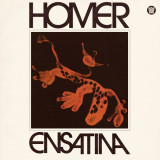
Homer Steinweiss has an incredibly storied career in music that started when he was just a teenager. He's drummed for nearly every "retro soul" group that mattered and his distinctive stickwork helped blend the raw-but-receptive soul sound back into the mainstream via the likes of Amy Winehouse & Sharon Jones. He's now one of the most in demand drummers in the world, playing with Jonas Brothers, Clairo, Solange, Adele, and Bruno Mars to name a few. With his debut solo release Ensatina, Homer is stepping to the forefront as both musician and producer. His new record is a reection of who he is now and a testament to how struggle often brings about a needed change. In 2020 Homer had to reckon with considerable emotional turbulence; at the same time that his band Holy Hive broke up, a personal relationship of 20+ years fell apart putting Homer in an uncertain place mentally. The fallout was signi‑cant enough for him to seek professional help. "I was going through these super manic highs and then very depressive lows," Homer describes. "And being in all that, it's just so tough to imagine that the other side is there, that it'll be ok." But, with time, professional help, and support from friends and family, Homer made it through and has been forever changed. This album is a product of that period of his life. The ‑rst song from these sessions, "Now That It's Over" perfectly sums up Homer's triumph through those tough times. It's a song of changing perspective and contemplation with haunting vocals from Hether and Flikka. "Paul (Castelluzzo_ aka, Hether), as a friend, saw me through these highs and lows," Homer points out. "I only had the one line, 'Now that it's over, I'm alright,' but he felt that lyric so much that he wrote all these sections and lyrics and basically completed the song. It was like he was writing to me." Hether also features on album standouts "Deep Sea", a modern love song, "Start Select", a juxtaposition of inspiration and melancholy, and "Forever and Ever and Ever and Ever" which is an incredible contemporary take on the B side soul ballad. Homer uses his innate gift for bringing seemingly opposing energies together on "Racecar Driver", pairing the vocals of Hether & long time friend and collaborator KIRBY to make a genre challenging banger. KIRBY also graces the album opener "Rollin'", an airy, warm-weather invoking song that her raspy voice perfectly compliments. He puts his drumming front and center on "So Get Up!", a bottom heavy infectious track that MINOVA's vocals turn into an instant hit that is sure to smash speakers. On "Wishing Well" & "Hide It Behind the Light I'm Shining Through" Homer is joined by girl named GOLDEN, who's unique voice effortlessly ‑nds the pocket in each tune. The man on trumpet, and fellow Big Crown label mate Dave Guy, puts his incomparable playing on the album closer "Goldie" which Homer says is the part of the movie where the credits roll. Making this album was a refuge for Homer and it put him back on track. Ensatina is a glimpse into the different energies and inuences that make Homer tick. To say he was always much more than a drummer would be an understatement, and this ‑rst solo offering is just the beginning of his next chapter.
Homer Steinweiss has an incredibly storied career in music that started when he was just a teenager. He's drummed for nearly every "retro soul" group that mattered and his distinctive stickwork helped blend the raw-but-receptive soul sound back into the mainstream via the likes of Amy Winehouse & Sharon Jones. He's now one of the most in demand drummers in the world, playing with Jonas Brothers, Clairo, Solange, Adele, and Bruno Mars to name a few. With his debut solo release Ensatina, Homer is stepping to the forefront as both musician and producer. His new record is a reection of who he is now and a testament to how struggle often brings about a needed change. In 2020 Homer had to reckon with considerable emotional turbulence; at the same time that his band Holy Hive broke up, a personal relationship of 20+ years fell apart putting Homer in an uncertain place mentally. The fallout was signi‑cant enough for him to seek professional help. "I was going through these super manic highs and then very depressive lows," Homer describes. "And being in all that, it's just so tough to imagine that the other side is there, that it'll be ok." But, with time, professional help, and support from friends and family, Homer made it through and has been forever changed. This album is a product of that period of his life. The ‑rst song from these sessions, "Now That It's Over" perfectly sums up Homer's triumph through those tough times. It's a song of changing perspective and contemplation with haunting vocals from Hether and Flikka. "Paul (Castelluzzo_ aka, Hether), as a friend, saw me through these highs and lows," Homer points out. "I only had the one line, 'Now that it's over, I'm alright,' but he felt that lyric so much that he wrote all these sections and lyrics and basically completed the song. It was like he was writing to me." Hether also features on album standouts "Deep Sea", a modern love song, "Start Select", a juxtaposition of inspiration and melancholy, and "Forever and Ever and Ever and Ever" which is an incredible contemporary take on the B side soul ballad. Homer uses his innate gift for bringing seemingly opposing energies together on "Racecar Driver", pairing the vocals of Hether & long time friend and collaborator KIRBY to make a genre challenging banger. KIRBY also graces the album opener "Rollin'", an airy, warm-weather invoking song that her raspy voice perfectly compliments. He puts his drumming front and center on "So Get Up!", a bottom heavy infectious track that MINOVA's vocals turn into an instant hit that is sure to smash speakers. On "Wishing Well" & "Hide It Behind the Light I'm Shining Through" Homer is joined by girl named GOLDEN, who's unique voice effortlessly ‑nds the pocket in each tune. The man on trumpet, and fellow Big Crown label mate Dave Guy, puts his incomparable playing on the album closer "Goldie" which Homer says is the part of the movie where the credits roll. Making this album was a refuge for Homer and it put him back on track. Ensatina is a glimpse into the different energies and inuences that make Homer tick. To say he was always much more than a drummer would be an understatement, and this ‑rst solo offering is just the beginning of his next chapter.
Jonas Munk closes his ambient trilogy with mammoth drone pieces, multi-layered guitars and hymnal krautrock. "Mirror Phase" concludes a trilogy of minimal ambient albums in Munk's (Causa Sui) own name. These eight compositions, based on guitar and synthesizer loops, marks a return to the warmer sounds Munk is often associated with. Sonic structures that slowly and gradually evolves and changes, like cloud formations in the sky. The title track, "Mirror Phase", is Munk's most expansive drone opus so far. It's a carefully arranged piece where sounds that oscillates with the same interval, but at different phases, are continuously added, hence creating shifting patterns throughout the track's nearly 18 minute duration. Elsewhere, in "Transition", multi-layered guitars creates the sonic equivalent of waves gently splashing on the shore. "At a Distance" creates a haunting, and hypnotic, soundscape by using slightly out-of-tune analog synthesizers, summoning the transcendent krautrock of Popol Vuh. And "Rise", as well as the closing track, "Return to Nowhere", recalls the glistening sounds of his Manual releases. "Mirror Phase" might just be Munk's ambient oeuvre reaching its zenith. The CD edition comes with an extra CD with Jonas Munk's 2021 album, "Altered Light", which has previously only been released on digital download and streaming.
out of Stock
Last delivered 23 months ago available to reorder, subject to availability
Indignation Meeting are punky rail fans from Leeds. 15-year-old Peter is the driver - he's the drummer and lead singer, writes most of the songs, and also plays bass and trumpet on the album. The rest of the crew is his dad Michael on guitar, Hugo on bass, and with Keith, Heather and Sally often along for the ride when they play out. Here at DGHQ we loved listening to their self-released debut album Trouble In The Shed so much we eventually released it on vinyl for the first time. They now have a second album! Vocalist/drummer Peter very kindly talks us through the (train) tracks_ * "The Trainspotting Song" - Now, as a train geek, I go out filming trains an awful lot, and one thing you can't help noticing whilst out in the wilds of Staffordshire or the moors of Lancashire are a whole load of unnecessary 'Private Land' signs. This song is my response_ * "The Talyllyn Railway" - The history of the Talyllyn Railway is a fascinating one that I've long since wanted to explore, due to its unique nature as the first railway to ever be taken over by volunteers. This is the result! * "The Middleton Railway" - As a volunteer at the Middleton Railway, I had felt that a song needed to be written for quite a while. However, our guitarist Michael, ended up beating me to it! * "A Model World" - It was late one night, and I was lying on my sofa, trying my hardest to gain an ounce of enjoyment from 'Hornby; A Model World.' It was proving quite hard, due to the alarming lack of substance in the programme, so instead I decided that its name was rather good, and could be the basis of a song explaining my 'model world.' And, well, here it is! * "The Fifth Black Five" - This song is dedicated to the railway preservationists of old, who spent countless hours in cold, damp, dreary sidings, all to make sure us future generations would be able to enjoy the smell of a steam train. Thanks guys! * "Case Study" - This song is a commentary on the sensationalisation of disasters, when there's a massive tragedy and people at home just sit in their comfy sofas, watching the news and drinking tea. We know what's going on, but we can just choose to turn off the TV and forget it ever happened and continue with our lives. It also relates to the dehumanisation of those disasters you experience in school, where you have to write essays on someone who's just become homeless. It seems quite heartless sometimes_ * "Loco Motives" - This song is a fictional story of a man's personal struggle with a railway company, and the drastic measures he took to fix them_ * "That Would Never Suit His Grace" - With model railways, you always seem to get a few people who can never be satisfied with a layout or a model - no matter how hard someone's tried, there's always something to improve on, and they're never nice about it either. This song is a reality check for them_ * "Small Black Shunter" - This is our second homage to Zounds - Electrification would never be truly complete without its B-side. And this B-side is the story of a little loco who wanted to see the world. * "Rhydyronen" - Slowly but surely, we're going to pick off all of the stations on the Talyllyn Railway. Starting where Abergynolwyn left off, this is the story of our second favourite station on the TR. * "Typically English Day" - This is an homage to Mark Astronaut, a true punk genius who was gone before his time. Although there were many songs we could've picked to cover, it only seemed right to punk up one of his most popular tracks, and one of the main ones that got me into the Astronauts in the first place - Typically English Day, a heart-wrenching tale of an elderly couple trapped in the middle of a nuclear war, following their last moments before their inevitable demise. * "Just For The Record" - There is too much misinformation in the media these days, and one case I found particularly egregious was the gross misrepresentation of the strikers, who aren't so evil as the media want you to believe_
The eighth and latest slate of refined retro-futuristic synth-pop by Liz Wendelbo and Sean McBride aka Xeno & Oaklander is named after and inspired by "the study of what not to do, a negative image of a positive, the other side, the other:" Via Negativa (in the doorway light). Recorded in the fall of 2023 at their modernist Connecticut home fashioned into a two-story synthesizer laboratory and mixing studio, the album is uniquely visionary in spirit yet precision in execution, a contrast central to the duo's enduring chemistry. Embryonic piano sketches were translated to nuanced modular systems, which McBride weighted with "harmonic padding," tuned percussion, and a spectral transfer device capable of "rendering spasms of rhythmic overtonal filigree." Despite the technological complexity of their craft, emotively the songs require no deciphering - these are technicolor widescreen anthems of the cybernetic age. The eponymous opening track sets the pace, soaring sleekly over glittering synths and call-and-response vocals about arias, shattered light, and faces in stereo. From there the record expands and contracts, cycling through a gallery of moods and masks, animated by the band's fascination with drama, "the idea of personae," and theatrical characters. Track by track, a murky, tragic backstory reveals itself: forlorn figures navigating a treacherous mercury mine, alternately poisoned by fumes or buried in collapsing caverns. The tension between Teutonic, utopian synthetic pop and lyrical narratives of ghosts in silos, ruined mills, and the traumas of mineral excavation creates a compelling friction, alternately futurist and obsolete, elevated and subterranean. Wendelbo describes the music's polarities perfectly: "The heavy machinic din of extraction in contrast with the enchantment of the mined precious gems and metals." From bilingual odes to bloodstones ("O Vermillion") to cosmic chrome dance floor classics ("Lost & There" "The present tense can never feel real / So many pasts conspire in the burning sun") to strutting EBM sensualities ("Actor's Foil"), Xeno & Oaklander re-prove themselves masters of the axis of technology and poetry, snaking cables and synesthesia, mining melodies and myths across 15 years of focused artistry. Theirs is a muse still gilded and gleaming, burnished red and silver, attuned to "the unobservable, the unfamiliar, that which you don't see directly."
The eighth and latest slate of refined retro-futuristic synth-pop by Liz Wendelbo and Sean McBride aka Xeno & Oaklander is named after and inspired by "the study of what not to do, a negative image of a positive, the other side, the other:" Via Negativa (in the doorway light). Recorded in the fall of 2023 at their modernist Connecticut home fashioned into a two-story synthesizer laboratory and mixing studio, the album is uniquely visionary in spirit yet precision in execution, a contrast central to the duo's enduring chemistry. Embryonic piano sketches were translated to nuanced modular systems, which McBride weighted with "harmonic padding," tuned percussion, and a spectral transfer device capable of "rendering spasms of rhythmic overtonal filigree." Despite the technological complexity of their craft, emotively the songs require no deciphering - these are technicolor widescreen anthems of the cybernetic age. The eponymous opening track sets the pace, soaring sleekly over glittering synths and call-and-response vocals about arias, shattered light, and faces in stereo. From there the record expands and contracts, cycling through a gallery of moods and masks, animated by the band's fascination with drama, "the idea of personae," and theatrical characters. Track by track, a murky, tragic backstory reveals itself: forlorn figures navigating a treacherous mercury mine, alternately poisoned by fumes or buried in collapsing caverns. The tension between Teutonic, utopian synthetic pop and lyrical narratives of ghosts in silos, ruined mills, and the traumas of mineral excavation creates a compelling friction, alternately futurist and obsolete, elevated and subterranean. Wendelbo describes the music's polarities perfectly: "The heavy machinic din of extraction in contrast with the enchantment of the mined precious gems and metals." From bilingual odes to bloodstones ("O Vermillion") to cosmic chrome dance floor classics ("Lost & There" "The present tense can never feel real / So many pasts conspire in the burning sun") to strutting EBM sensualities ("Actor's Foil"), Xeno & Oaklander re-prove themselves masters of the axis of technology and poetry, snaking cables and synesthesia, mining melodies and myths across 15 years of focused artistry. Theirs is a muse still gilded and gleaming, burnished red and silver, attuned to "the unobservable, the unfamiliar, that which you don't see directly."
The eighth and latest slate of refined retro-futuristic synth-pop by Liz Wendelbo and Sean McBride aka Xeno & Oaklander is named after and inspired by "the study of what not to do, a negative image of a positive, the other side, the other:" 'Via Negativa (in the doorway light)'. Recorded in the fall of 2023 at their modernist Connecticut home fashioned into a two-story synthesizer laboratory and mixing studio, the album is uniquely visionary in spirit yet precision in execution, a contrast central to the duo’s enduring chemistry. Embryonic piano sketches were translated to nuanced modular systems, which McBride weighted with "harmonic padding," tuned percussion, and a spectral transfer device capable of "rendering spasms of rhythmic overtonal filigree." Despite the technological complexity of their craft, emotively the songs require no deciphering – these are technicolor widescreen anthems of the cybernetic age.
The eponymous opening track sets the pace, soaring sleekly over glittering synths and call-and-response vocals about arias, shattered light, and faces in stereo. From there the record expands and contracts, cycling through a gallery of moods and masks, animated by the band’s fascination with drama, "the idea of personae," and theatrical characters. Track by track, a murky, tragic backstory reveals itself: forlorn figures navigating a treacherous mercury mine, alternately poisoned by fumes or buried in collapsing caverns. The tension between Teutonic, utopian synthetic pop and lyrical narratives of ghosts in silos, ruined mills, and the traumas of mineral excavation creates a compelling friction, alternately futurist and obsolete, elevated and subterranean. Wendelbo describes the music’s polarities perfectly: "The heavy machinic din of extraction in contrast with the enchantment of the mined precious gems and metals."
From bilingual odes to bloodstones ("O Vermillion") to cosmic chrome dance floor classics ("Lost & There" "The present tense can never feel real / So many pasts conspire in the burning sun") to strutting EBM sensualities ("Actor's Foil"), Xeno & Oaklander re-prove themselves masters of the axis of technology and poetry, snaking cables and synesthesia, mining melodies and myths across 15 years of focused artistry. Theirs is a muse still gilded and gleaming, burnished red and silver, attuned to "the unobservable, the unfamiliar, that which you don’t see directly."
Music from Skalpel's iconic debut for Ninja Tune, reinterpreted by top Polish producers!
Poland's ambassadors of jazz-inspired electronics invited outstanding local producers of downtempo, dance music, hip-hop, and jazz to remix this album. The result is "Recut," the best remix album in the history of Polish phonography. A record every bit as worthy as the historic original. It’s an extraordinary tale of the past and present of Polish electronic music.
This year marks the 20th anniversary of the release of Skalpel’s debut album, which was released by the famous British label Ninja Tune in 2004. The Polish duo, Marcin Cichy and Igor Pudło, gained international acclaim by venturing into the then lesser-known territory of Eastern European jazz, updating it with electronic tools.
Pitchfork praised the album enthusiastically: „On these tracks, Skalpel smudge the line between organic and electronic effortlessly, like a landscape artist working with charcoal, creating deep nuances of light and shadow that give the work its overall depth. (…)Its rhythmic dexterity and melodic sweep are hard to deny” -
The prestigious The Wire added: "Jazz, breaks, scat shuffles and funky riffs? of the highest standard. This release deserves to see them revered far beyond Poland"
Today, looking back over two decades, this album can be confidently considered a milestone in Polish electronica and a timeless classic of downtempo, nu-jazz, and trip-hop. Thanks to this record, the band also gained worldwide recognition, and their subsequent consistently high-quality albums like "Highlight" and "Origins" continue to attract significant interest.
Skalpel’s debut with Ninja Tune undoubtedly changed the face of Polish music, redefined the perception of the Polish jazz canon, and paved the way for younger creators. "Many of them, on 'Recut,' pay tribute to the enduring legacy of Marcin Cichy and Igor Pudło.
Artists like Magiera, Emade, 1988, Kixnare, Steez, Latarnik, Envee, Pejzaż, Etnobotanika, and others are now recognized names and respected figures in the Polish music scene. Though each of the artists invited by the Wrocław duo has developed their own original style, they find common roots in the duo’s music, on the border between jazz groove, hip-hop ease, downtempo moodiness, or ambient.
The excellent interpretations showcase the incredible potential revealed by Skalpel’s debut material, which continues to inspire new discoveries. This is a record that does not age, still captivates, and continues to inspire and provoke new interpretations.
Let’s RECUT this!!
Souls Of Mischief, the Oakland, CA quartet and members of the mighty Hieroglyphics Crew, are proud to announce the first-ever vinyl release of their fifth album "Montezuma's Revenge." Notably, the album’s striking cover featured a fifth member of the group: the legendarily innovative producer Prince Paul, who executive produced the LP, handling most of the beats and overseeing the musical direction of the album from start to finish.
Emcees A-Plus, Opio, Phesto, and Tajai take turns showing off the multisyllabic flows, witty similes, and smooth lyrics that have made the crew a household name in rap for over 30 years. Souls' trademark juxtaposition of complex, multi-syllabic lyricism against laid-back Cali flow remained as strong as it was in 1993 on “Montezuma’s Revenge,” and Paul’s magic touch on production took the Souls’ sound to a new level.
While the aforementioned and unmistakable SOM sound remains very much intact, Paul's vision and risk-taking come through on the finished product. Tajai was comfortable from the start in working with the visionary producer: ”Paul is a perfectionist and so are we so we took time with the beats and subject matter. This album to me is a great insight into who we are as people and how important it is to progress stylistically, yet it retains a classic, timeless feel."
Section 25 release their 10th studio album ‘Move On’ via Nine X Nine records. Originally formed in Lancashire in 1977 they are best known for their work with iconic Manchester label Factory Records. Fusing elements of post-punk, electro and synth-pop their sound is unmistakable and influential. ‘Move On’ has optimism at its core. It is a reflection of the past and a meditation on the present. Emotionally engaging with the here and now by understanding what has passed. Section 25 have built a lasting legacy as one of Britain’s most important bands in electronic music. Younger audiences may be familiar with their work through it being extensively sampled, including by Kanye West. The band were also namechecked in LCD Soundsystem’s breakout single ‘Losing My Edge’.
out of Stock
Last delivered 23 months ago available to reorder, subject to availability
Repress! There are very few albums across any genre that stand the test of time better than 93 ‘Til Infinity, the classic debut record from the Hieroglyphics crew’s very own Souls of Mischief. In an era where Gangsta Rap and G-Funk dominated the West Coast Rap scene, Souls broke ground on a completely unique and thoroughly west coast sound. While the Dr. Dre’s and the Snoop Doggs were garnering much of the mainstream attention, Souls were quietly forging a charismatic, critically acclaimed, and cohesively shaped record that when categorized, sounded much closer to A Tribe Called Quest than N.W.A. The sound of their debut is characteristic of the distinct style explored by the collective, including a rhyme scheme based on internal rhyme and beats centered around a live bass and obscure jazz and funk samples.
93 ‘Til Infinity was propelled into success by its title track and lead single, which reached #32 on the Billboard Hot 100. It also featured singles “That’s When Ya Lost” and “Never No More” which also reached the Hot Rap Singles. In 1998, the album was selected as one of The Source’s 100 Best Rap Albums of All Time. Considered by many to be a text book “slept-on” classic Rap record, 93 ‘Til Infinity has only grown better with age. The album simply defines the Hiero golden age with a sound that would later be fine tuned with strong releases from MCs Del The Funkee Homosapien, Casual and Pep Love.
It takes some serious bravado to name your album 93 ‘Til Infinity, but certainly the goal of creating a Hip Hop “classic” must have been on the collective minds of group members A-Plus, Tajai, Opio, and Phesto when recording this landmark moment in Hip Hop history. It’s true, even seventeen years after the album’s initial release many people are still discovering it, and with this re-mastered reissue on double vinyl, fans all over the world will once again discover the brilliance that 93 ‘Til Infinity delivers and will continue to deliver beyond infinity.
out of Stock
Last delivered 2 years ago available to reorder, subject to availability
Born Xavier Amin Dphrepaulezz, by now much has been made of Fantastic Negrito's own unique story--his early years growing up in an orthodox Muslim household, the doomed major label deal that turned him off of the music industry altogether, the near-fatal car crash that permanently damaged his guitar playing hand--as well as the remarkable redemption arc that began in 2015, when he won the first ever NPR Tiny Desk Contest. In the years that followed, Negrito would go on to take home three consecutive GRAMMY Awards for Best Contemporary Blues Album, tour with everyone from Sturgill Simpson to Chris Cornell to Bruce Springsteen, collaborate in the studio with the likes of Sting and E-40, launch his own Storefront Records label, perform at Lollapalooza, WOMAD, Glastonbury, Newport Folk, Byron Bay Blues, and nearly every other major festival on the map, and found the Revolution Plantation, an urban farm aimed at youth education and empowerment. Son of a Broken Man sees Fantastic Negrito encapsulating the inimitable elements of his celebrated body of work to date, from hard-hitting distorted guitar riffs to melodic and expressive ballads, all fueled by the unexpected twists that have become his trademark. The album stands as perhaps Fantastic Negrito's most personal thus far, exploring family, deception, and the human desire to hide the true self as he dives deep into one of the oldest conflicts in human history, the struggle between father and son. Beginning at a young age, Negrito was served untruths by his father. A made-up last name, a fabricated ancestry, and a fake Somali accent. Why lie? Why create this false narrative? Those are the questions Negrito had to ask himself and the questions that lie at the heart of Son of a Broken Man.