This release is an act of breaking out of conventional categories for Seismic records. Established boundaries of genres are completely dissolved into an unpredictable flow of sonic associations. It’s an unexpected collaboration, yet it makes perfect sense from the first kick. Two artists from seemingly opposite ends of the musical universe come together to create a project which fearlessly embarks on the synthesis of hypnotic trance-techno and utter sonic chaos. This project is anything but predictable.
The duality is noticeable from the very first moment. One side brings relentless movement forward in the project: a raw, hypnotic pulse based on rhythm and precision, locking the listener in the present moment and not letting go. Unpredictable textures and psychedelic ornaments are constantly weaving through the rhythmic framework.
A dedicated listener may recognize that the whole EP carries the legacy of David Lynch’s work. The sense of peculiar uneasiness and indecipherability, overridden by the desire to find out what comes next, are exactly what the artists manage to capture and what is so characteristic of Lynch himself. At one point, the EP even reveals a moment as if a red curtain parts in the depths of the track and the listener momentarily catches echoes from the town where owls are not what they seem. Hidden within is a playful nod to the iconic Twin Peaks soundtrack.
Search:mana
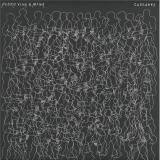
On 9th December Modern Obscure Music presents Cascades, the new album from Pedro Vian & Mana, which premiered during their immersive live set at the most recent Sonar Festival in Barcelona.
Cascades was recorded over a three-day studio session in Turin during the winter months, which is reflected in the musical narrative, as the eleven tracks flow gently like an icy river, filled with a mixture
of hazy melancholy, uncanny dream-states and euphoria.
Various recording techniques and instrumentation was utilised, including the Lyra-8 organismic analogue synthesiser, which takes principles from living organisms to produce sounds resembling a
conversation between nature and technology. The result is a spellbinding ambient odyssey that features a luminous synthesis of neo-classical strings and orchestral drones, together with strange
voices, and abstract passages designed to evoke Dante’s Inferno, which represent the soul’s journey.
Pedro Vian is a renowned Catalan artist who has released three solo albums (Beautiful Things You Left Us For Memories, Pedro Vian and Ibillorca) and a collection of singles on his Modern Obscure
Music imprint – a multi-disciplinary platform based on deep listening and music research. The ‘PRSNT’ compilation, which Pedro curated in 2021 and featured Laurie Spiegel, Ryuichi Sakamoto, and Visible Cloaks, received support from Pitchfork, Crack, Brooklyn Vegan, The Quietus, The Wire and Metal. Pedro has been remixed by Inga Copeland and Pye Corner Audio, and has recorded mixes for of Bleep, Self-Titled and Juno Daily.
As part of a new generation of Italian electronic music artists, Piedmont born composer and producer Mana has released two full length albums (Seven Steps Behind and Asa Nisi Masa) on Kode 9's
Hyperdub imprint, plus an EP on Nicolas Jaar's Other People label under his Vaghe Stelle alias.
Earlier in his musical journey, Mana supported Laurent Garnier, James Holden and Skream across the Torino club scene, and in 2011 teamed up with Italian friends Lorenzo Senni and A:RA to form
the experimental group One Circle.
Pedro Vian & Mana’s previous work as solo producers has pushed the limits of electronic music, and together they’ve garnered critical acclaim from the likes of Pitchfork, The Quietus, The Vinyl
Factory, Resident Advisor and more. They now join forces to traverse new sonic territories between electronica, ambient, drone, and trance-inducing soundscapes.
Since he started producing music, Berlin-based American sound artist Jake Muir has been obsessed with sampling. His 2018 album "Lady's Mantle" was based on manipulated chunks of vintage Californian surf rock, and its follow-up, 2020's midnight symphony "The Hum Of Your Veiled Voice" was sourced from a wide variety of old records, and inspired by the work of experimental turntablists like Marina Rosenfeld, Janek Schaefer and Philip Jeck.
On "Mana", Muir looks back to a misunderstood musical movement. Around 1995, a group of New York producers and DJs - including DJ Olive, DJ Spooky and Spectre - pioneered a genre-dissolving sound by unifying hip-hop techniques with ideas pulled from dub, jungle, ambient music and industrial noise. Badged "illbient", it was a short-lived genre that felt like a high-minded psychedelic cousin of the UK's trip-hop.
Muir uses illbient as the springboard for "Mana", utilizing a selection of samples to inform his frothy drones and foreboding atmospheres. He ushers the material into 2021 by diverting it through his own contemporary worldview, attempting to recreate the hyperreal fantasy histories of Japanese RPGs (think "Dark Souls" and "Final Fantasy") and nod to sensual, tactile soundscapes of European industrial labels Staalplaat and Soleilmoon. The result is a magickal, sensory journey that's as physical as it is representational.
If the illbient producers were encouraging a burgeoning experimental music landscape to emphasize the tactile feeling of turntablism and sample manipulation, Muir is doing the same with "Mana". Each track heaves and breathes not just with his cultural reference points, but with layered, complicated emotions. We can hear joy, sadness, desire and anguish, obscured by disintegrating noise, hallucinogenic harmonies and sub-aquatic bass. It's electronic music that's rooted not in technology, but in touch.
Mana is producer and composer Daniele Mana from Torino in Italy. His debut EP for Hyperdub, 'Creature', is also the first under his own surname. It's one of his most vivid, personal and confident releases to date. Since 2010, he has been releasing under the moniker Vaghe Stelle, with EPs and two full length albums on labels such as Gang of Ducks, Aisha Devi's Danse Noire, Astro:Dynamics and most recently, Nicolas Jaar's Other People records. He is also a member of One Circle with Lorenzo Senni and soundtracks composer Francesco Fantini. On 'Creature', over eight tracks, he ingests Shostakovitch, Drexciya, Darkthrone, Frank Ocean and Paul Lansky, and refashions them into an almost operatic record - a rich, melodrama of dark tension and excitable in-your-face synth melodies. In using his own name for the first time, he says he is confronting the unfiltered, brutal truth' of his self, compressing tension and anxiety' into a claustrophobic sense of emotional vacuum.' From the skulking clockwork of 'Crystaline,' the rich drifting ambience of 'Sei Nove', to the panicky, rushy rave stabs meets horror theme of 'Running Man', it's lucid, dynamic synth music which uses drums sparingly, but occasionally swirls into little sublime vortices of arpeggiated hyperrhythm. The melodies are bright and pitch bent, swollen by euphoric voltage surges and stuttering, soaring strings in 'Rabbia', plucking wide-screen, heart strings on 'Uno e Solo' and lulling down into the delicate, shimmering prisms of 'Wetlife' and 'Consolations'. While in its own lane, 'Creature' feels totally at home on Hyperdub.
We all know that great feeling of finding a hidden gem as diggers, but as a label, it’s just the same ! When we came across Urban CC’s music, we just knew we had something special in our hands… We’re happy to welcome the exciting new project formed by techno heavy weight Obscure Shape & classically trained musician Conrad for get-traum’s 15th installment. With the amount of requests label head Traumer had every time he played “Mana”, delivering his own take of this club hit was the only option – we hope you’ll enjoy this incredible pack as much as we did gathering it for you !
Second EP from Wishy, the new band from celebrated Indiana songwriters Kevin Krauter and Nina Pitchkites. "Mana" follows and continues their debut, "Paradise", which put on full display the songwriters' musical fluency while tastefully blending shoegaze, dreampop, and alt-rock into a heavenly haze and delivered a strong introduction that was dense with melodic earworms and stirring sentiment.
Sublime ethereal minimalism from Hiroyuki Onogawa on this retrospective compilation album for
Mana, the first dedicated release and remaster of his soundtrack compositions.
The album August in the Water: Music for Film 1995-2005 plots a decade of Onogawa’s compositions for films by the renowned filmmaker Gakuryū Ishii (formally known as Sogo Ishii). Ishii’s leftfield and trailblazing cinema has proven highly influential - Crazy Thunder Road (1980) is frequently cited as the starting pistol for the Japanese cyberpunk genre - and unfathomably difficult to source outside of Japan. This, coupled with the mysterious and artistic nature of the films, has seen him build a cult-like following. Most of his oeuvre remains undistributed outside Japan, though Third Window Films has recently taken great strides toward making some titles available internationally.
This retrospective publication, sequenced into an album by Onogawa himself, spans a fertile period of collaboration with Ishii, through soundtracks for three remarkable films: August in the Water (1995), Labyrinth of Dreams (1997), and Mirrored Mind (2005). Each feels texturally and sensually linked with the spiritual, ambient, dreamlike quality that lingers in Onogawa’s music.
The sound Onogawa conjures for these films is elegant and patient, often minimal or essential in form, but saturated in a poetic emotion and atmosphere that feels strange and otherworldly, touched by the metaphysical in subtle ways. Boundaries are crossed between New Age and science fiction, locating a blissfulness, melancholy and paranoia within the same spectrum, and moving toward an enchanting sense of mood and colour.
It’s notable that the compositions on this album straddle the millennium, and the mix of divine and uncertain themes in the music carry that currency. New listeners might hear links to Mark Snow’s compositional work for the X-Files and Millennium, or other celebrated future-facing and future-fearing Japanese anime or cyberpunk.
Onogawa’s music adds great depth and tenor to the sensory experience of the films themselves, but it stands just as strongly as a listening experience on its own terms, a virtuosic example of ambient that changes in hue when turned in the light. Remarkably, and in similar circumstances to Ishii, Onogawa’s work has never been widely available outside of (always highly enthusiastic) underground fan posts, usually sourced from extremely limited and private CDs limited to Japan. This retrospective seeks to remedy that, and hopes to achieve recognition for Onogawa as one of the great composers of the last three decades.
Onogawa continues to work in film, both in the creation of soundtracks, and now as a producer and director. He composed the music for Koji Fukada’s Harmonium (2016), which won the Jury Prize in the Un Certain Regard section at the Cannes Film Festival, as well as for Fukada’s A Girl Missing (2019). As a director, he received the Grand Prize for Best Short Film in the Noves Visions category at the Sitges Festival in 2022 for Flashback Before Death (Guu), co-directed with Rii Ishihara.'
“Those familiar with my music will notice this album is a lot different from previous releases which were written around the acoustic guitar. I often ask myself if it is a mistake to release an electric album (and a pretty heavy one at that) but in the end I thought what the hell you only live once! “
“Being Generation X these songs are heavily influenced by that period which I consider in pop/rock history, musically arguably the best. I know it will probably be criticized for being too “old fashioned” by some but I can honestly say I’ll take that as a compliment as my musical “D.N.A” is defined by that period in time”.
Dark night creatures creep through the tunnels and chambers in the abandoned sites of the former dwarven industry. Greenish-black energy flows through the empty halls as skeletons of the dead rise to dance, accompanied by the shaking of skulls, and the rattling of bones. Be warned, this spectacle is not for the faint of heart. Necromancy is an impressive school of magic, but also a dangerous one – it is better not to mess with necromancers.
K.O.P. 32, a studied alchemist of sound prepared this mythical and enchanting debut 12-inch filled with fast-paced tribal rhythm sorcery, psyish texture spells and mushroom spore acid.
Mana Abundance assumes no responsibility for zombifications, mummifications, or paralyzations. All claims for due compensation in silver are entirely excluded, including (but not limited to) shapeshifting processes such as converting into a werewolf or changeling. Under no circumstances should students of magic under the age of 18 attend the ceremony! Additionally, house elves and other magical creatures are to be kept away from this record.
'Big or profound sensations from small gestures which are carefully arranged. Using a mixture of sacred and profane, or classical and prosaic sound sources, knitted into intricate, fleet-footed compositions that virtually spring into the ear. Profondo Rosa is composer Ailin Grad’s first vinyl album following years embedded and loved in the Argentinian experimental music scene, with past treats on labels Krut, Sun Ark, Orange Milk Records and her own label Abyss, devoted to ‘connecting Latin Juke with the world’.
There’s a playfulness at the heart of Profondo Rosa that’s immediately charming, with a sense of scale and spatialisation in the sounds being toyed with, exploring the strange pleasures and satisfaction in her approach to delightful and fresh feeling sound design. Aylu is known to be as likely to deploy the sound of a finger click, a fizzy drink being cracked open, or a fly buzzing past the ear, as she is drawn to sampling gorgeous strings or instrumentation. Her debut album for Mana constantly builds territories that tug at your heartstrings and then have you grinning five seconds later. This versatility and acceleration has often resulted in her music being compared to footwork, alongside collaboration with other producers experimenting in that sphere; in 2017 she and Foodman put together a dizzying hour of sounds for NTS.
Her miniaturisation of rhythm and ringtone-like sample size could also bring to mind SND circa their warmer softer glitch Tenderlove phase, or perhaps the approach that Teenage Engineering take to designing tools for music making. Each are deriving pleasure from small and satisfying shapes, as well as advocating an object-oriented philosophy and minimalisation in their work that sidesteps a draining of colour. Sound is fun, and in Profondo Rosa it sounds like Aylu has that at the forefront of her mind.
Her hyperreal sound and its link to the languages of electroacoustic or computer music are clear, but she outmanoeuvres many of the overly-academic and formless examples of those genres. Profondo Rosa’s skeletal assembly of objects becomes tunes in an elegant, almost understated way; tactile elements quickly combine and roll into deeper and persuasively emotional places. These compositions give off an air of being very free, very experimental, despite being meticulously artful and studied arrangements on precise and nimble coordinates.'
'Swooping, sub-heavy sci-fi from Riz Maslen. Leda Maar is a new moniker for the established artist who’s released a crop of downtempo and electronic music as Neotropic and Small Fish With Spine, as well as collaborated with the likes of Future Sound of London, filmmaker Andrew Kötting, and featured in PSP-era Grand Theft Auto soundtracks.
Mana’s long lasting love of Riz’s 1996 Laundrophonic EP, released under her Neotropic name, spurred this new release. That 12” was a deep and dark web of rhythm and ghostly urban found sound that one Discogs reviewer aptly named “coin-slot Dubstep”. With elements mostly sourced from tape recordings made in and of her local laundromat, it still stands out as a remarkably contemporary feeling work; more like a post-Fisher, post-hauntology observation of urban life from the last decade, taking the ambient temperature and undercurrent pressures of the 90s. Asking if she had anything in continuity with this slice of her discography, and describing our interest in her take on “space and bass”, Maslen returned to us with Stairway 13.
Heavy-lidded and ethereal in long form, the album’s balance of bass weight, mechanical metre, and darkly tinted new age feels like a cinematic re-approach to some of the textures, moods, and themes of Laundrophonic. Originally designed for an installation, Stairway 13 folds in her decades’ experience in sound design and theatre, along with shards and elements abstracted from her more recent folk-like music, zoning into a deep, retreated, altogether dreamlike and expansive atmosphere. The scale and soundscape is reminiscent of Geinoh Yamashirogumi and their Ecophony album series, resonating to similar frequencies and exploring themes of chaos and re-birth in feature-length form.
Stairway 13’s four parts spread and swoop as single extended sides across this double LP. Carried by waves of sub bass and heavenly chorus, and later punctuated with autonomic clicks of machinery, whirrs, and pulses - sometimes reminiscent of FSOL’s weirder and more clipped staccato sampling in sections of their cyberpunk ISDN - the work forms a gothic, otherworldly ambience. A subtle space opera.'
"Combining steppy dance music, lush detail and a diaristic tone, Jack Chrysalis’ debut album dials between music that is destined to catch the ear of the club-goer and the heart of the dreamer, his signature propulsive mutations of organic techno and UK garage sounding strongly in tracks like Another Year and Coldharbour.
Between these, Chrysalis threads in more introspective moments. Tracks formed by running a hand along piano keys in improvisation, or made in recollection of Koji Kondo’s clear bright musical palette for Zelda. They lend a sense of atmosphere and a deeper running mood to the album’s overworld, heightening endorphin hits from the garage swing and affording a little more bittersweetness to its textures and secrets.
Whether in rush or retreat, each track on this album emerges with its own emotional resonance. There’s a sense of seasons turning, or a twilight quality that’s hard to fully pin down. “Owl music” became shorthand for Jack’s tunes, a way for Mana to capture a prescient, nocturnal flight within their environment."
Interior sounds from Madalyn in an album that flits between eerie ambience, environment, and hermetic logic. The music’s timing and sequencing feels distant, the elegant constructions conjured and organised semi-consciously, drawing the listener deeper into the dream and towards a zone where watch hands tick forward accurately and their perception of time unspools. Here each neatly tuned conversation and clockwork assemblage harmonises, spinning tantalisingly just out of range and understanding.
“Puzzle Music is the desire to create images out of diverse pieces of sound. To collect timbral colours in a gradient procession and connect them until they create reason. Principally not knowing how the image will turn out, or what the picture even is. It is the act of placing sound shapes next to one another in the hope that clarity will gradually be revealed.
When grouping the songs together I was thinking of them as mechanisms in a timepiece. I have something of an obsession with Swiss watchmaking, although I think this stems from a desire for creative mastery and the design of an energy source independent of electronic needs. Hopefully the songs all serve a purpose towards the end goal of the album... but also, the way the Oberheim Xpander pans sounds is in a very clear circular pattern, which makes me think of gears turning.”
A swiss army knife of an album, Zander Hulme's Windbound shifts effortlessly between beautiful, sweeping piano melodies, energetic calls to adventure, and the occasional throat singing for good measure.
Featuring watercolor inspired jacket and inner sleeve artwork by Jennifer A. Reuter, this release is a whirlwind of color packed into a single square foot. Presented in two variants, "Seashore" Blue Marble and "Cloudy Skies" White in Clear Marble.
- A1: Dandara's Purpose
- A2: Gap Between Worlds
- A3: A New Hope
- A4: Their Pleas Echoed Through Time
- A5: No More Singing Birds
- A6: Once A Beautiful Horizon
- A7: Remain In Oblivion
- A8: Weight Of A Doubt
- A9: Mãe
- B1: A Leap Towards Freedom
- B2: Crumbling Memories
- B3: Eternal Sigh
- B4: Lingering Question
- B5: Hidden In Logic
- B6: Hopefully A Nightmare
- B7: Golden Menace
- C1: Golden Fortress
- C2: The Relentless Choir
- C3: Stories Of Freedom
- C4: Dandara's Legacy
- C5: Hidden Thoughts Beyond The Crimson Maw
- C6: Resolutely Unimpressed
- C7: Not Born For This
- C8: Not Made For This
- C9: Not Ready For This
- C10: Restless Machines
- D1: The Defeated Crone
- D2: Rushed Ouroboros
- D3: That Party You Can't Miss
- D4: Violent Ambush
- D5: Chained Wings
- D6: Hesitant Salt
- D7: Menina
- D8: Tormented Mind
- D9: Weight Of A Change
- D10: Stories Of Peace
- D11: Dandara's Fanfare
The Dandara: Trials of Fear Edition Original Soundtrack features over one hour of ethereal, surreal and organic music created specifically for the exploration of the Salt's surreal world. Blending eclectic electronic scores with sweeping, melodious soundscapes, Thommaz Kauffmann's score is like taking a ride into a new, wonderous land.
Dandara's light but incredibly strong presence was the starting point for all the sound presented in this album, consisting of a soundtrack that sounds hopeful and melancholic at the same time. Her lonely journey into the corrupted regions of Salt narrates each gesture made to fight the fears deep inside the Salt's most uncharted caves.
The textures and musical aesthetics in this soundtrack match a world that suffers from its abandonment to spontaneity, creativity, and vitality. It is with the presence of Dandara that there is a break in these standards imposed in Salt by an authoritarian regime.
Wrapped up in a beautiful, sturdy tip-on gatefold with a rough, black and white aesthetic, this vinyl 2xLP comes with two "Salt" white 180g in two printed inner sleeves.
Composed, produced and mixed by Thommaz Kauffmann
Artwork by Luísa Almeida
Game developed by Long Hat House
Published by Raw Fury
L’Escalier des Aveugles, or The Stairway of the Blind, was commissioned in November 1990 by Spanish National Radio (Radio Nacional de España). Asked for a piece to premiere as part of the European Day of Music, Luc Ferrari returned with a radiophonic concept that organised his anecdotal music into montage form, sequencing short, elusive narratives in a successive way.
The completed composition is formed of thirteen chapters containing a mixture of environmental and synthesised sound, commentary, chatter, and encounters with people and places. Each focuses on a small event within this playbook, and Ferrari notes that each “in addition to being a realistic photograph, will be the subject of a ‘setting to music’: fragments of voice and atmosphere will be sampled and will produce musical matter or a ‘song’.”
The sonic language of Madrid forms the setting to which Ferrari lays out the persistent theme of the piece, that of the composer being guided throughout the city by a young woman. Using a game-like structure (liners for this edition include Ferrari’s “Regles de Jeu”, or “Rules of the Game” which act as a script or score to the piece) the motivation is posed: imagine that one day you are told “I know a place in Madrid that sounds amazing (or bizarre)”, to which you reply “Let’s go to it together.” The recordings toy with the relationships between guide and tourist, translator, director and actress, and masculine and feminine that emerge as Ferrari and the actresses follow this action, documenting the shared experience and connections they make as they visit these places.
Six actresses guide Ferrari (and the listener) through locations simultaneously ordinary and sonically rich: the metro; the El Corte Inglés department store where we hear the gossip from changing rooms set against music emanating from the PA; vagabonds declaiming their political stance in the Conde de Barajas plaza; interactions buying apples in a market; the reverberant and spacious halls of the Prado Museum where one actress gives a moving description of her favourite painting - Goya’s The 3rd of May 1808.
Ferrari replies in French to their comments in Spanish, and there are several self-referential plots, devices, and word games that flirt with the poetics and rhythm of language and sound. A recital of Lorca’s poem "La Casada Infiel" in “Hommage À Lorca” in amongst the location recordings feels striking, and the call and response of “La Nouvelle de L’Escalier”, where one of the actresses descends the staircase of the blind - a long stone stairway in Madrid proposed to Ferrari as an interesting location to visit during the trip by producer José Iges. She replies to Ferrari’s vocal enunciation of the place (and title) in French - L’Escalier des Aveugles - with the place-name in Spanish: La Escalera de los Ciegos.
Using this repeated title and image of the staircase of the blind as a symbolic place, a line is drawn to a situational landscape experienced and diffused through snapshots and allusion rather than holistically overviewed, sound conjuring pictures within the imagination. In the sensorial qualities of Ferrari’s treatment of emotion and language—fortified with electro-acoustic motifs and musical properties—the piece accelerates towards a render that is truthful, beautiful, yet also surreal; somewhere between theatre and reality, a gonzo cinema of the ear.
O YAMA O explores a certain domestic and democratic quality of everyday life, born through associations to folk music of Japan and a folding of myth, tradition, and routine; the non-spectacular and the sublime.
Formed of musician and artist Rie Nakajima and Cafe OTO co-founder Keiko Yamamoto, the group has performed since 2014 at venues and festivals such as noshowspace, Ikon Gallery, Wysing Arts Centre, Supernormal, Borealis Festival, Mayhem, and allEars Festival.
Nakajima’s performance often focuses on the use of found and kinetic objects, using modest items such as rice bowls, toys, clockwork, balloons and small motors as instruments to create a “micro orchestra”. Elements are layered into impressive and immersive atmospheres. Yamamoto alternatively floats and charges through this with body and voice; chanting, incanting, thundering, whispering, stamping on the floor.
Their debut album consolidates their musical conversations into keenly paced studio music, the duo working with additional instrumentation and a resolved focus on melody to provide vivid portraits of folkloric Japan in song.
They move between pop and the philosophical, defined by the overall space afforded to texture and movement. In small, delicate sound an intimate musical climate is established that reflects on life, telling stories of improvised clockwork, whispered dreams, small movements of the hand and the rhythm to be found in the shuffle of a deck of cards.
Grandly theatric and dramatic flourishes add solidity to these illustrations, operas driven by the swooping energy and power of Yamamoto’s voice can be playful or emotionally charged, particularly when the duo arrange themselves in ensemble with violinist Billy Steiger and percussionist Marie Roux. Production by David Cunningham creates the shadowy presence of a leftfield Flying Lizards dubwise depth that adds subtle strangeness to the atmosphere. The result is something raw, full-bodied; full of energy, grace and mystery.
“Cryptic, twilight emissions from Villalobos and Loderbauer; their synthetic compound of electronics and ouroboros jazz has walked from ECM and Perlon over to Mana.
Developing a sound that tends to drift along as otherworldly atmospheres and strange fusion, Vilod evade easy categorisation, even compared to Villalobos’ already experimental and genre-twisting solo minimal offerings. He and Loderbauer pull away the backbone inherent to the structure of that dance music, and The Clouds Know refines a deft and subtle musical noir built on ambient cues, sparks and claps of electricity, brushed drums, black voids and subterranean bass swoops. There's a twinkle in the eye and moments of deadpan levity, but the overall mood here is sober and introspective. Emotions run deep.
Through studio mastery and an enigmatic language the album forms a fascinating sonic and sensory work with few compromises. With erratic rhythms notably submerged—techno remains as an irregular pulse in the belly of the beast—fields of crisp, uncanny detail expand greatly. Humid environments appear, dense with the chatter of synthesised insects and the gentle rain of drums and whispering cymbals, enchanting the listener in focus or sublimating into layers of ambience depending on your disposition - and the quality of your stereo field.”
‘Rain, spit, ice, neon, plants, steam, mercury and soil. This is dream music categorised by a language of senses; visual, poetic, and abstract sound that draws on techno and dub ambient.
‘Somewhere between pastoral impressionism and cyber-noir, its surface evokes the tensions of a fluctuating, fizzing atmosphere, pictures emerging and dissolving in the mind’s eye. Thick layers of field recording flood tracks fabricated from erratic, oddly distanced rhythm.
‘The sensation whilst listening is not unlike hearing the world from a place within the body; swimming in the bloodstream, cutting through the turbulent landscape secure in a metal tube.
‘Or being over-exposed to lushly textured environments with the anatomy far receded; an out-of-body experience where subtler senses are heightened and the landscape begins to take on surreal qualities.’
Since Danielle Mana's 2017 debut EP for Hyperdub, 'Creature', which was a taut, evocative suite of beatless, almost neo-classical electronics, we now find his music has caught an alien virus and started hallucinating. On 'Seven Steps Behind', the borders between reality and the weird have collapsed on each other, and with each listen through its zigzagging course, you're rewarded by its strange twists and turns. 'Seven Steps Behind' is an electronic album that doesn't always sound electronic; a great deal of the record has been created to sound like prepared pianos, harpsichords, cellos and flutes. At other times, sampled acoustic instruments and specially recorded sessions have been processed through software and careful editing. It's this sophisticated layering of contrasting versions of the same sources that help give this record its uncanny balance. The album also plays with your sense of time in its mostly drum-free hall of mirrors, pulling from minimalism, chamber music, dark jazz, and synthesiser experiments. Mana's singing voice also makes it's debut here, albeit adorned by abrasive FXs. His lyrics are encrypted in noise, in fitting with the music's chimeric character, casting images for the listener to decipher. His heavily manipulated voice enters on second track 'Myopia For The Future', sounding something like a singing motorbike pitched over bouncing ostinatos, or on 'No Body's inhuman, word-less range, where it's impossible to tell where the human finishes and the machine starts. Or in the case of 'Leverage For Survival' it's animal and machine. Here, as with the album's eponymous final track, a sensory assault subsides to reveal a heart-wrenching melancholy that anchors the record. Listening to 'Seven Steps Behind' is like stepping into a dream, with all the curious emotions and buried meaning that involves. Yet for all its restless, shifting energy it manages to hold both dissonance and melody in sweet proportion.
Mana Can Be Understood As A Powerful, Often Magical, Force Contained Within Objects. As These Objects Get Passed From One To Another, In A Cycle Of Gifting, They Retain The Spirit Of The Giver And Propel Themselves Onto The Next Recipient, Weaving A Network Of Social Bonds. In This Light, Mana Describes The Coming Together Of This Mixtape. The Exchanging Of Avant-garde, Traditional And Electronic Music--old And New--between Andrea Zarza, Curator At The British Library Sound Archive, And Matthew Kent, Founder Of Blowing Up The Workshop, Is What Makes Up The Language And Landscape Of Mana The Record Label, And Its Subsequent Arrival On A Cassette Tape For Queeste, Before Being Sent Onwards, As Our Gift To Listeners. Limited Edition Cassette Tape. Jelly Yellow Colorway. Comes In Resealable Bag With A5 Postcard Designed By Fallon Does And Mana X Queeste Sticker.
- A1: Oracle
- A2: High Priestess
- A3: Dreamscape From The Night Kitchen
- A4: Sunset
- B1: Embrace (Live Version, Nyc 1987)
- B2: Environment (Temporary & Indefinite Edit By K. Leimer)
- C1: Sadhana Environment (Pharaohs Mana Mix)
- C2: Sadhana Environment (Dreems \\\\'Natu¨rliche Liebe\\\\' Remix)
- D1: Sadhana Environment (Oahu Suite By Lieven Martens Moana)
Over two years in the making, 'Talisman' is a retrospective and re-interpretative celebration of the work of American musician Robert ÆOLUS Myers. Touched first by the emotional depth of the music, and subsequently by the warmth and wisdom of the man, Origin Peoples sought to capture a snapshot on this special vinyl release.
This newest chapter of the ÆOLUS myth seen for the first time on vinyl are five of his most expressive pieces, alongside a quartet of remixes by kindred spirits from all corners of the globe. This is the first time his music has been interpreted by others, and Robert's delight at the result speaks volumes of his adventurous and open-minded attitude. Approaching the often intangible new age genre with a humanist approach, Robert creates immersive and expansive pieces which connect with the listener on a spiritual and emotional level.
Archetypal narratives are retold through nuanced electronics, evocative motifs and empathetic flute, the varied compositions informed by Myers' classical training, spiritual pursuits and study of ethnomusicology. Part retrospective, part remix project, 'Talisman' is the perfect reflection of Robert ÆOLUS Myers, a musician whose timeless expression of theme and emotion has enriched minds, bodies and souls for almost 40 years.
Parallel Minds Is A Group Of Like-minded Musicians, Djs, And Graphic Artists Working Together To Bring Compelling, Progressive Electronic Music From Toronto, Canada To The Rest Of The World. Spearheaded By Ciel, And Newcomers Daniel 58, And Yohei S.—who Have Variously Released Music On Labels Like Shanti Celeste's Peach Discs, Allergy Season, Coastal Haze, And Neo Violence—the Collective Offers On Its Inaugural Va Release Four Diverse Cuts Of House, Breakbeat, And Hardcore To Energize Your Body And Comfort Your Soul. The A Side Features Two Slamming House Cuts, With The A1 Offering By Discwoman Signee Ciel And A2 By Yohei S. Clocking In At A Frenetic 134bpm, "hind Sight Is 360" Is A Peak-time Dancefloor Banger Featuring What Has Become Trademark Characteristics Of Ciel's Productions: Intricate Drum Programming And Lush, Jungle-inspired Pads. "eastern Rankin" Is A Slower, More Hypnotic Percussion Track That Demonstrates Incredibly Effective Use Of Space And Delay. Its Minimalist Structure And Echoing Drums Would Sound Ideal In A Dark Warehouse. The B Side Opens With An Even Bigger Bang, With A Track That Would Best Be Described As Indian Hardcore. "mana Sadhana" By Raf Reza Under His New Alias, Radiant Aural Faculty, Is A Vibrant Mixture Of Hindi Vocal Samples Layered Meticulously In Between Freaked-out Synths And Thumping Breakbeat Drums. Completing The B Side Is The Aptly-titled "space Bubble" By Daniel 58. Drawing On Influences From Ambient, Trance, And Breaks, The Promising Toronto Artist Closes Out The Release On A Dreamy Note, Employing Nostalgic Melodies On Top Of Tough-as-nails Drums And Deep Rolling Sub-bass. As First Releases Go, Parallel Minds One Offers A Taste Of Something For Everyone, From A City That Has Perhaps Been Overlooked But Deserves A Second (third, And Fourth) Listen.
- A1: La Fine Equipe & Fakear - 5Th Season
- A2: Clement Bazin - Xo Ft. Jt Soul
- A3: Robert Robert - Okay Alright Okay
- A4: Fakear - Mana
- A5: Leska - Waterfall Ft. Madjo
- A6: Lénéré - Living Waters Ft. Clara Sergent
- B1: Jumo - Tout Ira Bien
- B2: Gangue - Geste Propre
- B3: Everydayz - Secret Fire
- B4: Kultur - Second Youth
- B5: Yann Kesz - Parabox 432H
- B6: Skence - The Speech
- C1: Fakear - Skyline
- C2: Clement Bazin - "Romeo
- C4: La Fine Equipe - Make U Greedy
- C5: Douchka - This Mood Ft. Hi Levelz
- C6: Everydayz & Phazz - Algeria
- C7: Robert Robert - Let Her Go Ft. Lia & Le Vasco
- D1: Unno - Walls
- D2: Jumo - Nomade
- D3: Awir Leon - Maybe We Land
- D4: Brnkfd - Sixteen Ft. Camille Michelle Gray
- D5: Hugo Lx - Doma Ft. Nia Andrews
- D6: Hoosky - Rush Hour
* Five years have passed since the first release of Nowadays Records.Launched with Fakear's signature (seen on Ninja Tune), the label founded by oOgo and Chomsky from La Fine Equipe has seen the growth of many projects such as Clément Bazin, Everydayz, Phazz (who produced for Travis Porter, did remixes for Soulection, Interscope and Mad Decent), Leska, Jumo and many others, all of them carried by the irreplaceable quartet of La Fine Equipe.
Five years during which Nowadays Records released 75 EPs and LPs, toured in and outside of France, and generated several hundred millions stream plays.With its heart in the right place, its eyes on the emerging scene and its ears open on the world, Nowadays built itself a singular and racy identity through the time. Fed by inspirations like Stone Throw, Ninja Tune or Warp, the label places itself as an ambassador of a fast growing scene, defending it through its shows, releases, and events like the two Boiler Room shows in Paris and London.Without sticking itself to a musical gender, Nowadays keeps on widening its horizons by working with foreign artists and mixing the inspirations through its releases, driven by its sound and visual trademarks and aesthetics.
In order to celebrate those five years spent defending as many projects as musical crushes they had, and to thank its community made of more than 150 000 followers around the world, Nowadays unveils the 'Nowadays V', double album with a digital and physical release on November 30th.Through this compilation, Nowadays gathers on one side the tracks that marked its history and, on the other side, unreleased tracks that sometimes lead to collaborations such as the one between Clément Bazin and Leska, or the one between Fakear and La Fine Equipe.
- A1: Black Bells Group - Sweet Sidney
- A2: Charly Kingson - Nanga 'Boko
- A3: Gyedu Blay Ambolley - Highlife
- A4: Dikalo - Fine Biscuits
- A5: Mekongo President - Angona Mana
- B1: Fotso - French Girl
- B2: Tala Am - Sugar Lump
- B3: Jk Mandengue - Chibidaba, Chibidaba
- B4: Jide Obe - Too Young
- B5: Mulamba - Dashiki (Version Instrumentale)
It's that time again. The skies are calling and its time to board our trusty jet for the 5th outing of Africa Seven's premiere class compilation Africa Airways. For volume 5 its time to brace yourselves for 10 slices of Afro boogie goodness.
We up the boogie time groove with The Black Bells Group (the first band of lead singer Sidney 'Patrick Duteil' who went on to become the godfather of French hip-hop and a well know TV presenter. Here the groove is swinging... the perfect opener. Next up is German-based Cameroonian musician and cousin of Manu Dibango, Charly Kingson with this bass-synth boogie stomper. Big brass and jazzy trumpets add layers of sparkle too.
Next its time for some highlife inspired boogie from Ghanian Gyedu Blay Amboley. Highlife fused with reggae, disco, boogie and jazz just as the lyrics say.
Next we pair up with Africa Seven friend Eko once more under his Dikalo guise. The Cameroonian master musician is on fine form with his heavy brass and deep percussion with a driving afro boogie groove. To round off Side A its off to Cameroon again to groove with Jean 'Mekongo President'. Think Bernard 'Chic' Edwards on the bass with some African style and you can see it's the bottom end groove and afrobeat drums that power this gem along.
We open the second side slowly and purposefully with the highly sought after 'French Girl' from Fotso. Drippy bass synth grooves and a wondrous percussion and drum shuffle pair with piano riffs to make this a unique sounding track. Our friend Tala AM is next with the foot-stomping 'Sugar Lump'. JK Mandengue is next with most definitely the catchiest chorus you will hear today. Nigerian Jide Obe gets synth and clavinet rich with his doe to sensible dating advice 'Too Young'. We close off the album with a track from label good friend Jo Bisso under his Mulamba guise. Sounding like a long lost TV theme from a late night TV show circa 1977. Let's get down and boogie with the brand new dance in town folks... the Dashiki.
Until Volume Six takes flight it is time to unbuckle those seat belts folks.
Gaijin Blues is Naphta and band mate PlaystationYoga Music's tribute to Japanese pop culture, manga and video games. This EP is the result of tours to different regions of Japan and spending time in record shops, as well as playing classic RPGs. Gaijin Blues is a blend between Japanese and Western music with live studio instruments. It's a feeling, an expression and a time and space vehicle.
Secret of Mana explores live percussion and bass with strings, live flute and dreamy vocals, whilst Cafe LeBlanc references a peaceful location in JRPG Persona 5 and features more soothing strings and is inspired by manga soundtracks.
Metal Gear Rex is string-lead and features complex melodies and vocal chops. Another tribute to Japanese gaming culture, this one has a driving, hypnotic bassline and an eye on the dance floor.Guardia Castle opens with a 4/4 disco beat before introducing unexpected layers of blissful, melodic female vocals, acoustic guitars and flutes.
* Sheffield-based Subaltern resident Taiko returns to the imprint with a stunning selection of four distinctively grimy pieces of sub-bass science, proving once again his original take on the 140 bass realm.
A. Trenches
Introducing his unique style once again with a fresh twist, Taiko delivers relentless earth-shattering bass waves in 'Trenches', which graces the A side of the release. Bells, strings and dark synths set the mood for a precisely executed wall of bass, complimented by subtle vocal work.
B1. Raid
Dramatic orchestral strings and horns set the stage for the grim reaper that is 'Raid' - leading into a dark and roaring synth that accentuates the laid back bass-line. Sure to shake every system it is unleashed on, the track keeps evolving and luring the listener ever deeper into a maze of darkness. You can run but you can't hide...
B2. Mana Pool
'Mana Pool' adds a more psychedelic and subtle edge to the release. Synth loaded parts play in exchange with carefully laid out harmonic synth lines complementing the tasteful bass-lines, while remaining the raw edge of the release.
- A1: Der Lachende Junge (To Gelasto Pedi)
- A2: Ich Bin Ein Fremder (Le Métèque)
- A3: Göttingen
- A4: Zündholzschachtel (Tha Sou Steilo Mana)
- B1: Mein Kummervoller Mann (To Palikari Echi Kaimo)
- B2: Hoheslied (Asma Asmaton)
- B3: Niemand Ist Jetzt Noch Da (Den Pairnei Edo Kaneis)
- B4: Menschheit, Menschheit (Lume, Lume)
- B5: Der Traum Vom Fliegen
When Michaela Meise performed at WestGermany at Kottbusser Tor in Berlin-Kreuzberg on March 20, 2015, accompanying herself on the accordion, I was perplexed. I knew her first album from 2010, which was about hymns (»Preis dem Todesüberwinder«, originally released on Clouds Hill, available as a download and stream through my label from July 2018 on), but what she was playing weren't spiritual songs! I wanted to put this music out on my label: the songs sounded sad, aloof and wistful but also proud, determined and unerring.
The album title »I am Greek« is a tribute to Melina Mercouri's album »Je Suis Grecque!«, which was released in 1971 when Mercouri was deprived of citizenship by the Greek military junta. Mercouri lived - like Mikis Theodorakis and many other cultural workers - in exile. Meise's album is dedicated to the chanson scene of post-war Europe, whose songs were popularly folksy, but also political. Some talk about the experience of war, the Shoah and labor migration. Michaela Meise has translated the Greek, French and Romanian songs into German (with the help of Aliki Marini and Carmen Gheorghe) so that the lyrics are understandable to a German audience, a gesture that was also common in the European chanson scene. More than half of the songs are by Mikis Theodorakis. He knows the translations and new recordings, gave his blessing and just noted a wrong tone ... The other pieces on the album are by the French artists Barbara and George Moustaki and the German musician Alexandra. There is also a Romanian folk song.
The album was recorded by Michaela Meise together with members of the group Isolation Berlin as well as the guest singers Carmen Gheorge and Dirk von Lowtzow (Tocotronic). The producer was David Specht (Isolation Berlin).
Michaela Meise and me both have intimate relations with Greece - Michaela has innumerable holiday memories with parents and brother, I have a friend who lives in Athens and whom I have been visiting regularly for about ten years now. This friend, the graphic designer Vasilis Marmatakis, styled Meise's album using an impressive, scary photograph taken in May 1985 during the occupation of Polytechnio Athens. Together, we opted for an elaborate packaging made by a bookbinder, a so-called Japanese tip-on-gatefold cover. The packaging reminds us of the records that were made in Greece for export and taken by German tourists as a souvenir back home.
Manaccan ep is a blend of dub and Detroit techno tracks.
Merv (Denmark) are known for their dubby Basic Channel like sound. Elevation is a natural successor to the timeless classic 'Dust'.
Ohm (Denmark) and Octal Industries (Estonia) have been industry stalwarts for decades. Their experience is evident in the BS1818 debut track 'Journey': a functional track in the Scandinavian dub techno style.
Kuba Sojka (Poland) is back on Boomstraat 1818 with a remastered version of 'Rain', which was originally released on Rohs! The track deserved a vinyl release and Kuba rebuilt the track from scratch.
Stroef (Netherlands) his track 'Boxed In' was originally released on OHM Series Digital. This version is reconstructed for the vinyl release on Boomstraat 1818.
- A1: La Mosca
- A2: Desfile Na Praia
- A3: Funk Sin Cuenta
- A4: Al Son
- B1: Salir Del Agujero
- B2: Los Bsoaso De Paris
- B3: Quando Lembro
- B4: 6X8 En La Mañana
- B5: San Bon
ElCalefón
Salir Del Agujero
El Calefón's 1985 LP Salir Del Agujero is a rare bird.
Self-produced and privately released in Zurich, the albumdocuments one of the very few South American groups that were resident in Europe at the time, and certainly the only such band working in Switzerland. Co-founded by two Argentinians in Europe – the multi-instrumentalist, vocalist and composer Coqui Recaand the guitarist Pablo Miguez–the group consisted of Argentinian and Brazilian musicians, most of whom were present initially Europe as tourists, but had stayed on, without official sanction, as immigrants.Their music gathered its primary influences from the varied sounds of their home countries, fusing these elements drawn from the manifold indigenous styles of Argentina and Brazil with the international sounds of rock,jazz, pop and pan-Latin music.
Honed and polished by the steady gigging through which the group earned their living in Zurich, the music that appeared onSalir Del Agujero was sophisticated, original and filled with light. Resonating with a freshness undiminished in forty years, the album brims with possibility and hums with tropical warmth, bearing testament to the open-hearted musical freedoms of a mercurial musical era.
Taking place in the Paras district, Cangallo province, in the Ayacucho region of the Central-South Sierra of Peru - this is a recording of a ritual held on February 5th 2020 for the one year anniversary of the death of Mrs. Sofía Miranda de Bellido, recorded by her grandson Hánkel Bellido.
At noon the coffin of "Mamay Sofía" was presented, so that her relatives could say goodbye for the last time. Following tributes from family members, these songs dedicated to her life and her passing were sung.
The townspeople were notified of the events by the sound of bells that produce a peculiar and powerful sound, and that can be heard in the other nearby towns of Paras. It is said that these bells were greased with human fat, and brought from the Cerro de Pasco region during colonial times. The bells must be played all morning until the change of mourning takes place.
At midnight the songs of the Almakunapaq (also known as San Gregorios) mass began. These are unique to the Andean peoples - a fusion of Andean and Christian syncretic traditions - and are said to help the dead to enter the eternal Kingdom.
It was 4am when the change of mourning took place, and in accordance with traditions, the friends & family announce the presence of harp and violin players, to liven up the proceedings with songs of joy and merriment until the next day.
"Mamay Sofia, manan wañukunkichu, kawsakuchkankim sunquykupi; sichus qunqarusqaykiku, chaymi ichaqa wañukunki!"
"I have not died, I will die on the day that you forget me!"
- A1: You Came Thru
- B1: Hurry Up Tomorrow
The Nu’rons were a family group consisting of two sets of brothers and cousins, the four young men in question being brothers Daryl Howard and Raymond Gibson (Daryl’s mother registered him under his father’s surname of Howard and Raymond under her maiden name of Gibson) together with Otho Bateman and Charles Bateman. They were all born and raised in Salem, New Jersey and from the age of ten and eleven began singing with a fifth member and Gibson brother Rudolph as a group called The Gospel 5. They eventually decided to crossover to secular music and as a group known for their energetic dance routines they came up with the new performing name of ‘The Nu’rons’ (taken from the word ‘Neuron’ which is a cell that transmits nerve impulses). However Rudolph was soon to leave the group due to physical illness. Also Daryl Howard and Charles Bateman had also been part of a working group known as The Devotions prior to becoming The Nu-Ron’s.Following hours of practice The Nu’rons eventually felt confident enough to put their own shows together and began to perform at local dances and parties around New Jersey and Philadelphia, often being used as a non-paid warm up act for bigger named artists. They moved between several different managers including Jimmy Bishop (Duo Dynamic Productions) until they came under the tutelage of WDAS radio DJ Georgie Woods (his wife Gilda, being the owner of the Philadelphia Gil, Dion and Top & Bottom record Labels). It was Georgie who introduced them to Manny Campbell who in turn invited them to an audition at his and partner Charles Bowen’s Emandolynn Music studio in Chester P.A. The song The Nu’rons chose to audition with was the self penned “I’m A Loner”, the audition went well, as during late January/early February of 1970 Manny and Charles took The Nu’rons into the Sigma Sound Studio’s with Tom Bell and the TSOP musicians to record “I’m A Loner” and “All My Life” which was released on the Nu-Ron label in April of the same year. The two studio takes presente don this release came short after the band moved on from the collaboration with producer Emanuel Campbell to take music matters in their own hands. Beside recording "Disco Hustle" to be part of the disco boom in Philly of the times, they recorded also “You Came Thru”, a rough yet beautiful heavy bassline driven soul funk recording, and the just amazing “Hurry Up Tomorrow”, here presented in one of the original Studio takes.
RareTwo Inc. aka DJ Sneak and Tripmastaz are back together for 33 chambers EP, the next Respect The Craft release.
Words by Sneak:
"On a hot Ibizan summer the Rare Two fellas spent a period of 33 days on the island making tracks in a house garage with a couple of pieces of affordable gear and a whole lot of talent. We managed to create 33 tracks often burning them on CD to take to djs like Ricardo Villalobos at Amnesia and seeing the instant reaction of the crowd. We are a mega team of same mentality dudes who create from the heart breaking all rules and getting music done for a purpose. The Tripmastaz and Sneak Team is one to expect many great dance floor killers. As we call them Guttah Styles!
Words by Tripmastaz:
Recently I found these projects and since they were done on just a laptop and cheap small speakers, I gave them proper analog mixing and mastering.
All tracks remain exactly the same form and arrangement as they were originally done, including track Aww Lawd, that was featured on R. Villalobos BBC Radio 1 Pete Tongs mix back in 2018.
Mike Grinser at Mandmade Mastering did the lacquer cut and made it sound very crisp and loud a lot like it would've been cut in the 90s.
Rose Connolly has a beautiful voice with a wide melodic range, which she bends, twists, strains and warps through both her physical exertions and a sample-based granular synthesiser. The results recall both the Gaelic tradition of séan-nos singing, and the work of experimental artists such as Meredith Monk, Yoko Ono and Hatis Noit, while the beats meld folk with gothic, 4AD-era soundscapes unmatched since the glory days of This Mortal Coil.” – The Guardian (10 Best Folk Albums of 2024) “RÓIS is a composer, vocalist, multi-instrumentalist, and electronic artist from Fermanagh, whose songs breathe new life into a forgotten Ireland. Self-released, written and produced by RÓIS with additional production from John Spud Murphy (OXN/Lankum), 'MO LÉAN' is a concept album, taking the listener through the grieving process from start to finish, from the chaos that loss brings, to the intense emotional outpourings and finally, a cathartic release.
‘MO LÉAN' features several new original recordings and reworks of songs and hymns based around the concept of death, life, mourning and catharsis. RÓIS re-imagines the tradition of 'keening' in Ireland that goes back to pre-christian times, a practice in which women would 'keen' a lamenting wail at the side of a coffin during a wake. After discovering the last two recordings of keening songs, RÓIS was inspired by their ethereal melodies to give them a modern reworking yet honouring the original women by sampling them in her adaption. 'Keeners', through their voices, movements and laments, conveyed the communal expression of grief and allowed those suffering a way to release their sorrow and loss. RÓIS aspires to do the same with 'MO LÉAN', by expressing the power of the voice to transcend death and help us relinquish our fear of it
- The Centre Cannot Hold (Lovefingers Chemical Dub)
- Innocent Money (Lovefingers Root Of All Evil Dub)
- Love Insurrection (Black Science Orchestra Dub)
- Ready To Go Home (Hardway Bros Meet Monkton Uptown Dub)
- Innocent Money (Radio Slave Remix Instrumental)
- Innocent Money (Pet Shop Boys Remix Dub)
- Ready To Go Home (Terry Farley, Wade Teo Dub Mix)
- Love Insurrection (Terry Farley, Wade Teo Dub Mix)
For the first time on LP vinyl, Come Ahead: The Remixes Vol.2 (Dubs) brings Primal Scream’s club-ready reinventions into full analog glory. Originally released in FLAC format in 2025, this second volume dives deep into dub territory, reimagining tracks from Come Ahead with hypnotic grooves and spacious textures. Featuring reinterpretations by Lovefi ngers, Black Science Orchestra, Radio Slave, and Pet Shop Boys (in dub mode), each track pulses with low-end warmth and rhythmic experimentation. From the acid-drenched swirl of “The Centre Cannot Hold” to the narcotic haze of “Innocent Money,” this is Primal Scream at their most psychedelic and dancefl oor-minded. Specially mastered for vinyl, the sound is immersive and tactile — perfect for DJs, collectors, and audiophiles alike.
Eight tracks, nearly an hour of music, and a sleeve that nods to rave-era design make this a must-have for fans of dubwise house and experimental club culture. Limited pressing. Maximum impact. Come Ahead: The Remixes Vol.2 (Dubs) is available as 2LP Black Vinyl.