TOHO, the creators of GODZILLA, unleash SPACE AMOEBA aka Gezora-Ganime-Kameba: Kessen! Nankai No Daikaijû! A space probe is lost while on its way to the planet Jupiter but returns to Earth after being overtaken by a deadly and dastardly single-celled organism.
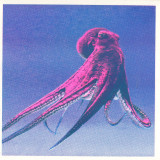
The organism then mutates into giant kaiju that mimic a cuttlefish, a stone crab, and a matamata turtle, and uses these destructive forms in their plan to take over the planet. The only thing that stands between humanity and the insidious invertebrates is a group of photographers doing recon for a tourism company!
Directing, of course, is the legendary Ishirō Honda (MOTHRA, RODAN) alongside producer Tomoyuki Tanaka, with the dreamy Akira Kubo (DESTROY ALL MONSTERS) as photographer Kudo. As with GODZILLA, Honda recruited the great Akira Ifukube to compose the thrilling score, and Ifukube brought his trademark innovation and dramatic grandeur.
The title theme is beautifully distinctive, mixing thick brass and low piano to match the destruction of the kaiju with higher horns and trumpet, providing a lighter contrast. Ifukube scores action and horror with his iconic lumbering colours but provides suspense with piano and otherworldly strings, with a unique slithering theme for the evil amoeba. Another Ifukube triumph! (Charlie Brigden)
Composed by Akira Ifukube
Artwork by Matt Taylor
Manufactured in Czech Republic
Cerca:manu
The ‘A Day At’ concept, from Parallelle, started in 2017 when they were helping their uncle in his leather factory, manufacturing belts. The variety of melodic sounds during the manufacturing process, from small tools to big machinery, quickly became the soundtrack to their day and the inspiration behind their very first song – The Factory.
Little did they know it would lead them on a sonic expedition to explore places where unexpected sounds became the centre of their musical pieces. A carpentry, a ski station, a supermarket, an airport, or a kitchen were their creative playground. The sawing of wood, the chopping of carrots, the rustling of plants, the click of a ski-shoe and the shaking of quinoa are just some examples of sounds that inspired their creativity.
After years of gathering sounds and composing the basis of their album. They teamed up with conservatorium musicians Nicolo Ricci on Sax tenor, Alessandro Mazzieri on Base and Simone Cesarini on Guitar who helped them sculpt the final touches to the album.
A fusion of jazzy vibe with concrete sound recording and electronic elements is the foundation of their first album “A Day At”
- A1: Nothing To Declare
- A2: Totally Spies (Feat Lafawndah)
- A3: Nightflame (Feat Orion Sun)
- A4: Anthology
- A5: Discipline
- A6: Blessgrips
- A7: Easy Jet
- A8: Candace Parker (Feat Muqata'a)
- B1: No More Kings
- B2: Capitol (Feat Alli Logout)
- B3: Sixteen
- B4: Spirit Airlines
- B5: Crown
- B6: More Victories (Feat M Tellez)
- B7: Seven
- B8: Lead Level 15 (Feat Ase Manual)
The LP version is limited to 1000 copies, pressed on blue vinyl, in a high grade spot-varnished gatefold sleeve.
700 Bliss is the forward-thinking duo of DJ Haram and Moor Mother. Their first full length for Hyperdub is an album of noise rap that ties together the raw edges of club music and hip hop with punk energy, jazz, house-party catharsis, percussion-heavy analogue sound design, and cheeky skits, ranging from experimental rap tracks with rolling hi hats and lyrical bravado, to poetry set to noise and sound collage.
Moor Mother and DJ Haram started collaborating in 2014 and eventually formed 700 Bliss, a blistering live act in Philly's DIY scene, releasing their 2018 debut, Spa 700 on Halcyon Veil / Don Giovanni Records. Since that time, both artists have grown global followings. Moor Mother is a prolific solo artist and collaborator, writer, and member of Black Quantum Futurism while Haram has been curating and creating radio shows, DJing, and producing (including an EP for Hyperdub in 2019).
‘Nothing To Declare’ is a smart, danceable revelation, a chiseled soundscape of dive bombing bass, piercing bleeps, crunchy distortion, and wavering synth lines. Welcoming in a variety of voices from their extended, cross-genre scene, 700 Bliss also bring along a cast of collaborators, including vocalists Orion Sun, Lawfandah, Ase Manual, and Ali Logout (from the band Special Interest), plus Palestinian producer Muqata'a, and writer M Téllez who delivers a surreal sci fi monologue over a pounding kick drum on ‘More Victories’.
‘Nothing To Declare’ is a deeply layered rewriting of hip hop and electronic music that gives more with each listen. You won't hear another rap album like it in 2022.
- A1: Manu Dibango - The Panther
- A2: Ebo Taylor & Uhuru Yenzu - Love And Death
- A3: Mulatu Astatke - Yègellé Tezeta
- A4: Super Elcados - Get Up And Do It Good
- A5: Teaspoon & The Waves - Oh Yeh Soweto
- B1: Pat Thomas - Awurade Mpaebo
- B2: Wallias Band - Muziqawi Silt (Instrumental)
- B3: Marumo - Khomo Tsaka Deile Kae?
- B4: Roger Damawuzan & Les As Du Bénin - Wait For Me
- B5: Shina Williams & His African Percussionists - Agboju Lo
- B6: Girma Bèyènè - Enkèn Yèlélèbesh
- C1: Tee Mac & Majorie Barnes - Nam Myoho Renge Kyo
- C2: Yta Jourias - Adore Nyueto
- C3: Peter King - African Dialects
- C4: Alèmayèhu Eshèté - Tchero Adari Nègn
- D1: Tesfa-Maryam Kidane - Heywete
- D2: Amadou Balaké - Super Bar Konon Mousso
- D3: Kelenkye Band - Jungle Music
- D4: Orlando Julius & Ashiko - Get The Funk
Completely unknown album by Salah Ragab's Cairo Jazz Band vocalist Maha, recorded in Cairo in 1979. Features productions by Hany Shenoda of Al Massrieen. Maha’s “Orkos,” originally released on cassette, is one of these standout musical diamonds that combines Jazz and Egyptian vocal traditions with Funk, Latin and Soul. Out via Habibi Funk October 10th.
Maha’s “Orkos” immediately catches your ear as a unique album. A strong and energetic voice, equally grounded in jazz as well as Egyptian vocal traditions, Maha sings over instrumentals that offer a wide palette of influences, sonically emblematic of the cultural changes that were occurring in the country. The album features rich compositions and productions by renown Egyptian musician Hany Shenoda, who’s group, Al Massrieen, Habibi Funk worked with in 2017 (the release led to sync placements in Hulu’s “Ramy” TV Series).
At the time of its release, however, the “Orkos” cassette quickly faded away among the growing number of releases populating the Egyptian musical soundscape. For more than 40 years, it sat in near obscurity before being given new life in the form of a properly licensed vinyl release. Habibi Funk and Disco Arabesquo are honored to play a part in sharing Maha’s story. Below is a bit more context around the release as well as the campaign schedule.
The arrival of the cassette brought a seismic shift in how music was produced and consumed around the world. Smaller bands and labels were able to release music without the logistical and financial barrier present in vinyl manufacturing. At the same time, in Egypt, a new crop of musicians and composers made their way into the scene, seeking to bring something fresh to what was perceived as the widely monophonic musical traditions of Egypt. Hany Shenoda, Mohamed Mounir, Magdy El Hossainy, Omar Korshid, Salah Ragab and Hamid El Shaeri are some names that come to mind. Many built their sounds combining their own musical upbringing with influences coming from the outside. The success of these projects varied widely, but for each there were numerous lesser-known bands and singers. Many of these often-short-lived projects would release their music on cassettes on tiny labels only to fade into the musical ether.
Maha’s “Orkos” album fits this category. Put out in a small run of cassettes, it’s fair to say that the singer’s sole recording outing was not a financial success when it was originally released by Egyptian label Sout El Hob in 1979. While it may not have found an engaged and open-eared audience upon its release, the first few bars of the album indicate this is a special, timeless album that transcends the musical boundaries that many artists were seeking to break through at the time.
From the funk sounds of “Law Laffeina El Ard” (Single 1, out September 1 with Pre-Order announcement); the moody, mellow sounds of “Kabl Ma Nessallem We Nemshy” (Single 2, out September 23) or “We Mesheet;” to excursions into Latin sounds in the title track “Orkos,” and disco with “Ana Gaya” (Album Focus Track, out October 10) the album is an amalgamation of genres that stands out from the immense creativity present in Egypt at the time.
We connected Maha in late 2021 and she was clearly surprised to have someone call about music she recorded more than 40 years ago. She also seemed interested in the idea in bringing her music back to people’s attention. A few weeks later we were speaking with our friend Moataz, who runs the Disco Arabesquo project and showed him this great new album we found and to our surprise he knew the album, having found a copy of it a year or two before, in Cairo. It was then obvious to team up for a collaboration for this project. You can find Moataz’s story about Maha and her music, as well as extensive interviews with Maha herself, in the booklet accompanying the release.
As always, both vinyl and CD come with an extensive booklet featuring interviews with Maha as well as unseen photos.
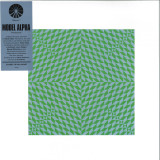
Jonathan Fitoussi & Julie Freyri are Model Alpha. 8 years on after their first album Dimensions, Perceptions is the duo's second album and was entirely composed on analog synthesizers.
Model Alpha is inspired by electronic artists such as Kraftwerk, Laurie Spiegel, Manuel Göttsching or early Detroit techno productions. An elegant blend of synthesizers and drum machines including remix by Chloé (Thévenin).
If someone would have told me years ago, when I started the label, that one day I would be releasing music by Ernesto Djédjé, the king of Ziglibithy himself, I would have personally driven them to the closest psychiatric institute such is the magnitude of the artist and his iconic tune “Zighlibitiens”.
The star of Ernesto Djédjé started rising in the late 60s, when he became the guitar player and leader of Ivoiro Star, founded by Amédée Pierre, star of Dopé, the leading musical style at the time. Annoyed by the “congolisation” of the Ivorian music that was taking place within the band, Ernesto left the group and emigrated to Paris in 1968 to record his first few singles arranged by Manu Dibango and influenced by Soul, Rhythm & Blues and Jerk. Those recordings reflect the musical mood at that time which was dictated by two musical trends within the Ivoirian scene: Traditional music, embodied amongst others by Amédée Pierre on one hand and imported music from the States, Cameroon and Zaïre on the other. And while the first trend was generally neglected, the youth fully embraced the second and as a result bands such as „Les Black Devils“, „Djinn-Music“, „Bozambo”, “Jimmy Hyacinthe”, shot to stardom overnight by recording mainly funk and disco music. It is within this context that Ernesto would draw the inspiration for a future formula.
Returning to Côte d‘Ivoire in 1974 Ernesto began looking for like minded musicians to form the mighty “Ziglibithiens”. Diabo Steck (drums), Bamba Yang (keyboards & Guitar), Léon Sina (Guitar) and Assalé Best (chef d´orchestre and Saxophon) would become the core of the group and together with Ernesto they began thinking of ways of combining the rhythms and chants of the Bété people and fuse them with Makossa, Funk and Disco and create a musical style that was both Ivorian and International. He called his experiment Ziglibithy and his first two albums, immortalised at the EMI studios in 1977 in Lagos and released on the Badmos label, took West Africa by storm turning Ernesto Djédjé into an icon overnight and one of the legends of African music.
Ernesto Djédjé died in mysterious circumstances on June 9th, 1983 - at the age of 35 - shocking the whole Ivorian nation. And although the end came abruptly, it didn’t come soon enough, and Ernesto had time - within 5 albums - to cement his legacy as one of the most innovative artists the Ivory Coast ever produced.
The song Zighlibitiens, brought to Colombia by an aeronautical mechanic in the early 1980, would become a huge hit on the Caribbean Coast. Renamed “El Tigre” by locals soundsystem operators - certainly due to the Badmos logo - that particular song would reach legendary status in Barranquilla and Cartagena. Setting fire to uncountable local parties, it has become one of the most sought-after Album in that part of the world. And so, while Ziglibithy has mostly disappeared from the airwaves of its country of birth, on the other side of the Atlantic, its fire continues to shine bright.
- 1: Por La Mañana
- 2: Oda A La Gente Mediocre
- 3: Hay Un Extraño Esperando En La Puerta
- 4: Si La Guerra Es Buen Negocio, Invierte En Tus Hijos
- 5: Reflejos De Olla
- 6: Historia De Un Loto Que Floreci En Otoño
- 7: Niños
- 8: No Como Antes
- 9: La Banda Le Hace Ud. Caer En Cuenta Que
- 10: Nosotros, Nuestra Arcadia, Nuestra Hermanita Pequeña
- 11: Un Sueño MGico
- 12: Psalmo Siglo Xx, Era De La DestrucciN
Last album recorded by Colombian rock pioneers Los Speakers in 1968 after leaving behind its affinity with yéyé and go-go music. One of the most brilliantly whacked-out psych LPs to emerge from South America. Originally self-released on their own Producciones Kris label, this is an almost impossible to find cult record. Officially reissued for the first time. By 1968, Colombian rock had left behind its affinity with yéyé and go-go music. In Medellín, Discos Fuentes had terminated its contract with Los Yetis, whose farewell record "Olvídate" set a strong anti-establishment tone. While the fire of protest that had spread rapidly among students in Paris was dying out, young people in Bogotá voiced their discontent. Aware of the effervescent political climate across the world, Los Speakers wrote their last record between June and September of the convulsive year of 1968. In order to give shape to these new songs they needed a space where they could experiment freely with sound. The music historian and critic and sound engineer, Manuel Drezner, made a providential appearance and offered the innovative Ingeson studios to the trio under one condition: that his company's name was included in the title of the record. For four months, Rodrigo, Manuel and Roberto created a record that was completely different to anything on the Colombian rock scene at that time. Los Speakers used cutting-edge equipment to record and mix "El maravilloso mundo de Ingeson", It was the first time local musicians had access to a multichannel mixing desk where they could experiment with all kinds of bold sound effects. The silences between songs were replaced with brief intervals of sound including the noise of a train running over a passer-by, a bomb exploding_ Although it's often labelled a conceptual record, the four compositions that each of the band members contribute reveal different aesthetic personalities. From the strong influence of Renaissance and Baroque poetry and music to the virulent social critique and pacifist statements, suffused with religiosity and mysticism. Armed with the demo tape, Los Speakers presented the project to CBS, Philips, Sonolux and Bambuco. The labels' verdict was unanimous: not very commercial and very costly. The group reacted to this negative response by pooling their personal savings, inventing a fictious record label called Kris and released the record just as they had imagined it. This led to the creation of a graphic concept unheard of in Colombia: the record included a booklet containing photos, texts and illustrations. Although there was a big media roll out, which included TV appearances and features in newspapers and magazines, as predicted the album was a commercial failure_ "El maravilloso mundo de Ingesón" is one of the most brilliantly whacked-out psych LPs to emerge from South America.
- 1: Losing Hold
- 2: Gray Traitors
- 3: Lost Without A Trace
- 4: Cafffkaff, The Country Psychologist
- 5: May Your Will Be Done, Dear Lord
- 6: Fairyport
- 7: How To Make It Big In Hospital
- 8: P.k.'s Supermarket (4-Track Demo)
- 9: Hot Mice
- 10: P.k.'s Supermarket
- 11: Fireside Aka Every Fold (4-Track Demo)
- 12: One More Try
- 13: Every Fold (Violin Mix)
- 14: Rockin' Ol' Galway (Violin Mix)
- 15: Rockin' Ol' Galway
- 16: Every Fold
- 17: The Night They Drove Old Dixie Down (Live Ruisrock 1970)
- 18: Losing Hold (Live On Swedish Radio)
- 19: Medley: Up On Cripple Creek...(Live Ruisrock 70)
- 20: Medley: A Day In The Life... (Live On Swedish Radio)
- 21: The Weight (Live Ruisrock 1970)
- 22: Rave-Up For The Roadies (Unedited Version) Part 2
- 23: Rave-Up For The Roadies (Unedited Version) Part 1
Deluxe Edition
We’re proud to present an extravagant 51st anniversary edition of Wigwam’s game-changing prog rock classic Fairyport. What began as a projected 50th anniversary release turned into a 51st due to the current manufacturing queues for vinyl. To create the anniversary package we teamed up with Jukka Gustavson and went through a plethora of material. Gustavson hand-picked the best possible bonus materials. The legendary jam Rave-up For The Roadies, featuring Jukka Tolonen, was located in its original 36 minute form. The truncated 17-minute version is the closing number of Fairyport, but here the full version received an entire LP. Most original reels to Fairyport are lost, but we salvaged a few demo session tapes plus some eight track reels of the album’s work-in-progress stage. Four tracks were chosen by Gustavson to be added here. It should be noted that the two album session tracks feature the original violin parts, which were left off the final product. All material was mixed from the original reels by Risto Hemmi at Finnvox. The box set also features a live LP. For this Gustavson picked material from a show the band played in Stockholm while working on the album’s demo sessions. There’s an earliest existing version of Losing Hold plus a 15-minute medley of several tracks. Also included is a 20-minute live set from the first ever Ruisrock in 1970, a couple of months before the band entered the studio. Here Wigwam perform three classics by The Band. The vinyl box set is limited to 1000 copies. All material has been remastered at Finnvox by Pauli Saastamoinen in 2022.
- 1: Lifeline (Feat. Juliet)
- 2: In My Feelings
- 3: Uncle Chris Car
- 4: Goin' Thru It (Feat. Marc Scibilia)
- 5: Housing Authority (Feat. Kxng Crooked)
- 6: Holy Ghost (Feat. Cyhi The Prynce)
- 7: Therapuetic
- 8: One Day
- 9: Masked Up
- 10: Love Is Love (Feat. Sheek Louch)
- 11: Sincerely Yours
- 12: Doors Up (Feat. Pastor Lbs)
- 13: Og
Black LP[22,06 €]
Joell Ortiz has a new solo album, "Autograph", coming out on Mello Music Group November 12th. Joell is 1/4 of the supergroup Slaughterhouse along with Joe Budden, Royce Da 5'9, and KXNG Crooked. His career started on Dr. Dre's Aftermath and then lead to Eminem's Shady Records, before joining the Mello Music Squad. He appears on Lin-Manuel Miranda's Hamilton soundtrack, as well as Eminem's most recent album "Music To Be Murdered By." Joell's upcoming album "Autograph" features production from 9x Grammy Nominee Salaam Remi, the Grammy Winning Heatmakerz, Hesami, and Detroit legend Apollo Brown, along with features from Sheek Louch, Marc Scibilia, KXNG Crooked, Pastor LBS, and CyHi the Prynce.
Recommended If You Like: Deerhoof, Tune-Yards, CAN (if they were a band in like, 2070), Blonde Redhead, Horse Lords, Tigue, Lil Nas X (in spirit). Over eighteen boundless albums as experimental as they are pop, Deerhoof has continuously quested for radical sounds and daring storytelling.
Dates Aug 28 Summerhall, Edinburgh, Aug 29 The Cluny, Newcastle Upon Tyne, Aug 30 Brudenell Social Club, Leeds, Aug 31 Electric Ballroom, London, Sep 01 Hare and Hounds, Birmingham.
- A1: Cook Strummer - For Berlin
- A2: Los Cabra & Manuel Sahagun - Italian Groove (Vinyl Edit)
- A3: Freudenthal Feat Nowhere People - Cipher (Vinyl Edit)
- A4: Marvin Jam & Le Mythe - Bad Karma (Vinyl Edit)
- B1: Daniel Jaeger & Valenti - Quarantine Cowboys (Vinyl Edit)
- B2: Air Horse One - Out Of The Blue (Vinyl Edit)
- B3: Dramasquad - Ziggy (Vinyl Edit)
- B4: Abayomi – Juba
- C1: Keene - Ecoute (Vinyl Edit)
- C2: Dan Buri - Zion (Vinyl Edit)
- C3: Max Joni & Mukkimiau - Everafter (Vinyl Edit)
- C4: Red Pig Flower & Lulla - Radioactive (Vinyl Edit)
- D1: Mike Book - Ready To Go (Vinyl Edit)
- D2: Freedomb - State Of Shock (Vinyl Edit)
- D3: Electronic Elephant - Ask Yourself (Vinyl Edit)
Three years after Reno Wurzbacher’s entry into the series, Cook Strummer now offers up his own Berlin Gets Physical, a collection of all-new and exclusive tracks.
Berlin-based, Belgium-born Strummer has been a Get Physical associate for several years. He has dropped various singles including the standout 'Rising' which also featured on the Words Don't Come Easy series, and always crafts the perfect mix of rhythm and melody with plenty of hints of his homeland's famous cold wave sound. He often uses his own voice, drum machines, synths and guitars in his music, and since his debut album in 2018 on LOK Recordings, he has had high profile support from the likes of Laurent Garnier, Adam Port and Ame. This summer, he dropped 'Atmosphere' on Obsolet Records which proved another successful outing and now Berlin Gets Physical finds him digging deep into the famous city's freshest and most essential house sounds across 15 well-sequenced tracks.
His own new offering 'For Berlin' kicks off with a dark and edgy vibe, gothic vocals and tense drums. Glitchy hits and blurting synths add to the prickly atmosphere and immediately lock you in while Los Cabra & Manuel Sahagun's 'Italian Groove' then takes off on waves of serrated dark disco synths and Freudenthal feat. Nowhere People continue that macho disco vibe with the rugged chug and cosmic rays of 'Cipher.'
The twinkling 'Bad Karma' by Marvin Jam & Le Mythe then allows you to catch your breath with a slower, more spacious dub disco sound and the twanging bass riffs and exotic effects of Daniel Jaeger & Valenti's 'Quarantine Cowboys' rebuilds the atmosphere with some innovative house blues. The mid-section brings brain-frying synth work on 'Out Of The Blue', bubbling dub house and disco courtesy of dramasquad's sprawling 'ziggy' and percussive deep house looseness from 'Abayomi.'
After KEENE's rubbery and rolling Afro sounds comes more cosmic house richness from Dan Buri and Max Joni & MUKKIMIAU, the driving tech of Red Pig Flower & Lulla and heady sounds of Mike Book. There is a raw house heaviness to FreedomB's 'State of Shock' and things shut down with Electronic Elephant's tightly coiled minimal drum funk on 'Ask Yourself'.
This on point collection is an authentic snapshot of the contemporary underground sound of the Berlin.
A rediscovered untitled Mass by Adriaen Willaert "Missa Ippolito", a
hidden ode to the Cardinal of Ferrara, Willaert's patron.Adriaen Willaert
must have already been a prolific composer before he assumed the
position of kapellmeister at the Basilica of San Marco in Venice
After all, a second Mass of his was included in a large, illuminated choral
manuscript that was produced for the Illustrious Brotherhood of Our Blessed
Lady in 's- Hertogenbosch, the Netherlands (the first Mass in this manuscript,
Missa sex vocum super "Benedicta," can be found on the LP Adriano 2). The title
page of the Mass does not mention the name of the composition, only that of the
composer, Adrianus Willart. It was catalogued as a Missa sine nomine, a Mass
without a name. It is assumed that the work was composed between 1522 and
1527, at a time when Willaert was a member of the music chapel of Cardinal
Ippolito d'Este in Ferrara, Italy. At first glance, what's striking about this
composition is that one of the tenor voices sings a cantus firmus (a "given, fixed,
foundational voice" that provides the basis for each movement of the Mass, to
which the other voices are added) that always consists of the same 13 notes: mi
ut mi sol mi ut fa mi fa mi re mi.
In an article about the Mass, the musicologist Joshua Rifkin claims to have
discovered a sogetto cavato delle parole in this sequence of notes. This is a
compositional technique common for the time in which the notes of a melody, in
this case the cantus firmus, are derived from the vowels of certain words. The
notes used for the tone poetry are those of the Guidonian hexachord, a series of
the 6 notes ut-re-mi-fa-sol-la.
For example, the word Maria (Ma-ri-a) can be "translated" into the notes la mi la.
The cantus firmus of the Mass, according to Rifkin, fits the words "Primus
Ippolitus Cardinalis Estensis" (Ippolito I, Cardinal d'Este) perfectly. The Mass is
thus almost certainly (via a hidden message in the music) an ode to the Cardinal
of Ferrara who was Willaert's patron. This rediscovered untitled Mass by Adriaen
Willaert, which we have now sung as a world premiere, can therefore rightly bear
the name Missa Ippolito.
Jake Blount and his collaborators embody a group of Black climate refugees as
they perform a religious service, invoking spirituals that are age- old even now,
familiar in their content but extraordinary in their presentation. These songs,
which have seen Black Americans through countless struggles, bind this future
community together and their shared past; beauty and power held in song
through centuries of devastation, heartbreak, and loss.
Uncut Album of the Month - review and Q&A - out now
"'The New Faith' doesn't pretend to be a prophecy or some kind of survival
manual. It is, instead, a celebration of the inherent power of community and
music's ability to connect and resonate through the ages, created by someone
fast becoming one of the most important young voices in modern American Folk
Music." - Uncut
Songlines feature - considering for a cover
The Guardian feature
BBC Radio 2 Folk Show - interview
FRUK Artist of The Month
- A1: Enfant La Mouche Les Allumettes
- A2: Enfant Au Royaume Des Mouches
- A3: Danse Des Mouches Noires Gardes Du Roi
- A4: Danse De L Enfant Et Du Roi Des Moushes
- A5: Le Roi Des Mouches Et La Confiture De Rouse
- B1: Enfant Assassin Des Mouches
- B2: Les Garde Volent Au Secours Du Roi
- B3: Mort Du Roi Des Mouches
- B4: Pattes De Mouches
- B5: Le Papier Tue-Enfant
- B6: Petite Agonie De L Enfant Assassin
Within the last ten years the resurgence of sixties Gallic Pop, once known as Ye-Ye music, has escalated beyond an inter-stellar dizzy height. What might have been a waning, embarrassing genre destined for a shelf life/death gathering dust amongst the Eurovisions of yesteryear, the ‘jerk-beat’ psychsploitation records of the latter day French-Disco had soon found new floor space in some of the most credible nightspots in London and Japan.
Without a shadow of doubt, the flagship LP with best odds on becoming a discerning household object was “Histoire de Melody Nelson” by one Serge Gainsbourg. An inimitable, 45-minute concept LP handcrafted by a bass-driven psychedelic rock group and a heaven sent, 1001 piece orchestral and choral symphony. The album left hip hop producers alongside progressive rock aficionados crying out for more and more for years to come. This LP was in a league of its very own… or was it?
The seldom-sung musical arranger for Melody Nelson has become one of the most enigmatic names in French-funk; lorded by many as the “French David Axelrod” Jean-Claude Vannier’s name is the lesser-spotted, tell-tale seal of sample-friendly quality when it comes to crate-digging ‘en Francais’. Suitably, when rumours amongst French record dealers claiming “the band who played Melody Nelson recorded a follow-up lp” became a legend of psychedelic folk-lore. Another unconfirmed rumour about JCV taking the remaining out-takes of the beloved Melody Nelson to create a promo-only experimental rock LP left sample hungry producers and DJs in turmoil…
For those in the know the answers to these mysteries lay flat between the anonymous gatefold sleeve of an undiscovered conceptual album bizarrely entitled “L’Enfant Assassin des Mouches” by a custom-built avant-rock entourage called Insolitudes. The rocking-horse manure treasure hunt began.
So here we have it. The mythical teen-tonic for all those suffering from Melody Nelson withdrawal symptoms. For record collectors looking for that special something, this LP contains the extra-special EVERYTHING. Peruse the following genres: Psychedelic, Classical, Soundtracks, Jazz, Hip Hop, Samples, Avant Garde, Funk. Then place a copy of “L’Enfant Assassin des Mouches” in each section.
History denotes that when ‘our man in Paris’ Msr. Gainsbourg first heard the initial bones of this LP he took his poetic pencil to paper providing bizarre liner notes, thus consummating the most extraordinary concept album of all time. The story “The Child Assassin Of The Flies” was to be included as the only information to grace the LPs highly collectible, concertina gatefold sleeve. The story in full is reproduced in its native-tongue on this very special re-release package. The CD also includes the bonus track “Je M’ Appelle Geraldine”, a beat heavy John Barry-esque track taken from Vannier’s super-rare 7? EP “Point D’Interrogation”.
DJs and Producers such as Jim O’Rourke, Stereolab’s Tim Gane and David Holmes have spent sleepless nights in perusal of original copies of this perfect release and now regard it as ‘One Of The Best’. Recent copies on eBay have commanded ridiculous price-tags, and is now one of the most sought-after articles amongst the vinyl hungry hip-hop community.
repressed in Clear Orange Marbled Vinyl
Splendid re-issue of this sought after Dutch ambient techno classic from the early 90's. Produced by the same team behind the It's Thinking project: Gerd, Dirk & Mark. Originally released through Deviate from Utrecht. Now manufactured by the self titled Marvo Genetic imprint, a one-off subsidiary to Gerd's own Frame Of Mind. Including a previously unreleased track called The Reprise found on the original session tapes. Tip!
Think about the classic from MAW "Work", Reel to Real "I like to Move it"... TROPICAL FLASH "Get up" has the same vibe and the same kind of potential on the dancefloor !
This is a truly essential for the coming summer, percussive rhythm and expressive Jamaican vocal style. Funky, efficient and with an organic feel due to the bass guitar and percussion.
Along both original mixes features a really cool remix by the NYC Legend DJ Spinna, this time Spinna did not produce a soulful house track but a real massive House Remix with some heavy 90’ influences, really sick! The 12'' has been cut by Mathieu Berthet so expect a very nice cut, the full picture sleeve has been manually designed by Felix Godefroy and is really colourful, it makes a very nice 12'' with good pressing quality on 140g from Vinyl de Paris.
After the 2021 Re-Release of “Schwingungen” (MG.ART612) and together with “Seven Up” (MG.ART613) we proudly announce “JOIN INN” as Part3 of the authorised 50th Anniversary “A.R.T.” Re-Edition Series.
“JOIN INN” is the fourth album by Ash Ra Tempel. It was recorded at Studio Dierks and originally released on LP by Ohr Musik-Produktion, catalogue number OMM 556032. Each side of the LP comprises one long track.
In 1972 ASH RA TEMPEL teamed up again with Klaus Schulze during the recording of Walter Wegmüller's Tarot album, and after one of the recording sessions, ASH RA TEMPEL members: Enke, Göttsching and Rosi, together with Klaus decided to "play it again" in a late night session. This recording led to the birth of the “JOIN INN” album, as well as two legendary last concerts in February 1973 in Paris and Cologne.
Manuel Göttsching recalls Hartmut Enke on bass and Klaus Schulze on drums being a dream-team rhythm section for him to play his guitar, especially here to hear on “Freak'n' Roll”, that was ingenious and not to replace ever since.
It was the last recording ever where Klaus Schulze (who sadly passed away this Year) played the Drums and also Hartmut (the Hawk) Enke soon after quit the Bass and music forever.
Join Inn marks the end of the collaboration with Klaus Schulze.
However, together with Ash Ra Tempel, their eponymous first album, which will be released in 2023 as the final edition of our Series, it is considered a highlight of the Krautrock movement.
As for the music itself we again refer to Julian Cope´s review from his book “Krautrocksampler” (published by Head Heritage, 1st ed. 1995):
""Freak’n’roll” fades in like it never started - just was always there from the beginning of time, a dry wah-guitar freerock riff-out unlike any of the other Ash Ra Tempel LPs, and not much like any other music. Yes, there are bluesy riff but none of them have a blues context. Manuel Gottsching’s guitar is so confident that he sometimes drops down to a simple major chord groove, whilst the Hawk pushes that round woody bass into strange overlapping rumbling melody. And ... it’s the return of Klaus Schulze on drums which propels “Freak’n’roll” to its height. No-one but Klaus has the ability to
transcend rock’n’roll in such an on-the-beat non-groove-y way and still send sparks of light into the cosmos as he does it.
-> continued on page 2“Freak’n’roll” is so egoless that it even works at a quiet volume as meditational music. Themes rise from the high tempo pulse beat, then are carried along the muscles of the song into the main area where the riff actually becomes real and expressionist for just long enough before slipping back into the musical fabric of the song.
As usual with Ash Ra Tempel, the other side is an enormous drift piece called “Jenseits (The Next World)”, a beautiful Klaus Schultze meditation of haunting synthesizer chords over which Rosi Muller tells the story of the Cosmic Couriers’ meeting with Timothy Leary. Gradually, the pulsing guitar becomes increasingly intense and turbulent, but Rosi never sounds less than freaked out. Essentially, “Jenseits” is a precursor to Klaus Schulze’s later spacey minor-key grooves.
Unfortunately, this was the last Ash Ra Tempel album in its particular ‘series.
(…) After “JOIN INN”, Manuel Gottsching took over the Ash Ra Tempel mantle alone.”
- 1: Esoteric Manuscript (Remix)
- 2: Info For The Streets
- 3: He Is Dj Hi-Tek
- 4: Karma
- 5: The Vision
- 6: Tunnel Bound
- 7: Nuclear Hip-Hop (Feat. Talib Kweli)
- 8: Anotha Day
- 9: Sacred (Feat. Talib Kweli)
- 10: Peddlers Of Doom
- 11: Millennium
- 12: Babylon The Great
- 13: Peace Infinity (Feat. Talib Kweli)
- 14: Secrets Of The (J Dilla Remix)
- 15: Illuminated Sun Light (Hi-Tek Remix)
- 16: Industry Lies
- 17: No Ordinary Brother
- 18: Cincinnati
Fat Beats in partnership with Space Invadaz is pleased to release the 25 year anniversary edition reissue of Mood’s acclaimed 1997 debut LP, Doom. Originally released on September 23 of 1997, Doom was an important springboard for the careers of Talib Kweli, DJ Hi-Tek, Sunz of Man and Lone Catalysts. The 18 track LP is an artistically experimental album marked by stand out production and lyricism that remains on-point throughout.
Cincinnati rappers Main Flow and Donte kick apocalyptic rhymes that cite sacred scripture, ancient history, and politics. Both their rhyme schemes and chemistry are strong and prove to be equally compatible with DJ Hi-Tek, who made his production debut on this record, composing nine of the album’s 18 tracks, with newcomer Jahson handling the remaining production. Similar to the lyrical pairing, the production duo of Hi-Tek and Jahson are well matched, as they add a sense of darkness and mystery that shrouds the sonic backdrop throughout the album.
Doom is lyrically and sonically an outstanding body of work that stands out as one of the more noteworthy indie rap titles of ’97. In celebration of the 25 year anniversary milestone, this reissue comes equipped with remixes, including the J Dilla Remix for “Secrets of the Sand” which was never before featured on any previous album represses or reissues.
[a] 1 Esoteric Manuscript (Remix) [feat. Micah9]
After the 2021 Re-Release of “Schwingungen” (MG.ART612) we proudly announce “Seven Up” as Part 2 of the authorised 50th Anniversary “A.R.T.” Re-Edition Series.
“Seven Up” is the third studio album by Ash Ra Tempel and their only album recorded in collaboration with American Ph.D. in psychology, Dr. Timothy Leary. The Coverart for “Seven Up” was designed by famous Swiss Artist Walter Wegmüller. Recorded in August 1972 at Sinus Studio in Berne, Switzerland, remixed September 1972 at Dierks Studios in Stommeln, Germany. First release in spring 1973 by OHR Musik - the first release on the new sub-label "Kosmische Kuriere", Kat-Nr. KK 58001.
We release “Seven Up” in a Re-Cut carefully overseen by Manuel Göttsching himself, on September 9th 2022, also being Manuel Göttsching´s 70th Birthday. Our Edition features the full original text for the “7 levels of consciousness” by Timothy Leary in English, i.e. “Instruction Manual for Pleasure Panel” plus a previously unreleased glimpse view of the original scripts incl. notes and mark ups as well as partly unreleased photos from the recording session. ->continued on page 2->continued on page 2 As for the music itself we again refer to Julian Cope´s review and remarks from his book "Krautrocksampler” (published by Head Heritage, 1st ed. 1995):
“When the Leary Mob met the Kaiser Gang, the sparks flew ever Up-wards... 7up is a stone classic in every way. Yes, it is unlikely to find Timothy Leary singing lead vocal in a cosmic group, but even weirder that he chose to sing a wild yelping freaked out blues !
Manuel Göttsching and Hartmut Enke had begun their careers in The Steeple Chase Blues Band back in the mid-'60ies, and they quickly felt their way through what Barritt and Leary were aiming for. They reconciled it all as a kind of West Coast chordless psychedelia, where blues riffs sparkle out of nowhere and the sheer weight of synthesizers renders everything with an unreal Pere Ubu/early Roxy Music quality.
The greatness of Ash Ra Tempel burned so brightly on 7Up that there is really nothing else like it. Hartmut Enke and Manuel Gottsching here returned to their riffy roots. It can hardly be called a retro act, though, as the context of music is everything. And with Dierks at the controls, even the New Kids on the Block would have sounded psychedelic.
7Up is like a late night radio show glimpsed through a shattered tuner where all but the most truly dangerous sounds have been allowed to stay, to drift and to dance around the performers.
The result is an extreme gem, a flash of hysterical white lightning, and a pre-punk Technicolour yawn in the grandest of traditions.
In typical Ash Ra Tempel style, the record is divided into two pieces, “Space” and "Time”. Within this, though,
Timothy Leary’s ideas are allowed to free-flow and the two sides are therefore divided into mini-songs all segued together. The highlight of Side 1 is “Power Drive”, a West Coast burn-up that transcends any W.
Coast music I ever did hear. Leary and Barritt present the greatest twin-vocal of all time, coming on like Jagger and Morrison but too caught up in their own maelstrom to be anything less than Heralds of the Punkfuture still five years away.
In chaos it was conceived and in chaos it was recorded. Yet Dieter Dierks, the great Aural Architect of the Cosmic Couriers, turned 7Up into a personal triumph and a Kosmische dream.”
Ash Ra Tempel – “Seven Up”
TIMOTHY LEARY - voice
BRIAN BARRITT - voice
MICKY DUWE - voice & flute
LIZ ELLIOTT - voice
BETTINA HOHLS - voice
PORTIA NKOMO - voice
HARTMUT "HAWK" ENKE - bass, guitar & electronics
MANUEL GÖTTSCHING - guitar & electronics
STEVE A. - organ & electronics
DIETMAR BURMEISTER - drums
TOMMY ENGEL - drums
DIETER DIERKS - synthesizer & Radio Downtown
Das Album "Tonwelle" ist das Resultat der Zusammenarbeit von Klaus Schulze mit einigen namhaften Musikern. Deshalb erschien das Album 1981 als Vinyl unter dem Künstlernamen Richard Wahnfried. Mit dabei z. B. Manuel Göttsching (Ash Ra Tempel) und Michael Shrieve (Santana). Diese ursprünglich Vinyl Veröffentlichung sollte mit 45 RPM abgespielt werden, Klaus hat das Album aber auch schon so abgemischt, dass es auch auf 33 RPM abgespielt werden kann. Die jetzt veröffentlichte Version auf Vinyl enthält die Original-45 RPM Version.
This mega-rare 1969 album pays tribute to the Bronx and Brooklyn neighborhoods where young Latinos had invented the boogaloo a few years earlier. This record highlights the quality of Peruvian boogaloo and the talent of musicians such as pianist Otto de Rojas and percussionist Coco Lagos. First time reissue. In the mid-sixties, when young Latino musicians in New York fused Afro-Cuban rhythms with rock, soul and jazz, they had no idea that their boogaloo bang bang would reverberate just as strong and loud in a distant South American country. From 1955, La Sonora Macedo, took Cuban music to every corner of Peru, backed the leading musicians of the Peruvian tropical universe, such as Ñiko Estrada, Joe di Roma, the double bass player Pepe Hernández, and the trumpet players Tito Chicoma and Charlie Palomares. All diehard fans of Cuban music, always alert to any new artist arriving from the island. In the early sixties, light rock, doo-wop, ballads, Italian songs and bossa nova paraded across Lima's stages, making performances by Cuban bands, previously so frequent, a thing of the past. Moreover, the unanimous success of the Beatles from 1964 onwards, gave the impression that music from the English-speaking world would dominate the rest of the decade. But this was not the case. In large part because of Manuel Guerrero's good relations with U.S Latino labels, such as Alegre Records, which released the initial recordings by Johnny Pacheco and Charlie Palmieri, allowing listeners in Lima to follow the development of the salsa movement almost from the beginning. MAG was undoubtedly the best representative of these new sounds. In 1969, the LP "Acabo con Lima, huyo pa' Nueva York" was released on this label, a project which brought together three figures from Lima's show business world: Manuel Antonio Guerrero, owner and founder of MAG, who wasn't shy of joining in on the chorus and percussion during recordings, Pablo Villanueva "Melcochita", a multifaceted artist from a talented musical family from the popular district of La Victoria, was responsible for the vocals and percussion on the album. And the third Lima show business figure in this project was the musician, singer and comedian Alberto Montroy Laostervened, who gained fame in the sixties while still in his twenties for his imitation of Cantinflas, the Mexican actor. Alberto bore a devilish resemblance to Cantinflas, not only in his gestures but also physically. Under the name of Pepe Moreno "Karamanduka" he also went on to record songs abroad such as "El boogaloo de Cantinflitas". "Acabo con Lima, huyo pa' Nueva York" was immediately re-released in other countries, highlighting the quality of Peruvian boogaloo and talent of musicians such as pianist Otto de Rojas and percussionist Coco Lagos, who feature prominently on the album. Songs such as 'Vuela mi descarga', 'Peruvian boogaloo' and 'Peruvian guajira', pay tribute to the Bronx and Brooklyn, neighborhoods where young Latinos had invented the boogaloo a few years earlier.
Stemming from a great legacy of poetry, Quintal de Clorofila was a duo from the south of Brazil composed by two musician brothers, Dimitri and Negendre Arbo, who turned their dad's poetry into music. In the album O Mistério dos Quintais, the two brothers presented a Brazilian Hippie Folk full of psychedelic touches a times with flanger effects, reverb and synthesizers, a times totally raw with medieval melodies, flutes and strings. The record goes with the original artwork, insert with lyrics plus unreleased photos including the one of the debut album O Mistério dos Quintais featuring the bird (a canary) that sang on stage with its own microphone. O Mistério dos Quintais was released originally in 1983 via a some sort of crowdfunding, before the term itself and even the existence of internet. Supporters who invested in the project had their names in the acknowledgements on the first edition insert. Given the fact that it was released independently, the purity and innocence of the Arbo brothers came to light and set them free to grace the listeners with sounds of nature, mysticism, influences from the Peru Andes and even some madness such as taking the family's bird (that was used to singing along with the brothers at their rehearsals at home) to then record in the studio. When the record was ready, the band realized that the record RPM was wrong. The songs were a bit faster, slightly 1/2 a pitch higher. However, it was too late, nothing else could've been done. Because they were a small band, the manufacturing plant refused to repress the records and they had to endure this. Almost 40 years later, Fatiado Discos present the first version of O Mistério dos Quintais in its original rotation speed, the right one.
- A1: Nothing To Declare
- A2: Totally Spies (Feat Lafawndah)
- A3: Nightflame (Feat Orion Sun)
- A4: Anthology
- A5: Discipline
- A6: Blessgrips
- A7: Easy Jet
- A8: Candace Parker (Feat Muqata'a)
- B1: No More Kings
- B2: Capitol (Feat Alli Logout)
- B3: Sixteen
- B4: Spirit Airlines
- B5: Crown
- B6: More Victories (Feat M Tellez)
- B7: Seven
- B8: Lead Level 15 (Feat Ase Manual)
The LP version is limited to 1000 copies, pressed on blue vinyl, in a high grade spot-varnished gatefold sleeve.
700 Bliss is the forward-thinking duo of DJ Haram and Moor Mother. Their first full length for Hyperdub is an album of noise rap that ties together the raw edges of club music and hip hop with punk energy, jazz, house-party catharsis, percussion-heavy analogue sound design, and cheeky skits, ranging from experimental rap tracks with rolling hi hats and lyrical bravado, to poetry set to noise and sound collage.
Moor Mother and DJ Haram started collaborating in 2014 and eventually formed 700 Bliss, a blistering live act in Philly's DIY scene, releasing their 2018 debut, Spa 700 on Halcyon Veil / Don Giovanni Records. Since that time, both artists have grown global followings. Moor Mother is a prolific solo artist and collaborator, writer, and member of Black Quantum Futurism while Haram has been curating and creating radio shows, DJing, and producing (including an EP for Hyperdub in 2019).
‘Nothing To Declare’ is a smart, danceable revelation, a chiseled soundscape of dive bombing bass, piercing bleeps, crunchy distortion, and wavering synth lines. Welcoming in a variety of voices from their extended, cross-genre scene, 700 Bliss also bring along a cast of collaborators, including vocalists Orion Sun, Lawfandah, Ase Manual, and Ali Logout (from the band Special Interest), plus Palestinian producer Muqata'a, and writer M Téllez who delivers a surreal sci fi monologue over a pounding kick drum on ‘More Victories’.
‘Nothing To Declare’ is a deeply layered rewriting of hip hop and electronic music that gives more with each listen. You won't hear another rap album like it in 2022.
Kavinsky is a zombie who came back from the dead after his Testarossa crashed in 1986.
His first song, "Testarossa Autodrive", was an instant success, and was followed by two singles. In 2007, he was chosen by Daft Punk to open their now legendary "Alive" tour.
In 2011, his track "Nightcall", produced with Guy-Manuel de Homem-Christo, became the theme song for the film "Drive", and consequently a worldwide success.
Kavinsky's first album, "Outrun", was released in 2013, followed by a collaboration with The Weeknd on the song "Odd Look".
In 2022, Kavinsky is back with "Reborn", his second album recorded at the famous Motorbass studio in Paris, due March 25th. "Renegade" which was recorded in collaboration with Victor Le Masne and Gaspard Augé (half of Justice) reinvents the French producer’s unique recipe: dark mood but with a thunderous groove. With a vocal assistance from Cautious Clay, « Renegade » announces one of this years’ most anticipated comebacks.
Black Truffle is thrilled to continue its program of archival releases from Arnold Dreyblatt with a recently unearthed concert recording from Dreyblatt and Paul Panhuysen’s "Duo Geloso". While isolated examples of Dreyblatt’s collaboration with the legendary Dutch multi-media artist appeared on the CD reissue of Propellers in Love and Black Truffle’s wide-ranging archival Second Selection, this is the first release to document the variety and playfulness of the concerts that Duo Geloso performed throughout Europe in 1987-88. Both working across sonic and visual forms, fascinated by numerical relationship and the infinite complexity of string harmonics, Dreyblatt and Panhuysen had a natural affinity for each other’s work, strengthened through Dreyblatt’s many visits to Het Apollohuis, the important experimental art space Panhuysen helped to found in Eindhoven. However, as René van Peer suggests in the liner notes enclosed within this release, Dreyblatt and Panhuysen took very different approaches to these shared interests; the wonderful energy of these Duo Geloso performances results from the meeting of Dreyblatt’s more austere, compositional process with Panhuysen’s spontaneity.
Recorded at a concert at Het Apollohuis in December 1987 (a series of beautiful photographs of which adorn the LP’s packaging), each of the six pieces presented here is distinctive in terms of instrumentation and performance approach. Using electric guitar and bass tuned by Dreyblatt and played using E-Bow and Panhuysen’s motorised plectrums, the opening ‘Razorburg’ moves slowly through a long series of held notes with a madly insistent tremolo that crosses Dick Dale with a mechanised take on the layered guitars of Günter Schickert. The same pair of instruments returns on ‘Duo for Guitars’, where the mechanised attacks dissolve into a harmonic wash, reminiscent of the machine guitar work of fellow Het Apollohuis alumni Remko Scha. On ‘Love Call’, the guitars and bass are accompanied by Panhuysen’s distant warbled vocals, familiar to Maciunas Ensemble listeners. On the remarkable ‘Synsonic Batterie’, Panhuysen begins proceedings with a solo barrage of electronic percussion on the Synsonics Drum Machine (a simple drum synthesiser produced by the toy manufacturer Mattell), joined eventually by Dreyblatt performing his signature percussive natural harmonics on pedal steel guitar. When Panhuysen adds his bird whistle to the mix, the performance becomes the perfect exemplar of the Duo Geloso’s unique mix of studious close listening and subtle absurdity.
Presented in a gatefold sleeve with archival photos and illuminating liner notes from René van Peer.
Mondo, in conjunction with Back Lot Music, are proud to present the final chapter of the Jurassic saga: Michael Giacchino’s score to JURASSIC WORLD DOMINION.
Giacchino started his early career at Disney Interactive Division where he had the opportunity to write music for video games. After moving to DreamWorks Interactive, he was asked to score the temp track for the video game adaptation of The Lost World: Jurassic Park. Subsequently, franchise creator Steven Spielberg hired him as the game’s composer and it became the first PlayStation game to have a live orchestral score, recorded with members of the Seattle Symphony. Now, 25 years later, Giacchino comes full circle with this soundtrack to the epic conclusion of the Jurassic era, recorded with 87 orchestra members and 30 choir members at Abbey Road Studios in London. Fans can expect Giacchino’s usual tongue-in-cheek track titles that highlight the action of the score cues.
Mondo has released all Jurassic World franchise series albums on vinyl to date, so complete the trilogy with the Jurassic World Dominion release. Custom artwork was designed by artist Justin Erickson of Phantom City Creative. The package will include liner notes from Jurassic World architect and director of Dominion, Colin Trevorrow, and pressed onto 180-gram webstore exclusive color vinyl.
Composed by Michael Giacchino
Artwork by Phantom City Creative
Manufactured in Czech Republic
Concrete Castle Dubs return with a double sided 10” rocket launcher from the legend that is Spikey Tee. Two heavy hitters on that ruffnek drum and bass tip, Badder Than Me and Bumbo Ras, coming on a frosted clear 10” vinyl.
Having been involved in the music industry since the early 90’s Spikey Tee is certainly no stranger to the game, not only on a production tip but vocally too. From being signed to Virgin as part of the groundbreaking crew The Sindecut, releasing and featuring on music with the likes of Bomb The Bass, Roots Manuva, Morcheeba, Sola Rosa, Mr Scruff, Jah Wobble and many more, releasing his own solo album on Tokyo Dawn in 2020, and bossing the decks as a dj around the globe too.
We’re very proud to have him deliver two sterling tracks for the label and bring the fire we like to represent neatly!
Instrumental, Neo-classic, ambient, Piano with electronic Recorded at cult CBE Studio (Bernard Estardy) in Paris, The Love Note is a collection of eight startling new instrumental songs played by an experimental quatuor under the auspices of Belgium composer Benjamin Schoos: Ondes Martenot (Christine Ott), Christophe Cerri (Piano), Manuel Hermia (Flute), Jerôme Mardaga (modular synth)
- A4: Eclipse A (Beginnings)
- A5: Eclipse B (First Movement)
- B1: Eclipse C (Hustle Bustle)
- B2: Eclipse D (Funky Side Of Town)
- B3: Eclipse E (Midnight)
- B4: Eclipse F (First Movement Continued)
- B5: Eclipse G (Home)
- A1: Think Positive (Feat Steve Garcia, Edward Garcia & John Ortega - Live)
- A2: Jennifer (Feat Steve Garcia, Edward Garcia, Vincent Anderson & John Ortega - Live)
- A3: Try It All Again (Feat Vincent Anderson, John Ortega, Edward Garcia & Steve Garcia - Live)
First ever repress of the sought after psychedelic tinged funk rock private press album 'Eclipse of the City' from 1980 New York. Originally recorded between 1975 and 1977 in Manhattan's garment district. Eclipse of the City lay dormant on a reel to reel player whilst frontman Carlos Fire Aguasvivas muddled through life working as a data entry clerk away from his fellow band members. It wasn't till he rediscovered the tapes that a sudden life affirming moment drove him to get the music pressed. Putting pen to paper Carlos created the artwork as a homage to his love of comic art and brought the band to life on the reverse with his spindly characters engrossed in the jam. Only 300 copies were pressed at the time leading to eye-watering prices for a copy. with a recent digital re-release from Indian Summer's Anthology Records, Sticky Buttons stepped up to repress the record with a limited run of 500, lovingly manufactured in the UK in all its vinyl glory.
Arriving in the Bronx from the civil unrest of Santo Domingo in the early 60's Aguasvivas was surrounded by the raucous sounds of rock, jazz and prog. Absorbing the humdrum atmosphere of life in New York, Eclipse of the City came from the minds of close friends Carlos Aguasvivas, Steve Garcia and Eddy Garcia. Meeting at Monroe High School the three of them quickly formed a strong bond over their shared interest in music. It wasn't long after that they began rehearsing in a basement under a neighbourhood cleaners and in the attic of Steve and Eddy's family home piecing together their extended sessions of tripped out cinematic psychedelia.
Recording got off to a rocky start as a car accident left the three band members in A&E after taking an early morning cab ride through Manhattan to watch the sunrise on their way into the studio (a theatrical artistic statement of intent conceived by Steve Garcia) - as Eddy mentioned "Eclipse was forged from a lot of pain". Their recording sessions were postponed but a few weeks later they were back and with the added energy of John Ortega on Bass and Vincent Anderson on electric piano and organ - with just a few microphones and a reel to reel recorder, Eclipse of the City was laid down as the stark bold homage to New York's downtown.
Influences ranged from the cinematic behemoth Jaws to the UK prog rock bands of Genesis, Yes and Emerson Lake & Palmer but only could Eclipse of the City take its unique form in the attics and basements of New York with the full band adding their Puerto Rican and Dominican slanted New York energy. Side one includes 3 fully formed tracks breaking out into eerie moments of calm before diving into well timed jolts of reprise as each element weaves over the top of one another whilst side two presents a 30 minute narrative work following the night adventures of a young group of friends exploring the vibrant nightlife of downtown New York. A rumbling half hour of wobbling guitar, tight drumming and synth organ licks jutting out from the glistening lights of the night before the sun rises down Manhattan's East-West axis as the lilt changes and the organ lulls the friends back home. A truly idiosyncratic take on the heady world of New York in the 70's and one that still resonates with our urban landscapes and love for the nights they bring today.
a 01: Think Positive (Live) feat. Steve Garcia, Edward Garcia & John Ortega
b 02: Jennifer (Live) feat. Steve Garcia, Edward Garcia, Vincent Anderson & John Ortega
c 03: Try It All Again (Live) [feat. Vincent Anderson, John Ortega, Edward Garcia & Steve Garcia]
[d] 04: Eclipse A (Beginnings) [Live] [feat. Vincent Anderson, John Ortega, Edward Garcia & Steve Garcia]
[e] 05: Eclipse B (First Movement) [Live] [feat. John Ortega, Steve Garcia & Edward Garcia]
[f] 06: Eclipse C (Hustle Bustle) [Live] [feat. Vincent Anderson, John Ortega, Steve Garcia & Edward Garcia]
[g] 07: Eclipse D (Funky Side of Town) [Live] [feat. Vincent Anderson, John Ortega, Steve Garcia & Edward Garcia]
[h] 08: Eclipse E (Midnight) [Live] [feat. John Ortega, Steve Garcia & Edward Garcia]
[i] 09: Eclipse F (First Movement Continued) [Live] [feat. Vincent Anderson, John Ortega, Steve Garcia & Edward Garcia]
[j] 10: Eclipse G (Home) [Live] [feat. Vincent Anderson, John Ortega, Steve Garcia & Edward Garcia]
- A1: Visitors - Visitors
- A2: Sem Studios - Ivresse
- A3: Des Profondeurs Jesus - L'electrocute
- A4: Les Chats - Bizarre
- A5: The Starlights - Mao Mao
- A6: Basile - Itubo Del Anno
- A7: Chico Magnetic Band - Pop Or Not
- A8: Les Maledictus Sound - Kriminal Theme
- A9: Jesus - Songe Mortuaire
- B1: Basile - Engins Bizarres
- B2: Human Egg - Onomatopaeia
- B3: Les Monegasques - Psychose
- B4: Chris Gallbert - Sing Sing
- B5: Hermans Rockets - Space Woman
- B6: Piranhas - La Turbie Pirhanienne
- B7: Human Egg - Egg
- B8: Les Maledictus Sound - Inside My Brain
- B9: After Life - (Le Secret De) La Vieille Dame (Le Secret De)
Eighteen sacred psychedelic suppositories from the laboratory of mad scientist and scalpel-happy pop mutilator Jean-Pierre Massiera. Includes
the rarest and most sought after fuzz funk, spooked surf and
interplanetary prog from ‘The French Joe Meek’ and all his schizoid splitpersonalities and freakish friends - The Maledictus Sound, Chico
Magnetic Band, Visitors, Human Egg, The Pirhana Sound and Jesus
himself.
Let Finders Keepers introduce you to some old friends of theirs - Charlie Mike Sierra, Jean-Pierre Areisam, JPM and Co. Erik, The Horrific Child, Jesus, Les Maledictus Sound, Human Egg... This might sound like they’re flicking through the imaginary LP racks in the record shop from ‘A Clockwork Orange’ or perhaps congratulating the runners up in a
Halloween fancy dress competition but for the previously uninitiated you
have just been ordained into the congregation of the many split
personalities of one Mr. Jean-Pierre Bernard Massiera. Bow down to the
nine-headed monster as he mutates and shape-shifts back through time
to his humble beginnings in a Buenos Aires province ravaging and
pillaging the music of the European people for his own twisted
benediction along the way.
This might, as intended, sound a little bit dramatic but if there is one
single ingredient that gives the eccentric Jean-Pierre Massiera his
distinct flavour it’s a large dollop of drama. Add sprinklings of
schizophrenia, shock, myth and macabre and you are on the way to a Bmovie broth with an acquired taste that has, like all the best cheese,
taken over thirty years to mature to perfection. Like all the best monsters,
his split personality is the key to his infamy and the secret of his blood
sucking success.
This is why Jean-Pierre Massiera is (un)commonly known for two key
periods in his career which, like a worm, can be split down the middle to
thrive and flourish independently. To cut a long story short, Massiera is,
above all, a lover and purveyor of musique fantastique, and is willing and
able to hijack whichever stylistic vehicle that passes him buy in order to
do feed his lust. In the earlier part of his career he honed his sordid craft
amongst psychedelic circles in Nice and Quebec. From late 1972
onwards he moved to Antibes and started a disco revolution and
became an in demand cosmic record producer. For years, prog rock
obsessives and disco aficionados have wondered if there was two
unrelated freak merchants called Jean-Pierre Massiera but, in this rare
instance, exploito-maniacs from both sides of the cosmic coin are united
by the work of this singular, single-handed monstrous music
manufactory.
Remastered and available once again on deluxe black vinyl since the
initial Finders Keepers limited edition 2009 pressing
- 1: Lifeline (Feat. Juliet)
- 2: In My Feelings
- 3: Uncle Chris Car
- 4: Goin' Thru It (Feat. Marc Scibilia)
- 5: Housing Authority (Feat. Kxng Crooked)
- 6: Holy Ghost (Feat. Cyhi The Prynce)
- 7: Therapuetic
- 8: One Day
- 9: Masked Up
- 10: Love Is Love (Feat. Sheek Louch)
- 11: Sincerely Yours
- 12: Doors Up (Feat. Pastor Lbs)
- 13: Og
Coloured LP[25,17 €]
Joell Ortiz has a new solo album, "Autograph", coming out on Mello Music Group November 12th. Joell is 1/4 of the supergroup Slaughterhouse along with Joe Budden, Royce Da 5'9, and KXNG Crooked. His career started on Dr. Dre's Aftermath and then lead to Eminem's Shady Records, before joining the Mello Music Squad. He appears on Lin-Manuel Miranda's Hamilton soundtrack, as well as Eminem's most recent album "Music To Be Murdered By." Joell's upcoming album "Autograph" features production from 9x Grammy Nominee Salaam Remi, the Grammy Winning Heatmakerz, Hesami, and Detroit legend Apollo Brown, along with features from Sheek Louch, Marc Scibilia, KXNG Crooked, Pastor LBS, and CyHi the Prynce.
- A1: La Clarte Dans La Confusion (Feat N'zeng)
- A2: Calling Dancers (Feat Alborosie & Promoe)
- A3: Rock Mi Nice (Feat Kabaka Pyramid)
- A4: Madzilla (Feat Troy Berkley & Blabbermouf)
- A5: Eternal Roses (Feat Ken Boothe & Lion In Bed)
- B1: Florilege (Feat Lyricson, Queen Omega & Red Fox)
- B2: Drop (Feat Troy Berkley & Dope Saint Jude)
- B3: La Fleur De L'age (Feat Degiheugi)
- B4: People Is Massive (Feat General Levy)
- B5: Scoville Anthem (Feat Lmk, Reverie & Lady Chann)
- C1: Magistral (Feat Bounty Killer & Troy Berkley)
- C2: Clin D'oeil (Feat Dawa & The Architect)
- C3: Get Back (Feat Chali 2Na & N'zeng)
- C4: Mana (Feat Marcus Gad & Juju Rogers)
- C5: Lift Up Your Head (Feat Troy Berkley & Obf)
- D1: Way To Be Happy (Feat Las Ninyas Del Corro)
- D2: Fi Di Yut (Feat Blackout Ja & Tippa Irie)
- D3: Mumbai 808 (Feat Manudigital)
- D4: Saga (Feat Killa P, Flowdan & Big Red)
- D5: Downtown (Befour Steppa) (Befour Steppa)
Unstoppable elders of the L'Entourloop collective, King James and Sir Johnny, are proud to present on June 10, 2022 their long-awaited third and new album entitled "Clarity in Confusion". Featuring Alborosie, Promoe, Degiheugi, General Levy, The Architect ...
It is now official, 2022 will mark the return of the tireless seniors of the collective L'ENTOURLOOP! After a break to devote themselves to the creation of a new album and a new live show that promises to be exceptional, they are back on the road, more determined than ever!
The success of their last albums "Chickens in Your Town" (2015) and "Le Savoir-Faire" (2017), with their unique "Banging hip-hop inna Yardie Style" never cease to seduce sound-system, vinyl and French classics fans, all over the world.
Bliue Vinyl
Yamila reveals her most intimate catharsis in Visions, an album that brings together and provokes the hallucinatory powers of music. Like an ancient herald, she announces the profound feminine mystique while crossing epic melodies full of pleasure and pain. This album is a journey that prodigiously unites baroque accents, Spanish folklore – such as flamenco – and contemporary electronic music.
Her voice and music – sometimes torn and others buoyant – could resemble the score for a biblical passage (ie. visions of the Apocalypse), for they are overflowing with physical ecstasy and sounds that one can touch. Visions is composed of different forms and rhythms. Pieces like "Visions V" evolve intensely with sharp and systematized hits –– powerful layers that bring us closer to Alessando Cortini's Forse era. "Visions II", for its part, shares intensity and power with flamenco ritual patterns, as if it were an old Andalusian scene dripping with oscillations and electric shocks. Yet there are luminous vocal pieces such as "Visions I" (featuring Rafael Anton Irisarri), inspired by Manuel de Falla's Suite Española composed in 1922. Here, an aural chiaroscuro with beautiful voices and choirs is deeply fused with daring drones. And it is in the ensemble of moments of Visions where Yamila's conceptual axis is rendered solid. Pain and glory, lacerating religiosity, feminism cauterized by power, and hallucinations as a source (or pretext/tool) to be heard.
Yamila exhibits a profuse aesthetic with her music that calls for a look at the far-past with romanticism and nostalgia. Visions is radiant, intense. A unique album.
All songs written and performed by Yamila Ríos (Spain), except “Visions I”, which features Rafael Anton Irisarri. Recorded between the Swedish winter and the Belgian countryside. Additional musicians: Simbad guitar on V-IV and V-I, Vera Cavallin harp on VIV. Mastered by Rafael Anton Irisarri at Black Knoll Studio. NY. Photos by Virginia Rota in Madrid. Design by Daniel Castrejón in Mexico City.
Wie bringt man eines der populärsten Reggae Alben in ein bayerisches Wirtshaus? Wie klingt eigentlich die perfekte Symbiose von Hopfen und Hanf? Eine Antwort bieten "Kapelle So&So" und "Captain Yossarian" auf ihrem Album "BOB". Sie haben sich der klassischen Bob Marley Hit Sammlung "Legend" verschrieben und huldigen dem wohl populärsten Reggae Album aller Zeiten in einer für jamaikanische Verhältnisse eher ungewöhnlichen Besetzung: Den Bass übernimmt die Tuba, anstatt von E-Gitarre, Orgel und Clavinet erklingen Schrammel Gitarre, Ziach (diatonische Harmonika) und Tenorhorn. Den klassischen dreistimmigen Chor der "I-Threes" bedienen Basstrompete, Flügelhorn und Trompete und Manuel da Coll alias Captain Yossarian sitzt am Schlagzeug (bestehend aus einem alten Lederkoffer). Die Stimme Bob Marley ¦üs übernimmt dabei Song für Song ein anderer illustrer Solist. Zu hören sind u.v.a. Stofferl Well (ex Biermösl Blosn), Thomas Gansch (Mnozil Brass), Stefan Dettl (LaBrassBanda) und Florian Ritt (Folkshilfe).
The wiggy wanderings of Oog Bogo wind up on the same island of lost joys all at once, manufacturing a virtual jukebox of singles and side flips that won’t unplug, and just keeps reeling and raging on instead. A bright metallurgy of guitar pop, psych, post-punk and apocalypse disco embosses the sleek, multicoloured flash of ‘Plastic’.
Oog Bogo are a four-piece rock band from Los Angeles and their new album is ‘Plastic’, an electrifying set of songs and sounds that just don’t stop, working like a machine that makes joy and endless flips and repetitions, whether in front of the turntable or out in the real world.
In the past several years, Oog Bogo dropped two records that previewed this explosion in wildly divergent ways: 2019’s ‘Oogbogo’ EP, with wigged-out production, its contorted fun house mirror images pulling punk, psych and new wave in and out of focus in a chaotic procession of mutant tunes. 2021’s ‘EP2’ radiates a starkly different vibe, as chilled-out guitar-pop tunes conjure a flowing medley of plaintive echoes and atmospheres in a mellow mist of hiss.
Kevin Boog recorded these records in a largely hermetic state: at home on 4-track, playing all the parts, slowly drawing out the sounds. The songs for ‘Plastic’ were demoed this way too, as a starting point for a group interpretation - but when, for obvious reasons, logistics prevented everyone from getting in the same room to even rehearse, the planned recording session at Ty Segall’s Harmonizer Studios took on a different shape.
Starting off with only drummer Thomas Alvarez (Audacity) to accompany him, Kevin
realized that any obstacles to getting the record made were also opportunities, for
something else that was also right to happen. Rather than reach for the design of the
demos, he kept himself in the present moment, approaching every passage as fluidly
as possible, playing what he needed to play, staying open to what he needed to
know. It didn’t hurt that the laptop with all his songs crashed right after he walked into
the studio! There was no way possible but forward.
The direction was right on with the guys at Harmonizer - Ty Segall’s sense of
imagination made him the ideal production counterpart to walk together with Kevin
into this world, psyched to experiment and ready to get weird at any time. Ty and
engineer Matt Littlejohn met all requests and requirements in the form of sounds, with
gear and approaches that amazed and delighted, and an eternally ebullient spirit.
As this was Oog Bogo’s first time recording away from home, Kevin was a kid in a
candy store - where the store owner turns out to be a Wonka-esque philanthropist.
As band members Mike Kreibel (Dirty & His Fists) and Shelby Jacobson (Shannon
Lay) joined the session, there was a synchronicity and community with everyone
involved, finding an unexpected road to realizing the songs, with all the colours and
hues they added making everything pop that much harder.
Fluidity was key: ‘Plastic’’s tunes depict a polymorphic cast of characters. As in life,
they leap avidly from style to style; from pretty psych rock to new wave apocalypse
disco and harsh post punk bleakness, sometimes in a verse and a half. Corkscrewing
over and over like a riff-driven space-coaster, morphing in and out of each
successive moment with increasing momentum and gravity, ‘Plastic’ defines and
redefines Oog Bogo, with sweet tunes, barely-controlled intensity and sharp
production moves - a killer first album and an equally killer evolving state of mind.
The wiggy wanderings of Oog Bogo wind up on the same island of lost joys all at once, manufacturing a virtual jukebox of singles and side flips that won’t unplug, and just keeps reeling and raging on instead. A bright metallurgy of guitar pop, psych, post-punk and apocalypse disco embosses the sleek, multicoloured flash of ‘Plastic’.
Oog Bogo are a four-piece rock band from Los Angeles and their new album is ‘Plastic’, an electrifying set of songs and sounds that just don’t stop, working like a machine that makes joy and endless flips and repetitions, whether in front of the turntable or out in the real world.
In the past several years, Oog Bogo dropped two records that previewed this explosion in wildly divergent ways: 2019’s ‘Oogbogo’ EP, with wigged-out production, its contorted fun house mirror images pulling punk, psych and new wave in and out of focus in a chaotic procession of mutant tunes. 2021’s ‘EP2’ radiates a starkly different vibe, as chilled-out guitar-pop tunes conjure a flowing medley of plaintive echoes and atmospheres in a mellow mist of hiss.
Kevin Boog recorded these records in a largely hermetic state: at home on 4-track, playing all the parts, slowly drawing out the sounds. The songs for ‘Plastic’ were demoed this way too, as a starting point for a group interpretation - but when, for obvious reasons, logistics prevented everyone from getting in the same room to even rehearse, the planned recording session at Ty Segall’s Harmonizer Studios took on a different shape.
Starting off with only drummer Thomas Alvarez (Audacity) to accompany him, Kevin
realized that any obstacles to getting the record made were also opportunities, for
something else that was also right to happen. Rather than reach for the design of the
demos, he kept himself in the present moment, approaching every passage as fluidly
as possible, playing what he needed to play, staying open to what he needed to
know. It didn’t hurt that the laptop with all his songs crashed right after he walked into
the studio! There was no way possible but forward.
The direction was right on with the guys at Harmonizer - Ty Segall’s sense of
imagination made him the ideal production counterpart to walk together with Kevin
into this world, psyched to experiment and ready to get weird at any time. Ty and
engineer Matt Littlejohn met all requests and requirements in the form of sounds, with
gear and approaches that amazed and delighted, and an eternally ebullient spirit.
As this was Oog Bogo’s first time recording away from home, Kevin was a kid in a
candy store - where the store owner turns out to be a Wonka-esque philanthropist.
As band members Mike Kreibel (Dirty & His Fists) and Shelby Jacobson (Shannon
Lay) joined the session, there was a synchronicity and community with everyone
involved, finding an unexpected road to realizing the songs, with all the colours and
hues they added making everything pop that much harder.
Fluidity was key: ‘Plastic’’s tunes depict a polymorphic cast of characters. As in life,
they leap avidly from style to style; from pretty psych rock to new wave apocalypse
disco and harsh post punk bleakness, sometimes in a verse and a half. Corkscrewing
over and over like a riff-driven space-coaster, morphing in and out of each
successive moment with increasing momentum and gravity, ‘Plastic’ defines and
redefines Oog Bogo, with sweet tunes, barely-controlled intensity and sharp
production moves - a killer first album and an equally killer evolving state of mind.
- 1: Manu Dibango - Groovy Flute
- 2: Tenorio Jr. - Nebulosa
- 3: Mark Murphy - Why Don't You Do Right
- 4: Illinois Jacquet - Mambocito Mio
- 5: Frank Minion - Bongo Blues
- 6: Blue Mitchell - Mi Hermano
- 7: Lorez Alexandria - I'm Whishin
- 8: Marian Mcpartland - Coming Home Baby
- 9: Oliver Nelson - 125Th Street & 7Th Avenue
- 10: Ella Fitzgerald, Ernie Heckscher Big Band & Tommy Flana
- 11: Orchester Roland Kovac - Milky Way
- 12: Gene Ammons - Pagan Love Song
- 13: The Monty Alexander Trio - Monticello
- 14: Mel Tormé - Right Now!
- 15: Richard "Groove" Holmes - Six Million Dollar Man Theme
- 16: Dizzy Gillespie - For The Gypsies
- 17: Michel Sardaby - Welcome New Warmth
- 18: Art Farmer Septet - Mau Mau
- 19: Frank Minion - Watermelon
- 20: The Ibrahim Khalil Shihab Quintet - Before The Rain And
- 21 0: Gabor Szabo - Galatea's Guitar