LP 180g, beautiful embossed Chess Board Artwork Print, inner sleeve with artist picture and text by David Elliott, Sounds June 16, 1984 In anticipation of the 35th anniversary next year one of electronic music´s most influential recordings, the legendary E2-E4, from 12.12.1981 does get an official rerelease by Manuel Göttsching on his own Label MG.ART. Carefully overseen by the Master himself Total Time: 59:34
Buscar:manuel gottsching
repress soon !
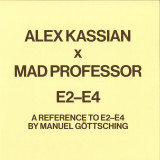
Alex Kassian's extended rendition of E2–E4 promises a 12-minute electronic odyssey, tailor-made for diverse dancefloors from it’s spiritual home Ibiza and beyond. On the flip side, Mad Professor embarks on a club-oriented version excursion, a rare gem in its own right. This reimagining breathes new life into the classic, offering fresh perspectives for music aficionados everywhere. Hot tip for release of the Summer!
1976 hatte Michael Hoenig eine kurze Zusammenarbeit mit Manuel Göttsching von Ash Ra Tempel in Berlin; eine 48-minütige Aufnahme einer der Sessions, die 1995 unter dem Titel "Early Water" auf Bernd Kistenmachers Label Musique Intemporelle veröffentlicht wurde. Das Album wurde gestrichen und war lange Zeit nicht erhältlich. Nun wird es endlich eine Wiederveröffentlichung von "Early Water" geben. Michael Hoenig erinnert sich noch: "Während ich an dem Album "Departure From The Northern Wasteland" arbeitete, hatte mich Manuel Göttsching gefragt, ob ich mit ihm für einige Konzerte in Frankreich zusammenarbeiten würde, da seine Gruppe gerade eine Winterpause eingelegt hatte. Wir probten drei oder vier Wochen bei mir zu Hause. Eines Abends bekamen wir einen Anruf wegen einer fehlenden Garantie, woraufhin wir beschlossen, die Tournee abzusagen. Nur zum Spaß spielten wir ein letztes Mal eines der geplanten Sets. Obwohl ich mich nicht daran erinnern kann, eine Aufnahmetaste gedrückt zu haben, hat jemand kürzlich ein Revox-Band mit eben diesem Set ausgegraben. Nach einer digitalen Klangarchäologie wurde es soeben unter dem sehr passenden Titel "Early Water" veröffentlicht." Und Manuel Göttsching fügt hinzu: "Leider wurden einige Konzerttermine nicht rechtzeitig bestätigt und wir mussten die komplette Tournee erst am Tag vor der Abreise nach Frankreich absagen. Dennoch haben wir an diesem Abend unsere letzte Probe "für alle Fälle" aufgenommen. Es ist ein fließendes, harmonisches Stück geworden, das viel von der optimistischen Stimmung des Jahres 1976 widerspiegelt. In den frühen 1980er Jahren zog Michael nach Los Angeles. Als wir uns im November 1994 wiedertrafen, schlug ich vor, dieses alte Stück von uns zu veröffentlichen. Michael nahm das Originalband mit nach Los Angeles, restaurierte es liebevoll und nun, hier ist es wieder!"
Sorgfältig überarbeitete legendäre Studioaufnahme von 1977 für RIAS Berlin – inklusive Bonustrack „Despair“ "Manu hatte keinen Sequenzer. Alles, was nach Sequenzer klang, war seine hochkonzentrierte Gitarrenarbeit. Die langsam wechselnden Tonfolgen zum Beispiel. Dies war eine körperliche Leistung für sich. Sein minimalistisches Spiel ist immer noch Teil seiner Handschrift. Die Musiker aus Berlin, die im selben Genre arbeiteten, waren entweder befreundet, spielten zeitweise in Manuels ASH RA TEMPEL oder bauten ihre eigene Karriere auf. Die Szene war klein, aber mit
illustren Promis bestückt – Klaus S
In 1976 Michael Hoenig had a brief collaboration with Ash Ra Tempel's
Manuel Gottsching in Berlin; A 48-minute recording of one of the
sessions, which was released in 1995 under the title "Early Water" on
Bernd Kistenmacher's Musique Intemporelle label.The album was deletedand unavailable for a long time
Now, finally, a re-issue of "Early Water" will be available again.
Michael Hoenig still remembers: "While I had been working on the "Departure From The Northern Wasteland" album, Manuel Gottsching had asked me if I would team up with him for some concerts in France, since his group had just gone through one of its hibernation
periods. We rehearsed in my place for three or four weeks. One evening we got a call regarding some missing guarantee, which ultimately led to the decision to cancel the tour. Just for fun, we played one of the planned sets for a last time.
Even though I do not recall pressing a record button, somebody recently dug up a Revox tape of that very set. After performing some digital sonic archaeology on it, it was just released under the very appropriate title Early Water."
And Manuel Gottsching adds: "Unfortunately, some of the concert dates were not confirmed in time and we had to cancel the complete tour just on the day before we wanted to leave for France.
On that evening, nevertheless, we recorded our last rehearsal "just in case". It turned out as a flowing harmonic piece, reflecting much of the optimistic air of 1976. Michael made his 'departure' to Los Angeles in the early 1980ies. When we met again in November 1994 I proposed to release this old track of ours. Michael took the original tape to Los Angeles, lovingly restored it and - well, here is it again!"
Many of you will remember Manuel Göttsching by his Masterpiece E2-E4 and know the fact it got sampled by far more than once. Think Sueno Latino' to start with... and the plethora of further re-recordings by Derrick May, Joe Claussell, and a bootleg by Carl Craig that prove how Now' and Iconic Manuel´s Work is. The 2006 edition Joaquin Joe Claussell meets Manuel Göttsching' is the first attempt to bring these once illegal mixes finally to a broader and wider audience. It comes with 2 very rare and first time officially released tribute mixes of 1970´s Göttsching Classics, carefully remodeled by Joe Claussell (21.12 minute Deeper Distance' plus 10.17 Minute Ain´t No Time For Tears"). The last words, however, are left to MG himself, with Shuttlecock", a final eighteen minute excursion, which has Manuel improvise over a soft carpet of delayed bell sounds, before the guitar fades away and the track deepens and thickens, like a dark river sweeping along ever more motives and harmonies. A perfectly balanced collaboration released on both CD and LP. Consisting of 3 concert recordings which were originally released on the 6th CD Album Private Tapes : Tracks 1 und 3 were recorded at Bataclan in Paris, 12/1976, Track 2 in Berlin 8/1979
LP 180 G Vinyl Remastered by Göttsching, Long deleted Vinyl Reissue. Remastered by Manuel Göttsching and released on his own label MG ART. Inventions for Electric Guitar is Manuel Göttsching´s first solo album, recorded: July-August 1974. The album was written and performed entirely by Göttsching on electric guitar, hence the title. Manuel played his guitar and used a 4 track TEAC A3340, Revox A77 for echoes, WahWah pedal, volume pedal, Schaller Rotosound and Hawaiian steel bar.
Manuel Gottsching classic E2 E4 is reframed by SG and fellow musicians.
Alex White - drums
Ryan Gates - percussion
Rafael Statin - wind synth
Scott Grooves - polysynth, keyboards and arrangement
Recorded June 2017 at The Disc Recording Studios Detroit
The new arraignment is 15 minutes long.
Natural Midi 11
Dark Entries returns to the steam room with Coatshek’s Sound Bath. For their SoundBaths series, now-defunct poppers brand Double Scorpio commissioned artists to make mixes for an imaginary queer bathhouse. When asked to contribute, San Francisco-based artist Coatshek aka Sheki Cicelsky took the opportunity to create original compositions. The resulting album, Sound Bath, serves as a masterclass in slow and sultry ambient techno. Taking inspiration from Pink Floyd, Manuel Göttsching’s E2-E4, and his friend’s DJ mixes (particularly Nick Moss and Matthew Paul’s for “Por Detroit”), Coatshek landed on 107 bpm as the optimal speed for sauna sex. With just a few synths, his Telecaster, and “lots of delays, reverb, and weed,” he sculpted stunning cuts like the effortlessly grooving “Softest” and the psych-laced “Triple Virgo.” The cover for Sound Bath was designed by Coatshek’s fiancé Nate Sprecher, and features photographs by Luke Kraman taken at The Ever Afters campout. The album also includes an insert featuring the Double Scorpio SoundBaths series artwork by Blake Wright. Equally hypnogogic and sexually supercharged, Sound Bath situates the bathhouse as a liminal dreamspace of unbounded erotic potentiality.
File in Ambient / Electronic / Mood Hut sections
Listen if You Like = Jon Hassell, Hiroshi Yoshimura, Terry Riley, Rhythm & Sound, Laurie Spiegel, Ariel Kalma, Laraaji, Steve Roach, Kerry Leimer, Suzanne Ciani, Yu Su, Hotspring, La Monte Young, Erik Satie, Music From Memory, Brian Eno, O Yuki Conjugate, Harold Budd, Robert Guthrie, Leif, Gigi Mason, Gaussian Curve, Patricia Wolf, Muslim Gauze, Manuel Göttsching,
f B1. Simulacra f. Alex Ho
For the first EP on his new label, Planet Strangelove, Job Jobse brings new life to an overlooked balearic house gem: "Pasion," an early '90s deep cut by the Leeds artist Pianoman, inspired by Tangerine Dream's "Love On A Real Train,” aka the most breathtaking synth arp of all time. Alex Kassian, whose sprawling take on Manuel Göttschings's "E2-E4" already showed his fine touch for the kosmische vibe Tangerine Dream embodied, delivers a "Dance Mix" and a "Dream Mix," one packing a club-ready beat, the other drifting weightlessly. London duo The Trip, of the label and party Tesselate, deliver a remix as breezy as it is thumping, all wailing divas, sunkissed pads and shimmering pianos. As for Pianoman's "Analysis" remix, it's a dazzling artifact of the balearic era at its peak, touched by the ineffable essence of its time but sounding just as fresh as its modern reinterpretations.
After an initial European release in 1976 on the Isadora label Age Of Earth was re-issued on Virgin Records in Summer 1977 and fast became a beacon for electronic music and what was becoming known as ambient - Some cite its very title as helping introduce 'new age' music - This re-issue faithfully replicates the original 1977 Virgin Records release and is pressed on 180g heavyweight vinyl.
Guitarist and synthesiser player Manuel Göttsching formed Ashra after disbanding Ash Ra Tempel, the outfit he had led since 1971. Moving away from the space rock of his previous group, Ashra was a far more electronics-based project. Recorded in Berlin, between March and June 1976, the four pieces on the album represent the very best of what became known as Kosmiche: dreamily repetitive, glancing to the stars while keeping feet firmly on the ground.
New Age Of Earth is a record full of contrasts: the throbbing, techno-predicting Sunrain opens the album; with its waves and crickets sound effects, Ocean Of Tenderness pulses gently like a space-age early Fleetwood Mac; Deep Distance brings elements of surf music into glacial electronica. At 21 minutes long, Nightdust occupies all of the album's second side, a ruminative, slowly unfolding piece that, after its crescendo, gives way to Göttsching's impressively celestial electric guitar solo.
Spiritual World's first archival 12" vinyl release from the UK’s free festival dub pioneers.
The Ullulators, an experimental dub and world music ensemble from Bath, UK, have long been associated with the UK’s free festival movement, tracing their creative lineage back to the mid-1980s. For the first time ever, two pivotal tracks from their early cassette-only discography—“Simply Conscious Dub” and “Eternal
Now”—are being issued on 12” vinyl, marking the first archival release on Spiritual World.
The A-side, “Simply Conscious Dub”, originally featured on the 1986 cassette Beyond the Gates of Ull, exemplifies the band’s signature fusion of weighty dub rhythms with expansive and euphoric electronics.
In contrast, the B-side, “Eternal Now”, drawn from the 1985 cassette Share a Calm with the Ullulators, ventures into more introspective sonic territory. Built on minimalist structures and ambient textures, it evokes the kosmische tradition and aligns with the spatial sensibilities of Manuel Göttsching’s E2-E4.
Together, these tracks not only showcase the group’s wide stylistic range but also underscore their forward-thinking approach to genre hybridity. This release stands as a unique document of a formative era in the
evolution of UK underground, dub, and ambient music.
An 11-minute Gnostic rite from the outer fringe of the demiurge's data farm. Manuel Gottsching meets Megadog. A tranced-out deep cut of driving apocrypha assembled by mystic duo SB&C with B-side emanation and mutations from Ann Arbor's JTC aka Tadd Mullinix--for the initiated and confused. A limited 100 edition, hand screen printed release with no repress and no streaming. Download code included with physical record only.
Massimiliano Pagliara pays tribute to Manuel Göttsching in his first solo EP on his very own Funnuvojere Records, ‘All the VCOs You Can Eat’.
As a devoted fan of Göttsching’s groundbreaking work, Pagliara draws inspiration from his musical hero, crafting a mesmerizing EP that encapsulates the spirit and innovation of Göttsching’s influential sound. The release comprises three different interpretations of the same track, each imbued with exceptional artistry and technical knowledge.
The ceaselessly rolling piano chords in A1 Modulator Mix and B1 Traveler Dub are clear reminders of Göttsching’s E2E4 famous hypnotic refrain. The slight tonal variations, the stretched-out acid line and the uplifting drums conspire to create a sense of transcendence and euphoria. The infectious drums have their own space in B2 The Lonely Drums. This mix has an irresistible groove that will make all dance floors bounce.
The artwork captures the essence of Pagliara’s music through a vibrant and emotive visual language, reminiscent of the pioneers of abstract expressionism. The geometrical forms and patterns mirror the intricate melodies and pulsating beats of this future classic EP.
Manchester based trio, Sonnenspot have unashamedly taken their favourite records from the Kosmische Musik landscape and fused these to inform their own spontaneous sonic constructions. Motorik drums, pulsating flutes, wah guitar and almost excessive use of space echo make this a dense and dreamy listen, with a hint of the rainy pensiveness of their home town.
Notable inspiration from Neu!, Manuel Gottsching, Sonic Youth and Yo La Tengo is all clearly audible in the various recordings on this album and minimal effort was made to shy away from this. The longest track 'Motorway' is an epic homage to the space rock art form and 'Madrugada' takes both John Martyn's 'Small Hours' and Gottsching's 'Inventions' as a starting point. Others include the tobacco lovers art-rock-ear-worm ('Liquorice Paper'), a dub laden celestial synth jam ('Slow Blinker') and the album opens with the first thing the band ever recorded, as a meaningless improvisation to tune their synths up to ('Figurescene'). Turned out it had a killer bass line and drum part.
Initial sessions were mostly just an excuse for the three long standing friends to get together musically for the first time, and after knowing each other for many full moons, it was long overdue.
They all bring some peripheral musical heritage to the table. Ian Smith was the guitarist in Alfie and the The Beep Seals and played on Badly Drawn Boy's 'The Hour of Bewilderbeast'. Pete Philipson played in Jane Weaver's band for ten years and has made his own ambient guitar albums. Dan Hope plays in the jazz folk band Mother Sky and promotes events around the city under the Rainy Heart banner.
They were joined by another long term musical friend Sam Kynaston who added heavenly flute to much of the album.
Following some best-selling 12's on Manchester's Sperchen label, Psychederek returns with his latest EP 'Thinkin' Bout U', a four-part musical journey that blurs the boundaries between disco, new age, and Balearic bliss.
Across shimmering synthscapes, sun-drenched pads, and euphoric saxophone lines from collaborator Lewis Foster, the journey begins with Part 1 (Mercury) - an ambient opener evoking the late 80's Ibiza sound.
Part 2 (Venus) dives into the baggy-psych realm of Psychederek's sound, merging effects-drenched guitars with motorik drums in a swirling fusion of Madchester and Krautrock.
The energy picks up with Part 3 (Mars), a cosmic disco banger driven by the punchy snap of the LinnDrum, layered with analog warmth from the Prophet 6 and Moog Grandmother.
Closing out with Part 4 (Jupiter/Reprise), the EP circles back to its ambient roots...
Drawing inspiration from Manuel Gottsching and 808 State, this finale leans into improvisation, letting the saxophone, synth, and guitar weave freely into one expansive, hypnotic soundscape.
This debut on Psychederek's brand new label and event series Via Jupiter, 'Thinkin' Bout U' is a vibrant, genre-blurring statement limited to only 250 vinyl copies. Housed in a white card sleeve (every sleeve sprayed by hand so each sleeve is one of a kind) designed by Ben Brumpton.
2025 Repress
Ash Ra Tempel is the eponymous debut studio album by the Krautrock band Ash Ra Tempel. It features guitarist Manuel Göttsching with drummer Klaus Schulze and bassist Hartmut Enke.
Engineered by Conny Plank it was recorded in March 1971 and released in June 1971 on Ohr Records.
This 50Th Anniversary Album will be Released in Memoriam of all the Musical Contributors to this Release and on Manuel Göttsching´s MG.ART label. It´s the fourth and headlining edition in this series and was finalised, carefully overseen by Manuel Göttsching himself in the late Autumn of 2022.
Much has been written about the record and band.
Having finished a first musical chapter with their Steeple Chase Bluesband and still at very young age of only 17 and 18 years old Manuel Göttsching and Hartmut Enke met Klaus Schulze. Together they started to write and and compose what, to many, became one the holy grails of Psychedelic Rock and early Electronic Music -
the German variant which was later also named "Krautrock":
Ash Ra Tempel´s self-titled first album "Ash Ra Tempel".
"The trio of Klaus Schulze, Manuel Göttsching and Hartmut Enke decided to abandon conventional composition and song writing, in favour of free-form improvising and developing a new musical language. As such, they became notorious for jams that could exceed 30 minutes." Says Discogs. "Some of these recordings can be found on Manuel Göttsching´s "The Private Tapes" releases", which will be re-released on MG.ART as well, following this edition.
"Krautrocksampler" author Julian Cope mentioned it to be "… one of the greatest rock 'n' roll LPs ever made." (Julian Cope Presents Head Heritage | Unsung | Reviews | Ash Ra Tempel - Ash Ra Tempel". 15 March 2000.)
AllMusic called the album "both astonishingly prescient and just flat out good, a logical extension of the space-jam-freakout ethos into rarified realms."
Here we would like the Band to be heard, for what can easily be said as the first time in 50+ years, with the exception of some early Journalists for whom the young Manuel Göttsching wrote a statement of intent (the original text can be found inside this edition) as following:
"Our musical concept is based on a combination of blues rock and delicate collages of electronic sound. These two elements should remain inseparable. And in their complex unity, the different musical philosophies of each musician find a common sweet spot. Our music is a permanently impulsive experience left to develop as it will, starting from a common fixed point of departure. This is where the difficulty of the music begins: No standardized formulation of our music can and should be possible. Only the constant reaction within the band can determine the musical result. And this requires constant listening with full concentration on the part of the creators. The idea of a particular musician will be - if flexible enough - absorbed by the others, transposed to their own instrument, and reflected back into the music as an individual contribution. This reciprocity within the band is then transferred over to the audience. And this process means that their reaction is not only a contribution to the end result; it actually makes them jointly responsible for the creation of the final musical product.
…
On our album, the track "Amboss" represents the first layer. Conventional instruments communicate familiar music which is in part expanded through electronic means. In the second track of the album - "Traummaschine" - the actual basic sound approach is dissolved into an electronic Nirvana which no longer allows the concrete identification of actual instruments. Innocent, virgin listening, free from any and every association, can finally begin - and the music can be absorbed and processed free from the limitations of categorization. That is the purpose of our music: To convey freedom without any predetermined criteria or traditions.
Thank you for your attention."
(Taken from the original A-R-T Bio 1970)
Hartmut Enke, Manuel Göttsching and Klaus Schulze aka. Ash Ra Tempel travelled to Hamburg in March 1971 to record their debut, with assistance of another Icon, legendary engineer Conny Plank.
The rest is history.
2025 Repress
Ash Ra Tempel is the eponymous debut studio album by the Krautrock band Ash Ra Tempel. It features guitarist Manuel Göttsching with drummer Klaus Schulze and bassist Hartmut Enke.
Engineered by Conny Plank it was recorded in March 1971 and released in June 1971 on Ohr Records.
This 50Th Anniversary Album will be Released in Memoriam of all the Musical Contributors to this Release and on Manuel Göttsching´s MG.ART label. It´s the fourth and headlining edition in this series and was finalised, carefully overseen by Manuel Göttsching himself in the late Autumn of 2022.
Much has been written about the record and band.
Having finished a first musical chapter with their Steeple Chase Bluesband and still at very young age of only 17 and 18 years old Manuel Göttsching and Hartmut Enke met Klaus Schulze. Together they started to write and and compose what, to many, became one the holy grails of Psychedelic Rock and early Electronic Music -
the German variant which was later also named "Krautrock":
Ash Ra Tempel´s self-titled first album "Ash Ra Tempel".
"The trio of Klaus Schulze, Manuel Göttsching and Hartmut Enke decided to abandon conventional composition and song writing, in favour of free-form improvising and developing a new musical language. As such, they became notorious for jams that could exceed 30 minutes." Says Discogs. "Some of these recordings can be found on Manuel Göttsching´s "The Private Tapes" releases", which will be re-released on MG.ART as well, following this edition.
"Krautrocksampler" author Julian Cope mentioned it to be "… one of the greatest rock 'n' roll LPs ever made." (Julian Cope Presents Head Heritage | Unsung | Reviews | Ash Ra Tempel - Ash Ra Tempel". 15 March 2000.)
AllMusic called the album "both astonishingly prescient and just flat out good, a logical extension of the space-jam-freakout ethos into rarified realms."
Here we would like the Band to be heard, for what can easily be said as the first time in 50+ years, with the exception of some early Journalists for whom the young Manuel Göttsching wrote a statement of intent (the original text can be found inside this edition) as following:
"Our musical concept is based on a combination of blues rock and delicate collages of electronic sound. These two elements should remain inseparable. And in their complex unity, the different musical philosophies of each musician find a common sweet spot. Our music is a permanently impulsive experience left to develop as it will, starting from a common fixed point of departure. This is where the difficulty of the music begins: No standardized formulation of our music can and should be possible. Only the constant reaction within the band can determine the musical result. And this requires constant listening with full concentration on the part of the creators. The idea of a particular musician will be - if flexible enough - absorbed by the others, transposed to their own instrument, and reflected back into the music as an individual contribution. This reciprocity within the band is then transferred over to the audience. And this process means that their reaction is not only a contribution to the end result; it actually makes them jointly responsible for the creation of the final musical product.
…
On our album, the track "Amboss" represents the first layer. Conventional instruments communicate familiar music which is in part expanded through electronic means. In the second track of the album - "Traummaschine" - the actual basic sound approach is dissolved into an electronic Nirvana which no longer allows the concrete identification of actual instruments. Innocent, virgin listening, free from any and every association, can finally begin - and the music can be absorbed and processed free from the limitations of categorization. That is the purpose of our music: To convey freedom without any predetermined criteria or traditions.
Thank you for your attention."
(Taken from the original A-R-T Bio 1970)
Hartmut Enke, Manuel Göttsching and Klaus Schulze aka. Ash Ra Tempel travelled to Hamburg in March 1971 to record their debut, with assistance of another Icon, legendary engineer Conny Plank.
The rest is history.
We are thrilled to announce the highly anticipated re-issue of Ash Ra Tempel's legendary 5th Studio Album "Starring Rosi" in our "50th Anniversary Edition". Originally released in 1973, this seminal work remains a cornerstone of the Krautrock and "Kosmische" movement, blending psychedelic rock, ambient soundscapes, and early electronics into a transcendent auditory experience.
The Album has been recorded by Manuel Göttsching in it´s entity, with additional help to come from Producer Dieter Diercks playing bass, percussion, Drummer Harald Grosskopf and of course Rosemarie "Rosi" Müller.
"Starring Rosi" is an essential piece of their continuation of blending cosmic psychedelia, ambient textures, and avant-garde electronic experimentation. Originally released in 1973, this album marked a significant departure for the band, featuring Rosi Müller, who added a lyrical and vocal dimension to the band's typically instrumental soundscapes & Manuel Göttsching background singing.
To many technically Ash Ra Tempel last, yet most accessible, release, although there was the soundtrack to Philippe Garrel´s movie "Le Berceau de Cristal" and there might be some further previously unreleased, music to come out later.
Album Background:
*Starring Rosi* stands out in Ash Ra Tempel's discography for its lighter, more accessible sound, balancing the band's signature cosmic explorations with melodic structures and poetic lyrics.
It marks an unique chapter in Ash Ra Tempel's discography, featuring the ethereal vocals of Rosi Müller alongside Manuel Göttsching's visionary guitar work. The album is a sonic journey that takes listeners through seven distinct tracks, each showcasing Manuel Göttschings pioneering approach to music.
From the dreamy opening track "Laughter Loving" to the meditative "Day-Dream" and the atmospheric "Interplay of Forces," songs that illustrate the band's evolution from their earlier, more intense and improvisational albums, showcasing a more reflective and introspective side .
"The Fairy Dance" is delving into the mystical and meditative, transporting listeners to a dreamlike state.
While "Schizo" sounds like a continuation of the best moments of the previous Ash Ra Tempel records, is the last track "Bring Me Up" an Up-tempo Song that features Manuel as well on vocals.
"Starring Rosi" captivates with its blend of cosmic improvisation and melodic beauty.
Reissue Details:
This reissue of *Starring Rosi* has been introduced and overseen by Manuel Göttsching still, and finalised by his Family exactly to his standards, in which the meticulous approach to his work lives on.
An updated 2024 recut carefully commissioned by Schnittselle in Berlin (who also signs responsible for the previous ART Reissues, likewise, the 2016 E2 E4 Anniversary Edition ensure the warm depth sound while bringing out the rich textures and nuances, all of the original recordings. The reissue is available on 180-gram Black vinyl and a Limited Edition in transparent Pearl Sunrise Vinyl.
Both vinyl editions comes with a replica of the original Vinyl Artwork including it´s original Backside.
The Limited Edition also includes a Poster of the alternate Backside, used later on the CD Editions showing Rosi and Manuel improvising during studio sessions. Also included are prints of previously unreleased Original "The Fairy Dance" Music and "Schizo" Composition Sheets handwritten by Manuel
We are thrilled to announce the highly anticipated re-issue of Ash Ra Tempel's legendary 5th Studio Album "Starring Rosi" in our "50th Anniversary Edition". Originally released in 1973, this seminal work remains a cornerstone of the Krautrock and "Kosmische" movement, blending psychedelic rock, ambient soundscapes, and early electronics into a transcendent auditory experience.
The Album has been recorded by Manuel Göttsching in it´s entity, with additional help to come from Producer Dieter Diercks playing bass, percussion, Drummer Harald Grosskopf and of course Rosemarie "Rosi" Müller.
"Starring Rosi" is an essential piece of their continuation of blending cosmic psychedelia, ambient textures, and avant-garde electronic experimentation. Originally released in 1973, this album marked a significant departure for the band, featuring Rosi Müller, who added a lyrical and vocal dimension to the band's typically instrumental soundscapes & Manuel Göttsching background singing.
To many technically Ash Ra Tempel last, yet most accessible, release, although there was the soundtrack to Philippe Garrel´s movie "Le Berceau de Cristal" and there might be some further previously unreleased, music to come out later.
Album Background:
*Starring Rosi* stands out in Ash Ra Tempel's discography for its lighter, more accessible sound, balancing the band's signature cosmic explorations with melodic structures and poetic lyrics.
It marks an unique chapter in Ash Ra Tempel's discography, featuring the ethereal vocals of Rosi Müller alongside Manuel Göttsching's visionary guitar work. The album is a sonic journey that takes listeners through seven distinct tracks, each showcasing Manuel Göttschings pioneering approach to music.
From the dreamy opening track "Laughter Loving" to the meditative "Day-Dream" and the atmospheric "Interplay of Forces," songs that illustrate the band's evolution from their earlier, more intense and improvisational albums, showcasing a more reflective and introspective side .
"The Fairy Dance" is delving into the mystical and meditative, transporting listeners to a dreamlike state.
While "Schizo" sounds like a continuation of the best moments of the previous Ash Ra Tempel records, is the last track "Bring Me Up" an Up-tempo Song that features Manuel as well on vocals.
"Starring Rosi" captivates with its blend of cosmic improvisation and melodic beauty.
Reissue Details:
This reissue of *Starring Rosi* has been introduced and overseen by Manuel Göttsching still, and finalised by his Family exactly to his standards, in which the meticulous approach to his work lives on.
An updated 2024 recut carefully commissioned by Schnittselle in Berlin (who also signs responsible for the previous ART Reissues, likewise, the 2016 E2 E4 Anniversary Edition ensure the warm depth sound while bringing out the rich textures and nuances, all of the original recordings. The reissue is available on 180-gram Black vinyl and a Limited Edition in transparent Pearl Sunrise Vinyl.
Both vinyl editions comes with a replica of the original Vinyl Artwork including it´s original Backside.
The Limited Edition also includes a Poster of the alternate Backside, used later on the CD Editions showing Rosi and Manuel improvising during studio sessions. Also included are prints of previously unreleased Original "The Fairy Dance" Music and "Schizo" Composition Sheets handwritten by Manuel
Repress!
Code 718 aka iconic NYC DJ Danny Tenaglia dropped this 'E2-E4' riffing classic back in the mists of 1992. Manuel Göttsching's original track would have been a staple of NYC clubs back then and would have featured in the warm up sets of jocks like Tenaglia who favoured the longer, deeper sets as well as on the play-lists of institutional night-spots such as the Loft and the Garage. The track's influence on a whole era of DJ's and producers that followed is immeasurable and across 3 sublime mixes Tenaglia distills the magic of the original into something totally NYC and club-friendly without losing any of the Göttsching magic, even managing to sprinkle a little Grace Jones in the mix with her fabulous 'I floated on a cloud' vocal sample liberally applied. 'Equinox' takes us on a trip that is emotive, uplifting and warm. This is how House music is meant to sound, respectfully steeped in what preceded it yet moving forward in a fresh direction. Another example of how on the money Strictly Rhythm were in their early days, classic after classic rolled out of the labels' offices and us, the record buying legions, were / are better off for it! This one's a tasty 2017 reissue and remaster, featuring all 3 mixes, unedited, as per the original release way back when. Do not sleep.
- A1: Club Sf (1999) - 00 04:48 Min
- A2: Invasion Der Venus (2000) - 00 05:05
- A3: Das Verlangen (Ladada) (2004) - 00 02:39
- A4: Originale Ansage Talisman (1986) - 00 00:37
- A5: Talisman (1986) - 00 04:01
- B1: Lola (1999) - 00 02:02
- B2: Geranienblumenkästen (2002) - 00 06:07
- B3: Die Falsche Wahl (2002) - 00 05:19
- B4: Originale Ansage Schreittanz (1986) - 00 00:40
- B5: Schreittanz (1986) - 00 05:36
This obscure record showcases a selection of 10 tracks created between 1986 and 2002.
Remastered and reworked, this material provides a unique insight into SF aka Schielfried Frankenstein's journey as a performance artist and musician during that period. While Manuel Göttsching produced SF's first record (Ordal/1985), this release, proudly presented by Lustpoderosa, introduces a fresh perspective. Partly reworked and mixed by Ismael Zouaoui and mastered by @Sneaker at Tailout Studios, it is complemented by remixes from contemporary artists, bridging the gap between the past and present.
ARIA Award-nominated composer and electronic artist Lance Gurisik announces his forthcoming album, ‘Proffer’. Set to be released on his Sydney-based label, 33 Sides, with global distribution through Inertia / PIAS, ‘Proffer’ promises to be a groundbreaking exploration of experimental electronic, jazz and modern classical forms.
‘Proffer’ is a psychedelic fusion record that blends eclectic musical influences. It draws inspiration from German Krautrock hero Manuel Göttsching, French synth legends Air, minimalist composer Terry Riley, and classical composers Ralph Vaughan Williams and Alexander Scriabin. The album is a maximalist exploration of experimental electronic, jazz, and modern classical forms.
The album features collaborations with Lamorna Nightingale from Australia’s premier Ensemble Offspring on alto and bass flute, Nick Meredith on drums and percussion, a 16-piece string section performed by Ian Cooper on violins and violas, Paul Ghica on Viola da Gamba and cellos, and Lance himself on modular synth and keyboards.
‘Proffer’ challenges the prevailing norms in the music industry, advocating for music as a vehicle of escapism and self-exploration through active listening. The album’s maximalist approach to composition and production pushes the boundaries of where experimental electronic, jazz, and modern classical forms meet, creating an adventurous and cinematic listening journey.
Contemporary Album Of The Month in The Guardian.
Nigerian electronic musician and violist Ibukun Sunday debuts on Phantom Limb with Harmony / Balance, a brooding, introspective take on Afro-ambient music that follows two acclaimed digital-only albums for Phantom Limb imprint Spirituals.
Based in Lagos, Ibukun Sunday has expertly positioned himself between the rarely-married cultures of ambient and West African musics. He entwines his compositions with field recordings from his native Nigeria and deeply considered philosophies of existence, humanity, and society. The themes of Harmony / Balance derive from Swami and Hare Krishna founder A. C. Bhaktivedanta and his work Bhagavad-Gita Eng: “As It Is”, a script on the duality of human nature. In Bhaktivedanta’s text, two cousins - warriors from the sacred Hindu text the Mahābhārata - and their armies are pitted against each other. The humility, self control, and devotion of one cousin against the arrogance, envy, and pursuit of power of the other. Bhaktivedanta writes that from this battle we see the necessity to cultivate and nurture our love and faith, but to simultaneously understand our selfishness and hubris. Appropriately, in Ibukun Sunday’s music, a heavy, apocalyptic dread contrasts fascinatingly with passages of light. The static-spiked, corrosive sound design of Harmony / Balance conjures darkness, but its skipping rhythmic patterns and melodic contours are made of beautifully vibrant colours.
Though Sunday excels in the kind of drawn-out elegance also found in the work of Kali Malone, William Basinski or Fennesz, and also in a magisterial repetition akin to Terry Riley or Manuel Göttsching, his unique practice, classical training, and core culture shine through in a pure and singular way. Scattered throughout Harmony / Balance are unexpected melodic antiphonies closely aligned with African music, interspersed between huge, spacious drones and field recordings.
Lead track “Arrayed On The Battlefield” evokes mythical and deific wars with hissing, buzzing synthesis that could be dystopian if not for a levitational, sunlit harmonic structure. It rolls and shimmers, transcendent frequencies alive with rhythm. Later, “Enemy Of My Enemy” employs shimmering, meditative chord pads and blissful negative space, while towards the end of the record, “To Fight With” could have been taken from a Denis Villeneuve sci-fi - the fizzing, fiery distortion at its peak gradually, carefully yields a rumbling, distant thunder as it closes. Throughout the record, Sunday’s education as a classical viola player is also evident. A honed musicality and developed ear for harmonic resonances lend the work a measured eloquence, even amidst deep, spiritual intuitiveness. This intensely personal and powerfully expressive creativity is key to the grace with which he crosses divides.
Ibukun Sunday is a solo electronic musician and violist based in Lagos, Nigeria. He has released two albums with Phantom Limb’s digital-only imprint Spirituals, which enjoyed rightful acclaim as unique and powerful works of experimental ambient music. He also performed at Phantom Limb’s 5th anniversary celebrations in 2023, playing alongside Richard Skelton at St. John’s on Bethnal Green in London, UK.
WRWTFWW Records is wonderfully proud to announce the long anticipated official reissue of Chrysalide (1978), the sole album from French multi-instrumentalist and enigmatic genius Michel Moulinié. The krautrock/ambient/minimalism paragon is available as a limited edition LP with one never-heard bonus track. It is sourced from the original reels and housed in a heavy 350gsm sleeve.
Originally released in 1978 on Ange and Jean-Claude Pognant's mythical prog rock label Crypto,
Chrysalide is a fusion of minimalist meditations, cosmic soundscapes, and ambient with a human warmth, carried by a profoundly beautiful and unique use of twelve-string guitar, bass, and violin.
Ideal for an introspective listening experience, the hypnotic Kosmische Musik of Michel Moulinié belongs to the same psychedelic family as Manuel Göttsching’s Inventions For Electric Guitar, Mike Oldfield’s Tubular Bells, early Tangerine Dream, and Steve Hillage’s innovative guitar mastery. WRWTFWW listeners might also be reminded of the label’s seminal French release, Dominique Guiot's L'Univers de la Mer, which makes a great spiritual pairing with Chrysalide.
Escape into the vast universe inside yourself :
- A1: Orange Paradox
- A2: Wonder Land
- A3: Music Box Of Sparkle
- A4: From Eternity To Schaffhausen Information
- B1: Black Hole
- B2: Tenkiame
- B3: Cosmic Train
- B4: Forest Of Maze
Akio Niitsu's first album, "I/O(i?o)" released in 1978, was produced in a homemade studio that had been converted from a storeroom in his home, and he spent three years doing everything from composition to engineering by himself, using overdubbed guitar recordings. 's first analog re-release has been decided.
As a guitar multi-recording album, the idea was realized six years earlier than the album "E2-E4" released in 1984 by Manuel Göttsching, the central figure of "Ash La Tempel", but it was too early. A hidden experimental/ambient gem!
The paradoxical sound that makes you feel as if you are lost deep in a labyrinthine forest, combined with Tadanori Yokoo's artwork, is a piece that allows you to enjoy Akio Niitsu's worldview with your ears and eyes.
A bit more than half a decade on from his widely acclaimed debut Vanishing Points from 2018, Swiss guitarist, composer, and improv musician Manuel Troller releases his new record Halcyon Future. A rhythmically dense and ambiguous, yet joyful ride for unstable times, a plea for warmth and hopeful resistance.
Troller’s mode of incorporating, zooming in, and expanding on small elements from improvised sessions creates a multilayered work of driving rhythms and abstract, vibrating textures. Opening with Halcyon Future I’s distinctive open pulse, this first piece guides us through subtle harmonic shifts that are almost unrecognizable as they take place over extended time, overlapping and creating a sense of ambiguity until the piece reaches an almost optimistic level with Mario Hänni’s unexpected introduction of driving acoustic drums. Relentlessly and with increasing excitement, heavy electronic 80s bass drums and an armada of layered hi-hats push them on, leading to the all-incorporating melodic finale.
The two long pieces Halcyon Future I and Halcyon Future II focus on forward momentum. In between them stands DNA, a purposely directionless contemplation on emotion as such. It is raw, naked, and confrontational, with a tender and subtly changing chord progression creating intimacy and proximity, abstraction and warmth, like a beautifully vibrant hologram for the listener to walk around in.
The B-side with its 20-minute Halcyon Future II features playful futuristic guitars, enhancing and challenging the stereo image that Troller is already well-known for. As it’s given time to develop and take root, the ever-varying guitar interactions densify and the staccato patterns jump out of the speakers with joy, creating excitement and building momentum. Compared to Side A, things turn to a slightly more complex rhythmical, melodic, and harmonic feel here. There are easy references, such as Manuel Göttsching’s E2-E4 or Pat Metheny performing Steve Reich’s Electric Counterpoint, but Troller goes a different and very much more concrete way. Although the piece has been recorded in various places and through a long process of overdubbing, there is an astonishingly strong live feel to it, from beginning to the end, from the slow rise to the full spectrum and the almost krautrock-like finale. Improvisers Hans Koch on soprano saxophone and Michael Flury on heavily fuzzed trombone join in, while Troller and Mario Hänni on many guitars, bass, drum machines, and acoustic drums provide a joyous driving entity, not giving up until it all breaks down again. There is overkill and brute force, though never without depth and a vision of future.
In the musical scope of Halcyon Future, there is no need for an absolute definition of things. A continuously changing interpretation of repetitive and variable elements fading in and out of focus tells a story of an excited sense of acceptance. Feelings of transcendence stem from Troller’s layering of constantly shifting rhythmic structures with unforeseen improvised harmonic changes. Drum machine parts overlayed with acoustic drums shift between musical modes, anchoring the album on the verge of a jazz-influenced, motorik, post-ECM balearic plateau. Abstract textural elements gently swirl around and behind all that is rhythm, providing a submissive counterpoint. As with much of Troller’s work, Halcyon Future is an album that unfolds slowly, revealing more of its richness, detail, and subtle beauty at each listen.
Halcyon Future is a joint release by three:four records and meakusma.
- A1: Der Narr
- A2: Der Magier
- A3: Die Hohepriesterin
- A4: Die Herrscherin
- A5: Der Herrscher
- A6: Der Hohepriester
- B1: Die Entscheidung
- B2: Der Wagen
- B3: Die Gerechtigkeit
- B4: Der Weise
- B5: Das Glücksrad
- B6: Die Kraft
- C1: Die Prüfung
- C2: Der Tod
- C3: Die Mässigkeit
- C4: Der Teufel
- C5: Die Zerstörung
- D1: Die Sterne
- D2: Der Mond
- D3: Die Sonne
- D4: Das Gericht
- D5: Die Welt
2x12"[36,77 €]
DeLuxe Box. 2x 180g Vinyl in schwarzen gefütterten Innentaschen. Mit Karten der beteiligten Künstler, erklärendem Text und den Tarotkarten, welche in dem Album musikalisch behandelt werden.
Walter Wegmüller (1937 - 2020) war ein schweizerisch-jenischer Künstler und wuchs unter schwierigen Verhältnissen in Bern auf. Nach Ausbildungen in Basel, Bern, Paris und London begann er seine künstlerische Karriere. Neben der Malerei und plastischen Arbeiten beschäftigte sich Walter Wegmüller mit dem ganzen Spektrum der Kunst. Er erlangte vor allem ab 1974 mit der Publikation seines "Zigeuner-Tarot" international breite Beachtung. Er war auf zahllosen Ausstellungen in Europa und Übersee erfolgreich und wurde immer wieder mit Preisen und Auszeichnungen bedacht. Er vergaß dabei aber niemals seine Herkunft als Verdingkind und "Rom-Kind aus dem Stamm der Kalderasch". Im Jahr 1973 veröffentlichte er mit einer all-star-Band das Album Tarot. In der Band spielen erfolgreiche Musiker wie Klaus Schulze, Manuel Göttsching, Harald Grosskopf, Dieter Dierks, Hartmut Enke, Jürgen Dollase, Walter Westrupp Es blieb der einzige Ausflug von Walter Wegmüller in die Welt der Musik. Das Album wurde als Vinyl zuletzt im Jahre 1976 veröffentlicht. Als CD im Jahr 2000. Es liegt jetzt erstmalig remastert vor. Bei Sammlern besonders begehrt ist eine deLuxe Box, die neben 2 Vinylscheiben diverse Karten der Künstler sowie erklärende Texte zu dem TAROT Bezug darstellt und Reprints der Tarot Karten von Walter Wegmüller enthält. Diese Box wovon nur 1.000 Exemplare hergestellt wurden erzielt heute Preise von bis zu 800 Euro und mehr. Und selbst die CD-Ausgabe von 2000 ist unter 80 Euro nur schwer zu bekommen. Die originalen, analogen Masterbänder wurden mit höherer Auflösung überspielt und mit großer Sorgfalt remastert.
Tarotplane's new tape on Constellation Tatsu comes after many years of research and correspondence. They find him seeking to recreate the unique sound of the late great legend that is Manuel Gottsching. As such, his Aeonium album is a truly psychedelic treasure that fuses some magical moments from Krautrock as well as plenty of new and innovative sounds in between. It has twinkling cosmic melodies and sleek synth lines that are in constant flux. This one comes with great cover art in the form of a silkscreen from 1972 by Gernot Bubenik that captures the melting colours of the music.
Yellow Vinyl
The 11th release on "CCR - Club Culture Rarities" SUEÑO LATINO Derrick May Remix originally released on Creative Label 1992
Built around Manuel Göttsching’s astral classic E2-E4, Sueño Latino is, with no doubts, one of the most iconic records of the late 80's electronic music. Several remixes have followed the 1989 original release, but above all stands up Derrick May’s “Illusion First Mix” that adds his typical tribal motifs to the euphoric carpet of stars, tropical birds and cowbells. This reissue of Detroit genius’ version of Sueño Latino gives wings to our imagination making us fly on the most joyful nights of Ibiza.
- A1: Logic System - Unit
- A2: Kraftwerk - Computerwelt (2009 Remastered
- B1: Whodini - Magic's Wand
- B2: Rocker's Revenger - Walking On Sunshine (Feat Donnie Calvin
- C1: Klein & Mbo - Dirty Talk (European Connection
- D1: Liaisons Dangereuses - Los Niños Del Parque
- D2: Yello - Bostich
- E1: The The - Giant
- F1: The Residents - Kaw-Liga
- G1: Clan Of Xymox - Stranger
- G2: A Split - Second - Flesh
- H1: Severed Heads - Dead Eyes Opened
- H2: The Weathermen - Poison!
- I1: New Order - Blue Monday
- J1: Anne Clark - Our Darkness
- J2: 16 Bit - Where Are You?
- K1: Phuture - We Are Phuture
- K2: Model 500 - No Ufo's (Vocal
- L1: Frankie Knuckles Feat Jamie Principle - Your Love
- L2: Quest - Mind Games (Street Mix
- M1: Jasper Van't Hof - Pili Pili
- N1: Guem Et Zaka Percussion - Le Serpent
- N2: Hugh Masekela - Don't Go Lose It Baby
- O1: Sly & Robbie - Make 'Em Move
- Q1: The Ecstasy Club - Jesus Loves The Acid
- R1: Foremost Poets - Reason To Be Dismal?
- S1: Lhasa - The Attic
- S2: A Guy Called Gerald - Voodoo Ray
- T1: M/A/R/R/S - Pump Up The Volume - Usa 12" Mix
- T2: Bobby Konders - Nervous Acid
- U1: Meat Beat Manifesto - Helter Skelter
- V1: Raze - Break 4 Love
- W1: Sueño Latino With Manuel Goettsching Performing E2-E4 - Sueño Latino (Paradise Version
- X1: Off - Electrica Salsa
- O2: Brian Eno - David Byrne - Help Me Somebody
- P1: Primal Scream - Loaded (Andy Weatherall Mix
For this uniquely personal retrospective spread over twelve vinyl discs, Sven Väth takes us back to the early days of his DJ career. On What I Used To Play we meet great pioneers of electronic music, gifted percussionists, obscure wave bands, and innovative producers of a bygone 'new electronic' era. Rough beats and irresistible grooves from the identification stage of house, techno, and acid remind us not just how far electronic music has evolved over the past four decades, but how great it was to dance to EBM, techno, and house for the very first time.
If there is one protagonist of the electronic music scene who has remained curious, innovative and at the very cutting edge of music for over four decades, it's Sven Väth. His multi-layered artist albums and Sound of the Season mix compilations have been defining the genre for over two decades, and even today, he is constantly on the lookout for the next top tune to add to the highlights of his next set. At least, that's the case when he's not producing them himself as an artist or remixer. "Actually, it's always been part of my DNA to think ahead," and nothing had been further from his mind than looking back at his past, but when in spring of 2020 the international DJ circuit had to be scaled down to virtually zero, the 'restless traveler' suddenly had time. Time to stop and reflect on "how it actually was back then, at the very beginning of my career..."
"It was a great trip and with every track, beautiful memories came flooding back".
In the London apartment, he had just moved into, Sven has set up a "little music room", where he cocooned himself for several days, "to look way back for the first time and review my musical journey through the eighties, so to speak."
The interim result was six thematically oriented playlists with a grand total of 120 tracks from 'early 80s' to 'Balearic late 80s', together with excursions into afrobeat, European new wave, and EBM sounds and a few epochal techno/house tracks from the USA in between. From these 'Best of Sven Väth's favorites', the project What I Used To Play crystallized. Sven remembers how the Cocoon team reacted to his proposal: "They found the idea of making a compilation out of it MEGA from the beginning and everyone said 'Sven, go for it', but then, of course, the work really started, namely, to clear the rights and to get clean sounding masters of the up to 40-year-old tracks. There was also disappointment, of course. We couldn't clear certain titles because the rights holders in the USA had fallen out with each other or simply disappeared from the scene. In short, it wasn't easy, but now I can safely say we got the most important tracks."
Finally, after two years of research, curation, design, and administrative fine-tuning, the "little retrospective" from 1981 to 1990 is available. The exquisitely packaged, and three-kilo heavy box set is not only physically impressive, WIUTP is also the definitive record of Sven Väth's musical development. On each of the twenty-four sides of vinyl, you can trace track by track, what influenced him during which phase, and how he took off as a DJ from his parents' Queen's Pub straight into the spotlight at Dorian Gray. There and at Vogue (later OMEN), Sven became the style-defining player in the DJ booth that he still is today.
1981 - 1990: Future Sounds of Now
In the early eighties, the crowd in clubs like Vogue and Dorian Gray danced to what nowadays we call 'dance classics' - mainly disco, funk, soul, and chart pop. It was up to a new generation of DJs, including Sven Väth, the youngest protagonist in the Rhine-Main area at the time, to create their own club-ready music mix. Good new tracks and potential floor-fillers were rarities that had to be sought out and found, in order to prove oneself worthy.
Without MP3s, internet streaming, or other digital download possibilities, music didn't just gravitate to the DJ, instead, it had to be tracked down. In well-stocked record stores in Frankfurt and Wiesbaden or even in Amsterdam, London, or New York, Sven and friends sourced the material for countless magical nights. On WIUTP we can follow Sven's very personal journey through this wild, innovative era in which synth-pop, funk, hip-hop, and disco were successively replaced as 'club music' by house, techno, acid, and breakbeat. By the end of the decade, it was clear to see that these once exotic 'fringe' phenomena would soon become 'mass' phenomena.
Early 80s
Dirty Talk by the Italian-American duo Klein & M.B.O. represents the most innovative phase of the Italo-disco genre in the early eighties like no other track. Mario Boncaldo (I) and Tony Carrasco relied entirely on the original synthetic drum and percussion sounds of the Roland TR-808, coupled with the raunchy vocals of Rossana Casale and guitar accents of Davide Piatto. Of course, other tracks from this period were also influential in style, most notably Unit by Logic System, which worked as the perfect soundtrack to the laser lighting system at the legendary Dorian Gray club. With stomping beats and robotic rap interludes, Bostich by Yello also belongs on Sven's eternal playlist - after all, it caught the attention of Afrikaa Bambaataa, who invited the Swiss duo to perform at the Roxy in New York in 1983.
EBM Wave - Mid 80s
From today's point of view, the almost ten-minute-long, downtempo track Giant by Matt Johnson's band project The The, would probably not be considered an obvious club classic. However, a closer (re)listen reveals the rhythmic intricacies of the percussion overdubs by JG Thirlwell (aka Foetus) on Johnson's composition, and it becomes clear why this exceptional piece of music is one of Sven's absolute favorites. Other classics from this phase include Kaw-Liga by the mysterious The Residents, the hypnotic-synthetic Our Darkness by Anne Clark (and David Harrow), and last but not least, the somber, monotonous anthem Where Are You? by 16Bit, one of Sven Väth's projects together with Michael Münzing, Luca Anzilotti from 1986.
US House - Late 80s
You certainly can't talk about Chicago house without mentioning Frankie Knuckles. The resident DJ at the Warehouse not only gave the name to an entire genre, but also produced epochal floor fillers on the Trax label like the timeless Your Love, sung (and moaned) by Jamie Principle. Acid house protagonists Phuture also hail from Chicago, and on We Are Phuture (also released on Trax) we hear the chirping acid sounds of the legendary Roland TB-303 in full effect. Another featured classic is No UFO's by Detroit's Model 500 aka Juan Atkins, who is rightly considered the 'Godfather of Techno' even if the genre-defining track from 1985 still breathes with the spirit of hip-hop and electro from the first breakdance era.
Afrobeat
Le Serpent, by Algerian-born Abdelmadjid Guemguem, is a track that sounds completely different from everything else on WIUTP. Made in 1978, it's a monumental, rousing groove created without bass or synths, just with five congas! Even though Guem sadly passed away in 2021, his immortal, acoustic beats are understood all over the world and will continue to enrich many thousands of DJ sets for years to come. Another classic that not only Sven appreciates beyond measure is Hugh Masekela's Don't Go Lose it, Baby. In addition to being one of the most important jazz pioneers, the trumpeter and freedom fighter from Johannesburg was very experimental, integrating electronic sounds into his music in later years, in a similar vein to Miles Davis and Herbie Hancock. Dutch jazz pianist Jasper van't Hof's afrobeat project Pili Pili has also aged well. The trance-like, almost sixteen-minute-long track of the same name, manages to fill a whole side on the seventh of twelve vinyl discs in the WIUTP box.
UK-US-Euro - Late 80s
Time for a change of scene, in the truest sense of the word, and from a musical perspective, this section is like landing on another planet. First up is Andrew Weatherall's classic remix of Primal Scream's Loaded, featuring the iconic Peter Fonda sample (lifted from the 1966 biker film Wild Angels) that came to personify the mood triggered by the British Second Summer of Love in the late eighties: "We wanna be free to do what we wanna do, and we wanna get loaded...". This period also saw the emergence of M/A/R/R/S whose only single, 1987's Pump Up The Volume, became a club classic with support from DJ legend CJ Mackintosh. In this most eclectic of sections, we also encounter New York house and reggae producer Bobby Konders and his seminal Nervous Acid.
Balearic - Late 80s
Those who know him, know that Sven had already lost his heart to the 'magic island' of Ibiza as a teenager, so with that in mind, the WIUTP project couldn't end without a Balearic chapter. Inspired by Manuel Göttsching's E2-E4, the immortal, eponymously titled Sueño Latino belongs in there without question. Equally popular on the island was, and still is Break 4 Love by Raze, which thinking about it, would also fit perfectly into the house chapter. Last, but not least, there's an overdue reunion with Sven Väth himself, in his role as frontman of the successful Frankfurt trio OFF. Together with Michael Münzing and Luca Anzilotti (later of Snap!) this 'Organization For Fun' created the off-the-wall club hit Electric Salsa in 1986 which incidentally turned into an international chart smash, putting Sven in the enviable position of having to decide between pop stardom and a DJ career. Well, we all know how that decision turned out and the rest, as they say, is history. A not insignificant part of his story is What I Used To Play. Enjoy!
1974 entstanden die Zusammenstellungen Planeten Sit-In und Sci-Fi Party mit der Musik aus den Jam Sessions der Cosmic Jokers. Unter einem konzeptionellen Mantel wurden die legendären Aufnahmen einem jungen Publikum nähergebracht. Unter den Musiker die Elite der damaligen Krautrocker, wie Manuel Göttsching, Klaus Schulze, Jürgen Dollase, Harald Grosskopf und Dieter Dierks der für die Aufnahmen, Arrangement und den Mix zuständig war, aber auch als Musiker mitwirkte. Neu transferiert von den originalen analogen Bändern und sorgfältig und erstmalig remastert. ENG The compilations Planeten Sit-In and Sci Fi Party, both originally released in 1974, are a contemporary document of the legendary jam sessions of the Cosmic Jokers. Under a conceptual mantle, the recordings were brought to a young audience. Among the musicians the elite of the Krautrockers of that time, like Manuel Göttsching, Klaus Schulze, Jürgen Dollase, Harald Grosskopf and Dieter Dierks who was responsible for the recordings, arrangement and mixing, but also participated as a musician. Newly transferred from the original analog tapes and carefully remastered for the first time.
- 1: Raumschiff Galaxy Startet
- 2: The Planet Of Communication
- 3: Elektronenzirkus
- 4: Der Narr Im All
- 5: Raumschiff Galaxy Fliegt In Die Sonne
- 6: Intergalactic Nightclub
- 7: Loving Frequencies
- 8: Electronic News
- 9: Intergalactic Radio Guri Broadcasting
- 10: Raumschiff Galaxy Gleitet Im Sonnenwind
- 11: Interstellar Rock: Kosmische Musik
- 12: Raumschiff Galaxy Saust In Die Lichtbahnen
- 13: Der Planet Des Sternenmädchens
1974 entstanden die Zusammenstellungen Planeten Sit-In und Sci-Fi Party mit der Musik aus den Jam Sessions der Cosmic Jokers. Unter einem konzeptionellen Mantel wurden die legendären Aufnahmen einem jungen Publikum nähergebracht. Unter den Musiker die Elite der damaligen Krautrocker, wie Manuel Göttsching, Klaus Schulze, Jürgen Dollase, Harald Grosskopf und Dieter Dierks der für die Aufnahmen, Arrangement und den Mix zuständig war, aber auch als Musiker mitwirkte. Neu transferiert von den originalen analogen Bändern und sorgfältig und erstmalig remastert. ENG The compilations Planeten Sit-In and Sci Fi Party, both originally released in 1974, are a contemporary document of the legendary jam sessions of the Cosmic Jokers. Under a conceptual mantle, the recordings were brought to a young audience. Among the musicians the elite of the Krautrockers of that time, like Manuel Göttsching, Klaus Schulze, Jürgen Dollase, Harald Grosskopf and Dieter Dierks who was responsible for the recordings, arrangement and mixing, but also participated as a musician. Newly transferred from the original analog tapes and carefully remastered for the first time.
- A1: Der Narr
- A2: Der Magier
- A3: Die Hohepriesterin
- A4: Die Herrscherin
- A5: Der Herrscher
- A6: Der Hohepriester
- B1: Die Entscheidung
- B2: Die Wagen
- B3: Die Gerechtigkeit
- B4: Der Weise
- B5: Das Glucksrad
- B6: Die Kraft
- C1: Die Prufung
- C2: Der Tod
- C3: Die Massigkeit
- C4: Der Teufel
- C5: Die Zerstorung
- D1: Die Sterne
- D2: Der Mond
- D3: Die Sonne
- D4: Das Gericht
- D5: Die Welt
2x12" Boxset[97,44 €]
Walter Wegmüller (1937 - 2020) war ein schweizerisch-jenischer Künstler und wuchs unter schwierigen Verhältnissen in Bern auf. Nach Ausbildungen in Basel, Bern, Paris und London begann er seine künstlerische Karriere. Neben der Malerei und plastischen Arbeiten beschäftigte sich Walter Wegmüller mit dem ganzen Spektrum der Kunst. Er erlangte vor allem ab 1974 mit der Publikation seines "Zigeuner-Tarot" international breite Beachtung. Er war auf zahllosen Ausstellungen in Europa und Übersee erfolgreich und wurde immer wieder mit Preisen und Auszeichnungen bedacht. Er vergaß dabei aber niemals seine Herkunft als Verdingkind und "Rom-Kind aus dem Stamm der Kalderasch". Im Jahr 1973 veröffentlichte er mit einer all-star-Band das Album Tarot. In der Band spielen erfolgreiche Musiker wie Klaus Schulze, Manuel Göttsching, Harald Grosskopf, Dieter Dierks, Hartmut Enke, Jürgen Dollase, Walter Westrupp Es blieb der einzige Ausflug von Walter Wegmüller in die Welt der Musik. Das Album wurde als Vinyl zuletzt im Jahre 1976 veröffentlicht. Als CD im Jahr 2000. Es liegt jetzt erstmalig remastert vor. Bei Sammlern besonders begehrt ist eine deLuxe Box, die neben 2 Vinylscheiben diverse Karten der Künstler sowie erklärende Texte zu dem TAROT Bezug darstellt und Reprints der Tarot Karten von Walter Wegmüller enthält. Diese Box wovon nur 1.000 Exemplare hergestellt wurden erzielt heute Preise von bis zu 800 Euro und mehr. Und selbst die CD-Ausgabe von 2000 ist unter 80 Euro nur schwer zu bekommen. Die originalen, analogen Masterbänder wurden mit höherer Auflösung überspielt und mit großer Sorgfalt remastert.
Following the Kota Motomura and Exterior debuts earlier this year, it’s another first from Hobbes Music. Maastricht Research is a brand new project from Scottish artist Jonathan Hunter producing ambient/drone style material. Jonathan was part of the quartet behind the much-loved Slabs Of The Tabernacle parties at Glasgow's now-legendary La Cheetah club back in the late 00s/early 10s. He's also one half of The Three Lives, whose debut EP, Mud & Flame and follow-up Across & Beyond were released recently by Glasgow's Full Dose label.
Written and recorded over a number of years, whilst living in Amsterdam, Glasgow and Dublin, the Maastricht Research vibe is about as horizontal as it gets and is the perfect soundtrack to long, lazy days and balmy eves in the park, by the pool, in the bath etc! There are zero beats. It's proper ambient / drone music and could well have been beamed in from another dimension, planet or century altogether, including field recordings, atmospheric fx, lush and eerie pads, with the occasional snatch of a weird vocal and generally other-worldly sounds.
The record owes a debt to the likes of Manuel Gottsching, Cluster, Susumu Yokota, Detroit Escalator Company, Astral Industries and Alessandro Cortini, among others…
Mastered by Keith 'Radioactive Man' Tenniswood, Idle Animation will now be out at the end of October on extremely limited edition 12" vinyl, with CMYK printed labels, contained in a plain white sleeve with 3mm spine (reverse board for natural finish) including full colour artwork plus titles* printed using a Risograph on 135gsm ‘Context Natural’ A3 paper and finally all packaged in a polyurethane bag. *printed on the ‘Obi flap’ - excess paper folded around the spine.
"Loving it. Beautiful stuff here - all tracks doing it for me" ROLANDO (UR)
"This is great! Will use in on Ambient Flo" AUNTIE FLO
"Really diggin the MaastrichtResearch release" INTERGALACTIC GARY
"Love this, thanks for sending" DOMENIC (Sub Club)
"This sounds fantastic!" NICK CRADDOCK (Gateway To Zen)
"Really liking the sound of the record. Dublin air tugging on his emotive side by the sounds :)" JOHN HECKLE
"Mesmerizing music, something we all need to listen to because of so much chaos and stress in the world...with this, just sit back and zone out for a bit and regain balance...." DAN CURTIN
"This is nice music, thank you for sharing it with me. A3 is the one for me, really nice vibe" ARIO (Astral Industries)
"More emotive and soulful ambience and drone from this red hot label. Maastricht Research have been reviving the Poolside revellers at Pikes morning sessions this summer" DRIBBLER (Pikes, Café del Mar, Ibiza)
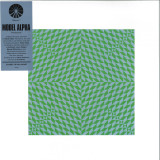
Jonathan Fitoussi & Julie Freyri are Model Alpha. 8 years on after their first album Dimensions, Perceptions is the duo's second album and was entirely composed on analog synthesizers.
Model Alpha is inspired by electronic artists such as Kraftwerk, Laurie Spiegel, Manuel Göttsching or early Detroit techno productions. An elegant blend of synthesizers and drum machines including remix by Chloé (Thévenin).
After the 2021 Re-Release of “Schwingungen” (MG.ART612) we proudly announce “Seven Up” as Part 2 of the authorised 50th Anniversary “A.R.T.” Re-Edition Series.
“Seven Up” is the third studio album by Ash Ra Tempel and their only album recorded in collaboration with American Ph.D. in psychology, Dr. Timothy Leary. The Coverart for “Seven Up” was designed by famous Swiss Artist Walter Wegmüller. Recorded in August 1972 at Sinus Studio in Berne, Switzerland, remixed September 1972 at Dierks Studios in Stommeln, Germany. First release in spring 1973 by OHR Musik - the first release on the new sub-label "Kosmische Kuriere", Kat-Nr. KK 58001.
We release “Seven Up” in a Re-Cut carefully overseen by Manuel Göttsching himself, on September 9th 2022, also being Manuel Göttsching´s 70th Birthday. Our Edition features the full original text for the “7 levels of consciousness” by Timothy Leary in English, i.e. “Instruction Manual for Pleasure Panel” plus a previously unreleased glimpse view of the original scripts incl. notes and mark ups as well as partly unreleased photos from the recording session. ->continued on page 2->continued on page 2 As for the music itself we again refer to Julian Cope´s review and remarks from his book "Krautrocksampler” (published by Head Heritage, 1st ed. 1995):
“When the Leary Mob met the Kaiser Gang, the sparks flew ever Up-wards... 7up is a stone classic in every way. Yes, it is unlikely to find Timothy Leary singing lead vocal in a cosmic group, but even weirder that he chose to sing a wild yelping freaked out blues !
Manuel Göttsching and Hartmut Enke had begun their careers in The Steeple Chase Blues Band back in the mid-'60ies, and they quickly felt their way through what Barritt and Leary were aiming for. They reconciled it all as a kind of West Coast chordless psychedelia, where blues riffs sparkle out of nowhere and the sheer weight of synthesizers renders everything with an unreal Pere Ubu/early Roxy Music quality.
The greatness of Ash Ra Tempel burned so brightly on 7Up that there is really nothing else like it. Hartmut Enke and Manuel Gottsching here returned to their riffy roots. It can hardly be called a retro act, though, as the context of music is everything. And with Dierks at the controls, even the New Kids on the Block would have sounded psychedelic.
7Up is like a late night radio show glimpsed through a shattered tuner where all but the most truly dangerous sounds have been allowed to stay, to drift and to dance around the performers.
The result is an extreme gem, a flash of hysterical white lightning, and a pre-punk Technicolour yawn in the grandest of traditions.
In typical Ash Ra Tempel style, the record is divided into two pieces, “Space” and "Time”. Within this, though,
Timothy Leary’s ideas are allowed to free-flow and the two sides are therefore divided into mini-songs all segued together. The highlight of Side 1 is “Power Drive”, a West Coast burn-up that transcends any W.
Coast music I ever did hear. Leary and Barritt present the greatest twin-vocal of all time, coming on like Jagger and Morrison but too caught up in their own maelstrom to be anything less than Heralds of the Punkfuture still five years away.
In chaos it was conceived and in chaos it was recorded. Yet Dieter Dierks, the great Aural Architect of the Cosmic Couriers, turned 7Up into a personal triumph and a Kosmische dream.”
Ash Ra Tempel – “Seven Up”
TIMOTHY LEARY - voice
BRIAN BARRITT - voice
MICKY DUWE - voice & flute
LIZ ELLIOTT - voice
BETTINA HOHLS - voice
PORTIA NKOMO - voice
HARTMUT "HAWK" ENKE - bass, guitar & electronics
MANUEL GÖTTSCHING - guitar & electronics
STEVE A. - organ & electronics
DIETMAR BURMEISTER - drums
TOMMY ENGEL - drums
DIETER DIERKS - synthesizer & Radio Downtown
After the 2021 Re-Release of “Schwingungen” (MG.ART612) and together with “Seven Up” (MG.ART613) we proudly announce “JOIN INN” as Part3 of the authorised 50th Anniversary “A.R.T.” Re-Edition Series.
“JOIN INN” is the fourth album by Ash Ra Tempel. It was recorded at Studio Dierks and originally released on LP by Ohr Musik-Produktion, catalogue number OMM 556032. Each side of the LP comprises one long track.
In 1972 ASH RA TEMPEL teamed up again with Klaus Schulze during the recording of Walter Wegmüller's Tarot album, and after one of the recording sessions, ASH RA TEMPEL members: Enke, Göttsching and Rosi, together with Klaus decided to "play it again" in a late night session. This recording led to the birth of the “JOIN INN” album, as well as two legendary last concerts in February 1973 in Paris and Cologne.
Manuel Göttsching recalls Hartmut Enke on bass and Klaus Schulze on drums being a dream-team rhythm section for him to play his guitar, especially here to hear on “Freak'n' Roll”, that was ingenious and not to replace ever since.
It was the last recording ever where Klaus Schulze (who sadly passed away this Year) played the Drums and also Hartmut (the Hawk) Enke soon after quit the Bass and music forever.
Join Inn marks the end of the collaboration with Klaus Schulze.
However, together with Ash Ra Tempel, their eponymous first album, which will be released in 2023 as the final edition of our Series, it is considered a highlight of the Krautrock movement.
As for the music itself we again refer to Julian Cope´s review from his book “Krautrocksampler” (published by Head Heritage, 1st ed. 1995):
""Freak’n’roll” fades in like it never started - just was always there from the beginning of time, a dry wah-guitar freerock riff-out unlike any of the other Ash Ra Tempel LPs, and not much like any other music. Yes, there are bluesy riff but none of them have a blues context. Manuel Gottsching’s guitar is so confident that he sometimes drops down to a simple major chord groove, whilst the Hawk pushes that round woody bass into strange overlapping rumbling melody. And ... it’s the return of Klaus Schulze on drums which propels “Freak’n’roll” to its height. No-one but Klaus has the ability to
transcend rock’n’roll in such an on-the-beat non-groove-y way and still send sparks of light into the cosmos as he does it.
-> continued on page 2“Freak’n’roll” is so egoless that it even works at a quiet volume as meditational music. Themes rise from the high tempo pulse beat, then are carried along the muscles of the song into the main area where the riff actually becomes real and expressionist for just long enough before slipping back into the musical fabric of the song.
As usual with Ash Ra Tempel, the other side is an enormous drift piece called “Jenseits (The Next World)”, a beautiful Klaus Schultze meditation of haunting synthesizer chords over which Rosi Muller tells the story of the Cosmic Couriers’ meeting with Timothy Leary. Gradually, the pulsing guitar becomes increasingly intense and turbulent, but Rosi never sounds less than freaked out. Essentially, “Jenseits” is a precursor to Klaus Schulze’s later spacey minor-key grooves.
Unfortunately, this was the last Ash Ra Tempel album in its particular ‘series.
(…) After “JOIN INN”, Manuel Gottsching took over the Ash Ra Tempel mantle alone.”
Das Album "Tonwelle" ist das Resultat der Zusammenarbeit von Klaus Schulze mit einigen namhaften Musikern. Deshalb erschien das Album 1981 als Vinyl unter dem Künstlernamen Richard Wahnfried. Mit dabei z. B. Manuel Göttsching (Ash Ra Tempel) und Michael Shrieve (Santana). Diese ursprünglich Vinyl Veröffentlichung sollte mit 45 RPM abgespielt werden, Klaus hat das Album aber auch schon so abgemischt, dass es auch auf 33 RPM abgespielt werden kann. Die jetzt veröffentlichte Version auf Vinyl enthält die Original-45 RPM Version.