Buscar:mar tex

Estilos
Todo
Marina Trench - Signature EP vol.2

DJ Deep's Deeply Rooted label once again spotlights rising French talent Marina Trench for the second instalment of 'Signature featuring remixes from the boss and Hugo LX. Arriving on Deeply Rooted in March with the slick sounding 'Signature EP1', since then Trench has debuted at Rex Club where she played alongside Kerri Chandler, further bolstering her rising reputation as one of the Parisian scene's most exciting names. She now returns to Deeply Rooted bringing another instalment of classy House music - perfectly suited to the respected label's aesthetic. She shows off her knack for jazzy keys on the lively, raw-edged 'Thema Urbain' which oozes late night soul and effortlessly intimate house vibes. The equally excellent 'Ahead' is a surging house cut with well-crafted synth stabs fleshing out an off balance groove while a twanging bass riffs props things up from below. It's perfectly propulsive but has a real sense of heart. The third sublime original is 'Navigo', a bottomless track with splashy hi hats and suggestive string stabs up top. A rasping bassline brings texture to the smooth grooves as they keep rushing over you to make this another fresh and original offering from Trench. Remixing 'Ahead' is Hugo LX, who cruises from downtempo beats to soulful electronic sounds on the likes of Balance and NDATL Muzik. His classy version is a dubbed out classic with a musical bassline tumbling down the scales as you're sunk ever deeper into his pillowy pads. Deep himself then steps up to flip 'Navigo' into a driving deep techno number that surges on soaring synth smears and prickly percussion. This EP is set to take Trench to the next level and confirms she is one of 2019's brightest new stars.

Disponible

En el almacen y preparando para el envío

9,20
Dr.Nojoke - Inventing Importance MAT ed.01

Inventing Importance - With its third vinyl release CLIKNO starts the MAT editions, which brings together contemporary art with profound texts and deep techno music equally, a conceptual and collectible series for heart, soul and mind - conceived by Dr.Nojoke.

music - Dr.Nojoke throws in three tunes in his unmistakable style hitting the dancefloors of a parallel universe. Stomping beats with gravitational bass-lines are folded with deep textured moods, dub delays and a plethora of subtle sounds and strange loops all in an intricate and organic production build from diverse noises and field recordings. This music aims as much for the dancefloor as it is enjoyable at home.

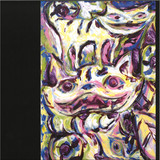
art - "You Brew Stew" is a digital painting by Denver-based artist Jonathan Canupp. The painting was created in 2018, took 25 hours and is made of 28,000 strokes, original size: 24" x 24". Jonathan is a multi-faceted artist also working as sound designer for video games and films and producing music under diverse monikers such as Ten and Tracer and Petrichoir.

text - Over the course of the MAT editions, philosopher, actress, director and performer Marianne Kjaer Klausen will contribute writings about humanity, society and freedom. Sample from MAT ed.01: "The owl of Minerva spreads its wings only with the falling of the dusk. The paradox, to know when she has landed, would be one true turning point for the wisdom of humanity."

MAT 01 is a strictly limited vinyl-only release with a 12" x 12" inlay in a thick transparent PVC sleeve.
Artwork and text are reproduced in an offset print on offset paper for a premium look and feel.

Disponible

En el almacen y preparando para el envío

9,45
COM SIN / THE PEOPLE IN FOG / YARD ONE - 5 YEARS ANNIVERSARY SERIES 01

Words from the label:

Our imprint marks its five years anniversary this year and to celebrate it's offering up five special various artist packages across 2019 limited to 250 copies each,
featuring material from the likes of Vid, The Mole, Cinthie, Shinichiro Yokota, San Proper, Akiko Kiyama, Com Sin aka Cosmin TRG, Subb-an and more..

'Series 01', penciled for release in May sees Cosmin TRG return under his Com Sin guise with 'Glass Harps', a fluidly unfolding five and half minutes of pulsating subs, glitching percussion and sparkling harp tones before DJ Sodeyama aka The People In Fog's 'Chapter Zero' takes on a modulating hypnotic feel via psychedelic swells, tension building textures and a bumpy, robust rhythm.

UK duo Yard One join the roster with 'Dream Travel' on the flip-side, employing a more ethereal aesthetic with floating pads, winding chords and a heavily swung drum groove. This project also sees a new design concept for the imprint from London's David Surman's painting installation project 'Paintings For The Cat Dimension' which ''explores the motif of the cat as emblematic of internet aesthetics, a place where all painting styles and modes now exist non-hierarchically as pure information.''

Disponible

En el almacen y preparando para el envío

8,36
Alex Ketzer - OTC LP

Alex Ketzer

OTC LP

12inchNOORDENTWELVESIX
Noorden
27.03.2019

Four years on since the landing of his immersive debut full-length "Marianne Brandt", Noorden main operator Alex Ketzer returns with his second studio album, "OTC"!
Perpetuating the non-linear narrative arc initiated by its forerunner, all the while establishing further club-functional bridges over the course of its eleven tracks, "OTC" weaves a fine tissue of lushly textured electronica, downtempo elegies and spacious tech-mospheres and old-school rave motifs through intricate combinations of sorts, marrying the entrancing primal power of the beat with a pastel-coloured palette of Rephlex-nostalgic electronics.
True to his genre-busting, non-formulaic standards of composition, Ketzer once again opted for the fragmentary rather than the straightforward, putting on a collection of variedly contemplative, dark, energetic and motion-inducing cuts in exploded-view.

Disponible

En el almacen y preparando para el envío

14,92
MartiNils - Frankonia

Martinils

Frankonia

12inchSBTL012
Subtil
28.05.2018

The Frankonia (EP) is the result of the collaboration between Nils Weimann and Martin Glowacz, which started many years ago.
Side A serves two different, powerful tracks. Frankonia comes with warm atmospheres and spaces. Driven by the interaction of bass and synth lines, wrapped in some subtile delayed textures.
Lower has a rollin bass structure, combined with smashing vocals and surrounded by resonating marbles.
Side B belongs Paul Agripa's interpretation of Frankonia. (He's also known as a part of Comoji.)
The remix takes you on a 13 minutes trip, carried by a harmonic baseline, extended spaces and melodies. Play it loud! Support by Cezar, Sedee, Vlad Arapasu.

Disponible

En el almacen y preparando para el envío

9,45
Marco Bailey - Temper Reworks Ep

Marco Bailey

Temper Reworks Ep

12inchMATERIA009
Materia
25.01.2018

With every album project comes a proper remix pack. Marco Bailey has invited some of his most respected colleagues in modern day Techno to come up with an interpretation of two of Temper's
toughest cuts. ''Planet Mad'' is being reworked by Marcel Fengler and Andre Kronert. Fengler's rework is an adventurous take on the original and has a strong emphasis on rhythm.
Without loosing with the original idea, Fengler builds the rhythm section into a wash of bold drums and rich percussion.
Andre Kronert's take on Planet Mad pushes the track's idea into a different direction. Kronert yet again proves to be a craftsman when it comes to textures and builds.
While the recognizable bass sound of the original keeps thumping, atypical bits of FX are added to build on an unusual but very soothing atmosphere.
For the B side, ''Naga'' is being reshaped by Croatian master of electronics ''Petar Dundov'' and Rotterdam based fast riser; Koen Hoets.
Petar Dundov comes up with an esoteric take on ''Naga''. Whilst respecting the form of the original, Dundov goes one notch deeper with his wide array dub elements and feral hat sounds.
Koen Hoets delivers a more demure take on ''naga''. Whilst the rhythm section might not be suitable for all club situations, this is adventurous techno at it's best. Noteworthy fx and soul touching
strings that float throughout.

Disponible

En el almacen y preparando para el envío

8,36
Vermont - I I Remixes

Vermont

I I Remixes

12inchKOM369
Kompakt
27.10.2017

(en) Following their much acclaimed surprise debut, VERMONT's sophomore longplayer presented "another set that rewards deep listening" (AllMusic) and "a mix of simplicity and richness" whose result is "a feeling of spaciousness and a thrilling sense of weightlessness" (XLR8R). Stripping away even more percussion than on its predecessor, "II" saw Marcus Worgull and Danilo Plessow zooming in on ambience, texture and sonic cohesiveness, allowing "each electronic voice to come into focus" (Pitchfork). Now, "II REMIXES" puts the beat back into the mix, thanks to iconic artists DIXON, I:CUBE and WASSERMANN who each develop their own irresistible groove out of the immersive source material. As one of the album's most highlighted cuts, DSCHUNA gets the royal treatment by Innervisions head and internationally revered selector DIXON who proves his strong command of the dance floor with a hypnotic ride that surrounds the soaring sounds of the original with tribal- esque vocals. The instrumental version drops the chants, but retains the enchantment, all elegant rhythm and gorgeous strings. Versatile's I:CUBE, legendary producer and DJ in its own right, brings a distinctly Parisian touch to the spectral SKORBUT, whose sci-fi-imbued widescreen aura gets reimagined as laser-gun-wielding space funk machine. Meanwhile, Wolfgang Voigt aka WASSERMANN condenses PARADIGMA's roaming synths into pulsating trance swells on his stomping KRAUTRAMATRIK MIX.
(de) Nach einem hochgelobten überraschungsdebüt präsentierte VERMONTs zweiter Langspieler "ein weiteres Set fürs Tiefenho¨ren" (AllMusic) und "eine Mischung von Einfachheit und Reichtum" deren Ergebnis "ein aufregendes Gefühl von Weitläufigkeit und Schwerelosigkeit" (XLR8R) ist. Auf "II" verzichten Marcus Worgull und Danil Plessow nahezu gänzlich auf Perkussion und konzentrieren sich auf Ambiente, Textur und klanglichen Zusammenhalt, erlauben so "jeder elektronischen Stimme, in den Fokus zu rücken" (Pitchfork). Nun bringen die "II REMIXES" den Beat zurück ins Spiel, dank des Kult-Trios DIXON, I:CUBE und WASSERMANN, von denen jeder einen ganz eigenen Groove im Klangbad des Quellmaterials findet. Als eines der aufsehenerregendsten Stücke des Albums erfährt DSCHUNA fürstliche Behandlung seitens des Innervisions-Chefs und international gefeierten DJs DIXON der den Dancefloor mit einem hypnotischen Trip im Griff hält und die aufsteigenden Flächen des Originals mit tribal-esken Vocals verziert. Die Instrumental- Version lässt die Stammesgesänge weg, behält aber den Zauber, durch und durch eleganter Schub und prachtvolle Streicher. Versatiles I:CUBE, legendärer franzo¨sischer Produzent und DJ von ganz besonderem Format, entwickelt eine ausgeprägt "parisische" Note für das leicht gespenstische SKORBUT, dessen Science-Fiction-getränkte Weitwinkel-Aura als Laserpistolen- schwingende Spacefunk-Maschine neu imaginiert wird. Derweil kondensiert Wolfgang Voigt auf seinem antrittsstarken KRAUTRAMATRIK MIX die umherstreifenden Synthesizer von PARADIGMA zu pulsierenden Trance-Schüben.

Disponible

En el almacen y preparando para el envío

10,88
Various - A Decade Ilian Tape

Various

A Decade Ilian Tape

3x12inchITLP03
Ilian Tape
22.02.2017

When we started Ilian Tape 10 years ago in 2007, we were both basically kids at the ages of 23 (Dario) and 18 (Marco). There was no plan behind it, no concept, no promotion campaign or any budget, but just an early vision of where it could go. We wanted to build something that lasts. After a few years of playing at parties and producing music, it was the next logical step to start a label. You can clearly see us growing up through the label in terms of artwork, compiling the records and handling things. We made some mistakes along the way and there are surely things we could have done better, but looking back after 10 years now it all makes sense as it was a natural and human development with all its ups and downs.It was always a very personal project, never about making money, but about creating a platform for music we believe in and building relationships with artists in a transparent and fair way. We really appreciate that we were able to work with so many great artists, who shared the same vision and trusted in us, over all the years. A while ago we moved away from the ordinary release info write ups, because in general writing about music is tricky and who isn't tired of the typical, full of praise for every detail of a record, release textsBut this might be starting to get boring for you too, so just buy this lovely triple vinyl package including a poster and download code, light one up and turn up the volume!One last thing though - we want to deeply thank our parents for teaching us to live our dreams and find out who we really are, our friends for the vibes and honesty, all the artists releasing on the label, all the supporters & fans for buying vinyl and files, all the DJ's playing out the stuff, all the diggers selling the stuff overpriced on Discogs, all the dancers working out on the dancefloors & all the clubs doing label nights over all the years.

Disponible

En el almacen y preparando para el envío

31,72
Uvb - Life

Uvb

Life

3x12inchMORDLP001
Mord Records
20.11.2015

Early support by: Marcel Dettmann, Takaaki Itoh, Gary Beck, DVS1, Adam Beyer, Randomer, Jeroen Search, Speedy J, Jonas Kopp, Tommy Four Seven,Slam, Mosca, Psyk, Paul Mac, NX1, Manni Dee, Progression, Scalameriya, Thomas Hessler, Juho Kusti, Ryuji Takeuchi, Mr Jones, ANFS, Dustin Zahn, Kyle Geiger, Joton, Paul Birken, Hector Oaks, Charlton, Dario Zenker, Kwartz, Dimi Angelis, Drvg Cvltvre, Stranger, Mikael Jonasson, Arnaud le Textier, Dax J, Jerome Hill, 3.14, Pfirter, Echologist, Darko Esser, Tripeo, Endlec, Stenny, Clouds, I/Y, Rivet, Henning Baer, Dave Tarrida, Rolf Mulder, W.I.R.E, SHDW, Pacou, Patrick DSP, Ansome, Sebastian Krenzlin, Rebekah, Gareth Wild, Domenico Crisci, Perc, Setaoc Mass, J.Tijn, Radial, Aiken, The Black Dog, Ness, Developer, Exium, Sawf, Joseph Capriati, Svreca, Shards, Truss, Truncate, Myler, Inigo Kennedy, Advanced Human, Operator

Disponible

En el almacen y preparando para el envío

20,97
Marc Faenger B2b Sven Jaeger - B2b Volume 1

Cellaa Music are very happy to welcome our great friend Marc Faenger and Label Head Sven Jaeger back to the fold. This one - obviously called B2B Volume 1 features two artists, two universes, two different ways to approach the music theory to form a B2B Cellaa relationship.

Young, skilled and supremely talented, Marc Faenger, is an artist set for great things on the international scene. Marc´s - Nip' contains an infectious groove an elegant labyrinth of percussive dub textures and sinusoidal tones and fast shuffling hats. Deep, fresh and seductively satisfying, this tune was designed for the discerning dancefloor.

Sven Jaeger returns to Cellaa Music with his second release for his label. - Get The Fuck' is a track that immediately commands attention with it's rolling, rich bassline surrounded by punchy, organic drums that delivers a soothing atmosphere. The track is really powerful and works really well on all dance-floors. People love it!'

The first of the remixes comes from the in form, Reelow. His releases have been huge hits, ruling the DJ charts. Here he strips the oringinal of Marc Faenger to it's essential parts. The super dry kickdrum and percussion in combination with the deep subs together create Reelow´s own techno vision.

Next we have Dan Noel providing a soulful tech house surrogate to the original of Mr. Jaeger. His remix has a deeper twist with glittering sounds and a concrete percussive arrangement to convey a fantastic Remix.

Recogiendo

Ordena ahora - una vez que hayan recibido suficientes pedidos, el artículo se reimprimirá.

11,72

Ültimo hace: 12 Años
Omar S & Ob Ignitt - Wayne County Hill Cops Pt.2

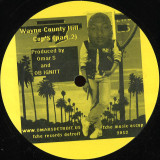
After more or less owning 2011 with a surprise album, a collaboration with urban crooner Colonel Abrams, an ahead-of-the-game reissue of Marc Kinchen and the all-conquering "Here's Your Trance Now Dance", FXHE don Omar S kicks off a new year with Wayne County Hills Cops Pt 2 (where, we ask, was Part 1?), a hook-up with the mysterious OB IGNITT. The eponymous A-Side is characterised by the kind of glistening synths last seen on "Here's Your Trance...", with a rugged analogue bass line giving the track with the requisite bump. A tired cliche it may be, but this could easily soundtrack an 80s cop movie: clearly Omar has this in mind given the 12"'s title and the fact the record's centre label features a doctored image of Eddie Murphy from Beverly Hills Cop! On the flip, Omar S provides his own remix, drowning the synths in dubby textures and showering them with shuffling hats for a more heads-down take. Another killer 12" - business as usual at FXHE, then.

Disponible

En el almacen y preparando para el envío

15,76
Prz - PIGMENTOR

Prz

PIGMENTOR

12inchRTTD027
Return To Disorder
01.01.2000

Gal Perez is PRZ (and also Pluto Junkies, and the co-founder of Chateau Royal) and the German has put out a steady, quality stream of sounds since 2017. This outing on Helena Hauff's Return To Disorder is a twisted and acerbic collision of breaks, electro and UK rave. 'Cruising' has alarm sounds and blistering synth textures running through saw-tooth bass and big breaks. 'PIGMENTOR' is all acidic and chuggy while 'The Looper" is heads down, feet marching electro-techno. 'Good Bye' brings some electrified disco futurism to the party for a more colourful and outwardly expressive closer.

Disponible

En el almacen y preparando para el envío

14,24
Ireke - Ayô Dele LP

Ireke

Ayô Dele LP

12inchUR850851
Underdog Records
21.04.2026

Ayô Dele — which means "joy comes to me" in Yoruba — is neither a slogan nor a promised miracle. It is a breath of fresh air. That of an album born in the interstices, where the word find their way between shadow and light, between the disorder of the worldand the impulse to be .
At the heart of the project, Julien Gervaix and Damien Tesson, multi-instrumentalist beatmakers, share a groove language that is both dense and airy, where every detail breathes and finds its place.
With background in Afrobeat, Dub, Funk, Soul, Roots Reggae, and Electronic Music, they treat the studio to be their playground. Their music is a hybrid groove that speaks to the body: round or bouncing basslines, brass oscillating between melodic warmth and funk energy, textured guitars, arpeggios, enveloping Rhodes, clavinet that slides, presses, and embraces. Everything comes together with precision and flexibility, in an inventive and warm composition. The meeting of their experiences and sensibilities gives rise to open, generous music, made for dancing and vibration.
With Ayô Dele , Ireke is embarking on a new chapter: the duo is refining its style,allowing the voices to breathe. The groove remains the driving force but opens up to intimacy. This intimacy is carried by two unique female voices: Nayel Hoxo, a Beninese-Nigerian singer/rapper, and Agnès Hélène, who has already made a name for herself on Tropikadelic with "Petit a Petit". They don't sing side-by-side; they coexist, respond to each other, and sometimes intersect. But each follows her own path: Nayel, with the power of her words in Yoruba, offers songs of elevation, healing, and resistance — a light born in the cracks Agnès explores these cracks themselves: what wavers within us, what reinvents itself in bonds, glances, and gestures.
For one track, Olivya (Dowdelin) joins this dialogue in Martinican Creole. Her sunny soul sketches the contours of gentle resistance and celebrates rediscovered light.
Ayô Dele embodies a quiet yet radical determination: to smooth nothing over, to let plurality, contradictory emotions, and mixed heritage live. An album that moves forward through vibrations, that speaks of emancipation without slogans, love without clichés, anger without uproar.
Two women, two inner worlds: a sensitive complicity, a shared breath. Music that seeks not effect, but echo, weaving a living soundscape between reinvented traditions and contemporary textures. An alchemy faithful to the spirit of Underdog Records, where music unites and brings people together. Ayô Dele : "joy comes to me." A lucid joy, crossed by shadows, patiently regained. Music that welcomes, releases, gives, and in doing so, makes us feel good.
In a saturated world, Ayô Dele chooses nuance: transmission without emphasis, joy without naivety. An album that vibrates more than it demonstrates, that connects more than it imposes, and which, in its quiet clarity, resonates with a deep desire to be fully alive.

No en stock

Haga su pedido ahora y le encargaremos el artículo en nuestro proveedor.

21,22
BODYSYSTEM - Flowerbed

BODYSYSTEM

Flowerbed

12inchKIN-TU003
KIN-TU Records
20.04.2026

BODYSYSTEM is the solo project of Finlay McCarthy (synth player for Glasgow art-pop innovators Walt Disco). "Flowerbed" is his debut EP on KIN-TU Records, blending melodic electronics, skittering breakbeats, rave textures, and emotionally charged songwriting.

The EP includes collaborations with Tiger Cohen-Towell (Divorce) and Pearling, bringing two distinct vocal turns to the record. "I’m Still Available" lands as a yearning pop-dance cut with restless breakbeats and rave pressure, while "When I See You" (feat. Pearling) leans into a luminous, emotionally warm club feel. The EP closes out the KIN-TU003 campaign and marks a strong debut statement from a Glasgow artist already known for his work in Walt Disco.

Reservar20.04.2026

debe ser publicado en 20.04.2026

26,26
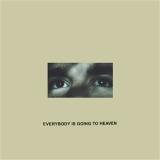
CITIZEN - EVERYBODY IS GOING TO HEAVEN (10 YEAR ANNIVERSARY) LP 2x12"
  • 1: Cement
  • 2: Dive Into My Sun
  • 3: Numb Yourself
  • 4: Heaviside
  • 5: My Favorite Color
  • 6: Weave Me (Into Yr Sin)
  • 7: Stain
  • 8: Ten
  • 9: Yellow Love
  • 10: Ring Of Chain
  • 1: Nail In Your Hand
  • 2: Heaviside (Wisp Version)
  • 3: Cement (Demo)
  • 4: Dive Into My Sun (Demo)
  • 5: Numb Yourself (Demo)
  • 6: Heaviside (Demo)
  • 7: My Favorite Color (Demo)
  • 8: Yellow Love (Demo)
  • 9: Ring Of Chain (Demo)

Swirl-Vinyl. Diese 10-Jahre-Jubiläumsausgabe erscheint in einer neuen Gatefold-Hülle mit aktualisierten Fotos, Texten und Liner Notes. Disc eins enthält das Originalalbum in voller Länge, und die brandneue zweite Disc bietet die seltene B-Seite ,Nail In Your Hand", eine überarbeitete Version von ,Heaviside" mit der Künstlerin Wisp am Gesang sowie sieben bisher unveröffentlichte Demo-Versionen von Songs aus dem zweiten Album von Citizen. Vor zehn Jahren veröffentlichten Citizen ,Everybody Is Going to Heaven" - ein Album, das einen mutigen Wendepunkt in ihrer Karriere markierte. Nach dem Durchbruchserfolg von ,Youth" hätte die Band einfach ihren bisherigen Kurs beibehalten können. Stattdessen setzten sie noch stärker auf dunklere Texturen, schwerere Stimmungen und einen furchtlosen Sinn für Experimente. Das 2015 veröffentlichte ,Everybody Is Going to Heaven" erweiterte den Sound von Citizen über ihre Emo- und Post-Hardcore-Wurzeln hinaus und verwebte Elemente aus Grunge und Alternative Rock. Tracks wie ,Cement" und ,Stain" fingen eine rohe, unruhige Energie ein, die sich mit Sterblichkeit, Depression und Identität mit einer Ehrlichkeit auseinandersetzte, die bis heute nachhallt. Es war kein Album, das zum einfachen Hören gemacht war - es war auf Dauer angelegt. Jetzt, ein Jahrzehnt später, steht ,Everybody Is Going to Heaven" als entscheidender Moment in der Entwicklung von Citizen - ein Album, das sowohl die Band als auch ihr Publikum herausforderte und dazu beitrug, die furchtlosen, Genre-übergreifenden Künstler zu formen, zu denen sie geworden sind. Auch beim 10-jährigen Jubiläum bleibt Citizen eine Band, die sich ganz dem Wachstum verschrieben hat und sich weigert, sich auf einen einzigen Sound oder eine bestimmte Ära festlegen zu lassen. ,Everybody Is Going to Heaven" hat nicht nur markiert, wo sie standen; es hat den Weg für alles geebnet, was danach kam.

Reservar20.04.2026

debe ser publicado en 20.04.2026

32,35
FABIO FRIZZI - Amore Libero LP

FABIO FRIZZI

Amore Libero LP

12inchLPOST073
CELSON
18.04.2026
  • 1: Ibo Lele 3:57
  • 2: Seychelles Coconut :56
  • 3: Janine :0
  • 4: Full Moon Dance 2:19
  • 5: Mahea 3:08
  • 6: Ibo Lele (Reprise - Short Version) 2:31 *
  • 7: Janine (Orchestral Reprise) 1:54 *
  • 8: Mahea (Version With Organ) 4:15 *
  • 1: Kalù 4:46
  • 2: Coconut :5
  • 3: My Sweet Brown Sister 1:47
  • 4: Ibo Lele At Night 2:5
  • 5: Jungle Hevea 3:08
  • 6: Full Moon Dance (Wild Take) 3:30 *
  • 7: Kalù (String Version) 5:11 *
  • * Bonus Tracks

Amore Libero – Free Love marks the first film score composed by Fabio Frizzi, written in 1974 for the movie of the same name directed by Pier Ludovico Pavoni. Set against the exotic backdrop of the Seychelles, the film tells the story of Simo, a free-spirited young woman played by Laura Gemser in her cinematic debut, blending sensuality and the spirit of liberation so typical of the 1970s.

Frizzi’s score perfectly captures the film’s atmosphere, weaving together evocative melodies, funky grooves, and progressive textures — an elegant, psychedelic soundscape that reflects both the tropical setting and the film’s themes of freedom and desire. The recording features the Goblin in their classic line-up: Fabio Pignatelli (bass), Massimo Morante (guitar), Walter Martino (drums), and Claudio Simonetti (keyboards), with Vince Tempera handling arrangements and orchestral direction.

Long regarded as a true holy grail for collectors, now, for the first time ever, it is officially reissued on vinyl, bringing back to light a fundamental chapter in Italian film music and progressive sound. An essential record that merges Frizzi’s melodic genius with the visionary energy of the Goblin, Amore Libero – Free Love stands as a timeless document of an extraordinary era in Italian cinema and its music.

A Record Store Day 2026 exclusive / Pearly light blue vinyl edition / 30x30cm insert with extensive liner notes

Reservar18.04.2026

debe ser publicado en 18.04.2026

42,44
Loom & Thread - Dispersion (LP)

Loom & Thread

Dispersion (LP)

12inchMACROM83
Macro Recordings
17.04.2026

With Dispersion, Loom & Thread return to the volatile architecture of the expanded piano trio - and quietly fracture it from within.

Daniel Klein (drums), Tobias Fröhlich (double bass) and Tom Schneider (keys, sampler) remain the sole agents on stage and in the final recording. The triangle holds. And yet, the field has expanded. For their second studio album, the trio fed their improvisations with the timbral signatures of guest saxophone and vibraphone players - not just as additional voices to be featured, but also as material to be absorbed, atomized and redistributed. The result is not augmentation but thorough refraction.

Where the debut album explored the recursive labyrinth of Schneider's live sampling of his own piano, Dispersion introduces an external grain into the feedback system. Breath and metal. Reed turbulence and struck resonance. The trio sampled extended improvisations by saxophone and vibes players: Victor Fox, Asger Nissen, Volker Heuken, and L&T's own Daniel Klein; dissected their attacks, overtones and decay curves, and integrated these fragments into the trio's internal circuitry. What emerges is a play of presences without bodies - instrumental ghosts circulating through the dense weave of rhythm and keys.

At first, one might hear the familiar relational tension: Klein's polyrhythmic elasticity interlocking with Fröhlich's tensile double bass figurations, Schneider poised at the hinge between tonal field and percussive impulse. But soon, the surface splinters - again. A vibraphone shimmer appears, yet no mallets are visible. A reed multiphonic surges through the texture, bending space between bass and drums. These events are neither quotations nor overlays; they are redistributed energies, dispersed across the trio's grammar. A digital multidimensional interplay ensues.

If the first album unfolded as a two-tiered game - live phrase and sampled reflection - Dispersion adds a further axis. The sampled materials from other improvisers are stripped of their erstwhile two-way interaction and reconstituted as malleable particles. Signifier detached from origin, resonance detached from gesture. The trio navigates a constantly shifting topology in which acoustic memory and electronic manipulation are indistinguishable.

Crucially, the album never abandons the physical urgency of three musicians reacting in real time. The additional timbral layers do not thicken the texture into opacity; rather, they introduce stark points and arrows of diffraction. Density opens into prismatic clarity. Lines splinter and regroup. What seems like a quartet or quintet collapses back into three bodies negotiating an expanded field.

Dispersion is not about addition but about distribution - of agency, of timbre, of temporal perspective. It is an album in which the trio setting becomes a site of multiplicity without surrendering its immediacy. A dissolution not only of the divide between present experience and memory, but between inside and outside, self and other.

Three musicians. Countless vectors. A music that fractures in order to cohere.

CREDITS:
Tom Schneider: piano & sampler
Tobi Fröhlich: double bass
Daniel Klein: drums & percussion

sample sources:
Victor Fox: tenor saxophone
Asger Nissen: alto saxophone
Volker Heuken: vibes
Daniel Klein: vibes

Recorded by Martin Dressler at Bauer Studios, Ludwigsburg.
Mixed & mastered by Martin Ruch.
Artwork by Viet Hoa Le.

No en stock

Haga su pedido ahora y le encargaremos el artículo en nuestro proveedor.

17,61

Ültimo hace: 6 Días
Christina Kubisch - TUNING

Christina Kubisch

TUNING

12inchFAIT-41LP
Faitiche
17.04.2026

Faitiche welcomes a new artist: Christina Kubisch belongs to the first generation of sound artists. Her practice ranges from performances, concerts, to works with video and visual art, but she is best known for her sound installations and electro-acoustic compositions.

TUNING brings together three pieces by Christina Kubisch from different periods of her oeuvre. What they have in common is the way they transform sound phenomena originally considered “non-music” into compositions.

Jan Jelinek: Gaming in Silence (2024) is the most recent work on this compilation. It’s a collage of electromagnetic waves, voice, and abstract sound textures. How did this combination come about?

Christina Kubisch: Gaming was commissioned as a fixed-media composition for the Sound Dome at ZKM Karlsruhe. Since Resonances: The Electromagnetic Bodies Project (2005), I’ve been making recordings in the old and new server rooms at the ZKM and in their permanent collection of historical computer games. Computer games like Asteroids (Atari, 1979) and Poly-Play (VEB Polytechnik, 1986) have specially generated analogue electromagnetic waves that interest me in particular on account of their density, rhythms and textures. I originally studied painting and to me the work of composition often feels like painting an abstract picture. I alter my source material as little as possible, layering and overlapping until a distinctive sound space emerges. In recent pieces, I sometimes combine magnetic waves with field recordings or live instruments. In Gaming it’s my recording of a Chinese song about silence.

JJ: Two persons walking through a street in Madrid (2004) is a recording from your Electrical Walks series. Here we should give a brief explanation of one of your best known works: participants in an Electrical Walk move through public spaces wearing prepared headphones that allow them to receive electromagnetic waves from their surroundings – for example from security gates, ATMs or neon signs. They discover a situation that normally is inaudible to the human ear and they can actively shape it by choreographing their movements. I really admire this piece, not least because there’s no clear dividing line between participants and artist. What exactly do we hear in Two persons walking through a street in Madrid (2004)?

CK: With this early work, I wanted to understand what is heard by people participating in an Electrical Walk in the same place but moving in different ways. The Spanish composer Miguel Alvarez-Fernàndez and I set off from opposite ends of a major shopping street in Madrid, met briefly in the middle, and then continued to the end. We both recorded our walks and I then layered them over one another. You might call it a work of electromagnetic conceptualism.

JJ: Diapason (2009 version) is an installation that plays a composition based on sounds from fifteen tuning forks. This setting is audible in the recording: there’s no dramatic arc, no beginning or end – instead, it recalls a piece of aleatoric music focussing on the decay phase. How did you come to make this work and could you tell us something about your compositional method?

CK: Diapason is part of a series of three pieces that deal with “non-instruments” or instruments that no longer exist: electrical mine bells used to send signals to the workers underground; a historical glass harmonica originally used for medicinal purposes; and tuning forks that were used by doctors to test people’s hearing. All of these methods are no longer in use. The sound of the tuning forks, audible only if held close to the ear, was recorded at the electronic studio at Berlin’s Technical University in such a way that even their decay remained audible. The frequencies range between 64 and 2048 Hertz and they can be adjusted at micro-intervals using small movable weights. The sequence and the duration of the pauses are dictated by chance and were not defined in advance. The 2009 version was created for an installation in the historic Holy Cross Church (Korskirken) in Bergen. Visitors could enter and leave the space at any time, deciding for themselves where and for how long they wished to listen to the sounds played back over an array of small loudspeakers placed on the floor of the apse.

Credits:

Gaming in Silence: commission of the ZKM/Hertzlab, Karlsruhe 2023
elektronic sound processing: Tom Thiel
sound engineering and mixing: Eckehard Güther

Diapason: produced at Elektronisches Studio of TU Berlin
rearrangement: Eckehard Güther

Christina Kubisch, published by Edition Christina Kubisch / Random Musick Publishing

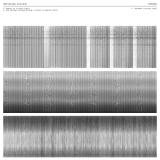
image front: Transitionen 2021 by C. Kubisch, sonagrams of electronic waves (courtesy: Galerie Mazzoli Berlin)
image back: Diapason Tuning Fork, property of Folkmar Hein, Photo: Archiv Christina Kubisch

design by Tim Tetzner
mastered by Giuseppe Ielasi
Thanks to Miguel Álvarez-Fernández, Folkmar Hein, Dominik Kautz and Mario Mazzoli

Reservar17.04.2026

debe ser publicado en 17.04.2026

27,31
abentis - Dim Grow LP

abentis

Dim Grow LP

12inch2PPLP001
2++
17.04.2026

From Wisdom Teeth’s recent compilation nagoyaka na kaze / 和やかな風 (quiet wind)—which cast a spotlight on the Japanese city of Nagoya—emerges “2++”, a new label launched by abentis, who curated the compilation alongside Facta and K-LONE as a central figure in the scene. Conceived as a series introducing facets of Nagoya’s underground electronic music to the world on vinyl, its inaugural release is abentis’ debut album, Dim Grow.

Across the album, intricately designed electronic mallet sounds—created using Ableton Live’s physical-modeling synthesizer—take center stage. Fresh and percussive like marimba or kalimba, yet simultaneously carrying an otherworldly, unreal quality, these tones form the core of the record’s sonic identity. In moments of near-silence, a crystalline resonance poised between glass and metal shimmers with subtle shifts in temperature, giving the album its distinctive texture.

While resonating with the sonic sensibilities of fellow Wisdom Teeth affiliates such as K-LONE, Tristan Arp, and Salamanda, abentis’ uniquely strange palette can be traced back to one of his strongest influences: Haruomi Hosono. In particular, Hosono’s mid-’70s tropical-infused solo albums — Tropical Dandy (1975), Bon Voyage Co. (1976), and Paraiso (1978) — serve as a key reference point. Symbolically reflected in Hosono’s marimba and vocal performance at a 1976 live show in Yokohama Chinatown, the marimba functioned as a central instrument for constructing imagined exotic landscapes inspired by Martin Denny and Hawaiian music.

For abentis—who worked at a local jazz bar before becoming active as a hip-hop beatmaker—the language of “tension chords,” a harmonic vocabulary rooted in jazz and R&B that hovers ambiguously between brightness and darkness, forms a consistent grammar throughout Dim Grow.

Behind the album’s core theme of “mallets + tension chords” lies a broad musical lineage: the harmonic sensibility of Claude Debussy, who anticipated the tensions of jazz; the proto-minimalist spirit of Erik Satie; the marimba-centered structures of Steve Reich; their continuation in Japan through Mkwaju Ensemble (with Midori Takada and production by Joe Hisaishi); and the subsequent branches into post-rock, electronica, and ambient music.

Growing up in Nagoya—an industrial city where creative independence is deeply valued—and being rooted in punk and hip-hop counterculture scenes naturally fostered abentis’ affinity with these predecessors. His practice between genres, combined with an encounter with the highly cross-pollinated musical perspective cultivated around Wisdom Teeth, provided the framework through which his own musical language crystallized. Dim Grow stands as the natural culmination of that journey.

Reservar17.04.2026

debe ser publicado en 17.04.2026

26,47
Various - Tchic Tchic: French Bossa Nova 1963-1974  Colored Edition LP 2x12"
  • A1: Les Masques - Il Faut Tenir (1969)
  • A2: Isabelle Aubret - Casa Forte (1971)
  • A3: Christianne Legrand - Hlm Et Ciné Roman (1972)
  • A4: Jean Constantin - Pas Tant D'chichi Ponpon (1972)
  • A5: Billy Nencioli & Baden Powell - Si Rien Ne Va (1969)
  • B1-: Marpessa Dawn - Le Petit Cuica (1963)
  • B2: Jean-Pierre Sabar - Vai Vai (1974)
  • B3: Sophia Loren - De Jour En Jour (1963)
  • B4: Isabelle - Jusqu’à La Tombée Du Jour (1969)
  • B5: Sylvia Fels - Corto Maltesse (1974)
  • C1: Frank Gérard - Comme Une Samba (1972)
  • C2: Ann Sorel - La Poupée Des Favellas (1971)
  • C3: Charles Level - Un Enfant Café Au Lait (1971)
  • C4: Andrea Parisy - Les Mains Qui Font Du Bien (1970)
  • C5: Audrey Arno - Quand Jean-Paul Rentrera (1969)
  • C6: Aldo Frank - T’as Vu Ce Printemps (1970)
  • D1: Christianne Legrand - Cent Mille Poissons Dans Ton Filet (1972)
  • D2: Clarinha - Lemenja (1970)
  • D3: Hit Parade Des Enfants - Aquarela (1976)
  • D4: Jean-Pierre Lang - Tendresse (1965)
  • D5: Magalie Noël - Une Énorme Samba (1970)
  • D6: Françoise Legrand - La Lune

Ever since the late 1950s bossa-nova revolution, Brazil’s influence on French music has been undeniable. Pierre Barouh, Georges Moustaki and a vast array of lesser known artists, all made the Musica Popular Brasileira (MPB) an axis of promotion at the service of a cool and metaphysical, modern and mixed Brazilian lifestyle. Some were seduced by the poetic languors of the bossa, some were looking for fun, and others just loved the American hybridization of jazz-bossa, jazz-samba.


What is bossa nova? One of its creators, Joao Gilberto said: "Its style, cadence, everything is samba. At the very start, we didn't call it bossa nova, we sang a little samba made up of a single note - Samba de uma nota so .... The discussion around the origins of bossa nova is therefore useless”. It is nevertheless useful to remember that these magnificent Brazilian songs, which the guitarist describes as samba, were shifted and balanced around improbable chords. "I like things that lean, the in-betweens that limp with grace," said Pierre Barrouh, quoting Jean Cocteau.


With emotion, arrangements for violin and supple guitar licks, bossa nova rapidly changed. A transformation that can be heard in the Tchic, tchic, French Bossa Nova 1963-1974 compilation, the result of a cultural reappropriation, which traveled through the United States and supplemented itself in France.

A musical revolution that has remained significant, bossa nova was born in Rio. From 1956 to 1961, Brazil lived through its golden years. In five years, the country had invented its modernist style. Elected president in 1956, Juscelino Kubitschek de Oliveira, an elegant man with a broad forehead, brandished a promising slogan: "Fifty years of progress in five years". He quickly got to work. Not worried about increasing debt, he launched the project for a new federal capital, Brasilia, designed by the communist architect Oscar Niemeyer. Volkswagen opened state-of-the-art factories and created the “fusquinha”, the Beetle. In Rio, the Vespa made its first appearance. The Arpoador Surf Club crew run into the “girl” from Ipanema, Helô Pinheiro - the tanned garota ("chick"), between a flower and mermaid, who at 17 walked by the Veloso bar, where the fiery author and composer, Tom Jobim and Vinicius de Moraes, were getting drunk on whiskey. From then on, bossa symbolized cool.

In 1958, Joao Gilberto recorded Chega de Saudade, which the directors of Philips denied, calling it "music for fagots". The marketing director, who believed in it, secretly pressed 3000 78-inch vinyls and distributed them at schools around Rio, creating a tidal wave.

American jazzmen then took over. In particular, trumpeter Dizzy Gillespie and guitarist Charlie Byrd. In November 1962, the Brazilian Ministry of Foreign Affairs funded a "Bossa-Nova" concert at Carnegie Hall in New York, inviting the genre’s pioneers. Unprepared, the show soon turned to disaster. But the troupe was invited to the White House by Jackie Kennedy. The first lady loved "the new beat" and in particular Maria Ninguem, a song by Carlos Lyra, later covered by Brigitte Bardot.

In Brazil, the 1964 military coup quickly ended this euphoria. The destructive atmosphere that ensued pushed many Brazilian musicians to leave, if not to exile. Thus, Tom Jobim, Sergio Mendes and Joao Gilberto arrived to the United States. In New York, Joao Gilberto met saxophonist Stan Getz. At the time, he was married to the Bahianese Astrud Weinert Gilberto, who had a German father. She had never sung before, but she knew how to speak English. Getz therefore asked her to replace her husband on The Girl From Ipanema. The Getz/Gilberto record with Tom Jobim on piano, was released in March 1964. Phil Ramone, the "pope of pop" was in charge of sound.

Bossa nova arrived in Paris through the classic “guitar-voice” channel (Pierre Barouh, Baden Powell, Moustaki…) But France loved jazz and Paris had already welcomed its American contributors. All these good people were to pass through Saint-Germain-des-Prés. The cabaret l'Escale became the Mecca of Latin American sound where one could find Pierre Barrouh and his friends, such as the Camara Trio, samba-jazz aces, whose only record was published by the Saravah label. With a band strangely called Les Masques (a band that included Nicole Croisille and Pierre Vassiliu, among others), the Camara Trio recorded an interesting Brazilian Sound, including the track Il faut tenir which is present on this tasty compilation of rarities.

Other enlightened musicians can also be found on the compilation, such as Jean-Pierre Sabar (songwriter for Hardy, Auffray, Leforestier ...) and the French pop rock organist Balthazar. In 1975, Sabar recorded Aurinkoinen Musiikkimatka on a Finnish label, which featured the crazy Vai, Vai, included on this record. We are now following the footsteps of Brazilian electronic musicians such as Sergio Mendes, Eumir Deodato or Marcos Valle who created funk and disco sounds on their keyboards and synthesizers. A style that influenced Véronique Sanson when she wrote Jusqu’à la Tombée de la nuit in 1969 for Isabelle de Funès, the niece of Louis and a great friend of Michel Berger - Sanson did end up singing this track on her 1992 Sans Regret record.


The pinnacle of exoticism and travel, Sylvia Fels’ Corto Maltese includes bongos, sea mist and ocean sounds. The title was taken from Jacky Chalard’s concept album written in 1974, Je suis vivant, mais j’ai peur (I am alive, but I am scared), based on Gilbert Deflez’s science fiction novel.


However, bossa nova extended the scope of popularity. "In the 1970s, I was a fan of Sergio Mendes, Getz / Gilberto. I fell in love with this music that I knew because I had been an orchestral singer, " explained Isabelle Aubret, who in 1971 delivered a composite record of covers by the very funky Jorge Ben, Orfeu Negro, Tom Jobim, Vinicius de Morais and Jean Ferrat. "I recorded this album for Meys Records in Paris, far from Brazil, with wonderful musicians, François Raubert, Roland Vincent, Alain Goraguer...". The latter wrote the arrangements for Casa Forte, a very percussive title borrowed from Edu Lobo, one of the initiators of the bossa who spent time in California. "Jazz and bossa came together and produced very rhythmic music. I love singing, it allows me to dream, to have fun, to feel a high on stage, and these songs brought me joy, made me swing, my singing felt like a dance.”


The world tours of French singers and their desire for the tropics, often brought them to Rio with its hills, forests, caipirinhas and tanned bodies. There are surprises though, like this Iemenja (Iemenja is the goddess of the sea in the Afro-Brazilian candomblé religion). Not unlike the composer and musician Jean-Pierre Lang, based in Sao Paulo, Claire Chevalier taught Brazil to Brazil. In 1970, the singer and painter published a 45-inch vinyl, Mon mari et mes amants (My husband and my lovers), under the improbable pseudonym of Clarinha (little Claire). She was then living in Rio, with her husband, Joël Leibovitz, who founded a band called Azimuth, and who owned a record label specialized in "sambas enredos" songs for samba school parades.


For its B side, she asked Pierre Perret to come up with lyrics for a song composed by Carlos Imperial: "Oh goddess of the sea, o goddess Iemenja, I bring a white rose to adorn your long hair ..." . "Perret came to see us, and we had fun, remembers Joël Leibovitz. We wrote Lemenja for fun, we recorded it at the Havaí studio, behind the Central do Brasil the central station. Erlon Chaves, the arranger who worked with Elis Regina, joined us" adding his share of Afro-Brazilian percussions and funky brass to the mix.

There is a common misunderstanding in Franco-Brazilian history: that bossa, admittedly hedonistic, is perceived as funny, even though the poets who wrote the texts are often philosophizing on the human condition. Its French interpreters pull it towards a carnival inspired universe, far removed from its fundamental essence. Thus, Jean Constantin covered the famous Samba da minha terra, an ode to the art of samba written by the classic Bahian composer Dorival Caymmi, renaming it with the enticing title of Pas tant de tchi tchi pompon: "On your pier there is no tchi tchi / when you arch your back, you know everything is alright ”(lyrics by Gérard Calvi). This expedited bossa aims for the absurd, but retains a certain elegance.

Indeed, Jean Constantin was not an idiot, the rather large man had a huge mustache and liked fantasy, (Les pantoufles à papa, Le pacha, inspired by cha-cha-cha-cha, salsa and jazz) but he was also the lyricist of Mon manège à moi interpreted by Edith Piaf, the composer of Mon Truc en plume by Zizi Jeanmaire and the soundtrack of François Truffaut’s 400 Blows. Le Poulpe, published in 1970, from which this bossa is extract, was arranged by Jean-Claude Vannier, an accomplice of Serge Gainsbourg’s Melody Nelson. In short: "There is enough of samba / By looking at the parasol / Because my poor cabeza / Is going to die in the sun".

Even the American actress Marpessa Down, who was at the heart of the bossa nova revolution with her role as Euridyce in Marcel Camus’ film Orfeu Negro, winner of the 1959 Cannes Palme d'or, fed the clichée with Je voudrais parler au petit cuica - "Tell me how you manage to always make people want to dance / It's true, I must admit that I cannot resist your magic" - in consequence, once can hear the cuica, a little drum inherited from the Bantu.


But bossa nova had many angles. Societal, of course, pushing actresses who were symbols of women's liberation like Brigitte Bardot, Jeanne Moreau, or Sophia Loren to engage in the exercise of accelerated bossa. In February of 1963, Sophia Loren made a record in French in Rome, Je ne t'aime plus, featuring the song De jour en jour, a bossa written by two Italians, Armando Trovajoli and Tino Fornai, which was released a little later by Barclay. Bossa accompanied the 1960s, a decade of moral liberation. Ann Sorel, who interpreted La Poupée des favellas, caused a sensation with L’amour à plusieurs, a provocative song written by Frédéric Bottom and Jean-Claude Vannier. As for the actress Andrea Parisy, she displayed her bourgeois cheekiness in Marcel Carné's Les Tricheurs before interpreting Les mains qui font du bien. And Magalie Noël, the friend of Boris Vian, who sung Johnny fais-moi mal, was hired to sing Une énorme Samba, composed by Alain Goraguer (arranger to Gainsbourg, Bobby Lapointe and Jean Ferrat) with lyrics by Frédéric Botton.

But in the end, of what wood is bossa nova made of? The answer is given by Christianne Legrand, daughter of Raymond the conductor, and sister to Michel the composer: "With me, with jà" - jà means "immediately" in Portuguese. In 1972, the singer, an expert in vocal jazz and a member of the Double Six, published Le Brésil de Christianne Legrand. Two songs included on the Tchic Tchic compilation that demonstrate how bossa, jazz, funk, rock, etc. work like a swiss army knife: the music is used to denounce broken systems, or miracles, HLM et ciné roman, Cent mille poissons dans ton filet, two songs from the O Cafona soundtrack, a successful telenovela broadcast, at the time in black and white, on TV Globo. The first was adapted in French by the fighter and friend of the Legrand tribe, Agnès Varda. The second is content with a play on words, jostling them into a summer fun.


Véronique Mortaigne

Reservar17.04.2026

debe ser publicado en 17.04.2026

27,31
Artículos por página
N/ABPM
Vinyl