Repressed !
Fuzzed out and psychedelic covers of rare and classic tracks performed by San Francisco's Monophonics.
Monophonics are back with a six-song EP that fuses the complimentary and explosive soul, rock and funk influences, proving themselves to be the rightful inheritors of the Bay Area’s impressive psychedelic soul sound. Mirrors is comprised entirely of cover tunes, except that I doubt you’ve ever heard of half the deeply funky and soulful originals that inspired these soulful, tastefully produced, and timeless Monophonics treatments. “We wanted to do a couple songs that were more familiar to people and then shine some light on groups we’re big into,” lead singer, keyboardist and co-producer Kelly Finnigan explains. It takes a lot of guts to cover your favorite songs, your van jams, that song you play as a shot of inspiration to break-up a marathon studio session. “Not only are these great songs, but these are artists that we listen to and are influenced by.”
“It’s not about making records that sound old, it’s about making records that sound cool,” Kelly says. Not that he and the other five members of Monophonics mind if you confuse their albums for classic-era recordings. Even musician friends regular mistake a sweaty and greasy Monophonics original for an unheard Bar-Kays’ side, or a deep soul cover tune might pass for an original to a novice ear, except that Kelly makes sure to give credit where credit is due, which is what they do explicitly on this EP, Mirrors.
Even the familiar tunes, iconic, better said, receive a fresh treatment as instrumentals, despite their ubiquity as vocal songs. The EP opens with a ‘tip of the cap’ to The Main Ingredient’s version of “Summer Breeze” before the band unfolds a hazy, mellow-funk opus worthy of inclusion on a Bob James CTI album. The next four songs, all featuring vocals, range from the lowrider soul ballad, a cover of the The Invicibles’ “My Heart Cries” with a pleading and plaintive vocal by Nicole Smith, to the psychedelic blues stomp, “Lying,” originally by the archetypical psychedelic soul band nearly signed to Motown, Black Merda. Add in Kelly’s monster vocal take on Frankie Valli and the Four Seasons Northern Soul classic, “Beggin” (to be released as a 7” single with an instrumental version on the b-side), and the deep-funk pop-soul of Nu People’s “I’d be Nowhere Without You” with back-up vocals by Jeanine Jones and Veronica Johnson, and you have a highly-entertaining, toe-tapping, backbone-slipping, masterclass in deep funk and soul.
The final tune is the band’s singular take on the Mamas and the Papas hippie standard, “California Dreaming,” as an explicit and heartfelt tribute to their fans in Greece. The discerning music lovers of Greece fell in love with Monophonics after their 2012 hit “Bang Bang” resulting in multiple tours of the Mediterranean, where these native Californians imbibed on the fine ouzo, good vibes, and Grecian hospitality. Gifted a prized bouzouki (a traditional Greek guitar) by a local fan, Monophonics’ guitarist Ian McDonald and band infused this classic pop song with a soulful cinematic air and Mediterranean flavor, evoking a tune from an imagined Fellini film with a soundtrack by David Axelrod.
Catch the band on the road this Spring to hear some of these songs, favorites and new tunes from their forthcoming LP.
Search:marathon
Very few copies in on this. Limited to 350 2LP’s pressed at 45RPM Black vinyl, pressed at Kindercore in Athens, GA, housed in “bootleg-style” hand-stamped and numbered LP jacket. Lacquers cut by Bob Weston at Chicago Mastering Service. Mixed by John Congleton w/ Jeremy Lemos and Steve Shelley." In the summer of 2009, Sonic Youth drummer Steve Shelley and the band’s long time sound engineer, Jeremy Lemos, invited Lemos’ White/Light bandmate Matt Clark and Chicago spacepunx Disappears to come over to Lemos’ Semaphore Recording studio and jam. Their one-afternoon, two-drummers, three-guitarists, no-rules jam evolved into a productive and glorious multi-day freakout, which resulted in the recording of these eight songs. Producer John Congleton (St. Vincent, Angel Olsen) later mixed the marathon session with Steve and Jeremy at Echo Canyon West in Hoboken, NJ.
Radio Slave & Dustin Zahn team up as Radio Zahn for ‘Berlin Sessions Vol. 1’.
Joining forces for the first time, Radio Slave and Dustin Zahn launch their collaborative works as Radio Zahn with a set of colourful, groove-laden techno tracks inspired by the sound of mid-90s New York on Rekids this May. Across all three mixes of ‘Twilo’ and ‘Power Muzik’, the duo deploys chunky, hard-hitting drums alongside building arrangements and masterful use of synths and dubbed-out FX, with the former featuring vocals by Toy Tonics member Kosmo Klint. A dream for fans of intricate, dancefloor-friendly techno, the release showcases why Radio Slave and Dustin Zahn are two of the most consistently exciting artist in dance music.
Responsible for some of the most recognisable tracks in the genre, including ‘Grindhouse’, ‘Don’t Stop No Sleep’, ‘Another Club’, and other timeless cuts, Radio Slave aka Matt Edwards’ work with Joel Martin as Quiet Village and solo work as Rekid has received critical acclaim, and he remains one of the most in-demand and consistent remixers around.
Since the late ’90s, Zahn’s hypnotic and driving techno has consistently caught the ears of top DJs and labels worldwide, best exemplified at his legendary marathon sets at Berghain. His vital work with Intellephunk includes the nearly two decades long running Communion after-hours events, cementing his invaluable contributions to the Minneapolis techno scene and beyond.
The Silvertones were steeped in the grand tradition of Jamaican vocal trios along with other greats such as The Heptones, The Abyssinians and The Kingstonians. Formed in 1964 by Delroy Denton, Keith Coley and Gilmore Grant, the group recorded under a variety of names in the ska and rocksteady era for Duke Reid’s Treasure Isle and Coxsone Dodd’s Studio One, before hooking up with producer Lee “Scratch” Perry.
Originally released in 1973, The Silvertones’ debut Silver Bullets was recorded at Perry’s Black Ark studio with vocal tracks captured at King Tubby’s Dromilly Avenue studio in a marathon, all-night session. While firmly planted in roots reggae, Silver Bullets’ dense harmonies and relaxed vibe harken back to rocksteady. The album marks an interesting point in Jamaican music where the past and the future are visible in the grooves of a single LP—from classic rocksteady-tinged love songs like “That’s When It Hurts” and “Rock Me In Your Soul” to the Rasta anthem “Rejoice Jah Jah Children.”
Antarctica Starts Here presents the first widely available domestic release of Silver Bullets. This reissue is part of an archival series that focuses on Trojan’s essential ’60s and ’70s catalogue. Liner notes by JR Gonne.
Japanese experimental group Les Rallizes Denudes are the ultimate rock ‘n’ roll enigma. Sometimes referred to as Hadaka no Rallizes or even as Hadaka no Rarizu, each appellation a variant of the name “Fucked Up and Naked” which equates to being high on hard drugs, they are seen as noise-rock pioneers, yet sifting fact from fiction isn’t easy with their oddball tale. Emerging from the radical hippie communes of Kyoto during the late 1960s, the band was formed in November 1967 by university student Takashi Mizutani, taking the overamplified, distorted guitar of the Velvet Underground as a starting point. Early demo recordings apparently suffered from poor sound quality, leading the perfectionist Mizutani to retreat from the studio environment, meaning that most of the group’s output has appeared as live bootlegs, with the occasional studio demo surfacing as well. Performances were initially staged as part of avant-garde theatre, though the band’s propensity for super-loud noise soon put paid to such collaboration; the ever-changing membership saw Mizutani the only permanent force, despite his embroilment in the 1970 Red Army hijacking of a civilian Japan Airlines flight, enacted partly through bass player, Moriaki Wakabayashi, who defected to North Korea in its aftermath. Though perhaps not quite as notorious, fellow improvisational group, Taj Mahal Travellers, has a backstory of random international travels that is almost as intriguing as that of Les Rallizes; formed in 1969 by six experimental musicians and an electronic engineer, they embarked on a series of improvisational gigs across Japan, notably including an all-day marathon held at a Kanagawa beach, and made their way to Europe in 1971, where they crossed paths with Don Cherry and other likeminded practitioners. They later drove from Holland to the Pakistan border, acquiring santoors in Iran on the way to help broaden their already unpredictable repertoire. The Oz Days Live release is culled from the Oz Last Days festival held in the autumn of 1973, to benefit Tokyo’s Oz Rock Café, which had been closed following repeated drug busts. Here the Taj Mahal Travellers are suitably cosmic, their echoing jams featuring looped vocal chants, disjointed string instruments and sparse, off-kilter percussion; in contrast, the contributions from Les Rallizes are more standard examples of instrumental psychedelic rock, which veers more towards the acid rock end of the spectrum as the performance progresses.
REPRESS
Slide into summer with the Numbers repress of Kornél Kovács’ Radio Koko, available in vinyl for the first time since its original release in 2015. Radio Koko revives a dream radio station where music never sleeps and the hits keep coming, a soundtrack for both sweaty nights out and laidback beach BBQs. Listeners will already be familiar with the irresistible curveball house hit Pantálon, the Reese + Mentasm riffs of Gangsta, the jacking Lighthouse and the ecstatic/melancholic soundclash of Malon with Marcus Price. Coming on the heels of Kovács’ solo albums The Bells and Stockholm Marathon, this repress is a timely reminder of the prominent producer and DJ’s festive musicality and party-starting approach.
KGLW made the colloquially-dubbed 'Timeland' furtively and in semi-secrecy around the time of their 2019 Red Rocks show, and intended it for use as an intermission piece for said three-hour marathon set. Made up of a thoroughly different palette of inspirations to their usual speedy psych-rock, the LP operates in strange surrealist dance music and instrumental beats, oddly peppered by Gizzard's classic nasal vocal twirls and hooks. Guitar rarely features. Now, this weirdo's oddball remains shrouded behind secrecy and conspiracy theories, and as such, will not feature on any DSPs. So get on it while you can, because this cream coloured vinyl version won't be around much longer before the heads snaffle it up. Just in case you vomit at its glory, it comes in and with a brown paper bag.
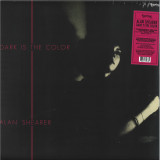
Favorite Recordings presents Dark Is The Color, the first LP by Alan Shearer reissued on vinyl for the first time. Despite being initially composed and produced for the French library label PSI, this rare
and obscure in-demand gem from 1985 sounds retrospectively like a proper album with great coherence and sophistication all along. Indeed, these 11 tracks will delight synthesizers addicts. Expect deeply emotive instrumental compositions, with ingenious analogue sequencing on stimulating chord progressions. The result is a highly retrofuturistic album, sometimes almost anticipating 90's videogames
scores. Just imagine Wally Badarou in a bunker with Talking Heads watching New York 1997 from John Carpenter.
Composed mostly step by step on a Sequential Pro-One synthesizer, Dark Is The Color is the product of the exciting state of mind from the 80's era with new sounds, new tools and new trends on the music spectrum. Influenced by bands like Talking Head or Japan, the sirens of the new wave scene strongly resonate here with Alan Shearer's familiarity and craftmanship with synthesizers.
Back in the days, Alan Shearer aka Frédéric Viger was working for his father’s music label, “Musique Pour L'image”, and their sublabel “PSI”. He started with Marathon Life under his real name before taking the Alan Shearer monitor. These records were produced for radio, TV and cinema industries but as well for companies’ internal communication. They represented a real investment from the label and these catalogues are usually full of amazing music from great artists such as Martial Solal, Vladimir Cosma, Joël Fajerman, Harlem Pop Trotters and even Manu Dibango.
About his musical illustration process, Alan Shearer tells: "Soundtracks are indeed my biggest influences and I'm a real fan of American composers as Jerry Goldsmith or Elmer Bernstein. I've always considered soundtracks as the new classical music or classical music of our century. There is a real state of mind producing music for illustration: you have to stick to the video. You should not tell what the image is saying but accompany what it is saying. You have to find a unique link, people always told me music should not be noticed for itself in a movie, that's what makes it good.”
In the vast musical archive that is Roman Flügel’s discography, Ro70 holds a special place. Written, performed and produced between January and July 1995, it is his debut album as a full-fledged solo artist. Enquired and inspired by a certain David Moufang from Heidelberg, who used to share a classroom with Jörn Elling Wuttke at the SAE Institute and revealed himself to be an Acid Jesus fan and also of the Roman IV 12“ project, it seemed like a good fit for his (and Jonas Grossmann’s) Source Records label.
In the days before file sharing that meant going back and forth with various DATs in his mom’s Volkswagen Polo Fox for actual listening sessions between Darmstadt and Heidelberg. The time was as special and idiosyncratic one as was the sound of Source Records and of course Ro 70 itself. While the rave-olution was ready to eat its kids with the commercial outlook of former underground phenomena looked bright and the scene’s prophecy seemed grim, enterprises like Source and artist like Roman Flügel were defying any competition out of those corners with their own means.
Listening back to the ten tracks of Ro 70, it proves them, their taste and artistic vision right. Probably still being put into the ambient, downtempo, electronica or chill out sections of most record shops, this music could have been made, relished and cherished anytime between 1995 and now. Made in Roman’s home studio in his parent’s house or in the Klangfabrik studio in Egelsbach, this was made for before or after the rave – or for people who din’t want to have to do anything with it at all. His signature is all over it. Well balanced soundscapes with an almost uncanny presence and clarity. Bittersweet symphonies that doesn’t seem to be in an inferior position to modern classical or electronic studies.
It is also a very personal testament to a time in the artists’s life that was ready to get caught in the maelstrom of the oscillating techno city called Frankfurt am Main and its halcyon days between the Delirium record shop, Sven Väth’s marathon sets, the early days of the label triumvirate Playhouse, Klang & Ongaku. In a musical journal without lyrics, those memories will have to stay pantomimic and private. All for the better, that we can at least still listen to them.
KAWALA today announce their emotionally resplendent debut album ‘Better with You’. The album marks the culmination of years of work which has seen the band grow from humble begging’s to the world class act they are today. Along the way they have done everything from support Bombay Bicycle Club on their European tour, play socially distanced shows in UK parks (after the first easing of restrictions in 2020), appear on FIFA 2021, write and perform in their own YouTube sitcom (the mad-cap Paradise Heights) and become ambassadors for the Music Venue Trust. Each step on the journey has seen the band grow and expand on what KAWALA means to their community. Ahead of the album’s release, the band are about to head out on their biggest UK and Ireland tour to date – including a sold-out show at the O2 Kentish Town Forum. NME describes them "the Bombay Bicycle Club-approved indie heroes making bangers without borders"
Originally released in 1999, Vagabond Ways was recorded at Teatro Studios in California and produced by Daniel Lanois and Mark Howard.
Vagabond Ways is a collection of original material; including Faithfull’s own compositions as well as interpretations of songs written by some of the finest songwriters of her generation such as Elton John and Bernie Taupin, Leonard Cohen and Roger Waters.
The vinyl format is issued here for the very first time on heavyweight vinyl.
The reissued CD format includes a selection of previously unreleased bonus material of demos and an unheard studio recording and features new liner notes.
But like a sunbeam peering through a haze of wildfire smoke, Early Eyes have
somehow persevered through dashed dreams, fractured relationships, historic
social justice uprisings in their own hometown, and a society tearing apart at the
seams to make an album that is both responsive to the chaos and wearily
optimistic."It almost feels like Look Alive! is a direct response to the pandemic,"
bandleader Jake Berglove reflects. "It was like, oh, my goodness, all of our
capitalist anxieties just came true! We took all of that anxiety and angry energy
and put it into making a really f***ed up album." Look Alive! vibrates with angst,
punctuated by computerized glitches and disintegrating threads of abandoned
melodies that echo in the distance before roaring back to life. With the assistance
of producers Caleb Hinz and Jake Luppen (of the band Hippo Campus), Early
Eyes felt more liberated stylistically, and Look Alive! looks ahead to a post-genre
future where emo, post- hardcore, Japanese city pop, and musical theater can
coexist peacefully on one album. "We ran with so many different influences," John
says. "I mean, like, half the songs on the album just sound like a completely
different band. We were just more unafraid to commit — like, alright, we're just
going to make a punk song right now."
Parquet Courts’ thought-provoking rock is dancing
to a new tune. ‘Sympathy For Life’ finds the
Brooklyn band at both their most instinctive and
electronic, spinning their bewitching, psychedelic
storytelling into fresh territory, yet maintaining their
unique identity.
Built largely from improvised jams, inspired by
New York clubs, Primal Scream and Pink Floyd
and produced in league with Rodaidh McDonald
(The xx, Hot Chip, David Byrne), ‘Sympathy For
Life’ was always destined to be dancey. Unlike its
globally adored predecessor, 2018’s ‘Wide
Awake!’, the focus fell on grooves rather than
rhythm.
“‘Wide Awake!’ was a record you could put on at a
party,” says co-frontman Austin Brown. “‘Sympathy
For Life’ is influenced by the party itself.
Historically, some amazing rock records been
made from mingling in dance music culture - from
‘Talking Heads’ to ‘Screamadelica’. Our goal was
to bring that into our own music.”
Deluxe LP features tipped on gatefold sleeve with
a glued-in six page booklet.
Parquet Courts’ thought-provoking rock is dancing
to a new tune. ‘Sympathy For Life’ finds the
Brooklyn band at both their most instinctive and
electronic, spinning their bewitching, psychedelic
storytelling into fresh territory, yet maintaining their
unique identity.
Built largely from improvised jams, inspired by
New York clubs, Primal Scream and Pink Floyd
and produced in league with Rodaidh McDonald
(The xx, Hot Chip, David Byrne), ‘Sympathy For
Life’ was always destined to be dancey. Unlike its
globally adored predecessor, 2018’s ‘Wide
Awake!’, the focus fell on grooves rather than
rhythm.
“‘Wide Awake!’ was a record you could put on at a
party,” says co-frontman Austin Brown. “‘Sympathy
For Life’ is influenced by the party itself.
Historically, some amazing rock records been
made from mingling in dance music culture - from
‘Talking Heads’ to ‘Screamadelica’. Our goal was
to bring that into our own music.”
Deluxe LP features tipped on gatefold sleeve with
a glued-in six page booklet.
- 1: Can't Turn Me Around
- 2: It's A Shame
- 3: Tell It All To Jesus
- 4: Somewhere To Lay My Head
- 5: Glory Glory
- 6: Tell It
- 7: Use Me Lord
- 8: Ask God In Faith
- 9: Victory
- 10: We Will Work
- 11: He's Coming Again
- 12: Trying To Make It
- 13: Shake Me
- 14: Stand Up
- 15: I Want To Be Ready
- 16: Have You Tried Jesus
- 17: No Ways Tired
- 18: Amazing Grace
Eleven groups in eight days. A marathon recording session in a makeshift storefront studio in a 100-year-old building in the tiny Eastern North Carolina town of Fountain. Once the idea for the project was in place, Alice Vines of the Glorifying Vines Sisters started calling local musicians. It didn’t take her long to line up almost a dozen groups to come lift their voices and represent the region’s unique Sacred Soul traditions. When the groups on this record gathered to record in February of 2020, they couldn’t have known that the world was on the heels of a global pandemic, or that the year would bring great turmoil and social upheavals. But in the reality created by gospel songs even the greatest of trials are not surprising, nor can they be ultimately devastating. Every time singers stepped up to the mic during these sessions, they created a sonic world where no amount of bad news can undermine the truth of The Good News. Even when “you can’t really see a solution to what you’re dealing with at the moment,” says Kiamber Daniels of Faith and Harmony, singing gospel music will remind you, “hey, I’m still here; I got what it takes to make it through this. It will give you a sense of peace.” Produced by Bruce Watson (Fat Possum/Big Legal Mess/Bible & Tire), this collection of sacred soul recordings of Eastern North Carolinian gospel groups is a one of a kind exploration. With a rich heritage of family gospel music, the artists in this area have been honing their craft over generations and have their own way of making the material original and unique. This is Sacred Soul of North Carolina.
Spirits Having Fun records are ones made from and for shows and spaces—arrangements rooted in a deeply collaborative process, that come to life through intuitive and locked-in live improvisation. Following their 2019 debut Auto-Portrait, Two finds the New York and Chicago based four-piece continuing to challenge ideas of what a rock band can be, pulling apart their musical experiences and reimagining them as kinetic compositions, equally studied but palpably organic.
Two is constructed around gut feelings and strong grooves, elastic rhythms and playful pacing. Its twelve songs expand, contract, and make sharp turns between melodies under singer-guitarist Katie McShane’s meditative lyrics. “Broken Cloud,” which was also released last year on a compilation in support of Chicago Community Jail Support, offers a glimpse into her reflections on the natural world: "A city grew out of the ground / to a mountain it's only a blur."
True to its name, the internal logic of the band is also just a lot of fun, built on trust and deep-rooted musical relationships. Before there was Spirits Having Fun, McShane, bassist Jesse Heasly, guitarist-vocalist Andrew Clinkman, and drummer Phil Sudderberg had performed together in various arrangements over the years. McShane, Heasly and Clinkman met in a specific corner of the Boston underground in 2013, a time when a scene had coalesced around students from local music conservatories frequently collaborating with punk bands and noise artists, exchanging ideas and warping musical worldviews. Heasly and Clinkman played together in Cowboy Band, making mutant, free jazz-inspired takes on old country tunes. When Clinkman moved to Chicago, Heasly and McShane played in experimental groups like EKP and Listening Woman; in Chicago, Clinkman met Sudderberg playing in projects like jazz scene fixture Ken Vandermark’s high-powered band Marker.
Spirits first came together as an attempt at a long-distance collaboration among friends in 2016, driven by the simple feeling of missing each other; they’d meet up for marathon weekends here and there to practice, playing small loops through dive bars and art spaces around the Midwest—just enough for McShane and Heasly to afford plane tickets back home. Being split between Chicago and New York forced the project into a deliberate pace. “We tried to take it slow and let it be what it was,” said McShane. That sense of patience unexpectedly prepared them for March of 2020, when their planned tours and the release of Two were indefinitely delayed.
Two was mostly recorded in the summer of 2019 with the help of omnipresent Chicago engineer Dave Vettraino and DPCD’s Alec Watson, whose contributions on organ, synths, and piano are laced throughout the record. The album reflects a synthesis of solitary and communal songwriting processes—each song drawing on fragments written by individuals, which McShane threaded together and shaped through her distinct compositional lens, making the songs whole before returning to them to the band to mature collectively. When composing, McShane writes first on the keyboard before adapting parts for guitars played by herself and Clinkman. Their dueling approaches to guitar are complementary: McShane, being a newer guitarist, brings a freshness to the project (“I'm just discovering the whole time,” she says) while Clinkman has been playing since childhood.
“There's a lot more collaboration on this record,” says Clinkman, “in terms of all of us letting stuff bloom a little bit more.” The record’s first single, “Hold The Phone” is a good example of this process—it started with a playful intro riff from Clinkman, a melody and bridge added by McShane, a wobbly outro groove added by Heasly, which Sudderberg brought to life. Another single, the dynamic “See a Sky,” written primarily by Heasly, underscores the rhythm section chemistry at play across the record, the song ebbing and flowing around Heasly and Sudderberg’s eclectic percussive palettes.
“Entropy Transfer Partners” is the only song on the record with lyrics by Clinkman, and the album’s most politically direct—a call for solidarity in the face of systemic failures, an acknowledgment of the shared material devastation caused by our country’s ongoing healthcare and housing crises: “These are not things we're experiencing individually. We struggle through them collectively. And we could actually declare, all of us, that it doesn't have to be this way, and fight and organize to ameliorate some of those conditions.” (“We won't work to create the shit you monetize, to run our lives,” they sing.)
From front to back, Two is an absorbing listen simply for its impressive range. But as the members explain themselves, the complexity of the record is about more than its intricate riffs, or how often they count out an odd time signature, but how they reject the notion of boxing the songs in, letting the melodies take on lives of their own. “Making music that feels alive is important to us,” says Clinkman. “Music feels most powerful to me when it deepens our sensation of feeling alive and connected to other humans. It’s so easy to feel worn down and isolated; that your life’s value is fixed to your productivity at your job, or the things that you have or don’t have. Making music that feels joyful and fun seems like one effective antidote to that feeling.”
Emerging from the Toronto warehouse scene, Tush is a rising electronic music act powered by Kamilah Apong and Jamie Kidd. Taking inspiration from electro funk, early disco, post-punk and '90s house; their debut album 'Fantast' embodies the rawness, vulnerability, and intimacy of the dancefloor.
'Fantast' kicks off with the slow burning 'Wavy Baby', an invitation to get close, get intimate and submit to the groove: "Vulnerability is the key to us getting to that next step of intimacy". Up next is lead single 'Chrysalis', a high octane ride through a technicolour fantasy world of heady synths and driving rhythms that propel Kamilah's voice into an erotic stratosphere.
'Don't Be Afraid' is about having the courage to love defiantly, urgently, and with intention. Driven by Jamie's infectious bass lines and FX blasts, it smoothly transforms into an uplifting gospel-infused track.
Two high points of the album, 'Jessica F***' and 'Marathons', highlight Tush doing what they do best. These tracks are the sound of the warehouse scene that birthed the project in the first place and the late night jam sessions that were full of possibility pre-pandemic. Here, Tush really stretch their improvisational muscles - the interplay of raw soulful vocals, hypnotic basslines, synth pads, and heavy disco rhythms is at the core of what makes them so invigorating.
'Fantast' closes with the uplifting sunrise energy of 'My Joy', the light at the end of the tunnel. "This song is enchanted by the backing vocals of my friends and chosen family, who are my cornerstones to working through the wonderful mess that I am". Kamilah adds "The track gives me this feeling that - no matter how hard the world tries to beat it out of me - I can and I have had to work hard to cultivate my own happiness in my own sacred spaces - one of those being Tush. Ultimately, this is all I really need".
In My Sleep is the debut vinyl release from French producer Margee. Having gained a loyal following last summer with a remix for Tommy Guerrero, released on Music For Dreams, this EP showcases his natural ability at creating low-slung, densely layered productions, perfectly aimed at the dancefloor.
The release also features two heavyweight remixes. The first of these comes courtesy of underground House legend DJ Nature, who takes the title track and gives it a completely new twist with his inimitable ‘ruff disco’ stylings. Hailing from Bristol (via New York), recent years have seen Nature release on Futureboogie, Golf Channel and Jazzy Sport.
The second remix on the release comes from Hardway Bros (AKA Sean Johnson). Having been an early champion of Margee’s work on his regular ALFOS streaming marathons, Sean took the second track on the release, Wrong Dream, and went into heavy-dub mode. The resulting remix clocks in at just over 11 minutes and is everything you’d expect from him, and more…
Margee said of the release ‘In My Sleep started while taking a shower. The bassline popped up in my mind and I ran out as quickly as possible to record it. From there, I got pulled into a deep emotional trip with groovy tones and dirty sounds. Wrong Dream is actually a lost project that I had to start over again. It turned out to be more fierce than the first one, experimenting with arps and fuzzy synths, while keeping a certain groove that was easier to reproduce.’
In My Sleep is the second release from London based label Other Goodness, following on from Bawrut’s ‘Divergent Emotions’ EP last year, which quickly became a mainstay of the live-streams and a DJs favourite.
- 1: Victory Lap
- 2: Rap Niggas
- 3: Last Time That I Checked Feat. Yg
- 4: Young Nigga Feat. Sean Combs
- 5: Dedication Feat. Kendrick Lamar
- 6: Blue Lace 2
- 7: Hussle & Motivate
- 8: Statue Symbol 3 Feat. Buddy
- 9: Succa Proof Feat. Konshens, J-Black
- 10: Keyz 2 The City 2 Feat. Teeflii
- 11: Grinding All My Life
- 12: Million While You Young Feat. The-Dream
- 13: Loaded Bases Feat. Ceelo Green
- 14: Real Big Feat. Marsha Ambrosius
- 15: Double Up Feat. Dom Kennedy, Belly
- 16: Right Hand 2 God
Founded in 2010, Hussle’s All Money In made an epochal debut with its very first release, “THE MARATHON,” marking Hussle’s fifth official mixtape and follow-up to his introductory “BULLETS AIN’T GOT NO NAME” trilogy. Named among XXL’s “100 Best Mixtapes of 2010,” the collection was quickly followed by 2011’s “THE MARATHON CONTINUES” and then 2013’s “CRENSHAW.” Along with his work as a lead artist, Hussle has previously collaborated with a veritable who’s who of contemporary hip hop, including Kendrick Lamar, Drake, Rick Ross, YG, Ty Dolla Sign, Meek Mill, DJ Mustard, Young Thug and many more. As if his musical career and role as label boss weren’t enough, Hussle is also successful entrepreneur. In addition to The Marathon Clothing line and store, Hussle also owns a number of successful businesses including The Marathon Agency, SC Commercial Ventures, Proud 2 Pay, and of course, All Money In No Money
Out Records.
[b] 2 Rap Niggas [Explicit]
300: Rise of an Empire is a 2014 American epic action film written and produced by Zack Snyder and directed by Noam Murro. It is a sequel to the 2007 film 300, taking place before, during, and after the main events of that film, and is loosely based on the Battle of Artemisium and the Battle of Salamis.
Its score was created by Dutch DJ and composer Junkie XL. This was made possible because in 2013, Hans Zimmer became responsible for the creation of the score to Snyder’s Man of Steel, for which he asked Junkie XL to collaborate with him and Snyder loved the end result. The score to 300: Rise of an Empire was performed by the Hollywood Studio Symphony, led by Nick-Glennie Smith. The vocals were provided by Hilda Örvarsdóttir and MC Rai. Junkie XL himself added the guitar, bass, drums, piano and synthesizer parts and mixed the full soundtrack at the Computer Hell Cabin studio.
A metaphor about diversity and passion for athletics. Looking for inspiration in our environment, as diverse as quality electronics, as extensive as a marathon. Biome Laps wants to take a lot of laps within the IDM universe, electro and the most evocative ambient. This new Madrid electronic music label of José Merinero, which in 2021 celebrates 20 years in music, 15 since he launched his �rst references on his own labels such as City Archives or Ultrix Records and 10 since the creation of .Àrtico Netlabel, his pretty girl, which has allowed him to move in the national underground, and in festivals like L.E.V. and what has been your home to look for that diversity, to �nd that electronics without labels under the name of JM. Here, in addition, it has been able to count on the collaboration of great spanish producers in some references. Passion for electronics speaking of José, he falls short, so he decides to create Biome Laps, where we will �nd timeless music, on vinyl and digital, and above all local music, made with a lot of passion. A veteran who debuts with his own name, showing himself without more, with a single objective, to give back to the music he believes in, everything he has received in return…
ick Waterhouse takes the colour blue as his hue of choice on Promenade Blue. In Nick’s musical and lyrical world, blue is a refraction of his life and memories — evoking the endless tours, marathon recording sessions, and highs and lows of success he’s experienced in his decade-long career; conjuring romances that were doomed, loves that lingered, and hope for future days of parity and partnership; summoning spirits of people who have gone but permeate his mind forever. That’s the world of Promenade Blue — one that is vivid and magnetic, buoyed by both light and density due to Nick’s newfound collaboration with producer Paul Butler (Michael Kiwanuka, The Bees, St. Paul and the Broken Bones). It’s not Gatsby’s New York in the 1920s, it’s Waterhouse’s California in the 2020s... but as anyone who’s ever listened to a Waterhouse record knows: time, though clearly pegged to the dawn of this new decade, is a more malleable concept. In no uncertain terms, Promenade Blue represents Waterhouse’s finest hour as a writer and bandleader — leveraging the musical partnerships he has built over many years to put something forth that is so fully realized and felt that it sparkles beatifically, reverberating with energy, heart, creativity, and vibe from start to finish. For fans of: Phil Spector, Brian Wilson, Leon Bridges, Nathaniel Rateliff, Jon Batiste, Charles Bradley, Lee Fields, JD McPherson, Van Morrison, Ty Segall, Allah-Las, Michael Kiwanuka, St. Paul and the Broken Bones Full one-sheet:
- A1: Marathon
- A2: Return Of The Sabretooth
- A3: Survival Manifesto
- A4: You Don't Know
- A5: Quarantina
- A6: Say Goodbye
- B1: Marathon - Instrumental
- B2: Return Of The Sabretooth - Instrumental
- B3: Survival Manifesto - Instrumental
- B4: You Don't Know - Instrumental
- B5: Quarantina - Instrumental
- B6: Say Goodbye - Instrumental
Jossy Mitsu (Rinse FM / 6 Figure Gang) makes her production debut on Astral Black. A resident DJ for the labels monthly club residency and host for their monthly radio shows, the club night-cum-label is the perfect home for Jossy's debut solo release. The Birmingham-raised, London based DJ has become known for her ability to shell down any club, whether that’s rinsing out a twisted concoction of sweaty House, Techno and left field club heaters, firing heavy-weight Rave and Jungle sets, or serenading you with her 2-step vinyl collection. Now holding down a Rinse FM residency and part of the much loved ‘6 Figure Gang’, the past 18 months has seen Jossy DJ across Europe and the UK, alongside artists such as Joy Orbison, Dance System, Maya Jane Coles & Dusky and perform at events such as The Warehouse Project, Glastonbury & Outlook Festival among many others.
Throughout the 4-tracks here on 'Planet J', Jossy invites the listener to take a step inside her sonic world. The meandering pads and scattering drum patterns of EP opener 'Odyssey' are seasoned with warped chords 8-bit arpeggiators and ticking cow bells reminiscent of producers such as Skee Mask or INVT. '1997' brings together pounding 4x4 kicks, bouncing basslines and pitched vocal samples, giving the track the makings of a house anthem and leaving the listener yearning for a return to sweaty basement clubs. The high octane energy of 'Turismo' takes the records BPM up a notch for a marathon of skittering snares drums, raucous percussion and menacing sub bass. Whilst the heavily reverbed chords and melodic basslines of subdued EP closer 'Ø' demonstrate Jossy's ability to create thoughtful electronic music whilst still retaining a
hard, dance-floor focussed edge.
The EP comes in a full colour sleeve with Planet J’s capital city visualised in a high-res CGI rendering courtesy of London-based designer Kerrie.IRL
More than 40 years after its original release, this limited and numbered facsimile edition of Keith Jarrett’s legendary 10-LP box set “Sun Bear
Concerts” is recreated from original analog sources.
Sun Bear Concerts - documenting five complete solo performances by Keith Jarrett in Japan - counts as a milestone achievement in the history of jazz recording. As Down Beat wrote, on the occasion of the original release, Jarrett’s improvisations are “the inventions of a giant, overpoweringly intimate in the way they can draw a listener in and hold him captive. Jarrett has once more stepped into the cave of his creative consciousness and brought to light music of startling power, majesty and warmth.”
Rich in incident and detail, the music in this beautifully produced, illustrated and presented ten-LP set, first issued in 1978 revealed Jarrett as a player of limitless creativity, unique in his ability to find new forms in the moment, night after night. “These marathons showed Jarrett to be one of the greatest improvisers in jazz,” Ian Carr wrote in his biography of the pianist, “with an apparently inexhaustible flow of rhythmic and melodic ideas, one of the most brilliant pianistic techniques of all, and the ability to project complex and profound feeling.” The present edition is a facsimile of the original LP set, described by the late Haus der Kunst curator Okwui Enwezor as “part of ECM’s declaration of independence from standard packaging of jazz records. Setting itself apart in this way, ECM treated its recordings as works of art by musicians of the highest artistic and conceptual order.”
A work of art by any standards, Sun Bear Concerts brings together solo concerts in November 1976 in Kyoto, Osaka, Nagoya, Tokyo and Sapporo, in recordings made by Japanese engineer Okihiro Sugano and producer Manfred Eicher, who travelled through Japan with Keith Jarrett. The set’s book-form packaging, with design by Barbara Wojirsch, includes photographs by Klaus Knaup, Tadayuki Naitoh and Akira Aimi.
A welcome reissue of the second Zion Train album, originally released on Universal Egg in 1993.
* Zion Train were at the forefront of the UK dub scene and took their sound worldwide from continent to continent and from festival to festival.
* `…Sporting Moments’ explores the outer limits of dub electronically and mind-bendingly with ample sub-bass to cause distress to your speakers.
Harlem Pop Trotters is one of the best jazzfunk albums in the French library, and one of the grooviest too. Written & produced by Jean Claude Pierric & François Rolland for Les Tréteaux in the mid ‘70s, this real masterpiece is now reissued on Underdog Records (Janko Nilovic, Martial Solal) in a rare colored edition!
The Story Itself
On the 12th of April 1961, Yuri Gagarin was launched into orbit for the first and - so they tell us - the last time. Upon returning to Earth, Yuri became a global hero, travelling the world to tell of his adventure.
Secretly, he was plagued by strange hallucinations and a persistent glow around his vision; a cornucopia of colour in a constant corona. In 1964 - following a silent coup by Leonid Brezhnev - Yuri was banned from embarking on further manned missions into space. At first fearing madness, the cosmonaut came to see these apparitions as a signal, an invitation, a welcoming beacon from a distant lighthouse blinking across the cosmic void.
On the 27th of March 1968, aided by trusted friends within the space program, Yuri Gagarin swapped places with another cosmonaut on a secret test flight and was once more blasted into outer space. Knocked unconscious by the extreme velocity of his experimental craft, Yuri awoke a mere 15 minutes later in view not of the rapidly shrinking Earth, but an entirely alien vista; he was elsewhere...
About Tony Neptune
Tony Neptune is a multi-media persona created by the Leeds-based artist and producer Sam Jefferies who, inspired by the narrative and musical legacies of early Detroit techno culture, aims to tell a complete story for the senses through a combination of image, sound and text. Asa member of the DimensionsDJ Directory three years running, some know Jefferies for his notorious DJ sets—whether he’s playing new wave or booty bass; as Tony Neptune or Yuri; solo or alongside Mark ‘Turbo’ Turner in another peak time marathon b2b, it doesn’t take long for crowds to catch on to his deep knowledge of all things riddled with Hi-Tech Funk and Soul. But this isn’t the only storm he’s cooking up: in his visual work, Jefferies uses oil paint to unveil the surreal and celestial adventures of the original cosmonaut and space pioneer, Yuri Gagarin, capturing every aspect of their dream-like surroundings with an eye devoted to detail and depth. This painting lies at the heart of his debut EP, Reflections on a Daring
After the great success of previous opus composed of remixes by French rising stars like Folamour &,Tour-Maubourg and established artists such as D'julz, Satoshi Tomiie, Ian Pooley, Oliver Dollar or Butch, the new chapter called The « Z » EP is leaded by the great DJ producer Dan Ghenacia. Along side House Music legend Chez Damier with Ben Vedren and their project H2H, come the young rising German producer Marc Brauner and the French new talent Kusmee aka AMS 250. Definitely a new step foward for the Shazzer Project.
- A1: Flag Day/The Mother Stone
- A2: I Want To Love You
- B1: The Great I Am
- B2: Lullabbey
- B3: No Where's Where Nothing's Died (A Marvelous Pain) (A Marvelous Pain)
- B4: Thanks For Staying
- C1: Little Planet Pig
- C2: You're So Wonderful
- C3: I Dig Your Dog
- C4: Katya
- B1: All I Am In You/The Big Worm
- B2: No Where's Where Nothing's Died
- B3: Licking The Days
- B4: For The Longest Time
- B5: The Hodge-Podge Porridge Poke
"I think most of it takes place in dreams," Caleb Landry Jones says of his debut solo album, The Mother Stone. "I'm talking more about dreams than I am about what's happened in the physical realm. Or I'm talking about both, and you're not sure what's what." Caleb Landry Jones was born in Garland, Texas in 1989 and comes from a long line of fiddle players. Three, maybe four generations back, on his mother's side. His grandfather wrote jingles for commercials, his mother was a singer-songwriter who taught piano lessons in the house, and his father was a contractor who did a lot of work for the Dallas music-equipment retailer Brook Mays and knew a guy if you needed a bass or a banjo. But Jones is not sure if you can hear any of this in his music and he does not play the fiddle. Jones has been writing and recording music since age 16, around the same time he started acting professionally. Played in a band called Robert Jones for a minute, lost his guitar player to higher education, moved into his own place, and broke up with somebody, at which point the songs really started coming hard and fast. "I started playing guitar and playing more keys," he says, "and then started writing record after record after record after record, because I didn't know what to do with myself. It was a good way of healing. And it felt like as soon as I started doing it, it felt like it needed to happen all the time." In the ensuing years he'd spend a lot of time carrying unrecorded songs around in his head like goldfish in a bag, waiting for a chance to record them in marathon sessions in his parents' barn. "You gotta play the songs every day, or every two or three days, to keep `em," he says. "Otherwise I forget them." Sometimes the ideas fuse together, one chapter to the next; this is how songs grow into seven-plus-minute epics like the ones on The Mother Stone. His back catalog is around seven hundred songs deep_ a whole discography of full albums, most of them unheard outside the barn, at least for now.
It's been a long, winding road to Hailu Mergia's sixth decade of musical activity. From a young musician in the 60's starting out in Addis Ababa to the 70's golden age of dance bands to the new hope as an emigre in America to the drier period of the 90s and 2000s when he mainly played keyboard in his taxi while waiting in the airport queue or at home with friends. More recently, with reissue of his classic works and a re-assessment of his role in Ethiopian music history, Mergia has played to audiences big and small in some of the most cherished venues around the world. With 2018's critical breakthrough "Lala Belu" Mergia championed himself and consolidated his legacy, producing the album on his own and connecting with listeners through the sheer creative power of his version of modern Ethiopian music. His subsequent performances revealed an artist who is in no way stuck in the nostalgia for the "golden age" sound. The press agreed, including the New York Times, BBC and Pitchfork, calling his music "triumphantly in the present" in its Best 200 Albums of the 2010's list. Mergia's new album "Yene Mircha" ("My Choice" in Amharic) encapsulates many of the things that make the keyboardist, accordionist and composer-arranger remarkable_elements that have persisted to maintain his vitality all these years, through the ebb and flow of his career. The rock solid trio with whom he has toured the world most recently, DC-based Alemseged Kebede (bass) and Ken Joseph (drums), forms the nucleus around which an expanded band makes a potent response to the contemporary jazz future "Lala Belu" promised. "Yene Mircha" calcifies Mergia's prolific stream of creativity and his philosophy that there is a multitude of Ethiopian musical approaches, not just one sound. Enlisting the help of master mesenqo (traditional stringed instrument) player Setegn Atenaw, celebrated vocalist Tsehay Kassa and legendary saxophone player Moges Habte from his 70's outfit Walias Band, Mergia enhances his bright, electric band on this recording with an expanded line up on some songs. Mergia produced the album which features several of his original compositions along with songs by Asnakesh Worku and Teddy Afro. An artist still reinventing his sound every night on stage during his marathon live sets, this 74-year-old icon refuses to make the same album twice. The album feels as urgent and risky as his concerts can be, pushing the band to the outer limits of group improvisation and back with chord extensions during his exploratory solos. "Yene Mircha" captures this live experience and fosters an expansive view of what else could be in store for this tireless practitioner of Ethiopian music.
We’ve been waiting a while for this one… Dark Sky return after a brief hiatus with this incredible EP featuring band of the moment Afriquoi. Many of you will already know one particular tune here: ‘Cold Harbour’ used by Bonobo on his Fabric mix compilation back in January. This gem is now backed with three more blissful, vital fusions. All created with different members of the deeply-rooted London-based live band.
‘Valmer’ sets the tone with its chimes, bells and chants, featuring the drumming of percussionist Andre Marmot aka Minioca. It's measured, restrained and impossible not to get goosebumps to, a near-spiritual experience the deeper you get into the groove. Elsewhere ‘Love Walk’ takes a much more subdued sojourn into the cosmic dusk. Mid tempo and much more focused on the rich layers of atmospherics than the beats, this will disarm a crowd at 50 paces. Next our minds are altered by eight-minute synth-striking mystique marathon ‘Cambia’ featuring the Kora playing of Jally Kebba Susso. Finally, ‘Cold Harbour’, one of the highlights from Bonobo’s evergreen mix from the London club institution, the combination of those rattled strings, pregnant bass staccatos, rolling percussion and deep undulating bass make it one of the most versatile and touching tracks Dark Sky have given us so far. And that’s saying something.
Breaking the Dark Sky silence that’s been almost two years, the ‘Clod Harbour’ EP opens up a whole new page in the London act’s legacy. And there’s plenty more to come. Watch this space...
Marius & Cesar are brothers. The 1st has been Disc-Jockey and Art Director for a while, the 2nd, a producer and co-founder of the music studio SODASOUND for almost a decade. They grew up in a family of musicians and started learning and playing music very early.
Fatal weapon of Sodasound’s label, they’ve been DJing for years in Parisian clubs, and launched their own party called AFTERBEAT, where they perform all night long on turntables plus a few analog toys for marathon DJ sets. They are now resident DJs at RINSE and AFTERBEAT FM is their monthly radio show since 2015.
Their debut EP “B.R.O.T.H.E.R.S.” is a blend of their eclectic influences, from 80's synthetic disco to balearic techno through impressionist music, ambient or acid house. It will be out on June 21st, 2019 (digital and vinyl).
Cochemea Gastelum is coming home to connect with his roots. After nearly 15 years of touring the world with Sharon Jones and The Dap-Kings, the saxophonist offers a deeply personal album of jazz and indigenous-influenced rhythms. All My Relations¸ out February 22 on Daptone Records, is 10 tracks of mesmerizing and spiritually ascendant instrumentation. The first single 'All My Relations' is available now.
'All My Relations is a way for me to explore my roots through music. Some of it is a memory that is imagined from a time and place I've never been ('Sonora') or a musical impression of ritual ('Mitote'),' Cochemea says. 'I felt compelled to add the way I feel when I go to ceremony, when I feel connected with my ancestors, to the musical narrative.'
A California native with Yaqui and Mescalero Apache Indian ancestry, Cochemea grew up surrounded by music but without knowing much about his heritage. Both his parents were musicians, and they gave their son a heavy name meaning 'they were all killed asleep.' Cochemea has spent much of his diverse musical career - as a soloist, musical director, composer and ensemble player - exploring and iterating on roots music, and All My Relations is a capstone meditation on his own ancestry.
Originally conceived during Sharon Jones and The Dap-Kings' final year of touring, Cochemea and Daptone's Gabe Roth cast a varied but familial set of New York musicians to bring All My Relations to life. A large portion of the album was created through improvisation and collective writing, where its 10 musicians created a melodic, percussive conversation. 'It was a beautiful experience - people would start playing and we'd work up these arrangements on the spot, then record it.'
'In a sense, this record is a prayer for unity, love and the recognition that we are all part of a web, and everything we do effects everything else,' Cochemea says. 'These days there's so many lines being drawn, I wanted to focus on what unites us.'
Cochemea has a long history of uniting multiple genres with his powerful polyrhythmic sensibilities. His roots in jazz, Latin, funk and rock led to multiple tours with funk-jazz organist Robert Walter's 20th Congress, and connected him with Sharon Jones & the Dap-Kings for their 2005 Naturally tour. Cochemea also played tenor sax with The Budos Band and Antibalas, and Baritone sax on the Amy Winehouse sessions, before becoming a full-time Dap-King in 2009.
In between marathon tours, Cochemea recorded a critically acclaimed solo album of soul, funk, and afro-Latin jazz, The Electric Sound of Johnny Arrow, all while doing session work for the likes of Mark Ronson, Rick Rubin and Quincy Jones. He's performed alongside Archie Shepp, Beck, David Byrne, Public Enemy and The Roots. Cochemea was also a featured soloist in the award-winning Broadway play Fela!, which led to historic performances in Lagos, Nigeria.
The man, the myth, the legend that is Aldo Vanucci is back with a small black disc of wax for the ages. Yes, it's the very same individual who supplies samples to Fatboy Slim, who was voted Plymouths 14th best DJ and who has undertaken marathon 36 hour DJ sets for charity. Exactly. Yes it's that Aldo Vanucci...
With a vast back catalogue of releases already to his name on respected indie labels including Tru Thoughts, Catskills, Good Groove and his own Good Living Records he has established himself as one of the producers you can trust when it comes to quality.
And this release ahead of his forthcoming album on Jalapeno Records is no exception. The soulful strutter - 'Ponderosa' could have been extracted from a Tarantino movie taking a Morricone-esque score sample and flipping it into a modern slice of driving pop. The powerful top line from Dena Deadly adds some colourful imagery to enhancing the already cinematic sounds.
Flipside 'Knew You Were Coming' fuses an 80's disco boogie groove with a memorable top line that really shows off Mr. Vanucci's DJ credentials. It's a club bomb with enough power to detonate any dancefloor.
- A1: Werewolves On Wheels (Main Theme)
- A2: Mount Shasta Home
- A3: Ritual
- A4: One
- A5: Ritual 2
- A6: The Devil's Advocates
- A7: The Devil's Advocates (Reprise)
- B1: One Foot In Heaven
- B2: Burning
- B3: Tarot
- B4: Tarot Trail
- B5: Dust Bowl
- B6: The Devil's Advocates 2
- B7: Ritual 3
- B8: Werewolves On Wheels (End Theme)
B-movie junkies, gather round and prepare yourselves for what could only be described as a cinematic speedball. Take a combined hit of two of the most potent strains of toxic cinema, dress it up in ritualistic robes and make it dance to the beat of a stoned, motoric, country commune soundtrack. Like an exploito double bill where both films merge into a single feature, this directorial debut by an ex-Roger Corman protege and future Russ Meyer art director (another heady cocktail) is the product of one writing duo's fleeting time in the driving seat as the moviedrome marathon approached its dwindling finish line.
Werewolves On Wheels emerged in 1971 in a climate where the B-movie genre of the previous two decades began to make way for the early glimpses of imported slasher films and video nasties. Entirely out of popular context in 1971, the soundtrack music of Don Gere would perhaps reveal him as the most versatile actor involved in the whole production. Until this point, Don Gere had been a pop folk songwriter and a country music devotee, but while riding with the werewolves, Don Gere became a disjointed psych rock stoner making ritualistic commune country with more coincidentally in common with Germany's emerging Krautrock scene or the more localised stoner psych of Skip Spence (whose radically ahead of its time LP OAR was recognised by Columbia Records as their lowest selling record in the company's history). Imagine guitarist Sandy Bull jamming with Munich's Amon Duul 1 or some Swedish prog outfits like Trad, Gras och Stenar or a sedated Kebnekaise. In comparison to the Curb/Allan scores, for films like Wild Angels, Devil's Angels, Thunder Alley, and Born Losers (often released on Curb's own Sidewalk or Tower records), the new music made by Don Gere, only three years down the line, sounds like it's from an entirely different generation...
"Pre-certified biker psych from the hillbilly Haxan. Amazing!" - SEAN CANTY (DEMDIKE STARE)
'Best electronic live set i've seen in two years!' CHRIS CUSACK (BOOKER, BLOC GLASGOW)
Fresh and heady slice of cerebral techno and out-there electro flavours.
EXTERIOR is the artist moniker of Edinburgh producer Doug MacDonald. Exterior represents his transition to electronic music and an embrace of the dancefloor. Doug played hardcore and noise-rock for a long time before eventually abandoning collaboration, nostalgia and formulaic rebellion in favour of synthesis. What he gained on the way was an understanding of the power of live drumming and years of finely honed performance-skills, something of an aberration in dance music.
Exterior thus represents a convergence of disparate personal and musical pleasures. Accordingly Exterior draws on rhythmic mavericks as divergent as Fugazi//Battles//Swans as well as DJ Spoko//Clark//Hieroglyphic Being. In addition, there is a deep undercurrent of melody and texture, drawing on the likes of Burial//Miles Davis//Bjork. Eschewing the modern home computer in favour of an exclusively hardware based approach, Exterior espouses a physical relationship to what is at heart an abstract practice, composing electronic dance music.
Perhaps it's unsurprising, then, that one of the things which really sets Exterior apart is his intoxicating live show. He gets the crowd going every single time he performs, so infectious is his energy, as he throws shapes and struts his stuff behind the gear, clearly 100% in the moment and his element.
His debut EP 'Public Transport' was released on London/Barcelona-based Land Recordings earlier in 2018. Having made his international headlining debut in Berlin in September, more continental sorties are currently being arranged (see below).
This record represents a significant move forward in sophistication and club-readiness.
On remix duties, anonymous analogue techno lover DALI returns on the back of four slices of extended club gear released via two Hobbes Music 12"s (2017-18), boasting colour-themed, screen-printed sleeves and an uber-simple design for that evergreen minimal aesthetic with a hint of mystique. These gained excited support/plays from the likes of Ben UFO, Nina Kraviz, Daniel Avery, DJ Deep, Laurent Garnier, Avalon Emerson, Twitch, XDB, Bill Brewster, Bawrut, Tom Findlay (Groove Armada) and many more... Clocking in (again) at just over 9 minutes, her 'Collapsing Star' remix is another marathon-length effort and does exactly what it says on the tin. Setting the beats to classic electro, everything's pushed hard until it all seems ready to fall rapidly apart (and it very nearly does), before dissolving in a fiery sizzle: a more visceral, dance floor accompaniment to Exterior's heady affair.
Kyle Geiger isn t your average DJ/producer. From his marathon sets at legendary clubs like Berghain to his powerfully pounding but yet sensationally melodic productions, there are plenty of notable musical accomplishments on his resume. When you scratch the surface though, what you find is a genuinely humble human with a true passion for techno and a love for DJing the kind of grateful joy you find in those who come from small Midwestern towns in the U.S., and find themselves relocated to an area where techno is so widely consumed: decades of experience collecting and programming music for some of the toughest crowds to be finally rewarded with chances to play in venues that have carried the music to where it is today. We are beyond happy to have this true legend and gentle giant on MATERIA with his awe-inspiring 4-tracker Thirty Seven EP
- A1: Chapter D (Dark Main)
- A2: Chapter M (Driving)
- A3: Chapter M (Karenina)
- A4: Chapter D (Swing)
- A5: Chapter M (Light)
- A6: Chapter M (Mellow)
- A7: Chapter D (Sparkling)
- A8: Chapter M (Charming)
- B1: Chapter M (Karenina 2)
- B2: Chapter D (Main)
- B3: Chapter M (Cosmic)
- B4: Chapter D (Strumm)
- B5: Chapter M (Reduction)
- B6: Chapter D (Dark)
- B7: Chapter M (Cosmic 2)
'1929 - Das Jahr Babylon" marks Thomas Fehlmann's third full length release of 2018 and presents what appears to be a creative peak in his career that spans beyond his solo career to his early days in Palais Schaumburg, collaborating with Moritz von Oswald as 3MB to his long time work with The Orb. Having left The Orb in late 2017 has set free unforeseen energies in Fehlmann's studio.
A departure from his recent dance floor-friendly album "Los Lagos" (KOM388, KOMCD148) released in September on Kompakt, Thomas Fehlmann's '1929 - Das Jahr Babylon" is a film soundtrack from the documentary that aired on ARD network on September 30, 2018 and is now available as a podcast series.
To compliment the internationally lauded TV series "Berlin Babylon", German director Volker Heise has created a documentary about 1929, the fateful year during Germany's "Weimarer Republik" in which "Berlin Babylon" is settled. Heise's stirring documentary portrays Germany's sizzling capital that is faced with radical changes by the dark forces whom are about to toss the world into the abyss we know as World War II.
This marks the second time that Fehlmann is partnering up with Volker Heise after 2010's marathon documentary "24 Stunden Berlin" which was released as "Gute Luft" (KOM211, KOMCD81) in the same year. Fehlmann's composition for "1929" consists of sample material taken from the era and thwarts the exaggerated lust for life with threatening undertones that anticipate the dawn of mankind's darkest chapter so far. Although all the sounds breathe yesterday's atmosphere this soundtrack bursts with modernity. Fehlmann accomplished the daring feat to musically render the unsettling resemblance between the political situation 90 years ago and our current time.
We at KOMPAKT feel that Fehlmann's score has turned out spectacular enough to give it proper release on limited vinyl and CD as well as on all digital platforms.
Mit '1929 - Das Jahr Babylon" legt Thomas Fehlmann schon seinen zweiter Longplayer innerhalb eines halben Jahres vor und dokumentiert damit eine kreative Hochphase seiner überaus stattlichen Musikerkarriere. Die Trennung von The Orb scheint bei ihm ungeahnte Energien freizusetzen.
Anders als auf dem cluborientierten "Los Lagos" tritt Thomas Fehlmann auf "1929" musikalisch einen Schritt zur Seite. Und das aus gutem Grund: Analog zur international gefeierten Fernsehserie "Babylon Berlin" entstand unter der Regie von Volker Heise der Dokumentarfilm "1929 - Das Jahr Babylon" - ein ergreifendes Sittengemäde Berlins während des Schicksalsjahrs der Weimarer Republik. Wie schon zu Volker Heises vorangegangener Berlin-Doku "24 Stunden Berlin" (2010 erschienen als das Album "Gute Luft" auf KOMPAKT) hat Thomas Fehlmann auch diesmal den kongenialen Soundtrack beigesteuert. Basierend auf Klangmaterial des Jahres 1929 hat Fehlmann eine beeindruckende Musik geschaffen, in der manchmal die übertriebene Lebensfreude und Dekandenz jener Zeit aufflackert. Eine Musik, deren Stimmung jedoch unterwandert ist von den bedrohlichen Strömungen, die Deutschland kurz darauf in seine dunkelste Epoche stossen werden.
Thomas Fehlmann ist damit ein wahres Kunststück gelungen. So sehr die Produktion den Geist einer vergangenen Zeit atmet, so modern mutet sie an. "1929 - Original Filmmusik" klingt somit wie die zu Musik geronnene Erkenntnis, dass sich Gestern und Heute auf erschreckende Weise ähneln.
Wir bei Kompakt sind der Ansicht, dass Thomas Fehlmanns Filmmusik zu "1929 - Das Jahr Babylon' so spektakulär geraten ist, dass wir sie nun als limitierte CD und Vinyl-Auflage, sowie auf allen digitalen Plattformen verfügbar machen.