Buscar:marc 4

Estilos
Todo
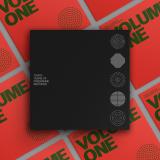
Saint Abdullah & Jason Nazary - Wiretaps For Oral LP
  • Lost In Your Neck
  • In Thickness Of Relation Ft
  • Ryan Easter
  • Dom Pezeshk
  • Wiretap For Oral
  • Strangers At The Gun
  • Range
  • Fingerprints, Photographs
  • And Biographical
  • Information
  • Hero To Body Ratio Ft
  • Patrick Shiroishi
  • Telellectual

Ltd. Edition

The acclaimed collaboration between IranianCanadian brothers Saint Abdullah (previous releases on Planet Mu, The Trilogy Tapes and Room40) with in-demand jazz drummer Jason Nazary (International Anthem, 4AD, We Jazz) continues on their second album for ‘Disciples’, a sequel to the 2023’s ‘Evicted In The Morning’.

Saint Abdullah & Jason Nazary continue to blend dreamlike collage, snatches of radio, free jazz, Sufi chants and improvisational chops to impressive effect.

A ‘Freedom Now Suite’ for a new era of anti-war marches and state oppression.

Features guest appearances from Patrick Shiroishi and Ryan Easter.

Reservar06.02.2026

debe ser publicado en 06.02.2026

27,94

Ültimo hace: 2026 Años
Clifton Chenier - King of Louisiana Blues and Zydeco 6x12
  • 1: Louisiana Stomp
  • 2: Clifton's Blues
  • 3: Boppin' The Rock
  • 4: Ay-Tete Fee
  • 5: Rockin' Accordion
  • 6: Baby What You Want Me To Do
  • 7: That's Alright
  • 8: Ay, Ai, Ai
  • 9: Why Did You Go Last Night
  • 10: Zydeco Et Pas Sale
  • 11: Louisiana Blues
  • 12: Lafayette Waltz
  • 13: Hot Rod
  • 14: Louisiana Shuffle
  • 15: French Zydeco
  • 16: Bon Ton Roulet
  • 17: Jole Blonde
  • 18: If I Ever Get Lucky
  • 19: Black Gal
  • 20: Keep On Scratching
  • 1: Black Snake Blues
  • 2: Let's Talk It Over
  • 3: Walking To Louisiana
  • 4: Johnny Can't Dance
  • 5: Grand Mamou
  • 6: Gone A La Maison
  • 7: Live From Phr Studio, Clifton Chenier!
  • 8: Mr. Charlie
  • 9: Hey Madeleine
  • 1063: 4-5789 (That's My Number)
  • 11: Drifting Blues/Breaux Bridge Waltz
  • 12: Shake, Rattle And Roll
  • 13: Rock House
  • 14: Breaux Bridge Waltz
  • 15: Ma Negresse Est Gone
  • 16: Fannie Mae
  • 17: Going Home Tomorrow
  • 1: J'ai Conet, C'est Pas Me Femme (I Know, You're Not My Woman)
  • 2: Since I Met You Baby
  • 3: Cher Catin
  • 4: You're My Mule
  • 5: I'm On The Wonder
  • 6: You're Fussin' Too Much
  • 7: All Your Love
  • 8: Zydeco Cha Cha
  • 9: Ti Na Na (Little Na Na)
  • 10: Someone Told Me It Was All Over
  • 11: You Can't Sit Down
  • 12: Oh! My Lucille
  • 13: Take Off Your Dress
  • 14: M'appel Fou (They Call Me Crazy)
  • 15: Je Suis En Racolteur (I'm A Farmer)
  • 16: Je Marche Le Plancher (I Walk The Floor)
  • 1: Tu Le Ton Son Ton (Every Now And Then)
  • 2: Down The Road I Go
  • 3: Calinda
  • 4: Zydeco
  • 5: What I'd Say
  • 6: Dust My Broom
  • 7: My Mama Told Me
  • 8: Night Time Is The Right Time
  • 9: I'm A Hog For You
  • 10: Grand Prix
  • 11: You Got Me Crying
  • 12: Tit Mam's Zydeco
  • 13: Party Down (At The Blue Angel Club)
  • 14: I'm Coming Home (To See My Mother)
Reservar06.02.2026

debe ser publicado en 06.02.2026

148,95

Ültimo hace: 2026 Años
The Awakening - Mirage LP

The Awakening

Mirage LP

12inchLPRGM2063C
REAL GONE MUSIC
06.02.2026
  • 1: Mode For D.d
  • 2: The Ultimate Frontier
  • 3: Just A Little Peace
  • 4: Slinky
  • 5: Mirage
  • 6: Glory To The Sun
  • 7: March On
Reservar06.02.2026

debe ser publicado en 06.02.2026

26,26

Ültimo hace: 2026 Años
Petter Eldh, Koma Saxo & Sofia Jernberg - Koma West LP

Petter Eldh's explosive ensemble Koma Saxo continues their adventures with a new album "Koma West", out on We Jazz Records, 18 March 2022. The album sees Koma Saxo expand on their previous sound with the addition of vocalist Sofia Jernberg and a strong cast of featured artists, including cellist Lucy Railton, violinist Maria Reich, pianist Kit Downes and accordionist Kiki Eldh (Petter's mom!). The hard-hitting key quintet remains, including Eldh on bass and assorted instruments, Christian Lillinger on drums, plus saxophonists Otis Sandsjö (of Y-OTIS), Jonas Kullhammar and Mikko Innanen bringing the SAXO to the KOMA operation.

At 14 tracks, "Koma West" is a full menu of monumental compositional ideas that could spawn entire albums. True to his chop & go production style, Eldh relies on continuous movement while presenting another all killer no filler program taking Koma Saxo on a sonic outing not quite like anything that had previously appeared under the band's name. That being said, there's very much the Petter Eldh touch here, one which might be hard to pinpoint and verbalise, but nevertheless a recognisable style of composing, producing and arranging.

Thematically, the album is rooted in the West Coast of Sweden, where Eldh grew up – he's from a tiny town called Lysekil. There's a thread of Swedish folk song tradition that has been part of the Koma Saxo DNA from the get-go and you can hear that here as well, especially on cuts such as "Närhet", beautifully sung by Sofia Jernberg.

Petter Eldh says:

"In a way, it's a concept album and a celebration of the Swedish West Coast. The first single is called 'Koma Kaprifol', and kaprifol is the landscape flower of Bohuslän on the West coast, where I grew up. I'm not too wild about attaching strong narratives to my music but there's no way around it this time. The oysters, a common snack around the coast, are a strong conceptual presence here. Anyway, they seem to pop up here and there quite often already thus far in the Koma Saxo narrative, even though it's not always so obvious. Koma Vocals! Koma Strings! I love the presence of Sofia Jernberg here and I love writing string arrangements, too, although I never thought I would do it for Koma, but of course, Koma should have some strings, why not?. Koma Saxo should and can become anything."

No en stock

Haga su pedido ahora y le encargaremos el artículo en nuestro proveedor.

22,48

Ültimo hace: 3 Años
Eddie Marcon & Torso - Home Before Dark (7")

In conjunction with the 2025 re-pressing of the Nora Guthrie "Emily's Illness/Home Before Dark" 7-inch single, we have here, in the same format, a lovely cover of the latter tune, performed by Eddie Marcon, a band based in Himeji, Japan. The band's vocalist Eddie Corman and musician/producer Shintaro Sakamoto wrote the Japanese lyrics for this gorgeous version, recorded in 2024 and originally unintended for public release; however, this slice of sweetness, delivered by the full band comprising guitar, keyboards, bass, percussion and wistful winds is now available to the lucky listener. The flipside, recorded in 2025, is an intriguingly ghostly recomposed version for cello and flute by TORSO, a Tokyo instrumental duo, who used the basic tracks from the Eddie Marcon version of "Home Before Dark" as a 'guide' before finally deleting the basic tracks.

No en stock

Haga su pedido ahora y le encargaremos el artículo en nuestro proveedor.

14,71

Ültimo hace: 50 Días
ATABASCA - Cacopoulos / Kundela Mawedi 7"

Killer Groove Records proudly presents the debut 45 by Italian cinematic funk trio Atabasca. A syncopated journey where funk, psychedelia, and cinematic groove merge into a timeless narrative suspended between rhythm and vision.


"Cacopoulos" and "Kundela Mawedi" mark the birth of Atabasca's sonic universe: the first two singles from the upcoming self-titled debut album,which will be released on March 27 in limited-edition LP, CD digipack, and digital formats.

On the A-side, "Cacopoulos" is an impetuous, visionary ride that fuses the power of instrumental groove with the evocative imagery of library music and Italian golden-age soundtracks. From the first beat, listeners are drawn into a dry, dusty landscape driven by a primal drum groove and the acid twang of a guitar that evokes the spirit of classic Westerns. Indeed, "Cacopoulos" pays homage to I Quattro dell'Ave Maria (Ace High) and to the legendary Eli Wallach, the sly outlaw who turns deception into revenge, a subtle yet powerful nod that ties the trio's sound to imagery steeped in dust, dreams, and redemption.


On the flip side, the sound of an old lap steel guitar evokes the gentle waves of the sea, opening the doors to "Kundela Mawedi", a dreamy track with exotic tones and heavenly atmospheres. The sonic journey unfolds through hypnotic rhythms and echoes of ancient cultures, where ethereal voices and warm, entrancing bass lines intertwine with psychedelic riffs and evocative guitar melodies, merging into a soundscape rich in warmth and mystery. The chorus, with its unexpected choral chant, adds a spark of magic. An elegant twist that gently stirs the dreamlike mood and transports the listener into a new sonic dimension, steeped in mysticism and tribal vibrations. "Kundela Mawedi" is more than just a song: it's a sensory experience, a musical ritual where tradition meets psychedelia, sand meets sea, and the soul dances upon the waves of time.


Recorded in a single take, the session captures the raw energy and natural atmosphere of the performance. Artistic production was handled by the trio alongside Andrea Fabrizii (digger, musician, producer, and catalogue curator for CAM Sugar), while Riccardo Ricci mastered the tracks at Velvet Room Mastering Studio in Brighton.


A killer double-sider, blending psychedelic and funk moods with percussive, jazzy textures. A must-have gem for every groove-loving DJ.


Like a desert blooming within the evergreen forests of the planet's far north, a unique, alien, disruptive environment: this is the vision behind Atabasca, the project of Luca Mongia (guitars, lap steel, keyboards, vocals), Paolo Mazziotti (bass, keyboards, vocals), and Valerio Pompei (drums, percussion, vocals). Individually active for over twenty years on both national and international scenes, the three musicians came together in 2023 to create a project that merges experience, experimentation, and creative freedom. Their music is imaginative and at times dreamlike, blending the classic concept of the instrumental trio with the worlds of film scoring and sound design.


Atabasca's sound moves through jazz-funk, world, and cinematic territories, weaving together afrobeat, desert, and psychedelic influences into a personal and timeless language. Each piece is a scene; each sound, a fragment of a world, a journey between reality and imagination where groove, texture, and organic timbre merge into a singular sonic ecosystem: a perpetually shifting balance that generates new inner landscapes.


Fans of Khruangbin, Surprise Chef, and instrumental psych-funk, take note!

No en stock

Haga su pedido ahora y le encargaremos el artículo en nuestro proveedor.

13,87

Ültimo hace: 44 Días
Various - Wizzz! French Psychorama Volume 5 (67-75)

The journey through French-speaking pop archives continues with this fifth volume, packed with fuzz, gimmicks, and dissent. Far from the charts, the selected tracks display a great creative freedom, often backed by corrosive humor. Welcome to the surprising, kaleidoscopic, and colorful world of the late sixties and early seventies, Wizzz!
Born in Montauban, Robert Pico stumbled into music by chance when he met René Vaneste, then artistic director at Pathé-Marconi. René brought him to Paris to record his first 45 RPM EP in 1964. A year later, Pierre Perret introduced him to Vogue, where he recorded his second album with Claude Nougaro’s orchestra. Sylvie Vartan then introduced him to RCA, where he recorded four singles, including the astonishing "Chien Fidèle," a track backed by a hair-rising fuzz guitar. Alongside his solo career, he also composed for other artists like Alain Delon (the song was recorded but remains unreleased), Magali Noël, Bourvil, and Georges Guétary. In the Paris of the sixties, he mingled with Mireille Darc, Elsa Martinelli, Marie Laforêt, France Gall, Françoise Hardy, Petula Clark, Régine, Dani, Serge Gainsbourg, Joe Dassin, Franck Fernandel, Charles Level, and Roland Vincent. Despite his efforts and winning a Grand Prix Sacem for his final record, Robert Pico didn’t achieve the expected success in show business and decided to leave Paris and return to the Southwest, where he devoted himself to writing. He is the author of 23 books (including Delon et Compagnie, Jean-Marc Savary Editions 2025, a memoir about his youth and his many encounters). Today, he is relieved to never have become a celebrity and devotes himself to his work with passion.
In 1969, the Franco-Italian movie Erotissimo was released, directed by Gérard Pirès (who later directed Taxi in 1998, written and produced by Luc Besson). This pop comedy features Annie Girardot, Jean Yanne, Francis Blanche, Serge Gainsbourg, Nicole Croisille, Jacques Martin, and Patrick Topaloff. The soundtrack was written by Michel Polnareff and William Sheller, with lyrics by Jean-Lou Dabadie. "La Femme Faux-cils," performed by Annie Girardot. It recounts the feelings of a rich CEO's wife who seeks to develop her sex appeal under the influence of advertisement and magazines. Groovy, sparkling and light, this track, with ITS lush arrangements humorously critiques consumer society and feminine beauty standards.
“Je suis l’Etat” (1967) is the flagship track of the first EP by singer-songwriter Spauv Georges, aka Georges Larriaga, better known as Jim Larriaga (1941-2022). Born into a family of bakers, the young man was initially planning to become a hairdresser when he discovered English-speaking music through Elvis Presley and the Beatles. After this revelation, he decided he would become a songwriter and gave himself five years to succeed. He recorded his first two EP’s independently for RCA under the pseudonym Spauv Georges; meaning “that poor George”, a nickname given to him by the mother of her friend Jean-Pierre Prévotat (future drummer of the Players, Triangle, or Johnny Hallyday). Portraying a depressed and eccentric young man, Spauv Georges created corrosive and amusing songs that didn’t reach a wide audience, despite a TV appearance with Jean-Christophe Averty.
Supported by his loyal friend and fellow songwriter Jean-Max Rivière, Georges Larriaga met the future singer Carlos in the early '70s, then Sylvie Vartan’s assistant. He wrote songs for Carlos, including the popular "La vie est belle," "Y’a des indiens partout," and "La cantine", which went onto become a huge hit in 1972. He also composed for Claude François (“Anne-Marie”, 1971), Charlotte Julian (“Fleur de province”, 1972), helped launch child singer Roméo (who sold 4 million records), and later wrote the hit "Pas besoin d’éducation sexuelle" (1975) for the young Julie Bataille. In 1971, Jim recorded an album for Disc'Az: “L’univers étrange et fou de Jim Larriaga”, which featured pop gems like “La maison de mon père”.
The story of the song "Zoé" began when Pierre Dorsay, artistic director at Vogue Records, asked Swiss singer and musician Pierre Alain to write a song for a new female singer. The inspiration came when he realized that Zoé (the artist's name) was also the name of France's first atomic battery, created in 1948, which consisted of uranium oxide immersed in heavy water! The lyrics reflect a bubbling energy that must be handled with caution, while the instrumentation echoes this atomic theme, notably with the use of a theremin.
Zoé’s career lasted only as long as a single 45 RPM, but it seems Christine Fontane was the vocalist behind this pseudonym, who is known for several EPs, a good "popcorn" album in 1964, and a handful of children’s singles in the '70s. Regardless, the photograph on the cover is of a different girl entirely.
Later, Pierre Alain continued his career, writing songs for himself, Marie Laforêt, Danièle Licari, Alice Dona, Arlette Zola (3rd place in Eurovision 1982), and achieving multiple gold and platinum records in Canada. Also an inventor with several patents, president of the Romande Academy, and head of the French Alliance in Geneva, he now composes atonal music, books, and poetry. Moreover, he is also the host of "Les Mardis de Pierre Alain" at "Le P'tit Music'Hohl" in Geneva.
Filled with oriental choruses and fuzz guitar, "Fou" is from Jacques Da Sylva's only EP released by Vogue in 1967. Despite the quality of this recording, all traces of this singer disappear after this first effort.
Valentin is a baroque pop singer born in Belgium. He is the songwriter and composer of most of the tracks on his three singles released in the late 60s in Canada. A legend says that he reincarnated himself as Jacky Valentin during the 1970s for a rock'n'roll revival career in Belgium, but his older brother sadly debunked this story. Valentin's first two singles were arranged by Claude Rogen, a Parisian session pianist who had come to Canada to promote the song “Mister A Gogo”, a cover of David Bowie’s “Laughing Gnome”, adapted by singer Delphine, his wife at the time. Far from his usual network, Claude Rogen arranged music for Polydor, including the arrangements for “Je suis un vagabond” in 1969, a jerk tune with string arrangements and a furious optimism.
Jacques Malia wrote, composed, and recorded his only 45 EP for Festival in 1966. “Histoire de gitan” is an incredible beat track with bohemian scat that tells the story of a gypsy musician who came to Paris to make it in the Music-Hall, to no avail. The hero of the song and its author probably shared a similar fate, as Jacques Malia faded into anonymity after this remarkable attempt.
Bernard Jamet recorded two EPs for Barclay in the late sixties and co-wrote several songs with Christine Pilzer, Pascal Danel, and prolific songwriters Michel Delancray and Mya Simile. The track “Raison Légale” (1968), his masterpiece, immerses the listener in a courtroom right when a murderer is being judged, with jerk rhythm and free arrangements. A unique, paranoid, judicial, and psychedelic oddity.
Jean-Pierre Lebrot-Millers started his career in show business in 1967 as a singer and songwriter for the Philips label. After three singles, he wrote several songs of a new kind with his friend Pierre Halioche, in the midst of the sexual liberation movement and the democratization of drugs. With provocative lyrics, “Les filles du hasard” and “Barbara au Chapeau Rose” were released on a Philips singles in 1968. The character of Barbara was inspired by a queen of Parisian nightlife during the psychedelic years: model Charlotte Martin, who dated Eric Clapton from 1965 to 1968, then Jimmy Page from 1970 to 1983. Jean-Claude Petit’s arrangements, with a table-filled intro, soul brass, and Hendrixian guitar, emphasize the flamboyance of a hedonistic and sexy character, whose dog is named Junkie because “Junkie est un nom exquis”! The track was recorded live in three takes with a full orchestra.
Upon its release, the record was censored by Europe 1 and RTL due to its references to drug use. Jean-Pierre Lebrot was then banned from the airwaves and later dismissed by his record label. He changed his artist name to Jean-Pierre Millers, while his companion Pierre Halioche became D. Dolby for a new dreamy composition, “Chilla”, which Jean-Pierre produced himself with arrangements by Jean Musy. Once again, the song was immediately censored everywhere. After this setback, he decided to stop singing and started taking on odd jobs to support his Swedish wife and their son until the day he met Jean-Pierre Martin, then production manager at Decca, who had worked with Manu Dibango. Martin offered Jean-Pierre Lebrot-Millers, then employed at Rank Xerox, the position of artistic director at Decca. He accepted and became, a year later, promotion director (radio, press, TV). He worked on Julio Iglesias’s first album for Decca, which became a massive hit and allowed him to meet Claude Carrère. The latter asked him to write new songs and find their performers, much like a “talent scout.” It’s through him that Jean-Pierre discovered Julie Pietri and Corinne Hermès. He composed “Ma Pompadour” for Ringo, Sheila’s husband, and took the microphone again for the syncope hit “Rendez-Vous” in 1982.
That same year, Jean-Pierre Lebrot-Millers tried to release a track for which he had heavily gone into debt: “Si la vie est un cadeau”. Having recorded it in London, he presented it to numerous professionals, all of whom refused to get involved. The same thing happened with Antenne 2 and the Sacem when he proposed the song as France’s entry for Eurovision. He then met Haïm Saban, who was producing cartoon soundtracks and had just launched the Goldorak theme song. Saban, having listened to the song, declared it had the potential to become a hit. He sent Jean-Pierre and Corinne Hermès to meet the CEO of the Luxembourg radio and television network. The latter received them, asked to hear a verse and chorus a cappella in his office, and immediately hired them to represent Luxembourg at Eurovision 1983. They reworked the arrangements and recorded a new version with Haïm Saban as co-producer. The song ended up winning Eurovision 1983, a great comeback for our hero. He continued producing and hung out with the band Nacash in Belgium when a couple came to introduce their daughter for an impromptu audition in a hotel room. The girl sang “Les démons de minuit” while dancing to a radio cassette. Impressed, he had her take singing lessons for a year and composed a song for her (for which he had the melody and title, but no lyrics). This required him to go on the hunt for a lyricist, who ended up being Guy Carlier. They recorded the song, which was initially a ballad, at Bernard Estardy’s CBE studio, and gave the singer a new name: Melody. They showed the song around their industry network without success. Later, Estardy called Jean-Pierre to suggest changing the rhythm and making it pop-rock. Orlando, Dalida’s brother, liked the result and decided to co-produce the track. “Y’a pas que les grands qui rêvent » became a classic hit. The song has since been covered by Juliette Armanet (as a ballad, like the original) and Valentina.

Born into an aristocratic Breton family, Hervé Mettais-Cartier worked as a DJ at Queen Kiss, a nightclub in Poitiers, where he formed the band Les Concentrés with Michel (an actor) and Christian (a radio technician). Together, they created a repertoire of whimsical songs (“Ma bique est morte”, “J’suis un salaud”, “Fils de dégénéré”...) that they performed on stage dressed in white (in homage to “concentrated milk”). They performed at Bliboquet and Olympia in 1968 for the 10th edition of the “Relais de la chanson Française” organized by L’Humanité-Dimanche and Nous les Garçons et les Filles, sponsored by Pepsi Cola. Winners in the author-composer category, alongside Danish singer Dorte, their visibility allowed them to record a 45, and appear on television in Jean-Christophe Averty’s show. The A-side of the disc features Bruno le ravageur, a casatchok dedicated to Bruno Caquatrix, the director of Olympia, nicknamed in the song “Coq Atroce” or “croque-actrices”. The B-side is dedicated to “Fils de dégénéré”, a quirky tribute to Hervé's aristocratic roots, mixing absurdity with sophisticated vocal harmonies.
After Les Concentrés, Hervé Mettais-Cartier formed the duo La Paire et sa Bêtise with his friend Olivier Robert. They performed in Parisian cabarets and toured with Pierre Vassiliu. In the late 1970s, Hervé began a solo career. He recorded two albums for the Motors label in 1978 and 1979, which did not achieve their anticipated success due to lack of promotion. In 1980, he met Bernadette, with whom he started a family and created a “Chansons à voir” (songs to see) show that he performed until his death at the end of 2024.

Publicité comes from the final EP by the Missiles (Ducretet Thomson, 1966), a disc that also includes “La (nouvelle) guerre de cent ans”, featured on Volume 4 of our Wizzz! series. Please refer to the booklet for the story of the band.

“He’s 1.82 meters tall, 28 years old, weighs 135 kg, is black and Belgian”: this is the description of singer Hegesippe on the back of his sole single (Decca, 1967). He appears on the album cover wearing a Greek toga, like a hippie gag – we are at the end of the year 1967. In “Le crédo d’Hegesippe”, this former bodyguard of Antoine and the Charlots plays the delightful card of the thick brute converted to Flower-Power and non-violence, with arrangements by Jean-Daniel Mercier, aka Paul Mille.
“Ethéro-disco” was released on a promotional record for clients of the Maréchal company (Liège, Belgium) for the New Year 1979. Over a funky rhythm, celebrity impersonations (Brigitte Bardot, Jacques Dutronc, Fernandel…) deliver an enigmatic text about pharmaceutical products like ether, bismuth, and aspartate. The track was composed by Dan Sarravah (responsible for Joanna's “Hold-up inusité” featured on Wizzz! Volume 3) and Tony Talado, who was also a singer (one 45 in 1967), songwriter (with over a dozen credits between 1964 and 1985 in various styles from surf music to disco), author (Devenez Végétarien, Dricot Editions, 1985), ad designer, and psychologist.

Décollez-les is on the A-side of Mamlouk's only single, a pseudonym for Marsel Hurten, who is known for his work on several EPs in the late sixties, as well as composing music for Hervé Vilard’s “Capri, c’est fini”, Claude Channes' “La Haine”, Annie Philippe’s “On m’a toujours dit”, and Nancy Holloway’s “Panne de Cœur”.
This strange song, with Afrobeat horns and absurd dialogues between a chef and his kitchen staff, is the result of a collaboration between Marsel Hurten and one of his neighbors, a photographer from Pavillon-sous-Bois (93), where the musician settled after returning from the Algerian War. A music video was shot to promote the record.
Marsel Hurten was born in Tourcoing (59) into a musical family. At a young age, he joined the brass band founded by his grandfather, playing the piston before studying trumpet at the conservatory, as well as teaching himself how to play the guitar. As an orchestra musician, he toured in France, Belgium, Germany, and England. He released a series of solo 45’s between 1965 and 1968 for the DMF and Az labels before stopping recording to focus on working for other artists (Gilles Olivier, Noëlle Cordier…).
“L’amour nu” (Vogue, 1971) is the work of the short-lived Belgian band Mozaïque. The track, written by singer Jacques Albin, closely resembles another of his compositions, “Carré Blanc”, which he recorded in 1969 for Disc’AZ.
Represented by the Lumi Son micro-label based in Marignane (Côte d'Azur), Jean-Marc Garrigues released two 45 RPMs in the late sixties, defending the French jerk sound. The song “Je dis Non” is a short, joyful ode to youth, pop music, and rebellion.
Songwriter and performer Jacques Penuel released three singles. The first one, “Astronef 328” (Fontana, 1969), features a dizzying series of chords punctuated by sound effects, a sci-fi story, and arrangements by Jean-Claude Vannier.

We would like to sincerely thank Pierre Alain, Moon Blaha, Marsel Hurten, Bastien Larriaga, Jean-Pierre Lebrot-Millers, Bernadette Mettais-Cartier, Robert Pico, Olivier Robert, Claude Rogen, Micky Segura.

No en stock

Haga su pedido ahora y le encargaremos el artículo en nuestro proveedor.

23,11

Ültimo hace: 55 Días
NOOTHGRUSH - KASHYYK LP
  • 1: Gage
  • 2: Sith
  • 3: Dianoga
  • 4: Imperial March / Alderaan
  • 5: Jundland Wastes
  • 6: Bric-A-Brac
  • 7: Gage (1996 Demo Version)

Kashyyyk was originally released in late 1995. Each copy was recorded onto a blank cassette, almost never new. We'd find boxes of tapes at flea markets and dub the demo over one side of them. Never knew what was on the other side. The collage on the cover evolved over time. Early copies had a sparse cover and later copies had a cover collages like this one. The text also changed over time. Edits were made, the thanks list grew, and the address changed. The text on this rereleases is the same as the last copies made in the '90s, with only tiny changes. Three of these songs were recorded in August of 1995 and originally released as the 8D8 demo. We made an unknown number of copies before we recorded again with Matt on guitar. We added our three new songs to the old and named the demo demo after Chewbacca's home planet. The other collages were put together specifically for this 30th anniversary release. Bonus track: Gage recorded January 19, 1996. This is the original version with Matt on vocals. Gary re-recorded the vocals before it was released on Cry Now Cry Later vol. 4.”—Noothgrush

Reservar30.01.2026

debe ser publicado en 30.01.2026

28,78

Ültimo hace: 2026 Años
GRUPO UM - NINETEEN SEVENTY SEVEN

Grupo um celebrate 50 years with release of lost dictatorship-era album nineteen seventy seven!

First time release - vinyl comes with printed innersleeves

Brazilian avant-jazz vanguardists Grupo Um celebrate their 50th anniversary, sharing a second previously lost 1970s album from the vaults. Nineteen Seventy Seven (titled after the year it was recorded) is another rip-roaring instrumental fusion treasure from the band which spawned from within Hermeto Pascoal’s famed mid-1970s São Paulo collective.

Like their debut album Starting Point, Grupo Um’s Nineteen Seventy Seven was recorded when Brazil's military dictatorship was at its most repressive. “There were no open doors to those who dreamt to be protagonists in creative instrumental music”, remembers drummer Zé Eduardo Nazario, “even popular composers and singers had to submit their songs to censors and many records were banned and confiscated from the stores.”

Just like Hermeto Pascoal's Viajando Com O Som (1977) and Grupo Um's previous album Starting Point (1975), both of which remained unreleased until the 21st century, Zé Eduardo asserts that the 1977 album was flatly 'without any chance to be released at that time."

Recorded at Rogério Duprat’s Vice-Versa Studios in São Paulo, the group were under both time and space restraints, “we chose the small Studio B,” Lelo Nazario recalls, “which had a Tascam (TE AC) 12x8 console and a 4-channel AMPEX AG 440 machine. Therefore, we had to record without overdubs, everything straight to tape.”

Expanding from a trio to a quintet, original Grupo Um members Lelo Nazario (keys), Zé Eduardo Nazario (drums), and Zeca Assumpção (bass) were joined by saxophonist Roberto Sion and percussionist Carlinhos Gonçalves. Carlinhos, Zé and Zeca had already played together in the group Mandala, while brothers Lelo and Zé had just finished a stint backing Hermeto Pascoal during his years in São Paulo.

Lelo was deeply immersed in modular synthesizer experimentation during this period, working extensively with the ARP2600 and EMS Synthi AKS. These electroacoustic explorations formed the sonic foundation for "Mobile/Stabile," one of his first compositions to merge modular synthesis with Brazilian music, a fusion that would ripple throughout the Brazilian jazz scene. The piece premiered at the first São Paulo International Jazz Festival in 1978, performed by Grupo Um with guest trumpeter Márcio Montarroyos. In a shocking moment, festival organizers interrupted the show mid-performance, sparking fierce backlash from both audience members and journalists who denounced the incident as artistic censorship during Brazil's era of political and cultural repression. The version on Nineteen Seventy Seven is the first recording of the composition.

Nineteen Seventy Seven combines Afro-Brazilian rhythm, modular synthesis and a plethora of whistles, percussion and effects pedals. Album opener “Absurdo Mudo” - so titled for the absurd difficulty it poses to the musicians performing it - starts out in a cloud of mysterious dissonance, before the haze breaks for a glorious keyboard and saxophone interplay atop an uptempo samba groove. “Cortejo dos Reis Negros (Version 2)” (Procession of the Black Kings), based on the maracatu rhythm, inverts the traditional jazz song structure by beginning with improvisations, which are followed by the theme and a final coda. “The studio also had two Parasound electronic reverb units,” Lelo notes, “and the timbre is very audible on the soprano sax and percussion.”

Grupo Um’s daring music represents a manifesto of resistance during the dictatorship years, but it’s one which remains just as relevant today. As Lelo puts it: “For me, the aesthetic issue has always been about combining contemporary avant-garde languages with Brazilian music, independent of categories and commercial interests. The result of this fusion takes music to a new level.”

Recording credits (1977)
Recorded at Vice-Versa B Studio, São Paulo, November 9, 1977
Produced by Lelo Nazario and Zé Eduardo Nazario
Engineered by Ricardo “Franja” Carvalheira


Lelo Nazario – Wurlitzer electric piano, acoustic piano, signal generator, percussion

Zé Eduardo Nazario – drums, percussion

Zeca Assumpção – electric bass

Carlinhos Gonçalves – percussion

Roberto Sion – soprano sax, clarinet

Release credits (2025)
Produced by UTOPIA Studio, São Paulo
Project Coordination in Brazil by Irati Antonio (Utopia Studio)
Tape Restoration and Digital Mastering by Lelo Nazario at Utopia Studio, July 2025
Liner Notes by Lelo Nazario and Zé Eduardo Nazario
Photography by Jorge Las Heras, Lelo Nazario, and artists' personal archives
Photo Restoration by Lelo Nazario
Artwork and Design by Alessandro Renaldin

Reservar30.01.2026

debe ser publicado en 30.01.2026

23,11

Ültimo hace: 2026 Años
Sortilege - Larmes De Héros LP
  • La Hargne Des Tordus
  • Chasse Le Dragon
  • Le Demier Des Travaux D'hercule
  • Quand Un Aveugle Réve
  • Mourir Pour Une Princesse
  • La Montagne Qui Saigne
  • Marchand D'hommes
  • Messager
  • La Huitième Couleur De L'arc-En-Ciel

High Roller Records, Picture Disc, limitiert auf 500 Stück, handnummeriert, Deluxe-Plastiktüte, Kartoneinlage. Alle Titel wurden im September 2022 von Patrick W. Engel bei TEMPLE OF DISHARMONY gemastert. Geschnitten von SST Germany auf Neumann-Maschinen für optimale Qualität auf allen Ebenen... Die ultimative audiophile Neuauflage dieses zeitlosen französischen Metal-Klassikers!

Reservar30.01.2026

debe ser publicado en 30.01.2026

21,43

Ültimo hace: 2026 Años
Novembre - The Blue LP

Novembre

The Blue LP

12inchVILELP1323
Peaceville
30.01.2026
  • 1: Anaemia ( 04:36 )
  • 2: Triesteitaliana ( 04:53 )
  • 3: Cobalt Of March ( 06:01 )
  • 4: Bluecracy ( 06:07 )
  • 5: Architheme ( 04:1 )
  • 6: Nascence ( 04:33 )
  • 7: Iridescence ( 05:12 )
  • 8: Sound Odyssey ( 05:32 )
  • 9: Argentic ( 05:28 )
  • 10: Deorbit ( 06:24 )

Then known as Catacomb, their early recordings of unusual gothic doom metal were to quickly gain the band interest. It was around 1993 that the brothers decided that a name change was in order & Novembre was born. Following swiftly on the back of 2006's 'Materia' release - Novembre's first album for their then new label, Peaceville - & in the wake of the great acclaim the band was receiving at the time for its highly captivating blend of atmospheric, emotional & progressive rock/metal, arrived the follow-up opus, 'The Blue', in 2007.

Featuring among the band's strongest compositions to date & with twists of doom/ gothic which brought to mind classic bands such as Opeth, 'The Blue' was a flawlessly executed opus of soaring majestic anthems in the unmistakable Novembre style. 'The Blue' was recorded at Outersound Studios, Italy, by the band & mixed at Finnvox Studios in Finland (Nightwish, Finntroll, HIM). Artwork was created by Travis Smith (Katatonia, Opeth). Following the recent release of the band's stellar 'Words Of Indigo' album, this edition of 'The Blue' is presented on black vinyl with printed inner sleeve featuring lyrics & arrives on the vinyl format for the first time.

Reservar30.01.2026

debe ser publicado en 30.01.2026

26,47

Ültimo hace: 2026 Años
MARC BOLAN & T. REX - Agora LP
  • A1: Jeepster 7.08
  • A2: Telegram Sam 6.28
  • A3: Token Of My Love 5.59
  • A4: Teenage Dream 4.53
  • B1: Zip Gun Boogie 9.06
  • B2: Get It On 10.13
Reservar30.01.2026

debe ser publicado en 30.01.2026

23,49

Ültimo hace: 2026 Años
Modern Sound Quartet - Italian Library Breaks (5x7")
  • 01: Imprevedibile
  • 02: Confabulante
  • 03: Melissa
  • 04: Mais
  • 05: Aglio
  • 06: Genziana
  • 07: Bucaneve
  • 08: Papaveri
  • 09: Campanule
  • 10: Taurus
  • 11: Il Diavolo

The Modern Sound Quartet represents one of the most treasured, yet least documented, outfits in the history of Italian library music. An exceptional studio band of session musicians with a formidable groove, they released only a handful of albums under this name in the second half of the 1970s. However, their sound indelibly shaped dozens of "invisible" soundtracks, often without ever receiving an official credit on the back sleeve.

Led by pianist and composer Oscar Rocchi, and featuring Andrea Surdi (drums), Luigi Cappellotto (bass), and Ernesto Verardi (guitar), the quartet embodies the more jazz-funk, cinematic, and irresistibly groovy side of the 1970s Milan scene. They established themselves as a compelling alternative to the already established groups operating primarily out of Rome, such as I Marc 4 or I Gres.

Juggling late-night club jam sessions, tours supporting Italian pop giants like Ornella Vanoni, and creating rhythmically intense library records, the Modern Sound Quartet forged a unique sonic aesthetic: sophisticated, electric, and profoundly metropolitan.

This boxset celebrates their funkiest side—an irresistible combination of incandescent drum breaks, tight grooves, and high-intensity fusion passages—bringing together some of the most sought-after tracks from legendary LPs like Erbe Selvatiche (1977), Floreama (1977), Horoscope (1978), and I Tarocchi (1980). The selection also delves further back to the roots of their sound, including two powerhouse tracks from Pop-Paraphrenia (1973), a project where Oscar Rocchi—backed by a young, lethal Tullio De Piscopo on drums—sowed many seeds that would fully blossom in the subsequent Modern Sound Quartet output.

Created with DJs, beatmakers, and collectors of Italian library music in mind, this boxset deliberately features tracks that were never previously released on 7 inch—an ideal format for maximizing the rhythmic punch of the quartet's sound.

Available in a limited worldwide edition (500 copies), enriched by iconic 70s-style artwork conceived and designed by Eric Adrian Lee.

Reservar30.01.2026

debe ser publicado en 30.01.2026

79,79

Ültimo hace: 2026 Años
Psyché - Hurriya (We Must Resist) (7")
  • A1: Original
  • B1: Extended Version

Psyché is an eclectic project rooted in the Neapolitan music scene. Conceived in 2018, the project includes Marcello Giannini (Nu Genea Live Band, Guru, Bassolino, La Famiglia), Andrea De Fazio (Nu Genea Live Band, Parbleu, The Funkin Machine), and Paolo Petrella (Nu Genea Live Band, Fratelli Malibu). They were recently joined by Roberto Porzio (Parbleu, Fitness Forever, 24 Grana, The Funkin Machine).

"Hurriya (We Must Resist)" is a sonic bridge crossing the Mare Nostrum, connecting the shores of Naples and Tunisia.

At the heart of this fusion is the voice and soul of Tunisian musician Ziad Trabelsi, whose Arab roots intertwine with the psychedelic, Mediterranean sound of Psyché.

In this track, Afrobeat and Arabic sonorities meet to create a hypnotic journey, one where Ziad's oud weaves an evocative groove that gallops like horses in the desert.

The song carries the echo of the ancient dominations and cultural exchanges that have shaped Naples—a millennia-old crossroads of civilization—where traces of Arab and North African influences continue to resonate in its streets and, most notably, in its music.

"Hurriya"—the Arabic word for freedom—is an anthem of resistance and resilience, a dialogue between East and West that dissolves the rigid boundaries of geography and politics. It is a collective song for the freedom of all peoples, against oppression, abuse, and injustice everywhere in the world. As Psyché emphasize: "Even if life tests us severely, and we often feel like giving up in the face of injustice, we must resist. We must refuse to disappear."

The single is available digitally and physically, on January 23rd, as a 7" vinyl. The B-side of the physical release includes an exclusive, extended version of "Hurriya (We Must Resist)", available only in this format.

Reservar30.01.2026

debe ser publicado en 30.01.2026

19,96

Ültimo hace: 2026 Años
JAMES MATTHEW SEVEN FT. FABIO SANTANNA - JAMES MATTHEW SEVEN
 
2

Beijinho do Brasil announce their second release with the highly anticipated follow-up from LA-based producer and multi-instrumentalist James Matthew Seven, featuring guest vocals on the A-side by Rio de Janeiro's Fabio Santanna.

Recorded in a small studio on the beach in Oaxaca, Mexico, "Feels Good, Do It" brings to mind a lost recording from Marcos Valle's time with Leon Ware. Funky and soulful with warm Fender Rhodes and a horn section reminiscent of Banda Black Rio, the tune is a breezy, mid-tempo ode to embracing life's pleasures. Originally with vocals in English, the track was translated and re-recorded in Rio de Janeiro by Fabio Santanna. Fabio has a long-established reputation in Brazil as a torchbearer of modern funk and boogie, continuing in the lineage of artists like Robson Jorge and Lincoln Olivetti. But with his releases on labels like Onda Boa and Dippin' Records (which sold out nearly instantly), his international reputation is steadily growing. He has a new 7" due out on Dippin' Records on October 10th, pushing his name to the forefront once again, right on time to generate more buzz for our next 45!

About the flip side, "Ilha Racional" (a nod to Tim Maia's Racional era):
I had this dream where I was in a dive bar discotheque somewhere in the Caribbean. A thick cloud of smoke hung in the air as the selector dropped this bass-heavy bop that had the whole crowd vibing. Then, out of nowhere, in walked Tim Maia with a bag of mushrooms. He proceeded to grab the mic and preach about this alien world of rational energy. Shit was bugged out. When I woke up, James Matthew Seven had sent me this track to check out.

No en stock

Haga su pedido ahora y le encargaremos el artículo en nuestro proveedor.

11,35

Ültimo hace: 56 Días
Mauricio Fleury - Revoada

Delve into the quirky and psych-tinged world of Brazilian pianist, composer and multi-instrumentalist Mauricio Fleury.

With more than a hint to Brazilian jazz greats like Azymuth, Deodato and CTI Records in their prime, Revoada is a groove based jazz-framed record, primed with other transitory musical vignettes which touches on Turkish psych and soul-jazz born out of the 70's film soundtrack genre.

Revoada is a 6 track album and storyboard of Mauricio's migration and travels through Brazil's geographical oddities , its rural and urban enclaves. Recorded in Brazil, it's the result of numerous treks through funky flea markets, soaking up old vinyls and vintage cultural artefacts combined with a new life led in Berlin since 2022.

Mauricio, as well as a founding member of Bixiga 70 (google Brazilian Afrobeat pioneers), a band he fronted for over 12 years, is also an in-demand collaborator and musician who as a pianist, guitarist and even percussionist has shared stages and studios with the likes of Brazilian greats including Gal Costa, Emicida, Lucas Santtana, João Donato and Liniker.

In 2007 he had a life-changing experience meeting Tony Allen, at the Red Bull Music Academy. After hanging out, chatting music and life, Tony insisted to Mauricio to participate with Tony in a jam with blacktronica and soulful house music pioneers Ron Trent, Theo Parrish and Steve Spacek. Mauricio sums it up, "From that moment on, I was never afraid to collaborate musically with anyone, no matter who's playing. It also brought me to researching the connection between Brazilian music and Afrobeat which is something that still means the world to me".

Another unforgettable session Mauricio undertook happened alongside João Donato and Marcos Valle, playing Donato's classic album Quem É Quem, live, a record seen as a blueprint for second generation bossa nova. Mauricio has worked with Gal Costa on two albums, Estratosférica Ao Vivo and her last studio album A Pele do Futuro. Fabio Sá and Vitor Cabral (bassist and drummer on Revoada) were playing with Gal at her last concerts, including in Berlin in 2022 before she passed.

In contemporary music, Mauricio was part of Toy Selectah and Mexican Institute of Sound's Compass project. He's worked with Colombia's Los Pirañas and has even recorded a mysterious and unreleased album with Quantic.

Revoada shows signature traces of Thelonious Monk, Ramsey Lewis' swinging soul sound, Deodato's drama, and styles from further afield, spreading into Turkish psych and Ethiopian jazz, when the time is right. Each track, led always by Mauricio playing multiple instruments with a choice selection of guests and core members on bass and drums, highlights Fleury's meticulous approach to finding the right timbre, utilising his arsenal of organs and effects pedals to set the mood, taking the listener to a specific place or memory that has shaped him.

A vinyl DJ for over 25 years and someone who is immersed in digger and collector's culture, Mauricio places a lot of emphasis on the importance of the complimentary relationship between two artforms (DJ and composer/producer) in the sense of having a broad repertoire of musical knowledge, references and perhaps predictably, being a Brazilian, understanding the connection between rhythms. This is an impressive debut album that struts itself right into the runout groove.

No en stock

Haga su pedido ahora y le encargaremos el artículo en nuestro proveedor.

25,63

Ültimo hace: 56 Días
pantata - sounds from a small apartment in prague (TAPE)

For a few years, Slovakian born & Czech-based artist pantata (Stefan Barcak) has been making music for himself, while running a record store slash coffee bar (called 25,2 rpm) in Prague. Over the course of a month in 2024 pantata made many songs with different analog machines and selected the favourite tracks out of this. His music is very laidback -almost empty- analog music that reminds of K. Leimer and Tara Cross mixed with Czech & Slovakian childhood memories and love and honesty of nowadays memories. "I was born on March 3, 1998, in a small town in eastern Slovakia. In the distance, you could see the Slovak mountains. That image of big mountains on the horizon still inspires my work today. In my early years, before my family and I moved to Prague, I was quite an outsider, I liked drawing and painting and I never stopped. Nowadays, I have a nice setup at home. A few synths: Sequential Circuits Six-Trak, Pro-One, Yamaha DX7, Roland Juno, JP-8000, S-1 (a small SH-101 clone), and classic Roland drum machines like the 909 and 707. I also use a few effect pedals, an old mixer, and a Tascam Portastudio where I record everything to tape. When I make a track, I usually need to finish it in one day. I start playing my instruments, and whatever feeling I have that day needs to be recorded. If I leave a song for tomorrow, I might lose the feeling and feel something completely different, so I prefer to start a new track instead."

Reservar26.01.2026

debe ser publicado en 26.01.2026

12,56

Ültimo hace: 2026 Años
NAGISA NI TE - Hontou No Sekai (The True World)
  • A1: The Real World
  • A2: Maro And Kumao
  • A3: Part Of The Evening
  • A4: Like Snow
  • B1: The World And Me
  • B2: Tracks At Dawn
  • B3: A Walk
  • B4: Her Story
  • C1: The World Of The Sun
  • C2: Between Hearts
  • D1: Always By My Side
  • D2: Starry Sky Blues
  • D3: The Feeling Of Running
  • D4: On The Waves

In March 2025, "On the Love Beach" performed solo shows in Shanghai and Beijing with Toushi Naoki to great success.

2025 marks the 30th anniversary of their memorable debut album, "On the Love Beach," and the band's first three albums are being reissued on CD and vinyl!

All three albums use the original master tapes, and each has been thoroughly remastered under the supervision of Shinji Shibayama for high-quality sound!

"On the Love Beach"'s third album, released in 1999, is a two-disc masterpiece that holds a unique position in the band's history, and many fans secretly cherish
the original LP version.

Shibayama's motivation for recording this album was to explore whether the concept he experimented with with Hallelujahs—"pursuing the uniqueness and
improvisation of the performance itself within the format of a pre-written song"—would work in a fixed band format rather than a session, and what the results would be.
It was a bold (and reckless) production approach: all basic tracks, including the lead vocals, were recorded live in the studio in one take, with no re-recordings allowed,
and overdubs like the chorus were kept to a minimum.

Although there are discrepancies between the punk-inspired performances and vocals due to the unedited concept, this is a rare example of the wild energy of a
band captured so authentically with such high sound quality in Jap-rock, and, regardless of its merits or demerits, it is undeniably compelling.

The raw sound quality, capturing the irreversible, fleeting interplay, demonstrates the outstanding engineering sense of Peace Music's Nakamura Soichiro,
and the pride of the rock band "Nagisa Nite" is evident throughout.

It's also noteworthy that this "Nagisa Nite" album contains the most solo works by Masako Takeda. Naturally, it's meticulously remastered from the original
master tapes for exceptional sound quality!

Reservar23.01.2026

debe ser publicado en 23.01.2026

70,80

Ültimo hace: 2026 Años
Luka Lickshot - Shots Fired (TAPE)

Introducing Luka Lickshot aka Luke Palmer aka the Wolverhampton Wolverine, prolific reggae DJ and genre warping producer of all things low end inclined.

In previous incarnations Luke has released hypnagogic house for labels such as Workshop and Third Ear, but with his debut LP release ‘Shots Fired’ he takes a sharp turn into the leftfield.

Sonically triangulating early 80s Manc post punk existentialism, 90s darkside trip hop and UK (On-U) sound system culture, the result is something like a more ruffneck Massive Attack jamming with Dome in the Black Ark.

‘Shots Fired’ was forged in an underground Peckham hideout, under strict parameters of time and space, fusing conventional instrumentation with digi know-how, improvised vocals, one take licks and dub fx. Pretty much impossible to pigeonhole the ten tracks but adjacent to / resonant with Giulio Erasmus, DJ Marcelle, Tricky, ‘Hex’….

Reservar23.01.2026

debe ser publicado en 23.01.2026

14,71

Ültimo hace: 2026 Años
Spooky - Gargantuan LP 2x12"

Spooky

Gargantuan LP 2x12"

2x12inch49NLP005
49North
20.01.2026

Gargantuan is the debut studio album by U.K. electronic duo Spooky (Charlie May and Duncan Forbes), released by William Orbit's Guerilla Records in March 1993.

Today Gargantuan is regarded as a landmark album in the history of progressive house and British dance music. As Guerilla’s standard bearer, they helped coalesce an immersive sound that was neither Detroit, nor Chicago, nor Manchester.

The duo became renowned for being at the forefront of the progressive house scene that emerged in the aftermath of the "post-rave comedown", joining fellow acts like Orbital and Underworld in re-casting house music in an energetic live environment.

Gargantuan has been out of print on vinyl since 2006 and is re-released on 21st June.

No en stock

Haga su pedido ahora y le encargaremos el artículo en nuestro proveedor.

27,69

Ültimo hace: 49 Días
PROPAGANDHI - TODAY'S EMPIRES, TOMORROW'S ASHES
  • Mate Ka Moris Ukun Rasik An
  • Fuck The Border
  • Today's Empires, Tomorrow's Ashes
  • Back To The Motor League
  • Natural Disasters
  • With Friends Like These Who The Fuck Needs Cointelpro?
  • Albright Monument, Baghdad
  • Ordinary People Do Fucked-Up Things When Fucked-Up Things Become
  • Ladies' Nite In Loserville
  • Ego Fum Papa (I Am The Pope)
  • New Homes For Idle Hands
  • Bullshit Politicians
  • March Of The Crabs
  • Purina Hall Of Fame
También disponible

WHITE VINYL[24,33 €]


Vor 25 Jahren: Today's Empires, Tomorrow's Ashes ist das einflussreiche dritte Studioalbum der kanadischen Punkband Propagandhi, das 2001 auf ihrem Label G7 Welcoming Committee Records (und außerhalb Kanadas bei Fat Wreck Chords) veröffentlicht wurde. Es zeichnet sich durch schnellen, politisch aufgeladenen, metallischen Punk mit kraftvollen Texten und Riffs aus und wurde 2021 zum 20-jährigen Jubiläum überarbeitet (Remaster, neuer Mix). Seit 2021 als CD erhältlich, jetzt wieder auf schwarzem und farbigem Vinyl. Eine der besten politischen Punkbands seit den 90ern! 14 Tracks (plus 4 Bonustracks auf CD) mit nachhallenden Donner auf einem umwerfenden Album! Wissen ist Macht. Seid bereit.

Reservar19.01.2026

debe ser publicado en 19.01.2026

24,33

Ültimo hace: 2026 Años
MULUKEN MELLESSE - MULUKEN MELLESSE WITH THE DAHLAK BAND (ETHIOPIQUES)

Swan Song

The vinyl LP at the heart of this éthiopiques 31 tracks 2 to 11 was one of the very last vinyl records ever released in Ethiopia. But above all it represents, we felt, the absolute masterpiece of the Ethiopian Groove – the Swan Song of Swinging Addis. The album leaves a clear idea for posterity of the level of sophistication and mastery that modern Ethiopian music had achieved, before being crushed under the Stalino-military heel of the Derg – as the bloody revolution that was unfolding came to be called.

Ethiopia1976.

The Revolution that broke out in February 1974 rolled on in a ruthless march. The whole of Ethiopian society was utterly stunned. The bouquets of flowers handed joyfully to the first tanks of the coup d'état were to wilt very rapidly. From September 1976 to February 1978, 18 months of Red Terror (the name given by the junta itself) spilled blood throughout the country. This fratricidal conflict took its heaviest toll among students and youth. The shift from feudalism to a cruel and primitive Stalinism left the country's citizens deeply traumatised, and snuffed out any pretence of activism, whatever the sector of society. This ice age was to last for seventeen long years.

ሙሉቀን፡መለሰ Mulukèn Mellèssè Muluqän Mälläsä

It was three tracks by Muluken that served as the opener for éthiopiques-1 more than 25 years ago. Seven more tracks appeared on éthiopiques-3 and 13, all accompanied by The Equators, which was soon to become the Dahlak Band.

The first track, Hédètch alu, also the very first piece that Muluken ever recorded, left audiences both unsettled and amazed. Reflecting the singer's extremely young age (he was just 17 at the time), this angelic voice mystified many, who thought they were in fact listening to a feminine voice. He was not yet 22 when he released his last vinyl record in 1976 with Kaifa Records (KF 39LP), one of the very last to be issued in Ethiopia, before the cassette tape became the dominant medium for music distribution – and before the new revolutionary regime put a stop to all independent musical life, via an unspeakable barrage of prohibitions and other persecutions.

Mulu qèn, literally, “A well filled day”. This tender maternal intention wasn't enough to ward off the cruelty of fate. His mother's premature death drove Muluken to leave his native Godjam, in northeast Ethiopia, to live with an uncle in Addis Ababa. Born Muluken Tamer, he took his uncle's last name – Mèllèssè.

The spelling Muluken appeared in his administrative records. Transcription of Amharic to the Latin alphabet, both in Ethiopia and for scholars, gives rise to controversies and quibbles that can never be neatly settled. French allows for a closer approximation of the original pronunciation, thanks to its battery of accent marks, confusing as they may be to anglophones.

Between rather accommodating administrative record-keepers and the various versions that pop up in interviews given by the artist, Muluken's year of birth oscillates between 1953 and 1955…

1954? One thing is certain: the artist's talent made itself known very early indeed, because he got his start in 1966-67, at the age of 13 or 14. Photos from the period attest to his extreme youth. It's a strange sort of initiation for a very young teenager to become a sensation in the heart of Addis's nightlife at the time, Woubé Bèrèha – the Wilds of Woubé. And what's more, in the club of the Queen of the Night, the Godjamé Assègèdètch Alamrèw herself, the very same that was portrayed by Sebhat Guèbrè-Egziabhér in his novel-memoir Les Nuits d’Addis Abeba2… The legendary female club owner who is remembered to this day by the capital's ageing boomers.

Muluken first tried his hand at the drums, before he grabbed the microphone. He emigrated briefly to the Zula Club, across the street from the old Addis Post Office, one of the ground-breaking bars of the burgeoning musical scene, before joining the Second Police Band in 1968, for around three years. He spent a few months with the short-lived Blue Nile Band founded by saxophonist Besrat Tammènè. As the musical scene grew increasingly successful, and pulled slowly but decisively away from its institutional ties, Muluken released his first 45rpm single in February 1972 (Amha Records AE 440). It was included in two LP Ethiopian Hit Parade compilation albums in September of the same year. All in all, Muluken released eight two-track 45s and the same number of original cassette tapes between February 1972 and 1984, the year that he departed for permanent exile in the USA. After converting to Pentecostalism in 1980, Muluken gradually abandoned all secular musical activity. In 1985, at the end of a concert in Philadelphia, he decided to quit concerts and recording for good. Mèlakè Gèbré, the historic bass player from the Walias band who was playing with him that night, recalls that everything appeared so irredeemably diabolical in Muluken's eyes, that it was to be the end of his contribution to Ethiopian Groove.

The end of the story, the beginning of a legend.

Dahlak Band, forgotten by History

Aside from his personal history and vocal talents, it must be remembered that Muluken Mèllèssè was one of the biggest names in the musical innovations that marked the end of the imperial period. These éthiopiques aim to convince those who are just discovering this hidden gem... As for Ethiopians themselves, they are to this day captivated by this singular and atypical figure in the Abyssinian pop landscape – even though he withdrew from public life some 40 years ago. Incorrigible devotees of poetic twists, of more or less hidden meanings, Ethiopians appreciate above all the care Muluken took in choosing his lyrics and the writers who penned them, such as Feqerte Haylou, Alemtsehay Wodajo and, here, Shewalul Mengistu (1944-1977). Love songs, written by women, a far cry from the conventional drivel that pleases sappy sentimentalists.

Muluken is equally acclaimed for his perfectionism when it came to music, the opposite of the overly casual approach that is all too common. He remained a faithful partner of musicians who came from a lineage that borrowed from several inventive and pioneering bands (Venus, Equators, Dahlak). Amongst them were certain artists who began their musical lives with Nersès Nalbandian at the Haile Sellassie Theatre and who come of age in around 1973 – at just the wrong time, you might say. Among them were the pillars Shimèlis Bèyènè (trumpet), Dawit Yifru (keyboards) and Tilayé Gèbrè (sax & flute). Most notably Tilayé Gèbrè, certainly one of the most important musicians, composers and arrangers of his generation, of the end of the imperial era, and of the early years of the Derg.

It was only in 1981 that a miraculous opportunity arose for Tilayé to escape the Stalinist paradise of the dictator Menguistou Haylè-Maryam. Once again it was Amha Eshèté (1946-2021) who provided a solution. The spirited and courageous producer, who had been in exile in Washington since 1975, succeeded, thanks to his incredible perseverence, in bringing the Walias Band to the USA. It was, in fact an extended Walias Band comprising ten musicians3, six of whom chose to slip away after a few concerts and the recording of an LP (The Best of Walias, WRS 100). Tilayé Gèbrè was one of these. He has been living in the USA ever since. There he joined the then-nascent Ethiopian diaspora, which lived largely unto itself, and was making only very modest headway in the American musical market. It seems unfair that Tilayé Gèbrè and the Dahlak Band were not able to benefit earlier from the public recognition that they do deserve.

A similar draining away of the top-rate talents would lead to the reorganization of the major groups of the “Derg Time”. The remaining artists spread themselves around between Ibex Band (renamed Roha Band), Ethio Star Band and a remodeled Walias Band. That spelled the end of the Dahlak Band.

With this record, produced by the essential Ali Abdella Kaifa a.k.a. Ali Tango, we can appreciate everything that the Derg not only destroyed, but also prevented from flourishing. This gem of Ethiopian-style afrobeat came out in 1976 (and, by way of a parenthesis, before the FESTAC 1977 in Lagos, which was attended by an impressive delegation of Ethiopian musicians — although Fela was already personna non grata in his own country). Despite everything that might distinguish this ethio-groove from Fela’s music – no colonial axe to grind, no question of political confrontation with the authorities, no claims to negritude or Africanism for the Ethiopian musicians, and less extrovertion! –, this LP fits beautifully into the saga of intense and electrified soul of the new “African” groove that Fela and Manu Dibango embodied so well from that point onwards.

In restoring this record to its place in the afrobeat epic, it can be seen that, if nothing else, the timeline bestows a legitimate pedigree and a historical primacy to works that had no international impact when they were originally released.

Warning! Masterpiece!

No en stock

Haga su pedido ahora y le encargaremos el artículo en nuestro proveedor.

20,59

Ültimo hace: 70 Días
R.M.K. - Steel Waves LP

R.M.K.

Steel Waves LP

12inchODDEVEN052B
Odd Even
14.01.2026

Repress due to the high demand! Unbelievable deep and driving techno sound of the first hour. this 4 tracker from R.M.K. shows where techno should be. in the here and now, without exaggeration, without bling bling and without polarization. R.M.K. utilises his knowledge and past experiences, which include regularly playing at Berghain and Tresor in Berlin, as well as fabric in London, to develop his individual sound. During his more than 20 year career in music, he has formed friendships and worked in partnership with other respected artists such as Trevino (Marcus Intalex), Jamie Anderson, Robert Owens, Goldie and Nastia. Although the focus is always on the very heart of the most raucous of raves, R.M.K never shies away from groove and funk. This is conveyed in a Live Show that utilises classic hardware from the golden age of UK Rave.

No en stock

Haga su pedido ahora y le encargaremos el artículo en nuestro proveedor.

11,72

Ültimo hace: 7 Días
Marc Almond with Starcluster - Silver City (Expanded) (2x12")
  • 1: Silver City Ride
  • 2: Pixelated
  • 3: Avatar
  • 4: The City Cries
  • 5: Smoke And Mirrors
  • 6: T O Have And Have Not
  • 7: The Shallows
  • 8: I Don't Kiss
  • 9: Get Closer
  • 10: Smoke And Mirrors (Starcluster Alternative Remix)
  • 1: Futuristic Weimar Berlin
  • 2: Dancing Through The Fire
  • 3: Pixelated (Punx Soundcheck Remix)
  • 4: The Shallows (Keen K Remix)
  • 5: Self Control
  • 6: I Don't Kiss (Starcluster Remix)
  • 7: Fur (Keen K Remix)
  • 8: Saint Now (Rsf Metropolitan Mix)
  • 9: Worship Me Now (Starcluster Remix)
  • 10: Too Damn Beautiful (Replicant Feat. Marc Almond)
Reservar09.01.2026

debe ser publicado en 09.01.2026

36,56

Ültimo hace: 2026 Años
BAD BRAINS - BAD BRAINS (Tape)

BAD BRAINS

BAD BRAINS (Tape)

CassetteORGMCAS2179
ORG Music
09.01.2026

Louis Armstrong and his All-Stars are captured in rare form during this live recording from 1956. The album features a great collection of tunes which had become staples of Armstrong's live shows, including his perennial opener, "Indiana"; the crowd favorite, "Tiger Rag"; the always joyful, "When The Saints Go Marching In"; and the great title-track, "Basin Street Blues". Satch's frontline band at the time boasted the very distinctive sounds of trombonist Trummy Young and clarinetist Ed Hall.

No en stock

Haga su pedido ahora y le encargaremos el artículo en nuestro proveedor.

14,08

Ültimo hace: 8 Días
RAY CHARLES - The Genius Of Ray Charles LP 2x12"
  • A1: Let The Good Times Roll
  • A2: It Had To Be You
  • A3: Alexander's Ragtime Band
  • B1: Two Years Of Torture
  • B2: When Your Lover Has Gone
  • B3: Deed I Do
  • C1: Just For A Thrill
  • C2: You Won't Let Me Go
  • C3: Tell Me You'll Wait For Me
  • D1: Don't Let The Sun Catch You Cryin
  • D2: Am I Blue
  • D3: Come Rain Or Come Shine

Analogue Productions (Atlantic 75 Series) Celebrating the 75th Anniversary of Atlantic Records! Rolling Stone list of 500 Greatest Albums 265/500 for 2012 180-gram 45 RPM double LP Pressed at Quality Record Pressings Tip-on old style gatefold double pocket jacket by Stoughton Printing The Genius of Ray Charles, his sixth studio album, released in 1959 by Atlantic Records, eschewed the the soul sound of his 1950s recordings, which fused jazz, gospel, and blues, for swinging pop with big band arrangements.

Charles is joined bymany ringers from the Count Basie and Duke Ellington bands for the first half of this program, featuring Charles belting out six songs arranged by Quincy Jones. "Let the Good Times Roll" and "Deed I Do" are highlights, and there are solos by tenorman David "Fathead" Newman, trumpeter Marcus Belgrave, and (on "Two Years of Torture") tenor Paul Gonsalves. The remaining six numbers are ballads, with Charles backed by a string orchestra arranged by Ralph Burns (including "Come Rain or Come Shine" and "Don't Let the Sun Catch You Cryin'"). Charles' voice is heard throughout in peak form, giving soul to even the veteran standards. Pressed on 180-gram vinyl at Quality Record Pressings, and housed in a tip-on old style gatefold double pocket jacket by Stoughton Printing.

Reservar

El artículo no se ha publicado. Tú puedes reservar ahora el artículo y después de ser pagado se te será enviado.

83,99

Ültimo hace: 2026 Años
LOLO - LOLO LP

Lolo

LOLO LP

12inchBS097
BLACK SWEAT RECORDS
Release unknown

The roots of African music are always open to new possibilities. This is revealed in the music of this unprecedented quartet. Alongside the Malian singer Rokia Traore', Mamah Diabate, Malian griot and djeli ngoni player, has been playing for several years with Stefano Pilia (Afterhours, Massimo Volume). Now, their path intertwines with the artistic and human partnership between Jabel Kanuteh, Gambian griot and kora virtuoso, and percussionist Marco Zanotti(Classical Afrobeat Orchestra, Cucoma Combo). The union of these two pairs develops unusual geographies and architectures, where dual African and Italian identities merge into one universal sensibility. The predominant Malian and Gambian modes chase each other, but all is fused into a broader rhythm factory or embellished by more abstract and liquid experimental digressions. The curiosity and pliability of the individual musicians search for a language that is both current and contemporary, always poised between ancient and modern, landscape and narrative, with jazz, rock and folk influences.

Reservar

El artículo no se ha publicado. Tú puedes reservar ahora el artículo y después de ser pagado se te será enviado.

18,28

Ültimo hace: 2026 Años
EMERSON, LAKE & PALMER - Emerson Lake & Palmer LP
  • 1: The Barbarian
  • 2: Take A Pebble
  • 3: Knife-Edge
  • 4: The Three Fates A. Clotho B. Lachesis C. Atropos
  • 5: Tank
  • 6: Lucky Man

Supergroups existed before Emerson, Lake & Palmer formed in 1970. And, as we all know well, many came after. But few, if any, matched the English trio’s chemistry and its elevated combination of virtuosity, vision, and verve. Having influenced a multitude of followers, ELP’s prowess was obvious from the start. The band’s self-titled debut stands as a towering statement of creative imagination, execution, and discipline more than five decades after its original release.

Mastered at MoFi’s California studio, housed in a Stoughton jacket, and pressed at Fidelity Record Pressing, Mobile Fidelity’s numbered-edition 180g 33RPM LP of Emerson, Lake & Palmer presents the benchmark album in audiophile sound. Clear, dynamic, and balanced, this collectible edition honors the perfectionist approaches that both informed the playing and recording of the record.

Distinguished with black backgrounds, this reissue brings to light the epic scope, tonal depth, and mind-bending degrees of musicianship on display. Aspects — textures, nuances, effects, melodies, tempo changes — that go hand-in-hand with the trio’s compositions and interplay are rendered amid broad soundstages and delivered with pinpoint detail. Whether you’ve owned multiple copies of this touchstone or seeking out your first version, you’ll relish the presence, separation, imaging, and crispness that help make every song come across as if the group has set up shop in your listening space.

Opening the door to the seemingly infinite possibilities of progressive rock while steering clear of excess, Emerson, Lake & Palmer achieved a rare feat in that its complex, cerebral music didn’t prevent it from attaining mainstream success. The gold-certified effort launched the career of a band that would sell tens of millions of records. It also landed a Top 50 single in the form of the ballad “Lucky Man,” whose vocal harmonies, folksy strumming, multi-tracked instrumentation, and breakthrough Moog solo almost feel quaint in the face of the other fare on the album.

Comprised of genre-defying originals and hybrid arrangements of two classical pieces, the album Rolling Stone originally and rightly said is “best heard as a whole” matches outrageous ambition with the otherworldly skills of three musicians who remain among the finest to ever pick up their respective instruments. While Emerson soon drew the lion’s share of headlines for his ability on keys — clavinet, Moog, piano, Hammond organ, and pipe organ included — Greg Lake’s aptitude on guitar and bass, along with well as Carl Palmer’s monster talents behind the kit, created a three-headed hydra that devoured everything in front of it.

That extends to the radical reinterpretation of Bela Bartok’s “The Barbarian” that begins the LP, a performance that in less than four-and-a-half minutes runs the gamut from distorted to churchy to angular and blustery. More classical flourishes, keyboard wizardry, hard-rock heaviness, and gothic signatures emerge throughout “Knife-Edge,” which reimagines music by Leos Janacek and J.S. Bach — and ultimately invites you to explore a cathedral of sound teeming with separate bursts of keys and percussion.

And did someone say “drumming”? Check out Palmer’s monster salvo on “Tank,” a rhythmic showcase that marches out with knee-bent notes and mirror-reflected passages. Or dive into the mythological suite “The Three Fates.” Replete with three parts and Emerson playing the pipe organ at Royal Festival Hall, it shoots off sonic fireworks via sophisticated arpeggios, jazz improvisations, dancing counter-meters, sizzling chords, and a few explosions. Please don’t hold anyone at MoFi responsible if your system cannot handle it; this is heady stuff.

Indeed, everything on Emerson, Lake & Palmer is there for a purpose. Whether you aim to attempt to dissect all of the notes, shifts, and polyrhythmic bluster or just want to absorb this album as one living, breathing organism, this version invites you to do both as many times as you desire.

Reservar

El artículo no se ha publicado. Tú puedes reservar ahora el artículo y después de ser pagado se te será enviado.

53,74

Ültimo hace: 2026 Años
JOHN ROSEBORO & MEI SEMONES - Waters Of March / How To Cope
  • A.waters Of March
  • B.how To Cope

May Simones has been garnering attention for her solid Berklee-trained technique, musicality spanning J-pop, jazz, indie, and bossa nova, and bilingual
English-Japanese lyrics. Following her 2025 Fuji Rock Festival appearance, she has already confirmed her first Japan tour, starting in January 2026.
She is one of the most talked-about singer-songwriters today. Meanwhile, John Roseboro is a Haitian-American singer-songwriter who blends elements of indie
folk, bedroom pop, and jazz with bossa nova rhythms. Unconstrained by typical idioms, his unconventional songwriting and arrangements have led him to
proclaim himself "post-bossa nova," garnering attention among some listeners in Japan.

The duo's cover of Antonio Carlos Jobim's classic "Waters of March" was a hit that quickly raised their profile. The intimate atmosphere created by May's soft
vocals and John's guitar is a testament to the two's friendship. This outstanding cover could set a new standard for English-language bossa nova.

Reservar19.12.2025

debe ser publicado en 19.12.2025

27,94

Ültimo hace: 2026 Años
Kaiser Chiefs - Employment 20 (China Anniversary Edition) LP

To celebrate the twentieth anniversary of their debut album ‘Employment’ (usually commemorated with the gift of china), Kaiser Chiefs are making three new expanded ‘China Anniversary’ formats available. The 1LP edition is pressed on white vinyl, and includes ‘bonus’ track ‘Take My Temperature’. Remastered at Abbey Road Studios.


Originally released in March 2005, ‘Employment’ peaked on the UK album chart at No. 2, and has since spent more than 17 months on the Top 40, selling more than 2.1 million copies in the process, and being certified 7 x Platinum status by the British Phonographic Industry. Similarly successful across Europe, the album’s longevity was aided by the hits singles ‘Oh My God’, ‘I Predict A Riot’, ‘Everyday I Love You Less And Less’ and ‘Modern Way’, and a series of triumphant performances that established Kaiser Chiefs as a ‘must see’ live act, building a loyal fanbase that stays with them today.

Reservar19.12.2025

debe ser publicado en 19.12.2025

28,78

Ültimo hace: 2026 Años
NAGISA NI TE - Taiyou No Sekai (The True Sun)
  • A1: At The Shore
  • A2: Morning Glory ~ River
  • B1: My Story
  • B2: The World Of The Sun
  • B3: Her Story
  • C1: Kind Japanese
  • C2: Elegy Of Betrayal
  • C3: Me On The Shore
  • D1: The Mystery Of Union

In March 2025, "On the Love Beach" completed a highly successful solo concert in Shanghai and Beijing with Toushi Naoki.

In 2025, marking the 30th anniversary of their memorable debut album, "On the Love Beach," the band's first three albums will be reissued on CD and vinyl!
All three albums use the original master tapes, and each has been thoroughly remastered under the supervision of Shinji Shibayama for high-quality sound!

This is Nagisa Nite's second album and only live recording, released in 1998. Featuring an acoustic arrangement featuring acoustic guitar and djembe,
the band's imaginary concept is "A Tyrannosaurus Rex from Osaka." This is a realistic documentary of a solo performance held in a dilapidated wooden
apartment building in Tokyo during a scorching heat wave in July 1997, a space that was barely a free space. The band performed in the scorching heat
of July, with the venue lacking air conditioning, forcing them to play with the windows open. This resulted in "ambient music" that occasionally blended with
the sounds of the outside world and the barking of dogs. The band's determination to never perform in a place like that again led them to believe that this
unique and intriguing experience was what made this album so unique.

The environment forced the band members and the audience to remain unwavering, creating an undeniable tension in the small venue, creating a literally
"hot" groove despite the entire performance being acoustic. This experiential live album, the polar opposite of the '71 Nippon Genya Festival, is impossible
to recreate, even for the band members themselves, including the immersive recording.

The 1998 album was only available on CD, but this time, the album is available on vinyl for the first time on a 2LP!
Remastered using the original master DAT tape, it recreates the "hot" and "ambient music" atmosphere even more realistically. T
akeda's cover of Midori Mako's "Yasashii Nipponjin" is also a must-listen!

Reservar19.12.2025

debe ser publicado en 19.12.2025

70,80

Ültimo hace: 2026 Años
Robot City - Alarma 2000

A record label born in Madrid in 2025, with the intention of physically producing electronic music, without pretensions of musical genre or trends. We seek to reveal unpublished talents and release with artists who share our sonic aesthetic. The purpose is to showcase a pure and authentic expression in every work. DEFENESTRE RECORDINGS presents its first release: ALARMA 2ØØØ, produced by RØBØT CITY (alias Salvador Rojo). The album consists of eight tracks, materialized in a 12-inch vinyl record that has been hand-treated and screen-printed on each copy, reflecting the project’s human and sentimental essence. Composed and produced entirely in analog by Salvador Rojo in Lugo (March-June 2025), the record is a journey into the artist’s sound universe: Side A delivers 4 tracks of pure, hard-hitting electro (paranoid, industrial, powerful beat), achieving a harmonious and emotional sound; while Side B presents cuts that take us from more ambient soundscapes to organic, astral, and liberating techno. ALARMA 2ØØØ is the first declaration from DEFENESTRE RECORDINGS, a label committed to hardware sound and pure, unfiltered expression.

No en stock

Haga su pedido ahora y le encargaremos el artículo en nuestro proveedor.

18,45

Ültimo hace: 3 Meses
HUM - ...THREE

Hum

...THREE

12inchTONLP195
Tonzonen Records
12.12.2025
  • Threetoone
  • Freaks Of Nature
  • Burning Air
  • First Contact
  • Humans
  • March Of The Lost Souls
  • Underground
  • Ashes To Ashes
  • It Up To You
  • This Means War
  • The Hum

Rot/Schwarzes Ink-Spot Vinyl, limitiert auf 300 Exemplare. Drei Buchstaben. Drei Musiker. Drei Instrumente. Drei Jahre. Graf Zahl hätte seine Freude an diesem Album_ HUM loten ihre dunklen Stoner-Klangwelten weiter aus. ,three" bringt sowohl druckvolle Post-Rock-Songs als auch psychedelische Klangexperimente. Jeder Track scheint eine Idee zu verfolgen; jeder eine 4-Minuten-Reise. Die Themen drehen sich um Umweltzerstörung, gesellschaftliche Irrwege und Spacetrips. ,three" ist das Album für die Apokalypse oder für einen Abend im Weltraum. Der Spaß kommt dabei nicht zu kurz: Die Dunkelheit wird auf fetten, langsamen Grooves präsentiert. Die Stücke sind kompakt und melodisch. Katharsis ist das Ziel: Wer mit offenen Ohren hört, dem könnte es nach den 11 Tracks und 41 min besser gehen_ Eine aufregende Reise durch musikalische Klangwelten (Surf, Gothic/Dark Wave, Kraut und Prog-Rock) mehrerer Jahrzehnte. Die HUM-typischen schweren Riffs (im Schatten von Godzilla) mit komplexen Rhythmen und Breaks werden erweitert durch neue Elemente wie Surfgitarre, Synthiesounds und gesangliche Experimente. Der meist mit Effekten verfremdete Gesang wird spärlich und gezielt eingesetzt mit oft kurzen Textfragmenten, welche die Stimmung der Songs textlich untermalen. Dazu kommen drei instrumentale Soundcollagen, die als düstere Überleitung zwischen den Songs dienen. Ein gewisser roter Faden scheint sich thematisch durch das Album zu ziehen. Red/black ink spot vinyl. Limited to 300 copies. Three letters. Three musicians. Three instruments. Three years. The Count would have loved this album...HUM continue to explore their dark stoner soundscapes. "three" features both powerful post-rock songs andpsychedelic sound experiments. Each track seems to pursue an idea; each one a 4-minute journey. The themesrevolve around environmental destruction, social aberrations, and space trips."three" is the album for the apocalypse or for an evening in space. But there's no shortage of fun: thedarkness is presented on fat, slow grooves. The pieces are compact and melodic. Catharsis is thegoal: if you listen with open ears, you might feel better after the 11 tracks and 41 minutes...An exciting journey through musical soundscapes (surf, gothic/dark wave, kraut and prog rock) spanning severaldecades. The heavy riffs typical of HUM (in the shadow of Godzilla) with complex rhythms and breaksare expanded by new elements such as surf guitar, synth sounds and vocal experiments. The vocals, mostlydistorted with effects, are used sparingly and purposefully, often with short text fragments that underscore the moodof the songs lyrically. In addition, there are three instrumental sound collages that serve as dark transitions betweenthe songs. A certain common thread seems to run through the album thematically.

Reservar12.12.2025

debe ser publicado en 12.12.2025

31,51

Ültimo hace: 2026 Años
CHIEMI ERI - Chiemi And The Delta Rhythm Boys
  • A1: Medley: Tennessee Waltz / A Guy Is A Guy / C'est Si Bon / Too Young / Come On, My House
  • A2: Sanosa
  • A3: Marina
  • A4: Soran Bushi
  • A5: Paper Moon
  • A6: When The Saints Go Marching In
  • B1: Dry Bones
  • B2: Dagger Mckee
  • B3: A Love Story
  • B4: O.k. You Win
  • B5: No Greater Love
  • B6: 16 Tons
  • B7: Side By Side

This is the origin of Chiemi Eri, who continues to enjoy immense popularity across generations and borders.
Seven vinyl titles focusing on jazz are released simultaneously! Chiemi Eri, at the height of her powers, performs with the Delta Rhythm Boys, America's
leading male vocal group. This is a happy, swinging, and heated live recording!

Reservar12.12.2025

debe ser publicado en 12.12.2025

42,48

Ültimo hace: 2026 Años
SATELLITE LOVERS - Sons Of 1997
  • 1: Big Muff Loop
  • 2: Beastie Boys
  • 3: Living Nights Together
  • 4: Sunlight
  • 1: Sorae(Big Demo!)
  • 2: Ride The Wind
  • 3: Central Park

Two albums from "SATELLITE LOVERS" are finally being reissued!

Two albums from the one-woman, two-man unit "SATELLITE LOVERS" are finally being reissued!
They debuted as an indie band in 1994, creating a buzz with their "Shibuya-kei folky acoustic soul sound." In 1995, they debuted on
Double O Records, a new label within the Sony Music Group. After releasing three albums, they went on hiatus (effectively, only for about a year).
SATELLITE LOVERS' music has been a hit in the US and Canada in recent years!
Following official subscription streaming in March and a CD release in July of this year, they're finally being released on LP!

Reservar12.12.2025

debe ser publicado en 12.12.2025

41,72

Ültimo hace: 2026 Años
DEAD DATES - NIE MEHR NEBENPLATZ 11 (F95)/HEJA DEG (DEG)
  • Nie Mehr Nebenplatz 11 (Fortuna Düsseldorf-Seite)
  • Heja Deg! (Deg-Seite)
También disponible

Red Vinyl[11,35 €]


Punkrock, Fußball und Eishockey_Fan-Leidenschaft mit Höhen und Tiefen in mitreißende Hymnen verpackt mit Ohrwurmgarantie: Die Düsseldorfer Band "Dead Dates" haben sich nicht nur dem Punkrock verschrieben, sondern sind seit Jahrzehnten auch sportbegeisterte Fans und eng verbunden mit zwei Traditionsvereinen aus ihrer Landeshauptstadt! Jetzt erscheinen 2 neue Songs (nicht nur) für alle Fortuna95 Düsseldorf & DEG-Fans auf limitiertem 7inch Vinyl! Sänger "Opa" Marcus Haefs war jahrzehntelang Stadion-DJ der Fortuna Düsseldorf, pilgerte nebenbei auch noch zu fast jedem Heimspiel des Eishockeyvereins und hat nicht nur deshalb ein sicheres Gespür für Klänge, die bei Supportern & Ultras ankommen: "Wir wollten mit diesen Songs keine neuen Stadionhymnen oder Aufstiegslieder schreiben oder neue Fans erreichen. Wir fanden einfach die Idee gut eine Single mit zwei A-Seiten für die wichtigsten Vereine unserer Stadt aufzunehmen mit jeder Menge Spaß und Bier dabei" (Dead Dates) Vom Aufstieg zu reden wäre zumindest bei den Kickern derzeit auch etwas bescheuert so mitten im Abstiegskampf und deshalb heißt der Fortuna95-Song auch mit trotzigem Humor gespickt "Nie mehr Nebenplatz 11". Auch die DEG versucht ihre Erstklassigkeit wieder zu erlangen, also "Heja DEG"_die Playoffs sind nicht mehr weit! Punk hat sich schon immer mehr an den Underdogs orientiert und echte Fans halten ihrem Verein in jeder Situation die Treue!

Reservar12.12.2025

debe ser publicado en 12.12.2025

12,19

Ültimo hace: 2026 Años
DEAD DATES - NIE MEHR NEBENPLATZ 11 (F95)/HEJA DEG (DEG)

Punkrock, Fußball und Eishockey_Fan-Leidenschaft mit Höhen und Tiefen in mitreißende Hymnen verpackt mit Ohrwurmgarantie: Die Düsseldorfer Band "Dead Dates" haben sich nicht nur dem Punkrock verschrieben, sondern sind seit Jahrzehnten auch sportbegeisterte Fans und eng verbunden mit zwei Traditionsvereinen aus ihrer Landeshauptstadt! Jetzt erscheinen 2 neue Songs (nicht nur) für alle Fortuna95 Düsseldorf & DEG-Fans auf limitiertem 7inch Vinyl! Sänger "Opa" Marcus Haefs war jahrzehntelang Stadion-DJ der Fortuna Düsseldorf, pilgerte nebenbei auch noch zu fast jedem Heimspiel des Eishockeyvereins und hat nicht nur deshalb ein sicheres Gespür für Klänge, die bei Supportern & Ultras ankommen: "Wir wollten mit diesen Songs keine neuen Stadionhymnen oder Aufstiegslieder schreiben oder neue Fans erreichen. Wir fanden einfach die Idee gut eine Single mit zwei A-Seiten für die wichtigsten Vereine unserer Stadt aufzunehmen mit jeder Menge Spaß und Bier dabei" (Dead Dates) Vom Aufstieg zu reden wäre zumindest bei den Kickern derzeit auch etwas bescheuert so mitten im Abstiegskampf und deshalb heißt der Fortuna95-Song auch mit trotzigem Humor gespickt "Nie mehr Nebenplatz 11". Auch die DEG versucht ihre Erstklassigkeit wieder zu erlangen, also "Heja DEG"_die Playoffs sind nicht mehr weit! Punk hat sich schon immer mehr an den Underdogs orientiert und echte Fans halten ihrem Verein in jeder Situation die Treue!

Reservar12.12.2025

debe ser publicado en 12.12.2025

11,35

Ültimo hace: 2026 Años
Artículos por página
N/ABPM
Vinyl