Buscar:marc dawn

Estilos
Todo
Various - Tchic Tchic: French Bossa Nova 1963-1974  Colored Edition LP 2x12"
  • A1: Les Masques - Il Faut Tenir (1969)
  • A2: Isabelle Aubret - Casa Forte (1971)
  • A3: Christianne Legrand - Hlm Et Ciné Roman (1972)
  • A4: Jean Constantin - Pas Tant D'chichi Ponpon (1972)
  • A5: Billy Nencioli & Baden Powell - Si Rien Ne Va (1969)
  • B1-: Marpessa Dawn - Le Petit Cuica (1963)
  • B2: Jean-Pierre Sabar - Vai Vai (1974)
  • B3: Sophia Loren - De Jour En Jour (1963)
  • B4: Isabelle - Jusqu’à La Tombée Du Jour (1969)
  • B5: Sylvia Fels - Corto Maltesse (1974)
  • C1: Frank Gérard - Comme Une Samba (1972)
  • C2: Ann Sorel - La Poupée Des Favellas (1971)
  • C3: Charles Level - Un Enfant Café Au Lait (1971)
  • C4: Andrea Parisy - Les Mains Qui Font Du Bien (1970)
  • C5: Audrey Arno - Quand Jean-Paul Rentrera (1969)
  • C6: Aldo Frank - T’as Vu Ce Printemps (1970)
  • D1: Christianne Legrand - Cent Mille Poissons Dans Ton Filet (1972)
  • D2: Clarinha - Lemenja (1970)
  • D3: Hit Parade Des Enfants - Aquarela (1976)
  • D4: Jean-Pierre Lang - Tendresse (1965)
  • D5: Magalie Noël - Une Énorme Samba (1970)
  • D6: Françoise Legrand - La Lune

Ever since the late 1950s bossa-nova revolution, Brazil’s influence on French music has been undeniable. Pierre Barouh, Georges Moustaki and a vast array of lesser known artists, all made the Musica Popular Brasileira (MPB) an axis of promotion at the service of a cool and metaphysical, modern and mixed Brazilian lifestyle. Some were seduced by the poetic languors of the bossa, some were looking for fun, and others just loved the American hybridization of jazz-bossa, jazz-samba.


What is bossa nova? One of its creators, Joao Gilberto said: "Its style, cadence, everything is samba. At the very start, we didn't call it bossa nova, we sang a little samba made up of a single note - Samba de uma nota so .... The discussion around the origins of bossa nova is therefore useless”. It is nevertheless useful to remember that these magnificent Brazilian songs, which the guitarist describes as samba, were shifted and balanced around improbable chords. "I like things that lean, the in-betweens that limp with grace," said Pierre Barrouh, quoting Jean Cocteau.


With emotion, arrangements for violin and supple guitar licks, bossa nova rapidly changed. A transformation that can be heard in the Tchic, tchic, French Bossa Nova 1963-1974 compilation, the result of a cultural reappropriation, which traveled through the United States and supplemented itself in France.

A musical revolution that has remained significant, bossa nova was born in Rio. From 1956 to 1961, Brazil lived through its golden years. In five years, the country had invented its modernist style. Elected president in 1956, Juscelino Kubitschek de Oliveira, an elegant man with a broad forehead, brandished a promising slogan: "Fifty years of progress in five years". He quickly got to work. Not worried about increasing debt, he launched the project for a new federal capital, Brasilia, designed by the communist architect Oscar Niemeyer. Volkswagen opened state-of-the-art factories and created the “fusquinha”, the Beetle. In Rio, the Vespa made its first appearance. The Arpoador Surf Club crew run into the “girl” from Ipanema, Helô Pinheiro - the tanned garota ("chick"), between a flower and mermaid, who at 17 walked by the Veloso bar, where the fiery author and composer, Tom Jobim and Vinicius de Moraes, were getting drunk on whiskey. From then on, bossa symbolized cool.

In 1958, Joao Gilberto recorded Chega de Saudade, which the directors of Philips denied, calling it "music for fagots". The marketing director, who believed in it, secretly pressed 3000 78-inch vinyls and distributed them at schools around Rio, creating a tidal wave.

American jazzmen then took over. In particular, trumpeter Dizzy Gillespie and guitarist Charlie Byrd. In November 1962, the Brazilian Ministry of Foreign Affairs funded a "Bossa-Nova" concert at Carnegie Hall in New York, inviting the genre’s pioneers. Unprepared, the show soon turned to disaster. But the troupe was invited to the White House by Jackie Kennedy. The first lady loved "the new beat" and in particular Maria Ninguem, a song by Carlos Lyra, later covered by Brigitte Bardot.

In Brazil, the 1964 military coup quickly ended this euphoria. The destructive atmosphere that ensued pushed many Brazilian musicians to leave, if not to exile. Thus, Tom Jobim, Sergio Mendes and Joao Gilberto arrived to the United States. In New York, Joao Gilberto met saxophonist Stan Getz. At the time, he was married to the Bahianese Astrud Weinert Gilberto, who had a German father. She had never sung before, but she knew how to speak English. Getz therefore asked her to replace her husband on The Girl From Ipanema. The Getz/Gilberto record with Tom Jobim on piano, was released in March 1964. Phil Ramone, the "pope of pop" was in charge of sound.

Bossa nova arrived in Paris through the classic “guitar-voice” channel (Pierre Barouh, Baden Powell, Moustaki…) But France loved jazz and Paris had already welcomed its American contributors. All these good people were to pass through Saint-Germain-des-Prés. The cabaret l'Escale became the Mecca of Latin American sound where one could find Pierre Barrouh and his friends, such as the Camara Trio, samba-jazz aces, whose only record was published by the Saravah label. With a band strangely called Les Masques (a band that included Nicole Croisille and Pierre Vassiliu, among others), the Camara Trio recorded an interesting Brazilian Sound, including the track Il faut tenir which is present on this tasty compilation of rarities.

Other enlightened musicians can also be found on the compilation, such as Jean-Pierre Sabar (songwriter for Hardy, Auffray, Leforestier ...) and the French pop rock organist Balthazar. In 1975, Sabar recorded Aurinkoinen Musiikkimatka on a Finnish label, which featured the crazy Vai, Vai, included on this record. We are now following the footsteps of Brazilian electronic musicians such as Sergio Mendes, Eumir Deodato or Marcos Valle who created funk and disco sounds on their keyboards and synthesizers. A style that influenced Véronique Sanson when she wrote Jusqu’à la Tombée de la nuit in 1969 for Isabelle de Funès, the niece of Louis and a great friend of Michel Berger - Sanson did end up singing this track on her 1992 Sans Regret record.


The pinnacle of exoticism and travel, Sylvia Fels’ Corto Maltese includes bongos, sea mist and ocean sounds. The title was taken from Jacky Chalard’s concept album written in 1974, Je suis vivant, mais j’ai peur (I am alive, but I am scared), based on Gilbert Deflez’s science fiction novel.


However, bossa nova extended the scope of popularity. "In the 1970s, I was a fan of Sergio Mendes, Getz / Gilberto. I fell in love with this music that I knew because I had been an orchestral singer, " explained Isabelle Aubret, who in 1971 delivered a composite record of covers by the very funky Jorge Ben, Orfeu Negro, Tom Jobim, Vinicius de Morais and Jean Ferrat. "I recorded this album for Meys Records in Paris, far from Brazil, with wonderful musicians, François Raubert, Roland Vincent, Alain Goraguer...". The latter wrote the arrangements for Casa Forte, a very percussive title borrowed from Edu Lobo, one of the initiators of the bossa who spent time in California. "Jazz and bossa came together and produced very rhythmic music. I love singing, it allows me to dream, to have fun, to feel a high on stage, and these songs brought me joy, made me swing, my singing felt like a dance.”


The world tours of French singers and their desire for the tropics, often brought them to Rio with its hills, forests, caipirinhas and tanned bodies. There are surprises though, like this Iemenja (Iemenja is the goddess of the sea in the Afro-Brazilian candomblé religion). Not unlike the composer and musician Jean-Pierre Lang, based in Sao Paulo, Claire Chevalier taught Brazil to Brazil. In 1970, the singer and painter published a 45-inch vinyl, Mon mari et mes amants (My husband and my lovers), under the improbable pseudonym of Clarinha (little Claire). She was then living in Rio, with her husband, Joël Leibovitz, who founded a band called Azimuth, and who owned a record label specialized in "sambas enredos" songs for samba school parades.


For its B side, she asked Pierre Perret to come up with lyrics for a song composed by Carlos Imperial: "Oh goddess of the sea, o goddess Iemenja, I bring a white rose to adorn your long hair ..." . "Perret came to see us, and we had fun, remembers Joël Leibovitz. We wrote Lemenja for fun, we recorded it at the Havaí studio, behind the Central do Brasil the central station. Erlon Chaves, the arranger who worked with Elis Regina, joined us" adding his share of Afro-Brazilian percussions and funky brass to the mix.

There is a common misunderstanding in Franco-Brazilian history: that bossa, admittedly hedonistic, is perceived as funny, even though the poets who wrote the texts are often philosophizing on the human condition. Its French interpreters pull it towards a carnival inspired universe, far removed from its fundamental essence. Thus, Jean Constantin covered the famous Samba da minha terra, an ode to the art of samba written by the classic Bahian composer Dorival Caymmi, renaming it with the enticing title of Pas tant de tchi tchi pompon: "On your pier there is no tchi tchi / when you arch your back, you know everything is alright ”(lyrics by Gérard Calvi). This expedited bossa aims for the absurd, but retains a certain elegance.

Indeed, Jean Constantin was not an idiot, the rather large man had a huge mustache and liked fantasy, (Les pantoufles à papa, Le pacha, inspired by cha-cha-cha-cha, salsa and jazz) but he was also the lyricist of Mon manège à moi interpreted by Edith Piaf, the composer of Mon Truc en plume by Zizi Jeanmaire and the soundtrack of François Truffaut’s 400 Blows. Le Poulpe, published in 1970, from which this bossa is extract, was arranged by Jean-Claude Vannier, an accomplice of Serge Gainsbourg’s Melody Nelson. In short: "There is enough of samba / By looking at the parasol / Because my poor cabeza / Is going to die in the sun".

Even the American actress Marpessa Down, who was at the heart of the bossa nova revolution with her role as Euridyce in Marcel Camus’ film Orfeu Negro, winner of the 1959 Cannes Palme d'or, fed the clichée with Je voudrais parler au petit cuica - "Tell me how you manage to always make people want to dance / It's true, I must admit that I cannot resist your magic" - in consequence, once can hear the cuica, a little drum inherited from the Bantu.


But bossa nova had many angles. Societal, of course, pushing actresses who were symbols of women's liberation like Brigitte Bardot, Jeanne Moreau, or Sophia Loren to engage in the exercise of accelerated bossa. In February of 1963, Sophia Loren made a record in French in Rome, Je ne t'aime plus, featuring the song De jour en jour, a bossa written by two Italians, Armando Trovajoli and Tino Fornai, which was released a little later by Barclay. Bossa accompanied the 1960s, a decade of moral liberation. Ann Sorel, who interpreted La Poupée des favellas, caused a sensation with L’amour à plusieurs, a provocative song written by Frédéric Bottom and Jean-Claude Vannier. As for the actress Andrea Parisy, she displayed her bourgeois cheekiness in Marcel Carné's Les Tricheurs before interpreting Les mains qui font du bien. And Magalie Noël, the friend of Boris Vian, who sung Johnny fais-moi mal, was hired to sing Une énorme Samba, composed by Alain Goraguer (arranger to Gainsbourg, Bobby Lapointe and Jean Ferrat) with lyrics by Frédéric Botton.

But in the end, of what wood is bossa nova made of? The answer is given by Christianne Legrand, daughter of Raymond the conductor, and sister to Michel the composer: "With me, with jà" - jà means "immediately" in Portuguese. In 1972, the singer, an expert in vocal jazz and a member of the Double Six, published Le Brésil de Christianne Legrand. Two songs included on the Tchic Tchic compilation that demonstrate how bossa, jazz, funk, rock, etc. work like a swiss army knife: the music is used to denounce broken systems, or miracles, HLM et ciné roman, Cent mille poissons dans ton filet, two songs from the O Cafona soundtrack, a successful telenovela broadcast, at the time in black and white, on TV Globo. The first was adapted in French by the fighter and friend of the Legrand tribe, Agnès Varda. The second is content with a play on words, jostling them into a summer fun.


Véronique Mortaigne

Reservar17.04.2026

debe ser publicado en 17.04.2026

27,31
Various - KAISO POWER - SOUND REVOLUTION IN TRINIDAD, 1970-1980
  • 1: Clive Zanda - Ogun
  • 2: Michael Boothman's Family Tree - Tabu
  • 3: Lancelot Layne - Umbawa
  • 4: Andre Tanker - River Come Down
  • 5: Black Truth Rhythm Band - Save D Musician
  • 6: Art De Coteau - Kerieka Woman
  • 7: Mansa Musa - Beat The Drum
  • 8: Sensational Roots - Calypso Zest
  • 9: Frends - Mystery Music
  • 10: Abdul Malik De Coteau - More Weight

Kaiso Power is a collection of rare jazz, calypso and percussive gems from Trinidad and Tobago from the revolutionary generation of the 1970s, bringing radical new political vision and reclaiming ancient spiritual consciousness through music. At the dawn of the 70s a shift was taking place all around the world. The streets of Port of Spain thronged with Black Power marches, trade union demonstrations and Carnival protest bands - one epicentre in a growing global exchange of ideologies and strategies among Pan Africanist circles in Jamaica, Guyana, London, New York, Montreal, Lagos, Accra and beyond. And when the meetings were over, the revolution moved to the cramped secret dance halls, the Carnival fetes, the steelband yards. The music always had a sharp edge. Searing commentary has always been part of the various types of music in Trinidad, and in the absence of lyrics, the defiant use of the drum maintains the resistance, as well as the re-framing of the playing of European instruments to the needs of the message. Lancelot Layne, Delano Abdul Malik De Coteau, Andre Tanker, Clive Zanda, Mansa Musa were more than artists, they were teachers, community workers and advocates for justice. These recordings are as raw as an all-night Carnival jam, the horns loud, the percussion ringing out, the bass dripping with joy and rebellion. Under the modern influences is a solid rhythm, an unbroken connection to Africa, the songs and keys and cadences brought across the middle passage. These songs are a peep into the untapped treasures of a revolutionary generation, looking at the world with fresh eyes and believing that music was a central part of the mission to build consciousness and regain confidence.

Reservar29.05.2026

debe ser publicado en 29.05.2026

21,81
L'OGGETTO - DANCE VOL. 2 EP

L'OGGETTO

DANCE VOL. 2 EP

12inchMKDF005
MKDF
15.12.2025

After the seminal Musica da Discoteca trilogy, l’oggetto continues his exploration of electronic music subcultures with DANCE. This new series expands his research into the mutual connections between Italian and American sound cultures that gave birth to house music in the ’90s, while venturing into more introspective territories between Balearic beats, deep house, and techno.

The new 12” EP, DANCE vol.2, unfolds across four tracks that capture the night’s shifting moods and tempos, balancing collective euphoria with moments of personal transcendence. Seksy Tango opens with staccato synths and rounded basslines, channeling Mediterranean swagger and the faded glow of a summer night on the Italian Riviera. Smoothismi’s percussive groove and jazz-infused Rhodes warm bodies and souls, while analog-filtered pads sweep through the after-hours. In Tek, sharp stabs reverberate through the concrete pillars of an abandoned warehouse, as digital flutes shimmer like dawn breaking over an illegal rave. The EP closes with Enigmatico, a downtempo drift into the liminal space of the chillout room, reconnecting dancers to their surroundings and themselves.

l’oggetto is the musical side of NY-based Italian multidisciplinary artist Marco Scozzaro. With roots in ’90s subcultures, he DJs and produces underground house music, blending jazz/funk grooves, electronic transcendence, and a distinctly Italian vibe. Together with Pietro Di, and true to a shared DIY ethos, he co-founded MKDF Records to release and distribute his uncompromising sound.

Disponible

En el almacen y preparando para el envío

14,50
HU VIBRATIONAL - VIBE RIDE

HU VIBRATIONAL

VIBE RIDE

12inchND015
NEW DAWN
09.12.2025

Vibe Ride is the sixth release of Adam Rudolph's Hu Vibrational project and marks his 60th release as a leader or co-leader. Comes with insert and download code.

“With every record, the goal is to explore new creative territory,” explains Rudolph. Vibe Ride continues a deeper exploration of a trance-like groove and a conceptual framework known as Sonic Mandala. This album marks the most complete realization of that idea, partly due to the group's experience touring beforehand. That time on the road helped to refine ideas and strengthen musical chemistry. The recording process unfolded organically—likely due to the long-standing collaboration within ensembles like Go: Organic Orchestra and Moving Pictures, where the musicians have developed a deep familiarity with the shared musical language.

Sonic Mandala refers to a musical approach distinct from traditional linear structures of theme and development. Found in cultures across the globe, it may represent one of the oldest forms of musical expression—predating written history by tens of thousands of years. Today, it is most vividly preserved in the music of the Ituri Forest peoples (Aka, Baka, Ba Benzele, Mbuti), whose sound traditions revolve in cyclical, orbit-like patterns. Vibe Ride seeks to bring that ancient sense of circularity into a contemporary—and perhaps even futuristic—context.

The ensemble of Vibe Ride—Alexis Marcelo, Jerome Harris, Harris Eisenstadt, Neel Murgai, Tim Kieper, and Tripp Dudley—brings exceptional creativity and skill to the project. While grounded in the sonic languages of today, their performance channels an ancient vibrational lineage, connecting with ancestral sound makers who were attuned to the rhythms of the sun, moon, stars, and seasons. Human beings have always been deeply responsive to natural cycles.

Like a mandala, where the circle reveals itself as a spiral—always returning, but never to the exact same point—the Sonic Mandala musical experience spirals through motion. Refined signal patterns emerge through overtone-rich instrumentation. The groove becomes a threshold, shifting the listener from passive observation into active, even transcendent, participation. With open ears and an open mind, the sound spirals inward—toward a primal center—and outward into the cosmos. When this elevated state is shared among participants, it creates what mystics describe as resonance.

Vibe Ride thrives on the distinctive sonic voices of its players, interwoven with care and nuance into the compositions. Hu Vibrational merges elements of world music, electronica, and improvised jazz into something both funky and spiritual, intense and soothing.

Using signature techniques of organic orchestration, layered arrangement, and electronic processing, the compositions are sculpted from percussion, electronics, and ethereal textures. Rhythmic foundations drawn from diverse traditions serve not as endpoints, but as building blocks. As the saying goes, “Orchestration is the key.” In shaping the sound, the aim was to discover fresh ways of balancing structure and sonic color. As Don Cherry once said: “The swing is in the sound.”

The audiophile LP was carefully recorded, mixed, and mastered by James Dellatacoma—longtime engineer for both Bill Laswell and Rudolph—at Laswell’s Orange Studio.

“This crew artfully blends together to create a seamless tapestry of rhythm… the end results are mesmerizing. Hu Vibrational is all about communing with the groove spirits and creating worlds where earthy rhythms and other-worldly sounds are one.”
— Dan Bilawsky, All Music Guide

“You can be sure that when Adam Rudolph and an ensemble of breathtaking drummers get together mystical and wonderful things will happen.”
— Raul da Gama,

“A stunning effort, enjoyable and grows with repeated listening.”
— Stefan Wood, Freejazzcollective

Disponible

En el almacen y preparando para el envío

22,90
N KRAMER & MAGNUS BANG OLSEN - PASTORAL BLEND

Music From Memory are thrilled to announce the forthcoming release of ‘Pastoral Blend,’ a new album from the duo of N Kramer and Magnus Bang Olsen (The Zenmenn).

Recorded in Berlin between August 2023 and March 2024, ‘Pastoral Blend’ combines Kramer's improvisational process and mastery of contemporary production techniques with Bang Olsen’s emotive pedal steel guitar playing. The creative process was anchored in capturing various phrases and patterns from the instrument, which were then reshaped, reversed, and layered intricately. This meticulous approach allowed a foundational track to emerge, upon which further arrangements and developments were sculpted. This process, which builds on Kramer's earlier work as Habitat (with J. Foerster, released on Leaving Records), gives the music a gentle asynchronous flow that feels uniquely live and organic.

Merging the warmth and intimacy of instrumental Americana with the glitchy, textural processing reminiscent of early 2000s Max/MSP and influential artists such as Fennesz and Alva Noto, ‘Pastoral Blend’ is a textured drift between analog warmth and digital fragmentation, a delicate equilibrium that duo navigate with remarkable finesse and an air of effortless charm. With titles like ‘Harvest', ‘Agrarian Dawn’, ‘Grasslands’, and ‘Weathered’, Kramer and Bang Olsen evoke a musical vocabulary steeped in themes of landscape, memory, and tradition; a vocabulary that gently alludes to the more familiar and traditional musical structures lying beneath the rich layers of sound. Herein lies the essence of the 'Pastoral Blend’.

Sleeve art and design by Michael Willis.

Disponible

En el almacen y preparando para el envío

24,79
Weldon IRVINE - The Sisters LP

This 1998 album compiles unreleased sessions from the late 70s featuring Weldon Irvine, Don Blackman and a young Marcus Miller. Known for his rare groove classics like Spirit Man in 1975 and Sinbad in 1976, Irvin's work shines here and highlights come thick and fast. They include the soulful 'Morning Sunrise' which was famously sampled by Jay-Z and Drake, the jazzy funk of 'The Sisters' with Miller's bass and Tom Brown's trumpet and the smooth 'Heard It All Before' which mixes urban sophistication with mellow fusion. Toni Smith's dynamic vocals on the funky 'Think I'll Stay A While' is another doozy which makes this masterpiece rich with jazz, soul and funk goodness.

Disponible

En el almacen y preparando para el envío

40,29
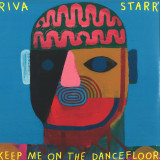
Riva Starr - Keep Me On The Dancefloor LP 2x12"
 
17

DJ support from - Hector Romero, Marco Lys, Mousse T, Sam Divine, Vintage Culture, Ferreck Dawn, Mat.Joe, Claptone, Joseph Capriati, Claude VonStoke, Dennis Cruz, Huxley, Mark Knight, Format:B, Nic Fanciulli.

Riva Starr presents his fifth album 'Keep Me On The Dancefloor' on Snatch! Records.
An opportunity to demonstrate his growth as a producer and as an artist, the album showcases an unexpected Riva Starr sound – one that explores a fresh creative approach, focussing on songwriting, collaboration, and telling stories that are firmly rooted on the dancefloor.

Featuring collaborations with Chromeo, Flight Facilities, Harry Stone and more.
'The album was entirely crafted through writing sessions with talented musicians, writers, and singers. This approach brings something unique, as being in the room with other creatives adds an extra layer of creativity and depth, enhancing the production quality. Most of the tracks came together quickly, thanks to the incredible vibe and chemistry in the studio. Sometimes, the process needed a bit of back and forth and more than one session to perfect.' – Riva Starr

Fusing sounds that represent different eras of Riva’s career, 'Keep Me On The Dancefloor' wistfully and effortlessly glides between disco, funk, soul, filtered house, and even the guitar licks of classic rock; a sum of his career to date, it is a body of work that focusses on amplifying the positive moments, memories, and experiences that can only be found in music. Exploring what it means to connect with someone in the moment; a celebration of losing your inhibitions to the music and finding yourself completely in sync with someone you’ve only just met.

Charged with storytelling and heartfelt lyrics, his most personal work to date is the result of a considered approach to making music, one of collaboration with one foot still on the dancefloor, and the other firmly in the studio guiding an array of talent to build something unique with him. Moving away from the DJ-friendly cuts that have underpinned much of Starr’s career, the fifteen tracks on 'Keep Me On The Dancefloor' are much deeper. With singer Harry Stone providing catchy toplines and infectious vocals across at least half of the album, there is a clear maturity on display at every level.

Additional features come from electro-funk duo Chromeo on the irresistibly groovy 'I Was Lost', and Prince-esque vocals from Nic Hanson on '(I’ll Be Your) Paradise'. 'Know You Love Me' – the laid-back, sun-kissed cut with Flight Facilities – compliments the melancholy vocals of Biishop on “Wildfire” and the disco-infused 'It Feels Much Better' with Harry Stone.

Music is a tonic for the soul, but it feels much better with someone else.

Disponible

En el almacen y preparando para el envío

29,37
Sonny Fodera & Dom Dolla - Moving Blind

Following a string of huge sold out shows together, Sonny Fodera and Dom Dolla now team up for new single ‘Moving Blind’ via Sweat It Out / Solotoko.

Moving Blind weaves husky vocal hooks with elastic synth leads and bumping basslines, making for a hypnotic house groover destined to be heard in its natural club setting and intimate home dancefloors alike.

DJ Support :

Pete Tong, Mistajam, John Summit, Just Kiddin, Riva Starr, Sam Divine, Claptone, Biscits, Ferreck Dawn, Dombresky, Simon Dunmore, TCTS, Robosonic, Marco Carola, Andi Durrant, Joachim Garraud, Slipmatt, Paco Osuna, Fatboy Slim, MK, Riva Starr, Rudimental, and Richie Hawtin

Disponible

En el almacen y preparando para el envío

14,08
MARCOS VALLE - MARCOS VALLE LP

Marcos Valle

MARCOS VALLE LP

12inchVAMPI318
Vampisoul
03.06.2025

Marcos Valle is one of the few artists you cannot miss if you have the slightest interest in Brazilian music. Whether your taste is focused on bossa jazz, samba, psych folk or soul, Valle has surely recorded a great album for you. His much sought-after and stunning self-titled album from 1970 includes ‘Ele E Ela’, as sampled on Jay-Z’s ‘Thank You’, as well as some of his most popular songs like ‘Freio Aerodinamico’ and ‘Os Grilos’, swinging between sophistication and groove… Remastered from the original tapes and pressed on 180g vinyl. This release is part of our new reissue series that comprises many other outstanding Brazilian classics by the likes of Evinha, Cassiano, Gerson King Combo, Hyldon... Marcos Valle is one of the few artists you cannot miss if you have the slightest interest in Brazilian music. Whether your taste is focused on bossa jazz, samba, psych folk or soul, Valle has surely recorded a great album for you. By the late 60s he had already put out enough quality records to secure a place within the top Brazilian songwriters of all time, but his career luckily did not stop there and he continued releasing amazing music over the following decades until this day. By the dawn of the 1970s, the multi-talented Valle was entering a new era, ready to test the government censors (Brazil was under strict military rule since a coup d’état in 1964) and express a socially aware stance and a playful hodge-podge of musical styles including samba, bossa nova, baião (a rhythmic beat from the rural northeast of Brazil), black American music, and rock. “Marcos Valle” was originally released in 1970 and features a dynamic musical backing from some of Brazil’s most gifted players. Hip-hop fans may even recognize the opening horn blasts of ‘Ele E Ela,’ sampled to great effect on Jay-Z’s “Thank You.” It includes some of his most popular songs like ‘Freio Aerodinamico’ and ‘Os Grilos’, swinging between sophistication and groove…

Disponible

En el almacen y preparando para el envío

34,41
MARCOS VALLE - GARRA

MARCOS VALLE

GARRA

12inchVAMPI317
Vampisoul
03.06.2025

Marcos Valle is one of the few artists you cannot miss if you have the slightest interest in Brazilian music. Whether your taste is focused on bossa jazz, samba, psych folk or soul, Valle has surely recorded a great album for you. “Garra” was originally released in 1971 and brought us Valle’s classics such as ‘Com Mais De 30’, ‘O Cafona’, ‘Vinte E Seis Anos De Vida Normal’ and the rare groove classic ‘Wanda Vidal.’ Remastered from the original tapes and pressed on 180g vinyl. This release is part of our new reissue series that comprises many other outstanding Brazilian classics by the likes of Evinha, Cassiano, Gerson King Combo, Hyldon... By the late 60s he had already put out enough quality records to secure a place within the top Brazilian songwriters of all time, but his career luckily did not stop there and he continued releasing amazing music over the following decades until this day. By the dawn of the 1970s, the multi-talented Valle was entering a new era, ready to test the government censors (Brazil was under strict military rule since a coup d’état in 1964) and express a socially aware stance and a playful hodge-podge of musical styles including samba, bossa nova, baião (a rhythmic beat from the rural northeast of Brazil), black American music, and rock. “Garra” was originally released in 1971 and maintains the same socially conscious content as in his previous album while also combining diverse musical styles and influences. Recorded amongst sessions for a steady stream of popular TV soap opera soundtracks, it brought us Valle’s classics such as ‘Com Mais De 30’, ‘O Cafona’, ‘Vinte E Seis Anos De Vida Normal’ and the rare groove classic ‘Wanda Vidal.’

Disponible

En el almacen y preparando para el envío

27,31
Various - Spektrum II (LP 2x12")

To close out the year, Life In Patterns presents Spektrum II, the second installment in the compilation series curated by Ferdinger. This 16-track VA, scheduled to release in early December 2024, comes as a double vinyl with four digital bonus tracks and download codes.

Spektrum II ventures into the depths of dynamic techno, combining driving beats with intricate, groove-rich patterns. The compilation seamlessly shifts from deep, dubby tones to bright, euphoric moments, embodying the labels signature sound. Its a bold exploration of diverse sonic textures, blending harmonic and dissonant elements for an immersive listening experience.

Disponible

En el almacen y preparando para el envío

22,27
Robert Tylutki - Darkest Hour Before Dawn

As the artwork on the EP depicts, "Darkest hour before dawn" is a dusky scenario representing the Dutch environment known as "the polder" in the lower lands. It questions all kinds of actions taken or not taken to protect, restore, conserve, innovate, or modestly leave the landscape to its own more murky outcome. The darkest hour, full of gloom, will be available around the spring equinox?

Portrait of tracks separately:


"Darkest Hour before dawn"

Is this piece supposed to be an ode to the ancient Dutch hardcore movement, that once and probably only then would be experienced to such intensity or is this still maybe just a little near reminder of it? Anyway starts this unlit track slowly and remains that way but maintains a fat-pumping pulse, possibly reminding of a soldier walking a death march. Settling up those launch pads further down the piece, near the bridge for shooting off some drum-fire 909 snares as if it rocketed. Then, suddenly, the extended delay of that snare turns into a psychedelic drone beside, attending to, or paranoidly chasing comrades soul in his journey throughout and above like a trustful partner?

Arp's LFO that is out of sync with the beat and is being outpaced by it seems to slow everything down even more; meantime creating a pulling, buggy-like effect to the due of all this.

The ascending and descending ghost-pad drawing into the grid of the (tone) key, thereafter parking in them for a while and cycling out again, creating a spatial flow of disturbance and anxiety.

Finishes it with a mountain-big reverberation of organized destruction and chaos. What at first sight seems like simply an innocent route appears to actually be a bit more complex one.


"Lovely memories"

The quite monotonous structure of Lovely memories catchy and groovy song is scanning through your brain files; revisiting, memorizing, and purposely lacking these few "dots above the I" that in some cases you'd gladly be feeling like to square fit it in yourself, of course, when necessary. Connecting the puzzling, dazzling flashbacks together to finally wrap up and perpetuate the pictured events for good, leaving traces of melancholy, loveliness, and perhaps even faith to it.


"24 hours"

Dinginess of 24 hours supposes to be felt in the guts.
The beat, steady with that snare on the 4 & 12, might not be one of the greatest inventions. However, the TR-08's drum line here lays a solid and fertile foundation for a reasonable house track.

Slightly detuned synths weave a scarf pattern around your upper body, and the lower layers carry a warm blanket for the underbelly, providing you with that cozy sense of consolation. Acidy pokes wring itself sneaky and penetrable around, slicing through the song's already solid flesh. Therefore, balancing its bitter sweetness throughout with these soft-hard saw-tooth drops of sourness.

"24 hours" conveys a dispatch or intercommunication that there is little time left to take actions/charge to fix and restore. Something big is about to come if it hasn't arrived already...


"At night"

This remarkable story is a bit out of ordinary.
At night appeared in the artist's dream just the night before his sick father was raised from death in the hospital and got just another year to live before actually passing away completely and anyway. ; ))
And thus also dedicated to the man.

Disponible

En el almacen y preparando para el envío

11,72
Various - The Sound of Twin Town (Part One) 3x12"

As a tribute to the 20th anniversary of the music label Twin Town Production (*11 Sept 2001), Nicolas Molina and Stachy.DJ presented "The Sound of Twin Town: Tribute Mix Pt. I", a personal selection of remastered music from the catalog of the first decade.

An eclectic mix of Soulful House, Chillout, D&B, Acid Jazz, IDM, Dubstep and Breaks takes the listener on a journey through time to the musical roots of the label until the dawn of the second era of digital mania.

Now this compilation package offers homelisteners and DJs all the
remastered tracks of the DJ-Mix in full length on vinyl.

CAUTION: THE PACKAGE TAPE IS PART OF THE ARTWORK. PLEASE READ THE TEXT FOR HANDLING!

The package can either be opened only on the outer edge to access the vinyls, or it can be sliced on all sides to flip through the entire story. Don’t handle with care!

*** The entire case study on the artwork will still be published in the fall of 2022 by Manuel Wesely himself.

Disponible

En el almacen y preparando para el envío

16,76
ELIZIO DE BUZIOS - TAMANQUEIRO

Elizio De Buzios

TAMANQUEIRO

7"-VinylND011
NEW DAWN
22.12.2021

Reissue of Elizio De Buzios's "Tamanquiro". Remastered and pressed on 45 RPM!

Sitting a good 90-minute drive away from Rio de Janeiro’s crowded beaches and packed tourist hot-spots, Campo Grande is not a neighbourhood that attracts travellers from around the World. Traditionally it is home to the city’s lower middle-class, whose aspirations of moving up the social ladder were played out in a suburb that has always been solidly working-class.

Campo Grande is home to Elizio De Buzios, a Brazilian musician who started playing music in the late 1970s and early 1980s. De Buzios began as a drummer, before learning to play guitar and starting to compose and sing his own music. When he turned 18, De Buzios joined a local band formed by some of his friends and other like-minded local musicians: Sol da Terra. The band mostly played samba in neighbourhood bars and small venues around Camp Grande, but De Buzios was interested in more than just samba. While he naturally admired great samba composers such as Cartola and Beth Carvalho, his musical pass went far beyond Brazil’s national music. He also loved MPB and bossa-nova and at home he listed to Joäo Bosco, Milton Nascimento, Luis Melodia, Tom Jobim, and many bossa-nova singers.

In 1980 De Buzios was noticed by a local representative of international major label Polygram, who gave him the opportunity to record two songs. He was excited, so started searching for inspiration for the songs he would eventually lay down. He found that inspiration close to home while passing a neighbourhood shop which made and sold clogs. After noticing a display of then fashionable Portuguese clogs outside the store, De Buzios popped inside to talk to the owner. It turned out that he was a tamanqueiro – as clog-makers are traditionally called in his native Portugal – and was as passionate about music as he was about the footwear he made. Thus inspired, De Buzios returned home to work more on the lyrics and music.

The next day, he headed into the studio to record the song, with Vale Ribeiro, who later went on to produce tracks for Marcos Valle, behind the desk. With Ribeiro’s assistance, De Buzios managed to record two songs in one day: ‘Tamanqueiro’ and ‘Sou Um Louco’, a ballad with English lyrics blended into the mostly Portuguese text. From the start, it was clear that ‘Tamanqueiro’ would be the single’s A-side. Incredibly catchy and funky, with some subtle disco elements, the song remained distinctively Brazilian thanks to the use of the cuíca. Listening back all these years on, De Buzios’ lyrics seem almost spontaneous, carry the track forward, and make it almost impossible not to sing along. Its infectiousness and funkiness made it an instant hit with the first few people to hear it.

When it was released, responses to the song were enthusiastic, even if it never became the Brazil-wide smash it should have been. It resonated well in the local clubs and on the radio, but unfortunately the marketing was handled by an inexperienced Polygram employee who failed to adequately promote the track. As a result, the record sank without trace and De Buzios’ dreams of stardom evaporated. Having just started a family, he realized he could not live off the uncertainty of being a musician. Instead, he got a job at city hall as a civil servant, a role he continued until his retirement a few years ago. ‘Tamanqueiro’ and ‘Sou Um Louco’ remain the only two songs he ever recorded.

In the early 2000s, with the rise of diggers’ culture, ‘Tamanqueiro’ slowly surfaced again. It became a sought after, hard to find seven-inch single, finding its way onto the airwaves once more and into the ears of a new generation of listeners. Some started appreciating the song so much that it was referred to as the “best-Jorge-Ben-song-Jorge-Ben-never-recorded”. And they are right: ‘Tamanqueiro’ does have that Jorge Ben-straight-forwardness. It’s a completely honest song that’s almost impossible not to fall in love with. Thanks to this remastered reissue on Rush Hour, De Buzios may now get the props his sole record so richly deserves.

Now for the good news: De Buzios is still singing in local bars and clubs in and around Campo Grande. He is surprised, but also incredibly proud, that the record he had almost forgotten about is appreciated so much by a group of music lovers he didn’t even know existed. But above all, he is happy that more than 40 years after the recording session, the record lives on – not only on this re-release, but also in his weekend sets in the bars of Campo Grande.

Disponible

En el almacen y preparando para el envío

12,40
Trinidad - Palm Trees & Thirty Degrees 2x12"

Following the release of a number of EPs on Swiss, German, British and Australian labels, Trinidad will release their debut album ‘Palm Trees & Thirty Degrees’ on October 16th 2020.

The album draws on the Swiss-based trio’s experience of sustaining the energy of festival and club shows, while also providing the perfect background to a relaxed summer evening with friends.


The project provides an opportunity for the trio to indulge in a range of musical influences, blending together a mix of synthesizers with the haunting tones of a church organ, the warmth of a string quartet and regality of an opera singer. The album grew organically, with inspiration taking hold beyond the confines of the studio: the bonus track recorded with a Jamaican reggae singer in the back of a VW bus in Greece. Soundscapes from Colombia to India were captured and embedded.

With "Palm Trees & Thirty Degrees" Trinidad guide listeners on a journey to a tropical paradise; to a wonderful, perhaps peculiar place of confidence, created and shaped by the mental theatre of the moment.

The soft kiss of a warm breeze hits you as you adjust to your new surroundings ("Desembarco"); leaving the static chatter of your thoughts behind in the "Lobby" (feat. MonoAbe) of your mind; you allow yourself to imagine what the evening holds in store (“Kopfkino”); But first, there’s a drink in the “Sunset Bar”, a refreshing cocktail "Luciola" that serves as a gateway for you to plunge into the night. A night of unlimited possibilities, the first instances a blur ("Sagrada"), as time starts to lose its meaning ("Tempus Fugit"); everything spins, everything is possible, everything is ("Elevate"). Suddenly, hours (or is it days?) have passed – it doesn’t matter; what matters is the first sign of dawn, the unmistakable warmth dissolving the darkness (“Alma”); the beat slows, and you feel the "Libération" of the new day; looking around you see the moments you’ve shared etched on the faces of your friends ("Fleeting" feat. Julia Portmann); It is not goodbye, it is only "Au Revoir".

The album was produced by Trinidad in their own studios in Bern and Zurich. It features collaborations with a number of artists: Cornelia Aeschbacher Firmin (Hang), MonoAbe (Mallets & Percussion), Jack Williams (text of "Fleeting"), Julia Portmann (vocals), Zenyth (vocals) and Michael Meier (electric bass). The songs were mixed by Marcel Schneider, mastered by Benjamin Fay. Raïssa Lara Lütolf was responsible for the graphic design.

Recogiendo

Ordena ahora - una vez que hayan recibido suficientes pedidos, el artículo se reimprimirá.

23,49

Ültimo hace: 5 Años
Chloé - Endless Revisions Remixes

Endless Revisions- Chloé's first LP in over six years - saw the musician turn a new leaf in her creative journey. Not content with pushing the boundaries of her creative output with this wider palette of an album, Chloé released Endless Revisions Live, which saw the producer graft the new material and inspiration that came out while playing live on stage back onto the album's compositions. Following The Dawn and Recall, it was time to deliver other versions of the album's tracks. Enter this four-remix EP, imprinted with the almost-opposite horizons of top-shelf producers.

Disponible

En el almacen y preparando para el envío

8,70
Leonidas & Hobbes - The Rags Of Time Ep

Eight releases in, Leonidas & Hobbes have honed a mutual love of soundtracks, disco, jazz, house, techno, acid, psychedelic, African and dub sounds.
Web Of Intrigue is one part tribute to lost 70s soundtracks, when music was created on the finest analogue hardware, featuring full bands, session players and lush orchestrations, one part tribute to 70s disco gods Nile Rodgers and Bernard Edwards (Chic) and one part mid-tempo but nonetheless cosmic house. The three parts fuse to form an instrumental track sounding as fresh as a whole meadow of daisies in 2017 and one that's been going down extremely well with international DJs who have road-tested the material.
Heavy Weather flips the script for a deeper workout in a 3/4 time signature - more of a cosmic waltz. Taking its main cue from 70s jazz fusion heroes Weather Report and The Doors' Ray Manzarek, it incorporates rich African percussion, spaced-out flourishes exhibiting the duo's love for the dubs of Lee Perry, King Tubby et al, and a good old fashioned arpeggio of an acid line - definitely a more esoteric number, all told.
The 'Dawn' and 'Acid Rain' mixes push different buttons for the heads, as suits the mood. It all adds up to a very Balearic confection, fitting snugly in with the burgeoning revival for this somewhat ineffable sound - a trend that seems to be getting stronger/bigger every year, popping up every time the sun gets his hat on and we all remember how to party like the lucky residents of that infamous White Isle....
MORE INFO
London/Edinburgh analogue electronic duo Leonidas & Hobbes released debut EP "Machines, Tapes & Electronic Setups" via the Hobbes Music label back in May 2013, picking up plaudits and support from the likes of Resident Advisor, Mixmag, Erol Alkan, Ashley Beedle, Alan Braxe, Shadow Child, Jimpster, Nick Warren, M.A.N.D.Y., Leftside Wobble, Mr G, Auntie Flo, Sasha, John Digweed and many more... The duo were consequently commissioned to remix the Pet Shop Boys.
Second EP "Mo' Machines" came out on the label in April 2014 and received equally high praise, with i-D Magazine inviting the duo to record a DJ mix which has to date chalked up a whole lot of love on Soundcloud.
Leonidas has released two other collaborative EPs with London-based Japanese DJ/producer Kay Suzuki via his Round In Motion imprint, equally winning fans worldwide, with a track now forthcoming on new label YAM Records' You And Music Volume 1 EP plus much more in the pipeline for 2017. Leonidas also has his own lovetoparty label, releasing edits of much-loved disco tunes on limited edition 12" vinyl format and free download. Previously, Leonidas made a name for throwing word-of-mouth parties around east London on his audiophile 'lovetoparty' sound system (providing some of the inspiration for much-admired late-night watering hole Brilliant Corners).
Equally, Hobbes ran the widely acclaimed Trouble nights for ten years in Edinburgh/Scotland, working with the great and the good from across the soul/jazz/dance spectrum since '02, and championed up-and-coming live talent via his Limbo 'gig-in-a-club' nights at The Voodoo Rooms for nine years since '07. Hobbes has toured his DJing style to the various corners of the dancing planet, including gigs in the Far East, much of Europe and across the UK. The Hobbes Music label has otherwise featured artists as diverse as Auntie Flo, JD Twitch (Optimo), Neil Landstrumm, Craig Smith (6th Borough Project), Ali Renault, iO Sounds, Joe Howe, Debukas, Fudge Fingas, Marco Bernardi, Dimitri Veimar, Mick Wills and Nightwave, with further support from Ben UFO, Justin Robertson, Motor City Drum Ensemble, KiNK, The Revenge, T.E.E.D, Kiki, Groove Armada, Maceo Plex, OOFT!, Domenic Capello (Sub Club), XDB, Ben Mono, Masa Sutela, Bawrut/Scuola Furano, Numbers, John Heckle and many more...

Disponible

En el almacen y preparando para el envío

10,88
DISCIPLE BC - THE HOMECOMING LP
  • 1: Bc March (The Return)
  • 2: The Dignity Of Labour
  • 3: Down Into Hell
  • 4: D.i.s.c.i.p.l.e.b.c
  • 5: The Hammer Comes Crashing Down
  • 6: The Troubled Troubadours Of Tomorrow
  • 7: Catch Me If You Can
  • 8: Whole In The Scene/The Nordic Light

ON LTD GREY SPLATTER VINYL W/ HAND SCREENED 12" PRINT Creepy Crawl kicks off the 2026 in a suitable way…unleashing the new LP by Disciple BC. Titled 'The Homecoming' this really is music for the world as it is today - Continuing the blood soaked saga, The Homecoming documents the bands return to the UK, with 9 tracks of the finest horror crust punk, each one telling tales of crime, punishment, revenge and retribution. Is this the end, or a new dawn? Featuring members of SORE THROAT, DOOM & AGNOSY and featuring the enigmatic and mysterious Rev Schneider on vocals and faith healing. Disciple B.C. has been described as “Jello Biafra fronting Motorhead” & like “Dave Vanian singing with Bathory playing Anti Cimex songs”. Coming at you wrapped in a deluxe gatefold sleeve, grey splatter vinyl and a hand screened 12” print done inhouse here at Creepy Crawl and limited to 300 copies. Join us. Support the underground.

Reservar27.02.2026

debe ser publicado en 27.02.2026

26,68
Artículos por página
N/ABPM
Vinyl